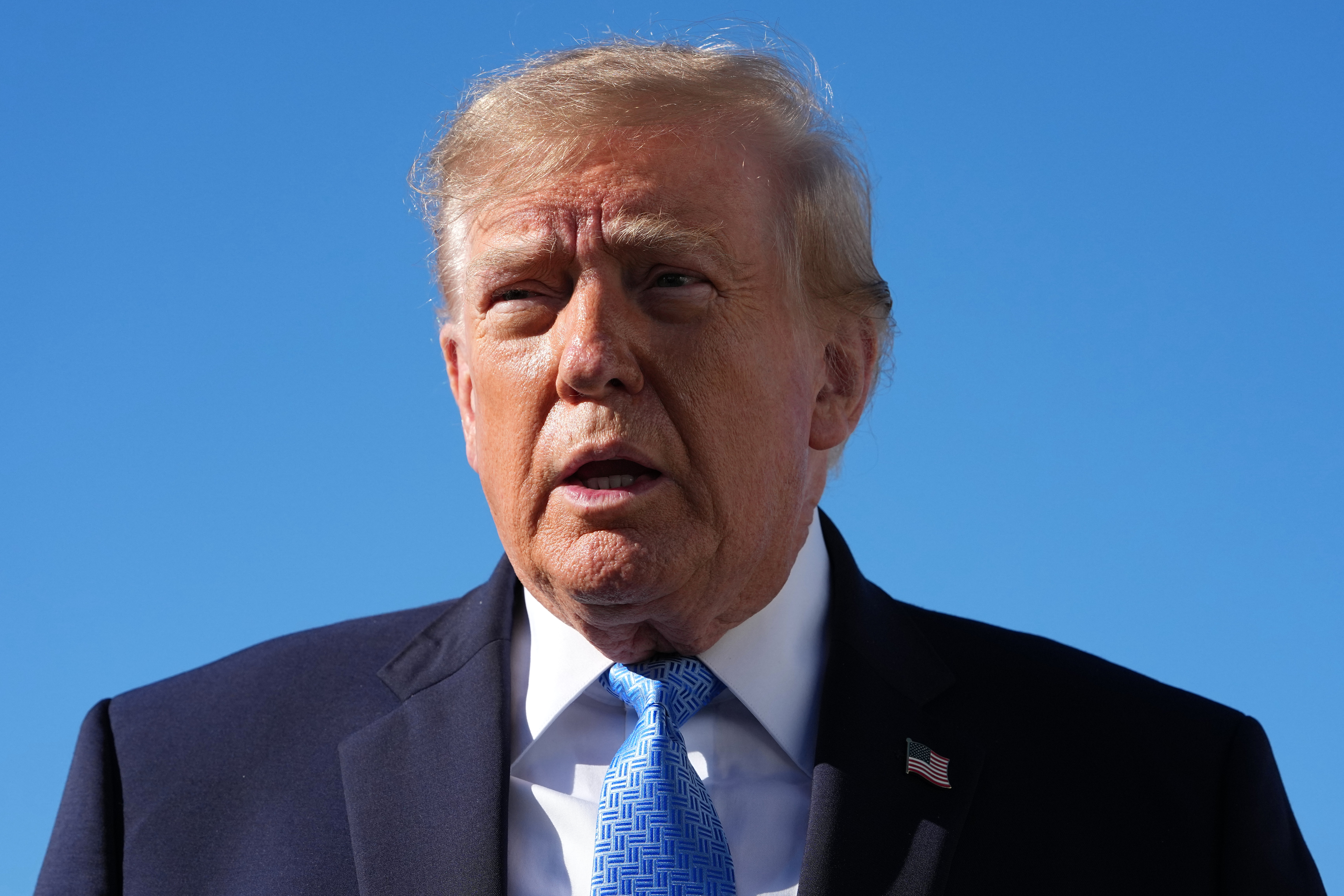
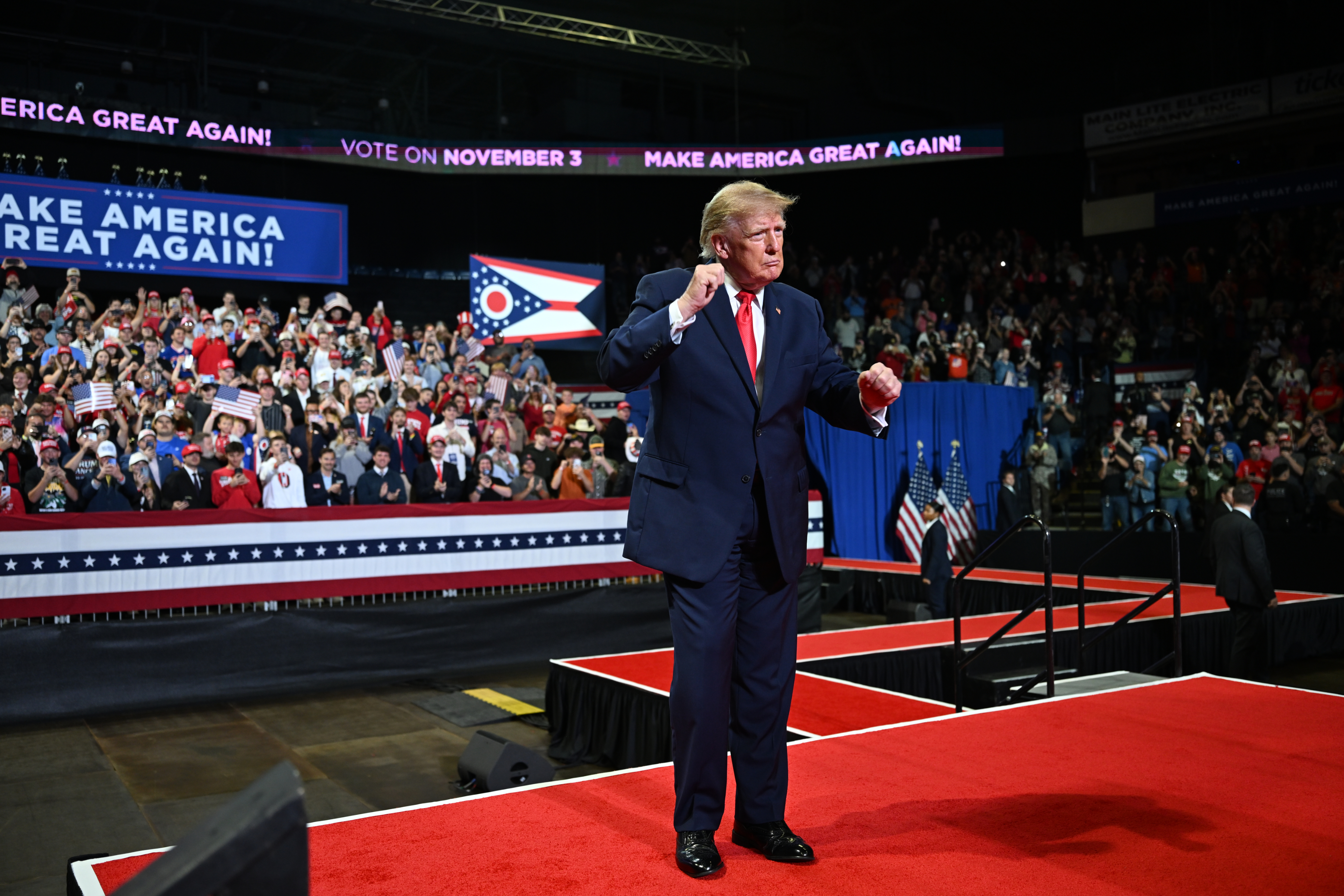
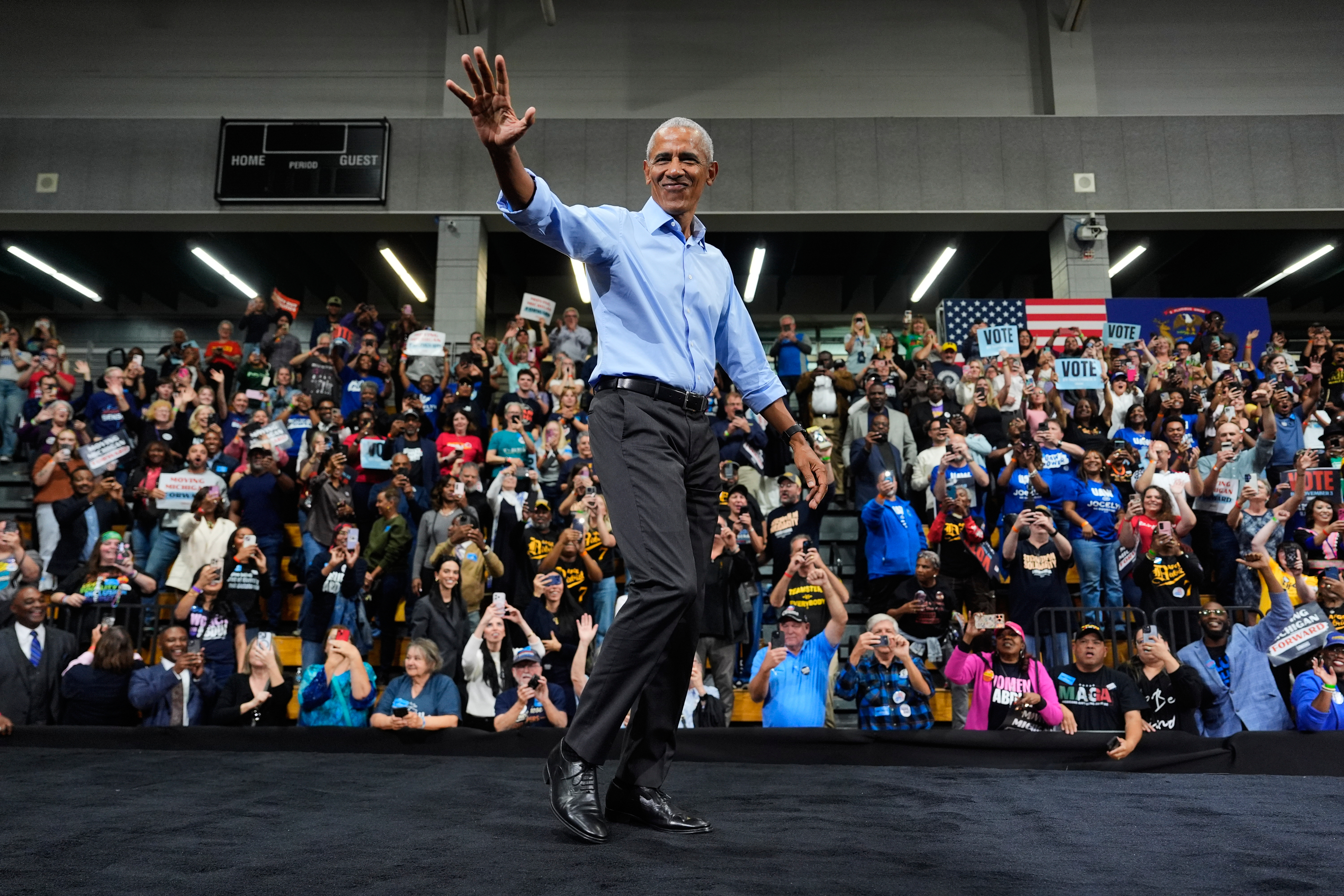
President Donald Trump took seven minutes out of his Monday night rally in Corinth, Miss., to defend his focus on White House renovation projects after one of his predecessors, Barack Obama, compared the redecorated Oval Office to an over-the-top Cheesecake Factory.
Trump denied spending excessive time on the projects, then went on to detail repairs to exterior plaster, as well as construction of a heliport and ballroom. He described the executive mansion’s previous condition in dire terms, including a cracked column, missing ornamentation, and broken tile.
“I fix things very good, very beautifully,” he said. “It’s a natural thing. It actually relaxes me.”
Obama, campaigning for Democrats in Ohio on Saturday, joked that the proliferation of gold-colored appliqués in Trump’s Oval Office looked “like Saddam Hussein opened a Cheesecake Factory.” With his focus on home renovations, Obama added, Trump “should be on HGTV.”
The slight played on a broader vulnerability for Trump, a real estate developer by profession, who has devoted considerable attention to remaking the White House and Washington even as most Americans disapprove of the projects. Fifty-nine percent of respondents to a Washington Post-ABC News-Ipsos poll conducted this month said Trump was spending “too much” time on the projects, compared with 27% of adults who said he is spending the right amount of time on the projects and 11% who said not enough.
Obama’s criticism appeared to particularly rankle Trump, who has feuded with him for decades.
Trump on Monday praised the Cheesecake Factory as “a very successful company” and defended the importance of tending to the White House’s physical condition.
“The White House represents our country, and that has to be pristine,” he said. “And I would try and explain that to a guy like Obama, but he wouldn’t understand.”
Trump said he noticed the building in disrepair during a visit 20 years ago. There is no record of Trump visiting the White House between 1987, at a reception with President Ronald Reagan, and 2016, after he won the November presidential election.
Trump said he would have done the renovations in his first term but didn’t have the time. He then again denied spending time on them.
“I didn’t take any time,” he said. “It’s been my honor to do it. I have fun doing it.”
State and local elections officials regularly plan for floods, fires, and computer glitches.
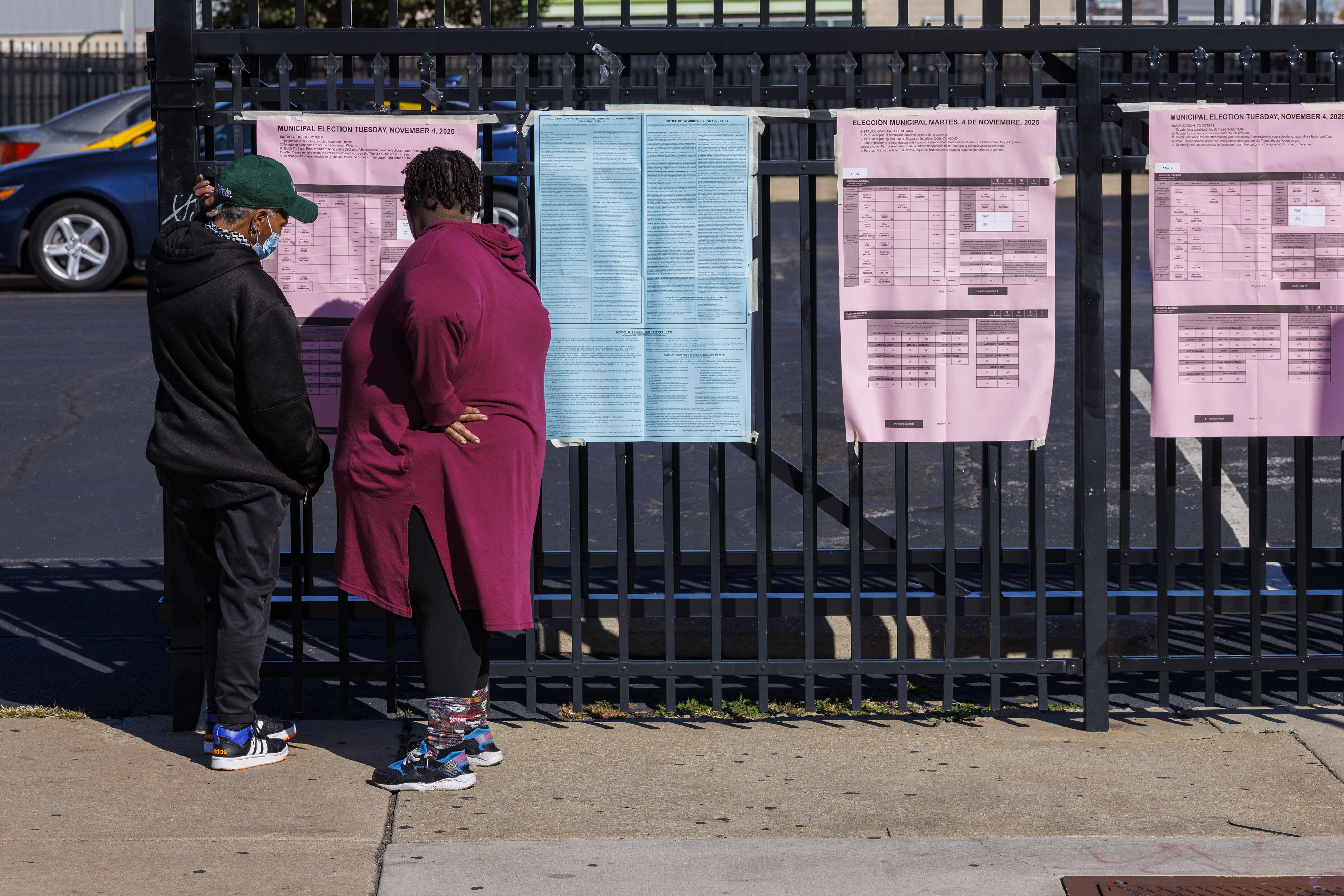
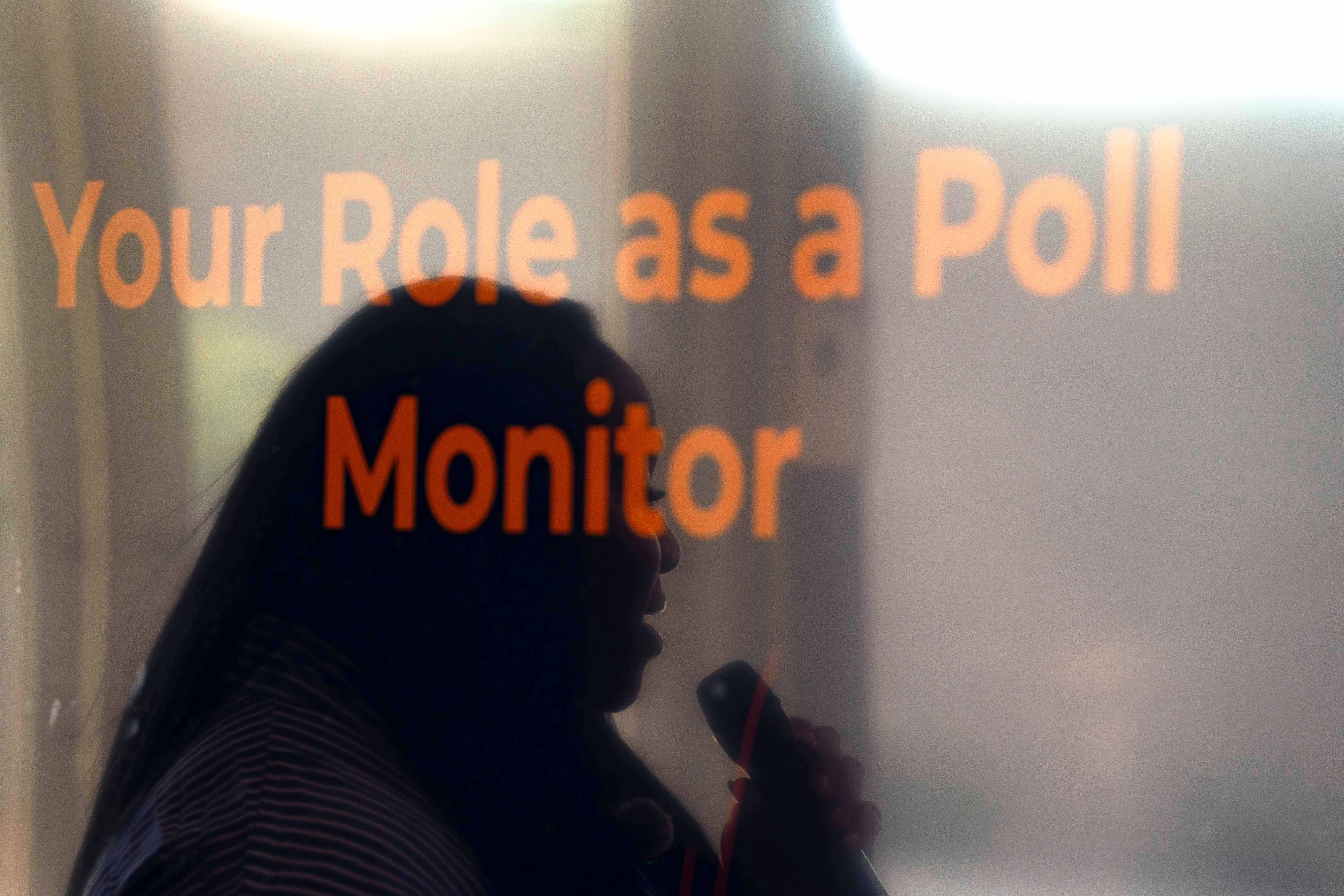
This year, they are teaching poll workers what to do if immigration enforcement officers show up. They are drilling them about the statute that bars federal agents from voting places. They are running through the limits of what federal monitors may and may not do on Election Day.
Much of the preparations for Nov. 3 can be distilled into one overarching concern — that the Trump administration will somehow attempt to meddle with the voting process or the results. The tricky part, officials said, is predicting what shape that interference might take while also recognizing that it might not materialize at all.
“This is the first time ever that we have had to engage in scenario planning to safeguard against potential federal interference in elections,” said Shenna Bellows, the secretary of state in Maine. “It seems like the federal government is now adversarial to the states.”
It remains to be seen whether any of these scenarios will play out. Many federal officials have dismissed the idea that agents or soldiers could be sent to the polls, and the courts have blocked most of President Donald Trump’s efforts to insert the federal government into state and local election administration.
And some of the country’s most prominent voting advocates have sought to assure the public that election administrators are well-prepared to protect the vote. David Becker, a former voting rights lawyer for the Justice Department, said the most chilling possibilities are unlikely to come to pass because the courts would likely block them.
“But election officials feel more comfortable to know they’ve thought about this, and discussed it,” said Becker, who runs the Center for Election Innovation and Research, a nonpartisan group that works to support election officials in both parties.
Even so, the Trump administration has already taken significant steps to try to shape the voting process this year. Trump has sought to sow doubt about the security of elections. His administration has demanded that states turn over voter lists, and has tried unsuccessfully to change mail voting rules. Last week, the Justice Department filed a lawsuit in Alaska seeking to preemptively block the certification of the Senate race there if the Republican candidate loses by a narrow margin.
With one week until Election Day, officials around the country say they are bracing for even more unwanted and potentially undemocratic federal intervention — even as they can’t be sure what, if anything, the Trump administration might do. To prepare, secretaries of state and other state and local officials have met with lawyers and local law enforcement agencies, trained poll workers, and held meetings to consider what could come next.
Among their top concerns: that Trump’s attacks on the integrity of American voting systems could form the basis for challenging the legitimacy of the results. Along with that unease comes the worry that any federal intervention could further undermine public confidence in elections and cause voters to stay home.
The next step is a guessing game, they said.
Could federal officials try to seize ballots, as they did earlier this year in Fulton County, Ga., as part of a criminal investigation that thus far hasn’t resulted in any charges?
Could Trump deploy Immigration and Customs Enforcement personnel or other federal agents to polling sites, even though his Homeland Security chief has said ICE will not patrol polling stations and would be deployed to such an area only to investigate “specific threats”?
Might he invoke the Insurrection Act and somehow summon the military in connection with the election? Trump has refused to rule out the possibility.
“We really are shadowboxing here, because we don’t know when or if the blow is going to land,” said Steve Simon, the Minnesota secretary of state. “We don’t know the character of, or content of, what might be headed our way.”
Trump, who has long claimed without proof that U.S. elections are rigged, sought to overturn his 2020 election loss. Earlier this year, he said the federal government should “get involved” in elections, even though the Constitution empowers the states and Congress — not the executive branch — to govern elections.
Bellows and Simon are Democrats. But Republican election officials have also planned for the possibility of federal intervention. Deidre Henderson, the lieutenant governor of Utah and a Republican, recently said that while she did not “necessarily expect” such interference, officials in her state were still planning for it.
In a statement, Lauren Bis, a White House spokesperson, said the bipartisan concerns about election interference were unfounded.
“The only ‘worries’ about election security are caused by radical Democrats who refuse to enact basic election security measures, supported by the majority of Americans, including voter ID and citizenship verification to ensure only Americans are electing America’s leaders,” Bis said. “President Trump has done more than any other president to ensure we have free and fair elections.”
Several voting advocacy groups have offered training and advice to election officials to help them get ready. One organization, the Government Counsel and Election Officials Network, explains to election administrators the legal basics that could be helpful in the case of federal action, whether civil or criminal, such as the seizure of machines or documents.
The group’s website provides samples of what federal grand jury subpoenas and search warrants look like. It also advises how to respond to a federal investigation, including what to do when agents show up with a search warrant.
“Step 1,” the site says: “Stay calm.”
Tina Barton, the co-chair of the Committee for Safe and Secure Elections, said her team has helped run about 140 training sessions for officials with local government and law enforcement this year, up from 67 such sessions in 2024.
Some of those officials, including law enforcement leaders in northern Virginia, said they were concerned about how immigration enforcement might affect the election process. Although Trump’s homeland security chief has said ICE will not patrol polling stations, Barton said that some congressional officials nonetheless expressed concern about the possibility. She said she helped lead a training scenario in which ICE enforcement was near a polling location.
Bellows said her team introduced a new slide this year into its training presentation for law enforcement. It provides the text of the federal statute that bars armed federal agents from polling places.
“It’s sad that we’re in this posture,” Bellows said in a phone interview. “But it’s just the way it is in 2026, given the administration’s rhetoric, and their actions.”
Barb Byrum, the clerk of Ingham County, Mich., said she was already concerned by some actions of the Trump administration, including the Justice Department’s deployment of federal election monitors to her county during the August primary. She said it was the first such deployment of federal monitors to her county in her nearly 14 years as clerk.
“The feds suggested that there were long lines, voters were not offered provisional ballots, and clerks and precinct workers failed to use the qualified voter file to check voters,” she said. “All of which is simply not true.”
After the primary, Byrum put her election workers through additional training on what federal monitors were and were not permitted to do under state law.
“They can watch the process,” Byrum said. “They can’t touch anything, they can’t ask any questions. They can literally just watch — monitor.”
Byrum said she found it disheartening that she now considered the federal government a potential threat to the election.
Justin Levitt, a law professor at Loyola Marymount University, formerly worked on voting rights for the Biden administration. He said nearly everywhere across the country, Justice Department observers must adhere to the same rules of behavior at polling places as any other member of the public.
Earlier this week, Dana Nessel, the Michigan attorney general, said the Justice Department’s civil rights division had sent notices to seven Michigan municipalities that election monitors from the department would come to their polling places on Election Day. In a statement, Nessel, a Democrat, sought to quell anxiety about the plans.
“It’s important for residents know that DOJ monitors are a standard part of our election process, and we anticipate they will comport with state and federal law,” she said.
Some officials are hesitant to share granular details of their preparations, for fear of giving the federal government a tactical advantage if legal skirmishes arise.
For Democrats, the politics of discussing preparations are also complicated. By having an open discussion about preelection planning, they said, they show their constituents that they are taking the threats seriously. But they also recognize that such discussions could intimidate voters from going to the polls.
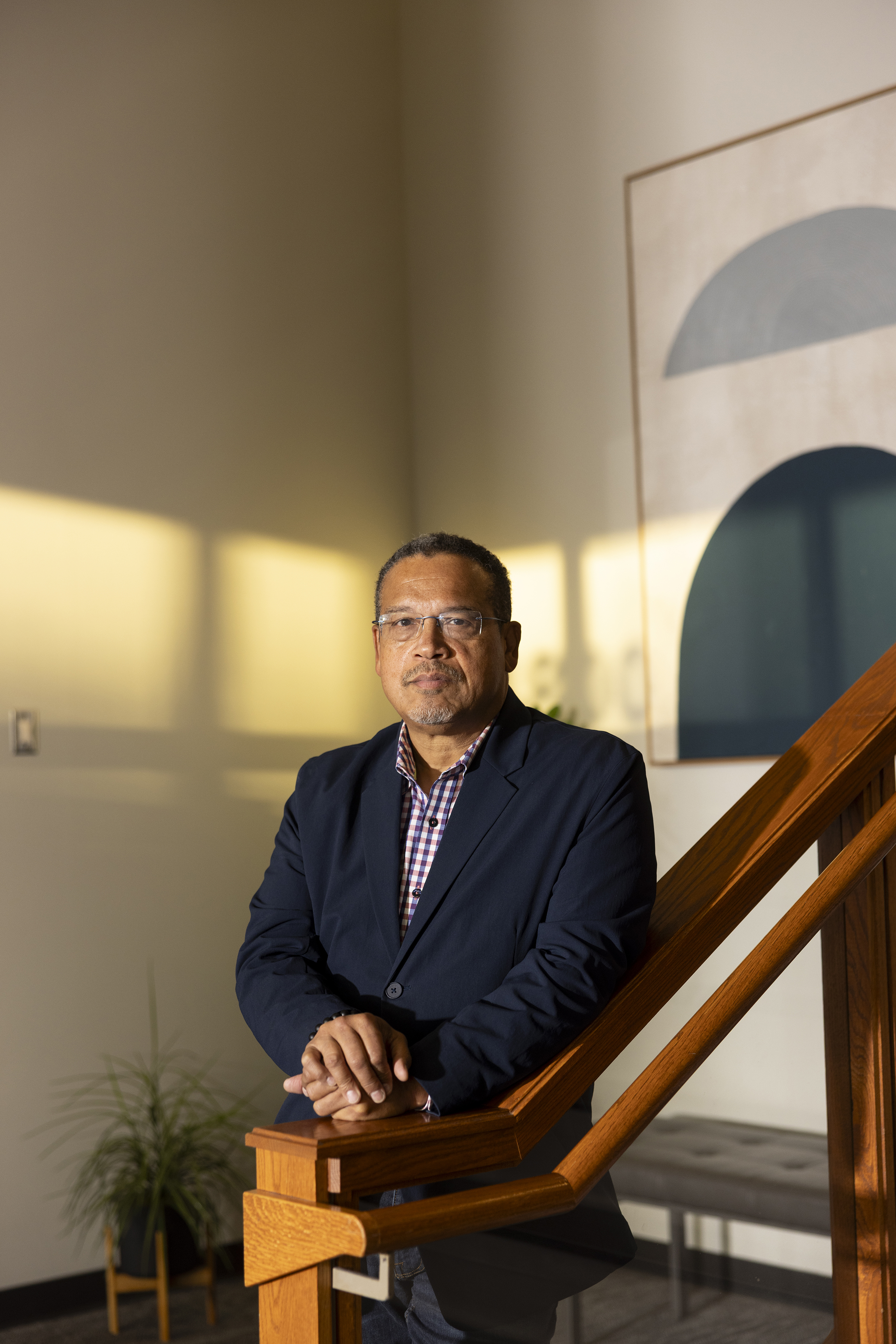
In an interview, Keith Ellison, Minnesota’s attorney general and a Democrat, said he and Simon, the secretary of state, have been working in tandem to prepare for election threats.
Asked how concerned he was about the threats to the Nov. 3 election on a scale of 1 to 10, Ellison said: “I’m at a seven.” He added: “It’s as high as it’s ever been for me.”
During a recent online forum, Lisa Lyons, the clerk and registrar of deeds in Kent County, Michigan, said her staff regularly communicated with her government’s legal team about potential troubles.
“We’re going to follow the law,” she said. “We’re going to follow the Constitution. We’re going to protect our election equipment.”
The U.S. Justice Department plans to send monitors to polling stations in Philadelphia and three other Pennsylvania counties for Election Day, according to a letter obtained by The Inquirer.
The Oct. 22 letter addressed to Pennsylvania Secretary of State Al Schmidt says the Justice Department intends to send monitors to Philadelphia, Allegheny, Luzerne, and Lehigh Counties for the Nov. 3 general election. It does not say what led to the decision to deploy monitors, or how the counties were selected.
The monitors will follow all state and local rules, wrote James Catania, the Justice Department attorney assigned to supervise the monitors in the region. They will ensure compliance with federal voting laws, including the Voting Rights Act, National Voter Registration Act, and Americans with Disabilities Act.
“Our monitors only observe and take notes,” the letter said. “They do not intrude or interfere in any way in the voting process.”
The monitors will not be allowed to wear uniforms or pins that identify them as Justice Department staff, the letter said.
Federal monitors are not entitled to greater access to polling places than members of the general public, a Pennsylvania Department of State spokesperson said in a statement.
“The Pennsylvania Department of State expects everyone working in, voting in, and observing polling places to follow all applicable state and federal laws,” the statement said.
Joe Grace, Mayor Cherelle L. Parker’s spokesperson, said in a statement that Philadelphia has a strong reputation for conducting free and fair elections, and this cycle would be no different.
“Every registered voter will have every opportunity to fully exercise their constitutional right to vote,” Grace said.
Vic Walczak, ACLU-Pennsylvania’s legal director, said he didn’t see cause for alarm by the plan to send monitors to Philadelphia and the three other Pennsylvania counties. The Biden administration sent monitors to the same counties in previous elections, he said. And if any monitor breaks the rules, Walczak said, he expected the county would take steps to eject them.
“We are not expecting that to happen,” Walczak said. “Historically it hasn’t happened.”
Federal monitors will be in all 50 states on Election Day, but the Justice Department would not share the full list of localities ahead of time, a department spokesperson said in a statement. It was not clear where in New Jersey they would be.
“All monitors must meet the same legal and ethical requirements, including that they not interfere with the voting process,” the statement said.
NEW YORK — Democrats and outside watchdogs are planning a massive presence at the polls on Election Day driven by concerns that President Donald Trump will further leverage the vast resources of the federal government to interfere with a midterm that could hobble his final two years in office.
They won’t be the only ones there. A sprawling election protection effort on the left that is expected to deploy tens of thousands of monitors will be met by the largest-ever monitoring program by the Justice Department and still more observers from Republican-aligned groups. The result could be unlike anything seen at the polls in modern times.
The effort among Democratic and nonprofit groups includes training volunteers to stand watch outside polling places and report activities they consider concerning. The network includes traditional government watchdogs such as Common Cause and the American Civil Liberties Union plus a flood of volunteers assembled by state Democratic parties, congressional leaders, national activist groups, and organizations focused on protecting democracy.
The Democratic National Committee’s Association of State Democratic Committees created a first-of-its-kind cybersecurity unit staffed by former CIA and FBI officials to monitor and report online misinformation, including artificial intelligence deepfakes, said Jane Kleeb, vice chair of the DNC.
That’s as Democratic mayors, attorneys general, and secretaries of state host tabletop exercises simulating worst-case scenarios, such as a surge of Immigration and Customs Enforcement officials at voting locations or the seizure of ballots and voting equipment.
On Capitol Hill, Democratic leaders have assembled a legal team that rivals that of any presidential campaign.
“We’ve never done this before,” Kleeb said of the party’s sweeping efforts. But “we’ve never had to deal with the president of the United States saying that he may seize ballots, put ICE agents outside polling locations, and other kinds of very clear, direct threats to the voting process.”
While Trump continues to make baseless allegations of cheating in the election, administration and military officials have said they have no plans to deploy immigration agents or troops to polling sites.
White House spokesperson Lauren Bis blamed “radical Democrats” for creating fears about election security by refusing to enact voter ID requirements and other Republican-backed measures.
“President Trump has done more than any other president to ensure we have free and fair elections,” Bis said.
DOJ will send monitors to Philadelphia
The U.S. Justice Department plans to send monitors to polling stations in Philadelphia and three other Pennsylvania counties for Election Day, according to a letter obtained by The Inquirer.
The Oct. 22 letter addressed to Pennsylvania Secretary of State Al Schmidt says the Justice Department intends to send monitors to Philadelphia, Allegheny, Luzerne, and Lehigh Counties for the Nov. 3 general election. It does not say what led to the decision to deploy monitors, or how the counties were selected.
The monitors will follow all state and local rules, wrote James Catania, the Justice Department attorney assigned to supervise the monitors in the region. They will ensure compliance with federal voting laws, including the Voting Rights Act, National Voter Registration Act, and Americans with Disabilities Act.
“Our monitors only observe and take notes,” the letter said. “They do not intrude or interfere in any way in the voting process.”
The monitors will not be allowed to wear uniforms or pins that identify them as Justice Department staff, the letter said.
Federal monitors are not entitled to greater access to polling places than members of the general public, a Pennsylvania Department of State spokesperson said in a statement.
Vic Walczak, ACLU-Pennsylvania’s legal director, said he didn’t see cause for alarm by the plan to send monitors to Philadelphia and the three other Pennsylvania counties. The Biden administration sent monitors to the same counties in previous elections, he said. And if any monitor breaks the rules, Walczak said, he expected the county would take steps to eject them.
“We are not expecting that to happen,” Walczak said. “Historically it hasn’t happened.”
Tens of thousands of volunteers trained to observe
State Democratic parties have trained an estimated 10,000 volunteers to observe polling places and report anything potentially concerning they might see from federal agents. Common Cause has trained roughly 16,000 more volunteers to stand watch at voting precincts, said Suzanne Almeida, vice president of states for the group.
She said a broader Election Protection coalition involving 300 other groups has trained tens of thousands more.
Smaller pockets of volunteers from other groups also are preparing to show up, including roughly 100 organized by Senate Democrats and hundreds more from a Democratic-allied group called Save America, which is training clergy members, veterans, teachers, and other local community members. National groups such as Indivisible and MoveOn are activating their own expansive networks.
There are so many organizations working to protect the voting process — including many that cannot legally coordinate with each other — that some officials involved worry about unintentionally creating chaos outside polling locations.
Almeida said Election Day confusion is possible in some precincts but the nature of the threat requires a collective effort.
“It will actually take all of us if some of the threats we are most worried about come to pass,” she said.
Trump administration sends its own team
Harmeet Dhillon, a Trump appointee who leads the Justice Department’s Civil Rights Division, was asked on CBS’ 60 Minutes whether the Republican administration is planning to send ICE agents to polling places.
“There is no plan to do that,” she responded.
Still, the Justice Department is planning its largest-ever election monitoring effort, with about 1,000 department staff expected to observe voting and ensure federal laws are being followed, spokesperson Kiersten Pels said. That comes after a primary season in which the department said it deployed more than 100 election monitors across hundreds of polling locations.
At least one of those placements sparked tensions with local officials. Wyoming Gov. Mark Gordon, a Republican, said the behavior of two monitors during that state’s primary was “a bit aggressive” and “irregular.” A Laramie County clerk said the Justice Department monitors arrived at the polls intending to interview voters, but her office didn’t allow it.
The department disagrees that the monitors did anything improper, Pels said. She added that the monitors are trained to comply with federal law governing conduct at polling places and won’t “interfere with the voting process.”
Democratic lawmakers and voting rights advocates have raised concerns that the Trump administration’s monitors could intimidate voters or abandon the duty they’ve had for decades to protect against civil rights violations.
The department plans to send them to every state, focusing on high-population areas, jurisdictions that have had problems in the past, and districts with close elections, according to a senior department official who briefed reporters on the condition of anonymity under terms set by the department.
The Republican National Committee said its operation involves deploying “election integrity deputy state directors” in 22 states, among them Arizona, Michigan, Georgia, and North Carolina.
Those workers are the “eyes and the ears of the RNC in the field” who recruit volunteers and organize trainings, said Ally Triolo, the RNC’s election integrity communications director. Their mission is to surface anything that seems unlawful.
At the same time, the RNC has enlisted nearly 22,000 poll workers and is recruiting poll-watching volunteers for competitive districts. The poll watchers will “observe the process and help ensure election rules are followed in accordance with the law,” Triolo said.
Local election officials prepare for increased attention
While federal monitors have quietly observed elections for decades, largely without incident, some election officials are taking precautions.
Chris Swope, the city clerk in Lansing, Mich., said he preemptively contacted law enforcement and his attorney in case federal monitors violate election law, although he expects them to abide by the rules.
The Democratic Mayors Association issued guidance to local Democratic officials with detailed instructions about what to do if federal agents appear at polling locations.
It notes that federal law prohibits the presence of federal immigration agents, the FBI, or other investigative personnel. It also issued a reminder that federal agents are not allowed to be armed at the polls, nor are they allowed to interact with voters or handle ballots or election equipment.
Justice Department officials have said their monitors won’t be armed and will not interfere with voting. Asked about department monitors being sent to Georgia, Trump told a reporter recently: “They’re not going to do anything other than watch.”
Some of the poll observations have already begun. Mary Corcoran, Save America’s executive director, said her group’s volunteers have been monitoring precincts during early voting in Georgia, Michigan, North Carolina, and Ohio to help give voters a sense of security.
“The fear is the point, and we must do something about it,” she said. “Left unanswered, fear does the work of keeping people home without a single agent setting foot at a polling place.”
Staff writer Abraham Gutman contributed to this article.
WASHINGTON — For months, President Donald Trump has mounted a sustained effort to attack the integrity of U.S. elections while using the federal government to try to assert more control over the voting process overseen by states.
Recently, Trump opened a new front.
Rather than simply push false claims at his rallies or target voters his administration claims should not be on the rolls, Trump moved to preemptively challenge the certification of Alaska’s Senate election if the Republican candidate narrowly loses.
In doing so, Trump harnessed the power of the federal government to try to interfere in the voting process before Election Day — essentially trying to nullify an opponent’s potential win before the game has been called.
Even for a president who worked to undermine and overturn the 2020 presidential election, the anticipatory strike reflects a new intensification of Trump’s attempts to use his official powers to achieve the election results he wants — one that undermines the democratic process, according to election and legal experts. While they say the administration’s lawsuit is unlikely to be successful, the tactic could still further Trump’s goals by shaking the confidence of voters in the outcome of the race.
“This is part of the election takeover playbook that I’ve seen around the world and unfortunately in some other autocratic environments,” said Michael McNulty, a former senior elections adviser for the U.S. Agency for International Development who has studied election issues around the world, including in El Salvador, Hungary, and Venezuela. “Trump has essentially undermined the independence of the DOJ and it’s been weaponized.”
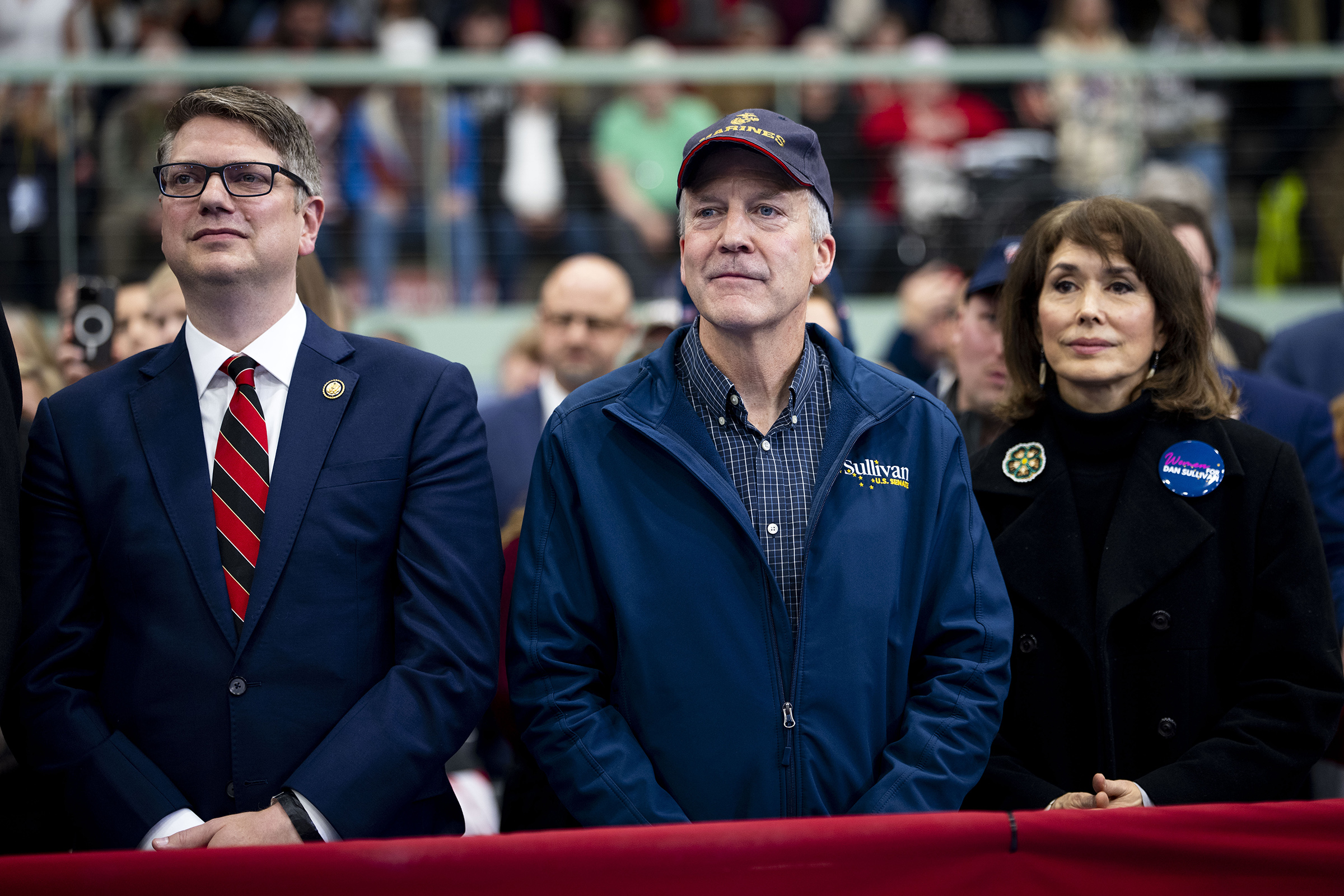
The latest phase of Trump’s strategy centers on the Justice Department, which asked a federal court to block the certification of the election if the Republican incumbent, Sen. Dan S. Sullivan, were to lose by a slim margin. The administration argued the presence of another candidate with a nearly identical name on the ballot has skewed the election toward Democrats.
The issue has already been litigated in the state: In June, the Alaska Supreme Court ruled that Daniel J. Sullivan Jr., a retired elementary schoolteacher, could appear on the ballot.
But Attorney General Todd Blanche maintained on Sunday that the federal government had a role in inserting itself into the process.
“We’re not saying that the federal government is going to decide who the next senator from Alaska is,” Blanche said on CNN’s State of the Union. He added: “But if it’s clear that there was confusion and that confusion led to an unjust, improper result that is not the will of the Alaskan voters, we want to make sure that the Alaskan system and the Alaskan state courts and the Alaskan electoral process can understand that in a way that lets them do the right thing.”
When asked for comment, the White House referred to an exchange Trump had with reporters on Saturday about his administration’s efforts to intervene in Alaska, a lawsuit he said was made at his direction. Republicans have asserted that the candidacy of the second Sullivan is a Democratic scheme to confuse voters. Democrats have said they have no connection to that candidate, who will appear on the ballot without any party affiliation and has said he is running a genuine campaign.
“It is a totally corrupt weaponization situation, and they shouldn’t be allowed to do it,” Trump said of the Democrats in Alaska. “So I recommended it to the DOJ. They looked at it, they agreed with me, and they’ve gone to court. Let’s see what happens. But that’s pure corruption.”
Election law specialists say Trump’s lawsuit in Alaska lacks legal basis and will likely fail. But that might not be the point.
The lawsuit is just one piece of a blitz of federal actions by the Trump administration to assert more control over the electoral process that have run into court challenges. Trump introduced a plan to have the U.S. Postal Service screen mail ballots, only to have it be blocked by the Supreme Court.
The administration has sued 30 states and the District of Columbia for refusing to cede to the federal government’s demands to turn over voter rolls. The administration has lost 27 of those cases. The other cases are pending.
Trump has deployed Homeland Security investigators to find evidence of illegal voting in states where it has claimed without evidence there is widespread noncitizen voting. A federal judge restricted much of that effort in the past week.
But with each claim of election fraud, Trump is creating another platform to sow doubt about the elections and, some state officials and election experts worry, lay the groundwork to challenge the results of the specific contests.
“The goal is obviously not to win the legal case because if so, that would be a complete failure because it’s going to fail,” said McNulty, senior policy director for Issue One, a nonpartisan group that tracks election issues. “The goal is to create doubt about the process and then use that doubt to justify later intervention or interference.”
Trump’s frequent attacks on the security of voting machines have raised fears among congressional Democrats and some election officials that he could be setting the stage to contest the results of the November elections.
The lawsuit in Alaska has added a new layer to those worries. The federal challenge could give cover to officials in the state to question the results of the election, experts warned.
The state’s Division of Elections is overseen by Alaska’s lieutenant governor, a Republican, who initially gave the green light to remove the second Sullivan from the ballot before he was reinstated by the courts. The lieutenant governor, Nancy Dahlstrom, previously challenged Rep. Mary Peltola, Sullivan’s primary Democratic opponent in the Senate race, for her House seat.
Trump has installed allies throughout the federal government who have echoed his false claims about voting. And across the country, a number of local election officials who have expressed sympathy with the election-denier movement now occupy key posts.
Benjamin Hovland, who was ousted by Trump from the independent, bipartisan federal Election Assistance Commission earlier this year, said he worried the various actions by the administration were serving a pretext for lawsuits after Election Day, based on dubious claims of noncitizen voting and fraud in the electoral process.
“What the DOJ is tipping its hand to is stepping in as essentially the president’s personal law firm to try to undercut the credibility of election results they don’t like,” Hovland said. “And that is a pretty horrible prospect.”
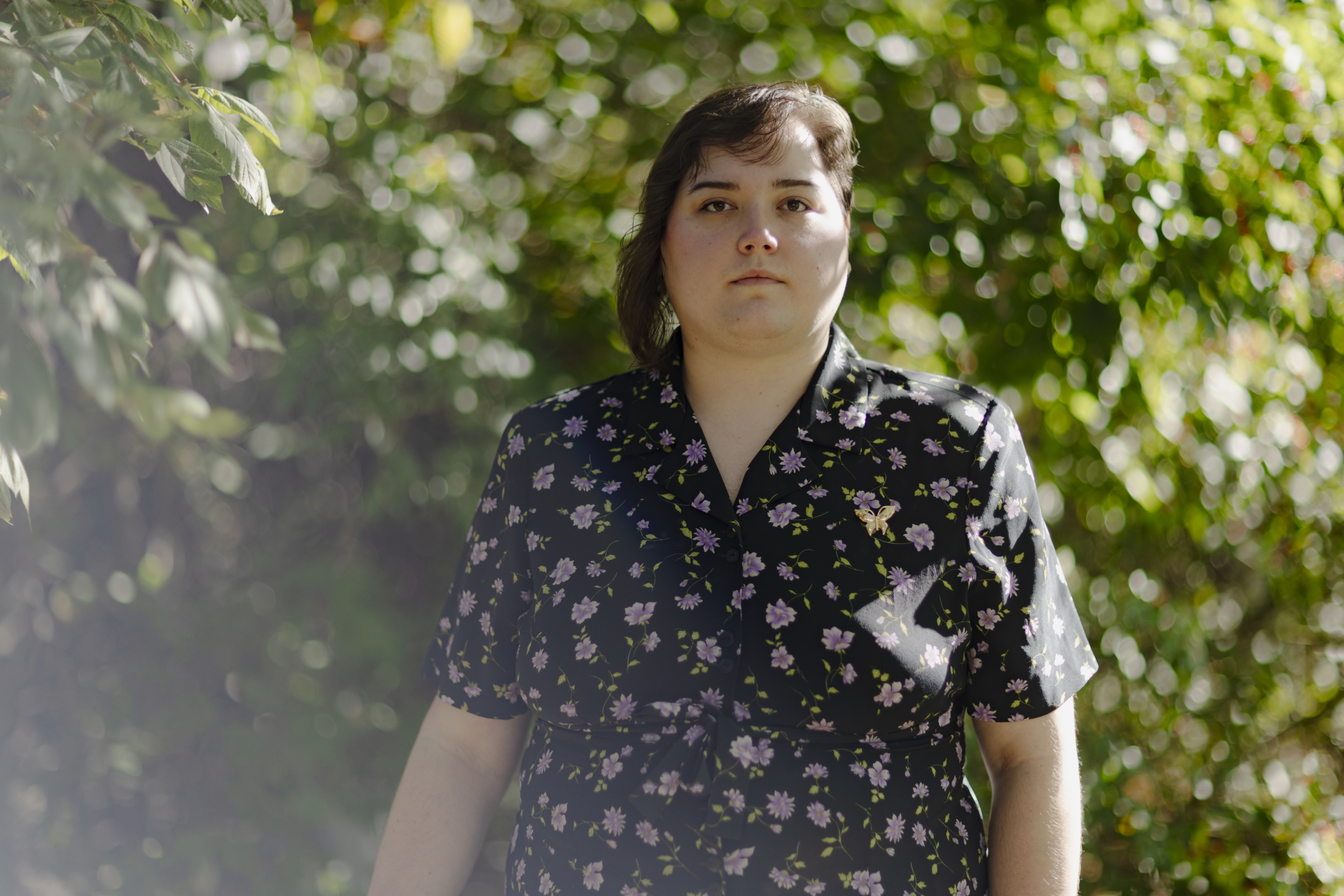
The night before President Donald Trump spoke in Youngstown, Ohio, this month, Blake Miley stayed up past 4 a.m., cutting out felt letters for a T-shirt that would say “RELEASE THE EPSTEIN FILES.”
The next evening, she went to the rally and stood up halfway through, revealing her shirt and yelling, “Fascist, fascist!” Almost immediately, Miley, 29, was tackled, held down, and punched by male rallygoers as the president mocked her from the stage, calling her “scum,” “low-class,” and “a fat guy.”
As Trump barnstorms the country hoping to revive his base before the midterm elections, he is returning to an old habit: heckling protesters and encouraging violence against them. In Georgia last week, he expressed his love for a supporter who had responded to a protester by “slapping the guy around,” and promised to bring the slapper to Washington. In South Carolina on Wednesday, he praised an “incredible” punch that a rallygoer landed on another protester, saying, “He got whacked, man!”
Ten years after Trump shocked some voters by saying he would personally like to punch a protester in the face at one of his rallies, these skirmishes are now met by many with a shrug. Miley, who is identifying herself publicly for the first time, said she suspects that no one in power much cares that she got beaten up.
“I knew there was a really good possibility that this would happen,” she said. “But I don’t blame myself. It is not right what they did to me.”
Miley attended the rally alone, and had intentionally seated herself among people who seemed older, she said. She hoped it would keep her safe. But as soon as she started yelling, a man grabbed for her neck and then shoved her backward, video of the episode shows. When she stood back up, another man appeared to pull her to the ground, put her in a headlock, yank her hair, and punch her in the face.
She remembers being hit twice, unable to get up until Mahoning County sheriff’s deputies intervened about 30 seconds into the brawl.
“What he doesn’t know is that his mother and father voted for me,” Trump continued about Miley, who is a woman. “Oh, he looks so terrible. And he’s going to get home and he’s going to get smacked.”
The deputies escorted Miley out of the arena. The men who attacked her were left alone. One raised his fists and high-fived those around him.
In the arena’s parking lot, Miley was shaking so severely that onlookers called her an ambulance. She said she spent a few hours at the hospital, was discharged, and drove in a daze to her mobile home north of Columbus. She threw her Epstein shirt in her closet and collapsed onto her bed.
Back in Youngstown, the Mahoning County Sheriff’s Department was getting flooded with angry calls from people who had seen video of the incident, demanding to know why no one had been arrested. Sheriff Jerry Greene said he had as many 800 phone messages, many of them containing raw abuse.
Video footage, Greene said, clearly showed a woman being punched in the face. “I know what people saw, and if I saw that video, too, I’d be like, ‘My God, why didn’t the police do anything?’”
Greene, who had changed parties to become a Republican in 2023, said that he is, in fact, doing something. He reviewed body camera footage, which he said shows that his deputies were pushing through the crowd to reach Miley and did not witness the punch.
He has identified three men who he said took part in the assault, including a New Jersey resident who said in a now-deleted Facebook post that he and two friends had “subdued her and threw her to the concrete.” Investigators believe the other two men, including the one who threw the punch, are local; none could be reached by the New York Times.
The sheriff said that all three would be interviewed in coming days. He is waiting for medical records from Miley’s trip to the emergency room, he added, to determine whether her injuries were severe enough to warrant felony charges instead of misdemeanors.
Three days after the rally, one of the sheriff’s investigators tracked down Miley through her mother, who, contrary to Trump’s presumption, does not vote.
She had not told her parents she was going to the Trump rally. Although she had been to a few local protests before, facing down the president and his most fervent supporters directly was out of character for Miley, who spends most of her days at home.
She frequently has seizures, she said, and after years of passing out while working at warehouses, nursing homes, and retail stores, she has not held a job since April. Lately, she relies on financial help from her boyfriend, who works in an auto-parts store, and her mother, who is a nurse.
“Most days are quite monotonous for me,” she said. “I get up. I might wash dishes or do laundry. I work on my art.”
When she scrolls, her feeds seem to constantly be filled with news about Trump and how he is changing the country.
She is worried about the prospect of losing Medicaid, which is likely to happen next year unless she starts working, volunteering, or going to school 80 hours per month under a new law that Trump championed. She is worried about the cost of gas and groceries for her grandparents, who are still working at ages 79 and 82. But Miley is particularly bothered about the millions of documents related to sex offender Jeffrey Epstein, she said, because of her own experiences with abuse in a past relationship.
She has watched every documentary she can find on Epstein, who before his arrest and subsequent suicide routinely communicated with politicians, celebrities, and business executives — including Trump. Many of their names appear in the files of documents, some of which the Justice Department started releasing, with redactions, last year after months of resistance from the president.
Most days this year, as she waited for her boyfriend to come home for dinner, Miley felt as if she could do little about Trump’s actions. But this month, a video came across her TikTok feed of a protester interrupting a Trump rally in Vandalia, Ohio, and being escorted out.
It was something simple, something doable. The president, she realized, would be back in her state just a few days later.
She said she did not coordinate with any formal protest group, and despite Trump’s allegation that she was paid, went of her own accord.
In the days after she came home with cuts on her face and bruises on her arms, she read dozens of posts about the incident. She noticed the commenters who called her brave, who seemed to far outweigh the ones that made fun of her. It bothered her that there were AI-generated images of the scene, but one showed her with her arms raised, her face defiant. “I’m with her,” the caption said.
A high-profile civil rights attorney, Subodh Chandra, is representing her for free. Chandra said he has been in touch with the sheriff, and he feels “persuaded that they are trying to do their jobs.” If arrests are not made, he said, Ohio has a law allowing citizens to file charges for a judge to review.
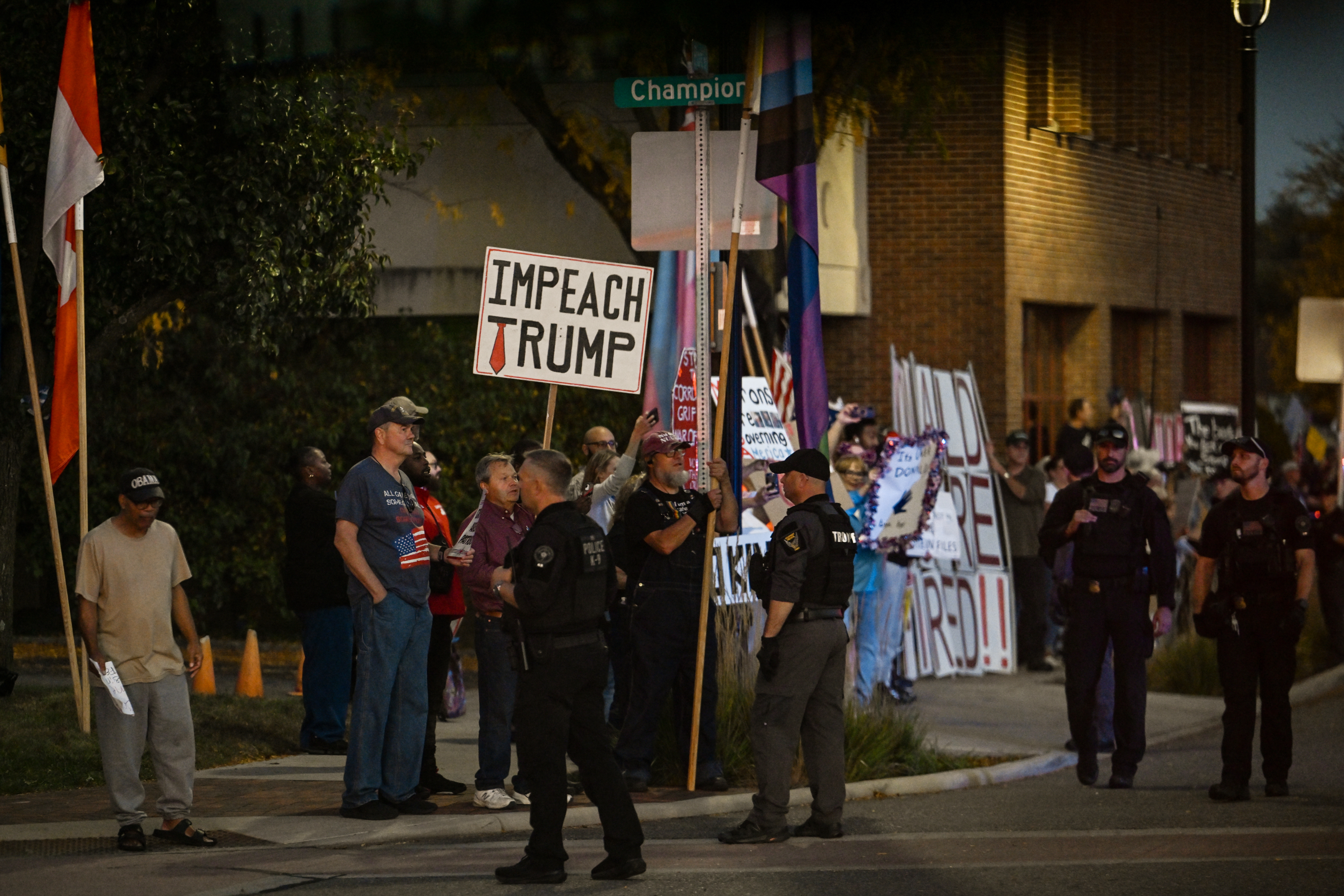
FILE — President Donald Trump on stage at a rally where protester Blake Miley yelled out “facist” and revealed a T-shirt with the message “Release the Epstein Files,” in Youngstown, Ohio, Oct. 12, 2026. Miley was held down and punched by males near her as Trump mocked her from the stage, but nobody has been charged. (Kenny Holston/The New York Times)KENNY HOLSTONFILE — Demonstrators outside the venue where Blake Miley yelled out “facist” and revealed a T-shirt with the message “Release the Epstein Files,” while President Donald Trump was on stage during an election rally in Youngstown, Ohio, Oct. 12, 2026. Miley was held down and punched by males near her as Trump mocked her from the stage, but nobody has been charged. (Kenny Holston/The New York Times)KENNY HOLSTON
As President Donald Trump stares down what could be a bruising midterm election in November for the Republican Party amid his record-low approval ratings, his administration has identified a familiar target to place some blame: Canada.
Last week, the U.S. Embassy in Ottawa, Ontario, said Canada’s “ministers and premiers openly describe plans to influence American politics in official documents and public appearances.”
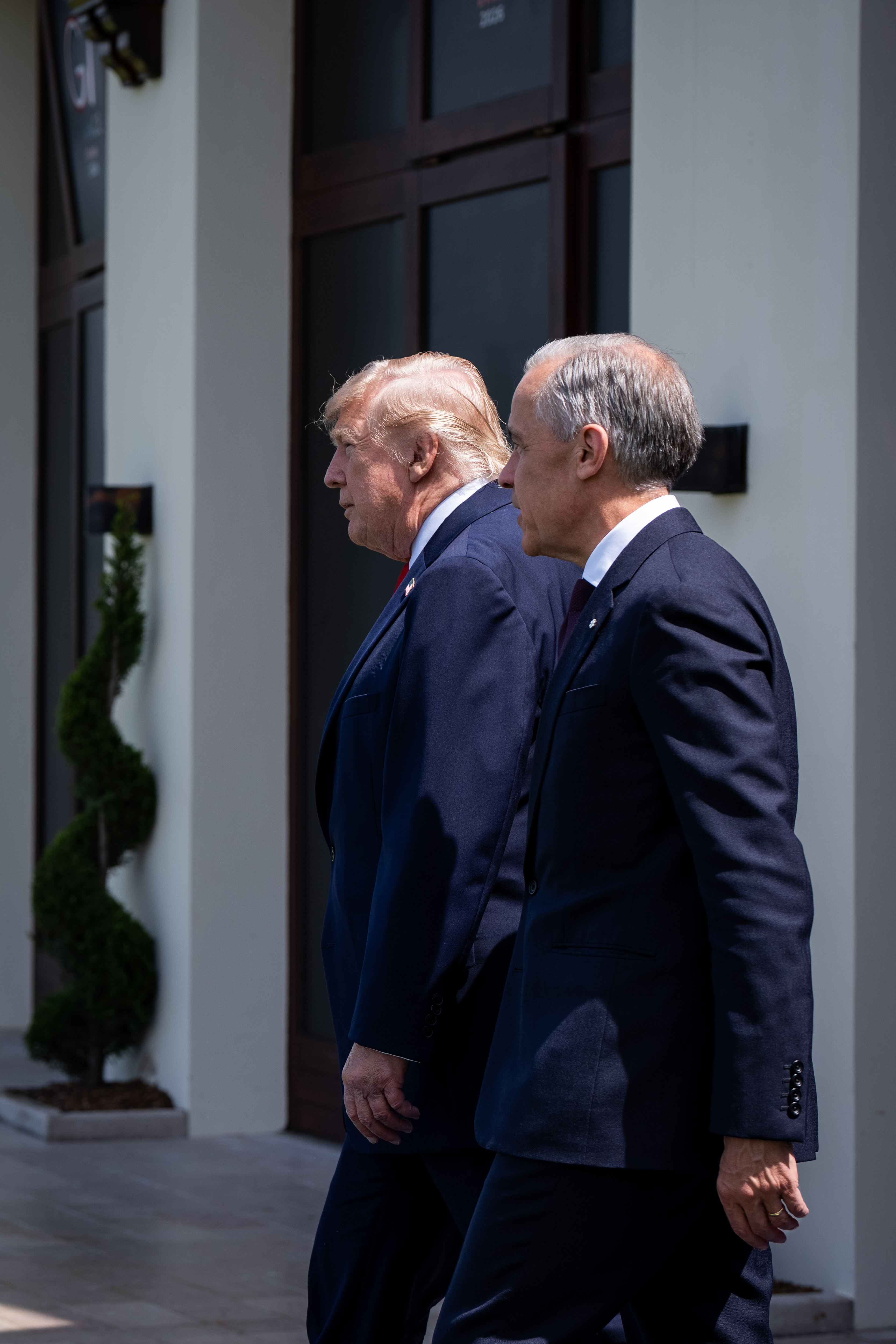
Prime Minister Mark Carney of Canada said in a news conference Friday that those claims had “no merit” and that his government was ready to “drop everything” to negotiate an end to its costly trade war with the United States.
The Trump administration’s claims of election interference added to a long list of animosities that have been piling up between the two countries since Trump’s second term began.
What are the accusations?
In a statement Wednesday, the U.S. Embassy accused Canadian officials of meeting with Democratic lawmakers, urging the use of retaliatory levies to hit Republican states, and running anti-tariff political advertising campaigns in the United States.
The embassy zeroed in on Canada’s industry minister, Mélanie Joly, who has said or implied on multiple occasions that her nation’s trade policy was designed to strategically hit Republican states. In a news conference in August, shortly after trade talks had collapsed, Joly said Canada would impose tariffs on “products that will target states in the U.S.” to “put political pressure” on the Trump administration.
The embassy also said she met in September with Democratic officials in Boston and Chicago. Joly said the goal of the trip was to discuss trade and investments with individual U.S. states and companies.
In addition, the embassy’s statement recalled an incident in October of last year in which Doug Ford, Ontario’s conservative premier, announced he would run an advertisement that included sound bites of President Ronald Reagan criticizing tariffs. In response, the Trump administration halted trade negotiations altogether.
Pete Hoekstra, the U.S. ambassador to Canada, has since walked back his office’s accusations.
“Someone could assume” based on Canadian officials’ actions that they were trying to interfere in U.S. elections, Hoekstra said on a Canadian politics podcast recorded Wednesday and released Friday. “As an embassy, we hadn’t reached that conclusion.”
Trump has repeatedly drawn Canadians’ ire by calling the nation America’s “51st state,” and by moving to rename Lake Ontario, which straddles the border between the two countries, “Lake America.”
But the greatest strain on the neighbors’ relationship has been their trade war. Shortly after Trump returned to office, he imposed tariffs on Canadian goods in return for what he said was the country’s role in allowing fentanyl to enter the United States. Canada retaliated with tariffs of its own, and the dispute has devolved into an ongoing retaliation hurting businesses and consumers in both countries.
On Friday, the Trump administration announced that it would shuffle its tariffs on Canadian products, exempting some items and applying new tariffs to others, in what appeared to be a last-minute bid to provide relief to American farmers before the midterm elections.
How has Canada responded?
At a news conference in Turkey on Friday, Carney said Canada took pains to avoid the appearance of meddling in U.S. politics. And he dismissed any notion that Canadian officials had favored one party or another in its dealings.
“We have no intention to interfere with their democratic processes,” he said.
Joly also defended herself against the U.S. Embassy’s claims Thursday. “Indeed, I met with Democrats in the U.S., but I met with Republicans,” as well, she said.
On Wednesday, Ford told reporters he had “no interest” in engaging in election interference.
“We’re going to focus on what we can do here in Ontario, and in Canada, to make sure we protect our economy, protect the people and protect communities,” he said. “And the people of the United States will make that determination in the midterms.”
Stewart Prest, a political science lecturer at the University of British Columbia, said the Canadian actions cited by the U.S. Embassy could have been intended to encourage policy changes, not to hurt Republicans at the ballot box.
Didn’t U.S. officials meet Albertan separatists?
In his statements, Carney noted that some Trump administration officials met with Albertan separatists this year, before the province’s referendum on holding a vote on whether to secede from Canada. (Voters roundly rejected it.)
“The resources of the media here can make their own judgment about the extent to which very, very senior U.S. officials have directly intervened, so to speak, in Canadian sovereignty, Canadian democratic processes,” Carney said.
White House and State Department officials confirmed that State Department officials met with activists in the separatist movement in Washington three times last year. But the Trump administration has denied making any material promises to Albertan separatists.
“The department regularly meets with civil society types,” the State Department said in a statement. “As is typical in routine meetings such as these, no commitments were made.”
To Prest, the political science lecturer, the Trump administration’s rhetoric and involvement in the Albertan separatist movement showed that its latest claims of election interference by Canada smacked of hypocrisy.
“The accusation is itself a kind of confession,” he said. The administration was “trying to create an equivalency where I don’t think any exists.”
DETROIT — Former President Barack Obama on Saturday seized on what he described as cruelty and indecency coming from President Donald Trump and his Republican allies, stepping into one of the nation’s ugliest midterm fights as he worked to rally Democratic voters in two Midwestern battlegrounds.
First in Ohio, Obama took aim at Republican gubernatorial candidate Vivek Ramaswamy, who has doubled down on an advertising campaign featuring the estranged mother of Democratic rival Amy Acton. Trump and Vice President JD Vance have also defended the ad, even as Republican leaders across Ohio, including Gov. Mike DeWine, have called for its removal.
“In recent days, we’ve seen there is no line he will not cross, no low he will not sink to,” Obama said of Ramaswamy, noting that Acton has “spoken movingly about her painful childhood and all she’s experienced: abuse, neglect, and homelessness.”
Later in Michigan, Obama condemned critics of Senate candidate Abdul El-Sayed, suggesting that they’re using his name or his faith to tear him down.
“We have seen this movie before. I starred in it,” Obama told a packed high school gym in Detroit. “I’ve got a long-form birth certificate to prove it.”
“Abdul is as Michigan as it gets,” he added.
Obama, 65, remains the Democratic Party’s best motivator nearly a decade after leaving the White House. And he’s taking his star power on the road in the final days of the midterm elections, which will help determine the balance of power in American politics on Nov. 3.
Trump cast his own ballot on Saturday in Florida, where he defended the Ramaswamy ad, which has emerged as a national flashpoint a little more than a week before Election Day.
“The mother said that Amy Acton is a liar, and she’s no good,” Trump said. ”And you know what? I don’t think you can get a better reference on that.”
The Ramaswamy campaign video features Acton’s birth mother, Donna Arthur, calling her “a liar” and insinuating she has mental health issues.
Acton, Ohio’s COVID 19-era health director, has made no secret of facing homelessness and abuse as a child. Arthur lost custody of her children after their stepfather, Arthur’s husband, was indicted on a charge of rape involving Acton.
The abuse allegedly happened from December 1976 to April 1978. Cledith Arthur failed to show for a court appearance and became a fugitive. Donna Arthur remained married to him until his death in 2004.
Appearing before Obama, Acton spoke as if addressing Ramaswamy directly.
“My opponent has chosen to exploit, intentionally, my childhood to save his stumbling campaign, but it’s not going to work,” she said. “Decency still matters.” She added: “Mr. Ramaswamy, you are not just out of touch, you are out for yourself and you are a danger to my state. Apparently there is no low to which you won’t stoop.”
Although Ohio has become more reliably Republican, it’s been a hotly contested battleground this year. Trump and Vance have both visited the state in recent weeks to drum up support for Sen. Jon Husted and Ramaswamy. And the controversy over Ramaswamy’s ad has ratcheted up the already high temperature.
Michigan, too, is a critical state this midterm season, with high-stakes contests for the Senate and governor.
While Obama addressed both races, he offered a passionate defense of El-Sayed, a former public health official running against former Rep. Mike Rogers, a Republican.
The former president pushed back against those who call El-Sayed a radical, declaring that “Abdul shares my values.” He also acknowledged that El-Sayed was critical of him after his 2012 reelection for not following through on all of his progressive campaign promises.
El-Sayed wrote that Obama “was not the right choice — he just wasn’t the wrong one.”
“Some of these folks say, well, you know, Abdul didn’t like some of the things you did as president,” Obama said in Detroit, wearing a blue shirt with no tie, his sleeves rolled up. “You know who else doesn’t agree with everything I do? Michelle Obama. Michelle Obama, about five times a day.”
Democrats hoped that Obama’s appearance in the city, which is three-quarters Black, could bolster support for El-Sayed among Black voters. In the primary, his opponent Haley Stevens won Wayne County, which includes Detroit, by about 6 percentage points. Former Vice President Kamala Harris, the first Black and South Asian vice president, campaigned for El-Sayed in September.
Cheryl McWilliams, 67, said Obama’s speech “pumps you up to vote,” and she’s hoping to see high turnout in the midterms.
“If Detroit doesn’t vote, whoever’s running is going to lose, period,” McWilliams said. “I’m just hoping we can reach voters that don’t vote. They think it doesn’t matter, and it does.”
Chunnika Hodges, who lives in Detroit and canvassed for El-Sayed on Saturday, said some Black voters are supporting Rogers because they don’t think anything has changed after years of voting for Democrats. Some are also wary of El-Sayed because of his progressive policies, Hodges said.
“We don’t lean to the conservative, but we have seen that within our community,” Hodges said. “There are conservative Blacks, conservative Democrats.”
While Obama talked up Democratic candidates in Ohio and Michigan, he also spoke at length about Trump.
He accused the Republican president and his family of rampant corruption and called out his inability to lower costs, noting that Trump has instead focused on building a new White House ballroom and helipad on the South Lawn.
“I don’t know if you’ve noticed, but he seems very focused on home renovation,” Obama quipped. “He should be on HGTV.” He went on: “There’s gold everywhere. He’s got the White House looking like Saddam Hussein opened a Cheesecake Factory.”
The former Democratic president acknowledged that the nation has Trump for another two years, until his term ends. But voters are not stuck with Trump’s allies, he said.
“We’re not stuck with a spineless Congress and Republican governors who are handling lawlessness and carelessness and cruelty and indifference for working people,” Obama said. “After two years of chaos and cruelty and corruption and incompetence … you get a chance to say enough is enough.”
Obama will headline a rally in Georgia this week with Sen. Jon Ossoff and candidate for governor Keisha Lance Bottoms. Trump, campaigning in Perry, Ga., on Saturday evening with their Republican rivals, made several references to Obama’s Michigan event, insisting “the place was empty.”
Democratic congressional candidates in a pair of Pennsylvania swing districts have pulled ahead of Republican incumbents beforethe high-stakes midterm elections — putting them on track to reclaim seats that President Donald Trump helped flip two years ago, according to a new Inquirer/New York Times/Siena University poll.
The results are within the margin of error. Between 3% and 6% of voters remain undecided, according to the survey of about 400 likely voters in each of the districts from Oct. 16 to 22.
But as Democrats make an aggressive push to win control of the U.S. House amid Trump’s lagging approval ratings, the polling underscores where the party sees two of its best chances of defeating Trump-aligned Republicans — not just in the state, but across the country.
“I just feel Cognetti has the right outlook for Pennsylvania,” said Mercedes Vinsko, a 23-year-old law student from Shavertown, Luzerne County, who wants Democrats to “flood” Congress in the midterms. “I’m hoping a blue wave will trend in a better direction for America.”
The 5-percentage-point leads held by Cognetti and Brooks in their congressional districts represent Democrats’ widest advantages heading into the final stretch of four battleground races in Pennsylvania, according to the poll.
In the Bucks County-based 1st Congressional District, where Republican U.S. Rep. Brian Fitzpatrick is seeking another term, Democrat Bob Harvie leads by 2 percentage points. In the Harrisburg-based 10th Congressional District, Republican U.S. Rep. Scott Perry and Democrat Janelle Stelson are tied, the poll found.
Both parties have invested heavily in all four matchups. Collectively, they have funneled more than $116 million into television ads and have brought in national party leaders to stump for their candidates.
Nowhere have the candidates and their allies spent more, though, than in the Lehigh Valley-based 7th and Scranton-based 8th Congressional Districts, where Mackenzie and Bresnahan narrowly beat multi-term Democrats in 2024. As Trump won the state and surged to the White House that year, Mackenzie and Bresnahan combined to win 10,300 more votes than their opponents out of nearly 790,000 votes cast.
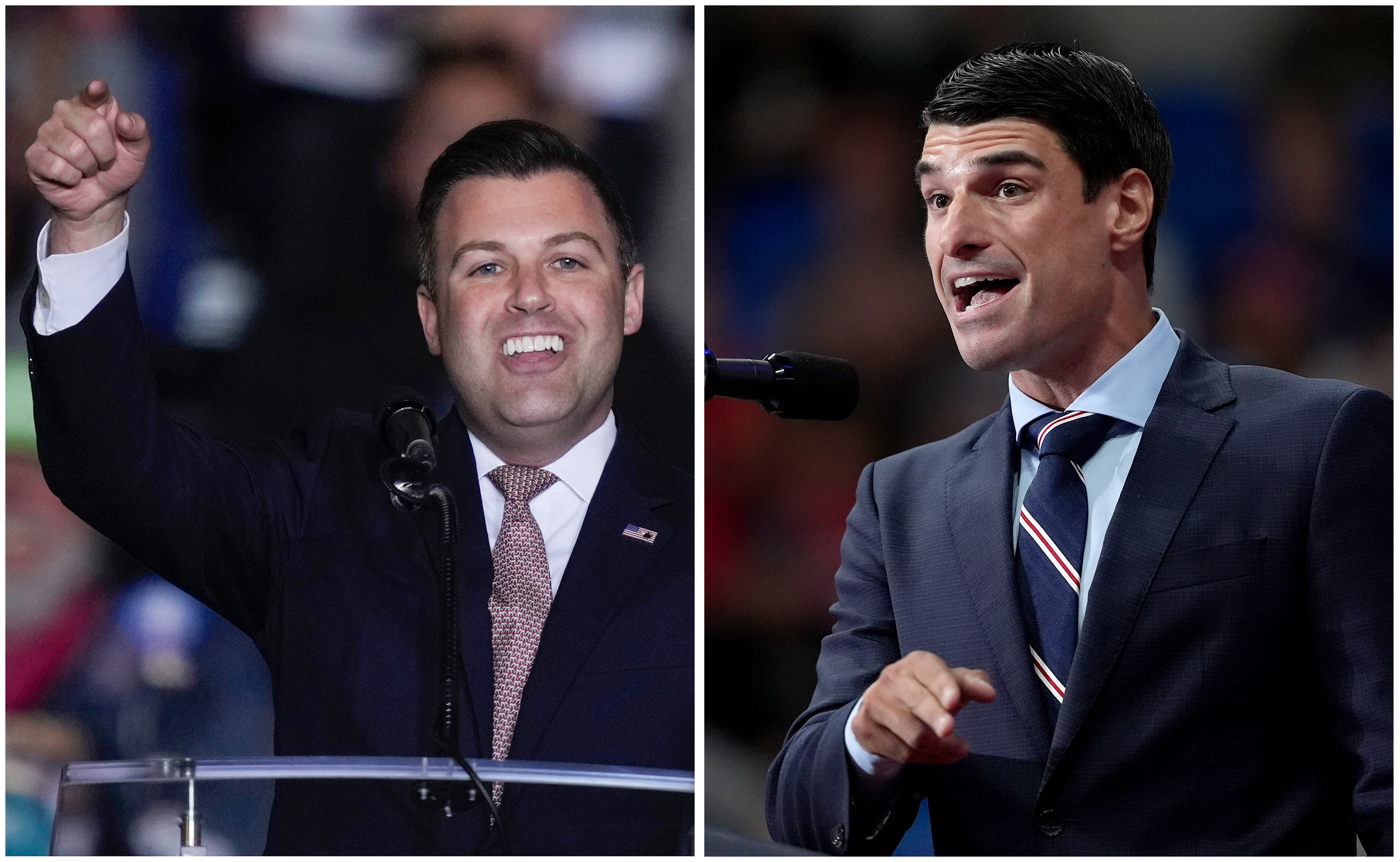
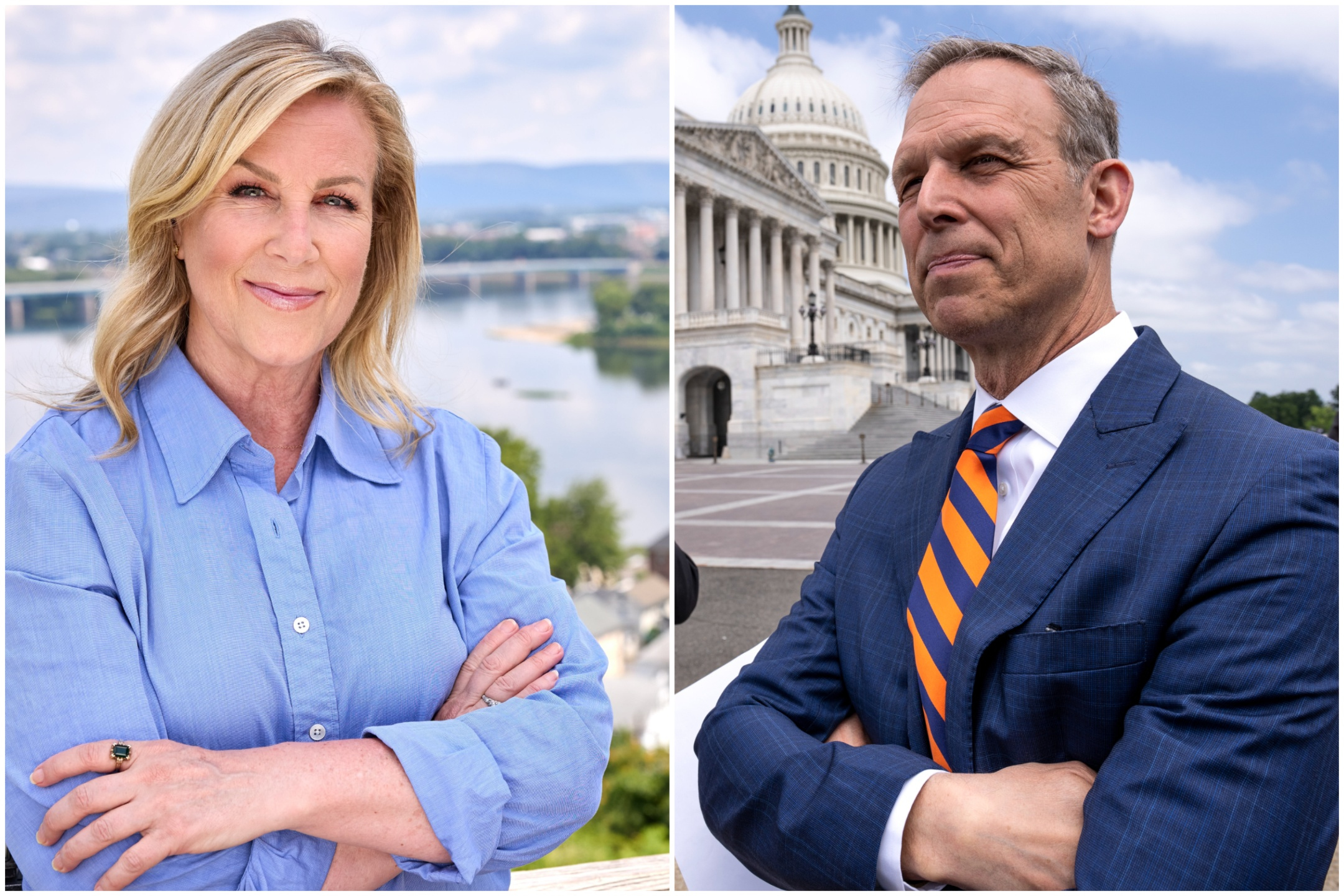
U.S. Rep. Ryan Mackenzie (left) and U.S. Rep. Rob Bresnahan (right).AP / File photos
Two years later, both freshman lawmakers have closely aligned themselves with the president — promoting his economic agenda and defending controversies like the war in Iran — while Democrats hope that unpopular alliance benefits their nominees. Trump’s job performance gets low grades across both districts, and particularly in the Lehigh Valley region, where his approval sits at 37%, according to the poll.
Another factor working in Democrats’ favor, observers say, is Gov. Josh Shapiro’s expected strong performance at the top of the ticket as he seeks reelection, which could elevate downballot candidates from his party. In the Lehigh Valley district, Shapiro’s 19-percentage-point lead over Republican Stacy Garrity matches the statewide result from The Inquirer/New York Times/Siena poll in September. In the Northeastern Pennsylvania district, Shapiro leads by 11 percentage points, the latest poll found.
Former U.S. Rep. Charlie Dent, a Republican who represented the Lehigh Valley seat until it flipped blue in 2018, said Shapiro’s commanding performance is “compounding” the issues around Trump’s favorability that are dragging down GOP candidates across the country.
“The challenge for Pennsylvania Republicans is the governor’s race, … Trump’s approval rating, and just the overall midterm environment,” Dent said, calling it a “daunting” mix.
7th District: Mackenzie vs. Brooks
Among the four competitive Pennsylvania races, the 7th District was the first to move further in Democrats’ direction in recent months.
Two frequently cited nonpartisan election ratings groups reclassified the race from a “toss-up” to one that “leans Democratic” as the national environment changed and as Brooks and his national allies poured money into his campaign.
The president of the Pennsylvania Professional Fire Fighters Association, Brooks was considered a top Democratic recruit after Shapiro encouraged him to run and he consolidated support from across the party’s ideological spectrum. Over the summer, he raised $2.6 million — more than three times as much as Mackenzie brought in and, according to Brooks’ campaign, more than any previous candidate over a similar period in the Lehigh Valley.
“We are running this like we’re losing,” Brooks said in an interview last week.
(function(){function e(){window.addEventListener(`message`,function(e){if(e.data[`datawrapper-height`]!==void 0){var t=document.querySelectorAll(`iframe`);for(var n in e.data[`datawrapper-height`])for(var r=0,i;i=t[r];r++)if(i.contentWindow===e.source){var a=e.data[`datawrapper-height`][n]+`px`;i.style.height=a}}})}e()})();
Mackenzie, a former state representative, has spent much of the recent weeks of the race lobbing attacks at his opponent — alleging Brooks has a troubled business background and personal life. In mailers that went out to voters last week, Mackenzie’s campaign depicted Brooks in a prison jumpsuit with the message, “Is jail the next stop for Bob Brooks?”
Brooks has denounced the accusations, which focus on whether he was required to pay for workers’ compensation insurance for his small business. Brooks said he was not required to do so, and his lawyer sent a cease-and-desist letter to Mackenzie’s campaign, which the Republican rejected, then doubled down on the message.
Christopher Karabinus, 51, an educator who lives in Northampton County and responded to the poll, said that he has been inundated with negative political advertising in recent weeks but that it has “zero impact” on how he decides whom to vote for.
He said he is voting for Mackenzie because he trusts that Republicans can get the cost of living “under control.” He said his message to elected officials from both parties is simple: “Democrat, Republican, just unite everybody, solve our problems, make it a better place. Let’s stop the fighting, let’s stop the arguing, and let’s make it a better country.”
Donald Jennings, 85, who lives outside Allentown in Lehigh County, said he plans to vote for Democrats up and down the ballot. He said he has not seen “any Republican’s bills help anybody,” citing cuts to healthcare coverage under the One Big Beautiful Bill Act.
“I’m just hoping that [Brooks] will be able to convince people to pass bills that will lower the costs and increase our freedoms,” Jennings said, adding that a Democratic-controlled Congress could serve as a check on the Trump administration.
According to The Inquirer/New York Times/Siena poll, 59% of voters in the district disapprove of how Trump is handling his job as president. About the same percentage of people believe Mackenzie supports Trump too much, 39%, as those who think his support for Trump is “about right,” 35%.
Rating the candidates’ abilities to handle issues in Congress, the voters polled said Brooks would handle the cost of living, foreign wars, data centers, and corruption better than Mackenzie. Voters were split evenly on who has better character between Brooks and Mackenzie, while more believed Brooks would do “what’s best for ordinary Pennsylvanians.”
(function(){function e(){window.addEventListener(`message`,function(e){if(e.data[`datawrapper-height`]!==void 0){var t=document.querySelectorAll(`iframe`);for(var n in e.data[`datawrapper-height`])for(var r=0,i;i=t[r];r++)if(i.contentWindow===e.source){var a=e.data[`datawrapper-height`][n]+`px`;i.style.height=a}}})}e()})();
8th District: Bresnahan vs. Cognetti
Pennsylvania’s 8th District is the only one of the four competitive races in the state that is still considered a true “toss-up” by the ratings experts.
(function(){function e(){window.addEventListener(`message`,function(e){if(e.data[`datawrapper-height`]!==void 0){var t=document.querySelectorAll(`iframe`);for(var n in e.data[`datawrapper-height`])for(var r=0,i;i=t[r];r++)if(i.contentWindow===e.source){var a=e.data[`datawrapper-height`][n]+`px`;i.style.height=a}}})}e()})();
Bresnahan, who led his family’s electrical contracting business before entering Congress, has largely backed the president’s agenda but distanced himself from his party’s positions on organized labor and has earned union support in his campaign for a second term.
Cognetti, who originally ran for and won the Scranton mayor’s office as an independent, has been a prolific fundraiser — raising $2.5 million to Bresnahan’s nearly $1 million in the recent quarter — and received the backing of national Democrats. She has relentlessly targeted Bresnahan over his stock trading while in office, making fighting public corruption a hallmark of her campaign.
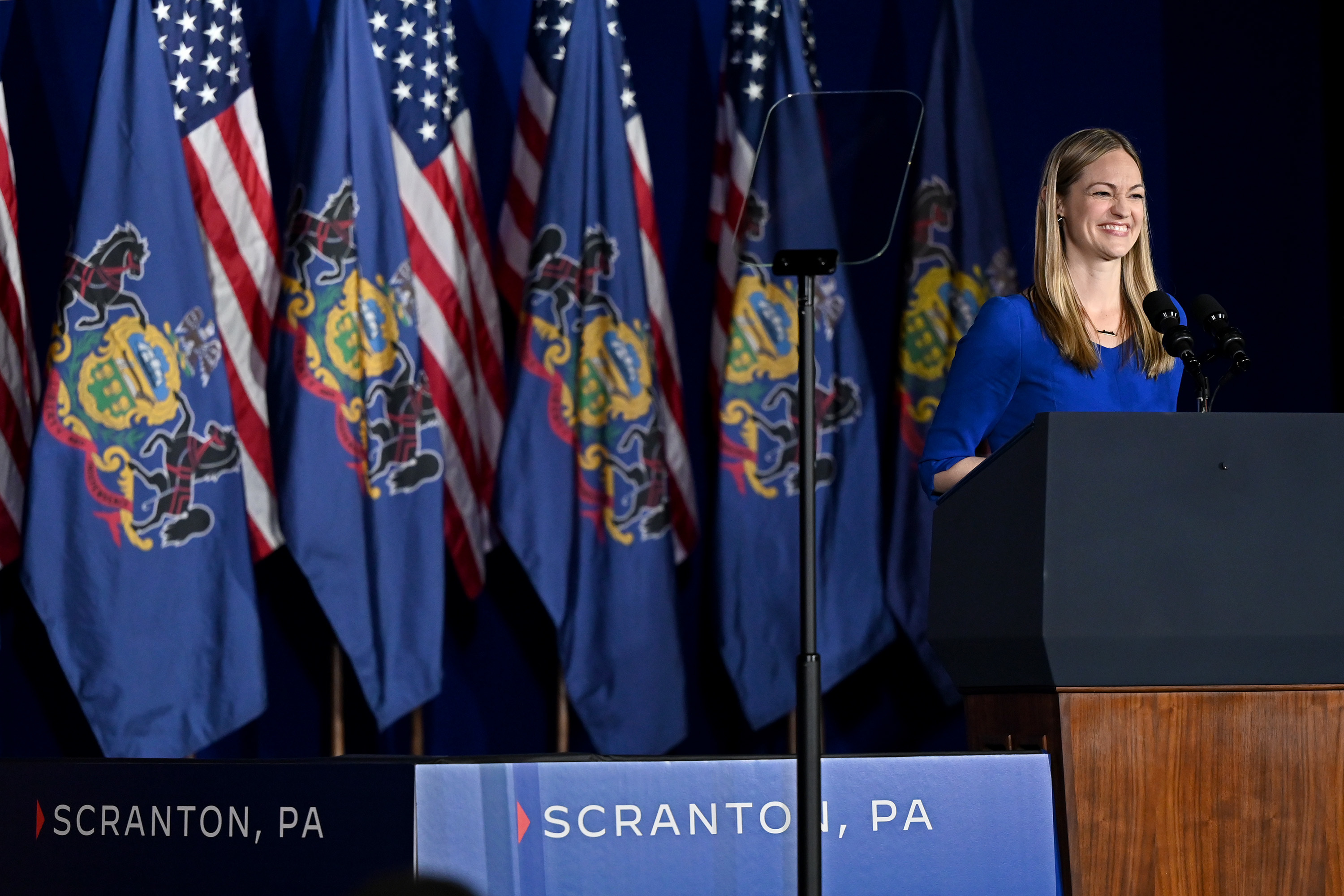
Scranton Mayor Paige Gebhardt Cognetti on Apr. 16, 2024. Tom Gralish / Staff Photographer
But Cognetti’s message appears to have gained some traction, according to the poll, which found 51% of voters trusted her to handle issues of corruption compared with 40% who trusted Bresnahan — the largest gap on the topic in any of the matchups across the four competitive districts.
“I just don’t trust him,” said Sandra Carson, 79, a semiretired lawyer and Democrat living in Stroudsburg, Monroe County. “I never have. It’s a vibe thing. Something about him makes me feel that he’s self-interested, and that was long before there was a problem about him trading stock[s] in Congress.”
Carson said she uses her gut rather than disciplined analysis to judge candidates, and the incumbent makes her uneasy.
“He just seems unworthy to me,” Carson said.
(function(){function e(){window.addEventListener(`message`,function(e){if(e.data[`datawrapper-height`]!==void 0){var t=document.querySelectorAll(`iframe`);for(var n in e.data[`datawrapper-height`])for(var r=0,i;i=t[r];r++)if(i.contentWindow===e.source){var a=e.data[`datawrapper-height`][n]+`px`;i.style.height=a}}})}e()})();
Ashley Oliver, 40, of East Stroudsburg, Monroe County, said she always votes Democratic. But this year, the mortgage banker supporting Cognetti said, she is looking forward to voting for change because of ongoing affordability issues. She said she was laid off recently and needed help with food and utilities, leaving her to use programs like SNAP and LIHEAP that she believes Republicans do not support.
“First they make things hard, then they don’t like giving social assistance to help us,” she said. “They’re not the party for that.”
Michael Giordano, 70, of East Stroudsburg, Monroe County, said he is more independent-minded and is voting for Bresnahan. Cognetti is “a little too progressive-liberal,” he said, adding that he likes “the idea of a person with more traditional thinking running the country.”
Immigration, in particular, is on his mind as he votes.
“I’ve been saying for years that if we keep letting the world’s poorest people flood our country, we’ll become a poor country,” Giordano said. “That means we’ll need more housing, energy, water.”
According to the poll, voters tilt toward trusting Bresnahan more than Cognetti on immigration issues. Cognetti led on all other issues voters were asked about: the cost of living, foreign wars, data centers, and corruption. Voters were also more likely to say that she had good character and that she would do “what’s best for ordinary Pennsylvanians.”
Don Levy, director of the Siena Research Institute, which conducted the poll, said that Democrats consistently outranking Republicans on the ability to handle the cost of living — which remains the top issue on voters’ minds — is a sign of the electorate connecting Trump’s handling of the economy to the downballot Republican candidates. And Trump’s message, polling has shown, is not necessarily meshing with voters’ realities, he said.
“When the president stands up and says, ‘It’s a golden age of American economy,’ you know, people’s, voters’ heads blow up,” Levy said. “You know, because for most people it’s not.”
Staff writer Fallon Roth contributed to this article.
U.S. Rep. Scott Perry and his Democratic challenger, Janelle Stelson, are in a dead heat in their rematch to represent the Harrisburg area in Congress, despite deep dissatisfaction with President Donald Trump among voters in the district.
Perry is the only Republican incumbent in the state’s four swing districts who did not trail his Democratic opponent in the set of surveys released Sunday. The four districts could decide control of the U.S. House.
Perry, who has unabashedly embraced Trump, eked out a narrow win over Stelson two years ago when Trump won the district and the state, but this year the president is underwater in the district, with 55% disapproval compared with 43% approval, according to the poll of 404 likely voters conducted between Oct. 16 and 22.
(function(){function e(){window.addEventListener(`message`,function(e){if(e.data[`datawrapper-height`]!==void 0){var t=document.querySelectorAll(`iframe`);for(var n in e.data[`datawrapper-height`])for(var r=0,i;i=t[r];r++)if(i.contentWindow===e.source){var a=e.data[`datawrapper-height`][n]+`px`;i.style.height=a}}})}e()})();
Voters in the poll gave Stelson, a former TV anchor, a more favorable view when judging the candidates on issues related to character, the cost of living, and tackling corruption, but they gave Perry the edge on handling foreign wars and immigration.
“I think [Perry] has done a pretty good job,” said Richard Shroy, 73, a Republican. He got to know Perry while working in Dauphin County and said the incumbent was competent and reliable.
Gabriel Robinson, 52, said the economy has been a drag on him and is among his top concerns heading into the midterm elections.
“I’m feeling it at the tank. I’m feeling it at the grocery store. I’m feeling it in my industry,” said Robinson, a Democrat from Cumberland County.
An HVAC salesman, he said his sales are down as more customers try to fix their older appliances rather than buy new ones. He is voting for Stelson, he said, because he is ready for a change in Congress.
“Scott Perry is 100% with Trump,” he said.
Splitting the ticket
Democrats are hoping Harrisburg and its affluent suburbs will be part of the next wave of districts to flip blue, as Philadelphia’s collar counties did years before.
Perry, first elected to Congress in 2012, has held on to his seat in multiple elections even when being out-raised, including in 2024 against Stelson. (She also holds a cash advantage this year.)
But this time around Gov. Josh Shapiro is also on the ballot — polling strongly in the district — and Democrats are hoping he can help elevate Stelson and other battleground candidates.
A 57% majority of voters in the district approve of the governor, the poll found,compared with 38% who disapprove.
But even in an unfavorable environment for Republicans, Stelson has not won over all of Shapiro’s supporters, a bloc that includes 14% of 2024 Trump voters.
Cathy Hughes, an unaffiliated voter who voted for Trump three times, said she plans to split her ticket andvote for Shapiro and Perry this year.
“I feel people have to give President Trump his next two years to get everything done, and I think in another year, we will be rolling,” said Hughes, 74, of York County. She sees reelecting Perry as key to that mission and saidStelson would be an obstacle.
“Democrats are going to go to Congress, and the first thing they’re going to do — and I don’t care what anybody says — is impeach President Trump,” said Hughes, a retired nurse.
For longtime residents, each candidate also brings familiarity. Perry has represented the district for years, and Stelson, a longtime local news anchor for NBC affiliate WGAL, was broadcast on TV screens in many of their homes.
“I grew up in the area, so I know her as our TV news anchor and always thought she was pleasant,” Robinson said.
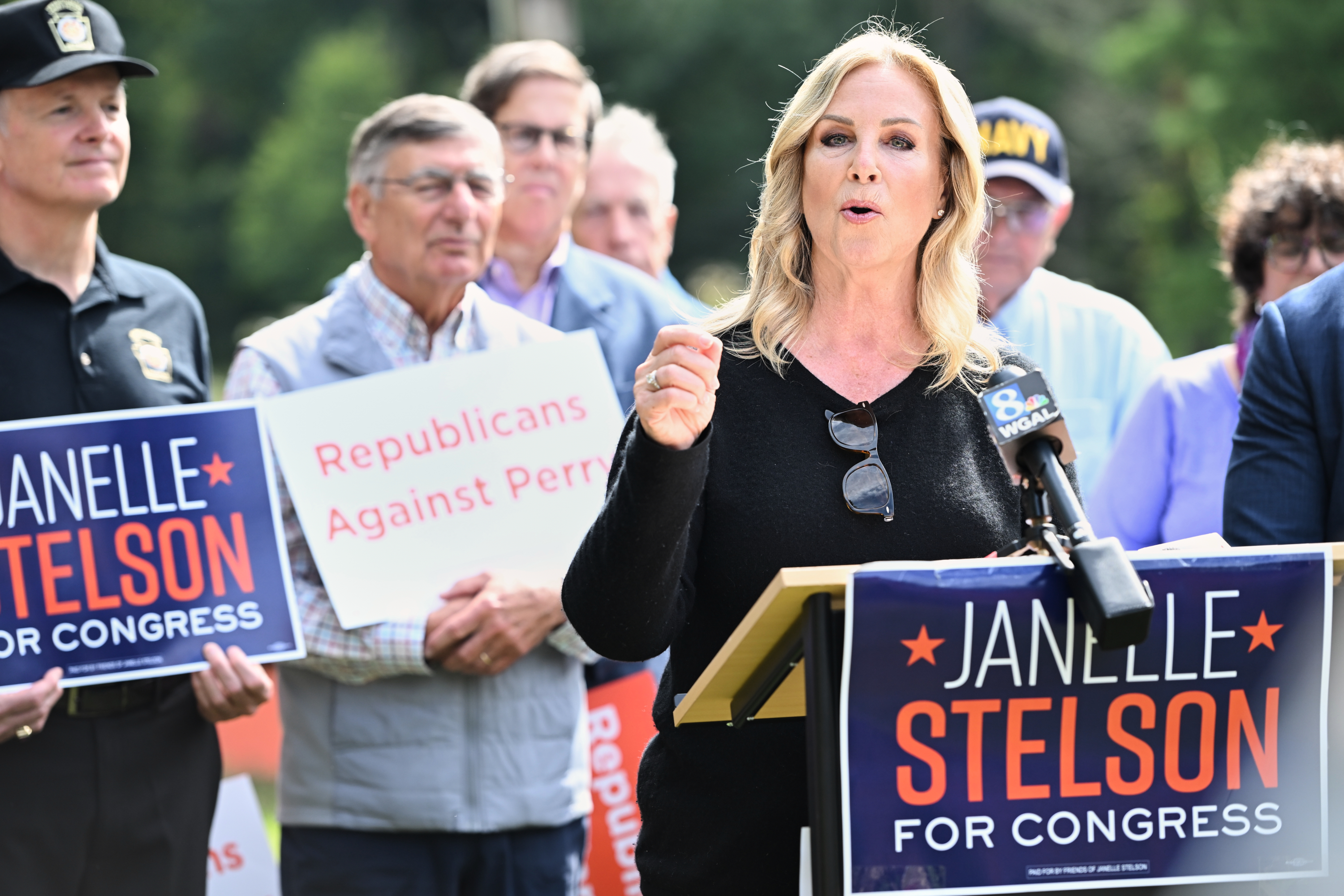
Democrat Janelle Stelson speaks at a campaign event in her race against Republican U.S. Rep. Scott Perry of Pennsylvania, Sept. 23, 2026, in York Haven, Pa. (AP Photo/Marc Levy, File)Marc Levy
Frustration with the cost of living — and Trump’s war
Trump’s weakest area in the district is pocketbook concerns. Only 36% of voters approve of his handling of cost-of-living issues, and 62% disapprove. And economic issues top the list of voters’ most important concerns determining their choice.
That could be a hurdle for Perry.
(function(){function e(){window.addEventListener(`message`,function(e){if(e.data[`datawrapper-height`]!==void 0){var t=document.querySelectorAll(`iframe`);for(var n in e.data[`datawrapper-height`])for(var r=0,i;i=t[r];r++)if(i.contentWindow===e.source){var a=e.data[`datawrapper-height`][n]+`px`;i.style.height=a}}})}e()})();
“Our economy is terrible. People aren’t making enough,” said Susan Wert, a 57-year-old nurse in Cumberland County. She calls Trump “an embarrassment to our country” who wants to be a king.
To get the country back on track, said Wert, a Democrat, she supports Stelson.
Voters in the poll gave Stelson a 50%-to-43% edge over Perry on trusting she would do a better job of handling cost-of-living issues. By the same ratio,they trust her more than Perry to do what is best for ordinary Pennsylvanians.
“Republicans, to me personally, they’ve done enough damage. Now somebody needs to fix it, and I think that [Stelson] will do her best to try,” Wert said.
Many voters also linked high gas prices and the war in Iran, which Trump initiated with Israel earlier this year. In retaliation for military strikes, Iran closed the Strait of Hormuz, through which barrels of oil flow, which several experts said spiked the price at the pump.
The fluctuation in prices was enough to persuade Tom Myers, a 75-year-old Republican from Dauphin County, to vote for Stelson in the contest to put a check on Trump.
Myers blamed Trump’s decision during his first presidency to withdraw from former President Barack Obama’s Iran nuclear deal for creating the current predicament.
“We shouldn’t be there,” he said. “I mean, yes, they were going to possibly have a nuclear weapon, but Trump tore up the treaty that was in place, which is what precipitated this whole thing.”
Alfred Milbourne, a 73-year-old retired truck driver, put it more bluntly: “I don’t trust Scott. I don’t trust nothing about him. [Perry] believes in bombing places and not helping the American public.”
“He’s a Trump guy, and Trump people need to be out of there,” added Milbourne, a Democrat.
But Hughes said she still plans to back the president and Perry even though she has struggled to afford food after her husband died in 2023 and her car recently broke down. She has written multiple letters to Trump with advice, including encouraging him to end the war in Iran, she recalled.
“It’s hard for people right now because of the gas prices and because of oil and because of the grocery store,” she said. But, she added, “it’s not really [Trump’s] fault. I mean, we can’t let Iran have a nuclear weapon.”
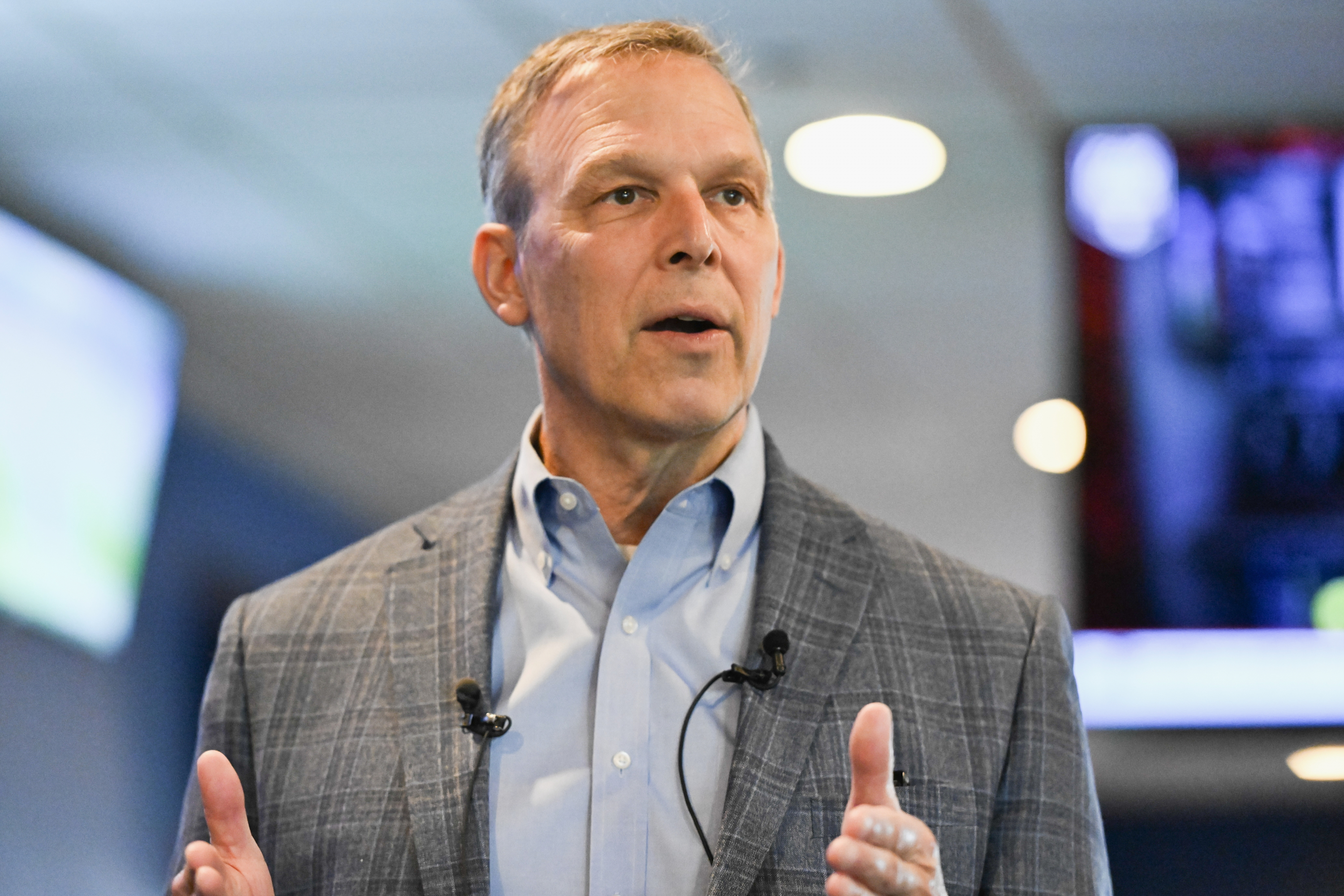
U.S. Rep. Scott Perry (R., Pa.) speaks at a campaign event at Arooga’s sports bar on Sept. 30, 2026, in Harrisburg, Pa. (AP Photo/Marc Levy, File)Marc Levy
Meanwhile, Perry has attempted to brand Stelson, a former Republican, as a socialist.
It is a point that has resonated with Stefan Szurdi, 70, who immigrated to the U.S. from Austria and became a U.S. citizen in the 1990s.
“When I hear the word socialist, it irritates me because I used to live in it,” said Szurdi, a Republican who now lives in Dauphin County. “I’m conservative. I pay my taxes and leave me alone.”
From his own experiences immigrating to the U.S., Szurdi, who said he “went by the rules” and expects everybody else to do so as well, said he aligns with Perry and supports Trump’s efforts to ramp up enforcement.
Immigration and Customs Enforcement (ICE) agents are “doing a great job, and it’s just unfortunate all the protesting against them,” he said.
Perry has also sought to tie Stelson to a Nigerian man who authorities said was in the country illegally and found with Stelson’s campaign flyers inside his car. Stelson, during the candidates’ Oct. 14 debate, said the man was not an employee of her campaign or a volunteer.
Still, the accusation lingered and has cast a shadow on Stelson’s campaign for some voters.
“You can’t keep giving to people who are here illegally when the country has more than enough people here legally that are not receiving the help that they need,” said Janice Yeager, 63, of York County, who is supporting Perry.
When it comes to immigration, voters in the district trust Perry over Stelson, 50% to 45%, the poll found.
But even among those who agree changes were needed in the U.S. immigration system, many thought ICE has gone too far in its enforcement.
Alaina Snyder, a 23-year-old cashier, said she plans to vote for Stelson, who she believes stands up for human rights.
“She doesn’t believe that ICE should be on the streets hurting people,” said Snyder, who lives in Harrisburg. Perry she sees as being “fully for ICE and handling things with whatever cost necessary, and it’s just not necessarily safe for people.”
For Democrats like Snyder and others, Election Day cannot come soon enough.
“I just am so over the Republican Party in all ways, and I would vote for anybody who was running against any Republican right now, but especially [Perry],” said Matthew Fahnestock, 47, a Democrat from Cumberland County who teaches high school.
“He just seems completely out of touch with a district like ours.”