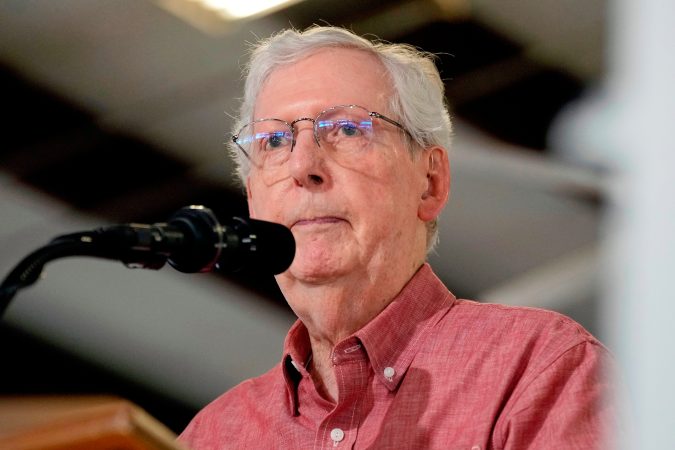
WASHINGTON — Kentucky Gov. Andy Beshear, a rising national figure in the Democratic Party, is calling on the state’s Republican Sen. Mitch McConnell to either prove that he is fit to continue serving after his lengthy hospital stay or resign from office.
Beshear made the demand in a letter after McConnell’s office said Monday that the 84-year-old senator had not yet been medically cleared to leave the rehabilitation facility where he has been undergoing physical therapy. The office said he would miss a major Kentucky political event and upcoming Senate votes. McConnell was hospitalized June 14 and disclosed weeks later that it was the result of a fall.
Beshear, who is widely viewed as a potential presidential candidate in 2028, first urged McConnell in early July to release more information about his condition after weeks of public silence. His letter Tuesday marked a significant escalation.
“I am calling on you to directly and verbally address the people of Kentucky and provide proof of your capacity to serve, or resign,” Beshear wrote to McConnell.
Beshear also sent a letter to Senate Majority Leader John Thune, urging him to investigate McConnell’s condition if the senator does not demonstrate that he is capable of continuing to serve.
McConnell and Thune’s offices did not provide comment on the letter.
McConnell, who led Senate Republicans for nearly two decades, has long guarded his personal life. Since he was hospitalized last month, his office has issued major updates on July 12 and July 27, each accompanied by a single photograph.
But public scrutiny of aging elected officials has intensified after several recent health episodes and deaths in office, including the deaths of California Sen. Dianne Feinstein in 2023 and South Carolina Sen. Lindsey Graham earlier this month, as well as President Joe Biden’s decision not to seek reelection after concerns about his age and health became a dominant political issue.
In the absence of regular public updates from McConnell himself, speculation about his condition has grown online.
“All of this speculation and even this letter could have been avoided with a minimal amount of transparency,” Beshear wrote to Thune.
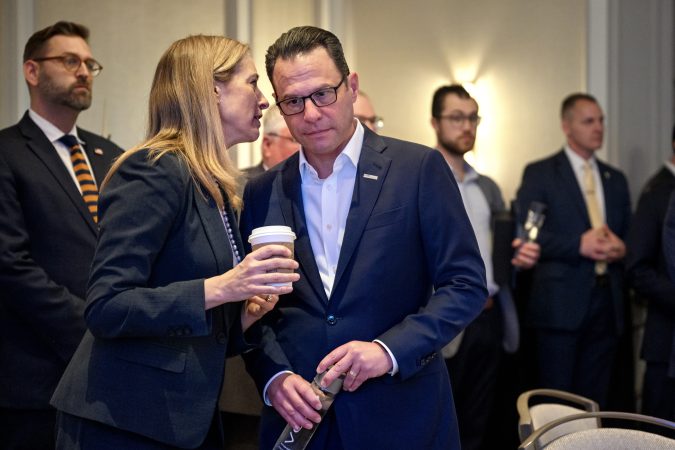
The day after President Donald Trump delivered a prime-time speech contending, among other claims, that 250,000 noncitizens were registered to vote in just four states, Pennsylvania Gov. Josh Shapiro derided it as“a whole bunch of conspiracy theories that are just simply not connected to reality.”
A week later,when New Jersey revealed that 6,600 noncitizens were improperly registered to vote in the state and nearly 400 cast a ballot due to a glitch, Shapiro’s message was nearly identical — that Trump ispushing “baseless conspiracy theories” as he seeks more power over state-run elections.
Pennsylvania and New Jersey were both on the list of Democratic-led states that Trump claimed had thousands of noncitizens on their voter rolls. The methodology of how the Trump administration arrived at that figure remained unclear, but his administration has sought to leverage the New Jersey disclosure as evidence of a larger problem.
But Shapiro and other national Democrats have not shifted their messaging on the issue ahead of the high-stakes midterm elections.They are refusing to cede to the GOP any suggestion that New Jersey’s voter rolls are evidence of widespread voter fraud and arewarning that the changes Republicans seek would make it tougher for many Americans to vote.
“Withholding this funding will make our communities less safe and would be dangerous under any circumstance, but doing this in an attempt to undermine states’ authority over elections is reckless and unconstitutional,” Shapiro said.
Kentucky Gov. Andy Beshear, another potential 2028 candidate, also joined the suit. (Both Shapiro and Beshear lead states with Republican attorneys general.)
The day after Trump’s speech, Shapiro challenged the administration to present “real evidence” of noncitizen voting, which Pennsylvania election officials say is extremely rare.
In addition to Pennsylvania and New Jersey, the White House also targeted Nevada and California for additional scrutiny over their voter rolls, according to a document posted to the White House website last week shortly after Trump’s speech.
California Gov. Gavin Newsom, one of Trump’s most vocal critics in the Democrats’ potential 2028 field, said the president’s speech was fueled by debunked lies.
“It was unhinged. Unfounded allegations of election fraud — it’s madness. But he’s setting it up. He’s setting you all up. You know what he’s doing. He’s doing it in plain sight. He’s socializing all of this to normalize all of this,” Newsom said last week, during a newsconference that took place the same day as New Jersey’s announcement.
Trump has repeatedly promoted conspiracy theories about California elections in recent weeks — including in two Pennsylvania speeches — despite no evidence that fraud occurred.
For U.S. Sen. Cory Booker (D., N.J.), pushing back against Trump presents a tougher challenge.
Booker, also a likely 2028 aspirant, must balance the governing changes he sees as needed in New Jersey with the larger politics of the moment. He said the failure of the software was “not acceptable” but rejected Trump’s efforts to portray the entire election system as faulty.
“There are those who will choose to weaponize this issue to undermine confidence in our elections,” Booker said in a statement. “We cannot allow that.”
ButRepublicans have pointed toNew Jersey as proof that a sweeping overhaul is neededfor November’s results to be trusted.
Trump’s allies are pushing the SAVE America Act, which would require voters to provide proof of citizenship when registering to vote and to show photo ID at the polls. The effort has stalled in Congress amid concern, even among Republicans, that the bill’s restrictions on mail voting could make it harder to cast a ballot and that many citizens could wrongly be blocked from voting if they do not have access to required paperwork.
Vice President JD Vance, widely viewed as a 2028 Republican candidate and a potential political heir to Trump, seized on New Jersey’s revelations as a renewed opportunity for the legislation’s relevance.
“If only there was a way to stop this type of ‘software error’ that allowed non citizens to vote in our elections,” he wrote in a post on X that targeted Booker and Sen. Andy Kim (D., N.J.), both of whom are unlikely to support the Republican-led bill.
But theregistration glitch happened despite these individuals answering “no” when asked on a keypad whether they were U.S. citizens. They were added to the system “through no fault of their own,” New Jersey Gov. Mikie Sherrill said last week, so it is not clear that showing additional documentation would have prevented the error.
Sherrill ordered her chief counsel to investigate the issue, which occurred under her predecessor, former Democratic Gov.PhilMurphy, and promised to hold those responsible for the error accountable.
Talking about this issue can pose an obstacle for both parties now that New Jersey’s glitch has been identified, said Sam Chen, a Pennsylvania strategist who has worked for former Gov. Tom Corbett and other Republicans.
Republicans have overplayed their hand and are not seen as an authoritative voice on voter fraud, but Democrats have spent the same amount of time dismissing all of Republicans’ concerns, including some that are legitimate, Chen said.
“When you’ve got an entire party saying, ‘No, this is never happening,’ and now you see what you see in New Jersey, it is going to leave a serious credibility issue for them,” Chen said.
Democrats, like Shapiro, could build more credibility if they acknowledged the positive parts of the SAVE Act, he contended.
“Grab what’s good, vehemently oppose what’s bad, and states can blaze their own path,” he said.
But J.J. Balaban, a Philly-based Democratic ad maker, said it does not make sense for Democrats to go along with the SAVE Act because the charges are being made in bad faith.
While many Democrats would support efforts to make election systems more secure, Balaban said, that is not what the Trump administration is trying to do — and New Jersey does not change that.
“Voter fraud was shockingly rare a month ago. It remains shockingly rare today,” he said.
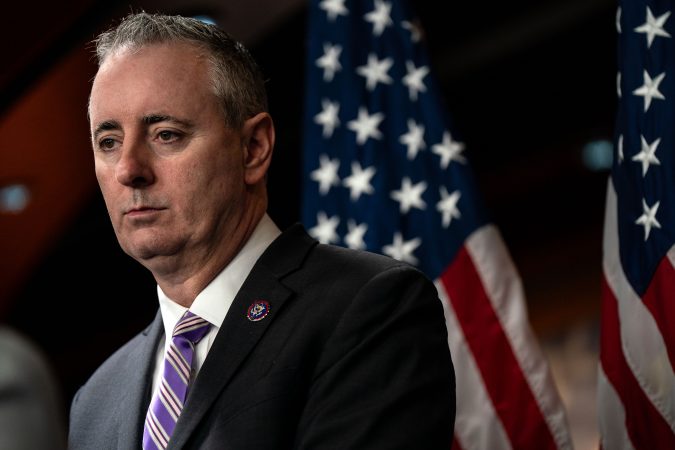
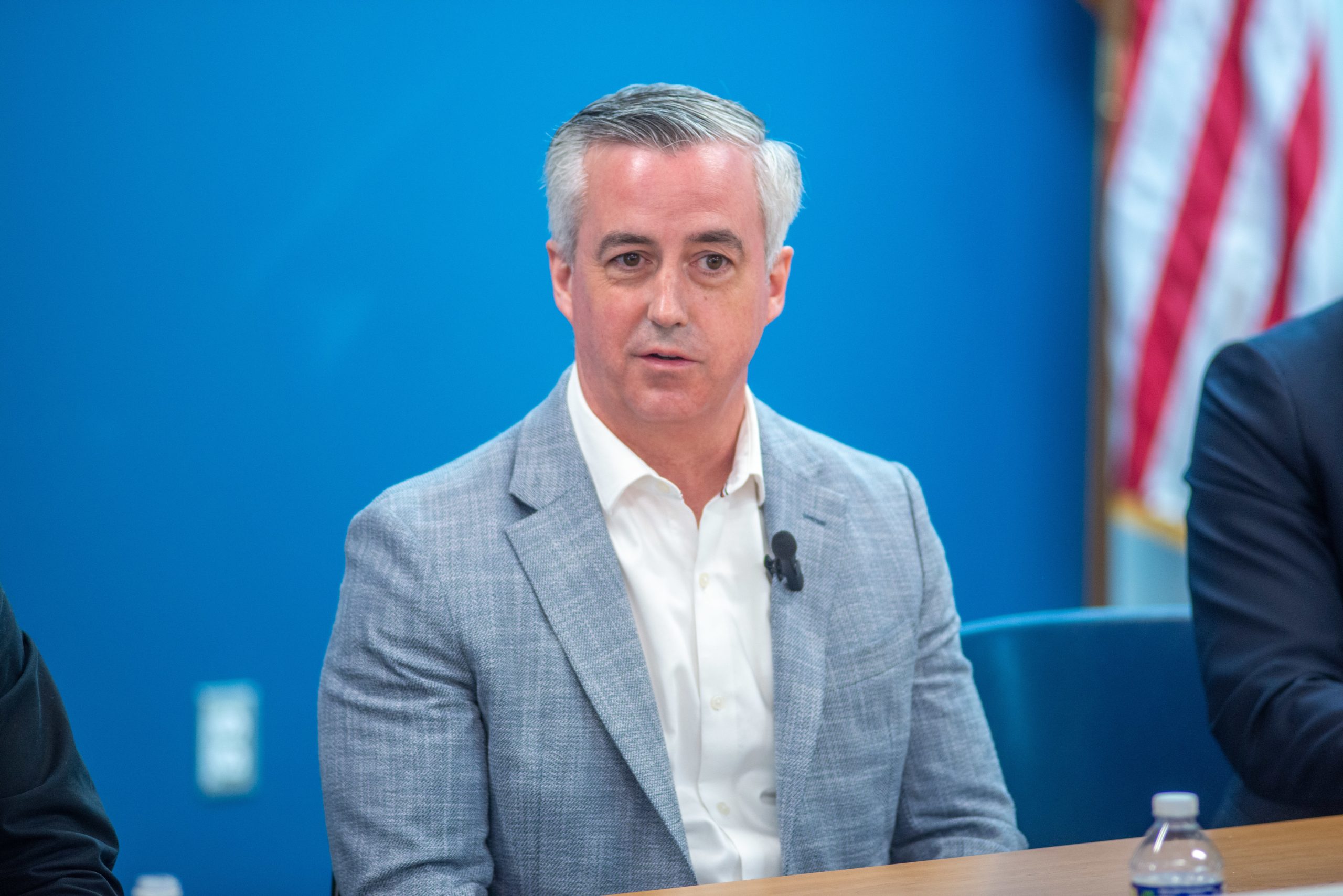
Early on in his tenure, U.S. Rep. Brian Fitzpatrick proved himself to the largest federal employees union in the United States.
In 2017, President Donald Trump signed a law to improve whistleblower protections and set guidelines for employee misconduct at the Department of Veterans Affairs. But the American Federation of Government Employees began noticing some adverse effects.
As Phil Glover, a national vice president for AFGE, tells it, veterans, including those with disabilities, and lower-level employees were being targeted instead.
AFGE officials went to Fitzpatrick with their concerns, and the Bucks County Republican introduced his own bill repealing and adjusting certain provisions.
That move, Glover said, was an inflection point in solidifying a long-lasting partnership with Fitzpatrick — one that gives the union a rare ally in the Republican caucus and Fitzpatrick a consistent endorsement from a powerful organization as he has repeatedly won reelection in a narrowly divided district.
“He’s carried a lot of water for us within the Republican Party, within the caucus, whether they were in the minority or majority,” said Glover, whose jurisdiction includes Pennsylvania.
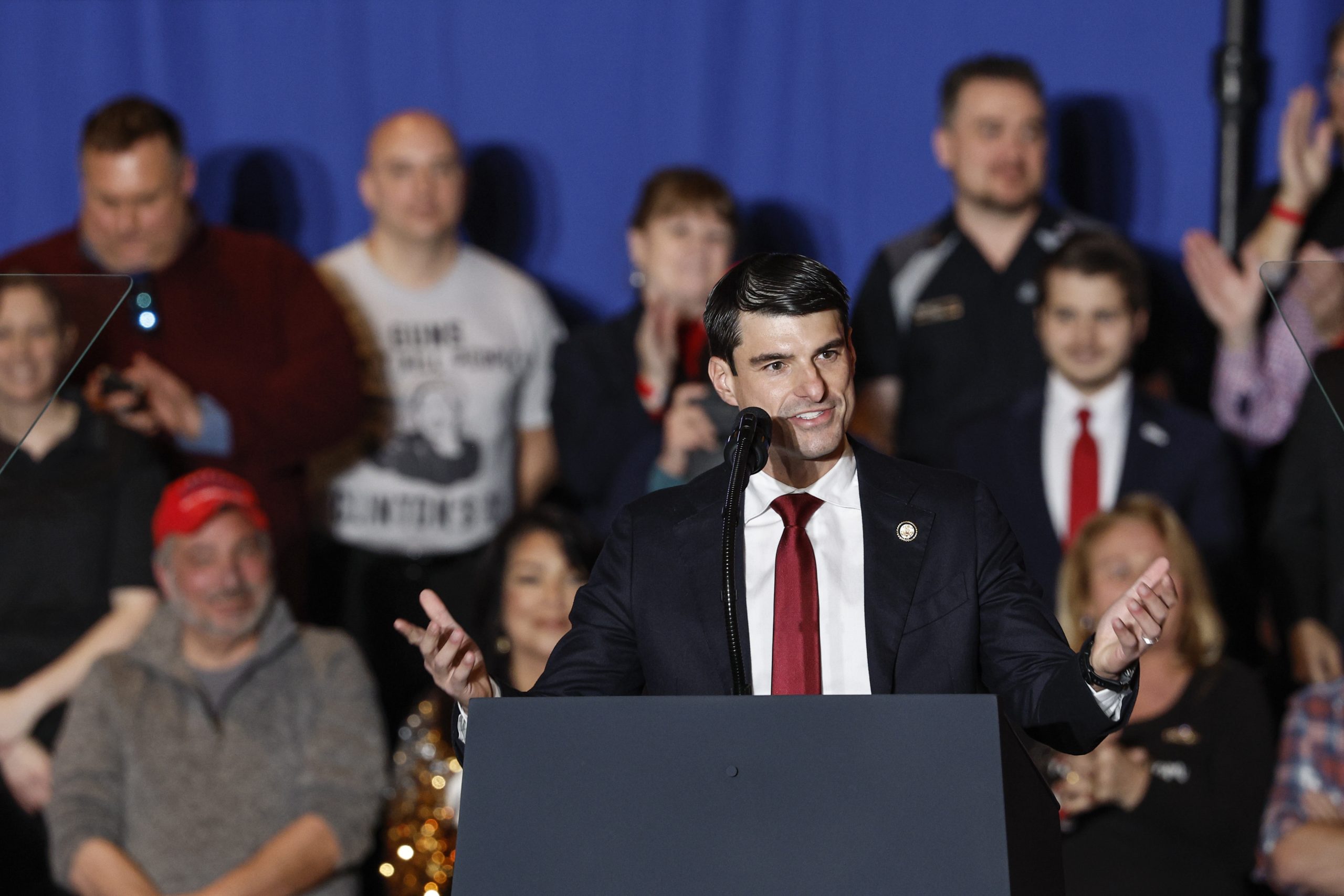
In the high-stakes midterm elections this year, union endorsements behind Fitzpatrick and U.S. Rep. Rob Bresnahan, a freshman Republican trying to hold onto his seat in Northeastern Pennsylvania, are shaping up to be a potentially critical factor inthesetwoswing districts that could help determine which party controls the U.S. House.
“They all reached out. I didn’t even have to call them. They reached out to me right away and said we are 10,000% with you,” Fitzpatrick said, describing his relationship with the unions as “beyond advocacy” and “like family.”
Organized labor has traditionally backed Democratic candidates in the state —and that remains mostly true this year.
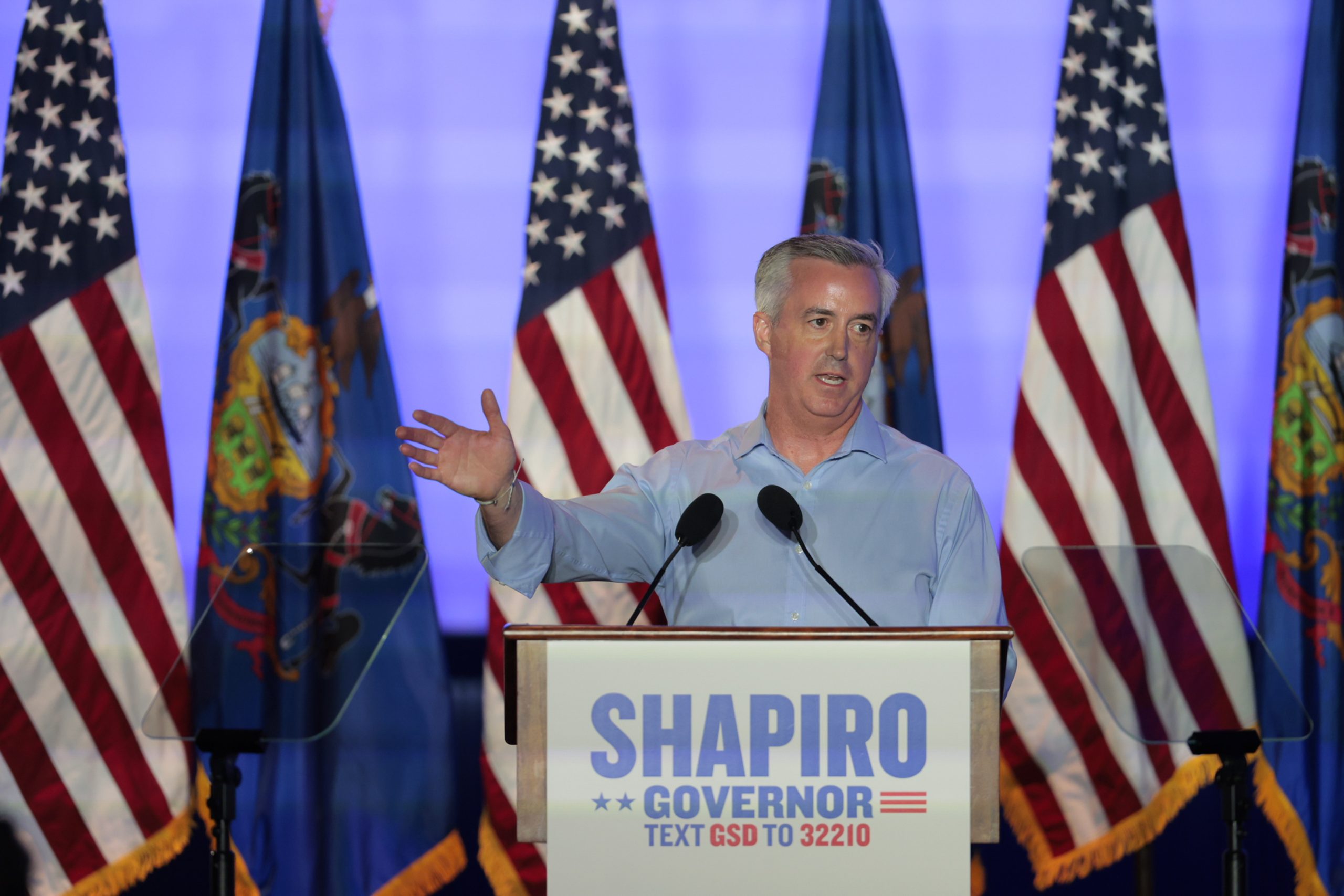
Fitzpatrick was the only Republican congressional candidate to get an endorsement Wednesday from the Pennsylvania AFL-CIO, which is also backing popular Pennsylvania Democratic Gov. Josh Shapiro.
In two other swing-seat districts centered on Harrisburg and the Lehigh Valley, unions have coalesced behind the Democratic nominees, including by spending big to help union leader Bob Brooks win his primary in May.
But the splintering of their endorsements in both Fitzpatrick’s Bucks County-based 1st Congressional District and Bresnahan’s Scranton-based 8th Congressional District seat has been a striking departure — underscoring some unions’ willingness to reward incumbents’ loyalty to give labor a voice in a Republican caucus that may not always work in their interests.
Last week, the Pennsylvania State Education Association — the largest union for teachers or any other labor organization in the state — backed Fitzpatrick even though Harvie, a former social studies teacher at Bucks County Technical High School, was previously a member.
How those endorsements move the needle in the election is still an open question.
But in a district with independent-minded voters who have shown a willingness to cross party lines, some observers say, the labor endorsements could make a difference — both in the get-out-the-vote and fundraising support that unions sometimes provide, and in appealing to swing voters.
“It suggests to an independent voter or even a moderate Democratic voter that this candidate isn’t a far-right candidate, that this candidate is somebody who will work with workers and work with unions,” said Paul Frymer, a politics professor at Princeton University who studiesorganized labor.
U.S. Rep. Rob Bresnahan introduced before remarks from President Donald Trump in Mt. Pocono, Pa., in December. Steven M. Falk / For The Inquirer
‘We consider them our friends’
With Trump in office and Republicans in control of Congress, Fitzpatrick and Bresnahan have won some union support by backing policies their own party leadership opposes.
In December, they were among 20 Republicans to join 211 Democrats to force a successful vote on the Protect America’s Workforce Act, which aimed to reverse a Trump executive order to strip collective bargaining rights from federal workers. In June, they were again among 20 Republicans — and the only ones from Pennsylvania — to vote for the Faster Labor Contracts Act, an effort to speed up bargaining negotiations.
And Bresnahan’s decision-making, as a freshman going against the White House, “had some guts to it,” Glover said. He said his group “didn’t entertain” endorsing Democrat Paige Cognetti, the Scranton mayor running against Bresnahan, or Harvie in the Bucks County race.
Angela Ferrito, president of the 700,000-member Pennsylvania AFL-CIO, which endorsed Fitzpatrick on Wednesday, said that while he has not always sided with labor, he has become the kind of Republican who will “sometimes almost put their neck out.”
Still, the union’s own public scorecard shows Fitzpatrick has aligned with its priorities far less often than Democrats — about 46% of the time in the current session of Congress. Bresnahan, who did not secure the union’s endorsement Wednesday, voted with the AFL-CIO just once — on the Protect America’s Workforce Act — to give him an 8% score.
Ferrito said the organization supports candidates who “support us and stand up when it matters.”
“Pennsylvania has always been unique in that way, where we do have moderate Republicans who will support unions and the rights of union workers. And so in those circumstances that we consider them, we consider them our friends,” she said.
State of play
As both of their districts draw national attention, Fitzpatrick has touted more than 40 labor-centered recommendations or formal shows of support and Bresnahan has highlighted about a dozen.
Fitzpatrick’s labor endorsements have ranged from local building trade affiliates — such as the Boilermakers Local 13 and the deep-pocketed International Brotherhood of Electrical Workers Local 98 — to national labor organizations, like the Transport Workers Union of America and the National Air Traffic Controllers Association.
The SEIU Pennsylvania State Council, which represents employees in public services, healthcare, and property services, backed him for the first time after a decade of either endorsing against him or staying neutral. But the council’s perspective changed after Fitzpatrick publicly supported reforms for U.S. Immigration and Customs Enforcement and was only one of two Republicans to vote against his party’s cuts to Medicaid in the One Big Beautiful Bill Act.
“For us, that means something,” said Matt Yarnell, president of SEIU Healthcare Pennsylvania and the state council, “if someone’s down to both organize and fight and stand up and speak out against your own party.”
Fitzpatrick said his “unique” role as a labor-friendly Republican has made him a “pivotal voice” in Congress — largely because of the hyperpartisan nature of politics that he has railed against, he said.
“That’s unfortunate,” Fitzpatrick said. “If we did away with the political parties and we just had people form coalitions around ideas, you would see so much support, so much more support for commonsense measures, like supporting labor.”
Bresnahan said he made it a personal mission to cultivate strong relationships with organized labor when he entered Congress last year after having had collective bargaining agreements as the CEO of his family’s electrical contracting business.
As a freshman Republican, he said, he had to prove himself. He got up to speed on the roughly 10,000 federal jobs in his district and made visits to a high-security federal prison with “serious staffing shortages”at the same time as Trump was laying off thousands of federal workers.
“I absolutely encourage my Republican colleagues to take another look at this and find a way to support the people that support us each and every day,” said Bresnahan, who narrowly defeated six-term Democratic U.S. Rep. Matt Cartwright in 2024.
Bucks County Commissioner Bob Harvie addresses supporters after winning the May 19 Democratic primary. Steven M. Falk / For The Inquirer
Harvie, the Democrat challenging Fitzpatrick, grew up in a union household and hasreceived the backing of two unions: the American Federation of Teachers Pennsylvania and Transport Workers Union Local 234, which represents SEPTA employees. His campaign said conversations are ongoing with labor and believes more support is in the works.
Harvie said Fitzpatrick’s endorsements have in some ways been a “reward for doing the bare minimum” while his own track record as a former Falls Township supervisor and as a twice-elected county commissioner proves he would be a steadfast supporter of labor in Congress.
He said he was “anxious to get the support of the rank-and-file workers,” who are bearing the brunt of cost-of-living issues.
“They’re the ones who are really going through all the pain right now with higher gas prices, higher grocery prices, higher energy prices, concerns about their healthcare,” Harvie said.
Cognetti, meanwhile, has credited her endorsements from nearly a dozen local labor unions to her record in Scranton, including increasing the number of jobs and wages for public workers. Endorsements from AFSCME, which represents municipal employees, and others that she announced this month underscore that support, she said.
She also said she would support more labor priorities than Bresnahan, including the PRO Act — a major effort to expand workers rights that Bresnahan has not endorsed — and repealing parts of the One Big Beautiful Bill Act, which Bresnahan voted for.
“It’s very important that you look at the whole picture of someone’s votes. It’s very easy to sign on to a letter and try to make yourself a hero,” Cognetti said.
In one unusual instance, Cognetti appeared to receive the endorsement of the Pennsylvania Conference of Teamsters with a voice vote during an April meeting, but the organization released a statement endorsing Bresnahan in June. But conference president Bill Hamilton, who had called for the vote at the April meeting, said in the June statement that Bresnahan “has always had our backs,” including through his vote for the Faster Labor Relations Act.
Bresnahan, in an interview, also referenced that bill and stressed his relationship with Sean O’Brien, the national Teamsters leader whose podcast Bresnahan appeared on in January.
The state and national Teamsters organizations did not respond to multiple requests for comment about the situation.
“Democrats just can’t take unions for granted anymore,” Bresnahan said.
Scranton Mayor Paige Gebhardt Cognetti hosts the national summer meeting of the Mayors Innovation Project in Scranton in 2023. Tom Gralish / Staff Photographer
‘Stick with them no matter what’
The union endorsements in the 1st and 8th Congressional Districts have been a sharp contrast to other swing-seat districts that have arguably already shown the power of labor as a political force.
In the Lehigh Valley district where Brooks, a statewide union leader and retired firefighter, is running against freshman Republican U.S. Rep. Ryan Mackenzie, high-profile Democrats recruited and rallied around the Democrat largely because of his union bona fides. And when opponents unleashed a last-minute ad campaign against him in the May primary, another political action committee padded with organized labor donations spent nearly $1.8 million to push back and help give Brooks the win.
It is not yet clear whether unions will similarly spend heavily to elect Fitzpatrick or Bresnahan — especially as they mostly look to elect Democrats elsewhere in Pennsylvania and across the country.
TJ Lepera, political director of IBEW Local 98, said he believed a Democratic blue wave would be highly favorable to labor interests. But his union has also backed Fitzpatrick,who“knows our issues, and that could be helpful in trying to calm down a lot of the crazy rhetoric that comes out of the Republican side, sometimes, on the attacks of labor,” Lepera said.
“If somebody has a great voting record with us and has been loyal to Local 98 and the way that we see legislation, we typically stick with them no matter what,” Lepera said.
That emphasis on loyalty was echoed by other unions, even if their political calculus led them to go the other direction.
“We were not going to support anything that would possibly turn the House or the Senate red,” said Joe Coccio, secretary-treasurer and political coordinator from TWU Local 234, which has endorsed Harvie. “If they were a good candidate by us … once we endorse a candidate, unless they break the law or do wrong by us, we continue to endorse them until they move up or move on.”
Coccio said Harvie had proved his appreciation for SEPTA employees when he served on the transit agency’s board.He is also accessible and pro-union, and has valuable experience as a teacher and county commissioner during the COVID-19 pandemic, Coccio said.
AFT Pennsylvania, which is backing Harvie, did not respond to multiple interview requests.
As November inches closer, unions backing both Fitzpatrick and Harvie are planning out their financial and ground-game support.
“For us, is it strategic? Yeah, it’s very strategic,” said Lepera, whose Local 98 has a long history as a political power broker in Philadelphia and statewide. “We want to have a voice on the other side of the aisle.”
With control of the U.S. House on the line in November, Pennsylvania’s swing-district candidates are stocking up their war chests for a critical election — but one Democrat is lagging behind his counterparts.
Bucks County Commissioner Bob Harvie, who is challenging longtime incumbent Republican U.S. Rep. Brian Fitzpatrick in the 1st Congressional District, raised almost $552,300 between April 30 and June 30, according to new campaign finance reports filed Wednesday, putting him at a little over $2 million raised since he launched his campaign in April 2025.
But Harvie’s sum for this two-month period is almost half a million less than Fitzpatrick, and roughly $915,000 on average less than the other Democratic candidates.
Fellow swing–district Democrats Bob Brooks, Paige Cognetti, and Janelle Stelsonall outraised the Republican incumbents in the 7th, 8th, and 10th Districts respectively, each gathering more than $1 million during this two-month period, a sign national Democrats say is proof of their strength in these competitive Pennsylvania seats.
The reporting period covers the final weeks before the May 19 primary and the six weeks that followed.
Bucks County Commissioner Bob Harvie hosts a veterans roundtable on May 4 at Middletown Township Building in Langhorne.William Thomas Cain / For The Inquirer
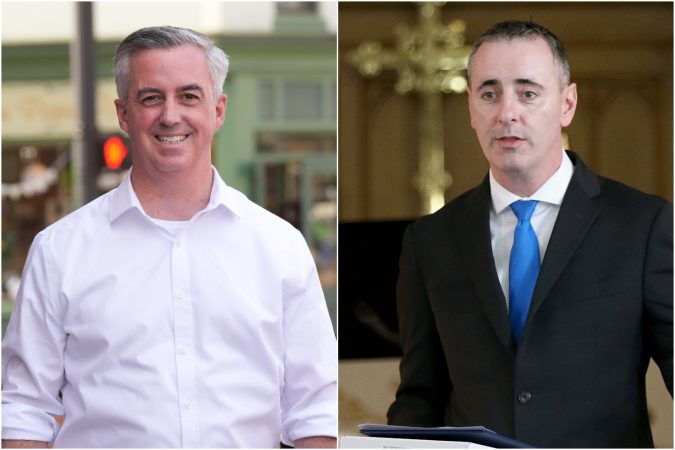
The Bucks County Republican has been tough to beat, thanks to his name recognition and ability to garner support from voters across the political spectrum, but Democrats believe Harvie’s roots in the county, and his electoral record as county commissioner, make him their strongest candidate to date.
(function(){function e(){window.addEventListener(`message`,function(e){if(e.data[`datawrapper-height`]!==void 0){var t=document.querySelectorAll(`iframe`);for(var n in e.data[`datawrapper-height`])for(var r=0,i;i=t[r];r++)if(i.contentWindow===e.source){var a=e.data[`datawrapper-height`][n]+`px`;i.style.height=a}}})}e()})();
And their outlook on the race hasn’t budged. Democrats believe all four swing district Democrats will be successful in November but understand it will take continued investments, including more money, to get all of them across the finish line.
Bucks County’s 1st Congressional District “is a winnable race, and Democrats should be all in on investing in Harvie so that he can help take back control of Congress,” said Dan McCormick, Harvie’s campaign manager, in a statement.
He also added that Harvie doesn’t “take a dime” of corporate PAC money.McCormick did not comment on the contrast between Harvie’s fundraising and that of his counterparts in the other targeted districts.
“Fitzpatrick sees the same polling we do, that’s why he’s busy lighting his money on fire lying about Bob,” McCormick said.
Fitzpatrick began funding ads against Harvie before the May 19 primary, underscoring the significance of Harvie’s challenge in a year Republicans are expected to lose seats nationally. Fitzpatrick’s campaign spent nearly $2 million between May and June, compared with about $360,000 in spending by Harvie’s campaign.
Both parties are targeting the seat, which includes all of Bucks and a sliver of Montgomery County, as they battle to secure control over the U.S. House.
In a pre-primary report that covered April 1 through 29, Harvie had raised about $107,000, in addition to his stockpile reported Wednesday. Fitzpatrick raised $246,000 during that same period.
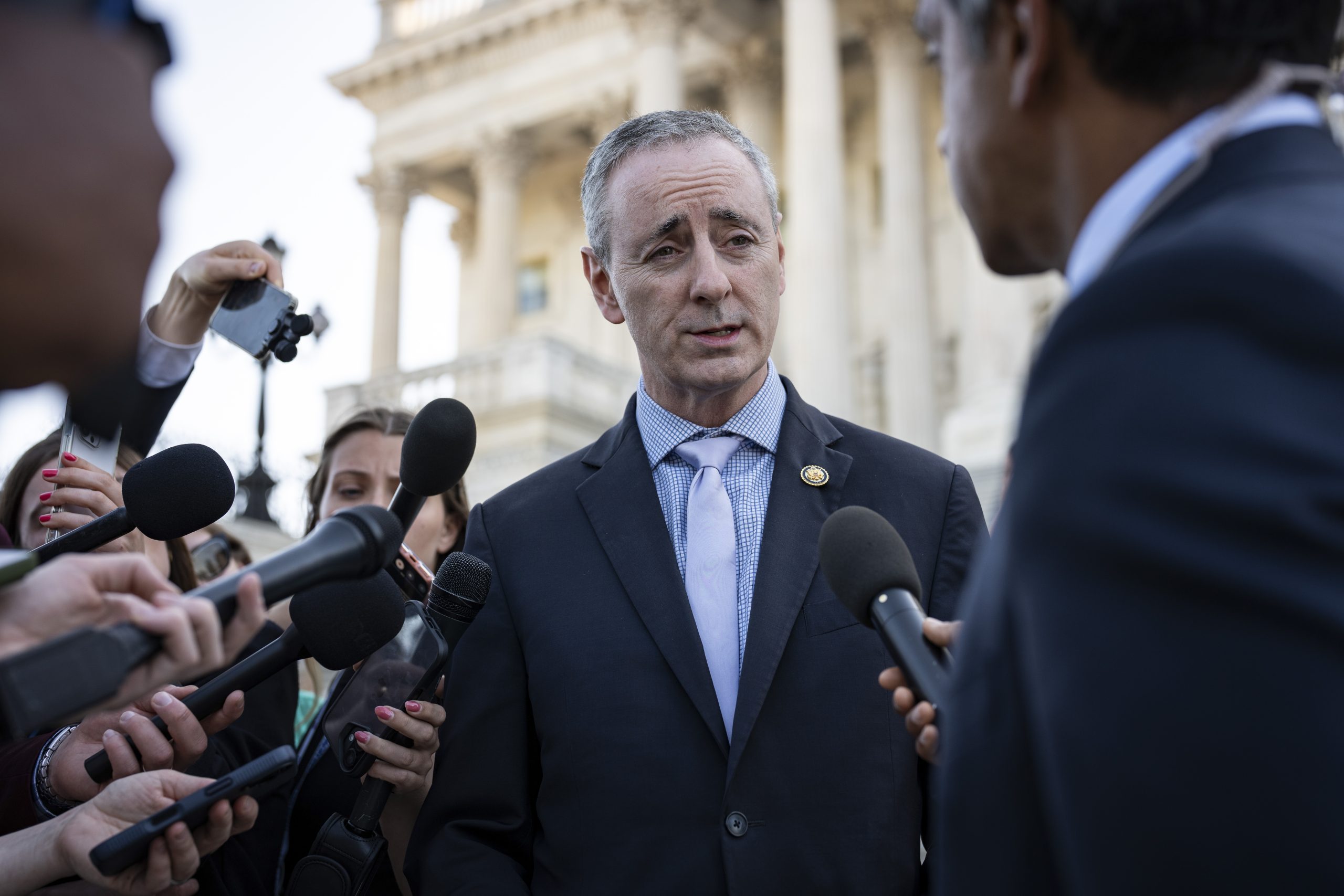
Rep. Brian Fitzpatrick (R., Pa.) speaks to reporters June 3 after the House passed an Iran war powers resolution.Haiyun Jiang
The nonpartisan Cook Political report has rated the 1st Congressional District as “likely” Republican, and the three other swing districts are considered toss-ups.
In a high stakes election year — and with popular Pennsylvania Gov. Josh Shapiro at the top of the ticket and a sinking approval rating for President Donald Trump — Harvie’s fundraising numbers at this point are mostly on par withthe last Democrat to take on Fitzpatrick.
Former challenger Ashley Ehasz, who ran against Fitzpatrick in 2022 and 2024, raised more than $767,000 during this period two years ago, bringing her campaign total to $2.1 million as of June 30, 2024.
Brittany Crampsie, a Democratic strategist in Pennsylvania, said donors may be doing “a little bit of hedging” their spending for Harvie at the moment, waiting to see more information on Shapiro’s poll numbers, Trump’s approval rating, and the national mood before investing more in the 1st District.
“Democratic donors absolutely want to beat Fitzpatrick,” Crampsie said. “We want to control Congress by large margins. But PA-1 is an expensive race. I mean, you might want to be looking at a little bit more information.”
The 1st and 7th Congressional Districts are part of the expensive Philadelphia television market, meaning both Harvie and Brooks will be competing for airtime.
Brooks, who is taking on freshman Republican U.S. Rep. Ryan Mackenzie in the Lehigh Valley, has raised $2.3 million over the entire span of his campaign — getting a boost this period after winning a competitive primary — but it’s not too far off from Harvie’s $2 million total haul.
Christopher Nicholas, a GOP consultant who grew up in Bucks County, said that Harvie is not just in a competition against Fitzpatrick, but also with the three other Democratic contenders in Pennsylvania.
“If you’re some official at the DCCC, and you say ‘Let’s see, get me the report on Pennsylvania,’ and you see this, where is Harvie going to be in the rankings? Is he going to be moving up or moving down? I think that’s a pretty easy question to answer,” Nicholas said.
Eli Cousin, a spokesperson for the Democratic Congressional Campaign Committee, emphasized that Pennsylvanians are wholeheartedly behind all four candidates who he says are “on the front lines of our path back to the House majority and will shake up a broken Washington in order to put Pennsylvania families first.”
Donors still have a lot of time to realize that Harvie is “the right candidate” and to contribute to TV and other ad spends that will come later this summer into the fall, Crampsie said. Some may already be writing checks to the Democratic Congressional Campaign Committee and other Democratic aligned-issues to support their cause of flipping the House blue.
“Fitzpatrick has won several times after being called the number one target, and stakeholders may be less likely to oppose him publicly and want to put their money into spending for Harvie that’s not necessarily into PAC spending … but I don’t think that it’s a sign that people are not supporting Harvie,” Crampsie said.
But even in the races where Democrats are outraising incumbents victory isn’t guaranteed in districts where Republicans have previously managed to prevail despite a cash disadvantage.
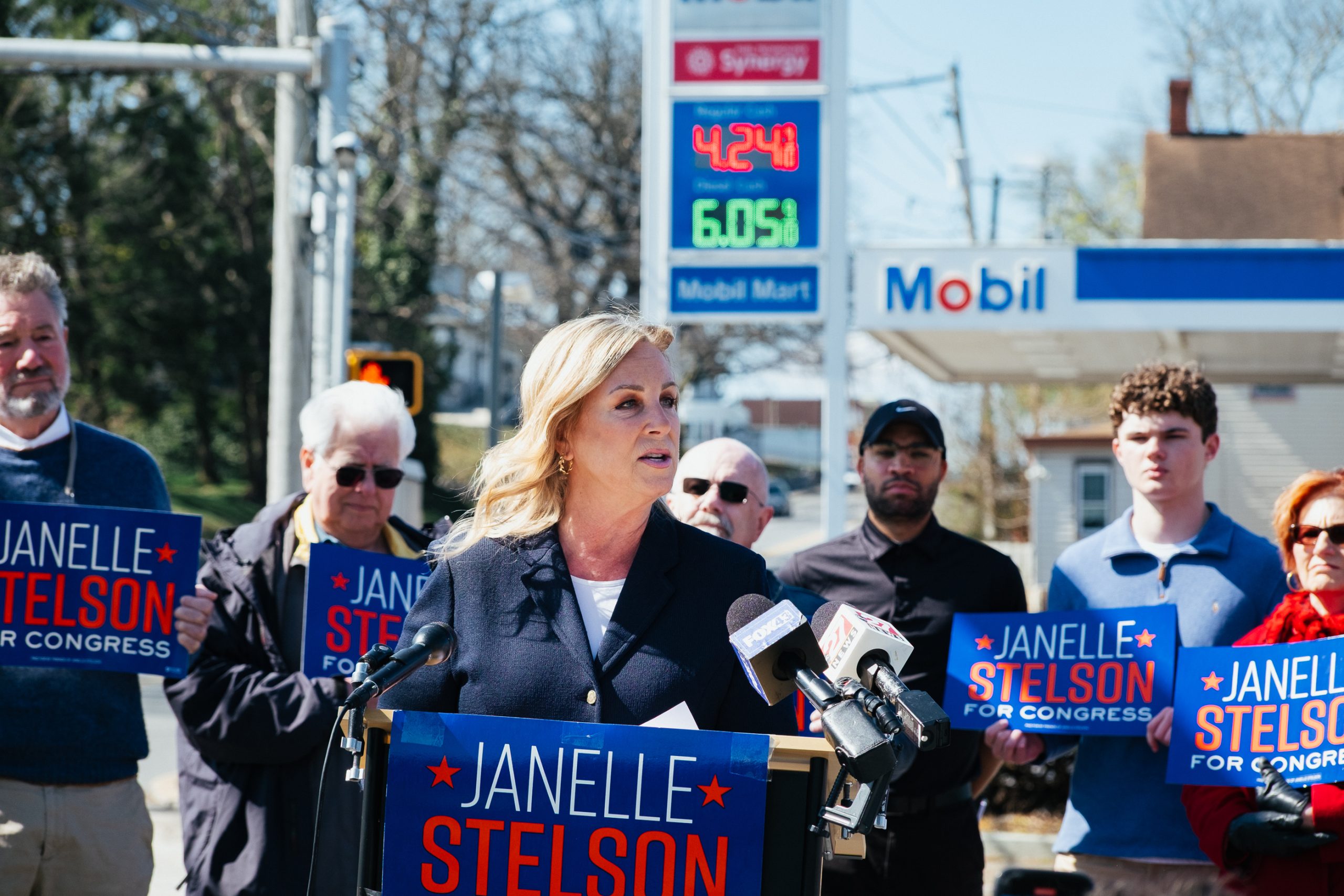
Janelle Stelson, running to represent Pennsylvania in Congress, campaigns at a gas station. Michelle Gustafson
In 2024, Stelson raised about $6.5 million during the entire cycle, roughly $2.1 million more than Republican U.S. Rep. Scott Perry, and still lost. Republicans are hoping Perry can prevail again when they have a rematch in November.
And Republicans see other signs of hope in these races despite Democrats’ momentum. For example, Mackenzie has more than $2.9 million cash on hand, roughly $1.9 million more than Brooks.
“Republicans remain in a strong position to defend our House majority after excellent quarters by our incumbent Members across Pennsylvania,” Reilly Richardson, a spokesperson for the National Republican Congressional Committee, said in a statement.
U.S. Sen. John Fetterman has insisted he has no plans to leave the Democratic Party, despite continued attempts to sway him.
“I remain strongly pro-choice, pro-weed, pro-LGBT, pro-SNAP, pro-labor and even pro-rib-eye over bio slop,” the Pennsylvania lawmaker wrote in an opinion piece published in the Washington Post in May.
But if he were to change his mind, a new poll shows he might have a home in Pennsylvania’s GOP.
Just under half of registered voters in the state approve of how Fetterman is handling his job as a U.S. senator, according to a Quinnipiac University poll released Wednesday.
But the vast majority of the first-term Democrat’s support comes from voters in the opposing party: 77% of surveyed Republicans said they approve of Fetterman, while just 19% of Democrats do.
That is a higher share of voter support than even U.S. Sen. Dave McCormick, Fetterman’s Republican colleague from Pennsylvania, received from his own party, with 68% of surveyed Republicans approving of his job performance.
Fetterman also faced more ire from Democrats than his GOP counterpart — with 69% of Pennsylvania Democrats disapproving of their party’s senator, compared with 52% who disapprove of McCormick.
The Quinnipiac survey, conducted June 9-13, polled 895 registered Pennsylvania voters and has a 4.3-percentage-point margin of error.
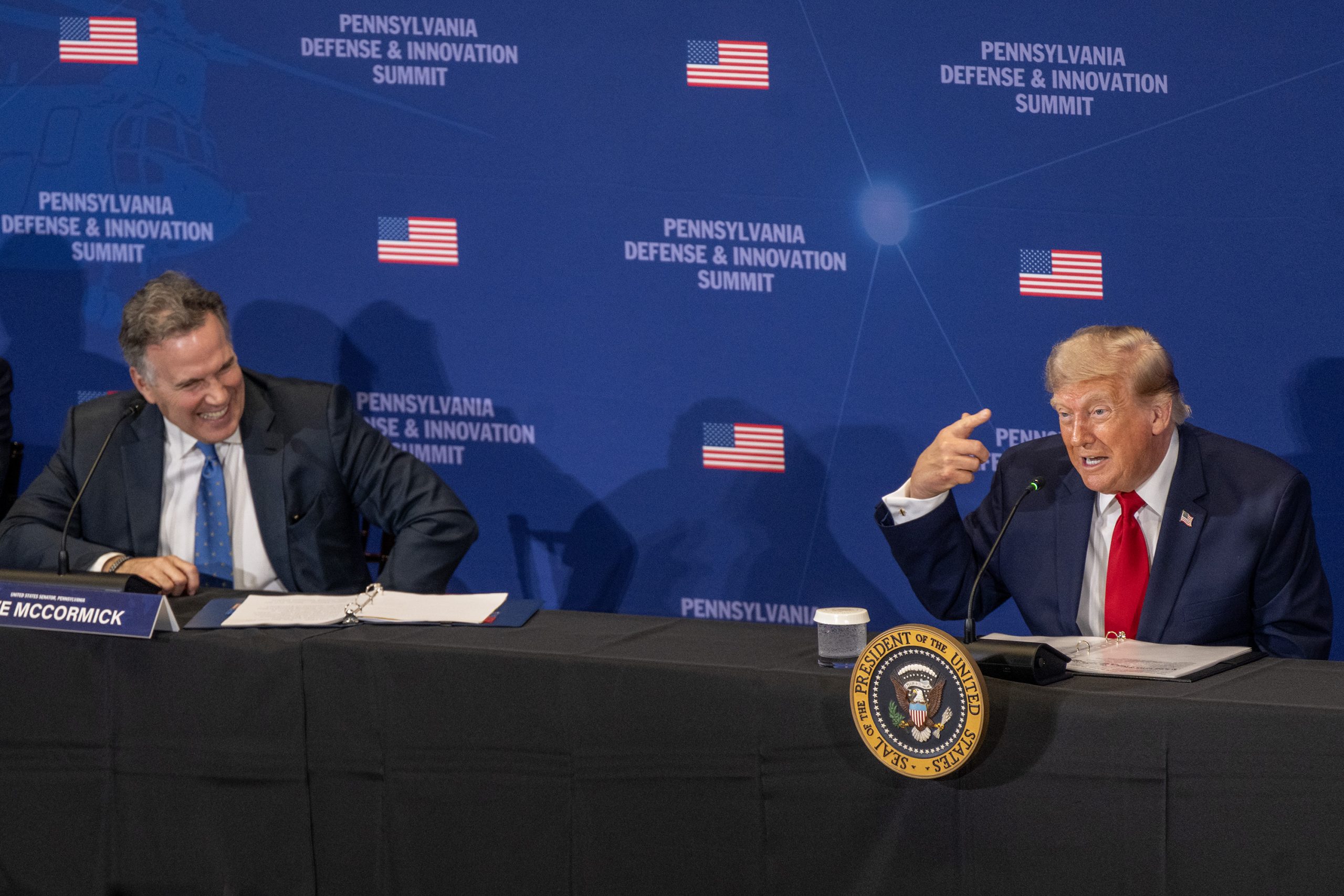
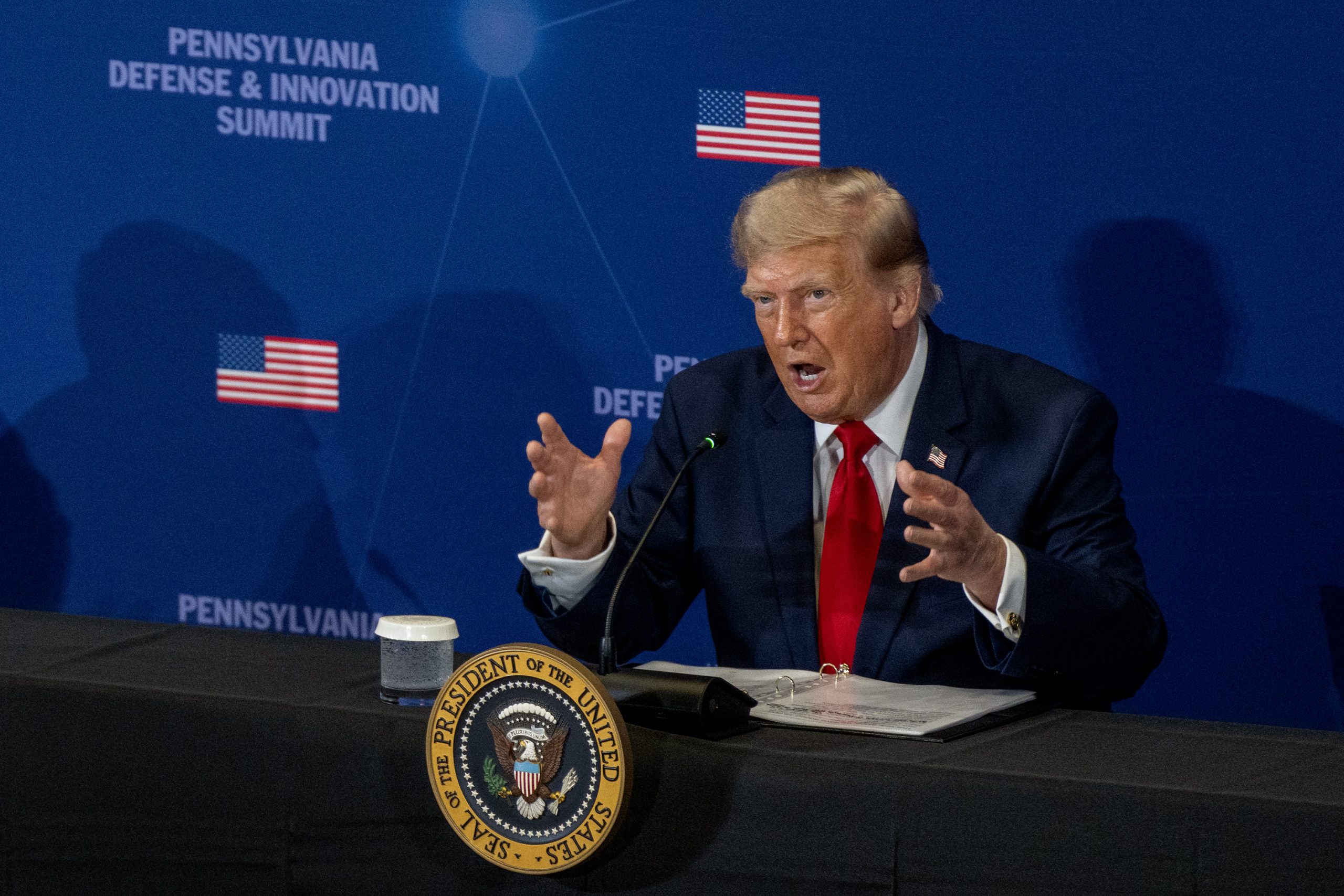
President Donald Trump appears at a Defense and Innovation Summit hosted by U.S. Sen. Dave McCormick (left) at the US Army War College in Carlisle Wednesday, July 15, 2026.Tom Gralish / Staff Photographer
Since Fetterman began casting key votes in support of President Donald Trump and publicly criticizing progressives in his party, conservatives have been leaving the door open and, at times, rolling out a welcome mat.
(function(){function e(){window.addEventListener(`message`,function(e){if(e.data[`datawrapper-height`]!==void 0){var t=document.querySelectorAll(`iframe`);for(var n in e.data[`datawrapper-height`])for(var r=0,i;i=t[r];r++)if(i.contentWindow===e.source){var a=e.data[`datawrapper-height`][n]+`px`;i.style.height=a}}})}e()})();
State Sen. Greg Rothman, chair of the Pennsylvania GOP, said he could consider supporting Fetterman’s reelection if he switched parties, and Fox News’ Sean Hannity said Trump himself urged Hannity to coax Fetterman into becoming a Republican in exchange for the president’s support.
During an interview Wednesday at the Hill Nation Summit in Washington, Fetterman said the Democratic Party’s stance on Israel could push him out.
“If our party ever becomes — and just makes it official — the anti-Israel party, that’s when I would leave because that’s been a moral clarity for me,” he said.
Democrats, meanwhile, have mostly taken a hands-off approach. The Pennsylvania Democratic Party has previously declined to comment on Fetterman’s positions and actions, including his new joint fundraising committee with McCormick. The venture, announced earlier this month, allows them to split money from donors who want to give to both of their campaigns, a boost for Fetterman, who has reported raising significantly fewer campaign dollars on his own.
Democratic Gov. Josh Shapiro has also avoided directly criticizing Fetterman, but admits their relationship is estranged.
In an interview with Politico in May, Shapiro said it had been “probably years” since he had seen Fetterman at an event in Pennsylvania.
“I’m not saying he hasn’t been at one, but I haven’t seen him and I’m at most things,” he said.
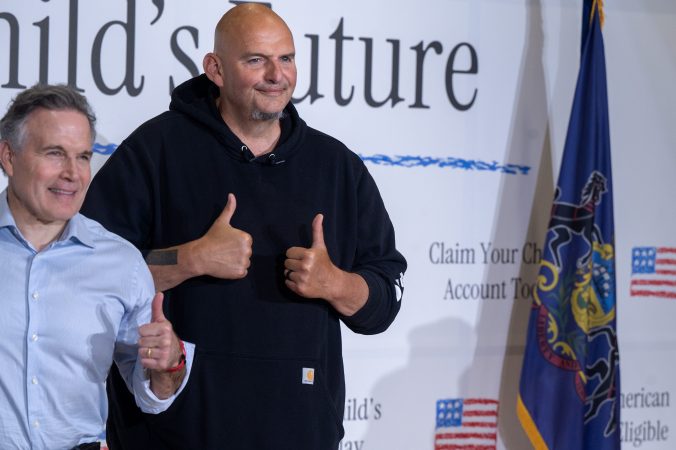
Fetterman was most recently in Philadelphia at an event with McCormick to promote Trump Accounts, the new federally backed savings accounts for kids that became law with Trump’s signature One Big Beautiful Bill Act.
More than half of registered Pennsylvania voters want Fetterman to leave the Democratic Party altogether, according to the Quinnipiac poll.
It is a figure that represents both push and pull: 57% of Democrats surveyed said they want him to leave, and 55% of Republicans do, too. The poll did not ask whether he would be welcomed into the GOP.
“The Democrats would like to show him the door. The Republicans seem to be welcoming him in. Thus is the political irony of Sen. John Fetterman,” Tim Malloy, a polling analyst at Quinnipiac, said.
(function(){function e(){window.addEventListener(`message`,function(e){if(e.data[`datawrapper-height`]!==void 0){var t=document.querySelectorAll(`iframe`);for(var n in e.data[`datawrapper-height`])for(var r=0,i;i=t[r];r++)if(i.contentWindow===e.source){var a=e.data[`datawrapper-height`][n]+`px`;i.style.height=a}}})}e()})();
Fetterman, who is likely to face a primary opponent, has not yet disclosed whether he plans to seek a second six-year term in 2028. U.S. Reps. Brendan Boyle (D., Philadelphia) and Chris Deluzio (D., Allegheny) and former U.S. Rep. Conor Lamb, a Western Pennsylvania Democrat who lost the Senate primary to Fetterman in 2022, are all considered to be potential contenders.
Malloy called Fetterman’s approval among Republicans “stunningly high.”
“He’s a maverick,” he said. “He is certainly one of the most unique politicians in the country.”
“Being an independent voice that works with the other side to deliver for Pennsylvanians might put me at odds with the party that I have stayed committed to and have no plans to leave — but I will continue to put the commonwealth and the country first,” Fetterman wrote in the Post.
Almost half of Pennsylvania voters say they are worse off financially compared with one year ago, while nearly 3 in 4 say they do not want an artificial intelligence data center in their backyard, according to a new poll released Wednesday.
The Quinnipiac University survey of 895 registered Pennsylvania voters has a 4.3-percentage-point margin of error.
According to the poll, 44% of Pennsylvania voters believe they are financially worse off than a year ago, as gas prices have fluctuated amid the ongoing war between the United States and Iran. That opinion was politically split, as 64% of Democrats said they are financially worse off now, while 61% of Republican voters polled said they are better off this year than last. Just 34% of respondents said the nation’s economy is excellent or good, while 53% think it is getting worse.
Meanwhile, 76% Pennsylvania voters said they would oppose data center construction in their communities — a broad swath that includes Democrats, Republicans, and independents.
Almost half of the voters polled have an unfavorable opinion of artificial intelligence itself.
“People are really troubled by this new industry,” said Tim Malloy, a polling analyst at Quinnipiac. “It’s about noise, it’s about water, it’s about taxes, and it’s about… not understanding exactly what it is.”
Quinnipiac’s poll also shows Pennsylvania voters have not been satisfied with the state’s policy responses so far. When asked if they approve of “the way Gov. Josh Shapiro is handling data centers in Pennsylvania,” just 24% of the surveyed voters said they approve. Among the Democrats polled, 40% said they approve.
Starting next summer, data centers will be required to submit information about their energy and water usage to the Pennsylvania Department of Environmental Protection annually. Those reports will be available to the public, and data center operators that do not comply will be fined $10,000 per day.
But other restrictions on data centers that saw bipartisan support ultimately failed to pass in the budget package and will remain on the table when legislators return this fall.
Those include an effort championed by Shapiro to limit sales and use tax exemptions benefiting developers, though it would not apply to the $20 billion Amazon project already underway, including a data center in Falls Township.
Efforts to enact local or statewide moratoriums on data center development were not included in the final state budget, either.
AI data centers also remain top-of-mind for the voters polled by Quinnipiac, with 76% saying they are following news about them very closely or somewhat closely. The centers ranked among voters’ top issues, with 42% saying they factor into their decision about whom to vote for in the election for governor.
But other issues — namely the economy and cost of living — top the list, with healthcare just behind.
Shapiro stays popular
Shapiro otherwise remains popular among Pennsylvania voters.
In the poll, 51% of respondents reported having a favorable opinion of Shapiro, and 56% approve of the way he is handling his job as governor.
“Pennsylvanians agree that Governor Josh Shapiro is delivering results for families, seniors, and businesses all across the Commonwealth by showing up, listening, and getting stuff done,” his campaign said in a statement.
Gov. Josh Shapiro arrives for the MLB All-Star Game red carpet at Independence National Historical Park on Tuesday, July 14, 2026 in Philadelphia.Monica Herndon / Staff Photographer
Shapiro, a first-term Democrat, is seeking reelection in November, running against Republican State Treasurer Stacy Garrity. The poll released Wednesday found that 53% of those surveyed would vote for Shapiro, while 40% said they would vote for Garrity. That is a slight change from Quinnipiac’s February poll, when 55% of voters supported Shapiro and 37% said they favored Garrity.
Garrity, meanwhile, appears to be struggling to gain traction. Just 22% of Pennsylvania voters have a favorable opinion of her, according to the latest poll, while 58% said they have not heard enough about her. Half of the Republicans surveyed said they did not know her well enough to give an opinion.
More than half of independent voters, 58%, said they would vote for Shapiro in a head-to-head matchup.
“Usually, it’s not the death knell when not enough people know enough about you, but it sure as heck doesn’t help, and the election’s not that far away,” Malloy said. “Barring some dramatic change in opinion about the current governor, or something that she does or says which just catches fire with people, she’s got a huge uphill climb.”
Though he has brushed off questions about potential presidential ambitions, insisting he is focused on the state election in November, Shapiro has continued to build a national profile, with media appearances and a book tour.
Trump approval remains low
Though he remains strong with the Republican base, only 39% of Pennsylvania voters polled said they would give President Donald Trump a positive job approval. His approval is nearly nonexistent with Democrats at 2%, but even among independents, only 31% rate him well.
President Donald Trump appears at a Defense and Innovation Summit hosted by U.S. Sen. Dave McCormick at the US Army War College in Carlisle Wednesday, July 15, 2026.Tom Gralish / Staff Photographer
In the forthcoming midterm elections, Pennsylvania voters gave Democrats the slight edge — 49% to 43% — as their preference to control the U.S. House of Representatives over the Republican Party.
The Quinnipiac poll also showed voters are able to distinguish between state level and national concerns, with 53% saying they are very or somewhat satisfied with how things are going in Pennsylvania.
Gov. Josh Shapiro’s teeming campaign war chest continues to grow.
The first-term Democrat raised a whopping $12 million toward his reelection bid for Pennsylvania governor between April and June, his campaign said Wednesday — bringing his total fundraising to $50 million since January 2025.
But the news of the governor’s eye-popping fundraising figures — topping the $10 million he raised between January and March — came the same week that federal elected officials and candidates are required to submit their financial reports.
Shapiro is widely speculated to be considering a 2028 presidential run, though he has demurred when asked about any presidential ambitions. Several members of Congress, including U.S. Sens. Cory Booker of New Jersey, Mark Kelly of Arizona, and Chris Murphy of Connecticut, and U.S. Reps. Ro Khanna of California and Alexandria Ocasio-Cortez of New York — all of whom were due to file their latest fundraising totals by Wednesday night — are also seen as prospective candidates for the Democratic presidential primary.
A spokesperson for Shapiro declined to comment on the timing of his fundraising announcement.
If Shapiro decides to run for higher office, the money he has raised would not follow him. State campaigns are not permitted to transfer money to a presidential run. But his connections could provide a vast network of donors if he pursues the White House.
Shapiro, who has boasted high popularity ratings in Pennsylvania throughout his term, has also consistently polled well ahead of his Republican gubernatorial opponent, State Treasurer Stacy Garrity.
Garrity’s campaign did not provide its latest fundraising numbers. Full reports for both Garrity and Shapiro, including who gave the money and how much was spent, will be available in September. In the 2022 Pennsylvania governor’s race, Shapiro spent a historic $73 million to beat Republican State Sen. Doug Mastriano.
During the last reporting cycle, Shapiro outraised Garrity 10-1 as she struggled to compete with Shapiro’s large donations from across the country. Her campaign has previously emphasized that most of her contributions came from individual Pennsylvanians.
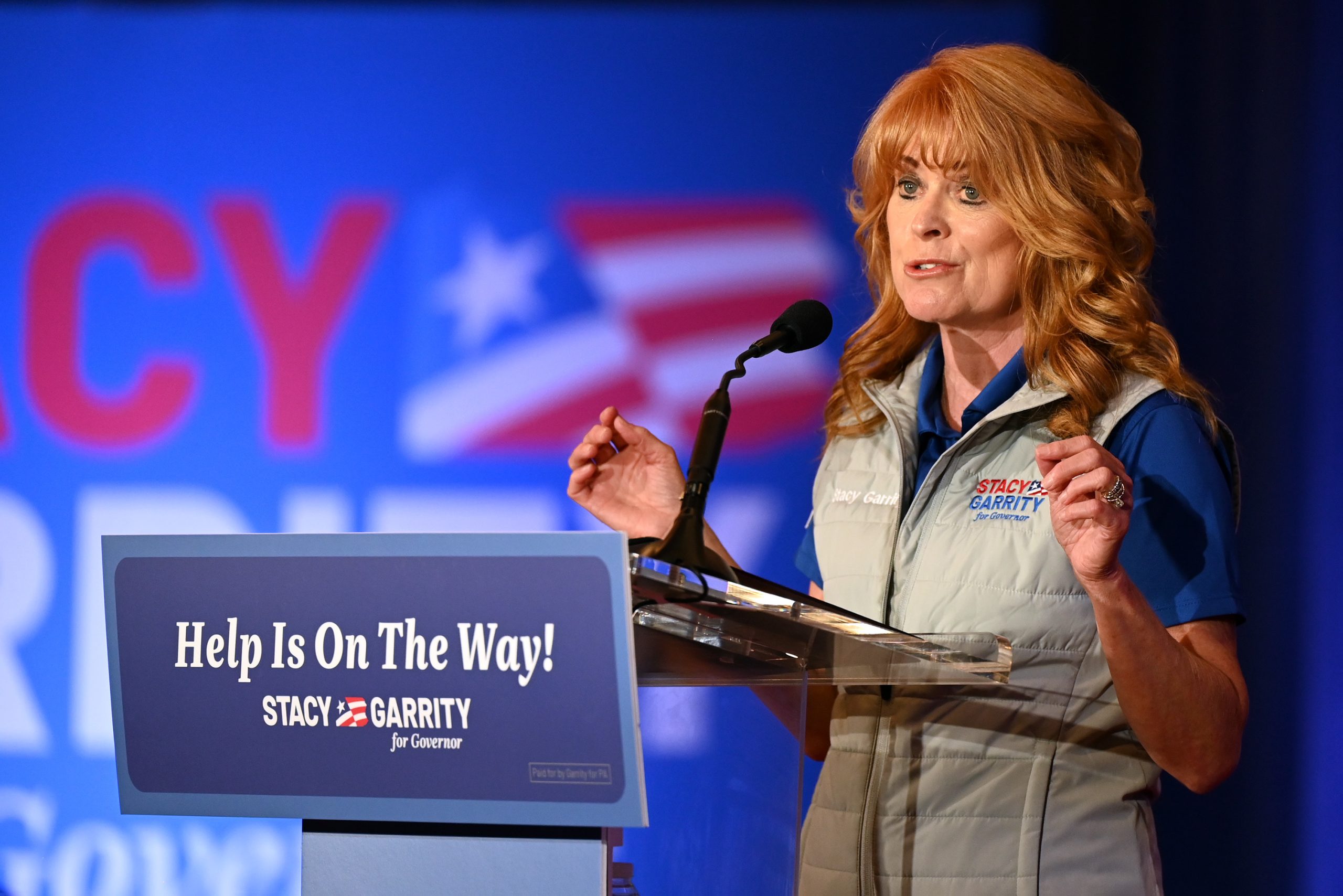
State Treasurer and Republican candidate for governor Stacy Garrity holds a rally in Bucks County Sept. 25, 2025 at the Newtown Sports & Events Center.Tom Gralish / Staff Photographer
On Tuesday, Garrity stopped in Philadelphia for an event with Florida Gov. Ron DeSantis at the Union League about issues related to affordability, according to an event flyer. Media were denied entry into the private event.
The governor has repeatedly said his focus is on the November election in Pennsylvania, where he is vying not only for reelection but also to rally enthusiasm down-ballot in efforts to flip control of the state Senate and elect Democrats to four nationally watched congressional seats in attempts to flip the U.S. House.
With more than three months until Election Day, the Republican campaign against Texas Democratic Senate candidate James Talarico has already made national news for its ugliness.
The baseless accusations against him have included claims that he’s a vegan — a near blasphemy in the beef-loving state. But the centerpiece of the campaign has been repeated assertions that he is gay or trans.
Not long after Talarico won the Democratic primary, White House Deputy Chief of Staff Stephen Miller posted on X, “The Democrats made history in Texas by nominating their first transgender senate candidate,” an attack he later repeated in an appearance on Fox News, in which he added that Talarico was “clearly transitioning into a female.”
And Miller is far from alone. Talarico’s opponent, the scandal-plagued state Attorney General Ken Paxton, dubbed Talarico “six-gender Jimmy” and “Talafreako,” claiming he’s “too low-T for Texas.” Texas Gov. Greg Abbott even posted pictures of Talarico as a woman.
Amid all of this mudslinging, one group has been noticeably silent: LGBTQ Republicans. Their failure to speak out against the assault on Talarico — which seems more an attempt to delegitimize his masculinity than to actually question his sexuality — signals a capitulation to Republican homophobia and anti-LGBTQ bigotry, not to mention a risky betrayal of their own history.
Gay Republican organizing began in California in the 1970s as an attempt to offer an alternative to liberal gay organizations that often worked closely with the Democratic Party. The activists hoped to show that they were loyal Republicans and, in the process, stamp out the antigay “family values” politics that was beginning to take shape within the GOP.
Two particular events in 1978 hastened this development. One was Ed Davis’ run for the Republican nomination for California governor. As Los Angeles police chief, Davis had directed the city’s law enforcement to harass gay and lesbian people. Running for political office, Davis often railed against “fruits” and “fairies.”
That same year, a ballot initiative, Proposition 6, sought to make it illegal for any gay person to work in California’s public school system. Its sponsor, conservative Orange County state legislator John Briggs, regularly equated homosexuality with pedophilia and charged that gay teachers would molest schoolchildren.
Gay Republicans sprang into action, taking great personal and professional risks to publicly organize and mobilize against these threats.
They wanted to send a strong message to the GOP to reject the emerging religious right. In their view, religious conservatives who were trying to use the government to regulate and sometimes criminalize private matters, including sexuality and reproductive decisions, were anathema to the Republican Party’s tradition of individual rights and personal freedom. But they knew if an antigay ballot initiative won in a large state like California, it would make it even harder to stop the GOP’s national slide from social moderation to conservatism.
Both Davis and Proposition 6 lost, signaling that gay Republican activism could work.
The activists recruited other gay and lesbian people to register as Republicans to vote against outspoken homophobes in the party’s primaries and support its moderate candidates. And they insisted to party officials and Republican politicians, including Ronald Reagan, that allowing homophobic language and endorsing antigay legislation would alienate thousands of moderate and independent voters.
Gay Republicans were thrilled when Reagan declared during his 1980 presidential campaign that although he did not support “homosexual rights,” he also believed there was no “place in our society for intolerance and discrimination.” Despite the seeming contradictions in this position, gay Republicans thought it gave them the leverage to nudge the party in a more progressive direction.
With that goal in mind, gay Republican groups formed across the country in the 1980s, culminating in the creation of the Log Cabin Republicans, the nation’s oldest and largest LGBT Republican organization. The national organization and its state and local chapters worked against antigay efforts around the country as they sought to root out homophobia and antigay bigotry within the party.
These groups continued to argue that abandoning bigotry could provide electoral benefits. “Republicanism is a philosophy that is closer to the hearts of gay people than is the extreme liberalism of the Democrat Party,” one pamphlet asserted. But for many gay voters, the GOP was off-limits because “of the extreme hate expressed toward gay people by certain elected GOP persons.”
Made By History sponsors.Inquirer Staff
When socially moderate and gay-friendly Republicans won races, especially in Democratic strongholds, gay Republican activists touted the victories as proof that they were right. After Rudy Giuliani narrowly won the 1993 New York City mayoral race, for example, they pointed out that he did so with nearly a third of the city’s gay vote.
These victories emboldened gay Republicans, who continued to target antigay Republican politicians and encourage the GOP to prioritize economic and national security issues over culture war resentments. For decades, the Log Cabin Republicans saw themselves as existing to hold the Republicans’ feet to the fire until they eliminated — or, at least, effectively marginalized — the party’s homophobic voices.
Leading gay Republicans, like Log Cabin president Rich Tafel, regularly squared off against religious right figures on television, shaming their homophobic views as un-American and a disaster electorally. “The gay-bashing party of Falwell and Pat Robertson will never be the majority party in this country,” Tafel contended.
Gay Republicans scored a major victory when George W. Bush committed that the 2000 Republican National Convention would include no antigay talk in the proceedings — a significant result given that just eight years earlier, commentator Patrick Buchanan had delivered a blistering keynote address while some delegates waved signs that read “Thank God for AIDS” and “Family Rights Forever / Gay Rights Never.”
The Bush administration still went on to work diligently against the legalization of same-sex marriage. Even so, gay Republicans saw changing the tone within the GOP as a crucial first step toward conservative Americans eventually supporting basic rights like same-sex marriage. And as Republican voters, especially critical suburban moderates, became more accepting of homosexuality and gay rights, gay Republicans pressured the party to avoid homophobic messaging and antigay language, if not to abandon antigay politics altogether.
And when the GOP refused to listen, gay Republicans fought back. During the 2004 presidential campaign, Log Cabin Republicans refused to endorse Bush because of his support for a constitutional amendment to ban same-sex marriages and his tolerance of antigay language in the party platform. Gay Republicans felt they had to make their opposition clear. “If you remain silent while people are kicking you in the stomach,” Log Cabin’s executive director explained, “you become completely irrelevant.”
On the one hand, they continue to speak out against some homophobia from elected Republicans, such as Rep. Andy Ogles’ (R., Tenn.) posting on X at the start of Pride Month that “Homosexuality has no place in America.” Yet, their decision to remain silent about the attacks on Talarico may speak even louder.
It’s unclear whether they see the campaign against Talarico as an unserious attempt at humor or worry that scolding the party would be an embrace of the “political correctness” Trump has made anathema in the GOP.
Yet, whatever their reasons, their silence signals a troubling return to the Republicanism of the past that used outright homophobia for political gain — and a forewarning of things to come. Even worse, it’s coming at a moment when Americans are exhibiting declining support for LGBTQ issues, and Republicans’ backing of same-sex marriage has plummeted, down 18% from just four years ago.
Undoubtedly, gay Republicans have always made compromises and chosen their battles carefully in order to exert influence within the GOP. Yet, none of this included turning a blind eye to Republican homophobia; instead, they directly confronted it — even when it came from lukewarm allies like Bush.
Gay Republicans may believe that by overlooking the attacks on Talarico, they can show themselves to be good sports who are not easily offended, true conservatives who know the difference between campaign hijinks and serious political threats, unlike LGBTQ liberals. Yet, they may soon discover that the slurs against Talarico were not an isolated swipe at a political opponent — and, worse, that their silence has facilitated the return of the GOP’s assault on LGBTQ rights.
Made By History takes readers beyond the headlines with articles written and edited by professional historians. Opinions expressed do not necessarily reflect the views of The Inquirer.
As Democrats grapple with the fallout from Graham Platner’s scandal-plagued and ultimately canceled bid for U.S. Senate in Maine, a political consulting firm that worked on his race and that’s been heavily involved in Pennsylvania politics is at the center of many of the party’s frustrations.
Members of the firm weren’t the only ones advising Platner’s campaign. National operatives such as Daniel Moraff, who has also worked in Pennsylvania, have also fielded criticism for recruiting and not thoroughly vetting Platner, an unknown political outsider.
But both before and after the allegations of sexual assault that led to Platner’s exit from the race this week, other Democratic consultants and political observers blamed FIGHT for continuing to support him through multiple public setbacks.
Platner’s issues have also reignited anger about and drawn parallels to Fetterman, another candidate who ran as a working-class progressive. The Pennsylvania Democrat has lost much of the support from the base that elected him as he’s more frequently sided with Republicans in ways that some have described as a betrayal. He has not been accused of the same types of issues that plagued Platner’s run.
“I supported Graham at the beginning, despite the nagging voice in my head that kept saying ‘this feels familiar,’” Adam Jentleson, Fetterman’s first chief of staff who has become a staunch critic of the Pennsylvania Democrat, wrote on social media.
Jentleson was among those who questioned the FIGHT agency and the rest of the Platner team’s work and its handling of the collapse.
When Morris Katz, the FIGHT strategist on Platner’s campaign, said on social media that his team advised to end the campaign immediately after hearing the allegations Platner had raped a former girlfriend, Jentleson replied that the argument “strains credulity.” Platner and his team had continued to deny the allegations, Jentleson and others noted.
“Shading a narrative toward the positive is standard, lying is not,” Jentleson wrote, comparing the experience to working with Fetterman.
Fetterman, for his part, has heavily criticized Platner in recent months and celebrated his downfall this week.
“You will only be remembered as the accused rapist that got pushed out of your election. … Go back under the rock that you came from,” Fetterman said Wednesday on Fox News.
The Democratic Socialists of America, in a letter that mentioned the FIGHT staff’s work for Fetterman, called on candidates to refuse to work with Katz, The Intercept reported Friday.
FIGHT declined to comment for this story.
As Democrats look to regain their footing in this year’s midterm elections, the Platner saga and FIGHT’s role has also touched on the party’s broader goals of cultivating candidates who can win over the kinds of working-class voters President Donald Trump captured in recent years.
Platner, an oyster farmer and former bartender who suffered PTSD after serving in the U.S. Marines, pitched himself as deeply in-tune with working class voters in Maine. It was the type of profile, many Democrats hoped, would lead to a victory over longtime Republican incumbent U.S. Sen. Susan Collins and help the party win control of the U.S. Senate.
Democrats in Pennsylvania have taken a similar approach.
In a Lehigh Valley-based congressional district considered one of the likeliest seats in the country to flip from Republican to Democrat, the party has rallied behind Bob Brooks, a union leader and retired firefighter who coaches high school baseball and drives a snowplow.
“When you look at Brooks, one of the reasons he was recruited into this race and why Democrats have rallied around him is that there’s a belief that he might capture some of the [working-class Democratic] energy,” said Chris Borick, an adjunct professor of politics at Lehigh University.
The FIGHT agency, which primarily makes candidates’ television ads, has worked on Brooks’ campaign as well as the campaign of Paige Cognetti, the Scranton mayor and Democratic nominee in the Scranton-based 8th Congressional District.
There are no signs that Brooks or Cognetti are being advised by Katz, who has primarily worked on Platner’s campaign. In response to requests for comment Friday, Brooks’ campaign only confirmed that FIGHT makes its ads, and Cognetti’s campaign said, “Paige is glad Platner dropped out of the race.”
The Pennsylvania candidateshave not faced the same type of intense criticism for parts of their personal histories as Platner did throughout his 10-month campaign.
Brooks’ opponents in the 7th Congressional District primary criticized him for old social media posts that, for instance, downplayed the role of guns in a mass shooting. Brooks said the posts were “silly, maybe stupid.” He, like Platner, also faced accusations that he could be “another John Fetterman,” given his background and similar appearance.
Mike Mikus, a Pittsburgh-based Democratic strategist who has long opposed Fetterman, said Brooks was “the real deal” at a time when Democrats are “desperate” to correct their problem with white, working-class voters. Platner, on the other hand, appeared to be an “overcorrection” that involved consultants dismissing “obvious red flags,” Mikus said.
He said FIGHT may lose some future clients because of the misstep, which he largely blamed on Moraff, a consultant who does not work for FIGHT and has also been widely criticized for recruiting Platner.
“Everybody’s looking for authenticity,” Mikus said. “And you can’t workshop somebody into something they’re not.”
Created after Trump and the Republican Party’s sweeping victories in 2024, the FIGHT agency’s pitch since its launch has focused on authenticity. Its candidates have reflected not just voters’ desires for candidates outside the traditional political establishment, but campaigns intent on fighting Trump and advancing economic populism. Zohran Mamdani, the Democratic socialist who won New York’s mayoral race in 2025, has marked their largest success to date.
“Among progressives there’s a sense that the party has not been effective in trying to counter Trump … and we have to fight this battle internally in order to resist Trump,” said Stephen Medvic, an associate professor of government at Franklin and Marshall College. “So you’re getting groups in the last couple of years, like FIGHT Agency, being put together to try to tip the balance in their direction.”
But their approach — finding someone who meets the profile and aligns with their ideology — may not necessarily always produce a winning formula. Limitations may depend on the type of assessment and vetting that goes into recruitment, he said.
“You might get an AOC, but … you might get a Platner,” Medvic said. “A lot of Democrats are now regretting that they were so excited about Fetterman because he turned out to be something so different.”
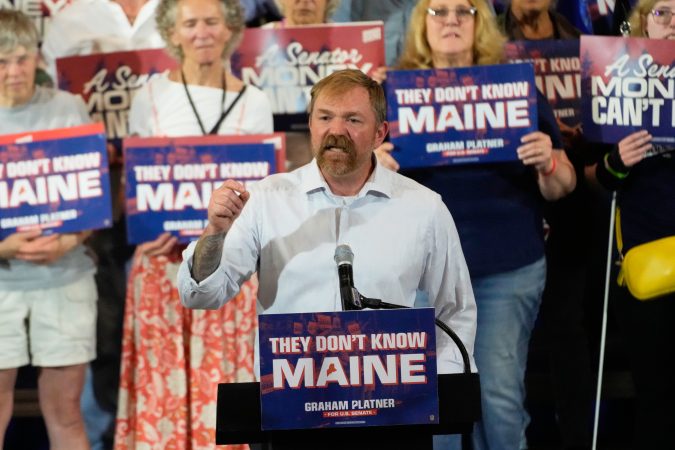
Increasingly isolated from the Democratic Party, Graham Platner is holed up at his home in rural Maine, navigating the likely end of his once-surging campaign for the U.S. Senate, as establishment fury over his prolonged exit grows louder.
Platner’s campaign team held a call Wednesday afternoon in which campaign leadership sounded resigned to the idea that the Democrat’s bid could be ending soon, said a Democrat close to Platner. Campaign staff were told that Platner would speak about the future of his run Wednesday night.
He could drop out of the race soon, probably by prerecorded video, said a second person close to Platner’s team who, like others in this article, spoke on the condition of anonymity to avoid alienating fellow Democrats in what has become an increasingly tense situation.
One of Platner’s key advisers, Morris Katz, flew up to Maine from New York on Tuesday to discuss his withdrawal, said the person. But Platner, whose political support has evaporated since he was accused of sexual assault on Monday, has struggled with the decision, people close to him said, and has said he would like input on the replacement process, leaving the timing of any announcement unclear.
“It is him who is wanting to hold on,” the first Democrat said. “He is having to come to terms that his dream is dead. The show is over, this is done.”
Until Platner pulls the plug, however, the Democratic Party is at an impasse, unable to fully refocus on its uphill battle to defeat five-term Republican Sen. Susan Collins. The race is critical to Democrats’ longshot bid to retake the Senate, where the party must flip four seats held by Republicans to win back control in November.
That frustration is now spilling into the public.
On Tuesday night, the Maine Democratic Party released a confrontational video reiterating its call for Platner to drop out so it could select a replacement candidate. If Platner withdraws by Monday, the party has until July 27 to submit a new nominee – though it remains unclear how that decision would be made.
“Unfortunately, Graham Platner’s team has repeatedly reached out to us in an attempt to put their thumb on the scale of what this process looks like,” Devon Murphy-Anderson, executive director of the Maine Democratic Party, said in the video. “We have repeatedly reiterated to Graham Platner’s team that they have no role in determining our next Democratic nominee for the U.S. Senate.”
That posture incensed Platner’s more dedicated supporters, some of whom have felt aggrieved by how quickly Democrats turned on him after the sexual assault accusation and who argue that any replacement candidate must be aligned with the populist politics that fueled his rise.
Party officials are sensitive to the fact that, despite Platner’s downfall, they need to keep the political movement that emerged around him intact in order to win.
“It is important that someone carry forward the movement that has been built here of everyday working-class people who are fed up with a system in Washington that is so broken,” Maine House Speaker Ryan Fecteau said in an interview. “There are a number of people in Maine politics who share the same views as Graham Platner, who have the same message as Graham Platner, who can carry this work forward.”
A spokesperson for Platner denied that “the campaign tried to ‘put its finger on the scale’” of the replacement process. But Platner is seeking to influence it as he navigates his exit – and his decision not to drop out immediately has divided many within his campaign.
Platner’s attempt to continue a campaign detonated by his own alleged behavior has not only exasperated some Maine Democrats but also dumbfounded them.
“People who have made their political careers decrying a rigged political system are now trying to rig the political system,” quipped a Democratic operative who works in Maine.
National Democrats, led by the Democratic Senatorial Campaign Committee, have said that they will not spend money in Maine if Platner remains the nominee.
But their role in selecting his successor is minimal, beyond supporting the Maine Democratic Party’s currently unknown plans for selecting a replacement should Platner drop out. There is belief within the committee that any nominee, at this point, will be stronger than a scandal-plagued Platner, said one person familiar with the committee’s thinking.
Since he launched his campaign last summer, Platner’s political rise and his outsider message have invigorated Maine Democrats, who have long failed to find a candidate who can defeat Collins, despite the state’s Democratic lean.
Many voters were willing to overlook earlier controversies that plagued the charismatic 41-year-old oyster farmer and military veteran, including old social media posts where Platner downplayed sexual assault and made other inflammatory comments; a tattoo resembling a Nazi symbol that he had covered up; sexually explicit text messages sent to other women after he married; and accusations of violent behavior by ex-girlfriends.
Then on Monday, a woman who used to date Platner said he entered her home intoxicated one night in late 2021 and forced himself on her as she told him to stop.
On Tuesday, a second ex-girlfriend told The Washington Post that Platner repeatedly removed protection without her consent when they were having sex. The campaign called the claim “categorically false and politically motivated.”
Unlike some politicians engulfed by scandal, Platner retains a core of close advisers who have stuck by him since Monday, allowing him to hold out against calls for his withdrawal.
In April, when then-Rep. Eric Swalwell (D-California) was accused of sexual assault by a former staffer amid a run for governor, top campaign staff immediately quit and his campaign imploded within days. Platner, by contrast, continues to operate with the inner circle of his campaign from his home in the small coastal town of Sullivan.
The scene was quiet there Wednesday morning. Several cars were parked in Platner’s driveway near a pile of chopped wood and a boat covered in a green tarp. A few reporters were across the narrow road.
As the public awaits word from Platner about his plans, longtime friends say this has been a difficult moment, with one even suggesting that Platner could continue to fight.
“Everybody says they are pulling their support. Is that truly what they are going to do? Are they just going to let Susan Collins win?” the friend said. “That seems highly unlikely to me because we need Maine to flip the Senate.”
That is not a universal view, however. Some people who have backed Platner for months, even through his many scandals, are too disgusted with him to continue their relationship.
“At this point, he knows I know he’s lied to me directly too many times,” said a top Maine Democrat who has been close to Platner. “I don’t think he has the shame to speak directly to me.”
Joanna Slater in Sullivan, Maine, contributed to this article.