Category: Elections

  • Josh Shapiro has a 16-point lead in the governor’s race — and most Pa. Democrats would support him for president

    Josh Shapiro has a 16-point lead in the governor’s race — and most Pa. Democrats would support him for president

    With a little more than two months until Election Day, Democratic Gov. Josh Shapiro has a double-digit lead over his Republican challenger, Stacy Garrity, among likely Pennsylvania voters in the race to lead the critical swing state — an election that could also serve as an audition for the 2028 presidential primary.

    Shapiro holds a 16-percentage-point lead over Garrity, the state treasurer, according to a new poll of 760 likely voters conducted from Aug. 17 through 21 by The Inquirer, the New York Times, and Siena University.

    The numbers could foreshadow another commanding victory for Shapiro, as he hopes his popularity trickles into other down-ballot races, including four congressional districts that national Democrats think they can flip. Shapiro is also trying to flip the state Senate for the first time in 30 years and deliver a Democratic trifecta in the statehouse.

    (function() { var l = function() { new pym.Parent( ‘nyt-shapiro2__graphic’, ‘https://media.inquirer.com/storage/inquirer/ai2html/nyt-shapiro2/index.html’); }; if(typeof(pym) === ‘undefined’) { var h = document.getElementsByTagName(‘head’)[0], s = document.createElement(‘script’); s.type = ‘text/javascript’; s.src = ‘https://pym.nprapps.org/pym.v1.min.js’; s.onload = l; h.appendChild(s); } else { l(); } })();

    A majority of Pennsylvania voters — 60% — have a favorable opinion of the governor, compared with Garrity, who is viewed favorably by just 37% in the state.

    Shapiro’s popularity also eclipses that of President Donald Trump, according to the poll. Sixty percent of likely Pennsylvania voters approve of the job Shapiro is doing as governor, while 39% approve of Trump, who won the state two years ago.

    Lora Peluso, 63, a Democrat and retired catering director from Pittsburgh, said Shapiro has been a shield in Pennsylvania against some of Trump’s most harmful policies affecting low-income and older people.

    “I think [Shapiro] is trustworthy,” said Peluso, who participated in the poll. “His policies are things that actually benefit people, the average working person, seniors.”

    Garrity still unknown by some Republicans

    Pennsylvania Republicans this year had hoped to avoid another walloping by Shapiro, who has won three times statewide, with fears that a weak gubernatorial candidate could negatively affect the rest of the Republican ticket. So the state GOP took the unprecedented move of endorsing Garrity in September 2025 — approximately 14 months before the election — to try to raise her profile.

    Despite securing Trump’s endorsement, Garrity has struggled to raise money, attract support from national Republicans, or compete with Shapiro’s $13 million in ad buys so far this cycle. Her campaign has spent $679,000 on ad buys thus far, according to media-tracking firm AdImpact, as it seeks to introduce the candidate to voters.

    Now, with 70 days until the election, a quarter of likely Republican voters still did not know Garrity or know enough about her to form an opinion of her, according to the poll.

    Meanwhile, Shapiro maintains favorable opinions among 27% of Trump’s 2024 supporters, and 35% of registered Republicans approve of the job he is doing as governor, the poll found.

    (function(){function e(){window.addEventListener(`message`,function(e){if(e.data[`datawrapper-height`]!==void 0){var t=document.querySelectorAll(`iframe`);for(var n in e.data[`datawrapper-height`])for(var r=0,i;i=t[r];r++)if(i.contentWindow===e.source){var a=e.data[`datawrapper-height`][n]+`px`;i.style.height=a}}})}e()})();

    Michael Patterson, a Republican from Trumbauersville, Bucks County, who supported Trump in 2024, said he plans to support Shapiro in November because he likes the job the governor is doing and because he does not know much about Garrity besides what he has seen on social media.

    “Honestly, I don’t know much about her,” Patterson, 60, said. “I guess I don’t see advertisements on the TV. Other than Facebook, I really don’t see her. The stuff I see on Facebook is just typical partisan stuff.”

    Shapiro, on the other hand, appears more moderate and independent from his party in Patterson’s eyes.

    “He’s kinda doing his own thing. I have a lot of respect for that. He’s not playing partisan games,” Patterson said, contrasting Shapiro with Democrats in California and New York.

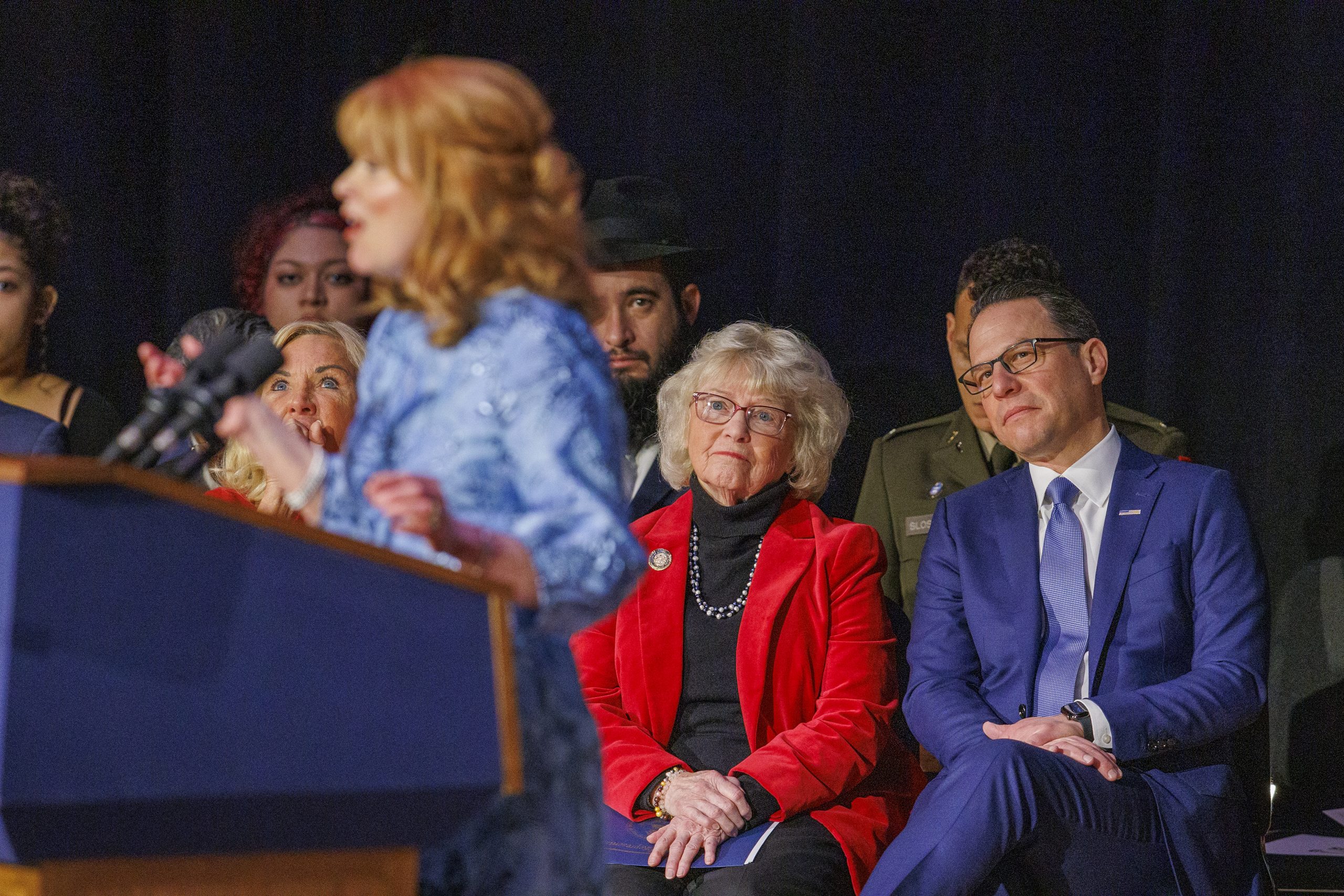
    Michael Patterson, a Bucks County Republican voter pictured in his Trumbauersville home, plans to vote for Democratic Gov. Josh Shapiro over Republican nominee Stacy Garrity. William Thomas Cain / For The Inquirer

    This attitude shows up among other Republicans, too, said Don Levy, the director of the Siena Research Institute.

    “Shapiro is seen as sufficiently middle of the road,” Levy said. “He’s got 35% of Republicans approving of the job that he’s doing as governor. That’s a really impressive number in today’s world.”

    Other Republicans like Steven Keenan, 70, of Ridley Township, are all in for Garrity, citing her military experience and support for Trump.

    “[Shapiro’s] a big phony. He’s a politician,” Keenan said. “She is, too, but she’s been through the wars. I think she’s earned her place. I think we should give a woman a chance.”

    A majority of Pennsylvania voters trust Shapiro over Garrity to handle top issues facing the state, including the economy, cost-of-living increases, the Trump administration, immigration, and doing what is best for ordinary Pennsylvanians.

    Tina Hoffert, 68, of Lenhartsville, Berks County, said she has not heard much about Garrity, but plans to vote for her in November because she is unsatisfied with Shapiro’s leadership.

    “He’s forever bashing Trump,” Hoffert, a Republican, said. “I’m sorry, I don’t care whether you like him or not, he’s our president. You work with him. You don’t fight him. And if there’s things you don’t like that he’s doing, then you go in there and you have discussions.”

    Shapiro’s presidential prospects

    If Shapiro is reelected in a landslide victory this November, it becomes even more likely that he jumps into the 2028 presidential race as the governor of a key swing state with 19 electoral votes.

    Among those surveyed who said they plan to vote in the Democratic primary in two years, 86% said they would be likely to support him — though the poll did not compare him with other potential primary candidates.

    Other prospective candidates include former Vice President Kamala Harris, Govs. Gavin Newsom of California and JB Pritzker of Illinois, U.S. Sens. Mark Kelly of Arizona and Jon Ossoff of Georgia, and U.S. Rep. Alexandria Ocasio-Cortez of New York.

    (function(){function e(){window.addEventListener(`message`,function(e){if(e.data[`datawrapper-height`]!==void 0){var t=document.querySelectorAll(`iframe`);for(var n in e.data[`datawrapper-height`])for(var r=0,i;i=t[r];r++)if(i.contentWindow===e.source){var a=e.data[`datawrapper-height`][n]+`px`;i.style.height=a}}})}e()})();

    Shapiro has brushed off questions about his ambitions and told a reporter Saturday, in response to whether he would commit to serving a four-year term in office, that “the only thing that I’m focused on — and the only thing anybody should be focused on — is winning in November and being a check on this president’s chaos, cruelty, and corruption.”

    Most voters in the poll — 58% — said that if Shapiro decides to run for president, doing so either would not distract from his role as governor or would not keep him from being effective at governing.

    “I mean, it would be a distraction, of course, but I think he’s a professional and a hard worker, and he would figure it out. It seems like he hires good people, too,” said Peter Hewitt, 62, of Devon, a Democrat who supports Shapiro’s reelection bid.

    (function() { var l = function() { new pym.Parent( ‘nyt-trump2__graphic’, ‘https://media.inquirer.com/storage/inquirer/ai2html/nyt-trump2/index.html’); }; if(typeof(pym) === ‘undefined’) { var h = document.getElementsByTagName(‘head’)[0], s = document.createElement(‘script’); s.type = ‘text/javascript’; s.src = ‘https://pym.nprapps.org/pym.v1.min.js’; s.onload = l; h.appendChild(s); } else { l(); } })();

    Shapiro’s potential candidacy has largely centered on his electability, especially his ability to win the top office in the nation’s premier swing state. He has pitched himself as a Democratic governor more interested in working with Republicans to make meaningful improvements to the state than in picking partisan fights, and voters agree: 58% of respondents said he is neither too far to the left nor to the right.

    “He’s done a good job of just being more of a moderate, middle-of-the-road Democrat,” said Andrew Perez, a 58-year-old self-described independent voter in Pittsburgh. He said he appreciated Shapiro’s focus on improving roads and highways and not “just blindly disagreeing” with Trump.

    “I think we need a strong presidential candidate who will try to unite the country instead of just keeping it being divisive, so I think that I’d be pretty likely to vote for him [for president],” said Perez, a physician.

    Montiese McKenzie, 46, of West Philadelphia, said she is supporting Shapiro for a second term, but is not quite yet sold on a presidential run. She said she has not seen him rise to the level of “fighter” she thinks the Democratic Party needs, and believes as of now, she would be more likely to support someone else in the Democratic primary.

    “You see people like Jon Ossoff and JB Pritzker, and they’re not putting up with it. They don’t make it pretty anymore,” McKenzie said. “If I saw some of that in Shapiro, I might be more likely to support him as a presidential candidate. Until then, I’m not sure he has the gumption.”

    Shapiro has signed on to dozens of lawsuits against Trump’s administration on a host of issues, from tariffs to gender-affirming care.

    But to win the party’s nomination, Shapiro would have to defeat more progressive candidates and make the case for his more centrist approach.

    Montiese McKenzie, 48, poses for a portrait near her home in West Philadelphia on Monday, Aug. 24, 2026. McKenzie is a supporter of Gov. Josh Shapiro’s reelection, but is hesitant to back his potential presidential run in 2028.Allie Ippolito / For The Inquirer

    He has already faced criticism from some progressive voters over his previous support for school vouchers, and his early embrace of data centers, which he reversed last week by implementing what he called some of the nation’s “strictest guardrails.” Shapiro, Pennsylvania’s third Jewish governor, has also faced a perception from some progressives that he has been too supportive of Israel during its war with Hamas, despite his vocal opposition to the country’s leader, Prime Minister Benjamin Netanyahu.

    Nearly half, 47%, of respondents said he has been just “about right on support of Israel,” with 14% saying he has been too supportive and 19% saying he has been not supportive enough.

    Should Shapiro launch a presidential campaign, Hewitt wants to see him “come out on the right side.”

    Hewitt, who emphasized his support for Jewish people in his community, said he considers the Israeli government’s actions toward Palestinian people in Gaza to be genocidal. More than 73,000 Palestinian people have been killed in Gaza since the war began nearly three years ago, and multiple international institutions have said Israel’s actions violate human rights.

    “I don’t think it’s really that big of a deal for governors per se. He’s not going to vote on national policy as the governor of Pennsylvania,” Hewitt said. But he added: “He does have a voice, and if he’s thinking about a next step beyond Pennsylvania, then he will have to come out in regard to that issue.”

  • ‘Political earthquake’ in Western Pennsylvania as Democrats flip deep-red district in special election

    ‘Political earthquake’ in Western Pennsylvania as Democrats flip deep-red district in special election

    Pennsylvania Democrats, including Gov. Josh Shapiro, are pointing to a stunning upset in a special election for a deep-red state House district as proof that the party has momentum while campaigning this fall for a trifecta in Harrisburg.

    Butler County Democrat Brandon Dukes said his apparent victory over Republican Scott Timko, by fewer than 100 votes as of Wednesday afternoon, was thanks to his focus on local issues, such as a major corridor perennially under construction to the frustration of residents.

    “We kept it local, we kept it practical, and we kept it common sense,” Dukes said in an interview.

    The 12th Pennsylvania House District, just north of Pittsburgh, went for President Donald Trump by more than 18 percentage points just two years ago and had been held by Republicans since 1999.

    Dukes’ apparent win attracted national attention Wednesday as both a sign of the backlash to the president’s party heading into November and as a north star for centrist Democrats as they seek a path forward.

    “We won that district last night with a middle-of-the-road community leader, who I backed, who won this improbable race,” Shapiro told CBS Mornings, contrasting Dukes with the party’s more left-leaning candidates this cycle.

    “What we’re seeing are commonsense folk from the community who, I think, reflect a lot more my values and my approach to governing who are winning and are upsetting Republicans in these deeply Republican districts,” said Shapiro, a moderate Democrat widely expected to run for president in 2028.

    Shapiro recorded a robocall urging voters to cast ballots in the race, his campaign confirmed.

    Recipe for November

    Democrats are aiming to flip four congressional districts in Pennsylvania this fall and win control of the state Senate for the first time in 30 years with Shapiro, a popular governor, at the top of the ticket.

    Dukes, who will compete to win the seat again in November in a rematch with Timko, shattered previous Democratic runs in the Butler County district.

    “The fact we just flipped this seat tonight is a political earthquake,” U.S. Rep. Brendan Boyle, a Philadelphia Democrat, said on X.

    The district had been represented for more than two decades by one of the Pennsylvania House’s most conservative members, former State Rep. Daryl Metcalfe, who retired in 2023 and was known for his anti-LGBTQ+ rhetoric and actions.

    State Rep. Malcolm Kenyatta, a Philadelphia Democrat, said that the seat is one the party “should not have had a chance to come within sneezing distance of,” but that Dukes’ performance provides a blueprint that can be replicated throughout the state.

    “Winning here means there is not a single safe seat for the GOP,” Kenyatta, a vice chair of the Democratic National Committee, said on X.

    The Associated Press had not called the race as of Wednesday evening, but both parties made statements indicating that they expected Dukes’ lead to hold.

    Chantell McCurdy, the director of Butler’s election bureau, said the initial count has been completed and there is a five-day period to challenge the results.

    James Markley, a spokesperson the Pennsylvania Republican Party, said in a statement that the race needs to be a “wake up call for Republican voters,” and warned against policies from the Democratic Party’s more leftward flank.

    While expressing confidence that the party would win the seat back in November, he also lamented the party’s inability to turn out voters this election.

    “The General Election will come down to which party does a better job getting their voters to participate in the election using any legal means of casting a ballot. Democrats did a better job of this,” he said.

    Voters in Pennsylvania have two methods of casting a ballot: voting in person or voting by mail. Trump has long railed against mail voting and promoted conspiracy theories around it. But Pennsylvania Republican officials have urged more use of the voting method in recent years, most notably in 2024, when Trump took the White House thanks in part to a higher rate of GOP mail voting.

    Pennsylvania Republican House Leader Jesse Topper of Bedford County downplayed the significance of the special election, calling the results “disappointing but unsurprising” because of demographic change in the district, the timing of the vote during the summer, and the unpredictable electorate for such contests.

    “There is much more yet to unfold in the final months of the 2026 election cycle and we will continue carrying out vision for positive growth in Pennsylvania through November,” he said.

    But Democrats noted that Dukes’ victory in the district would not have been possible if he did not work to win over Republican voters.

    “You cannot win a deep-red district like this without getting at least a big chunk of independents and at least some Republicans” who are “rejecting the chaos and high prices of Donald Trump,” said Pennsylvania Democratic chair Eugene DePasquale.

    “I think this is a recipe for a big November for the Democratic Party,” he said.

    Dukes, a loan administrator, said he listed affordability, infrastructure, and education as the key issues for his campaign.

    DePasquale said Dukes’ campaign worked because he “focused on issues that mattered in the district,” such as high prices and cuts to Medicaid and food assistance under Trump.

    But DePasquale dismissed the idea that Democrats should run only certain kinds of candidates to win.

    “We need to be a big-tent party, and we need to have candidates that reflect their districts,” he said. “We are embracing candidates that spread the ideological spectrum of the Democratic coalition, and you’re going to see that lead to success this November.”

    Statehouse campaigns often do not receive as much money or attention as congressional and statewide races, but Dukes received a boost from several major figures in the party.

    In addition to Shapiro’s robocall, Dukes campaigned with Lt. Gov. Austin Davis and U.S. Rep. Chris Deluzio of Western Pennsylvania.

    He also boasted an endorsement from former Transportation Secretary Pete Buttigieg, another possible Democratic presidential contender, who said Wednesday that Dukes’ win “reflects voters’ readiness for change.”

    Rematch ahead

    After he is sworn in, Dukes will serve a roughly 2½-month term, following the resignation of former State Rep. Stephenie Scialabba, a Republican.

    As an incumbent, he will then face a rematch with Timko in November for a full two-year term.

    Dukes said he plans to “stick with what worked best” for his November campaign, which will include maintaining face-to-face contact with voters.

    A graduate of the University of Pittsburgh, Dukes lives with his wife and daughter in Cranberry Township and describes himself as an “avid Star Wars fan” on his campaign website.

    House Speaker Joanna McClinton, a Philadelphia Democrat, said Dukes’ win builds momentum for the party to make the case to voters about how electing Democrats achieves their goals on issues like codifying abortion protections and raising the minimum wage.

    When state lawmakers return to Harrisburg in September, several issues await, including whether to tax and regulate skill games, finding a long-term funding solution to fund mass transit, and the use of cell phones in K-12 schools.

    “When he gets started in Harrisburg in September, he’s going to be a part of the larger House Democratic agenda that’s been focused on affordability and on opportunities for all Pennsylvanians,” she said. “Voters were very motivated to make their values and their frustrations known at the ballot box.”

    Dukes will provide votes that he can take back to constituents to further his reelection argument.

    “It’s important to tell voters what you’re going to do to make their lives easier because that’s what we did, and we spoke about how we were going to do that,” he said. “It resonated pretty well last night.”

  • A wave election could open the door to sorely needed reforms in Congress

    A wave election could open the door to sorely needed reforms in Congress

    The 2026 midterm election cycle has hinged on a demand for reform, amid an unpopular war and an administration mired in ethics scandals. It’s not the first time midterms have generated such substantive demands for change.

    Against the backdrop of the increasingly costly and unpopular Vietnam War and the Watergate scandal, the 1974 election produced one of the largest freshman classes in congressional history and stirred significant institutional change. Their road map for change provides us with important lessons on how to translate campaign promises into substantive reform in a dysfunctional institution resistant to change.

    The first lesson: harnessing momentum. In a body where influence is currency, the incoming freshman class recognized that steps toward meaningful reform would require decentralizing Congress’ power structure. Between November 1974 and January 1975, new members of Congress provided key votes for opening up avenues for junior members. They weakened the “seniority” system guiding committee assignments by shifting that responsibility from the Ways and Means Committee to the Party Steering Committee. That led to a legislative process in which junior members could more easily rise through the ranks.

    Lawmakers also increased the size of the powerful Ways and Means Committee. That committee has long been responsible for drafting bills that raised money, including taxes and tariffs, and programs such as Social Security and Medicare. Providing greater opportunities for new members to join gave them a powerful seat at the table. Serving on the committee also gave these new members an opportunity to address their economic campaign promises and to have a legislative impact for their constituents.

    “We realized we were a large enough group to make a difference,” former New York Rep. Tom Downey told the Atlantic, adding that support from more senior members of Congress helped to “mold” the class “into the effective tool they wanted to modify the seniority system.”

    Former Connecticut Rep. Toby Moffett, a member of the 1974 class, agreed, recalling that some senior members vocalized how central the freshman class was to getting critical reforms across the finish line. “I remember once … in some hearing on government operations … [former New York Rep.] Bella Abzug pushed the button on her mic and she said, ‘Reinforcements have arrived,’” he said.

    As a result of these structural changes and strategic networking, former members like Moffett, Steve Neal of North Carolina, and Henry Waxman of California rose from freshmen in 1974 to be committee chairs relatively quickly, as others gained seats on powerful committees and subcommittees.

    Building alliances with more experienced members also mattered. Waxman leveraged his relationship with senior member Phil Burton, a representative from California, to get onto the Energy and Commerce Committee, which he believed proved crucial to his impact on health policy, one of his major priorities. Relationships were also important for freshman members of the Republican minority. Former Ohio Rep. Willis “Bill” Gradison built relationships on the Banking Committee and was dedicated to working with the majority in order to craft monetary policy.

    Made By History sponsors. FOR USE ON MADE BY HISTORY STORIES ONLY.Inquirer Staff

    Yet, 1974’s freshmen were also careful to thread the needle between cooperating with senior leaders and standing up for their own positions. “This system still works on knowledge … You can’t be totally intransigent, but you don’t want leadership to think they can count on you automatically either,” Moffett said.

    Another equally important factor in the class’s success was coalition building. “Patience and a knack for finding allies (especially unlikely ones) are two of the most important qualities of being a legislator,” Waxman told the Atlantic.

    For example, when former California Rep. Leo Ryan was killed in the Jonestown massacre, it left the chairmanship of the Government Operations subcommittee vacant. Moffett described how he and other junior members like Massachusetts Rep. Barney Frank, Waxman, and Michigan Rep. John Conyers joined forces to back his campaign for the chairmanship against more senior members.

    It worked. Under Moffett’s leadership, the committee took on oversight. In 1975, the newly minted subcommittee chairman helped to defeat President Gerald Ford’s request for additional military aid to Cambodia and South Vietnam. Later, Moffett pressed President Ronald Reagan’s Environmental Protection Agency to publicly disclose contaminated water sites when EPA chief Anne Gorsuch and Interior Secretary James Watt refused to hand over subpoenaed documents.

    There are clear lessons here for current and future members. Today’s Congress is hypercentralized, with rank-and-file members becoming increasingly dependent on their relationships with senior members to see legislative priorities through. If 2026 is another wave election, that could create openings for new ideas and opportunities and incentives for new members to build coalitions and get Congress working again. It might even open the door to addressing major structural changes: expanding the size of the U.S. House, restoring much of the lost staff expertise in Congress, ethics reforms, and establishing an upper age limit for Congress, among other key reforms.

    It is not enough to just be elected to Congress. Members of the Class of 2026 will have to apply lessons from their predecessors to achieve the change they are campaigning on.

    Editor’s note: This article has been updated to reflect the fact that Tom Downey’s and Henry Waxman’s remarks were made to the Atlantic.

    Maya Kornberg is a senior research fellow in the elections and government program at the Brennan Center for Justice at New York University Law and author most recently of “Stuck: How Money, Media, and Violence Prevent Change in Congress” (Johns Hopkins University Press, March 10).

    Made By History takes readers beyond the headlines with articles written and edited by professional historians. Opinions expressed do not necessarily reflect the views of The Inquirer.

  • Bob Harvie’s debate challenge to Brian Fitzpatrick sets off new war of words in Bucks County race

    Candidates are trading debate challenges in a contentious congressional race in a key swing district in the Philadelphia suburbs.

    Democrat Bob Harvie is challenging Republican U.S. Rep. Brian Fitzpatrick to four debates, his campaign told The Inquirer. Fitzpatrick, after learning of Harvie’s challenge from The Inquirer, countered with 10 debates — but only if Harvie releases files related to an FBI investigation that Fitzpatrick and allies have routinely alleged focuses on the Democrat.

    Harvie does not have files to release, said Dan McCormick, the candidate’s campaign manager. Harvie also has never been under investigation, lawyers for his campaign said. And he has already filed a defamation lawsuit against a pro-Fitzpatrick super PAC for making the same claim.

    “Bob would be happy to participate in 10 debates,” McCormick said. “Bob has no files to release and Brian Fitzpatrick knows it. If Fitzpatrick has proof as he says he does, he should put up or shut up.”

    The back-and-forth emerged Monday when the Harvie campaign told The Inquirer that the two-term Bucks County commissioner would be challenging the five-term GOP lawmaker to three debates in Bucks — one each in the lower, central, and upper parts of the county — and a fourth in the Montgomery County portion of the 1st Congressional District.

    Harvie said that Fitzpatrick “refuses to answer questions here at home” and “has nothing to show for his nearly 10 years in Washington.”

    The increasingly heated race is one of four marquee congressional contests in Pennsylvania that could decide which party controls the U.S. House in November.

    “It’s time for Fitzpatrick to show up in Bucks and Montgomery County — not Manhattan or the Lavender Fields in France,” Harvie said in a statement, referring to the venues for Fitzpatrick’s wedding and engagement to Fox News senior White House correspondent Jacqui Heinrich. “I’ll be there whether or not he shows, because I will never forget who I am fighting for.”

    Heather Roberts, a spokesperson for Fitzpatrick, said as soon as Harvie releases “his full FBI files,” the campaign will move forward with date and venue selections for 10 debates.

    “If the Subject of an FBI Corruption investigation is asking to be provided a platform by the only FBI Agent in Congress, he sure as hell will be required to come clean with the public and release these documents in their entirety,” Roberts said in a statement. “If he has nothing to hide, this should be an easy decision for him.”

    Roberts also proposed a joint sit-down interview with Harvie and Fitzpatrick, conducted by The Inquirer, to discuss the allegations.

    The Harvie campaign questioned how Fitzpatrick would know the content of the files.

    Roberts said that Fitzpatrick, who served 15 years as an FBI agent and a federal prosecutor, “is extremely familiar with this specific grand jury protocol and the documents that are generated.”

    The debate drama is the most recent development in what has become an increasingly combative race, filled with personal jabs and legal filings related to controversial ads making allegations that Harvie is the subject of an FBI investigation.

    Harvie, a former Falls Township supervisor, and other officials testified as witnesses to a grand jury in an FBI probe in 2022 into political donations and union contracts related to the Pennsbury School District. In 2020, the FBI interviewed several people connected to Falls Township and Pennsbury.

    It has been four years since voters have been able to see a general election debate in the 1st Congressional District. In 2024, Fitzpatrick did not debate Democratic challenger Ashley Ehasz, after doing so in 2022.

    The Harvie campaign said that it would be willing to work with the Fitzpatrick campaign on logistics and other event details, but that the commissioner’s preference is a town hall-style debate so voters can hear from him directly.

    The last time Fitzpatrick announced an in-person town hall was August 2017, according to Fitzpatrick’s government website.

    Fitzpatrick has held tele-town halls, including one in June, for constituents, and frequently posts on social media recapping the meetings and events he attends in the community.

  • How Josh Shapiro’s early embrace of data centers is testing his high popularity in Pennsylvania

    How Josh Shapiro’s early embrace of data centers is testing his high popularity in Pennsylvania

    Gov. Josh Shapiro made a declaration in the early days of his administration: Pennsylvania is open for business.

    The move would ultimately include promises to slash bureaucratic red tape, cut permit wait times, and offer a new direct line to Shapiro’s office for major corporations hoping to set up shop in Pennsylvania.

    Pennsylvania would “move at the speed of business” and “get stuff done,” the new mottos used by his administration, he said. He’s campaigning for reelection in November on the same catchphrases, and boasting major successes like the 12-day repair of I-95 in 2023 that traditionally would have taken months to reopen as an example of how he can think outside the box to solve problems.

    What’s more: He sees delivering for residents — showing them government can actually solve problems — as the future of the national Democratic Party, while it searches for an effective message and messenger heading into the 2028 presidential primary, which he is widely expected to enter.

    It was with this same spirit last summer that Shapiro announced the largest single private sector investment in Pennsylvania history: Amazon committed $20 billion in Pennsylvania that included two data center campuses in Luzerne and Bucks Counties. Pennsylvania scored the project because of its promise to fast-track permitting and use tax breaks for the massive developments.

    “Pennsylvania’s gonna be better off. I think America’s gonna be better off, because we’re going to win the battle of AI supremacy and it’s going to be done right here in the commonwealth of Pennsylvania,” Shapiro said in an interview on CNBC’s Squawk Box on the day he announced the deal.

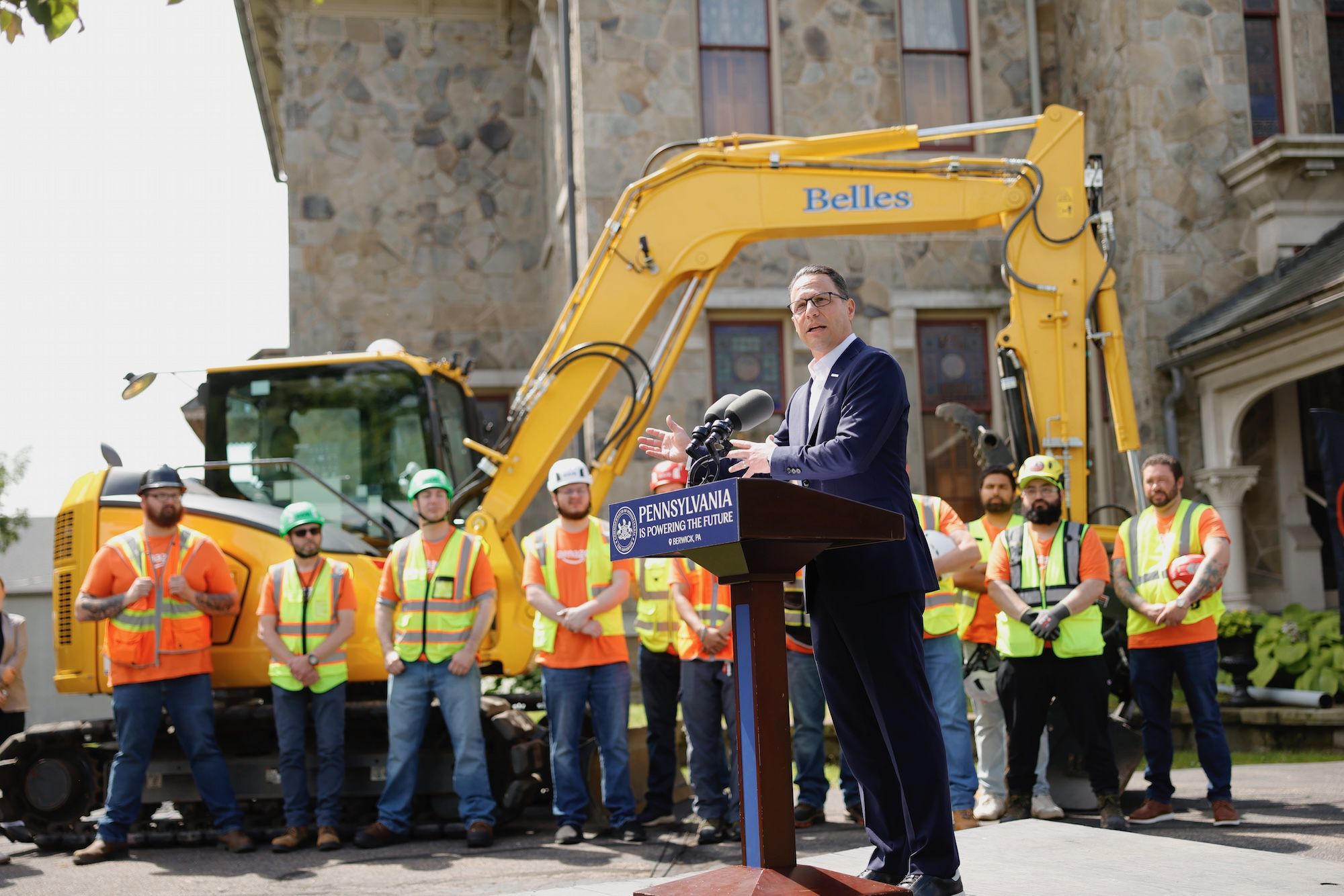
    Gov. Josh Shapiro announces a $20 billion investment by Amazon in Pennsylvania data centers in Salem Township and Falls Township on June 9, 2025.

    But in a year’s time, the politics — and public opinion on both sides of the aisle — have dramatically shifted on data center development. Shapiro’s early welcome of data centers has created an opening for criticism from his gubernatorial opponent and members of his own party.

    Yet efforts to cut red tape have proven to be slow and overblown: Only six data centers are actually under construction in Pennsylvania since the announcement, and 10 have received at least one state-level permit approval, according to Shapiro’s office. Still, Shapiro’s popularity is being evaluated by some voters and anti-data center activists on a perception that he moved too quickly and sacrificed the state’s safety in favor of Big Tech.

    “I am all about legislators and decision makers getting s— done. This version of it is reckless and it’s irresponsible and it’s not actually serving our people,” said Carrie Santoro, the executive director of progressive advocacy group Pennsylvania Stands Up who has been holding town hall meetings in communities around the state on data centers.

    As public opposition to data center development has grown over the last year, Shapiro has begun to soften his position, citing his personal evolution on the projects. He’s gone from consulting Amazon and the data center industry earlier this year to draft data center incentives, to vowing his own executive actions to curb the projects in communities that oppose them.

    “Governor Shapiro intends to use all the tools available to him to stop the dozens of speculative data center projects that do not meet community needs and Pennsylvania should expect to hear more from him on that in the coming weeks,” said Shapiro’s press secretary, Rosie Lapowsky.

    Now Shapiro, who otherwise maintains vast popularity ratings in the state, faces a vulnerability on one of voters’ top priorities as he heads into November, and a particularly sensitive concern among Democrats as he potentially vies for the party’s nomination in two years.

    A liability among some voters

    Data centers were not broadly known or understood by many until this year, as public outcry continues to grow.

    Many states, including Pennsylvania, had already begun welcoming the major projects, and some hyperscale developers plan to spend billions of dollars to build them. Pennsylvania’s General Assembly first approved a sales tax exemption for data center developments in 2021, when Shapiro’s predecessor, Democratic Gov. Tom Wolf, was still in office.

    Shapiro, for his part, initially embraced data centers as an economic opportunity for Pennsylvania, bringing union jobs for construction workers to build out the physical infrastructure for the computers running AI software. He also wanted to position Pennsylvania to inherit the most benefit from providing space for AI to operate, leading not only other states but also other countries in the race to advance new technology. He and U.S. Sen. Dave McCormick (R., Pa.) appeared together as early embracers of the technology and the massive buildings needed to power it, speaking together during McCormick’s first AI summit in Pittsburgh last summer.

    Sen. Dave McCormick shakes hands with Gov. Josh Shapiro at a panel discussing state investment and infrastructure at the Pennsylvania Energy and Innovation Summit at Carnegie Mellon University in Pittsburgh on July 15, 2025.Kaiden J. Yu / Staff Photographer

    But as communities began to push back against the rapid proliferation of data center proposals, in part to protect their water and energy resources, Shapiro adjusted.

    Shapiro, like many elected officials, has changed his positions and rhetoric on the unpopular developments. He announced his Governor’s Responsible Infrastructure Standards (GRID) as a way to incentivize developers to follow transparency and environmental requirements in order to receive tax breaks. And when the General Assembly failed to approve his GRID standards or any substantial data center restrictions, Shapiro said he’d act on his own, though it’s still unclear what that will entail.

    “You want to build a data center there? You’ve got to bring your own power; you’ve got to pay for your own power. You’ve got to be transparent with the local community — tell them who the hyperscaler is, tell them what’s going to go on there. You’ve got to have a local benefits agreement to help that community. You’ve got to protect the water sources that are used to cool off those facilities,” he said in a June interview with GZERO.

    The Democratic governor has been lauded nationally for challenging PJM Interconnection, which is the electric grid operator for Pennsylvania and 12 other states over its efforts to raise prices on ratepayers. He capped the price Pennsylvania consumers could pay through 2029, as residents fear rate hikes due to the data center boom.

    But Shapiro’s plan on data centers is too little, too late, Santoro said.

    “I saw the GRID proposal as him moving on this issue, and the thing that I am concerned about is he didn’t move enough to keep up with how much voters have moved on this issue,” she said.

    Some of those voters would agree. A Quinnipiac University poll of Pennsylvania voters, conducted in early June, found just 24% of those surveyed — and 40% of Democrats — approved of “the way Gov. Josh Shapiro is handling data centers in Pennsylvania.” It’s a stark contrast to Shapiro’s overall approval numbers, in which he’s maintained above 50% approvals — record-high favorability ratings for a first-term Pennsylvania governor.

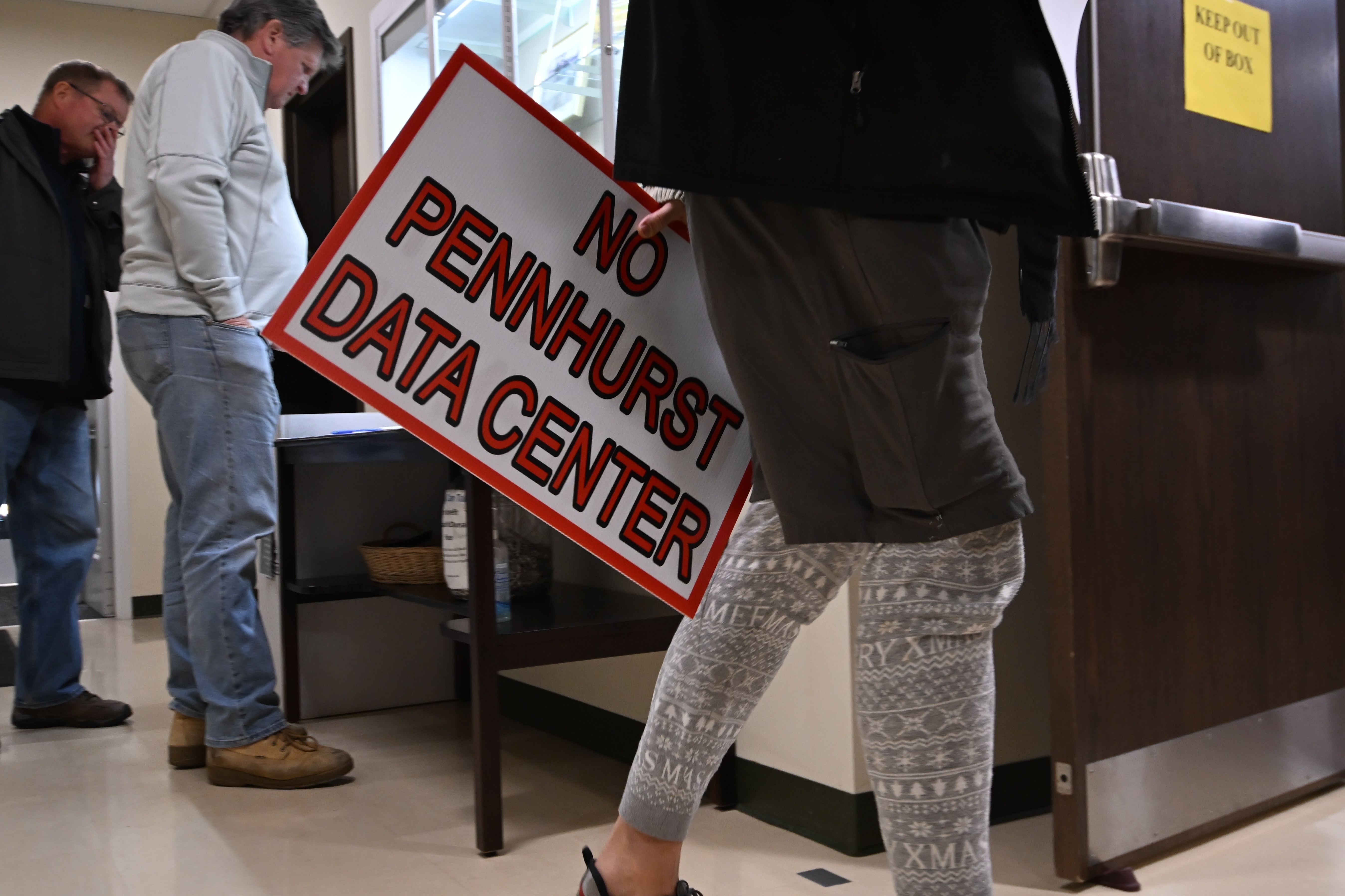
    People sign in and head into an East Vincent Township supervisors meeting where an agenda item involved a data center proposal at the former Pennhurst state hospital grounds on Dec. 17, 2025, in Spring City, Pa. Marc Levy

    Joanna Tenney, 36, of East Vincent in Chester County, held a sign at a June rally in the state Capitol that read: “Shapiro: Amazon’s bootlicker.” A registered Democrat, she voted for him in 2022, and believes he should be held accountable for supporting data center development in Pennsylvania that led to the fast-tracking of a now-stalled 125-acre data center project near where she lives.

    She’s so fed up with Shapiro’s approach to data centers that she said will be writing in the name of her state senator, Sen. Katie Muth (D., Chester), who has been on the front lines of advocating for many state environmental issues, for governor on her November ballot. Tenney said she and a few other anti-data center advocates plan to run a write-in campaign for Muth.

    “We’ve elected somebody that we thought was going to make the right choices by us, and we don’t really see that happening,” Tenney said.

    Muth, who took office in 2018, said she would not be supporting Shapiro or “any elected official who puts the interests of Big Tech ahead of the health, safety, and future of Pennsylvania communities.”

    If Shapiro changes his stance on data centers, she would support him, Muth said. She is the prime sponsor of a bipartisan bill to place a three-year moratorium on hyperscale data center development.

    “Get right on the issue, Right your wrongs. If you can’t be on the side of science and people, my support is MIA,” she added.

    Emily VanFleet, 26, lives in Archbald in Northeastern Pennsylvania, where six data center projects are underway comprising more than 50 buildings that, when completed, will cover 14% of the town. VanFleet, who is an unaffiliated voter, said she also supported Shapiro in 2022. But because of his public support for speeding up data center development in Pennsylvania, she is “certainly not going to vote for him this upcoming election,” she said. She isn’t sure she’s going to vote at all.

    “I want Shapiro to stop being a coward,” VanFleet said in June. “I have emailed him, I have called him, I have reached out to him so many times. I have not heard back, not once. I see his videos all over social media that he has an open-door policy, but I have yet to see it.”

    (In May, Shapiro’s administration announced that one of the unpopular Archbald developments, Project Gravity, was removed from a fast-track permitting program for failing to properly engage with the community.)

    But negative attitudes toward Shapiro’s position on data centers may be limited statewide and his position is unlikely to dramatically knock down his high popularity or reelection odds: The June Quinnipiac poll found 56% of those surveyed approve of the way he is handling his job as governor overall, and recent polling shows Shapiro ahead 53% to 40% against his Republican challenger, state Treasurer Stacy Garrity.

    The data center pitfall

    Shapiro’s political opponents — both immediate and prospective — are also seizing on the issue.

    Garrity, the GOP nominee endorsed by President Donald Trump, made her first TV ad an attack on Shapiro’s support for the Amazon project and other data center developments — even as Trump himself has remained open and excited about AI and data centers.

    Garrity, of Athens in Northeastern Pennsylvania, has also led a statewide listening tour on the topic. In June, she convened one of those sessions in Hatfield with a group of commissioners, zoning planners and emergency responders to talk about how they have been impacted by data centers. She blasted Shapiro for his role in attracting Amazon and said his proposed new requirements amount to a “flip flop.”

    “Josh Shapiro has failed on this topic. He was the biggest cheerleader for data center development in Pennsylvania, until he wasn’t,” Garrity said at the June 24 meeting.

    Pennsylvania Treasurer Stacy Garrity participates in the podcast “Ruthless” during an event hosted by Americans for Prosperity, Concerned Veterans for America, and the Libre Initiative at the National Constitution Center in Philadelphia on Jan. 29. Elizabeth Robertson / Staff Photographer

    Garrity has her own mixed record on data centers.

    At the time of the Amazon announcement, Garrity called the investment “great news” that would bring “historic investment” and “create thousands of jobs.” And her current position remains unclear. She has said she opposes a statewide moratorium but wants “a pause” on development instead.

    Like Republicans running in districts that supported Trump in 2024 but oppose data centers, she appears to be attempting to find a pro-business and pro-regulation path.

    “We want to make sure data centers are an addition to the grid, not a contraction. If there’s infrastructure that needs to be added to the grid, rate payers shouldn’t be paying for it,” she said. “I’m not opposed to data centers, but we have to do them the right way, and we haven’t done it. It’s because of a lack of leadership from the government.”

    Garrity’s “long record of supporting completely unregulated data center development makes it clear that she just can’t be trusted,” said Manuel Bonder, a spokesperson for Shapiro’s campaign.

    More recently, Garrity has said she would prevent data centers construction on prime agricultural fields.

    Local government leaders said at Garrity’s campaign roundtable in June that there has been lack of guidance around issues, especially around power demand, water use, infrastructure, environmental impacts, and community compatibility.

    Kathie Doyle, a Republican on the Richland Township Board of Supervisors, said confusion around data centers have “set off a firestorm” in her community. Earlier this year, warnings of a supposed proposal for a data center in the Bucks County township circulated on social media, but turned out to be a “business park” with two buildings.

    “Our residents don’t understand that we just cannot say no,” she said. Municipalities in Pennsylvania cannot outright ban data center development.

    Santoro said Shapiro’s inconsistency is a liability that could sway some voters away from casting their ballot for him.

    “Certainly he is giving her an ‘in’ by staying on the wrong side of this,” she said.

    And it’s not just Republicans seizing on Shapiro’s position. The early reputation Shapiro earned as a champion of data centers may become a point of attack among other Democratic contenders for the presidency in 2028, too. In a veiled jab at Shapiro in June, Illinois Gov. JB Pritzker, knocked Pennsylvania on a business podcast for allowing Constellation Energy to restart Three Mile Island nuclear plant just to power Microsoft’s data centers.

    “My guess is that’s going to be a reasonably unpopular thing to have done,” Pritzker said, without noting Shapiro by name on the Prof G Markets podcast.

    Vulnerability for down-ballot Democrats

    With a $50 million campaign war chest and high approval ratings, Shapiro is widely favored to win reelection this year. But his record on data centers could prove a liability for those he’s hoping to pull along, some advocates, like Santoro, say.

    Shapiro has been staking much of his national political clout on his ability to flip four House districts in Pennsylvania for Democratic control of the U.S. House, drawing voters to the polls with his name at the top of the ticket. He’s also aiming to flip Pennsylvania’s Senate into Democratic control for the first time since 1993, giving him a Democratic trifecta in Harrisburg, as the state’s split legislature has blocked many of Democrats’ priorities from becoming law.

    Santoro predicted that could be in jeopardy “if he does not change course.”

    “Shapiro’s leadership on data centers will be the thing that costs us the first Democratic trifecta in 31 years, and I think that while he will likely win reelection with this wildly unpopular position on data centers, other elected officials and candidates will not,” she said.

    Other Democratic candidates aware of data centers’ deep unpopularity are differentiating themselves on the issue, despite remaining otherwise aligned with Shapiro. Scranton Mayor Paige Cognetti, who is running in Pennsylvania’s 8th Congressional District, released a new ad last month putting data center developers on notice.

    “Big Tech needs to pay their own way, not hide behind [nondisclosure agreements]. No tax breaks. Don’t raise our electric bills. Don’t poison our water. And hire local union labor,” she said, in the ad spot. “You can’t meet that? Then get out.”

    Cognetti’s stance isn’t vastly different from Shapiro’s — both want to end blanket tax breaks — but her rhetoric is much stronger, and she’s putting the issue at the forefront of her campaign.

    Democrats insist Republicans, including those running at the state level, don’t have the moral high ground on data centers after failing to pass through several measures that would have enacted stricter controls for their approval.

    Sam Silverman, a former congressional aide and founder of Silverman Strategy Group, a strategic communications firm focused on technology and politics, said Shapiro’s approach to data centers — proposing a plan rather than enacting a moratorium — presents a risk that could either pay off and become the model for other states, or fail to fully address all future concerns and is unpopular.

    “Shapiro is going out in front by proposing a bargain now. If the standards protect ratepayers, produce visible benefits, and hold bad actors accountable, Pennsylvania could have a model others can follow,” he said. “But because he is putting forward the deal now, he will be judged on whether it delivers.”

    Taking a risk involves trust, though. Shapiro can afford to make a big swing at one of the hottest issues in politics because voters put so much faith in him, Silverman said.

    “Most politicians do not have the amount of trust and political capital to take a risk, either,” Silverman said.

    Whether the governor is triumphant will come down to what standards go into effect and whether bad actors are held accountable, he said, “and whether Pennsylvanians believe those standards are working.”

  • A routine voter roll update in Pa. prompted misinformation from conservative activists

    A routine voter roll update in Pa. prompted misinformation from conservative activists

    It is routine for election officials throughout the country to inspect their voter rolls to ensure people who have moved, died, or not cast a ballot in a while do not linger for years in the data.

    But that has not stopped right-wing activists, Republican U.S. senators, and the richest man in the world from suggesting Pennsylvania’s latest update to its voter rolls Monday was a mass expulsion of potentially fraudulent voters as the high-stakes midterm elections approach.

    “The Pennsylvania Department of State just conducted one of its biggest purges ever,” MAGA influencer and grassroots Republican voter registration activist Scott Presler wrote on X, and “Democrats lost TENS of thousands of voters.”

    Presler, who six years ago led a two-day demonstration in Harrisburg over the 2020 election results, claimed the numbers showed his effort to “clean the voter rolls is actually working.”

    Elon Musk, the billionaire who was the biggest donor in the 2024 presidential election, elevated Presler’s post, adding on Musk’s own X platform, “Nice work.”

    And U.S. Sen. Dave McCormick, Pennsylvania’s highest-ranking Republican, praised Presler for “leading the charge.”

    The reality of Monday’s update is that both parties saw voters moved from active to inactive status (meaning they have not voted in a while).

    Among Democrats, 55,241 were moved to inactive status on Monday, while 23,832 Republicans also became inactive.

    Those voters have not actually been removed from the rolls and can still vote in November, despite Presler’s claims of a purge. Being inactive is not the same as being ineligible.

    “Updating these voter records is not a ‘purge’ of voters and does not mean that they were on the rolls improperly,” said Geoff Morrow, a spokesperson for the Pennsylvania Department of State.

    Morrow called the update a reflection of county election offices’ diligence in their duty to regularly perform maintenance to their lists.

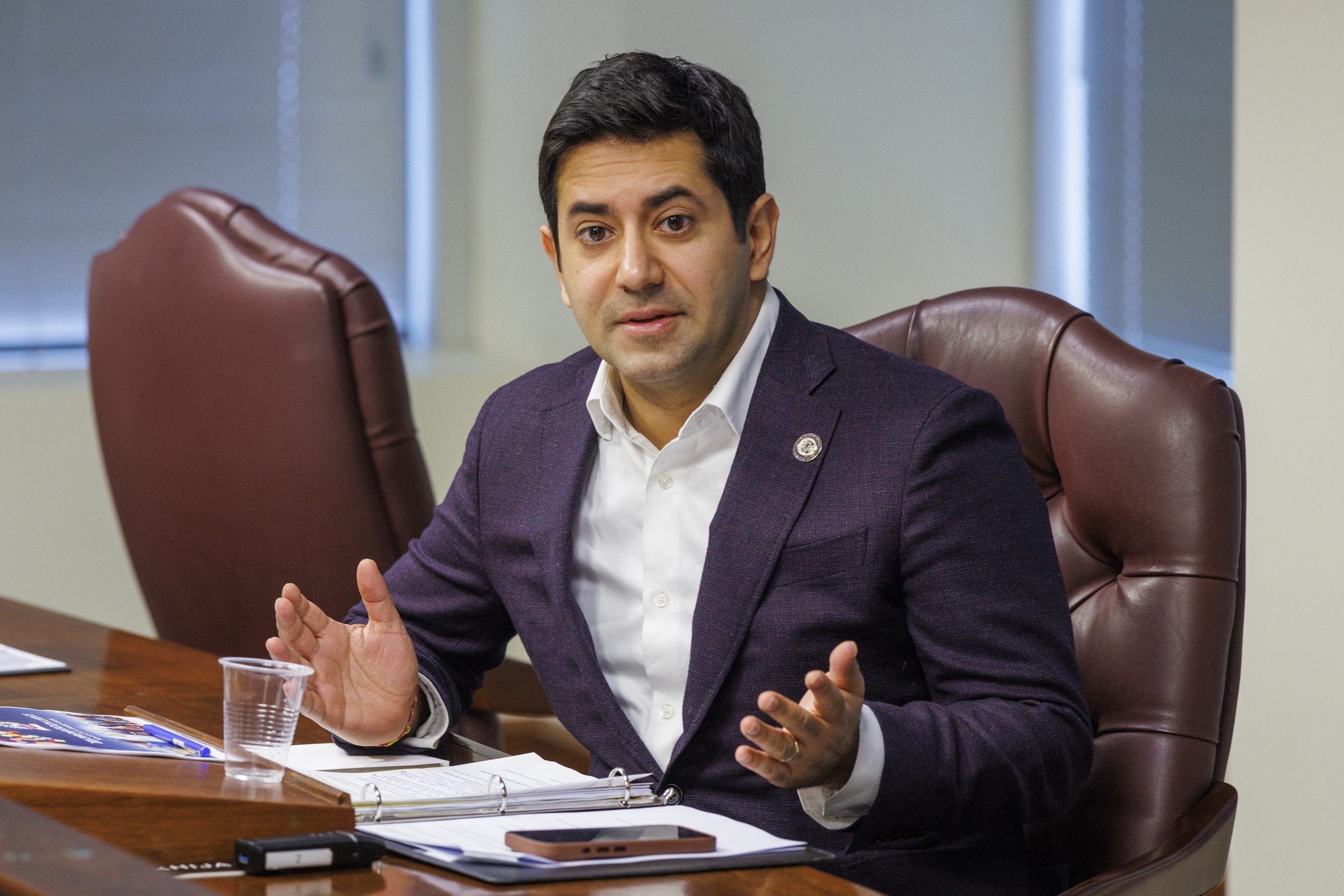
    “There are many reasons people come off the voter list, most likely they moved, and this is all part of the normal process,” said Montgomery County Commissioner Neil Makhija, a Democrat who serves on the county’s election board. “There’s nothing particularly special or unusual about this.”

    What is happening?

    Counties across Pennsylvania have been updating their voter lists, as required under the National Voter Registration Act of 1993. This update must occur no later than 90 days before a federal election. The midterm elections, which will feature the Pennsylvania governor’s race and several competitive congressional contests, are Nov. 3.

    As part of the maintenance process, voters who have not participated in five years are moved from active to inactive status. Inactive voters are still registered and can still vote, just like an active voter.

    A voter who cast a ballot in 2020 but sat out the following elections, for example, would be considered inactive.

    This practice is standard, said Philadelphia City Commissioner Seth Bluestein, the Republican member of the three-person board that oversees the city’s elections.

    “Philadelphia conducts regular list maintenance activities in compliance with federal and state laws to determine whether a voter should be marked as ‘inactive’ or removed from the registration rolls,” he said on X.

    Voters may also be categorized as inactive if they have submitted a USPS mail-forwarding request or registered to vote in another state, or when a mailing to their registered address is returned as undeliverable.

    Montgomery County Commissioner Neil Makhija speaks during a March board meeting. Alejandro A. Alvarez / Staff Photographer

    Becoming an inactive voter is the first step on the path to being removed, which is done if the inactive voter does not participate in the next two federal elections.

    “What we’re seeing here is an example of our current process for voter roll maintenance playing out, and it works,” Makhija said. “It’s designed to actually protect people’s registration because it gives them a chance to respond if we mark them as inactive, and it also keeps them on the rolls if they do respond.”

    In addition to tracking whether voters are active, Morrow said, election officials in the state regularly review death records, U.S. Postal Service address changes, and other reliable sources “to identify records that may require updating” when a voter dies or moves.

    Can inactive voters cast a ballot in November?

    Yes. Voters who are inactive can change their status simply by voting. Those who have been removed can reregister, too. Registration must be done 15 days prior to an election, which is Oct. 19 this year.

    “Voters with an ‘inactive’ status are still eligible to vote and can be moved back to ‘active’ status if they take an action to update their record or vote before the passage of two federal general elections,” Bluestein said.

    To vote in Pennsylvania, you must be a U.S. citizen, a resident of the state for 30 days, and 18 years old by Election Day. It is possible that someone who is eligible to vote has become inactive after years of sitting out elections.

    Does this have anything to do with noncitizen voters, like those found in New Jersey?

    Presler, who said he “won’t stop until all 67 counties comply,” posted a cartoon image of himself pressing a light switch as cockroaches — labeled with phrases like “illegal voter” and “dead voter” — scurry away.

    Presler did not respond to requests from The Inquirer to answer questions about his posts, which appear to conflate inactive voters with ineligible voters.

    The posts come after President Donald Trump’s administration claimed Pennsylvania was one of four Democratic-led states with thousands of noncitizens on its voter rolls, a claim state officials say the federal government has not provided evidence for.

    MAGA influencer Scott Presler energizes people attending a Republican event at the Newtown Athletic Club ahead of the 2024 election. Elizabeth Robertson / Staff Photographer

    But a change in a voter’s status from active to inactive is not related to citizenship or other issues of eligibility.

    Noncitizens would actually be removed from rolls under Pennsylvania law and face potential prosecution and deportation if they had cast a ballot — as the Pennsylvania Department of State noted in a Friday report from WHP on an apparent case of a noncitizen voting in Lancaster County.

    Pennsylvania Secretary of State Al Schmidt, a Republican appointed by Democratic Gov. Josh Shapiro, has said noncitizen voting “is extremely rare across the country, including in Pennsylvania.”

    New Jersey last month revealed 6,600 people — a number later reduced to roughly 4,600 — who were not citizens were improperly registered to vote over a yearlong span ahead of the 2024 election because of a software error in New Jersey’s motor vehicle system.

    Schmidt had identified a similar glitch in Pennsylvania in 2017 as Philadelphia’s Republican city commissioner, identifying 168 noncitizens on the city’s voter rolls at the time. They were removed from the rolls and the glitch was fixed.

    Why are Elon Musk and senators from other states posting about routine maintenance?

    Prominent Republicans who elevated Presler’s post tied it to their efforts to pass the SAVE America Act, a sweeping national voting overhaul that has been championed by Trump ahead of the midterms.

    “In light of what Scott Presler has uncovered, who could still think we don’t need the SAVE America Act?” Sen. Mike Lee, a Utah Republican and Trump ally, posted Monday.

    The act would require proof of citizenship to register to vote and mandate all voters show photo identification at the polls, something some conservatives say would prevent noncitizens from voting.

    But the legislation has faced significant pushback, including from some elected Republicans, over concerns that it would make it tougher for many Americans, especially married people whose last names may no longer match their birth certificate, to vote.

    How do party registrations compare?

    According to state data as of Monday, Democrats have more than 3.4 million active voters and Republicans are not far behind, trailing by only 25,811 active voters.

    But each party also has hundreds of thousands of inactive voters — 437,330 in the case of Democrats and 256,711 for Republicans — who could potentially vote in November.

    Can we say anything about party odds in the midterms?

    The Pennsylvania Republican Party celebrated the news of the narrowing gap in active voters as a milestone its “ultimate mission of turning Pennsylvania into a permanent red state.”

    Both parties want to win the registration war, but party registrations alone will not predict victory in November.

    Just because someone is registered as a Democrat or Republican does not mean he or she will necessarily vote for every candidate in that party on the ballot.

    And there are also nearly 1.5 million unaffiliated voters — including inactive registrants — who could sway the state’s elections.

    Staff writer Joe Yerardi contributed to this article.

  • After a high-profile snub in Pa., President Donald Trump meets with Stacy Garrity at the White House

    After a high-profile snub in Pa., President Donald Trump meets with Stacy Garrity at the White House

    Clad in a royal blue, two-piece suit, Pennsylvania Treasurer Stacy Garrity stood next to a seated President Donald Trump in the Oval Office on Tuesday, in a video message posted to his social media platform, Truth Social.

    “Pennsylvania is very lucky because you have somebody running for governor who’s going to do a fantastic job,” Trump said to the camera, while shaking Garrity’s hand. “She really is a spectacular person. And I just want to wish you luck. I think you’re going to win.”

    The White House appearance signaled a closer public alliance between Trump and Garrity, and the latest chapter in her campaign challenging Gov. Josh Shapiro as she seeks to draw Trump’s loyal fan base to the polls in November.

    Trump, who endorsed Garrity in January, followed the video message by posting a photo with Garrity, writing: “Stacy is running to be the next Governor of the GREAT Commonwealth of Pennsylvania. She has my Complete and Total Endorsement. She will do a fantastic job!”

    Garrity’s campaign said in a statement that she was visiting the White House alongside the Penn State wrestling team, which was being honored for its 2026 national championship.

    The Oval Office meeting represented a repair of sorts between Garrity and Trump after he has displayed little enthusiasm toward her campaign in recent months.

    Garrity entered the race against Shapiro, the Democratic incumbent, last summer as Republicans — disappointed with their 2022 performance — sought to consolidate support early around one strong candidate. When Trump endorsed Garrity, he called a “true America First Patriot” who “WILL NOT LET YOU DOWN!”

    In March, Garrity hosted a fundraising dinner at Trump’s Mar-a-Lago Club in Florida, where, beneath a wrought-iron doorway at his private golf club, the president said “she should win.”

    But when Trump visited Pennsylvania in June and Garrity introduced him onstage, he seemed to forget her altogether.

    During a speech meant to focus on manufacturing in Macungie, Trump spent over an hour talking about weight-loss drugs, immigration, firearms, the role of transgender athletes in women’s sports, and the UFC fight recently held on the White House lawn. But Garrity never received a mention, and Trump instead celebrated U.S. Rep. Dan Meuser, a Pennsylvania Republican who considered a run for governor before ultimately opting against it. Trump even name-checked Shapiro.

    Three months out from Election Day, Garrity has struggled to gain traction among voters. A Quinnipiac University survey of 895 registered Pennsylvania voters in July found 53% would vote for Shapiro, while 40% said they would vote for Garrity.

    At right is Pennsylvania Governor Josh Shapiro listening to Stacy Garrity, 78th State Treasurer, Forum Auditorium in Harrisburg, Pa., Tuesday, Jan. 21, 2025.Alejandro A. Alvarez / Staff Photographer

    Garrity has stuck with Trump, supporting his political decisions like efforts to nationalize elections and his signature tax cut law, under which 300,000 Pennsylvanians are expected to lose Medicaid, according to state estimates.

    Trump’s latest show of support for Garrity comes as Shapiro — who is rumored to be eyeing a run for the White House in 2028 — has set his sights beyond the governor’s office, lending his time and spending his money to support Democrats up and down the ballot, in an attempt to flip the Pennsylvania state Senate and four swing districts in Congress.

    Last month, in another stop in Pennsylvania, Trump attempted to lend more support to Garrity during Republican U.S. Sen. Dave McCormick’s Defense and Innovation Summit.

    “I hear things about Stacy, and I’m hearing some poll numbers that are very good,” he said.

    Regarding her opponent, however, Trump had stronger words.

    “This guy Shapiro is totally overrated. … He doesn’t have what it takes,” Trump said.

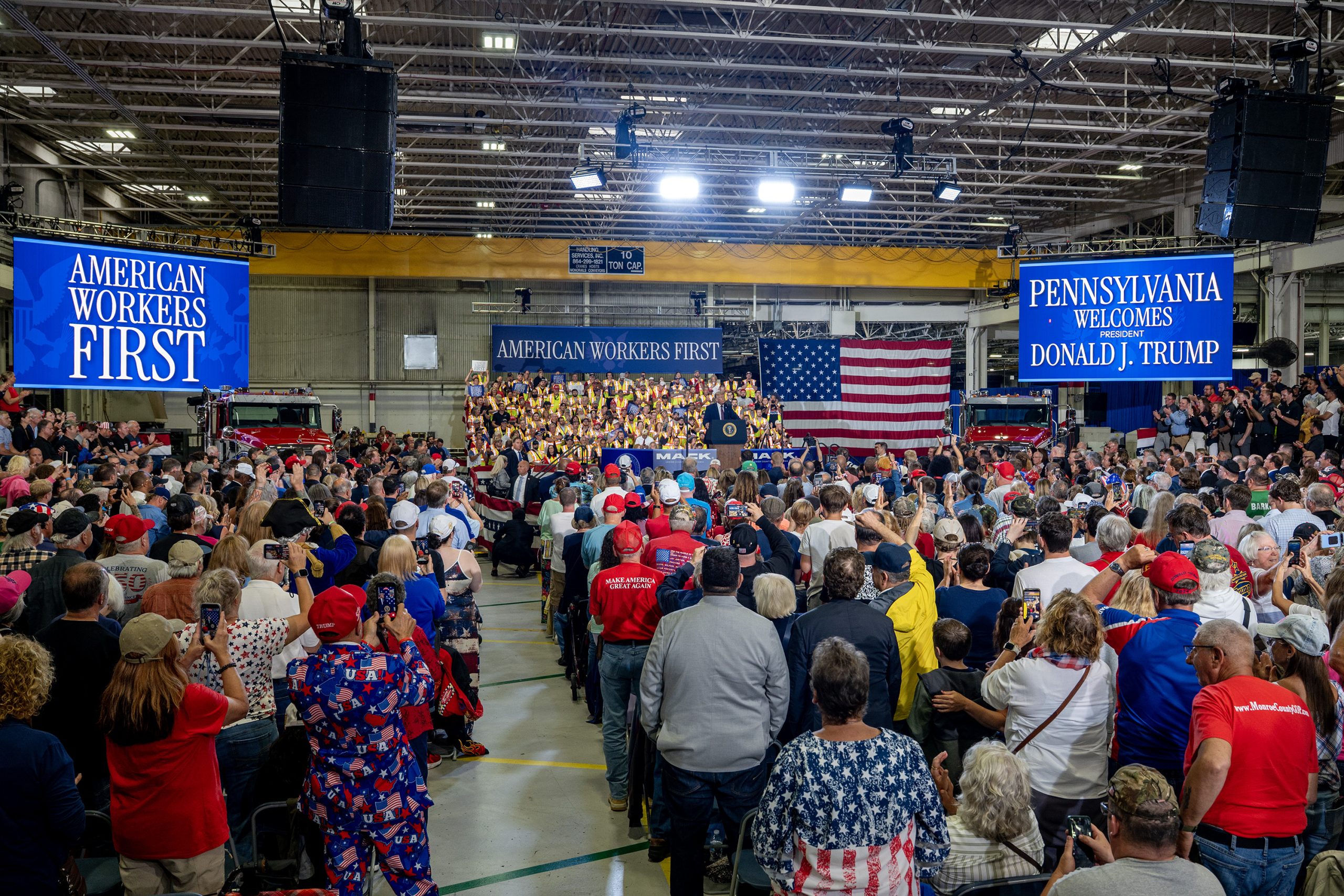
    President Donald Trump visits Mack Trucks in Macungie in the Lehigh Valley Tuesday, June 23, 2026.Tom Gralish / Staff Photographer

    In Pennsylvania, Trump remains deeply underwater in popularity. The Quinnipiac survey found only 39% of Pennsylvania voters would give him a positive job approval. Elsewhere in the country, Trump has remained Republicans’ most effective energizer to the polls — though some are concerned about GOP success without his name on the ballot in November.

    Pennsylvania Democrats on Tuesday seized on Garrity’s appearance with the president.

    “Stacy Garrity always sprints to any chance she gets to pledge her 100% loyalty to Donald Trump and his disastrous agenda,” Ava Pitruzzello, a spokesperson for the Pennsylvania Democratic Party, said in a statement.

    Last week, Shapiro’s campaign launched a new ad calling Garrity “100% MAGA.” Garrity’s campaign, in a statement, called the ad “a dishonest, lying attack.”

  • Kentucky governor demands that McConnell prove he is fit to serve or resign

    WASHINGTON — Kentucky Gov. Andy Beshear, a rising national figure in the Democratic Party, is calling on the state’s Republican Sen. Mitch McConnell to either prove that he is fit to continue serving after his lengthy hospital stay or resign from office.

    Beshear made the demand in a letter after McConnell’s office said Monday that the 84-year-old senator had not yet been medically cleared to leave the rehabilitation facility where he has been undergoing physical therapy. The office said he would miss a major Kentucky political event and upcoming Senate votes. McConnell was hospitalized June 14 and disclosed weeks later that it was the result of a fall.

    Beshear, who is widely viewed as a potential presidential candidate in 2028, first urged McConnell in early July to release more information about his condition after weeks of public silence. His letter Tuesday marked a significant escalation.

    “I am calling on you to directly and verbally address the people of Kentucky and provide proof of your capacity to serve, or resign,” Beshear wrote to McConnell.

    Beshear also sent a letter to Senate Majority Leader John Thune, urging him to investigate McConnell’s condition if the senator does not demonstrate that he is capable of continuing to serve.

    McConnell and Thune’s offices did not provide comment on the letter.

    McConnell, who led Senate Republicans for nearly two decades, has long guarded his personal life. Since he was hospitalized last month, his office has issued major updates on July 12 and July 27, each accompanied by a single photograph.

    But public scrutiny of aging elected officials has intensified after several recent health episodes and deaths in office, including the deaths of California Sen. Dianne Feinstein in 2023 and South Carolina Sen. Lindsey Graham earlier this month, as well as President Joe Biden’s decision not to seek reelection after concerns about his age and health became a dominant political issue.

    In the absence of regular public updates from McConnell himself, speculation about his condition has grown online.

    “All of this speculation and even this letter could have been avoided with a minimal amount of transparency,” Beshear wrote to Thune.

  • Shapiro, Democrats blasted Trump’s ‘conspiracy theories.’ That message has not changed after New Jersey’s noncitizen voting revelation.

    Shapiro, Democrats blasted Trump’s ‘conspiracy theories.’ That message has not changed after New Jersey’s noncitizen voting revelation.

    The day after President Donald Trump delivered a prime-time speech contending, among other claims, that 250,000 noncitizens were registered to vote in just four states, Pennsylvania Gov. Josh Shapiro derided it as “a whole bunch of conspiracy theories that are just simply not connected to reality.”

    A week later, when New Jersey revealed that 6,600 noncitizens were improperly registered to vote in the state and nearly 400 cast a ballot due to a glitch, Shapiro’s message was nearly identical — that Trump is pushing “baseless conspiracy theories” as he seeks more power over state-run elections.

    Pennsylvania and New Jersey were both on the list of Democratic-led states that Trump claimed had thousands of noncitizens on their voter rolls. The methodology of how the Trump administration arrived at that figure remained unclear, but his administration has sought to leverage the New Jersey disclosure as evidence of a larger problem.

    But Shapiro and other national Democrats have not shifted their messaging on the issue ahead of the high-stakes midterm elections. They are refusing to cede to the GOP any suggestion that New Jersey’s voter rolls are evidence of widespread voter fraud and are warning that the changes Republicans seek would make it tougher for many Americans to vote.

    Shapiro, a likely presidential contender in 2028, joined 25 other Democratic officials from across the nation in a lawsuit last Thursday challenging the administration’s ramped-up attempts to coerce states to share their raw voter data by threatening to withhold money for homeland security and disaster preparedness.

    “Withholding this funding will make our communities less safe and would be dangerous under any circumstance, but doing this in an attempt to undermine states’ authority over elections is reckless and unconstitutional,” Shapiro said.

    Kentucky Gov. Andy Beshear, another potential 2028 candidate, also joined the suit. (Both Shapiro and Beshear lead states with Republican attorneys general.)

    The day after Trump’s speech, Shapiro challenged the administration to present “real evidence” of noncitizen voting, which Pennsylvania election officials say is extremely rare.

    In addition to Pennsylvania and New Jersey, the White House also targeted Nevada and California for additional scrutiny over their voter rolls, according to a document posted to the White House website last week shortly after Trump’s speech.

    California Gov. Gavin Newsom, one of Trump’s most vocal critics in the Democrats’ potential 2028 field, said the president’s speech was fueled by debunked lies.

    “It was unhinged. Unfounded allegations of election fraud — it’s madness. But he’s setting it up. He’s setting you all up. You know what he’s doing. He’s doing it in plain sight. He’s socializing all of this to normalize all of this,” Newsom said last week, during a news conference that took place the same day as New Jersey’s announcement.

    Trump has repeatedly promoted conspiracy theories about California elections in recent weeks — including in two Pennsylvania speeches — despite no evidence that fraud occurred.

    For U.S. Sen. Cory Booker (D., N.J.), pushing back against Trump presents a tougher challenge.

    Booker, also a likely 2028 aspirant, must balance the governing changes he sees as needed in New Jersey with the larger politics of the moment. He said the failure of the software was “not acceptable” but rejected Trump’s efforts to portray the entire election system as faulty.

    “There are those who will choose to weaponize this issue to undermine confidence in our elections,” Booker said in a statement. “We cannot allow that.”

    But Republicans have pointed to New Jersey as proof that a sweeping overhaul is needed for November’s results to be trusted.

    Trump’s allies are pushing the SAVE America Act, which would require voters to provide proof of citizenship when registering to vote and to show photo ID at the polls. The effort has stalled in Congress amid concern, even among Republicans, that the bill’s restrictions on mail voting could make it harder to cast a ballot and that many citizens could wrongly be blocked from voting if they do not have access to required paperwork.

    Vice President JD Vance, widely viewed as a 2028 Republican candidate and a potential political heir to Trump, seized on New Jersey’s revelations as a renewed opportunity for the legislation’s relevance.

    “If only there was a way to stop this type of ‘software error’ that allowed non citizens to vote in our elections,” he wrote in a post on X that targeted Booker and Sen. Andy Kim (D., N.J.), both of whom are unlikely to support the Republican-led bill.

    But the registration glitch happened despite these individuals answering “no” when asked on a keypad whether they were U.S. citizens. They were added to the system “through no fault of their own,” New Jersey Gov. Mikie Sherrill said last week, so it is not clear that showing additional documentation would have prevented the error.

    Sherrill ordered her chief counsel to investigate the issue, which occurred under her predecessor, former Democratic Gov. Phil Murphy, and promised to hold those responsible for the error accountable.

    Talking about this issue can pose an obstacle for both parties now that New Jersey’s glitch has been identified, said Sam Chen, a Pennsylvania strategist who has worked for former Gov. Tom Corbett and other Republicans.

    Republicans have overplayed their hand and are not seen as an authoritative voice on voter fraud, but Democrats have spent the same amount of time dismissing all of Republicans’ concerns, including some that are legitimate, Chen said.

    “When you’ve got an entire party saying, ‘No, this is never happening,’ and now you see what you see in New Jersey, it is going to leave a serious credibility issue for them,” Chen said.

    Democrats, like Shapiro, could build more credibility if they acknowledged the positive parts of the SAVE Act, he contended.

    “Grab what’s good, vehemently oppose what’s bad, and states can blaze their own path,” he said.

    But J.J. Balaban, a Philly-based Democratic ad maker, said it does not make sense for Democrats to go along with the SAVE Act because the charges are being made in bad faith.

    While many Democrats would support efforts to make election systems more secure, Balaban said, that is not what the Trump administration is trying to do — and New Jersey does not change that.

    “Voter fraud was shockingly rare a month ago. It remains shockingly rare today,” he said.