LOS ANGELES — Federal authorities charged more than two dozen foreign nationals Monday in California as part of a statewide sweep targeting people who officials say have illegally registered and voted in U.S. elections.
The arrests are part of a Trump administration effort to root out noncitizen voting ahead of next month’s midterm elections, even though data shows that the problem is incredibly rare, difficult to prove, and has not been shown to change the outcome of races.
They also reflect a further escalation in a simmering voter roll fight between the federal government and California that came into focus last week when the Justice Department sued the state and later warned that local election workers who knowingly process or tabulate ballots submitted by noncitizen voters are at risk of investigation and potential prosecution.
The Justice Department said the 28 people who were charged as part of a sweep dubbed Operation Protect the Vote are lawful permanent residents — but not U.S. citizens who are permitted to legally vote. They are charged with crimes including making false statements on a naturalization application and submitting fraudulent voter registrations.
“This causes real damage to real elections and real damage to American citizens,” Trent McCotter, the acting deputy attorney general at the Justice Department, said during a news conference in Los Angeles to announce the charges.
California emerges as flashpoint for voting dispute
The federal government has made noncitizen voting a priority this year, demanding detailed voter information — including dates of birth, addresses, driver’s license numbers, and partial Social Security numbers — from the states. While some states voluntarily handed over the information, the department sued 30 states and the District of Columbia to obtain it — lawsuits that so far have been unsuccessful.
The Justice Department said Monday it has charged 113 people in 20 states with illegal voting and illegal registration offenses over the last several weeks, It earlier said it had charged about 90 people for various types of election misconduct so far this year, including 50 who are alleged to have voted as noncitizens. There were more than 227 million registered voters in the United States during the 2024 presidential election.
The operation Monday involved the four U.S. attorneys’ offices across California in what the Justice Department intended as a statewide show of force.
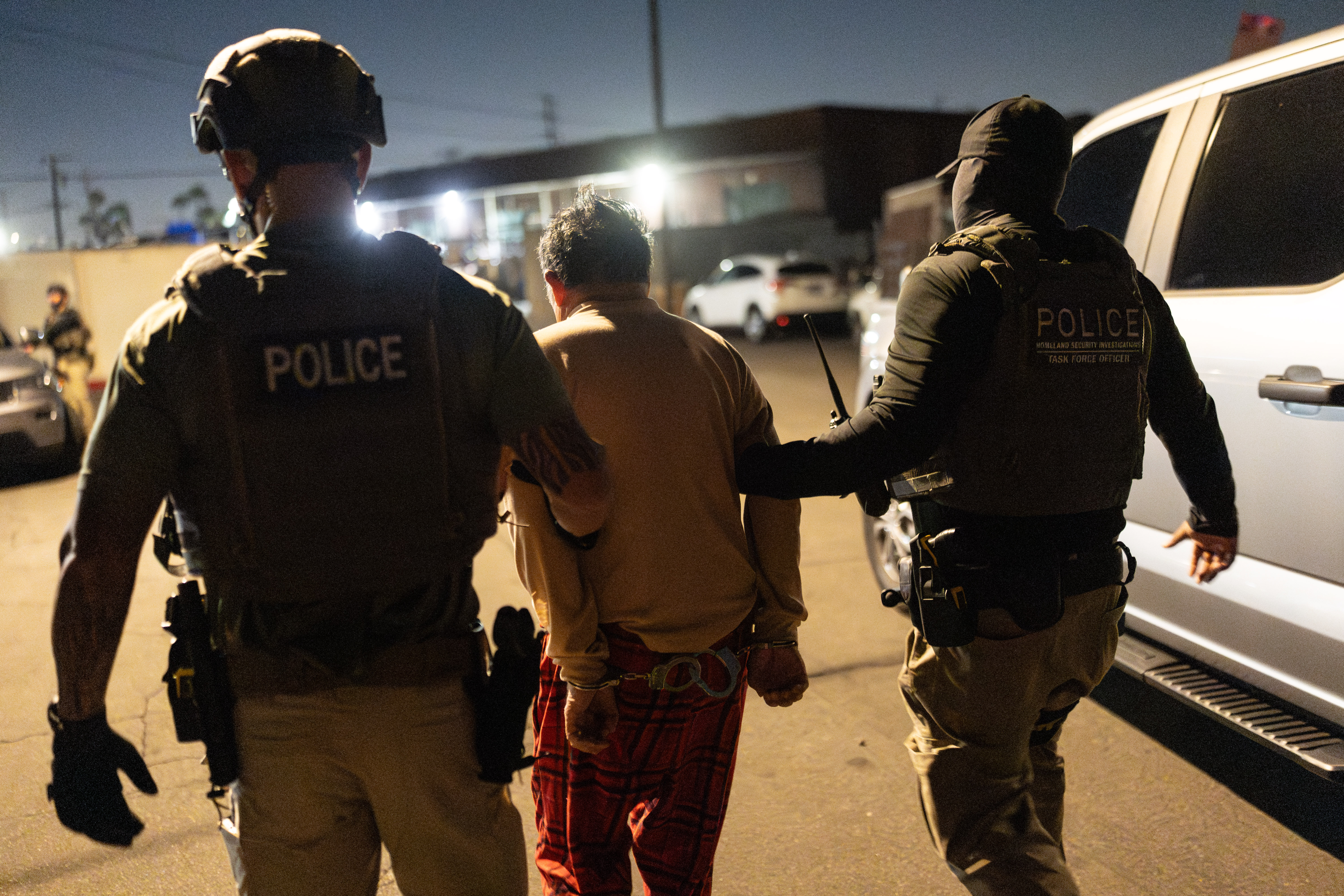
Among the dozens of people arrested was a 72-year-old Belize-born man who is accused of voting illegally in four elections.
Dozens of federal agents descended on the man’s residential cul-de-sac in Commerce, a small city in Los Angeles County, to make the arrest. The man was put in handcuffs in his pajamas and taken into federal custody downtown. Others emerged from the house to watch and questioned the number of heavily armed officers present for the arrest, as well as the need for handcuffs.
The arrests were the latest in a flurry of activity that has unfolded in heavily Democratic California, which is not typically regarded as a key battleground state but does have a handful of competitive congressional races that could help determine which party controls the U.S. House for the final two years of President Donald Trump’s term. Over 23 million people are registered statewide.
The administration last week sued California to prevent it from counting mail ballots from people the federal government has identified as “likely” noncitizens until their immigration status can be confirmed.
The complaint was filed after California officials were given, and did not meet, a 48-hour deadline to review a password-protected thumb drive that contained a list of 20,000 names. The federal government says those are likely noncitizens who were sent ballots to participate in the Nov. 3 election, although the secretary of state said the administration has provided no evidence to support that claim. The state mails ballots to all registered voters.
McCotter said the 20,000 number was likely to rise.
“That’s just the floor,” he said.
As part of its lawsuit, the Justice Department filed paperwork Monday seeking a court order that would force California to set aside ballots from suspected noncitizens and to independently, or in conjunction with the federal government, verify their citizenship status before tabulating their mail-in ballot. The Justice Department asked for the order to be entered in time for the Nov. 3 election.
Absent that order, the government said, “There is a significant risk that American votes will be diluted.”
Requests for comment sent Monday to the secretary of state, state attorney general, and governor’s office were not immediately returned.
A warning for poll workers
On Friday, the Justice Department followed up with a letter warning that state election officials who knowingly process ballots cast by noncitizen voters are at risk of investigation.
“The legal consequences for either facilitating or ignoring a federal crime are significant. Noncitizen voting in a federal election is a federal crime — and knowingly facilitating such conduct is equally unlawful,” warns the letter from McCotter.
It adds: “If persons knowingly tabulate ballots cast by individuals identified by federal agencies as noncitizens, they risk becoming aiders and abettors to a federal crime.”
The letter is addressed to the Los Angeles County Counsel’s office and also is copied to California Secretary of State Shirley Weber and Los Angeles County Registrar Dean Logan, effectively putting the entire state on notice.
In response to the letter, Logan said his office is focused on conducting a fair and secure election while noting that Election Day is a mere 18 days away.
“The U.S. Department of Justice has chosen to litigate their unverified assertions of voting eligibility. At this point, it is best for this to be addressed in court,” he said.
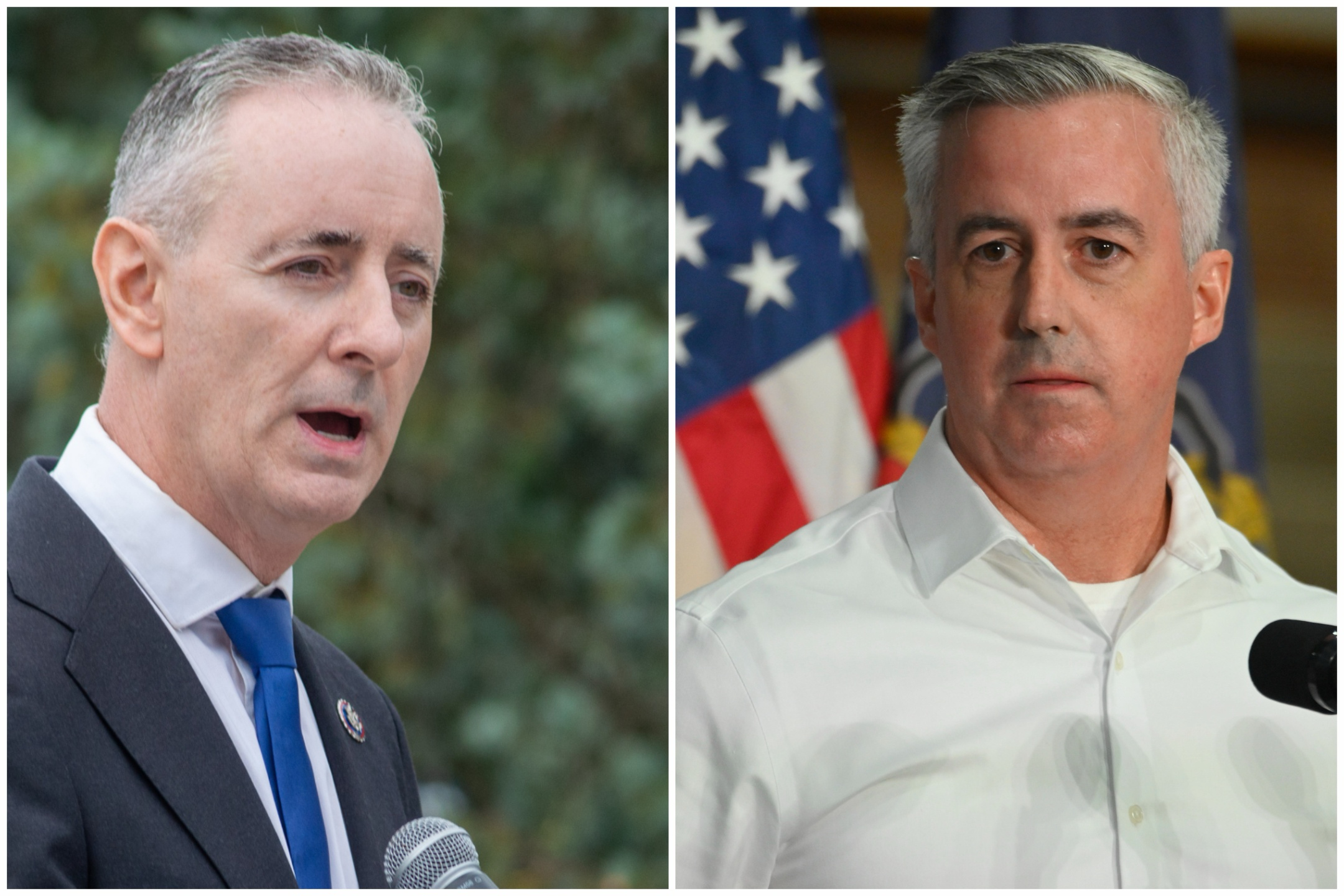
On a screen filtered by night-vision goggles, U.S. Rep. Brian Fitzpatrick’s campaign asks voters in a digital ad to “decide” between the Republican lawmaker deployed to Iraq as an al-Qaeda interrogator and his Democratic challenger, Bucks County Commissioner Bob Harvie, who the ad’s narrator claims was “engaged in a massive political corruption scheme.”
A television ad highlights in bold red and yellow letters: “Bob Harvie Under FBI Investigation.”
An image plastered online calls on Harvie to “release the Bob Harvie FBI Files.”
Fitzpatrick and Harvie are battlingfor the Bucks County-based 1st Congressional District, one of four seats in Pennsylvania that could determine control of the U.S. House.
Fitzpatrick, a five-term incumbent and a former FBI agent in the toughest election cycle of his career, has centered much of his reelection bid on calling Harvie the “subject” of an FBI corruption investigation into Falls Township after the commissioner testified as a witness before a grand jury four years ago.
No indictments or charges have been filed in connection with the investigation. In an interview, Harvie said he has never been under investigation.He testified as a witness before the grand juryin addition to other officials, he said,and does not have any files to release.
Yet as Election Day nears and the race becomes increasingly competitive, Fitzpatrick and a super PAC supporting him have been churning out different versions of the attack in an attempt to reach voters in the critical swing district. It is one of the most common lines of attack in a race that has seen the Republican spend $5 million over the summer, mostly on advertising.
But three Pennsylvania legal experts and professors with decades of combined experience in prosecuting government cases or defending witnesses in federal investigations told The Inquirer it would be highly unlikely that Harvie has most — if any — of the documents Fitzpatrick’s campaign contends he has.
So, as the back-and-forth continues over ad blitzesand legal filings amid one of the most contentious and expensive races in the history of the district — what’s true and what’s not?
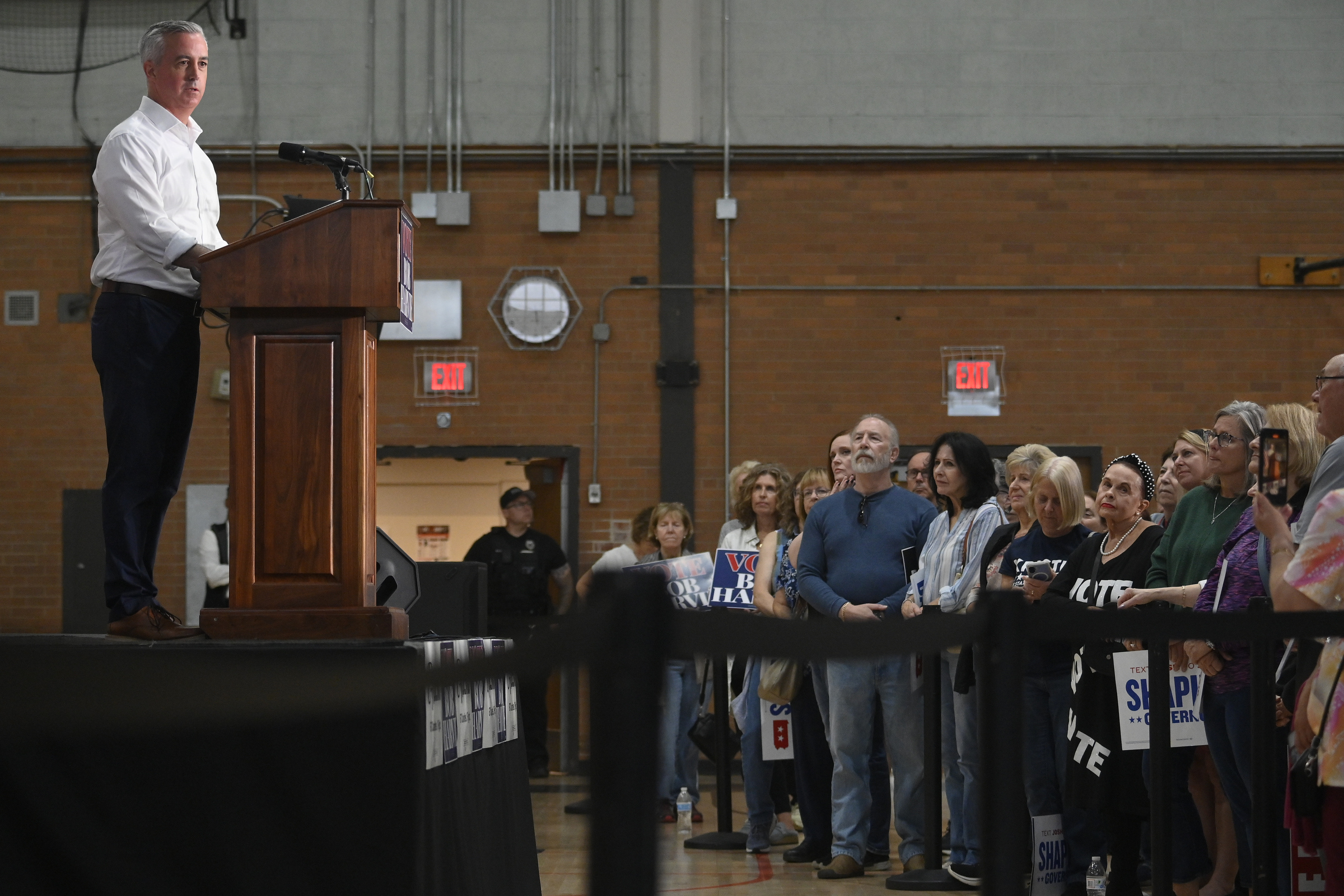
Democratic congressional candidate Bob Harvie speaks on state during a rally with House Democratic Leader Hakeem Jeffries and Pennsylvania Governor Josh Shapiro rally at Charles Boehm Middle School in Yardley, Pa. on Saturday, October 10, 2026.Bastiaan Slabbers/ For the Inquirer
What was the FBI probe?
In 2022, LevittownNow.com reported that Harvie and other officials testified before a grand jury in an FBI probe into political donations and union contracts related to the Pennsbury School District. The FBI investigation had run for years before the grand jury, including interviews with several people connected to Falls Township and Pennsbury.
There are three legal statuses for people who gobefore a grand jury, the legal experts said: a witness; a subject, whose conduct is within the scope of an investigation; and a target, someone about whom the U.S. attorney believes there could be enough evidence to charge with a crime.
In a statement, Timothy J. Ford, the attorney for Bob Harvie’s campaign, said that “Bob has been and always will be cooperative with law enforcement” and that Fitzpatrick “well knows” that grand jury probes are secret.
Would Bob Harvie have any ‘files’?
The “files” have become a cudgel for the Fitzpatrick campaign.
In one video that has been promoted on his social media, Fitzpatrick said he would debate Harvie 10 times, but only if the commissioner addresses “the elephant in the room … the FBI corruption investigation that you’ve been the subject of” by releasing certain files.
Fitzpatrick called on him to “release all the records beforehand, and in advance,” including FD-302 reports, which document an FBI agent’s interview with a witness; grand jury subpoenas; a transcript of Harvie’s grand jury testimony; and immunity documents, along with other records.
In an interview, Fitzpatrick said his experience as a federal agent and prosecutor gives him insight into which documents Harvie would have and what his status was during the investigation. He acknowledged that Harvie might not have all the documents but said he has “some” and specifically doubled down on Harvie possessing a subpoena and having the ability to request a transcript of his own grand jury testimony.
“The only way we’re ever going to find out is if he is willing to sit down on the record, off the record, any format, any venue he wants to fully vet this out,” Fitzpatrick said.
It would be very unlikely for files, such as the 302 interview reports or transcripts, to be in Harvie’s possession, given the rules for grand juries and that this case has not been brought to an indictment, where there could be a discovery period for potentially a portion of the documents, said Lauren Ouziel, a law professor at Temple University’s James E. Beasley School of Law and a former federal prosecutor in the Eastern District of Pennsylvania.
“If it was never turned into an indictment, it would be highly, highly unusual for any records, like internal FBI documents, to be released outside government channels,” Ouziel said.
It is possible for Harvie to request his transcript, but that would require a judge to unseal it. It is unclear whether a court would grant that request if the government objected and whether Harvie would be able to receive a personal copy rather than just being able to view it, Ouziel said.
Details related to grand jury proceedings are opaque to the public because of a rule that prohibits those involved, except for witnesses, from sharing what they know or remember about the case or their status before a grand jury, Ouziel said.
“It’s not like you could call the prosecutor’s office and say, ‘Hey, can you tell us if this person was a witness or a subject or what?’ They can’t. They literally can’t. It would be a crime if they did,” Ouziel said. “And same with the defense attorneys.”
Harvie repeatedly said that he does not have any files from the investigation, in which he was one of many witnesses and which did not result in any charges.
He argued that Fitzpatrick’s focus on the topic is an effort to avoid talking about key issues and a record “which is failing, quite frankly, to protect the people of this district and this country from a president who’s been cutting their healthcare, who’s been making all their lives more expensive.”
“So it doesn’t surprise me that he’s flailing around trying to smear me,” Harvie added.
Michael Levy, an adjunct professor at University of Pennsylvania’s Carey School of Law who was an assistant U.S. attorney in the Eastern District for more than 37 years, emphasized that there would be no reason for Harvie to see these documents unless the Democrat had been called as a witness in a trial (the case has not gone to trial)and that it would be highly unlikely for a court to unseal transcripts.
Though it is unclear what the FBI was investigating in this case, the statute of limitations for most federal crimes is five years, Levy said.
As for any possible subpoenas, they would not include specific case details and, after testimony, are “just another piece of paper,” he said.
“They just keep saying [Harvie] has this stuff, but they don’t give any idea why they think he has it,”Levy said of Fitzpatrick’s campaign.
Stanley Brand, a distinguished fellow in law and government at Pennsylvania State University Dickinson Law with 50 years of experience in defending witnesses in government cases, said that from an outside perspective Fitzpatrick’s allegations sound “like campaign high jinks” in a competitive race.
“This is all smoke and mirrors at this point,” Brand added.
Fitzpatrick, when asked about the experts’ opinions, maintained that Harvie was not being up-front with voters.
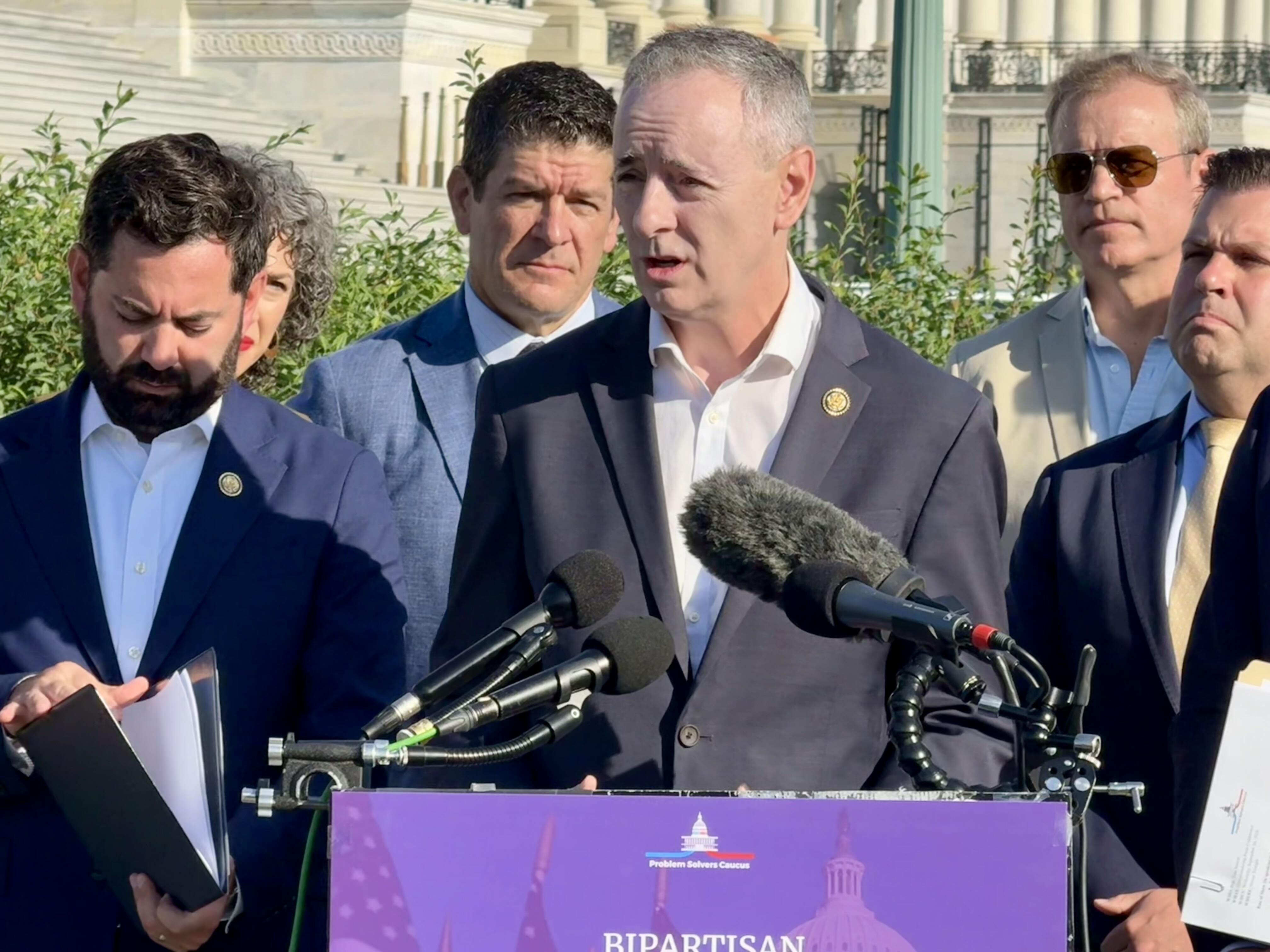
U.S. Rep. Brian Fitzpatrick (R., Bucks) speaks outside the U.S. Capitol about legislation to put national restrictions on gerrymandering on Sep. 16, 2026.Sam Janesch / Staff
‘Rhetorical hyperbole’
Matters reached a boiling point this summer when Harvie filed a defamation lawsuit against Defending America PAC, a pro-Fitzpatrick super PAC, and its president over websites, social media posts, and other materials that tied Harvie to the FBI investigation.
Defending America PAC filed a motion to dismiss that suit last week, arguing that Harvie campaign’s filing lacked standing and that the attacks fall within bounds of a political campaign.
Attorney George Bochetto wrote that “this is not an attempt to damage Harvie’s reputation in his community. Rather, Defendants are providing relevant information regarding his background to the electorate in his congressional district.”
“Viewed in context, the Statements are matters of opinion or rhetorical hyperbole about a public figure and political opponent,” Bochetto wrote.
That came after the Harvie campaign sent the PAC and the Fitzpatrick campaign cease-and-desist letters for their rhetoric.
Ford, the Harvie campaign’s attorney, said that Harvie is exploring all his options in response to the PAC moving to dismiss the suit.
This is also not the first time that the FBI investigation has surfaced on the campaign trail. When Harvie was running for reelection as county commissioner in 2023, LevittownNow reported at the time that GOP mailers claimed Harvie was “wrapped up in an FBI investigation.”
Harvie has pointed to that experience in arguing he believes he will overcome Fitzpatrick’s allegations during this campaign. The Democrat said during a September interview with The Inquirer Editorial Board that the ads are angering voters on the campaign trail.
“These people are just very angry about what they’re seeing, and they’re angry, number one, because they don’t like how vicious it is, how ugly it is, and they don’t like that it has had anything to do with what’s happening in their lives,” Harvie told the board.
(The editorial board, which runs The Inquirer’s opinion pages and decides endorsements, operates independently from the newsroom.)
As temperatures continue to rise in the 1st District, experts said this situation could shake out in a few different ways, though Ouziel, the Temple professor and former federal prosecutor, noted that it is “hard to prove a negative” and that residents would have to take Harvie at his word.
Brand, the defense attorney and Penn State professor, said even if Harvie hypothetically did have any type of document to release, it could cause even more confusion because most records would still be in government custody.
“He only has what he has, and so to coax him out of the rope-a-dope he’s in, you know, his hands are tied. So he’ll release part of it. That’ll raise more questions than it answers,” Brand said. “Then they’ll say, ‘Well, what about the other documents? What do they show?’”
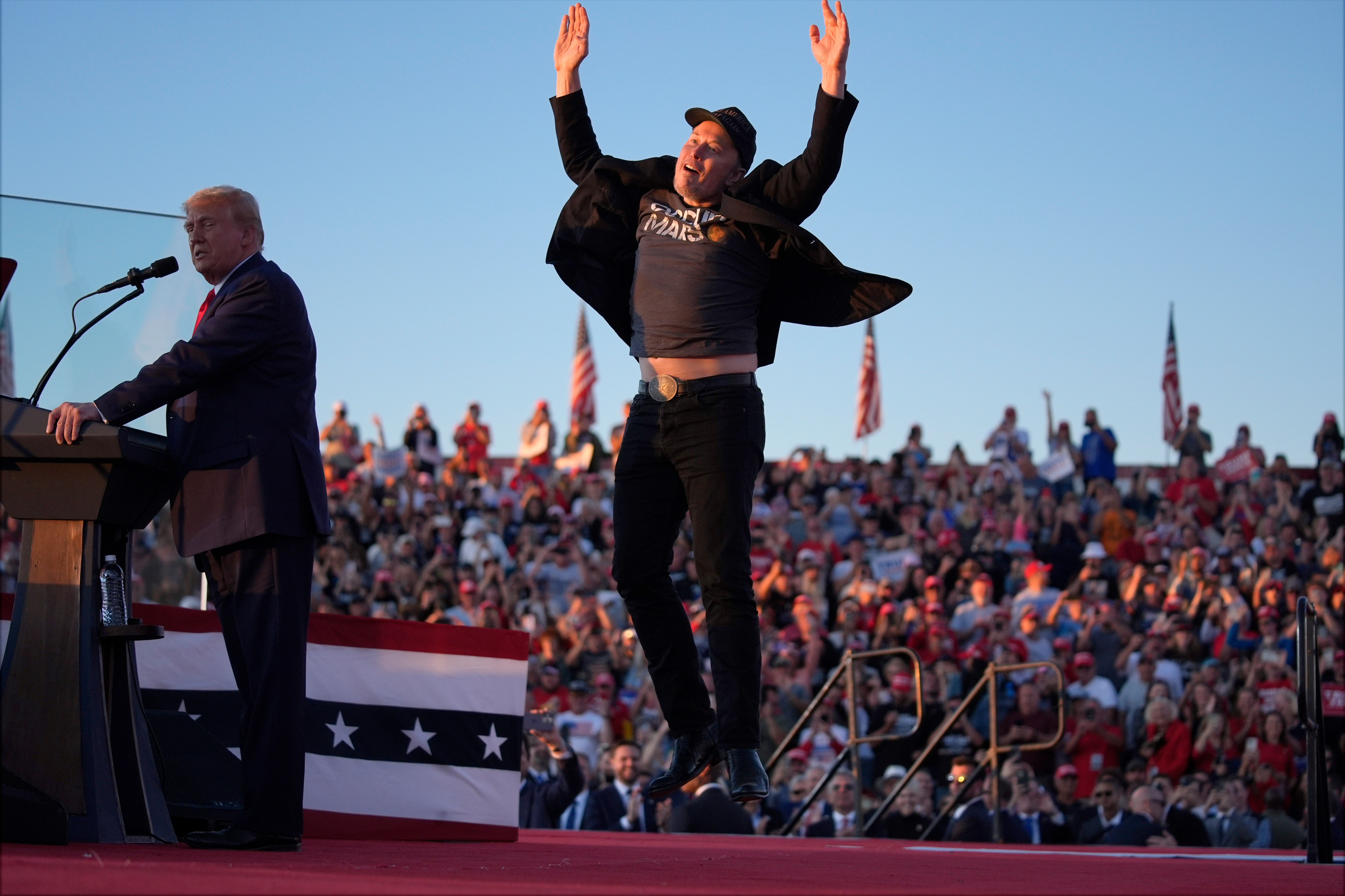
Billionaire Elon Musk settled two lawsuits Thursday that accused his political action committee, America PAC, of defrauding voters in Pennsylvania and six other swing states who participated in his $1 million daily giveaways during the 2024 presidential election.
Plaintiffs said that they were misled after being falsely told by Musk,the world’s richest person, that winners were randomly chosen in a lottery after signing a petition supporting the First and Second Amendments, according to reports from CNN.
Musk spent around $290 million effort to support President Donald Trump’s candidacy two years ago.
The terms of the settlements in aTexas-based federal court were not revealed, according to Forbes. America PAC didn’t respond for requests for comment.
Musk originally announced the giveaway at a Harrisburg rally in October 2024.
“We’re going to be awarding a million dollars — randomly — to people who have signed the petition every day from now until the election,”he said at the time.
He later added during his speech that winners would be required to serve as spokespersons for the PAC.
Around then, the Justice Department warned Musk that the million-dollar giveaways could violate longstanding federal laws against vote-buying.
Just before Election Day 2024, Philadelphia District Attorney Larry Krasner filed a lawsuit in Common Pleas Court alleging that the giveaway was an illegal lottery that violated Pennsylvania consumer protection laws. His argument was rejected.
But during the proceeding, Musk’s attorneys acknowledged that none of the then-17 people who’d received the Musk money was randomly chosen. One of the attorneys, Chris Gober said, “There is no ‘prize’ to be won. Instead recipients must fulfill contractual obligations to serve as spokesperson for the PAC.”
The dispersals were widely criticized at the time, with Pennsylvania Democratic Gov. Josh Shapiro questioning the legality of the sweepstakes, saying it was “deeply concerning.”
During the midterm elections this year, Musk has continued his pattern of financing GOP candidates. He’s put up around $276 million for their cause, according to the New York Times.
In Pennsylvania, America PAC has spent at least $460,000 in recent weeks in each of three swing districts, which are held by Republican U.S. Reps. Rob Bresnahan of Luzerne County; Ryan Mackenzie of Lehigh County; and Scott Perry of York County.
With every Philadelphia City Council seat on the ballot next year and as voters consider whether to give Mayor Cherelle L. Parker another term, a local nonprofit has awarded $1.4 million in grants aimed at promoting civic engagement.
“Every Voice, Every Vote,” organized by the Lenfest Institute for Journalism, the owner of The Philadelphia Inquirer, is investing in 30 media organizations and 16 community groups to fund projects powered by professional and student journalists, multilingual reporting, and work focused on voter education and neighborhood coverage.
The Inquirer is among the participating media organizations and has been awarded a $100,000 grant to cover the project’s upcoming public-opinion research poll and to produce multiplatform journalism focused on key city issues and the city administration.
“There is a burgeoning movement of young, engaged voters nationwide becoming more involved in local politics and government,” said Jim Friedlich, executive director and CEO of the Lenfest Institute in a statement. “We are hoping to help younger Philadelphians engage in the civic life of the city and make their voices heard. As the name suggests, we seek to help government hear every voice and compete for every vote. The earlier in life voters engage, the more involved they remain over a lifetime.”
The Inquirer’s reporting, mainly across the Politics & Government and Justice & Injustice desks, will include in-depth coverage of Philadelphians’ perceptions of the city’s progress in important areas including public safety, clean and green initiatives, housing, and the economy.
In a news release Thursday, Lenfest said its grant-funded partners will focus on reaching younger audiences via short-form video, social media platforms, and “independent media makers” or content creators. The effort will “expand access to trusted civic information and create opportunities for Philadelphians to make their priorities heard by candidates ahead of the city’s 2027 municipal elections and by city government thereafter.”
“Focus on reaching younger audiences and newer audiences and more diverse audiences is across all the media we’re working with, very much including the Inquirer,” Friedlich said in an interview.
Lenfest launched the project in 2023, ahead of that year’s 100th mayoral race and municipal elections with an intent tocenter voter voices amid important local races. As one of the grantees, The Inquirer reported on the first Every Voice, Every Vote poll of more than 1,000 Philadelphians administered by polling firm SSRS and commissioned by Lenfest. The 2027 poll will also be conducted by SSRS.
While Lenfest organizes the project and contributes funding, its lead support comes from Philadelphia’s William Penn Foundation with additional funding from the John S. and James L. Knight Foundation, Philadelphia Health Partnership, the Wyncote Foundation and Judy and Peter Leone.
Every Voice, Every Vote is now Philadelphia’s “largest-ever collaborative journalism and community engagement effort,” Friedlich said, encompassing 365 civic engagement projects in more than 15 languages across more than 200 collaborations.
“Philadelphians need trusted information and meaningful opportunities to shape the decisions that affect their lives,” said Shawn Mooring, Lenfest Institute Head of Philadelphia Programs. “These partners bring deep relationships with their communities and creative approaches to reporting, listening, and civic engagement. This investment will help more residents understand local issues, make their voices heard, and hold decision-makers accountable.”
Other grant recipients include WHYY, WURD Radio, Technically Media, and the Philadelphia Tribune. PA Youth Vote will receive $45,000 for civic engagement purposes.
Correction: This article was updated after publication to reflect that Every Vote Every Voice is the largest effort of its kind in Philadelphia.
Pennsylvania Gov. Josh Shapiro is officially getting into national politics.
Shapiro, a Democrat running for reelection in the critical battleground state and a widely rumored 2028 presidential candidate, took his first official step into the national political arena this week by creating a federal political action committee, New Path PAC.
The new federal PAC is the strongest signal yet that Shapiro is eyeing a 2028 presidential run in the Democratic primary — speculation the formidable fundraiser has routinely rejected while he’s focused on his reelection campaign.
Since he took office in 2023, Shapiro has amassed a whopping $60 million war chest in his state-level PAC. And this year, he’s shelled it out, too, having spent nearly $38 million on TV and streaming ads, according to media tracker AdImpact, in support of his reelection campaign where he holds a commanding double-digit lead over his GOP challenger.
However, campaign finance law limits Shapiro’s state PAC spending to his own race or others on the state level, creating a challenge for him to financially support federal candidates, including the four Pennsylvania congressional districts national Democrats are looking to flip in the midterm election.
The money Shapiro has raised in his state-level PAC cannot be transferred to his federal PAC.Up to this point, Shapiro has largely spent his fundraising on his own reelection campaign as well as contributing more than $5.6 million to the Pennsylvania Democratic Party, which has been rebuilt under his hand-picked chair and former top aide.
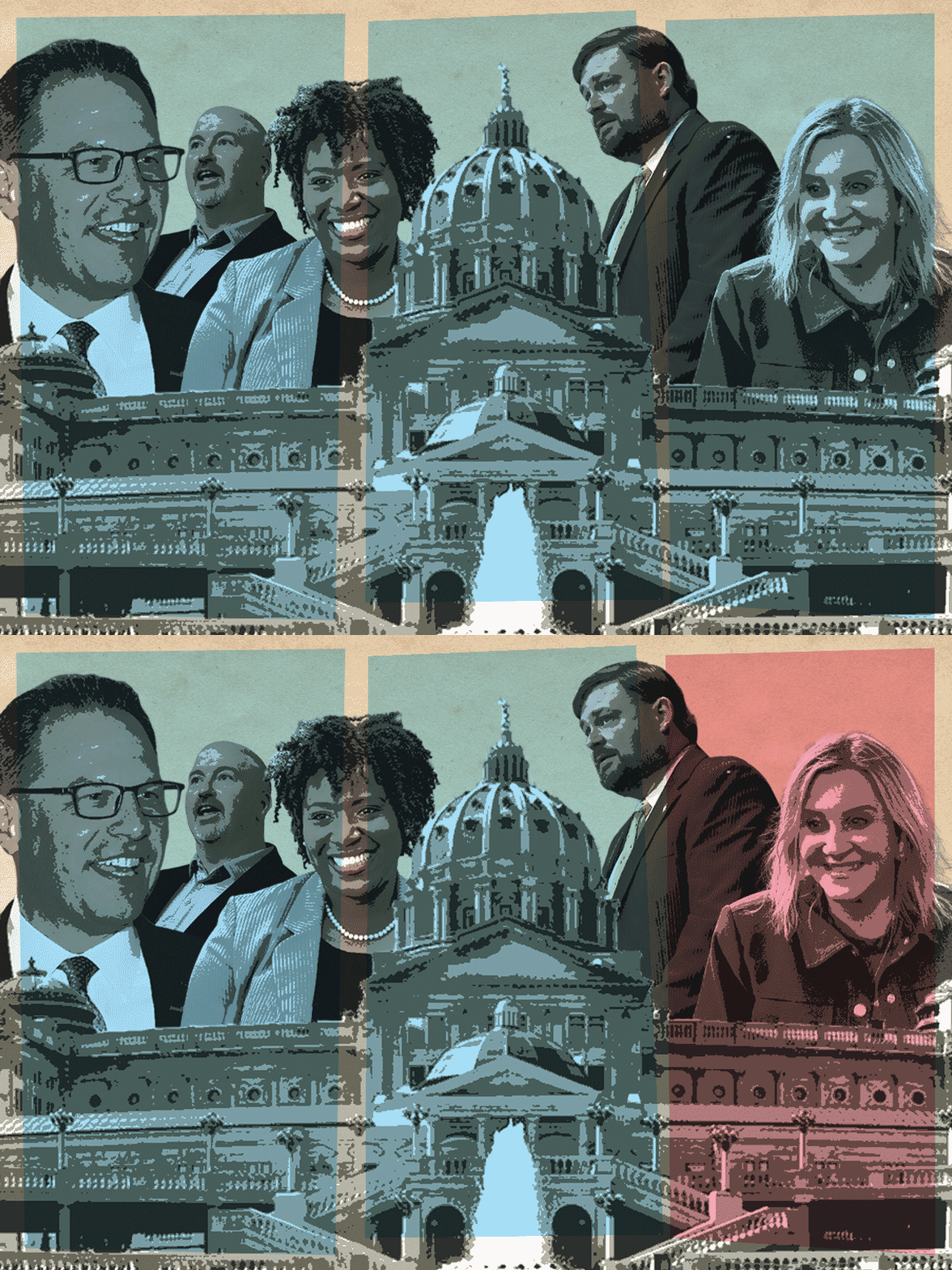
Shapiro’s New Path PAC will allow him to fundraise and contribute directly to the four Democratic candidates he’s supporting — Bob Harvie in Pennsylvania’s 1st, Bob Brooks in Pennsylvania’s 7th, Paige Cognetti in Pennsylvania’s 8th, and Janelle Stelson in Pennsylvania’s 10th Congressional Districts — as part of his bet that his name at the top of the state’s midterm election ballot could help flip the U.S. House to Democratic control. He’s rallied alongside the candidates and with U.S. House Minority Leader Hakeem Jeffries to expand Democrats’ U.S. House majority. And his reelection campaign has drawn support from former President Barack Obama, former President Joe Biden, Michigan Gov. Gretchen Whitmer and U.S. Sen. Elizabeth Warren.
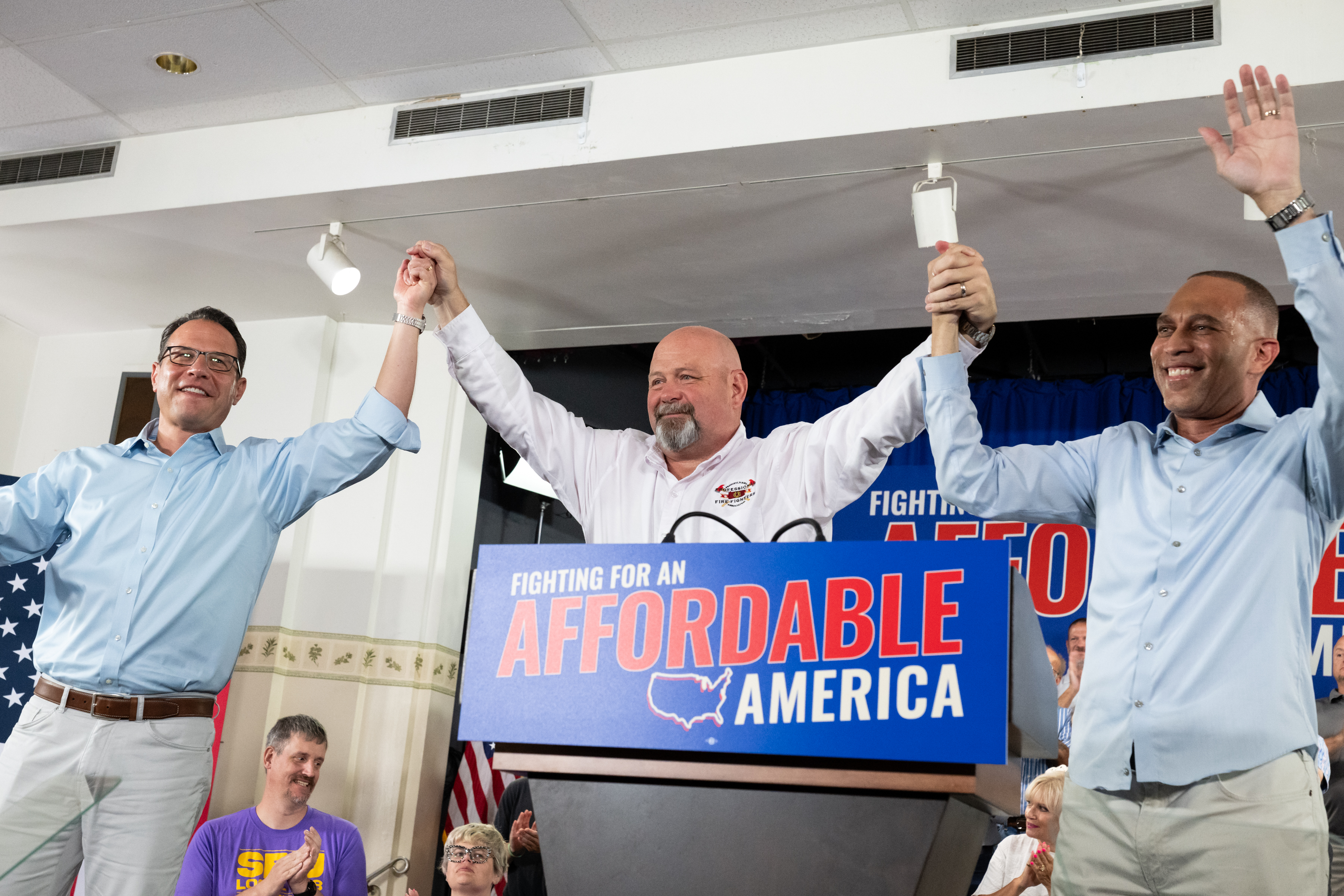
Pennsylvania Gov. Josh Shapiro, left, Democratic congressional candidate Bob Brooks, center, and U.S. House Democratic Leader Hakeem Jeffries raise their hands during a campaign event for Brooks ahead of the midterm elections at a Steelworkers Union Hall in Bethlehem, Pa., Sunday, July 26, 2026. (AP Photo/Erin Blewett)Erin Blewett
In a statement, Shapiro’s campaign emphasized that the governor remains focused on those four Pennsylvania congressional races in the remaining days before the Nov. 3 election. He’s also expressed interest in flipping the 9th Congressional District, currently represented by U.S. Rep. Dan Meuser (R., Pa.) as a fifth winnable district with candidate Rachel Wallace as the Democratic nominee.The statement does not mention other races outside of Pennsylvaniawhere Shapiro may plan to lend his support.
Marshall Cohen, the PAC’s executive director who previously worked as the political director at the Democratic Governors Association, said in a statement that Pennsylvania voters have a chance to “place a check on Donald Trump and put this country on a new path.”
“That path runs right through Pennsylvania, and Gov. Shapiro is fighting to win up and down the ballot this November to elect leaders and deliver a Congressional majority that will actually fight for working families and move our country forward,” Cohen added.
Manuel Bonder, a campaign spokesperson, said the federal PAC is a new tool for Shapiro to more directly support Pennsylvania’s congressional candidates. He emphasized that backing the candidates in efforts to flip the House is Shapiro’s lone focus for now — a response echoing Shapiro’s standard line when asked whether he’s running for president in 2028.
“The only thing I am focused on is running for reelection as governor,” Shapiro told the moderators before pivoting to his oft-used attack on Trump’s “chaos, cruelty, and corruption.”
But Shapiro’s creation of the federal PAC also ticks another box on the presidential hopeful checklist, adding to his frequent national TV appearances, campaigns with candidates across the country, and publishing a memoir.
Other prospective 2028 Democratic candidates have also created federal PACS and supported federal candidates. Kentucky Gov. Andy Beshear launched his federal PAC in 2024, while Illinois Gov. JB Pritzker started his federal PAC with a $20 million investment last month. California Gov. Gavin Newsom has expanded his federal fundraising to support Democrats in state-level races in early primary states, including South Carolina.
Around 40 minutes into the televised debate between Republican Rep. Scott Perry and Democrat Janelle Stelson, the moderator said he would pivot to the “highly polarized state of politics” in the country and the congressional district.
But by that point, mudslinging during the hour-long showdown on Harrisburg’s abc27 had already been well underway between Perry, 64, a seven-term incumbent,and Stelson, 66, a former TV anchor running for the key swing seat for a second time after narrowly losing two years ago.
Interruptions, accusations of lies, and sarcastic eye rolls marked the fierydebate — reflective of the bitter divide among voters ahead of the Nov. 3 rematch in the 10th Congressional District, which includes parts of Dauphin, York and Cumberland Counties. It is one of four competitive congressional districts in Pennsylvania that could determine which party controls the U.S. House.
Perry, a close ally of President Donald Trump, repeatedly called Stelson a liar and incompetent. Stelson said he should get a different job and charged Perry, a retired brigadier general in the Pennsylvania Army National Guard, with betraying military veterans with his votes.
Shapiro, who is likely considering a 2028 presidential run, was not in the room but loomed large throughout the nightas the popular governor was referenced multiple times by both candidates.
Stelson, who has Shapiro’s endorsement, reciprocated with a show of support if the governor pursues higher office. When asked which Democrat — including Shapiro, former Vice President Kamala Harris, and California Gov. Gavin Newsom — she believes is best positioned to win the presidency in two years, Stelson replied,“Good heavens, Josh Shapiro,” before adding: “Are you kidding?”
Stelson declined to answer a similar question about whom she would back for House speaker if Democrats take the House.
She applauded Shapiro’swork overseeing the quick rebuild of I-95 in Philadelphia after a bridge collapsed three years ago.
“He doesn’t say, ‘You’re a Democrat, I’m going to do this for you’ or ‘You’re a Republican, I’m not going to do it for you.’ He says, ‘This is what we need to get done,’” she said.
But Perry, a member of theconservativeHouse Freedom Caucus, took multiple swipes at the Democratic governor, who won the district in 2022.
“What I wouldn’t do is offer the richest multinational companies on the planet tax breaks and tax credits from Pennsylvania taxpayers to jam their data centers into Pennsylvania,” said Perry, breaking with Trump, who has championed data centers. “But that’s what the governor did, which I can’t control. And energy is a whole other issue related to this, which he has also screwed up.”
Perry also blamed Shapiro for high power costs, saying the governor had shut down about five gigawatts of baseload power in Pennsylvania.
While both Stelson and Perry agreed the war in Iran, which has lasted 229 days, should end, they differed on how soon, under what circumstances, and what its impacts on the economy have been.
“Nobody wants to be at war. We don’t want to be at war with Iran, but unfortunately, Iran has declared war on the United States,” said Perry, who served combat missions in Iraq.
But before he is ready to end the war, Perry said, the current regime in Iran can no longer be in charge of governing, nor controlling the Strait of Hormuz — objectives that could take years and require boots on the ground.
The lawmaker also repeatedly contended Iran had declared war first, referring to comments made by the country’s leaders 50 years ago.
Trump initiated the war in coordination with Israel earlier this year with the stated goal of destroying the country’s nuclear capabilities. Perry had trouble in the debate clarifying whether that goal had already been completed or was still underway.
“When they credibly threaten you with nuclear war, something had to be done. Something had to be done, and it has been done. Now it needs to be ended swiftly, and it needs to be ended so that it is permanent,” he said.
Oil from around the region flows through the Strait of Hormuz, and multiple experts have said its sporadic closures have spiked gas prices, including in Pennsylvania. According to AAA, the average cost at the pump in Pennsylvania was $3.15 in February on the day U.S. began airstrikes on Iran. This week, it is $4.46.
Stelson said the war in Iran was the biggest reason for high gas prices, saying it should end “immediately.”
“It’s one of the first things I’d like to take care of if I’m lucky enough to get to Washington,” she said.
Addressing campaign controversies
As she did in her previous run, Stelson attacked Perry forhis role in seeking to overturn the 2020 election.
Perry led the unsuccessful motion to block Pennsylvania’s electoral votes hours after a mob of Trump supporters attacked the Capitol on Jan. 6, 2021, in an attempt to prevent certification of Joe Biden’s victory. The attack followed months of conspiracy-mongering by Trump and his allies.
“You are an architect of the deadly insurrection, January 6th. You asked for a presidential pardon because you were so deeply, flat-out …,” Stelson began to say, before Perry interjected.
“That’s a flat-out lie,” he said.
The claim that Perry asked Trump for a pardon comes from congressional testimony by former White House aide Cassidy Hutchinson, who told the House select committee that investigated the attack that Perry played a central role in crafting Trump’s strategy to remain in office after his electoral loss.
Perry has denied those claims. His cell phone was seized by the Justice Department in 2022 as part of the investigation that followed the attack, but he was never charged with a crime.
“[Formerspecial counsel] Jack Smith weaponized the federal government against its political foes, and I was collateral damage,” he said. “[Stelson]continues to have that narrative that I had anything to do with January 6 when I was inside the Capitol doing my job that the voters elected me to do when the people came into the Capitol.”
Stelson also reminded voters throughout the debate that Perry has not held an in-person, town hall meeting since 2019.
Perry, who said he loves town halls, said he has avoided them because of safety concerns.
“I was told that the last time I wanted to have a town-hall meeting by federal police, that it would be negligent to do so, knowing the credible, viable threats that were present … to people that want to attend.” He said he speaks to constituents every quarter and they are welcome to come into his offices.
Amid the discussion around election security, Perry accused Stelson of harboring an illegal immigrant in her campaign.
Last month, a Nigerian man, whom federal officials say was in the country illegally, was arrested after police say they found him exposing himself in a car. Flyers from Stelson’s campaign were found inside his car. He later pleaded guilty to disorderly conduct.
A news release from Trump’s Department of Homeland Security said the man was working as a canvasser. But Stelson said Wednesday the man was not an employee of her campaign or a volunteer.
“I will say if he’s illegal, and especially if he was committing a crime, then good job on the police department for taking swift action and for getting rid of him,” she said.
WASILLA, Alaska — As President Donald Trump has crisscrossed the country in recent weeks, he has offered voters a variety of financial rewards before the midterms: $500 Obamacare “refund” checks, $90 to seniors to offset Medicare premiums, and $5,000 for every American adult — called the “Trump Dividend” — if Republicans retain control of Congress.
On Tuesday, the president added another giveaway to his midterm gift basket: pardons.
With Republicans’ political fortunes declining, Trump has stepped up his Oprah-style handouts to voters in an effort to eke out any last votes he might be able to find for endangered Republicans.
As evidence of the difficult electoral landscape, top Republican super political action committees aligned with Trump cut off financial support this week for two Republican House members seeking reelection in an effort to prevent more losses.
After all, Trump was in Alaska to help Republicans in a state he won by large margins in the last three presidential elections, including by more than 13 percentage points in 2024.
So in the middle of his rally in Wasilla, Alaska, the president called up two young men to join him onstage. Also joining them was Natalie Harp, the president’s personal aide, who carried two black folios.
The two men, Zachary Czubak and Patrick Fleming, pleaded guilty to modifying diesel vehicles in violation of the Clean Air Act. A third, Michael Hanzuk II, also pleaded guilty. The Department of Justice said the three men, co-owners of Arm Rippin Toys, removed emission control systems that are designed to reduce pollutants being emitted from vehicles.
But the president framed the men’s actions as helping their neighbors fix engines so they would survive cold weather. He said he read about their cases and decided all three deserved pardons.
“That means you’re as clean as a newborn baby’s ass,” he said to the two men standing behind him. “I never understood that. Why is that so clean?”
He added: “I love doing this stuff. This is worth the eight hours in the plane.”
Trump then ushered Fleming to the lectern to address the crowd.
“Well, I’m not too good at this but he asked me to say something,” he said. “This means the world to me. It really did destroy us. It destroyed friendships. It destroyed families. We’re not criminals. We’re not trying to hurt anyone. We want to help Alaskans.”
Czubak then stepped up to the microphone: “Cut to the chase here and let’s reelect Dan Sullivan. Let’s reelect Nick. Let’s get it done,” he said referencing Sen. Dan Sullivan and Rep. Nick Begich, the two incumbent Republicans on the ballot next month.
The giveaways started with Trump floating the $5,000 payout at the midterm convention he demanded his party throw last month in Dallas. The proposal immediately drew bipartisan criticism, with Democrats accusing him of trying to buy people’s votes and some Republicans panning it as a socialist-style giveaway. The feasibility of the proposal is also in question, as it would cost more than $1 trillion and likely require congressional approval.
Even some of Trump’s supporters on Tuesday were skeptical of the electoral benefit of the giveaways.
“There’s probably an amount of skepticism about it now, but we’ll see how it does,” Frank Tomaszewski, a Republican state representative in Alaska, said of the proposed $5,000 checks. “We really need to consider all the amazing things President Trump has done for Alaska.”
Tomaszewski said he has not heard any voters bring up the $5,000 or other financial bonuses from the White House.
“That’s not what’s concerning them,” he said, noting that the high cost of energy was at the top of voters’ minds.
Dez Martinez, 61, an Anchorage resident, also said the $5,000 payout was not a motivating factor for him. But he did appreciate the public pardons.
“They were arrested publicly,” he said. “He did a great thing to show they did something good.”
HARRISBURG — Contentious, compromising, and gridlocked.
Those are just a few ways to describe Pennsylvania’s split legislature during the last four years, as Democrats narrowly control the state House and hold the governorship, while Republicans lead the state Senate. In other words, they have not agreed on a lot.
Gov. Josh Shapiro and legislative leaders have clashed to the point ofbitter monthslong budget impasses or, in some cases, left several critical issues — including second-degree murder sentencing rules and skill games regulation — unaddressed.
Before that, Republicans for years controlled both chambers, with a Democrat in the governor’s mansion.
But as the political tides turn, Democrats are hoping next month for a blue wave in the Pennsylvania Capitol. With President Donald Trump’s 37% approval rating in Pennsylvania and Shapiro, a popular incumbent governor, at the top of the ticket, Democrats are entering the Nov. 3 midterm election with a lot in their favor — and for the first time in decades imagining what Harrisburg would be like with a trifecta of power.
Democrats’ long list of priorities that have been stalled by the GOP-controlled Senate — from a minimum wage increase to new mass transit funding to codifying abortion and LGBTQ+ rights — could be a reality if they flip at least two Republican seats.
Democrats have not controlled the state House, Senate, and governorship since 1993. Currently, the state Senate has 27 Republican members and 23 Democrats.
The last trifecta in Harrisburg belonged to Republicans, who won full control in 2010 in a significant red wave in the first midterm following former President Barack Obama’s election. The GOP held onto the trifecta for four years before former Gov. Tom Wolf, a Democrat, won the governorship and would frequently veto legislation he did not like, leading to a nine-month budget impasse and long legislative standoffs.
If Democrats gain two state Senate seats in November, tying the chamber, Democratic Lt. Gov. Austin Davis would hold special powers — similar to the vice president in the U.S. Senate — that would help tip control to the party.
“We’re working extremely hard,” said State Sen. Vince Hughes (D., Philadelphia), who leads the state Senate’s campaign arm. “I’m not going to make any predictions about winning or losing. I know that we’re competitive everywhere where we’re running.”
(function(){function e(){window.addEventListener(`message`,function(e){if(e.data[`datawrapper-height`]!==void 0){var t=document.querySelectorAll(`iframe`);for(var n in e.data[`datawrapper-height`])for(var r=0,i;i=t[r];r++)if(i.contentWindow===e.source){var a=e.data[`datawrapper-height`][n]+`px`;i.style.height=a}}})}e()})();
Big spending in the Philly suburbs for Senate control
Half of the state Senate and all 203 House members are up for reelection this year. House Democrats feel confident they will expand their two-seat majority in the chamber, while Senate Republicans argue they need to keep control of the chamber as the last line of defense against “radical left policy decisions.”
Democrats are targeting four Senate seats they want to flip, while Republicans are bullish they will flip a seat in Lancaster County that they lost to Democrats in a 2025 special election by a few hundred votes.
And both parties’ campaign arms are spending big for control of the seats.
According to media tracker AdImpact, Senate Republican campaigns have spent a total of $15.4 million so far on TV and streaming ads across five competitive races: Bucks County’s 6th District, Montgomery County’s 24th District, Lancaster County’s 36th District, Monroe County’s 40th District, and Lehigh County’s 16th District.
Senate Democratic candidates have spent $12.3 million so far on TV and streaming ads across the same five districts, according to AdImpact.
State Sen. Tracy Pennycuick speaks to press about taking action against a major social media companies including Snapchat, over its failures to protect children against compulsive use on Tuesday, Aug. 25, 2026, in Philadelphia.Tyger Williams / Staff Photographer
State Sen. Frank Farry (R., Bucks) represents the 6th Senatorial District, a swing district in Lower Bucks County, and became an early target for Democrats. The race has already attracted $6.9 million in ad buys so far: $3.6 million by Farry’s campaign and $3.3 million by his Democratic challenger, Eileen Hartnett Albillar, according to AdImpact.
State Sen. Tracy Pennycuick (R., Montgomery), elected in 2022, is one of few Republicans still representing the otherwise solid-blue Montgomery County. Her campaign has spent or reserved nearly $4 million on TV and streaming ads so far. Her challenger, Democrat Chris Thomas, has spent $3 million.
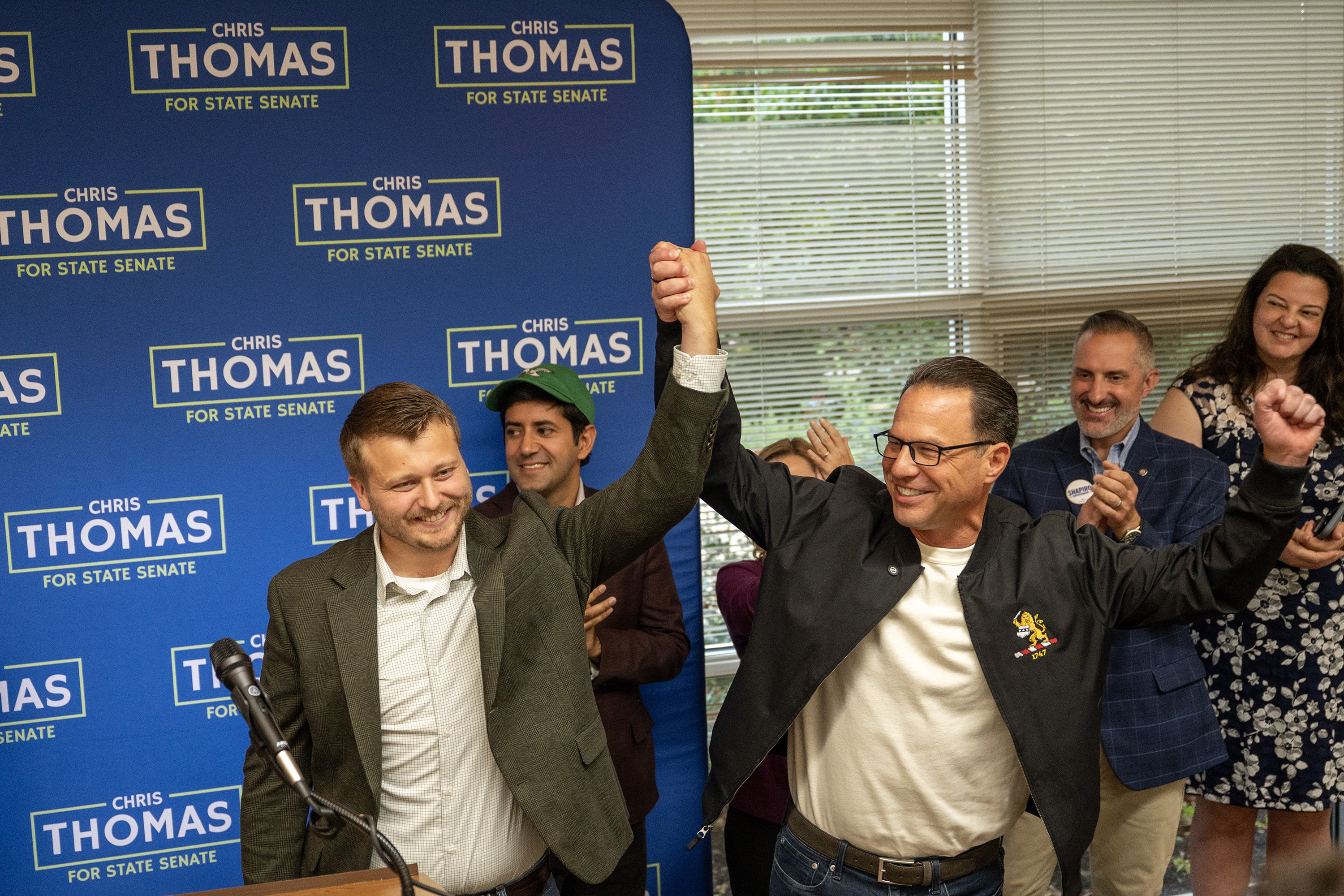
Gov. Josh Shapiro appears with Democratic Pa. Senate candidate Chris Thomas (left) at a rally in Towamencin, Montgomery County before supporters head out to canvas Sunday, Sept. 29, 2026. Tom Gralish / Staff Photographer
The exact amount of money spent so far in these races will not be available until campaign finance filings are due later this month, and will include how much was spent on other voter outreach, like direct mail.
When asked this summer about the prospect of a Democratic trifecta, Senate Majority Leader Joe Pittman (R., Indiana) rebuffed it.
“I’m more focused on what it would be like with a Republican trifecta,” Pittman said in an interview in July, noting the narrow Democratic control in the House. “At the end of the day, a day in politics is a lifetime.”
Meanwhile in the state Senate, the same set of maps benefited Republicans, and were likely to cement GOP control for another decade, according to an analysis conducted for The Inquirer by the nonpartisan Princeton Gerrymandering Project at the time.
Four years later, enter Trump’s declining job approval rating in Pennsylvania, high gas prices, a governor’s race with a double-digit Democratic lead, and GOP control in Washington — and Pennsylvania Democrats see a rare opportunity.
To flip the state Senate, Democrats have two potential paths: Theywould need to capture at least two GOP-held seats in swing districts and maintain control of a seat in a Lancaster County district that Trump won in 2024 by 15 percentage points. Or, if they cannot hold onto the Lancaster seat, they would need to flip a total of three seats to take control of the chamber.
Hughes, who is on track to lead the powerful Senate Appropriations Committee if Democrats prove successful in November, said he is not yet picking out the new drapes or a new front-row parking spot at the Capitol. Rather, he said, he is hardly letting himself imagine what it would be like to helm the committee that reviews every bill and decides how state dollars are spent, and where he has served as the minority chairman since 2010.
“We’ll accomplish a lot of things that the people of Pennsylvania need us to get accomplished, and we’ll do it in a way that I think the people of Pennsylvania will be proud,” Hughes added.
State Sen. Vincent Hughes in Philadelphia on July 21, 2026.Tom Gralish / Staff Photographer
Senate Republicans’ campaign arm said in a statement that the Senate GOP has “a record of reducing costs, stopping burdensome taxes, and putting Pennsylvanians’ safety first.”
Their argument for why Republicans should maintain control of the state Senate is simple: They are the ones looking out for taxpayers. And they see themselves as the ones protecting Pennsylvania from the problems facing Democratic-led states like California and New York, criticizing Pennsylvania’s Democratic candidates for fundraising off the elite blue-state class.
“We know what’s on the line,” said Michael Straw, the communications director for the Senate Republican Campaign Committee. “We can’t afford their tax increases that crush working families and soft-on-crime policies that put our safety at risk.”
What a Democratic trifecta would do
In Shapiro’s early years as Pennsylvania governor, he spoke proudly about his abilities to bring Democrats and Republicans together in the state’s split legislature.
But after two messy budget impasses and several issues getting kicked down the road, the potential 2028 presidential candidate became impatient. At the start of this year at the Pennsylvania Democrats’ endorsement convention, he proclaimed a new goal: Give me a Democratic trifecta.
At the time, today’s political climate was unpredictable. The war in Iran had not begun, and gas prices were not skyrocketing, among other factors viewed as driving voters to the polls.
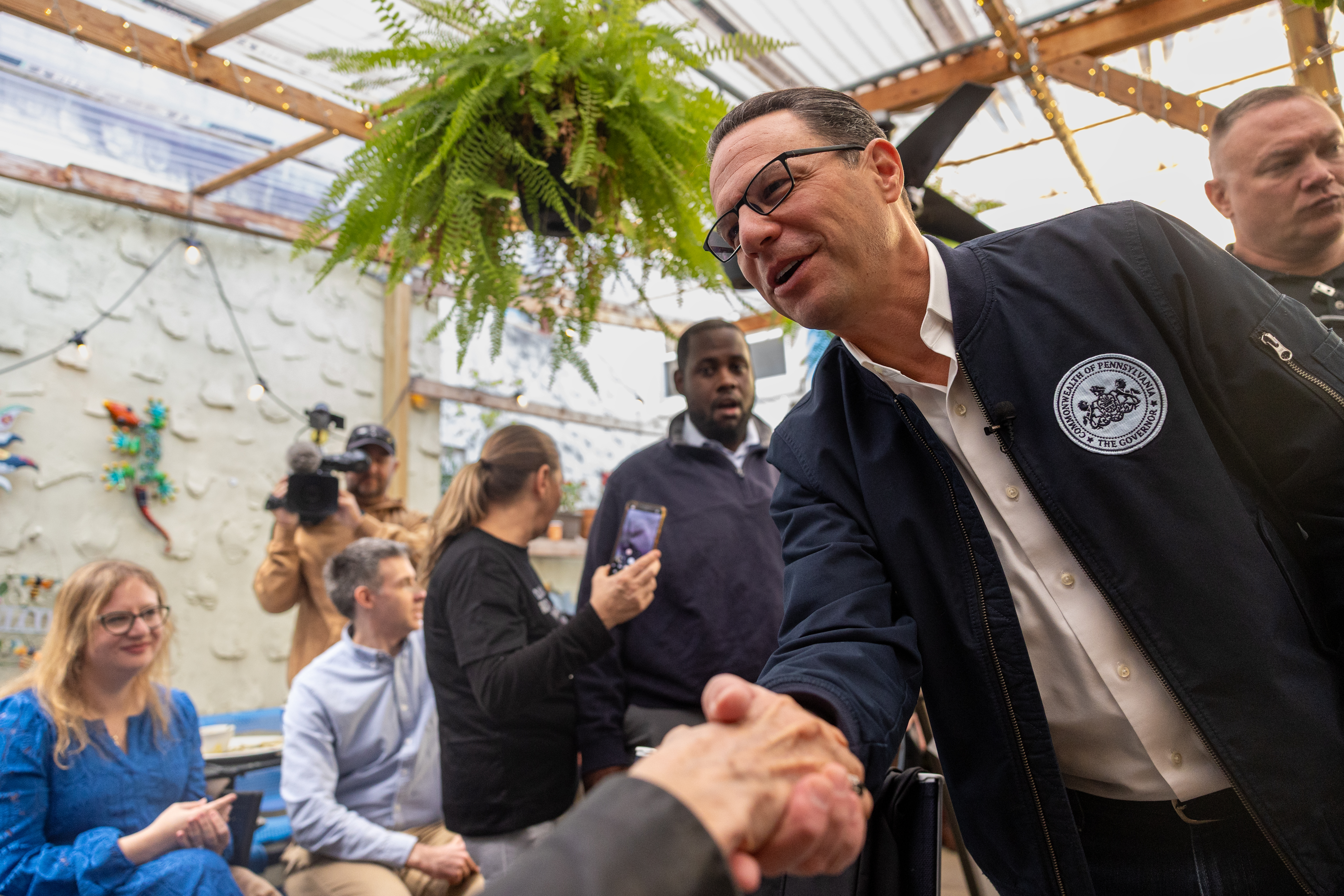
Gov. Josh Shapiro meets with patrons out in the back patio of Sam’s Morning Glory Diner in South Philadelphia on Friday, Sept. 25, 2026. Shapiro is canvassing to get Pennsylvania Democrats elected up and down the ballot in November, including to flip control of the state Senate. Aidan T. Gallo / Staff Photographer
But he had his plan set: A Democratic trifecta would allow the party to swiftly increase the minimum wage, codify abortion and LGBTQ+ rights, and advance an affordable housing plan.
It is a refrain he has repeated over the last 10 months as he has campaigned for Democratic state and congressional candidates down the ballot.
“The first bill that will reach my desk with a trifecta will be to raise our minimum wage to $15 an hour,” Shapiro said at a campaign event last month in Philadelphia alongside Michigan Gov. Gretchen Whitmer.
Pennsylvania’s minimum wage is set at the federal hourly minimum of $7.25 and has remained stagnant since 2009. Raising the state’s minimum wage to $15 an hour has been a priority for Harrisburg Democrats for years, but they have been unable to broker a deal with the GOP Senate. (Senate GOP leaders say they are not opposed to a more measured minimum wage increase, but have not passed legislation to do so.)
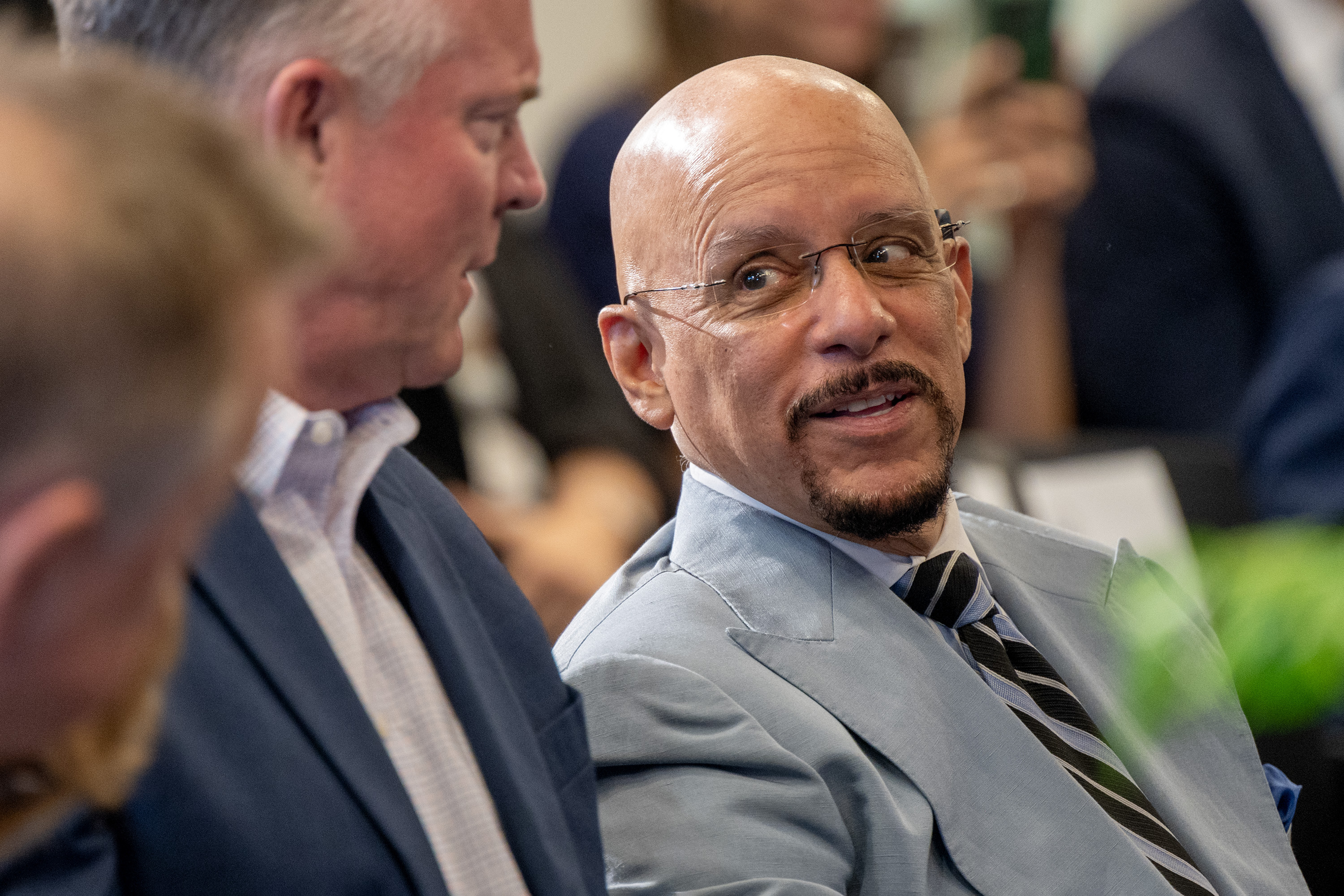
Majority Leader Joe Pittman (R., Indiana) during a ceremonial meeting of the Pennsylvania Senate at the National Constitution Center May 5, 2026.Tom Gralish / Staff Photographer
For Pittman, the GOP leader, he said he saw a path forward for a deal this past budget season on mass transit funding and a minimum wage increase. House Democrats refused, he said at the time.
“It’s become very transparent to me that all they want is a political talking point,” he added. “Both issues could be addressed in a meaningful way if they were serious about negotiating.”
Shapiro, who was joined at the event last month by State Sen. Nikil Saval (D., Philadelphia), placed the blame for Pennsylvania’s stalled minimum wage squarely on Senate Republicans.
“Our minimum wage has been stuck at $7.25 for the last 16 years. Why is that? Because the Republicans in the Senate that Nikil serves with — guess what — they block it every single time,” he said.
Hughes noted that the last time Democrats had a trifecta in Harrisburg, they approved Pennsylvania’s Children’s Health Insurance Program, a national model for state insurance for low-income children to get healthcare coverage.
“That’s the kind of groundbreaking work that we can and will get done,” Hughes added.
Staff writer Michelle Baruchman contributed to this article.
HARRISBURG — Just outside Hershey on a brisk Octobermorning, Adam Kraut delayed breakfast at the Cocoa Diner in Dauphin County to vent about politics.
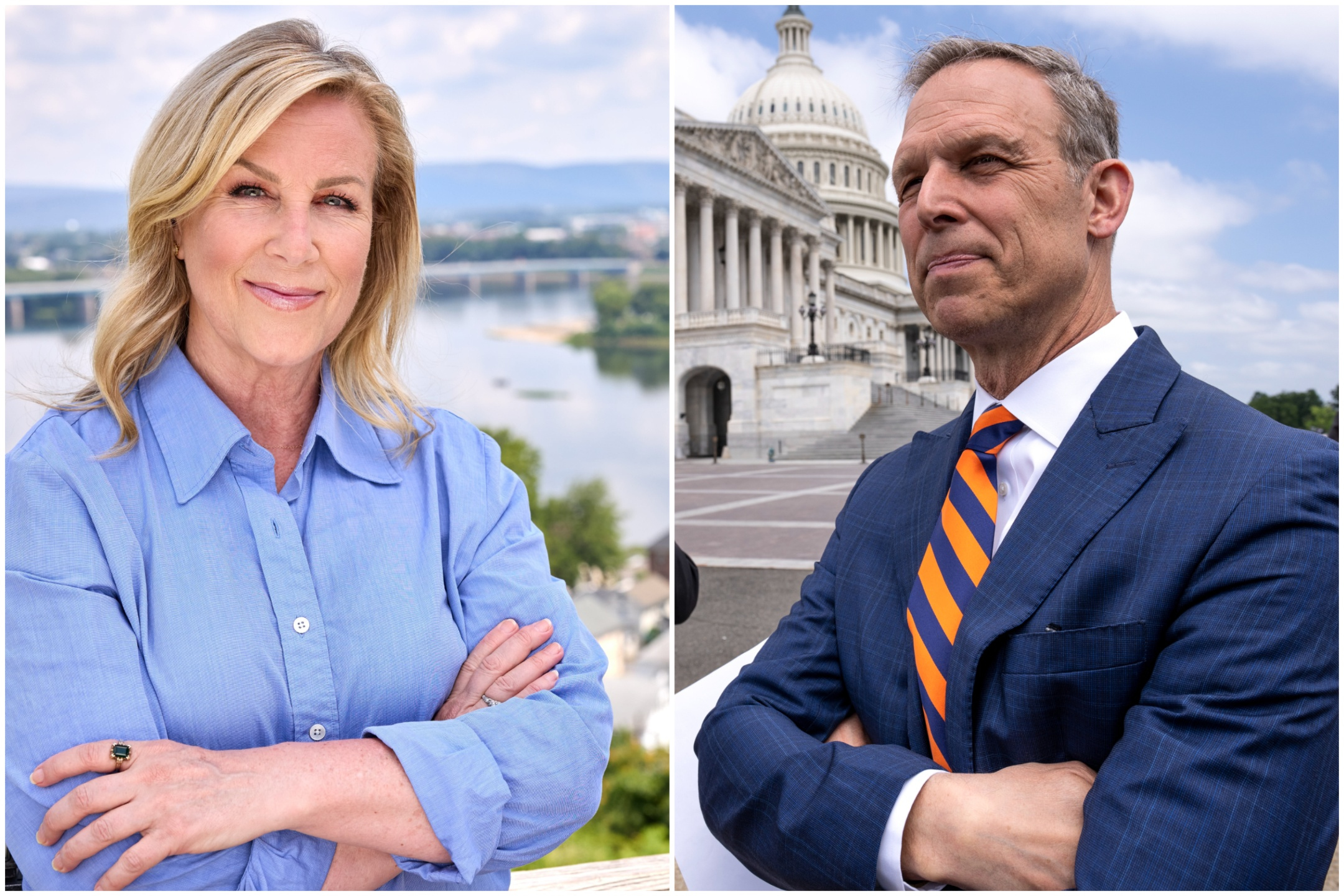
“I despise Scott Perry,” Kraut, 52, said of the incumbent Republican lawmakerwho is running for reelection in the 10th Congressional District in south- central Pennsylvania.
“He’s an election denier who supports the war in Iran,” said Kraut, an independent voter from York who works in sales.
Kraut said he is backing Perry’s Democratic challenger, former TV anchor Janelle Stelson, in her second attempt in two years to unseat Perry, a close ally of President Donald Trump who has been in office since 2013.
“A fresh, inexperienced person might be a good thing,” Kraut said.
In Cumberland County that same morning, Monica Molsky viewed the landscape differently.
“I call Stelson ‘the crazy lady,’” said Molsky, 59, a Republican who works as a house cleaner in Carlisle.
“She’s never been elected, and she doesn’t have decent values, becauseshe’s pro-abortion, anti-gun. Perry has good, conservative values.”
As the second Perry-Stelson contest enters its final days before the Nov. 3 election, voters across the district expressed passionate opinions like boxing enthusiasts eager for a rematch between two brawlers. The two candidates are set for a televised debate at 8 p.m. Wednesday on Harrisburg’s abc27.
The district — which covers Dauphin County, as well as portions of Cumberland and York Counties — is one of four in the state that could determine control of the U.S. House.In 2024, Perry won by just 5,133 votes, or 1.2 percentage points.
Unlike last time, however, this election will also be a referendum on the first two years of the second presidency of Trump, who won the district over then-Vice President Kamala Harris in 2024 by more than 5percentage points.
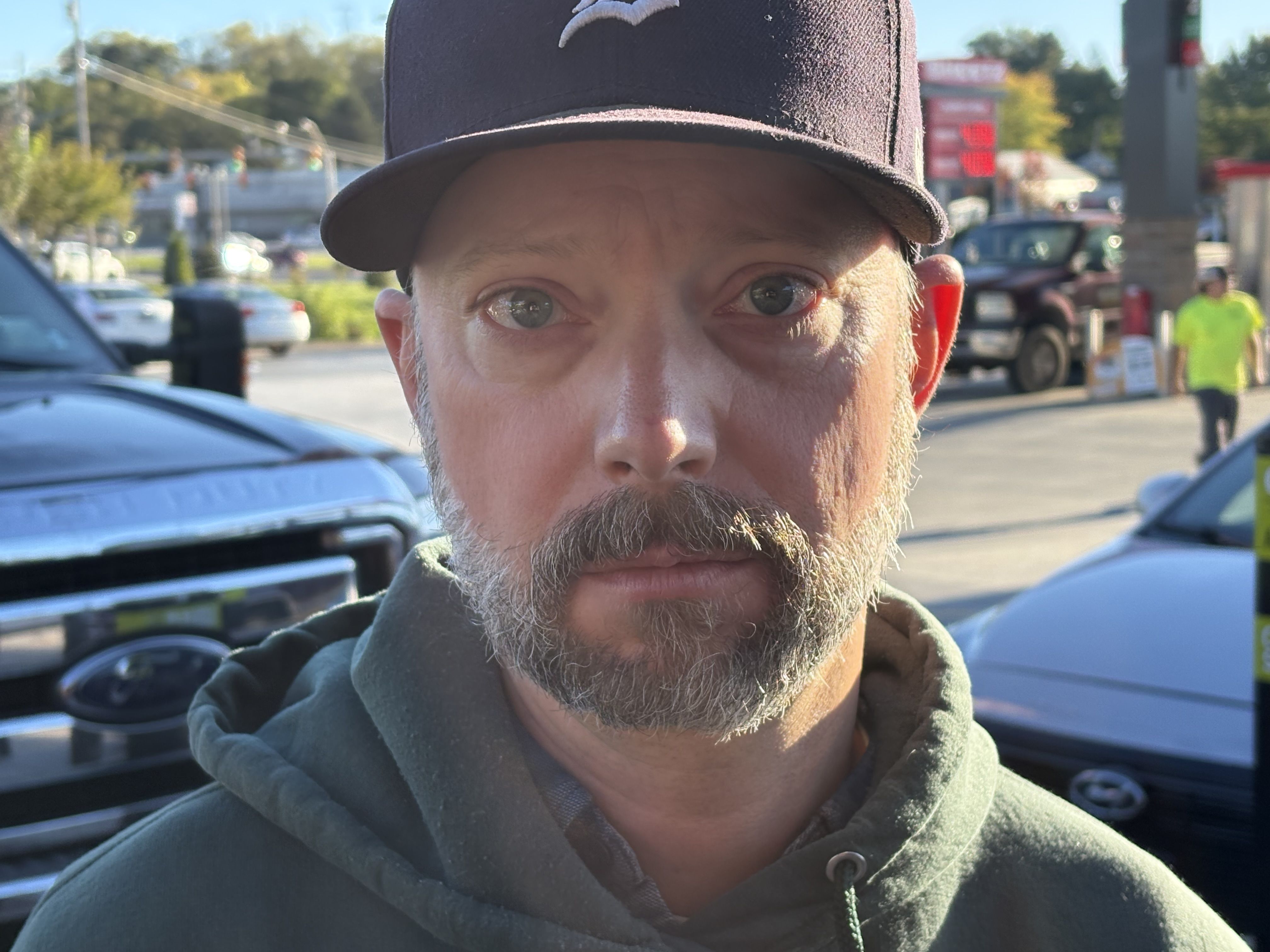
“I’m a three-time Trump voter. I won’t support Stelson,” said Republican Ken Chamberlain, who works in medical sales in Shrewsbury, York County. “She won’t keep our country safe from immigrants like Trump does, and she has no experience.”
Ken Chamberlain of Shrewsbury supports U.S. Rep. Scott Perry. “He’s for national security and keeping our country safe from immigrants.”Alfred Lubrano
But Perry’s ties to Trump may not be as beneficial this time around.
A September poll from Franklin and Marshall College found that 57% of voters in the district thought Trump had done a poor job as president, compared with only 27% who said he had done a good or excellent job. And 59% said Trump’s policies have hurt them somewhat or a lot.
That survey gave Stelson a 3-percentage-point edge on Perry.
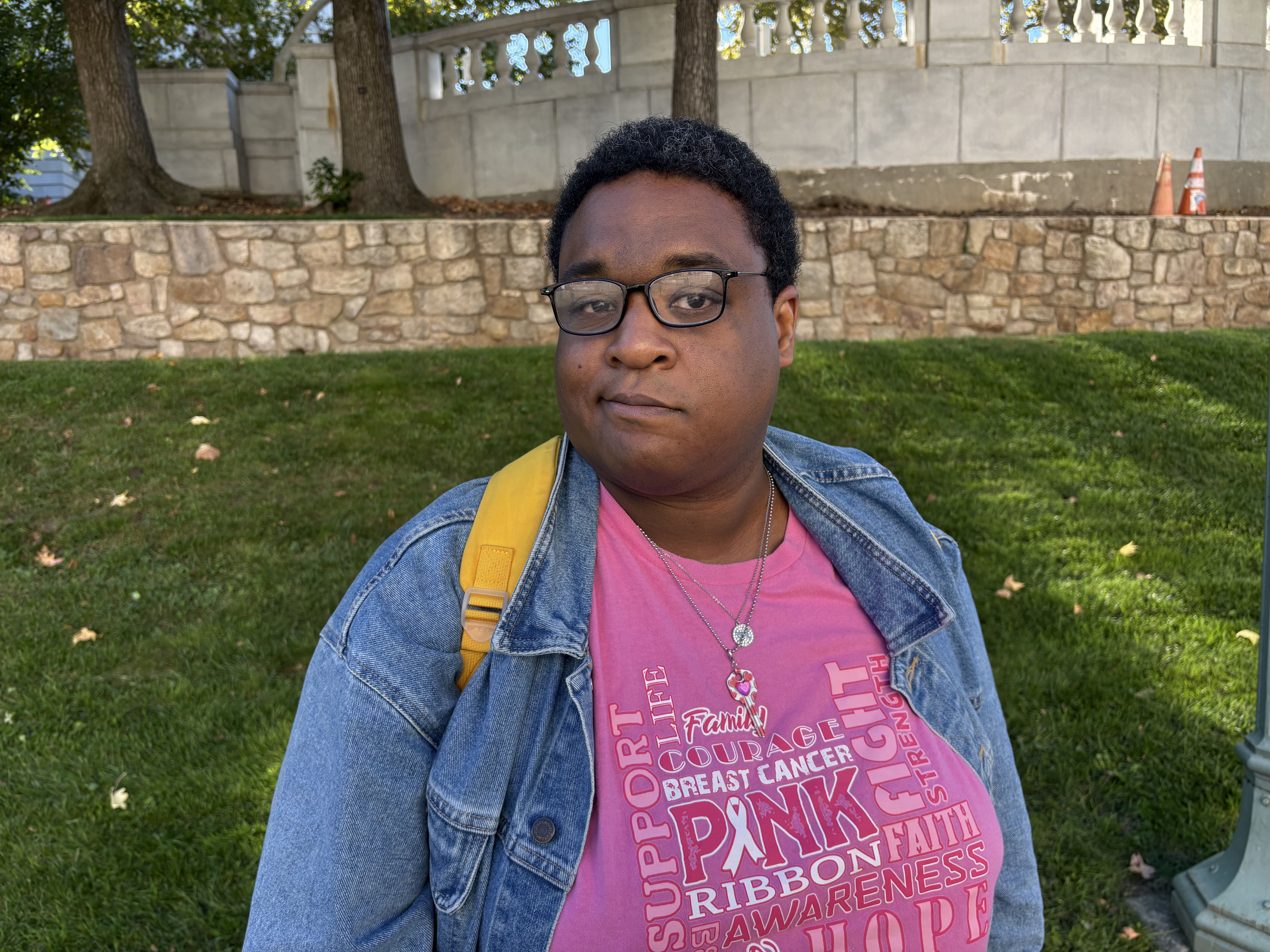
“I can’t vote for Perry because he’s MAGA and he supports and voted for Trump’s war,” said Democrat Kristian Bracken, 33, a caregiver in Dauphin Borough, Dauphin County. “Now gas and grocery prices are up.”
Stelson has centered her message on the cost of living, with campaign events at gas stations and a TV spot highlighting the increased price of a hamburger. It’s a shift from 2024, when Democrats were on the defensive about inflation with Joe Biden in the White House.
Kristian Bracken of Dauphin Borough supports Democrat Janelle Stelson. “Perry needs to go,” she said.Alfred Lubrano
Neither Perry, 64, nor Stelson, 66, agreed to speak to The Inquirer ahead of Wednesday’s debate.
For Republican Scott Wallace, 86, from Hampden Township, Cumberland County, his understanding of Perry comes from a personal place. Perry is a family friend under whom Wallace’s son served when Perry was an Army National Guard brigadier general, Wallace said.
“I’ve known Scott 20 years,” Wallace added. “He’s down-to-earth and totally honest, whereas Stelson doesn’t have a clue. She’s a liberal puppet of Nancy Pelosi.”
Pelosi, the former Democratic House speaker from California, is retiring from Congress at the end of the term and has not been involved in the 10th District race.
Aware of Perry’s service in the military, Heath Copeland, a nurse and Army veteran from Camp Hill in Cumberland County, believes the lawmaker has not honored the principlesof a service member.
“He broke his oath as a member of the military when he supported the Jan. 6 insurrection,” said Copeland, 48, a Democrat.
Heath Copeland of Camp Hill will vote for Democrat Janelle Stelson: “Mr. Perry is a problem altogether,” he said.Alfred Lubrano
U.S. military officers take an oath to “support and defend the Constitution of the United States against all enemies, foreign and domestic,” Copeland said.
Perry was not accused of participating in the mob violence of the Jan. 6, 2021, attack on the Capitol. But he led the effort to contest Pennsylvania’s electoral votes within hours of the riot. And the House select committee investigating the attack accused him of strategizing portions of the plan to overturn the 2020 election.
Perry was never charged with a crime.
Also a veteran, Brian MacPherson, 84, of Mechanicsburg, Cumberland County, voted early for Stelson. MacPherson, a Democrat who ran malls in Texas, served in the Navy during the Vietnam War.
“I go for Democrats because I’m against Perry,” MacPherson said. “I couldn’t tell you anything positive that Perry did.”
MacPherson said voting for Stelson felt like voting against Trump.
“I have big disrespect for that man, and it’s spelled I-R-A-N,” said MacPherson, who said he was upset when he learned that the USS Abraham Lincoln aircraft carrier spent 265 consecutive days at sea in the Middle East.
“I was never at sea more than three months,” he said. “That’s way too long for those sailors.”
Like MacPherson, Gerald Cunningham, 59, a retired state worker from Carlisle, voted early.But he went for Perry.
“He’s a commonsense guy,” said Cunningham, a former Democrat who switched to the GOP.
“Democrats care about illegal immigrants more than American citizens,” he said. “People wonder how a guy like Trump becomes president. It’s because Democrats are that bad.”
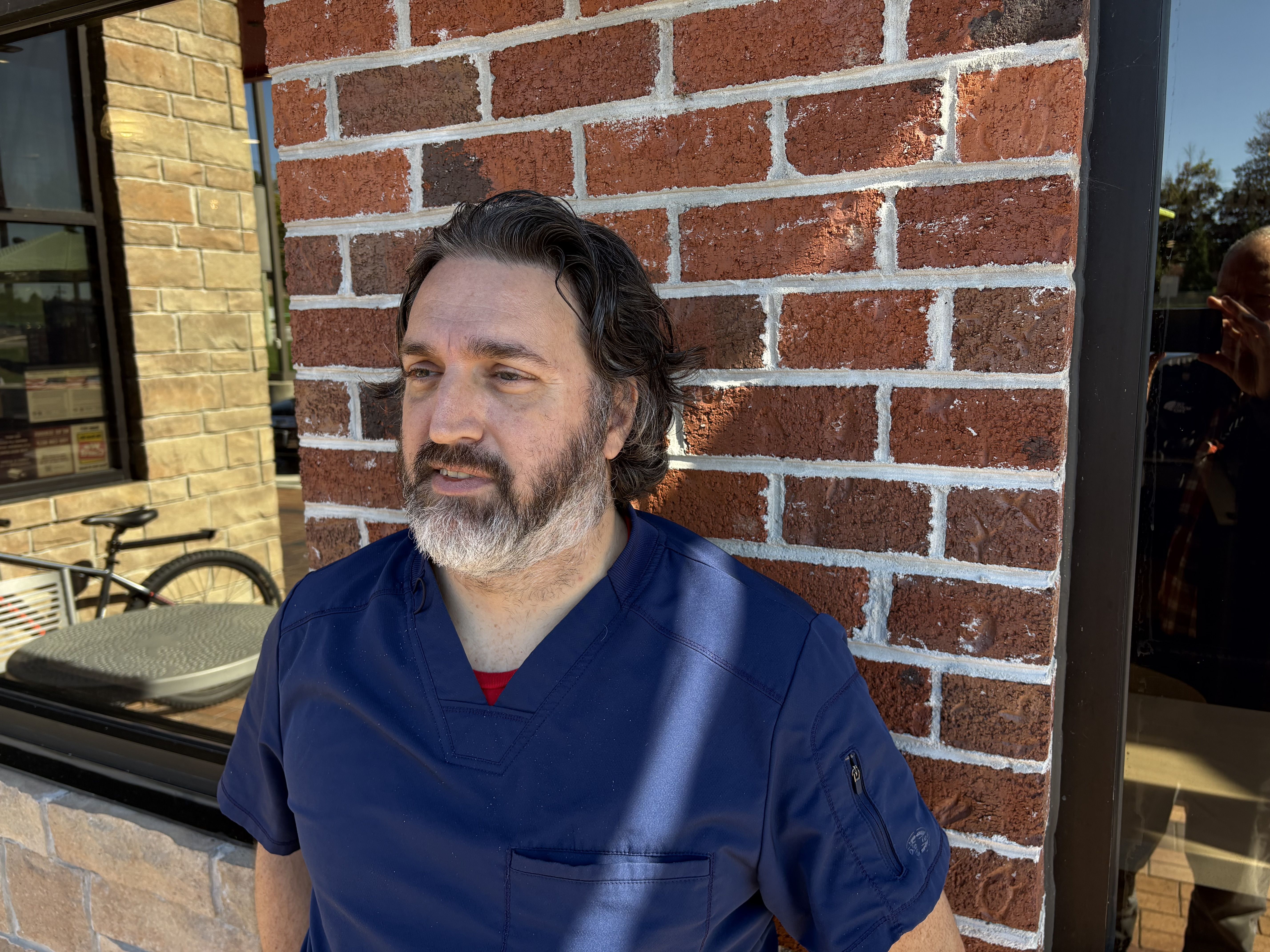
While he is not a staunch supporter of Stelson, Democrat Kevin Hancock, 59, from Harrisburg, said he is voting to unseat Perry for his role in supporting the One Big Beautiful Bill Act, which resulted in people losing or facing the loss of healthcare and SNAP benefits.
“Perry’s done all he can to undo the safety net,” said Kevin Hancock, a voter from Harrisburg. Alfred Lubrano
“Perry’s done all he can to undo the safety net,” said Hancock, a healthcare consultant. “Ironic, because Perry says he was raised on SNAP. At least Stelson supports programs that help people.”
With three weeks until Election Day, what “becomes clear in the campaign is that nothing seems clear at all,” said Tom Graham, 83, a Republican and part-time school worker. He added that endless political commercials of candidates “slinging mud” have grown tiresome.
“I’ll vote for Perry,” Graham said. “But in the end, it becomes hard to determine what’s truth and what’s mud anymore. I can’t wait till this thing is over.”
Elon Musk elevated a false conspiracy theory about Democratic Senate nominee James Talarico over the weekend, lifting a fringe claim concerning the Texan’s mental health to the forefront of users’ X feeds, where it garnered hundreds of thousands of impressions.
“The Talarico campaign is hiding something big that voters ought to know about,” Musk wrote Sunday afternoon, replying to a post alleging that Talarico had been checked into the Lindner Center of Hope, a mental health facility in suburban Cincinnati. Musk’s reply amassed over 870,000 views, more than double the impression count of the post to which he was responding.
The theory had been circulating online for days, fueled by Talarico’s absence from the campaign trail, which his team has consistently said was due to the flu. Texas Attorney General Ken Paxton promoted a “Tala-Freak-Out Tip Line” on Friday, which was still active as of Monday night. President Donald Trump weighed in, arguing the Democrat’s convalescence was too long to be the “flu bug.”
Musk’s engagement with the theory gave it a much wider audience — and the flurry of attention ultimately prompted the treatment center in Mason, Ohio, to publicly refute the allegations.
“Rep. James Talarico has never received treatment from Lindner Center of Hope,” the facility wrote in a statement posted to X, five hours after Musk’s initial posts on the subject. Talarico replied to the post Monday, saying he had “never even been to Ohio,” with a laughing emoji.
A day earlier, he described the conspiracy theory as “the craziest thing I’ve ever heard” in an interview with MS NOW. Talarico’s spokesperson, JT Ennis, said the claims were a “lie designed to promote a pathetic conspiracy theory.”
The episode demonstrates a key way that Musk is wielding political power in the midterms. He has retreated from the political spotlight after his public feud with Trump in 2025. He has taken a lower-profile approach to political spending this election cycle. He has used his formidable war chest to quietly back efforts to elect Republicans to office. The New York Times reported on Monday his midterm spending has swelled to at least $276 million since the beginning of July, making him the Republicans’ top individual donor.
But on X, the social media platform he bought in 2022 and later folded into SpaceX, Musk continues to be outspoken about candidates and political issues — and his enormous audience acts as an influence machine, propelling a fringe claim into the political conversation with a single post.
“You have someone … who is in bed with the political party, or an agenda, and is spreading falsehoods about an opponent who is gaining a tremendous amount of traction,” said Danielle Citron, a University of Virginia law professor who has spent more than a decade researching and writing about online abuse and has advised campaigns on the subject. “It is like a thumb on the scale that we haven’t really ever seen.”
The Lindner Center of Hope and Musk did not respond to requests for comment.
The theory surrounding Talarico originated in far-right circles, spreading further when right-wing influencer Nick Sortor posted an audio clip. The clip, which he claimed was a clinic employee stating that Talarico had recently been discharged, received 7.3 million views according to X. Sortor called for the Texas Democrat to quit the race.
Talarico’s campaign said the candidate had been recovering from the flu, leading to a nine-day absence from the campaign trail. He appeared at an Austin music festival on Friday, even though the call that Sortor posted was recorded on Saturday night, according to phone logs posted by the caller.
The conspiracy theories drove mentions of Talarico among key right-wing figures — including politicians and influencers — to their highest rate on record, a Washington Post analysis found.
Until last week, Musk had posted relatively infrequently on Talarico — just twice in the past year. Since Wednesday, however, Musk has posted about Talarico at least a dozen times.
One of Musk’s posts Sunday, a repost to his more than 240 million followers, put the onus on Talarico to clear the record: “If this was not true, Talarico’s campaign would immediately authorize the release of the records to clear him.”
While Sortor’s audio clip led discussion to peak between 1 and 2 p.m. on Sunday, Musk weighed in as the matter was driving a significant level of conversation in right-wing circles — and it continued to hold traction for about eight hours afterward.
Jared Holt, a senior researcher at Open Measures, a platform that measures the spread of online extremism and disinformation, said Musk’s elevation helped claims like Sortor’s proliferate.
“His engagement with posts promoting the claims did boost them to wider audiences than they may have reached otherwise and likely served to legitimize them in the eyes of ideologically aligned users,” Holt said in an email.
This kind of public attention can prove dangerous for ordinary figures suddenly lifted to the center of public fascination, he added. “The ecosystem where these claims spread has regularly elicited threats to schools, medical facilities, election offices, courts, and private businesses,” Holt said.
Since buying the site formerly known as Twitter in 2022, Musk has regularly injected high-profile misinformation into users’ feeds.
Late last year, Musk elevated allegations that members of the Somali-American community were involved in widespread fraud. Some rogue X users followed the posts from participants in the fraud claims to real life locations. Musk has also spread baseless theories about a volunteer in a Thai cave rescue, California wildfires, and other topics.
In 2022, shortly after acquiring Twitter, Musk elevated a conspiracy theory about Paul Pelosi, the husband of former Democratic House speaker Nancy Pelosi, who was badly injured in an attack at the family’s San Francisco home after a hammer-wielding intruder broke in and struck him in the head repeatedly.
The rapid spread of online theories can place political campaigns in a tricky situation. Zac Petkanas was Hillary Clinton’s rapid response director during the 2016 campaign, when online conspiracy theories alleged Clinton was secretly seriously ill and had to employ a body double to replace her on the campaign trail.
“The way that it mattered [to Clinton’s campaign] was not that people believed Pizzagate or other conspiracy theories; it’s that it contributed to a narrative that she was potentially untrustworthy,” Petkanas said. “It was sort of a death by 1,000 paper cuts, and that was partly because people were really having to judge information coming off of the internet and realizing the scale at which misinformation could be weaponized. It’s 10 years later. People are much more inured to that.”
Citron, the University of Virginia law professor, said actors take advantage of the short windows between campaigns and elections to spread falsehoods because they are unlikely to face consequences. If a claim is defamatory, for example, she said, the matter can take too long to resolve in the courts to have an impact on the race.
“Given we’re within 30 days of an election, I think your lawsuit is not doing anything for you,” she said. “They know they’re in that chokepoint where you can tip an election. … It’s timed just right.”