But faced with the prospect of another embarrassing budget impasse at the expense of state-funded services like schools and libraries, Harrisburg chose another shameful option: They punted.
The Keystone State has a divided legislature. In the Senate, Republicans hold 27 seats, while Democrats hold 23. In the House, the margin is even closer. Democrats hold 102 out of 201 seats. With the commonwealth this closely divided — and the state facing evident funding challenges — bipartisanship should be the order of the day, not political gridlock.
Voters have every right to ask their representatives why they still have not been able to find common ground on addressing such annually recurring budget topics as whether to tax skill games, whether there is a sustainable means to increase public transportation funding, or how to go about raising the state’s minimum wage.
By putting off decisions on those fiscal questions and others, Pennsylvania’s ability to invest in its infrastructure is limited to a narrow range of options that include raising taxes or raiding the Rainy Day Fund. This year’s budget also papers over a potential deficit by “rolling over” more than $1 billion in Medicaid spending until next year.
One of the biggest ways to generate more revenue for the state would be by taxing and regulating the slot machine-like devices known as games of skill. While many Harrisburg observers felt that a recent state Supreme Court ruling classifying these devices as a form of gambling would spur action, legislators chose to do nothing.
Of course, if state leaders were more driven by doing the right thing than by thinking mostly of political convenience, they’d ban the devices altogether. But lawmakers can’t even find a way to agree on such basic questions as what rate to tax the machines at, which agency should regulate them, and what priorities should be funded by the money they generate.
Another untapped revenue source is recreational marijuana. While that money comes with legitimate concerns about public health and regulatory conflicts, the reality is that residents of the commonwealth already have access to cannabis products for recreational purposes. The money is just flowing to the black market and across Pennsylvania’s borders into nearby states instead.
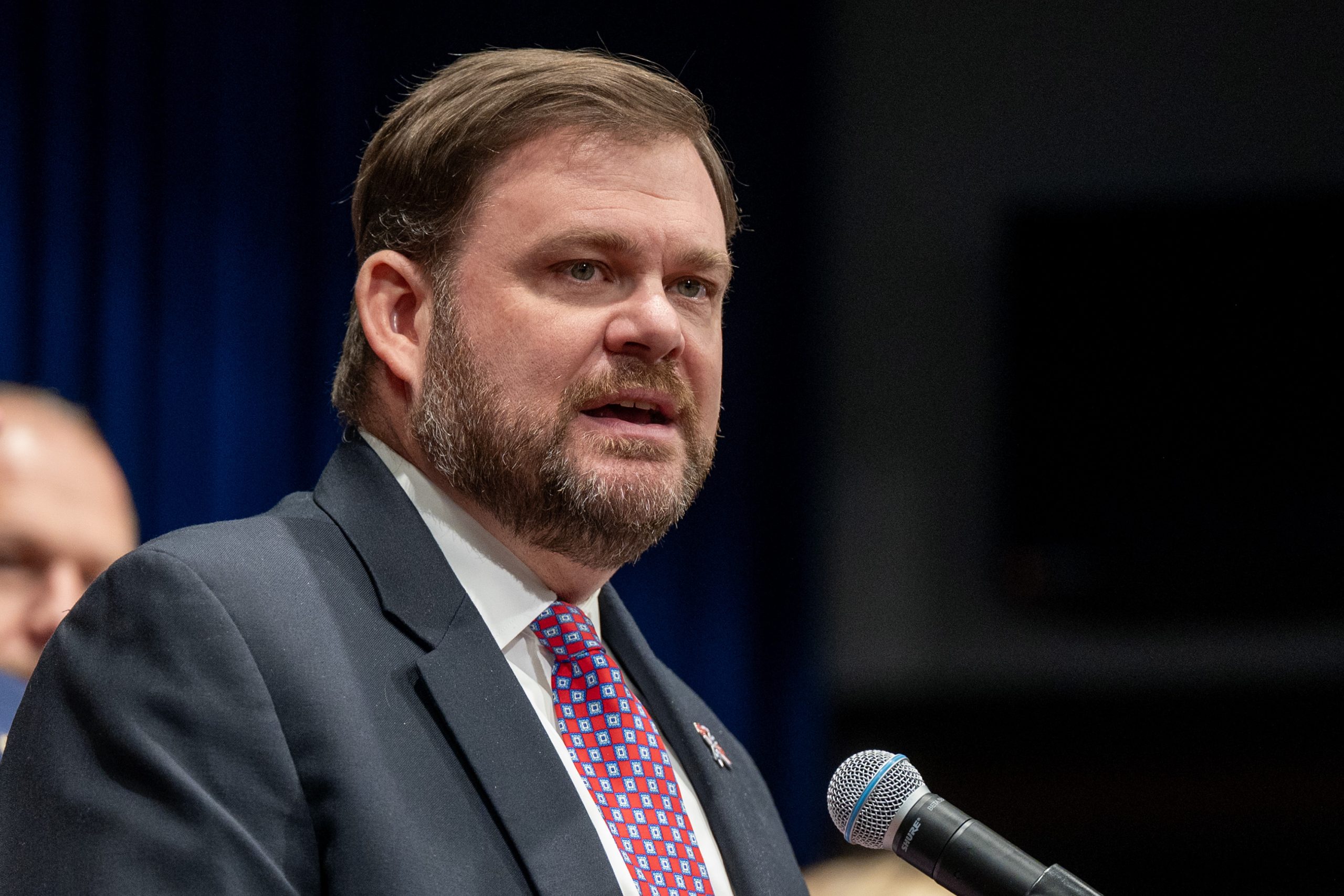
State Senate Majority Leader Joe Pittman (R., Indiana) during a news conference at the Capitol in Harrisburg in February.Tom Gralish / Staff Photographer
Of the six states that share a border with Pennsylvania, only West Virginia continues to ban recreational use, even as the federal government moves forward with easing marijuana restrictions. While the bulk of the revenue from recreational marijuana sales should go to the general fund, some should also be reserved for research and prevention. Programs like Alaska’s Marijuana Education and Treatment Fund provide a good model. Some of the revenue could also be used to support more youth development programs.
The collective “Philly Shrug” by the General Assembly also means another year of uncertainty for SEPTA, which has made significant progress in reducing its deficit, increasing paid ridership, and keeping vehicles and stations clean.
The transit agency’s customer satisfaction surveys show record-high results, serious crime is down, and the agency has saved around $30 million per year in operating costs despite investments in additional police and hundreds of new cleaners. If next year’s budget process fails to adequately fund transit, these efforts will not be enough to forestall the devastating service cuts the region narrowly avoided last fall.
That’s not to say there’s nothing to celebrate in this budget.
While Pennsylvania is still far from achieving the education funding parity laid out in the landmark Commonwealth Court ruling on education funding, state leaders did vote to send an additional $670 million to schools across the state, including $157 million more for Philadelphia. The bulk of that money will go through the state’s new “adequacy formula,” which was created to fix gaps in equitable funding.
It is good that the commonwealth avoided the months of delays that accompanied last year’s budget process. But unless there’s a change of heart — or in Harrisburg’s partisan makeup — it seems state leaders will continue to delay key decisions on critical issues at the expense of all Pennsylvanians.
In the push to pass another late state budget, quality has been sacrificed. The product is more noteworthy for what it does not do than for what it accomplishes. It does not:
Increase Pennsylvania’s archaic minimum wage of $7.25 per hour, which has not budged since 2009.
Provide a reliable funding mechanism for essential public transit.
Reap tax dollars from legalizing the use of marijuana.
Tax skill games.
Sell off the state liquor stores to garner hundreds of millions of dollars.
Eliminate the state’s unique and cruel death (inheritance) tax.
Hike state taxes on tobacco products to discourage use and boost revenue.
Finally end the ridiculous ban on automobile dealers to conduct business on Sundays.
Eliminate price-fixing on dairy products, which keeps prices artificially high and out of step with neighboring states.
I find little to smile about in the new state budget.
Oren Spiegler,Peters Township
Firing four-star generals
Why doesn’t Congress demand to know why Pete Hegseth is gutting our military leadership of the best and the brightest, like Gen. Christopher Donahue? It isn’t patriotic; it’s idiotic.
Penny Stanger,Phoenixville
Dream job
I would like to know where else one can go to land a job like those in Congress.
One can be AWOL and not owe anyone an explanation, be absent for an indeterminate amount of time without being held accountable for that or what might have transpired during their absence, lose any salary, or be penalized in any way for not coming to work.
No one pushes back, questions what is going on, or insists on getting an explanation. One won’t be replaced or demoted, and whatever inconvenience your absence might have caused is of no consequence.
When the question does arise, perhaps a “Further information will be forthcoming” might be issued, but that means just about as much as no information. You can be totally incommunicado without any fear of retribution, censure, loss of a position, demotion, or cut in pay. You can just show up when you are good and ready, with no concern as to whether your absence has caused problems for the others who do show up every day.
When the rest of the government shuts down, these folks remain unscathed, as their paychecks just keep coming. There is always an impending “recess” that seems to come at the most convenient times. It doesn’t matter how much work needs to be done, nor how serious the matters at hand might be — when Congress is scheduled to leave town, that’s what they do. Everything else can just wait.
Sounds like nice work if you can get it.
Barbara Kotzin,Cheltenham
Shameful dismissal
The dismissal of the Proud Boys seditious conspiracy case is just another nail in the coffin of justice and another bitter pill the American people are forced to swallow by the present U.S. Department of Justice. It is a loathsome decision, and one that should be quickly overturned by another court.
Carol N. Wright, Malvern
Join the conversation: Send letters to letters@inquirer.com. Limit length to 150 words and include home address and day and evening phone number. Letters run in The Inquirer six days a week on the editorial pages and online.
I taught high school history in Vermont in the 1980s, during the waning years of the Cold War. When we got to Hiroshima and Nagasaki, I dug up the translation of a Soviet textbook and made copies of the pages that described America’s atomic attacks on Japan.
I gave the pages to my students and asked them to compare the Soviet account to the one in their textbook, which said the U.S. dropped the bombs because Japan wouldn’t surrender. By contrast, the Soviet book claimed that our real aim was to demonstrate our technological prowess and block the global spread of communism.
Many years later, I got an email from a former student who said that exercise opened her mind to the way different people think about the world. And it made her realize that history isn’t simply a record of names, dates, and events. It’s a debate about their meaning and significance.
We have a great opportunity to teach that lesson right now. And we don’t have to look abroad to find material for it.
The debate over history is here. It’s happening all around us. The only question is whether we can muster the will — and the courage — to expose our young people to it.
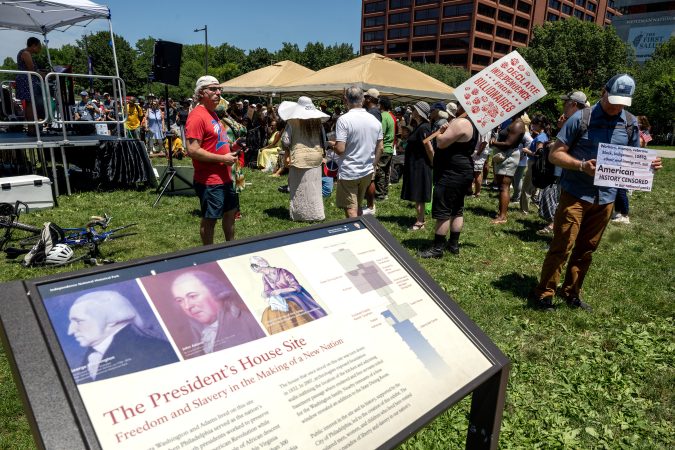
Consider the controversy over slavery exhibits at the President’s House here in Philadelphia. Back in January, the Trump administration ordered the removal of panels about the nine African Americans whom George Washington enslaved. And last month, a federal appeals court upheld the right of the White House to replace those panels with, yes, a different interpretation.
The administration’s new panels — which you can read online — acknowledge that Washington and other Founding Fathers practiced slavery. But the panels remove earlier language, highlighting its brutality. Instead, we are told, enslaved people living in the President’s House “experienced a greater modicum of autonomy than elsewhere.”
On July 4, protesters converged upon the site and taped printed copies of the original panels to the walls. “I know they’ll get torn down,” one demonstrator said, “but hopefully there’s enough people here today for the holiday that they’ll be seen, and maybe it’ll inspire someone else to do the same.”
Here’s who I hope will be inspired: America’s history teachers. They should give the text of the original panels — and also of the new ones — to their students, just as I shared American and Soviet interpretations of the atomic bombings.
And they should ask their students about the differences. Why did one of the earlier panels highlight “The Dirty Business of Slavery” — especially the buying and selling of human beings — and why did the Trump administration omit that? Why did it also leave out most of the details about Ona Judge, Martha Washington’s personal maid, who escaped to freedom in 1796?
Teachers should also share the Trump administration’s recent report attacking the Smithsonian’s National Museum of American History. There’s too much at the museum about racism and oppression, the White House says, and not enough about progress and freedom.
A display in the “Great Debate” section of a democracy exhibit at the Smithsonian’s National Museum of American History, seen in August 2025.Calvin Woodward
Again, is that right? Schools that are close enough to Washington, D.C., should take students to the museum and let them decide for themselves. Everyone else should assign the Trump administration report and rejoinders to it by historians and others.
Teachers have been doing lessons like that for a long time. In the 1980s, Oregon history instructor Bill Patterson had his students compare their state-approved textbook with A People’s History of the United States by radical scholar Howard Zinn.
And if you think this was all just an exercise in left-wing propaganda, think again. Patterson’s students wrote letters to Zinn and took issue with his interpretations, including his claim that the bombings of Hiroshima and Nagasaki were unnecessary.
I can’t remember what my own students decided about America’s use of atomic weapons in Japan. But I’m glad I didn’t give them a single interpretation of it. That’s not education; it’s indoctrination.
A few days after he returned to the presidency in January 2025, Donald Trump issued an executive order “ending radical indoctrination in K-12 schooling.” But in its first sentence, the order calls on schools to “instill a patriotic admiration for our incredible nation.”
That’s indoctrination, too. I know the White House doesn’t want the kind of debate I’m advocating here. But neither do some people on the left, who will inevitably dismiss my approach as “bothsidesism.”
Please. Our students need to come to their own conclusions about the President’s House, the Smithsonian, and everything else. If you only want them to hear your side, you’re in the same league as Trump and his disciples.
News flash: We disagree about our nation. On its 250th birthday, the best way to celebrate it would be to present our differences to our students openly and honestly. It’s not our job to tell them what to think. It’s their job to figure it out.
Jonathan Zimmerman teaches history and education at the University of Pennsylvania. His next book, “Schooling Citizens: How Education Can Save Democracy,” will be published in the spring by the American Philosophical Society Press.
Editor’s Note: An earlier version of this column incorrectly noted that the story of Ona Judge, a woman enslaved by George Washington, was not part of a new display at Independence Mall. She is, in fact, featured in the exhibit.
As a former U.S. attorney with more than 18 years of experience prosecuting cases involving violent crime, organized crime, and public corruption in Philadelphia, I sought to follow the principle that the role of a prosecutor is to seek justice, not simply convictions, without using improper methods to secure a finding of guilt. This meant following well settled constitutional law requiring prosecutors and law enforcement to identify and turn over to the defense exculpatory evidence and material undermining the credibility of government witnesses prior to trial — no exceptions.
While people accused of crimes are entitled to a fair trial — not a perfect one — the outright failure of prosecutors and law enforcement to comply with the basic rules of fairness undermines public trust in our criminal legal system. More importantly, the failure — whether intentional or negligent — becomes tragic when an innocent person should not have been prosecuted and sentenced in the first place, because the case clearly pointed to another perpetrator who was not prosecuted.
Since 1989, according to the National Registry for Exonerations, more than 3,800 men and women have been exonerated across the U.S. (152 in Pennsylvania) in cases involving the problems just described. Conviction Integrity Units, which have been set up in district attorney offices across the country, including the Philadelphia district attorney’s office, play an important role in addressing the wrongful convictions of innocent people.
Recently, the Pennsylvania Supreme Court — with urging from the Pennsylvania attorney general’s office — issued a ruling that effectively gives the state’s top prosecutor veto authority in any post-conviction relief case in which Philadelphia’s district attorney determines that an innocent person has been convicted and sentenced to prison for a crime they did not commit.
While I am not in a position as the executive director for the Pennsylvania Innocence Project to comment on the animosity that appears directed at the district attorney, I do know from experience that some prosecutors and law enforcement officers conceal evidence (DNA and other lab test results, contradictory or inconsistent witness statements, evidence of benefits or rewards given to witnesses in exchange for testimony).
Some law enforcement officers use improper methods to coerce statements and false confessions out of people, andsome eyewitness identifications are faulty or the product of improper law enforcement influence.
Cooperating witnesses sometimes lie about the involvement of others to avoid responsibility for their own criminality.
And, finally,some criminal defense lawyers are ineffective at their jobs and have no business being in the courtroom when individual liberty is at stake.
If our criminal legal system is truly just, one should not fear looking back to make sure the right person has been held accountable. Victims also lose when prosecutors and police officers get it wrong while the real perpetrator of a crime remains free to victimize others within the community.
There are 67 elected district attorneys in Pennsylvania who are primarily responsible for prosecuting more than 90% of the serious violent crime cases committed within their counties. In Philadelphia County — where police and prosecutorial misconduct are historically known to have resulted in the convictions of innocent men and women — both the Supreme Court and the attorney general appear to support a world in which looking under the hood is a bad thing and needs to be curtailed.
There were exonerations before the current Philly DA, and there will be exonerations after the Philly DA eventually leaves office, because the unfortunate reality is that some prosecutors and law enforcement officers do not play by, or follow, the rules. I know, because during my tenure in the U.S. Attorney’s Office, my colleagues and I prosecuted more than our share of bad police officers who ignored their oath to follow and uphold the law.
While prosecutors, law enforcement officers, and the courts serve an important societal role in holding people accountable for crimes they have committed, they are not perfect.
When it comes to the innocent, we should not be afraid to look back in appropriate cases to make sure that the innocent do not suffer. Both the Supreme Court and Pennsylvania attorney general’s office need to remain mindful of the role of prosecutors and the importance of Conviction Integrity Units to ensure that justice ultimately prevails in our criminal legal system.
A few blocks and a few days apart, two of the same story: people showing up, in public, as exactly who they are.
That’s what this World Cup summer has felt like across Philadelphia. Six matches at Lincoln Financial Field (or what was called Philadelphia Stadium for the tournament). A 39-day Fan Festival at Lemon Hill drawing tens of thousands a day. Northeast Philly, long home to one of the city’s largest Brazilian communities, turning into a sea of yellow jerseys. Africatown is filled with the flags of Ghana, Côte d’Ivoire, Curaçao. None of it required anyone to tone anything down.
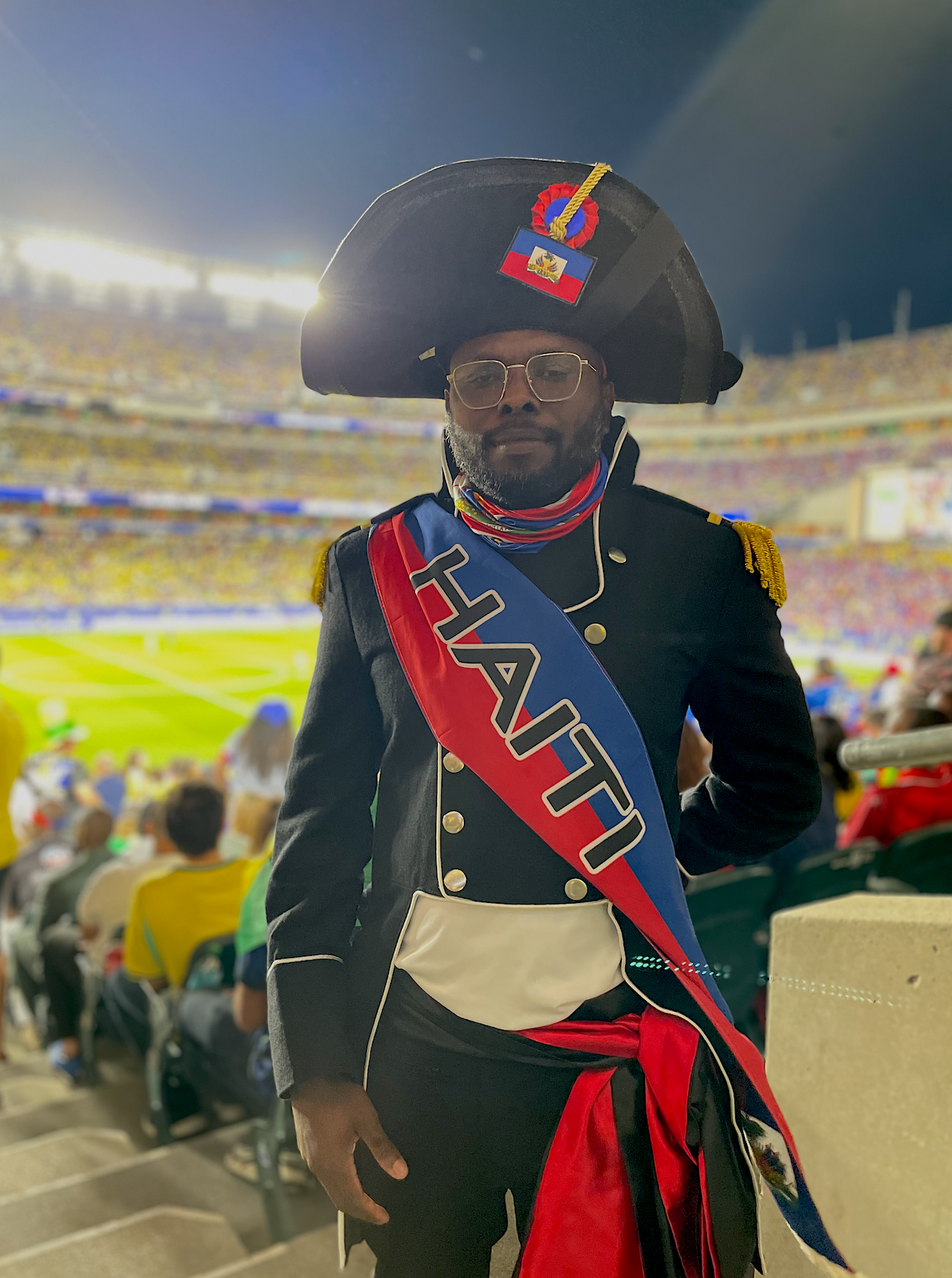
Maxence Jeanty, 41, a fan from Chicago arrived at the FIFA World Cup game at Lincoln Financial Field between Brazil and Haiti, dressed as Jean-Jacques Dessalines, the leader of the Haitian revolution.Kerith Gabriel / Staff
I’ve spent years thinking about what it costs people to make themselves “easier to hold.” I host a podcast called Immigrantly, and after more than 4 million downloads and conversations with guests from New York City Mayor Zohran Mamdani and political candidate Darializa Avila Chevalier to comedians Hari Kondabolu and Aparna Nancherla, the thing I hear most often isn’t about policy or politics.
It’s usually much simpler: First- and second-generation immigrants didn’t know they were allowed to be complicated. Allowed to hold two, three, four places inside themselves at once without apologizing for the seams.
I know that erasure personally. I was born in Pakistan and built my adult life in America, and for years I made myself legible in rooms that hadn’t asked me to. I told myself it was politeness. It took me well into my 30s to understand it was a choice I’d been making so often it stopped feeling like one.
Which is why this summer has been disorienting in some ways. On the one hand, the World Cup has allowed people to make their origin pride more legible publicly. On the other hand, visibility doesn’t necessarily mean safety, warmth, or belonging.
Philadelphia has spent 2026 rehearsing its own origin story — the run-up to the country’s 250th birthday, with a Round of 16 match on July Fourth itself, in the city where the Declaration of Independence was signed.
And at the exact same time, in the exact same city, thousands of people have been reminding us that America was never actually one thing. It was Curaçao and Ghana and Ecuador and Brazil and Haiti, all at once, all unbothered, in a city built by people who never stopped arriving.
Philadelphia Mayor Cherelle L. Parker joins fans of Mexico’s soccer team in a chant during the FIFA Fan Festival at Lemon Hill on June 11, the opening day of the World Cup.Jose F. Moreno / Staff Photographer
Mayor Cherelle L. Parker put it plainly after the festival’s opening weeks: The energy across the city, she said, reflected Philadelphia “at its best — welcoming, diverse, joyful, and proud.”
I believe she meant it. I also know that sentence is easy to say about a festival and much harder to sustain on an ordinary Wednesday, after the last match, after the Fan Festival tents at Lemon Hill come down and Kelly Drive goes back to being Kelly Drive.
That’s the question I can’t stop asking: What happens on July 20?
Because the pride on display this summer isn’t new. The Brazilian families in the Northeast, the West African community that fills Africatown, the Haitian, Ghanaian, and Ivorian Philadelphians who’ve been here for decades — they didn’t invent their culture for this tournament.
A Brazil fan waves his national flag before a FIFA World Cup Group C soccer match between Brazil and Haiti at Lincoln Financial Field on June 19. Jose F. Moreno / Staff Photographer
What the World Cup did was give them permission to bring it fully into public view, and give the rest of us permission to celebrate it instead of asking it to quiet down.
I think about the women I talk to through my work — the ones fluent in code-switching, who’ve spent decades reading a room and calibrating themselves to fit it. I want to point them toward Lemon Hill in July and say: Look at what happens when nobody has to shrink. Look at what this city sounds like when everyone’s whole self shows up at once.
The tournament will end. The flags will come down. Philadelphia will go back to being, simply, Philadelphia.
But the pride we’ve watched all summer doesn’t have to be seasonal. It doesn’t need a stadium or a festival permit.
It can be what a Tuesday looks like here, if we decide it is — a city that doesn’t just tolerate its immigrants during a global tournament, but actually wants to see them, unedited, all year long.
Saadia Khan is a Pakistani immigrant and mother, host of the podcast “Immigrantly,” a Columbia University human rights graduate, and creator of Belong On Your Own Terms, an app for multicultural individuals reclaiming their full identity. Find her work at immigrantlypod.com.
Who is keeping count of the people killed by U.S. Immigration and Customs Enforcement agents? Reports indicate that 10 people have died at the hands of ICE during President Donald Trump’s second term. Here’s another bleak number: zero. That’s how many trials we’ve witnessed in connection with those deaths. There are so many unanswered questions: How are these masked men not in jail awaiting trial? Who are they? How many, if unmasked, would be insurrectionists pardoned by the president? How many are his “stand down,” white, right wing, radical, racist extremists like the Proud Boys, Oath Keepers, or Patriot Front? Are their actions acceptable? Are murders now legalized anywhere in this country? How many more lives will be lost? Why should the murders cease, when the killers face no retribution or penalty? You tell me, what will it take to end this ever expanding “legalized lawlessness”?
William Cohen,Huntingdon Valley
Missing context
I was gratified to read Paul McElhinney’s op-ed about the Dreyfus affair. Many are still not aware of the extent to which antisemitism pervaded the French world of the 1890s when the Jewish French Army captain Alfred Dreyfus was falsely accused of spying and exiled for five years. My talented great aunt — who was Jewish — painted many oil copies of Renoir paintings; I still wonder if she was even aware of Renoir’s deep antisemitism and anti-Dreyfusard sentiments. When the writer asks what we have learned, I must ask why our great museums like the Barnes and the Philadelphia Museum of Art have never confronted the antisemitism of the times and the deep involvement of Renoir and Degas, among others, in the French art world’s stirring debates over the Dreyfus case.
Susan Dyshel Sommovilla, Elkins Park
…
Paul McElhinney’s excellent analysis of the Dreyfus affair omitted two key elements. Theodor Herzl, an assimilated Jewish journalist covering Dreyfus’ arrest, was incensed that Jews were still subjected to antisemitism when they tried to join European society. Herzl became obsessed with the idea that Jews should have their own country. After Dreyfus’ conviction and exile to Devil’s Island, Herzl wrote Der Judenstaat, The Jewish State; organized the first Zionist Congress, which sparked some Jews living in Eastern Europe to migrate to their ancestral homeland; and lobbied the crown heads of Europe to support a Jewish state in what was then Palestine.
After Dreyfus’ exoneration, he rejoined the French Army as a major. He retired a year later but served in World War I as a lieutenant colonel. Last year, France posthumously promoted him to the rank of brigadier general, a position he would’ve easily had if he hadn’t been scapegoated.
Paul L. Newman, Merion Station
Thanks, SEPTA
Kudos to SEPTA for their service during the World Cup. Instead of raising the price of a ride, like NJ Transit, SEPTA kept its normal price and provided free rides and DJ entertainment for people waiting for the trains. I’m certain that our guests left Philly with wonderful memories.
Joseph Grinkewicz, Philadelphia
Scientific research
Thank you, Ayaan Shah for your op-ed on how a new proposal in Washington could gut American science. For those who missed it, I share the following.
How would you like to go to your doctor’s office with a medical need (important to you) only to be told by the person responsible for scheduling office visits, that you would not be put on the schedule because your needs were not in “the national interest.”
This is what the Office of Management and Budget (OMB) is proposing in its published 100-page proposed rules. This is a plan to restructure who gets to cut research funding and decide which studies are allowed.
The OMB plan is to have political appointees make decisions about whether or not rigorous, peer-reviewed grant proposals get approved and which grants in process are allowed to continue. People with no experience, unqualified to make scientific evaluations will determine what will affect all of us in the years ahead.
And, ask yourself like I have, what is “the national interest” anymore and why do unqualified people get to define this term in the various offices they hold? This is another test of loyalty to the administration. One that will hurt all of us and generations to come. So — speak your mind. Share your stories of why scientific research decisions must remain in the hands of those with knowledge, not the gatekeeper who is not qualified.
Judy Endicott, Dresher
Uncomfortable truths
Sen. John Fetterman (D., Pa.) recently stated that he would leave the Democratic Party if it became anti-Israel and did not support Israel’s right to defend itself.
But destroying the means of sustaining human life in Gaza is not self-defense. This includes Israel’s devastation of Gaza’s fields, orchards, greenhouses, water infrastructure, and homes.
After the ceasefire began, Israel destroyed an additional 1,500 buildings in Gaza. Multiple United Nations agencies and humanitarian groups also report that Israel has blocked or severely restricted shelter supplies, including tarps, timber, plywood, and sandbags from entering the Gaza Strip. Families are forced to live in permanent tent cities, with their makeshift homes infested with rats and parasites.
Israeli Finance Minister Bezalel Smotrich said, “We are disassembling Gaza, and leaving it as piles of rubble. And the world isn’t stopping us.”
Being pro-Israel should not mean downplaying or denying the atrocities Israel has committed.
Terry Hansen, Grafton, Wis.
Storm cleanup
The microbursts on Saturday uprooted at least four large trees within five blocks of my house. The electricity was out and my neighbors and I figured it was going to take a long time to recover. Peco was on our block within four hours to get the electricity back on. Tree specialists came out the next day to get the trees off destroyed cars and out of the streets.
Neighbors made new friends, consoling and supporting each other.
Thanks to the city for a quick and efficient response!
David Tatgenhorst, Philadelphia
Join the conversation: Send letters to letters@inquirer.com. Limit length to 150 words and include home address and day and evening phone number. Letters run in The Inquirer six days a week on the editorial pages and online.
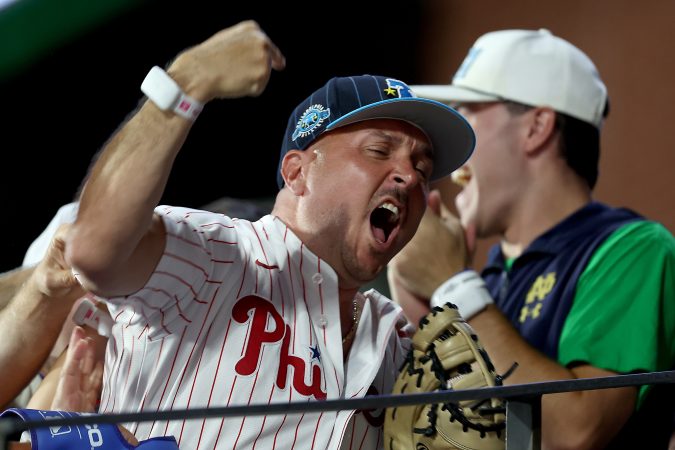
I understand some folks on social media are very upset with Phillies fans for booing every baseball player but their own during the Home Run Derby at Citizens Bank Park on Monday night.
To those whom we’ve offended, may I humbly say: BOOOOO!!! There’s no crying in baseball, you whiny babies.
I wasn’t there in person so sadly I can’t claim to have been a part of the cacophonous crowd that joyfully jeered player after player as they walked onto the field (except, of course, for Kyle Schwarber and Bryce Harper, who received thunderous applause), but I did laugh like hell while watching the incessant booing on TV.
Philly literally booed these guys just for daring to show up and be introduced at our ballpark. We are so unserious.
Our humor is just as brutal as our honesty and while it may not seem like it on the surface, both come from a place of respect. Sure, we could be fake and feign applause for players from other teams, or we could be “polite” and not say anything at all, but we’d rather be engaged and enjoy a good time and a good ribbing.
Heck, Monday night Phillies fans booed one of the kids picking up baseballs in the outfield because he didn’t catch a fly ball, so yeah, puppies and sunshine should be on high alert.
Over on Threads, users posted: “How totally classless!” and “The Philly crowd booing every single player is really gross” and those people were rightfully and immediately ratioed. Philadelphians responded with brilliant retorts like: “If you don’t get booed in Philly, you’re not an All-Star” and “If those players didn’t want to be booed, they should play for the Phillies.”
You know who didn’t seem to have a problem with the boos? The players who actually got booed! They appeared to get it and have fun with it. Every story that’s really a home run needs a good antagonist and a dramatic arc. For that night, they were our Moriartys and we were theirs.
Phillies Bryce Harper climbs the ropes of the boxing ring during his introduction at the MLB Home Run Derby in Philadelphia on Monday.Yong Kim / Staff Photographer
If you can’t stomach some theatrics when the Home Run Derby is broadcast on Netflix — there was a boxing ring on the field and Will Ferrell was providing unhinged commentary — then you probably should’ve watched the Little House on the Prairie remake instead, Laura Ingalls Wilder.
Listen, I understand being surprised by the boos if you’re not familiar with Philadelphia’s dark and dystopian joie de vivre. Before I moved here, I don’t think I’d ever booed anything in my life or had ever been booed, and I couldn’t imagine a scenario in which either would happen (outside of my nightmares and Renaissance fairs, that is).
But after 19 years in Philly, I can now proudly say I’ve been booed in person, over the phone, via email, and on social media by Philadelphians, and I have participated in many communal and individual booing sessions. I didn’t realize how cathartic it could be or how much I’d been suppressing my medieval side, but I know now and have vowed to boo better.
Philadelphia Phillies fans boo the Houston Astros after batting practice ahead of baseball’s World Series Game 5 in 2022. We boo people at batting practice and you’re surprised we booed players at the Home Run Derby? Charles Fox / Staff Photographer
Most recently, I booed a tourist I was interviewing on July 2 when she told me she was visiting Philly through the 3rd and then heading to Boston to celebrate Independence Day on July 4. I did give her a pass when she later said her son and grandson lived in Boston, but I did not apologize. We can’t be getting soft around here.
I mean this is a city where our mascots throw popcorn at babies, harass opposing coaches, and eat people while at work — and they’re the ultimate Philly fans, so expecting us to treat baseball like the ballet is totally bananas (and I’m not talking about the Savannahs).
For those who remain offended, I suggest looking in a mirror and asking: When is the last time I booed something? If the answer is “never” or “not in a while,” give it a go — you may not realize how much you’ve been holding back.
And if you don’t want to boo yourself, turn on a Phillies game and boo us. We’ll take the compliment, because we can take a joke.
A journalistic mentor of mine back in the 1980s told me that Harry Truman, pressed for a comment on the passing of a political enemy, finally said, “It’s a damn shame when anybody dies.” Of course, like most perfect quotes, HST probably never actually said this, yet I find occasion to think of these words often. On Saturday night, South Carolina GOP Sen. Lindsey Graham — whose moral compass went haywire in the 2010s when a brief moment of truth–telling about Donald Trump melted into embarrassing capitulation — died suddenly from heart problems. He was just 71. It’s a damn shame.
Dems need to give up on fake blue-collar campaigns like Platner’s
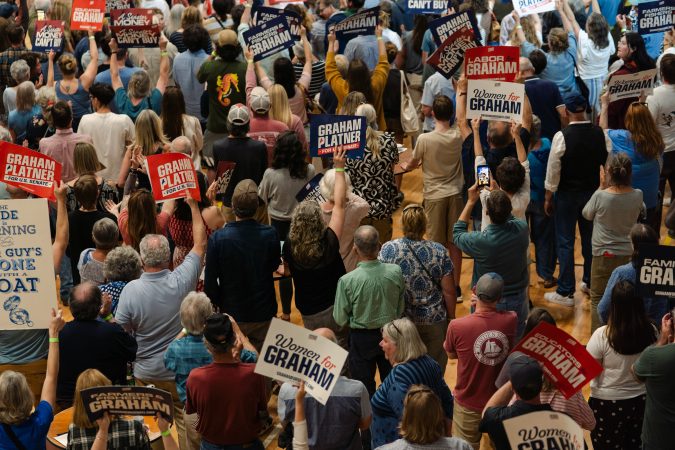
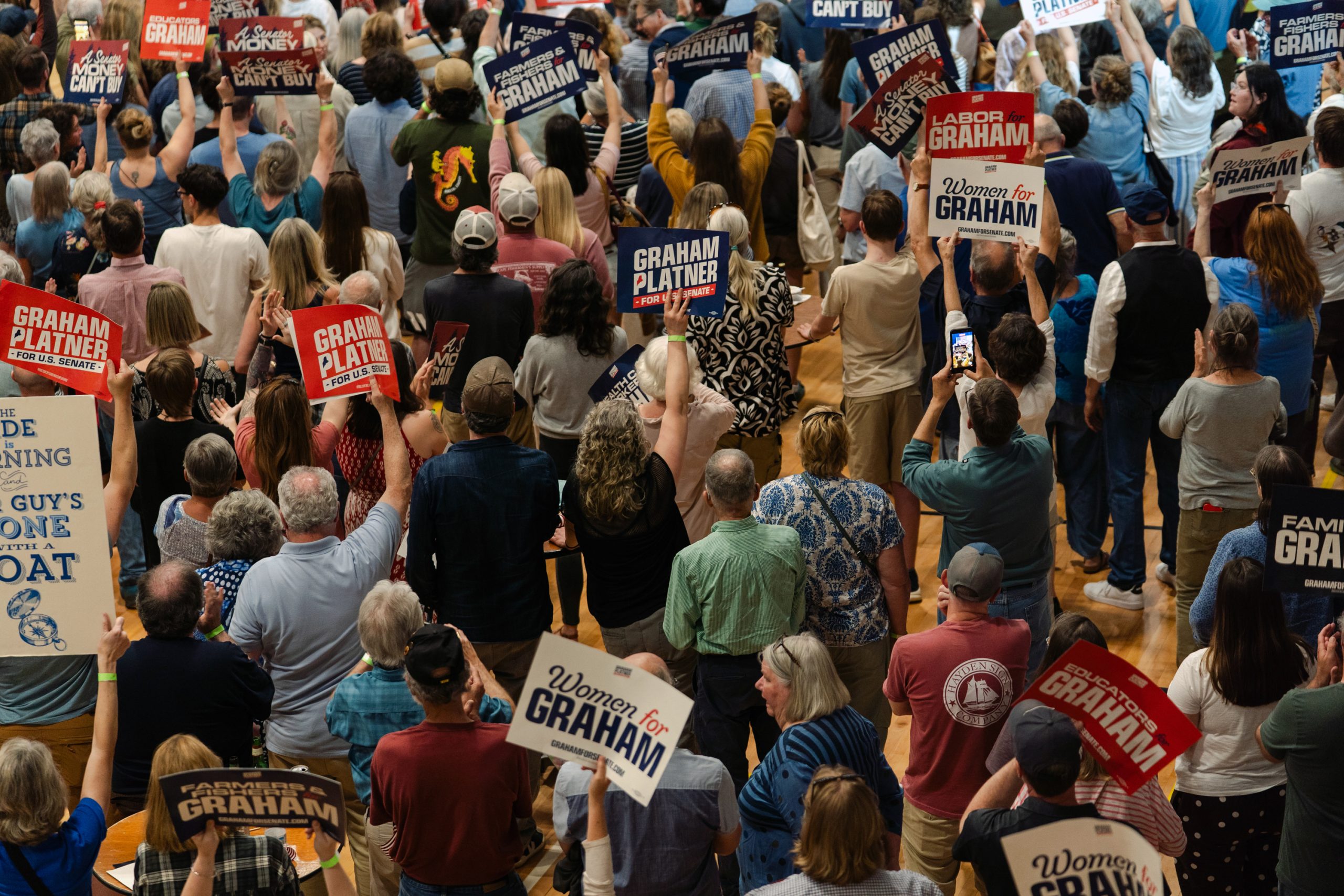
Supporters cheer for Graham Platner in Blue Hill, Maine, after he won the Democratic Senate primary on June 9. Platner’s bid for the Senate inspired progressive Democrats. But the campaign, which he suspended July 8, was messy, disorganized and ultimately doomed by a steady drip of scandal. SOPHIE PARK
Graham Platner, the failed Maine Democratic Senate candidate, was introduced to most of us outside of the Pine Tree State less as a human being than as a fully formed narrative.
The ruggedredhead with angry eyes was an ex-Marine from the Iraq and Afghanistan wars who became an oyster farmer and then a political outsider with all the right words for an electorate that’s mad as hell and isn’t going to take it anymore.
We now know that Platner’s origin story — compelling, but larded with omissions and sprinkled with lies — belonged on the fiction shelf. But even after the Democrats’ scandal-scarred June primary winner accepted the inevitable and ended his candidacy on Friday, he lives on as an avatar upon which everyone with a stake in a badly broken Democratic party can project their distrust and rage toward others — folks who ought to be their allies in an all-out war against fascism.
Days later, the Platner discourse is almost as toxic as the candidate himself. People who voice their opinions, even in 280 characters on social media, get called everything from sexist Bernie-bro rape apologists to Quislings who want big corporations to keep running the Democrats into the ground, and all the rest in between. Don’t even mention Israel. In fact, don’t @ me after this is posted.
Having said all that, there is a conversation that must be had by the Democrats, and probably a wider circle. And the disappearance of Platner himself from the picture makes that easier, because I think we can all stipulate that as a human being he was clearly not worthy to be a U.S. senator, even in the Senate’s current morally diminished state.
There is another Graham Platner somewhere on Earth 2 who also suffered PTSD and developed a drinking problem fighting in pointless wars, and who also got a Nazi tattoo and posted wretched stuff on Reddit, but turned his life around in a glorious redemption song. But that’s not the Platner we got on here on Earth 1. Instead of an apology, he was weirdly defensive about his past, because — we now know — he was hiding stuff that was even worse than that.
Although Platner has denied the most serious charge of a sexual assault, there should be zero tolerance in the Democratic Party for the type of sexual misconduct that’s been confirmed, let alone what’s been additionally alleged. That’s not just the only proper moral stance, but it sets Dems apart from a twisted GOP that nominated Trump three times. Platner’s disappearance is a blessing to everyone.
But even with that matter resolved, we still haven’t answered the bigger question that I posed the only other time I wrote about Platner back in the spring: Why did a majority of Maine Democrats — roughly 150,000 voters — ignore the party establishment to back this guy?
But first Democrats — and just about everyone, frankly — need to do a better job understanding not just the “why” of Platner supporters, but the “who.” Baked into the Platner myth was this notion that in running a gruff-sounding ex-Marine and oyster farmer, Democrats had found a key to regaining the long-lost white working class.
Two huge problems with this. First — and this will sound familiar here in Pennsylvania where shorts-and-hoodie-wearing Sen. John Fetterman grew up upper middle class before donning a blue collar — Platner comes from a fairly privileged background. He’s the son of a lawyer and upscale restaurant owner and grandson of a famous architect; he started high school at the super-elite Hotchkiss School.
Which brings us to the crux of the problem: the notion that Platner’s pre-implosion success was his ability to win back working-class voters in an overwhelmingly white state. Polls exposed this all as a lie. A late June survey from the New York Times/Portland Press Herald/Siena showed Platner losing white, non-college educated voters by a whopping 21% to the GOP incumbent Sen. Susan Collins. So what gave him a shot at winning? A massive 37% edge among college degree holders.
Look, we all know that it’s been the obsessive mantra of the political pundit class that Democrats will never fully win back America without restoring the working-class coalition that elected Franklin Roosevelt four times during the New Deal era. I hate to be a contrarian here, but what if that’s not true?
A society that over a half-century has once again made higher education an elite sport and now has a right-wing media and demagogues like Trump to heighten working-class grievances and blame the wrong people has created voters who — at least for now (hold this thought) — arguably aren’t worth chasing after.
The frayed alliance of progressives and liberals who comprise the core of the Democratic base do some dumb stuff — opposing new units that could lower housing costs, or “nice white parents” leading to de facto school segregation — that should stop.
An America that’s not inclusive and that isn’t fair when it comes to gross income inequality, not to mention who gets to see a doctor or send their kid to college, isn’t a cause worth fighting for. And there’s already a healthy number of working-class people — not the majority, not yet — who would agree with this.
Platner was a bad guy but he appealed to voters who wanted good things. Let’s not bemoan the fact that his movement was based on educated people. Let’s build on that. Instead of lowering our values to win elections, let’s play the long game to lift more people up to a better place.
It’s way past time for college-educated progressives and our allies to stop apologizing for the things we believe in. The current push to find a candidate who can replace Platner and fight for all the right stuff — without the personal baggage of their predecessor — is a great place to start. Maybe it’s even time to revive the old cliché: As Maine goes, so goes the nation.
Yo, do this!
Tuesday is the folk-music legend Woody Guthrie’s 114th birthday. I use the present tense because it very much feels like the singer who influenced living icons from Bob Dylan to Bruce Springsteen is still with us. Now, a friend, the pioneering rock journalist Greg Mitchell, has directed a new documentary about the musician, his political activism in the mid-20th century, and his lasting influence: Woody Guthrie and the Ghost of Tom Joad. It’s now streaming on PBS.org and will also be popping up on PBS stations this summer. You can — and should! — stream it here.
Monday night I read a remarkable piece of journalism that I feel compelled to share. Last week, a lot of America was talking about a photo from July 4 that showed a young Black woman on a D.C. Metro train surrounded by masked members of the white supremacist Patriot Front. There was so much commentary about what this woman must be feeling and thinking, and almost all of it — as shown by some remarkable reporting by former Inquirer journalist Ellie Silverman, writing for NOTUS — was wrong. The truth is heartbreaking.
Ask me anything
Question: Why do we not know what’s going on with (ailing Kentucky Sen. Mitch) McConnell? What is the Republican endgame? What’s the benefit to prolonging the process of determining a replacement? What is that process (seems to be in dispute)?
Answer: We know a little more now than we did when I addressed this issue last week. His staff on Sunday released a brief statement and what is being called a “proof of life photo” — with that morning’s Washington Post sports page visible in the shot — seeking to explain McConnell’s month-long hospitalization and hoped-for return to the Senate. There were, of course, immediate conspiracy theories that the photo was artificial intelligence, but there’s no compelling evidence of that. The biggest mystery is, why doesn’t the 84-year-old McConnell just quit, with only about six months left until he leaves office in January? Kentucky has changed its Senate replacement law a couple of times, mainly because GOP lawmakers don’t want Democratic Gov. Andy Beshear making the pick. The new law requires a special election, but there probably will not be one if McConnell stays in office through Aug. 3. Republicans seem desperate to avoid the special election, and I’m not sure why, since McConnell surely isn’t helping advance the Trump agenda from his hospital bed.
What you’re saying about…
You really didn’t think I could go a whole newsletter without mentioning soccer, did you? Last week’s question about Trump’s FIFA intervention and the reversal of the American Folarin Balogun’s red-card suspension drew a unanimous response: The president was wrong to get involved, and he seemed to create a negative vibe around the U.S. team before it got blown out of the World Cup by Belgium, 4-1. “To me, it appeared to be the wrong call, but the ref called it.” wrote ex-soccer mom Suzanne Urban Ryan. “We had to live with it. Trump getting involved was just really poor judgement based on his need to win a game that he is not even a player.” Added Jordan Lang: “I’m sure his corrupted meddling negatively affected the psychology of the U.S players.” Yup.
📮 This week’s question: Trump plans to address the nation in prime time Thursday with ginned-up information about his bogus and debunked claim that the 2020 election was stolen from him. He is laying the groundwork for November, and election interference on a scale to rival the Jim Crow South. How can Congress, the courts, the media, and everyday citizens respond to this dire threat before it spirals out of control? Please email me your answer and put the exact phrase “Trump election meddling” in the subject line.
Backstory on why ICE is killing immigrants, again
A vehicle with a damaged window is transported away from the scene of a shooting involving U.S. Immigration and Customs Enforcement, Monday in Biddeford, Maine. Robert F. Bukaty
The fight against police brutality against African Americans in the late 2010s found its rallying cry when New York City police choked and killed a street peddler named Eric Garner, whose last words were. “I can’t breathe!” Now, Monday’s latest fatal shooting by U.S. Immigration and Customs Enforcement agents that shattered the morning calm of Biddeford, Maine has produced a new mantra. As 26-year-old Joan Sebastian Guerrero lay dying on the pavement — shot in the head, then dragged from his car and handcuffed — a bystander heard him say in anguish: “I tried to stop.”
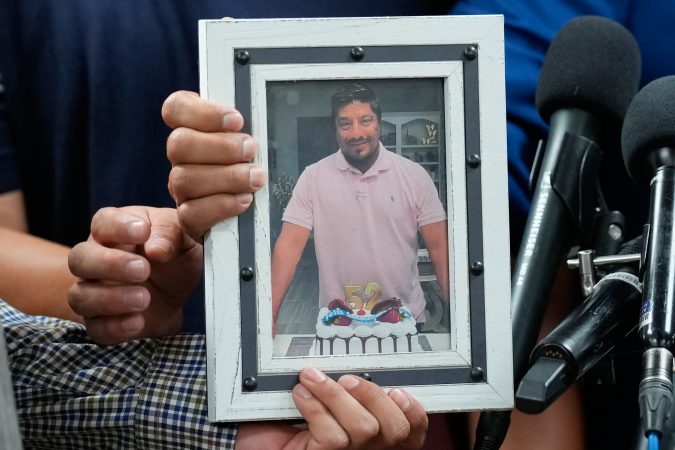
Moments earlier, the man, reported to be a Colombian national with a U.S. work permit, had left his home, possibly with his daughter, in a white Kia sedan, which was hemmed in by ICE agents in their vehicles. Although the Department of Homeland Security changed the wording of its statements over the course of the day, it ultimately reported that an ICE agent shot Guerrero because the driver attempted to flee and the officer was “fearing for public safety.” But ICE and DHS, whose officers have now shot and killed at least 11 people since Donald Trump returned to office, have repeatedly seen their versions unravel as more video and witnesses emerged. The two most recent attacks — Monday’s assault on Guerrero and last week’s Houston shooting of 52-year-old Mexican national Lorenzo Salgado Araujo — happened on working-class residential streets without clear videos of the shootings, and with ICE agents not wearing body cams.
Still, a pattern is starting to emerge as DHS and its new leader, the former Oklahoma senator Markwayne Mullin, put a flood of new, barely trained ICE recruits on the streets in attempt to make mass arrests of immigrants without the same level of hoopla and backlash that happened in cities like Minneapolis and Chicago under Mullin’s predecessor, Kristi Noem. In both the Houston and Biddeford shootings, ICE began the morning in what it claimed was a targeted operation seeking a specific immigrant with a removal order, only to try to arrest and ultimately kill men, in Salgado and Guerrero, who were not the supposed targets.
It’s quickly becoming clear that ICE’s new strategy is a recipe for disaster. Both Salgado and Guerrero, according to what we know from witness accounts, didn’t seem to know what exactly to do when their vehicles were surrounded by unmarked vans and yelling men. In both cases, ICE agents interpreted the predictable panic and chaos as aggression, and made a split-second decision to end a human life forever. It increasingly looks as if the federal agents — facing an impossibly ambitious goal from the Trump regime of arresting and deporting 1 million people a year — insist they have a name on a sheet of paper, when in reality they are racially profiling brown-skinned men driving to blue-collar jobs.
Like so many projects of our current government, the new ICE scheme is not only inhumane but also dumb and counterproductive. Mullin’s apparent new strategy was to meet the high arrest quotas sought by Trump and his immigration guru Stephen Miller without generating the kind of public protest and backlash that all but drove DHS out of Minnesota this winter. It’s not working. Even before Guerrero’s name was released, angry demonstrators took to the streets in Biddeford and stormed the office of the state’s GOP Sen. Susan Collins, who recently voted for a $70 billion cash infusion for immigration raids.
The tactics may have changed slightly, but the repulsive devaluation of human life has not. Mass deportation is a failure — strategically, politically, and morally.
What I wrote on this date in 2019
Some days my past writings read like Nostradamus, but more often than not they reveal how fleeting our political moments can be. On this date seven years ago, this columnist joined a lot of progressive voters in swooning over the early-stage presidential ambitions of Massachusetts Democratic Sen. Elizabeth Warren, who had just spoken at the left-wing convention Netroots Nation here in Philadelphia. “With her slam-dunk performance Saturday,” I wrote, “Elizabeth Warren became president … of the American progressive movement, anyway.” But Sen. Bernie Sanders had other ideas about that, and then Joe Biden and South Carolina voters came along with different ideas about Warren, Sanders, and control of the Democratic Party. Read the rest: “Netroots Nation was the day Elizabeth Warren became president of the American left.”
Recommended Inquirer reading
It was a full week for me, and for American outrage. First, I tackled the Houston ICE killing of 52-year-old Mexican national Lorenzo Salgado Araujo and the return of ambitious immigration raids to American cities. I noted that the new ICE strategy aimed to ramp up arrests without generating public outcry, and I urged readers not to go to sleep on mass deportation. Over the weekend, I wrote about the similarities between the Trump regime and the disastrous ancient reign of the Roman emperor Caligula. I detailed how Trump’s growing paranoia that he will be assassinated in office is causing new bloodshed in the Persian Gulf and inspiring fresh efforts to quash civil liberties here at home.
Kenesaw Mountain Landis must be spinning in his grave. He was the former federal judge who tried Chicago’s notorious “Black Sox” for throwing the 1919 World Series at the behest of New York gamblers, then became baseball commissioner to clean up the national pastime. For decades, Major League Baseball shunned even the slightest whiff of gambling connections that might taint the sport — but times have changed. My Inquirer colleague David Gambacorta — one of the best investigative reporters in the business — last week broke a remarkable story about how the lucrative betting site FanDuel egged on a local addicted gambler to keep playing until he lost some $1.5 million. Plot twist: FanDuel’s effort includedhaving Phillies slugger Bryce Harper send a personalized video to please the local bettor. It’s disturbing that a) Harper, with a 13-year $330 million contract, also feels the need to peddle $899 videos on Cameo and b) he has a relationship with people at a gambling website. But FanDuel is now “the official sports betting partner” of MLB — an appalling relationship that only encourages morally dubious behavior like the Harper video. The rank corruption of modern American society, including sports, is why we need investigative reporters like Gambacorta. You can read the next installments in this saga, and support his work, when you subscribe to The Inquirer.
By submitting your written, visual, and/or audio contributions, you agree to The Inquirer’s Terms of Use, including the grant of rights in Section 10.
The U.S. attorney general is often called the people’s lawyer because he or she serves the public interest by guarding the legal rights of taxpayers, residents, victims of crimes, and the environment.
But the attorney general is not supposed to be the White House consigliere, abusing the rule of law, carrying out political vendettas, and protecting the powerful.
Todd Blanche has shown he works solely for the president and not the people.
That is why he should not be confirmed after the Senate Judiciary Committee meets on Wednesday regarding his nomination to be the permanent attorney general.
Blanche, who has been serving as the acting attorney general, is willing to do whatever Donald Trump wants. He will even go to extremes to protect the president from political or legal trouble.
In fact, Blanche has not been able to separate himself from his prior role as Trump’s personal defense attorney, in which he was paid nearly $10 million by a political action committee.
He also led Trump’s criminal defense team in the federal classified documents and election obstruction cases brought by the Department of Justice, which he currently oversees.
Since joining the Justice Department, first as the deputy attorney general, Blanche has failed to carry out his sworn oath to support and defend the Constitution against all enemies, foreign and domestic.
Instead, he has continued to do Trump’s bidding. Let us count the ways.
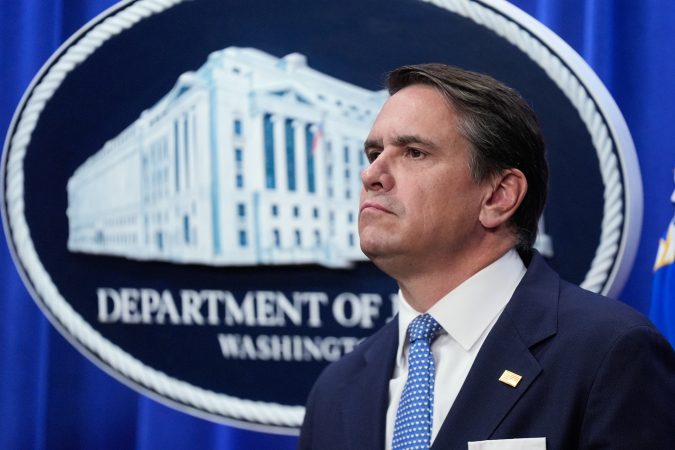
Attorney General Pam Bondi speaks with reporters during a news conference at the Department of Justice in November, as Deputy Attorney General Todd Blanche, listens.Mark Schiefelbein
Blanche played a central role in the proposed $1.8 billion slush fund designed to compensate individuals claiming to be victims of political targeting, including insurrectionists who stormed the U.S. Capitol on Jan. 6, 2021.
Blanche defended the initiative before Congress. He later abandoned the proposal following bipartisan backlash, but refused to put the commitment in writing.
At the same time, Blanche handed Trump and his family broad immunity from audits by the IRS. The unheard-of perk — which a judge ruled Monday was self-dealing — could further embolden them to avoid paying taxes and as much as $100 million in penalties.
The Justice Department under Blanche, an election denier, is also taking steps to weaken election security instead of protecting voting rights.
Blanche was also deeply involved in plotting how to defend against the growing furor in the MAGA base demanding the release of the Jeffrey Epstein files.
Two New York Times reporters detailed how Blanche participated in White House meetings last summer to discuss how to manage the fallout. One meeting was held in the Situation Room — a secure bunker reserved mainly for classified and high-stakes national security, not political scandals involving a pedophile who abused scores of young women and was a close friend of Trump.
Shortly after the strategy session, in a highly unusual move, Blanche met personally with Ghislaine Maxwell, the Epstein associate convicted of sex trafficking. None of the prosecutors involved in her case were included.
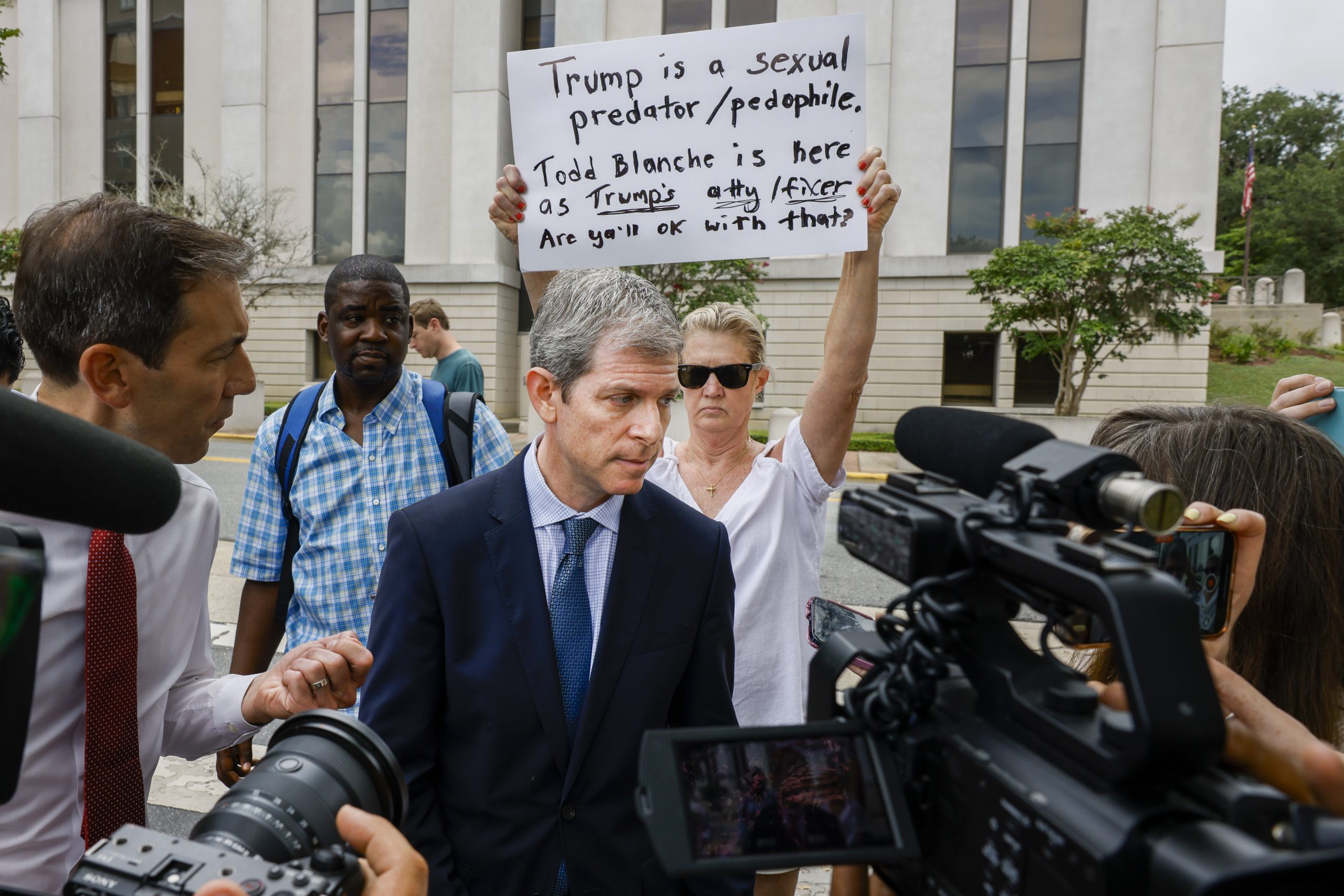
David Oscar Markus, an attorney for Ghislaine Maxwell, talks with the media outside the federal courthouse in Tallahassee, Fla., in July 2025 after Deputy Attorney General Todd Blanche met with Maxwell, the imprisoned former girlfriend of financier and convicted sex offender Jeffrey Epstein.Colin Hackley
After the meeting, Maxwell was transferred to a more relaxed minimum-security federal prison camp that critics said reeked of a quid pro quo of an easier time and a possible pardon in exchange for favorable testimony regarding Trump’s ties to Epstein.
Blanche has also slow-walked the release of the Epstein files. So far, only about half of the more than six million documents have been made public, despite Congress passing a law requiring everything to be made public by Dec. 19, 2025.
Many of the files released have extensive redactions. Even still, Trump’s name appears thousands of times in the files that have been made public. What else is being hidden?
Trump fired Pam Bondi as attorney general in April in large part because she did not move fast enough to indict his political enemies.
He installed Blanche as the acting AG, who quickly showed he got the message.
Blanche secured federal indictments against former FBI Director James Comey and the Southern Poverty Law Center, while opening sham investigations involving the writer E. Jean Carroll, former CIA Director John Brennan, and Cassidy Hutchinson, a former Trump aide.
The indictments and investigations of Trump’s perceived enemies reek of vindictive prosecution and abuse of power. Trump supporters who cheer the investigations should be wary of the dangerous precedent being set, the breakdown in the rule of law, and the demise of the Justice Department’s independence.
Everyone — including 100 former judges — knows Blanche is unfit to be attorney general.
We need just a few honorable senators to stop the madness before it is too late.
One of your recent editorials detailed the U.S. Supreme Court’s political overreach, which only underscores my belief that reforming the court is the most urgent issue of constitutional reform facing the United States. It has long been the most conservative — if not reactionary — branch of the federal government, and also the most unaccountable. Its justices serve life terms with no binding ethics code over their conduct, which has grown increasingly corrupt. Since John Marshall’s obiter dictum in Marbury v. Madison (1803), it has exercised an unquestionable power — conferred on it nowhere in the Constitution — to alter and overturn duly passed legislation. In fact, theirs is a power that, as noted by Thomas Jefferson, would — if exercised — fatally undermine the rule of law. It has done so ever since, giving sanction to a century of slavery and another of Jim Crow, among the many rulings that have over the years impeded the progress of freedom and democracy for all Americans, most recently in the gutting of the Voting Rights Act. Now, following the template of a former Republican operative and Supreme Court justice himself, Lewis Powell, it has achieved a standing right-wing majority that may, if unchecked, endure for decades, and has already, in the current Roberts Court, inflicted great damage on matters ranging from gun laws to environmental protection to campaign financing and election districting. No genuine reform of the many problems that face and divide us can be hoped for without dealing with a Supreme Court that is now at war with the other branches of the state and federal judiciary. Jefferson was right: We have created a monster. It is time to cut the claws it has grown.
Robert Zaller,Bala Cynwyd
Atrocity of ICE
The killing of Lorenzo Salgado Araujo by a U.S. Immigration and Customs Enforcement agent in Houston isn’t just a tragedy — it is a systemic outrage. Coming on the heels of the fatal federal shootings of Renée Good and Alex Pretti in Minneapolis, a terrifying pattern is undeniable: federal immigration enforcement is operating above the law, destroying lives on American soil with zero transparency.
The corruption runs deeper than the pull of a trigger. It has been reported that three other people were in the vehicle with Mr. Salgado Araujo during the incident. Instead of being protected as vital witnesses to a fatal shooting, they are currently being pressured by the government to sign self-deportation orders, according to a civil rights organization. ICE is actively and deliberately attempting to eliminate them to bury the truth.
Polite concern will not stop this. Citizens must aggressively pressure Congress to mandate independent, external criminal investigations into federal use-of-force incidents, ending the corrupt practice of internal self-policing. Federal agencies must be answerable to the public, starting with the mandatory release of unedited body-camera footage. We must force systemic accountability before more blood is shed.
Maria Duca, Philadelphia
Join the conversation: Send letters to letters@inquirer.com. Limit length to 150 words and include home address and day and evening phone number. Letters run in The Inquirer six days a week on the editorial pages and online.