It is infuriating to me to hear the president of the United States continuing to rant about the illegitimacy of our election processes and about how the 2020 election was “rigged,” all without a shred of evidence. He repeated these absurd and divisive claims during his Fourth of July address to the nation, a time when he should be celebrating with — and trying to unite — all Americans. But as he’s shown throughout his entire life, facts are not his forte.
Let me offer this one fact to the Dear Leader crowd: If the election process is so rigged by the evil, democracy-hating Democrats, how did the GOP win the presidency in 2016 and 2024, and majorities in the House and Senate in 2024? This doesn’t sound like Democratic rigged elections that require “saving” to me.
Again, his accusations against his opponents are, in reality, his own confession. It is his voter-suppressing SAVE America Act that will rig elections, in his own words, guaranteeing Republican wins “for 100 years.” Because the incompetent destroyer of the White House knows his party will certainly lose the 2026 midterms, not because of election fraud, but because of his horrific foreign and domestic policies. So in his frightened mind, there is only one way to save the election for his GOP in 2026: make sure it’s rigged.
Steve Cickay,Newtown
Misplaced focus
For more than 50 years, I have been a loyal subscriber to The Inquirer. Throughout that time, I have defended the value of legacy media and The Inquirer, in particular, whenever others criticized it. That long history is why I was so disappointed to pick up the July 6 edition after the Independence Day weekend and find the front-page headline centered on President Donald Trump.
Did you experience the same Fourth of July as the rest of the region? Because what so many Philadelphians were focused on was something entirely different. Across the country, people of every age braved the heat to attend parades, gather with family and friends, swim, picnic, and celebrate America’s 250th birthday. I live in a community of older adults, and many spent the day watching ABC’s extensive coverage of the nationwide celebrations. From small towns to major cities, the focus was on history, community, and the shared joy of marking an extraordinary milestone in our nation’s story.
The beautiful full-color photographs inside the paper captured the spirit of Philadelphia and the celebrations our region shared. That story deserved the front page. Instead, the newspaper elevated a political narrative over the event itself, leaving the impression that one individual defined the holiday. Independence Day belongs to the American people, not to any president.
At a time when trust in journalism is fragile, newspapers have an opportunity to reflect what unites communities as well as what divides them. America 250 was one of those rare occasions that called for a front page celebrating our city, the surrounding region, our history, and our shared civic life.
I believe The Inquirer missed that opportunity, and as a longtime reader and supporter, I found that deeply disappointing.
Marguerite Sexton, Philadelphia
Join the conversation: Send letters to letters@inquirer.com. Limit length to 150 words and include home address and day and evening phone number. Letters run in The Inquirer six days a week on the editorial pages and online.
Happy 250th birthday, America! As we celebrate our republic, we are reminded that one of our nation’s greatest strengths has been embracing change and innovation while building safeguards that protect the people and communities that fuel our economy.
This goes for banking, too. It’s easy to forget, but this nation didn’t always have a stable monetary system. President Andrew Jackson fought the powerful elite to decentralize savings and lending. Even the almighty dollar was once up for debate; it wasn’t until the 1870s that Congress would issue “greenbacks” everyone could count on.
Financial innovation has succeeded because policymakers took the time to ensure new ideas strengthened, not weakened, the foundation of our economy. But innovation should never come at the expense of the families and farmers that depend on community banks, the backbone of America’s financial system.
These institutions put local deposits to work in the communities they serve, providing loans that help them thrive. More than 99% of businesses in Pennsylvania are small businesses, and small farms — those generating under $250,000 in revenue — make up 85% of the 49,000 farms in our state. Agriculture contributes $27.5 billion to Pennsylvania’s gross state product, and farms, like small businesses across the state, depend most on the kind of relationship-driven lending community banks provide.
Unfortunately, state legislation currently being considered in Harrisburg poses a serious threat to local lending and the communities that depend on it.
House Bill 2647 would allow faceless crypto platforms and payment stablecoins (price-stabilized cryptocurrencies) to operate alongside community banks, but without the same Federal Deposit Insurance Corp. (FDIC) insurance requirements, antidiscrimination rules, capital requirements, and other public protections community banks are obligated to maintain.
Beyond weakening consumer protections, the Independent Community Bankers of America estimates yield-bearing stablecoins could pull $1.3 trillion in deposits from community banks nationwide, cutting local lending capacity in Pennsylvania by approximately $35 billion. Every dollar that leaves a community bank is one less dollar available to help a family buy a home, an entrepreneur start a business, or a farmer plant next season’s crops.
If legislation allowing state licensing of payment stablecoin issuers advances without adequate safeguards, it will weaken local lending and undermine Pennsylvania’s economy.
That is why the current stablecoin debate deserves careful attention.
Community banks support responsible innovation. As the president of the Pennsylvania Association of Community Bankers, I see the cohort of community banks actively exploring new technologies and recognizing that digital assets will play a vital role in the future of finance. But stablecoins should function as a payment mechanism — not as interest-bearing investment products competing directly with federally insured bank deposits.
Small farms — those generating under $250,000 in revenue — make up 85% of the 49,000 farms in Pennsylvania. Those farms rely on the personalized lending community banks provide, writes Kevin Shivers. William Thomas Cain / For The Inquirer
Unfortunately, as currently drafted, significant loopholes remain that encourage unfair competition and ignore important protections consumers deserve and have come to expect.
Community banks have never feared competition. We have welcomed it for more than 160 years. What we are asking for is a level playing field — one that encourages innovation without sacrificing the proven financial model that has financed America’s hometowns for generations.
Lawmakers should slow the march toward stablecoins long enough to ensure innovation strengthens, not weakens, the community banking system that finances Main Street and homeownership in America.
As we celebrate our nation’s 250th birthday, we should remember that America’s greatest achievements haven’t resulted from choosing between innovation and stability, but from insisting on both.
We know this because the president commits many of his illegal acts in broad daylight.
For the past year, Trump has revved up his election-tampering efforts by throwing everything at the proverbial wall.
He called for nationalizing elections, pushed to redraw election maps, slashed funding for election security, moved to restrict voting, targeted election workers, rewarded election deniers, and continued to repeat baseless claims that the 2020 presidential election was fixed.
Trump even mused about canceling the November midterms. The White House said it was a joke, but his track record indicates anything is possible.
Trump has ignored court orders, trampled presidential norms, and even refused to uphold the Constitution. He has cheated at everything, including the draft, golf, taxes, and marriage, so why not elections?
If the Great Experiment in self-government that the founders began 250 years ago is to continue, we need free and fair elections. But Trump is working feverishly to tilt the playing field to ensure Republicans win.
Last summer, he pushed GOP lawmakers in Texas to take the rare step of redrawing congressional maps in the middle of the decade to add more Republican seats.
Lawmakers in other red states, including Florida, Ohio, and Missouri, followed Trump’s blatant call for gerrymandering. Some blue states, like California, moved to do the same to offset the Republican scheme, sparking an undemocratic arms race.
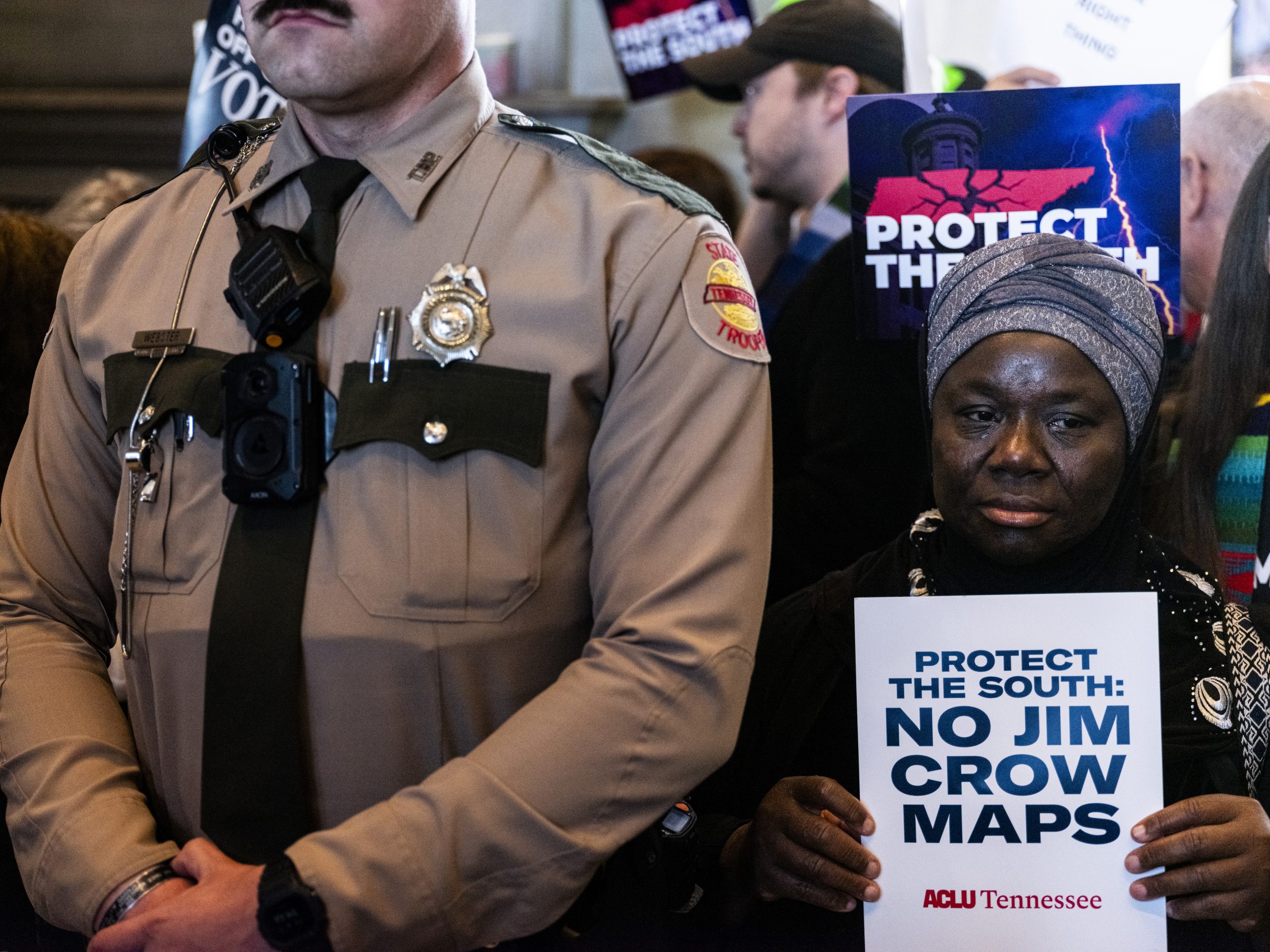
The U.S. Supreme Court joined in by further obliterating the Voting Rights Act that previously provided for majority-minority districts. With that safeguard dismantled, Tennessee, Louisiana, and Alabama carved up Black majority districts to eliminate Democratic seats.
Zulfat Suara (right) protests a new congressional map next to a Tennessee state trooper at the state Capitol in Nashville in May.BRAD J. VEST
Polls indicate deep dissatisfaction with Trump and Republicans, who control the House and Senate. He fears hearings and investigations into his corruption, incompetence, and self-dealing if Democrats take control of either chamber.
“If we don’t win the midterms … I’ll get impeached,” Trump said earlier this year.
Hence, the all-out attack on the election system.
Trump called for the federal government to seize control of elections — even though the Constitution put the states in charge.
He demanded the end of mail-in voting — even though presidents do not have the power to change voting laws.
Trump signed an executive order that would require voters to show proof of citizenship and that all mail-in ballots be received by the time polls closed — moves that were blocked last month by a federal judge, but the president remains relentless.
This week, Trump’s Justice Department threatened criminal charges against Pennsylvania’s top election officials if they let noncitizens vote. Other states received a similar warning, even though the issue is exceedingly rare and already illegal.
But Trump’s baseless rhetoric helps to sow distrust in elections — something he has done throughout his tumultuous decade in politics.
Trump has demonstrated he will cross any line. As president, he incited an insurrection as part of a broad conspiracy to overturn the 2020 presidential results — an act of treachery that has earned its place in infamy.
Trump was criminally indicted for his monthslong effort to interfere with the peaceful transfer of power, but the charges were dropped after he returned to the White House and assumed control of the U.S. Department of Justice.
To this day, Trump refuses to admit he lost the 2020 presidential race, despite producing no credible evidence of widespread voter fraud and abusing the legal system by mounting 60 failed election cases before state and federal judges.
In fact, Trump is still seeking to overturn the 2020 results.
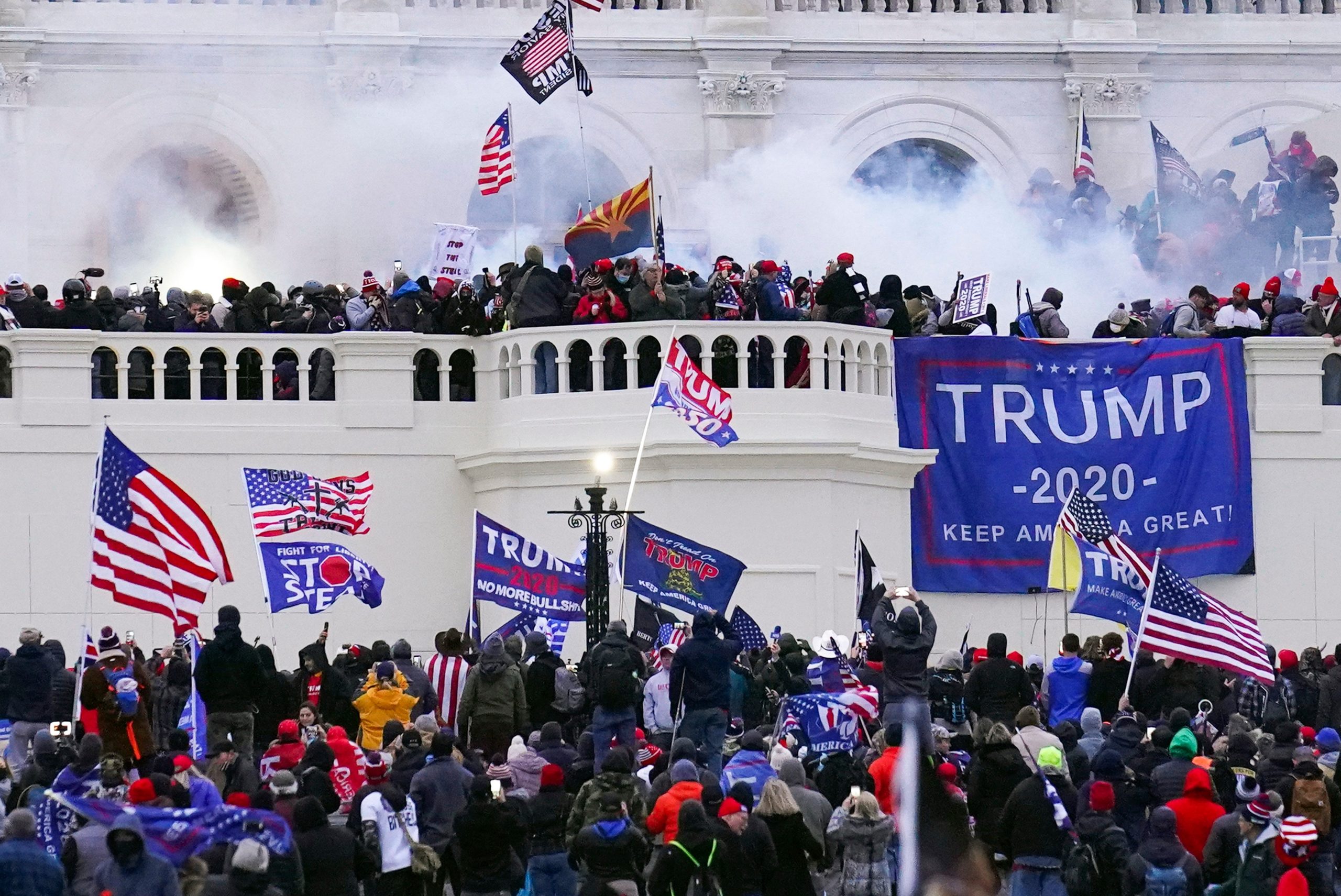
Rioters storm the West Front of the U.S. Capitol Jan. 6, 2021, in Washington.John Minchillo
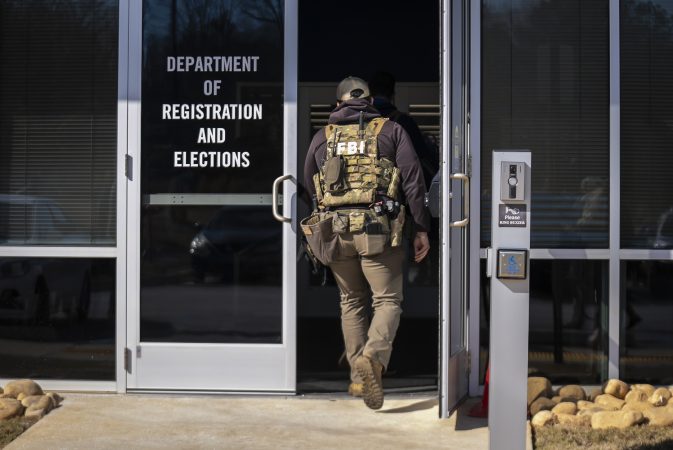
In February, he ordered Tulsi Gabbard, the then-director of national intelligence, to attend an FBI search of election facilities in Georgia, where Trump lost in 2020.
The FBI recently assigned more than 200 agents to search for election fraud in Georgia, six years after exhaustive state and federal investigations found none.
During a ballyhooed visit to Arizona to discuss election security, former Homeland Security Secretary Kristi Noem couldn’t cite a single case of election fraud.
But a Republican-led Senate Intelligence Committee investigation did find top Trump campaign officials had extensive contacts with Russian operatives during the 2016 election.
For all of Trump’s bluster about rigged elections, he remains the poster child for election interference. Now, he is willing to undermine national security to get the election results he wants. He demanded states change election rules, such as requiring voter identification, or risk losing federal terrorism prevention funds.
Trump also put his political gain above the public’s pain. He refused to sign a landmark bipartisan bill designed to lower housing costs until Congress passed legislation that would require proof of citizenship for all voters.
Trump has taken other steps recently to weaken election security.
One directive disbanded an FBI task force created to combat foreign influence in U.S. elections, and another crippled the Cybersecurity and Infrastructure Security Agency that Trump created.
The moves come as Russia, China, and Iran ramp up efforts to meddle in U.S. elections, just as they did during Trump’s victories in 2016 and 2024.
Before Jan. 6, 2021, it was hard to imagine a sitting president inciting a mob to storm the U.S. Capitol, attack police, defecate in offices, and look to hang the vice president.
So, how much further will Trump go to get his desired election results?
This week’s Shackamaxon covers property tax assessments, state budget negotiations, and Pennsylvania’s gambling dependence.
Assessment anger
Philadelphia property owners have by now received one of the least anticipated pieces of snail mail of the year: our assessment notifications. My own home’s value went up by around $30,000, meaning my family will have to fork over another $400 a year to the city and school district.
Ever since Mayor Michael A. Nutter instituted the Actual Value Initiative in 2013, property taxes in Philadelphia have become an increasingly contentious issue. In the past, valuations stuck around for years — whether or not they matched the overall economic climate.
This meant some property owners were stuck paying more than they should, while others were getting a significant break. By switching to AVI, Nutter hoped to create a system that would be fairer. It also ensured city coffers would benefit from investments in neighborhoods.
This being Philadelphia, however, nothing is so simple.
While many of the underassessed properties were owned by people of significant means, like landlords or vacant-land speculators, the city also has one of the largest concentrations of low-income homeowners in the country. While no one wants to pay an additional $400 a year, this kind of increase is much harder to manage for the nearly 100,000 Philadelphia homeowners who earn less than $50,000.
That is why City Council often feels pressure to provide relief. Sometimes, however, the conversation on this topic would lead one to believe the city currently does nothing for longtime, low-income residents who are struggling with higher bills. Fortunately, this is not the case.
The biggest program on offer is the Homestead Exemption, which allows resident homeowners to deduct roughly $1,400 from their property tax bill. For those whose home is worth less than $200,000, they are getting more than half of their bill eliminated. There’s also the Longtime Owner Occupants Program and the senior tax freeze.
City Hall is also helping homeowners keep up with the costs of repairs. Mayor Cherelle L. Parker’s H.O.M.E. Initiative offers $10,000 to help fix problems like leaky roofs, and the Adaptive Modifications Program ensures residents can age in place or adapt to unexpected physical limitations.
Between those programs, the city is spending hundreds of millions of dollars each year on protecting homeowners. That’s more than the combined receipts for the proposed rideshare tax, the soda tax, and the liquor-by-the-drink tax. Renters, who tend to be poorer and more cost-burdened than homeowners, get comparably little support from City Hall.
When City Council returns this fall and considers how to react to rising assessments, the conversation must reflect how much Philadelphia already does to help struggling homeowners.
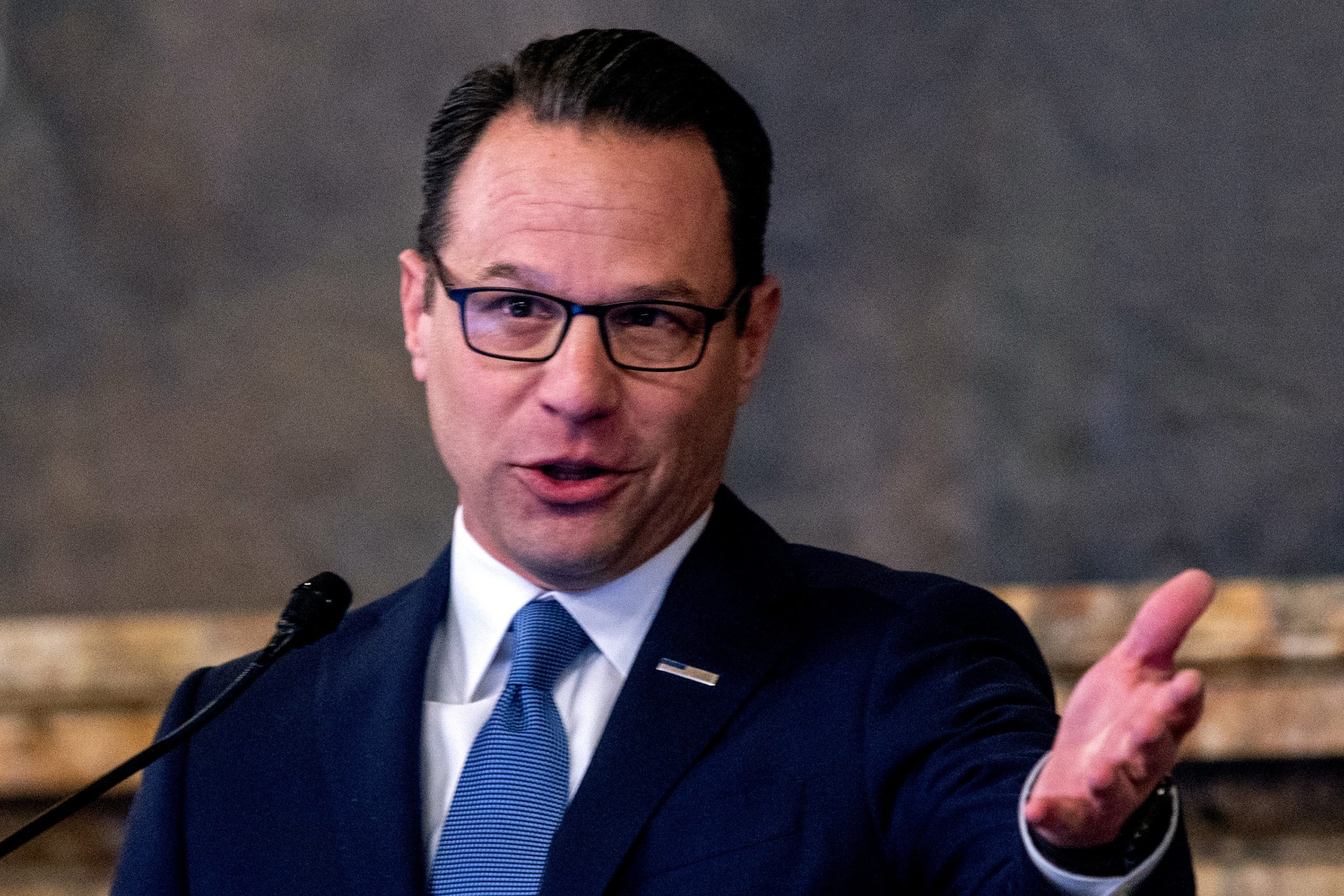
Gov. Josh Shapiro delivers his third budget address to a joint session of the state House and Senate at the state Capitol in 2025.Tom Gralish / Staff Photographer
Budget funding
Even though state senators have been called back for budget votes, there’s still no official word on what will be in the document.
Last year, the commonwealth spent just over $50 billion, while bringing in just under $49 billion in revenue. This meant using money from the state’s reserves — although the Rainy Day Fund, which has around $8 billion, was not touched. Instead, state leaders cannibalized other sources, like the Public Transportation Trust Fund, to pay for services without raising taxes.
The plan Gov. Josh Shapiro unveiled in February proposed around $53 billion in spending. Absent new sources of revenue, this would require tapping into the Rainy Day Fund. It remains to be seen whether Harrisburg will finally act on so-called games of skill. Taxing the machines could bring in around $1 billion per year, which would significantly close the gap between projected revenue and the governor’s proposal.
Still, no one expects the Republican-controlled Senate to approve the full proposal. In the past, they’ve objected to any increase in funding for public transit agencies, for which Shapiro has proposed an additional $300 million. There’s also another $565 million in funding for schools, meant to address a structural imbalance that the courts have ordered rectified. Given the emphasis from Mayor Parker, Council President Kenyatta Johnson, and the city’s legislative delegation on education funding, it’d be a surprise if the final deal did not include a significant increase in support for schools.
Philadelphia Phillies first baseman and star hitter Bryce Harper appears in a custom-made video for the betting site FanDual.Obtained by The Inquirer
Aiding in betting
The biggest reason not to tax skill games is that Pennsylvania is already too dependent on gambling to pay the bills.
Between brick-and-mortar casinos and online betting outlets, the commonwealth generated more than $270 million in revenue in just May of this year. The sports betting platform FanDuel even subsidized SEPTA service for the Eagles’ playoff run. While this money does help avoid unpopular service cuts and tax increases, it comes with its own costs. Research says that problem gambling is on the rise, with the ease of betting on your phone a key component.
While gambling has long been a part of human society, the legal online gambling platforms that dominate the scene today are unprecedented. Inquirer reporter David Gambacorta managed to locate one local man who wagered $18.5 million on sports. Along the way, he was offered multiple perks to keep him in the game. Casinos have long sought to keep big spenders happy through meal vouchers, free drinks, and comped accommodations. FanDuel went a step further: It secured a personalized video from Phillies star Bryce Harper.
Part of the justification for legalizing gambling was to clean things up. Legitimate businesses don’t break kneecaps or organize “bust outs.” They had to operate with the kind of regulatory guardrails that simply didn’t apply to illegal bookies who dominated the trade not so long ago.
Stories like these complicate that logic. The more lawmakers in the Keystone State rely on gambling to pay our bills, the more complicit we are in the industry’s misdeeds.
One hundred and twenty years ago Sunday, Alfred Dreyfus, a French army captain, was exonerated of his wrongful conviction on espionage charges— bringing to an end an explosive and tortuous process marked by antisemitism, deceit, and the complicity of France’s military in aiding one of the first great miscarriages of justice to play out in the modern media age.
Dreyfus was arrested in December 1894 after being accused of passing military secrets to the German Embassy in Paris. He was court-martialed, convicted, and sentenced to life imprisonment on France’s notorious Devil’s Island.
Historians now agree that a major factor in Dreyfus’ conviction was antisemitism. Dreyfus was a Jew from the Alsace region of France at a time when Jewish officers were rare in the army. They were subject to the same kinds of prejudice and discrimination faced in other parts of French society. A case was trumped up against him by the French military establishment, looking for a convenient scapegoat.
Following the trial, a French officer, Lt. Col. Georges Picquart, conducted further investigations that indicated that it was not Dreyfus, but another French officer, Maj. Ferdinand Walsin Esterhazy, who was responsible for passing the secrets to the Germans.
Astonishingly, in 1899, Dreyfus was again court-martialed and found guilty. Though he subsequently received a pardon from the president, he was not fully exonerated by France’s highest civilian appeals court until July 12, 1906.
There were many examples of great drama and heroism during what came to be known as the Dreyfus affair.
In 1898, the French author Émile Zola published an open letter to the French president in support of Dreyfus, headlined “J’accuse.” The power of Zola’s piece and its wide dissemination launched a movement in defense of Dreyfus but also reinforced divides: Dreyfusards and anti-Dreyfusards, liberal/secularists vs. conservatives, left vs. right.
A scene from Roman Polanski’s 2019 historical drama about the Dreyfus affair, “J’accuse” (“An Officer and a Spy”).Venice International Film Fest /
That the story spread so widely is even more remarkable considering that the key events in the case took place long before the emergence of electronic media — the widespread use of radios wouldn’t take hold for another 20 years or so after Dreyfus was cleared.
Nevertheless, the Dreyfus affair became a watershed moment in the media’s role in high-profile trialsanda yardstick by which subsequent miscarriages of justice were measured.
In the United States, the 1925 Scopes trial became a cause célèbre with a reach thatapproximated the Dreyfus affair, despite the very different facts surrounding that case.
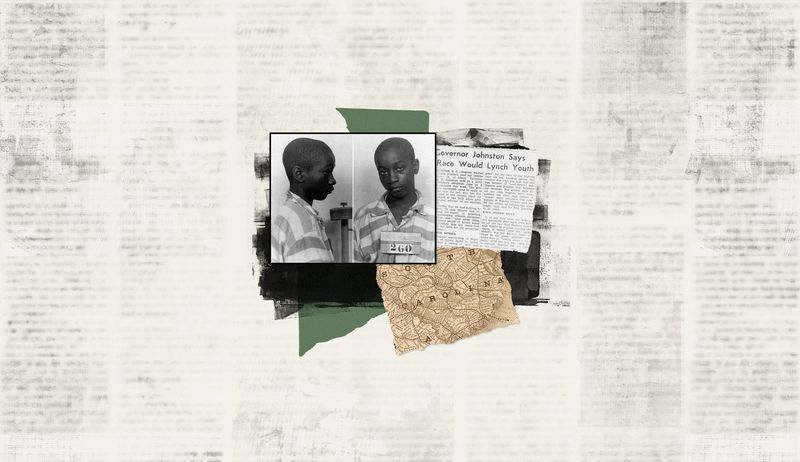
In 1944, South Carolina executed 14-year-old George Stinney Jr. after a 10-minute trial. Decades later, a judge declared his conviction unjust. Pictured are George Stinney Jr. in an undated booking photo and an article from Atlanta Daily World on June 23, 1944.Illustration: Andrea Brunty, USA
The execution of George Stinney Jr. — a 14-year-old Black boy who was wrongfully convicted of killing two white girls in South Carolina in 1944 — is one of the many controversial death penalty convictions that have also betrayed the principles of justice.
What distinguishes the Dreyfus affair is not just the case itself, but its aftermath. The exoneration of Dreyfus ultimately became an indictment of a political culture in France that was defined by secrecy, prejudice, institutional corruption, and arrogance.
Sadly, none of that is unfamiliar to us — so what have we learned in the past 120 years?
What have we learned? A dozen decades after Alfred Dreyfus was finally cleared — and at a time when antisemitic hate crimes continue to rise — that is a crucial question we must continue to ask ourselves.
Paul McElhinney is a writer and journalist living in Wexford, Ireland. He has contributed to many Irish, British, and American journals.
Can we please not fixate on the direct economic benefits that the FIFA World Cup is bringing to Philadelphia? The more important and enduring impact is on the city’s image and reputation. We have answered all questions and indisputably proven that we are more than capable of handling a global event like the World Cup. And more importantly, we are showing every visitor who comes to Philadelphia that we are indeed a world-class city. I am lucky enough to serve as a FIFA volunteer in Philadelphia, and my fellow volunteers and I can personally attest to the overwhelmingly positive reaction we are receiving from these visitors. They love the city, the historical attractions, the food and restaurants, and the overall positive and friendly vibe they are soaking in from our City of Brotherly Love and Sisterly Affection. They all talk about how they will spread the word when they go back home. Having spent time at Love Park, the Liberty Bell, Independence Hall, the Art Museum, the Rocky steps, and Fanfest, it’s clear Philadelphia is the biggest winner this summer.
Scott Applebaum, Philadelphia
. . .
I live in Old City, which is a tourist magnet with several major hotels. Thus, during the past month, I had the good fortune to share our local parks, pubs, and places — both famous and obscure — with visitors from around the world. Tens of thousands of folks came here to attend World Cup games and ceremonies. I encountered and interacted with individuals, families, and travel groups from Brazil, Croatia, Ecuador, France, and Ghana. These sightseers were almost universally celebratory, colorful, and comradely. I felt proud of Philadelphia’s warm and welcoming embrace of the international community. I am very thankful for the opportunity to have been a part of a planetary fiesta. Philly’s hosting of the World Cup reminded me how diversity enhances our lives and how building walls and enacting policies to keep the world out diminish our nation.
Terry Rumsey,Philadelphia
. . .
Working in economic development for Philadelphia, I learned what makes people want to visit our city, live in it, and invest here.
Fifteen million dollars is a significant amount to host a Fourth of July concert, yes. But the moment that concert marks is just as important: America turning 250 in the city where it was born — at the same time that we’re hosting the World Cup and gearing up for the MLB All-Star Game. The world’s eyes are on Philly — as they should be — and we are looking good. A concert on our magnificent Parkway, open to anyone who walks in, is not a waste. It fills hotel rooms, restaurants, and streets, and it gives the whole city something to share.
Music and art bring people together safely and joyfully, and they show what kind of city we are: one that opens its arms to every person of every background.
Mayor Cherelle L. Parker is simply leading Philly as the world-class city it already is.
Alba Martínez, former director, commerce, City of Philadelphia
Join the conversation: Send letters to letters@inquirer.com. Limit length to 150 words and include home address and day and evening phone number. Letters run in The Inquirer six days a week on the editorial pages and online.
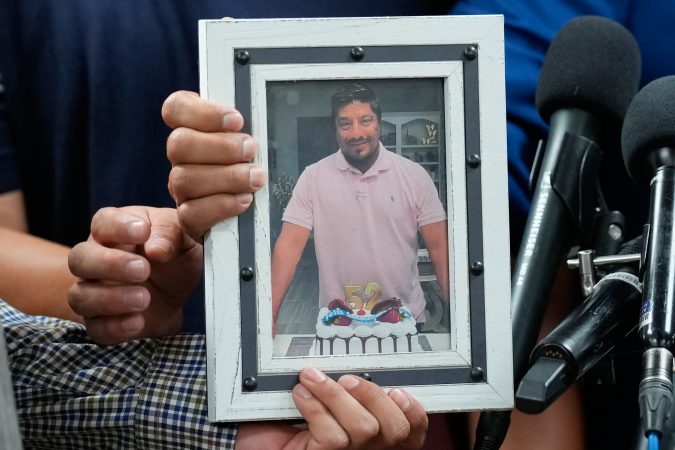
Lorenzo Salgado Araujo woke up at 5 a.m. Tuesday and started his day like almost every other one for the last 35 years since he came to Houston from Mexico and built his own American dream brick by brick — sending his three sons to top universities on the foundation he’d constructed through years of backbreaking labor.
His wife also got up to make him a hearty meal before he put on his work boots, fired up his van, and picked up three coworkers in Houston’s heavily Latino East End to build new homes on the city’s outskirts. But it proved to be Salgado’s last drive.
Just a short time later, the 52-year-old Salgado was lying face down outside of his van on a city sidewalk, surrounded by agents from U.S. Immigration and Customs Enforcement as blood poured from a bullet wound on the right side of his stomach. He was recorded screaming in pain: “Help me! They shot me! … ¡Me están matando!”
Translation: “They are killing me!”
He died a short time later in a nearby hospital. ICE said the fatal shooting occurred after officers tried to arrest Salgado in what it called “a targeted enforcement operation” — even though Salgado apparently had no criminal record and for more than a year had been steadily making progress toward securinga work permit that would resolve his immigration status.
“We dotted every ‘i,’ crossed every ‘t,’ filled every document, attended every appointment,” his tearful son, 29-year-old teacher Ronaldo Salgado, said in a news conference on Wednesday. Afterward, the younger Salgado told the Bulwark: “I love our dad; he worked hard. He always told us that we needed to do well in school so we don’t end up like him in the sun.”
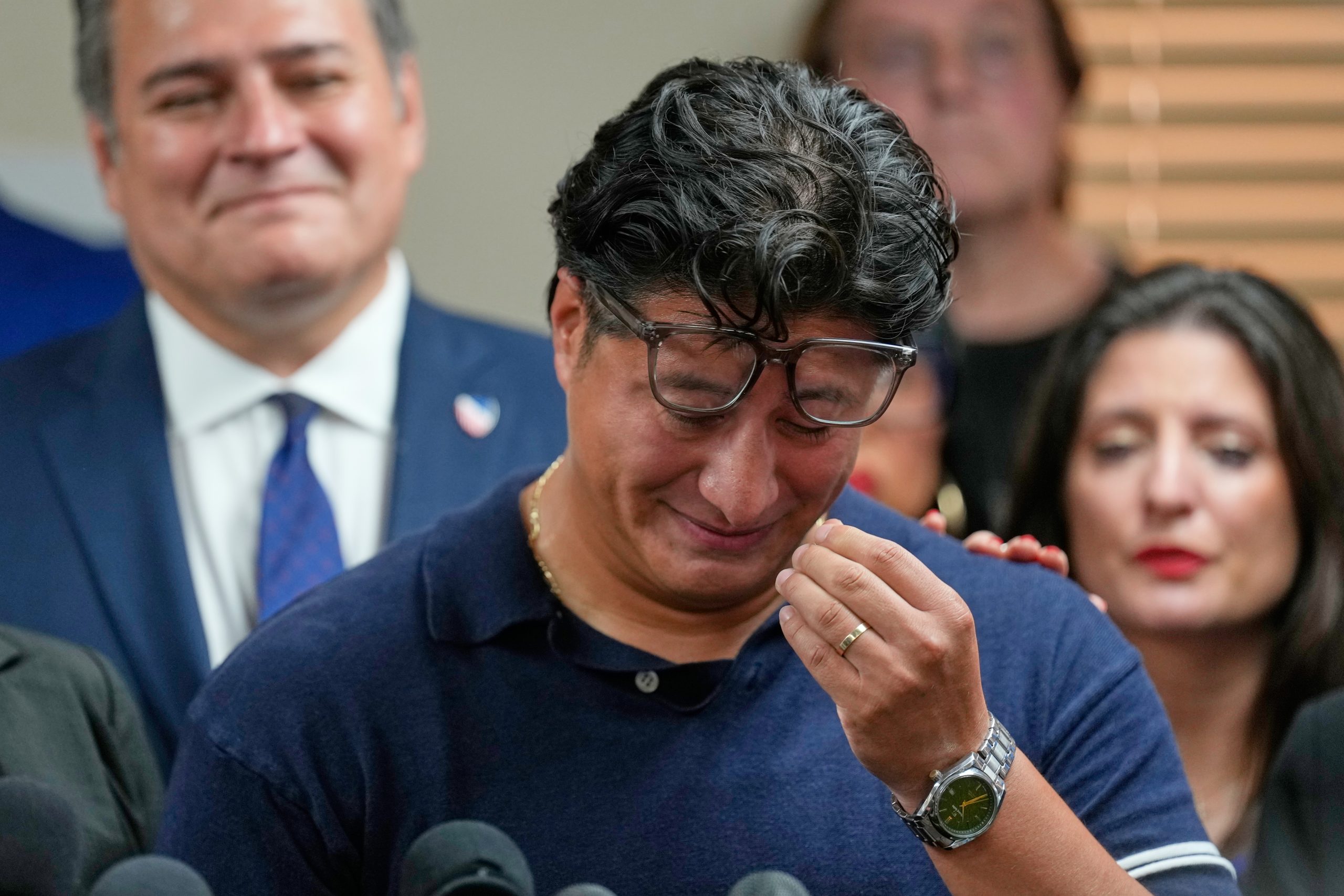
Ronaldo Salgado, son of Lorenzo Salgado Araujo, wipes away tears while speaking during a news conference Wednesday in Houston. David J. Phillip
The killing of Salgado — family man, essential worker, and American dreamer who was doing everything the right way after joining the 1990s mass migration of undocumented Mexicans — is a crime against humanity that makes anyone who still has a functioning moral compass want to scream in outrage.
Still, what happened after Salgado was gunned down is deeply troubling in a different way. America seemed to mostly shrug at a killing no less senseless than this winter’s Minneapolis ICE fatal shootings of Renee Good and Alex Pretti, let alone other law enforcement murders like George Floyd in 2020, which sparked days of nationwide protest.
The implosion of now ex-Maine Democratic Senate candidate Graham Platner or Donald Trump’s inane prattle at a NATO summit took up most of the hour on cable-TV news, with reporting on yet another ICE killing squeezed in at the end. A fascist regime cutting down our law-abiding neighbors in the streets is becoming background noise.
Just how they want it.
To be sure, there are differences between what happened Tuesday in Texas and the Minneapolis killings that grabbed so much attention six months ago. A large activist community in the Twin Cities was out in the streets at the time of the Good and Pretti shootings, with whistles and cell phones, producing a flood of video evidence that exposed ICE’s lies and inspired massive demonstrations.
In contrast, Salgado was killed in a low-income neighborhood, and while there is video of the wounded laborer on the ground, there’s not yet been definitive footage revealing how or why he was shot. That doesn’t alleviate the nagging concern that the media and some corners of the public and the body politic care more when the victims are white U.S. citizens — which, if true, is morally unconscionable.
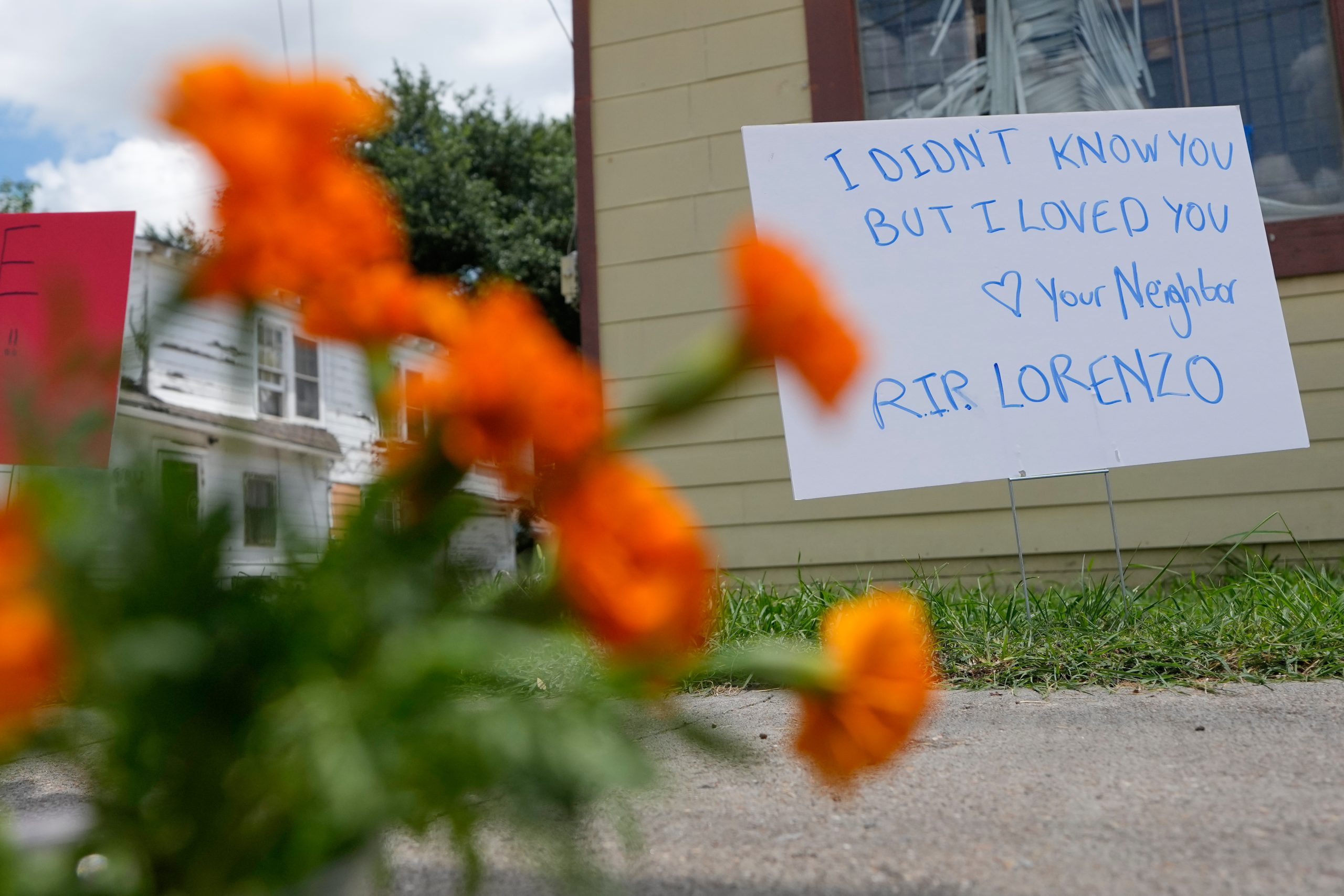
A makeshift memorial for Lorenzo Salgado Araujo, who was shot and killed by an ICE officer Tuesday, is shown Wednesday in Houston. David J. Phillip
Americans should be alarmed at the bigger picture that’s slowly unfolding before us. After briefly pressing the pause button in the furor over the Good and Pretti killings — pulling back from its federal assault on Minnesota, firing the flamboyant and infuriating Greg Bovino and Kristi Noem, and drastically scaling back its plan for warehouse concentration camps — ICE is back, and more dangerous than ever.
After an era of waving a red flag before an activated, engaged, and angry citizenry it didn’t see coming, by naming operations like the “Catahoula Crunch” or “Charlotte’s Web,” and with Bovino mugging for the TV cameras, ICE has resumed working toward its inhumane target of one million deportations per year, but with a much lower profile.
There are thousands of new immigration agents on the streets, fueled by Congress giving two massive funding infusions totaling about $240 billion, and with Homeland Security and ICE under new management, they are hoping to terrorize immigrant communities without generating headlines or protests. “ICE is making record arrests right now,” Trump’s immigration czar, Tom Homan, told Fox News. “We turned the heat up …”
The New York Times reported last week that with no press releases or hoopla, daily immigration arrests had doubled over a five-day period to a total of roughly 10,000, or 2,000 per day, with immigrants arrested during required government check-ins, but also during traffic stops like the one in which Salgado was killed.
This is a human rights nightmare in the making. The stepped-up arrests are all but certain to lead to more dangerous and potentially fatal encounters like the one that occurred on Houston’s Canal Street, but the other impacts are equally pernicious.
Fear levels in big-city neighborhoods with large immigrant communities are spiking yet again — keeping countless kids home from school and essential workers off the job, crimping an already strained economy. The Trump regime’s squalid gulag archipelago of immigration detention centers — whose crisis of overcrowding had eased slightly with the spring enforcement slowdown — is seeing a surge again, and that will also lead to catastrophe.
Detention deaths are soaring to record levels — more than 50 since Trump returned to office in January 2025. We are learning troubling details, for example, about the March death of an Afghan national who came to the United States after working with U.S. Special Forces and who died after just one day in ICE custody. Relatives of Mohammad Nazeer Paktiawal, 41, said he was not allowed to bring his asthma inhaler into detention; officials say he died of an “adverse drug reaction” that brought on an attack.
In Houston, there’s no evidence to support ICE’s initial claim that Salgado was resisting arrest, but — given what we are learning about the horrors of detention — it’s not surprising that immigrants facing an arrest are terrified at what might happen next. Meanwhile, ICE and other agencies are going to extreme lengths to avoid accountability.
In California, ICE — overflowing with our tax dollars — is spending an astronomical $1.5 billion to buy two large privately run immigration prisons from the corporation CoreCivic, for the purpose of preventing state and local inspectors from monitoring what happens there. WIRED recently reported that ICE’s internal watchdog agency is focusing its attention not on agent misconduct but on tracking down outside critics.
What are they trying to hide?
In the killing of Salgado, we don’t know the answer — yet. ICE claims Salgado, whom it dehumanized as an “illegal alien,” “weaponized his vehicle” and tried to run over the agent who was arresting him, and that the agent then fired the fatal bullet.
We don’t know if there’s any truth here. But what we do know is that in every similar situation during the Trump regime — including Good and Pretti and others like Chicago nonfatal shooting victim Marimar Martinez — the initial ICE version of what happened proved to be a lie, and often a brazen one. It takes a willing moral blindness to automatically accept ICE’s story about what happened to Salgado.
And yet, we are seeing that not only from the local FBI — which is not investigating the officer’s action, but the alleged crime of resisting arrest — but also from Houston Mayor John Whitmire, who said he trusts the federal government to do a thorough investigation, as if he’d been living in a cave these last 15 months.
In their anguished news conference on Wednesday, family members and local Democratic officials called for the release of any ICE body-cam footage and an independent investigation into what really went down in Houston’s Magnolia Park section.
They need our help, though. ICE’s new summer assault on immigrant communities, and its ability to get away with its many crimes, is counting on an exhausted or apathetic American public to not demand action as so many of us did with Pretti or Good or Floyd.
Please say his name — Lorenzo Salgado Araujo — and take to the streets and demand justice. His death is just as deserving of our time and our moral outrage, if not more so.
“This is the exact spot that Lorenzo took his final breath,” Cesar Espinosa, executive director of the immigrant rights group FIEL Houston, told the protest marchers. “And in the spirit of solidarity, I don’t know about you, but I say, if they come for one of us, they come for all of us.”
Most Americans have never heard of it. That needs to change.
The rule has several alarming impacts. For instance, it would allow political appointees to override scientific peer review in grant decisions, upending the meritocratic, rigorous system that has pushed American science forward since World War II.
Perhaps most critically, it would permit the government to terminate any active federal grant at any time, for any reason — including the vague, undefined justification that a study is no longer in the “national interest.” Furthermore, it would effectively ban federal funding for research into health disparities across racial populations, with a stated exception so narrow it is meaningless in practice.
Let me put that in perspective with specific examples. Over seven million Americans currently live with Alzheimer’s disease, and that number will nearly double by 2050. The research that underpins our understanding of this disease — including discovery of biomarkers, assembly of databases, and clinical trial frameworks — took decades of sustained, longitudinal federal investment to build. The Alzheimer’s Disease Neuroimaging Initiative, launched in 2004, required over 20 years of continuous funding and investment prior to producing any comprehensive datasets that now drive clinical trials.
Under the proposed rule, however, a political appointee or administrator with no scientific background could have decided at any point in that 20-year window that the study was no longer in the “national interest” and ended the study. The harm this vague, sweeping rule would do is not hypothetical. Much biomedical and clinical research, including in the field of neurodegenerative diseases, is longitudinal, and progress is not always immediately visible.
“We asked our mentors, ‘Is this something we should do?’ They all said, ‘No. It’s a swamp, and you’ll ruin your careers because so little is known.’ What they saw as a swamp, we saw as a huge challenge and opportunity that has led to an engaging career.”
Trojanowski’s partner in that research was Virginia Lee, whose work on tauopathies I have the privilege of contributing to today.
Their “swamp” turned out to be an oasis of discovery that likely would’ve remained untouched if these two experts in their field had not trusted in themselves and decades of training. If even their mentors — senior scientists in their own right — had dismissed these field-defining ideas, imagine the damage administrators and political appointees can inflict on similar revolutionary discoveries simply because they deem them “not in the national interest.”
For example, research has found that the relationship between the APOE4 gene (a major genetic risk factor for Alzheimer’s disease) and brain pathology inherently differs across racial groups. More specifically, some studies have found different patterns of tau protein markers in Black and Hispanic populations compared with the predominantly white cohorts that comprised much of the foundational, preexisting literature.
As currently written, this provision reaches much further than OMB’s framing of eliminating unlawful DEI policies suggests, and instead directly threatens legitimate biomedical research.
From a student perspective, I also want to acknowledge something that institutional press releases may not: This rule falls hardest on the people least able to absorb the blow.
If a principal investigator or faculty member loses a grant, it is by all means a loss, but they are more likely to have tenure, salary, or institutional support. If a graduate or doctoral student loses a grant mid-project, they potentially lose their publication, graduation timeline, and may face an altered career trajectory. And yet, trainees are never once mentioned in this proposal.
Doctoral students at the Delaware Center for Cognitive Aging study the impact of cardiovascular function on brain tissue integrity and cognitive aging.Kathy F. Atkinson/University of Delaware
So what can those of us who want to ensure we have the tools to effectively treat future pandemics and that our children benefit from world-class health research do?
Congress has little practical recourse here. The Congressional Review Act exists, but in the current political climate, a veto-proof majority to overturn an OMB rule is a fantasy.
If OMB does not meaningfully engage with a substantive objection raised during the comment period, that provides grounds to vacate the rule. Your comment doesn’t just go into a void. It becomes part of the legal ammunition.
Physicians and healthcare workers: Share the stories of your patients who benefited from federally funded studies. Scientists and students: Explain your research and the progress made from it. Attorneys and legal scholars: Challenge the principles and wording in this sweeping, overarching proposal.
To those whose careers do not directly involve science, this is your fight, too.
Comment on your medical condition that’s been treated. Chances are that treatment was only possible due to federally funded basic science. And if you or a loved one suffers from a disease or illness for which we do not yet have a cure, it is all the more important that you speak up with us.
Stable and comprehensive funding allows scientists to develop treatments for both rare illnesses and widespread ones like neurodegenerative diseases.
This is also a fight for our underrepresented racial and ethnic populations, the LGBTQ+ community, and the marginalized in our city. The decision to fund research on medical disparities is a decision to invest in the people who need it most.
This legacy is now in danger. If we want to see another 250 years of great American science, now is the time to act.
Ayaan Shah is a sophomore at the University of Pennsylvania studying neuroscience and an undergraduate research assistant at Penn’s Center for Neurodegenerative Disease Research.
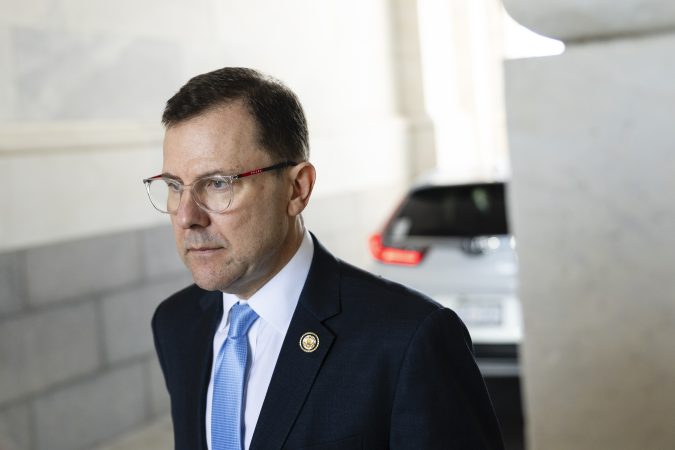
One of the most perplexing sagas in recent political history has ended: U.S. Rep. Tom Kean Jr. has returned to work after being away for almost four months without notice or clear explanation.
In a June 30 speech on the House floor, the North Jersey Republican revealed he had been in treatment for depression.
“When people hear the word depression, many think it simply means feeling sad,” Kean said. “But depression is so much more than that. It is physical. It is emotional. Until you experience it yourself, it is difficult to fully understand how powerful this illness can be.”
There is no denying that depression is a serious mental health issue, one that retains a public stigma even as almost 48 million Americans struggle with the disorder. Kean, a self-described “private person by nature,” deserves praise for revealing his diagnosis.
But private or not, Keane is a public servant who owes voters a fuller explanation. So far, he has declined to answer any further questions.
At the very least, the congressman’s return put an end to weeks of rampant speculation as to his whereabouts. None of which was helped by a lack of transparency by Kean’s team, which, after stating in April that he was dealing with a “personal health matter,” deflected all questions — sometimes to bizarrely cryptic effect. At one point, a staffer told reporters that “there are no cameras where Tom is.”
There may have been no cameras, but during his time away, Kean managed to maintain his reelection campaign and appears to have traded stock. He was also getting paid.
Unlike most Americans, elected officials are not required to show up to get a paycheck. The Constitution does not detail expectations for attendance or penalties for absenteeism. This means that deciding how much time off is appropriate, and why, is left mainly up to the voters.
Perhaps Kean’s constituents in the 7th Congressional District are satisfied with the explanation for his long absence. While his inability to vote may have hampered his fellow Republicans’ ability to pass legislation, the constituent service functions performed by his office seem to have gone unaffected.
Still, Kean has yet to make a full public accounting for what happened, which should include answering direct questions. Given his public responsibilities — and that he is up for reelection in November — constituents have a right to understand what happened and what they can expect going forward.
A few questions Kean should be prepared to address include:
What symptoms led him to head to the hospital in the first place?
Roughly 25% of Americans with mental illness are not currently receiving care due to costs. Was his treatment covered by his congressional health insurance policy?
What guardrails have he and his staff established to ensure he seeks help more quickly in the future?
Given the widespread curiosity and speculation around this incident, are there things he would do differently when viewed in hindsight?
His diagnosis seems to have changed him. What changes can his constituents now expect to see? In the past, Kean was notorious for dodging interactions with constituents, holding town halls only very infrequently, for example. Will this change?
He has voted against federal policies that would expand healthcare coverage. Has his experience changed his perspective?
Will he hold a town hall?
This board sent these queries to the congressman earlier this week. As of Wednesday afternoon, he has yet to answer.
Donald Trump has turned a questionable red card call in a soccer game into a red herring in international sports — just by using his position, as a humble fan, to give the FIFA president a quick call. He is laughing at the whole world now, not just us Americans, at the simplicity of shocking heads around the world. His shamelessness is costly, and we Americans pay dearly for it. In our domestic politics, GOP politicians no longer speak of deficits, small government, law and order, or even family values. In foreign relations, with Trump’s leadership, the “shining city upon a hill” is fading. Coming to America is less attractive to those yearning to be free, and our nation’s version of diplomacy is doing little more than showing the rest of the world that America is an unreliable gadabout.
Wayne Williams,Malvern
. . .
Last week, after a FIFA World Cup referee issued a harsh, game-disqualifying red card to the U.S.’s star player, Folarin Balogun, President Donald Trump quickly stepped in. After his complaints to FIFA leadership, the call was shockingly reversed. As is almost always the case with his gratuitous intrusions, every possible ill-considered outcome occurred. A joyous, global festival of sport became contentious, and the underdog U.S. team was diminished and tainted. This was a lose-lose situation for the U.S. team — regardless of the outcome. Think about it: If the U.S. won with Balogun on the pitch, the soccer world could say: ”Of course they won. The bully Trump got them their best player back.” If they lost, the response would be, “They couldn’t even win after Trump unfairly put his hand on the scale for them.” On Monday night, they did lose to Belgium, their exciting, unifying 2026 FIFA World Cup run now only a footnote to the Trump-generated red card debacle. As usual, with his reflexive, unwarranted interference in any situation, everyone loses.
Joseph B. Baker,Honey Brook
. . .
The mob boss tried to rig the game, but it backfired — and he gave the opposition all the motivation they needed. Plus, he put his favored team in an untenable situation, making it a game they couldn’t win, regardless of the outcome. They played like they knew it. Karma is tough to overcome.
Bill Maginnis,North Wales
The people prevail
It is refreshing to witness the way Americans have embraced the international soccer community in our cities and towns. Coming together to welcome visitors from all over the world for this event is the kind of civic engagement we are capable of if left to our own instincts. When compared with the divisive rhetoric, the self-dealing, and the self-aggrandizing fiascos of our current president, it becomes evident that things work out better for us as long as Donald Trump is not involved. It is sad to think that the president of the United States — who holds a position long regarded as the most respected in the world — must now be prevented from ruining what’s left of the White House and the grand democratic experiment that it represents. But at the same time, it is truly amazing to experience the spirit of friendship and generosity of the actual people of this republic.
Patrick J. Ream,Millville
Join the conversation: Send letters to letters@inquirer.com. Limit length to 150 words and include home address and day and evening phone number. Letters run in The Inquirer six days a week on the editorial pages and online.