
John Cole spent 18 years as editorial cartoonist for The (Scranton) Times-Tribune, and now draws for various statesnewsroom.com sites.
John Cole spent 18 years as editorial cartoonist for The (Scranton) Times-Tribune, and now draws for various statesnewsroom.com sites.

In the days after Sept. 11, 2001, as the country reeled from the deadliest terrorist attack in modern American history, some inside the U.S. government asked whether refugee admissions should continue at all.
I was serving in government at the time, and I remember those debates well. The fear was real to all of us — even those of us working in national security. Across the national security community, officials were asking difficult questions: Could another attack be coming? Were there vulnerabilities in our immigration system? How could we protect the country while remaining true to our values?
President George W. Bush assigned the late Assistant Secretary of State Gene Dewey and me to help address those questions in the months after 9/11. Even in a moment of profound grief and uncertainty, we concluded that refugee resettlement remained both a moral obligation and a strategic asset. President Bush believed America could protect its security without abandoning its humanitarian commitments, commitments that have long defined our nation as a refuge for people fleeing persecution and violence.
Rather than dismantling the refugee program, we strengthened it, and over the years, empirical evidence has indisputably shown that refugees are a net positive for our country. The security measures developed in the years after 9/11 became the foundation for some of the most rigorous vetting procedures in our immigration system.
Looking back, I believe that decision made America stronger. Refugees have enriched our communities, strengthened our economy, served in our armed forces, and contributed to every aspect of American life. Just as importantly, our commitment to refugee protection sent a message to allies around the world that the United States would not abandon its values out of fear.
Security and compassion were not competing principles then. They are not competing principles now.
That is why it is so painful to watch what is happening today. Refugee resettlement was initially halted for almost everyone, and then access to the program was narrowed to a historic low and limited to white Afrikaners from South Africa. This radical change left thousands of approved refugees in limbo, including families who were cleared for travel to the United States, only to be told at the last hour that they would not be allowed to come after all.
At the same time, recent decisions affecting humanitarian protections, including the loss of Temporary Protected Status for many Syrians and Haitians, have left thousands more facing profound uncertainty and possibly large-scale deportation. Whatever one’s views on immigration policy, these changes represent a significant departure from America’s long-standing role as a place of refuge for people fleeing war, persecution, and political violence.
The consequences extend beyond those directly affected. They reshape how the world understands America’s commitments.
Nowhere is that more evident than in the case of our Afghan allies, who were gravely endangered when denied access to the program. Many Afghans risked their lives working alongside American soldiers, diplomats, aid workers, and intelligence personnel. Their service made them targets of the Taliban and other extremist groups. For decades, the United States asked these men and women to trust us. When we fail to honor our commitments to them, the consequences extend far beyond Afghanistan. It sends a message to future partners around the world that America’s promises may be temporary and its commitments conditional.
I am equally devastated by the retreat from U.S. leadership in lifesaving humanitarian aid abroad — a retreat reflected in the Organization for Economic Cooperation and Development’s (OECD) finding that American development assistance fell by nearly 57% in 2025, the largest reduction by any major donor in any year on record, even as conflict around the world drives displacement to record highs.
Our nation’s anniversary should be a time to celebrate refugees, immigrants, and those who came to this country with contributions. Instead, I watch it being scapegoated — used as a political symbol by people who have never sat across from a refugee family, never reviewed a vetting file, never seen what resettlement actually looks like on the ground.
I think of the families still separated, still waiting. I think of the engineers, first responders, agricultural workers, HVAC technicians, and construction workers who are not coming to fill jobs this country needs.
As president of the Jesuit Refugee Service and after more than three decades working on these issues at the U.S. Department of Homeland Security, I have interviewed, spoken with, and read about the horrors refugees have endured. Through their eyes, I have seen the worst of what people can do to one another. But I have also been deeply humbled by their accomplishments, their hope, and their love for the countries that took them in.
I think of Nam Loc Nguyen, the first Vietnamese boat person to receive U.S. citizenship — naturalized exactly five years to the day after he arrived. He built a career serving others. When Kabul fell in 2021, Nguyen and fellow Vietnamese Americans raised funds and opened their own homes to resettle Afghan families. Refugees helping refugees: gratitude paid forward across generations.
Forty-six years after the fall of Saigon, that commitment continues. Last year, Nguyen joined us at our JRS Advocacy Day to explain the importance of refugee admissions and humanitarian protection to congressional staffers, many of whom were not even alive on 9/11. Nguyen was there to bear witness to what resettlement made possible — not just for him, but for the families he has since helped welcome home.
I think of the Bhutanese community in Pennsylvania, one of the largest Bhutanese refugee communities in the country. During the COVID-19 pandemic, many Bhutanese refugees, alongside refugees from around the world, worked on the front lines as nurses, home health aides, and other essential workers. While much of the country stayed home, they cared for elderly Americans, staffed hospitals and nursing facilities, and helped hold communities together during a time of extraordinary uncertainty.
And I think of the dozens of refugees I have met who served in the U.S. military or with the U.S. military abroad, before they were even naturalized as citizens, who took up arms to defend a country that had not yet fully claimed them as its own.
As an American, I believe our country is stronger because of the refugees we welcome. They remind us that America remains a place of opportunity, renewal, and second chances.
For more than three decades, I have had the privilege of witnessing refugees rebuild their lives, raise families, serve their communities, and contribute to the nation that welcomed them. Many refugees are revitalizing rural America by refueling its economy and essential services. In a time when so many Americans have grown cynical about our institutions and our future, refugees often see something we sometimes forget: the enduring promise of the American dream.
They remind us not to give up on our country, or, more importantly, on one another. If refugees who have lost everything can still believe in this nation’s promise, so can we.
As our nation marks its 250th birthday, rather than relitigate the politics of 2025 or 2026, I hope we will remember something deeper about who we are.
Refugee resettlement has never been a one-sided act of charity. It has always been an exchange of hope, resilience, and shared responsibility.
At Jesuit Refugee Service, we see that truth every day. Refugees are not separate from the American story; they are part of it. They remind us that our nation is at its best when we keep our word, welcome those fleeing persecution, and remain confident enough in our values to extend a hand to others.
Kelly Ryan is the president of Jesuit Refugee Service USA. She is a former deputy assistant secretary of state for population, refugees, and migration, with more than three decades of experience across the U.S. Departments of Justice, State, and Homeland Security.

Think about it. It’s 8:30 in the morning, and the sun hasn’t quite come up yet to start the day. Now it’s 6 o’clock in the evening: the sun has set, you’re home from work, the temperature outside is 20 degrees, you don’t live in the Deep South, so really that extra hour of daylight hasn’t given you any benefit or incentive to spend time outdoors on this winter day.
It was a sneaky trick the House pulled by forwarding a permanent daylight saving time measure to the Senate. This experiment was tried once before, and it took less than a year to undo that mistake. It should be about science and human nature, but it is now based on politics and the wants of a few. Let’s hope the Senate is more in tune with the needs of the nation as a whole and rejects a repeat of a bad idea.
J.C. Hoffmeier, Cinnaminson
Sleep scientists continue to lobby for permanent standard time, but their biological arguments are losing the political debate for a simple reason. They ignore the devastating real-world costs of a 4:30 p.m. winter sunset.
Biology does not operate in an economic or social vacuum. While medical groups focus strictly on morning circadian rhythms, lawmakers must govern the entire picture. Permanent standard time creates a kind of sun curfew that carries major mental health, public safety, and economic liabilities. When the sun disappears early, human behavior shifts in predictable ways.
Families retreat indoors to screens, which freezes local retail, dining, and outdoor recreation. Forcing the evening rush hour into darkness reduces visibility and produces a structural spike in pedestrian fatalities and car accidents. Early evening darkness creates predictable public safety concerns. Studies consistently show that brighter evening hours reduce robberies because early evening darkness creates easier conditions for crime.
The remote workforce faces its own burden. Standard time pulls the sunrise drastically early on the East Coast, and companies naturally anchor their schedules to that morning sun. This forces West Coast remote workers into exhausting routines. To match a 7:30 a.m. East Coast start time, a remote worker in Oregon must wake up by 4:30 in the morning. Instead of encouraging flexible communication, our institutions cling to rigid clock uniformity.
The toll of dark afternoons, measured in seasonal depression, higher crime, economic stagnation, and remote worker burnout, is simply too high. A modern and active society needs light.
Christophe Perrenoud, Beaverton, Ore.
Join the conversation: Send letters to letters@inquirer.com. Limit length to 150 words and include home address and day and evening phone number. Letters run in The Inquirer six days a week on the editorial pages and online.
Having attended segregated schools in Birmingham. Ala., from 1959 to 1970, I know what a poorly funded public education system looks like. But I didn’t know my schools were being shortchanged until a federal court desegregation order closed all-Black Ullman High School in 1970, and I was reassigned to Ramsay High, which for most of its 60-year existence had been all-white.
Only a trickle of Black students began attending Ramsay in 1963, when Richard Walker became the first African American student there. But after Ullman closed, Ramsay abruptly went from being nearly 5% to about 50% Black. Both Black and white students experienced some serious culture shock as a result, but I don’t recall any major racial incidents during my one year on that campus.
What I do recall is that Ramsay’s books weren’t worn-out, hand-me-downs, that its science classes had enough working lab equipment for every student, and that its smaller student-teacher ratio made it easier for academically struggling children to get the attention they needed. In fact, to this day, I applaud all of my Ramsay teachers, including several reassigned there from Ullman.
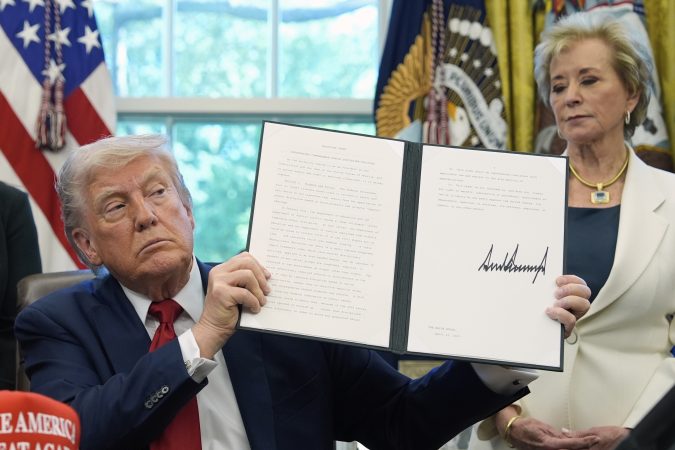
My reminiscing about poorly funded schools was sparked by the Trump administration’s efforts to shut down the federal Department of Education, which has played a crucial role over the years not only in lessening the impact of past racism in America’s schools but otherwise ensuring adequate educational opportunities exist for all children, including those with financial or health disadvantages.
More Americans should be raising hell about what’s happening to the Education Department. But it’s hard to keep track of what to be upset about with this president. Every day, Americans are flooded by often inane news out of Washington that diverts their attention. So what if President Donald Trump has botched the repairs of the Lincoln Memorial Reflecting Pool? He messes up almost everything he touches.
The amount of news coverage given to that story was not only undeserved but a disservice. It also plays into the hands of Trump, who most likely would prefer to have people talking about algae in the Reflecting Pool instead of how much his ill-conceived war with Iran has cost in dollars and lives. The Iran war reminds me of a satirical movie released in 1997, Wag the Dog, in which a fictional U.S. president, after being caught trying to seduce an underage girl inside the Oval Office, fabricated a war in Albania to distract the American public from the sex scandal.
There’s nothing fake about our war with Iran. More than 3,600 Iranians and 4,000 people in Lebanon are believed to have been killed as a result of military attacks by our country and Israel. Thirteen U.S. service members and at least 39 Israelis have also died since the fighting began on Feb. 28. That’s why it’s so disheartening but necessary to question the war’s true intent.
“If we didn’t do what we’re doing right now, you would have had a nuclear war, and they would have taken out many countries,” Trump said while meeting with German Chancellor Friedrich Merz on March 3. Our president would have us believe he started the war because Iran, which wasn’t close to having nuclear attack capability, was a greater threat to America than Russia or China, which already have advanced nuclear weapons. Or North Korea, which is way closer than Iran to achieving that status.
I pray Trump isn’t employing a horrific Wag the Dog ploy to divert attention from a war that has cost thousands of real lives and billions of dollars. But whether it was his intent or not, the American public’s understandable focus on the Iran war and its ancillary impact on consumer costs such as the price of gasoline and food has allowed Trump to push forward some dubious goals that more Americans might otherwise have vehemently rejected.
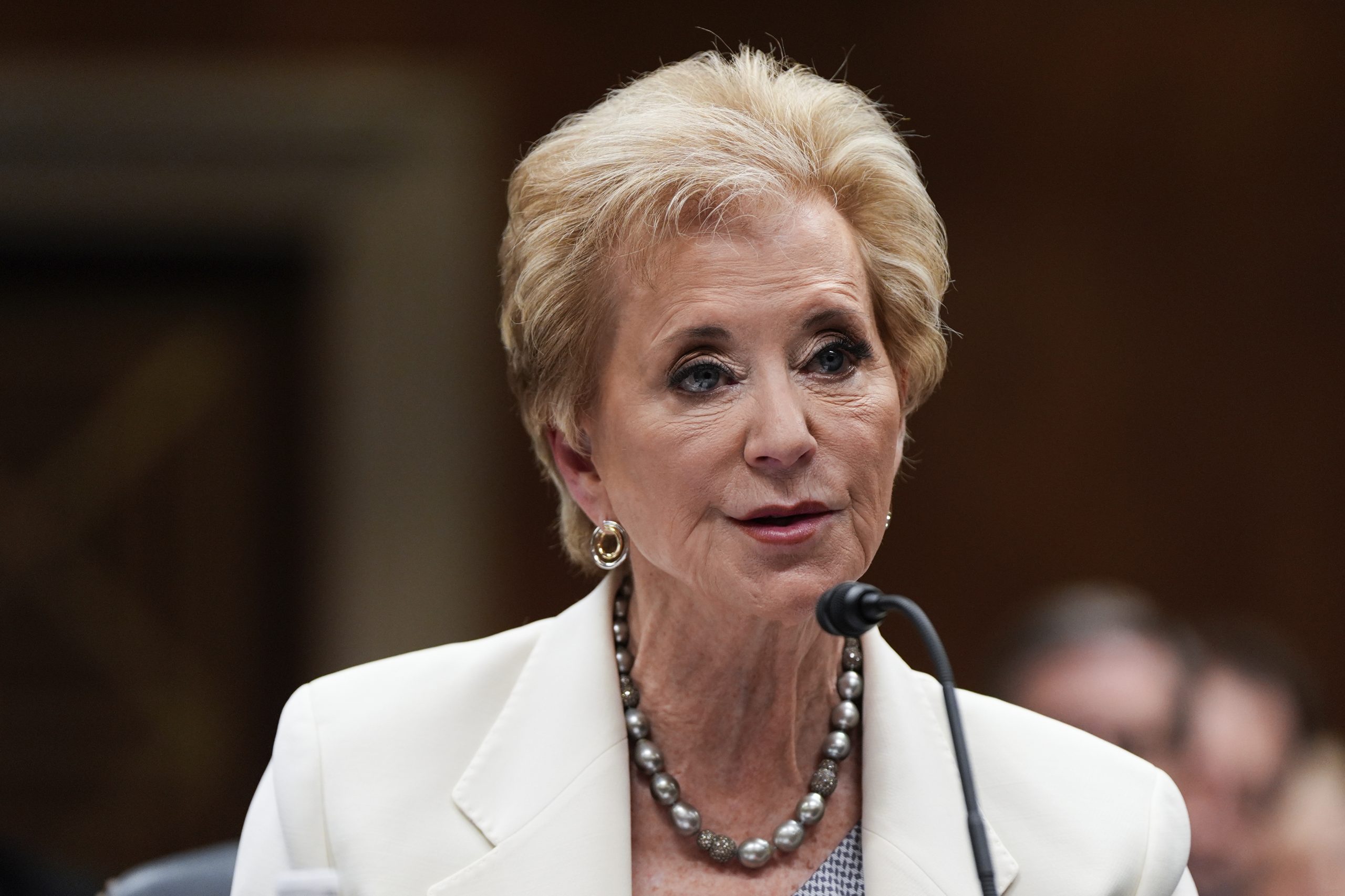
That includes Trump’s ongoing dismantlement of the Department of Education, which he tried but failed to do during his first term. Trump appointed billionaire Betsy DeVos, who had no background in education, to be his education secretary in 2016 so she could cripple the department. His current education secretary, billionaire Linda McMahon, is just as ill-equipped for the job as DeVos, but she, too, seems hell-bent on finishing what her predecessor started.
McMahon announced last month that her department will no longer enforce rules meant to protect civil rights in education and will discontinue oversight of special-education programs. Those functions are being transferred, respectively, to the U.S. Department of Justice and the U.S. Department of Health and Human Services. There was no mention of personnel being transferred to those departments to perform those additional duties.
McMahon earlier announced plans to transfer two of her department’s largest units, the Office of Elementary and Secondary Education and the Office of Postsecondary Education, to the U.S. Department of Labor, move the Office of Indian Education to the U.S. Department of the Interior, transfer responsibility for childcare access and a foreign medical program to the U.S. Department of Health and Human Services, and shift a foreign language education program to the U.S. Department of State.
Trump has never fully explained his zest to kill the Education Department, but it fits the states-rights attitude of some of his supporters, especially down South, who have long resented federal intrusion into how they run their public schools. Such resistance to federal involvement was about segregation when I was a child; today it’s more about encouraging vouchers and other programs that drain tax dollars and students from traditional public schools.
It’s not wrong to reassess the role the federal government plays in running local schools, but educating Americans’ children should remain a national priority — one that requires significant input from Washington to ensure some uniformity in educational opportunities and outcomes no matter where a family lives.
Congress passed the 1965 Elementary and Secondary Education Act with that in mind. Known as Title I, the law provides additional federal funding to schools with large numbers of students living in poverty. Changing Title I to a block grant program — without federal oversight — risks that the money won’t be spent where it is most needed. Misuse of taxpayer money led the Department of Health and Human Services to freeze access to more than $10 billion in block grants for California, Colorado, Illinois, Minnesota, and New York earlier this year.
The National Education Association warns that handing out block grants without clear restrictions would allow states to divert tax money to voucher programs — and essentially turn the clock back 60 years on education policy and progress. “While one would like to think that we can trust every state to do the right thing on behalf of all students, history tells us differently,” the NEA said. “States would not have to answer to anyone about whether or how they are following the law.”
As a product of the public schools in New Bern, N.C., population 34,000, McMahon should know better than to participate in any effort to divert taxpayer money from neighborhood schools. Public schools whose funding is based on enrollment lose money they can’t afford to lose when students using vouchers leave them. With less funding, public schools don’t get better. And children in families who, even with vouchers, can’t manage the logistics of getting a child to a supposedly better school outside of their neighborhood will be hurt.
Harold Jackson, who served as editorial page editor for The Inquirer from 2007 to 2017, was awarded the Pulitzer Prize for editorial writing in 1991 and retired from the Houston Chronicle in 2020. His memoir, “Under the Sun: A Black Journalist’s Journey,” was published by the University of Alabama Press.
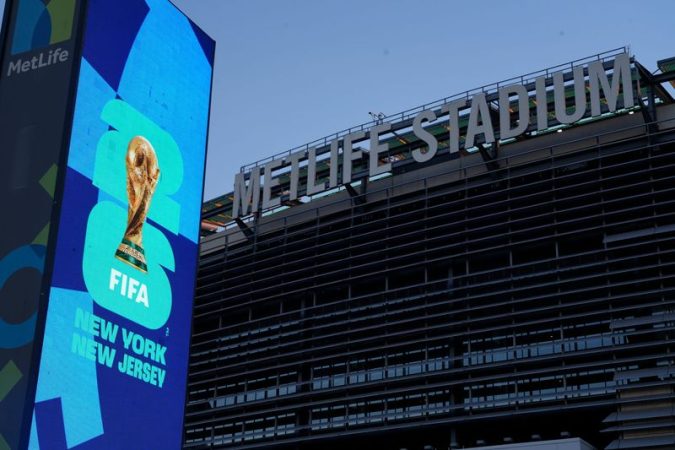
On Sunday, the eyes of the world turn to New York for the World Cup final, capping a tournament set to beat the record for highest cumulative attendance in World Cup history.
The deeper story of this tournament isn’t playing out under the lights. It’s unfolding in the parking lots, transit hubs, and neighborhoods around the stadiums, where immigrant families are asking whether hosting the world’s game means being welcomed — or being watched.

A recent poll conducted by Opinium for the transatlantic think tank Concordia Forum found that 45% of Muslims in the U.S. are often or always worried they or someone close to them will be affected by anti-Muslim violence. More striking still, over 39% said they avoid certain places out of safety concerns. Their fears will have been sharpened by two fatal shootings within a week by U.S. Immigration and Customs Enforcement agents — one in Maine, one in Houston. In both cases, neither man was the original target of the enforcement operation, and both leave behind grieving families.
This is what “enforcement” looks like under this administration: lethal, indiscriminate, and expanding.
Now Washington is bringing that same posture to New York. In advance of the final match, border czar Tom Homan has promised New Yorkers “more ICE agents than you’ve ever seen,” framing it as payback for New York’s sanctuary laws — local rules limiting how far city agencies help federal immigration enforcement. The surge is timed to a tournament that’s drawn millions of visitors, many from countries now targeted by expanded travel restrictions.
It is hard to read this as anything other than an attempt to punish New York for refusing to do Washington’s enforcement work for it.
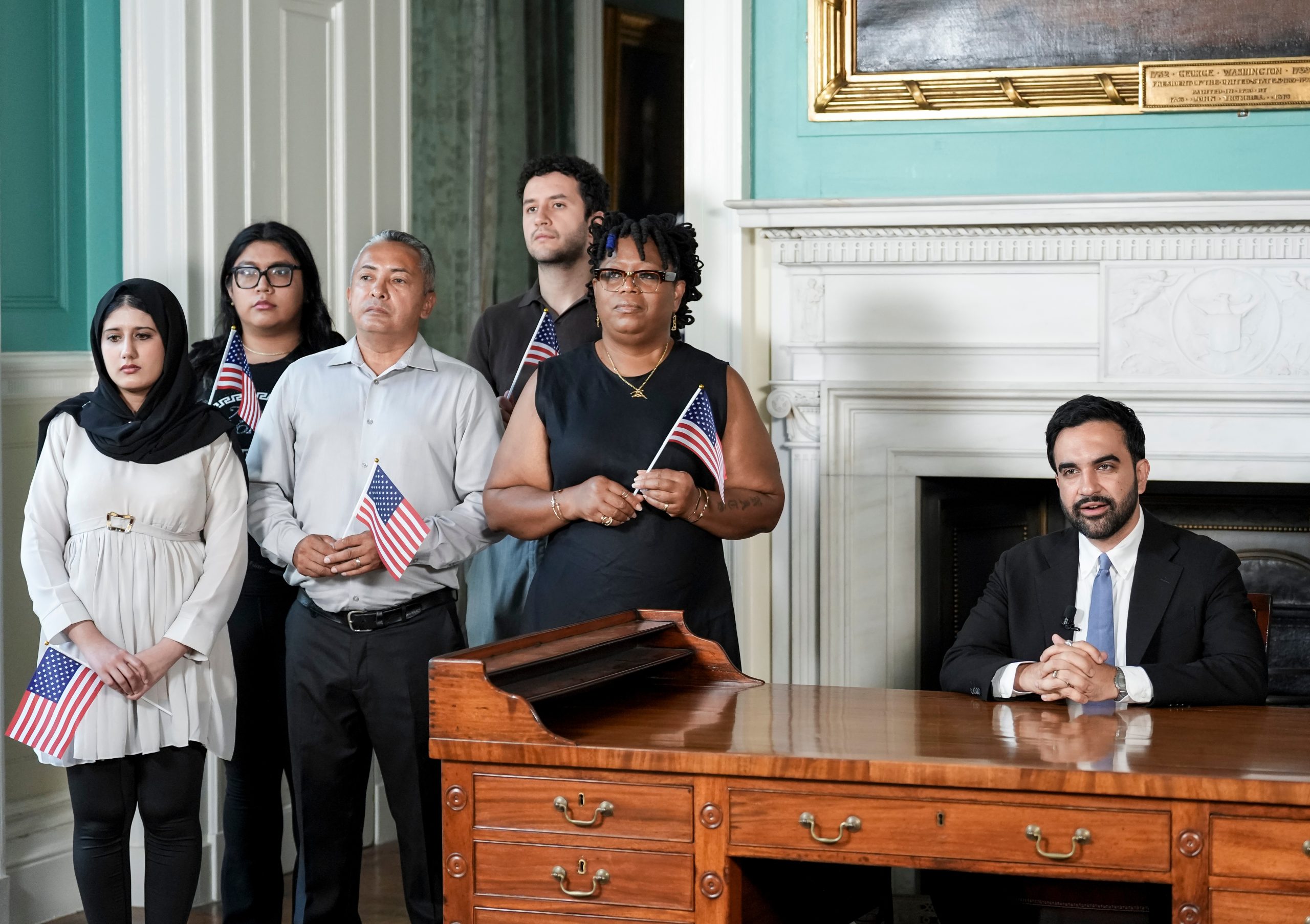
New York has not backed down. Mayor Zohran Mamdani has been unambiguous, calling ICE’s presence an attempt “to divide us” and noting that six U.S. men’s national team players are themselves immigrants. His administration has restricted New York Police Department cooperation with ICE, barred federal agents from city property without a judicial warrant, and has completed and published a citywide audit of every city agency’s dealings with federal immigration authorities — a level of transparency and follow-through most sanctuary cities never attempt.
That kind of institutional courage carries a cost, and I know exactly what it can look like up close. As an immigrant rights advocate in the weeks after 9/11, I saw this play out in my Brooklyn backyard on Coney Island Avenue, where thousands of Muslims were rounded up and detained and/or deported under the Bush administration. Washington is running the same playbook now, just at a much larger scale: manufacture a threat, attach it to an immigrant identity, and let the political pressure do the rest.

That escalation doesn’t stop with the final whistle. Los Angeles hosts the Olympics in 2028, and Washington’s willingness to weaponize federal enforcement against a host city sets a precedent every future host will have to reckon with. Agents visibly stationed near Sunday’s Central Park watch party would send an unmistakable message about how far this administration is willing to go to undermine New York’s resolve in full view of the world.
New York’s sanctuary protections are real, and Mamdani has been consistent in defending them. Washington’s decision to turn a global celebration into a show of federal force against a city that has broken no law — a city that has only declined to do the federal government’s job for it — is the actual failure here. Call it what it is: retaliation, staged for an audience of billions. All eyes are on New York again — this time, waiting to see what Washington does next.
Debbie Almontaser is a Yemeni American educator with 25 years’ experience teaching in New York City public schools. She is a published author and motivational speaker, spending two decades advocating for Muslim and immigrant communities in New York. She is also the founding principal of NYC’s Khalil Gibran International Academy and CEO of Bridging Cultures Group.
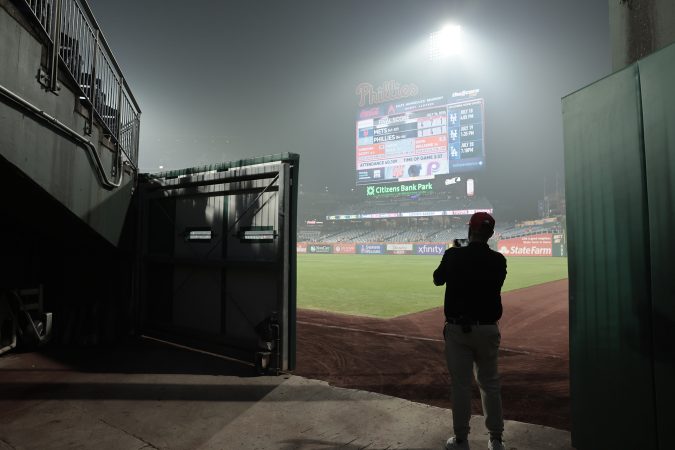
From I-95 in South Philly, the skyline was barely visible as we drove past empty stadiums and parking lots. The low visibility is due to a blanket of smoke from trees burning across Canada, a thousand miles away, a new — and deeply unwelcome — annual tradition here in the Northeast thanks to our rapidly changing climate.
We were on the highway because we happened to be driving our 2-year-old son to my parents’ home outside of Boston, and I felt deep relief to be taking his young lungs from an Air Quality Index (AQI) of 182 (“Unhealthy”) to merely 94 (“Moderate”).
As a pediatrician and parent who thinks a lot about the impacts of air pollution on children’s ability to breathe, it is an especially frightening moment.
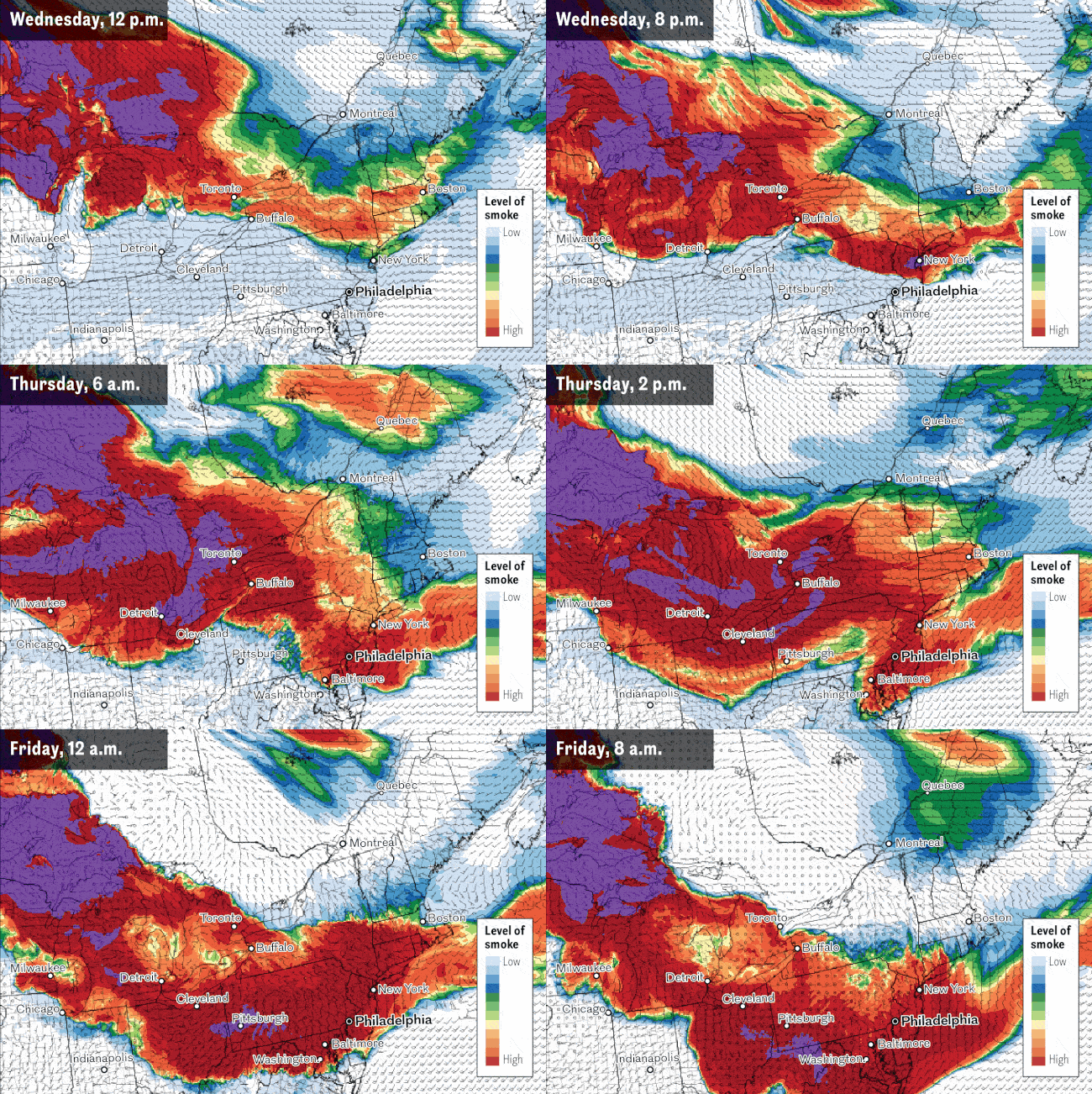
It is also a maddening one for those who care about health or justice.
Air pollution causes enormous harm to human health. And yet, the Trump administration has made a concerted push to worsen American air quality by attacking antipollution policies and slashing funding for the agencies responsible for their enforcement.
Under direction from industry lobbyists, the administration — assisted by the conservative majority on the U.S. Supreme Court — is pushing aggressively to weaken the Clean Air Act, which is often identified as the piece of U.S. legislation that has saved the most lives.
At the same time, the administration is demanding a 50% cut in funding for the Environmental Protection Agency, which maintains airnow.gov, after dramatically cutting funding for weather and climate research at the National Oceanic and Atmospheric Administration last year.
These actions serve only political donors and wealthy shareholders, at the expense of communities and the environment.

In spite of the layers of smoke blocking out the sun, the injustices of the current moment are easy to see. I am lucky to be headed to clearer skies this weekend, but this is only one example of good fortune that is unavailable to many.
As temperatures climb above 90 degrees Fahrenheit for the fourth day in a row, after two other record-breaking heat waves this year, those without air-conditioning are forced to choose between sweltering with the windows closed and a house filled with smoke from faraway wildfires.
Communities with lower levels of air-conditioning are also more likely to be Black and Latino communities that have a higher heat burden from a lack of neighborhood trees and greenery and an excess of paved surfaces.
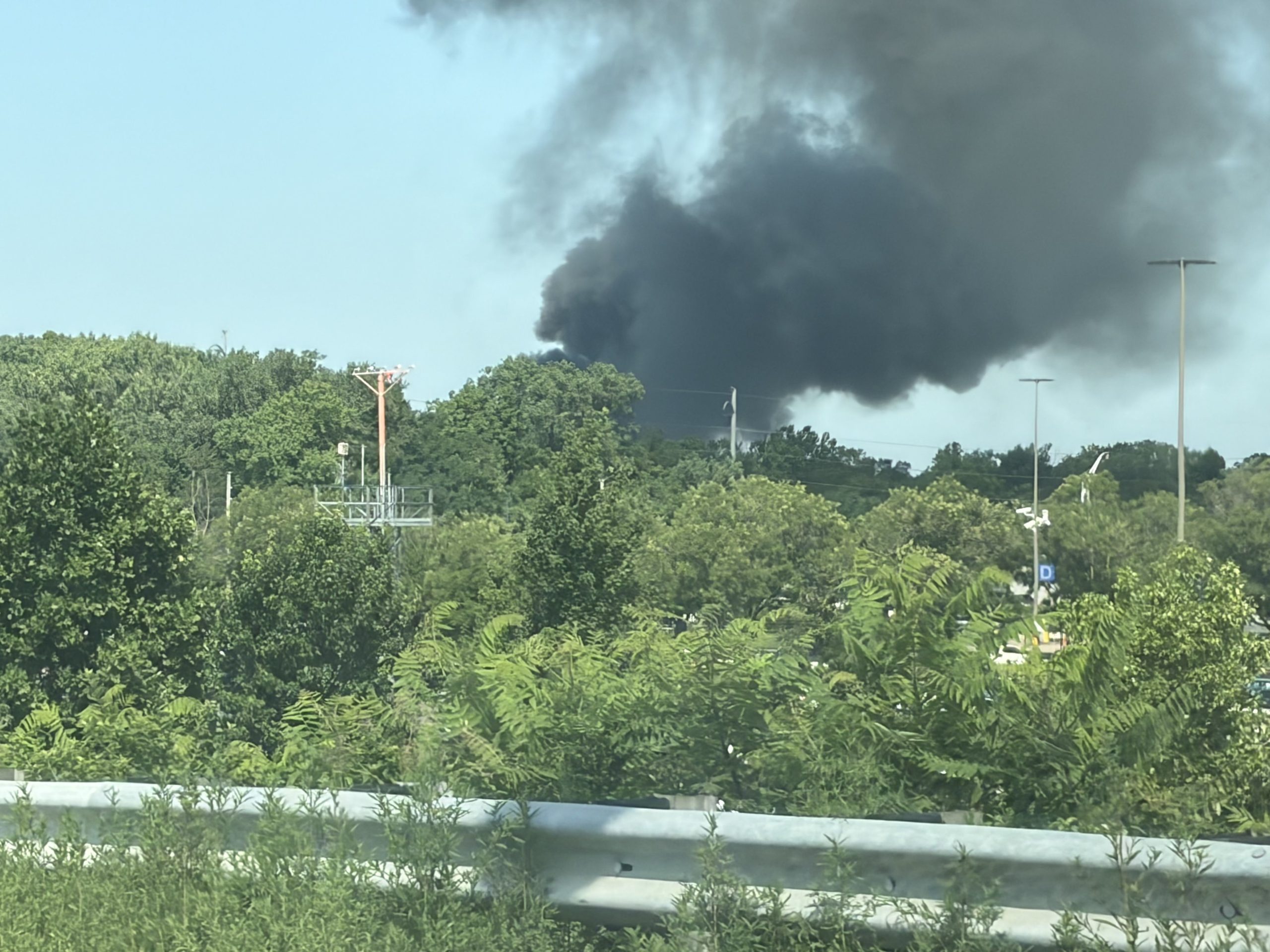
Add to this the ongoing burdens of polluting industrial infrastructure in these same areas — thrown into sharp relief by the scrapyard fire Wednesday within the environmental justice communities of Darby and Southwest Philadelphia — and it is an overwhelming assault focused on the health of our most vulnerable populations.
It is past time to demand more of the elected officials who serve us. While the federal government and GOP majority in the state Senate have abandoned even performative interest in protecting the environment and its inhabitants, our city agencies must act.
Right now, Philadelphians can provide support for cleaner air in our region on several fronts.
Philadelphia Gas Works, our city-owned utility, is pushing to build an even larger liquefied natural gas plant in the Port Richmond neighborhood, where cancer rates are already among the highest in the city.
The City Planning Commission is discussing possible locations for new data centers, strongly considering Grays Ferry’s Bellwether District, in spite of the decades of pollution and associated diseases from the Philadelphia Energy Solutions gas plant.
And the city has just moved a step closer to renewing its contracts to incinerate its trash just a few miles down the highway from the scrapyard fire that poured smoke across the region this week.
All of these actions prioritize short-term costs over long-term benefits to citizens, neighborhoods, and the planet.
Whether you contact your mayor or City Council member, submit remarks online, or testify at a hearing, let our decision-makers know that this literal Code Red demands big ideas, difficult decisions, and dramatic action — before the city’s commitments to health and justice are as hard to make out as its skyline views.
Paul Devine Bottone is a pediatrician and father in Philadelphia.
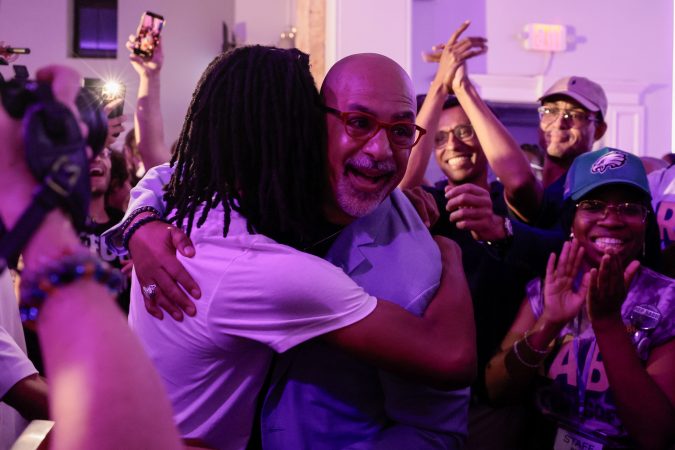
This week’s column looks at next year’s races for City Council, self-driving cars, and Philadelphia’s success as a host city for major events like the MLB All-Star Game.
State Rep. Chris Rabb’s success in the 3rd Congressional District’s Democratic primary has galvanized local progressives. According to Inquirer reporting, which aligns with the chatter I’ve heard, the plan is to challenge for more seats on City Council. Specifically, those of 8th District Councilmember Cindy Bass and 1st District Councilmember Mark Squilla. Jeffery “Jay” Young, who represents the 5th District, is also likely to be challenged, although none of those candidates are explicitly aligned with the city’s progressive movement.
As someone who closely follows City Council, I have mixed feelings about this news.
I’ve strongly criticized Bass for her handling of land use in her district, which is often perplexing. Many iconic buildings have been left vacant under her watch, and her determination to serve as the decision-maker has frustrated community groups and constituents who have their own ideas for their neighborhoods. However, her likely progressive opponent did not impress me at all during the last election. At candidate forums, on questionnaires, and in his endorsement meeting with my colleagues on the Editorial Board, Seth Anderson-Oberman had admirable passion, but nowhere near Bass’ deep understanding of city government.
Young has not served his constituents well in his first term. From senior housing in Strawberry Mansion to the renovation of the Cecil B. Moore Library, he’s consistently made baffling decisions. The only thing that could possibly save his reelection is if the vote is diluted by the number of challengers he’s expected to face — Jalon Alexander, Curtis Wilkerson (who ran but failed to secure enough signatures in 2023), Dustin Dove, and Max Tuttleman are all rumored candidates. Perhaps the petition process will shrink the field.
In the 1st District, why change? I don’t always agree with Squilla, but I can say that he shows up consistently. He answers emails himself, usually promptly. He tries to balance everyone’s input and find a fair way forward. He asks reasonable questions at hearings and doesn’t scapegoat city staff to score easy points.
Another issue with any progressive takeover is the lack of vision.
It is good to see the local establishment Democrats forced to campaign and defend their records, but what do progressives plan to do with their power once they get it? Some of the ideas progressives frequently campaign on, like a wealth tax or rent control, are unlikely to pass constitutional muster in Pennsylvania’s courts. Policy ideas that have been implemented, like inclusionary zoning, have failed to deliver.
It is easy to decry the state of Philadelphia’s schools and services, but where would a progressive Council majority find revenue to invest in them? How would they grow our anemic business sector?
When progressives have won upset victories, it has been because they have something tangible to offer. Larry Krasner became district attorney because he really could prosecute police officers for misconduct, overturn wrongful convictions, and change the department’s culture if elected. New York’s Zohran Mamdani might not be able to convince the MTA that free buses are a good idea, but he is making them faster, and he has implemented the promised freeze for the city’s rent-stabilized apartments.
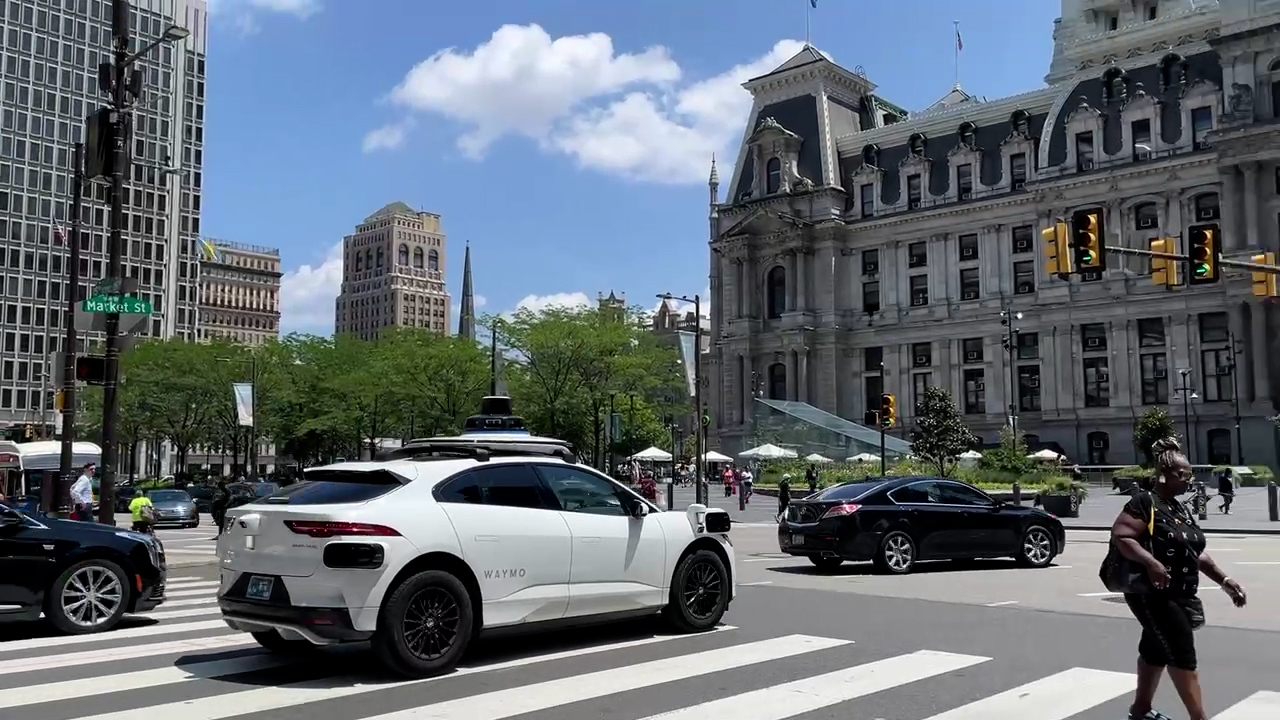
It seems like every week I see more Waymo vehicles around the city. The autonomous cars are regulated by Harrisburg, not City Hall. At a March City Council hearing, lawmakers were told explicitly: Philadelphia is entirely preempted on this issue.
At the time, I talked to some opponents of the new technology. They are pushing for a yearslong delay. At a rally before the hearing, speakers referenced both safety concerns and worries about job losses.
While a couple of speakers referred to admittedly jarring incidents, it does seem like the computers do a better job of driving safely overall. A study done by Swiss Re, an insurance company, found that Waymos are less likely to damage both people and property. Looking at 25 million miles of operations, the Waymo cars recorded nine cases of property damage and two cases of bodily injury. The typical result for human drivers over a stretch like this would be 78 cases of property damage and 26 bodily injury claims. This is a serious and positive shift when it comes to road safety for all users.
I certainly can understand worrying about losing your job to new technology. At the same time, human drivers have not disappeared from the cities where Waymo already operates, even as rideshare apps keep more and more of the fare for themselves.
Another argument is that Waymos represent more cars at a time when cities are moving away from auto-oriented policymaking. It is no secret that I am a strong supporter of this shift, but cars aren’t going away anytime soon. Just one in 10 Americans rarely or never drive a car. In much of the country, getting around without a vehicle is arduous, if not outright impossible.
If Waymo can provide safer and cheaper access to mobility for people who can’t drive themselves, it may be a net positive.

The biggest festivities of America’s 250th birthday may be over, but Philadelphia continues to shine as a host. Baseball fans and commentators mostly praised the city’s efforts, and Independence Mall might have been the most historic setting ever for the All-Star Game’s red carpet show. MLB’s tribute to The Sandlot took us to city neighborhoods, the Home Run Derby was enlivened by the antics of our fans, and the fourth annual Swingman Classic gave HBCU athletes the opportunity to play in a big-league ballpark.
I finally got up to the FIFA Fan Festival in Fairmount Park, which also showcased the city’s strengths as a host. It was genuinely impressive to see the range of options for food and activities, and how short the lines typically were despite the thousands of people who came to visit every day.
While changing a city’s perception takes time, there are undoubtedly many visitors who are going back home and telling folks that Philadelphia is so much nicer than they expected.
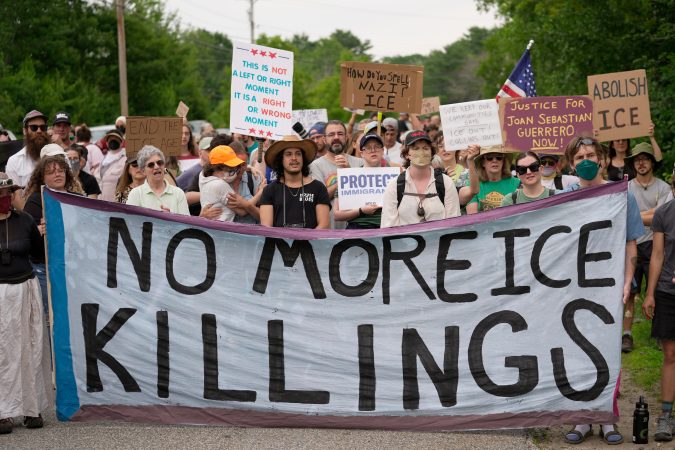
A poet, a nurse, a construction worker, and a food delivery driver. The four people killed in 2026 by federal immigration agents were regular folks trying to live their lives in peace before they were crushed by the unchecked power of President Donald Trump’s mass deportation campaign.
The brief respite between the killings of Renee Good and Alex Pretti in January and the deaths of Lorenzo Salgado Araujo and Johan Sebastián Durán Guerrero over the last two weeks shows the government learned nothing from what happened in Minneapolis earlier this year.
There, U.S. Immigration and Customs Enforcement agents, alongside members of U.S. Customs and Border Protection, spread terror and chaos in plain view. Masked and heavily armed, agents trampled people’s constitutional rights as they used excessive force to intimidate and arrest with impunity, ultimately killing Good and Pretti, both U.S. citizens.
Sadly, the national outrage that followed did not dissuade Trump from his misbegotten mission — it merely amounted to a public relations problem addressed with a few firings and a temporary suspension of the siege.
That it was Homeland Security Secretary Kristi Noem and Border Patrol commander Greg Bovino who lost their jobs instead of Stephen Miller, the white nationalist architect of the president’s immigration crackdown, signaled where the White House stood.
Starting in June, the Trump administration once again unleashed ICE on America’s streets, with a reported target of 2,000 arrests a day. With little oversight, zero accountability, no transparency, and goaded by officials to escalate, it is a miracle more people haven’t been killed already. It is also likely that more deaths will follow.
The latest killings share striking similarities. Both Salgado Araujo in Texas and Durán Guerrero in Maine were on their way to work, both were not ICE investigation targets, and both were shot by agents during traffic stops.
Eyewitness video has repeatedly captured agents in unmarked cars aggressively pursuing and cutting off drivers, as well as firing on moving vehicles — tactics long abandoned by most law enforcement agencies, whose use-of-force policies prioritize protecting human life.
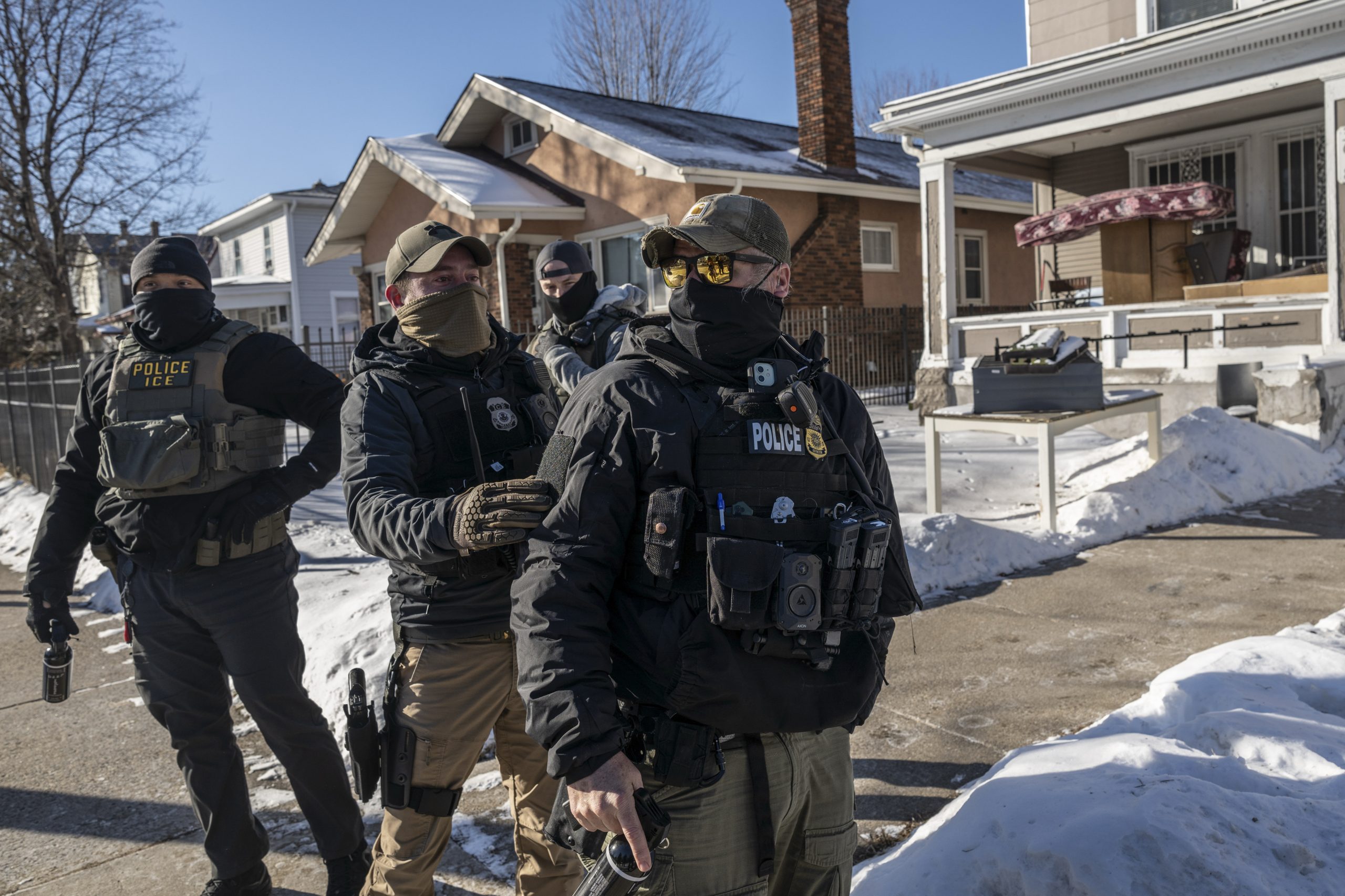
Immigration agents have also used banned choke holds and utilized tear gas and pepper spray indiscriminately, even harming children, ProPublica reported. A recent analysis of 1,200 immigration enforcement incidents by the American Civil Liberties Union found that immigration agents are using force and the threat of force as default tactics to coerce, not to respond to any threat.
ACLU researchers concluded there was a systemic breakdown in professional norms and standards with “encouragement of abuse by senior administration officials.”
After Durán Guerrero’s death, cooler heads inside the U.S. Department of Homeland Security called for a moratorium on vehicle stops, but were almost immediately overruled by the president, who was reportedly furious.
In fact, Trump has consistently shown no empathy nor taken any responsibility for what is being done in his name. If anything, he has doubled down on his inflammatory racist rhetoric against immigrants and anyone who would stand against him.
This should chill every American to the core as much as it should spur us all into action.
What is happening with ICE is not about enforcing immigration law; it is about a lawless administration willing to systematically ignore the Constitution, including every person’s right to walk down the street without fear of being assaulted, detained, or arrested by the government without cause. It is about a president using the vast power of the United States against those he deems a target with little concern about who gets caught in the crossfire.
Once this kind of violence becomes accepted and normalized, its use will not stop. No place and no one will be safe.
Voters must act quickly to hold federal lawmakers accountable.
Republicans in Congress have blindly enabled Trump, acquiescing to his demands, including $70 billion in June for immigration enforcement. That’s on top of the $75 billion ICE received last year. This would be excessive at any other time. Coming when many Americans are struggling to make ends meet as life becomes more unaffordable, it is indefensible.
Trump’s obsession with immigration enforcement is costly, shortsighted, and un-American. And until lawmakers rein in the president, it will be increasingly and indiscriminately deadly.
I am 80 years old and was living happily on a pension with my wife of almost 50 years. Then I sold my house in Center City in 2020 and bought a house on the edge of the city where we could more easily isolate (it was the height of the pandemic), and where I could unpack my large library (both of us write books and need our library, but writing is not a significant source of income). So I carefully planned what we could afford, assuming that not only would our taxes rise with inflation, but that my pension would, too. In 2024, the city literally doubled our real estate taxes in one year. I had to go back to work full time (at half the salary I commanded 20 years ago), but I count myself lucky to have found work at my age. Who knows how long I’ll be able to keep it up? There is no way I will ever be able to afford to retire, and when I die, my wife will lose half the pension and won’t be able to keep her house.
With the recent property assessments, is anyone thinking about the bind our elected officials have left seniors? I spent the money to get a professional and objective appraisal, and attempted to appeal this breathtaking tax increase of 100% in one year. No one from the city ever came to look at the house; I suppose they just relied on Zillow.
Many seniors, who, like me, worked for half a century paying taxes, paying into a retirement plan, and who still vote, must be feeling as I do that nobody cares about seniors. I am a lifelong Democrat, but I see that a Republican in the state House is the only one to propose a bill in either the legislature or City Council to exempt seniors from real estate taxes. Does anyone want to see their parents or grandparents — or one day themselves — in this position? Seniors have earned a retirement, not an eviction.
Jonathan Fineberg, Philadelphia
All major religions emphasize our responsibility to those in need. “… wherever human beings endure suffering and humiliation. We must always take sides” (Holocaust survivor and Nobel Peace Prize laureate Elie Wiesel). The Quran commands giving out of love to “the poor, needy travelers” (Surah Al-Baqarah 2:177). Jesus is clear about our duty to care for the vulnerable: “So in everything, do to others what you would have them do to you” (Matthew 7:12). Yet when Pope Leo XIV likewise quotes from traditional Catholic Social Teaching and reminds us of our moral obligation to the unprotected, he is accused, even by so-called Catholics, of being a Marxist/communist. Congratulations to Pope Leo XIV, who has now joined such respected figures as Nelson Mandela, the Rev. Dr. Martin Luther King Jr., Franklin D. Roosevelt, John F. Kennedy, and Albert Einstein — each of whom was wrongly accused by conservatives of being a communist.
Tom Sexton, Philadelphia, tom_sexton@hotmail.com
Join the conversation: Send letters to letters@inquirer.com. Limit length to 150 words and include home address and day and evening phone number. Letters run in The Inquirer six days a week on the editorial pages and online.
I’m the CEO of Gaudenzia, one of Pennsylvania’s largest behavioral health nonprofits. We serve thousands of people in addiction and mental health treatment across the commonwealth. And for the past year, I’ve been restructuring this organization from the inside because the alternative was watching it slowly fail while pretending everything was fine.
We are not alone.
Across Pennsylvania, behavioral health organizations are quietly closing programs, losing staff, and reducing capacity. Not because they’ve lost their mission. Because the economics have changed faster than anyone could adapt.
Here’s what happened: In July 2025, the One Big Beautiful Bill Act cut $664 billion from state Medicaid budgets over the next decade. Pennsylvania’s behavioral health providers, most of whom depend on Medicaid for the majority of their revenue, absorbed that shock overnight.
Simultaneously, managed care organizations began holding budget allocations and, in some states, retroactively clawing back payments already made to providers.
Meanwhile, our workforce costs rose 30% to 40% in key roles. Behavioral health nurses now turn over at the highest rate of any nursing specialty: 22.8% annually. We’re competing for staff against hospital systems and telehealth platforms that offer sign-on bonuses we can’t match. From a fiscal standpoint, we’re also having to contend with Medicaid reimbursement rates that haven’t kept pace with inflation for a decade.
The math doesn’t work. And everyone in this field knows it. We just haven’t said it publicly. But I’m saying it now.
At Gaudenzia, we’ve responded by restructuring our leadership model, investing in staff training and accountability systems, consolidating programs that were no longer financially viable, and preparing for payer changes we could see coming. We chose to act rather than hope the old model would somehow start working again.
But individual organizations cannot fix a structural problem alone. What Pennsylvania’s behavioral health system needs is straightforward:
I didn’t write this to complain. I wrote it because the people we serve — Pennsylvanians in crisis, in recovery, in the hardest moments of their lives — need organizations that are financially stable and structurally resilient enough to be here in five years.
Right now, that’s not guaranteed for many of us.
The CEOs I talk to know this. The boards know this. The frontline staff certainly know this. It’s time the public and our policymakers heard it directly from someone willing to put their name on it.
Behavioral health is not a luxury service. It is infrastructure. And infrastructure that is underfunded, understaffed, and destabilized does not slowly improve. It collapses.
We can prevent that. But only if we stop being quiet about what’s happening.
Deja Gilbert is the president and CEO of Gaudenzia Inc., a behavioral health nonprofit serving communities across Pennsylvania, Maryland, and Delaware.