Category: Obituaries

  • Joan E. Lynaugh, nursing trailblazer, historian, and professor emerita at Penn Nursing, has died at 90

    Joan E. Lynaugh, nursing trailblazer, historian, and professor emerita at Penn Nursing, has died at 90

    Joan E. Lynaugh, 90, of Gwynedd, Montgomery County, pioneering primary care nurse practitioner, award-winning professor emerita of nursing at the University of Pennsylvania, historian, mentor, author, birdwatcher, and “living legend,” died Friday, July 10, of age-associated decline at Foulkeways at Gwynedd retirement community.

    Reared on a dairy farm in the Finger Lakes region of upstate New York, Dr. Lynaugh became a pioneering international expert on primary care nursing and nurse practitioner policies, education, and history. For decades, from the early 1960s through her retirement in the late 1990s, she treated patients, taught students, researched history, and joined colleagues in defining and expanding the role of nurses in modern healthcare.

    During her career, the benefits of home care, the importance of critical care, and the need for nursing history education were hot topics in healthcare. “As a historian,” she told The Inquirer in 1997, “I take great interest in this shift from the intense emphasis on hospitals to the more balanced emphasis on other kinds of care.”

    Dr. Lynaugh joined Penn’s School of Nursing in 1980. She took charge of the school’s new primary care nursing unit and went on to be director of the Robert Wood Johnson Foundation primary care nurse practitioner program and associate director of the foundation’s teaching nursing home project.
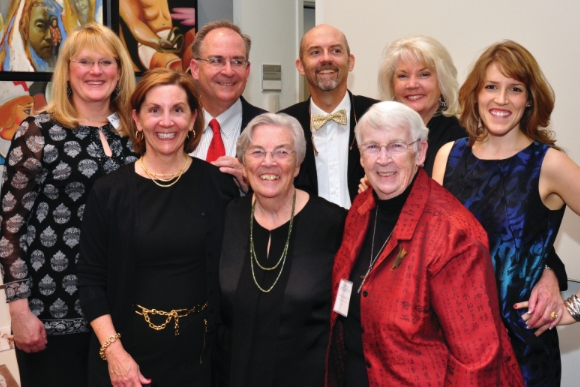
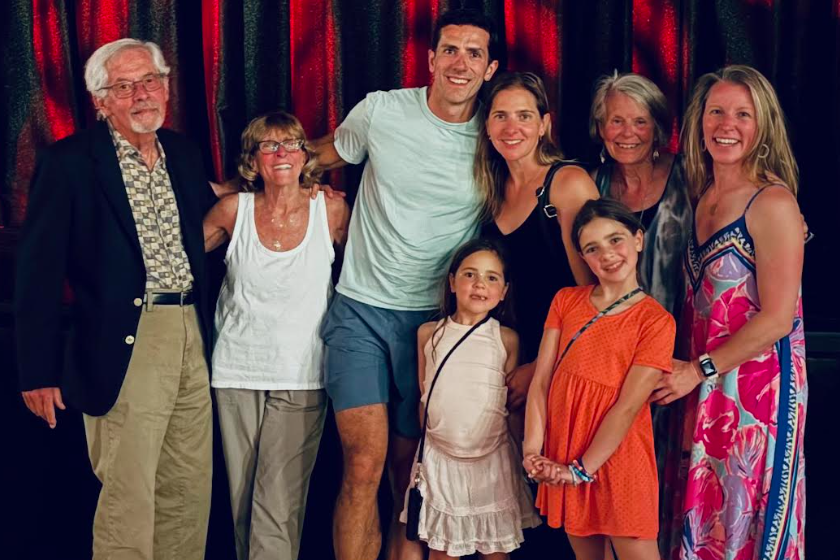
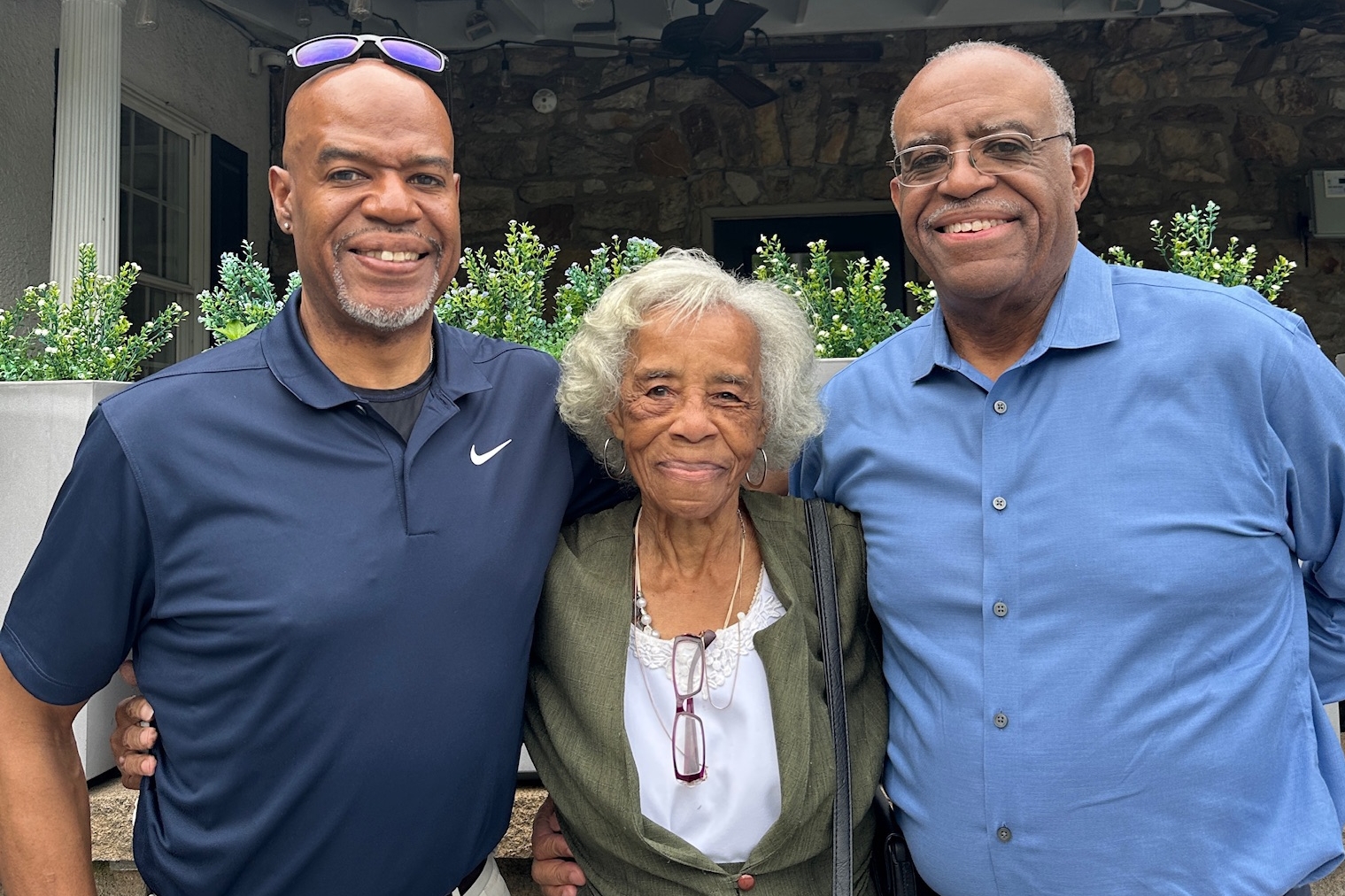
    Dr. Lynaugh (front center) and her family celebrate her 2005 award as a “living legend.”Courtesy of the family

    She was also the nursing school’s associate dean and director of graduate studies from 1993 to 1996, and chair of the nursing, history, and healthcare department from 1994 to 2000. In a tribute, colleagues at Penn Nursing said: “Dr. Lynaugh was a visionary leader, a prolific scholar, and a dedicated mentor whose extraordinary career left an indelible mark on Penn Nursing and the global nursing profession.”

    In 2000, she told writer Suzanne Gordon: “We know we can’t get into the hospital without a doctor. That’s no surprise. We are, however, surprised to discover that we can’t get out of the hospital without a nurse.”

    She was a founding director of Penn’s Barbara Bates Center for the Study of the History of Nursing in the mid-1980s, and her research focused on the origins of community hospitals and critical care units. In 2005, she was named a “living legend” by the American Academy of Nursing and earned a lifetime achievement award from the National Organization of Nurse Practitioner Faculties.

    Penn Nursing created the Joan Lynaugh Award for a graduating midwifery student for excellence in clinical practice, and the Bates Center features the Joan Lynaugh Founders Fund to support educational and archival activities, and the Joan Lynaugh Digitization Project Fund to preserve data and material from the Joan E. Lynaugh papers.
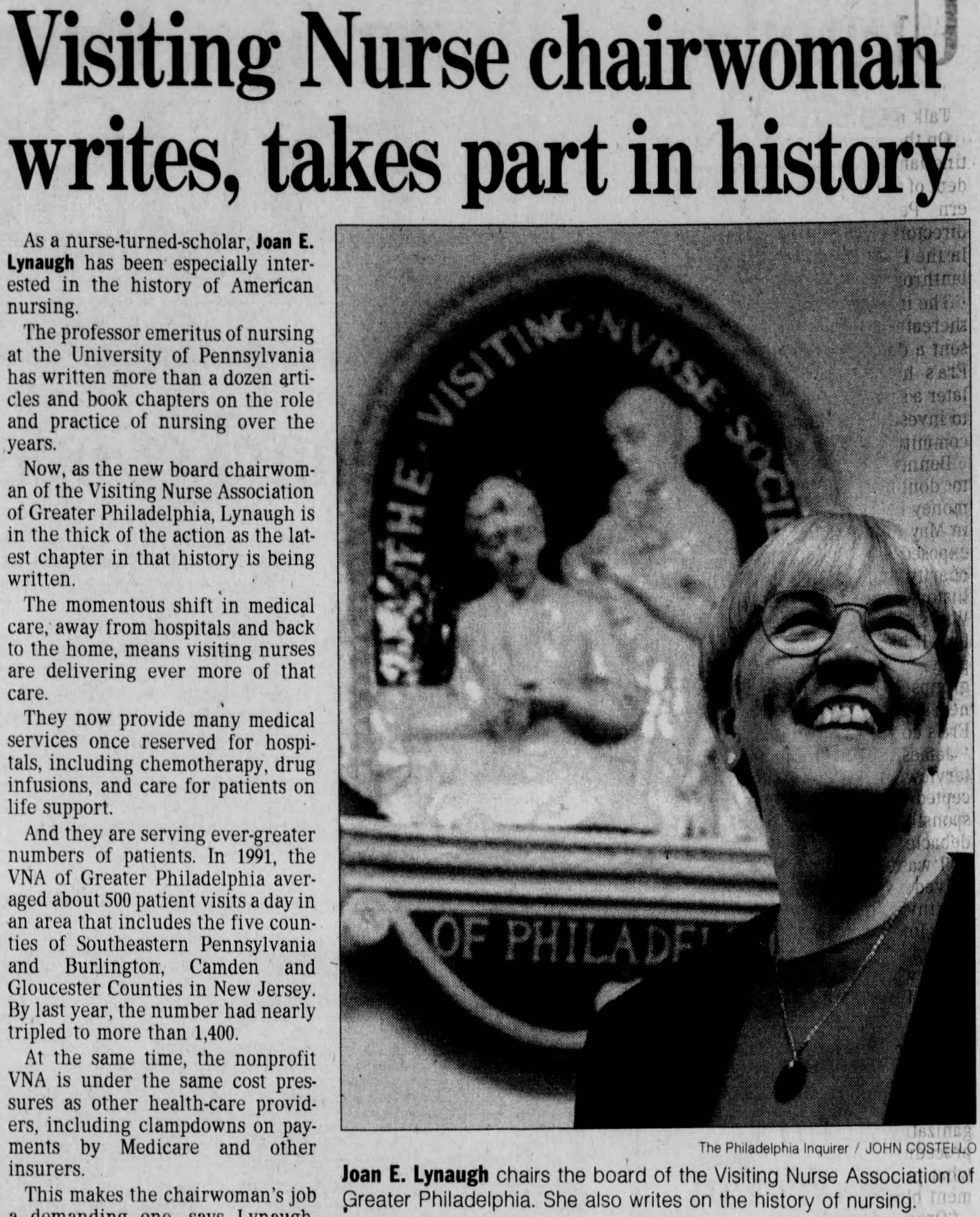
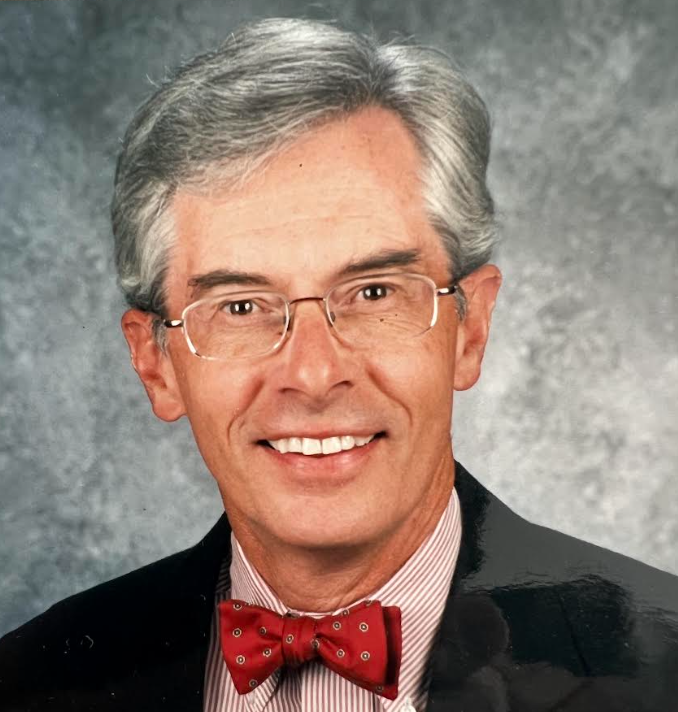
    This story and photo of Dr. Lynaugh appeared in The Inquirer in 1997.Newspapers.com

    In 2018, the center named its archives the Joan E. Lynaugh Archives and Special Collections. Before Penn, Dr. Lynaugh practiced and taught nursing at the University of Rochester and the old Providence Hospital in Washington, D.C.

    She was a fellow at the American Academy of Nursing, board chair of the Visiting Nurse Association of Greater Philadelphia, and active with the College of Physicians of Philadelphia, the American Association of Critical Care Nurses, and other groups. She cowrote Critical Care Nursing: A History with Penn colleague Julie Fairman in 1998, and coedited the award-winning textbook Enduring Issues in American Nursing in 2000.

    Colleagues at the American Association for the History of Nursing said in a tribute: “Joan’s intellectual curiosity, generosity as a mentor, commitment to excellence, and passion for nursing history left an indelible mark on the nursing profession worldwide.”

    A friend on Facebook called her “one of the smartest, kindest scholars I ever had the honor and pleasure to be mentored by.”
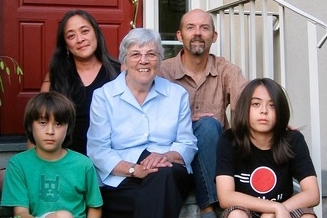
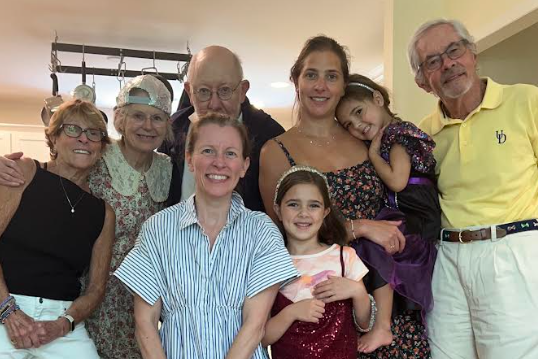
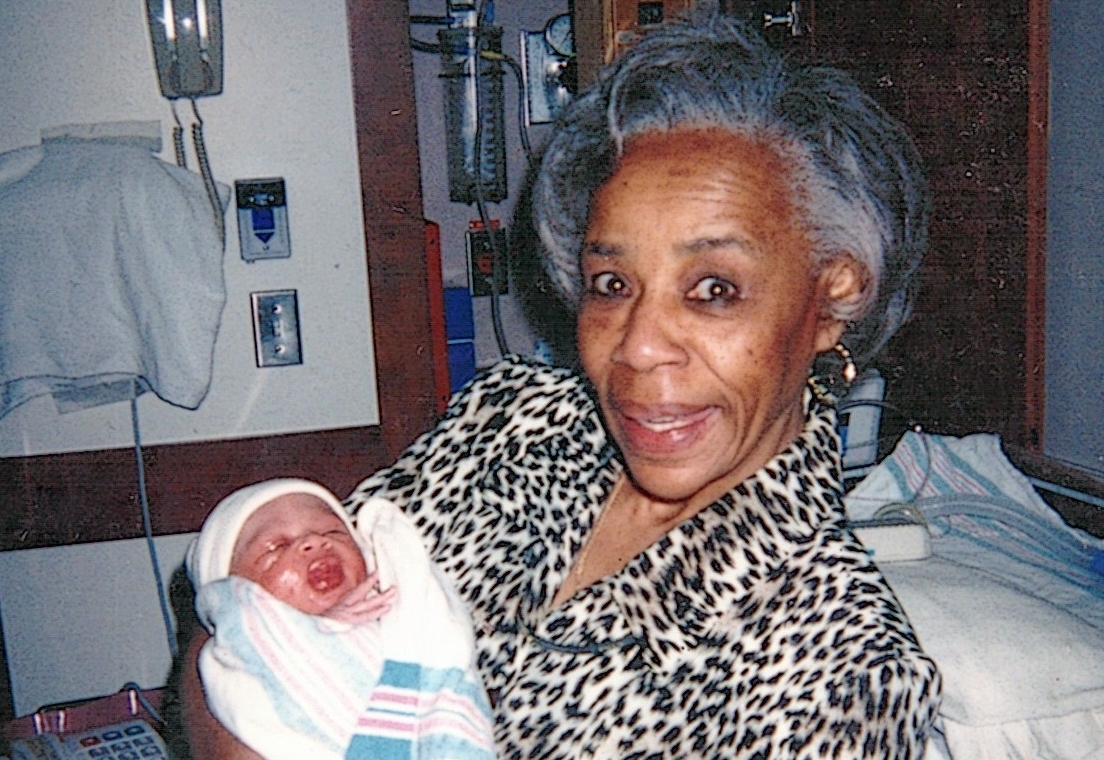
    Dr. Lynaugh (center) enjoyed time with her family.Courtesy of the family

    Joan Estelle Lynaugh was born Aug. 30, 1935, in Canandaigua, N.Y., about 28 miles southeast of Rochester. She studied nursing at St. Mary’s Hospital School of Nursing in Rochester and earned bachelor’s and master’s degrees in nursing at the University of Rochester, and a doctorate in history at the University of Kansas in 1982.

    Her whole life, she enjoyed traveling, bird-watching, camping, and hiking. She was an engaging host and liked to read mysteries and newspapers.

    She was a longtime colleague and personal partner of fellow medical professional Barbara Bates, and they lived in Bryn Mawr for years. Bates died in 2002, and Dr. Lynaugh moved to Gwynedd a few years later.

    “Joan will always be remembered for her generous spirit, wonderful sense of humor, persistent intellectual curiosity, and a sincere commitment to making the world a better place,” her family said in a tribute.
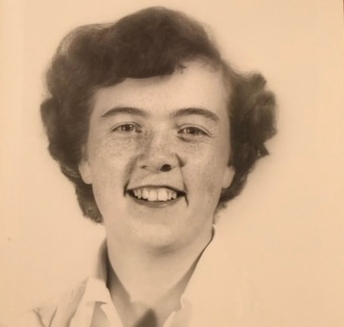
    Dr. Lynaugh grew up in the Finger Lakes region of upstate New York.Courtesy of the family

    Her niece Mary Clare Hamlin said: “She was understated, humble, practical, and scientifically minded. She always wanted to help others.”

    In addition to her niece, Dr. Lynaugh is survived by other relatives. Two brothers and a sister died earlier.

    A celebration of her life is to be held at 1 p.m. Friday, Oct. 23, at Penn’s Claire M. Fagin Hall, Room 316, Third Floor front, 418 Curie Blvd., Philadelphia, Pa. 19104.

    Donations in her name may be made to the Joan Lynaugh Founders Fund at Penn’s Barbara Bates Center for the Study of the History of Nursing, Office of Institutional Advancement, Claire M. Fagin Hall, 418 Curie Blvd., Suite 445, Philadelphia, Pa. 19104.
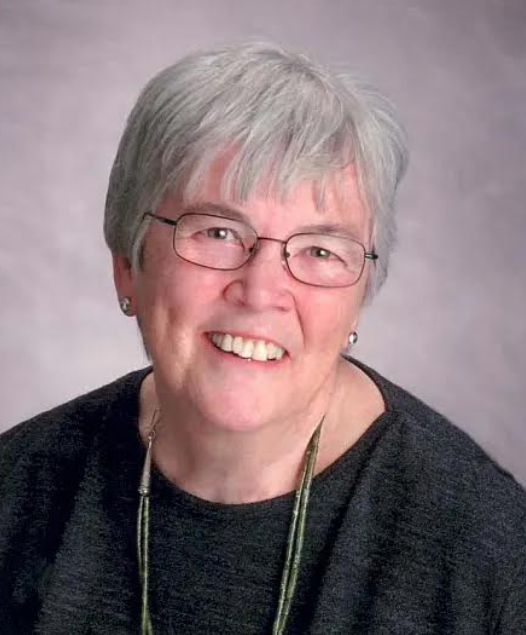

    Dr. Lynaugh “was understated, humble, practical, and scientifically minded,” her niece said. Courtesy of the family
  • Wendell Berry, writer who extolled America’s agrarian past, dies at 92

    Wendell Berry, writer who extolled America’s agrarian past, dies at 92

    Wendell Berry, a Kentucky farmer who plowed his fields behind Belgian draft horses and wrote lyrical poems, novels, and essays — mostly in pencil and without electric light — that explored his elegiac visions of the life and death of agrarian America, died Monday at his home in Port Royal, Ky. He was 92.

    His daughter, Mary Berry, confirmed the death.

    Lanky and rawboned in middle age, with melancholy eyes, a jutting chin, and a widow’s peak reminiscent of Lincoln’s, Wendell Berry wrote more than 50 volumes of poetry, fiction, and argument that championed small family farms, the environment, local foods, and interdependent communities, and railed against chemicals, most technologies, agribusiness, and distant government.

    “The national economy that is really run for the benefit of a very few people is preying upon and slowly destroying local communities everywhere,” Mr. Berry told Sierra magazine in 1990. “Everything we produce in rural America makes more money for other people than it does for those who produce it. We’re destroying rural America.”

    Mr. Berry was once hailed by author and historian Page Smith as “a prophetic American voice of our day.” He never became a household name but, as his oeuvre grew over a half-century, advocates of agrarian and ecological causes embraced his work as an eloquent, if sometimes didactic, expression of their own hopes. Some critics likened his landed exhortations to those of Henry David Thoreau or Thomas Jefferson.

    Toward the end of his long fight for agrarian justice, waged from a cabin in the backwoods of Kentucky, Mr. Berry was showered with honors, including the National Humanities Medal, the nation’s highest award for humanitarian services, presented by President Barack Obama at the White House in 2011, “for his achievements as a poet, novelist, farmer, and conservationist.”

    Raised on a farm in north-central Kentucky, he studied English at the University of Kentucky and writing at Stanford with the environmentalist-novelist Wallace Stegner, traveled in Italy, and landed in New York, intending to write and teach. He married, had two children, and taught for two years at New York University.

    But at 30, he confronted in himself a deep need to return to his roots — specifically, to an old two-room cabin on the Kentucky River at Port Royal, in Henry County, where his ancestors had lived since 1803. The cabin had been built in the 1920s by a great-uncle. He had known the place all his life; indeed, had visited it often as a boy and spent a summer there with his wife, Tanya.

    “In the life we lived that summer, we represented to ourselves what we wanted — and it was not the headlong pilgrimage after money and comfort and prestige,” he recalled in an essay titled for its inspirational setting, “The Long-Legged House.”

    In 1964, the couple resolved to stay and work the land. Nearby, they bought a 125-acre farm, called Lanes Landing, and started raising sheep, corn, and grain crops, and planted gardens for their own table. Mr. Berry also initiated a 20-year teaching association at the University of Kentucky, in Lexington.

    Returning to his home as a place to write for the rest of his life was a way to insure, to himself, that he would always be bound by the truth, Mr. Berry said in a phone interview in 2018 for this obituary.

    “It made a permanent connection between me and my native place, and with its landscape,” he said. “The landscape was there to check me if I was wrong. I could never go away and make up stuff at cocktail parties about the backwoods of Kentucky. I worked with people here in all walks of life and learned from them. It’s been a very rich experience.”

    He rebuilt the Long-Legged House and began writing there about sustainable agriculture and the culture of life on small farms and in farming towns — polemics about how such places were vital to individual liberties and why they were rapidly disappearing from a landscape increasingly afflicted with topsoil erosion, polluted water, and toxic chemicals.

    Over the next half-century, he wrote with a pencil or pen on paper during daylight hours. His farmhouse had electricity, but he refused to use electric lights at the Long-Legged House, where he wrote, because, he said, the power was supplied by strip-mined coal. His wife critiqued his work and typed his manuscripts on an old Royal standard. He refused to have a television set, or a computer after they came along.

    Mr. Berry first won national attention with The Unsettling of America: Culture & Agriculture (1977), a manifesto to save small farms from big business and a government bent on agricultural efficiencies that, he said, were destroying the land and a way of life. The book launched the modern movement for sustainable farming and became a conservationist classic.

    “The concentration of farmland into larger and larger holdings and fewer and fewer hands — with the consequent increase in overhead, debt, and dependence on machines — is a matter of complex significance, and its agricultural significance cannot be disentangled from its cultural significance,” Mr. Berry wrote.

    In a review for the New York Times, farmer-poet Donald Hall hailed its “worldview that derives its premises from the experience of working on the land.” Its author, Hall added, “argues with careful logic for the recovery of lost land, for the return of the small farmer to the countryside, the small farmer expropriated by the army of agribusiness.”

    Mr. Berry elaborated on this theme in The Gift of Good Land (1981) and Home Economics (1987), essay collections that described organic farming techniques in America and abroad. They argued that “industrial values” were killing family farms and threatening American society as a whole.

    (END OPTIONAL TRIM.)

    Marshaling fiction to his cause, Mr. Berry wrote more than a dozen novels and volumes of short stories. He invented a Kentucky town, Port William, as a setting for generations of lives interwoven in tales of murder, alcoholism, marital discord, and remembrance against subtexts of fading agrarian life. Some critics called his fiction moralistic and short on plot and character development.

    Others found his novels moving. The Memory of Old Jack (1974), the recollections of a 92-year-old farmer on his last day of life, was “magnificent,” English scholar Joan Joffe Hall wrote in the New Republic, saying it “makes us grieve that these rhythms of work and speech are lost to us.”

    As a poet, Mr. Berry produced some 30 volumes of collected verses, starting with The Broken Ground (1964). His “Sparrow,” in its entirety, was typically economical:

    A sparrow is

    his hunger organized.

    Filled, he flies

    before he knows he’s going to,

    And he dies by the

    same movement filled

    with himself, he goes

    by the eye-quick

    reflex of his flesh

    out of sight,

    leaving his perfect

    absence without a thought.

    “The quiet but sure and melodious voice of Wendell Berry makes The Broken Ground an immediate pleasure,” poet and critic Robert Pack wrote in a review for the Times. “He is essentially elegiac, ranging from praise to requiem; throughout his poems there broods a reverential hush.”

    Farmers caught in an economic squeeze regarded Mr. Berry’s ideas as naive. So did Charles Barnhart, a dean at the University of Kentucky’s college of agriculture.

    “What Wendell is talking about is a primitive agriculture,” Barnhart told the Times in 1988. “It’s a nice way of life if you have a rich father and you’re a tenured member of the faculty at a university. But I don’t see a great proportion of the American public returning to farms. And I don’t see it as an industry that would ever be capable of feeding 225 million people.”

    Still, Mr. Berry won a wide following. “It’s a movement on the way up, and Wendell’s influence in it is pervasive,” Ron Kroese, director of the Land Stewardship Project in Stillwater, Minn., told the Times in 1988. “Wendell Berry has been the contemporary conscience of American agriculture.”

    Wendell Erdman Berry was born in Louisville, Ky., on Aug. 5, 1934, the first of four children of John Marshall Berry, a lawyer and tobacco farmer in Port Royal, and Virginia (Erdman) Berry. The families of both parents had farmed in the county for more than five generations.

    Like his siblings — John Jr., Mary Jo, and Martha — Wendell Berry helped work the farm. He learned from a grandfather how to harness and drive a team of mules. He was a melancholy boy. But in childhood retreats to the Long-Legged House, he found peace and solitude and read Walden, Thoreau’s reflections on two years in a woodland cabin in Concord, Mass.

    A rebellious teenager, Mr. Berry was sent to Millersburg Military Institute, a boarding school near Lexington. He hated it. “The highest aim,” he recalled, “was to produce a perfectly obedient, militarist, puritanical moron who could play football.”

    At the University of Kentucky, he earned a bachelor’s degree in 1956 and a master’s in 1957.

    Mr. Berry and Tanya Amyx were married in 1957. In addition to his wife and daughter, he is survived by a son, Pryor Berry, known as “Den”; two sisters, Mary Jo Berry and Martha Baxter; five grandchildren; and four great-grandchildren.

    In recent years, still living and writing in Port Royal, Wendell Berry also joined nonviolent protests against mountaintop-removal coal mining, coal-fired power plants, and the death penalty.

    Besides the humanities medal, Mr. Berry received more than 30 awards, including the Sewanee Review’s Allen Tate Poetry Prize in 2014 and the Ivan Sandrof Lifetime Achievement Award of the National Book Critics Circle in 2016. He was the subject of a 2016 documentary, Look & See: A Portrait of Wendell Berry, directed by Laura Dunn and Jef Sewell.

    “His writing has sometimes been called radical, but he thinks of himself as a conservative, conserving what is most human in our landscapes and ourselves,” journalist and artist Paul Trachtman wrote in a 2005 Smithsonian magazine profile of Mr. Berry.

    “You know,” the story quoted Mr. Berry as saying, “if you subtracted the Gospels and the Constitution and the Declaration of Independence from my work, there wouldn’t be very much left.”

    This article originally appeared in the New York Times.

  • Wendell K. Daniels Sr., retired Air Force master sergeant and longtime basketball referee, has died at 68

    Wendell K. Daniels Sr., retired Air Force master sergeant and longtime basketball referee, has died at 68

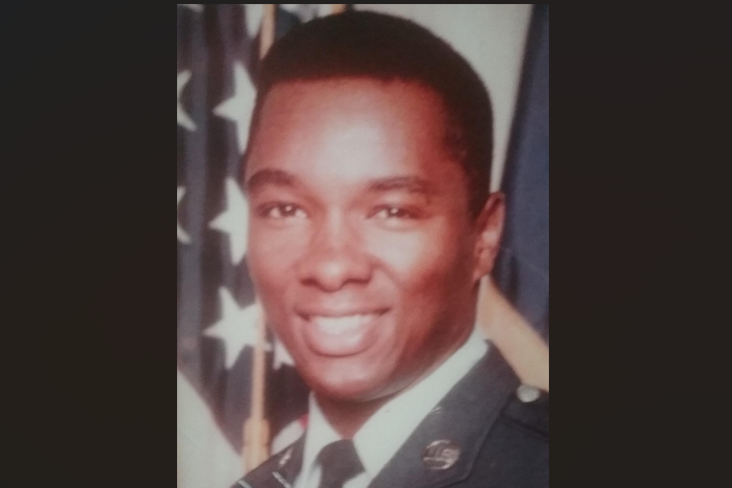
    Wendell K. Daniels Sr., 68, formerly of Philadelphia, retired Air Force master sergeant, former facilities manager at Langley Air Force Base in Virginia, mentor, artist, chess wizard, golfer, and basketball player, coach, and referee, died Friday, Aug. 28, of cancer at a hospice center near his home in San Antonio, Texas.

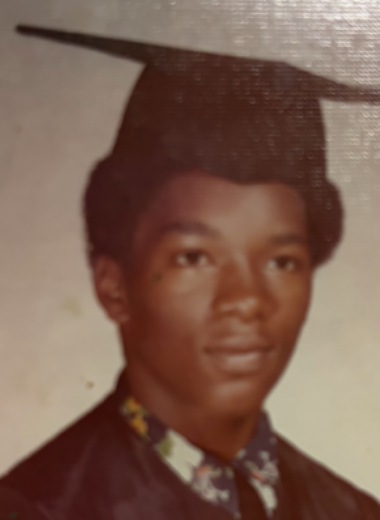
    Born and reared in West Philadelphia, Sgt. Daniels joined the Air Force after graduating from West Philadelphia High School in 1976 and spent 24 years and six months serving at military bases in South Korea, Panama, Hawaii, California, Virginia, North Carolina, South Carolina, Texas, and elsewhere.

    Before retiring in 2002, he worked in military intelligence at the Pentagon, was stationed at presidential retreat Camp David in Maryland, and took part in the 1989 operation that captured military dictator Manuel Noriega in Panama. He attended leadership programs in the Air Force, rose to master sergeant, and mentored young airmen and junior non-commissioned officers.

    He organized relief efforts after natural disasters and earned military awards and medals. He followed his father, uncle, and older brother into the Air Force by enlisting in 1978.

    “It was his sense of duty,” his daughter, Lyndell Anderson, said. “It was part of his family.”

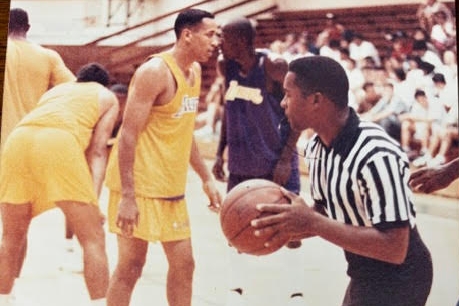
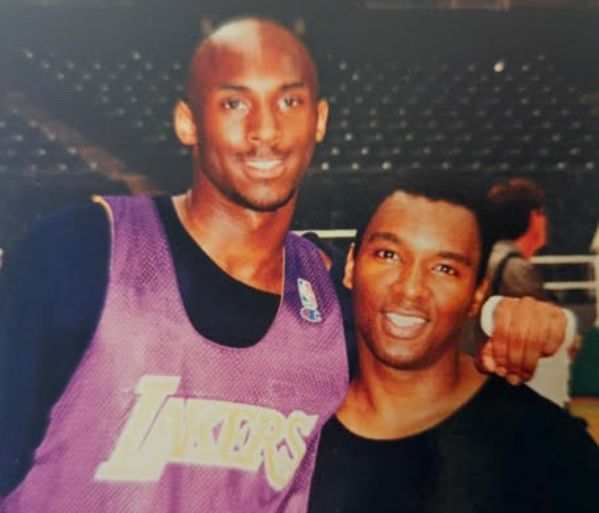
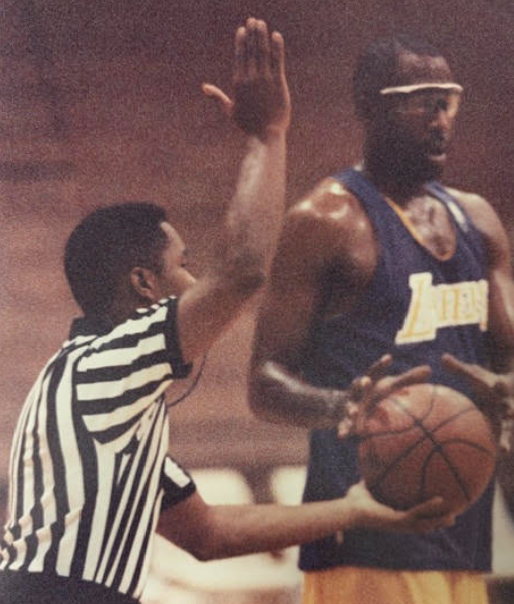
    A natural athlete — he played baseball, football, and basketball on West Philly playgrounds as a boy — Sgt. Daniels played basketball on Air Force base teams, coached women’s basketball base teams, and, certified as a referee, officiated at base games and college games in Philadelphia and elsewhere. He refereed summer camp games for the NBA’s Los Angeles Lakers when he was stationed in Hawaii and smiled in pictures with Kobe Bryant, Shaquille O’Neal, and Jerry West.

    Sgt. Daniels played golf often and met President Barack Obama (right below) in 2023. Courtesy of the family

    He started drawing and painting in high school, and considered a career as a cartoonist. In 2023, he personally presented a rendering of President Barack Obama to the president at a golf outing.

    He was the best player on his junior high school chess team and later came close to becoming a master. He played golf for years and followed the Eagles and 76ers.

    Sgt. Daniels worked as a facilities manager at Langley after leaving the Air Force and settled in San Antonio in 2017. In February, he championed racial equality and more opportunities for Black college basketball officials on a podcast with fellow former college referee Ted Valentine.

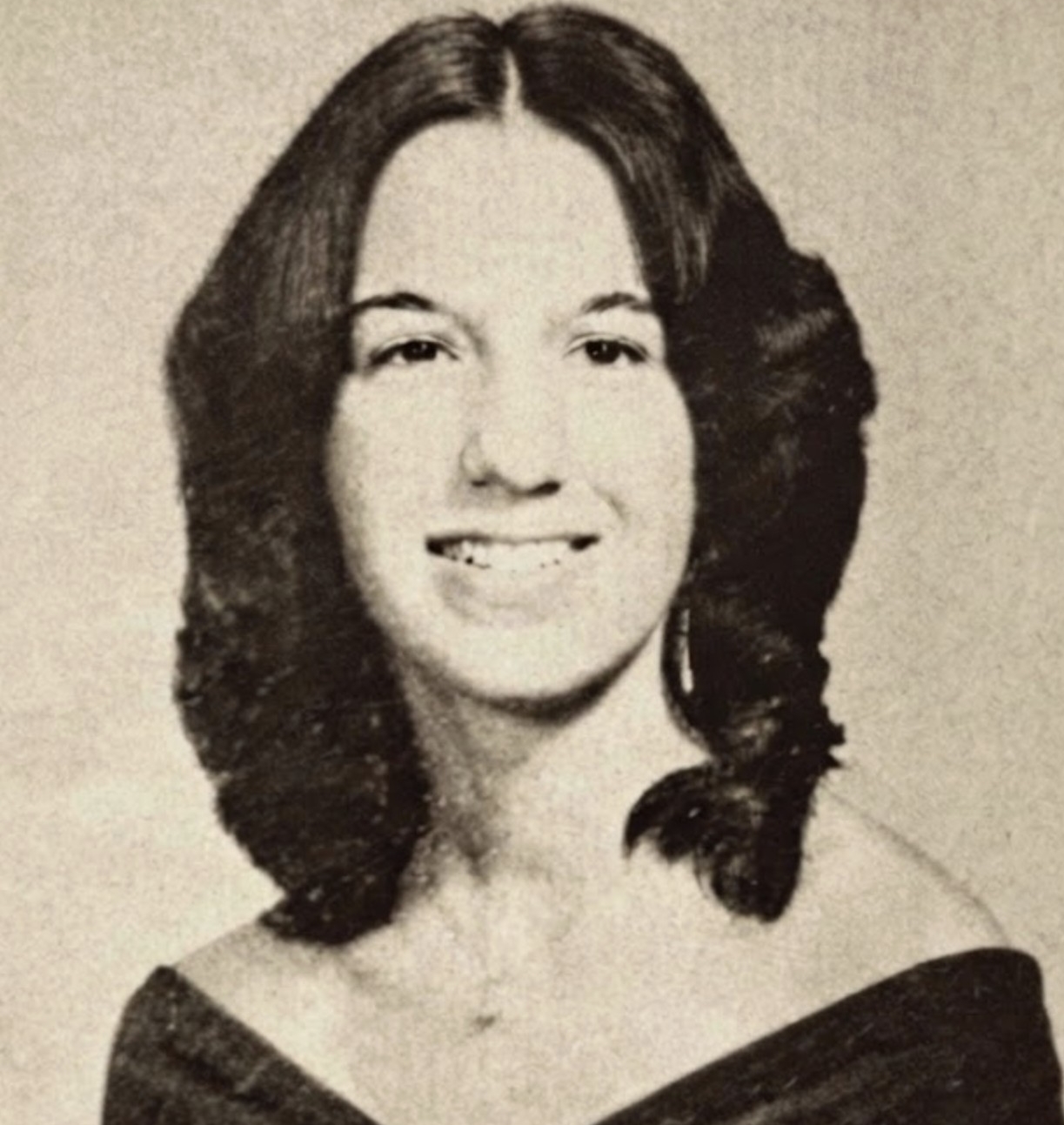
    Sgt. Daniels graduated from West Philadelphia High School in 1976 (above) and married Lyndery Webb in 1978 (below). Courtesy of the family

    “He could be outgoing one minute and reflective the next,” his daughter said. “He liked reading and parties.”

    Wendell Kennedy Daniels was born Aug. 13, 1958. He collected autographs as a boy, played varsity baseball, and was a starting cornerback on the high school football team.

    He met Lyndery Webb after playing football with her brothers in the neighborhood, and they married in 1978 and had a daughter, Lyndell, and a son, Wendell Jr. He and his wife posed for wedding pictures on the steps of the Philadelphia Museum of Art and moved from base to base for more than two decades. But only after the children had finished the school year, his wife said.

    Sgt. Daniels officiated Los Angeles Lakers summer games in Hawaii (above) and posed with Kobe Bryant (left below) for a photo. Courtesy of the family

    He stayed in touch with high school friends and was active in West Philadelphia alumni events. “He was the life of the party,” his wife said. “But he was serious about making people happy.”

    In addition to his wife and children, Sgt. Daniels is survived by two sisters, two brothers, and other relatives. A brother died earlier.

    A celebration of his life is to be held later.

    Donations in his name may be made to the American Liver Foundation, Box 299, West Orange, N.J. 07052.

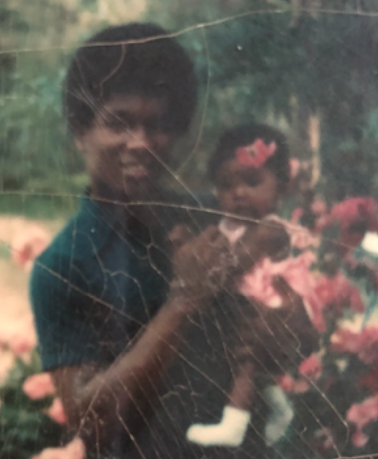
    Sergeant Daniels, left in the top photo, was comfortable with big players on the basketball court and with his small daughter, in the bottom photo, at home. Courtesy of the family
  • Azriel Blackman, airline mechanic for 80 years, dies at 100

    Azriel Blackman, airline mechanic for 80 years, dies at 100

    Azriel Blackman’s love of aviation did not lead him into daring adventures in the air but into ensuring that aircraft were sound to fly.

    For 80 years, he was a plane mechanic working mostly at American Airlines — a record-breaking career in which he wielded wrenches, screwdrivers, and other tools like bucking bars on everything from Sikorsky flying boats built in the 1930s to modern jets like the Boeing 747.

    “He could do anything with his hands, and he was infatuated with the workings of an aircraft,” his son, Mitchell, said in an interview. “It captivated him.”

    In 2012, on Mr. Blackman’s 70th anniversary at American, the airline commissioned a mural of him at the maintenance hangar where he worked at John F. Kennedy International Airport in New York. It depicts him at the center, wearing his yellow vest, surrounded by four airplanes from his past and present.

    In 2017, his 75th anniversary was commemorated by Guinness World Records, which cited him for having the longest career as an airline mechanic. That same year, American dedicated a Boeing 777-200 in his name.

    “Every day, the job is different,” Mr. Blackman, a maintenance crew chief since 1960, told the New York Times in 2017. “You’re not doing the same thing repetitively, and that’s good. If, in my journey around the hangar I see something I can help on, I do that.”

    Mr. Blackman, who was known as Al or Blackie, died July 24 at a nursing home in Queens. He was 100.

    Four years ago, his son said, Mr. Blackman fell at work, broke two vertebrae in his neck and suffered a traumatic brain injury. Spinal cord damage led to a loss of mobility.

    Azriel Blackman was born in Manhattan on Aug. 30, 1925, and grew up in Brooklyn. His father, Aaron, a tailor, was from Russia, and his mother, Mary (Goldberg) Blackman, who managed the home, was from Poland.

    In 1942, Mr. Blackman graduated from Aviation High School, which was then in Manhattan and is now in Long Island City. He was 16 when he was hired as an apprentice in the sheet-metal shop at American Export Airlines (which was later acquired by American Airlines) at New York Municipal Airport — LaGuardia Field (now LaGuardia Airport). His skills in the shop enabled him, for the rest of his career, to mold parts needed to fix aircraft.

    The first aircraft he worked on was the amphibious Sikorsky flying boat. He serviced more than a dozen kinds of planes over the next eight decades, including the Douglas DC-3, the Convair CV-240, the Lockheed Constellation, the Boeing 377, and the McDonnell Douglas MD-80.

    After enlisting in the Army, he served in the Korean War, repairing helicopters for Mobile Army Surgical Hospitals. Following his discharge in 1952, he returned to American at LaGuardia, then moved as a crew chief to New York International Airport, better known as Idlewild Airport, in 1960, three years before it was renamed for President John F. Kennedy.

    “Behind-the-scenes aircraft mechanics, when they succeed, you don’t hear about them, because they’re not glamour jobs,” said Gary Santos, a mechanic who started working at American in 1988. “To have a career as long as his is just mind-boggling.”

    Mr. Blackman’s love of airplanes continued in volunteer work on his days off, like helping to restore aircraft for an ongoing project at Floyd Bennett Field in Brooklyn and a Sikorsky flying boat at the New England Air Museum in Windsor Locks, Conn., near Hartford.

    By 2017, Mr. Blackman’s age led to restrictions on his ability to perform some physical tasks that might injure him, and he was supervised by a crew co-chief. At first, he objected to the limitations but eventually accepted them.

    Even though Mr. Blackman’s job had become more paperwork than mechanical, his experience remained important to American.

    “He represents a valuable institutional memory that says, ‘This is how we do it at American,’” Robert L. Crandall, the president of American from 1980 to 1998, said at Mr. Blackman’s 75th anniversary ceremony. “He’s the guy who sits with the new kids at lunch and passes it on.”

    Wayne Hanna, an aircraft maintenance technician whose father was Mr. Blackman’s crew chief in the 1950s, said that, for the past few years, a group of mechanics visited Mr. Blackman at his home to celebrate his birthday, including his 100th last year.

    “He was older than American Airlines,” he said in an interview. The company has been celebrating its 100th anniversary this year, noting the first flight of Robertson Aircraft, one of the dozens of small airlines that combined in 1930 to form American Airways; it became American Airlines in 1934.
    In addition to his son, Mr. Blackman is survived by a granddaughter. His daughter, Adrienne Larrain, died in March. His wife, Dolores (Cooperstein) Blackman, whom he married in 1954, died in 2011.
    In 2012, American honored Mr. Blackman’s tenure by flying him around New York City in a restored, propeller-driven DC-3, part of the airline’s fleet that carried passengers between the mid-1930s and the late 1940s. He sat in the cockpit as it flew along the Hudson River, over Central Park, and past the former site of Aviation High.

    “He was taken aback by all of that,” his son said. “He didn’t really know how to accept praise of that magnitude. In his mind, he didn’t feel he had done anything extraordinary. He loved going to work. He considered the people he worked with family, and it was enjoyment to him. That was his real reward.”

    This article originally appeared in the New York Times.

  • Reed E. Pyeritz, pioneering medical geneticist and Penn professor emeritus, has died at 78

    Reed E. Pyeritz, pioneering medical geneticist and Penn professor emeritus, has died at 78

    Reed E. Pyeritz, 78, of Radnor, pioneering medical geneticist, cofounder of the Marfan Foundation and the American College of Medical Genetics and Genomics, professor emeritus of medicine and genetics at the University of Pennsylvania, author, mentor, veteran, and nationally ranked masters triathlete, died Monday, Aug. 10, of interstitial lung disease at Bryn Mawr Hospital.

    Dr. Pyeritz was a trailblazing expert on the diagnosis and treatment of Marfan syndrome and other inherited cardiovascular disorders. His 44 years of research and clinical work, from 1978 to 2022, advanced the understanding and management of the diseases, and extended the life expectancy of Marfan patients by 30 years.

    “So many of us in the community owe Reed so much,” Bert Medina, board chair of the Marfan Foundation, said in a tribute. “His legacy lives on in all of us, thanks to his dedication.”

    In an online tribute, a relative of former patients said: “Without this amazing doctor, I wouldn’t have my sister or dad. He changed the world for Marfan patients and their families.”

    Dr. Pyeritz joined the faculty at Penn in 2001 and spent more than 20 years treating patients, teaching students, doing landmark studies on the value and social implications of genetic testing, and championing patient-centered care. He was codirector of Penn’s research center on hereditary hemorrhagic telangiectasia, onetime chair of the faculty senate, and a fellow at the College of Physicians of Philadelphia and other medical associations.

    His “vision and scholarship fundamentally transformed the care of patients,” Nimesh D. Desai, director of the Penn Aorta Center, said on X.

    Before Penn, Dr. Pyeritz spent nine years in Pittsburgh with what is now the Allegheny Health Network and 17 years at the Johns Hopkins University School of Medicine in Baltimore. In 1991, his team at Hopkins discovered that mutations in the FBN1 gene cause Marfan syndrome and followed up with new regimens to treat it.

    He cofounded the Marfan Foundation in 1981 and the American College of Medical Genetics and Genomics in 1991. “It became clear that folks with Marfan syndrome could benefit by an organization that allowed them to communicate [and] to stimulate other physicians to become involved,” he said in a 2018 video interview.

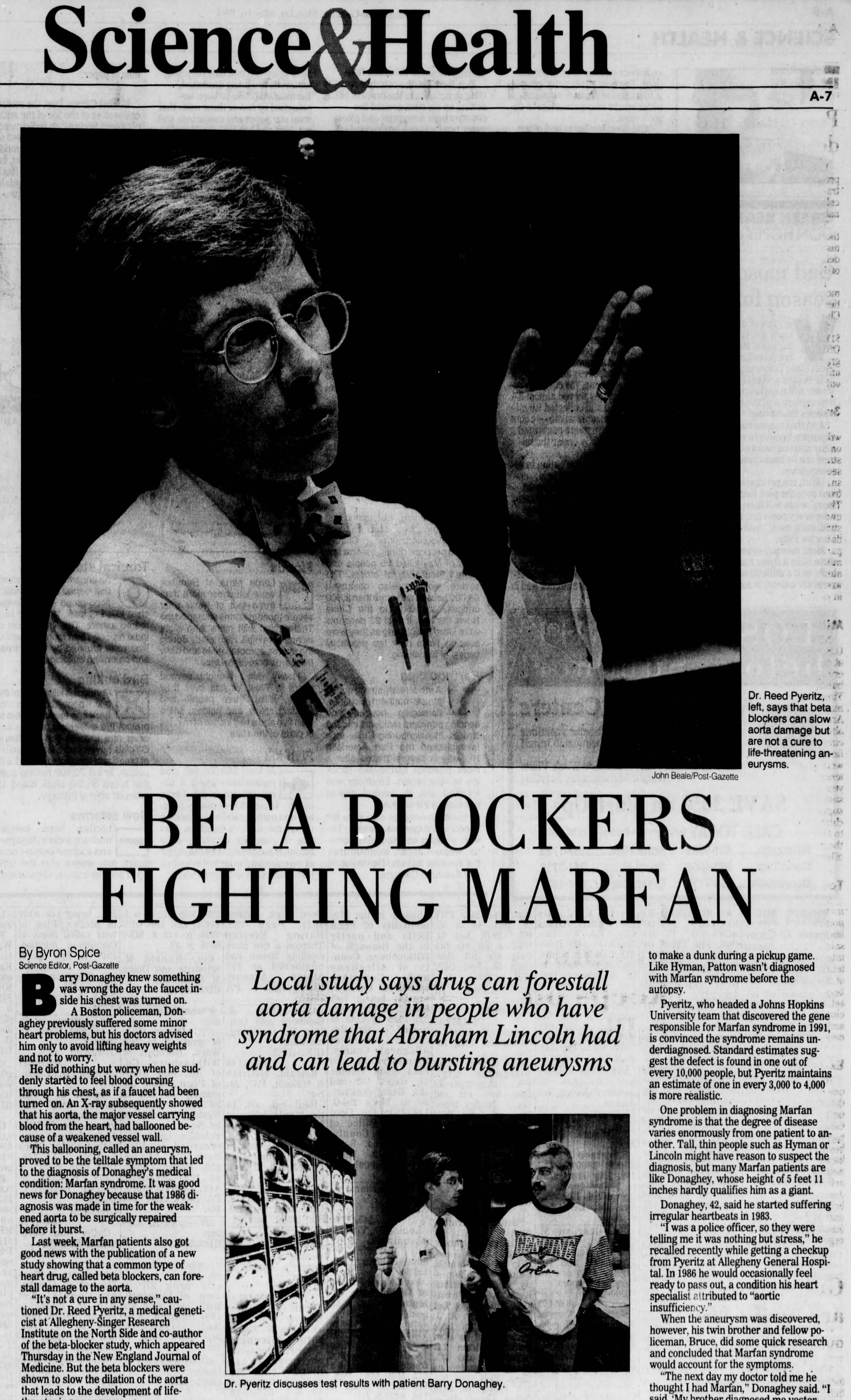
    This story and photos about Dr. Pyeritz appeared in the Pittsburgh Post-Gazette in 1994.Newspapers.com

    Colleagues, friends, and former patients called him “a phenomenal physician,” “a guiding light,” and “an extraordinarily reassuring presence” in online tributes. In 2018, he said: “The most gratifying thing is the fact that folks [with Marfan syndrome] are living their normal life expectancy.”

    Dianna Milewicz, chair of the John Ritter Foundation advisory board, noted his “excellence in clinical care, teaching, and research” on Facebook. Michael L. Weamer, president and CEO of the Marfan Foundation, called him “a true hero” and said his “impact on our community is immeasurable.”

    Dr. Pyeritz edited medical reference books and wrote The Marfan Syndrome and Uncertain Precision: Managing Health Care with Personalized Technologies. More than 700 of his research studies, reviews, and book chapters were published.

    He served 13 years in the Army Reserve Medical Corps and earned lifetime achievement awards from the Marfan Foundation, the American College of Medical Genetics and Genomics, and other groups.

    Dr. Pyeritz and his wife, Jane Tumpson, married in 1972.Courtesy of the family

    On weekends, he did marathons and triathlons, and was part of a world record 100-man, 100-mile relay. His family said in a tribute: “He measured a successful life less by titles or awards than by what one gives, what one learns, whom one loves, and what one leaves behind in others.”

    Reed Edwin Pyeritz was born Nov. 2, 1947, in Pittsburgh. He was fascinated by science and space as a boy, and he built rockets in his backyard and performed scientific experiments in his bedroom.

    He earned a bachelor’s degree in chemistry at the University of Delaware in 1968, a master’s degree and doctorate in biological chemistry at Harvard University in 1972, and his medical degree at Harvard in 1975.

    He met Jane Tumpson in first grade, and they graduated together from Mount Lebanon High School near Pittsburgh in 1965. They reconnected on the tennis court a few years later, married in 1972, and had daughters Allyson and Abigail.

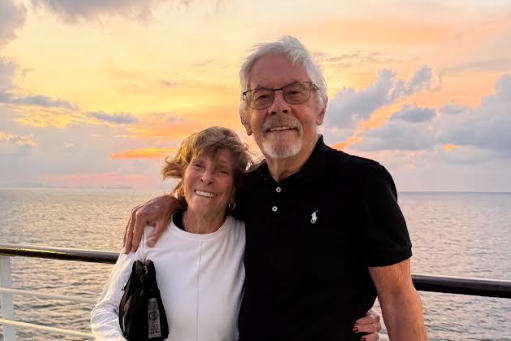
    Dr. Pyeritz, left in the top photo and right in the bottom photo, enjoyed time with his family.Courtesy of the family

    Dr. Pyeritz and his wife honeymooned on Mount Kilimanjaro in Africa and traveled the world together for years. In April, the whole family went to Spain.

    He liked to wear bow ties, build stone walls, watch the news, and spend time outside with his dogs. He followed the Pittsburgh pro sports teams closely and enjoyed Manhattans and chocolate milkshakes.

    “I will miss it all,” he told colleagues at Cure HHT when he retired a few years ago. “But I am certainly looking forward to spending time with my two granddaughters, Tallulah and Penelope.”

    His daughters said: “Ever an adventurer, he instilled in us the importance of making the most of every day, watching the sunrise or sunset, and cherishing the time you have.”

    His wife said: “He loved without exception and reservation.”

    In addition to his wife, daughters, and granddaughters, Dr. Pyeritz is survived by son-in-law Keith Hopkins and other relatives. A brother died earlier.

    A celebration of his life is to be held later.

    Donations in his name may be made to the Marfan Foundation, 22 Manhasset Ave., Port Washington, N.Y. 11050.

    Dr. Pyeritz “loved without exception and reservation,” his wife said.Courtesy of the family
  • Norway’s King Harald V, who fled Nazis as a child and modernized monarchy, dies at 89

    Norway’s King Harald V, who fled Nazis as a child and modernized monarchy, dies at 89

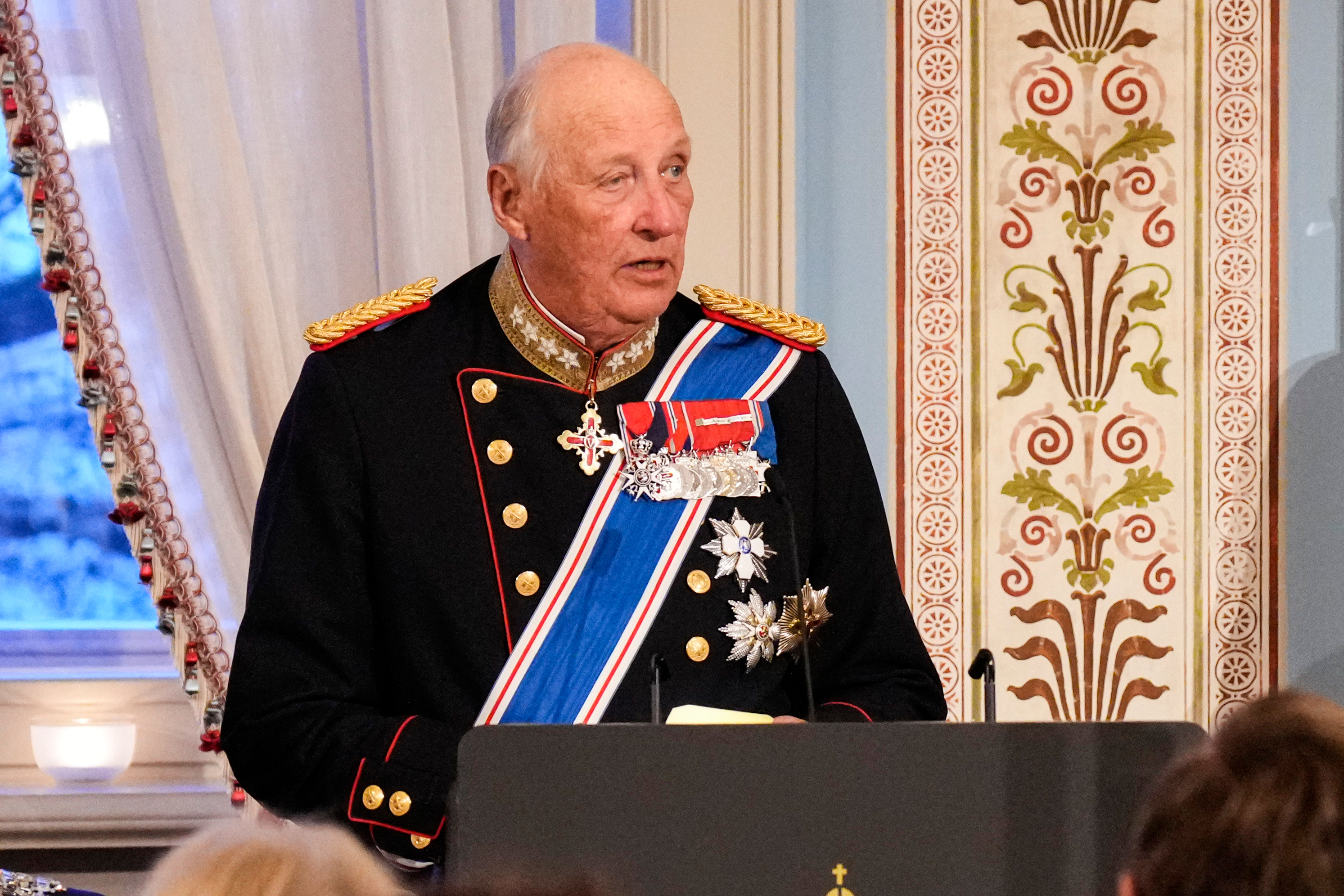
    Norway’s King Harald V, who fled Adolf Hitler’s invasion with his family to take refuge in the White House as a boy, and who later helped modernize the country’s monarchy during his popular 35-year reign, died Friday at a hospital in Oslo. He was 89.

    His death was announced by Norway’s royal family, which did not cite a cause.

    Norway’s Prime Minister Jonas Gahr Store said the “whole nation is in mourning” in a statement Friday, adding that King Harald had “helped us to see the best in ourselves — and in one another.”

    “King Harald had a profound love for Norway. And Norway had a profound love for King Harald,” he said. Other ruling families from across Europe including the United Kingdom, Denmark, Sweden, and the Netherlands shared tributes, alongside political leaders.

    The Norwegian ruler was spirited to safety as a child while war gripped Europe. He spent his formative years in the United States before returning home at age 8, furnished with an American accent and a memory of standing behind President Franklin D. Roosevelt at his inauguration.

    As an adult, King Harald defied tradition by marrying commoner Sonja Haraldsen in 1968. Their marriage shocked the establishment and sparked warnings of the monarchy’s downfall but proved to be one of several ways he charted his own course as ruler. The couple were married more than five decades.

    The avid sportsman and nature lover represented his country in sailing at three Olympic Games — Tokyo in 1964, Mexico City in 1968, and in Munich 1972 — before finally declaring an end to his competitive days in 2022, at age 85. He led the Norwegian chapter of the World Wide Fund for Nature (WWF) for 20 years and is the first king to have a portion of the Arctic named after him.

    As leader of Norway’s constitutional monarchy, King Harald had a largely ceremonial role. But he endeared himself to the country of 5.6 million with his emotional openness and support of diversity and religious tolerance. He sought to modernize the monarchy and make it more transparent, engaging in media interviews and publishing annual financial reports.

    In 1997, King Harald publicly apologized to the Arctic Sami people for government efforts to eradicate their culture over more than two centuries. In the aftermath of the 2011 massacre in which far-right extremist Anders Behring Breivik killed 77 people in a bombing and shooting rampage, he drew praise for a speech in which he struggled to contain his emotions while trying to console the nation. During the speech, he reiterated his belief in a strong, multicultural society.

    In 2016, he went viral for his passionate speech at a royal palace garden party in support of diversity, religious tolerance, and LGBTQ rights.

    “Norwegians are enthusiastic young people — and wise old people. Norwegians are single, divorced, families with children, and old married couples. Norwegians are girls who love girls, boys who love boys, and girls and boys who love each other. Norwegians believe in God, Allah, the Universe, and nothing,” he said at the time.

    “In other words,” he added, “Norway is you.”

    King Harald V was born Feb. 21, 1937, at Skaugum, outside Oslo, the first Norwegian-born prince in 567 years, after the country’s earlier union with Denmark and Sweden. His grandfather, King Haakon VII, became Norway’s sovereign in 1905, establishing a new independent monarchy. The family are relatives of Britain’s royals, and King Harald and Queen Elizabeth II were second cousins.

    He was the third child of Crown Prince Olav and Crown Princess Märtha, who already had two daughters. But at the time, only male heirs could inherit the throne, ensuring his place in the line of succession. (This was amended in 1990 so that the eldest child takes precedence, regardless of gender.)

    His peaceful early childhood was shattered when German troops invaded the country in April 1940. As members of the government and royal family sought to escape the capital by train, Princess Märtha fled to Sweden with her three children and sailed on to the United States at Roosevelt’s invitation.

    In the U.S., they stayed at the White House and at Roosevelt’s home in Hyde Park, N.Y., while King Harald’s father and grandfather escaped to London to set up a government in exile. Princess Märtha and the children eventually settled in a Tudor-style mansion north of Bethesda, Md.

    King Harald would speak of his time in the U.S. fondly, saying in a 1999 speech to President Bill Clinton that he clearly remembered “standing right behind President Roosevelt when he was sworn in.” Images show the Norwegian royal children standing on the White House steps at the time.

    In 2015, King Harald said in a speech in Seattle that he was “deeply grateful for the generosity and hospitality we felt throughout those five years in the United States.”

    “Your country has had a special place in my heart ever since,” he added.

    Upon returning home in 1945, King Harald attended school in Oslo before training at a military academy and studying at the University of Oxford in Britain.

    When Haakon died in September 1957, he became Crown Prince, working alongside his father, King Olav V, before ascending to the throne after his father’s death in 1991.

    Survivors include Queen Sonja; two children, Princess Märtha Louise and Crown Prince Haakon, who will succeed him as king; an elder sister, Princess Astrid; and two grandchildren.

    While initially controversial, King Harald and Sonja’s love story endeared them to the Norwegian public. In 2016, the couple shared unseen photos of their courtship with Norway’s national broadcaster, NRK, describing how they met in 1959, when Crown Prince Harald was 22, and quickly fell in love.

    Though filled with guilt over expectations he would marry a member of European nobility, King Harald said attempts to end their romance amid disapproval from the establishment and Norwegian press were not “entirely successful.” He ended up delivering his father an ultimatum: If he could not marry Sonja, he would remain unmarried. Olav relented, and the couple married at Oslo Cathedral.

    Crown Prince Haakon’s decision to marry a former server and single mother in 2001 would also draw controversy. King Harald supported their relationship, and the fairy-tale wedding drew thousands of flag-waving well-wishers.

    The royal family has faced controversy this year, with Crown Princess Mette-Marit under scrutiny for her friendship with the late sex offender Jeffrey Epstein. Files released as part of a U.S. Justice Department investigation revealed more than 100 messages between Mette-Marit and the disgraced financier. Mette-Marit also came under the spotlight this summer after her eldest son, Marius, was convicted of rape and sentenced to four years in prison. King Harald said he had sympathy for “all those affected” by the trial, and declined to comment on his daughter-in-law’s ties to Epstein.

    Being a sovereign, he once said, was a “lifelong learning period.” But he said he believed the monarchy is in good hands with his son. In 2024, he announced a permanent reduction in duties, citing health issues, but ruled out abdicating as monarch, saying the oath he swore “lasts for life.

    “It’s that simple for me. We’re going to keep going until the bitter end.”

  • Sheri Herman, pioneering internet and cable TV executive, has died at 71

    Sheri Herman, pioneering internet and cable TV executive, has died at 71

    Sheri Herman, 71, formerly of Philadelphia, pioneering internet and cable TV executive, former senior vice president of content and business development for E! Entertainment Television, former president of internet startup American Cybercast, founder of SLH Communications, tech prophet, and dancer, died Thursday, Aug. 6, of heart failure at her home in Telogia, Fla., about 35 miles west of Tallahassee.

    A magna cum laude communications graduate at Temple University, Ms. Herman went to New York after college to produce commercials for an ad agency. Over the next 27 years, she relocated to Denver and Los Angeles, successfully marketed, programmed, and developed dozens of TV networks and online companies, and pioneered the integration of TV and the emerging internet.

    She was “mesmerized” by Apple cofounder Steve Jobs, her sister, Nadine, said, and predicted in the 1970s that one personal device would eventually take pictures, send messages, stream content, and still make phone calls. Jarl Mohn, former president and chief executive officer at E!, called Ms. Herman “a pioneer in incorporating new technologies and branding in entertainment.”

    He said: “She also brought passion and conviction to everything she worked on.”

    Ms. Herman founded her own firm, SLH Communications, in 1999. Courtesy of the family

    Ms. Herman helped turn the startup Movietime channel into E! Entertainment Television in 1990 and told the Los Angeles Times: “We’re going to totally reposition the network. You won’t recognize us.” Over the next few years, E! grew its subscriber base from two million to 55 million, and Ms. Herman won industry awards for her marketing campaigns.

    At American Cybercast, she championed The Spot, a groundbreaking interactive online reality show, in 1995, and told the Los Angeles Times in 1996: “We’re creating a new medium, but we’re kind of a cross between publishing and broadcasting in that we’re going to be advertising driven. If we were a movie studio, we’d be Miramax with a little more edge.”

    Russell Collins, founder of American Cybercast, said: “Sheri Herman was nothing if not fearless. Her determination was boundless and fierce.”

    Ms. Herman was especially effective at fundraising for projects and combining online content with ads and product placement. She trailblazed new internet publishing formats that included text, photos, and videos, and predicted the collision of TV and internet content. In 1996, she told Variety: “Eyeballs will move from TV to PC.”

    Ms. Herman (left) oversaw the development of the Discovery Channel, the Fashion Channel, QVC, and other networks.Courtesy of the family

    As director of programming for the United Cable Television Corp. in the mid-1980s, Ms. Herman collaborated with dozens of networks and oversaw the development of the Discovery Channel, the Fashion Channel, QVC, and other networks.

    As senior vice president of programming and production for the Access Entertainment Network in the late 1990s, she reintroduced popular music videos and, according to Variety in 1998, gained six million subscribers in the network’s first three months of existence.

    She founded her own firm, SLH Communications, in 1999 and contracted with TV Guide, Barnes & Noble, Hilton Hotels, musicians Quincy Jones and Jon Bon Jovi, and other entertainers and businesses. In New York, in the 1980s, she worked with cosmetics mogul Estée Lauder.

    Temple officials noted her “influential career” in a tribute, and longtime friend and colleague Martin Lewis said: “She had a relentless thirst for charting new paths forward. She proselytized new media, new approaches, new everything.”

    Ms. Herman (right) enjoyed time with her family.Courtesy of the family

    In 2007, Ms. Herman reduced her daily responsibilities after being seriously injured in an auto accident in California. She moved to Florida in 2021.

    Lewis said: “She was inventive, creative, exhilarating.”

    Sheri Lynn Herman was born May 21, 1955, in Philadelphia. She grew up in Overbrook Park with her parents and older sister, and graduated from Philadelphia High School for Girls.

    Her family featured several singers, and she spent many holidays singing songs and playing guitar around the piano at her grandparents’ home in Wynnefield. She loved music, studied ballet when she was young, and performed later with the Janosik Polish Dance Ensemble.

    Ms. Herman was a magna cum laude communications graduate at Temple University.Courtesy of the family

    Stylish and social, Ms. Herman enjoyed traveling and entertaining. She was a skilled seamstress who made her own clothes, an accomplished chef, and adept at interior decorating. She doted on her cats and dogs.

    She married and divorced twice, and, after Philadelphia, lived in New York, Denver, and Los Angeles before Florida. Her sister said: “She was brilliant.”

    In addition to her sister, Ms. Herman is survived by other relatives.

    A celebration of her life is to be held later. Family, friends, and colleagues can connect at www.SheriHerman.com.

    Donations in her name may be made to the Temple University Klein College Recruitment Fund, Annenberg Hall, 2020 N. 13th St., Philadelphia, Pa. 19122.

    Stylish and social, Ms. Herman enjoyed traveling and entertaining.Courtesy of the family
  • Frank Spagnuola, original ‘American Bandstand’ dancer and longtime interior designer, has died at 85

    Frank Spagnuola, original ‘American Bandstand’ dancer and longtime interior designer, has died at 85

    Frank Spagnuola, 85, formerly of Philadelphia, one of the original American Bandstand dancers, 1957 Chalypso dance champion, longtime interior designer, and gourmet home cook, died Monday, Aug. 17, of congestive heart failure at the Complete Care at Court House nursing center in Cape May Court House.

    Born and reared in South Philadelphia, Mr. Spagnuola was lifelong friends with performers Bobby Rydell, Frankie Avalon, Fabian Forte, James Darren, and Jerry Blavat, and dozens of other singers, dancers, musicians, and disc jockeys from the neighborhood. He enjoyed socializing as well as music and dancing, and, at 15, became one of the original dancers when the old WFIL-TV station hosted Bandstand and then American Bandstand in the 1950s and ’60s.

    The TV station invited local teens to dance to the latest hits in its Studio B on Market Street in West Philadelphia, and Mr. Spagnuola did just that on many afternoons from 1955 to 1963. In 1957, he and partner Dottie Horner finished first in American Bandstand’s first Chalypso contest, spotlighting an original Philly dance that combines the cha-cha and the calypso.

    “We would cut classes” to dance on Bandstand, Mr. Spagnuola, a graduate of the old Bishop Neumann High School, said in a 2017 video interview. “We had eight or nine classes, and we would leave, like, the sixth class. Father would say, ‘Where are you going?’ Well, you know where we’re going, Father. The priests watched the show. I mean, everybody watched the show.”

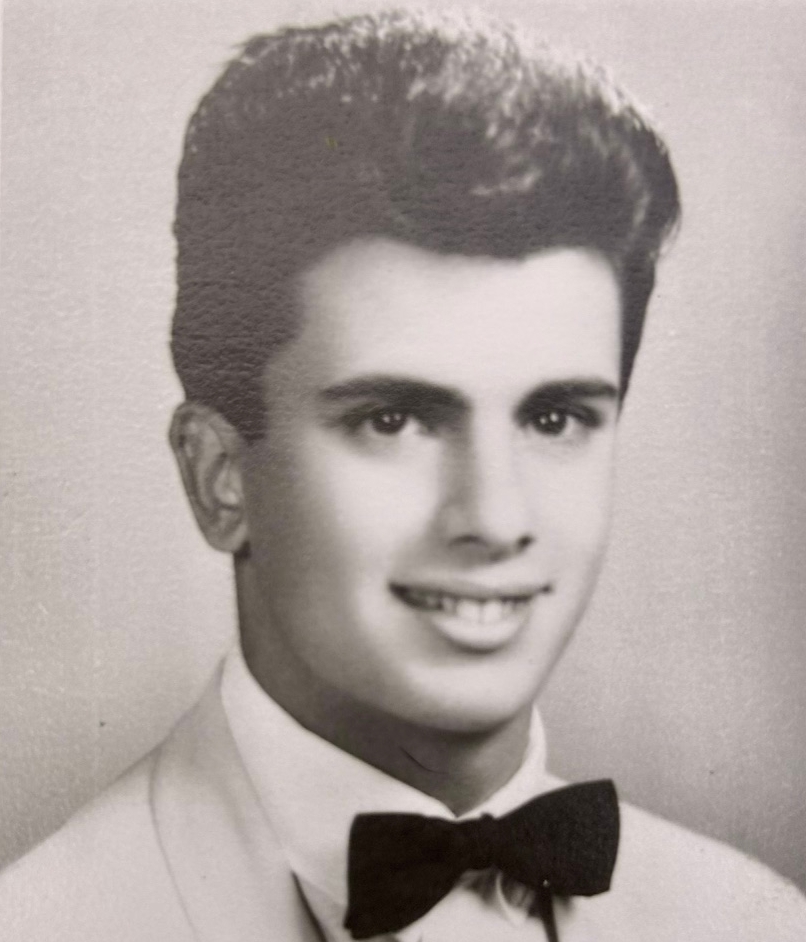
    Mr. Spagnuola graduated from the old Bishop Neumann High School in 1958.Courtesy of the family

    It was downstairs at Studio B, Mr. Spagnuola said, that he encountered Bandstand guest stars Pat Boone, Bobby Darin, and Sal Mineo. As a teen in the neighborhood, he performed in local skit shows with Rydell and played football and double-dated with Fabian.

    On Facebook, Fabian called Mr. Spagnuola “a gentleman and talented dancer,” and said: “Frank Spagnuola was one of the most popular and beloved regular dancers on Dick Clark’s American Bandstand during the show’s iconic Philadelphia era.”

    Mr. Spagnuola is profiled at history-of-rock.com and bandstand.cafex.biz, and he and Dottie Horner are on the cover of the 1997 Dick Clark’s American Bandstand souvenir collectors’ magazine. He is featured in the 1997 New Jersey Network documentary Bandstand Days and called the show “part of American history.”

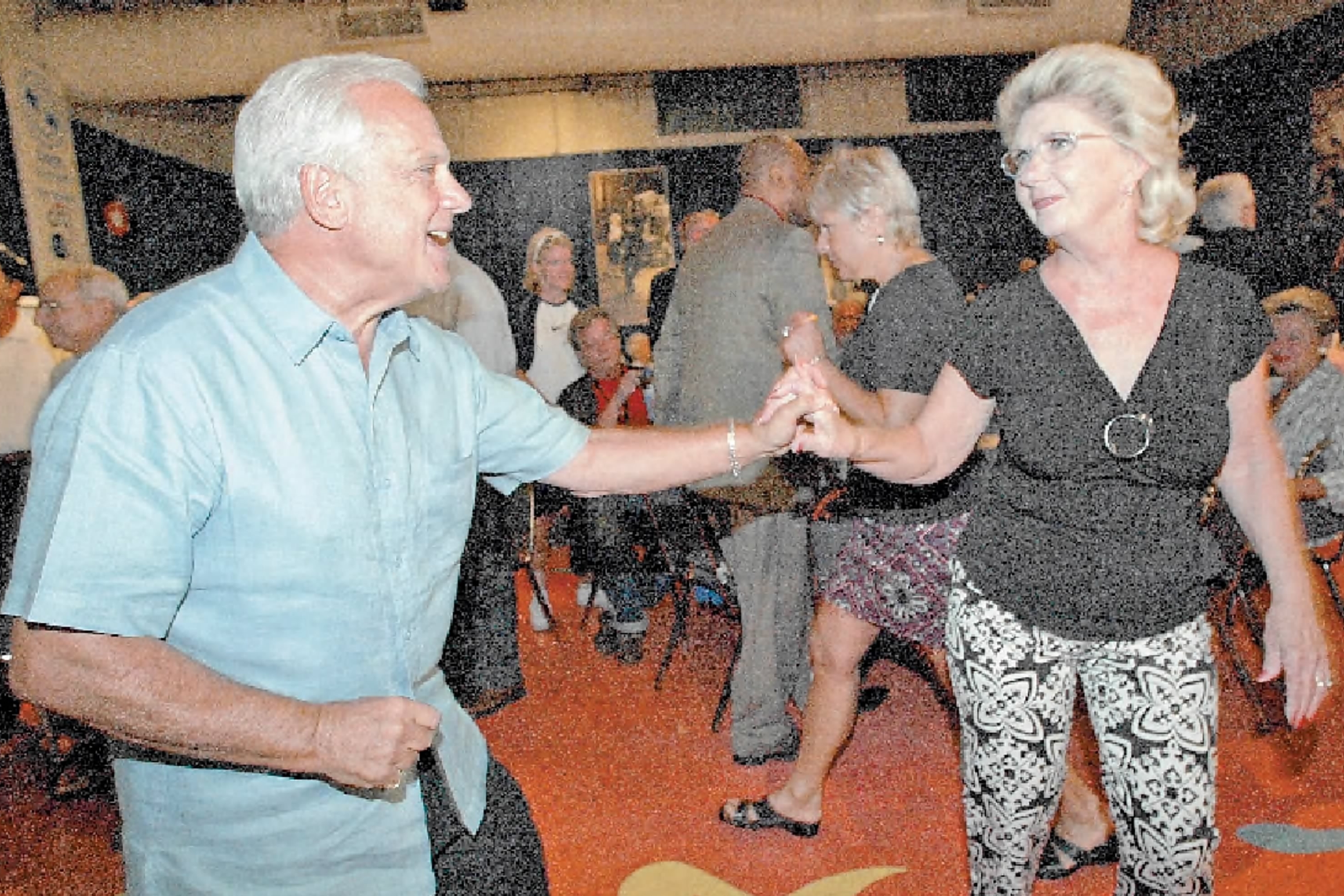
    Over the years, as Bandstand’s popularity ebbed and flowed, he routinely reconnected with other original dancers — they were called the Bandstand Regulars — at reunions, public events, and celebrations in the region. American Bandstand went off the air in 1989.

    Mr. Spagnuola and his dance partner, Dottie Horner, were on the cover of this 1997 souvenir collectors’ magazine. Courtesy of the family

    “Everybody loved Frank,” said longtime disc jockey and music director Tommy McCarthy. “He had an infectious smile. He was a guy you just liked.”

    Friends on Facebook called Mr. Spagnuola “movie star handsome,” “a rock & roll soldier,” “a Bandstand pioneer,” and “one of the nicest gentleman you could ever meet.” One said: “Wonderful dancer, wonderful person, wonderful friend.”

    After graduating from Bishop Neumann in 1958, Mr. Spagnuola worked in a high-end carpet store, studied interior design, and earned an associate’s degree at the old Philadelphia College of the Arts. He became an interior designer, worked for Sears at the Moorestown Mall for 25 years, and was active with the American Society of Interior Designers.

    On his own, he did private design work for Muhammad Ali, former Eagles assistant coach Jon Gruden, and other local notables. “He cultivated an eye for beauty and design,” his family said in a tribute, “shaping spaces with elegance and functionality.”

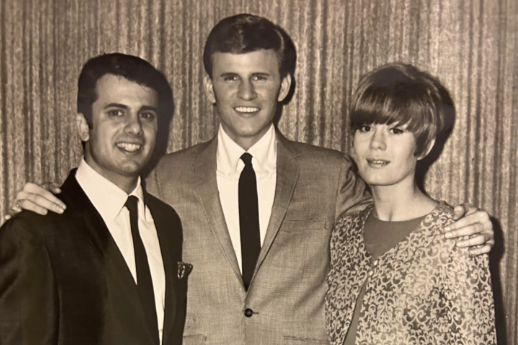
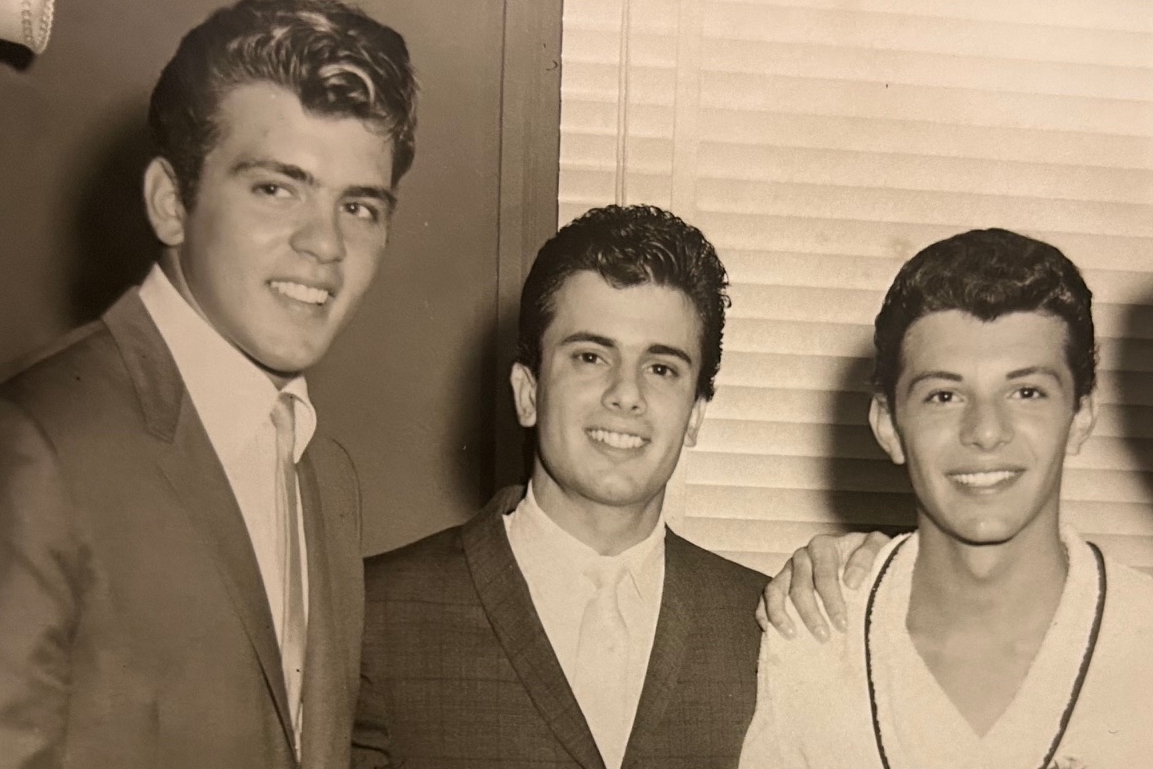
    Mr. Spagnuola (left above) stands with his wife, Janet, and Bobby Rydell. Below, he is flanked by Fabian (left) and Frankie Avalon.Courtesy of the family

    Francis Michael Spagnuola was born Nov. 2, 1940. The oldest of three brothers, he liked to hang out at the Jersey Shore and dine on Italian food.

    He married Janet Moretti, and they had a son, Stephen, and a daughter, Carrie, and lived in South Philadelphia and Center City. His wife died in 2005.

    Mr. Spagnuola moved to Cape May later, became an accomplished home cook, and was known for his crab salad dip. He was passionate, upbeat, and funny, everyone said, and his children called him “a steadfast anchor and a lifelong source of support.”

    His family said: “He leaves behind a memory as warm and enduring as the summer shore and the Wildwood days he so dearly cherished.”

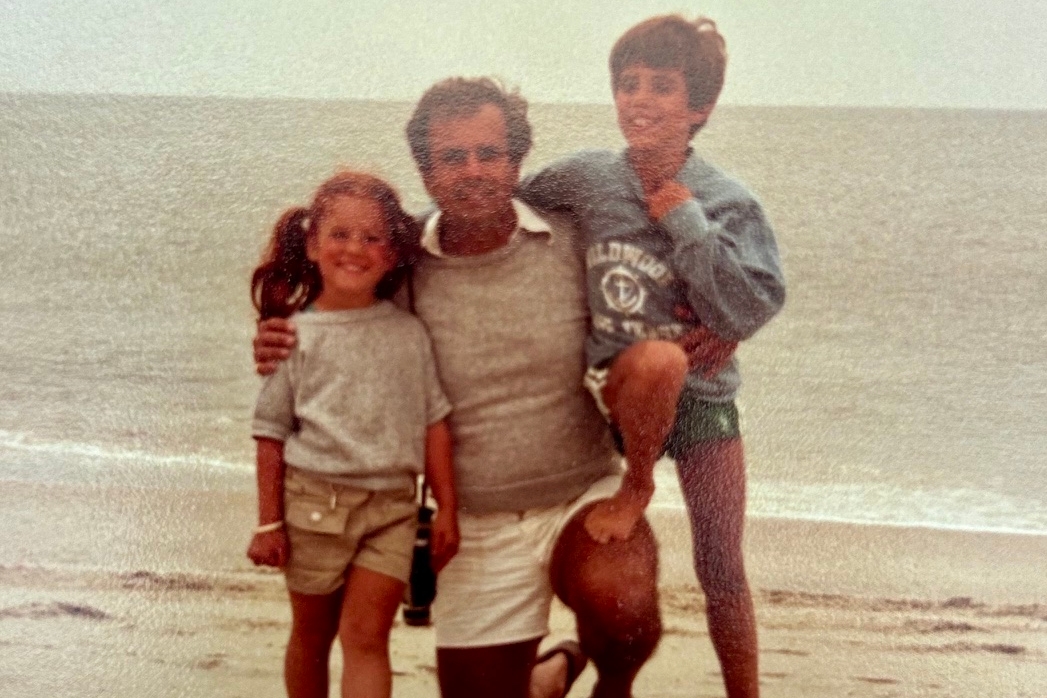
    Mr. Spagnuola enjoyed time with his children (above) and grandchildren (below).Courtesy of the family

    His son said: “He loved life. He loved people. He loved characters.”

    In addition to his children, Mr. Spagnuola is survived by three grandchildren and other relatives. Two brothers died earlier.

    Services were held earlier.

    Donations in his name may be made to the American Heart Association, Box 840692, Dallas, Texas 75284.

    Mr. Spagnuola “loved life. He loved people. He loved characters,” his son said.Courtesy of the family
  • Joan M. Satterthwaite, talented tailor and seamstress, and longtime office administrator, has died at 92

    Joan M. Satterthwaite, talented tailor and seamstress, and longtime office administrator, has died at 92

    Joan M. Satterthwaite, 92, of Philadelphia, talented tailor and seamstress, longtime office administrator for the Mayor’s Commission on Aging, volunteer, and community caretaker, died Tuesday, Aug. 4, of sepsis at Jefferson Washington Township Hospital in Gloucester County.

    Adept at designing, constructing, fitting, and altering garments of all kinds, Ms. Satterthwaite worked at the Botany 500 factory at Broad Street and Lehigh Avenue, and for other clothing manufacturers in Philadelphia, for more than 20 years. She could do every job on the intricate clothing assembly line, her son Kevin said, and she did them fast and well.

    She joined the International Ladies’ Garment Workers’ Union in the 1950s and supplemented her weekday work by producing gowns, dresses, suits, and other clothing for family, friends, church choirs, wedding parties, and local businesses.

    She made Halloween costumes for her two sons when they were young and tailored suits when they were older. She designed a wedding dress for her daughter-in-law.

    She could duplicate many patterns by looking at them just once. Over the years, she collected eight sewing machines. “Her craftsmanship and attention to detail earned her the admiration and loyalty of countless clients,” her family said in a tribute.

    Her son Kevin said: “We would call her an entrepreneur today.”

    In the mid-1980s, Ms. Satterthwaite left garments and became certified in office administration and computer technology at the old Philadelphia School of Office Technologies. For a decade, she worked for the Joseph Shein Law Firm.

    She tried to retire in the mid-1990s. But she impressed officials at the Mayor’s Commission on Aging so much as a client that they recruited her as a receptionist and administrative assistant. She left that job in 2018, at 85.

    Ms. Satterthwaite reared her sons in Philadelphia. Courtesy of the family

    After that, she volunteered with veterans groups, was active in the community, and opened her home to anyone in need. “If someone asked for help,” her son Kevin said, “she was there.”

    Her family said: “Joan’s life was a testament to perseverance, faith, compassion, and determination. Her kindness, generosity, and genuine concern for others became hallmarks of a life well lived.”

    A friend said online: “Ms. Joan was the nicest person ever. … Her kind spirit reminded me of my grandmother.”

    Joan Marie Watts was born Dec. 28, 1933, in North Philadelphia. Her mother died when she was 2, and she was reared by her grandfather and his wife.

    Ms. Satterthwaite doted on her grandchildren.Courtesy of the family

    She studied tailoring and sewing at William Penn High School and graduated in 1952. She married Charles Satterthwaite in 1953, and they had sons Kevin and Eric. Her husband died earlier.

    Ms. Satterthwaite was a member of Triumph Baptist Church for more than 35 years, and she went to breakfast with others often after Sunday service. She had breakfast with her sons on Saturdays, bowled every week for 30 years, hosted memorable family gatherings on holidays, and pored over puzzle books when she was older to stay sharp.

    Her family noted her “warm heart, generous spirit, and love of people” in a tribute and said: “Her kindness, patience, and genuine concern for others left a lasting impression on all who knew her.”

    She doted on her family and told them often that education was a key to success. She lived in Nicetown and Logan, and most recently in Washington Township.

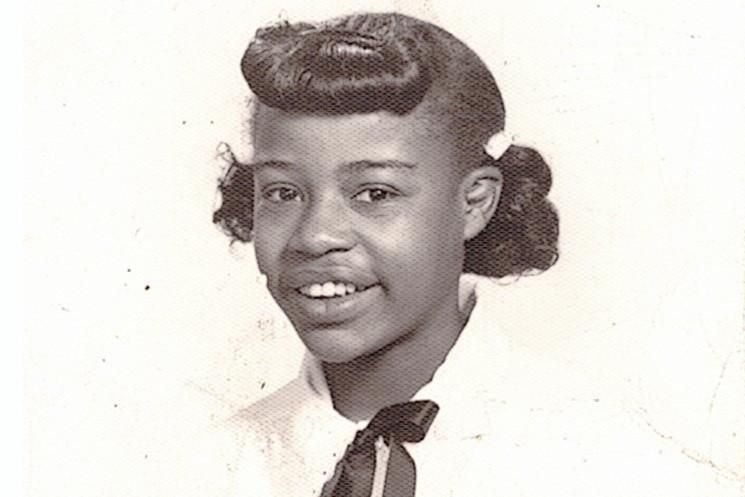
    Ms. Satterthwaite graduated from William Penn High School. Courtesy of the family

    Her son Eric praised her “unwavering belief that nothing in life was more important than family.” Her son Kevin said: “She was welcoming and warm. She liked being around people. Her life force kept her going.”

    In addition to her sons, Ms. Satterthwaite is survived by four grandchildren, two sisters, a brother, and other relatives. Two brothers died earlier.

    Services were held earlier.

    Donations in her name may be made to Triumph Baptist Church, 1648 W. Hunting Park Ave., Philadelphia, Pa. 19140.

    Ms. Satterthwaite bowled every week for decades. Courtesy of the family
  • Nancy Kassebaum, first woman to chair a major Senate panel, dies at 94

    Nancy Kassebaum, first woman to chair a major Senate panel, dies at 94

    Nancy Kassebaum, a three-term moderate Republican from Kansas who was the first woman to chair a major standing committee in the U.S. Senate, died Friday in Manhattan, Kan. She was 94.

    The death, at a hospice care facility, was confirmed by her son William Kassebaum.

    As the leader of the Committee on Labor and Human Resources (now known as the Committee on Health, Education, Labor, and Pensions) from 1995 to 1997, Sen. Kassebaum won passage of legislation to ensure the portability of health insurance coverage when workers changed jobs. She and the bill’s Democratic co-sponsor, Sen. Edward Kennedy of Massachusetts, overcame months of opposition from Sen. Bob Dole, the majority leader and her close friend, fellow Republican, and fellow Kansan.

    She had earlier played a role as Congress overrode President Ronald Reagan’s veto of a 1986 bill to enact economic sanctions against the apartheid regime in South Africa. As chairperson of a subcommittee on African affairs, she met with the president, urging him to challenge the regime: “There is one person they might listen to, and that is President Reagan.” Instead, he warned of the threat of Marxist tyranny if apartheid fell. She joined 77 other senators as they overrode his veto.

    Over her Senate career, which lasted from 1978 to 1997, her voting record was scored at 56% by the American Conservative Union and 37% by the liberal organization Americans for Democratic Action. On most economic issues, she voted conservatively. But from her first run, she supported abortion rights, saying in a campaign debate, “Abortions are seldom the right moral choice, but I feel there should be a choice.”

    In a 2013 interview for this obituary, she said that because of her views on abortion and her support for a ban on assault weapons, “I couldn’t get elected today” in Kansas. She was a critic of President Donald Trump’s since the 2016 campaign, and endorsed Kamala Harris against him in 2024. In recent years, she also endorsed Democratic candidates for governor and senator in Kansas.

    She had no trouble winning her three terms, though, and was a heavy favorite to win again in 1996. But like many moderates, then and now, she had tired of the political strife in the capital.

    In December 1995, after she announced her retirement, she told the New York Times: “The higher the decibel level gets, the more it’s like a boxing match. It’s really different from when I came here.”

    A year later, in December 1996, shortly before her third and final term ended, she married former Sen. Howard Baker of Tennessee, an influential Republican politician who had served as majority leader and whose first wife died of cancer in 1993. For years, they lived at his home in Huntsville, Tenn., and on her ranch in Burdick, Kan., which she said in 2013 was so peaceful that “at night the only thing I hear is the coyotes.” Baker died in 2014, at 88.

    Burdick is on the edge of the Flint Hills, and she said that, of all her achievements in Congress, she was proudest of the establishment of the 10,894-acre Tallgrass Prairie National Preserve in that region, as well as legislation limiting liability for manufacturers of general aviation aircraft, an important industry in Kansas.

    Nancy Josephine Landon was born in Topeka, Kan., on July 29, 1932. Her father, Alfred Mossman Landon, an oilman known as Alf, was then running for the first of what would be two terms as a progressive Republican governor. Her mother, Theo (Cobb) Landon, was a pianist and harpist.

    Nancy went to local public schools, graduated from the University of Kansas in 1954 with a bachelor’s degree in political science, and earned a master’s degree in diplomatic history at the University of Michigan in 1956, the year she married John Philip Kassebaum, known as Phil, a law student there. They moved to Maize, Kan., outside Wichita, and had four children.

    Politics had been the lifeblood of the Landon home as she grew up — all the more so after her father ran in 1936 as the Republican nominee against President Franklin D. Roosevelt. (Landon won only two states, Maine and Vermont, and eight electoral votes.) Often visited by leading Republicans, he remained a revered figure in Kansas until he died at 100 in 1987.

    But before his daughter ran for the Senate in 1978, her political experience was limited. She had been elected to the local school board and served a year as a constituent services staff member for Sen. James Pearson.

    When Pearson unexpectedly announced his retirement, she entered a wide-open, crowded Republican primary with eight other candidates. She was separated from her husband at the time — they divorced in 1979 — and ran as Nancy Landon Kassebaum.

    She never denied the value of name recognition. “It has been said I am riding on the coattails of my dad,” she conceded while campaigning, “but I can’t think of any better coattails to run on.”

    She won the primary with just over 30% of the vote, then defeated the Democratic candidate, Bill Roy, with 54% in the general election. She was reelected in 1984 and 1990, earning three-quarters of the vote both times.

    In addition to her son William, she is survived by another son, John Jr.; seven grandchildren; and two great-grandchildren.

    The only woman in the Senate when she was first elected, she bridled at the kind of commentary on her clothing and hair that would never be directed toward her male colleagues. She occasionally complained that those colleagues did not take her seriously. But she had experienced the same thing at home.

    “My dad was adamantly opposed” to her 1978 candidacy, she said in 2013. “I think it was because he’d thought I’d lose, but also because he could not imagine a woman in the Senate. It was especially hard for him to visualize it was his daughter.”

    In 1995, she said that one thing she would not miss after leaving was being asked, “What’s it like to be a woman in the Senate?” By then, eight women were senators — so, she said, “it’s no longer a big deal.”

    This article originally appeared in the New York Times.