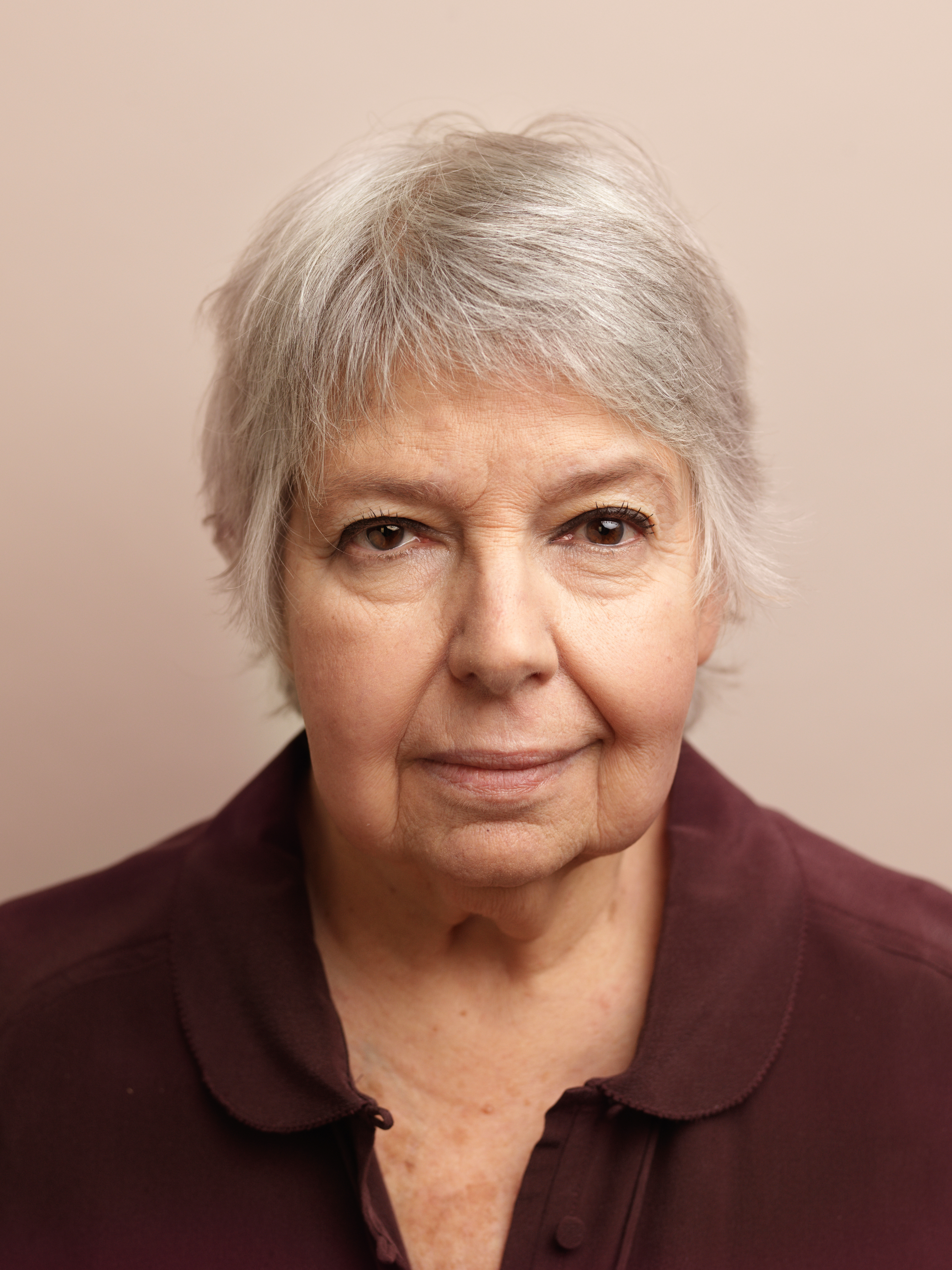
Kelly N. Moore, 46, of Burlington Township, award-winning clinical psychologist, founder of Moore Wellness LLC, director of the Center for Psychological Services at Rutgers University, graduate school clinical associate professor, former fellow at the University of Pennsylvania’s Center for the Treatment and Study of Anxiety, mentor, author, mental health activist, volunteer, and 2026 Willingboro High School Hall of Fame inductee, died Thursday, Aug. 20, of kidney cancer at Virtua Voorhees Hospital.
Adept at treating anxiety, depression, trauma, and perinatal disorders, Dr. Moorebecame director of the Rutgers Center for Psychological Services and a clinical associate professor in the Graduate School of Applied and Professional Psychology in 2020. As CPS director, she mentored hundreds of doctoral students regarding academic requirements and clinical procedures, and supervised the center’s community mental health clinic.
She significantly expanded the center’s services and outreach, Rutgers colleagues said in a Facebook tribute, and forged important partnerships on campus and in the community. Colleagues said: “Her warm demeanor, melodic voice, vibrant spirit, and calming presence made all who met, and were fortunate enough to know her, feel seen, welcomed, and heard.”
She spent two years as a fellow at Penn’s Center for the Treatment and Study of Anxiety after earning her doctorate in clinical psychology at Rutgers in 2011. During the COVID-19 pandemic, she founded Moore Wellness LLC and focused on helping women, children, and clients of color.
“Wellness does not mean you will never experience challenges,” Dr. Moore said in an online profile for Psychology Today magazine. “Rather, it means having the tools to manage the challenges when faced with them.”
Dr. Moore was an outspoken activist for mental health education and services. She spoke with groups often, organized workshops, and was featured in newspapers and magazines and on TV and podcasts. “Just trying to get people to understand as much as they can about the impact their mental health and well being have on their day-to-day lives,” she said in a 2026 podcast interviewwith the Multicultural Counseling Institute.
She belonged to the American Psychological Association and the New Jersey chapter of the Association of Black Psychologists. She was active with the Therapy for Black Girls podcast and the Leadership Institute for Women in Psychology.
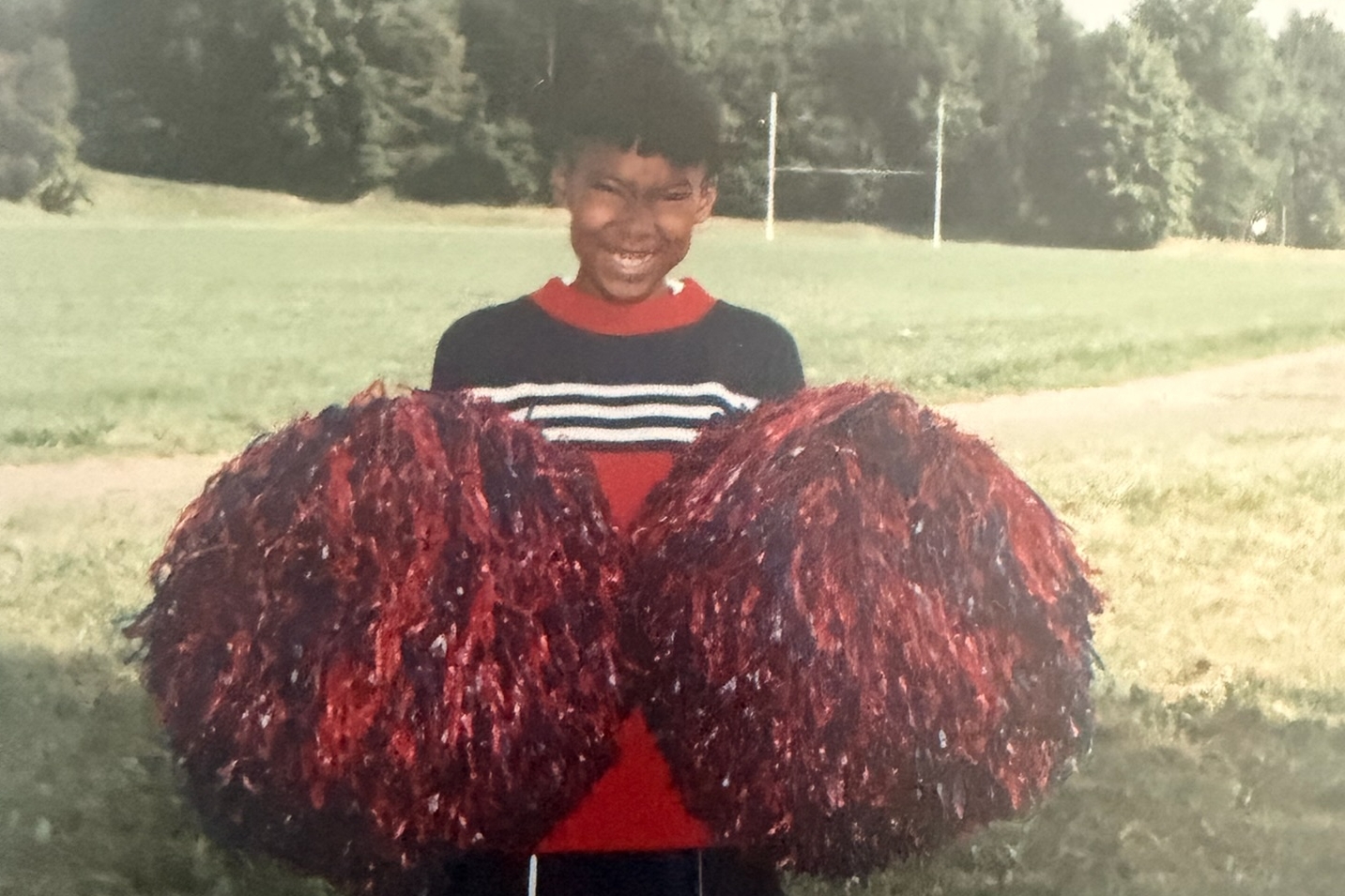
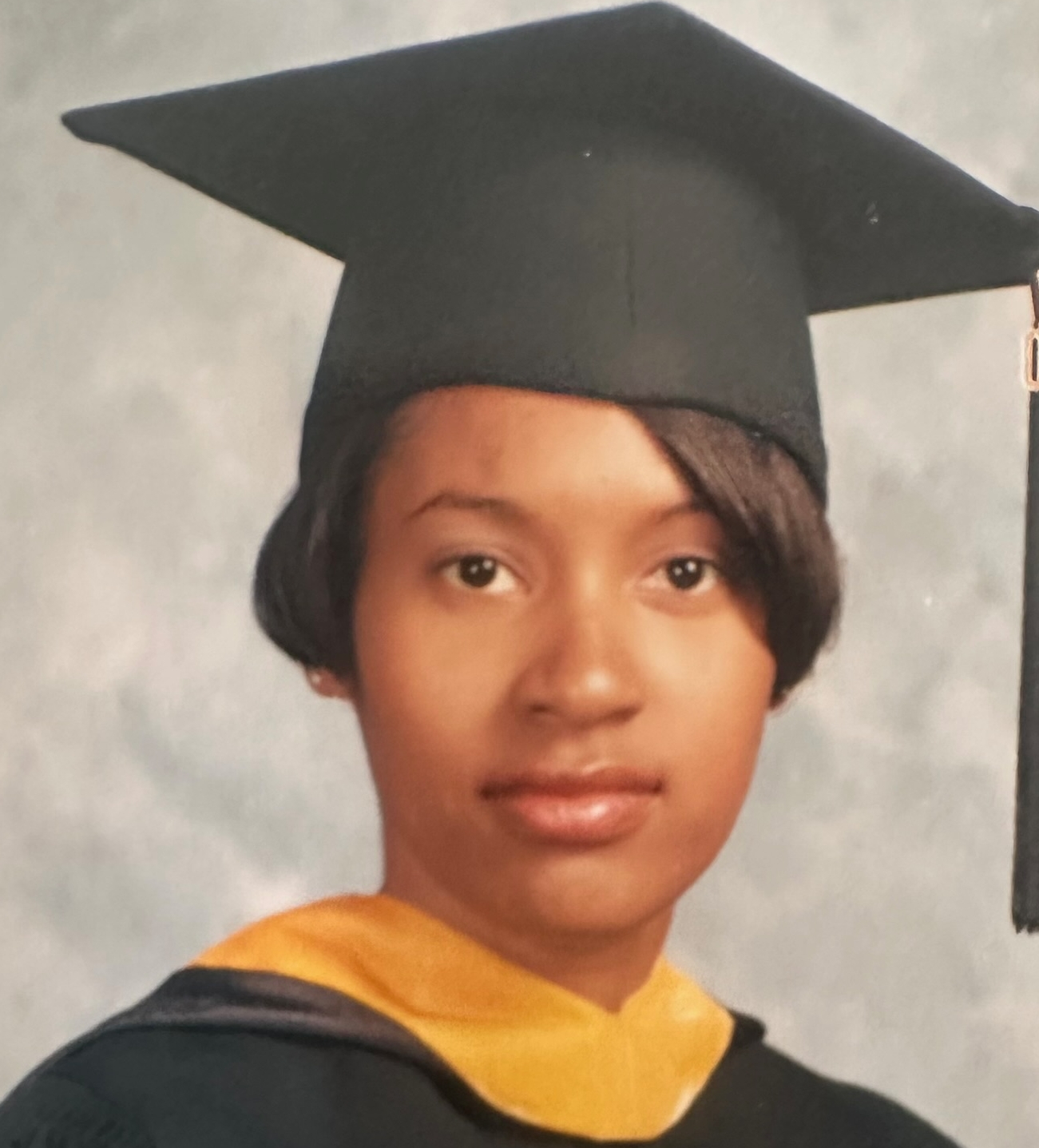
Dr. Moore was a cheerleader and lacrosse player, and graduated from Cornell University in 2002.Courtesy of the family
She earned leadership and achievement awards from the New Jersey Psychological Association, the National Council of Schools and Programs of Professional Psychology, and other groups. She was president and a board member of the Burlington County chapter of Jack and Jill of America Inc. Colleagues there called her “a beautiful example of leadership, service, grace, and love.”
Kelly Nicole Walker was born Aug. 20, 1980, in Philadelphia. Her family moved to Willingboro when she was 2, and she graduated from Willingboro High School in 1998.
She was a cheerleader and played lacrosse and viola as a teenager. Her mother, Diana, was a social worker, and she showed Dr. Moore up close how one person could impact their community.
“I was just fascinated by this concept,” Dr. Moore told the Multicultural Counseling Institute in the podcast interview. “It was already set at a young age that this was the kind of work I should be doing.”
She earned a bachelor’s degree in human development at Cornell University in 2002 and a master’s degree in education at Penn in 2003.
She met Melvin Moore through friends, and they married in 2004 and had sons Miles, Mason, and Matthew. They lived in Marlton and Delanco, and, since 2015, in Burlington Township.
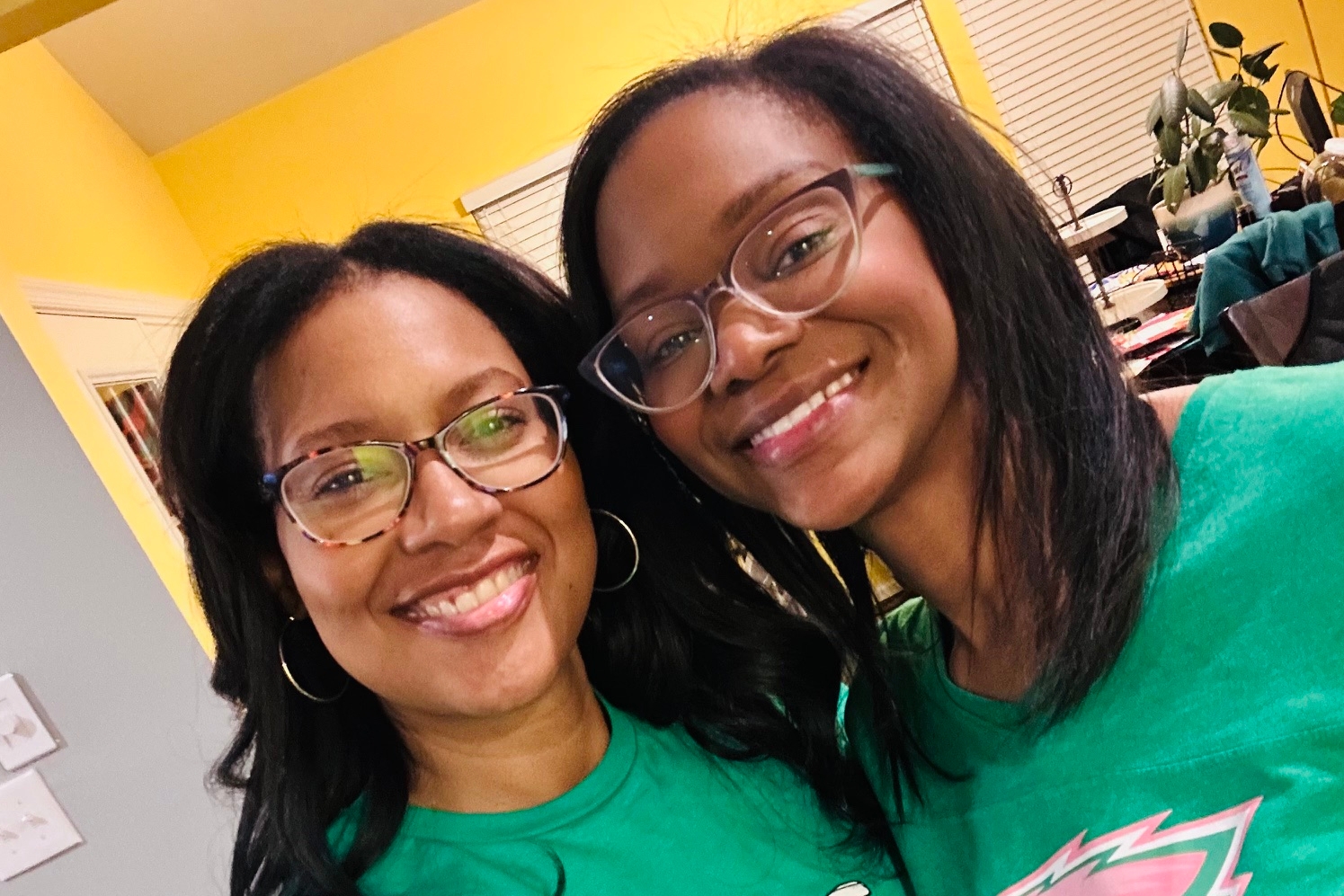
Dr. Moore was a longtime member and dance choreographer at the Gospel Tabernacle Church. She joined Alpha Kappa Alpha Sorority Inc. at Cornell in 2000 and was on the executive board of its Pi Mu Omega chapter in Willingboro.
Friends noted her “warmth, generosity, and kindness,” and called her “genuine” and “quietly brilliant” in online tributes. One friend said: “She sure made me proud to be from Willingboro.”
Dr. Moore and her husband, Melvin, married in 2004 and had three sons. Courtesy of the family
Dr. Moore doted on her sons and called them her “M & M’s.” She was an avid reader and led several book clubs.
She liked to garden, play piano, take photos, cook, and crochet. She was diagnosed with renal medullary carcinoma about a year ago and was determined, her husband said, to reach her 46th birthday. She did it.
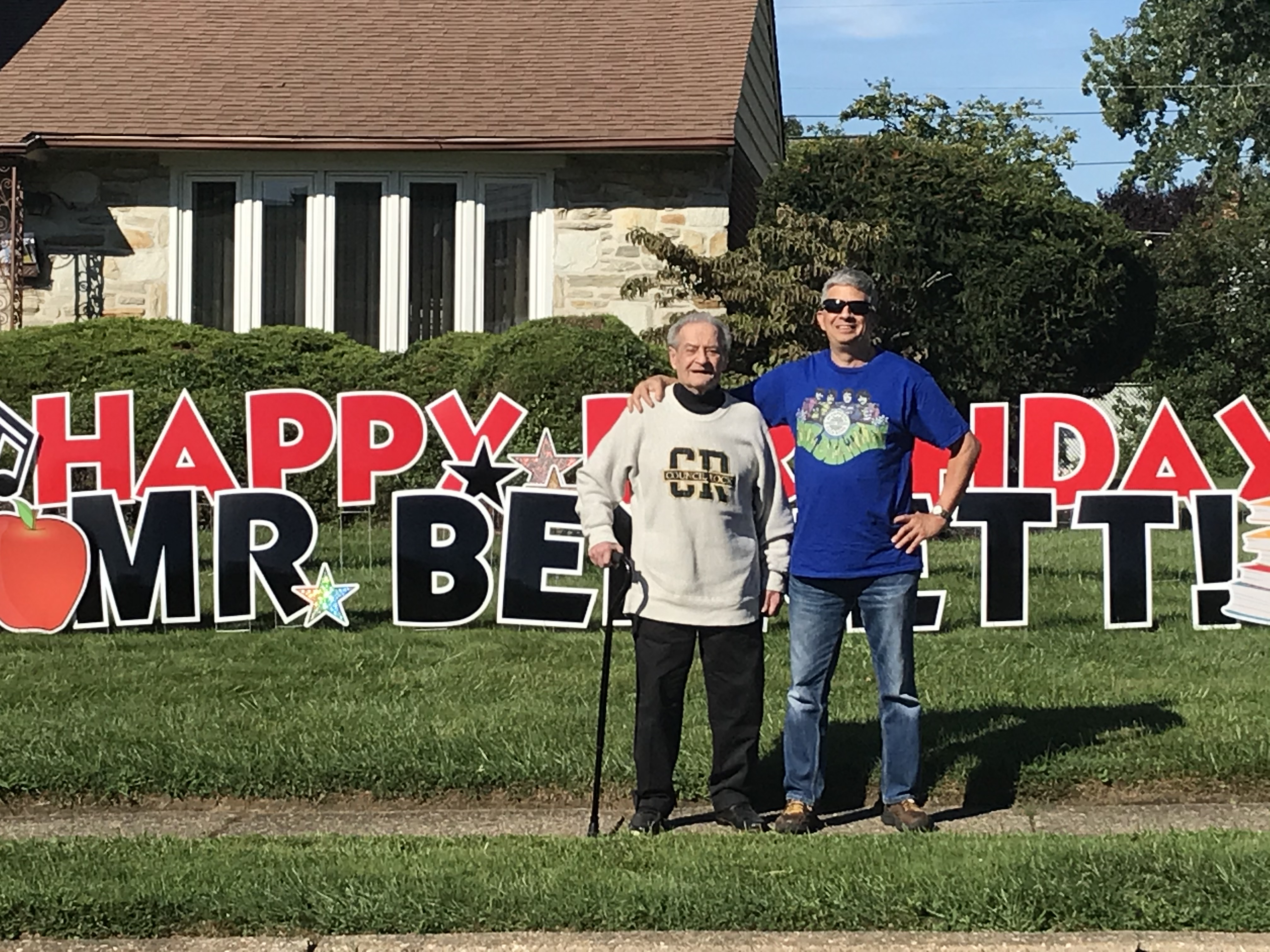
Bennett Fairorth, a prolific writer and longtime Council Rock School District teacher, died Thursday, July 9, at a Rydal retirement home after falling in his Abington home of 64 years.
Mr. Fairorth had been looking forward to celebrating his 100th birthday with former students this month, his brother, Leonard Fairorth, said.
A high school English teacher of more than 30 years, Mr. Fairorth regularly heard from students for decades after his retirement, despite never owning a cell phone, a computer, or an answering machine.
His death sparked a flood of remembrances on social media from former students — who recalled reading The Odyssey and French philosopher Jean-Paul Sartre, seeing plays, and attending events for the student newspaper he advised — including several who became teachers and writers themselves.
“Freshman year in college English I was told not to come back to class after handing in my first paper,” one former student wrote. “The professor said I already knew how to write.”
“I have never laughed as hard as I did during those classes,” another wrote.
Mr. Fairorth’s curriculum included books that some considered controversial in the foment of the era, 1967 graduate Allen Hengst said, including The Sound and the Fury by William Faulkner.
“It was a controversial time. A lot was changing,” Hengst said. “Here was a teacher who was on our side.”
Mr. Fairorth was oldest of five children born to a business owner and a homemaker. He and his sister were the only Jewish students at his North Philadelphia elementary school, Mr. Fairorth said in a podcast interview in 2023 with a former student and her husband, and had to switch schools after other kids attacked them.
Mr. Fairorth studied English at Pennsylvania State University, though his education was interrupted when he was drafted into the Navy during World War II and tasked with keeping mechanical records in Manila. He returned and got a master’s degree in business from the University of Pennsylvania, hoping to write for the Wall Street Journal, he said in 2024, but found he could not support a family on a reporter’s salary. Mr. Fairorth raised three children with his wife, Ruth, who ran a uniform store.
Instead of writing, Mr. Fairorth worked for several years putting new rock and roll records into jukeboxes around town and leaving the old ones at home for his youngest brother, Leonard Fairorth said. Bennett Fairorth, who preferred classical music, would drive to New York on Saturdays, squeezing in both a matinee and an evening performance at the opera houses.
He took a pay cut to teach for a few years at Abington Senior High School and struggled financially until the English department at Council Rock heard of his success preparing seniors for college and recruited him in 1964, Mr. Fairorth said in 2024.
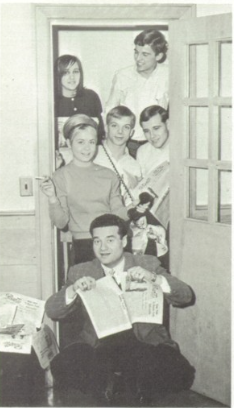
Bennett Fairorth with journalists from Council Rock’s student newspaper, The Indianite, in the 1966–1967 school year.Council Rock School District
Mr. Fairorth was a lifelong fan of newspaper puzzles. He wrote weekly letters to a relative about The Inquirer’s crosswords, his brother said. In 1936, at age 9, he sent in the correct answers to an Inquirer kids’ challenge and won a prize, according to newspaper archives.
In retirement, Mr. Fairorth found more time for hobbies, self-publishing more than a dozen novels, often in a diaristic style chronicling holiday dinners and trips abroad.
As a teacher, Mr. Fairorth was known as a firm but thorough grader, his brother said — a trait that led to conflicts with some parents in the tony suburban district toward the end of his career.
“Parents would come in and [complain] about their kid not getting an A,” Leonard Fairorth said, and go to the principal after Mr. Fairorth refused to change it. “Some of them would be really nasty. … That’s one of the things that really discouraged him at the end.”
Although Mr. Fairorth maintained decades-long correspondence with some students, there was one letter that took more than half a century to arrive, he wrote in a 2020 essay for the Chestnut Hill Local.
In the 1960s, Mr. Fairorth had failed a senior who refused to submit a research paper. Though he was class president, he could not attend graduation and instead went to summer school.
“It was a tense situation,” Mr. Fairorth wrote.
The student, Bill Proser, went on to earn an English degree, become a teacher, and found a charter school in Idaho.
“Yesterday, after 55 years of his getting an F in my class, I received a letter in Bill’s handwriting,” Mr. Fairorth wrote. “‘Thank you for what you did for me.’ I suppose that if you wait long enough, who knows what magic will come to pass?”
In addition to his brother, Mr. Fairorth is survived by children Nancy, Mark, and Laurel, as well as grandchildren, nieces, and nephews.
Services and interment were private, according to a notice by the Philadelphia Cremation Society.
This suburban content is produced with support from the Leslie Miller and Richard Worley Foundation and The Lenfest Institute for Journalism. Editorial content is created independently of the project donors. Gifts to support The Inquirer’s high-impact journalism can be made at inquirer.com/donate. A list of Lenfest Institute donors can be found at lenfestinstitute.org/supporters.
Stanley M. Schwarz, 95, of Philadelphia, community-minded trial lawyer and founder of what is now the Schwarz & Schwarz law firm, former Philadelphia assistant district attorney, Army veteran, mentor, and golfer, died Friday, July 17, of heart failure at his home in Society Hill.
Public-spirited throughout his life and adept at litigation regarding workplace accidents, medical negligence, reckless driving, careless manufacturers, and other personal injury issues, Mr. Schwarz founded what is now Schwarz & Schwarz PC in 1967. He represented all kinds of clients in all kinds of cases and appeared before the Pennsylvania Supreme, Superior, and Commonwealth Courts more than 20 times.
He was featured in the Daily News in 1968 when, at no charge to his client, he won $150 from the city for a Philadelphia hairdresser whose car was mistakenly towed. “I was disturbed by her experience” with city officials, he told the Daily News.
“To many,” his family said in a tribute, “he was more than an attorney. He was a source of guidance and hope.”
Mr. Schwarz doted on his children.Courtesy of the family
Mr. Schwarz lived for decades in Society Hill Towers at Second and Locust Streets near the Delaware River and represented its owners association in 1997 as it contested high-rise development along the nearby waterfront. “They’re trying to take away this little Garden of Eden,” he told the Daily News.
He joined the district attorney’s office in 1960, worked as an assistant district attorney in the major trials unit, and handled hundreds of cases involving murder, assault, robbery, burglary, arson, and other crimes. In one notable case in 1966, he noticed that the photo of a man in the Daily News looked like the at-large suspect in a recent robbery. Detectives tracked the man down and made an arrest.
He also served as a temporary judge and arbitrator for local, state, and federal courts. He belonged to several legal associations, won awards for his legal and community service, and was an honorary member of the Knights of Columbus.
He joined the Army after high school, rose to first lieutenant, and served as an intelligence cryptographer during the Korean War. He was admitted to the Temple University School of Law after just a year in college, became editor-in-chief of its law review, and graduated in 1958.
Mr. Schwarz and his wife, Kathy, married in 1991.Courtesy of the family
He served two years as a law clerk in the Philadelphia Court of Common Pleas and then as assistant to three district attorneys over six years. “He mentored generations of young lawyers and quietly helped countless people through difficult times,” his family said.
Born in Philadelphia during the Great Depression, Mr. Schwarz and his family moved often when he was a boy. He lived in New York when he was young and worked part-time as a stock boy and janitor when he was 10 to help pay the bills.
He attended two dozen schools before moving to Philadelphia in middle school and graduated from Germantown High School in 1948. His family praised “the work ethic and compassion that guided him throughout his life.”
They said: “Stan’s life was shaped by perseverance, resilience, and a deep commitment to helping others.”
Mr. Schwarz graduated from Germantown High School in 1948.Courtesy of the family
Stanley Morris Schwarz was born Jan. 22, 1931. He worked as a mail clerk and accountant after high school and joined the Army when he was 20.
He married Lee Rosen in 1955, and they had a son, Daniel, and a daughter, Stacy. After a divorce, he married Kathy Campbell in 1991, and they danced and traveled the world together for years. He was especially good at the jitterbug.
Mr. Schwarz played golf and socialized for more than 50 years at the Bensalem Township Country Club. He was a longtime member of the Society Hill Club. He took his family to boat shows and on memorable vacations to Ocean City, Puerto Rico, the Pocono Mountains, Disney World, and elsewhere.
He self-published a breezy memoir called The Roller Coaster Life of Flappy in 2022 when he was 91, and said: “As a father, it gave me the greatest pleasure in playing with the kids, whether in our backyard, in the community pool, or in the nearby parks.”
Mr. Schwarz enjoyed time with his family.Courtesy of the family
Mr. Schwarz was fun and funny, his daughter said. He taught himself to play piano and saxophone, and they performed duets.
He was an engaging storyteller. He made personal scrapbooks for his children. Friends called him “amazing” and “incredible” on Instagram.
His family said: “He made people feel valued and left them better than he found them.” His daughter said: “He was down to earth and playful. He was great with kids. He loved everybody’s children, and the children loved him.”
In addition to his wife and children, Mr. Schwarz is survived by four grandchildren, a sister, and other relatives. A sister and a brother died earlier.
Services were held earlier.
Donations in his name may be made to Congregation Beth El, 8000 Main St., Voorhees, N.J. 08043.
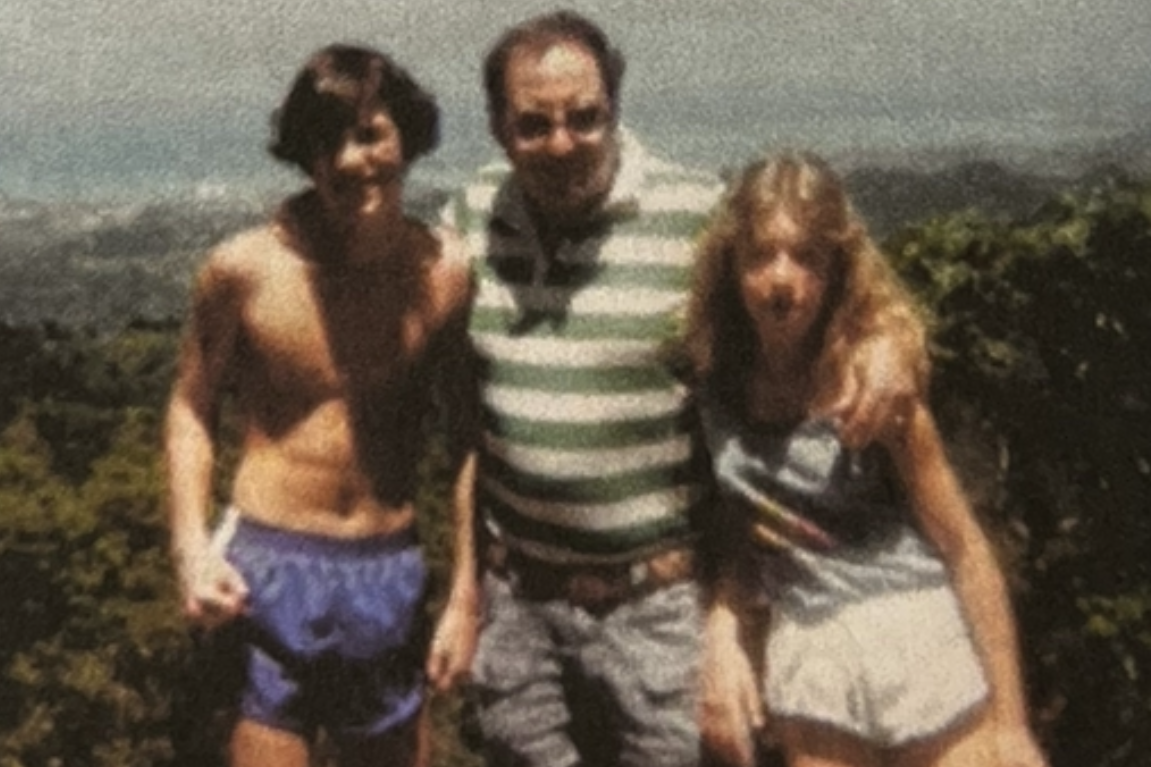
Mr. Schwarz was close with his daughter, Stacy, above, and his son, Daniel, below. Courtesy of the family
Gloria Steinem spent 18 months in India in 1957 and 1958 that set the trajectory for the rest of her life. She credited those pivotal months with teaching her to listen, to organize from the ground up, and to understand “radical” as going to the root of a problem rather than to its extreme. In 2007, she told two Indian interviewers, “If you want people to listen, you have to listen to them. I believe I learned that in India.”
Her connection to India began long before she got there. Her mother and paternal grandmother were Theosophists, or followers of a spiritual movement that borrowed from Hindu and Buddhist thought and treated India as the home of ancient wisdom. While a student at Smith College in the 1950s, Steinem studied with Vera Micheles Dean, a foreign policy scholar who wrote about India and was publicly accused of communist sympathies in 1954. During her junior year in Geneva in 1954-1955, she wrote a research paper on why the Communist Party of India had never become the country’s dominant party.
Then she got engaged, and she did not want to be. “Marriage meant the end of life to me,” she said years later. The Chester Bowles Asian Fellowship in India in 1956, the year she graduated from Smith, saved her from the marriage.
Smith students had spent years raising money to send graduating seniors to India as unofficial goodwill ambassadors to a country that had declared itself nonaligned in the Cold War. Chester Bowles, the former U.S. ambassador to India, gave a lecture and waived his fee; the money it raised went into two $1,000 scholarships the students named after him, each less than half what they estimated a fellow would need to live on. They sent two students anyway. Steinem was one.
She landed in Bombay in February 1957 expecting one country and finding another. A tall, turbaned man stooped into the plane and turned toward her. “I rose, sure that he was going to begin a speech of ‘Welcome to India, mystic heart of Asia, land of ancient cultures.’ He namasthed politely before me” — greeted her with palms pressed together — “took out a shiny red insecticide bomb, and said, ‘Stand still while I spray you.’” India, she wrote in her fellowship reports, “shatters Western romantic illusions with little ceremony.”
She was initially tasked with explaining American culture and excellence to Indian students. However, at Miranda House, a women’s college at Delhi University, her classmates ended up asking her to explain American politics instead. In one class, she reported, “we were asked the difference between the U.S. interference in Guatemala and the Soviet action in Hungary” — the CIA-backed coup of 1954 and the Soviet crushing of the Hungarian uprising in 1956. It “nearly shocked us into silence,” she wrote.
After the semester, when she could have gone home like most of the students around her, she chose to stay. She went first to the Himalayan foothills, to a study camp run by followers of M. N. Roy, an Indian former communist who had broken with Moscow. That is where she absorbed the idea that “radical” means going to the root of a problem, not to its extreme.
In the fall of 1957 she traveled south, to the ashram of Vinoba Bhave, a disciple of Gandhi who walked from village to village asking landowners to give land to the landless — and she found it nearly empty. Caste riots had broken out in Ramnad, a rural district in what was then Madras State, after the murder of a Dalit leader. The government had sealed the district and barred reporters. Teams from the ashram had walked around the roadblocks anyway.
She joined a team because it was short a woman. For a week they walked between villages. At night people came out and sat around a kerosene lamp in circles of six or twenty or fifty and told what had happened to them — burnings, murders, rapes. The teams listened. Steinem later called it “the ancient and modern magic of groups in which anyone may speak in turn, everyone must listen, and consensus is more important than time.”
She had no word for it at the time, but a decade later American feminists called it consciousness-raising, as they sat together and discussed their experiences in their everyday lives as women — soon coming to the conclusion that the challenges they faced were largely attributable to systemic inequalities.
Made By History sponsors. FOR USE ON MADE BY HISTORY STORIES ONLY.Inquirer Staff
Fifteen years after Ramnad, the first issue of Ms., the feminist magazine Steinem famously founded, had an eight-armed goddess on the cover holding a typewriter, a steering wheel, a frying pan. Steinem said the image “had come out of my Indian past.” The masthead listed everyone alphabetically. The editors met in a room she called “comfortable and shoe-less,” and set their own salaries around a table in a Chinese restaurant, with the highest capped at three times the lowest.
She showed up in India with every assumption a white American in the 1950s could have, then spent sixty years being corrected and saying so out loud. When she went back to India in the late 1970s, she met Kamaladevi Chattopadhyay, who had led Gandhi’s national women’s organization, and told her: “Well, of course, my dears. We taught him everything he knew.” Steinem repeated that story and others from her time in India for decades.
Here was a young woman whose assumptions were challenged, and who still wrote down her honest reflections. Steinem kept doing that her whole life — approaching new ideas, learning from her mistakes, adapting. For fifty years she acknowledged the global influences that shaped her, especially at home, in a country that mostly ignored them.
Rashida Shafiq is a historian of American foreign relations and women’s history. Her book manuscript, “The Method and the Machinery: Gloria Steinem, India, and the Cold War Making of American Feminism,” is in the works.
Made by History takes readers beyond the headlines with articles written and edited by professional historians. Opinions expressed do not necessarily reflect the views of The Inquirer.
Benny Lattimore, the soul singer, songwriter, and pianist known as Latimore whose sultry baritone, coifed hair, and funky songs about romance — notably “Let’s Straighten It Out” — made him an R&B fixture of the 1970s and ’80s, died on Aug. 22 at his home in Riverview, Fla., near Tampa. He was 86.
His death was confirmed by his wife, Yvonne Lattimore.
In the 1960s, under the slightly shorn last name Benny Latimore, he worked with Miami-based producer Henry Stone on his Blade and Dade labels to release “Rain From the Sky” and “Let’s Move and Groove Together.”
He subsequently ditched his first name and released his first album with Stone’s Glades label, the self-titled Latimore, in 1973. His swingy cut “(They Call It) Stormy Monday” received so much radio time in Chicago that it was later released as a single.
Writing in Blues Blast Magazine in 2017, music journalist Bill Dahl said that recording was his revelatory introduction to Mr. Latimore. “Not only did it swing with a vengeance,” Dahl wrote, “it was by a soulful singer sporting a set of richly burnished baritone pipes who was so hip that he only needed one name.”
“Stormy Monday” jolted Mr. Latimore’s career forward, and he went on to write many of his own hits. The most successful was “Let’s Straighten It Out,” which appeared on his album More, More, More and topped the R&B charts in 1974. The song went, in part:
Sit yourself down girl, and talk to me
And tell me what’s on your mind
Don’t you keep on tellin’ me everything’s okay
Cause if it was then you wouldn’t be cryin’
A masterful blend of soul and contemporary blues, it was the last song he played at shows for decades. The song was later covered by R&B singers Monica and Usher and by entertainers including Etta James, B.B. King, and Millie Jackson.
Mr. Latimore remained for several more years a part of Stone’s orbit. Of all his studio musicians, journalist Steve Ditlea wrote in the New York Times in 1976, “keyboard player B. Latimore seems to be the one with the most wit and variety. On the Latimore III album, tunes like the nasty ‘Keep the Home Fires Burnin,’ the seductive ‘Ladies Man,’ and the playful ‘There’s a Red‐Neck in the Soul Band’ serve to demonstrate his vocal fluency with blues motifs in updated settings.”
After working separately for years, Mr. Latimore and Stone reunited to produce some of his later albums under their joint LatStone record label, including the 2013 release Latimore Remembers Ray Charles. Four years later, Latimore was inducted into the Blues Hall of Fame.
Benny William Lattimore was born on Sept. 7, 1939, in Charleston, Tenn., to Eddie and Edna Lattimore. He grew up in a musical home: His mother played guitar, and his father played banjo.
Living Blues magazine described his parents as “serious-minded, hard-working country people.” “My father said he never wanted me to have to work as hard as he did,” Mr. Latimore was quoted as saying in the magazine. “They didn’t have the chance to get an education.”
He first performed at his Baptist church, singing in the junior choir while his mother sang in the senior choir.
He gravitated to the blues naturally. “It found me,” he told WREG News Channel 3, a Memphis, Tenn.-based station, in 2017. “Country and blues and gospel,” he added, “they all have a kinship.”
After graduating from high school, he enrolled in Tennessee Agricultural & Industrial State College, the historically Black college now called Tennessee State University, in 1957, and joined a singing group. “I got less interested in my studies than I was in singing — that’s what I wanted to do,” he said in a 2012 video interview.
He dropped out of college to sing with a Nashville R&B combo led by saxophonist Louis Brooks, who taught him to play piano. In the early 1960s, his quickly developing skills caught the attention of the smoky-voiced singer Joe Henderson. After Henderson had a major R&B hit with “Snap Your Fingers,” Mr. Latimore went on the road with him. He settled in Florida after a gig in Miami.
In 1971, Mr. Latimore married Yvonne Fernandez. Besides his wife, no further information on survivors was immediately available.
Mr. Latimore continued to perform into his late 70s and early 80s, his soulful voice intact even as his hair turned white.
He performed with the Roots on Jimmy Fallon’s late-night talk show in 2014 and drew crowds at festivals.
He often remembered something Brooks had taught him: “Always leave the people with a good taste in their mouth.”
“I love for the people to enjoy themselves,” Mr. Latimore told the News & Observer in 2009. “If they can leave there with a good taste in their mouth and a good sound in their ears, then that’s great.”
Robin Morgan, a prolific feminist writer and radical activist who edited the landmark 1970 anthology Sisterhood Is Powerful, served as editor-in-chief of Ms. magazine for five years, and helped organize one of the first protests of the Miss America pageant, died Saturday in New York City. She was 85.
Her death, in a hospital, was confirmed by her son, musician Blake Morgan, who is her sole survivor.
From the front lines of a much-splintered feminist movement, Ms. Morgan gave voice to women as a poet, journalist, novelist, memoirist, agitator, and iconoclast. She came of age in the Civil Rights and anti-Vietnam War movements, but along with other young women of the new left, she found those movements dominated by men, and, in particular, men who wanted to keep women as second-class citizens.
“We were tired of making coffee and not policy,” she told the Guardian in 2006.
Ms. Morgan caused shock waves in 1970 when she published an essay in Rat, an underground newspaper. The article, titled “Goodbye to All That,” named specific men as sexists. “Goodbye to Hip Culture and the so-called Sexual Revolution,” she wrote, stating that the murderous Charles Manson was “only the logical extreme of the normal American male’s fantasy.” The piece became an instant classic of second-wave feminism; it also brought her death threats from counterculture activists. “They called it ‘the shot heard round the Left,’” she told the New Yorker in 2008.
She returned to that theme in 2008 with “Goodbye to All That (#2),” an essay calling out the toxic misogyny aimed at Hillary Clinton, then a senator who was running for the Democratic presidential nomination. The article went viral (and was mass-forwarded by Chelsea Clinton, her daughter).
Ms. Morgan’s early activism in the late 1960s included cofounding the radical feminist groups Women’s International Terrorist Conspiracy from Hell and New York Radical Women, which in 1968 organized one of the first protests against the Miss America pageant for its objectification of women.
At the protest, on Atlantic City’s boardwalk in New Jersey, several hundred women staged guerrilla theater actions: Some threw bras, girdles, hair curlers, mops, and other symbols of women’s “enslavement” into a trash bin (but, contrary to popular belief, Ms. Morgan insisted that there was no bra burning). The climax of the day’s events was the unfurling of a banner inside the city’s convention hall that said, “Women’s Liberation.” The protest earned Ms. Morgan prominent mention in the New York Times Magazine under the headline, “Meet the Women of the Revolution, 1969.”
She coined the term “herstory” — history written from women’s point of view — and claimed partial credit for the slogan “the personal is political.” Her phrase “pornography is the theory; rape is the practice” became a rallying cry for the anti-porn movement.
As the keynote speaker at the 1973 West Coast Lesbian Conference, Ms. Morgan protested the presence of transgender folk singer Beth Elliott, whose performance became a symbolic dividing line between feminist groups at the event. “No, I will not call a man ‘she,’” Ms. Morgan said in her speech. “Thirty-two years of suffering in this androcentric society, and surviving, have earned me the title of ‘woman.’”
Decades later, this speech earned her the label “trans-exclusionary radical feminist” as 21st century gender politics brought about a rethinking of sex, gender, and transgender rights. When asked about that speech in a 2024 interview for this obituary, she said, “I believe that trans rights are human rights.” Then she paused and sighed before adding, “It’s complicated.”
Ms. Morgan created the iconic image on the cover of Sisterhood Is Powerful, taking the symbol for female — a circle above a cross — and filling it with a raised red fist. The book, a comprehensive collection of the writings of second-wave feminists such as Kate Millett, Eleanor Holmes Norton, and Florynce Kennedy as well as documents from feminist organizations, became a bestseller; it was included in the New York Public Library’s “Books of the Century” exhibition and was named by the American Library Association as one of the 100 most influential books of the 20th century. Ms. Morgan used the royalties to create the Sisterhood Is Powerful Fund, a feminist grant-giving organization.
Her second anthology, Sisterhood Is Global (1984), focused on interviews with women from around the world, which led her to establish the Sisterhood Is Global Institute with French activist Simone de Beauvoir. She worked on the book from her office at Ms. magazine, where she was a contributing editor. In 1989, she was asked by its cofounder Gloria Steinem to become editor-in-chief and reestablished the publication as an ad-free, international bimonthly magazine. Circulation soared, and the magazine won numerous journalism awards. She resigned as editor-in-chief in 1994 but remained on as consulting global editor.
She completed her final Sisterhood anthology, Sisterhood Is Forever, with essays by more than 50 feminists, in 2003. She then joined forces with Steinem and Jane Fonda in 2005 to create the Women’s Media Center, a nonprofit organization supporting women working in the media. She hosted a podcast on politics for the center for many years. (Steinem died on Wednesday.)
By her 80s, Ms. Morgan had published two dozen books, including poetry, novels, nonfiction works, and numerous essays in both the mainstream and alternative media. Her books included the bestseller, The Demon Lover: The Roots of Terrorism (1989), a feminist analysis of violence, and her acclaimed memoir Saturday’s Child in 2001.
Robin Evonne Morgan was born on Jan. 29, 1941, in Lake Worth, Fla., to Faith Malkah Teitlebaum Berkley, a sales clerk at Lerner Stores, a women’s clothing chain. Faith was not married and had traveled to Florida from New York to hide her pregnancy; for years, she told Robin that she was born in 1942.
Robin did not meet her father, Mordechai Morgenstern, a gynecologist, until she was 20. He handed her a birth certificate that revealed she had been born a year earlier.
Robin’s aunt pushed her into child modeling, and Faith became an aggressive stage mother. By age 5, Robin had her own half-hour weekly call-in radio program, The Little Robin Morgan Show, on WOR in New York. At around age 8, she began appearing on TV and starred in the popular show Mama, about a working-class Norwegian immigrant family in turn-of-the-century San Francisco. When she was a teenager, she quit acting to become a writer against her mother’s wishes. She enrolled in nonmatriculated literature classes at Columbia University at 16.
Instead of earning a degree, she landed a secretarial job with the Curtis Brown literary agency by her early 20s, which gave her access to influential writers such as W.H. Auden. She joined a writing workshop, where she met poet Kenneth Pitchford, a founder of the Gay Liberation Front. They married in 1962, shortly after his boyfriend broke up with him — and served as best man at their wedding.
As an adult, she loathed any mention of her having been a child star. She famously walked off The Tonight Show Starring Johnny Carson, which was airing live, in 1969, when it showed footage of her as a child actor while she was talking to Carson about rape. “Imagine talking about such a subject and having it trivialized like that,” she told the Guardian.
Her marriage ended in divorce in 1990. Pitchford died in 2020.
She always remained prolific — and fiery.
“I’m now 77,” she said in 2018, “which once would have sounded positively antique to me. But I just came out with my 23rd book.” She added: “I am still intensely an activist. When younger women come to me for advice, I smile. ‘Get your own torch,’ I tell them, ‘I’m not done with mine yet.’”
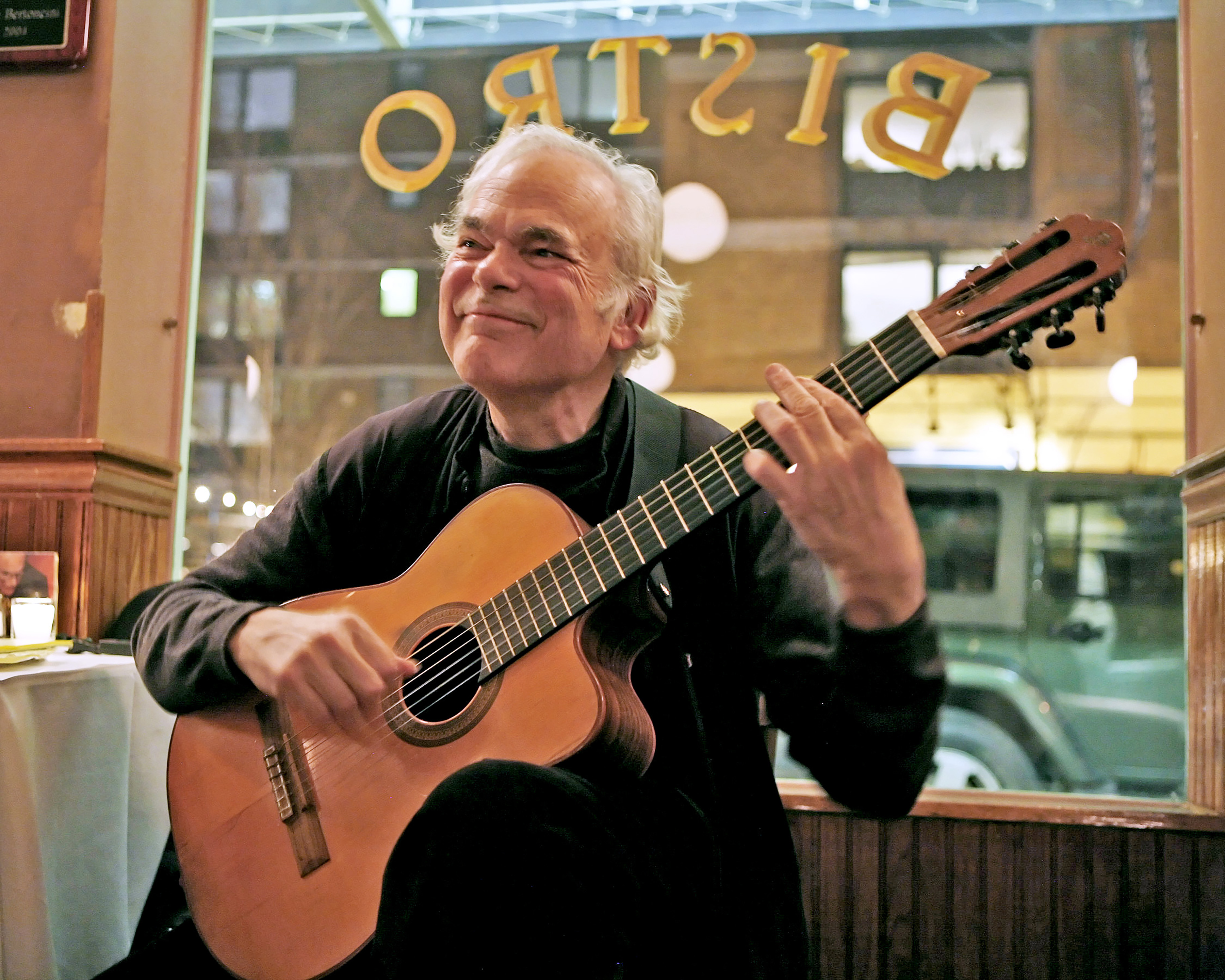
Gene Bertoncini, a prolific jazz guitarist celebrated for his bountiful lyricism and driving swing, for accompanying celebrated singers including Tony Bennett and Lena Horne, and for performances and arrangements that blurred the line between jazz and classical music, died on Saturday at the Actors Fund Home in Englewood, N.J. He was 89.
His niece Nina Collins confirmed the death.
Throughout a career that began in a duo with his older brother, Renny, an accordionist, playing in restaurants and catering halls near their childhood home in the Bronx, Mr. Bertoncini was heralded as a sensitive accompanist and innovative leader.
In a sideman role, he worked with many of the greatest jazz singers of the 20th century, including Bennett, Horne, and Nancy Wilson, and with instrumentalists as varied as Benny Goodman, Wayne Shorter, and Michel Legrand.
Mr. Bertoncini was equally at home with the Great American Songbook, the European classical repertoire, and, in advance of his fellow jazz guitarists, Brazilian works in the bossa nova style composed by such colleagues as Antonio Carlos Jobim and his close friend Joao Gilberto.
Mr. Bertoncini was in his early 20s when he played his first major date with a nationally known headliner, Buddy Rich, and passed muster with the notoriously temperamental drummer and bandleader.
“Buddy really liked the way I played rhythm with him,” Mr. Bertoncini said in an interview last year. “He liked that he didn’t have to tell me anything. I was able to lock into the beat with him, which was amazing, because he was such a dominant force.”
In the early 1960s, Mr. Bertoncini found plentiful work in New York studios, not least because his facility with nylon-string classical guitar technique lent itself to bossa nova at a time when few established guitarists could play it.
During those years, he played on Ahmad Jamal’s 1963 album Macanudo; formed a trio with pianist Monty Alexander and bassist Bob Cranshaw; performed on two albums by the trumpeter Clark Terry; and became a regular in the Tonight Show band until that late-night program moved to Los Angeles from New York in 1972.
Over the next several decades, Mr. Bertoncini played thousands of studio dates. Some teamed him with bassist Ron Carter, and Mr. Bertoncini gave his last major performance in New York, at Mezzrow, with Carter in December.
Gene Joseph Bertoncini, the younger of two sons, was born in the Bronx on April 6, 1937, to Italian immigrants Mario and Anita (Ori) Bertoncini.
Mario Bertoncini, a waiter who later owned and operated a diner called Joe’s on Third Avenue in Manhattan, also taught his sons to play the music of the old country.
At 17, Mr. Bertoncini accepted a scholarship to study architecture at Notre Dame, which seemed like a safer career bet than the itinerant life of a musician. During the five-year program, he also played in student ensembles and directed the school’s swing band.
Upon returning to New York after graduating in 1959, Mr. Bertoncini took an entry-level position in the architecture firm of David Henken, a prominent disciple of Frank Lloyd Wright, and moonlighted in big bands. In the middle of one show with a dance band led by Richard Maltby, Mr. Bertoncini later said, he had an epiphany after he hit a wrong note, which was a shock to his system at the time.
“Probably nobody noticed but me, but I couldn’t live with that,” he said. “I attributed it to the fact that I hadn’t been practicing enough.” He decided to quit his day job and commit full-time to the guitar.
Discographer Glenn Broadhead compiled a listing of 188 known albums featuring Bertoncini — 32 as leader and 156 as sideman — but even that was far from an exhaustive list, considering the guitarist’s work on thousands of sessions for pop albums and singles, and film and TV soundtracks.
In the jazz world especially, it’s largely acknowledged that Mr. Bertoncini — who never married and left no immediate survivors — influenced legions of guitarists through his music.
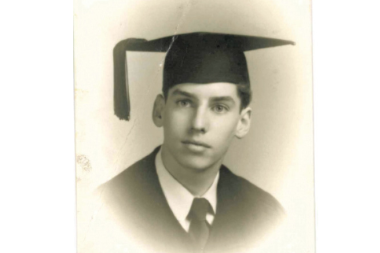
Tom Corcoran, 82, of Philadelphia, retired president of the Delaware River Waterfront Corp., founding president and former chief executive officer of the old Cooper’s Ferry Development Association in Camden, former business administrator for the city of Camden, onetime Peace Corps program director in West Africa, mentor, and poetry enthusiast, died Sunday, Aug. 30, of complications from dementia at his home in Center City.
Born in Chicago and a graduate of Loyola University Chicago, Mr. Corcoran earned a master’s degree in public administration at the University of Pennsylvania’s Wharton School in 1975 and never strayed far from the Delaware River after that. He spent 25 years, from 1984 to 2009, as president and CEO of the Cooper’s Ferry Development Association on the Camden waterfront, and eight years, from 2009 to 2017, as president of the Delaware River Waterfront Corp. in Philadelphia.
He championed what he called “the two cities, one waterfront strategy” and was especially adept, former colleagues said, at political maneuvering and marshaling funds and projects. Former colleagues on both sides of the Delaware called him “a tireless public servant,” “a visionary urban planner,” and an “economic development strategist with short-term practicality and long-term vision.”
In Camden, Mr. Corcoran added more than $550 million of investments to the waterfront area and oversaw the development of what is now the Freedom Mortgage Pavilion, the Adventure Aquarium, Wiggins Waterfront Park, the Riverlink Ferry, several office buildings, and other projects. Another New Jersey developer called him a “cult figure” among state lawmakers.
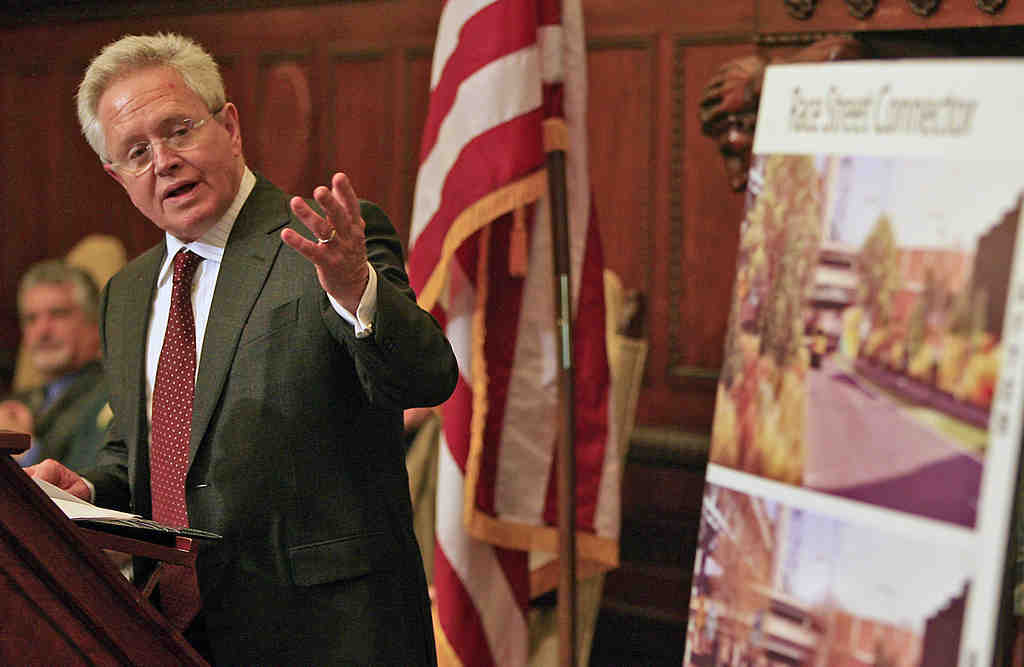
Mr. Corcoran talks at City Hall in 2011 about creating a string of parks along the Delaware River.Akira Suwa / Staff Photographer
He said education as well as development was key to building a strong local economy and told The Inquirer in 2006: “Until Camden has a good-quality education system, we’re not going to be able to attract families with school-age children back to the city.”
Dana L. Redd, former Camden mayor and current president and CEO of Camden Community Partnership, said on Facebook that Mr. Corcoran often slept on a cot in his Camden office and left daily handwritten messages that his project managers called “love notes.” Redd said: “He challenged a generation of urban leaders to think bigger, believe in Camden, and dream about what the city could become.”
In Philadelphia, he initiated the Race Street and Washington Avenue pier parks, the Spruce Street Harbor Park, a miles-long bike and walking trail, and the I-95 overpass park to reconnect Center City with its waterfront. “The more we look at the concept of one waterfront, two states, the more opportunities we’re going to find,” he said when he left Camden for Philadelphia in 2009.
When he retired in 2017, he said: “Instead of swinging for the fences, we decided we would hit singles and doubles and bunts and sacrifices, steal bases, and do whatever we could. Eventually, we thought, we’d always get back to the center.”
Mr. Corcoran (left) shakes hands with then-Mayor Michael Nutter in 2009 after joining the Delaware River Waterfront Corp. Alejandro A. Alvarez / Staff Photographer
Longtime colleague and friend Bill Hankowsky said: “It is truly unique that a single individual could have the vast impact across two facing waterfronts in the center of one of the country’s major urban metros.”
Earlier, Mr. Corcoran served nine years, from 1975 to 1984, in Camden city government, rising from administrative aide to business administrator. In 2001, he earned a Good Neighbor Award from the Camden County chapter of the American Red Cross for his “integral role in the revitalization of the city.”
In the 1960s, Mr. Corcoran joined the Peace Corps after college and spent seven years in Africa building dams and wells with local farmers. He spoke French and the local African language, and rose to program director.
“What an exemplary life he led,” a former Peace Corps colleague said in a tribute, “without fanfare or drama and always with service to others.”
Mr. Corcoran (right) led visitors on a tour of the Washington Avenue pier park in 2014.Viviana Pernot / Staff Photographer
Off the waterfront, Mr. Corcoran was enthralled by poetry and his Irish heritage. He liked to recite lines from Ulysses and other poems, and sing songs from the old country.
“He was a true Renaissance man who had a remarkable vision for communities and people,” a former colleague said. Former colleague John Grady said: ”Tom was a giant, unassuming, persistent force for the local community.”
Thomas Patrick Corcoran was born May 13, 1944. He earned a bachelor’s degree in political science at Loyola in Chicago and rode camels to work in Africa during his time in the Peace Corps.
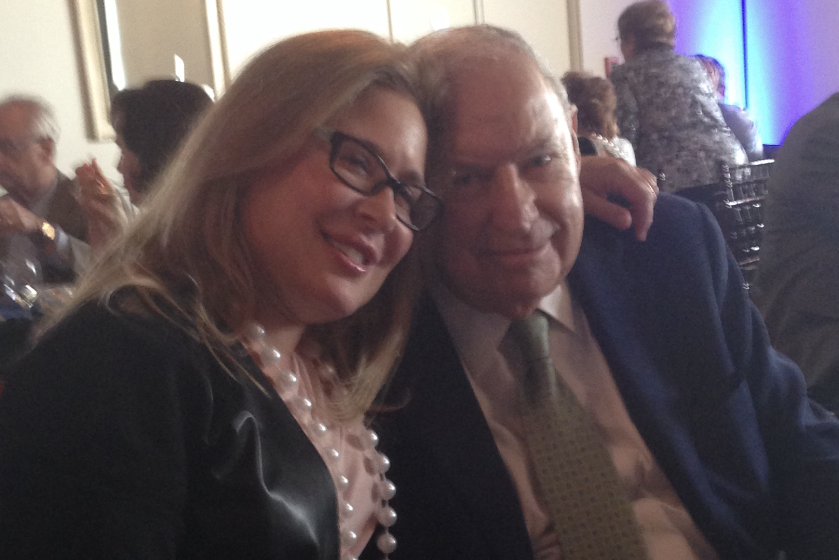
He met Robin Lowey at a dinner society event, and they married in 2003, and lived in Camden and Philadelphia. They enjoyed traveling and dining together, and hashing over world affairs.
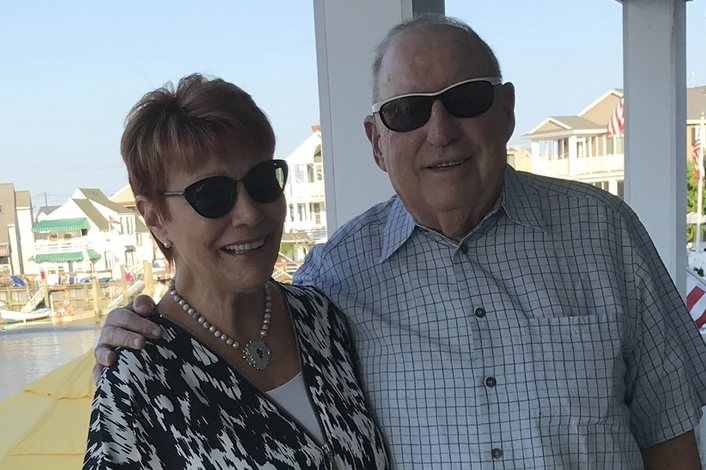
Mr. Corcoran and his wife, Robin Lowey, married in 2003. Courtesy of friends
In 2009, he said he often peered through a telescope at the Philadelphia waterfront from his home in Camden and wondered how he would develop Penn’s Landing. “He’s the one who brought together the business leaders and was able to steer through difficult political waters,” then-Camden County freeholder Jeffrey Nash said in 2009.
His wife said: “He was a kind and generous gentleman. He was a good, nice person.”
In addition to his wife, Mr. Corcoran is survived by three sisters, a brother, and other relatives.
Services were held Thursday.
Donations in his name may be made to the Caplan Caring Difference Fund at the Penn Memory Center, Office of the Treasurer, Box 71332, Philadelphia, Pa. 19176.
Mr. Corcoran spent seven years in the Peace Corps after college. Courtesy of friends
Dubbed America’s best singer by Time magazine in 2001, Ms. Wilson was best known for her genre-bending voice, which expanded the boundaries of traditional blues-based jazz and worked effortlessly across folk, pop, R&B, country, and beyond. At the heart of all her work was her idiosyncratic contralto, a soulful sound distinctly tied to her roots.
As Jon Batiste put it in a eulogy on Wednesday, Ms. Wilson sounded like the South.
She died in her native Jackson, Mississippi, on Tuesday morning, the Hinds County Coroner Jeramiah Howard confirmed.
“It is with profound sadness that we announce the passing of Cassandra Wilson, the Grammy Award-winning and legendary jazz artist. Cassandra Wilson transitioned peacefully at home, surrounded by family, close friends, and her manager,” said a statement from her manager to jazz radio station WBGO.
From Jackson to the world
Born and raised in Jackson to musician Herman B. Fowlkes and teacher Mary Fowlkes, Ms. Wilson showed an early love of music listening to Motown, Miles Davis, and Thelonious Monk. At 6, she started piano lessons. She played clarinet in marching bands. She performed at coffeehouses and in cover bands while studying at Millsaps College and Jackson State University.
In the early ‘80s, she mentored under jazz greats in New Orleans before moving to New York City and joining Steve Coleman’s M-Base Collective — eventually becoming its main vocalist.
Her instantly recognizable voice earned her four Grammy nominations and two wins for best jazz vocal album. Those were in 1997 for New Moon Daughter and 2009 for Loverly.
In 2015, it was Ms. Wilson who gave a special concert at the famed Apollo Theater to commemorate the 100th birthday of blues singer Billie Holiday, the legendary American jazz vocalist who died in New York City at age 44. That same year, Ms. Wilson released her last album, Coming Forth by Day, an homage to Holiday.
In 2022, Ms. Wilson was named a National Endowment for the Arts Jazz Master, one of the highest honors awarded to jazz musicians in the United States.
Tributes pour in
“She had an unmistakable vocal tone, phrasing, and her approach of weaving folkloric, R&B, and diasporic music together with experimental and popular genres had a major impact on me,” Batiste said in his tribute to Ms. Wilson on Instagram.
“Her Mississippi heritage was always present in everything no matter how expansive her artistry evolved,” he wrote in the caption of a clip showing them together on Brazilian TV in 2009. “She was one of the first people to take me on tour around the world, the great Cassandra Wilson.”
Jackson Mayor John Horhn said the city “has lost an extraordinary native daughter, and the world has lost a singular musical voice.”
“Cassandra Wilson carried the sound, spirit and history of Mississippi with her wherever her music reached,” said the mayor’s statement, shared with WJTV. “Her work had rare depth of character and a profound understanding of how music moves people, tells stories and connects generations.”
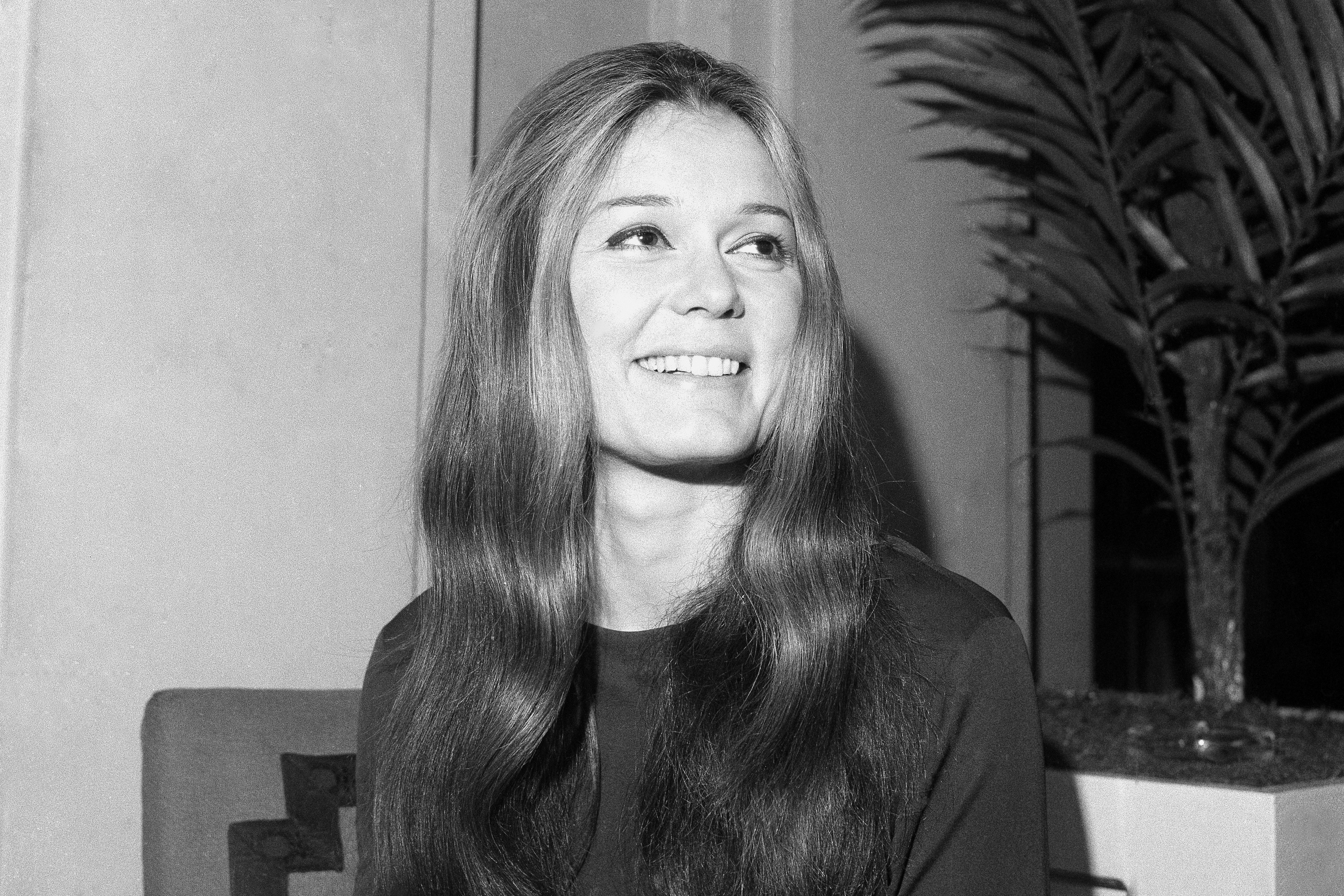
NEW YORK — Gloria Steinem, the celebrated author and activist who became one of the most visible symbols and potent voices of the U.S. women’s movement and a fierce advocate for feminist causes throughout her life, has died. She was 92.
With her trademark streaked hair parted down the middle and large aviator glasses, Ms. Steinem, a co-founder of Ms. Magazine, was a hugely recognizable presence wherever she went. And she went everywhere: Much of her life as an advocate was spent on the road, speaking at college campuses and community centers, at rallies and marches.
She died Wednesday at her home in New York City, according to her and her foundation’s social media pages.
“Gloria’s greatest gift was her ability to listen to others, to make others feel seen and heard,” the posts said. “Her words, actions, and example gave people permission to be their truest selves. Gloria lived true to her independent spirit, always with curiosity and a great sense of humor.”
Ms. Steinem enjoyed writing and spending time in the community in recent years, the posts said. She also hosted talking circles for hundreds of people in her home. She died just before a planned memoir was to be released this fall.
“You can’t do it on the phone or on the web,” she told The Associated Press in a 2015 interview. “You have to be there with all five senses. It should be obvious that people can’t empathize with each other unless we’re in the same room.”
Ms. Steinem changed her career path after a start as a journalist
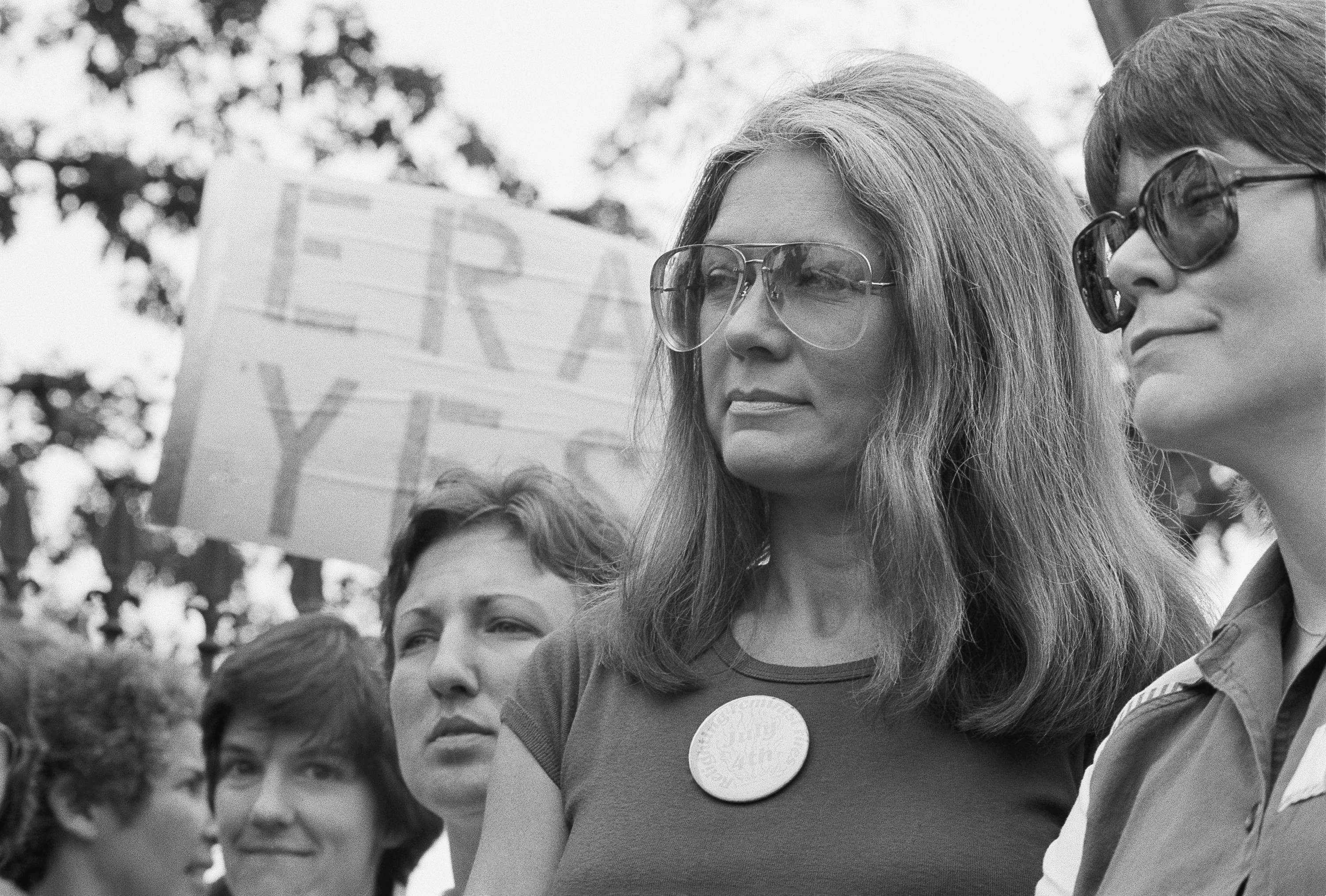
Ms. Steinem at an Equal Rights Amendment rally outside the White House on July 4, 1981.Scott Applewhite
She began her career as a journalist, notably one who reported, in 1963, on degrading conditions in Hugh Hefner’s Playboy empire, an undercover assignment she came to later regret. She credits a meeting six years later, where women spoke out boldly in favor of abortion rights, with changing her career path.
“That speak-out was the beginning of activism for me,” Ms. Steinem, who had undergone a secret illegal abortion herself at age 22, told the AP in an email in 2022, reflecting on the reversal of Roe v Wade. “Either our control over our own bodies is equal, regardless of sex or race, or we’re not living in a democracy.”
Though she soon became a known activist, those who watched Ms. Steinem denounce discrimination for so many years likely never suspected that she’d had to overcome a deep fear of public speaking. She would have simply stuck to writing, she said, if only editors at the time had been willing to let her write about the women’s movement.
But they weren’t interested, she told the AP in 2015. “So I ended up going out and speaking, which was my nightmare,” she said. “I mean, I was terrified. But I’m grateful, even though I still get scared even now.”
Ms. Steinem’s visibility endured throughout her life
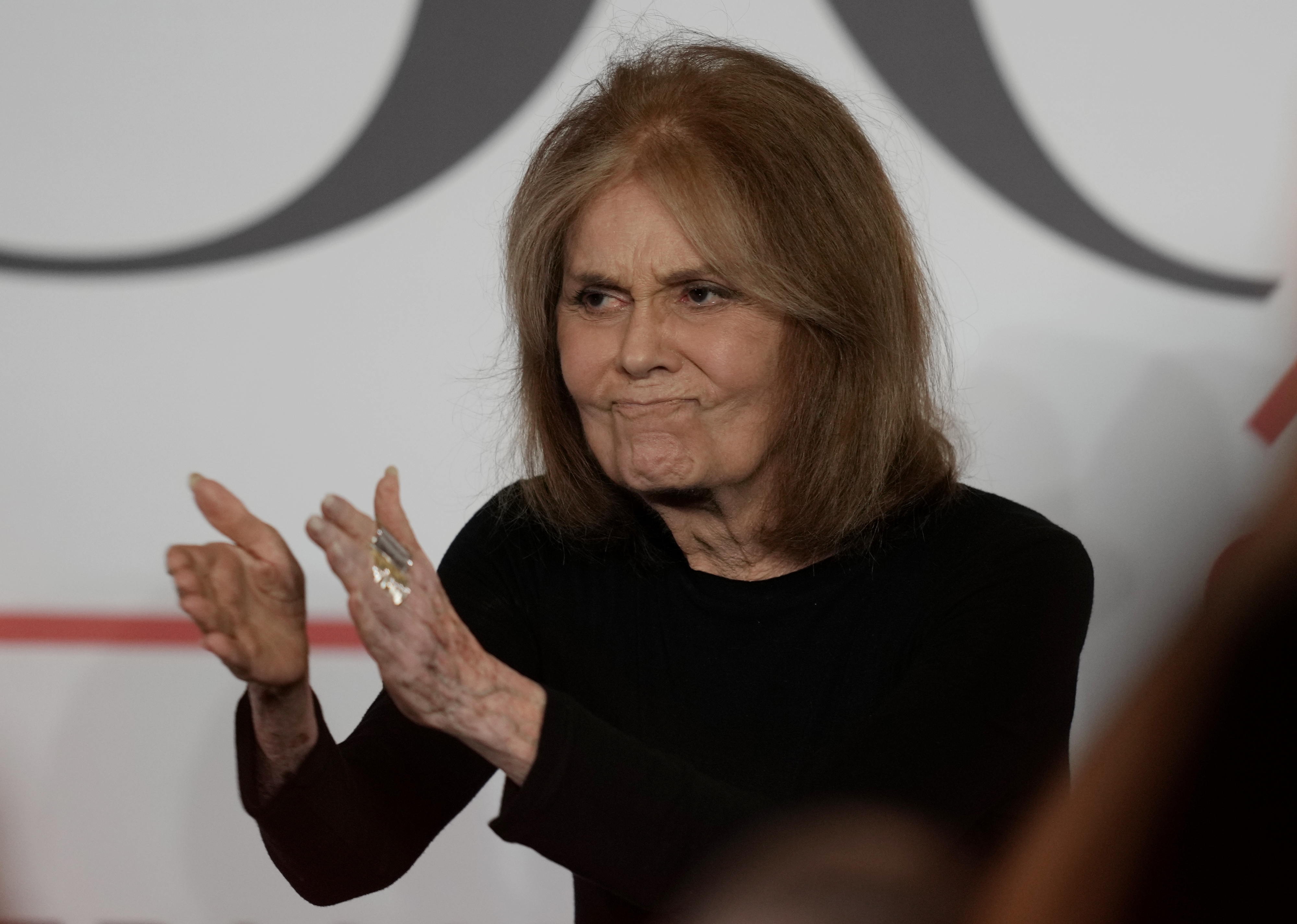
Ms. Steinem claps as she walks on the stage during an International Women’s Day event in Abu Dhabi, United Arab Emirates, in 2023.Kamran Jebreili
Time hardly slowed Ms. Steinem down; well into her 80s she was traveling the globe and speaking out on issues of importance to her. These included everything from genital mutilation to Korean reconciliation, but it was equality for women that took precedence. “Being a feminist means that you see the world as whole instead of half,” she once said. “It shouldn’t need a name, and one day it won’t.”
As the years went on, Ms. Steinem’s visibility endured. At 83, she sat in the front row of her first fashion show, guest of designer Prabal Gurung. A few days after her 85th birthday, she was leading a women’s “talking circle” at an off-Broadway play celebrating her life, where one by one, women in the audience — many fighting tears — rose to thank her and tell their own stories of discrimination. In 2020, her life was the subject of a feature film, The Glorias, A Life on The Road, based on her 2015 memoir and starring Julianne Moore.
And at 91, she collaborated on a picture book with Liberian peace activist and Nobel laureate Leymah Gbowee aimed at inspiring young people to change the world. Rise, Girl, Rise: Our Sister-Friend Journey. Together for All was published in February.
The constant visibility came with a price; even into her older years, Ms. Steinem expressed frustration that despite her accomplishments, she was often described as beautiful or glamorous (A 1992 Vanity Fair profile even noted her “spectacular racehorse legs.”) It was a label she said unfairly detracted from her message.
“Nobody ever called me beautiful until I was publicly a feminist, and that was in my mid-30s,” she told AP in a 2011 interview. “It was clear that label was being assigned to me. The most hurtful part is that you work very hard, and people say it’s because of your looks.”
Ms. Steinem dealt with hostility from many directions
Of course, Ms. Steinem also had to deal with hostility. Sometimes it came from surprising places. Appearing on Larry King’s talk show on CNN in 1990, she was visibly stunned when a female caller greeted her cheerfully, then told her to “rot in hell” because she had ruined “the beautiful American family.”
But by then, she noted, at least people were taking feminists seriously. That wasn’t the case in 1972 when she co-founded Ms. Magazine and many commentators — especially male — dismissed it as ridiculous, predicting an early demise. (The magazine continues to this day, published by the Feminist Majority Foundation.)
Among Ms. Steinem’s detractors was President Richard Nixon, who was caught on an Oval Office tape ridiculing both her and the “Ms.” title. The ridicule was mutual: In a 1972 National Press Club speech, Ms. Steinem called Nixon “the most sexually insecure chief of state since Napoleon.”
It was just one example of Ms. Steinem’s trademark wit. Before she married at 66, she often explained her singlehood by saying “I can’t mate in captivity.” Laughter, she wrote, was “the only free emotion — the only one that can’t be compelled.”
In 2013, Ms. Steinem was awarded the Presidential Medal of Freedom by President Barack Obama. “Because of her work across America and around the world, more women are afforded the respect and opportunities that they deserve,” he said, “but she also changed how women thought about themselves.”
Ms. Steinem ‘read everything I could get my hands on’ growing up
Gloria Marie Steinem was born on March 25, 1934, in Toledo, Ohio. Her father was a traveling antique salesperson; she spent her early years on the road with her parents, not attending regular school. “I just read everything I could get my hands on,” she told an audience at Manhattan’s 92Y in 2026. “Which was frequently completely unsuitable … just everything and anything. I also was in love with the movies — my idea of heaven was a movie and a malted.”
In 1944 her parents divorced, and 10-year-old Gloria was left to take care of her mother. a once-promising journalist who struggled to combine her work with running a household, and eventually suffered a nervous breakdown.
As a young girl she excelled at tap dancing — it was even going to be her “ticket out of Toledo,” she said. Although she remained a good dancer, that particular career didn’t materialize. She attended Smith College in the ’50s, a time when, she has said, women were being educated to be mothers and wives.
But marriage was not on Ms. Steinem’s mind. “I was engaged to a very nice man. It wasn’t his fault, but I just didn’t want to get married,” she told her 2026 audience. Instead, she took advantage of a modest fellowship to travel to India. After that, Ms. Steinem headed to Manhattan, where she couldn’t rent her own apartment because, she said, landlords avoided single women, assuming “if you could earn enough, you must be a hooker.”
The aspiring journalist wanted to write about politics. But editors gave her assignments on food, fashion, and, in what she jokingly called “the low point of my life,” an article about textured stockings. Even more demoralizing was her experience with an editor who, she said, gave her a choice one day: Spend the afternoon in a hotel with him, or mail his letters on the way out.
She chose to mail the letters. “There was no word for sexual harassment then,” she has said. “It was just life.”
But one assignment in 1963 sounded compelling: posing as a Playboy Bunny, for an exposé in the now-defunct Show magazine. Ms. Steinem went through the audition process, assuming she’d be weeded out. But she was given her bunny costume — “so tight, it would give a man a cleavage,” she joked — and worked in the job for about a month.
“I could not have made a bigger mistake,” she told the AP in 2011. “It was personally and professionally a disaster. In the short term, it was much harder to get assignments, and in the long term it’s been used to ridicule me.”
Ms. Steinem’s writing became more political in her 30s
Ms. Steinem was in her 30s when she joined the editorial board of New York magazine, and her writing became more political. In 1969, she went to cover an abortion rights hearing. She had never told anyone about her illegal abortion at 22, in London. That was the moment, she has said, that triggered her career as a women’s rights activist. “I don’t think I had ever felt part of a group before,” she said in a 1970 TV interview.
Ms. Steinem founded the National Women’s Political Caucus in 1971 along with Betty Friedan, Shirley Chisholm and Bella Abzug. The latter became a dear lifelong friend — “the woman I wished I had had as a mother,” she said at Abzug’s funeral.
Unlike Abzug, Ms. Steinem was naturally reserved, not comfortable in front of a crowd. Gradually, with her early speaking partner Dorothy Pitman Hughes, a Black feminist and child welfare advocate, she found her footing. The two formed a powerful partnership at a time when feminism was viewed as largely a white, middle-class movement. In an iconic photo, the two raise their right arms together in the Black Power salute.
As she grew more famous, Ms. Steinem drew attention not just for her work but for a glamorous Manhattan life. Asked once about her streaked hair and aviator glasses, she explained that the hair was inspired by Holly Golightly, the free-spirited character played by Audrey Hepburn in Breakfast at Tiffany’s. The glasses? They were “more about hiding,” she said.
When reaction was hostile, Ms. Steinem would try to reason that it was a step above ridicule. But sometimes it stung, like a snarky Esquire profile in the early ’70s, so hurtful that she cried, and colleagues called a news conference to defend her.
Ms. Steinem co-founded Ms. Magazine and stayed with it as an adviser
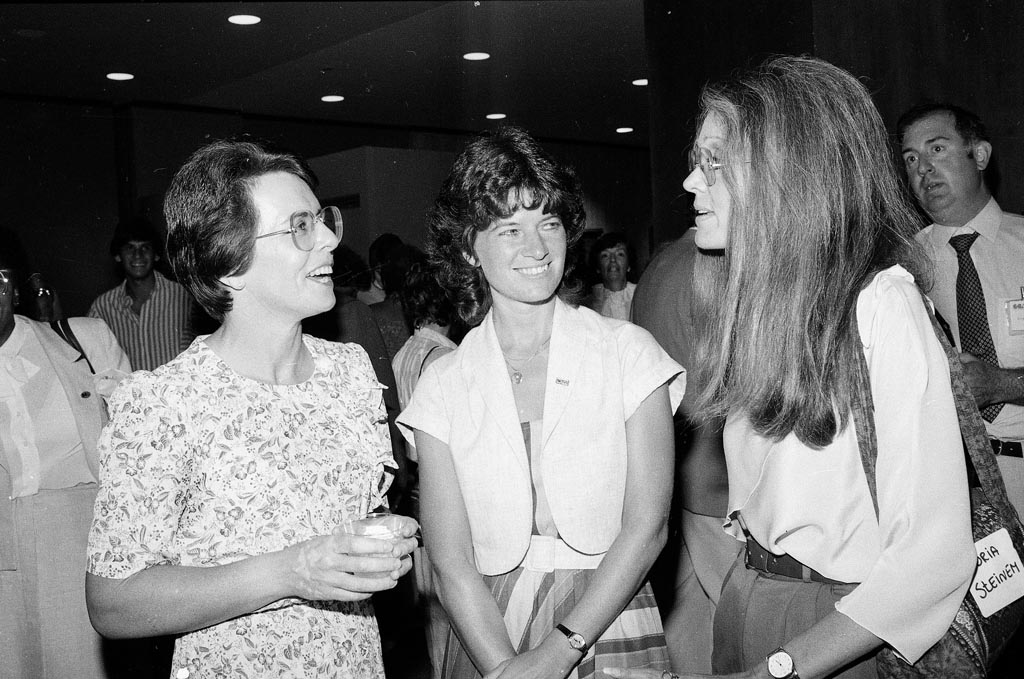
(From left) Tennis star Billie Jean King, astronaut Sally Ride, and Ms. Steinem at a reception hosted by the Girls Club of America and Ms. Magazine to honor Ride in 1983.ASSOCIATED PRESS
Then came Ms. Magazine in 1972, a magazine by women, for women. “I was so obsessed with the fear that it would fail and be a disgrace to the movement,” Ms. Steinem, age 37 when it launched, told the AP in 2011. And opponents hoped that would happen. TV newsman Harry Reasoner, an especially tart critic, later apologized on air. Ms. Steinem continued with Ms. until it was bought in 2001 by the Feminist Majority Foundation, and remained an adviser.
By 1977, numerous gains had been made for women, including Roe in 1973. But the Equal Rights Amendment, which had passed the House and Senate in 1972 but needed to be ratified by three-quarters of state legislatures, remained elusive. The issue was front and center at the 1977 National Women’s Conference, convened on a congressional mandate to examine women’s rights.
“If they want us to become the radicals that they fear we are, just let them stop the ERA and we will become those radicals,” Ms. Steinem said there.
Among groups Ms. Steinem co-founded were the Women’s Action Alliance, which was active through the 1990s; the Women’s Media Center in 2004, the Voters for Choice political action committee in 1977, and the Ms. Foundation for Women. She also helped establish the Take Our Daughters to Work Day.
Ms. Steinem never had her own children, and said she never regretted it. “No, not for a millisecond,” she told the AP, describing an incident in which she was afraid to answer that question in front of a group of women in India, fearing they wouldn’t like the answer. “But they applauded,” she said. “It’s important that some of us not have children, to show that we have a choice.”
In 2000, Ms. Steinem she did something she’d never planned to: She got married, at 66, to British activist and businessman David Bale, whom she met at a fundraiser (Bale was the father of actor Christian Bale.)
“I thought, ‘I haven’t changed, marriage had changed,’” Ms. Steinem said. “David and I wanted to be together, we loved each other. He needed a green card.” They married at a Cherokee ceremony in Oklahoma. Several years later, he became ill with brain lymphoma, and Ms. Steinem cared for him until his death in 2003.
Ms. Steinem said she had few regrets in life, but did miss being present when her father died. She received word that he’d been in a serious car accident, but did not respond in time, and he died alone. “I had taken care of my mom as a child, and I feared I’d never come back,” she explained. She was also sorry that she didn’t become closer to her mother. “I was so fearful of becoming her,” she said in an HBO documentary, Gloria: In Her Own Words.
Ms. Steinem’s books included ‘A Life on the Road’
Ms. Steinem’s books included the 2015 road memoir A Life on the Road — but she wryly noted at the time that she’d actually never learned to drive. It would have taken away, she said, from her ability to converse with her hosts, who would pick her up from airports or train stations. And, she noted, she always loved to chat with taxi drivers.
On Jan. 21, 2017, when hundreds of thousands of women gathered in Washington in their pink “pussy hats” for the historic Women’s March, it surprised nobody that the keynote speaker, and the most rousing, was Ms. Steinem.
“We are linked,” she told the crowd. “And this is a day that will change us forever because we are together.”
For many women, Ms. Steinem was the galvanizing voice that day. She would go on to advocate fiercely. But, though many saw her as a singular figure in history, she often liked to say that if she hadn’t come along, someone else would have accomplished the same things.
By the same token, she said, it was less important that younger people listen to her, and more important that they listen to themselves.
“The primary thing is not that they know who I am,” she said, “but that they know who THEY are.”