Category: Obituaries

  • Meldoria Miles, award-winning cosmetologist and retired salon owner, has died at 88

    Meldoria Miles, award-winning cosmetologist and retired salon owner, has died at 88

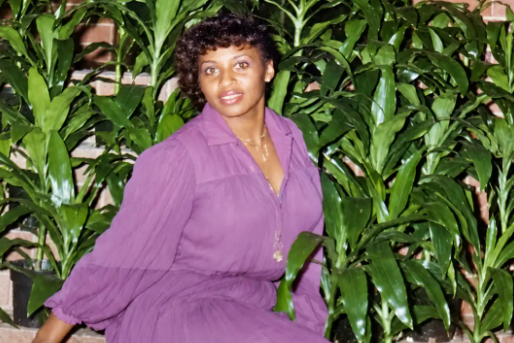
    Meldoria Miles, 88, of Philadelphia, award-winning cosmetologist, longtime beauty school instructor, retired salon owner, mentor, and big sister extraordinaire, died Wednesday, Aug. 26, of heart and lung disease at Jefferson Abington Hospital.

    The oldest of 11 children, Ms. Miles grew up in a two-room farm house in rural Mercer County, Kentucky. Naturally affable and supportive, she not only helped her mother with the household chores, she mentored her younger siblings, giving good advice, styling their hair, and generally making life more pleasant.

    “She always helped people,” her sister, Maureen Meaux, said. “She listened to people. She was beautiful inside and out.”

    After high school, Ms. Miles moved to Louisville, went to beauty school, and styled hair for clients at a salon and privately in her home. She left for Philadelphia in 1971 to work for Luster Products Inc. and became so proficient at developing, testing, selling, and demonstrating personal care products that Luster sent her to workshops, demonstrations, competitions, trade shows, and conventions across the country and around the world.

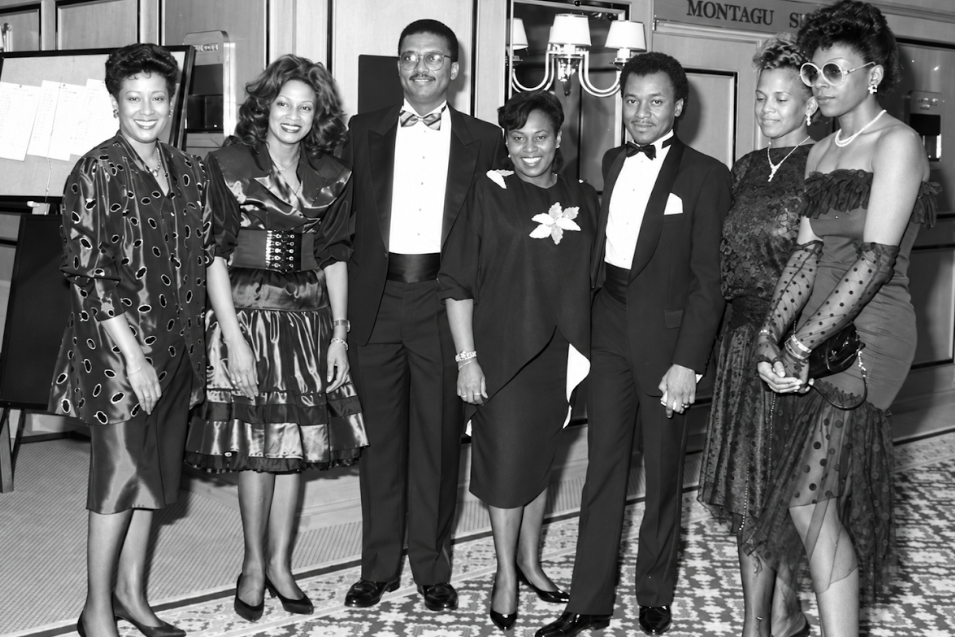
    Ms. Miles was at home in her shop, El Salon, (above) and at personal care product events (center below).Courtesy of the family

    She was especially skilled at matching colors with style, and anticipating ever-changing cosmetic trends. In 1971, she was named dean of technicians at Luster. She helped develop its groundbreaking hair relaxing formula in the 1980s and was named educational director in 1991.

    For decades, Ms. Miles, often with her sister Maureen along as her model, traveled to cosmetology events in Canada, Europe, the Caribbean, Africa, and elsewhere. She was dynamic in front of crowds, her family said, and won competitions for her use of cosmetics and wigs, and awards for her innovation.

    In 1996, she was named Philadelphia’s hair dresser of the year by the Affirm hair care line.

    Ms. Miles opened her own five-seat shop, El Salon, in 1973 on East Washington Lane in West Oak Lane and managed it for 37 years. Before Philadelphia, she worked in sales and product development for two companies in Louisville.
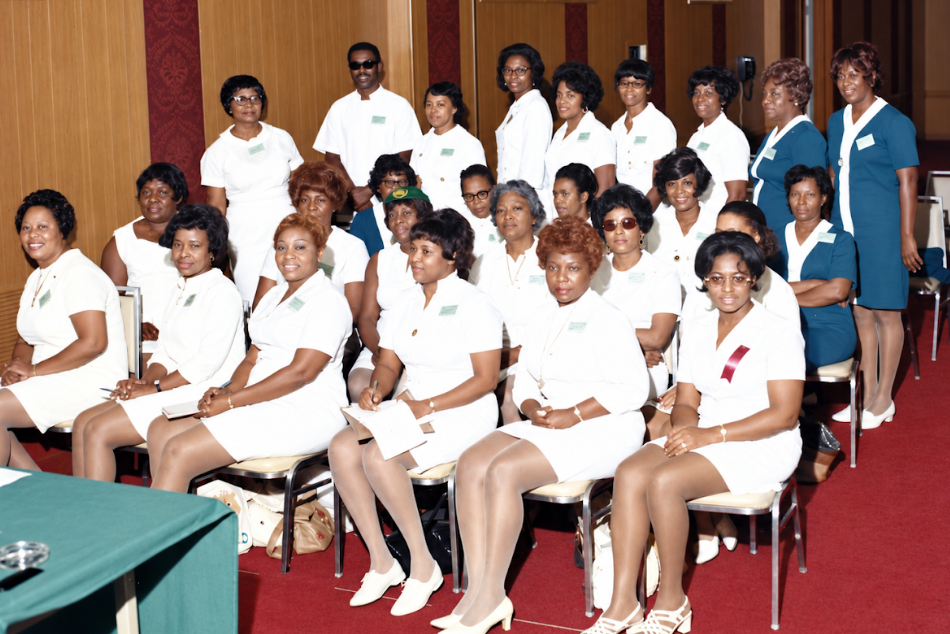
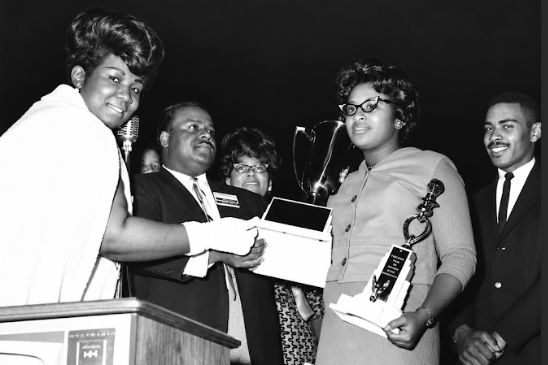
    Above, Ms. Miles (front right) attended several beauty schools. Below, she (right) won several competitions for personal care skills.Courtesy of the family

    In 1974, Ms. Miles earned her teaching certification at the old Wilfred Academy of Hair and Beauty in Philadelphia. She went on to teach chemical hair relaxing, manicuring, and other personal care skills for decades at Wilfred, Devine, Pearson VUE, and Gordon Phillips beauty schools in Philadelphia, the National Beauty Culture League in Washington D.C., Clairol in New York, and Pivot Point Academy in Chicago.

    In addition to Wilfred, she studied at the National Beauty Culture League, Pivot Point, and Vidal Sassoon in Paris. In 1980, she took business management classes at the University of Colorado.

    She was good at everything, her sister said, but “she dedicated herself to hair.”

    Meldoria Louise Meaux was born Sept. 12, 1937. She moved to Louisville after high school and spent a year at the old Tucker’s Beauty & Barber School.
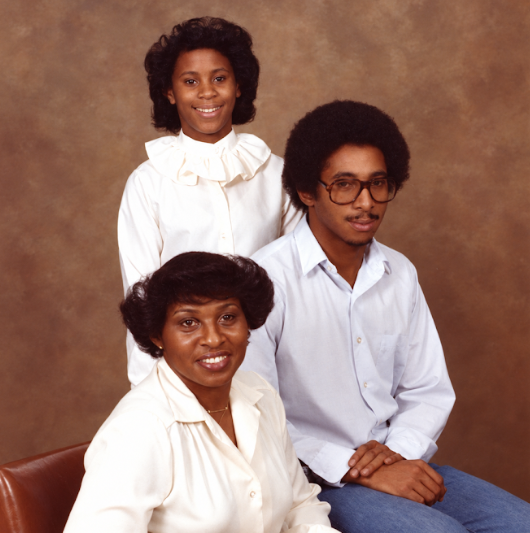
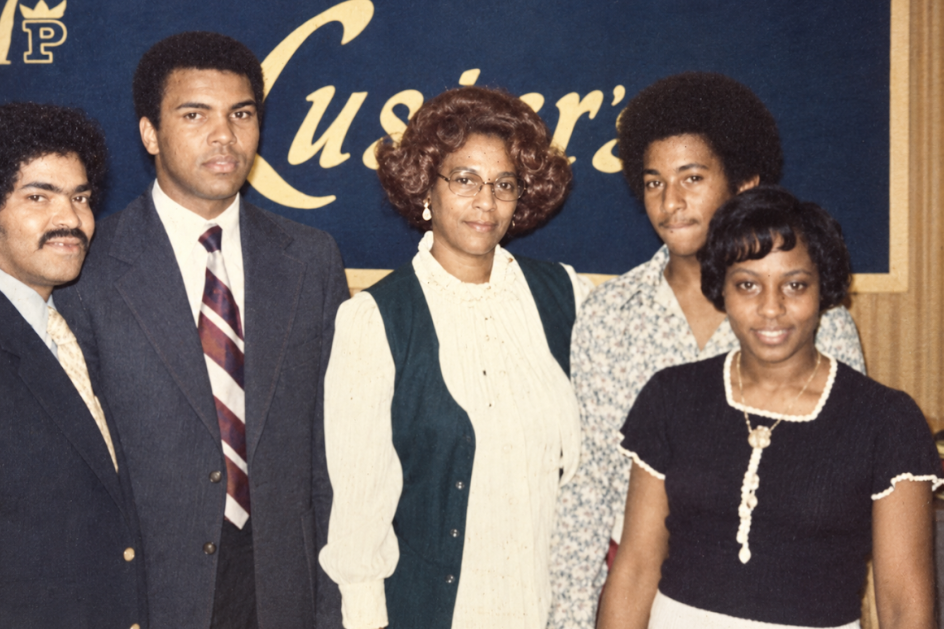
    Above, Ms. Miles sits with her children. Below, she (right) stands with Muhammad Ali (second from left) and others. Courtesy of the family

    She married James Miles, and they had a daughter, Lamarr, and a son, Gary. She and her husband divorced later. She married Jerome Wortham, and they divorced later.

    Ms. Miles lived in West Philadelphia and Mount Airy. She was active at church, taught Sunday School, and doted on her family. “She built a life of purpose, service, and faith,” her family said in a tribute.

    A friend said: “Mel was my teacher, mentor, friend, and I will miss our monthly visits and conversations.” Her daughter said: “She was the most caring, giving, positive, beautiful soul. She was effervescent. Her smile lit up the room.”

    In addition to her children, Ms. Miles is survived by four grandchildren, six siblings, and other relatives. Her first husband died earlier.

    Memorial services were held earlier.

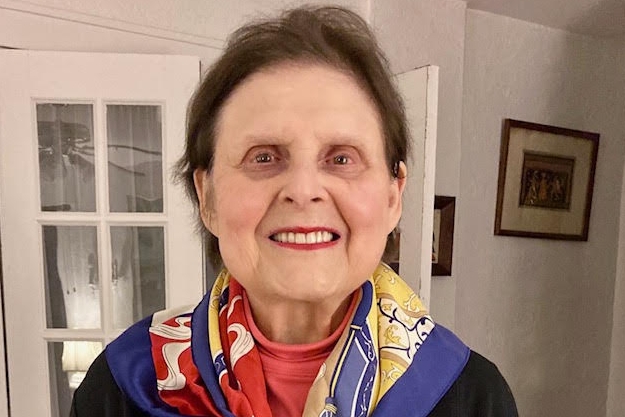
    Ms. Miles “built a life of purpose, service, and faith,” her family said in a tribute.Courtesy of the family
  • John Baer, award-winning longtime Inquirer and Daily News political reporter and columnist, has died at 79

    John Baer, award-winning longtime Inquirer and Daily News political reporter and columnist, has died at 79

    John Baer was the son of a Harrisburg newspaperman. He literally grew up in the Pennsylvania state Capitol. And he never left.

    His father, John H. Baer, was a political reporter for what is now the Patriot-News in Harrisburg, and Mr. Baer spent many Sunday afternoons hanging around the old Capitol press room while his father worked on stories. Decades later, in 1972, Mr. Baer joined the Evening News in Harrisburg as a reporter and went on to work for nearly 50 years in that same press room.

    “I’m probably unique in Pennsylvania politics and journalism,” Mr. Baer said in a 2020 oral history interview for Pennsylvania State University. “I dare say there probably aren’t any who can say they worked in the same state capitol newsroom that their father did.”

    In 1987, the Daily News hired Mr. Baer to cover state politics in Harrisburg. He became a political columnist for the newspaper in 2000, and his plainspoken, no-holds-barred stories later appeared in The Inquirer as well. Before he left the papers in 2019, he covered hundreds of political campaigns, conventions, and elections, and wrote about thousands of local, state, and national politicians.

    Mr. Baer’s column on politics appeared in The Inquirer and Daily News from 2000 to 2019. Newspapers.com

    “He was the most feared reporter in my eight years in Harrisburg,” former Gov. Ed Rendell said. “He did his work. He did his digging. He really cared about the issues.”

    On Thursday, Sept. 24, Mr. Baer died of cancer at his home in New Cumberland, Pa. He was 79.

    For 32 years, Mr. Baer was a hard-hitting, award-winning political reporter and columnist for The Inquirer and Daily News. He was also a columnist for PennLive and the Patriot-News, onetime public TV producer and show host, former press secretary, author, teacher, and mentor.

    Many of those Mr. Baer covered in Harrisburg, Philadelphia, and Washington praised his “deep integrity” and “fierce independence,” and called him a “keen observer of Pennsylvania politics” and “a heavyweight in Pennsylvania political reporting” in online tributes. State Rep. Ben Waxman called Mr. Baer a “legendary Capitol journalist.” U.S. Rep. Dwight Evans said he was “authentic and a one-of-a-kind journalist.”

    Mr. Baer told Penn State he wanted to “let people see the inside of the game in Harrisburg.” His Inquirer.com online profile reads: “John Baer has written about politics and government since 1987. Neither subject ever fails to provide him with stories of policies and politicians walking on or skirting by paths to perdition.”

    In addition to covering nine Pennsylvania governors, the impeachment trial of President Bill Clinton, and the ascensions of Presidents Barack Obama and Donald Trump, Mr. Baer wrote about the execution of serial killer Gary Heidnik, the pleas for more research funding by a cancer victim, and the battle of a state policeman’s widow to receive her husband’s pension benefits.

    He said some of his favorite columns were the mea culpa pieces he wrote at the end of each year that highlighted things he got wrong. “I truly just had a ball at the Daily News,” he told Penn State. “I just loved it. … I’ve always said I had no adult supervision, and it was wonderful.”

    Mr. Baer joined PennLive in 2019, and his last column was published in July. “The depth and breadth of his knowledge was beyond compare,” said Amy Worden, his editor at PennLive.

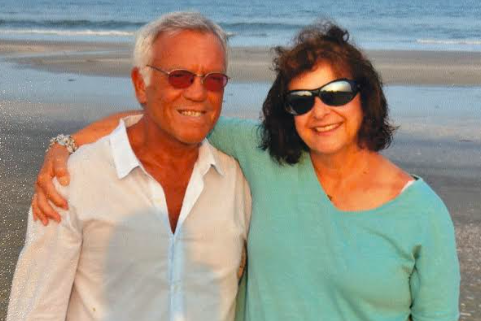
    Mr. Baer and his wife, Rosemary, married in 1969.Courtesy of the family

    Before the Daily News, Mr. Baer spent 14 years in total as a reporter for the Patriot-News, an award-winning public TV producer and show host for WITF in Harrisburg, and a press secretary during Lt. Gov. Bill Scranton’s unsuccessful run for governor in 1986.

    He wrote freelance stories for Philadelphia Magazine and national publications. He was a frequent guest on political TV and radio shows and moderated several statewide candidate debates.

    A lifelong foodie, he also reviewed Harrisburg-area restaurants for a magazine under the pseudonym “the Phantom Diner.” His book, On the Front Lines of Pennsylvania Politics, was published in 2012.

    “He was so good at writing strong opinions with depth,” Paul Vigna, a retired Daily News editor, said.

    Mr. Baer earned awards for his journalism and was inducted into the Pennsylvania News Media Hall of Fame in 2024. He was cofounder of the Pennsylvania Press Club and onetime president of the Pennsylvania Legislative Correspondents Association.

    In tributes, colleagues praised his “sharp wit” and called him a “journalism giant,” “terrific writer,” and “mentor to many of us.” The internship program at the Pennsylvania Legislative Correspondents Association is named in his honor.

    “He was an All-Star, a Hall of Famer,” Vigna said. Rendell said: “He didn’t take any BS.”

    John Baer was born June 25, 1947, in Harrisburg. He graduated from Bishop McDevitt High School in 1965 and earned a bachelor’s degree in English at Mount St. Mary’s University in Maryland and a master’s degree in education later from Temple University.

    He coached basketball and football teams while teaching English for three years at Trinity High School in Harrisburg after college. He married Rosemary Ruggieri in 1969, and they had sons Johnny and James.

    Mr. Baer and his wife hosted many memorable Christmas parties and enjoyed road trips to Georgetown University basketball games, New York Mets baseball games, and their sons’ many sporting events. He played racquetball and tennis, and ran a marathon at 50.

    He was a longtime member of St. Theresa Catholic Church in New Cumberland. “He liked interesting people and had lifelong friendships,” his family said in a tribute. “He loved his friends.”

    On Facebook, colleague Diana Robinson said: “Here’s to you, John Baer. You’ll always be The Most Interesting Man in Harrisburg.”

    In addition to his wife and sons, Mr. Baer is survived by three grandchildren and other relatives.

    Services were held earlier.
    Donations in his name may be made to Vickie’s Angel Foundation, 511 Bridge St., Box 174, New Cumberland, Pa. 17070.

  • Ruth Weisberg, longtime radio and TV show host, and voice-over actor, has died at 70

    Ruth Weisberg, longtime radio and TV show host, and voice-over actor, has died at 70

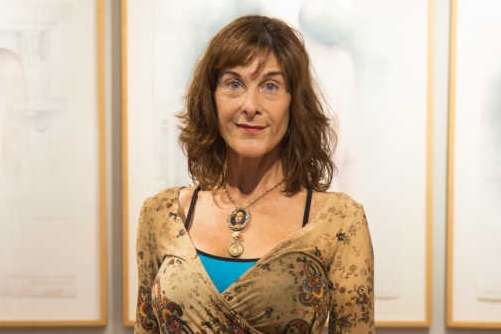
    Ruth Weisberg, 70, formerly of Philadelphia, longtime award-winning radio, TV, and online news anchor, features reporter, and show host; onetime voice of Shadow Traffic, Bell Telephone, and other voice-over clients; voice-over instructor, writer, speaker, pianist, art model, actor, Miss Greater Philadelphia 1980, volunteer, and stand-up comedian, died Wednesday, Sept. 2, of ovarian cancer in an assisted living center in Sarasota, Fla.

    Reared in Oxford Circle and a graduate of Northeast High School and Pennsylvania State University, Ms. Weisberg was a prolific media personality for nearly 50 years in Philadelphia and Florida. She was the radio voice of Shadow Traffic in the late 1970s and early 1980s, a news anchor and features reporter at WXTU, WCAU, WIFI, WPEN, and WSNI radio in the mid-1980s, and a radio, TV, and online talk show host from the late 1980s until recently.

    She hosted Frank Talk With Frank Rizzo on WCAU radio in 1988 and ’89, and told The Inquirer in 1989 that working with the former mayor was like flying a “careening aircraft for three hours.” She also hosted Storytime and Show ’n Tell with Miss Ruth on local cable TV and online in 2015, and Funny You Should Ask, a radio show and podcast about comedy, in Florida in 2023.

    Always drawn to the theater and drama, she started producing TV and radio shows while studying special education at Penn State in the 1970s, and wound up cohosting a local rock and roll radio show as a senior exchange student in England. “All of the sudden,” she told The Inquirer in 1989, “I had this new-found love of radio. I never pursued it. It just came calling.”

    Ms. Weisberg reported on all kinds of lifestyle issues and earned radio awards from the Associated Press, the Philadelphia Press Association, and other groups. In 1994, she was named member of the year by the Philadelphia chapter of the International Television Association.

    She called herself Miss Ruth and Ruth Weisberg Philly on Facebook and reveled in her constant innovation and free spirit. She told The Inquirer: “I like to think sometimes that God is laughing at me. I imagine Him shaking His head and saying: ‘Weisberg, what are you up to?’”

    As a voice-over narrator and actor, she recorded corporate training videos, audiobooks, and radio and TV commercials. Bell Telephone hired her to record “We’re sorry. Your call cannot be completed as dialed” and other phone messages in 1985 because, a top official told her in a letter, her voice was “congenial yet persuasive.” She also taught voice-over classes for organizations and individuals, and mentored others on whatever she was doing wherever she worked.

    She modeled for artists — some called her their “muse” — at art centers and colleges, and starred in a short video called The Accidental Art Model. “I love being part of a creative, imaginary, intrinsically artistic world,” she said in the video. “I would like to think of myself as the inspiration and the template for the work that happens.”

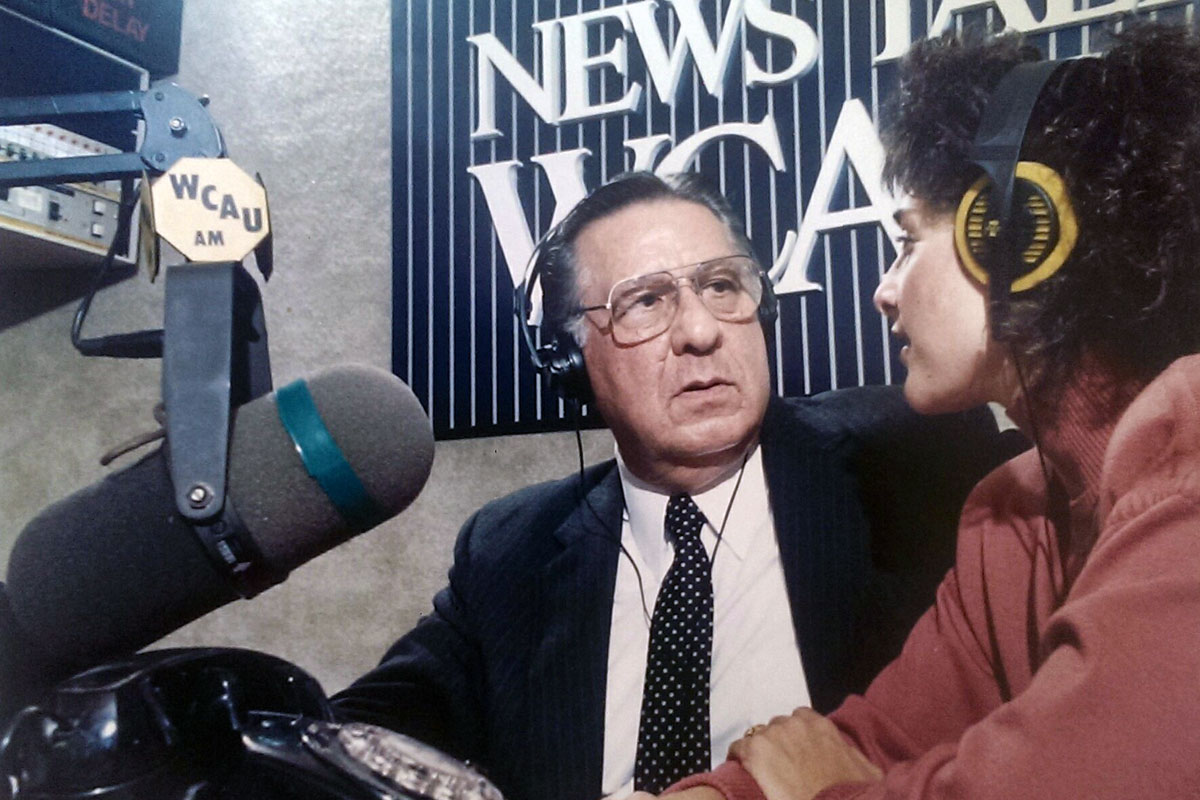
    Ms. Weisberg co-hosted a talk with onetime Mayor Frank Rizzo in 1988 and 1989.WCAU Radio

    Ms. Weisberg was drawn to beauty pageants, she said on Facebook, by the glitz and glamour. She was named Miss Central Pennsylvania as a Penn State freshman in 1975 and Miss Greater Philadelphia in 1980.

    “I never once felt objectified, exploited,” she said in a 2018 radio interview about the contests. “If anything, I felt celebrated for my talents and hard work.”

    She held seminars on career networking, spoke to groups often about radio and voice-over work, and read stories to children in bookstores. She wrote op-eds for The Inquirer and articles for the Main Line Welcomat and other publications.

    She posted videos on YouTube. She cohosted the 2001 Miss Greater Philadelphia Pageant. Former Daily News columnist Stu Bykofsky called her “both an eyeful and earful.”

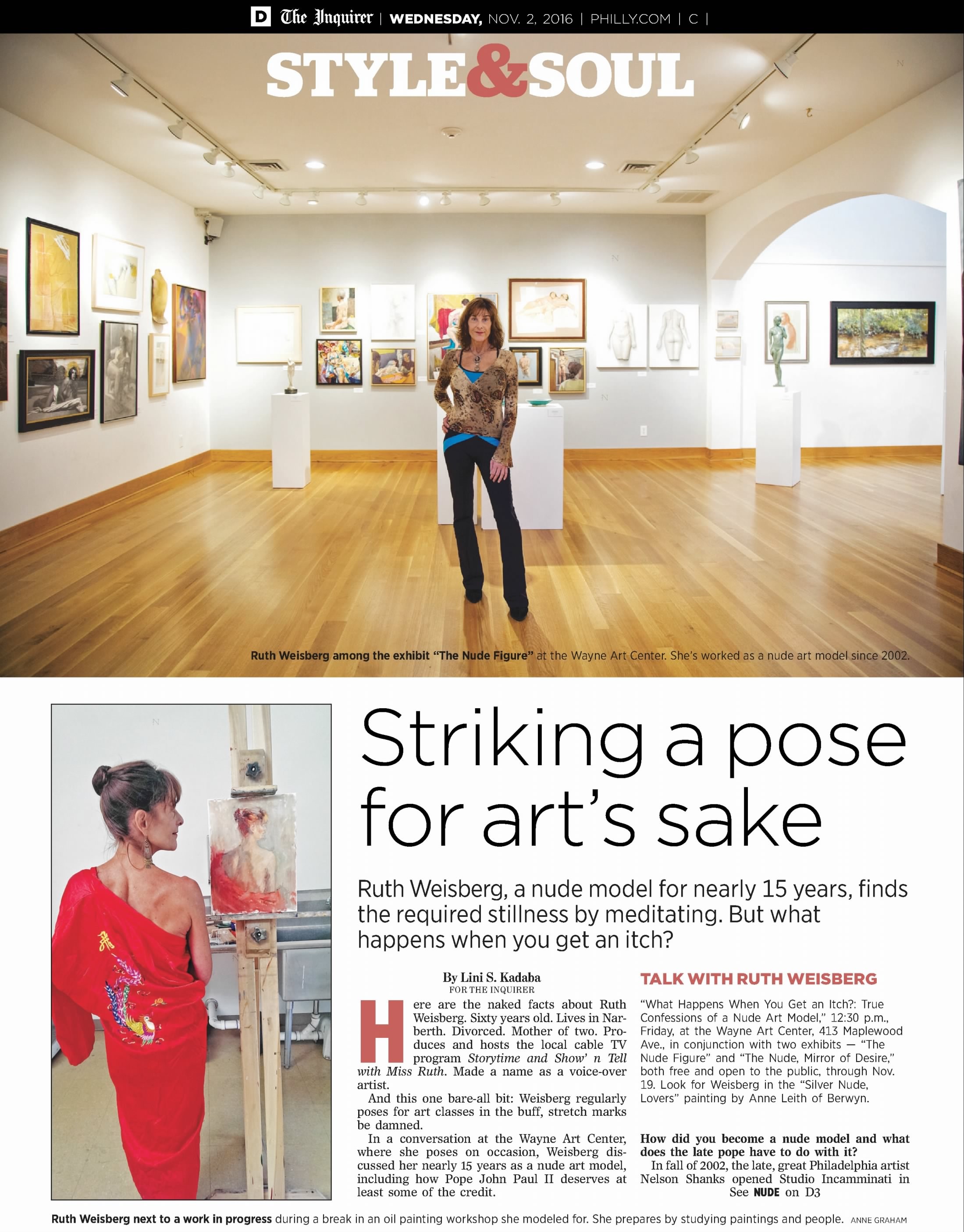
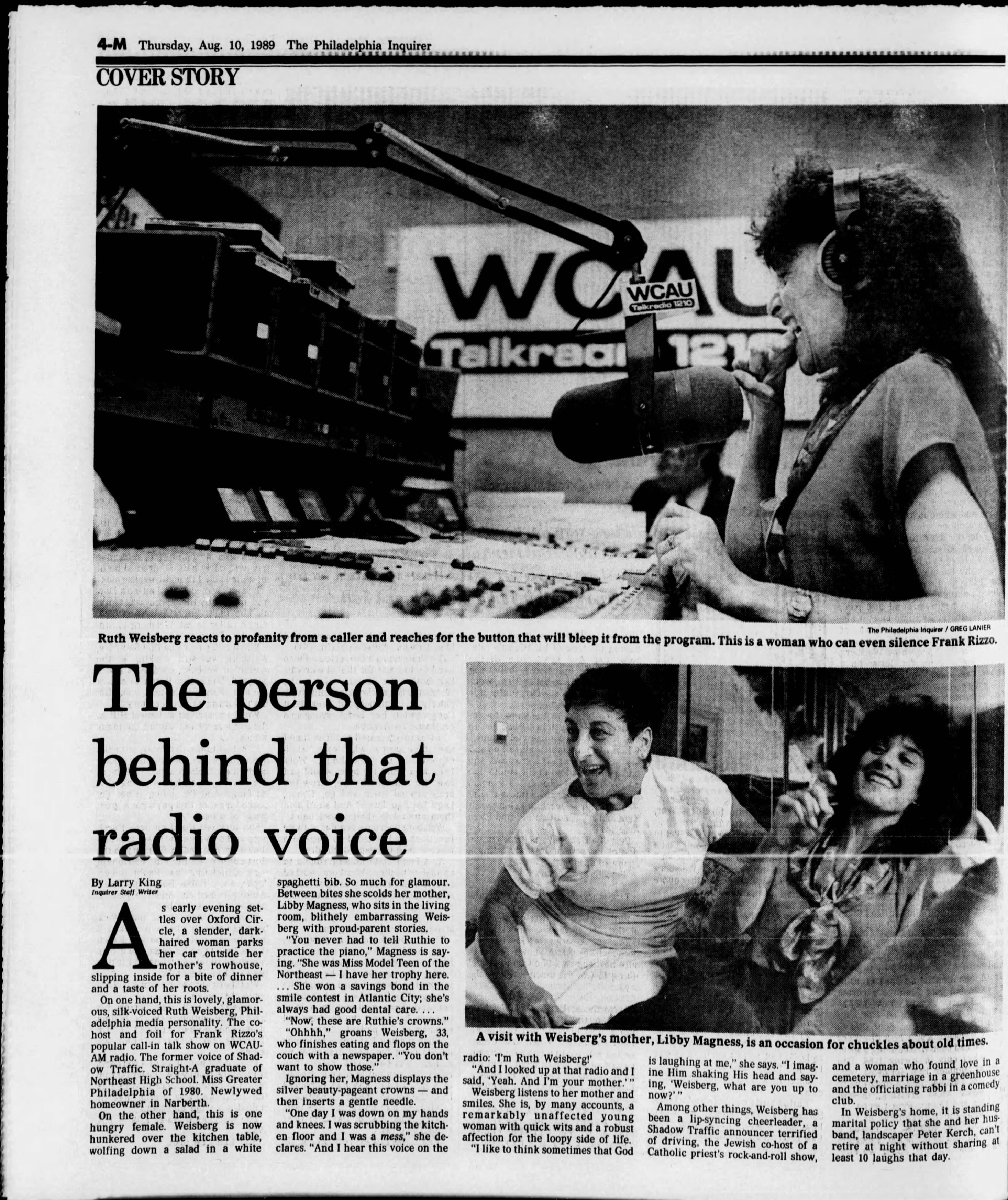
    Ms. Weisberg was featured in The Inquirer in 2016 (above) and 1989 (below).Newspapers.com

    She also acted in local stage productions and performed stand-up comedy routines in brewpubs and restaurants and at gatherings. She was featured several times in The Inquirer and Daily News, and moved to Sarasota in 2016.

    “My work motto is that I will accept any job position that does not require wearing a hair net,” she said in a 2016 online interview. Her family said in a tribute: “Her life and influence were an inspiration and a sparkle of joy to so many people.”

    Ruth Maxine Weisberg was born May 31, 1956, in Philadelphia. She was a cheerleader, was active in theater class, and got straight A’s at Northeast High School.

    She and her mother, Libby, volunteered to entertain people in hospitals and nursing homes when she was young, and she knocked on neighborhood doors for Democratic presidential nominee George McGovern when she was 16.

    Her family spent memorable summers in Atlantic City, and she earned a bachelor’s degree in special education at Penn State.

    She married Peter Kerch in 1988, and they had a daughter, Talia. After a divorce, she married James Herbert, and they had a son, Elliott. They divorced later.

    Ms. Weisberg liked crossword puzzles, collected classic telephones, and attended concerts and beach drum circles. She was a certified scuba diver and wore a hat emblazoned with “The Queen of Everything.”

    Friends and colleagues called her “witty and supportive” and praised her “charm, humor, and kindness” in online tributes. One said she “always brought warmth and sunshine to wherever she was.”

    Her daughter said: “She was effervescent, exuberant, and whimsical.”

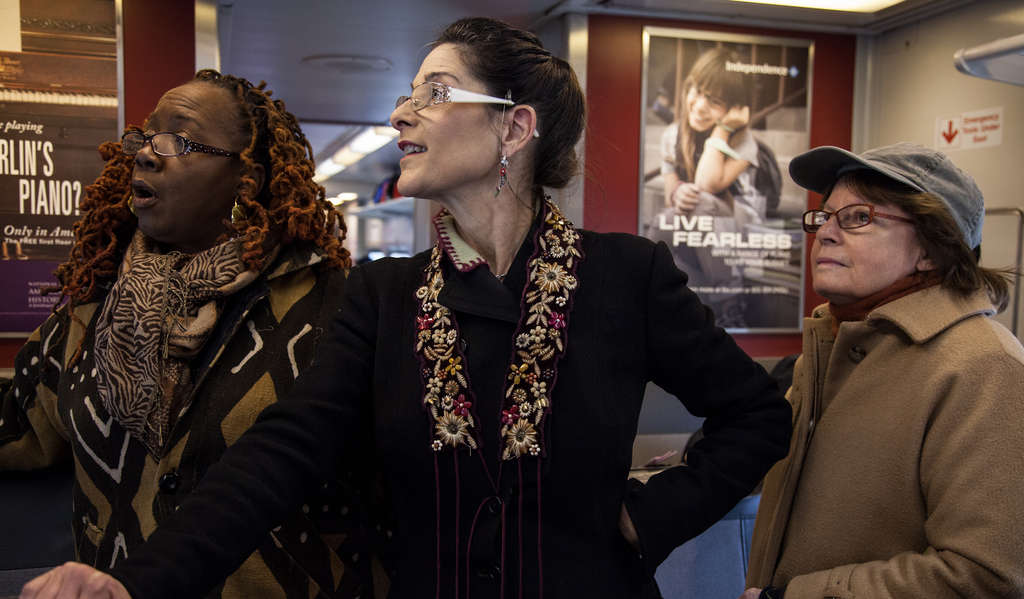
    Ms. Weisberg (left above and center below) took her voice-over students on a field trip in 2015. Emily Cohen / Staff Photographer

    In addition to her daughter, son, and former husbands, Ms. Weisberg is survived by two brothers and other relatives.

    A private celebration of her life is to be held later.

  • Jeff Scott, award-winning TV writer and former Bucks County journalist, has died at 72

    Jeff Scott, award-winning TV writer and former Bucks County journalist, has died at 72

    Jeff Scott, 72, formerly of Hilltown, Bucks County, longtime award-winning TV and video scriptwriter, director, and producer, former columnist and editor at the Quakertown Free Press, and green-thumb gardener, died Saturday, Sept. 19, of pulmonary fibrosis at Hunterdon Medical Center in Flemington, N.J.

    Born in Philadelphia, reared in Hilltown, and a graduate of Pennridge High School, Mr. Scott turned his lifelong interest in sports, affable collegiality, and writing, reporting, and editing skills into an award-winning career as a TV and print journalist that spanned more than four decades.

    For 32 years, from 1983 to 2015, Mr. Scott wrote scripts, directed talent, and produced shows for TV, film, video, radio, and DVDs. He worked for Major League Baseball Productions through Phoenix Communications from 1988 to 2015 and wrote more than 1,000 TV show scripts for ABC, NBC, ESPN, Fox, and other networks, including 176 episodes of ESPN’s Major League Baseball Magazine and 450 consecutive episodes of the popular This Week in Baseball.

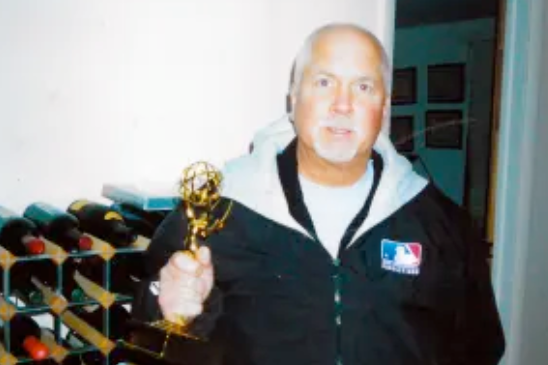
    His dramatic scripts detailed many memorable baseball seasons, went behind the scenes with championship teams, and shared stories about star players on and off the field. They were narrated by iconic announcers such as Mel Allen, Curt Gowdy, Bob Costas, and Harry Kalas, featured thousands of players, coaches, and managers, and earned 16 New York Emmy Awards.

    Mr. Scott earned 16 New York Emmys.Courtesy of the family

    Former colleagues at MLB Communications posted a video tribute to Mr. Scott on X and noted his “indelible impact” on This Week in Baseball. Buzz Brainard, a former narrator for This Week in Baseball, said on Facebook: “Honored to bring his words to life every season for 11 years.”

    Earlier, from 1983 to 1988 at the old Halcyon Days Productions, Mr. Scott wrote scripts for the weekly This is the USFL for ABC and other shows about John Madden, Mike Schmidt, and other sports and entertainment notables. Sports reporter Jayson Stark said on X: “You may not know the name, Jeff Scott. But you should.”

    In print, Mr. Scott was a columnist and weekend magazine editor for the Free Press in the early 1980s. In the 1970s, he was sports editor and a features writer for the Perkasie News-Herald, and a part-time sports reporter for the Doylestown Intelligencer.

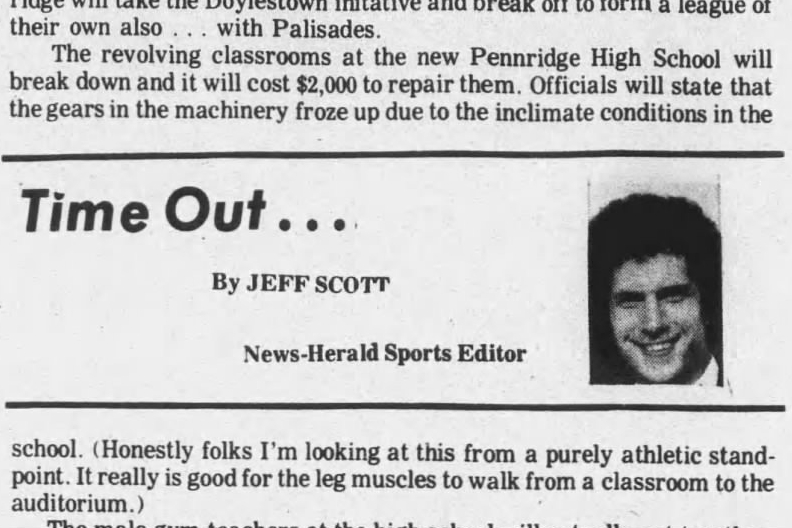
    At the Free Press, he won awards and covered all kinds of local stories, including his publisher’s triple-bypass heart surgery. At the News-Herald, he wrote a sports column called “Time Out” and a news feature called “Know Your Community.”

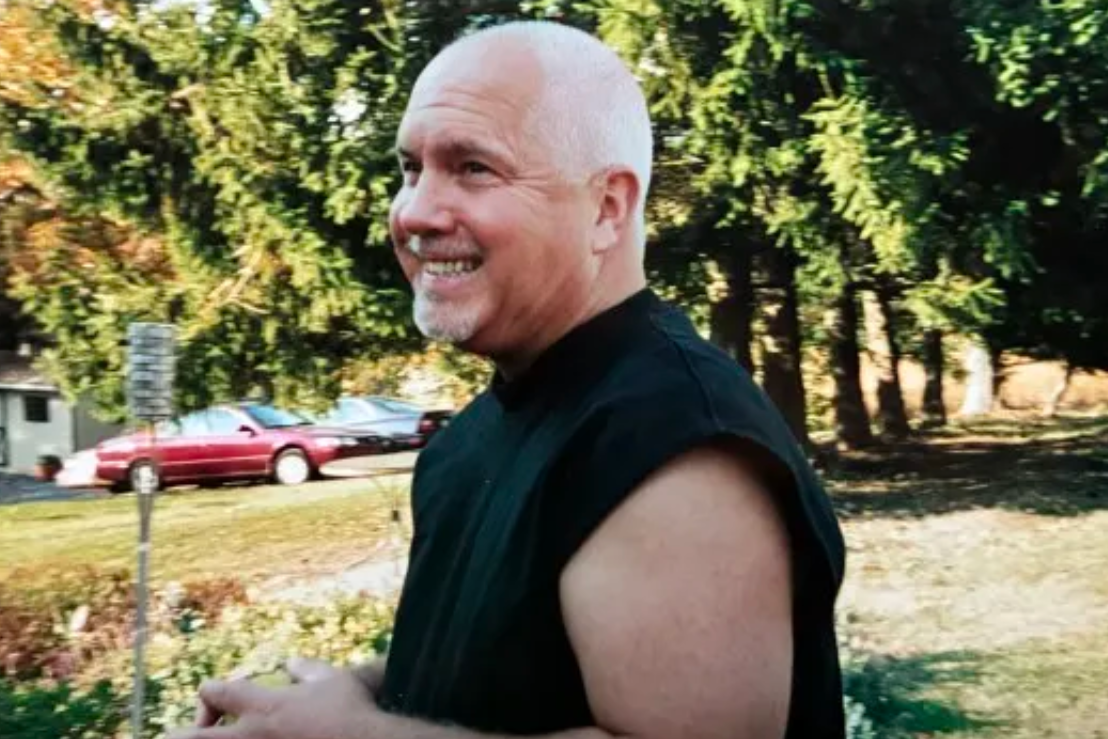
    To know Mr. Scott, a friend said, “was to like him.”Courtesy of the family

    In 1976, he opened a News-Herald sports story with: “Some would call it luck. Some might call it breaks. And some might even consider the fact that somebody upstairs is carrying the fate of the Pennridge football team this year. We prefer to call it pure, unadulterated hustle.”

    A former Pennridge baseball player said in a tribute: “It always was a big deal when he came to our games.” A former colleague at the Free Press said: “He made me feel important, and he made sure I knew that he was my friend.”

    Other former colleagues praised Mr. Scott’s “sense of humor,” “warmth and kindness,” and “quick wit that never waned” in online tributes. “To know Jeff was to like him,” longtime friend and colleague Jim Burger said. “To know him well, which I had the good fortune to do, was to love him.”

    Jeffrey Llewellyn Scott was born Nov. 18, 1953. He played street hockey in Hilltown and baseball at Pennridge, and attended what is now West Chester University.

    Mr. Scott wrote a sports column in Perkasie in the 1970s.Newspapers.com

    After college, he drove a truck, worked as a disc jockey, and traveled across the country. He married and divorced Lorrie Greenly and Amber Hudson.

    He met Lenore Homeward on vacation in Tobago, and they married in 1991 and lived in Manhattan and Pittstown, N.J. He created seven flower beds on their property and tended many flower pots. “It was like a full-time job,” his wife said.

    Mr. Scott enjoyed music and followed the Phillies, Eagles, 76ers, and Flyers. “He was a homebody,” his wife said.

    His niece Shanice said: “My uncle Jeff had a big heart and meant the world to me.” A longtime friend said: “The world will be a less warm and kind place without him in it.”

    Mr. Scott enjoyed time with his family.Courtesy of the family

    His wife said: “He was loyal, funny, humble, and compassionate. He had the ability to see the better in people. He was friends with everybody.”

    In addition to his wife and niece, Mr. Scott is survived by a sister, Kathleen, and other relatives. Three brothers and one sister died earlier.

    Private celebrations of his life are to be held later.

  • Lenora D. Wolfgang, French professor emeritus at Lehigh University and literary scholar, has died at 91

    Lenora D. Wolfgang, French professor emeritus at Lehigh University and literary scholar, has died at 91

    Lenora D. Wolfgang, 91, of Philadelphia, French professor emeritus at Lehigh University, literary researcher, author, teacher, mentor, and artist, died Thursday, May 14, of heart failure at her home near the Philadelphia Museum of Art.

    Professor Wolfgang, or, as many of her Lehigh students and colleagues called her, Madame Wolfgang, planned to study art in Paris after high school and live as a painter. But, she told her family, she became so enthralled by the French language at Philadelphia High School for Girls that she curbed her art aspirations, earned three degrees in French at the University of Pennsylvania, and taught French and French literature at Lehigh for 26 years.

    Inspired by professors at Penn, she became an expert in medieval French language and literature, and her doctoral dissertation and first book were an analysis of an 800-verse prologue to a 13th-century French poem. She studied in France on a Fulbright Scholarship in 1956 and ’57, and in Spain on a grant from the American Council of Learned Societies in 1978.

    She wrote two books on French poetry, served research fellowships with the National Endowment for the Humanities in the 1980s and ’90s, and earned a grant from the American Philosophical Society in 1981 to transcribe manuscripts at the National Library in Paris. In 1990, reviewers at Penn’s French Forum journal said her second book, also on 13th-century French poetry, “provides the modern scholar with a standard text and thorough apparatus that will serve current and future generations well.”

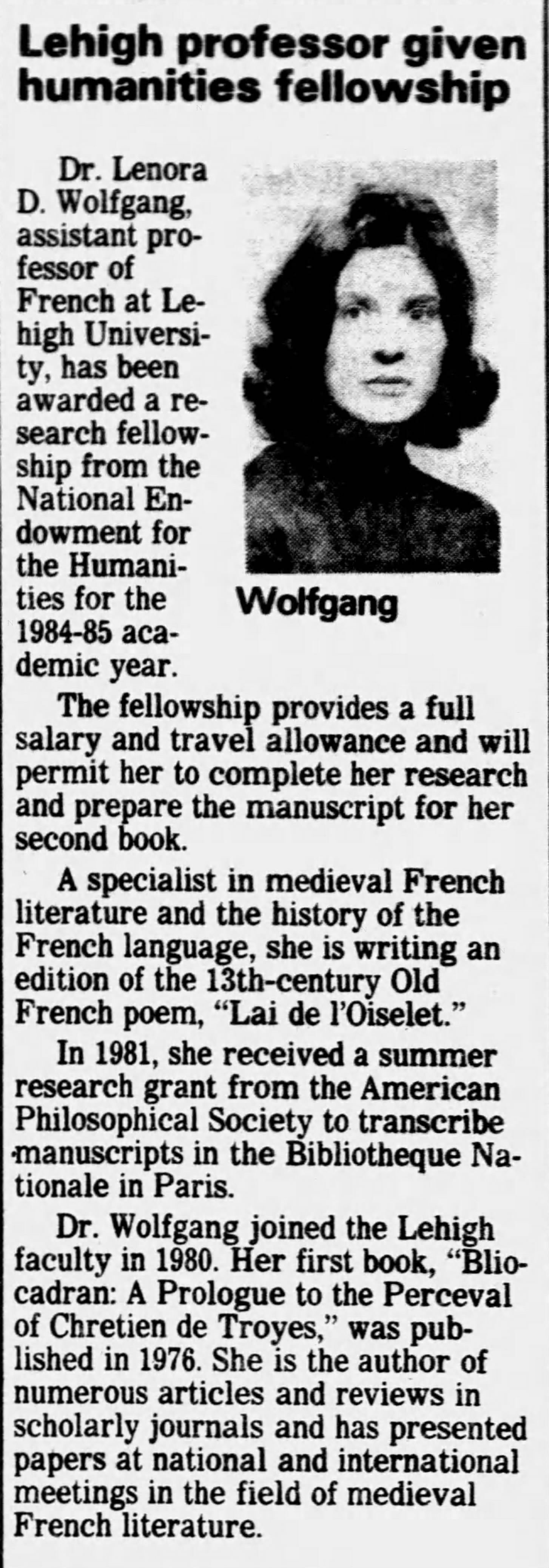
    This photo and story about Professor Wolfgang appeared in the Morning Call of Allentown in 1984.Newspapers.com

    She belonged to many academic language and literature organizations, and was a student adviser and faculty committee member at Lehigh. In tributes, former colleagues called her “a true mentor” and “a real mensch.” One said: “It was clear that I had an ally in Lenora and that she wanted me to succeed.”

    A former student said she was “a good friend and sounding board” in a 2025 interview with the Lehigh alumni relations department. “She was always ready to help, share her knowledge,” a former colleague said, “and always did it with tact and unselfishness.”

    Professor Wolfgang earned bachelor’s and master’s degrees, and a doctorate in French at Penn. She taught French classes at Temple and Rutgers Universities, Penn, and high schools in Philadelphia before joining Lehigh’s Department of Modern Languages and Literature in 1980.

    She commuted three hours round trip to Lehigh, in Bethlehem, Pa., from West Philadelphia three days a week and was promoted from assistant professor to associate professor in 1986, then to full professor in 1989. She retired from Lehigh in 2006.

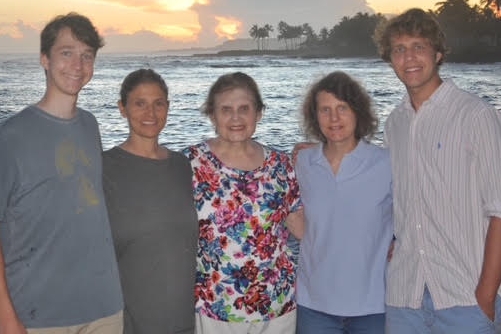
    Professor Wolfgang (center) traveled the world and enjoyed hosting dinner parties with family, friends, and academic colleagues. Courtesy of the family

    After Lehigh, Professor Wolfgang taught continuing education classes about French playwright Molière and other topics to adults at the Osher Lifelong Learning Institute at Temple. After the COVID-19 pandemic lockdown ended, she returned to the institute briefly as a student.

    Professor Wolfgang was adept at painting as a girl in West Philadelphia and won several art competitions, and later showed her photography at Penn’s Faculty Club. “She was a natural talent,” her family said in a tribute.

    Lenora Divida Poden was born Sept. 25, 1934, in Philadelphia. Her parents emigrated from Poland and Romania, and her mother left the family when Professor Wolfgang was in junior high school.

    She and her father had to hide their Jewish heritage and alter their last name to minimize antisemitic attacks. “Yet Lenora overcame these challenges,” her family said, “excelled academically, and rose to the top of her academic field.”

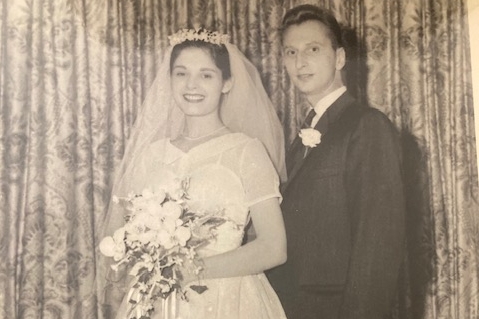
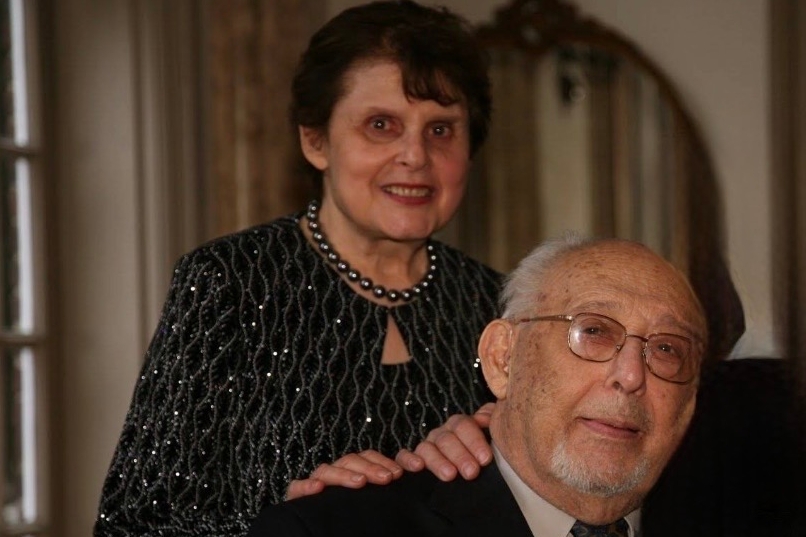
    Professor Wolfgang married her first husband, Marvin Wolfgang (above), in 1957, and her second husband, Leon Salganicoff (below), in 2010.Courtesy of the family

    An exceptional student, she was valedictorian of both her 1952 senior high school class at Girls’ High and her 1956 senior undergraduate class at Penn’s College for Women. She married Marvin Wolfgang, a professor at Penn, in 1957, and they had daughters Karen and Nina, and lived in University City.

    In 1977, The Inquirer featured their house in a photo spread about its French-inspired Gothic style of architecture. Professor Wolfgang said: “Perhaps that is one reason I feel so very much at home.”

    After her husband died in 1998, she married Leon Salganicoff, a professor emeritus at Temple, in 2010. He died in 2011.

    Professor Wolfgang was an avid reader. She traveled the world, listened to classical music, and enjoyed hosting dinner parties with friends and academic colleagues.

    Professor Wolfgang (left) doted on her family and sent personalized birthday cards. Courtesy of the family

    She almost went to law school in the 1970s before gaining her full-time teaching position at Lehigh. She doted on her family, sent personalized birthday cards, and kept in touch with teachers, colleagues, former students, and friends even after they parted.

    “She was brilliant,” a longtime friend said in a tribute, “and she was fun.” Her family said: “Everyone loved her.”

    In addition to her daughters, Professor Wolfgang is survived by two grandsons, a great-grandson, and other relatives. A brother died earlier.

    A private celebration of her life was held earlier.
    Donations in her name may be made to the Philadelphia Yearly Meeting of the Religious Society of Friends, Box 72077, Philadelphia, Pa. 19176.

    Professor Wolfgang “was brilliant,” a longtime friend said in a tribute, “and she was fun.”Courtesy of the family
  • Bill Giles, the former Phillies owner who helped create the Phillie Phanatic, has died at 92

    Bill Giles, the former Phillies owner who helped create the Phillie Phanatic, has died at 92

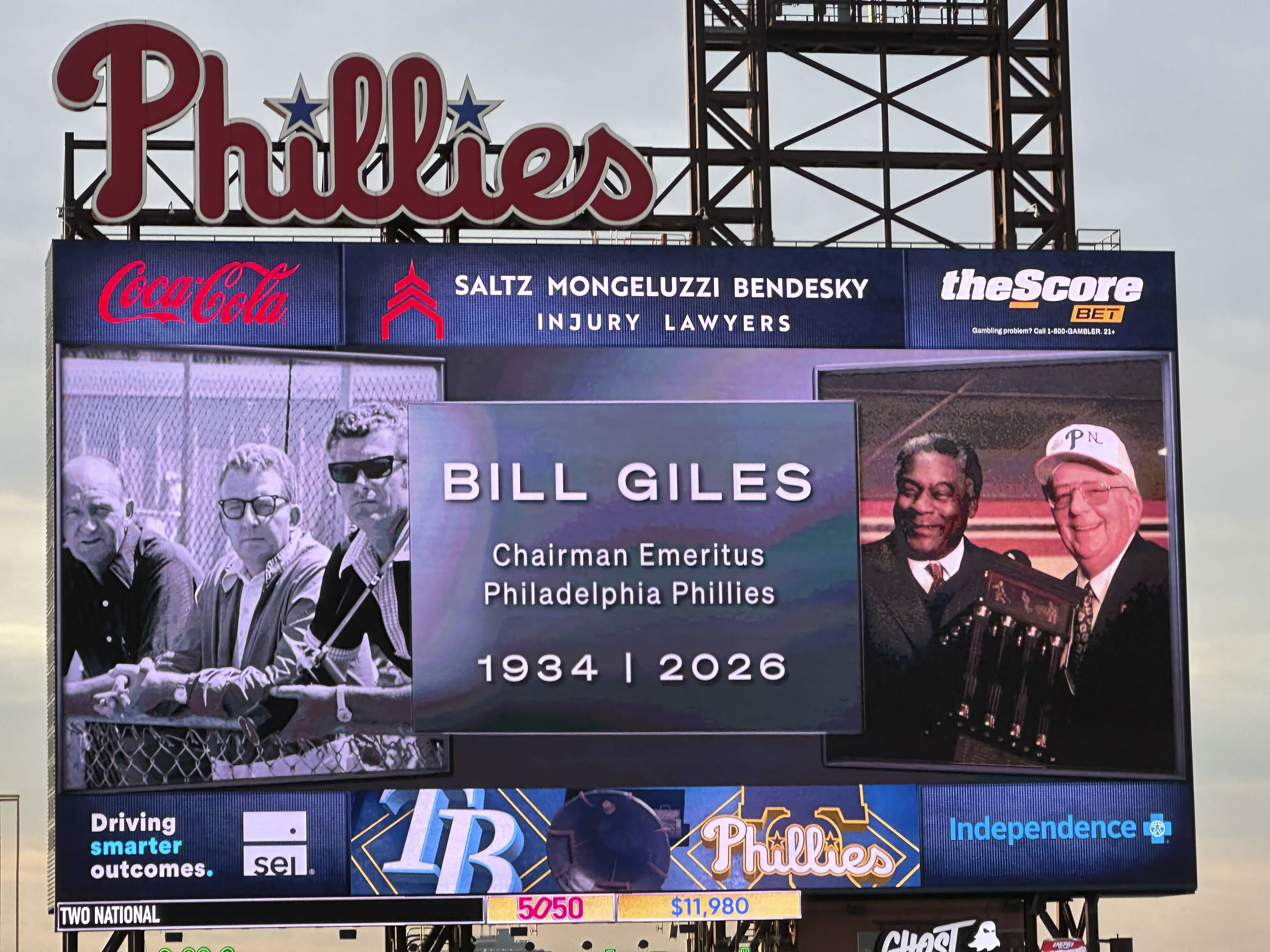
    Bill Giles, the longtime Phillies executive who helped create the Phillie Phanatic and used a tightrope walker to sell tickets before becoming a part owner, died Friday. He was 92.

    Mr. Giles joined the Phillies in 1969, just as they were readying to move to Veterans Stadium. The team lacked star power, but it was Mr. Giles’ job to fill the seats when the cavernous stadium opened in April of 1971. So Mr. Giles, the son of a Hall of Fame baseball executive, got creative.

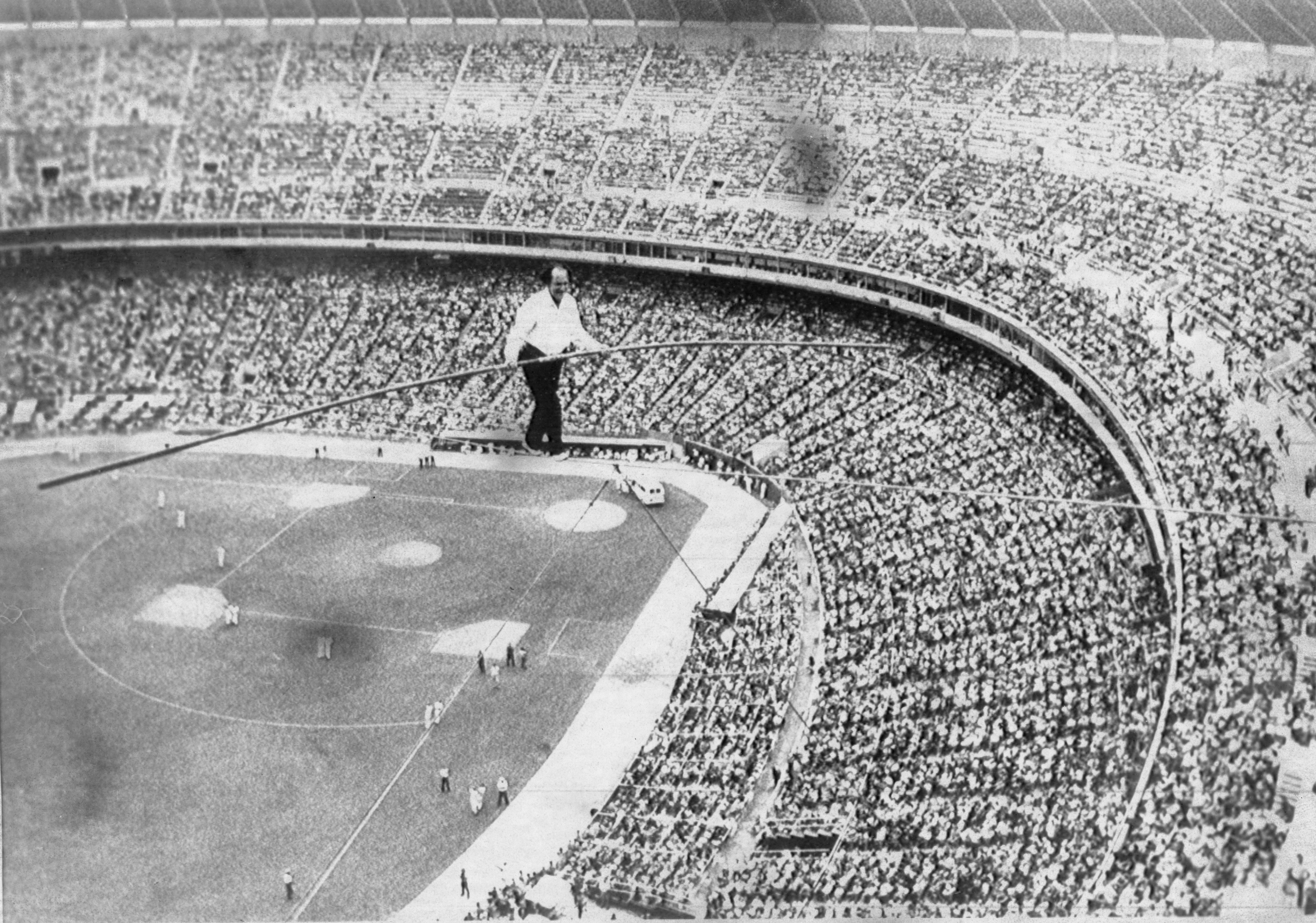
    Karl Wallenda walked a tightrope across the stadium between games of a doubleheader, Benny the Human Bomb exploded, fire trucks drove relief pitchers from the bullpen, and Kite Man tried to deliver the first ball one season before crashing into empty seats.

    A news report once described Mr. Giles as “Philadelphia’s resident combination of P.T. Barnum and Walt Disney.” And Mr. Giles’ biggest draw was the Phanatic, the mascot he green-lighted in 1978.

    “I always wanted to make people happy,” Mr. Giles said in 2022. “So anything I could think of I would try.”

    William Yale Giles was born on Sept. 7, 1934 in Rochester, N.Y. His father, Warren, was the president and general manager of the Cincinnati Reds before becoming the president of the National League. Mr. Giles knew as a kid that he wanted to work in baseball and started working for the Reds as a teenager.

    He met his wife, Nancy, when they were students at Denison University in Granville, Ohio. Mr. Giles told Nancy after their first date that they’d be married one day and honeymoon in Hawaii. He was right. Mr. Giles graduated from Denison in 1956 and spent three years in the Air Force before working for a Reds farm team. He moved to Houston in 1962 to be the publicity director for the Colt .45s, a first-year expansion team that soon became the Astros. Seven years later, he came to Philly.

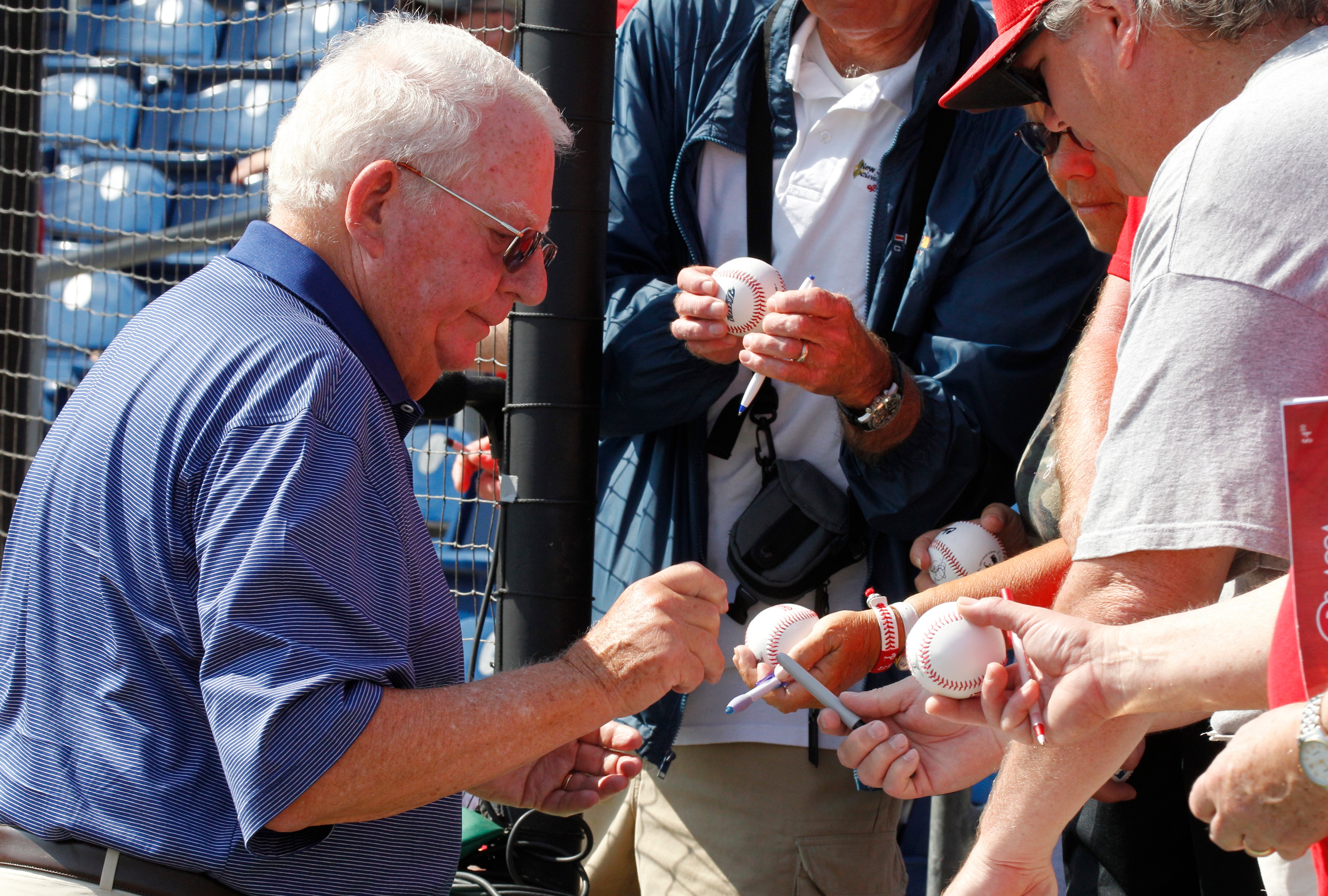
    Bill Giles, signing autographs in 2011, was named chairman emeritus in 2015.Gene J. Puskar

    “Bill was the heart and soul of the organization for over two decades,” Phillies great Mike Schmidt said in a statement. “He was a close personal friend to so many of us. He will always be a big part of Phillies history. Prayers go to the Giles family in this time of mourning.”

    Mr. Giles helped the Phillies close Connie Mack Stadium, which included his idea to have a helicopter land on the field after the final game to retrieve home plate and transport it to South Philly. He gave fans that day wooden seat back slabs from the stadium, which many used as tools to remove seats and toilets. The Phillies moved the following April to the Vet, where the promotions became wackier.

    “In the early ’70s, we didn’t win a lot of games,” said Larry Bowa, who slapped the first hit at the Vet. “So we had to get people in there. It was like a circus.”

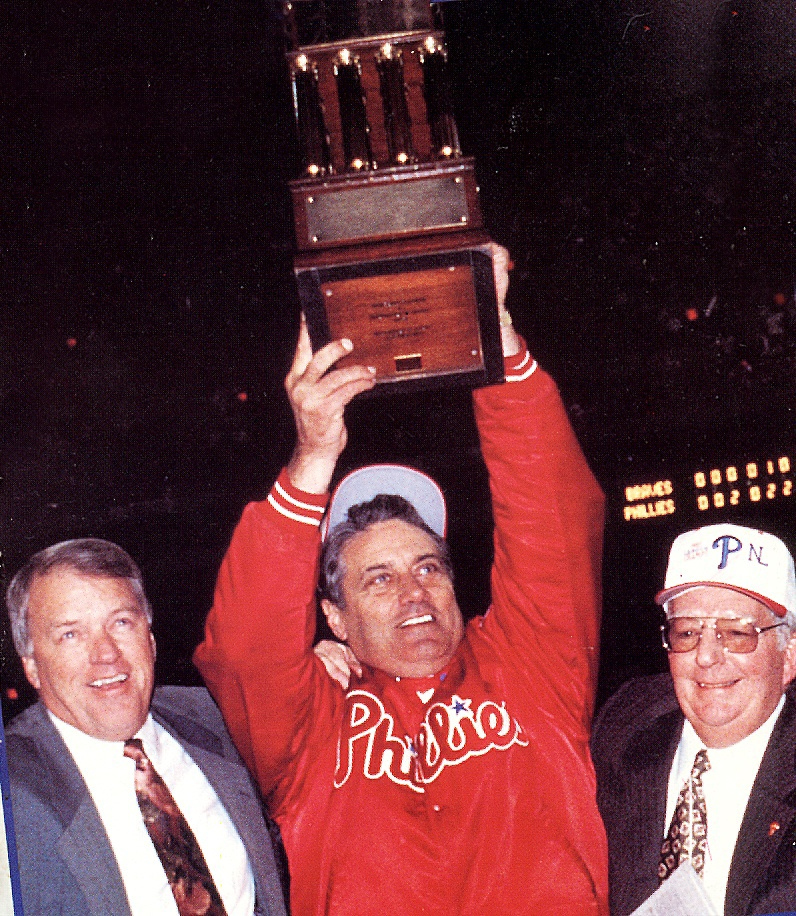
    Phillies general manager Lee Thomas (left), manager Jim Fregosi (center), and president Bill Giles celebrate after winning the NLCS in 1993.Phila. Phillies

    The 1972 Phillies won just 59 games, 27 of which were wins by Steve Carlton. So Mr. Giles drummed up ticket sales by having Wallenda walk 640 feet across the stadium between games of a doubleheader. He didn’t know Carlton was starting Game 1, which meant the doubleheader would be a rare game that season where the baseball was the draw. The show went on.

    There were 38 people — 19 on each end — holding the wire to make it taut, but that was not enough to steady it as Wallenda took his first steps. Two weeks earlier, his son-in-law Richard “Chico” Guzman had died after he fell 50 feet before a performance in West Virginia. Guzman’s widow, Carla, started screaming for her father to back out. The Vet didn’t seem safe.

    “I was sold on the idea and wasn’t at all fearful,” Giles said. “Until we got the wire up there and it was swaying a little bit. I said, ‘Oh, [bleep].’ I got really nervous.”

    Karl Wallenda crosses Veterans Stadium on a tight rope on Aug. 13, 1972.UPI

    Wallenda thought about quitting but kept going. He walked about 35 feet and sat down, motioning for the 38 people to pull tighter.

    “When he sat down on the wire, I started thinking, ‘Oh, what’s going to happen now?’ You never sit down on a wire,” Bill Hall, a promoter who booked Wallenda, said in 2022. “I started to pray to God to get us through this, but then I thought, ‘Wait a minute, God didn’t tell us to come up here.’”

    Wallenda stopped again in the middle of his walk, performed a headstand on the rope, and finished. Giles was relieved. A few years later, Dennis Lehman, then a member of the front office, saw the San Diego Chicken and told Mr. Giles that the Phillies should try a mascot. Mr. Giles said OK and assigned Lehman and Frank Sullivan, the team’s promotions director, to pursue it.

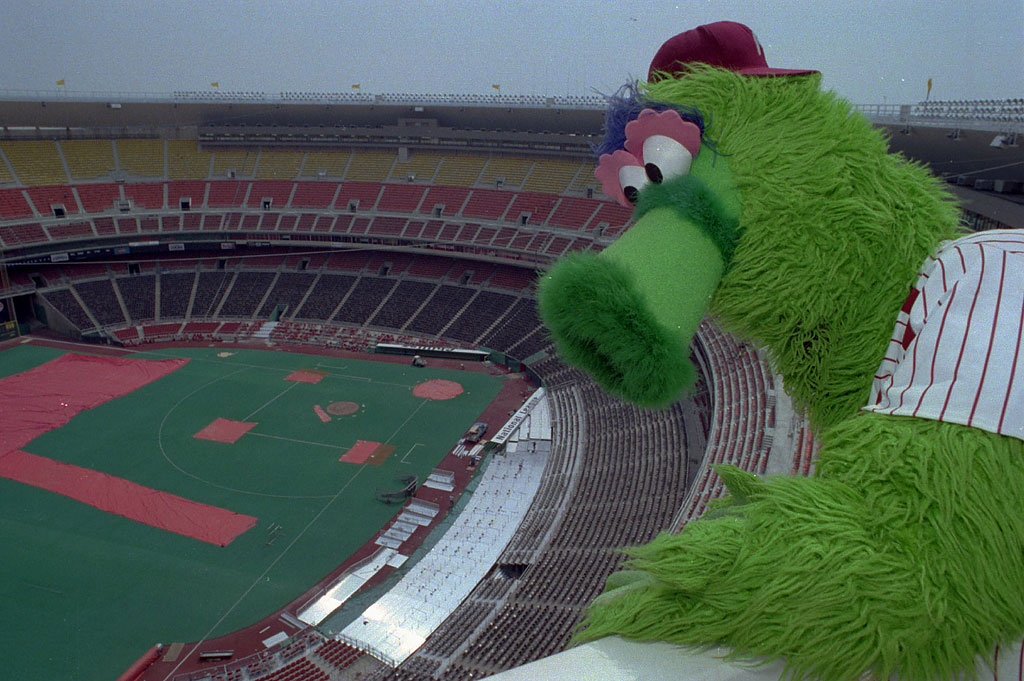
    The Phillie Phanatic surveys an empty Veterans Stadium ahead of the start of the 1991 season.George Widman/AP fi;e photo

    The Phillies worked with Bonnie Erickson and Wayde Harrison to create the green, flightless bird from the Galápagos Islands. Mr. Giles tapped Dave Raymond, then an intern in the sales department, to play the part. The Phanatic arrived in April of 1978 and has never left.

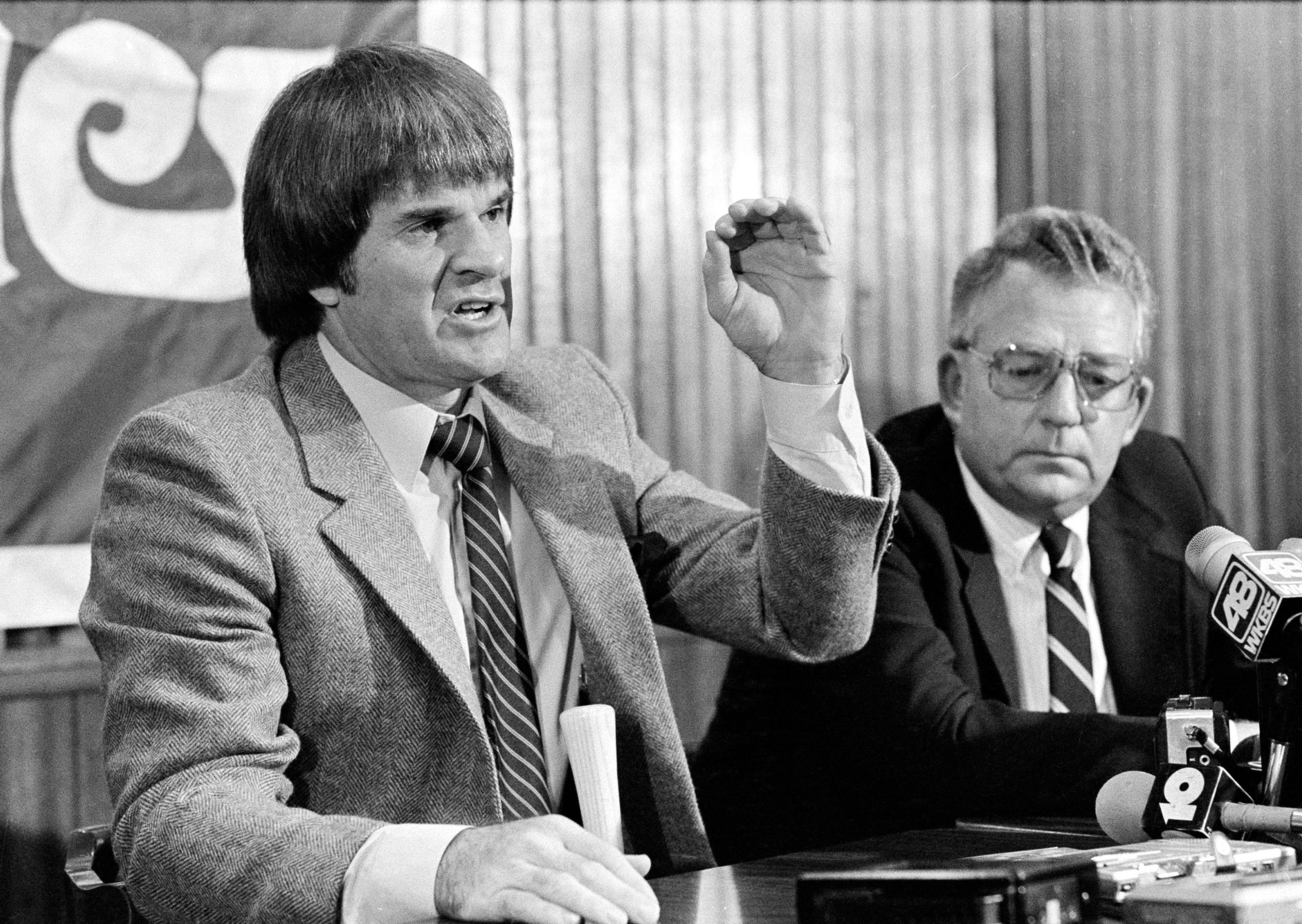
    Mr. Giles brought Astros broadcaster Harry Kalas to Philadelphia in 1971 and helped convince Pete Rose to join in December of 1978, which helped lead to the 1980 World Series championship. He organized a group in 1981 to purchase the Phillies and served as team president until 1997. He then became the team’s chairman. The Phils won National League crowns twice during Mr. Giles’ presidency, which was mostly marred by low payrolls and losing seasons.

    Bill Giles (right) helped convince free agent Pete Rose to sign with the Phillies in 1978.Al Schell

    Mr. Giles said often that the Phillies were losing money and needed a new ballpark to compete. That arrived in 2004. The payrolls rose, the winning returned, and the Phils won their second world championship in 2008. Two weeks earlier, Mr. Giles — then the honorary president of the National League — presented the team with the National League championship trophy named for his dad. The Phillies soon started a sellout streak of 257 games. They no longer needed any wacky promotions. A winning team sold the tickets in a new stadium that Mr. Giles helped build.

    “The Phillies family lost an icon today,” Phillies managing partner and CEO John Middleton said in a statement. “Bill helped to reshape our franchise from a traditional baseball club into a highly visible entertainment and business operation. His profound impact in overseeing one of the greatest eras in franchise history, both on and off the field, will forever be his legacy. Our hearts are heavy for the Giles family and all those who had the privilege of knowing Bill.”

  • Kitty Lunn, who expanded the boundaries of dance, dies at 76

    Kitty Lunn, who expanded the boundaries of dance, dies at 76

    In 1987, months before she was to perform in her first Broadway production, Kitty Lunn, an actor and former ballet dancer, was on her way to a date when she slipped on a patch of ice and tumbled down a flight of marble steps.

    The fall shattered vertebrae and damaged her spinal cord. She spent the next three years in acute care, undergoing a series of major surgeries. Dancing again seemed impossible.

    “I couldn’t point my toes. I couldn’t hold my stomach in,” Ms. Lunn recalled in a 2020 interview. “Never mind that I couldn’t stand up.”

    Yet when Andrew Macmillan, her date that fateful night, asked what was stopping her from dancing again, Ms. Lunn said something that surprised even her: “The answer to that question was fear.”

    In 1995, Ms. Lunn went on to serve as a founder and artistic director of Infinity Dance Theater, devoted to breaking down barriers in dance by training and mounting performances featuring dancers both with and without disabilities. She died on Aug. 18 at her home in Manhattan. She was 76.

    The cause was cardiovascular disease, a representative from Infinity Dance said.

    Ms. Lunn performed in hundreds of productions with the company, translating principles of ballet and modern dance into movements designed for dancers with a variety of physical disabilities, and using a lightweight, nimble wheelchair modified by Macmillan, whom she married after her long hospital stay. (She signed her name Kitty Lunn-Macmillan, but maintained Kitty Lunn as her professional name.)

    She performed around the world, including at the first Cultural Paralympiad, a showcase of the talents and experiences of people with disabilities held at the 1996 Paralympic Games in Atlanta. She also performed at the Kennedy Center in Washington in 2000 and 2004. Among the notables who trained with Infinity was Alice Sheppard, the dancer, choreographer, and founder of the disability arts ensemble Kinetic Light.

    “Without my chair, I’m really an invalid,” Ms. Lunn once said. “I never refer to myself as wheelchair-bound — that sounds like I’m in chains. I’d rather describe myself as a dancer who sits down a lot.”

    Kitty Morrison was born on Aug. 5, 1950, in New Orleans, the youngest of three children of Hugh Morrison Jr., who owned an insurance agency with his brother, and Beatrice (McClung) Morrison, a real estate agent and interior decorator.

    Her fascination with dance started at 8, when her grandmother took her to see The Red Shoes — the heralded 1948 British ballet film starring Moira Shearer.

    “I looked up at that beautiful redheaded ballerina, and I wanted to be her,” she told the website Stance on Dance in 2019.

    By her midteens she was dancing principal roles with a regional New Orleans ballet company, which led to a scholarship to the Washington School of Ballet, where she studied with renowned teacher Mary Day and ballet master Edward Caton. Along the way, she also performed in classics like Swan Lake and Giselle.

    She was drawn to ballet roles that required a degree of acting, and eventually decided to pursue a career as an actor. At 20, she moved to New York and studied at the Neighborhood Playhouse School of the Theater, where Diane Keaton and Eli Wallach had trained.

    In 1984, Ms. Lunn took a job as a radio producer at WABC while waiting for her big break in acting; she finally earned a role with Frank Langella’s Sherlock Holmes in Sherlock’s Last Case on Broadway. Then came her accident. “Two seconds and one piece of ice,” she recalled in a 2018 video interview with National Geographic, “and my whole world changed.”

    During her years in the hospital, Macmillan’s suggestion that she might dance again initially seemed absurd. “I was a noodle,” she recalled in a 2009 interview with the Brooklyn Rail. “I couldn’t sit up by myself, wash myself, feed myself or anything.”

    But after seeing an American Ballet Theater production of Pyotr Ilyich Tchaikovsky’s The Sleeping Beauty, the “movie in my mind led me to believe it would be possible,” she told the New York Times in 1997.

    Ms. Lunn worked with Shaw Bronner, a physical therapist and former dancer, five days a week, five hours a day for five years, she told the Brooklyn Rail. By the early 1990s, she felt ready to embark on her reimagined dance career.

    Even so, “no one would let me take a class,” she recalled in a 2020 interview with John Jay College of Criminal Justice in Manhattan, where she had earned a degree in legal studies in 1995. She went to one studio armed with a copy of the Americans with Disabilities Act, and insisted that it was against the law to bar her admittance.

    “I was told that if anyone complained, I would have to leave,” she said. “My response was simple. I said, ‘I can promise you that I will not run into anyone, but I cannot promise you that they will not run into me.’”

    She appeared as a guest artist in a performance featuring dancers in wheelchairs in Cleveland, and eventually started Infinity with dance veterans Robert Koval, Christopher Nelson, and Spider Duncan Christopher.

    In doing so, she adapted traditional ballet movements, as well as those pioneered by dance luminaries like Martha Graham, to be executed from a seated position, using the arms, head, and core to perform actions typically involving the legs.

    “I started transposing the technique of classical ballet,” she said. “When you transpose music into a different key,” she added, “you’re not losing any of the notes.”

    A review of a 2001 performance in Manhattan by the magazine New York Dance Fax noted that she “sensitively and dynamically danced with her wheelchair spins and gorgeous torso extensions,” praising her “rolling movements on the floor around the chair, reflecting her feelings about her disability and changed life.”

    In a review of the same show in the Times, critic Jack Anderson described Ms. Lunn’s artful gyrations to the music of jazz trumpeter Don Cherry: “While Burke J. Wilmore’s lighting created the illusion of a snowfall, Ms. Lunn slipped on and off the chair, tilting it, tipping it over and responding to its presence as if it had a personality all its own.”

    She is survived by a brother, Randy Morrison, and a stepson, Ross Macmillan. Her husband, an actor and television and radio news anchor, died in 2016.

    This article originally appeared in the New York Times.

  • Ned Warwick, former TV news director and Inquirer reporter and editor, has died at 81

    Ned Warwick, former TV news director and Inquirer reporter and editor, has died at 81

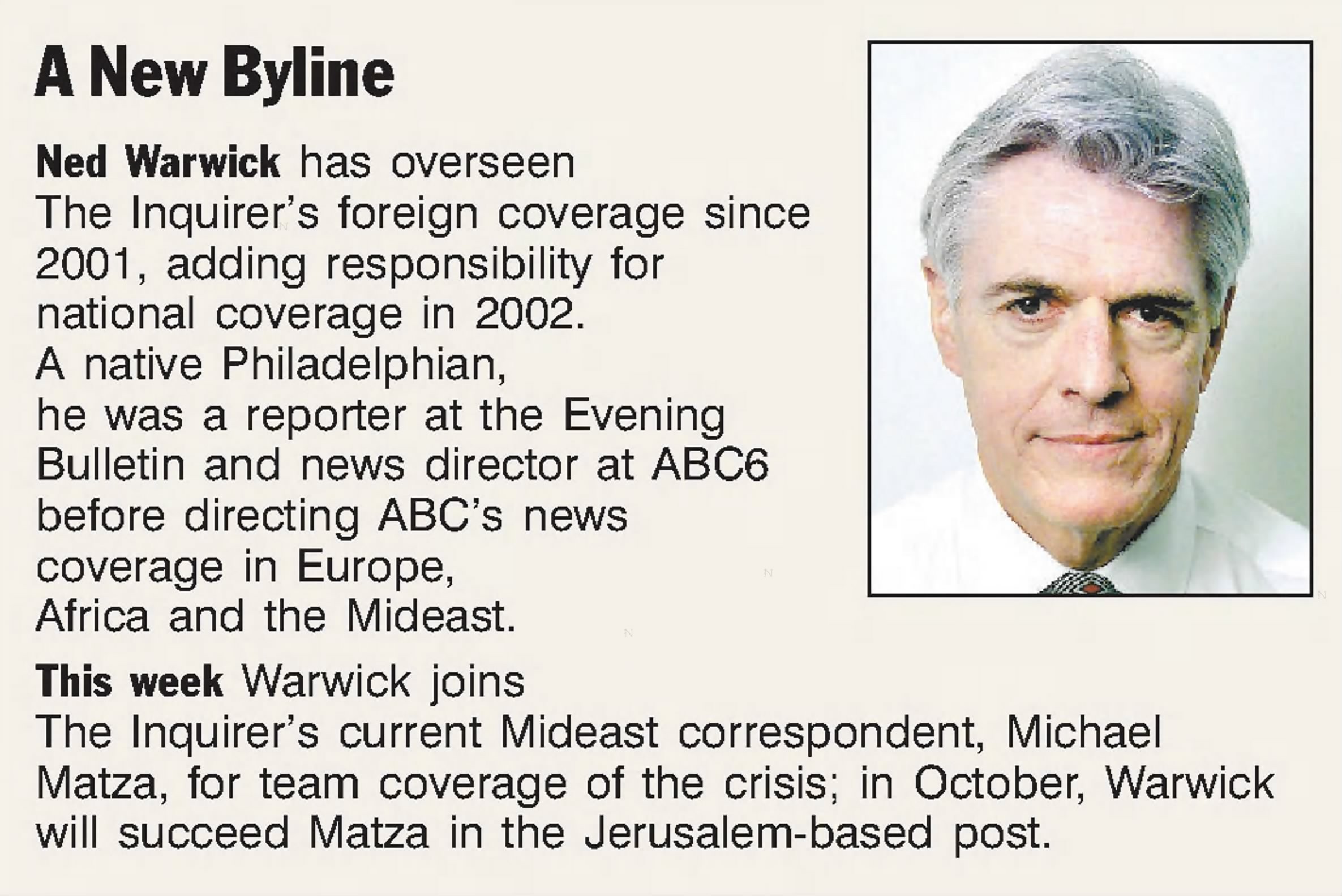
    Ned Warwick, 81, of Philadelphia, former foreign correspondent and foreign, national, and Pennsylvania editor for The Inquirer, former news director for WPVI-TV (Channel 6) and international news director for ABC-TV, former reporter at the Bulletin, mentor, sailor, pilot, and die-hard Phillies fan, died Monday, Sept. 14, of complications from Parkinson’s disease at his home near the Philadelphia Museum of Art.

    Born in Philadelphia and reared in Germantown and Mount Airy, Mr. Warwick graduated from Chestnut Hill Academy and attended Temple University. He knew he wanted to be a newsman when he was 16, his wife, Joan, said, and he spent much of his free time reading newspapers in the high school library.

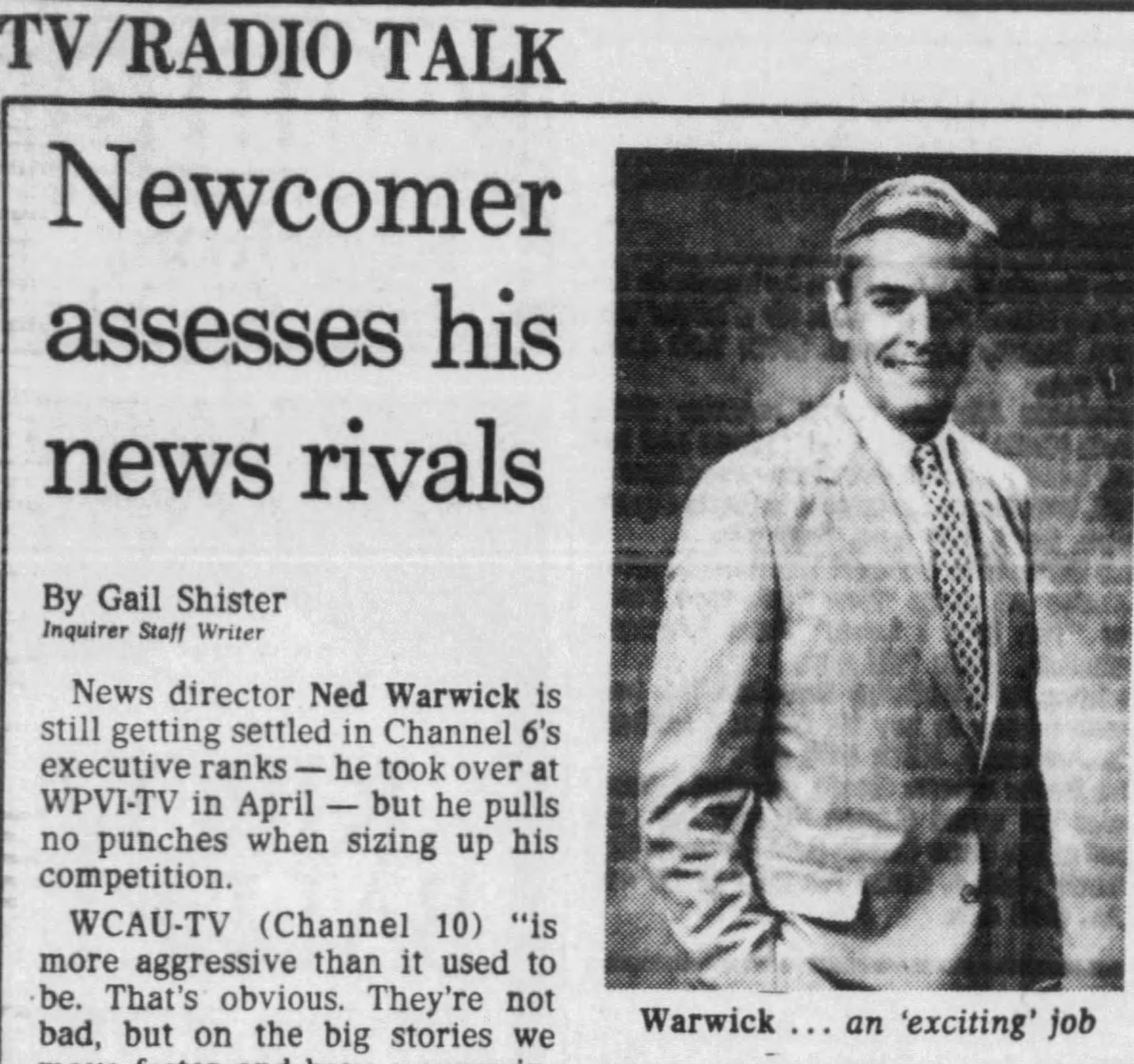
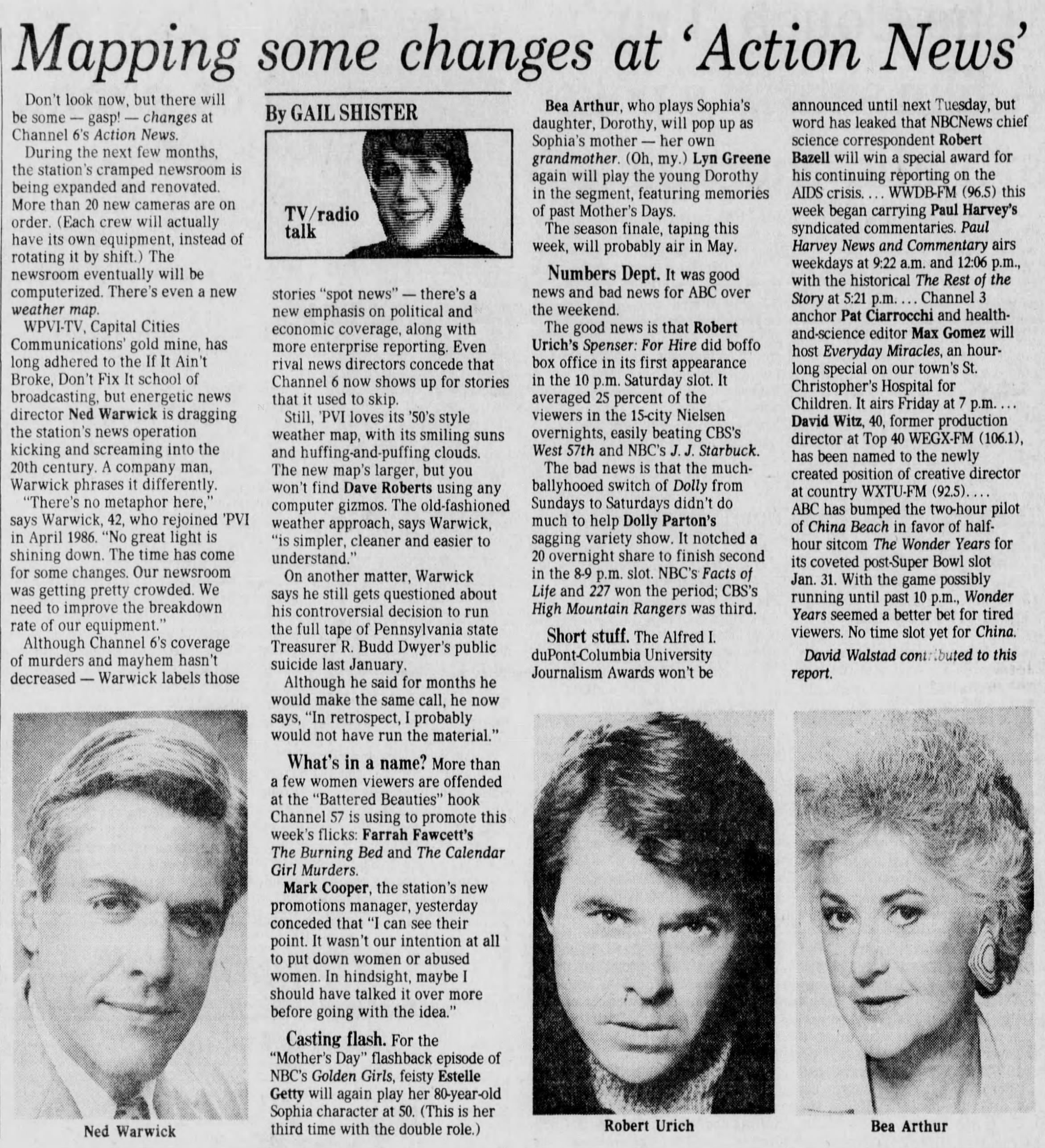
    He went on to work as a young city-side reporter for the Bulletin from 1969 to 1974 and a veteran editor and reporter for The Inquirer from 2001 to 2008. For TV, he was a news writer and assignment editor at WPVI from 1975 to 1981, news director at WTVD in Durham, N.C., from 1981 to 1986, and back as news director at WPVI from 1986 to 1990.

    Regarding the transition from print to TV work, he told Inquirer TV columnist Gail Shister in 1977: “The TV reporter’s job is more difficult because they have to be journalists and performers. It is in fact easier for a TV reporter to move over to print than vice versa.”

    Mr. Warwick became a foreign correspondent for The Inquirer in 2006.Newspapers.com

    From 1990 to 1995, Mr. Warwick was based in London as ABC’s director of news operations for Europe, Africa, and the Middle East. He worked with celebrated anchorman Peter Jennings, supervised dozens of other international TV types, and directed coverage of many of the world’s top stories.

    Actually, he told The Inquirer as he left for London, he did not expect the job to be much different from covering news in Philadelphia. “You can gather news around the corner or across the border,” he said. “But the essential business of newsgathering still remains the same. You’ve still got to get the story.”

    He nearly became the story in 1992 when he got pinned down in a gun battle while traveling in Somalia. “He always wanted to be a newsman and travel the world,” his wife said, “and he did. He loved the news. He loved ABC.”

    At The Inquirer, Mr. Warwick was the foreign and national editor for five years and a foreign correspondent in Jerusalem during and after the 2006 Lebanon war. He returned to Philadelphia in 2007 to be deputy business editor and Pennsylvania editor for a year.

    The Inquirer covered Mr. Warwick’s return to WPVI-TV in 1986. Newspapers,com

    “He was a good listener and could manage a reporter’s needs,” former Inquirer staff writer Miriam Hill said. Former Inquirer staff writer Sally Downey said: “He was a very classy guy.”

    In 2006, his byline appeared in The Inquirer over dozens of war zone stories from Gaza City, Bethlehem, Acre, Ramallah, Huwwara, Turmus Aya, and elsewhere in the Middle East. On Oct. 17, 2006, he opened his story from Kafr Qalil with: “The sharp heat of summer lingers on the stony hills of the West Bank, and the pale olives are still ripening on the trees, thirsting for just a little of the fall rains that won’t come for a few more weeks.”

    “He was a lyrical writer,” Hill said. Former Inquirer editor William K. Marimow called his style “fluid” and “very solid.”

    Mr. Warwick also reported on the royal family from London and reviewed books for The Inquirer. He worked briefly as an editor at large with Bloomberg News after leaving the paper in 2008 and retired in 2010.

    Out of the office, Mr. Warwick was a sailor and a pilot. Courtesy of the family

    He mentored others wherever he worked and with the Rittenhouse Writers’ Group, and completed a first draft of his own book. “His mind was always crafting a story, seeing a story, or preparing to tell one in a way that made everyone near him want to listen,” said his daughter Katie Bishop.

    “No matter what was going on,” said Nathan Gorenstein, a former colleague at The Inquirer, “he was a good human.”

    Out of the office, Mr. Warwick was a sailor and a pilot. In 1986, when he was news director at WPVI, Shister asked him whether flying an airplane or directing a newsroom was more challenging. “Clearly,” he said, “if you don’t pay attention in either business, you’re going to crash.”

    He cheered openly for the Phillies even during the lean years and continued to follow them closely after becoming ill. “One of the first things he would ask in the morning,” his wife said, “is who won the game.”

    Edward Ramsey Warwick was born May 19, 1945. The oldest of three children, he was the great-grandson of former Mayor Charles Warwick. He left Temple and earned a bachelor’s degree in history at the University of the South in Sewanee, Tenn., in 1969.

    Mr. Warwick’s local TV work was covered in The Inquirer in 1988. Newspapers.com

    He married Polly Price, and they had a daughter, Katie. After a divorce, he married Gayle Roth, and they had daughters Megan and Eliza.

    “He always made us feel like having three daughters was his greatest joy in life,” his daughter Megan Osborne said. “He taught us to throw a ball and let us braid his hair.”

    After a divorce, he married Joan Hunter, and they enjoyed museums, the theater, and the orchestra. They traveled the world together. He was a longtime runner and a fashionista, and studied Buddhism.

    He lived with Parkinson’s disease for eight years. But he refused to quit city living for the suburbs, his wife said, and he never lost his sense of humor and zest for life.

    Mr. Warwick was a longtime runner and a fashionista, and studied Buddhism. Courtesy of the family

    “Dad was a giant of a man in every sense of the word,” his daughter Eliza said. His wife said: “He never, ever complained. He made me a better person.”

    In addition to wife, daughters, and former wives, Mr. Warwick is survived by four grandchildren, a sister, a brother, and other relatives.

    A memorial service is to be from noon to 4 p.m. Saturday, Nov. 14, at the Germantown Cricket Club, 411 Manheim St., Philadelphia, Pa. 19144.

    Donations in his name may be made to Penn Medicine Neurology, 3535 Market St., Suite 750, Philadelphia, Pa. 19104; and the Katz JCC Parkinson’s Connection, 1301 Springdale Rd., Cherry Hill, N.J. 08003.

    Mr. Warwick “never, ever complained” his wife said. “He made me a better person.”Courtesy of the family
  • Charles P. Baker III, celebrated cofounder of Baker Industries for the ‘least employable,’ has died at 101

    Charles P. Baker III, celebrated cofounder of Baker Industries for the ‘least employable,’ has died at 101

    Charles P. Baker III, 101, formerly of Radnor, celebrated cofounder of Baker Industries, longtime workplace for the “least employable,” former owner of the C.P. Baker & Co. chemical firm, Army veteran, national squash champion, mentor, and volunteer, died Wednesday, Sept. 16, of congestive heart failure at HarborChase assisted living community in Wilmington.

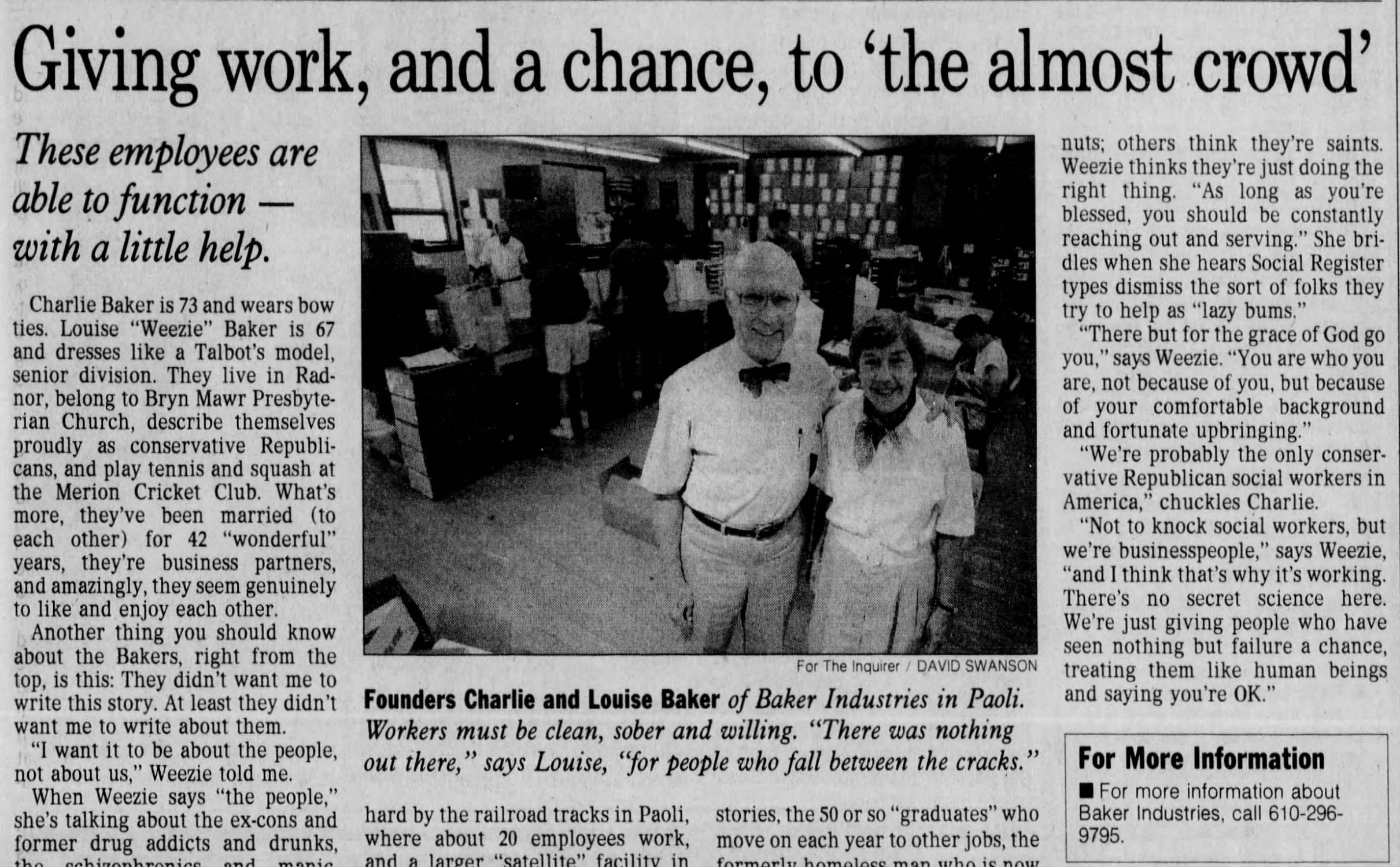
    Born in Philadelphia, Mr. Baker grew up in the old Colonial Hotel at 11th and Spruce Streets in Washington Square West. He and his wife, Louise, founded Baker Industries in 1980, and the workforce development nonprofit has hired, trained, and mentored more than 12,500 workers with physical and intellectual disabilities, substance use disorders, recent periods of incarceration, and housing insecurity who could not find jobs elsewhere.

    Their own son, Justin, lives with epilepsy and, when he could not find suitable employment years ago, Mr. Baker and his wife started their own two-person mail order packaging firm in their Strafford garage. Their son was their first hire.

    “We decided, if we’re going to start something like this, let’s go for the people who need it the most,” Mr. Baker told The Inquirer in 1998, “the ones who are least employable.”

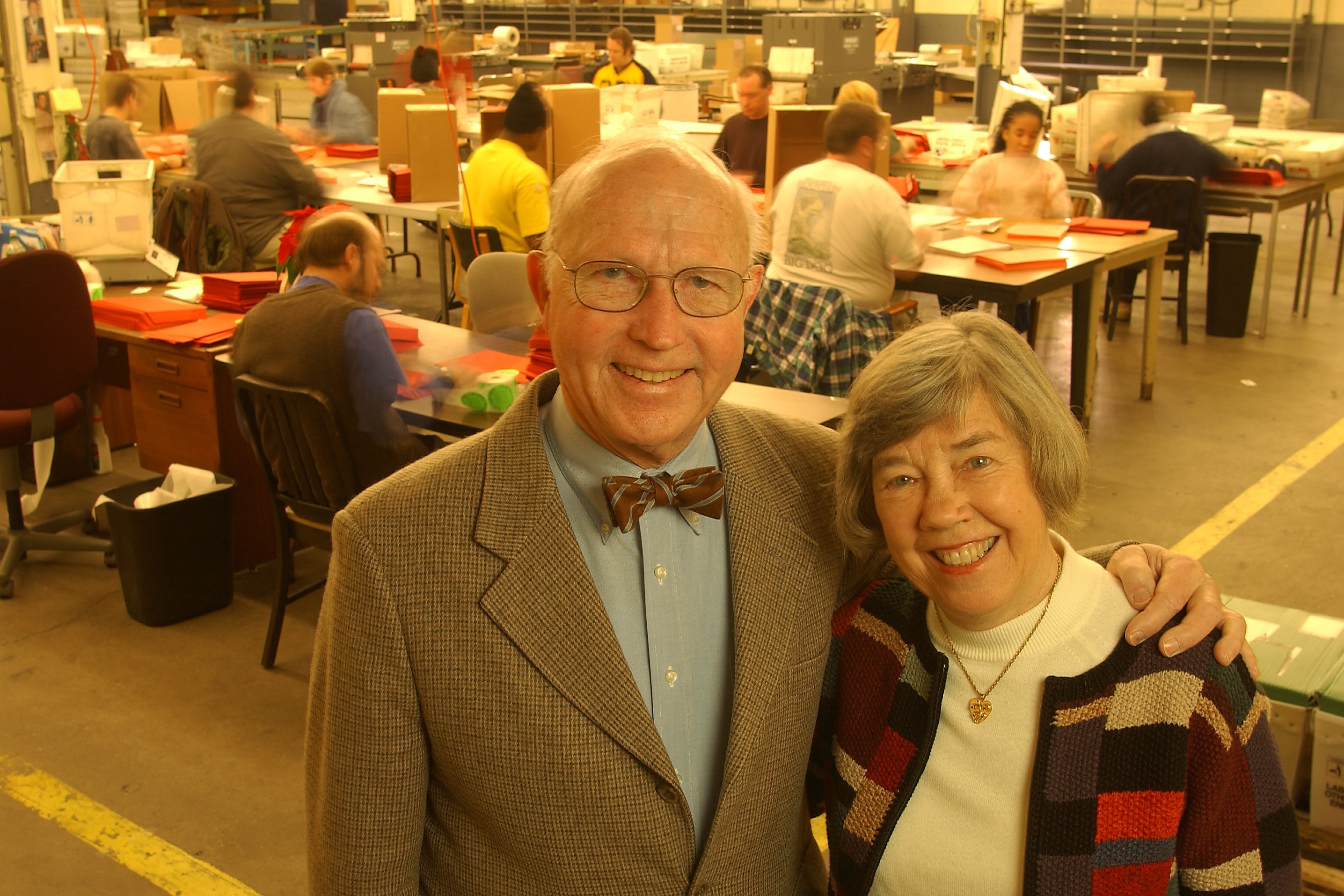
    Mr. Baker and his wife, Louise, stand inside their Baker Industries building in Malvern in 2003. Michael Bryant / Staff Photographer

    For nearly five decades, Baker Industries has contracted light industrial and office work from hundreds of businesses, and operated facilities in Philadelphia, Malvern, and elsewhere. Employees are paid an hourly wage, offered additional training, and encouraged to attend workshops, social events, and support group meetings.

    The company motto is “providing a steppingstone to regular employment,” and many workers have moved on to higher-paying jobs elsewhere. “We have a philosophy of work as rehabilitation,” Mr. Baker told the Daily News in 1988. “The goal is to show these people they can do a whale of a lot more than they think they can do.”

    Mr. Baker served as the unpaid president at Baker Industries until 2002 and then on the board of directors. In the 1950s, he assumed control of his family’s small chemical company, C.P. Baker & Co., and he expanded it before selling it in 1980.

    “Charlie and Weezie Baker believed there is healing in work,” colleagues at Baker Industries said in a Facebook tribute on his 101st birthday in June. “Not just jobs. Work. Showing up. Being part of something. Contributing alongside others.”

    Mr. Baker played many roles at Baker Industries.Baker Industries

    Turk Thacher, vice board chair at Baker Industries, said: “Charlie was beloved. He was kind to everybody.”

    Mr. Baker, his wife, and their company were featured often on TV shows, and in The Inquirer, the Daily News, and other publications. They won many awards for their community service and innovative business model.

    “I was grateful to have their guidance,” Nic Watson, president of Baker Industries, said, “and we will follow their example for years to come.”

    In 1991, the company was named an inspirational Point of Light by President George H.W. Bush. In 2004, Mr. Baker and his wife earned the legacy award for “community generosity” from the Chester County Community Foundation.

    “They went above and beyond their own self-interest,” a foundation official told The Inquirer then.

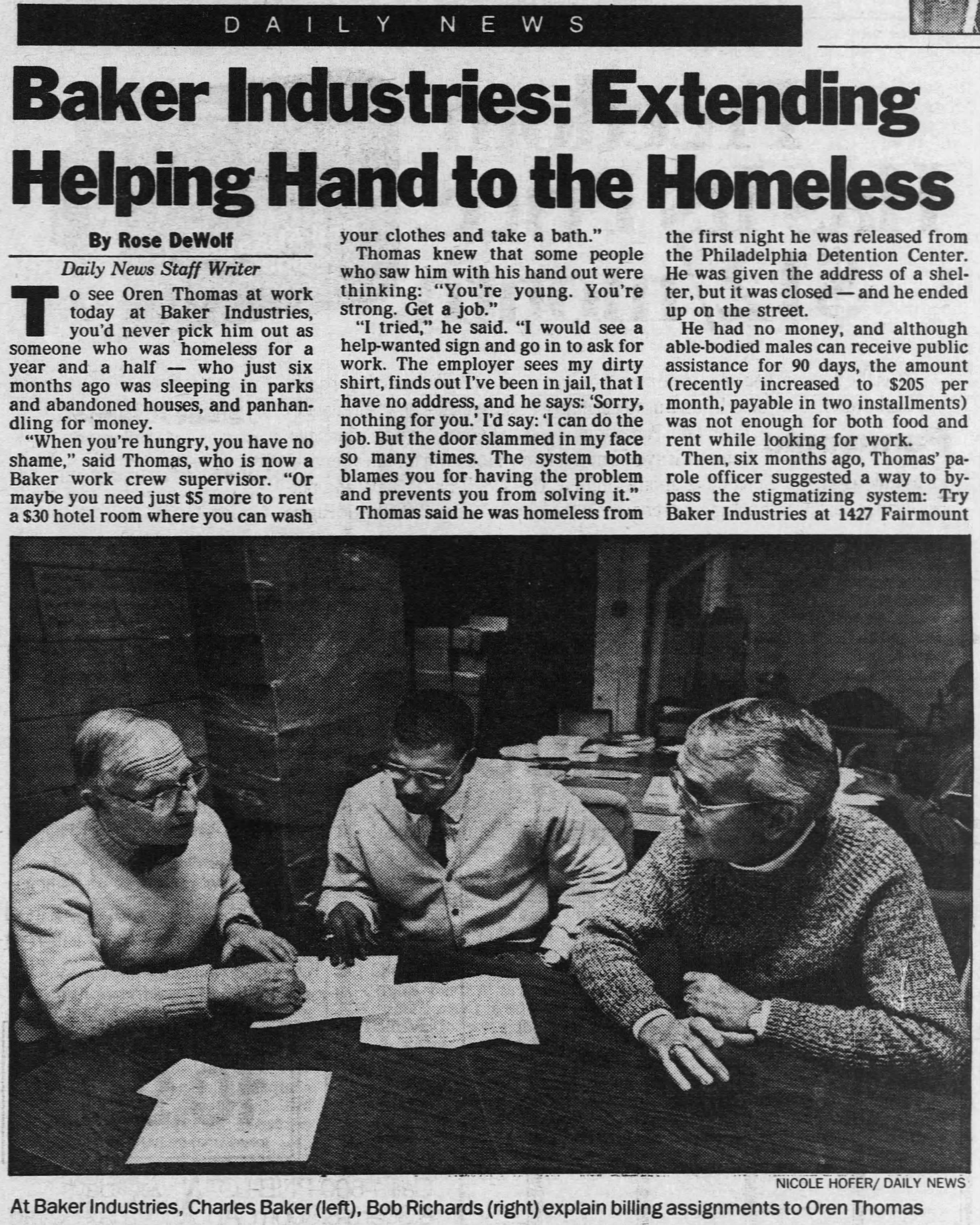
    This photo and article about Mr. Baker were published in The Inquirer in 1998.Newspapers.com

    Away from work, Mr. Baker was an avid squash player, skier, and sailor. He won the U.S. national hardball singles squash championship six times in the 80-and-older division from 2006 to 2016, skied into his 70s, sailed into his 80s, and played squash and tennis at the Merion Cricket Club until recently.

    He graduated from the U.S. Military Academy in 1946 and served more than seven years in the Army. He was stationed in Europe and rose to captain. His family called him a “relentlessly joyful spirit” in a tribute and said: “The world was a better place for his presence.”

    Charles Pitman Baker III was born June 24, 1925, in Philadelphia. His father, Charles Jr., was manager at the old Colonial Hotel, and Mr. Baker told stories of dropping water balloons on passing pedestrians from windows when he was very young and spending summers at the beach and on boats with the Ocean City Yacht Club.

    He was a star squash player at the Haverford School and known by classmates as “the Arm,” his 1943 senior yearbook said, “because of the vicious way he wields a racket.” His mother died when he was 11.

    This photo and article about Mr. Baker (left) appeared in the Daily News in 1990.Newspapers.,com

    He met Louise Wilhelm while water-skiing in Ocean City, and they married in 1955, and had sons Charles IV and Justin and a daughter, Sandra. His wife died in 2025.

    Mr. Baker and his wife attended Wayne Presbyterian Church, and he was known for his bow ties and wide smiles. He was funny, his daughter said, and liked to sing show tunes anytime anywhere, and write corny poems on birthday cards.

    “He was a wonderful dad who loved his family,” his daughter said. His family said in a tribute: “His legacy of service, humor, and kindness will live on for many generations to come.”

    His wife told The Inquirer in 2004: “Charlie has a kind heart.”

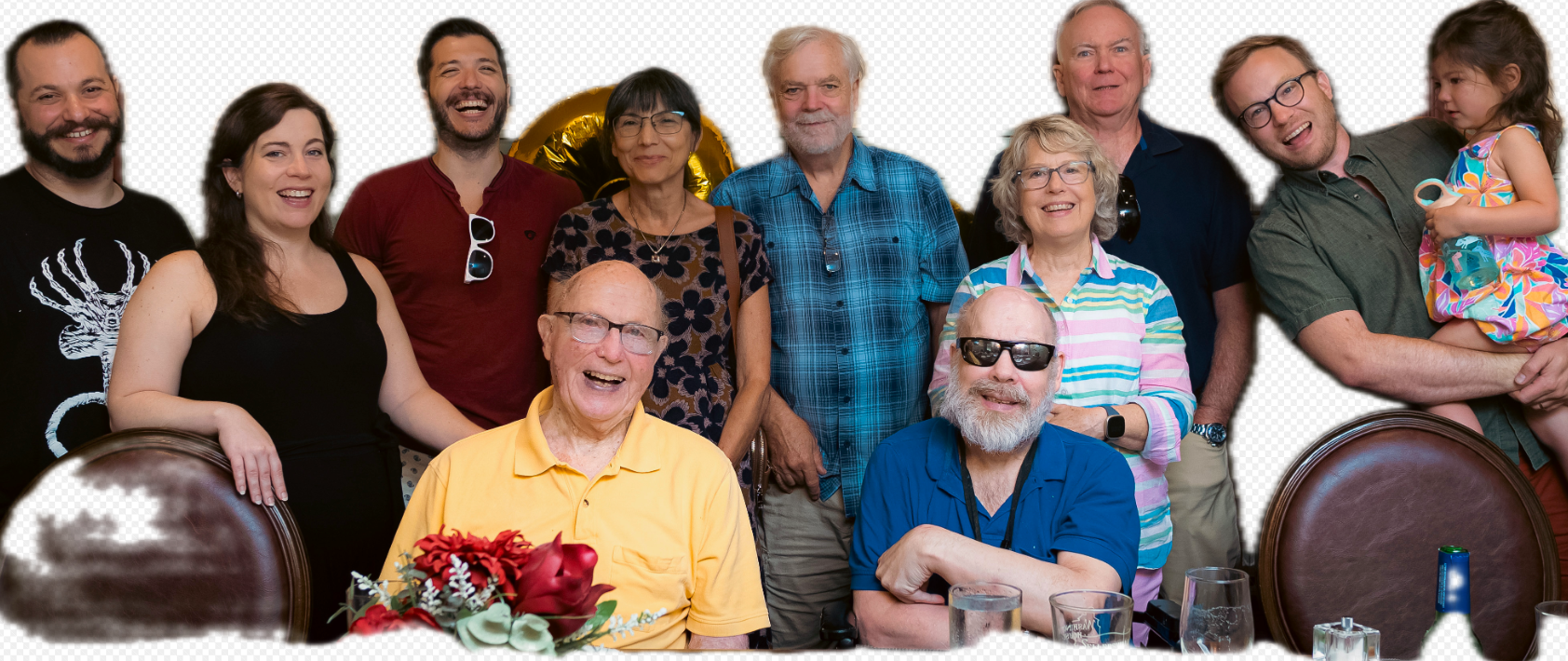
    Mr. Baker (front left) celebrated his 100st birthday in June 2025 with his family.Courtesy of the family

    In addition to his children, Mr. Baker is survived by four grandchildren, five great-grandchildren, and other relatives. Two sisters died earlier.

    Visitation with the family is to be from 10 to 11 a.m. Saturday, Oct. 17, at Wayne Presbyterian Church, 125 E. Lancaster Ave., Wayne, Pa. 19087. A celebration of his life is to follow. Bow ties are optional but encouraged, the family said.

    Donations in his name may be made to Baker Industries, 184 Pennsylvania Ave., Malvern, Pa. 19355.

    His wife told The Inquirer in 2004: “Charlie has a kind heart.”Baker Industries
  • Presley Gerber, son of Cindy Crawford and model, dies at 27

    Presley Gerber, son of Cindy Crawford and model, dies at 27

    LOS ANGELES — Presley Gerber, the son of supermodel Cindy Crawford and businessperson Rande Gerber, died Sunday at age 27, a family representative said.

    Mr. Gerber died at a rehabilitation facility, according to online records of the Los Angeles County Medical Examiner. The medical examiner did not provide a cause of death Sunday. An autopsy was performed, but more testing is required before investigators can give a cause, according to the medical examiner’s website.
    The death was confirmed by Allie Jenkins, a representative for Crawford and Rande Gerber, who were married in 1998.

    “The family is asking for privacy during this very difficult and painful time,” Jenkins said in an email Sunday night.

    Mr. Gerber was a model and the older brother of model and actor Kaia Gerber. He had been open about his struggles with mental health and substance abuse, documenting his journey on Instagram. He even started a “Mental Health Mondays” series on the platform to raise awareness and share wellness tips. Across multiple episodes, he related his own experiences with substances ranging from ketamine to kratom, as well as his time at rehabilitation facilities.
    He posted an Instagram video in March from Mexico, where he said he planned to take ibogaine, a potent psychedelic that is being studied as a treatment for opioid addiction, post-traumatic stress disorder and other conditions. Ibogaine — known to sometimes trigger potentially fatal heart problems — is banned in the U.S. under the federal government’s most restrictive category for illegal, high-risk drugs, although President Donald Trump directed his administration to ease restrictions and spur research.

    Raised in Malibu, Calif., Mr. Gerber signed with the management agency IMG as a teenager and made his runway debut for Moschino at 16. In 2018, he appeared alongside his mother — whose famous beauty mark he inherited — in a Pepsi Super Bowl ad that paid homage to her 1992 commercial for the soda brand. That same year, he and his sister shot a campaign for Calvin Klein jeans.

    Mr. Gerber later signed with DNA Models. His biography on the agency’s website describes him as an entrepreneur and model who was inspired by “his mother’s legendary modeling career and his father’s lucrative business career.” Rande Gerber’s businesses have included restaurants, nightlife companies, and Casamigos — a tequila brand he cofounded with George Clooney and Mike Meldman that was sold to Diageo in a $1 billion deal.

    Mr. Gerber’s modeling biography also described him as an “avid surfer and skater.” In an Instagram video posted in July 2025, Mr. Gerber described growing up as a dedicated athlete who spent hours in the water nearly every day — a routine that came to a halt when he started working. With less physical activity, Mr. Gerber said, he was put on more medication and his quality of life suffered.

    “For me it took 10 years of looking back at my life being like, ‘Well, what changed?’ A lot of the time people would ask like, ‘You were such a happy kid; what happened to you?’” he recalled. “What happened was life happened and I wasn’t able to worry about one thing, which was my next meal and then get back in the ocean. Like I had to start making money, I had to start — I got a job.”

    In an interview with Vogue last month, Kaia Gerber praised her brother for being so open about his experience with addiction.

    “My parents for most of our lives were very, very private and didn’t share anything—and now we have this absolute teacher, my brother, who says, ‘I’m gonna be very human for everyone,’” she told the magazine. “There’s only so much you can hide from the world. And trying to put a lid on something just makes the person feel like you’re ashamed of them.”

    In addition to his testimonial videos, Mr. Gerber’s Instagram was a collection of modeling shoots and memories that stretched back to childhood. His life around cameras influenced his own interest in photography as an art form.

    “I have always been the type of person to stop and take a picture when everybody is just focused on the destination,” he told Vogue in 2016, on the occasion of his runway debut. “I feel like people walk by a countless amount of beauty in the world every day, and I hope that I don’t miss all of it.”