A man was fatally stabbed early Sunday morning in the Fairhill section of North Philadelphia, police said.
Philadelphia police were called about 2:45 a.m. to a reported stabbing in the 200 block of West Lehigh Avenue. When officers arrived, they found a man with a stab wound to his chest.
The man, who authorities did not identify, was taken to Temple University Hospital, where he died, police said.
No further details were immediately available, and the investigation is ongoing.
Through Saturday, Philadelphia police had reported 129 homicides this year. That compares with 164 through the same date last year and 404 through the same date in 2021.
Anyone with information can contact the Philadelphia Police Department by calling the police tip line at 215-686-TIPS (8477). Tipsters can remain anonymous.
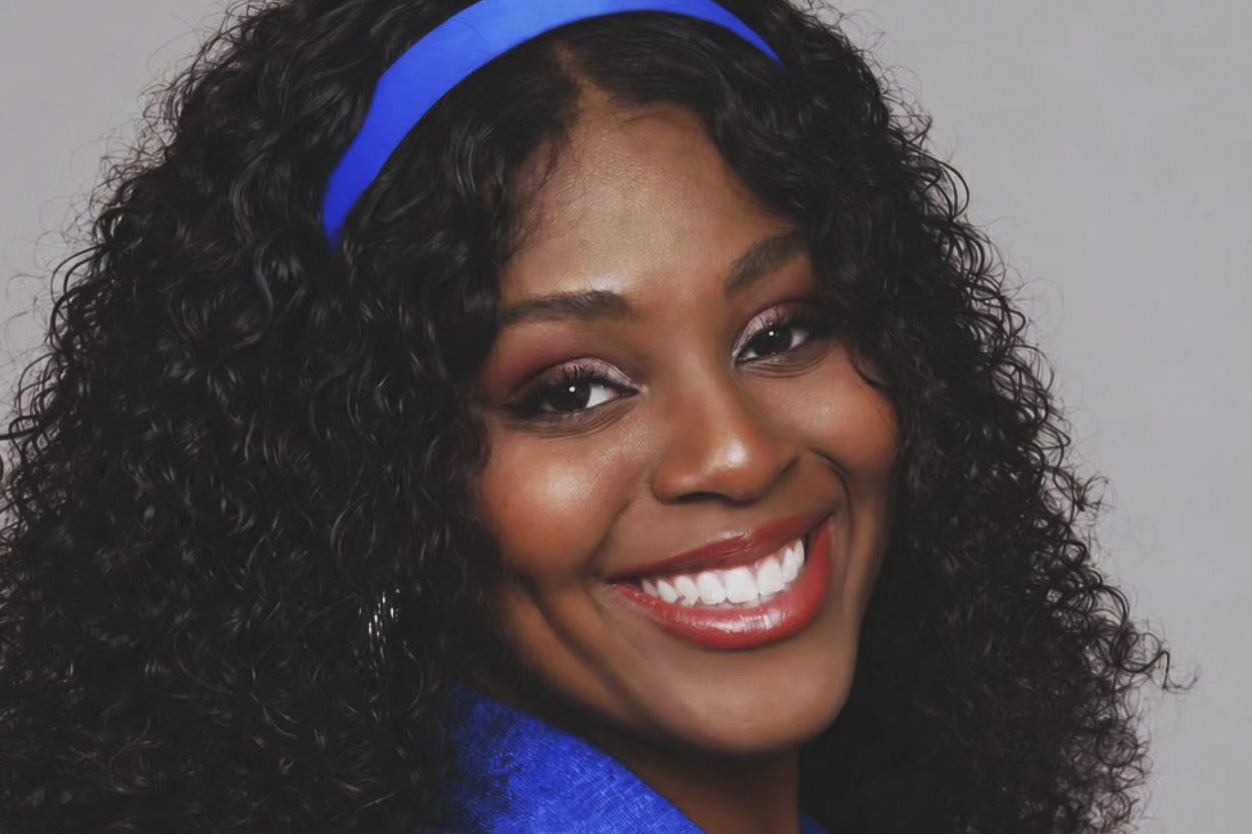
A 25-year-old Philadelphia woman won the $300,000 first prize in a NASA competition to design food systems to improve how astronauts eat in space, and eventually how they will eat on Mars, the space agency announced Thursday.
Chinyere “Chichi” Ukeje, a native of Bowie, Md., now living with her husband in Northeast Philadelphia, submitted a proposal called Adaptive Nourishment Infrastructure, or ANI, which is named after the Nigerian Earth goddess of harvest and fertility.
Ukeje said in a phone interview Friday night that her family has roots in Nigeria and with the Igbo people, a major ethnic group in that country.
With the Deep Space Food Challenge: Mars to Table competition, NASA asked participants to “explore innovative solutions for integrated space food systems that would provide safe, nutritious meals to astronauts living and working in space,” the agency said.
NASA launched Mars to Table in January 2026 as a follow-up to the Deep Space Food Challenge, which NASA ran from 2014 to 2021 in collaboration with the Canadian Space Agency.
The updated competition included entries from teams in 28 U.S. states and from a total of 33 countries. The total prize pool was $650,000 for five winning teams.
Jennifer Edmunson, program manager for Centennial Challenges at NASA’s Marshall Space Flight Center in Huntsville, Ala., said in a statement: “The future of human space exploration will rely on innovative food systems, and it is amazing how much ingenuity this challenge has helped us identify from participants near and far.”
The challenge was created to find ways to feed astronauts without having to send prepackaged foods, which would not be possible because of the sheer bulk for the many months a Mars mission would take.
The core of the challenge was to create a working system for a 15-person astronaut crew for 500 Martian sols, which is the equivalent of around 513 Earth days.
“The problem of feeding astronauts on Mars is more than just growing crops,” said Ukeje, who is studying for a master’s degree in computer science at Johns Hopkins University.
After spending most of her childhood in Maryland, Ukeje went to Nigeria during high school. She then returned to the U.S. to earn her bachelor’s degree in computer science at the University of Maryland, Baltimore County, before moving to Philadelphia.
NASA described Ukeje’s “ANI” as “a modular food ecosystem combining controlled-environment agriculture, fermentation and fungi cultivation, and closed-loop nutrient recycling through bioreactors with limited Earth-provisioned foods to produce 50% of the food away from Earth.”
Ukeje’s complex winning entry included having astronauts heating food with portable electric lunch boxes. The astronauts would take cubes of nutritious food and prepare them into recognizable meals, and then they could have “taco night” or “Italian pasta night.”
“You want them to feel at home when they are millions of miles from home,” she said.
She was surprised she won first place, but not surprised that she did well.
“I completely poured myself into this project,” she said.
There are no restrictions on what she can spend her prize money on, but Ukeje said she expects some of it will go into further food technology research.
Correction: A previous version of this article incorrectly spelled Chinyere Ukeje’s first name in a sub-headline and photo caption.
A weekend of devastating and unusual nor’easter storms prompted evacuations, waterlogged cars and businesses, and eroded idyllic beaches along the Jersey Shore.
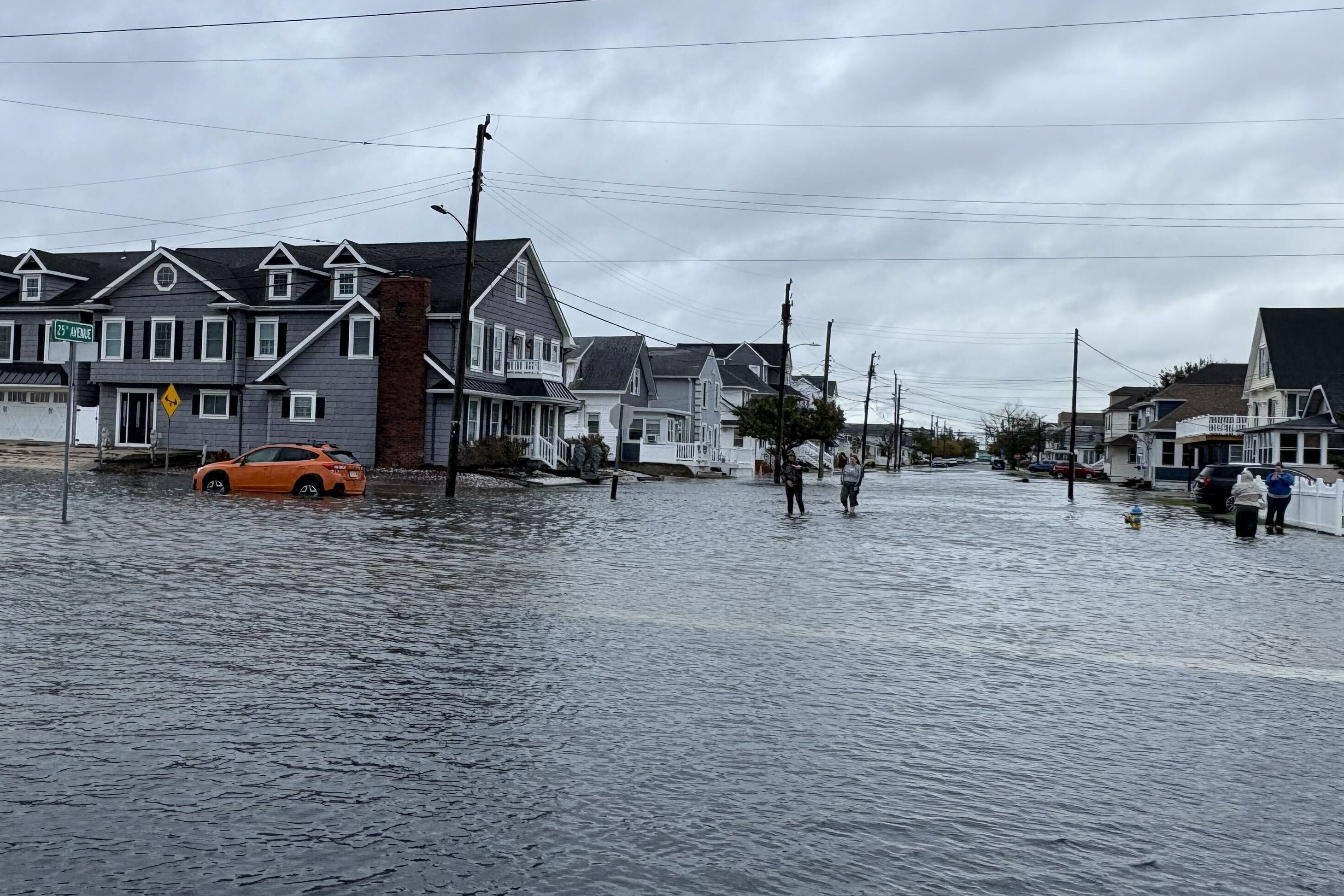
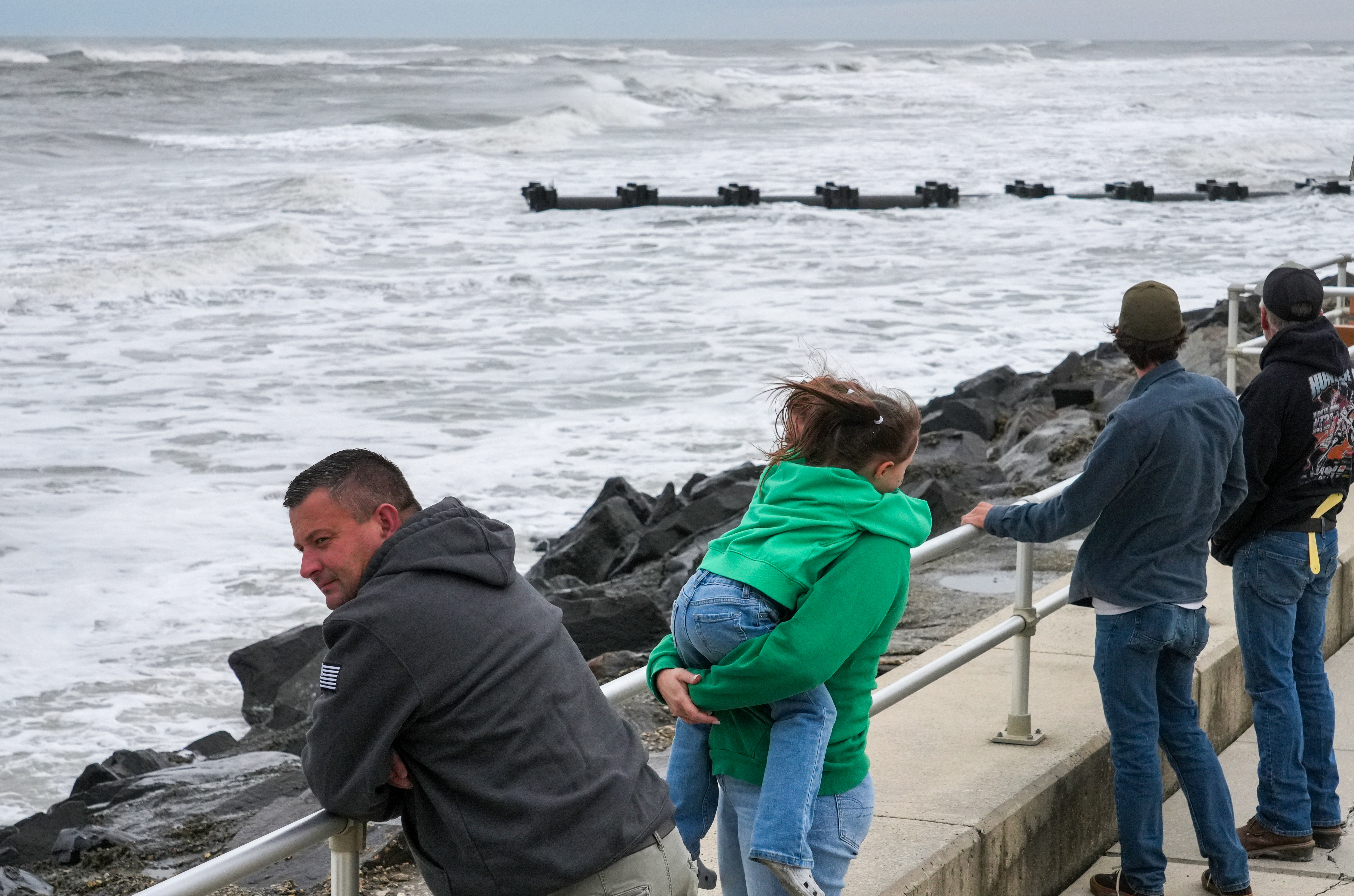
In coastal towns, roaring floodwaters swallowed major thoroughfares and white-picket fences, as massive, salty waves pushed far past the Shore’s beaches and into residential areas. People waded through ankle- to waist-deep waters, and dozens had to be rescued from cars trapped on impassable roadways, New Jersey Gov. Mikie Sherrill said Sunday at a news conference.
“Our Shore communities have been hit hard,” Sherrill said, warning “we’re not out of the woods just yet.” On Sunday, persistent showers lingered, and the threat of high winds and surges continued for the already weather-tested region.
For some, the fury of the early-season nor’easter evoked memories of Superstorm Sandy in 2012 or 2016’s Winter Storm Jonas. No deaths have been reported in New Jersey, and the full scope of the damage likely won’t come into focus until the howling storm quiets.
Sherrill, who declared a state of emergency Friday, said officials were concerned about possible flooding after high tide Monday morning.
Sunday morning’s high tide had been expected to work its way into the back bays and lagoon communities, likely leading to moderate flooding with the possibility of isolated pockets of more severe flooding, said National Weather Service meteorologist Ray Kruzdlo. Water levels may take a few days to recede, he said.
“I don’t think we’re going to see what we saw two high-tide cycles ago, but it’s still going to be impactful,” Kruzdlo said.
Here's the latest on the Nor'easter. Still expecting likely two more rounds of minor to moderate coastal flooding over the next two high tide cycles tonight and Sunday morning, but with crests a bit lower than Saturday morning. The heaviest of the additional rain is likely… pic.twitter.com/ICJ3fyypYM
The wind — which reached 74 mph in Surf City, according to Sherrill — was also starting to subside.
“The low pressure responsible for this whole nor’easter, it’s kind of wobbling around a little bit,” Kruzdlo said. “It’ll get out of here within 24 hours.”
More than 22,000 power outages were reported across New Jersey about 2:45 p.m. Sunday, according to the PowerOutage.us tracker. Meanwhile, NJ Transit officials were monitoring conditions, and most routes were operating on normal weekend schedules or with some delays because of downed trees. Portions of the River Line and Hudson-Bergen Light Rail were suspended Sunday.
Across the Philly region, the heavy rain overnight and Sunday morning was headed out of town toward Wilmington, Kruzdlo said. There wasa chance of showers overnight Sunday and early Monday.
According to Sherrill, the early-season nor’easter caused severe dune loss in Atlantic City and Brigantine — with the Brigantine mayor calling it the worst tidal flooding since Sandy, the Press of Atlantic City reported.
The storm reminded Sea Isle City Mayor Leonard Desiderio of Jonas — a historic winter storm with hurricane-force gusts that incited record tides at the Shore. Ocean City officials said Saturday morning’s tide (7.63 feet) reached nearly as high as the tide during Jonas (7.66 feet).
“But this was pretty bad,” Desiderio said. “Until we can really evaluate everything, we don’t know the damage it has caused.”
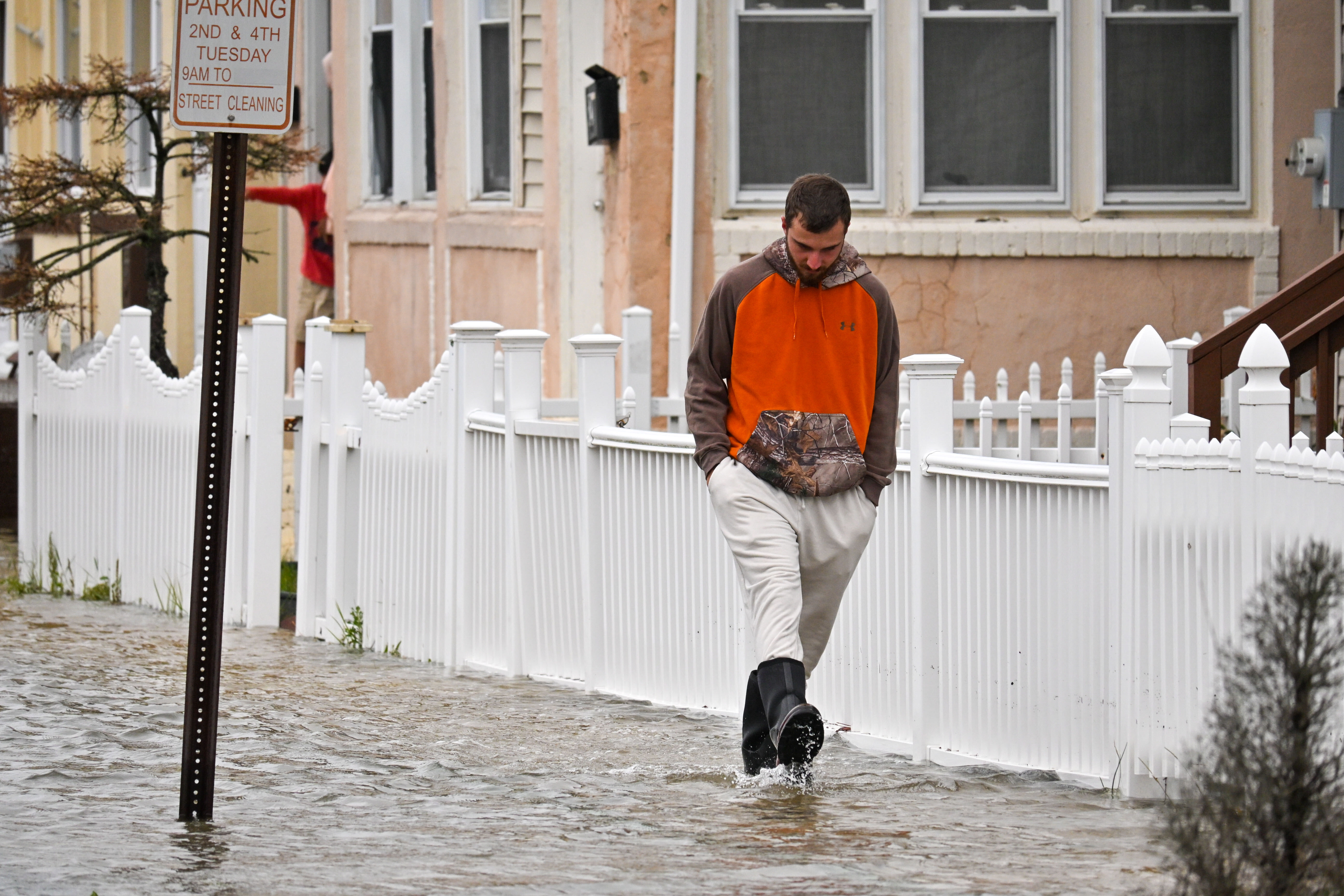
Gaetano Petinga walks through flood waters brought by a nor-easter Saturday, Sept. 26, 2026, in Atlantic City.Brett Sholtis / Staff
In Margate City, areas that tend to flood during storms indeed flooded, and tidewaters entered some buildings, fire department Capt. Chris Hornig said.
“After today, they’re going to be doing some cleanup, so hopefully this is the last big one this morning,” Hornig said.
Hornig cautioned drivers to stay out of flooded areas: “People shouldn’t drive through floodwater. It’s salt water. It’s not good for their cars, even if they make it through.”
Wildwood Mayor Ernie Troiano Jr. said flooding,there, contributed to multiple fires, including one caused by lithium batteries on an e-bike. Troiano said the Saturday morning tide surprised him with “the swiftness of it entering the streets.”
“When it came up over the bulkheads, it just released and it just went flying,” Troiano said.
As the tidewaters spread across the Shore, so did the videos and photos online.
One widely shared video showed a waterlogged dining room at The Lobster House in Cape May. Then Internet jokesters enhanced the video, adding three lobsters serenely swimming out to sea. On Sunday, people drove up to the iconic seafood restaurant and market — closed due to flooding — to see for themselves.
“We’ve had people in Florida and Virginia ask us about it,” Cape May resident Gary Bartlett said of the videos.
Keith Laudeman, the third-generation owner of The Lobster House, explained that for three days, the water level outside the restaurant inched up — the result of relentless northeast winds holding seawater in the inlet.
Saturday morning’s high tide was the “icing on the cake” that sent floodwaters pouring into front door.
Laudeman dealt with flooding after Sandy and Storm Jonas. He said his team will have to wash everything with freshwater, scrub it down with antimicrobial soap, and replace carpeting.
He hopes to have the restaurant open within three days, and plans for the fish market and coffee shop to be open Monday.
As for the lobsters escaping to sea, Laudeman said anything is possible.
“That’s a little far-fetched,” he said. “But if it adds to the story, then go ahead.”
For Christine Anderson,visitingthe Academy of Natural Sciences of Drexel University is a family tradition. And she wanted to continue that ritual one last time Saturday.
As a kid growing up in the Lehigh Valley, Anderson made frequent trips to the country’s oldest natural history museum. As a mother, she brought her daughter Krissy, now 21, to the museum to make her own childhood memories.
And on Saturday, the penultimate day of the museum’s operation before its planned closure due to a lack of funding, Anderson and her family squeezed in their final trip.
If for no other reason, she said, than to give her 5-month-old daughter, Lola, the chance to cross through its threshold.
“It’s a great place for kids to learn, and I think it’s great for the culture of the city,” Anderson said. “At a time when so many other museums are closing, or at risk of closing, it’s just so disappointing that a space like this is closing with them.”
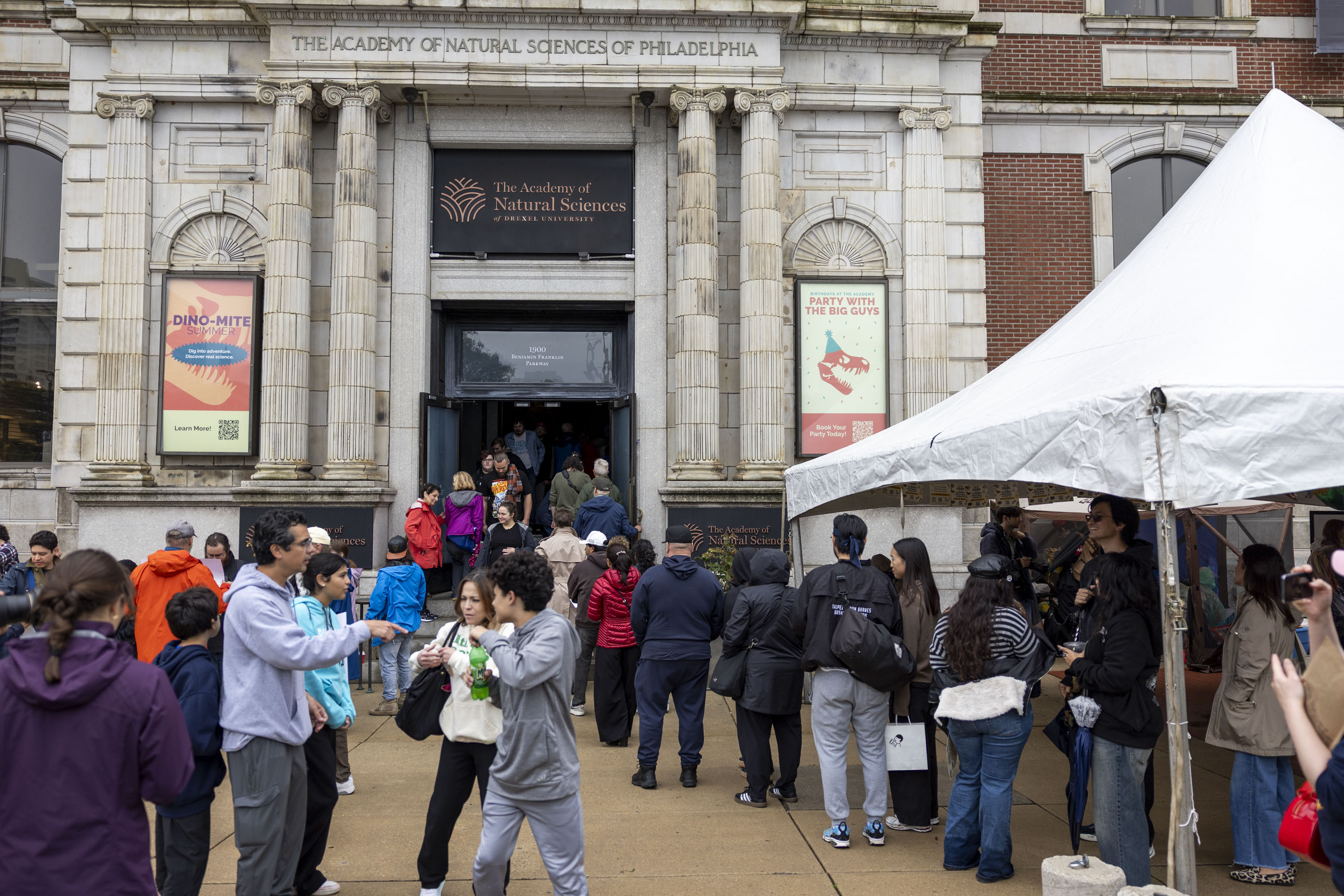
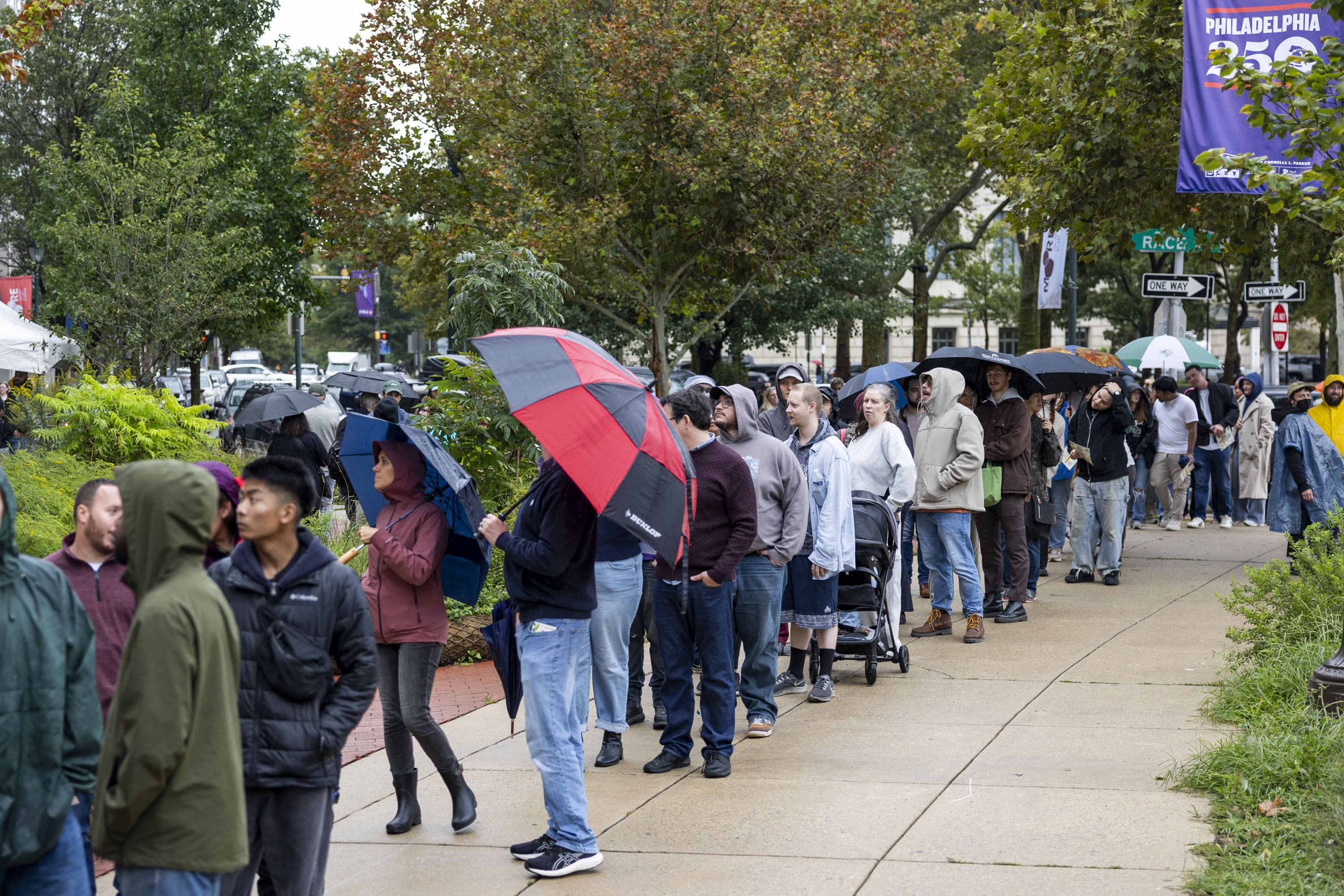
Anderson and her family were among the dozens of attendees who braved Saturday’s blustery nor’easter to fill the Academy of Natural Science’s halls. The museum’s entry line snaked down the sidewalk along the Benjamin Franklin Parkway, flanked by protesters from the Save the Academy Coalition who were rallying in support of the beloved institution.
People from across the Philadelphia region, and beyond, came to the Academy of Natural Sciences on Saturday as protestors called for Drexel to keep the museum open.Tyger Williams / Staff Photographer
“It is of critical importance that we make sure the people who are making the decisions with the future of the Academy of Natural Sciences know that the city of Philadelphia needs this museum to stay open and the volume of support that we have for that effort,” said McAnulty, a science educator who runs the nonprofit Skype a Scientist.
To bolster that effort, the coalition hosted a letter-writing station for kids, hoping to send that message directly to Drexel officials. They also offered animal face painting and a free concert. Volunteers stood on the shoulder of the Parkway, their protest signs greeted by enthusiastic honks from passing drivers.
“It’s hard to know whether your kid is going to be inspired by science and become a scientist later,” McAnulty said. “And so whether they want to start their journey with science to become a scientist or just to see things that humans have been studying and collecting for thousands of years, this is a huge place for Philadelphia history and inspiration for kids.”
Drexel and the academy announced the museum’s closure Sept. 1, after nearly 200 years of operation, with Sunday being the final day its collection will be open to the public. The decision, officials said, came amid declining attendance and economic pressures, with a hope of concentrating resources on continuing the academy’sresearch.
Late Friday, the William Penn Foundation announced it had offered funding to keep the public museum open for a least a year to allow Drexel to address its economic issues. Drexel officials have yet to say whether they will accept that offer.
There are plenty of Philadelphians who hope the university willconsider the deal. Among them is Dan Solomon, who spent a rain-soaked Saturday holding a protest sign in support of a museum that played an impactful role in his family’s life.
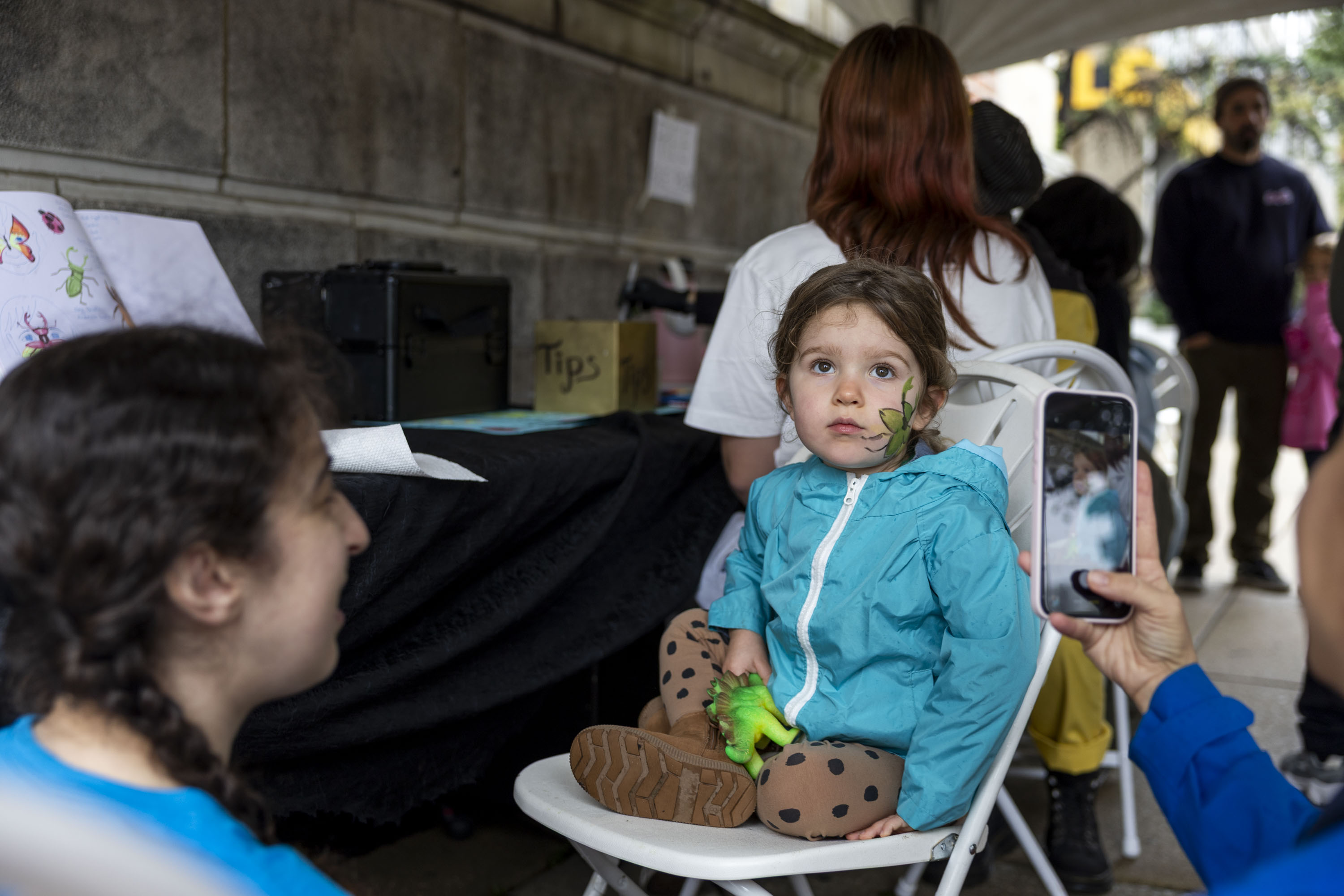
Penny Hughes, 3, of East Falls, gets her face painted by volunteers from the Save the Academy Coalition during their protest Saturday.Tyger Williams / Staff Photographer
Solomon said his daughter is applying to colleges this year, and her pursuit of a career in neuroscience was inspired, in part, by their frequent visits to the Academy of Natural Sciences.
“It’s just unconscionable that this would be just ripped away from Philly kids forever,” Solomon, of Mount Airy, said. “All it needs is a chance. We’ve had a month to organize [since the closing was announced] and we’ve already gathered plenty of support.”
Solomon urged Drexel to take the William Penn Foundation’s offer.
“Of course people understand that times are tough,” he said. “But all we’re asking for is a chance to save our museum. And if we have that chance, we should take it.”
Kevin Chapman, who was standing in line alongside Christine Anderson, his partner, and their newborn daughter, agreed.
“Museums provide a foundation for education, and I feel like there’s a lot of things that provide foundations for education that are under attack right now in our country, whether it’s historical venues or sciences and art,” he said. “We need to support those things while they’re here, because it’ll be too late once they’re gone.”
You might roll your eyes if a real estate agent tells you about a fixer-upper with a lot of potential. But that truthful line of persuasion has been working for supporters of the Germantown Life Enrichment Center.
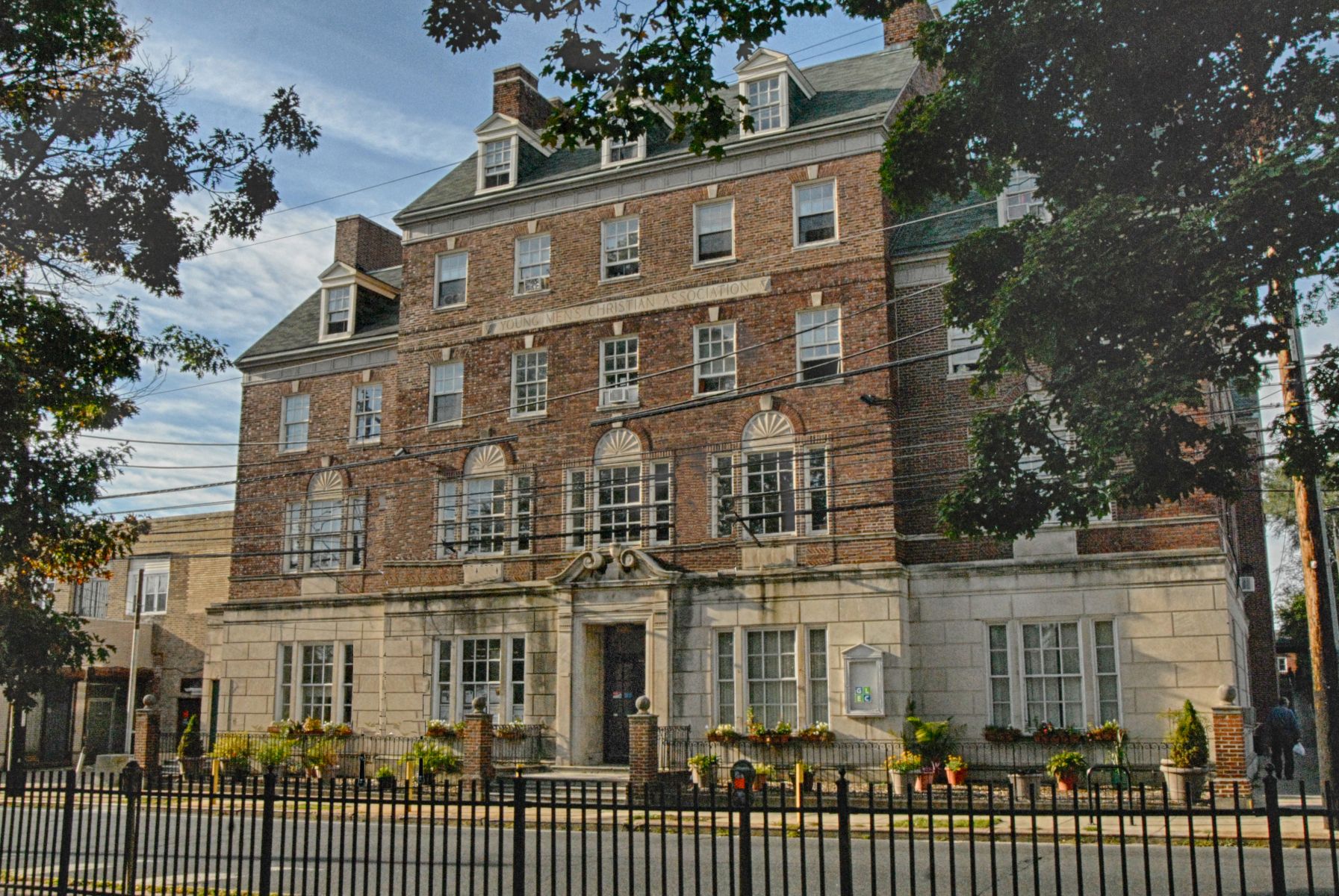
The center, known as GLEC, is an unusual two-in-one facility at 5722 Greene St. It offers an array of community programming, including pool, fitness, and youth activities, and transitional housing for formerly homeless men.
The former YMCA building opened in 1922, and has not received major renovations since the 1990s. It has gradually decayed while waiting for essential repairs, including to its HVAC system and roof.
The building was in dire financial condition in late 2024 into 2025, after the pandemic hurt memberships and childcare participation. Utility bills and shutoff notices piled up, and it appeared the center could close at any time. Germantown would lose a vital community resource, and one of the city’s few housing options for homeless men would disappear.
But over the last several months, GLEC has begun receiving support it has long needed, by way of a combined $9.2 million from various sources. In the spring, the center learned it had been awarded $5 million from the city’s funding for homeless housing, courtesy of the American Rescue Plan, to use on its residential section. Then the center received an additional $2.5 million for the creation and repair of residential housing units in July from state funding. The money will go toward new central air-conditioning, new showers, updated bathrooms, and more.
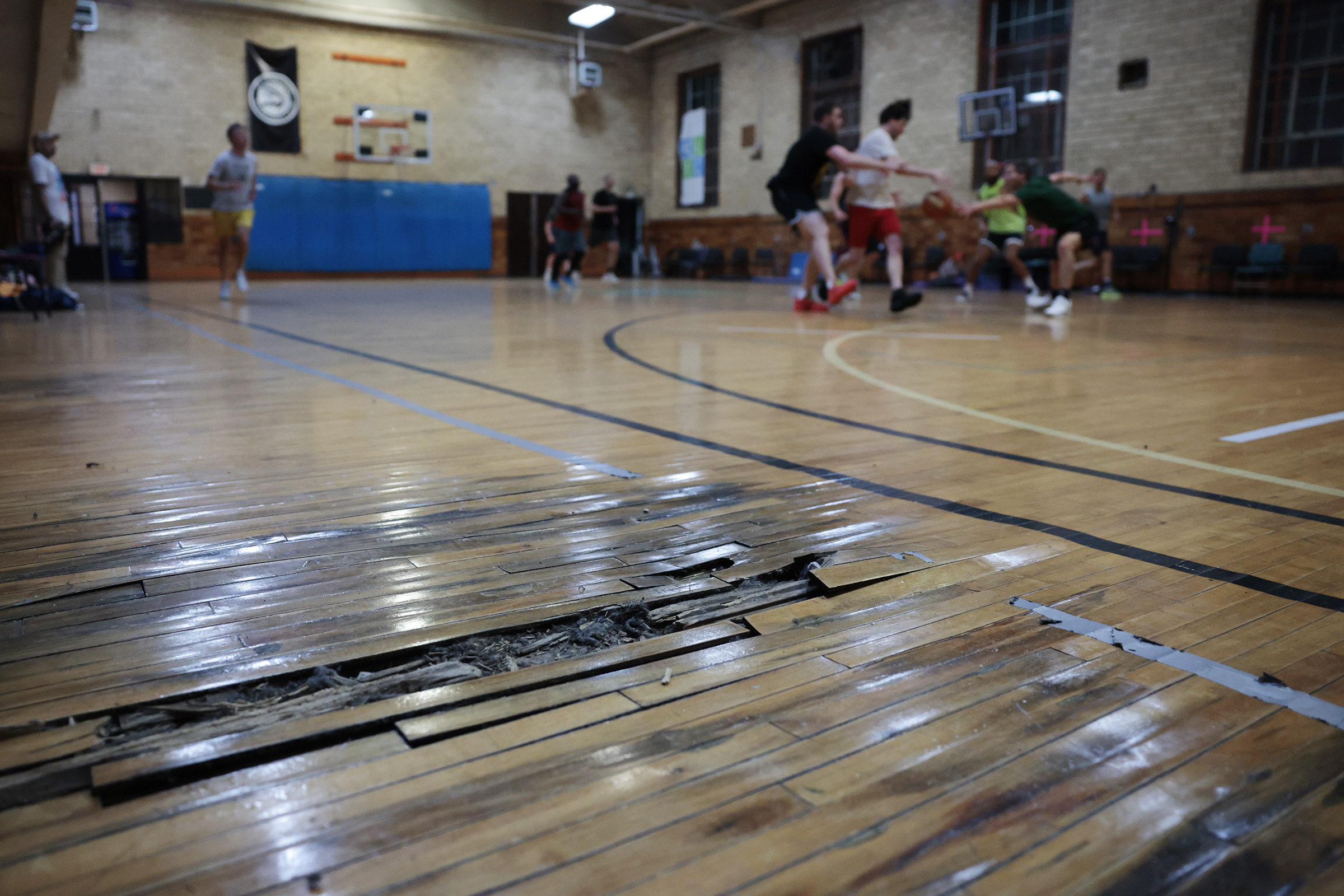
Last week, GLEC learned it will receive about $950,000 from state Local Share Account funding, raised from gaming revenues, which will go toward repairs to the building’s community center offerings, like replacing the basketball floor and renovating locker rooms and bathrooms.
Macy Brown, 4, center with swimcap, uses her life vest to stay above the water as she kicks up a storm to navigate the pool at the Germantown Life Enrichment Center in 2018.MICHAEL BRYANT
And on Sept. 17, Democratic State Sen. Art Haywood presented GLEC with a $750,000 grant from a state program that goes toward housing affordability and rehabilitation measures, also meant for improvements to the community center sections of the building.
The inflow of funding represents a remarkable and hopeful turn of events for those who have fought to keep the building open.
“It feels like a miracle. … I’m so profoundly grateful to the entire community that rallied around to to work together to make this happen,” said Doron Taussig, chair of the GLEC board.
Yet even with those funds, Taussig said, the building’s daily financial challenges remain.
The center still operates with a monthly deficit of about $25,000, executive director and CEO Lyn Kuebler said. She said even while the major investments from the city and state suggest they are committed to the center’s being used for this kind of housing work for the next 30 to 40 years, there is still a long way to go before all of its needs are met.
“Even though we’ve gotten awards … it’s not money in the bank that can pay your electric bills,” Kuebler said.
Not finished
When the center hit its low point at the end of 2024, Kuebler said, she began warning people that without an intervention soon, “we’re not gonna be here.” She invited Haywood, who represents parts of Philadelphia and Montgomery County, to tour the building that December to see both its potential and how much was needed to reach it.
“There’s not many places for men who have been hard on their luck,” Haywood said, noting that it is one of the few single-occupancy housing options for homeless men in the city. He said he admired the resiliency of the center’s leadership, and agreed to help secure funding.
“The organization just needed a lot of love,” he said.
A Dadball basketball game (in background) at the Germantown Life Enrichment Center in Philadelphia, where there are some badly needed repairs, in 2025.Elizabeth Robertson / Staff Photographer
While Haywood and other officials went to work to preserve the building’s long-term future, Taussig sought out smaller donors to help with the daily expenses. For over a decade, the center has been the home of Taussig’s pickup basketball group, which nicknamed itself “Dadball.” The group of once-new dads in their 30s and 40s kept playing as their kids grew up, and formed a community.
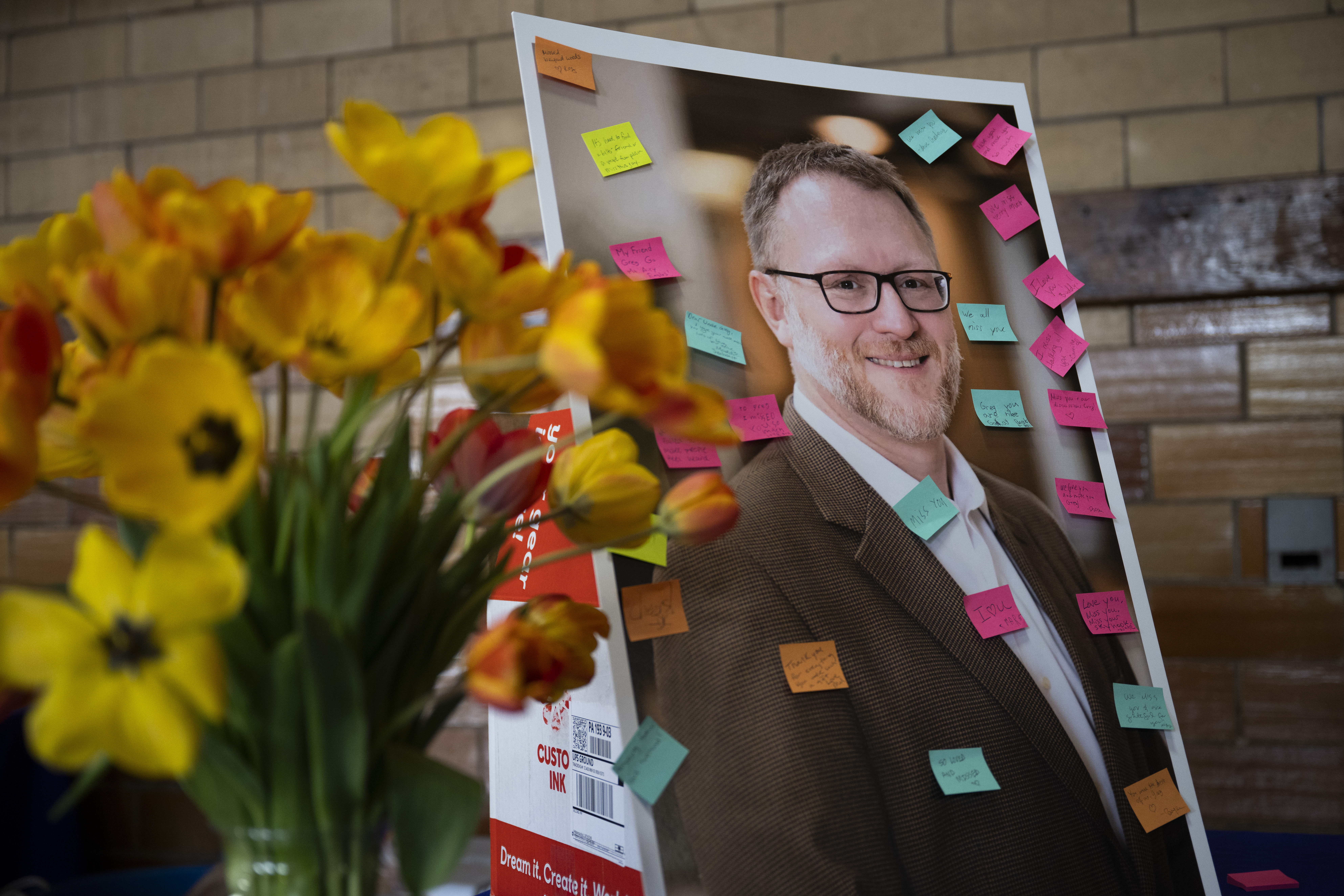
In April 2025, one of the group’s most beloved members, Greg Anderson, died after suffering cardiac arrest during a game. In their grief, Taussig and the other Dadballers rallied and raised about $100,000 to keep the center open. They have since renamed the basketball gym in Anderson’s honor.
Personalized notes are stuck to a portrait of Greg Anderson during a gym dedication ceremony for the late Mount Airy Dadball basketball player on Saturday, May 2, 2026 in Philadelphia.Joe Lamberti / For The Inquirer
Kuebler said the organization determined it needs about $4 million more to address all of the community centerrenovations, so several items are on hold, like installing an elevator. She is asking community members to help in any way they can.
“We are further than we’ve ever been. It helps you not be weary,” said Kuebler, who has been with the center for 16 years.
People are riding the fundraising momentum, Taussig said. Another Dadballer will soon begin a culinary education program focused on teaching people to make affordable, high-nutrition meals. Anderson’s widow, Melanie Anderson, is organizing a women-only dance party in the basketball gym, he said.
And a Jefferson University master’s in architecture class is conducting a community design project on GLEC. The students will study the building and surrounding community for what the best uses of the space may be, and offer suggestions on how to accommodate them, Taussig said.
“It’s bringing all of this energy into the building. … It’s what this building needed and really ought to be used for,” Taussig said.
Correction: Lyn Kuebler’s name was spelled incorrectly.
The “hurry up and wait,” often for ridiculously long times for a news conference to start, or a newsworthy event to happen, or even everyday life to unfold is not just an occasional part of a career in journalism, it becomes the basic rhythm of the job.
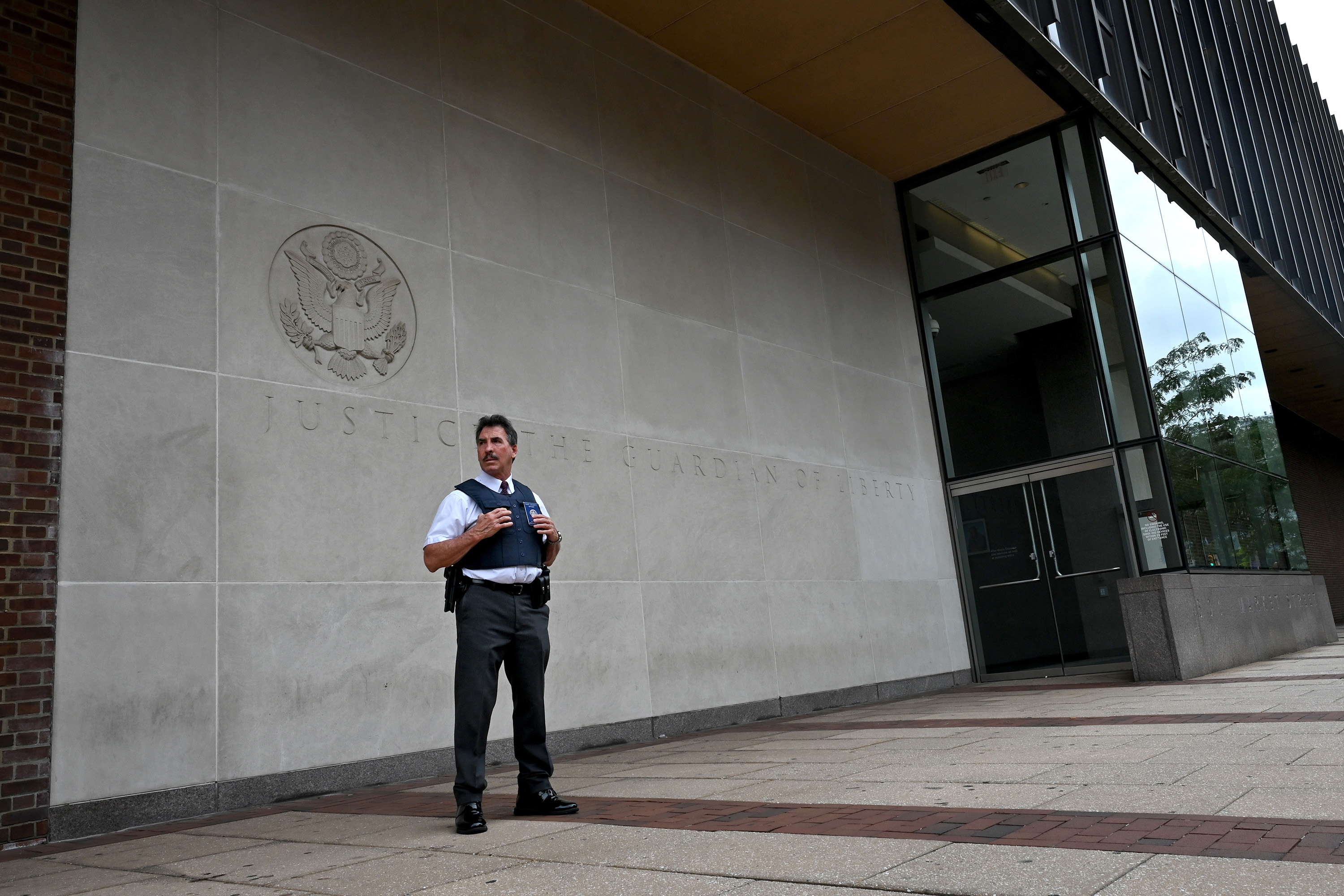
Like spending an entire day outside a courthouse for a few brief moments and the opportunity to photograph defendants arriving or leaving (cameras are not allowed in courtrooms in Pennsylvania).
Waiting, with an officer with the United States Marshals Service, outside the James A. Byrne U.S. Courthouse at 6th & Market Streets.Tom Gralish / Staff Photographer
You’re waiting for something you can’t control, all the while trying to alert for the moment it finally happens.
Over my years as a photographer there has been one “wait” that is even more constant and one that I probably could control.
When I am assigned to photograph a building or city street scene I could just make sure my camera setting are all correct, my battery is fresh and I have clean SD card in the slot. Then make a quick snap to show readers what the building or street scene looks like and move along.
But no, I wait. A lot. For a bunch of random elements to line up perfectly.
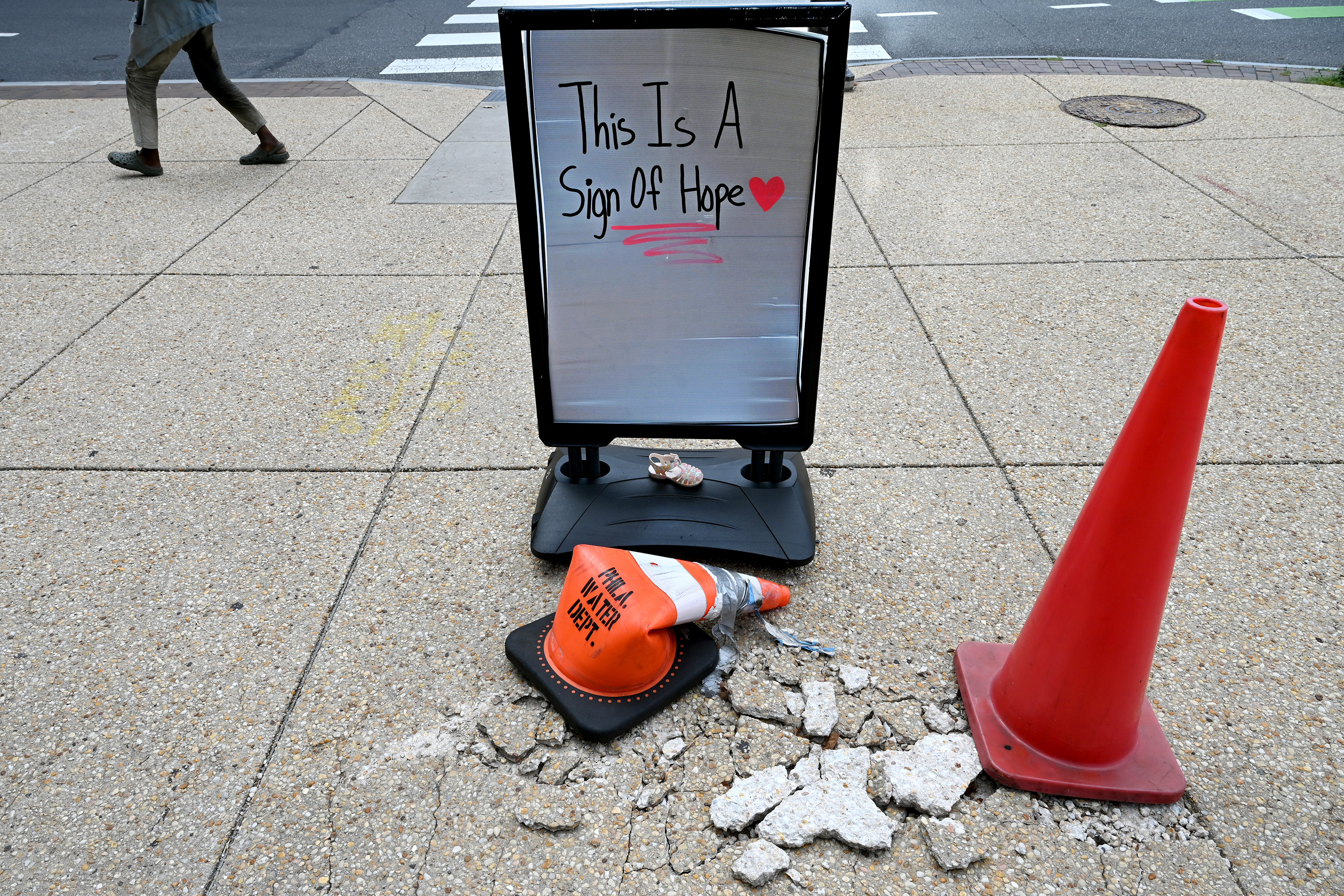
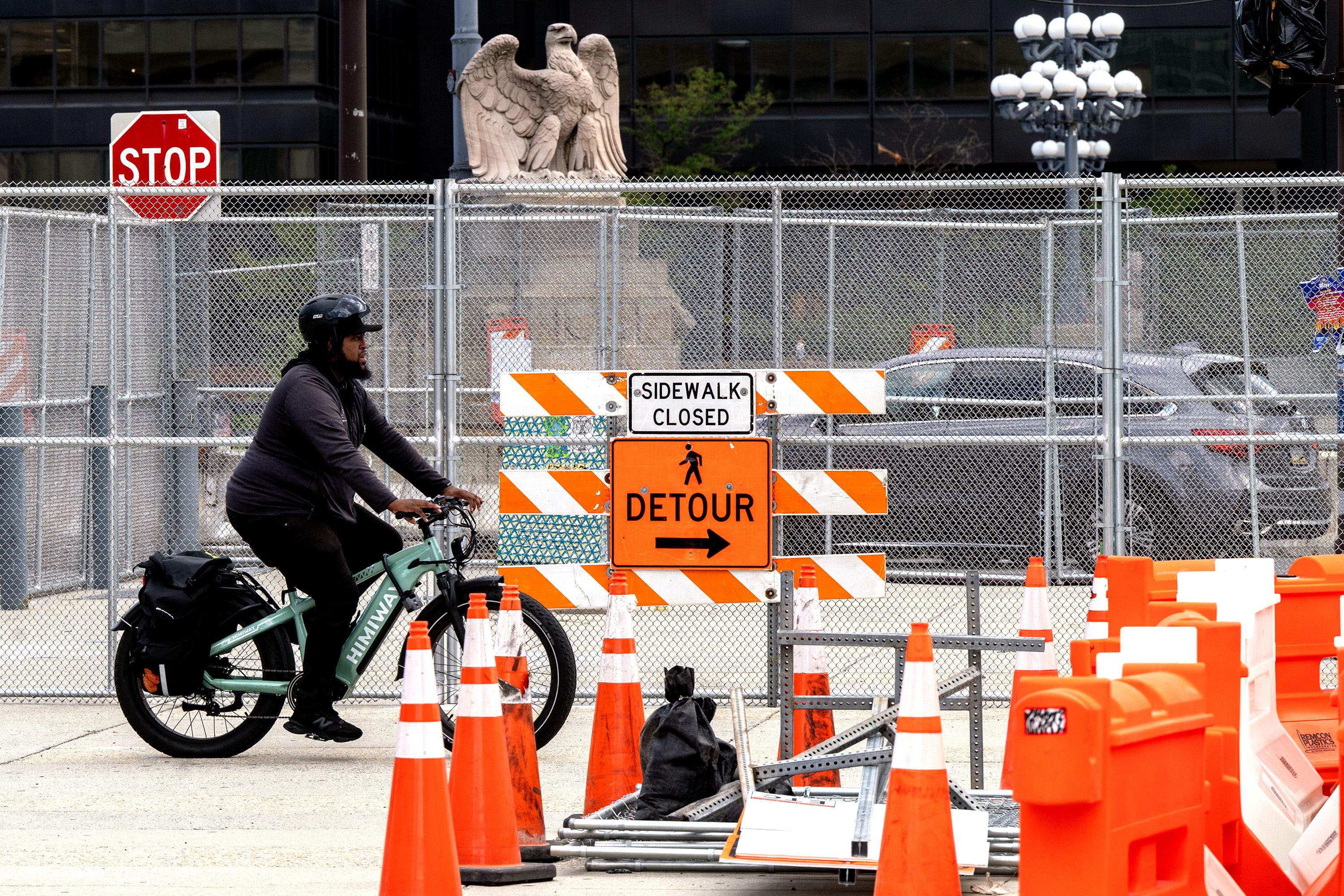
Waiting – without any luck – for an orange-clothed pedestrian or bicyclist. Tom Gralish / Staff Photographer
I stand there like the two characters in the 1952 Nobel Prize-winning Samuel Beckett absurdist play, Waiting for Godot. But instead of some mysterious stranger, I am waiting — and hoping — the stars all align just right, the photo gods are willing, and the universe gets it together to allow that one person, dog-walker, jogger, bicyclist, scooter, car, bus, or trolley to pass through my carefully pre-composed frame at just the “right” time. In the “right” place.
And maybe the “right” color. Like my yearslong Oy-Yo yellow pursuit (those waits however were for a mere 7.6 minutes at a time).
I like to think of myself as being patient and even visually heroic; good qualities to have in a photojournalist.
But anytime I really think about it or try to explain the “why?” to friends or even colleagues it ends up sounding both obsessive and pathetic.
The solitary waits are a great time for self-reflection. Or during more media busy events a chance to hang out with photo friends.
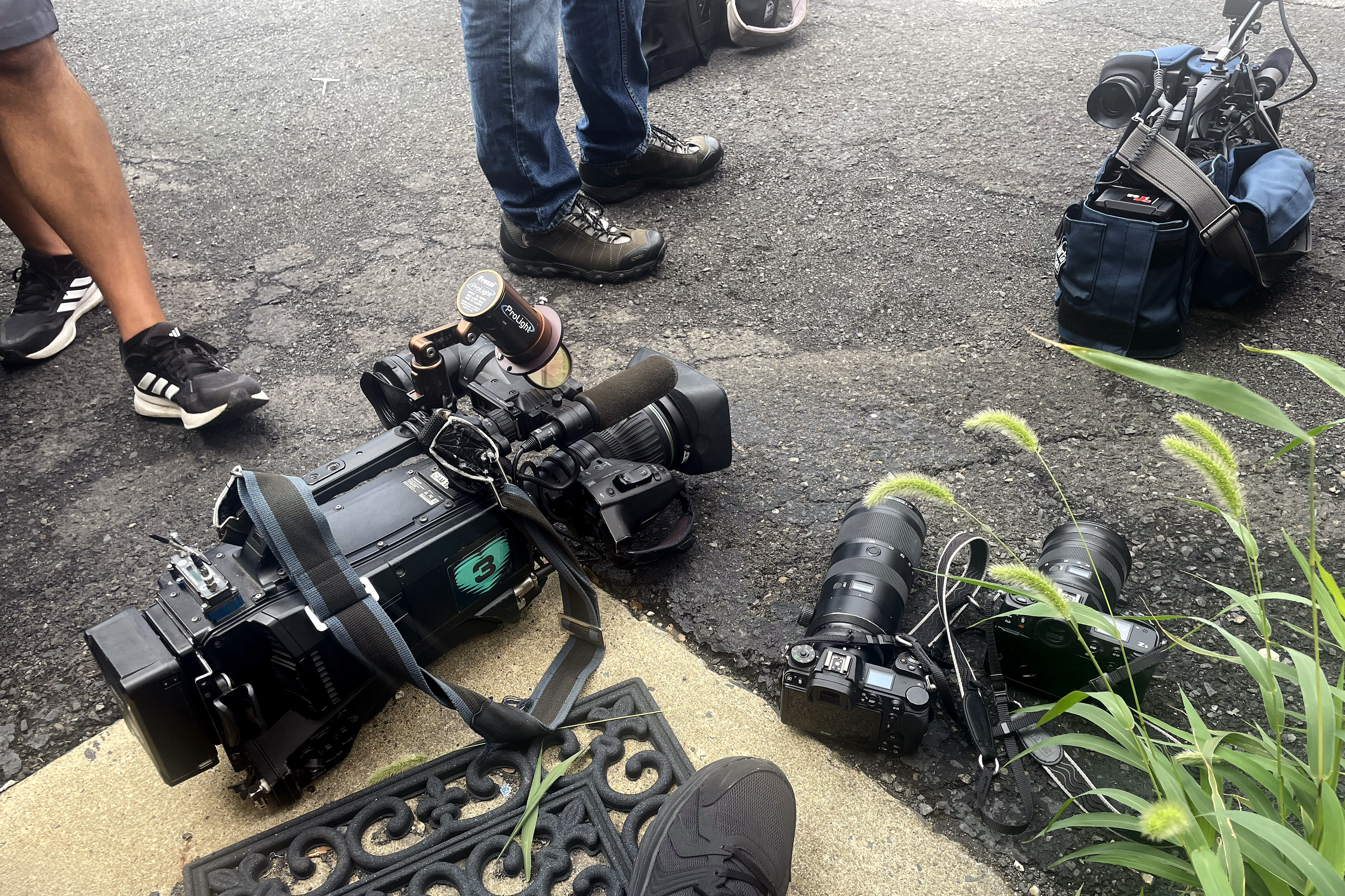
Waiting with the cameras and news photojournalists outside Montgomery County Magisterial District Court in Jenkintown.Tom Gralish / Staff Photographer
One last literary reference, before unfolding a few of the photos I’ve made recently while waiting. They’re another way I keep myself entertained, and help avoid feeling too much like Sisyphus, condemned to push that stone up the hill only to watch it roll back down.
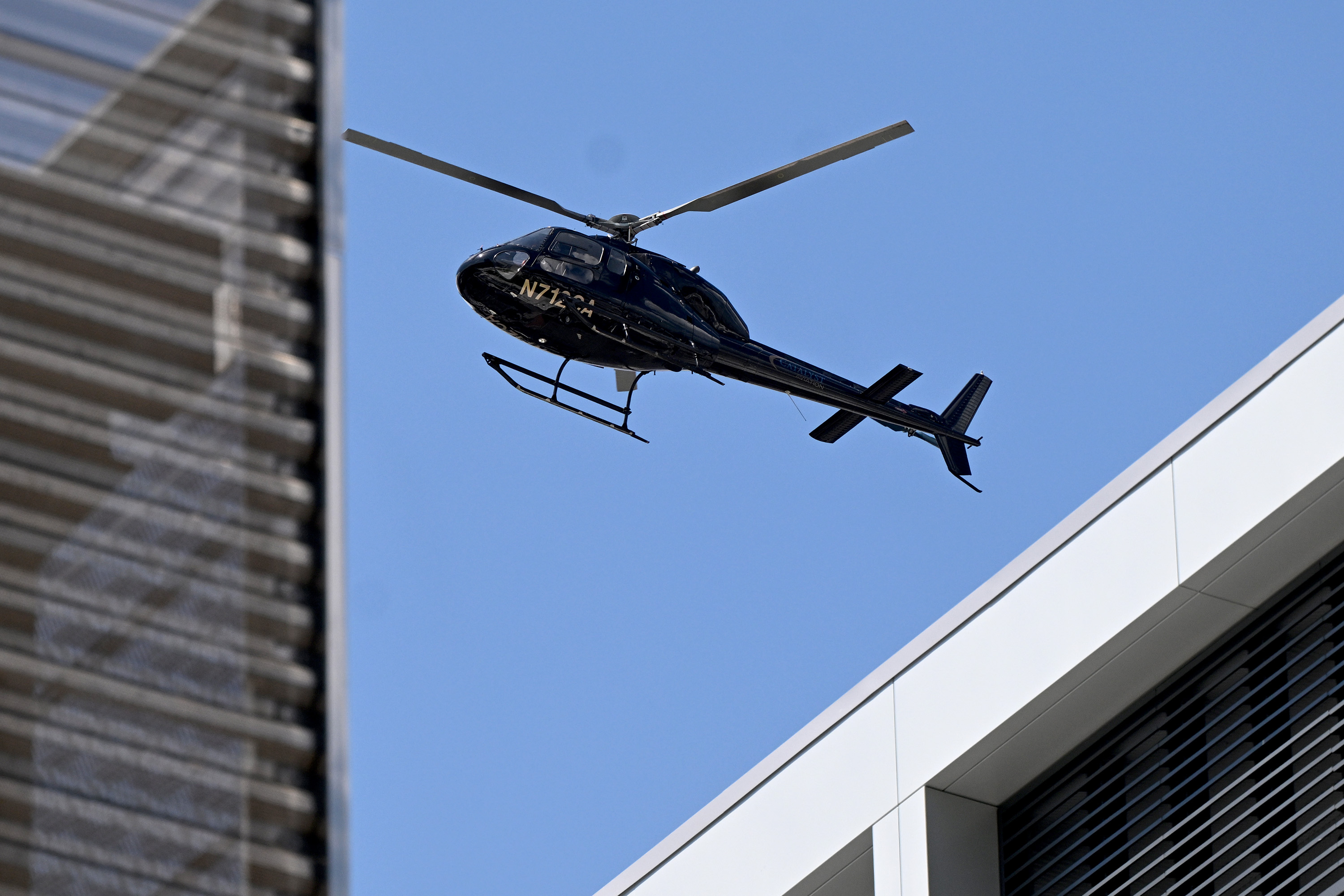
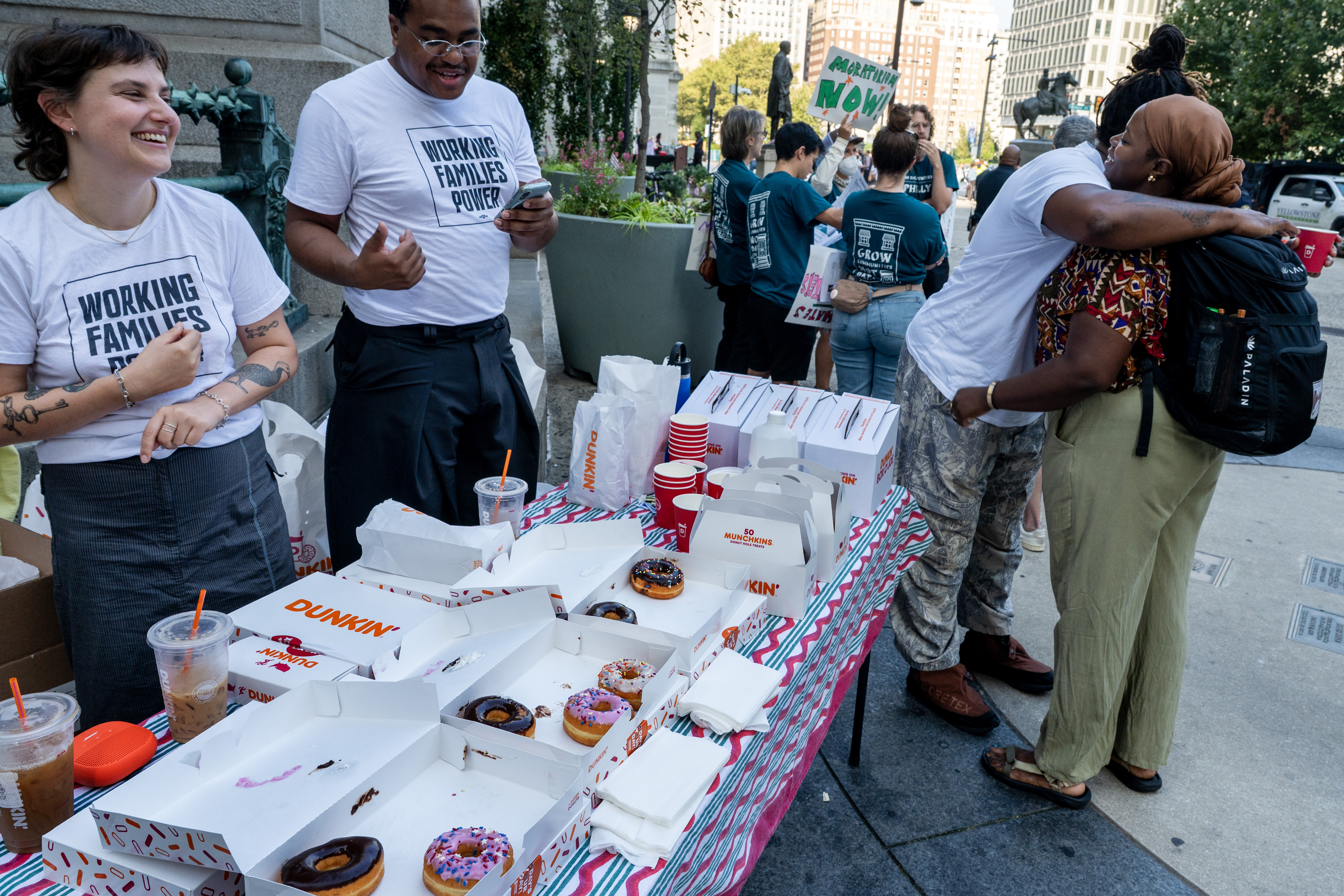
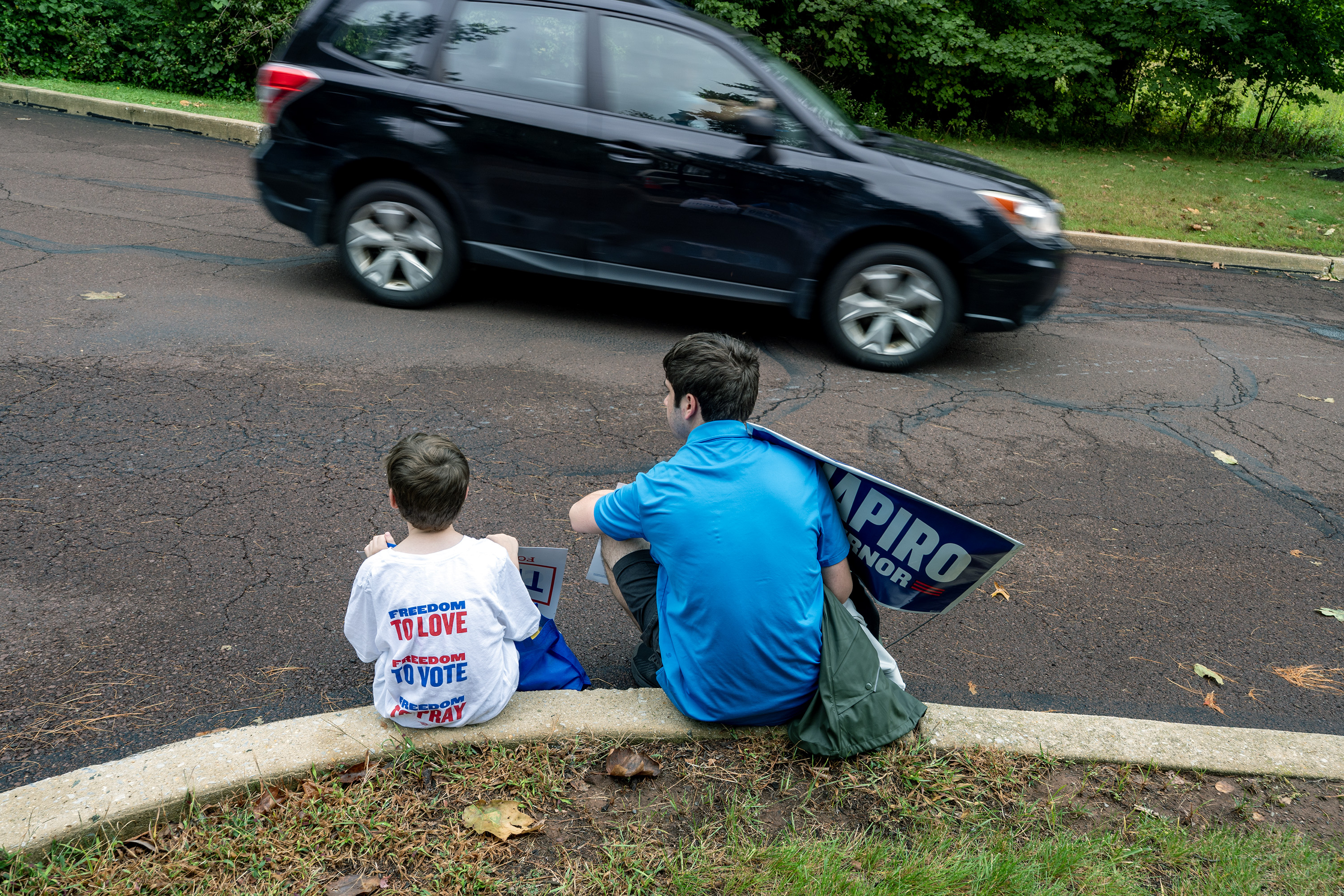
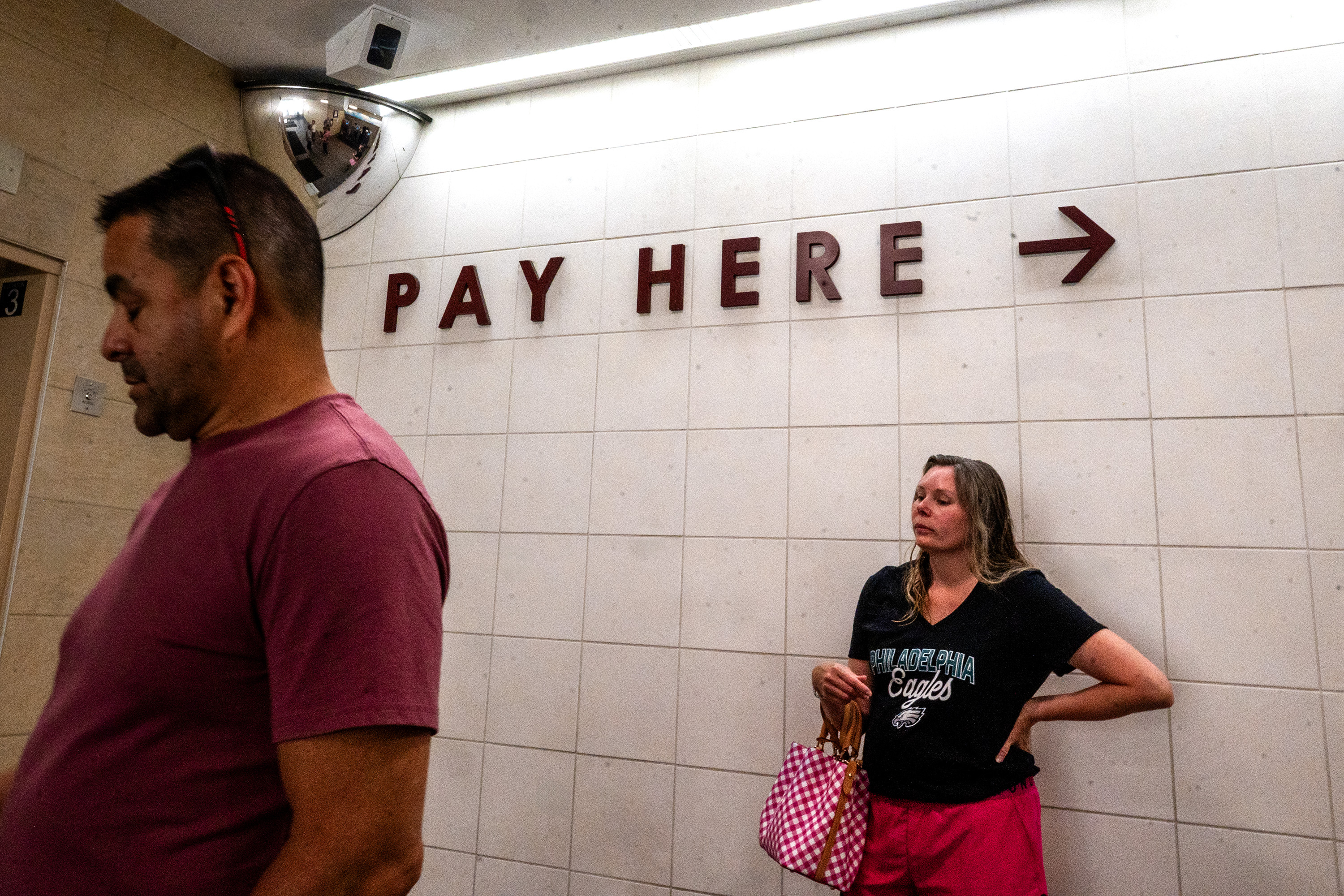
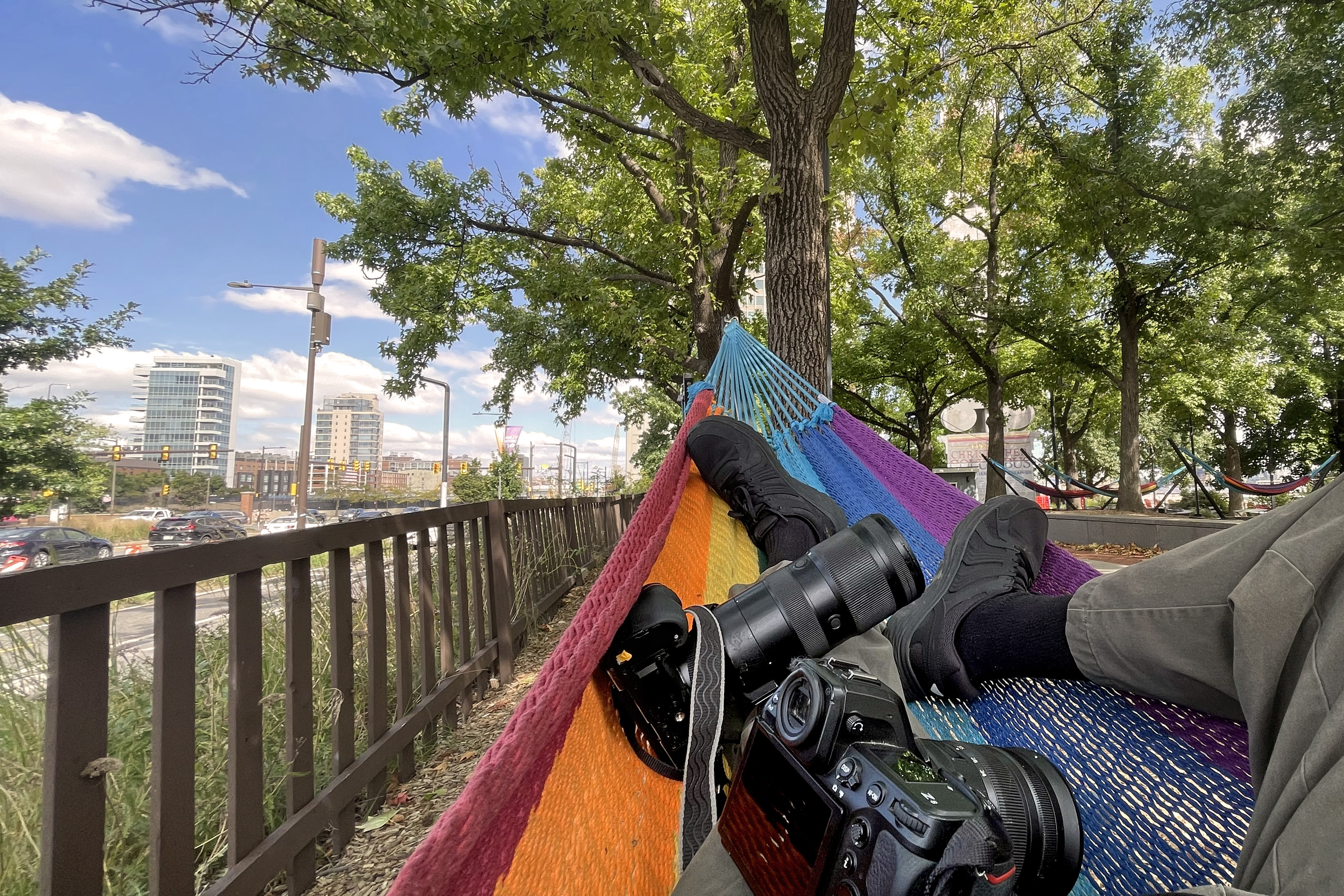
Waiting in University City and looking up as a helicopter conducting power line inspections passes overhead.Tom Gralish / Staff PhotographerWaiting outside City Hall – with free coffee and donuts for those arriving early – for the day’s meetings and protests to begin.Tom Gralish / Staff PhotographerWaiting at a candidate’s rally.Tom Gralish / Staff PhotographerWaiting outside a courthouse, and watching the cell phone – and reflections – for that text from inside that a hearing is over.Tom Gralish / Staff PhotographerWaiting for the parking garage elevator.Tom Gralish / Staff PhotographerThe photographer takes a break from waiting – and hoping.Tom Gralish / Staff Photographer
Since 1998 a black-and-white photo has appeared every Monday in staff photographer Tom Gralish’s “Scene Through the Lens” photo column in the print editions of The Inquirer’s local news section. Here are the most recent, in color:
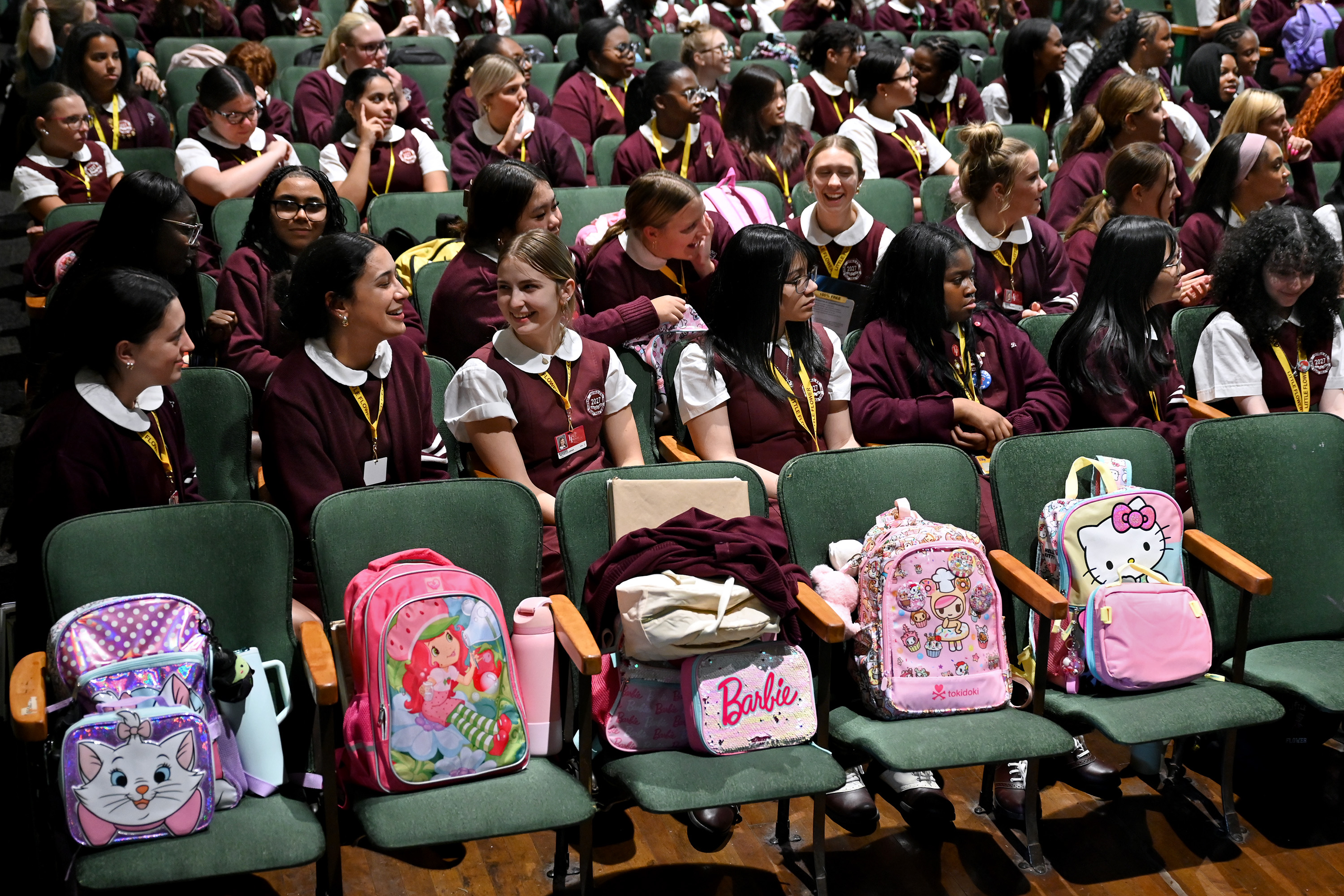
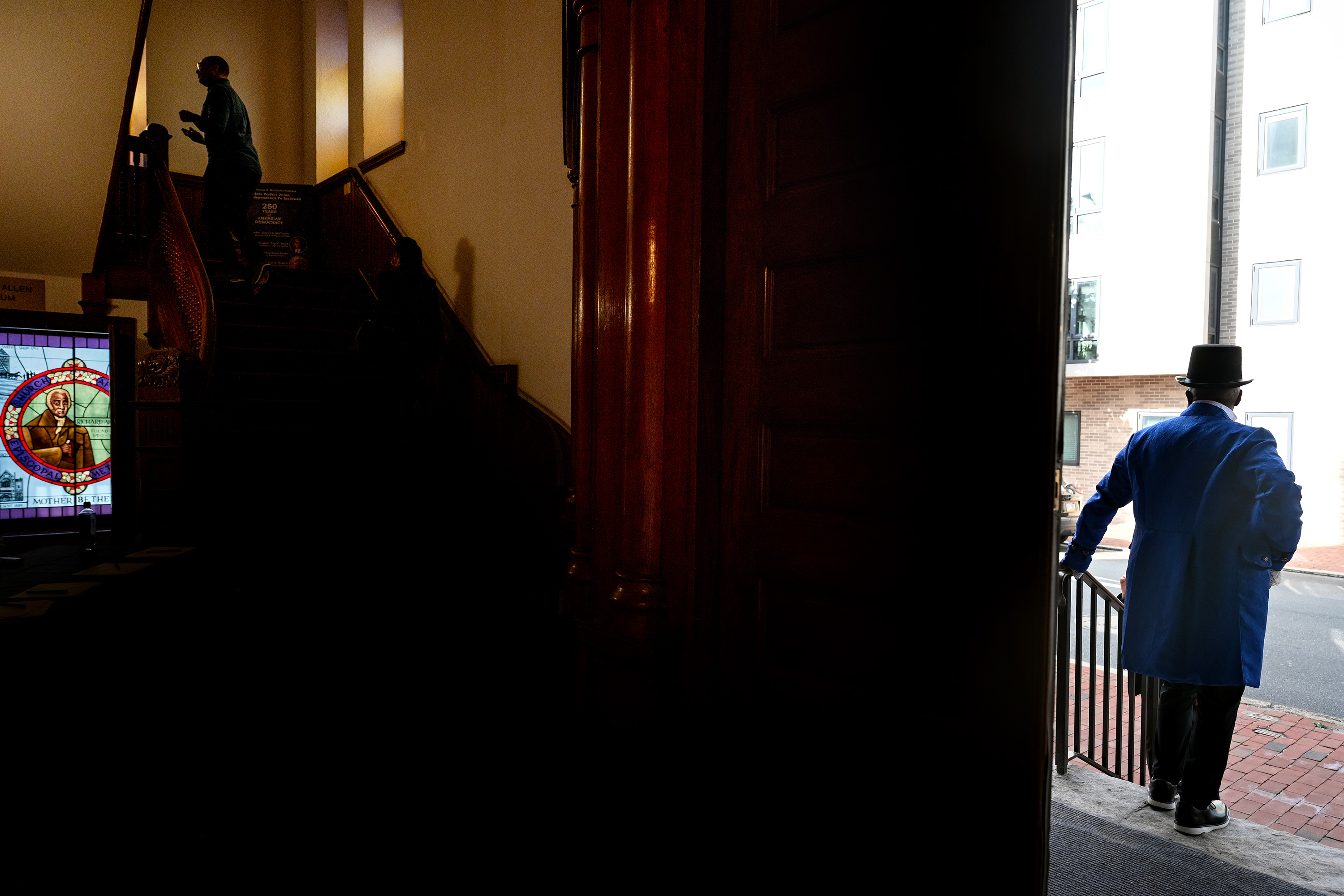
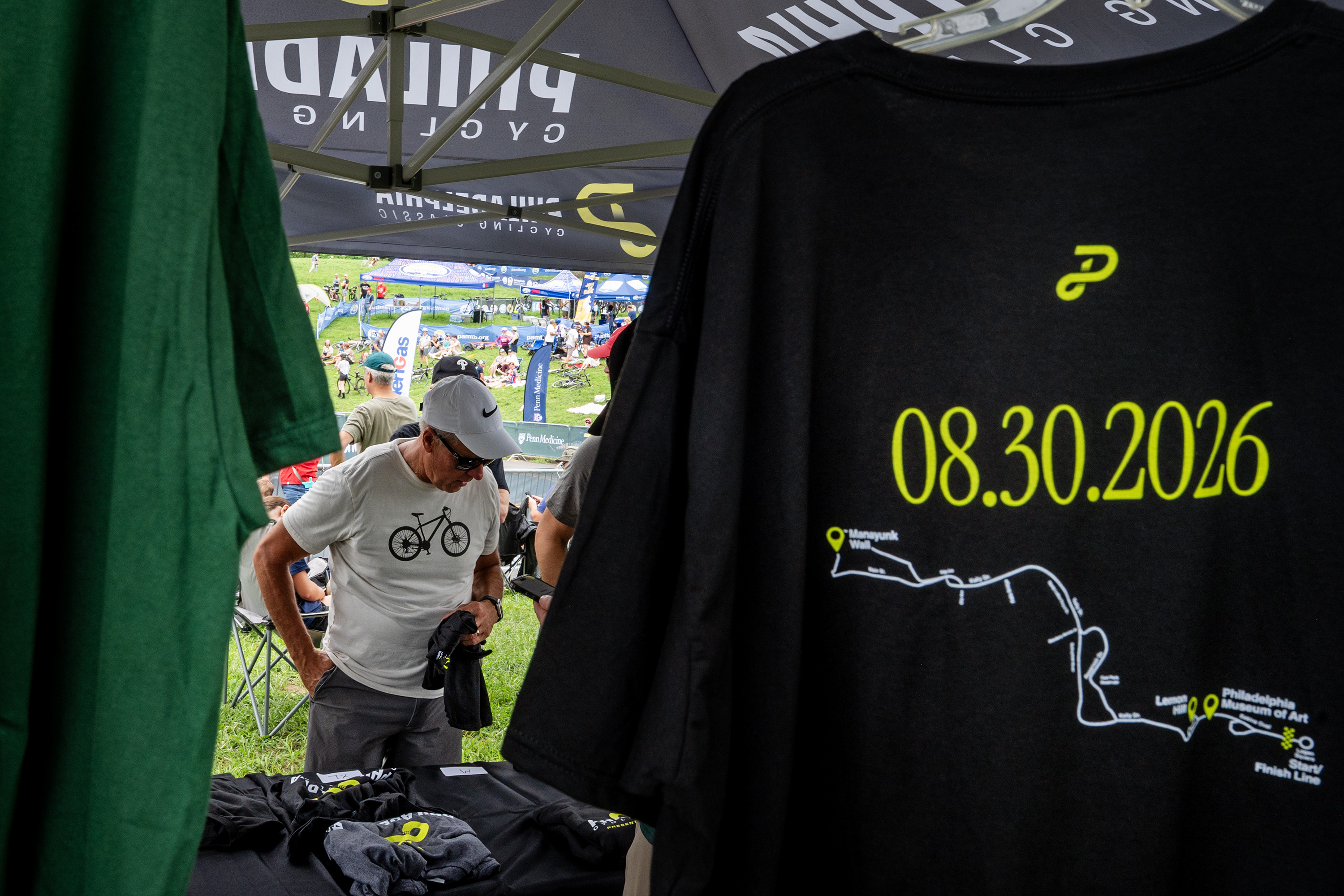
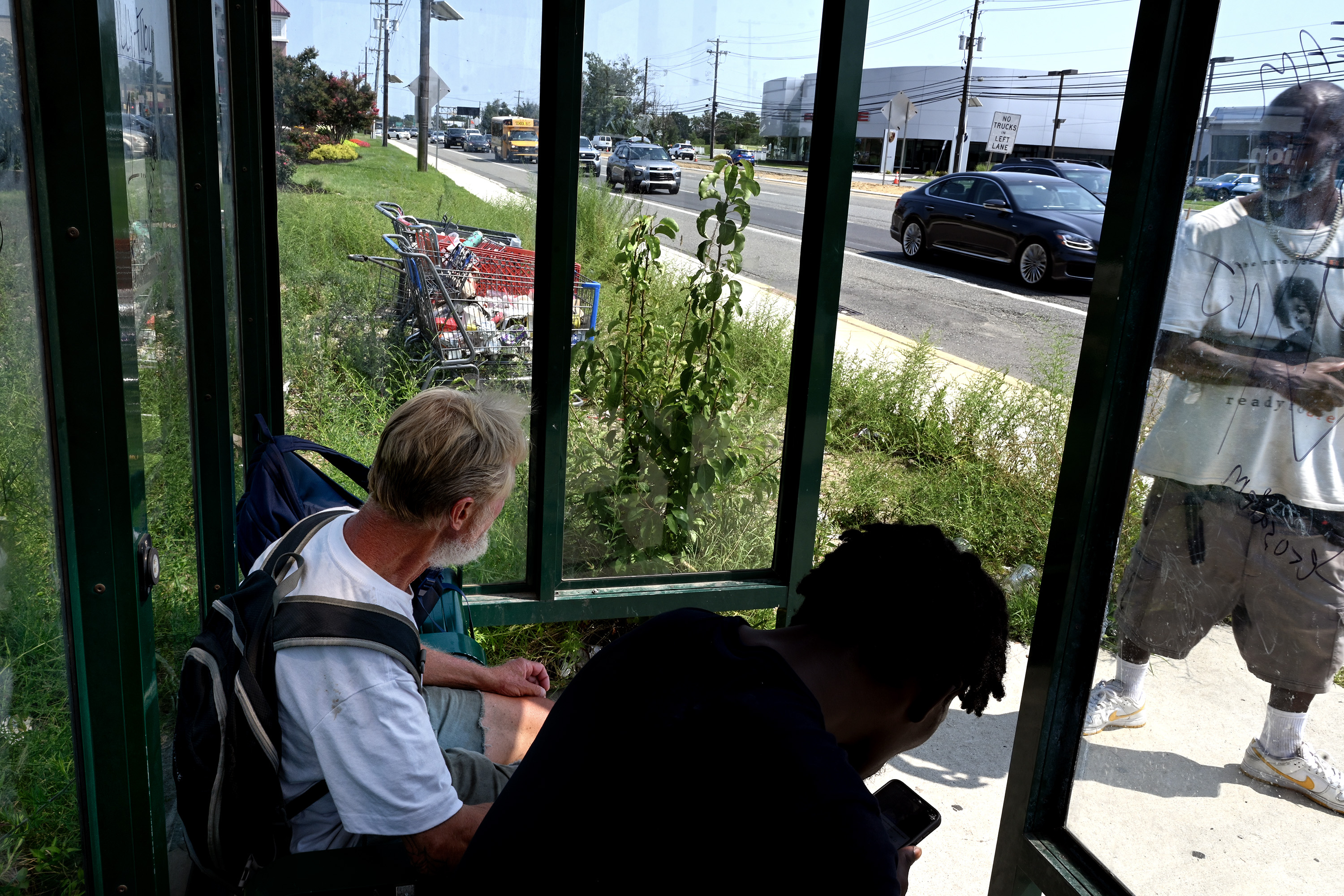
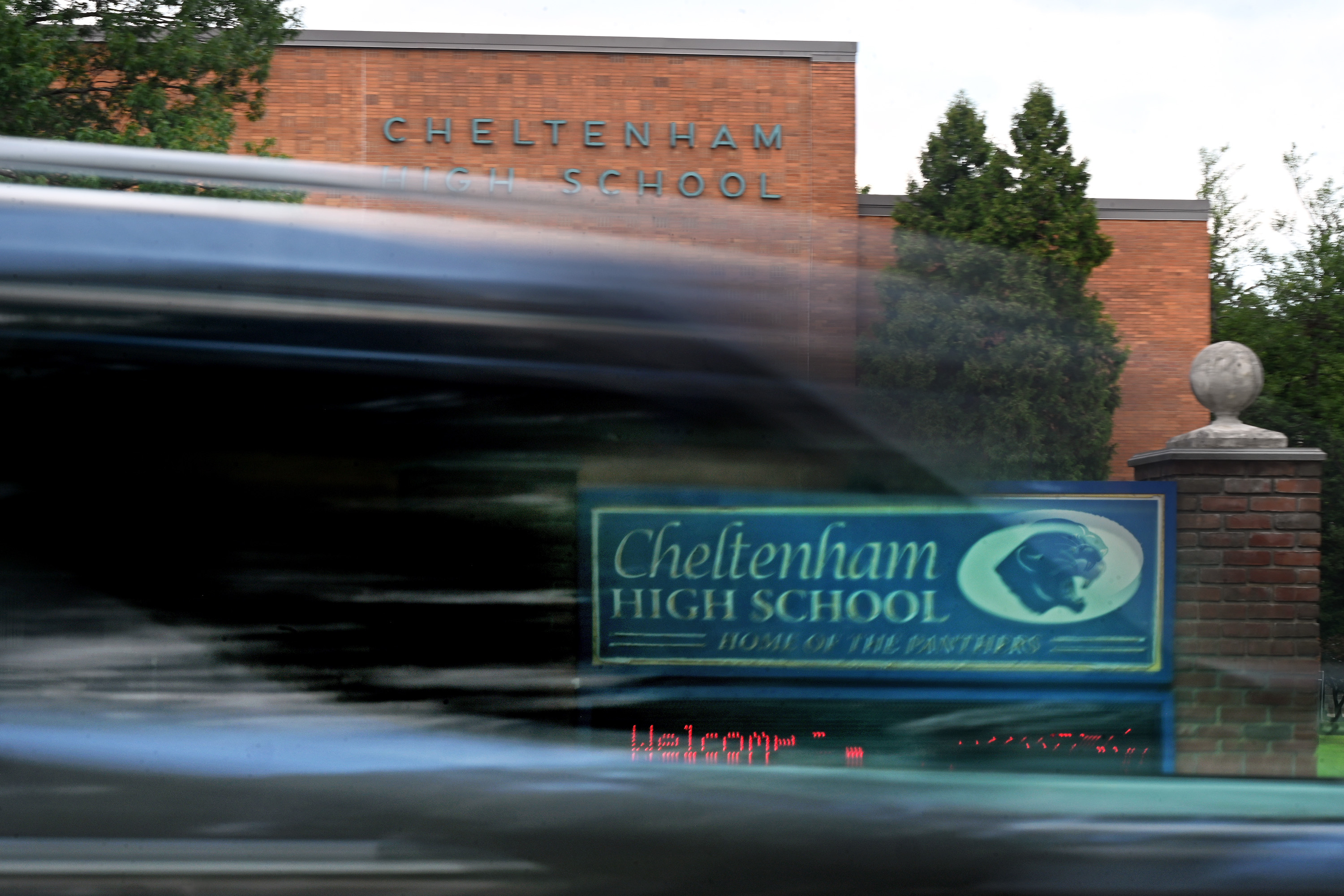
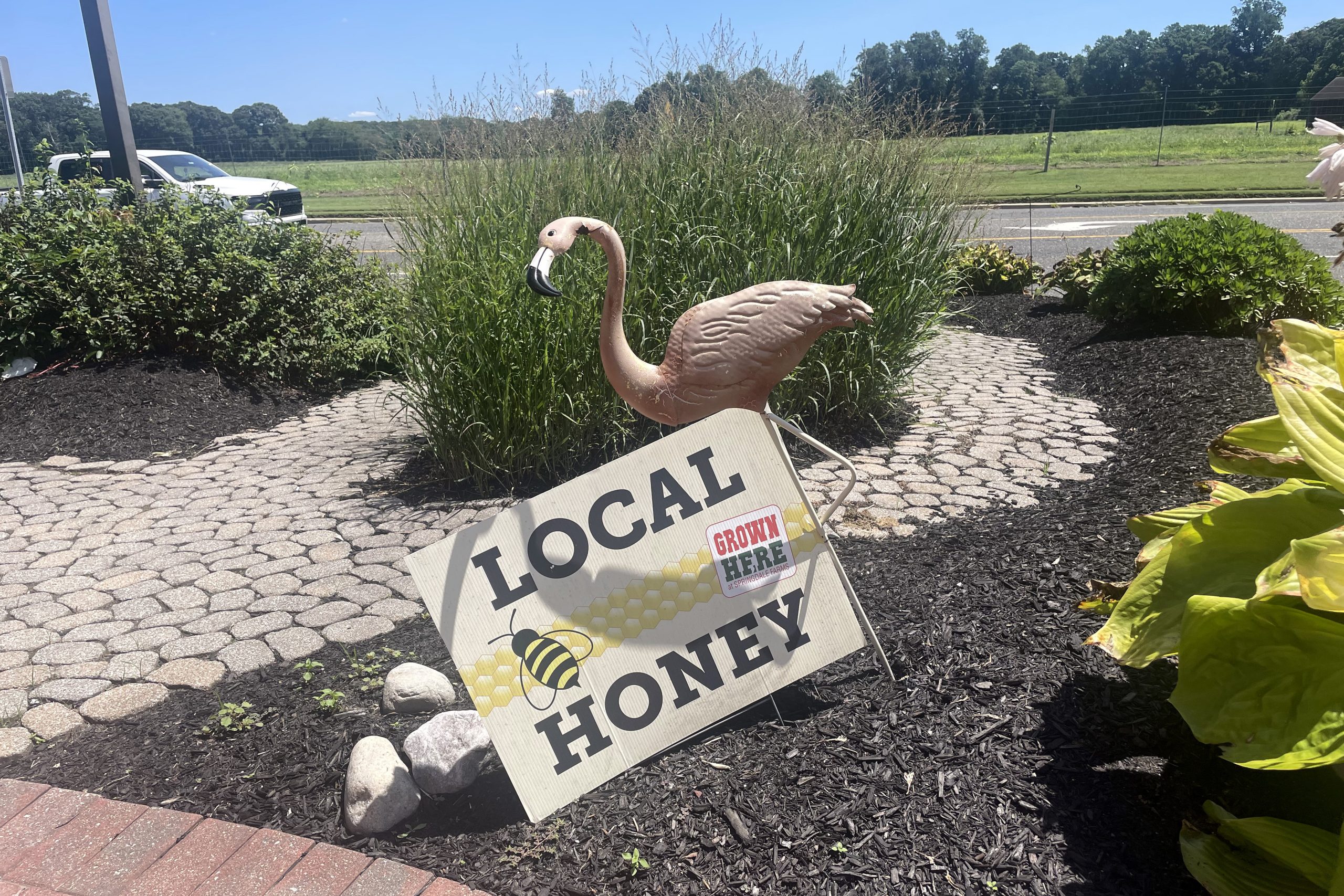
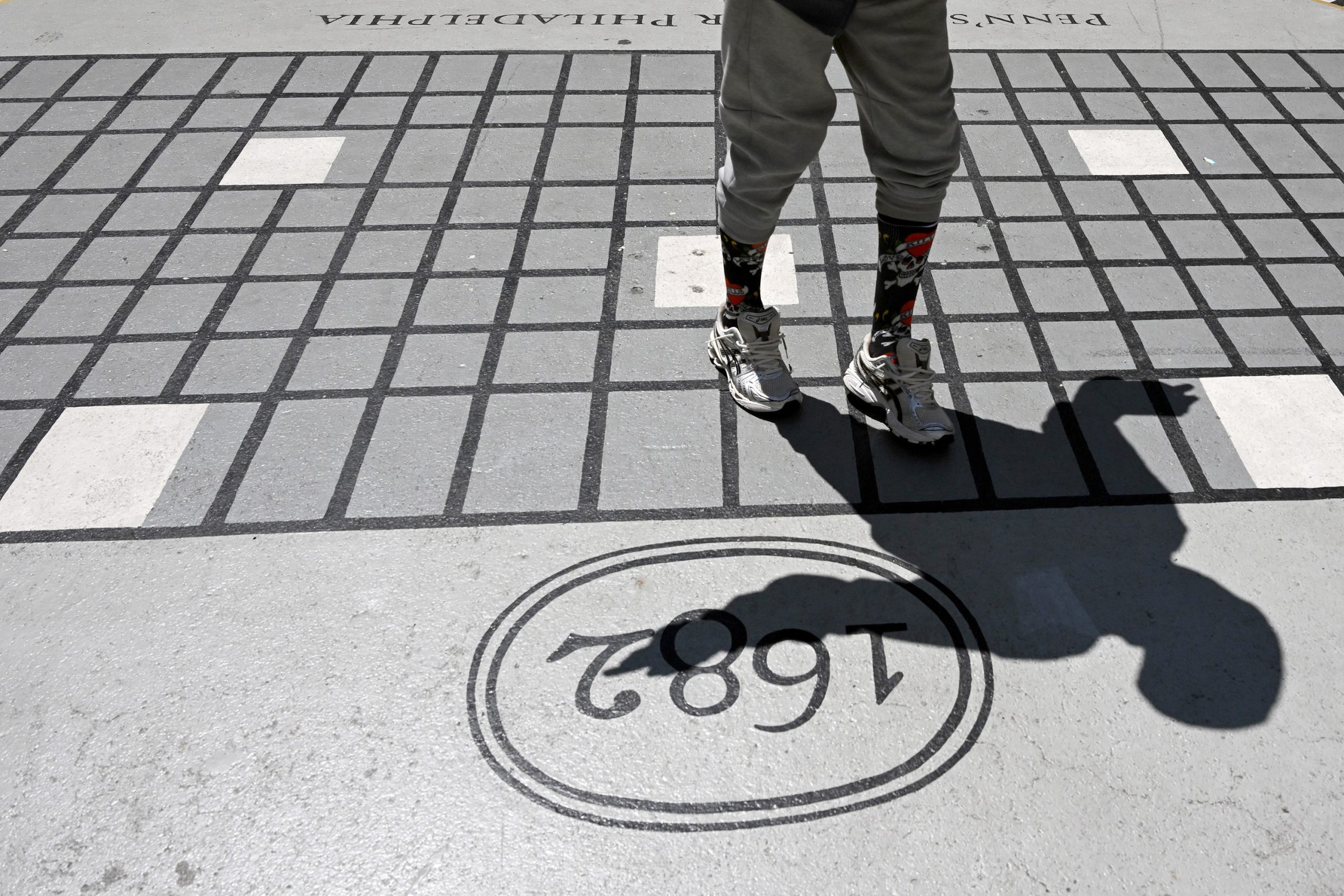
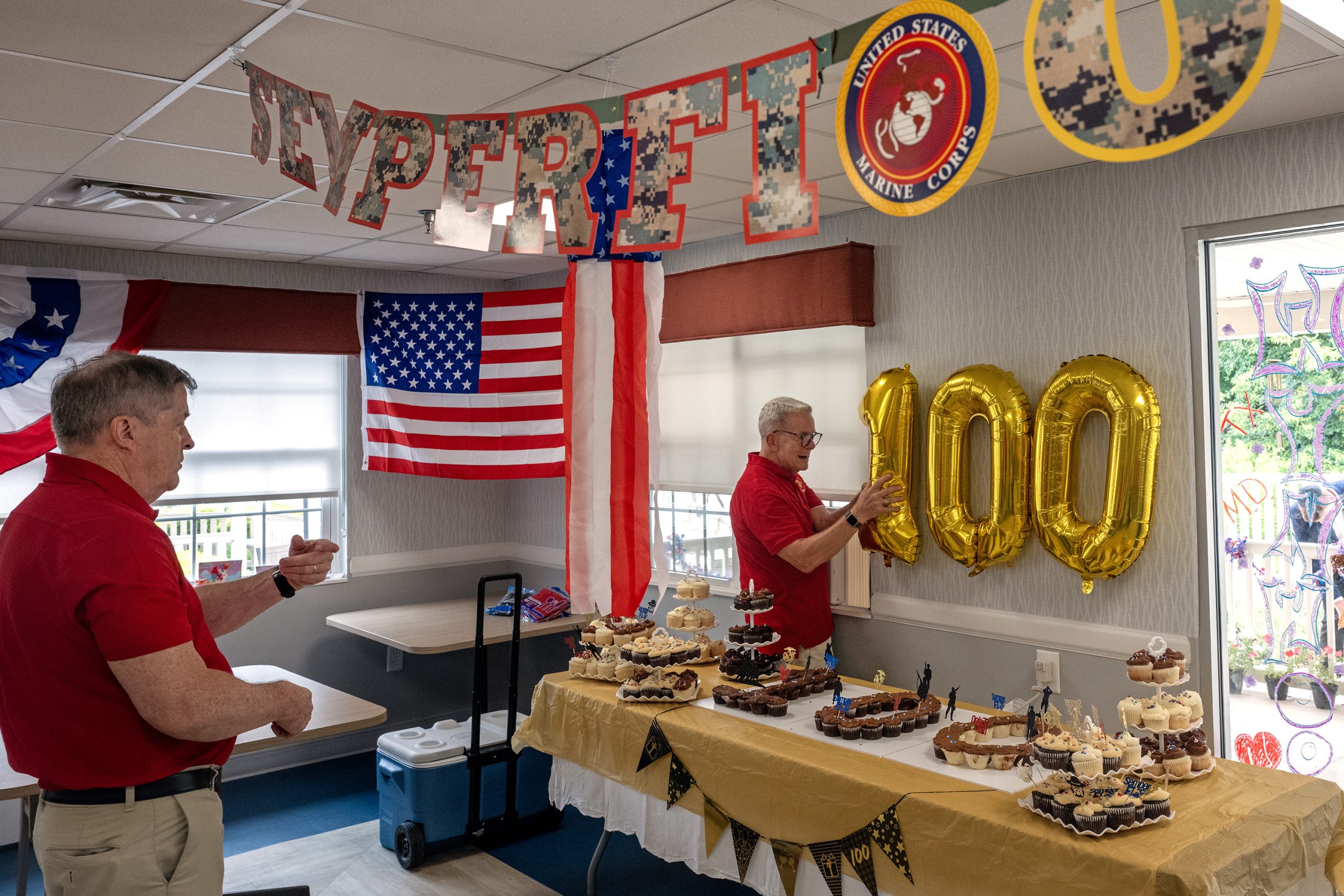
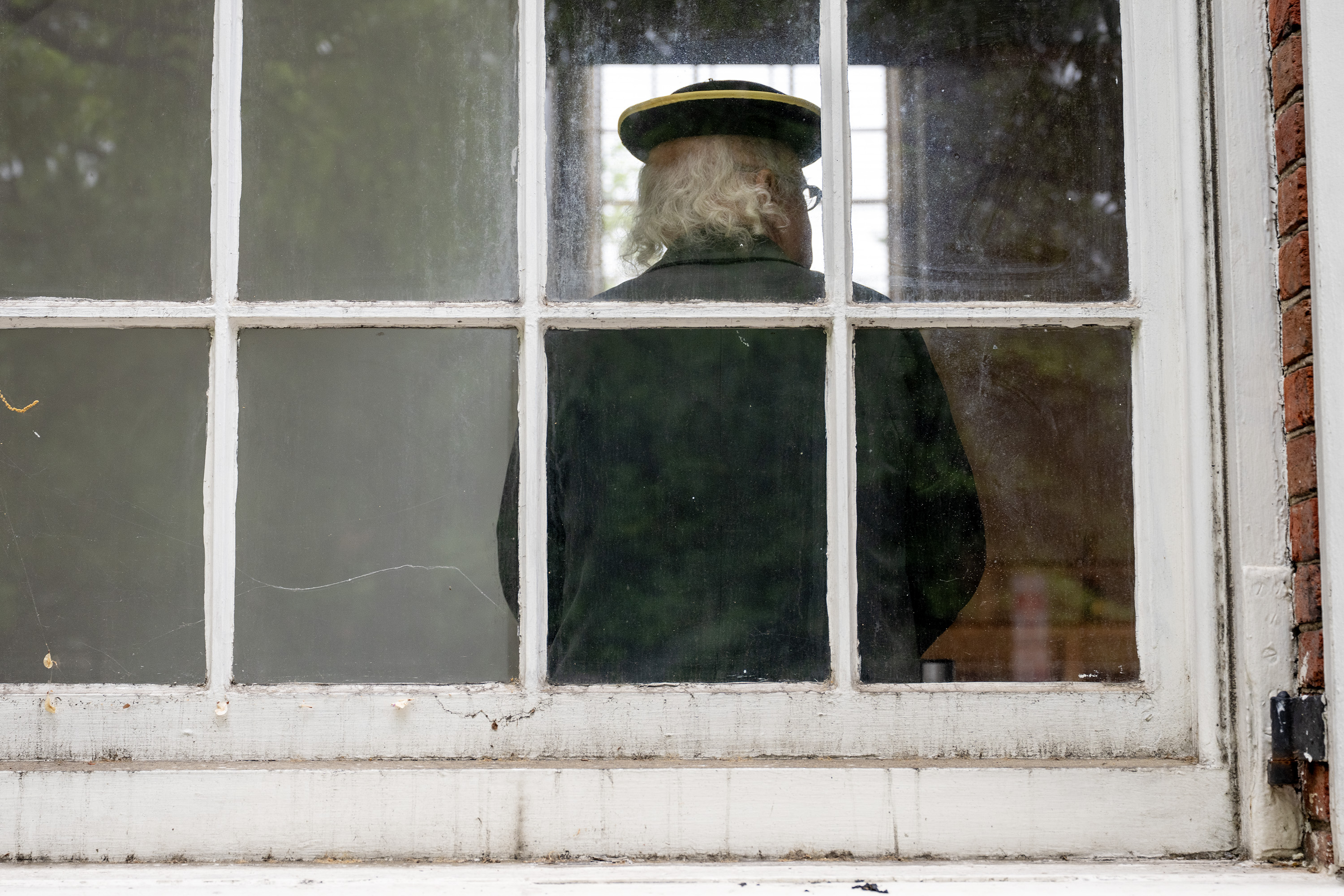
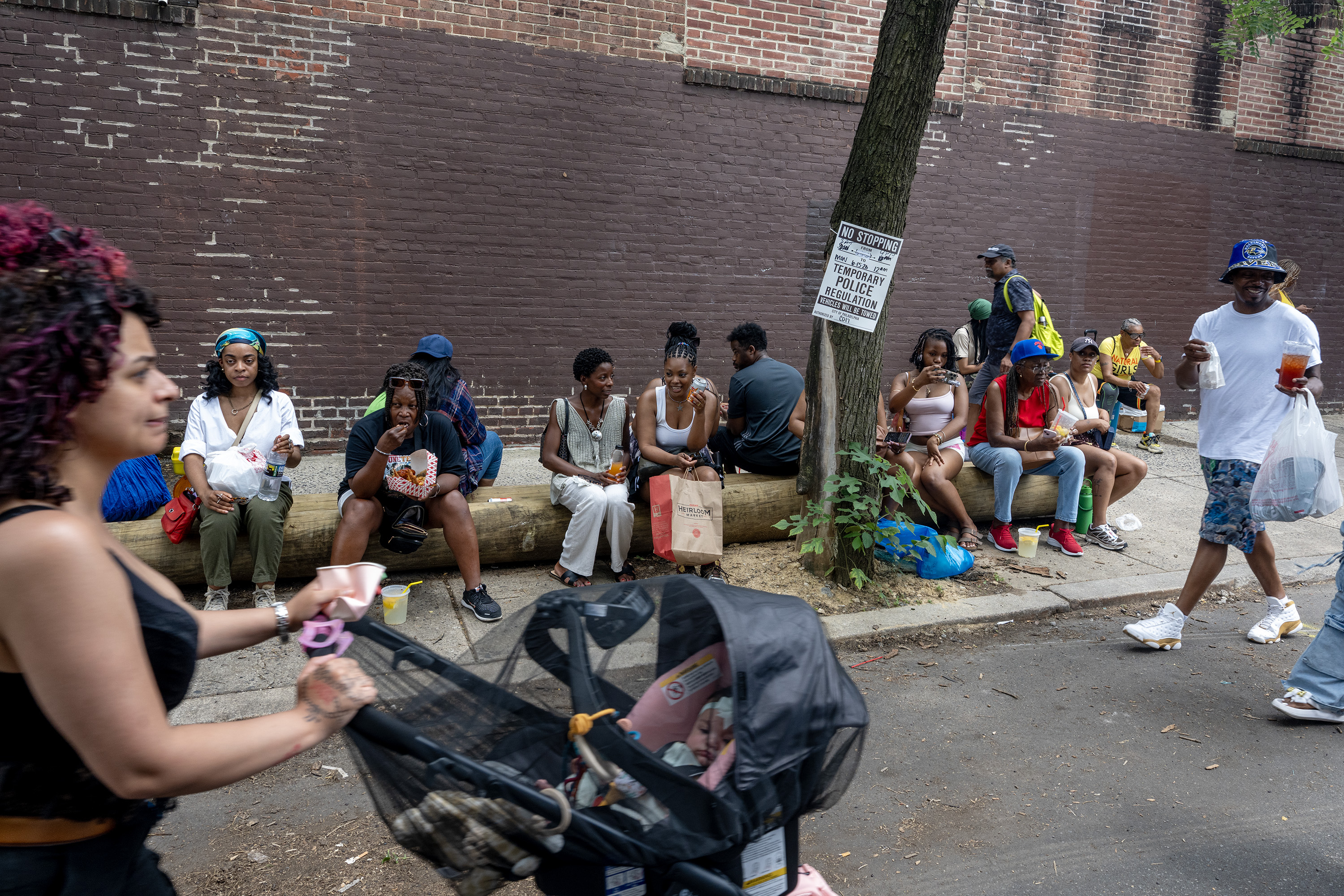
September 21, 2026: Students wait in the auditorium before the arrival of Eagles linebacker Jalyx Hunt at an assembly at Little Flower Catholic High School for Girls where he announced the establishment of three scholarships and an endowment to support students. Tom Gralish / Staff PhotographerSeptember 14, 2026: Chris Lewis (right), portraying James Forten, an abolitionist, activist, and sailmaker in colonial America, greets visitors outside Mother Bethel A.M.E. Church as they arrived for an America 250 Conversation hosted by Pennsylvania House Speaker Joanna McClinton on Sept. 10. The stainedglass window at left depicts Richard Allen, founder and first bishop of the African Methodist Episcopal Church in 1816, the first independent black religious denomination in the United States. Tom Gralish / Staff PhotographerSeptember 7, 2026: Joe Ackler of Skippack shops for a race T-shirt during a lull between laps in the Philadelphia Cycling Classic on Aug. 30. He is wearing a shirt he bought in 2003 when he attended the Tour de France. Tom Gralish / Staff PhotographerAugust 31, 2026: Robin P. Cooper (upper right) watches as Superintendent Tony B. Watlington Sr. (far left) gathers school and city officials for a group photo outside the district bus, stopped at McClure Elementary on the first day of school in Philadelphia. The bus was on its annual back-to-school celebration visit to schools throughout Philadelphia. Cooper later left the bus to join in the photo. Tom Gralish / Staff PhotographerAugust 24, 2026: Pencils were sharpened in the first-grade classroom of teacher Lauren Cucinotta at Fanny Jackson Coppin Elementary as she prepared for the start of the new school year for the Philadelphia School District on Monday.Tom Gralish / Staff PhotographerAugust 17, 2026: Wayne Peters (left) and Bobby White (right) wait for the #406 bus to Camden, on Rt. 70 in Cherry Hill, near the entrance to stores at the Garden State Pavilion shopping center and NJ Transit’s Cherry Hill station. Peters says it “Gotta be the worst bus stop in the state,” with White adding, “You’d think something in Cherry Hill would be better. How hard would it be to put a trash can here?” Before their bus arrives, Peters, trying to be positive about the shelter, reminds him “They fixed a broken window once.”Tom Gralish / Staff PhotographerAugust 10, 2026: Cheltenham High School in Wyncote, on the day the Montgomery County district attorney announced charges in connection with two assaults in the school’s football locker room. A photo of the static signs was made more visually interesting by using a slow camera shutter speed to blur the passing cars. Tom Gralish / Staff PhotographerAugust 3, 2026: Sign for locally “grown” honey outside the market at Springdale Farms, the only working farm left in Cherry Hill. Before WWII, when it was still known as Delaware Township, there were 82 farms in operation feeding South Jersey markets and supplying the massive fresh vegetable and crop demands of the Campbell’s Soup Company in Camden. Tom Gralish / Staff PhotographerJuly 27, 2026: Lyn-el “The Torch” Wright pauses on the City Hall Courtyard’s rendering of William Penn’s Philadelphia city grid plan. Penn designed the 1,200-acre “Greene Countrie Towne” between the Delaware and Schuylkill rivers with wide, crisscrossing streets to prevent the overcrowding and fires he had witnessed in London. Tom Gralish / Staff PhotographerJuly 20, 2026: Pat Dailey (left) and Ken Hopper with the Tun Legacy Foundation prepare a room at the Wynwood Rehabilitation & Healthcare Center in Cinnaminson, N.J., for a surprise 100th birthday party for WWII U.S. Marine Corps veteran Stephen Anderson. Dailey founded the nonprofit that supports veteran causes, Masonic charities, and educational scholarships. The organization is also rebuilding and reestablishing an authentic reproduction of the original Tun Tavern building in Philadelphia. The Tun, constructed in 1693, was the first documented lodge in North America and the birthplace of the U.S. Marine Corps in 1775.Tom Gralish / Staff PhotographerJuly 13, 2026: The Independence Visitor Center offers free birthday cake to the public on the Fourth of July, in the form of a massive American flag made of 5,000 cupcakes frosted red, white and blue.Tom Gralish / Staff PhotographerJuly 6, 2026: National Park Police Deputy Chief Rebekah Spedaliere shows off her own bald eagle tattoo while posing for a photo with bald eagle “Indy” and handler Amanda Sweeney with the Auburn University Raptor Center, during ceremonies over the July Fourth weekend. Indy came to Auburn, in Alabama, in 2018 after suffering a wing injury as a young bird and imprinted on humans during rehabilitation, so she couldn’t be released back into the wild. Now, she serves as an ambassador bird, teaching people about raptors, conservation, and the ecosystems that sustain them. Not her first rodeo in Philly, she made her first appearance at the Linc for an Eagles’ game in 2023. Tom Gralish / Staff PhotographerJune 29, 2026: Shecky Perlman as Ben Franklin is inside the Free Quaker Meeting House on Independence Mall as he and other historical reenactors receive their diplomas after weeks of intensive, immersive training for the 21st season of Historic Philadelphia’s Once Upon a Nation program — where costumed actors perform first-person interpretations of real 18th-century Philadelphians in the Historic District and at Valley Forge National Historical Park.Tom Gralish / Staff PhotographerJune 22, 2026: A downed utility pole serves as a quiet place to eat, away from the crowd at the Odunde Festival, billed as the largest African street market in North America.” Tom Gralish / Staff PhotographerJune 15, 2026: Bob Myers, president of Harris Blitzer Sports & Entertainment, owner/operator of the 76ers and the NHL’s New Jersey Devils, as well as a future Philadelphia WNBA team, talks to reporters after Mike Gansey made his first appearance as Sixers president of basketball operations at the Penn Medicine Philadelphia 76ers Training Complex in Camden. Tom Gralish / Staff Photographer
Wonderland Pier closed almost two years ago. Now, Ocean City has declared part of the former amusement pier unsafe after a wall beneath the decking began caving in. Developer Eustace Mita says the iconic Ferris wheel — which his original hotel proposal called for preserving — is in such bad shape that it will have to be “literally torched” and cut into pieces to come down.
Oof.
For generations of families, that Ferris wheel was part of the Ocean City skyline. You could see it from the beach, the boardwalk, blocks away. Even after Wonderland closed, it was still there.
There’s plenty of debate over what happens to this property next, including Mita’s proposed hotel. But whatever eventually replaces Wonderland, this part is just sad.
A bad-luck sports September: F
Did the Phillies, Eagles, and Flyers collectively break a mirror? Walk under a ladder? Open an umbrella indoors?
First, Phillies All-Star starter Jesús Luzardo landed on the injured list with a sore shoulder, just as the postseason approached. Then the Eagles lost three-time Pro Bowl guard Landon Dickerson to injured reserve with a bone bruise in his already twice-repaired right knee. And Tuesday, Flyers MVP Dan Vladař left a preseason game injured after a collision.
The Phillies were counting on Luzardo as a major part of an October rotation. The Eagles already look like they desperately miss Dickerson in the run game. And Vladař was the heart of the Flyers team that finally made hockey fun around here again last season.
Bad luck comes in threes, right? Well, apparently not.
So much for completing our allotment of sports misery.
Whatever dark cloud is following Philadelphia sports around, please find another city. Four is plenty. We’ve officially met our injury quota for the month.
Fall understood the assignment: A+
Finally, fall in Philly actually feels like fall. The autumnal equinox arrived Tuesday, and somehow the weather timed it perfectly: cool mornings, highs in the 60s, and just enough color starting to show up in the trees.
This is the good stuff. Open windows, sweatshirts, and walks that don’t end in sweating. It’s the beginning of leaves changing along Kelly Drive and the few glorious weeks when sitting outside is actually pleasant.
Of course, Philly weather couldn’t just let us enjoy this. A powerful early-season nor’easter is expected to bring heavy rain and winds that could gust to 45 mph in the city this weekend, with even worse conditions and significant flooding possible at the Shore.
Fall arrived right on time. Apparently, it also brought weather.
The agency unveiled an ambitious 10-year vision this week that includes new trolleys, new El cars, more accessible stations, and a pretty wild idea for Regional Rail: trains every 15 minutes or better on several lines. SEPTA says the change would essentially give the region another 75 miles of subway-level frequent rail service.
And people are riding again. SEPTA says it’s now carrying more than 800,000 daily riders, after reporting a summer spike tied in part to Philly’s huge slate of events.
There is, naturally, a very SEPTA-sized catch: Someone has to pay for all of this. The agency still faces a $192 million operating deficit next fiscal year, and much of this vision depends on additional funding.
But after years of “save SEPTA,” it’s nice to spend a week imagining a SEPTA that gets better instead of merely surviving. Regional Rail that comes every 15 minutes? Keep talking.
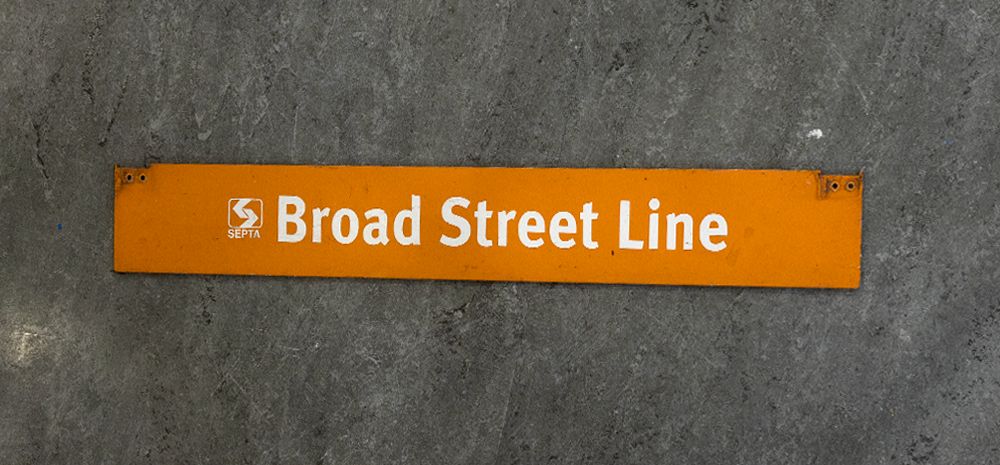
Broad Street Line signs, like the one pictured above, quickly sold out in SEPTA’s RETROmania sale.Courtesy of SEPTA
$350 for an old SEPTA sign?: B
Speaking of SEPTA, it may have accidentally discovered its next funding source.
Philadelphians have spent years complaining about SEPTA. Turns out, we like to own pieces of it.
SEPTA dug through its vault and put old transit signs, maps, and TransPass sheets up for sale this month, and people went nuts. More than 100 decommissioned signs sold, some for $350 apiece, and the old Broad Street Line signs were among the first to go. (Duh.)
The sale came about because riders kept asking what SEPTA was doing with the old signs as it switched the Broad Street Line to the “B” — a name change many Philadelphians are still politely declining to participate in.
And apparently nothing says the Broad Street Line will always be the Broad Street Line quite like paying $350 to hang the evidence in your basement.
Lynnewood Hall is getting a second chance under new ownership.Monica Herndon
Lynnewood Hall opens its doors: A
For 84 years, one of the most spectacular buildings in the Philadelphia region has been sitting in Elkins Park with its doors closed to the public, but not anymore.
Lynnewood Hall, the 100,000-square-foot Gilded Age mansion built for industrialist Peter A.B. Widener, is now open to the public for the first time since 1942. And naturally, a house this over-the-top is reopening (through Oct. 4) with thousands of flowers and a show inspired by HBO’s The Gilded Age.
But the really exciting part is what happens after the flowers leave.
The mansion sat abandoned for decades before the Lynnewood Hall Preservation Foundation bought it for $9.5 million in 2023 and began the enormous job of bringing it back to life. Now, the group is planning more public programming for 2027.
There are plenty of old buildings around Philly that people wish somebody had saved before it was too late, so it’s pretty nice to watch one actually get a second chance.
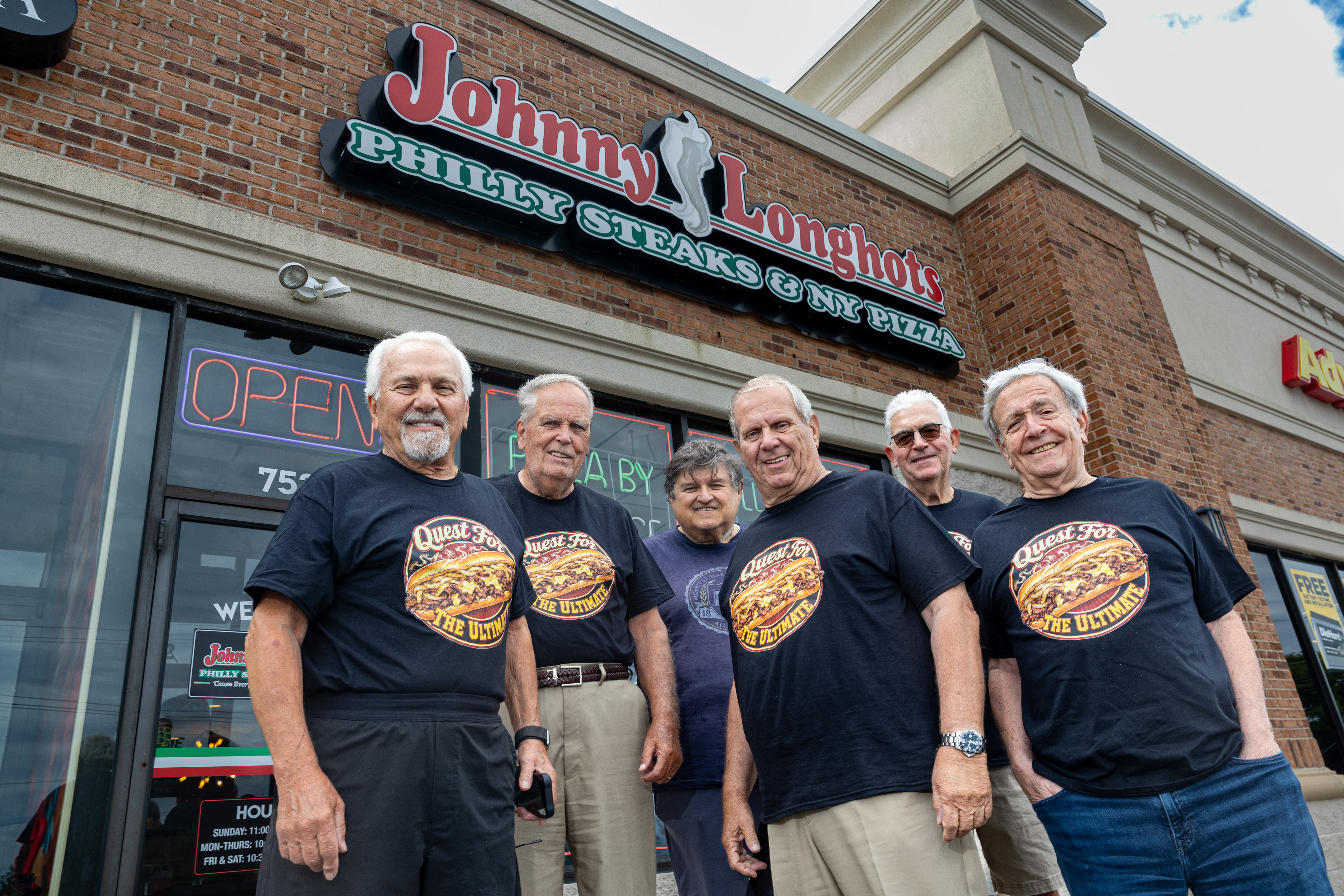
At Marlton’s Johnny Longhots on Sept. 18, 2026, are (from left): Ralph DiSibio, 85, Bob McDermott, 83, Gary Mazzucco, 78, Paul Ferretti, 79, John DeSilvio, 74, and Mike Mouber, 79.Aidan T. Gallo / Staff Photographer
Retirement, but make it cheesesteaks: A+
Six friends from a 55+ community in Moorestown have embarked on a mission to find the best cheesesteak in South Jersey, trying a new spot every month and debating the important things: bread firmness, hot peppers, meat-to-money ratio and whether Cooper Sharp was actually the right call.
There’s a spreadsheet, but no real scoring system. They mostly decide whether a sandwich is “good” or not while talking about sports, movies, and whatever else comes up.
So far, Chick’s Deli is winning. Donkey’s lost points for the kaiser roll. And they refuse to cross the bridge because there are too many cheesesteaks in Philly and, as they put it, they’re not sure they have enough time to eat them all.
Forget pickleball, these guys have retirement figured out.
A 34-year-old Philadelphia man was arrested and charged with ethnic intimidation after he allegedly trespassed at a synagogue with a preschool, tried to open doors, and made antisemitic statements, authorities said Friday.
Angel Viera was taken into custody and also charged with defiant trespass and disorderly conduct, court records show. His bail was set Friday at $25,000 unsecured.
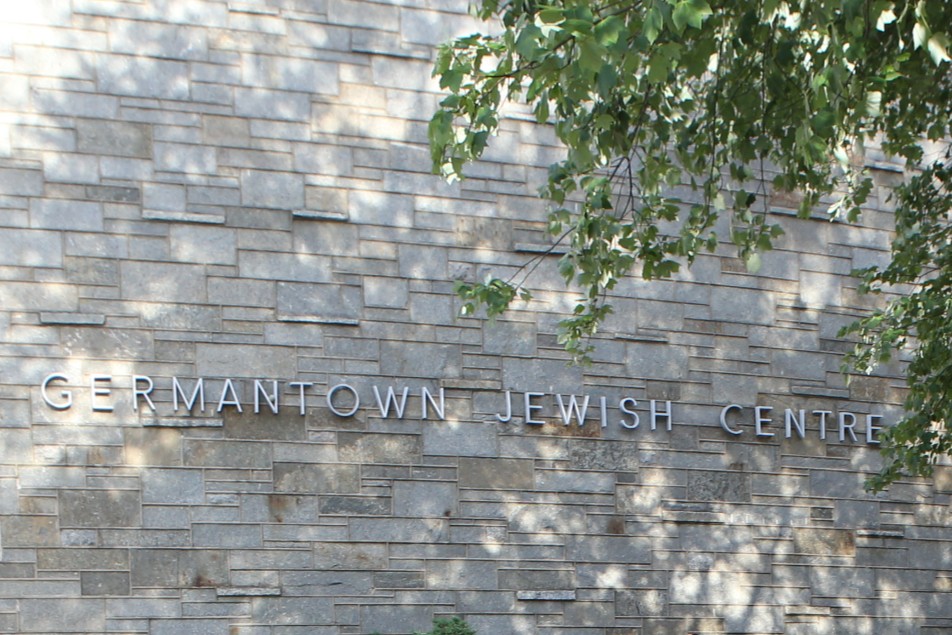
Police said that around 10 a.m. Thursday, officers responded to the Germantown Jewish Centre in West Mount Airy for a report of a disturbance involving an unidentified man who was refusing to leave the property.
The man, later identified as Viera, “had been pulling on doors and attempting to gain entry to the school and synagogue,” a police spokesperson said in an email Friday.
“Security personnel instructed the male to leave the property, but he refused. While on the property, the male made several derogatory and antisemitic statements directed toward Jewish people,” the police spokesperson said.
Viera was then arrested, police said.
Nina Peskin, executive director of the Germantown Jewish Centre, said in a phone interview that a security guard first noticed Viera allegedly standing across the street and appearing to take photos or videos with a phone of the property.
Viera then allegedly crossed the street and a lawn area to attempt to open several doors, Peskin said. The security guard, who called police, allegedly told Viera that he was on private property and that he should leave.
Viera then sat on a curb of the property’s driveway and allegedly refused to leave until after police arrived within three minutes of being called, Peskin said.
He allegedly said “F— the Jews” and questioned the security guard for working for a Jewish institution, Peskin said.
However, this time a man allegedly tried to enter the property while children were attending the synagogue’s preschool, Peskin said.
“This felt different,” Peskin said, adding that the incident has rattled “our whole community.”
Viera is represented by the Defender Association of Philadelphia. George Jackson, a spokesperson for the association, declined Friday to comment on the case.
Philadelphia police have offered to provide an increased presence at the synagogue and preschool, Peskin said.
Although no one was injured, Peskin said she fears the situation could have been much worse.
“If he had entered the building, it would have been a different story,” Peskin said.
Philly Youth Basketball, a nonprofit that hosts a range of programming within the sport and outside it from its massive Nicetown facility, is expanding its footprint.
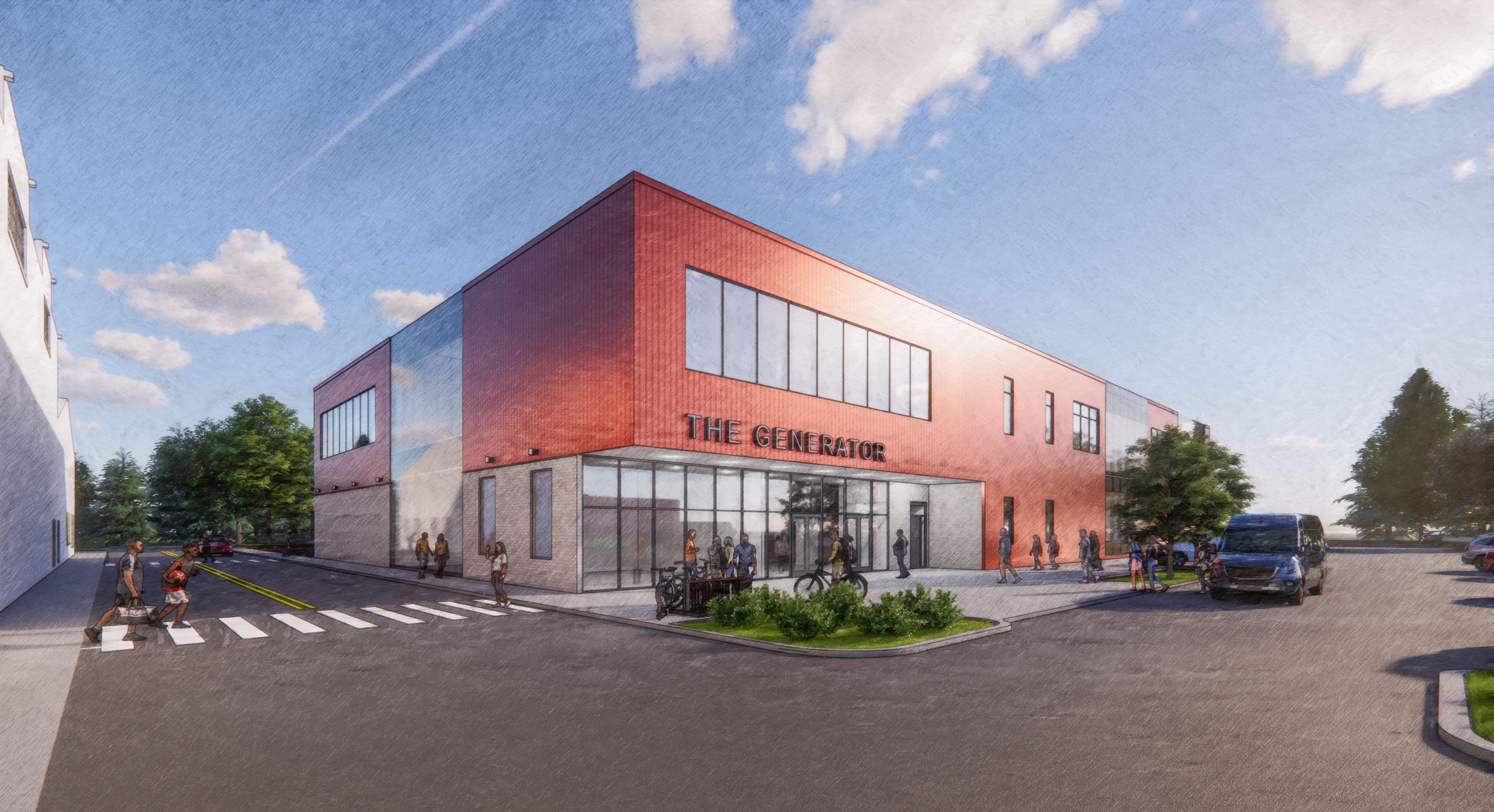
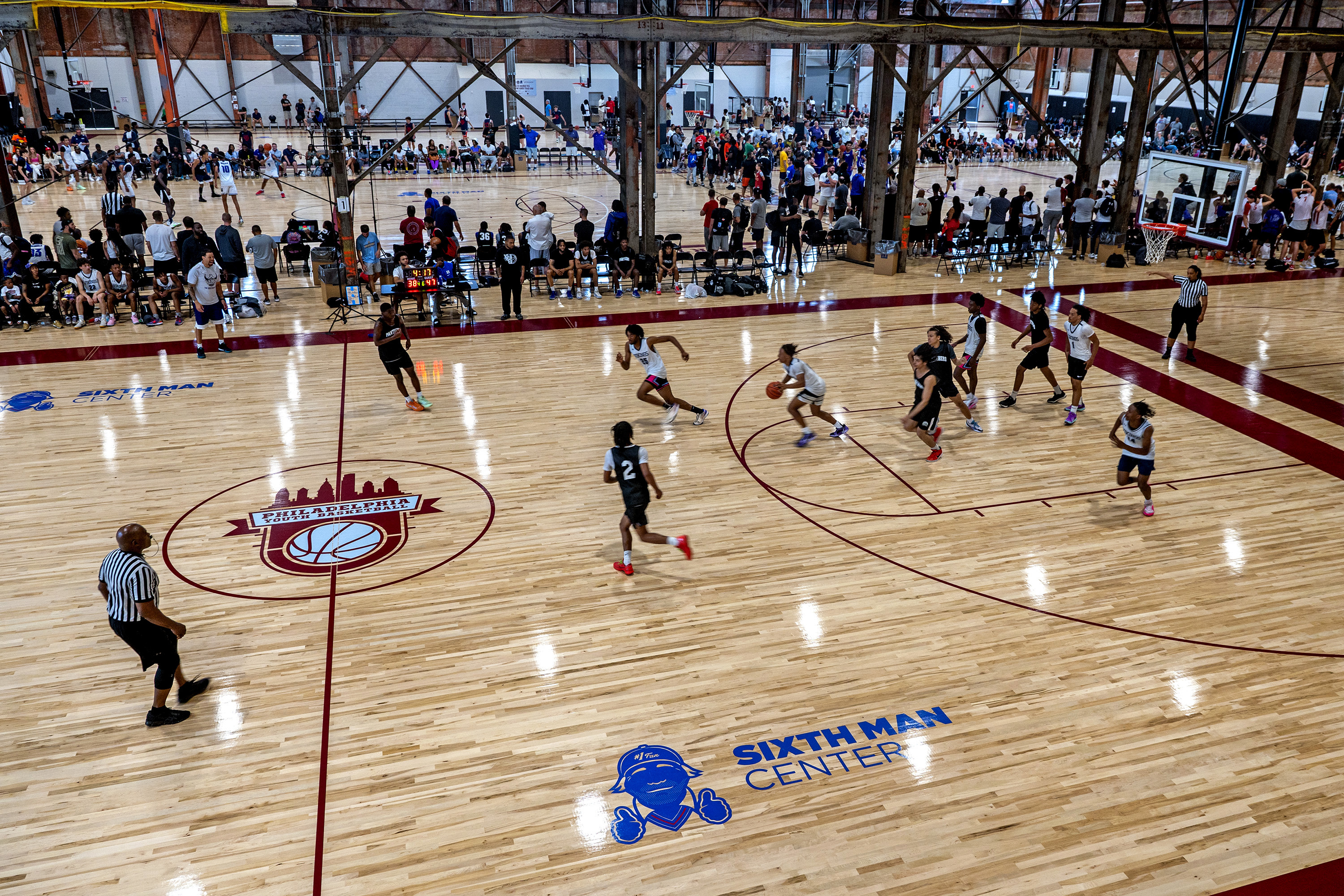
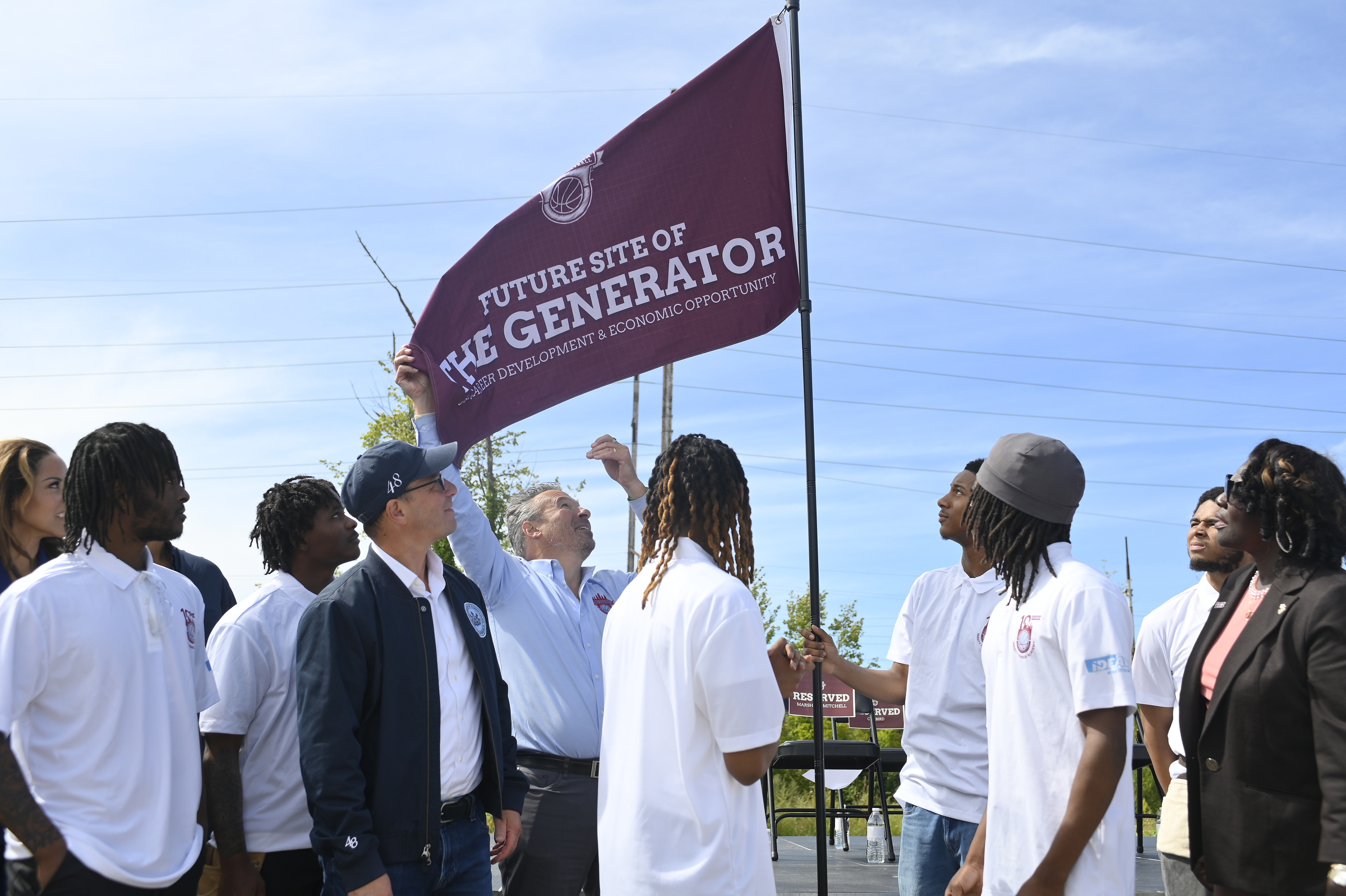
On Friday, it announced a $50 million workforce development project called the Generator. The 40,000-square-foot building will be constructed next door to Philly Youth Basketball’s home, the Alan Horwitz “Sixth Man” Center, located at 4250 Wissahickon Ave.
The Generator is designed to help adults from ages 18 to 29 build pathways to careers in skilled trades like carpentry and welding, healthcare, tech, and entrepreneurship. Its offerings will include hands-on training and certification, a small-business accelerator, and clinical health and mental health resources.
The Generator will also focus on developing its young adults’ soft skills, through services like career coaching and job placement, financial literacy education, and supplementary essentials like driver’s education and academic support. Philly Youth Basketball estimates 600 young people each year will be involved in its certificate programs.
The organization plans to break ground next fall, with an estimated opening in early 2029.
“In our city, it is entirely too hard for young adults, especially those who’ve not gone to a well-resourced K-12 schooling experience, who’ve not had a college diploma, who don’t come from an affluent, high social capital family … to build a career and to transcend one’s circumstances,” said Kenny Holdsman, president and CEO of Philly Youth Basketball.
“And we think we can do something about that on a really big scale,” he said.
A rendering created by Voith & Mactavish Architects of The Generator, Philly Youth Basketball’s planned $50 million workforce development hub, slated to open in early 2029. The Generator will help young adults build careers in the skilled trades, healthcare, tech and entrepreneurship.Voith & Mactavish Architects
Philly Youth Basketball has raised $10 million for the project so far, largely through philanthropic donations. As part of the overall funding,$1.5 million has come through the state’s Redevelopment Capital Assistance Program, including a newly announced additional $500,000 from Gov. Josh Shapiro’s administration. Other money has come from the Small Business Administration. It is unclear where the rest of the funding will come from.
“What happens here is different than what happens anywhere else. I believe this is a special place,” Shapiro said Friday at an event announcing plans for the workforce hub.
“Here in Pennsylvania, we recognize all pathways to success and opportunity, and we invest in them. Whether you go to college, you go to the military, you go to a union training hall, all of those pathways deserve our respect and all of them deserve our investment,” he said.
Mayor Cherelle L. Parker said expanding career pathways in the trades was especially valuable, given that artificial intelligence would not easily replace those jobs. She said the Generator would help young people who might otherwise face barriers to economic mobility.
“We’re teaching young people how to fish. Our city will be safer when folks are going to bed at night and waking up in the morning to do a job that will allow them to take care of their families, go on a vacation, live with a sense of dignity and pride,” she said.
Skills for life
Philly Youth Basketball has been running programs throughout the city for over a decade, but it did not have a permanent space until it opened the Sixth Man Center in 2024. The facility was designed to use basketball as a means of positively impacting Philly youth and exposing them and their families to opportunities outside the sport.
The Sixth Man Center features not just six full-size courts and basketball programs for all ages, but also a healthy foods cafe, and spaces and programs focused on education, mental health, and entrepreneurship. Holdsman said the 100,000-square-foot facility welcomes about 1,400 visitors a day, and even more when it has hosted other community events, like a recent Eid celebration that drew 8,000.
There is action on six courts during a Philly Live event on Sunday, June 30, 2024, at the Alan Horwitz “Sixth Man” Center.Tom Gralish / Staff Photographer
The Generator represents the culmination of Philly Youth Basketball’s mission to go beyond athletics. Holdsman said the nonprofit identified a need to help young people not only growing up, but after high school, too. Organizers chose to focus their work on careers in the trades, healthcare, and tech, Holdsman said, because the fieldsdemonstrated growth, reliable credentialing, trainers and educators who could be relatable to young adults (and especially young Black men), and pathways for economic mobility.
Amin Ray, 17, has embodied the organization’s “kinder to career” model. The Germantown high school senior has been involved with nearly every program Philly Youth Basketball has to offer, beginning with basketball when he was 11 and then branching out to off-court offerings.
Now, he is part of the first cohort of the organization’s Varsity Trades Academy, which will serve as an on-ramp to the Generator before it opens. Ray and the 49 other academy participants have received instruction in various trades, and he has become most fascinated with carpentry.
Gov. Josh Shapiro and Philly Youth Basketball Varsity Trades Academy students watch as Kenny Holdsman and Amin Ray hold up a flag at the future site of the Generator on Friday.Bastiaan Slabbers/ For the Inquirer
“It’s something about — after you finish a job … and you ride past, that satisfaction. You’re telling yourself, ‘Yeah, I built that,’” he said, pointing out a set of wooden benches he and the cohort built that people attending the event were sitting on.
He will finish with the academy in December, and start working in a manufacturing program in partnership with Community College of Philadelphia in February while he finishes his virtual school program. Twelve others from the academy have already been placed in jobs through the program.
“As human beings, we’re never done learning. We’re always still growing. So as much knowledge as you can possibly obtain, the more valuable you can be as a human being,” Ray said.
It isn’t a hurricane, or a storm with a name (at least not yet), but the early-season nor’easter that was brewing off the Mid-Atlantic coast Friday may end up focusing its ferocity on the Jersey Shore and pester the Philly area with one memorably miserable weekend.
With the storm’s projected path changing dramatically, forecasters warned Friday that heavy rains were possible throughout the weekend along with tropical-storm-force gusts that could go as high as 70 mph at the Shore. Flood warnings and advisories have been extended well into the weekend.
“Major” flooding was expected Saturday morning and possibly Saturday evening on the beachfronts and bay areas, with the National Weather Service warning “some locations may become isolated by the floodwaters.”
Up to 5 inches of rain are possible at the Shore, and as much as 4 inches in Philly.
Gov. Mikie Sherrill declared a state of emergency for the eight Shore counties, effective 5 p.m. Friday.
It is possible that the storm, which was centered about 200 miles east of Norfolk, Va., on Friday, may make a sharp left sometime during the weekend and cross the New Jersey coast a la Superstorm Sandy in 2012, said Bob Oravec, senior branch forecaster with the federal Weather Prediction Center. (No, this won’t be in a league with Sandy, he assured.)
With storm waves pounding the oceanfront, and the back bays congested with water, multiple rounds of at least moderate flooding were expected at the Shore, and at least minor flooding along the Delaware River in Philadelphia, where winds could gust to 45 mph.
“And the full moon doesn’t help,” said Jason Franklin, the meteorologist in charge of the National Weather Service’s Mount Holly office. The monthly astronomical tug is going to exacerbate any flooding.
The timing of the storm’s impacts
A flood warning for the Shore is in effect until 2 a.m. Sunday, and minor flooding occurred with high tides Friday morning.
Significant flooding was expected for at least three consecutive high tides, which occur at roughly 12-hour intervals, on the oceanfront and the back bay abutting Ocean City starting at 7 p.m. Friday, with the major flooding Saturday morning.
On Friday, Franklin noted that the onshore winds from the Northeast — why they call them nor’easters — had taken on a more northerly direction. That would be problematic for north-facing beaches, such as the ones in North Wildwood and the north end of Avalon.
And given that the wind and gust festival was in its third day, drainage was becoming a challenge, said Franklin, particularly for the bays.
“They’re swollen,” said Franklin.
A flood advisory was up for Philly and areas along the Delaware River for minor flooding during four straight high tides beginning 1 a.m. Saturday.
The Shore was under a wind advisory until 6 a.m. Sunday, and it was possible that gusts to 70 mph could be measured along the Jersey Coast to Long Island, said Peyton Simmers, meteorologist at AccuWeather Inc.
The advisory for Philly, also in effect to 6 a.m. Sunday, called for gusts to 45 mph.
The nor’easter was have impacts all the way to Cape Cod, but in the end the highly unusual — and very early — coastal storm could save its worst for the Jersey coast, said Oravec.
The nor’easter is early, and extraordinary
Coastal storms form along the boundaries of chilly and warm air and usually hold off until later in the fall or winter when the temperature contrasts between the cold air from the north and remnants of summer to the south ripen.
In this instance the cold air was being supplied by a powerful area of high pressure, or heavier air, over eastern Canada, whose clockwise winds from the northeast made Philly feel October-like this week.
The high’s cold winds have been interacting with the very warm waters of the Gulf Stream to generate the nor’easter and add a kick to the onshore winds, part of a cyclone’s counterclockwise circulation.
Pressure differences incite winds: A common image is that of air from a punctured tire rushing into air that is half as light.
One subplot to watch is that the nor’easter may take on tropical characteristics, drawing moisture and warmth from spending so much time over the Gulf Stream, said Simmers. That could bump up the rain amounts.
It could even become a “subtropical storm,” he said, although he wouldn’t expect the National Hurricane Center to name it. Not that the distinction would make much difference.
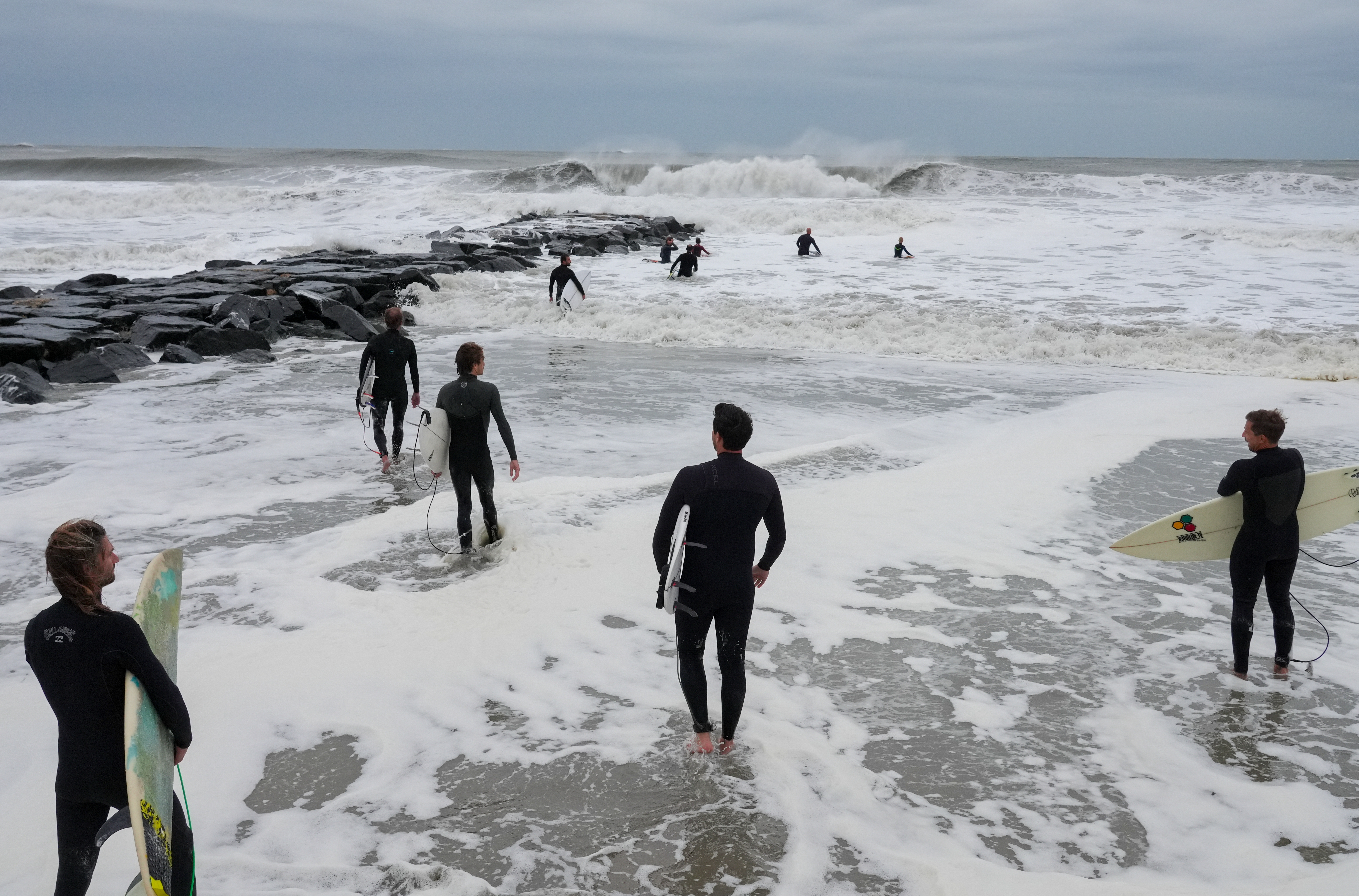
Surfers check out the nor’easter incited waves in Ocean City, where back-bay flooding could be significant. Tim Hawk / For The Inquirer
Nor’easters vs. Hurricanes
The U.S. East Coast happens to be one of the world’s favored spawning grounds for cyclones, notes John Gyakum, an atmospheric scientist at McGill University in Montreal who is an expert in coastal storms.
Unlike hurricanes, which form in the tropics, nor’easters develop in the cooler midlatitudes.
Hurricanes tend to be more destructive and have more celebrity power, but their influence is relatively small compared with nor’easters, whose circulation can cover thousands of miles. Also, nor’easter winds can persist for days, eroding beaches and causing significant property damage. Hurricanes tend to be quick hitters.
Sandy technically was a hybrid storm, losing its tropical characteristics after it made landfall in October 2012 near Atlantic City and buzz-sawed west, knocking out power to more than a million electric customers.
This nor’easter will be no Sandy, but for celebrity power, it won’t be competing with any hurricanes. Not a single one has formed this season, an unprecedented wait for a first hurricane.
No complaints have been registered among residents or property owners along the Gulf or Atlantic coasts.