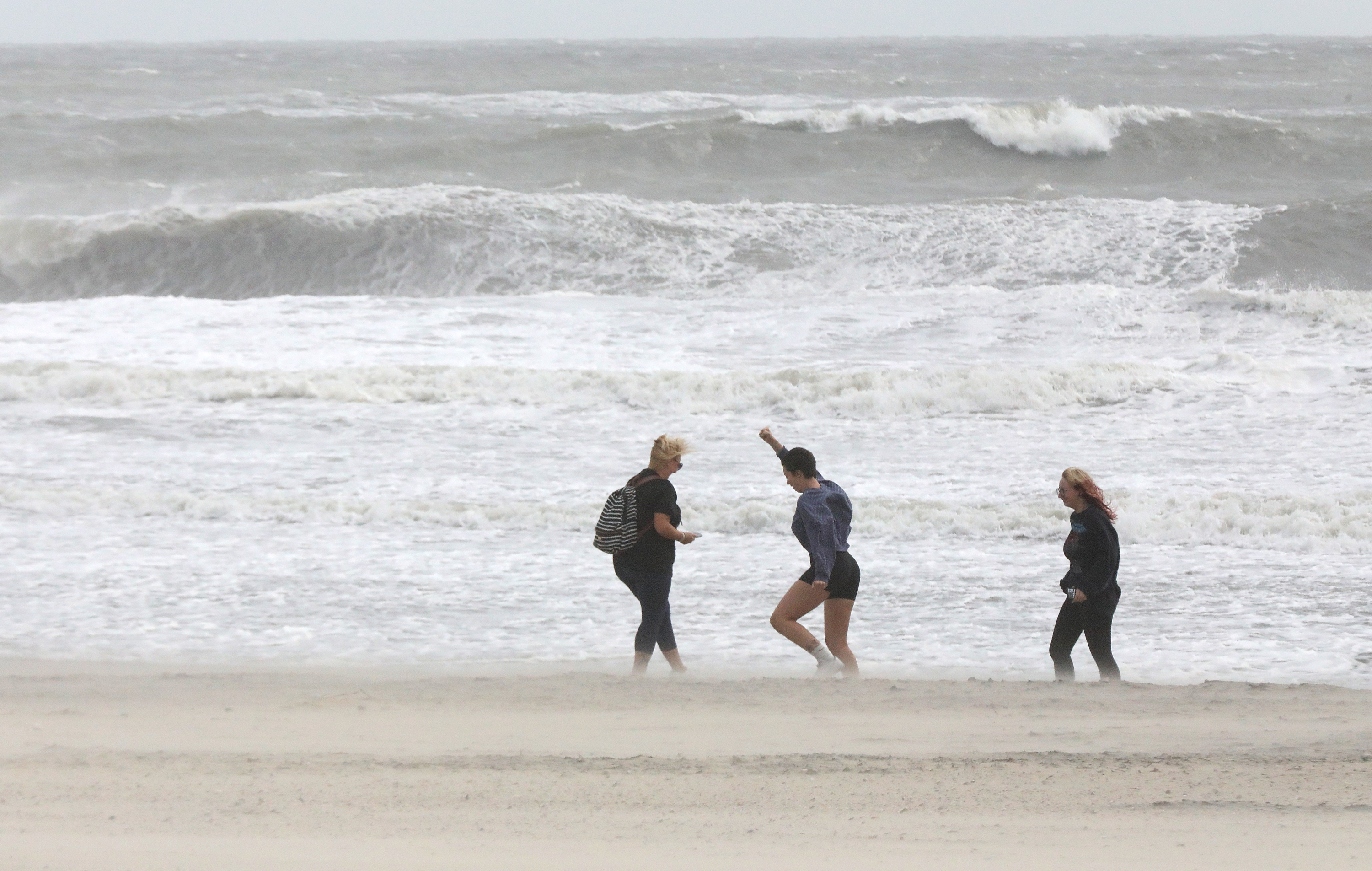
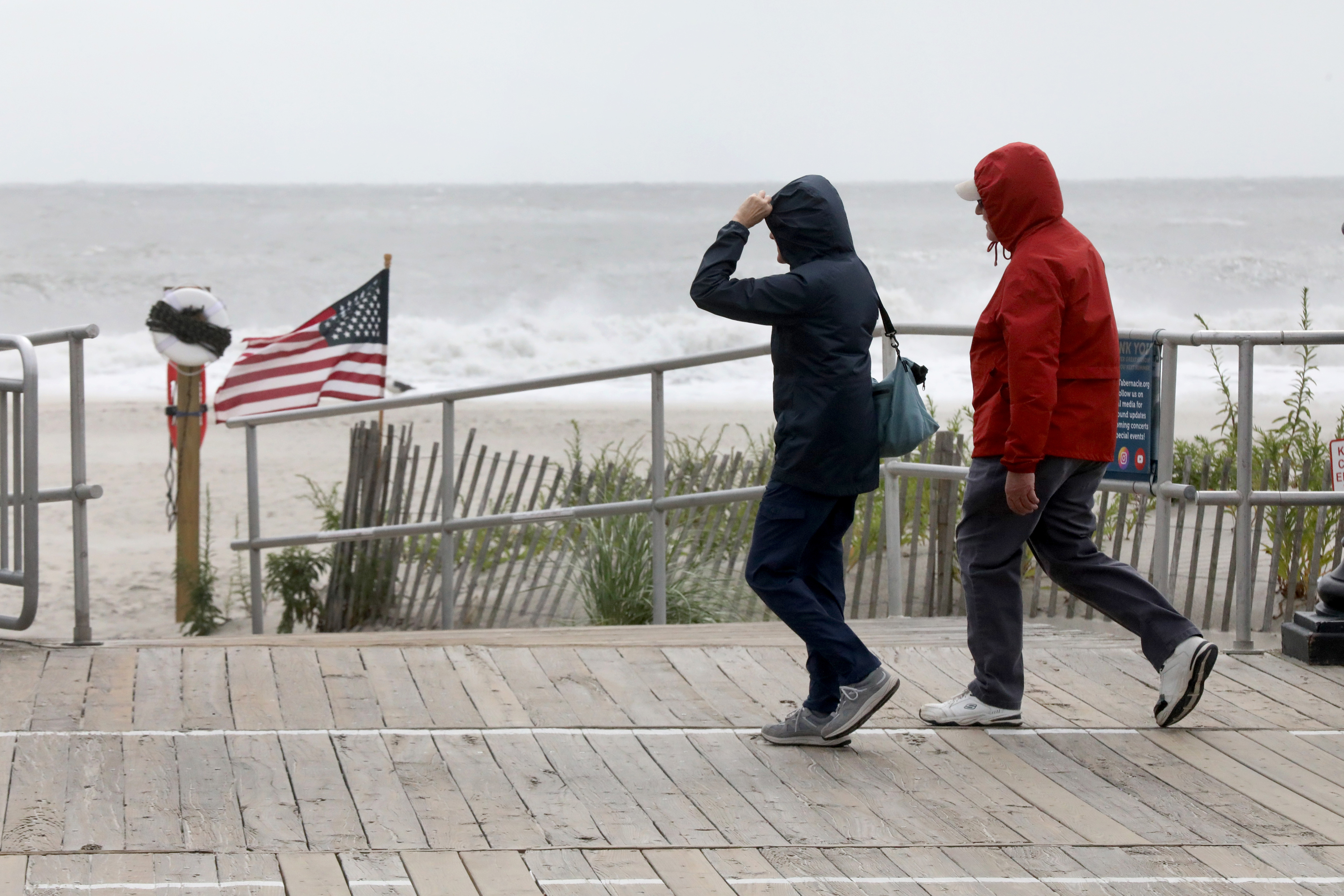
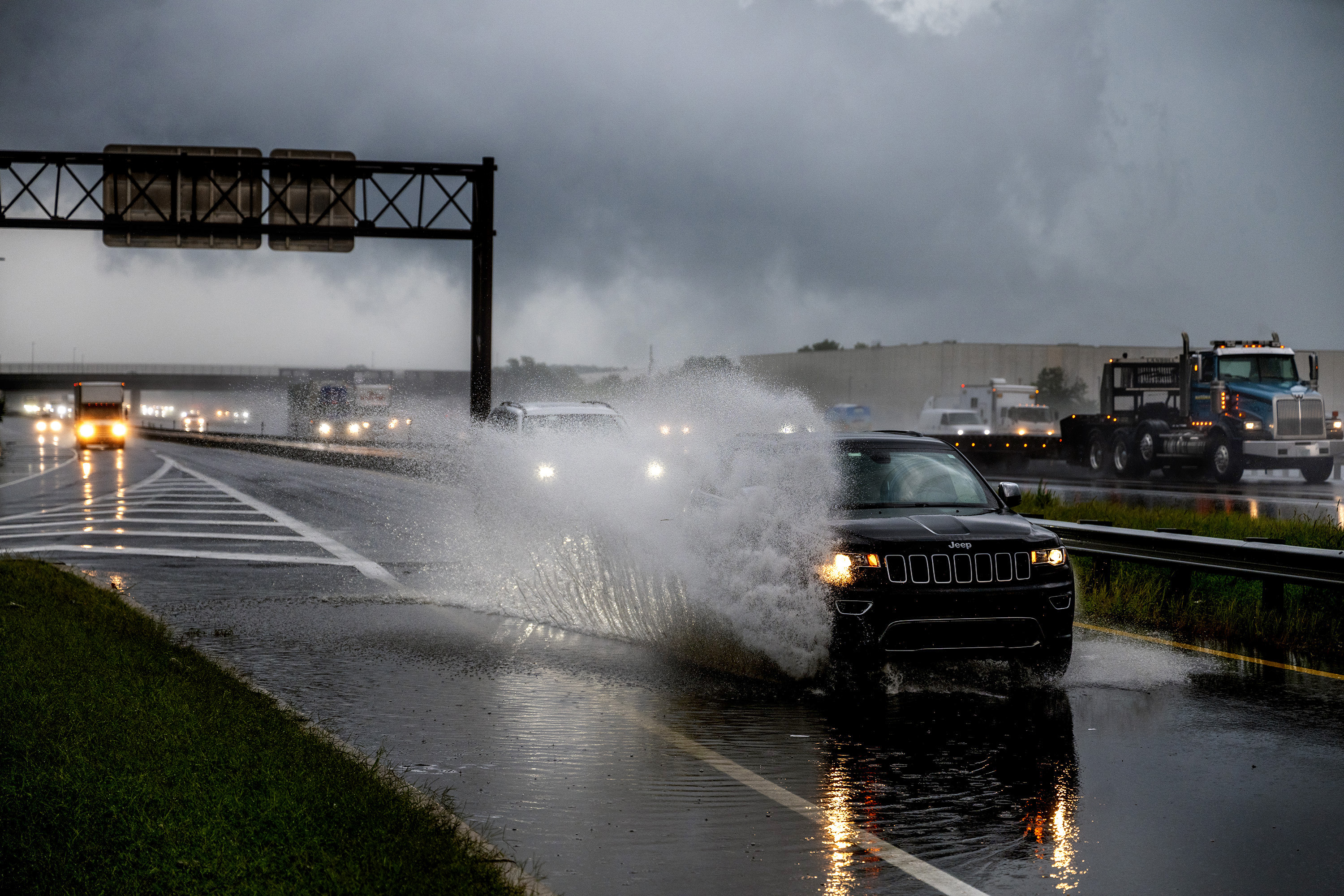
Flood warnings are up for the Jersey Shore, where winds could gust to 50 mph, and high-tide flooding is expected along the Delaware River into Saturday as that very early-season nor’easter matures off the Southeast coast.
On Thursday morning, the storm was gathering strength off the Southeast coast, as predicted, and the projected track was closer to the coast than earlier predicted.
But what’s been happening thus far at the Shore and Philly area likely has had more to do with an extraordinary system to the north that normally is associated with dry and tranquil weather, said John Gyakum, an atmospheric scientist and coastal-storm expert at McGill University in Montreal.
It is working in tandem with a burgeoning cyclone that he characterized as “unusual” for occurring so soon in autumn — actually, make that Day One.
Overall, he said, this has been a start to fall “that we haven’t experienced in quite a while.”
And while the El Niño intensifying in the equatorial Pacific likely has nothing to do with what will happen around here in the next few days, this nor’easter may foreshadow what is to come during the winter.
The National Weather Service on Wednesday was warning of potentially damaging “moderate flooding” with the “potential for widespread roadway flooding … as well as damage to vulnerable structures. Some roadways will become impassable.” In addition, winds could gust up to 45 mph at the beaches and 35 mph inland.
What’s more, the growing influence of the moon, which reaches fullness Saturday, is going to provide an astronomical tug to the tides.
The weather service also has issued an advisory for flooding along the Delaware River expected to reach moderate levels Friday and Saturday.
Officials in the beach towns were making preparations.
Ocean City was advising residents to “move vehicles to safe places,” spokesperson Doug Bergen said. And the Army Corps of Engineers moved its beach-fill equipment in Avalon and Ocean City to safe harbors.
It was a breezy day for strollers on the Ocean City Boardwalk, here near 9th Street.Vernon Ogrodnek / For The Inquirer
The expected timing of the flooding
The weather service said moderate flooding could be expected on the oceanfront with four consecutive high-tide cycles at7 p.m. Friday and 8 a.m. Saturday, with minor flooding during the other hide tides.
Moderate flooding was forecast in the back bay areas Thursday evening and again on Friday evening and Saturday morning.
At the moderate level, some roads can become “impassable,” and some houses could incur damage, the weather service said.
Along the Delaware River, minor flooding was predicted for six consecutive high tides starting at 1 p.m. Thursday.
No rain is expected until the weekend, with the amounts very much dependent on whether the storm makes a westward jog toward the coast or stays farther out to sea. As of late Wednesday, the computer models still were disputing the issue.
For now, the weather service has a chance of rain both in the immediate Philly region and at the Shore.
It is likely to stay breezy through the weekend, but the winds are forecast to take a more northerly turn, rather than howling onshore. The switch would be gentler on the beaches, which will have lost considerable sand.
The nor’easter is getting a kick from the north
Temperatures in the region Wednesday were in the mid-60s, about 10 degrees below normal and close to what they would normally be in late October.
The chilly conditions were the result of a massive area of high pressure, or heavier air, over southeastern Canada.
Winds circulate clockwise around centers of high pressure, and thus the Shore and the Philly region have been getting brisk winds from the northeast.
The high is also supplying the cool air that is contrasting with the warm air off the Southeast coast, thus igniting the nor’easter, said Gyakum, who is credited with minting the term bomb cyclone.
Winds circulate counterclockwise around storm centers, so areas to the northwest of the center (see: Jersey Shore, Philadelphia) experience onshore winds from the northeast (thus the term nor’easter).
The two systems working in tandem are conspiring to generate gusts and potential rains likely to peak along the New England coast, said Bob Oravec, senior branch meteorologist at the federal Weather Prediction Center.
Still, the Jersey Shore impacts are likely to be significant.
What might the storm mean for the future?
Typically, El Niño does not start to affect weather in the Northeast until later in the fall and into the winter.
However, this storm could be a harbinger.
“There tends to be an increased number of nor’easters during El Niño events, particularly strong El Niños,” said Samantha Borisoff, climatologist with the Northeast Regional Climate Center at Cornell University.
Although this nor’easter is a precocious one, on the first full day of the astronomical fall, it is a clear indication the seasons have changed.
Said Oravec: “You can’t fool the sun. Eventually the atmosphere responds.”
At long last, Rocky Balboa has come back home. Again.
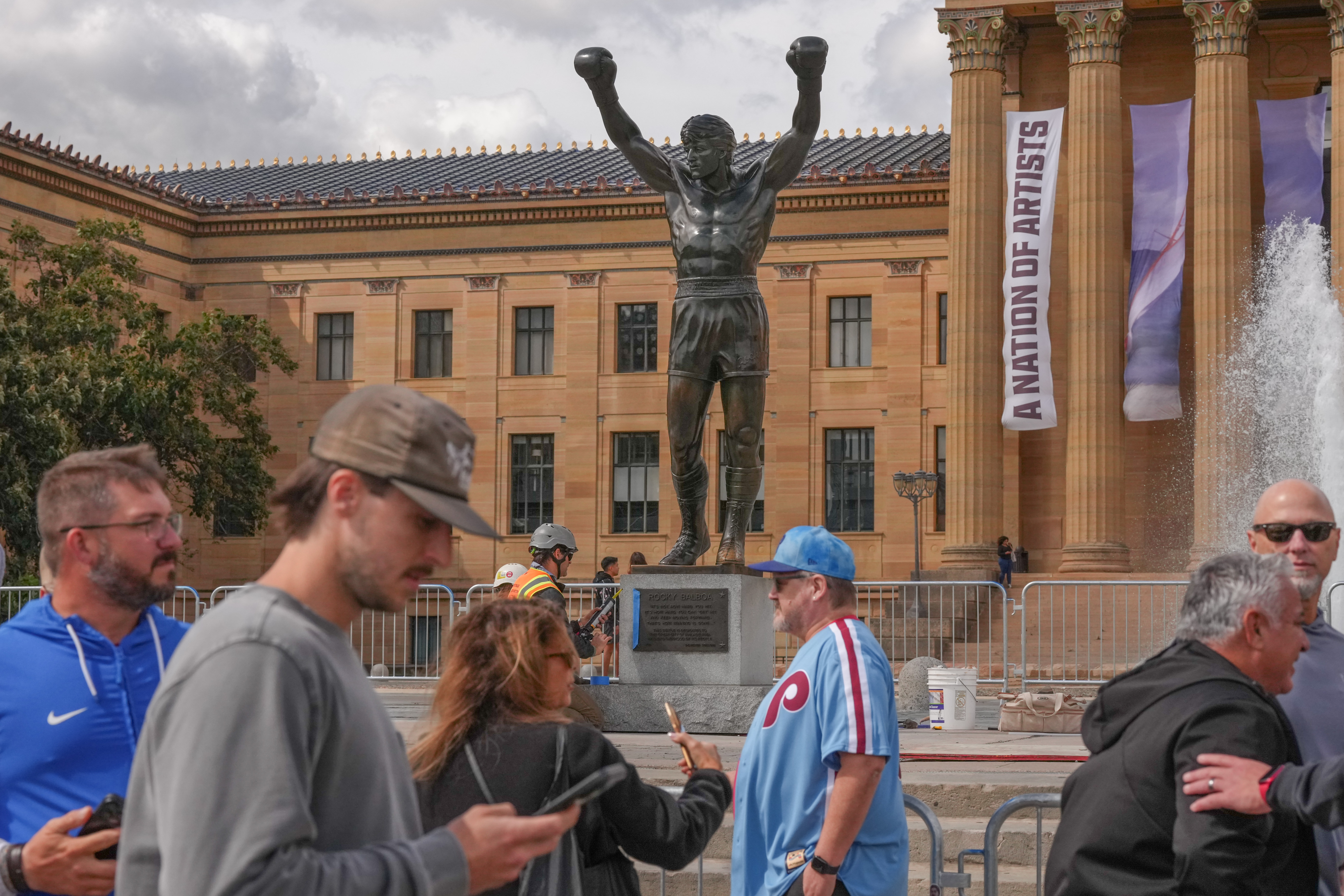
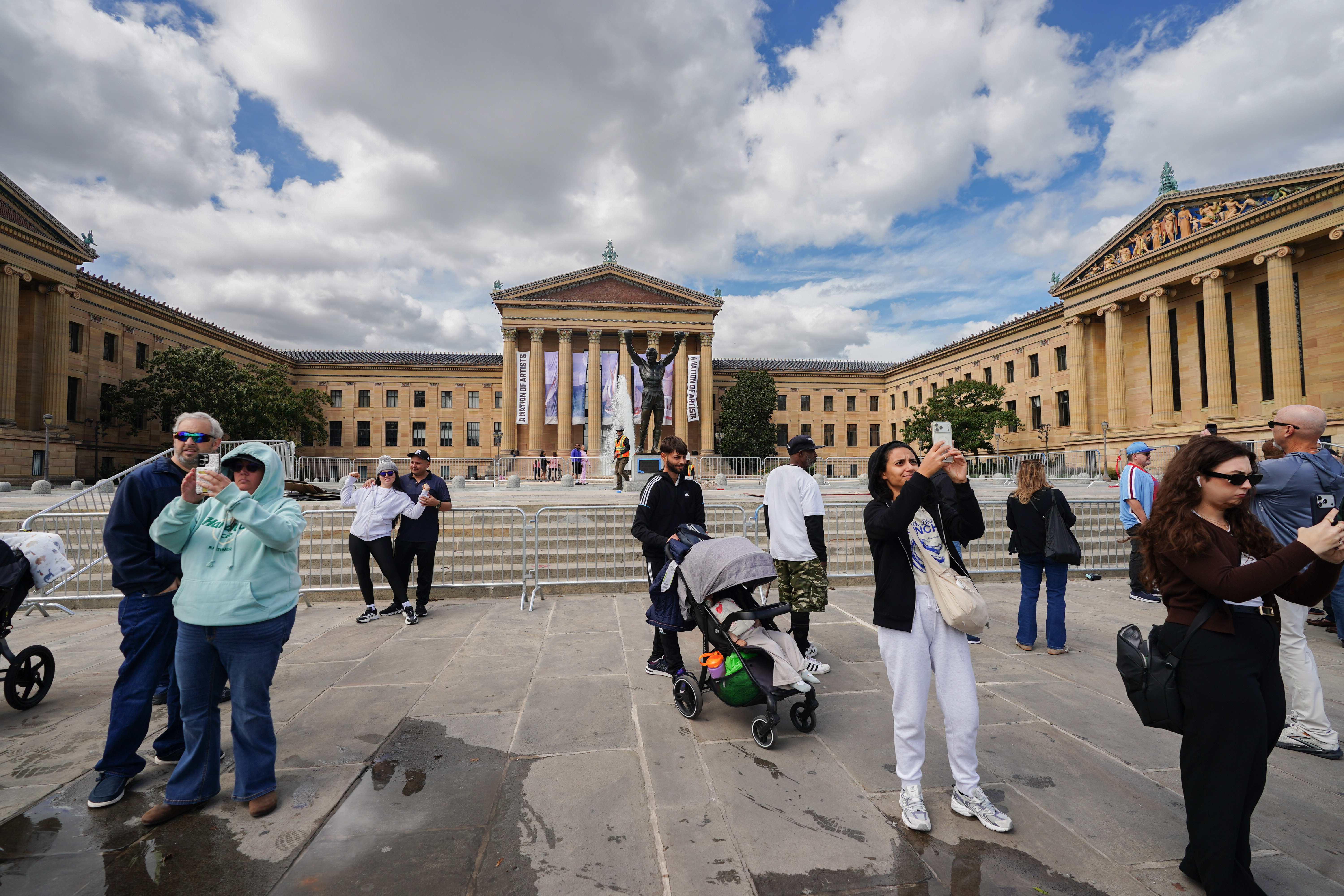
The city’s famed statue of the Italian Stallion was installed atop the Philadelphia Museum of Art’s iconic steps Wednesday. Its installation marks the most visible step yet in getting the fictional boxer’s monument into what has been billed as its permanent place.
Creative Philadelphia, the city arts office behind the statue’s move, said the monument was affixed to its pedestal at the top of the steps about 11:30 a.m. Additional cleanup work was slated to take place Thursday, and barricades around the statue were to be removed Friday, marking the installation’s completion.
After that, no additional work is scheduled, the office said.
The statue’s move, which officially began on Sept. 11, caps a monthslong series of monumental moves at the Art Museum. Since 2006, it sat at the bottom of the institution’s steps, and was then housed inside the museum for the exhibit “Rising Up: Rocky and the Making of Monuments” starting in March.
The original statue, which Stallone commissioned for Rocky III, has long been a controversial piece of public art in the city. It arrived in town in 1981, and has since been moved about a half dozen times — including previous stints at the top of the steps.
Visitors at the newly installed Rocky statue on the Art Museum steps.Jessica Griffin / Staff Photographer
Now, the statue stands about 14 feet back from the edge of the top step, adjacent to where Rocky’s shoe prints are embedded into a walkway.
Last fall, an Inquirer survey found that 46% of respondents believed there should not be a Rocky statue at the top of the steps. About 20% of respondents said there should not be a Rocky statue in the city’s quiver of monuments at all.
That perspective has been present among Philadelphians since the statue arrived more than four decades ago, when some local officials referred to it as “unnecessarily strident.” At least one Inquirer columnist called it a “monument to schlock, chutzpah, and mediocrity” following its debut.
Since then, debates over its merits — as well as whether it is art or merely an iconic structure — have cropped up periodically. Still, in January, the Art Commission voted to approve a plan for the statue’s installation at the top of the steps.
“We are pleased that after months of planning, the city’s Rocky statue is permanently installed at the top of the Philadelphia Museum of Art steps, where it was first unveiled in 1982,” public art director Marguerite Anglin said in a statement. “It now stands in conversation with the Joe Frazier statue, the real life Philadelphia boxer who inspired the Rocky story.”
President Donald Trump’s administration cannot demand that Philadelphia officials assist his deportation agenda and enforce federal immigration law, the city told a judge Tuesday.
Attorneys for the city and local officials asked U.S. District Judge Chad F. Kenney to toss out the Department of Justice’s challenge to an ordinance that prohibits Philadelphia agencies and employees from honoring immigration detainers.
“The federal government cannot conscript City employees as its agents, including by ordering them to keep an individual in custody, solely to assist with federal immigration enforcement,” the city’s motion said.
The Trump administration’s position in the case runs afoul of the Tenth Amendment to the U.S. Constitution, which prevents the federal government from commandeering state and local governments to enforce federal laws, the city said.
And the Justice Department cannot point to any federal law “mandating” state and local officials assist with immigration enforcement, said the filing on behalf of Mayor Cherelle L. Parker, former City Solicitor Renee Garcia, and District Attorney Larry Krasner.
The city declined to comment on the ongoing litigation. Krasner and the Justice Department did not immediately respond to requests for comment.
That decision should have come as no surprise to Parker’s administration. Parker allowed the bill to become law without her signature, following Garcia’s advice that signing the measure “would send an inaccurate signal to the public that the Administration can legally and practically enforce” its provisions.
The Justice Department expanded its lawsuit in August to include a challenge to the bill that prohibits honoring immigration detainers, requests by U.S. Immigration and Customs Enforcement that a local law enforcement agency keep a person in custody long enough to be handed over to federal agents.
Parker did sign that legislation, which codified a long-standing city practice, along with five other “ICE Out” bills.
The ordinance makes it illegal for a city agency or employee to comply with a detainer by keeping people otherwise eligible for release in custody because of an immigration detainer, an administrative warrant, or suspicion that they violated immigration law.
The amended complaint does not mention Philadelphia’s history of not cooperating with ICE detainers. But with the local law, the city “foreclosed” the prospect of using the mechanism to deport people who were arrested, the suit says.
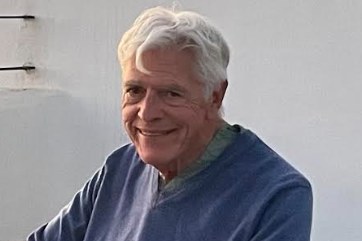
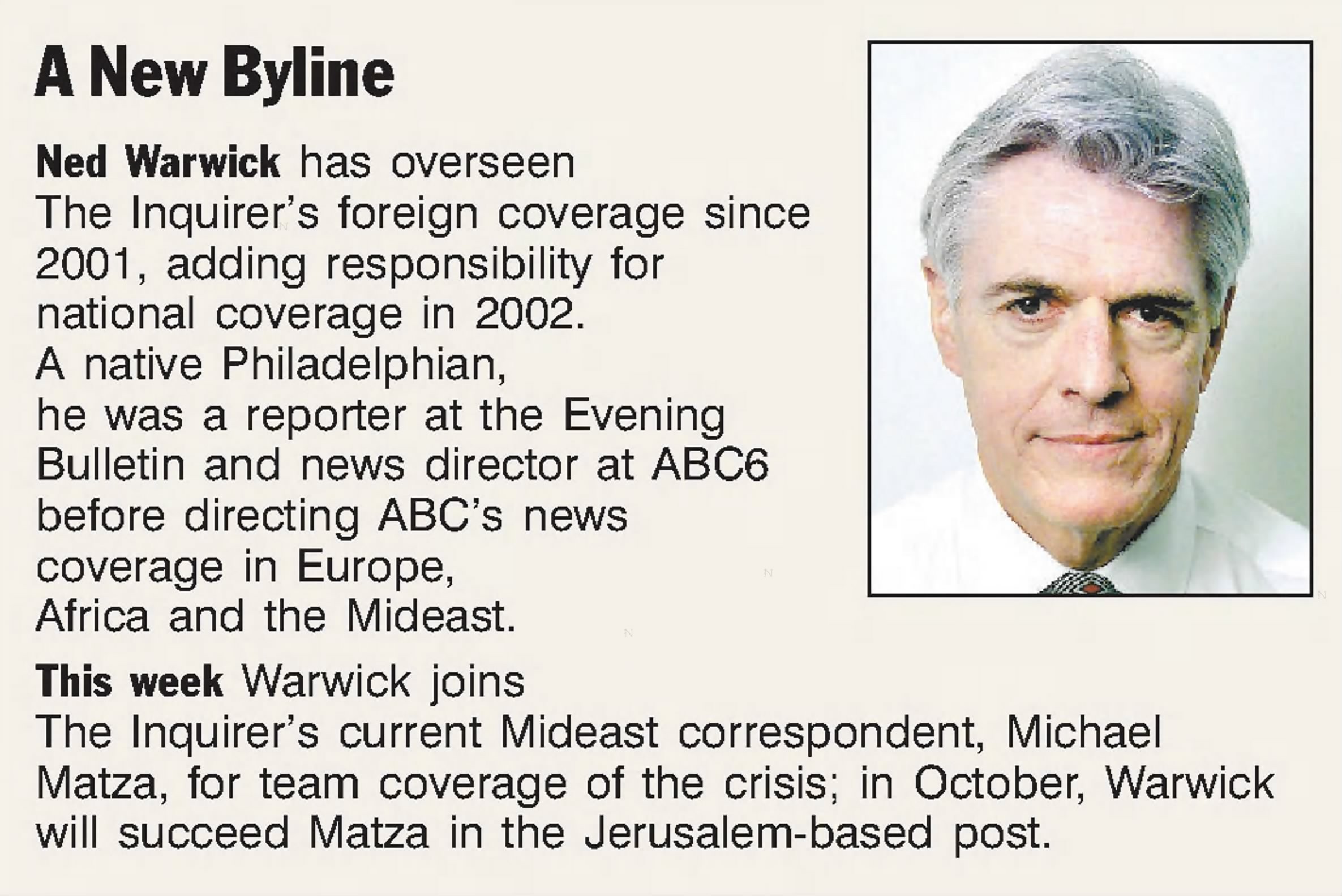
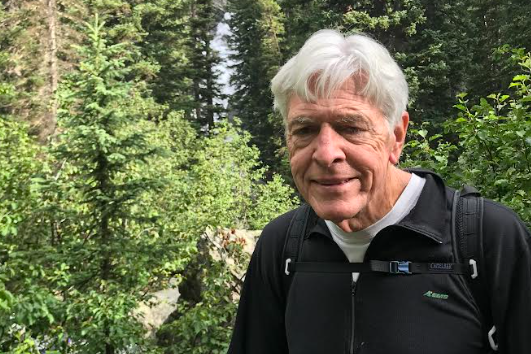
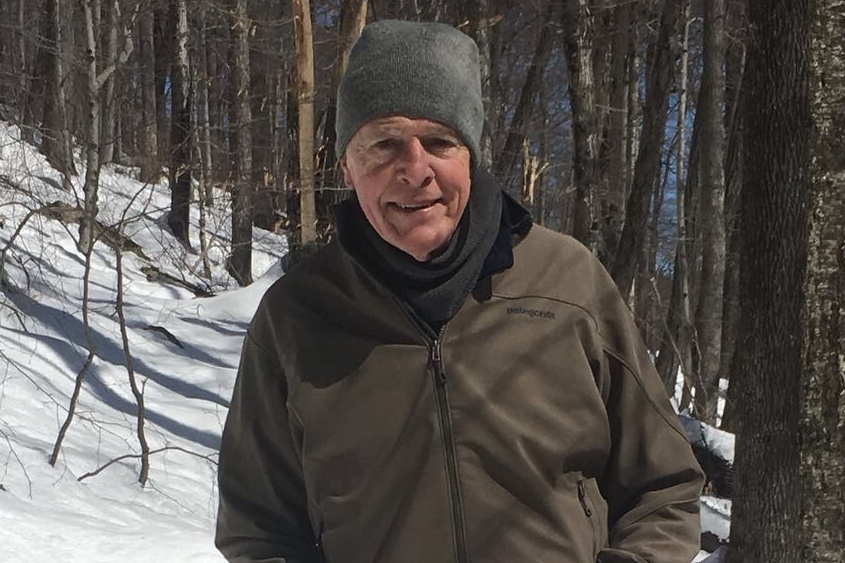
Ned Warwick, 81, of Philadelphia, former foreign correspondent and foreign, national, and Pennsylvania editor for The Inquirer, former news director for WPVI-TV (Channel 6) and international news director for ABC-TV, former reporter at the Bulletin, mentor, sailor, pilot, and die-hard Phillies fan, died Monday, Sept. 14, of complications from Parkinson’s disease at his home near the Philadelphia Museum of Art.
Born in Philadelphia and reared in Germantown and Mount Airy, Mr. Warwick graduated from Chestnut Hill Academy and attended Temple University. He knew he wanted to be a newsman when he was 16, his wife, Joan, said, and he spent much of his free time reading newspapers in the high school library.
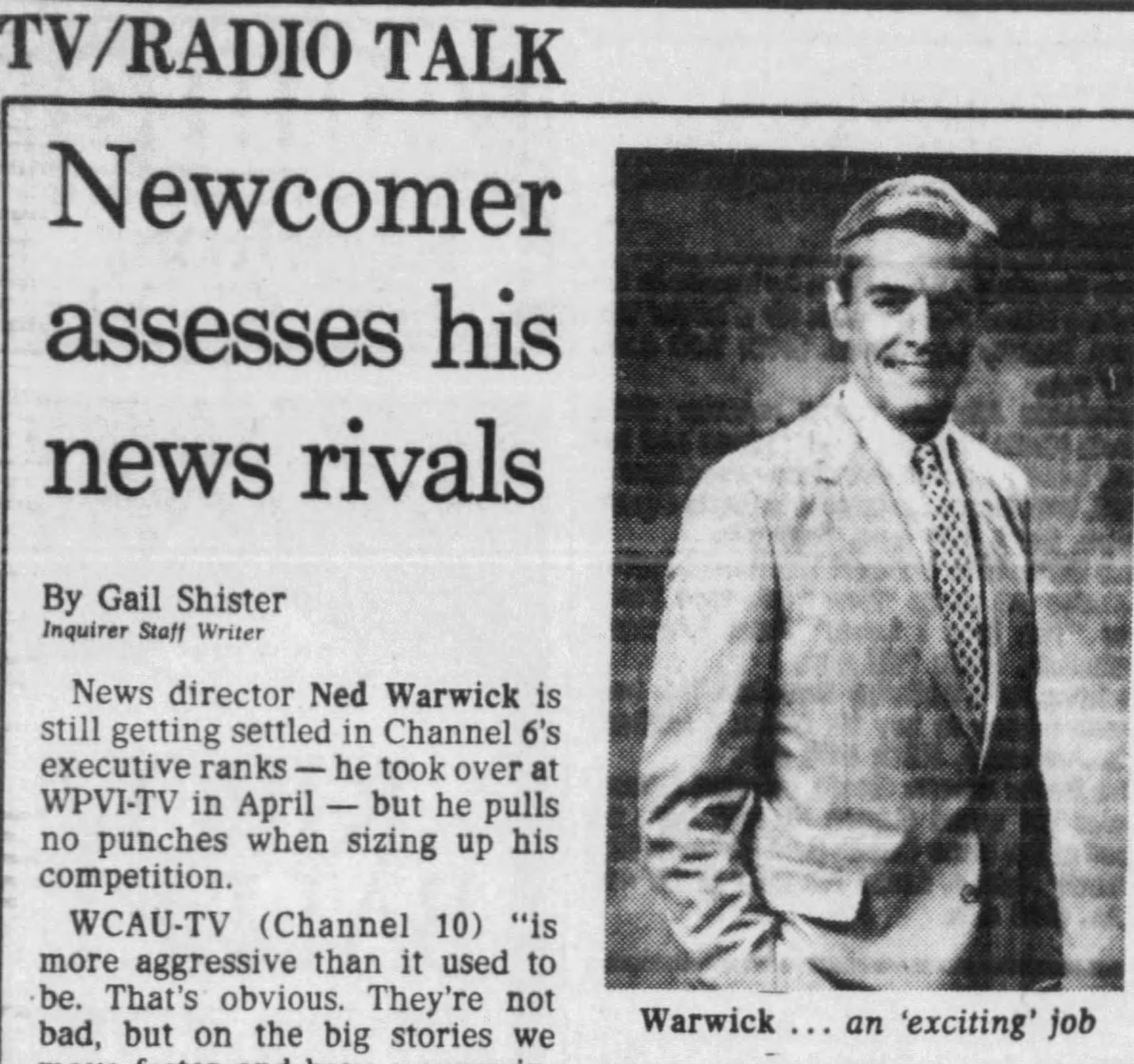
He went on to work as a young city-side reporter for the Bulletin from 1969 to 1974 and a veteran editor and reporter for The Inquirer from 2001 to 2008. For TV, he was a news writer and assignment editor at WPVI from 1975 to 1981, news director at WTVD in Durham, N.C., from 1981 to 1986, and back as news director at WPVI from 1986 to 1990.
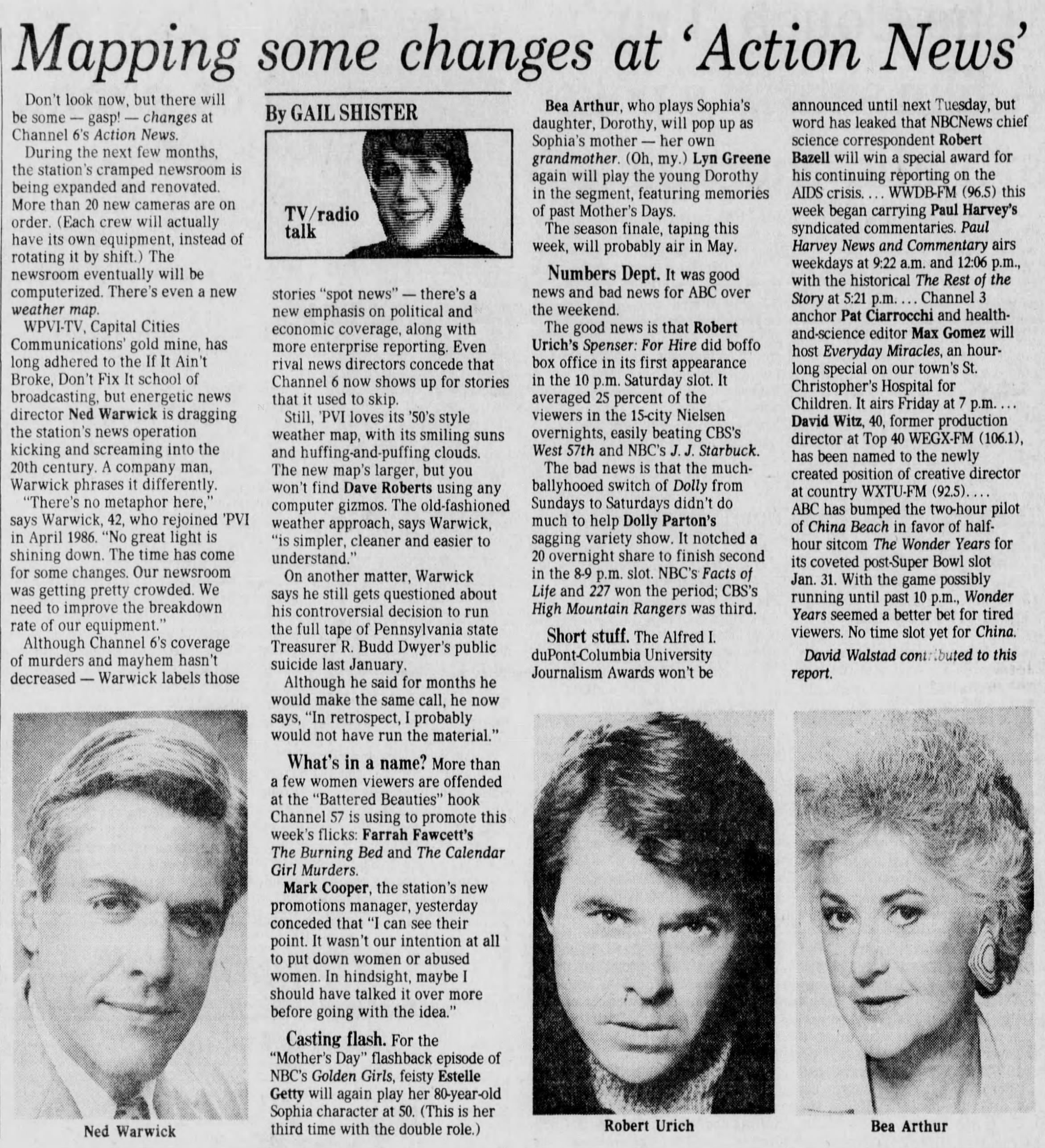
Regarding the transition from print to TV work, he told Inquirer TV columnist Gail Shister in 1977: “The TV reporter’s job is more difficult because they have to be journalists and performers. It is in fact easier for a TV reporter to move over to print than vice versa.”
Mr. Warwick became a foreign correspondent for The Inquirer in 2006.Newspapers.com
From 1990 to 1995, Mr. Warwick was based in London as ABC’s director of news operations for Europe, Africa, and the Middle East. He worked with celebrated anchorman Peter Jennings, supervised dozens of other international TV types, and directed coverage of many of the world’s top stories.
Actually, he told The Inquirer as he left for London, he did not expect the job to be much different from covering news in Philadelphia. “You can gather news around the corner or across the border,” he said. “But the essential business of newsgathering still remains the same. You’ve still got to get the story.”
He nearly became the story in 1992 when he got pinned down in a gun battle while traveling in Somalia. “He always wanted to be a newsman and travel the world,” his wife said, “and he did. He loved the news. He loved ABC.”
At The Inquirer, Mr. Warwick was the foreign and national editor for five years and a foreign correspondent in Jerusalem during and after the 2006 Lebanon war. He returned to Philadelphia in 2007 to be deputy business editor and Pennsylvania editor for a year.
The Inquirer covered Mr. Warwick’s return to WPVI-TV in 1986. Newspapers,com
“He was a good listener and could manage a reporter’s needs,” former Inquirer staff writer Miriam Hill said. Former Inquirer staff writer Sally Downey said: “He was a very classy guy.”
In 2006, his byline appeared in The Inquirer over dozens of war zone stories from Gaza City, Bethlehem, Acre, Ramallah, Huwwara, Turmus Aya, and elsewhere in the Middle East. On Oct. 17, 2006, he opened his story from Kafr Qalil with: “The sharp heat of summer lingers on the stony hills of the West Bank, and the pale olives are still ripening on the trees, thirsting for just a little of the fall rains that won’t come for a few more weeks.”
“He was a lyrical writer,” Hill said. Former Inquirer editor William K. Marimow called his style “fluid” and “very solid.”
Mr. Warwick also reported on the royal family from London and reviewed books for The Inquirer. He worked briefly as an editor at large with Bloomberg News after leaving the paper in 2008 and retired in 2010.
Out of the office, Mr. Warwick was a sailor and a pilot. Courtesy of the family
He mentored others wherever he worked and with the Rittenhouse Writers’ Group, and completed a first draft of his own book. “His mind was always crafting a story, seeing a story, or preparing to tell one in a way that made everyone near him want to listen,” said his daughter Katie Bishop.
“No matter what was going on,” said Nathan Gorenstein, a former colleague at The Inquirer, “he was a good human.”
Out of the office, Mr. Warwick was a sailor and a pilot. In 1986, when he was news director at WPVI, Shister asked him whether flying an airplane or directing a newsroom was more challenging. “Clearly,” he said, “if you don’t pay attention in either business, you’re going to crash.”
He cheered openly for the Phillies even during the lean years and continued to follow them closely after becoming ill. “One of the first things he would ask in the morning,” his wife said, “is who won the game.”
Edward Ramsey Warwick was born May 19, 1945. The oldest of three children, he was the great-grandson of former Mayor Charles Warwick. He left Temple and earned a bachelor’s degree in history at the University of the South in Sewanee, Tenn., in 1969.
Mr. Warwick’s local TV work was covered in The Inquirer in 1988. Newspapers.com
He married Polly Price, and they had a daughter, Katie. After a divorce, he married Gayle Roth, and they had daughters Megan and Eliza.
“He always made us feel like having three daughters was his greatest joy in life,” his daughter Megan Osborne said. “He taught us to throw a ball and let us braid his hair.”
After a divorce, he married Joan Hunter, and they enjoyed museums, the theater, and the orchestra. They traveled the world together. He was a longtime runner and a fashionista, and studied Buddhism.
He lived with Parkinson’s disease for eight years. But he refused to quit city living for the suburbs, his wife said, and he never lost his sense of humor and zest for life.
Mr. Warwick was a longtime runner and a fashionista, and studied Buddhism. Courtesy of the family
“Dad was a giant of a man in every sense of the word,” his daughter Eliza said. His wife said: “He never, ever complained. He made me a better person.”
In addition to wife, daughters, and former wives, Mr. Warwick is survived by four grandchildren, a sister, a brother, and other relatives.
A memorial service is to be from noon to 4 p.m. Saturday, Nov. 14, at the Germantown Cricket Club, 411 Manheim St., Philadelphia, Pa. 19144.
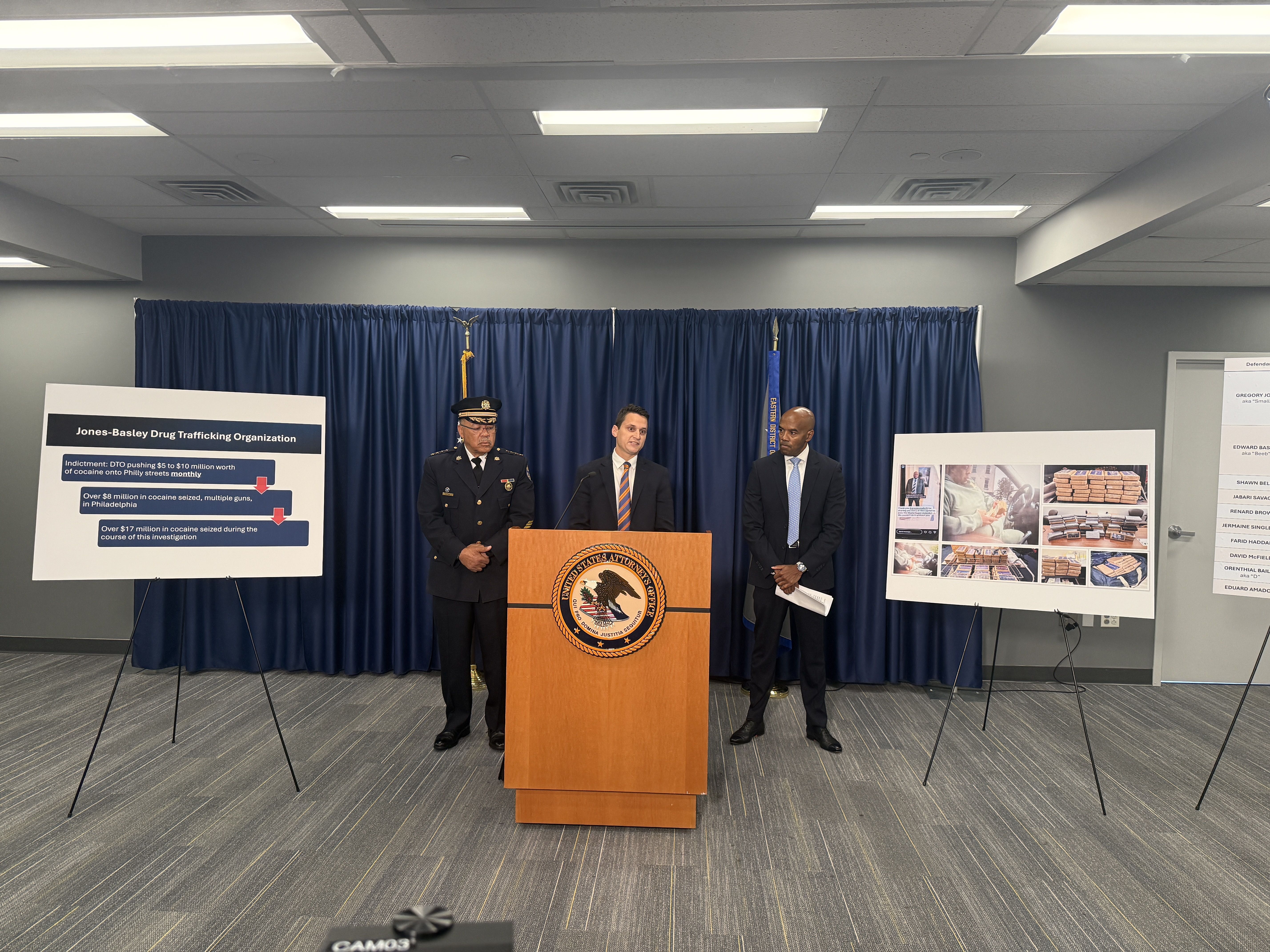
Ten alleged drug traffickers, including the organization’s two reputed leaders, have been charged following a yearslong investigation into an operation that sent millions of dollars of cocaine into Philadelphia.
The operation originated at the U.S.-Mexico border and ended on the streets of Philadelphia and was responsible for distributing $5 to $10 million worth of cocaine to the streets of Philly every month, said David Metcalf, U.S. attorney for the Eastern District of Pennsylvania.
“Every prosecution that our office initiates aims to make our country and our community safer, but few have this magnitude of impact,” he said. “These are apex suppliers.”
The alleged traffickers were with charged with conspiracy to distribute five kilograms or more of cocaine and possession with intent to distribute, among other charges.
Five of the defendants were arrested Tuesday by the FBI and the other five were already in state or federal custody. If convicted, all face maximum sentences of life in prison.
Almost all the defendants involved had previously been prosecuted by the U.S. Attorney’s Office for similar offenses, Metcalf said, including alleged leaders Gregory “Smallz” Jones, 48, in 2009 and Edward “Beeb” Basley, 47, in 2007.
“This prosecution is not just of a drug trafficking network, it is the decapitation of a conspiracy to inject poison into our streets,” Metcalf said.
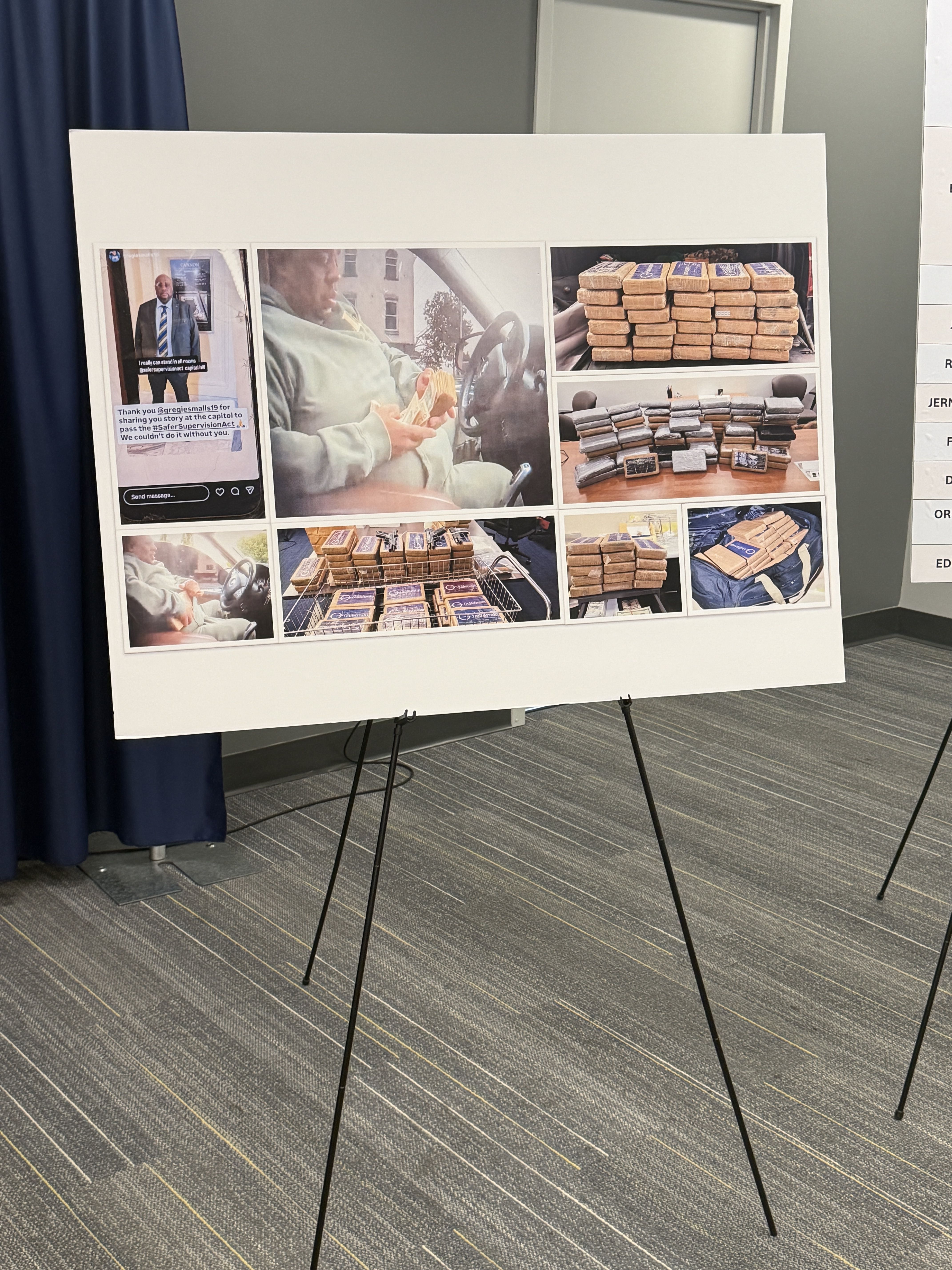
Photos from press conference on a recent takedown of an alleged drug operation in Philadelphia.Dana Munro
Jones allegedly served as the primary leader of the organization and procured the drugs from a supplier in Mexico, who delivered bulk shipments via tractor trailer to the Philadelphia area.
In May, one truck bound for Philadelphia containing 89 kilograms, or nearly 200 pounds, of cocaine was stopped in Knoxville by the Tennessee Highway Patrol, Metcalf said. The driver was Orenthial “D” Bailey, 50, one of the defendants, he said.
For the trucks that made it undetected to Philadelphia, Metcalf said, Jones met with the drivers in parking lots in and around the city to pay for and collect the cocaine. He would then meet up with his partner to deliver his share, after which both would distribute the drugs to customers and sub-dealers, according to Metcalf.
Cases like these are a top priority for the U.S. Attorney’s Office, Metcalf said, because the people at the top of drugoperations are generally the hardest ones to replace.
“It is not simply easy to have a relationship with a Mexican cartel member or a source of supply internationally,” Metcalf said. “That takes a great degree of trust, it takes a great degree of confidence. Those types of relationships and that type of infrastructure is difficult to replicate.”
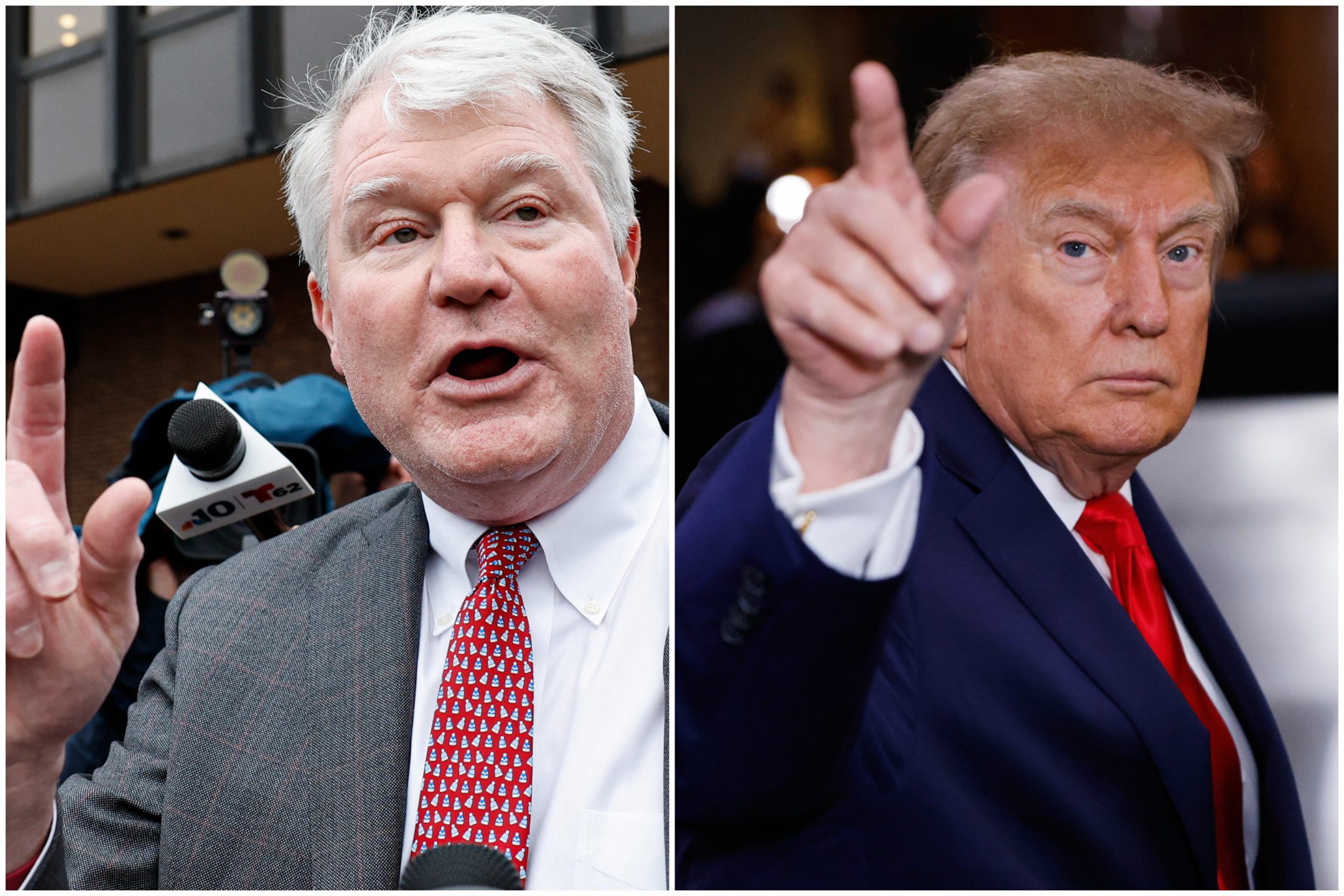
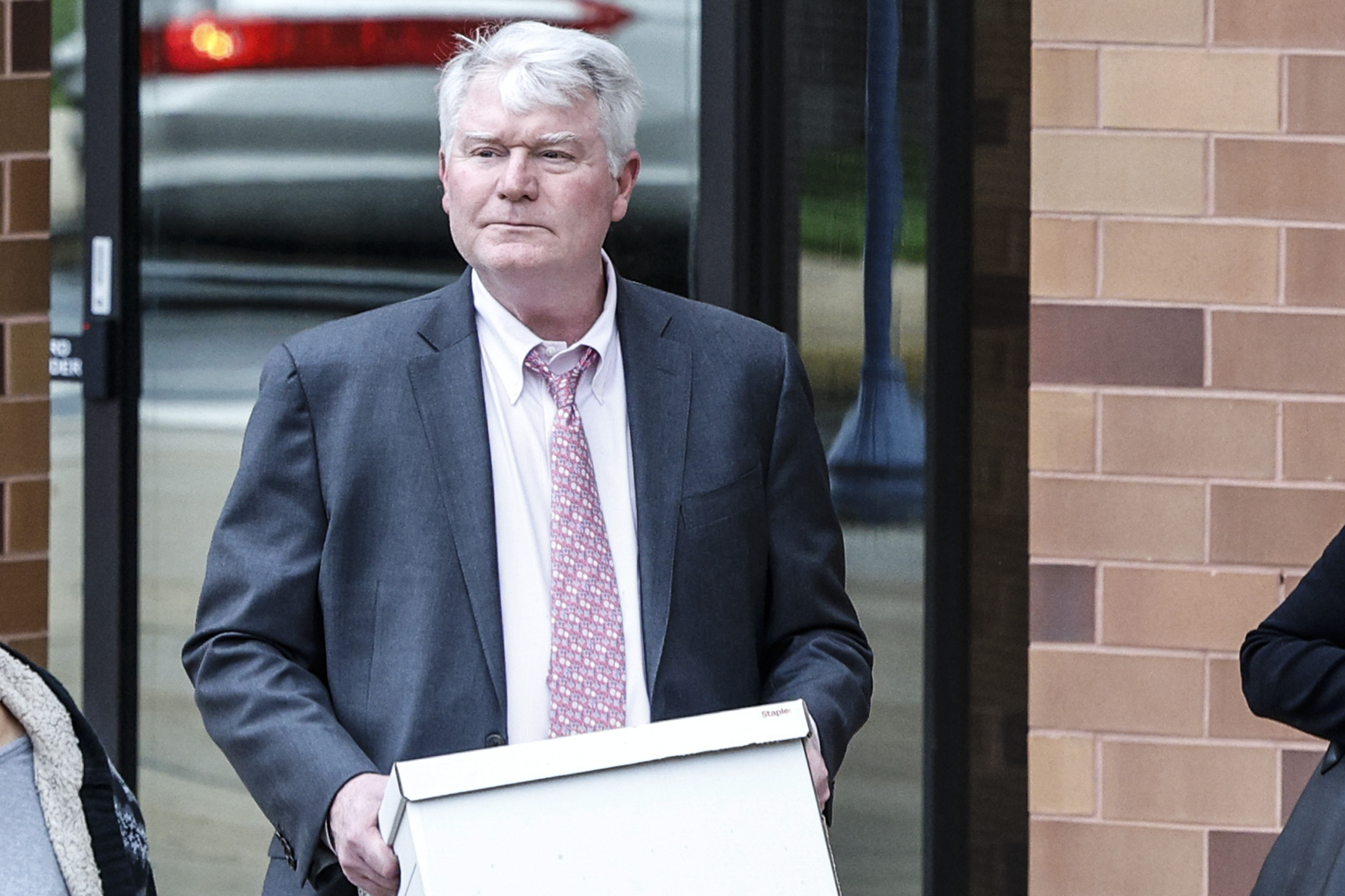
John Dougherty was for years an unparalleled kingmaker in Philadelphia’s Democratic Party — a charismatic labor leader and fundraiser who helped anoint a generation of future mayors, City Council members, state and federal legislators, judges, and governors.
Some of Dougherty’s key supporters in his clemency push, The Inquirer has learned, included two former Republican congressmen; Dougherty’s lawyer, who once ran as a Republican for mayor and, later, for U.S. Senate; and a onetime candidate for Philadelphia City Council with ties to organized labor, who said he was one of Trump’s earliest local backers.
All had relationships with Dougherty, owing to his years of political activism as head of Local 98 of the International Brotherhood of Electrical Workers — even if his support mostly benefited fellow Democrats.
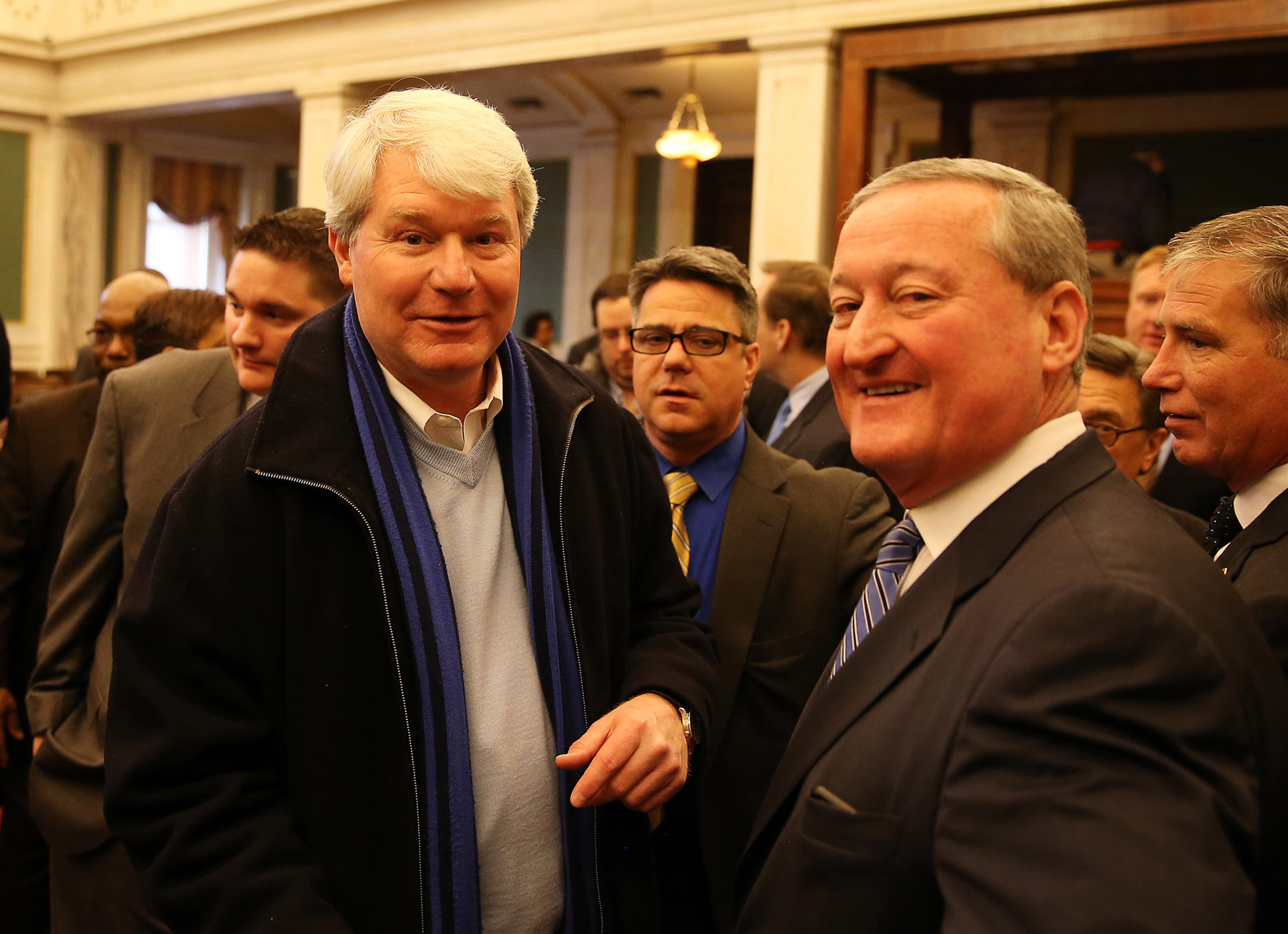
John Dougherty in 2015 with then-City Councilmember Jim Kenney. The two were childhood friends, and Dougherty helped support Kenney’s successful mayoral campaign.
The former Council candidate, Daniel Pellicciotti, said his efforts to help Dougherty included meeting with Trump at the White House and speaking with him over the phone. Pellicciotti said that he told Trump about the significant health challenges faced by Dougherty’s wife, Cecelia, and that Trump was sympathetic to Dougherty’s situation — and willing to send him home.
“He just said, ‘This is crazy.’ Exact words,” Pellicciotti said. “‘He needs to be home with his wife, taking care of her. Besides, it would be cheaper for the government.’”
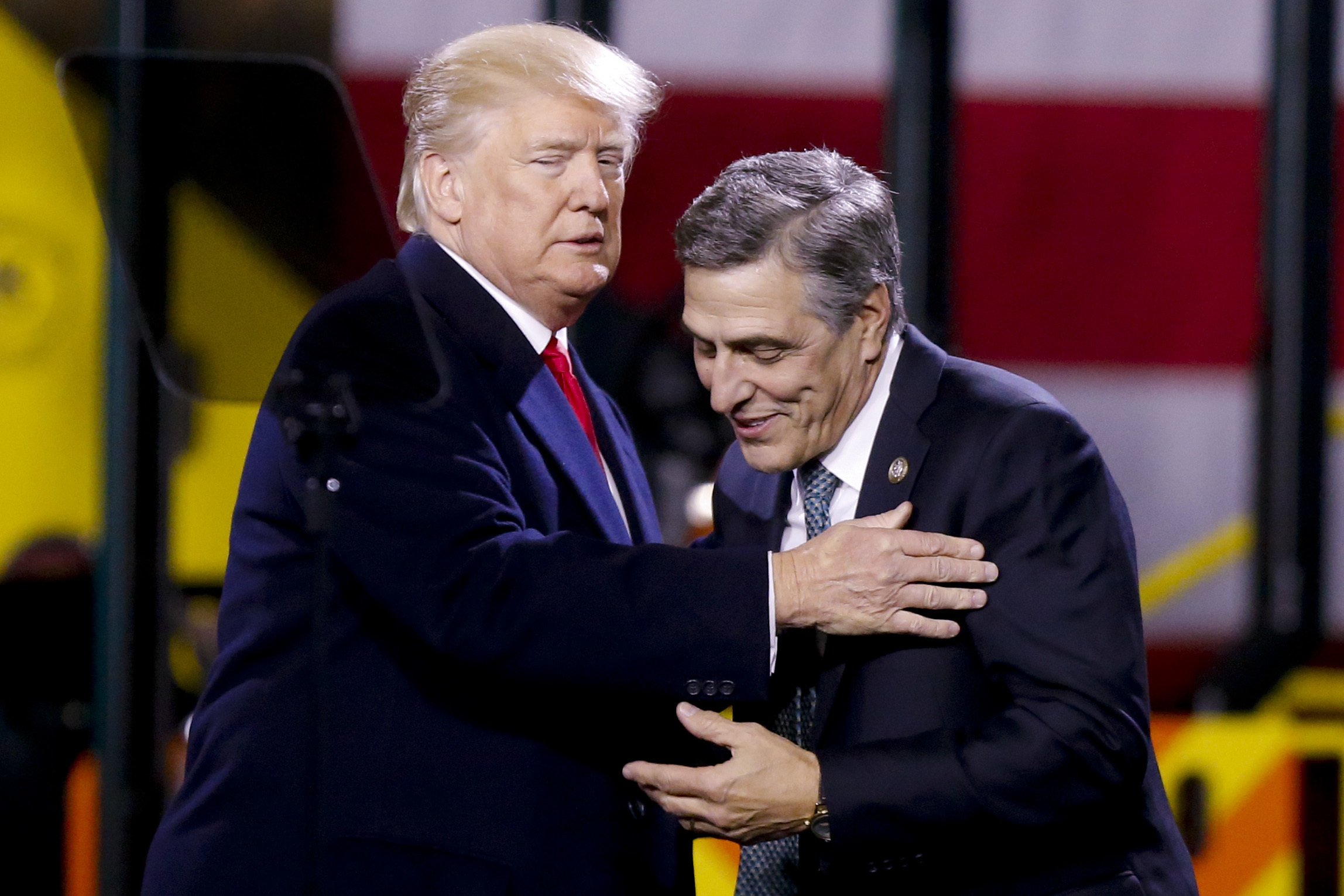
Former U.S. Rep. Lou Barletta, meanwhile, said he signed a letter to Trump last year and contacted anyone he could “just to try to get this on the president’s radar.”
He said that he had been following Cecelia Dougherty’s health situation closely and that advocating for her husband “became a personal thing for me.” Earlier this year, he attended a court hearing in Reading at which Dougherty begged a judge to be released.
“I’m very thankful that the president had the compassion to put politics aside and do the right thing,” said Barletta, who met Dougherty in the early 2000s as mayor of Hazleton.
President Donald Trump with then-Rep. Lou Barletta in 2018.Keith Srakocic
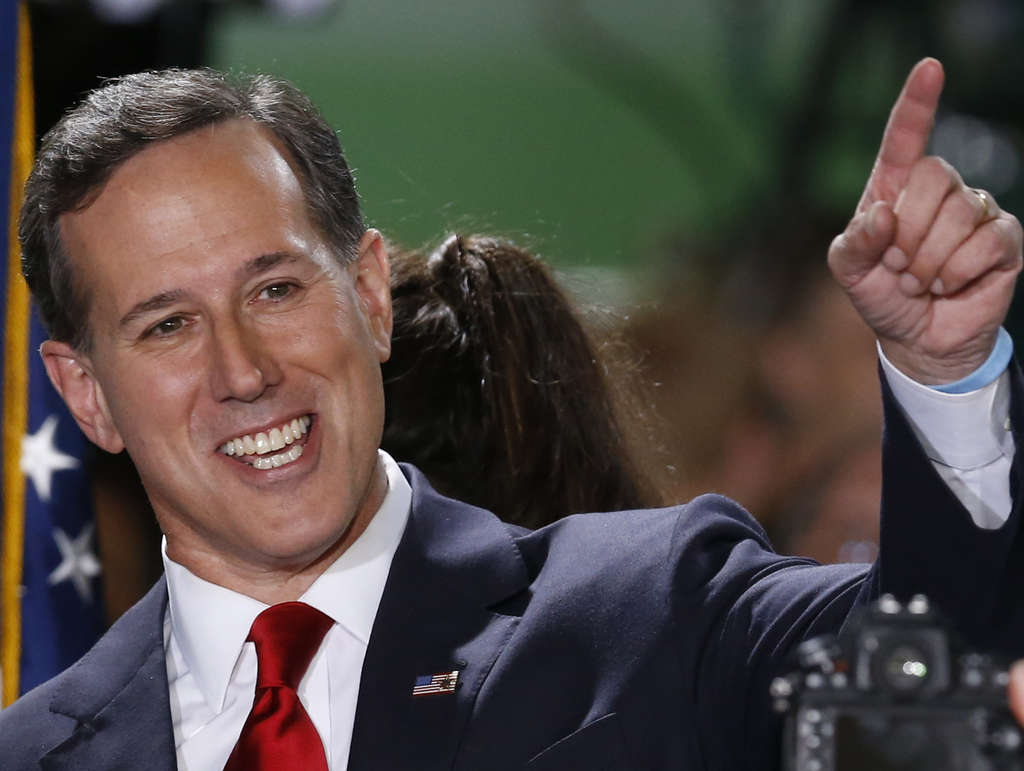
And Rick Santorum, a former U.S. senator who competed against Trump for the GOP’s presidential nomination in 2016, said he “did what he could to be helpful” in supporting Dougherty’s efforts.
“Those two years Dougherty spent in jail away from his wife were probably 20 years because I know how much he loves her and how much he was really hurting,” Santorum said. “So to me, this was the humanitarian thing to do, and I supported it.”
The backing from GOP pols may help explain how Trump — a famously partisan president — ended up granting clemency to a longtime Democrat in one of America’s bluest cities. Trump was soundly defeated in Philadelphia in each of his three elections, and some of Dougherty’s longtime Democratic allies were among his fiercest critics.
The Republican lobbying might also add context to Dougherty’s decision to change his voter registration and join the GOP. Dougherty — long known as Johnny Doc — switched parties not long after being released this month from a federal penitentiary in Lewisburg, Pa.
Dougherty has not spoken publicly since his release, and his lawyer, George Bochetto, said Dougherty was focused on caring for his wife.
Bochetto, who ran for Philadelphia mayor in 1999 and U.S. Senate in 2022 — both times as a Republican — generally declined to discuss details about the lobbying effort. He did say he had been in regular communication with White House aides about Cecelia Dougherty’s health challenges, and he called Trump’s decision “a magnificent gesture of compassion.”
The White House press office did not respond to questions about who was involved in advocating for Dougherty. A spokesperson said only that the commutation was granted to let him “care for [his] terminally ill wife.”
Multiple attempts at release
Dougherty and Bochetto had taken several paths to try to secure an early release from his six-year sentence, which began in 2024 after Dougherty was convicted in separate bribery and embezzlement trials.
A few months after Dougherty reported to prison, Bochetto filed emergency motions asking U.S. District Judge Jeffrey L. Schmehl to allow Dougherty to serve the remainder of his term on house arrest so he could be his wife’s primary caretaker.
Schmehl denied those requests twice — including after a hearing in May at which Dougherty testified about how he was the only person who could provide the type of round-the-clock assistance his wife needs. She has long been paralyzed and largely nonverbal after suffering a debilitating brain injury.
John Dougherty in 2024.Steven M. Falk / Staff Photographer
After failing to persuade the judge, Dougherty turned to others in his orbit as the request pivoted toward the White House — where Trump, as president, has wide latitude to commute sentences and grant pardons in federal cases.
But his allies, including Pellicciotti, persisted. A former business agent for the laborers union, he said he was friends with Cecelia Dougherty before he knew her husband, and he has known both for decades.
A former Democrat and nephew of the late Councilmember Francis Rafferty, Pellicciotti ran unsuccessfully for Council in 2003 with backing from Dougherty’s electricians union. He said he switched his registration to Republican when Trump ran for president and backed his 2016 campaign.
“Nobody in Philly was really backing him. I have a lot of respect for him. He don’t forget his friends,” Pellicciotti said.
In addition to their politics, Pellicciotti, 64, of Roxborough, shared something else with Trump: a felony conviction. Pellicciotti pleaded guilty in 2005 to bribing a Philadelphia public official with cash in exchange for obtaining a designation for his demolition company as a woman-owned business.
When Pellicciotti was sentenced to probation and a fine the following year, Dougherty and other union members were in the courtroom to pat him on the back.
That experience with the criminal justice system did not come up in Pellicciotti’s conversations with Trump, however. “I really think it had strictly to do with him doing the right thing for John and Celi,” he said.
Help among friends
Barletta and Santorum declined to provide many details about the depths of their advocacy but agreed that their central motivation was support for Dougherty and his wife.
In addition to Dougherty’s long friendship with Barletta, his ties to Santorum date to 2006, when his former union, Local 98, backed Santorum’s unsuccessful reelection campaign against Democratic challenger Bob Casey.
Santorum said Dougherty was always uncharacteristically gracious about acts that benefited his members — despite the senator’s political affiliation.
“Johnny cared enough that he said, ‘Well, look, this guy has done more for my workers and those families than anybody, and we’re going to support him,’” Santorum said.
Former U.S. Sen. Rick Santorum announcing his candidacy for the 2016 presidential race.KEITH SRAKOCIC / Associated Press
Other local figures with ties to Trump who were rumored to have helped Dougherty’s lobbying — such as Philadelphia lawyers Michael van der Veen and William J. Brennan, who represented Trump during his second impeachment trial — declined to say if they were involved.
In any case, Trump made Dougherty’s release official earlier this month. In addition to cutting his prison term short, the commutation erased Dougherty’s obligation to pay about $1.6 million in restitution.
Pellicciotti, for his part, was glad that Trump bestowed mercy on his longtime associate.
“All credit goes to God,” he said. “We did a lot of praying about it.”
Staff writers Gillian McGoldrick and Anna Orso contributed to this article.
While computer models still remain at sea on the fate of a nor’easter taking shape off the Southeast coast, it is all but certain that floodwaters will be covering some roads at the Jersey Shore the next few days while the beaches lose some sand.
Already, the Army Corps of Engineers beach-fill contractor working in Avalon has decided to halt operations and move the equipment out of harm’s way, said Army Corps spokesperson Stephen Rochette.
The National Weather Service has issued flood warnings for the oceanfronts and back-bay areas in effect from late Wednesday afternoon until early Saturday, with moderate flooding expected in four of the next five high-tide cycles, warning that “many roads” may become impassable. The agency said it’s possible that some of the flooding could reach the “major” category.
Inland impacts remained a source of considerable less certainty, but the National Weather Service posted a flood advisory for the tidal Delaware River from northern Delaware to central Bucks County from 10 p.m. Wednesday until 4 a.m. Friday.
And after that?
“Once you get to Friday and beyond, the forecasts becomes uncertain,” said Zachary Cooper, a meteorologist at the weather service’s Mount Holly office.
As expected, a coastal storm was taking shape off the Carolina coasts and was forecast to mature through the workweek, generating winds from the northeast — that’s why they are called nor’easters — adding to an already brisk onshore flow.
In addition, with a full moon due Saturday, the tides are going to get an additional astronomical tug.
“There could be some shenanigans with that,” said Matt Benz, senior meteorologist with AccuWeather Inc.
The timing of the storm’s impacts at the Shore and in the Philly area
The winds were forecast to increase Wednesday, with gusts to 45 mph at the coast and 35 mph in the Philly area.
Moderate flooding was expected with the early-evening high tides on the oceanfront and back Wednesday, Thursday, and Friday evenings, and on Friday morning.
Minor flooding was expected Tuesday evening on the oceanfront and back bays at the Shore, with more-significant moderate flooding at high tides Wednesday and Thursday evenings.
Along the Delaware River in Philadelphia, high-tide flooding was likely to be minor but could approach moderate levels late Wednesday and Thursday nights.
No significant rains were in the forecast at least through Thursday, but the outcome for the weekend would depend on the intensity and path of the coastal storm, with rain more likely at the Shore than inland.
What’s with all the forecast uncertainty?
The food fight among computer models has persisted, with the European favoring a more westward track, and the U.S. model more out to sea.
A more westward track, which would make substantial rains, and more wind, more likely, Cooper said. For now, the weather service was going with a 20% to 50% chance of rain across the region Friday into Sunday.
The forecasts are far more certain on the winds.
The onshore winds Tuesday were the result of high pressure, or heavier air, over southeastern Canada. Winds circulate clockwise around centers of highs, and thus the winds from the northeast, which also explain the October-like chill, with temperatures getting no higher than the 60s this week.
An intense coastal storm would add mojo to those winds and could make for quite a raw weekend.
One thing that is a near certainty is that the forecasts will undergo significant changes in the next day or two.
Yes, this is early for a nor’easter
This is unusually early to be concerned about a nor’easter. They usually wait until later in the fall, when the temperature contrasts that ignite storms become sharper as warm air lingers and interacts with the ambitious colder air from the north.
However, a precocious nor’easter would not be as unusual as what is happening with the hurricane season in the Atlantic Basin.
The season already has set a record for the longest wait for a first hurricane, and nothing is cooking. It is also setting records for the least amount of tropical-cyclone energy, said Philip Klotzbach, hurricane expert with the Colorado State University Tropical Meteorology project.
But while it will not become a hurricane, Benz said the coastal storm bears watching because it could draw up moisture from the waters around the Bahamas and take on some tropical characteristics.
That would increase the rainmaking and wind potential, he said.
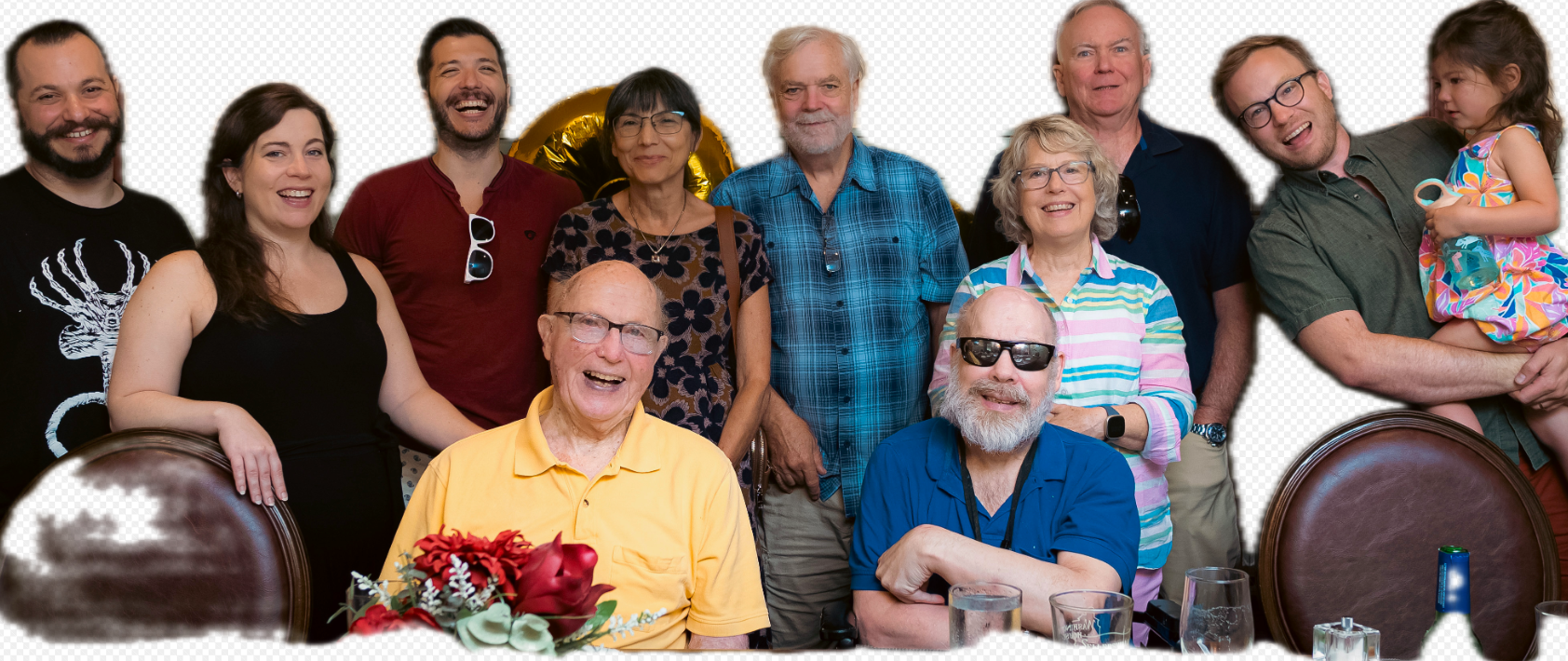
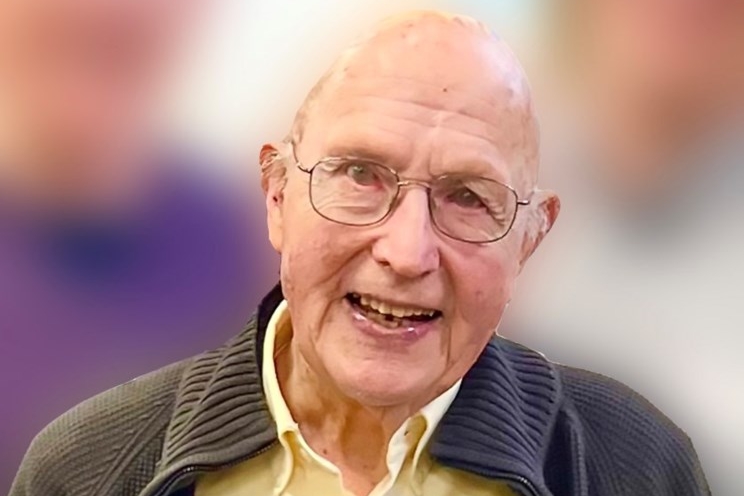
Charles P. Baker III, 101, formerly of Radnor, celebrated cofounder of Baker Industries, longtime workplace for the “least employable,” former owner of the C.P. Baker & Co. chemical firm, Army veteran, national squash champion, mentor, and volunteer, died Wednesday, Sept. 16, of congestive heart failure at HarborChase assisted living community in Wilmington.
Born in Philadelphia, Mr. Baker grew up in the old Colonial Hotel at 11th and Spruce Streets in Washington Square West. He and his wife, Louise, founded Baker Industries in 1980, and the workforce development nonprofit has hired, trained, and mentored more than 12,500 workers with physical and intellectual disabilities, substance use disorders, recent periods of incarceration, and housing insecurity who could not find jobs elsewhere.
Their own son, Justin, lives with epilepsy and, when he could not find suitable employment years ago, Mr. Baker and his wife started their own two-person mail order packaging firm in their Strafford garage. Their son was their first hire.
“We decided, if we’re going to start something like this, let’s go for the people who need it the most,” Mr. Baker told The Inquirer in 1998, “the ones who are least employable.”
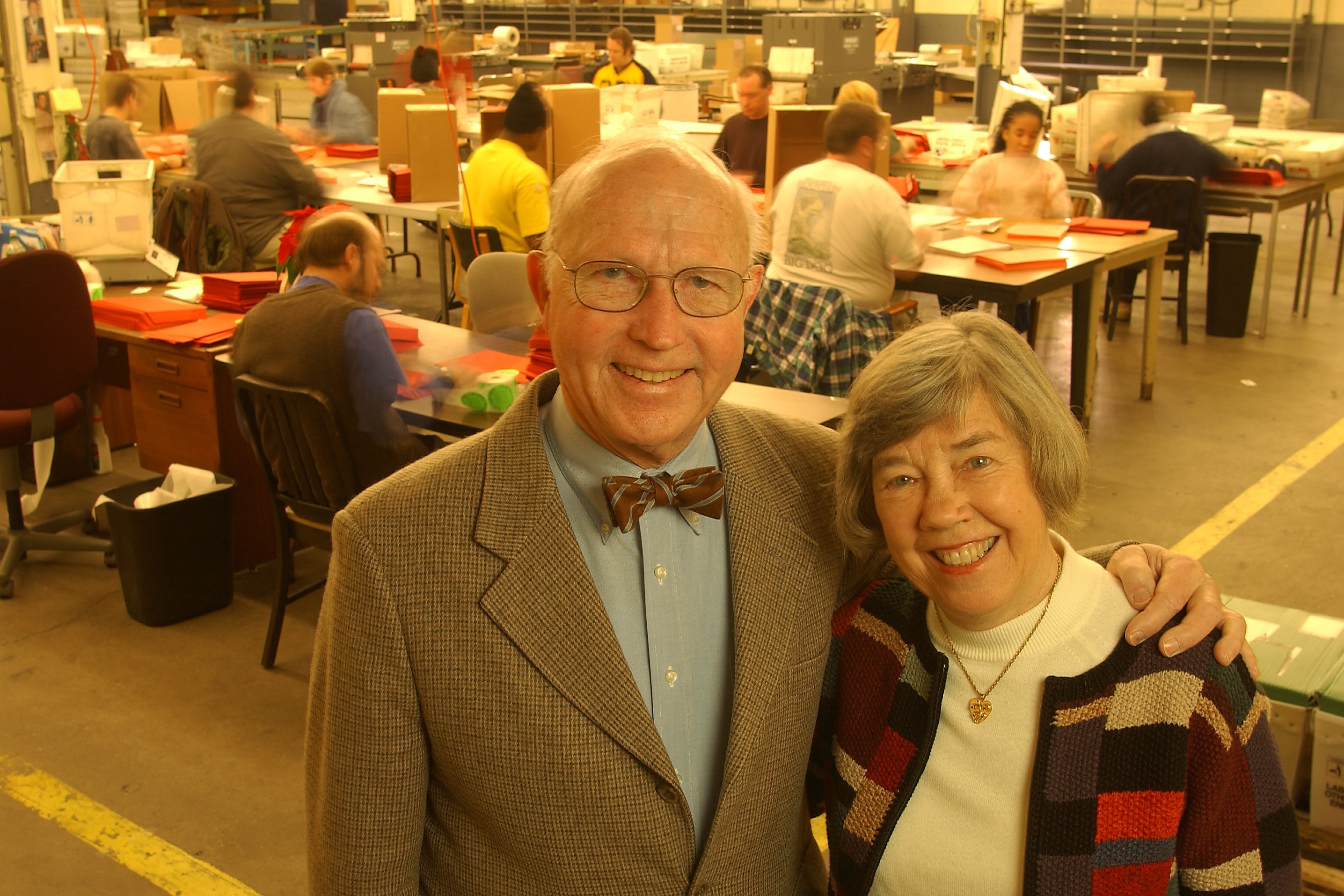
Mr. Baker and his wife, Louise, stand inside their Baker Industries building in Malvern in 2003. Michael Bryant / Staff Photographer
For nearly five decades, Baker Industries has contracted light industrial and office work from hundreds of businesses, and operated facilities in Philadelphia, Malvern, and elsewhere. Employees are paid an hourly wage, offered additional training, and encouraged to attend workshops, social events, and support group meetings.
The company motto is “providing a steppingstone to regular employment,” and many workers have moved on to higher-paying jobs elsewhere. “We have a philosophy of work as rehabilitation,” Mr. Baker told the Daily News in 1988. “The goal is to show these people they can do a whale of a lot more than they think they can do.”
Mr. Baker served as the unpaid president at Baker Industries until 2002 and then on the board of directors. In the 1950s, he assumed control of his family’s small chemical company, C.P. Baker & Co., and he expanded it before selling it in 1980.
“Charlie and Weezie Baker believed there is healing in work,” colleagues at Baker Industries said in a Facebook tribute on his 101st birthday in June. “Not just jobs. Work. Showing up. Being part of something. Contributing alongside others.”
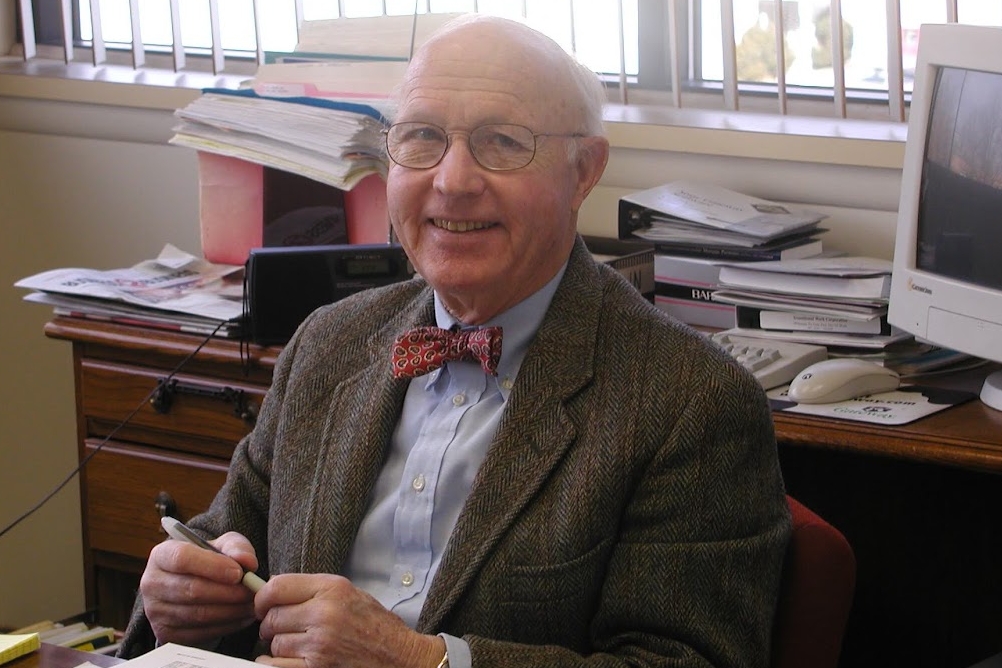
Mr. Baker played many roles at Baker Industries.Baker Industries
Turk Thacher, vice board chair at Baker Industries, said: “Charlie was beloved. He was kind to everybody.”
Mr. Baker, his wife, and their company were featured often on TV shows, and in The Inquirer, the Daily News, and other publications. They won many awards for their community service and innovative business model.
“I was grateful to have their guidance,” Nic Watson, president of Baker Industries, said, “and we will follow their example for years to come.”
In 1991, the company was named an inspirational Point of Light by President George H.W. Bush. In 2004, Mr. Baker and his wife earned the legacy award for “community generosity” from the Chester County Community Foundation.
“They went above and beyond their own self-interest,” a foundation official told The Inquirer then.
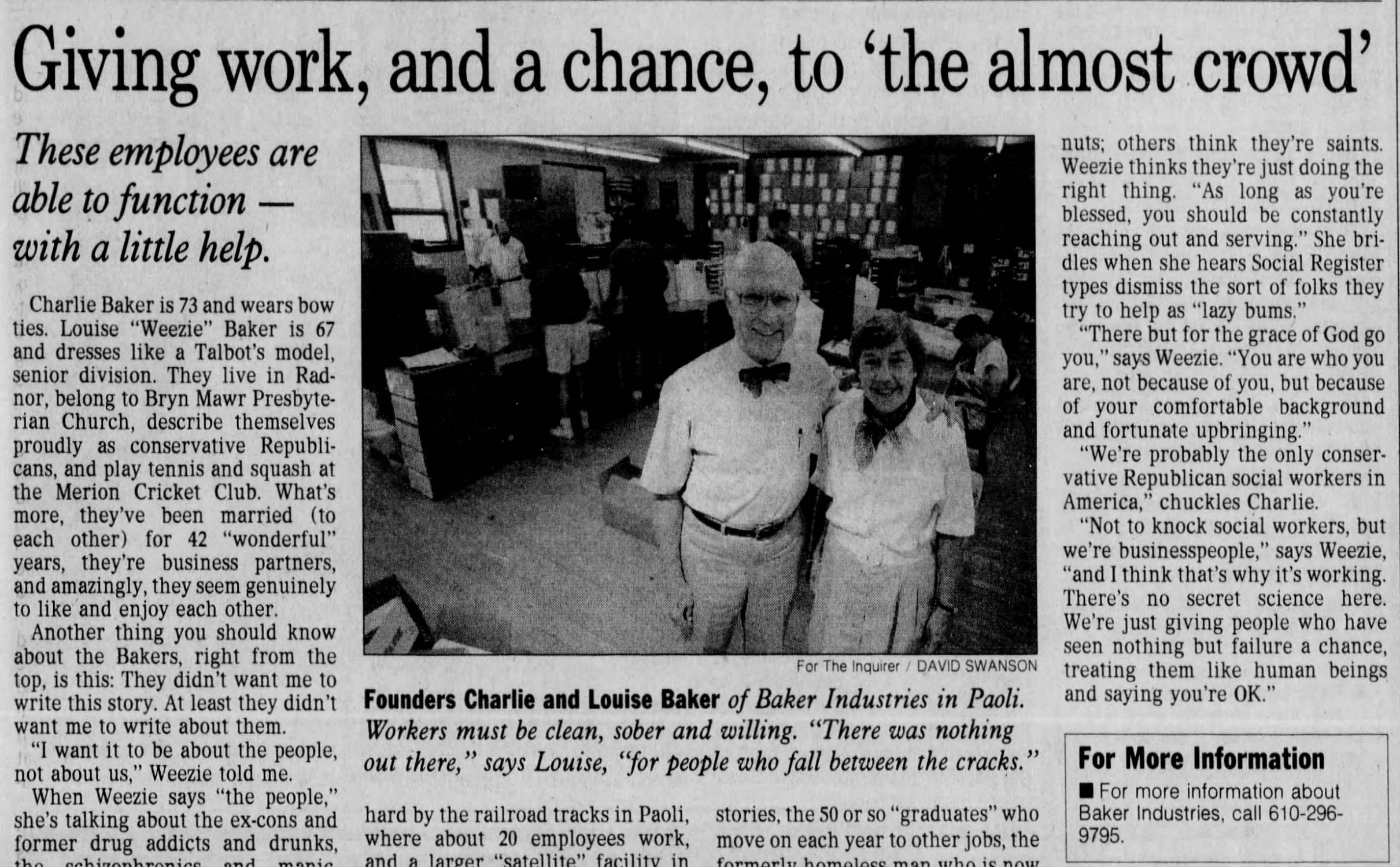
This photo and article about Mr. Baker were published in The Inquirer in 1998.Newspapers.com
Away from work, Mr. Baker was an avid squash player, skier, and sailor. He won the U.S. national hardball singles squash championship six times in the 80-and-older division from 2006 to 2016, skied into his 70s, sailed into his 80s, and played squash and tennis at the Merion Cricket Club until recently.
He graduated from the U.S. Military Academy in 1946 and served more than seven years in the Army. He was stationed in Europe and rose to captain. His family called him a “relentlessly joyful spirit” in a tribute and said: “The world was a better place for his presence.”
Charles Pitman Baker III was born June 24, 1925, in Philadelphia. His father, Charles Jr., was manager at the old Colonial Hotel, and Mr. Baker told stories of dropping water balloons on passing pedestrians from windows when he was very young and spending summers at the beach and on boats with the Ocean City Yacht Club.
He was a star squash player at the Haverford School and known by classmates as “the Arm,” his 1943 senior yearbook said, “because of the vicious way he wields a racket.” His mother died when he was 11.
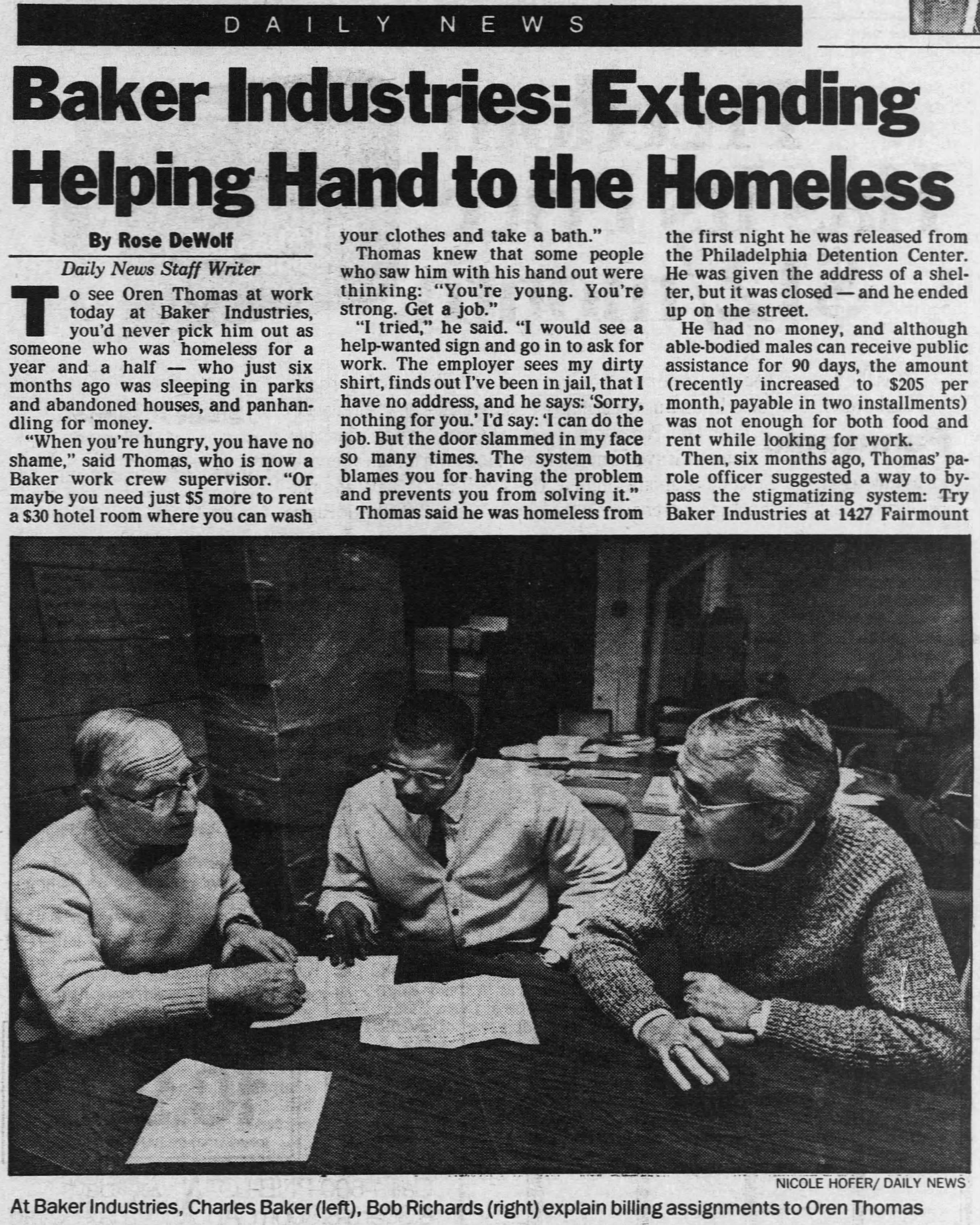
This photo and article about Mr. Baker (left) appeared in the Daily News in 1990.Newspapers.,com
He met Louise Wilhelm while water-skiing in Ocean City, and they married in 1955, and had sons Charles IV and Justin and a daughter, Sandra. His wife died in 2025.
Mr. Baker and his wife attended Wayne Presbyterian Church, and he was known for his bow ties and wide smiles. He was funny, his daughter said, and liked to sing show tunes anytime anywhere, and write corny poems on birthday cards.
“He was a wonderful dad who loved his family,” his daughter said. His family said in a tribute: “His legacy of service, humor, and kindness will live on for many generations to come.”
His wife told The Inquirer in 2004: “Charlie has a kind heart.”
Mr. Baker (front left) celebrated his 100st birthday in June 2025 with his family.Courtesy of the family
In addition to his children, Mr. Baker is survived by four grandchildren, five great-grandchildren, and other relatives. Two sisters died earlier.
Visitation with the family is to be from 10 to 11 a.m. Saturday, Oct. 17, at Wayne Presbyterian Church, 125 E. Lancaster Ave., Wayne, Pa. 19087. A celebration of his life is to follow. Bow ties are optional but encouraged, the family said.
Donations in his name may be made to Baker Industries, 184 Pennsylvania Ave., Malvern, Pa. 19355.
His wife told The Inquirer in 2004: “Charlie has a kind heart.”Baker Industries
They’re headed to the transit authority’s Frazer Shops and Yard in Malvern for some modifications before joining the Regional Rail fleet in two to three months.
No tariffs were added to the purchase price, SEPTA spokesperson Andrew Busch said. The agency had estimated that it might have to pay up to $3.5 million extra in U.S. duties, but it was determined the cars did not fall under a complex web of new trade rules.
It took months of research and discussion.
“We sent someone to Montreal, and they crawled under the cars taking pictures of plates with serial numbers on the steel components that showed they were made in the USA,” Busch said.
The pictures convinced U.S. Customs and Border Protection that the used rail cars were not subject to duties, he said.
“We essentially repatriated those items by bringing them over,” Busch said.
SEPTA also worked with the offices of Pennsylvania’s U.S. senators. Exo and Canadian transportation officials helped dig up contracts from when the cars were made to verify the origin of the steel.
The Trump administration imposed a 25% tariff in March 2025 on imported Canadian goods not covered by a trade treaty between the two countries, one negotiated by the president. That surcharge was also extended to steel, aluminum, and automobiles.
Canadian Prime Minister Mark Carney retaliated with 50% tariffs on a number of imported U.S. products.
The Exo cars from Montreal are intended as reinforcements after the fallout from five fires on SEPTA’s 50-year-old Silverliner IV Regional Rail cars last year, which disrupted service on the commuter lines for months.
They will be mixed in with the rest of the Regional Rail cars, along with 10 coaches leased last year from Maryland’s commuter transit agency.
Passengers dealt with canceled trips, delays, and skipped stops as the Silverliner IVs were fixed. Many trains were shorter than usual.
Unlike Silverliner IVs and the newer V series, which both carry passengers and power the train, the Montreal cars must be pulled or pushed by locomotives.
SEPTA has 15 electric locomotives, which it bought in 2019, and it operates 45 Regional Rail passenger cars that need to be pulled.
After a federal judge said last week that Philadelphia District Attorney Larry Krasner may have committed federal crimes, questions quickly emerged about the prosecutor’s political future.
Krasner, an outspoken Democrat and one of the nation’s most well-known progressive prosecutors, has recently entertained entreaties to run for higher office, including a possible bid for Philadelphia mayor next year.
But in the week since U.S. District Judge Paul S. Diamond said he had referred Krasner and a top supervisor to the Department of Justice for investigation, Krasner has largely stayed quiet, and few elected Democrats have publicly come to his defense.
Behind the scenes, many insiders asked: Could this episode damage Krasner too much for him to mount a campaign for another office?
In a statement Tuesday, Krasner said he had already told another progressive considering a bid for mayor that he would defer to her.
“I’m a big believer in Councilmember Kendra Brooks,” Krasner said, referring to the City Council member who The Inquirer reported is considering a run for mayor. “Prior to these accusations, I told her that if she runs for mayor, I will not consider running.”
And he framed the legal conclusions by Diamond — a federal jurist appointed by former Republican President George W. Bush — as merely “accusations,” citing others who have been targeted for investigation by the Department of Justice under President Donald Trump.
He referenced the New York attorney general, a former FBI director, and a DOJ employee who was charged after throwing a sandwich at a federal agent and has since become a symbol of resistance to Trump’s administration.
“Ask Letitia James, James Comey, the ‘sandwich man’ or the guy who took peeling paint from the reflecting pool what they have to say about accusations,” Krasner said. “Or ask dozens of innocent people whose exonerations this DA’s office supported what they say about accusations.”
Krasner’s statement Tuesday was one of the first public comments he has made regarding the case since Diamond’s criminal referral, aside from a brief statement last week saying that he disagrees with Diamond’s conclusions and could not comment further because the matter is pending in court.
The uncertainty around Krasner alsohas some city Democrats contemplating a dramatic outcome: Could criminal charges or judicial discipline sweep Krasner from office before the end of his term in 2030?
And if that happened, who would replace him as the city’s chief law enforcement officer?
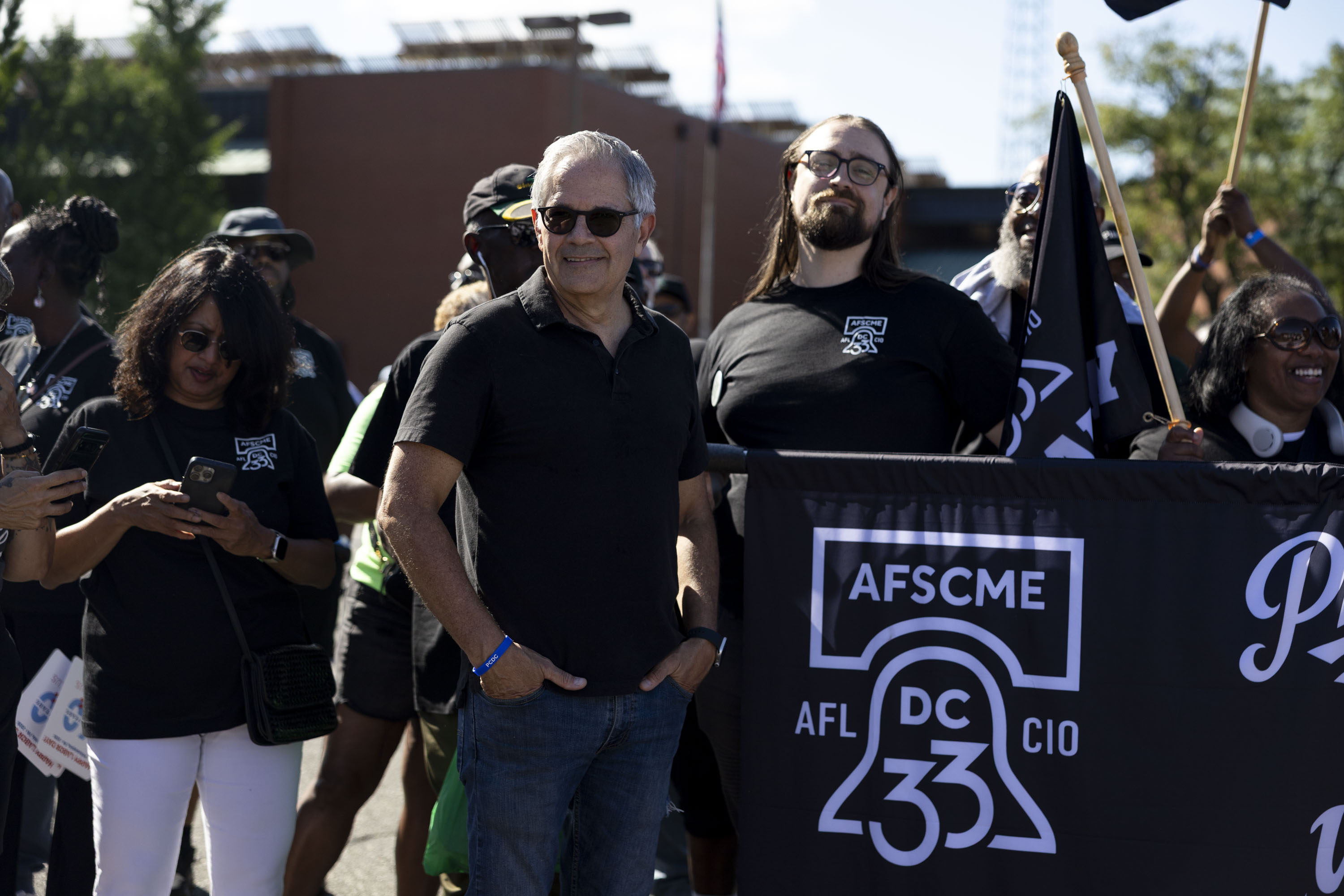
District Attorney Larry Krasner standing with District Council 33, for the 39th Annual Tri-State Labor Day Parade on Sept. 7.Tyger Williams / Staff Photographer
At least two elected Democrats have spoken to ward leaders about filling the district attorney’s role if Krasner were to be forced from office, according to sources familiar with the conversations who were not authorized to speak about them publicly.
But some of Krasner’s allies say this is all much ado about nothing. They maintain that Diamond’s legal conclusions and the referral of the matter to the Department of Justice were politically motivated and that Krasner will weather it, as he has past tribulations.
“They’re trying to do something that they’ve been trying to do for years, which is go after Krasner’s head,” said Sergio Cea, political director of the progressive group Reclaim Philadelphia, which has supported Krasner since his first run for office in 2017. “What they’re trying to do is roll back the gains that Philly voters pushed forward.”
Silence from elected officials
Krasner has always been something of a political outsider. He has never been endorsed by the city’s Democratic Party and has been critical of its leadership.
City Councilmember Nicolas O’Rourke, a member of the progressive Working Families Party and a longtime supporter of the district attorney, said in a statement Tuesday that he has confidence in Krasner’s ability to lead his office.
“There’s no question,” he said. “DA Krasner can and should be doing the work that Philadelphians have tasked him with through their votes.”
Aside from O’Rourke, most of the city’s top officials have declined requests for comment about Krasner’s recent legal jeopardy, including some of his ardent supporters.
Some say that Krasner has not asked them to weigh in, and that they are hesitant to take a position on a complex legal issue. Others say they do not want to distract from a midterm election that is just six weeks away.
Jack Inacker, a Democratic strategist based in Philadelphia, said he was not surprised that few elected Democrats have spoken on Krasner’s behalf.
“You’ve got these major dustups all the time, it seems now,” Inacker said. “Krasner being so antagonistic to everyone doesn’t get him allies.”
Inacker also said the courtroom allegations are “esoteric in nature,” making it challenging for elected officials to stake a position.
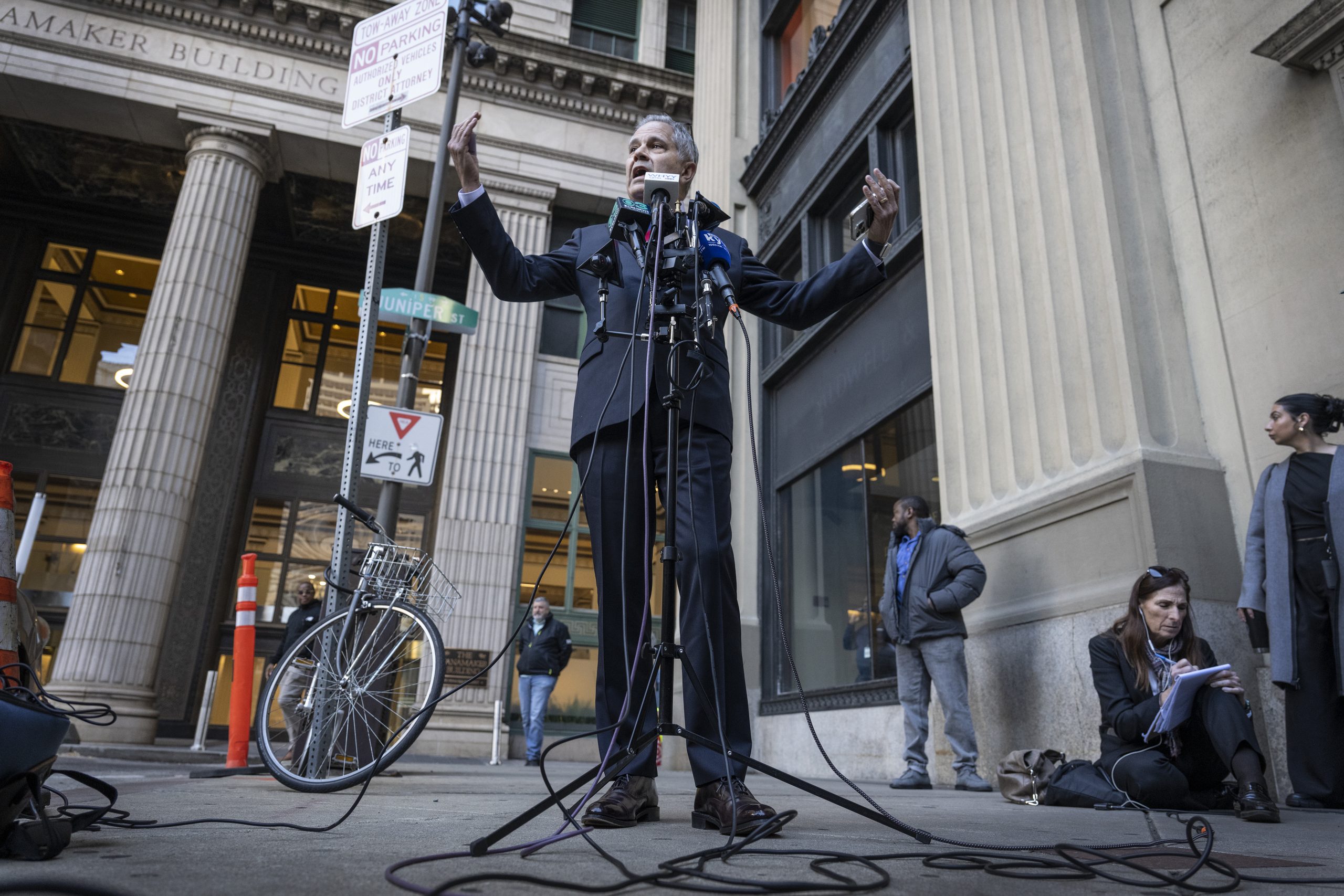
Newly reelected District Attorney Larry Krasner speaks to reporters during a news conference outside the District Attorney’s Office on Nov. 5, 2025.Jose F. Moreno / Staff Photographer
The case before the federal judge centers on Dennis Johnson, who has sought for more than a decade to have his 2009 murder conviction overturned. In 2022, a former assistant district attorney working for Krasner filed paperwork to support Johnson’s bid.
But four supervisors in Krasner’s office later testified that they found errors in that 2022 brief, and that Krasner was involved in conversations about attempting to mislead the court to cast the former prosecutor as rogue.
Krasner has denied wrongdoing.
Brian Hart, a Democrat who has been critical of Krasner and served as a media adviser to Dugan’s campaign, said this episode is more fraught for Krasner than his 2022 impeachment.
“The allegations aren’t coming from just Republicans,” said Hart, a public relations strategist. “They’re coming from testimony within his own office.”
The mayor’s race question
Some activists on the left wing of the city’s Democratic Party have said they feel emboldened to mount a serious challenge against Parker, who will be up for reelection next year. They cite recent wins by progressives both in the city and nationally.
And eight months out from the May primary election, several prospective candidates, including Brooks, are mulling whether to launch a campaign.
When asked then whether he might consider a future campaign for mayor — or even U.S. Senate — Krasner responded: “Do I have a plan to run for these offices today? No. But … it would be foolish for me to completely rule out those possibilities.”
Philadelphia District Attorney Larry Krasner, seen here with Mayor Cherelle Parker at a news conference at Dilworth Park on Dec. 16, 2024.Alejandro A. Alvarez / Staff Photographer
Larry Ceisler, a public affairs executive based in Philadelphia, said a federal criminal investigation of Krasner could pose a logistical problem if it was conducted while he was running for mayor.
But politically speaking, Ceisler said, it might not be an impediment. An investigation by the Department of Justice under Trump — an entity many Democrats distrust — could rally progressive support.
“I think he would probably run with it as a badge of honor,” he said.
Ceisler pointed to former Mayor John F. Street, who in 2003 was locked in a tight race for reelection when police found an FBI bug in his office. Street blamed Republican President George W. Bush’s administration, and he went on to win the election a few weeks later.
“When these things happen, everybody puts on their respective jerseys, so the Krasner people are going to say, ‘It’s political,’” Ceisler said. “I think to the Krasner constituency, especially if he wants to run for mayor, or do something else, I don’t think this fazes them.”
Weighing a post-Krasner future
It is unclear where any potential criminal investigation or disciplinary probe of Krasner and his office might lead, and legal experts have said that a hypothetical investigation would likely take months.
But some Philadelphia Democrats are already contemplating what would happen if Krasner cannot finish the term that he began this year and that ends in 2030, with some quietly discussing contingency plans to fill the office.
Under state law, in the event of a vacancy, the city’s Common Pleas Court judges vote by secret ballot to appoint a new district attorney. The appointed interim district attorney would serve until the next general election. Those elections take place in even-numbered years.
During the three-week gap between when Williams resigned and Hodge was appointed, the district attorney’s office was led by Williams’ first assistant district attorney, Kathleen Martin.
Krasner does not have a first assistant district attorney. Robert Listenbee, who formerly held the role, retired in January, and the legally required position remains unfilled.
Staff writers Chris Palmer and Ellie Rushing contributed to this article.