Category: Philadelphia News

  • SEPTA drivers fear screaming riders and chaotic commutes as bus overhaul takes effect

    SEPTA drivers fear screaming riders and chaotic commutes as bus overhaul takes effect

    The lines are drawn, the maps are set, and on Sunday SEPTA began reconfiguring bus routes across the Philadelphia region.

    Bus operators say they worry passengers frustrated over changed routes that take them by surprise and unexpected delays will yell at, curse, or assault them. It has been a persistent problem in recent years.

    In some cases, riders accustomed to staying on one bus route will need to transfer to other buses or the subway and elevated trains. That increases the chances of missed connections and delays. And angry people.

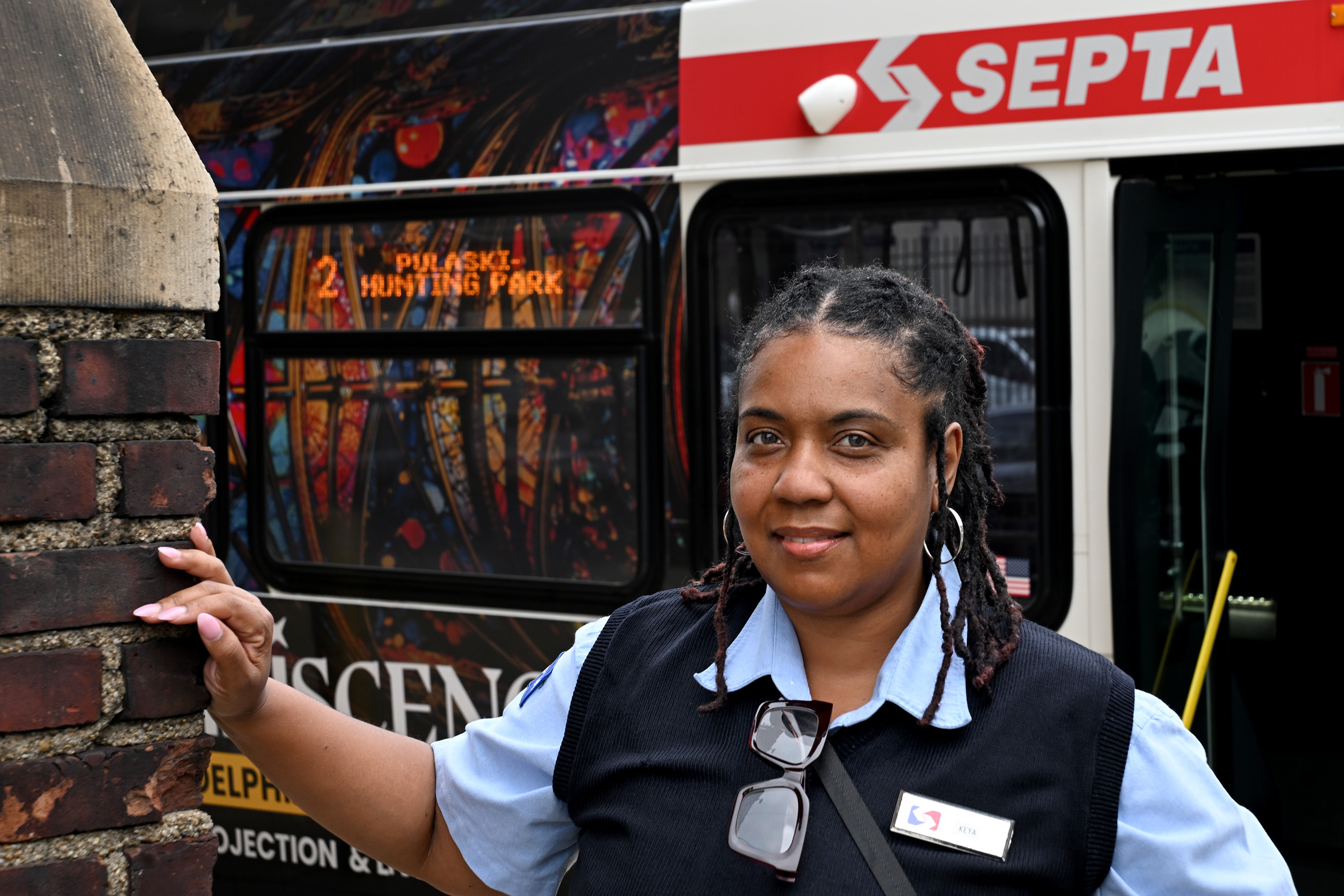
    “You’re upset because you had counted on the bus,” said Keya Sampson, 52, a bus driver for 12 years. “You have to be at this appointment or you’ve got to punch in on time.”

    She is sympathetic, even though delays are outside her control.

    “We’re going to end up in a tricky situation because we’re the face of SEPTA,” Sampson said. “They don’t have anybody else to scream at, unfortunately.”

    Vulnerable riders

    Carlos Guillen, who has worked for SEPTA for 19 years as an operator on buses and the Broad Street Line, noted that SEPTA advises Route 4 riders to take the B, SEPTA’s new name for the subway line, to avoid longer wait times.

    “I can see how it can impact elderly and those with disabilities, especially moving down the sidewalk — they’re not the smoothest thoroughfares,” said Guillen, a safety officer for Transport Workers Union Local 234.

    He noted a lack of ADA-accessible stations on the B north of City Hall.

    Longer term, some bus operators are concerned about the possibility they could be replaced in the future by autonomous driving technology.

    “Autonomously driven vehicles have no place in mass transit,” said Joe Coccio, secretary-treasurer of Local 234, which represents more than 5,000 SEPTA employees, including operators on buses, subways, and trolleys. “They’re flawed. They’re unpredictable.” He said they also can be hacked.

    SEPTA says it has no plans to use robot bus operators and is hiring human ones as fast as it can. But a spokesperson also said the authority wants to keep its options open.

    Most operators are anticipating some confused passengers at first, even though SEPTA has sent out teams to educate people about Phase 1 of the New Bus Network. Maps and cards illustrate the changes, translated into multiple languages.
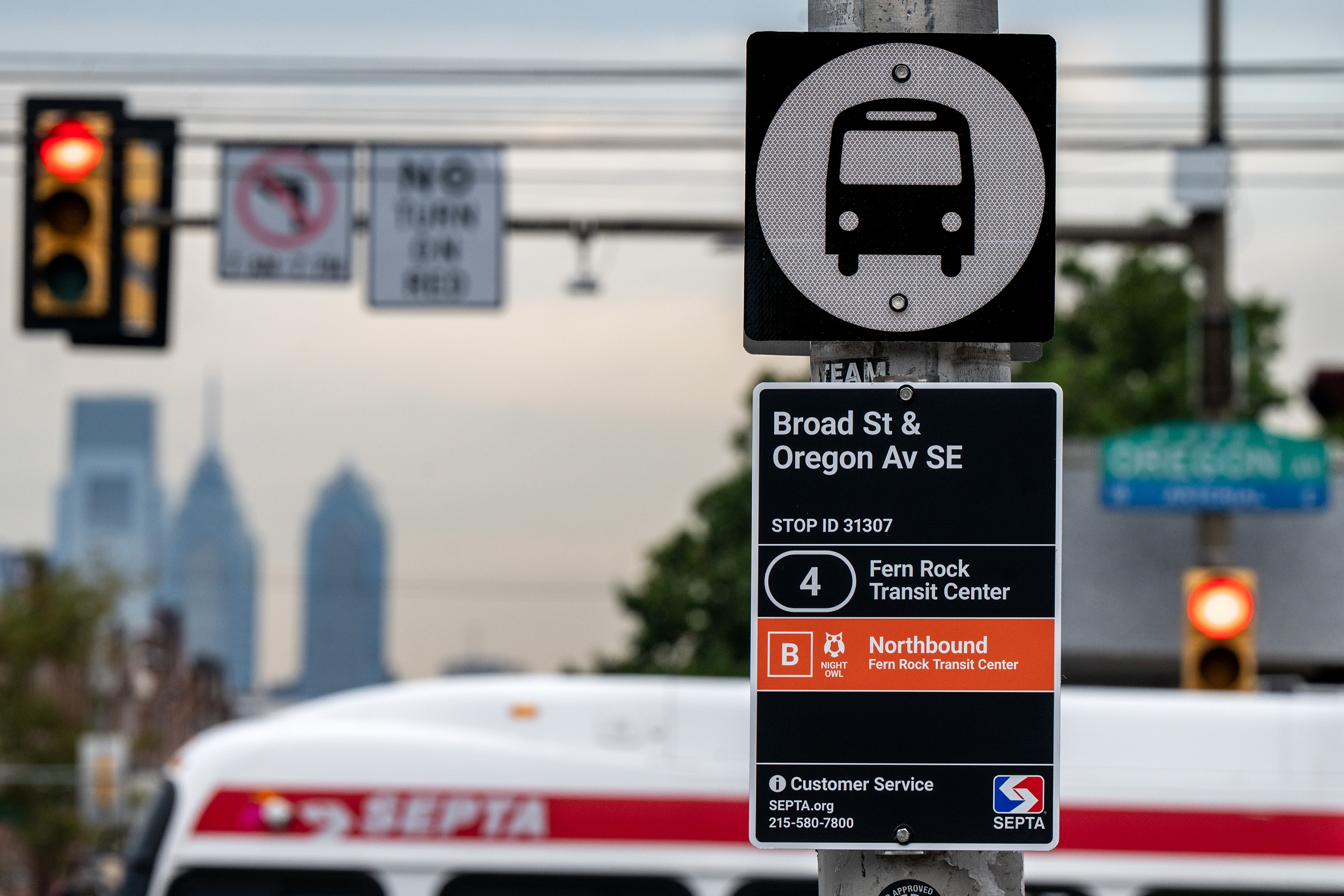
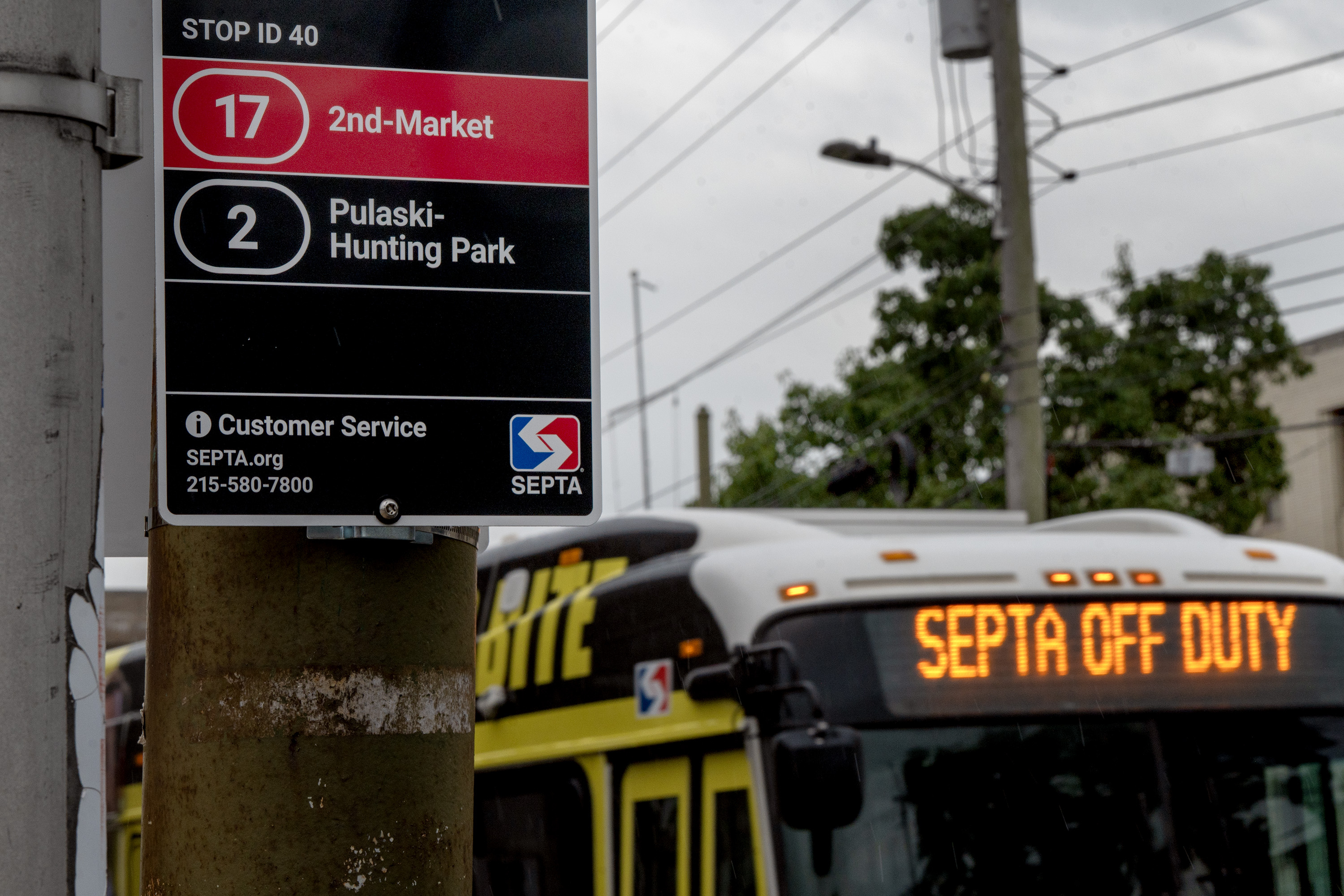
    New color-coded signage is part of SEPTA’s plan to communicate changes to bus routes that begin on Sunday. Tom Gralish / Staff Photographer

    Some people won’t get the message.

    “People right now don’t even read our destination signs to see if it’s the right bus,” said Ryan Stewart, who operates a Route 35 bus from the Midvale depot in Nicetown.

    What’s changing

    SEPTA has pushed for much of the last decade to streamline its bus network amid declining ridership that predated the pandemic. Planners found that slower travel times due in part to traffic delays and long, twisty routes made service less reliable and discouraged people from relying on buses.

    In the first wave of changes, 30 bus routes will be affected.

    Some routes with low ridership or that duplicate nearby service have been eliminated. Others have been extended. Some will run more frequently, others less frequently, based on analysis of demand. Two new routes have been added.

    The people who pilot the buses on Philadelphia’s narrow streets know that some small and overlooked issues could undercut the New Bus Network program’s goal of quicker, more efficient service.

    Sampson, for instance, has been driving the 63 for the summer. She will be back behind the wheel on Route 4, her regular run for the last four years, this week — as the changes begin.

    Route 4 will have fewer buses running. So SEPTA is deploying 60-foot articulated buses, which carry more passengers.

    SEPTA had been using 40-foot buses on the route, which has narrow streets and hairpin turns, especially in its northern reaches, where there is a longstanding detour that will not end until summer 2027. Operators think the longer buses will have trouble navigating the route.

    Operators have asked SEPTA to look at the issue. “If there’s nothing they can do, it’s going to be a nightmare,” Sampson said. “We’re going to get stuck.”

    She knows well the hard turn from Erie onto Rising Sun, an angled intersection with a pub that often has a beer truck parked on the curb. Only one articulated bus at a time can fit down that little stretch of Old York Road. And the church at 10th and Rockland Streets that has packed funerals, with cars parked to the corners.

    “How do you ask someone who’s grieving, ‘Hey, move your car’? … At the same time, we do need to make the turn, and it does need to be safe.”

    Time will tell

    Paul Pollard, a veteran bus operator on Route 61, said he spends precious minutes stuck in traffic on Main Street in Manayunk on his way north to Roxborough during morning peak hours, as parents drop students off at school.

    But the schedule assumes his bus can sail through.

    “I’ve had people get off my bus, walk two or three blocks down, and go into their job,” Pollard, 49, said. “I’m still sitting in traffic.”

    It is “virtually impossible” to meet the schedule safely, he said. The result: late buses and steamed customers.

    Time will tell if worries become reality, but operators know that they will bear the brunt of any outrage.

    “There’s nobody at SEPTA headquarters getting somebody throwing coffee on them, or spitting on them,” Pollard said.
  • A twosome of naked events took over Philadelphia this weekend

    A twosome of naked events took over Philadelphia this weekend

    Philly bared it all this weekend.

    By sheer happenstance, a twosome of naked demonstrations took place Saturday across the city — a “free the nipple”-esque protest midday at Philadelphia City Hall followed by the annual Naked Bike Ride in the late afternoon.

    Beyond the shock and awe of scantily clad or not-at-all clad people, both events were acts of resistance, defiance, and free expression, and went deeper than, well, skin deep, attendees said.
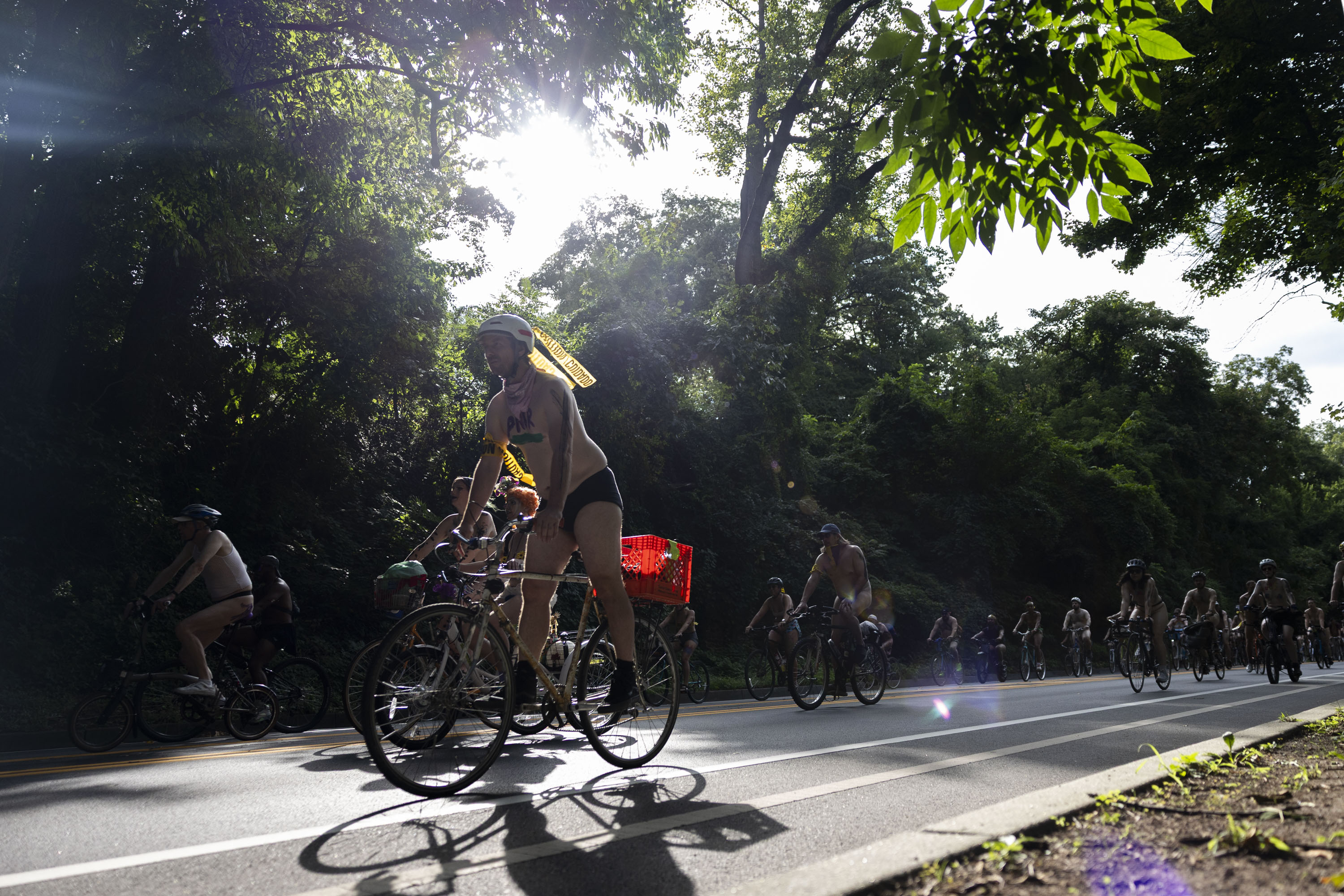
    As hundreds lined up along Martin Luther King Drive for the 17th edition of the Naked Bike Ride, their bodies — with varying degrees exposure — were like flesh-toned picket signs. People painted themselves with phrases denouncing President Donald Trump and his administration’s targeting of immigrants, calling for a freed Palestine, and demanding enhanced bicycle safety measures. Mattie L., who was visiting from Savannah, Ga., wrote “Voting is Hot,” across his back.

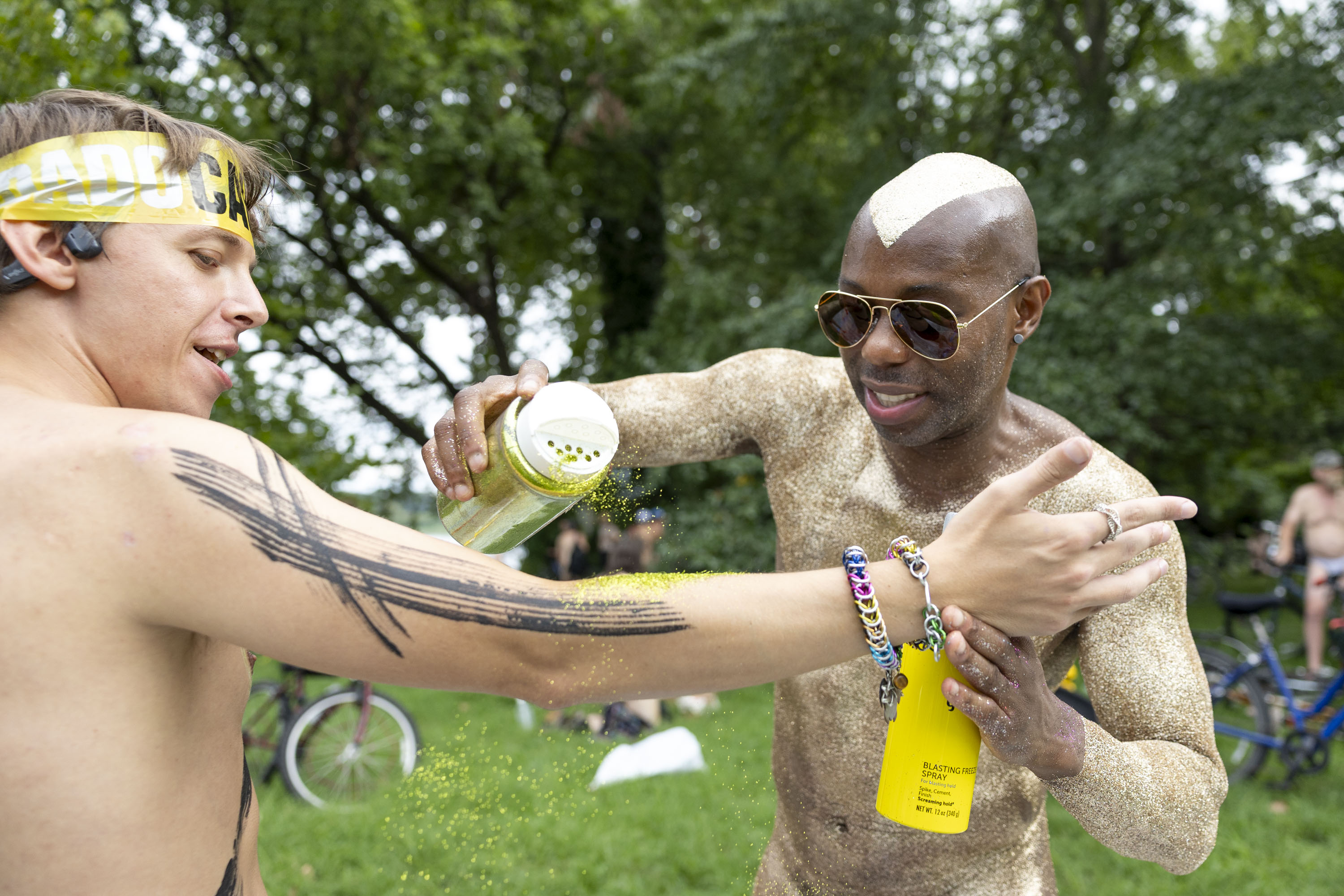
    Rocket (right) puts glitter on Ari Tm of Fairmount for the Naked Bike Ride on Saturday, Aug. 22, 2026, in Philadelphia.Tyger Williams / Staff Photographer

    “Besides the bodies, the messages themselves add another reason for people to lock in what [we’re] saying and to really take it to heart,” said 35-year-old Mattie, who declined to give his last name, citing concern for his privacy.

    To riders, the bare-as-you-dare ride, which snakes 12 miles through the city, is an annual pro-environment, pro-bicycle safety and advocacy, and pro-self-love-intended counterpunch to fuel dependency, car-first American infrastructure, and body shaming.

    Biking in a car-centric city is itself an act of rebellion, said Emma K., a 28-year-old Temple University alum who now lives in New York City. Emma also declined to give her last name because of privacy concerns.

    “I cycle as a protest all the time,” she said. “There’s a lot for Philly to do to be safer to riders.”
    Dane Jorento, 65, of Drexel Hill, was drawn to the Naked Bike Ride because of “naked,” “biking,” and “protest.” Being unabashedly naked, Jorento said, is an act of radical vulnerability and self-acceptance.

    For Morningstar Hirst, who was part of the ride’s “street team,” the Naked Bike Ride was about showing off their new body post-top surgery, while “protesting and leaning into body positivity.”

    “I am all about freedom within one’s body and then mobility with that body — I think that this ride sums that up really quickly and really easily,” Hirst, 34, of West Philadelphia, said.

    “Every body is a wonderful body,” he added.

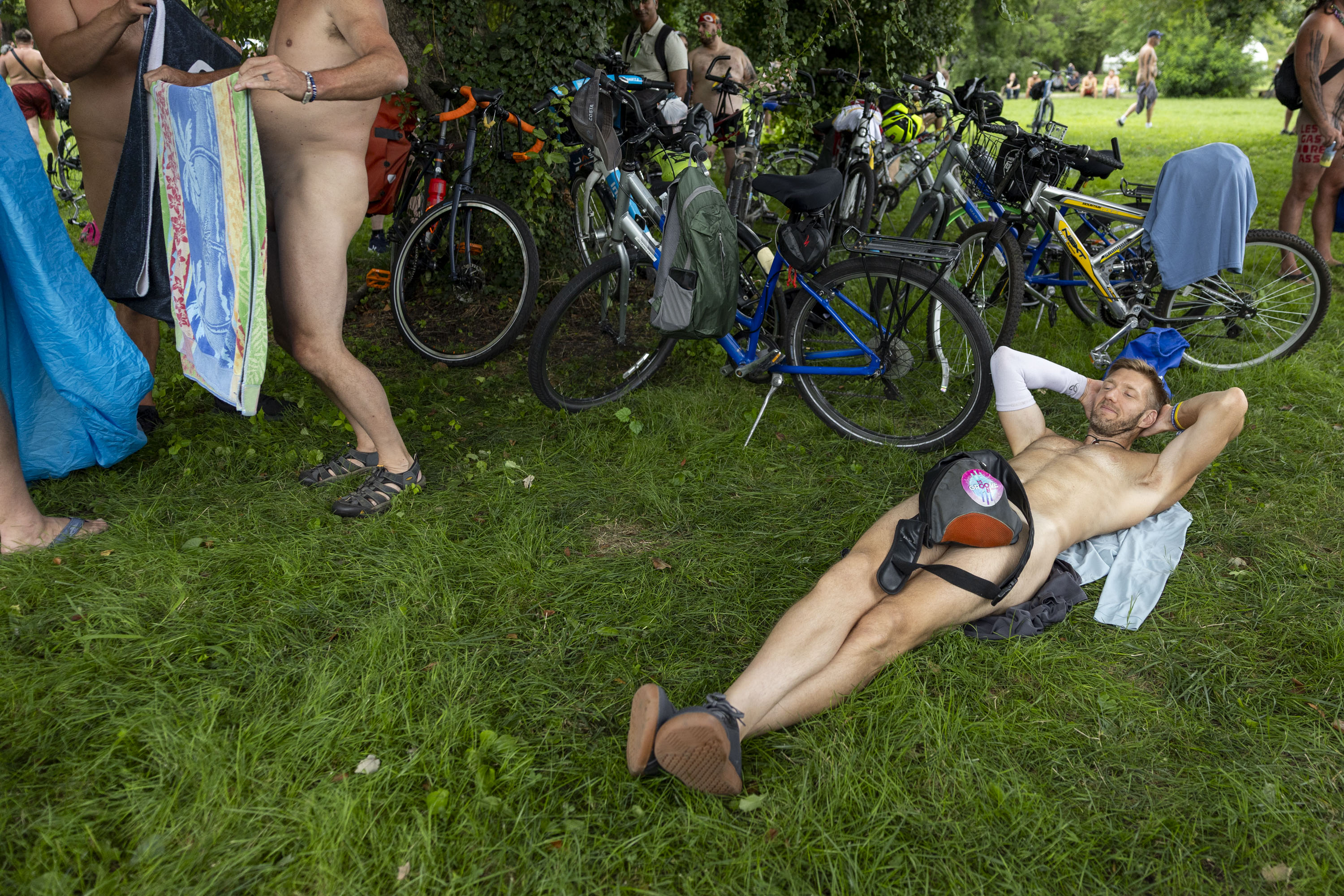
    Ryan Genova of Glenside chills during his fifth time attending the Naked Bike Ride on Saturday, Aug. 22, 2026, in Philadelphia.Tyger Williams / Staff Photographer

    It was a pure coincidence that the Naked Bike Ride aligned with the inaugural Go Topless Day in Philly earlier that day.

    Go Topless Day had a clear agenda: Roughly a dozen bare-chested picketers gathered in LOVE Park at noon, before marching around City Hall with a police escort, chanting, “free your breasts, free your mind,” to stir action around what protesters described as the legal hypocrisy that allows men to be shirtless in public but not women.

    “If men can go legally topless in a street, women should have the same right,” organizer Kasyo Perrier said. “Otherwise, we should force men to wear tops.”

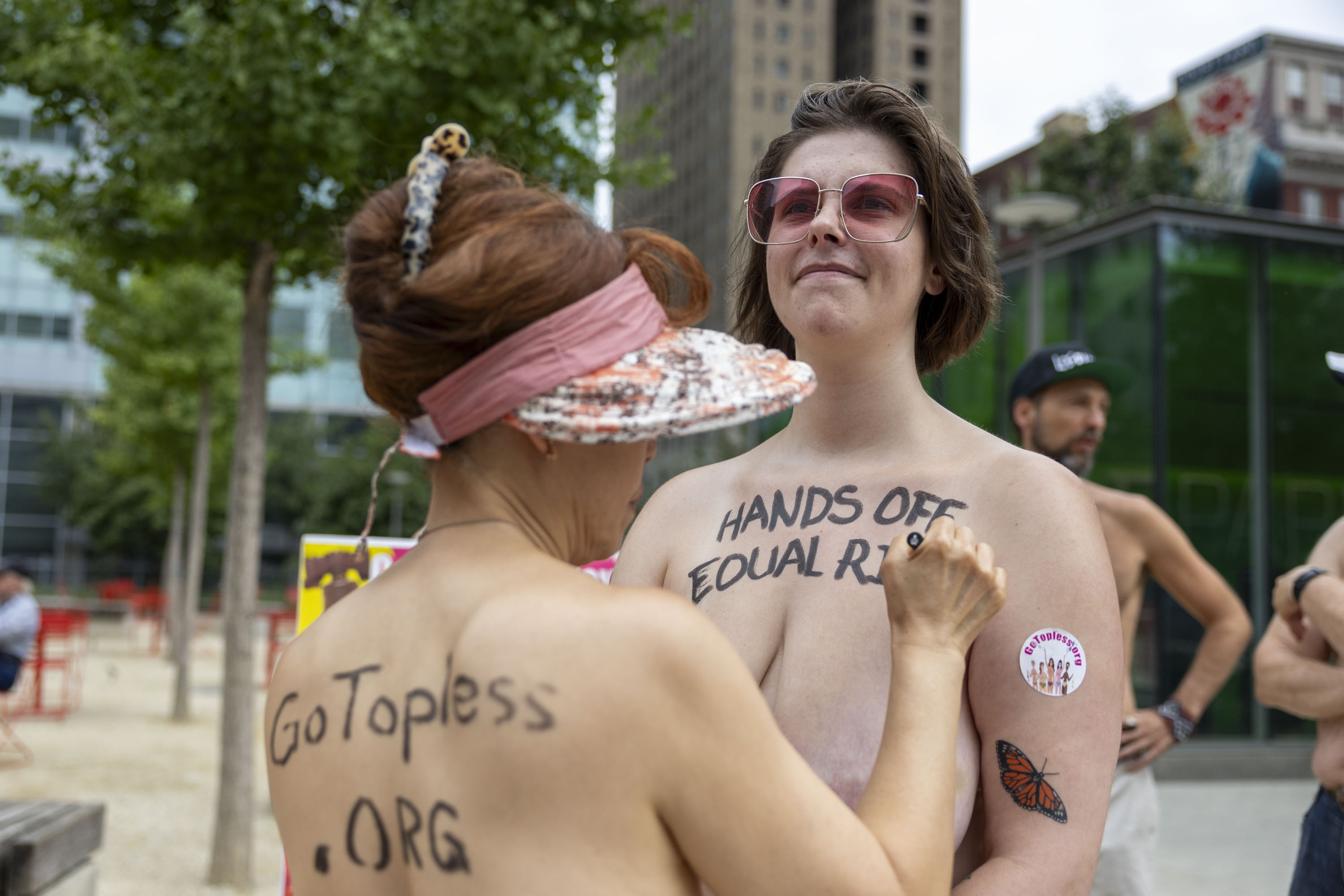
    Chloe Theodosiou of Germantown gets a message of “Hands Off Equal Rights” written on their chest for the GoTopless Day Civil Rights March at LOVE Park on Saturday, Aug. 22, 2026, in Philadelphia.Tyger Williams / Staff Photographer

    Go Topless Day is a cause of the Raëlian Movement, a religious group that believes extraterrestrials created humanity. Core tenets of the Raëlian Movement are freedom and equality, explained Perrier, who is a Raëlian priest: “We’re created beautiful and and there’s no reason to be ashamed of our body.” (Go Topless Day, in its 19th year, is usually held around Aug. 26, Women’s Equality Day, marking women’s suffrage, according to Perrier.)

    “It is a gateway to self-love; it is a gateway to neighborly love when we stop making certain things taboo,” participant Chloe Theodosiou, 30, of Germantown, said of the cause.

    Not everyone felt so uninhibited. Tourists with cellphone cameras gawked, a woman with a stroller scoffed. A group of tweens giggled and shielded their eyes.

    One man gruffly remarked, “no one wants to see that.”

    “We’re all just shapes — just a bunch of circles and triangles,” Theodosiou remarked.

  • Philly has 100-year-old stormwater infrastructure and 72,000 easily clogged inlets

    Philly has 100-year-old stormwater infrastructure and 72,000 easily clogged inlets

    Helplessly watching stormwater fill the basement is among the most frustrating experiences for Philadelphia homeowners. It is especially bad if you are waiting for the city’s help to do something about it.

    In West Mount Airy, Arielle Wolfson, 37, said roads by her home “become a river” when it storms. She and her wife live at the bottom of a hill near the intersection of Mount Pleasant Avenue and Cresheim Road, where five stormwater inlet drains are responsible for keeping rainfall from growing into rapids as it sloshes downward. But for years, only one of the drains has been fully functioning, Wolfson said. The others have been mostly sealed shut by city repaving projects that raised the level of the street, but not the inlets built into the curb.

    When ankle-deep water slopes down into an alleyway that connects Wolfson’s home and nearly 30 others, it often floods her basement. Every rainstorm is nerve-racking, she said, and her efforts to alert the city, the water department, and City Council members had not resulted in change beyond an occasional inlet cleaning.

    Kelsey Hensley, Wolfson’s wife, said their frequent flood calculus is: “Do we go out with some friends, or do we stay home to monitor the basement?”

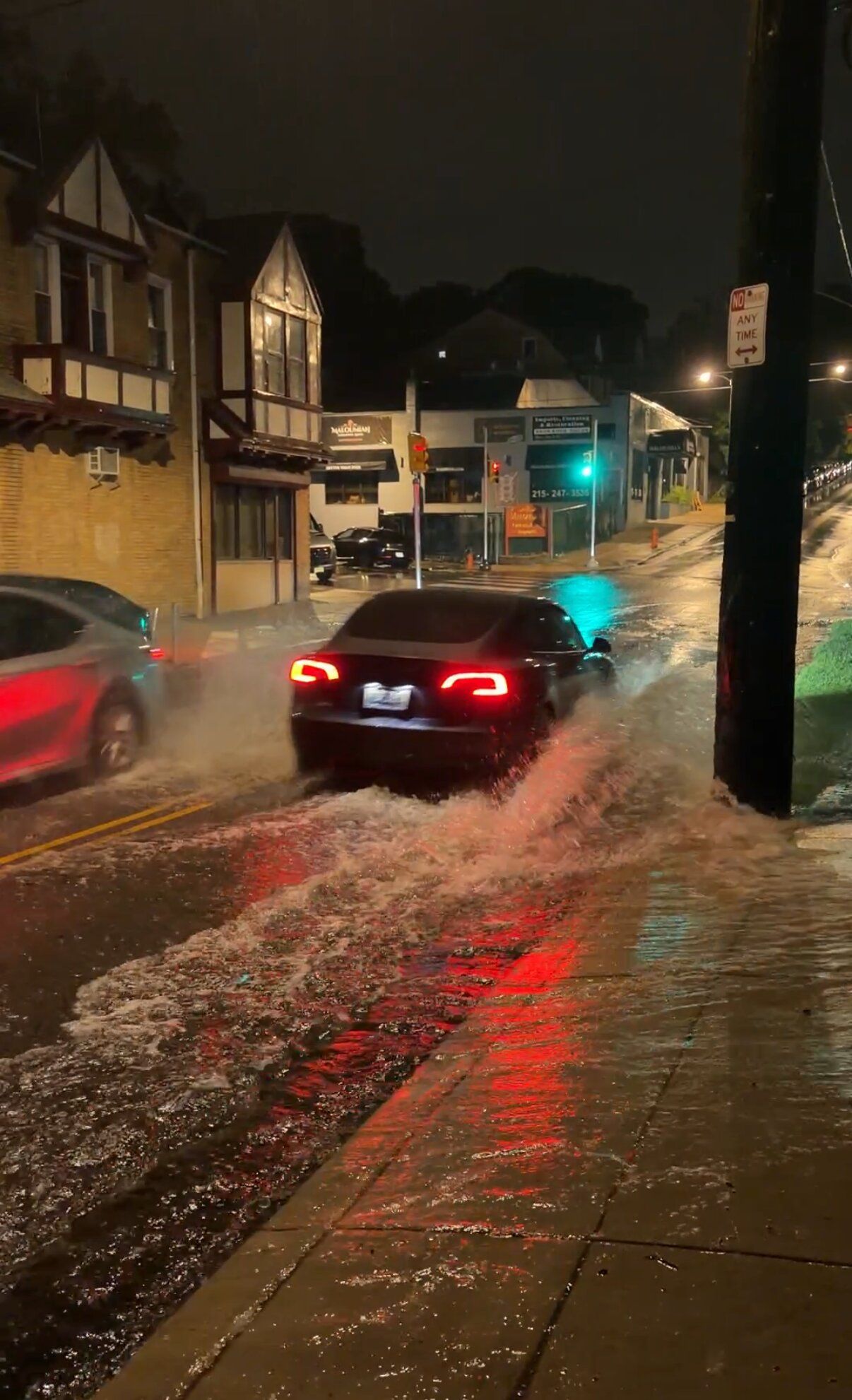
    Flooding near the intersection of Mt. Pleasant Ave and Cresheim Road in Mount Airy after an early August storm. The water often flows down the hill and into the basements of dozens of residents because the street’s stormwater inlets are not functioning properly.Kelsey Hensley

    Their anxiety is common in Philadelphia, where the city’s century-old sewer and stormwater infrastructure struggles to handle modern surfaces and roofs, increased rainfall, and a Delaware River that has risen by roughly a foot since the sewer system was built. And after 16 consecutive months of lower-than-normal precipitation, regular rainfall returned to Philadelphia in July and August, and brought flooding along with it.

    Philly has about 72,000 stormwater inlets, and it does not take much to clog them up — ordinary objects like tree leaves, dirt, trash, and other street debris can all be culprits, according to the Philadelphia Water Department. Last year, residents submitted almost 3,000 requests to the city’s 311 line for inlet cleanings, an Inquirer data review found, and the city is asking for help.

    “Across the city, The Water Department regularly checks all sewer drains and clears those that are clogged. … If they are able, we encourage residents to take part in the cleanup process before a storm comes,” city spokesperson Sharon Gallagher said in an email.

    As the planet continues to warm, the stress on Philadelphia’s flood-prone system only figures to increase, leaving more residents like Wolfson with dread when clouds gather overhead. As she spoke to The Inquirer, an afternoon rainstorm had just passed through.

    “I’m going down to the basement every hour just making sure it’s OK. So just the anxiety that’s pervasive among me, my wife, and other community members, it’s pretty unbearable,” she said.

    A frustrating wait

    Despite having roughly one stormwater inlet for every 20 Philadelphia residents, the city has generally responded to 311 requests for clogged stormwater inlets quickly. Since Mayor Cherelle L. Parker came into office in 2024, the city has closed inlet cleaning requests in under four days on average.

    But 311 data may not capture the complete scope of the issue. Some residents may report their issues directly to the water department.

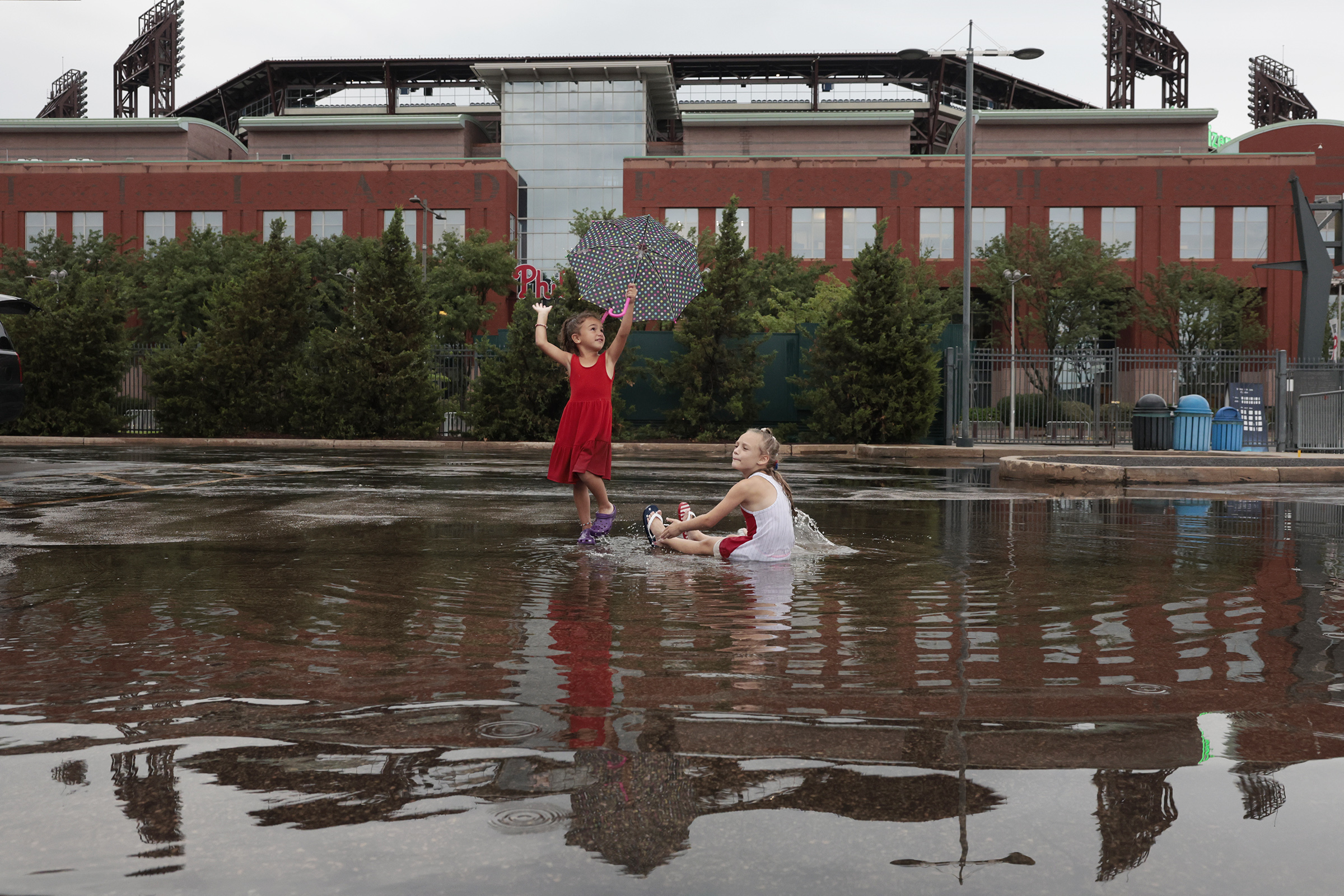
    Alessia Cognata (left, of Downingtown), 5, and Sofia Lubrano, 7, of Thornton play in the rain outside of Citizens Bank Park on Tuesday, July 1, 2025. The cousins were with their families, who decided to continue their tailgate party even after the Phillies game had been postponed because of heavy rain.Elizabeth Robertson / Staff Photographer

    And clogged inlets are just one part of the Philadelphia flooding experience. Mary Catherine Doyle, 56, has been in the middle of a Sisyphean ordeal at the hands of the water department’s slow, antiquated system of hard-copy paperwork.

    She and many of her neighbors along the 2900 block of Pennsylvania Avenue in Fairmount experienced significant basement flooding following storms on July 5. Doyle’s basement was ruined, she said; rainfall, debris, and sewage had destroyed her home office, bathroom, and furniture.

    Her insurance covered the cleanup, but her policy requires she install a backwater valve to prevent future flooding. The valves let wastewater out of homes, but seal to prevent other water from coming back up through pipes.

    The water department has a basement backup protection program where residents can apply for free backwater valve installation. Doyle and over 10 of her neighbors applied after the storm, but a contractor did not show up until Aug. 12.

    Doyle said the water department explained the delays at different points by telling her it lost her physical paperwork, was understaffed, or could not sign off on one approval until a commissioner returned from vacation.

    “I don’t understand where I’m living. I can buy a house in Arizona electronically, but I have to wait … days for someone to come here,” Doyle said.

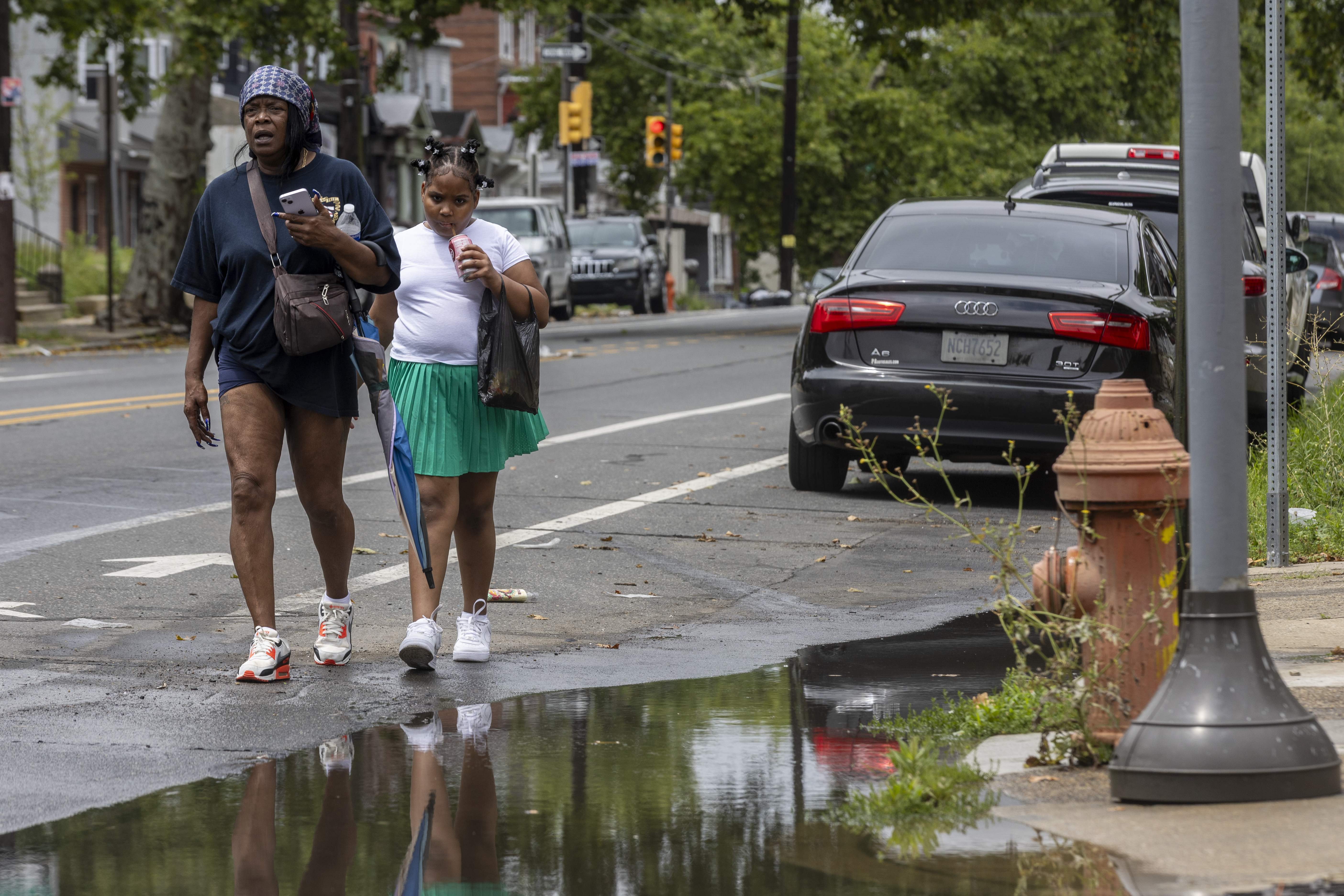
    A mother carries an umbrella while walking around a flooded sidewalk with her daughter by 15th and Erie in North Philadelphia during a flood watch on Monday, July 6, 2026.Aidan T. Gallo / Staff Photographer

    While the city’s water department is ready and willing to perform routine maintenance to prevent flooding, residents with more complex, systemic concerns often end up waiting for fixes while at the mercy of the atmosphere. Gallagher said the city is doing what it can to modernize the city’s flood infrastructure and ready itself for the demands of the future.

    “Teams are constantly working to design and construct additional projects that will increase capacity and help manage water from the increased intensity of seasonal storms,” she said.

    Luckily for Wolfson, she discovered earlier this month that the asphalt had finally been removed from the front of three of the closed inlets, plus some others further up on Cresheim Road.

    Wolfson and Hensley are happy there is finally some progress. But they wish the city would be more communicative and at least give them a timeline for the fix, they said, instead of relative silence or ambiguity.

    “You obviously want a city government to work for its citizens. … It’s extremely, extremely stressful,” Wolfson said. “It’s expensive, and it’s just frustrating because, in my mind, this is a pretty easily solvable issue.”

    Staff writer Joe Yerardi contributed to this article.

  • SEPTA’s bus route overhaul is here. Ready?

    SEPTA’s bus route overhaul is here. Ready?

    SEPTA is eliminating seven bus routes, debuting two new ones, and adjusting more Sunday as the first phase of a bus network redesign gets underway.

    In all, riders will find changes to 30 routes, including more frequent service on those with high ridership, and buses coming less often on some lower-performing routes.

    Highlights include:

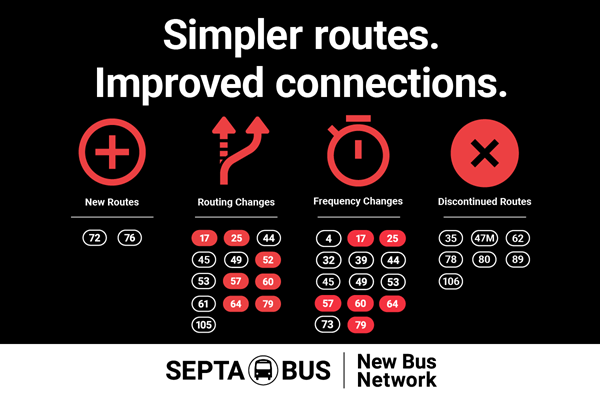
    • Routes 35, 47M, 62, 78, 80, 89, and 106 will disappear. SEPTA says they are less used or have nearby alternatives for passengers.
    • The new Route 72 will connect Frankford Transportation Center and Cedarbrook Plaza, running mostly along Cheltenham Avenue.
    • Route 76, the second new route, will travel between South Philadelphia’s Columbus Commons shopping center, anchored by Ikea and Lowe’s, and the intersection of Rising Sun and Olney Avenues.
    SEPTA is using this graphic to summarize bus-route changes at a glance for the first phase of the redesigned system.SEPTA

    This is the first comprehensive makeover of the bus network since 1968, when the authority took over bus service in the Philadelphia region from several private transit companies.

    SEPTA launched its bus system redesign efforts in earnest after ridership declined 13% from 2013 to 2019, a drop attributed to slow speeds, reliability problems, and competition from rideshare companies. And that was before the COVID-19 pandemic.

    Originally called Bus Revolution, SEPTA’s redesign was set to launch in 2025 but faced significant community pushback and coincided with the state funding crisis that halted many planned transit initiatives. It was officially shelved in November 2024.

    Along with the additions and subtractions, there are a few route extensions:

    • Route 45 will extend southward to serve the Navy Yard, the first time in a decade that a bus will serve the development seven days a week. There will be nine stops inside the Navy Yard for the 45. Currently, the route ends at Broad Street and Oregon Avenue. Route 17 will no longer stop at the Navy Yard on weekends.
    • Route 79, which ended at Snyder Avenue in South Philly, will cross the Schuylkill, go through Grays Ferry and University City, and end at 40th and Market Streets, where there is a stop on the L train, SEPTA’s new name for the Market-Frankford Line.
    • Route 53 is to be extended both east and west, to connect the Carpenter Regional Rail station on the Chestnut Hill West Line and the Richmond-Westmoreland Loop, via Aramingo Avenue. The 53 will no longer serve the Broad Street-Hunting Park Station on the B subway.

    SEPTA says it is redesigning the bus network to modernize an outdated route structure and enable more efficient travel.

    “We function as a network,” said Brandon Miller, manager of planning programs at the transit agency.

    The changes will require riders to transfer to other bus routes, as well as metro trains, more often than they do now. And discontinuing low-ridership routes while beefing up popular ones is a needed trade-off to strengthen the overall system, Miller said.

    Additional rounds of changes are scheduled for February and June 2027, with a fourth round in the fall.

  • What Philly got out of the World Cup, the nation’s 250th, and the MLB All-Star Game

    What Philly got out of the World Cup, the nation’s 250th, and the MLB All-Star Game

    As the afterglow of the world’s largest sports tournament and the country’s formal 250th birthday party in Philadelphia fades, the city is returning to its regularly scheduled programming.

    But those months of celebrations came with significant investments into the city: building up the Benjamin Franklin Parkway, hosting Grammy Award-winning stars, renovating Lemon Hill to welcome half a million people, and, of course, the cleaning and maintenance work that made Philadelphia look fresher than it has in years.

    SEPTA and the city partnered to landscape and beautify major traffic intersections, sometimes with a new mural provided by Mural Arts Philadelphia. SEPTA stations also received a much-needed deep clean and graffiti removal, all before and during the summer celebrations.

    PHLASH buses got an extra stop to get to Lemon Hill; fans got free rides on the Broad Street Line after World Cup games. And, just as the international fans packed up their bags to head home, it’s time for many of those features to go, too.

    But Philadelphia has taken steps to keep things looking pretty for the long term, beginning with the city’s $11.5 million landscaping and anti-graffiti project focused on transportation “gateways” that it has pledged to continue and expand beyond the summer. The city also added 250 cherry blossom trees throughout Fairmount Park and elsewhere, in a project led by the Japan Society of Greater Philadelphia that honored the original 1,600 cherry blossoms Japan gifted Philly for the Sesquicentennial in 1926.

    But what about all the things staying in Philly? The city is not getting just generational memories and a summer party out of the deal. Here are some of the major legacy projects remaining in Philadelphia for years to come, perhaps even until the tercentennial celebration in 2076.

    (function(){function e(){window.addEventListener(`message`,function(e){if(e.data[`datawrapper-height`]!==void 0){var t=document.querySelectorAll(`iframe`);for(var n in e.data[`datawrapper-height`])for(var r=0,i;i=t[r];r++)if(i.contentWindow===e.source){var a=e.data[`datawrapper-height`][n]+`px`;i.style.height=a}}})}e()})();

    New mini soccer pitches across Pennsylvania

    Location: Throughout Pennsylvania.

    The project: How does the United States grow the next crop of elite soccer players? By making it easier to play soccer starting at a young age. At least 13 mini soccer pitches are being installed at schools, recreation centers, and parks across Pennsylvania.

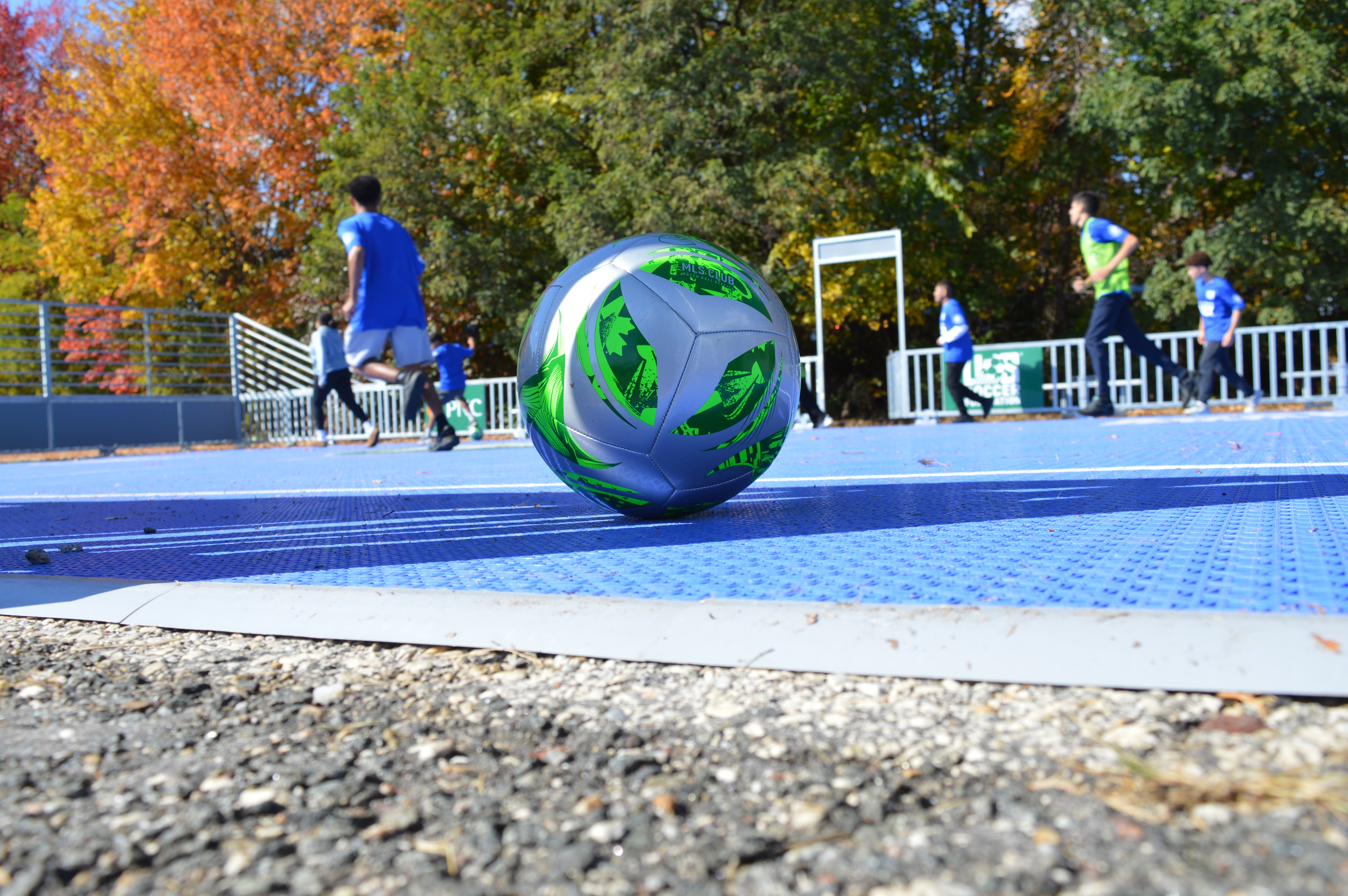
    The U.S. Soccer Foundation has committed $2 million to install mini-soccer fields like this one in Northeast Philadelphia ahead of the 2026 FIFA World Cup.Kerith Gabriel

    Who is behind it: The city and several nonprofits and private companies are backing this initiative, mostly through a $2 million investment from Philadelphia Soccer 2026, the city’s host committee for the 2026 men’s World Cup. Additional backers include the Philadelphia School District, Independence Blue Cross, and Comcast, among others. The U.S. Soccer Foundation is administering the funds and overseeing the installation of the pitches.

    Bank of America Visa Street Soccer Park

    Location: 1036 N. Front St.

    The project: The transformation of Fishtown’s TipTop Playground into two mini, enclosed turf soccer pitches, with additional event space and field lighting for night play. The pitches are now open for kids and adults.

    • Fishtown’s street soccer park will host leagues, free training clinics, and youth soccer programs. Casual pickup soccer is available outside of scheduled programming, led by Street Soccer USA, the organization that helps run such soccer parks across the country.
    • Keep up to date on programming at instagram.com/streetsoccerphila.

    Who is behind it: You guessed it: Bank of America and Visa. Street Soccer USA will run programming at the park in collaboration with local groups.

    Lemon Hill Park

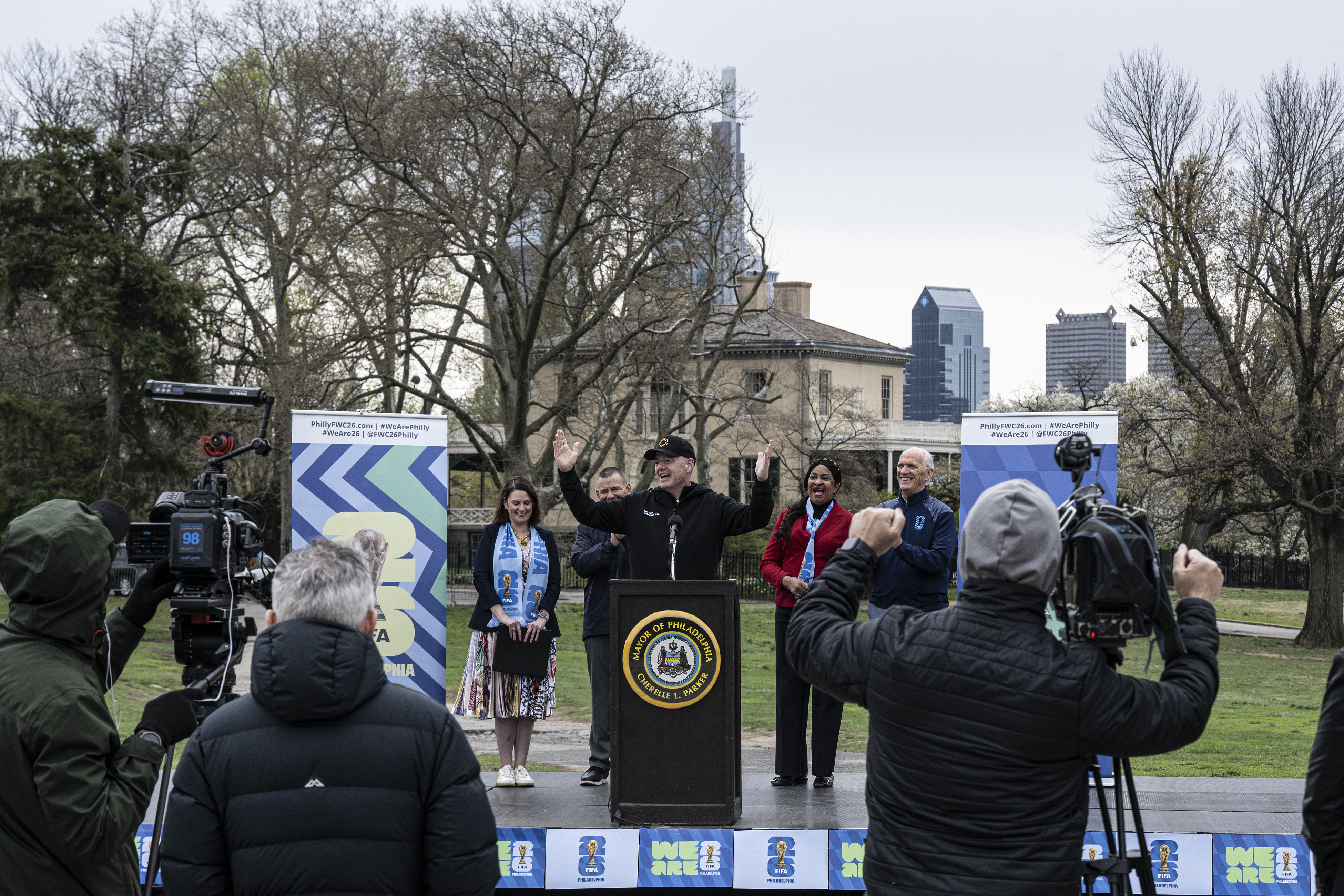
    FIFA President Gianni Infantino, center, will visit Lemon Hill Park on Thursday, April 10 for an operational planning tour of Philadelphia Soccer 2026’s FIFA Fan Festival siteJose F. Moreno / Staff Photographer

    Location: Sedgley Drive and North Lemon Hill Drive.

    The project: Lemon Hill Park received some updates ahead of hosting the official FIFA Fan Festival, and is now getting a much-needed makeover after 39 days of World Cup festivities. The restoration of the grass is underway, with more permanent amenities soon to be constructed.

    • Some upgrades are complete:
    • Other upgrades are coming soon:

    Who is behind it: Philadelphia Soccer 2026 is committing $4 million to park upgrades, with help from the city, to repair the grass fields, bring new modern amenities to parts of the park, and outfit the space with new electrical service, provided by Peco, to prepare for future large events.

    FDR Park’s Ashburn Field

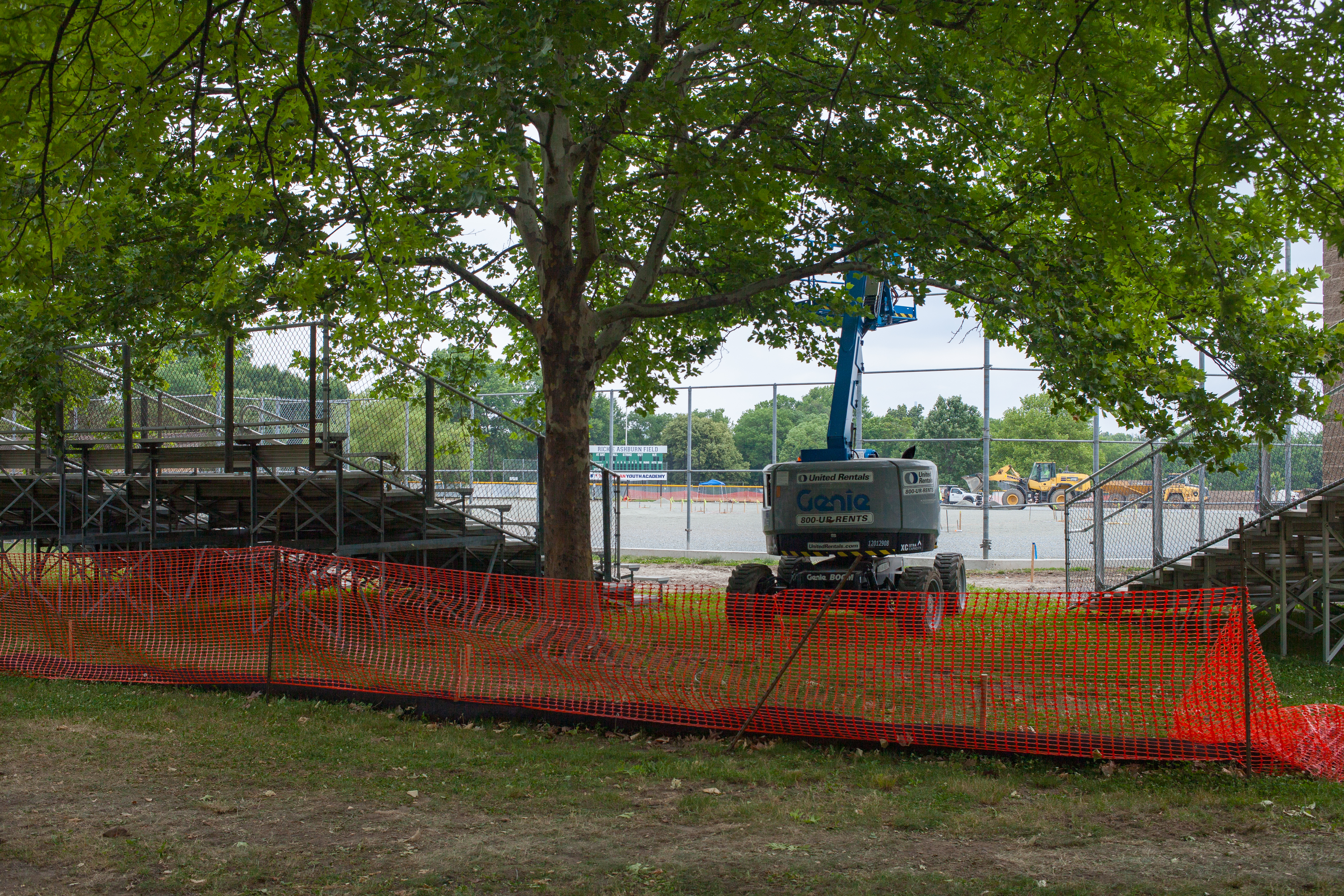
    The MLB is renovating Ashburn Field in FDR Park, a city field managed and maintained by the Phillies that hosts a variety of youth baseball programs.Colin Evans / For The Inquirer

    Location: 1500 Pattison Ave.

    The project: Ashburn Field at FDR Park has been resurfaced with a new turf field, meant to better handle wet weather conditions. The 135,000-square-foot field was built in 1998, using funds generated from the 1996 MLB All-Star Game in Philadelphia.

    Who is behind it: Major League Baseball and the Phillies, as part of a combined investment of more than $5 million in various projects tied to the 2026 MLB All-Star Game, including revitalizing the Negro Leagues Memorial Park and mural at 44th Street and Parkside Avenue in West Philly.

    Independence National Historical Park

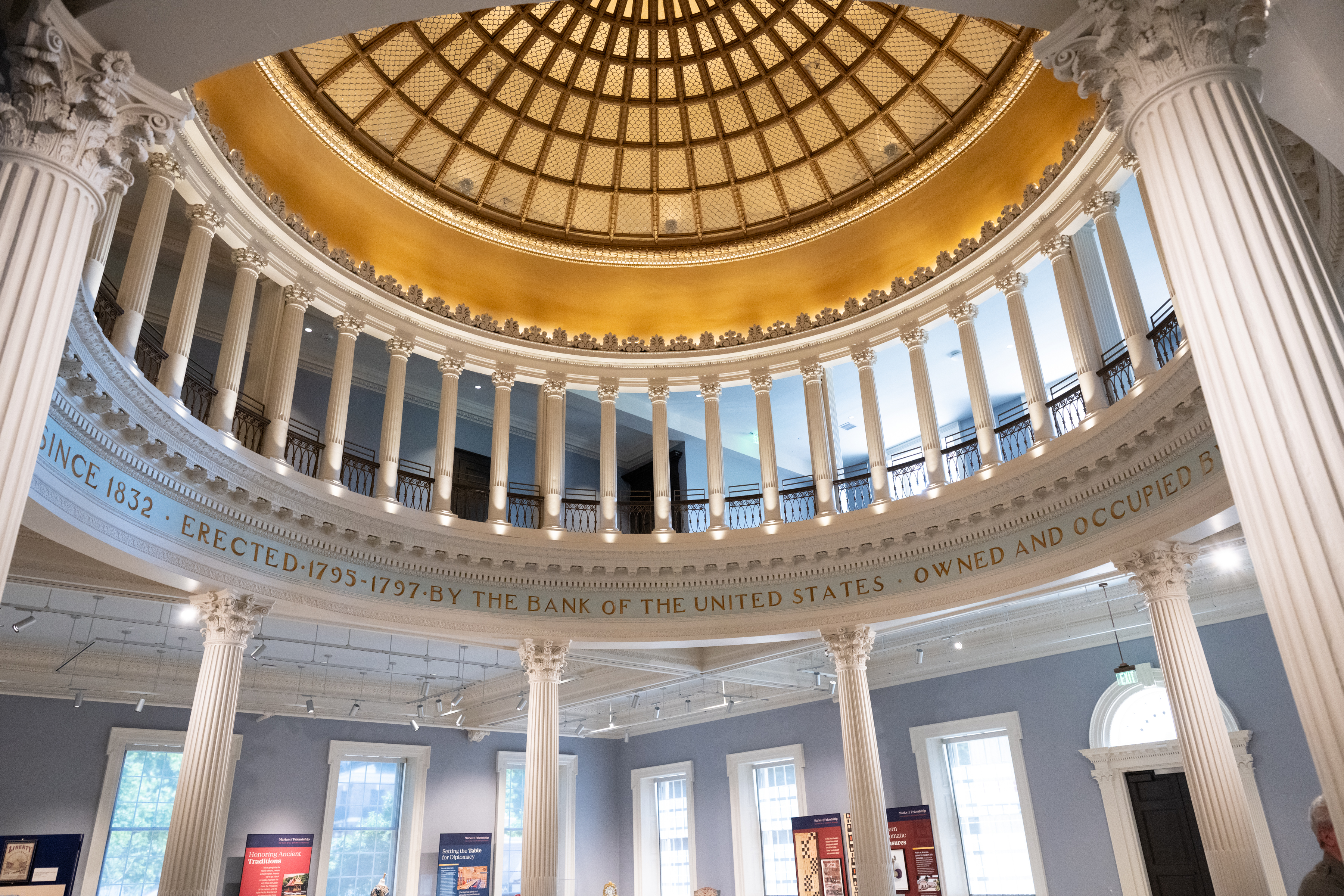
    The rotunda inside the First Bank of the United States is pictured on Monday, June 29, 2026 in Philadelphia.Erin Blewett / For The Inquirer

    Location: 599 Market St.

    The project: Several improvements have already come to Independence National Historical Park and Independence Mall to commemorate the nation’s Semiquincentennial, and more are on the way. They include:

    • A $3.9 million “Join or Die” sculpture on Independence Mall, inspired by the truncated snake in Benjamin Franklin’s cartoon of the same name. The 46-foot-long granite work is expected to be unveiled this fall.
    • Beautification and horticultural work. This includes work at the Benjamin Rush Garden at Third and Walnut Streets, which showcases the 1976 Bicentennial Bell, a 10-ton Liberty Bell replica gifted by Queen Elizabeth II.
    • The reopening of the First Bank of the United States, on Third Street between Walnut and Chestnut Streets. The bank had been closed for 50 years but is now open for visitors thanks to a $43 million renovation.

    Who is behind it: Independence Historical Trust, the city, the state, private foundations, philanthropists, and legacy groups.

    Germantown Historical Society Visitor Center

    Location: 5501 Germantown Ave.

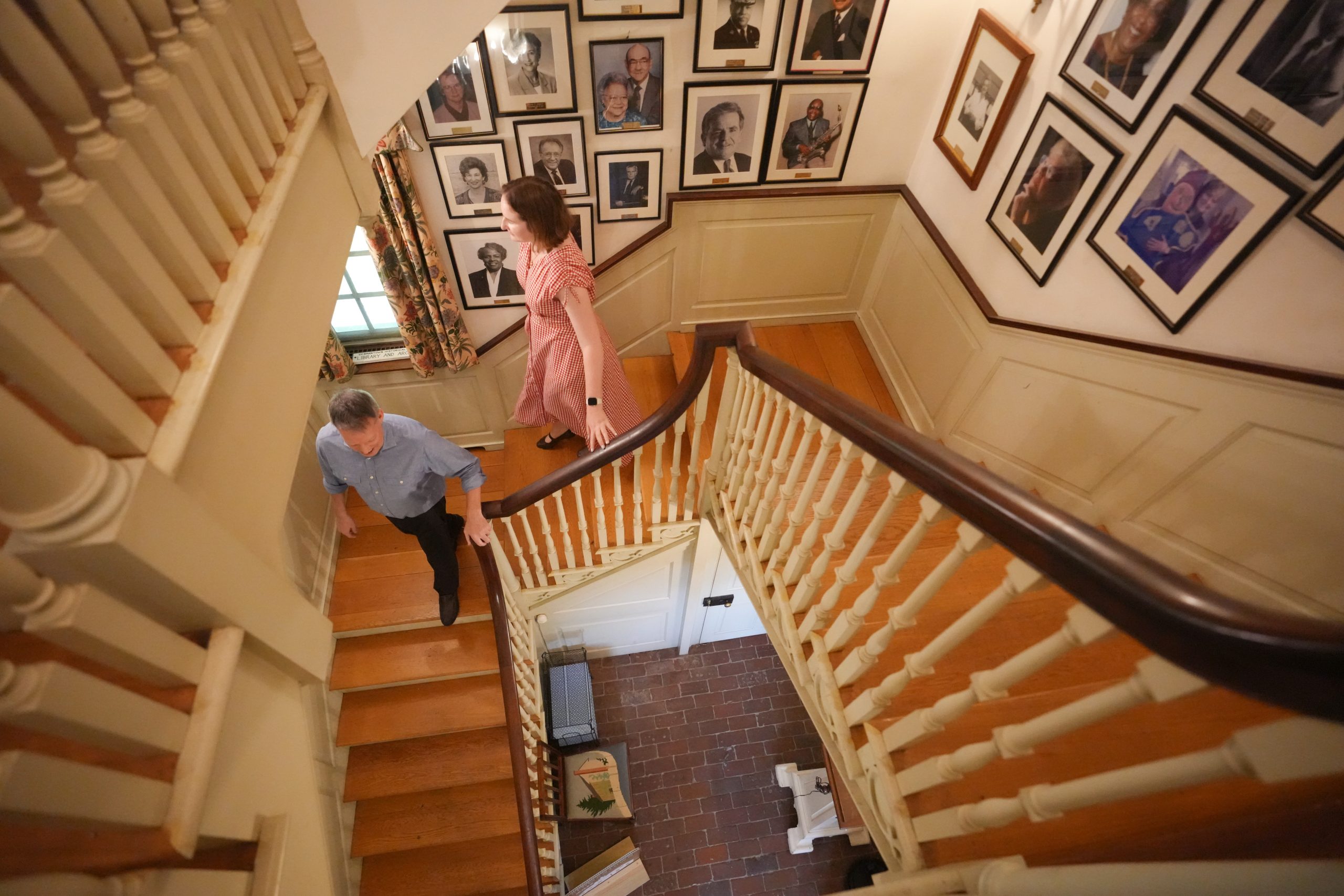
    Tuomi Forrest, executive director at the Germantown Historical Society, and Kaila Temple, curator of collections at GHS, at the Germantown Historical Society building located at 5501 Germantown Ave. in Philadelphia, July 21, 2026.Jessica Griffin / Staff Photographer

    The project: The Germantown Historical Society has its first visitors center, thanks to a $100,000 renovation of a section of its headquarters. It is modest but will host rotating exhibits, maps and pamphlets, and a gift shop.

    Historic Germantown consists of various landmarks and attractions in Northwest Philly, including the Aces Veterans Museum, Awbury Arboretum, and the Germantown White House, where George Washington once lived.

    Who is behind it: The Funder Collaborative for the Semiquincentennial, a philanthropic group organized by the Connelly Foundation that donated to many initiatives and projects related to the 250th anniversary celebration.

  • Back to school in South Philly

    Back to school in South Philly

    This week Philly teachers were prepping for the start of a new school year and I went to Fanny Jackson Coppin School in South Philadelphia to photograph them hanging posters, arranging desks, taking new books out of boxes, and opening packages of supplies,

    I walked from classroom to classroom, saying hi and introducing myself. Most were happy to have me come in and show the newspaper’s readers how they spend hours making their room feel welcoming and comfortable.

    I was definitely feeling at ease by the time I got to the first grade classroom of teacher Lauren Cucinotta.

    Because I wrote just last week about the senses triggering memories I was expecting all morning that what’s known as the “Proust phenomenon” would kick in. But it wasn’t the waxy smell of the crayons.

    No, as a visual person it was the sight of a cup full of freshly sharpened pencils.

    There is nothing more basic, more ordinary than a pencil — well except maybe for paper. But then we get into a chicken or the egg thing, and I don’t want to go there, so I’m sticking with pencil.

    All those little points of graphite evoke a feeling of possibility. More than being ready to make the first marks of a new school year, I see them representing a clean slate (page) or even a new way to look at an annual recurring photo assignment.

    You can’t see them in the photos, but for a moment even the erasers at the other end of the pencils evoke memories of my own first days of school and remind me that yesterday’s mistakes do not have to follow me into today, that there is always something new to see and photograph.

    That’s enough navel gazing for one column, so let’s talk about this week’s installment of my colleague Elizabeth Wellington’s series highlighting a Philly “first” for the ongoing celebration of America’s 250th birthday. This week celebrated the first selfie still in existence, which was taken in Philadelphia in 1839.

    They were first called self-portraits, and before smartphones, they involved putting cameras on tripods or tabletops and using timers or long cable shutter releases. Photographers — especially after small 35mm cameras came along — did use a wide-angle lens with the “extend your arm” technique, and the first I can remember seeing was when our wedding photographer took one of himself with me and my bride.

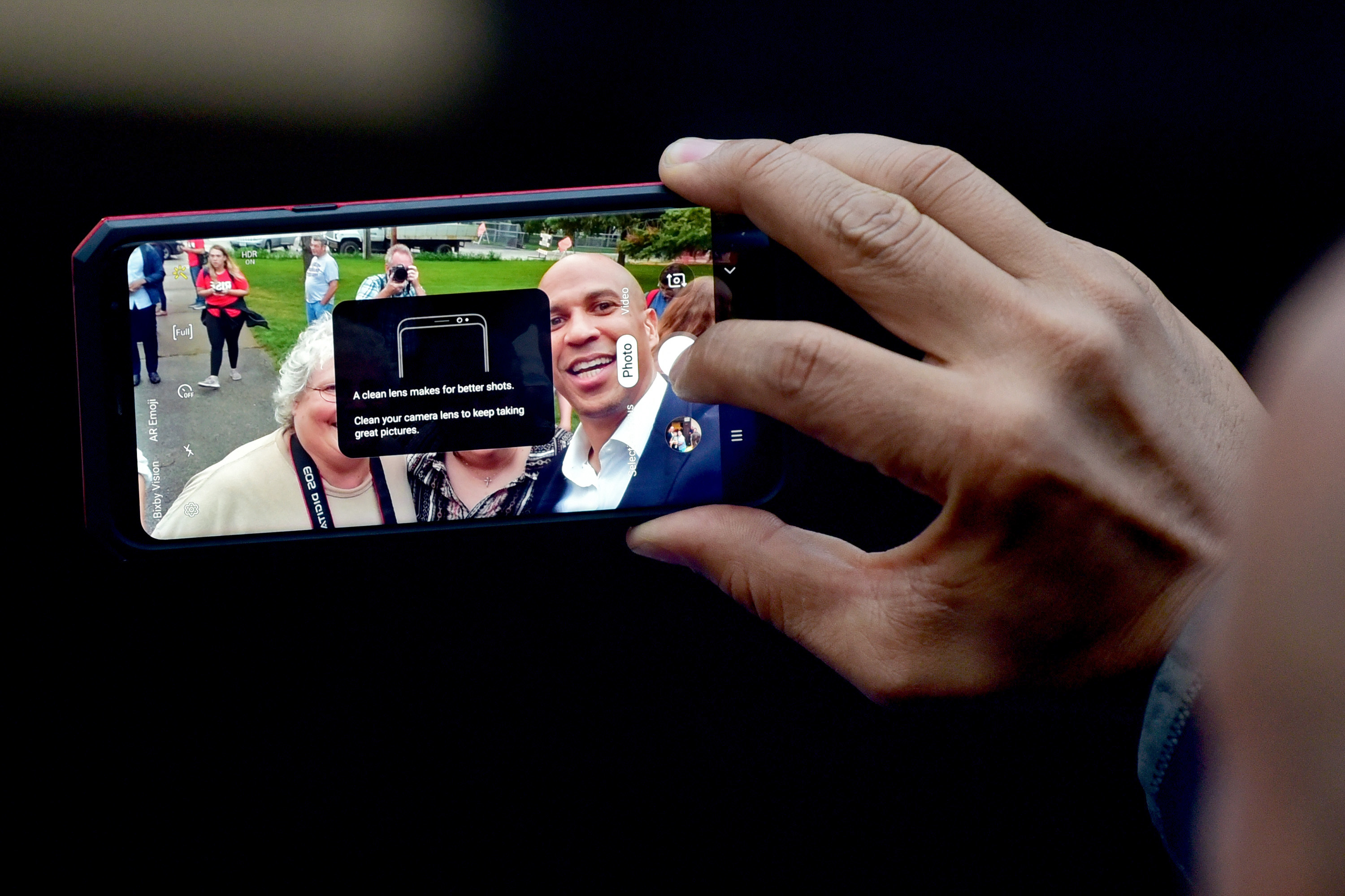
    That’s a cherished selfie, but my all-time favorite selfie is one with U.S. Sen. Cory Booker when I spent time with him in Iowa during his short-lived 2020 presidential campaign. And since then, often on his home turf, in New Jersey. You can see me in the background — right behind the helpful photography tip a supporter’s cell phone offered (he cleared the message before taking the photo).

    Which brings me to a few other photos to share from this week:

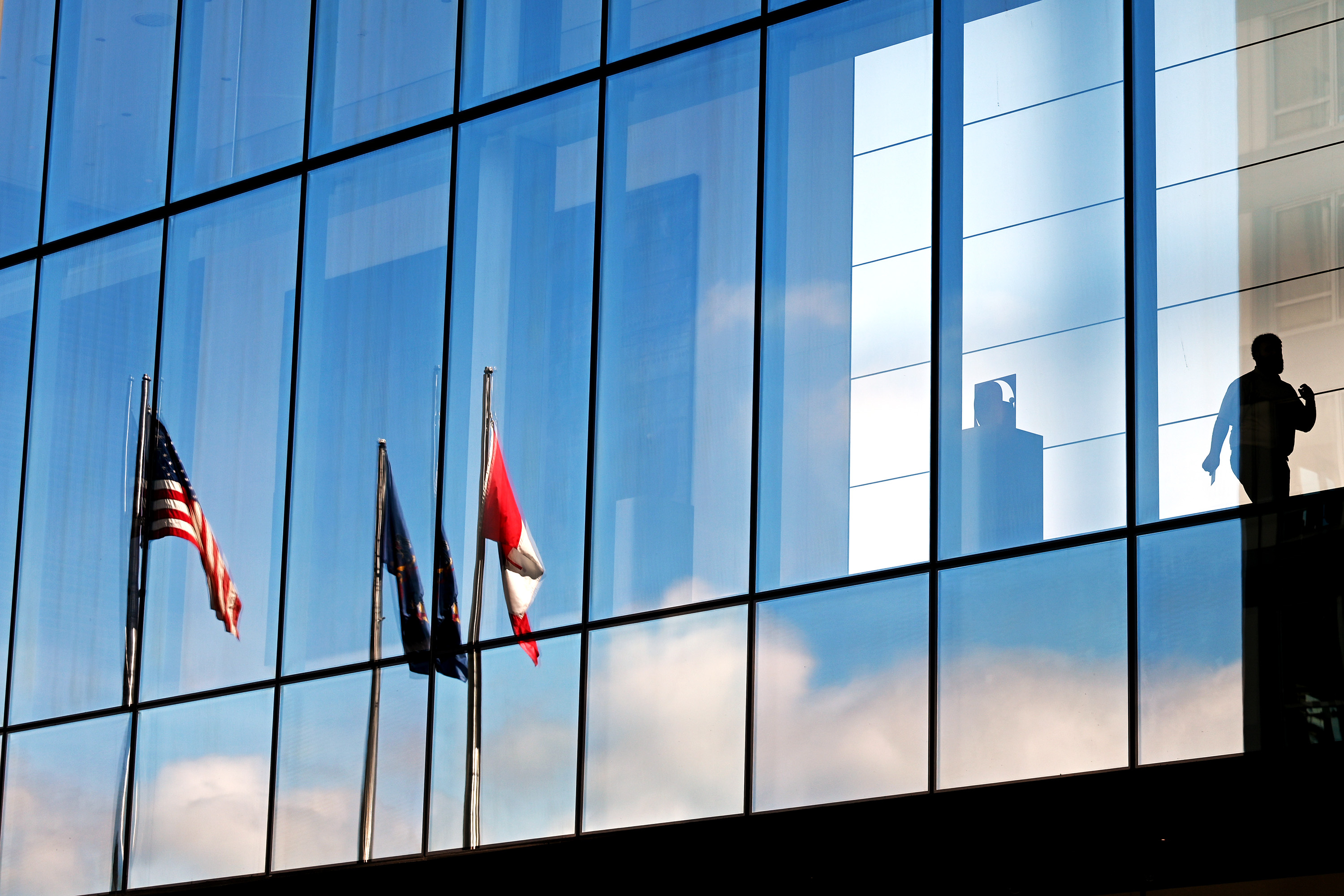
    Flags and a bright blue sky are reflected in the windows of a Center City Philadelphia hotel on Monday.Tom Gralish / Staff Photographer
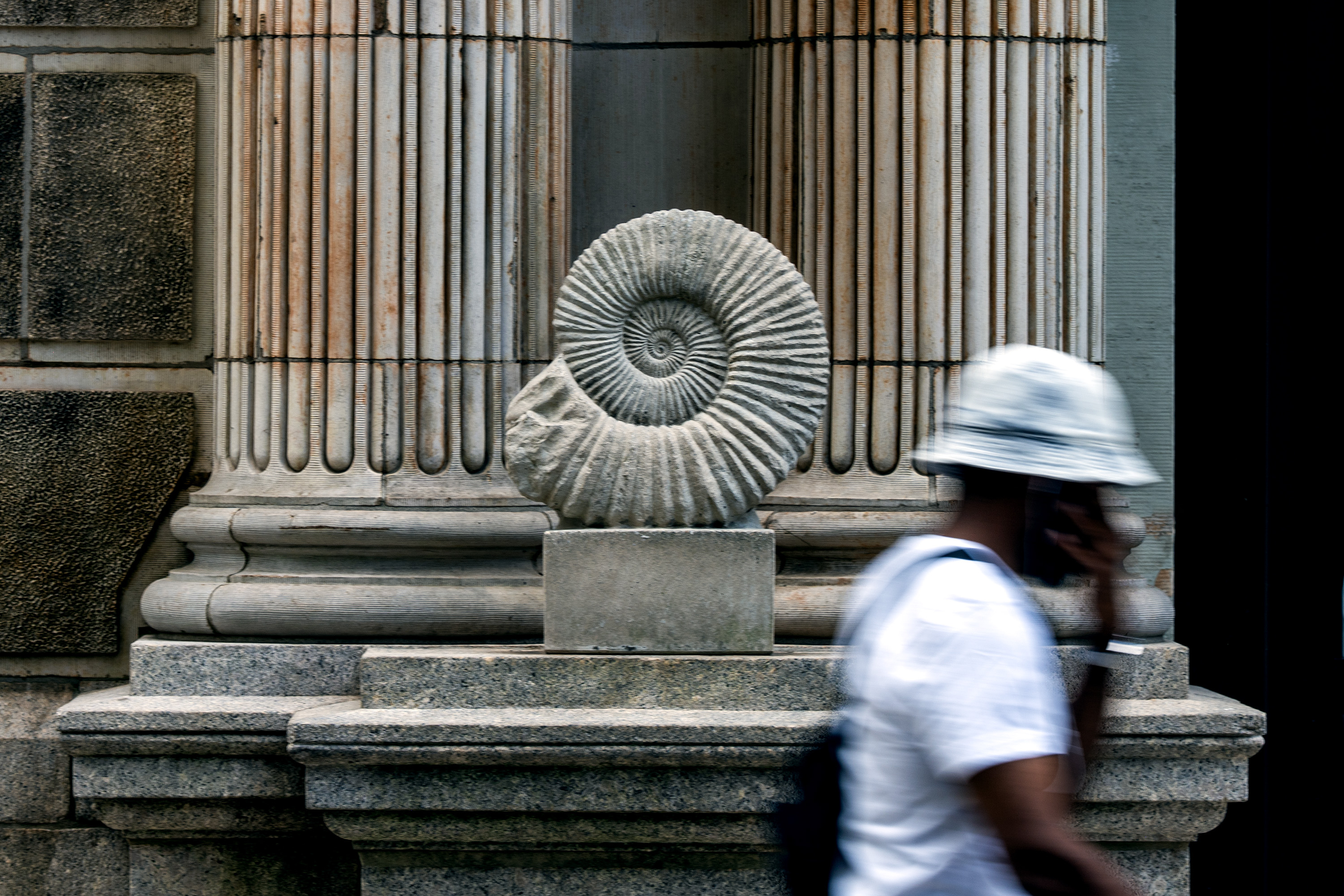
    One of two shell sculptures placed on either side of the entrance on the 19th Street entrance to the Academy of Natural Sciences of Drexel University on Monday. Created by unidentified artists and installed in 2010, a Philly public art website describes the small shell sculptural details as a “complement [to] the museum’s historic focus on malacology (the study of mollusks and their shells).”Tom Gralish / Staff Photographer

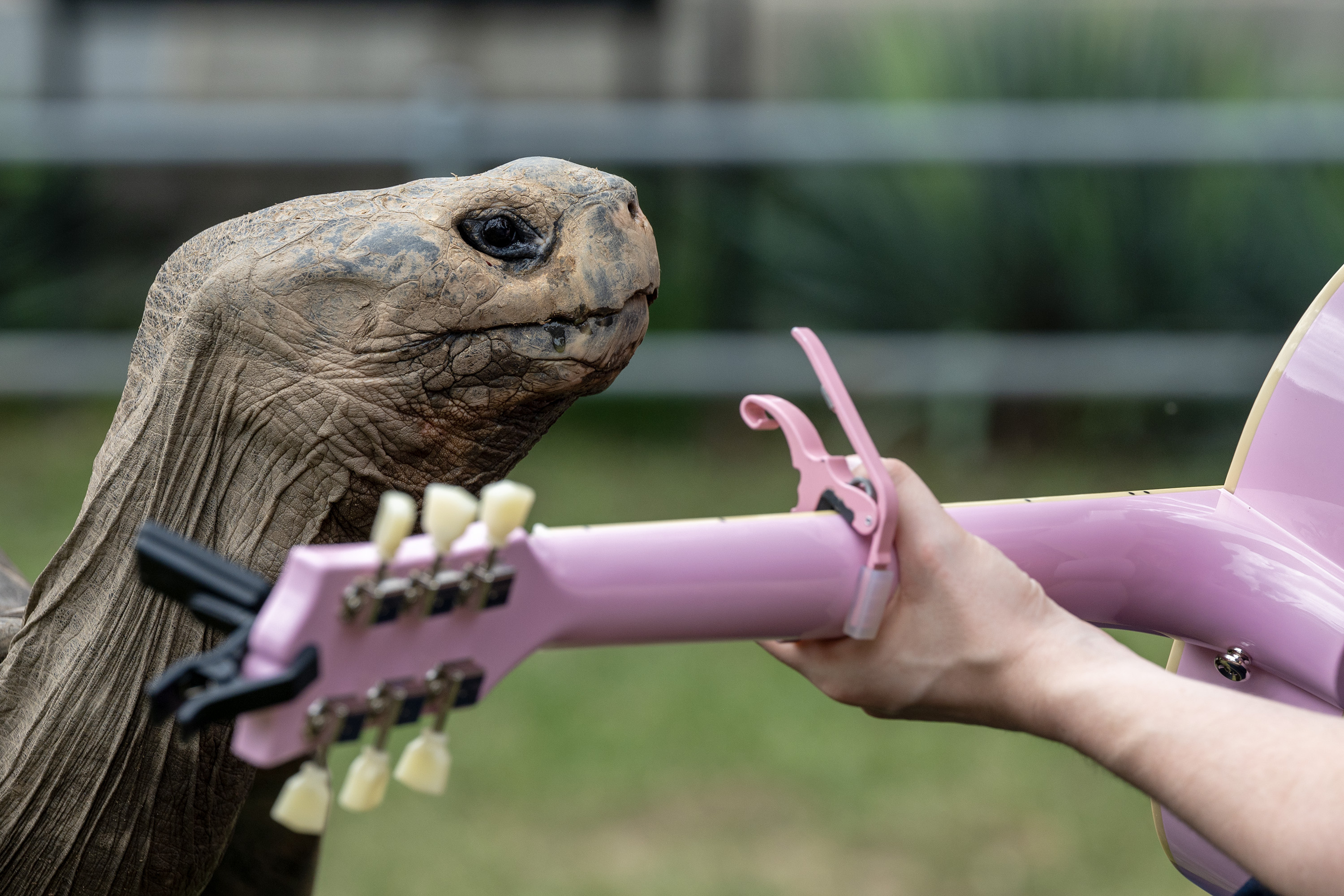
    And a story I wrote this week on viral French singer-songwriter and animal advocate Loris Assadian, known as Plumes, who sang for tortoises at the Philly Zoo.

    Assadian serenades Abrazzo, a Western Santa Cruz Galapagos tortoise estimated to be around 97 to 100 years old.Tom Gralish / Staff Photographer

    Since 1998 a black-and-white photo has appeared every Monday in staff photographer Tom Gralish’s “Scene Through the Lens” photo column in the print editions of The Inquirer’s local news section. Here are the most recent, in color:

    » SEE MORE: Archived columns and Twenty years of a photo column.

    » SEE MORE: Archived columns and Twenty years of a photo column.

  • Baseball blessings, a ‘Gray Wave,’ and an unfortunate Phanatic smoothie | Weekly Report Card

    Baseball blessings, a ‘Gray Wave,’ and an unfortunate Phanatic smoothie | Weekly Report Card

    Smiling baseball Gods: A-

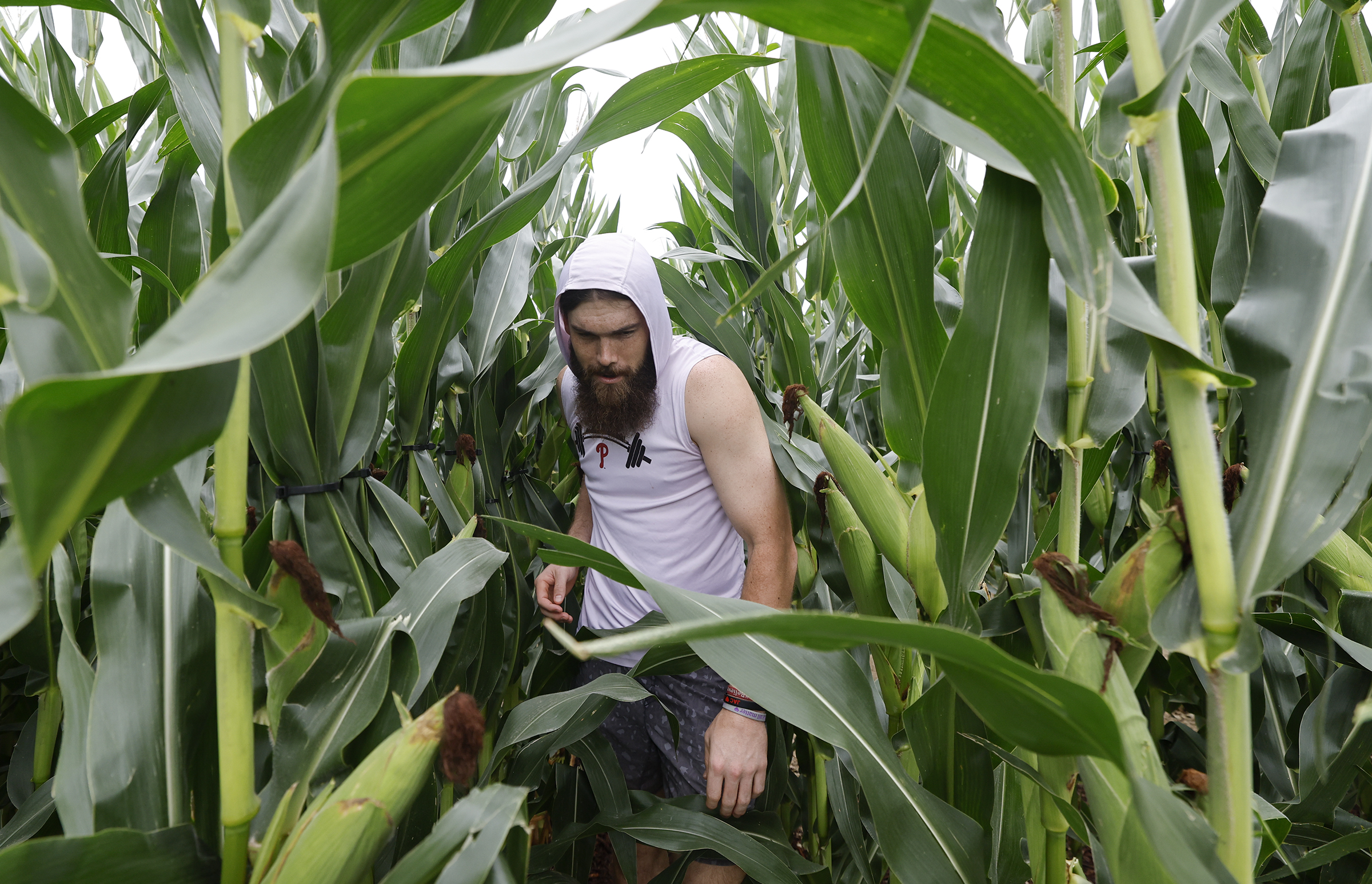
    The Phillies crawled into Iowa for MLB’s mystical Field of Dreams game and haven’t lost since. The Fightins peeled off seven in a row since emerging from the cornfield in what’s become baseball’s most spine-tingling summer happening (Sorry, All-Star Game, but Mike Schmidt coming out of the corn was one for the ages.)

    Powered by a suddenly divine offense — in the name of the Harper, Bohm, and Bryson Stott, amen — and a resurgent Aaron Nola, the Phillies’ season-best streak put the team 12 games over .500 for the first time all season. By Aug. 20, they enjoyed a two-game cushion for the second NL Wild Card spot. Whether the Phillies celestial good fortune has a Hollywood ending remains to be seen — and will depend largely on the trinity of Zach Wheeler, Cristopher Sánchez, and Jesús Luzardo, and saintly wisdom of Donny Baseball. Is it Heaven? Maybe not. But it’s August in Philadelphia, and the Baseball Gods are smiling.

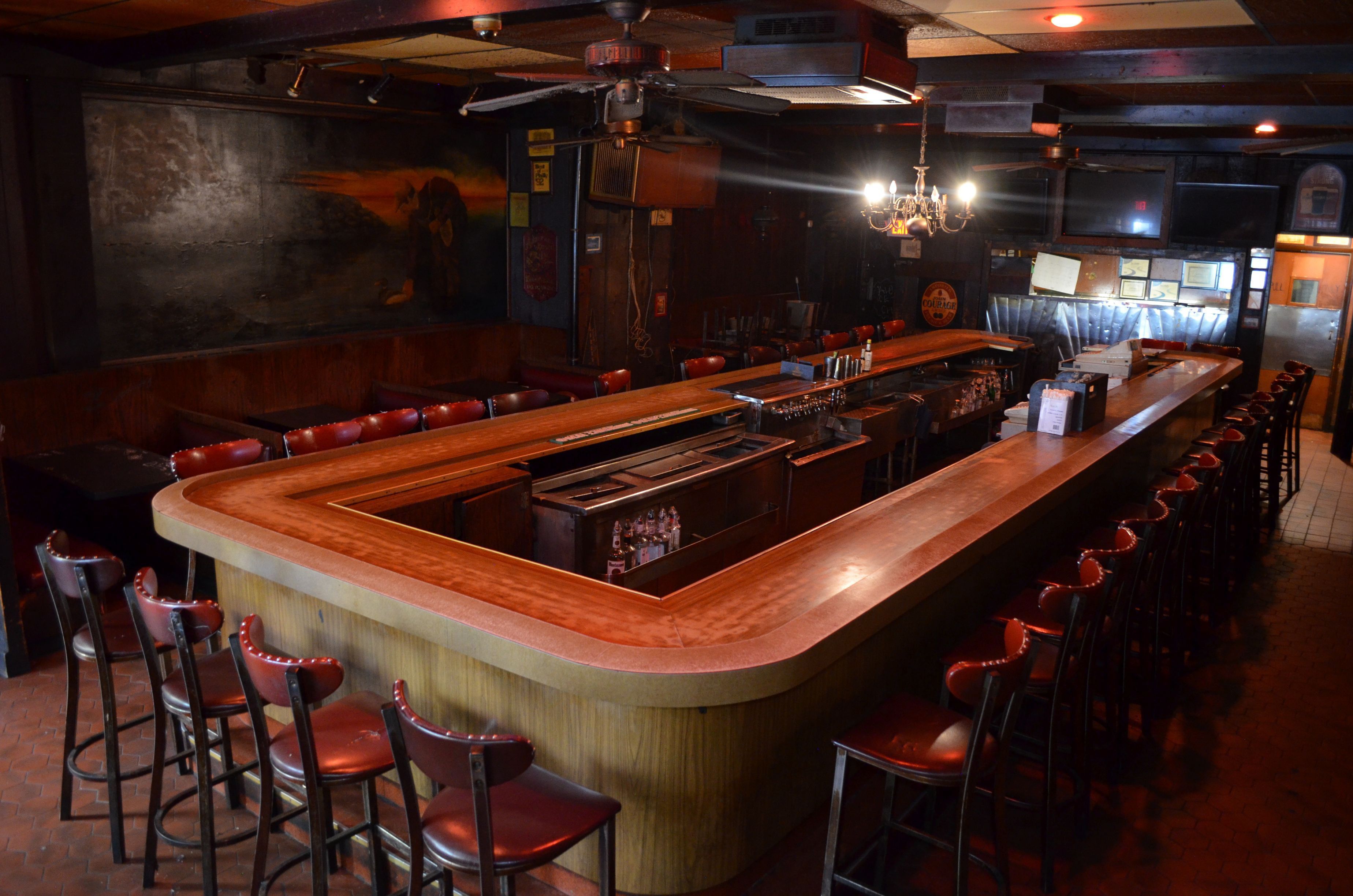
    A bar at McGlinchey’s, 259 S. 15th St.MPN Realty

    ‘The Gray Wave’ hits Philly restaurants: B-

    I’m a sucker for the city’s past. Especially its boozy, foodie past. My sepia-toned Philly time-machine daydreams include strolling bygone Jazz Age South Street speakeasies, clinking a Diet Coke to the swoosh of the gilded curtain at Palumbo’s nightclub, and touring the handsome booths of the 19th-century Reading Terminal Market. All to say, it’s a bummer to mark the passing of iconic Philly-area eateries like Kelly’s Seafood and Steve Stein’s Famous Deli, both in Northeast Philadelphia, and both closing by the end of the month.

    Other landmarks — including the Medieval-inspired Pennsauken steakhouse, The Pub, and legendary Center City spots like Cherry Street Tavern and McGlinchey’s — are on the market. Some in the Philly restaurant scene have coined a phrase for what they say is a broader generational transition among small businesses as longtime owners reach retirement without children interested in taking over: “The Gray Wave.” Raise a Diet Coke — or something stronger, if you wish — to all the old great ones saying goodbye. But, alas, since a grand metropolis such as our own is nothing if not an ever-regenerating engine, offer too a hearty huzzah to the future greats that will surely follow in their boozy wake. Sláinte.

    Jamika W. for President: A

    Philadelphians pride themselves on providing local news reporters with profoundly entertaining and refined recountings of crimes and catastrophes. It’s in our blood — and unique vowel shifts. But for sheer charm and grace, few surpass everyone’s new favorite Philadelphian, Jamika W., who this week exuberantly reenacted kicking a masked menace near City Hall during a now-viral ABC7 Eyewitness News report.

    On Aug. 17, Jamika W. saw something (a masked marauder chasing a woman into a coffee shop) and did something about it (calmly delivered a debilitating and flawless front kick to said marauder’s chest). Even more winsome than the kick itself — which Jamika W. displayed with wide-eyed enthusiasm and cool confidence — is the ironclad and incontrovertible reasoning behind her Roundhouse of Reckoning. “He just seemed disorientated about what his goals actually were,” she said, with a smile. “I had bags, he wasn’t reaching for those. He didn’t seem like he had a clear goal to actually get into La Colombe to do anything, so I was like, ‘OK, well, let’s see if you can fight, and he couldn’t.’”

    Willie Nelson performs during the Outlaw Music Festival at Freedom Mortgage Pavilion in Camden on Friday, September 12, 2025. On Sept. 24, Willie Nelson & Family and Neil Young and the Chrome Hearts will play a coheadlining date at the Highmark Mann.Elizabeth Robertson / Staff Photographer

    Willie and Neil Philly bound: B+

    For the first summer in years, Willie Nelson will not be bringing his Outlaw Music Festival to Philadelphia. At 93, and fueled by love, music, and his own THC-infused drink, Willie’s Remedy, the Outlaw Oracle needs a break. But all is not lost in Willieville. Turns out Nelson isn’t skipping Philly after all. On Sept. 24, Willie Nelson & Family and Neil Young and the Chrome Hearts will play a coheadlining date at the Highmark Mann. (Teenage songwriter phenom Ty Myers is also on the bill.)

    Personally, I bawl like a baby every time I hear Willie Nelson sing “Blue Eyes Crying in The Rain.” See you soon, Willie.

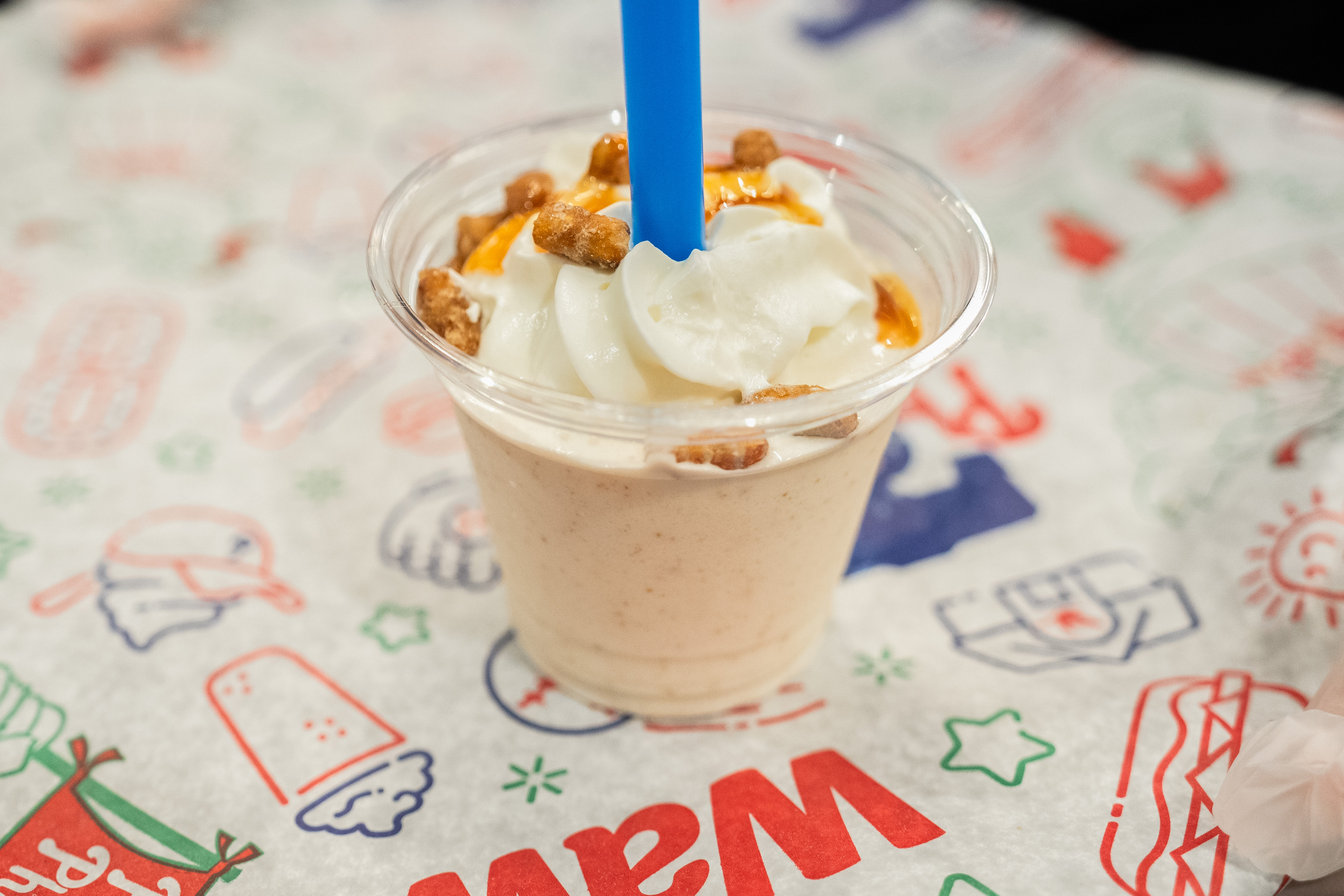
    The new limited-edition Phanatic Caramel Curveball Cream Smoothie was announced Aug. 17 at Wawa’s Penrose Avenue store. Jessica Griffin / Staff Photographer

    The new Phanatic smoothie: C-

    Few can fault the limited-edition Phanatic Caramel Curveball Cream recipe, though vanilla ice cream, caramel sauce, whipped cream, salted caramel syrup, and sea salt pretzel pieces doesn’t exactly scream Galápagos Islands. Also, can you really call it a smoothie if it’s … 950 calories?

    But what disappoints most is a Philly fan taste-tester who cheerfully testified that the drink contained a salty-sweet savor similar to a “sprinkling of Mets tears.” Mets?! They stink. An embarrassment, last in the division. Why is anybody concerned with them? Haven’t you read the news baby, we’re two games behind the Diamondbacks for the second Wild Card! Do rattlesnakes cry?

  • Makini, the last African lion at the Philadelphia Zoo, has died

    Makini, the last African lion at the Philadelphia Zoo, has died

    Makini, the last African lion at the Philadelphia Zoo, has died, zoo officials announced Friday.

    Makini, who was about 17.5 years old, suffered from advanced arthritis, and he recently began showing signs of weakness in his hind end and was struggling to navigate, zoo officials said.

    “The team made the difficult and compassionate decision to humanely euthanize him,” the zoo said in a statement.

    Zoo care staff had been closely monitoring him since the death of his longtime partner, Tajiri, in November 2025, zoo officials said.

    “At 17.5 years old, he was considered geriatric and surpassed the life expectancy for this species. The life expectancy of lions in the wild is 10-14 years,” the zoo said.

    The Smithsonian’s National Zoo website said that a lioness in the wild can live up to 16 years, but males rarely live past the age of 12. In zoos, the website said, lions may live into their teens or early 20s.

    Makini arrived in Philadelphia in December 2011 from the Tulsa Zoo in Oklahoma where he was born. His name means “dignity” in Swahili.

    He mated with Tajiri and the pair produced four cubs in June 2014.

    “Makini was a force to be reckoned with and he made sure you knew that. He was all sorts of tough and manly, yet was goofy and would have you laughing several moments later. His presence is something that is surely going to be missed. I will cherish all the time we spent together,” said an animal care specialist identified by the zoo as Shannon K.

    “He served as an incredible ambassador for his species for the hundreds of thousands of guests who had the chance to know him,” the zoo said.

    The zoo said it was having conversations with the Association of Zoos and Aquariums “on the future of lions at the Philadelphia Zoo. We will keep you informed as the process progresses.”

    Makini and Tajiri at the Philadelphia Zoo in an undated photo. Tajiri, Makini’s partner, died late last year.Philadelphia Zoo
  • The Philly Naked Bike Ride is this weekend. Here’s the route.

    The Philly Naked Bike Ride is this weekend. Here’s the route.

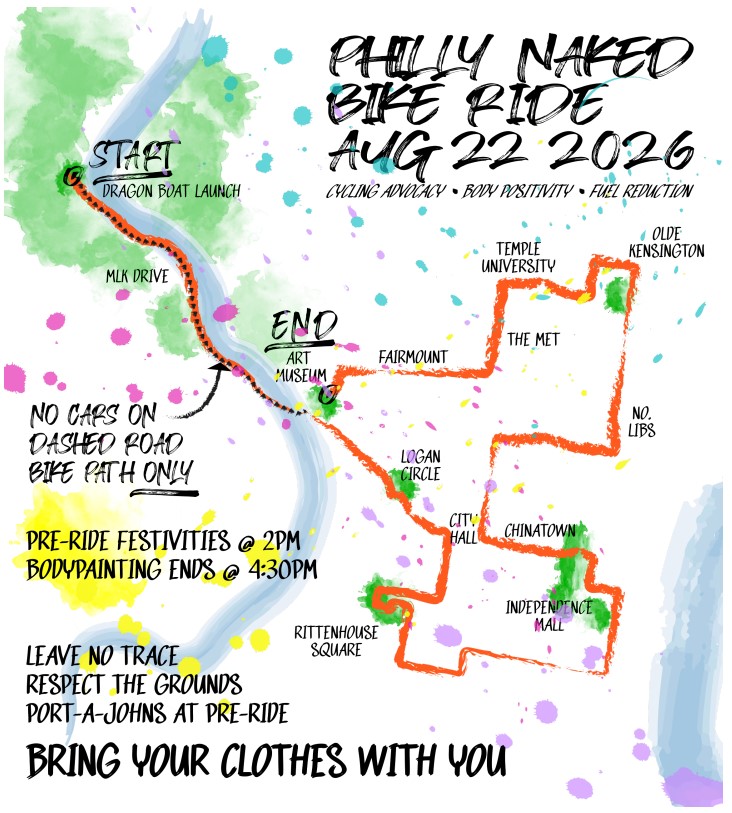
    Saturday sees the return of the Philly Naked Bike Ride, which brings cyclists to a 12-mile route of bare-as-you-dare city riding for the event’s 17th edition.

    This year, the ride is slated to kick off at 5 p.m. at the Dragon Boat Dock along Martin Luther King Drive, with a slightly different route than in previous years. For 2026, riders will head toward Eakins Oval and use the Benjamin Franklin Parkway to make their way around Logan Square to get to City Hall before heading to Rittenhouse Square and South Philly and making their way back north.

    It all wraps up at the Iroquois statue on the Benjamin Franklin Parkway, a work created by artist Mark di Suvero that the city has owned for nearly two decades. The route’s finish stands just east of the Philadelphia Museum of Art, roughly two miles from its start.

    That’s a slightly different route from 2025, which had riders start at Lemon Hill and end at the art museum itself. Lemon Hill also served as the ride’s starting point in 2023 and 2022.

    The 2026 Philly Naked Bike Ride will start at the Dragon Boat Dock at 1233 Martin Luther King Jr. Dr.Philly Naked Bike Ride

    Traditionally, pre-ride festivities like body painting sessions start a few hours before the ride.

    Held annually with the exception of the pandemic year of 2020, the Philly Naked Bike Ride began in 2009 as a four-mile course that attracted roughly 400 riders. Now, it often brings out thousands of participants for the clothing-optional festivities. No fee or registration is required.

    As per usual, this year’s event aims to promote cycling advocacy, body positivity, environmentalism, and safe cycling infrastructure. Nudity is not required to participate, organizers note online, and the ride is designed to be “safe and enjoyable for everyone.”

    According to a code of conduct posted to the event’s website, organizers expect that participants not participate in “any form of sexual or physical harassment,” and refrain from any “unwelcome behavior.”

    “Ultimately, one of the goals of the Philly Naked Bike Ride is to desexualize nudity and to encourage everyone to embrace nudity as a normal, enjoyable way of life,” the code of conduct reads. “Following this policy will help further this goal and teach all of us how to be better people in general.”

  • Barbara McDermott, a longtime Philadelphia homicide judge who worked with jurors and resentenced juvenile lifers, has died at 71

    Barbara McDermott, a longtime Philadelphia homicide judge who worked with jurors and resentenced juvenile lifers, has died at 71

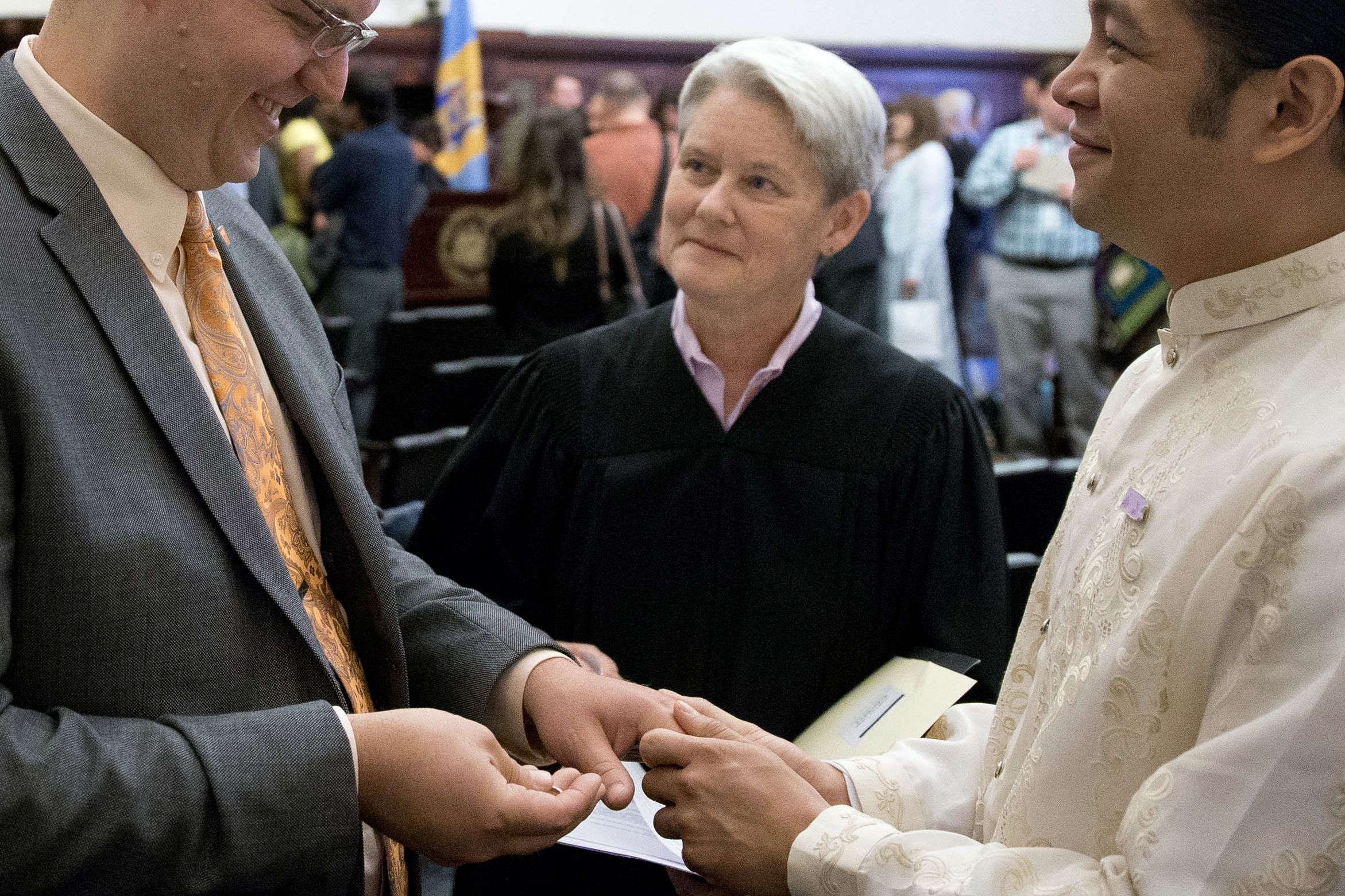
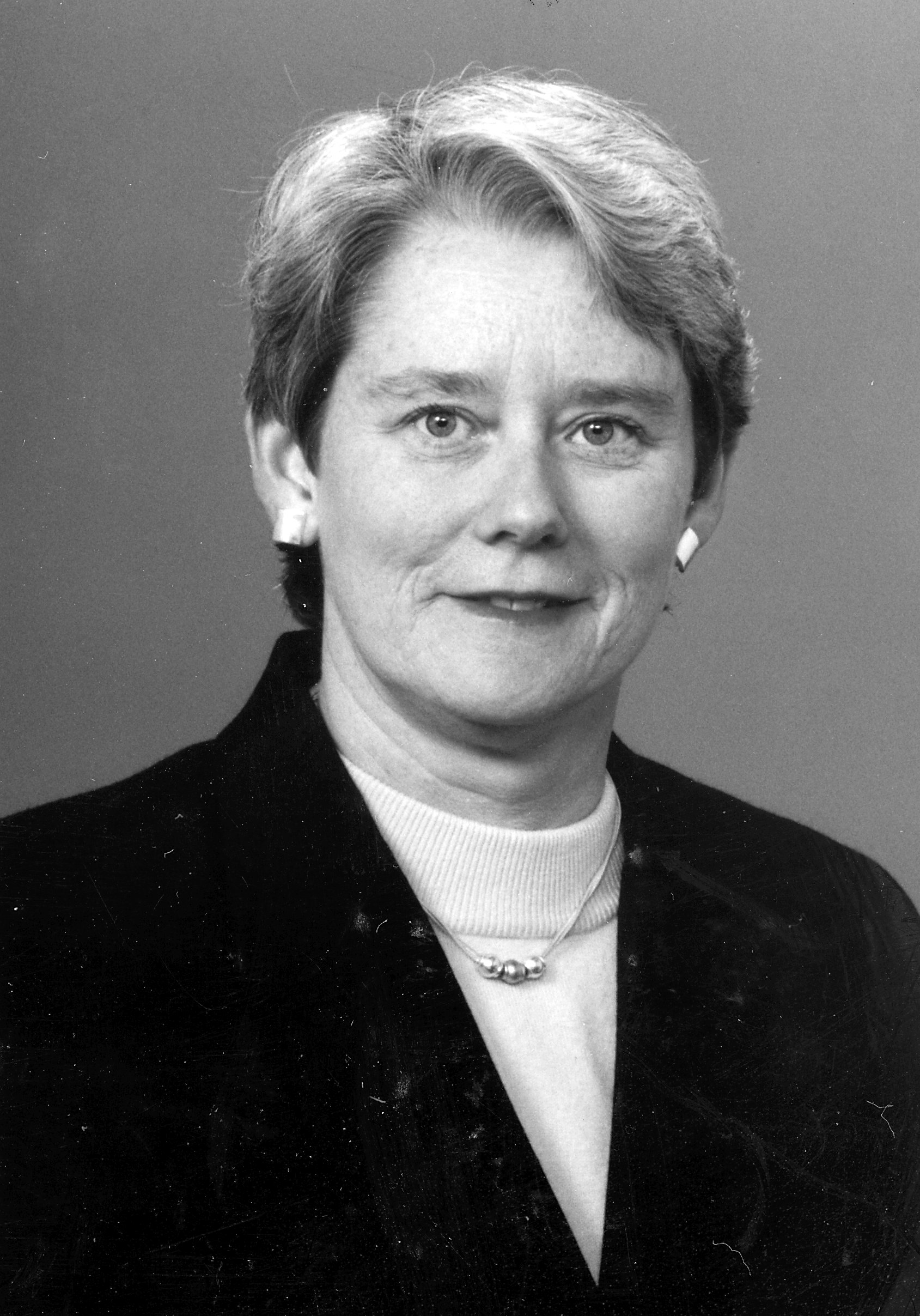
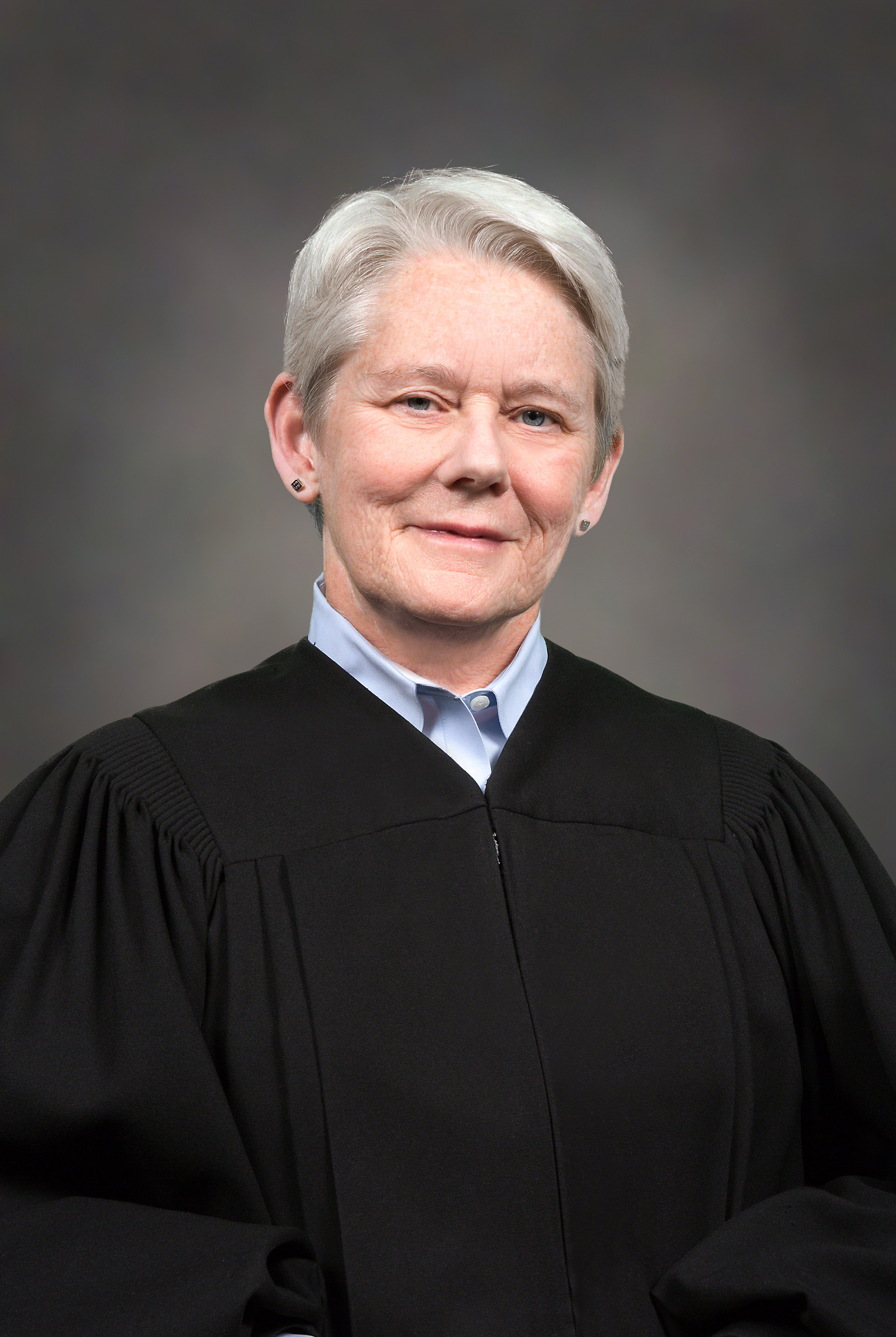
    Barbara Ann McDermott, 71, a former Philadelphia judge who, for 40 years, spent nearly every workday inside the city’s criminal courthouse defending, prosecuting, and later presiding over some of the city’s most serious criminal cases, died Tuesday, Aug. 11, following a yearslong battle with a rare form of uterine cancer.

    “Heaven will now be well-run and much more efficient,” her family wrote in an obituary shared online.

    Judge McDermott spent nearly 14 years in Philadelphia’s Common Pleas Court — the majority of that time presiding over homicide cases — before retiring earlier this year.

    She was known for running a tough and orderly courtroom, starting her day promptly and putting up with little fuss and few excuses from prosecutors, defense attorneys, police, and defendants alike.

    Born and raised in Aliquippa, in Western Pennsylvania, Judge McDermott said in an interview this spring that, growing up, she was a tomboy who pushed the boundaries of her small, steel mill town. She delivered the local paper even when supervisors said the work was only for boys. When leaders of her local Catholic school balked at her request to start a girls basketball team — saying young women “weren’t strong enough” to play full-court — she found a coach who would let her.

    She attended Seton Hill College, then an all-women’s university outside of Pittsburgh. There, she became passionate about pastoral theology and social justice, and led the student government association.

    She initially thought she would follow local tradition and become a teacher or establish a chain of daycares, but then, she said, “I realized … I’ve been gifted with a brain. I want to do something more than the tradition.”

    She took an interest in legal issues and attended Georgetown Law School. (She enjoyed pointing out that she was rejected by the University of Pennsylvania.)

    Barbara McDermott in 2001.Courtesy of Barbara McDermott

    She first worked in the attorney general’s office, but longed to practice in Philly, where she said she was inspired by female judges like Lois Forer, Lisa Richette, and Juanita Kidd Stout.

    “I wanted to practice around lawyers that were better, and I wanted to practice around a diverse bench,” she said.

    She joined the Philly DA’s office in 1984 under Ron Castille’s leadership, but left after several years due to what she described as “disagreements,” including that she did not support the death penalty.

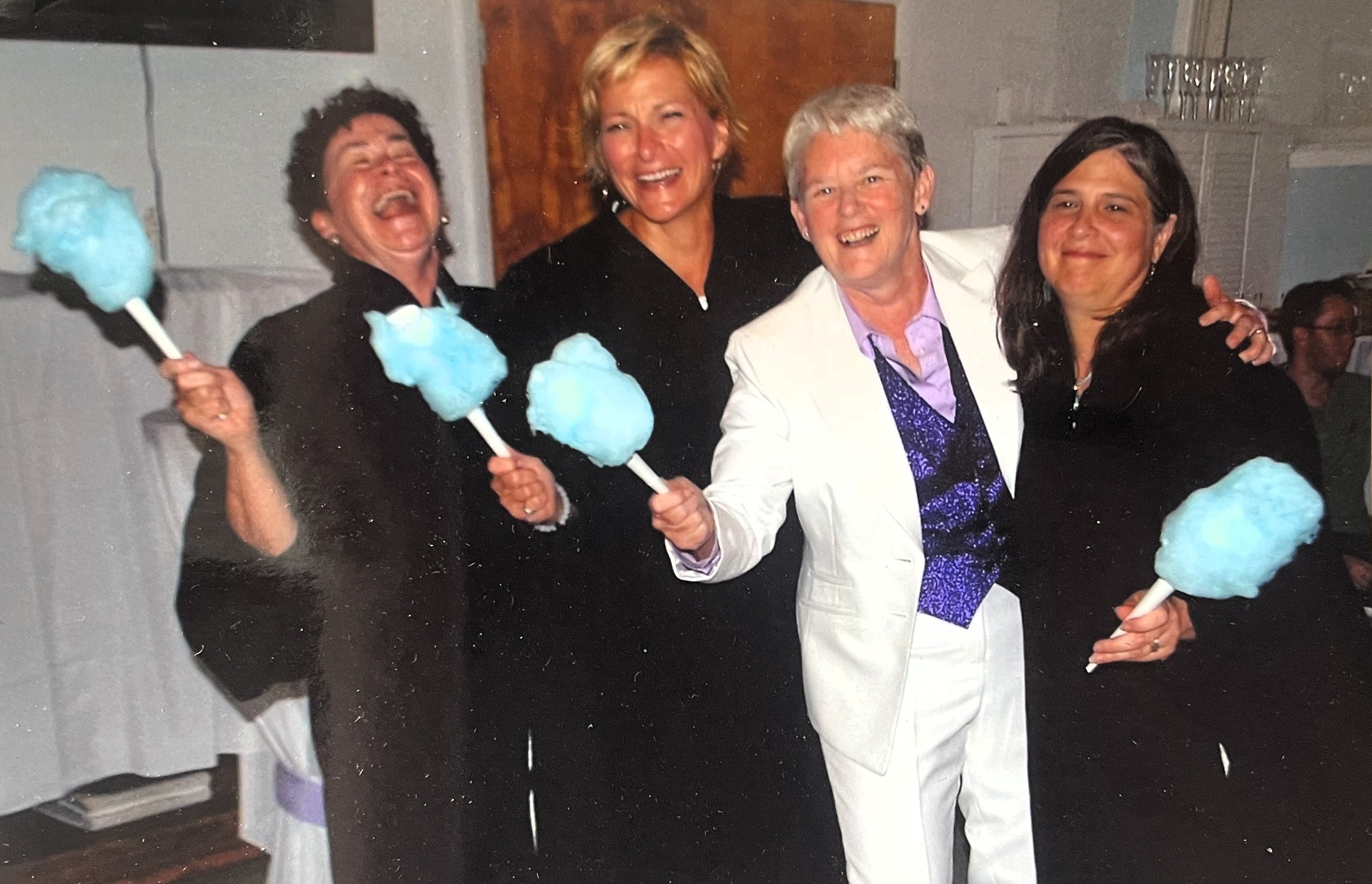
    She started her own practice as a criminal defense attorney, and adopted two daughters, Nicole and Colette, in the early 1990s. She raised them alongside her partner — and, later, wife — of 37 years, Jeanne Buckley.

    Buckley, in an interview with the Philadelphia Gay News, said she and Judge McDermott had been introduced by friends at St. Vincent de Paul Catholic Church in Germantown, a service-oriented congregation they remained a part of through their life.

    She told the outlet that, early in their relationship, they went to Rehoboth Beach, Del. There, Judge McDermott asked her to close her eyes and placed sparklers around her. This was what life would be like together, she said.

    As their life together went on, Judge McDermott was later elected to Common Pleas Court, joining the bench in 2012. Soon afterward, she started overseeing homicide cases.

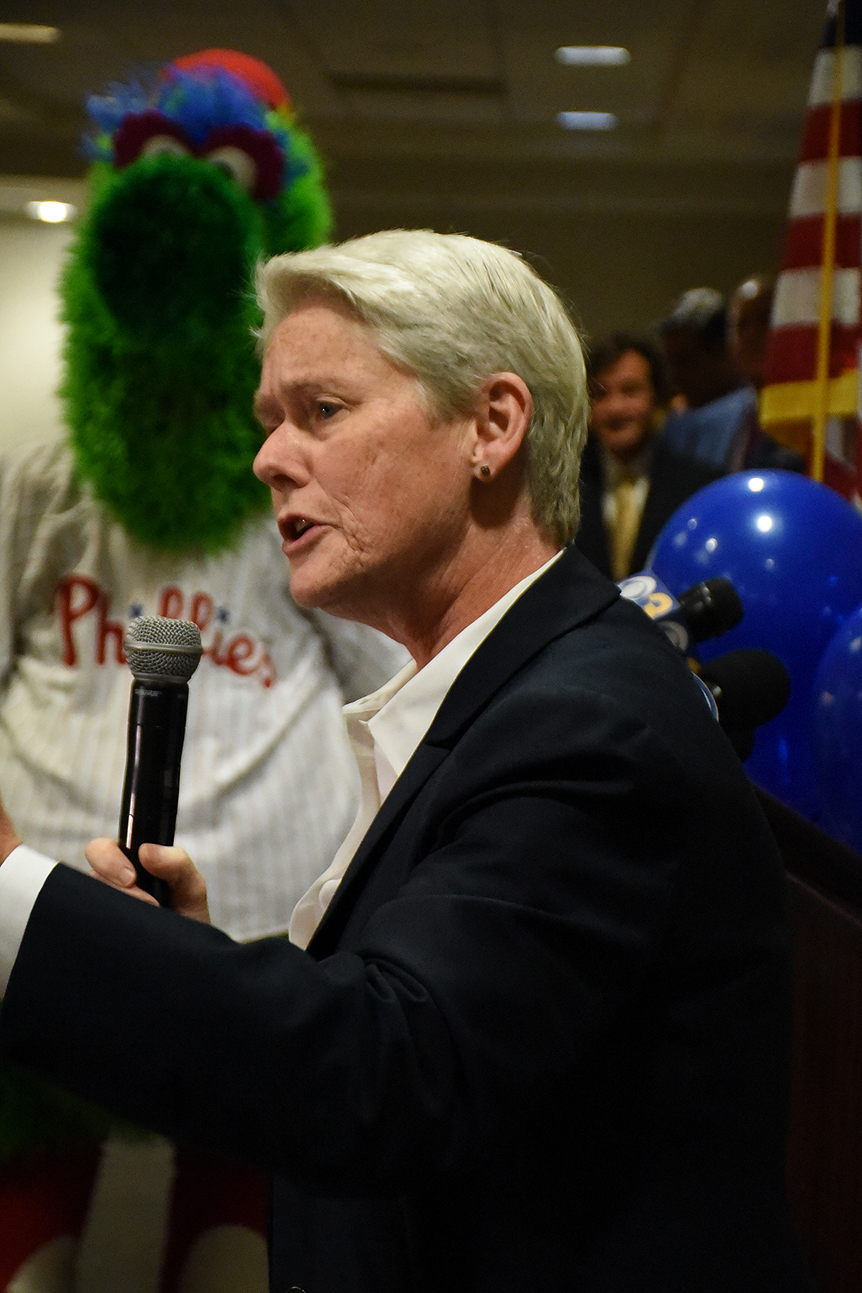
    Barbara McDermott speaks at an event with the Phillie Phanatic in the background.Courtesy of Barbara McDermott

    She presided over numerous resentencings of former juvenile lifers, in one case surprising both defense lawyers and prosecutors when she decided to exonerate one, Terrance Lewis, who had been found innocent by a federal magistrate judge but remained in prison on a procedural issue.

    She said that work, seeing how people changed over time, was some of the most fulfilling of her career.

    But she also drew criticism from some youth justice advocates who said she was unduly harsh in dealing with teenagers accused of violent crimes, denying requests to transfer their cases to juvenile court and imposing substantial state prison sentences.

    Judge McDermott could be exacting from the bench. But her concern for how people experienced the courthouse and the justice system extended beyond the parties before her.

    Colleagues called her a trailblazer for women and LGBTQ+ attorneys, and said she worked to get more female judges in leadership at the First Judicial District. She helped create a curriculum on how judges and court staff should treat transgender witnesses and victims. She also sought to improve conditions for jurors, and coordinated efforts to add a lactation booth to the criminal courthouse.

    Barbara McDermott joined Philadelphia’s Court of Common Pleas in 2012.Anthony Leonardo

    When she was fed up with how rundown the furniture was in the jury deliberation room, she brought in a sander and refinished the tables and chairs herself. A pungent smell took over her courtroom that “did linger longer than I thought,” she later joked.

    Jury Commissioner Pat Martin said their work with jurors led to an unexpected friendship.

    “I don’t know how or why,” he said. ”But I’m grateful.”

    He particularly enjoyed her dry sense of humor.

    “She took on people and didn’t care. She didn’t worry about the feathers that she ruffled,” he said.

    Outside of court, she enjoyed volunteering, biking, camping, hiking, traveling, and spending time with her family and grandchildren, her family wrote.

    Friend and retired Common Pleas Court Judge Ann Butchart recalled a time when she and her wife had plans to meet Judge McDermott and her wife for dinner. McDermott invited them to go on a walk beforehand — which quickly became a challenging, miles-long hike.

    “It’s getting darker and darker, and the hills are getting steeper and steeper,” she said. “We ended up at some hole in the wall in Roxborough.”

    That was Judge McDermott, she said: “This very intense, very, very funny, very, very smart, and very, very determined woman.”

    On the bench and in their friendship, she said, Judge McDermott was complex and honest, and rarely wavered in her positions.

    Barbara McDermott, center right, with fellow judges at her wedding in 2014.Courtesy of Barbara McDermott

    She pointed to a Latin saying: “Sometimes wrong, but never in doubt.”

    “She was so fiercely certain of her decisions and her perspective and her positions on things,” she said. “It was challenging at times, but to see and live in that confidence is a pretty amazing place to be. She manifested that in every part of her life, including her approach to her illness.”

    When Judge McDermott was diagnosed with a rare form of cancer several years ago, Butchart said, there was little research on the illness and many doctors were unsure about the best course of treatment.

    “She challenged every doctor. She was certain that if an approach had been recommended, it wasn’t thorough enough, wasn’t complete enough, wasn’t the best,” she said. “I think personally it added a good year and a half to her life.”

    Martin and Butchart said they will never forget the unveiling of her judicial portrait at the criminal courthouse. A ceremony that is typically stale and sleepy became a celebration of her life.

    She asked her colleagues to perform a skit that featured “a day in the life” of her courtroom, 507.

    Butchart said she and other judges wore sparkly collars on their robes, waved little flags, and sang a personalized song to the tune of “Gloria” by Laura Branigan.

    When they finished, she said, Judge McDermott quipped that the song was not even original — they had sung that at her birthday.

    They could only shake their heads and laugh.

    “This was so vintage Barb,” Butchart said. “She never had an experience that she couldn’t have improved upon or found wanting in some way.”

    And then, naturally, she gifted them shirts donning her portrait.

    Judge McDermott, in the months before her death, said she embarked on a “World Tour” to see and thank the people who had touched her over the years. It reinforced, she said, that her life was a gift.

    “You’ve had 70 years,” she said she told herself. “You’ve had a life.”

    Judge McDermott is survived by her wife and daughters, three grandsons, six siblings, and 20 nieces and nephews.

    A celebration of her life is to be held in mid-September.