A student at Temple University reported being raped Saturday at a privately operated residential complex at the North Philadelphia campus.
The student on Tuesday reported the alleged crime to the university, according to a crime log that is made publicly available by Temple.
The rape allegedly happened on Saturday around 2:30 a.m. at University Village on North 10th Street between Cecil B. Moore and West Montgomery Avenues.
The crime log on Wednesday said the case was “referred to the student code of conduct,” whereas most of entries of reports of crimes say “investigation is ongoing” by Temple or Philadelphia police, or an “arrest was made.”
Temple officials did not say publicly why the case was being investigated for violations of the student code of conduct instead of as a criminal allegation.
In a statement released Wednesday night, Temple president John Fry said he could not comment on the specifics of the case, but he wanted to provide some clarification.
“Students who are reporting a sexual assault make the decision on whether they wish to pursue criminal charges,” Fry said.
“If they want to file a police report, we work to help them navigate that process, connecting them directly to a victim advocate who supports them during this difficult time. That commitment is unwavering and consistent. Whether they choose to pursue criminal charges six days or six months after an incident, we are there to serve as a trusted partner. No matter what the student decides to do, we also offer university resources and support through a variety of on campus resources,” Fry said.
“This investigation is currently being handled through Temple’s Student Conduct Code, which allows the university to hold students accountable under university policy,” Fry said.
“While the university’s conduct process is independent of law enforcement, it does not diminish the seriousness of the allegations or our responsibility to respond,” Fry said.
The president said a university safety alert was not needed in this case.
“When an incident is reported to the university, we review the available information and assess whether a TUAlert is needed. While an alert was not issued in this case, that does not mean we take the report any less seriously. We are committed to transparency, and this incident was included on the university’s publicly available crime log. We are thoroughly investigating the matter and responding appropriately,” the president said.
In light of the outrage that has erupted over a 2024 rape allegation at Cornell University in New York, Fry reiterated that the university has convened a Sexual Assault Advisory Group that includes students, faculty, and staff.
The advisory group will review “our current practices and make detailed recommendations to university administration. Work on this group is already underway, and they will be charged with a review of the full scope of the university’s policies, practices, communications and coordination with the Philadelphia Police Department on cases of sexual assault.”
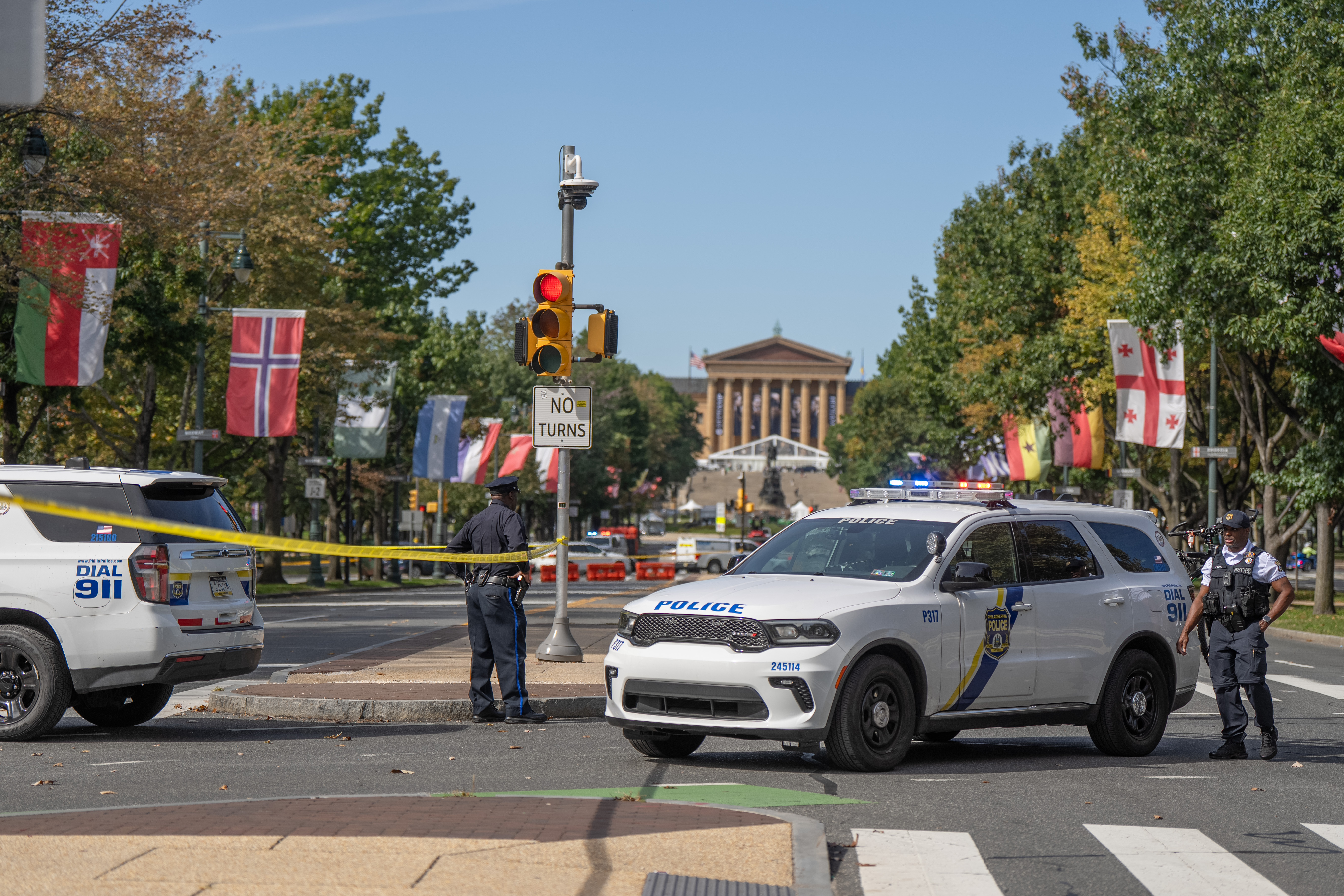
Philadelphia police identified the 60-year-old armed man who was fatally shot on Friday morning by two officers on the Benjamin Franklin Parkway.
Police responded around 11 a.m. to the area of 21st Street and the Parkway, where William Austin reportedly was waving a revolver around. At some point, 38-year-old Officer Eric Lee and a SEPTA Transit Police officer were at the scene when Austin allegedly fired the gun. He was shot by both officers.
The Philadelphia Police Department named Lee, a 13-year veteran on the force assigned to the department’s counterterrorism unit. The department did not release the SEPTA officer’s name.
A spokesperson for SEPTA could not be reached for comment Wednesday night.
“The individual is just continually pointing the weapon, waving the weapon, and waving the weapon multiple times, pointing it at the officers. The officers all backed away and tried to take as much cover as possible,” Bethel said.
The department said on Wednesday that officers had established a containment area and requested SWAT personnel.
“A Philadelphia police officer who is a trained negotiator used a marked police vehicle’s loudspeaker to communicate with the male in an attempt to resolve the incident peacefully. During those efforts, the male repeatedly pointed the firearm toward himself and responding officers,” the department said.
“After several minutes, the male placed the firearm on the ground but retrieved it approximately one minute later. The male subsequently discharged the firearm toward the ground and then raised and pointed it toward responding officers,” the department said.
Lee and the SEPTA officer each fired one round from their police-issued long guns, the department said. Police took Austin to Thomas Jefferson University Hospital, where he was pronounced dead.
Neither officer was hurt.
Police at the scene recovered a .357-caliber revolver containing three fired cartridge casings and three live rounds, the department said.
The officers have been reassigned to administrative duty pending internal investigations and a review by the district attorney’s office.
Federal prosecutors have accused a Chester couple with trapping two intellectually disabled Delaware County women in a double-wide trailer far from home, where they were sexually abused and regularly beaten.
That abuse, prosecutors said after the couple was arrested in 2024, was the culmination of a monthslong nightmare that ended that year and in which Michael Swanson and his former wife, Nicole, groomed and manipulated the women in Chester and then in Tallahassee, Fla., where the couple attempted to hide from a Delaware County Child and Youth Services caseworker in the trailer.
Along with Swanson’s new girlfriend and a man who owned their house on Broomall Street in Chester, the couple conspired to defraud the women of their Social Security benefits and food-assistance cards, stealing thousands of dollars in public benefits after convincing the women to move from their family homes into the squalid property.
Despite ample evidence gathered by prosecutors, charges against Nicole Swanson were dismissed that year, and last month, a Delaware County judge ruled that Michael Swanson was mentally unfit to stand trial.
Now the cases will be tried in federal court.
Prosecutors with the U.S. District Court for the Eastern District of Pennsylvania this month charged Michael and Nicole Swanson, Caitlyn Eusden Swanson, and David Dziobcynski with a host of federal crimes for their part in the abuse.
Their arguments were identical to those made by Delaware County attorneys.
They said the defendants, led by Michael Swanson, “groomed, lured, and enticed intellectually disabled women” to live with them, according to an Oct. 8 grand jury indictment.
Michael Swanson, prosecutors said, engaged in sex with the women despite their lacking the capacity to consent. And Nicole Swanson “encouraged the victims to join sexual relationships” with her ex-husband, the document said, and “sometimes engaged in the sex with them herself.”
As a result of Swanson’s criminal behavior, one of the victims gave birth to his child in February 2023.
Meanwhile, the Swansons, aided by Dziobcynski, isolated the women from their families and convinced them to submit new applications for government benefits — listing them as payees, the document said.
The group took EBT cards meant to help feed the disabled women and spent the funds on themselves, according to prosecutors, and they took control of bank accounts that held their Social Security benefits.
And when Delaware County caseworker for some of the Swansons’ children grew suspicious of the arrangement, prosecutors said, the defendants schemed to evade scrutiny.
In July 2023, Swanson wired more than $20,000 from one victims’ account to his own. He rented a passenger van, taking the women to the Florida trailer where Nicole Swanson had fled with their children.
Dziobcynski, prosecutors said, had already harassed the CYS caseworker for months, calling her phone more than 110 times and leaving multiple threatening voicemails.
And the physical and sexual abuse continued in Tallahassee, according to the document.
There, Nicole Swanson told one of the women to engage in sex with Michael Swanson, recording the interaction on her cell phone, prosecutors said.
And Michael Swanson threatened the women, warning them against telling authorities or social workers about their situation. In one instance, Swanson told one of the women he would cut off her hair should she do so, the document said.
A defense attorney said the Swansons had a history of brain trauma and behavioral issues, and said Michael Swanson gave highly emotional, childlike responses during a psychological exam.
But prosecutors presented their own psychological expert who suggested Swanson’s behavior was more like a “caricature” of mental incapacitation, falling outside what would be expected of someone with a disability, the Daily Times reported.
Michael Swanson was released from custody in 2024 and placed on house arrest after paying $1 of a $900,000 nominal bail.
Court records did not make it immediately clear whether he or the other defendants had been arraigned in the federal case or whether they had hired attorneys.
It wouldn’t be a bad idea to maintain a certain wardrobe flexibility for the next several days.
After a retro run of summerlike heat on Wednesday, it is likely that frost will be covering some of the pumpkins and other surfaces in the region during the weekend, away from the Philly urban-heat island.
And big changes are in the winds, with a chance of severe thunderstorms Friday and gusts to 40 mph Friday into Saturday, the National Weather Service says.
On Wednesday, it was warm winds from the south that boosted temperatures toward 80 degrees. That would be normal for June; however, they didn’t come close to challenging the record for an Oct. 14 in Philly, which is 88 degrees, set in 1975.
Clouds and light showers “put a damper” on that potential, said Alex Staarmann, a meteorologist in the weather service’s Mount Holly office.
But the atmosphere is about to demonstrate its mercurial side, so typical of seasonal transition periods when the colder air masses from the north encounter the remnants of summer.
The forecast for the Philly region through the weekend
With a frontal passage, the sun is forecast to rule Thursday with highs in the upper 60s, just about normal for mid-October.
In advance of another front, Friday’s temperatures may approach 80 degrees, with showers and gusts as strong winds aloft could mix to the surface, the weather service is warning. The winds are forecast to continue through the day Saturday.
The cooldown will be significant. On Saturday, temperatures may get no higher than the mid-50s, and come early Sunday morning they may fall into the upper 30s in the city and mid-30s in the surrounding counties.
That is “likely” to generate the first frost of the season in some areas, said Staarmann — even if temperatures remain several degrees above freezing.
The difference between a ‘frost’ and a ‘freeze’
The ideal recipe for frost would be clear skies and light winds that allow the sun’s heat to escape efficiently into space, and a dash of moisture in the air.
Cold air sinks, and surfaces exposed to the sky “are radiating heat away from the Earth so that they are much cooler than the air five or six feet above it,” where the air temperatures are measured, said Staarmann.
The surfaces “can be 30 degrees while the air temperature is 35 or 36,” he added.
It is even possible to get a “light frost” with temperatures at 37 or even 38 degrees, he said.
For a freeze, the air temperature, not just the stuff below the thermometer, has to reach 32 degrees.
On average, that does not happen at Philadelphia International Airport until early November.
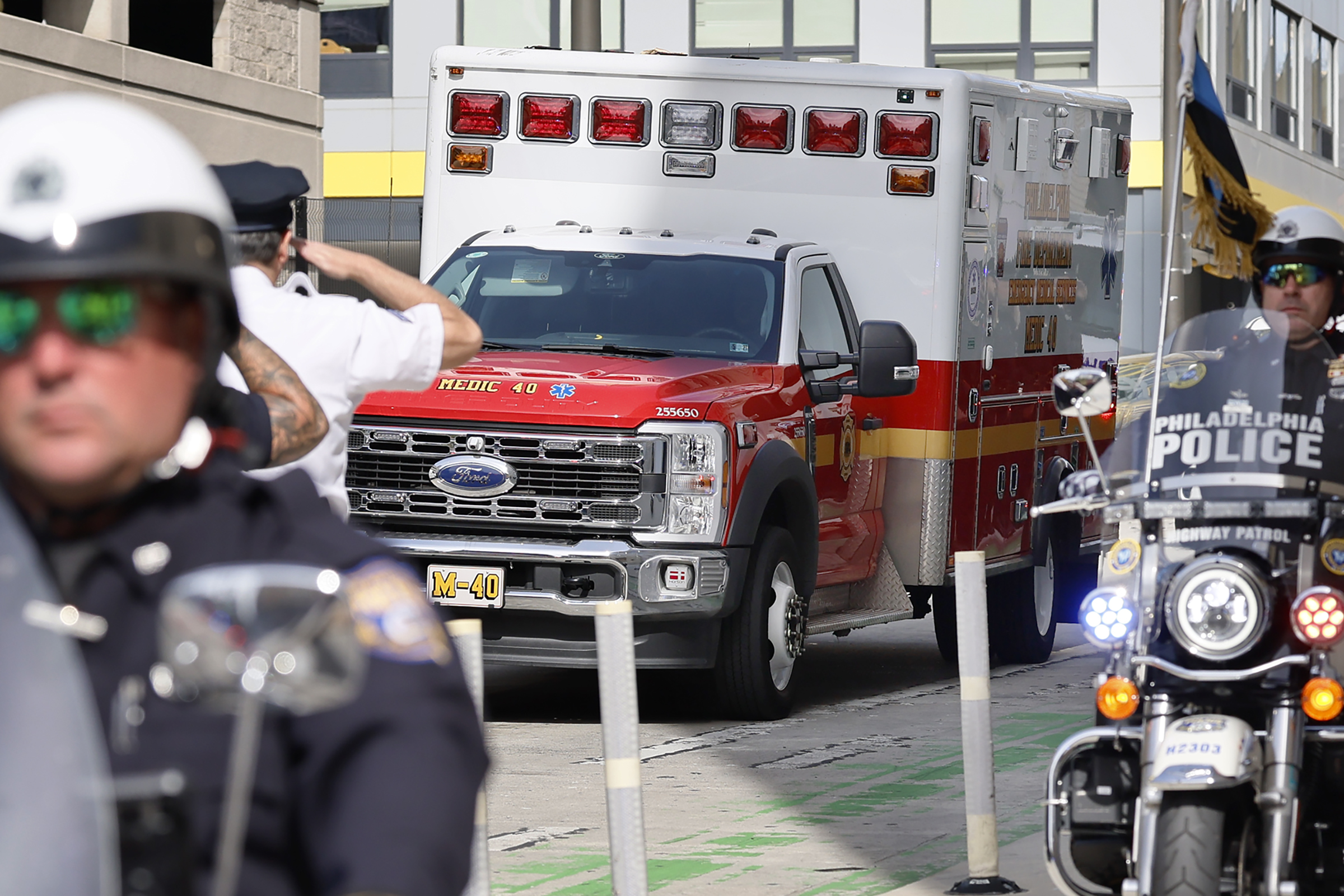
Eric Lewis, the city employee accused of ambushing Philadelphia police officers with a shotgun on Saturday and fatally shooting Officer Shane Seiber, had a criminal history that included a 2015 gun-related conviction and a homicide charge for which he was acquitted.
Despite that, the city hired Lewis in May 2024 to work a $47,000-per-year job with the water department as a trades helper. His hiring has raised questions about how a person with a criminal background who allegedly went on to shoot at police officers could have been employed by the city.
But according to officials in Mayor Cherelle L. Parker’s administration, the city was barred from considering Lewis’ most serious previous criminal allegations under its relatively strict laws that govern when and how employers can weigh an applicant’s criminal history.
That includes a homicide charge stemming from a 2019 killing in which Lewis was later acquitted. The murder case has become the subject of intense public scrutiny, with District Attorney Larry Krasner alleging that police botched the investigation.
Under local law, the city is prohibited from considering charges that did not result in a conviction while making hiring decisions.
The city also could not deny Lewis employment based on a 2015 conviction on misdemeanor charges of simple assault and carrying a firearm in public. That conviction, which resulted in a sentence of probation, took place more than seven years before Lewis was hired, putting it outside the window when the city could consider such a record in making hiring decisions.
A moment of silence is held for fallen Philadelphia Police Officer Shane Seiber before the game between the Carolina Hurricanes and the Philadelphia Flyers at Xfinity Mobile Arena on Sunday.Isaiah Vazquez / For The Inquirer
Candi Jones, the city’s chief human resources officer, said in an interview Wednesday that a criminal record does not automatically disqualify someone from employment.
“As an employer, the city’s focus is on supporting our employees and their families who are victims of this terrible crime, as we grieve together,” she said, adding: “The safety of city employees and the public is and will always be a fundamental priority.”
The city in 2011 first passed the Fair Chance Hiring Law, commonly known as the “ban the box” law, which required that most employers in Philadelphia remove questions on job applications about criminal backgrounds.
In 2016, the city strengthened the law to ban employers from asking job applicants about criminal history until after they made a conditional offer of employment. That amendment also limited employers from considering any criminal convictions more than seven years old.
Philadelphia City Council again amended the law last year to shorten the window for considering misdemeanor convictions to four years. That took effect well after Lewis was hired.
Proponents said prohibiting employment discrimination based on criminal history ensures job opportunities for the thousands of people in Philadelphia with conviction and arrest records. Critics have said the law places high burdens on private employers and poses safety risks.
Jones said the city stands by its practice.
“As an employer, we do engage in inclusive employment practices [and] we do provide employment opportunities to formerly incarcerated individuals,” she said.
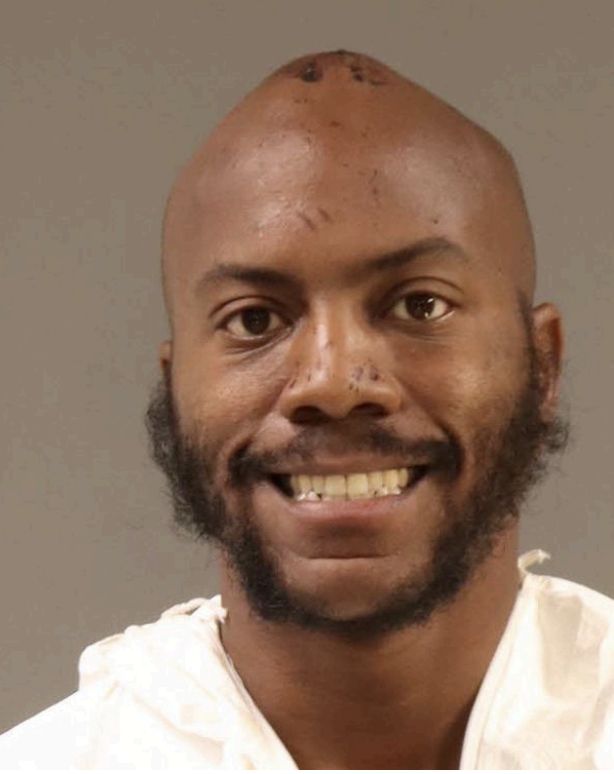
Eric Lewis, charged with murder in the shooting death of police officer Shane Seiber, is shown in a Philadelphia Police Department photo.Philadelphia Police Department
Jones said Lewis went through the city’s typical hiring process for civil service employees, who make up the majority of the more than 29,000 members of the city workforce. The city’s website describes the job of trades helper as an entry-level position that involves assisting a more experienced worker with equipment maintenance and repairs.
According to Jones, Lewis submitted an application, was placed on an eligibility list for the job, participated in an interview, and was subject to a background check.
In making its hiring decision, the city likely would have been able to consider one low-level conviction that fell within the seven-year look-back window that was in place when Lewis applied.
Lewis was charged in July 2018 with simple assault and recklessly endangering another person after police said he punched a woman in the face, according to the affidavit of probable cause for his arrest.
He later pleaded guilty in Municipal Court to disorderly conduct, a third-degreemisdemeanor, by engaging in fighting, according to court records. He was sentenced to one year of probation.
Jones said the city’s pre-employment screenings are designed to ensure that an applicant is reviewed on an individual basis.
She said the nature of convictions is considered, as well as their relevance to the position and the risk they pose. For example, she said, applicants for public safety jobs may receive more scrutiny, and child welfare laws dictate background check procedures for workers who interact with children.
In addition to being barred from considering older criminal convictions, employers are prohibited from inquiring about a job applicant’s previous arrests or charges that are no longer pending and did not result in a conviction.
In 2023, Lewis stood trial for murder in the 2019 shooting death of Christopher Williams.
That case has since drawn fresh scrutiny after The Inquirer reported that Lewis was acquitted by a judge who was so concerned about the weakness of the police investigation in the case that he contacted the department’s internal affairs bureau.
On Tuesday, Krasner accused police of mishandling the case, and he said one officer who dated Lewis’ sister gave fabricated information to investigators, something he characterized as potentially “criminal.”
Sgt. Eric Gripp, a police spokesperson, said that the department was reviewing the case, but that its focus is on supporting the families of the officers involved in the shooting and those grieving the loss of Seiber.
Abbott Elementary is opening its fictional doors to a new cast of characters with last week’s premiere of its sixth season.
Joining the main cast this season, which includes show creator and Philly native Quinta Brunson, are guest stars such as former Nickelodeon icon Miranda Cosgrove, comedian and author Ali Wong, and comedian and actor Edi Patterson, according to Deadline.
Details on their Abbott characters and the episodes they’ll appear weren’t announced.
The Emmy-winning Abbott has grown to be one of the most beloved network sitcoms, and its latest premiere brought on Philadelphia 76ers’ juggernauts Tyrese Maxey, VJ Edgecombe, and Jaylen Brown.
Cosgrove, Wong, and Patterson will enter Abbott Elementary as the main cast goes through major changes, with Tyler James Williams’ Gregory promoted to assistant principal and Lisa Ann Walter’s Melissa is coming into her own as the teachers’ union representative.
Cosgrove is best known for her role in Nickelodeon’s Drake and Josh and as Carly in the same channel’s iCarly, about teens livestreaming in the aughts before Twitch became a global platform.
The 33-year-old also produced the iCarly reboot with Paramount+ in 2021 and starred in Netflix’s The Wrong Paris, among other roles.
Wong, a stand-up comedian known for her Netflix specials like Cobra Baby and 2024’s Single Lady, starred in and executive produced the Netflix and A24 dramedy Beef opposite Steven Yeun, for which she won an Emmy for outstanding lead actress for the show’s first season.
Patterson is coming off the heels of a six-year stint in Danny McBride’s latest HBO comedy series, The Righteous Gemstones, in which she played the ambitious, word-slurring, and outrageous Judy Gemstone, who vies for control of the family megachurch alongside McBride, Adam DeVine, Walton Goggins, and John Goodman.
Abbott airs on ABC on Wednesdays at 8:30 p.m. and streams on Hulu and Disney+ the next day.
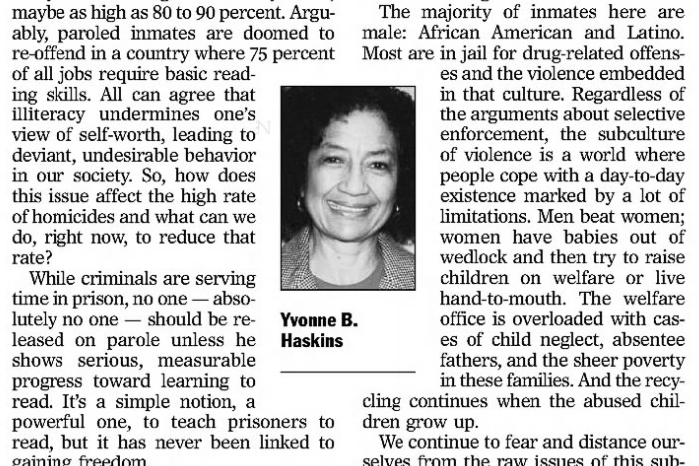
Yvonne B. Haskins, 88, of Philadelphia, longtime real estate attorney, the first female regional director for what is now the Pennsylvania Commission on Crime and Delinquency, the first female district director of the Pennsylvania Board of Probation and Parole, the first female head of security at the University of Pennsylvania, and one of the first female Philadelphia police officers, died Tuesday, Sept. 29, of metastatic breast cancer at her home in Germantown.
Mrs. Haskins was also the interim city attorney for Camden, a former manager of the old police community relations department of the Philadelphia Commission on Human Relations, and a tireless local community development and historic preservation activist.
Born in Atlanta and reared in several small Georgia towns, Mrs. Haskins came to Philadelphia with her two sons in 1962. She worked briefly as a secretary and, on impulse, tested to be a Philadelphia police officer. To her surprise, she said later, she passed the examand joined the police department in 1965.
That job, she told department colleagues years later, kicked off her climb to nearly a dozen local leadership roles in law enforcement, government, education, and community development. She was especially focused on serving young people at every stop.
“Young people need what we all need,” she told The Inquirer in 1992. “We all have to have hope, and we all have to have self-esteem.”
Mrs. Haskins enjoyed tending neighborhood parks and working outside with others. Courtesy of the family
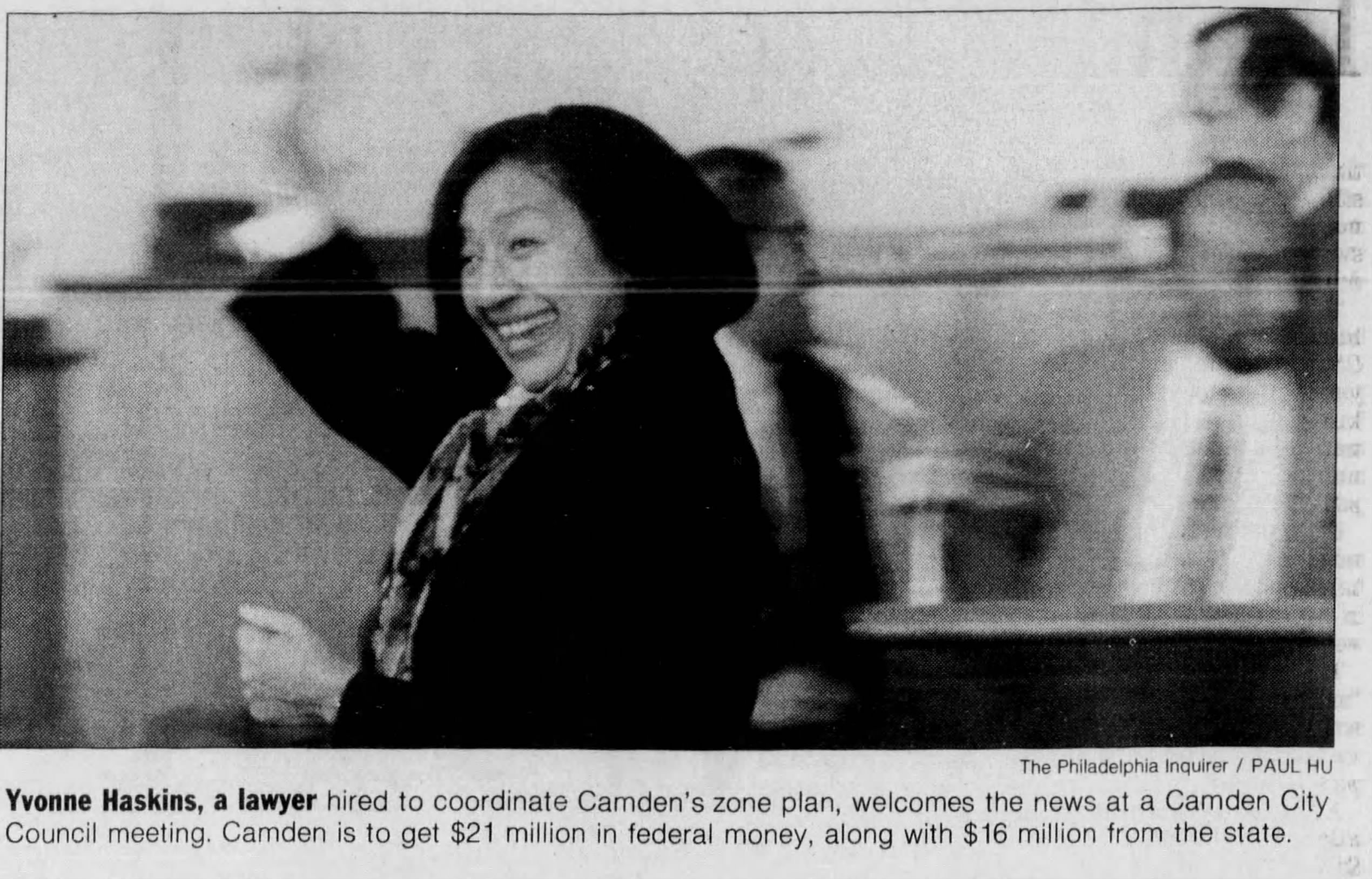
Mrs. Haskins earned a law degree at Temple University night school in 1986, specialized in real estate law and community revitalization, and opened Haskins Law Firm with offices in Philadelphia and Camden. She became an outspoken expert on zoning, financial, and political issues, and was appointed by then-Camden Mayor Arnold Webster to serve as interim city attorney for 90 days in 1996.
She had already spent much of 1994 writing most of Camden’s proposal for a multimillion-dollar community zoning federal grant. A fellow Camden community activist told The Inquirer in 1994: “She knows how to lay out a plan, get back to you, follow the rules, and play the game the way it’s supposed to be played.”
While working for the police from 1965 to ’69, Mrs. Haskins earned a bachelor’s degree with honors and awards in social welfare at Temple in 1968. She was assigned to juvenile aid, human relations, and criminal justice planning for the police, and, as a liaison to the Philadelphia Commission on Human Relations, helped organize the city’s first police-community workshops.
“I’m assigned to a police and community program,” she told The Inquirer in 1968. “The community to understand the police, the police to understand the community. Understanding. That’s really the whole thing, isn’t it?”
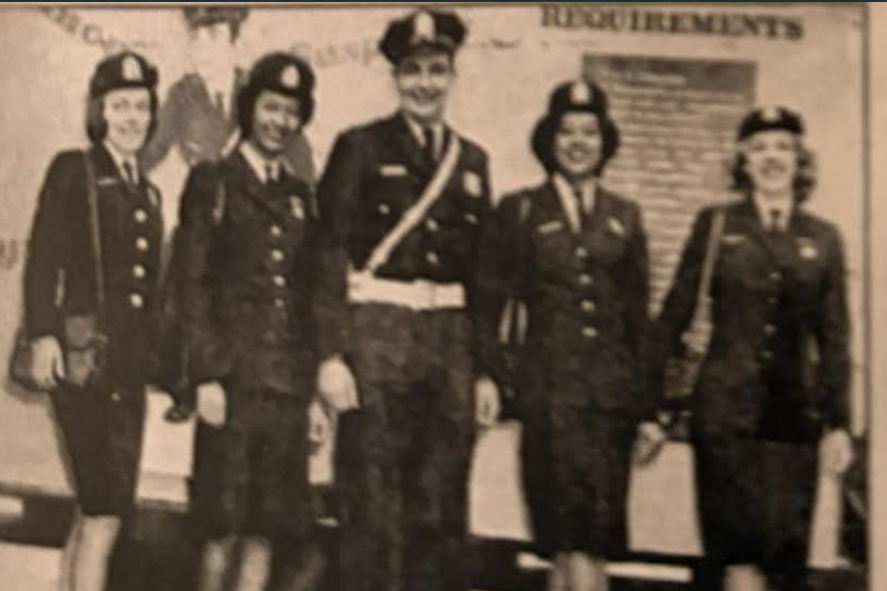
Mrs. Haskins (second from left) appeared in a Philadelphia Police Department recruiting promotion in 1968.Philadelphia Police Department
She joined the human relations commission full-time in 1969 and left for the Pennsylvania Commission on Crime and Delinquency in 1973. There, she oversaw a project budget of $100 million, funded the nascent local chapter of Women Organized Against Rape, and established a juvenile law project.
As Philadelphia’s district director for the Pennsylvania Board of Probation and Parole from 1977 to ’87, she directed a $4 million budget and a staff of 175. She was also a community program planner for the Philadelphia School District, the first female head of security at Penn in 1973, and a senior business development officer for the Fannie Mae mortgage organization.
“Our house was a hub of community activity,” said her daughter, Kristin Haskins Simms. Neighborhood colleagues recently renamed Trolley Car Park on Germantown Avenue after her and placed a plaque with her nickname, “Good Trouble,” on a nearby bench.
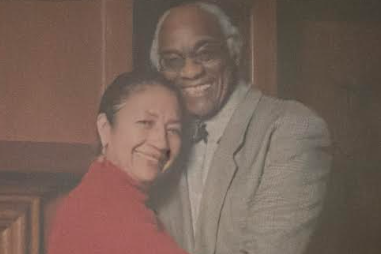
Mrs. Haskins met her husband, Harold, through a mutual friend, and they married in 1969. Courtesy of the family
She graduated as valedictorian of her high school at 15 and took premed classes and made the dean’s list for two years at Spelman College in Atlanta. She left Spelman after her sophomore year and married Walter Booker, and they had sons Russell and Randall.
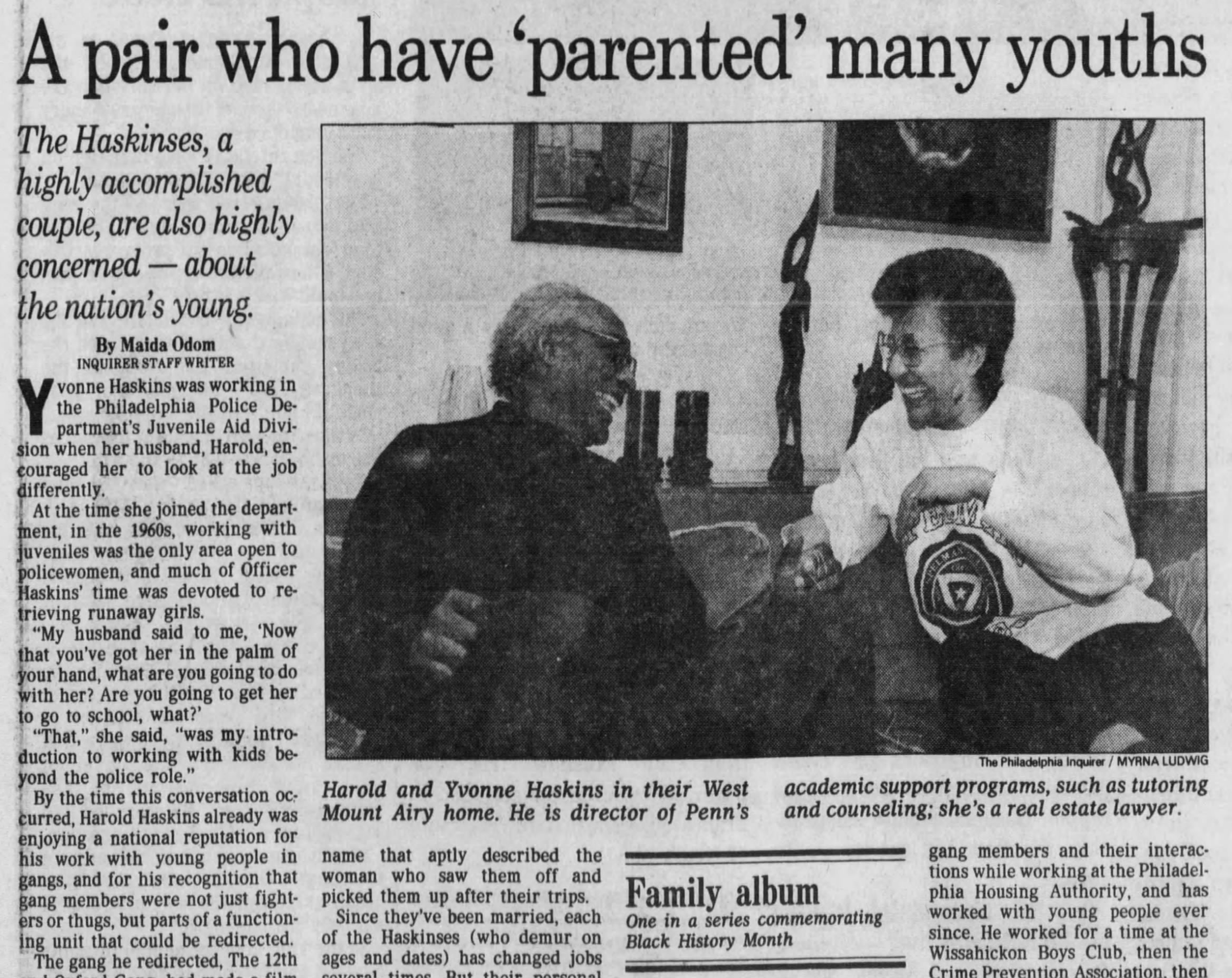
Mrs. Haskins was featured in The Inquirer in 1992 (above) and 1994 (below).Newspapers.com
They moved to Washington and, after a divorce, she moved to Philadelphia, where her parents lived.
She met Harold Haskins, also a social activist, through a mutual friend, and they married in 1969. They had a daughter, Kristin, and lived in West Mount Airy. Her husband died in 2020, and she moved to Germantown.
Family and friends called Mrs. Haskins “Peachy” because of her Georgia roots. She played piano and enjoyed gardening and impressionist art.
She lived for years with myeloma cancer and walked in many cancer research fundraisers. She never really retired and wrote about her 2024 breast cancer diagnosis on Facebook. “As much as I want to stay engaged and busy, I may not be able to do much,” she said. “Your understanding and keeping me in the loop of things will be much appreciated.”
Mrs. Haskins graduated as valedictorian of her high school at 15.Courtesy of the family
Her daughter said: “She didn’t believe in retirement. She wanted to do the work, stay engaged, fight for justice.”
In addition to her daughter, Mrs. Haskins is survived by a grandson, a great-grandson, a brother, and other relatives. Her former husband and sons died earlier.
Services are to be at 11 a.m. Saturday, Nov. 7, at First United Methodist Church of Germantown, 6001 Germantown Ave., Philadelphia, Pa. 19144.
The federal judge who accused District Attorney Larry Krasner of potentially breaking the law said he will not step back from the case in which he believes Krasner’s wrongdoing occurred, according to an order he filed Wednesday.
The decision by U.S. District Judge Paul S. Diamond was a rejection of a request by Krasner, who said in court documents last month that Diamond should be removed from the case due to his “apparent bias” against the city’s top prosecutor.
But Diamond, in his order, said he found Krasner’s arguments not only unconvincing but “frivolous.” He also rejected a request by Krasner to reconsider his order barring Krasner from participating in the underlying case moving forward, saying the decision to do so was “reasonable and warranted.”
Krasner’s “intemperate filings provide no basis for recusal or reconsideration of my rulings,” Diamond wrote, adding separately that Krasner’s filings “generate more heat than light.”
The decision was the latest development in a high-profile saga that has led to a series of controversial developments concerning Krasner’s office.
Chief among them was Diamond’s issuance of a memorandum last month in which he said Krasner and one of his top supervisors, Matthew Stiegler, may have committed crimes including conspiracy, obstruction of justice, or perjury while participating in a post-conviction case Diamond has been overseeing.
The judge also said he had referred the matter to the U.S. Attorney’s Office for a potential criminal inquiry. Federal prosecutors have declined to comment on how or if they might proceed.
Krasner, a Democrat, has denied wrongdoing. And in a series of documents he filed last month, he said Diamond — who was appointed by President George W. Bush, a Republican — had exhibited consistent bias against him in the case, including by misinterpreting witness testimony, making inconsistent credibility determinations, and reaching “baseless” conclusions about what happened.
The underlying matter centers on Dennis Johnson’s attempt to have his 2009 murder conviction overturned. Krasner’s office had once supported that effort, but tried to change course earlier this year after prosecutors discovered that the staffer who filed the brief backing Johnson’s position had made a series of mistakes.
After that discovery, those prosecutors and Krasner held a variety of discussions about what went wrong and how the office should move forward. And this summer, when Diamond called hearings to address similar questions, the prosecutors involved in the discussions with Krasner told the judge that the DA had acted in ways they viewed as inappropriate — including, they said, by considering a plan to fault a single staffer, and threatening “consequences” for those who didn’t follow his orders.
Diamond said some of the actions could amount to obstruction of justice or criminal conspiracy.
Krasner has said those characterizations were wrong, and that some of the prosecutors who spoke out against him were “legally incorrect” about what took place and had behaved in ways that were insubordinate.
Beyond the issues Diamond ruled on Wednesday, the case — and the merits of Johnson’s petition — remain pending.
Prices are rising on everything, everywhere these days.
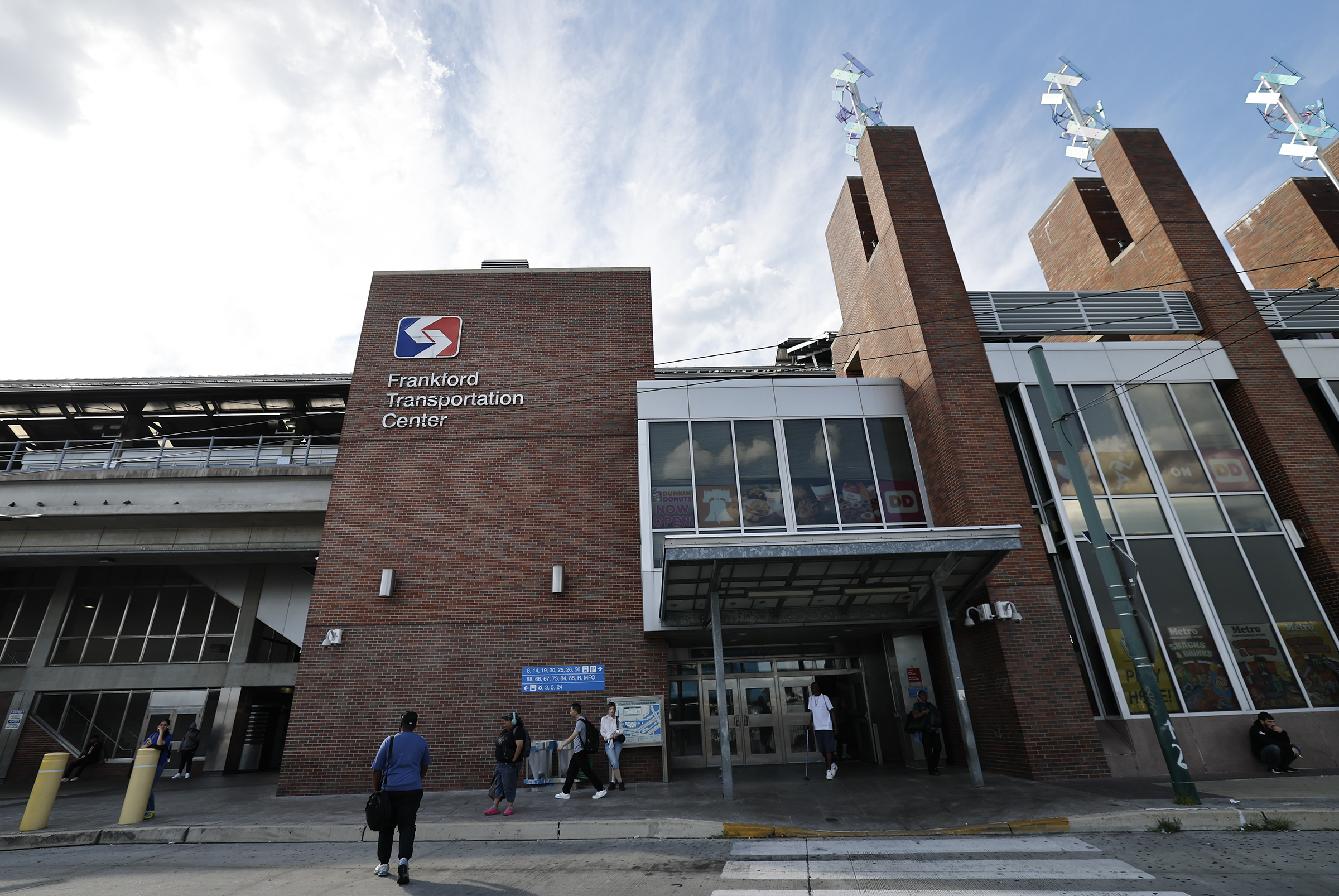
SEPTA, however, has cut the parking fee at its garages in half.
Until Dec. 31, it will cost only $2 a day to use the Frankford, Lansdale, and Norristown garages, instead of $4.
Fewer commuters are parking in the garages, which are about 5% to 10% full on weekdays, SEPTA spokesperson Andrew Busch said. The transit agency hopes the price break will entice riders.
“We want to see if there’s a demand we’re not serving,” Busch said. “Maybe we just landed on the wrong price point.”
In early 2020, SEPTA stopped charging for parking at Regional Rail stations and transportation centers as people adjusted to pandemic shutdowns and changed commuting patterns.
The transit agency began phasing in paid parking again in 2024 and doubled daily fees — to $2 to park in Regional Rail surface lots and $4 for garages.
SEPTA was tightening its belt during a period of fiscal crisis and looking for ways to generate new income. Officials believed that the price was still relatively low and would help the bottom line.
In fiscal 2019, the agency raised $3.5 million from parking fees, Busch said. For the 2026 fiscal year that ended June 30, SEPTA parking lots and garages took in $5.3 million, he said. That was the first full year after all parking was paid.
Most of Regional Rail’s parking capacity is in surface lots, which are often full or nearly so.
SEPTA says it has noticed more people using street parking around the 989-space Frankford garage instead.
“We’ve heard from some people that they feel unsafe, particularly at the Frankford Transportation Center,” Busch said. SEPTA has added lighting and 30 blind-spot mirrors in the garage, he said.
In June, Lansdale police increased patrols around SEPTA’s parking garage after reports of fighting and underage drinking among teens and young adults using it as a gathering spot.
It is not clear whether customer concerns about the situation contributed to a drop in parking there.
James Doran sat inside a Frankford Avenue restaurant, carefully watching a group of men for about an hour. A crime was unfolding in front of his eyes.
It was the early 1940s, and the Philadelphia police officer was investigating a crime magnet: pinball machines.
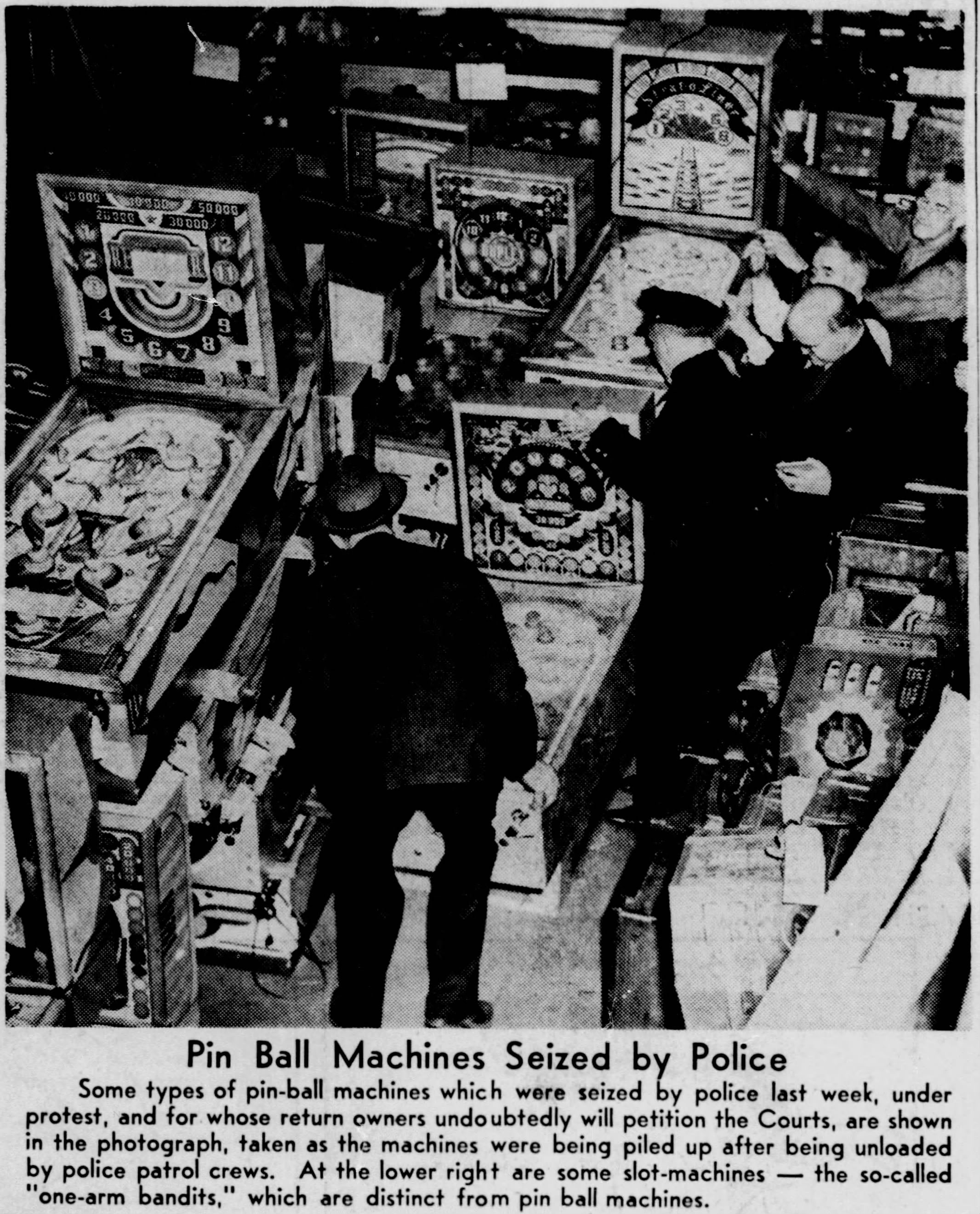
Doran saw one man win 10 free rounds, press a button under the machine to get a cash prize instead, and claim 50 cents from the restaurant’s counter. Police confiscated the establishment’s six pinball machines as part of a statewide crackdown against unregulated gambling.
Nearly a century later, Pennsylvania is again targeting so-called skill game devices. But instead of pinball machines that require pulling levers, the devices are electronic and the players push a button.
While pinball machines are viewed today as retro arcade games, in the mid-20th century they were a main focus for Philadelphia’s vice squad.
Pinball can be played “as a pure matter of amusement,” the state Superior Court wrote in 1942, but the machines of that era were spiced up with “electrical contrivances and gadgets” that turned them into “gambling devices.”
The battle over pinball as a form of gambling culminated in a 1959Pennsylvania Supreme Court ruling that remains an important precedent for courts that need to determine if a device is “intrinsically connected with gambling.” The opinion was cited by justices over the summer in the skill games ruling.
Not your mall arcade’s pinball machine
Pinball became a gambling alternative to outlawed slot machines in the 1930s, and concerns over crime followed.
The machines of the time were different from those later featured in arcades. Most importantly, they did not have the flipper buttons that allow the player some control over the ball’s trajectory.
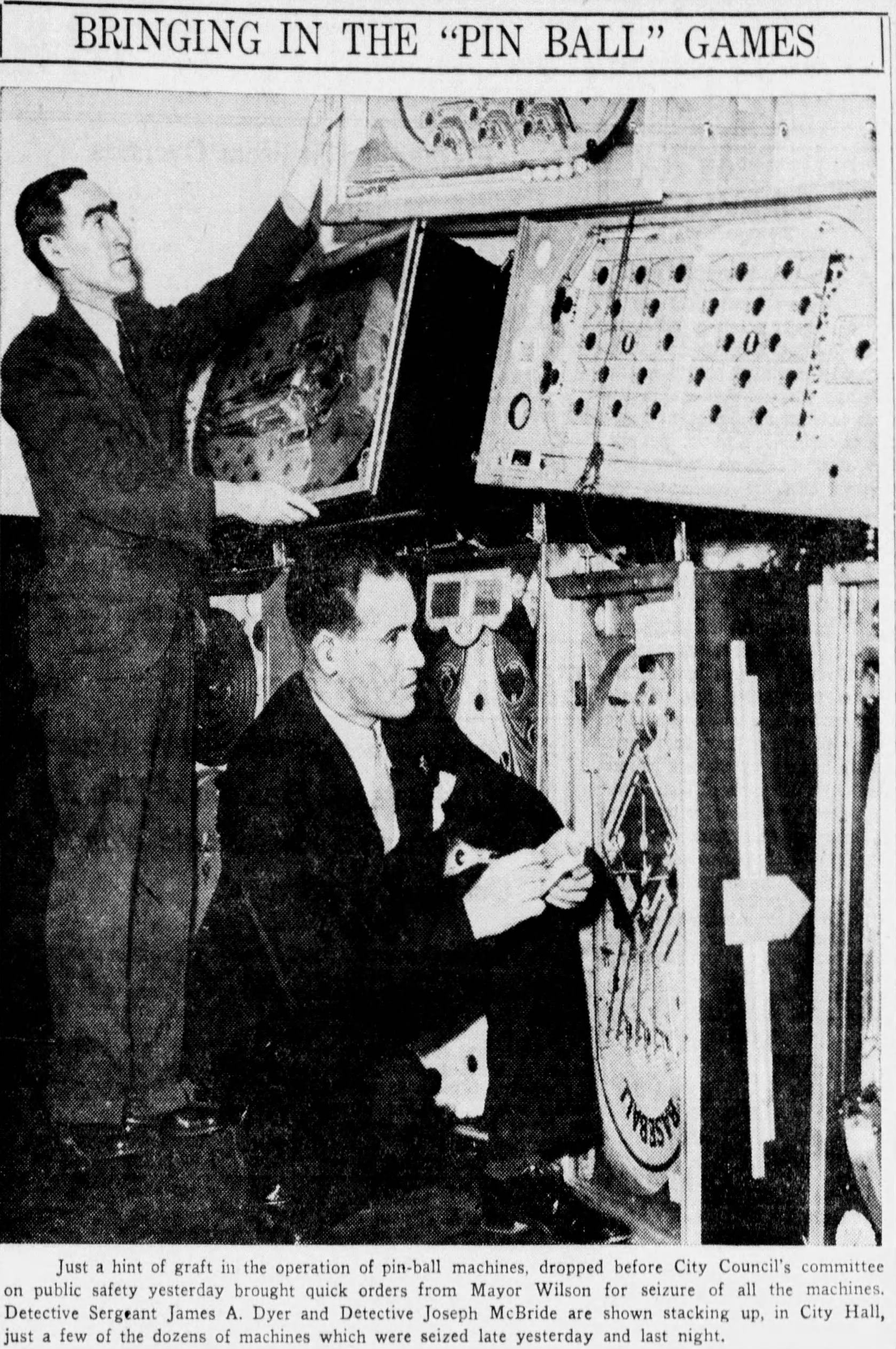
Pinball machines in Philadelphia City Hall, 1936.The Philadelphia Inquirer
Players would pay for a ball and could win free plays depending on the score, which they had no control over. The player could also press a button under the machine to cancel the free plays and receive 50 cents instead.
That made pinball ostensibly a slot machine, law enforcement and officials throughout the country argued at the time.
“This condition will lead to gang wars, gang fights, and killings,” Philadelphia Police Capt. John Murphy said in 1940. “The only sure preventive method is to drive out pinball machines completely.”
Officials were also concerned about the impact of the machines on youth. At a 1942 Pennsylvania Liquor Control Board hearing, students from Lower Merion testified that they had gambled on a pinball machine and bought beer at a local restaurant.
Police throughout the Philadelphia region seized machines during the late 1930s and 1940s, and courts had to grapple with the legality of the devices in cases that made their way up to the Pennsylvania Supreme Court.
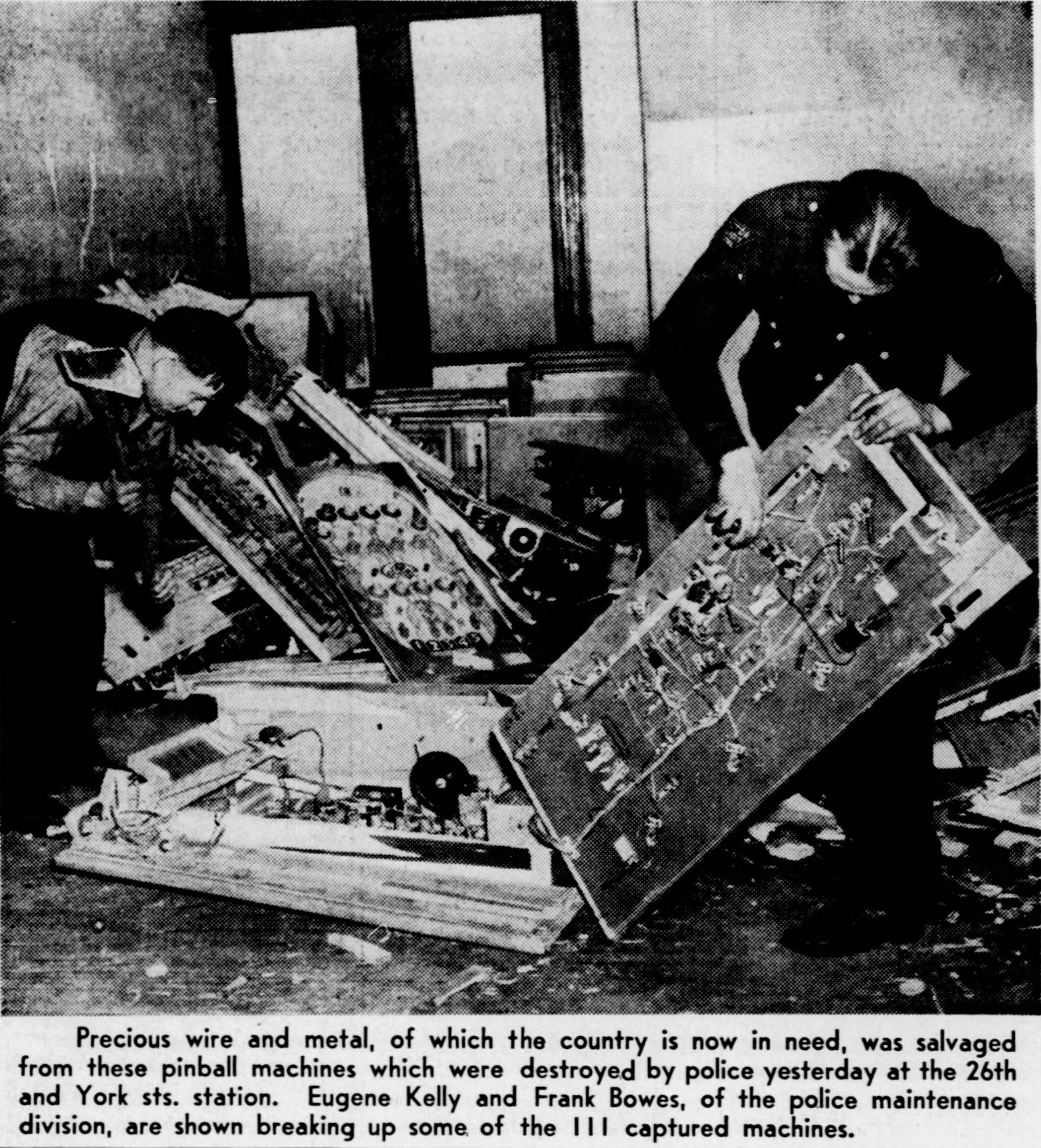
And throughout World War II, Philadelphia extracted metals from seized pinball machines to aid in the war effort.
But the war on pinball outlasted World War II and spilled into the 1950s.
A 1942 image of Philadelphia police maintenance staff removing metals and wires from pinball machines.The Philadelphia Inquirer
‘Clearly … gambling devices’
The early court battles over pinball machines centered on free plays and whether police needed direct evidence of gambling on a specific machine before seizing and destroying it.
In a 1957 raid in Fayette County, Pennsylvania State Police seized 41 bingo-style pinball machines from various establishments. Unlike flipper machines, which were already popular, in these devices a player shot balls into holes on a bingo-card-like board.
State police did not have direct evidence of gambling for more than half of the machines, and establishments challenged their seizure.
The Pennsylvania Supreme Court adopted a previous Superior Court ruling that the machines “clearly are gambling devices” and “were set up to be used for that purpose.”
The ruling did not affect single-coin devices, but banned those in which a player could insert multiple coins to improve the odds.
A pinball wiz ends the war
The tone on pinball machines began changing in the 1970s. Seizures continued, as did violent crime that police connected to disputes over the devices.
Headlines about crime and gambling were replaced with stories about pinball wizards. The machines found their homes in arcades.
The fever eventually broke — often attributed to a 1976 demonstration in New York City Council by GQ journalist and pinball enthusiast Roger Sharpe, which led to overturning the city’s 35-year-old ban. He demonstrated that he could launch a pinball into a specific location, thus affirming that it was a game of skill.
In the years that followed, pinball exploded in popularity. But the goal of the game changed, and it was no longer winning money on a bet.
“Pinball is, after all is said and done, an ego trip,” Philadelphia Daily News columnist Gene Castellano wrote in 1977. “You play to win, to have a small success, to beat the game.”