A bridal-boutique chain is opening its next store in Center City.
Luxe Redux Bridal, which sells sample designer gowns at discounted prices, is set to open its doors at 2300 Chestnut St. in early 2027, the company announced last week.
The retailer is moving into the former Daltile design studio at the recently renovated 104,000-square-foot office building, which sits on the Western edge of Rittenhouse, just before University City.
The shop will span more than 3,600 square feet across multiple floors and contain five bridal suites.
“We’re thrilled to bring Luxe Redux Bridal to Philadelphia and become part of such a vibrant, style-conscious community,” Lindsay Fork, founder and CEO, said in a statement. “We’re proud to introduce Philadelphia brides to the accessible luxury, one-on-one experience, and same-day take-home model that has fueled our growth.”
Luxe Redux Bridal sells designer gowns for between $500 and $12,000. The dresses are samples — meaning they’ve been tried on by others — and are sold off-the-rack at discounted prices.
The company, which Fork founded in Ohio in 2010, calls itself a place “where brides say yes for less.”
Luxe Redux Bridal customers can buy dresses online or take them home same-day at 15 brick-and-mortar stores, the closest of which is in Pittsburgh. Philadelphia will be the brand’s 16th location.
2300 Chestnut is owned by Bala Cynwyd-based Stoltz Management. The firm bought the property in 2017 for nearly $29 million, according to Philadelphia property records.
Luxe Redux Bridal’s arrival fills one of several ground-floor vacancies at the building. Next to Luxe Redux, another retail space is set to become an Alpha Fit Club, a circuit-style group-fitness studio, by the end of this year. A 5,700-square-foot corner parcel at the southwest corner of 23rd and Chestnut Streets is still being marketed for lease.
The Philadelphia Police Department is investigating an alleged sexual assault involving two Temple University students at an off-campus residence.
The assault occurred Sunday at the Avery, a private residential complex on North 15th Street, according to daily crime logs kept by Temple police. The two students knew each other, Temple officials said in a letter shared with students Monday evening.
This is the second report of sexual assault involving Temple University students within the last three weeks.
Another student reported being sexually assaulted at University Village, a private residential complex on the North Philadelphia campus, on Oct. 10. That case is not currently being criminally investigated but was referred to Temple’s internal conduct code review.
“Students who are reporting a sexual assault make the decision on whether they wish to pursue criminal charges,” Temple president John Fry said in a statement released last week on the Oct. 10 case.
Temple’s reckoning with rape on college campuses comes in the wake of the Cornell 7 case. In September, a former Cornell University student sued the school and former fraternity members over an alleged sexual assault at the school’s Chi Phi fraternity house in 2024, sparking national conversations around accountability.
Like many schools across the United States, Temple announced Oct. 3 it would convene a task force on sexual assault composed of students, faculty, and staff to review the school’s practices and make recommendations.
Since announcing the task force, Temple officials are now navigating two publicized sexual assault cases, leading Jodi Bailey Accavallo, vice president of student affairs, and Denise Wilhelm, chief of the Temple University Police Department, to pen the Monday letter to students reminding them of the rules of consent — “whether on a date or at events with friends.”
“Remember, if you’re unsure whether you have consent, then you don’t have it. Stop what you’re doing, ask your partner before moving forward, wait for their response and respect their choice,” the officials wrote.
Separately, an unidentified man, not associated with the school, has been exposing himself at the Howard Gittis Student Center on North 13th Street in the heart of the North Philadelphia campus, officials said. Additional security is patrolling the student center and has been briefed on a potential suspect.
Philadelphia has just appointed its first rat czar.
Or, more officially, its first rat abatement manager — Adrian Jordan, a longtime Philadelphia Department of Public Health employee.
Jordan will lead a new coordinated effort to address quality-of-life issues that attract the rodents, according to a city announcement Wednesday.
He will work with six city departments toget rid of rats in residential and commercial areas.
The city will also post a public rat dashboard on its website to track residents’ complaints and properties serviced. The dashboard is not yet live.
Jordan said he is “honored” to take on the role.
“I’ve worked to fight rats in Philadelphia for more than 20years,” he said in the announcement. “And I am looking forward to being able to work directly with colleagues from departments across the City to ensure that we are properly prioritizing this.”
Mayor Cherelle L. Parker said the new effort to rid the city of rats “starts today.”
City officials said in the announcement that there had been no “documented rise in confirmed rat complaints” but that they wanted to show a commitment to a public health issue.
A rat survey begins
Managing Director Carlton Williams has directed Jordan and the health department’s rat control team to survey residents door-to-door in parts of the Lower Northeast, including Oxford Circle and Castor Gardens.
The survey is designed to identify where rat problems exist, even if no complaints have been filed, then take action to reduce the rodent population, including educating residents on how they can help prevent infestations.
The survey comes on the heels of a City Council resolution this month urging departments to develop a coordinated response to persistent rat infestations in the Lower Northeast, where residents have reported rats around homes and businesses.
The rodents have been munching through car wires and causing other issues.
Although the Council action focused on the Lower Northeast because of the number of complaints, rats exist in other parts of the city.
PETA, the animal rights group, has also weighed in on Philly’s rat issues. It is urging Parker to consider rat contraception rather than poison.
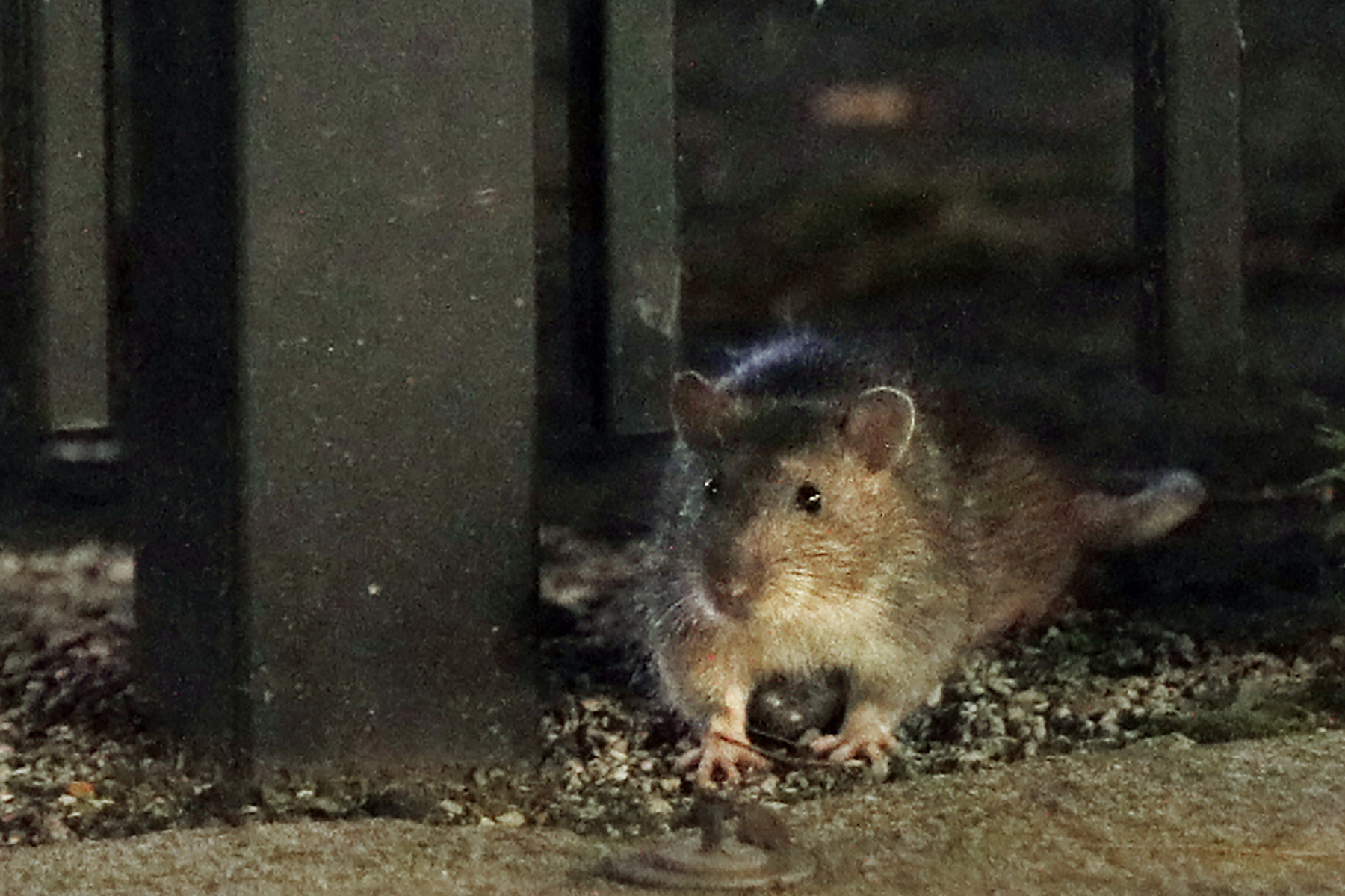
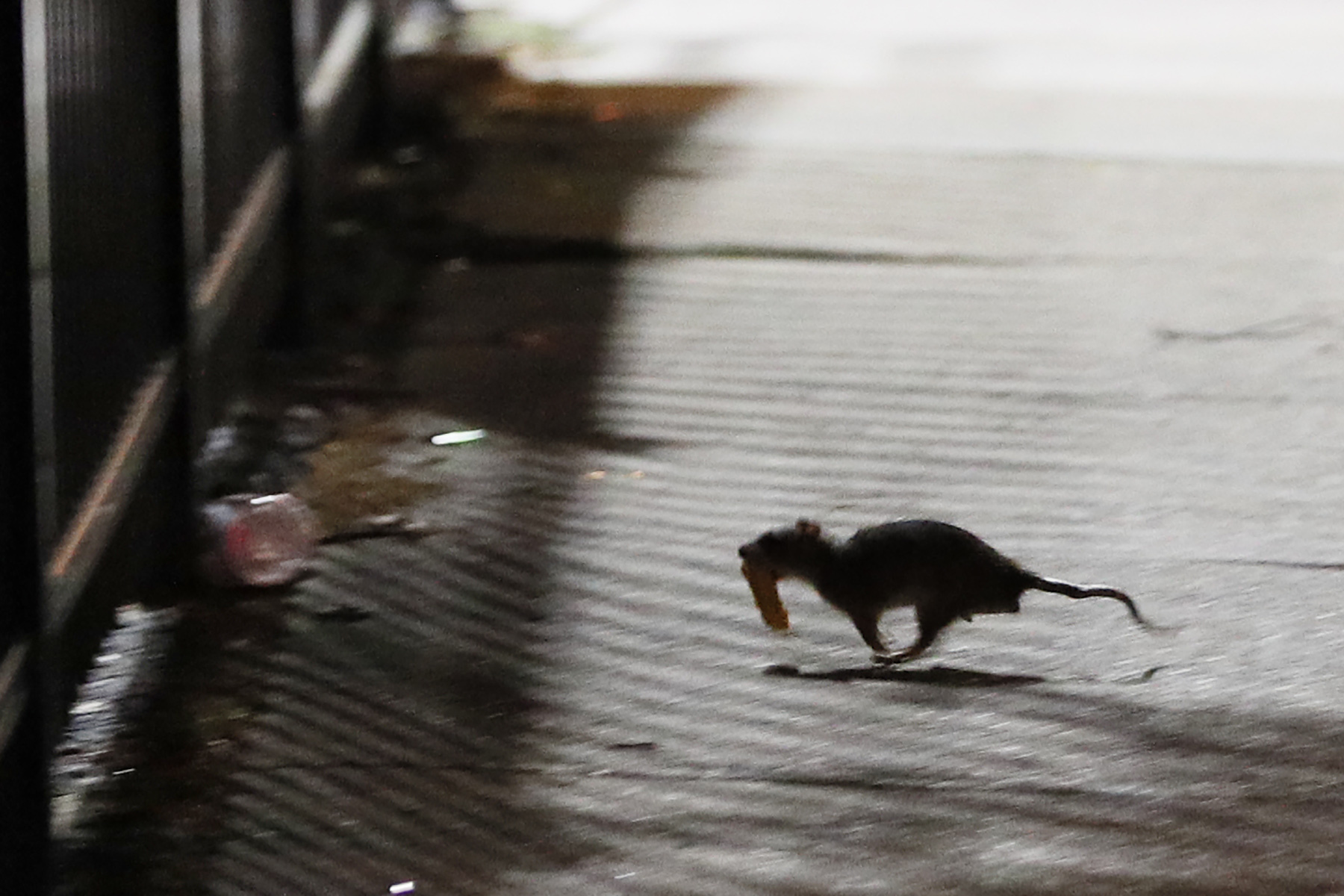
A rat runs away with something big after rummaging through a pile of trash scattered on the sidewalk at Sixth and Callowhill Streets.ELIZABETH ROBERTSON / Staff Photographer
Does Philly have a big rat problem?
In a 2025 Orkin ranking, Philadelphia placed sixth nationally based on the number of rodent-control treatments. Philadelphia is the sixth-largest U.S. city, so that suggests its rat population is not outsize comparatively.
By some measures, Philly logs fewer rat complaints than New York, D.C., or Baltimore, according to a 2025 analysis by The Inquirer. But the true population is hard to pin down.
The analysis noted that “the precise number of rats in Philadelphia is impossible to measure” because most data come from complaints or exterminators.
The Inquirer reported that Philly recorded under 4,000 complaints in the prior year (about 25 per 10,000 residents), a lower per capita rate than New York, Baltimore, and D.C.
That same reporting also noted that some experts have raised concerns about inconsistencies in the city’s data collection as one reason the problem may appear smaller.
New York appointed a rat czar in 2023, who served for two years.
Rats tend to gather where there isfood, trash, parks, vacant lots, and construction activity that disturbs nests.
The city’s vector-control unit has used tactics like placing poison pellets into burrows.
Rats could be adapting
But other forces, such as a warming climate with mild winters, could be helping rats survive.
In addition, rodent control is getting more complicated as pests adapt to methods of control.
Recent research by Rutgers University showed that house mice in Philadelphia and nearby areas are linked to resistance to common rodenticides, while also suggesting rats may pose a different challenge — avoiding traps rather than showing the same resistance pattern.
Philly’s new effort pulls together six departments: health, streets, sanitation, community life improvement, water, and licenses and inspections.
“Philadelphia residents deserve clean and safe blocks,” said Williams, the managing director. “By establishing a dedicated rat abatement manager, we are strengthening our commitment to the basic services residents rely on every day.”
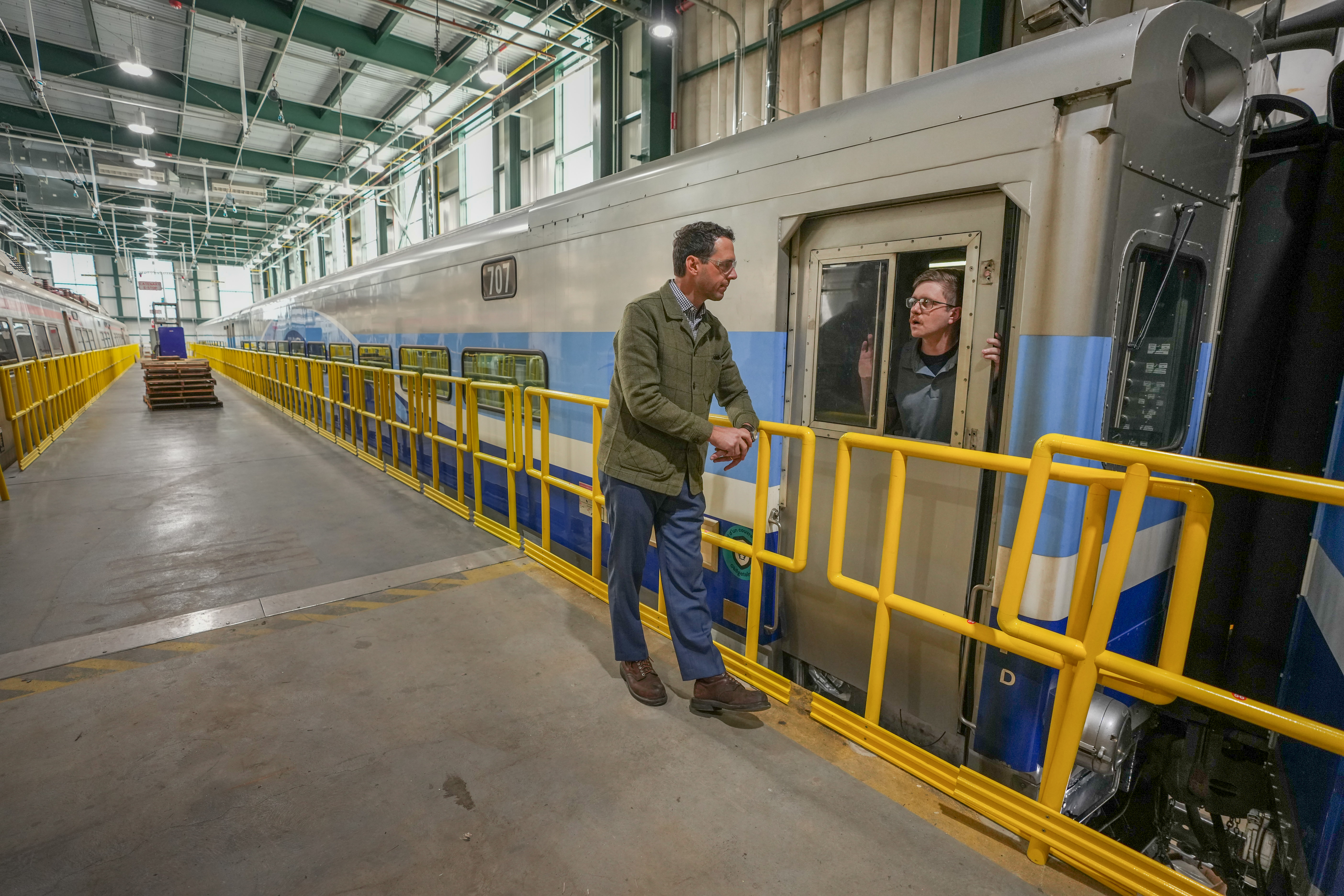
SEPTA’s 24 used rail cars gleamed Tuesday, thanks to paint applied by the previous owner, Montreal transit system Exo, and a good scrubbing after the long trip south.
When all of them are online, the transit agency will have increased the number of its locomotive-powered “push-pull” passenger cars by 53%, from 45 to 69.
And that will mean longer and less crowded trains, with fewer bypassed commuter stations as Regional Rail continues to rebound, said SEPTA General Manager Scott A. Sauer.
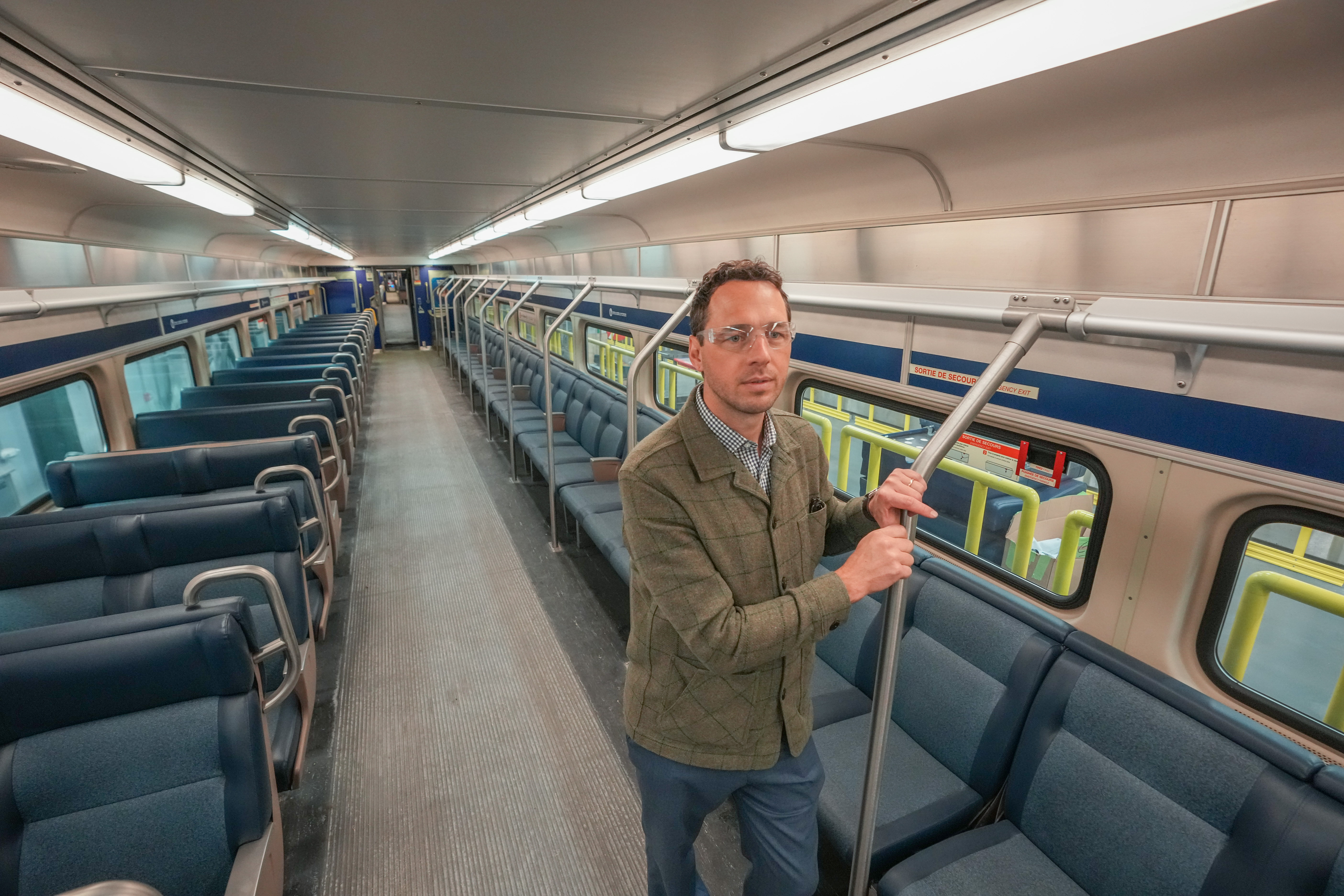
“To start, customers will see some extra capacity, more room,” Sauer said. The coaches carry about 140 passengers, with a line of seats along one wall and wide aisles with poles for standees to hold.
Greg Buzby, Chief of Rail Equipment Engineering and Maintenance, shows a roomy Bombardier Comet II passenger car from Montreal’s Exo transit. SEPTA bought 24 to increase Regional Rail capacity. Jessica Griffin / Staff Photographer
The surplus Bombardier Comet II passenger coaches cost SEPTA $8.58 million, with 75 pallets of extra parts thrown in. They were built in 1988 and 1989 and refurbished more than a decade ago. For the last several years, they’ve been mothballed as Montreal upgraded its commuter fleet.
But Sauer said, they are “young compared to our senior citizens, the Silverliner IVs,” which are the workhorses of the Regional Rail fleet and at least 50 years old.
In October 2025, the Federal Railroad Administration (FRA) ordered SEPTA to inspect and repair all 223 of the Silverliner IV railcars, after five of the aging vehicles caught fire earlier that year.
For months, passengers dealt with canceled trips and delays as the Silverliner IVs were fixed. Trains were shorter than usual and packed.
The Canadian cars will begin running on Regional Rail early next year, SEPTA officials say, after modifications to comply with Federal Railroad Administration safety standards for interior signage, lighting and windows and other things, as well as the installation of Positive Train Control, a now-mandatory system that regulates speed.
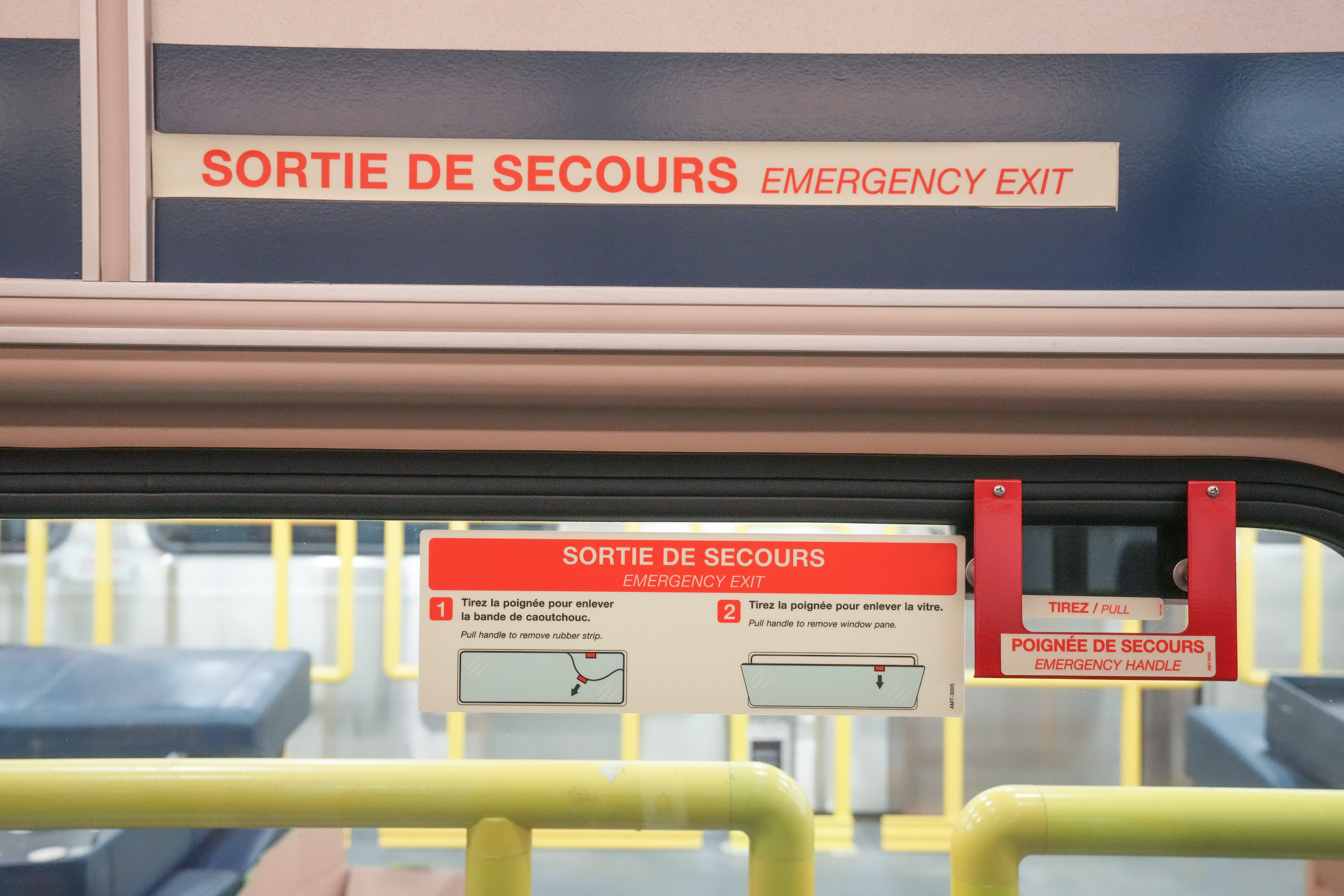
Workers also need to replace way-finding maps of Montreal’s commuter train lines and dozens of French-language signs like Sortie de secours (emergency exit) and old ads such as the one inviting people to “Ecoutez la difference” on 107.3 Rouge FM, which broadcasts throughout Quebec.
Signs will need to meet federal requirements for luminosity and larger type size. SEPTA will also change them to English.Jessica Griffin / Staff Photographer
They are expected to last long enough to help ease the transition to a newly made set of cars, to be called the Silverliner VI. Like the IVs and the next generation Silverliner V SEPTA also uses, the new units will be capable of carrying passengers and generating propulsion powered by overhead electric wires.
SEPTA has solicited bids and plans to award a $2 billion contract in the first quarter of next year, Sauer said. It would take about a decade for the first new models to begin arriving.
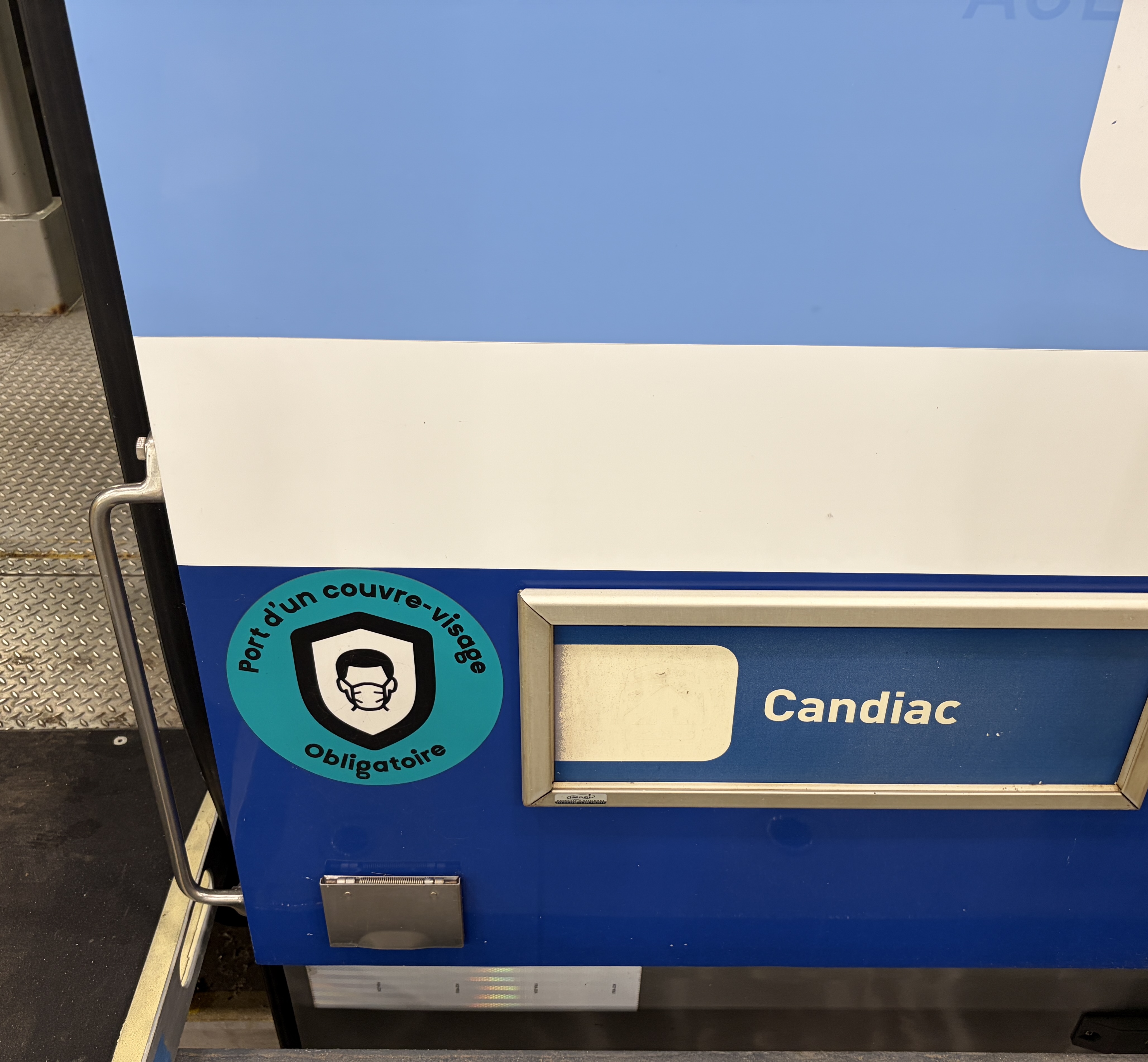
A pandemic-era reminder to wear face masks and a station nameplate on a rail car SEPTA bought from Exo in Montreal.Thomas Fitzgerald
Detailed inspections before and after the purchase have found no significant corrosion in the structural steel of the used Bombardier Comet II cars.
“They’re in great shape,” said Greg Buzby, SEPTA’s chief officer, rail equipment engineering and maintenance. “Kudos to Exo for how well they’ve maintained the vehicles.”
One of the biggest tasks will be to cut down the full-length doors on the cars from Montreal — where all the station platforms are low — and add “traps” that conductors use to align with the high and low platforms of SEPTA’s variety of Regional Rail stations Buzby said.
Of the 24 Comet II cars, eight are so-called cab cars, which lead the train and allow the engineer to control a locomotive pushing the train from behind.
“You get to the end of the line, switch to the locomotive, and you pull [the train] the other way,” Buzby said. The rest of the cars are passenger coaches with no power source of their own.
SEPTA currently has only 10 cab cars in its Regional Rail fleet, so the additional cabs will provide flexibility — “kind of game changer for us,” Buzby said. Comet II coaches are considered ideal for express runs and routes where stations are spread farther apart.
The Montreal coaches and cab cars share the same manufacturer as those SEPTA already owns so the equipment is familiar to mechanics and engineers, Buzby said. In fact, Bombardier built the Frazer shop to assemble them.
“They’ll integrate with our cars seamlessly,” he said.
How an earlier murder case against the man now accused of killing a Philly cop fell apart
Documents obtained by The Inquirer shed light on how Eric Lewis walked free in 2023 in a case that has sparked a criminal investigation and divided city leaders.
The scene outside the home of Eric Lewis (left) in the 100 block of North 52nd Street on Oct. 11.Tom Gralish / Staff Photographer
In the weeks since Eric Lewis was charged with killing Philadelphia Police Officer Shane Seiber, city officials and law enforcement have questioned why Lewis — who had been charged with committing a different murder several years ago — was free to allegedly kill Seiber in the first place.
Lewis was acquitted in that earlier case in part because of investigative and procedural missteps, an Inquirer review shows: Police mishandled key aspects of the murder investigation, and prosecutors struggled to overcome those errors in time to put on a successful case.
District Attorney Larry Krasner, ina stunning video Oct. 13, and again ina combative news conference last week, said the police mistakes in the case were so pronounced that the misconduct was “arguably criminal.” His office has not filed charges against any of the officers involved, but Krasner said he is considering it.
Eric Lewis, charged with murder in the shooting death of police officer Shane Seiber, is shown in a Philadelphia Police Department photo.Philadelphia Police Department
Still, he said, the record showed that one officer who identified Lewis as a suspect — and who was engaged to Lewis’ sister — went on to “torpedo” his own involvement by lying about an alternative suspect and failing to show up to court.
Separately, the homicide detective assigned to the case failed to take basic investigative steps — and appeared to have misrepresented her actions in official paperwork.
Police Commissioner KevinBethel forcefully condemned Krasner’s attempts to blame his department Thursday, saying it was unprofessional and insensitive to lob such incendiary accusations so soon after Seiber’s killing. He also said it was the job of Krasner’s prosecutors to check detectives’ work and ensure they had the evidence needed to convict someone before bringing a case to trial.
Because Lewis was found not guilty of the crime, the case against him was hidden from public view under Pennsylvania’s Clean Slate laws, and the records of the case were publicly unavailable.
A moment of silence was held for fallen Philadelphia Police Department Officer Shane Seiber before a Flyers game at Xfinity Mobile Arena on Oct. 11.Isaiah Vazquez / For The Inquirer
But The Inquirer obtained and reviewed hundreds of pages of records in the case, including the transcript of the two-day trial in 2023, homicide detectives’ investigative notes, and the Internal Affairs files for the officer and detective Krasner has now accused of tanking the case.
The documents offered the most fulsome understanding yet as to how the charges against Lewis fell apart — and the steps the police department and district attorney’s office took in the aftermath.
story continues after advertisement
The records detail an extraordinary set of circumstances: Prosecutors and a city judge told Internal Affairs about potential police misconduct, the department fired one officer and disciplined another, and the case against Lewis collapsed and let an accused murderer walk free.
And now, with that same defendant accused of killing one police officer and critically wounding another, Lewis’ court history and subsequent actions have fractured Philadelphia’s law enforcement agencies — and left the city’s top cop and prosecutor sparring in public and pointing fingers at one another.
Flanked by Councilman Curtis Jones (left), district attorney Larry Krasner announces charges against Eric Lewis on Oct. 10.Elizabeth Robertson / Staff Photographer
Here’s what we know about Lewis’ earlier murder case:
Lewis was accused of killing a man in a road rage shooting in West Philadelphia seven years ago.
Shortly after midnight on Aug. 31, 2019, Christopher Williams and a friend pulled onto the 900 block of North Fallon Street. A Nissan was parked on the one-way block, and Williams and his friend couldn’t pass. Williams honked, the woman with him later said, and a confrontation followed with the people in the Nissan.
During the argument, the woman said, a man from the Nissan walked up and shot into their car, striking Williams. Williams, she said, reached across her to grab her gun, and fired back. But he was struck and died later at the hospital.
Det. John Bartol was initially assigned to the case. But Williams’ mother, Darlene Brown, felt he was not communicating with her, and sent a letter to police leadership requesting a new investigator. (Bartol disputed that, and was absolved of any wrongdoing by Internal Affairs.)
By October, the case was reassigned to Det. Laura Harris, who at that point had been in the homicide unit for six years.
January 2020
A tip from a cop
A 2019 file photo of former Philadelphia Police Officer Naeem Crawley in the Frankford neighborhood.ELIZABETH ROBERTSON / Staff Photographer
The case stalled for several months. But then Officer Naeem Crawley, assigned to the 15th District, contacted Harris in early January 2020, and said he heard “a rumor” that Lewis — a West Philadelphia resident with a criminal history — was involved.
Crawley said Lewis lived on the street where the shooting occurred, and that he had recently gotten rid of a dark-colored Nissan that matched the description of the gunman’s. He showed Harris a photo on Lewis’ Facebook that pictured him standing in front of the car.
He told Harris that he used to date Lewis’ sister, but they were no longer together.
Harris submitted a warrant to preserve and review Lewis’ Facebook records, she wrote in her investigative notes on Jan. 5.
Crawley later provided Harris with Lewis’ cellphone number. And on Jan. 11, Harris wrote that she had submitted a warrant for his cell phone location records — a key piece of evidence that can show when and where people were around the time of the crime.
But Harris never actually submitted the warrant — and never obtained Lewis’ phone records.
She later said she didn’t obtain the information because she didn’t think she needed it.
And in court years later, when confronted about her lack of follow-through, Harris said she’d intended to submit the cellphone warrant, but never did because of what she called an “oversight.”
Homicide prosecutors are typically expected to ensure that certain records, including cell phone location data, are secured before trial, according to prosecutors and police familiar with the process who weren’t permitted to speak publicly.
And Harris’ supervisors in the police department, those people said, also could have checked that these steps were completed.
Still, Internal Affairs later blamed Harris, saying she had “failed to conduct a proper, thorough, and complete investigation,” and finding that she’d “falsified” records about the investigative steps she took.
Harris, according to Internal Affairs, “failed to submit that [warrant], possibly missing an opportunity to acquire the critical evidence that Mr. Lewis’ cell phone data may have contained.”
November 2020
Lewis is arrested
An undated photograph of Christopher Williams, seen on Oct. 12 in Philadelphia.Monica Herndon / Staff Photographer
Despite Harris’ initial missteps, her investigation continued. And several months later, she spoke to the woman in the car with Williams the night he was killed.
The woman, whose leg was grazed by a bullet in the incident, identified Lewis as the gunman as part of a photo array.
With an eyewitness identification — and a tip about Lewis’ involvement from Crawley, a sworn police officer — Lewis was charged with murder.
When the case reached the district attorney’s office, it changed hands several times as it progressed through court.
The first prosecutor, who handled the preliminary hearing, left to work at the state Attorney General’s Office. The second was later on extended sick leave.
In October 2022 — just weeks before trial — the case was assigned to Assistant District Attorney Erica Rebstock.
She quickly noticed its many flaws.
story continues after advertisement
November 2022:
An officer recants
With Lewis scheduled to stand trial in November, Rebstock began preparing her witnesses.
She subpoenaed Crawley to meet and discuss his statement, but the officer called and said he no longer wanted to be involved.
Rebstock said she eventually met with Crawley alongside a detective in the district attorney’s office — who joined at her request because of her concerns about Crawley’s conduct.
Crawley then disclosed he was now engaged to Lewis’ sister and shared children with her— a potential credibility concern — and, in a more alarming development, went on to change his story.
Rather than saying Lewis was the gunman, Crawley said the shooter might actually have been a person named “Spice.”
When Rebstock later met with Harris to discuss Crawley’s new account, the detective said Crawley had never said anything to her about “Spice.”
And then, days later, when Rebstock subpoenaed Crawley to appear in court for a pre-trial hearing, he never showed up, blaming his absence on a funeral.
Due to his wavering testimony and failure to appear, Rebstock spoke with Krasner and then-Assistant District Attorney Lyandra Retacco, who at the time ran a special unit that handled prosecutions of police officers.
Krasner said his office then took the unusual step of contacting Internal Affairs and asking that Crawley be investigated for potentially criminal misconduct.
Rebstock also told Crawley’s district-level bosses that he might have lied about the funeral to avoid showing up to court, and a police captain also reached out to internal affairs.
Internal affairs investigators concluded that Crawley had, in fact, lied — no one died, they said, and he’d made up the funeral to avoid going to court.
Then, Lewis’ defense attorney, Joseph Lewis Schultz, delivered even more concerning news to Rebstock: Crawley and his fiancée had called him and admitted he’d made up “Spice,” Schultz said. Crawley also acknowledged lying to Rebstock to avoid being involved with the case, he said.
As a result, Rebstock struck an agreement with Schultz, saying she would not introduce any information Crawley previously shared about Lewis at trial — eliminating a potential witness from her case.
The trial was postponed to the spring of 2023.
story continues after advertisement
Early 2023
More evidentiary problems
In the following months, Rebstock had several prep meetings with Harris and others to shore up what she could present at trial. The issue of missing Facebook and cell phone records was discussed.
Harris said she provided the Facebook records on a flash drive to the first assigned prosecutor, but they were not in the case file. Harris said she only made one copy of the results in part because she was “inexperienced with extracting electronic data.”
Facebook records are typically stored in a portal that Harris should have been able to re-access even if they had been misplaced, according to people familiar with the process. Rebstock said she asked Harris to “check her email,” but the results were never found.
It was not immediately clear whether Rebstock ever asked Harris to submit another warrant to Facebook, or sought the cell phone records once she realized they hadn’t been acquired. (Krasner, on Friday, said he would make Rebstock available to discuss the case with reporters at a later date, but said “not every problem can be fixed late.”)
Harris later told internal affairs investigators “there was no strategy discussed” as to how Rebstock planned to handle questions about the missing records during the trial.
But Rebstock, by then, had decided to make another difficult concession: Because she did not have any of Lewis’ cell phone or Facebook records, she told Lewis’ attorney she would not introduce them.
The decision further diluted the evidence she could present against Lewis.
Internal affairs investigators again found Harris largely to blame, later concluding that “the entire situation could have been avoided” had Harris made several copies of the Facebook records.
And that blunder, they wrote, coupled with Harris’ failure to secure Lewis’ cellphone records, had effectively handed Lewis a lifeline.
When the case against Lewis went to trial in April 2023, Lewis’ defense attorney — by then a lawyer named Michael Diamondstein — used the missteps as “fodder” to sow doubt about the reliability of the evidence against Lewis, Internal Affairs said.
Common Pleas Court Judge J. Scott O’Keefe — who presided over Lewis’ bench trial — couldn’t get past the large holes in the investigation and acquitted Lewis, finding that there was not sufficient proof to convict him of any crime.
Lewis walked free.
June 2023
A judicial referral
Still, the judge did not simply close the case and move on.
In a highly unusual decision, O’Keefe — for perhaps the only time in his judicial career — wrote a letter to then-Deputy Commissioner Robin Wimberly, saying he found several aspects of the investigation problematic — particularly Harris’ conduct.
Beyond the failure to secure Facebook and cellphone records, he wrote, Harris didn’t appear to investigate how the eyewitness’ testimony was inconsistent with the physical evidence.
In addition, he said, another officer — Clyde Frasier of the crime scene unit — had logged two different pieces of evidence under the same property receipt number, a clerical error that added to the “great deal of suspicion” about the investigation.
The overall effect, O’Keefe said, was that the murder case had become irreparably flawed by “numerous irregularities.”
story continues after advertisement
2025
Officers disciplined
Two years after Lewis was acquitted, Internal Affairs issued disciplinary findings against both Crawley — whose investigation was spurred by the district attorney’s office’s request — and Harris, whose conduct was probed based on O’Keefe’s referral.
Investigators found that Crawley — by lying to Rebstock, evading court, and giving a false statement to Harris — had neglected his duty and engaged in conduct unbecoming of a police officer.
Crawley was fired.
Still, internal affairs did not deem his conduct to be criminal — and did not send the results of its investigation to the district attorney’s office for potential prosecution. Krasner said last week that his office was revisiting the matter, and was considering charging Crawley.
Crawley could not be reached. In his statement to internal affairs, he said he feared losing his family by testifying, and that he’d told Harris from the beginning that he didn’t want to be publicly involved with the case.
“I thought they had everything they needed and Eric would take a plea,” he said. “I just wanted to keep my family.”
Harris, meanwhile, was found to have violated departmental policies by failing to obtain Lewis’ cellphone and Facebook records, and by saying in departmental paperwork that she’d taken investigative steps that she never actually completed.
The internal affairs report did not specify what penalty she should face. But Harris resigned earlier this month.
Her last day on the force was the day before Lewis allegedly killed Seiber.
Harris initially declined to speak about the case, and did not respond to follow-up requests for comment.
Internal Affairs did not deem Harris’ conduct criminal. But Krasner said his office was now probing whether she should face charges as well.
Rebstock, meanwhile, remains employed with the district attorney’s office and is now the director of training and trial strategy. Some fellow prosecutors and police officers have complained privately that she didn’t do enough to help overcome the investigation’s mistakes.
Rebstock — who has since married and goes by Erica Vandenekart — has not spoken publicly on the case, and did not respond to requests for comment. Krasner has defended her, saying she is an excellent prosecutor who was misled by Harris’ “untruthful” investigative notes.
“Upon finding out there were problems, we should do what we can to fix them. And I think the record is going to establish we did,” he said.
Lewis was accused in at least two other cases in the lead-up to the road-rage killing, including drug possession.
In 2020, he was arrested for threatening a family member with a gun in front of his children, and charged with aggravated assault, gun crimes, and endangering the welfare of children. But prosecutors withdrew the charges in November 2022 after the key victim and witness in the case died, Krasner said.
Darlene Brown holds an iPad with an undated photograph of her son Christopher Williams on Monday, Oct. 12, 2026Monica Herndon / Staff Photographer
Four years later, on Oct. 10, Lewis encountered Seiber and Officer Hector Rodriguez III outside his home on the 100 block of North 52nd Street.
The officers had responded to a 911 call for a report of a person with a gun, and when they walked onto Lewis’ porch, he confronted them and then quickly opened fire, police said.
He shot Seiber three times and Rodriguez a dozen times, police said, before stealing Rodriguez’s service weapon and retreating into the alley behind his house.
Lewis then shot at nearly a dozen other officers who responded to the scene before he was taken into custody.
He is now being held without bail in a city jail, and is facing charges in both state and federal court for murder, robbery, and related offenses.
Staff Contributors
Reporting: Ellie Rushing and Chris Palmer
Editing: Nancy Phillips and Ariella Cohen
Photography: Monica Herndon, Tom Gralish
Design: Lucas Reasoner
Subscribe to The Philadelphia Inquirer
Our reporting is directly supported by reader subscriptions. If you want more journalism like this story, please subscribe today
Peggy King, 96, formerly of Philadelphia, Hall of Fame TV and film actor, top-selling Rat Pack-era singer and entertainer,andpopular vocalist with the Philadelphia-based All-Star Jazz Trio, died Sunday, Oct. 25, of complications from Alzheimer’s disease at Saunders House assisted living center in Wynnewood.
Celebrated for her soaring soprano voice, girl-next-door appeal, photographic memory, and collegial nature, Miss King was discovered singing for a Cleveland radio station in 1950 by bandleader Charlie Spivak. Over the next 10 years, she toured with Spivak and other big bands, recorded hit singles and top-selling albums with Columbia Records, and sang with Frank Sinatra and Bing Crosby. She cohosted The George Gobel Show on TV, and earned film roles in The Bad and the Beautiful, Abbott and Costello Meet the Mummy, and Zero Hour!
She was nominated for an Emmy Award as best female singer on TV in 1955 and named best new singer in 1956 by DownBeat and Billboard magazines. On Oct. 22, 1955, she was on the cover of TV Guide.
“I belong on a stage singing anything I can touch people with,” Miss King told the Daily News in 1983. File Photo
Miss King started singing as soon as she could talk, she told jazz journalist Marc Myers in a 2015 interview on JazzWax.com. “Singing, to me, came naturally,” she said, “like waking up.” Her daughter, Suzy, said: “She was wildly creative.”
She also sang popular jingles for TV commercials in the 1950s and signed contracts with Columbia Records and several movie production companies. She became a favorite guest on TV game and talk shows.
She performed jazz and popular songs on variety shows and benefits, and played it straight in comedy routines with Crosby, Bob Hope, Tony Bennett, Mel Tormé, Sammy Davis Jr., Jimmy Stewart, Jack Benny, and other entertainers.
Everyone said she remarkably resembled actor and singer Judy Garland, even Judy Garland. She went shoppingwith actors Debbie Reynolds, Jane Powell, and Dinah Shore.
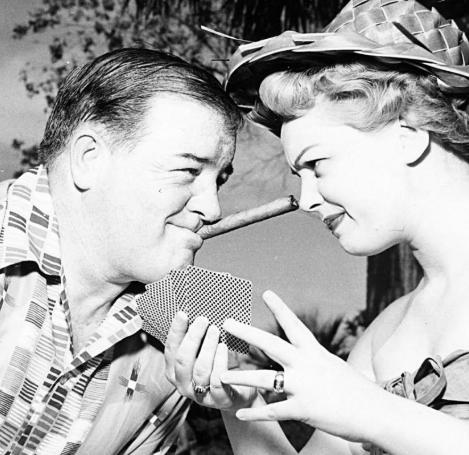
Miss King performed with comedian Lou Costello.Courtesy of the family
A writer for The George Gobel Show nicknamed her “pretty perky Peggy King.” Gobel used it on air, and it stuck.
“The grand dame of song has left us,” composer Andrea Clearfield said on Facebook. Clearfield called Miss King “a musical legend and such a wonderful, heartfelt human being.”
Miss King stepped away from show business after she married Philadelphia clothier Sam Rudofker in 1961. They lived in Merion, Gladwyne, and Philadelphia, and she returned to performing with the Philly Pops Orchestra and other groups in the 1980s.
“I know who I am, and I know where I belong,” she told the Daily News in 1983 after her son, Jonathan, and daughter, Suzy, left home for college. “I belong on a stage singing anything I can touch people with.”
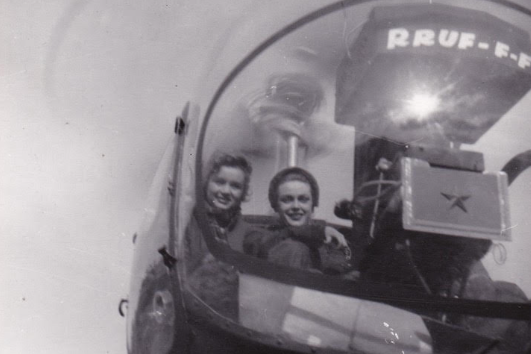
Miss King (right) and Debbie Reynolds entertained troops in Korea in the 1950s.Courtesy of the family
She joined the Philadelphia-based All-Star Jazz Trio in 2013 after the death of her husband in 1994 and her son in 2000. In 2016, she released her first album in decades, Songs a la King.
“People turn to different things when their life turns upside down,” she told The Inquirer in 2016. “I lost them both in a short period. You either completely fall apart or you find a way to live with it. I knew the one thing I could count on was singing.”
In 2013, music writer A.D. Amorosi wrote in The Inquirer: “There’s bittersweet nuance to everything she sings.”
Miss King also mentored other singers and supported the Philadelphia Boys Choir, the Curtis Institute of Music, and other organizations. Her husband shared his love of classical music, and she studied Mozart and other composers.
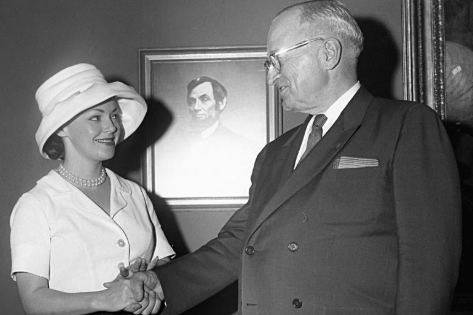
Miss King met President Harry S. Truman at the White House.Courtesy of the family
“She hungered for knowledge and always wanted to learn,” her daughter said. “She was a trailblazer.”
Margaret Elizabeth King was born Feb. 16, 1930, in Greensburg, Pa., 35 miles east of Pittsburgh. She told Marc Myers that she was adopted by her aunt and uncle during the Great Depression and that she inherited her singing voice from her birth mother, with whom she reconciled when she was a teen.
She practiced singing into a tin can on a broomstick when she was young, performed in all the school plays and musicals, and graduated from high school in Ohio when she was 16. She got jobs singing for a local radio station and a hotel band in Cleveland before being discovered by Spivak.
“I came from poverty and had to find a way to get out of it through singing,” she told The Inquirer in 2016.
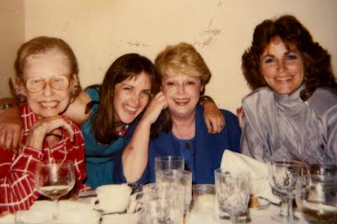
Miss King (second from right) enjoyed time with family and friends. Courtesy of the family
She married and divorced musician Knobby Lee in the 1950s and met Sam Rudofker while singing in Chicago. She moved to Saunders House from Philadelphia nine years ago.
Miss King was an avid reader and a Civil War buff. She posed with President Harry S. Truman in front of a portrait of President Abraham Lincoln at the White House and was close friends with Larry Bowa, the former Phillies player and manager, and his former wife, Sheena.
Dennis Creedon, former director of education for what is now Opera Philadelphia, said Miss King “celebrated the gift of life in all she did. No matter what crisis life presented, ice cream was always her cure.”
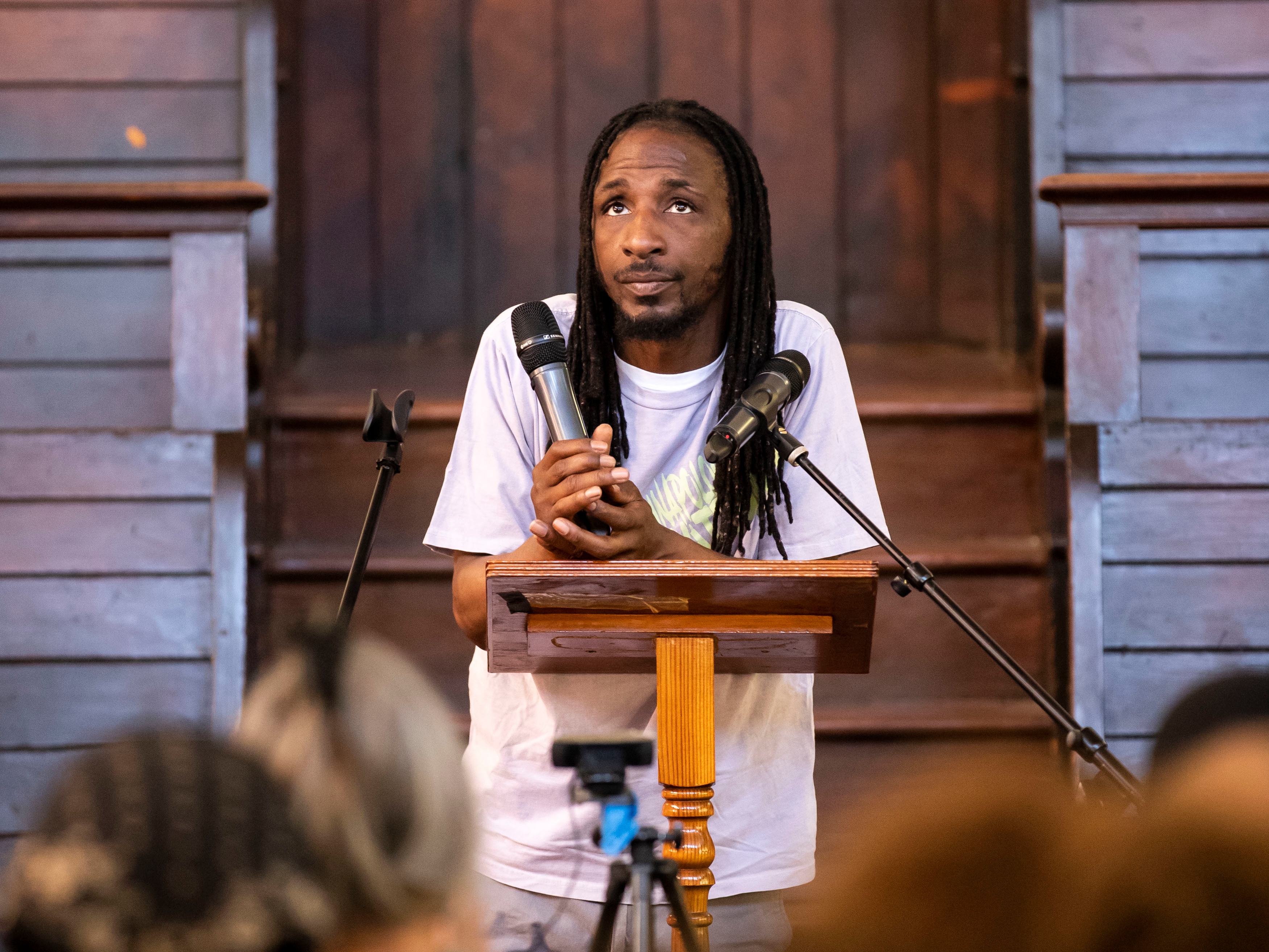
The chair of Philadelphia’s Citizens Police Oversight Commission was arrested Tuesday after prosecutors accused him of obtaining and selling confidential information about a witness in an attempted murder case.
Hassan Bennett then gave the information to a man who had threatened to hunt down and kill the witness, prosecutors said.
Bennett, 43, faces charges of witness intimidation, bribery, conspiracy, and related crimes. The arrest marked a dramatic turn for Bennett, who became a prominent criminal justice advocate after spending nearly 13 years in prison for a murder he said he did not commit. His conviction was overturned in 2017, and he was acquitted at a retrial in 2019.
In addition to his role with the oversight commission, Bennett works as a bail navigator for the Defender Association of Philadelphia. Prosecutors declined Tuesday to say whether Bennett used his position with the commission or the defenders to obtain the information he shared, including unredacted copies of police reports that contained the witness’ full name.
They also declined to provide details of the underlying attempted murder case, citing the need to protect the witness.
Bennett sold photos of those reports for $500, prosecutors said, to Thomas Scott, the man accused of trying to silence a key witness in the case. Scott, 45, is charged with witness intimidation and criminal use of a communication facility and is being held on $2 million bail.
Prosecutors announced Bennett’s arrest at a news conference Tuesday afternoon, where they credited a monthslong investigation by the Gun Violence Task Force with foiling Scott’s efforts and linking Bennett to the leaked information.
The investigation began after prison officials contacted the district attorney’s office about a series of suspicious calls between an incarcerated man and Scott, said William Fritze, chief of the task force.
Digital records uncovered threats made against the witness on social media accounts linked to Scott, Assistant District Attorney Joseph Lanuti said. The social media posts, Lanuti said, were an attempt to “prevent witness from coming to court.”
In one, he said, Scott threatened to “blow down the witness in broad day.”
And among the many recorded calls provided by prison officials, investigators found one that captured Bennett’s voice as he read information from the report and shared the witness’ name, Lanuti said. Scott, he said, also possessed photos of the documents.
Investigators found that Bennett and Scott were connected on social media, Fritze said. But prosecutors said they were still working to determine how Bennett and Scott had come to know one another and the extent of their relationship.
Fritze said the investigation of Bennett is ongoing. “We will continue to do our due diligence and look into any other incidents Bennett may have been involved in,” he said.
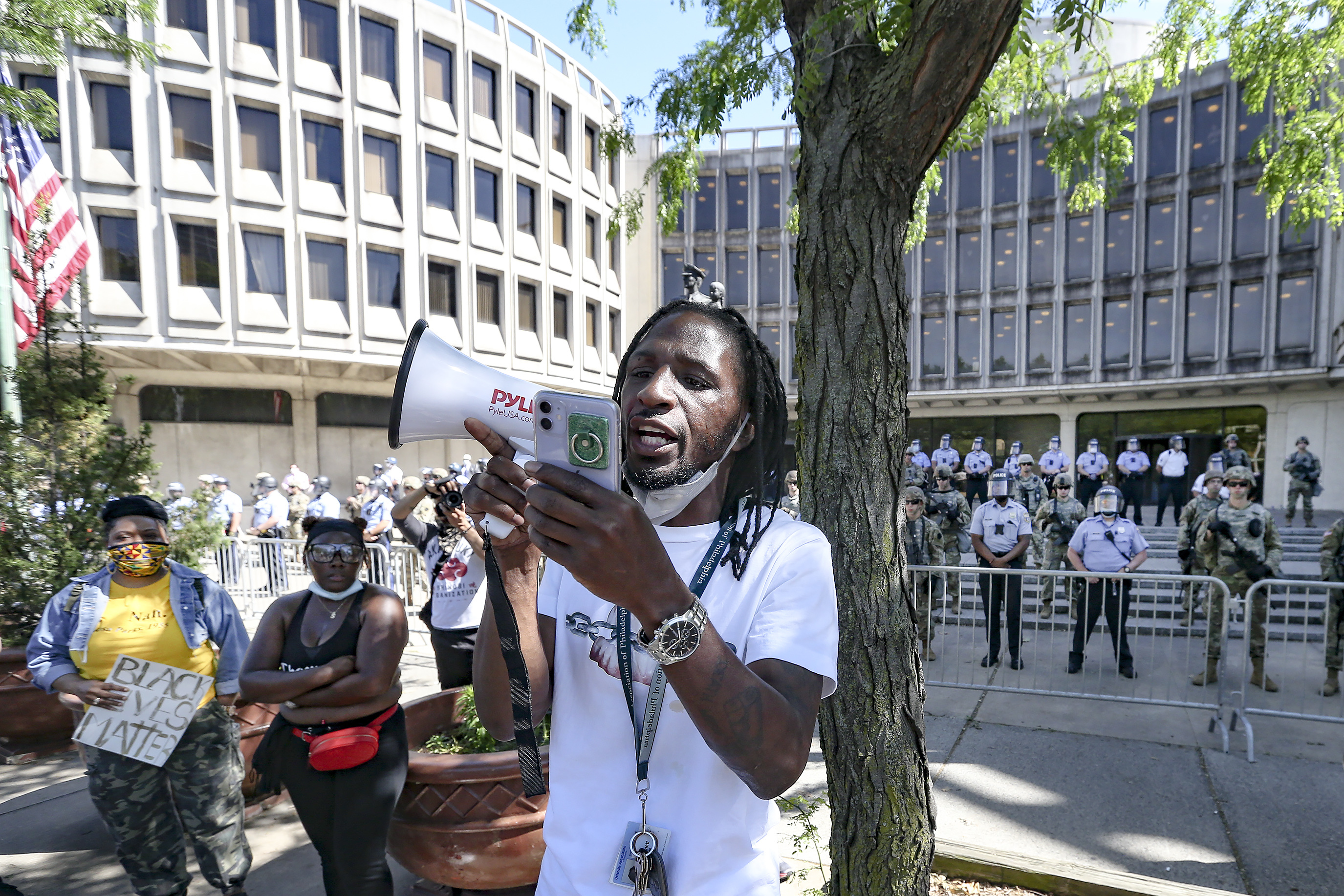
Hassan Bennett speaks to protesters in front of Police Headquarters in June 2020.STEVEN M. FALK / Staff Photographer
Bennett’s bail has been set at $1 million, Lanuti said.
Bennett had served as chair of the oversight commission since 2024 and held various leadership roles since its formation four years ago. He had worked for the Defender Association for about six years, following his acquittal and release from prison on murder charges.
In a statement, a spokesperson for the Defenders said the “allegations in this matter are exceptionally serious, and we are treating them with the urgency they demand.”
The spokesperson, George Jackson, added that Bennett is “entitled to the same due process afforded to anyone who is accused of a crime,” and is considered innocent until proven otherwise. The association is cooperating with law enforcement as their investigation continues, Jackson said.
Bennett, a union employee, will be terminated effective Thursday, Chief Defender Keisha Hudson said.
Tonya McClary, the oversight commission’s executive director, said in a statement that the group would not comment on the allegations against Bennett this early in the case.
“Our responsibility to the people of Philadelphia remains unchanged,” she said. “We will continue our work to strengthen police accountability, promote transparency, and build public trust.”
The commission was formed by City Council — and later approved by Philadelphia voters — in 2020 amid nationwide protests over police brutality and racism after the killing of George Floyd in Minneapolis. It was meant to serve as an independent civilian oversight agency that, with subpoena powers, could take complaints from the public against officers and run investigations into police misconduct alongside the Police Department’s Internal Affairs Division.
But the commission, which has been allocated millions in taxpayer funds, has drawn scrutiny for accomplishing little since its inception in 2022. Staff turnover and political infighting have also plagued the group, former staffers have said, as has pushback from the police department and police union that the group said has made it difficult to conduct independent investigations.
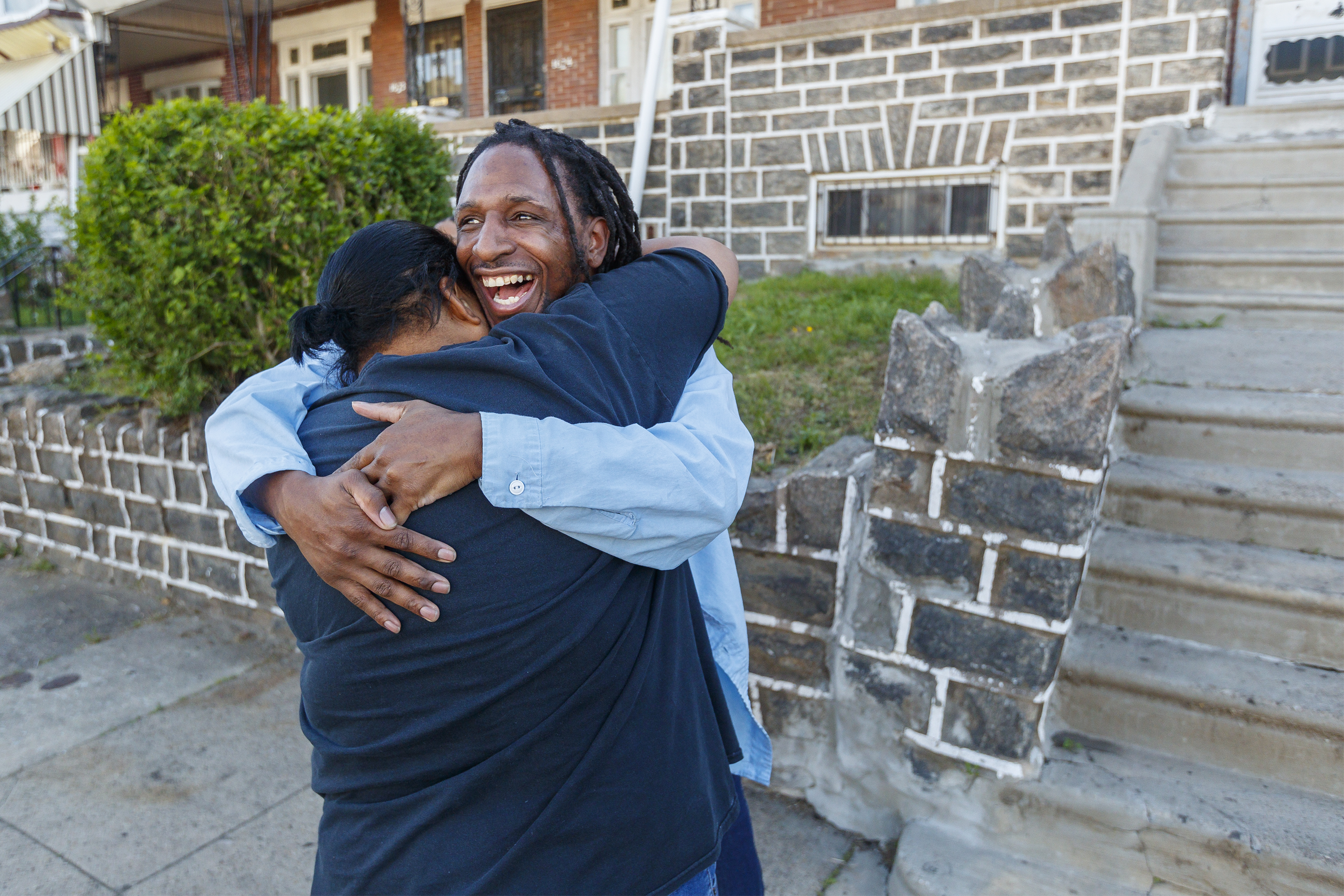
Hassan Bennett hugs his grandmother in 2019 following his release from prison.MICHAEL BRYANT / Staff Photographer
Bennett, of West Philadelphia, has been a face within the city’s racial and social justice movements since his release from prison in 2019 — a case that drew national attention and acclaim because Bennett represented himself in a successful retrial.
He served nearly 13 years in prison for the 2006 murder of Devon English — a crime he maintained he did not commit and a case that went to trial four times.
Bennett’s first trial ended in a mistrial. But prosecutors retried him in 2008, and he was convicted and sentenced to life in prison without the possibility of parole.
The conviction was later overturned due to mistakes by his lawyer, and in 2017, he was granted a new trial, which began in 2018.
After studying the law during his time behind bars, Bennett represented himself in the third trial and wore his blue prison uniform in court. The jury deadlocked, and jurors later acknowledged that all but one wanted to acquit him.
The district attorney’s office under Larry Krasner moved to try him a fourth time. Bennett again represented himself. The jury acquitted him of the charges and he walked free.
Krasner said Tuesday that he believed Bennett had committed that murder but that the case was tainted by the problematic behavior of former Philadelphia homicide detective James Pitts, who was later convicted of fabricating evidence and lying on the stand in a separate case and sentenced to 2 ½ years in prison.
In February 2020, Bennett was hired by the Defender Association as a client advocate to link pretrial defendants with social services, like drug and alcohol counseling. He was most recently working as a bail navigator. It was not immediately clear Tuesday if Bennett remained employed with the association.
Staff writer Jesse Bunch contributed to this article.
While a commercial truck driver was sleeping in the front of his truck, six men took more than 3,000 pounds of frozen snow crab from the back of his trailer Tuesday morning in Southwest Philadelphia, according to the Philadelphia Police Department.
The driver told police he parked along the 3400 block of Island Avenue shortly before 2 a.m. to sleep before completing a delivery to the seafood wholesaler Ocean Kingdom at 3601 Island Ave. later that morning.
Stirred awake at 3:34 a.m. by movement in the back of his trailer, the driver told police, he exited his truck and walked around to the back, finding six men removing boxes of frozen seafood. The crab crooks managed to claw two pallets, each holding 50 boxes of frozen snow crab for a total of 1.5 tons, into a gray Ford F-150 truck and a gray Dodge Caravan minivan, police said. The seafood bandits left the other cargo in the trailer.
When the driver exited his truck, he told police, one of the burglars chased him down the street. The offenders then fled in the F-150 and Caravan.
Investigators recovered evidence from the scene and were canvassing the area for surveillance footage as of Tuesday afternoon, Police Capt. Joseph Busa said. No arrests have been made.
Other large cargo thefts involving frozen food stolen from tractor-trailers at night have been reported in recent years. Tuesday’s smash-and-crab follows two other high-profile trailer robberies, both with a similar modus operandi: an October heist of $40,000 worth of frozen ground beef from a trailer in Northeast Philly and September’s robbery in South Philadelphia in which robbers made off with half a pallet of Black Angus beef ribs.
The recent heists are “all concerning, but right now it’s really too early to tell if it’s connected to anything,” Busa said of Tuesday’s crab robbery.
In June, a Philadelphia man was sentenced to nearly eight years in prison in relation to cargo thefts in 2023 that had a total estimated value of more than $1.5 million. Some of those cargo thefts included hundreds of thousands of dollars’ worth of frozen crab legs.
Staff writer Robert Moran contributed to this article.
The U.S. Justice Department plans to send monitors to polling stations in Philadelphia and three other Pennsylvania counties for Election Day, according to a letter obtained by The Inquirer.
The Oct. 22 letter addressed to Pennsylvania Secretary of State Al Schmidt says the Justice Department intends to send monitors to Philadelphia, Allegheny, Luzerne, and Lehigh Counties for the Nov. 3 general election. It does not say what led to the decision to deploy monitors, or how the counties were selected.
The monitors will follow all state and local rules, wrote James Catania, the Justice Department attorney assigned to supervise the monitors in the region. They will ensure compliance with federal voting laws, including the Voting Rights Act, National Voter Registration Act, and Americans with Disabilities Act.
“Our monitors only observe and take notes,” the letter said. “They do not intrude or interfere in any way in the voting process.”
The monitors will not be allowed to wear uniforms or pins that identify them as Justice Department staff, the letter said.
Federal monitors are not entitled to greater access to polling places than members of the general public, a Pennsylvania Department of State spokesperson said in a statement.
“The Pennsylvania Department of State expects everyone working in, voting in, and observing polling places to follow all applicable state and federal laws,” the statement said.
Joe Grace, Mayor Cherelle L. Parker’s spokesperson, said in a statement that Philadelphia has a strong reputation for conducting free and fair elections, and this cycle would be no different.
“Every registered voter will have every opportunity to fully exercise their constitutional right to vote,” Grace said.
Vic Walczak, ACLU-Pennsylvania’s legal director, said he didn’t see cause for alarm by the plan to send monitors to Philadelphia and the three other Pennsylvania counties. The Biden administration sent monitors to the same counties in previous elections, he said. And if any monitor breaks the rules, Walczak said, he expected the county would take steps to eject them.
“We are not expecting that to happen,” Walczak said. “Historically it hasn’t happened.”
Federal monitors will be in all 50 states on Election Day, but the Justice Department would not share the full list of localities ahead of time, a department spokesperson said in a statement. It was not clear where in New Jersey they would be.
“All monitors must meet the same legal and ethical requirements, including that they not interfere with the voting process,” the statement said.
Two men were stabbed following an altercation with a man armed with a sharp object in Center City Sunday night.
The Philadelphia Police Department responded to a radio call for a person with a weapon at 15th Street and John F. Kennedy Boulevard shortly after 9 p.m.
Officers were met with witnesses who reported that a verbal dispute between two men escalated into a physical altercation, police said. Witnesses said the suspect struck a 50-year-old man several times in the back of the head during the incident.
As the fight continued, up to 12 unidentified people jumped into the altercation, allegedly punching and kicking the suspect until he fell to the ground, police said. A second person, a 37-year-old man, was cut on his left arm during this scuffle.
Both injured men were transported to Thomas Jefferson University Hospital for treatment.
The suspect was last seen fleeing south on 15th Street.