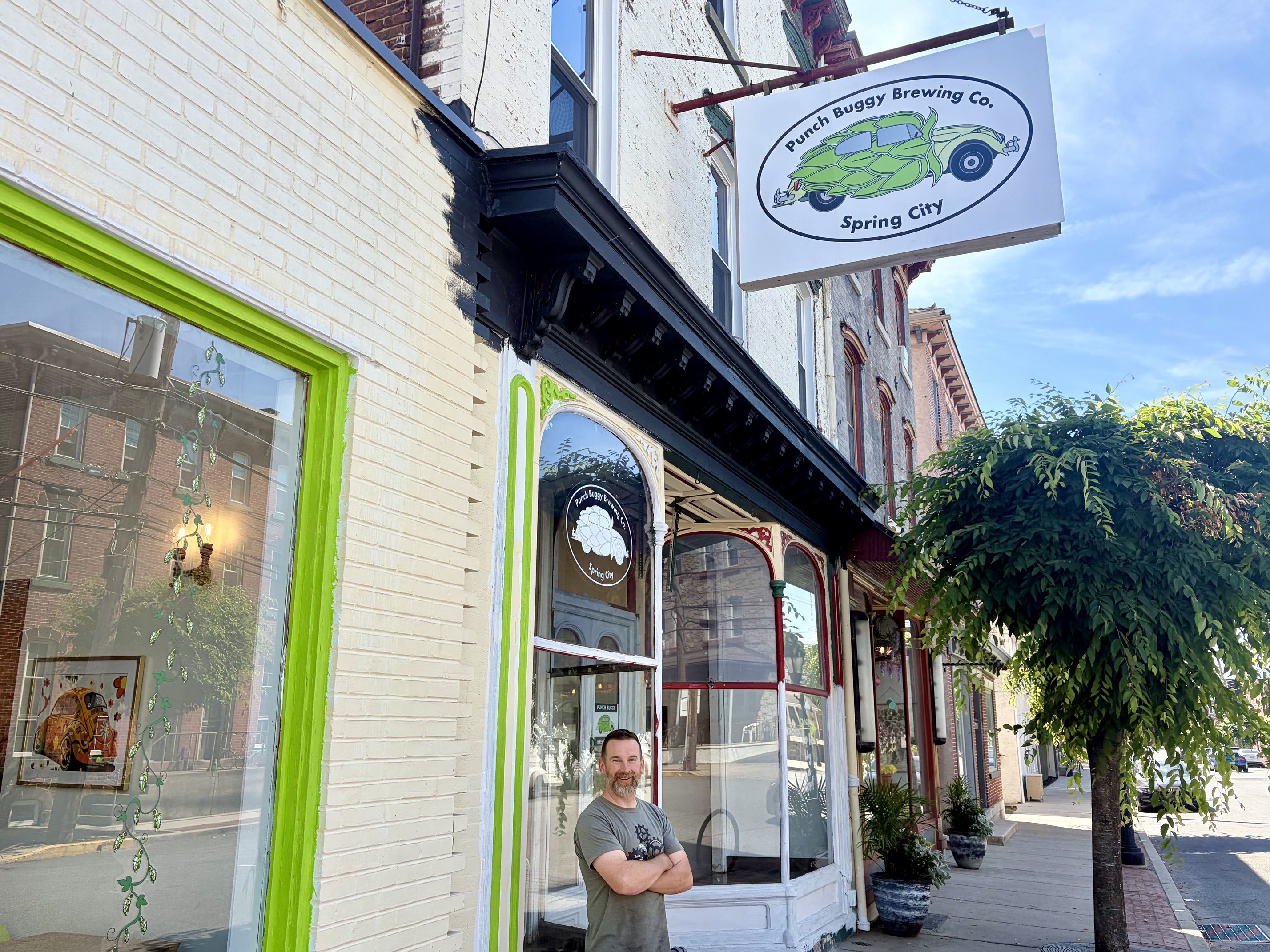
Punch Buggy Brewing Company is bringing its artisan brewery to the suburbs, with its second location opening in Spring City later this week.
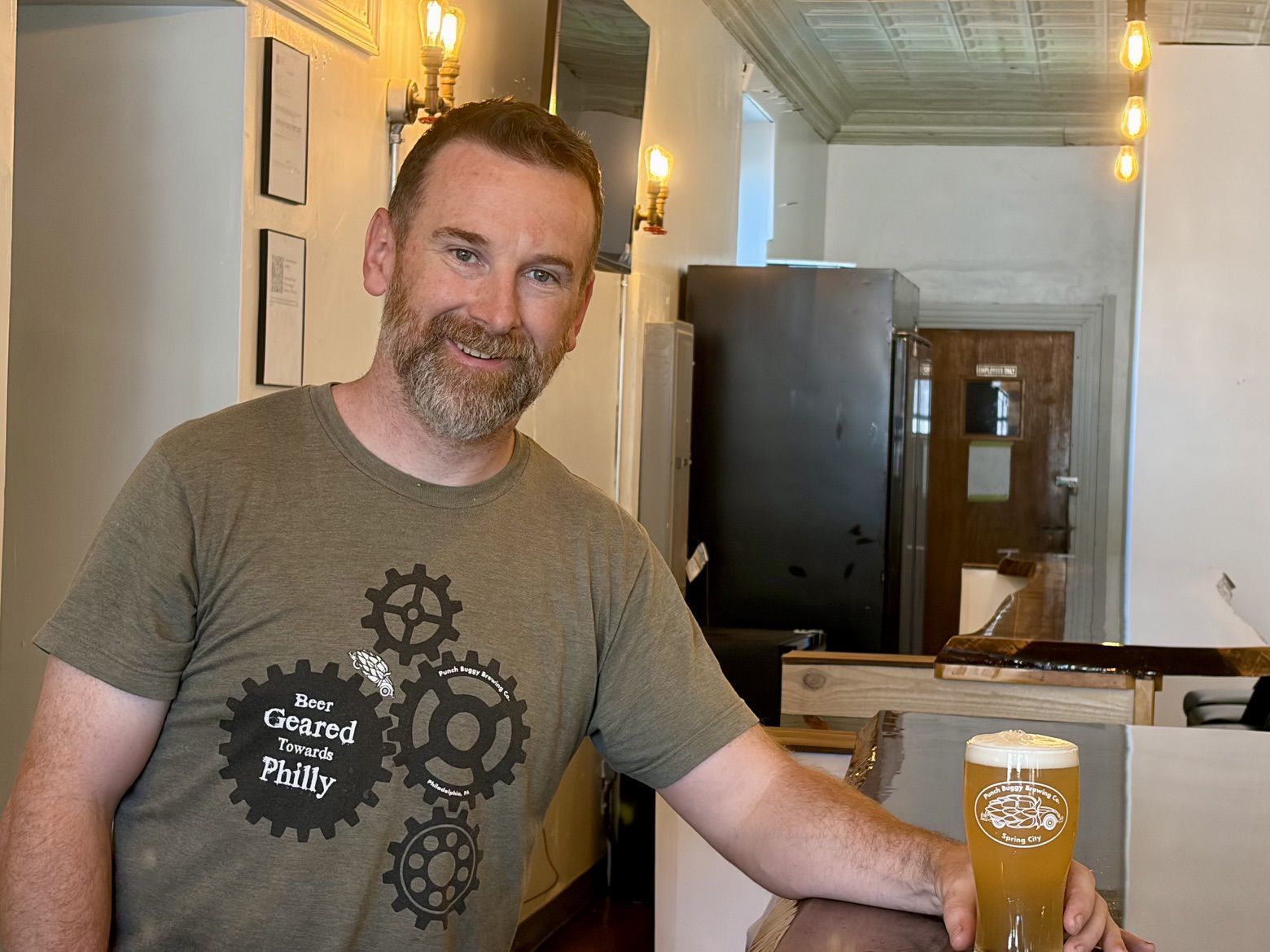
“I think it’s going to be fun to see [the business] grow and thrive with the growing of Spring City right now, and the growing of the beer community,” owner Patrick Coyne said.
The brewery’s latest endeavor, which has been about a year in the making, will open its doors at its new Main Street location on Saturday. And Coyne, 42, is no stranger to the Chester County borough: He and his family moved there five years ago, and Punch Buggy has been a presence at the farmer’s market for more than two years, learning what the crowd likes and wants.
In North Philadelphia, where the brewery’s first location opened seven years ago on American Street, it’s “all IPAs all the time; lagers also,” Coyne said. But Spring City’s crowds are appreciating Punch Buggy’s sours and dark beers more than their Philly counterparts, Coyne said.
The brewery released a Spring City Lager last year — its can featured local landmarks — to announce their venture into the suburbs.
Over the past year, they have renovated an old hardware store for the brewery, refinishing its old pub-style floors, working with a local woodworker to build a live-edge wood bar, and “just adding our own little flair to every little piece,” Coyne said.
Deezy’s Famous Cheesesteaks will join the brewery to serve food. The space will have three large TVs for sports fans and a small stage to host local musicians, like during their popular Friday music nights in Philly.
“Piece by piece, the whole thing coming together has been pretty cool,” he said.
Expansion has come with its challenges, Coyne said. They’re increasing the canning of their IPAs, lagers, sours, saisons, and more. They’ve paused distribution temporarily, to make sure they have enough beer at both locations and while they get a sense of demand.
Punch Buggy Brewing is no stranger to Spring City, as owner Patrick Coyne lives there with his family. His wife runs the flower shop next to their Main Street location.John McGuire
Coyne is looking forward to being “part of the beginning for Spring City,” where the population grew by more than 11% over the past five years.
“It’s definitely an up-and-coming city,” he said. “There’s things opening every couple weeks, it feels like.”
It doesn’t hurt that the new spot is near Coyne’s home, and next to his wife’s flower shop, Wild Blooms Florals. It’ll join a swath of new businesses that havecome to the area in recent months — including Tuned Up Brewing on the same block, as well as The Gem, a speakeasy, plus more robust public parking.
“People from in town could just walk and hit three places right now,” Coyne said. “People from out of town can come and they can park and they can go to three spots and spend a whole night there in Spring City.”
This suburban content is produced with support from the Leslie Miller and Richard Worley Foundation and The Lenfest Institute for Journalism. Editorial content is created independently of the project donors. Gifts to support The Inquirer’s high-impact journalism can be made at inquirer.com/donate. A list of Lenfest Institute donors can be found at lenfestinstitute.org/supporters.
Five Below, the Philadelphia-based discount retailer, has officially done away with its above-$5 section.
But all its products aren’t below $5.
Those higher-priced items — which had been set apart in stores’ “Five Beyond” sections and account for less than 20% of inventory — are now interspersed with the rest of the merchandise, according to chief executive officer Winnie Park.
“We’ve actually seen that product perform better” when placed throughout the store, Park said last week on the company’s earnings call. “If you have a $35 gilt floor mirror, it’s in the room section and not tucked away in the back of the store.”
The move came during a strong quarter for Five Below, which sells toys, games, decor, tech accessories, candy, party supplies, sporting goods, and more to kids, teens, and their parents.
The company’s net sales rose nearly 33% and its net income increased to $123 million, triple the $41 million it recorded in the first quarter last year, according to the latest earning report.
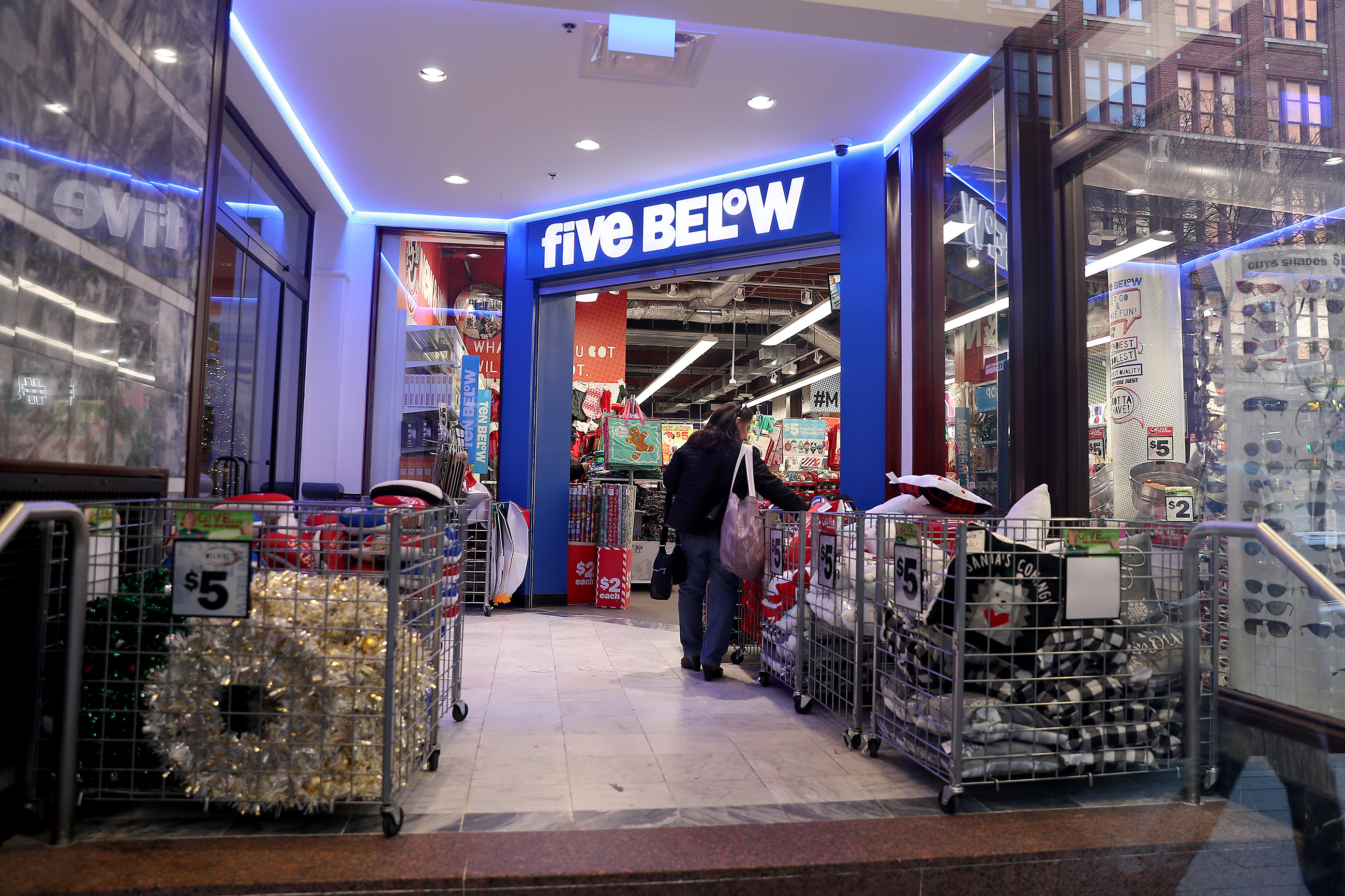
The wide selection of products at Five Below’s Chestnut Street location, one of its flagship stores, is shown in 2019. ED HILLE / Staff Photographer
Executives attributed some of this growth to the popularity of games and toys, “underpinned by strong support of squishy trends and collectibles,” said Dan Sullivan, chief financial officer.
“Everyone has been talking about the squishy dumplings,” the viral fidget toys that Five Below capitalized on, Park said. Pokemon and other trading cards also flew off the shelves.
“We’re constantly looking at what next trend we can amplify,” the CEO said.
At Five Below, executives said they have seen growth across all customer demographics, including millennial moms. Park said exercise gear, including yoga and Pilates equipment, has been a big seller.
Sullivan said he’s curious to see what happens the rest of the year.
“We’re being cautious,” the CFO said. “We’re looking at the world that our customers are living in with rising fuel costs, with very sticky inflation, with a somewhat soft labor market.”
“And we think a piece of that pain that they are feeling wasn’t felt in the first quarter purely because of tax proceeds year-over-year that were significantly up,” he added.
Five Below was founded in Wayne in 2002 and has since grown to include 1,970 stores in 46 states. In 2018, the company opened a massive three-story headquarters in the former Lit Bros. building at 701 Market St. in Center City.
Five Below’s Market Street location is shown before opening in this 2018 file photo.TOM GRALISH / Staff Photographer
Park, the former top boss at Forever 21, took the helm in December 2024, with a mission to reaffirm Five Below’s reputation as an “extreme-value retailer,” as the company called itself in her hiring announcement.
By last summer, the company was rebounding, thanks in part to viral toys like plush Squishmallows and artificial-intelligence tools that now help with inventory.
Analysts told industry publication RetailDive that Five Below’s latest earning report showed the business in a strong position. They noted that stock prices fell initially, however, over concerns about the company’s ability to sustain this growth.
“Looking ahead, the outlook remains very positive but is tempered by a dose of caution,” GlobalData managing director Neil Saunders told the outlet.
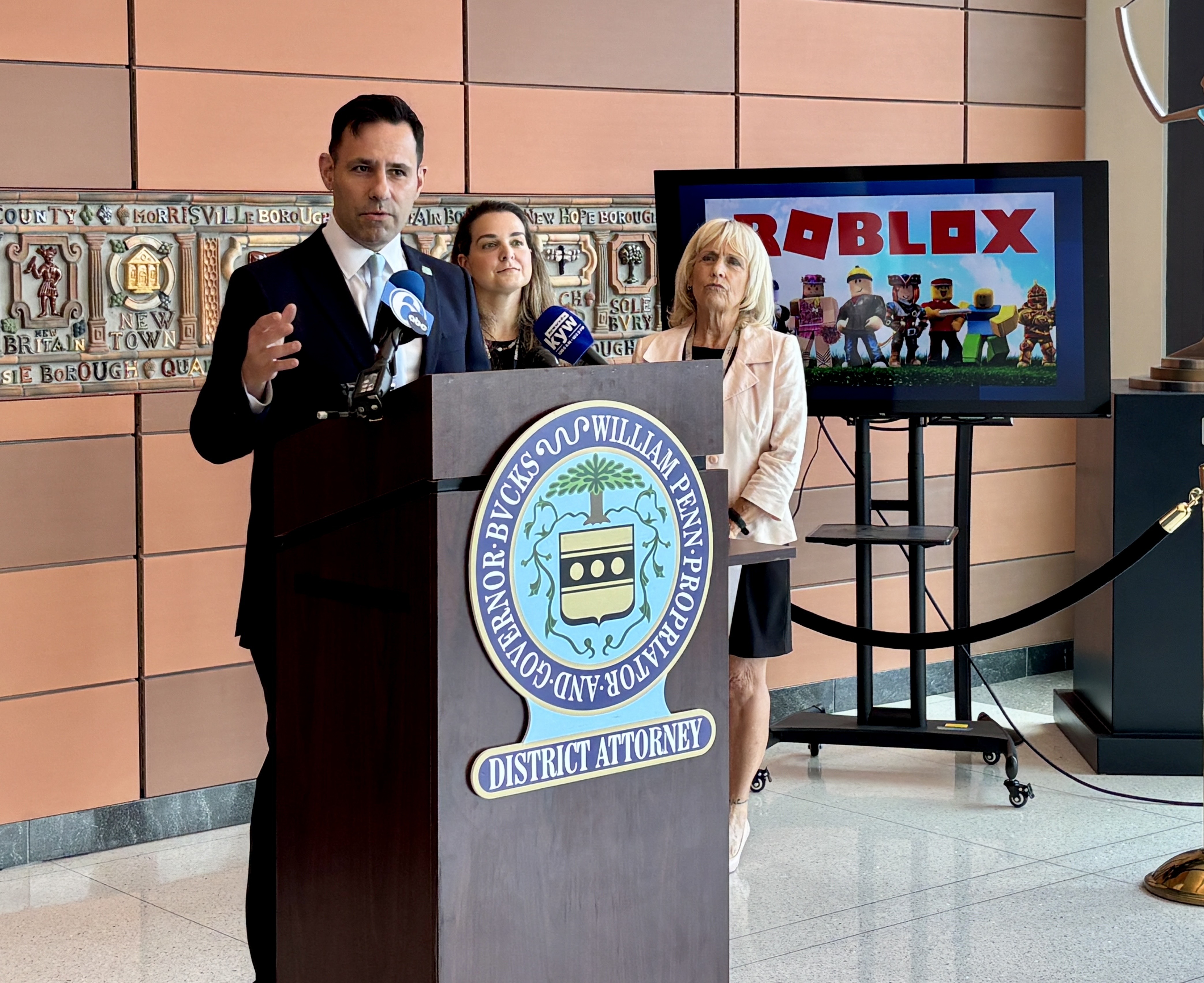
Bucks County District Attorney Joe Khan, saying parents are “outmatched” by social media companies in the fight for the online safety of their children, has filed a federal lawsuit against the makers of a popular online video game that he said had allowed sexual predators to exploit children.
Khan announced Monday that his office is taking legal action against the creators of Roblox, a game that he said 75% of American children between the ages of 9 and 12 play regularly and one that he said has led to crimes against them.
“Today we are sending a clear message to social media companies,” Khan said. “If you put our children in harm’s way, we’re coming for you.”
A spokesperson for Roblox did not immediately respond to a request for comment.
In underscoring the necessity of the lawsuit, Kahn cited the recent conviction of a child predator who used the game to find victims. Alec Magill, of Southampton, posed as a teenage boy on Roblox and persuaded two teenage girls to send him sexually explicit photos and videos. On Friday, he was sentenced to up to two years minus one day in county jail.
“Roblox gave Magill the tools to hide in plain sight and then target and exploit children from behind his phone and computer screen here in Bucks County,” Khan said, adding that Magill, 32, used the game’s “completely lax parental notification,” and lack of age-verification features to seek out his victims.
Khan filed the suit in federal court in California as an amended version of a lawsuit he began in 2023 while serving as Bucks County’s solicitor. The suit contends that the companies behind TikTok, Instagram, Facebook, Snapchat, and YouTube have worsened anxiety and depression among young people through their apps, particularly in Bucks County schools.
The amended complaint adds Roblox, as well as Elon Musk’s X and Discord, an online messaging platform, alleging that they have allowed underage users to be exposed to “an endless barrage of pornography, hate speech, cyberbullying.”
The gaming platform Roblox, seen here on a tablet in 2021, is played by 75% of American children between the ages of 9 and 12, according to Bucks County prosecutors.Leon Keith
Bucks County Commissioner Diane Marseglia said Monday that she and her colleagues support Khan’s efforts, saying the social media companies “have ignored both science and the law.”
“If you are 21 years or younger, you have had social media in your life the entire time,” she said. “In fact, an entire generation has now reached maturity with social media and without the protections they deserve, and, looking back, it seems we should have known the risks, but we didn’t.”
Khan filed the suit under the state’s Unfair Trade Practices and Consumer Protection Law, which gives county prosecutors the authority to pursue cases such as this to prevent a danger to the communities they serve.
Earlier this year, he filed another civil action against Richard and Ronald Goetter, who own a rental property in Dublin. Khan characterized the two as “slumlords” who forced their low-income tenants to live in hazardous conditions.
The district attorney says the risk Roblox poses to children is just as dangerous.
“As a parent of two young kids in Bucks County, I believe that social media companies can and should do more to ensure their products are not used as a back door for predators to access them,” he said. “It is time that we hold these global corporations responsible for the harm that they caused.”
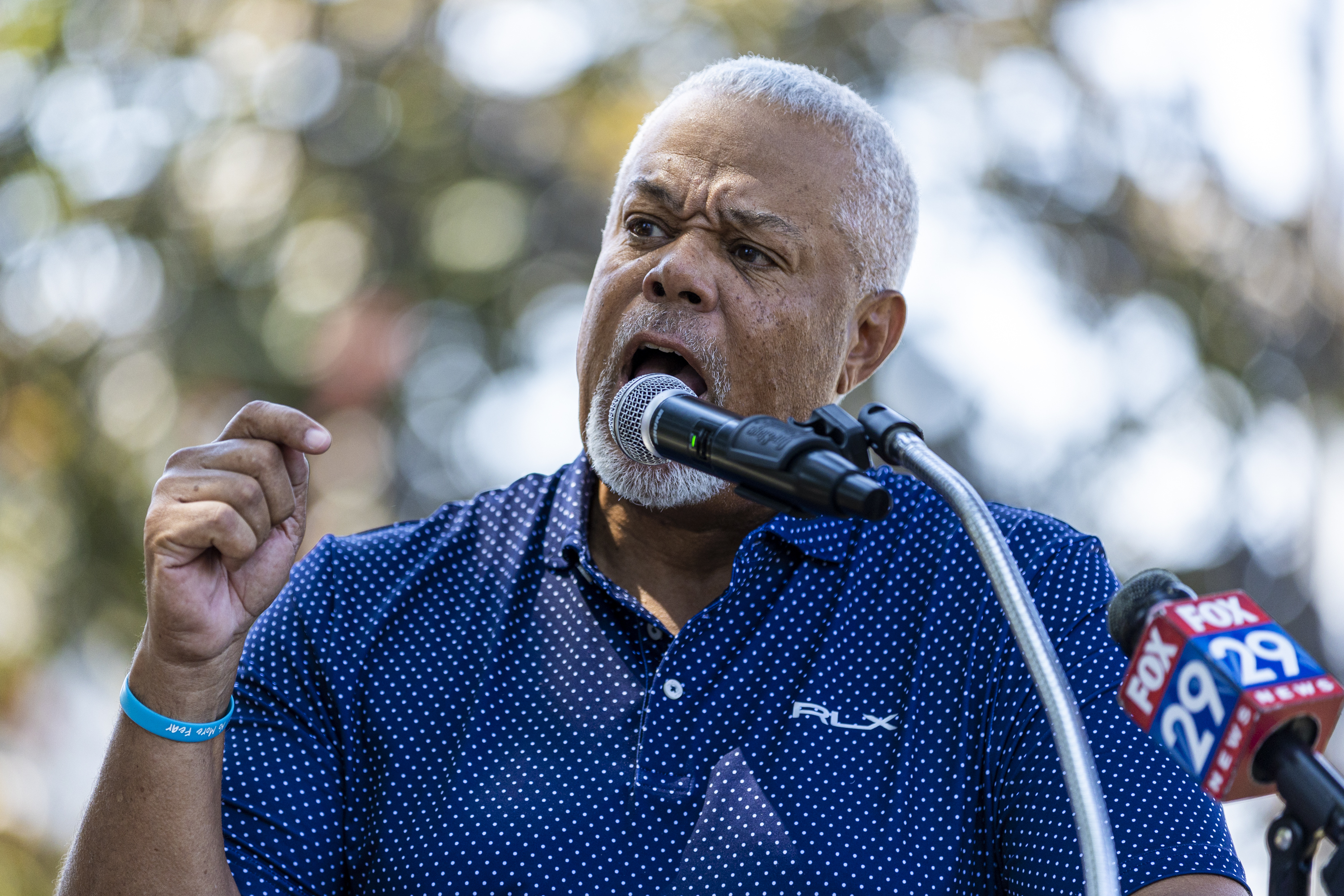
State Sen. Anthony H. Williams, a veteran state senator from Philadelphia known for his advocacy on school choice and who has led one of the city’s most muscular political factions for decades, says November will be his last time running for reelection.
But first, he has more work to do for the advancement of Black Philadelphians and the Democratic Party before he retires, he added in an interview this week.
Williams, 69, did not commit to completing another four-year term, opening up the possibility that he could handpick his successor if he decides to retire early.
“I’m thinking about getting reelected and serving, that’s all I’m thinking about,” he said. “I’m here, I’m gonna run to November, and we’ll see what happens after that.”
Williams ran unopposed in 1998for the seat after his father, the late Hardy Williams, decided within hours of the filing deadline he would not run for reelection. At the time, the move was was widely seen as an intentional play by the late Williams to hold the seat for his son. Now, Anthony H. Williams says that recollection excluded a key piece of information as to why his father retired so suddenly: He had been diagnosed with dementia just before he decided not to run.
“We didn’t have a plan for me to take over,” the younger Williams said, noting that former State Rep. James Roebuck Jr. had filed to run, too, but ultimately withdrew from the race due issues with his petitions. “It wasn’t like I got a free pass.”
When a state legislator resigns before the end of his or her term, a special election is called to fill the vacancy. The ward leaders in that district then get to choose who should take over the seat, dodging a competitive primary and largely deciding the outcome in closed-door meetings.
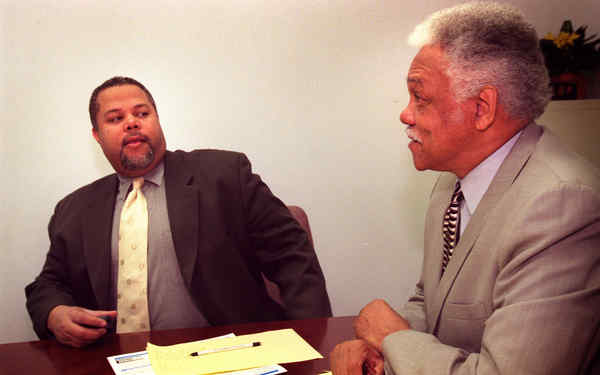
Anthony Hardy Williams (left), seen here in 1998, when he was a state representative and his father (right) was a state senator.File photo
Williams —who has been in state government, both as a representative and senator, for nearly four decades — is seeking his sixth term to represent parts of Southwest Philadelphia and Delaware County in Harrisburg. He recently won his primary election over Democratic challenger David Goldsmith Jr. and will not face a Republican challenge in November.
Williams has had a far-reaching — and at times, turbulent — legacy in Harrisburg and the city, running twice unsuccessfully for Philadelphia mayor in 2015 and 2019 and once unsuccessfully for governor in 2010.
Over 37 years in Harrisburg, Williams has mentored numerous young Philadelphians who started as aides in his Senate office, who have gone on to becometop legislative leaders. That list includes: House Speaker Joanna McClinton, Philadelphia City Council President Kenyatta Johnson, House Appropriations Chair Jordan Harris, Superior Court Judge Timika Lane and more.
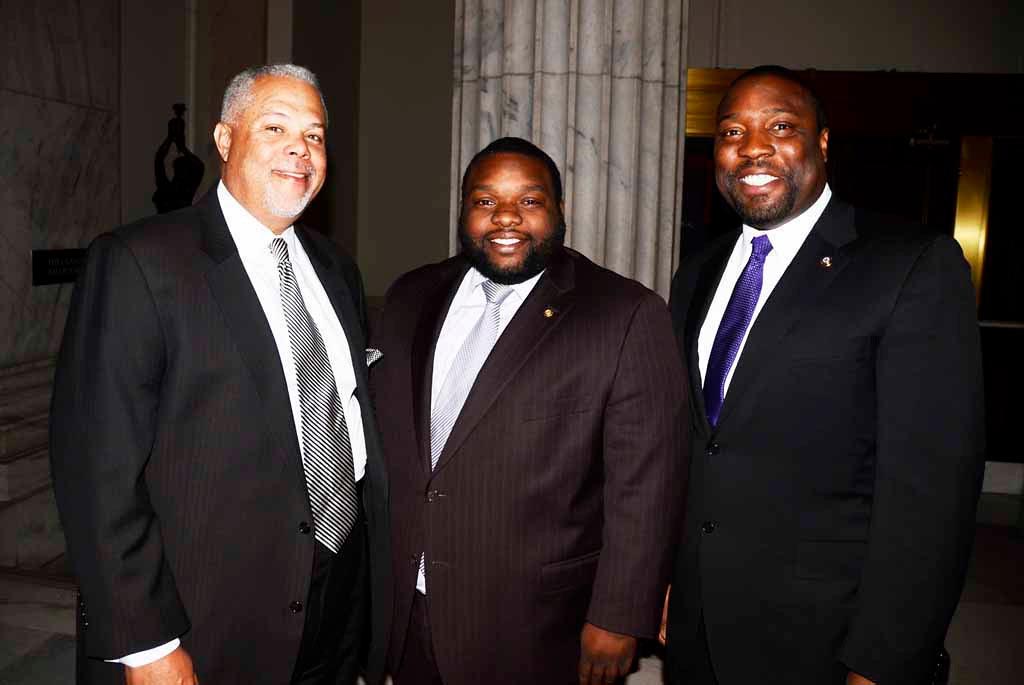
State Sen. Anthony H. Williams, State Rep. Jordan Harris and Councilman Kenyatta Johnson at the Inaugural Dorys Erving Fit Youth Foundation Celebration at the Ritz-Carlton on Friday, November 15, 2013. (HughE Dillon/Philly.com)
“It’s a testament to his dedication and his commitment to seeing Black independent politics grow and mentoring young people to get into office — not to just be there, but to do something,” Harris said Friday.
Looking at Williams’ list of mentees who now outrank him in office shows his legacy and humility, Harris added. And Williams is willing to have spirited disagreements with his mentees, Harris said.
“He’s mentored people who vehemently disagree with him on certain issues, but the endgame of upward mobility for underrepresented people is all the same,” Harris said.
Johnson, in a statement, credited Williams for playing a formative role in his political climb, and for always being willing to “share his wisdom, offer candid advice, and invest in the next generation of leaders.”
“Philadelphia is a better city because of [Williams’] service, and I am proud to call him both a colleague and a friend,” Johnson added.
In an interview, Williams said that he’s seen Harrisburg change tremendously since he first was elected to as a state representative in 1989. Today, Democrats control the state House after flipping the chamber in 2022 for the first time in 12 years, a Black woman from Philadelphia leads the House, and a democratic socialist leads Philadelphia’s delegation to Harrisburg in the Senate. Democratic lawmakers successfully fought to change how Pennsylvania’s public education system is funded, and they’ve advanced gun reforms.
And, he said, it’s no longer a place for career politicians like him.
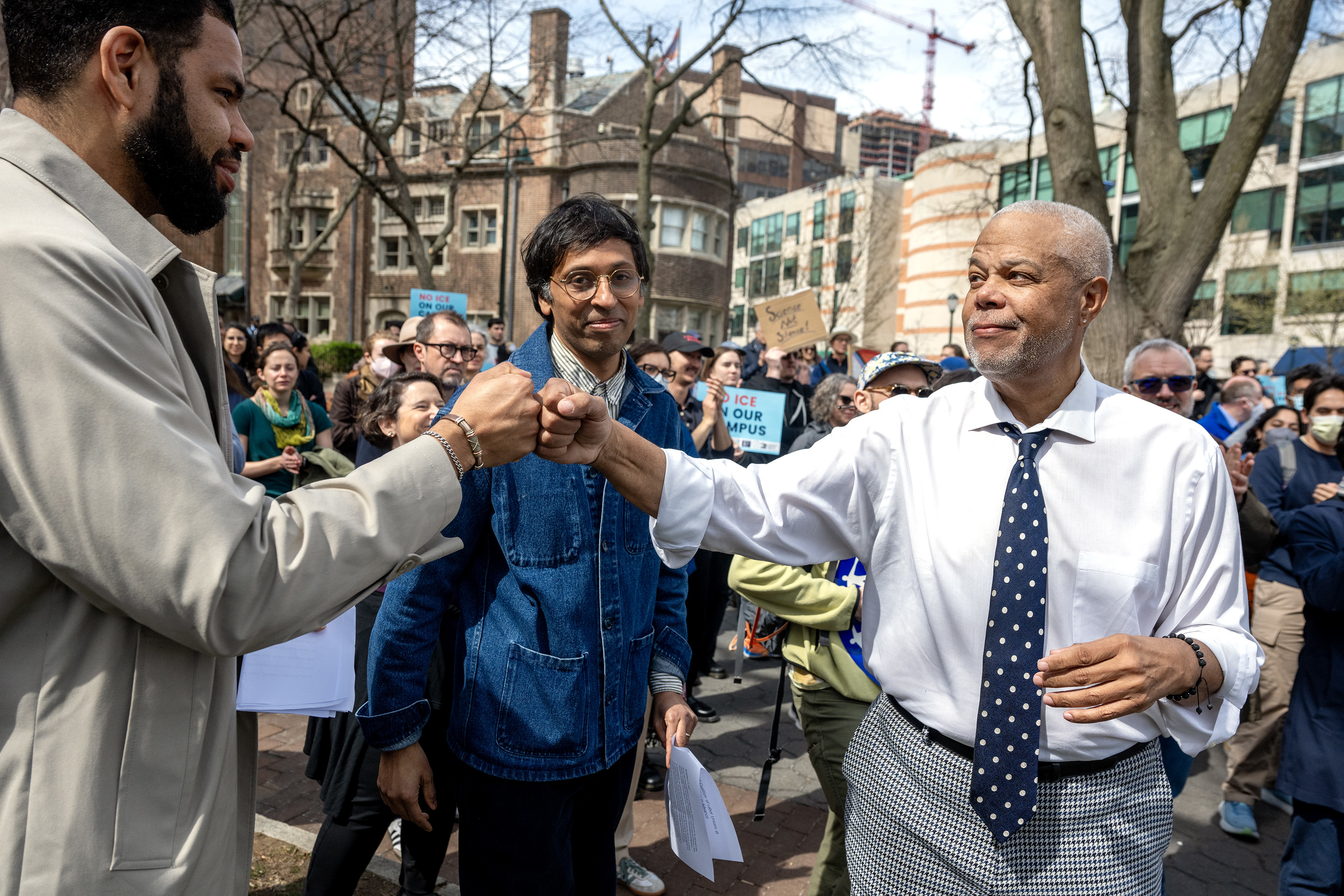
Philadelphia elected officials State Rep. Rick Krajewski (from left), State Sen. Nikil Saval, and State Sen. Anthony Williams attend a rally at the University of Pennsylvania Mar. 20, 2025.Tom Gralish / Staff Photographer
But Williams said there are still critical issues of policy and politics that he wants to address with his time left in office.
First, he wants to be a bridge between generations of Democratic leaders — though he dislikes how Democrats currently label themselves as “progressive” or “moderate” to differentiate their views. He said he’s been speaking frequently with progressive leaders since State Rep. Chris Rabb, a democratic socialist, won the party’s nomination to represent Pennsylvania’s 3rd Congressional District in Congress.
“The Democratic Party as it’s currently constituted is something that’s not current, and not visionary about moving forward,” Williams said.
“I want to spend time working with those folks who are in that progressive community who will identify with the fact we have common ground on a lot of these areas. We have a different rhythm, or as they say, a different vibe,” he added.
Throughout his time in office, he said he’s had his ideas stolen and boasted by white leaders, including a successful illegal gun task force. He’s cut deals with top Republicans for impactful programs that still exist today, such as an apprenticeship program that helped increase diversity in the building trades. He’s been an outcast at times as one of few Democrats to advocate for school choice options, a label that he knows follows him.
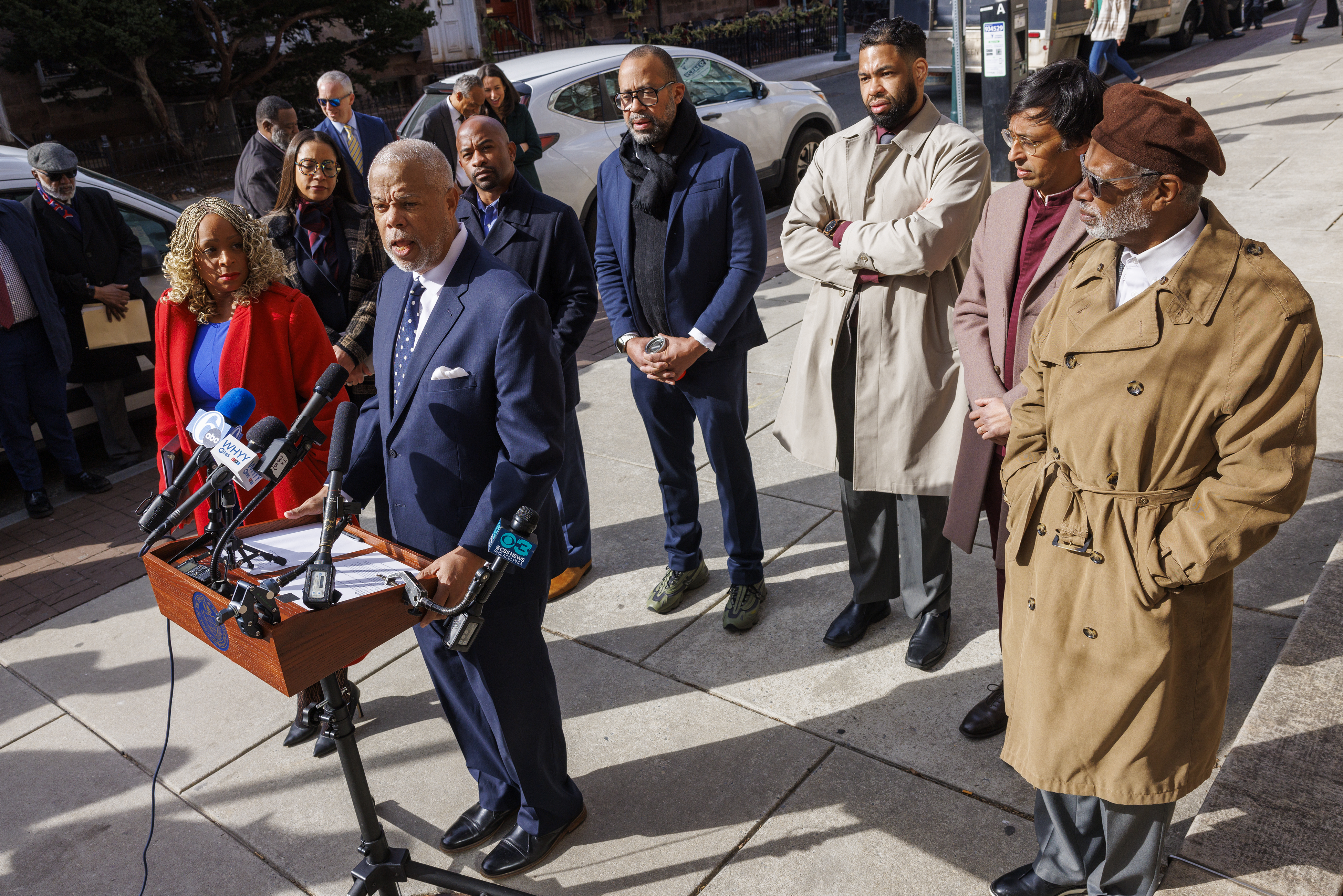
News conference hosted by Pennsylvania State Senator Anthony H. Williams (podium) outside the Penn Carey Law School, Tuesday, Feb. 25, 2025. At rear from left are Councilmember Jamie Gauthier, law professor Stacy Hawkins, State Rep. Napoleon Nelson, Rev. Marshall Mitchell, Penn Trustee Board, State Rep. Rick Krajewski, State Sens. Nikil Saval and Art Haywood.Alejandro A. Alvarez / Staff Photographer
Now, he wants the buy-in of statelegislators and the private sector to address economic inequities among Black Philadelphians. Black residents make up the largest racial or ethnic groups in Philadelphia, but have one of the highest poverty rates in the city with 22.3% of Black residents living in poverty in 2024, according to a Pew Charitable Trusts survey released this year. Instead, Black residents should be driving the economy, Williams said.
“Fundamentally, we have to take hold of the economy in the city,” he said. “We collectively have the power to do something about it. Not individually, collectively.”
He sees more school choice options — and reimagining the whole public school system if necessary — as part of this solution. He’s faced criticism throughout his career for his support of school choice efforts, citing his big-dollar support from Pennsylvania’s richest man Jeffrey Yass, who solely supports candidates willing to send state money to private schools.
Yass, who usually supports Republican candidates, was among the sole funders of Williams’ failed bids for governor and mayor. Williams has been criticized for taking money from a top GOP supporter who wants to divert money away from Pennsylvania’s public school system.
“People think I’m a one-hit wonder,” Williams said of his support for using public dollars to send some students to private schools. “We have to be honest about what we’re doing and not doing and have honest, hard conversations about how we’re gonna change how we do this.”
On a hot Thursday morning, two Peco workers arrived in Conshohocken, tools in hand, to spray-paint brightly colored letters and numbers onto the sidewalk.
The symbols might look like gibberish; but they are the language of utility companies that let anyone doing work in the area know what utilities are underground.
The process starts whena business owner, contractor, or homeowner calls 811,the free Pennsylvania line that must by law be called before any digging work to prevent damage in utility lines.
The call center takes in the who, when, where, and whys of the job, and the corresponding utility companies make sure their lines are labeled in the area.
“If somebody is digging and they don’t know where our gas and electric lines are, there is a potential for property damage, loss of life, or injury — anything from cuts and scrapes to a fatality,” said damage prevention inspector Bryan Lloyd.
This marking is usually a one-person job, but if the digging spans miles, a team will be sent out.
In Conshohocken, the project near a plaza on a commercial stripis large enough for gas supervisor Michael Onimus to accompany Lloyd on this request.
The men got out of their truck and put on protective gear, white Peco helmets, and reflective orange vests.
Lloyd leaned into his truck, moving a 2½-foot-longblue bag with equipment out of the way, to reach a red metal marking wand that will later be loaded with spray paint to help him make the marks.
Inside the bag, Lloyd keeps radiodetection equipment capable of locating cables, pipes, and lines of multiple materials.
The machine has a box called atransmitter with two cables, anda current locator that works similar to the metal detectors folks use to scope the sand down the shore.
Lloyd creates a circuit connecting a red clip to the gas meter. A black grounding tool — which looks like a long metallic turkey baster— is inserted into a dirt patch to complete the circuit.
Lloyd pushes it into the soil, sending a current to detect precisely where the line was located.
The type of soil, amount of rock, and pipe materials can change how easily the locator can pick up the signal.
In this case, the locator picked up a signal about 20 steps from the meter.
Locator in the right hand and marking wand with yellow spray paint in the left, Lloyd walked around the perimeter of an empty restaurant, following the frequency and spraying yellow spots along the way.
The yellow color was not his choice. It’s part of a color-code system that lets contractors know which lines are in the areas they are digging. According to Onimus, each service has its own pigment:
Yellow: gas pipes
Red: electric lines
Blue: water pipes
Green: sewer lines
Luckily, paint isn’t the only way to mark things. In areas where painting would be difficult, like grass, they can place small flags with the same color-coding system.
Bryan Lloyd, Peco damage prevention inspector, marks the ground following the frequency of a gas line.Jose F. Moreno / Staff Photographer
Once Lloyd has circled the area, he walked along the path of dots making long Z-shaped lines to connect them, before writing “½ P. GS. Peco” in yellow spray paint. This is called labeling the utility line.
“You have the size of the facility, which is half an inch in this case. The material type, which here is plastic, so P. Then you have the service, in this case GS for gas. And then Peco to let everyone know this is our facility,” Onimus said.
The order in which those elements are written down always follows the same pattern, but the information changes depending on how big the pipes are, type of line, utility company, or material they are made of.
For example, “S” means the line is made out of steel, while “CI” stands for cast iron, Onimus said.
With the gas all mapped out, it was time for the electric. The process is not much different, but the current-detection system does vary, since gas pipes are usually made of plastic, but electric lines have steel or metal inside the cables.
Like with the gas line, he follows the signal, this time leaving bright red dots on the ground.
The electrical current led them to a pole inches away from where digging is already taking place — markings of a light red spray from a different utility company already branded the concrete.
Picking up the frequency from the electric line, Lloyd drew what looks like a red H on the ground. The mark signaled multiple electrical lines were connected to the nearby street light post, three in this case.
PECO Damage prevention inspector Bryan Lloyd, writes “primary” on the ground signaling where the electric lines are.Jose F. Moreno / Staff Photographer
Tracing back his steps, Lloyd drew more H’s in between the previously marked red dots. Before arriving back at the meter, he wrote: “Peco. Ele. Primary,” meaning a primary electrical line that belongs to Peco.
Twenty minutes later, their work in Conshohocken is wrapped up. But not before Onimus stressed the importance of calling 811 before any digging job, even gardening, no matter how small it may seem.
“People say ‘I was doing a couple inches,’ but before you know [it], you are 12 inches deep in the ground, and hitting a gas or electric line,” Onimus said. “If you hit a gas line, it may not necessarily injure you, but it could implicate a kind of injury to somebody else in the community, so calling makes sure everyone in the community is safe because we are all in this together.”
Keenya Banks lives in Philadelphia with her husband and the two grandchildren they care for. She has never been to Fishkill in New York’s Hudson Valley.
Yet, that’s where someone spent more than $650 in food assistance benefits for her familyat a Sam’s Club in April in an alleged case of EBT skimming, just one of the more than 5,100 cases reported in Pennsylvania between the start of the year and May. This year’s skimming incidents account for approximately $2.5 million in stolen benefits, according to the Pennsylvania Office of State Inspector General, which investigates the reports and seizes the skimming devices.
It’s likely Banks used her EBTcard in a point-of-sale machine rigged with a device designed to copy her card information and pin number. Someone then applied her EBT information to a different physical card and drained her monthly benefits the next day.
“I was too numb to cry because I just couldn’t believe it,” said Banks, 56, who was alerted to the fraud as she tried to purchase food days after she had gotten her month’s benefits. “They said, ‘Ma’am, this is declined.’ I said, ‘No, no, I have at least 600-something dollars.’”
Even more devastating to Banks: For a brief stretch of time, benefits were being reimbursed through a federal program, but that ended December 2024 because Congress did not extend funding. The most that the Pennsylvania Department of Human Services can do is direct victims to food banks and other food assistance programs. The end of the federal reimbursement program also means the skimming incident data Pennsylvania has on hand are likely an undercount: Victim advocates say people may simply skip reporting if they believe nothing can be done.
Pennsylvania is looking at a possible solution, but without one immediately available, Banks spent a month scrambling to put food on the table with the help of food pantries and what she had on hand.
“We had been storing up, like a lot of canned goods and water, and we had a deep freezer, and thank God we were able to really kind of make ends meet.”
Victim advocates argue EBT skimming has risen to a nationwide crisis because the federal government has failed to invest in more secure card technology. Between October 2022 and the end of the reimbursement program in 2024, states reported $320 million in stolen Supplemental Nutrition Assistance Program benefits, according to the Government Accountability Office.
EBT cards: From cutting-edge technology to scammers’ favorite
The idea that someone’s food benefits could be loaded digitally onto something that worked like a debit card was once revolutionary.
Before federal supplemental food assistance could be loaded onto a card, it used to come by way of coupon books or mailed checks, depending on the program. These methods not only came with high administrative costs but in the case of the coupons, also known as “food stamps,” there was an element of stigma and a risk of forgery.
The federal government launched its first “electronic benefit transfer” pilot in Reading in 1984, yet it was not until 2002 that all states were required to make the switch.
By then, scammers had already learned how to exploit the magnetic stripe technology used in debit, credit, and EBT cards. While banks have made cards more secure by adopting chip technology, the federal government has stuck with the magnetic stripes for EBT cards.
In the absence of chip adoption, states have resorted to other added security measures. Last May, Pennsylvania launched ConnectEBT, an app that allows people to lock their cards until they are at the checkout line, ready to use them.
Mackenzie Libbey, staff attorney in the health and independence unit at Community Legal Services, noted the current system places the onus on families, which are required to lock and unlock their cards, monitor their spending, and change their PIN regularly to stay ahead of fraudsters.
“It’s just not something that anyone would expect of a middle-class consumer using a credit or debit card,” Libbey said. “It’s a lot of extra effort to protect benefits that they have shown they’re entitled and eligible to receive.”
The federal government did not approve the use of chip and tap-enabled EBT cards until 2024, largely due to concerns over the costs of upgrading the aging technological infrastructure in use.
Some states were eager to become early adopters and tackle the skimming issue.
In February 2025, California became the first state to begin replacing the magnetic stripe cards, with a handful of states following suit because of their own issues with skimming. Oklahoma launched a two-month pilot this March, and in April, Massachusetts announced its plan for a pilot later this year. New Jersey also has plans for a chip card rollout.
But the U.S. Department of Agriculture has approved only two vendors for the new cards, and users in early adopter states have complained about issues with the chips and difficulties getting the cards to process.
Those issues gave Pennsylvania Secretary of Human Services Val Arkoosh pause. She has previously said the technology was not quite ready.
In a May hearing with the House Democratic Policy Committee, however, Arkoosh said Pennsylvania’s vendor had promising data. After Alabama adopted chip cards, the state saw an 83% reduction in theft in 60 days among the people using the chip, she said.
“I do think I can now sit here and say to you, I believe that the technical issues have largely been solved,” she said at the hearing. “I didn’t want us to embark on this before we were confident that it would work, but I think we’re there now.”
And there appears to be interest in Harrisburg to go after EBT skimming.
A bipartisan bill that would require Pennsylvania to transition to chip-enabled EBT cards by 2028 moved out of committee Wednesday to the full House.
A recent cost estimate puts the overhaul at about $14 million, according to the Pennsylvania Department of Human Services. It would take six to eight months to roll out chip cards after approval, barring any significant challenges, according to a December report by the department.
Should legislators in Harrisburg choose to fund the transition, they would have an incentive to move fast. While the federal government used to split SNAP administrative costs evenly with states, come Oct. 1, states will be on the hook for 75% of these expenses because of the One Big Beautiful Bill Act.
For now, the Pennsylvania Office of State Inspector General’s skimming response teams continue to search for these devices and prosecute fraudsters. Between April 2025 and March of this year, the agency said, it had prevented $8.3 million in potential losses.
The USDA, meanwhile, said it is not stopping at card locking and chip adoption. It is combating skimming and other SNAP fraud with mobile payment pilots and encouraging states to block out-of-state and online SNAP transactions by default.
These efforts, while welcome, cannot undo what Banks and her family went through the month after the theft they experienced. She hopes her story can alert other families to scammers targeting EBT users.
Until chip cards come, even Banks’ 10-year-old grandson is on the lookout, monitoring their card benefits and inspecting point-of-sale machines at the grocery stores.
“He’s so tech savvy and he’s very, very wary,” she said. “So he’s like, ‘Grandma, did you check and see if there’s a skimmer on there?’”
For decades, the two colleges, just a five-minute shuttle ride apart, have allowed students to take classes, participate in clubs and programs, and eat in dining halls on each other’s campus for no additional charge. Students have even been able to live on the other campus, though college officials say few do.
At left is Anastacia Dulany a student at Bryn Mawr taking a Growth and Structure of Cities class along side Marco Calia a student from Haverford. The class was held at Bryn Mawr College where the Growth and Structure of Cities program is based. Alejandro A. Alvarez / Staff Photographer
Many take advantage: During the fall 2025 semester, 40% of Bryn Mawr students took courses at Haverford and 42% of Haverford students did the same at Bryn Mawr. In total, there were more than 1,700 course registrations on the non-home campuses in fall 2025. (Haverford and Bryn Mawr students also can take classes at Swarthmore College and the University of Pennsylvania and select a major at Swarthmore.)
The relationship between Haverford and Bryn Mawr — which together enroll about 2,800 students — opens many more options to students, allows faculty to collaborate, and saves money, college officials said. Both are highly selective liberal arts colleges; Bryn Mawr is a women’s college.
“The academic offerings that we provide are exponentially larger than they would be without the partnership,” said Bryn Mawr president Wendy Cadge.
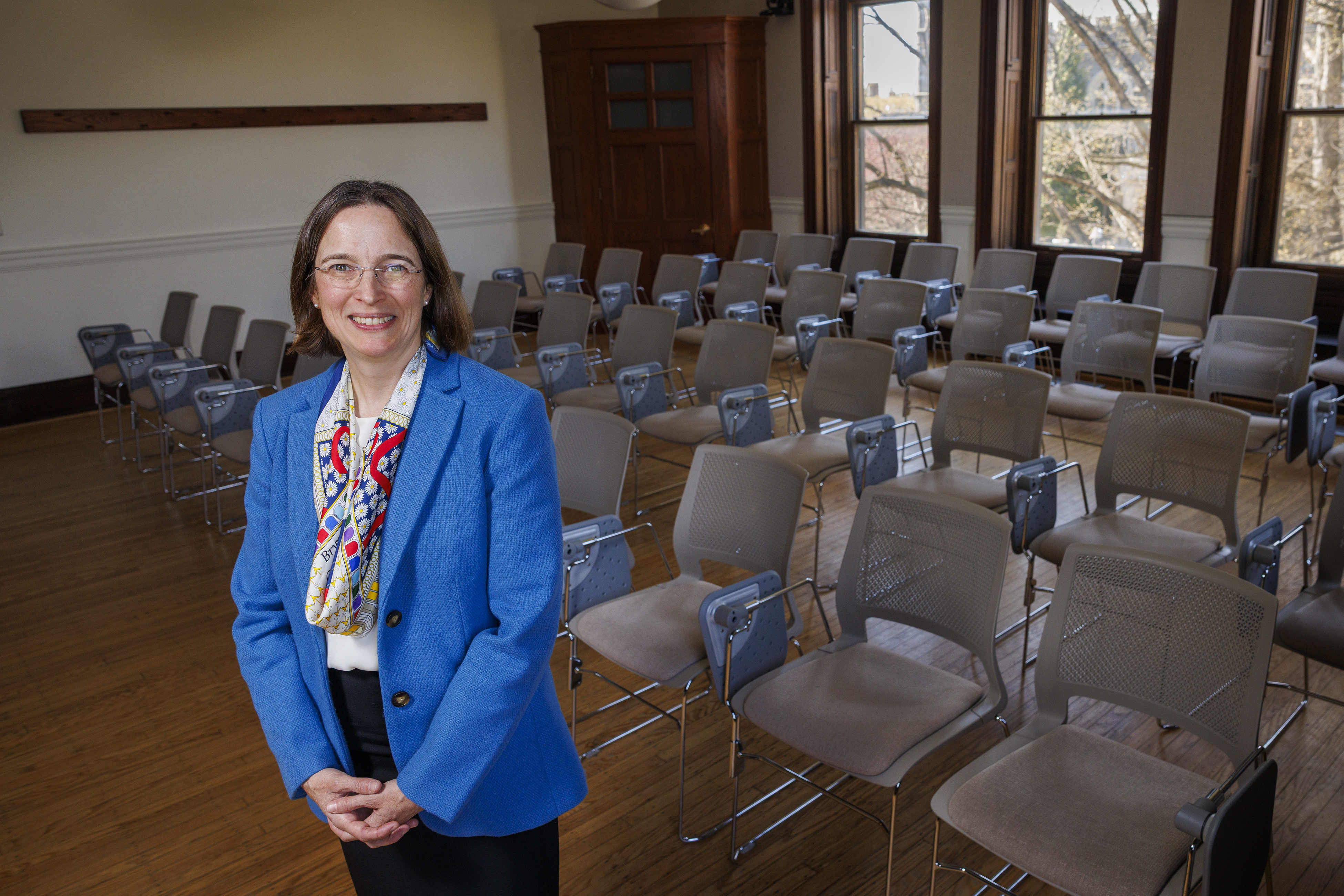
Wendy Cadge, president of Bryn Mawr CollegeAlejandro A. Alvarez / Staff Photographer
It was 1997 when Cowan, now an elementary school reading teacher in Minneapolis, got her degree from Haverford while majoring at Bryn Mawr. Now her daughter, Tabitha, 21, is enrolled at Bryn Mawr and is enjoying the benefits of both campuses, too.
“It just broadens your world,” Tabitha Cowan said.
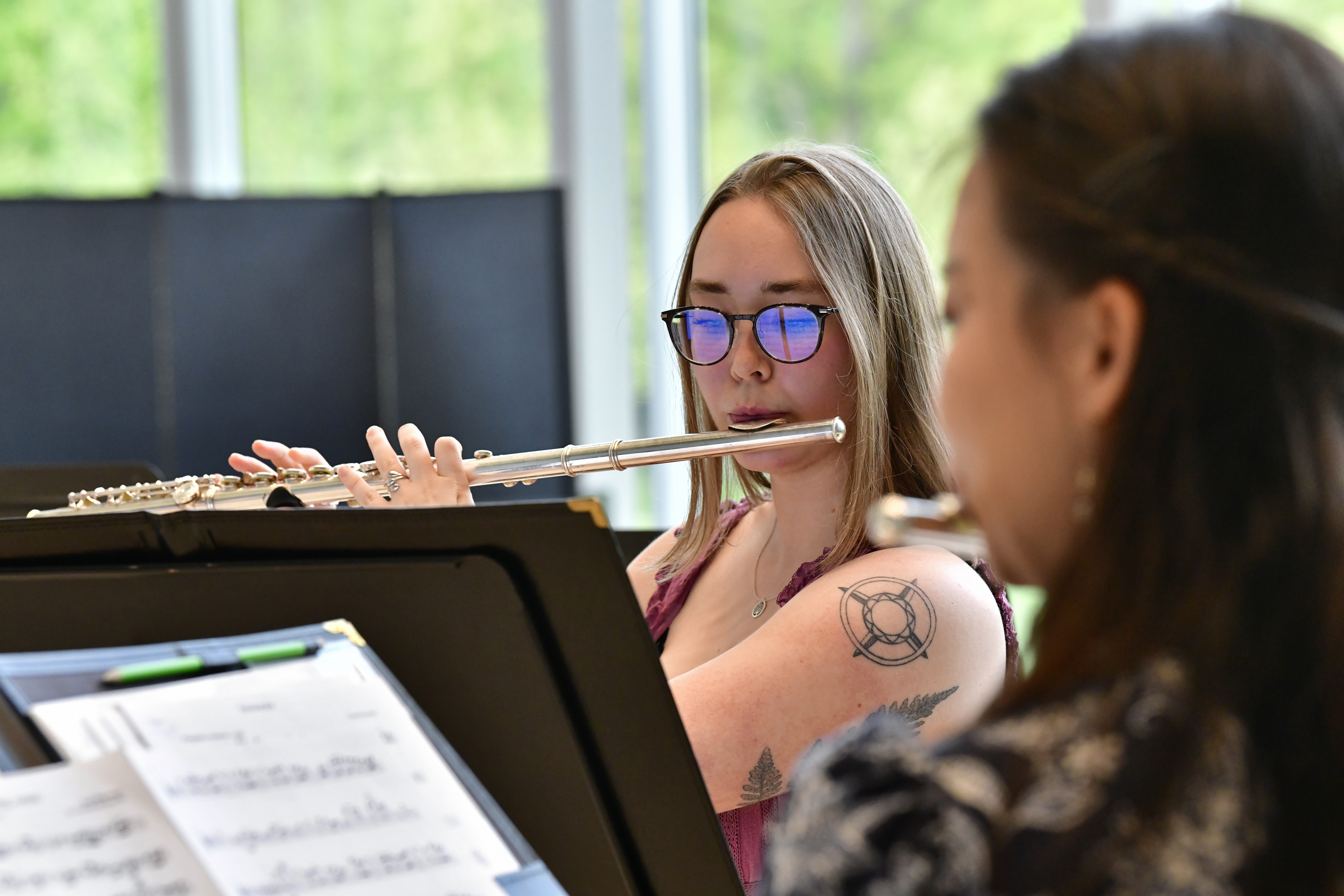
Majoring in architecture studies and Spanish, she participates in the Bi-College flute choir, made up of two Haverford students and 11 Bryn Mawr students.
Tabitha Cowan, a Bryn Mawr College student, plays the flute for the Bi-College Flute Choir.Courtesy of Bryn Mawr College
“We have access to Haverford’s performance spaces because we do not have a music program here at Bryn Mawr,” she said.
They practice twice a week, once at Haverford and once at Bryn Mawr.
Joint majors and projects
The colleges have been able to launch joint majors in technology-intensive, interdisciplinary fields like neuroscience — which has become the most popular major on Haverford’s campus — that would have been harder to support individually. It also means the schools share expanded instructional technology and library services.
Students from both Bryn Mawr and Haverford take a neuroscience class at Haverford College. Tyger Williams / Staff Photographer
Faculty from both schools are working on joint projects that received institutional pilot grants, encouraging closer collaboration. One project that launched last semester is focused on developing a Jewish studies program, while another aims to reinvigorate Black studies. Others involve interdisciplinary training, chemistry, and narrative across languages and cultures.
“We really do try to make it as seamless as possible,” said Bryn Mawr provost Dee Matthews.
Students get one transcript, and colleges share non-salary operating costs, such as administrative overhead, for some of the offerings shared by the campuses, she said.
“It’s a way in which we can have a large academic community while still preserving the scale of our individual institutions,” said Haverford provost Helen White.
The two schools earlier this year re-upped a memorandum of understanding on the partnership, which started 50 years ago. The schools will explore new ways to make the most of the partnership and elevate its visibility for students.
“We affirm that ‘each college is a better version of itself because of the richness of ideas, community, and organization made possible by the Bi-College connection,’” the memo states.
There are about 75 such consortia nationally, with differences in how they collaborate, said Sarah Pfatteicher, executive director of the Five College Consortium in western Massachusetts. The two oldest were formed about a century ago, one in California and one in Georgia. More may start, given the political and financial pressures on higher education and the influence of artificial intelligence, said Pfatteicher, who has written a book about college consortia.
“Any time there is pressure on higher education, particularly financial pressures, there is incentive to say, ‘What could we gain by working with our colleagues instead of trying to go this alone?’” she said.
Complementary offerings
The partnership between Haverford and Bryn Mawr — both of which have substantial endowments — has not been driven by finances.
Each school brings unique features to the table. Bryn Mawr has a pool, Haverford a track. Bryn Mawr has art history and Haverford the fine arts. Haverford has music; Bryn Mawr has theater.
The food is better at Bryn Mawr and the parties at Haverford, students say.
“Certain sports teams at Haverford watch our menus and then come here because they think our food is better,” Cadge said. “It’s all the same food, but don’t tell.”
Haverford student Gabriel Bernstein may differ. He said he and his track teammates often board the bus to eat at Bryn Mawr.
“Bryn din,” he called it.
In Bryn Mawr’s Class of 2025, 2% were enrolled in a major exclusive to Haverford, while 2.8% took a Haverford major with a Bryn Mawr component and 12.8% had a major shared by the colleges. For Haverford, 4.1% were enrolled in a major exclusive to Bryn Mawr, while 7.2% took a Bryn Mawr major with a Haverford counterpart and 11.1% had a shared major.
Jet Li, a Haverford College student, arrives at Bryn Mawr College to take a class. Alejandro A. Alvarez / Staff Photographer
‘Deeply invested in the liberal arts’
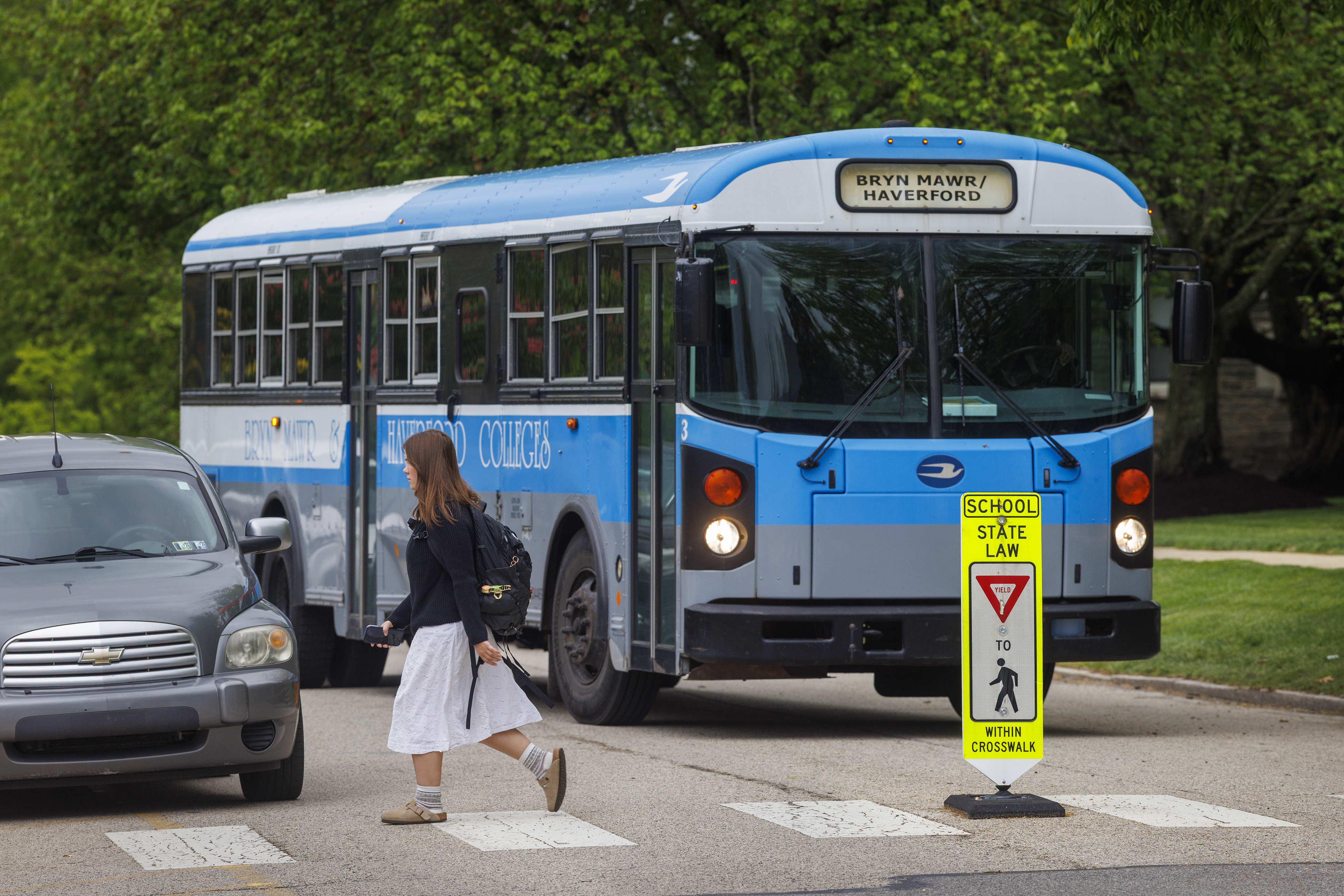
One day during the springsemester, a group of Haverford students got off the Blue Bus, which shuttles students back and forth between the campuses about every 20 minutes, They had arrived at Bryn Mawr to take a Chinese class not offered at Haverford.
Meanwhile, Corry Varney-Irlam, 21, a Bryn Mawr student, boarded the bus to head to Haverford for a political science class.
“It worked better with my schedule,” Varney-Irlam said.
Matt Ruben teaches in the Growth and Structure of Cities program at Bryn Mawr College. In his class of about 50 students, 12 are Haverford students. Alejandro A. Alvarez / Staff Photographer
Bryn Mawr professor Matt Ruben teaches classes in the growth and structure of cities program, a major based at Bryn Mawr. In a recent class of 50 students, 12 were from Haverford. Typically, 40% to 50% of the program’s majors are Haverford students, he said.
Students from the two schools have a lot in common, he said.
“They’re all really highly skilled,” he said. “They’re highly engaged. They’re all highly motivated. And they’re all deeply invested in the liberal arts experience.”
Some Haverford students were men — the partnership means males take classes at Bryn Mawr, a women’s college.
Students said the gender mix in classes really didn’t matter.
“I don’t mind it,” Varney-Irlam said. “There’s definitely a benefit to having predominantly women in Bryn Mawr classes. But I think that it’s nice to have a change of environment and more people around to socialize with.”
Cowan said she enjoyed taking classes at Bryn Mawr in the 1990s because it seemed women had more space to talk and there was more support.
“Sometimes men can take up a lot of space in the room,” she said.
That is not as much of a factor now, said Ruben, the professor, because there is more gender fluidity, and different levels of consciousness about gender-related issues.
“It makes a difference and it’s always going to make a difference, but it makes less of a difference than it did like 10 years ago,” he said.
Madeline Dosen, left, a student at Haverford College, stands with her twin sister Daniela Dosen, (right) a student at Bryn Mawr College. They both played soccer for their respective schools.Courtesy of Daniela Dosen
The Dosen family has seen the partnership from both sides. Daniela Dosen, 22, was a physics major at Bryn Mawr, while her twin sister, Madeline, majored in biology at Haverford. Both women played varsity soccer for their schools and graduated May 16. The colleges even coordinate commencements — one was in the morning, the other in the afternoon.
First semester freshman year they had an 8 a.m. Spanish class together at Bryn Mawr. Daniela had a short walk, while her sister had to board the bus.
“Sometimes we showed up in the same beach sweatshirt,” she said.
For more than four decades, hundreds of Philadelphia-area women first laid eyes on their wedding gowns at La Bella Moda.
Even in recent years, as their bridesmaids and mothers increasingly bought dresses online, brides kept the Conshohocken boutique in business.
But last month, the Fayette Street mainstay shut its doors for good.
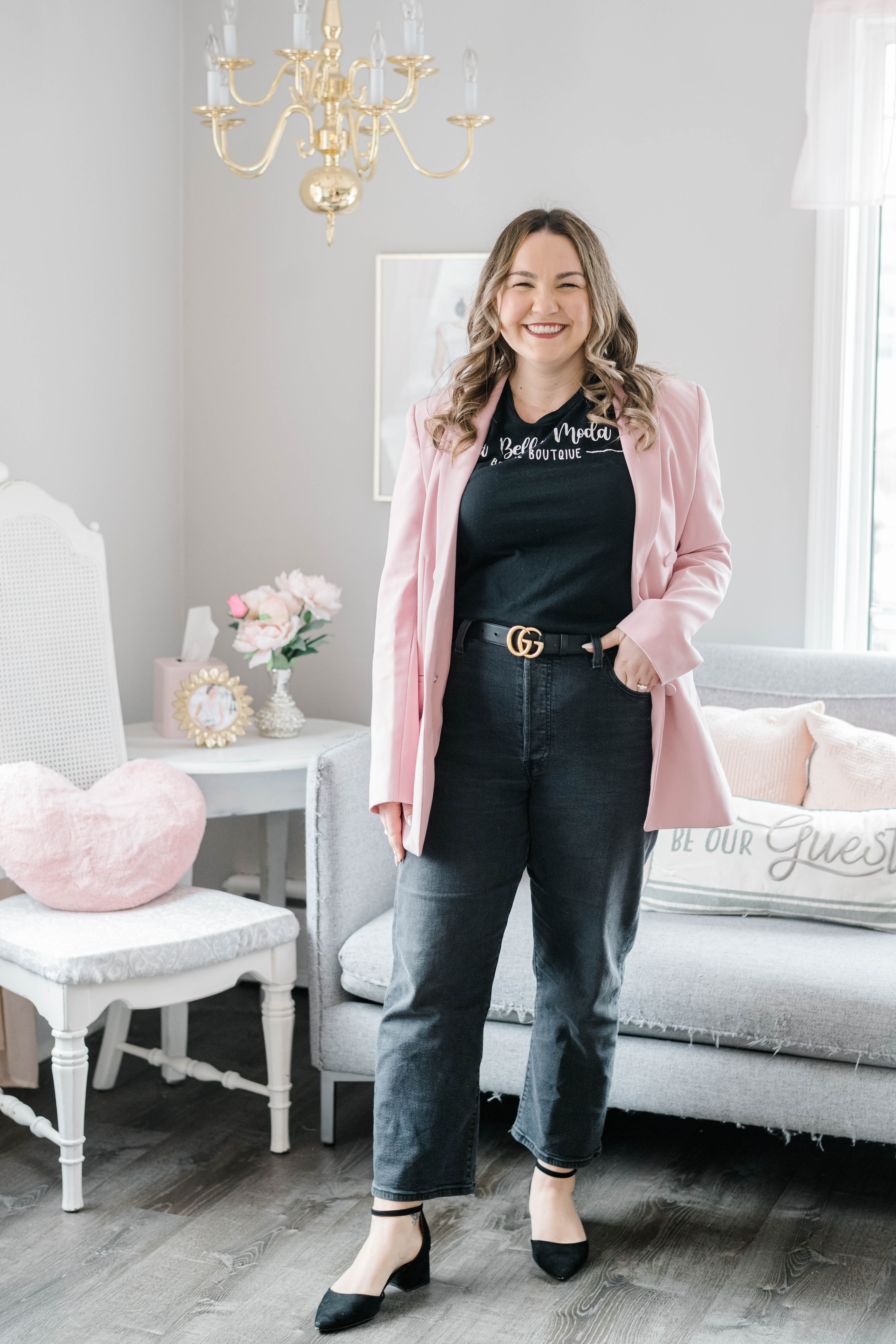
“It eventually wears on you,” said owner Gabriella Pagano Rush, who decided to close the shop in response to industry pressures and personal timing. The 30-year-old, who took over the store from her grandmother Lena Pagano in 2020, is due to have her first child this summer.
“The business was fine,” Pagano Rush said. “Sometimes you just have to do something that is better for you in the long run.”
La Bella Moda, shown here in 2023, sold wedding gowns and other formal wear for 45 years before closing its doors in Conshohocken last month.Courtesy Morgan Taylor Artistry
She calls the transition “a happy ending,” one she said marks a new chapter in her life but also comes after years spent struggling to keep up with an evolving wedding industry.
Weddings have become increasingly extravagant, with some Philly-area celebrations costing $40,000 or more.
They have more vendor choices than ever, and small businesses like La Bella Moda, where gowns cost $2,500 on average, must compete with wedding emporiums, which can offer a wider selection for less.
The other options include larger brands, such as King of Prussia-based David’s Bridal, which is expanding its offerings while still selling dresses for under $500.
There are also online retailers, such as Revelry and Azazie, which offer home try-ons and mail custom dresses directly to customers. Even broader ecommerce sites and fast-fashion brands sell wedding accessories.
In recent years, as brides browsed veils and shoes at La Bella Moda, “I would start hearing, ‘Oh, I can get this on Amazon’ or ‘Oh, I can get this on Shein,’” which started out selling wedding dresses online before becoming a retail behemoth, Pagano Rush said.
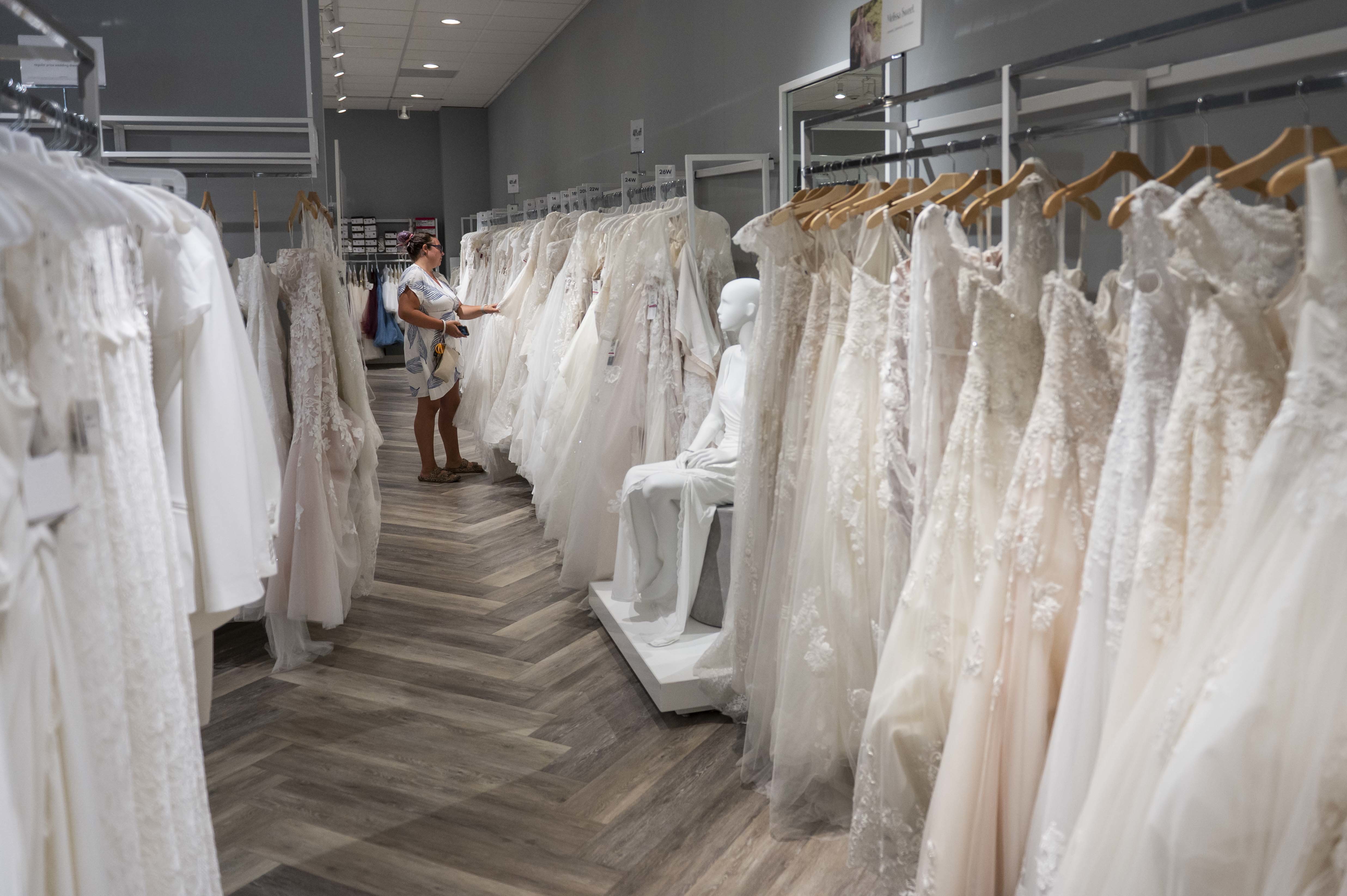
Someone shops for a wedding dress at David’s Bridal in Feasterville-Trevose in 2023. Allie Ippolito / Staff Photographer
In 2023, Pagano Rush stopped selling bridesmaid dresses and other formal wear, which had accounted for about 30% of the shop’s business, she said. Instead, she doubled down on wedding gowns.
She began offering $200 private appointments, during which a bride and up to eight guests got the store to themselves, with champagne, cookies, and a personalized shopping playlist, Pagano Rush said.
“I really wanted brides to feel relaxed when they came into our store,” Pagano Rush said. “Not intimidated, not feeling pressured to find their dress.”
How an Italian immigrant cultivated bridal joy in Conshy
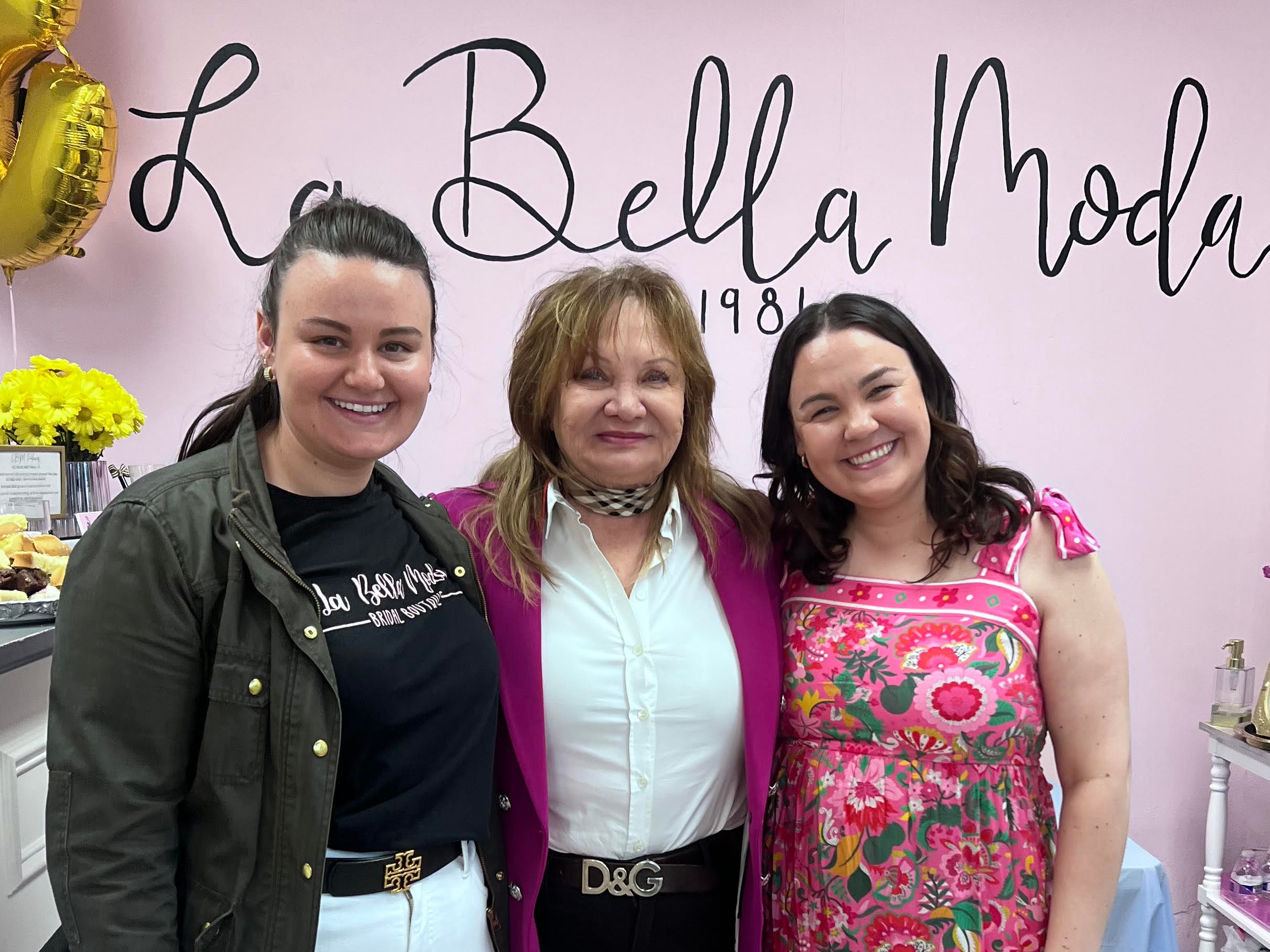
La Bella Moda founder Lena Pagano (center) poses with her granddaughters in the Conshohocken shop. Gabriella Pagano Rush (right) took over as owner in 2020. Pagano Rush’s sister Michaela Bosico (left) encouraged the new owner to renovate the store during the pandemic.Courtesy Gabriella Pagano Rush
Ever since she was a kid watching her “mom mom” Lena run La Bella Moda, Pagano Rush was enthralled by the wedding dress shopping experience.
“I just remember growing up, going and visiting her at the store, helping her for fun, and just in the back of my head being like, ‘Oh, this would be really fun to do,’” said Pagano Rush, who grew up near Lansdale.
At the time, the shop’s second floor was devoted to bridal try-ons, she said. “It was always so exciting when you would walk upstairs and you’d see all the brides up there trying on dresses.”
The joy in the shop was cultivated by Lena Pagano, who emigrated from Italy, married, had three children, taught herself English, and then fulfilled a longtime dream of opening a boutique in 1981, Pagano Rush said.
Lena Pagano, now in her 70s, stepped aside just before the pandemic in 2020, Pagano Rush said, and has been enjoying retirement in Plymouth Meeting.
Meanwhile at La Bella Moda, Pagano Rush’s first few months as a business owner coincided with the early months of the pandemic, when businesses were forced to close. But she took it in stride and used the time to renovate the shop, making for a better customer experience when it reopened that June.
Owner Gabriella Pagano Rush inside a renovated La Bella Moda in Conshohocken in 2023.Courtesy Morgan Taylor Artistry
Montgomery County Commissioners Chair Jamila Winder said the Pagano family’s story exemplifies the immigrant experience.
“In these times where it’s really hard for small business owners and entrepreneurs to start a business and sustain a business, Lena and Gabriella are really the epitome of that grit and that discipline and that vibrancy,” Winder said.
“They’ve brought so much joy to women across Montgomery County, women who were planning for some of the best days of their lives.”
Winder is one of them. A few years ago, she said, she bought her bridesmaids’ dresses at La Bella Moda.
Customers remember their wedding dress fittings
For women across the region, word of La Bella Moda’s May 31 closure brought back similar memories.
Dozens commented on Facebook posts about the news.
“I’ll never forget how gorgeous I felt in my lace gown on my wedding day,” wrote one woman. “Thank you for helping to make it so special, almost 20 years ago.”
“Such amazing memories of the fitting and how beautiful you made me feel!” added another.
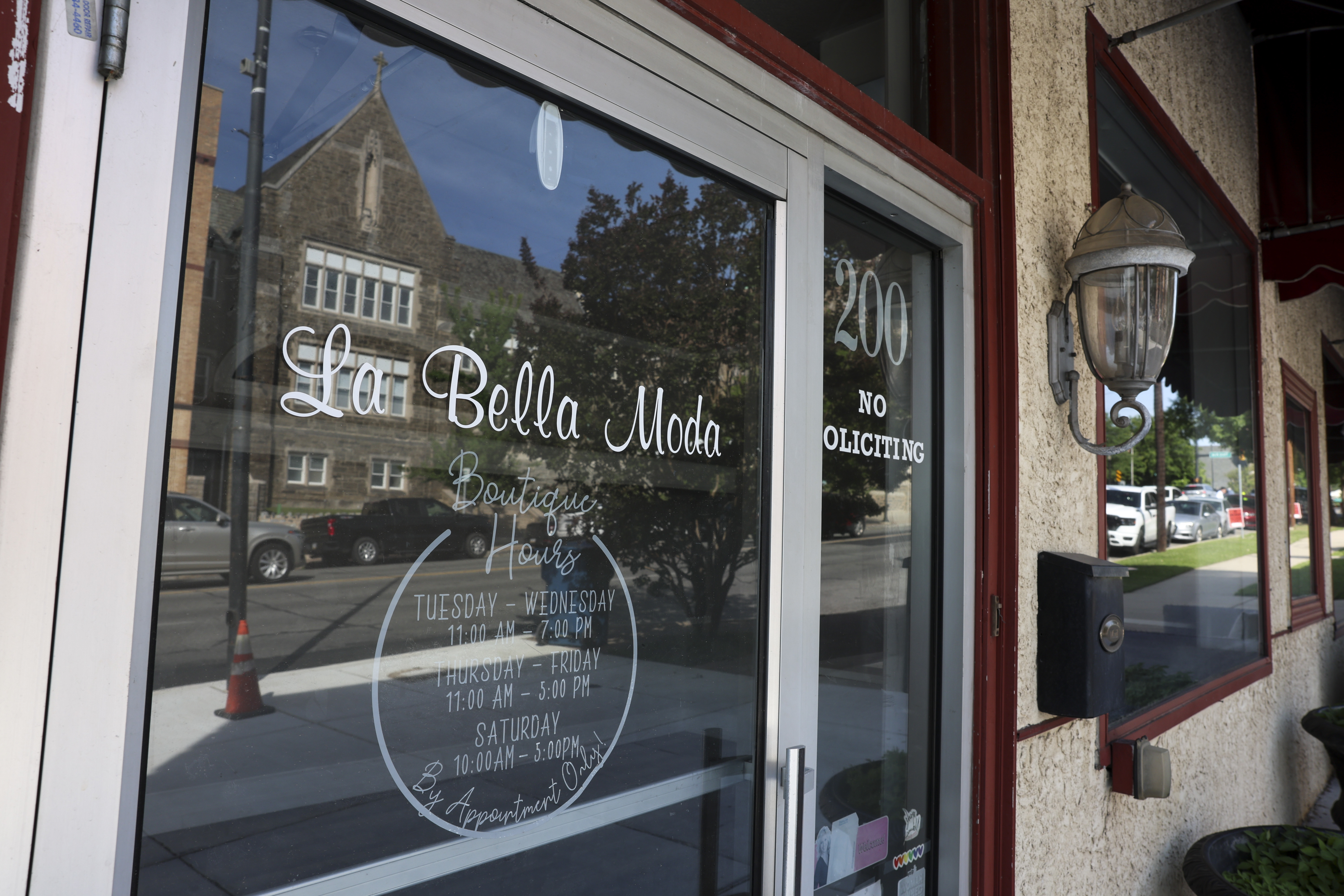
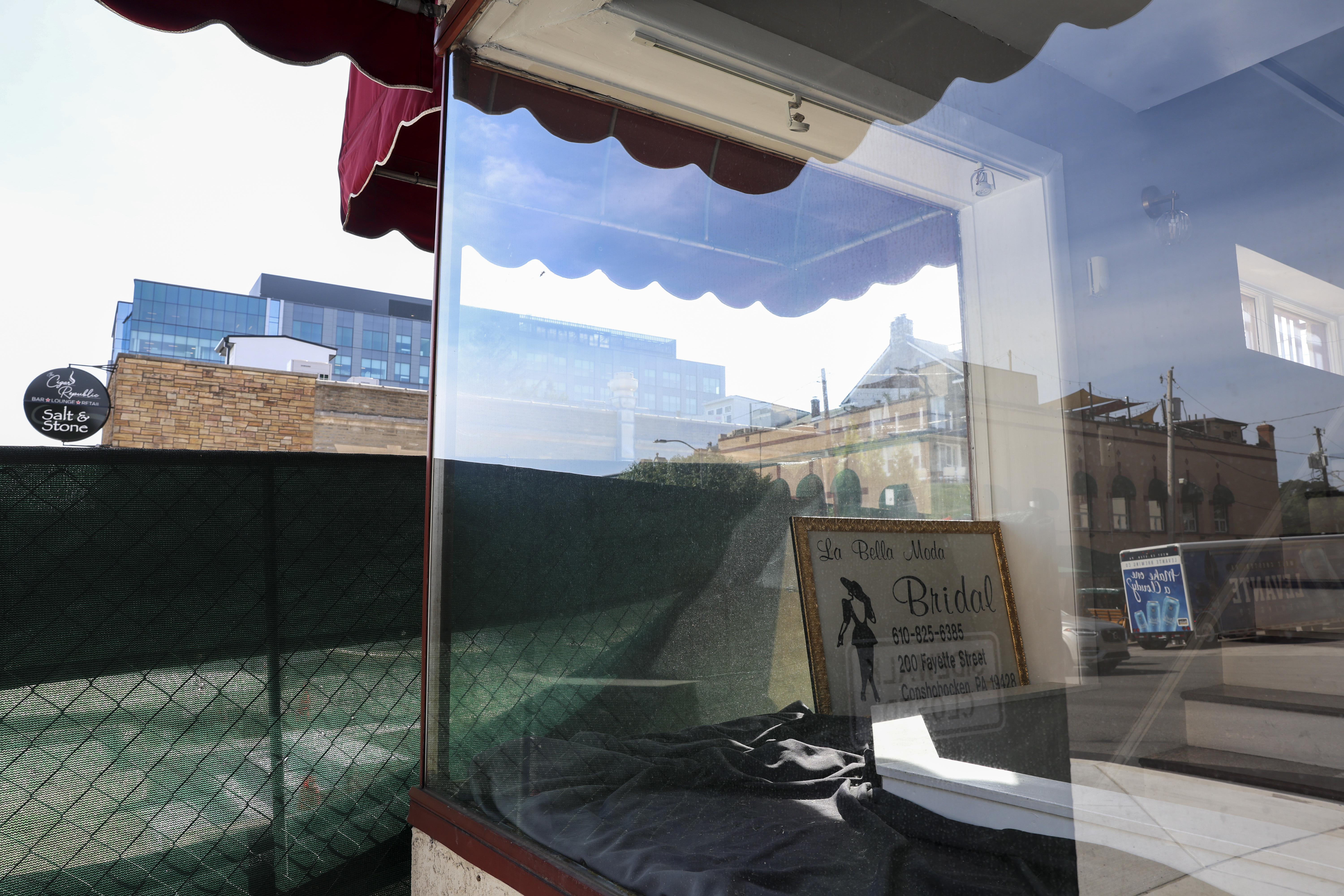
The mostly empty window of La Bella Moda is pictured on June 4 in Conshohocken.Monica Herndon / Staff Photographer
Tina Brennan West said she, too, recalls her wedding-gown fitting there 34 years ago.
“I remember the experience walking through the doors, the smiles, the feeling that they already knew you,” said Brennan West, 55, of Plymouth Meeting, who works at an auto repair shop.
She showed the stylists an inspiration picture from a magazine, she said, and an employee pulled a similar white-satin dress, with a long train, pink rose buds in the appliqué, and puffy sleeves that were popular at the time.
She can still picture trying on the gown, she said, and see her mother and grandmother crying at the sight of her.
Erin McElroy Kraft, now 60, wore her mother’s wedding gown for her 1992 nuptials. But the Plymouth Meeting native bought her bridesmaids outfits — deep-purple velvet skirt sets — at La Bella Moda.
“It was absolutely beautiful,” McElroy Kraft said. “They were just so great at what they did.”
McElroy Kraft, a retired foreign-service worker who now lives in Arlington, Va., said Fayette Street won’t feel the same on her next visit home.
“It’s going to be hard not to see La Bella Moda in Conshohocken,” she said.
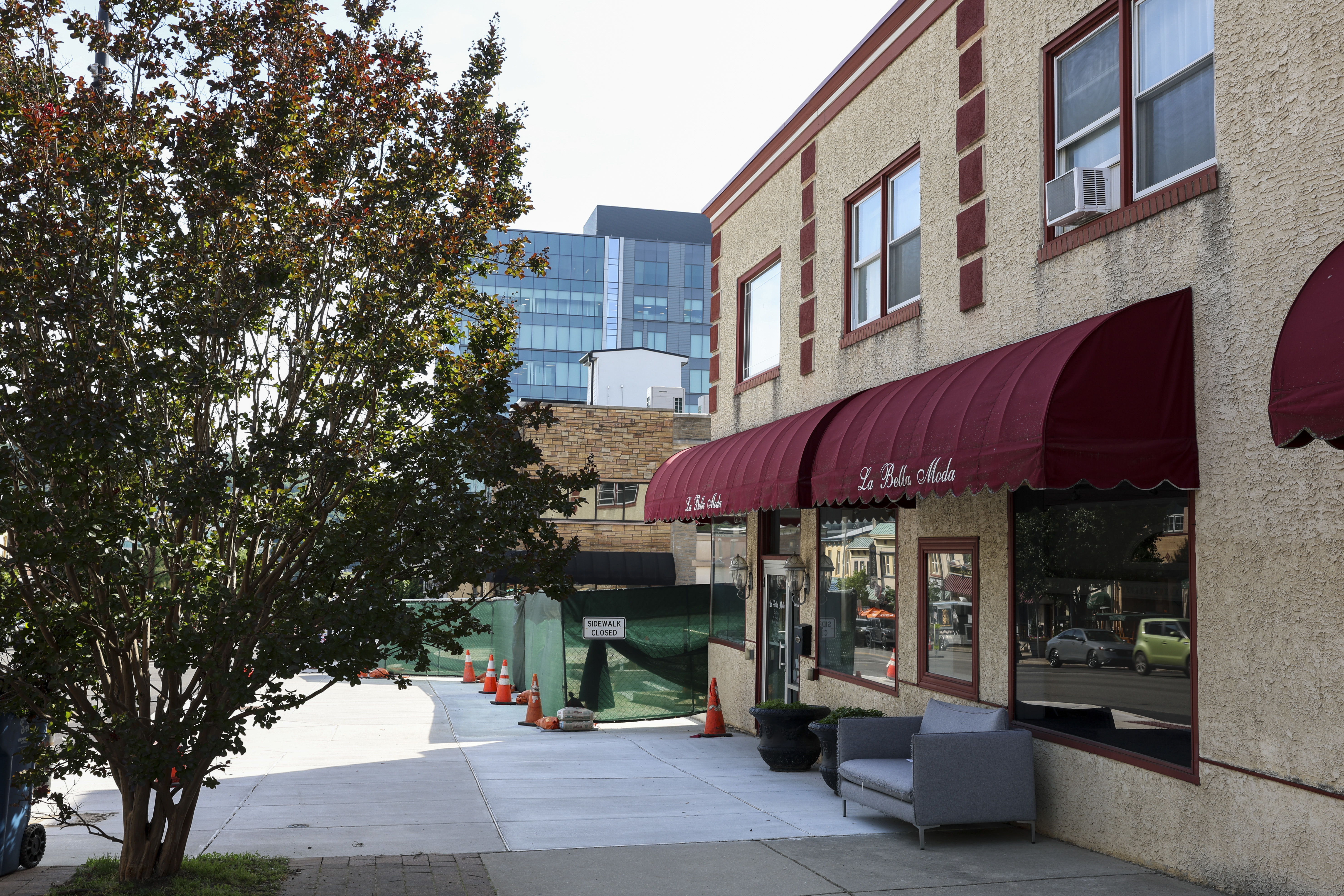
The closed La Bella Moda on Fayette Street in Conshohocken is pictured on June 4.Monica Herndon / Staff Photographer
La Bella Moda sits empty now. Its last dresses were either sold to customers during a recent farewell event, Pagano Rush said, or donated to bridal consignment shops owned by her friends.
As for brides who had recently bought gowns at La Bella Moda, “no one was left without their dress and without a plan,” said Pagano Rush, who referred some customers to a local seamstress for alterations.
The building, owned by Lena Pagano, will be leased to another tenant, Pagano Rush said.
“The borough of Conshohocken has really done an amazing job of attracting businesses to that main corridor,” said Winder, the county commissioners’ chair. “I don’t anticipate that storefront will be vacant for long.”
Pagano Rush said she believes there is still a place for independent shops in the modern wedding industry.
“I can’t tell you how much attention we have gotten since April when we posted that we were even closing,” she said. “I wish small businesses just got this kind of attention and support” all time.
Law enforcement officials arrested 25 people and rescued more than 50 birds after breaking up a cockfight in Delaware County over the weekend.
The Pennsylvania SPCA Animal Law Enforcement Team, along with local authorities including the Pennsylvania State Police and Central Delaware County Organized Crime Unit, interrupted the cockfight Saturday night at a home on the 500 block of Franklin Street in Chester, officials said. There, investigators removed 52 live birds and discovered three dead roosters while serving a search warrant on the property.
“Cockfighting is one of the most brutal forms of animal cruelty; these birds are forced to fight to near death one cut at a time, suffering devastating injuries in the process,” Nicole Wilson, director of animal law enforcement and shelter operations at the PSPCA, said in a statement.
PSPCA officials received a tip about the cockfight on Thursday, the organization said. Investigators went on to surveil the property, and noted a number of people entering and exiting it — some of whom were carrying “animal transport carriers,” the PSPCA said.
After securing a warrant, PSPCA investigators received support in serving it from the Central Delaware County Organized Crime Unit because of the number of people involved in the cockfight.
The animals rescued from the property were taken to the PSPCA’s Philadelphia headquarters, where they were to receive exams and medical care. The birds will remain in PSPCA custody until their owners surrender them, or a court case related to the incident is adjudicated, the organization said.
Officials did not identify the people arrested.
Cockfighting, the PSPCA said in its statement, is a felony in Pennsylvania. The investigation is continuing.
The PSPCA asked that anyone with information contact its animal cruelty hotline at 866-601-SPCA (7722) or email cruelty@pspca.org. Tips may be left anonymously.
Two fatal shooting marked a particularly violent Tuesday in Chester, roughly a year after the city celebrated a steep decline in homicides involving firearms in the first half of 2025.
The fatalities were from separate shootings, one of which left a third person in critical condition, according to the city’s mayor. No arrests were made and officials did not have descriptions of any suspects.
“These acts of violence are heartbreaking and serve as another painful reminder of the ongoing challenges facing our community and the devastating consequences violence continues to ave on individuals, families, and neighborhoods,” said Chester Mayor Stefan Roots in a statement Wednesday.
Roots lamented a third incident, in which a police officer was assaulted Tuesday and suffered lacerations during a domestic dispute call. The officer was treated at a hospital and released as the incident remains under investigation.
While year-to-date nonfatal and fatal shooting statistics were not immediately available, Tuesday’s deaths mark the latest in a spate of shootings.
Though zero shootings were reported in March, The Delaware County Daily Times reports there have been 10 since April.
Last summer, the Chester police reported 15 nonfatal shootings just over the midway mark of the year. That translated to a 16% decrease in nonfatal shootings compared to 2024. Homicides in the first half of 2025 had also dropped 41% compared to the same time in the year prior, according to the Chester police midyear report.
The summer would go on to be one of the safest the Chester ever had, largely credited to national trends in declining violence and the yearslong collaboration among community advocates, police, and the Delaware County District Attorney’s Office.
Though Tuesday’s violence was alarming enough to warrant a news conference with both Roots and Chester Police Commissioner Katrina Blackwell, the mayor emphasized the continued violence prevention work across stakeholders and law enforcement.
Chester’s Safe Summer Initiative will continue to provide resources to youth and families, as well as positive opportunities in the city, said Roots.
“But public safety cannot rest solely on the shoulders of law enforcement,” he said in a statement, adding that people who “know something” should “say something.”