Category: Pennsylvania News

  • Penn president announces he will leave his job next summer

    Penn president announces he will leave his job next summer

    University of Pennsylvania President J. Larry Jameson will conclude his presidency next June, he announced in an email to the Penn community Friday.

    “Although I greatly enjoyed serving as president, now is the right time for Penn to begin its next chapter under new leadership,” Jameson said in the email. “My goal was to help restore stability during unanticipated leadership transitions, refocus our community on Penn’s mission, and strengthen Penn for the future during a challenging time for higher education.”

    Those goals have been accomplished, he said.

    There was much speculation about whether Jameson — an endocrinologist who previously led Penn’s health system and medical school for more than 12 years — wanted or would be asked to remain in the seat beyond next year’s expiration of his current contract. Many have credited Jameson with steadying the school during a turbulent time, including as the school faced funding threats and increased scrutiny by President Donald Trump’s administration.

    His departure will leave the Ivy League school searching for a new leader during a time of uncertainty under Trump, who has targeted elite universities.

    Board chair Ramanan Raghavendran said he respected Jameson’s decision and the board will begin searching for the school’s next president in the fall.

    Jameson, 71, will have served in the top job at Penn just three-and-a-half years, one of its shorter presidential tenures. But he came into the job by circumstance rather than desire.

    Jameson took over in December 2023 during perhaps one of Penn’s greatest leadership upheavals. Former President Liz Magill had just resigned amid a bipartisan backlash over her testimony involving the school’s response to antisemitism complaints. He first was named interim president and then was elevated to the permanent post in March 2025.

    Jameson earned total compensation of more than $8 million in 2024, the most recent tax year available. That included $5.4 million in “reportable compensation” and more than $2.5 million in other compensation.

    “Dr. Jameson stepped in at a pivotal moment, and what he has accomplished in two-and-a-half years has been simply extraordinary,” Raghavendran said in a statement.

    Neither Raghavedran nor Jameson were available for interviews Friday, the university said.

    In his message, Jameson said “the momentum we have built will continue,” noting his intention to work over the next year on implementing the Penn Forward plan. The plan calls for everything from more transparent and predictable tuition and cost policies and improved student experience to more efficient operations, a focus on keeping Penn at the forefront of best uses of artificial intelligence, and a growing presence in the San Francisco Bay Area — where Wharton already has a campus.

    Penn also has some tough decisions ahead in his final year. During the spring semester, the school proposed new open expression guidelines that some on campus say are too restrictive and would chill free speech. The university is considering the feedback and plans to issue final guidelines next academic year.

    The university also is undergoing belt-tightening in anticipation of potential federal cuts and increased legal and insurance costs. Penn in January asked schools and centers to pare 4% from their budgets for the next fiscal year, on top of a 5% cut last year.

    Penn’s Graduate School of Education laid off several staff members last week as part of those cuts, according to The Daily Pennsylvanian, the student newspaper.

    Many at Penn speak highly of Jameson’s leadership, though some wish he had made a stronger defense against some Trump demands.

    “Even if this were a good time to search for a new president — and it decidedly is not — I cannot imagine Penn finding a more effective leader,“ Eric Feldman, faculty senate tri-chair and a law school professor, said last month. ”His deep knowledge of the medical school is a significant asset amid continuing pressures on federally funded research, and his extensive leadership experience, spanning decades, makes him uniquely well suited to guide the university through what are likely to be several more complex years.”

    During an interview with The Inquirer last month, Jameson explained his decision to resist the Trump administration on some things and negotiate on others.

    “My approach has been not just to complain,” Jameson said during his first interview as Penn’s president with a major media outlet, “but to say, ‘Well, here’s where we’re working together very effectively. Here’s where we’re not necessarily aligned, but let’s discuss how to move forward.’”

    Jameson was at the helm when Penn last summer struck an agreement with the White House over the prior participation of transgender swimmer Lia Thomas on the school’s swim team. The school agreed to adhere to the Trump administration’s definitions of sex, female, male, women, and men in regard to athletics, and send letters of apology to female athletes who felt aggrieved by Thomas’ participation on their team during the 2021-22 season.

    But he also was at the helm when Penn rejected a compact that would have given it preferential treatment for federal funding if it agreed to the Trump administration’s operational demands. The school also is actively fighting a demand by the Equal Employment Opportunity Commission to turn over lists of Jewish people on its campus for its investigation into alleged antisemitism at Penn. The agency sued Penn for not complying with its subpoena and a federal judge sided with the EEOC, but Penn is appealing the decision.

    Jameson said he gained new perspective in the presidential role, which “allowed me to learn each day from the people, ideas and achievements that define this university and its extraordinary breadth. …While my career has been in academic medicine, it has been illuminating to reacquaint myself with other fields, from poetry to political science, from finance to fine arts.”

    He said the university is on a positive trajectory.

    “Penn has tremendous momentum and is exceptionally well positioned for the future,” Jameson wrote.


  • Montco sued to get back $7.5 million paid to clean up Hurricane Ida debris after vendors razed parks

    Montco sued to get back $7.5 million paid to clean up Hurricane Ida debris after vendors razed parks

    Montgomery County sued to get back $7.5 million it paid two disaster debris companies that engaged in “overzealous clearing” that harmed the environment in the aftermath of Hurricane Ida in 2021.

    Mississippi-based DebrisTech and Texas-based DRC Emergency Services billed Montco for $14 million worth of cleanups, the suit said, but the federal government deemed more than half the removals “unnecessary” and declined to reimburse the county for it.

    “Their overzealous clearing of County lands not only resulted in over half of the County’s reimbursement request getting denied, but it also caused environmental harm that requires extensive remediation,” the complaint said.

    The lawsuit, which was initially filed in the Montgomery County Court of Common Pleas last month but moved to Philadelphia’s federal court this week, is a step to hold two vendors accountable for harm they caused, county spokesperson Megan Alt said in a statement.

    “The Montgomery County Commissioners take their responsibility as stewards of the taxpayers’ money and natural resources very seriously,” Alt said.

    DRC is committed to providing disaster recovery services that meet the instructions of its clients, Kristy Fuentes, the company’s vice president of administration and compliance, said in a statement.

    “DRC looks forward to presenting all relevant evidence during the court proceedings regarding its disaster recovery work in Montgomery County,” Fuentes said.

    DebrisTech did not respond to a request for comment.

    Hurricane Ida hit the Philadelphia area in September 2021, inciting record flood levels, spawning at least seven tornadoes. Five people died in the region, and authorities recorded hundreds of water rescues.

    DRC and DebrisTech came into Montgomery County days after Ida to assist in the recovery, the suit says. The vendors were required to engage only in clearings that are eligible for reimbursement by the Federal Emergency Management Agency, according to the complaint.

    Montco relied on the companies’ expertise to determine FEMA eligibility but “instead of protecting the County’s interests,” the suit said, the vendors “overcut trees,” “mismanaged” oversight responsibilities, and “failed” to comply with FEMA regulations.

    DRC and DebrisTech also cut down at least two Montgomery County-owned nature preserves, according to to the complaint. An 11-acre wooded preserve in Whitemarsh Township is “no longer,” the suit says, and Audubon Park turned into a “mud pit.”

    All told, the companies billed Montgomery County $14,028,597.81 for the cleanup, the suit says. FEMA reimbursed just less than half, finding that the vendors removed debris that didn’t pose an “immediate threat.”

    The federal agency denied multiple appeals by the county, leaving taxpayers on the hook for the remaining $7.5 million.

    The suit asks a judge to require the vendors to reimburse the county for the $7.5 million FEMA found ineligible, restore the Whitemarsh site and Audubon Park, and pay damages and attorneys fees.

    “Service providers hired for their claimed expertise are not free to accept public funds and then fail to perform, divert resources, or withhold services while retaining payment,” the lawsuit says. “To permit such conduct undermines fiscal accountability, erodes public confidence, and converts taxpayers’ dollars into a risk-free subsidy for contractual non-performance — an outcome the law cannot tolerate.”

  • Kennett Square’s The Creamery will host weddings in a new event space starting next year

    Kennett Square’s The Creamery will host weddings in a new event space starting next year

    First came love.

    Over the course of a decade, the community has made The Creamery in Kennett Square part of their routine, from its community center to its beer garden. Some even met their future spouse there.

    Then came marriage. Or, at first, wedding inquiries.

    “I think the community tells us what they want us to be, and we were just getting so many inquiries about weddings and people love the space as it is,” said Michael DePaolo, managing director of hospitality at Square Roots Collective, an organization that creates businesses and invests its proceeds back into the community. “It just made sense.”

    The Creamery is no stranger to private events; it’s even hosted weddings in the past. But this new venture scales up what it’s able to offer.

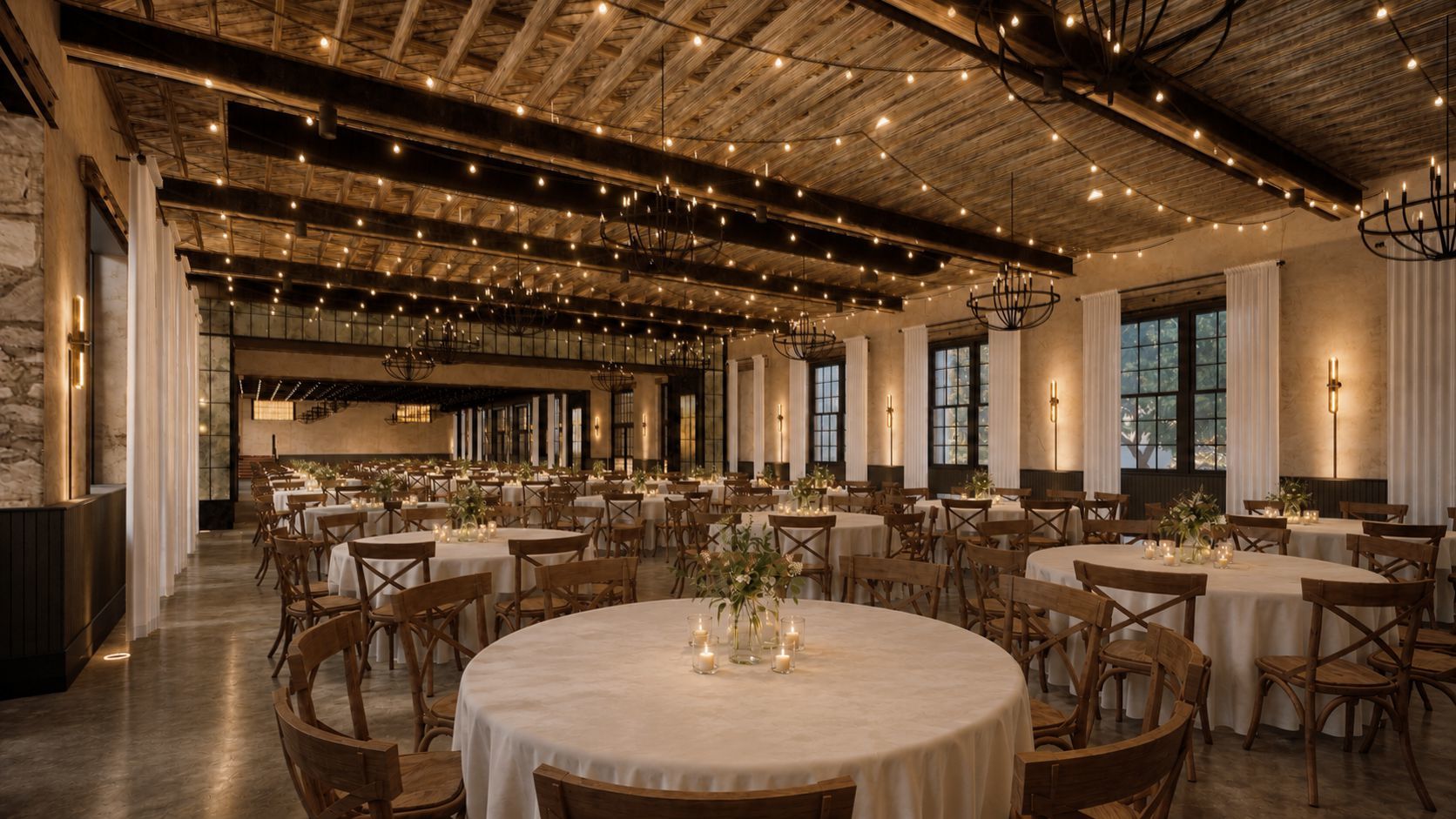
    The space, which will be adjacent to The Creamery, will soon take bookings for 2027. It will have its own identity — a website, a different name, and branding. It will be “slightly elevated” from the feel of The Creamery’s beer garden, said Shelby Deskin, director of brand and design at Square Roots Collective.

    “It is a stunning backdrop for any ceremony or event, and we have the capacity to invite people in, and the ability to renovate it and keep the historic aspects of it,” she said. “Just the size of the space lends itself to an event.”

    The new venue will accommodate up to 300 people in a historic structure on the site, and will serve a “middle of the market” crowd, DePaolo said. The price point would range from $100 to $175 per guest, depending on the scope of the event.

    Square Roots Collective is working with a local design firm and National Park Services to maintain the existing stone and preserve the historic nature of the building, Deskin said.

    The event space — a name is forthcoming — will open for bookings in 2027.Courtesy of Boxwood Architects

    It will be a fairly open venue — 6,341 square feet — that they want to make feel comfortable and cozy. They’ll have an outdoor ceremony space, with the ability to add tents or move inside in inclement weather. There will be a cocktail reception spot, separate from the event and ceremony areas, and a primary and secondary suite for getting ready, Deskin said. The venue will be one level, with a ramp to the ceremony and event spots, and they’re building an elevator tower to make it accessible, she said.

    Their goal is to keep The Creamery open to the public, so they had to navigate designing a venue that has the look and feel of The Creamery, but the privacy of an event space, DePaolo said.

    All food and beverages will come from The Creamery, but they’ll outsource to vendors on items like wedding cakes and upgraded china and glassware, said DePaolo, who has spent 25 years working in weddings.

    “It’s been really beautiful seeing the space come together,” he said. “There’s a lot of really talented people that have touched it and made sure that it was being done appropriately and intentionally, and I think it’s going to be one of the better halls in the area.”

    And the new venture comes as they’ve created a network along Birch Street to support the effort: Opus, which opens in late August, will offer a space for an engagement party or rehearsal dinner. Their two hotels, Artelo and The Francis, are within walking distance.

    “We’re really fortunate to be able to offer the total package, where you could bring your guests into town, stay, have different events in different locations, and ultimately have the big game with us also,” DePaolo said.

    It’s been a goal in the last 10 years to renovate the building on the site, said Stephanie Almanza, co-CEO of Square Roots Collective.

    “It’s a natural extension of our heart for hospitality, and we can’t wait to host celebrations for people from our community and beyond,” she said.

    This suburban content is produced with support from the Leslie Miller and Richard Worley Foundation and The Lenfest Institute for Journalism. Editorial content is created independently of the project donors. Gifts to support The Inquirer’s high-impact journalism can be made at inquirer.com/donate. A list of Lenfest Institute donors can be found at lenfestinstitute.org/supporters.

  • Parlez-vous ‘L’? Hablas Filadelfia? SEPTA transit ambassadors have your back.

    Parlez-vous ‘L’? Hablas Filadelfia? SEPTA transit ambassadors have your back.

    OK, this scenario looked easy. Maybe I have what it takes.

    A passenger approaches you during your shift asking for directions to get to Northern Liberties from NRG station.

    I took the training class last week for SEPTA ambassadors alongside about 35 transit agency employees who had volunteered to help travelers find their way in a strange city during the World Cup.

    My tablemates asked what I would tell the person.

    Take the B (Broad Street) Line to 15th Street/City Hall, transfer to the eastbound L, and disembark at Spring Garden Station, on the southern edge of the neighborhood.

    Correct, to a point.

    “I didn’t say where I need to get to in Northern Liberties, right?” said Jena Burley, the SEPTA training facilitator teaching the class.

    Ack! Maybe the passenger would be better off taking the L for one more stop to Front-Girard, depending on the precise destination.

    “Ask for as much specific information as possible,” Burley said.

    SEPTA supervisors, administrators, and managers have been assigned 1,300 shifts as ambassadors in critical transit and Regional Rail stations from June 13 through July 19.

    Jena Burley leads the SEPTA ambassador class.Tyger Williams / Staff Photographer

    During that stretch Philadelphia will host six World Cup matches, the FIFA Fan Festival, the height of the nation’s 250th birthday bash, and Major League Baseball’s All-Star Week.

    Four to 12 ambassadors will provide information, directions, and, ideally, a friendly welcome in each designated station — along with crowd control, and de-escalation techniques for conflict.

    It’s a lot, which is why up to 1,000 employees have spent half a day in training with a detailed curriculum that feels like cramming for finals.

    I worked with them through scenarios of escalating severity to simulate situations they will encounter: sweaty, frustrated crowds on platforms; medical emergencies; confusion over SEPTA’s fares and methods of payment; and how to troubleshoot travel glitches. And scarier stuff.

    “This summer is an opportunity for SEPTA to shine, and you are such a big part of that,” said Lex Powers, chief officer for customer experience.

    The Disney approach

    This summer SEPTA is also debuting a new customer-service philosophy that subordinates other priorities to creating a safe and positive experience for people using the system.

    The approach is inspired by Disney’s iconic “four keys” of customer service, admired by general manager Scott A. Sauer, a Disney fan.

    The transit agency has used ambassadors since 2000 to help customers during special events like the Eagles Super Bowl parade last year, service changes, and the like. Officials rebooted the training program.

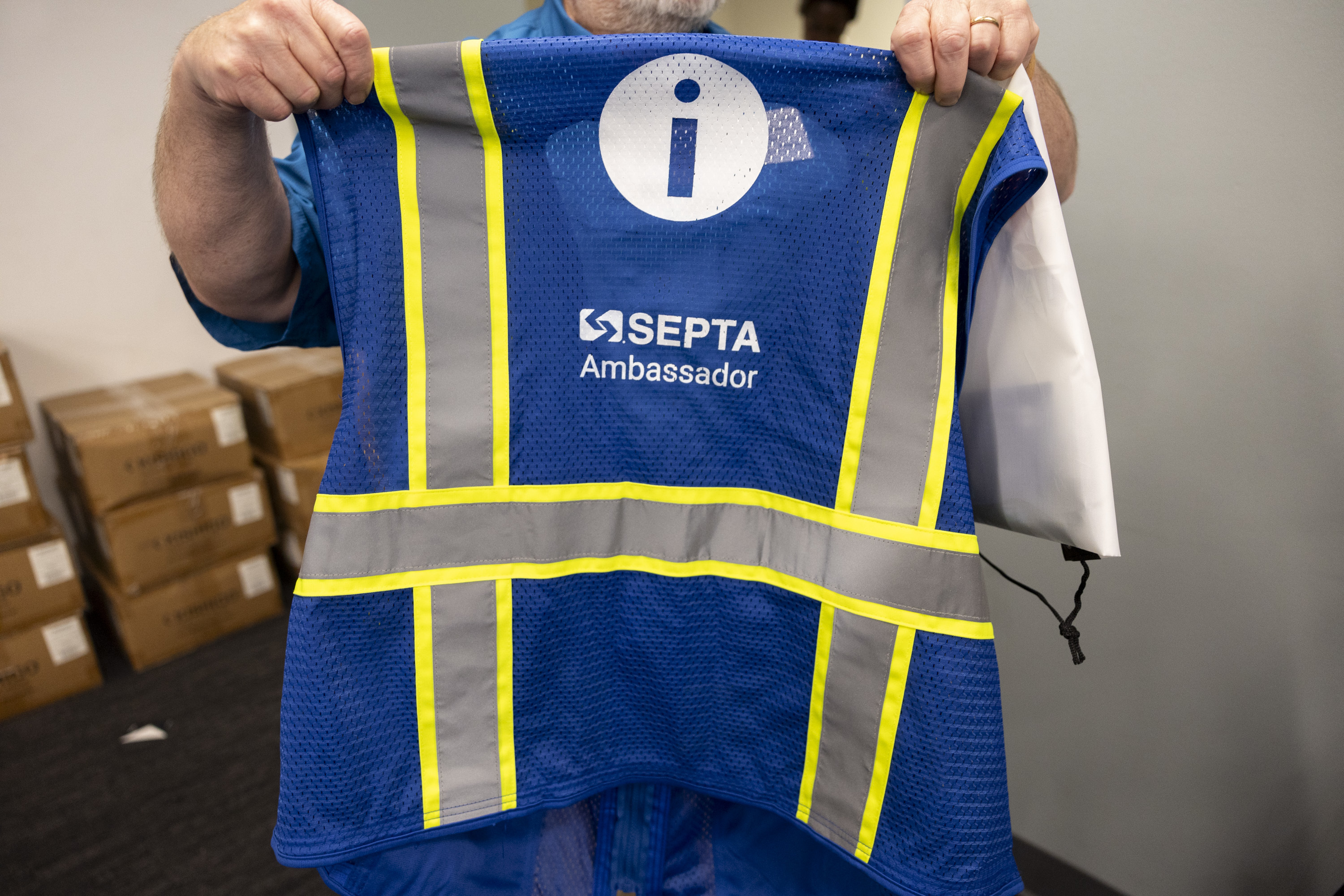
    This summer, ambassadors will carry “cheat sheet” cards and wear blue vests to differentiate them from other workers in typical yellow safety vests.

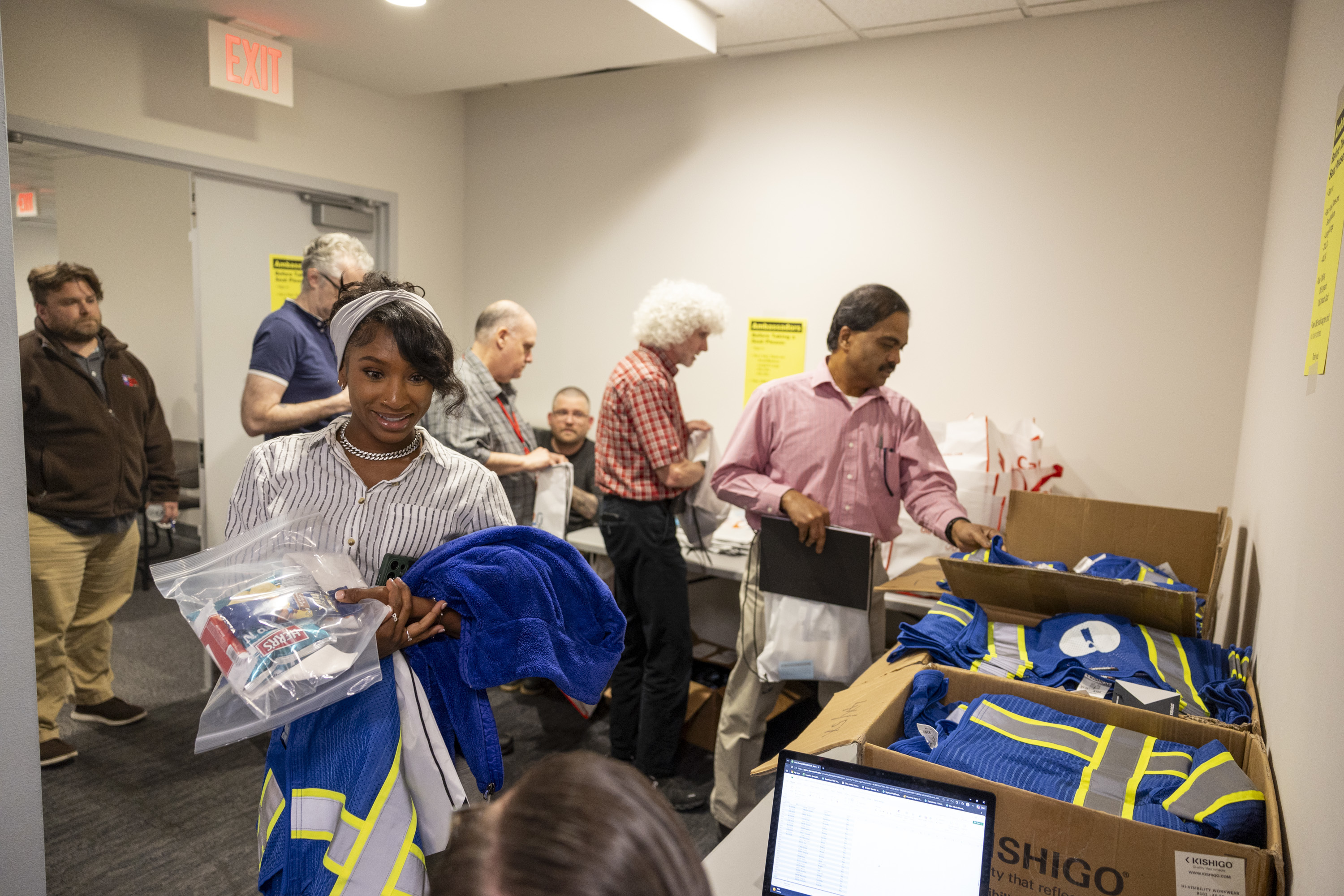
    I got my own blue vest at the start of the class — pretty snazzy — and tried to earn it.

    Brittany Davis, of Northeast Philadelphia, a service planner at SEPTA, gets her vest.Tyger Williams / Staff Photographer

    Cultural correctness

    The recent training included “cultural diplomacy” briefing sheets with guidance on customs and backgrounds of the countries with national teams playing here, prepared by the World Affairs Council of Philadelphia and protocol experts.

    For instance, I learned:

    • Never flash the “OK” hand gesture to a Brazilian. It’s offensive, like flipping the bird.
    • When greeting or handing things to a person from Ivory Coast, use your right hand. It is a social slight to use the left, which is reserved for personal hygiene.
    • In some cultures, such as Ghana, it is customary to exchange pleasantries before getting down to business. People from Curaçao, influenced by Dutch culture, can be more direct and, while friendly, value personal space.

    ‘Bring the temperature down’

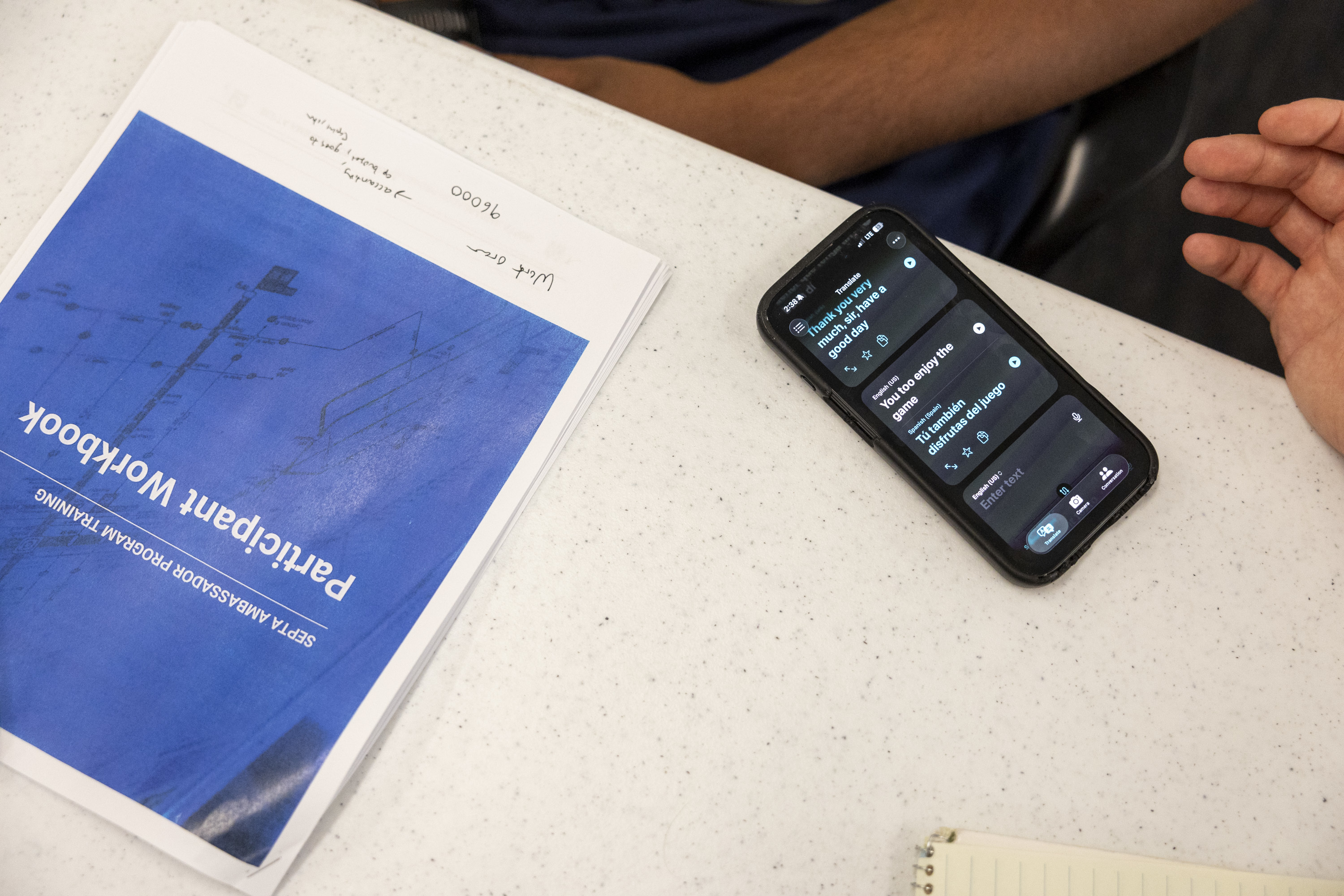
    My fellow trainees and I shared tables in a conference room and huddled to work through often complex scenarios in a 24-page workbook.

    You notice a particularly long line forming at one fare gate and go to investigate. …

    A customer is tapping a credit card over and over, but it doesn’t work. Another customer tries to squeeze past them, increasing tension, and voices in the line start to rise.

    “You want to bring the temperature down,“ said Noah Lee, manager of service-information development, with whom I shared a table. ”Take the person whose card doesn’t work off to the side to figure it out, and let other people go through.“

    Nithin Vejendla, an operation planner, speaks Spanish in the Google Translator app.Tyger Williams / Staff Photographer

    Nithin Vejendla said the bottleneck could be a two-person job and suggested bringing in another ambassador to wave people through the gate.

    “Try empathizing with them,” said Vejendla, a SEPTA operations planner who was at my table. “Like, ‘I know it’s frustrating. I’ve had times where [tapping] doesn’t work. … We’ll get you on the next train.’”

    Meanwhile, fix it. Is the person tapping incorrectly? Maybe the card reader’s bad, so try another turnstile. Consult a cashier.

    The situation worsens.

    A customer that has been held up in the line starts pushing and shoving the people in front of them. They are clearly agitated … [and] verbally threatening people.

    “If they keep escalating, at that point your responsibility shifts to keeping the other passengers safe,” Vejendla said. “Maybe you stay between them and the fare gates, a physical barrier.“

    Lee worked an ambassador shift during the 2025 Super Bowl parade and said he didn’t see anything like that.

    “The atmosphere was joyful, and it was in the morning,” Lee said.

    Vejendla, an operations planner who has worked at SEPTA for almost three years, was an ambassador for the Eagles parade and the Flower Show, and when SEPTA briefly cut and changed bus routes last year.

    Later, trainees downloaded Google Translate to practice.

    Vejendla speaks fluent Spanish and rough French. Powers, his boss, was teasing him about it.

    “Lex was like, and I quote, ‘I can’t believe the system understood you. That French accent was terrible.’”

    When emergencies arise

    Sometimes, the scenarios are more serious. People wind up in the track area, trying to retrieve an item or having fallen off a platform. What do you do?

    “Stop the train. Think about everything else later,” Burley said.

    Heather Jordan, employee relations manager, (right), and Kim Smith, senior project engineer and track engineering with SEPTA, (left), are looking at the SEPTA app to answer questions for an exercise during the SEPTA’s Ambassador class.Tyger Williams / Staff Photographer

    Go to the cashier and get them to push the Emergency Train Stop button, which activates a “stop” signal light. There are red flags in the booth to wave at incoming trains.

    Moving your arm back and forth at chest level is a traditional railroad stop signal. “Or go berserk,” Burley said, waving your arms over your head or flashing a phone flashlight.

    Do not enter the track area, and don’t try to pull a person up. The third rail carries 600 to 750 volts of electricity.

    “You’re there to keep customers safe, but if you’re not safe, you can’t help,” Burley said.

    As class ended and everyone left, I carried a deeper respect for the job of ambassador. I wished my fellow students good luck.

  • ICE arrests six in Phoenixville Thursday, say immigration advocates

    ICE arrests six in Phoenixville Thursday, say immigration advocates

    At least six people were detained in Phoenixville by U.S. Immigration and Customs Enforcement Thursday, according to a nonprofit that works with undocumented people in the Greater Philadelphia area.

    Rachel Rutter, executive director of Project Libertad, said the tips regarding ICE sightings started pouring in at around 7 a.m. Agents were reportedly at an Acme, a Wawa on the other side of the borough, and a car stop at an intersection.

    “It really was just kind of a feeling of the town crawling with ICE because it was just kind of coming from everywhere and they’re moving around quickly,” said Rutter, whose organization confirmed the arrests and was still pinning down the locations of where they took place.

    ICE did not immediately respond to questions regarding the alleged flurry of activity and arrests.

    One Phoenixville resident, who declined to give her name out of privacy concerns, said she was walking her dog when she saw four SUVs with tinted windows and siren lights on their back dashboards in the middle of a car stop just blocks from the borough’s main commercial corridor. About eight plainclothes officers, some in face masks and wearing vests with “police” emblazoned on them, were at the scene, she said.

    After dropping her dog off, the woman returned to Washington Avenue, near Star Street, where she saw the officers arrest two of the car’s passengers.

    “From the time I saw them until the time I left, I’d say the total time was probably about 10 minutes,” she said, adding the driver of the car would later tell her the group was heading to work.

    As of Thursday afternoon, Project Libertad, which has been connecting families of people detained by ICE to legal help, food, and financial assistance, was still in the process of reaching those affected by the arrests.

    Some Phoenixville immigration advocates say the timing of the sudden arrests, after what felt like a lull in ICE activity, comes two days after a unanimous Phoenixville Council vote to pass an ordinance amendment that would limit immigration enforcement on borough property.

    The change was introduced in Council earlier this year after the controversial arrest of two Guatemalan men off the borough’s main commercial corridor in February.

    The mayor’s office and members of the Borough Council could not be reached for comment by publication.

    “We’ve seen this in other areas across the country where when a city or a town, especially around sanctuary cities, takes a stand, ICE responds in force,” said Parker Studebaker, director of the Phoenixville Liberation Center, which has been hosting “know your rights” immigration trainings.

    Studebaker also expressed concern over how the arrests took place a day after President Donald Trump signed a bill funding ICE and Border Patrol through the end of his term. Many immigration advocates worry that the roughly $70 billion going to the agencies comes with little oversight.

    For now, immigration advocates in Phoenixville vowed to continue organizing and educational efforts.

    “We really want to make it heard and make it known that the community is coming together and is willing to defend our neighbors, and that will not change, and so that’s the best we can do is show up and meet this where it’s at,” he said.

    Correction: This story has been updated to reflect that six people were detained.

  • Judge denies challenges to a 1.5 million-square-foot East Whiteland data center project

    Judge denies challenges to a 1.5 million-square-foot East Whiteland data center project

    Calling it “frivolous,” a Chester County judge on Thursday quashed a land use appeal seeking to halt the construction of a 1.5 million-square-foot data center proposed for East Whiteland Township.

    It’s the second time this week Court of Common Pleas Judge Anthony Verwey has denied appeals challenging approvals of the controversial data center project, proposed for a Superfund site near a residential development and the popular Chester Valley Trail.

    “None of the four ‘errors’ complained of by the Appellants constitutes a decision subject to review by this Court,” Verwey wrote in his order denying the challenge to East Whiteland elected officials’ approval of the development plans. “… Appellants are attempting to collaterally attack an approval, that had ‘no deficiencies.’ The appeal, filed well out of time, is frivolous.”

    The appeals challenged the zoning hearing board’s 2018 decision to permit for a data center at 13 S. Bacton Hill Rd., and the board of supervisors’ 2024 approval of the development plans.

    Lou Colagreco, an attorney representing the developers Green Fig LLC and Sentinel Data Centers, said they “are pleased that the court acted quickly and decisively in dismissing” both appeals. Colagreco said work is underway for the project’s stormwater management facilities in adjacent West Whiteland, and that the developers are securing the perimeter of the East Whiteland site in advance of construction.

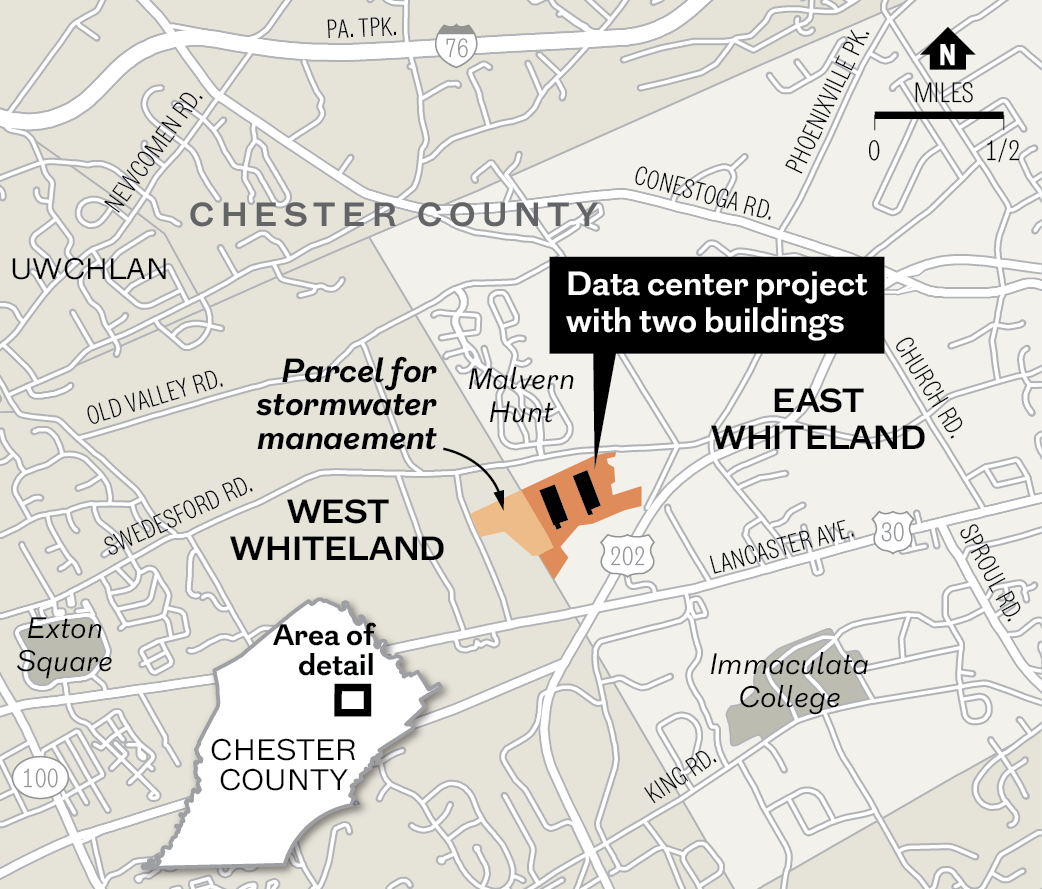
    The location of the two-building data center project in East Whiteland, Chester County.John Duchneskie

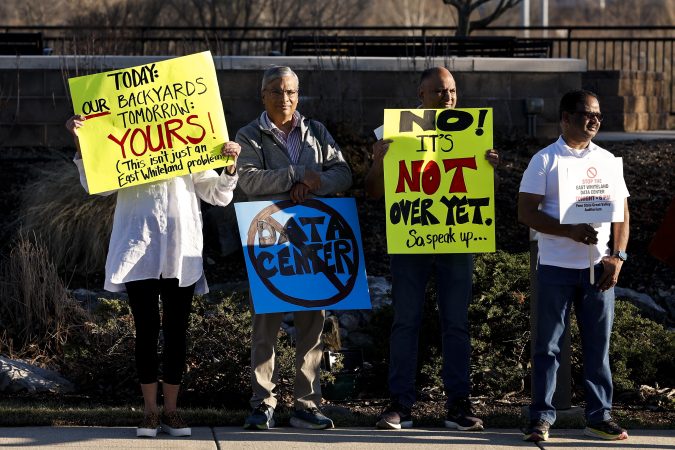
    The judge’s denial is a hit for residents who have for months shown up adamantly against the data center.

    Attorney Andrew Schneider, a resident of the nearby development Malvern Hunt who argued on behalf of other neighbors, said he “respectfully disagree[d] with the Court’s decisions.” Schneider has another case filed in opposition to the data center project.

    The data center project has been through a winding saga, after it secured initial approvals years ago with little community fanfare. But when it approached the township to amend its original plans — at first requesting to scale up the project by 600,000 square feet — it kicked off a slew of contentious public meetings. When too many people showed up to one planning commission meeting in February, officials had to postpone it.

    Developers Green Fig LLC and Sentinel Data Centers abandoned attempts to amend the plans when “it became apparent to us … that it was simply data center vs. no data center,” Colagreco said previously.

    During a hearing last week challenging the board’s approval of the project, Schneider argued that the township had erred in its decision to approve the plans, saying that the final plan was deficient and didn’t meet conditions the municipality initially laid out. Allowing the construction would cause irreparable damage to the health of the community, he said.

    Colagreco dismissed those arguments, saying the residents hadn’t produced enough evidence to support their allegations. But delaying the project was a threat to the developers being able to complete the data center on time and risked them losing approvals, he said.

    Colagreco and an attorney representing the township argued that the appeal came too late, and the township’s decision shouldn’t come before the court.

    Verwey ultimately agreed.

    “Appellants cite not a single case to support the proposition that any of the four ‘errors’ are appealable,” he wrote in Thursday’s order. “This is likely because no such citations exist.”

    Verwey wrote in his order regarding the 2018 zoning decision that the appeal, “filed 8 years after issuance, is out of time and must be quashed.”

    As data centers are beginning to populate Pennsylvania and surrounding states, residents have become stauncher opponents. In nearby East Vincent, the community saw an early victory when supervisors denied a proposed data center at the historic Pennhurst State Hospital and School site last month. It will also likely end up before a judge, as the developer there plans to appeal the decision.

    This suburban content is produced with support from the Leslie Miller and Richard Worley Foundation and The Lenfest Institute for Journalism. Editorial content is created independently of the project donors. Gifts to support The Inquirer’s high-impact journalism can be made at inquirer.com/donate. A list of Lenfest Institute donors can be found at lenfestinstitute.org/supporters.

  • SEPTA is expanding daily bus service to the Navy Yard by extending Route 45

    SEPTA is expanding daily bus service to the Navy Yard by extending Route 45

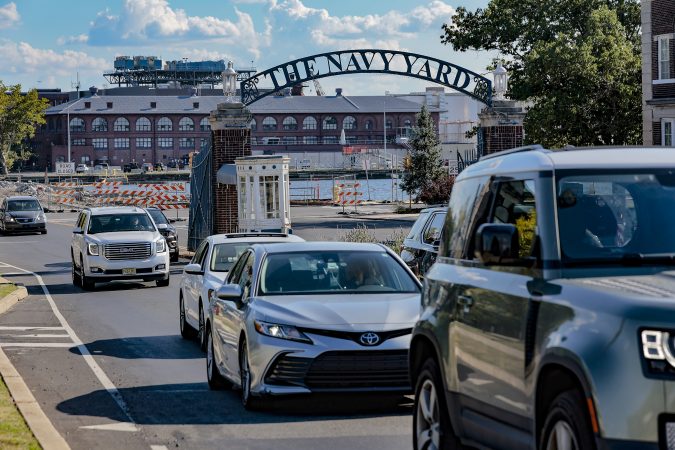
    SEPTA is extending Route 45 to provide direct daily bus service to the Navy Yard for the first time in more than a decade, a move aimed at helping to grow both the development and transit ridership.

    The new service is scheduled to begin in August, with buses operating at about 20-minute intervals, starting at 12th and Noble Streets in North Philadelphia, through Center City, and to stops inside the Navy Yard itself.

    More than 150 employers have facilities in the Navy Yard, with more than 16,000 people working on the campus. There are 614 units of housing and plans for more residential and commercial development.

    “Our goal is to provide as many safe, reliable, efficient ways to get to the Navy Yard as possible,” said Alex M. Smith, vice president of Navy Yard strategic initiatives at the Philadelphia Industrial Development Corp. It has built a path alongside South Broad Street to accommodate bike commuters and pedestrians.

    “The 45 just provides another level of service for folks that may think otherwise than to take an Uber or their own car,” Smith said.

    (function() {
    var l2 = function() {
    new pym.Parent(‘route45’,
    ‘https://media.inquirer.com/storage/inquirer/projects/innovation/arcgis_iframe/route45.html’);
    };
    if (typeof(pym) === ‘undefined’) {
    var h = document.getElementsByTagName(‘head’)[0],
    s = document.createElement(‘script’);
    s.type = ‘text/javascript’;
    s.src = ‘https://pym.nprapps.org/pym.v1.min.js’;
    s.onload = l2;
    h.appendChild(s);
    } else {
    l2();
    }
    })();

    The Navy Yard’s master plan projects about 3,000 people will be living there within 15 to 20 years. About 450 jobs are expected to be added at Rhoads Industries, a maritime company in the western part of the former military base.

    Colin Foley, the chief of service planning and schedules at SEPTA, said a 2023 survey of the Navy Yard workforce found that 86% did not use transit, and 60% of those said they would use SEPTA if more options were offered.

    SEPTA has been working for years to overhaul its bus network and recently adopted a plan that extends the 45 bus. The plan also beefs up service to University City.

    Currently, the Route 17 bus serves the Navy Yard, but only on weekends and from the west side of Broad Street, where development is less dense.

    An analysis of commutes by census tract showed that the largest share of people headed to the Navy Yard travel from east of Broad Street, Foley said.

    “This makes Route 45 an ideal route to extend to the site,” he said.

    NRG Station, the southernmost stop on the Broad Street Line, is about a mile north of the Navy Yard.

    For years, people have wanted to extend the subway to the Navy Yard, but there are no plans to do so. Even if it were feasible to build, it would be hugely expensive and take a long time, Smith said.

    Navy Yard Transit shuttle buses run two routes that this year are recording an average of about 17,200 rides monthly, PIDC said.

    In April, the Center City Express shuttle saw around 13,000 rides, and there were 6,500 for the shuttle connecting NRG Station to the campus.

    “It’s been a multiyear conversation with SEPTA to make this happen,” Smith said. PIDC, the city’s public-private economic development agency, is the master developer of the Navy Yard.

  • A Chester man who opened fire at his workplace, killing two people, is on trial for murder

    A Chester man who opened fire at his workplace, killing two people, is on trial for murder

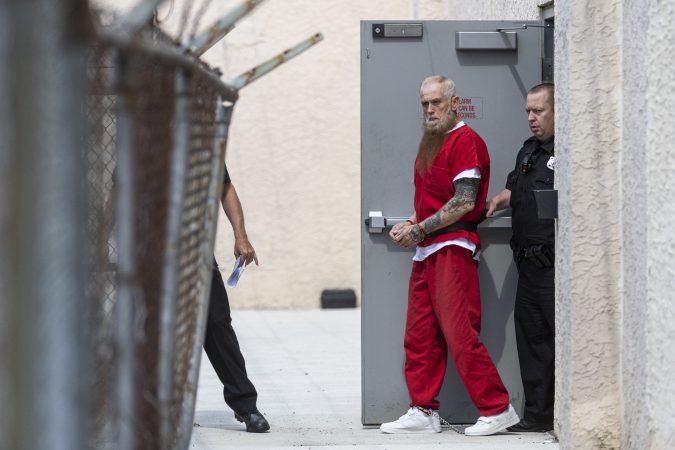
    Two years after a Chester man stormed into his workplace with a gun and opened fire in a shooting that left two people dead, he is on trial for murder before a Delaware County judge.

    Wilbert Rosado-Ruiz screamed he was “tired of people f— with” him as he fired shots at nearly 50 of his coworkers at Delaware County Linen, injuring five of them, according to the affidavit of probable cause for his arrest.

    Rosado-Ruiz, 63, is charged with two counts of murder for killing brothers Leovanny Peña Peña, 30, and Giguenson Peña Peña, 26, after reporting for his early-morning shift at the industrial-laundry business.

    Three other people were shot during what prosecutors described as a rampage.

    Rosado-Ruiz’s attorney, Kevin O’Neill, has said his client fired the shots after feeling threatened during a confrontation with a group of his coworkers. His actions that day, O’Neill said, did not constitute murder.

    But Assistant District Attorney Sophia Polites said Rosado-Ruiz went to work that day with the specific intent to kill.

    Polites rested her case Thursday, but the trial is not over: O’Neill will present his defense in July. The delay, he said Thursday, was to accommodate members of Rosado-Ruiz’s family, who need to travel to Delaware County from Puerto Rico to testify on his behalf.

    Prosecutors have said Rosado-Ruiz intended to kill more people on the day of the shooting, and would have done so had the 9mm Remington R51 handgun he was carrying not jammed. Investigators recovered the weapon and traced it to Rosado-Ruiz after his DNA was found on it, according to testimony this week.

    Rosado-Ruiz’s coworkers told investigators he had a history of abusive, bullying behavior, including threatening people with his gun, in the 10 years he worked at Delaware County Linen before the shooting, according to court filings.

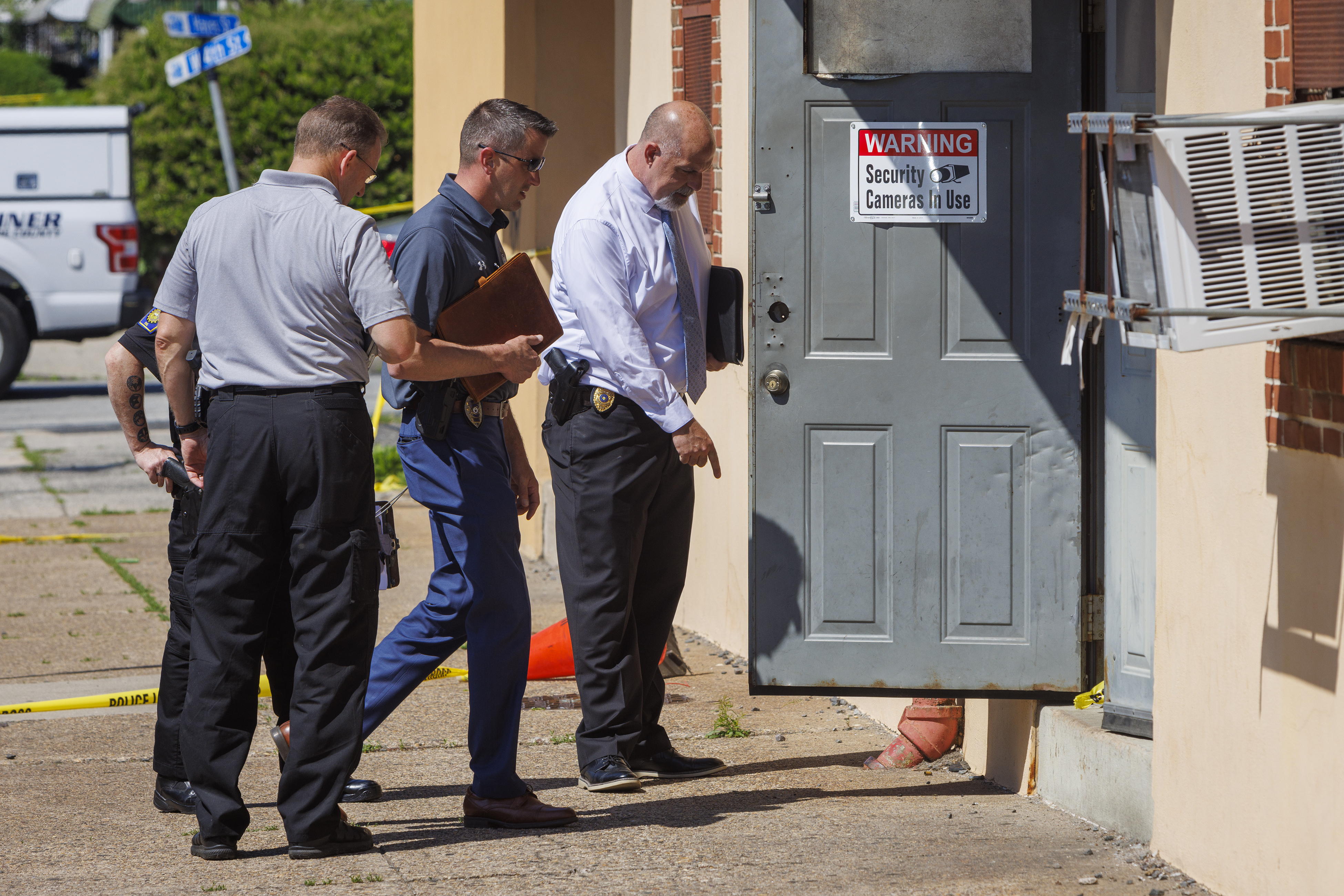
    Chester Police search for evidence after a shooting Delaware County Linen on May 22, 2024. Five people were shot in the incident, two of them fatally, according to prosecutors. Alejandro A. Alvarez / Staff Photographer

    On the day of the shooting, Rosado-Ruiz got into a verbal dispute with a coworker, Nilamarie Valdivieso.

    Valdivieso testified that Rosado-Ruiz “looked very mad” when he arrived at work, and exploded at her when she asked him what was bothering him.

    Later, after Valdivieso returned with two supervisors, along with Leovanny Peña Peña, she said, the conversation escalated, and Rosado-Ruiz pulled the 9mm handgun from his waistband.

    He shot Valdivieso once in the chest before chasing down and firing at the other victims as they ran and dived for cover, she said. The Peña Peña brothers were both shot multiple times trying to flee Rosado Ruiz, and were pronounced dead at the scene by medics.

    Another victim, Charles Doyle, testified that he was fixing an industrial washing machine when he heard several shots ring out in quick succession.

    He said he saw Rosado-Ruiz pull a second magazine from his pocket and reload his handgun. Doyle said he yelled out to distract the gunman so that his father, who also worked there, had time to flee.

    When Doyle turned to leave, he said, Rosado-Ruiz shot him three times in the back, shattering his right arm and causing severe internal damage to his organs.

    Doyle said he is unable to work because of nerve damage in his arms — he said moving his hands feels similar to trying to wiggle his ears.

    He testified that he did not see or hear anyone threatening Rosado-Ruiz before the gunfire rang out.

    Rosado-Ruiz fled after the shooting, which led police from surrounding departments to lock down streets around the business.

    He was taken into custody by an officer from Trainer, pulled over on the edge of Chester as he attempted to drive home. Inside the car, investigators found a backpack with a smaller bag containing additional 9mm bullets, authorities said.

  • Bennett L. Aaron, longtime attorney and honorary trustee of the Jewish Federation of Greater Philadelphia, has died at 92

    Bennett L. Aaron, longtime attorney and honorary trustee of the Jewish Federation of Greater Philadelphia, has died at 92

    Bennett L. Aaron, 92, of Bryn Mawr, longtime Philadelphia attorney, honorary trustee of the Jewish Federation of Greater Philadelphia, former president of the Federation of Jewish Agencies of Greater Philadelphia, board member for the Jewish Agency for Israel, onetime chair of the United Israel Appeal, mentor, volunteer, and world traveler, died Monday, June 1, of age-associated decline at Beaumont at Bryn Mawr retirement community.

    Born in Brooklyn, Mr. Aaron earned his law degree at Columbia Law School in New York in 1957, moved to Philadelphia, and spent the next six decades, until his semi-retirement in 2019, focusing on estate planning, gift taxation, probate, and trust law at Cohen, Shapiro, Polisher, Shiekman & Cohen and, later, Pepper Hamilton law firms.

    His clients included principals at Pocono Raceway and the Rite Aid Corp., and colleagues praised his ability to engage through both professional and personal connections. “He understood that estate planning was not merely about documents and tax strategy,” his family said in a tribute, “but about values, legacy, and protecting treasured family succession plans.”

    His son Steve said: “He was a superior listener and problem solver. That was his superpower.”

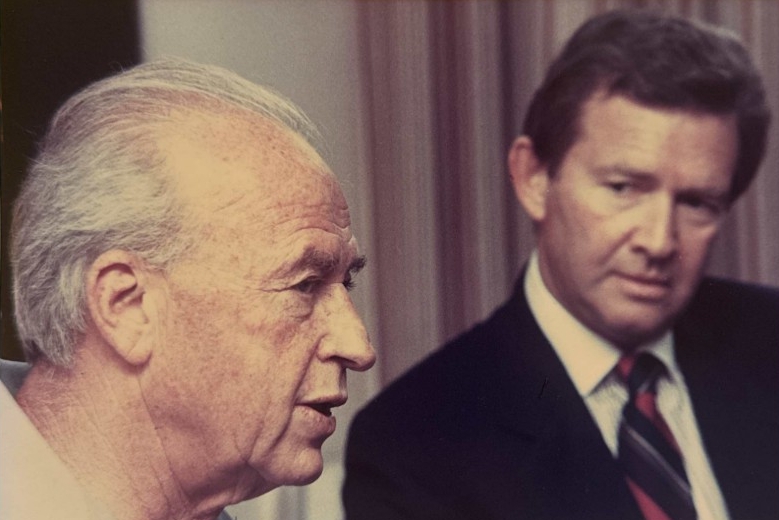
    Mr. Aaron (right) listens to Yitzhak Rabin, former primer minister of Israel.Courtesy of the family

    Mr. Aaron was friendly and energetic, his family said, and he excelled at collaborating through phone conversations and face-to-face encounters. He rarely micromanaged big contracts, colleagues said, but was available if something extra was needed.

    He mentored young lawyers and talked frequently with former Gov. Ed Rendell, former Sens. Arlen Specter and Bob Casey, and other government officials. Colleagues called him “a tremendous community leader and visionary” and “the smartest, warmest, most terrific guy” in online tributes.

    One colleague said: “It was easy to see the positive impact he had on those around him.”

    The son of a New York rabbi, Mr. Aaron was a prolific fundraiser and the local public face of Jewish philanthropy for decades. He served as president of the Federation of Jewish Agencies of Greater Philadelphia from 1983 to 1987, as chair of the United Israel Appeal for the United Jewish Appeal, as chief volunteer officer for the Jewish Federations of North America, and in other roles.

    Mr. Aaron and his wife, Carol (left), met Margaret Thatcher, former prime minister of the United Kingdom, on their travels.Courtesy of the family

    He was adept at balancing assets and liabilities for the nonprofit agencies. He oversaw record-breaking fundraising campaigns in Philadelphia and helped other leaders determine the direction of international Jewish philanthropy.

    His 10-hour fundraising phone-athon at the Civic Center in 1986 drew more than 2,400 volunteer callers and raised a then-record $2.4 million in pledges to the United Jewish Appeal. “We have no trouble getting more than enough volunteers for this,” Mr. Aaron told The Inquirer. “People look forward to coming here all year. There’s camaraderie and plenty of fun.”

    Colleagues at the Jewish Agency for Israel called him “an inspiration to many” and “a true mensch whose character, integrity, and warmth will be greatly missed.”

    Mr. Aaron traveled to Israel often and met with former Prime Minister Yitzhak Rabin, former U.K. Prime Minister Margaret Thatcher, and other leaders. “He worked tirelessly to foster understanding and solidarity between his Philadelphia community and Israel,” his family said. “He leaves behind a legacy of integrity, service, and enduring impact on the city he came to cherish and the causes that defined his life.”

    Mr. Aaron and his wife, Carol, married in 1955.Courtesy of the family

    Bennett Louis Aaron was born Oct. 2, 1933. He and his older brother, Joseph, shared a tiny bedroom, played stickball after school, and cheered for the old Brooklyn Dodgers baseball team.

    He graduated from high school at 16 and earned a bachelor’s degree at Columbia University in 1954 and a master’s degree in taxation at New York University School of Law in 1966.

    He met Carol Perlmann in 1953 at the Pennsylvania summer camp his parents owned, and they married in 1955. They lived in Merion and Bala Cynwyd before moving to Beaumont, and reared daughters Marjorie and Roberta, and sons Morrie and Steve. His daughter Roberta died in 2003.

    Mr. Aaron was an avid tennis player. He had season tickets to Eagles games and traveled with his wife to four Olympic Games.

    Mr. Aaron (right) was close with his sons Morrie (left) and Steve.Courtesy of the family

    He cherished his family, everyone said, and he and his wife toured the world together. He was dapper and debonair. He liked to explore downtown city streets between meetings and answer the phone with “Hello there.”

    “He set the standard for hard work and integrity,” his son Morrie said, “always coupled with kindness, compassion, and generosity.”

    “He was the definition of a gentle man,” his son Steve said. His family said: “His was a life lived fully, purposefully, and with a really, really big heart.”

    In addition to his wife, children, and brother, Mr. Aaron is survived by eight grandchildren and other relatives.

    Mr. Aaron “was the definition of a gentle man,” his son Steve said.Courtesy of the family

    Services were held earlier.

    Donations in his name may be made to Penn State Hillel, 180 S. Garner St., State College, Pa. 16801; and the Jewish Federation of Greater Philadelphia, 2 Commerce Square, 2001 Market St., Suite 2300, Philadelphia, Pa. 19103.

  • Inside a whimsical Merion Station home | Inquirer Lower Merion

    Inside a whimsical Merion Station home | Inquirer Lower Merion

    Hi, Lower Merion! 👋

    Think your home is colorful? This Merion Station couple takes things up a notch or two. Also this week, shoppers remember longtime Ardmore staple Past Present Future ahead of its closure, a popular Villanova University bar under investigation says it’s being targeted, plus thousands of Main Line Health patients insured by UnitedHealthcare risk going out of network amid contract negotiations.

    If someone forwarded you this email, sign up for free here.

    Inside a couple’s colorful and whimsical Merion Station home

    Noel and Lindsay Carota at their home, where they have lived since 1990. Allie Ippolito / For The Inquirer

    When Lindsay and Noel Carota moved into their five-bedroom Georgian revival Merion Station home in 1990, they set about making it their own.

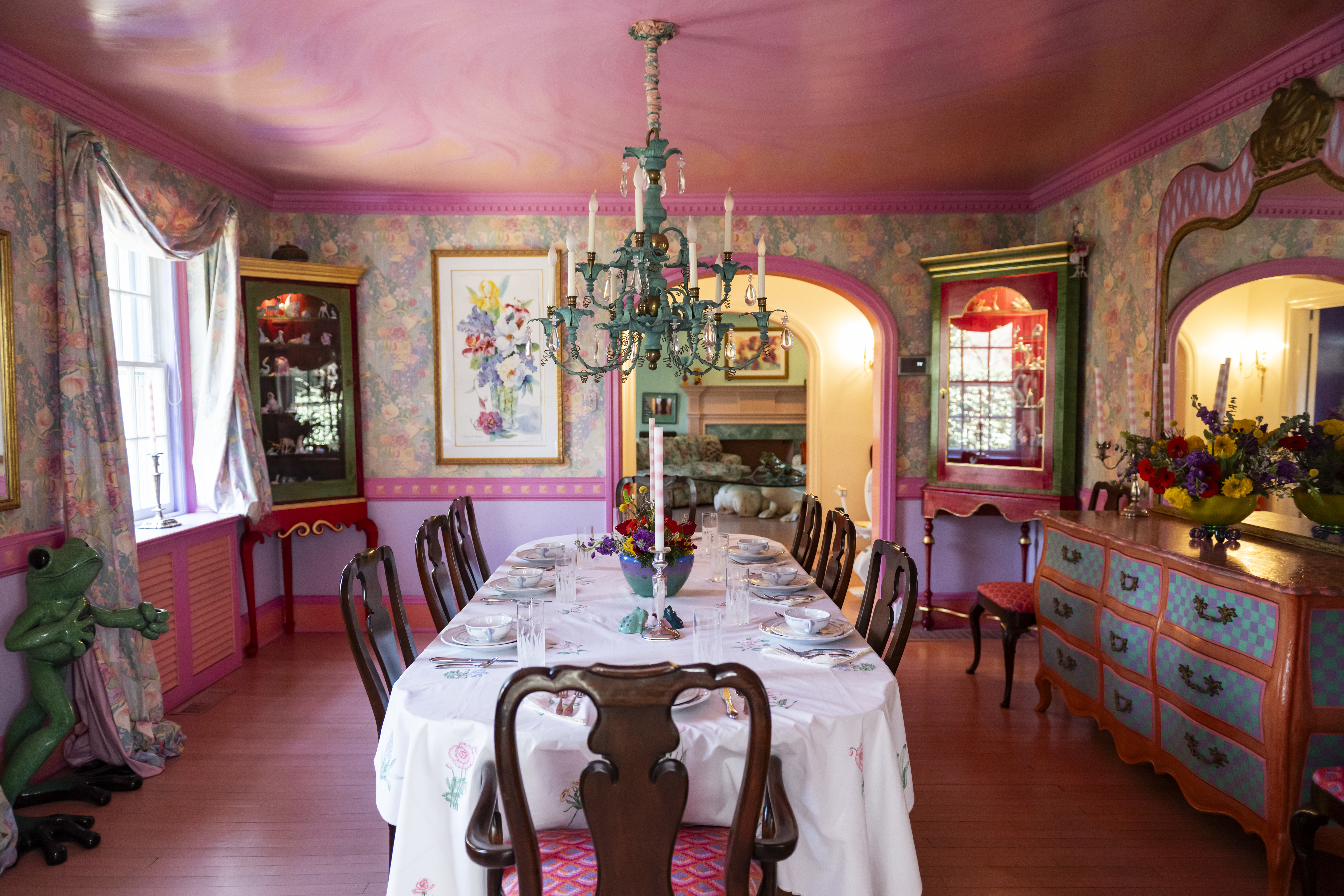
    Today, the house is a riot of colors and textures and full of whimsical touches that start at the entrance. There, visitors are greeted by a brass-frog knocker on a purple door. Inside, there are plenty more frogs — something Lindsay began collecting at 21.

    Rooms are painted in watercolor hues of blues, pinks, greens, yellows, and purples, including the dining room, which has swirls of pink on its ceiling and floral fabric wallpaper with matching drapes.

    Take a peek at their one-of-a-kind decor.

    Remembering the past and looking to the future

    Sherry Tillman has operated Past Present Future for 50 years. Tyger Williams / Staff Photographer

    After 50 years in business, the last 30 or so in Ardmore, Sherry Tillman is getting ready to retire and will soon close beloved shop Past Present Future.

    Located at 15 Lancaster Ave., the store became a popular spot to shop for an array of goods, from trinket boxes to figurines to tarot cards. While she hasn’t set an official closing date, Tillman has begun discounting her inventory as she winds down, with plans to later sell the building itself.

    The Inquirer’s Denali Sagner caught up with Tillman about how the shop evolved and how she helped spur the local art community.

    💡 Community News

    • Popular Villanova University student watering hole Kelly’s Taproom is being investigated by the Pennsylvania Bureau of Liquor Control Enforcement for alleged violations including noise, open containers, and disorderly conduct. But the owners say it’s the latest development in a decades-long battle with local officials and residents. The Inquirer’s Denali Sagner has the details.
    • Some 32,000 Main Line Health patients insured by UnitedHealthcare could face service interruptions and providers going out of network if the insurer and the health system, which owns Bryn Mawr Hospital and Lankenau Medical Center, don’t reach a deal by June 30. The two organizations are currently in negotiations.
    • The community is mourning the death of Wynnewood native and local public relations maven Nina G. Zucker, who died last week at the age of 69. A Lower Merion High School alum, Zucker was the founder and president of her eponymous firm, Nina Zucker Associates, where she worked on public relations and marketing campaigns for clients ranging from musicians, actors, artists, and athletes to governments and nonprofits.
    • The township is hosting a public meeting on Tuesday along with Amtrak about the railroad’s plans to upgrade the power systems on the Bryn Mawr to Paoli segment of its Harrisburg line. The meeting will take place from 6 to 8 p.m. at the township building. You can also attend virtually.
    • The latest edition of Inquirer series “How I Bought This House” takes us just over the township border to Wynnefield, where a 38-year-old accountant purchased a new-construction townhouse for $499,000. Heather Ong prioritized a move-in ready spot that was quiet and had outdoor space for her dog, Lilly, landing on a neighborhood that gave her “a bigger bang” for her buck.
    • A Wynnewood family got a surprise visit from the Phillie Phanatic and a makeover for their yard earlier this week when the team partnered with swing set company King Swings. The gift, which included a garden upgrade and a new doghouse, comes in the wake of the family losing their father to a rare disease. (6abc)

    🏫 Schools Briefing

    • Lower Merion School District is considering a policy that would help reduce screen time for its youngest learners, including no longer assigning laptops and iPads to kindergartners, first graders, and second graders. There would also be changes to how technology is used for third- through sixth-grade students. The Inquirer’s Maddie Hanna lays out the details and explains why some parents still don’t think the policy goes far enough.
    • Lower Merion’s school board is slated to meet Monday to approve its final budget for the 2026-27 school year, which calls for a 3.5% property tax hike. There’s also a facilities and purchasing committee meeting this morning.
    • The class of 2026 graduated last week in ceremonies at Villanova University’s Finneran Pavilion. Lower Merion High School graduated 415 seniors and Harriton High School graduated 300 seniors.
    • Final exams begin today for high school students. There are a number of end-of-year events, including Cynwyd Elementary’s fourth grade “glow up” party this evening, Black Rock’s “Royal Jubilee” tomorrow, and eighth-grade promotion ceremonies on Monday and Tuesday. There are also fourth-grade promotion ceremonies on Tuesday and Wednesday. Wednesday is the last day of classes for this school year. See the district’s full calendar here.

    🍽️ On our Plate

    🎳 Things to Do

    🎶 Bryn Mawr Twilight Concerts: Folk and blues singer Tom Rush headlines this week’s show. ⏰ Friday, June 12, 7 p.m. 💵 $25.88, free for kids 12 and under 📍 Bryn Mawr Gazebo

    💃 The Rock and Roll Playhouse: The kid-friendly outfit will perform Taylor Swift tunes. ⏰ Saturday, June 13, 11:45 a.m. 💵 $20.44, free for kids under 1 📍 Ardmore Music Hall

    🎵 Music in the Park: The summer concert series kicks off with a performance by local party band The Percolators. ⏰ Wednesday, June 17, 7 p.m. 💵 Free 📍 Narberth Park gazebo

    ☀️ Summer Solstice: Ahead of the longest day of the year, celebrate the season with a wine garden, kids activities, food, music, and a bonfire. ⏰ Thursday, June 18, 6:30-9 p.m. 💵 $35 per family 📍 Riverbend Environmental Education Center

    🏡 On the Market

    A classic stone Colonial with a pool

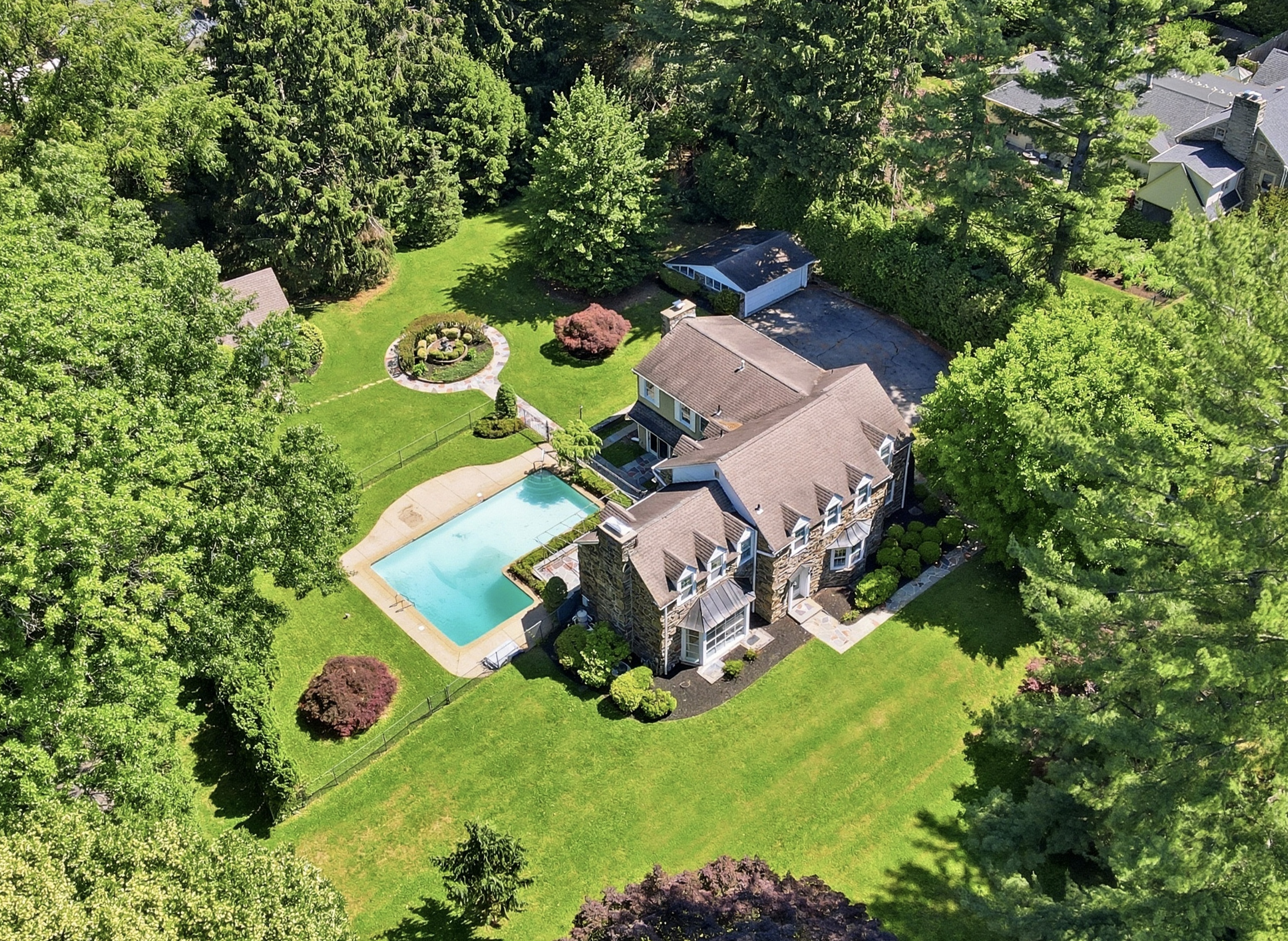
    An aerial view of the property, which has a pool and back garden.Patrick Steven Boyhan II/Alcove Media | Courtesy of Adam Ferst/Compass

    Built in 1943, this Penn Valley home exudes Old World charm from its stone exterior to the intricate moldings inside. The Colonial has both living and family rooms, both with their own fireplaces, an updated kitchen, and five bedrooms, in addition to a rec room. It also features a patio that opens onto a pool and a circular garden that branches off to a shed. There’s an open house Saturday from 11 a.m. to 1:30 p.m.

    See more photos of the property here.

    Price: $1.455M | Size: 5,142 SF | Acreage: 1.05

    🗞️ What other Lower Merion residents are reading this week:

    By submitting your written, visual, and/or audio contributions, you agree to The Inquirer’s Terms of Use, including the grant of rights in Section 10.

    This suburban content is produced with support from the Leslie Miller and Richard Worley Foundation and The Lenfest Institute for Journalism. Editorial content is created independently of the project donors. Gifts to support The Inquirer’s high-impact journalism can be made at inquirer.com/donate. A list of Lenfest Institute donors can be found at lenfestinstitute.org/supporters.