Category: Pennsylvania News

  • Swarthmore 9 ask DA to drop ‘absurd’ charges | Inquirer Greater Media

    Swarthmore 9 ask DA to drop ‘absurd’ charges | Inquirer Greater Media

    Hi, Greater Media! 👋

    A group of pro-Palestinian protesters arrested at Swarthmore College last year asked the Delaware County district attorney to drop the “absurd” trespassing charges this week. Here’s what to know ahead of the potential trial. In other local news, fans of HBO’s Task can buy items used on the show, an area medical logistics company is shutting down, plus additional teacher layoffs could hit Wallingford-Swarthmore School District.

    If someone forwarded you this email, sign up for free here.

    Delco DA moving ahead with ‘Swarthmore 9’ trespassing charges

    Swarthmore College student Jace Boland, one of nine protesters facing charges, speaks at a news conference Tuesday outside the Delaware County Courthouse. Alejandro A. Alvarez / Staff Photographer

    The Delaware County district attorney plans to maintain charges brought against nine pro-Palestinian protesters arrested last spring on Swarthmore College’s campus.

    The protesters, mostly unaffiliated with the school save for a current and former student, called the charges “absurd” at a press conference earlier this week, asking the DA to drop the charges.

    District Attorney Tanner Rouse said the group had been offered the chance to plead to a lesser, summary offense, which they refused.

    A lawyer for the protesters has filed for a motion to dismiss, which will be argued on June 22, ahead of what could be their trial if it moves forward.

    The Inquirer’s Vinny Vella explains why the DA pressed charges and why the protesters didn’t agree to a plea.

    💡 Community News

    • Fans of the Delaware County-set HBO crime drama Task can now own a small piece of the show thanks to Thrift & Thrive. The Drexel Hill shop, previously known as Nana’s Attic, received a truckload of items last week including furniture and apparel used on set.
    • Upper Providence Township-based healthcare and life sciences on-demand delivery company American Expediting Logistics is laying off all 86 of its employees after ceasing operations last week. The company cited reduced spending in the industry and “ongoing pressures across the transportation sector.”
    • Swarthmore is hiring for an assistant borough manager. It also continues hiring a full-time manager after the previous one was terminated in March.
    • Some 32,000 Main Line Health patients insured by UnitedHealthcare could face service interruptions and providers going out of network if the insurer and the health system, which owns Riddle Hospital in Middletown Township, don’t reach a deal by June 30. The two organizations are currently in negotiations.
    • Delaware County launched a new mobile health initiative last week known as Wellness on Wheels. The 33-foot-long RV will offer healthcare services such as vaccines, blood pressure readings, and prostate cancer screenings at county health events. Organizations will also be able to request it for other community events.
    • Heads up for drivers: Aqua Pennsylvania is scheduled to begin monthslong construction on a $1.2 million water main project Tuesday on North Orange Street between Kirk Lane and West 5th Street in Media and Upper Providence Township. Work will take place weekdays from 9 a.m. to 3 p.m. with the project slated for completion in November.
    • Speaking of road closures, the Media 5 Mile Race returns tomorrow and will cause closures on impacted roads from about 4 to 9 p.m., including parking restrictions. The sold-out race kicks off at 7 p.m.
    • Sunday is the last day for Pepper Lee Boutique and Gina the Jewelry Lady at their Glen Mills location at 818 Baltimore Pike. The stores will reopen above the Country Deli at 1176 N. Middletown Rd. in Media on July 2.

    🏫 Schools Briefing

    • Wallingford-Swarthmore School District is weighing additional layoffs amid its budget crunch, in addition to reevaluating class sizes, Superintendent Russell Johnston said Tuesday at a school board finance committee meeting. The Inquirer’s Maddie Hanna has the latest on WSSD’s financial woes.
    • Also in WSSD, tomorrow is the last day of school. There’s an eighth-grade bridge crossing this morning and a school board meeting Monday evening. See the district’s full calendar here.
    • In Rose Tree Media School District, today is the last day of afternoon kindergarten for Media Elementary. It’s also the eighth-grade recognition ceremony at Springton Lake. Tomorrow is the last day of school, when there will be early dismissals and fifth-grade clap-outs. There’s a school board meeting this evening. See the district’s full calendar here.
    • Tomorrow is the deadline for RTMSD families to complete the 2026-27 transportation survey, letting the district know what students will or won’t ride the bus next school year.

    🍽️ On our Plate

    • Looking for a place to dine with your pup this summer? White Dog Cafe and Terrain Cafe, both in Glen Mills, offer dog-friendly dining. (Main Line Today)

    🎳 Things to Do

    🍦 Ice Cream Social: Grab a scoop of ice cream and a bite to eat from food trucks in celebration of the last day of school. There will also be live music and face painting. ⏰ Thursday, June 11, 5-9 p.m. 💵 Pay as you go 📍 Swarthmore town center

    🎶 Rose Tree Summer Concert Festival: This year’s concert series kicks off with a performance by the Delaware County Symphony on Wednesday, followed by the Fabulous Greaseband next Thursday, Philly Gumbo next Friday, the Rose Tree Pops next Saturday, and the Jersey Beach Boys next Sunday. ⏰ Wednesday, June 17-Sunday, June 21, 7:30 p.m. 💵 Free 📍 Rose Tree Park, Media

    🏡 On the Market

    A stately five-bedroom Media home with beautiful grounds
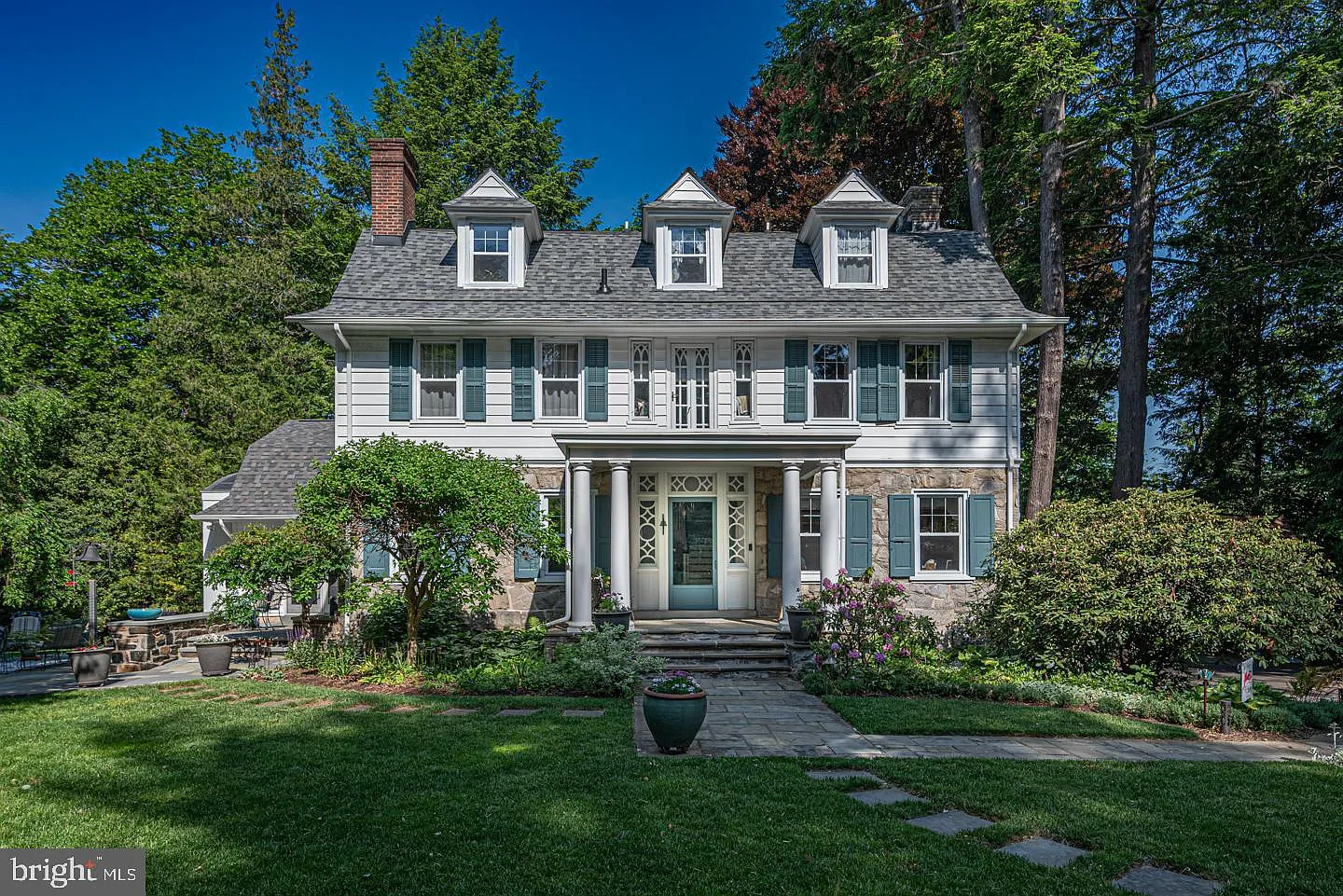
    The home was built in 1904 and spans just over 4,000 square feet.Radiq Corporation | Courtesy of Gary Scheivert/BHHS Fox & Roach-Media

    Built in the early 20th century, this stately Colonial in Upper Providence Township blends historic and modern elements like a stone exterior and portico that harken to the past, while a renovated kitchen is thoroughly 21st century. It features quartz countertops and stainless steel appliances and looks onto a family room with rounded windows and a fireplace. The home has five bedrooms, with the third floor dedicated to the primary suite, complete with a walk-in closet and dressing room. Outside, there are multiple slate patios as well as a meandering water feature that ends in a small pond. There’s an open house Sunday from noon to 2 p.m.

    See more photos of the property here.

    Price: $1.65M | Size: 4,020 SF | Acreage: 0.9

    🗞️ What other Greater Media residents are reading this week:

    By submitting your written, visual, and/or audio contributions, you agree to The Inquirer’s Terms of Use, including the grant of rights in Section 10.

    This suburban content is produced with support from the Leslie Miller and Richard Worley Foundation and The Lenfest Institute for Journalism. Editorial content is created independently of the project donors. Gifts to support The Inquirer’s high-impact journalism can be made at inquirer.com/donate. A list of Lenfest Institute donors can be found at lenfestinstitute.org/supporters.

  • Take a look inside the now-complete FIFA Fan Festival opening Thursday

    Take a look inside the now-complete FIFA Fan Festival opening Thursday

    A crowd packed with thousands of cheering fans, the 60-foot-wide screen playing the latest fiery matchup, and dozens upon dozens of food vendors await the FIFA Fan Festival, the cheapest and most immersive way to enjoy the 2026 World Cup in Philadelphia.

    Starting Thursday, the Fan Festival opens daily to 15,000 fans, for free, to roam the million square feet of festival grounds that have transformed quaint Lemon Hill into an almost unrecognizable extravaganza of global soccer.

    Here’s what you need to know before you go:

    Watching the game

    The main spectacle is the 60-foot screen that takes over the main stage in Lemon Hill, where the majority of fans will congregate to watch the match. But, throughout the festival are multiple smaller screens playing the game, so fans don’t miss a moment when they roam for food, fun, or the bathroom.

    “Even if you’re not a soccer fan, you can still come out and have a great time,” said Michael DelBene, executive producer of FIFA Fan Festival for Philadelphia Soccer 2026. “You can come and listen to music or eat delicious food, or shop.”

    The festival is intended for fans of all ages and promises to be kid and family friendly.

    Amenities

    Crew members make final preparations, including work on a 60-foot-wide screen, for a FIFA Fan Fest at Lemon Hill in Philadelphia on Tuesday, June 10, 2026.Jose F. Moreno / Staff Photographer

    The Fan Festival delivers what many large-scale music festivals offer, with ways to enjoy the main attraction while also having side activities to keep you busy during a lull.

    Food and drink

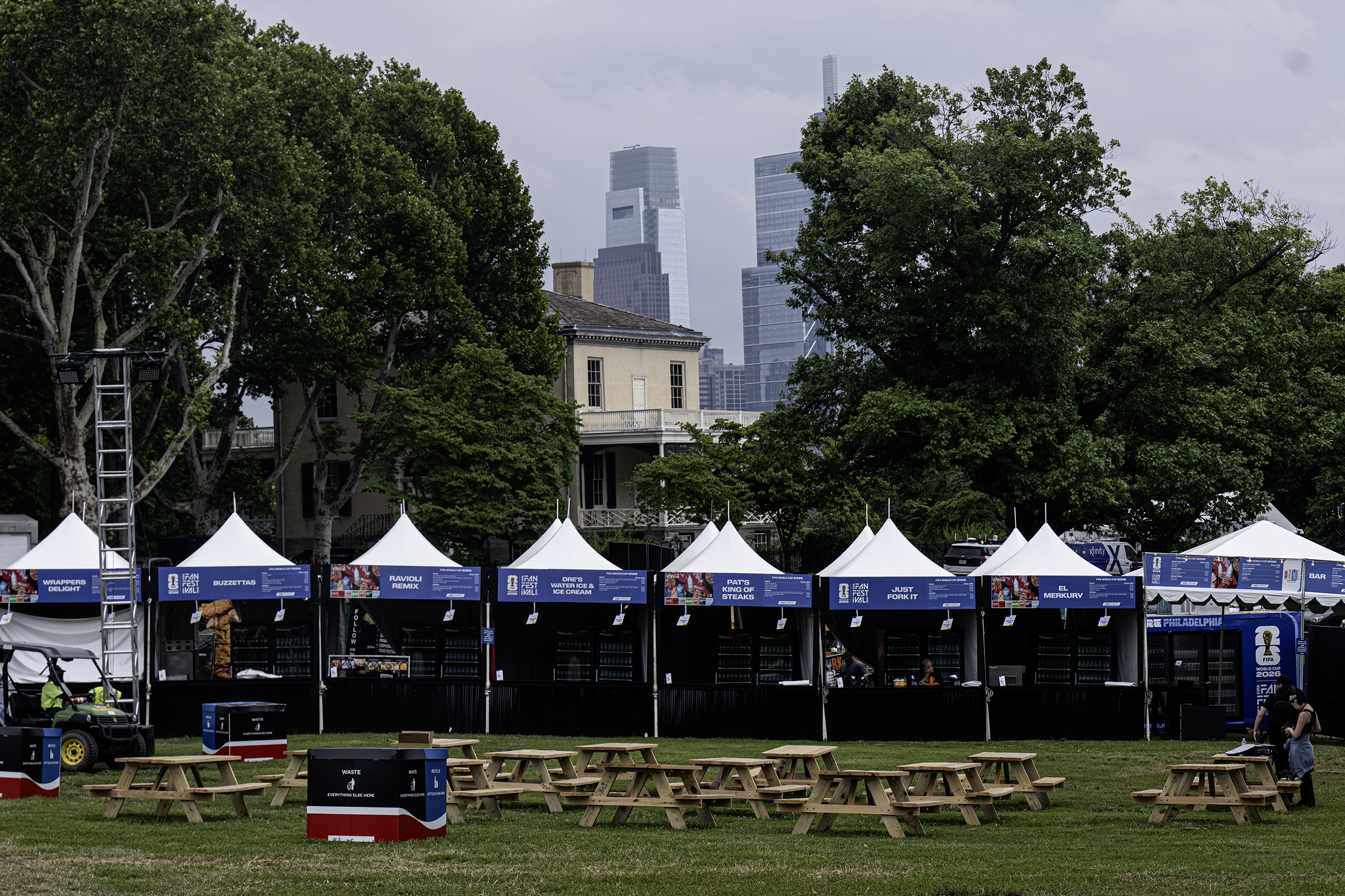
    More than 80 local food trucks will serve up meals based on dishes from the many cultures across Philadelphia and, of course, the city’s very own, like cheesesteaks, pretzels, and more.

    Outside of food trucks, there will also be vendors selling beverage basics, such as water, soda, and beer, to the small bites like tacos and sandwiches. Pricing varies. Some vendors have beer and beverage prices at $10 or less. Many will also sell food menu items in the $15 to $25 range.

    A Michelob Ultra beer garden will welcome those 21 and over to a variety of brews, and the Coca-Cola corner has all the tasty carbonated beverages a fan could ask for.

    No outside food or beverage are permitted besides a reusable water bottle that can be filled at hydration stations. For a full list of what you can’t bring, visit phillyfwc26.com/fifa-fan-fest.

    Live music

    Throughout the festival, more than 50 live acts will grace the stage at Lemon Hill, including the opening night concert with headliner Luis Fonsi of Despacito fame. Festival showrunner DelBene said that while they’ll kick off the event with one of the biggest global artists, many local Philadelphia musicians and acts will rotate through the 39-day event.

    “It’s a really cool juxtaposition of global talent and the juxtaposition of local talent and culture,” DelBene said.

    Crew members make final preparations, including work on a 60-foot-wide screen, for a FIFA Fan Fest at Lemon Hill in Philadelphia on Tuesday, June 10, 2026.Jose F. Moreno / Staff Photographer

    Shopping and giveaways

    The Philadelphia Festival Marketplace will showcase the best artisans and makers the region has to offer with distinctive soccer swag, accessories, jewelry, original artwork, and more.

    Philly’s fan festival will also host the largest World Cup retail space across all 11 U.S. host cities. Sitting at 10,000 square feet, the Fanatics World Cup shop has everything a soccer fan needs for official tournament gear.

    Outside of shopping, many sponsors have built elaborate exhibits with interactive games and chances to win giveaways. Some of those sponsors include Kia, Bank of America, and The Home Depot.

    Accessibility

    ADA-accessible ramps are located throughout the festival and accessible public transportation is available entering and departing the venue. A golf-cart shuttle will also be available from the welcome center.

    Attendees have access to nursing stations, sensory booths, prayer booths, and meditation booths. ASL interpreters will be present throughout the event. Any questions can be directed to the welcome center booth or to staff with shirts.

    Inclement weather

    The festival will run rain or shine and will be canceled in case of any dangerous weather (thunder, lightning, high winds, or very high temperatures.)

    Getting around

    Crew members make final preparations, including work on a 60-foot-wide screen, for a FIFA Fan Fest at Lemon Hill in Philadelphia on Tuesday, June 10, 2026.Jose F. Moreno / Staff Photographer

    Location: East Fairmount Park’s Lemon Hill

    To enter the venue, go to the secured entry point at Kelly and Sedgley Drives.

  • Wallingford-Swarthmore may lay off teachers and increase class sizes amid tight budget outlook

    Wallingford-Swarthmore may lay off teachers and increase class sizes amid tight budget outlook

    The Wallingford-Swarthmore School District is planning to reevaluate class sizes next school year, and layoffs are a possibility if the district cannot trim its budget in other ways, its superintendent said at a meeting Tuesday.

    At a school board finance committee meeting, Russell Johnston said that with the district’s expenses projected to rise next year at double the rate of revenues, the district will have to continue to reduce staffing, even after implementing a reorganization plan this year that eliminated about 20 positions and losing four more through attrition.

    The district will also look at which classes have the smallest enrollments, Johnston said, and might “scale back” on certain offerings.

    Johnston said cuts would be necessary. Otherwise, Wallingford-Swarthmore would be on pace to use more than 30% of its reserves to balance the budget, he said.

    Here is what the superintendent said about possible cuts coming to the affluent district:

    Retirement incentives, attrition and layoffs

    District leaders have said Wallingford-Swarthmore cannot sustain its current staffing levels, which grew significantly in recent years.

    Of the projected $6 million growth in the district’s $106 million budget next year, nearly $4 million is coming from salaries and benefits for the district’s 541 employees, officials said.

    Laying out options for cutting those costs, Johnston — who became superintendent last year — said the district could offer staff an incentive to retire early, though he was not sure whether that would generate enough savings.

    The district will also evaluate whether it needs to fill positions that become vacant as someone retires or resigns, Johnston said.

    “If we do have to invoke layoffs,” Johnston said, the savings likely will not be as great as by reducing staff through attrition, because more junior and less costly employees will be laid off due to union seniority protections.

    Board members voiced concern about rising benefits costs in particular: Prescription costs for district employees are projected to grow by 50% next year, a $1.8 million increase.

    Johnston, who noted that benefits are part of a collective bargaining agreement that does not expire until 2028, said the district was in “ongoing dialogue” with its teachers union.

    Bigger class sizes, fewer offerings

    Johnston said the district would be looking “hard at class size and enrollment” as it tries to find areas to cut.

    While the district has an “amazing array” of offerings for students, it could ”perhaps scale back where we don’t have enrollment to justify that,” Johnston said.

    He did not offer specifics but said the district would perform a class size analysis at the start of the coming school year.

    Reduced capital projects

    District officials indicated Tuesday they intend to move forward with a reduced scope for the planned Strath Haven High School renovation — down from $99 million to less than $70 million — with a focus on fixes to keep the building “safe, warm, and dry,” and fewer interior renovations.

    The district will also look to cut back other aspects of its capital plan, which board members said would reduce a $1.5 million increase in debt service projected for next year.

    Parental concerns

    Some parents have started to raise concerns about the budget cuts.

    Lindsay Doyle, whose children attend Nether Providence Elementary, said she was dismayed to learn that class sizes at her children’s school would be increasing in fourth and fifth grades due to the district not filling two teaching positions.

    Doyle, who said class sizes would grow from about 20 students to 26 or 27, is worried that core instruction will suffer.

    “It’s no longer about administrative inefficiencies and discretionary spending,” Doyle said. “When I see we’re now cutting back on teachers, that’s when I’m like, red flag.”

  • An artisan brewery is opening its second outpost | Inquirer Chester County

    An artisan brewery is opening its second outpost | Inquirer Chester County

    Hi, Chester County! 👋

    A new brewery is opening this weekend in Spring City. Here’s what to know. Also this week, we take a peek inside a couple’s Berwyn garden that blooms year-round, a Pennsylvania Supreme Court case involving West Chester University could have broader ramifications, plus, several new eateries are opening, including a coffee shop.

    If someone forwarded you this email, sign up for free here.

    Punch Buggy Brewing Company opens Spring City location

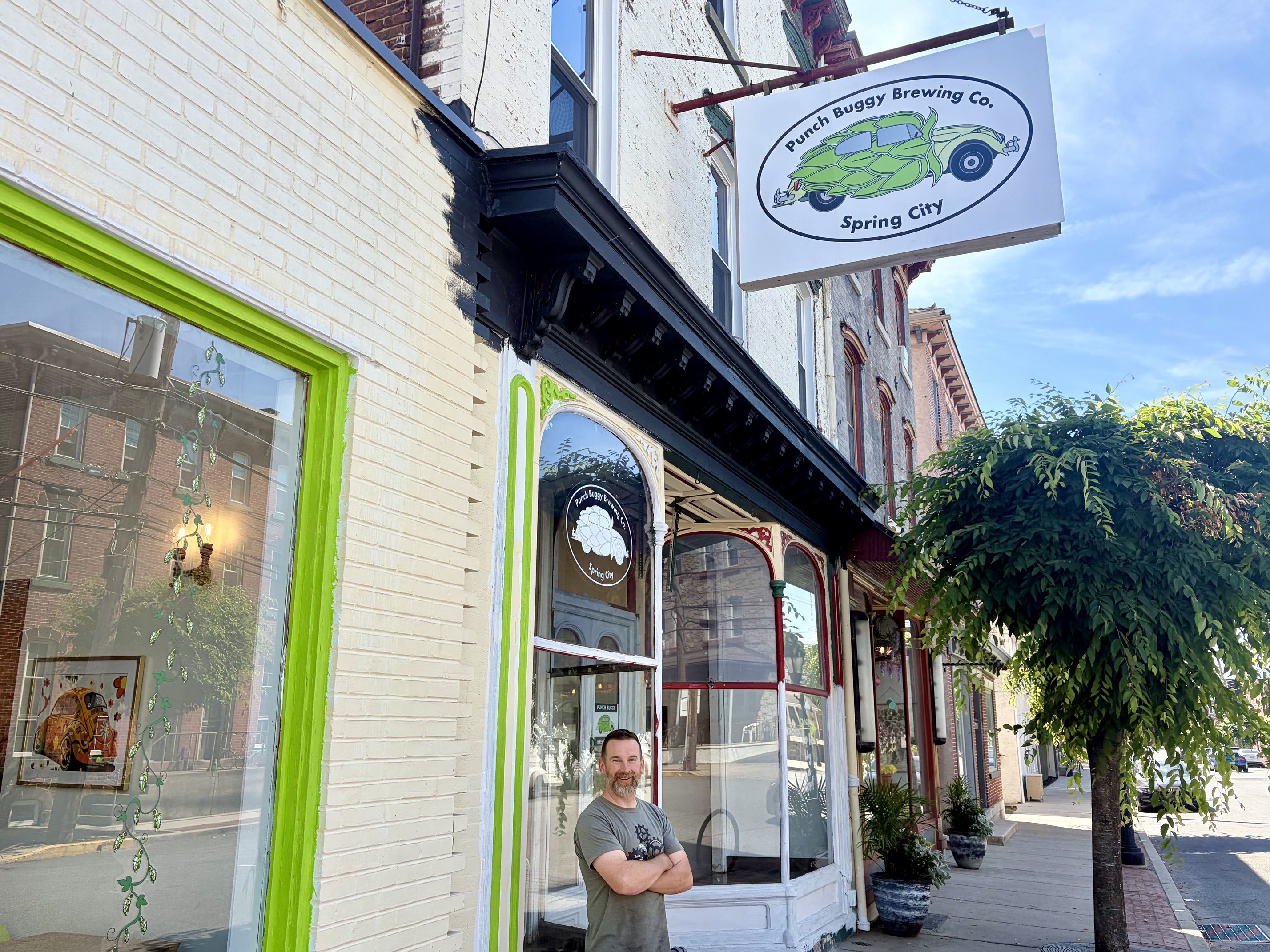
    Punch Buggy Brewing Company’s Spring City outpost will open Saturday, June 13.John McGuire

    A Philadelphia brewery is getting ready to open its new outpost in Spring City. After a year in the works, Punch Buggy Brewing Company will debut its second location at 77 N. Main St. this Saturday, taking over a former hardware store.

    The new location will serve Punch Buggy’s brews, which range from IPAs and lagers popular with the Philly crowd, to sours and dark beers, which have gained popularity locally thanks to the brewery’s foray into the farmer’s market.

    In addition to beer, Punch Buggy will partner with Deezy’s Famous Cheesesteaks for food, and host live music on select nights.

    The Inquirer’s Brooke Schultz has all the details.

    How a couple transformed their Berwyn garden to have year-round color

    Bob and Bonnie Dettore in the garden at their Berwyn home. Allie Ippolito / For The Inquirer

    After purchasing their Colonial-revival split-level in Berwyn in 1987, Bonnie and Bob Dettore set about transforming the home, inside and out.

    Owned by seven people before them and full of old growth trees and bare ground, it was once “dark and damp all the time,” Bonnie said. That’s no longer the case thanks to Bob’s handiwork.

    The inside of the home has been overhauled and in the past four decades, its grounds have been transformed to showcase year-round color, thanks to showy rhododendrons, redbuds, ironwoods, magnolias, dogwoods, spring bulbs, and yellow witch hazel.

    Take a peek inside their garden.

    📍 Countywide News

    • Chester County remains in a drought warning as the hot summer months approach. Officials are asking residents to voluntarily reduce water usage by 10% to 15%.
    • An April Pennsylvania Supreme Court ruling in favor of West Chester University may have ripple effects beyond the borough. Judges ruled that the tax-exempt university didn’t have to pay for stormwater treatment after considering it a tax, not a fee. Now numerous Pennsylvania communities might see higher stormwater bills as a result, The Inquirer’s Anthony Wood explains.
    • Some 32,000 Main Line Health patients insured by UnitedHealthcare could face service interruptions and providers going out of network if the insurer and the health system, which owns Paoli Hospital, don’t reach a deal by June 30. The two organizations are currently in negotiations.
    • There was another black bear sighting over the weekend, this time in East Goshen and Willistown Townships. In April, residents reported spotting a black bear in West Vincent Township. Residents are advised to take precautions and report sightings. (6abc)

    💡 Community News

    • Global investment firm Vanguard is shrinking its physical footprint in Malvern by not renewing its expiring lease at 45 Liberty Blvd. The company said it plans to relocate employees working at that office to its nearby main campus.
    • West Chester-based home shopping giant QVC is among the largest companies in the U.S., ranking No. 433 on the latest Fortune 500. The company reported $9 billion in revenue last year before filing for Chapter 11 bankruptcy earlier this spring.
    • After pushing the NCAA Division II baseball championship to a deciding third game, West Chester University fell to the University of Tampa 8-4.
    • West Vincent Township’s board of supervisors is scheduled to consider Toll Brother’s proposal to build 46 single-family homes along five properties on South Chester Springs and Conestoga Roads, about 60% of which is preserved open space, at its meeting Monday at 7 p.m.
    • Last week, Willistown Township’s board of supervisors voted to approve creating a township sewer authority, which it will now file with the state.
    • West Whiteland Township’s board of supervisors will discuss adopting a new comprehensive plan, which includes goals of improving public transit services, pedestrian and bicycle access, and conservation. The board will meet at 6:30 p.m. tonight at the township building, as well as on Zoom.
    • There’s a public open house on Monday at the Caln Township building to discuss the Lincoln Highway corridor. Residents can weigh in on safety improvements, access, and preliminary designs.

    🚧 Roadwork to watch out for

    • Coatesville and Caln, Sadsbury, Valley, and West Caln Townships: There will be an overnight lane closure on Route 30 westbound between Airport Road and Kings Highway from 8 p.m. to 5 a.m. through Friday.
    • East Coventry Township: A monthslong project to update the bridge on Ellis Woods Road over Pigeon Creek got underway this week and will continue through October, during which time the bridge will remain closed.
    • East Nottingham Township: Woods Road between Pugh and Hickory Hill Roads will be closed today from 6 a.m. to 3 p.m. for pipe repairs.
    • London Grove Township: Resurfacing work begins today on Clay Creek Road between Garden Station Road and the Avondale Borough line, as well as on East Avondale Road between Clay Creek and Rose Hill Roads. Work is expected to continue through June 22 with daily road closures.
    • Wallace and West Nantmeal Townships: Creek Road between Fairview and Manor Roads will be closed on weekdays from 7 a.m. to 4 p.m. through next Thursday.
    • Warwick Township: Work continues on Harmonyville Road next week, with a closure between Hopewell and Saint Peters Roads on Monday and Tuesday from 7 a.m. to 4 p.m.
    • West Chester: Both South Church Street between University Avenue and Price Street and Sharpless Street between High and Darlington Streets will be closed from 7 a.m. to 4 p.m. through Friday.
    • Willistown Township: Milling and paving work began this week and is expected to continue for the next three weeks on roads throughout the township. See which ones will be impacted here.

    🏫 Schools Briefing

    • Great Valley School District’s board approved its 2026-27 budget earlier this month, which includes a 3.49% property tax increase.
    • Registration for Phoenixville Area School District’s Power Up for School program is now open. During the July 30 event, families can learn about programs and get vaccines or physicals for their children. Registration must be completed by July 17.
    • West Chester Area School District has approved its 2026-27 budget, with a 3.3% real estate tax increase for Chester County residents.

    🍽️ On our Plate

    • Looking for a spot to watch the World Cup? The Inquirer’s Beatrice Forman rounded up bars to catch the game, including Kildare’s Irish Pub in West Chester, which is hosting a 21+ watch party Friday when Team USA takes on Paraguay.
    • Twin Valley Coffee has opened a location at 4043 Main St. in Elverson, with a “homecoming weekend” taking place Friday and Saturday.
    • Asad’s Hot Chicken is opening a location in Malvern this Friday at 490 Lancaster Ave. in the Frazer Shopping Center. To mark the occasion, it will offer free food from 3 to 6 p.m. The Philadelphia-born fast-casual eatery specializes in halal fried chicken.
    • Parlor Doughnuts is opening in Berwyn this Saturday and will give away donuts from 8 a.m. to 4 p.m. Located at 602 Lancaster Ave., the Indiana-based donut chain is known for its sweet and savory layered donuts with flavors like buffalo chicken, pepperoni, maple pecan, and bourbon caramel. It also offers vegan- and keto-friendly options.
    • Herr’s released the winning chip flavors for the 2026 spin on its “Flavored by Philly” competition this week, but instead of a single winner, the Nottingham chip company is releasing three in honor of the nation’s 250th birthday. The “Taste the 250” winners are Freedom Loaded Cheese Fries, Liberty Hickory Barbeque, and United Jalapeño Cream Cheese and will be available throughout the summer.

    🎳 Things to Do

    🎙️ Sound of Summer Free Concert Series: The annual concert series returns for the season, featuring a performance by Coatesville’s classical soul, funk, and jazz outfit The Sermon! There will also be food trucks. ⏰ Wednesday, June 10, 6:30-8:30 p.m. 💵 Free 📍 Anson B. Nixon Park, Kennett Square

    🎹 Tredyffrin Township Summer Concert Series: This year’s concert series kicks off with a performance by the Tim Williams Band. ⏰ Thursday, June 11, 7 p.m. 💵 Free 📍 Wilson Farm Park, Wayne

    🎨 Phoenixville Art Street Festival: Now in its ninth year, the festival will feature over 70 artists, including live performances. ⏰ Saturday, June 13, 11 a.m.-5 p.m. 💵 Free 📍 Downtown Phoenixville

    🍇 Mainstreet on the Vine: There will be wine, live music, vendors, and ice cream at this afternoon event. ⏰ Saturday, June 13, noon-5 p.m. 💵 Pay as you go 📍 Wayvine Vineyard, Nottingham

    ☀️ Downingtown Summer Jam: There will be live music, food trucks, and drinks at this family-friendly event. ⏰ Saturday, June 13, 4-9 p.m. 💵 Pay as you go 📍 Kerr Park, Downingtown

    🍷 Kennett Summerfest: Sample sips from over a dozen local and regional wineries, cideries, and meaderies at this 21-and-over event. There will also be music, vendors, and food to purchase. Non-alcohol tickets are also available. ⏰ Sunday, June 14, 2-6 p.m. 💵 $46.35-$103 📍 100 block of South Broad Street, Kennett Square

    🏡 On the Market

    A converted 1850s farmhouse with modern flair

    The home’s family room features vaulted ceilings and a floor-to-ceiling stone fireplace.Paul Ingram/PCI-Pro | Courtesy of The Stagliano Team

    A three-bedroom carriage house-style home in a converted farmhouse that dates back to the 1850s is on the market for the first time. Part of the Greenbank Cottages, the home is located in what was once the defunct Upattinas School that was converted into five residences. This one spans three levels and has stone on the interior and exterior. The main level features a living room with 30-foot ceilings anchored by a stone fireplace, original beams, and several chandeliers. Other features include a lounge area with a wet bar, an office, a courtyard, and a primary suite with a built-in closet system. There’s an open house Friday from 4 to 6 p.m.

    See more photos of the property here.

    Price: $824,999 | Size: 2,594 SF

    🗞️ What other Chester County residents are reading this week:

    By submitting your written, visual, and/or audio contributions, you agree to The Inquirer’s Terms of Use, including the grant of rights in Section 10.

    This suburban content is produced with support from the Leslie Miller and Richard Worley Foundation and The Lenfest Institute for Journalism. Editorial content is created independently of the project donors. Gifts to support The Inquirer’s high-impact journalism can be made at inquirer.com/donate. A list of Lenfest Institute donors can be found at lenfestinstitute.org/supporters.

  • Some Philly teachers say they’re pressured to pass students who rarely come to class or do work

    Some Philly teachers say they’re pressured to pass students who rarely come to class or do work

    Philadelphia School District students receive report cards on Thursday, the last day of the 2025-26 school year.

    But it’s an open secret that in many schools, it is nearly impossible to fail a student, according to interviews with two dozen teachers from schools across the city who say the district is making them give passing grades.

    Many teachers said they passed students who did little or no work, did not understand concepts being taught, or did not show up to class much. Most of the teachers interviewed requested anonymity for fear of reprisal.

    “There’s a bunch of kids in my class that have F’s in reading, and I’m probably going to pass them — I’ll bump it up to a D and call it a day,” one middle-grades teacher at a K-8 school said. “I don’t know of anyone who’s been able to keep anyone back, and we’re just setting kids up for failure.”

    On paper, Philadelphia students can fail courses, or be retained in a grade, so long as they are offered appropriate interventions and supports. Officially, the district, according to its policy, “is committed to excellence in student accomplishments and recognizes the contribution of a district wide promotion policy moving all schools to models of achievement.”

    But many teachers said that they were discouraged or forbidden by their principals from flunking students, or that they have given out failing grades that were overridden. Others said failing students was permitted if justified, but the administrative burden to rationalize failure, even for students who did not show up to school, is onerous or impossible.

    All of the teachers who spoke with The Inquirer said they fear for the long-term implications for students who are passed along without the skills they need to advance — especially in a city where so many students cope with the effects of poverty and trauma and a majority of students do not meet grade-level standards on state testing.

    Monique Braxton, district spokesperson, said the district’s policies “emphasize that student grades are meant to accurately reflect their academic performance and progress toward learning standards. Schools are required to provide and document appropriate interventions and progress monitoring when students encounter academic challenges. The district remains steadfast in its commitment to maintaining high expectations for students while ensuring they receive the necessary support to achieve success.”

    When did it start?

    The K-8 teacher, a veteran of district schools for three decades, said that at the beginning of her career, it was easier to give F’s or retain students who did not meet the learning standards. But, the teacher said, there has been a “subtle shift” since the early 2000s, the era of the federal No Child Left Behind Act.

    “When the pressure was on the schools to show promotions and graduation rates, and the district was so focused on showing data, it’s shifted grading, and now it’s a joke,” the teacher said.

    Philadelphia changed its grading policy in 2017, setting a 50 out of 100 as teachers’ grading floor and making it easier to pass. The minimum score for a D, once a 64, was changed to a 60.

    The rationale for the change, leaders said at the time, was standardizing grading procedures and preventing students from giving up if they perform poorly early in the year. Detractors of the policy shift said at the time they feared it would water down standards.

    The K-8 teacher, and others interviewed, emphasized that most Philadelphia students are bright and capable. But those who do not try because of complicated home lives or other reasons can skate by, they said.

    “We have a kid who’s done no work all year, and we’ve done everything, and they’re just going to push him forward,” the K-8 teacher said.

    The teacher also works in the service industry, and said the effects of passing students who have not earned passing grades is evident in that workplace.

    “We see people who don’t come to work on time, they can’t take orders, they can’t use a computer or figure things out, and this is why,” she said. “They’re not being held to standards for all their years in schools.”

    ‘Is there anything you can do to bump these up?’

    A second teacher said he has failed students who did not earn passing grades, though he has more latitude because he does not teach a major subject. But he absolutely understands why some teachers give 60s that should be F’s: With full course loads, teachers do not have time to document a pattern of contacting guardians, giving extra time for work, breaking down assignments, allowing extra credit, or extending deadlines.

    “Who has time to do that when you have 30 other kids?” the teacher said. “And the system is inherently causing laziness from teachers also, to just shut up, pass them, and you don’t get grief.”

    There is a ripple effect, he said.

    “I feel sorry for the good kids, the kids who struggle, do their work, and get a C. So I give them a B, a low A. They try,” he said.

    The district has posted academic improvement over the last several years. But district students’ academic achievement as measured by state tests remains low, with 33% of students meeting standards in reading and 25% in math.

    “The PSSA scores don’t match the grades kids are getting,” the second teacher said.

    The district’s four-year graduation rate has also risen. In 2024-25, it was up to 84%, from 69% in 2014-15.

    Grade inflation comes at the end of every year, said a third teacher, who works at a district high school.

    “There’s a push right after grades are due,” said the third teacher, who noted that administrators will say, “‘Is there anything you can do to bump these up?’”

    Grades are not changed for every student, but in some cases, administrators will “push [students] along because they want to see them graduate or pass,” the third teacher said. “There’s all this pressure from the district to increase the graduation rate — there are so many layers to it. I know that it happens in a lot of places. It’s not just our school. But this year, it was huge margins and huge numbers.”

    Administrators sometimes change the grades themselves, the third teacher said.

    In one instance, a student’s grade shot up with no explanation, the teacher said. “This student had a 50 yesterday. How did he have an 82 today? This was a student who didn’t turn in any additional work, and missed 63 of 84 classes,” the third teacher said.

    The third teacher said another student who was moved on without doing the work admitted it.

    “Even he was like, ‘Yeah, I didn’t deserve to pass, I don’t know how that happened. But I’m excited to graduate,’” the teacher said.

    The third teacher underscored that while the practice could be making the district’s numbers look better, it is not serving students.

    After graduation and not being held to standards, the teacher said, one former student “lost the first three jobs he had because he didn’t go to them. He had to learn that lesson in a much harder, more adult way, and he could have learned that in high school. I worry that when kids graduate and get into the workforce, it will impact the way they approach the goals they set for themselves and how they try to achieve those goals.”

    ‘The gap was huge’

    A fourth teacher who has worked in multiple types of schools in Philadelphia said the practice is not limited to the district.

    She most recently taught at a city charter and said some of her middle-grades students were at kindergarten reading and math levels.

    “The gap was huge,” the fourth teacher said. “The school’s explanation is that there’s a school-to-prison pipeline, and the older students are, the less likely they are to graduate. But they’re not meeting standards. The gaps are huge. It was very shocking to me how they would just pass the kids. I’m a parent, and I want my kids to be prepared properly.”

    A fifth teacher said that at her school, it is rare for students to be pushed along without doing work.

    “I can’t in good conscience pass anybody who doesn’t show up,” she said. “I think a lot of teachers around me also can do that. But I have also seen that teachers — maybe at a particular building, maybe those who work for a particular administrator — who say, ‘You know what, I’m not going to fight it.’”

    What is definitely not rare, the fifth teacher said, is giving students “a lot of different lifelines, a lot of different ways for them to pass,” whether it’s in-school credit recovery or summer school, “even when their trends of behavior and attendance and performance and engagement in the class suggest that they needed more time with that content.”

    A sixth teacher said his principal permits failure and retention, in rare cases, with significant documentation. There is some pressure to not fail students, but when needed, the teacher has been able to produce adequate paperwork to show failure was the last resort.

    But when deciding whether to pass or push through a student, “I ask myself whether holding them an extra year will make a significant difference,” the teacher said. One of the teacher’s students is bright but unmotivated and rarely completes work.

    “I don’t think that’s going to change with an extra year in the same grade, and therefore, I decided to pass him,” he said.

    Does he worry about the implications for the district writ large?

    “Honestly, I do think about it sometimes, but I’m just not sure there’s a right answer with the current situation,” the sixth teacher said. “I’m no policy expert, but I think for it to make sense on a larger scale we’d need significant cultural shift and policy changes.”

  • It may feel like 100 degrees in Philly on Thursday and Friday. The early heat could pay off.

    It may feel like 100 degrees in Philly on Thursday and Friday. The early heat could pay off.

    With the summer solstice still two weekends away, already the temperature has reached 90 degrees or higher in Philly nine times.

    And while the sequence of 90s has been extraordinarily premature, the early experience may come in handy this week as the region could experience triple-digit heat indexes.

    “It will definitely feel different,” said Ray Martin, lead meteorologist with the National Weather Service office in Mount Holly, as the humidity and dew point, the measure of absolute moisture in the air, reach their highest levels of the year to date.

    Any 100-plus heat indexes may present challenges to some older residents, and those with heart and other health issues. The weather service Wednesday morning issued an advisory for indexes of up to 103 Thursday and Friday.

    But the heat the region has experienced, starting in mid-April, could be viewed as a sort of spring training for the discomforts to come, said Samuel Eldrich, director of the Temple Health-Chestnut Hill Hospital Emergency Department.

    “It’s all about adaptability,” he said. And it’s not just physiological, he said.

    In addition, a juicier atmosphere may squeeze out some much-needed rain.

    The regional forecast for the next several days

    Showers are possible Wednesday morning and late in the day, Martin said, with highs in the mid-80s. However, it might not get cooler than 70 degrees early Thursday, a sign that mugginess is on the increase.

    A moist air mass inhibits daytime heating from escaping into space, and the heat and humidity build for real on Thursday.

    “It’s not going to feel nice out there,” said Tom Kines, senior meteorologist with AccuWeather Inc.

    Shower chances are in the forecast Wednesday through Friday, and at times the atmosphere will be highly energized, Martin said. The Storm Prediction Center in Norman, Okla., has outside chances for severe thunderstorms for the entire region Thursday and Friday. Isolated flooding downpours are not out of the question, Martin said.

    The heat and storm threats should back down some by the weekend, when Philadelphia hosts the World Cup match between Ecuador and the Ivory Coast, with a high about 90, the air less muggy, and rain looking unlikely.

    How hot has it been in Philly so far?

    Philly has logged four daily highs of 90 degrees or more so far this month, and nine since April — including four record highs — almost a third of the average for an entire year.

    Whether that is a harbinger of a punitive summer is beyond the realm of reliable forecasting, but the early heat is likely to have some positive effects, Eldrich said.

    Far more dangerous are hot spells that come abruptly after the weather has been relatively cool and comfortable for a period, he said.

    Early heat, which typically is short-lived, can make a difference in terms of how we respond to subsequent hot spells. “You’re more accustomed” to the heat, Eldrich said. “You’ve adapted to the lifestyle. You sweat more quickly, more easily.”

    People are more likely to stay inside, and stay hydrated.

    “It’s both the physiological and the cultural factors,” he said. “In the South, you don’t hear about heat exhaustion or heat emergencies. It’s something they deal with three-quarters of the year rather than a quarter of the year.”

    Drought conditions persist, but more rain may be coming

    The longer-range outlooks favor above-normal temperatures for the rest of the month, but they also see the odds tilted toward above-normal rainfall.

    That would be a switch. Philadelphia’s precipitation has been below normal for 10 consecutive months.

    “We could certainly use the rain,” Martin said. The interagency U.S. Drought Monitor has most of the region under “severe drought” conditions. State-declared drought emergencies remain in effect in New Jersey and Chester County.

    Any showers would mean temporary breaks in the heat Wednesday and Thursday, and the heat wave is not expected to survive the weekend, in keeping with a trend.

    Even though average summer temperatures have been rising, the hot spells this century have not lasted as long as some of those of the 1990s.

    “Let’s hope that streak continues,” Martin said.

    Whether it is related to heat-wave durations or the city’s responses to hot-weather emergencies, heat mortality is way down in Philadelphia.

    From 1991 through 2000, 227 heat-related deaths were recorded in the city. In the last 10 years, there were 37.

  • Philly’s state lawmakers will still push to close a tax loophole requested by Mayor Parker, as Pa. budget talks move along

    Philly’s state lawmakers will still push to close a tax loophole requested by Mayor Parker, as Pa. budget talks move along

    HARRISBURG — Pennsylvania lawmakers could still deliver additional revenue to Philadelphia, even after City Council last week largely rejected Mayor Cherelle L. Parker’s proposed tax increases for the next fiscal year.

    Philadelphia’s powerful House delegation to Harrisburg will push state lawmakers to close a loophole that allows online sellers to avoid paying Philadelphia’s 2% sales and use tax, its chair, Democratic Rep. Morgan Cephas, said Tuesday, as legislative leaders seek a quick state budget deal in a consequential midterm election year.

    The tax would be exacted on online sellers based outside the city selling goods to Philadelphia customers, including retail giants such as Amazon. Currently, sellers outside the city have to collect only the 6% state sales tax.

    The proposal — estimated to generate an additional $1.5 million for the city — would require authorizing legislation to be passed by the state and signed by Gov. Josh Shapiro.

    When asked about the Philadelphia delegation’s effort to revive one of Parker’s tax proposals — albeit the one that would generate the least revenue for the city — Joe Grace, a spokesperson for Parker, said it is a “technical amendment.”

    That development comes as top lawmakers are in closed-door budget negotiations trying to find additional revenue to close the state’s deficit, where Pennsylvania is expected to spend more than it brings in this fiscal year and in the future, ahead of the constitutionally required June 30 deadline. Legislators often blow past that deadline, with last year’s budget agreement stretching nearly five months after talks stalled over mass transit funding and resurfaced Pennsylvania’s rural-urban divide.

    Here is a look at the status of state budget negotiations, what Philadelphia’s delegation wants in a final budget deal, and the potential sticking points as the deadline draws nearer.

    Talks are ‘further along’ — in a big midterm year

    Senate Majority Leader Joe Pittman (R., Indiana) said in an interview last week that legislators are “a lot further along” in their budget negotiations than they were at this point last year, but still have more to do to rein in spending.

    Other top legislative leaders echoed a similar hope that budget talks will not draw out into another monthslong impasse during the midterm election year in Pennsylvania’s split legislature, where Democrats hope to ride an anticipated blue wave to gain seats in both chambers while Republicans hope to stave it off and maintain control of the state Senate.

    “There’s nothing like a political wave to help politicians focus,” said House Majority Leader Matt Bradford (D., Montgomery) in an interview last week.

    All 203 state representatives and half the Senate are up for reelection this year. Additionally, Shapiro is seeking a second term and is hoping to flex his political muscle to bring Pennsylvania Democratic wins in Congress and at the state level.

    Shapiro proposed a $53.2 billion budget earlier this year, which would be a 6.2% spending increase over last year and would largely rely on the state’s Rainy Day Fund and new revenue streams from skill games and adult-use cannabis to help fill a $4.6 billion budget hole. The state House in April passed Shapiro’s budget as introduced, though the final product will be struck in closed-door meetings involving Pittman, Bradford, and Shapiro. The three negotiators may call on additional leaders to join the budget talks in the state’s tightly divided legislature, where Democrats hold a one-seat majority in the House and Republicans control the Senate with a three-seat majority.

    In previous midterm election years, the electoral pressure has sped up negotiations, as legislators want to bring home results to their constituents before they return to the campaign trail in a year when the governor’s mansion and control of the state House and Senate are on the line.

    ‘An opportunity to regroup with Council and regroup with our mayor’

    Philadelphia’s delegation to Harrisburg, made up of 25 lawmakers representing parts of the state’s most populous city, will take up Parker’s requested sales tax loophole closure, in addition to any other requests from City Council once the city’s budget receives final approval on Thursday, Cephas said.

    “City Council hasn’t finalized their budget just yet. So we are paying close attention as to what is the final product that gets across the finish line, and then we look at it, look at it as an opportunity to regroup with Council and regroup with our mayor to see where we are and where there’s still gaps that would potentially fill,” Cephas added.

    State Rep. Morgan Cephas, who leads the Philadelphia delegation in Harrisburg, attends a get-out-the-vote rally for State Sen. Sharif Street at the Church of Christian Compassion in West Philadelphia Monday, May 18, 2026 on the day before Tuesday’s Democratic primary election for the 3rd Congressional District. Cephas was a candidate for the same seat, but withdrew early in the race.Tom Gralish / Staff Photographer

    As part of several proposals meant to juice revenue from gig economy companies, Parker requested the city’s sales tax loophole be closed in her budget pitch in March.

    Closing the loophole, however, was an easier sell in Harrisburg than Parker’s efforts to raise taxes on city hotels and short-term rentals, which would have also required state legislative approval.

    Last week, sources close to state budget negotiations told The Inquirer there was no interest in raising taxes in Philadelphia as Parker had proposed, even on big tech companies, in an election year. Shortly after, any support appeared to evaporate in City Council for Parker’s proposed taxes on hotels and rideshare services to fund homelessness-prevention programs and help plug the Philadelphia School District’s $300 million structural deficit.

    Shapiro previously said he was uninterested in raising any taxes, and has boasted about cutting taxes in past budgets.

    Shapiro’s office did not immediately respond to a request for comment.

    “Billionaire big tech companies just won round one in this process,” says Mayor Cherelle L. Parker at City Hall Thursday, June 4, 2026 after City Council rejected most of her tax proposals for the city budget.Tom Gralish / Staff Photographer

    Cephas said Philadelphia’s statehouse delegation is also focused on continuing to increase public education funding through the state’s new adequacy formula, expanding a popular student-teacher stipend program, and increasing funding to improve school facilities.

    The delegation — which includes Democratic legislative leaders such as House Speaker Joanna McClinton and House Appropriations Chair Jordan Harris, who are involved in budget talks — will also push to expand a working families tax credit, a childcare tax credit, and an increase to the state minimum wage from its current $7.25 per hour, Cephas said.

    Potential sticking point: Skill games and gaming expansions

    The big unknown in Pennsylvania’s Capitol is whether lawmakers this year will finally address skill games and other gaming expansions in the state as an effort to raise additional revenue.

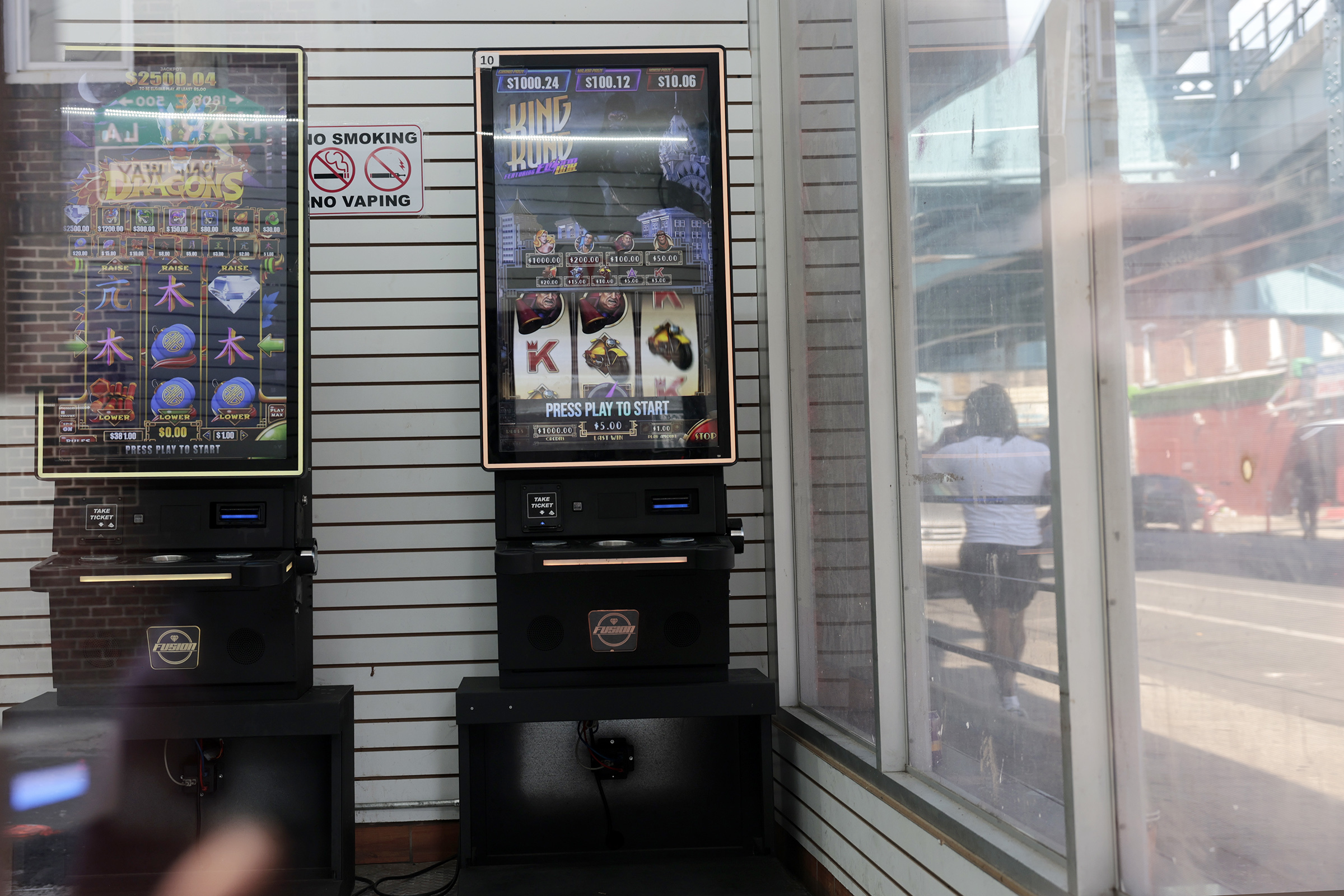
    Skill games are slot-machine look-alikes that have proliferated around Pennsylvania and, despite coaxing from Shapiro to tax them at a much lesser rate than the hefty 52% levied on slot machines, remain unregulated and untaxed by the state. Shapiro estimated that taxing machines at the same rate as slots would generate $765.9 million in its first year.

    A case is before the state Supreme Court to determine whether the machines found in restaurants, corner stores, and bars are legal — and distinct from other gambling devices.

    Skill games can be seen through the door of a mini mart on Kensington Avenue in the Kensington section of Philadelphia on Wednesday, July 30, 2025.Elizabeth Robertson / Staff Photographer

    The deep-pocketed skill games lobby had long been an ally of the Senate GOP until recent years, when Republicans considered a higher-than-desired tax on the industry that the lobbyists claim would hurt small businesses. The relationship eroded further last month when a conservative group tied to the skill games lobby helped fund three unsuccessful primary challenges to Republican state senators.

    Now, top GOP lawmakers say they are awaiting the court ruling before they decide how to tax the devices.

    Another emerging form of gaming that could require state regulation would be prediction markets like Kalshi or Polymarket, which allow users to place bets on the outcome of events, including elections. Pittman said he wants federal lawmakers to regulate the new industry, while House Minority Leader Jesse Topper (R., Bedford) said “it will need to be addressed.”

    “Prediction markets, to me, seem to be a whole new world,” Pittman said last week. “That is something that the federal government really needs to grab onto in a very consistent manner to make sure that you have consistent policy nationwide on that front.”

  • Joe Biden made a surprise visit to Philly’s Stonewall Awards celebrating LGBTQ icons

    Joe Biden made a surprise visit to Philly’s Stonewall Awards celebrating LGBTQ icons

    Former President Joe Biden made a surprise appearance at the annual Stonewall Awards in Philadelphia on Sunday, delivering a 20-minute speech to a packed crowd in Center City.

    The award ceremony, started in 2022 by Philadelphia Gay News founder and publisher and participant in the 1969 Stonewall rebellion Mark Segal, recognizes those in the region advancing the LGBTQ rights in Pennsylvania. This year’s speakers, including Biden, took a moment to celebrate the decades of civil rights battles that led to Philadelphia becoming a cultural hub for queer people, but warned that the fight is only getting harder.

    “What I don’t think straight people understand is that you have risked a hell of a lot and it’s taken enormous courage to stand here today. You risk your jobs, your families, and your very lives for the cause of equality,” Biden said. “We need that courage today more than ever before. The fellow we have as president right now is not having a very positive impact on anything.”

    State Rep. Malcolm Kenyatta, who is a vice chair of the Democratic National Committee, surprised the crowd made up of LGBTQ organizations, media, and community members at the Arts Ballroom in the heart of the Gayborhood when he walked up to the stage with a trail of Secret Service agents and the 46th president. The ballroom erupted with cheers as the audience gave the duo a standing ovation. “I decided to bring a friend with me,” Kenyatta said to the crowd.

    State Rep. Malcolm Kenyatta at the Capitol in Harrisburg on May 13, 2025.Tom Gralish / Staff Photographer

    Biden delivered prepared remarks but wasn’t shy about speaking from the heart, said Segal, who witnessed the police assault on the Stonewall Inn in 1969, a moment credited for spurring the modern queer civil rights movement.

    “I think that’s the magic of the Stonewall Awards. You’re in a room with people who want to feel unified and it’s a struggle out there these days thanks to the current administration,“ Segal said. ”This is the day that we get to celebrate ourselves and celebrate where we are and to say, ‘We’re never going back.’”

    The president shared stories of his granddaughters fearing for their gay friends as the White House pushes policies that strip rights from LGBTQ people.

    “Even though we made enormous progress, as we continue to make the final run here, progress is going to get tougher and the other team’s going to get rougher,” Biden said.

    Segal said the Stonewall Awards have brought local leaders and celebs like Gov. Josh Shapiro, Mayor Cherelle L. Parker, and Abbott Elementary star Sheryl Lee Ralph to its stage in prior years. But Biden was a big surprise, said Jacen Bowman, the president of Philly Black Pride.

    “We didn’t know Biden would be there, but once we saw Secret Service, we knew something was up. After his speech, he walked right over to our table and spoke to my mom about the award I won and it was amazing,” Bowman said, whose mother is still elated over meeting the former president.

    Bowman received his second Stonewall Award on Sunday as he and his fellow organizers grow the organization’s cultural impact on the city and beyond. Bowman’s work hopes to not only bolster the community in a time of increased threats, but also highlight those who may get left out of the picture through murals like creating Finally on 13th, a celebration of Philadelphia’s underground ballroom culture, and remembering icons like the late Stacey Blahnik, a transgender woman and icon in the local ballroom scene whose murder is still left unanswered more than a decade later.

    “I love Philadelphia and being honored for my work in the city that has made me, broken me, and uplifted me — I’m so grateful,” Bowman said.

    Councilmember Mark Squilla and the Philadelphia Visitor Center received awards for their contributions to LGBTQ advocacy. Alex Niedbalski-Sykes and Ashley K. Lunkenheimer were also recognized for their contributions, including the work of Philadelphia Sisters, an organization that has vowed to bring more professional women’s sports teams to the city, especially after a WNBA team arrives by 2030.

  • ‘Swarthmore 9’ protesters urge Delco DA to drop trespassing case tied to pro-Palestinian encampment

    ‘Swarthmore 9’ protesters urge Delco DA to drop trespassing case tied to pro-Palestinian encampment

    Nine protesters arrested last year at a pro-Palestinian encampment at Swarthmore College said Tuesday that they had done nothing wrong and have no intention of pleading guilty to the trespassing charges they face.

    “We affirm that we are guilty of nothing because it is always right to rebel against genocide,” Jace Boland, a junior at the college, said at a news conference on the steps of the Delaware County Courthouse.

    Boland was joined by his eight codefendants and a small crowd of supporters in urging prosecutors to drop what they described as “absurd criminal charges.”

    The so-called Swarthmore 9 were arrested and briefly detained on the college’s campus in May 2025 when officers from surrounding police departments dismantled their encampment protesting the war in Gaza and Swarthmore’s contract with a company that does business with the Israeli government.

    Of the nine people arrested, only Boland is a student at the college. Another, Brendan Cook, is a former student who was suspended for participating in an earlier protest in 2024, but the rest are not affiliated with Swarthmore, according to school officials.

    Members of the group — Boland, Cook, Jonathan Britt, Mara Helen Cahill, Daria C. Dressler, Thomas Falcone, Colin Buckley Malcarney, Riley J. McManus, and Andrew Thomas — have all been charged with trespassing, a third-degree misdemeanor.

    Their attorney, Marni Jo Snyder, has filed a motion to dismiss the case that will be argued before Delaware County Court Judge Dominic Pileggi on June 22, a week before the group’s scheduled trial.

    District Attorney Tanner Rouse said Tuesday that prosecutors had offered the group the chance to plead to a lesser, summary offense, which Rouse described as “akin to an ‘open container’ or noise violation ticket.”

    “That they want to proceed to trial as charged is absolutely their right, but so is it the commonwealth’s right to protect the interests of private citizens and institutions that do not have to abide every random person who has an issue parking on their front lawn,” Rouse said. “Private property owners have a right to say ‘please leave’ when the time comes.

    “If their concern is a criminal charge or exposure to judicial punishment, there is and always has been an easy off-ramp available to them,” he added. “They have chosen not to take it.”

    Jace Boland said Tuesday that he and his co-defendants “are guilty of nothing because it is always right to rebel against genocide.”Alejandro A. Alvarez / Staff Photographer

    At Tuesday’s news conference, Swarthmore professor Mark Wallace said he supports the protesters and believes the college betrayed the ideals on which it was founded by having them arrested.

    “How can students who live and work on a campus be charged with trespassing there while applying what they’re learning in the real world?” he asked. “Colleges should be places where large, uncomfortable questions are asked and struggled over.”

    A spokesperson for Swarthmore did not immediately respond to a request for comment Tuesday.

    Previously, the college, in a statement, echoed what Rouse said Tuesday — that county prosecutors had offered to reduce the charges in the case to a summary offense if the defendants pleaded guilty, but they declined.

    Boland said he and the others charged would not plead guilty, fearful that doing so would discourage future activism.

    “If the college can deploy state violence to protect its interests without consequence, there is no telling what levels of repression future generations of student activists will face,” Boland said. “Swarthmore College cannot continue to benefit from its reputation as a liberal arts institution that encourages activism while simultaneously crushing dissent.”

    Swarthmore Borough police arrested the group in May 2025 after issuing multiple warnings to members of an encampment that had formed outside Swarthmore’s Trotter Hall.

    The encampment, which protesters referred to as the Hossam Shabat Liberation Zone in honor of a journalist killed in an Israeli drone strike, was formed to demanded that Swarthmore end its IT support contract with Cisco, which also holds contracts with the Israeli government.

    Swarthmore College professor Mark Wallace spoke at Tuesday’s news conference in support of the nine protesters arrested at the school last year.Alejandro A. Alvarez / Staff Photographer

    Swarthmore College president Valerie Smith wrote in a letter last year that members of the Liberation Zone created their enclosure using campus property and had vandalized other parts of campus with incendiary graffiti.

    Smith wrote that she “unequivocally condemn[ed]” the group’s actions and said that law enforcement officials, including the FBI, told her to dismantle the encampment as soon as possible.

    “I urge these protesters to pursue a less divisive approach to expressing their views — one that aligns with not just the College’s policies, but with the mutual respect, compassion, and care that all in our community deserve,” Smith wrote in the letter.

    Days before the protesters were arrested, campus police forcibly took back some of the items they had taken to build the encampment, and issued disbandment orders to people they found within it.

    On the day police came to clear out the encampment, they gave protesters a 10-minute warning to vacate the property.

    The protesters refused to leave, sitting with their arms interlocked, according to video of the arrests posted by the Swarthmore chapter of Students for Justice in Palestine.

    All nine of the protesters charged in the case were detained briefly and released on unsecured bail.

  • Lower Merion is advancing a policy to eliminate iPads and laptops for K-2 students

    The Lower Merion school board plans to stop assigning personal laptops and iPads to kindergartners, first graders, and second graders after facing intense pushback from parents who say kids are getting too much screen time in school.

    Members of the school board’s policy committee announced the plan during a meeting Monday, along with other proposed limits on technology use. Under policy changes going before the full school board for review next week, third and fourth graders would use electronic devices stored on carts in classrooms, while fifth and sixth graders would be permitted, but not required, to bring devices home.

    “This is a huge movement forward,” said the board’s president, Kerry Sautner, describing revisions made to the proposed technology policy in response to community feedback.

    But parents who have accused the district of overusing educational technology said the proposed changes did not go far enough — leaving too much room for interpretation around when technology should be used, and failing to adequately restrict kids’ access to inappropriate websites.

    Some parents also expressed anger that the board is moving forward with repealing the current technology policy, which contains language accommodating families who opt out of district-issued devices.

    “You are removing the escape hatch,” said David Smyth, a parent from Merion Station, who said the district had produced no data supporting its use of technology. “You know that ed tech is failing, it’s suboptimal, and you don’t want to be embarrassed.”

    Here is what to know about the tech debate in Lower Merion, the board’s latest policy proposal, and what happens next:

    Lower Merion at the center of ed tech backlash

    As backlash to technology in schools has spread across the region and nationally, Lower Merion has become an epicenter of parental opposition.

    At meetings this spring, dozens of parents have voiced concerns about weakened attention spans and classroom distractions, and expressed fear that the quality of their kids’ education is declining as a result.

    More than 800 parents have signed a petition asking for the right to opt out of one-to-one devices, according to parent organizers in Pencils Over Pixels. The group, which started a GoFundMe campaign, has distributed lawn signs and enlisted a public relations firm as part of its advocacy efforts.

    But district officials have repeatedly said that the technology policy’s language is dated, stemming from when Lower Merion first introduced one-to-one devices, and that it is not possible for families to opt out.

    Instead, the board has been reworking the technology policy to address when and how devices should be used in classrooms.

    A revised policy after meetings with parents

    The latest policy proposal outlines guidelines for technology use at different grade levels, rolling back one-to-one devices for Lower Merion’s youngest students.

    “Technology shall not be used for routine classroom instruction in these grades,” the policy says. “Any use shall be minimal, highly structured, and limited to specific educational purposes such as diagnostic testing or for teacher-directed, whole-class demonstration, visual display, or state testing preparation.” (Pennsylvania’s standardized tests, which start in grade 3, are required to be administered on computers.)

    In grades 3-4, the policy says, students “shall have supervised, teacher-directed access to technology resources” that stay in classrooms, while in grades 5-6, students will be permitted to bring their devices home, but not allowed to use them between classes or at lunch.

    The policy describes students in grades 7-8 and 9-12 as having increased responsibility for independent technology use, but says devices should be used only for school-related work.

    The policy changes are “meaningful responses” to community feedback, said Anna Shurak, the chair of the board’s policy committee, who said board members had met with concerned families.

    But some parents said the policy — which says teachers should use technology “only when doing so serves a clear educational purpose” — would not adequately limit an overreliance on screens in classrooms.

    “The verbiage of this policy is very carefully crafted to say nothing,” said Eleanor Stanford, a parent and a writing professor at Bryn Mawr College, who also questioned why the district was still “dragging its feet” on imposing a bell-to-bell ban on cell phones in its high schools, even as legislation advances in Harrisburg to do so. (Shurak said the district would fully ban cell phones in 2027-28.)

    Parent Matthew Posey quoted the policy’s language that technology belongs in the classroom when it “genuinely amplifies human curiosity.”

    “Did Albert Einstein need Kahoot or iReady?” Posey said, referring to two educational technology programs. “Is this a public policy document, or a corporate marketing brochure?”

    Some parents also questioned proposed administrative regulations that include suggested time ranges for technology use by grade level. In grades K-4, the guidelines are less than 30 minutes a day; by high school, they increase to less than 120 minutes a day.

    Calculating the high school upper limit as about 40% of daily instructional time, “to me, that’s way, way too high,” said Sam Handlin, a parent and a professor at Swarthmore College. He said the only way teachers would approach that time limit was either by using technology “as a babysitting device” or letting students take notes on computers, “which is just a recipe for distraction.”

    Shurak did not comment on the time frames specifically but told Handlin the administrative regulations still need to be revised.

    When will changes take effect?

    The committee endorsed sending the revised technology policy to the full board for review next week, along with a recommendation to repeal the current technology policy.

    While the board may repeal the current policy at next week’s meeting, the new policy would need to be considered a second time to before it could go into effect.

    The goal is to have the new policy in place in August, Shurak said. She said the board would be directing administrators to implement changes in time for the coming school year.

    Board member Jason Herman, a member of the policy committee, said some of the new policy’s language should be revised to limit “ambiguity and subjectiveness.” He also questioned why the district could not move to a content filtering model where only certain websites were permitted for students to access, rather than restricting sites after problems are reported.

    Officials did not address questions around content filtering Monday, or calls from the Pencils Over Pixels group for the release of district contracts with educational technology companies and a technology advisory board that would include parents.

    Sautner said the board had more work to do, including around technology questions related to the district’s curriculum.

    But “we cannot micromanage” administrators through policy language, she said.

    Some expressed concern that the board could overreact in response to anti-tech opposition.

    “Banning technology isn’t going to be the way to ensure that our kids critically think,” said Emma Benn, who urged the board to “take a step back” before passing a new policy. “This world is a technology-driven world, and we need to make sure our children can function within it.”