Category: Pennsylvania News

  • As drones become cheaper and easier to use, suburban police in the Philly region are adopting them as ‘first responders’

    As drones become cheaper and easier to use, suburban police in the Philly region are adopting them as ‘first responders’

    When Upper Darby Police received notice that a car thief out of Maryland was making his way through the township in June, they responded immediately. A high-speed chase ensued, but the department quickly broke it off, fearful of the risk it presented.

    They didn’t want the driver to harm himself or bystanders, Upper Darby Police Superintendent Tim Bernhardt said.

    Minutes later, officers caught up to David Graham, with the stolen Nissan Maxima, on a side street where he had attempted to blend in as the car’s owner, doing repairs on the vehicle.

    Graham’s arrest on receiving stolen property, fleeing police, and related charges was calm and straightforward, and the case is pending trial, Bernhardt said. That resolution came because his officers were able to keep an eye on Graham, tracking his movements from 400 feet above.

    Upper Darby is the latest police department in the Philadelphia region to adopt drone technology, using it to supplement their patrol and surveillance capabilities. Bernhardt and other local officials tout the new technology as a way of de-escalating arrests.

    Upper Darby police use drone to apprehend an alleged car thief
    Video: Upper Darby police use drone to apprehend an alleged car thief

    “That police officer in a marked car with lights and sirens going, the adrenaline is going, we no longer need that,” Bernhardt said. “And on the opposite end of that, the suspect, they don’t hear or see the police coming, and we take them into custody without that fight, without that resistance, without that fleeing.”

    But experts say the adoption of drones by police, often done with little community input, has raised concerns about the potential for departments to overstep privacy boundaries in the name of civil service.

    Bernhardt is adamant that his officers have no interest in spying on people.

    “We’re not surveilling people that shouldn’t be surveilled,” he said. “We’re using this as a another tool in our tool belt, and it’s allowing us to apply our resources better.”

    Upper Darby Police Lt. Kristine McAleer demonstrates how the department’s drones operate.Aidan T. Gallo / Staff Photographer

    On the other side of Philadelphia, Bensalem Township police have applied drones in a novel way: using them as virtual first responders to certain crimes, including reports of retail theft from big-box stores that are easy targets for thieves.

    Director of Public Safety William McVey said since the department started using drones in 2024 to track alleged thieves, following them as they attempt to escape, retail theft has decreased by 29%.

    And the closure rate of retail cases has jumped to 75% in that same period — three out of every four reported thefts end in an arrest, he said.

    McVey cited one recent case, when a thief who stole from a Target in the township fled on foot, was tracked via drone and was arrested nearby, even after changing his clothes in an attempt to hide from police.

    McVey said the drones are part of the department’s Bensalem Secure Theft Reduction Taskforce, which also includes an information-sharing system that connects retailers commonly hit by thieves directly with his officers, allowing them to respond faster when the thefts occur.

    “If it was your store, if it was your business, you would want us doing it,” McVey said, responding to criticism he sometimes hears about focusing on something as seemingly minor as retail theft.

    Bensalem Director of Public Safety William McVey (left) and Lt. Keith Christie (right) observe as drone operator police Sgt. Matt Malcolm (seated) flys a drone over the township. McVey said drones have helped his department respond faster to 911 calls, with a particular impact on reports of retail theft.Tom Gralish / Staff Photographer

    “And what most people don’t realize is the people on this list are committing other crimes as well,” he said. “They’re not just going and stealing one time and done, usually they escalate as they go along their criminal ways.“

    Other municipalities in the region are taking notice. In September, Lower Merion Police Department leaders asked the township for $375,000 to fund a “first responder” drone program that would automatically dispatch a drone to the scene of certain 911 calls, including burglaries and missing-persons reports. Council members were split in their reactions, with some voicing concern over increasing surveillance. No decision has been made.

    Andrew Guthrie Ferguson, a scholar of police tactics and author of Your Data Will Be Used Against You: Policing in the Age of Self-Surveillance, said the debate about drones is happening throughout the country as the technology becomes cheaper and easier to use.

    “I think it feels both practical and dystopian at the same time,” he said. “On one hand you can understand why chiefs want this, but on the other hand, the idea that someone steals some toothpaste and is followed by a drone just feels like a different police world than we’re used to living in.”

    Ferguson said too often departments implement new technology policies without input from community leaders, and only begin putting limits on the technology when residents, or officials, learn about them after the fact.

    “We sort of defer either to a company selling it or a chief adopting it and not having kind of the democratic back and forth about ‘OK, we’re trading up some privacy and autonomy and security for police’s ability to find a person in the stolen car,’” he said. “Are we OK with that?”

    (function() { var l = function() { new pym.Parent( ‘drone-explainer__graphic’, ‘https://media.inquirer.com/storage/inquirer/ai2html/drone-explainer/index.html’); }; if(typeof(pym) === ‘undefined’) { var h = document.getElementsByTagName(‘head’)[0], s = document.createElement(‘script’); s.type = ‘text/javascript’; s.src = ‘https://pym.nprapps.org/pym.v1.min.js’; s.onload = l; h.appendChild(s); } else { l(); } })();

    In Philadelphia, those concerns have only recently been addressed by City Council, two years after the city’s police department began using drones to respond to emergency calls in a handful of districts.

    Philadelphia Police have a fleet of 21 drones that have been deployed more than 8,000 times since they were put online in 2024, an Inquirer investigation found earlier this year. Unlike other large cities, like Boston and Los Angeles, there is no independent oversight of police drones in Philadelphia.

    The department has said drone footage was the primary source of evidence in at least 15 arrests, but declined to divulge any information about those cases, including even the names of the arrested individuals.

    City Councilmember Rue Landau has expressed concerns about the lack of transparency, and has said she wants Council and independent experts to have more input in how the devices are used.

    In response to The Inquirer’s reporting, and pressure from Landau and other council members, the police department agreed in April to compile an annual report on its drone usage.

    Across the city line, in Bensalem, McVey welcomes that level of scrutiny for his drone operators.

    “It’s about getting eyes to an area where a cop can’t get immediately. We’re not using it to go fly over people’s houses,” he said. “And if anyone ever suspected that, they should reach out to the police department, because everything we do is categorized and documented.”

    Staff writer David Gambacorta contributed to this article.

  • Burpee, a 150-year-old Philadelphia area institution, has been sold

    Burpee, a 150-year-old Philadelphia area institution, has been sold

    Bucks County-based W. Atlee Burpee Co., which celebrated its 150th anniversary this year, has been acquired by Central Garden & Pet Co.

    Burpee, a pioneering seed and garden supply company, has been rooted in the Philadelphia area since it was founded in 1876 in Philadelphia by W. Atlee Burpee.

    The company has changed hands in the past but has remained local and still operates Fordhook Farm in Doylestown. Its headquarters is in Warminster.

    Burpee was purchased in 1991 by George Ball, now the former owner and executive chair.

    “Burpee is an unmatched, beloved brand in home gardening, and my goal in this transaction was to find it a home that would be a strong steward of that legacy,” Ball said in a statement, noting that current leadership will remain.

    The acquisition by California-based Central Garden & Pet closed on Sept. 30. The announcement was made Monday.

    Burpee will continue to operate as a separate entity and remain headquartered in Pennsylvania, according to a news release. CEO Jamie Mattikow will continue to lead the company.

    “Burpee is an iconic American brand with a remarkable 150-year legacy of innovation, quality and consumer trust,” said Niko Lahanas, chief executive officer of Central Garden & Pet.

    Lahanas said Burpee’s established relationship with its customers and digital capabilities “make it a compelling addition to our garden portfolio.”

    Based in Walnut Creek, Calif., Central Garden & Pet has been in the pet and garden industries for 45 years.

    Its portfolio includes Pennington, Ferry-Morse, and American Seed in the lawn and seed categories. It also includes pet foods, plant fertilizer, flea and tick control, and aquarium products.

    It had net sales of $3.1 billion in fiscal year 2025 and employs over 6,000 people, mostly in North America, according to the company.

    Burpee’s iconic seeds

    Burpee began introducing what would become its iconic seeds starting in the 19th century. Over the decades, it developed iceberg lettuce, Big Boy tomatoes, Snowbird sugar snap peas, and Golden Bantam sweet corn.

    Burpee’s growth exploded when it became an early adopter of mail-order catalogs. Its catalog became a rural household staple.

    In 1888, Burpee bought a farm on New Britain Road in Doylestown. He named it Fordhook and transformed it into the company’s experimental garden and began conducting thousands of seed trials. The 60-acre property still opens to the public once a year.

    Burpee expanded beyond seeds long ago and sells other products such as live plants and supplies like soil and cages. Its products can be found in big box stores and online.

    In a previous interview, Mattikow, Burpee’s CEO, declined to share financial details or an employee count. But, he said, consumers spent $242 million on Burpee products in 2025, a 120% jump from 2019.

    On Monday, Mattikow said in an email that “the Burpee team and I are excited about the news.”

    He called Central Garden & Pet “a successful company committed to the gardening category who appreciate what makes Burpee special as a brand and a company” and has “resources to help us accelerate our growth and provide opportunities for our employees.”

  • ‘Boy Meets World’ star among most-searched Greater Abington celebrities on Wikipedia

    ‘Boy Meets World’ star among most-searched Greater Abington celebrities on Wikipedia

    Ever wonder who the region’s most internet-searched locally born celebrities are?

    The Inquirer’s Lizzie Mulvey and Charmaine Runes took a look at the data to identify the most-searched stars born in the Philly area on Wikipedia throughout 2025. We’re digging down even further to see who ranked among the top five most-searched individuals from Greater Abington.

    It’s probably no surprise that Oscar-nominated actor Bradley Cooper tops the list of Greater Abington-born celebrities (and in case you missed it, we recently settled the great debate over his true hometown). He is also among the most-searched celebrities in the Philadelphia area, landing at No. 4 overall. But he’s not the only well-known star from eastern Montgomery County.

    Bradley Cooper before the start of the NFL Super Bowl LIX game on Feb. 9, 2025, in New Orleans.Yong Kim / Staff Photographer

    Aside from Abington’s Hangover-starring golden boy, who racked up more than 4.4 million Wikipedia page views last year, the township has spawned a few other oft-recognized celebs.

    Coming in at the No. 2 spot for Greater Abington-bred celebrities is Boy Meets World actor Matthew Lawrence, who played the role of Jack Hunter, a long-lost half-brother character in the show, which many astute fans believe was set vaguely in the Philadelphia area. Lawrence also appeared in the 2014 sequel Girl Meets World, as well as various films such as Mrs. Doubtfire. His Wikipedia page garnered nearly 1.1 million views in 2025.

    Next up, at almost 703,000 page views, is actor Matthew Fox, perhaps best known for his role as Lost protagonist Jack Shephard — a gig that earned him Emmy and Golden Globe nominations.

    National Baseball Hall of Famer Reggie Jackson, a former right fielder for teams including the New York Yankees and Baltimore Orioles, clinched the No. 4 title among Wikipedia’s most-searched Greater Abington stars, bringing in nearly 601,000 views.

    Dave Burd (left), also known as rapper Lil Dicky, during the taping of former Eagles center Jason Kelce’s “They Call It Late Night” show on ESPN at the Union Transfer on Jan. 3, 2025.Yong Kim / Staff Photographer

    The fifth most-searched Greater Abington-born celebrity spot goes to Lil Dicky, a Billboard Hot 100 rapper who hails from Cheltenham (though his former Cheltenham High classmates may know him better as David Burd). Lil Dicky has collaborated with famed rappers including Fetty Wap, Rich Homie Quan, and Snoop Dogg.

    For more local celebrity tea, check out The Inquirer’s full list of the most-searched celebrities born in the Philadelphia area.

    This suburban content is produced with support from the Leslie Miller and Richard Worley Foundation and The Lenfest Institute for Journalism. Editorial content is created independently of the project donors. Gifts to support The Inquirer’s high-impact journalism can be made at inquirer.com/donate. A list of Lenfest Institute donors can be found at lenfestinstitute.org/supporters.

  • How Chesco residents are organizing to fend off — or change — housing and data center development

    After Aus Marburger sat through the first hearing that would change the rolling farms of Hibernia Road in West Brandywine to an age-restricted development with roughly 230 homes, he felt called to action.

    Marburger, 48, printed out hundreds of fliers and knocked on roughly a hundred doors, urging the community to show up in opposition. After that wave of outreach, Marburger and other residents established an LLC, launched a GoFundMe campaign, and hired an attorney, with the goal of staving off the new neighborhood.

    Across Chester County, residents have been organizing in an effort to be better heard when they push back on proposed development. There have been a number of wins for residents in the last decade, serving as a blueprint for new battles. As the state grapples with more data center applications, residents have turned their attention there, too, banding together to shut down construction.

    “We’ve got a crisis of overdevelopment in these rural communities on the outskirts of the suburbs and the cities, and really, I think, it’s a county- and also a statewide issue that needs to be looked at,” Marburger said.

    ‘Real flashpoints’

    Chester County saw some of the highest population growth in Pennsylvania between 2020 and 2024. To address that, housing has been trending toward higher-density construction. Multifamily and apartment units soared in 2024, making up roughly half of the housing stock that year, according to the county’s planning commission.

    At the same time, Chester County — and many of the localities within it — is seeking to preserve open space, sending more than a million dollars in grant funds to municipalities and land preservation organizations in July. The county has more preserved private land than any other in the nine-county metro area, according to officials.

    Still, residents are lining up to press for more.

    While it is not occurring only in Chester County — squabbles like this have played out across Philadelphia’s collar counties — the county is somewhat uniquely positioned, with its wealthier population and its focus on open space, which is a big draw for prospective residents.

    The county does not track how many organizations like Marburger’s group, Friends of Brandywine Farms, pop up.

    But there have been some notable successful campaigns for community groups, such as in West Bradford or Westtown. And there have also been some hurdles. After a Chester County judge sided with a developer in July, Willistown officials are weighing how to move forward with pending litigation regarding Rock Hill Farm. Residents have been pushing back against development of that land for years.

    “It’s fairly novel when it does happen; obviously, it gets a lot of interest in the public and in the press because it’s not something that happens every day,” said Matthew Edmond, executive director of the county’s planning commission. “That’s the interesting thing about Chester County is that it’s part of our civic fabric here for people to be engaged in their community.”

    Residents have also organized around fighting data centers. Community members, who formed an organization to fight an approved data center in East Whiteland, recently hired an attorney to challenge it. In other communities, residents have created social media pages to share information and drive attendance at meetings — sometimes stopping projects before they started.

    “Those are real flashpoints,” Edmond said. “Sometimes these big ones … they change the landscape.”

    Those groups have a lot of power, said Chase Englund, founder of the Pennsylvania Small Enterprise Foundation. When a community shows up in force, the elected officials take notice.

    Often, he said, opposition community groups have a clear message, and it is easy to organize neighbors around it: traffic, noise, safety, aesthetics.

    It is harder for developers to explain amorphous economic benefits on the business side. That is something his organization, which advocates for small business owners, is trying to change for smaller players that don’t have the resources bigger developers do.

    They have tried to find common ground between residents and developers.

    “You’ve got this perception that these companies are coming in and steamrolling local concerns, and they just have they have deep pocketbooks, and it’s David and Goliath,” he said. “But the Goliaths are getting even bigger because a lot of the smaller developers just can’t put up with the amount of issues that they face because of some of these residents’ concerns.”

    ‘Not going to get it back’

    A number of residents who have recently taken up the preservation mantle view the push to save Crebilly Farm, across 204 acres in Westtown, as the pinnacle in fending off developers.

    Elizabeth Moro, who formed Neighbors for Crebilly LLC with her husband, Vince, considers it their sixth child.

    It was a yearslong fight against developer Toll Bros., but one the community stuck with despite the hurdles, she recalls. They had to learn what they were doing from the ground up.

    “We kind of thought we’re probably crazy for even attempting this, but when it came together, it was just unbelievable, and we cried,” she said.

    In the end, the Moros were stuck with the legal bill — roughly $20,000, though the attorneys worked some pro bono hours. But the cost ultimately felt necessary.

    “I think what it was for us is just a sense of, ‘This is a community treasure that once it’s gone, we’re not going to get it back,’” she said.

    ‘A good fight’

    Crebilly paved the way for residents in Uwchlan Township, where officials are considering an age-restricted development for the 228-acre Lionville Station Road project, including 492 homes, 100 acres of open space, and a swimming pool facility that could be used by the school’s team and the public.

    The development is a far cry from what earlier proposals had been: an industrial warehouse, similar to what appeared on a nearby parcel years before.

    Residents learned about the initial warehouse after it had already been approved, and found themselves with little recourse. But then a second was proposed for the heart of David Fertell’s residential community. It “got everybody really ginned up.”

    Fertell found assistance from someone who was active in saving Crebilly, who helped the residents find an attorney. They raised roughly $30,000 on GoFundMe. The attorney facilitated a conversation between Fertell and the developer, who “picked up his toys and left,” Fertell recalled.

    The residents ideally wanted it to be open space, but could not put up the roughly $75 million to cover it. Instead, the Downingtown Area School District, which owned the land and wanted to sell it, listened to neighbors’ wishes and found a developer to turn the acreage into housing. The residents have not even needed the attorney much.

    The board of supervisors has until November to decide whether to approve a zoning amendment and the plan. After years of the residents digging in, Fertell said, he hopes they approve it.

    “I love a good fight, so I’m not complaining. I’m just saying it takes a lot of time. It distracts you from your business and it distracts you from your family,” he said. “We put things on hold because it was important.”

    ‘For decades more’

    In West Brandywine, where Marburger and residents are just stepping up to bat, the board of supervisors is weighing whether to allow Toll Bros. to develop roughly 115 acres into an age-restricted development.

    At the August conditional-use hearing that kicked Marburger and other residents into action, they cited concerns over the strain it would put on medical services following the closure of Brandywine Hospital, as well as environmental impacts to the wooded and wetland areas.

    The residents’ attorney attended a September hearing for the property and was granted a continuance until Monday.

    “[Developers] will basically throw all the legal resources they have at that township, which is why a lot of times if you don’t have a citizen group that’s willing to put up legal opposition, you can’t rely on the township solicitor in most cases to be able to stand up to the attorneys of a Fortune 500 company,” Marburger said.

    Scrimmages like this one are playing out across the region, said Edmond, from the planning commission.

    “These battles have been happening in our region for decades, and they’ll probably happen for decades more,” he said. “Even though we have fewer land to develop than we did 50 years ago, people will still battle over the things that matter to them, and that’s OK. That’s part of democracy, too.”

    This suburban content is produced with support from the Leslie Miller and Richard Worley Foundation and The Lenfest Institute for Journalism. Editorial content is created independently of the project donors. Gifts to support The Inquirer’s high-impact journalism can be made at inquirer.com/donate. A list of Lenfest Institute donors can be found at lenfestinstitute.org/supporters.

  • A Berwick politician carried years of grief. Then she started lifting 700-pound stones.

    A Berwick politician carried years of grief. Then she started lifting 700-pound stones.

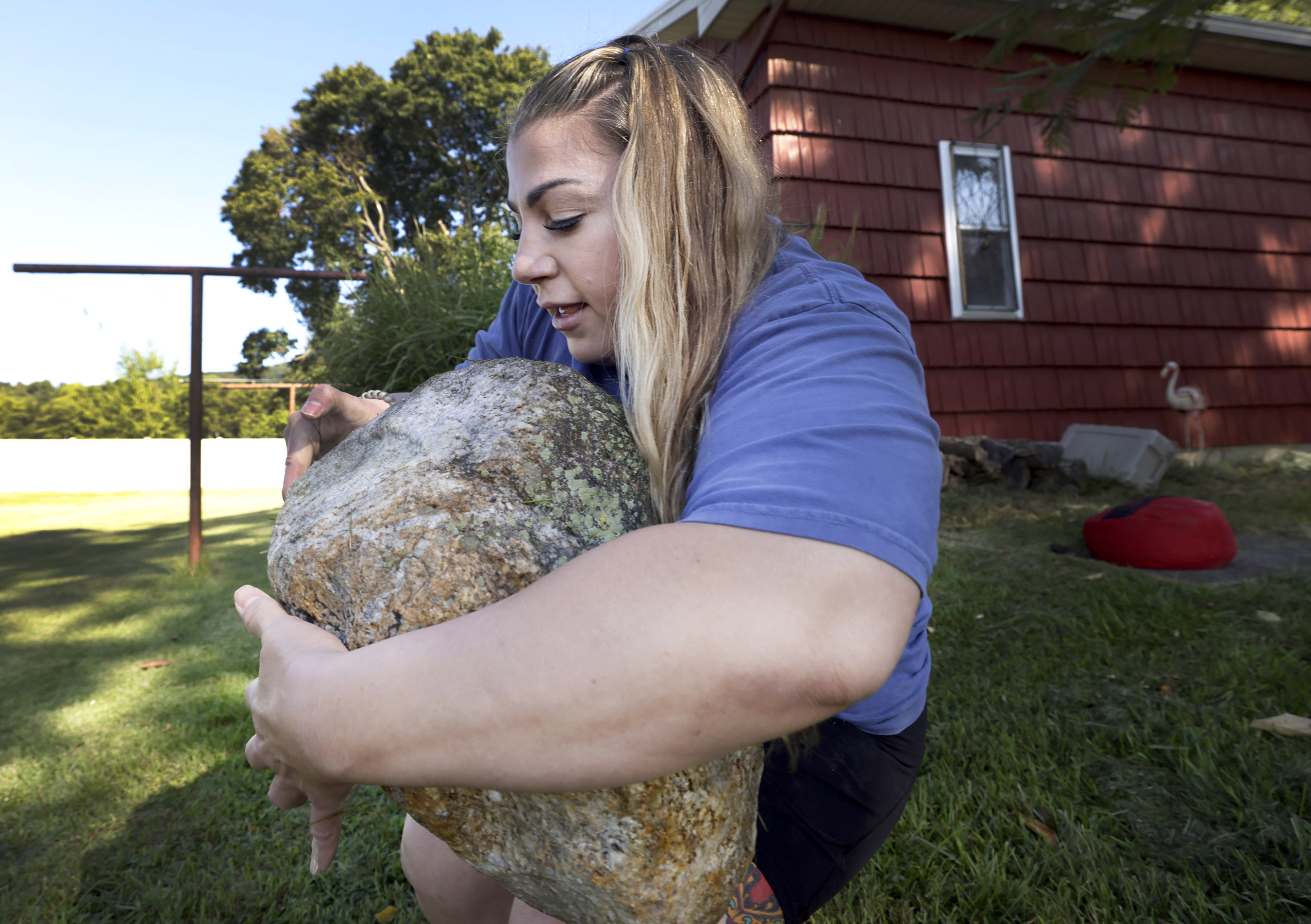
    BERWICK, Pa. — Heavy things flattened the grass in Teresa Troiani’s backyard: boulders, stones, and a concrete ball that weighed 160 pounds.

    Troiani, a nurse and councilwoman in this Columbia County town, crouched low, felt for the best grip, and lifted them one by one on an early September afternoon to demonstrate her power. She carried some of the giant rocks around her yard, and hoisted others onto her shoulder, before dropping them onto the lawn with a soft thud.

    Old bruises were fading on her legs. Fresh pink scrapes etched her forearms. She had a bloody finger, too.

    “Comes with the territory,” she said, catching her breath.

    Teresa Troiani, 42, preparing for a competition.

    Before the stones

    Troiani carried heavier things long before she became one of Pennsylvania’s strongest women, before she flew to Scotland, Iceland, and Norway to test her mettle. In 2004, she witnessed a dear friend, Brendan “Pat” Deeley, get punched in the head during a confrontation at a Berwick home. She performed CPR until he was taken to the hospital, where he died. The death inspired her to become a nurse.

    Troiani says she struggled with her weight for years after Deeley’s death. She was also in an abusive relationship.

    “I went through a really traumatic thing, and I didn’t know what to do with it,” she said.

    After her father, Paul, died from cancer in 2019, Troiani joined a gym and hired a trainer. She was so nervous to go inside, she often waited for her trainer to walk in with her. Troiani grew stronger, and some confidence followed. When her trainer first recommended a powerlifting competition, Troiani balked.

    “I saw the outfits and thought, ‘I am not wearing a spandex singlet in front of other people,’ so I found a strongman competition,” she said.

    Troiani entered the “Pennsylvania’s Strongest” competition in 2020 and practiced flipping enormous tires at home to prepare. She took second place.

    Some of her accomplishments since then include pulling a 15-ton truck for 50 yards and pushing a human-powered grist mill like Conan the Barbarian. She’s held onto heavy things, tossed them over her head, and even cleared fallen trees from the road, without a chainsaw.

    “I think that strength sports has done more for my mind than it’s done for my body,” Troiani said in an interview with a German documentary crew. “It’s helped me do hard things in my life, you know.”

    Fast-forward a few years, and Troiani found herself standing by an early 19th-century bridge in rural Scotland wearing a sports bra and kilt. Troiani traveled to the little hamlet of Potarch in early August to tackle the Dinnie Stones, two massive pieces of granite with metal rings attached for lifting. The stones together weigh 733 pounds, a little less than a male grizzly bear, and they’ve been a test of strength for locals since the 1860s.

    Teresa Troiani hefts a rock while training.

    The training

    Fewer than two dozen women have lifted the Dinnie Stones since official competitions began in 2016. One of them was Troiani’s coach, Sandra Bradley, of Germany, whom she found online.

    Lifting the stones requires awkward positioning, with one hand almost behind the back, the other in front. It’s difficult to simulate in the gym, though at least one company has created a piece of equipment to replicate the lift.

    “It’s a wee bit awkward,” said Belfast strongman Stevie Shanks, who has lifted the Dinnie Stones a whopping nine times.

    While training for Scotland, Troiani injured her back. A month before the competition, she had some doubts: her personal best Dinnie-style lift was 610 pounds.

    Troiani trains in her grandfather’s backyard.

    Troiani visited Norway before Scotland to watch competitions and hang out with friends. During a training session there, Bradley slipped some extra weight on, and Troiani unwittingly surpassed her personal best and lifted 672 pounds.

    “I didn’t really do the math, you know,” she said.

    Bradley, who lives in Nuremberg, had little doubt Troiani was ready for the Dinnie Stones after that.

    “What I’ve seen is that she’s way more self-confident and trusts herself now,“ Bradley said from Germany. ”She sees her potential. She can do hard things and overcome a lot more than she thought.”

    ‘Teresa could carry the town on her back’

    In 2017, Troiani was encouraged to run for the Berwick council to bring a younger perspective.

    Troiani said her identity isn’t “wrapped up” in being on the council, but she’s proud to connect citizens with resources they need.

    “I just wanted to make a difference in the community I lived in and felt like the decisions being made were from an antiquated mindset,” she said of her decision.

    A Democrat who is now in her third term, Troiani missed a council meeting for the Scotland trip. But council president Jeri Wozniak said the town was proud to excuse her absence.

    “Teresa is the epitome of our town,” Wozniak said. “We live in a blue-collar, working-class town where we’re not afraid to roll up our sleeves, and Teresa could carry the town on her back.”

    The competitions

    On that August afternoon by the River Dee in Scotland, Troiani grabbed the rings of the 733-pound stones.

    The crowd grew raucous, pumping her up.

    “Believe it,” one man screamed in a thick brogue.

    Seconds later, Troiani pulled hard. A sliver of daylight appeared between the earth and stones.

    “Yes,” the crowd cheered.

    Troiani dropped the stones, almost in disbelief.

    “I did it!” she yelled, raising her arms.

    In September, Troiani placed second in a stone-lifting competition in Virginia. That victory qualified her for the world’s strongest stone lifter event in Norway. That competition will cover hotel and partial airfare, which is nice, she said, considering she’s only won about $400.

    Troiani isn’t out for trophies or prizes, though, and doesn’t have big aspirations for politics. She is looking for bigger boulders, though, including the legendary “Húsafell Stone,” a coffin-shaped rock that weighs 410 pounds and sits on a farm in Iceland.

    “There’s a short list of women who’ve lifted it, and it has so much history. There’s so much history and culture in this sport, and now, I’m a part of it.”

    And that’s been the most rewarding part of heavy lifting for Troiani, even if it comes with some bruises.

    “I think I just needed community, and I found it with stone lifting,” she said. “That’s something we’re missing as adults, and I found it.”

  • Three alleged members of a Norristown gang are on trial in a rival gang member’s slaying

    Three alleged members of a Norristown gang are on trial in a rival gang member’s slaying

    Three alleged members of a Norristown street gang will face a Montgomery County jury next week for, prosecutors said, valuing the code of the street over another man’s life.

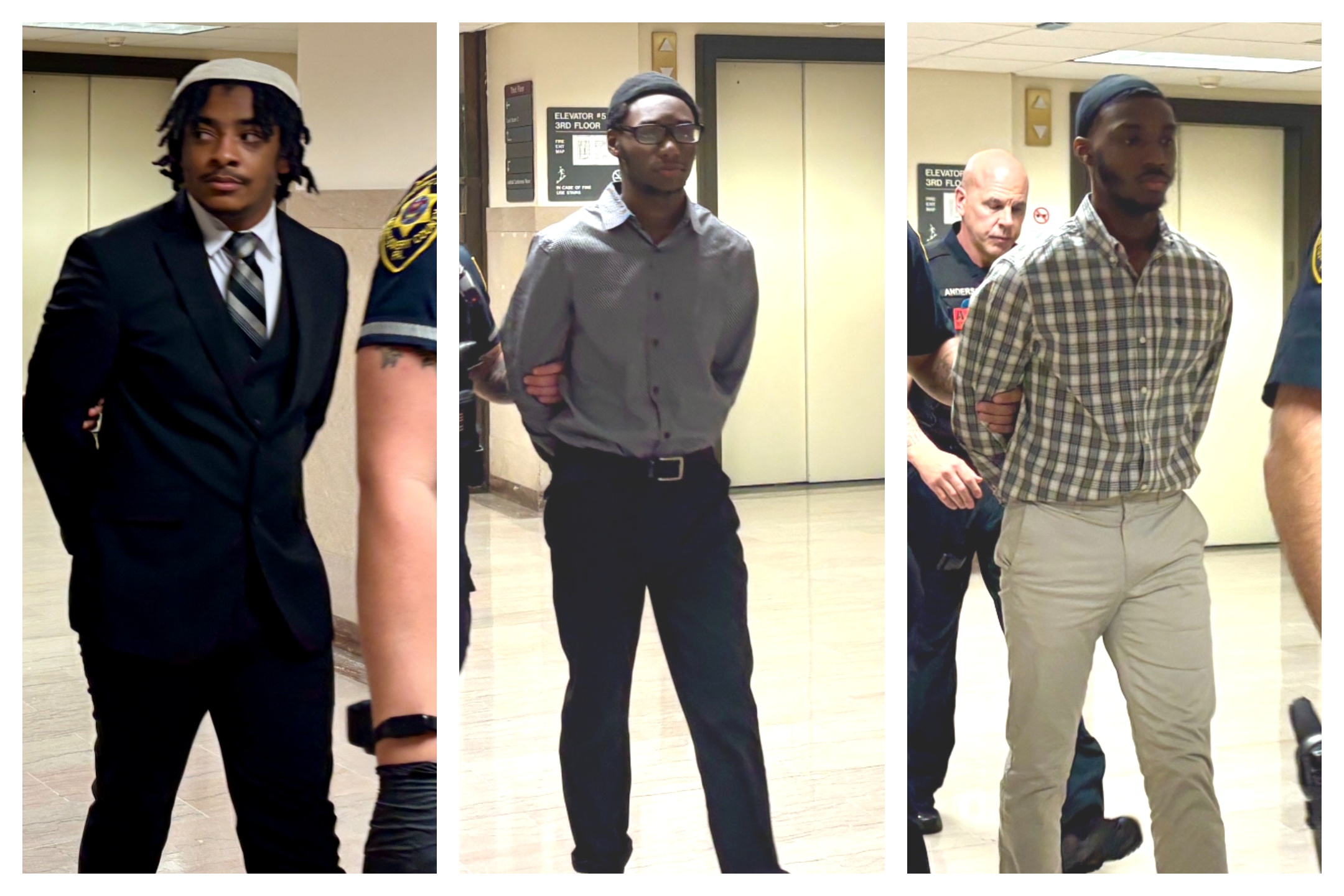
    Jabriil Morgan-Cook, 20, Naseem Worrell, 19, and Kaleem Roland, 17, are all charged with murder, conspiracy, and related crimes in the May 2025 killing of Tahaj Andru “Pooh” Harrison.

    Wearing masks and armed with guns, the trio allegedly shot Harrison, 20, as he stood on the steps of his home in Norristown, Assistant District Attorney Gabrielle Hughes said during her opening statement. He survived long enough to stumble into his backyard and collapse in front of his mother.

    Harrison became a target for the trio, Hughes said, after mocking the death of a member of the All Black Bandits/300s, the street gang they belonged to.

    “Tahaj Anderson was only 20 years old when he was senselessly murdered by these three defendants, who valued their gang membership and street reputation more than the life of someone else,” Hughes said.

    But defense attorneys for the three took turns Friday doubting the validity of the case, saying investigators relied on circumstantial evidence and statements from other gang members who had incentive to pass blame.

    Worrell’s attorney, Richard Giuliani, said there is no direct evidence tying the teen to the crime.

    “There will not be one witness who will get up there and say, ‘I was there, I saw him, Naseem was one of the shooters,’” he said.

    And Thomas Egan III, who is representing Roland, told jurors that the use of the term gang is overblown.

    “These are loosely affiliated groups of kids who lived near each other and went to school with each other,” he said. “This not like the gangs depicted in movies.”

    But Hughes said there is an abundance of evidence connecting the three to the case. And it was not difficult to find: Hughes said they documented the feud through social media posts that explained exactly what they planned to do.

    Harrison, himself a member of the Grimy Boys/6s, a rival gang, posted a derogatory comment on an Instagram post honoring Seth “Pop” Marshall, a 15-year-old member of the All Black Bandits/300s. Marshall was slain in a West Philadelphia corner store three days before Harrison was killed, according to the affidavit of probable cause filed in this case.

    In response, Worrell threatened Harrison in messages sent through Instagram, and Harrison challenged Worrell to come find and attack him, as seen in excerpts from those messages included in court filings.

    “The message was that no one was going to diss his dead friend and not face consequences,” Hughes said. “Because to them, disrespect is a death sentence.”

    An hour before Harrison’s death, Worrell, Morgan-Cook, and Roland met at a home on Basin Street that served as a hangout for the gang, according to the prosecutor.

    There, Morgan-Cook posted a live video to Instagram that showed all three teens brandishing handguns. In that video, Morgan-Cook boasts that he “might kill somebody tonight,” Hughes said.

    Morgan-Cook’s attorney, George Yacoubian Jr., urged jurors not to take the video seriously. His client, he said, was simply “puffing” himself up, and the threats were empty.

    “There is not going to be any forensic evidence … that links back to Jabriil Morgan-Cook and the death of Tahaj Harrison,” he said.

    Not long after that video was posted, three masked men walked to the block of Corson Street where Harrison lived. As Harrison stood outside, the three opened fire, striking him once in the chest, prosecutors said.

    Medics pronounced him dead at the scene.

    The shooters, Hughes said, all wore clothing similar to what the three suspects wore in the Instagram video. And a loaded handgun magazine left at the scene contained Worrell’s DNA, Hughes said.

    Cell phone data showed that after the shooting, the three men took Ubers out of Norristown, according to Hughes.

    Worrell and Roland were arrested in the following days. But Morgan-Cook attempted to elude police and was eventually caught at a home in Pottstown, hiding under the floorboards in a crawlspace, authorities said.

    The trial is expected to resume Monday before Montgomery County Court Judge Steven T. O’Neill.

  • Philly is under a severe-storm watch Friday, to be followed by frost and real fall weather

    Philly is under a severe-storm watch Friday, to be followed by frost and real fall weather

    In advance of the chilliest air mass of the season, potent thunderstorms are possible late Friday afternoon into the evening, and then major changes are in the winds.

    The federal Storm Prediction Center has issued a severe-thunderstorm watch for the entire region until 8 p.m., warning that gusts approaching 60 mph are possible.

    In addition, “We can’t rule out a stray tornado,” said Joe DeSilva, meteorologist in the National Weather Service’s Mount Holly office.

    And then expect about 100% chance of October, with frost looking likely Sunday morning.

    Said DeSilva, “Finally, some real fall weather.”

    When severe storms might arrive in Philly

    The prime time for any severe storms would be between 5 and 7 p.m., said DeSilva.

    Temperatures climbed well into the 70s Friday afternoon as the sun made a reappearance, but the retro-summer is about to end.

    Frost is likely in the region Sunday morning

    After the rain shuts off Friday night with the passage of a powerful front, temperatures are due to tumble into the 40s, and on Saturday may get stuck in the low 50s, or about 30 degrees cooler than the highs on Friday.

    For the thousands participating in the annual Philly Bike Ride, the trip to the hills of Manayunk might be a challenge: Winds from the north are forecast to gust past 35 mph throughout the event.

    Winds back off and temperatures drop Saturday night. Early Sunday they could drop into the low and mid-30s, said DeSilva.

    If skies remain clear and winds are light enough to allow the daytime heat to escape, patchy frost is likely to coat the car roofs and ground foliage in the region.

    A “freeze watch” for subfreezing readings has been posted for northern and western sections of Bucks, Chester, and Montgomery Counties.

    Highs Sunday are forecast to be in the mid- to upper 50s, which would be about 10 degrees below normal.

    Temperatures during the workweek could get no higher than the mid 60s, with nights in the 40.

    And it should be looking more like fall.

    The Philly region’s peak foliage-color period is a bit away, based on the behavior of recent seasons, but the show should be getting a boost,

    “I expect the cooldown to have a major effect on foliage in southeastern Pennsylvania,” said Ryan Reed, program specialist with the Pennsylvania Department of Conservation and Natural Resources, and author of its weekly foliage updates.

    “By this time next week, there should be a lot of color in Philly,” he added.

    Based on what has happened to the north, it could be quite a show.

    “This season has been awesome so far,” he said, “one of the best in recent memory.”

  • Pa. gets its first agricultural plan as farmers face land loss, rising costs, and labor shortages

    Pa. gets its first agricultural plan as farmers face land loss, rising costs, and labor shortages

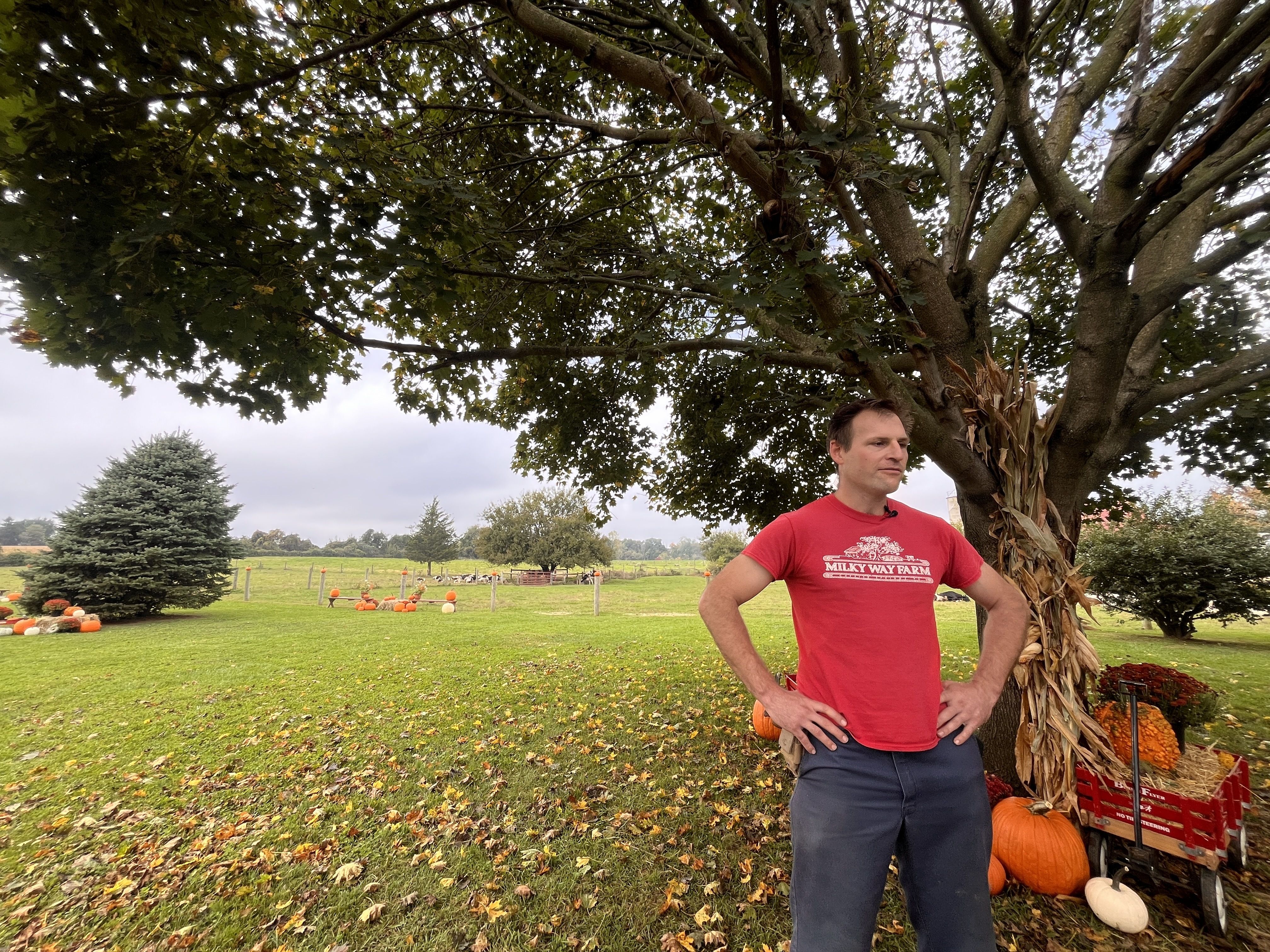
    Historic Milky Way Farm, set on 103 rolling acres in Chester Springs, has been run by the Matthews family for generations.

    Thomas Matthews says the farm — actively cultivated for 300 years — faces economic hurdles such as high fuel, fertilizer, and operational costs, as well as development pressure.

    “We are really passionate about connecting with the community and educating people about where their food comes from,” Matthews said.

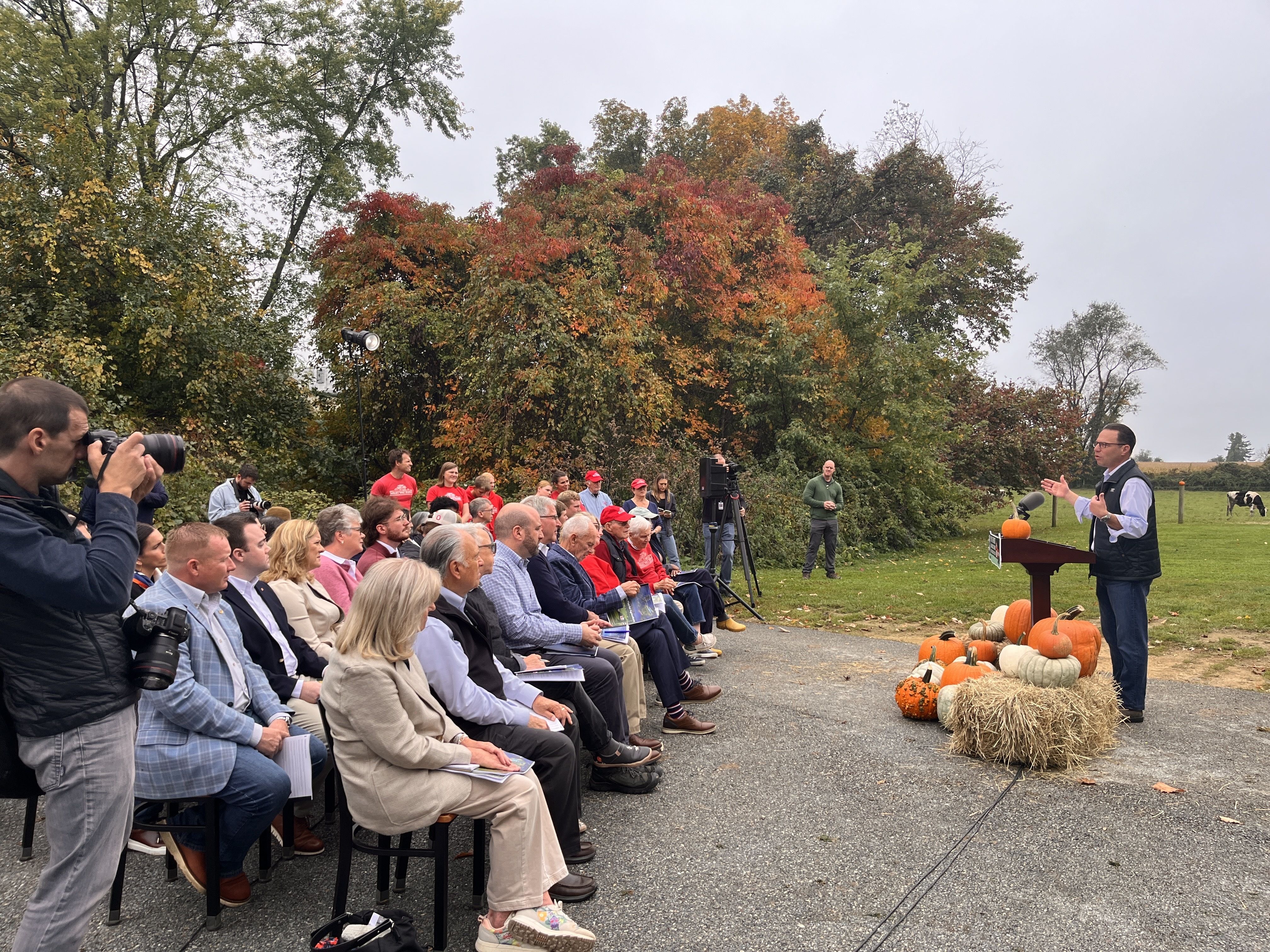
    On Friday, Gov. Josh Shapiro and other officials announced Pennsylvania’s first strategic plan for agriculture in an attempt to help farms like Milky Way survive.

    Pennsylvania lost 17% of its farms and 8% of its acreage between 2012 and 2022, according to the most recent agricultural census. That is twice the national rate, according to the plan.

    Much of that loss comes from high land values and development pressure.

    “I believe that when you succeed, Pennsylvania succeeds,” Shapiro said of farmers. “The future of the Commonwealth of Pennsylvania looks bright, and it runs right through our Pennsylvania farmlands.”

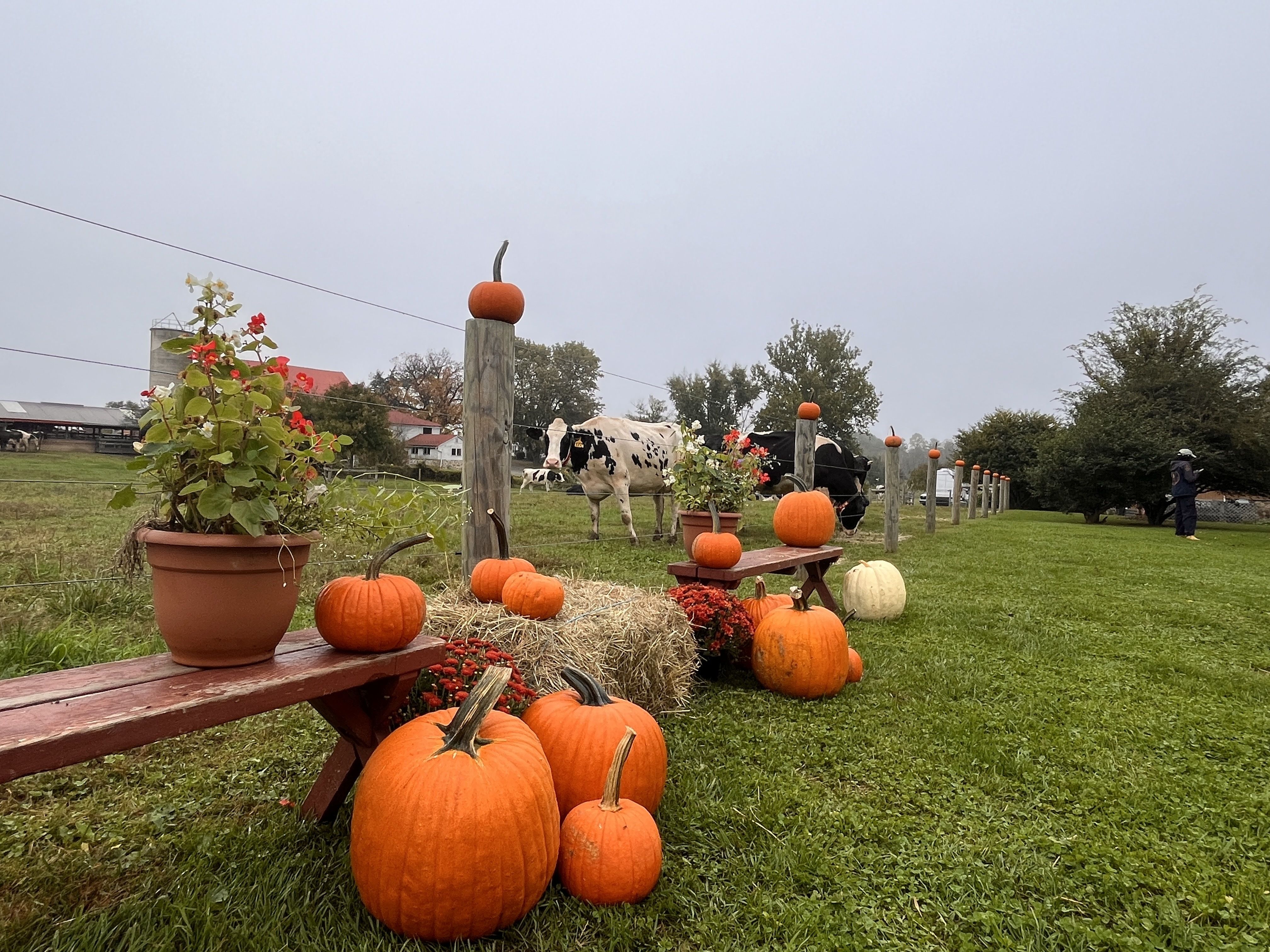
    Shapiro announced the 10-year plan from the Milky Way Farm, which has 50 milking cows and a creamery, and also raises crops such as pumpkins.

    Gov. Josh Shapiro and other state officials announced the state’s first strategic plan for agriculture at the Milky Way Farm.Frank Kummer

    The plan sets out to establish a blueprint for the state’s $153 billion agricultural economy, which includes 48,000 farms and over 600,000 workers statewide.

    Shapiro outlined five pillars of the plan:

    • Support agricultural careers by expanding apprenticeship programs, education, and workplace support.
    • Embrace innovation and modernization by providing grants for equipment, upgrades, automation, and research.
    • Increase market access by growing the “PA Preferred” brand, and expand organic markets.
    • Protect current farmland though preservation, farm succession plans, and land-use planning.
    • Better coordinate the state’s support network for farmers and provide more resources.

    As an example of driving technological adoption, Shapiro highlighted the state’s first Agriculture Innovation Grant, which has already distributed $20 million in grants to help farmers adopt precision equipment, water conservation tools, and modern facilities.

    He pointed to major economic wins, such as Chobani’s recent $1.2 billion Lehigh Valley facility investment, which is projected to increase state milk production by 30% — from 10 billion to 13 billion pounds annually.

    “The launch of this plan is certainly a milestone, but it’s not a finish line,” said Russell Redding, the state’s agricultural secretary. “It’s a starting point for the work that we do.”

    Redding said the plan was crafted through feedback from over 200 participants across 40 counties at regional listening sessions.

    The plan’s primary role, he said, is to create opportunities for people to remain in agriculture.

    Thomas Matthews on his family’s Milky Way Farm, shortly after Pennsylvania Gov. Josh Shapiro and other state officials announced the state’s first strategic plan for agriculture. Frank Kummer

    He and Shapiro both acknowledged current political and economic headwinds, such as volatile diesel prices, high fertilizer costs, and labor issues that are pressuring farmers.

    Shapiro put the blame for many of farmers’ current issues at the feet of the Trump administration.

    He said Pennsylvania farmers are “getting crushed” by soaring operational costs, which he attributed the spike in fuel prices from the war in Iran, disruption of trade routes, and tariffs.

    Diesel, he noted, which farmers depend on to run equipment, reached approximately $6.50 a gallon.

    The new state plan cannot fix those things overnight but sets Pennsylvania farmers up for a stronger economic run over the long haul, officials said.

    They also credited the state’s farmland preservation program, which has 6,781 participating farms and 671,082 acres preserved.

    The Milky Way Farm is preserved through Chester County’s land-preservation program, Matthews said. He strongly supported the new 10-year plan because of its broad vision and specific support for family farms.

    He said most family farms are focused on immediate tasks. Having Shapiro and state leaders provide a road map takes some of the burden off their backs, he said.

    For example, providing grants to help farmers adopt modern technologies will make their businesses more competitive and help pass farms down to the next generation, he said.

    “Often, as farmers, it’s easy to focus only on the chores of today and get lost in what are we building toward.”

  • N.J. state prosecutor used AI to create and share child pornography, Bucks DA says

    N.J. state prosecutor used AI to create and share child pornography, Bucks DA says

    A state prosecutor in New Jersey used AI to create and share child pornography under the username “the gentleman pervert,” according to investigators in Bucks County.

    Brian Fitzgerald, 51, has been charged with possessing and disseminating child pornography. The Lower Makefield resident remained in custody Friday, in lieu of 10% of $2 million bail.

    His attorney, Paul Lang, declined to comment Friday.

    Fitzgerald has worked for 10 years as a deputy attorney general in New Jersey, handling insurance fraud cases, according to his LinkedIn profile. He also serves on the state’s ethics board, investigating allegations of misconduct against his fellow attorneys.

    Bucks County District Attorney Joe Khan, in announcing Fitzgerald’s arrest, said he “will pursue these cases aggressively and hold offenders fully accountable, regardless of their profession or title.”

    “No one is above the law, least of all someone entrusted with upholding it,” Khan added.

    In a statement, the Office of the Attorney General said they were aware of Fitzgerald’s arrest and are cooperating with Khan’s investigation.

    They are taking “appropriate actions toward his employment,” according to the statement.

    Detectives began investigating Fitzgerald earlier this year, when they received an online tip from the National Center for Missing & Exploited Children that a Discord account had uploaded child pornography in July, according to the affidavit of probable cause for his arrest.

    Investigators linked the account, which used the username “thegentlemanpervert_2160_07833,” to Fitzgerald and his home on Edgewood Road in Lower Makefield.

    After serving a search warrant there Thursday, detectives recovered chat logs from Fitzgerald’s Discord account in which he admitted to using AI to generate the child pornography, the affidavit said.

    He is scheduled to appear before a district judge for a preliminary hearing on Oct. 27.

  • Once a bucolic Pennsylvania river, the Tioga is now all but dead

    Once a bucolic Pennsylvania river, the Tioga is now all but dead

    This article was produced by Capital & Main. It is published here with permission.

    When the lingering sun of late May inches along to peer down on the Tioga River — its water glistening — it does so as birds chirp overhead, as a chipmunk darts through rustling riverbed brush, and as yellow butterflies dance into the gorge.

    This river doesn’t roar; it trudges along steadily. Water laps over rocks and flushes back to create a current that freshwater kayakers might consider a Class 2. As it does, it leaves behind deposits of minerals dredged up from mines that coal barons dug nearby more than two centuries ago.

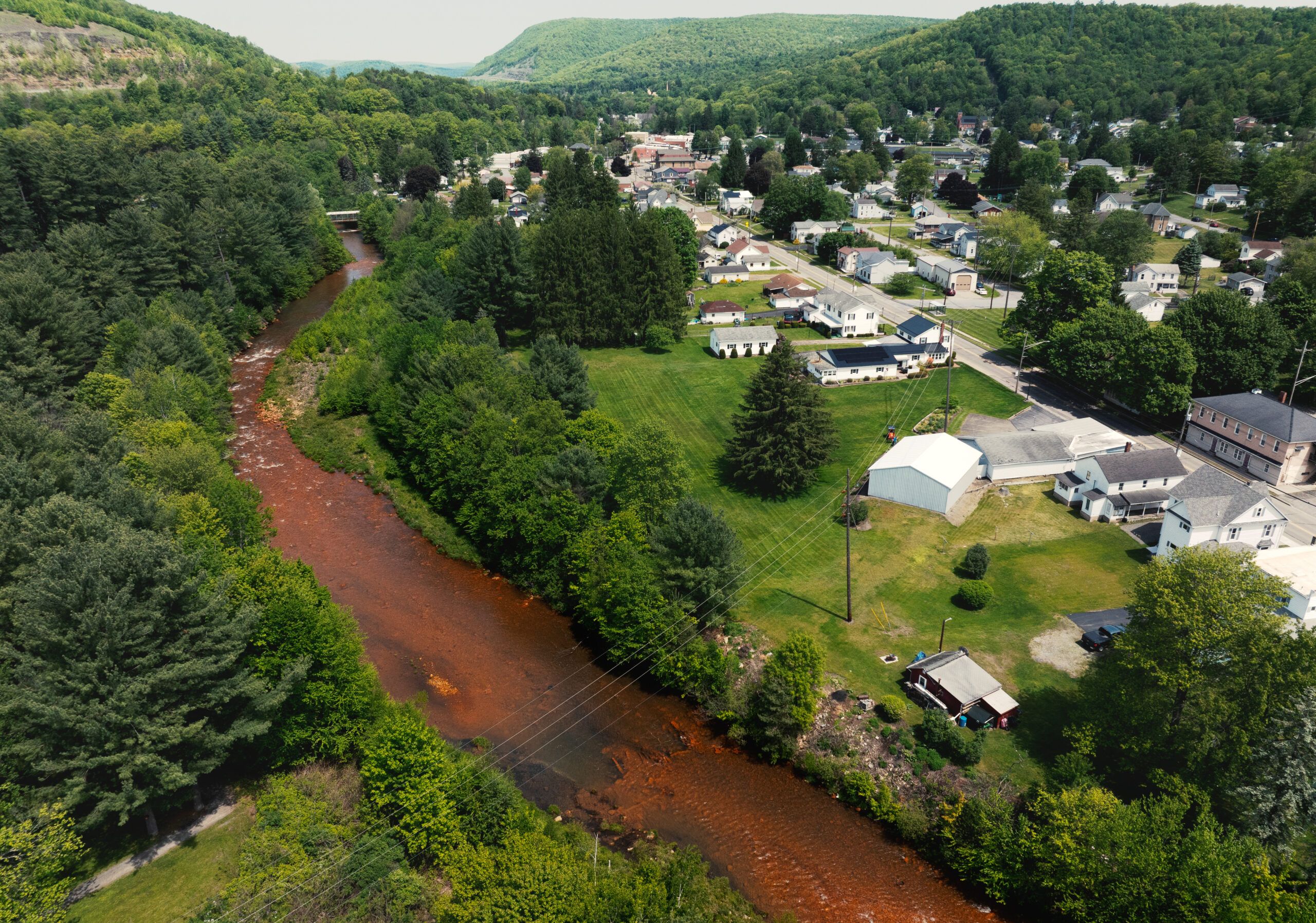
    Standing above the river on a bridge in Blossburg, a North Central Pennsylvania town of 1,500 that straddles the Tioga, it’s not immediately apparent that there’s anything wrong with the red-rocked river. Except, while life teems along its banks, there is virtually nothing beneath the water’s surface.

    In this stretch of the Tioga, there are no fish. There are no bugs — save for a small number of macroinvertebrates. And there haven’t been for decades. Five coal mines that line its tributaries, left unsealed at the end of their productive lives, have long leaked highly acidic water rich in metals like iron and aluminum that chokes out aquatic life. It’s a process known as acid mine drainage; as of 2020, abandoned coal mines left more than 850,000 acres still damaged across the country — 84% of them in Appalachia.

    Drainage from abandoned coal mines has caused the water of the Tioga River to turn orange.Matt Gunther / For Capital & Main

    “It’s dead,” said Andrew King, the mine drainage program coordinator at the Susquehanna River Basin Commission, a multistate task force devoted to protecting the river. The Susquehanna receives flows from the 58-mile Tioga after it snakes north for 58 miles into south-central New York and meets with another to form the Chemung River. At over 440 miles, the Susquehanna is the longest river on the East Coast. It eventually spills into the Chesapeake Bay.

    For several years, King has been working with a team of engineers, residents and stakeholders on the construction of a treatment facility designed to clean up the Tioga, bring back cold water fish species and create an outdoor recreation economy that comes with a river alive with native brook trout, wild brown trout, dace, sculpin, and other aquatic life.

    “The Tioga is going to go from dead to being a trout river, and not a little trout river,” he said. “The Tioga River is going to turn into a destination fishery.”

    The facility’s construction has been more than two decades in the making, as local conservationists, led by 40-year residents Charlie and Joyce Andrews, of the Tioga County Concerned Citizens Committee, have worked to build political will for the project. After all, Pennsylvania is home to more than 5,500 miles of waterways polluted by acid mine drainage left behind by legacy coal mining. Fighting for their stretch of freshwater to be cleaned ahead of others required a steady drumbeat of grant applications, studies, and meetings.

    A polishing pond helps remove harmful materials and sediment at a water treatment facility in Fall Brook.Matt Gunther / For Capital & Main

    In 2015, they took a first step in building two passive treatment systems that drain pollutive minerals over limestone beds to lower the water’s overall acidity. The systems were successful, but small in scale — only impacting a five-mile stretch of the Tioga watershed. But in 2024, the Susquehanna River Basin Commission received a $68 million grant from the Biden-era Infrastructure Investment and Jobs Act for a system designed to clean the entire river by functioning more like a sewage treatment plant. Wildlife should reappear within a matter of years once the system is operational.

    “It happens way faster than anybody expects,” King said.

    The Tioga active treatment system was the largest grant recipient that year, and organizers say it is still on track even after Congress, in January, reallocated more than $500 million for abandoned mine reclamation to other causes, siphoning $169 million away from Pennsylvania. Advocates argued the jobs act cash injection, though historic, was well below what was needed to clean up all the mining pollution in the U.S. How successfully the Keystone State can clean up its coal pollution on a leaner budget is an open question.

    Nonetheless, the Tioga project is slated to come online by 2029.

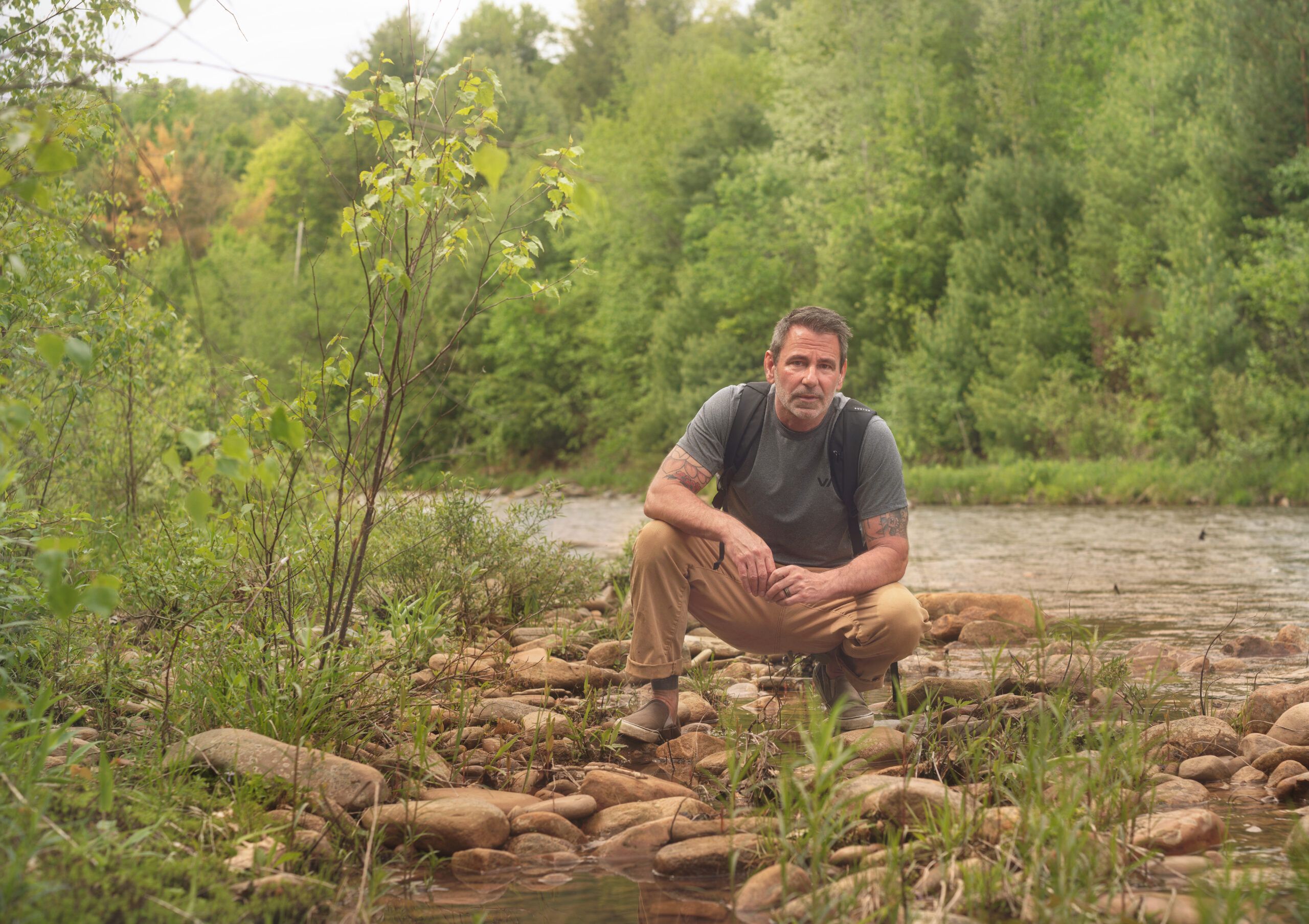
    Tioga County Commissioner Shane Nickerson says that, growing up in Blossburg in the early ’80s, he didn’t know anything other than life along an orange-stained freshwater artery.

    “You don’t realize that the damage there from acid mine drainage is really a thing,” he said. “It’s orange — your mother always tells you, ‘If you’re going to go in the river, wear your old sneakers,’ … and that’s just kind of how it was.”

    Shane Nickerson stands on the banks of the Tioga River in Blossburg.Matt Gunther / For Capital & Main

    Nickerson has fond memories of the Saturday mornings of his childhood when he would wander into old abandoned coal mines with his friends, flashlight in hand. “You’d say, ‘OK, you guys go this way, we’re gonna go this way,’” he recalled. It was not obvious to him, as a youth, that nothing lived in the Tioga. Until one day, when he caught a wild fish and tried to make it a pet. When it was clear it was beginning to die, he attempted to release it into the Tioga a few blocks from his house.

    “That’s when I figured out that oh, there’s something wrong with this river,” he recalled.

    There’d been something wrong with the Tioga long before Nickerson was born. “At Blossburg,” reads a 1925 article in the New York-based Star-Gazette, the Tioga “is polluted with mine drainage, the sulfurous content of which has coated the stones in its bed with a thick yellow-brown deposit.”

    Standing by the riverbed in Blossburg, Nickerson reflects on the complicated legacy big industry leaves behind in blue-collar towns. Scars of pollution are coupled with a tight-knit sense of community forged on worker solidarity. Blossburg was home to William B. Wilson, the country’s first secretary of labor, who cut his teeth organizing mineworkers in town. In the mid-20th century, Pennsylvania’s mines employed close to 200,000 people. Today there are fewer than 5,000. In Blossburg, the industry is shuttered, but still celebrated. The town hosted its 34th annual coal festival at the end of May.

    Nickerson poses for a portrait on the edge of the Tioga River.Matt Gunther / For Capital & Main

    “We wouldn’t have been in existence without it,” Nickerson told Capital & Main. But, as new industries have come to town, like fracking and manufacturing, he considers the cost of cleanup that coal left behind. It is a cruel irony that many of the areas grappling with such damage are uniquely ill equipped to handle it. Towns with abandoned mine land face higher poverty rates than those without, according to the Ohio River Valley Institute, a nonprofit think tank that also asserts that these scars deter future economic development.

    “I just think that using things up and then leaving it alone and just moving on just is unacceptable,” said Nickerson, who served as Blossburg’s mayor for 10 years.

    The first Democrat elected to the Tioga County Board of Commissioners in 12 years, Nickerson has made it a priority to breathe economic life into an area facing population declines, school closures and job losses. Before taking office, Nickerson, alongside his wife, worked to repair empty Main Street storefronts and push for the creation of a skate park in town. Now, as commissioner, he is focused on tackling the region’s opioid crisis. The county ranked seventh in the state for drug overdoses in 2022.

    But it wasn’t until Charlie and Joyce Andrews came around, he said, that the community felt they had any power to fix longstanding issues with the Tioga.

    The Andrewses, who moved to Tioga County in the 1980s, reflect on decades of work with an acute sense of humility — though many call them local heroes. Like Nickerson, they’ve never known a clean Tioga River. They also never saw a dirty one as an inevitability. Together they helped fend off a proposed landfill in the 1980s — once successful, they shifted focus to the river.

    “We put in for some grants. … A couple times, we got turned down, and then we’d go and would apply again, and eventually we would get a grant,” Charlie Andrews recalled. They would fundraise, but never imagined getting nearly enough to find a full-scale solution for the river.

    “Once the river gets polluted, it takes a lot more to clean it up,” Joyce Andrews said. “It was basically unintended consequences of an industry that had helped build the area.”

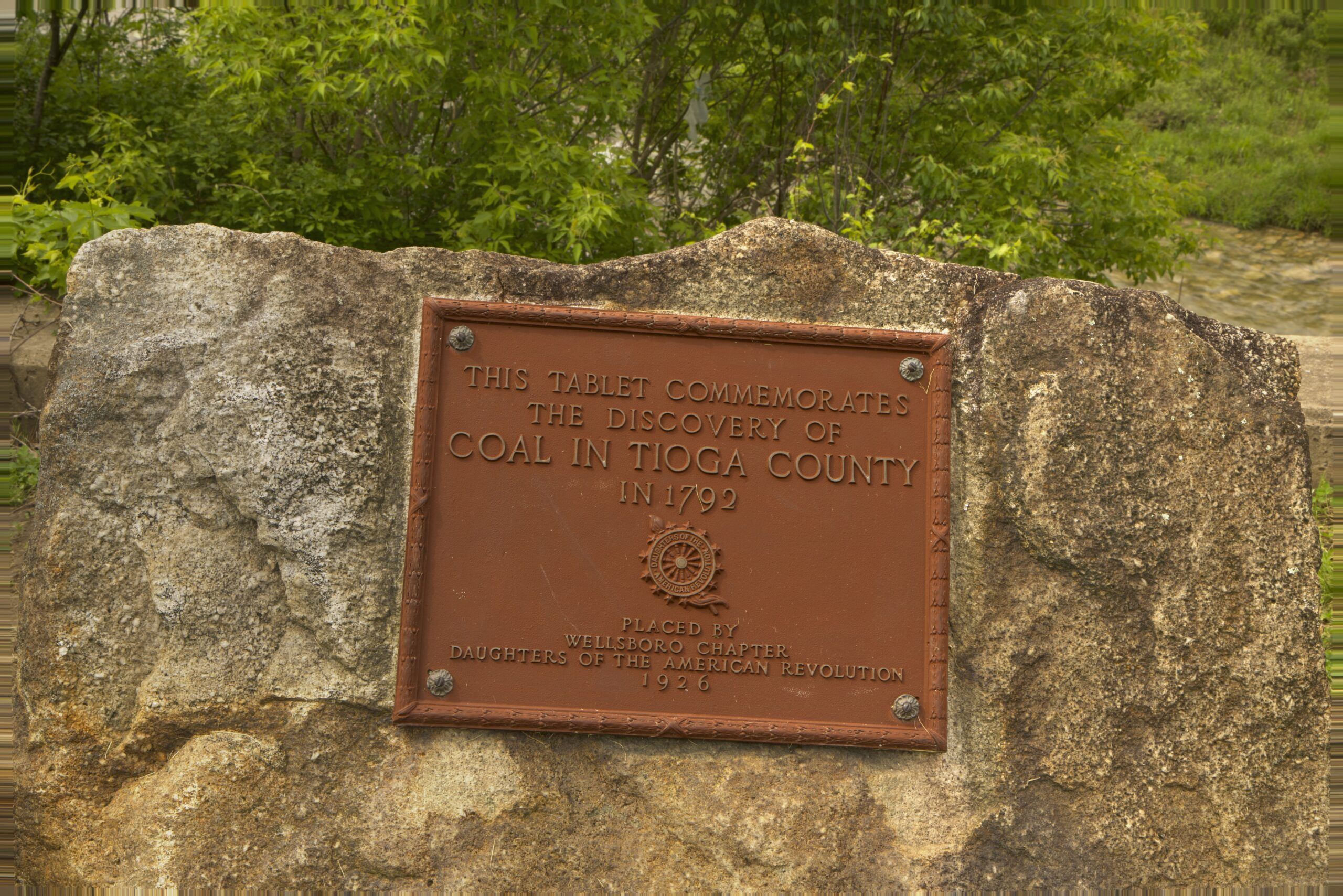
    The last mine in Tioga County shuttered in 1990. Nearly 200 years before that, German immigrants were navigating through what would become Blossburg when they came upon a lump of black, porous material they realized was capable of generating energy when burned. The first mine sprouted up around 1815, and with it, a railroad to carry that coal to New York. Towns began to spring up around it, some that have nothing to show for their existence today. The town of Fall Brook, six miles east of Blossburg, was, in 1862, home to hundreds of houses, a company store, carpenters and blacksmiths, and a school. Today, there is no trace of it, save for a grown-over cemetery, where headstones are faded and mossy, if visible at all.

    A historic plaque in Blossburg commemorates the discovery of coal in Tioga County in 1792.Matt Gunther / For Capital & Main

    Damage from deep mining — when coal is removed through shafts tunneling hundreds of feet underground — in the late 1800s, and eventually, surface mining, in which coal is removed at the Earth’s surface, in the mid-20th century, has left scars not just in the water but on the land. Tree-planting nonprofit Green Forests Work recently teamed up with students at local Commonwealth University-Mansfield to rebuild 300 acres’ worth of forest around the Tioga River. Their work builds on that of a group of longtime fishing enthusiasts who, over nine years and many weekends, said they have planted 22,500 trees.

    Longtime Tioga County resident and former county planner Jim Weaver is one of those weekend workers. His organization, a local chapter of Trout Unlimited, has also worked on streambed restoration in anticipation of trout populations returning to the Tioga.

    Another thorn in the state’s side: In the last 60 years, a non-native insect called the Hemlock woolly adelgid has proliferated in Pennsylvania, threatening to endanger Hemlock trees which, from the riverbed, provide crucial shade for trout that can survive only in cold water. Weaver helped create a tree-planting strategy to offset this species loss.

    For the years of anticipation of a clean Tioga to precede the launch of an active treatment plant, maintaining a healthy river ecosystem will require more than just metal-free water, said Jennifer Demchak, professor of environmental, geographical and geological sciences at Commonwealth University-Mansfield. When enough macroinvertebrates are able to survive in the Tioga, fish will begin to navigate in that direction, “but you can’t predict what’s going to happen in nature,” she added.

    The climate crisis introduces a slew of unknowns — rising air temperatures warm the water, for instance, which is exacerbated by a lack of tree cover, and the death of trees causes erosion, which may bring silt back into the river that suffocates wildlife, as it has before. The river is a fragile ecosystem made up of many interconnected elements that, if altered by changing climate, could hamper the project’s success.

    Yet, residents still daydream about the clean fresh water they hope is to come.

    “It’s going to change everything,” Nickerson said.

    Weaver remembers that during one of the first community meetings he attended to rustle up support for the river cleanup project in the early aughts, attendees were each asked to share their vision of the river 50 years on.

    “People spilled their guts,” he said. “One of them said, ‘We need to let the people in Mansfield know that the Blossburg kids are coming, because when there’s trout in the Tioga River, they’re going to be fishing the whole way.’”

    Copyright 2026 Capital & Main.