Category: News

  • Sheriff Rochelle Bilal ordered to appear in court for contempt hearing over property auctions

    Sheriff Rochelle Bilal ordered to appear in court for contempt hearing over property auctions

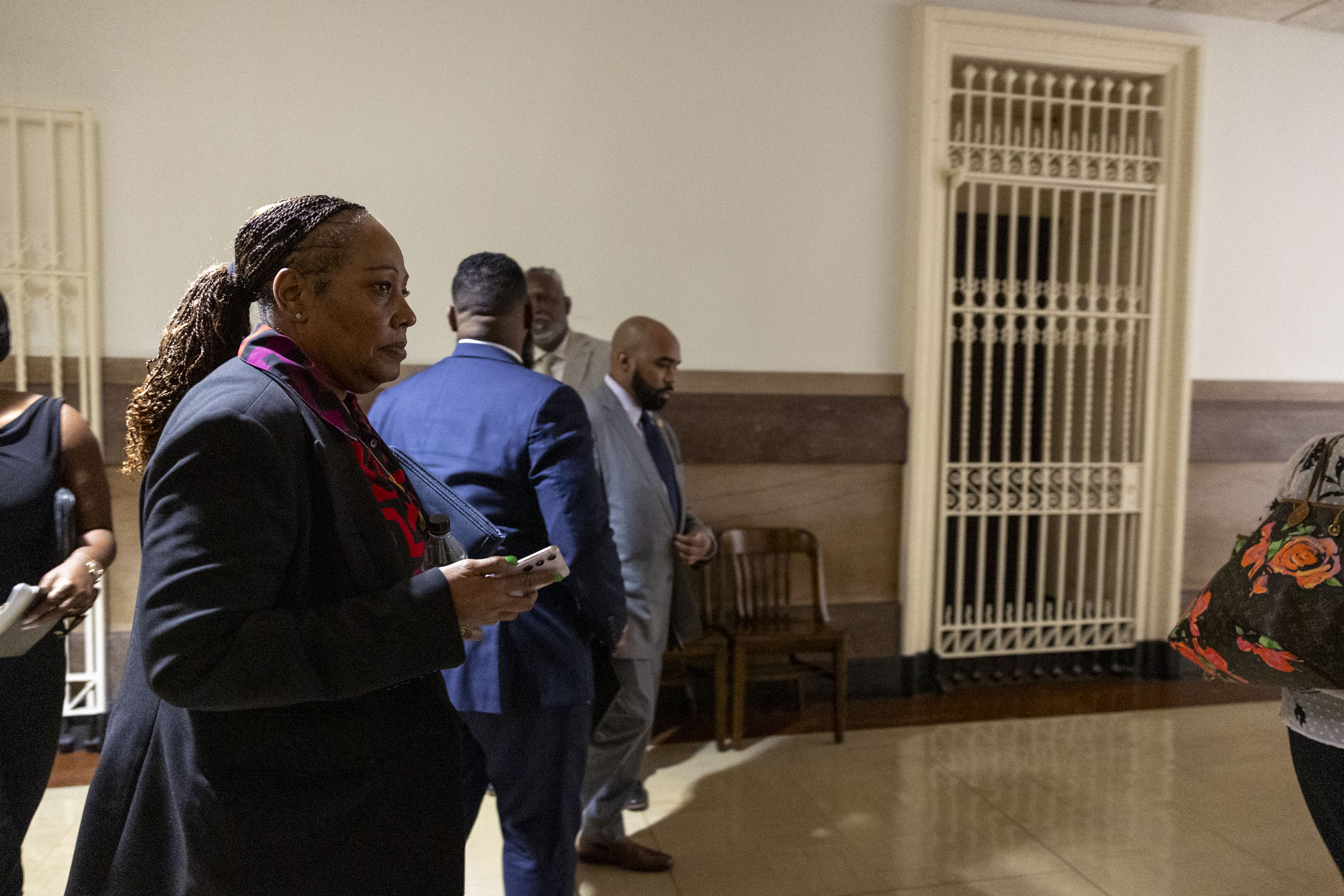
    A Philadelphia judge is threatening to hold Sheriff Rochelle Bilal in contempt of court, a dramatic escalation in a monthslong legal saga stemming from her failure to promptly distribute funds and deeds from property auctions.

    Bilal is due to appear again before Common Pleas Court Judge Paula Patrick on Thursday morning, this time to explain why she should not be held in contempt for failing to turn over financial records and otherwise comply with state rules and a previous consent order pertaining to the auctions.

    Patrick, supervisor of the court’s commerce division, has in recent months been closely examining the city’s troubled sheriff sale process, which since 2023 has been dogged by post-auction delays and litigation from angry buyers. Some buyers have waited a year or more to receive deeds to properties. The delays were first reported by The Inquirer in 2024.

    A previous hearing revealed that the sheriff’s office failed to disburse millions of dollars in sales proceeds — including tax revenue and utility payments owed to the city — and raised questions about the office’s recordkeeping abilities.

    In August, following a hearing in Patrick’s courtroom, Bilal agreed to six months of court-appointed supervision of the auctions.

    But last month, the sheriff backed out of that deal, with her lawyer arguing that the judge lacked the authority to impose “open-ended structural oversight.”

    Patrick responded on Oct. 16 with a terse order scheduling Thursday’s contempt hearing. In a footnote, Patrick clarified that the order is “not an accusation of criminal conduct.”

    “This is not a criminal proceeding, and Philadelphia Sheriff Rochelle Bilal is not charged with any crime,” the footnote reads.

    Bilal and her spokesperson did not respond to a request for comment on the hearing.

    Jonathan Rardin, an attorney hired by the city to represent Bilal, filed a request for a protective order on Tuesday seeking to keep the sheriff off the stand Thursday.

    “Sheriff Bilal is a high public official who has already spent hours testifying in this matter over the course of two days,” Rardin wrote. “[C]ompelling her testimony would impose an unreasonable burden and oppression.”

    Rardin filed a similar request over the summer, arguing that Bilal had “limited personal knowledge” of the real estate transactions she oversees. Patrick rejected that motion.

    The legal proceedings began in May, when Patrick ordered Bilal to hand over records from every real estate sale since she took office in 2020. The court’s intervention has forced the sheriff to publicly acknowledge the office’s shortcomings under her watch, while also prying loose financial information that likely would have never become public.

    At a hearing last month, Steven Wakefield, Bilal’s newly hired senior deputy undersheriff, told Patrick that an ongoing audit had recently turned up about $20 million in sheriff sale proceeds that had not been disbursed, including tax revenue and utility payments that should have gone to the city.

    The $20 million disclosure alarmed City Council members, including longtime Bilal allies who have steadfastly defended her in the face of other controversies. Some Council members are now calling for changes in the sheriff’s office and more transparency in how it handles the sale of tax-delinquent and foreclosed properties.

    Thomas Wilkinson, an attorney at Cozen O’Connor, said a civil contempt hearing is typically aimed at encouraging voluntary compliance with a judge’s order, but could lead to more serious repercussions, like financial penalties.

    “Simply changing one’s mind after a court directive is not typically going to be deemed adequate,” Wilkinson said, referring to Bilal backing out of the earlier agreement to allow outside supervision. “The trial court has the inherent authority to ensure that parties abide by its orders.”

    In her order scheduling Thursday’s hearing, Patrick said one possible penalty for a contempt finding would be requiring the sheriff’s office to pay for a “forensic audit” of the office’s property auctions. The auditor, in that case, would be selected by the court.

    “It’s likely there will be an additional directive and additional time to fully comply,” Wilkinson speculated.

    Patrick has, at times, appeared visibly frustrated by Bilal’s office.

    In her May court order, she noted that administrative problems with sheriff sales are tying up the courts and hurting taxpayers by “delaying the productive return of distressed properties to lawful and economically beneficial use.”

    The judge has also scolded Bilal’s staff for failing to produce requested records, including a detailed accounting of all sheriff sales.

    At the August hearing, Wakefield, the deputy undersheriff, acknowledged that thousands of records had been mistakenly withheld from the court. The office turned over an additional 5,000 pages of documents the night before that hearing.

    Wakefield said those records were found days before the hearing, after The Inquirer asked Bilal and her staff why none of the records of sheriff sale proceeds extended beyond 2023. That year coincided with Bilal signing a contract to have Tyler Technologies replace the office’s existing database software.

    Even after the second document dump, Patrick questioned whether all the records she requested had, in fact, been turned over.

    “I ordered a very specific spreadsheet as to the transactions and things like that, and even that was not filed,” Patrick said at that hearing.

    Bilal’s attorney acknowledged in court that some of the requested records had gone missing.

    “The information available to us was all filed,” Rardin said. “Some of the information the court requested didn’t exist within the sheriff’s own documents.”

    Daniel Bernheim, a lawyer for JSB Property Group, whose lawsuit in March led Patrick to launch the deeper probe of Bilal’s office, has been filing court motions for additional records, such as bank statements and information about how the $20 million was distributed.

    Bilal’s attorney has fought those requests.

    “While the sheriff advertises transparency, she demonstrates a policy of hide-and-seek,” Bernheim said Wednesday. “These materials should be readily available, so we can understand what money was held and to whom it was distributed.”

    Staff writer Anna Orso contributed to this article.
  • Three members of a Norristown gang were convicted of murder for executing a rival over an Instagram beef

    Three members of a Norristown gang were convicted of murder for executing a rival over an Instagram beef

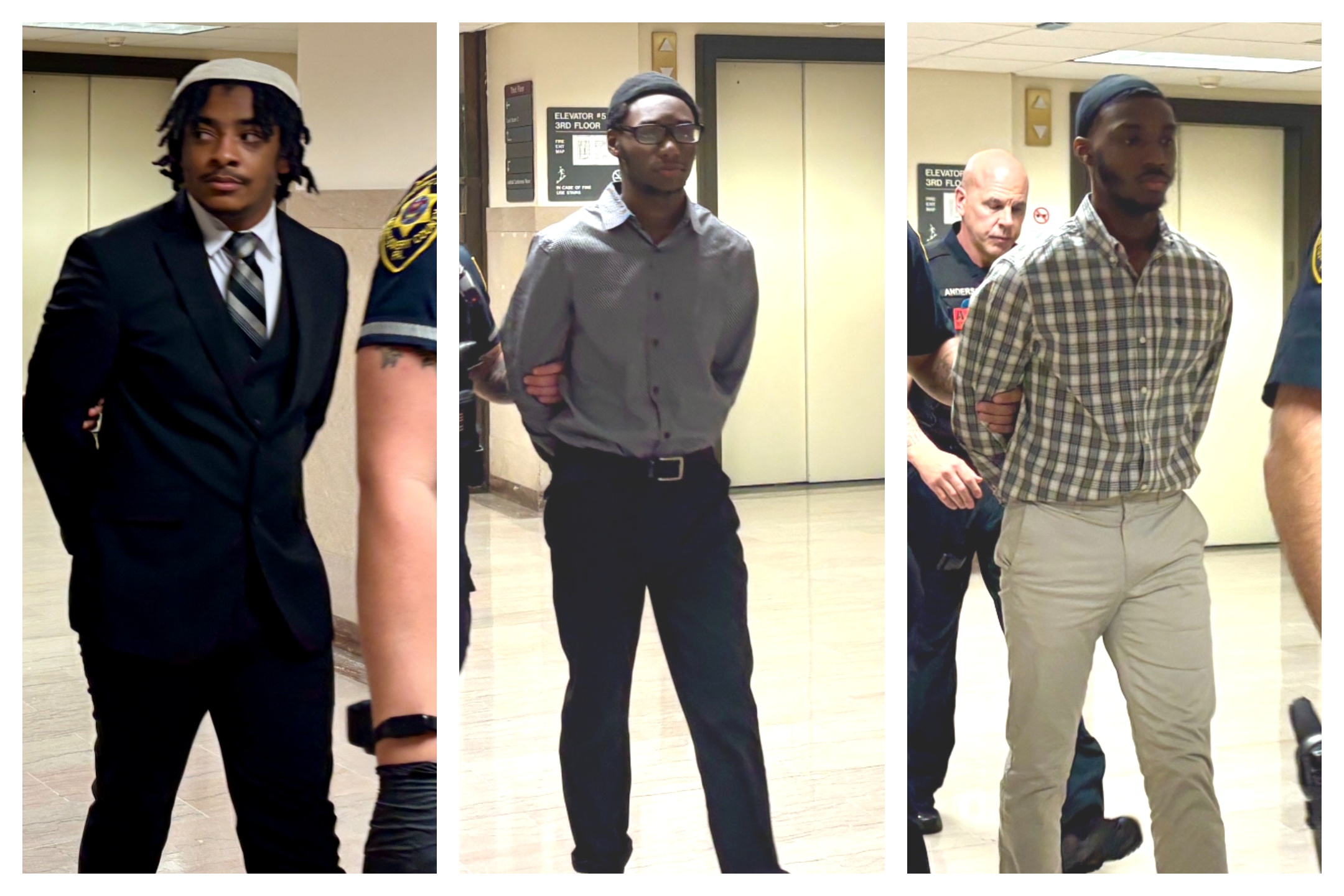
    Three members of a Norristown street gang were convicted of first-degree murder Wednesday for killing a rival in an execution fueled by revenge.

    Jabriil Morgan-Cook, 20, Naseem Worrell, 19, and Kaleem Roland, 17, were also convicted of conspiracy to commit murder, third-degree murder, and gun charges in the May 2025 death of Tahaj “Pooh” Harrison.

    Harrison, according to evidence presented during the trial, made an Instagram post that insulted the trio’s friend, Seth “Pop” Marshall, who was shot dead in West Philadelphia two days before Harrison was killed.

    Harrison, 20, said Marshall “died like a [expletive]” and repeated that insult in a private message to Worrell.

    Seeking retribution, the group sought to ambush Harrison, filming an Instagram Live video in which they promised to “go hunting,” and Morgan-Cook said he was ready to kill for his friend.

    The group did just that, evidence showed, shooting Harrison an hour later as he stood outside his home on Corson Street.

    Assistant District Attorney Tanner Beck, who prosecuted the case, said he was grateful for the jurors’ attentiveness during the two-week trial, and for the thorough investigation by detectives who pieced together the three defendants’ activities before, during, and after Harrison’s murder.

    “They hunted down Tahaj Harrison like prey in response to something that he wrote on Instagram about their dead friend,” Beck said. “And they made sure that he paid the price for that.”

    Morgan-Cook faces a mandatory sentence of life in prison. Worrell and Roland, who were 17 and 15, respectively, when the shooting took place, will be sentenced in the coming weeks by Montgomery County Court Judge Steven T. O’Neill.

    Attorneys for the three did not comment after the verdict. During the trial, the attorneys attempted to discredit the prosecution’s case, saying the Instagram video was little more than boasting.

    And they told jurors that surveillance footage, including a video that captured the fatal shooting, was too blurry and grainy to properly identify the shooters.

    Jurors were not swayed, and delivered their verdict after about three hours of deliberation.

    Morgan-Cook and Worrell showed little reaction to the verdict. But Roland, the youngest, sobbed softly as he was led out of the courtroom in handcuffs.

    The trial offered an inside look into the gang culture that prosecutors say has been a scourge in Norristown since the 1990s. Morgan-Cook, Worrell, and Roland are all self-professed members of the 300s/All Black Bandits, while Harrison claimed allegiance to the 6/Grimy Boys.

    Both factions deal in gun violence, and have been behind a rash of fatal shootings in the borough.

    “I hope that this [verdict] serves as a deterrent to others that might be considering doing this in the future,” Beck, the prosecutor, said. “That if you’re going to do this, we’re on it, and we’re going to hold you accountable for it.”

  • Defeated presidential candidate Flávio Bolsonaro and his family land in Miami after fleeing Brazil

    Defeated presidential candidate Flávio Bolsonaro and his family land in Miami after fleeing Brazil

    MIAMI — Defeated Brazilian presidential candidate Flávio Bolsonaro and his family arrived in Miami on Wednesday after he refused to concede the election to President Luiz Inácio Lula da Silva and fled the country.

    In a circuitous journey, Bolsonaro left for Argentina on Tuesday with his wife and two daughters, then traveled to Ecuador, according to Argentine officials and flight data. The 45-year-old senator, a close ally of U.S. President Donald Trump, visited the White House in May, and the Trump administration approved U.S. visas for him and his family this week.

    Bolsonaro’s father, Jair Bolsonaro, also fled to Florida after losing the 2022 presidential election to Lula before returning to Brazil three months later.

    Flávio Bolsonaro is under investigation by Brazil’s Supreme Court, accused of corruption, money laundering and tax evasion. The court ordered him to hand over his regular and diplomatic passports by noon Tuesday. It remained unclear whether he complied, but allies said late Tuesday he also has an Italian passport.

    On Wednesday, Bolsonaro issued his first comments on his flight in a statement on X, in which he called himself the victim of electoral fraud and political persecution, and again asked for the annulment of the Lula–Alckmin ticket.

    “I want to tell not only my 60 million voters but also the Brazilian people as a whole that I am the president-elect, and that the criminals who stole Brazil’s election are part of a criminal organization that has established a tyranny,” he said.

    Bolsonaro lands in Miami

    Dressed casually in a dark polo shirt and flanked by his wife and two daughters, Bolsonaro stepped out of the plane shortly after it landed in Miami at about 9:30 a.m. EDT. Florida is home to the largest population of Brazilians in the U.S.

    The family fled Brazil late Tuesday, entered Argentina via a border checkpoint and quickly boarded a private charter plane, Argentine immigration officials said.

    Flightradar24 showed the plane believed to be carrying Bolsonaro landed in Guayaquil, Ecuador, about 4 a.m. local time, then took off minutes later for Miami-Opa Locka Executive Airport.

    Before the family landed in Florida, Lula, who turned 81 on Tuesday, spoke to dozens of supporters outside the presidential residence in Brasilia.

    “I regret that he left Brazil, because he could have stayed here and proven that the accusations are not true,” Lula said. “This act of leaving Brazil is shameful.”

    Bolsonaro’s route through Argentina could deepen diplomatic tensions between Lula’s government and Argentine President Javier Milei, another Trump ally who traveled to Brazil to assist in Bolsonaro’s campaign.

    Milei has not commented directly about Bolsonaro’s defeat but Juan Pablo Carreira, a presidential spokesperson, said on social media that Milei’s administration rescued Bolsonaro “from the claws of communism, which seeks to imprison all opposition figures.”

    Representatives of Brazil’s government have not responded to requests for comment.

    Trump questions Brazilian election results

    Trump has said Bolsonaro is welcome in the U.S., calling him and his family “fine people.”

    “The election was really strange, and I thought it was terrible,” Trump told reporters at Joint Base Andrews, Maryland, on Tuesday. Earlier, Trump also said, without evidence, that the election was “rigged.”

    Leaders around the world and the Organization of American States have endorsed the result and congratulated Lula, who was reelected by a margin of about 4.4 million votes in the second and final round.

    The U.S. has imposed double-digit sanctions on Brazil, which boasts Latin America’s largest economy. Lula has championed Brazil’s long tradition of nonalignment, cultivating ties with competing powers. His government has deepened trade ties with China and sought greater global influence through BRICS, a group of emerging economies.

    Bolsonaro visited his father, who is under house arrest, before leaving Brazil

    Brazil’s Supreme Court ordered the defeated candidate to surrender his Brazilian passports Monday. In a video, he said he received the order outside the home where his father is serving a 27-year sentence under house arrest for his attempted coup following his 2022 election loss to Lula.

    A Brazilian diplomat, who was not authorized to speak about the matter publicly, told The Associated Press that Bolsonaro used an Italian passport to enter Argentina and that Brazilians leaving the country via a land border are not scrutinized by Brazilian authorities.

    The diplomat said Brazil’s federal police were not monitoring Bolsonaro when he left his home in Brasilia because the Supreme Court had not issued a warrant for his arrest.

    Flávio Bolsonaro said in a video Monday that he was attempting to organize opposition to the election results among his congressional colleagues. His eight-year term as a senator expires Jan. 31, 2027. His Liberal Party released a statement saying it accepted the election results.

    Brazil’s Supreme Court is investigating Bolsonaro for allegedly using a sports betting company to launder fraudulent deductions from government pensions paid to senior citizens. In a separate case, he is accused of accepting millions of dollars from a disgraced banker. Bolsonaro has denied wrongdoing.

  • Six concerns raised over the future of the Academy of Natural Sciences in City Council’s hearing

    Six concerns raised over the future of the Academy of Natural Sciences in City Council’s hearing

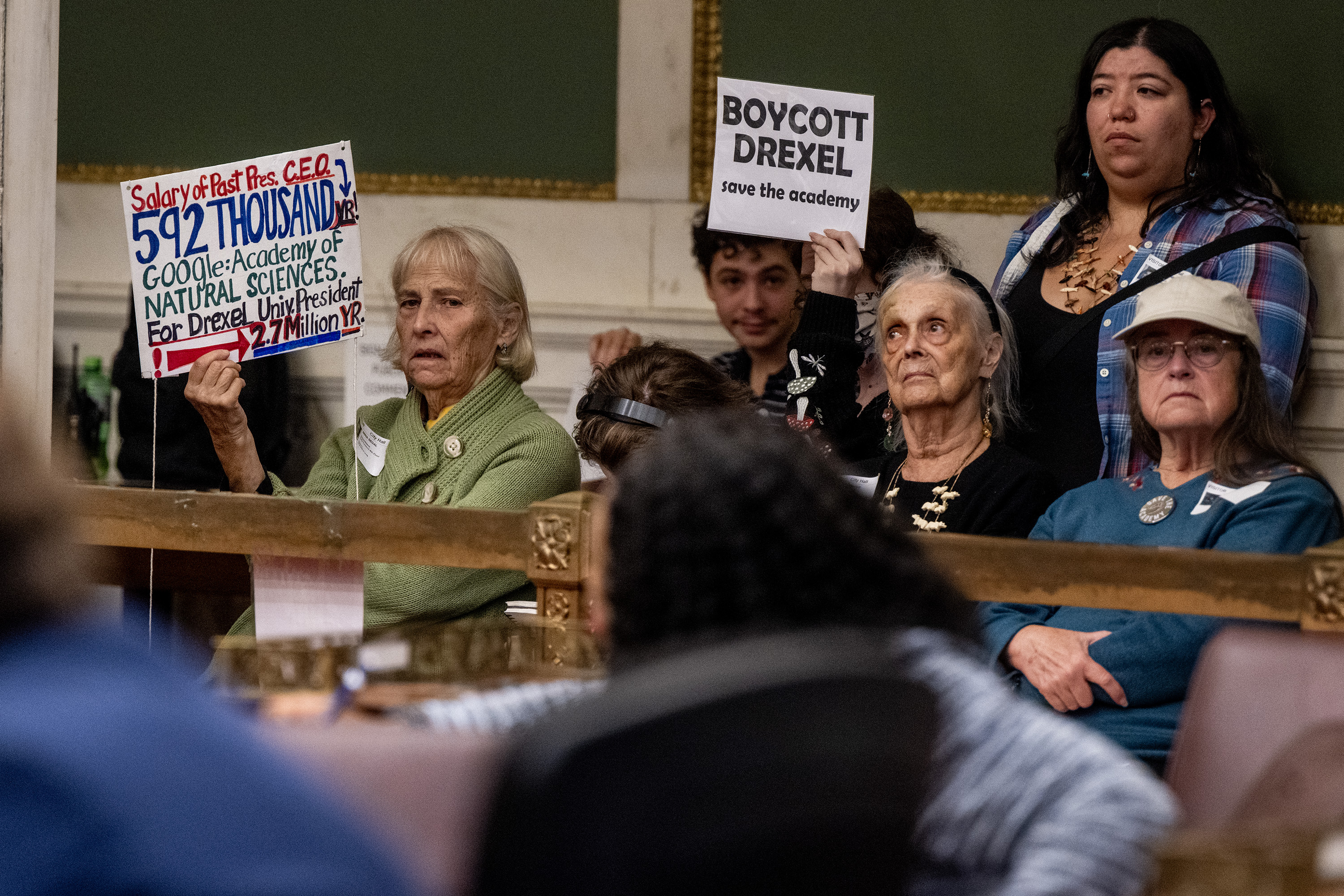
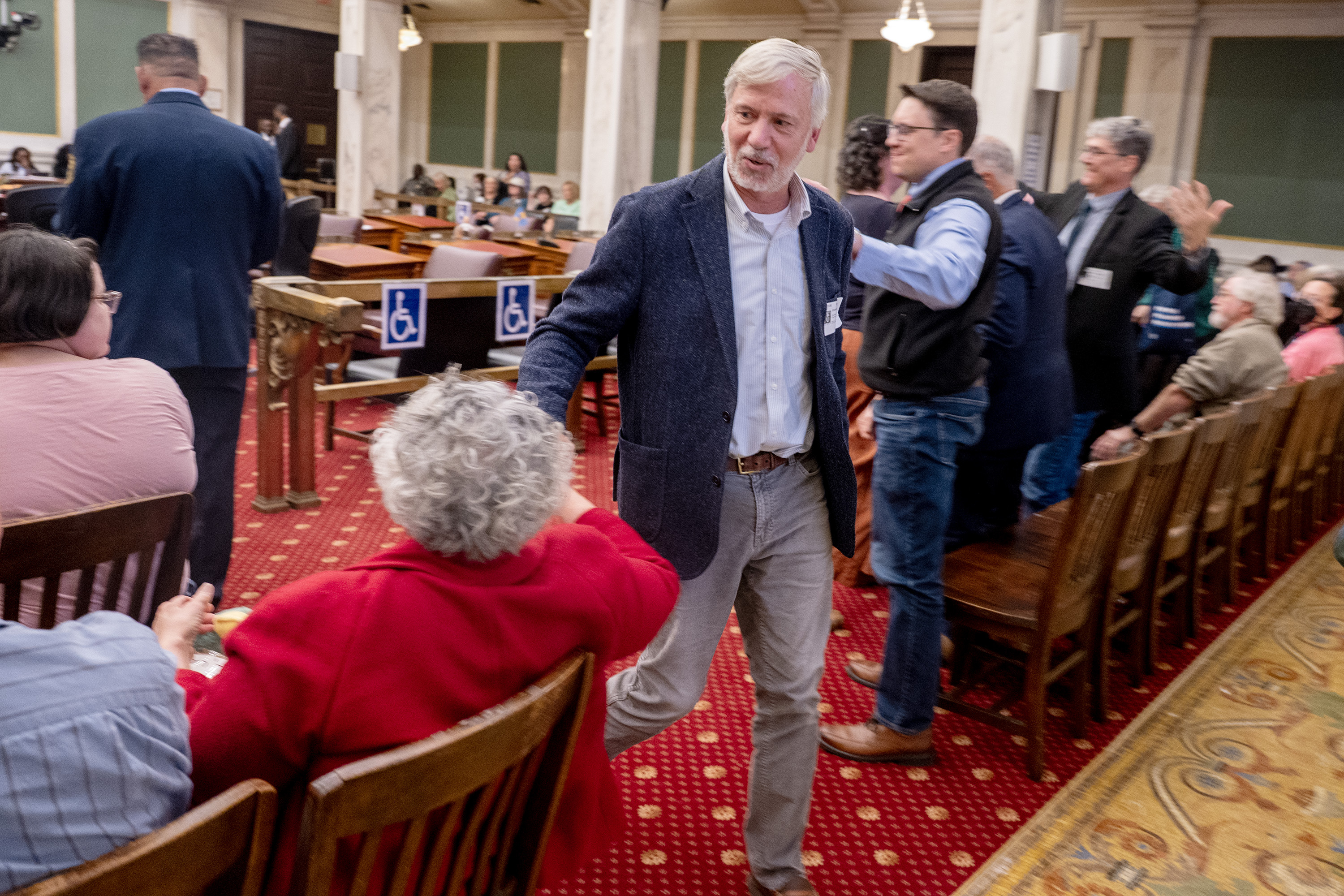
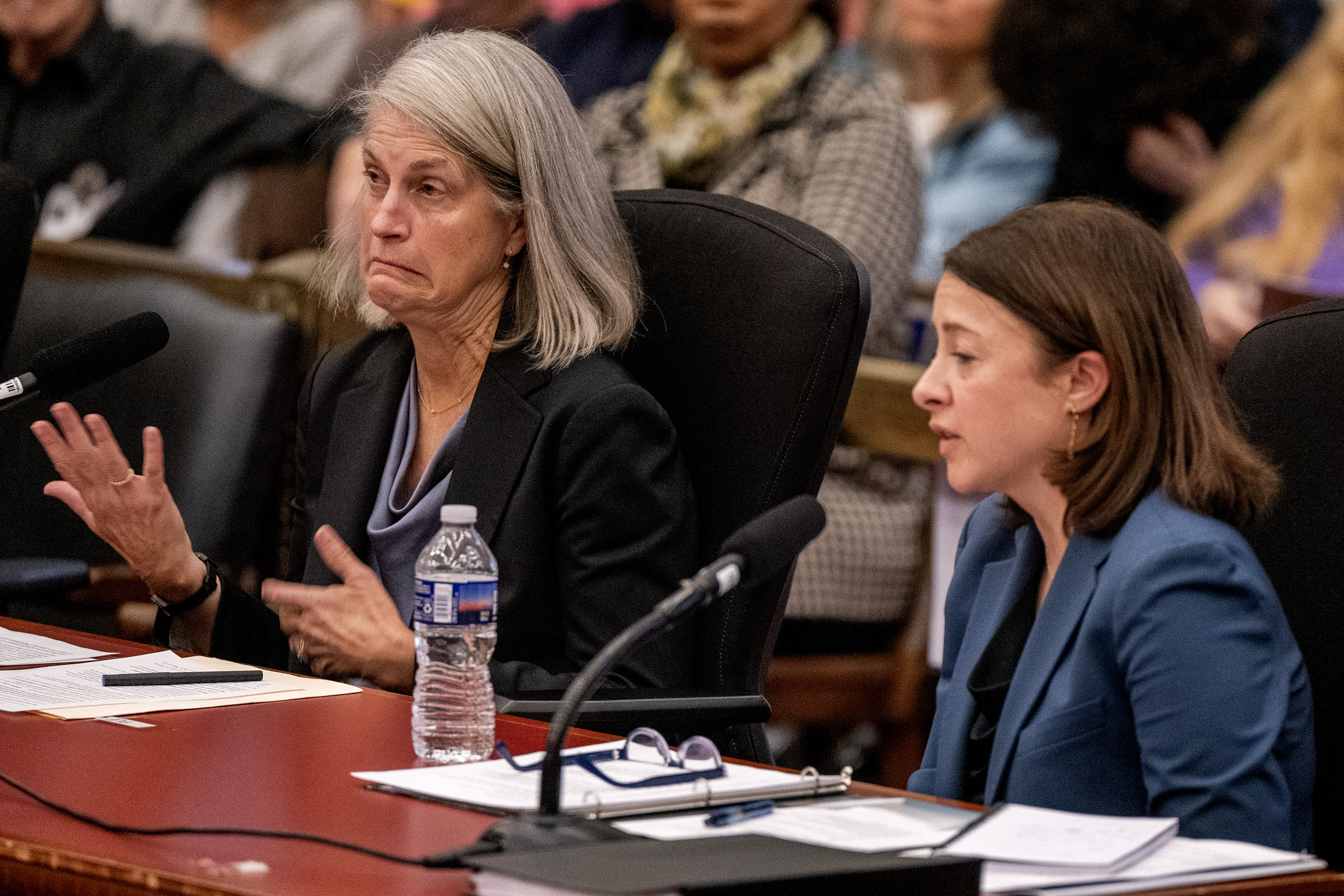
    Philadelphia City Council’s hearing Monday on the closure of the museum of the Academy of Natural Sciences of Drexel University raised as many questions as it answered, following nearly four hours of testimony from experts, Drexel University and Academy representatives, and members of the public.

    The hearing is set to resume Nov. 16 at 10 a.m., with Council members vowing to continue their probe on how to reopen the museum and why it was closed in the first place. Councilmember Nina Ahmad introduced a resolution at Council’s meeting Thursday to create a task force to explore reopening the museum.

    Here is a look at some of the issues raised at the meeting.

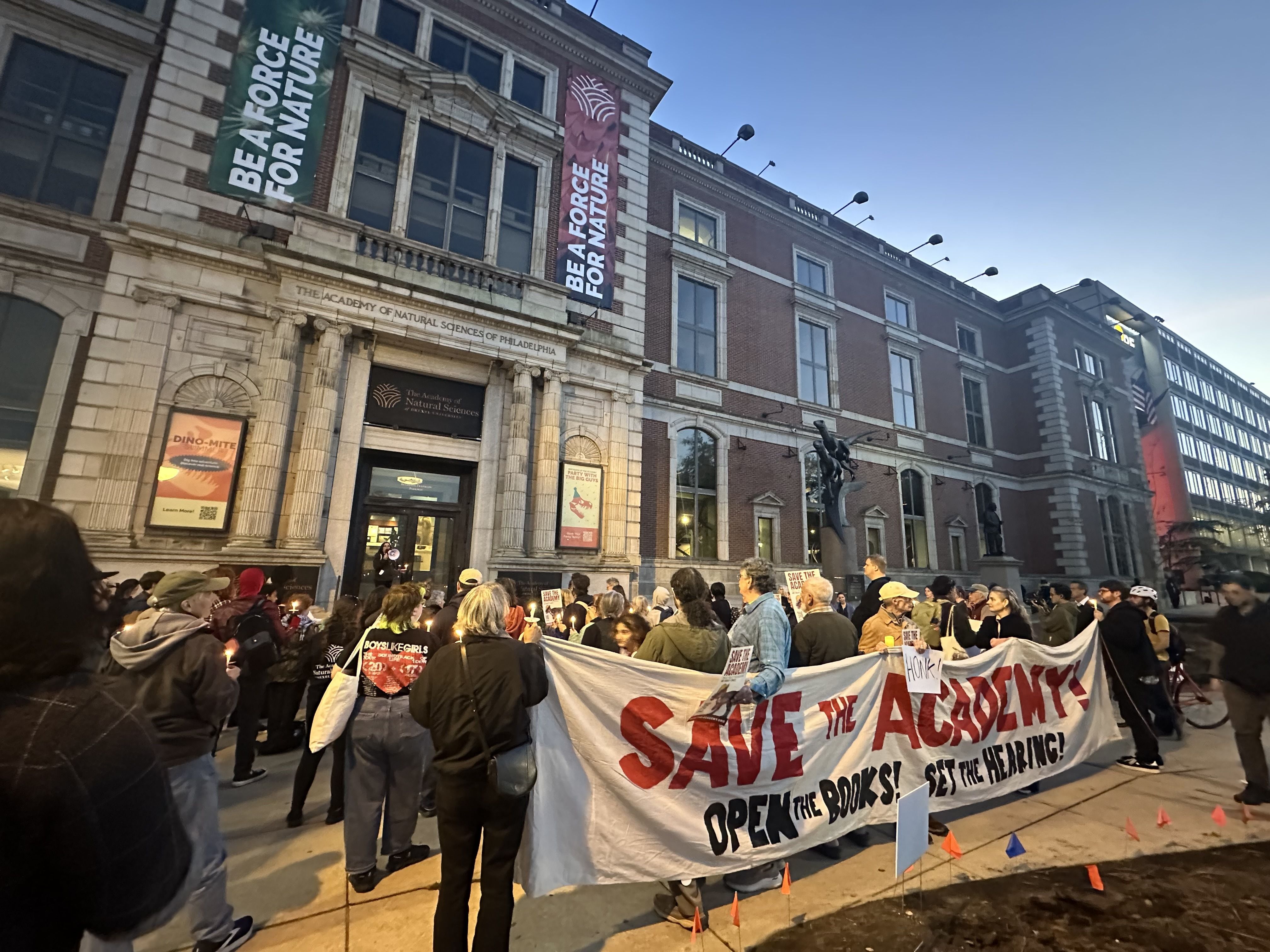
    In front of the Academy of Natural Sciences of Drexel University’s historic building at 19th and the Ben Franklin Parkway, about 120 demonstrators gathered at twilight Tuesday for a candlelight vigil marking one month since the Academy’s museum was closed.Glenn Holsten

    Why isn’t the Academy building on Philadelphia’s historic register?

    Paul Steinke, executive director of the Preservation Alliance for Greater Philadelphia, told City Council that the Academy building at 19th and Race Streets belongs on the Philadelphia Register of Historic Places.

    Inclusion on that list would require that any proposed changes to the property be reviewed by the Philadelphia Historical Commission, he said.

    “Right now, that protection does not exist, and so the Academy is vulnerable to being irreparably altered or demolished,” he said.

    The alliance has retained an architectural historian to prepare a nomination for the building’s inclusion on the register, he added.

    “As the Academy of Natural Sciences considers its next chapter, its historic headquarters building must be treated as an essential part of the institution’s future, not as an obstacle to it,” Steinke told Council. “… The building embodies the Academy’s history and merits recognition as a significant Philadelphia and national historic landmark.”

    Drexel University is planning to move the collections out of the building, which opened in 1876, and the building needs about $150 million in deferred maintenance, according to one estimate.

    Steinke said the building is eligible for inclusion in the National Register of Historic Places, which would make it eligible for federal and state grants.

    “That is a source of potential support that the Academy could be pursuing now.”

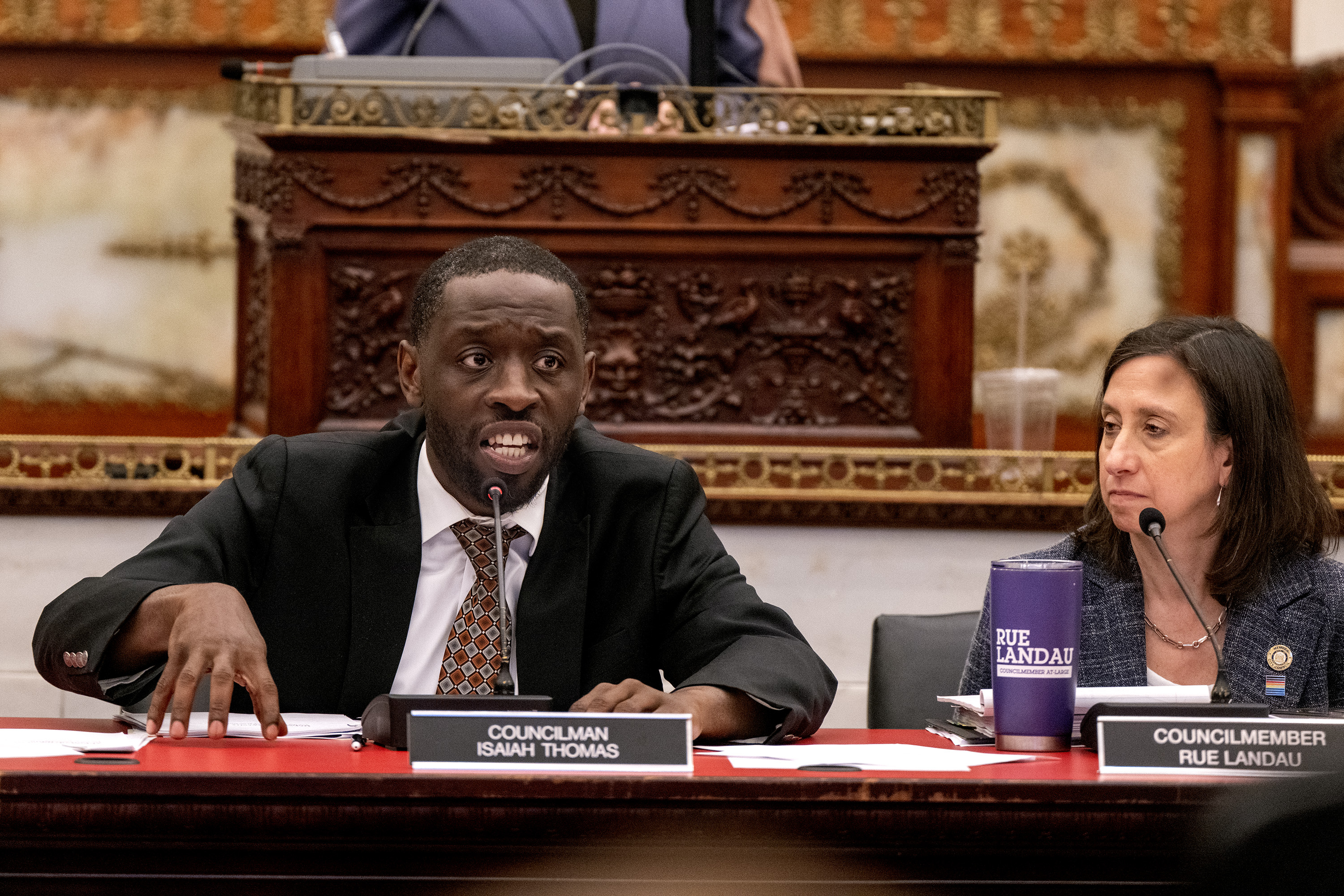
    Councilmember Isaiah Thomas questions Drexel officers Monday as City Council holds a hearing on the closure of the museum at the Academy of Natural Sciences of Drexel University and the Academy’s ongoing negotiations with Drexel. Councilmember Rue Landau is at right.Tom Gralish / Staff Photographer

    What is the future of the building?

    Questions swirled at the Council hearing about what will happen with the Academy building if Drexel goes forward with its plans to relocate the collection.

    “In the midst of talking to the hundreds of advocates who are concerned about this, they are pushing us to recognize that this is about the land, that Drexel wants the land … to help address deficits and financial issues,” Councilmember Isaiah Thomas, who heads the legislative committee, said at the hearing.

    Melissa Richman, Drexel’s executive director of operations, testified that Drexel has been working with Mayor Cherelle L. Parker, Gov. Josh Shapiro, and former Comcast executive and U.S. Ambassador to Canada David L. Cohen on the issue.

    Thomas asked if Drexel sought financial support from the mayor and was turned down.

    “Again, we have been working,” Richman began, before she was cut off by Thomas.

    “OK,” Thomas said. “I get it.”

    Alex Palma, president of the Museum Council of Greater Philadelphia, also questioned what would happen with the building.

    “I don’t think that another building filled with million-dollar condos on the Benjamin Franklin Parkway supports us as a world-class city,” he told Council.

    Drexel has not said what it plans to do with the building if the collections are relocated.

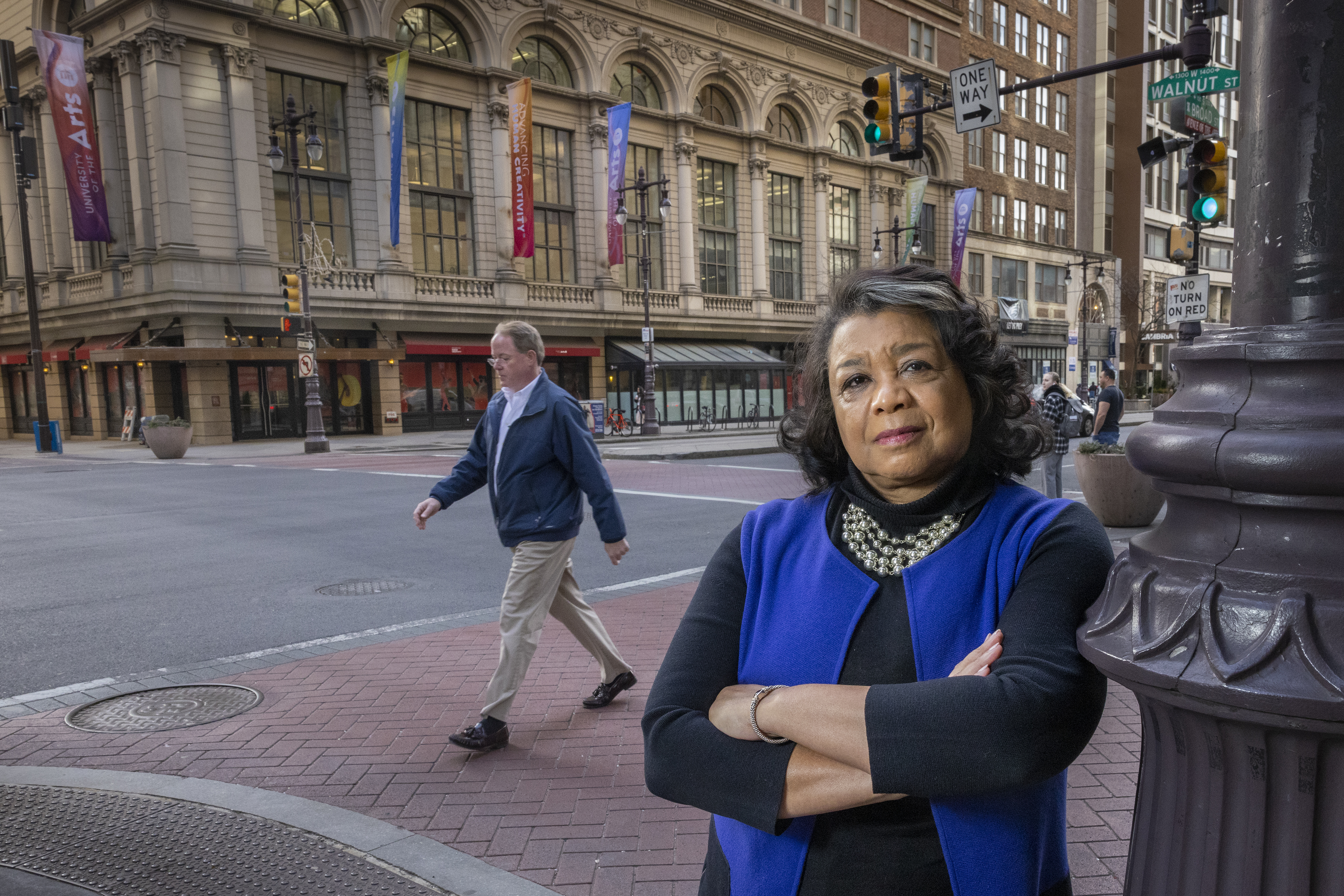
    Patricia Wilson Aden, president of the Greater Philadelphia Cultural Alliance, at S. Broad Street and Walnut along the Avenue of the Arts.Alejandro A. Alvarez / Staff Photographer

    A ‘larger crisis’ for cultural organizations

    “Even as we focus on the Academy, we cannot ignore the larger crisis,” Patricia Wilson Aden, president and CEO of the Greater Philadelphia Cultural Alliance, testified. “Cultural organizations of every size and discipline are confronting rising costs, changing audience behaviors, chronic underinvestment, and crippling funding cuts at the federal, state, and local levels. … The crisis of the Academy is a bellwether that requires us to resolve to implement concrete solutions.”

    She called on the city to make a stronger commitment to cultural institutions, including its museums, theaters, historic sites, libraries, cultural centers, and arts organizations. The city needs a “dedicated arts fund,” she said, similar to those in some other cities.

    “It is up to all of us, the cultural community, the scientific community, you and other elected officials, all working together alongside the philanthropic community and other civic leaders to make an unflinching commitment to unlock the full potential of our creative sector,” she told Council.

    A precedence in Yale University

    Yale University received a $160 million gift from an alumnus in 2018 to renovate its Peabody Museum, a natural history museum. The renovation was raised at the Council hearing as a potential model for the Academy and Drexel. The Peabody was closed for four years while renovations occurred, and it reopened to the public in 2024.

    “If New Haven can do it, so can Philadelphia,” Sarah McAnulty, a squid biologist whose nonprofit focuses on science education, as well as Philly Science Action and Green Philly, told Council. Yale is in New Haven, Conn.

    A sign held for a rally by the Save the Academy Coalition outside of City Hall Monday.Tom Gralish / Staff Photographer

    Drexel’s crisis-causing ultimatum

    A year ago, the Academy was given an “ultimatum” by Drexel: “Merge fully with Drexel or get a divorce,” said Suzanne Biemiller, chairperson of the Academy’s board of trustees.

    Since the two institutions were joined in a 2011 affiliation agreement, the Academy had maintained an independent board, though its finances and many of its decisions ultimately fell to Drexel.

    “Under a full merger, just to be clear, the Academy’s $80 million endowment, its building, and the priceless collections would all become Drexel’s assets,” Biemiller told Council. “Needless to say, this choice caused a crisis at the Academy, diverting the attention of the Academy’s leadership and financial resources from strategic conversations and fundraising.”

    The ultimatum came after a year of strategic planning conducted by the Academy with input from Drexel leadership and joint trustee meetings, she said.

    “In many ways, Drexel’s ultimatum upended and stymied that planning work,” she said.

    Retired Academy paleontologist Ted Daeschler leaves after testifying at City Council.Tom Gralish / Staff Photographer

    A seriously expensive move for 19 million specimens

    “I suspect that the realities of moving and rehousing 19 million specimens has really not been envisioned with open eyes,” paleontologist Ted Daeschler said at Monday’s hearing. He was referring to the possibility raised by Drexel leaders and others of moving the Academy’s specimen collections out of the current building to an as-yet-unknown location.

    Daeschler knows a thing or two about specimens. Professor emeritus, curator, and chair of vertebrate zoology at the Academy, Daeschler is renowned as codiscoverer in Arctic Canada of Tiktaalik roseae, a fossil fish significant for being an evolutionary bridge between fish and land-dwelling animals.

    Each of the Academy’s irreplaceable specimens requires individual attention to be moved safely, to remain organized, and to keep its associated data, Daeschler told those attending the hearing.

    Customized storage spaces — as well as health, safety, and security systems — must be designed.

    Academy board chairperson Suzanne Biemiller (left) and Melissa Richman, executive director of operations from Drexel University’s office of the president, at Monday’s City Council hearing.Tom Gralish / Staff Photographer

    “None of these things are inexpensive,” he said.

    Access to the collections for students and researchers must be maintained, and specialized specimen preparation facilities, offices, and laboratories must be in proximity to these collections, and be staffed.

    “All of this adds up to probably more money than working on the Parkway building,” he said, referring to the cost of deferred maintenance to the specimens’ longtime home.

  • A developer’s request to convert a now-vacant Mount Laurel bank into a Dunkin’ goes to the zoning board in November

    A developer’s request to convert a now-vacant Mount Laurel bank into a Dunkin’ goes to the zoning board in November

    A Pittsgrove-based developer next Wednesday will ask the Mount Laurel zoning board for a use variance for a Dunkin’ restaurant in a residential zone where businesses are not permitted.

    However, the 4523 Church Rd. site near the Evesham border has long been home to a now-vacant Wells Fargo bank.

    Siya Kinjal LLC would convert the bank and its drive-through lanes to a 2,999-square-foot coffee and doughnut restaurant. The developer also seeks preliminary and final major site plan approval and bulk variances.

    The application was scheduled for the October meeting, but was adjourned to November. The meeting begins at 6 p.m, at township offices at 750 Centerton Rd.

    Four existing driveways, two on Church Road and two on South Church Street, are part of the Dunkin’ plans. The bank neighbors single-family homes on Camelot Court across Church Road.

    The Dunkin’ is projected to add 130 in- and 120 out-vehicle trips in the morning peak hour and 109 in- and 114 out-vehicle trips in the Saturday peak hour, according to a developer’s traffic study by McDonough & Rea Associates Inc. of Manasquan.

    The current owner of the property is 4523 Church Road Associates LLC of Saw Mile Drive in Mount Laurel, according to the zoning application.

    Gulu Puri of Marlton and Ashwin Chaudhary of Pittsgrove filed with the board as owners of Siya Kinjal LLC.

    70and73.com is a hyperlocal news site focused on South Jersey, including the communities of Cherry Hill, Evesham, Mount Laurel, Voorhees, Medford, Medford Lakes, and Moorestown.

  • A prayer for immigrants: Dozens of nuns and human rights leaders gather outside ICE office in Center City

    A prayer for immigrants: Dozens of nuns and human rights leaders gather outside ICE office in Center City

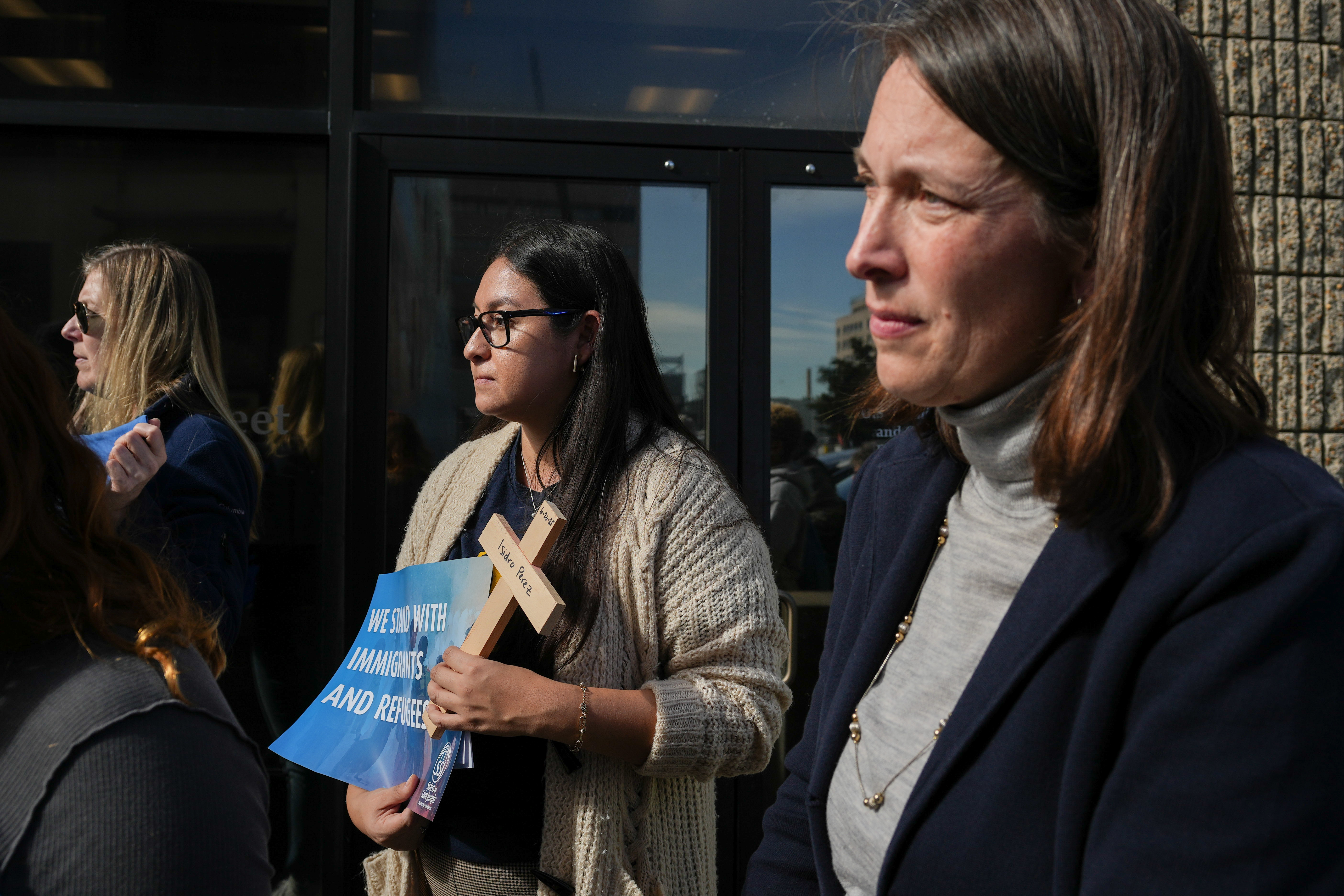
    Calling the plight of immigrants, refugees, and asylum seekers a defining moral challenge of the age, scores of nuns, religious activists, and human rights advocates gathered outside the Philadelphia ICE headquarters on Wednesday to pray for change.

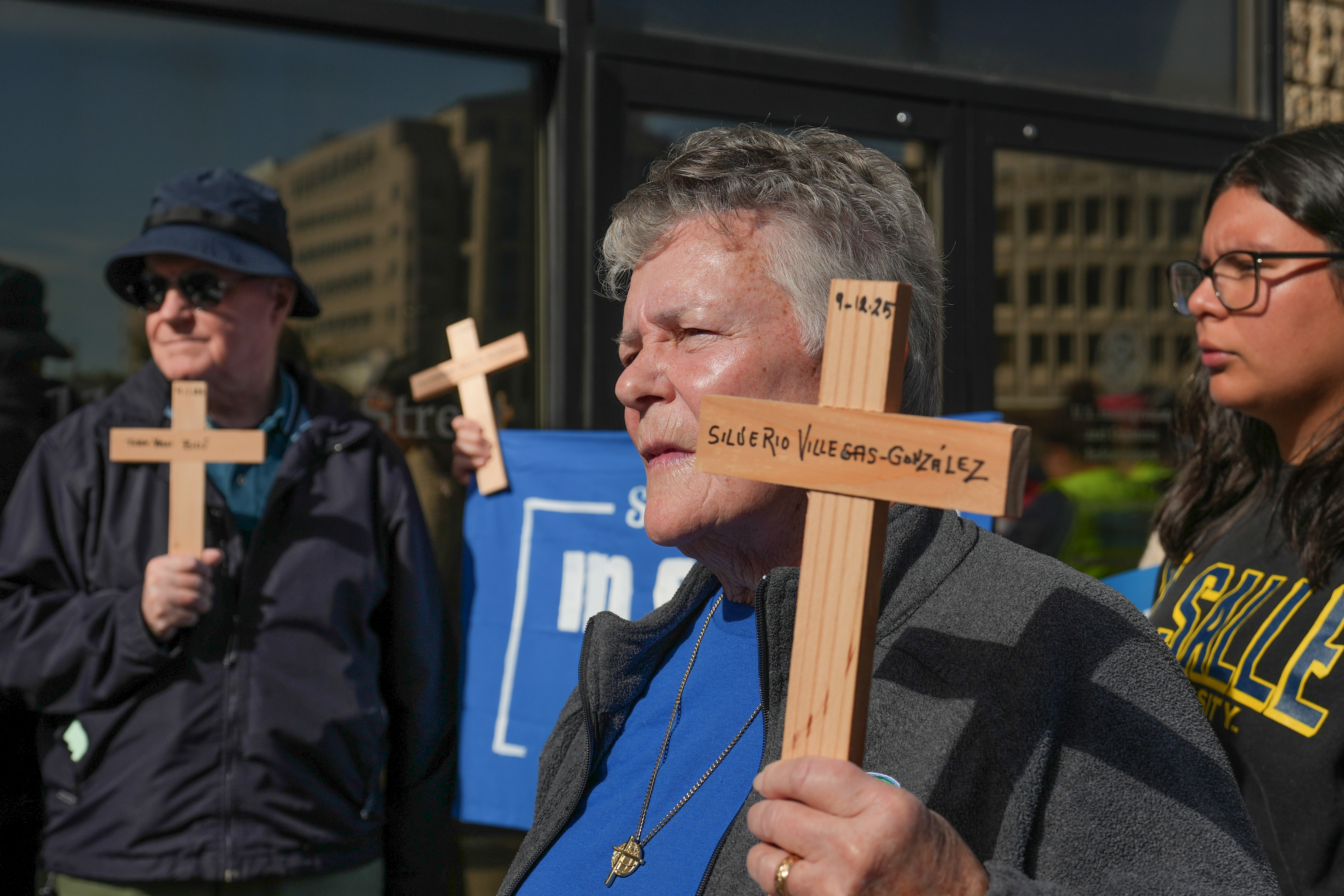
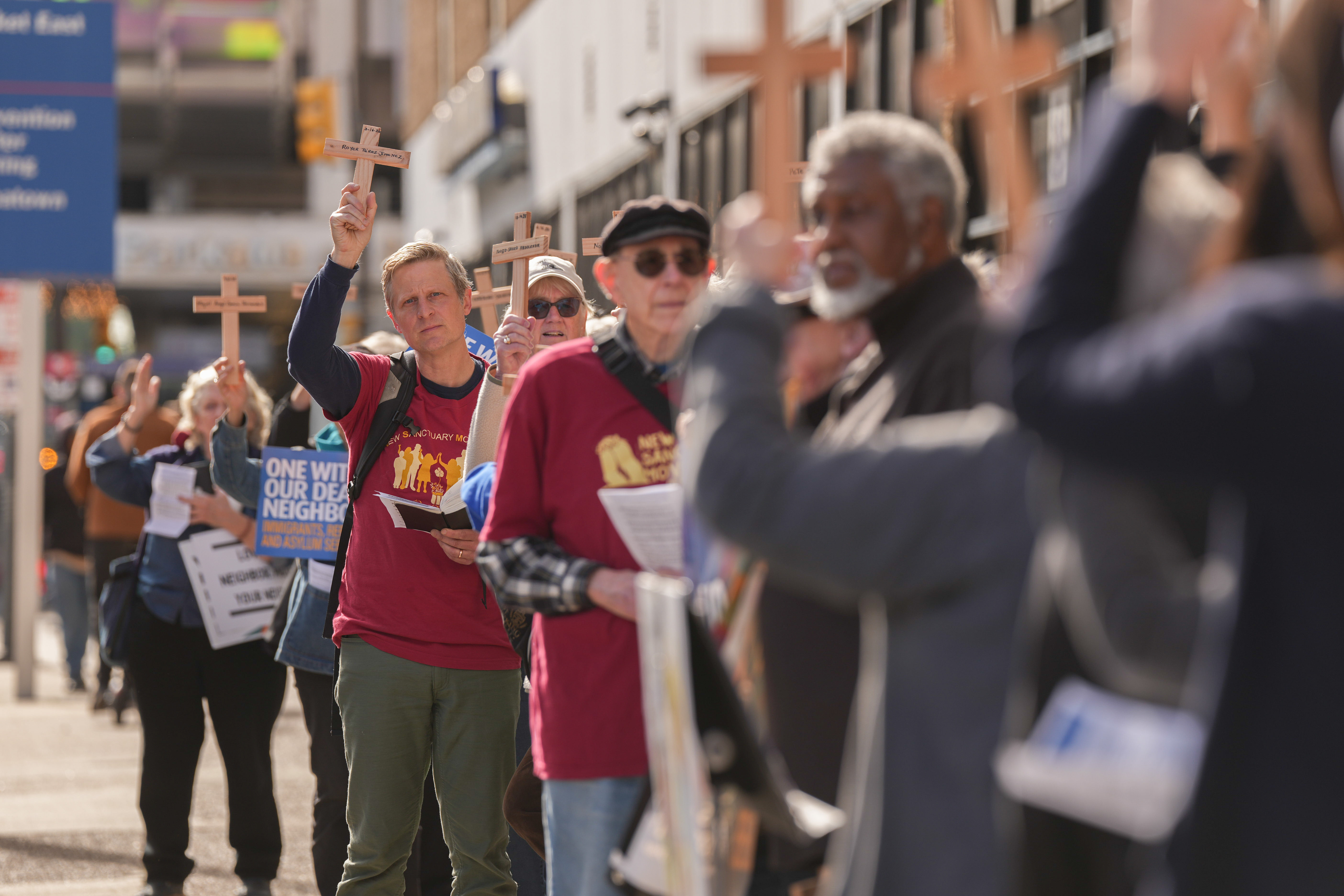
    They held signs and small wooden handmade crosses, each of the latter bearing the name of someone who died in ICE custody during the last two years.

    Members of the Sisters of St. Joseph and the Philadelphia Area Lasallian Ministries cohosted the vigil at Eighth and Cherry Streets, saying they sought justice and compassion for newcomers and wanted to physically and visibly proclaim “the human dignity of our immigrant neighbors.”

    Geoffrey Beatty, back left, red shirt, participates in an event with the Sisters of Saint Joseph of Philadelphia and the Philadelphia Area Lasallian Ministries, and the Living Church, Christianity for Living Ministries, offering “a prayerful presence for immigrants, refugees, and asylum seekers” outside ICE at Eighth and Race Streets on Wednesday. Jessica Griffin / Staff Photographer

    They said Immigration and Customs Enforcement operations in Philadelphia are fracturing families and casting a shadow of fear over neighborhoods, as people are detained and deported amid President Donald Trump’s push for mass removals. At least 100 people took part in the vigil, the crowd spilling off the sidewalk and onto Eighth Street.

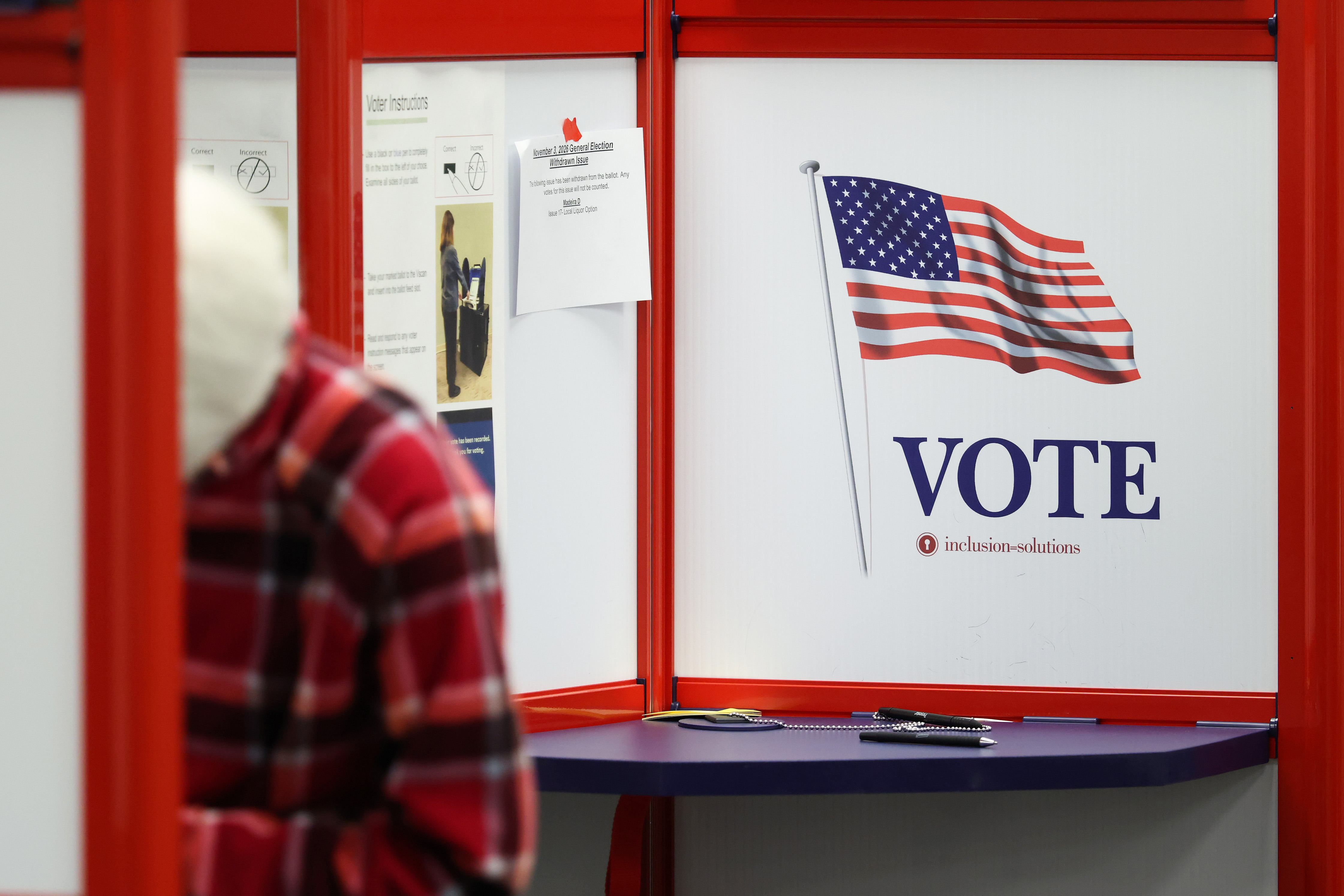
    The rally came less than a week before the midterm elections, in which Democrats are vying to take control of Congress — a change that could potentially put a brake on Trump’s mass-deportation agenda.

    Nationally, during the first 18 months of the president’s second term, the Department of Homeland Security completed about 980,000 deportations — a faster pace than under the Biden and first Trump administrations, though still below early-2000s levels, according to a new analysis by the Migration Policy Institute in Washington.

    Outside ICE headquarters in Philadelphia on Wednesday, the crowd — a mix of older and younger people, mostly female — held their crosses aloft and waved to honking cars. Four people held up a giant blue banner for the entirety of the nearly hour-long vigil: “One with our dear neighbors: immigrants, refugees and asylum seekers,” it read.

    A spokesperson for Homeland Security said “ICE respects the First Amendment rights of individuals to observe and express themselves. However, if such actions interfere with or obstruct our operations, ICE will take necessary steps to address the situation.”

    “Obstructing law enforcement is a federal crime, and assaulting law enforcement is a federal crime and felony. Our message remains: ICE is NOT slowing down.”

    The Sisters of Saint Joseph of Philadelphia and the Philadelphia Area Lasallian Ministries, and the Living Church, Christianity for Living Ministries, offering “a prayerful presence for immigrants, refugees, and asylum seekers.”, outside ICE headquarters at Eighth and Race Streets on Wednesday. Jessica Griffin / Staff Photographer

    Those who gathered Wednesday were equally determined.

    “It’s the power of prayers, it’s the call to action,” said Beth Ford McNamee, director of the Sisters of St. Joseph Center for Justice, Peace and Integrity of Creation. “It’s the week before the midterm elections, so we’re calling on people to vote, to discern and pray about their vote, and we’re also praying for safe and fair elections.”

    Asked if rallies and prayer vigils make a difference, especially to those who mostly oppose immigration and to ICE officers in the building, Sister Linda Lukiewski of the Sisters of St. Joseph said she was not sure.

    “I don’t know,” she said. “I know they know we’re there. I don’t know if it changes policy. But what I do know is it gives people hope.”

    Sister Sharon White and Brother Robert Schieler helped present the opening remarks to the crowd, calling on people to pray in anticipation of All Saints’ Day and the Feast of the Holy Souls, and calling on those in attendance to “keep in mind those who have died at the hands of ICE and state-sponsored violence.”

    Valeria Lemus participates in a peaceful event with the Sisters of Saint Joseph of Philadelphia and the Philadelphia Area Lasallian Ministries, and the Living Church, Christianity for Living Ministries, offering “a prayerful presence for immigrants, refugees, and asylum seekers.”Jessica Griffin / Staff Photographer

    They said they gathered to pause, reflect, and recognize the dignity of every person.

    “In this season of Thanksgiving, we recognize that true abundance is not found in overflowing tables, but in communities that demand justice for all,” White said. “We give profound thanks for the advocates, lawyers, and volunteers who relentlessly fight for those caught in the system. May their courage ignite our own commitment to action and solidarity and love.”

  • Pa. auditor general accuses this Delco education agency of ‘frivolous’ spending on travel, food

    Pa. auditor general accuses this Delco education agency of ‘frivolous’ spending on travel, food

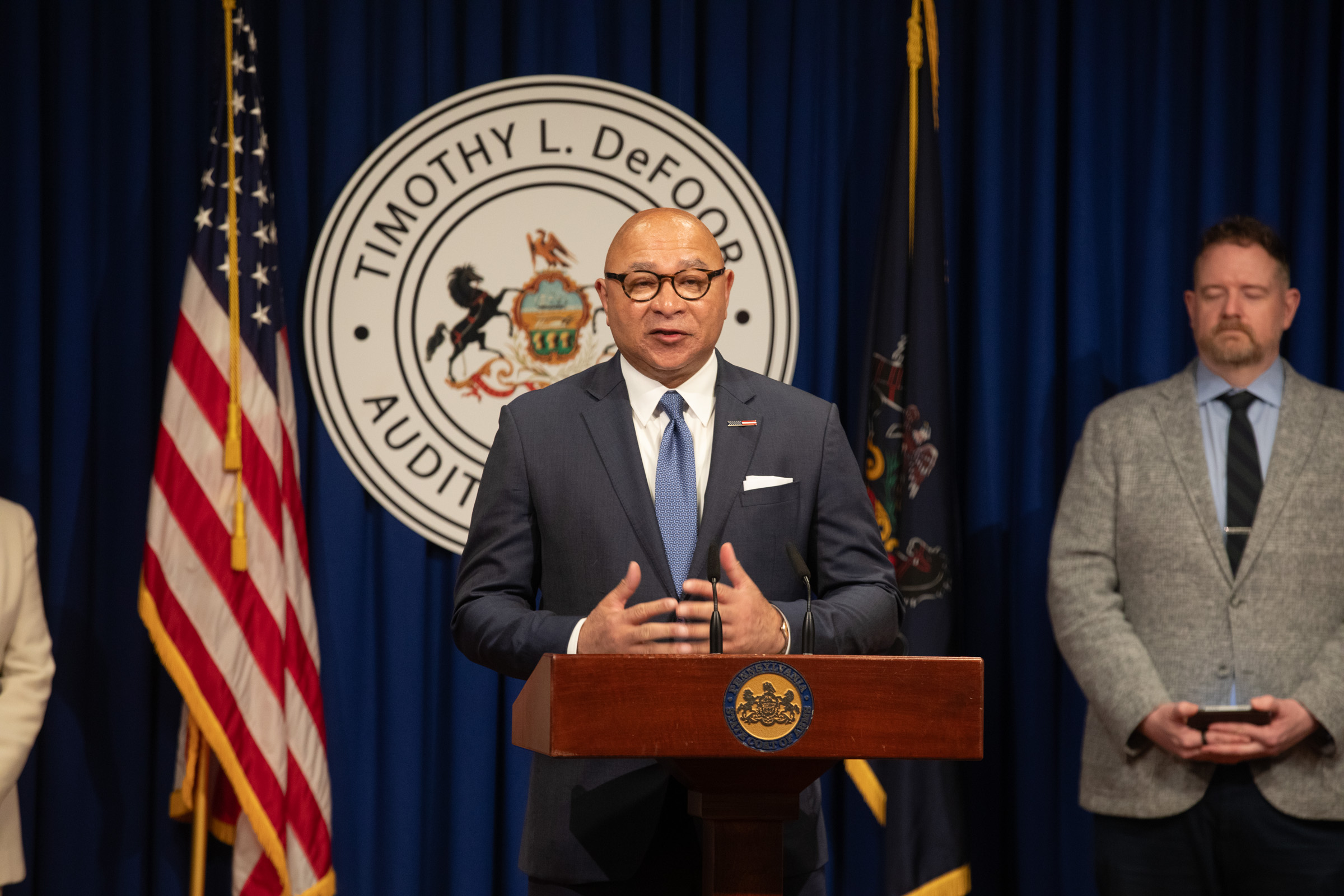
    Pennsylvania’s auditor general said Wednesday that “frivolous” spending by the Delaware County Intermediate Unit on food and leadership training should cause education agencies across the state to reconsider their practices.

    “These findings should be a wake-up call for every IU across the Commonwealth,” Auditor General Tim DeFoor said at a news conference outside the Delaware County courthouse in Media, where he announced the results of an audit into the intermediate unit. The taxpayer-funded agency provides services to 134 schools, including for special education and professional development.

    DeFoor, a Republican, said the IU had spent “hundreds of thousands of dollars on retreats for executives, team-building activities for staff, food any time they had a meeting.”

    Jim Scanlon, the IU’s interim executive director, said in a statement Wednesday that the intermediate unit “is committed to operating with fiscal responsibility and transparency, and we welcome the opportunity to improve our processes.”

    “The audit found nothing illegal,” Scanlon said. He noted that because the intermediate unit had only received the final audit 45 minutes before DeFoor’s announcement, it hadn’t yet reviewed final recommendations.

    The audit comes after The Inquirer reported in March that the neighboring Montgomery County Intermediate Unit had spent $40,000 for its executive director and assistant executive director on international travel, including an African safari.

    An attorney who conducted an investigation for the Montgomery County IU recommended that it start requiring board approval for travel.

    The Delaware County audit, which covered fiscal years 2023 and 2024, found the Delaware County IU spent $40,000 for several administrators to attend a leadership training course in Orlando, Fla. The trip, which cost $100,000 in total, was offset by reimbursements, including $15,000 in sponsorships, according to the audit report.

    The Orlando trip included a “Ride ‘N Dine” event at Universal Studios, DeFoor said. He said that event featured a five-course dinner and open bar.

    The intermediate unit also spent $14,000 on a team-building retreat in Annapolis, Md., with a cruise around the Chesapeake Bay, and $250,000 on food and refreshments at board and staff meetings, DeFoor said.

    DeFoor said the spending reflected “a pattern of taxpayer dollars being spent in a selfish and irresponsible manner.”

    In a response included in the audit, the IU — which has been led by Scanlon since August, after the retirement of executive director Maria Edelberg — said it would establish standards for spending on trainings and food.

    But it disagreed with any characterizations of its spending as excessive or questionable.

    The IU “does not agree … that the nature or cost of a team-building activity alone establishes that the expenditure was ‘extravagant,’ ‘abusive,’ or lacked a legitimate organizational purpose,” it said in the audit response.

    It also said that “DCIU has verified that no DCIU assets were used to purchase alcoholic beverages for individual attendees.”

    “To the extent alcoholic beverages were identified as available or included in a vendor’s description of an event package, that fact does not establish that DCIU expended public funds for alcoholic beverages,” the IU said in the audit response.

    In addition to findings about its spending, the audit found the IU couldn’t produce documents requested by auditors and was missing copies of contracts approved by its board, DeFoor said. A school board member from each Delaware County school district serves on the board overseeing the IU.

    DeFoor said Wednesday that “every IU needs to take a hard look at its practices and strengthen controls.”

  • Swarthmore College says U.S. Supreme Court ruling on trans athletes dealt blow to alum’s lawsuit

    Swarthmore College says U.S. Supreme Court ruling on trans athletes dealt blow to alum’s lawsuit

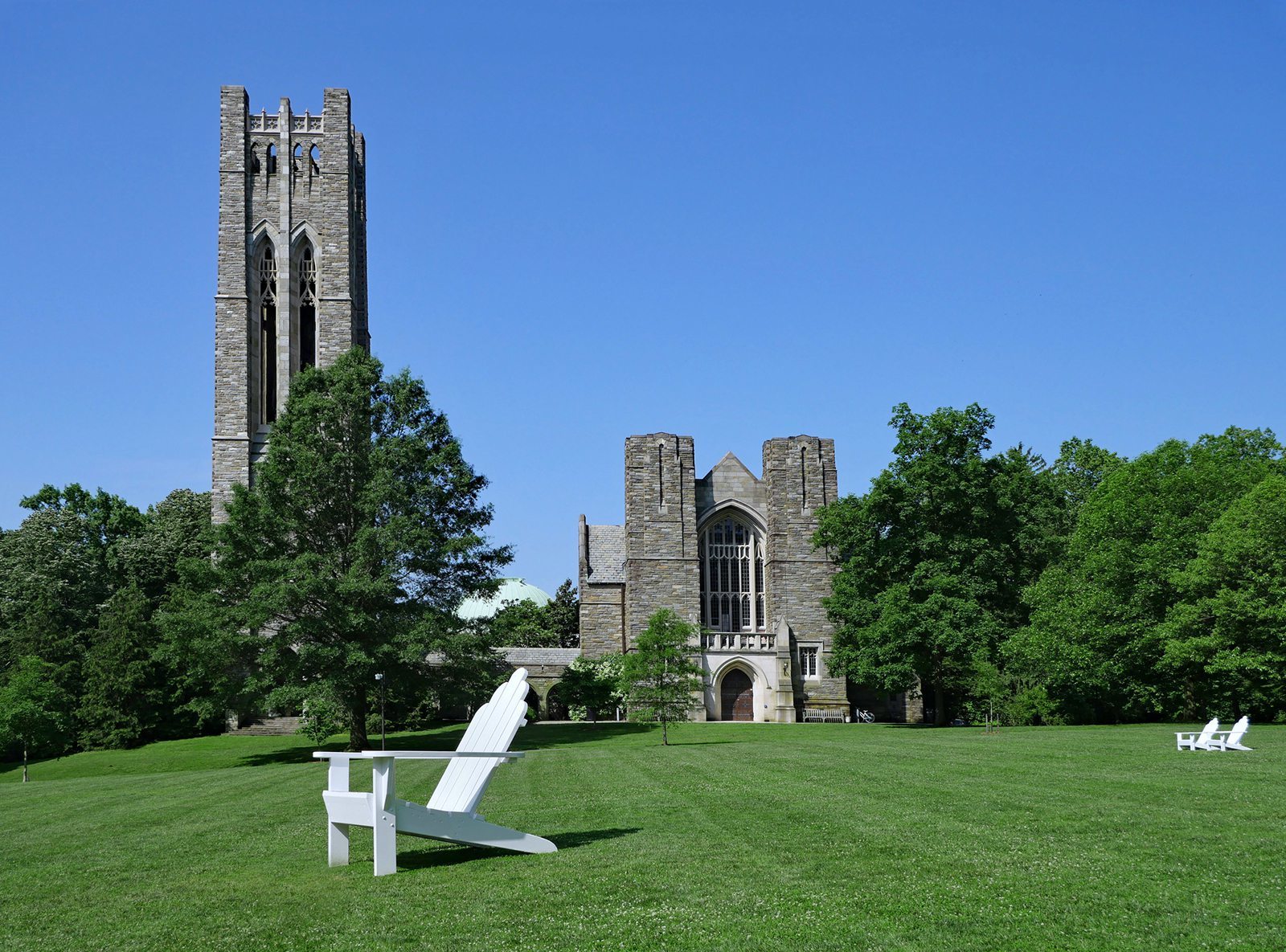
    The U.S. Supreme Court ruling that held states can ban trans women and girls from women’s college sports teams shut the door on a lawsuit filed by a Swarthmore College alum, the university said in a court filing.

    The Delaware County liberal arts school asked a federal judge to toss out a lawsuit brought by Evie Parts, a trans student who was temporarily removed from the college’s track team in her senior year.

    Parts was removed from the college’s varsity teams in February 2025 following an NCAA policy that banned transgender women from competing on women’s teams. After graduating that May she sued the school, its athletic officials, and the NCAA. The federal lawsuit accused Swarthmore of violating Title IX, a landmark antidiscrimination law, and Pennsylvania laws that protect college students based on gender identity.

    But a Supreme Court case over the constitutionality of state laws that ban trans women from participating in college sports loomed over the lawsuit.

    The high court’s ruling in essence nullifies Pennsylvania’s antidiscrimination protections, which include gender identity, Swarthmore said in a court filing, because state protections should be consistent with federal ones.

    A Swarthmore spokesperson said in a statement that the college values its transgender community members, and offers “numerous resources to create a welcoming, supportive, and inclusive environment for transgender individuals.”

    “But the Supreme Court made clear that the NCAA’s policy does not violate Title IX,” the statement said. “Given that, and the fact that courts in the Commonwealth have routinely held that Pennsylvania law should follow and be consistent with federal law, the case should be dismissed.”

    Parts’ case represents a new frontier in the legal fight over trans women’s participation in college sports. The question of whether states can impose bans is settled, but the outcomes of lawsuits such as Parts’ will shape the strength of existing protections enacted by states.

    Susie Cirilli, the lawyer representing Parts, said she stands by “every single allegation” in the amended lawsuit, which was filed after the Supreme Court’s June ruling.

    The NCAA did not respond to a request for comment.

    Parts joined the Swarthmore track and cross-country teams as a freshman in fall 2020. Following COVID-19 restrictions and medical leave, she returned to the team in fall 2023 and was named a captain the following year.

    Then, in February 2025, a day after President Donald Trump signed an executive order titled “Keeping Men Out of Women’s Sports,” the NCAA issued a policy that restricted participation in women’s sports to “student-athletes assigned female at birth.”

    After assessing the new policy, the suit says, Swarthmore told Parts there was no law in Pennsylvania “that might supersede the new NCAA policy.”

    Swarthmore officials told Parts they “vehemently disagree with this transgender ban,” the lawsuit says.

    The college told Parts she could compete on the men’s team or run as an unattached athlete, meaning Swarthmore would not provide race-related expenses, transportation, or medical and training support, the suit says.

    The news was devastating, the complaint says, and the athlete began harming herself and contemplating suicide

    The college reinstated Parts to the women’s team in April 2025, and she participated in three competitions before graduating.

    Parts sued Swarthmore, college officials, and the NCAA in August 2025, accusing the college of violating Title IX and Pennsylvania laws.

    But the litigation took a complicated turn when the Supreme Court agreed to consider the constitutionality of Idaho’s and West Virginia’s bans on trans athletes’ participation in girls’ and women’s sports.

    Lawyers for Parts, Swarthmore, and the NCAA agreed to pause the litigation until the justices ruled on the issue. And in a unanimous ruling, the justices upheld the bans, finding the prohibition did not violate Title IX.

    Undeterred by the ruling, Parts filed an updated complaint in September. She still says the college violated Title IX, the Pennsylvania Human Relations Act, and the Pennsylvania Fair Educational Opportunities Act.

    The latest version of the complaint says Swarthmore engaged in a “campaign to coerce Evie into believing that there was no law in the state of Pennsylvania that protected against discrimination based on gender identity.”

    But the college said in a filing this month that the Supreme Court ruling changed the equation and settled the matter.

    Swarthmore’s motion to dismiss cites Justice Brett M. Kavanaugh’s majority opinion: “The question is whether Title IX permits schools to maintain women’s and girls’ sports teams for biological females. The answer is yes.”

    As for the question of Pennsylvania’s protections, the college says, “it is well established” that these laws “are to be interpreted consistently with federal anti-discrimination laws.”

    In other words, the college argues, if sex-based protections in Title IX are limited to biological sex gender identity, the same is true for Pennsylvania law.

    Not everyone agrees with Swarthmore’s interpretation. The Women’s Law Project, for example, said in a blog post about the Supreme Court ruling that “Pennsylvania still requires inclusion in sports.”

    Parts’ attorney has until next month to respond to Swarthmore’s claims, which U.S. District Judge Cynthia M. Rufe will rule on.

  • Serial killer Ted Bundy is linked to another Utah teenager’s 1974 killing through DNA testing

    Serial killer Ted Bundy is linked to another Utah teenager’s 1974 killing through DNA testing

    DNA connects serial killer Ted Bundy to the death of another Utah teenager, authorities announced Tuesday, exactly 52 years after her body was discovered in the woods by a hunter.

    Bundy has been dead since 1989, but the tally of his confirmed victims continues to grow due to advances in DNA testing. He killed at least 30 women and girls in multiple states in the 1970s, and many more escaped or survived with injuries.

    Investigators are satisfied that Bundy was responsible for killing 17-year-old Melissa Ann Smith in 1974, a death that had long been listed as a cold case, Summit County Attorney Margaret Olson said at a news conference.

    They were able to close the case by making crucial connections with DNA found on Smith and Laura Aime, another Bundy victim whose case was resolved last April in Utah County. Bundy’s DNA was on file in Florida, where he was convicted and ultimately executed.

    Besides that evidence, Smith’s death showed hallmarks of Bundy’s “pattern, motive, means, and opportunity,” Olson said.

    Decades-old evidence was key to the case

    Utah’s state crime lab got new technology in 2023 that extracts DNA from samples even if they are small, degraded from age, or contain DNA from multiple people.

    “This case demonstrates the importance of preserving evidence,” said Salt Lake County Sheriff Rosie Rivera, whose department has also investigated homicides linked to Bundy.

    “We have to solve these cases to the best of our ability,” she said, explaining the importance of tapping science, even so many years later. “Nobody is just going to walk away and just blame everything on Ted Bundy, even though many cases have been that way. Here in the state of Utah, we take it very seriously.”

    Smith’s relatives were contacted about the findings but declined to attend the news conference and declined to speak to reporters, the Summit County Sheriff’s Office said. Her parents are deceased.

    Smith’s father was police chief in Midvale, south of Salt Lake City. She was at a pizza parlor and a restaurant before she disappeared on Oct. 18, 1974, The Salt Lake Tribune reported at the time. Nine days later, her body was found in Summit County.

    “With every case closure, may we stomp the memory of Ted Bundy out,” Utah County Sgt. Mike Reynolds said.

    Bundy investigations are not finished

    Bundy was executed by electric chair in Florida in 1989 after being convicted of three murders, including the killing of two women at the Chi Omega sorority house at Florida State University.

    He gave a series of confessions in his final days, including to some crimes that were previously unknown to police. Not all of those cases have been confirmed.

    Besides Florida and Utah, authorities said Bundy had victims in Colorado, Idaho, and Washington state. They said they’re especially working to solve the 1974 death of 16-year-old Nancy Wilcox of Utah.

    Solving the Smith homicide “does not close the book on Ted Bundy,” said Det. Ben Pender of the Salt Lake County Sheriff’s Office, which has the Wilcox investigation. “Information kind of leads to Ted Bundy, but again we’re not for certain on Nancy Wilcox. We’re going to continue to work that case.”

  • Disinformation videos, likely from Russia, are exploiting real people to malign Senate candidates

    Disinformation videos, likely from Russia, are exploiting real people to malign Senate candidates

    NEW YORK — Social media videos believed to be produced with artificial intelligence and linked to Russia are misusing real people’s names and photographs to spread disinformation about two Democratic Senate candidates in the final stretch of midterm voting.

    One of the targets is Sherrod Brown, who is running against Republican Sen. Jon Husted in Ohio. The video, which appears to include some AI manipulation, depicts a newscast and includes pictures of Haya Akbik, who interned for Brown several years ago, and other former staff members.

    It was appalling to Akbik, who told The Associated Press that any claims attributed to her in the clip are “completely made up.”

    “It’s my name, it’s my reputation, making this allegation, and it’s just completely false,” she said. “And it harms the senator, someone else, in the process. So, it’s just messed up.”

    The videos demonstrate how foreign adversaries continue to use a familiar playbook to try to influence American voters who are deciding which party controls Congress next year. The threat could be magnified with AI, a powerful tool for fabricating damaging information that can sometimes appear very real.

    Another target is James Talarico, who is running against Republican Ken Paxton for a Senate seat in Texas. The video, also believed to include some AI manipulation, is framed as a direct-to-camera confessional from a former student of Talarico.

    “The most powerful people in the world know they can’t beat James Talarico with the truth, so they’re slandering him with AI deepfakes, foreign bots, and conspiracy theories to protect their broken, corrupt political system,” Talarico spokesperson JT Ennis said in a statement.

    The social media company X has taken down the initial posts that shared the videos and suspended the users for violating the platform’s rules. However, copies could still be found online Tuesday — some with hundreds of shares — demonstrating how difficult it can be to contain disinformation that can proliferate in the final days of an election.

    Experts see a resemblance to Russian clips from 2024

    The videos resemble clips from a Russian network known as Storm-1516 that targeted former Democratic presidential candidate Kamala Harris and her running mate, Minnesota Gov. Tim Walz, two years ago.

    The new ones bear similar hallmarks and are likely products of the same network, according to Clemson University professor and media forensics expert Darren Linvill. He found that the accounts that shared recent material had also shared former content from Storm-1516.

    The Russian Embassy in Washington did not immediately respond to a request for comment. In the past, it has denied interfering in U.S. elections.

    The U.S. Cybersecurity and Infrastructure Security Agency, which has publicly identified some videos as Russian disinformation in past election cycles, also didn’t respond to a request for comment.

    Hany Farid, a Dartmouth College professor who studies artificial intelligence deepfakes, said his analyses showed that videos targeting Brown and Talarico were likely either generated or manipulated using the technology.

    He noted the video targeting Brown is a “fairly low-tech fake.” The other one, targeting Talarico, is likely generated by AI and “it is consistent with previous disinformation campaigns released close to Election Day,” Farid said.

    Akbik said the video featuring her shows the importance of Congress regulating “AI slop on the internet.”

    “This is so damaging,” she said.