Category: News

  • The GOP was confident about keeping its Senate majority. Now the fight for control is wide open

    The GOP was confident about keeping its Senate majority. Now the fight for control is wide open

    WASHINGTON — Republicans appeared to have a firm grip on the Senate heading into the final two years of President Donald Trump’s term. But with less than two months until Election Day, control of the chamber is now up for grabs.

    Democrats have found themselves competing in states that once seemed beyond their reach as President Donald Trump’s slipping approval ratings and voters’ dissatisfaction with the economy create a difficult political environment for Republicans. But races Democrats once counted on winning have also become more complicated.

    It’s a battle that’s expected to exceed $3.4 billion in spending across all races during the midterm campaign. The implications are huge for Trump’s agenda and his ability to fill administration jobs and open court seats for the remainder of his term, as the Senate is empowered to confirm or block presidential nominees.

    Republicans say it’s unlikely for everything to break in Democrats’ favor, but they acknowledge they’re facing a difficult landscape. Senate Majority Leader John Thune told South Dakota’s KELOLAND News last week that he does “worry” about losing the chamber.

    “I’m a realist,” Thune said. ”I don’t ever try and sugarcoat things. I think it’s a competitive environment right now.”

    Democrats face a scrambled path to the majority

    Democrats need to net four seats to win the majority. The original path had been to hold Michigan, Georgia and New Hampshire while winning back Republican-held seats in Alaska, Maine, North Carolina and Ohio. But things have changed.

    “We now have multiple paths for the majority,” Senate Democratic Leader Chuck Schumer said last month. “We found new states — Iowa, Texas — which people a year ago weren’t even paying attention to.”

    Some of the states where Democrats were feeling most optimistic at the start of the election cycle, such as Michigan and Maine, have grown murkier.

    In Michigan, where there’s an open seat this fall, no GOP candidate has won a Senate race since 1994. But Democrats are struggling to unite behind nominee Abdul El-Sayed. The favorite of progressives narrowly defeated moderate U.S. Rep. Haley Stevens in the August primary, and feelings remain raw from a bruising contest that saw nearly $70 million spent against El-Sayed.

    Republicans believe Mike Rogers, who lost the 2024 Senate race by fewer than 20,000 votes, has an improved shot against El-Sayed. The Senate Leadership Fund — Senate Republicans’ spending PAC — added $6 million to its Michigan advertising investment after El-Sayed won, bringing their total spending to $51 million, the third-highest total.

    Democrats also saw a prime opportunity to finally defeat five-term Republican Sen. Susan Collins in Maine, where Democratic Vice President Kamala Harris won more votes than Trump in 2024.

    Progressive Graham Platner easily won the nomination in June, but he left the race the next month over a sexual assault allegation that he denies. Democratic delegates in late July chose Troy Jackson, a lesser-known former state legislative leader, to replace him.

    Jackson has been forced to play catch-up. Collins and aligned super PACs have spent almost $80 million so far, according to the ad-tracking firm AdImpact, while Jackson and Democratic-aligned groups have spent and reserved close to $45 million since he became the nominee.

    As one path narrowed for Democrats, others widened

    Democrats increasingly see a real possibility in Texas, a state that has been an elusive goal for decades, and other GOP-led states including Iowa, Alaska and Ohio.

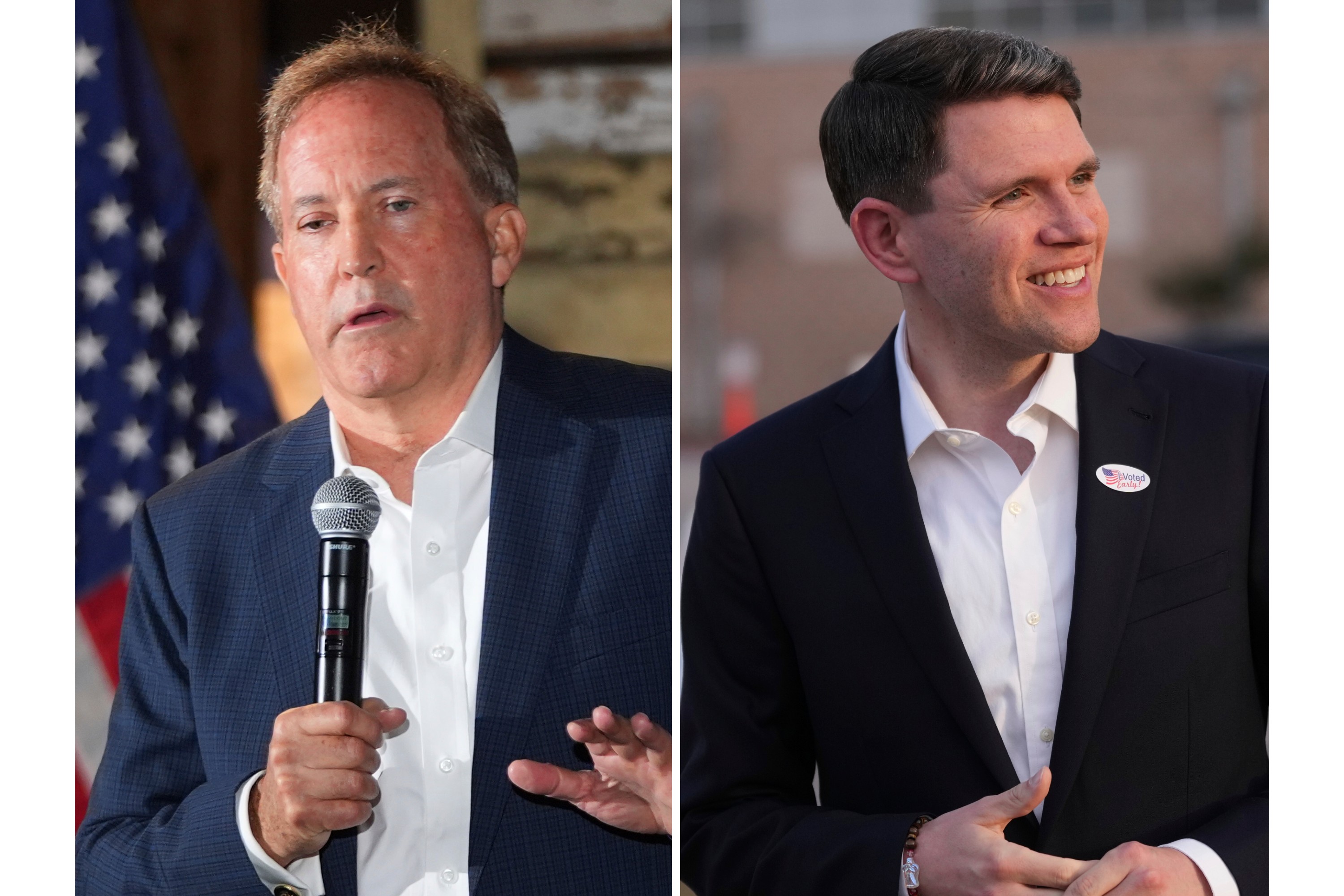
    In Texas, Democrat James Talarico faces state Attorney General Ken Paxton, who ousted four-term incumbent Republican Sen. John Cornyn to win the GOP nomination. Senate GOP leadership backed Cornyn, seeing him as the stronger general election candidate.

    Paxton has been shadowed for decades by legal and ethical questions, including indictments for securities fraud, though he was not convicted.

    Talarico and allied groups have spent nearly $30 million on advertising since the May runoff, compared to less than $3 million by pro-Paxton groups. The political fund associated with Trump last week spent $10 million on TV and digital ads to help Paxton — the first major general election investment by MAGA Inc. for the midterms. Senate GOP leaders had petitioned Trump’s political team to spend some of the more than $400 million it had last month to help Paxton.

    Democrats have also upped their spending in Alaska, Iowa, Ohio and North Carolina, all states currently held by Republicans. The GOP, meanwhile, is feeling more optimistic about New Hampshire as well as Michigan, while spending more to defend seats in Iowa and Alaska.

    The expanded map has upped the anticipated total spending this cycle. AdImpact in June projected $3.4 billion in advertising spending on Senate races, a significant increase from the $2.8 billion the ad spending firm projected in the fall of 2025.

    Why more states are in play than expected

    Democrats’ path has widened in part because of Trump’s slumping job approval, notably on handling the economy, which was at 32% according to an AP-NORC poll in July — down from 40% in March 2025, shortly after he took office.

    Trump’s trade policies and the war in Iran, with its corresponding inflated fuel costs, have added to the economic uncertainty for voters less than two months before Election Day.

    “Things still cost too much. And so we’ve got to work on that issue,” Republican Rep. Jim Jordan of Ohio told The Associated Press. “We understand that and we know that’s real.”

    Ohio Sen. Jon Husted heard the concern firsthand at a roundtable last month. Husted is looking to fend off a comeback from former Sen. Sherrod Brown in another key matchup for both parties.

    During the discussion on housing, one attendee told Husted that costs were “skyrocketing” in part because of uncertainty around tariffs.

    “Uncertainty is the killer to this economy,” said Dean Windham, a real estate developer who previously ran for office as a Republican.

    Some Republican Senate candidates have defended Trump’s policies while confronting concerns about their economic impact.

    In Michigan, where Trump’s tariffs on Canada have become a central issue, Rogers has backed the president’s approach while leaving room for disagreement.

    “President Trump is right to put America First — and tariffs are necessary, but are not a one-size-fits-all solution,” Rogers said in a recent statement.

    Republicans believe the math still favors them

    Even if Democrats hold every seat they currently control, they would need to flip at least two seats in states Trump carried by double digits in 2024 to win the majority.

    Republicans are betting that those underlying advantages will matter more as Election Day approaches — particularly as Trump and the party turn their attention toward mobilizing voters who helped return him to the White House.

    Trump told reporters last week that he will “be making a lot of stops” in the last 30 days before the election.

    This week, Republicans will hold a midterm convention in Texas, where Trump is set to speak and top Senate candidates including Rogers and Husted are expected to attend.

    But Republicans acknowledge they have work to do.

    “Politics is local,” Republican Sen. Mike Rounds of South Dakota said. He pointed to Trump’s decision to import beef, which he said made farmers and ranchers “feel just like the administration pulled the rug right off from underneath” them.

    “They’re hurt,” Rounds said. “They feel like they’ve been let down.”
  • Blood, flags, and fear: 25 years later, looking back on how Philadelphians reacted to 9/11

    Blood, flags, and fear: 25 years later, looking back on how Philadelphians reacted to 9/11

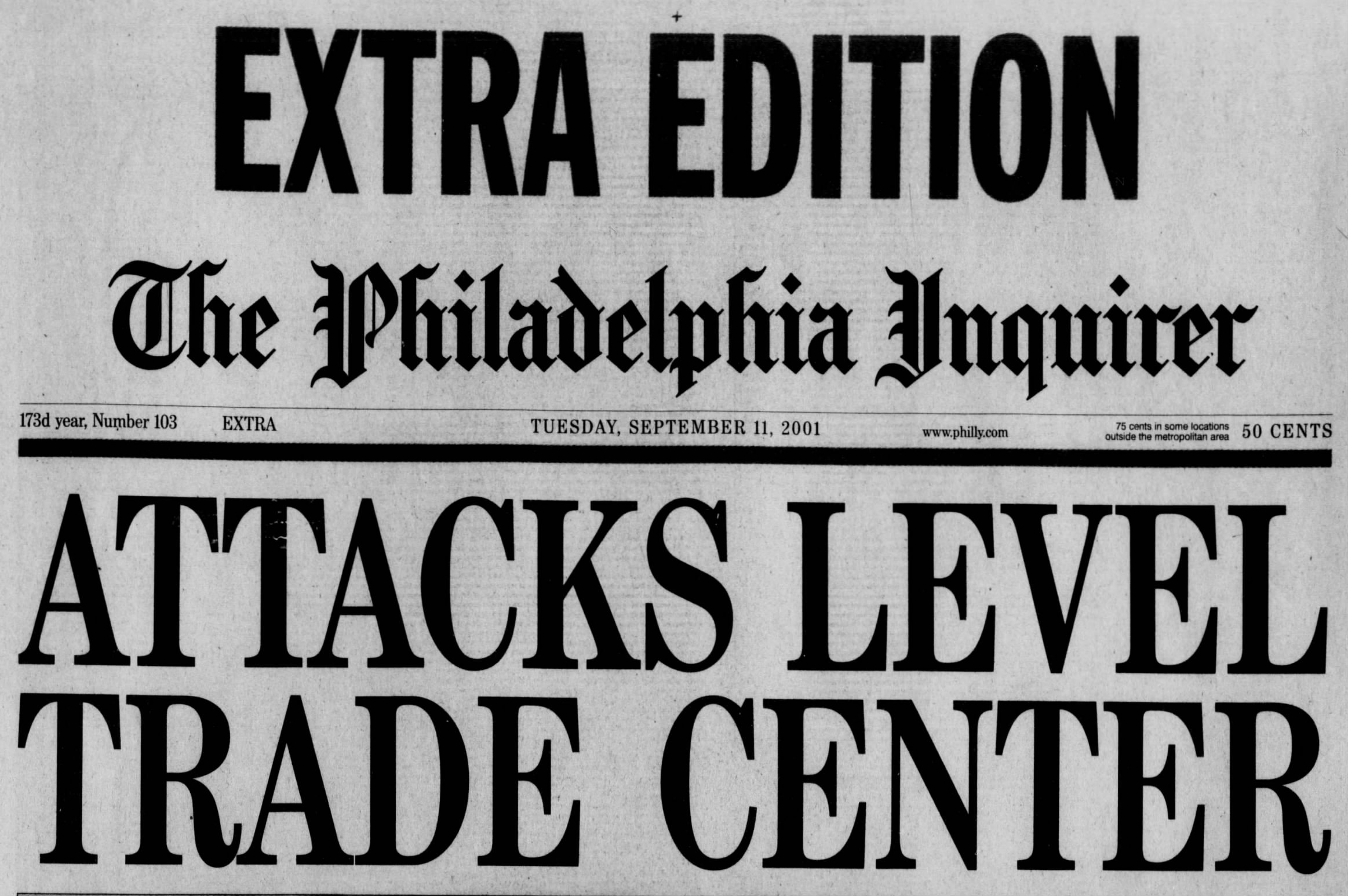
    As the sun set on Philadelphia on Sept. 11, 2001, the city, like the nation, was in shock. Its citizens raged and wept, confronted with unprecedented acts of violence in New York City; Washington, D.C.; and Shanksville, Pa.

    It wouldn’t be known for quite some time, but the attacks that rocked the East Coast that day took about 3,000 lives. Among them were dozens of people with local connections, including several crew members on the doomed flights.

    But in the immediate aftermath of the 9/11 attacks, Philadelphia was focused on survival, and worried that the birthplace of the nation could be the next target. We evacuated, took refuge in religion, worried for the future, gave our blood and time to help, and focused our anger and confusion on our neighbors.

    Now, 25 years later, the impacts of 9/11 continue to reverberate. And though society continued on, in the first few days after the tragedy, it seemed as if it could not.

    Here is how The Inquirer and Daily News covered it:

    https://www.newspapers.com/article/the-philadelphia-inquirer/205152877/

    Article from Sep 12, 2001 The Philadelphia Inquirer (Philadelphia, Pennsylvania) <!— –>

    Panic in Center City

    In the wake of the attacks, panic set in on Philadelphia. Fears the city could be the next target spread quickly, prompting the closure of city government offices, federal buildings, businesses, schools, and historic landmarks by noon.

    “We are taking every reasonable precaution to ensure the safety of our citizens,” Mayor John F. Street said at a late morning news conference.

    Thousands of people began a frantic commute home, gridlocking Center City’s streets and sidewalks. An estimated 50,000 SEPTA Regional Rail passengers were likewise stuck, with several lines suspended. Like all airports nationwide, Philadelphia International Airport was shut down.

    By midafternoon, Center City was essentially a ghost town. Subway lines were all but deserted. Streets were eerily still and empty of cars. Philadelphia’s high-rises largely sat devoid of workers. And as the day wore on, the trauma continued to set in.

    “I feel more shocked today,” said Southampton resident Paul Brown, 81, who survived the attacks on Pearl Harbor 60 years before. “I’m despondent, bewildered, and confused.”

    https://www.newspapers.com/article/philadelphia-daily-news/205152937/

    Article from Sep 12, 2001 Philadelphia Daily News (Philadelphia, Pennsylvania) <!— –>

    Blood and flags

    Almost immediately, horror and sadness turned to anger. Though the enemy was not yet clear or confirmed, there were loud calls for retribution — including from the Daily News.

    In its Sept. 12 issue, under a cover that read “Blood for Blood,” in an editorial headlined “Now, It’s Our Turn,” the People Paper wrote: “Revenge. Hold on to that thought. Go to bed thinking it. Wake up chanting it. Because nothing less than revenge is called for today.”

    Others were more charitable, donating blood to help victims who may have survived. Thousands of people, in fact, streamed into blood donation centers to such a degree that the facilities were overwhelmed. Officials asked that anyone thinking of donating to wait to ease the crush.

    “I feel pretty helpless, and I just wanted to do something,” said Andy Hartlove, 45, of Exton. “Giving blood seemed to be the only thing I could do.”

    Then, there were the flags. So many people bought them to show their support that stores — specialty shops to big box stores alike — sold out completely, and manufacturers began running overtime shifts to make more.

    “Nothing’s going to make anybody feel all that better, but it makes everyone united,” said Jim Whitehead, 22, who worked at National Flag & Banner.

    https://www.newspapers.com/article/philadelphia-daily-news/205153079/

    Article from Sep 17, 2001 Philadelphia Daily News (Philadelphia, Pennsylvania) <!— –>

    A turn to God

    Faced with such monumental violence, many Philadelphians turned to the only being who they felt could provide answers: God.

    Though schools, businesses, and government buildings shut down, many sanctuaries and religious institutions remained open. The city even organized an interfaith prayer service held at Dilworth Plaza on Sept. 13, which thousands attended.

    Many religious leaders reported swellings of their congregations not seen since the bombing of Pearl Harbor. Religion, it seemed, was poised to regain a more prominent place in American lives.

    “People realize when all is said and done that faith in God is the only thing that somebody else cannot take away from them,” said Msgr. John T. Conway, Archdiocese of Philadelphia vicar.

    Many religious leaders took the opportunity to encourage reconciliation instead of revenge. Imam Shamsud-Din Ali, formerly of the Philadelphia Masjid, even encouraged worshipers to pray for the attacks’ perpetrators, noting that in order to perpetrate such a violent act, they must have been badly injured and were in need of God’s mercy.

    The Jewish holiday of Rosh Hashanah arrived as the first religious holiday after the attacks. Paul Bender, the leader of Congregation Ner Tamid in Cherry Hill, sounded a shofar — a ram’s horn blown to sound the start of the Jewish New Year — at a ceremony, likening it to the sounds of wailing of those who lost loved ones. The “sudden, nightmarish anarchy” of the tragedy, he prayed, would soon give way to peace among all people.

    “May that day come soon,” Bender said.

    https://www.newspapers.com/article/the-philadelphia-inquirer/205153160/

    Article from Sep 14, 2001 The Philadelphia Inquirer (Philadelphia, Pennsylvania) <!— –>

    Faith and race targeted

    Philadelphia’s Muslim and Arab American communities were on high alert, and immediately condemned the violence. Federal, state, and local leaders urged the public to not blame those groups, but violence and threats against them were prominent.

    A week after 9/11, officials said, at least 20 bias crimes were reported against Jews and Arabs in New Jersey, and an “untold” number in Pennsylvania. Many people who weren’t Arab or Muslim were also targeted, their attackers believing them to be somehow associated with the tragedy.

    “Apparently, all you need to be right now is brown,” said Emily Hornaday, spokesperson for the New Jersey Division of Criminal Justice.

    Among the most prominent crimes in the area was an incident in which two off-duty Philadelphia police officers pulled a gun on a Lower Merion Township 7-Eleven store clerk at about 3 a.m. the night after the attacks. The clerk, who was from Pakistan, was unharmed, and one of the officers was charged with reckless endangerment and other offenses.

    Taxicab drivers were pulled from their cars and threatened. Islamic religious centers boarded up their windows. A Palestinian flag was pulled down from the wall of Lincoln High School in Northeast Philadelphia, resulting in two arrests. A SEPTA bus passenger threatened a Moroccan man, and begged police to let him “kill the Pakistani.”

    “Are we going after the perpetrators,” asked Amin Elarbi, president of the Al-Aqsa Islamic Society, “or are we targeting an entire faith and race?”

    https://www.newspapers.com/article/philadelphia-daily-news/205153372/

    Article from Sep 17, 2001 Philadelphia Daily News (Philadelphia, Pennsylvania) <!— –>

    Vanishing normalcy

    Even in the early days of the aftermath, it was clear life was about to change. By midweek, city schools reopened, the local government began operating again, and, though curtailed and under new rules, flights began coming and going from PHL. Normalcy, however, was nowhere to be found.

    Large public activities for the weekend after the attacks, such as a Mexican Independence Day festival at Penn’s Landing and a festival celebrating Philly’s connections with Italy known as the Splendor of Florence, were canceled.

    Experts, meanwhile, predicted a swift, lasting change to daily life in the U.S. As Philadelphia Police Commissioner John Timoney put it, we needed to “reexamine how we go about our business.”

    Among those changes, said Geoffrey Herrara, a Temple professor of political science who specialized in post-Cold War security, were an ever-greater electronic surveillance apparatus that would surely be stepped up. Cameras, he said, would be linked with biometrics, and tracking of our movements was to be expected in the future. Some of our privacy, he said, “may disappear.”

    City leaders, however, focused on strategies to get tourists and workers back in town, and back in the high-rises they had quickly come to fear. Occupancy rates at area hotels fell to an abysmal 60%, and the sense that big-city life would be on the decline was palpable. Ultimately, though, we had to keep going, they said.

    “I think we need to communicate to the hearts and minds of Philadelphians that we need to get on with life,” said George Burrell, the mayor’s secretary of external affairs. “The things that attracted you here are still here.”

  • Philly’s fall foliage season is looking special, September weather permitting

    Philly’s fall foliage season is looking special, September weather permitting

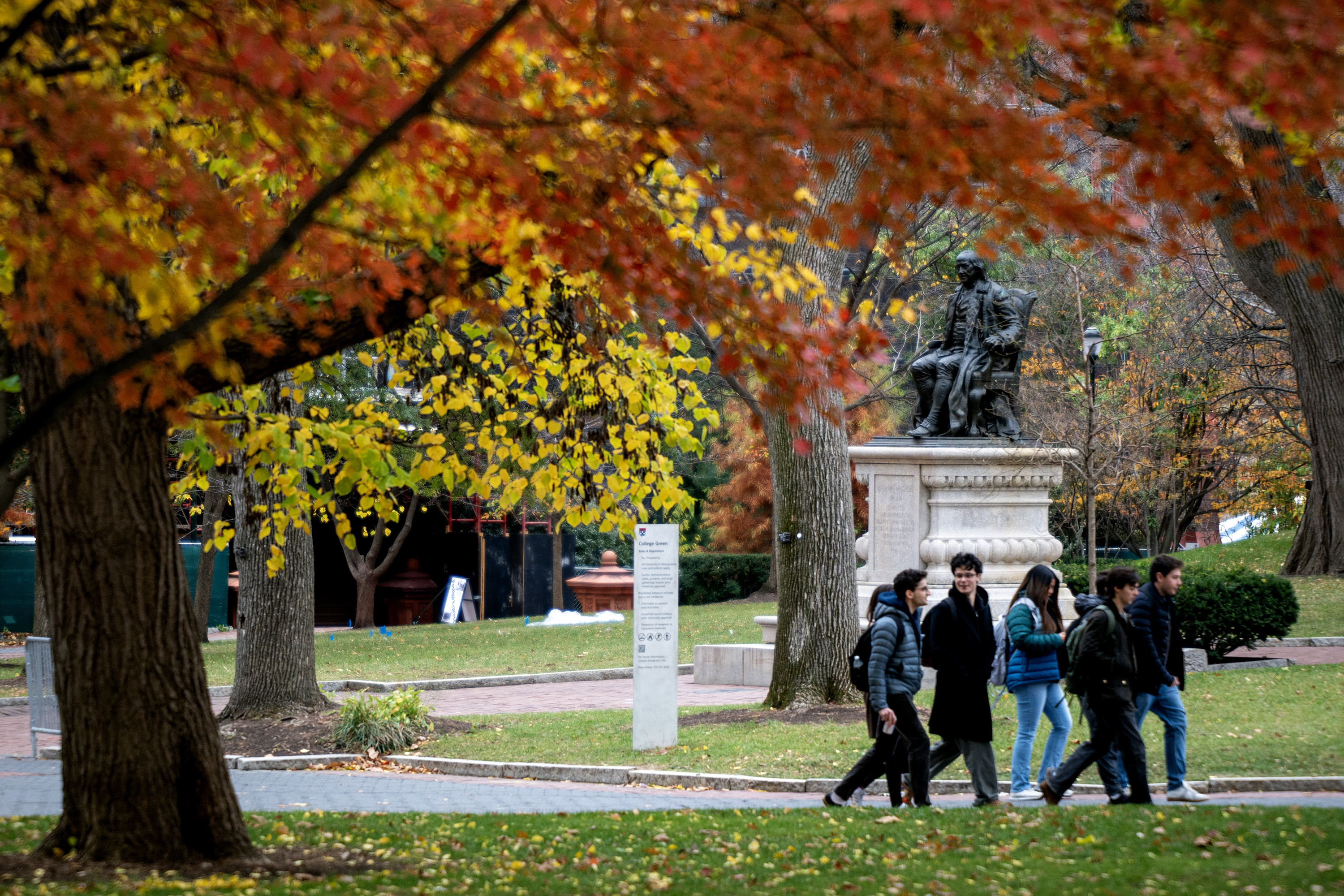
    The sequences of steamy days and downpours in the Philly region and elsewhere won’t rank among the cherished memories of summer, but they may well end up having been a boon to the imminent fall foliage season.

    The consensus among the veteran experts who pay close attention to the behavior of the trees is that this is shaping up to be an excellent season for spectacular waves of fall colors that ripple from northern New England to North Carolina, cresting from early October into early November, with Pennsylvania and New Jersey in the middle of it all.

    As much as some folks may have been fed up with the humidity banquet, the trees — at least those that survived the storms — have been partying. Unlike last year, characterized by an early leaf fall, the players are remaining on the stage.

    “Despite a droughty start to the growing season and some frost damage, our trees are looking green and healthy now, overall,” said Ryan Reed, a forestry specialist with the Pennsylvania Department of Conservation and Natural Resources, who is “looking forward to a beautiful season.”

    What’s more, the snows and Arctic freezes of winter also may have made a significant contribution: The long-lasting snowpack patiently watered the foliage as it melted, neutralizing drought conditions. That was especially true in New England, meteorologist Jim Salge said in his Yankee Magazine foliage forecast.

    But the key to the foliage season would be what happens this month, said Howard Neufeld, a biologist with Appalachian State University, who analyzed weather-foliage patterns for the last several years around the campus area in the heart of the Blue Ridge Mountains and all but interrogated the trees to get at their myriad secrets, most of which they kept to themselves.

    He holds that the main driver in the drama of the season is the production of anthocyanins, the reddish tints that are the show-stealer, and provide the tasteful contrasts to the yellows and russets.

    Sunny days and cool nights are best, say the experts, but like everything else involving the atmosphere, this all gets very complicated.

    As for whether the weather will cooperate, the burgeoning El Niño aside, the scientists who assembled the federal Climate Prediction Center’s fall outlook saw odds slightly tilted toward above-normal temperatures in the fall.

    When to expect the onset and peak foliage

    The day-to-day weather is going to influence when the leaves begin to turn and when they will peak. Just what effect long-term warming is having on the seasons, which are primarily light-driven, is unclear, and “each year brings subtle differences,” says William Keeton, forestry professor at the University of Vermont. Typically, the leaves up his way take on serious color by the end of September and peak the first or second week in October. Where Neufeld, an emeritus professor of ecophysiology, works in the Blue Ridges, whose ultra-popular foliage season was wiped out two years ago by Hurricane Helene, the peak can extend into early November.

    On average, in the immediate Philly region, expect onset in mid-October, with peak around Halloween.

    The higher the September temperature, averaged for the month, the later the onset of color, Neufeld said. A single degree could mean a difference of two days, he added.

    Conversely, he found that higher daily maximum temperatures in September actually sped up the onset. (He didn’t know why, either.)

    The key period for the weather conditions begins right about now, he said. A run of sunny days into October would be ideal for color, but a warm and rainy period would take the blush out of the reds and make for a duller show.

    But that’s very much subject to variability: The trees have complex inner lives.

    What’s behind the fall foliage show

    Without getting too deeply into the weeds (or the leaf piles), here are the basics of the process.

    Along with the shorter days — Philly loses an hour and 15 minutes of sunrise-to-sunset time this month — the sun is losing some mojo. With the dimming of the light, green chlorophyll recedes from leaves, yielding to those carrot-colored carotenoids and flamboyantly reddish anthocyanins. And Neufeld holds the reds are the stars.

    “The oranges and yellows tend to be the same from year to year,” he said, “but the reds vary.” When it’s sunny and cool, sugars accumulate on the leaves and the reds can go to town. But if it’s cloudy and warm, the sugar factories shut down.

    Just why some leaves turn red, such as the maples, “is not completely understood,” Keeton said.

    Neufeld, a biologist, noted that it doesn’t happen in Europe, and holds the redness is related to a form of malnourishment — a function of a lack of nutrients in Eastern North American soils.

    Whatever the cause, the process has contributed to the health and well-being of spectacular falls in one of the world’s prime foliage viewing corridors.

    This year is shaping up to be another one, said Marc Abrams, a Penn State forestry professor emeritus, who has been tracking the woods for over 30 years. “At this point,” he said, “all systems go.”

    Where and when to go leaf-peeping

    For an overview of the likely onset and peak times across the country check out explorefall.com/fall-foliage-map. Its custodians say it’s the product of climatology and computer modeling.

    The show opens in northern New England, and the NewEngland.com site posts graphics that show average conditions for each day.

    Starting Oct. 1, the weekly Pennsylvania Department of Conservation and Natural Resources updates and forecasts, assembled by Reed from on-site reports from forestry officials, will be up and running.

    And check out The Inquirer’s guide on where to peep in the Philly region.

  • PPA voided more than 23,000 tickets due to missing street sign

    PPA voided more than 23,000 tickets due to missing street sign

    Enforcement cameras on Broad Street in Philadelphia caught about 800,000 motorists speeding in the first six months they were operating.

    But the Philadelphia Parking Authority had to throw out 23,195 tickets and refund $1.25 million in fines — all because of a missing street sign at one spot.

    A speed camera covering the southbound lanes in the 6500 block of North Broad Street operated for several months earlier this year without a required sign telling motorists that it was operating, PPA said last week in its annual speed-camera report.

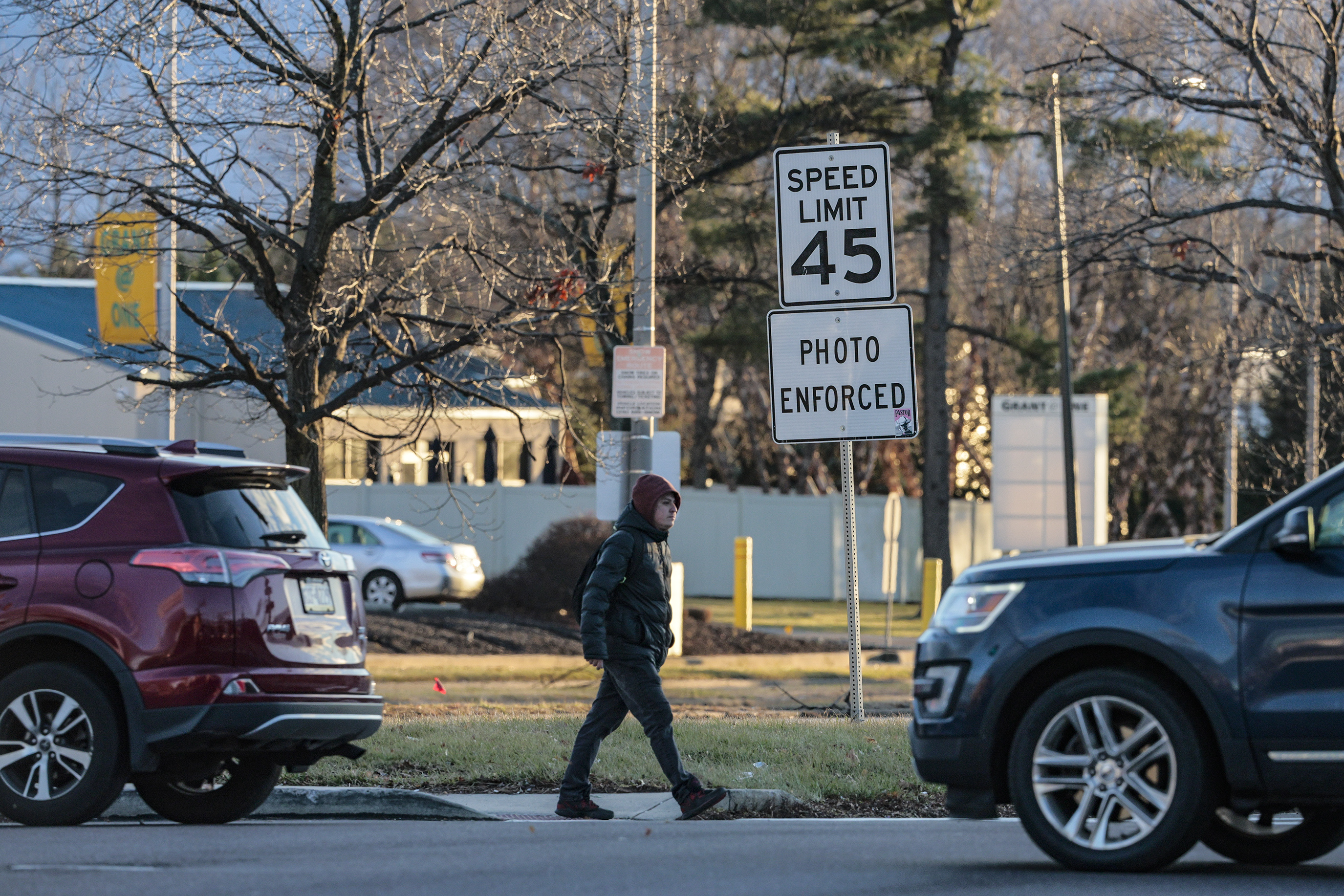
    A construction crew dug up the sidewalk on the block, knocking down the curbside sign that says the speed limit is 25 mph and is “photo enforced,” said Corinne O’Connor, deputy executive director of the parking authority.

    “We did the right thing,” O’Connor said. The violation notices were canceled because, she said, motorists did not have proper notice of the speed limit and the presence of enforcement cameras at Broad Street and 65th Avenue. State law requires those signs at camera locations.

    Broad Street, also designated State Route 611, has 31 speed cameras at 15 locations spread out between Philadelphia’s northern and southern city limits. They began operating last September.

    Drivers who travel more than 11 mph over the posted speed limit will eventually be ticketed, with fines starting at $100 and rising to $150 for those driving more than 30 mph over the limit.

    A PPA staff member doing a regular check reported the signs near 65th Street missing in mid-January, but it took weeks to correct. Officials did not realize the cameras hadn’t been turned off, and did so on April 22, PPA said. The signs were replaced April 29.

    O’Connor said the delay was due in part to ongoing construction and red tape required to get utility clearance to install a new pole with signs.

    While the signs were missing, the cameras at that location clocked 23,195 speeding vehicles and issued violation notices.

    Before the cameras were turned off, the PPA had processed $1.25 million in payments for 12,214 of the tickets. The money is being refunded, PPA said.

    PPA spokesperson Marty O’Rourke said the drivers cited “were still speeding,” but the violations were annulled because the notification requirement of the law was not met. The tickets could have been canceled if a recipient appealed based on the missing signs.

    O’Rourke said it was a “proactive decision” to cancel them.

    Speed cameras were first installed on Roosevelt Boulevard in 2020 on a trial basis and more were added in the next two years.

    Speeding has dropped 95% on the roadway, based on the declining number of violations issued since the first month cameras were operating there, PPA said.

    A state law enacted in 2023 made the Roosevelt Boulevard speed cameras permanent and authorized Philadelphia to designate five more dangerous corridors on which to use the technology.

    Cameras were deployed last fall on Broad Street and recently on portions of U.S. Route 13 in North and West Philadelphia.

  • Police confront crowds of teens on two consecutive nights in Dilworth Park

    Police confront crowds of teens on two consecutive nights in Dilworth Park

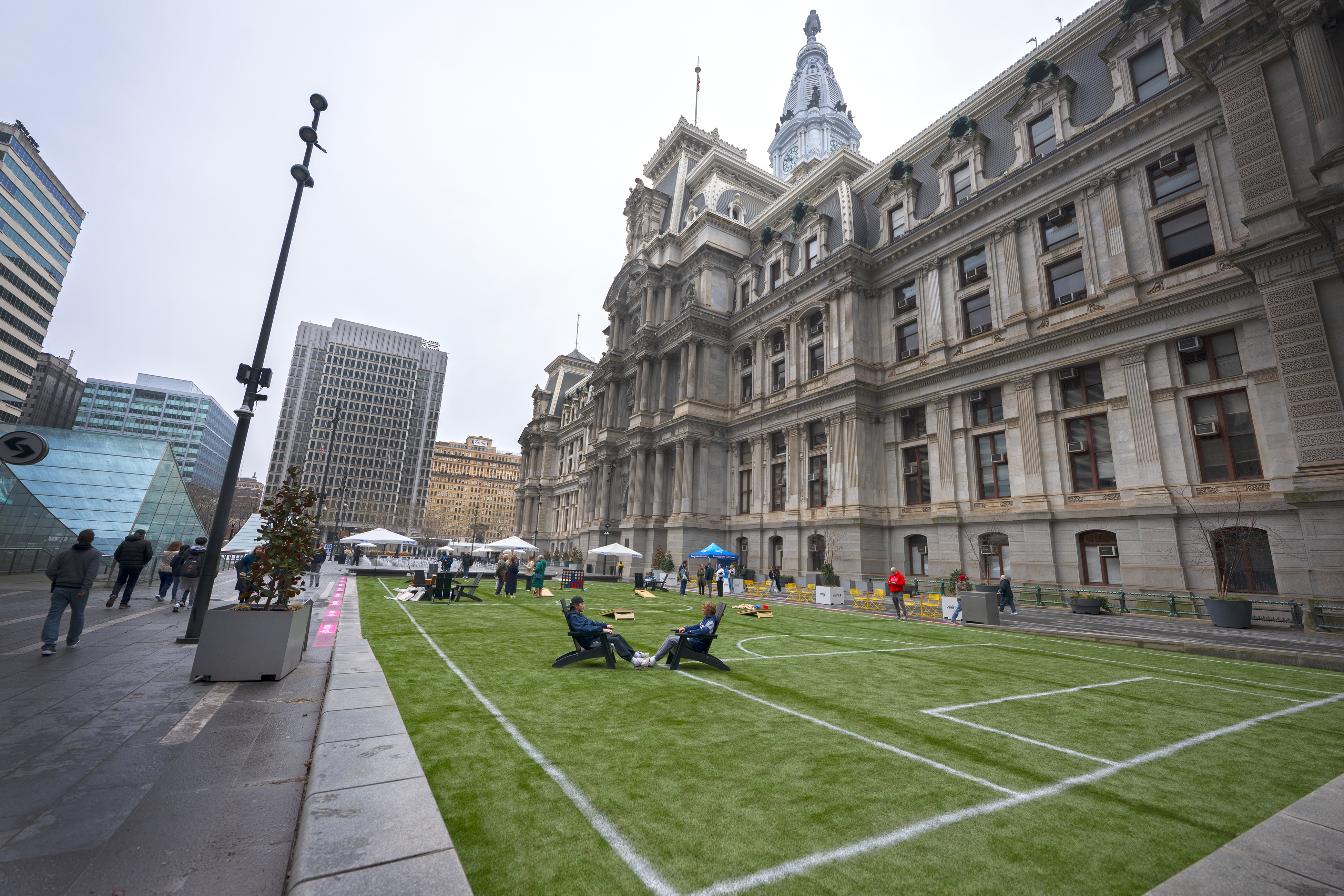
    Confrontations between large groups of teenagers and Philadelphia police made for a tense scene in Dilworth Park outside City Hall over the holiday weekend and led to at least three arrests.

    On Sunday, Philadelphia police issued seven citations for disorderly conduct, a spokesperson said. In addition, three people were arrested, one for robbery, another for disorderly conduct, and a third for violating gun laws.

    In addition, an Inquirer reporter observed police detaining several young people on Monday evening as police sought to keep teens from reconvening inside the park. In one of the incidents, an officer appeared to sustain a bloody nose while tackling a young woman.

    Philadelphia police spokesperson Corporal Jasmine Colón-Reilly said she did not have information about what led police to respond to the scene Sunday, nor the extent of any injuries. She said she did not have information about the Monday evening incident.

    Videos shared on Instagram appear to show a hundred or more young people gathered in the park on Sunday, before police rush into the park to detain a person. In one of those incidents, a young man appeared to be assaulted by others in the crowd. Another video showed an apparently injured person collapse in the street. It was not clear from the videos whether the person was part of the crowd.

  • Philly workers celebrate ‘beauty of union solidarity,’ bemoan rising costs at Labor Day parade

    Philly workers celebrate ‘beauty of union solidarity,’ bemoan rising costs at Labor Day parade

    For more than an hour, waves of union members and their families marched and chanted along a half-mile stretch of Washington Avenue late Monday morning, their steps amplified by the percussive thunder of drum line groups.

    Some could have easily opted to spend their Labor Day — balmy as it was, with blue skies and occasional tufts of cotton candy clouds — on a beach or at a barbecue, mused Wendell Young IV, president of United Food and Commercial Workers Local 1776, as he trekked past houses and storefronts in a blue T-shirt that bore the words “Solidarity is a vibe.”

    But Young said he thought anger over some of President Donald Trump’s policies — such as a controversial attempt to end collective bargaining rights for more than a million federal workers — had compelled many union members to instead take to the streets for the 39th Annual Tri-State Labor Day Parade.

    “He’s more interested in putting his name on buildings and arcs,” Young said, “than protecting the rights of workers.”

    Economic anxiety was a recurring theme throughout the parade, as it is across much of the U.S. Federal Reserve data in January showed that wealth inequality in the country had reached its highest level since 1989.

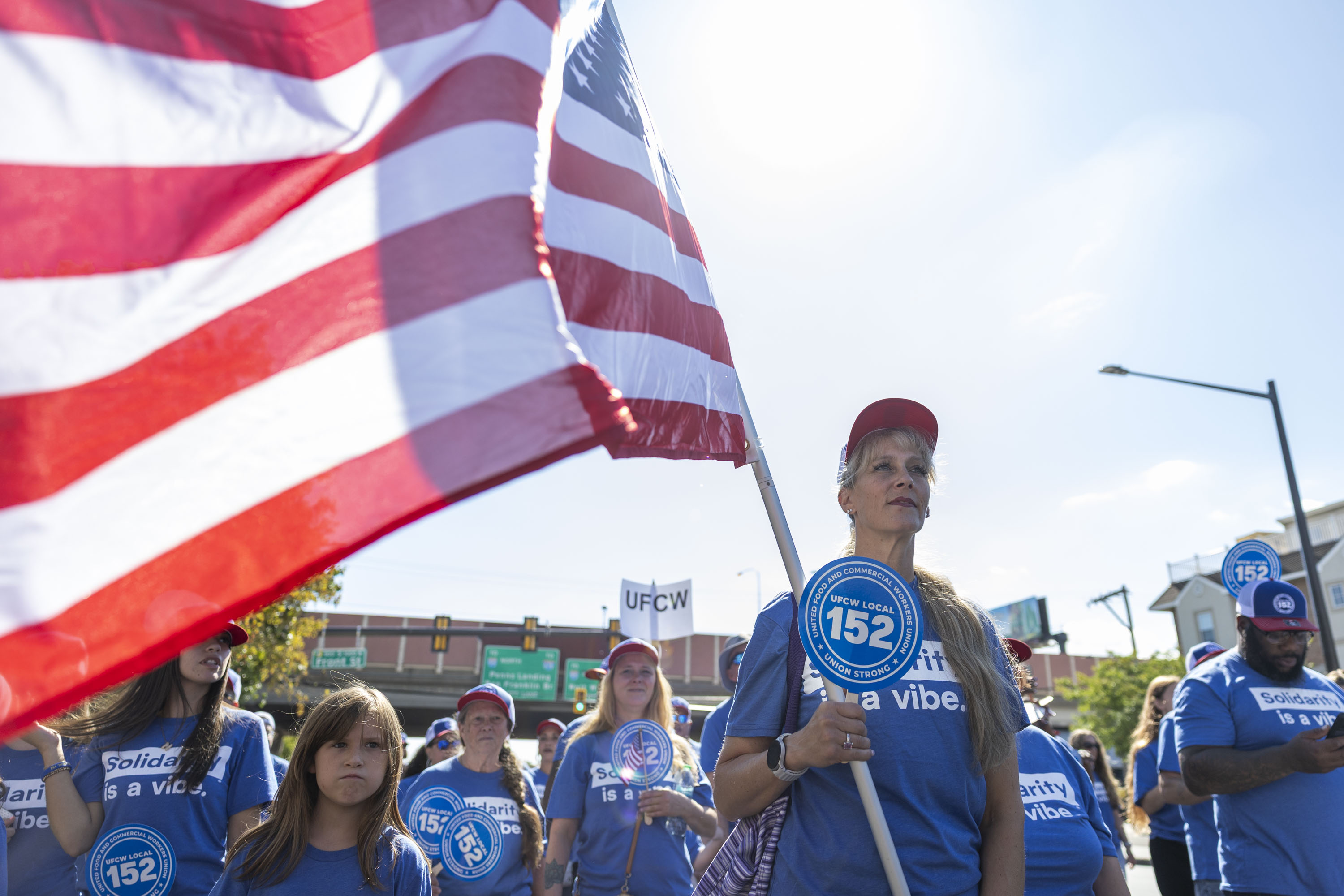
    Lois Crudele, of Brooklawn, with Local 152 of the United Food and Commercial Workers International Union, is holding up the American flag while walking with fellow union members during Monday’s parade.Tyger Williams / Staff Photographer

    “Workers in general are very concerned about cost increases across the board,” said Danny Bauder, president of the Philadelphia Council AFL-CIO. “Inflation keeps increasing [prices], and the job market is tight.”

    Nina Coffey, secretary and treasurer for SEIU Local 668, which represents 20,000 social service union employees in Pennsylvania, said members most often express concern about the “rising costs of healthcare, being able to put food on the table, as well as unregulated artificial intelligence that we’re facing.”

    Yet uncertainty did not overshadow what was an otherwise joyous day.

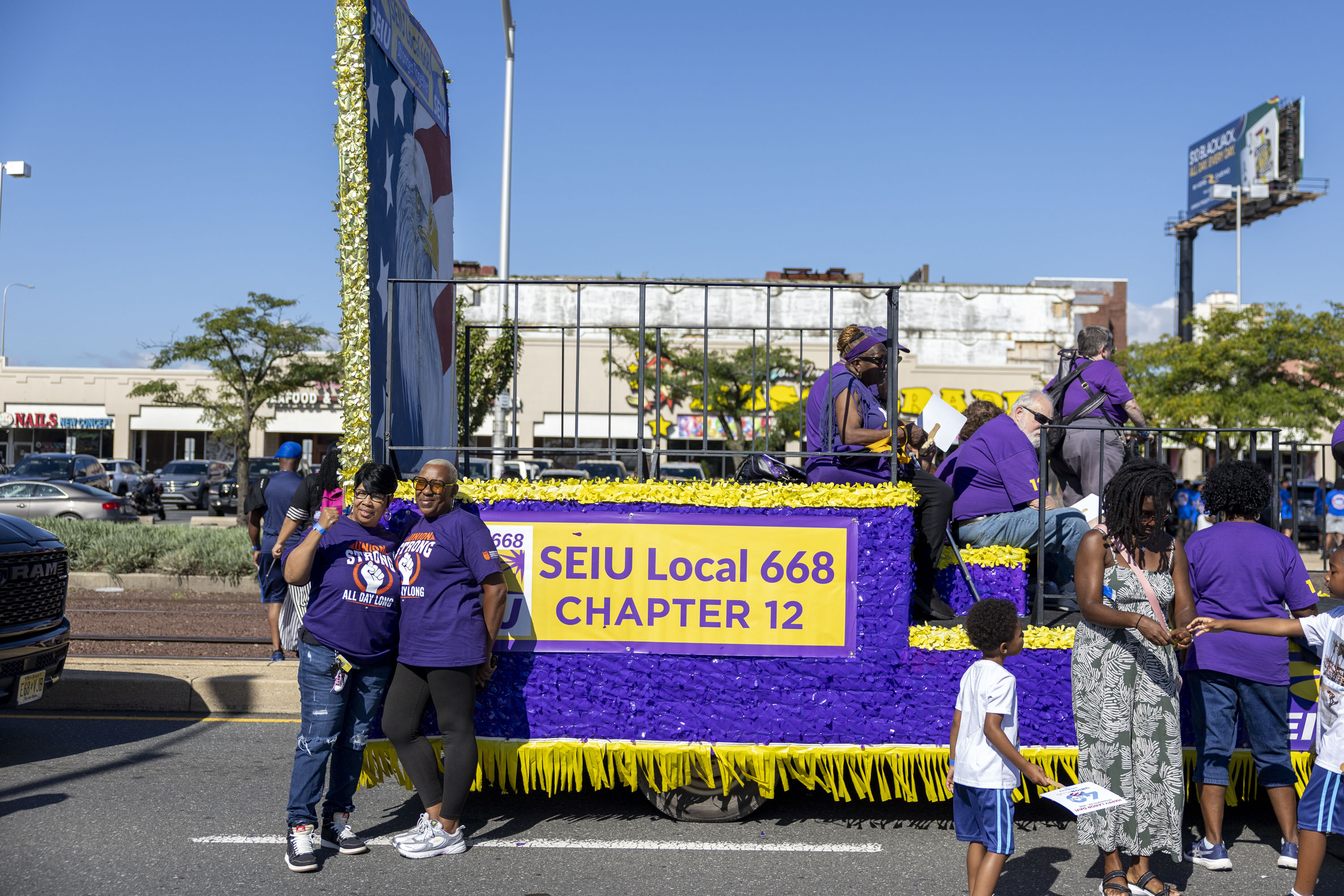
    Behind Coffey, on Washington Avenue near Fifth Street, SEIU members on a purple and gold float tossed candy to giddy children on a sidewalk, where handfuls of smiling onlookers waved and recorded with their phones.

    Bauder praised what he called “the beauty of union solidarity” — the communal lift that members experience when another union achieves a victory. He cited, as an example, the 1,500 unionized Peco workers who won raises and full retirement medical coverage after briefly going on strike in July, and hotel union workers who also secured wage increases after going on strike in June.

    During a rally before the parade, outside the Sheet Metal Workers’ Local 19 Training Center on Columbus Boulevard, city and state officials preached from a platform about organized labor’s enduring presence.

    “Philadelphia is a union town forever,” said city managing director Carlton Williams, who added that union workers have cleaned more than 150,000 city blocks under Mayor Cherelle L. Parker’s administration.

    Charlene Little (left) and Tanita Williams (right), of West Philadelphia, with SEIU Local 668, with their parade float.Tyger Williams / Staff Photographer

    Parker appeared briefly during the pre-parade gathering, then left abruptly.

    “The mayor was here and wasn’t feeling well. She will be fine,” Parker’s spokesperson, Joe Grace, wrote in a text message. “She is sorry to miss an important event for organized labor that she never, ever misses.”

    Parker later returned, and then attended two additional Labor Day events.

    Pennsylvania Lt. Gov. Austin Davis, who also addressed the assembled union members, noted that his father is a union bus driver in Pittsburgh.

    “I know what a good union job can do for a family. I’ve seen it,” Davis said. “And I think we’re going to continue to fight to protect that way of life here in Pennsylvania.”

    A recent Gallup poll found that unions have a 71% approval rating, a figure that was surpassed only in the 1950s and in 1936.

    The same poll showed that 47% of Americans want unions to have more influence than they currently do.

    But only 10% of U.S. workers are union members, according to the most recent data from the U.S. Bureau of Labor Statistics. That percentage is slightly higher in Pennsylvania, at 10.9%, and New Jersey, at 14.7%.

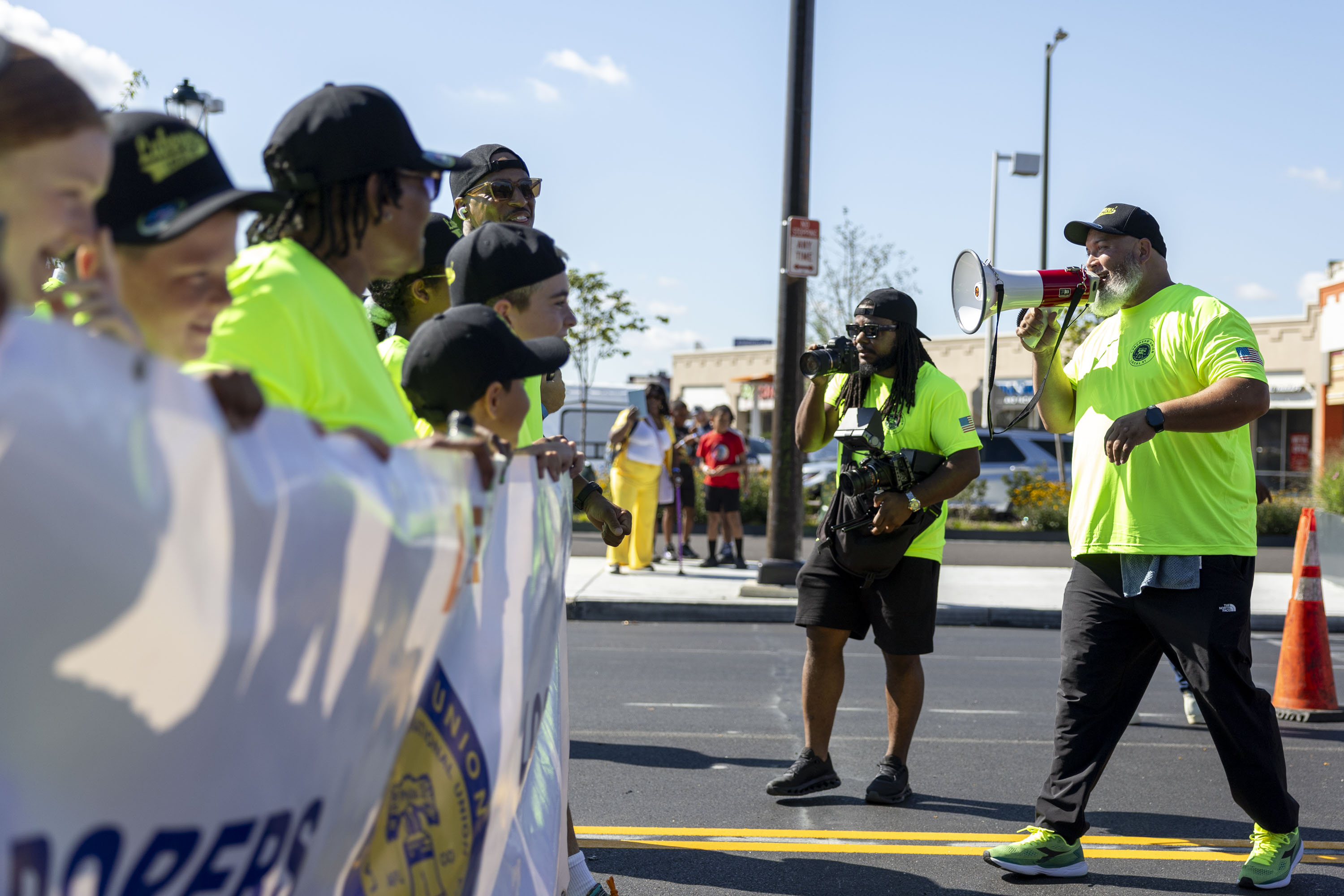
    Billy Williams, of Northeast Philadelphia, with Local 57 of the Laborers’ International Union of North America, is leading chants for his fellow union members.Tyger Williams / Staff Photographer

    Perception of unions improved during the COVID-19 pandemic — when nurses, bus drivers, and grocery workers were deemed essential — and has remained high ever since, Paul Clark, a professor of labor and employment relations at Pennsylvania State University, wrote in an email.

    As many Americans’ standard of living has fallen, and income inequality has grown more extreme, labor unions have appeared to many as the “only institution that could help working people win a bigger share of the wealth they were creating and that they deserved,” Clark said.

  • Why Amy Klobuchar wants to run a state beleaguered by Trump

    Why Amy Klobuchar wants to run a state beleaguered by Trump

    ST. PAUL, Minn. — On a sweltering summer morning, Sen. Amy Klobuchar (D.,Minn.) was making small talk with merchants at the St. Paul farmers market when a cheesemaker expressed a sentiment that has kept coming up as Klobuchar campaigns for Minnesota governor.

    “We’re going to miss you in Washington,” the cheesemaker, Brenda Carlson, told Klobuchar while bagging a piece of Tilsit.

    Klobuchar acknowledged having mixed feelings about leaving her seat as the chamber’s third highest-ranking Democrat. “But we need to get this sorted out,” she said, frowning slightly.

    By “this,” Klobuchar meant the current condition of Minnesota, which has become a punching bag in the Trump administration’s quest to portray Democratic-run states and cities as hopelessly dysfunctional.

    As she gears up for what could be the capstone of a decades-long political career, Klobuchar is pitching herself as uniquely qualified to clean up the messes at home and reset the state’s poisonous relationship with the White House.

    Her reputation makes the case, supporters say: She is known as both a hard-charging workaholic who scrutinizes program details to a fault and a centrist with allies on both sides of the aisle in Washington, including in President Donald Trump’s administration.

    But both qualities could also cause friction. Minnesota agencies are bracing for turbulence as Klobuchar vows to audit every state program. And many residents remain shell shocked from the Trump administration’s immigration crackdown early this year, which paralyzed the Twin Cities for weeks and left two U.S. citizens dead.

    When it comes to relations with the president, some residents say they want a fighter in the governor’s office, not a conciliator.

    Nekima Levy Armstrong, a civil rights lawyer who is facing trial over her role organizing a protest against Immigration and Customs Enforcement at a church, said Klobuchar did not speak out stridently enough about the wintertime deportation campaign.

    “Many of us felt abandoned by our elected officials during Operation Metro Surge,” Levy Armstrong said. “We felt abandoned by Amy Klobuchar in particular.”

    In an interview, Klobuchar said she was “as angry about some of the things Trump has done as anyone.”

    “But I have decided that I’m going to get us to a higher place and not act like him,” she said. Her first goal, she added, “is to earn back the trust of the people of Minnesota in state government.”

    For now, Minnesota Democrats have expressed almost uniform relief that Klobuchar is their nominee rather than current Gov. Tim Walz.

    They began 2026 in panic mode as a scandal over widespread fraud in state-run safety net programs dogged Walz’s bid for a third term. State lawmakers openly fretted that his name at the top of the ballot in this year’s midterm elections would give Republicans a strong shot at winning the governor’s mansion for the first time in two decades and controlling the tightly divided Legislature.

    “I would definitely be lying if I said that the worry meter wasn’t ticking up, up, up by the week,” said state Rep. Mike Howard, a Democrat from the Twin Cities.

    They exhaled when Walz dropped his reelection bid in early January, as the Trump administration was sending thousands of immigration agents to the state in what the president called a campaign of “RECKONING & RETRIBUTION.”

    Klobuchar announced her run for governor later that month as Minnesotans were reeling from the killings of Renee Good and Alex Pretti, two American citizens shot by immigration agents in Minneapolis. “These times call for grit and resilience,” Klobuchar proclaimed.

    The announcement amounted to a reversal of fortunes for Democrats, making Klobuchar the clear favorite in the general election race against Lisa Demuth, the Republican speaker of the Minnesota House. Even far-left lawmakers in the state Capitol — where the party has a one-seat majority in the Senate and is tied in the House — have emerged as enthusiastic surrogates for Klobuchar.

    “People in the Democratic Party here in Minnesota understand she’s our best path to winning a majority and defending ourselves from Donald Trump,” said state Sen. Zaynab Mohamed, a member of the democratic socialist wing of the party.

    Klobuchar kicked off her run by calling all 101 Democrats in the Legislature, keeping several on the phone for more than an hour. There was talk of campaign strategy, lawmakers said, but Klobuchar was most interested in their policy goals.

    When she ran for president in 2020, Klobuchar was the subject of several critical articles depicting her as a perfectionist and difficult boss whose office had among the highest turnover in the Senate.

    Klobuchar has a tendency to personally tackle tasks most elected officials delegate and to fire off all-caps emails to aides, which often land in inboxes between midnight and dawn.

    Some supporters now call that feverish approach an asset.

    State Rep. Zack Stephenson, the Democratic leader in the Minnesota House, recalled being startled by a 3 a.m. email from Klobuchar in 2006 when he served as a lowly aide in her first Senate campaign.

    “The lesson I took away from that race is that to be successful in politics, the secret is to work really hard,” he said.

    The sense of relief extends to Democratic voters like Carlson, the cheesemaker, who says she has soured on Walz, a former schoolteacher and coach who oversaw the adoption of a raft of progressive policies and made a splash on the national stage by running for vice president in 2024.

    In recent years, Carlson said, small-business owners like herself have grown frustrated by tax increases and red tape that seem to grow each year. Then came revelations about rampant fraud in state programs meant to feed low-income children, treat minors with autism, and help people at risk of homelessness.

    “I just think things got away from him when he did the whole run,” said Carlson, 54, who lives in Center City, a conservative town 40 miles north of the Twin Cities. “He couldn’t keep a watchful eye, and whoever was wasn’t doing their job.”

    She said she hoped Klobuchar would be different.

    That is the senator’s pitch.

    Having enthusiastically backed Walz’s vice-presidential bid two years ago, Klobuchar has now distanced herself from him.

    She kicked off her campaign in May by announcing a detailed plan to combat fraud. Evoking the years she served as the elected county prosecutor in Minneapolis, she stood alongside the former U.S. attorney in Minnesota against a backdrop of law books.

    “You are right to be angry about the fraud,” Klobuchar said at the time.

    Klobuchar has also questioned how Walz and allied lawmakers spent a $17 billion surplus in 2023. After Walz granted a pardon in June to a man convicted of child sexual abuse who was facing deportation to Laos, Klobuchar said she would have let the conviction stand.

    A spokesperson for Walz did not respond to a request for comment.

    Demuth, the Republican candidate for governor, has sought to portray Klobuchar’s bid as a de facto third term for Walz, questioning why she wasn’t outspoken about the fraud problem before jumping into the race.

    “She will not be able to enact the changes that are desperately needed,” Demuth said in an interview.

    Klobuchar has called Demuth a “rubber stamp for Donald Trump.”

    But how Klobuchar will approach the Trump administration — and whether that will satisfy Democrats in a state with a strong leftist streak — remains unclear.

    Activists have pressed her to adopt a statewide sanctuary policy for immigrants without legal status, which would ban local jurisdictions from signing cooperation agreements with ICE. One activist recently confronted Klobuchar about the issue as she marched in a small town parade.

    So far she has refused. In the interview, Klobuchar, who has long championed a broad overhaul of the immigration system, said she intended to make a case that immigrants are vital to Minnesota’s economic growth.

    “I cannot tell you the number of small businesses that we have run by immigrants in our state,” she said.

    Klobuchar trounced a handful of little-known candidates in the Aug. 11 primary, winning nearly 90% of the vote. That dominance meant she avoided being meaningfully drawn into fraught policy debates playing out in other national races, said Kobey Layne, 26, a democratic socialist who placed a distant second.

    Layne said she worried that as governor, Klobuchar would prioritize bipartisan cooperation and incremental change over bold overhauls, such as the creation of a state-run, single-payer healthcare system.

    Asked about the growing clout of democratic socialists, Klobuchar said she welcomed intraparty policy debates and expected pushback from all sides if elected. She also acknowledged rumors that she was considering appointing Republicans to her cabinet.

    “Spoiler alert,” she said. “You’re not going to like everything I do.”

    This article originally appeared in the New York Times.

  • Party’s over for crypto scammers who went on a spending spree after a $240 million bitcoin theft

    Party’s over for crypto scammers who went on a spending spree after a $240 million bitcoin theft

    WASHINGTON — They pulled off one of the largest cryptocurrency thefts in U.S. history, duping a stranger out of bitcoin worth over $240 million. They tried to hide their digital fingerprints, carrying out a sophisticated scheme to launder the proceeds.

    And then the party started.

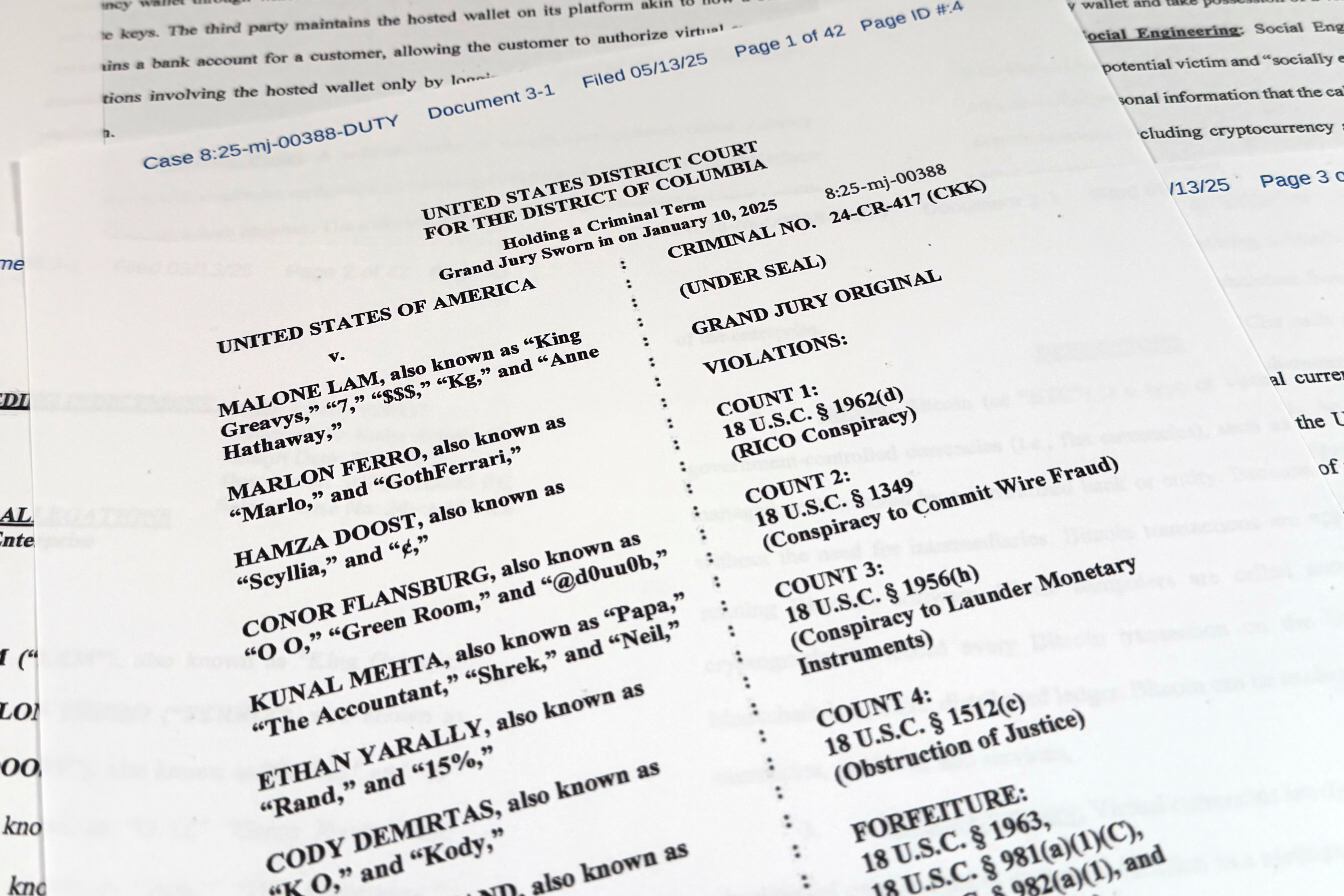
    The scammers — a network of young men in their late teens or early 20s — celebrated the August 2024 heist by embarking on a wild spending spree. They purchased fleets of sports cars, flew on private jets, hired security guards, and rented mansions in Miami and the Hamptons. An alleged ringleader, 22-year-old Malone Lam, spent over $569,000 in one evening at a Los Angeles night club.

    Their bender lasted a month before FBI agents arrested Lam on charges that he organized a “social engineering” attack on the Washington, D.C., resident. Lam, an eighth-grade dropout from Singapore, has a plea agreement hearing set for Tuesday. His conviction would be a capstone for the government’s investigation.

    The charges against Lam and 17 others are an extreme example of an increasingly common form of cybercrime. Complaints of cryptocurrency investment fraud to the FBI rose by nearly 50% in 2025, while Republican President Donald Trump’s administration largely abandoned a regulatory crackdown on the volatile industry.

    Last year, the Justice Department disbanded a unit dedicated to prosecuting crypto-related crimes. Meanwhile, crypto companies that complained of unfair treatment during Democratic President Joe Biden’s presidency are enjoying the government’s hands-off approach under Trump, who took in roughly $1.2 billion from his crypto businesses in 2025.

    Cybersecurity researcher Allison Nixon, who has spent years tracking the Com, an underground subculture of young hackers united by the “insane amount of money” that crypto fraud can generate, advocates for more law enforcement resources to go after them.

    “If we don’t seriously ramp up the resources to take these people down and do it faster, then it’s going to spread more and more,” she said.

    Scammers nabbed millions though ‘social engineering’ heist

    A man identified as “Victim 7” in court filings was at home in Washington on Aug. 18, 2024, when his phone rang. The first caller identified himself as a Google representative inquiring about attempts to breach his account. A second, claiming to be from the Gemini crypto exchange, warned the man of a malware attack affecting his crypto wallet.

    The callers manipulated the man into giving them access to his Google Drive and revealing security codes that allowed Lam to siphon off over 4,100 bitcoin, according to prosecutors. They said Lam and his friends on the calls — Veer Chetal and Jeandiel Serrano — targeted the man because he was a wealthy, longtime crypto investor.

    A private recording captured the moment when the friends realized how much money they just stole, according to a video posted by a well-known private investigator of cryptocurrency crimes who goes by ZachXBT.

    “Oh, my God! Bro, bro, I’m going to spaz out!” a voice on the video said.

    Once they swiped the man’s savings, they used money laundering specialists to wash it through multiple exchange platforms and convert virtual currency into government-issued cash.

    It wasn’t the first social engineering scam for the friends, who met in online gaming forums. They had teamed up on other multimillion-dollar thefts since late 2023 using a similar playbook, according to prosecutors.

    This time, however, one of them made a costly mistake: Serrano failed to conceal his IP address when he created an account on a cryptocurrency exchange to hold nearly $30 million in stolen crypto, according to prosecutors. Investigators linked the IP address to a home in Encino, Calif., that Serrano was renting for $47,500 a month.

    Lavish spending quickly drew attention

    Serrano was vacationing in the Maldives when investigators identified him as a suspect. Lam was in Los Angeles, where he and friends spent $4 million at nightclubs in one month, authorities say. Chetal gifted a Lamborghini to his parents and hid a duffel bag filled with $500,000 in cash in their laundry machine.

    Word of their windfall quickly spread in crypto scammers’ circles. A week after the big score, Chetal’s parents were driving in Danbury, Conn., when several masked men cut them off, forced them out of their new car, beat Chetal’s father with a baseball bat, shoved the couple into a van, and bound their hands.

    The captors, from Miami, had intended to use Chetal’s parents as leverage for extorting him into giving up his share of the stolen crypto. But the ransom plot fell apart when witnesses notified police, who apprehended the carjackers.

    The FBI showed up to search Chetal’s apartment in Brunswick, N.J., on Sept. 9, 2024, and found $37 million in stolen crypto in his possession. He agreed to cooperate with their investigation.

    Lam was attracting attention, too, for spending hundreds of thousands of dollars a night at clubs and tossing handbags worth tens of thousands of dollars to women in the crowds. He also used stolen cryptocurrency to buy a $2 million watch and over 30 cars, including custom Porsches, Lamborghinis, and Ferraris, according to the FBI.

    “This luxury lifestyle, of which so many young men and women could only dream, was just built on a foundation of fraud,” a prosecutor, William Hart, said during a recent sentencing hearing for a money laundering co-defendant.

    ‘Ferris Bueller gone bad’

    Serrano was wearing a $500,000 watch when FBI agents arrested him at Los Angeles International Airport on Sept. 18, 2024. He initially professed his innocence but soon admitted to having roughly $20 million of the D.C. man’s stolen crypto, prosecutors said.

    Lam was arrested at one of his Miami mansions on the same day as Serrano. An off-duty law enforcement officer had tipped off Lam that authorities were on their way to arrest him, the indictment says.

    “We always talked about what it would be like if I were to go down, but never thought it would be this crazy,” Lam told associates from jail on a recorded call, according to his indictment.

    The judge for Lam’s initial court appearance in Miami sounded astonished by a prosecutor’s summary of his lavish spending.

    “I could only think of Ferris Bueller gone bad,” U.S. Magistrate Alicia Valle said, referring to the school-skipping protagonist of the 1986 movie Ferris Bueller’s Day Off.

    Lam’s capture didn’t stop the splurging. Ferro, who pleaded guilty to a racketeering conspiracy charge last year, used stolen funds to cover Lam’s legal expenses.

    Judgment days

    Eighteen defendants have been charged. Lam would be the 11th to plead guilty. At Lam’s first court appearance, a prosecutor estimated that his sentencing guidelines would recommend a prison term of at least 14 years upon conviction.

    U.S. District Judge Colleen Kollar-Kotelly, who presides over Lam’s case, already has sentenced three of his co-conspirators. She sentenced two money launderers to prison terms of approximately six years.

    Chetal pleaded guilty to conspiracy charges in November 2024 and awaits sentencing. Serrano’s charges remain pending.

    Tucker Desmond, who pleaded guilty to destroying evidence of other plotters’ crimes, was sentenced to probation. Desmond apologized at his sentencing hearing in March, saying he “got obsessed with the image of success rather than actually becoming a hard-working individual myself.”

    Ferro declined to address the court during his sentencing hearing in May. His attorney, Kevin Wilson, described the co-defendants as mischievous “young kids,” but the judge didn’t accept that as an excuse.

    “Being young only goes so far,” Kollar-Kotelly said.

  • Trump officials strip military language criticizing Confederate memorial

    Trump officials strip military language criticizing Confederate memorial

    The Trump administration has removed language criticizing a memorial to the Confederacy formerly located in Arlington National Cemetery, part of its ongoing effort to reshape portrayals of the Civil War.

    The Confederate Memorial, a 32-foot bronze statue commissioned by the United Daughters of the Confederacy and unveiled in 1914, was removed from the military cemetery in 2023. Its removal followed a congressional mandate to rid U.S. military property of names and symbols honoring the Confederacy and its leaders.

    The decision by the bipartisan Naming Commission to remove the statue was based on criticism and backlash over the memorial’s depictions, which included an enslaved woman carrying an infant child of a white officer and an enslaved man following his owner to war.

    A Defense Department website and a marker at the memorial’s former site included contextual language describing the sculpture as portraying a “nostalgic, mythologized vision of the Confederacy, including highly sanitized depictions of slavery.” The website also described the two Black figures as enslaved people, including an enslaved woman depicted as a “Mammy,” and it remarked on how the portrayal of the “faithful slave” helped to shape American pop culture.

    Now, that language has been removed from the website, and the marker in the cemetery has been replaced by a new sign that omits wording critical of slavery and the Confederacy.

    The website also formerly featured additional context about the sculpture’s symbolism, including a Latin phrase inscribed on it.

    “An inscription … construes the South’s secession as a noble ‘Lost Cause,’” the website previously read. “This narrative of the Lost Cause, which romanticized the pre-Civil War South and denied the horrors of slavery, fueled white backlash against Reconstruction and the rights that the 13th, 14th and 15th Amendments (1865-1870) had granted to African Americans.”

    That language and other text was removed in recent weeks, according to photographs of the sign and archived versions of the webpage.

    Asked about the changes to the sign and the website, the Defense Department referred questions to Arlington National Cemetery, which did not respond Monday.

    The statue was relocated to the Virginia Military Institute in 2023 amid some congressional GOP opposition. Defense Secretary Pete Hegseth said last year that the statue would be reinstalled at Arlington National Cemetery. Last year, then-Virginia Gov. Glenn Youngkin (R) had said that the statue would return next year.

    “The Army expects to display the sculpture at this site in 2027 after it has undergone comprehensive conservation and refurbishment,” according to a new marker in Arlington National Cemetery at the statue’s former site.

    Stephen West, a Catholic University historian, said he first noticed that the sign had been changed when he visited Arlington National Cemetery on Sunday.

    “The language that used to be on the sign and website described the Memorial correctly. Ezekiel’s sculpture did sanitize slavery, and it did mythologize the Confederacy,” West wrote in a text message to the Washington Post. “And so as a historian, I’m deeply disturbed by the removal of that language and by plans to restore the statue — especially because they’re of a piece with the censoring and slanting of history at other federal sites.”

    Trump has previously said he supports efforts to recognize the Confederacy and sees it as a freedom of speech issue.

    “When people proudly have their Confederate flags, they’re not talking about racism,” Trump said in a 2020 interview with Fox News. “They love their flag, it represents the South; they like the South.”

    The president has decried efforts to remove Confederate statues and worked to reinstall them in his second term.

    A statue of Confederate Gen. Albert Pike that was torn down and torched by protesters in 2020 was restored to its original location in downtown Washington in October. And last year the Pentagon ordered that a portrait of Gen. Robert E. Lee in his Confederate uniform be restored to the West Point library. The painting, which had been ordered removed by the Naming Commission, featured an enslaved man in the background tending to Lee’s horse.

    Ty Seidule, a retired U.S. Army brigadier general who served as vice chair on the commission, said he was particularly disturbed by the Confederate Memorial’s pending return.

    The Confederate Memorial “is the cruelest monument that I have ever seen,” Seidule said in an interview Monday. He said that he and a number of his colleagues called the statue “the most egregious example of racism that they had seen on any public land in America. It is a pro-slavery, anti-United States monument.”

    Seidule said the rewording of the marker and the website is the first step the administration is taking before bringing the memorial back to the cemetery. Restoring the monument, he said, would be “against the will of the American people through their elected representatives in the law that they created.”

  • Ousted Kennedy Center chairperson buys dismantled ‘Blue’ sculpture

    Ousted Kennedy Center chairperson buys dismantled ‘Blue’ sculpture

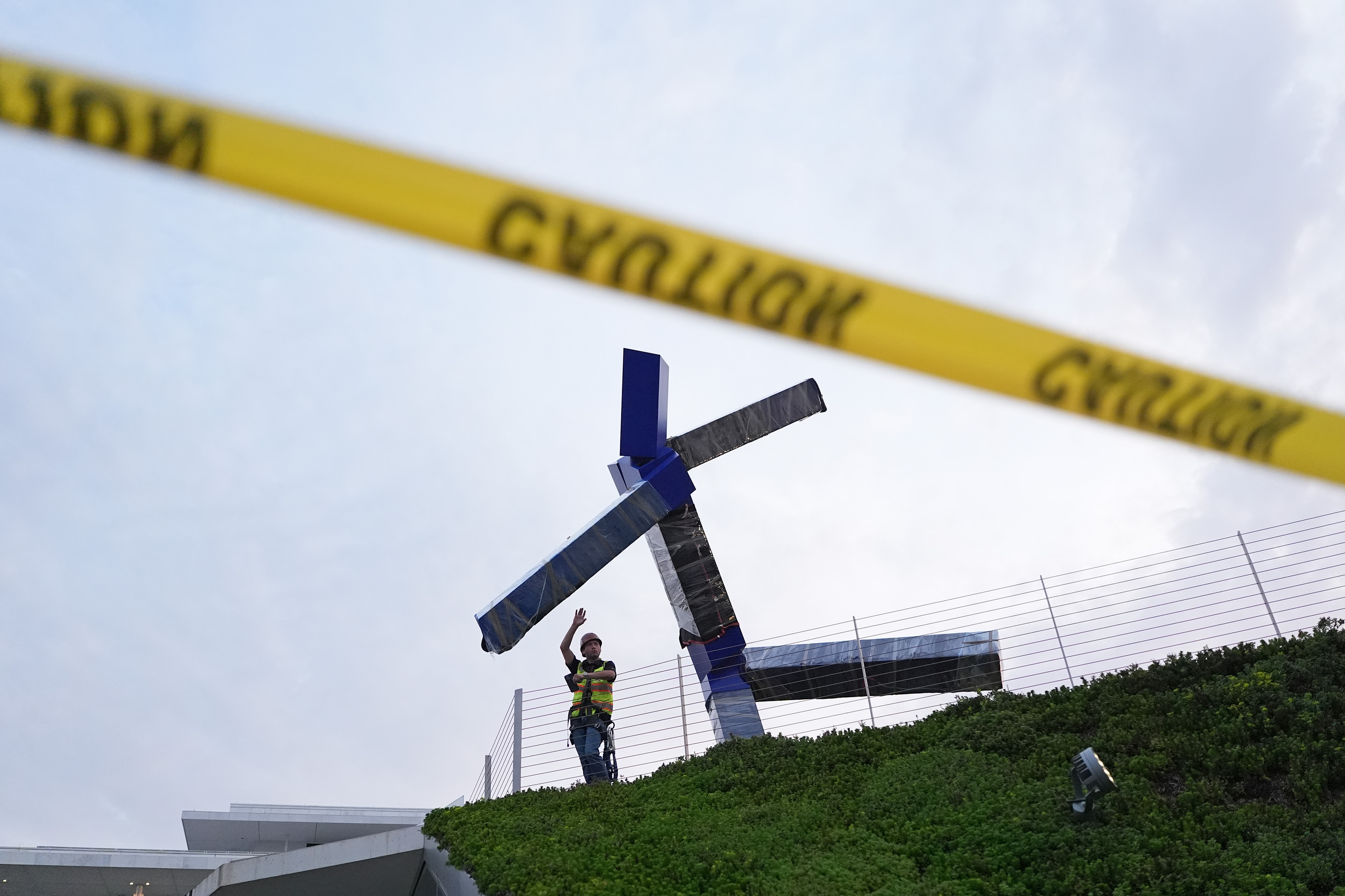
    Billionaire philanthropist David Rubenstein has purchased the abstract sculpture called Blue that was removed from the grounds of the John F. Kennedy Center for the Performing Arts last week, according to two people familiar with the sale.

    It will eventually be displayed in the Sculpture Garden of the National Gallery of Art, the people said.

    Rubenstein, a major arts donor, was chairperson of the Kennedy Center’s board until he was ousted in early 2025 during President Donald Trump’s takeover. He is the chairperson of the board of trustees at the National Gallery.

    He purchased the sculpture from a foundation dedicated to its artist, Joel Shapiro, which received the artwork after its removal. One of the people familiar with the sale said the price was more than $2 million.

    Since 2019, the 24-foot-tall, stick-figure-like sculpture stood on the grounds of the Reach, an addition to the Kennedy Center that was partly funded by Rubenstein, who co-founded private equity giant the Carlyle Group. The sculpture was deinstalled with no prior notice or explanation from the institution, drawing a flurry of questions and objections from local patrons who considered it a landmark overlooking the Potomac River.

    Representatives for the National Gallery did not immediately respond to requests for comment, and it was not clear when Blue would go on display.

    The Kennedy Center board has voted to close for a two-year, $250 million renovation project championed by Trump. But officials have proposed that the Reach remain open, partly to serve as an active memorial to President John F. Kennedy, which is required by law.

    Shapiro, who died in 2025, had given the sculpture to the Kennedy Center as a gift for the opening of the Reach. After it was deinstalled, it was transferred to the artist’s foundation, which is run by his daughter Ivy Shapiro.

    Ivy Shapiro did not immediately respond to requests for comment on the purchase. She said last week that her father would have been “alarmed” by the sculpture’s removal from the Kennedy Center, where it had been originally intended as a permanent fixture.

    The aluminum sculpture, painted a vivid blue, was designed to look like a person mid-kick while dancing on the grass.

    “In Joel’s mind, it was one of his greatest site-specific commissions, which celebrated joy, freedom, and creativity,” Shapiro said last week.

    Trump, who replaced Rubenstein as chairperson of the Kennedy Center board after stacking it with loyalists, has been pushing for months to close the building for renovations that he and his allies say are desperately needed.

    The closure was temporarily blocked by a federal judge, who also rejected the board’s decision to add Trump’s name to the center’s official title. The center’s officials are now seeking to persuade the judge to allow for the closure and for the president’s name to be inscribed on the building’s marble facade, in recognition of his role in securing money from Congress for the renovations.

    This weekend, officials at the center intensified their push for a closure, alerting the public to a hole in the ceiling of the building’s Grand Foyer that they said was caused by recent storms.

    This article originally appeared in the New York Times.