Category: News

  • A Montgomery County man was sentenced to state prison for murder after admitting he killed his father

    A Montgomery County man was sentenced to state prison for murder after admitting he killed his father

    A Trappe man who admitted he killed his father, after initially claiming he had shot himself, was sentenced to 17½ to 35 years in state prison.

    Justin Wilson, 24, entered a guilty plea to third-degree murder in the February shooting of his father, Kevin, before Montgomery County Court Judge William Carpenter on Monday.

    Wilson’s attorney, Danton Moyer, said his client wanted to express his “deep and profound remorse for his actions, including lying about the murder and not immediately taking responsibility for his actions.”

    “Justin loved his father, and he wishes more than anything that he could take back what he’s done and bring back his father,” Moyer said. “He wishes the rest of Kevin’s family and his loved ones peace and healing as they and he continue to grieve.”

    Deputy District Attorney Samantha Cauffman, who prosecuted the case, said Wilson’s family was left doubly hurt by the case: Wilson misled them about their loved one’s violent death, and then doubled down on the lie he told police.

    “The victim’s niece described how this defendant planned the funeral down to the paying the extra money to have the enhanced sound system, picking out the songs and what pieces from the Bible would be read, and then he gave a speech at the celebration of life ceremony,” she said. “All of this stuff, all the while telling all the friends and family of his father that his father killed himself.”

    Troopers responding to Wilson’s 911 call on Feb. 1 found his father, 61, shot once in the head inside his second-floor bedroom at their home on Dewes Place, according to the affidavit of probable cause for his arrest. The home’s first floor showed signs of a struggle, with broken furniture and other damage.

    In an interview with police after the shooting, Wilson said he and his father had gotten into an argument after watching a UFC mixed martial arts match together, according to the affidavit. During the argument, he said, he goaded his father into killing himself, calling him a “bum and a [expletive] loser.”

    He denied that their argument had turned physical, despite the damage in the home, the affidavit said.

    Later, Justin Wilson said, as he was playing the video game Fortnite, he heard a gunshot and found his father dead in his room.

    A Taurus handgun that Wilson had purchased weeks earlier was found in his father’s left hand, though investigators noted in their report that his fingers were loosely gripping the handgun.

    A forensic pathologist later determined that Kevin Wilson’s gunshot wound could not have been self-inflicted, based on the angle and other factors, the affidavit said.

    And as troopers continued to investigate, members of Wilson’s extended family said he had been acting strangely. They said Wilson was a pathological liar who was obsessed with money, and had begun asking about inheriting his father’s investment accounts and their home almost immediately after the shooting, according to the affidavit.

    Kevin Wilson’s siblings told police that he had often called them in a panic, unsure of how to handle his son’s violent behavior. The younger Wilson would allegedly kick open doors in their home, as well as punch holes in the home’s walls.

    They said Justin Wilson also repeatedly berated his father, calling him a “fat slob” and lamenting that he was not as wealthy as his siblings.

    Wilson’s cousin also told officers he made bizarre statements to her at his funeral, telling her that his father tried to shoot himself with his own gun, but that it jammed, prompting him to use the Taurus found in his hand.

  • High-speed train collision kills at least 68 in Spain’s 2nd deadly rail crash this year

    High-speed train collision kills at least 68 in Spain’s 2nd deadly rail crash this year

    URDA, Spain — A high-speed train slammed into another that had stopped on the tracks in Spain Wednesday, killing at least 68 people and injuring dozens in the second deadly rail collision this year.

    The regional government of Castilla La Mancha confirmed the death toll and said another 58 people were receiving medical treatment at hospitals. Rescue workers searched the wreckage through the day for survivors and bodies.

    The collision came just nine months after another deadly crash involving high-speed trains operated by the same two companies in southern Spain in January.

    “Today all of Spain is grieving,” Spanish Prime Minister Pedro Sánchez said from the crash site, where he announced that his government would declare three days of national mourning.

    Sánchez called for increased safety measures to restore confidence in a high-speed rail system that was once a source of national pride.

    “It is unacceptable for a country like Spain to suffer two high-speed rail accidents in the same year,” said Sánchez, who faces a national election on Nov. 29.

    Spain’s rail system operator ADIF said the crash occurred Wednesday morning in the central province of Toledo, involving two high-speed trains carrying hundreds of passengers and heading south in the same direction from Madrid to Seville.

    A train operated by the state-owned RENFE company struck the rear of another train operated by private company IRYO that was stopped. The collision derailed two carriages on the tail of the IRYO train and the front of the RENFE train.

    Samy Paul, a British tourist, described the shock of the impact to The Associated Press after being rescued from the RENFE train.

    “Suddenly, everything started falling apart. Bang! We fell down,” he said. “We realized carriage two, carriage one, all gone, all smashed. There was blood all over.”

    David Gómez, a construction worker, was working nearby when he heard the crash and ran to help, he told the newspaper El País.

    “People were trying to get out through the windows. … We cut through some fences to access the area and treated people with the first-aid kits we had brought until emergency services arrived,” he said. “As I was trying to pull a young woman out, there was a piece of a leg.”

    Rail service was suspended between Madrid, Ciudad Real, and Andalusia.

    Transport minister says crash was due to ‘inexplicable’ decision

    Spain’s Transport Minister Óscar Puente said that the crash was caused by what he called the “inexplicable” order from a central command center for Spain’s trains after a security system had failed. He said the train engineers were not to blame.

    Puente said that at 8:30 a.m. the security system on a stretch of 39 miles stopped working due to a computer malfunction, causing all trains on that stretch to stop. But the central command told the RENFE train to start running again without any speed restrictions, and it ended up colliding with the stopped IRYO train at 8:53 a.m.

    Puente said that the train should never have been told to start moving again since there was still a “stop signal” active on that line. And if it had, at least it should have been told to go at reduced speed.

    Authorities were still studying information to see how fast the train was going, but it could have been at 124 mph for that stretch of the track, Puente said.

    “I am not attributing responsibility to anyone, I am just stating the facts,” Puente said.

    Everything went flying when the trains collided, a passenger said

    The crash, which occurred in a flat stretch surrounded by olive fields in between the towns of Urda and Los Yébenes, left carriages shredded into bits of metal and other material, scattering debris down a gravel slope.

    Passenger Ignacio Relaño was traveling on the RENFE train. He told state broadcaster TVE that the train had stopped momentarily on the line before it started again and then crashed into the IRYO.

    “We all felt the train abruptly slowing down and then the impact,” he said. “The car leaned to one side like it was about to tip over. I hit my nose, everything went flying, luggage, cellphones. Everything shook.”

    Authorities said 397 passengers were in the RENFE train and 147 passengers in the IRYO train.

    Ambulances and medical helicopters made trips to and from the site, while unscathed survivors were put on buses. A military emergency brigade was deployed to help.

    Spain’s King Felipe VI also visited the crash site.

    “We share in the grief of the families and loved ones of those who lost their lives, and we send our heartfelt support to the injured and all those affected,” Spain’s royals said in a statement.

    European Commission President Ursula von der Leyen said “My heart goes out to the victims’ families and loved ones. Today, Europe mourns with you.”

    Spain’s soccer federation postponed all 24 Copa del Rey games scheduled on Wednesday.

    Spain already suffered a devastating train crash this year

    The wreckage of Wednesday’s crash reminded many of the aftermath of another train collision in January, when 46 people died in southern Spain when an IRYO train jumped the track and hit an oncoming RENFE train. That sent the first two cars of the impacted train plummeting down a 13-foot slope.

    That crash was the deadliest in Spain since a 2013 crash that killed 80 people.

    Before this year, there had been no fatal crash on Spain’s dedicated high-speed lines since the network opened in 1992.

    Spain is a leader in high-speed rail

    Over recent decades, Spain has invested heavily in high-speed rail — which the country’s railway union defines as rails for trains going 155 mph and over — turning it into a world leader.

    Spain has laid some 2,400 miles of such tracks over more than three decades for its 49 million residents. Only China, with 28,000 miles for its 1.4 billion people, has more high-speed track, according to the International Union of Railways.

    Only recently did Spain open its rail network to private companies to compete against RENFE. The Italian-owned IRYO started operating in Spain in 2022.

    A spokesperson for Spain’s train workers’ union, Joan Rodríguez, said increased traffic brought by privatization has put extra strain on rail infrastructure.

    “We are not convinced that the liberalization of the high-speed passenger rail service was matched by the necessary upkeep of the lines,” Rodríguez told TVE on Wednesday. “I am not saying it was a determining factor (in the crashes), but yes, the increase in use of the network is a factor to keep in mind.”

  • A Frankford gang leader, whose members killed a Philly police officer, was sentenced to life in prison

    A Frankford gang leader, whose members killed a Philly police officer, was sentenced to life in prison

    A leader of a violent Frankford drug gang whose members fatally shot Philadelphia SWAT Cpl. James O’Connor IV in 2020 was sentenced Wednesday to life in federal prison.

    Kelvin Jimenez, 35, was not accused of participating in — or even being present for — O’Connor’s killing, which occurred inside a Frankford apartment building as SWAT officers sought to apprehend another gang member on a murder warrant.

    But the U.S. Attorney’s Office said Jimenez was a top decision-maker for SG1700, a group that prosecutors said “ravaged” Frankford with drugs and violence. And because prosecutors said Jimenez was atop the gang’s hierarchy, they charged him with crimes including racketeering conspiracy, saying he was responsible for offenses his gang’s members committed, including four murders, 13 shootings, and a variety of gun and drug crimes.

    Jimenez took his case to trial last year along with another accused SG1700 leader, Dominique Parker. Both were found guilty by a jury.

    Jimenez said in court Wednesday that the panel got it wrong — that prosecutors, whom he called “evil,” had improperly tied him to crimes he had nothing to do with, and that there was not sufficient evidence to connect him to violent crimes committed by others.

    “They find me guilty behind my [social] orbit,” he said. “They find me guilty that I actually get along with these guys.”

    U.S. District Judge Juan R. Sánchez disagreed.

    Sánchez said the shootings and drug dealing Jimenez oversaw while leading SG1700 were “horrendous.” The gang’s crimes often left bystanders wounded by bullets, Sánchez said, and evidence showed Jimenez was involved in leading the group’s wrongdoing.

    “It’s a real serious problem when you have a gang and gang members who brazenly just go out and shoot and kill and shoot and hurt other people — just to maintain your drug operation and dominance in the community,” Sánchez said.

    The judge said in addition to a life sentence, he was imposing a mandatory additional term of 30 years behind bars.

    Jimenez was the second SG1700 member to be sentenced in connection with the case. Two other members have been convicted but are awaiting sentencing.

    The man who shot O’Connor, Hassan Elliott — who fired his gun through the wall of an apartment while trying to avoid being arrested — was ordered to serve 75 years behind bars after he pleaded guilty before Sánchez last year.

    Prosecutors have recommended that another man inside the apartment at the time, Khalif Sears, face a prison term of 35 to 50 years. He also pleaded guilty but has not yet been sentenced.

    Meanwhile, Parker — also found guilty at trial of serving as a group leader — is, like Jimenez, facing a mandatory life sentence.

    The crime that attracted the most attention, and that led to Jimenez’s arrest, occurred in March 2020.

    O’Connor and other SWAT officers had gone to the 1600 block of Bridge Street to arrest Elliott in the 2019 killing of Tyrone Tyree. But before they could get into Elliott’s apartment — where Jimenez was allowing the men to stay — Elliott picked up a .22-caliber rifle and shot through a door, fatally striking O’Connor.

    Elliott and Sears were arrested at the scene and were charged with O’Connor’s murder.

    Federal prosecutors later adopted the case amid a swirl of controversy, as the U.S. attorney at the time, William McSwain, faulted District Attorney Larry Krasner for dropping a drug case against Elliott a year before O’Connor was shot. (Krasner defended his office’s actions.)

    In 2023, McSwain’s successor, Jacqueline C. Romero, announced an expanded racketeering case against Jimenez, Elliott, Sears, and Parker. All have since been convicted.

    In addition to O’Connor’s murder, the men were charged with killing Kaseem Rogers in 2018; Tyree in 2019; and Dontae Walker later in 2019. Two of the murders sought to target rival gang members, prosecutors said, while Tyree’s was a botched robbery.

  • Luxe Redux Bridal, ‘where brides say yes for less,’ is moving into Philly

    Luxe Redux Bridal, ‘where brides say yes for less,’ is moving into Philly

    A bridal-boutique chain is opening its next store in Center City.

    Luxe Redux Bridal, which sells sample designer gowns at discounted prices, is set to open its doors at 2300 Chestnut St. in early 2027, the company announced last week.

    The retailer is moving into the former Daltile design studio at the recently renovated 104,000-square-foot office building, which sits on the Western edge of Rittenhouse, just before University City.

    The shop will span more than 3,600 square feet across multiple floors and contain five bridal suites.

    “We’re thrilled to bring Luxe Redux Bridal to Philadelphia and become part of such a vibrant, style-conscious community,” Lindsay Fork, founder and CEO, said in a statement. “We’re proud to introduce Philadelphia brides to the accessible luxury, one-on-one experience, and same-day take-home model that has fueled our growth.”

    Luxe Redux Bridal sells designer gowns for between $500 and $12,000. The dresses are samples — meaning they’ve been tried on by others — and are sold off-the-rack at discounted prices.

    The company, which Fork founded in Ohio in 2010, calls itself a place “where brides say yes for less.”

    It is among the retailers, including King of Prussia-based David’s Bridal, that are filling a niche in an increasingly extravagant wedding industry where celebrations can easily cost more than $50,000. When it comes to the gown, brides nationwide spend about $2,100 on average, according to The Knot, a popular wedding planning website.

    Luxe Redux Bridal customers can buy dresses online or take them home same-day at 15 brick-and-mortar stores, the closest of which is in Pittsburgh. Philadelphia will be the brand’s 16th location.

    Its new home is perhaps most well-known for the 15,000-square-foot Richard Haas mural of William Penn and Benjamin Franklin, which was painted on the building’s exterior in 1983 and restored in 2012. The building itself was built in 1911 as three truck dealerships and repair facilities, according to the Sheward Partnership, which renovated the space.

    2300 Chestnut is owned by Bala Cynwyd-based Stoltz Management. The firm bought the property in 2017 for nearly $29 million, according to Philadelphia property records.

    Stoltz put the building on the market for $40 million in 2021, the Philadelphia Business Journal reported at the time, and advertised it as a potential space for labs or other life-science uses, due to its proximity to University City. According to property records, it never sold.

    Luxe Redux Bridal’s arrival fills one of several ground-floor vacancies at the building. Next to Luxe Redux, another retail space is set to become an Alpha Fit Club, a circuit-style group-fitness studio, by the end of this year. A 5,700-square-foot corner parcel at the southwest corner of 23rd and Chestnut Streets is still being marketed for lease.

    The building’s existing tenants include Vanguard, which opened a research-and-development facility there in 2017, among other investment and technology companies.

  • Feds cut Raymond Horsch a deal in exchange for information in 2009 drug case, but details remain sealed

    Feds cut Raymond Horsch a deal in exchange for information in 2009 drug case, but details remain sealed

    Raymond “R.C.” Horsch cut a deal with federal prosecutors and fed them information about criminal activity in order to greatly reduce his own prison sentence in a 2009 drug and gun case, court records show.

    Horsch was facing the prospect of a 15-year minimum sentence after pleading guilty to manufacturing marijuana and possession of firearms connected to a drug trafficking crime. But a plea deal, brokered in 2012, allowed Horsch to secure just 4½ years in prison, thanks to the information he offered to prosecutors, according to a new filing in the Eastern District of Pennsylvania.

    The details provided in a Tuesday court filing, in response to a motion filed by The Inquirer to unseal records in the 2009 drug case, offer new insight into Horsch’s dealings with law enforcement. They also show that, while Horsch bragged publicly about being an international criminal and a violent pornographer who rejected societal norms, he was also willing to feed valuable information to federal investigators in exchange for favorable treatment.

    The case overlapped with Horsch’s conviction in an unrelated attempt to lure a 9-year-old girl into his vehicle in Kensington. Horsch sought a new trial in that case, initiated by the Philadelphia District Attorney’s Office in 2010, and the charges collapsed after the victim declined to appear a second time. It was not clear if federal prosecutors in the drug and gun case were aware of the other case in local court — or whether it factored at all into their decision to offer him a cooperating plea deal.

    Many of Horsch’s prior criminal cases have come under intense scrutiny since the pornographer, who died last year at age 82, emerged at the center of a sprawling missing persons investigation involving at least seven women who are missing or presumed dead.

    This month, an attorney for The Inquirer asked a federal judge to make public 14 sealed records from the 2009 case, arguing that they are now of public interest. Those records include a transcript of Horsch’s sentencing hearing and a motion by the government that sought to reduce Horsch’s sentence in exchange for cooperation.

    In a response filed Tuesday, Assistant U.S. Attorney Justin Ashenfelter agreed to unseal the majority of the records, but opposed the release of the transcript and motion, indicating they contained information detailing the extent of Horsch’s cooperation with authorities.

    “Raymond Horsch is dead,” Ashenfelter wrote. “The fact that he entered a cooperation plea agreement with the government need not be kept hidden any longer. However, the essence of the information he provided to the government during his cooperation is not subject to disclosure or public consumption.”

    Ashenfelter argued that the federal criminal justice system must protect and reward cooperating witnesses, and that while Horsch “did not offer testimony against any criminal defendant,” the transcript of his sentencing was “law enforcement sensitive” and should remain sealed. The former prosecutor who handled the case, Liz Abrams, referred questions to the U.S. Attorney’s Office.

    The Inquirer plans to push for the remaining records to be unsealed.

    Exactly what Horsch told the federal prosecutors to secure his lighter sentence is not publicly available. Richard Zack, a former assistant U.S. attorney in Philadelphia, said it should have resulted in a significant arrest or conviction for the prosecution to justify such a generous plea deal, particularly since Horsch had recently been convicted of corrupting a minor.

    Even though the child-luring charges fell apart on retrial, Zack said, the government should have considered those allegations when weighing Horsch’s credibility and his role in providing information in exchange for a reduced sentence.

    “I think there are two questions: Was he vetted properly as a cooperator, and secondly, is the cooperation they got worth the bargain?” said Zack, now a partner at the Troutman Pepper Locke law firm. “It’s a very sordid tale, and the government should look at it with a lot of scrutiny.”

    Horsch fought both criminal cases almost in parallel.

    Just months before the Bucks County drug bust, Horsch was arrested in March 2009 by 24th District police in Philadelphia after allegedly attempting to lure a 9-year-old Kensington girl into his Jeep Wrangler. The vehicle contained binoculars, a high-powered photo lens, and a condom.

    A few months later, on July 22, 2009, an intoxicated woman who was later determined to be a live-in sex worker hired by Horsch called 911 from his Chalfont home, believing that a burglar was on premises.

    Township police searched the home but failed to locate an intruder. Instead, they discovered 455 marijuana plants in the basement, as well as two illegal sawed-off shotguns. Investigators later recovered a trove of homemade pornography from the home, including photos of bleeding women and a video labeled “Lora rape.”

    The drug case was referred for federal prosecution, and Horsch was charged in December 2009 with possession with intent to distribute and firearms offenses.

    He was in federal custody in the Bucks County prison in January 2010, the same month he appeared in Philadelphia Municipal Court to hear testimony from the child victim in his luring case.

    Horsch was convicted on the misdemeanor corruption charge in Philadelphia in March 2010. It remains unclear when the second trial took place: Horsch later secured an expungement and the court records are no longer public.

    In January 2011, he changed his plea to guilty in the drug and gun case. Prosecutors appear to have filed a motion to reduce his sentence in July 2012.

    Horsch was ultimately sentenced to 4½ years in prison, serving concurrent sentences on the drug and gun charges. He was transferred from federal detention to the Metropolitan Correctional Center in Manhattan in November 2012 and moved to a halfway house about three months later.

    He was released in June 2013 and spent four years on probation.

    Horsch returned to prowling the streets of Kensington in search of models for his pornography. He lured women in addiction with drugs and cash to his Olney home — at least five of whom police now believe died or were killed there as early as 2016, based on photos and videos on hard drives recovered from the property. Two other women, Blair Tonzelli and Amy McHale, who were reported last seen at Horsch’s 417 W. Chew Ave. address, remain missing.

    Horsch’s former attorney, Jerome Brown, who handled the 2009 drug case and now represents his son, Eugene Horsch, did not respond to a request for comment.

    Prosecutors in the 2009 drug case stated in court filings that they were aware that Horsch had been convicted in 1985 on a charge of manufacturing methamphetamine.

    In that case, too, Horsch received a light sentence. After his 1977 arrest at the Olney home, he fled to California and then New Zealand, assuming an alias to escape prosecution.

    After the ruse was discovered by authorities in New Zealand, he fled again to Florida, where he was apprehended by federal authorities in 1984 and extradited to Philadelphia.

    At the time of his guilty plea in 1985, federal law set no mandatory minimum prison term for manufacturing methamphetamine. His defense attorney commissioned a psychological exam, and his evaluator testified that Horsch was a highly intelligent and prodigious worker who would not be reformed by lengthy incarceration. Family and colleagues submitted letters to the judge pleading for leniency.

    He was sentenced to four years in federal prison but served only two before his release in 1987.

    The Inquirer’s motion to release the 2009 case records remains pending before U.S. District Judge Paul S. Diamond.

    Staff writer Ellie Rushing contributed to this article.

    This story has been updated to correct the name of the federal prosecutor who filed the government’s response.

  • Brazilian judge orders investigation into JD Vance donor network

    Brazilian judge orders investigation into JD Vance donor network

    A Brazilian Supreme Court justice on Tuesday ordered a police investigation into alleged ties between a donor network co-founded by Vice President JD Vance and the presidential campaign of Flávio Bolsonaro in the run-up to Sunday’s election.

    Supreme Court Justice Flávio Dino directed the Brazilian federal police to investigate the “nature” of the contacts between the Rockbridge Network, which was founded in 2019, and any Brazilian companies or political operatives to aid or finance Bolsonaro’s run.

    It’s a crime in Brazil for a political candidate to accept funding or other campaign assistance from a foreign source.

    The investigation, Dino wrote, was “necessary to verify if there was the effective furnishment of resources — including human resources — services, or other measurable economic advantages, identifying its origin, its destination and its eventual use in the campaign.”

    Rockbridge denied any such contact.

    Vance has spoken at Rockbridge donor gatherings as recently as a year ago. His office on Tuesday declined to comment.

    Bolsonaro, who lost the election to President Luiz Inácio Lula da Silva, fled Brazil for the United States on Tuesday in defiance of a separate Supreme Court order, three people with knowledge of the matter told The Washington Post. He and his family will be issued visas to stay in the U.S., a senior State Department official told The Post.

    Before the election, Rockbridge’s alleged activities in Brazil triggered several complaints by Bolsonaro’s political opponents. One was by Lula’s Workers’ Party, which filed a complaint with the Supreme Court. Another was by presidential candidate Renan Santos, who took his case to the Supreme Electoral Court.

    Santos, who was eliminated in the first round of the election, alleged that Brazilians who claimed to represent Rockbridge had discussed providing U.S. support with Bolsonaro campaign officials.

    The representatives also approached Santos with offers of campaign help, according to a person with direct knowledge of the conversations, who spoke on the condition of anonymity to disclose private discussions.

    The Rockbridge Network said it had no affiliation with the Brazilians who claimed to be its agents.

    “The Brazilians made false representations about their relationship with Rockbridge and created documents representing or referencing Rockbridge without Rockbridge’s knowledge or consent,” the network said in a statement Tuesday.

    Bolsonaro was already under investigation for his ties to a banker accused of involvement in an alleged multibillion-dollar fraud and to a man suspected of laundering money tied to Brazil’s betting industry.

    The order also has the potential to further strain relations between the Brazilian government and the Trump administration, which have feuded in recent years over the prosecution of former president Jair Bolsonaro, who was accused of planning a military coup to stay in power after his 2022 election defeat to Lula. Jair Bolsonaro, Flávio’s father, is an ally of President Donald Trump.

    Trump imposed a 50% tariff on Brazilian goods and sanctions on several officials last year to pressure them into dropping the prosecution. They did not. Jair Bolsonaro was convicted last year of attempting the violent overthrow of the democratic rule of law and sentenced to more than 27 years in prison.

    Flávio Bolsonaro ran on promises to free his father, pardon supporters convicted in a Jan. 6-style assault on Brasília, and impeach the Supreme Court justices involved in their prosecution.

  • FDA scientists opposed the Trump administration’s effort to ease peptides access

    FDA scientists opposed the Trump administration’s effort to ease peptides access

    WASHINGTON — A plan to give Americans easier access to unproven peptide drugs favored by Health Secretary Robert F. Kennedy Jr. was opposed by most Food and Drug Administration scientific staff members, who had limited input in drafting the policy, according to six people familiar with the policy’s development.

    The document, which covers certain injectable peptides popular within the wellness industry, recently underwent regulatory review at the White House, typically the final step before publication.

    The effort on peptides, driven by Kennedy’s Department of Health and Human Services, faced overwhelming pushback among FDA drug staffers who warned it could undermine the agency’s longstanding mission of keeping unproven health products off the U.S. market, according to the people familiar with its development.

    The policy would direct the FDA not to take action against specialty pharmacies that sell certain widely used peptides — substances that would otherwise be considered illegal drugs because they haven’t gone through the agency’s rigorous review process for safety and effectiveness, according to three of the people.

    The people spoke to The Associated Press on the condition of anonymity to discuss confidential government deliberations. An HHS spokesperson did not immediately respond to requests for comment.

    Some peptides occur naturally in the human body, where they trigger hormones needed for growth, metabolism and healing. Drug companies have brought several to market as medications, including mainstay treatments for diabetes and weight loss.

    The chemicals subject to the new policy haven’t gone through that rigorous vetting process. They include BPC-157 and TB-500, which are promoted to help heal injuries and build muscle. Both are considered doping substances by international sports authorities.

    Kennedy has called himself a “big fan” of peptides and recently described using BPC-157 to treat a muscle injury.

    The guidance document reviewed by the White House represents a step back from HHS’ original plans, according to two of the people who discussed its development.

    Initially, HHS officials wanted the FDA to draft an official regulation that would add BPC-157 and other peptides to a list of drug substances deemed safe for use by compounding pharmacies, specialty businesses that make customized medications.

    But FDA officials warned that the agency’s scientific staffers had major safety concerns and wouldn’t support a regulation deeming them safe. So HHS officials moved to a different approach that would direct the FDA not to enforce its rules against pharmacies that compound the substances.

    Ultimately, FDA staffers provided technical assistance in drafting the HHS plan, including guardrails intended to improve safety, such as requiring pharmacies to use peptide ingredients from FDA-regulated factories.

    Decisions over compounding have long rested with the FDA, not HHS

    Kennedy has said repeatedly that U.S. compounding pharmacies must be allowed to sell peptides because Americans are turning to “gray market” products imported from China and other countries.

    Decisions about regulating peptides and compounding pharmacies have almost always come from the FDA, which has an office dedicated to protecting Americans from unsafe or poor-quality compounded drugs.

    The issue of compounding safety became a greater focus for the FDA after a deadly outbreak of fungal meningitis in 2012 was linked to contaminated injections from a Massachusetts compounding pharmacy. Once a niche business, compounding has grown into a multibillion-dollar industry, providing customized medications to doctors, clinics, and hospitals.

    It’s extremely rare that HHS would take the lead in drafting policies over the compounding industry, former FDA officials have said. However, federal law technically gives HHS authority over essentially all drug regulations, which are then delegated to the FDA.

    FDA has warned Americans about safety risks of unproven peptides

    Many Americans using peptides today don’t deal with a doctor or a pharmacy to get the injections. Instead, they often order vials online sold by chemical manufacturers based in China. Peptide sellers often try to skirt U.S. regulations by labeling their products as “for research use only,” since the FDA doesn’t regulate research chemicals.

    In 2023, the FDA added more than a dozen peptides, including BPC-157 and TB-500, to its list of substances that should not be compounded due to risks of allergic reactions, kidney damage, and tumor growth.

    At a meeting in July, FDA staffers reiterated that more than half a dozen peptides brought forward for reconsideration remained unproven in terms of safety and effectiveness.

    The policy pending at the White House avoids a direct confrontation with FDA staffers because it only directs the FDA not to enforce certain rules.

    HHS ultimately included several safety measures suggested by FDA staffers, according to two of the people. Besides sourcing ingredients from FDA-registered facilities, compounders will be directed to collect information on side effects for safety analysis and verify the chemical identity of peptides.

    Those measures are supported by some industry groups, including the Alliance for Pharmacy Compounding, which recently met with White House officials about the proposal.

  • U.N. condemns U.S. economic embargo of Cuba, though more nations sit out after Trump administration push

    U.N. condemns U.S. economic embargo of Cuba, though more nations sit out after Trump administration push

    UNITED NATIONS — The U.N. General Assembly condemned the U.S. economic embargo of Cuba for the 34th year on Wednesday, even as Washington’s campaign to influence the outcome led to a number of countries voting against the resolution or sitting out the decision for the first time.

    The vote was 130-17, with 25 abstentions — a notable decrease in support from last year, when more than 160 nations supported the measure and only 12 abstained. While such resolutions at the U.N. General Assembly are not legally binding, they do reflect world opinion.

    For the first time in 34 years, Western countries like Germany, Italy, and Latvia were among those that refrained from voting. Bosnia, Colombia, Costa Rica, Ecuador, Lithuania, Morocco, North Macedonia, Paraguay, and Slovenia are among those member states that voted no — most for the first time.

    It marks a stunning shift in international support at a time when the small island country weathers outages, shortages, and other deepening financial troubles as the Trump administration looks to force changes to Cuba’s political system by increasing an already punishing economic campaign. President Donald Trump last week once again raised the specter of U.S. military intervention, saying American warships could stop over in Cuba on their way back from the Iran war.

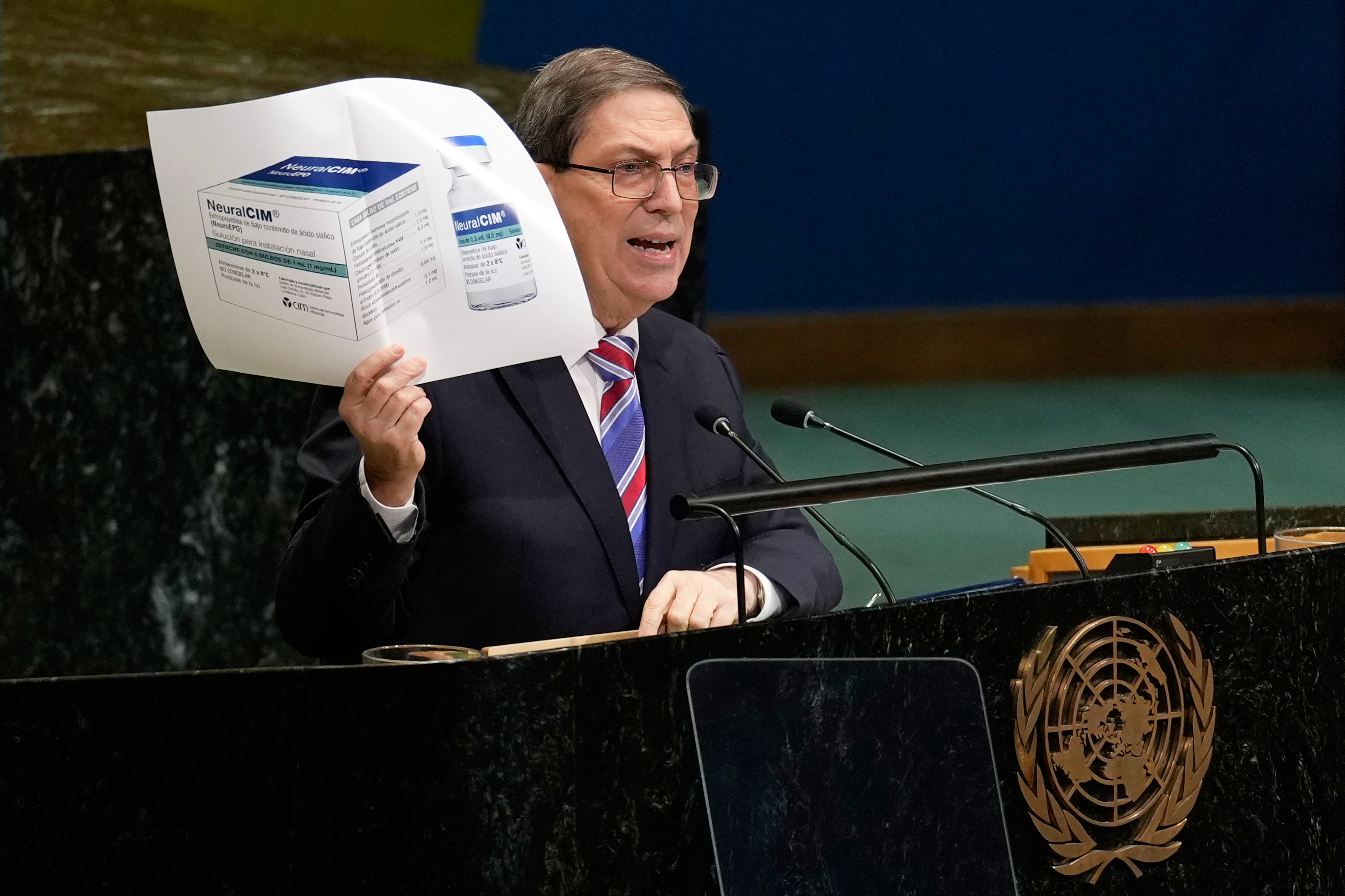
    “A great power is attacking through economic war a member state of this organization,” Cuban Foreign Minister Bruno Rodríguez said ahead of the vote. “Cuba is not a threat. The blockade is a threat.”

    U.S. Ambassador to the U.N. Mike Waltz told member nations that, “your vote today is the only thing standing between the corrupt, kleptocratic communist regime and using this body and your vote for another propaganda victory at the expense of the Cuban people.”

    Tensions between Washington and Havana have spilled over into fiery public spats at the United Nations. On Tuesday, Waltz and Rodríguez got into a shouting match on the floor of the General Assembly while debating the embargo resolution.

    Shortly after Waltz had begun his criticism of the socialist government, Rodríguez walked down to the podium where the U.S. envoy was addressing the hall and called him a liar while trying to get a point of order from the official presiding over the session.

    “This individual needs to back away from this podium. He’s not going to intimidate me in the United States of America,” Waltz said as U.N. security and personnel tried to intervene. “You understand who you’re dealing with? This is America. Back up.”

    In a post on X, Rodríguez reminded Waltz where he was making his remarks, saying he’s at the U.N., not at a national security meeting at the White House.

    “With his crude lies at the UN General Assembly, the U.S. government has launched another desperate attempt to justify its economic aggression against Cuba and its criminal energy blockade,” he continued.

    A week earlier, a similar interaction between Waltz and his Cuban counterpart, Ernesto Soberón Guzmán, took place outside a U.S.-hosted panel with Cuban dissidents and former prisoners that sought to highlight allegations of the oppressive behavior of the island’s government.

    It all reflects a clear break from the traditional diplomatic decorum expected at the U.N. and the new phase of contentiousness between the U.S. and Cuba.

    The U.S. embargo against Cuba was first imposed in 1960 after Fidel Castro led a revolution that toppled dictator Fulgencio Batista and nationalized properties belonging to U.S. citizens and corporations.

    As a result, the Caribbean country has spent decades facing the dire impact of longtime economic and financial troubles and is now being pushed to a breaking point after Trump announced in late January that he would impose tariffs on any country that sells or provides oil to Cuba.

    The warning has effectively cut off fuel to the island, leading to widespread power outages that impact basic services such as water supply and internet and telephone services.

  • Dolores Huerta, influential labor leader, feminist and civil rights icon, dies at 96

    Dolores Huerta, influential labor leader, feminist and civil rights icon, dies at 96

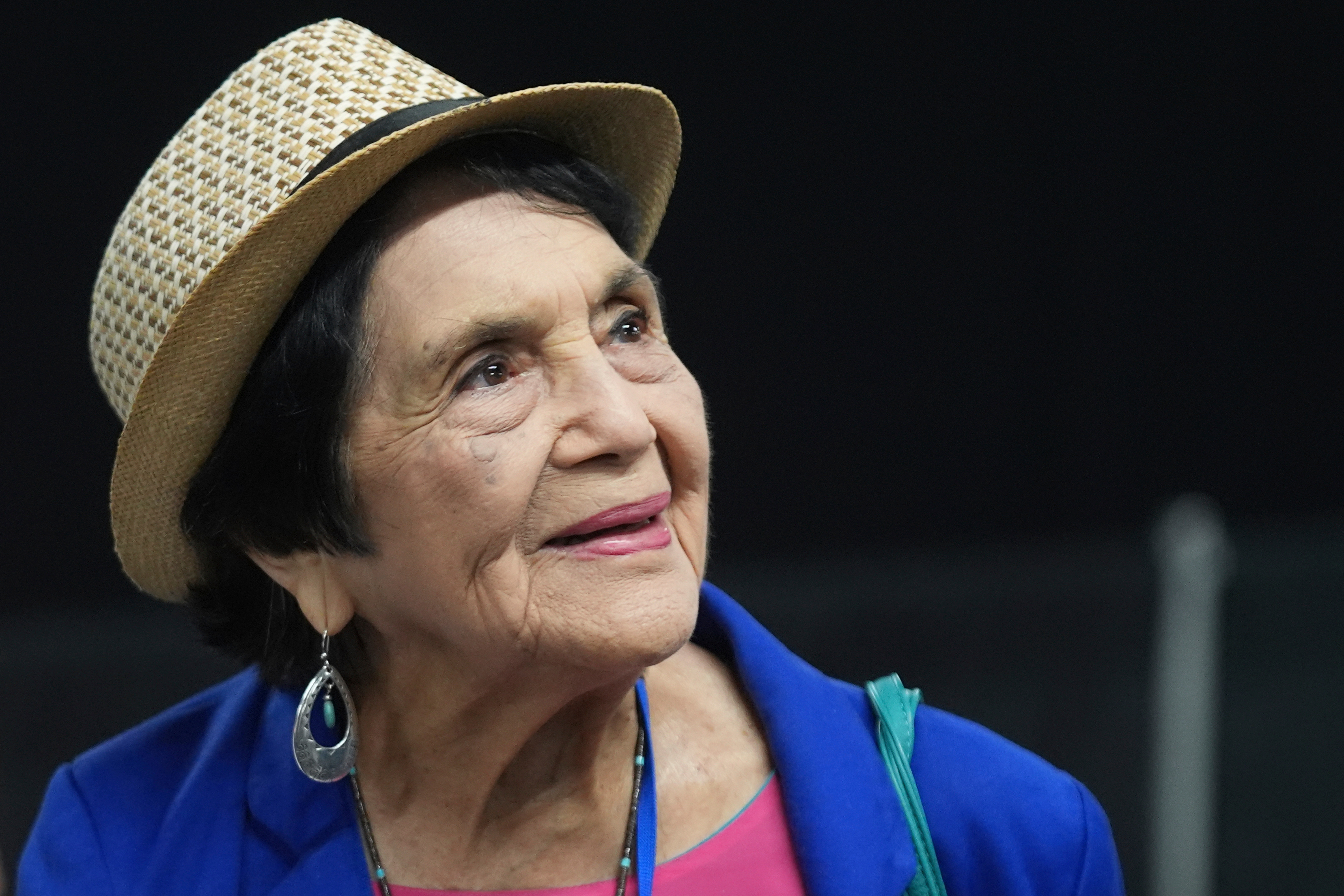
    Dolores Huerta, who co-founded the United Farm Workers union to improve working conditions in the nation’s fruit and vegetable fields and coined the enduring “Sí, se puede!” rallying cry, has died. She was 96.

    Ms. Huerta died of cancer Wednesday at her home in Bakersfield, Calif., surrounded by family, said Erik Olvera, a family spokesperson.

    Ms. Huerta kept busy well into her 90s, marching in protests and encouraging activists to keep speaking out about race, poverty, LGBTQ+ and women’s rights.

    “It seems like history continues to repeat itself,” she told The Associated Press in August. “You see what’s happening right now in our country, and we know that people have to stand up.”

    Ms. Huerta’s resolve cemented her place in history as one of the nation’s most influential labor leaders, civil rights icons, and feminist activists. Her three-word Spanish-language slogan — which translates to “Yes, it can be done” — was grounded in the belief that people who take action can affect change.

    Her accolades over the decades included the Presidential Medal of Freedom. When President Barack Obama presented her with the nation’s highest civilian honor in 2012, he praised Ms. Huerta as a tenacious leader and said she was gracious when he stole her slogan for his 2008 campaign. “I’m pleased that she let me off easy … ’cause Dolores does not play,” Obama joked.

    “Her life’s work was to empower her community to face and overcome injustices, and she has left farm workers and the entire Latino community stronger and more organized than she found it,” United Farm Workers President Teresa Romero said in a statement Wednesday.

    Revealing a secret that shook Latino culture

    This year, Ms. Huerta revealed a shocking chapter in her life story — that she was sexually abused in the 1960s by the farmworker movement’s co-founder, César Chavez, leading to the birth of two children, a secret she had kept for 60 years, long after he died. Chavez’s reputation immediately soured, his name removed from streets and buildings and the holiday that had been a point of Hispanic pride.

    Ms. Huerta said she had kept silent for so long because she feared coming forward would compromise her life’s work and unravel all the progress made for workers. From the early 1970s on, Huerta’s life partner had been Richard Chavez, César’s brother, and together they had four kids. She also had seven children from two earlier marriages.

    When asked during a 2026 interview with the news organization Latino USA about keeping the secret, Ms. Huerta said: “It was my personal pain, it was my personal problem and, you know, I think it was worth it because it was my cross to bear. I’ll say it that way.”

    Demonstrating a ‘passion for justice’

    Ms. Huerta’s advocacy changed many lives beyond the farm fields, said former President Bill Clinton and former Secretary of State Hillary Rodham Clinton, who called her “a stalwart champion of working Americans.”

    “Dolores wore many hats: voting rights advocate, human rights champion, die-hard Democrat, self-described ‘born-again feminist,’ and co-founder of the United Farm Workers of America,” the Clintons said in a statement. “To see her in action was to witness a living legend who never stopped pushing for progress.”

    Gov. Gavin Newsom said California would not be where it is without her “passion for justice and fairness.”

    “Dolores’ fight for gender equity, workers’ rights, and civil rights paved the way for generations to come — teaching people what was possible with determination and heart,” the Democrat said.

    Becoming an activist well before meeting Chavez

    Ms. Huerta was born Dolores Clara Fernandez in 1930 in Dawson, N.M. Her father was a miner and union activist who won a seat in the state Legislature. Her parents divorced when she was 3, and her mother took her and her brothers to California.

    Immersed in a melting pot of Mexican, Filipino, African American, Japanese, and Chinese working families, Ms. Huerta learned from her mother — who owned a restaurant and hotel — about independence, compassion, and activism.

    Ms. Huerta was a young, energetic elementary school teacher in the agricultural San Joaquin Valley when she decided to answer another calling after growing frustrated by her students’ poor living conditions.

    “I couldn’t stand seeing kids come to class hungry and needing shoes,” she said in a 2017 PBS Independent Lens documentary on her life. “I thought I could do more by organizing farmworkers than by trying to teach their hungry children.”

    Ms. Huerta’s early work with a civil rights group in Stockton resulted in her meeting Chavez. The two wanted to focus more on the plight of farmworkers, so in 1962 they started the National Farm Workers Association, which became United Farm Workers of America a few years later. She was a key leader and negotiator for the union for years.

    She was among those who joined Filipino grape pickers on the picket line in what became the five-year “Delano Grape Strike.” With Chavez, she negotiated collective bargaining agreements and contracts with big growers, winning the first health and benefit plans for farmworkers.

    Chavez, who died in 1993, once described her as fearless, committed to the cause, and tough when it came to negotiations.

    Campaigning for presidents and voting rights

    She met Sen. Robert Kennedy in 1968 and volunteered with his presidential campaign, registering Mexican Americans in California to vote. Ms. Huerta was on stage with Kennedy after he won the California primary and he publicly thanked her, moments before he was shot.

    The assassination devastated Ms. Huerta, but she kept organizing. Ms. Huerta was jailed 22 times for union demonstrating.

    In 1988, she was seriously injured while protesting Republican presidential candidate George H.W. Bush’s opposition to the UFW grape boycott during his visit to San Francisco.

    Caught in a crowd, she was struck by a police officer’s baton, suffered three broken ribs and a pulverized spleen, and required blood transfusions. She reached a settlement with the city to resolve her claims.

    After a long recovery, Ms. Huerta shifted focus, campaigning for women’s rights and encouraging Latinas to run for office.

    She also campaigned for Democratic Presidents Clinton, Obama and Joe Biden.

    Leaving a legacy of civil rights advocacy

    Emilio Huerta, one of Dolores’ 13 children, said his mother’s courage drove her life’s work.

    “To dedicate your life to building a dream of a union for farmworkers, to take on agriculture, which to this day is still a powerhouse. … That took a lot of guts,” he said.

    Ms. Huerta secured financial aid for the unemployed and disability insurance for California farmworkers. She spoke out against toxic pesticides, pushed for amnesty for immigrants in the country illegally and campaigned against federal guest worker programs.

    By directing nationwide boycotts of grapes and lettuce in the early 1970s, she helped to create the economic pressure and political climate necessary for California to pass the first state law recognizing farmworkers’ right to collective bargaining.

    But she didn’t always win favor with more liberal activists.

    In 2016 when she endorsed Hillary Rodham Clinton instead of Sen. Bernie Sanders in the presidential Democratic primary, actor Rosario Dawson — a Sanders supporter who played Ms. Huerta in a 2014 movie about César Chavez — said Ms. Huerta had become “an instrument of the establishment.” The two eventually reconciled.

    Ms. Huerta’s leadership in the labor movement made her name synonymous with civil rights in the U.S. and beyond. In the 2025 documentary Seeds of Change: The Life and Legacy of Dolores Huerta, she credited the 1970s women’s movement for providing her with the validation to take the stage with other labor leaders.

    “I hope that my legacy will be one of an organizer that organized to fight injustice,” she said in the film. “We want to give our children an inheritance of justice, right, not jewels or property or money because they’ll just fight over it. So the main thing to do is to give them this love for justice — and that is the greatest gift I think that any of us can have.”

  • Off-campus sexual assault reported at Temple University weeks after previous report

    Off-campus sexual assault reported at Temple University weeks after previous report

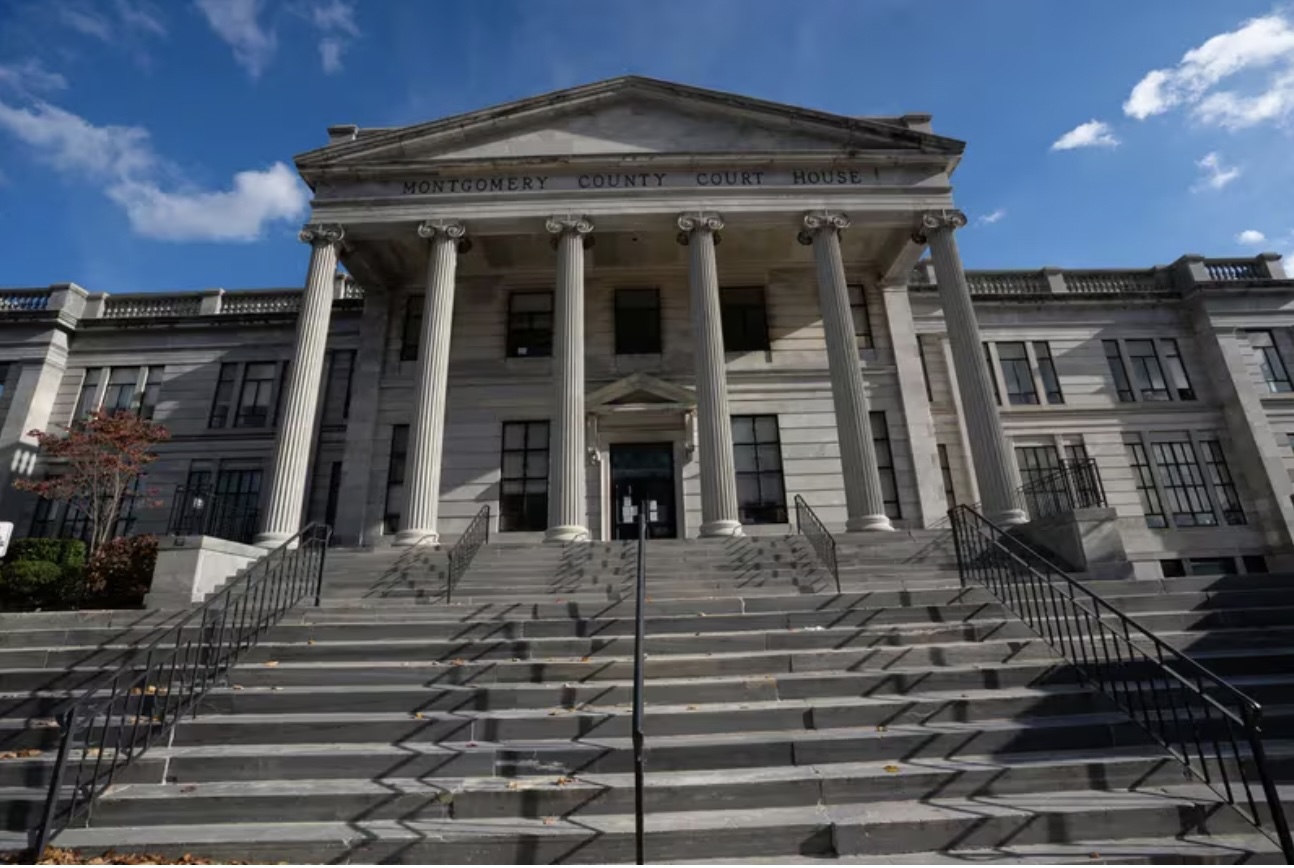
    The Philadelphia Police Department is investigating an alleged sexual assault involving two Temple University students at an off-campus residence.

    The assault occurred Sunday at the Avery, a private residential complex on North 15th Street, according to daily crime logs kept by Temple police. The two students knew each other, Temple officials said in a letter shared with students Monday evening.

    This is the second report of sexual assault involving Temple University students within the last three weeks.

    Another student reported being sexually assaulted at University Village, a private residential complex on the North Philadelphia campus, on Oct. 10. That case is not currently being criminally investigated but was referred to Temple’s internal conduct code review.

    “Students who are reporting a sexual assault make the decision on whether they wish to pursue criminal charges,” Temple president John Fry said in a statement released last week on the Oct. 10 case.

    Temple’s reckoning with rape on college campuses comes in the wake of the Cornell 7 case. In September, a former Cornell University student sued the school and former fraternity members over an alleged sexual assault at the school’s Chi Phi fraternity house in 2024, sparking national conversations around accountability.

    Like many schools across the United States, Temple announced Oct. 3 it would convene a task force on sexual assault composed of students, faculty, and staff to review the school’s practices and make recommendations.

    Since announcing the task force, Temple officials are now navigating two publicized sexual assault cases, leading Jodi Bailey Accavallo, vice president of student affairs, and Denise Wilhelm, chief of the Temple University Police Department, to pen the Monday letter to students reminding them of the rules of consent — “whether on a date or at events with friends.”

    “Remember, if you’re unsure whether you have consent, then you don’t have it. Stop what you’re doing, ask your partner before moving forward, wait for their response and respect their choice,” the officials wrote.

    Separately, an unidentified man, not associated with the school, has been exposing himself at the Howard Gittis Student Center on North 13th Street in the heart of the North Philadelphia campus, officials said. Additional security is patrolling the student center and has been briefed on a potential suspect.