Category: News

  • For Trump’s former fixer, a tortured path from ‘rat’ to reconciliation

    For Trump’s former fixer, a tortured path from ‘rat’ to reconciliation

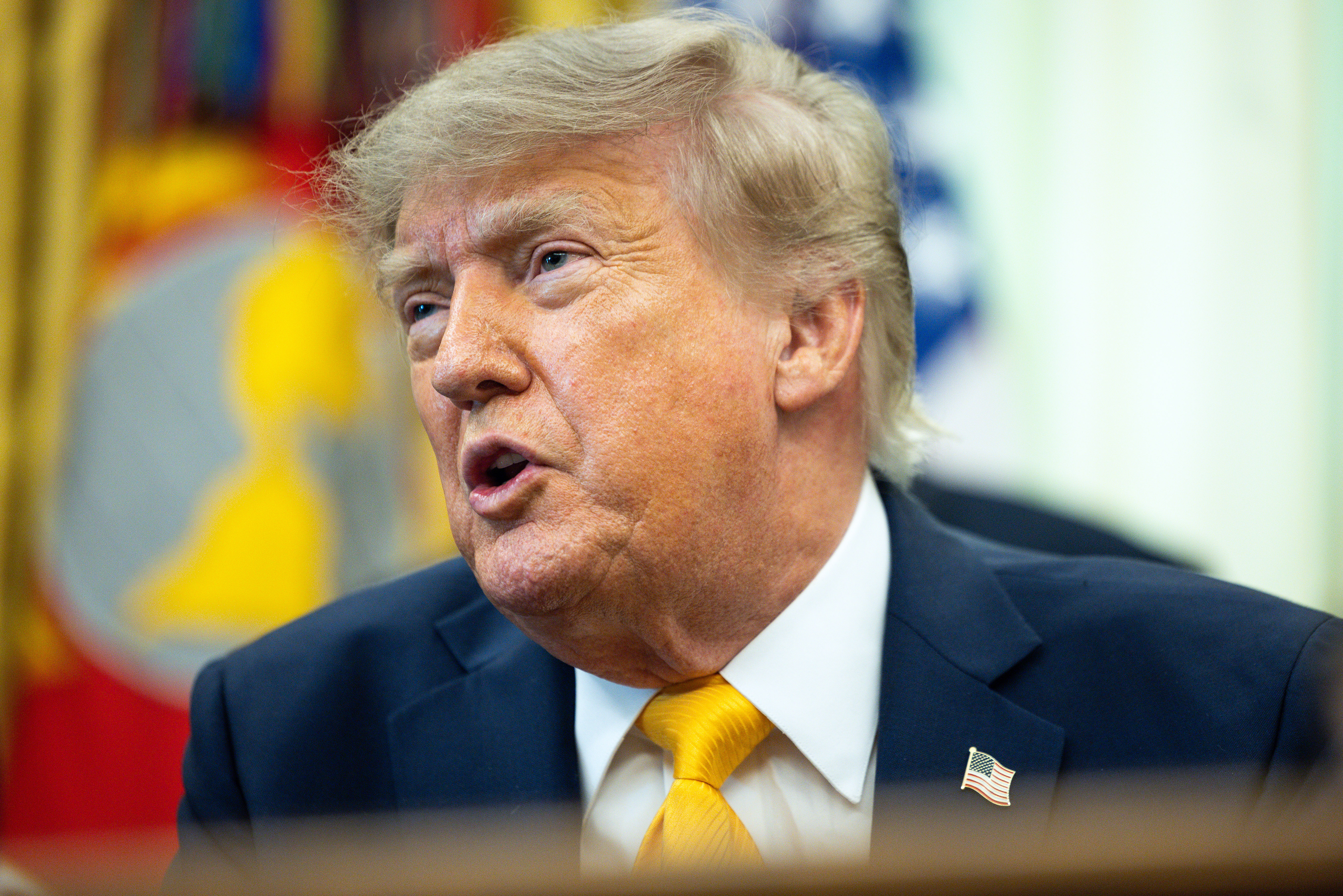
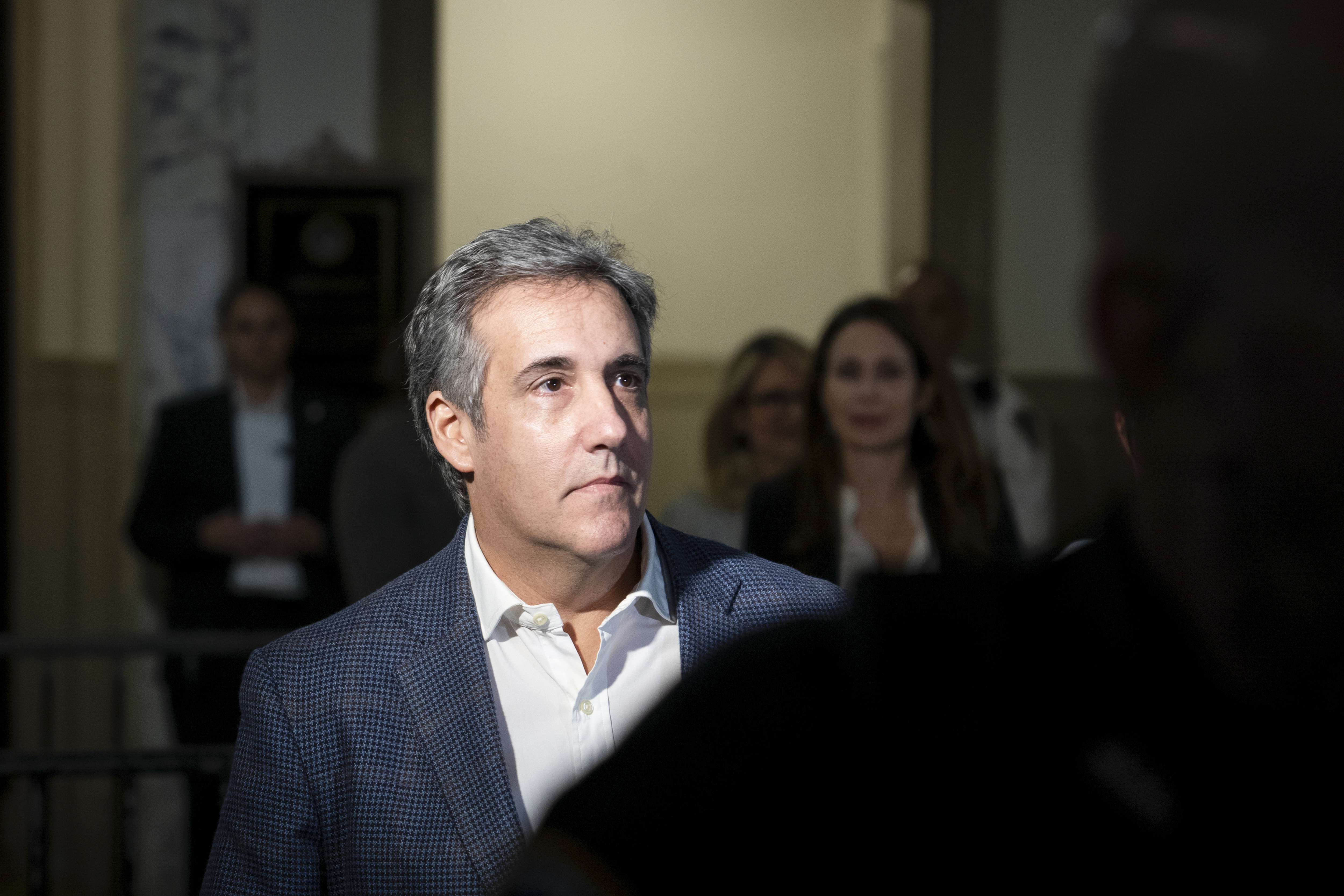
    WASHINGTON — On a radio show last month, President Donald Trump welcomed Michael Cohen, the former fixer he once denounced as a “rat” for testifying against him, back into the fold. “I respect the fact that you recanted everything you said,” Trump said. He went on to use the word “recant” three more times.

    In case anyone missed it, the president posted a message on social media Friday claiming that Cohen, a key witness against Trump in criminal and civil trials, “has just fully RECANTED his testimony.” Trump demanded “that any remnant of those Politically Weaponized Cases against me be immediately terminated and dismissed.”

    Except that Cohen has not, in fact, recanted his testimony. He has not taken any of it back.

    In his eagerness to return to the president’s good graces, Cohen now says he “felt pressured and coerced” by prosecutors to testify. But he has not actually disavowed anything that he swore to under oath about Trump’s hush money scheme to cover up an affair with an adult film actor or about his former boss’s efforts to defraud his lenders.

    And so this unlikeliest of rapprochements between two men who helped get each other convicted of crimes is built not on an emotional outpouring of forgiveness but on what looks like a pretty straightforward bargain, spoken or unspoken, according to people close to both. Trump is trying to use his former lawyer’s desire for absolution to rewrite history as he presses his effort to overturn his conviction. Cohen gets to position himself as an insider once again and possibly obtain a presidential pardon to wipe out his own felony record.

    “Everything is transactional,” said Brian Karem, a journalist who helped Cohen write the second of his books assailing Trump. “It’s the weirdest example yet of the transactional nature of the president of the United States and those around him. Who knows him better than Michael? I’m just surprised that it took him this long. The first thing I said was, ‘Wow, it took you long enough.’”

    The unlikeliest of reunions

    Even in the long history of strange-bedfellow political alliances, this may be one of the strangest. To call the reconciliation between Trump and Cohen Shakespearean would not fully capture just how mind-boggling it really is. The Bard would have been hard-pressed to come up with a scenario quite so far-fetched.

    Trump, to be sure, has a well-known history of falling back in with people he has fallen out with. (Think Elon Musk, Steve Bannon, Michael Flynn, or, for that matter, his current vice president who once compared him to Adolf Hitler, or his secretary of state who once questioned the size of his private parts.)

    But as one baffled Trump ally put it, Cohen is not someone who just trash-talked the president; he actually testified in court against him. Cohen went to prison because, he said, he committed crimes at the instructions of the man he now again calls “Boss.” And in a trial in which his onetime fixer provided evidence for the prosecution, Trump was convicted of 34 felonies that, had it not been for the intervening 2024 election, might have put him behind bars as well.

    “You can’t write it,” said Donny Deutsch, a longtime New York advertising executive and television commentator who has been close with Cohen for years, reflecting the astonishment in both New York and Washington. “These two guys who were archenemies found mutual shared interest to get back in bed together.”

    Deutsch said he did not blame Cohen, who in his view was collateral damage for Trump. “Michael was left by the side of the road as roadkill,” he said. “Beyond going to prison, he couldn’t practice law, he couldn’t get a job, he couldn’t get insurance. He’s doing what he needs to do to survive.”

    As for Trump, accepting Cohen back into his orbit, even an outer orbit somewhere past Pluto, allows him to claim vindication.

    “If you go grovel to him and suck up to him, he loves that because it’s validation of his power,” said George Conway, the former conservative lawyer who became one of Trump’s most vocal foes. “He has brought someone to heel. And part of what he does is try to intimidate people into doing that. He has a reptilian ability to sense who he can intimidate.”

    Cohen did not respond to emails seeking comment. Trump posted his social media message Friday about Cohen’s supposedly recanting three hours after a request for comment was sent to the White House, which then passed along the link but otherwise did not respond to questions.

    ‘On the wrong side’ of the Boss

    The relationship between these two men has arguably been one of the most consequential in modern presidential history. Cohen worked for Trump for years as his lawyer and fixer, a self-described “pit bull” who handled business and personal problems, and sought to intimidate people who got in the way. He styled himself as a consigliere so loyal that he famously said he would “do anything to protect Mr. Trump” including “take a bullet.”

    Cohen secretly sought on Trump’s behalf to seal a deal with the Russians to build a Trump tower in Moscow even while his boss was running for president in 2016. He was the middleman who paid $130,000 to porn star Stormy Daniels to buy her silence about her alleged tryst with Trump before the election. (Trump denies the affair.)

    That eventually led to criminal charges, a guilty plea. and prison. When Cohen was released, the Trump administration revoked his home confinement and locked him up again because he planned to publish a book, a move that a judge overruled because it was “retaliatory.”

    Cohen later turned witness for Manhattan District Attorney Alvin Bragg in the case that convicted Trump for falsifying business records to cover up the payments to Daniels. He also testified for New York Attorney General Letitia James in her civil case that found Trump liable for business fraud. His was not the only evidence against the president, and some lawyers argue that there was enough to convict Trump even without Cohen’s testimony.

    But when Cohen broke from Trump, he broke big time. In addition to testifying in court, he also went after the president publicly with both barrels, writing books titled Disloyal and Revenge and characterizing his former employer as “a racist,” “con man,” and “cheat” during a congressional committee hearing.

    Outside the halls of Congress, Cohen went even further, calling Trump “a mob boss,” “the slime of humanity,” a “scumbag,” a “petty tyrant,” a “deranged president,” a “narcissistic sociopath,” a “Cheeto-dusted cartoon villain,” “Dictator D-Bag,” “this Frankenstein’s monster,” and “the poster boy for fascism” who was trying “to screw over the country.” And those were the lines printable in a family newspaper.

    By the time Trump won a second term, though, Cohen’s tone began to change. He had not gotten the pardon he had requested from President Joe Biden, nor had he been welcomed with open arms by much of the anti-Trump resistance. With Trump returning to office, any hope for acceptance, much less clemency, now lay with his former boss, and he has resubmitted his pardon application, replacing the word “Biden” with “Trump.”

    “I think he really wants a pardon,” said Stephanie Grisham, a former White House press secretary for Trump who broke with the president. “I also think he has realized just how hard it is to be on the wrong side of the administration. It’s damn scary out here on the anti-Trump island. And I never got the vibe from him that he wants to work hard at anything, and doing the right thing is never easy.”

    In January 2025, just as Trump was assuming power again, Karem interviewed Cohen for a documentary that will be shown next month at New York’s Chelsea Film Festival and asked if he would go back to Trump if invited.

    “You know what, it’s such a difficult question to answer simply because, one, I know it’s never going to happen,” Cohen said in the film. “Donald refuses to accept any type of responsibility for anything. We’ve all seen that. Do I think I’m owed an explanation? Absolutely.”

    Karem saw that as an implicit yes. “Anybody who spent any time talking with him back then, it was obvious that was open to him,” Karem said. “It was an avenue he was willing to explore because he felt wronged by the justice system. He wasn’t considered the hero he thought he would be. He told me he wanted a pardon.”

    ‘His identity was Donald Trump’

    In the summer of 2025, Cohen had a brief conversation with Trump at his golf club in Bedminster, N.J., joined by the president’s top personal legal adviser, Boris Epshteyn, as the New York Times previously reported. By January 2026, Cohen was writing on Substack that “I felt pressured and coerced to only provide information and testimony that would satisfy the government’s desire” to convict Trump.

    Two months later, he reached out to Lara Trump, the president’s daughter-in-law, who then invited him onto her podcast, where he defended Trump against those questioning his relationship with disgraced financier and sex offender Jeffrey Epstein. Soon, Cohen was given a radio slot on WABC by John Catsimatidis, the station’s owner and a longtime Trump supporter.

    Even so, Cohen for a while kept a foot in both camps. Conway, who ran unsuccessfully for the Democratic nomination for a House seat in New York earlier this year, said Cohen volunteered to help his campaign.

    “At the same time I’m reading these clips about him trying to get back in, he was calling me up saying, ‘I want to help you with your campaign. I want to help you with your campaign. Let’s go be seen together on the Upper East Side. People love me. It’ll help your campaign,’” Conway recalled. “I’m like, what? He’s trying to suck up to Trump, and literally my entire campaign was about sending this guy to jail.”

    Cohen’s turnaround shocked people he had gotten to know on the left. Joanne Carducci, a liberal podcaster who had become friends with Cohen, said she was so upset that she cried, feeling that she had been fooled. “I trusted him, and I believed him when he said, ‘I’m done with that guy. I’ll never recover from what he did to me. I went to prison because of him,’” she recalled. “What is the pathology there that he could be so convincing?”

    After Cohen’s Substack essay, Carducci texted to ask why he was now publicly helping Trump undermine the cases against him. “I have attacked him and the administration 998 out of 1000 times,” Cohen replied in a text that she shared with the Times. “James and Bragg, and the entire system is broken and abusive. That’s the point I was making. I’m not going to be a puppet as I lived the abuse.”

    By all accounts, including his own, Cohen was crushed and embittered by the events of the past several years. His life, as he put it on his radio show, was “shredded to pieces,” and he lost his sense of purpose.

    “I know what it feels like to take hit after soul-crushing hit, to be bloodied and knocked to the dirt while a crowd of millions cheers for your destruction and then, then, to have to pick up the shattered pieces of your life, alone in the dark while the circus packs up and moves on to its next victim,” he said on his show. “I know the sheer suffocating terror of being turned into a public target sitting in silence while your family weeps, wondering if you’re ever going to survive the night.”

    And yet after all that, Cohen turned back to Trump. “People have their sect, their team,” said Greg Ehrlich, a onetime friend who recalls first introducing Cohen to Trump. “It’s your identity. His identity was Trump. Then he got lucky and had a second life, which was against Trump.” But now, Ehrlich said, “he needs his identity, and his identity was Donald Trump.”

    Indeed, when they finally had their bury-the-hatchet talk on the radio last month, Cohen sounded needy, anxious to reminisce about the old times with the Boss, but the Boss wasn’t having any of it. Distant and hardly warm, Trump focused on promoting the fiction that Cohen had recanted his testimony, making clear that their reconciliation was dependent entirely on that. “You took it back,” Trump said falsely. “I wouldn’t even be talking to you right now if you didn’t, to be honest.”

    Cohen did not correct Trump during the show. But in other appearances, he has stood by his accounts. Asked by Dan Abrams on SiriusXM radio if his criticism of prosecutors meant that his past testimony was not truthful, Cohen said: “No, to the exact contrary. As I stated, I felt pressured and coerced. That’s my personal feeling, which I am certainly entitled to have. In no way, shape, or form should it connote that the information that I provided was anything but truthful and accurate.”

    Stating otherwise, of course, could expose Cohen to criminal perjury charges, and it did not go unnoticed that he emphasized that he “felt” pressured, as opposed to saying that he actually was. When Jake Tapper said on CNN that Cohen had claimed that he was “pressured and coerced” into testifying against Trump, Cohen offered a word-parsing correction.

    “The comment that I had written was in regard to Alvin Bragg and Tish James is that I felt pressured and coerced,” Cohen said. “And I think the distinction is extremely important.”

    But that is a distinction without a difference for Trump. In the reality that the president is now selling, Cohen’s pivot is proof that Trump was innocent after all. Even if that is not what Cohen is actually saying.

    This article originally appeared in the New York Times.

  • ‘Nannies for millionaires’? This free childcare program had a rocky start.

    ‘Nannies for millionaires’? This free childcare program had a rocky start.

    SANTA FE — A year after New Mexico launched free childcare for all families, Dakota Rivera still can’t find a place to send her kids.

    The mom of two was ecstatic when the state’s Democratic governor, Michelle Lujan Grisham, announced last September that New Mexico would expand its daycare assistance program to any family who wanted it.

    But Rivera lives in a city with an acute shortage of childcare centers. She still spends her days piecing together care with help from family members, canvassing social media, and searching for babysitters.

    She’s on 10 different waiting lists.

    “I think the systems that they put in are great, sure, but it’s just not there yet,” Rivera said, as she tried to answer work emails while holding her 8-month-old daughter, who was cooing and waving a plastic giraffe. “In five years, maybe. For parents trying to do it now, it’s impossible.”

    When Lujan Grisham first announced the program in a state with a majority-female legislature, it was widely praised as a historic step to address an issue that consumes the lives of parents everywhere — and their incomes. Costs for caring for an infant can often exceed a year’s rent, according to the U.S. Department of Labor.

    But the groundbreaking program, in part funded by the state’s sizable oil and gas revenue, has had a rocky debut.

    The number of children who have enrolled has skyrocketed, far outpacing the capacity of daycare centers in the state. Lujan Grisham has had to grapple with legal challenges, including a whistleblower case from the program’s chief financial officer, who says she was fired after flagging an $83 million budget deficit.

    Critics have raised concerns that annual costs could balloon to more than $800 million — nearly $400 million more than when the program debuted. State legislative analysts have also found that newly eligible, higher-income families may be squeezing out some of the lowest-income recipients. The state’s GOP leaders dubbed the program “Nannies for Millionaires.”

    The stakes could not be higher as more Americans say raising children is too expensive and as political leaders look to New Mexico as they try to address overwhelming childcare needs. Vermont and Connecticut already have smaller-scale programs, and New York Mayor Zohran Mamdani (D) is rolling out free daycare for thousands of the city’s 2-year-olds – a move that has also had a bumpy start.

    Sara Mickelson, an early-childhood policy expert and former deputy Cabinet secretary for New Mexico’s Early Childhood Education and Care Department (ECECD), said the state got two big things right when rolling out its plan: the money and the vision. But a subsidy doesn’t help parents if there is no program to take it, she said.

    “Families there are still calling around and finding no openings,” she said.

    Lujan Grisham has acknowledged the challenges, telling MSNBC, “We’re building a rocket ship as we fly it.” The governor said in an interview with the Washington Post that she sees the plan as a “game changer” for her state and a blueprint for the rest of America.

    She said the program would need more than $1 billion from the state’s early-childhood fund over the next five years, $300 million more than the legislature initially allocated.

    “No one said it was an inexpensive enterprise, and likely it shouldn’t be,” she said. “It should be something that invests in child well-being and development, and that’s what we’re doing.”

    A report Tuesday from ECECD touted its successes, citing “dramatic gains” in childcare enrollment, growth in higher-quality care and wages for workers topping $19 an hour, $3 more than the national median.

    “We’ve stabilized and really strengthened the childcare sector in New Mexico in ways that are critical. It’s critical that families have choices, and these choices reflect the kind of care they need,” said Elizabeth Groginsky, the ECECD cabinet secretary. But, she said, “there’s more work to be done.”

    ‘This felt too good to be true’

    The move to universal childcare was the culmination of a decadelong journey for advocates in New Mexico, a poor, majority-minority state of 2 million whose fourth-graders rank last in both reading and math, according to the biennial National Assessment of Educational Progress, the “nation’s report card.”

    In 2020, the state legislature created a trust fund with about $300 million in oil and gas revenue to support early-childhood education and care, a pot that has since ballooned to about $11 billion.

    New Mexico expanded income limits for the childcare assistance program three times. In 2022, more middle-class families became eligible in a change that allowed 80% of families in the state to participate.

    Last September, Lujan Grisham took the final step, announcing that New Mexico would be the first to open its subsidized daycare to any family, a move estimated to save families $13,000 a year per child.

    “That was always the vision,” she said at the time. “It took us this long to realize it, but by golly, we did.”

    The announcement was met with applause and cheers, but behind the scenes, state legislators — who said they had not been informed that the program would become universal — were confounded, along with some members of the department’s own staff.

    “We were all shocked,” said state Sen. George Muñoz, a Democrat and chairperson of the Senate Finance Committee. “Nobody knew about it until the day it was in the paper. All of a sudden we were all calling each other, saying, ‘Where did this come from?’ ‘Did anybody from the governor’s office talk to you about it?’ Nope, we were all in the dark.”

    Word of the expansion moved quickly through the young moms groups of Santa Fe, a picturesque city that is not always easy on parents with its high cost of living and long waiting lists for daycare that can stretch for years.

    Meghan Montelibano Gorman, 33, a mother of two and a marketing consultant who runs an Instagram account called “Santa Fam,” moved with her husband back to Santa Fe in 2022 from Denver to be closer to family.

    She initially tried to work full time doing marketing for the Santa Fe New Mexican newspaper. But managing a full-time job and the health of her older son Charlie, who has breathing and speech issues, quickly took a toll. She recalled acing a presentation one day, but the elation she felt was sliced with guilt because she had to move Charlie’s speech therapy to do it. Even if they had been able to get a spot for daycare, it would have gobbled up most of her $35,000 annual salary.

    “It was untenable,” she said. “Something had to give and it was me. I broke through that process.”

    With the support of her husband, an engineer, she left her job to start her own marketing company. Creating her own flexible hours, she cared for her son and second child, Max, now 2, with help from family members.

    She said her life changed for the better when they were able to enroll both kids in universal daycare this summer before Charlie moved into prekindergarten. She was able to pay off Charlie’s medical bills and triple her income.

    “I was in shock this was happening,” she said of the new state program. “Happy, of course, ecstatic. I had been so in the trenches — with the scheduling, the negotiations, wiggling into shapes I didn’t fit into to make our life fit — this felt too good to be true.”

    Now, she said, “I’ve reclaimed some of my joy because I’m not stressing out all the time.” She later invited program organizers to her Santa Fam parent meetup to help spread the word.

    Capacity challenges

    Enrollment has soared to 47,000 from 32,000 since the launch, but so have the costs.

    In February, the legislature passed a bill formalizing the program. Only afterward did lawmakers learn from the Lujan Grisham administration that it already faced a $60 million budget shortfall, Muñoz said.

    The legislature’s finance committee said in a report last year that the program could soon cost the state almost $849 million annually, a roughly $400 million increase from the fiscal year 2026 payouts. The governor disputed that finding, saying that the legislature’s analysts did not factor in those who would remain in private care.

    Ismael Torres, the committee’s chief economist, warned in a committee hearing last month that such a spike could put the trust fund that helps pay for the program in jeopardy.

    Jacob Candelaria, a former Democratic state senator, is representing two former New Mexico Early Childhood Education and Care Department staffers who said they were penalized after raising red flags about the finances. He also represented a trio of Republicans who challenged the program in court and lost.

    He said Lujan Grisham, who is term-limited and will leave office this year, has embraced universal childcare as her legacy issue and a “stepping stone” to the national stage in 2028. She was eyed as a potential running mate for both former president Joe Biden and Kamala Harris, and this year successfully pushed to have New Mexico become the fourth state to vote in the 2028 presidential primary — a prime slot.

    “Whatever the governor has planned for the next steps of her career, this universal childcare narrative is a central piece of it,” Candelaria said. “My clients have had the unfortunate luck of getting in the way.”

    The governor said she expects the whistleblower lawsuits to fail like the GOP suit did. She also expects the issue of childcare to be a topic during the presidential debates in 2028, she said.

    “You’re going to have this as a signature issue about where the country goes,” the governor said. “We need a universal approach supporting families who need care.”

    Asked whether she expected to be on the presidential stage herself, she said, “I hope I’m in the ears of people on the stages, because I know we need this.”

    The state has worked to address the capacity issues by offering low-interest loans to providers and attempting to speed up approvals. New Mexico was short an estimated 15,000 daycare slots when the program was launched and added 6,700 since then, an ECECD spokesperson said.

    Anne Liley, the director of the First Presbyterian Child Development Center in Santa Fe, said the majority of families at the center now use the universal system instead of paying privately. Most are families with two working parents whose incomes are just above the previous limit of $106,600.

    “It’s been huge for them,” she said. “When both people are working, trying to get by, and you have two children, half your income is going to childcare.”

    More than 400 children are on her center’s waiting list, so she’s looking for a new space that would allow her to add about 85 infants and toddlers, a critical need. She’s still trying to find the right building, which is difficult in Santa Fe with its many historical structures, she said.

    Critics have said allowing families who made more than $106,600 (for a family of three) last year to use the universal system has squeezed out low-income families who desperately need care. Sometimes, they are seasonal workers who leave and then return, only to find a wealthier family has taken their slot, analysts said.

    The program serves 3,700 families who make above that amount, according to the ECECD report this month.

    “If you’re making that kind of money, you really don’t need this,” said state Rep. Mark Duncan, a Republican. “Are we keeping kids who really need it out because they didn’t get there first? That’s my concern.”

    Lujan Grisham said they did away with income requirements because the state is “building for an equitable system.”

    “You don’t make it for poor people, you don’t make it for middle class and you don’t make it for billionaires, you make it for everybody,” she said. “We’re really leaning into the developmental well-being aspect and family stability.”

    When James Krantz, a tech executive, and his wife Caitlin, who owns a marketing company, had their son a little over a year ago, they too found lengthy daycare waiting lists in Santa Fe. He said the state is now paying for their babysitter after the couple made the argument that “universal childcare” should include private in-home care.

    “Doesn’t universal apply to everybody?” he asked. Having the full-time sitter has been “magical” for the couple, who can work with somebody “to closely align with how we want to raise our child.”

    Muñoz said that going forward the department needs to focus its efforts on “at-risk kids, low-income kids, and special-needs children … to really deliver on the transformational investment the state is making.”

    When Rivera, 29, a legal assistant, gave birth to her son three years ago, she looked at the cost of daycare and was “stunned” by the price tag — more than $20,000 a year. She and her husband, a technician, cobbled together a complicated schedule: She does her work from home, and other family members are enlisted to help. She makes an online calendar to keep everyone on task.

    “I’m constantly overwhelmed by the process,” she said. “My kids are seventh-generation New Mexicans. To feel like we’re not welcome anywhere when the family has been here so long is so frustrating.”

    She and her husband have completely “lost hope” on finding help for this school year and are looking to 2027 for relief. Maybe she can find a preschool for her son and a daycare for her daughter then.

  • They went to Ukraine on the ‘peace express.’ Detours are likely ahead

    They went to Ukraine on the ‘peace express.’ Detours are likely ahead

    KYIV, Ukraine — The Americans arrived on a train that the Ukrainians called the “peace express.” Yet nothing about the process of ending the war with Russia has been fast or direct, and there is no sign that will change anytime soon.

    U.S. envoys Steve Witkoff and Jared Kushner went to Ukraine on Sunday fresh off a trip to Moscow bearing what President Donald Trump said was a proposal to end nearly five years of war.

    But the Trump administration itself, consumed by its war with Iran, had allowed the peace process to enter such a deep freeze that the trip was just a preliminary step — talks about how to resume talks. And President Volodymyr Zelensky of Ukraine said it appeared that the war would continue at least into what analysts say could be a devastating winter for the country.

    “It’s a very, very hard problem, but we’re going to try,” Kushner said of negotiations to end the war. “And I think if we can achieve that, it’d be an incredible thing. That doesn’t mean we will achieve it, but it’s very important to try.”

    Kushner said “new ideas” were presented to Zelensky in a series of discussions Sunday. He gave no details and also declined to give a timeline for reaching any potential settlement.

    The Ukrainian leader offered little more detail about the talks with the Americans. “All the possibilities” for resuming negotiations were discussed, he said at a news conference after the meetings, as were “several genuinely new ideas.”

    When pressed on when further talks would be held, the responses from Witkoff, Kushner, and Zelensky seemed to follow a pattern: “Soon” or “hopefully soon.”

    Ukrainian officials had been saying before the Americans arrived that they expected negotiations to resume in earnest later this month, after Russian parliamentary elections but before the U.S. midterms.

    Those talks, if they happen, would be held alongside an escalation in the air war between Moscow and Kyiv, and a Russian push to accelerate its slow territorial gains in the Donbas region of eastern Ukraine. The war, analysts say, is likely to get only uglier in the months to come, as Russia seeks a knockout wintertime blow against Ukraine and the two sides try to gain the upper hand in eventual settlement negotiations.

    While it remains to be seen if peace negotiations can be revived after a six-month lull, the visit by Witkoff and Kushner was meaningful for Ukraine because it finally brought the two Americans out of a Moscow bubble.

    The envoys’ visit to Kyiv, which ended late Sunday, was their first after several trips to Russia. It gave the Ukrainians the chance to show, and not just tell, as they try to make their case and ensure that the Trump administration does not revert to clearly favoring Russia in talks, as it did earlier in the process.

    The Ukrainians started serving up symbolism before the envoys even reached Kyiv. A refined meal was laid out on the train ride for Witkoff, a known gourmand, and Kushner. It included a selection of Crimean Tatar dishes, highlighting Ukraine’s ties to the peninsula that Russia illegally annexed more than a decade ago.

    Upon arrival, Zelensky greeted the envoys on the landmark Sophia Square, whose display of tributes to fallen soldiers is impossible to ignore, then brought them into the historic cathedral, a symbol of Ukrainian national identity.

    Zelensky’s negotiator later wore a joke T-shirt emblazoned with the words “Kyiv Regime” — poking fun at the sneering term used by President Vladimir Putin of Russia to refer to Ukraine’s government.

    Zelensky offered jokes, too, in telling Witkoff and Kushner to “come more often,” since the Kremlin agreed to temporarily halt during their trip what have been especially intense all-day strikes on Kyiv.

    For many Ukrainians, that was the best and only anticipated result, at least in the near term.

    “Thank you dear Steve and thank you dear Jared for giving us this afternoon without air-raid alerts,” a Kyiv tour guide, Dmytro Soloviov, said with a touch of sarcasm while leading a walking tour of the city’s architecture.

    Yana Vilimetova, a procurement manager, said Ukrainians would use the brief respite to recharge a little. It felt like Groundhog Day to many — another flurry initiated by the Americans, with little expectation of any change in Putin’s determination to continue fighting.

    “We’ll just sleep for three days without strikes, reset our mental health during these days, and that’s it,” Vilimetova said.

    While no one expects a lasting ceasefire anytime soon, a placard on the dining car table in the U.S. envoys’ train offered a hopeful thought.

    “Peace,” it read, “arrives on time.”

    This article originally appeared in the New York Times.

  • Philly companies kept towing cars illegally despite court order, Pa. attorney general says

    Philly companies kept towing cars illegally despite court order, Pa. attorney general says

    Six years ago, the Pennsylvania attorney general sued a group of tow-truck operators for allegedly towing cars unlawfully — and then using intimidation tactics, including the threat of a pit-bull attack, to pressure car owners to pay excessive fees.

    Now, the office’s Bureau of Consumer Protection says the companies violated the terms of a 2022 consent order settling that lawsuit, and has asked a Philadelphia judge to find them in contempt.

    The contempt petition, filed Sept. 2 in Common Pleas Court in Philadelphia, seeks about $220,000 in penalties and restitution from the companies, Siani’s Towing and Recovery, Angelina’s Towing and Recovery, and Aubry’s Towing, which all operate out of the same address in North Philadelphia.

    “The terms of this settlement were very clear, yet these companies continue to improperly tow consumers’ vehicles, and charge exorbitant fees,” Attorney General Dave Sunday said in a statement. “Predatory towing is a scourge that causes tremendous anguish and financial burden for the vehicles’ owners, and will not be tolerated.”

    A person who answered the phone at the company hung up when contacted by a reporter.

    According to the contempt petition, the Bureau of Consumer Protection has received 38 complaints about the towing companies’ conduct since the 2022 settlement.

    Among them: The companies had persisted in towing peoples’ cars from spots not marked with proper signage, charging fees higher than what’s allowed by law, and harassing car owners who complained that their cars had been damaged while they were towed.

    Some of the drivers were residents of apartment buildings, parking in the building lot with permission, when their cars were towed from their homes, according to the filing.

  • Congo’s Ebola burial teams battle community anger, fatigue and fear of infection

    Congo’s Ebola burial teams battle community anger, fatigue and fear of infection

    BUNIA, Congo — Yuma Adolphe and his team are responsible for the safe and dignified burial of some of the people who die from Ebola in Congo’s Ituri province, the epicenter of history’s deadliest Ebola outbreak. Nearly every day, they dig the graves, prepare the bodies, and handle the coffins.

    But as the authorities grapple with the outbreak, which has killed nearly 3,200 people among more than 6,600 confirmed cases, the burial team says they are at their limits, struggling with an increasing workload and hostile communities.

    “It is difficult, but we try to push ourselves beyond our limits,” Adolphe told the Associated Press.

    Since the outbreak began in mid-May, authorities have deployed small burial teams like Adolphe’s across the hot spots to handle the burials. Paid $20 a day, they are a part of a group of front-line workers who are working to contain the rapidly moving disease.

    Despite the toll, the burial team members say the priority is to keep their community safe.

    “We have to look at our own mental well-being, and physically the fatigue mounts, but we keep going to ensure the community is protected.”

    ‘In the past, we did not die like this’

    But their work is in the crosshairs of the locals’ frustration with the outbreak, which not only has taken their loved ones but prohibits them from traditional burial rites.

    Health workers exclusively handle the bodies, as Ebola spreads as a result of direct contact with the blood or other bodily fluids of infected people.

    Experts say bodies of victims still contain considerable amounts of active virus and can spread infections further.

    Burial teams have faced attacks

    Since May, health workers and burial teams such as Adolphe’s have been attacked by bereaved families across the front line of the outbreak.

    “Usually, the body is handed over to the family, who can handle it however they wish, in accordance with our African customs,” Adolphe said. “But in this situation, it’s difficult to let the family handle the body as they please. They are deprived of certain rituals, and that’s what leads to misunderstandings.”

    Jeanne Alasha, adviser to the military governor of Ituri on health and humanitarian affairs, said that “as for those who continue to assault the teams, they are committing offenses punishable by law.”

    Ituri province, where the outbreak is concentrated, is also at the center of the rebel conflict in eastern Congo. The province is under a military government appointed by federal civilian authorities in Kinshasa.

    Shortly before noon last Friday, Justine Abineno, a chorister, was buried in Ituri. Abineno had died of Ebola. She had only complained of slight headaches before heading to a hospital and was diagnosed with Ebola, her mother said.

    A catechist presided over the ceremony attended by dozens of people, as a team of specialist burial team members in scrubs and boots stood by.

    Abineno’s mother, Sofia Wanito, said that the doctors only allowed her to see the body through the window of the hospital ward, and she wasn’t allowed to touch the coffin.

    “In the past, we didn’t die like this. I could not even cover her with the sheets myself and pay a final tribute,” Wanito said.

    Efforts to contain the virus are faltering

    The Ebola outbreak is spreading across six provinces in eastern Congo in some of the most difficult conditions imaginable, fueled by rebel violence, displacement, and intense population movements. A weak healthcare and surveillance system also challenges responders, as do insufficient contact tracing and laboratory testing.

    Efforts to contain the outbreak have also been complicated by the lack of an approved vaccine or treatment for the rare Bundibugyo virus causing it. Authorities have started vaccinating front-line health workers with the Evrebo vaccine, which the World Health Organization says could offer some protection against Ebola, but there’s no conclusive evidence that it would work against the current virus.

    Health authorities say the true scale of the crisis is likely three times more than official statistics as the disease continues to outpace efforts to contain it. WHO has said that it’s projected to surpass the deadliest in history, West Africa’s 2014-2016 outbreak, which killed more than 11,000 people.

    Front-line health workers in eastern Congo have gone on multiple strikes to demand pay for their work, complicating efforts to stop the outbreak.

    ‘We are putting everything on the line’

    Benjamin Muhindo, another burial team member, said that his family worries that he might bring the virus home. For him, though, a bigger priority is ensuring the proper burial of victims, he said.

    “Burials during this Ebola epidemic are very complicated, as we are working under pressure and constantly racing against the clock,” Muhindo said.

    Trauma experts say the high number of cases and the deaths are only one side of the impact at personal and communal levels.

    “The trauma of this outbreak doesn’t stop with the case count,” said Rose Tchwenko, Mercy Corps country director in Congo. The chain of transmission will only be broken by “an integrated holistic response,” which includes a social response to bereaved families and front-line workers, she added.

    After the burial on Friday, Adolphe said that he’s very tired but more worried about the community than anything else.

    “We have no choice,” he said. “We are here to safeguard our community.”

  • King Charles clarifies status of Prince Harry and his wife, Meghan, after their return to the U.K.

    King Charles clarifies status of Prince Harry and his wife, Meghan, after their return to the U.K.

    LONDON — King Charles III has reiterated that Prince Harry and his wife, Meghan, remain nonworking members of the royal family following their return to the United Kingdom.

    A letter sent on behalf of the king to senior government officials said the couple will continue to refrain from using their royal titles as they have done since stepping back from official royal duties in 2020. Any charity work the couple undertakes will be carried out in a private capacity, and operational security decisions are matters for the relevant police agencies, the letter adds.

    The letter was sent by the Lord Chamberlain, the most senior official in the royal household, to senior officials in the government and military, as well as lord lieutenants, the king’s personal representatives around the country.

    “To help avoid doubt or confusion, The King has directed that (this) information be shared,” the letter says.

    While the communication simply confirms that Harry and Meghan’s status remains unchanged, the decision to send the letter and release it publicly demonstrates the concern among some palace observers that the couple’s status could allow them to become a sort of parallel royal court, competing with working members of the royal family.

    The security question is particularly sensitive because Harry has fought a long-running battle with the government for the restoration of publicly funded police protection, which was canceled when the couple gave up their royal roles.

    The decision about whether to restore the couple’s round-the-clock police protection is a matter for a government panel known as RAVEC, or the Royal and VIP Executive Committee.

    “Any specific questions from official and State organizations about the courtesies which should be extended to the Duke and Duchess, and particularly where recourse to public funds may be required, should be directed to Buckingham Palace,” the Lord Chamberlain said in his letter.

  • Trump floats renaming New Mexico as ‘New America,’ prompting pushback

    Trump floats renaming New Mexico as ‘New America,’ prompting pushback

    President Donald Trump appeared to suggest on Sunday that New Mexico should be renamed “New America,” prompting swift backlash from the state’s Democratic leaders over his latest effort to put an American stamp on geographic names.

    On social media, Trump shared an image of a map of New Mexico with the word “Mexico” crossed out with a red X and replaced with “America.” The White House reshared the image shortly after on its official X account.

    The president posted again several hours later, with what appeared to be an artificial intelligence video of him placing a label with the word “America” over “Mexico” on a “Welcome to New Mexico” road sign.

    Trump has no legal authority to rename any state, which in New Mexico’s case is written into its Constitution. Any proposed change would have to originate within the state, a prospect that New Mexico’s Democratic leaders rejected forcefully Sunday.

    “New Mexico’s name isn’t up for debate — it’s been ours since before the United States existed,” Gov. Michelle Lujan Grisham wrote on social media.

    Rep. Melanie Stansbury was more blunt: “Oh hell no!” she wrote on X, adding, “Our state’s name carries generations of history, culture, and family — and it belongs to us.”

    The origins of New Mexico’s name predate the founding of the United States. In the 16th century, Mexicans called the territory north and west of the Rio Grande “New Mexico,” according to the Bureau of Indian Affairs.

    The state’s name is also written into Article 1 of its Constitution: “The name of this state is New Mexico, and its boundaries are as follows,” the first page reads.

    New Mexico’s two Democratic senators also pushed back on Trump’s post. “Three things I will always call by their actual names …,” Sen. Martin Heinrich wrote on X, before listing the Gulf of Mexico, Lake Ontario, and New Mexico.

    On the day Trump returned to office last year, he signed an executive order directing the federal government to rename the Gulf of Mexico as the Gulf of America. The name “has a beautiful ring,” the president said that month.

    Last month, amid an escalating trade fight with Canada, Trump signed another executive order to change the name of Lake Ontario to Lake America. Days before signing the order, the president had posted an image of a map with Lake Ontario crossed out with a red X, as well as an AI video of himself replacing a Lake Ontario sign with “Lake America.”

    Those executive orders, however, dealt with geographic features, not the legal name of a state. The changes were carried out through the federal Geographic Names Information System and apply only to federal usage, including on maps and documents, but they do not bind state and local governments or private mapmakers.

    Rhode Island offers a recent example of how different the process for changing the legal name of a state can be. In June 2020, amid nationwide protests over systemic racism after the killing of George Floyd, the state moved to drop “and Providence Plantations” from its formal name. Gov. Gina Raimondo, a Democrat, ordered the phrase be removed from executive-branch documents and websites while acknowledging that changing the state’s official name required voters to amend the Rhode Island Constitution. Voters approved the change that fall.

    This article originally appeared in the New York Times.
  • Fuel prices at record Labor Day high in U.S. thanks to Iran war and refinery issues

    Fuel prices at record Labor Day high in U.S. thanks to Iran war and refinery issues

    It’s never been more expensive in the U.S. to fill up the tank and take one last summer trip over the Labor Day weekend.

    The average price of regular gas was $4.14 a gallon heading into the holiday, nearly a dollar higher than last year and well above the Labor Day weekend record of $3.82 from 2012, according to AAA motor club.

    Nicole Collins planned to head from Philadelphia to South Carolina to visit friends, but she said her family has spent most of the summer close to home and not taking their typical weekend trips because driving has gotten so expensive.

    “Gas is pretty high right now. It doesn’t help that we also have a baby, so we also have to pay for that,” Collins said outside a gas station in Claymont, Del., where regular gas was $4.199 a gallon.

    Prices shot up after the U.S. and Israel attacked Iran in February and have not settled down since. Crude oil traffic through the key Strait of Hormuz has plunged, and Iran has refused to reopen the waterway.

    “Everything points to the Iran war and the Strait of Hormuz,” said Tom Seng, a professor of energy finance at Texas Christian University.

    Energy Secretary Chris Wright offered few specifics on when the nation’s drivers might see relief at the gas pump, acknowledging that prices are higher now than Labor Day 2025.

    “Yes, they’re higher today, but we’re doing everything we can to push them down,” Wright said Sunday on ABC’s This Week.

    The national average for regular gas prices is still well below the record of $5.02 a gallon set in June 2022.

    But diesel is a different story: It hit a national average of $5.85 a gallon Friday, a record.

    Trucks and other freight delivery systems use a lot of diesel, and that increased transportation cost is being passed on to consumers, whether at the grocery store or through package delivery services.

    “It doesn’t really seem like there’s an end to it,” Collins said.

    Gas prices typically drop as the summer driving season ends and refineries turn to making a cheaper winter blend.

    But Seng said there are other factors this year even beyond the volatile situation in the Middle East that make future prices unpredictable. U.S. refineries are working at 98% capacity, many in the unusually harsh Texas heat. If there are problems there or a hurricane knocks some systems offline, prices will struggle to drop.

    And it’s not just a Middle East problem. Ukrainian drone attacks on Russian refineries are squeezing diesel supplies. Chinese refiners are seeing declining outputs as well, said Matthew Metzgar, a clinical professor of economics at UNC Charlotte.

    “There’s just less gasoline coming out of those refineries,” Metzgar said.

    Wright, the energy secretary, said the Trump administration was taking steps to increase production and that the markets forecast lower prices in the coming months.

    “If you look at the futures prices, if you wanted to buy today in bulk gasoline for two months out in November, it’s about $0.35 cheaper than it is today. So the marketplace thinks gasoline prices are going to move meaningfully lower,” he said.

    Geopolitically, though, there is little a driver can do to knock down gas prices.

    But using price apps can help save a little money, especially on long trips where gas by the interstate could be 10 to 15 cents per gallon more expensive than at stations a short drive down the road, Metzgar said.

  • Canada’s retaliatory tariffs set to take effect as Trump threatens to escalate

    Canada’s retaliatory tariffs set to take effect as Trump threatens to escalate

    OTTAWA, Ontario — After more than two weeks of finger-pointing, threats, and patronizing insults between longtime trading partners, Canada’s latest retaliatory tariffs against the United States are set to take effect just after midnight Eastern time Tuesday.

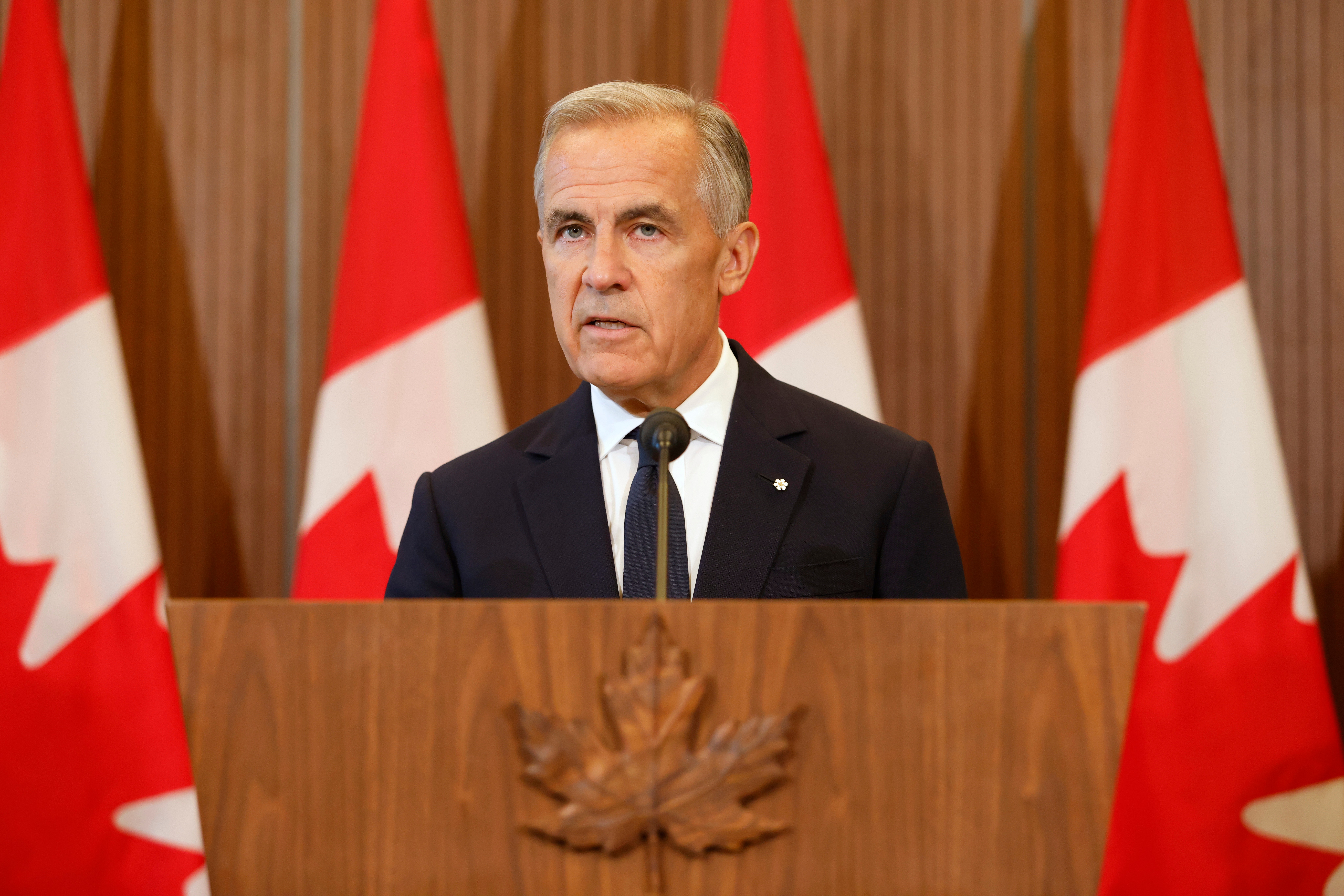
    Polls show that Canadians strongly back Prime Minister Mark Carney’s decision to end trade talks with Washington last month and to hit back with tariffs on about $20 billion in U.S. products entering Canada. But there is also concern over what might happen next. President Donald Trump has repeatedly threatened another round of U.S. tariffs if Canada follows through on its plan.

    Some in Canadian industry say they are inclined to take Trump at his word, at least on this threat.

    People in the Trump administration “are willing to hurt themselves, their own sectors and industries, in pursuit of their goal, however misguided I think it is,” said Flavio Volpe, president of the Automotive Parts Manufacturers’​ Association of Canada. “So they may escalate. I hope that we don’t end up in a tit-for-tat situation. We’re going to run out of runway.”

    Carney announced Canada’s new tariffs after he pulled Canadian negotiators out of talks in Washington last month — an ultimately unsuccessful attempt to stave off 50% U.S. tariffs on $20 billion in Canadian exports and to reduce or eliminate tariffs of up to 50% on Canadian steel, aluminum, and automobiles.

    The Trump administration said the tariffs it imposed last month were in part a response to retaliatory tariffs Canada placed last year on some U.S. imports, particularly autos. U.S. officials have repeatedly noted that only China and Canada retaliated against the United States since Trump began upending global trade.

    At a news conference after a sternly worded speech announcing the tariffs, Carney declared that Canada had been attacked by the United States and that the two countries are now “at war.”

    Last week, U.S. Treasury Secretary Scott Bessent rejected that framing, arguing that Canada is too small an economic power to battle the United States. “I don’t think you can be in a tit-for-tat with someone who’s 13 times larger than you are,” Bessent said on CNBC.

    On Friday, Trump escalated his trade rhetoric even further. He said that he might “end all trade with Canada” and other countries that have trade surpluses with the United States.

    Separately, U.S. Commerce Secretary Howard Lutnick said Carney had shut down the talks to gain “political leverage” at home, not because of what the U.S. side had offered.

    As last week went on, Carney made it clear that he was in no hurry to return to negotiations and was focused instead on diversifying Canada’s trade and expanding its domestic economy.

    “At the appropriate time, the conversation will happen,” he said. “But the most important thing we can do is not to spend all our time waiting by the phone, waiting for a call, refreshing on social media to see what’s coming across.”

    Many of the U.S. items that will soon face Canadian tariffs of 15%, 25%, or 50% mirror the Canadian exports that are now met with 50% U.S. tariffs, particularly clothing and wood products. Canada revised the list to remove dozens of fish products after the Canadian fishing industry said that tight cross-border integration meant that its members would also be harmed.

    Canadian officials have suggested that many targeted items come from states where voters supported Trump, though some political analysts question how much pressure that will actually bring on the White House. The list also includes items with little bearing on the Canadian economy, including the metal bands that attach erasers to pencils, migratory bird identification bands, and fish egg incubators.

    Trump has not imposed tariffs on some of Canada’s largest exports, including oil and gas and many minerals, and has exempted many products with enough North American content to move duty-free under the United States-Mexico-Canada Agreement. Auto parts, for example, are subject to a 25% tariff but generally cross the border without incurring it.

    As a result, Canada’s overall average tariff rate remains low compared with what most other countries face, and the majority of its trade, by dollar value, is still duty-free.

    After the talks collapsed, Trump threatened to impose 50% tariffs on autos and auto parts in January, apparently without the USMCA exemption — a move most analysts believe would be devastating for Canada’s auto industry. Trump has not taken formal steps toward carrying out the threat, though some in Canada speculate that rather than target new products or raise existing tariff rates, the Trump administration may instead strip away the USMCA exemption for many goods.

    Volpe said that auto parts makers were not intimidated. He said that last year when the Trump administration proposed collecting tariffs on Canadian auto parts “they understood that it would shut down the auto industry in a week.”

    He added: “Ultimately, I think they will back off that. But if they don’t, they can have at it.”

    This article originally appeared in the New York Times.

  • EU seeks to reassure a Trump-rattled Greenland with promise of a new partnership and investment

    EU seeks to reassure a Trump-rattled Greenland with promise of a new partnership and investment

    BRUSSELS — The European Union on Monday sought to reassure a jittery Greenland with the promise of a stronger partnership and hundreds of millions of euros in investment following repeated threats from U.S. President Donald Trump to take control of the island.

    During a visit to the capital Nuuk, European Commission President Ursula von der Leyen offered 200 million euros ($232 million) in support over the next two years to help Greenland tackle climate change, boost internet connections, and improve hydropower plants, fisheries, and education.

    The EU has increased its focus on Greenland since Trump began insisting that the United States should take control of the island for security reasons. His persistent claims raised sovereignty concerns and pushback from Greenlandic and Danish leaders and heightened tensions among NATO allies.

    “Greenland’s future is for the people of Greenland and Denmark to decide. No one else,” von der Leyen said. “Territorial integrity, sovereignty, the inviolability of borders. These are fundamental principles of international law.”

    EU promises money for Greenland’s development

    Funds are also earmarked for better housing, support to small businesses, and sustainable tourism. Von der Leyen also said that she wants to double EU budget support to Greenland to around half a billion euros ($580 million) from 2028.

    “Greenland can count on the EU,” she said, after signing an EU-Greenland declaration with Prime Minister Jens-Frederik Nielsen and Danish Prime Minister Mette Frederiksen. Greenland is a semiautonomous territory of NATO ally Denmark.

    Nielsen described the 27-nation EU as “a loyal and trusted friend,” notably at a time when the island faces “new challenges that we cannot tackle alone.”

    “Through these challenging times, your support to us is unfailing,” he said. “You have stood by us and continue to stand by us. We feel it and are deeply grateful.”

    Denmark and European allies resist Trump’s pressure

    The Trump administration also leaned on Denmark. “We have been under pressure,” Frederiksen told reporters. “It has been very clear, and we are very thankful for the great support we have received from our European partners but, by the way, also globally.”

    Denmark and seven of its European allies sent a small group of military personnel to the island in January, publicly for military exercises focused on strengthening Arctic security, but with the intention of showing support for Greenland’s sovereignty.

    In response, Trump threatened to slap new tariffs on them all: Denmark, Finland, France, Germany, the Netherlands, Norway, Sweden, and the United Kingdom. They condemned the move as undermining trans-Atlantic relations, and Trump eventually backed down after NATO agreed to boost security in the Arctic region.

    Von der Leyen’s visit came as 11 NATO countries began military exercises in Greenland on Monday involving around 400 military personnel, including special forces troops trained to operate in Arctic conditions from Canada, Denmark, and Finland. No U.S. troops are taking part in the Arctic Shield drills, which run Sept. 7-18.