Category: News

  • Stanley M. Schwarz, community-minded trial lawyer and former assistant district attorney, has died at 95

    Stanley M. Schwarz, community-minded trial lawyer and former assistant district attorney, has died at 95

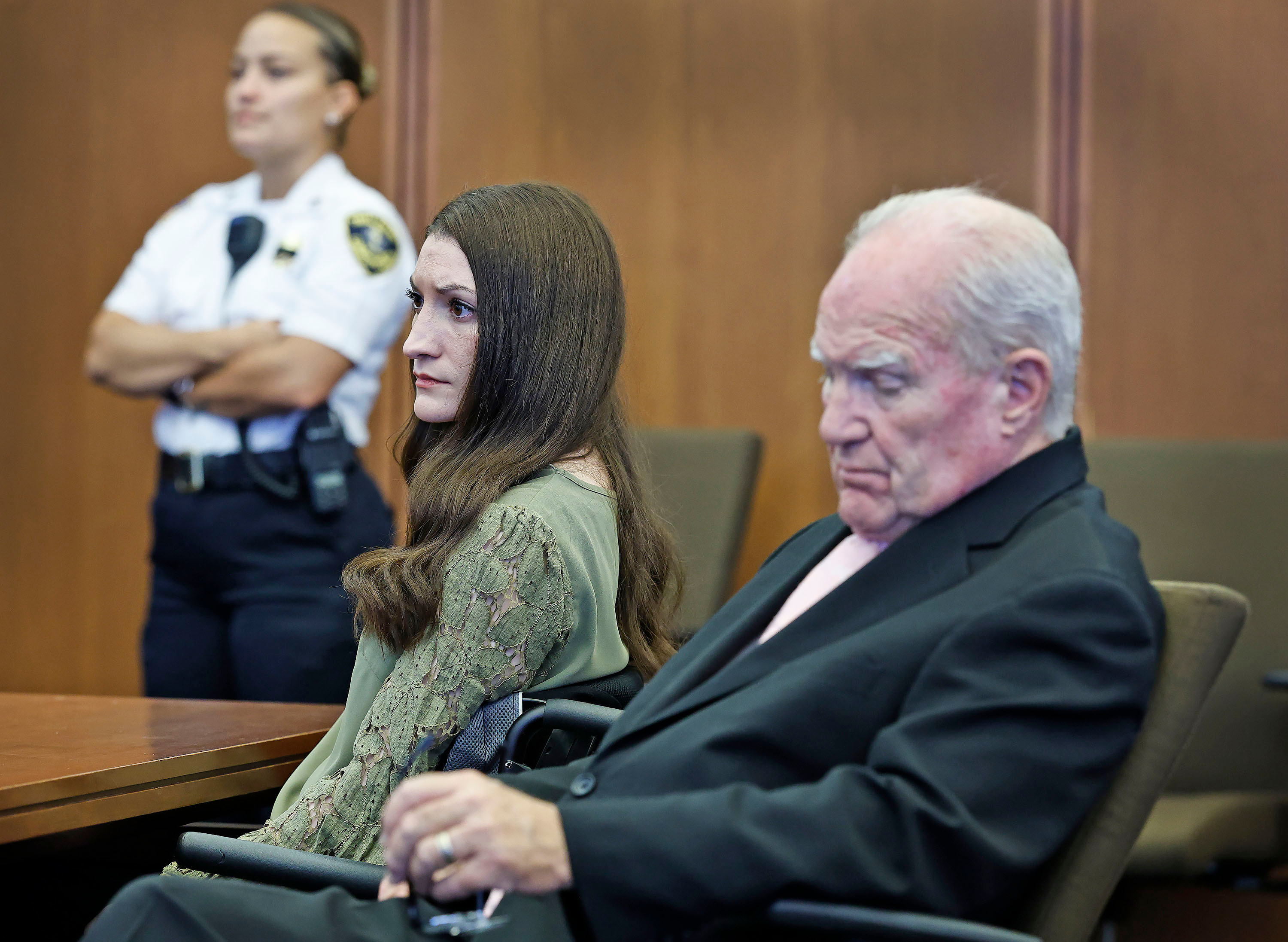
    Stanley M. Schwarz, 95, of Philadelphia, community-minded trial lawyer and founder of what is now the Schwarz & Schwarz law firm, former Philadelphia assistant district attorney, Army veteran, mentor, and golfer, died Friday, July 17, of heart failure at his home in Society Hill.

    Public-spirited throughout his life and adept at litigation regarding workplace accidents, medical negligence, reckless driving, careless manufacturers, and other personal injury issues, Mr. Schwarz founded what is now Schwarz & Schwarz PC in 1967. He represented all kinds of clients in all kinds of cases and appeared before the Pennsylvania Supreme, Superior, and Commonwealth Courts more than 20 times.

    He was featured in the Daily News in 1968 when, at no charge to his client, he won $150 from the city for a Philadelphia hairdresser whose car was mistakenly towed. “I was disturbed by her experience” with city officials, he told the Daily News.

    “To many,” his family said in a tribute, “he was more than an attorney. He was a source of guidance and hope.”

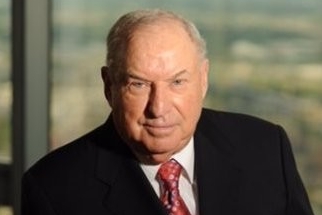
    Mr. Schwarz doted on his children.Courtesy of the family

    Mr. Schwarz lived for decades in Society Hill Towers at Second and Locust Streets near the Delaware River and represented its owners association in 1997 as it contested high-rise development along the nearby waterfront. “They’re trying to take away this little Garden of Eden,” he told the Daily News.

    He joined the district attorney’s office in 1960, worked as an assistant district attorney in the major trials unit, and handled hundreds of cases involving murder, assault, robbery, burglary, arson, and other crimes. In one notable case in 1966, he noticed that the photo of a man in the Daily News looked like the at-large suspect in a recent robbery. Detectives tracked the man down and made an arrest.

    He also served as a temporary judge and arbitrator for local, state, and federal courts. He belonged to several legal associations, won awards for his legal and community service, and was an honorary member of the Knights of Columbus.

    He joined the Army after high school, rose to first lieutenant, and served as an intelligence cryptographer during the Korean War. He was admitted to the Temple University School of Law after just a year in college, became editor-in-chief of its law review, and graduated in 1958.

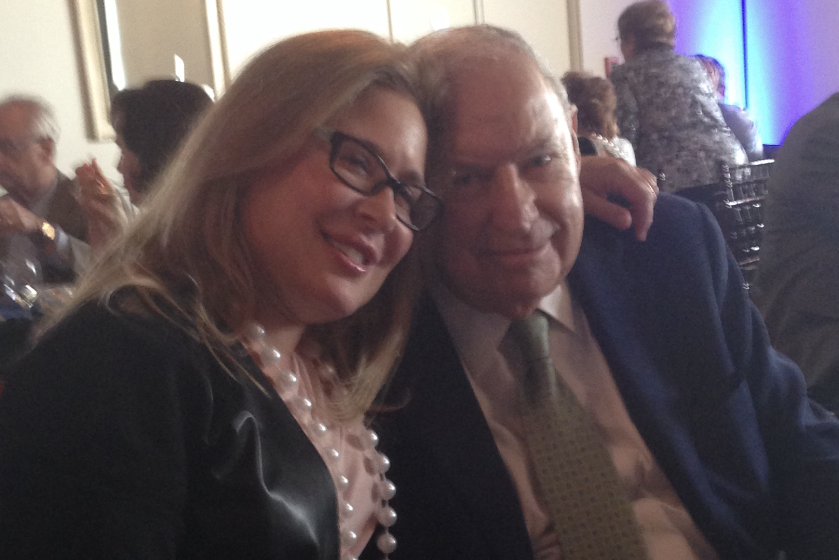
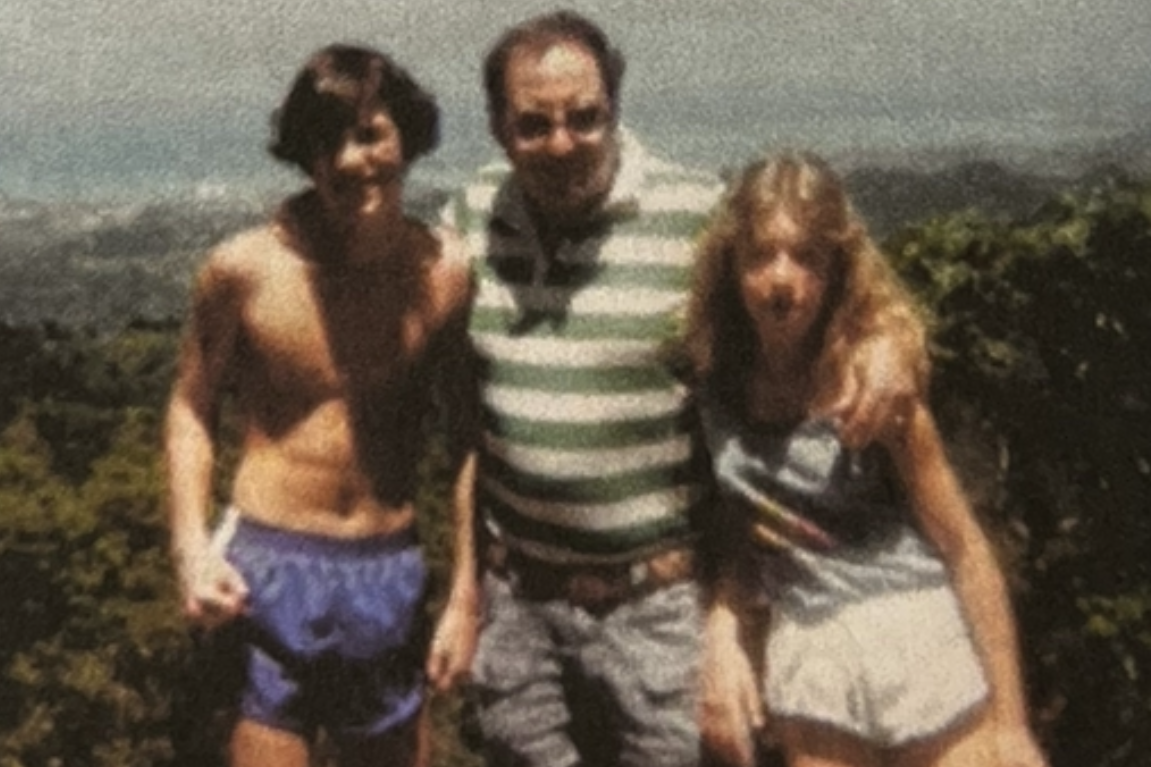
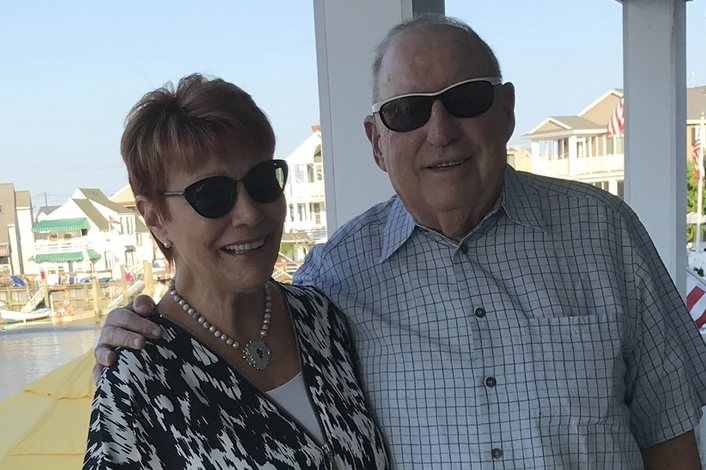
    Mr. Schwarz and his wife, Kathy, married in 1991.Courtesy of the family

    He served two years as a law clerk in the Philadelphia Court of Common Pleas and then as assistant to three district attorneys over six years. “He mentored generations of young lawyers and quietly helped countless people through difficult times,” his family said.

    Born in Philadelphia during the Great Depression, Mr. Schwarz and his family moved often when he was a boy. He lived in New York when he was young and worked part-time as a stock boy and janitor when he was 10 to help pay the bills.

    He attended two dozen schools before moving to Philadelphia in middle school and graduated from Germantown High School in 1948. His family praised “the work ethic and compassion that guided him throughout his life.”

    They said: “Stan’s life was shaped by perseverance, resilience, and a deep commitment to helping others.”

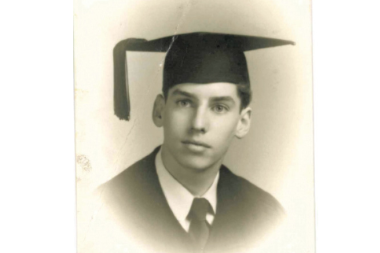
    Mr. Schwarz graduated from Germantown High School in 1948.Courtesy of the family

    Stanley Morris Schwarz was born Jan. 22, 1931. He worked as a mail clerk and accountant after high school and joined the Army when he was 20.

    He married Lee Rosen in 1955, and they had a son, Daniel, and a daughter, Stacy. After a divorce, he married Kathy Campbell in 1991, and they danced and traveled the world together for years. He was especially good at the jitterbug.

    Mr. Schwarz played golf and socialized for more than 50 years at the Bensalem Township Country Club. He was a longtime member of the Society Hill Club. He took his family to boat shows and on memorable vacations to Ocean City, Puerto Rico, the Pocono Mountains, Disney World, and elsewhere.

    He self-published a breezy memoir called The Roller Coaster Life of Flappy in 2022 when he was 91, and said: “As a father, it gave me the greatest pleasure in playing with the kids, whether in our backyard, in the community pool, or in the nearby parks.”

    Mr. Schwarz enjoyed time with his family.Courtesy of the family

    Mr. Schwarz was fun and funny, his daughter said. He taught himself to play piano and saxophone, and they performed duets.

    He was an engaging storyteller. He made personal scrapbooks for his children. Friends called him “amazing” and “incredible” on Instagram.

    His family said: “He made people feel valued and left them better than he found them.” His daughter said: “He was down to earth and playful. He was great with kids. He loved everybody’s children, and the children loved him.”

    In addition to his wife and children, Mr. Schwarz is survived by four grandchildren, a sister, and other relatives. A sister and a brother died earlier.

    Services were held earlier.

    Donations in his name may be made to Congregation Beth El, 8000 Main St., Voorhees, N.J. 08043.

    Mr. Schwarz was close with his daughter, Stacy, above, and his son, Daniel, below. Courtesy of the family
  • UAE warned Netanyahu of major Hamas operation days before Oct. 7 attack, news report says

    UAE warned Netanyahu of major Hamas operation days before Oct. 7 attack, news report says

    JERUSALEM — Prime Minister Benjamin Netanyahu was directly warned by the president of the United Arab Emirates that Hamas was planning a major offensive just days before the militant group attacked on Oct. 7, 2023, according to an Israeli newspaper report.

    UAE President Mohammed bin Zayed spoke with Netanyahu 10 days before the attack and said Yahya Sinwar, the leader of Hamas in Gaza at the time, was planning an operation, the Haaretz daily said.

    Bin Zayed said it would lead to bloodshed and could destabilize the region and undermine the Abraham Accords, the normalization agreements between Israel and several Arab and Muslim-majority nations, the newspaper reported.

    But Netanyahu “reacted with relative calm,” according to Haaretz, which said he assured bin Zayed that Israel was prepared for any scenario and a possible attack was more likely to come from the occupied West Bank.

    Hamas militants killed some 1,200 people and took another 251 hostage in the Oct. 7 attack. Hundreds of Israelis, mostly soldiers, have been killed in continued fighting in wars in Gaza, Lebanon, and Iran.

    Haaretz reported Netanyahu’s office called the report an “absolute lie” and said Netanyahu did not speak with the UAE president “during the period in question and received no warning from him.”

    Netanyahu has rejected calls for an official government inquiry into the events surrounding the Oct. 7 attack.

    His office denied Tuesday that the UAE gave him a warning. “If there was any relevant information, it was passed through intelligence channels between the two countries,” the statement said.

    The UAE’s Foreign Ministry also said that it would not comment on “speculation regarding conversations between government leaders.”

    Israel and the UAE have maintained “open and direct lines of communication” since they formally established ties five years ago, the statement said. It added: “When necessary, all relevant intelligence has been and continues to be communicated.”

    Israel is holding national elections next month and Netanyahu’s actions around the time of the Oct. 7 attack are a key issue in the campaign.

    Gadi Eisenkot, a former top general who is seen as Netanyahu’s main opponent in election, accused the prime minister of ignoring dozens of warnings ahead of the attack.

    “He is unfit,” Eisenkot wrote on social media.

    Another Netanyahu rival, Naftali Bennett, said, “Netanyahu bears personal and direct responsibility for the failure that led to the deaths of thousands of Israelis on his watch.”

    Israel’s offensive in Gaza has killed more than 73,650 Palestinians, according to Gaza’s Health Ministry.

  • Documents suggest New Yorkers were misled about air quality after 9/11

    Documents suggest New Yorkers were misled about air quality after 9/11

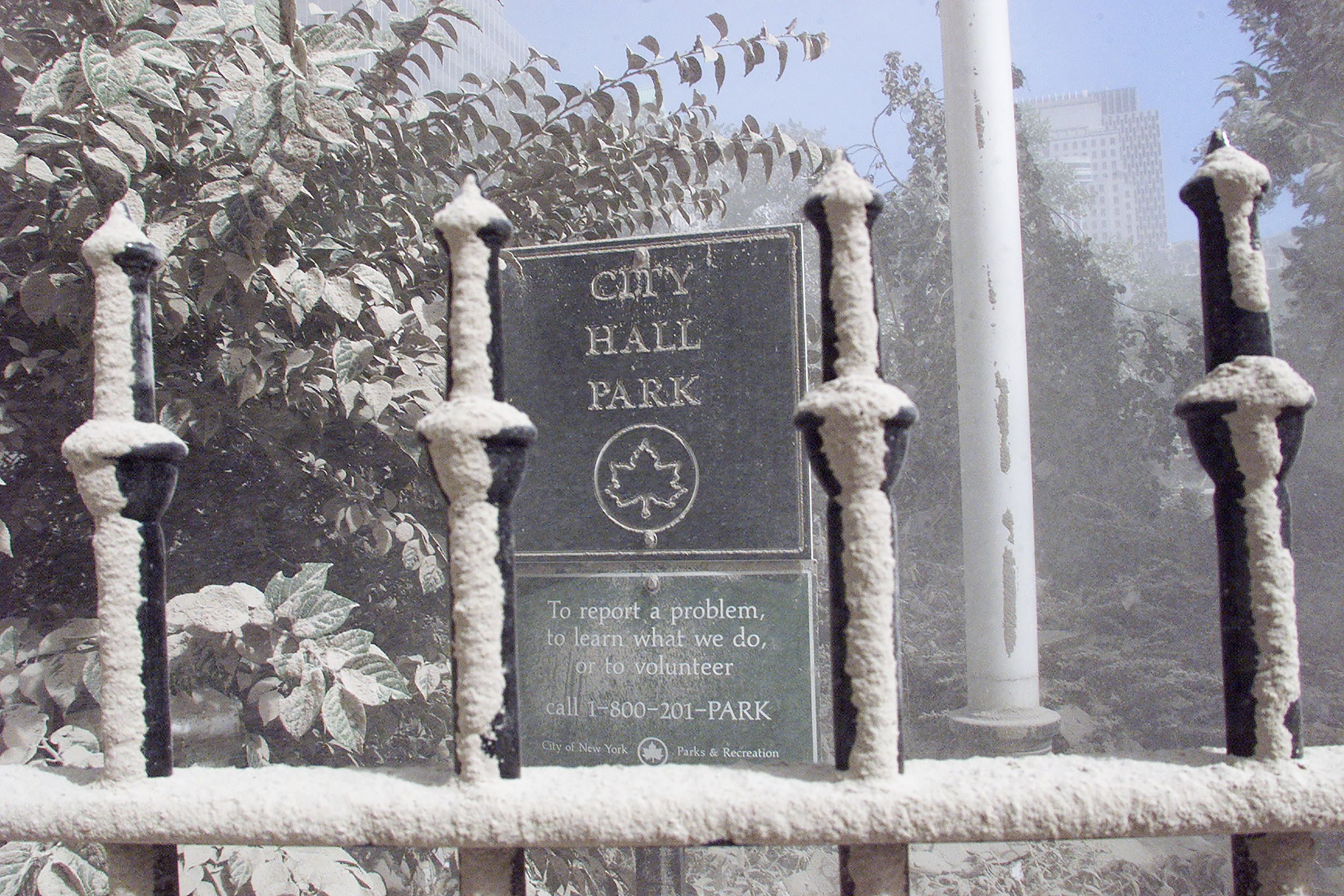
    NEW YORK — In the harrowing months that followed the attacks on the World Trade Center, New Yorkers were repeatedly assured that the air around the fallen towers was safe to breathe.

    But 10 months later, health officials were still finding evidence of asbestos as much as half a mile away, according to a sample of air quality records being released Tuesday.

    The documents, reviewed by the New York Times in advance of their release, include more than 170,000 pages of air quality reports, contamination records, and correspondence among city officials that were stored in 68 boxes in a city office, shielded from public view for more than two decades, and, according to city officials, discovered only last year.

    Mayor Zohran Mamdani has directed his administration to release the records to the public through an online portal, timing it to the commemoration of the 25th anniversary of the attacks in lower Manhattan.

    Over the course of the next year, his administration intends to review, redact, and publicize many more papers, found in municipal and insurance offices, that relate to the environmental toxins brought about by Sept. 11.

    The records being released Tuesday provide a snapshot of the frenzied months following the attacks, when New York City and its leaders were struggling to balance the city’s recovery with fears of terrorism and lingering toxins.

    The documents are limited in scope, offering only a fraction of the air quality reports taken around ground zero. And while they also include a smattering of internal memos — including the so-called Harding memo, in which the city discussed its potential liability stemming from the Sept. 11 air quality — many more are presumably absent.

    But even in a scattershot way, the records seem to strengthen the notion that New Yorkers were instructed to return to the ground zero area before it was safe to do so, potentially exposing workers and residents to dangerous toxins.

    “The very least our city owes the families, survivors, and first responders whose lives were forever changed by the horrific terror attack of Sept. 11 is transparency and accountability,” Mamdani said in a statement.

    Releasing the documents was both a massive logistical hurdle, for which the mayor budgeted $34 million, and an acknowledgment that, even after so many years, as fewer Americans remember the attacks, the health effects persist. More people are believed to have died from illnesses related to the attacks than the nearly 3,000 people who were killed Sept. 11. They are succumbing to lung and blood cancers and heart and respiratory diseases.

    Records related to 15 John St., a building less than a mile from the World Trade Center, offer a glimpse into the prolonged, frenzied, and often confusing cleanup work that took place around ground zero.

    On July 13, 2002, with New Yorkers still reeling from the attacks on the World Trade Center that blanketed lower Manhattan in debris, inspectors were busy collecting dust samples from the building.

    Each report echoed the last: Asbestos present on the facade ledge. Asbestos present on the west side roof. Asbestos present on the top electrical cable.

    Some reports show that asbestos levels appeared to stay under limits set by environmental and worker protection agencies; others indicate they may have been too high, though many of the papers are not accompanied by written analysis.

    The documents show that the asbestos found at 15 John St. was not an outlier: Lists of environmental quality measurements taken by city agencies, the Environmental Protection Agency, and privately contracted laboratories demonstrate the presence of asbestos and other contaminants, sometimes at levels exceeding acceptable limits, in dust and air in other parts of lower Manhattan after Sept. 11.

    They include records preserved by the Giuliani administration, as well as documents related to 7 World Trade Center, which collapsed on the afternoon of Sept. 11.

    A letter to the city’s Department of Environmental Protection from a New Yorker in February 2002 underscores how isolated and frightened people felt at that time.

    A resident of 333 Rector Place detailed what she viewed as extensive missteps by city officials and her building’s property manager in attempting to remove asbestos and other contaminants from the premises.

    “Sept. 11, 2001. Felt I had to do something,” the resident, Marisa Ramírez de Arellano, wrote, describing how she had “scooped up dust from coffee table into a paper bag. Also started to clean the floor with wet paper towels,” an effort she acknowledged was “mostly futile.”

    Reached Monday, Ramírez de Arellano, 80, said she had spent several years after the attacks under the care of an allergist and a pulmonologist. She was prescribed steroids and other medications because respiratory tests led doctors to fear she had suffered lung damage, she said.

    She said she spent several hours in her apartment Sept. 11 because she “didn’t realize that very lightweight dust that was coming in was as bad for human beings as it turned out to be.” She left the apartment when firefighters came to evacuate her.

    By the time she returned several weeks later, officials said the air was safe to breathe, but she had doubts, especially one night when a hazmat team came to dig up the grass from a small roundabout in the neighborhood.

    “They dug several inches down and took it all away and replaced it with new dirt, new sod, new grass,” Ramírez de Arellano said. “And I thought, if they were thinking the grass is contaminated, then what are we all breathing?”

    A draft document of data collected by the city’s DEP listed locations throughout lower Manhattan where asbestos levels in some dust samples exceeded hazardous limits in the days immediately after the attacks. Another undated document lists ambient samples that were also above acceptable asbestos limits.

    An audit from November 2001, prepared by a private firm and submitted to the federal EPA based on data collected by New York City and state agencies, showed other troubling findings. That audit demonstrated that air concentration of the carcinogen benzene was still spiking near the towers’ footprint, and that the concentration of asbestos in the air at the Fresh Kills landfill on Staten Island had increased after the attacks.

    But the uncertainty about the air quality in residential and commercial buildings in lower Manhattan was already raising concern among public officials including Rep. Jerrold Nadler, a Manhattan Democrat whose district included ground zero at the time.

    “Congressman Nadler believes that the EPA has neglected its responsibility for monitoring indoor air quality around ground zero,” according to a memo from a city official, Ester Fuchs, sent to six others including the city’s top lawyer, Michael Cardozo, on Feb. 28, 2002, two months after Michael Bloomberg took office as mayor, replacing Rudy Giuliani.

    She noted that Nadler said that the federal Environmental Protection Agency “handed over responsibility for measuring indoor air quality to the city without putting in place proper oversight measures,” a responsibility the city passed on to property owners.

    (BEGIN OPTIONAL TRIM.)

    The city’s health department instructed citizens to “clean their buildings with wet mops and rags,” Fuchs said, and summarized the agency’s position that air quality testing, while painting an incomplete picture, had not shown results “that would indicate long-term health impacts.”

    In an interview this week, Nadler recalled trying to persuade the administrations of Giuliani and Bloomberg to release whatever information they had collected on air quality around the site of the attacks.

    “They knew about the air quality and they essentially did nothing about it,” Nadler said. “I suspect that all they cared about was getting Wall Street reopened, and they didn’t give a damn about the health of the people down there.”

    Indeed, city and federal officials, most memorably Christine Todd Whitman, the administrator of the EPA at the time, reassured Americans that the air around ground zero was safe to breathe. Whitman has since apologized.

    A review of news articles and interview transcripts in the days and weeks following Sept. 11 show that Giuliani continued to vouch for the safety of the air quality.

    “I come down here in the morning and sometimes the odor is terrible,” he said in late October 2001, according to an article in the New York Daily News, which had reported on toxic chemicals and metals that had been released into the environment around ground zero. “You smell it and you feel there must be something wrong with it. But what I’m told is that it is not dangerous to your health.”

    In February 2002, Bloomberg said, “Every test that has been done says the air quality was in acceptable limits. I think some people are just never going to want to believe that.”

    A spokesperson for Bloomberg declined to comment. A spokesperson for Giuliani did not respond to a request for comment.

    Correspondence between Deutsche Bank, at 130 Liberty St., and the city DEP discusses testing from September 2001 through April 2002 that found asbestos in dust samples exceeding the 1% threshold for harm throughout the building, as well as the presence of carcinogenic organic contaminants, heavy metals, fungi, and bacteria.

    The bank’s experts “have recommended a systematic testing program” to quantify the hazard and identify appropriate methods for handling and disposing of the materials, the company’s managing director for corporate real estate wrote in a June 2002 letter to the DEP commissioner. The building would eventually be demolished.

    Asbestos exposure can cause lung tissue scarring, mesothelioma, and lung cancer. Dust, smoke, and other pollutants from the site have also been associated with lymphoma, leukemia, and other cancers.

    The release of the documents resolves litigation brought by 9/11 Health Watch, an advocacy organization that sued to force the publication of the documents.

    “For 25 years, four different mayoral administrations kept from the public, the U.S. Congress, and the City Council documents showing what the city actually knew about the danger of the toxic chemicals in Lower Manhattan and Western Brooklyn after the World Trade Center collapse, even as city officials continued messaging to the public that the air was ‘safe and acceptable,’” Ben Chevat, the executive director of the 9/11 Health Watch, said in a statement.

    But the documents’ release may expose the city to new or amended lawsuits. The information could also help those sickened in the years after Sept. 11 with their applications for federal victim compensation funds. The mayor and the city’s chief lawyer, Steven Banks, agreed that it was important to make the documents public, Banks recalled in a recent interview.

    “For years, families, city workers, and survivors have been crying out for more transparency from their government,” Banks wrote in an introductory letter contained in the document release.

    In a recent interview, Denise Verzi discussed losing her husband, Michael Verzi, a New York City firefighter, to lymphoma that was linked to his time working at ground zero.

    “He truly loved being a firefighter. That was his calling,” Verzi said of her husband, who died in 2022. “All that being said, now years later we’re finding out that there’s all these files.”

    She said her husband and his colleagues had been assured that “the air quality is fine, you can be down there.” And while they would have gone to the site regardless, she said, “maybe different precautions would have been taken.”

    “I don’t understand hiding it to begin with,” Verzi said. “That was horrific. But 25 years in, there’s people that are still getting sick.”

    This article originally appeared in the New York Times.
  • A former Philly principal must repay $31k in school book fair, trip, and class dues money

    A former Philly principal must repay $31k in school book fair, trip, and class dues money

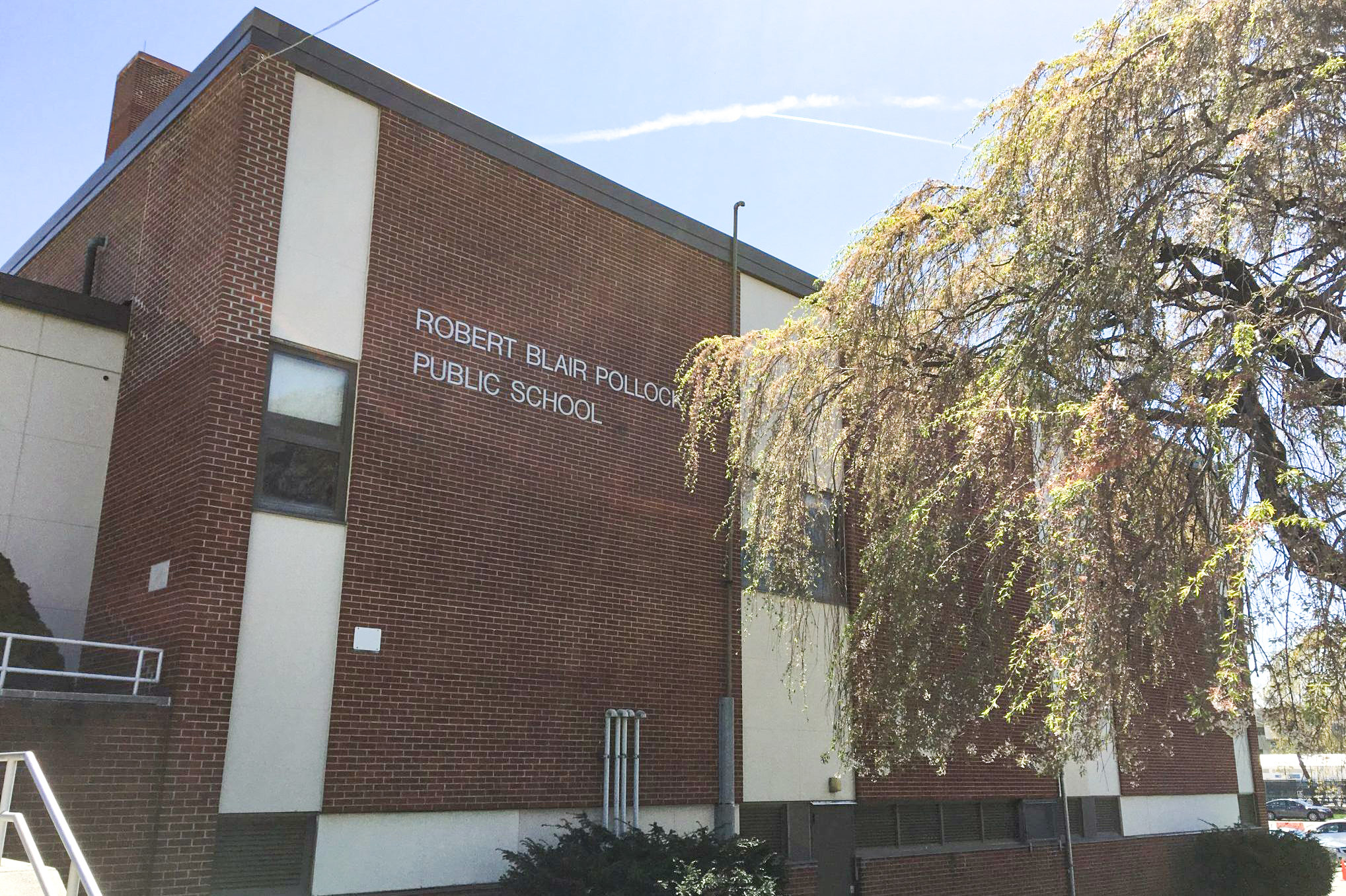
    The former principal of a Northeast Philadelphia elementary is on the hook for $31,000 paid to the school by students but never deposited into its bank account.

    According to the Philadelphia School District’s inspector general, the former principal of Robert Pollock Elementary, Yvette Jackson, received the money from events including book fairs, holiday bazaars, and class trips — plus dues for graduating eighth graders — but “failed to deposit proceeds.” Jackson has since retired.

    Multiple vendors, including Scholastic Books Inc., were not paid for goods delivered under Jackson’s watch, according to Pollock sources and documents reviewed by The Inquirer. The inspector general’s report confirmed the lack of payments.

    Jackson’s actions violated the district’s policies, “eroded the public’s trust and violated the district’s ethical standards required by the [Employee Code of Ethics] mandating honesty and forthrightness and avoiding falsification, misrepresentations and deceptions in records the former principal kept while managing and administering” school activities funds, wrote Sha S. Brown, the inspector general.

    The report stopped short of accusing Jackson of taking the funds, but said she was liable for all losses “resulting from administrative negligence and failure to exercise proper oversight and accounting” of student funds.

    At Brown’s recommendation, the district is withholding $31,576.24 from Jackson’s final termination pay. Jackson did not respond to a request for comment, but, according to the inspector general’s report, “the former principal acknowledged receipt of the memo and did not object to the proposed withholding.”

    Pollock, a K-8 school on Welsh Road, educates 900 students, 77% of whom are considered economically disadvantaged.

    Missing money, missing records

    The possible financial improprieties came to light during a reconciliation of school accounts after Jackson retired from Pollock at the end of the 2024-25 school year.

    When district personnel attempted to balance the books, money from trips, bake sales, class dues, and the holiday bazaar was missing, according to sources. Scholastic Books was not paid for either its fall 2024 or spring 2025 book sales.

    Ultimately, the district’s office of general accounting filed a complaint with the inspector general’s office “pertaining to the mismanagement of the Robert Pollock School Student Activity Fund (SAF) by the retiring principal,” according to documents reviewed by The Inquirer.

    The inspector general’s probe concluded that Jackson failed to keep adequate records and that over the course of the 2023-24 and 2024-25 school years, she made only five bank deposits, despite cash having been received for various school events through the year.

    District policy requires cash received for student activities be deposited into the bank “as soon as possible, ideally daily unless this would cause an undue hardship.”

    None of the deposits Jackson made came with required documentation, such as the dates and descriptions of the activities, number of students who participated, cost of participation, and more, the report said.

    “The former principal failed to account for, and deposit, the proceeds of several fundraising activities including book fairs and class dues (graduation fees) … the OIG could only partially match one bank deposit pertaining to the school’s 2023 fall book fair sales over this two-year period. Further, records indicate the former principal failed to pay invoices of SAF-related vendors,” Brown said.

    Brown found that Jackson collected the $31,576.24 but never deposited it. She also told a staffer managing the book fair that there was “no need for receipts,” the investigation found, despite district policy explicitly stating that receipts were required.

    In some instances, vendors were stiffed. Both Scholastic and a business that provided goods for the holiday bazaar were not paid, the report said.

    Book fair money is typically used to purchase books for classroom libraries and for students to take home. Other activities, like the bake sale, fund things like classroom pizza parties and assorted celebrations.

    “According to an administrator of the school, the holiday bazaar vendor said the former principal kept telling the vendor they were ‘… good for the money,’” the report said. “In total, the OIG found that three invoices remained unpaid and totaled $16,840.49.”

    Going forward, Brown said, the district must require student activities fund money be deposited into a bank account weekly.

    “Accounting and Financial Reporting staff will continue to work with school leaders to make timely deposits,” chief financial officer Mike Herbstman said in the district’s response to the report.

    The school district had no immediate comment Tuesday on the inspector general filing.

  • Navy failed to protect pilots from brain injury, House report says

    Navy failed to protect pilots from brain injury, House report says

    As concerns mounted that the extreme physical strain of flying fighter jets was causing brain injuries in pilots, and may have led to the death of a number of career aviators, the Navy did almost nothing.

    It didn’t even study its pilots to understand if it had a problem.

    That is one of the numerous findings in a harshly critical report released Tuesday by the powerful House Oversight Committee. The report said that because the Navy had repeatedly failed to act, Congress should pass legislation requiring the military to create a specific program to study and care for the brain health of all aviators.

    “Despite credible warnings, external reporting and internal awareness, the Navy has yet to determine whether the very conditions that define naval aviation may also be causing long-term harm to the pilots who endure them,” the report said. “Instead, it has relied on a system designed to respond to visible injuries, while leaving potential cumulative damage largely unexamined.”

    Naval aviators are repeatedly exposed to body-crushing forces as they catapult off aircraft carriers and pull high G-force turns in training. The Navy has never studied how those forces over time affect the human brain, which contains 100 billion neurons in a network with a consistency similar to Jell-O.

    A number of career pilots have raised concerns that those repeated exposures may cause brain injuries that slowly accrue over years of service and lead to debilitating mental health problems.

    “Landing on a carrier is like a car crash. In my career I’ve been in hundreds of car crashes,” said Matthew Buckley, a former TOPGUN pilot who after 15 years of flying struggled with headaches, mood swings, and suicidal thoughts. He later started an organization to help the many other pilots he encountered who were experiencing similar problems.

    “I’m almost shaking, I’m so furious,” he said after learning about the findings of the House committee. “People have died. We know we have a problem. And you’re telling me someone needs to call for legislation to have the admirals do their jobs? It’s insane.”

    In 2024, the New York Times published an investigation showing that three pilots who all had symptoms consistent with brain injuries died by suicide in an 18-month span, and that a dozen current and former pilots were struggling with similar issues.

    In the following months, Rep. James Comer (R., Ky.), who heads the House Oversight Committee, formally demanded to know how the Navy was responding to the problem.

    The report released this week said the Navy had barely responded at all: It had not done a formal investigation to see if fighter jets were causing injuries. It had not put monitoring in place that might detect injuries. And it had no plans to offer expanded brain health services to its aviators.

    While the Navy has done extensive research on the immediate health effects of flying fighter jets, it has never looked at the long-term impacts. Because the Navy had no evidence of a brain-injury problem, its medical officials maintained that no problem existed. It continued to do so even as Navy doctors started sending pilots who were experiencing issues to a civilian neurologist.

    When that neurologist raised concerns to the Navy in 2020 that he was seeing a pattern of brain injury, he said it stopped sending him patients.

    Internal documents reviewed by the House committee showed that a few years later, when three career pilots who flew the Navy’s F/A-18 Super Hornet died by suicide, several Naval officers grew deeply concerned.

    In 2024 a Navy doctor and former pilot conducted an informal survey of pilots and found widespread mental health issues that were often going untreated. His report rippled through the pilot community, and a Navy captain soon sent the report to several admirals.

    “Feedback from the bro-network is that this is a hot topic … and it is affecting retention of our senior aviators,” the captain wrote. “The suicides may, or may not, be linked by common causes. But we will not know until we choose to study this problem.”

    The committee said no study took place.

    Instead, Naval leaders blamed the crisis on stubborn barriers to seeking mental health, including pilots not coming forward out of fear that they might be grounded. The Navy tended to blamed individuals for not seeking help. The House report found no evidence that leaders considered that the problem could be caused by its jets.

    The Navy’s elite TOPGUN fighter jet school saw things differently.

    In 2024 it surreptitiously set up a brain health program, known as Project Odin’s Eye, to monitor its top flyers, modeled on a program created by the Navy SEALs. TOPGUN did not alert the larger Navy to the suspected problem, or inform other fighter wings, the report said.

    Navy leadership knew nothing about Project Odin’s Eye until the Times wrote about its existence in December 2024.

    After the Times published its investigation, top Navy leaders pushed Navy medical experts on whether flying was causing brain injuries, according to the report. In a bit of circular reasoning that seemed pulled straight from the novel Catch-22, the experts said the Navy had never studied the problem, so there was no hard evidence that it existed. And since there was no hard evidence that existed, there was no reason to study it.

    “The medical team argued that because there was no evidence, there would be no need to investigate further,” the report noted.

    The House committee was particularly critical of that decision because, it said, the Navy was “well equipped” to study the issue, and already had an extensive aviation physiology research and monitoring program that could easily add a brain health study.

    The Navy, by its own estimate, could conduct a long-term study of brain health for 1,000 pilots for $3.9 million — about the cost of training one pilot to fly.

    Instead, the Navy chose to do nothing, the report said.

    “In sum, the Navy’s response to the committee reveals a paradox: A well-funded and expansive research enterprise that has nonetheless failed to address a consequential question in aviator health,” the report said. “Given the Navy’s substantial investment in human capital, failing to allocate comparable resources to understanding risks and protecting that investment, particularly in terms of long-term health, is unfortunate.”

    The committee recommended that Congress step in and require a comprehensive program that would create a frontline brain healthcare program for all pilots, modeled on Project Odin’s Eye.

    The committee also called for requiring the Defense Department to track catapult takeoffs and high G-force maneuvers in aviators’ medical records, and conduct a comprehensive study of the cumulative effects over time, including after pilots leave the military.

    This article originally appeared in the New York Times.
  • Temple terminates $55 million gift from school’s largest donor amid federal investigation into his company

    Temple terminates $55 million gift from school’s largest donor amid federal investigation into his company

    Temple University will terminate a $55 million gift — the largest donation in the school’s history — from alumnus Christopher M. Barnett, whose company is under federal criminal investigation over allegations of money laundering, wire fraud, and other crimes.

    Barnett, a behavioral healthcare business leader whose company, ABA Centers of America, provides services to children with autism, has resigned from Temple’s board of trustees, Temple president John Fry said Tuesday.

    The gift, largely intended for Temple’s College of Public Health, was announced with much fanfare last October, but none of the payments had yet been made to Temple under the gift agreement schedule, Fry said.

    The decision to terminate the gift was mutual, Fry said, and came as Barnett is “recovering from a life-threatening medical event.” Particularly difficult was that the federal allegations concern healthcare fraud and the gift was intended for the public health college, the president said.

    “We have to think about our values,” Fry said in an interview Tuesday. “We have to think about our reputation. Given the nature of the allegations, we felt that the best thing to do was to separate ourselves from this … as painful as that is.”

    Fry said that he became aware of the allegations Thursday from recently unsealed court documents in the case and that Temple reached out to Barnett, who resigned from the board Saturday. Temple decided to announce its intention to terminate the gift after the board of trustees got a briefing on Monday, Fry said.

    The College of Public Health will no longer bear Barnett’s name, nor will the dean’s title in the College of Liberal Arts or an “essential needs hub” that Temple recently opened on campus to help improve student success, Fry said.

    Barnett has not been charged. He “strenuously denies” the allegations and intends to “vigorously defend” against them, Fry and Mitchell L. Morgan, chair of the board of trustees, said in a message to the campus community, but the university “believes the actions outlined here are necessary.”

    “After careful deliberation we believe that moving forward with the gift would not be in the best interest of Temple,” Fry and Morgan said.

    Barnett’s company did not immediately respond to a request for comment Tuesday.

    What federal investigators are looking at

    Federal investigators in December obtained a search warrant for Barnett’s Microsoft accounts, as well as those of other company executives, court records show. The warrant application, unsealed in July in federal court in New Hampshire, says evidence suggests ABA Centers of America billed insurance companies for unnecessary treatments and falsified records to justify the higher reimbursement.

    The federal investigation and documents were reported last week by Behavioral Health Business, an industry publication.

    The warrant was the second a federal judge in New Hampshire approved last year as part of the investigation by the Department of Health and Human Services’ Office of Inspector General.

    Investigators allege that Barnett executed the scheme through a web of interlinked companies he founded, including ABA Centers of America, ICBD Holdings, and Exact Billing Solutions. His archived biography on ICBD Holdings’ website, which was removed in recent days, said Barnett is “actively involved” in the companies and served as the chairman of ABA Centers of America.

    The company misrepresented the location in which services took place to get the higher reimbursement costs, investigators said, and “billed for services that did not qualify as legitimate medical treatment, such as when a client is napping or watching television,” according to the affidavit accompanying the warrant request.

    ABA Centers of America was a “giant billing mill,” one former employee told federal investigators, according to court records. ABA has affiliated companies providing services in Pennsylvania, including in the Philadelphia area, and New Jersey.

    Barnett, who has no medical training, personally set minimum hours of treatment for patients and gave bonuses to employees who billed according to those goals, emails obtained by investigators show.

    The fraudulently obtained payments funded Barnett’s “lavish lifestyle,” which included a fleet of rare cars, a lease for a $20 million waterfront home in Fort Lauderdale, Fla., and a $9.95 million private jet decked out with Hermès goods, according to court records.

    A brochure for the private jet Christopher Barnett purchased using funds ABA Centers of America fraudulently obtained, according to federal investigators.Court records

    The autism-services provider also faces multiple civil lawsuits, including a suit over allegations of inflated billing practices in Florida. A federal judge overseeing that case said last month that if evidence produced in the litigation corroborates the allegations, “ABA Centers have engaged in criminal conduct.”

    Historic contribution and its impact on Temple

    Barnett’s historic contribution to Temple was announced last October, less than a year after Fry became president of the university. Barnett met with Fry before Fry took the helm at Temple in November 2024, the president said, and Barnett joined the Temple board in May 2025.

    About $20 million of Barnett’s gift was targeted for an autism center at the public health college. Fry said Tuesday that initiative now would have to be “rethought.” The essential needs hub will continue, and Fry said he will seek another donor to support it.

    Barnett had made other, smaller gifts previously, Fry said, and Temple will be reviewing those. He did not elaborate.

    When announcing the gift, Barnett told The Inquirer how he initially had been rejected by Temple but bought a plane ticket and showed up unannounced at the office of the director of transfer admissions, waiting hours until she finally agreed to see him.

    “I said I need you to take a chance on me, and if you do that, I promise you I will graduate with a 4.0 and I’ll be a prominent alum and I’ll give back to the university,” Barnett said in an interview last October.

    Barnett’s gift surpassed the $27.5 million given by philanthropists Sidney and Caroline Kimmel earlier that year. That gift now stands again as Temple’s official record.

    “I believe in Temple University,” Barnett, who has homes in Fort Lauderdale and Philadelphia, said in October. “Temple took a chance on me when the odds were uncertain. And it helped shape who I am and what I’ve been able to do for my communities.”

    Temple officials on Tuesday indicated Barnett was continuing to think about Temple.

    “Mr. Barnett has expressed a desire to avoid any negative impact on Temple and, in keeping with such desire, has cooperated with the university through this difficult process,” Fry and Morgan said.

    Fry acknowledged the loss of the gift would be disappointing to students, faculty, staff, and alumni at the public health college. And it is a gut punch to the university at a time when the school has been making cuts to close a budget deficit and dealing with enrollment declines.

    “This is clearly a setback,” Fry said.

    But he noted that even without Barnett’s gift, the university experienced the biggest fundraising year in its history in fiscal 2026, taking in $159 million.

    “This action does not diminish the philanthropic momentum and strength of Temple,” Fry and Morgan wrote in the campus message.

    The university will look at its practices for accepting gifts, Fry said.

    “We will go back and we’ll scrutinize ourselves over this, and, if there are practices we need to tighten up, we’ll tighten up those practices,” he said.

  • Trump threatens Canadian jetmaker Bombardier, which has an extensive U.S. footprint

    Trump threatens Canadian jetmaker Bombardier, which has an extensive U.S. footprint

    U.S. President Donald Trump has threatened to ban the sale of aircraft from Canada’s Bombardier unless it manufactures planes in the United States.

    The maker of private jets in response pointed out that major components for its planes, from wings to engines, are produced in the U.S. and that its supply chain relies heavily on U.S. companies.

    Since Canada-U.S. trade talks collapsed on Aug. 21, Trump and his administration have unleashed a barrage of tariffs, threats, and personal attacks portraying Canada as weak and dependent. Canada retaliated Tuesday with tariffs on about $20 billion worth of U.S. goods.

    “NO MORE SELLING BOMBARDIER IN THE UNITED STATES! Their products aren’t good enough!” Trump said in a social media post Monday. “If they want our Market, they must build here, and stop treating America like a ‘piggybank.’”

    Bombardier said in a statement that the American aerospace industry is a “clear winner on trade and exports.” It said it creates tens of thousands of jobs both directly and through its supply chain.

    Bombardier’s supply chain includes about 2,800 U.S. companies in 47 states, it said. Among other things, wings for its business jets are made in Texas and flight control components are produced near Los Angeles. Honeywell, a major U.S. aerospace manufacturer, makes engines for Bombardier’s Challenger jets in Phoenix, and Collins Aerospace makes avionics and communications equipment in Cedar Rapids, Iowa.

    “Bombardier values its great partnership with American companies and its U.S. employees. Our plan is to continue to invest in our people, our customers, and the communities in which we operate across the country,” it said.

    Bombardier has significant operations in Kansas, where Republicans have held a solid grip on both U.S. Senate seats for a century. Trump won the state by about 16 percentage points in 2024. Both senators said they had contacted the White House to express concerns about the threat to the Canadian company and its potential impact on Kansas workers.

    “I reached out to the Trump administration to make certain the President is aware of the significant contributions of Bombardier to Kansas and the importance of its presence in Wichita to many Kansas workers at Bombardier and in the Bombardier supply chain,” Sen. Jerry Moran wrote in a social media post.

    Moran promised to continue working to ensure that the planemaker’s manufacturing operations remain in Kansas.

    Sen. Roger Marshall voiced the same support in a social media post Tuesday, saying, “I’m going to fight to keep Bombardier’s over 1,200 Kansas jobs. I’ve already taken that concern inside the Oval Office.”

    Earlier this year, Canadian Prime Minister Mark Carney announced that his government would buy six early-warning radar planes from Sweden’s Saab and Bombardier, rather than from U.S. aircraft makers. The Saab planes use Bombardier’s Global 6500 aircraft platform, supporting Canadian manufacturing. They have 20% U.S. content. The alternatives would have been U.S.-made E-7A Wedgetail surveillance aircraft made by Boeing or the Aeris X, made by L3Harris.

    The Canadian government is reviewing plans to buy U.S. F-35 fighter jets. Saab has proposed making its Gripen fighter jet in Canada.

    Bombardier is one of Canada’s oldest and most well-known manufacturers. The company was founded by Joseph-Armand Bombardier, an inventor and entrepreneur from rural Quebec who started out making snowmobiles and other snow-going equipment in the 1930s.

    Over its long history, it entered and left the train-making business and expanded for a time into making regional and commercial aircraft. But it sold off those parts of its business as it restructured to focus on making private business jets.

    The company has also spun off parts of its business that made snowmobiles and other recreational equipment.

  • Radnor drops plans to turn an old veterinary hospital into a local district court

    Radnor drops plans to turn an old veterinary hospital into a local district court

    Radnor Township has abandoned plans to purchase a shuttered veterinarian’s office and convert it into a local courthouse following pushback from neighbors.

    The township has canceled plans to acquire 405 W. Wayne Ave., the former home of St. George Hunt Memorial Veterinary Hospital, following a “thorough review of the site and vital feedback” from residents regarding infrastructure, traffic, financial issues, and “neighborhood compatibility,” according to a statement released Thursday.

    Radnor’s board of commissioners “remains committed to fiscal responsibility and to ensuring that civic developments properly align with the character and practical needs of our residential communities,” the statement read.

    The township had set out to purchase the Wayne building and convert it into Radnor’s magisterial district court, which, due to a struggle to find a local home, has been located in Newtown Square for the last three years. Officials said the township would purchase the building for $1.45 million and convert it into a courthouse, then lease it back to Delaware County, which would pay Radnor back over the course of 10 years. Bringing the district court back to Radnor would cut down on travel time and costs for residents and law enforcement officers, township officials said.

    Magisterial district courts typically handle minor criminal cases, landlord-tenant disputes, traffic cases, and civil cases involving amounts up to $12,000.

    Commissioners at a July meeting said that the township had looked extensively for a commercial space to house the district court and that the Wayne location presented the most realistic option. The former veterinary hospital was selected for its parking availability, commercial zoning, and price.

    The proposal faced considerable pushback from residents, who said a courthouse would be a poor fit for the largely residential neighborhood. Many warned of traffic concerns, a lack of parking, and the safety of holding court proceedings in an area with children and families. Some called the plan “ridiculous” and “not appropriate.”

    While the former veterinarian’s office is no longer on the table, “the fundamental need to find a suitable home for our local court remains,” the township’s statement read.

    The commissioners plan to host a public information session to provide information about the magisterial district court, the court’s day-to-day operations, and the reasoning for bringing the court back into the township’s bounds. No date or time has been set for the meeting.

    This suburban content is produced with support from the Leslie Miller and Richard Worley Foundation and The Lenfest Institute for Journalism. Editorial content is created independently of the project donors. Gifts to support The Inquirer’s high-impact journalism can be made at inquirer.com/donate. A list of Lenfest Institute donors can be found at lenfestinstitute.org/supporters.

  • Smithsonian’s secretary to resign as Trump tries to rule the institution

    Smithsonian’s secretary to resign as Trump tries to rule the institution

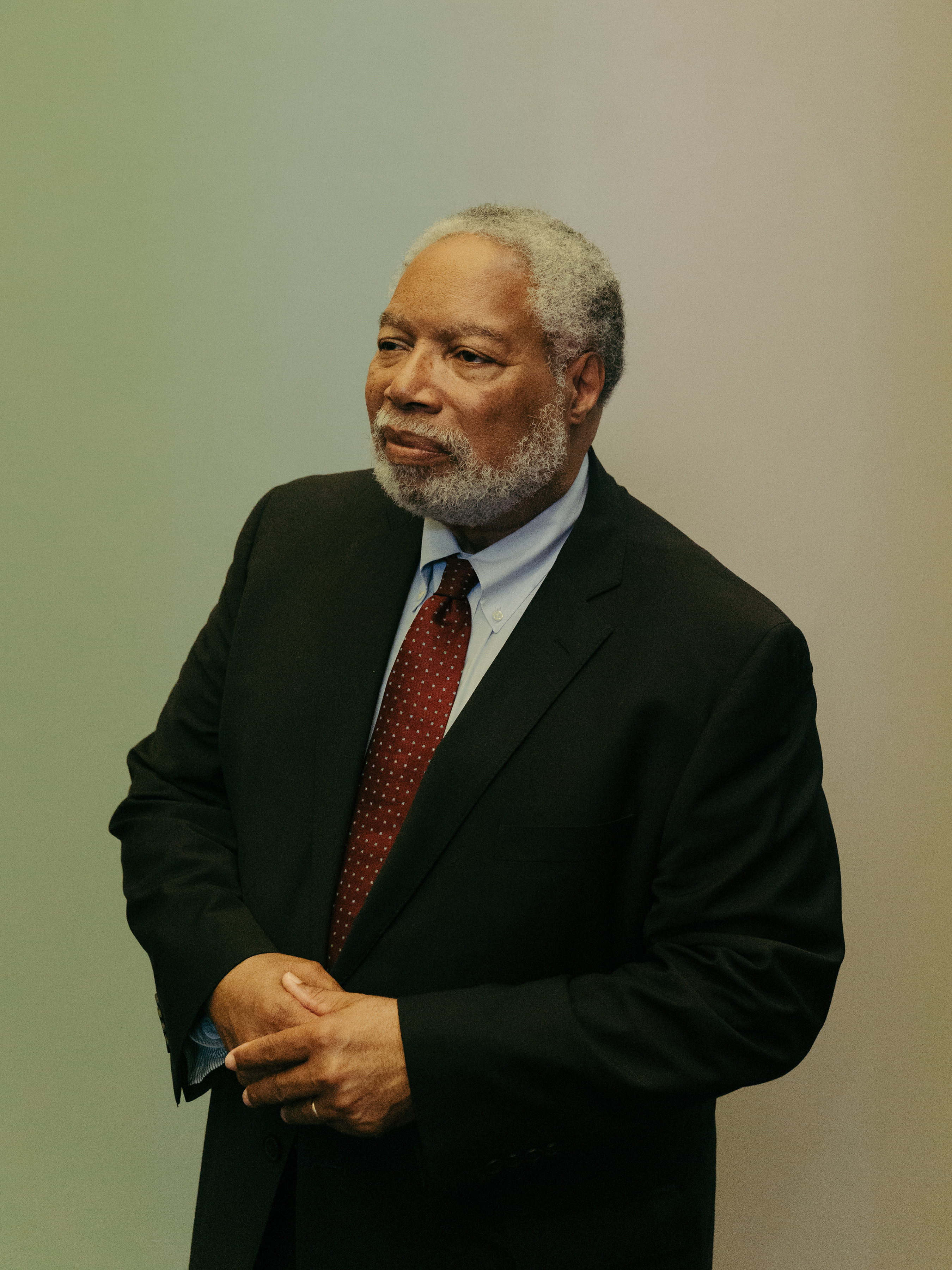
    After a seven-year run marked most recently by attacks from the Trump administration, Lonnie Bunch III announced Tuesday that he was stepping down as secretary of the Smithsonian.

    The White House has escalated its criticism of how the Smithsonian presents American history and values, prompting concern from some about what they see as an assault on the institution’s autonomy and commendation from others for reining in an organization they view as overtaken by liberal bias.

    In an interview, Bunch, 73, said it was not the pressure that had led to his departure.

    “It was really just saying, now’s the time,” he said.

    “I’m a fighter,” he added.

    At the same time, he acknowledged the strain of the role.

    “I have to be honest, it has been stressful,” he said. “And at a certain point, I’d like to wake up in the morning and not look at my cell phone.”

    In a statement, Chief Justice John Roberts, who serves as the Smithsonian’s chancellor, said that Bunch had “pursued excellence in the telling of our nation’s story” and that the Smithsonian had “benefited greatly from his wisdom, vision and leadership.” The Smithsonian said Bunch was expected to depart at the end of the year.

    For more than a year, Bunch has tried to balance diplomacy and openness to criticism with a determination to resist a White House push to present what President Donald Trump calls “patriotic” history. Some admire how Bunch has managed to quietly hold the line against the White House. Others believe the Smithsonian has shown too much deference to Trump and even engaged in self-censorship.

    Last year, painter Amy Sherald withdrew her blockbuster show at the National Portrait Gallery over a disagreement about how the museum would display her portrait of a transgender Statue of Liberty.

    But Bunch said he had no regrets. “My goal has been to win, not to make me feel good,” he said. “To win — to protect the Smithsonian — there were times I would fight, make clear what the red lines were. And there were other times I let things go.”

    Bunch, a widely respected historian who previously oversaw the creation of the National Museum of African American History and Culture, said his next chapter would most likely include teaching or a fellowship.

    Created by Congress as a trust in 1846, the Smithsonian has long been viewed as independent of the executive branch. Its governing Board of Regents must now appoint a new leader in the face of withering attacks from the administration.

    The 17-person panel, led by Roberts, includes six members of Congress, split along party lines; nine private citizens; and Vice President JD Vance. The terms of three citizen members have recently expired, and the names of replacement nominees have not made it to Congress, an unusual holding pattern that appears to be evidence of the shadow war over control of the Smithsonian.

    In the short term, Bunch seemed to have sufficient board support to stay on. But he has indicated that he is weary of the fray and ready for some form of retirement.

    “When you’re Black in America, you’ve got to figure out how to get through, right?” he told the New York Times in May. “You’ve got to figure out how to build allies, when to stand firm, when to bang the table. So in some ways, all of that prepared me for this moment.”

    “But do I wish I was in it?” he continued, referring to scrutiny by the Trump administration. “Of course not. Good Lord, I wish that I was doing my goodbye tour.”

    Over nearly 40 years in various roles at the Smithsonian, Bunch developed a reputation as a soft-spoken diplomat adept at raising money and dealing with public officials. As the institution’s first Black secretary, he has at times been a forceful voice on issues of race, particularly after the 2017 white nationalist rally in Charlottesville, Va., and in the wake of George Floyd’s murder in Minneapolis in 2020.

    Trump did not pay much attention to Washington’s cultural organizations in his first term but has made them a focus of his second, including through his efforts to govern, close, and renovate the John F. Kennedy Center for the Performing Arts. The Smithsonian has been forced to respond to White House demands or risk potential cuts to its $1 billion budget, which is largely funded by the federal government.

    Last month, in a letter to the board, Doug Burgum, the interior secretary, and Vince Haley, a senior White House adviser, made the stakes clear.

    “The Smithsonian enjoys support from executive departments and agencies,” the letter said. “Those executive departments and agencies cannot in good conscience continue to support the Smithsonian under current leadership.”

    The president’s attempt to overhaul the Smithsonian began last year with an executive order that accused the institution of promoting “narratives that portray American and Western values as inherently harmful and oppressive” and called for an end to spending on exhibitions or programs that “degrade shared American values, divide Americans based on race or promote programs or ideologies inconsistent with federal law.”

    After the White House demanded that the Smithsonian turn over information about the content of its exhibitions, Bunch reasserted the institution’s independence while saying that materials had been submitted in an effort to be “transparent.”

    The board adopted a resolution that called for its 21 museums to review their content for partisanship or bias. But the administration began its own review of exhibitions, wall text, and social media to assess “tone, historical framing and alignment with American ideals.”

    Trump has been unrelenting in his criticism, posting on social media that “the Smithsonian is OUT OF CONTROL, where everything discussed is how horrible our Country is, how bad Slavery was, and how unaccomplished the downtrodden have been — Nothing about Success, nothing about Brightness, nothing about the Future. We are not going to allow this to happen.”

    The president also announced online that he was dismissing the director of the National Portrait Gallery, Kim Sajet, calling her “a highly partisan person, and a strong supporter of DEI.” (The Smithsonian insisted it controlled personnel matters, but Sajet resigned, citing the institution’s best interests.)

    The White House pressure reached a new pitch this year with a July 4 report about the National Museum of American History that accused its director of “radical activist ideology” and the museum of undermining “faith in American institutions.”

    Many historians expressed serious concern about the report, but some conservatives applauded it, joining Trump in arguing that exhibits had become overly focused on race, identity, and injustice.

    “Hardworking Americans don’t want their taxpayer dollars dedicated to Marxist indoctrination,” Sen. Mike Lee (R., Utah) wrote on social media.

    After the report, Anthea Hartig, the museum’s director, came under fire at two congressional hearings. Then Trump ordered warning signs and exhibits installed to convey his view that the museum did not accurately reflect American history. The signs have yet to materialize.

    Bunch said it had been difficult to have his colleagues attacked by the administration. “I have always tried to protect people,” he said. “So I’ve always said, ‘Let the most of the weight fall on me. They don’t deserve it.’ We’re in a time when people are being hurt.”

    His priority has been “How do I always make sure that we put the Smithsonian in the strongest position?” Bunch said. “That we articulate what we believe in, the importance of nonpartisanship and scholarship?”

    When Bunch became the leader of the African American museum in 2005, that institution remained a distant dream.

    He worked with Congress to fund it and attracted big-name donors including Oprah Winfrey. He appointed Republicans such as Laura Bush and Colin Powell to the board and won support by arguing that the museum should recognize the horrors of slavery and the struggle for civil rights while celebrating historical Black achievements. Bunch said the museum needed to tell “the quintessential American story” of progress.

    It opened to great fanfare in 2016 and was the Smithsonian’s fourth-most-popular destination last year, with 1.6 million visitors. Bunch ascended to the Smithsonian’s top job in 2019.

    In the spring, Bunch said he was proud of what the Smithsonian had achieved under his leadership despite the barrage of Trump attacks. “Nothing can take that away,” he said. “So I’m trying to make sure I don’t let this moment steal my joy.”

    This week, he spoke of how important it was for the Smithsonian to continue to explore the country’s past in all its complexity. “Americans are an amazingly brave people, who have accomplished so much,” he said. “They’ve got to be brave enough to face their own history.”

    “To me, that is essential,” he continued. “And I will stand against wind and tide to prevent history from being erased, softened, and made palatable. That’s wrong.”

    This article originally appeared in the New York Times.
  • Lindsay Clancy’s attorney makes public plea for Trump pardon

    Lindsay Clancy’s attorney makes public plea for Trump pardon

    An attorney for Lindsay Clancy, the 36-year-old Massachusetts mother who admitted to killing her three children, said he hopes President Donald Trump would consider a pardon for his client after the high-profile murder case ended in a mistrial last week.

    “Mr. President, I would hope that you would consider this young lady, the type of person she is, what she’s been through, and consider a pardon,” Kevin Reddington said Tuesday on Good Morning America.

    The president cannot pardon state-level crimes, and Clancy’s case is being tried in state, not federal, court.

    Governors can grant clemency for state crimes; under pressure from Trump, Colorado Gov. Jared Polis (D) in May reduced the state prison sentence of former county clerk and election conspiracy theorist Tina Peters, who was convicted for a scheme to copy her county’s election computer system.

    Asked about the trial and pardon request, the White House referred the Washington Post to Trump’s comments on Friday in which he described the case as a “horrible tragedy.”

    “It’s a terrible situation. Look, she did a horrible, horrible, thing. Can’t be worse,” he said. “But you’ll find out what the price to pay is. There’ll be a price. It’s going to be mental institution or jail or something.”

    Reddington also said he hoped he would “be able to work something out that would be acceptable to both sides,” after a mistrial was declared on Friday. Prosecutors have not said whether they will seek another trial.

    Clancy’s case captured the public’s attention and became a cultural touch point, putting postpartum mental health issues in the spotlight. She had said she killed her three children by strangling them at home in 2023, and the jury was asked to decide whether she should be held legally responsible for her actions. Reddington had argued that she was suffering from postpartum psychosis at the time, which prosecutors disputed.

    The jury was dismissed after failing to reach a unanimous decision after deliberations hit nearly 40 hours following a trial that stretched more than six weeks.