Category: News

  • Pilot injured after small plane crashes at Montgomery County airport

    Pilot injured after small plane crashes at Montgomery County airport

    A pilot was injured when his plane flipped upside down Wednesday night at a small airport in Montgomery County, authorities said.

    The plane accident happened around 7:20 p.m. at Heritage Field Airport just outside Pottstown, authorities said.

    The pilot, who did not appear to have life-threatening injuries, was briefly trapped upside down inside the plane but was extricated by emergency responders, authorities said.

    No other injuries were initially reported.

    The cause of the accident is under investigation.

  • Police investigating after decomposed body found in Frankford residence

    Police investigating after decomposed body found in Frankford residence

    Police said they were investigating the discovery of a decomposed body inside a residence Wednesday in the Frankford section of Philadelphia.

    Police responded to the 1500 block of Foulkrod Street around 12:15 p.m., and the person was pronounced dead by medics at the scene.

    The scene was secured and the investigation was ongoing, police said.

    No other details were available.

  • Police say man shot wife and then himself in North Philly

    Police say man shot wife and then himself in North Philly

    A man allegedly shot his wife and then himself in what authorities said was a domestic dispute that unfolded Wednesday afternoon inside a car on Broad Street in North Philadelphia.

    In a separate shooting about 40 minutes later, a man was fatally wounded on the 4900 block of Old York Road in the city’s Logan section, police said.

    Just before 2:50 p.m., police responded to the 2900 block of North Broad Street near West Glenwood Avenue for a shooting and found a 36-year-old woman who had been shot twice, including in her face.

    Police took her to Temple University Hospital, where she was listed in critical condition.

    The gunman, 41, was taken by SEPTA Transit Police to Temple, where he also was listed in critical condition with a self-inflicted gunshot wound to his head, police said.

    Police said the man shot his wife inside a Volvo on Broad Street. A gun was recovered from the scene.

    No other details were immediately available.

    In the shooting on Old York Road, the man who was shot was taken by private vehicle to nearby Jefferson Einstein Philadelphia Hospital, where he was pronounced dead at 3:37 p.m.

    The man was not identified.

  • Supreme Court is asked to settle Missouri dispute causing electoral chaos

    Supreme Court is asked to settle Missouri dispute causing electoral chaos

    A group seeking to block Missouri from using a new congressional map that favors Republicans in November’s midterm elections has asked the Supreme Court to intervene.

    The appeal is the latest twist in an extraordinary legal fight that has plunged the state into electoral confusion just as it was supposed to finalize ballots and shortly before it begins distributing mail-in versions to voters.

    People Not Politicians, an anti-gerrymandering group, asked the Supreme Court to review the case late Wednesday afternoon, just minutes after its appeal was rejected by a federal appeals court.

    In a brief ruling, a three-judge panel of the U.S. Court of Appeals for the 8th Circuit said they did not have jurisdiction, or the plaintiffs had not met the legal bar, to obtain an injunction against Missouri’s use of the new map.

    The legal uncertainty has left voters and election administrators unsure about what Missouri map will be in play less than two months before voters head to the polls on Nov. 3.

    Roy Temple, a longtime Democratic strategist in Missouri and former head of the state Democratic Party, said voters “can’t possibly understand who they’re going to be voting for.”

    “There is a great deal of chaos,” Temple said. “The sad part is that it’s almost entirely inflicted by people whose responsibility was to ensure the orderly conduct of elections.”

    The appeals court ruling came after a furious night of legal developments Tuesday, as Supreme Court Justice Brett M. Kavanaugh and a federal judge in Missouri issued conflicting rulings less than a half-hour apart about whether the state could use the new map.

    Republicans currently hold six of Missouri’s eight congressional seats, and the new map, adopted by the GOP-controlled state legislature, is designed to give the party a good shot at picking up an additional seat.

    Kavanaugh denied an appeal by Missouri Secretary of State Denny Hoskins to overturn a Missouri Supreme Court ruling last week blocking the new map, without giving his reasoning. The state high court had ordered Missouri to use a 2022 map that gives Democrats a better chance of keeping two seats.

    But soon after Kavanaugh denied the appeal, a federal judge, Stephen Clark, a Trump appointee in the St. Louis area, ordered Hoskins in a separate case to use the new, more GOP-friendly electoral map.

    Hoskins and the state’s Republican leadership quickly announced that they would abide by that ruling. But the anti-gerrymandering group, People Not Politicians, appealed Clark’s temporary restraining order to the U.S. Court of Appeals for the 8th Circuit.

    “If the TRO remains in effect, elections officials will effectively be in contempt of either the Missouri Supreme Court or the federal district court if they implement either HB 1 or the 2022 map, leaving ballots and voters in flux,” attorneys for People not Politicians wrote in the group’s filing.

    HB1 refers to the law that created the new map. It was adopted by the legislature last year at the behest of President Donald Trump, who has urged GOP-controlled states to draw maps more favorable to Republicans to help the party retain control of Congress in a difficult election year.

    The result has been a nationwide redistricting war in which at least 20 states have redrawn — or are in the process of redrawing — legislative maps to favor one party or the other.

    The Missouri Supreme Court also threatened to hold Hoskins, the state’s top election official, in contempt late Tuesday. The state’s high court ordered Hoskins to explain why he approved the new congressional map favoring the GOP despite its order blocking it. It was set hold a hearing on the issue on Thursday.

    People Not Politicians collected more than 300,000 signatures to force a statewide referendum on the new Missouri map in November’s election.

    Hoskins rejected the petitions, saying the state constitution did not permit referendums on congressional redistricting. People Not Politicians sued.

    A federal judge upheld Hoskins’s move, and the state held its August primaries for November’s contests using the GOP-friendly map. Afterward, the state Supreme Court issued its ruling blocking the use of the new map.

    Missouri Attorney General Catherine Hanaway, a Republican, said in a statement that this would leave state officials in an impossible position: holding a general election using different maps than were used in the primaries.

    “We maintain that changing the congressional map in between the primary and general elections is simply not feasible and profoundly unjust to Missouri voters,” Hanaway said.

    State Sen. Rick Brattin, the GOP nominee in the district redrawn to favor Republicans, said in a social media post that he was disappointed in the U.S. Supreme Court ruling. He is taking on Democratic Rep. Emanuel Cleaver.

    Brattin praised the temporary restraining order from the lower court that preserves the maps used in the primaries, saying it would ensure that “voters will not be disenfranchised by being forced to vote in a different district for November.”

    “The stakes are high for our nation in the upcoming election,” Brattin posted on X, “and I look forward to continuing to campaign across the 5th District, where I know many voters feel like it’s time to send eleven-term incumbent Emanuel Cleaver home.”

    Former U.S. senator Claire McCaskill, a Democrat, called Hoskins “lawless” and said he had intentionally waited to act until “he thought it was too late for anybody to do anything about it.”

    It was extraordinary that the conservative state Supreme Court ruled against him, McCaskill said, noting that five of its seven members were appointed by Republicans.

    “So it was really a very strong signal that they had gone too far, but according to the new Republican Party, the law is a mere nuisance that can be avoided if there is political gain to be made,” McCaskill said.

    Boone County court clerk Brianna L. Lennon said that she has been left “in a holding pattern” while the various courts and officials decide the shape of this fall’s elections.

    “I am hoping that they move quickly,” Lennon said, adding that her county and its 125,000 voters are “heavily impacted by which map we’re going to use.”

    About 40% of Boone County voters are directly affected, she said, both because the congressional district numbers change depending on which map is in effect and because the boundary shifts across the entire county.

    Because the situation has been fluid for much of the year, Boone County has preset its election systems with both maps, Lennon said. That process involves manually linking each street address to a particular precinct based on each of the competing maps, she said, so that every voter has double precinct assignments until the situation is resolved.

    “So the question is not, ‘Oh my gosh, what do we do?’ It’s just, ‘Tell us which map to use,’” she said.

    But the clock is ticking. Missouri uses paper ballots, and court clerks have been in regular contact with printing vendors to ensure there’s time to get them prepared. Ballots have to go to military and overseas voters by Sept. 18, Lennon said, and early absentee voting begins Sept. 22.

    In Boone County, the practice is to test voting equipment three to four weeks before Election Day, which means officials will need paper ballots by then. Election Day — Nov. 3 — is now seven weeks away.

    “So it will be a crunch, I think, to get the ballots printed,” Lennon said. “But it’s still doable at this time.”


  • Jerry Sandusky appears remotely in court as lawyers prepare a federal court bid to seek a new trial

    Jerry Sandusky appears remotely in court as lawyers prepare a federal court bid to seek a new trial

    BELLEFONTE, Pa. — Former Penn State assistant football coach Jerry Sandusky appeared in court remotely Tuesday, where he said he agreed with his lawyers not to go forward with testimony from an accuser who wants to recant allegations that Sandusky sexually abused him years ago.

    The hearing was part of the latest bid by Sandusky’s lawyers to secure a new trial for him as his lawyers prepare to seek one in federal court after failing repeatedly in state courts.

    In court, Sandusky, 82, appeared on a video screen in a spare room in Laurel Highlands state prison, seated at a small table in a maroon-colored shirt looking up at the camera through glasses.

    Under questioning, he told Centre County Court Judge Maureen Skerda he had consulted with his lawyers about the decision not to present the accuser’s testimony recanting the allegations from Sandusky’s 2012 trial.

    “I’m making this decision on advice of counsel,” Sandusky said, his arms on the table in front of him, a notepad between them. “Is there anything wrong with that?”

    Sandusky has been serving a decades-long prison sentence since he was convicted of 45 counts of sexual abuse in 2012, after eight young men testified about what happened to them as boys.

    Sandusky’s lawyer, Jerry Russo, told reporters later that state courts frown on granting new trials based on a witness recantation, seeing it as “inherently unreliable.”

    Instead, Russo said, he plans to take Sandusky’s broader claims for a new trial to federal court — Sandusky has made at least three attempts in state courts — after one more procedural appeal in state court.

    Last year, Sandusky’s lawyers had asked for a new trial, claiming that there were inconsistencies in the accusers’ testimony and that their testimony was driven by the possibility of financial gain, coaching by prosecutors, and “therapy intended to [help] them reconstruct memories of alleged abuse.”

    Skerda months ago had refused to hear the claims, except for the recantation of the victim identified in court documents as R.R.

    On Tuesday, Russo suggested that it was not worth taking the time for the judge to hear and consider the recantation testimony if it has no chance to win a new trial in a state court.

    “If that’s the only issue that remains for us to litigate, there’s no purpose being served litigating it here in state court,” Russo said.

    Skerda told Russo and Sandusky that withdrawing the request to present the recantation from the accuser, identified in court documents as R.R., meant that it could not be litigated again in state or federal court.

    Russo agreed with that assessment, saying “technically” it is true, but also suggested that the recantation could find its way into federal court, saying that “there are other witnesses that can testify” about R.R.’s recantation.

    The Pennsylvania Office of Attorney General had said that the supposed recantation was “highly suspect” and that it had prepared to rebut the recantation claim with testimony from six witnesses and other evidence.

    In a statement, Attorney General David Sunday called Sandusky a “convicted child predator” and said he is making another attempt to “avoid accountability and escape punishment for years of abuse he perpetrated.”

    Sandusky was the defensive coordinator at one of the country’s top football programs under Hall of Fame head coach Joe Paterno. The scandal led to Paterno’s firing, and the university paid more than $100 million to people who said they were abused by Sandusky.

    Authorities said he found and groomed boys at the Second Mile, a charity he founded for at-risk youth. Sandusky has repeatedly declared his innocence.

    R.R., who was 25 years old at trial, testified that when he was 11, Sandusky sexually abused him in the coach’s basement in 1998, a transcript shows.

  • Federal case opened against N.J. woman accused of Tinder murder-for-hire plot

    Federal case opened against N.J. woman accused of Tinder murder-for-hire plot

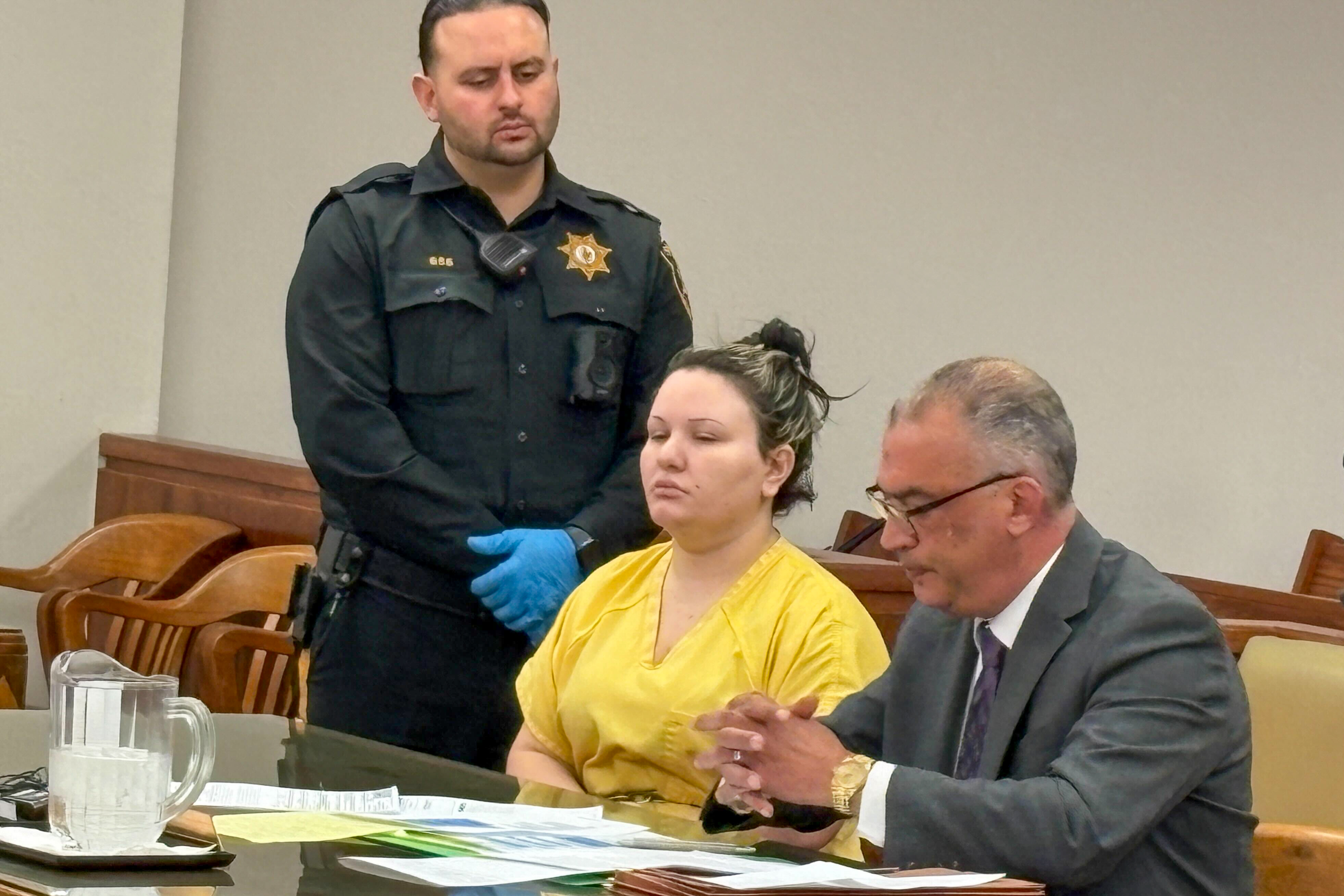
    Federal prosecutors are now involved in the case of a Camden County woman accused of trying to hire a hit man she met on the dating app Tinder to kill her police officer ex-boyfriend and his teenage daughter.

    Jaclyn Diiorio, 28, of Runnemede, was charged this month with two counts of using interstate commerce facilities — in her case, a cell phone — in an attempt to commission a murder-for-hire, according to an indictment unsealed Wednesday.

    Federal prosecutors will be tasked with prosecuting Diiorio after Camden County dropped its case against her in response to the charges.

    It is the latest development in a story that captured national attention from true-crime enthusiasts and curious readers alike.

    In April 2025, Diiorio was charged with two counts of attempted murder, conspiracy, and related crimes in the plot, which Camden County prosecutors said involved Diiorio trying to have both her ex-boyfriend, Philadelphia Police Officer Matthew O’Hanlon, and his 19-year-old daughter killed.

    Prosecutors said Diiorio met the would-be hit man on Tinder. After days of exchanging messages and calls, they said, the two met in the parking lot of a Dollar General store in Gloucester Township, where Diiorio gave the man $500 of a proposed $12,000 payment before being swiftly arrested.

    The hit man, prosecutors said, was actually an informant working with Camden County detectives who had tipped them off to Diiorio’s request days earlier.

    It was not Diiorio’s first attempt at having O’Hanlon and his daughter killed, prosecutors said.

    They alleged the New Jersey hairdresser told the informant she had previously been misled by others who had given her “fake pictures” of a supposed completed contract killing.

    Prosecutors said the tumultuous relationship between Diiorio and O’Hanlon ended about a month before the murder-for-hire plot fizzled.

    The federal indictment, filed Sept. 3 in the U.S. District Court for the Eastern District of Pennsylvania, offers few new details in the case.

    It says Diiorio used a cell phone to facilitate an interstate plan to kill two individuals identified as Person #1 and Person #2.

    Communications took place between March 30 and April 5, 2025, in both Pennsylvania and New Jersey, according to the document.

    Diiorio’s defense attorney, Robert Gamburg, said his client planned to plead not guilty to the charges during a detention hearing before U.S. Magistrate Judge Scott W. Reid on Monday.

    Earlier this year, Gamburg sought to dismiss charges in Diiorio’s Camden County case when he filed a motion accusing prosecutors of relying on information that he said had been gathered by entrapment.

    Gamburg said the informant who led police to Diiorio was desperate for money, and frequently brought unsolicited information to the sheriff’s department in exchange for cash.

    The filing also describes the informant as a rogue operator, one whose phone and text conversations with Diiorio went unmonitored by detectives for days as they orchestrated her arrest.

    County prosecutors declined to comment on the allegations at the time and said the matter would be resolved in court.

    Reached by email Wednesday, a spokesperson for the U.S. Attorney’s Office for the Eastern District of Pennsylvania declined to comment on the indictment.

    A conviction for using interstate commerce facilities to commission a murder-for-hire has a maximum sentence of 20 years in prison.

  • Open Streets is returning to the Rittenhouse Square area on Sundays this fall

    Open Streets is returning to the Rittenhouse Square area on Sundays this fall

    Fall is near, and though peak foliage has yet to come, another autumn staple is waiting around the corner: the Center City District’s Open Streets program.

    Between Sept. 13 and Oct. 25, the street closure program shuts down car access to eight blocks in the Rittenhouse Square area on Sundays to let pedestrians enjoy more of the urban space.

    Open Streets runs along Walnut Street from Broad to 19th Streets, and on 18th Street between Locust and Chestnut Streets.

    From 10 a.m. to 5 p.m., Philadelphians will be able to walk in the car lanes, and have access to sidewalk retail and outdoor dining — featuring local vendors with special promotions or exclusive experiences, according to the Center City District.

    Every Sunday brings different activities, including double Dutch lessons, live music, mini golf, and broadcast of Eagles games at the Fulton Fun Zone at 18th and Chestnut Streets.

    Two things the event won’t have are restrooms and rain dates, so plan accordingly.

    Most activities are wheelchair accessible. However, bikes, e-bikes, scooters, skateboards, and similar devices can be in the area only if they are walked through the street.

    Sponsored by Fulton Bank, the program has been in place since 2024, bringing more than 10,500 visitors each Sunday, according to the Center City District.

    Fifteenth, 16th, 17th, and 19th Streets will remain open to cars, as will the 1700 and 1800 blocks of Sansom Street.

    Road closures and parking restrictions begin Sunday at 7 a.m. and go on until 6 p.m.

    Planning on taking SEPTA? From 6:30 a.m. to 6 p.m., detours will be in place for Routes 9, 12, 21, and 42. Check the bus system status at septa.org.

  • Bennett Fairorth, a prolific writer and beloved Council Rock teacher, has died at 99

    Bennett Fairorth, a prolific writer and beloved Council Rock teacher, has died at 99

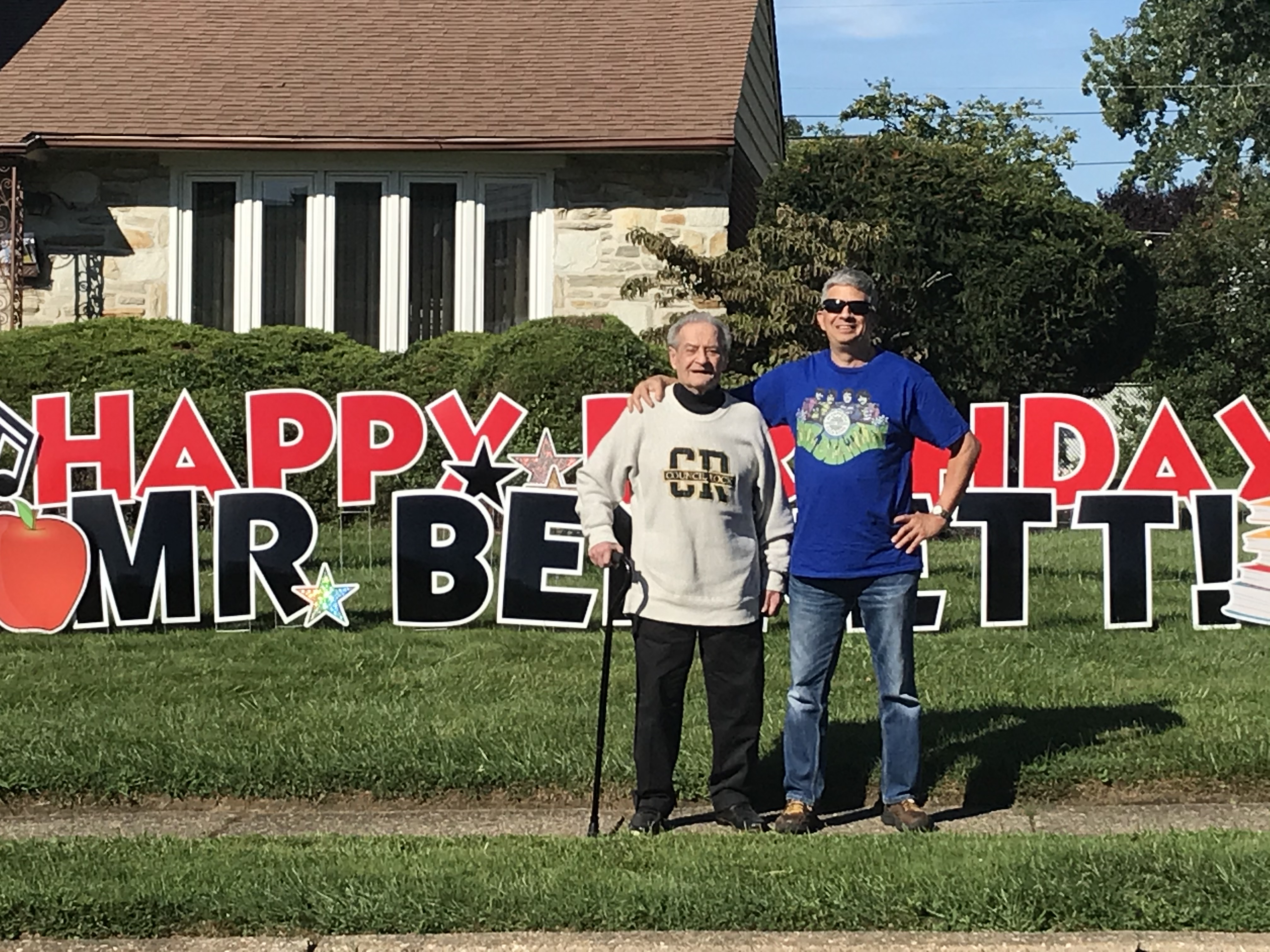
    Bennett Fairorth, a prolific writer and longtime Council Rock School District teacher, died Thursday, July 9, at a Rydal retirement home after falling in his Abington home of 64 years.

    Mr. Fairorth had been looking forward to celebrating his 100th birthday with former students this month, his brother, Leonard Fairorth, said.

    A high school English teacher of more than 30 years, Mr. Fairorth regularly heard from students for decades after his retirement, despite never owning a cell phone, a computer, or an answering machine.

    His death sparked a flood of remembrances on social media from former students — who recalled reading The Odyssey and French philosopher Jean-Paul Sartre, seeing plays, and attending events for the student newspaper he advised — including several who became teachers and writers themselves.

    “Freshman year in college English I was told not to come back to class after handing in my first paper,” one former student wrote. “The professor said I already knew how to write.”

    “I have never laughed as hard as I did during those classes,” another wrote.

    Mr. Fairorth’s curriculum included books that some considered controversial in the foment of the era, 1967 graduate Allen Hengst said, including The Sound and the Fury by William Faulkner.

    “It was a controversial time. A lot was changing,” Hengst said. “Here was a teacher who was on our side.”

    Mr. Fairorth was oldest of five children born to a business owner and a homemaker. He and his sister were the only Jewish students at his North Philadelphia elementary school, Mr. Fairorth said in a podcast interview in 2023 with a former student and her husband, and had to switch schools after other kids attacked them.

    Mr. Fairorth studied English at Pennsylvania State University, though his education was interrupted when he was drafted into the Navy during World War II and tasked with keeping mechanical records in Manila. He returned and got a master’s degree in business from the University of Pennsylvania, hoping to write for the Wall Street Journal, he said in 2024, but found he could not support a family on a reporter’s salary. Mr. Fairorth raised three children with his wife, Ruth, who ran a uniform store.

    Instead of writing, Mr. Fairorth worked for several years putting new rock and roll records into jukeboxes around town and leaving the old ones at home for his youngest brother, Leonard Fairorth said. Bennett Fairorth, who preferred classical music, would drive to New York on Saturdays, squeezing in both a matinee and an evening performance at the opera houses.

    He took a pay cut to teach for a few years at Abington Senior High School and struggled financially until the English department at Council Rock heard of his success preparing seniors for college and recruited him in 1964, Mr. Fairorth said in 2024.

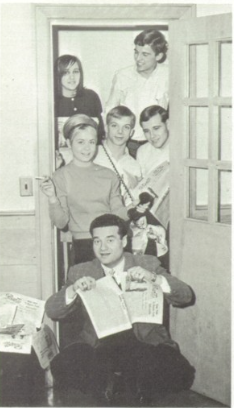
    Bennett Fairorth with journalists from Council Rock’s student newspaper, The Indianite, in the 1966–1967 school year.Council Rock School District

    Mr. Fairorth was a lifelong fan of newspaper puzzles. He wrote weekly letters to a relative about The Inquirer’s crosswords, his brother said. In 1936, at age 9, he sent in the correct answers to an Inquirer kids’ challenge and won a prize, according to newspaper archives.

    In retirement, Mr. Fairorth found more time for hobbies, self-publishing more than a dozen novels, often in a diaristic style chronicling holiday dinners and trips abroad.

    As a teacher, Mr. Fairorth was known as a firm but thorough grader, his brother said — a trait that led to conflicts with some parents in the tony suburban district toward the end of his career.

    “Parents would come in and [complain] about their kid not getting an A,” Leonard Fairorth said, and go to the principal after Mr. Fairorth refused to change it. “Some of them would be really nasty. … That’s one of the things that really discouraged him at the end.”

    Although Mr. Fairorth maintained decades-long correspondence with some students, there was one letter that took more than half a century to arrive, he wrote in a 2020 essay for the Chestnut Hill Local.

    In the 1960s, Mr. Fairorth had failed a senior who refused to submit a research paper. Though he was class president, he could not attend graduation and instead went to summer school.

    “It was a tense situation,” Mr. Fairorth wrote.

    The student, Bill Proser, went on to earn an English degree, become a teacher, and found a charter school in Idaho.

    “Yesterday, after 55 years of his getting an F in my class, I received a letter in Bill’s handwriting,” Mr. Fairorth wrote. “‘Thank you for what you did for me.’ I suppose that if you wait long enough, who knows what magic will come to pass?”

    In addition to his brother, Mr. Fairorth is survived by children Nancy, Mark, and Laurel, as well as grandchildren, nieces, and nephews.

    Services and interment were private, according to a notice by the Philadelphia Cremation Society.

    This suburban content is produced with support from the Leslie Miller and Richard Worley Foundation and The Lenfest Institute for Journalism. Editorial content is created independently of the project donors. Gifts to support The Inquirer’s high-impact journalism can be made at inquirer.com/donate. A list of Lenfest Institute donors can be found at lenfestinstitute.org/supporters.

  • Trump administration proposes changes to census that could exclude millions

    Trump administration proposes changes to census that could exclude millions

    Millions of residents could be excluded from the U.S. census, congressional representation could be reshaped, and federal funds could be reallocated across states under changes proposed by the Trump administration.

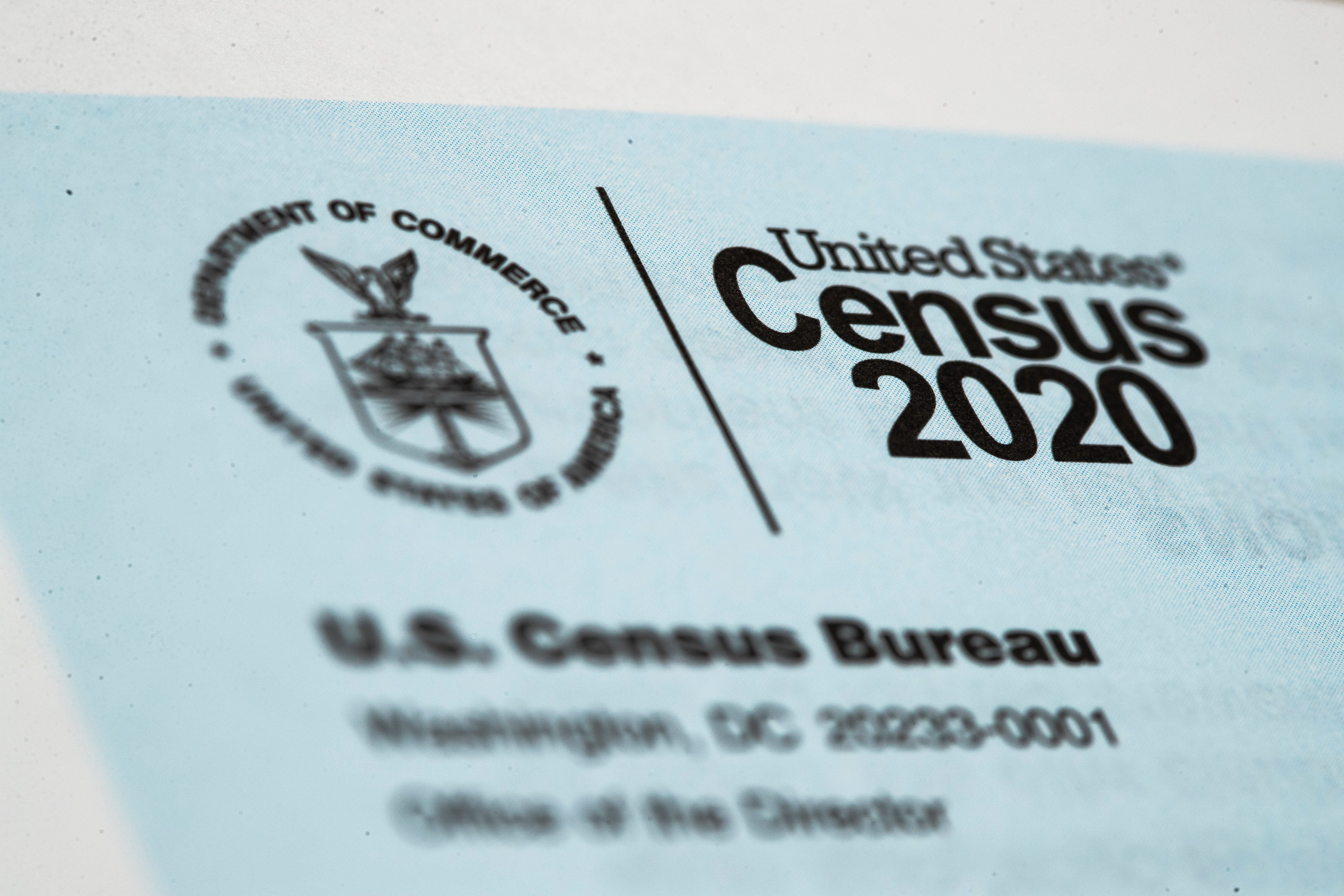
    In the proposal posted to the federal register Wednesday, the Census Bureau suggested adding a citizenship question to the decennial questionnaire, which President Donald Trump has wanted since his first term.

    The proposal argues that the census count should exclude any undocumented immigrants and noncitizens without permanent residency because they are “not true inhabitants, members of the body politic, or persons with a ‘usual residence’ in the United States due to their lack of a sufficient tie and allegiance to the United States.”

    Under the newly proposed rules, refugees and asylum seekers would be excluded from the population count.

    Trump administration officials also want to prohibit the Census Bureau from asking certain demographic questions, including about race, ethnicity or sexual orientation, claiming the survey “should be colorblind and should not be distorted in any way by questions about immaterial personal characteristics.”

    The census has collected data on race and ethnicity since 1790.

    Trump has for years pushed to alter how the American population is tallied every decade, including unsuccessful efforts to add a citizenship question to the 2020 Census. The Supreme Court ultimately froze that plan, saying Trump officials had provided a “contrived” reason for wanting such information.

    Trump later said the citizenship question was needed to affect the redistricting process, an argument the Justice Department did not use in its legal defense. Census results every 10 years determine how the House’s 435 seats are allocated among states.

    “Number one, you need it for Congress — you need it for Congress for districting,” Trump said in 2019. “You need it for appropriations — where are the funds going? How many people are there? Are they citizens? Are they not citizens? You need it for many reasons.”

    Last August, Trump announced he was directing the Department of Commerce to again overhaul the census, amid a nationwide redistricting battle.

    “People who are in our Country illegally WILL NOT BE COUNTED IN THE CENSUS,” he wrote on Truth Social then.

    The Trump administration’s latest proposal will almost certainly face legal challenges. The 14th Amendment of the U.S. Constitution mandates that representatives in Congress be apportioned to states based on “the whole number of persons in each state,” without specifying citizenship or immigration status.

    Currently, the U.S. census counts native-born U.S. citizens, naturalized U.S. citizens, non-citizen U.S. nationals, lawful permanent residents and temporary migrants, such as foreign students, refugees, asylum seekers and undocumented immigrants.

    New York Attorney General Letitia James, who led a lawsuit against Trump’s efforts to change the 2020 Census, said Wednesday the state is again exploring legal options to fight back against the administration’s proposed changes to the 2030 Census.

    “The Constitution is clear. Every person living in the United States, regardless of immigration status, must be counted in the census,” she wrote on X.

    Civil rights and public health groups have also warned against the removal of questions about race and ethnicity from the census, saying doing so would hamper officials’ ability to address health disparities, starting with how to appropriately allocate federal funding.

    “If you change what the census counts, then you change where the money can help most,” Vi D. Le and Melanie Klein of the Federation of American Scientists wrote last week.

    “Removing race and ethnicity data does not make health disparities go away,” they wrote. “It merely makes them harder to find, harder to measure, and harder to fix.”

  • A brake-check on the Blue Route led to a road-rage attack and stabbing, police say

    A brake-check on the Blue Route led to a road-rage attack and stabbing, police say

    The near-fatal stabbing that took place on an entrance ramp to the Blue Route in Upper Merion on Saturday occurred when a Kensington man intentionally rear-ended another driver and then used two other vehicles he was traveling with to box the man in on an exit ramp, officials said Wednesday.

    And while the other driver was trapped, Samuel Marquez, 40, got out of the U-Haul truck he was driving, punched the man in the face multiple times, and eventually stabbed him in the abdomen with a box cutter when he got out of the vehicle, authorities said.

    The attack came because Marquez was upset that the man brake-checked him for driving too closely behind him, police said.

    Marquez has been charged with aggravated assault, terroristic threats, and related crimes. He remained in custody Wednesday, in lieu of $1 million bail. It was unclear if he had an attorney.

    The U-Haul Marquez was driving was part of a caravan of vehicles, including a Toyota Sienna minivan and an Acura SUV, whose drivers were heading to Philadelphia to help Marquez move to the city from Reading, according to the affidavit of probable cause for his arrest.

    While driving on I-76 in Upper Merion, the minivan, driven by Marquez’s girlfriend, had engine trouble, and she had to pull over. When the car was repaired and the vehicles attempted to merge back onto the highway, they cut closely in front of a Mercedes-Benz, the affidavit said.

    The driver of the Mercedes told police he honked his horn and drove around the group. Moments later, the U-Haul had sped up behind him, driving aggressively, and was practically touching his bumper, according to the affidavit.

    The man said he brake-checked the truck to get it to back off, and then took the exit onto a ramp connecting the highway with the Blue Route. As he took the exit, the U-Haul intentionally rammed his vehicle, while the minivan and SUV drove past and stopped in front of him, boxing him in, the affidavit said.

    The impact from the collision with the U-Haul spun his car and pushed it about 20 feet, the man told police. Afterward, Marquez and another man ran up to his open window and began punching him in the face, the affidavit said.

    The driver heard Marquez tell the other man that he was “going to grab his knife,” the affidavit said.

    The driver ran onto the median of the Blue Route, and then back toward the U-Haul, to photograph its license plate. Marquez’s girlfriend got out of her minivan and prevented him from taking a picture of her van’s license plate.

    As the man argued with the woman, he felt a sharp pain in his side, the affidavit said. He told authorities that he looked down, saw blood, and realized Marquez had stabbed him.

    Medics arrived and took the man to Lankenau Medical Center, where he was treated for his stab wound.

    Marquez and the other cars’ drivers fled. Villanova University’s campus was briefly under a lockdown as police searched for the stabbing suspect. Lower Merion police located the U-Haul at a Sunoco gas station not long after and took its passenger into custody.

    Marquez, meanwhile, ran away and was later arrested while sitting on a park bench at Memorial Park in Bryn Mawr. He had a silver box cutter in his pocket.

    In 2023, Upper Chichester police said that Marquez was wanted in connection with a 2022 armed robbery at a convenience store in the township.

    Marquez is scheduled to appear before a district judge for a preliminary hearing on Sept. 22.

    Staff writer Robert Moran contributed to this article.