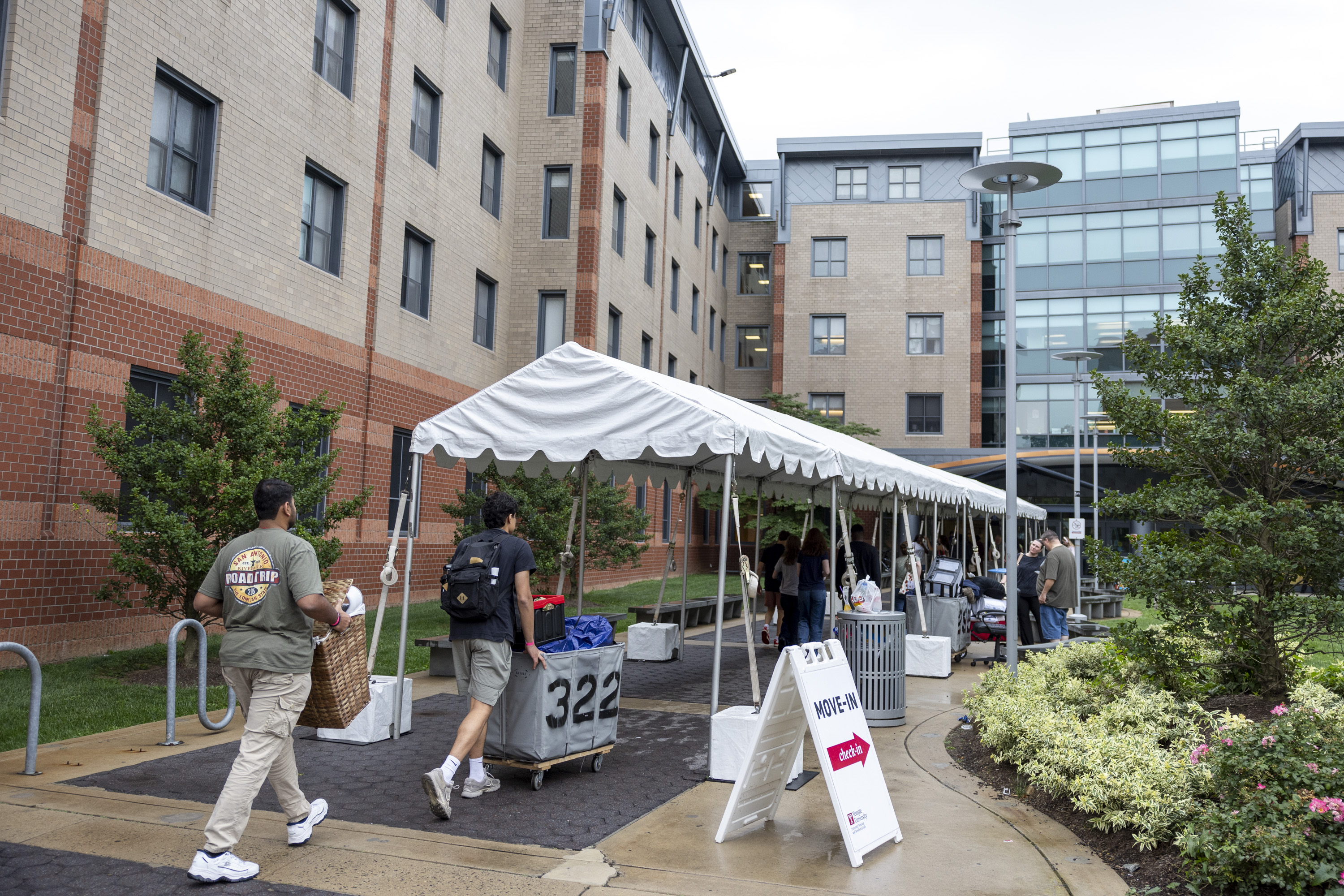
Last month, Daii’yaHnna Fleming posted a video of her move-in day at Southern University in Louisiana. As a bleary-eyed rising freshman, she lugged a half-dozen candy-hued suitcases on her trip from Las Vegas to Baton Rouge. After arriving, she began to settle into her new life on campus, stocking up on school supplies and setting up a side business doing makeup from her dorm room.
Then the trouble began. The ample walking across campus aggravated her health issues, and Fleming didn’t feel safe commuting to her job near campus. One night, she decided to join friends for an off-campus party. “I had never really been to a party, and I really just did not like it at all,” Fleming, 17, said. “I got really fed up with everything.”
On the way back to her dorm, Fleming texted her mother and told her she was coming home for good. She had been in college for two weeks.
In a TikTok video about her decision to switch to her university’s online program, Fleming panned over her dorm room. “I’m not gonna force myself to be uncomfortable and unsafe, ’cause randos think I should be,” she wrote in the caption, adding, “I don’t care about the college experience. I just want my degree.”
In the thousands of comments underneath her post, as well as under similar viral videos of other students moving out or dropping out and sharing it online, a firestorm of debate has been playing out: Are Generation Z students too unwilling to face discomfort, to the point of missing out on a formative experience? Or are older generations valorizing struggle?
Though leaving campus early is nothing new — and the rate of college dropouts has declined slightly in recent years — social media has put a magnifying glass on students’ struggles and prompted a wider discussion about generational differences. As they face shrinking federal financial aid and a tough job market with no guarantees, some say they are reconsidering whether college is worth the staggering tuition fees. Others say they are switching to online school or becoming commuter students.
Many of the videos, like Fleming’s, focus on the mental health impacts, saying they feel anxious and overwhelmed. One student mentioned a towed car and more homework than they expected. Another expressed concern about wasting tuition money on an experience they disliked that affected their mental health.
The debate touched a nerve.
In response videos, millennials and Gen Xers have been pleading with students to hold on and tough it out.
“Everything worth having is not easy,” said Ebony Simpson, a mother of a college sophomore who posted one of those videos.
She said that students needed to put themselves out there. “It’s for you to sit up and say, ‘Oh, they’re having a cookout, let me go,’” Simpson said.
Her daughter, Adrianna Bankston, said she struggled as a freshman last year at a Georgia university. The idea of leaving “was a thought that we all had when we first got here,” Bankston, 19, said. She didn’t leave her room much during that first week, she said. But she had a realization: “I need a friend group. I need to go out and do stuff.”
She pushed herself to meet people at parties and campus events, and she’s learned a lot. “I did have fun,” she said. “I found out not everybody is your cup of tea.” She said she now had a busy social life and great people around her.
Rates of college dropouts have declined: According to a report from the Education Data Initiative, 22.9% of all students who entered college as freshmen in fall 2024 did not return in fall 2025, down from a prepandemic average of around 24%.
Yet the videos highlight real issues for those working to fight college attrition. “Kids are not weak,” said Sarah Manville, an assistant dean and adviser at Case Western Reserve University in Cleveland. “They’re extremely resilient — but there’s something about this phenomenon that they cannot persist through.”
Feeling homesick in the first few weeks is normal, but Manville said she noticed some younger students were reluctant to seek help. “My concern is students are not giving themselves enough of a chance to be successful,” she said, “and that’s where I think that fear-based decision making comes in.”
Michael Williams, a New York City-based college access and success professional, said, “I’ve noticed a definite dip this year and last year, compared to prior years, in how socially adjusted and how much, like, social emotional competency this set has compared to the prior classes.”
Students also face grim job prospects, amid worries of artificial intelligence encroaching on entry-level jobs, and steep tuition. “The barriers to entry just keep compounding in this particular moment,” Williams said.
The costs of dropping out or moving home will vary from school to school, but student loans are generally easier to cancel in the first two weeks.
Fleming said she had not yet paid the fee for room and board for this year. Another student who posted a video on TikTok said in a comment that she had received a refund from her university after leaving.
Back home in Las Vegas, Fleming said she felt good about her decision: “If I would have stayed longer, it would have made everything harder.”
She’s doing well in online business management classes and has dreams of law school. But she hasn’t discounted the idea of returning to Southern: She’d like to spend more time with her suite mate, who’s now a close friend, and other classmates she met from her stint in Baton Rouge. But if she returns, perhaps next year, she plans to live off campus.
First, at the start of his second term, President Donald Trump promised a DOGE dividend, a pledge to take the money that Elon Musk’s team would cut from the federal budget and send it to the American people.
Then Trump moved on to a “tariff refund,” a plan to use the money the government was collecting in import taxes to fund payments for the public.
Those ideas never panned out. Nevertheless, Trump is again talking up the possibility that the federal government will send Americans thousands of dollars in cash. At the Republican midterm convention in Dallas on Wednesday, the president pledged that every American adult would receive $5,000 if Republicans retain control of Congress in November.
Trump did not offer many details about the proposal, but there’s reason to think that Republicans in Congress, like they did with his two previous promises of quick cash, could shrug off the president’s suggestion.
That’s in no small part because the $5,000-per-American promise would be enormously expensive to fulfill, with a price tag over $1 trillion. Its actual cost, though, would depend on what, if any, eligibility requirements Congress would ultimately impose on the plan. Trump did not mention a proposal to finance the $5,000 payments, which beyond their fiscal cost could also prove inflationary.
The conceit of Trump’s other pitches was that the money to pay for them was already available, from Musk’s so-called Department of Government Efficiency or tariff revenue. On both of those fronts, though, the envisioned funding sources proved illusory: Musk’s team did not save the government much money, and the Supreme Court struck down many of Trump’s initial tariffs.
Republicans did succeed in providing Americans with substantial cash payments when they cut taxes last year. Under the design of the tax law, many Americans first experienced the policy change in the spring, when they received larger-than-usual tax refunds. Trump and Republicans have spent much of the year promoting those refunds, hoping that the larger lump-sum payments would be politically resonant before the midterms.
But even after Trump delivered those tax refunds, his approval poll ratings are still sagging.
Those tax cuts were also very expensive, though Republicans did cover some of the fiscal cost by reducing federal spending on healthcare and food assistance for poor Americans.
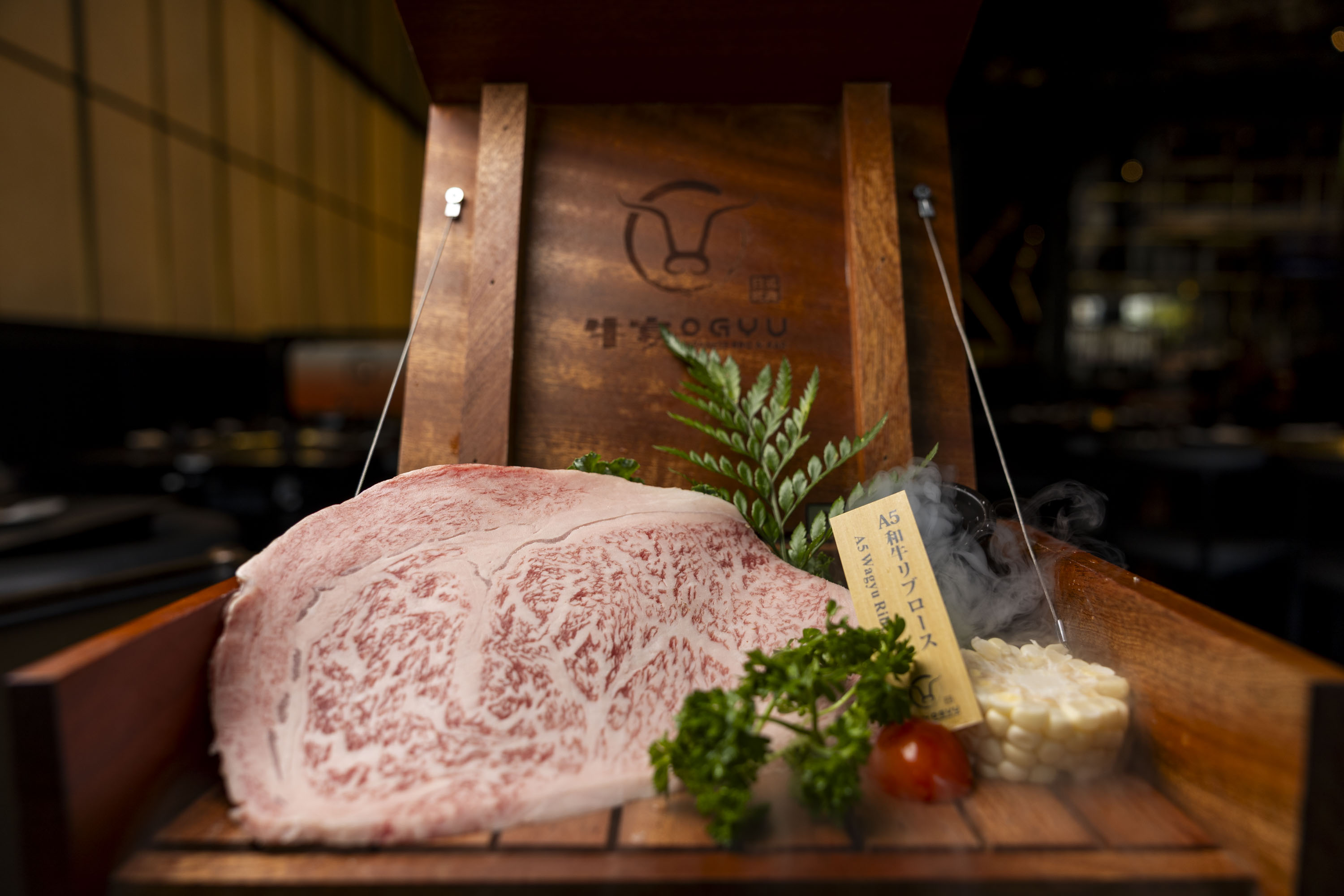
The Miyazaki ribeye at Ogyu.Tyger Williams / Staff Photographer
When Inquirer food critic Craig LaBan paid a visit to recently opened Japanese restaurant OGYU in Ardmore — or as he calls it, “a 300-seat meat palace” — he was determined to try as much Wagyu as he could.
But he soon found that in the case of the all-you-can-eat joint, there might just be too much of a good thing.
While one cut of Wagyu rib cap, which arrived in a showy box billowing with smoke, was rich and tender, preparing it himself on a tabletop grill meant the finished product fell flat.
Other dishes, however, impressed, including the New Zealand lamb chops, the “Meet Wagyu” nigiri, and the A5 ribeye.
At the end of the day, does dining there add up to “a luxury experience the $120 check average should command?”
A 24-year-old Philadelphia man, Jabir Parker, was charged last week with several alleged burglaries, including two in Lower Merion, where police said he made off with nearly $800,000 in stolen jewelry.
Filmmaker M. Night Shyamalan, who grew up in Penn Valley, has launched a new YouTube series. In the first episode, he takes viewers back to the era of one of his early films, Signs.
Bryn Mawr Hospital and Lankenau Medical Center, both owned by Main Line Health, earned high marks in the latest U.S. News Best Hospitals by Specialty ranking. Bryn Mawr was recognized in eight categories, including colon cancer and prostate cancer surgeries, while Lankenau scored top marks in 11 categories such as back surgery, and hip and knee replacement surgeries.
Spring Mill Road will be closed weekdays between Old Gulph and Conshohocken State Roads tomorrow through Tuesday from 9 a.m. to 4 p.m. for storm sewer replacement.
Expect work near the Narberth Avenue bridge over the next six to eight weeks, with overnight construction slated for Sundays through Thursdays from 9 p.m. to 5 a.m.
Looking for a great rooftop spot to dine before summer comes to a close? Chef Nicholas Elmi’s Bala Cynwyd restaurant Lark is one of the best destinations in the region, according to The Infatuation.
🎳 Things to Do
🍂 Harvest How-To for Natural Holiday Decor: Learn how to gather, preserve, and use natural materials for decor. ⏰ Friday, Sept. 11, 10 a.m.-12:30 p.m. 💵 $25 for members, $30 for non-members 📍 Stoneleigh
🎶 Narberth Music and Arts Festival: There will be live music, food, drinks, and a makers market. ⏰ Sunday, Sept. 13, noon-7 pm. 💵 Pay as you go 📍 Forrest and Haverford Avenues
😱 Scream: Get in the spooky season spirit with a screening of the 1996 horror movie. ⏰ Monday, Sept. 14, 7 p.m. 💵 $11.75-$16.25 📍 Bryn Mawr Film Institute
📖 One Book, One Lower Merion: The township-wide reading initiative features Harlan Coben’s new book, Plot Twist, and includes a Q&A with the author. ⏰ Tuesday, Sept. 15, 6 p.m. 💵 $40 📍 Welsh Valley Middle School
🎷 Montco Jazz Fest: Now in its fifth year, the festival features performances at 20 venues throughout the county. ⏰ Tuesday, Sept. 15-Sunday, Sept. 20, times vary 📍 Locations vary
The home has an eat-in kitchen with a fireplace that flows into a great room.Courtesy of Israela Friedman/Berkshire Hathaway Home Services Fox & Roach, Realtors
This 1930 center hall Colonial has undergone a number of updates, blending past and present. The first floor features an open-concept kitchen, dining area, and great room with a fireplace, all near to a secondary prep kitchen. There’s also an office, a dining room, and a living room on the first floor. The home’s six bedrooms are spread across the upper levels, including the second-floor primary suite, with a steam shower and whirlpool tub. There’s an open house today from 5 to 6 p.m.
By submitting your written, visual, and/or audio contributions, you agree to The Inquirer’s Terms of Use, including the grant of rights in Section 10.
This suburban content is produced with support from the Leslie Miller and Richard Worley Foundation and The Lenfest Institute for Journalism. Editorial content is created independently of the project donors. Gifts to support The Inquirer’s high-impact journalism can be made at inquirer.com/donate. A list of Lenfest Institute donors can be found at lenfestinstitute.org/supporters.
Until the 1750s, America was a community of loosely organized colonies where residents were content — if not happy — to be a part of the powerful British Empire.
But, after the colonists joined Britain to help the Crown win the French and Indian War, they started to wonder if it was worth it to remain the King’s subjects.
For one, King George III issued the Royal Proclamation of 1763 forbidding Americans west of the Appalachian Mountains, angering the land-hungry colonists.
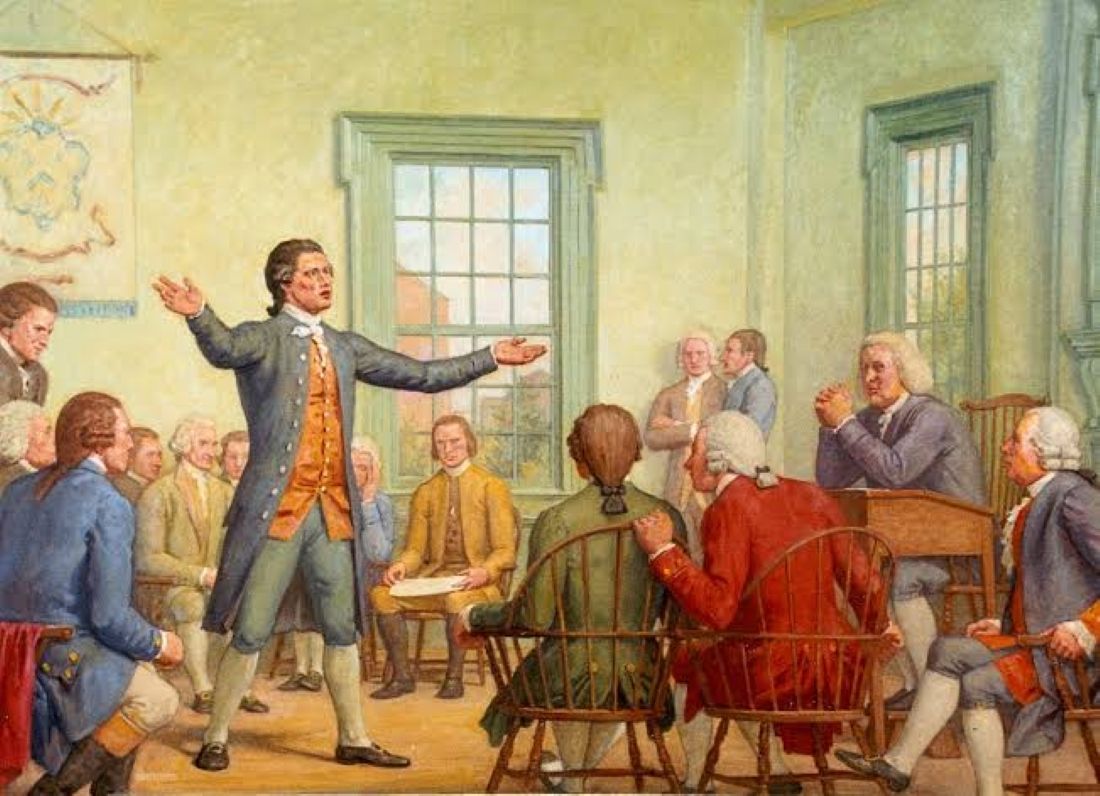
Gwenn Seemel depicts Patrick Henry in front of Carpenters Hall for the No. 1 in honor of the First Continental Congress.Gwenn Seemel courtesy of Colibrí Workshop
Then came the beginnings of taxation without representation. In 1765, England enacted the Stamp Act, levying a tax on every piece of paper, pamphlet, or card bought and sold in America. Eventually, the colonists rebelled and Britain repealed the act five months after it started.
However, the seeds of rebellion were planted.
Uncomfortable with angry subjects, Britain stationed troops in New England. Those rising tensions led to the Boston Massacre in 1770. In 1773, King George III taxed tea imported to the colonies from London. (He was insistent on collecting the colonists’ money by any means necessary.)
When tea arrived from London in Boston Harbor in December of 1773, colonists dumped it into the Atlantic Ocean. In retaliation to the infamous Boston Tea Party, the Crown levied a series of Intolerable Acts.
“In the eyes of the colonists, the Intolerable Acts were severe,” explained Michael Norris, the executive director of Carpenters Hall.
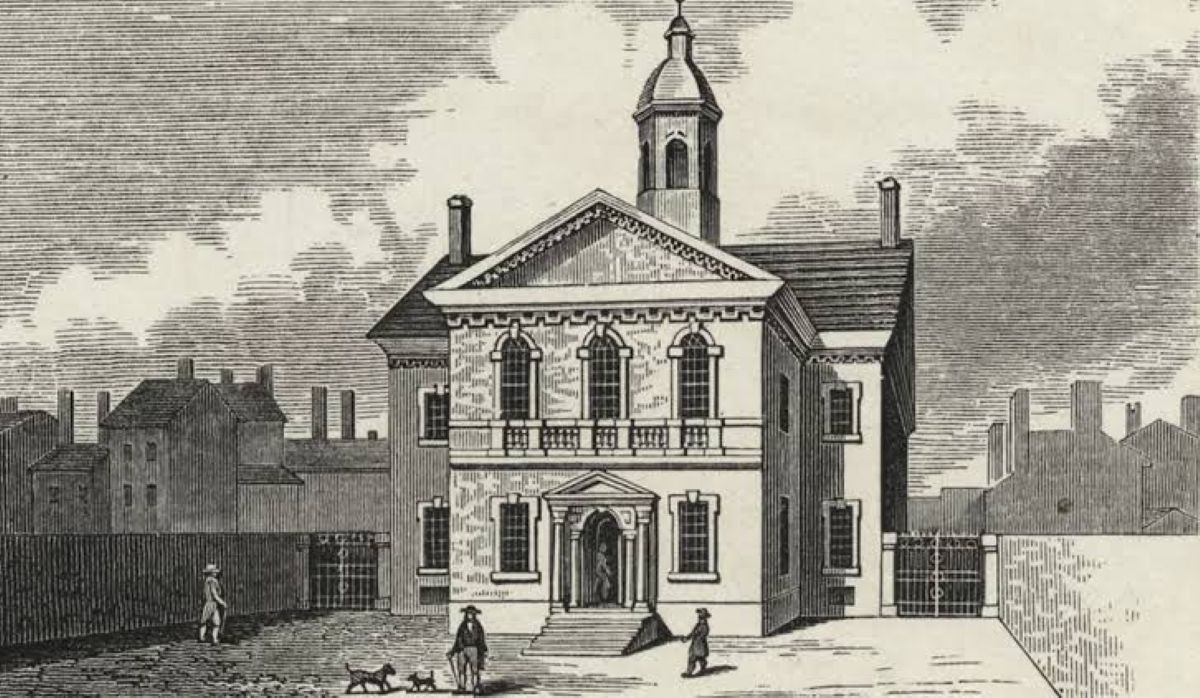
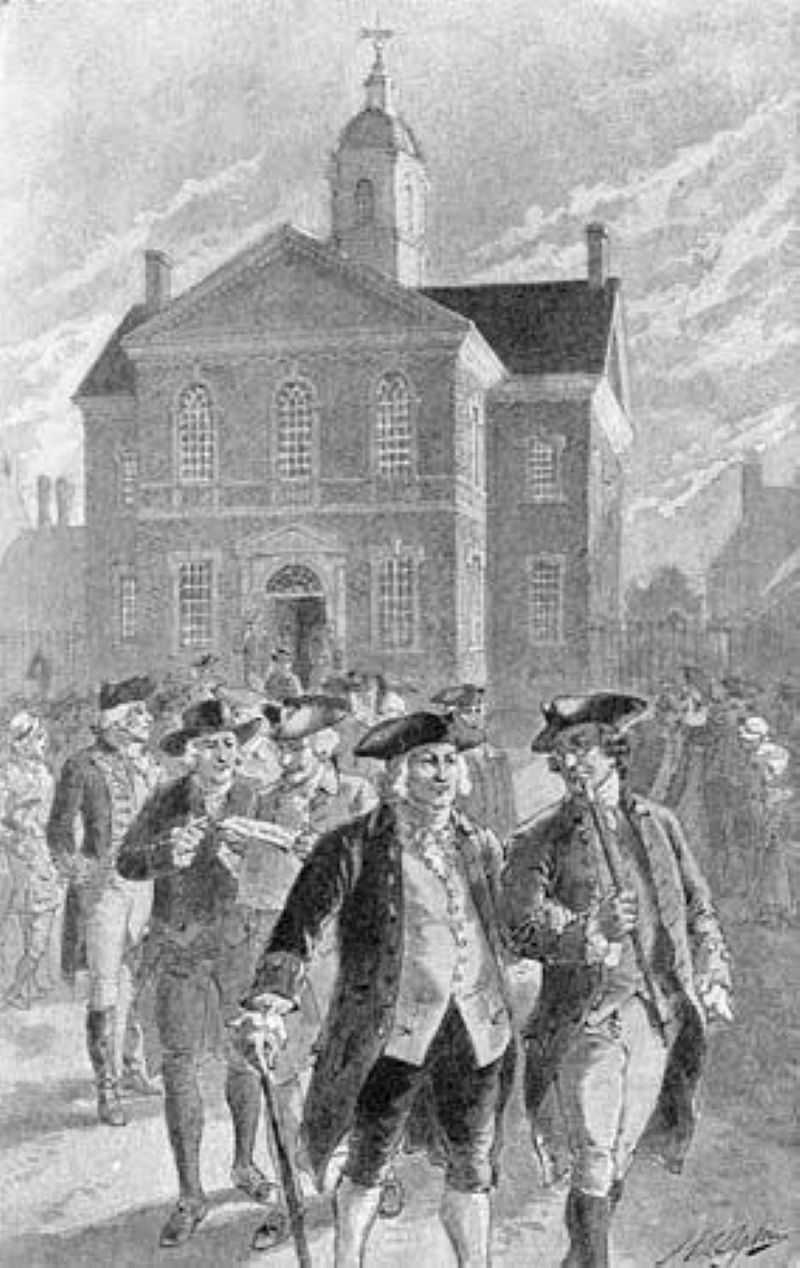
An etching of what Carpenters Hall looked like in the 1700s.Courtesy of Carpenters Hall
The acts, Norris explained, disbanded the Massachusetts legislature, putting Britain in charge of the state’s government. Britain closed the Port of Boston and stationed British troops in Massachusetts, requiring residents to feed, clothe, and house them.
The colonists thought, “if Britain could do this in Massachusetts, what would that mean to the rest of the colonies?”
On Sept. 5, 1774, 56 delegates from 12 colonies — Georgia didn’t come — convened at the then-new Carpenters Hall for the First Continental Congress. Their goal: to work out a deal between the colonies and their Mother Country so life in the New World could continue, albeit a bit smoother.
That first meeting of the Continental Congress will be remembered Saturday at Carpenters Hall from 11 a.m. to 1 p.m. during the Philadelphia Historic District’s weekly “Firstival” celebration. Each Saturday this year, the district is throwing a day party honoring events that happened in Philadelphia that changed the world.
For eight weeks, through Oct. 25, delegates hashed out a plan for independence and to heal their disagreement with the Crown.
An etching of colonists and delegates gathering in front of Carpenters Hall.Courtesy of Carpenters Hall
They drafted a Declaration of Rights & Grievances in which they demanded England send its troops home and stated they wouldn’t stand for taxation without representation. (Historians refer to this declaration as a prelude to the Declaration of Independence.) Delegates also adopted the Articles of Association, in which they voted to stop all trade with England until the Intolerable Acts were repealed.
“They were trying to use their economic muscle to get England to the table,” Norris said.
The First Continental Congress created a unity among the colonies that hadn’t existed before, Norris said. “Up until then, they thought of themselves as British subjects, more connected to the Mother Country than their neighbors. The Congress changed this dynamic.”
This sentiment is best illustrated in Patrick Henry’s famous quote, during the opening sessions of that first Congress: “The distinctions between Virginians, Pennsylvanians, New Yorkers, and New Englanders are no more,” Henry said. “I m not a Virginian, but an American.”
It is why the late historian David McCullough referred to Carpenters Hall as the “acorn of American democracy.” It is where, Norris said, “the seed of independence was built that ultimately grew into the United States of America.”
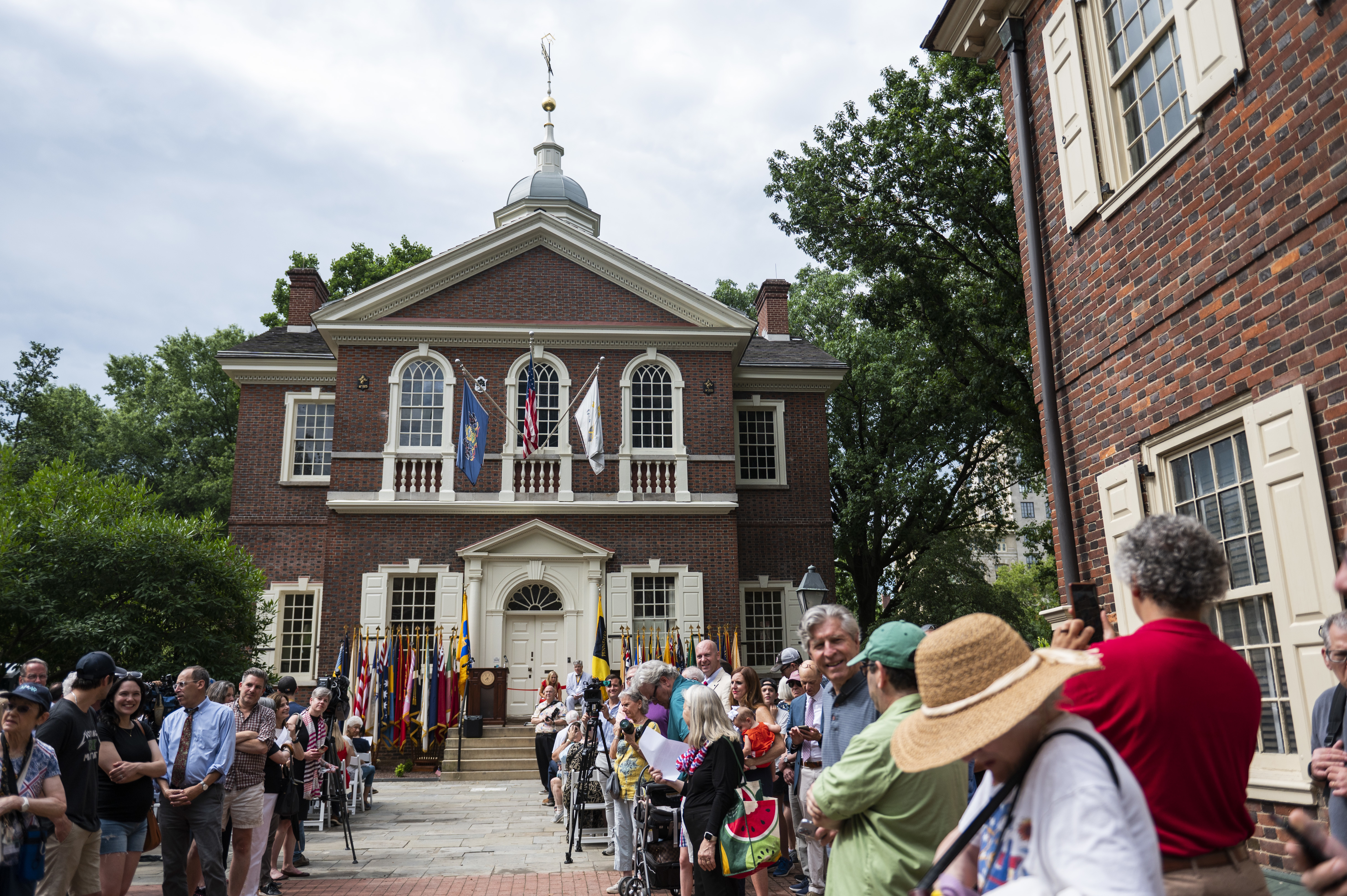
A reopening ceremony at Carpenters Hall on Monday, July 3, 2023. The building opened to the public for the first time since April 2022.Allie Ippolito / Staff Photographer
Delegates planned to reconvene in May of 1775 to address England’s response to their demands. But in April, the first shots of the Revolutionary War were fired and the Continental Army — victorious in the Battles of Lexington and Concord — were in a full-fledged war.
Making nice with England was completely off the table.
This week’s Firstival is Saturday, Sept. 12, from 11 a.m.-1 p.m., at Carpenters Hall, 320 Chestnut St., Philadelphia, Pa.
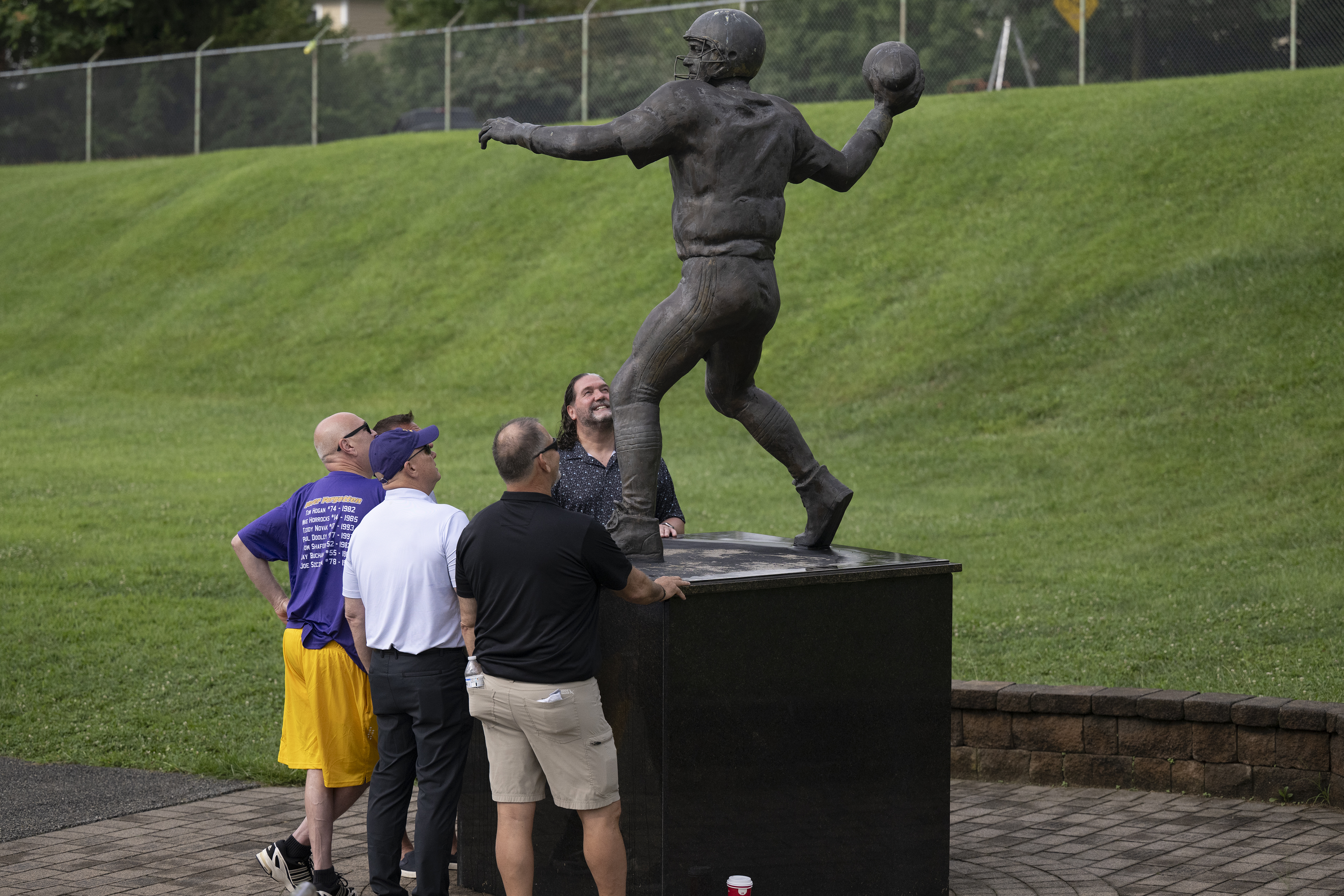
Michael Horrocks’ former West Chester University teammates continue to pay tribute to their late friend, who died co-piloting United Airlines Flight 175 on Sept. 11, 2001.Jose F. Moreno / Staff Photographer
When Bob Rafferty ran into Michael Horrocks at the Granite Run Mall in December 2000, neither likely expected it would be the last time they’d see one another. The former West Chester University football teammates briefly caught up amid holiday shopping, with Horrocks mentioning he’d become a commercial pilot.
About nine months later, Rafferty had a feeling that Horrocks, a Glen Mills resident, might be on one of the hijacked planes that crashed into the World Trade Center on Sept. 11, 2001.
The 38-year-old was co-piloting United Airlines Flight 175, which hit the South Tower.
After Horrocks’ tragic death, former teammates like Rafferty came together to honor his legacy, including with a scholarship and statue at his alma mater, helping keep his memory alive.
🗓️ Delaware County is hosting a remembrance ceremony at Rose Tree Park tomorrow at 11 a.m. to honor those who lost their lives in the 9/11 attacks.
💡 Community News
In case you missed it, last week the boroughs of Rose Valley, Rutledge, and Swarthmore, along with Nether Providence and Upper Providence Townships, voted to establish a new emergency medical services authority. Media, which was previously contemplating joining, opted to continue with its current provider.
At its Tuesday meeting, the Middletown Township planning commission voted 4-2 to recommend conditional approval for Rose Tree Media School District’s proposed K-1 Early Learning Center, acting township manager Vincent M. Visoskas told The Inquirer. RTMSD has extended the timeline for the township to make a decision on its application to Nov. 21, he added. Council is next slated to meet on Wednesday.
New “outdoor lifestyle store” Media Mercantile is opening its doors on Saturday. Located at 21 E. State St., it’s taking over the former home of Homesewn, which moved about a block away earlier this year.
Nemours Children’s Health is slated to open a pediatric urgent care at its Glen Mills facility Wednesday.
Eric C. Fransen, 50, of Wallingford, has been charged with touching and secretly filming a girl in a bathroom, according to the Daily Times. Investigators found over 170 photos and videos of the victim that appeared to come from a hidden camera. Fransen is scheduled for a preliminary hearing next Friday.
Media native and Penncrest High School alum Norah Martin is one of a few individuals who’s been driving the Oscar Mayer Wienermobile throughout the U.S. this year. Known as “Nacho Dog Norah,” she earned degrees in public relations and Spanish from Penn State prior to embarking on the journey earlier this summer, according to Axios.
Architectural firm KCBA is expected to present updated plans for Strath Haven High School’s renovation at the Wallingford-Swarthmore School District’s facilities committee board meeting Tuesday.
🍽️ On our Plate
Dozens of new restaurants are opening throughout the region this fall, including a new breakfast and lunch spot in Media. The Hungry Hub will take over the former Rivalry Cafe and is targeting an Oct. 1 opening.
🎳 Things to Do
🖼️ Arts and Craft Festival: Gear up for fall with this festival featuring vendors, live music, and the start of Pumpkinland. ⏰ Saturday, Sept. 12 and Sunday, Sept. 13, 9 a.m.-5 p.m. 💵 Pay as you go 📍 Linvilla Orchards, Media
🍺 Ship Bottom Oktoberfest: Raise a pint of German-style beer at this festival, complete with food trucks, games, live music, and a stein-holding contest. ⏰ Saturday, Sept. 12, 3-10 p.m. 💵 Pay as you go 📍 Ship Bottom Brewery, Swarthmore
🍔 Middletown Township Food Truck Festival: Food trucks will descend on Longview Park, where there will also be music and games. ⏰ Thursday, Sept. 17, 4-8 p.m. 💵 Pay as you go 📍 Longview Park, Media
🗞️ What other Greater Media residents are reading this week:
By submitting your written, visual, and/or audio contributions, you agree to The Inquirer’s Terms of Use, including the grant of rights in Section 10.
This suburban content is produced with support from the Leslie Miller and Richard Worley Foundation and The Lenfest Institute for Journalism. Editorial content is created independently of the project donors. Gifts to support The Inquirer’s high-impact journalism can be made at inquirer.com/donate. A list of Lenfest Institute donors can be found at lenfestinstitute.org/supporters.
Within weeks of the Sept. 11 terror attacks, the U.S. government launched airstrikes and sent American troops to Afghanistan. In March 2003, spurred by claims that Iraq possessed weapons of mass destruction, the U.S. bombed and invaded the country.
In the two wars that followed, hundreds of thousands of Iraqis and Afghans died, with civilians making up a significant number of the dead.
On the U.S. side, more than two million American military personnel served in Iraq or Afghanistan, and over 7,000 died in these conflicts. Hundreds of thousands more live with service-related disabilities, and according to Brown University research, more than 30,000 post-9/11 veterans have since died by suicide.
Over 117,000 Pennsylvanians served in the military since 9/11, according to 2023 state data, and 295 died in Iraq and Afghanistan. At least 50,000 hailed from New Jersey, including 163 who died.
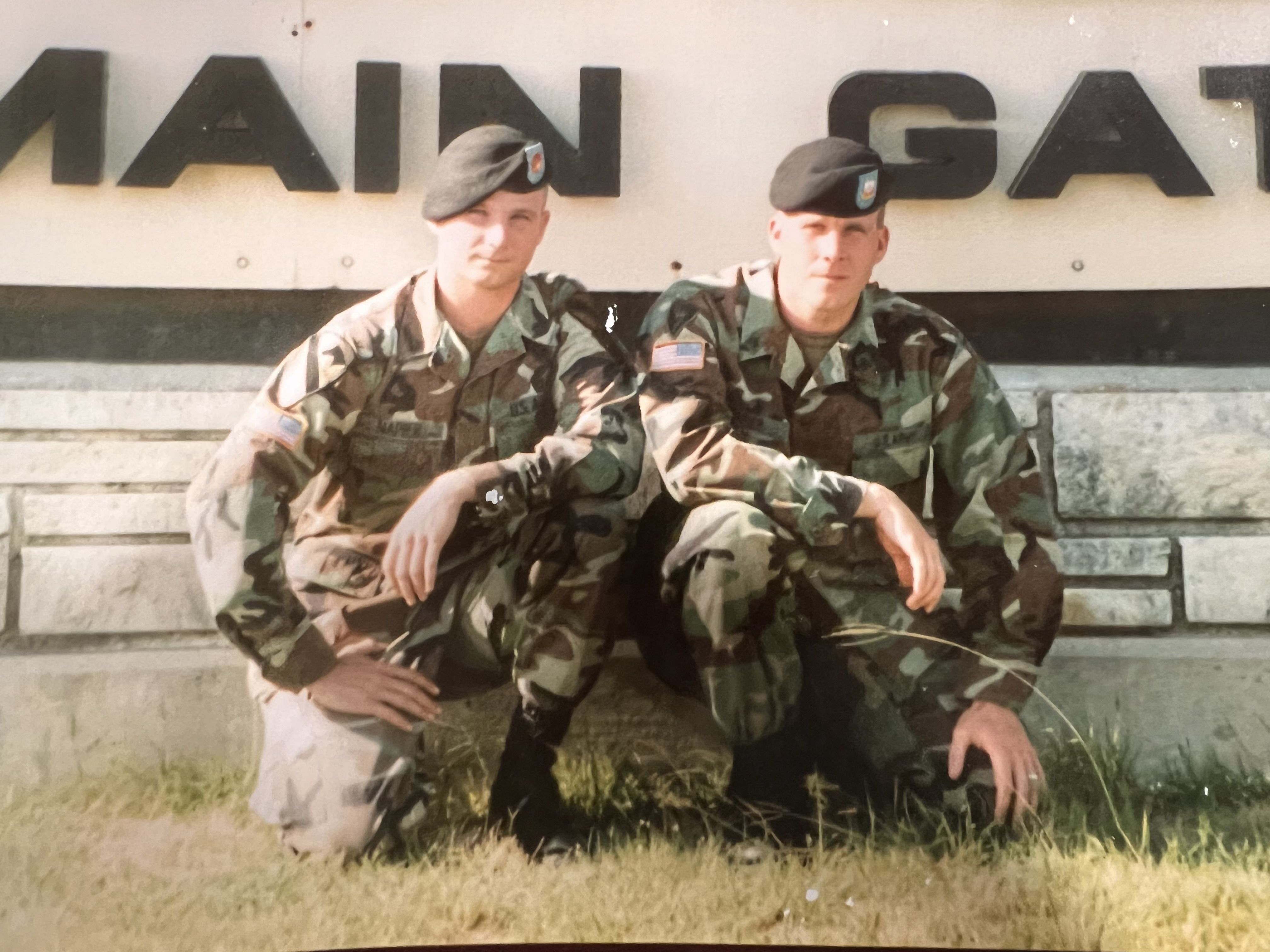
Benjamin Napier (right) and Brian Napier crouch for a picture in front of the main gate at Fort Hood, an Army base in Texas, in 2005. The brothers enlisted two days after Sept. 11 and were deployed to Iraq in 2004.Courtesy of Benjamin Napier
“I think it’s important, regarding the veteran population, to understand the diversity of experience,” said West Chester University historian Robert Kodosky, who has interviewed hundreds of post-9/11 veterans. “Some struggle. Some don’t. Some look back on their experience with pride. Some don’t want to talk about it at all.”
As the nation marks the 25th anniversary of the Sept. 11 attacks, the stories of these four military veterans from the Philadelphia region offer a glimpse into the experiences of countless others whose lives have been shaped by the wars that followed.
‘I can’t believe I made it home’
Benjamin Napier was 25 and living in Drexel Hill when 9/11 happened. The following evening, Napier and his younger brother, Brian, were gathered with friends in Upper Darby to attend a candlelight vigil, and Napier remembers noticing that the normally steady flow of air traffic had completely ceased. The skies were empty. That’s when he shared his thoughts with Brian.
“And I kind of turned to him, and I was like, you know, I think I’m going to do it. I’m going to join. And he was like, if you do it, I’m going to do it,” Napier said.
They enlisted in the Army on Sept. 13. Both were stationed at Fort Hood, Texas, and deployed to Iraq in 2004.
After riding in a convoy for three days from Kuwait to Baghdad, Napier, whose specialty was setting up computer and telephone networks, was sent to Abu Ghraib Prison.
The prison was not yet known for the horrific mistreatment of prisoners by Americans. But the squalid, cinderblock-walled compound, which had been a site of mass killings and torture under the Saddam Hussein regime, felt like “pure evil” to Napier.
“The place just had a vibe to it,” Napier said. “And we’re thinking, we don’t have running water. We don’t have toilets. I’m sleeping on a cot. And you’re just thinking to yourself, what in the world is going on over there.”
Soon, Iraqi insurgents began launching ferocious mortar attacks on the prison, Napier said.
Only when the U.S. soldiers got access to a TV did they learn that Abu Ghraib had become infamous. Widely shared photos of tortured Iraqis, flanked by smiling American soldiers, had became a rallying cry for war opponents.
The news also made the prison a target, and for the rest of Napier’s deployment, he said he witnessed sniper fire, shelling that killed and wounded prisoners, and the intervention of U.S. Apache helicopters that saved the prison from a hostile Iraqi takeover.
“I can’t believe I made it home,” Napier said.
It took him three years of intensive therapy to process his trauma, as well as extensive support from his wife and family, he said. Brian survived an improvised explosive device blast that left him disabled from the military due to post-traumatic stress disorder. The brothers now live in Delaware County and remain close.
Napier said despite all that he and Brian went through, he’s still glad they enlisted.
“A lot of the veterans that I talk to have that same sort of feeling. You raise your hand for something bigger than you. You’re kind of doing something for the greater good. And I think we still kind of feel that way,” Napier said.
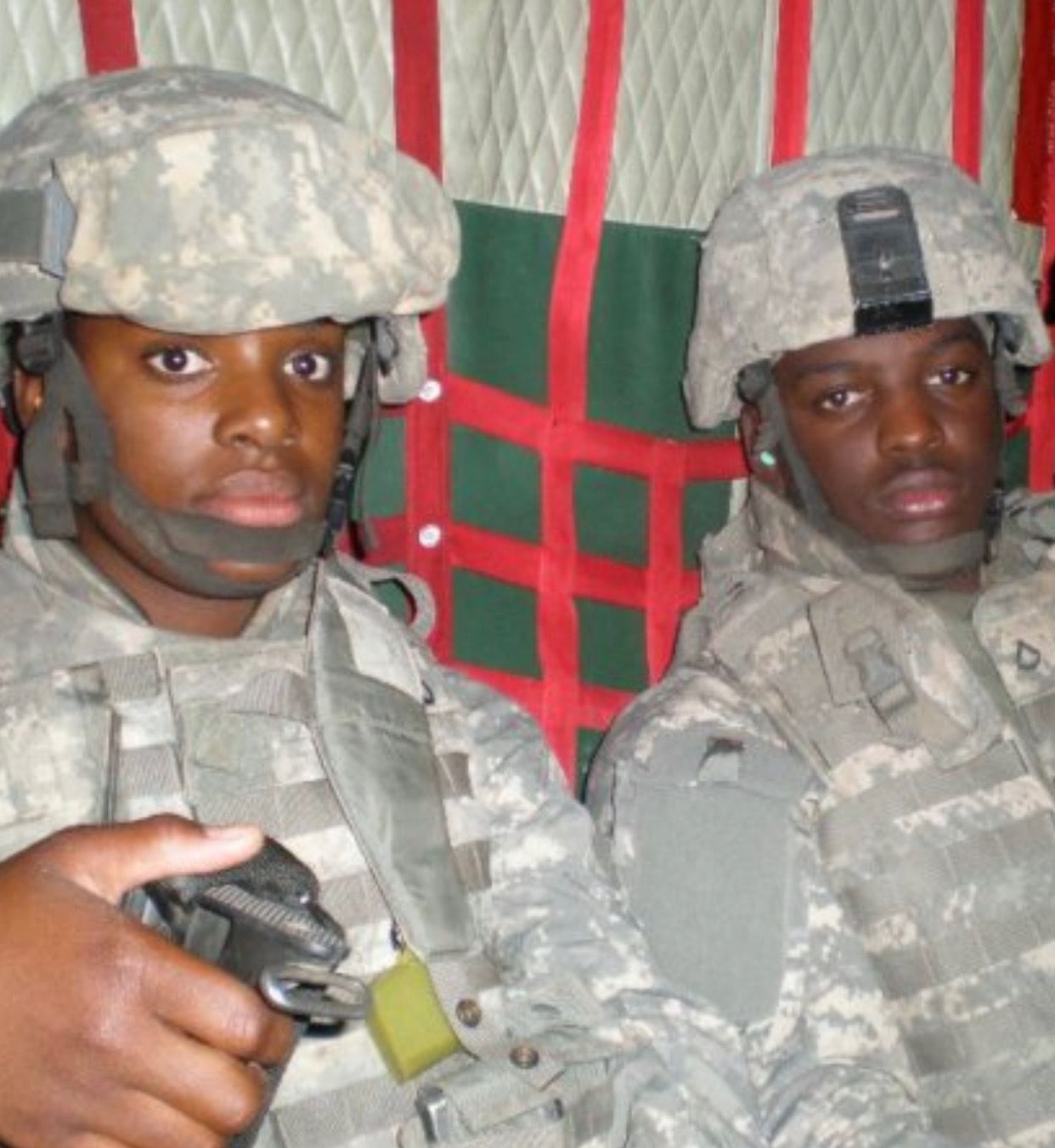
Keshina Bouie (left) on board a C-130 aircraft, preparing to fly from Kuwait to Iraq in 2007. At right is her future husband, Anthony.Courtesy of Keshina Bouie
‘I wanted to do something positive’
Keshina Bouie, 43, remembers being sent home from South Philadelphia High School on Sept. 11. Ironically, she said, her junior ROTC class is what got canceled.
Bouie’s parents had been in the Air Force, but Bouie hadn’t planned to follow their path. However with no college scholarships lined up, she enlisted in the Pennsylvania Army National Guard to pay for school.
“At that point in my life, I wanted to do something positive. And I wanted to get a degree and break generational cycles, and I was determined to be successful,” Bouie said.
Bouie earned her degree at Cheyney University in 2007. One day before her college graduation ceremony, she received deployment orders to Iraq.
Bouie was stationed at Balad Air Base, about 40 miles north of Baghdad. There, she guarded a secret Special Forces base that was embedded within the military installation. Exploding mortars and the rush of incoming wounded soldiers became part of her routine.
“When I was in Iraq, I just wanted to focus on doing my job and getting home safe,” Bouie said.
While on deployment, Bouie met Anthony, a soldier who grew up just blocks away from her Point Breeze home.
A romance blossomed in the spare hours, though they remained separated by their jobs. When they returned home, they got married. They’ve since had two children.
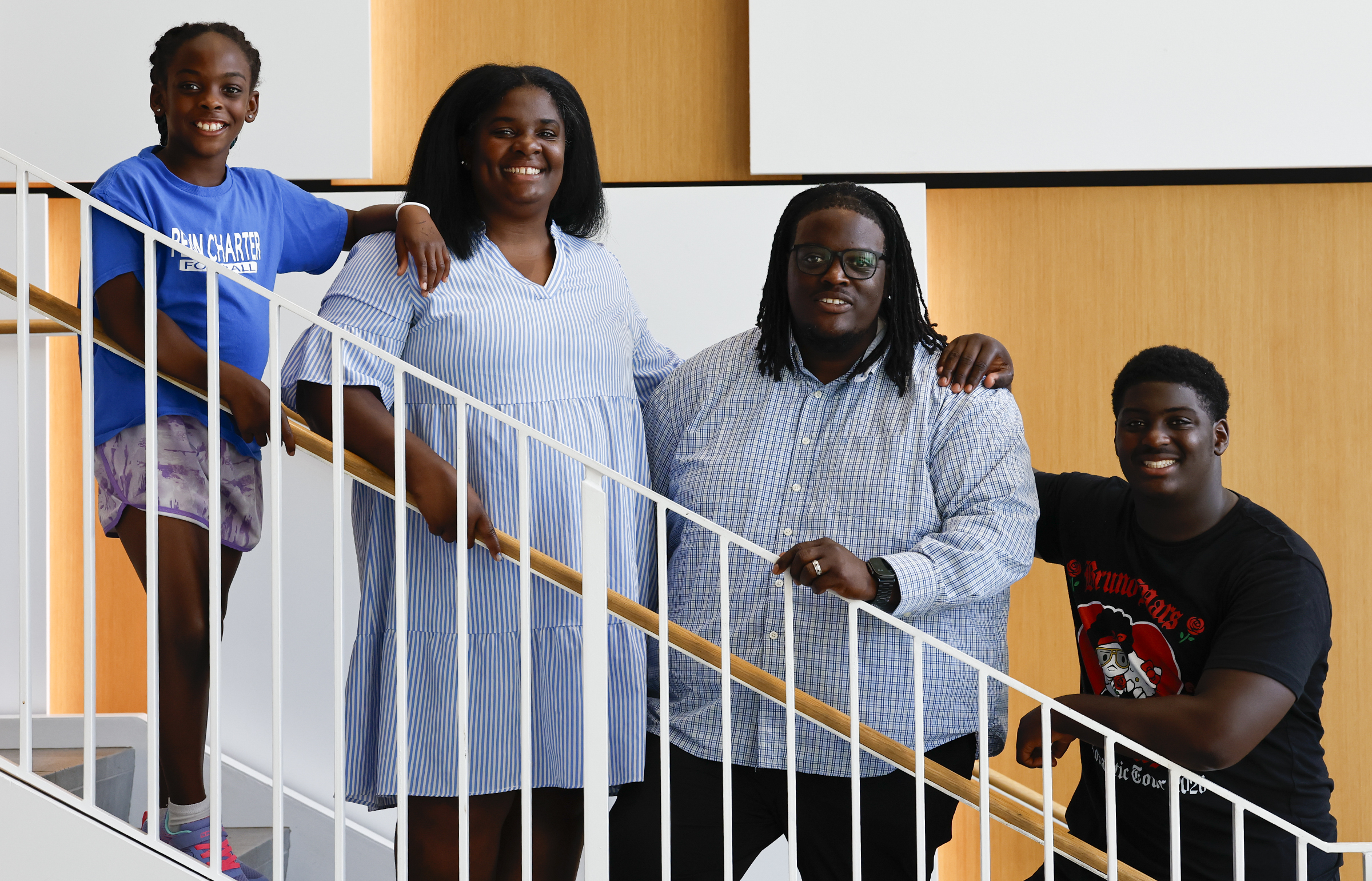
The Bouie family (from left to right): daughter Savannah Bouie, mother Keshina Bouie, father Anthony Bouie Sr., and son Anthony Bouie Jr., at William Penn Charter School on Sept. 3. Army veteran Keshina Bouie grew up in Philadelphia and was in high school ROTC on Sept. 11, 2001. She joined the Army, which helped her reach personal educational goals and give her children a good life, and played a big role in her being who she is today.Yong Kim / Staff Photographer
Bouie stayed in the Guard for 16 years, earned a master’s degree from La Salle University, and worked for the Department of Veterans Affairs and the Defense Logistics Agency. Her military service, she said, ultimately helped her provide a better life for her son and daughter.
She said there are things she’s not proud of about her country, but she’s always proud of the people she served with in Iraq and glad she enlisted.
“It was literally the best decision I made in my life. And I know not everyone can say that.”
‘What are we protecting?’
Michael Miller, 52, grew up in City of Chester with seven brothers and one sister.
“We grew up pretty poor. But being a child, you don’t know that you’re poor. We had fun. We did all the things that kids do,” Miller said.
Already a father at 19, Miller joined the Marine Corps in 1994 to provide for his family. He returned home after eight years, but missed military life. He joined the Army National Guard in 2007 and deployed to Bagram Air Base, Afghanistan, in 2010.
“For the first six months, it was like being on a weird vacation,” Miller said. “But let me tell you something: When the snow melted off those mountains, things totally changed.”
Three of his comrades died in an IED blast that summer, and of the 370 people serving with him, about 300 returned home with Combat Action Badges, a designation given to soldiers involved in ground combat.
Miller’s main job entailed driving a large truck known as a wrecker and using it to retrieve destroyed Army vehicles and cargo.
But it was while on a mission delivering supplies that an IED detonated under his truck, launching it into the air “like it was a piece of paper.”
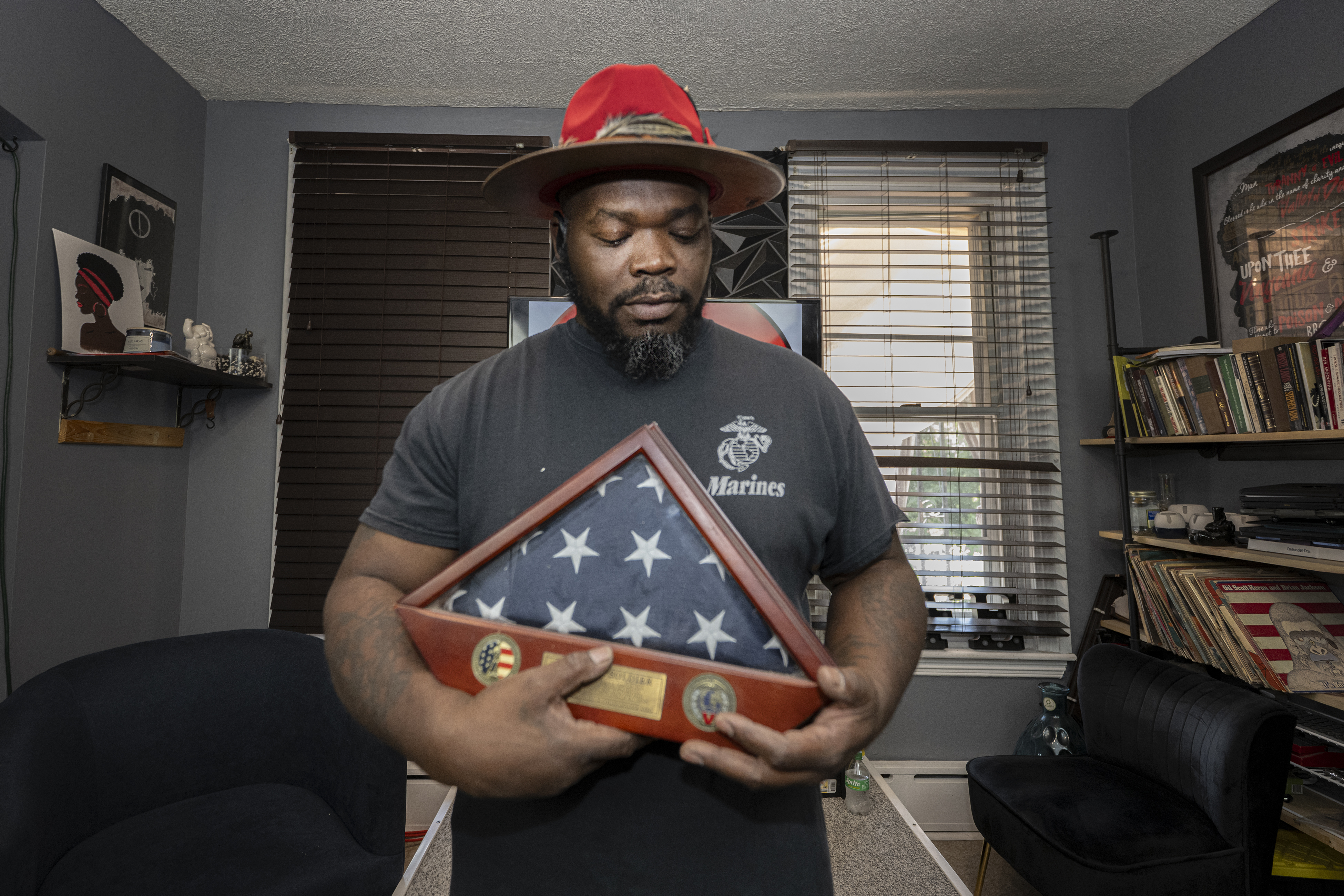
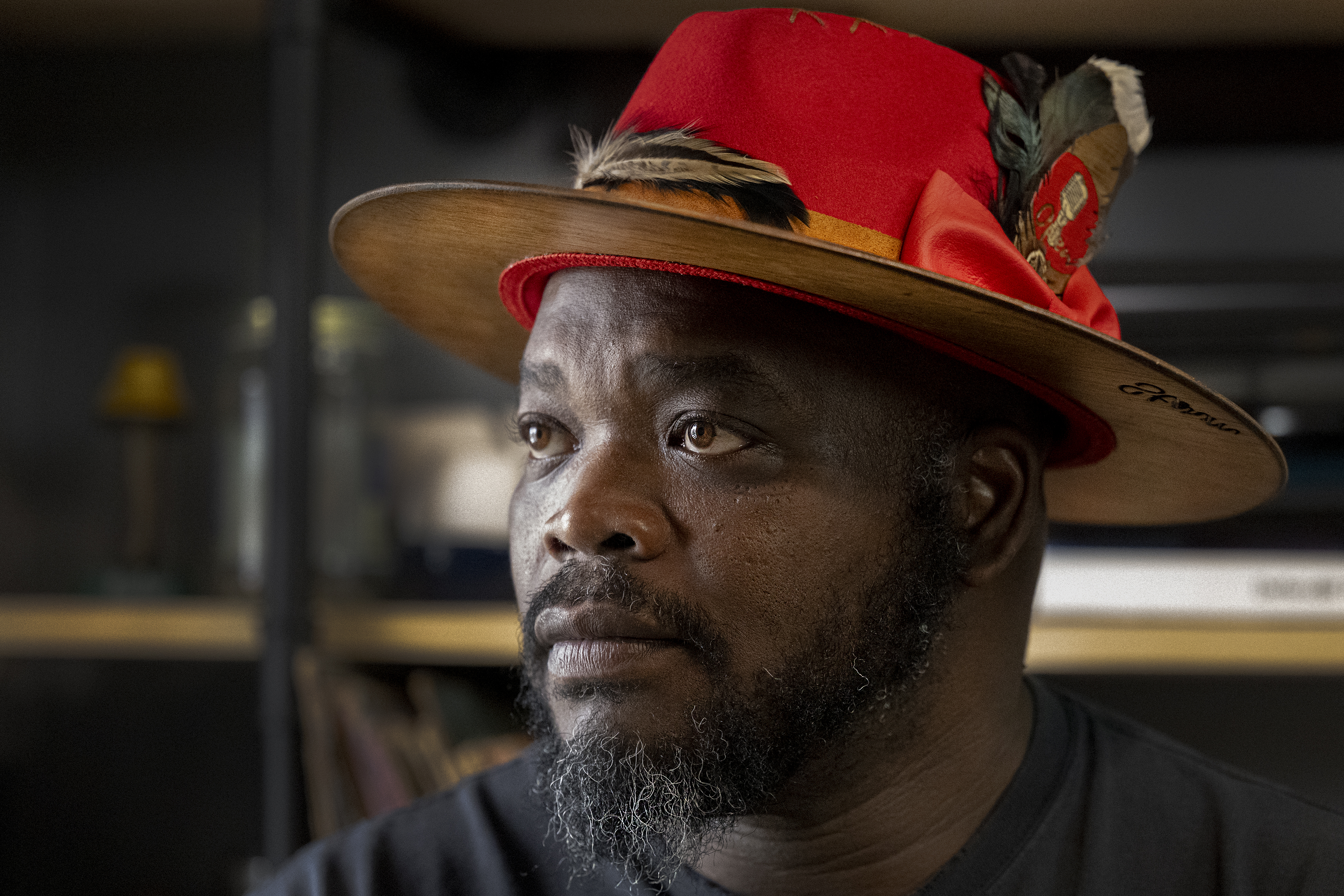
Marine veteran Michael Miller holds an American flag given to him for his military service in Afghanistan as he poses for a portrait at his home in Chester on Aug. 31. Miller deployed to Afghanistan in 2010 and survived an IED blast that caused a traumatic brain injury. After returning home, he was diagnosed with PTSD and an anxiety disorder. Miller has turned to poetry, writing, and podcasting to help cope with his experiences and the loss of three comrades who died by suicide after returning home.Jose F. Moreno / Staff Photographer
A doctor told Miller he had a concussion, he said, and he finished his deployment. It was only when he returned home that the extent of his traumatic brain injury and PTSD became clear. Panic attacks made him a “frequent flyer” at local emergency rooms.
“I used to go to sleep fully dressed, because I wanted to make everything convenient for the paramedics, because I was sure I was dying,” Miller said.
Miller joined Warrior Writers, a group of veterans who process their experiences through writing.
“Honestly? I do poetry. I learned to express myself,” Miller said.
What he struggles with now, Miller said, is that despite his efforts, three people he served with have since died by suicide. That’s left him feeling that the war wasn’t worth fighting.
“Because, honestly, what are we protecting when the wealth gap gets so much larger? What are we protecting, when we have so many homeless? It’s a bunch of stuff that in the grand scheme of things wasn’t worth the blood that was left there.”
‘Shona ba shona’
Milan Moncilovich, 62, said he learned about the Sept. 11 attacks while on duty at Methodist Hospital in South Philadelphia. By then, the pharmacist and hospital administrator was also a seasoned officer in the U.S. Navy Reserves.
“My first thought was, this is the beginning of something that’s going to be big, and that’s going to take a while, and most likely I am going to be part of this, and be deployed at some point,” Moncilovich said.
In 2010, the Navy sent him to Afghanistan to train Afghan medical personnel. He recalled seeing a stunning sunrise as his plane performed a tactical landing in Kandahar to avoid rocket attacks.
“To me it was like a personal, spiritual kind of sign that said, ‘Hey, anything that’s going to come in the future, just take this in, take this beauty in, and remember where your inner soul is,’” Moncilovich said.
In the northern Afghanistan city of Mazar-i-Sharif, Moncilovich and other American medical professionals worked closely with Afghan doctors and nurses, he said. As they got to know one another, their motto became “shona ba shona,” a Dari phrase that meant “shoulder to shoulder” or “together.”
In this advisory role, Moncilovich’s team supervised treatment of Afghan soldiers and civilians who had been struck by IEDs or gunfire.
“I can close my eyes at any time, and I can see those soldiers in that trauma bay and on those tables,” he said. “It’s not ever going to go away. I won’t say I’m OK with it. It’s just going to be there.”
Moncilovich said he saw the positive side of the U.S. missions there, such as the construction of schools and medical facilities.
The U.S. exit from Afghanistan in August 2021 angered him, he said.
“Just to see 13 more American lives lost, it really, really upset me. That’s probably the only thing that really probably brought my rage up pretty high. Especially seeing everything we left behind,” he said.
Moncilovich, who now works for Shriners Children’s hospital in North Philadelphia, said he would jump at a chance to return and get closure.
“I know that it’s completely changed now, and I understand a little more how the Vietnam vets feel now. Time will kind of change things. I know how angry they were. But now, I know what our mission was, but at the end of the day, things kind of went back to the way they were.”
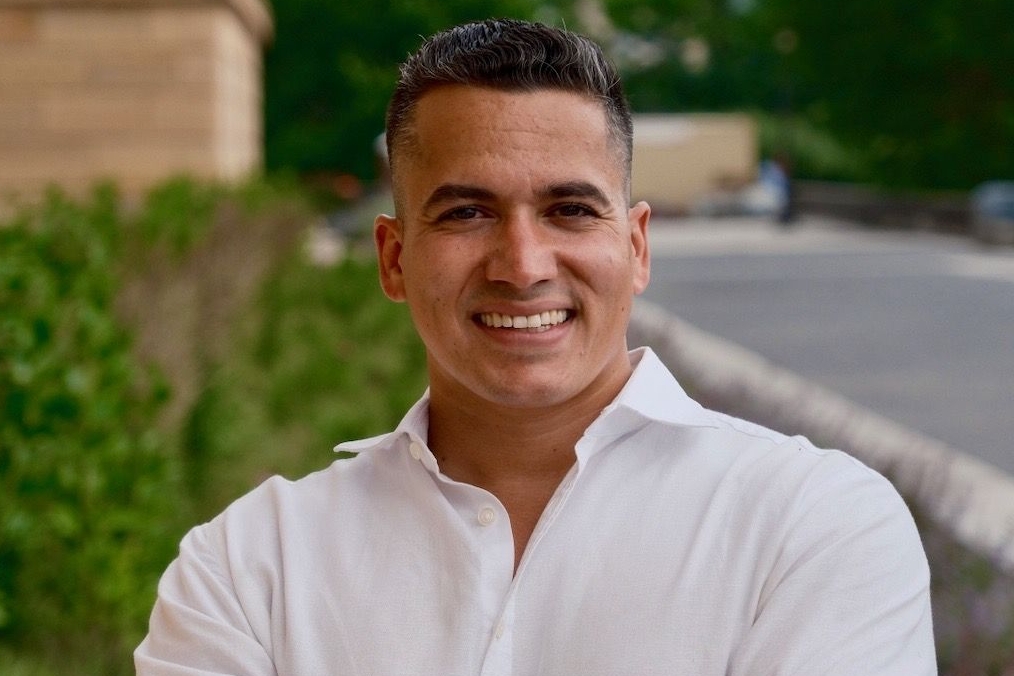
Dennis Mahoney has spent a decade in disaster relief, dispatching humanitarian aid in the wake of devastating hurricanes in the United States and Puerto Rico and poverty crises in 18 countries in Asia, Africa, and Latin America.
Now the 34-year-old independent candidate is using that same determination to engage in an uphill battle as he seeks to represent Philadelphia’s 3rd Congressional District this November.
Mahoney, from South Philadelphia, is the lone opponent running against State Rep. Chris Rabb, a democratic socialist from Northwest Philly who won the crowded Democratic primary in May to succeed retiring U.S. Rep. Dwight Evans.
“I think it’s going to be a hard fight and a hard run, but I feel so strongly that people in Philadelphia want something different,” Mahoney said of his independent campaign.
Mahoney will have his work cut out for him to persuade voters to back his grassroots candidacy.
The 3rd Congressional District is one of the most Democratic-leaning districts in the country, where Rabb won with almost 45% of the vote. Rabb saw national support from big-name progressives, including U.S. Rep. Alexandria Ocasio-Cortez (D., N.Y.), and used his victory to support other like-minded candidates throughout the United States.
And the last time Pennsylvania elected an independent to Congress was in 1920, when Milton W. Shreve of Erie won as an Independent Republican.
But Mahoney and his allies view his candidacy as an opportunity to present an alternative option after more than half of 3rd District voters in the May primary cast their ballots for Rabb’s opponents. Mahoney’s platform focuses on addressing poverty, expanding access to affordable housing, and investing in education.
Rabb’s campaign did not comment on Mahoney’s candidacy Wednesday.
The race comes amid shifting political dynamics in the United States in response to growing frustration with the two-party system.
On one hand, progressive candidates — many of whom, like Rabb, are part of the Democratic Socialists of America — have been gaining momentum in elections nationwide.
Earlier this year, meanwhile, a Gallup poll showed a record high of 45% of U.S. adults identified as independents in 2025.
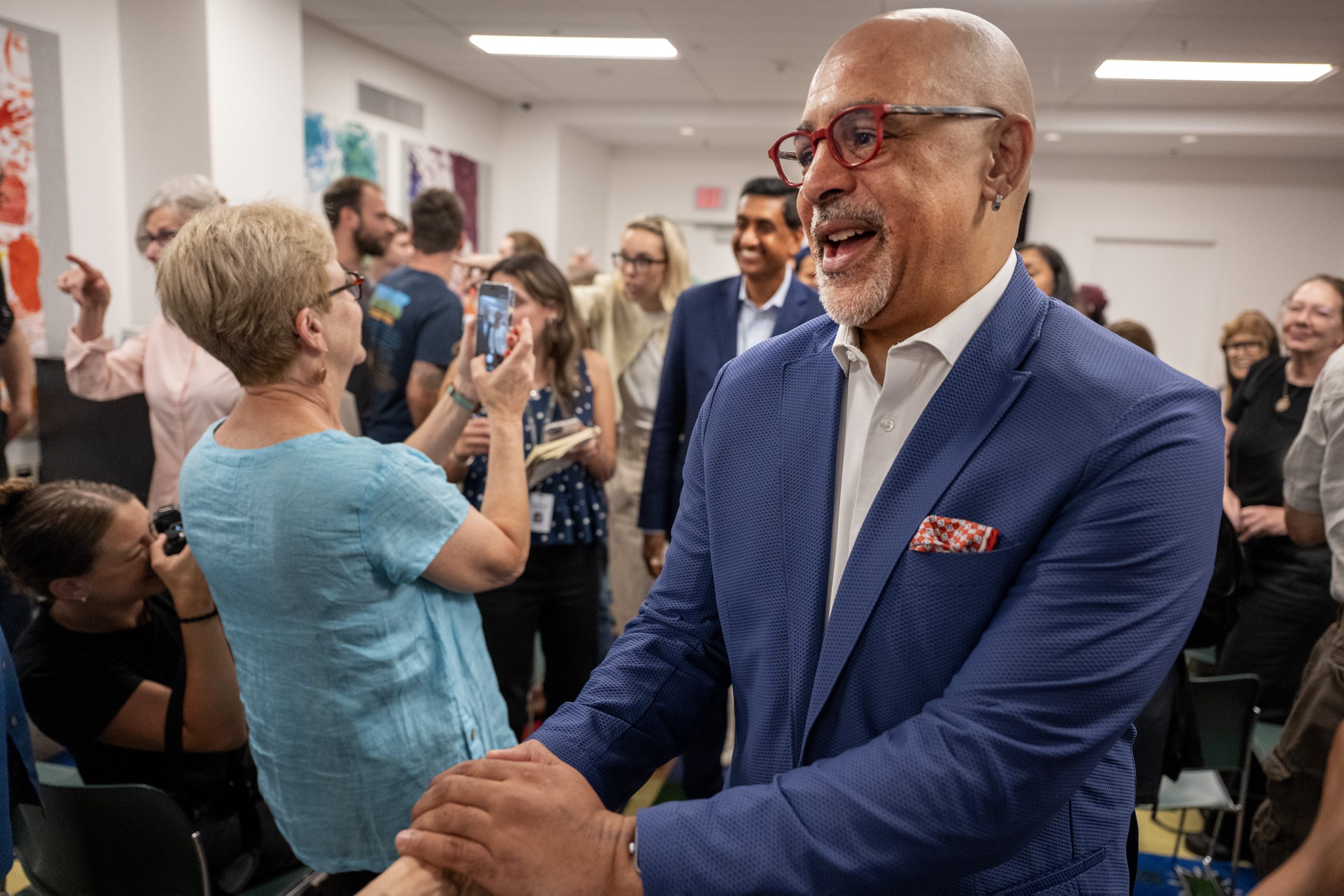
State Rep. Chris Rabb greets supporters after appearing with U.S. Rep. Ro Khanna (rear) Tuesday, July 28, 2026, on his “Made in PA: New Economic Patriotism Tour” at the City Institute Library on Rittenhouse Square.Tom Gralish / Staff Photographer
Mahoney said he has belonged to both political parties in the past, but did not find a home in either.
The first-time politicalcandidateworked in humanitarian aid through his former Washington, D.C., church, the Christiannonprofit Food for the Hungry, and now his own firm, AOI Solutions. He said the experience provides lessons for overcoming partisan division in Congress.
“Let’s build bridges and partnerships and bring results. And that’s the same work that I did in the disaster relief field, where we would land in a spot where a disaster happened, and we’d work with anyone we could to really make the place come back to whole,” Mahoney said.
‘Anti-MAGA’ and ‘anti-DSA’
It’s those middle-of-the-road qualities that made Mahoney an appealing candidate to Craig Snyder, a registered Republican who led an effort to support Vice President Kamala Harris’ presidential bid two years ago and is now leading the Philly-based Forward Party Victory Fund.
The super PAC plans to support Mahoney and other independent candidates across the country — including a pair of independent Senate candidates running in GOP-leaning states, Todd Achilles of Idaho and Brian Bengs of South Dakota — this fall via spending on digital ads and text messages. The PAC is also supporting U.S. Rep. Kevin Kiley, who switched from the GOP to run for reelection in California as an independent, and Kevin Block, an independent running for Rhode Island governor.
Snyder said the group is an independent offshoot of the Forward Party, founded in 2022 by former presidential candidate Andrew Yang and former New Jersey Gov. Christine Todd Whitman. He described the centrist candidates the PAC is backing as both “anti-MAGA” and “anti-DSA.”
He said a win in one of the group’s targeted races wouldbe “an earthquake in American politics.” But even if Mahoney is unsuccessful, Snyder said, it will be the start of elevating the independent movement in Philly politics.
“I think people don’t want to be told that they have to vote for somebody just because of the party label,” Snyder said. “I think that they want there to be alternatives, and so it’s our job to make that case.”
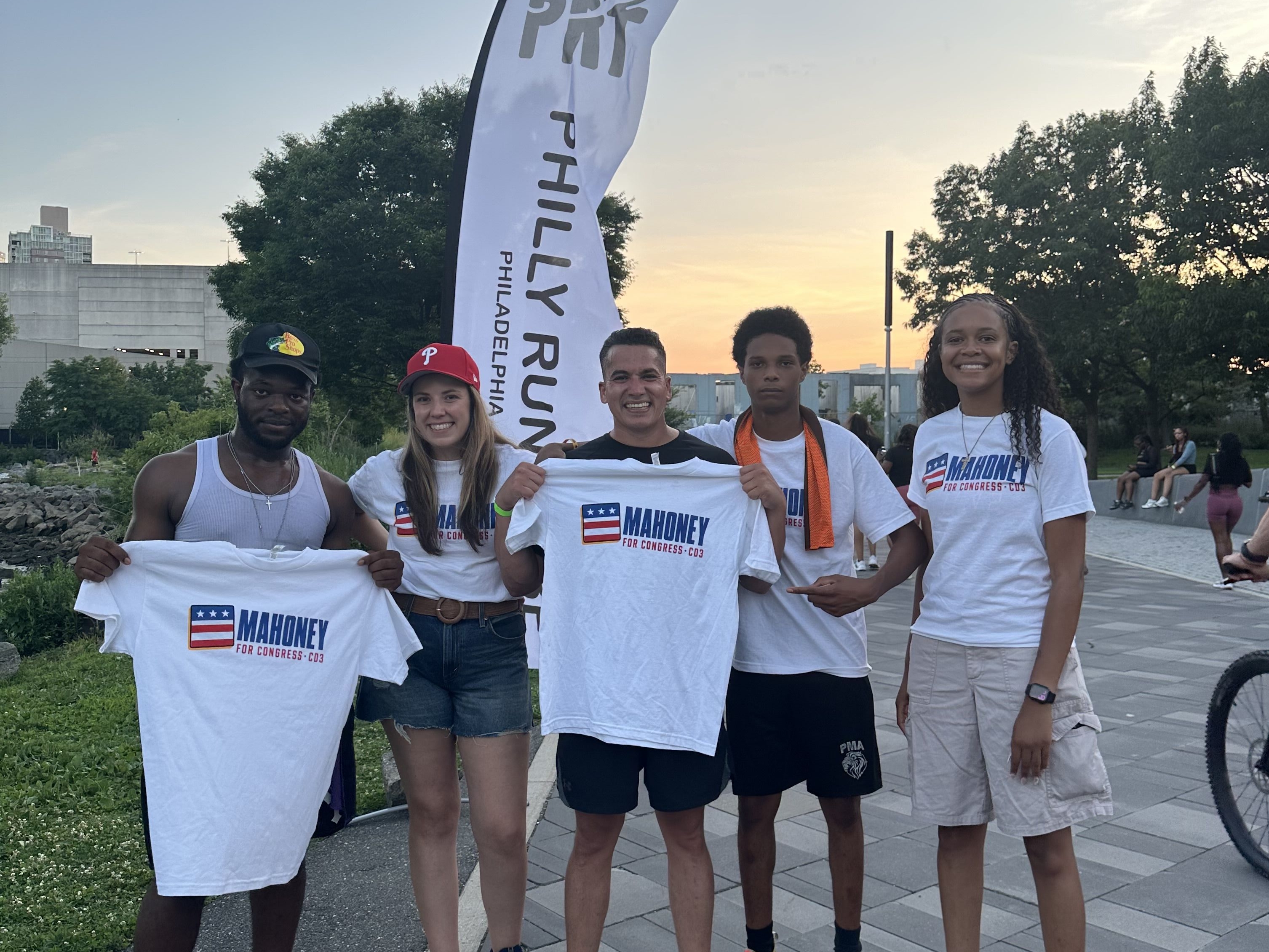
Dennis Mahoney (center) on the campaign trail as he prepares to run against State Rep. Chris Rabb in the general election in the 3rd Congressional District this November.Dennis Mahoney
Mahoney said, if elected, he would help form the first independent caucus in the U.S. House, contending he would become a coveted vote for both parties that would enable him to influence legislation and score committee assignments.
Butunder current House rules — which Kiley has proposed changing — Mahoney would not be able to hold a committee seat if he does not caucus with either party. Kiley, for instance, has continued caucusing with the GOP even after becoming an independent.
Mahoney pointed to the 19,000 signatures he received for his petition to join the ballot as a sign some voters are open to a choice in the deep-blue district.
He said he would like to debate Rabb.
“He talks a lot and engages a lot, and I think that that’s wonderful,” Mahoney said. “But I think at the end of the day, there’s people who are hurting in the district who need somebody who isn’t worried about being on, you know, MSNBC or TV, but who really is like, let’s just get into the community and drive results.”
Mahoney said he has been connecting with religious leaders, educational organizations, community groups, and youth organizers to hear feedback on what they want public service to look like in the 3rd District.
The independent will have scant resources to spread his name in just two months but said he is not concerned with raising big money for advertising. He had roughly $8,200 cash on hand in his most recent campaign finance report.
Rabb had a little more $21,000, but that was after the Democrat raised and spent more than $1.3 million for the primary campaign in which he out-raised his opponents.
Mahoney, meanwhile, has been trying to meet voters where they are — at running clubs and other fitness groups, for example.
“I think people find it refreshing to have somebody who wants to represent them out there running alongside them,” he said.
The Camden Department of Public Works spends about $4.5 million annually to clean up illegal dumping.
City officials say the disrespect shown by landlords, outsiders, and even residents is just as problematic as the use of taxpayer money.
“These bad actors who dump illegally simply don’t care about our city,” Mayor Victor Carstarphen said. “So we’re trying to hit them where it counts. We’re hitting them in their pockets.”
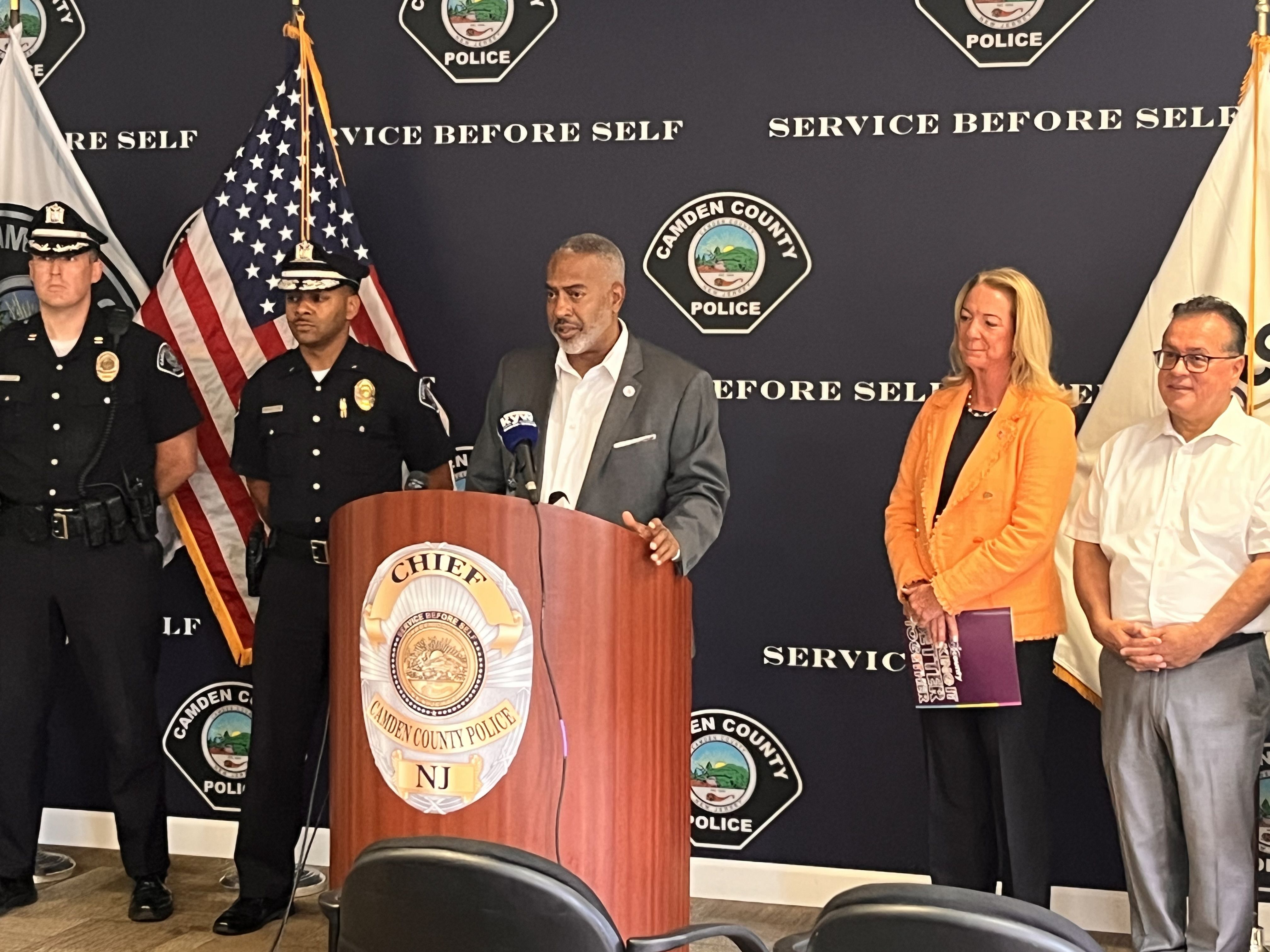
Carstarphen, along with city and county officials, outlined astrategy on Wednesday to tackle the problem and released detailed photos and videos showing those who have been charged with dumping.
They say an aggressive push to combat widespread blight and improve neighborhood quality will use a combination of stepped-up enforcement, drones, high-tech camera networks, and steep penalties.
Violators face fines of up to $10,000.
In addition, officials are offering a $1,000 reward forresidents who provide information, such as video from doorbell cameras, that leads to a violator being caught.
Camden City Mayor Victor Carstarphen address the illegal dumping problem in the city during a press conference Sept. 9, 2026.Frank Kummer
A widespread problem
Carstarphen said the problem is widespread and the dumping comesfrom contractors and landlords who live outside the city, as well as within.
Camden County Police Department Capt. Gordon Harvey gave a presentation detailing those who have been charged.
Most are from Camden or nearby communities such as Pennsauken, Cherry Hill, Pine Hill, Mount Laurel, and Maple Shade. But people from Bernville, Pa., Ashburn, Va., and Union, N.J., have also been charged.
So far this year, the Camden County Police Department has pursued 68 illegal dumping incidents — about the same as in all of 2025.
In 2026, 27 people have been charged in 31 incidents.
About 40% of the illegal dumping activity has been located in the Waterfront South neighborhood.
Harvey said other neighborhoods, such as Bergen Square, Fairview, and Beideman, all have been hit.
Educating the community about the problem is key,he said.
“We need you to help us. We need you to report these incidents,” Harvey saidin a direct plea to residents. “Tell us when they’re happening, where they’re happening.”
Officials say residents can report dumping anonymously through the STOPit mobile phone app.
Harveyshowed videos of people brazenly pulling up in vehicles to dump in parks, streets, alleys, and secluded areas. Materials ranged from construction waste to bags of household waste.
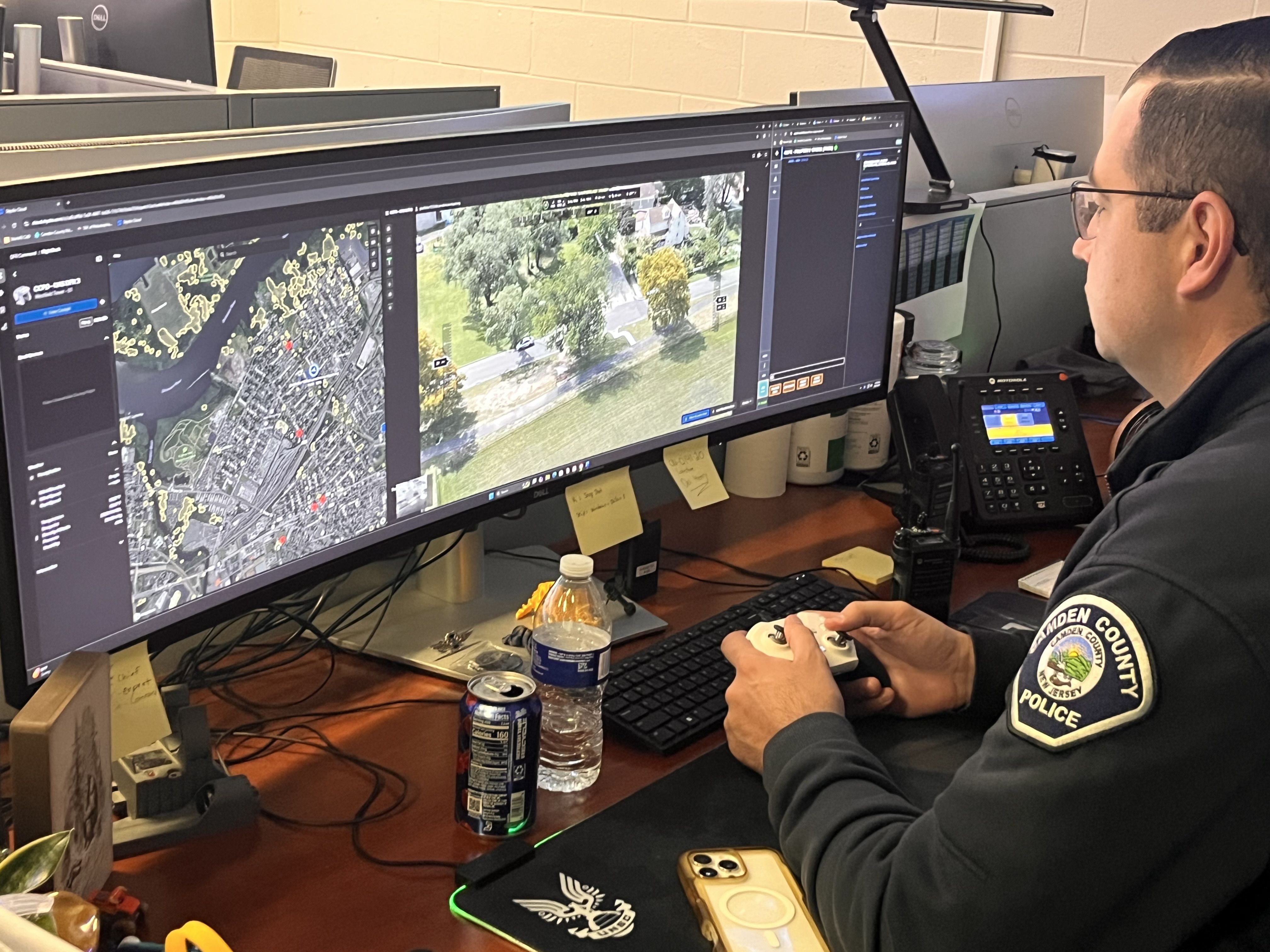
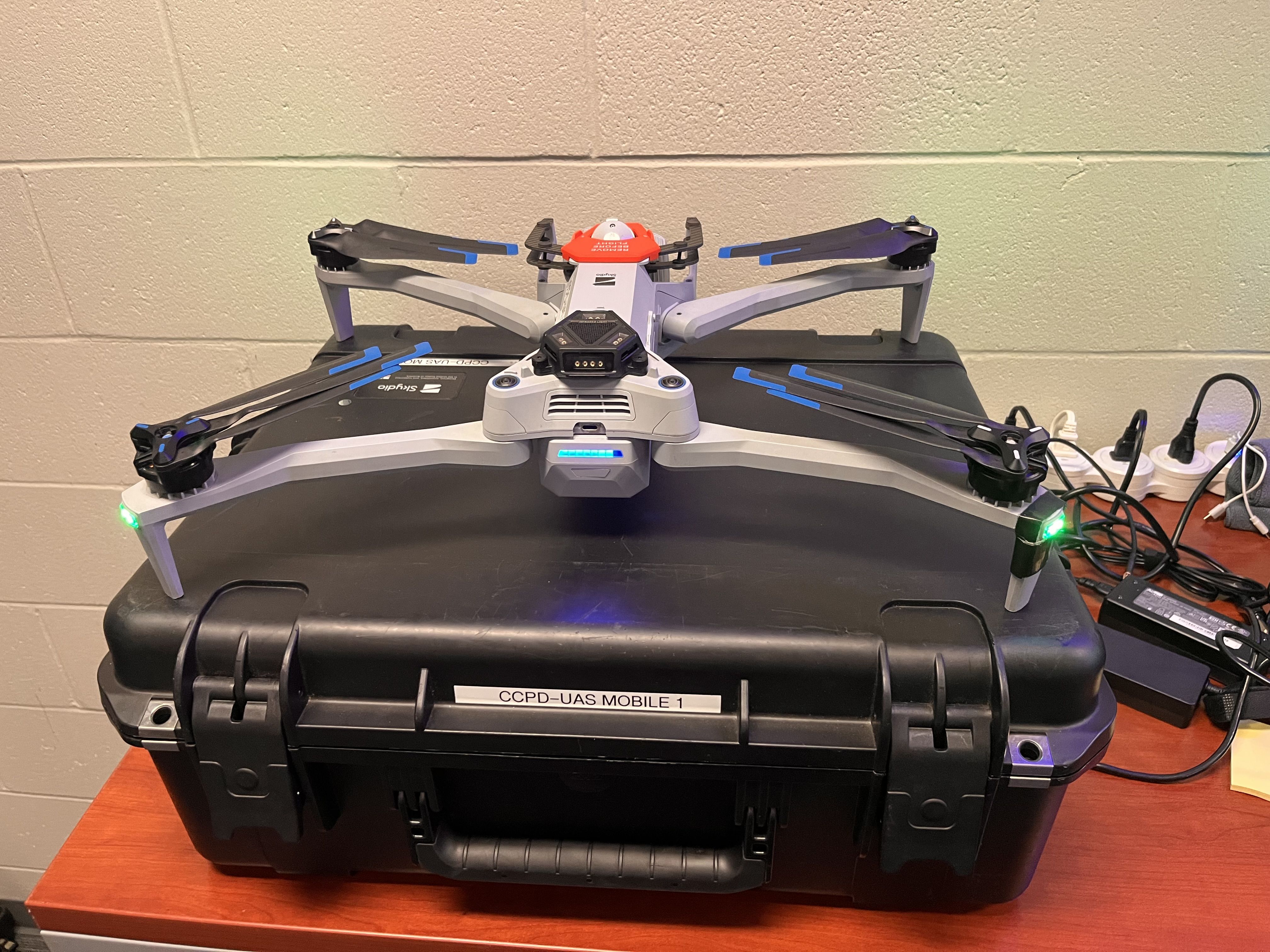
Camden County police are using drone such as this to help identify illegal dumping and track the dumpers.Frank Kummer
‘Eye in the sky’
Some people have been charged the same day they dumped waste because they were caught by police-controlled drones owned by the county, or by the city’s “eye in the sky” network of video cameras.
The network provides “1,000 unique views within the City of Camden,” Harvey said.
Most cameras are fixed, but the city has five mobile cameras dedicated to identifying illegal dumping. They can be moved to a hot spot in less than an hour.
In addition, the police department has two full-time drone pilots, though they scan the city for many other issuesbeyond dumping. Five drones are stationed on rooftops throughout Camden, and all can reach a site in minutes.
City Public Works Director Keith Walker said the city has spent $3.2 million on new equipment that can be used to tackle illegal dumping. That includes five compact waste-collection trucks, a large front-end loader, and a range of dump trucks.
Equipment and cleanup costs divert funds from community parks, playground equipment, and youth programming, he said.
“We spend most of our time dealing with the new dumping, and it cuts into our budget,” Walker said.
Officials say they hold community cleanups andclean out dumps, only to find the areas blighted againwithin days.
“Enough is enough,” said Angel Fuentes, Camden City Council president. “We won’t tolerate this type of behavior.”
Editor’s note: This story has been updated to correctly attribute a quote.
David Kidd is an expert in something that some people hate and others tend to just tolerate: seat-belt warning systems — the “ding ding ding” chimes and flashing dashboard lights that serve as reminders to buckle up.
He’s spent years testing different systems in cars and trucks as part of his work at the Insurance Institute for Highway Safety. So he knows very well that the incessant chimes can be annoying.
They’re “an irritant,” he admits. But he prefers a different term.
“We use the word ‘motivating,’” Kidd said.
The lowly seat belt is still considered the best way to avoid serious injury or death in a crash. Forget air bags, anti-lock braking systems, or any other new-fangled safety technology. Unbelted occupants are roughly twice as likely to be killed in a car crash.
Buckling up works.
So does nagging. Kidd’s research found that belt warnings came in a variety of tones and volumes, but if they are “heard and persistent,” people respond.
The seat-belt chime is such a recognizable refrain that when pop star Olivia Rodrigo needed an iconic car sound to open her hit song “Drivers License” a few years ago, she reportedly used a recording of the seat-belt beep in her mom’s car.
The “buckle up” reminders were set to become even more widespread this month, when new federal safety regulations were supposed to require more persistent chimes not just for the driver’s seat but for the front passenger seat, as well. But automakers objected, saying they couldn’t be ready in time. Regulators backed down. So the new rules have been delayed for another two years — 2028 at the earliest — when some rear-seat warnings would be required, too.
The National Highway Traffic Safety Administration said in a statement that it found the automakers’ worries “have merit.”
Others were not convinced.
“It was a bit of mystery to us why this has taken so long already. And now it’s going to take even longer,” said Peter Kurdock, general counsel for Advocates for Highway and Auto Safety, which began pushing for the new rules in 2007.
“It’s disappointing,” he said.
The technology is not cutting-edge. Europe has required seat-belt alarms in new vehicles since 2021. Some automakers, such as Volvo and Subaru, already have voluntarily installed them in vehicles sold in the U.S.
But the fight over the warning chimes feeds into Americans’ long-running love-hate relationship with seat belts.
Seat belts are still seen by some as a question of choice and freedom.
State laws and education campaigns have helped soften some of those attitudes. Today, 49 states require adults in the front to buckle up. The lone holdout is New Hampshire, which lives up to its license plate motto of “Live Free or Die.” Just 34 states plus D.C. require adults to wear seat belts in rear seats. (Children are covered by different restraining-device requirements.)
Still, researchers know some people remain militant in their opposition. They’re the ones buying $6 devices and printing 3D tools to fool the alarm. They sit on top of buckled seat-belt straps. They watch online videos claiming to reveal the hidden tricks to deactivate the warning chimes.
“Those that don’t like seat belts are really hardcore against buckling up,” Kurdock said.
These holdouts are why U.S. seat-belt usage rates have largely flatlined in the last decade, according to NHTSA observational studies. The unbuckled make up a minority of all vehicle occupants, but they die at a much higher rate in crashes: Roughly half of all vehicle fatalities involve unbuckled occupants.
At one point, federal officials tried a much tougher tactic than just chimes.
In 1974, the federal government required many cars to have ignition interlock devices that prevented a car from even starting until the front occupants were buckled up. Motorists hated it. It blew up in NHTSA’s face.
“That got a lot of blowback that reached Congress,” Kidd said.
The idea was quickly pulled, and Congress banned NHTSA from requiring interlocks. Lawmakers then went further and limited seat-belt warning chimes to a fleeting eight seconds.
Some advocates say this is why NHTSA has seemed reluctant ever since to even tinker with seat-belt warnings.
In 2007, Public Citizen and Advocates for Highway and Auto Safety petitioned NHTSA to change the belt-reminder rules and add them for rear seats.
Little happened for years.
In 2012, Congress passed a bill that abolished the eight-second chime limit and required federal officials to create new warning rules for seating positions besides the driver’s seat. It was a start, but a very slow one.
“The chime is very important,” said Shaun Kildare, research director for the Advocates for Highway and Auto Safety.
While NHTSA worked on a plan, the lack of government action created an opening for the Insurance Institute for Highway Safety, which rates vehicles on a series of safety metrics. It began rating cars and trucks on the quality of their seat-belt reminders with the 2021 model year.
IIHS wants seat-belt chimes to last at least 90 seconds and be easy to hear, among other criteria. The chimes should annoy drivers enough to get them to buckle up — but not so much that they complain.
“It was: Get them to wear a seat belt, but at the same time not email their congressperson to demand a change,” Kidd said.
Compliance has been voluntary, but some automakers have jumped at the chance to make a good showing. IIHS saw rapid adoption, even without federal regulations, Kidd said.
At first, less than 20% of vehicles scored IIHS’s top “good” ranking for seat-belt reminders. Five years later, 71% of vehicles qualified.
“You’ve had a complete change in the seat belt reminders in the new vehicles,” he said.
In 2025 — 13 years after Congress asked for a plan — NHTSA finally unveiled its blueprint for overhauling the nation’s seat-belt warning system.
The new rules will require a chime lasting at least 30 seconds for either an unbuckled driver or front passenger when the vehicle starts up, and if they are still unbuckled when the vehicle reaches slightly faster than 6 mph, a second chime will play endlessly until the seat belt is secured.
That’s the rule that was supposed to hit new vehicles on Sept. 1. A rule requiring a 30-second chime if someone unbuckled a seat belt in the rear seats was set to start in September 2027.
But in April, NHTSA acquiesced to arguments from the Alliance for Automotive Innovation, an industry trade group, that the changes “require significant hardware and software changes” and would need more testing.
Now, regulations for both front- and rear-seat warnings are being pushed back to September 2028.
Despite the delay, automakers still “support efforts to increase seat belt use and for decades have voluntarily and proactively installed seat belt reminder systems across the vehicle fleet,” Audrey LaForest, communications director for the Alliance, said in a statement last week.
Kurdock, whose group first petitioned for this change nearly 20 years ago, was in disbelief.
“This is not a new technology. Seat-belt reminders have been in cars for a very long time,” he said.
Kidd said he was frustrated with what he saw as an unnecessary delay. He has estimated that nearly 1,600 lives could be saved annually if all vehicles had more noticeable and persistent seat-belt warnings leading to more people buckling up.
“The disappointing piece is we’ve known what to do for a long time,” he said, “but we just haven’t done it.”
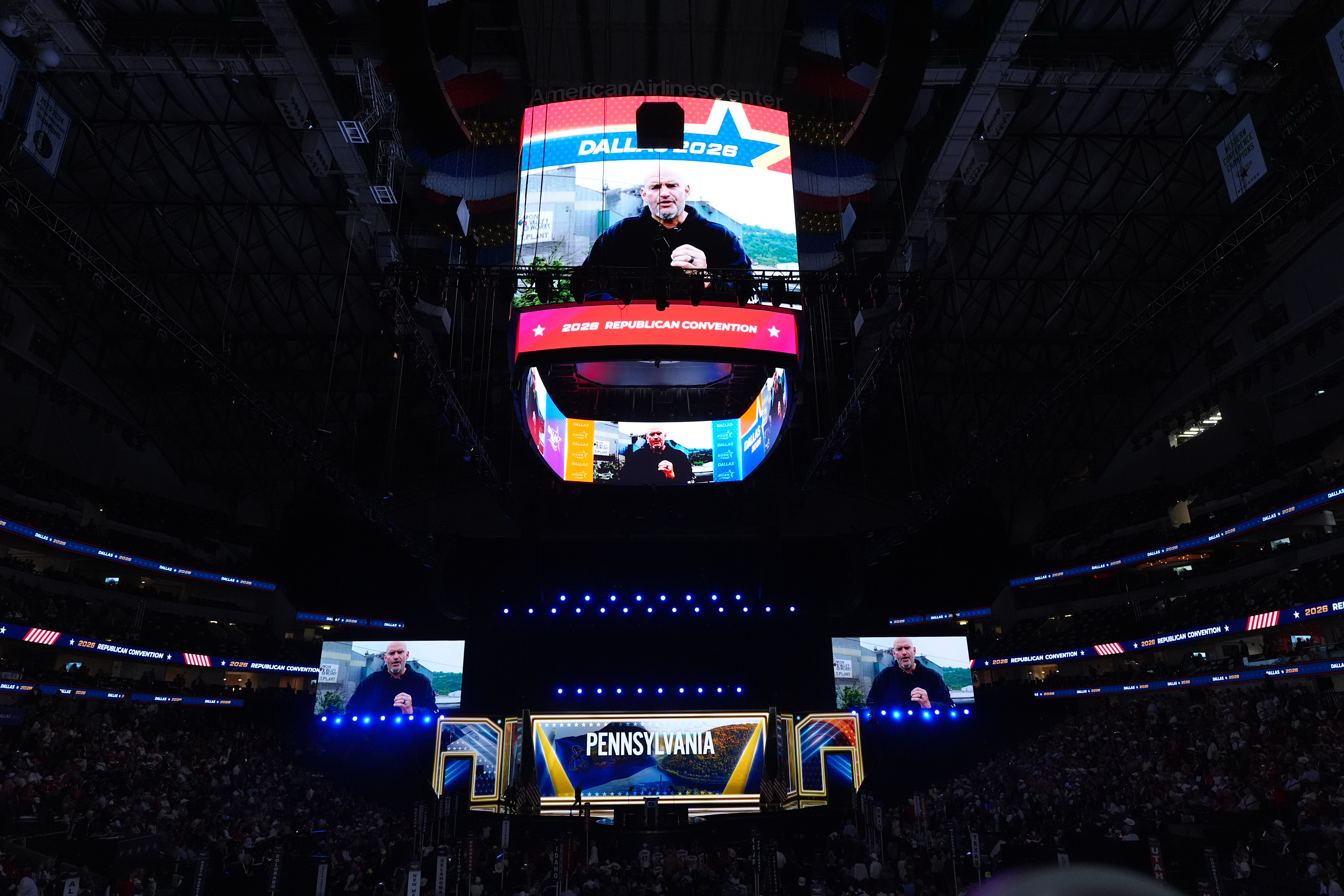
DALLAS — In a remarkable move for a Democratic lawmaker, U.S. Sen. John Fetterman on Wednesday appeared in a video at the Republican midterm convention — an event specifically designed to boost GOP candidates this fall — in a way that praised President Donald Trump for his support of Pennsylvania steelworkers.
The video was a clear escalation of a monthslong shift in which Fetterman has drifted from the Democratic Party. Though he has repeatedly rejected speculation that he would switch parties — and did so again after the video Wednesday — he has consistently criticized Democrats and praised Trump since the president took office.
In the video — which introduced U.S. Sen. Dave McCormick (R., Pa.) as he took the stage — Fetterman said he and McCormick “will work with President Trump to fight and defend the steel way of life right here in the Steel Valley.”
“I’m always going to stand with America. I’m always going to reject the extremes and socialism, and the anti-American way of life,” he said, repeating a common refrain in which he criticizes the leftist wing of the Democratic Party that has secured several high-profile wins this year.
Fetterman, who was not physically in attendance at the American Airlines Arena in Dallas, was cheered and applauded after McCormick took the stage and said, “How great is John Fetterman, right?”
In addition to McCormick, several vulnerable House GOP incumbents from Pennsylvania were at the convention. Fetterman’s video appearance came shortly after a speech from U.S. Rep. Rob Bresnahan (R., Luzerne), who represents one of the districts Pennsylvania Democrats are hoping to flip this year.
U.S. Rep. Madeleine Dean (D., Montgomery), who traveled to Texas to protest the GOP convention, said she was “gravely disappointed” that Fetterman chose to participate in the GOP event rather putting his energy to electing Democrats in key Pennsylvania races — the latest in a growing list of transgressions.
“I will tell you, from the ground, from suburban Philadelphia, my constituents are livid. Those who went out and knocked doors for him, they are absolutely livid,” she said the following day.
Democratic Gov. Josh Shapiro, who has a frosty relationship with Fetterman, said Thursday at an event in Chester that he did not see the video before adding that he was “not going to get distracted” from his duties as governor and his reelection campaign.
Democrats nationally are aiming to flip both the House and the Senate, which could put Fetterman in a powerful position as a swing vote if Democrats narrowly win control of his chamber.
And while leaders in both parties have reportedly made appeals to him, Fetterman said in a statement after his video went out that he would not switch parties if the Senate changes hands.
“I’m a lifelong Democrat who votes overwhelmingly with my party — and should the Senate flip in November, I will still be the 51st vote that I ran on,” he said, referencing his campaign promise in 2022 to be the Democratic vote that clinched the majority.
On Thursday, a web page soliciting donations to Fetterman’s campaign committee included a link to the video and said Fetterman would “keep standing his ground, speaking his mind, and putting Pennsylvania first.”
Fetterman has long been a supporter of the state’s steel industry as the former mayor of Braddock, the Pittsburgh suburb home to the Edgar Thomson Steel Works mill — which served as a backdrop to the video he shot for the convention.
U.S. Steel has pledged to invest up to $2.5 billion into that mill and other Mon Valley Works plants around Pittsburgh since its sale to Japan-based Nippon Steel last year.
The $15 billion sale had been held up for a year, opposed by both Republicans and Democrats concerned about a foreign takeover of the iconic company. Former President Joe Biden blocked the deal, and both Fetterman and McCormick criticized it before Trump took office.
Trump went on to secure a pledge that Nippon would have an American CEO, not lay off workers, and give the U.S. a so-called golden share in the company. Trump returned to Pennsylvania for his first rally in the state to celebrate the deal with steelworkers outside Pittsburgh.
“Under Joe Biden, Democrats blocked critical investment in U.S. Steel, risking thousands of jobs,” McCormick said on stage Wednesday. “I promised Pittsburgh steelworkers I would fight for the steel way of life, and President Trump did, too. And with the president’s leadership, we delivered a deal protecting and creating over 100,000 American jobs.”
Fetterman’s participation in the GOP conference — in the type of promotional video that is common at party conventions — is extremely rare.
The Pennsylvania Democratic senator’s decision to record a video praising Trump ahead of the election may draw comparisons to Georgia Democratic Sen. Zell Miller’s fiery speech praising President George W. Bush — and denigrating Democratic nominee John Kerry — at the 2004 Republican National Convention.
State Rep. Malcolm Kenyatta, a Philadelphia Democrat who ran against Fetterman in the 2022 Senate primary, drew a different historical comparison.
“John is Benedict Arnold, but lazy. Could barely get off the couch in his million-dollar mansion to kiss Trump’s ring, he phoned it in like everything he does,” Kenyatta, a Democratic National Committee vice chair, said on X.
U.S. Rep. Brendan Boyle, a Philadelphia Democrat, similarly blasted the senator’s video appearance at the rival party’s convention.
“A year ago, I labeled John Fetterman ‘Trump’s favorite Democrat.’ Tonight, he yet again proves why,” Boyle said on X.
And U.S. Rep. Chris Deluzio — a Western Pennsylvania Democrat who, like Boyle and Kenyatta, could be a candidate when Fetterman’s seat is up for election in 2028 — declared in a statement that Fetterman is “not going to be a Senator after 2028 — mark my words.”
“If the failing Republican politicians want him, they can have him,” Deluzio said. “Like them, John Fetterman has failed the Pennsylvanians who elected him, who expected him to fight against White House corruption, health care cuts, and reckless war, not cheerlead it.”
Fetterman has not yet said he will run for reelection and his dismal approval ratings among Democrats could make it difficult to win a primary — unless he switches parties. Among Republican voters, he was even more popular than McCormick in a poll last month from The Inquirer, the New York Times, and Siena University.
Fetterman has developed a close association and friendship with McCormick since the Republican’s election in 2024. While Fetterman rarely makes public appearances in the state he represents, he has appeared at a few with McCormick.
In a striking move, the bipartisan pair also set up a joint fundraising campaign committee this summer as Fetterman’s own fundraising lagged. This past week, McCormick came to Fetterman’s defense after the Wall Street Journal reported that the Democrat frequently avoided meeting with, and privately criticized, constituents and interest groups.
“These stories are the latest example of outrageously disloyal staff and forces on the Left using anonymous leaks to cancel my friend John Fetterman,” McCormick wrote on social media. “They hate that he is an independent thinker who refuses to fall into line so they want to silence him.”
In the convention video, Fetterman called McCormick a “great American, a great senator.”
“Yes, he is in a different party, but I’m proud to count him as my great friend,” Fetterman said.