Category: News

  • Jimmy Kimmel says he dropped Talarico interview from broadcast after FCC pressure

    Jimmy Kimmel says he dropped Talarico interview from broadcast after FCC pressure

    Late-night talk-show host Jimmy Kimmel said Wednesday that he would not broadcast an interview he conducted with Texas Democratic Senate candidate James Talarico because of pressure from the Trump administration.

    Kimmel did not specify what that pressure was but said the Federal Communications Commission had “threatened” him, Jimmy Kimmel Live!, the ABC network, and ABC’s affiliate and local stations “based on simple traditional editorial decisions, guest bookings it would seem they don’t like.”

    Kimmel also suggested the pressure was politically motivated. Polls show a close race between Talarico and his Republican opponent, Texas Attorney General Ken Paxton.

    “They’re very nervous about the midterms, and rightly so. … They’re in danger of losing a Senate seat in Texas, of all places,” Kimmel said on his show Wednesday.

    ABC has been in a monthslong feud with the FCC and its chair, Trump appointee Brendan Carr. Last year, the FCC successfully pressured ABC to briefly suspend Kimmel because of comments he made about the death of conservative activist Charlie Kirk.

    In April, President Donald Trump and first lady Melania Trump again called on ABC to punish Kimmel for a joke he made about the first lady. Shortly afterward, the FCC formally ordered an early review of the eight broadcast licenses owned by Disney — which include ABC stations in major cities such as New York and Philadelphia — because of concerns about diversity policies.

    Last month, ABC sued the FCC, alleging that the commission’s early review of its broadcast licenses is unconstitutional under the First Amendment.

    Kimmel on Wednesday noted that he had interviewed several candidates for public office on his show in the past — including Trump himself when he was a presidential candidate in 2015 in 2016.

    “And at that time, when he was the one sitting next to me, he seemed to have no problem with the idea of a talk-show host interviewing candidates. … But for some reason — and I can’t seem to figure out what that reason is — something has changed,” Kimmel quipped.

    Representatives for the FCC did not immediately respond to a request for comment Wednesday. Representatives with Disney, ABC’s parent company, declined to comment.

    FCC Commissioner Anna M. Gomez, the only Democrat on the commission, accused the Trump administration of waging a “campaign of censorship and control” and said the government agency does not have lawful authority to threaten broadcast licenses over guest bookings or editorial decisions.

    “I urge broadcasters everywhere to keep resisting this pressure, and I hope courts will soon make clear that the FCC has no place dictating editorial choices or what viewers are allowed to see,” Gomez said in a statement Thursday.

    Kimmel said he decided not to air his interview with Talarico during his broadcast in part so that ABC affiliates and local stations, especially those in Texas, would not “have to deal with this nonsense.” His interview with Talarico would instead be posted in its entirety on his YouTube channel on Thursday, he said.

    “And thank goodness we have that, because in the America we live in right now, that is the best that we can do until November,” he said.

  • Trump claims rebate checks are on the way for people overcharged by ACA

    Trump claims rebate checks are on the way for people overcharged by ACA

    President Donald Trump on Thursday announced that his administration would issue $500 rebate checks to about 1 million Americans he said had been wrongly overcharged through the Affordable Care Act.

    Administration officials said the funds would be drawn from fees that were used to fund operations of the ACA federal insurance exchange. Thirty states — including Florida, Iowa, Ohio, and others expected to be key battlegrounds in November’s midterm elections — use the federal exchanges for their ACA operations.

    “Thanks to President Trump’s actions, nearly 1 million Americans will receive a refund check of $500 per person. Checks will be sent to eligible Americans beginning in October 2026,” the White House said in a fact sheet.

    Democrats immediately panned the idea and compared it to the administration’s past ACA moves. Trump last year declined to support the extension of ACA tax credits that helped subsidize the costs of health coverage for more than 20 million Americans.

    They also called it a stunt ahead of November’s elections.

    “What an absolute joke,” Brad Woodhouse, president of Protect Our Care, a Democrat-aligned healthcare advocacy group, said in a statement. “Five hundred dollars is a drop in the bucket compared to what Americans are paying because Trump and Republicans gutted health care to bankroll massive tax breaks for billionaires and big corporations.”

    Trump has floated multiple proposals to send dividends to Americans during his second term, but so far, they have not materialized. In February 2025, he said his administration was considering a proposal to give 20% of savings from the controversial DOGE government cost-cutting effort to Americans. That proposal would have delivered roughly $5,000 to each of the roughly 79 million households in which residents pay federal income tax.

    That number was based on Elon Musk’s goal of cutting $2 trillion from the federal budget. A DOGE website claims that the initiative saved only a small fraction of that, and the Government Accountability Office has said the group’s accounting was riddled with errors.

    Trump also claimed he would give Americans $2,000 stimulus checks, drawn from the revenue generated by his tariffs. His administration has had to refund much of the money gained from tariffs after the Supreme Court struck down many of the levies.

  • The ultra-quiet Atlantic hurricane season is setting records, thanks to El Niño

    The ultra-quiet Atlantic hurricane season is setting records, thanks to El Niño

    Those hurricane outlooks posted by the major forecasting services agreed this was going to be a quieter-than-normal hurricane season.

    But they didn’t call for it to be this quiet.

    With the season at its climatological peak, it is about to set a record for the longest wait for the development of a first hurricane in the satellite era, dating to the 1960s, according to the National Oceanic and Atmospheric Administration.

    The standing record, Sept. 11, was set in 2002 and 2013, and this year the National Hurricane Center is seeing zero chances that a hurricane forms in the basin, which includes the Gulf and Caribbean, during the next seven days.

    As the hurricane season approaches a peak, the National Hurricane Center map sums up the quiet of the Altantic Basin. National Hurricane Center

    In 2013, only two hurricanes — storms with winds of at least 74 mph — formed during the season, which spans from June 1 to Nov. 30. That tied 1982 for the fewest number of hurricanes, said Matt Rosencrans, a scientist at NOAA’s Climate Prediction Center.

    The 2026 season might make a run at that record, and the state of the atmosphere and history suggest it has a shot.

    Who hit the mute button?

    The explanation “is almost 100% El Niño,” said Philip Klotzbach, a hurricane specialist at the Colorado State University’s Tropical Meteorology Project, which has been issuing outlooks for over 40 years.

    Would-be hurricanes in the Atlantic haven’t had a snowball’s chance to reach maturity.

    El Niño already is shearing records

    NOAA has said the periodic El Niño warming in the equatorial Pacific has a chance to be the most potent on record.

    Sea-surface temperatures in the vast, key El Niño monitoring zone have been running more than 3 degrees Fahrenheit above normal. That anomalous warmth is affecting the overlying atmosphere in such a way as to generate powerful upper-air winds from the west that are inhibiting the development of tropical storms in the Atlantic Basin.

    For the strength of vertical shear across the western Atlantic, “we continue to crush” records, Klotzbach said, in observations dating to 1979.

    How important is El Niño to the Atlantic hurricane season?

    The El Niño effect on Atlantic hurricanes is evident in the available records. In the six years with El Niños of comparable intensity since 1950, hurricane activity has been well below normal.

    Rosencrans cautions, however, that the data have limits. The era of satellite observation did not begin until 1966, and the credible El Niño records start with 1950.

    Satellites have lifted the qualities of observation to dramatically different heights.

    Klotzbach noted that in 1941 a first hurricane was not observed until Sept. 21, but neither satellite data nor aircraft reconnaissance was available. Plus transatlantic shipping, an important observation source, likely was limited because of the war. Thus, it is entirely possible that a hurricane had occurred earlier.

    One of the strongest El Niño years, 1982, coincided with the record-low number of hurricanes.

    But during the other record holder, 2013, the Pacific waters actually were slightly cooler than normal.

    Even the strongest El Niño would not act in isolation in the chaotic environment of the atmosphere.

    Early in this season, layers of Saharan dust in the atmosphere may have inhibited tropical storm development, said Benjamin Kirtman, dean of the University of Miami Rosenstiel School of Marine, Atmospheric, and Earth Science.

    But the evidence of El Niño’s power over the Atlantic season is “pretty clear-cut.” And this one, he said, was especially precocious.

    “Whereas El Niño episodes typically ramp up toward the peak of hurricane season, this event was already in place and strengthening well before the season’s most active months,” Kirtman said, creating “hostile shear conditions.”

    Take the career of Dolly, which was knighted one of the season’s five tropical storms at 11 a.m. Aug. 27 and demoted to a remnant at 11 a.m. Aug. 28. The hurricane center said it had entered “a hostile environment with significant … shear.”

    What does (or doesn’t) happen next?

    The likelihood of El Niño’s retaining strength into the winter and the limited historical record argue against a late hurricane rally.

    On average, six tropical storms, those with winds of at least 39 mph, have formed after Sept. 11, and four hurricanes. A total of only five hurricanes formed during all six of the comparable El Niño years.

    “I fully expect there to be additional storm threats as the season progresses,” Kirtman said, “but the effects of El Niño remain, so it is unlikely that the season will suddenly become very active.

    “That being said, it only takes one storm to affect where you live.”

  • Coroner releases details of infants who died amid growing Pennsylvania measles outbreak

    Coroner releases details of infants who died amid growing Pennsylvania measles outbreak

    NEW YORK — The two measles-related deaths in Pennsylvania last month involved infants, and the virus itself caused one of the deaths, a Pennsylvania coroner confirmed Wednesday.

    Lancaster County’s coroner, Dr. Stephen Diamantoni, said he told the Centers for Disease Control and Prevention of his conclusions. CDC officials, however, have not said whether they will count either death as measles-associated, and the agency’s website still carries a disclaimer about them.

    Ivan Miller died on Aug. 14 shortly after his birth of a ruptured spleen, Diamantoni said.

    Mary Stoltzfus was 6 weeks old when she died Aug. 18 at her home. She was born with a genetic birth defect that left her highly vulnerable to an infection. A measles infection killed her, Diamantoni told The Associated Press.

    He said he was releasing the information in response to a state right-to-know law request by WPMT-TV, Fox 43.

    The causes of death differed

    Diamantoni’s office didn’t perform an autopsy on the girl. The cause of death was determined by the doctors caring for her, he said.

    She had been born with a condition called Amish lethal microcephaly that causes an unusually small head and underdeveloped brain. Children with the condition typically live 6 months or less.

    The girl’s immediate cause of death was listed as a cardiac arrest, due to hypoxemic respiratory failure, measles, and Amish lethal microcephaly, according to a coroner’s report obtained by The Inquirer through a right-to-know request. The manner of death was listed as “natural.”

    Diamantoni’s office did autopsy the boy, and determined he died from a ruptured spleen. Exactly how and when that happened is still under investigation, Diamantoni said.

    The boy was infected with measles, which is listed on the death certificate as a contributing factor. But Diamantoni said measles did not contribute to what happened to the spleen, and that measles is noted only because it was considered “a significant condition” that the boy had at the time of death.

    Ivan Miller’s death was attributed to a “traumatic torso injury,” and his manner of death was “pending investigation,” according to another document signed by the coroner and provided to The Inquirer through a public record request.

    Neither child was old enough to be vaccinated; the first dose is typically given at around 1 year of age.

    Because of the ongoing measles outbreak, Pennsylvania health authorities in recent months have recommended that children receive a first dose of a measles vaccine as early as six months old.

    The deaths have received outsized attention

    Details of the deaths have come under unusual national scrutiny and became the focus of a furious political battle between Pennsylvania’s Democratic governor, Josh Shapiro, and officials in Republican President Donald Trump’s administration.

    Pennsylvania officials announced the deaths last month, with Shapiro stressing that vaccinations could have averted the deaths.

    Soon after, U.S. Health Secretary Robert F. Kennedy Jr., a Trump administration appointee with a history of raising alarms about established vaccines, attacked Shapiro and suggested the deaths “may even have been altogether fabricated.”

    Kennedy’s statements echoed ones he made last year, when three measles-related deaths were recorded. Kennedy questioned whether one of the children who died was killed by measles.

    The health secretary oversees the CDC, and some public health experts have voiced concern about whether the CDC can still be counted on to post public health data that clashes with Kennedy’s worldview.

    “Frankly, the CDC is not to be trusted in sharing information,” Dr. Georges Benjamin, executive director of the American Public Health Association, told the AP last week. “People are questioning their motives.”

    CDC website still doesn’t show the deaths

    That worry was fueled by some unusual edits to the CDC’s measles webpage. At one point, the webpage noted two measles-associated deaths but then was changed to say that the CDC was not counting the two deaths until it reviewed additional information.

    The page, which was last updated Friday, now says, “CDC will update its reporting as additional information becomes available and relevant reviews are completed.” It still doesn’t reflect either Pennsylvania death.

    In a social media post last week, Kennedy acknowledged Diamantoni’s conclusion that one of the deaths was due to measles.

    Meanwhile, Pennsylvania’s measles outbreak continues to expand, with more than 620 cases across 37 counties this year, state officials said Wednesday.

    The U.S. eliminated the domestic spread of measles in 2000 by maintaining high vaccination rates, but they have fallen in recent years to below the 95% coverage needed to prevent outbreaks. Meanwhile, measles infections have been surging in recent years.

    In November, international health officials will meet to determine if the U.S. and Mexico have lost their measles-free status.

    Inquirer staff reporter Aubrey Whelan contributed to this article.

    Editor’s note: This article has been updated with additional information obtained by The Inquirer through a public records request.

  • Prison lifers asked Pennsylvania’s top court to change how unconstitutional sentences are undone

    Prison lifers asked Pennsylvania’s top court to change how unconstitutional sentences are undone

    Nearly six months after Pennsylvania’s highest court struck down automatic life sentences for second-degree murder, four prisoners have asked the justices to extend that ruling to everyone still serving one — and to change how the state handles unconstitutional punishments going forward.

    The court’s landmark ruling in March ended a practice most other states had abandoned or never adopted, and it required judges to weigh a defendant’s role in the crime in every second-degree murder case moving forward. But it left unanswered a consequential question: Does it also apply to the roughly 1,100 people already serving these sentences?

    The four requests, filed Thursday in petitions to the court, are a coordinated effort to force an answer.

    But the prisoners want more. They are also asking the justices to adopt a statewide rule that any sentence the court strikes down as cruel punishment would automatically become void for everyone already serving it.

    As things stand, even after the state Supreme Court has declared a sentence unconstitutional, people whose cases closed long ago have no legal path to a new one until the high court declares its ruling retroactive or lawmakers pass a law that covers them — a process that can take years.

    The proposed rule would eliminate that wait.

    That broader request is, “in the most literal sense of the word, an extraordinary request for relief,” said Marsha Levick, cofounder of the Juvenile Law Center in Philadelphia, an organization at the center of a similar fight after the U.S. Supreme Court struck down mandatory life-without-parole sentences for juveniles but did not say whether the ruling applied retroactively.

    The Pennsylvania Supreme Court’s ruling striking down the mandatory sentences came in the case of Derek Lee, a Pittsburgh man convicted in the 2014 killing of Leonard Butler, who was shot by Lee’s accomplice during a home-invasion robbery. Lee argued the automatic sentence violated the state constitution’s ban on cruel punishments. The justices agreed, saying a judge must weigh each person’s individual role before imposing life without parole.

    The court, however, did not say whether the decision applied to people who had already been sentenced. Instead, it put the ruling on hold for 120 days to give lawmakers time to write a new sentencing law and, if they chose, to settle that question themselves. The deadline passed July 24 without a new law.

    The four prisoners argue lawmakers’ inaction has left the courts as the only branch of state government able to resolve the issue. And, so that prisoners are not stranded like this again, they want future rulings of this kind to take effect for everyone automatically.

    “The legislature has made it manifest that they are not going to be prioritizing fixing this constitutional injustice,” said Bret Grote, a lawyer with the Abolitionist Law Center who represented Lee before the state Supreme Court and now represents the four petitioners, along with lawyers from the Pennsylvania Innocence Project and the law firm Phillips Black. “So it is now on the courts to do that.”

    A punishment the state constitution forbids, Grote said, cannot be imposed on anyone — including, he argued, people already serving it. A rule recognizing that from the start, he said, would spare prisoners a separate legal fight that “only prolongs a constitutional crisis.”

    The prisoners filed their requests as what are known as King’s Bench petitions, invoking a power that lets the state Supreme Court take up a case directly, skipping the lower courts, when a matter of public importance cannot wait. In June, the court used that power to require the Philadelphia District Attorney’s Office to notify the state attorney general whenever it declines to oppose a prisoner’s bid to overturn a conviction, giving the attorney general a chance to step in, after allegations of widespread malfeasance.

    King’s Bench petitions are rarely filed and even more rarely taken up, said David Rudovsky, a senior fellow at the University of Pennsylvania Carey Law School. Still, he said, these petitions have a real chance: The circumstances are exceptional, the issue is urgent, and courts statewide need a uniform answer.

    And the prisoners making the request, he added, present compelling cases.

    The prisoners — Cecil Holmes, 70; Lori Ann Lassiter, 62; John Marshall Payne III, 70; and Marsha Scaggs, 62 — have served about 160 years combined.

    Of the four, only Payne has been accused of killing the victim himself. At his 1986 trial, prosecution witnesses testified he had admitted to beating Elsie Rishel, 90, with a telephone during a 1981 burglary of her York County home. No physical evidence tied him to the crime, however, and he has long maintained his innocence. The other three were convicted related to crimes in which, prosecutors said, someone else killed the victim.

    At least two of the petitioners — Holmes and Scaggs — have faced serious medical problems that underscore the urgency of resolving the question, Grote said.

    Holmes, a Philadelphia man, was convicted in 1980 in the death of Joseph Melvin, a taxi driver who was fatally stabbed at a gas station during an attempted robbery the year before. Prosecutors said Holmes had served as an unarmed lookout across the street.

    He now has advanced dementia and is confused about where he is, said Jennifer Merrigan, a Phillips Black lawyer who represents Holmes. Without action from the high court, Merrigan said, his future “looks really bleak.”

    Two of the petitioners’ cases come from Philadelphia, one from Lawrence County, and one from York County. If the court takes up the petitions, prosecutors in those counties would typically argue the state’s side.

    District Attorney Larry Krasner, whose office supported Lee’s challenge, said Thursday that while “retroactivity is necessary,” prosecutors would need to review the four prisoners’ petitions before taking a stance on them. More than 500 of the roughly 1,100 people serving the sentence were convicted in Philadelphia.

    Other prosecutors have signaled resistance. For example, John Adams, the Berks County district attorney and communications chair of the Pennsylvania District Attorneys Association, said in August that district attorneys would not concede the ruling applies retroactively without a new sentencing law. Attorney General Dave Sunday, a Republican, backed a Senate bill that would have made most people already serving the sentence eligible for parole only after 35 years. He warned in July that legislative inaction would be “dangerous.”

    It was unclear whether Sunday’s office would weigh in on the petitions. The attorney general’s office did not immediately respond to questions Thursday.

    Even if the court agrees to hear one or more of the petitions, a decision could be months away, Rudovsky said. That would leave time for lawmakers to act, which some stakeholders predict could be more likely after the Nov. 3 midterm elections.

    The Republican-controlled Senate passed a bill in June that would have set a 35-year mandatory minimum for second-degree murder. The Democratic-controlled House passed its own version in July, which would have made people already serving life eligible for release after 30 years. Neither bill, which made it the state parole board’s responsibility to determine whether a prisoner was fit to be released, cleared both chambers.

    “We’ve no substantive preference as to whether the remedy is through the courts or the legislature,” Grote said. “If something changes in the legislature and they pass a law that applies to everybody … then we would welcome that.”

    If the state Supreme Court considers the petitions and rules in the prisoners’ favor, trial judges would have an opportunity to resentence them and everyone else currently serving the life sentences. But they would do so without sentencing guidelines on Pennsylvania’s books — until lawmakers act.

    That could produce starkly different resentencing outcomes in otherwise similar cases, depending on the county where a case is heard and the judge who hears it, some stakeholders have warned.

    Levick, the attorney whose work helped end life sentences for juveniles, said that although some people may prefer letting the parole board decide, the high court’s ruling requires judges to weigh individual culpability.

    With juvenile lifers, she said, judges “did a great job.”

  • Yemen risks a return to civil war as Iran-backed rebels target a crucial shipping route

    Yemen risks a return to civil war as Iran-backed rebels target a crucial shipping route

    CAIRO — Yemen is moving closer to a return to civil war as Iran-backed rebels threaten a crucial shipping alternative to the Strait of Hormuz.

    Here’s a look at the intensifying conflict along the Red Sea that could tear the Arab world’s poorest country apart once more and potentially send oil prices even higher above the $100 per barrel mark.

    What’s happening could return Yemen to civil war

    Yemen is home to over 40 million people who fear a return to the civil war that killed 150,000 and brought many others to the brink of famine in one of the world’s most sprawling humanitarian crises. A ceasefire with Yemen’s internationally recognized government and a wider coalition backed by the Saudis began in 2022.

    Now that truce is buckling.

    Yemen’s troubles are in part because of its strategic location at the southern tip of the Arabian Peninsula and alongside the Bab el-Mandeb Strait at the southern end of the Red Sea. It’s one of the busiest global shipping lanes and one that the world is turning to as Iran continues to target ships on the Strait of Hormuz.

    The civil war left many Yemenis hungry and beyond the reach of aid. In a significant advance, Houthi and Yemeni officials said the Houthis had taken over Yemen’s port city of Mokha, which has been held by Yemen’s internationally recognized government.

    That endangers another crucial entry point for food and other assistance.

    The Houthis’ takeover of Mokha puts them about 50 miles from the Bab el-Mandeb, creating further complications for shipping on the Red Sea — and not only for neighboring Saudi Arabia. The United States has shown signs of wanting to wrap up the Iran war and get oil-laden vessels on the move everywhere, not broaden the fight.

    Houthis’ grievance with Saudis could affect global oil

    The ceasefire’s fragile calm held until weeks ago, when the Houthis tested a Saudi-led blockade of rebel-held areas. The Saudis struck the international airport in the rebel-held capital, Sanaa, which the Houthis called an attempt to prevent a plane carrying Houthi leaders from returning home after attending the funeral of Iran’s late supreme leader Ayatollah Ali Khamenei.

    The Houthis already objected to the Saudis’ backing of Yemeni government forces, which the rebels say have been pounding them this week with dozens of airstrikes after the rebels attacked several oil facilities and utilities in Saudi Arabia, wounding dozens of people.

    Now, with the Iran war choking the Strait of Hormuz, the Houthis have a new way to inflict pain on their neighbor by declaring a blockade against Saudi Arabia and targeting its efforts to ship its oil via the Red Sea.

    The Houthis’ backer, Tehran, doesn’t object to causing the U.S.-allied Saudis pain as it tries to limit oil shipments from the Gulf in service of its war aims.

    This week, Saudi Foreign Minister Prince Faisal bin Farhan said the path was not closed to diplomacy but that his country would not hesitate to defend itself.

    Houthis have been relatively unscathed by the recent war

    Among Iran’s armed proxies in the region, the Houthis have had a lower profile than Hezbollah in Lebanon and Hamas in Gaza. That, as well as their relative distance, has helped shield them from Israeli attack in the nearly three years since the war in Gaza began.

    But the Houthis were quickly targeted with U.S. airstrikes when they tried to insert themselves into the regional conflict by targeting what they called Israeli-linked shipping on the Red Sea off Yemen’s west coast. Those attacks soon faded.

    Now, the Houthis are back with a different target, aiming at ships and other assets of Saudi Arabia as it seeks to get its oil out to the world via the Red Sea and the Bab el-Mandeb strait. That Red Sea corridor usually sees $1 trillion of goods move through it per year.

    The Houthis are “no longer just positioned on the northern part of the western coast; they now control a much larger stretch of the coastline, bringing them closer to the areas around Bab al-Mandeb,” said Ahmed Nagi, a senior analyst on Yemen at the International Crisis Group.

    For global oil consumers already worried about Iran’s attacks on vessels trying to transit the Strait of Hormuz, the threat to yet another global shipping lane is a flashing danger sign, especially with the price of crude oil again trading above $100 a barrel.

  • Six advantages for Democrats in the midterms … and six advantages for Republicans

    Six advantages for Democrats in the midterms … and six advantages for Republicans

    President Donald Trump’s low approval ratings and widespread economic discontent, along with historical trends, point to a clear Democratic advantage come November and the midterm elections. But Republicans also see reasons for optimism, and it’s not just about gerrymandering.

    Six factors working in Democrats’ favor:

    Out-of-power parties typically pick up seats in the midterms

    The Democrats’ most basic advantage is the fundamental pattern of midterm elections: The party that controls the White House usually loses seats.

    In midterms from 1934 to 2018, the president’s party bled an average of 28 seats in the House and four in the Senate, according to the American Presidency Project at the University of California, Santa Barbara.

    If Democrats added 28 House and four Senate seats this cycle, they would win majorities in both chambers. The House, in particular, is seen as a promising target for Democrats this cycle, in part because Republicans are clinging to a razor-thin advantage in that chamber.

    Trump is deeply unpopular

    Parties have occasionally defied the historical trend and won seats in the midterms on the strength of popular presidents.

    But this year, Trump is widely expected to hurt Republicans’ chances. His approval rating, dampened by voter disenchantment with the war in Iran and stubbornly high inflation, has recently sunk to the lowest level of his second term. The New York Times polling average currently shows that 58% of Americans disapprove of the president’s job performance, while only 38% approve.

    Voters are dissatisfied with his handling of immigration and the war with Iran. Trump is also losing ground with white working-class voters on the economy. And he is deeply unpopular with voters of color without college degrees.

    House races in particular tend to follow the national mood closely, and analysts see Democrats as favorites to win the House.

    The Iran war has driven up prices, and voters are focused on inflation

    Polls consistently show that the economy and inflation are the top issues for voters. And voters say they are unhappy with the economy under Trump.

    His war with Iran, now in its seventh month, has driven up the price of oil, fertilizer, healthcare and other goods and services, as well as mortgage rates. Gas costs more than $4 a gallon, and the AAA motor club reported that drivers over Labor Day weekend were facing “the highest gas prices ever for this time of year.”

    By July, consumer prices were up 3.7% from a year earlier, according to the Federal Reserve’s preferred inflation gauge, far above the Fed’s target rate of 2%. The cost of diesel, which powers the farming economies of key midterm battlegrounds, hit a record high Friday.

    Senate Minority Leader Chuck Schumer, D-N.Y., said his party’s candidates were competing in challenging territory by keeping their campaigns focused squarely on costs.

    “Americans see what’s happened,” Schumer said in an interview. “They’re paying more, and getting less.”

    Democratic candidates are outraising their rivals

    In five of the six most closely watched Senate contests, Democrats had outraised Republicans through the first half of the year, according to campaign finance filings. In some races, such as those in Texas, Ohio and Alaska, the gap was vast.

    Democrats’ fundraising advantage in two other states, North Carolina and Georgia, has helped to transform races once seen as toss-ups. Analysts with the Cook Political Report, a nonpartisan election forecaster, now say both races lean toward Democrats.

    The large hauls suggest enthusiasm for individual Democratic candidates. But Republican groups still have a huge money advantage over Democratic ones.

    Several Democrats have shown strength in states Trump carried

    Two popular, moderate Democratic Senate candidates in the South, Sen. Jon Ossoff of Georgia and former Gov. Roy Cooper of North Carolina, appear to have maneuvered into particularly strong positions. Both have vast fundraising advantages and clear polling leads.

    Democrats are also bullish about the chances of former Rep. Mary Peltola, a Democrat, to flip a Senate seat in Alaska. She is running on “fish, family and freedom.” Her Republican opponent, Sen. Dan Sullivan, must contend with two other Republicans on the ballot, including one with the same name.

    Peltola, the lone Democrat on the ballot, led Sullivan by more than eight percentage points in a nonpartisan primary in August.

    Democratic primaries have set turnout records

    One clear reflection of Democratic energy going into the fall: the huge turnout the party has recorded in primary after primary. Some primaries, including ones in Michigan and Texas, set midterm records for the party.

    Strong turnout in primaries is not necessarily predictive of a strong performance in the general election. But Republicans acknowledge that there has been a significant enthusiasm gap between the two parties this primary season and describe it as one of their starkest challenges heading into the fall.

    Six factors working in Republicans’ favor:

    Republicans won the gerrymandering war

    In a burst of rare mid-decade redistricting, Republicans were able to give themselves a structural advantage in House races by redrawing maps to carve out more safe red seats.

    Congressional maps are typically drawn just once a decade to reflect population shifts after the census. But after Trump urged lawmakers in Texas to draw new maps favoring Republicans, Democrats and Republicans across the country engaged in an intense, cross-country redistricting tug of war to try to shift the House map in their favor.

    Aided by favorable rulings in state and federal courts, Republicans emerged with a national map that tilts in their favor and could help them counter a difficult political environment. Seven Republican-led states had redrawn their maps while only two Democratic-led states did so.

    The new maps could position the Republican Party to net roughly five to 10 additional House seats. Still, despite that edge, the House battle is still seen as tilting toward Democrats because of the political climate.

    The GOP is sitting on a mountain of cash

    The main Republican groups have a large overall financial advantage — totaling hundreds of millions of dollars — over the main Democratic ones, and the Democratic National Committee is in debt.

    Republican advertising spending has eclipsed Democrats’ ad spending in all the top six Senate races except for the contest in Texas, according to the ad-tracking firm AdImpact.

    Trump’s super political action committee, MAGA Inc., which has raised hundreds of millions of dollars and had long resisted tapping its war chest to help the party in the midterms, recently made its first general-election investment, a $10 million ad buy in Texas.

    Still, it is not yet clear how much the group will spend overall and which races it will target. Trump said Friday that he planned to spend “probably” $400 million to $500 million on the midterms, but that he also expected “to have money left over.”

    The Democratic brand is weak

    Trump may be deeply unpopular. Yet Democrats might eagerly trade their approval ratings for his.

    One Quinnipiac poll in July pegged Trump’s approval rating at 32%, worse than usual for him. But it measured congressional Democrats’ approval rating even lower — at 23%.

    Still, the same poll suggested that voters were eager for Democrats to win back Congress. It also indicated that Democratic voters were far more motivated than Republican voters to go to the polls. But Republicans have seized on a series of recent Democratic primary victories by left-wing candidates and democratic socialists to try to paint the party as out of step with many voters.

    The Senate map tilts to Republicans’ advantage

    Republicans hold 53 Senate seats. For Democrats to win back the chamber, they need to flip seats in four states while defending their own most vulnerable ones. Five of the six most competitive Senate races are in states Trump won in 2024. Four are in states he carried by double digits.

    And even among three other relatively competitive Senate battlegrounds where Democrats are seen as having an advantage — Georgia, New Hampshire and North Carolina — two are states that Trump captured two years ago.

    Democratic divisions could complicate their paths in two key states

    In Maine, where Sen. Susan Collins has been seen as one of the most vulnerable Republican incumbents, the Democrats’ initial nominee, Graham Platner, was accused of rape in early July. Platner denied the allegation but eventually dropped out of the race, requiring his party to scramble to find a new nominee outside the usual primary process.

    The candidate that the Maine Democratic Party settled on, Troy Jackson, had finished third this year in Maine’s primary for governor. Some Maine Democrats were dissatisfied by the rushed convention process and many are anxious about Jackson’s chances in a short campaign he had not planned for.

    In Michigan, where Democrats hope to keep a seat that is being vacated by a retiring senator, Democrats are still trying to heal the wounds after a tense, expensive primary race that centered on disagreements about Israel. Some Jewish Democrats in Michigan have declined to immediately support the candidate who won the nomination, Abdul El-Sayed, a progressive who has been a forceful critic of the Israeli government.

    The stock market is strong, and crime is down

    Wall Street has been on a remarkable, three-year run of gains. There have been some signs that inflation is cooling, too. And the Labor Department reported that hiring was unexpectedly strong in August, with the unemployment rate steady at 4.1%.

    Republicans can also point to positive trends on crime, an issue that has often swayed elections over the years. Today, violent crime rates are extremely low by historical standards.

    “Republicans have a real chance at defying history in November because of our candidates, massive war chest, and enthusiasm behind President Trump’s agenda,” Joe Gruters, chair of the Republican National Committee, said in a statement.

    Still, voters say that the economy is their No. 1 issue — and polls suggest that they don’t approve of how Trump is handling it.

    This article originally appeared in The New York Times.

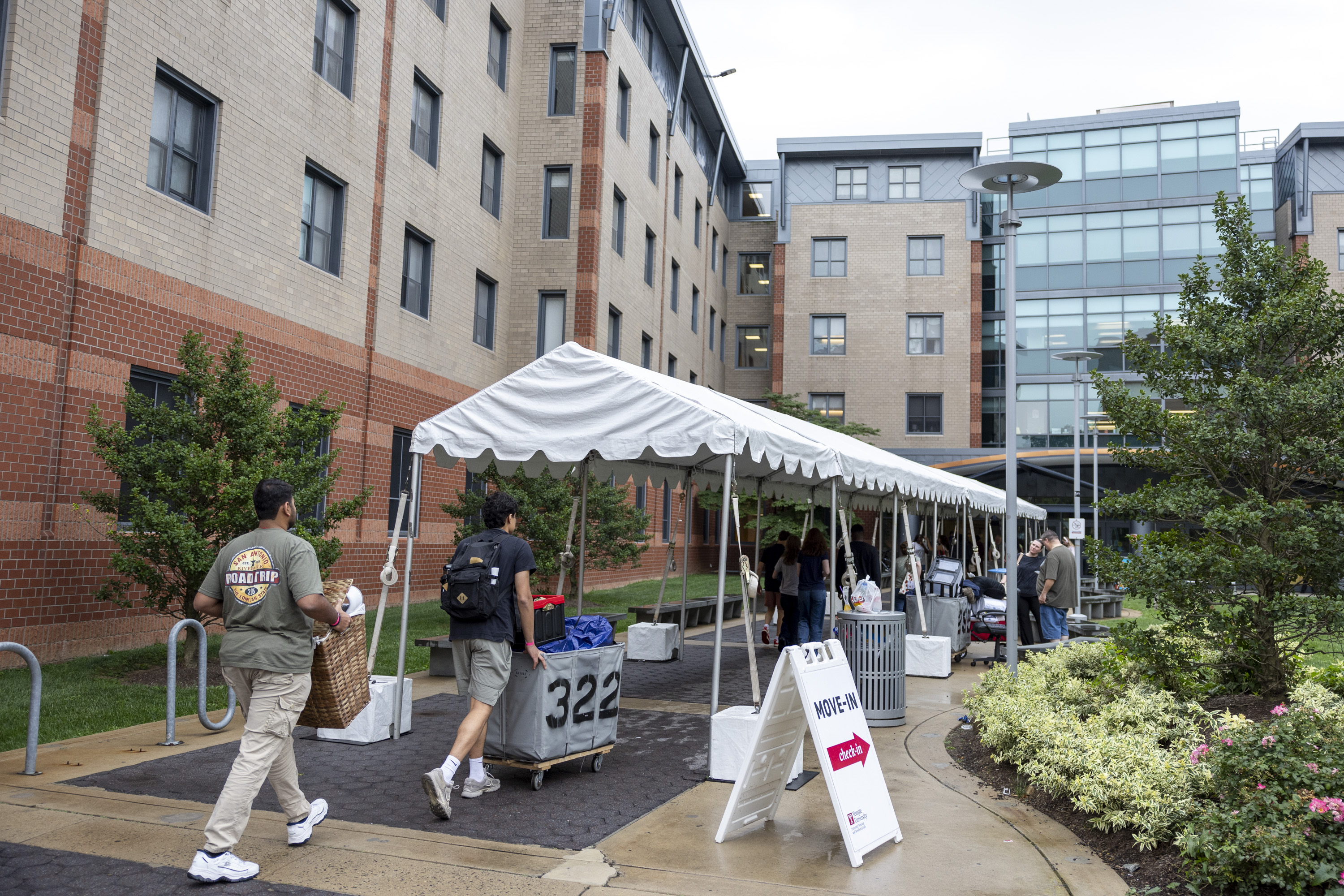
  • Home from college, 2 weeks later

    Home from college, 2 weeks later

    Last month, Daii’yaHnna Fleming posted a video of her move-in day at Southern University in Louisiana. As a bleary-eyed rising freshman, she lugged a half-dozen candy-hued suitcases on her trip from Las Vegas to Baton Rouge. After arriving, she began to settle into her new life on campus, stocking up on school supplies and setting up a side business doing makeup from her dorm room.

    Then the trouble began. The ample walking across campus aggravated her health issues, and Fleming didn’t feel safe commuting to her job near campus. One night, she decided to join friends for an off-campus party. “I had never really been to a party, and I really just did not like it at all,” Fleming, 17, said. “I got really fed up with everything.”

    On the way back to her dorm, Fleming texted her mother and told her she was coming home for good. She had been in college for two weeks.

    In a TikTok video about her decision to switch to her university’s online program, Fleming panned over her dorm room. “I’m not gonna force myself to be uncomfortable and unsafe, ’cause randos think I should be,” she wrote in the caption, adding, “I don’t care about the college experience. I just want my degree.”

    In the thousands of comments underneath her post, as well as under similar viral videos of other students moving out or dropping out and sharing it online, a firestorm of debate has been playing out: Are Generation Z students too unwilling to face discomfort, to the point of missing out on a formative experience? Or are older generations valorizing struggle?

    Though leaving campus early is nothing new — and the rate of college dropouts has declined slightly in recent years — social media has put a magnifying glass on students’ struggles and prompted a wider discussion about generational differences. As they face shrinking federal financial aid and a tough job market with no guarantees, some say they are reconsidering whether college is worth the staggering tuition fees. Others say they are switching to online school or becoming commuter students.

    Many of the videos, like Fleming’s, focus on the mental health impacts, saying they feel anxious and overwhelmed. One student mentioned a towed car and more homework than they expected. Another expressed concern about wasting tuition money on an experience they disliked that affected their mental health.

    The debate touched a nerve.

    In response videos, millennials and Gen Xers have been pleading with students to hold on and tough it out.

    “Everything worth having is not easy,” said Ebony Simpson, a mother of a college sophomore who posted one of those videos.

    She said that students needed to put themselves out there. “It’s for you to sit up and say, ‘Oh, they’re having a cookout, let me go,’” Simpson said.

    Her daughter, Adrianna Bankston, said she struggled as a freshman last year at a Georgia university. The idea of leaving “was a thought that we all had when we first got here,” Bankston, 19, said. She didn’t leave her room much during that first week, she said. But she had a realization: “I need a friend group. I need to go out and do stuff.”

    She pushed herself to meet people at parties and campus events, and she’s learned a lot. “I did have fun,” she said. “I found out not everybody is your cup of tea.” She said she now had a busy social life and great people around her.

    Rates of college dropouts have declined: According to a report from the Education Data Initiative, 22.9% of all students who entered college as freshmen in fall 2024 did not return in fall 2025, down from a prepandemic average of around 24%.

    Yet the videos highlight real issues for those working to fight college attrition. “Kids are not weak,” said Sarah Manville, an assistant dean and adviser at Case Western Reserve University in Cleveland. “They’re extremely resilient — but there’s something about this phenomenon that they cannot persist through.”

    Feeling homesick in the first few weeks is normal, but Manville said she noticed some younger students were reluctant to seek help. “My concern is students are not giving themselves enough of a chance to be successful,” she said, “and that’s where I think that fear-based decision making comes in.”

    Michael Williams, a New York City-based college access and success professional, said, “I’ve noticed a definite dip this year and last year, compared to prior years, in how socially adjusted and how much, like, social emotional competency this set has compared to the prior classes.”

    Students also face grim job prospects, amid worries of artificial intelligence encroaching on entry-level jobs, and steep tuition. “The barriers to entry just keep compounding in this particular moment,” Williams said.

    The costs of dropping out or moving home will vary from school to school, but student loans are generally easier to cancel in the first two weeks.

    Fleming said she had not yet paid the fee for room and board for this year. Another student who posted a video on TikTok said in a comment that she had received a refund from her university after leaving.

    Back home in Las Vegas, Fleming said she felt good about her decision: “If I would have stayed longer, it would have made everything harder.”

    She’s doing well in online business management classes and has dreams of law school. But she hasn’t discounted the idea of returning to Southern: She’d like to spend more time with her suite mate, who’s now a close friend, and other classmates she met from her stint in Baton Rouge. But if she returns, perhaps next year, she plans to live off campus.

    This article originally appeared in The New York Times.

  • Trump has repeatedly promised payments that have yet to materialize

    Trump has repeatedly promised payments that have yet to materialize

    First, at the start of his second term, President Donald Trump promised a DOGE dividend, a pledge to take the money that Elon Musk’s team would cut from the federal budget and send it to the American people.

    Then Trump moved on to a “tariff refund,” a plan to use the money the government was collecting in import taxes to fund payments for the public.

    Those ideas never panned out. Nevertheless, Trump is again talking up the possibility that the federal government will send Americans thousands of dollars in cash. At the Republican midterm convention in Dallas on Wednesday, the president pledged that every American adult would receive $5,000 if Republicans retain control of Congress in November.

    Trump did not offer many details about the proposal, but there’s reason to think that Republicans in Congress, like they did with his two previous promises of quick cash, could shrug off the president’s suggestion.

    That’s in no small part because the $5,000-per-American promise would be enormously expensive to fulfill, with a price tag over $1 trillion. Its actual cost, though, would depend on what, if any, eligibility requirements Congress would ultimately impose on the plan. Trump did not mention a proposal to finance the $5,000 payments, which beyond their fiscal cost could also prove inflationary.

    The conceit of Trump’s other pitches was that the money to pay for them was already available, from Musk’s so-called Department of Government Efficiency or tariff revenue. On both of those fronts, though, the envisioned funding sources proved illusory: Musk’s team did not save the government much money, and the Supreme Court struck down many of Trump’s initial tariffs.

    Republicans did succeed in providing Americans with substantial cash payments when they cut taxes last year. Under the design of the tax law, many Americans first experienced the policy change in the spring, when they received larger-than-usual tax refunds. Trump and Republicans have spent much of the year promoting those refunds, hoping that the larger lump-sum payments would be politically resonant before the midterms.

    But even after Trump delivered those tax refunds, his approval poll ratings are still sagging.

    Those tax cuts were also very expensive, though Republicans did cover some of the fiscal cost by reducing federal spending on healthcare and food assistance for poor Americans.

  • Inside Ardmore’s massive ‘meat palace’ | Inquirer Lower Merion

    Inside Ardmore’s massive ‘meat palace’ | Inquirer Lower Merion

    Hi, Lower Merion! 👋

    Can you have too much Wagyu? Inquirer food critic Craig LaBan contemplates whether that’s the case at the recently opened OGYU in Ardmore. Also this week, charges have been brought against a man who allegedly stole nearly $800,000 in jewelry from two township homes, a Bala Cynwyd native continues to imprint his vision on the Jersey Shore, plus the school board will consider an embattled member’s resignation.

    If someone forwarded you this email, sign up for free here.

    Does OGYU serve too much of a good thing?

    The Miyazaki ribeye at Ogyu.Tyger Williams / Staff Photographer

    When Inquirer food critic Craig LaBan paid a visit to recently opened Japanese restaurant OGYU in Ardmore — or as he calls it, “a 300-seat meat palace” — he was determined to try as much Wagyu as he could.

    But he soon found that in the case of the all-you-can-eat joint, there might just be too much of a good thing.

    While one cut of Wagyu rib cap, which arrived in a showy box billowing with smoke, was rich and tender, preparing it himself on a tabletop grill meant the finished product fell flat.

    Other dishes, however, impressed, including the New Zealand lamb chops, the “Meet Wagyu” nigiri, and the A5 ribeye.

    At the end of the day, does dining there add up to “a luxury experience the $120 check average should command?”

    Here’s LaBan’s verdict.

    💡 Community News

    • A 24-year-old Philadelphia man, Jabir Parker, was charged last week with several alleged burglaries, including two in Lower Merion, where police said he made off with nearly $800,000 in stolen jewelry.
    • Eustace Mita continues to put his fingerprints on the Jersey Shore by way of his Icona Resorts. The Bala Cynwyd native’s next project includes a $200 million proposed redevelopment of Wonderland Pier. The Inquirer’s Erin McCarthy looks at how he’s shaped the Shore and what’s still on the horizon.
    • Former Bryn Mawr resident Joan E. Lynaugh died this summer at the age of 90. Lynaugh was a pioneering primary care and nurse practitioner and an award-winning professor emerita of nursing at the University of Pennsylvania.
    • Filmmaker M. Night Shyamalan, who grew up in Penn Valley, has launched a new YouTube series. In the first episode, he takes viewers back to the era of one of his early films, Signs.
    • Bryn Mawr Hospital and Lankenau Medical Center, both owned by Main Line Health, earned high marks in the latest U.S. News Best Hospitals by Specialty ranking. Bryn Mawr was recognized in eight categories, including colon cancer and prostate cancer surgeries, while Lankenau scored top marks in 11 categories such as back surgery, and hip and knee replacement surgeries.
    • Spring Mill Road will be closed weekdays between Old Gulph and Conshohocken State Roads tomorrow through Tuesday from 9 a.m. to 4 p.m. for storm sewer replacement.
    • Expect work near the Narberth Avenue bridge over the next six to eight weeks, with overnight construction slated for Sundays through Thursdays from 9 p.m. to 5 a.m.

    🏫 Schools Briefing

    🍽️ On our Plate

    • Looking for a great rooftop spot to dine before summer comes to a close? Chef Nicholas Elmi’s Bala Cynwyd restaurant Lark is one of the best destinations in the region, according to The Infatuation.

    🎳 Things to Do

    🍂 Harvest How-To for Natural Holiday Decor: Learn how to gather, preserve, and use natural materials for decor. ⏰ Friday, Sept. 11, 10 a.m.-12:30 p.m. 💵 $25 for members, $30 for non-members 📍 Stoneleigh

    🎶 Narberth Music and Arts Festival: There will be live music, food, drinks, and a makers market. ⏰ Sunday, Sept. 13, noon-7 pm. 💵 Pay as you go 📍 Forrest and Haverford Avenues

    😱 Scream: Get in the spooky season spirit with a screening of the 1996 horror movie. ⏰ Monday, Sept. 14, 7 p.m. 💵 $11.75-$16.25 📍 Bryn Mawr Film Institute

    📖 One Book, One Lower Merion: The township-wide reading initiative features Harlan Coben’s new book, Plot Twist, and includes a Q&A with the author. ⏰ Tuesday, Sept. 15, 6 p.m. 💵 $40 📍 Welsh Valley Middle School

    🎷 Montco Jazz Fest: Now in its fifth year, the festival features performances at 20 venues throughout the county. ⏰ Tuesday, Sept. 15-Sunday, Sept. 20, times vary 📍 Locations vary

    🏡 On the Market

    An updated six-bedroom Bala Cynwyd Colonial

    The home has an eat-in kitchen with a fireplace that flows into a great room.Courtesy of Israela Friedman/Berkshire Hathaway Home Services Fox & Roach, Realtors

    This 1930 center hall Colonial has undergone a number of updates, blending past and present. The first floor features an open-concept kitchen, dining area, and great room with a fireplace, all near to a secondary prep kitchen. There’s also an office, a dining room, and a living room on the first floor. The home’s six bedrooms are spread across the upper levels, including the second-floor primary suite, with a steam shower and whirlpool tub. There’s an open house today from 5 to 6 p.m.

    See more photos of the home here.

    Price: $985,000 | Size: 3,803 SF | Acreage: 0.2

    🗞️ What other Lower Merion residents are reading this week:

    By submitting your written, visual, and/or audio contributions, you agree to The Inquirer’s Terms of Use, including the grant of rights in Section 10.

    This suburban content is produced with support from the Leslie Miller and Richard Worley Foundation and The Lenfest Institute for Journalism. Editorial content is created independently of the project donors. Gifts to support The Inquirer’s high-impact journalism can be made at inquirer.com/donate. A list of Lenfest Institute donors can be found at lenfestinstitute.org/supporters.