Category: News

  • Families grieve in the ruins of an Iranian school where a U.S. strike killed dozens of children

    Families grieve in the ruins of an Iranian school where a U.S. strike killed dozens of children

    MINAB, Iran — The sun set over this southern Iranian city, and Heydar Sadeghi was where he can be found almost every evening: on a bench next to the shattered remains of his grandson’s school. His face was soaked with tears.

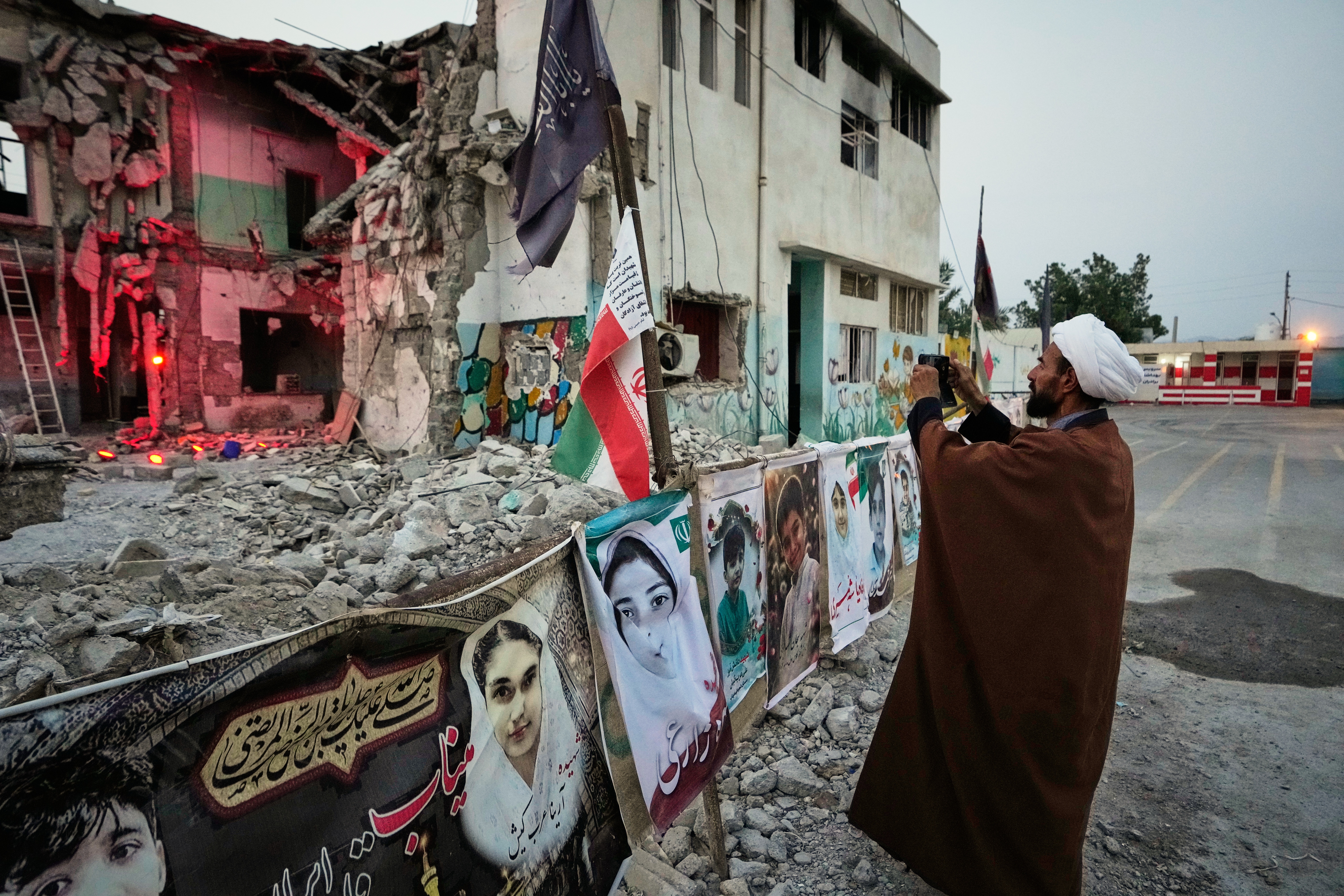
    A banner strung around the rubble showed the faces of children and teachers killed here by an American airstrike on Feb. 28, the first day of the war on Iran. Among them are Sadeghi’s 11-year-old grandson Hami and the boy’s mother, Neda Salehizadeh.

    “I searched the bodies for my kids, thinking maybe one would be among them,” Sadeghi said Monday evening as he recounted how he rushed to the school in the moments after the explosions. He called out their names, saying, “’Come with me! I’ve come to get you.’ They weren’t there,” he said, weeping.

    The Shajareh Tayyebeh school has become a place to wrestle with grief and preserve the memories of the dead. Here, relatives try to comprehend the incomprehensible — how around 120 of their children could be snuffed out, just after they’d been dropped off for a day of classes.

    At least one U.S. missile hit the school that morning in Minab, according to an Associated Press investigation, but there has been no final accounting of what happened. Iranian state media have said 168 people were killed in the strike, most of them children.

    The Trump administration has yet to directly accept the blame or release findings of a Pentagon investigation into the bombing.

    A grandfather grieves every day

    For Sadeghi, the day of the strike began as every school day did.

    He drove Hami and the boy’s 9-year-old sister Nila to school along with their mother, his daughter-in-law Salehizadeh, who was a teacher. As usual, he planned to pick them up at 1 p.m.

    “But the bell was rung early — by Trump,” he said.

    Hami was a fifth grader who loved soccer and riding his bicycle, Sadeghi said. His body was so mangled in the blast, they could only identify him from the clothes he was wearing, he said.

    Nila was pulled alive from the rubble.

    “Thank God, she is physically fine,” Sadeghi said. “But mentally, no.”

    The girl and her father have moved in with Sadeghi and his wife. The slightest, unexpected noise frightens her. She often goes to bed in her grandmother’s arms but lies awake for much of the night.

    Sadeghi said he often invites Nila’s friends to come spend the night, hoping their presence will distract her.

    He wants to see Nila smile. So he grieves here at the school away from her.

    “I come here and cry,” he said. “Then I go home and dance in front of the girl.”

    The site is becoming a memorial to the dead

    The school had a girls’ school upstairs and a boys’ school and preschool on the ground floor. Some of the students were children of officers at a Revolutionary Guard base located next to the school; many were local children from Minab, which is populated predominantly by members of Iran’s Baluch ethnic minority.

    The banner at the site listed 120 students killed — 47 girls and 73 boys — and 26 teachers and staff. Three more children are presumed dead but their bodies were never found.

    The governor of Hormozgan province, where Minab is located, has said the damaged building would be preserved to be turned into a memorial and war museum.

    Several dozen visitors there Monday evening included relatives of the dead but also out-of-towners who had come to see.

    In a government-sponsored mourning ceremony held every evening, men and women — including one in the Guards uniform — took turns at a microphone, telling wrenching stories about those who died and describing in graphic detail the day of the attack. Some visitors broke down weeping from their accounts.

    A separate section of Minab’s cemetery has also been set aside for those killed at the school. Every grave has a photo of the dead, with a shade overhead and artificial grass around so families can sit with their loved ones. Some lay flowers and prayer beads on the graves. Others bring dishes of “shuleh-zard,” a saffron rice pudding eaten at funerals.

    One teacher tried to protect her students

    At the cemetery, Fatemeh Barani sat by the grave of her daughter, Nasim Neyestani, a second-grade teacher at the school. Barani comes several times a week to be with her daughter.

    She thinks about her daughter’s last hours, which school staffers later described to her, and how everything could have turned out differently.

    At around 9 a.m. news came of the airstrikes in the capital Tehran that had hit the compound of Iran’s supreme leader. They didn’t know it at the time, but those initial Israeli strikes killed Ayatollah Ali Khamenei and much of the top military leadership.

    Neyestani was alarmed, fearing wider strikes, and urged the principal to cancel classes and call parents to come collect their children, Barani said, according to what she was told by other staffers. The principal didn’t think that was necessary. But Neyestani began calling the parents of her 22 students herself, urging them to come get their children, Barani said.

    Fourteen of Neyestani’s children were picked up before the strike, Barani said. The parents of eight others did not get there in time.

    Neyestani took the eight children into the schoolyard, her mother said. But the principal told her to take them into the school’s prayer room, thinking it would be safe.

    The prayer room was hit. Barani said her daughter and all eight children with her were killed.

    “My daughter’s classroom was mostly left intact,” she said. “Probably if she had been in that classroom, she would not have been killed.”

    Details of Barani’s account could not be independently verified, but it meshes with other accounts. The AP’s investigation of the strike found that several teachers called parents to pick up their children before Iran’s government ordered schools closed nationwide at 10:15 a.m. The first missile hit the school about an hour later. Accounts of the strikes posted on banners at the school say three missiles struck. The principals of both the boys and girls schools were among those killed.

    A teacher’s mother is overwhelmed with grief

    After the strikes, Barani’s husband and sons went to the school; later, they told her her daughter had been killed.

    They found Neyestani’s bag. But Barani said her sons have hidden it from her because they fear seeing it would only hurt her more.

    Parents of students who escaped the school because Neyestani had called them visited the family to pay their condolences, but Barani said she was so overwhelmed with grief that she doesn’t remember any of their visits.

    She said she still hasn’t been able to enter her daughter’s bedroom.

    She talked about how her daughter, who had not married, was rarely idle. She taught in the mornings and worked as a salesperson at a cosmetics store in the evenings. At home, she stayed busy with her hobby making handicrafts, particularly “minakari,” a traditional art of decorating objects with enamel. The enamel work relaxed her, Barani said.

    The enamels are still there around the house, a reminder of her daughter.

    “Every day, this grief feels fresh again,” Barani said.
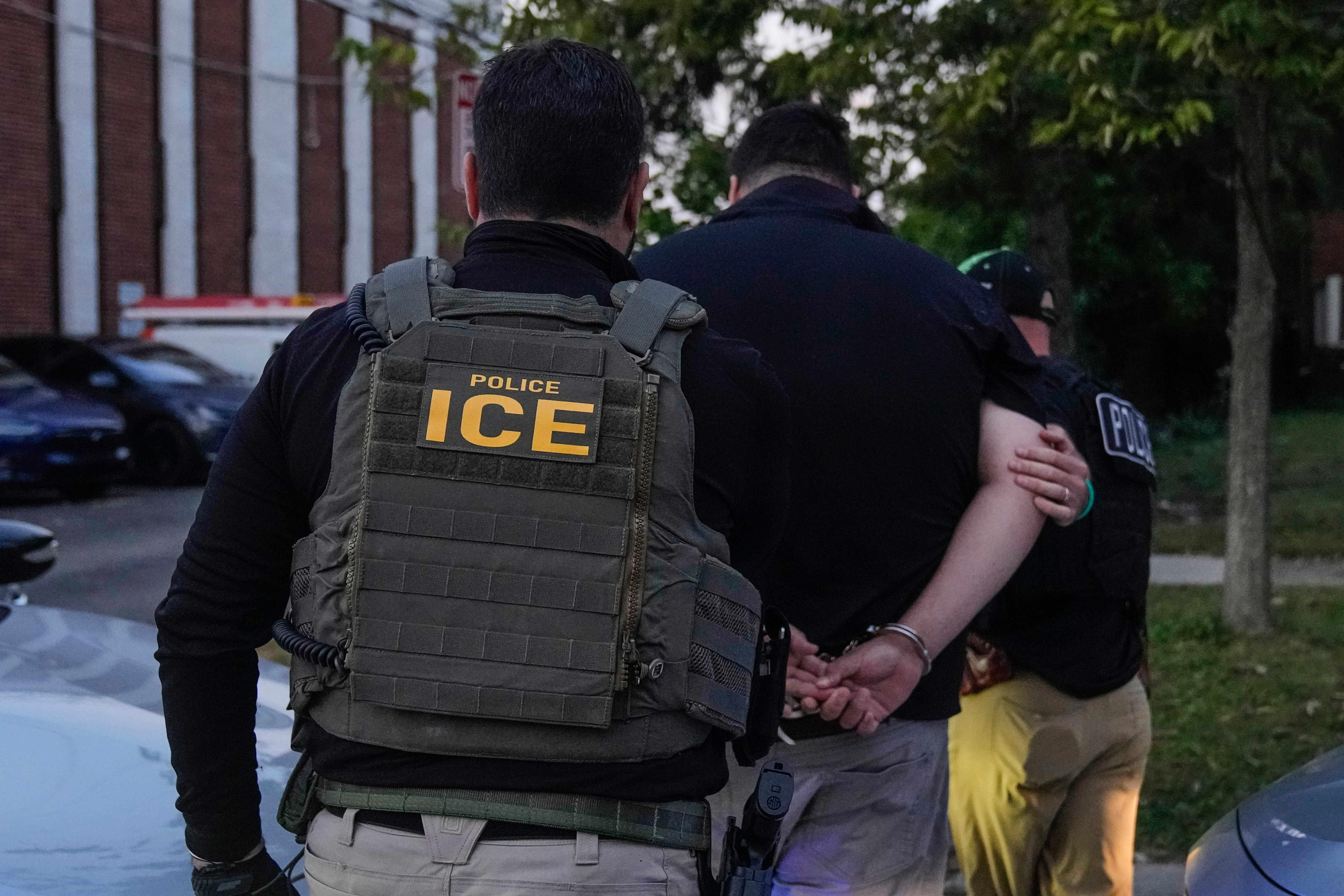
  • ICE arrested nearly 50 immigrant workers in two central Pennsylvania operations, advocates say

    ICE arrested nearly 50 immigrant workers in two central Pennsylvania operations, advocates say

    ICE agents arrested at least 49 immigrant construction workers in two separate operations carried out in the last week in the central Pennsylvania community of Danville, according to immigration advocates.

    All remain in detention, they said.

    The arrests targeted workers who were leaving the construction site at the Geisinger Medical Center, where a patient tower is being built.

    At least 41 people were arrested on Sept. 2 as they left the property around 5 p.m., and eight more were arrested on Tuesday, beginning about 6 a.m., according to Centre County Rapid Response Network, an immigrant-assistance group, and the Pennsylvania Immigration Coalition. The men are nationals from Nicaragua, El Salvador, Honduras, and other countries.

    U.S. Immigration and Customs Enforcement officials could not immediately be reached for comment, nor could those with the Department of Homeland Security.

    The Pennsylvania Immigration Coalition said the arrests represent the largest workplace raid in the state to date.

    In a statement, the Geisinger Medical Center said it was aware of law enforcement activity on Sept. 2 that involved workers from its tower construction project. The activity did not occur on Geisinger property, it said.

    “As with any large construction project, we hire a construction manager to oversee the project,” the statement said. “It is their responsibility to make sure all workers on the project meet all federal and state work eligibility requirements.”

    Immigration advocates said that ICE agents made the arrests with the assistance of Danville police, that workers driving cars were stopped as they left, and that police followed other workers from the edges of Geisinger property to their homes.

    Workers leaving Danville for other parts of the state encountered checkpoints near highway entrances, the coalition said.

    The involvement of local authorities in ICE arrests has been a controversial issue in Pennsylvania, as more police agencies sign on to help enforce federal immigration law.

    The immigration coalition said eyewitnesses to the Sept. 2 operation reported that ICE was using drones, which increased an atmosphere of militarization.

    “We don’t need our local police enforcing federal law. It is not their job and has proven time and again to harm public safety,” said Jasmine Rivera, executive director of the Pennsylvania Immigration Coalition. “ICE and billionaires profiting off federal contracts are making billions of dollars from kidnapping our people. They are terrorizing families and attacking our neighbors who are literally building our communities. We don’t need $240 billion of our tax dollars to go to ICE and [U.S. Customs and Border Protection]; we need that money to make education, healthcare, and housing affordable.”

    Correction: An earlier version identified the construction site by the name of the project designer, which has been deleted from the story. EwingCole does not manage the site and is not responsible for its operations nor the employment of workers there.

  • The WNBA underwent big changes during commissioner Cathy Engelbert’s tenure. Here are the highlights.

    The WNBA underwent big changes during commissioner Cathy Engelbert’s tenure. Here are the highlights.

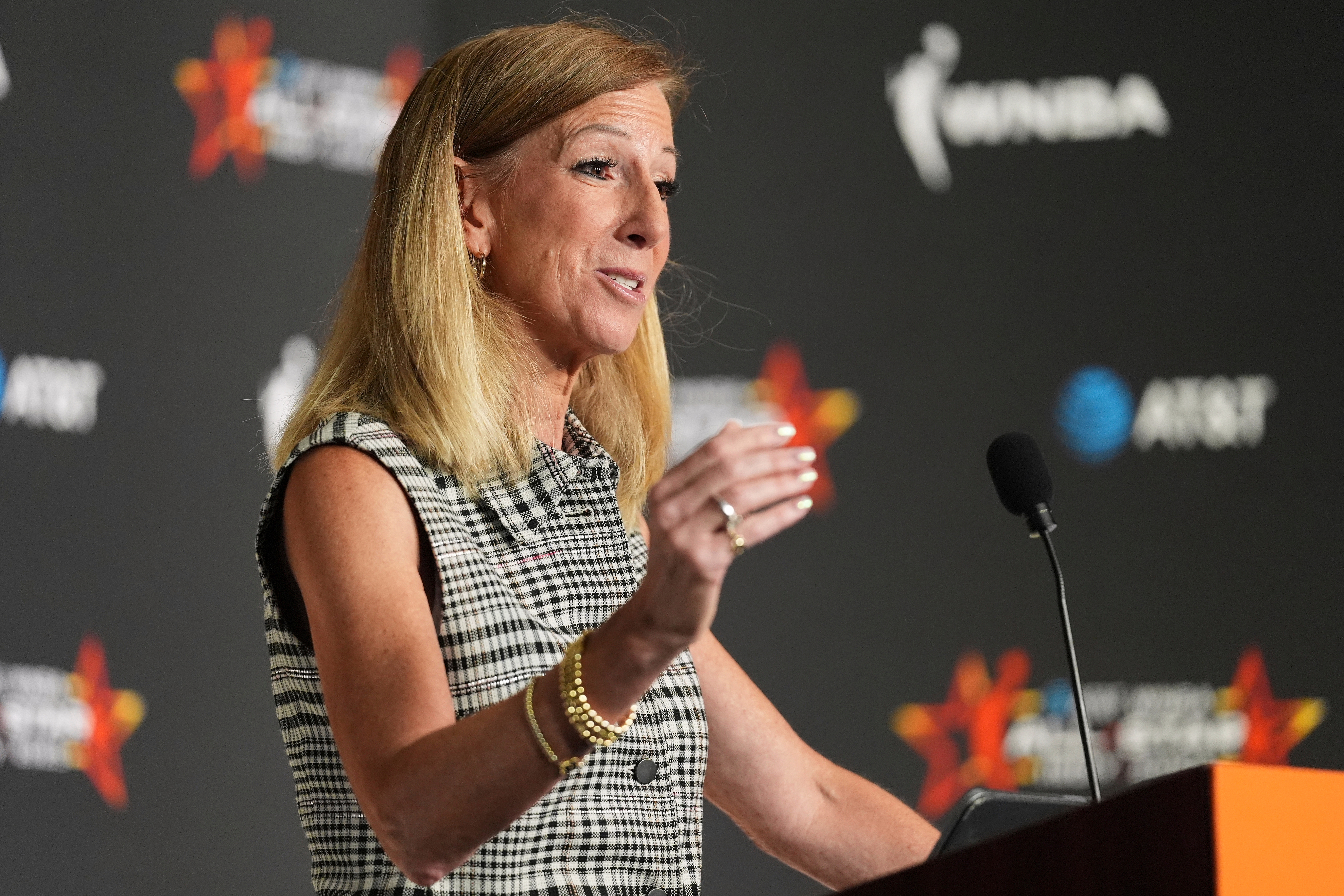
    Cathy Engelbert was hired as WNBA commissioner in 2019, and upon her retirement in December, Engelbert will have overseen the most critical years in league history, shepherding the WNBA through a period of uncertainty into a period of exponential growth.

    The WNBA is one of the fastest-growing leagues in sports, and under Engelbert’s watch, six expansion franchises have tipped off or been announced — including here in Philadelphia — while a new media rights deal and CBA have been signed.

    “Over the years, it has been amazing to watch WNBA players thrive and lead the massive cultural surge around women’s sports,” Engelbert said in a statement. “I retire knowing we have built something bigger, stronger and more enduring than we could have imagined. I am grateful to the WNBA and NBA team owners and staff, players, investors, fans and the powerhouse league office staff, who believed in what this league could become. I retire with immense gratitude and tremendous optimism for the future of the WNBA, with the best yet to come.”

    Here’s a look at her most consequential moves, and where the league goes next:

    2022: Funding round

    Engelbert sold a 16% stake in the WNBA to a group of outside investors for $75 million in cash flow, to be used to fund marketing and infrastructure. Instead of the 50/50 ownership split between NBA and WNBA owners, the split is now 42/42/16.

    At the time, the deal was the largest funding round ever for women’s sports, and Engelbert valued the league at approximately $450 million. The average franchise is now worth approximately $460 million just four years later.

    Sixers managing partner Josh Harris (left), Detroit Pistons vice chairman Arn Tellem, WNBA commissioner Cathy Engelbert, and Cleveland Cavaliers CEO Nic Barlage at a news conference announcing expansion teams for Philly, Detroit, and Cleveland.Jonathan Tannenwald

    September 2023: Expansion

    Starting in 2023 with the Golden State Valkyries, Engelbert began the process of expanding the WNBA for the first time since 2008. It was the first of six successful expansion bids under Engelbert’s tenure, and Golden State now is the league’s most valuable franchise, with an $850 million valuation, according to Sportico. In 2024, two additional expansion teams, in Toronto and Portland, were announced.

    In June 2025, the WNBA announced the addition of three more franchises, to bring the total up to 18: Cleveland to begin play in 2028, Detroit in 2029, and Philly in 2030. All teams were purchased by the corresponding city’s NBA team owner. Cleveland and Detroit were both home to previous, now defunct, WNBA franchises, while Philadelphia will be a WNBA city for the first time.

    “The demand for women’s basketball has never been higher,” Engelbert said in a statement.

    Coming to Philly was personal for Engelbert. She hails from Collingswood, and her parents were Northeast Philly natives. Her dad, Kurt, was a men’s basketball star at St. Joseph’s and is in the school’s hall of fame.

    The WNBA last year also announced the sale and relocation of the Connecticut Sun to Houston. The franchise was purchased by Rockets owner Tilman Fertitta, despite competing bids from Hartford, Conn., and Boston to buy and keep the franchise in New England.

    Caitlin Clark (left) and Angel Reese ushered in a new wave of WNBA fans.Tony Gutierrez

    2024: The Caitlin Clark Effect

    The exponential growth of the WNBA began in earnest with the 2024 WNBA draft, which brought college stars like Caitlin Clark and Angel Reese into the league. Other young stars like Paige Bueckers soon followed.

    Clark, now a standout for the Indiana Fever, raised the bar for college basketball ratings, setting viewership records in 2023 with 9.9 million viewers for the national championship game, in which her Iowa squad lost to Reese and LSU, and the 2024 national title game, with 18.9 million viewers, was the first women’s national title game to outperform the men’s.

    (function(){function e(){window.addEventListener(`message`,function(e){if(e.data[`datawrapper-height`]!==void 0){var t=document.querySelectorAll(`iframe`);for(var n in e.data[`datawrapper-height`])for(var r=0,i;i=t[r];r++)if(i.contentWindow===e.source){var a=e.data[`datawrapper-height`][n]+`px`;i.style.height=a}}})}e()})();

    July 24, 2024: Media rights deal

    Engelbert took advantage of spiking ratings with the expiration of the WNBA’s media rights deal in 2024, signing a new contract worth $3.1 billion, expanding partnerships with ESPN, Prime Video, and NBC.

    “Partnering with Disney, Amazon and NBCU marks a monumental chapter in WNBA history and clearly demonstrates the significant rise in value and the historic level of interest in women’s basketball,” Engelbert said at the time. “These agreements allow the league to continue to build a long-term and sustainable growth model for the future of women’s basketball and sports which will benefit WNBA players, teams and fans.”

    The WNBA set viewership records in 2024, with a record 22 regular-season games attracting at least 1 million viewers. Fever games were the most-watched on ABC, ESPN2, CBS, and NBATV.

    March 24, 2026: CBA

    After a tense negotiation, the new collective bargaining agreement was ratified by players and by the league, increasing player salaries, providing player housing, and adding an expanded benefits package.

    Amid the negotiations, Napheesa Collier described Engelbert as “negligent” and said the WNBA has “the worst leadership in the world” in her exit interviews last season after officiating controversies.

    “This past February, I sat across from [Engelbert] and asked how she planned to address the officiating issues in our league,” Collier said. “Her response was, ‘Well, only the losers complain about the refs.’ I also asked how she planned to fix the fact that players like [Clark, Reese, and Bueckers], who are clearly driving massive revenue for the league and are making so little for their first four years.

    “Her response was, ‘[Clark] should be grateful. She makes $16 million off the court because without the platform that the WNBA gives her, she wouldn’t make anything.’ And in that same conversation, she told me, ‘Players should be on their knees, thanking their lucky stars for the media rights deal that I got them.’”

    Engelbert has also faced player backlash for a perceived lack of attention to threats from toxic fans and sports bettors.

    “I think as one of the main faces of our league, too, it creates a dialogue that needs to be had. It puts pressure on Cathy, who we’ve been begging to step up for us in these spaces,” said Natasha Cloud, a Broomall native and former St. Joe’s star.

    The league recently has run into conflict with former NBA players like Enes Kanter Freedom and figures like Riley Gaines for lacking a policy restricting trans athletes from competing in the league. There are no active trans women in the WNBA, nor are there any serious prospects to be drafted in the near future.

    But that hasn’t stopped figures like Freedom from coming to games and getting into altercations with players on the court, including Cloud. Engelbert said the league is being used as a “political football” by media members who do not watch or cover the league normally, in order to “sow divisiveness.”

  • Trump widens trade war with Canada beyond tariffs. Here’s what to know.

    Trump widens trade war with Canada beyond tariffs. Here’s what to know.

    TORONTO — The United States sharply escalated its trade war with Canada on Tuesday, banning some Canadian dairy products and motorcycles as well as most alcoholic beverages after retaliatory Canadian tariffs took effect on about $20 billion in U.S. goods.

    U.S. President Donald Trump also moved to shut Canadian products out of large, long-term U.S. government contracts, broadening the confrontation beyond tariffs as relations between the longtime allies deteriorate further.

    The outcome could resonate far beyond Canada, showing other governments whether a smaller U.S. ally can withstand Trump’s economic pressure.

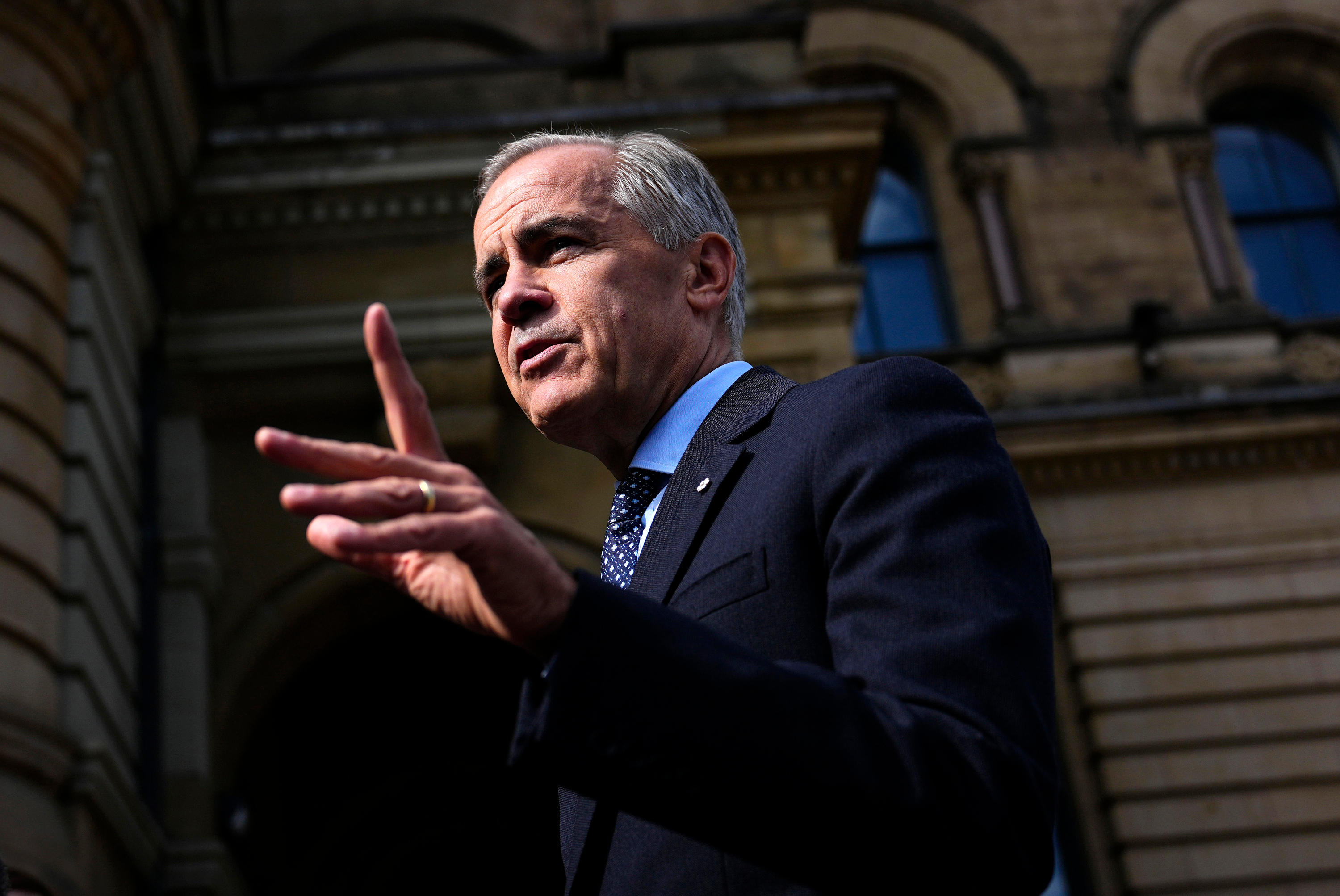
    Canadian Prime Minister Mark Carney says U.S. demands could hollow out key Canadian industries and limit the country’s independence, while Trump’s threats to Canadian sovereignty have rallied the public behind him.

    “Carney and Canada have become symbolic of resistance to him,” Canadian historian Robert Bothwell said. “And what he’ll want to do is make an example of Carney and Canada and theoretically terrify everybody else while in fact showing them that they need to remove themselves even further from the United States.”

    The latest U.S. bans take effect Sept. 29 and cover various Canadian wines and spirits, some motorcycles and mopeds, dairy products including whey, and some types of molasses.

    Here’s what to know.

    Canada retaliates with tariffs on hundreds of US products

    Canada says its tariffs match Washington’s dollar for dollar and rate for rate. They took effect at 12:01 a.m. Tuesday and cover about $20 billion in American goods, roughly 6% of the $333.6 billion the United States exported to Canada last year.

    The tariffs hit hundreds of American products, including steel, aluminum, cheese, appliances, clothing, cosmetics and farm equipment, at rates of 15%, 25% or 50%.

    Canada has already gone beyond tariffs in other ways. Eight of its 10 provinces continue to restrict or ban sales of U.S. alcohol. The Distilled Spirits Council says U.S. spirits exports to Canada fell more than 70% year over year after those restrictions took effect.

    Trump responds with import bans and government-contract restrictions

    The White House responded Tuesday by announcing outright bans on some Canadian products rather than simply imposing higher tariffs. The restrictions on Canadian alcohol, dairy products and motorcycles take effect Sept. 29.

    Some Canadian provinces’ restrictions on U.S. alcohol prompted the U.S. ban on various Canadian wines and spirits.

    Trump also directed the U.S. General Services Administration to declare Canadian products ineligible for large, long-term federal contracts until Canada allows what he called “full and fair reciprocity” for American products.

    Since Canada-U.S. trade talks collapsed Aug. 21, Trump and his administration have unleashed a barrage of tariffs, threats and personal attacks portraying Canada as weak and dependent.

    Trump previously warned that Canada’s economy could collapse if Carney continued treating him as “the enemy.”

    Trump even renamed Lake Ontario “Lake America,” a change ignored and ridiculed in Canada. Google and Apple bent to Trump’s pressure and changed their maps for U.S. users.

    “After renaming a gulf and a lake, maybe the next step for him is to rename a river?” said Daniel Béland, a political scientist at McGill University.

    Trump’s pressure is hardening resistance in Canada

    Trump’s trade war and repeated talk of making Canada the 51st state have fueled anger and rallied support for Carney. Canadians have sharply cut travel to the United States and boycotted U.S. goods.

    The current trade war began after Trump returned to office and imposed a series of tariffs on Canadian goods despite having negotiated and repeatedly praised the North American trade agreement during his first term. Many of those tariffs violate the pact.

    The rupture is especially striking because the countries have long shared one of the world’s closest relationships, with deeply integrated economies, close defense and security cooperation, vast cultural ties and, before relations deteriorated, about 400,000 people crossing the border each day.

    Carney said Tuesday that Canada’s response is increasingly about reducing its dependence on the United States rather than simply weathering the latest tariffs.

    “It’s about ensuring that no country can hold us hostage. And that we can live how we want to live,” he said.

    Carney has said talks can resume when the Americans “stop doing memes, stop throwing shade, stop trying to be tough” and become serious.

    So far, Trump’s pressure has backfired in Canada, strengthening support for Carney rather than forcing concessions.

    Carney is becoming a global voice for standing up to Trump

    At the World Economic Forum in Davos in January, Carney warned that great powers are using economic integration to coerce smaller countries. The speech helped establish him as the leading voice among countries looking for ways to resist Trump.

    Trump responded a day later by saying Canada “lives because of the United States” and warning: “Mark, remember that next time you make your statements.”

    Carney will address the European Parliament next week as Canada explores deeper ties with the European Union that could stop just short of membership.

    “The Canadian public is behind the Carney government and the world is watching what will happen next,” said Béland, the McGill political scientist. If Canada’s defiant approach succeeds, he said, it “could be used as a template” for resisting the Trump administration’s trade policies.

    The fight is also about whether Canada keeps its factories

    Trump has also threatened 50% tariffs on Canadian vehicles, auto parts and steel next year if Canada does not “fall in line,” a potentially devastating escalation for industries built around deeply integrated North American supply chains.

    A 50% auto tariff could hammer Canadian plants and raise vehicle prices across North America because parts and finished vehicles cross the border repeatedly during production.

    Carney says Washington’s terms could leave Canadian industries “gradually wound down in Canada and wiped out.”

    Could Canada actually win?

    Canada starts at a disadvantage: The U.S. economy is roughly 13 times larger, and Canada sends more than 70% of its exports south of the border.

    But Béland said this is not a normal trade fight. He pointed to Trump’s domestic unpopularity, the approaching midterms and court challenges that could undo more U.S. tariffs.

    “Under normal conditions, this would be a very long shot for Canada,” he said.

    But Washington has vulnerabilities too. U.S. refineries rely on 4 million barrels of oil a day from Canada, and American farmers depend heavily on Canadian potash fertilizer. So far, however, Canadian leaders have ruled out using some of that leverage by taxing or restricting critical exports.

    Canada entered this round with some economic momentum. Its economy grew at a 3.2% annualized rate in the second quarter, more than twice the 1.5% pace in the United States.

    Industry Minister Mélanie Joly put the government’s ambition plainly:

    “I’m convinced that we will be able to show the world that Canada will win this trade war.”

  • Three jurors in Clancy trial describe frustration with holdout

    Three jurors in Clancy trial describe frustration with holdout

    It had looked like the end of deliberations in the murder trial of Lindsay Clancy.

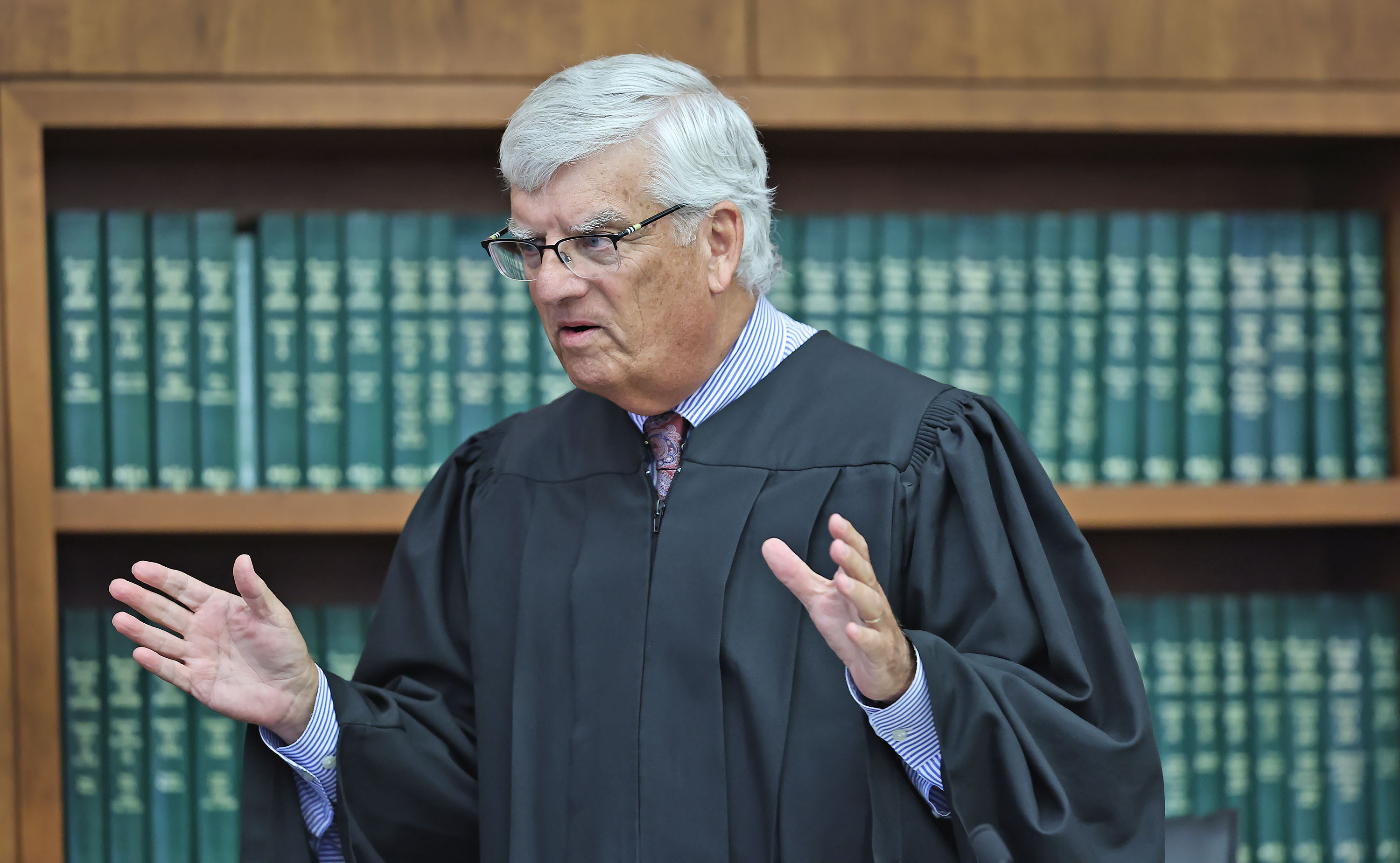
    Eleven of 12 jurors had agreed not to convict Clancy. Then the one holdout “admitted he had reasonable doubt,” the jury’s foreperson, Roni Carlson, said in an interview with television station NBC10 in Boston on Tuesday.

    According to the judge’s instructions, if jurors had considered all the evidence but still had reasonable doubt about the charges against Clancy, they had to acquit her.

    So Carlson, a retired teacher, started to fill out the three verdict forms, she said in the interview. She got as far as writing her signature on each sheet. But then, Carlson recalled, the holdout juror said, “I’m still not going to say that she’s not guilty by reason of insanity.”

    In the first public statements by jurors since the monthlong trial, Carlson and two other jurors opened up about the grueling week of deliberations in which the jury of nine women and three men were deadlocked, prompting Judge William Sullivan to declare a mistrial.

    Clancy has not denied that she strangled her children — Cora, Dawson, and Callan — at their Massachusetts home in 2023. Instead, her trial in Plymouth, Mass., was over whether she should be held criminally responsible for their deaths.

    Her lawyer argued that she had suffered from postpartum psychosis when she strangled her children with exercise bands on Jan. 24, 2023. The prosecution disputed the severity of her condition and said Clancy had planned to kill her children before attempting to die by suicide.

    The three jurors said in a group interview with the station that they believed the evidence showed that Clancy clearly loved her children and repeatedly sought help for her mental health struggles.

    “Everything proved that she loved her children, so she had to have snapped,” Carlson said in the interview.

    The juror who disagreed with the other 11 does not yet appear to have been publicly identified or interviewed.

    One of the three jurors interviewed, Kellie Farina, a chef for a senior center, told NBC10 Boston that the holdout juror “had the hardest time getting off the fact that Lindsay viciously killed her children.”

    The third juror interviewed, Paula Devlin, who works for a defense contractor, said the holdout “completely disregarded” information that nurses on the jury provided to help interpret medical reports from the hospital where Clancy stayed after she killed her children.

    The jurors said that the testimony and evidence presented at the trial were brutal at times. Farina described the 911 call made by Patrick Clancy, Clancy’s then husband, the night the children were killed as “horrific.”

    “When we heard it again in the jury room, we were crying again,” she said.

    The jurors were critical of the prosecution, with Farina describing it as “harsh,” compared with the defense’s style, which she described as “compassionate.”

    Farina said the prosecution presented a lot of medical experts but no witnesses that said Clancy was a bad mother, a factor that weighed heavily with the three women.

    The jurors said that Clancy’s lawyer, Kevin Reddington, was arrogant, but they also found him compassionate and occasionally entertaining.

    The case has deeply divided Americans, with some supporting the prosecution and others — especially women who report negative experiences with the postpartum mental healthcare system — expressing sympathy for Clancy.

    Clancy, who was paralyzed from the waist down after her suicide attempt, is being held at Tewksbury Hospital, a state-run psychiatric facility.

    Prosecutors have not yet announced whether they will retry the case.

    This article originally appeared in The New York Times.

  • Iran signals readiness to escalate fight in face of rising U.S. pressure

    Iran signals readiness to escalate fight in face of rising U.S. pressure

    Iran has signaled that it is willing to escalate its fight with the United States, with senior leaders issuing increasingly sharp warnings in recent days after attacking U.S. warships for the first time.

    The country’s leaders are taking a more aggressive approach as Iran faces mounting economic pressure and they worry that their grip on the Strait of Hormuz is slipping. The U.S. blockade is making it nearly impossible for Iran to ship oil, its main money source. And in effect, Iran sees escalation as the primary leverage it has against the United States.

    The situation, analysts say, raises the risk that a series of recent clashes could reignite a full-blown war.

    On Saturday, Iran said it had attacked two U.S. military vessels with ballistic missiles, prompting U.S. forces to respond by striking three Iranian oil tankers.

    A day later, Mohammad Bagher Qalibaf, Iran’s lead negotiator and the speaker of parliament, told lawmakers that the era of “proportionate responses” to U.S. attacks was over. “From now on, any aggression against Iran’s interests and security will be met with a response that is faster, heavier, and more painful,” he said.

    Soon after, Iran’s security chief, Mohsen Rezaei, announced plans to impose a “restricted zone” for shipping in the Persian Gulf that would go beyond the country’s efforts to control the Strait of Hormuz.

    Iran has largely withstood the heavy military campaign launched by the United States and Israel in February. But the war of attrition in recent months has created an economic threat that is now pushing the government to intensify its rhetoric and attacks.

    A U.S. naval blockade has prevented Tehran from exporting much of its oil, the country’s main source of revenue, making a long-standing economic crisis even worse. On Tuesday, the government raised some gasoline prices because of fuel shortages, a move that is expected to further roil a country already struggling with soaring inflation and unemployment, and a rapidly depreciating currency.

    At the same time, U.S. naval escorts have enabled a trickle of oil tankers to pass through the Strait of Hormuz, undercutting Iran’s closure of the waterway, which has caused global oil prices to rise sharply. The number of ships getting through is small, and the effort is extremely costly for the United States, but it has prevented oil prices from rising further and blunted Iran’s ability to impose economic pain on Washington.

    “How do you regain the momentum? You escalate,” said Farzan Sabet, an Iran analyst at the Geneva Graduate Institute, a research group. Iran will likely attempt to intensify the military confrontation, he said, while seeking to avoid a return to full-out war. “It’s highly damaging, but at the same time, they hope it raises global oil prices or fully recloses the Strait of Hormuz,” he said.

    ‘Make or break moment’

    Senior Iranian officials have said they are open to negotiating a return to the fragile Memorandum of Understanding that halted the war in April and was meant to lead to talks on an Iranian nuclear deal.

    But President Donald Trump has said he has no interest in negotiations, preferring to maintain his strategy of attrition and suffocating Iran economically.

    Iran’s leadership believes that now may be the best moment to raise the stakes, as the U.S. midterm elections in November approach and an unpopular war could hurt Trump and the Republican Party.

    “All signs point to a make or break moment,” said Mohammad Ali Shabani, an Iran analyst and editor of the regional news website Amwaj.media. “I’m not sure the Iranians are going to wait until after the elections to be attacked if diplomacy fails.”

    Iran’s move to strike two U.S. warships with ballistic missiles was a significant escalation, said Hamidreza Azizi, a senior Iran analyst at the International Crisis Group.

    Iranian forces had previously made no serious effort to target U.S. naval ships and seemed reluctant to conduct attacks that could cause heavy American casualties. “These calculations have obviously changed,” he said.

    The U.S. decision to retaliate by striking three Iranian oil tankers — and sinking one of them — was an indication of how seriously Washington took the Iranian attack.

    “Both sides are trying to dictate their red lines and trying to push the red lines of the other side as far back as they can,” Azizi said.

    It was also a recognition that Iran’s military capabilities have evolved. Before the war started, the United States did not think Iran could target U.S. military bases in the region with precision, he said. But in recent months, Iran has shown it can do so, including with a strike on a U.S. base in Jordan in July that killed two American soldiers.

    Iran could become similarly adept at targeting naval fleets, Azizi said.

    Iran has also been very public about its efforts to capture and learn from its enemy’s weapons. On Tuesday, Iran’s state news agency IRNA announced that naval forces of the powerful Revolutionary Guard had seized a U.S. submarine drone known as the Dive-LD. Iran has previously managed to reverse-engineer weapons offered to it by its allies or captured from its enemies.

    U.S. Central Command said the drone was an older model that had malfunctioned and “neither collected sensitive data nor carried any classified sonar or radar equipment.”

    Hours later, a U.S. official said American forces had struck multiple Iranian oil tankers in retaliation for Iranian attempts to strike a U.S. Navy warship for the second time in days. Iranian state media said tankers were hit off the coast of Kharg Island, the hub of the country’s oil industry, and Jask, a port city on Iran’s southern shore.

    Rezaei’s announcement of a new “prohibited zone” in the Persian Gulf was another attempt to ratchet up the confrontation.

    The security chief offered few details about the plan, but Mohamed Ghaderi, a Tehran-based foreign affairs expert, said it was designed to increase the cost for vessels passing through the strait with a U.S. naval escort and warn them they may not be safe even once they do.

    “Compliance with Iran’s new rules can be a condition for safe and consequence-free passage,” he said.

    These escalatory moves come amid fresh regional turmoil, with Iran’s Houthi militia allies in Yemen launching attacks that wounded dozens in the south of Saudi Arabia on Tuesday, and the kingdom vowing to retaliate. Whether coordinated with Tehran or not, renewed conflict in Yemen would help Iran in its goal of putting more pressure on global energy prices.

    Economic crisis

    For Iran’s leaders, what they have called a U.S. “economic war” has become a domestic security risk that has prompted them to take a more aggressive stance.

    A rising sense of economic despair among Iranians could spark a new wave of anti-government protests. Last December, a currency crisis triggered nationwide demonstrations, which security forces crushed with deadly force.

    Iranian officials are anxious that Israel may exploit any discontent to support dissidents or an insurgency, said Hadi Borhani, a professor of Israeli and Middle East studies at the University of Tehran.

    He pointed to recent statements by Israel’s defense minister, Israel Katz, and Prime Minister Benjamin Netanyahu, who said this week that “there is still more to complete. I mean, first and foremost, the toppling of the regime. This regime in Iran — its end is near.”

    The Iranian government does not want to wait for Israel to act.

    “They believe Iran should change the situation, possibly through a more damaging or aggressive move that can raise regional tension,” Borhani said.

    Some Iranian leaders also believe now is a good moment to act because Trump will return to war after the midterms anyway. The president will either feel vindicated by an unexpected electoral victory or feel that he has nothing more to lose by pursuing his own strategy, several of the analysts said.

    Sabet, however, expects that worsening global economic conditions will eventually push the Trump administration to ease tensions.

    Even though the U.S. naval escorts through the Strait of Hormuz have allowed some oil to move, he said, global crude stockpiles are not being replenished fast enough, and natural gas and other critical oil derivatives are not getting through. Those shortages are likely to inflict more pain on the global economy.

    “That is when I see them muddling their way toward some kind of limited or de facto deal,” he said. “Don’t think of it as an MOU plus — think MOU minus.”

    This article originally appeared in The New York Times.

  • Amazon cargo jet pilots appeared to try aborting landing, NTSB investigation indicates

    Amazon cargo jet pilots appeared to try aborting landing, NTSB investigation indicates

    The pilots of the Amazon cargo jet that overran a runway at Miami International Airport on Sunday were not fully in control of the aircraft as it touched down and appeared to have temporarily considered aborting the landing, according to a timeline of the final seconds before the deadly crash that federal investigators unveiled late Tuesday.

    The sequence of events detailed by National Transportation Safety Board investigators likely cost the pilots hundreds of feet of runway length and crucial seconds in the moments before the plane ran off the runway, striking two vehicles as it exited the airport grounds and crossed a public road, killing five before coming to a stop, according to aviation experts who reviewed the timeline.

    “You either land or you go around. You don’t land, attempt to go around, and then get back to landing again, unless there was some mechanical malfunction,” said Steven Arroyo, an aviation expert and retired United Airlines pilot.

    “I have never seen anything like this,” he added of the information that NTSB investigators detailed Tuesday night.

    The NTSB has yet to release a transcript from the cargo jet’s cockpit voice recorder, a readout of which they are expected to publicize Wednesday. Investigators are also expected to interview the aircraft pilots then, according to Jennifer Homendy, the board chair.

    During a news conference late Tuesday night, Chihoon Shin, the lead crash investigator, laid out a timeline of what happened during the last 30 seconds captured by the flight data recorder. Flight data recorders are designed to stop operating when the airplane’s electric power supply is cut off, as would happen during a crash.

    The problems with the landing were apparent from the start of that timeline.

    At 30 seconds out, according to Shin, the plane’s nose landing gear and its right-side main landing gear touched down. At that point, the plane was traveling at nearly 182 mph — faster than what is considered ideal for such planes, according to experts.

    It would take another seven seconds before the pilots applied the brakes, and another four seconds after that before the left-side main landing gear would make contact with the runway, Shin said.

    That touchdown sequence was “really bad,” said Michael O’Donnell, an aviation consultant who previously led the Federal Aviation Administration’s aviation and airport safety divisions.

    “The nose should not hit first,” he explained. “That is an unstable approach right there, and that really tells me that the go-around should have been executed a lot sooner and they weren’t in total control of the aircraft.”

    But perhaps more critical was what the pilots tried to do next. Fifteen seconds before the recording ended — or four seconds after all their landing gear was on the runway — the pilots released the brakes, and appeared to try to increase thrust, in what aviation experts said was a telltale sign of a “delayed decision” to abort the landing.

    The plane was moving at 138 mph when the brakes were released, and “throttles increased to values consistent with go-around thrust,” Shin told reporters.

    The pilots did not idle the throttles and reapply the brakes until 11 seconds before the recording ended, at which point the aircraft was moving at nearly 135 mph, according to Shin. While the brakes remained engaged for the rest of the recording, he added, the pilots never deployed the airplane’s speed brakes, which are flaps located on the wings, or its thrust reversers, both of which could have helped slow the aircraft further.

    “There’s all kinds of red flags with a go-around decision made that late,” O’Donnell said, adding, “If you do the math, that’s a lot of runway that went by while they were doing that.”

    Investigators did not detail how close to the end of the runway the plane was at the junctures they identified.

    “That’s something we still have to determine,” Homendy told reporters.

    But at the ground speeds that NTSB investigators specified, the plane would have been moving down the runway at a pace of about 200 feet per second during those four seconds when the brakes were released.

    It is not clear if those roughly 800 feet, and the lost seconds of deceleration, might have allowed the plane to come to a stop before it struck the vehicles, or have made the difference between life and death for the victims. When the recorder stopped, the plane was still moving at nearly 75 mph, according to Shin.

    But aviation experts said that the pilots’ apparently erratic and conflicting actions in the moments before the crash were perplexing.

    “If you’re going to do a go-around, you absolutely have to commit,” said Pablo Rojas, a lawyer for Podhurst Orseck, a Miami law firm that specializes in aviation accidents, noting that hesitation by the crew cost valuable seconds on the runway.

    This article originally appeared in The New York Times.

  • Memorializing the local pilot who died on 9/11 | Inquirer Chester County

    Memorializing the local pilot who died on 9/11 | Inquirer Chester County

    Hi, Chester County. 👋

    A group of former West Chester University football players rallied to create a monument to their late teammate, who died co-piloting one of the flights on Sept. 11, 2001. We take a look at their lasting tribute. Also this week, charges have been brought in the attempted robbery of Saquon Barkley’s Malvern home, an Exton software firm has expanded its Philadelphia footprint, plus, we take a peek inside a 19th-century West Chester property and its two-story wine cellar.

    If someone forwarded you this email, sign up for free here.

    Remembering Michael Horrocks, the WCU alum who died co-piloting one of the 9/11 flights

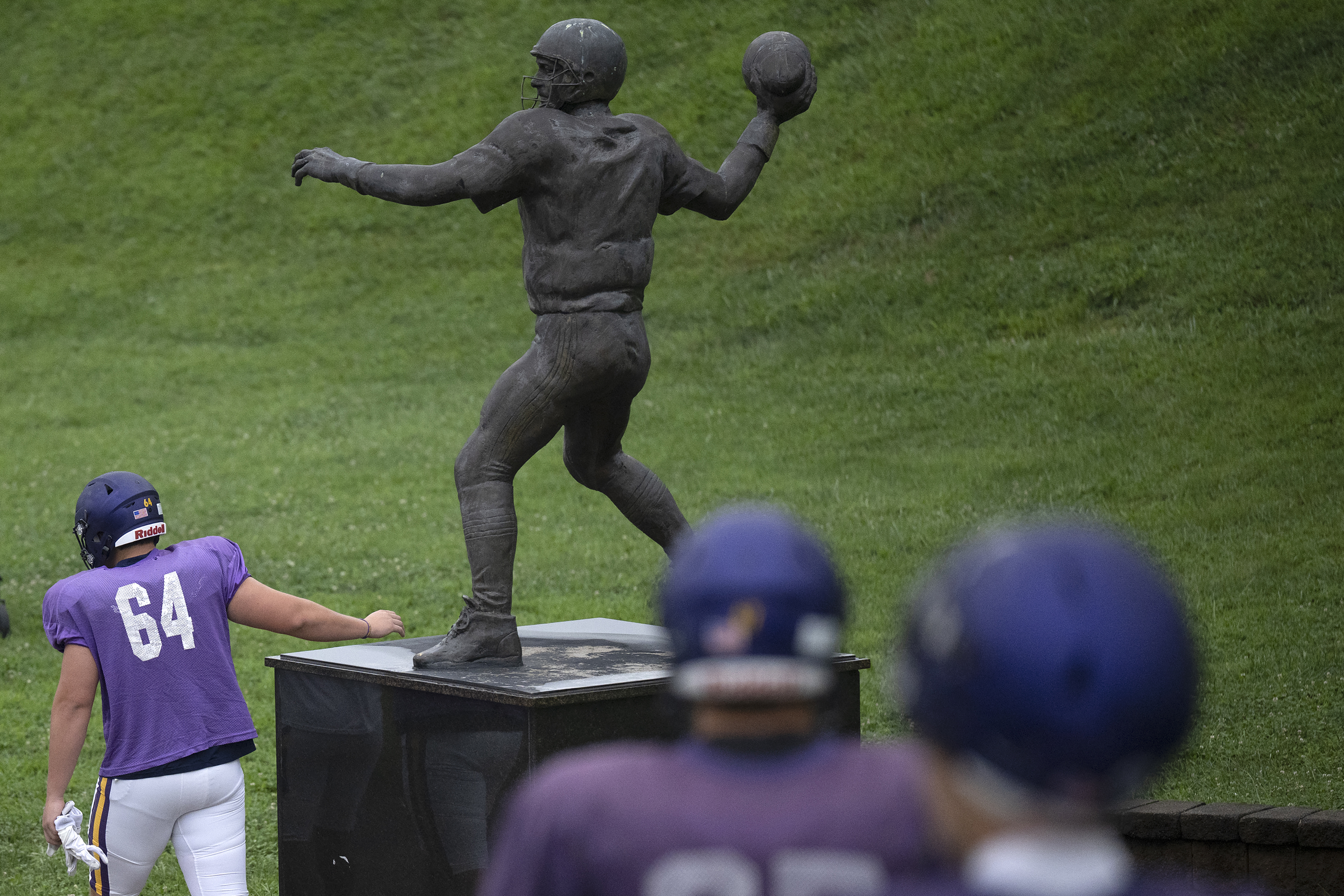
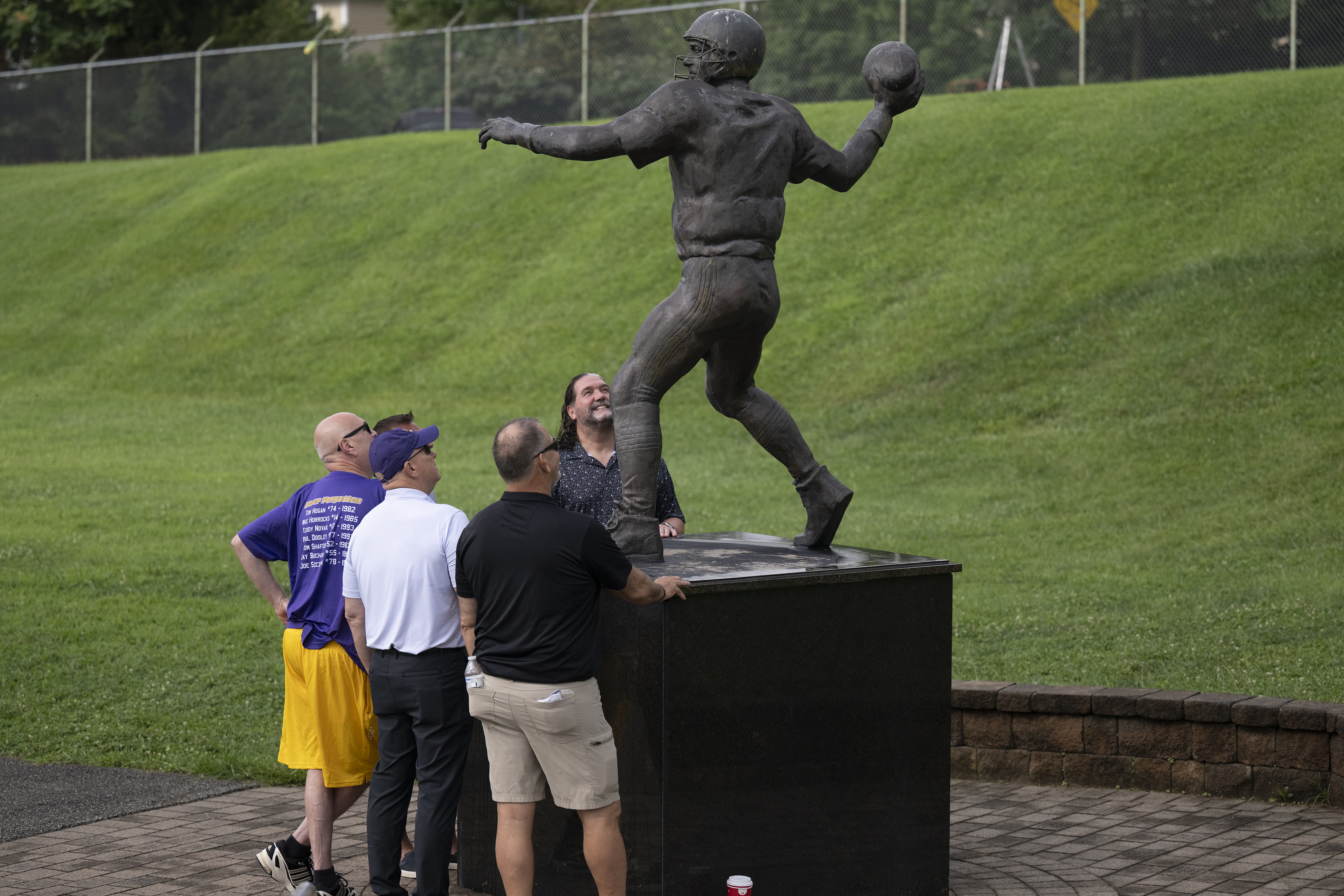
    Michael Horrocks’ former West Chester University teammates continue to pay tribute to their late friend, who died co-piloting United Airlines Flight 175 on Sept. 11, 2001. Jose F. Moreno / Staff Photographer

    In the years after the 9/11 attacks, football players at West Chester University didn’t know Michael Horrocks’ name. That didn’t sit right with his former teammate Tom Schafer, who, after learning the former quarterback died while co-piloting the ill-fated United Airlines Flight 175 that day, made sure that wouldn’t be the case any longer.

    Despite battling cancer, Schafer, along with other former teammates, set out to honor Horrocks with a scholarship endowment and a statue at the Golden Rams’ stadium, which was unveiled in 2010.

    For every practice and game since, players tap Horrocks’ left foot before taking the field, keeping alive the legacy of a man — an illustrious football player, a Marine, and a commercial pilot — none of them would ever know, but who they’d likely never forget.

    The Inquirer’s Alex Coffey looks back at Horrocks’ legacy and how his loved ones continue to honor his memory.

    📽️ Hear from his teammates in this Inquirer video.

    📍 Countywide News

    • Chester County and Paoli Hospitals earned high marks in the latest U.S. News Best Hospitals by Specialty rankings. Chester County was recognized in 13 categories, including colon cancer and gynecological cancer surgeries, while Paoli scored top marks in 12 categories such as lung and colon cancer surgeries.
    • Have an unwanted bike or sewing machine? Chester County Solid Waste Authority is collecting used goods Saturday from 9 a.m. to noon at the West Goshen Municipal Complex. Items will be sent to developing nations and a $20 donation is requested to offset shipping costs.
    • A number of new roadwork projects are getting underway. Here’s where.

    💡 Community News

    • A 24-year-old Philadelphia man, Jabir Parker, has been charged with attempting to burglarize the Malvern home of Eagles running back Saquon Barkley. He also allegedly made off with nearly $800,000 in stolen jewelry from two other homes.
    • Exton-based software company Bentley Systems International has opened a new 22,000-square-foot office in Philadelphia, where 150 engineers and other tech and business staff will work.
    • A nearly 5,400-square-foot West Chester home made of locally quarried stone and complete with a two-story wine cellar and tasting room inside a former ice house is on the market for $3.3 million. Take a peek inside.
    • Educational nonprofit Mighty Writers, which has an outpost in Kennett Square, announced temporary program suspensions and staff furloughs as it faces financial headwinds.
    • Two women died after a single-vehicle crash on East Lancaster Avenue in Downingtown on Sunday. The driver died at the scene and the passenger died later at the hospital.
    • On Saturday, West Whiteland Township police arrested 23-year-old Jordan Uriah Jones, who had been wanted for the statutory rape of a child, corruption of a minor, and unlawful sexual contact with a minor. After an eight-month investigation, police found that he fathered a child with a young girl.
    • Downingtown has named a new borough manager, elevating assistant borough manager and interim manager Corinne J. Badman to the role on a permanent basis. She succeeds Jeffrey A. Smith, who stepped down this summer.
    • A developer is looking to build two industrial flex warehouses on the roughly 15.5-acre property at 979 Octorara Trail in Parkesburg, where there are future plans for a hotel, restaurant, and street extension. West Sadsbury Township’s board of supervisors will hold a public hearing about the proposal at tonight’s 7 p.m. meeting.
    • East Bradford Township’s board of supervisors is expected to discuss an ordinance regarding data centers at tomorrow’s 6:30 p.m. meeting.
    • Work is slated to get underway this week on a monthslong sidewalk project in Toughkenamon. The $782,300 grant-funded project will rehabilitate a portion of sidewalk along Main Street.
    • Discount retailer Ocean State Job Lot, which is known for its selection of household goods and apparel, is grand opening its newest location at the Shoppes at Valley Forge in Phoenixville on Saturday.

    🏫 Schools Briefing

    🍽️ On our Plate

    • The Drift Seafood Kitchen and Raw Bar is now open in Phoenixville. Located at 231 Bridge St., it dishes up a seafood-forward menu of shareable plates, soups, salads, and entrees, in addition to steaks.
    • Opus, an upscale New American restaurant and cocktail lounge at 201 Birch St. in Kennett Square, is hosting a ribbon cutting and community open house tomorrow to mark its debut.
    • Victory Brewing is releasing its newest beer tomorrow. The malty, dry-hopped Borough Brew, a tribute to Kennett Square, has notes of berry, melon, and pear. It’ll be exclusively on tap at Victory’s Kennett location, with $1 from each pour benefiting nonprofit Kennett Collaborative.

    🎳 Things to Do

    😂 West Chester Comedy Festival: Dozens of comedians will perform stand-up at several venues over the course of three days. ⏰ Thursday, Sept. 10-Saturday, Sept. 12, times vary 💵 Prices vary 📍 Various venues throughout West Chester

    🏇 Devon Fall Classic: See equestrian events and explore the country fair, complete with rides and vendors, at this annual event. ⏰ Thursday, Sept. 10-Sunday, Sept. 13, times vary 💵 $10-$20 general admission, $20-$35 for reserved seating 📍 Devon Horse Show and Country Fair grounds

    🎃 Glass Pumpkin Festival: Explore glass-blown works of art, see demonstrations, or make your own. There will also be live music, food trucks, drinks, and an artist market. ⏰ Friday, Sept. 11-Sunday, Sept. 13, 9 a.m.-5 p.m. 💵 $7.18 admission 📍 WGK Glass Art, Toughkenamon

    🏎️ Radnor Hunt Concours d’Elegance: The three-day event includes a barbecue, a road rally, a gala, and a car show. ⏰ Friday, Sept. 11-Sunday, Sept. 13, times vary 💵 Prices vary 📍 Radnor Hunt grounds, Malvern

    🍄 The Mushroom Festival: The annual staple returns, showcasing all things mushroom. There will also be music, cooking demonstrations, and a fire truck show. ⏰ Saturday, Sept. 12, 10 a.m.-6 p.m., and Sunday, Sept. 13, 9 a.m.-4 p.m. 💵 $5 admission 📍 Kennett Square

    🏡 On the Market

    A Chester Springs home with a resort-style backyard

    An aerial view of the home, which has a pool and spa and backs up to nearly 30 acres of protected open space.Keith Conrey/Tohickon Media | Courtesy of Cary Simons/Kurfiss Sotheby's International Realty

    Situated in a cul-de-sac in the Chester Springs neighborhood Haverhill Estates, this four-bedroom Colonial backs up to a large swath of protected open land, giving it extra privacy. Among the home’s features are several living areas with fireplaces: a great room with a bar area and vaulted ceilings; a two-story family room; and a basement family room. The walk-out lower level also has a wine cellar, a gym, space for a fifth bedroom, and a theater room, complete with reclining chairs. Outside, the home has a deck, screened-in porch, a heated pool and spa, plus a cabana with a bar.

    See more photos of the property here.

    Price: $1.75M | Size: 7,166 SF | Acreage: 1.47

    🗞️ What other Chester County residents are reading this week:

    By submitting your written, visual, and/or audio contributions, you agree to The Inquirer’s Terms of Use, including the grant of rights in Section 10.

    This suburban content is produced with support from the Leslie Miller and Richard Worley Foundation and The Lenfest Institute for Journalism. Editorial content is created independently of the project donors. Gifts to support The Inquirer’s high-impact journalism can be made at inquirer.com/donate. A list of Lenfest Institute donors can be found at lenfestinstitute.org/supporters.

  • A century-old bowling alley revival | Inquirer Greater Abington

    A century-old bowling alley revival | Inquirer Greater Abington

    Hi, Greater Abington. 👋

    A local developer is revamping Glenside Lanes with plans that include a concert venue. Also on the radar this week, SPS Technologies agreed to a proposed $5 million settlement in a class-action lawsuit over the massive factory fire that roiled the area last year, Abington is exploring possible early exit routes from its remaining Flock contract, and a revered local writer and teacher died at age 99.

    — Laura Smythe (greaterabington@inquirer.com)

    P.S. We want your feedback! Tell us what you think of the newsletter by taking our survey or replying to this email.

    If someone forwarded you this email, sign up for free here.

    1920s Glenside bowling alley site is getting a concert venue

    Before Glenside Lanes housed a yoga studio, coffee shop, record store, and other local businesses, the building at 2256 Mt. Carmel Ave. was once the site of an early-20th-century bowling alley and billiards hall. Soon, those once-bustling bowling lanes will welcome a concert and event space, too, further restoring the location to its original liveliness.

    The driving force behind the micro-mall’s revival is Kevin Burke, a developer and Glenside native. His work is part of a national trend of investors seeking a blend of retail and experiential businesses to revitalize sleepy post-pandemic commercial spaces. He expects to open a similar multi-use project in Wyndmoor.

    The Inquirer’s Jess Rohan has all the details.

    💡 Community news

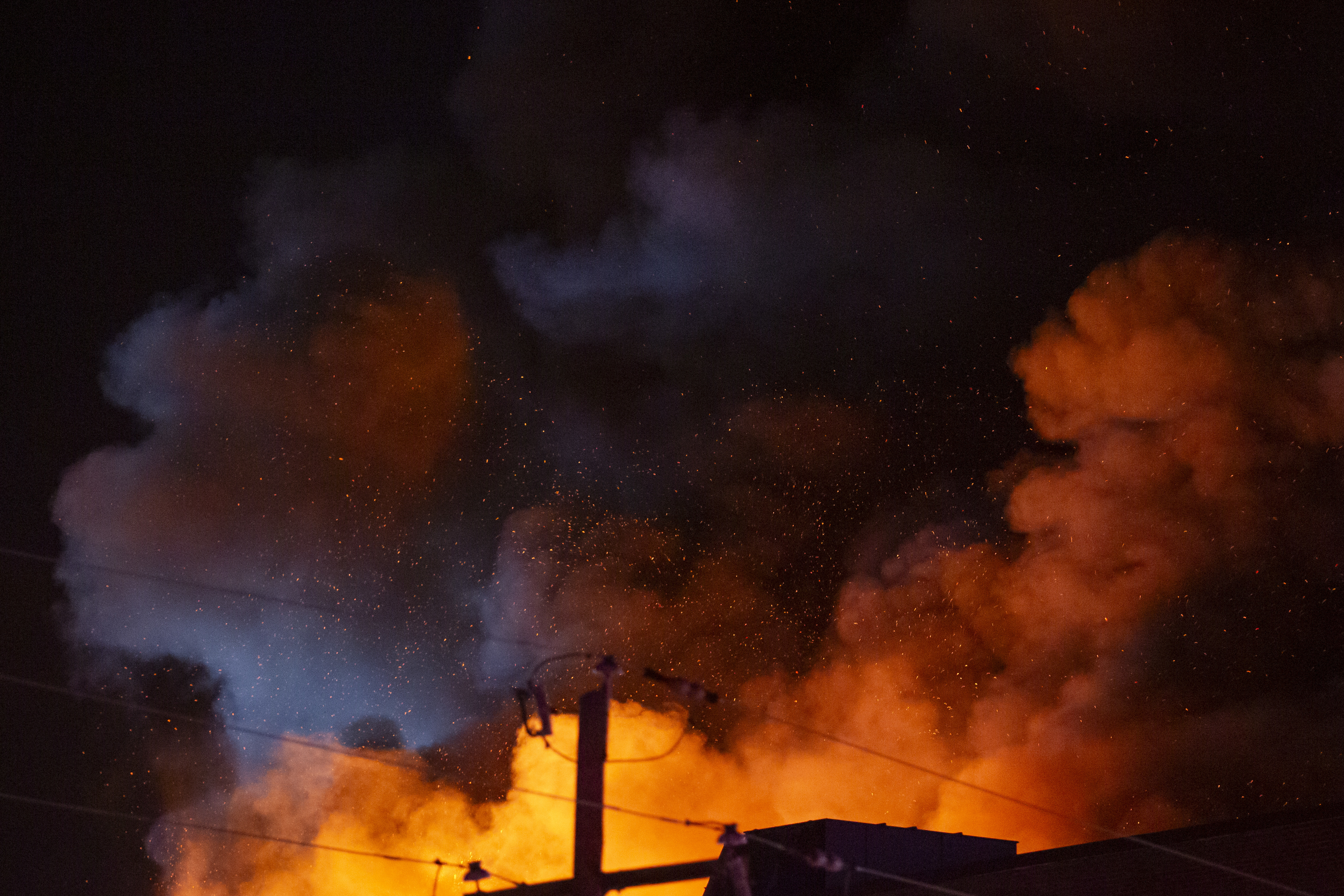
    • SPS Technologies reached a tentative $5 million settlement agreement last week in a class-action lawsuit that could bring payouts to those who were affected by the four-alarm fire at a former Abington Township factory last February. Eligible business owners, employees of impacted businesses, and homeowners can file claims through Dec. 3.
    • Abington Township is looking into how it might exit its remaining contract with Flock Safety early amid data concerns. The news comes after Gov. Josh Shapiro, an Abington resident, last week vocalized “real concerns” about how the technology affects privacy.
    • Longtime Abington resident Bennett Fairorth, a well-known writer and teacher, died this summer at age 99. Former students, including some who planned to celebrate his 100th birthday with him this month, have taken to social media to remember Fairorth, who regularly heard from past pupils during his retirement despite never owning a cell phone, computer, or answering machine.

    🏫 Schools briefing

    • A Tuesday night school board vote considered whether the Cheltenham district would bring former superintendent Brian Scriven a payout in excess of $265,000. Scriven resigned last month amid Cheltenham High School’s football hazing scandal. Reporter Maddie Hanna has the latest.
    • Abington will have a school board meeting next Tuesday night.

    🎳 Things to do

    ✨ Diamond in a Rhinestone World: Paint your own glittering ode to the late country music icon Dolly Parton. ⏰ Wednesday, Sept. 9, 7-9 p.m. 💵 $45 📍 Painting With a Twist, Jenkintown

    🌭 Glenside Food Truck Festival: Fill your belly at this collaborative event from Downtown Glenside, Cheltenham Township, and Arcadia University. ⏰ Thursday, Sept. 10, 5:30-9 p.m. 💵 Pay as you go 📍 Easton Road and Wesley and Glenside Avenues

    🇺🇦 Ukrainian Fall Festival: Celebrate Ukrainian culture at this two-day fete offering food, live music, and kids activities. ⏰ Saturday, Sept. 12, 3-11 p.m. and Sunday, Sept. 13, noon-6 p.m. 💵 $15 on Saturday for those age 13 and up; free on Sunday 📍 St. Michael the Archangel Ukrainian Catholic Church, Jenkintown

    📚 Building Better, Stronger Relationships: Tune into this virtual author talk with conflict facilitator Priya Parker as she unpacks the conflict resolution techniques detailed in her new book The Art of Fighting: The Transformative Power of Conflict. ⏰ Tuesday, Sept. 15, 4-5 p.m. 💵 Free, registration required 📍 Virtual, sign up via Abington Township Public Library

    🏡 On the market

    A 101-year-old English Tudor with eight bedrooms

    Inside 7 Windsor Ave., Elkins Park, Pa.

    This expansive Elkins Park estate dates back to 1925, offering classic details such as hand-carved moldings, French doors, exposed beams, and a window seat. The eight-bedroom, six-bathroom home has two fireplaces, plus a yard, patio, and courtyard.

    See more photos of the property here.

    Price: $950,000 | Size: 5,297 SF | Acreage: 0.52

    🗞️ What other Greater Abington residents are reading this week:

    Correction: Developer Kevin Burke expects to open a multi-use project similar to Glenside Lanes in Wyndmoor.

    By submitting your written, visual, and/or audio contributions, you agree to The Inquirer’s Terms of Use, including the grant of rights in Section 10.

    This suburban content is produced with support from the Leslie Miller and Richard Worley Foundation and The Lenfest Institute for Journalism. Editorial content is created independently of the project donors. Gifts to support The Inquirer’s high-impact journalism can be made at inquirer.com/donate. A list of Lenfest Institute donors can be found at lenfestinstitute.org/supporters.

  • Your fall festival plans | Inquirer Cherry Hill

    Your fall festival plans | Inquirer Cherry Hill

    Hello, Cherry Hill! 👋

    Fall is upon us, and the upcoming Cherry Hill Harvest Festival and bounty of area apple-picking options prove it. In other news, the district’s board of education will soon hold its first in-person forum since the pandemic, a community center commemorates the 25th anniversary of 9/11, and there’s a new daycare option in town for your pup.

    — Laura Smythe (cherryhill@inquirer.com)

    If someone forwarded you this email, sign up for free here.

    Cherry Hill Harvest Festival and apple picking mark a change in seasons

    School’s back in session and Labor Day is in the rearview mirror (though if you’re still rocking white in your wardrobe, we won’t tell). Those are two strong indicators that fall and all of its festivities are upon us.

    The Cherry Hill Harvest Festival is among the can’t-miss seasonal offerings in greater Philadelphia this year, The Inquirer’s Dugan Arnett reports. The family-friendly fete returns to Croft Farm on Oct. 18, bringing free pumpkins, a petting zoo, and upward of 100 vendors to the community.

    Can’t wait to get started on fall activities? We bring you our comprehensive guide on where to go apple picking nearby, including Duffield’s Farm in Sewell.

    Happy fall-ing. 🍂

    💡 Community News

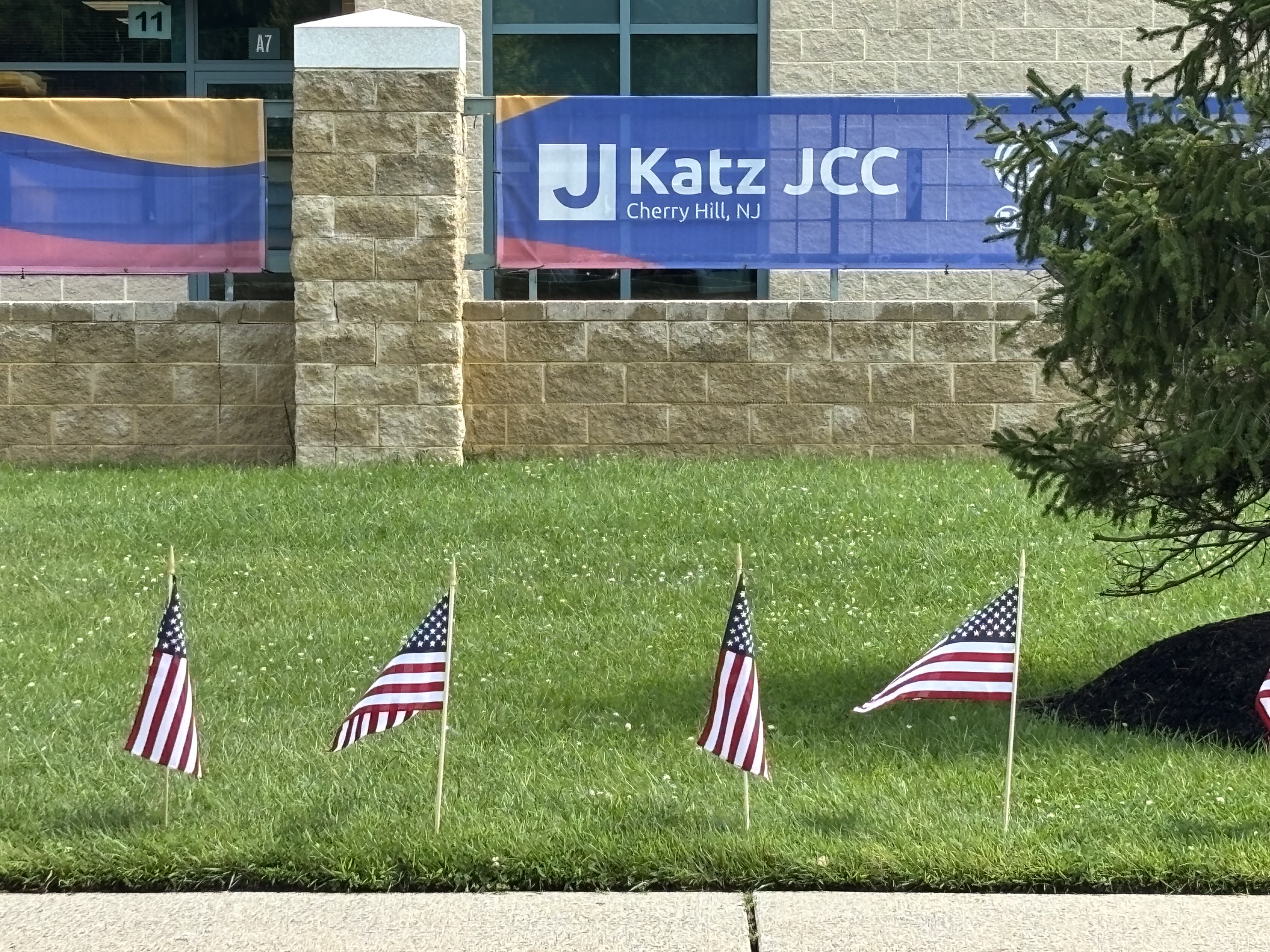
    Flags in commemoration of 9/11 at Katz JCC in Cherry Hill, NJ.
    • Members of the Jewish Federation of Southern New Jersey, the South Jersey Men’s Club, and Jewish War Veterans Post 126 of Cherry Hill lined the perimeter of the Katz Jewish Community Center with nearly 3,000 American flags last week to commemorate the 25th anniversary of the Sept. 11 attacks.
    • Roadwork will cause a few closures through Friday: a full road closure on Kenilworth Avenue between Jerome and Chapel Avenues from 7 a.m. to 3:30 p.m., an overnight full closure on Cropwell Road between Marlowe and Kresson Roads from 7 p.m. to 5 a.m., and a partial westbound closure on Kresson Road between Imperial Drive and Springdale Road from 7 a.m. to 5 p.m.
    • New business alert: A few South Jersey residents opened a Cherry Hill location of Hounds Town USA, a franchise specializing in dog daycare, boarding, and pet spa services.
    • Meet stained glass artist and instructor Risa Dera, who works out of her home studio in Cherry Hill and aims to make artwork affordable for the local community and beyond. South Jersey Local News has the story.

    🏫 Schools Briefing

    🍽️ On Our Plate

    • Asianfresh Food Market’s location in Cherry Hill will debut on Saturday at 11 a.m.
    • Two Cherry Hill eateries are among the best Chinese restaurants in the state, according to NJ.com. The outlet gave nods to Nan Xiang Xiao Long Bao, which has an outpost at Towne Place at Garden State, and Han Dynasty, the Route 70 spot with “irresistible” dumplings. 

    🎳 Things to Do

    🍷 Singles Mixer: Meeting new friends or romantic interests in person can be hard as an adult. Consider taking a trip to nearby Mount Laurel to grow your social circle. ⏰ Thursday, Sept. 10, 7-10 p.m. 💵 $49.74 📍 Carlucci’s Waterfront

    🕯️ We Will Never Forget: Join first responders, Mayor Dave Fleisher, and township officials for a remembrance ceremony on the 25th anniversary of the 9/11 attacks. ⏰ Friday, Sept. 11, 8:30 a.m. 💵 Free 📍 Cherry Hill Fire Department

    💼 South Jersey Job Fair: Hunt for your next gig by meeting with representatives of companies such as Cooper University Health and New Jersey Youth Justice Commission. ⏰ Friday, Sept. 11, 10 a.m.-2 p.m. 💵 Free 📍 Cherry Hill Mall

    🗓️ Looking for more things to do? Check out our guide to ongoing South Jersey events.

    🏡 On the Market

    A ’70s bi-level converted into three distinct areas

    2005 Chapel Ave W., Cherry Hill, NJ.

    This five-bedroom, three-bathroom abode features a unique layout. The house was built in 1978 as a standard bi-level and has since been updated into three individual living spaces, each equipped with its own laundry machines and kitchen or kitchenette. A shared HVAC system and two water heaters unite the three distinct areas of the home, which has a fire pit, deck, patio, and storage shed out back.

    See more photos of the property here.

    Price: $565,000 | Size: 2,718 SF | Acreage: 0.27

    🗞️ What other Cherry Hill residents are reading this week:

    By submitting your written, visual, and/or audio contributions, you agree to The Inquirer’s Terms of Use, including the grant of rights in Section 10.

    This suburban content is produced with support from the Leslie Miller and Richard Worley Foundation and The Lenfest Institute for Journalism. Editorial content is created independently of the project donors. Gifts to support The Inquirer’s high-impact journalism can be made at inquirer.com/donate. A list of Lenfest Institute donors can be found at lenfestinstitute.org/supporters.