Category: News

  • William Nordhaus, Nobelist who influenced climate policy, dies at 85

    William Nordhaus, Nobelist who influenced climate policy, dies at 85

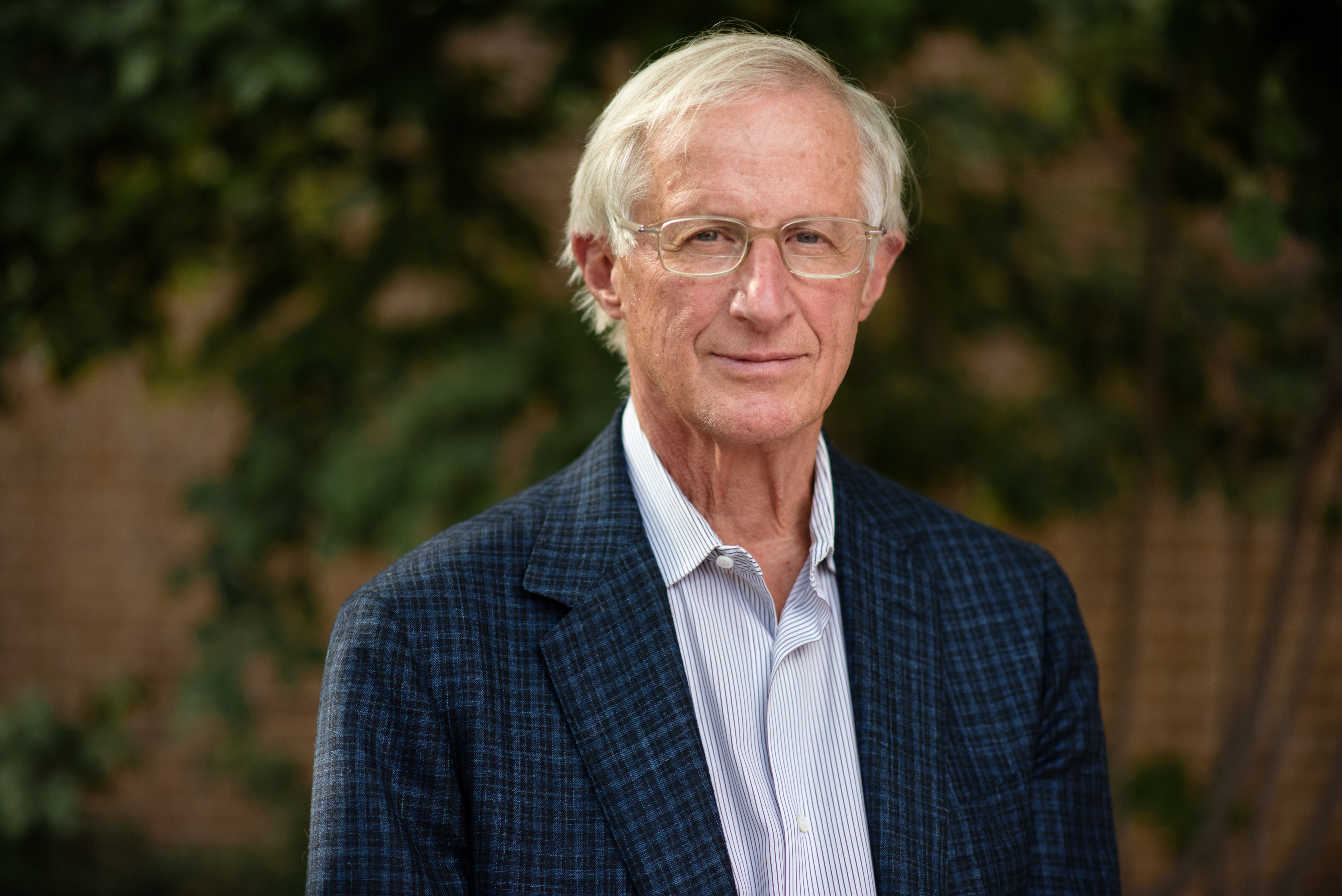
    William D. Nordhaus, a Yale economist and Nobel laureate who tabulated the economic wreckage of carbon emissions and influenced climate policy across several presidential administrations, died Friday at his home in New Haven, Conn. He was 85.

    The cause was glioblastoma, an aggressive form of brain cancer, according to a statement from Yale University.

    In 2018, Mr. Nordhaus shared the Nobel in economic science with Paul M. Romer, an economist at New York University. The Nobel committee cited Mr. Nordhaus’ work in developing a method to balance climate change’s long-term damage with the costs required to contain it.

    The model, which Mr. Nordhaus refined over decades, has underpinned dozens of regulations around the world aimed at limiting fossil fuels and seeded the ground for a new field of research that bridges the gap between economics and earth science.

    “He played a crucial role in terms of bringing consideration of the natural environment into the mainstream of economics, whereas earlier, it was sort of a fringe area,” said Robert Stavins, director of the environmental economics program at Harvard University, who wrote about Mr. Nordhaus’ impact.

    Mr. Nordhaus saw climate change as a clear threat to humankind, but he emphasized that potential damages must be balanced with the economic cost of preventing them. “Climate stabilization would appear enormously expensive,” he concluded, in his initial paper describing the model.

    To deal with the problem efficiently, Mr. Nordhaus proposed a modest carbon tax that would escalate over time. The idea gained support in the 2000s among liberals like Sen. Bernie Sanders (Ind., Vt.) and Republicans such as former secretaries of state James A. Baker III and George P. Shultz, who championed it as a “conservative climate solution.”Ultimately, although carbon taxes have proved politically toxic in the face of corporate opposition and have only rarely been instituted, many countries and subnational governments like states and provinces have set up emissions-trading systems that impose carbon limits and use markets to set prices. One such proposal passed the U.S. House of Representatives in 2009 but died in the Senate.

    Perhaps a more enduring outgrowth of Mr. Nordhaus’ model is a metric called the “social cost of carbon,” which quantifies the benefits of combating climate change. In the Obama administration, it became a fundamental tool for regulating emissions from power plants and vehicles, until the second Trump administration banned its use in rulemaking last year.

    The Nobel was widely seen as a rebuke to the Trump administration, which had at the time begun to dismantle the building blocks of U.S. environmental policy; President Donald Trump has often called climate change a “hoax.”

    Although colleagues found Mr. Nordhaus to be scrupulously apolitical, he gave an interview to the Nobel committee in 2018 in which he decried what he called Trump’s “ludicrous statements about climate change.”

    Winning the prize, he said, “gives a kind of courage and heart to the people who are on the right side of history.”

    William Dawbney Nordhaus, the third of four children, was born in Albuquerque, N.M., on May 31, 1941. His father, Robert J. Nordhaus, was a Yale-educated lawyer for American Indian rights; he also was an outdoorsman who started a ski resort in the nearby Sandia Mountains and helped build a popular tram to bring visitors to the tourist destination. His mother, Virginia (Riggs) Nordhaus, oversaw the home.

    William Nordhaus graduated in 1959 from Phillips Academy in Andover, Mass., and in 1963 received a bachelor’s degree in economics from Yale University.

    In 1967, he completed his doctoral studies in economics at the Massachusetts Institute of Technology, studying under future Nobelists Robert M. Solow, Kenneth Arrow, and Paul A. Samuelson, with whom Mr. Nordhaus continually updated and later took over primary authorship of a widely used textbook, Economics.

    He returned to Yale in 1967 as an assistant professor just as the environmental movement was gaining steam. He became interested in accounting for planetary harms after reading an article in a Trans World Airlines in-flight magazine that criticized the traditional measure of economic output, the gross national product.

    “In the words of a young radical, don’t tell me about your GNP. To me, it’s really Gross National Pollution,” Mr. Nordhaus recalled that it said. “I thought, ‘Wow, that’s really cute. But is it true?’”

    That question launched an effort to quantify the impact of natural resource depletion. The work to reflect the environment in national economic statistics took another step forward in a National Academies of Sciences, Engineering and Medicine report that Mr. Nordhaus led in 1999 and continues today, as governments have tried to supplement official metrics that ignore many aspects of human welfare.

    In the 1970s, awareness of the impact of carbon dioxide on Earth’s climate was just dawning. Mr. Nordhaus hit upon the problem in 1974 during a residency at the International Institute of Applied Systems Analysis in Vienna, where he shared an office with a climatologist who encouraged him to study linkages with the economy. That led to the first known paper integrating carbon emissions into an economic model that estimated what it might cost to limit the fallout for the climate.

    Soon after his return to the United States, Mr. Nordhaus went to Washington, D.C., to serve as a member of President Jimmy Carter’s Council of Economic Advisers. In close communication with his brother Robert, an energy lawyer who wrote key provisions of the Clean Air Act of 1970 and later was general counsel at the Department of Energy under President Bill Clinton, he generated recommendations about how to gauge the economic costs and benefits of proposed regulations. The concept was legally mandated for federal rulemaking processes in 1981, although the criteria have changed with the priorities of successive administrations.

    Back at Yale, Mr. Nordhaus kept working to quantify the implications of climate change for economic growth. It was a lonely project: Few others were studying the question, and when he finished a model that assessed the cost of several approaches to limiting emissions, mainstream economics journals rejected the submission.

    “They didn’t see why this was important. That’s why it was published in Science,” said Lint Barrage, an associate professor of energy and climate economics at ETH Zurich, a public research university, who studied under Mr. Nordhaus and worked with him on later updates to the model. “You don’t stick with that topic and swim against the stream if it’s not something you’re really convinced about.”

    As Nordhaus’ research gained mainstream acceptance, it also came under fire. One challenge arrived in the form of a 2006 report commissioned by the British government that called for a much more aggressive approach to limiting carbon emissions than Mr. Nordhaus had recommended.

    The core dispute was over how much policymakers should value the welfare of future generations compared with that of people now. Mr. Nordhaus wrote a withering riposte, and the question remains central to debates over how much to pay for climate mitigation.

    Another disagreement arose over whether conventional economic analysis could be applied when considering the potentially infinite costs of unlikely but catastrophic climate disasters. This one came from Harvard economics professor Martin Weitzman, to whom Mr. Nordhaus respectfully responded that such scenarios were limited. He would later call Weitzman, who died by suicide in 2019, the “preeminent environmental economist of the modern era.”

    Other criticisms arose over whether the harms from climate change should be balanced with conventional metrics of economic growth, which many see as the wrong yardstick.

    “When he carried out that analysis, his view was, ‘Let the chips fall where they may,’” said Stavins. “As a result, the policy actions and trajectories that he was recommending early on were not as ambitious as many advocates would like.”

    Under the Biden administration, federal climate policy largely abandoned the idea of pricing carbon, favoring subsidies as both more politically palatable and potentially more equitable in shifting behavior. And over time, Mr. Nordhaus adjusted his model to incorporate new science, pushing up his estimate of the appropriate carbon price significantly. Other economists have now constructed their own integrated models that reach different conclusions.

    In 1964, he married Barbara Feise, who later became a psychoanalyst. In addition to his wife, he is survived by three children, Jeff, Monica, and Rebecca; a brother, Richard; a sister, Elizabeth; and three granddaughters.

    Another legacy of Mr. Nordhaus’s work may only now be taking root.

    As international climate diplomacy floundered in recent years, he proposed the concept of a “climate club” of willing nations that would impose trade penalties on nonparticipants. One such effort took effect this year: the European Union’s carbon border adjustment mechanism, which levies tariffs on goods from outside the bloc that correspond with their impact on the climate.

    This article originally appeared in the New York Times.

  • U.S. forces launch new ‘defensive’ strikes in Iran on eve of election

    U.S. forces launch new ‘defensive’ strikes in Iran on eve of election

    U.S. forces on Monday launched a new round of airstrikes on Iran, the latest in a series of American assaults carried out without public disclosure in the run-up to the midterm elections, officials said.

    The most recent strikes targeted Qeshm Island, Iranian territory at the northern entrance of the Strait of Hormuz, officials said, speaking on the condition of anonymity to discuss the operation.

    One U.S. official described Monday’s military action as a “defensive measure” intended to protect U.S. troops from Iranian forces using surface-to-air missiles. Another said the strikes hit Iranian missile launchers.

    It was the latest instance of U.S. forces conducting airstrikes in recent weeks without disclosing them publicly, officials said, a notable break with what had been routine practice earlier in the Iran war. It’s also the latest example of the Pentagon under Defense Secretary Pete Hegseth withholding information that could be politically damaging to him, President Donald Trump, or the Republican Party.

    Speaking Tuesday to reporters about the Qeshm Island attack, Iranian Deputy Foreign Minister Kazem Gharibabadi accused the U.S. of ongoing aggression but expressed commitment to diplomatic negotiations continuing through Qatari mediators. He said Tehran retains the right to self-defense and “is prepared for any scenario,” the semiofficial Tasnim News Agency reported.

    U.S. Central Command, which oversees military operations in the Middle East, last disclosed having carried out airstrikes in September, after U.S. forces attacked five Iranian tanker ships in response to Iranian attacks on a U.S. military vessel. Iran responded a day later by launching a wave of missiles at the Muwaffaq Salti Air Base in Jordan, where U.S. troops are based.

    U.S. forces continued to secretly carry out airstrikes over the past few weeks, officials said, a revelation reported earlier Monday by the Wall Street Journal. The strikes have been defensive in nature and generally focused on targeting Iran’s ability to launch attacks on ships in the Persian Gulf region, the officials said.

    Spokespeople at the Pentagon referred questions to Central Command, which declined to respond to questions Monday night.

    The secrecy underscores the balancing act for U.S. officials as the Trump administration pursued a negotiated end to the conflict with Tuesday’s midterm elections looming.

    Trump had said in a post on social media last month that the United States would “not be attacking Iran at any time prior to the Midterm Elections” while keeping in place a U.S. naval blockade meant to stymie Iran’s oil-based economy.

    For months, Trump and his senior advisers have vacillated between declaring the war over and threatening to dramatically escalate hostilities. The mixed messaging has occurred as the conflict, which the Trump administration initiated along with Israel in late February, has become deeply unpopular with American voters, polling shows.

    A Washington Post-ABC News-Ipsos poll last month found that the president’s approval rating had fallen to a new low, 33%, with 65% of respondents saying it was a mistake for Trump to take military action against Iran. The poll raised several issues related to the war as political problems for the president, including the price of gasoline — an average of $4.17 on Monday, according to AAA Fuel Prices — and inflation.

    Trump, who campaigned on a pledge to launch no new wars, claimed initially that fighting with Iran would be over within weeks. The conflict has instead lasted more than eight months, with the president insisting it was necessary to ensure than Iran never builds a nuclear weapon.

    Trump, speaking Monday, raised questions about whether he’ll launch renewed military action against Iran after the midterms. He described the war in the past tense, saying the U.S. has “done very little fighting” recently after significant fighting in the spring.

    Later in the day, in a phone interview with Fox News, the president said it “was time for us to stop them” when he launched the war and called the conflict a “detour.”

    He left open the possibility of more significant action, saying that the U.S. may still “have to go after Pickaxe,” a reference to the Pickaxe Mountain facility at which Iran has some nuclear facilities.

    “It’s not a big deal,” Trump said. “We can do that in literally one hour, as soon as we want, at any time that we want.”

    Despite continued attacks by Iranian forces, Trump told Fox News that Iran’s military is “gone.”

    He has accused Iranian officials of attempting to influence the U.S. midterms with their actions, saying after the attack on the air base in Jordan in September that the war would end “immediately after the election” because Iranian officials would “like to have it that way.”

    Iran has launched attacks on commercial vessels in the Strait of Hormuz in recent weeks, after the Trump administration earlier touted an effort to guide those ships to safety with the help of the U.S. military.

    The UK Maritime Trade Operations (UKMTO), a British Royal Navy organization that coordinates with civilian mariners, has reported numerous attacks in recent days, including an incident Friday in which a tanker called the RITI was struck with an unknown projectile or mine and caught fire near Oman’s Musandam Peninsula. Twenty-five mariners were evacuated by the Omani navy, officials said.

  • Parts of Florida see half a year’s worth of rain in 36 hours

    Parts of Florida see half a year’s worth of rain in 36 hours

    About half a year’s worth of rain — up to 28 inches — fell along portions of Florida’s Space Coast in just a day and a half, from Sunday afternoon to Monday evening, according to radar estimates.

    “I’ve NEVER seen anything like this,” wrote Tampa-based meteorologist Jeff Berardelli about the event, which was so rare that it had a recurrence interval of more than 1-in-1,000 years in some areas — and it could be a sign of what’s to come as the state braces for an unusually active winter thanks to El Niño.

    Florida officials also scrambled Tuesday morning to move more than 20 polling places that had been impacted by the extreme weather, with the Florida secretary of state’s office publishing a list of locations it said would be moved to “ensure that residents in those areas in affected counties still have the ability to vote.”

    The moved sites are spread across Brevard, Broward, Highlands, Indian River, Martin, Okeechobee, Palm Beach, and St. Lucie Counties.

    On Monday afternoon, Florida Gov. Ron DeSantis (R) declared a state of emergency for seven counties in the eastern and central part of the state that were hit hardest by the multiday deluge.

    These counties, including Brevard, DeSoto, Hardee, Highlands, Indian River, Martin, and St. Lucie, received around 20% to 50% of their annual average rainfall from Sunday afternoon to Monday evening.

    The heaviest rain occurred in a stretch from Palm Bay to Grant-Valkaria in Brevard County, where homes, vehicles, and roads were flooded.

    A weather station in Sebastian, Fla., tallied 7.13 inches in just three hours’ time Monday between 9 a.m. and 3 p.m.

    Valkaria, east of Palm Bay and southeast of Melbourne, logged 11.32 inches between 6 and 10 a.m.

    The historic deluge was triggered by a relatively weak atmospheric disturbance that stretched and stalled over the region from Sunday into Monday.

    To the north of this system, wind flows around a strong area of high pressure — the same one responsible for the mid-Atlantic’s lengthy dry stretch — helped to steer tropical moisture toward Florida from record-warm ocean waters east of the Bahamas.

    Weak winds through the middle atmosphere caused the storms to move slowly, in many cases moving repeatedly over the same areas.

    The fully saturated atmosphere also lead to higher precipitation efficiency — and therefore higher rainfall rates. Generally, part of a raindrop evaporates as it falls. But when the atmosphere is particularly humid, there’s no dry air to erode the drop, and more of the water makes it to the ground.

    Rainfall rates exceeded 4 inches per hour at times.

    Forecasts initially outlined a marginal or slight risk of flash flooding and excessive rainfall — but the idea of feet of rain falling came without warning.

    Even just 15 miles away, barely 2 inches of rain fell. The National Weather Service had issued a flash flood emergency for near Bogalusa, Miss.

    In both episodes, storms also harnessed higher levels of atmospheric moisture that have been boosted by a record El Niño and a warming climate.

    Earth’s atmosphere recently had its most waterlogged month on record during August, followed by another monthly record in September.

    “It’s going to be a long winter in Florida,” wrote Paul Roundy, an atmospheric science professor at the State University of New York at Albany.

    Florida’s dry season runs from October through May, but amid a particularly potent El Niño, midrange forecast scenarios show around 2 feet of total rainfall from this year into next, and the most extreme scenarios indicate up to around 3 feet — about as much precipitation as D.C. receives in a typical year.

    During El Niño winters, both tornado and flash flood activity increase in the Southeast, and especially Florida. El Niño, which begins as a warming of water temperatures in the eastern tropical Pacific, reshuffles the positions of key weather systems across North America. That slings the subtropical jet stream across the southern U.S.; like a conveyor belt of winds and moisture, it pumps humidity into Florida, while simultaneously providing wind shear (changing winds with height) to help generate rotating thunderstorms.

    The closest modern El Niño precedent is the winter of 1997-98, when Florida’s deadliest tornado outbreak struck the Orlando area in February 1998. From November 1997 to March 1998, almost 40 inches of rain fell in Tampa.

    According to data from the Florida Department of Health, the state’s population has grown from about 15 million to over 23 million between 1998 and 2024 — an increase of about 50%.

    That means more people may be exposed to potentially hazardous weather in the months ahead, including snowbirds who head south for Florida’s typically pleasant winter climate.

  • Drexel’s chief financial officer is leaving for a new job amid City Council’s scrutiny of the university

    Drexel’s chief financial officer is leaving for a new job amid City Council’s scrutiny of the university

    Amid ongoing budget tightening, Drexel University’s chief financial officer is leaving for a new top job at Boston University.

    Helen Bowman, executive vice president, chief financial officer and treasurer at Drexel, will start her new role at Boston University as executive vice president on Jan. 1.

    She has worked at Drexel for more than 15 years, joining former Drexel President John Fry whom she had also worked with in his previous presidency at Franklin and Marshall College. Fry left Drexel in 2024 to become president of Temple University.

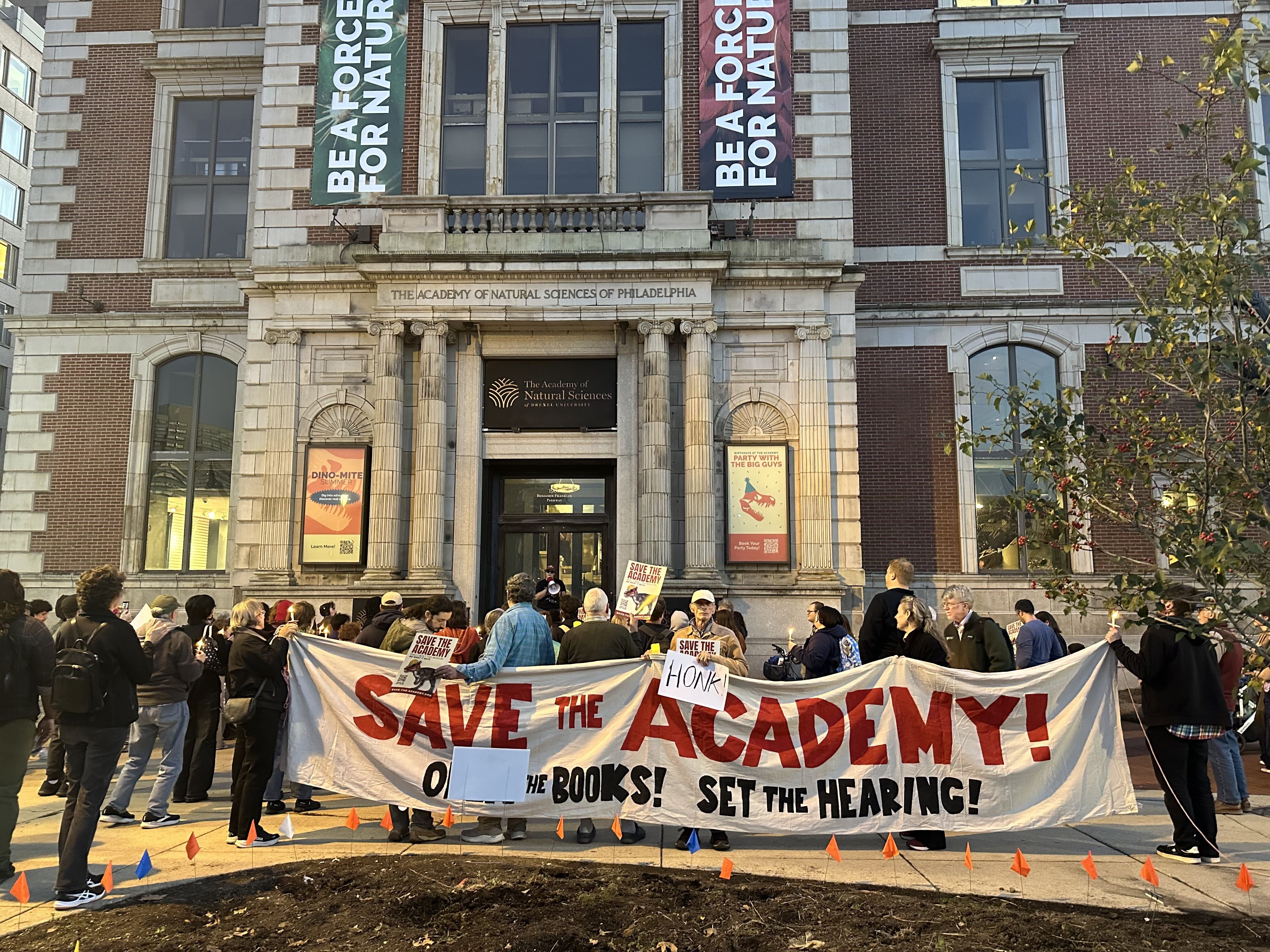
    The move comes as Drexel is facing scrutiny from Philadelphia City Council over its decision to close the Academy of Natural Sciences museum and as the school continues to try to erase a budget deficit. Bowman is on the Academy’s board of trustees.

    “For the past 15 years, Helen has provided critical strategic leadership that has strengthened Drexel’s operational effectiveness and long-term sustainability,” Drexel president Antonio Merlo said in a message to the university’s institutional leaders on Monday.

    Bowman was responsible for overseeing all of Drexel’s financial and investment planning and accounting practices, as well as information technology, facilities, real estate, public safety, and other areas. The endowment grew to over $1 billion during her tenure, Merlo said in the message, and she oversaw the university during particularly challenging times, including the acquisition of St. Christopher’s Children’s Hospital and the pandemic.

    She’s also been at the helm as the university faces criticism for closing the Academy’s museum and giving the museum the ultimatum of coming fully under Drexel or disaffiliating. Drexel leaders have said they can’t afford to continue funding the Academy’s deficits.

    Drexel will develop interim plans for her role before her departure, Merlo said.

    Bowman referred a reporter to Drexel’s communications office for comment.

    “I look forward to partnering with (Boston) President Melissa Gilliam, Provost Colin Duckett, the other senior leaders, faculty, staff, students, trustees, alumni, and external constituencies to advance excellence across BU’s operational and administrative systems,” she said in the Boston University announcement.

  • Voting hours have been extended at three Chester County polling places after delayed opening

    Voting hours have been extended at three Chester County polling places after delayed opening

    After machine set-up issues delayed the opening of three Chester County polling places, the Court of Common Pleas has granted a 30-minute extension of voting hours for those locations.

    Easttown Library at 720 First Ave. in Berwyn, St. John’s Presbyterian Church at 217 Berkley Rd. in Devon, and Goshen Baptist Church at 1451 West Chester Pike in West Chester will each stay open until 8:30 p.m. Votes cast after 8 p.m. will be on provisional ballots, officials said.

    The ballot drop box at the Easttown Library & Information Center will still close at 8 p.m., as will all other precincts in Chester County.

    This suburban content is produced with support from the Leslie Miller and Richard Worley Foundation and The Lenfest Institute for Journalism. Editorial content is created independently of the project donors. Gifts to support The Inquirer’s high-impact journalism can be made at inquirer.com/donate. A list of Lenfest Institute donors can be found at lenfestinstitute.org/supporters.

  • Greenland approves security deal with Denmark and U.S. following months of Trump pressure

    Greenland approves security deal with Denmark and U.S. following months of Trump pressure

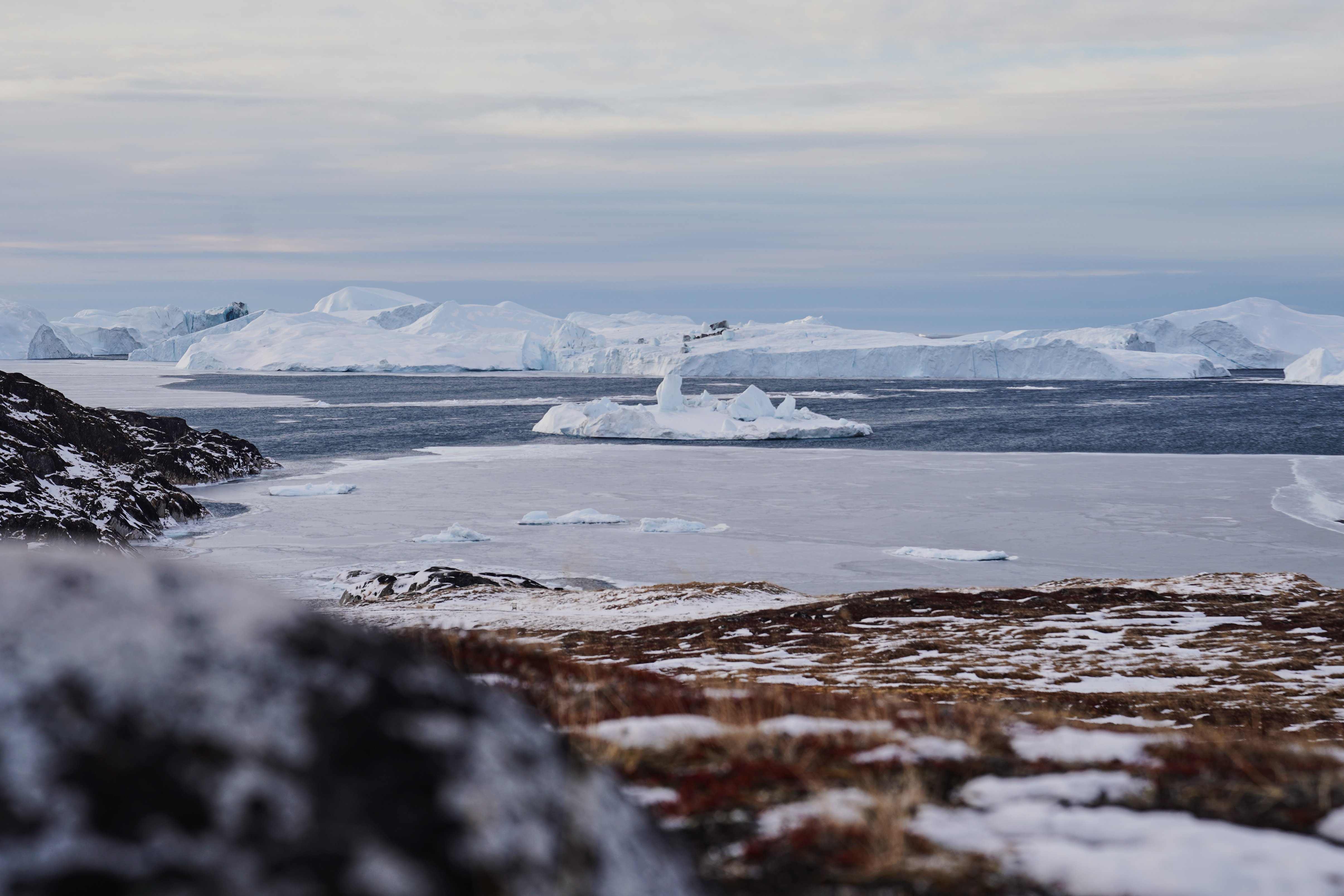
    ILULISSAT, Greenland — Greenlandic lawmakers on Tuesday voted to approve an agreement between the Arctic island, Denmark, and the United States to strengthen security in the Arctic and North Atlantic after months of pressure by U.S. President Donald Trump seeking to control the semiautonomous territory of a NATO ally.

    The trilateral deal paves the way for more U.S. bases in Greenland and eases tensions over Trump’s repeated calls for the vast island to become part of the United States. The agreement’s goal is to bolster the U.S. military presence on Greenland but keep the self-governing island under Danish control. It would still apply if Greenland eventually chooses independence.

    Greenlandic lawmakers voted 16-0 for the agreement, with seven abstentions.

    Trump, Danish Prime Minister Mette Frederiksen, and Greenlandic Prime Minister Jens-Frederik Nielsen signed the agreement in September on the sidelines of the U.N. General Assembly in New York.

    Danish lawmakers are set to debate it later this month. The deal will “enter into force” once the “necessary parliamentary processes of the Kingdom of Denmark, in conjunction with Greenland, have been completed.”

  • Nearly $1.9 billion traded on midterms in booming prediction markets

    Nearly $1.9 billion traded on midterms in booming prediction markets

    Americans had wagered nearly $1.9 billion on the midterm elections as of late Monday, risking money on over 7,000 different outcomes ranging from what a candidate will say in a specific campaign speech to the broad balance of power in Congress, according to a Washington Post analysis.

    Most of the staggering sum, about $1.3 billion, was traded on Kalshi, the Post found, while Kalshi’s main competitor, Polymarket, has recorded about $600 million in trades, according to the analysis.

    The acceleration of these largely unregulated markets into elections — taking bets on the literal mechanics of democracy — shows how deeply they have embedded themselves into American life since they burst onto the scene about four years ago.

    In prediction markets, traders make bets on the outcomes of real-world events, such as which candidate will win an election. The bets pay $1 if the outcome happens, and nothing if it doesn’t. Traders can place multiple bets on the same event in the hopes of securing a larger payout. The price is set by supply and demand — not by a bookie, as in traditional gambling. A bet on an outcome seen as unlikely might cost 10 cents, while a likelier one might cost 90 cents.

    Both markets tend to have similar odds on most questions. Kalshi cautiously predicted the Democrats to win both the House (93% chance) and the Senate (74% chance).

    The total sum bet as of Monday in the midterms is less than in the 2024 election, when more than $3.6 billion was wagered on Polymarket alone on whether Donald Trump or Kamala Harris would win the presidency.

    Because there are multiple trading platforms and users are anonymized, it’s impossible to know exactly how many people — or, often, who — has bet on the midterms.

    That has led to a host of questions and concerns about who can and should be allowed to bet. Prediction markets are already subjected to Commodities Future Trading Commission regulation. Kalshi has been pushing for greater federal regulation to further prevent insider trading.

    This year, Kalshi has banned several candidates for betting on their own races, including one House candidate in North Carolina; NPR has reported that many campaign consultants have said they bet on races, including ones they’re working on. Congress has also implemented its own internal rules to bar conflicts of interest. The Senate implemented a ban on members and staff from prediction markets in April.

    Several lawmakers have introduced legislative proposals to regulate, or ban, elements of prediction markets. Most aim to curb insider trading or bets on military action. But a few would also do away with trades related to election outcomes.

    “People are clearly going to take advantage of this. People with an ability to influence elections, consulting firms, polling agencies, candidates’ staff — all of this — they are going to know what to do,” said Rep. Blake Moore (R., Utah), who has introduced bipartisan legislation to ban trades related to terrorism, assassination, war, or elections. “We are allowing such nefarious opportunities to exist, and it’s time to put some clamps on.”

    Sen. Jeff Merkley (D., Ore.) and Rep. Jamie Raskin (D., Md.) have also introduced a bill to ban contracts related to election results. Sen. Chris Murphy (D., Conn.) has also called for banning election-related trades.

    Alex Keeney, founder of Eventual, a prediction-markets focused media company and a frequent trader on political markets, said bettors are often a mix of professional traders and armchair pundits.

    “There are traders who do this for a living,” he said. “And there are hobbyists who make some money on the side or just enjoy the hunt for better info.” Many choose how to bet by evaluating political polls, news, and campaign fundraising totals — turning those traditional sources into a single prediction, he said.

    Most traders are casual users making relatively small bets that aren’t profitable, said Ross Dahlke, a communications professor at the University of Wisconsin-Madison who studies political prediction markets. “When surveys ask, about four in 10 say they’re looking to make money, and about half say they do it for fun,” he said.

    Prediction markets, meanwhile, have said they offer a service in allowing more insight into what really may happen on election night.

    “By shifting the focus from what people want to happen to what they think will happen, backed by their own research and their own money, these markets filter out social media noise and pundit bias to deliver a level of clarity and predictive power that’s hard to match,” Dani Lever, a spokesperson for Kalshi, said in a statement.

    A Post analysis from June found that prediction markets on the primaries were reasonably accurate in determining the chances of whether a candidate would win.

    But it can be tempting to misinterpret those probabilities as certainties, because unlikely things happen all the time. The Republicans still have a 24% chance of retaining the Senate — not far from the odds of flipping a coin twice and getting two heads — hardly a surprise when it happens.

  • Ukraine’s rescuers deal with grim aftermath of aid shelter bombings as Moscow pounds energy targets

    Ukraine’s rescuers deal with grim aftermath of aid shelter bombings as Moscow pounds energy targets

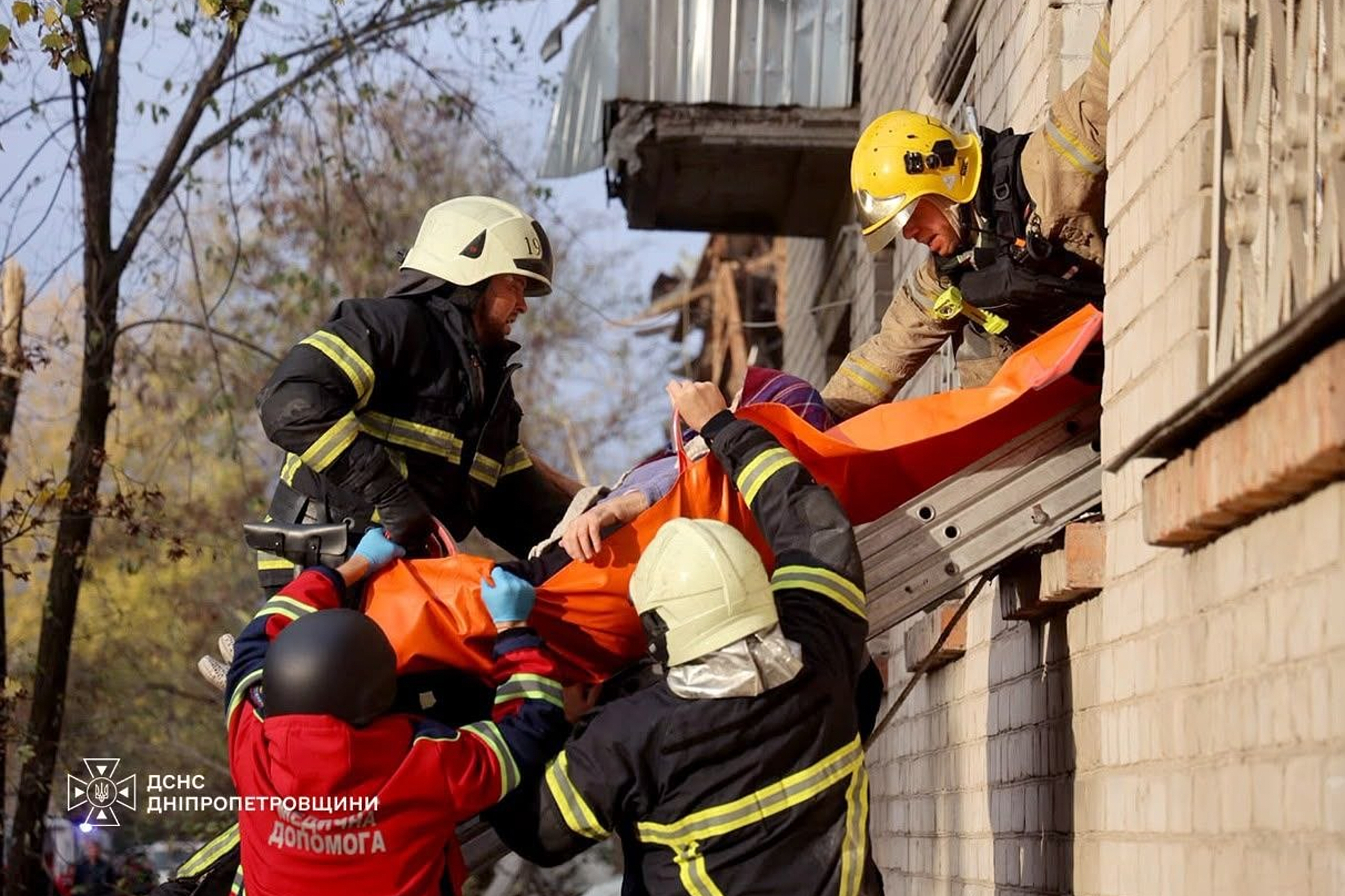
    KYIV, Ukraine — Rescuers worked for a second night in a desperate search for survivors Tuesday at an aid distribution site destroyed by a series of Russian attacks in a village in southern Ukraine. The death toll reached 31 as they removed bodies throughout the day and looked for dozens of people still missing.

    Monday’s attacks on a shelter and former school with bunker-busting bombs came as people were lined up for aid in Komyshuvakha, a village in the Zaporizhzhia region. Teams of emergency workers and volunteers picked through debris at the cratered blast sites, as bodies were pulled from the rubble and carried away in white plastic sheeting. More than 45 residents remained missing.

    “The scale of the tragedy is terrifying,” said Mykhailo Semikin, acting head of the region’s military administration, in an online post. “This is one of the worst tragedies in terms of the number of civilian victims in our region since the start of the full-scale war.”

    As Ukraine prepared for a new round of U.S.-brokered peace negotiations next week, more than 4½ years after Russia’s all-out invasion, a wave of strikes overnight into Tuesday targeted power plants across the country, damaged hospitals, and wounded scores of people.

    Russia launched 289 attack drones, 17 ballistic missiles, and 59 cruise missiles across nine regions, triggering emergency power cuts, President Volodymyr Zelensky said in an online post that noted the barrage coincided with the U.S. midterm elections.

    “The Russians think America won’t notice this signal of theirs,” he said. “But we need to notice and stop such terror. We need to help Ukraine defend its skies; otherwise, Russia will never stop its missile strikes.”

    A volunteer describes the aftermath

    Baptist pastor Vladyslav Makhovskyi joined the search for survivors, removing bodies and helping elderly Komyshuvakha residents swaddled in blankets.

    He told the Associated Press the attack on the shelter was “truly devastating” and a shock to residents who had sought cover there.

    The shelter was sturdy and had provided internet access and other assistance, and “was a place they trusted,” Makhovskyi said.

    “People even came there to spend the night because they felt safer there,” he added. “I’d been in that school and its underground shelters many times.”

    It was struck by a Russian bomb “so powerful that it broke through the heavily reinforced concrete blocks,” he said. “The job’s not done. There are more (bodies) in there.”

    Bodies wrapped in white plastic sheets were carried from the ruins and laid in rows as smoke drifted across the shattered landscape. Rescue efforts were interrupted Tuesday by menacing Russian drones, forcing soldiers to halt recovery operations and open fire to try to bring them down.

    Three days of mourning were declared in Zaporizhzhia. The dead included four police officers and two rescue workers, Semikin said. At least five people were hurt.

    Zelensky had said on X that the strikes first targeted the former school that was used for regular distributions of humanitarian aid and then took aim at a nearby shelter.

    “This is further proof that Russia wants no de-escalation,” he said.

    Attacks intensified after humanitarian ceasefire

    The attack came after the expiration of a six-day ceasefire in the Russian-occupied city of Oleshky that allowed trapped residents to evacuate. It was the most significant truce between Kyiv and Moscow since 2022.

    “We offered to Russia to extend the ceasefire in Oleshky, but this was the answer: new attacks, new strikes, new killings of our people,” Zelensky said in Berlin, where he met German Chancellor Friedrich Merz and attended a security conference.

    In the northeastern region of Kharkiv, a Russian missile and drone attack wounded at least 62 people, local authorities said.

    A strike damaged a medical facility in the Nemyshlianskyi district, shattered windows in four apartment buildings, and damaged cars. More than 200 patients were transferred to other medical facilities, said Oleh Syniehubov, head of the regional military administration.

    In the Dnipro area, rescuers pulled a woman alive from the rubble Tuesday morning, after a Russian attack killed one person and wounded 17, local authorities said.

    The attack damaged an outpatient clinic and a hospital. Patients were transferred to other hospitals, Oleksandr Hanzha, head of the regional military administration, said.

    Power plants pounded in latest barrage

    Russia attacked more power plants and other infrastructure ahead of winter, causing extensive damage and electricity outages as it carried out 20 strikes in 10 regions overnight, Ukraine’s energy ministry said.

    Ukrainian power utility DTEK said three of its power plants halted operations. No injuries were reported.

    Russia’s Defense Ministry said it shot down 856 Ukrainian drones overnight. Moscow Mayor Sergei Sobyanin said 493 drones were fired toward the capital.

    A Ukrainian drone attack wounded two employees at an oil refinery in the Russian city of Yaroslavl, regional Gov. Mikhail Yevrayev said, adding there was damage to the refinery’s infrastructure.

    Rolling blackouts have been instituted in the south, west, and east of Russian-occupied Crimea following attacks on energy infrastructure, Moscow-installed officials said.

    Zelensky consults with Europeans ahead of peace talks

    Zelensky’s trip to Germany began a new round of consultations with European leaders ahead of U.S.-mediated peace talks Nov. 10-11 in Abu Dhabi.

    U.S. President Donald Trump’s special envoy, Steve Witkoff, confirmed the dates of the talks, with negotiations to focus on postwar security arrangements, de-escalation, and humanitarian efforts. Kremlin spokesperson Dmitry Peskov confirmed a Russian delegation will attend.

    Zelensky said Ukraine’s priorities for the talks were halting strikes on energy and critical infrastructure, unblocking Black Sea grain shipments, and expanding prisoner exchanges.

    He said he hoped those talks and other diplomatic efforts would pave the way for trilateral talks among the countries’ leaders, which he said were needed to resolve key issues.

    “Europe’s involvement in the process — in achieving peace — is essential,” he said. ”We are doing everything possible to ensure that we have a common European view of all the security challenges and of how this war should end and what its outcome should be.”

    Zelensky told the Berlin Security Conference that even though his country is experiencing an extremely difficult period, “Ukraine will never surrender.”

    Asked if he still believes the U.S. can bring an end to the war, Zelensky replied: “President Trump is still president.” He added that “America has huge influence and power” to push Russian President Vladimir Putin toward negotiations.”

    Russia agreed last month to resume three-way negotiations with Washington and Kyiv aimed at ending the war, setting up the first such talks since February.

    The European Commission said it would host a meeting Wednesday with officials from France, Germany, the United Kingdom, the European Union, NATO, the United States, and the World Bank to discuss postwar reconstruction in Ukraine. Zelensky said a Ukrainian delegation would attend.

  • Judge dismisses lawsuit against Harvard over federal demand for admissions data

    Judge dismisses lawsuit against Harvard over federal demand for admissions data

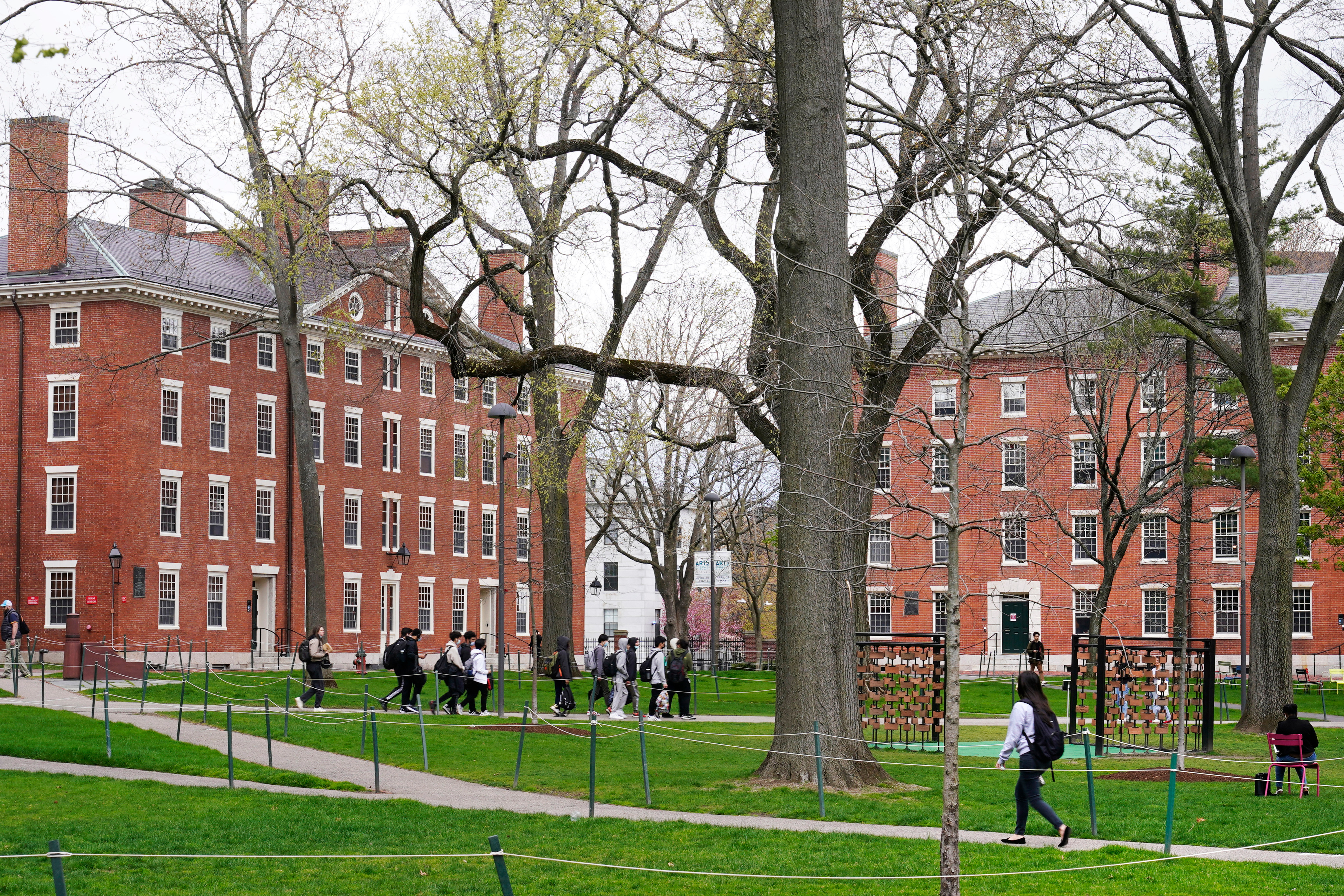
    BOSTON — A federal judge on Monday dismissed a lawsuit against Harvard University over its alleged failure to provide admissions records that the Justice Department had demanded to ensure the Ivy League school stopped using affirmative action in admissions.

    The Justice Department said Harvard had “thwarted” efforts to investigate potential discrimination. It accused Harvard of refusing to comply with a federal investigation and asked a judge to order the university to turn over the records.

    But U.S. District Judge Myong Joun concluded that the Justice Department didn’t take the necessary procedural steps to obtain the data before filing the lawsuit. “Before taking enforcement action under the statutory framework, the agency must advise the recipient of its failure to comply and determine that compliance cannot be secured by voluntary means,” Joun wrote.

    But Joun also said the ruling does not end the dispute over the data.

    “I decide a limited question: whether the Government has adequately established, at this stage and on the materials properly considered, that it satisfied the prerequisites to judicial enforcement invoked in this complaint,” he wrote. “The ruling does not determine whether Harvard has discriminated, whether the agencies may lawfully seek appropriately defined applicant-level data, or whether Harvard may ultimately be required to provide such data.”

    Neither Harvard nor the Department of Justice responded to a request for comment.

    The ruling is the latest setback against the Trump administration over its ongoing battle with Harvard. It has suffered defeats in the federal courts over everything from billions of dollars in funding cuts to a lawsuit accusing the university of antisemitism.

    Trump officials have said they’re taking action against Harvard over allegations of anti-Jewish bias on campus. Harvard officials say they’re facing unconstitutional retaliation for refusing to adopt the administration’s ideological views.

    In the fight over admissions data, the Justice Department in 2025 launched a compliance review into Harvard’s admissions practices. It told Harvard to hand over five years of admissions data for applicants to its undergraduate, medial, and law schools.

    It also asked Harvard for applicants’ grades, test scores, essays, extracurricular activities, and admissions outcomes, along with their race and ethnicity.

    Justice Department officials said they need the data to determine whether Harvard has continued considering applicants’ race in admissions decisions. The Supreme Court barred affirmative action in admissions in 2023 after lawsuits challenged it at Harvard and the University of North Carolina.

    The effort against Harvard is part of a broader campaign by the Trump administration against colleges accused of considering race in admissions decisions.

    In October, the Justice Department found the law school at the University of California, Los Angeles, illegally considered race in admissions. The announcement follows a similar finding against the university’s medical school.

    The administration also has accused the UC Berkeley Law School and the medical school at the University of California, San Diego, of illegally discriminating against white and Asian applicants.

  • House Republicans accuse top psychology group of antisemitism

    House Republicans accuse top psychology group of antisemitism

    Republicans are stepping up efforts to portray the American Psychological Association as an institution riddled with antisemitism just weeks after a Department of Education committee recommended putting the brakes on the organization’s accrediting power.

    In a scathing report released Thursday, House Republicans blamed the organization for “troubling leadership failures” they say have alienated Jewish members and undermined confidence in the association’s ability to set standards within the field. The report is the latest attempt to scrutinize the ideology of the APA, the leading scientific and professional organization representing psychologists in the United States.

    The APA has nearly 200,000 members and provides accreditation to more than 1,300 training programs, including doctoral internships and postdoctoral residencies.

    Since taking control of the House in 2023, Republicans have held hearings on antisemitism aimed at academia and progressive institutions. Some critics have argued that the Trump administration has weaponized claims of antisemitism against these long-standing targets of conservatives.

    The report, issued by the House Education and Workforce Committee, concluded that anti-Jewish sentiment “has manifested across the association’s resolutions, listservs, newsletters, publications, and conferences.” It cited “radical activist-academics” who have promoted ideology that “demonizes Israel, minimizes Hamas terrorism and portrays Jews as white oppressors.”

    The committee, led by Rep. Tim Walberg (R., Mich.), began investigating the APA in December. The report details emails sent to public listservs in the days after the Hamas-led attack on Oct. 7, 2023, as well as internal discussions among association leadership deliberating how to publicly respond.

    On Friday, Wendi S. Williams, the APA president, said in a statement that the organization “unequivocally condemns antisemitism in all its forms.”

    “We don’t agree with the report,” Williams said. She added, “Since these concerns were first brought to APA’s attention, APA has taken meaningful steps to ensure that Jewish members, like all members, can participate fully and safely in the organization and the profession.”

    Proponents of the report applauded the confirmation of complaints long aired by some Jewish psychologists, while others argued that it purposely conflates criticism of Israel with antisemitism.

    The report cited numerous excerpts from documents in concluding that the APA promoted a climate of antisemitism. These included listserv emails in the days after the Oct. 7 attack from some association members who argued that Hamas was “protecting civilians” and deserved “kudos.” It cited a newsletter in which the APA’s community psychology division described the attack using language like “uprising.” It detailed pushback against Jewish members who wanted to form an official ethnic subgroup — similar to existing groups for Arab, Asian American, and Black psychologists — including arguments that Jews had “benefited from white privilege.”

    The House Republicans’ report also criticized a revised APA resolution on antisemitism, approved in February, suggesting that the new language diluted the word’s meaning.

    Some groups representing Jewish psychologists and Jewish Americans celebrated the report.

    “This report confirms the extent of antisemitism within the APA as well as the failure of leadership within that association to deal with it,” said Kenneth L. Marcus, the chair and CEO of the Brandeis Center, a nonprofit focused on combating antisemitism. For years, he said, the Brandeis Center has “gotten reports of antisemitism from mental health professionals, from students of psychology, and from patients.”

    In June, after Marcus’ group filed a complaint accusing the APA of marginalizing Jewish and Israeli psychologists, the Department of Health and Human Services’ Office for Civil Rights opened a federal civil rights investigation into the organization.

    But the report also reflected bitter divides, including among the Jewish members of the APA, over how to define antisemitism.

    Roy J. Eidelson, who is Jewish and a former president of the APA’s Society for the Study of Peace, Conflict, and Violence, said he disagreed with the report’s contention that antisemitism had spread throughout the organization.

    Antisemitism is discrimination, prejudice, and hostility toward Jews, he argued. “It is not criticism of Israel or Israel’s actions, and it is not support for Palestinian rights,” he said.

    The report called Eidelson one of the association’s “most vocal antizionist members,” citing an essay he wrote about the “weaponization of antisemitism” and noting that it was praised in 2025 by the APA president at the time, Debra Kawahara.

    Eidelson said the essay was intended to describe “false charges of antisemitism” used to discredit those who had criticized the attacks on Palestinian civilians in the Gaza Strip as genocidal acts. “It’s a real frustration to me and to many Jews like me,” he said.

    A related fight unfolded over the APA’s 2026 change to its public position statement on antisemitism. Its 2007 resolution stated that antisemitism “may be asserted in the context of discourse regarding the actions of the Government of Israel.” The new resolution stated that “it is antisemitic to hold Jews collectively responsible for the actions of the state of Israel; to require Jews to publicly condemn Israel; to assume that Jews are more loyal to Israel than to their home countries; and to deny Jews in Israel/Palestine the right to exist and flourish as Jews on the basis of legal equality.” It also added a definition of the “weaponization” of antisemitism: “the manipulative or bad faith invocation of accusations to silence legitimate criticism, scholarship, or activism.”

    The House report contended that the new resolution “greenlights” antisemitism.

    Jonah Rubin, the senior manager for campus organizing at Jewish Voice for Peace, a leftist grassroots organization, which wrote a letter to the APA supporting the resolution change, said congressional investigations into universities and the APA were “worsening antisemitism, not combating it effectively, and this committee doesn’t care.”

    In September, the Education Department’s National Advisory Committee on Institutional Quality and Integrity recommended that the department suspend the association’s commission on accreditation for 12 months, citing a “pervasive culture of antisemitism.”

    Aaron Joyce, the APA’s head of accreditation, said in a statement last month that suspending accreditation would have severe consequences, including reduced funding for many accredited psychology programs that would make it more difficult for students to meet state licensure requirements.

    This article originally appeared in the New York Times.