Category: News

  • PFAS exposure near Pa. military bases linked to high blood pressure, cholesterol. Researchers find cancer cluster.

    PFAS exposure near Pa. military bases linked to high blood pressure, cholesterol. Researchers find cancer cluster.

    A major study of PFAS-contaminated drinking water among people living near military bases in Bucks and Montgomery Counties shows associations with elevated cholesterol, increased blood pressure, and lower childhood development, according to preliminary findings.

    PFAS, or per- and polyfluoroalkyl substances, are a family of compounds known as forever chemicals because they resist breaking down in the environment and in the human body.

    A separate analysis showed cancer clusters in those communities, but more research is needed to determine whether there is a correlation between cancer rates and the water, the study’s investigators say.

    Lead researchers from RTI International and Temple University presented the findings Wednesday at Hatboro-Horsham High School during an event hosted by the Buxmont Coalition for Safer Water.

    The ongoing study, part of an effort by the federal Agency for Toxic Substances and Disease Registry and Centers for Disease Control and Prevention, examined PFAS exposure in Pennsylvania and seven other states: California, Colorado, Massachusetts, Michigan, New Hampshire, New Jersey, and New York. It included 5,826 adults and 710 children ages 4 to 17.

    Wednesday’s presentation focused on Pennsylvania, where researchers collected blood from residents in 11 townships in Bucks and Montgomery Counties who lived near military bases where firefighting foam contaminated local drinking water supplies for decades. About 180 people attended the meeting.

    “We have waited a long time for these study results to be released,” said Joanne Stanton, of the Buxmont Coalition for Safer Water, a grassroots organization formed after the PFAS contamination was first identified. “For the past 12 years, our community has carried an unimaginable heavy burden.”

    According to baseline testing, local participants had elevated concentrations of per- and polyfluoroalkyl substances (PFAS) in their blood. Levels of PFAS and associated compounds — PFOS, PFOA, PFHxS, and PFNA — exceeded national averages. Pennsylvania ranked second highest nationally among all study sites for PFOS and PFHxS.

    “These higher levels [of PFAS] are consistent with decades of exposure to firefighting foam used at the military bases,” said Linda Brown, the Pennsylvania study’s director from RTI International, an independent research institute.

    Impacts on blood pressure, immunity, cholesterol, IQ

    Brown said 1,251 adults and 89 children from Pennsylvania gave blood for the study.

    “Adults with higher PFAS levels in their blood tended to have higher blood pressure,” she said.

    High blood pressure is a major risk factor for cardiovascular disease, she said.

    Graphic shows an increase in blood pressure and various PFAS compounds.Preliminary results federal multi-site study of exposure to PFAS

    Brown also said elevated PFAS levels were associated with higher cholesterol, including LDL, the so-called bad cholesterol. All four PFAS compounds were associated with higher cholesterol in both adults and children.

    She said, however, that preliminary results did not find a clear pattern linking PFOS levels with heart disease, diabetes, thyroid disease, or obesity.

    Graphic shows an increase in cholesterol among adults and various PFAS compounds. Cholesterol in children also showed a rise.Preliminary results federal multi-site study of exposure to PFAS

    Overall, children with higher PFAS levels had lower levels of certain antibodies that help the body fight infection, she said. The findings suggest PFAS may affect the immune responses, including the response to vaccines. But the findings do not tell researchers whether any individual child’s vaccines were less effective.

    Higher levels of exposure to PFAS during pregnancy and early childhood also showed patterns of lower abilities of language, reasoning, and cognition. But she cautioned that the patterns cannot tell parents how PFAS may have affected their own child.

    Chart shows an association between a decrease in language, IQ, and reasoning and PFAS exposure.Preliminary results federal multi-site study of exposure to PFAS

    Cancer clusters

    The study had too few cases of individual cancer types to complete a statistical analysis from the blood samples given. Cancer is not part of the original study.

    To fill the gap, Temple researcher Resa Jones said, the group used a grant from Pennsylvania to separately look at overall cancer cases in 12 counties.

    Chart shows clusters of breast, ovarian, and endometrial cancers in Montgomery and Bucks counties in Southeastern Pennsylvania.Preliminary results federal multi-site study of exposure to PFAS

    Jones said researchers pulled data from the state’s cancer registry to find the rate per 100,000 people. Mapping showed geographical clusters of elevated kidney, thyroid, breast, endometrial, and ovarian cancer incidence in Bucks and Montgomery Counties.

    “We definitely have spatial clustering of the cancers,” Jones said of the two counties.

    In municipalities with the highest totals of breast cancer, half had PFAS levels above minimum reporting levels for drinking water, Jones said.

    But Jones stressed that more research is needed and that the results are preliminary.

    Chart shows kidney cancer clusters in Montgomery and Bucks counties in Southeastern Pa.Preliminary results federal multi-site study of exposure to PFAS

    Kidney function

    In addition, Robin Taylor Wilson, another investigator from Temple, said longer exposure to PFAS was also associated with lower kidney filtration rates and chronic kidney disease.

    The study highlighted heightened renal vulnerability among specific subpopulations, reporting that older residents, individuals with a history of blood transfusions or thyroid disorders, and cancer survivors faced significantly higher risks of chronic kidney disease.

    Hope Grosse, of the Buxmont Coalition for Safer Water, said the release of preliminary results of the study gives future researchers a solid foundation for further study into PFAS.

    “While these study results cannot undo the damage or bring back what we have lost, we hope that they are the beginning of the answers that we deserve,” Grosse said.

  • Sweden swings back left, bucking a trend in Europe

    Sweden swings back left, bucking a trend in Europe

    Sweden’s center-left political parties squeaked to victory in elections this week, according to results released Thursday, making the country one of the first in Europe to tap the brakes on the far right’s seemingly steady march toward power.

    Voters cast their ballots Sunday, but the contest was so tight that it took days to count the last stray votes before a conclusion could be reached.

    The next prime minister is likely to be Magdalena Andersson, leader of Sweden’s stalwart center-left party, the Social Democrats, though experts predicted that there could be weeks of sticky negotiations before the next government is announced.

    As in other parts of Europe, Swedish nationalists had made big gains in recent elections by railing against migration and blaming migrants for crime.

    This election showed that in Sweden at least, the far right, which was essential to the outgoing center-right coalition’s hold on power, had become a victim of its own success. Experts said the country had cracked down so decisively on crime and migration that it essentially took those issues off the table.

    “The general sense is crime is now under control; migration is now under control,” said Lisa Pelling, the director of a progressive research group in Stockholm.

    The consequence, she said, is that “people want something else from the government.”

    Polls before the election showed that voters were prioritizing healthcare and education, issues that tend to favor the left.

    According to the election results, the center-left won 49.5% of the vote, compared with 48.8% for the center-right. That gives them a slight edge in parliament: 176 seats to 173. The turnout was characteristically high, at 85%.

    Andersson, a familiar face, was chosen as Sweden’s first female prime minister a few years ago and served as finance minister before that, when her Social Democratic Party dominated Swedish politics.

    If she can hash out a government in the coming weeks, it is likely to embrace many of the positions the party had pushed before, including what it called a “feminist foreign policy” that prioritized reproductive freedom and got into tangles with Saudi Arabia over its treatment of women.

    But forming a government won’t be easy. Sweden’s center-left is a real mishmash. It includes a formerly communist party and a pro-business one influenced by farmers. Parts of the coalition have already voiced doubts about working with each other.

    And Andersson’s Social Democrats are coming into this as a weakened force, having earned just 28% of the vote, one of their worst performances ever.

    Social democratic parties across Europe have lost ground to right-wing parties that present themselves as the new protectors of the working class, said Ann-Cathrine Jungar, a political scientist at Sodertorn University in Sweden.

    “What is noteworthy about this election is that socioeconomic issues were their home turf, and yet they were unable even to maintain their support,” she said of the Social Democrats.

    Part of the explanation, Jungar said, may be that center-left politicians have themselves moved toward tougher positions on immigration and crime, driven by the far-right Sweden Democrats, the biggest loser in this election.

    The Sweden Democrats have tried hard to distance themselves from their neo-Nazi roots. But in this election, they went from being the second-most popular party to the third, going from 20.5% of the vote in the last election to 17.5% this time. It was the party’s first significant erosion of support since it roared onto the scene in the late 1980s, which could raise questions about its future.

    Jonas Hinnfors, a political scientist at Gothenburg University, said Swedish society was growing uncomfortable with the extreme positions the far right has been advocating on migration, such as deporting large groups of lawful migrants, including teenagers. That is too extreme for most Swedes, Hinnfors said, and many people in Sweden have come to appreciate how important migration is for their labor market.

    “There is a kind of developing consensus that immigrants are needed,” he said. “And that is not where the Sweden Democrats are.”

    He doesn’t expect the far right to evaporate. But he said this election was “a big blow to them.”

    This article originally appeared in The New York Times.

  • Society Hill neighbors are spending $54,000 on a traffic study to examine bike lanes

    Society Hill neighbors are spending $54,000 on a traffic study to examine bike lanes

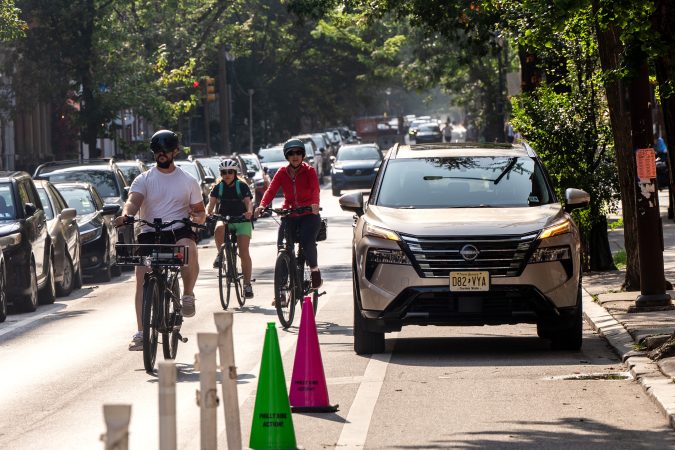
    The Society Hill Civic Association will spend about $54,000 for an engineering firm to conduct a new traffic study of neighborhood roads, including evaluation of the city’s proposal to enhance protections for users of bike lanes on Pine and Spruce Streets.

    Board members of the community organization approved hiring Dewberry Engineers Inc. for “fact-based recommendations” earlier this month in a special Zoom meeting, according to a Sept. 10 SHCA newsletter.

    Last year the Society Hill association contributed $25,000 to help fund a lawsuit against the city by Friends of Pine and Spruce (FOPS), a group of residents challenging the legality of a plan that includes curb-style concrete barriers to separate bike lanes from motor-vehicle traffic.

    The new traffic analysis is intended to update a 2018 “complete streets” study done for the civic association by the Howard Stein Hudson engineering firm, said Jay Borowsky, chair of the group’s streets committee.

    “Since that time, the city has implemented significant traffic and street changes beyond Spruce and Pine, and is now considering additional changes that could negatively affect the community without any updated objective data,” Borowsky said in an interview.

    The new study will also look at traffic counts and crash data on Third Street, where the city installed bike lanes in June, as well as Fifth Street and Lombard Street.

    “The streets don’t work in isolation,” Borowsky said. The 2018 study included information only from Pine and Spruce Streets in the civic association’s territory, he said.

    The Third Street bike lanes have drawn many of the same complaints and concerns that have arisen elsewhere. Some residents say that designated space set aside for bikes has clogged traffic and caused more difficulty getting deliveries and contractor services.

    But others are happy with the change.

    Questions of bias

    “In my experience, traffic moves at a more reasonable speed and the street is quieter,” Nawaf Bou-Rabee, a mathematics professor at Rutgers University-Camden and a member of SHCA, wrote in an email to board members. “Every neighbor I have spoken with about it has expressed support.” He also said he has had no difficulties with deliveries or contractors loading or unloading to work on his home.

    “The study should establish where arrangements are working and where specific improvements are needed,” Bou-Rabee wrote. He asked pointed questions about how data will be measured and evaluated and the impartiality of recommendations ensured.

    Members of FOPS sit on the civic association board. Society Hill residents who support the bike lane changes say that opponents are using the nonprofit to pursue their own agenda despite a diversity of opinion on cycling protections.

    A ban on stopping in bike lanes was enacted in 2024 after a physician, Barbara Friedes, was killed by a drunk driver while cycling on Spruce Street.

    The crash helped galvanize support for physical barriers on Pine and Spruce Streets, which the Philadelphia Office of Transportation and Infrastructure Systems has proposed.

    A Philadelphia Common Pleas Court judge in July blocked the city from resuming work to upgrade protections for the bike lanes along Pine and Spruce Streets, the latest ruling in the FOPS lawsuit.

    The city had asked the court to lift an August 2025 injunction freezing the OTIS project.

    Al Meinster, a member of SHCA and a cyclist who said he was on the board’s Zoom call, worries that opponents have the “deep pockets” to stretch out the litigation and delay safety changes.

    In the meantime “people are exposed to danger, and somebody could be hurt, or somebody could die as a result of this impediment,” Meinster said.

    Debate over cyclist safety

    The lawsuit is part of a growing backlash against bike lanes. Boston has canceled some planned projects. Nationally, the Trump administration has cut federal grants for building the lanes; Transportation Secretary Sean Duffy recently denounced “DEI bike lanes” and said they contribute to traffic congestion.

    Borowsky, of the SHCA, said the study would collect information that will help city officials, bike advocates, and anyone involved in the debate.

    “We’re looking at finding solutions that improve safety and access for everyone,” he said.

    Neighbors fighting the city’s plans are mostly “caring, responsible people” who simply “don’t know how dangerous it is to be on a bicycle on Spruce and Pine and Third Street,” Meinster said.

    FOPS has argued in court and elsewhere that serious crashes involving cyclists are rare in the neighborhood. As of last November, Spruce Street was listed among the 12% of roadways where 80% of traffic crashes with serious injuries or deaths occur.

    The metric, which measures injuries to all road users, is used in the city’s Vision Zero safety program.

    The Pine and Spruce bike lanes were built in 2009 under former Mayor Michael Nutter, whose administration made an agreement that residents would be able to park in front of their homes for up to 20 minutes for loading and unloading.

    Enforcement was spotty, and conflicts arose when vehicles, including delivery and contractor vans, parked inside the bike lanes for longer periods, forcing riders to veer into traffic.

    Members of FOPS contend that concrete barriers would block emergency vehicle access and violate the Americans with Disabilities Act by limiting access to transportation or those with mobility issues.

    Meinster said those arguments are exaggerated or have solutions that do not require opening up the bike lanes to motor vehicles.

    If the legal theory that protected bike lanes violate the ADA catches on, building could be frozen or blocked citywide, he said.

    “What’s happening here in Society Hill has great importance to the safer bicycling movement in the rest of the city because some precedents could be made here,” Meinster said.

    The article has been updated to reflect that only Spruce Street has been added to the city’s list of most dangerous roads for crashes.

  • Atlantic City’s iconic Steel Pier is up for sale for $85 million

    Atlantic City’s iconic Steel Pier is up for sale for $85 million

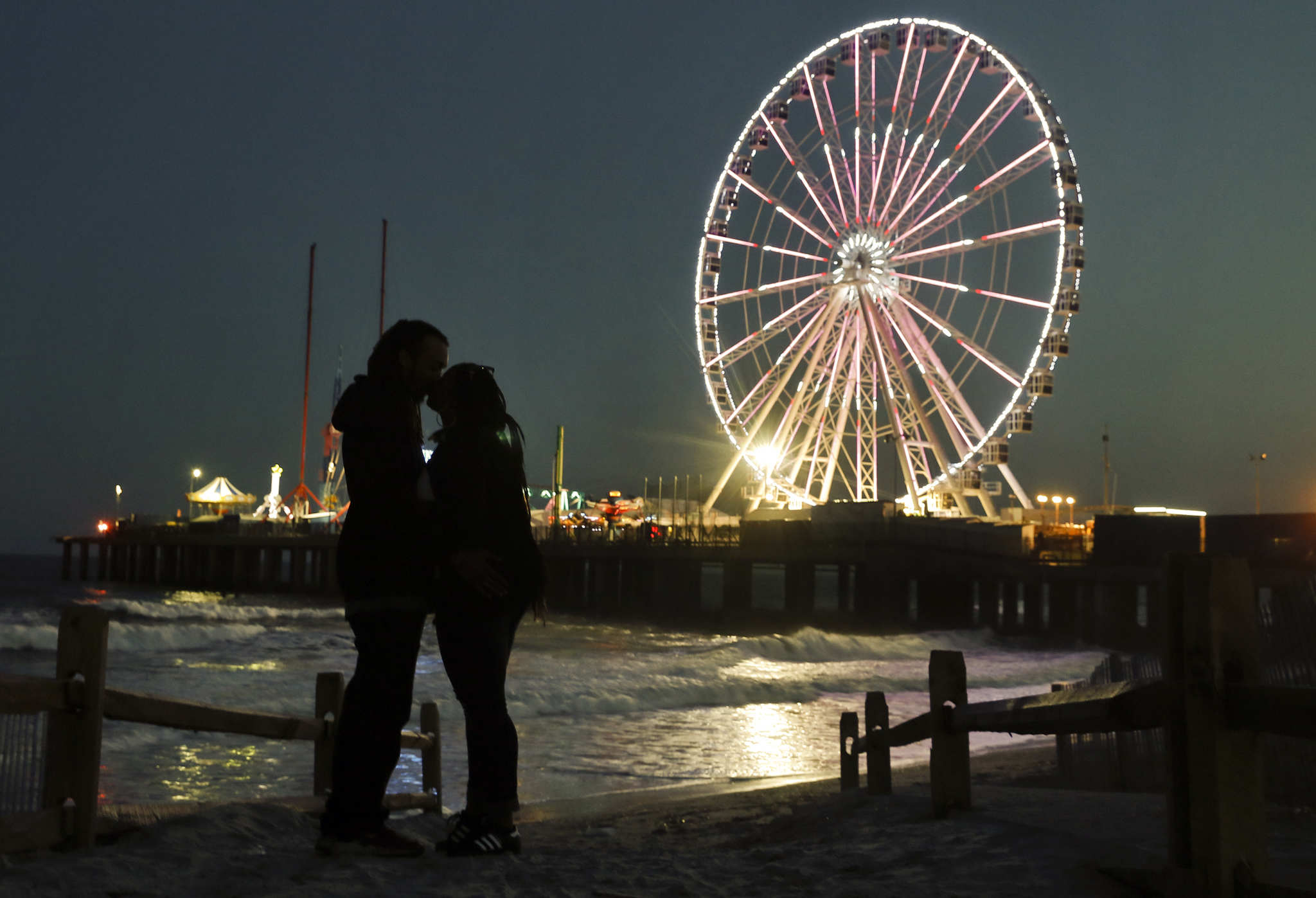
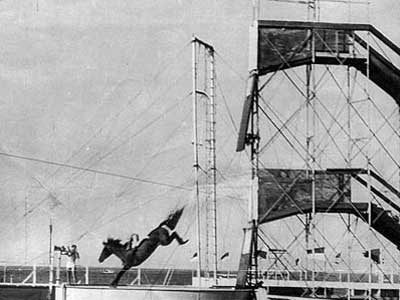
    ATLANTIC CITY — The Steel Pier, home to some of Atlantic City’s most iconic spectacles, including diving horses and Miss America pageants, and lately an amusement pier, is up for sale.

    Priced at $85 million, the pier, which was built in 1897, has been listed by the luxury New York City Serhant agency, whose owner, Ryan Serhant, is the star of Netflix’s Owning Manhattan.

    On his Instagram story Thursday, Serhant called the listing “maybe our coolest listing ever??”

    The pier has been owned by the Catanoso brothers since 2011, but the family says the next generation is not interested in taking over. “It’s kind of a succession thing,” Anthony Catanoso said in an interview with The Inquirer.

    The agency is targeting a buyer that envisions expanding the pier into a commercial hospitality venue, like a boutique hotel, a wedding venue, or an expanded amusement park, listing agent Michele Zyska said. She said luxury residential properties built over the ocean could also be a draw.

    Mayor Marty Small Sr. said the prospect of the pier lacking amusements and entertainment would be “devastation.”

    “The Steel Pier has always been the legendary part of the Atlantic City Boardwalk,” he said.

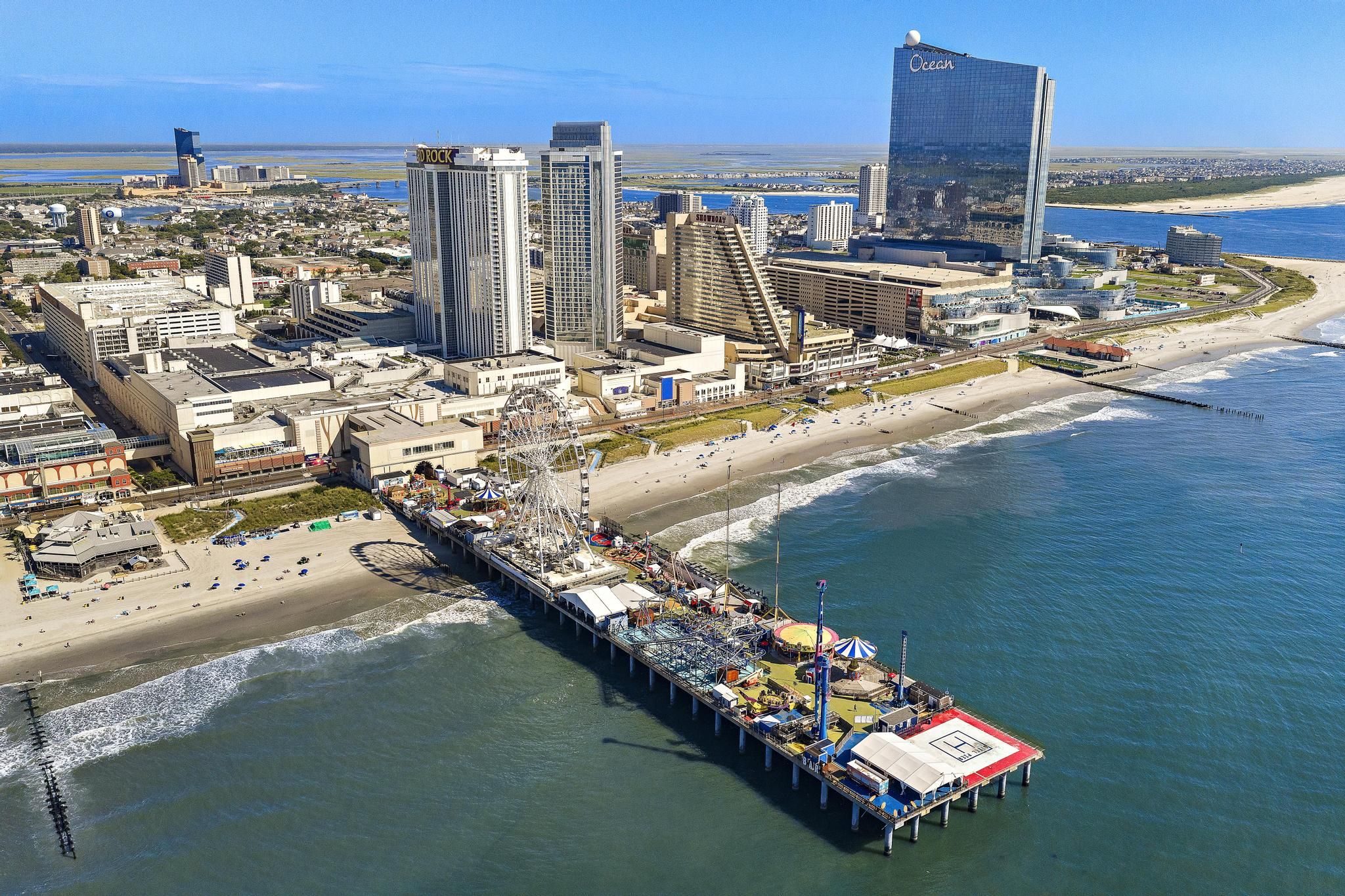
    The pier structure measures 150 feet wide and 965 feet long and is anchored 90 feet into bedrock. A perpetual riparian grant permits it to extend up to 2,850 feet into the Atlantic.

    “It’s like nothing else in the world,” Zyska said. “I keep saying that. It’s an iconic piece of American history. We’re thinking probably more hospitality, music, and maybe even residential. We do have interest in someone keeping it as an amusement park.”

    Atlantic City’s historic Steel Pier is up for sale for $85 million.Real Estate Cinema

    The Catanoso brothers originally leased the pier from Trump Entertainment after winning the lottery in 1993, and bought the pier for $4.25 million in 2011.

    They built its Observation Wheel, now a distinctive feature of the city’s casino skyline, teetered on bankruptcy, and found some stability in recent years running the pier with various amusements, bars, and restaurants.

    Catanoso said business has been good, although challenged by wage costs.

    “We’re getting older, me and my brothers,” Catanoso said. “The kids aren’t taking it over. It’s time for the next chapter. It’s a big development opportunity for somebody.”

    Miss Philadelphia Nellie Orr competes in the 1921 Inter-City Beauty Pageant held on Atlantic City’s Steel Pier. The Miss America Organization will mark the 100th anniversary, but not in Atlantic City. Orr finished second.Collection of Daryl Schabinger

    Serhant calls the Steel Pier “one of the most recognizable landmarks on the East Coast.” The listing was first reported by the New York Post.

    The agency notes the pier’s built-in helipad and previously obtained condo-hotel approvals.

    “The Steel Pier is that rarest of offerings: a piece of developable American history extending straight into the Atlantic Ocean,” the company said in a release.

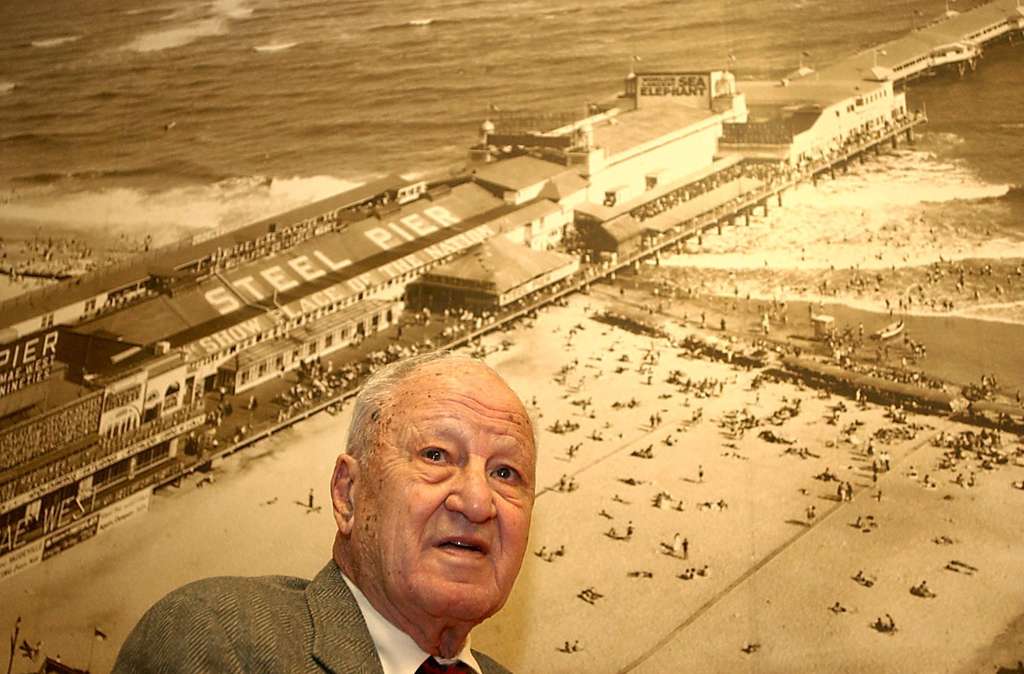
    George A. Hamid Jr. built up his family’s Steel Pier in Atlantic City by finding hot new acts.SHARON GEKOSKI-KIMMEL / File Photograph

    In addition to the amusement park, there is a 40,000-square-foot building, including a sky bridge and roof.

    “How often does someone get to own a piece of the ocean?” Ryan Serhant said in a statement. “The Steel Pier isn’t just five acres on the most famous boardwalk in the world, it actually offers the chance to own the Atlantic itself and build something unforgettable on top of it.”

    The company also noted new residential projects that are in the works in that end of Atlantic City, including Kushner Cos.’ Caspian Point, K. Hovnanian Homes’ South Inlet townhomes, Colosseo Atlantic City’s Chelsea townhomes, and Zoubek Properties’ Residences at the Orange Loop.

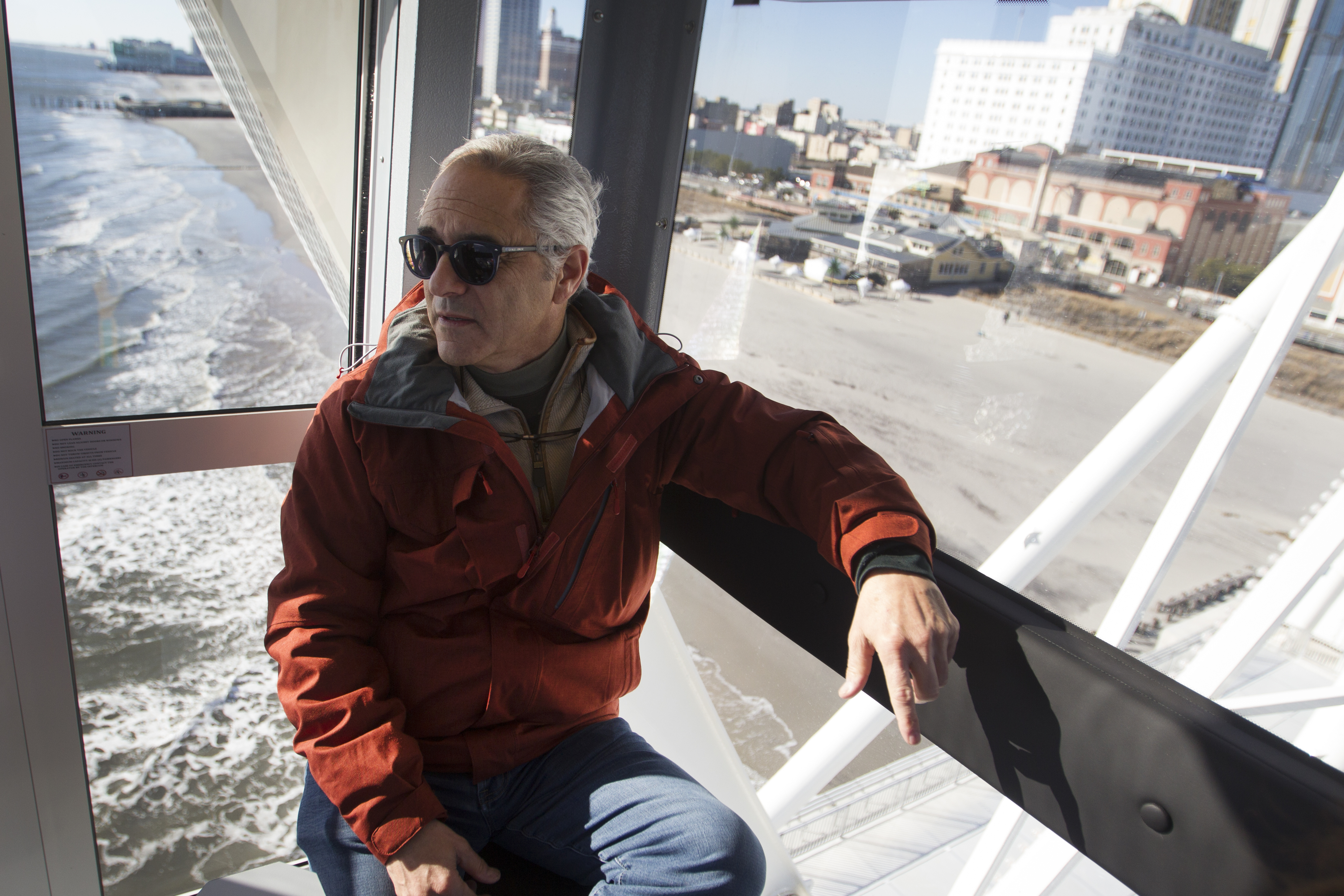
    Anthony Catanoso, owner of Atlantic City’s Steel Pier, takes in the view from the Observation Wheel Tuesday, December 26, 2017.Jose Moreno / staff photographer
  • Judge orders Kennedy Center to provide 30 days’ notice before making any major physical changes

    Judge orders Kennedy Center to provide 30 days’ notice before making any major physical changes

    WASHINGTON — A federal judge on Thursday ordered the Kennedy Center to provide 30 days’ notice before making any major physical changes to the building, including demolishing it as President Donald Trump has threatened.

    U.S. District Judge Christopher Cooper said his ruling would “avoid any confusion on that score given more recent events,” including the sudden closure of the building to the public on Wednesday.

    Matt Floca, the Kennedy Center’s executive director and chief operating officer, said he closed the iconic performing arts center temporarily due to “acute risks to public safety resulting from continued structural deterioration” of the aging building. The building will be closed for at least seven days to “assess existing safety risks in those portions of the main building exhibiting severe structural deterioration,” Floca said.

    The temporary closure, which occurred without notice Wednesday, is separate from a vote Tuesday by the Kennedy Center’s board to close the performing arts center indefinitely for repairs, Floca and other officials said. The closure was based on an inspection of the roof terrace canopy and a partial ceiling collapse earlier this month, Floca said. The closure may be extended after evaluation next week, he said.

    The announcement of the closure came in response to a court case filed by a Democratic congresswoman who is a trustee and sought an emergency court hearing to prevent what she called the building’s “unlawful closing.”

    Rep. Joyce Beatty, an Ohio Democrat and an ex-officio member of the Kennedy Center board, has led efforts to block President Donald Trump’s name from being added to the building. Beatty had a verbal confrontation with the Republican president Tuesday during a virtual board meeting.

    Beatty’s lawyers said in a court filing Thursday that the board members’ “rationale that they are only temporarily closing the Kennedy Center is a plain pretext to justify shutting down the Center permanently. The facts before the Court are deeply concerning.”

    Cooper denied a request by Beatty’s legal team to hold a hearing to clarify the board’s actions and intent. But he agreed to their request “to make crystal clear” that his order prohibits demolition of the building.

    The Trump-aligned board, chaired by the president, voted to close the center after Cooper blocked the institution from returning Trump’s name to the building.

    Trump, who was named the Kennedy Center’s chairman last year by loyalists on the board, said Wednesday that his efforts to restore the aging building deserve recognition, “because frankly, if we don’t do that, it’s going to close. It’ll end up being ripped down. It’s in very, very bad shape, very dangerous shape.”

    Congress has allocated $257 million to cover the repairs, but Trump said they only would happen if the board was permitted to move forward with plans to add his name to the building.

    On Thursday, Barbra Streisand, a Kennedy Center honoree in 2008, questioned the closing of the center for repairs and called the controversy surrounding its operation “galling and painful to witness.”

    Of Trump’s attempts to add his name to the center, she said in a statement to The Associated Press: “You can easily imagine my indignation at seeing this revered institution become the subject of such a bitter struggle over one man’s name and unchecked ego.”

    The Kennedy Center board voted in August to inscribe Trump’s name on the Kennedy Center’s facade so it would read “The John F. Kennedy Center for the Performing Arts Restored and Renovated By President Donald J. Trump.” If the Trump Kennedy Center Fund reached $100 million, another inscription would be added reading “Endowed by the Trump Kennedy Center Fund.”

    The plaza in front of the Kennedy Center would also have been renamed in Trump’s honor.

    All of those proposals were shot down Tuesday by Cooper, who ruled that nothing could happen “without Congress’s blessing.”

    Cooper ruled in May that the Kennedy Center illegally added Trump’s name to the building, ordering it removed. The institution’s leaders complied in June but left a tarp and scaffolding in place where Trump’s name was once displayed.

    Streisand told AP she was deeply honored to be included in the 31st annual class of Kennedy Center Honorees, adding, “for me, and for so many artists, that honor represented something larger than a career recognition. It represented a belief in the importance of art to the life of a democracy.”

  • A global AI safety strategy depends on U.S.-China cooperation. They each see the other as the problem

    A global AI safety strategy depends on U.S.-China cooperation. They each see the other as the problem

    HONG KONG — As concern rises over the risks of artificial intelligence, hopes for any kind of global approach depend on cooperation between the U.S. and China — superpowers that seem only to be more skeptical of each other’s AI strategy.

    AI governance is expected to be on the agenda in a meeting planned for next week in Washington between President Donald Trump and Chinese leader Xi Jinping. The topic has gained urgency in both countries, with American tech leaders saying that averting worst-case scenarios for rogue AI depends on a degree of cooperation with China.

    But both countries are vying for a decisive advantage on AI, with Trump warning that any efforts to regulate the technology would help China. That sets up a meeting in which any agreements might be superficial but a possible start to something larger.

    “A formal agreement or consensus may be near impossible, but they do not need to go that far,” said Samm Sacks, a senior fellow at the Johns Hopkins School of Advanced International Studies’ Institute for America, China, and the Future of Global Affairs. “Trump and Xi just need to create political space by acknowledging AI poses risks to both countries.”

    China and the U.S. are increasingly at odds on AI

    Trump has pushed back on calls to strengthen regulation of the technology, claiming that doing so could cause China to eclipse America on AI. He has repeatedly declared that the nation that leads on the technology “wins.”

    “We are leading China, and all others,” Trump said Monday on social media.

    The two countries are moving the technology forward in different ways. U.S. companies are chasing AI frontiers with computing power supported by cutting-edge chips and the country’s rapidly expanding data center infrastructure. China is pursuing wide global adoption of its open-source, more affordable models.

    Chinese AI models have made major advances and gained traction with American companies even as U.S.-led restrictions bar China from getting the world’s most advanced AI chips. While most American frontier models are closed-source, with their design elements kept secret, U.S. Treasury Secretary Scott Bessent said Tuesday the U.S. needs to develop more open-source models to counter China.

    The U.S. has accused China of “aggressive, malicious” efforts to extract capabilities from American AI systems. China has hit back, accusing the U.S. of trying to suppress Chinese companies so it can build a “monopoly of the AI industry.”

    David Sacks, a top AI adviser to Trump, said that China has “already rejected” slowing down the pace of developing the most advanced forms of AI. He said on Fox News’ “The Ingraham Angle” that unlike the nuclear tensions with the Soviet Union during the Cold War it would be impossible to verify whether China honored any AI commitments.

    “In this case, we don’t have trust and we can’t verify,” Sacks said. “So let’s not be foolish about this and just hand the whole ball game to China.”

    Still, those with ties to the Chinese government see coordination on AI as helpful.

    At an annual security and defense conference in Beijing, Cui Tiankai, a former Chinese ambassador to the U.S., said Tuesday that AI is an area where “we should go ahead and build up” dialogue between Beijing and Washington. “Because there is a need, a growing need, for cooperation,” he told the Xiangshan Forum. “So how can we manage the balance?”

    American AI leaders call for keeping China in check — and cooperating with China

    Two leading American AI companies, Anthropic and OpenAI, each restrict access in China and have said the U.S. has a national security imperative to protect its lead on AI technology. But they also have called for cooperation with China to manage safety.

    In his essay last weekend calling for a slowdown of AI development for safety reasons, Anthropic CEO Dario Amodei said the U.S. should slow China’s progress, including keeping up U.S. restrictions on China’s purchases of the world’s most advanced AI chips.

    He also added, however, that “global pacing will require cooperation with China, the autocratic country with by far the most advanced AI capabilities.”

    His essay quickly drew criticism from Beijing, with China’s Ministry of Foreign Affairs saying on Monday that “fearmongering, confrontation, and vicious competition will only disrupt the process of global AI governance which serves no one’s interest.”

    China’s state-run Global Times newspaper went further, calling his remarks “packed with containment provisions targeting China and is, in essence, a ‘Cold War playbook’ for the AI sector.”

    Trump has consulted with Nvidia CEO Jensen Huang, even calling the maker of the world’s most advanced computer chips in the middle of a Monday podcast interview. Nvidia has generally favored some chip exports to China as a way to create an American ecosystem for the technology and a more open relationship on AI given the number of researchers in China.

    Both countries have been alarmed by emerging AI capabilities

    In both the U.S. and China, AI’s increasingly powerful capabilities have alarmed top officials and policymakers.

    The head of China’s Ministry of State Security, its spy agency, warned in an article Sunday that AI poses many threats to the country, from political and ideological security to cyberattacks.

    In the article, Chen Yixin argued that AI could threaten China’s political and ideological security if used by those “with ulterior motives,” while singling out Anthropic’s and OpenAI’s powerful AI models. It said they could be used to “weaponize” cybersecurity vulnerabilities and threaten China’s critical information infrastructure.

    Several other recent AI-related events were also causing concern in China when it comes to AI governance. That includes a U.S. security firm’s recent discovery of AI vulnerabilities in WeChat, China’s key messaging app that also offers payment services among other functions, said Paul Triolo, a partner at DGA-Albright Stonebridge Group.

    While Chinese officials said after Trump’s Beijing summit with Xi in mid-May that China and the United States had agreed to pursue dialogue on AI development and governance, little progress has been made.

    At the same time, China and the U.S. have been working to form AI alliances with like-minded nations.

    In July, China launched the World Artificial Intelligence Cooperation Organization, a group with 29 initial founding member countries, including Russia and Pakistan, meant to promote global AI governance. This month, China’s Xi has called on BRICS member countries to accelerate the setting up of a global AI governance framework and establish an open-source AI community.

    Some political observers saw the China-led organization as a response to the U.S.-led Pax Silica initiative, which launched last year focusing on strengthening collaboration with countries including Japan, the U.K., and Australia on AI supply chains.

    Asked about his expectations on AI from the Trump-Xi meeting on AI in an interview with CBS’ Face the Nation, Amodei said “the more long-term thing would be working together to put a speed limit on the rate of AI progress.” But he said it likely would be very difficult.

    In the run-up to the Trump-Xi meeting, a recent social media post by Yuyuantantian, a Chinese state media-linked account, was similarly circumspect.

    “Only after the United States first demonstrates that the safety rules are equally effective for its own model companies can substantive discussions between the U.S. and China take place,” the post said.

  • Cases of Black people found hanged in the U.S. South are a reminder of nation’s lynching history

    Cases of Black people found hanged in the U.S. South are a reminder of nation’s lynching history

    The death of a Black Mississippi woman found hanging from a tree has stirred distressing memories of the grim history of lynchings across the U.S. South.

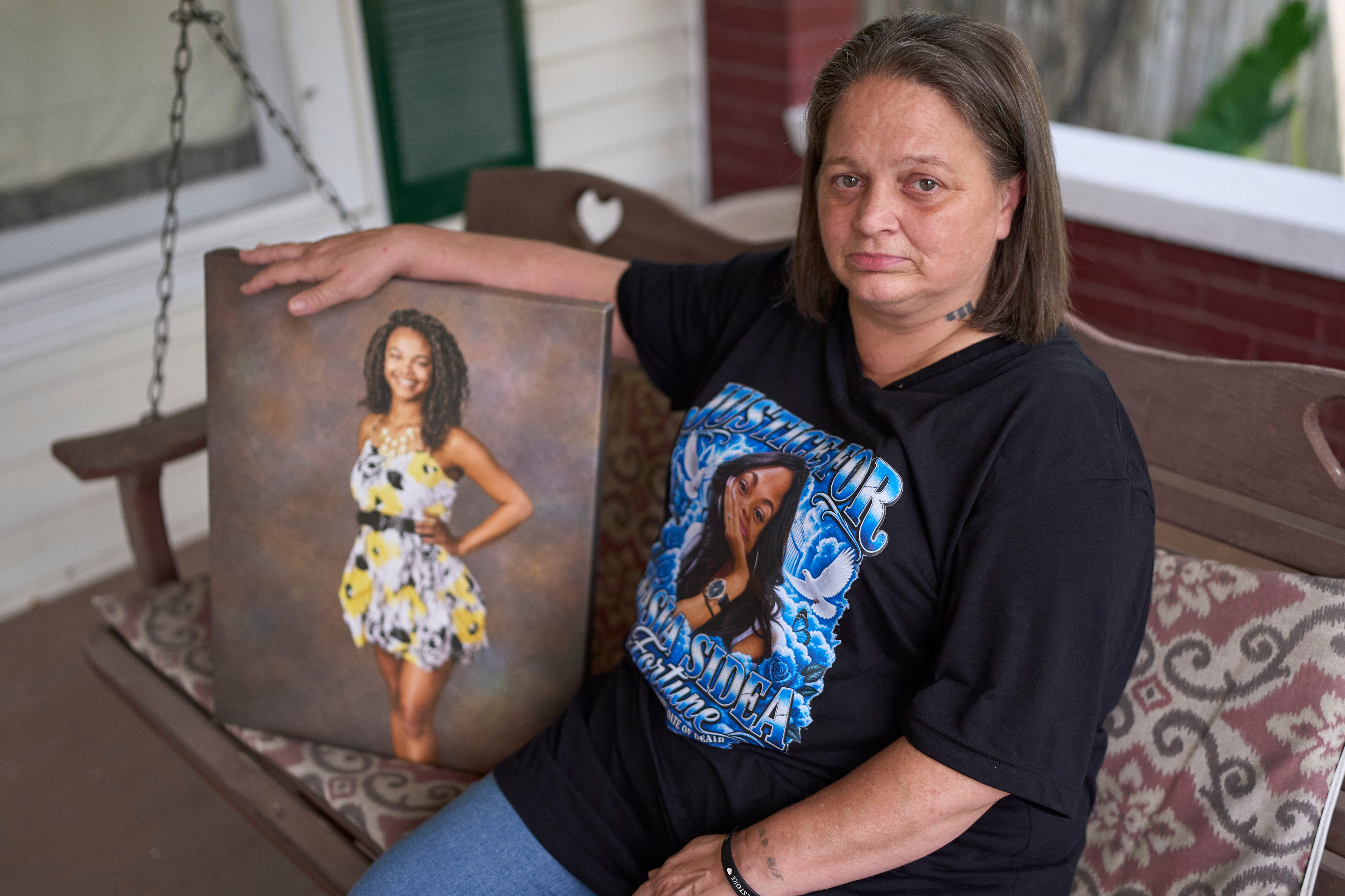
    The body of Tasia Fortune, 29, was found behind an abandoned home in Jackson, the state capital, on Aug. 3. Jarques Ratliff, 51, who is also Black, pleaded not guilty to murder on Monday. Police and prosecutors haven’t given a suspected motive and say more arrests are expected.

    Regardless of the circumstances of the case, for many Black people, the imagery of a rope and noose evokes the legacy of lynching and vigilante violence against Black people in the U.S. and brings with it deep pain and trauma.

    “Black folks down here in 2026, we are feeling and experiencing some of the same things we felt in 1956 and 1966 and that should not be happening,” Jackson activist Brad Franklin said of Fortune’s death.

    “But because it’s Mississippi and the racist history of our state, our skin has been toughened a lot to deal with it.”

    Fortune’s mother, Christy Spivey, told The Associated Press that she doesn’t believe race had anything to do with her daughter’s death. Spivey is white. She said Fortune’s father is Black.

    “I think this is something very personal, very personal,” Spivey said, insisting that someone who was acquainted with Fortune was involved.

    Recent cases have triggered skepticism — and private autopsies

    Over the past two years, about a half-dozen Black women and men have been found hanged across the South. Police in some of those cases quickly deemed them suicides — often eliciting historically grounded skepticism when investigators provide limited evidence ruling out foul play.

    “I say let the evidence show,” said Sean Joe, a professor of social work at Washington University in St. Louis and a nationally recognized authority on suicidal behavior among Black people. “But if … you go into a definition or a conclusion of suicide, you have to show some evidence for that.”

    Spivey says she is certain her daughter would not have killed herself. “Absolutely not. Even if she could climb that tree, no, no, she would never, ever, ever,” Spivey said.

    In Roanoke Rapids, N.C., police are investigating the Aug. 21 death of Demetrius Eugene Fleming, 38. Police Chief Lawrence Wiggins said Tuesday that his office is waiting on reports from a medical examiner.

    In February, police in Cobb County, Georgia, found the body of 21-year-old Kyle Bassinga in a park. While investigators said there was no indication of foul play, Bassinga’s death “caused many to think of the days of slavery and of Jim Crow,” said Cobb County Commission Chairwoman Lisa Cupid.

    The September 2025 death of 21-year-old Black student Trey Reed at Mississippi’s Delta State University was ruled a suicide, as was that of Dennoriss Richardson, 39, in September 2024 in Alabama’s rural Colbert County.

    Richardson’s wife, Leigh, has said she doesn’t believe he killed himself and, as has occurred in other cases, a private autopsy was conducted, finding his death consistent with a hanging, according to news reports.

    Leigh Richardson told ABC News that despite chronic asthma and other breathing problems that would cause her husband anxiety attacks, “that is just not a way that he would even process to leave this world.”

    Group has chronicled thousands of lynchings in U.S.

    More than 4,400 lynchings occurred in the U.S. between Reconstruction and World War II, according to the Alabama-based Equal Justice Initiative. The 1955 lynching of teenager Emmett Till in Mississippi over accusations he flirted with a white woman helped catalyze the civil rights movement.

    “These were public, intentionally public in order to convey terror, not just to the individuals and their families, but to a whole community,” said Karlos Hill, professor of African and African American Studies at the University of Oklahoma and author of Beyond The Rope: The Impact of Lynching on Black Culture and Memory.

    Nearly 60 members of Congress signed a letter in September demanding the Justice Department investigate hanging deaths of Black individuals and enforce the 2022 Emmett Till Antilynching Act, which made lynching a federal hate crime.

    “In this moment of anti-Blackness and emboldened white supremacy, we cannot stand idly by while the strange fruit of Black bodies hang from trees across the country,” U.S. Rep. Ayanna Pressley said in a statement.

    The Justice Department confirmed it received the letter but has not responded, according to the office of Pressley, a Massachusetts Democrat and the letter’s lead author.

    ‘I know the skin I’m in’

    Trent Thompson, 58, of Florence, Ala., says the recent hangings and deaths of Black people led to talk in the Black community about the death this summer of Nolan Xavier Wells.

    Wells, 18 and Black, joined friends on a Fourth of July boat excursion to an island off Mississippi’s Gulf Coast but did not return with them. His body was found two days later. Scrutiny of the investigation has deepened with the state’s history of racist violence and distrust of law enforcement — triggering suspicion in the Black community toward many cases involving deaths of Black people, Thompson said.

    “I know the skin I’m in,” he said.

  • Body found in Grand Canyon was missing hiker, wife says, bringing flood death toll to 3

    Body found in Grand Canyon was missing hiker, wife says, bringing flood death toll to 3

    GRAND CANYON NATIONAL PARK, Ariz. — Human remains found in the Grand Canyon this week were those of the last remaining person missing after the deadly flash flooding in late August, the victim’s wife said Thursday.

    The discovery of Timothy Allen Smith brought the death toll to three from flooding that devastated the Phantom Ranch area at the canyon bottom and damaged the water pipeline serving the South Rim.

    Smith, 53, was a pilot from western Wyoming’s Star Valley. His remains were found Monday near Crystal Rapids on the Colorado River that runs through the canyon.

    The remains of Smith’s two backcountry companions, Brent Rosenkranz, 42, and John Giusti, 46, both of Granbury, Texas, were found earlier.

    Smith grew up in Granbury and lived with his wife in Star Valley Ranch, about 40 miles southwest of Jackson.

    He, Rosenkranz and Giusti were on a multiday hiking, fishing, and camping trip when flooding swept through the Grand Canyon.

    During the two-day deluge, searchers used night vision and other equipment to find people in need of rescue. They relied on the Grand Canyon National Park’s permit system and checked vehicle license plates to track those still missing. More than 80 people were rescued.

    Soon, only Smith was missing. In a Facebook video at the time, his wife, Carrie, and their children thanked people for their support and prayers.

    On Tuesday morning, Carrie Smith posted on Facebook that the family was aware a body had been found a day earlier and asked others to pray with them.

    Smith confirmed in a Facebook post on Thursday that the remains had been identified as her husband’s.

    “My family has done a lot of waiting over the last three weeks … waiting and hoping Tim (Daddy) would come home, waiting and wondering if the remains found were Tim (Daddy),” she wrote. “We no longer have to wait, Tim was found two days ago by the Rangers at Grand Canyon National Park. Not in the way we had hoped, but we know that he was doing something he loved with John and Brent.”

    She added, “We know that these three men loved the Lord and were a shining light for Him. The impact their lives had on others is still being shown to our families daily.”

    The National Park Service and Department of the Interior did not immediately return email messages seeking comment Thursday. The agencies have not publicly identified the remains found this week.

    The flooding began Aug. 29 during the summer monsoon, or rainy, season when clear skies can quickly give way to thunderstorms and heavy rain. A desert landscape can funnel water from a deluge into sudden torrents that rage down previously dry gullies and canyons.

    The rain fell on part of a North Rim burn area left after a lightning-caused wildfire in July 2025. The fire destroyed the historic Grand Canyon Lodge, cabins and other structures.

    Burn areas can worsen flash flooding because there’s less vegetation to absorb runoff.

    The flooding damaged a pipeline spanning the canyon that supplies water to millions of tourists and residents. Insufficient water caused all overnight lodging to be halted until the pipeline could be restored. National Park Service officials said recently that they expected to restore a reliable water supply in the canyon in weeks — not months — after determining most of a near-complete pipeline project was not damaged during the flash flood.

    Many hiking trails and lodging areas remain closed, and water has been shut off in the inner canyon, prompting advisories that hikers bring their own water or water filtration devices.

    Another flash flood hit the canyon along Bright Angel Creek and the Colorado River during a storm Wednesday, park officials said. No injuries were reported. Authorities said efforts to minimize personnel in the canyon before the storm, as well as flash flood warnings, enabled crews to reach safety. Damage assessments were underway.

  • Carney calls for EU-Canada pact amid ‘ferocious storm’

    Carney calls for EU-Canada pact amid ‘ferocious storm’

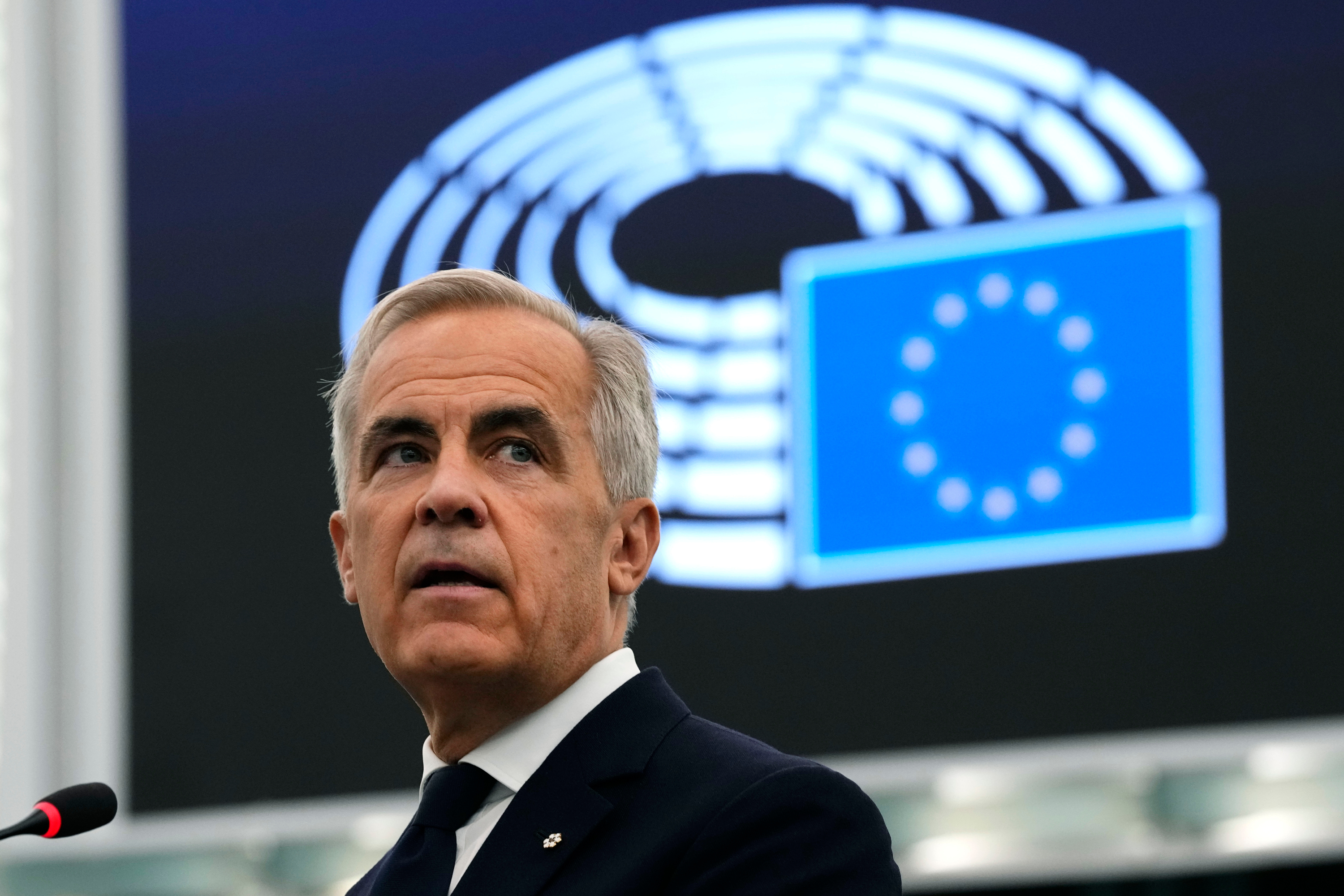
    STRASBOURG, France — Canada’s newly proposed associate membership in the European Union will help to secure sovereignty and freedom for the country amid a “ferocious storm,” Prime Minister Mark Carney told the European Parliament on Thursday, adding that the move would also make his nation a better partner for the United States.

    President Donald Trump, reacting Wednesday to the potential alliance between Ottawa and Brussels, said the move could be perceived as “a hostile act.”

    “If it’s a bad intention, we’ll put very heavy tariffs on Europe,” he added.

    Carney countered on Thursday. “This alliance is a positive process. That’s my response to the American president. It’s a positive thing,” he told reporters after his European Parliament speech.

    “A stronger, more resilient Canada will be a more effective partner with the United States — same with the European Union,” he added.

    Carney said the associate membership outlined by European Commission President Ursula von der Leyen on Wednesday would strengthen core areas of life on both sides of the Atlantic.

    The push for closer links comes amid a historic low for U.S. ties with Canada and turbulence in the relationship between Washington and the European Union as Trump has upended traditional American alliances.

    Carney said Canada and the European Union were not looking to become another superpower.

    “I am not proposing a third bloc in order to become a great-power rival only with better manners,” he said during his speech to European lawmakers in Strasbourg, France. “We do not seek power to dominate others,” he added.

    Associate membership for Canada in the European Union could be the closest linkup the bloc of 27 nations has with a nonmember state. The move highlighted a deep desire of traditional American allies to seek stability by banding together as Trump remakes the U.S. role in the world.

    Carney suggested that Europe and Canada were seeking to band together “so that no one can control our open markets, impair our sovereignty, threaten our territorial integrity or undermine our freedoms, our democracies, our rule of law.”

    Trump has instigated a trade war against Canada, the United States’ closest ally and second-largest trading partner, and routinely said he wanted the northern neighbor to become the 51st state. He has also pulled the United States away from the traditional close alliance with the European Union, imposing tariffs and barriers to trade, and he has weakened the NATO defense pact by threatening to drastically cut the U.S. contribution.

    Carney did not mention the United States or Trump by name during his speech in Strasbourg, but he made clear allusions.

    “Economic integration is now being used as a weapon, and tariffs as a means of leverage,” he said. “Financial mechanisms are employed for coercion. Supply chains represent vulnerabilities to be exploited.”

    Carney said youth from both Canada and the European Union should be able to travel and study in each other’s territories through participation in the bloc’s student mobility program, Erasmus. That program is credited with building generations of young Europeans with joint identities and shared experiences.

    Canada would most likely need to contribute financially to participate in Erasmus, as well as in any other EU programs the country might join, though the fine print of how the alliance would work has not yet been discussed.

    Carney’s vision for how the European Union and Canada could work together also extended to major, foundational parts of their economies and society. He said the two should launch a “deep cooperation in the full range of strategic capabilities,” including industries involving critical minerals, defense, artificial intelligence and computing, and energy security. He also suggested that the bloc and Canada could work on managing payment systems.

    Control over services such as payment mechanisms has been worrying policymakers in the European Union and Canada because many of those services are controlled by the United States or by American companies. That concern is front and center as the debate grows about the future of AI.

    “Technology is transforming the nature of warfare, the structure of economies and the capacity of states to govern,” Carney said.

    He also took aim at online platforms, of which the largest are American.

    “Tech platforms aspire to sovereignty,” he said. “They seek to set the terms of access. They want to dictate regulatory rules — or even bypass them.”

    “They want to control our data, spread disinformation and steal our children’s childhood,” he added.

    Carney noted that Canada was endowed with major critical mineral and energy resources, which the country wanted to export to markets in the European Union. The two already have agreements in place for such collaboration. This year, Canada secured a major contract to sell liquefied natural gas to Germany.

    The exact shape of the alliance between Canada and the European Union has been unclear because there is no formal or legal framework for an “associate member” of the bloc.

    In Canada, the conservative opposition has raised concerns that an alliance might encroach on the country’s sovereignty. In Europe, officials from EU member states worry that the label could antagonize other countries with deep ties to the bloc, such as Britain and Norway, as well as those that are in the arduous process of becoming full members, such as Albania.

    In his address, Carney touched on those issues, saying, “Canada is not in a position or seeking to become a full member of the European Union.”

    “The precise nomenclature is a question for Europe,” he added.

    Carney noted that the Canadian Parliament, which reconvenes next week after the summer recess, would get a chance to debate the future EU-Canada relationship and put the proposal to a vote.

    During his speech, Carney made extensive references to the deep historical bonds between Europe and Canada, framing the new cooperation as existential. He was frequently interrupted by applause from members of the European Parliament as he harked back to past battles they had fought together.

    “Freedom and life must be earned every single day,” Carney said. “Every day. Not once in 1945 or 1956 or 1989. Every day, including this one.”

    The lawmakers, with the exception of many from far-right parties, gave him a lengthy standing ovation.

  • Jon Kyl, a former top Republican in the Senate, dies at 84

    Jon Kyl, a former top Republican in the Senate, dies at 84

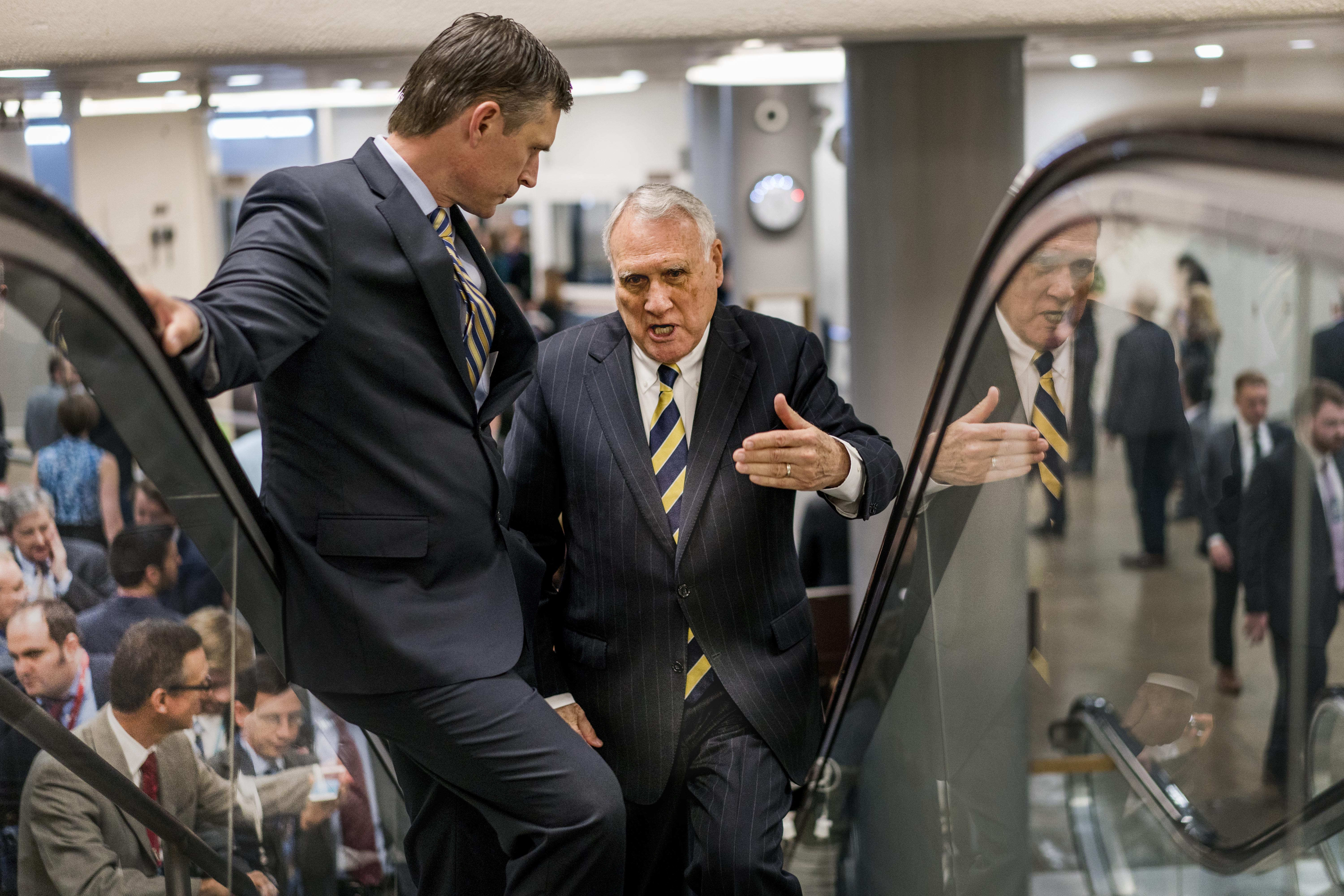
    Former senator Jon Kyl, who served in Congress for nearly 30 years and rose through the ranks of GOP leadership to become the Senate’s No. 2 Republican, has died at the age of 84, his family said Thursday.

    Mr. Kyl’s passing comes nearly nine months after he announced he had been diagnosed with dementia and would be withdrawing from public life. In a statement to local news outlets, his family said Mr. Kyl had passed due to “complications from a neurological disease.”

    “We know that Jon belonged to all of Arizona, a state he loved and explored with vigor, curiosity, and wonder,” his family said. “Serving his state and nation in Congress was a privilege and responsibility he honored and respected.”

    Mr. Kyl served in the House from 1987 to 1995 and in the Senate from 1995 to 2013. He served as the Senate minority whip before he left public office in 2013 and became a lobbyist.

    After the death of former Arizona senator John McCain in 2018, then-governor Doug Ducey appointed Mr. Kyl to serve out the rest of McCain’s term. Mr. Kyl returned somewhat reluctantly, out of a sense of duty, and was instrumental in guiding Supreme Court nominee Brett M. Kavanaugh through the confirmation process.

    This is a developing story and will be updated.