KYIV, Ukraine — It’s not easy to get to Ukraine, where the airports have long been closed and where Russia is now targeting the country’s essential railway network, hitting tracks and destroying hundreds of locomotives.
On my sixth visit since 2022, I decided to fly to neighboring Moldova and taxi across the border, even though Moscow has been striking the crossings. Just after I entered the country, a Russian drone zeroed in on another international transit point just 30 minutes away, one which my driver had considered using.
The drone incinerated three travelers sitting in a bus.
In many ways, Ukraine has become a far more dangerous place since I was here in June 2025. During the last two months, a frustrated Vladimir Putin, whose army has been unable to advance on the ground, is trying to break the country’s morale from the air.
I saw the results of an unending torrent of Russian drones, cruise missiles, and top-line ballistic missiles – targeting road travel, blowing up highway gas stations, wrecking the ports from which Ukraine exports grain to the world, and hitting civilian apartment blocks in waves in Kyiv and other major cities. By systematically destroying the country’s electricity grid, Putin hopes to freeze urban Ukrainians this winter into turning against their government.
And yet, unlike many of the high-level U.S. and European invitees to the 22nd annual meeting of the Yalta European Strategy (YES) conference, held in Kyiv Sept. 11-12 and co-sponsored by the Viktor Pinchuk Foundation, I didn’t come away increasingly gloomy about Ukraine’s prospects.
Instead, talking with Ukraine’s top military commanders, its brilliant engineers and tech innovators, who have made the country the world’s most inventive drone powerhouse, I came away totally furious.
Furious because, despite Russia’s size and its mass production of Iranian Shahed drones souped-up with jet engines, I believe Ukraine’s deep strikes into Russia and even deeper smarts could ultimately force Putin to recognize that the war has become too costly.
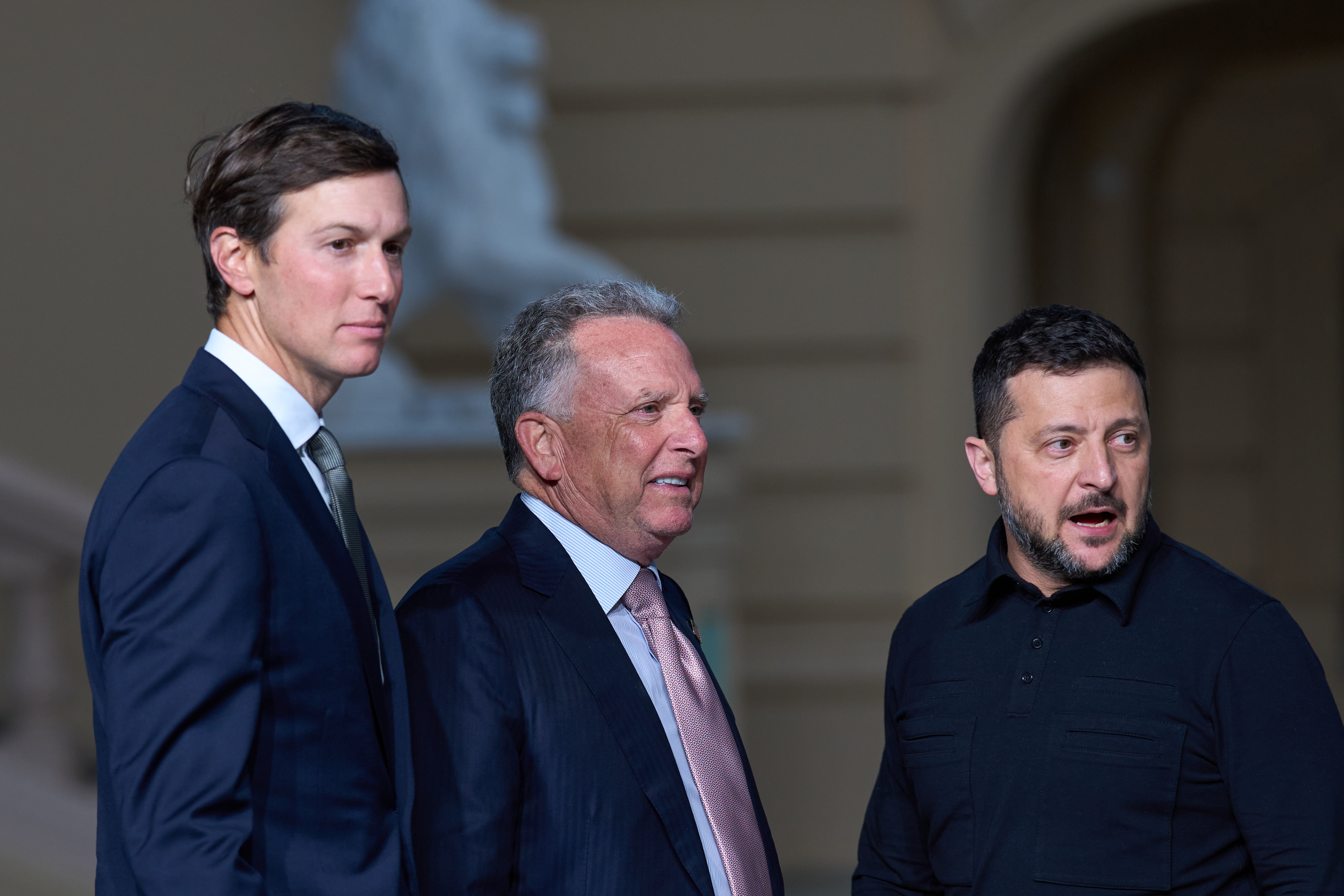
Ukraine’s President Volodymyr Zelensky (right) stands with Steve Witkoff (center) and Jared Kushner, President Donald Trump’s envoys, at the end of their joint news conference in Kyiv, Ukraine, Sept. 6.Francisco Seco
Only one element is lacking: the full backing of a U.S. leader with the brains to recognize there can be no “peace deal” with a Kremlin czar who aims to undermine America with the same intensity as he seeks to subjugate Ukraine.
If the U.S. would only help Kyiv obtain enough Patriot interceptors to counter Russian ballistic missiles (the same interceptors Donald Trump has massively wasted in his war of choice with Iran), the Ukrainian David could outmaneuver the Russian Goliath. And, in so doing, America could also score a key strategic win.
There are several reasons why.
For starters, the resilience and inner strength I saw among ordinary Ukrainians is astonishing, even though they admit how frightened they are about the coming winter.
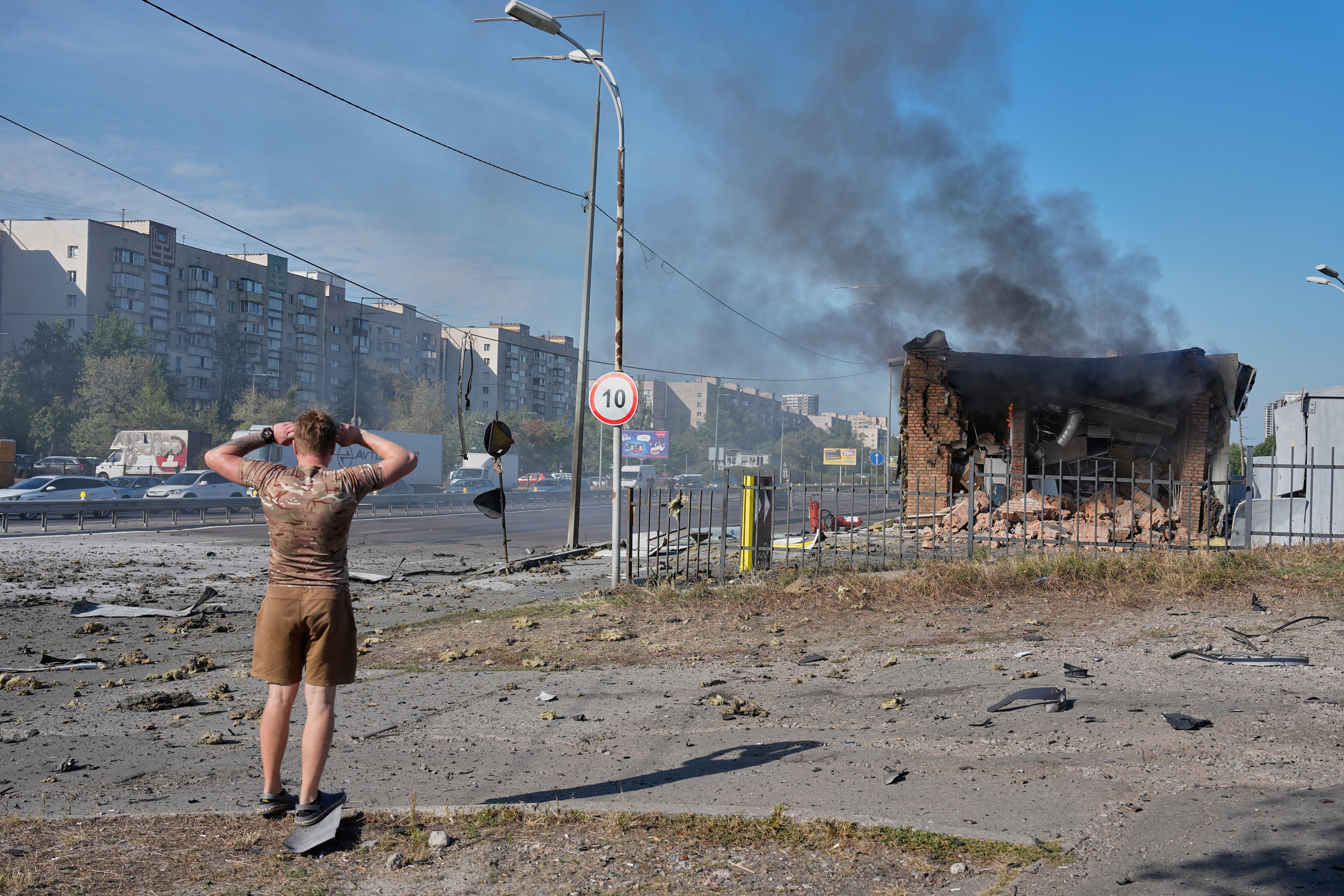
Take gas station workers, who are at terrible risk from Russian drones. I visited the scorched shell of an Ukrnafta gas station in Kyiv’s Holosiivskyi district, hours after it was hit on Sept. 10. Workers had been evacuated to a shelter before the drone struck. Female attendants (who asked not to be named) had already returned with sausage and cheese to feed the cleanup crew. Would they return to their jobs? I asked. “Of course,” was the quick reply.
Two days later, my translator and I visited an OKKO station, a roadside chain with an adjacent store and cafe that is popular for serving hot dogs and coffee free to anyone in uniform. OKKO has been a favorite target of Russian strikes, and while our tank was being filled, the workers got word that a Shahed might be approaching.
As customers ran for their cars, one worker fleeing the store screamed at the cashier who was processing my card, “Get out to the shelter!” She finished her job, told me she would never leave Ukraine, then ran out the back door. I ran to our car, and we quickly pulled out to the road.
I heard that same stoicism under fire expressed repeatedly as I traveled from Moldova to the Ukrainian port city of Odesa to Kyiv and back.
In the frequently hit, middle-class Kyiv district of Lukianivka, where many high-rise apartment buildings are pocked with blackened holes where drones did their dirty business, I walked by the rubble of a destroyed supermarket and shopping mall.
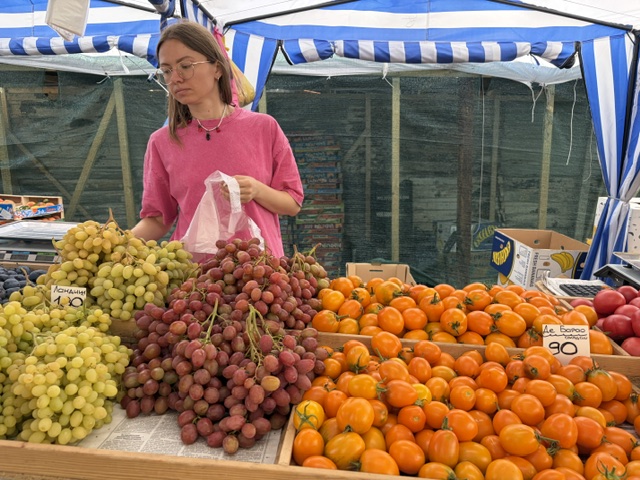
Shoppers visit open air stalls set up to replace a large covered market destroyed by Russia in the Lukianivka neighborhood of Kyiv, Ukraine.Trudy Rubin
At a historic covered market that had taken a direct drone strike, women who had sold goat cheese, honey, fruit and vegetables, and clothing at indoor stalls had already relocated to tents outside the charred remains of the market.
Over and over I heard the same message: “Yes, we are frightened, but we won’t give our country to Putin.” Several of these women had husbands in the military, and a couple told me they might leave their apartments for the winter, but they weren’t running away.
A nearby McDonald’s, which has been struck several times by the Russians, had already been rebuilt and was full of young people buying Big Macs and fries.
Still, civilian steadfastness alone can’t defeat ballistic missiles and drones, and ordinary civilians in Kyiv and Odesa are stressed and distressed.
As my indomitable translator, Alla, told me, “A single mother, living in an eighth-floor apartment with two children and a mother who recently had a heart attack, is a full-time crisis manager.”
Schools are closed because of constant air raid alerts, and parents must devise games for frightened youngsters during blackouts, when clothes and quilts are piled on to avoid freezing.
Diners sit inside the rebuilt McDonald’s in the Lukianivka neighborhood in Kyiv, Ukraine.Trudy Rubin
This is where we come to the critical race between Ukraine’s tech innovators and Russians playing catch-up, as Ukraine incorporates of artificial intelligence into its drone and missile systems in order to use unmanned robots and upgraded drones to compensate for its shortage of man power. And as Ukrainians rush to perfect weapons systems that can counter Russia’s ability to destroy the infrastructure that enables civilians to survive.
I will write more about the progress in this area and my interviews with brilliant Ukrainian tech leaders in future columns. But let me sum up how they believe they can still force Putin to bend.
These super innovators said at the conference, and told me in private interviews, that they expect to be able to produce an interceptor drone to counter Russian jet engine-driven Shahed drones within a few months.
But there are two big caveats for real success. First, Ukraine still desperately needs more Patriot interceptors to counter Russian ballistic missiles. And second, Ukraine needs to massively scale up production of its anti-Shahed interceptors and other new drones in order to counter Russian numbers. This requires substantial foreign investment and joint production, most likely in Europe.
If Trump and Defense Secretary Pete Hegseth had any grasp of the new way of war in the 21st century, the Pentagon would long since have been signing contracts to jointly produce drones with Ukrainian companies — all of which constantly update their technology based on lessons from the front line. Given the destruction of key U.S. bases in the Mideast, which were undefended against Iranian Shaheds, Hegseth should be begging for immediate Ukrainian help.
When former Secretary of the Army Dan Driscoll — who understands Ukrainian drone warfare well but was recently pushed out by Trump — was asked at the strategy conference what the U.S. could learn from Ukraine, he replied: “We in the West have got to internalize these lessons [from Ukraine]. What you are doing here in a very scrappy, fast, iterative nature is what we must contort our systems to achieve at scale.
“The speed and scale of AI and [computing] that is about to hit these weapon systems will be an amazing opportunity for Ukraine to outrun the Russians, out-innovate them and out-partner them. We are a couple of months away from new solutions changing the very nature of how warfare will occur.”
Eric Schmidt, the former CEO and chairman of Google, who has been a pioneer in coproduction of drones with Ukraine, added: “Pretty much all of the traditional assumptions about war and particular devices are probably false now. Ships are big targets … These drones appear to be toys, but are extraordinarily powerful, especially when swarmed.”
Schmidt concluded that “after four and a half years of war, Ukraine knows what it is doing. The country is organized to win this. What’s missing? Money, and the second is scaling.”
Yet, as Schmidt knows well, and what remains a tragedy for the United States, Trump refuses to recognize how crucial a partnership with Ukraine is to helping the U.S. military in Iran, and to instilling the new Pentagon mentality required for wars of the future. Which, no matter what Hegseth believes, has little to do with the size of the average soldier’s waistline or testosterone levels.
The main message of the YES conference was that the U.S. and Ukraine can both win — if the White House recognizes the need for partnership in the fight against the new axis of adversaries: Russia, China, North Korea, and Iran. What is maddening is Trump’s refusal to recognize the true win-win solution lies not between Kyiv and Moscow, but between the United States and Ukraine.
UNITED NATIONS — Under a global cloud of wars and bitter divisions, world leaders meet at the United Nations this week facing new fears that runaway artificial intelligence could threaten humanity even as climate shocks and escalating prices are already making life much tougher for hundreds of millions of people.
The annual high-level gathering at the U.N. General Assembly will also be consumed with major wars in Iran, Gaza, Ukraine,Sudan, Congo and Myanmar and a persisting question: Can the leaders do anything to end them?
And what can they do about the relentless rise of global warming threatening the future of the planet, the growing inequalities within and among nations, and shocks to the global economy as blocked shipping routes and supply chains increase the cost of living and slow growth?
The future of the United Nations will also definitely be on the agenda. At 81, its powers are still the victorious nations from World War II, not the 21st century’s major global players. The U.N.’s 193 member nations have agreed to a wide-ranging reform package that includes updating key institutions such as the powerful U.N. Security Council, where the U.S., Russia, China, Britain and France hold inordinate sway because of their veto power. Reform, however, is easier said than implemented.
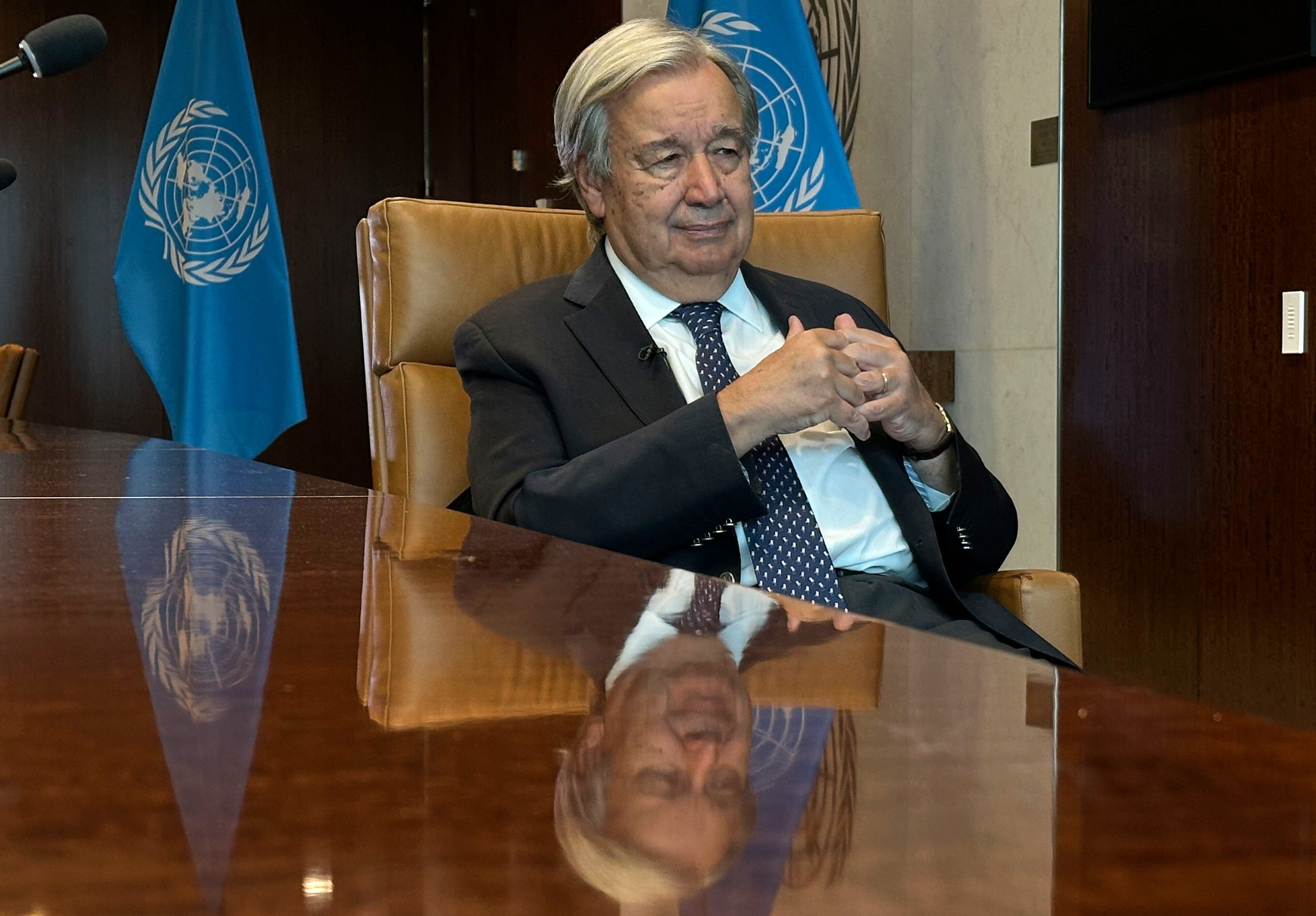
Behind the scenes, there will be speculation about who will lead the United Nations next. Secretary-General Antonio Guterres’ second five-year term ends Dec. 31 and no clear successor has emerged.
This meeting is still pivotal
There is still no question that the U.N. remains THE gathering place for its 193 member nations and their leaders. Some 130 heads of state and government are expected to speak at the General Assembly starting Tuesday along with dozens of ministers.
Among the headliners will be U.S. President Donald Trump and French President Emanuel Macron. Both will speak Tuesday after Guterres’ opening “state of the world” address. Ukraine’s President Volodymyr Zelenskyy and Iran’s President Masoud Pezeshkian speak Wednesday.
Israeli Prime Minister Benjamin Netanyahu — whom New York Mayor Zoran Mamdani wanted arrested for his treatment of Palestinians in Gaza until he learned he has no such authority — will address the assembly on Thursday. For a second year, Palestinian President Mahmoud Abbas won’t be coming to the U.N. because the U.S. has refused to give him a visa. He will nonetheless address the assembly by video the same day.
The United States, under its agreement with the U.N. to host the organization, is required to allow diplomats from all member nations to attend meetings.
Equally telling is who else isn’t coming. China’s President Xi Jinping is meeting Trump in Washington on Wednesday, yet he is skipping — some diplomats say snubbing — the U.N. gathering and sending a vice president instead. Russian President Vladimir Putin isn’t coming either, and Indian President Narendra Modi has backed out.
France’s U.N. ambassador, Jerome Bonnafont, said it is “extremely critical” for world leaders this week to support the U.N. as the place where the world’s nations meet — especially at a time of such polarization.
“We believe in multilateralism,” he said, ”and we believe that the high-level week is the occasion for countries in the world to reaffirm that they prefer cooperation and dialogue to confrontation.”
United Nations has not had a great year
There is no doubt it’s been a tough year for the world body. It has been pushed to the sidelines when it comes to its key responsibility of ensuring international peace and security and trying to end major conflicts in the Mideast and Ukraine. The U.S. failure to pay billions of dollars in outstanding arrears has left the organization’s finances in rocky shape.
But veteran U.N. watcher Richard Gowan, the International Crisis Group’s global issues and institutions program director, says 2025 was even worse.
A year ago, he said, people were contemplating that Trump would use his U.N. speech to announce that the United States would leave the world organization. Trump didn’t announce a pullout last September and the U.N. muddled through the past 12 months with financial troubles that forced cutbacks to its peacekeeping operations and humanitarian aid.
In recent days, the U.S. paid $725 million of its dues to the U.N.’s regular operating budget for this year, enough to keep the Trump administration from losing its vote in the General Assembly. The payment was a strong indication Trump will keep the U.S. in the United Nations.
The U.N. is no longer “in freefall,” Gowan said, but it “is stuck in an open-ended or permanent crisis.” Put more graphically, he said, “The U.N. may not be in emergency care like it was last year, but it does seem to be trapped in a trauma center for the foreseeable future.”
Former U.N. deputy secretary-general Mark Malloch-Brown, a United Nations Foundation board member, said, “While the world still trusts the U.N., the global public is eager for change.”
AI is pushing toward the center of the agenda
The future of artificial intelligence has pushed to the forefront of global concerns, with its speeding advances and the dawning recognition that there are no industry controls, let alone any global guardrails for a technology that has many advantages but also many disadvantages and unknowns.
The U.N. Security Council added a high-level meeting on AI to its agenda on Wednesday afternoon, a sign of the growing apprehension and need to address the issue. It was already slated to hold a high-level meeting on Ukraine with Zelenskyy on Wednesday morning.
For the U.N. chief, this will be his last assembly meeting with global leaders. He previewed his speech last week, telling U.N. reporters that power is shifting in “an era of deep uncertainty.”
“At a time when the world faces three existential threats,” he said, “international cooperation is more necessary than ever.”
Others will be vying for the spotlight on issues from rising sea levels and funding education to the fight for gender equality. Hundreds of private meetings will also convene in U.N. cubicles, hotels, diplomatic missions and restaurants.
Esther Brimmer, a senior fellow in global governance at the Council on Foreign Relations and former U.S. assistant secretary of state for international organization affairs in the Obama administration, said in-person meetings can help countries hash out ideas that get implemented months later.
She called the situation in 2026 “much more serious and complex than in decades past.”
“With that said, I’m also not without hope as well,” Brimmer said. “Over the past decades we’ve learned a lot about international cooperation.”
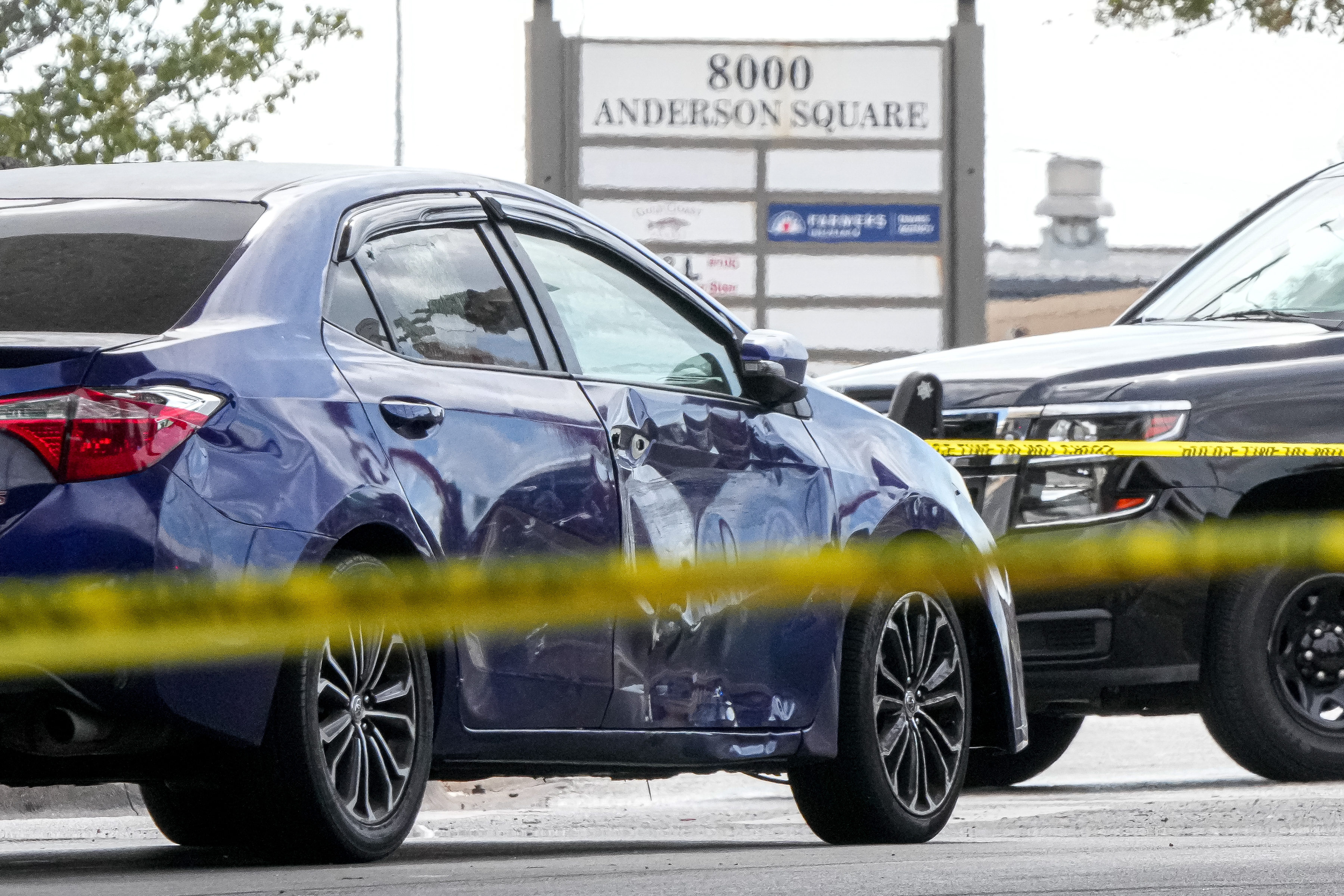
AUSTIN, Texas — A Venezuelan man shot by a U.S. Immigration and Customs Enforcement officer was in custody Monday at an ICE detention center in Texas after he was released from a hospital with a bullet still lodged in his back, the man’s attorney said.
Speaking by phone during a news conference, Wilber Rafael Garces Perez said doctors didn’t remove the bullet because it’s near his spine. He said ICE pressed for him to be released quickly from the hospital so it could move him to a detention center. He said he had received no pain medication or treatment there, and had slept on the floor, before eventually being given a “pill” by a nurse on Monday.
Perez, 28, was making a DoorDash delivery in Austin on Sunday when his car was “sideswiped” twice by ICE officers in an unmarked truck, immigration attorney Kate Lincoln-Goldfinch told reporters Monday.
An ICE officer shot Perez in the back of the neck before officers pulled him from his car, she said. He was taken to a hospital, Lincoln-Goldfinch said, but was released later Sunday into ICE custody with the bullet still inside him.
“I am not doing well due to the gunshot wound, and I have not received the medical attention that I require,” Perez said, speaking in Spanish over the phone as his wife translated during the news conference.
Perez was being detained at the South Texas ICE Processing Center in Pearsall, about 130 miles southwest of Austin, Lincoln-Goldfinch said. She said Perez told her in a prior phone call that he was being interrogated.
The Department of Homeland Security, which oversees ICE, has released little information and has not said what prompted the shooting. In a statement early Monday, the department said it was investigating the shooting of a Venezuelan man in the U.S. illegally who “had a final order of removal.”
Homeland Security did not immediately respond to email messages seeking further comment on the shooting.
Perez entered the U.S. legally in 2024 as an asylum seeker and had a valid work permit, Lincoln-Goldfinch said. She said a judge issued a deportation order for Perez after he missed a hearing in immigration court because the hearing notice was sent to a former address.
“Not that being out of status would justify any of this at all,” Lincoln-Goldfinch said of the shooting in a social media post.
The shooting occurred amid a surge in ICE enforcement across the U.S. during President Donald Trump’s second term. During the summer, it reported more than 50,000 monthly arrests in July and August — a first for the agency.
Immigration officers have come under intense scrutiny amid a series of shootings during the crackdown. At least four people have been fatally shot by federal officers during immigration enforcement operations this year.
Local advocates, leaders of the civil rights group the League of United Latin American Citizens, and two Democratic congressmen who represent parts of Austin called during the news conference for the creation of an independent body to review use-of-force incidents by ICE and refer suspected crimes to prosecutors.
They also urged Congress to ban ICE officers from making traffic stops, saying the officers are undertrained and too quick to resort to violence.
Austin Mayor Kirk Watson, a Democrat, has said he wants local police to have a role in investigating the shooting. Watson said it wouldn’t be appropriate for ICE to investigate on its own.
The area beneath an overpass where a large crowd of protesters had gathered Sunday near the shooting scene was quiet Monday. Trash-filled plastic bags were left below concrete pylons marked with anti-ICE graffiti.
Amid discarded police tape, people left candles, flowers, and a sign that read “Justice for Wilber.”
Major television networks will halt TV coverage of presidential events, according to a memo obtained by the Washington Post, over the White House’s ban of CNN — which was barred alongside MS NOW and Politico in recent days — while the three news organizations have said they’re suing the government, alleging violations of their constitutional rights.
“This is to advise that, effective today, the TV pool will not be covering events designated as pool coverage of the President,” Bryan Boughton, the Fox News Washington bureau chief and chairperson of the TV pool, wrote in a memo to the White House press corps that was obtained by the Post.
“This follows the White House’s position preventing CNN from fulfilling its assigned pool duties. There will be no replacement pool put in place. All other pool coverage will continue as normal, including Congress, VIPs, and selected events in Washington and around the country.”
In a joint statement Monday, the five members of the rotating TV pool wrote: “The public has a vital interest in receiving accurate, independent information about its government. No administration should restrict a news organization because it objects to its reporting.”
The banned outlets released a statement Monday saying they would be filing suit: “This morning, we notified the government that we are filing a lawsuit today to protect our First Amendment rights and defend the principle that the government does not decide what the press reports or publishes. Without notice or process, the White House revoked our journalists’ credentials because it objected to our reporting. Left unchallenged, this threatens press freedom and the public’s right to independent journalism free from government interference.”
The complaint, which was filed in federal district court in Washington, alleges violations of the news outlets’ First Amendment free press rights and Fifth Amendment due process rights. They are asking for an expedited hearing from a judge.
Trump said Friday he would ban MS NOW, CNN, and Politico from the White House, saying he disliked how they covered him. “They’re fake news,” he said. The following day, the organizations said that their journalists had been denied access to the White House grounds and that their press passes were confiscated.
Trump addressed the bans Monday in a post on Truth Social.
“The White House is not instituting an assault on the Free Press, something which I cherish,” he wrote. “It is instituting an assault on the FAKE NEWS, something that has grown like Cancer in our beloved United States of America. It is corrupt, purposeful, pervasive, fully coordinated, and totally out of control. It is a threat to our National Security, and must be stopped, NOW!” When asked for comment, the White House referred the Post to this post on Truth Social.
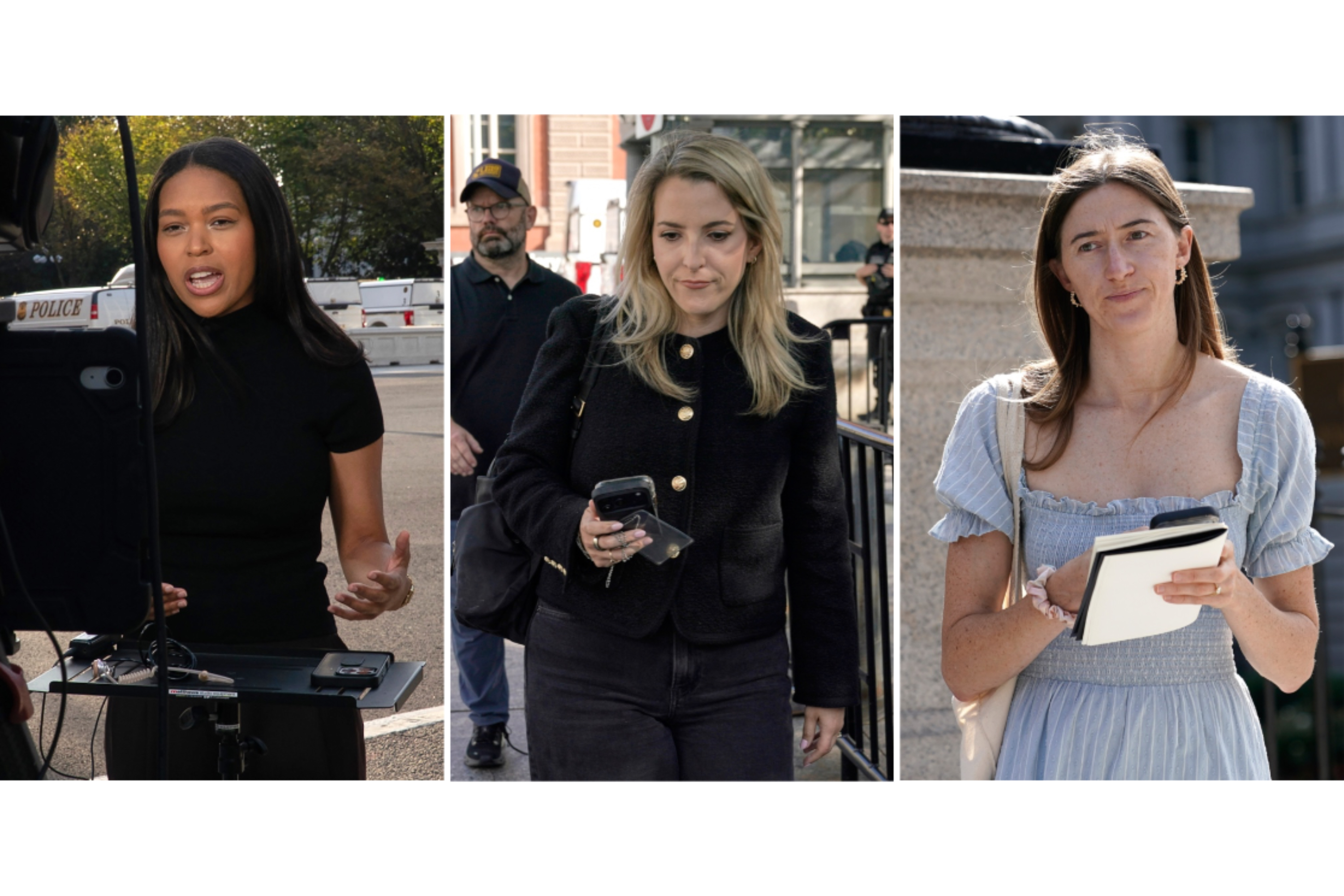
White House reporters for each of the outlets — MS NOW’s Akayla Gardner, CNN’s Betsy Klein, and Politico’s Cheyenne Haslett — are also plaintiffs in the suit. Trump, White House Chief of Staff Susie Wiles, White House communications director Steven Cheung, and Secret Service Director Sean M. Curran are named as defendants in their government capacities.
The plaintiffs, represented by First Amendment lawyer Theodore J. Boutrous Jr., are asking a federal judge to strike down the ban as unconstitutional and restore the outlets’ access.
In a statement, Boutrous called the ban “a direct assault on the First Amendment and a blatant violation of due process” and said the law is on the plaintiffs’ side.
CNN, MS NOW, and Politico have received nearly unanimous support from fellow news organizations as well as press advocacy organizations in recent days. White House Correspondents’ Association President Jacqui Heinrich, a Fox News reporter, wrote in a statement Saturday that the bans violate the First Amendment and called upon the White House to restore the reporters’ access.
“The American people, through a free and independent press, must be able to scrutinize those elected to power, regardless of whether government officials view it favorably,” she said.
The Knight First Amendment Institute at Columbia University said it plans to support the news outlets in court. Jameel Jaffer, the group’s executive director, said the bans constitute “an attack both on press freedom and the public’s right to independent information about the government.”
During his first administration, Trump banned CNN reporter Jim Acosta and later Playboy reporter Brian Karem from the White House, though both were allowed back after they sued the government. Those cases, along with a 1977 case involving Robert Sherrill of the Nation, were highlighted in the new complaint.
CNN’s ban in particular has created logistical hurdles for the news media. The network is one of five poolers — along with ABC, CBS, NBC, and Fox News — that rotate primary responsibility of covering the president with television cameras. The White House removed the network from its schedule Monday, presumably leaving the president without designated TV cameras filming him during his trip to the United Nations in New York.
The pool is a way for the networks to split the hefty costs of following the president around with TV cameras. The assigned network records and distributes a live feed that other news outlets can use. Without a TV pooler, there will be scant video coverage of Trump unless news outlets take their own video or use feeds provided by the White House.
The Associated Press reported that Trump showed off his new White House helicopter landing pad on Monday, attempting to brush aside the First Amendment firestorm even as major television networks kept their cameras away in protest of CNN being banned from the grounds.
A light drizzle fell on the South Lawn as Trump used oversized gold scissors to cut a red, white and blue ribbon. He then exchanged handshakes with officials and with some members of a construction crew wearing green smocks and hardhats — seeking to portray business as usual.
If he had words to mark the occasion, however, it was impossible to hear them over the noise of his waiting helicopter. Normally, TV network crews work to capture clearer audio.
Trump also didn’t answer reporters’ shouted questions before climbing aboard Marine One for an eventual flight to New York. Instead, he wrote on his social media site, “We are just leaving the White House Lawn on the maiden voyage from the newly built, and very beautiful, Heliport!”
Trump has long crowed about how the new helipad — featuring extensive granite that he boasts will have a “million-year life,” as well as a large insignia reading the “Seal of the President of the United States” — would impress Chinese President Xi Jinping, who arrives Wednesday for a state visit.
He’s been focused on wowing Xi even as he decried Democrats as communists in an attempt to help Republicans retain control of Congress in upcoming midterm elections. But his effort to curb access for media outlets to the White House has overshadowed Trump’s pet building projects and Xi’s visit.
Igniting constitutional questions over media access also eclipsed the reason Trump was lifting off from the helipad — the annual trip to attend the United Nations General Assembly beginning today.
For two weeks, the question of whether to yield to pleas from Saudi Arabia and order the U.S. military to strike targets in Yemen controlled by the Iran-backed Houthis has bedeviled President Donald Trump.
A decision to go forward could open another front in the war against Iran that Trump started but has been unable to end as it spreads economic shock around the globe.
The president had wavered for weeks over the Saudi appeals for help in fighting the Houthis, who took advantage of the instability in the Middle East and reignited their war with the kingdom this summer.
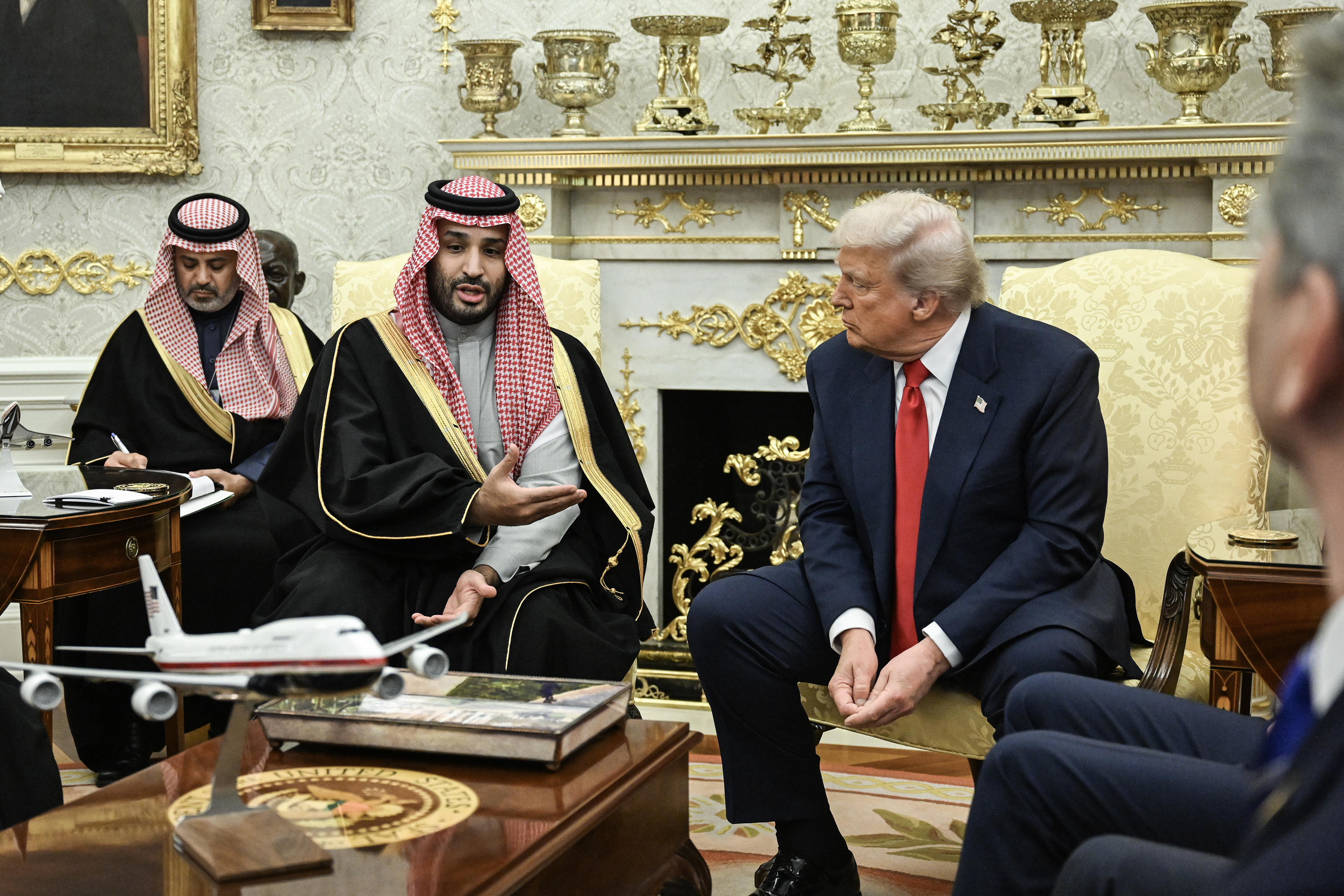
But things came to a head Thursday: Crown Prince Mohammed bin Salman, the kingdom’s de facto leader and a major ally in the Iran war, called the president to implore him, again, to step in to help blunt the rapidly advancing group, administration officials said.
Trump had met with advisers just the day before and told them he did not favor strikes. But after speaking with the Saudi crown prince, he reversed himself and told the Pentagon to prepare for airstrikes against the Houthis.
But by midday Sunday, the president appeared to have reversed himself again. There would be no U.S. airstrikes against the Houthis — at least not for the time being, according to administration officials. The officials spoke on the condition of anonymity because they were not authorized to discuss military planning.
The White House press office declined to discuss Trump’s deliberations for the record. A senior administration official would say only that “the U.S. has a defense agreement with Saudi Arabia and we will always defend our allies.”
Most of the president’s inner circle was either deeply skeptical or outright opposed to joining the Saudi fight against the Houthis, especially given the existing strains facing the U.S. military in the war with Iran, according to a senior administration official.
Trump’s decision to pull back from, or at least delay, striking Houthi targets came as commanders had approved target lists, troops were loading bombs onto U.S. warplanes selected for the missions, and the wave of attacks was just about to begin, according to two people briefed on the operation.
In a telephone call with Fox News on Sunday morning, the president told reporter Trey Yingst that he was in “deciding mode” on what to do in the larger war with Iran. On the topic of the Houthis, the president said the United States was in constant communication with the group, mentioning that the Houthis had so far agreed not to fight the United States, Yingst reported.
The gyrations reflect the quandary in which the president now finds himself: He is correct when he says that the Houthis have steered clear of attacking U.S. ships. But they have gone after Saudi Arabia, creating a dilemma for Trump.
Some U.S. military officials have argued that the United States needs the kingdom’s help with the war in Iran, and Saudi officials have shown they are willing to exercise what leverage they have in the absence of U.S. cooperation. For instance, in May, Saudi Arabia effectively halted the Trump administration’s plan to use the U.S. military to escort commercial oil tankers through the Strait of Hormuz by refusing the United States use of its airspace and American air bases in the country.
If the United States did join the Saudi fight, it could be in conjunction with a new planned ground offensive by Yemeni government troops, officials said. But those forces have proved ineffective against the Houthis.
The Houthis have been fighting with Yemen’s internationally recognized government, which is backed by Saudi Arabia, since 2014. The violence slowed after a truce took effect in 2022, but the group waded into the widening war in the Middle East this summer by declaring a blockade on Saudi shipping in the Red Sea and attacking Saudi vessels.
Amid the fighting, the Houthis captured critical areas near the Bab el-Mandeb Strait — a major choke point along the Red Sea — threatening to unsettle global energy markets already reeling from the U.S.-Israeli war against Iran.
Current and former U.S. diplomats and commanders who served in the Middle East expressed skepticism that a limited U.S. bombing campaign would compel the Houthis, who withstood nearly eight weeks of U.S. bombardment last year, to negotiate and drop their most hard-line demands.
In the spring of 2025, the U.S. military bombed the Houthis for more than 50 days to restore freedom of navigation in the Red Sea and to stop the group’s attacks on commercial and U.S. naval shipping vessels.
During that campaign, U.S. Central Command struck more than 1,000 targets, including radar systems, air defenses, ballistic missile sites, drone launch areas, and a drone production hub near Sanaa, the Yemeni capital.
The Houthis fought back and shot down several American drones, and they continued to fire at naval ships in the Red Sea, including a U.S. aircraft carrier.
The U.S. strikes burned through weapons and munitions at a rate of about $1 billion in the first month alone. During the campaign, two $67 million F/A-18 Super Hornets tasked with conducting strikes against the Houthis accidentally tumbled off America’s flagship aircraft carrier into the sea.
Less than two months into that campaign, Trump abruptly announced a ceasefire with the Houthis, proclaiming that they “gave us their word that they wouldn’t be shooting at ships anymore, and we honor that.”
The Houthis stopped firing at American ships. But that would probably change if the United States were to restart an air campaign, one official said. The official also warned that, with the Strait of Hormuz still unstable since the war against Iran started, the world might soon be dealing with further disruptions in petroleum and gas transit routes in the Bab el-Mandeb.
Since last year’s ceasefire, the Houthis have reconstituted much of their capabilities and are even using artificial intelligence to develop and engineer new types of missiles.
The current and former officials said that defeating the Houthis would be difficult, even with the U.S. military helping the Saudis.
“There never really was a Fishtown, government-wise. It was a localism,” explains Kenneth Milano, a Kensington-born historian and cofounder of the Kensington History Project. Perhaps this is why it’s hard to know exactly where Fishtown’s boundaries are.
“No one [in the old days] would ever call above York Street ‘Fishtown.’ That would have been sacrilege,” Milano said. “With the new folks, they don’t know. The [real estate agent] told them.”
story continues after advertisement
Decades of gentrification in the River Wards have blurred the lines as developers tagged their properties with the coveted Fishtown brand, even as they ventured into what were generally defined as sections of Kensington. (And which Kensington? East Kensington? Olde Kensington? South Kensington? How about Norris Square? And Olde Richmond? And Port Richmond?)
The argument is about more than what to call a few blocks: A neighborhood name can shape a place’s identity, its perceived desirability, and even how it is marketed and valued.
Click anywhere on the map to start drawing your Fishtown boundary
Milano said parish boundaries originally helped reinforce neighborhood identity. Milano, 67, has lived on York Street since age 5 and described the conventional Fishtown as a triangle bounded by Norris, Frankford, and the Delaware River.
The Inquirer’s map of neighborhoods agrees with Milano — although it’s worth mentioning that this map, used internally to help our reporting stay consistent, was created in the 1980s. The Milano-Inquirer definition is definitely conservative when compared to more recent attempts to set boundaries.
By contrast, Zillow’s Fishtown is nearly twice the size. The real estate website includes not only Front Street to the west, but also goes as far north as Lehigh Avenue.
Zillow maintains its own set of neighborhood boundaries “by reviewing sources such as city maps, the Census Bureau, and neighborhood associations,” Zillow spokesperson Briahna Healy said.
There’s some overlap between Zillow’s boundaries and the 19125 zip code. While residents might feel a strong attachment to the last five digits of their address, zip codes exist solely to help route mail. This makes it hard to use 19125’s scraggly borders to define Fishtown — especially when sections that reach that far north are Kensington by any definition.
Somewhere in the middle is the Fishtown Neighbors Association border — sticking with Front Street to the west but extending only as far as York Street to the north. These boundaries “go back about 20 years when FNA was a community organization that needed boundaries to help dictate what projects to work on,” said John Scott, current president of the FNA.
Their boundaries are a single piece in a jigsaw puzzle with surrounding neighboring associations. It explains why some streets are included and others aren’t. For example, the area between Front Street and Frankford Avenue is included because “if we didn’t include them, they would probably be stateless,” Scott said.
This also means that a lot of boundaries are largely codified because the FNA can’t expand without encroaching on neighboring associations — unless, that is, new streets are built, like those in the Northbank development on the Delaware. Now the FNA is about to adjust its boundaries for the first time in a quarter-century to encompass streets south of Schirra Lane.
If we look at all of these definitions at the same time, there is a clear overlap that we can safely call Fishtown.
However, much of the fringe is up for debate. Does Fishtown stop at Front or Frankford, for example? Is York the border, or is it Norris, or even Lehigh?
It’s time for some good, old-fashioned, boots-on-the-ground reporting.
A defining feature of Fishtown are the whimsical fish signs on house facades. Our theory: Surely a painted fish wouldn’t make sense in Kensington. We hit the streets and logged every house that had a fish sign.
Largely, the signs are contained to the FNA-defined borders. But we found a large pocket of signs east of York Street and even a few signs north of Frankford — although they are outnumbered by milk bottle signs to honor Kensington’s old Harbisons Dairy plant.
Fish signs are only one way to delineate Fishtown boundaries. We also looked at restaurants and what neighborhood they describe themselves as belonging to: Fishtown, Kensington, or unsure.
Fishtown has been known for its dining scene since Johnny Brenda’s established the beachhead in 2003. As development marched on, restaurateurs and dining guides followed the cue of developers and real estate agents: We’re in Fishtown.
Today, that’s not entirely the case, as even upscale restaurants are comfortable calling themselves Kensington, though they could claim Fishtown. At Fiore, chefs Ed Crochet and Justine MacNeil use East Kensington for their Italian restaurant north of the York Street roundabout. Directly across is Emilia, chef Greg Vernick’s popular new Italian spot, which doesn’t state its neighborhood in its marketing materials. Resy, its reservation booking platform, calls it Fishtown-East Kensington.
Seemingly everyone says Middle Child Clubhouse is in “Fishtown.” But by dint of its location on the west side of Front Street, it’s arguably in South/Olde Kensington. Yuhiro, a sushi restaurant on Susquehanna Avenue just west of Frankford, markets itself as Fishtown but it could be considered in Kensington.
Then there are the restaurants where it’s even more unclear because they list multiple neighborhoods, or none at all. For example, Picnic, on Martha Street, uses East Kensington in its Instagram bio but has used Fishtown in public relations campaigns. Where is Meetinghouse, a noted bar at Memphis and Cumberland Streets? Chef/co-owner Drew DiTomo thought for a moment: “Its parish is St. Anne’s and I quite like that.”
Finally, we decided to ask people in the gray areas a simple question: “Where are we?”
We found Matt Murphy and Kaitlin Dirkx at Hagert and Tulip Streets — south of Lehigh, north of York, still in 19125. “It’s kind of a curious pocket of the River Wards,” said Murphy, who emphatically called the area “Olde Richmond.” But, as Dirkx added, “they let me into the Fishtown Neighbors Facebook group. My address must have fallen in line.”
Mark Opdyke, who lives on a side street just west of Frankford Avenue near Norris, insisted that his side of Blair Street is in Fishtown. He pointed across the street toward the Blair Garden townhouses, built in 2018 and sold as “Fishtown,” chuckled, and called that side “Kensington.”
At Frankford and Dauphin, Nick Campione’s family has owned AC Auto Repairs for 70 years. Its facade boasts a mural proclaiming, “Welcome to the Neighborhood” with an inscription explicitly describing it as “Fishtown and East Kensington.” Campione won’t take sides: “This is the best of both worlds here.”
Finally, we caught up with Stephanie Goodman and Justin Frye on the west side of Frankford Avenue near Dauphin, in front of the Groove Hound, a doggie day care. Goodman called that stretch Fishtown, adding that it’s two blocks from the house she bought in 2018 across from Philadelphia Brewing Co., which proudly says it belongs to East Kensington. Though Goodman said the real estate agent advertised her block as Fishtown, Frye believes it’s in East Kensington. “Ten different people and 10 different answers,” he said.
So it’s now time for you to decide. Let us know where you think the boundaries of Fishtown are by drawing on the map.
Thanks for drawing your boundaries. Please reach out to interactives@inquirer.com and let us know why you believe these are the boundaries of Fishtown.
This is where the average reader submission currently lays.
Staff Contributors
Design, Development, and Reporting: Sam Morris
Reporting: Michael Klein
Sign Auditors: Sam Morris and Jasen Lo
Illustration: James Olstein
Editing: Charmaine Runes
Copy Editing: Brian Leighton
story continues after advertisement
Subscribe to The Philadelphia Inquirer
Our reporting is directly supported by reader subscriptions. If you want more journalism like this story, please subscribe today
// used for lite color theming and debug buttons only
$colors: (
“purple”: $color-purple,
“pink”: $color-pink,
“red”: $color-red,
“orange”: $color-orange,
“yellow”: $color-yellow,
“green”: $color-green,
“teal”: $color-teal,
“light-gray”: $color-light-gray,
“light-blue”: $color-light-blue,
“blue”: $color-blue,
“black”: $color-black,
“white”: $color-white
);
`;var Wn=tr();var Y=(i=null)=>{let u=Kt.split(`
`),r={};return u.forEach(e=>{let o=e.trim().match(/^$color-([w-]+):s*([^;]+);/);if(o){let s=o[1],n=o[2];r[s]=n}}),i&&r[i]?r[i]:r};var rr=(i,u=null,r=null)=>{r||(r=document.querySelector(“head”));let e=document.createElement(“script”);e.type=”text/javascript”,e.src=i,u&&(e.onload=u),r.appendChild(e)},Ve=()=>(window.PMNdataLayer?.[0]!==void 0&&window.PMNdataLayer[0])?.analytics?.user?.state===”Subscribed”,je=()=>{let u=(window.PMNdataLayer?.[0]!==void 0&&window.PMNdataLayer[0])?.analytics?.user?.state;return window.location.host.includes(“zzz-systest”)||window.location.host.includes(“pmn.arcpublishing.com”)||window.location.host.includes(“stage.fusion.inquirer.com”)||typeof u>”u”},or=()=>{let u=(window.PMNdataLayer?.[0]!==void 0&&window.PMNdataLayer[0])?.analytics?.user?.hasAdsFreeReading;return!!(u&&u==1)},Ae=()=>window.location.host.includes(“localhost”);var To=i=>{(i&&i.querySelector(“.js-loading”))?.setAttribute(“data-state”,”ready”)},Bo=i=>{(i&&i.querySelector(“.js-loading”))?.setAttribute(“data-state”,”loading”)},bo=(i,u)=>{(i&&i.querySelector(“.js-loading”))?.setAttribute(“data-state”,”error”),u&&targetModalErrorEl&&(targetModalErrorEl.textContent=u)},We={stop:i=>To(i),start:i=>Bo(i),error:(i,u)=>bo(i,u)};var ce=document.querySelector(“.js-map-tooltip”),Eo=()=>{ce.classList.remove(“is-hidden”)},Io=()=>{ce.classList.add(“is-hidden”)},ko=(i,u)=>{i&&u&&matchMedia(“(pointer:fine)”).matches?(ce.style.top=i+”px”,ce.style.left=u+”px”):(ce.style.top=””,ce.style.left=””)},Do=(i,u)=>{i==”pre”?ce.textContent=”Click to place the first point”:i==”mid”&&(u{window.addEventListener(“resize”,()=>{ct&&setTimeout(()=>{lr()},300)})},Vo=()=>{rr(“https://interactives.inquirer.com/storage/dependencies/maplibre/5.3.0/maplibre-gl.js”,()=>{let i=new zt;Le=window.maplibregl,Le.addProtocol(“pmtiles”,i.tile);let u=”https://interactives.inquirer.com/melish/1.3″,r=`${u}/north-america.pmtiles`,e=new Oe(r);i.add(e),e.getHeader().then(async()=>{let s=await(await fetch(`${u}/styles/neutral.json`)).json();R=new Le.Map({container:”map”,zoom:13,center:[-75.165222,39.952583],maxBounds:[[-128.362885,24.389629],[-58.886719,52.918839]],attributionControl:!1,interactive:!1,style:{…s,layers:[],sources:{openmaptiles:{type:”vector”,url:`pmtiles://${r}`}}}}),lr(),R.on(“load”,async()=>{for(let f of nr.features)Ko(f.properties.origin,f.geometry);Xo(),st(“people”,sr),st(“signs”,ar),st(“restaurants”,ir),Yo();let y=await(await fetch(“https://interactives.inquirer.com/lyon/2026-fishtown/average.json”)).json();Qo(“readers”,y);let a=R.getCanvas();We.stop(a.closest(“.js-map”)),ct=!0,pt&&ur(pt)}),document.querySelector(“.js-map”).addEventListener(“mousemove”,n=>{jo(n)}),document.querySelector(“.js-map”).addEventListener(“mouseout”,()=>{Wo()}),document.querySelector(“.js-map”).addEventListener(“click”,n=>{Go(n)})})})},lr=()=>{R.fitBounds([-75.14613425987851,39.95952387517457,-75.10908333009395,39.98791745377673],{duration:0})},jo=i=>{if(ve&&ie&&(ue.show(),ue.position(i.clientY,i.clientX),ie==”mid”)){let u=lt(i);xe.features[0].geometry.coordinates[1]=[u.lng,u.lat],R.getSource(“drawing-ghost”).setData(xe),R.setPaintProperty(“drawing-ghost”,”line-opacity”,.5)}},Wo=()=>{ue.hide()},No=()=>{let u=document.querySelector(“.js-map”).getBoundingClientRect().top;u{if(ve){if(ie==”pre”){let u=lt(i);Z.features[0].geometry.coordinates.push([u.lng,u.lat]),xe.features[0].geometry.coordinates[0]=[u.lng,u.lat],document.querySelector(“.js-map-start”).classList.remove(“is-hidden”),pr.setLngLat(u),document.querySelector(“.js-tool-buttons-reset”).disabled=!1,ie=”mid”}else if(ie==”mid”){let u=lt(i);Z.features[0].geometry.coordinates.push([u.lng,u.lat]),xe.features[0].geometry.coordinates[0]=[u.lng,u.lat]}i.target.classList.contains(“js-map-start”)&&Zo(),R.getSource(“drawing-user”).setData(Z),ue.update(ie,Z.features[0].geometry.coordinates.length),ue.show()}},Zo=()=>{ve=!1,ie=”end”;let i=Z.features[0].geometry.coordinates.length,u=Z.features[0].geometry.coordinates[0];Z.features[0].geometry.coordinates[i-1]=u,Z.features[0].geometry.type=”Polygon”,Z.features[0].geometry.coordinates=[Z.features[0].geometry.coordinates],R.getSource(“drawing-user”).setData(Z),R.setPaintProperty(“drawing-user-fill”,”fill-opacity”,.4),R.setPaintProperty(“drawing-ghost”,”line-opacity”,0),document.querySelector(“.js-map-start”).classList.add(“is-hidden”),document.querySelector(“.js-tool-buttons-submit”).disabled=!1},qo=()=>{ve=!0,ie=”pre”,ue.update(ie,0),Z.features[0].geometry.type=”LineString”,Z.features[0].geometry.coordinates=[],R.getSource(“drawing-user”).setData(Z),document.querySelector(“.js-tool-buttons-submit”).disabled=!0,R.setPaintProperty(“drawing-ghost”,”line-opacity”,0),R.setPaintProperty(“drawing-user-fill”,”fill-opacity”,0),document.querySelector(“.js-map-start”).classList.add(“is-hidden”)},lt=i=>{let u=document.querySelector(“.js-map”).getBoundingClientRect(),r=i.clientX-u.left,e=i.clientY-u.top;return R.unproject([r,e])},Jo=()=>{Jt.vote({coordinates:JSON.stringify(Z.features[0].geometry.coordinates[0])})},Ko=(i,u)=>{R.addSource(`boundary-${i}`,{type:”geojson”,data:u}),R.addLayer({id:`boundary-${i}-fill`,source:`boundary-${i}`,type:”fill”,paint:{“fill-color”:Y(“illo-red”),”fill-opacity”:0}}),R.addLayer({id:`boundary-${i}-line`,source:`boundary-${i}`,type:”line”,paint:{“line-color”:Y(“illo-red”),”line-width”:4,”line-opacity”:0}})},Qo=(i,u)=>{R.addSource(`drawing-${i}`,{type:”geojson”,data:u}),R.addLayer({id:`drawing-${i}-fill`,source:`drawing-${i}`,type:”fill”,paint:{“fill-color”:Y(“illo-yellow”),”fill-opacity”:0}}),R.addLayer({id:`drawing-${i}-line`,source:`drawing-${i}`,type:”line”,paint:{“line-color”:Y(“illo-yellow”),”line-width”:4,”line-opacity”:0}})},st=(i,u)=>{let r;window.innerWidth{let i=[{id:”tavern”,coordinates:[-75.13430336980068,39.9690688861316]},{id:”milk”,coordinates:[-75.13290465156766,39.98256059702009]},{id:”pier”,coordinates:[-75.11347715844,39.9714839528569]},{id:”wawa”,coordinates:[-75.11890594948434,39.977239248055895]},{id:”sulimays”,coordinates:[-75.12598489221865,39.971605275979115]},{id:”traffic”,coordinates:[-75.12754751235474,39.98145267435357]}];for(let u of i){let r=document.querySelector(`.js-map-icon[data-id=”${u.id}”]`);new Le.Marker({element:r}).setLngLat(u.coordinates).addTo(R)}},Xo=()=>{R.addSource(“roads”,{type:”geojson”,data:Ne}),R.addLayer({id:”roads”,source:”roads”,type:”symbol”,layout:{“symbol-placement”:”line-center”,”symbol-spacing”:100,”text-field”:”{name}”,”text-font”:[“grot10-regular”],”text-max-angle”:90,”text-pitch-alignment”:”viewport”,”text-rotation-alignment”:”map”,”text-size”:9,”text-transform”:”uppercase”},paint:{“text-color”:”#666″,”text-halo-color”:”#fff”,”text-halo-width”:2}}),cr()},_o=i=>{let u=Object.keys(R.getStyle().sources).filter(r=>r.includes(“boundary-“));for(let r of u){let e=r.includes(i)||i==”all”;R.setPaintProperty(`${r}-line`,”line-opacity”,e?1:0),R.setPaintProperty(`${r}-fill`,”fill-opacity”,e?.2:0)}},en=i=>{let u=Object.keys(R.getStyle().sources).filter(r=>r.includes(“drawing-“)&&!r.includes(“ghost”));for(let r of u){let e=r.includes(i);R.setPaintProperty(`${r}-line`,”line-opacity”,e?1:0),R.setPaintProperty(`${r}-fill`,”fill-opacity”,e?.2:0)}},tn=i=>{let u=Object.keys(R.getStyle().sources).filter(r=>r.includes(“points-“));for(let r of u){let e=r.includes(i);R.setPaintProperty(`${r}`,”circle-opacity”,e?1:0)}},rn=i=>{let u=document.querySelector(“.js-map”);i?u.classList.remove(“is-hiding-icons”):u.classList.add(“is-hiding-icons”)},cr=i=>{let u=JSON.parse(JSON.stringify(Ne.features));u=u.filter(r=>r.properties.defaultVisibility==”visible”),i&&(i=i.split(“,”).map(r=>r.trim()),i=Ne.features.filter(r=>i.includes(r.properties.name)),u=[…u,…i]),R.getSource(“roads”).setData({type:”FeatureCollection”,features:u})},ur=i=>{ct?(i={points:i?.points||null,boundary:i?.boundary||null,drawing:i?.drawing||null,icons:i?.icons||!1,roads:i?.roads||null},_o(i.boundary),en(i.drawing),tn(i.points),rn(i.icons),cr(i.roads)):pt=i},fe={init:()=>{Ho(),Vo()},update:i=>{ur(i)},startDrawing:()=>{ve=!0,ie=”pre”,No()},stopDrawing:()=>{ve=!1},resetDrawing:()=>{qo()},submitDrawing:()=>{Jo()}};var on=()=>{document.querySelector(“.js-tool-buttons-start”).addEventListener(“click”,()=>{pn()}),document.querySelectorAll(“.js-tool-buttons-skip”).forEach(i=>{i.addEventListener(“click”,()=>{fr(),sn(),yr()})}),document.querySelector(“.js-steps-step .js-tool-buttons”).addEventListener(“click”,()=>{nn()}),document.querySelector(“.js-tool-buttons-reset”).addEventListener(“click”,()=>{fe.resetDrawing()}),document.querySelector(“.js-tool-buttons-submit”).addEventListener(“click”,()=>{fe.submitDrawing(),fr(),an(),yr()})},nn=()=>{document.querySelector(“.js-steps-step .js-tool-buttons”).classList.add(“is-hidden”),document.querySelectorAll(“.js-steps-step .js-button”).forEach(i=>{i.disabled=!0})},fr=()=>{document.querySelectorAll(“.js-steps-step.is-hidden”).forEach(i=>{i.classList.remove(“is-hidden”)})},an=()=>{let i=document.querySelector(“.js-tool-buttons-start”).closest(“.js-steps-step”).querySelector(“.inno-p”);i.innerHTML=”This is where you think Fishtown’s borders are.”},sn=()=>{let i=document.querySelector(“.js-steps-step .js-tool-buttons”).closest(“.js-steps-step”),u=parseInt(i.dataset.step),r=document.querySelector(`.js-steps-step[data-step=”${u+1}”]`);r&&r.scrollIntoView({block:”center”})},pn=()=>{document.querySelector(“body”).classList.add(“is-tool-mode”),fe.startDrawing()},yr=()=>{document.querySelector(“body”).classList.remove(“is-tool-mode”),fe.stopDrawing()},mr={init:()=>{on()}};var ln=()=>{or()&&document.querySelectorAll(“.js-adbox”).forEach(u=>{u.classList.add(“is-hidden”)})},dr={init:()=>{ln()}};var me,gr,cn=()=>{me=document.getElementById(“js-inno-toast”)},un=i=>{if(!me)return;me.innerHTML=i,me.classList.add(“is-active”);let u=()=>{me.addEventListener(“transitionend”,fn,{once:!0}),me.classList.remove(“is-active”)};clearTimeout(gr),gr=setTimeout(u,5e3)},fn=()=>{me.innerHTML=””},de={init:()=>{cn()},showToast:un};var Ge,hr=!1,yn=async()=>new Promise(i=>{setTimeout(()=>{console.log(“simulating createShareLink for localhost”),i(“https://inquirer.com/interactives”),mn()},100)}),mn=()=>{let i=document.querySelector(“.js-gift-toast-receiver”);!i||!(i instanceof HTMLElement)||setTimeout(()=>{let u=i?.querySelector(“span”);u&&(u.innerHTML=”Gift link copied to clipboard“)},20)},dn=()=>{let i=window.services?.createShareLink;i&&(Ge=i),Ae()&&(Ge=yn),Ge&&hn()},gn=async i=>{let u=”text/plain”,r=async()=>{try{return await Ge(window.location.pathname)}catch{i.dataset.state=”error”,de.showToast(“Hmm, we couldn’t generate a gift link…”)}},e=new ClipboardItem({[u]:r()});await navigator.clipboard.write([e]).catch(o=>{console.log(o),de.showToast(“Couldn’t copy to clipboard, try again?”),i.dataset.state=”error”}),de.showToast(“Gift link copied to clipboard!”),i.dataset.state=”complete”},hn=()=>{document.querySelectorAll(“.js-gift”).forEach(u=>{(Ve()||Ae()||je())&&u.classList.add(“is-available”)}),document.querySelectorAll(“.js-gift-button”).forEach(u=>{u instanceof HTMLButtonElement&&u.addEventListener(“click”,()=>{u.classList.contains(“disabled”)||(u.dataset.state=”loading”,hr=!0,gn(u),setTimeout(()=>{u.dataset.state=”ready”},2e3))})});let i=document.querySelector(“.js-gift-toast-receiver”);!i||!(i instanceof HTMLElement)||vn(i)},vn=i=>{new MutationObserver(r=>{for(let e of r){let o=[…e.addedNodes].at(0);if(!(o instanceof HTMLElement))return;hr&&de.showToast(o.outerHTML)}}).observe(i,{subtree:!0,childList:!0})},vr={init:()=>{dn()}};var Te,xn=()=>{document.querySelectorAll(“.js-hover”).forEach(i=>{i.addEventListener(“click”,()=>{xr(i)}),i.addEventListener(“mouseenter”,()=>{xr(i)}),i.addEventListener(“mouseout”,()=>{Pr(i)})}),window.addEventListener(“scroll”,()=>{Te!==null&&Pn()})},Pn=()=>{(Te>window.scrollY+100||Te{Pr(i)})},xr=i=>{i.classList.add(“is-visible”),Te=window.scrollY},Pr=i=>{i.classList.remove(“is-visible”),Te=null},wr={init:()=>{xn()}};var Fr=1,ut=class{constructor(u){this.el=u,this.contentPosition=”default”,this.possibleSteps=new Array,this.currentStep=null,this.currentStepEl=null,this.offset=window.innerWidth>960?window.innerHeight*.6:window.innerHeight*.9,this.instanceOfSteps=Fr,Fr++,this.setPossibleSteps(),this.updateContent(),this.bindings()}setPossibleSteps(){this.el.querySelectorAll(“.js-steps-step”).forEach(u=>{u.dataset.step&&this.possibleSteps.push(u.dataset.step)})}bindings(){window.addEventListener(“scroll”,()=>{this.updateContent()}),window.addEventListener(“resize”,()=>{this.updateContent()})}updateContent(){this.updateCurrentStep()}updateCurrentStep(){let u;if(this.el.querySelectorAll(“.js-steps-step”).forEach((e,o)=>{e.getBoundingClientRect().top{let n=”is-“+o,y=”is-“+s;this.possibleSteps.indexOf(o){document.querySelectorAll(“.js-steps”).forEach(i=>{new ut(i)})}};var wn=(i,u,r)=>{document.querySelectorAll(“.js-subscribe”).forEach(e=>{e.classList.toggle(“is-unsubscribed”,!i),e.classList.toggle(“is-preview”,u),e.classList.toggle(“is-dev”,r)})},Cr={init:()=>{wn(Ve(),je(),Ae())}};var Fn=()=>{},Mr={init:()=>{Fn()}};var Ar={init:()=>{Mt.init?.(),mr.init?.(),dr.init?.(),vr.init?.(),wr.init?.(),We.init?.(),fe.init?.(),Sr.init?.(),Cr.init?.(),Mr.init?.(),de.init?.()}};var Sn=()=>{},Lr={init:()=>{Sn()}};var Cn=document.querySelector(“.js-inno”),Tr=()=>{Ar.init(),Lr.init()};Cn?Tr():new MutationObserver((u,r)=>{if(document.querySelector(“.js-inno”)){r.disconnect(),Tr();return}}).observe(document,{attributes:!0,childList:!0,subtree:!0});})();
/*! Bundled license information:
matter-js/build/matter.js:
(*!
* matter-js 0.20.0 by @liabru
* http://brm.io/matter-js/
* License MIT
*
* The MIT License (MIT)
*
* Copyright (c) Liam Brummitt and contributors.
*
* Permission is hereby granted, free of charge, to any person obtaining a copy
* of this software and associated documentation files (the “Software”), to deal
* in the Software without restriction, including without limitation the rights
* to use, copy, modify, merge, publish, distribute, sublicense, and/or sell
* copies of the Software, and to permit persons to whom the Software is
* furnished to do so, subject to the following conditions:
*
* The above copyright notice and this permission notice shall be included in
* all copies or substantial portions of the Software.
*
* THE SOFTWARE IS PROVIDED “AS IS”, WITHOUT WARRANTY OF ANY KIND, EXPRESS OR
* IMPLIED, INCLUDING BUT NOT LIMITED TO THE WARRANTIES OF MERCHANTABILITY,
* FITNESS FOR A PARTICULAR PURPOSE AND NONINFRINGEMENT. IN NO EVENT SHALL THE
* AUTHORS OR COPYRIGHT HOLDERS BE LIABLE FOR ANY CLAIM, DAMAGES OR OTHER
* LIABILITY, WHETHER IN AN ACTION OF CONTRACT, TORT OR OTHERWISE, ARISING FROM,
* OUT OF OR IN CONNECTION WITH THE SOFTWARE OR THE USE OR OTHER DEALINGS IN
* THE SOFTWARE.
*)
*/
Years before police launched an investigation into the missing women connected to Raymond “R.C.” Horsch, the late pornographer stood inside a Kensington art gallery and presented what appeared to be the autopsy photos of a dead, unidentified woman.
His exhibition at the 2014 show ended with a video of the woman’s body being loaded into an incinerator — footage that he said was filmed at “a Kensington warehouse where the city morgue would send unidentified remains,” according to a review published on an art blog at the time.
“The Medical Examiner totally botched the autopsy and didn’t even bother to sew her up properly. My horrible photograph is all that is left of her, the only trace of her short, sad existence,” Horsch wrote in a release promoting the exhibition. “She has nothing else, not even a name.”
While Horsch was known to distort, embellish, or completely fabricate events, a law enforcement source and people familiar with this period of his life said this much is true: The pornographer had access to a Kensington crematorium connected to the notorious Garzone Funeral Home, which was shuttered over illegal body parts sales.
There, sources said, Horsch gave an employee drugs and cash in exchange for access to the crematorium so he could photograph and film the remains of the dead.
The funeral home and crematorium operated until 2007, when state authorities brought charges against the family-run business alleging the owners were selling body parts on the black market, according to court records and news reports.
Horsch, who died in May 2025 of a lung condition, was not named or charged in that scandal.
But police are looking into Horsch’s relationship to the crematorium as part of a sprawling local and federal investigation into at least seven missing women, according to a law enforcement source who spoke on the condition of anonymity to discuss an ongoing probe.
No bodies have been found, and five women police have identified as likely deceased went missing from 2016 to 2023, years after the crematorium connected to the Garzone Funeral Home had closed. Police are still investigating the women’s whereabouts, including ongoing searches for evidence in Horsch’s Olney home and basement.
The case has been complicated by Horsch’s tendency to blur fact and fiction, and many of his pornographic works featured staged death scenes and fake blood. But police have also recovered numerous videos and photos from Horsch’s home they have said seem to show real violence and actual killings.
At least as far back as the early 2000s, Horsch was known to prowl the streets of Kensington, offering drugs and cash to women in exchange for starring in his violent pornographic films.
He was public about his obsession with taking degrading photographs of women in addiction. Years after Horsch staged his 2014 art show in Kensington, he uploaded a photo series to his website featuring women “imagining and acting their own deaths” interspersed with images of fatal overdose victims. In a description of the gallery, Horsch wrote he took the photos in “unknowing collaboration with the Philadelphia Medical Examiner,” as well as local paramedics.
The Philadelphia Medical Examiner’s Office declined to confirm whether the city sent unclaimed corpses from the morgue to the Garzones’ crematorium.
Louis and Gerald Garzone, who together operated the crematorium connected to the funeral home under the name Liberty Cremations, pleaded guilty to selling over 240 corpses to a New York-based biomedical tissue company in 2008. The tissue cutters illegally stripped the bodies for bones, tendons, and organs, then sold them to hospitals.
Some of the tissue was infected with disease, officials said at the time, and was transplanted into patients without their knowledge. Law enforcement seized the crematorium and funeral home as part of the criminal case, court records show.
Horsch once bragged that he had access to the crematorium through an employee named “George,” whom he paid with drugs, and had filmed a scene for a movie there, according to a woman who worked with Horsch on several films beginning in 2003. She spoke on condition of anonymity to avoid being publicly linked to the pornographer.
Gerald Garzone said in a phone interview that he had never heard of Horsch and had no knowledge of corpses being photographed in his former business. He acknowledged knowing a man named George from the neighborhood but declined to say whether he had ever employed him.
“I don’t know anything about that,” he said.
A 2007 file photo of the Garzone Funeral Home at 1830 E Somerset St., in Philadelphia.Laurence Kesterson / Staff Photographer
Four people familiar with Horsch and Garzone’s business operation identified the man as George Newsome, a Kensington resident who lived a block away from the crematorium at a house on Ruth Street that Horsch was known to frequent.
Newsome was arrested for heroin possession in 2011, court records show, and again for cocaine possession in 2013. He died a year later, according to an obituary.
Investigators continue to sort through more than a million photos and videos on hard drives recovered from Horsch’s home on West Chew Avenue. Local and federal investigators said they have reviewed about 30% of the materials so far and have identified 58 different people in the footage.
Among them, police said, are images of four women who appear to be dead: Maribel Fresses; Gabrielle Amarando; a 25-year-old whose identity relatives asked to remain private; and a woman in her mid-20s whom investigators are still working to identify. Police said they also recovered footage of Horsch filming himself choking 27-year-old Nicole Fusaro with a zip tie until she was dead.
Police began searching Horsch’s Chew Avenue property shortly after a chance car stop on June 19 involving his son, Eugene, uncovered an ID in the name of Blair Tonzelli, who was reported missing in 2023.
Investigators then began reexamining the disappearance of Amy McHale, Raymond Horsch’s ex-wife, who was last seen at the Olney home in 2016.
Inside the property, police found five urns full of cremains, two of which police are still working to identify. The basement contained vats of unknown chemicals and a 55-gallon drum with connections to a sewer drain. There were also pages of writings that referenced serial killer Ted Bundy and described how someone enjoyed hurting a woman with a zip-tie.
Raymond Horsch had previously written in self-published novels about dissolving a woman’s body in chemicals. Police have sent the chemicals and liquids recovered from the basement to a specialized lab in Chicago for testing.
Eugene Horsch remains incarcerated on federal gun and drug charges. He has not been accused of any violent crimes involving the missing women.
Nature already is splashing its flecks of yellow on the trees, and soon the Technicolor waves of foliage will ripple toward Philadelphia in what the experts predict will be quite a spectacular season.
Right on schedule, at 8:04 p.m. Philadelphia time Tuesday, the astronomical fall begins with the instant of the autumnal equinox, when the sun beams its direct light on the equator and nature continues to turn down the dimmer switch in the Northern Hemisphere. It is as though the trees brighten to compensate for our daily loss of 2½ minutes of daylight.
It’s the season when the night skies are stunningly crowded with winged traffic, when a remarkable 2-inch-long, Halloween-hued creature has its days in the sun.
And on the nation’s 251st autumnal equinox, we take a look at what nature might offer in the only season with two widely accepted names, “autumn” and “fall.” And we peek at the coming winter — for which a lot of people around here have other names.
Another Red October?
A beautiful view along Kelly Drive during a sunny day in the quite warm October of 2024.Jessica Griffin / Staff Photographer
For the third time in the last four years, an equinoctial cooldown is due this week, with daytime highs in the 60s, as much as 10 degrees below normal.
Monthly readings have been above normal in 15 of the last 16 Octobers. In 2024, it hit 84 degrees on Halloween. In that period, annual average temperatures at Philadelphia International Airport have been about 1.3 degrees above normal, but the Octobers have been a full 2 degrees above.
A very early line on winter
The intensifying El Niño in the equatorial Pacific is a major player in the center’s winter outlook, posted Thursday. It favors above-normal temperatures here and in most of the nation. The center eschews snow forecasts, but it does foresee a potentially active storm track along the East Coast.
A cautionary note: This whole seasonal-forecast exercise remains quite the work in progress, and last winter was yet another victory for atmospheric chaos over science. No one foresaw the 30 inches of snow for Philly or a historic snow-and-ice cover.
The ‘woolly bears’ vs. science?
A “woolly bear” caterpillar. Do those rings say anything about the coming winter?Wiki Commons
The so-called woolly bear caterpillar had long held a legendary place nationally in weather folklore, but in 1948 the forecasting reputation of the incipient Isabella tiger moths took wings.
That year a respected entomologist with the Natural History Museum in New York City ventured to a state park and announced that, based on his analysis of the caterpillars’ black-and-orange-ish rings, the subsequent winter would be mild in the New York region. His forecast was dutifully reported in a New York newspaper, and, indeed, the winter was quite mild.
He continued reporting his annual analyses (however waggishly) that correctly foretold of several mild winters.
As it happened, some of the winters in that period were so snow-deprived in the Northeast they became the impetus for the snow-making industry that has forever changed skiing.
Don’t credit or blame the woolly bears, said Douglas S. Richmond, entomology professor at Purdue University. Their ubiquitous presence this time of year all over North America indicates little more than a 100% probability that it is autumn.
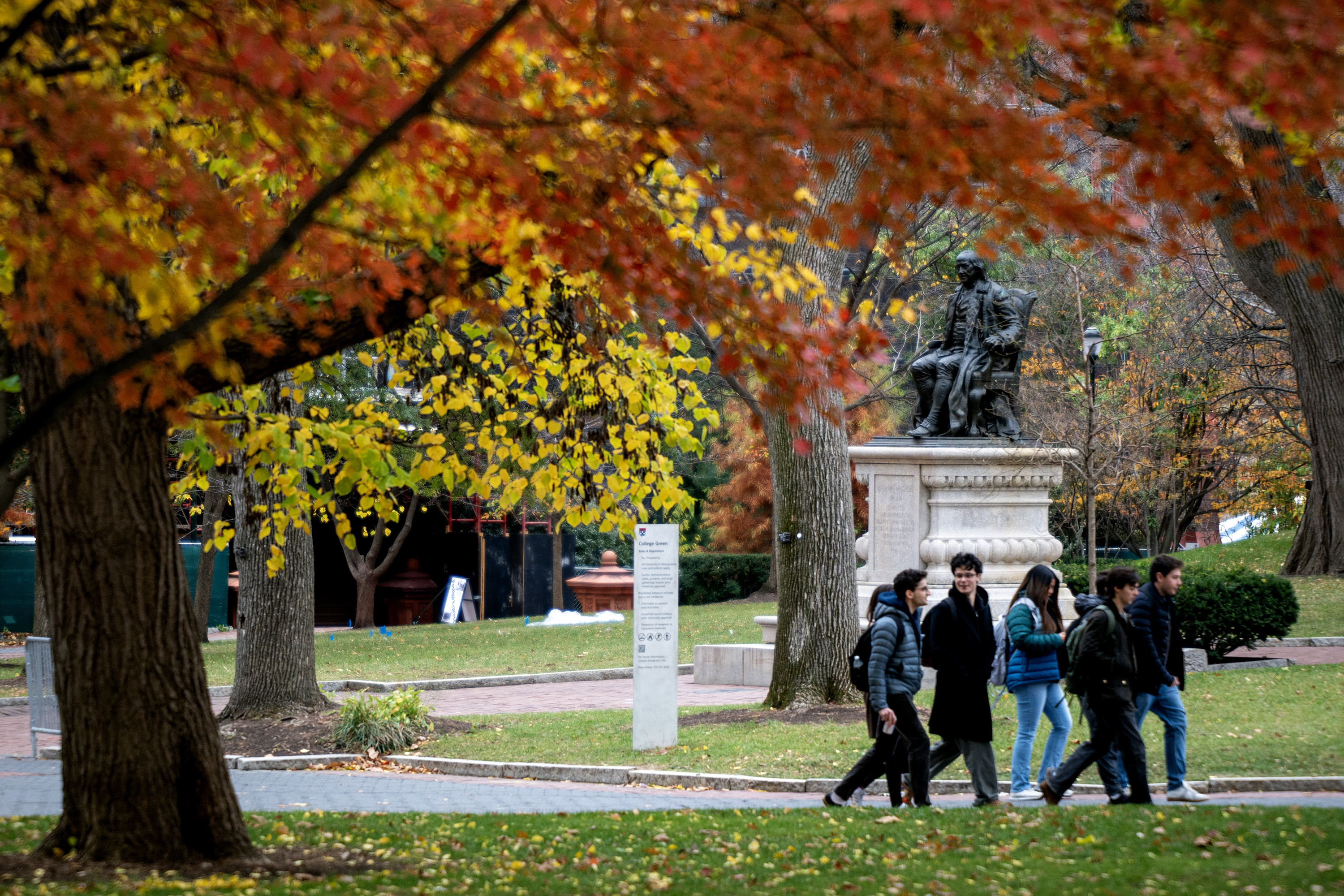
A single crimson tree in Cherry Hill’s Wallworth Park greets Michel and Brigitte Mistler, from Normandy, France, as they take a morning walk while visiting their daughter in the township Oct. 22, 2025. Tom Gralish / Staff Photographer
They are quite fascinating creatures, he notes, that survive winters by producing “body fluids that function as cryoprotectants — essentially biological antifreeze.”
Their bodies actually may contain clues about the behavior of a previous season, according to Richmond.
“It’s probably better to think about woolly bears as being much better equipped with a rearview mirror than a crystal ball,” he said.
A natural place to look for clues
Bill Cullina, executive director of the Morris Arboretum and Gardens of the University of Pennsylvania, holds a collection of acorns in November 2019. Regardless of what the acorns said, that winter was virtually snowless.Jessica Griffin / Staff Photographer
Humans have had a long history of forgoing global forecast models and oscillation indexes in favor of consulting nature for winter clues.
One popular myth cited by The Old Farmer’s Almanac holds that if the acorns keep raining down from the trees like hailstones, get ready for a big chill.
Leaves would be another indicator: If they drop early, winter will be a breeze. If they linger late, those breezes might be cold.
Among Native Americans, beavers were bellwethers. The thicker their autumnal coats and stronger their lodges, the harsher the winter.
The natural world is where to look for clues about the season to come. The waning sun may dim human energy, but it is an ultra-busy time for a lot of other species. It is prime mating season for animals such as birds, bears, deer, moose — and porcupines. We won’t ask how they hug.
And birds — billions of them — are on the move.
An avian air force in the night sky
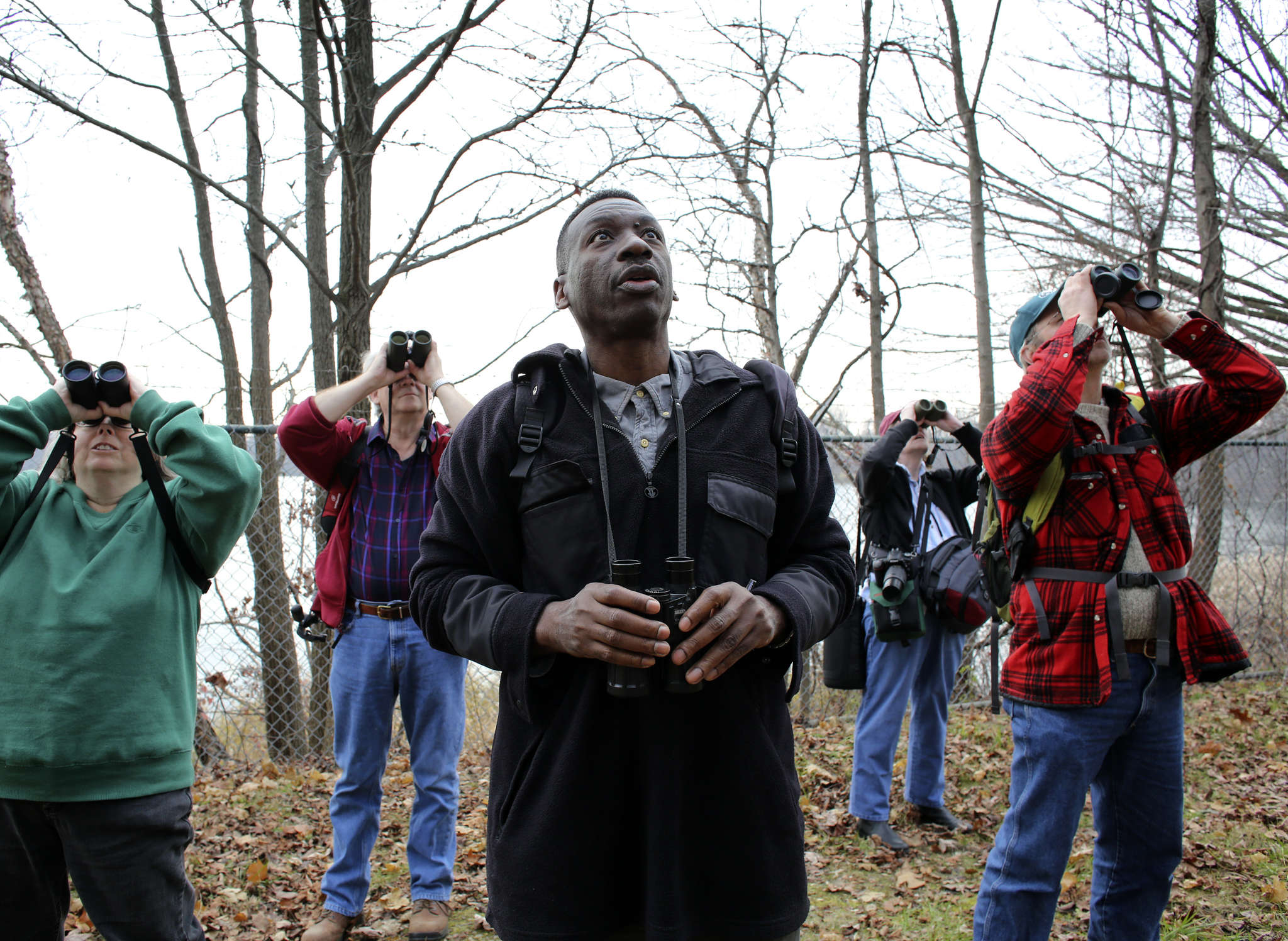
Audubon’s Keith Russell looking to the skies over Strawberry Mansion while leading a tour.JOSEPH KACZMAREK
The bird feeders and baths are getting ever emptier these days, but something quite amazing is happening after nightfall about 3,000 feet over our heads.
An estimated 1.3 million birds flew across Philadelphia on Friday night and early Saturday. And Chester County was the regional hot spot, with 3.8 million heading south-southwest, according to the Cornell University Ornithology Lab’s radar-powered BirdCast dashboard, With a tail wind from the north, they were zipping along at 25 to 30 mph about 1,600 to 1,800 feet above our heads. On the site, you can track bird traffic live, county by county.
This is the peak migration season, continuing into the first week of October, says Keith Russell, urban-conservation program manager for Audubon Mid-Atlantic, with about 300 species racing through the region, including ruby-crowned kinglets and black-throated green warblers.
To travel thousands of miles, the birds evidently use a remarkable assortment of clues from the sun, the stars, the Earth’s magnetic field, and even landmarks, according to the Cornell lab.
If anyone calls you a “bird brain,” be flattered.
Be grateful for the Earth’s equinoxes
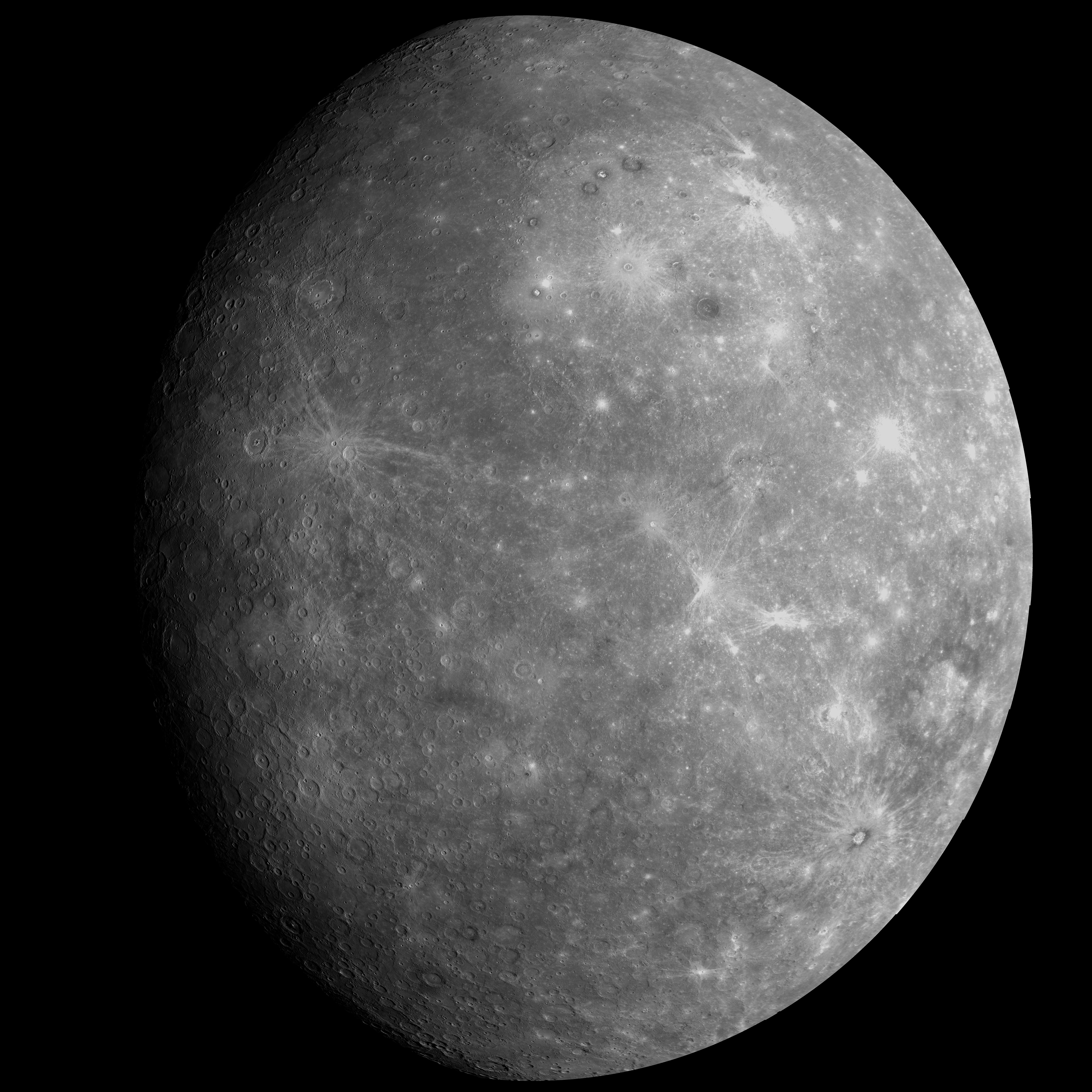
A NASA/Johns Hopkins University Applied Physics Laboratory/Carnegie Institution of Washington image of Mercury in 2013. You probably don’t want to visit. It has lots of equinoxes but it’s mighty hot, mighty cold, and it has no atmosphere. AP
Our planet is arguably in the solar system’s sweet spot for equinoxes, which occur twice a year.
By contrast, Saturn gets one only every 15 Earth years, and Neptune every 82 years, says Harry J. Augensen, director of the Widener University Observatory and a physics and astronomy professor emeritus.
Mercury has four a year, but temperatures range from 800 degrees Fahrenheit to 290 degrees below zero.
TOHONO O’ODHAM NATION — The first fence to slice through the Tohono O’odham Nation was simple barbed wire meant to keep cows from roaming south into Mexico. The second, which rose nearly a century later, was a sturdier steel barricade that stopped smuggler trucks from barreling north into the United States.
The binational tribe, whose land stretches from modern-day Arizona into the Mexican state of Sonora, has long been caught in the middle of disputes over a border between two countries that did not exist when the O’odham’s ancestors first settled here thousands of years ago.
The tribe’s leaders have adapted, working with the U.S. government as it ratcheted up immigration security on their territory. But now they are facing the biggest wall yet, and they are drawing a line.
The Trump administration wants to build a towering 62-mile barrier that would bisect the Tohono O’odham homeland along the international boundary with Mexico, and construction could begin as soon as October. Leaders of the Native American nation say it will restrict member movement, endanger wildlife, destroy sacred burial sites, and undermine tribal sovereignty while doing little to tamp down illegal activity.
“It’s like me bulldozing right through the Arlington Cemetery,” said Verlon Jose, the chairperson of the Tohono O’odham Nation. “We don’t matter to the U.S. government. They want to erase us. They want to take our land; they want to desecrate it. They want to hit us where it hurts.”
The tribe has sued to prevent construction, but the federal government is pushing ahead as it seeks to wall off most of the southern frontier. Last month, masked and armed Border Patrol agents escorted a group of contractors through the reservation to do survey work at the planned wall site. O’odham leaders accused the workers of trespassing.
It is one of many battles simmering along the southern border, where President Donald Trump’s wall has drawn bipartisan outrage in national parks, on private ranches, and among environmentalists and Catholic priests. But this escalating confrontation on Native land southwest of Tucson, Ariz., stands out because it upends decades of uneasy cooperation between the tribe and the United States.
The Tohono O’odham Nation, which occupies a reservation roughly the size of Connecticut, has for years allowed federal immigration authorities to operate bases and surveillance towers on its land. The tribe spends $3 million a year on border security, and its police force works closely with Border Patrol agents.
“We’ve bent over backwards to work with the federal government,” Jose said. “But we will never agree to a wall.”
During Trump’s first term, the tribe successfully lobbied against a wall. But since Trump’s reelection, O’odham leaders say they have found federal officials unwilling to compromise.
The administration, which has waived environmental reviews to speed wall construction, has argued that the tribe’s vast and varied territory is a hot spot for cartel-sponsored crime.
“The project will close one of the most dangerous smuggling and trafficking corridors on the Southwest border,” Rodney Scott, the U.S. Customs and Border Protection commissioner, said in a statement.
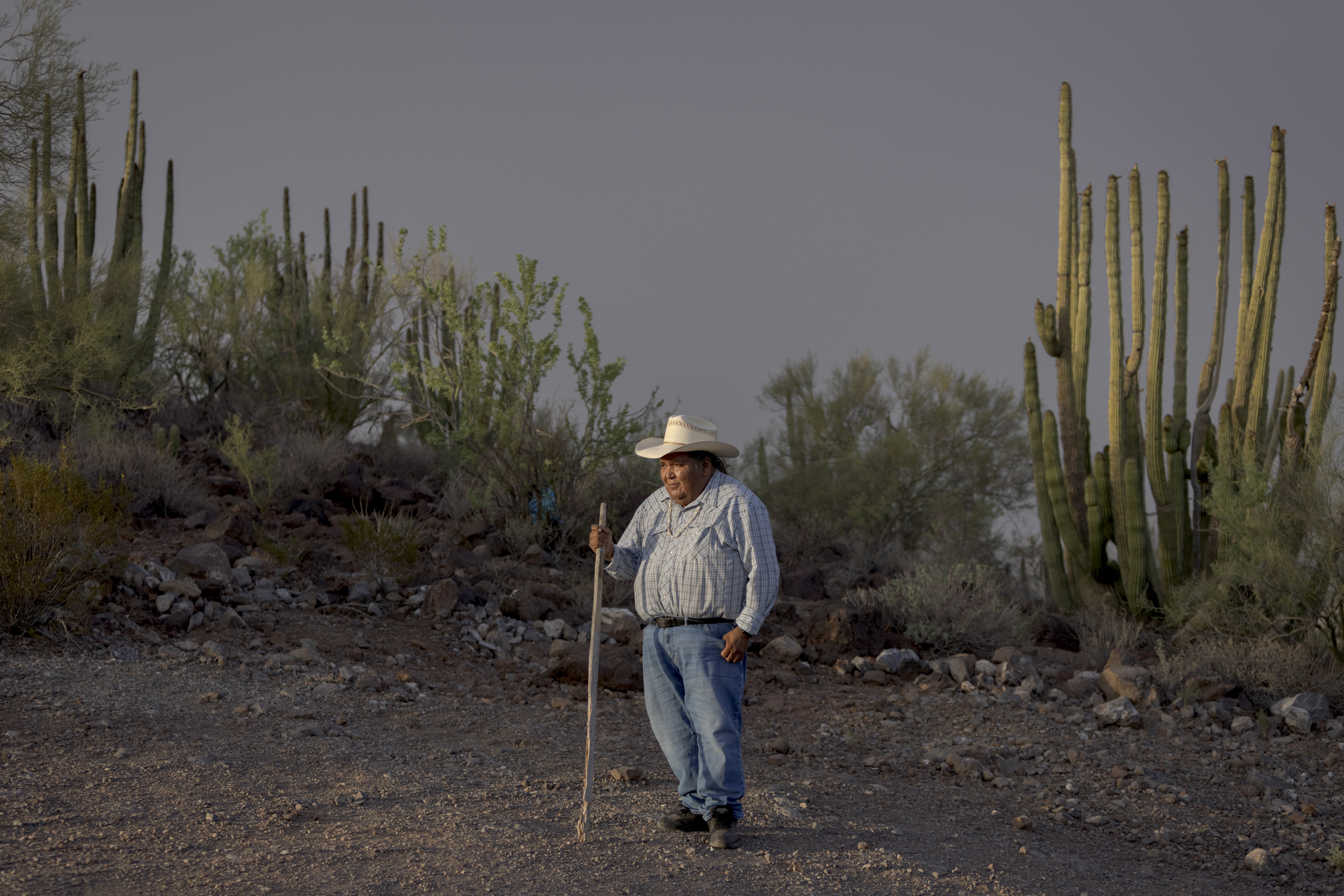
The Tohono O’odham, whose enrolled members number nearly 40,000, have long moved freely among the Sonoran Desert’s skyscraping saguaros, Seussian ocotillos, herds of javelina, and packs of coyotes.
In the 1850s, the Gadsden Purchase divided O’odham land nearly in half as a new boundary was drawn between the United States and Mexico. Today, Mexico is home to some 2,000 tribal members, as well as ancestral cemeteries and ceremony sites. But to cross, the O’odham must call a Border Patrol agent, who then checks documentation and unlocks one of three gates along the existing barrier.
Illegal immigration and drug smuggling through the reservation surged in the 1990s, raising fears among tribal members and prompting O’odham leaders to increase collaboration with Border Patrol.
“We’ve been homeland security,” Jose said. “We care about who’s coming through our borders.”
The tribe now says the federal government has betrayed that partnership. If the CBP proceeds, Jose said, the O’odham could seek to cancel leases allowing the agency’s offices and towers on the reservation.
The tribe sued in June, claiming the wall would illegally reduce the size of its reservation without congressional approval. Its lawyers asked for an emergency court order to stop construction. Last month, a federal judge denied the request, writing that the government’s security needs outweighed the O’odham’s concerns. The tribe is appealing.
Critical to the court challenge is a 60-foot-wide ribbon of federal land that runs along the border from California to New Mexico, known as the Roosevelt Reservation, where the Trump administration has claimed broad authority to build walls.
The tribe argues that its borderland is exempt from the Roosevelt Reservation and that wall construction would inevitably spill beyond the strip.
A few feet from the border fence, a group of O’odham members has been tending a fire of creosote branches for weeks while praying for a halt to the wall construction. Tribal members at the prayer camp said the idea that CBP would listen to them was far-fetched.
“We don’t trust the government,” said Wynona P. Larson Yazzie, a Marine Corps veteran who lives a few miles from the border.
Some see the dispute as a continuation of abuse and exploitation that dates to Spanish colonization of the area.
“It’s just opening old wounds again,” said Samuel Fayuant, a cultural affairs specialist with the tribe. “They have never healed. It just continues and continues, and I don’t know if it’s ever going to stop.”
If the tribe loses in court, many members have said they would put their bodies on the line to stop a wall, citing the massive protests in support of the Standing Rock Sioux’s fight against an oil pipeline in 2016.
The tribe also has concerns about construction outside the reservation. In nearby Organ Pipe Cactus National Monument, where CBP built a wall during the last Trump administration, it is now building a second barrier that will run parallel to the first.
Bulldozers have begun clearing miles of desert to make way for construction, and the tribe is worried the work will wreak havoc on a sacred site known as Quitobaquito Springs.
The spring, a rare desert oasis, hosts three endangered species — a fish, a turtle, and a snail — and was long the site of religious rites for the Hia-C’ed O’odham, a band of Tohono O’odham.
“Quitobaquito is the aquatic, biological gem of that broader desert landscape,” said Russ McSpadden, a conservation advocate with the Center for Biological Diversity. Because the Trump administration waived environmental laws, “contractors are pretty much working blind,” he said.
CBP conducts cultural and environmental reviews before construction and hires monitors to oversee the contractors, said Hilton Beckham, an assistant commissioner at the agency.
Illegal immigration also threatens the environment, she said, when border crossers leave “trash, pollution, and damage to natural resources.” Beckham said construction would “avoid Quitobaquito Springs and minimize impacts to sensitive resources.”
But activists and tribal members say the government has a poor track record. Six years ago, border wall construction in the area unearthed human remains and destroyed protected saguaros. In April, contractors plowed through a 1,000-year-old O’odham archaeological site.
Lorraine Marquez Eiler, whose great-grandparents lived near Quitobaquito Springs, fears the cherished place will not survive a second wall. “How much more damage can it take?” she said.
The atmosphere around the reservation is tense these days. On a recent afternoon, Jose was driving along the planned wall site to monitor construction preparation when a Border Patrol agent flashed his lights and swerved his truck in front of the Jose’s SUV.
“Why are you stopping me?” Jose demanded.
“I’m trying to get your attention,” the agent replied. He asked Jose to roll down his windows and identify the passengers in his car, saying he was checking for smugglers. “We don’t normally have a lot of vehicles coming down this way.”
Jose refused, saying, “This is my territory.”
Jose fumed as he drove on, angry that a federal agent would accuse an O’odham leader of wrongdoing on his own land. He continued his survey until he reached a hill on the reservation’s eastern boundary.
Leaning on a dried saguaro rib for support, Jose walked to an overlook and gazed out. Far below, the old steel border fence faded into desert scrub, almost out of sight.
The White House has begun drafting a new executive order that could further cement President Donald Trump’s ability to control billions of dollars in scientific grants funded by the National Institutes of Health.
Discussed at a highly contentious meeting at the White House on Friday, the directive aims to create a new external committee with the power to veto awards in the nation’s vast biomedical research portfolio that do not conform to Trump’s political agenda, according to people with knowledge of the effort.
The meeting was first reported by the Washington Post. Officials at the Office of Management and Budget, which is drafting the executive order, declined to comment. A spokesperson for the NIH, Joshua Pradko, declined to discuss details of the meeting.
“NIH remains committed to its mission of funding biomedical research to benefit the health of the American people,” Pradko said in a text message.
Referring to reports that Russell Vought, director of the OMB, wants to rescind NIH funding, Pradko added, “There will be no rescissions to NIH grant monies. All NIH grant monies will be spent.”
If the order moves forward, it would mark the latest attempt by the Trump administration to usurp the scientific autonomy of the NIH, a $48 billion agency that distributes a majority of its budget to labs across the country for research into areas such as heart disease, cancer, and infectious diseases.
Traditionally, the NIH selects projects based on expert review of their scientific merit. But Trump has sought through a series of recent directives in his second term to bring that process under political review, arguing in part that the government has been funding “woke” liberal priorities.
Friday’s meeting brought to a head months of conflict between two of the attendees: Vought, who wants to impose greater political control over NIH grant approvals, and Jay Bhattacharya, the NIH director, who is resisting those efforts, according to two people close to Bhattacharya.
Their relationship has grown so contentious that Vought had refused to meet with Bhattacharya, the people said. During the session Friday, Vought accused the NIH director of funding projects that were in conflict with administration priorities, such as supporting research related to diversity and equity.
One of Trump’s executive orders, issued on his first day back in office, ended all administration programs involving “diversity, equity and inclusion.” It has had far-reaching effects on NIH studies, including those investigating “health disparities” — why people of certain races and ethnicities may be more or less prone to certain diseases or to suffer worse outcomes.
As a Stanford University economist, Bhattacharya conducted research on health disparities and has been trying to find a way to preserve NIH funding for such work. In 2011, for instance, he and colleagues reported on “persistent racial disparities in survival after heart transplantation.”
The study, funded by the NIH, found that Black heart transplant patients were at higher risk of death than similar white patients were.
But as NIH director, Bhattacharya has also supported eliminating funding for work he regards as low-quality or ideologically driven. In a brief conversation with reporters early in his tenure, Bhattacharya said the cancellations were targeting “politicized expressions of devotion to a particular ideology” as opposed to “good science.”
On Friday, Vought also sought access to funds for the current fiscal year that have not yet been spent, but he did not succeed. The main argument between them, however, appears to reflect a philosophical difference: Vought wants to cut federal spending for research; Bhattacharya does not.
Nor does Congress, which overruled Trump’s proposal to cut biomedical research spending last year.
Moreover, Bhattacharya opposes Vought’s push to give political appointees the final say over all federal spending, including health and scientific research.
A proposed rule earlier this year would have integrated political review into the entire federal grant-making process, calling for “ending government sponsorship of gender ideology and other radical doctrines,” such as DEI projects.
The changes were widely denounced by the scientific and medical research community, and drew bipartisan rebuke in Congress, where lawmakers blocked the White House from proceeding.
The White House has issued a number of executive orders to stop scientific research into areas that conflict with administration priorities. Thousands of grants were terminated for being in conflict with these priorities.
Even before Friday’s meeting, the administration was entangled in multiple lawsuits that challenged those actions.
Last week, a class-action lawsuit was filed in California district court by the American Civil Liberties Union on behalf of scientists alleging that the NIH was unconstitutionally censoring scientific research.
The lawsuit, on behalf of researchers who study health disparities, Alzheimer’s disease, and sexual harassment, among other topics, argued that measures the agency was already using to screen grants for compliance with political priorities were a violation of the free speech rights of scientists.
“What the First Amendment does not allow is the government’s use of its funding power to target or silence the expression of disfavored viewpoints within the biomedical research community,” the lawsuit said.