Category: News

  • Congressional leaders warn White House against adding controls over NIH grants

    Congressional leaders warn White House against adding controls over NIH grants

    Leaders of the House and Senate appropriations committees on Monday warned the White House not to impose new controls on how the National Institutes of Health awards billions of dollars in research grants.

    Sens. Susan Collins (R., Maine) and Patty Murray (D., Wash.), the Senate panel’s chair and vice chair, and Rep. Rosa DeLauro (Conn.), the top Democrat on the House panel, said White House officials were threatening to further politicize the federal grant-making process.

    The Washington Post first reported Friday that administration officials had discussed an executive order to create a commission that would review NIH grants. Some White House officials were frustrated that the $47 billion health agency had funded projects that they said clashed with President Donald Trump’s agenda.

    The White House budget office “should not be involved in agency decisions on the awards of grants,” Collins said in a statement, adding that any attempt “to politicize grant-making at the National Institutes of Health” goes against the intent of Congress.

    “NIH funding doesn’t belong to Donald Trump — it belongs to the patients and families waiting on the next medical breakthrough,” Murray added in a statement.

    The appropriations leaders and other top lawmakers have previously clashed with the White House over its efforts to place new constraints on NIH funding. Earlier this year, Collins publicly opposed a 15% cap on indirect research costs. Last year, Collins and Sen. Katie Boyd Britt (R., Ala.) led a letter signed by a dozen other Senate Republicans urging the White House’s Office of Management and Budget to quickly disburse NIH funds that they said had been delayed.

    Russell Vought, the White House’s budget chief, and other officials met with Trump on Friday to discuss the potential executive order, the Post reported. Vought has criticized the NIH for awarding grants that he and other administration officials say fund “woke” initiatives and go against Trump’s executive order barring “equity-related” grants and contracts.

    Jay Bhattacharya, the Trump appointee who leads the NIH, which is the nation’s largest single funder of biomedical research, defended the agency’s grant-making process to the president Friday, the Post reported. The NIH quickly moved last year to terminate some grants after Trump took office.

    Spokespeople for OMB and the NIH did not immediately return requests for comment Monday on the lawmakers’ statements. Rep. Tom Cole (R., Okla.), chair of the House Appropriations Committee, also did not immediately respond to a request for comment.

    Healthcare advocacy groups, university leaders, and other organizations have urged the administration not to pursue the plan.

    “Americans want investments in cures and treatments,” said Erika Sward, executive director of United for Cures, a network of patient advocacy groups. “Politically hijacking those kind of advancements is not American, and it’s going to mean that those cures and treatments won’t be there for people across the country.”

    OMB has recently moved to assert more control over federal grant-making through a proposed rule that would require political appointees to review grants before they’re awarded to ensure projects advance the president’s priorities.

    In their recent government funding measure, congressional appropriators blocked implementation of the rule through December.

    Collins defended the NIH’s grant-making process.

    “Imposing a political review on awards that have already been selected through a rigorous scientific and merit-based process undermines the long-standing principle that the government funds awards based on scientific need and merit, rather than political ideology,” she said in her statement.

  • Iran’s Revolutionary Guard warns U.S. over escalation

    Iran’s Revolutionary Guard warns U.S. over escalation

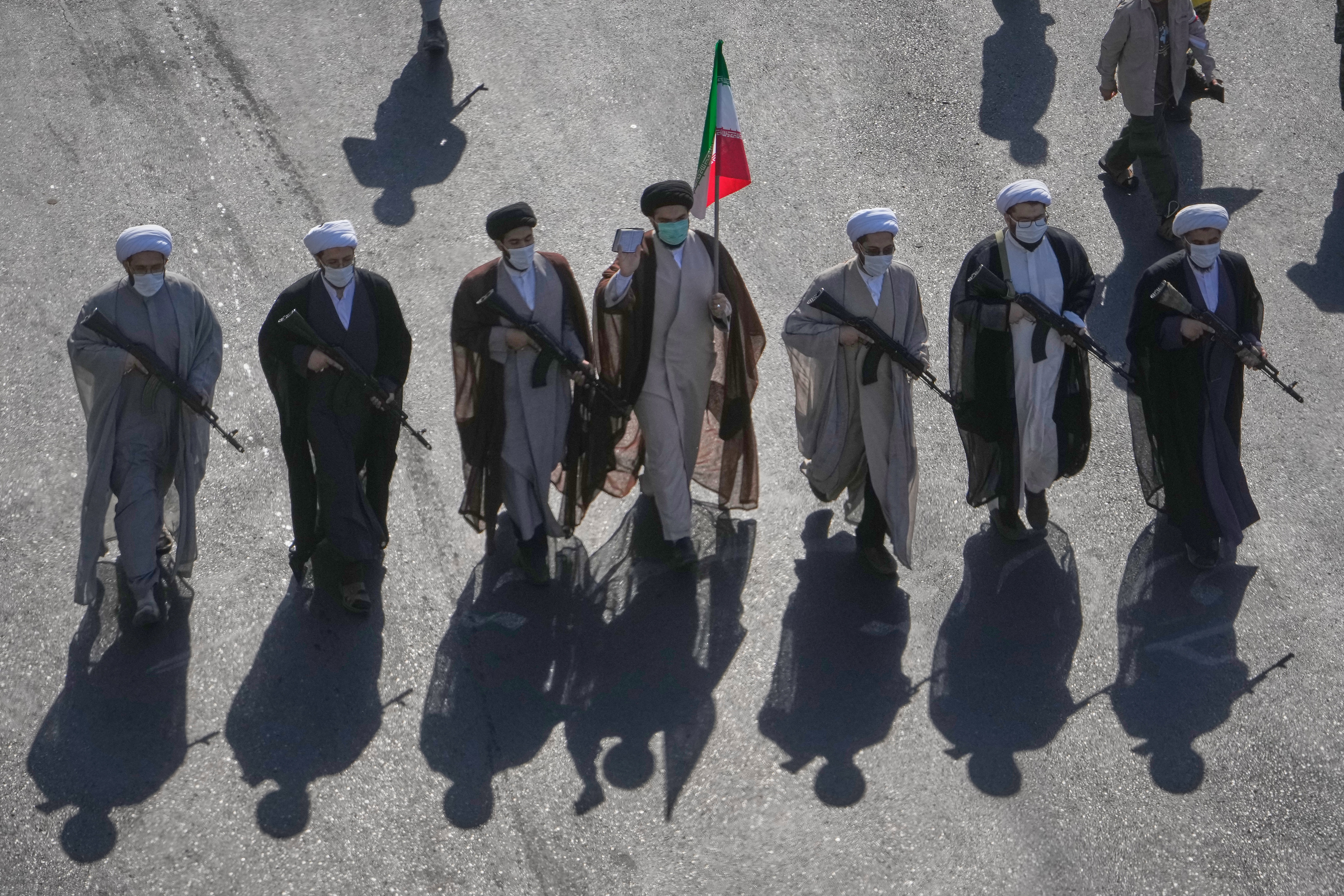
    Iran’s Revolutionary Guard warned Monday that it would “change the geography of the war” if the United States escalates the conflict.

    Meanwhile, the British military said an “unknown projectile” struck a tanker as it entered the Strait of Hormuz on Monday, injuring two crew members.

    The Israeli military remained on alert as much of the country shuts down for Yom Kippur, the holiest day in Judaism.

    Iran’s Revolutionary Guard says ‘war is not over’

    A spokesperson for Iran’s paramilitary Revolutionary Guard, Hossein Mohebbi, said Monday that “the war is not over” and warned that Iran would change its weapons, military tactics, and targets if the conflict with the U.S. escalates.

    “We will certainly change the geography of the war,” Mohebbi said in a statement carried by Iranian state media. “We will certainly bring new weapons with new capabilities into the battle.” He said the Guard had prepared for a long-term war.

    “Our targets will no longer necessarily be the same as before,” he said, according to the Islamic Republic of Iran Broadcasting, adding that Iran has targets that have not yet been struck.

    The more than six-month war began with U.S. and Israeli strikes on Iran on Feb. 28. The conflict has included repeated attacks and efforts to negotiate an end to the fighting, with no agreement reached to reopen the Strait of Hormuz or revive talks over Iran’s nuclear program.

    Projectile strikes tanker in Strait of Hormuz, British military says

    The United Kingdom Maritime Trade Operations Center (UKMTO) said a tanker was struck by an “unknown projectile” as it headed into the Strait of Hormuz. Two crew members sustained minor injuries.

    The UKMTO said Monday the vessel is reportedly continuing to its next port of call under its own power. No reports indicated any environmental impact at this time.

    Tehran has asserted control over much of the Strait of Hormuz since the U.S. and Israel launched the war on Feb. 28. In peacetime, about 20 million barrels — roughly a fifth of the world’s oil supply — passed through Hormuz each day.

    Some tankers are again traversing the strait, but traffic is well below what it once was.

    Houthi leader lashes out at Saudis in televised speech

    In Yemen, the leader of the Iran-backed Houthi rebels used the anniversary of his group’s overthrow of the Yemeni government to lash out at Saudi Arabia.

    In a recorded speech aired Monday, Abdul Malik al-Houthi said his group’s demands include an end to what he called Saudi “aggression” and the blockade the Saudi-led coalition has imposed on the rebels for about a decade.

    “Stop the aggression and end the blockade. Our demands represent the legitimate rights of our people,” he said in the speech aired by the Houthi-run al-Masirah channel.

    The Houthis descended from their stronghold in northern Yemen, taking over the capital of Sanaa in September 2014 and forcing the country’s government into exile in Saudi Arabia.

    The following year, Saudi Arabia led a multi-national coalition that entered the war in an attempt to restore the government. The coalition imposed an air and sea blockade on the Houthi-held areas, as part of its war efforts.

    WHO reports 680 new casualties in a week in Yemen

    The World Health Organization says 680 people were killed or injured across Yemen over the course of a week as fighting between the Houthi rebels and Saudi-backed government forces continues.

    WHO said on Monday in a post on X that 164 people were killed and 516 injured between Sept. 13 and Friday. This brings the total number of casualties since Aug. 6 to 3,672, including 674 deaths and 2,998 injuries.

    Lahj province in southwestern Yemen is currently an active front line where 58 deaths and 226 injuries were reported within six days, according to the U.N. agency.

    Fighting between the Houthis and government forces has so far displaced 129,438 people across seven provinces, the International Organization for Migration says.

    The IOM said in an update Monday that people escaping the conflict inside the country were forced from their homes in only a few weeks, with many already fleeing more than once.

    Israeli military on guard on Jewish faith’s holiest day

    Israel’s military remained on alert even as the country woke up to the silence and empty streets of Yom Kippur, the Day of Atonement, considered the holiest day for the Jewish faith.

    Streetlights blinked yellow Monday as the faithful walked to the Western Wall in Jerusalem’s Old City.

    “For the next 25 hours, Israel is offline,” the foreign ministry said on X after sundown Sunday. But the military said it bolstered its frontline forces following the killing of an Israeli settler Sunday in the occupied West Bank. The Palestinian suspect was detained after a search.

  • U.N. General Assembly to confront familiar crises, new conflicts and AI

    U.N. General Assembly to confront familiar crises, new conflicts and AI

    World leaders converge in New York this week for the United Nations General Assembly with the Middle East in turmoil, war raging between Russia and Ukraine, old alliances in peril, energy prices rising, and scientists warning that artificial intelligence could imperil humanity.

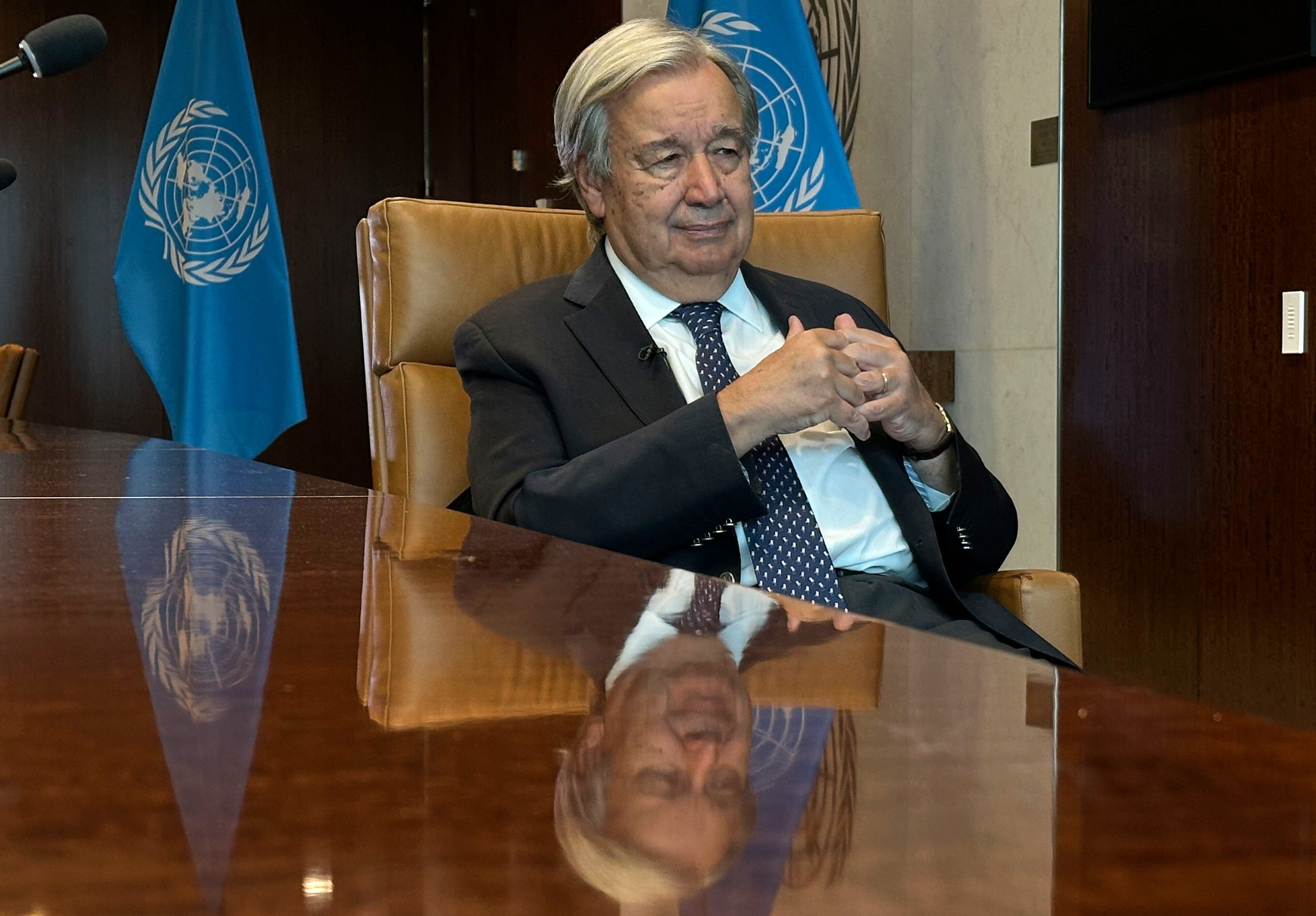
    “It would be hard to imagine a scenario as threatening as the one we’re facing right now,” acknowledged António Guterres, who has served two terms as the U.N. secretary-general since 2017 and will step down at the end of December.

    The U.S.-Israeli war with Iran and its reverberations on the world economy and oil supplies will be a major topic. And Ukrainian President Volodymyr Zelensky is expected to implore world leaders not to forget his country.

    But for the first time at the world body, the threat posed by artificial intelligence has jumped to the top of the agenda. U.N. leaders plan to seek global cooperation for guardrails around the rapidly advancing technology.

    Against the backdrop of these challenges, the U.N. is searching for its next leader, who will take the helm in January. Seven candidates are in the running after Michelle Bachelet, former Chilean president and ex-high commissioner of the U.N.’s Human Rights Council, dropped out. But so far no clear front-runner has emerged, diplomats said, because the U.N. Security Council, the body responsible for selecting the secretary-general, has not reached a consensus.

    Guterres will deliver his final address to the General Assembly on Tuesday, and he is expected to close his tenure by urging world leaders to defend international law, protect human rights, invest in sustainable development, and push for peace.

    “At a time when the world faces three existential threats — runaway artificial intelligence, the climate crisis, and the intolerable deepening of inequalities — international cooperation is more necessary than ever,” Guterres said at a recent news conference.

    He said that when he took charge of the institution years ago no one could have predicted that the world would be as it is today, roiled by conflicts and facing a multitude of crises like climate change and the seemingly unrestrained growth of artificial intelligence.

    The U.N. has defined the theme of this year’s gathering as “Restoring Trust, Managing Transformations: A United Nations That Delivers for All.” Trust and transformation have been among the biggest challenges for the U.N. as it has faced questions of relevance from donors and the public, experienced severe funding cutbacks from the Trump administration and made efforts to streamline its operations. At the same time, its 15-member Security Council stands paralyzed by divisions among its five permanent members with veto-holding powers.

    Still, while the organization said in January that it was facing imminent financial collapse and would run out of money by the summer if member states — namely the United States, its top donor — didn’t pay their annual dues, it has survived.

    Last week, the United States paid $725 million to the U.N. as part of its dues for the regular budget and $102 million for peacekeeping, but it still owes $1.3 billion in annual dues, said Farhan Haq, a U.N. spokesperson.

    Many U.N. staff members and diplomats had expressed anxiety that President Donald Trump could withdraw from the organization altogether, given his exit from U.N. agencies such as the World Health Program and the defunding of some programs as part of a policy to cut foreign aid significantly. Analysts said last year that the U.N. was in a “free fall” as it observed its 80th anniversary.

    But those fears have not materialized. Analysts said that while the U.N. was still facing a crisis, the United States had remained engaged, albeit seeking to change and bend the institution to the administration’s vision.

    Richard Gowan, a U.N. expert at the International Crisis Group, said of the United Nations, “It is still standing, and if you compare the U.N. to some of the really bad periods during the Cold War, it’s still actually far more active than it was in its darkest hours.”

    He added, “But every single year it’s a little bit less relevant; it’s a little bit more under restraint.”

    Trump is set to speak to the General Assembly on Tuesday morning, the first day of the gathering. Last year, he lectured the United Nations and other countries about how they were failing and aired a list of grievances.

    “Your countries are going to hell,” he said.

    This year, he will be facing a world rattled by his imposition of tariffs, his open disdain for allies, and the instability resulting from his war against Iran.

    The biggest hurdle for the U.N. in resolving conflicts in the past few years has been the geopolitical divisions among the five permanent powers of the Security Council: the United States, Russia, China, France, and Britain. The council, which is in charge of preventing global conflict and safeguarding stability, has been frozen over the wars in Ukraine, the Gaza Strip, and Iran because action has been blocked by permanent members with stakes in the fighting.

    The Ukraine war is more than 4 years old, the conflicts in Sudan over 3 years old, the one in Gaza closing in on 3 years old, and the United States’ war with Iran nearing its seventh month. The conflict in Iran has sent energy and oil prices soaring and has upended supply chains that rely on shipping in the Strait of Hormuz. The Houthis in Yemen and Saudi Arabia have intensified fighting in the past few weeks with another critical waterway, the Bab el-Mandeb Strait, in the Indian Ocean, under threat.

    “There is clearly a vacuum here in terms of dealing with these growing number of wars we have and other crises,” said Robert A. Wood, a U.S. ambassador to the U.N. during the Biden administration. “It is critical that we get a next secretary-general who has experience, and Rolodex, and kind of energy and background in managing, not only dealing with great powers, but in dealing with major international crises.”

    Among the speeches by leaders that will be watched closely will be the ones by Iranian President Masoud Pezeshkian; Zelensky; and Venezuela’s leader, Delcy Rodríguez, who will be making her debut on the world stage after the United States captured her predecessor, Nicolás Maduro. Others of note will be by leaders of the Arab countries in the Persian Gulf; Israeli Prime Minister Benjamin Netanyahu; and Palestinian leader Mahmoud Abbas, who will address the assembly virtually for a second year because the United States denied visas to the Palestinian delegation.

    This year, discussion of a possible two-state solution for Israel and Palestinians is expected to be more low-key than in the past, with France, Britain, Canada, and Saudi Arabia hosting a session Thursday on the sidelines of the General Assembly meeting.

    A notable number of world leaders will be absent from the General Assembly. Xi Jinping of China is traveling to Washington to see Trump on Thursday, and the meeting is expected to overshadow the speeches at the assembly in New York.

    The leaders of two nations from the so-called global south — India’s prime minister, Narendra Modi, and South Africa’s president, Cyril Ramaphosa — will also not attend.

    The Security Council will hold a session on Ukraine, as it has done for the past four years during the General Assembly meeting, and this year it has drawn new criticism that European members of the council have ignored other pressing conflicts every year to keep the spotlight on Ukraine during the high-level week.

    Despite their global repercussions, Iran and the conflict in the Persian Gulf are not on the council’s public agenda this week. Arab countries in the Gulf are expected to hold a closed-door meeting with council members and Trump on the sidelines, diplomats said.

    The council will discuss AI and the threats it poses to global security and stability. Guterres was also set to host a side event Monday to urge countries to create global regulations for the technology, and a private, invitation-only event at the U.N. that brings together heads of states and leaders of AI to debate how to govern the field.

    But a clash of opinions and visions is expected.

    The United States, China, and Russia have indicated that they oppose external rules on their own development of AI technology, and Trump recently denounced such efforts as a “sick conspiracy.”

    Guterres said the world cannot “afford a race to the bottom on AI safety.” He added, “We need guardrails to build trust, and that make AI safe, transparent, accountable, with human dignity at the center.”

    This article originally appeared in the New York Times.
  • Ukraine marks Putin’s scripted election win with assault on Moscow refinery

    Ukraine marks Putin’s scripted election win with assault on Moscow refinery

    As the first parliamentary elections in Russia since the 2022 invasion of Ukraine delivered a scripted victory on Sunday to Vladimir Putin, Ukraine pummeled the Moscow region with drones and missiles, hitting a key oil refinery and showing that winning the war remains out of reach for the Russian leader.

    The Ukrainian air attack, one of its largest on Russia’s capital area, killed at least three people, local officials said, and damaged the refinery in Kapotnya, on Moscow’s southeastern edge, which supplies a large share of the city’s fuel, including for diesel and aviation. Videos on social media showed it on fire.

    The strike contradicted President Donald Trump’s assertion last week that Ukraine and Russia had agreed to halt attacks on energy targets. Trump insisted that the war in Ukraine — not his own war against Iran — is driving up diesel prices in the United States. Experts more commonly cite the war in the Middle East.

    The refinery in Kapotnya has been hit several times, and the Moscow region has experienced intermittent fuel shortages in the aftermath of each attack. On Monday, lines formed again at gas stations, which began rationing supplies.

    A day before claiming the supposed energy truce, Trump urged Ukrainian President Volodymyr Zelensky to “stop knocking out diesel fuel” targets in Russia, saying the attacks were contributing to a global shortage. Late on Sunday, Zelensky said that he had spoken with Trump and that they had agreed to meet on the sidelines of the U.N. General Assembly in New York.

    “There are ideas for de-escalation steps and for addressing fundamental security issues — energy security, food security, and the protection of human life,” Zelensky posted on X. “We are working together with the American team and are ready to take really serious steps.”

    Zelensky also thanked Trump for signing into law what the Ukrainian leader called the “sanctions from hell” legislation, a bill co-written by Sen. Lindsey Graham (R., S.C.) before his death that authorizes the president to impose sweeping sanctions on Moscow and additional tariffs on countries that continue to buy Russian energy.

    The law gives Trump considerable latitude in its implementation, including over which countries could face tariffs and at what rates, as well as discretion to waive sanctions for certain countries.

    The Kremlin said Monday that the signing “certainly does not contribute to the revival of bilateral relations” between Russia and the United States. “And, of course, it is unlikely to contribute to more successful progress toward a resolution of the Ukrainian conflict,” Kremlin spokesperson Dmitry Peskov told reporters.

    Moscow Mayor Sergei Sobyanin said more than 1,600 drones had been intercepted and shot down Sunday, 450 of them aimed at Moscow. Russian officials have been accused of inflating such figures.

    “The unprecedented attack was obviously planned with the aim of disrupting the elections,” Sobyanin posted on Telegram. “The enemy did not succeed.”

    With 95% of ballots counted in Russia’s national parliamentary vote, the Central Election Commission said Monday morning that United Russia, the party that serves as an extension of Putin’s policies, was in first place with 57.8% and the Communist Party in second at 13.8%.

    The election was decried as sham by Russian opposition leaders, election watchers, and foreign officials.

    “United Russia has ‘won’ an election it was never allowed to lose. There was no genuine political competition and little room for voices outside the Kremlin’s line,” Slovenian Prime Minister Janez Jansa wrote on X. “This was not a mandate. It was political theatre designed to manufacture support for Putin’s war.”

    The core mechanism of staged elections in Russia is local authorities pressuring public-sector workers to go to the polls in support of the government, with employers tracking turnout and demanding that employees send photos of their ballots as proof that they voted to achieve the desired result.

    This year, however, criticism of the election procedures also came from Gennady Zyuganov, the longtime leader of the Communist Party, who described the campaign and the vote count as a “return to the wild ’90s.”

    In an interview with state media, Zyuganov lamented pressure on voters, and he alleged numerous irregularities. In one region, he said, his party’s poll observers “were removed, completely illegally.” Zyuganov said the party would compare its copies of polling station protocols with the official count.

    In Russia, uncertainty has swirled over many aspects of life, even as the election outcome was a foregone conclusion.

    The results announced Monday guarantee that Putin will remain firmly in control, amid inevitable speculation over who will succeed him when he is gone.

  • ICE hides locations of thousands of detainees with final removal orders

    ICE hides locations of thousands of detainees with final removal orders

    U.S. Immigration and Customs Enforcement has stopped publicly revealing where it is holding thousands of detainees who are subject to final deportation orders, an unannounced move that has made it far more difficult for lawyers and relatives to find them, according to current and former officials familiar with the practice.

    ICE removed those detainees from its online detainee locator system on Sept. 15, according to three current and former ICE officials who spoke on condition of anonymity because they were not authorized to discuss the change. Several lawyers contacted by the Associated Press confirmed their clients vanished from the system this week, and the American Immigration Lawyers Association warned its members about the situation Friday.

    The move represents a stark departure from previous practice and highlights the hardline nature of President Donald Trump’s immigration crackdown, leaving thousands of detainees exceedingly hard to trace and potentially unable to exercise all of their legal options.

    The practice, which applies to detainees who have received final orders of removal from an immigration court, could speed deportations by making last-minute legal challenges harder to pursue, immigration lawyers said. Nearly 16,000 people who were arrested and booked into ICE detention in July were subject to final removal orders, more than a third of the overall bookings, according to ICE data obtained by the Deportation Data Project based at U.C. Berkeley and UCLA.

    The practice does not apply to detainees held at a detention facility in Adelanto, Calif., or at temporary holding facilities in Minneapolis, New York City, or suburban Chicago, the sources said. Judges have ordered ICE to list detainees in those facilities in the online locator promptly upon their arrival, as part of litigation over their detention practices.

    Lawyers, relatives distressed by lack of information on detainees

    The effort to hide their locations adds to the ways in which the Trump administration has made life harder for detainees and their families as it has increased pressure on them to waive appeals and agree to deportation.

    ICE did not publicize the move and in a statement issued to the AP, the agency did not confirm or deny it. The statement said detainees with final removal orders were being prioritized for deportation, even as ICE faces a “historic number of injunctions” from courts stopping individual removals.

    As a result of the change, lawyers and relatives lost track of their clients and loved ones without explanation, which is especially concerning because detainees are frequently moved to new facilities before deportation, said Greg Chen, senior director of government relations at the American Immigration Lawyers Association.

    “Families are freaking out because they think the person has been deported and they don’t know where the person might be,” he said. “On the attorney side, this has serious implications for the ability to contact their client. It certainly has implications about how it will interfere with the attorney-client relationship.”

    The Department of Homeland Security, ICE’s parent agency, has argued that people who are subject to final removal orders have received due process. That usually means an immigration judge has ordered their removal after a hearing, including cases when immigrants fail to show up, and the decision was affirmed on appeal or not appealed.

    Detainees with final removal orders still have options to appeal

    Still, those detainees have options to challenge their detention and removal, including seeking to reopen the case or by bringing what’s known as a habeas petition asking a judge to release them on constitutional grounds. Federal judges have granted thousands of rulings ordering that detainees be released or granting bond hearings.

    ICE detention facilities held more than 65,000 people as of early July, the most recent available data. Around 30% of them likely have final removal orders, said Michelle Mendez, legal director at the National Immigration Project.

    More people have been issued final removal orders after failing to show up for hearings in recent months because the administration’s immigration courts have taken steps to make it harder to participate in and to reopen such cases, she said.

    “To me, it’s just another iteration of disappearing people,” she said. “Why would we do that in the United States of America? It’s something we’d hear about in another country and be concerned about individual rights and due process.”

    Some with final removal orders also have legal protections against deportation to their countries of origin based on the likelihood they would be tortured or persecuted. Many of them are facing removal to third-party countries where they have no ties and their disappearance in ICE’s system will make legal challenges harder, lawyers said.

    Lawyers say clients have vanished from ICE locator system

    ICE initiated the online detainee locator system in 2010 to allow relatives, lawyers, and the public to search for people in custody. Previously they had to call ICE regional offices or individual facilities to try to track them down.

    Many advocates and lawmakers have complained that the system updates too slowly and contains too much inaccurate or missing information, allowing ICE to shield the locations of detainees for days or weeks. Minors, people who have been held by U.S. Customs and Border Protection for less than 48 hours, and detainees who are being transported are not in the system, among others.

    But the exclusion of detainees with final removal orders has no apparent parallel, several immigration lawyers said. Atenas Burrola Estrada, a deputy program director with the Amica Center for Immigrant Rights, said that “every single one of our clients who has a final order has disappeared from the locator,” including 17 in all as of Monday.

    Among those disappeared from the locator system are eight Somali men being detained at the U.S. military base in Guantanamo Bay, Cuba, according to one of their attorneys, My Khanh Ngo, of the American Civil Liberties Union. She said the change could make it “nearly impossible” for people to challenge their removals in some cases.

    “If you can’t find your client, don’t know what’s happening to your client, you can’t get that information to the court to stop their removal,” she said.

  • Work has started on Camden County’s $3.5M Haddon Avenue safety project

    Work has started on Camden County’s $3.5M Haddon Avenue safety project

    Efforts to create safer conditions along Haddon Avenue began Monday — the first phase of Camden County’s $3.5 million pedestrian safety improvement project that stretches from Collingswood to Haddon Township.

    Starting Sept. 21 at the intersection of Haddon Avenue and Cuthbert Boulevard, crews will be working between Strawbridge and Bryant Avenues for the next six to eight weeks, according to the county.

    Drivers in the area should prepare for lane closures from 7 a.m. to 4 p.m. on weekdays for the duration of construction, county officials advised. During that time, there could also be restrictions and detours on some turns, they said.

    Cuthbert Boulevard is one of four intersections along Haddon Avenue that are slated for traffic signal improvements as part of the project alongside Collings, Crystal Lake, and Maple Avenues.

    Repairs at the intersections will also include upgrades to various pedestrian facilities such as fresh pavement and improved sidewalk ramps.

    For this initial phase of the project, crews will repair the deteriorated pavement at the Cuthbert Boulevard intersection, county spokesperson Morgan Callan said in an email.

    Once the new traffic signals and other equipment arrive next spring, Callan said, construction will then begin at all four intersections and is expected to last two to three months.

  • Camille Joseph left Haiti for a better life in Philadelphia. His family wonders why he was fatally shot in Nicetown.

    Camille Joseph left Haiti for a better life in Philadelphia. His family wonders why he was fatally shot in Nicetown.

    In the wake of the devastating 2010 earthquake in Haiti, Camille Joseph and his family left the island for a better life in Philadelphia.

    Joseph found that in the city, said his sister, Ophtanie. But his life was tragically cut short on Sept. 11, when first responders found the 25-year-old in the parking lot of a bustling Nicetown shopping center suffering from a gunshot wound to the chest.

    He was pronounced dead shortly after arriving at Temple University Hospital. Police have not identified a suspect or motive as they continue to investigate.

    More than a week after the crime, Joseph’s family members and detectives remain puzzled by the killing.

    Family members say they cannot fathom why anyone would have wanted to hurt Joseph, a mechanic and a security guard at the Center City bar Time.

    “It’s not fair,” said Ophtanie Joseph, who is urging anyone with information about her brother’s death to come forward. “This doesn’t make any sense.”

    Sources close to the investigation said the incident began after Joseph pulled into the shopping center parking lot on the 2800 block of Fox Street in his SUV that evening.

    Meanwhile, another SUV being driven by a person police have yet to identify also pulled into the lot and crashed into a wall, the source said.

    Investigators believe Joseph and the driver of the crashed SUV then got into an altercation before Joseph was shot and killed, though they have yet to figure out why the two parties interacted.

    After the shooting, the damaged SUV fled the parking lot along with Joseph’s SUV, which investigators believe was being driven either by a shooting suspect or someone who was traveling with Joseph.

    Police were called to the scene around 5:20 p.m. and later discovered Joseph’s vehicle abandoned nearby.

    Investigators are now seeking search warrants for security footage from businesses in the shopping center in an effort to piece together the moments before Joseph’s killing and identify a suspect.

    Ophtanie Joseph said her brother’s death was a tragedy.

    A photo of Camille Joseph.Ophtanie Joseph

    He had built a life in Philadelphia after their family left Haiti, she said, attending Benjamin Rush High School, where he played the tuba in the school band and competed in soccer and baseball.

    After graduation, he went to trade school to become a mechanic, following the path of his father, his sister said.

    He worked at auto shops around the city and was quick to help out friends and family when they had car trouble, she said.

    Most recently he worked in security at Time, a whiskey bar and restaurant on Sansom Street. Ophtanie Joseph said her brother loved his job, where he met musicians and local celebrities who passed through the lively establishment and event space.

    Camille Joseph was supposed to clock in at 6 p.m. the evening of his killing, his sister said. She later learned that managers began to worry when he never showed up.

    On Thursday, Joseph’s loved ones will gather at Time at 9 p.m. for a concert and benefit in his memory.

    A GoFundMe drive for Joseph’s funeral expenses and memorial has raised more than $20,000.

    “His life wasn’t supposed to stop here,” Ophtanie Joseph said. “He had a lot of dreams: He wanted to have his own mechanic shop, he wanted to travel. He didn’t deserve this.”

  • Some citations against Bellmawr protesters have been dropped after the ACLU intervened, ACLU-NJ says

    Some citations against Bellmawr protesters have been dropped after the ACLU intervened, ACLU-NJ says

    Citations against several protesters were dismissed Thursday after the ACLU of New Jersey intervened in a recent conflict between roadside demonstrators and Bellmawr police, an ACLU official said in a statement.

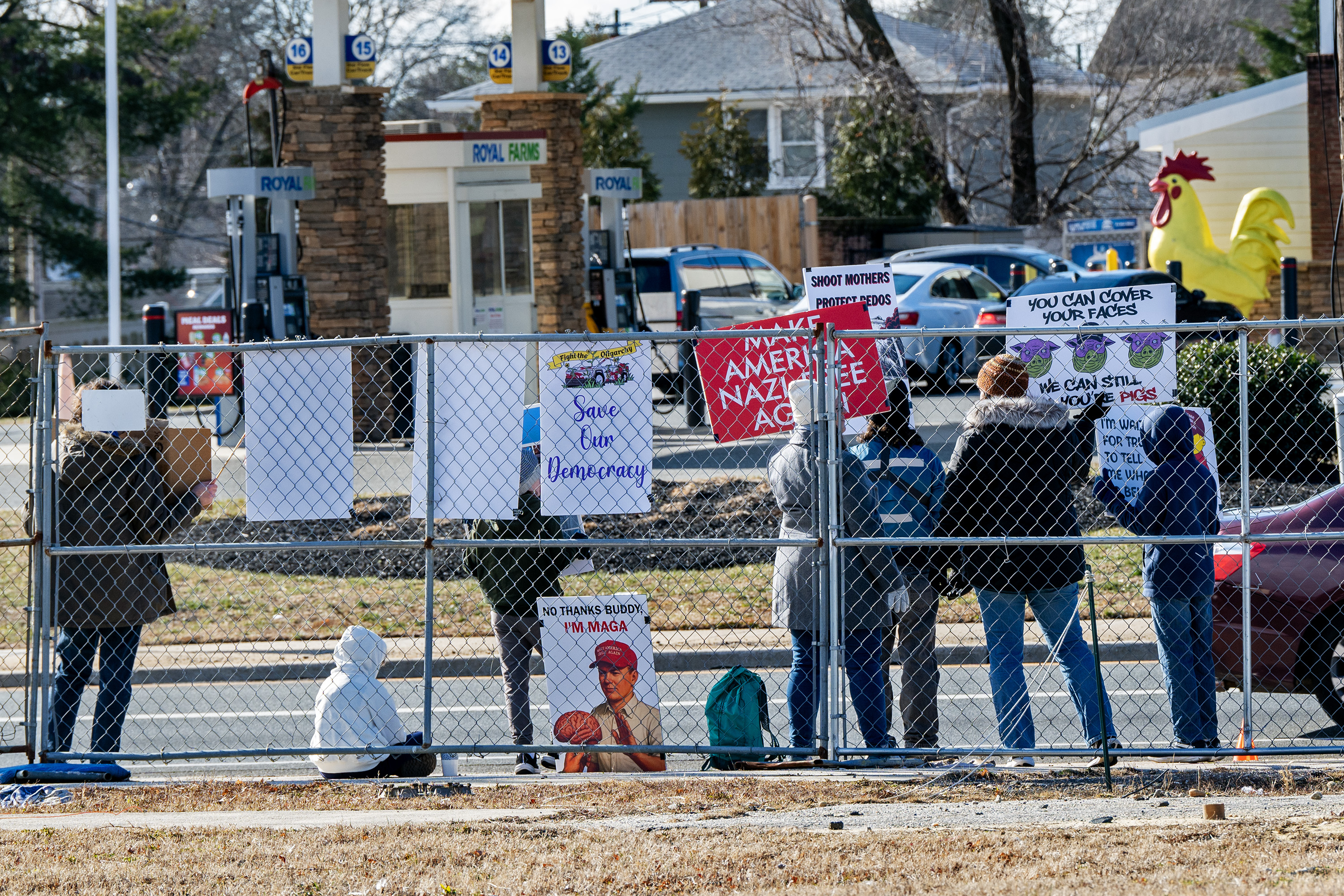
    Last month, the Bellmawr Police Department issued citations against several people attending or driving past weekly “Roadside Rallies against Fascism” hosted by Cooper River Indivisible, a Camden County grassroots organization, according to ACLU-NJ.

    It is unclear exactly how many people received citations from Bellmawr police while demonstrating against President Donald Trump and his administration. But Maia Raposo, communications director for ACLU-NJ, said the nonprofit is representing six people involved.

    Five of those six people went to Bellmawr Municipal Court on Thursday, Raposo said, and four of the five had their citations dismissed, which included jaywalking and failing to stop at a stop sign.

    “Today, the municipal court in Bellmawr dismissed charges against four individuals who received tickets while they were lawfully exercising their First Amendment rights. We look forward to resolving the remaining charges pending against our other clients,” said Rebecca Uwakwe, ACLU-NJ’s criminal law reform advocacy director, in an emailed statement.

    Raposo did not share the names of those involved or the status of the citations that were not dropped Thursday.

    The Bellmawr Police Department did not respond to requests for comment.

    On Aug. 25, ACLU-NJ emailed a letter to Bellmawr Police Chief Keith Williams alleging that officers had issued “traffic and criminal citations for honking, jaywalking, and other offenses” to rally-goers and supporters gathering at Black Horse Pike and Gloucester Road in Bellmawr.

    “If Bellmawr officers are targeting participants and supporters of lawful protests with citations, Bellmawr is interfering with their constitutionally protected activities and violating their civil rights,” the letter reads.

    ACLU-NJ asked Bellmawr police to investigate the officers’ conduct and to reply to the letter by Sept. 11. Raposo did not say whether the police department had responded to the letter but wrote in an email that ACLU-NJ can provide more information when all relevant cases are resolved.

    Cooper River Indivisible’s next roadside rally was scheduled for Sunday, and the event posting promoting the demonstration warned attendees that they have “been unfairly targeted by local police.” The group did not respond to requests for comment.

    “Do your best to keep the messaging on target — Bellmawr PD is a problem, but our real enemy is tyranny as a whole. Eyes on the prize,” the post reads.

    Correction: This story was updated to correct the date of a roadside rally last Sunday.
  • German leader faces tough time ahead after election defeats, but no sign of leadership challenge

    German leader faces tough time ahead after election defeats, but no sign of leadership challenge

    BERLIN — German Chancellor Friedrich Merz stood by his vow to stay in office Monday after his party suffered two more regional election defeats and was voted out of a state legislature in a humiliating first. But he faces a struggle to keep his reform agenda intact.

    Minutes after polls closed on Sunday, the unpopular Merz said he planned to stay on as leader of both Germany and his center-right party, and said that he would push through reforms to Europe’s biggest economy.

    Hours later, final results underlined the extent of what Merz conceded was a “disaster” in Mecklenburg-Western Pomerania, an eastern region on the Baltic Sea coast. His center-right Christian Democratic Union fell just below the 5% of the vote needed to keep seats in the regional parliament, the first time that has happened in 77 years of modern Germany’s federal republic, after losing more than half its support. The far-right Alternative for Germany finished as the strongest party.

    In Sunday’s other election, the CDU dropped to second place in Berlin behind the hard-left Left Party, which is in pole position to lead the next city government — though Merz’s party could, depending on how coalition talks go, still retain city hall.

    But after days of speculation about Merz’s future, there were no prominent public calls Monday for his departure and no sign of a challenge. The chancellor said no one raised any “personnel questions” in party leadership meetings Sunday or Monday.

    “It is the historic task of the (governing) coalition here in Berlin and the political center as a whole to make our country fit for the coming years,” Merz said. “Extremists suggest that there are easy solutions. But everyone who has ever governed knows there are no easy solutions.”

    At the same time, he acknowledged that the CDU needs to work on its profile. He said that it “no longer has satisfactory answers to too many questions, and we will and must change that.”

    A far-right party gains again

    Neither of the states that voted Sunday is a political heavyweight. The CDU’s 2023 win in Berlin was its only one in the past 25 years in the capital, which has tended to lean left. The party was already weak in Mecklenburg-Western Pomerania.

    But the results added to the headwinds Merz faces after a stinging defeat by the far-right, anti-immigration Alternative for Germany, or AfD, two weeks ago in Saxony-Anhalt, another region in the formerly communist east, damaged his authority and set off speculation that he might be replaced.

    While AfD was the strongest party in Mecklenburg-Western Pomerania, the center-left Social Democrats — the junior party in Merz’s national governing coalition — were fairly close behind after a campaign focused squarely on the state governor, Manuela Schwesig, as a bulwark against the far right. That polarization helped squeeze other mainstream parties, including the CDU.

    A left-leaning three-party coalition under Schwesig would have a majority in the new regional legislature.

    Questions over how Germany should be reformed

    Schwesig and others in the governing parties have cast doubt on aspects of the federal government’s reform agenda, which is meant to bolster a chronically sluggish economy. The reform plans include a potentially painful overhaul of the creaking pension system and of the healthcare system. A proposal to scrap a rule allowing people who have paid pension contributions for 45 years to retire early without taking a financial hit has drawn particular criticism.

    The Social Democrats’ national leaders said Monday that they stand by the coalition. But they made clear that they will seek at least some changes to the plans.

    Vice Chancellor Lars Klingbeil, who is also the finance minister, said that “saying we will ignore what voters told us in three state elections won’t work.”

    “We need reforms, but these reforms must be fair and they need support in the population,” he said. The party’s other co-leader, Labor Minister Bärbel Bas, said the plans need a “reality check” and a “fairness check,” but that she was optimistic of finding solutions on the pension system reform, the most controversial plan.

    “There would be nothing more lethal than letting this coalition break apart over some technical question,” Bas said.

    Merz said he wouldn’t speculate about “where we must make corrections.”

    There are at least no more electoral tests this year. However, five state elections are scheduled next year, three of them in April.

    They include one in North Rhine-Westphalia, Germany’s most populous state, currently led by a prominent CDU figure often cited as a possible successor to Merz, Hendrik Wüst. None of the five elections is in the east, where AfD is strongest.

    Looking forward, much will depend on the CDU’s influential regional leaders. But there was no sign of a challenge to Merz Monday from them or others.

    “You get the feeling that the stronger figures are trying to stay away from Berlin at the moment,” Thomas Poguntke, a longtime political science professor at the Heinrich Heine University in Duesseldorf, told Phoenix television.

    “Swapping out a leadership figure wouldn’t achieve so terribly much now,” he added, but the chancellor has made avoidable mistakes in the past, “and the government’s handicraft simply must improve.”

  • Pa. Turnpike begins $90.5 million widening near I-95 interchange in Bucks County

    Pa. Turnpike begins $90.5 million widening near I-95 interchange in Bucks County

    The Pennsylvania Turnpike Commission is reconstructing and widening a 2½ mile section of I-276 between the Neshaminy Falls Toll Plaza and Bensalem Boulevard in Bucks County.

    Turnpike officials characterize the $90.5 million project as a supporting piece of the massive connection of I-95, a freeway, to the toll road in 2018.

    That connection closed the final gap in the Eastern Seaboard’s major interstate, between Florida and Maine’s border with New Brunswick, Canada, after more than six decades.

    It made shipping by truck more efficient, reduced congestion on local Bucks County roads, and eased traffic flow through the Philadelphia region and along the East Coast.

    “Opening the I-95 connection was a historic milestone, but it was not the end of our work,” Pennsylvania Turnpike Commission chief engineer Brad Heigel said in a statement.

    Starting this month, crews will reconstruct the turnpike’s center median to prepare for future traffic shifts, the agency said. Lane closures are expected through October, with work done mostly at night.

    Work on this portion of the roadway, called Section C of the I-95 Interchange Project, is expected to continue through 2029.

    Construction will proceed in phases:

    • First, temporary concrete barriers will be installed to establish long-term shoulder closures and create space for tree clearing, earthwork, and other construction activities beginning later in fall.
    • Crews will then build a new lane in each direction while traffic uses the existing lanes.
    • Once that is done, traffic will shift onto the new lanes so crews can rebuild the roadway in between. Two lanes of traffic will remain open in each direction in peak travel hours during construction, the turnpike said. 

    In addition, a new sound-barrier wall will be built, along with a stormwater management facility. The existing Neshaminy Falls Toll Plaza will be demolished and replaced by an Open Road Tolling gantry.

    The project will create new “capacity to support safer, more reliable travel through Bucks County and along one of the nation’s most important transportation corridors,” Heigel said.

    Work on the adjoining portion, Section D30, is scheduled to be finished this fall, but three-lane turnpike traffic won’t begin in the area until both sections are done.

    The project also will add new emergency access gates at milepost 355, cutting response time for local firefighters by 50%.

    In June, officials of the Pennsylvania and New Jersey Turnpikes picked their preferred design to replace the 70-year-old bridge over the Delaware River linking the toll roads: a six-lane span about 195 feet north of the existing one.

    The Pennsylvania Turnpike Commission, the lead agency on the joint project, next must complete an environmental impact study on the design.

    Engineers also must study the runner-up approach: constructing the new bridge in stages, about 40 feet north of the existing bridge — over eight years. (The preferred design could be built in four years.)

    The Federal Highway Administration is expected to decide in April 2028 which of the two options to use.

    When it is built, the I-95 Interchange Project will be done.