Category: News

  • Curbside compost is trending in the Philly suburbs. In Delco, many residents’ scraps are ending up at Linvilla.

    Curbside compost is trending in the Philly suburbs. In Delco, many residents’ scraps are ending up at Linvilla.

    Fifteen years ago, Chris Pieretti was just trying to get people to come around on compost.

    Now, the Upper Darby resident and compost aficionado spends his days traversing the region in his truck, collecting a potpourri of food scraps in green buckets, and turning eggshells, banana peels, and coffee grounds into a nutrient-rich, soil-like product.

    Pieretti is behind Kitchen Harvest, which collects compostable materials and processes them on a five-acre site at Linvilla Orchards in Delaware County. Kitchen Harvest is, in Pieretti’s words, part of “a better, more sustainable future of a full-circle food system.”

    It is part of a growing network of providers and composters across the Philadelphia region who are working to reduce waste and improve food system circularity, where scraps of food once grown in the Earth can return to it, fertilizing soil for new crops.

    With Haverford Township debuting its municipal compost program this summer, joining Media and Swarthmore, among other municipalities, compost purveyors say the practice is breaking out of its crunchy origins and becoming a key part of the region’s waste management strategy.

    Chris Pieretti holds a compost bag at Kitchen Harvest in Delaware County. Pieretti is working with local homes and municipalities to compost food scraps and yard waste. Jose F. Moreno / Staff Photographer

    What is composting?

    Composting is the process of recycling organic materials like food scraps and yard waste, breaking them down into a brown, soil-like material called compost, and using that material in farms and gardens to enrich other plants and crops.

    The composting process happens on micro and macro scales — in small home gardens and at multi-acre sites like Kitchen Harvest’s.

    Compost advocates tout both its environmental and agricultural benefits. In the U.S., food is the single most common material sent to landfills, where it is responsible for 58% of methane emissions, a powerful greenhouse gas, according to the Environmental Protection Agency. Adding compost to soil increases its nutrient content, conserves water by helping retain moisture, and reduces reliance on chemical fertilizers, the EPA says.

    “Food is only wasted when we throw it in the trash. It’s our choice to dispose of it in that method, but we don’t have to,” said Gwenn Nolan, founder of Mother Compost, a company that collects compost material throughout the Philly suburbs and brings it to the Kitchen Harvest site at Linvilla.

    Going from ‘crunchy’ to ‘waste management strategy’

    Many compost enthusiasts have a similar story: What started as a backyard experiment grew, through trial and error, into a way of life and, for some, a career.

    Nolan, of Mother Compost, got her start asking 10 friends on the Main Line to try composting so she could test demand for a compost collection service. She bought a small truck, picking up the bins of food scraps early in the morning before heading to her job in financial services. After the pandemic, residential demand ballooned, and Nolan made Mother Compost her full-time job. Now, the company serves around 1,500 homes; schools including Bryn Mawr College and Villanova University; culinary institutions including Reading Terminal Market; and corporate offices.

    Nolan collects compost in her truck and carts it out to Pieretti, whom she calls “the master mixologist,” for processing.

    “It’s really exciting to see the commercial side and the institutional side coming online as well,” Nolan said. “It’s becoming more a piece of the waste management strategy than just this kind of crunchy, environmental practice that I think people thought about it before.”

    Kate Jacoby, who runs Center City vegan restaurant Vedge with her husband, Rich Landau, is one of Nolan’s loyal customers. Jacoby began composting in her small Philadelphia backyard during the pandemic, expanding her home compost operation when the couple moved to Chester County in 2021 and, eventually, bringing composting to the Vedge kitchen.

    “I get such a satisfaction knowing that it’s going to go into the soil and it’s not going to sit in a landfill,” Jacoby said.

    Foods scraps like banana peels, onion skins, and lemons are turned into compost. JESSICA GRIFFIN / Staff Photographer

    An expanding suburban compost network

    As compost accessibility grows, so, too, does the number of municipal governments offering compost services to residents.

    Media became the first municipality to sign on with Kitchen Harvest in 2021, embracing a borough-wide compost program with a catchy “Gotta Getta Bucket” promotional video.

    “The community at-large really supported the idea, and the participation was really high,” Pieretti said of Media.

    Many suburban programs have followed in the footsteps of Bennett Compost, which has been serving the city of Philadelphia since 2009.

    Lower Merion in 2025 debuted both a community drop-off and a curbside pickup pilot program through Mother Compost and Bennett Compost. Swarthmore Borough launched a curbside compost program through EZComposting in January.

    When Haverford Township launched its Kitchen Harvest partnership this summer, Pieretti felt like he had “won the compost championship.”

    In July, Haverford Township collected 162 tons of organic material, an increase of 111 tons from last July, according to township manager Dave Burman, who called the program “pretty successful.” The township also collected 141 fewer tons of trash this July than the year prior.

    Haverford Township’s program is optional, with no additional cost or registration process for residents.

    “We’ve tried to make it as easy as we could for people to participate, and so far, so good,” Burman said.

    Buckets of finished compost at the Kitchen Harvest site at Linvilla Orchards. Jose F. Moreno / Staff Photographer

    At its best, proponents say, compost creates a circular system. Much of Kitchen Harvest’s compost product is used by Linvilla Orchards to feed the crops, and composters can buy back bags of the finished product at a discounted rate.

    Sarah Linvill, team member at Linvilla, said the farm is grateful to work with Kitchen Harvest and to “be hosts for that kind of work.”

    Composting services are “just invaluable to the community,” Linvill said.

    Nolan called Linvilla “a tremendous resource for the region” when it comes to compost.

    Composters like Jacoby, of Vedge, say they now cannot imagine a world where they simply toss an apple core into the trash.

    “If you really, really dig down and want to get kind of philosophical about it,” Jacoby said, “when your soil is healthy and it’s full of nutrients, you’re going to have better-tasting food for yourself to consume.”

    This suburban content is produced with support from the Leslie Miller and Richard Worley Foundation and The Lenfest Institute for Journalism. Editorial content is created independently of the project donors. Gifts to support The Inquirer’s high-impact journalism can be made at inquirer.com/donate. A list of Lenfest Institute donors can be found at lenfestinstitute.org/supporters.


  • Lower Merion’s gas-powered leaf blower ban has led to 437 complaints and put ‘tremendous stress’ on staff, officials say

    Lower Merion’s gas-powered leaf blower ban has led to 437 complaints and put ‘tremendous stress’ on staff, officials say

    A gas-powered leaf blower ban in Lower Merion has put “tremendous stress” on township staff, as hundreds of complaints have piled up since its implementation this summer, officials said at a Sept. 9 meeting.

    Officials from Lower Merion’s department of building and planning told commissioners at a recent budget meeting that enforcement of the ban has strained resources as staff are pulled away from other work to address a growing collection of complaints. The department is asking to promote one part-time staff member to full-time and hire a seasonal code compliance officer to meet the increased demand.

    “There’s a significant amount of administrative time required to enforce the ordinance, and it’s just beyond our existing capabilities to do this,” Chris Leswing, Lower Merion’s director of building and planning, told commissioners.

    Leswing said investigating potential violations has pushed back other projects, requiring the department to pay increased overtime so staff can address their day-to-day responsibilities.

    Lower Merion received 437 complaints of leaf blower violations and issued 49 fines from June 1 to Sept. 9, according to Ernest Pendleton, assistant director of building and planning.

    In that same time frame, the department received 80 reports of all other standard property maintenance violations, including trash, debris, noise, lighting, high weeds, and grass issues.

    The proposed upgrade of the administrative clerk to full-time next year would add $48,000 to next year’s budget, and hiring a seasonal code compliance officer for 22 weeks of the year would add $35,000.

    Lower Merion commissioners passed the ban on gas-powered leaf blowers last fall, a move proponents said would help safeguard the environment and protect residents against harmful air and noise pollution.

    The ordinance phased out gas-powered leaf blowers on a seasonal basis, starting with a ban from June 1 to Oct. 1 this year, with an eventual all-out ban beginning in 2029.

    Enforcement is complaint-based. Residents are encouraged to report violations via Lower Merion’s LM Report-It app, email, or phone. Violators first receive a warning, then a $100 fine for a first offense, $250 for a second offense, and $600 for a third or subsequent offense.

    Enforcing the leaf blower ban presents a specific set of issues for staff, Pendleton said. Only around one-third of leaf blower complaints include enough evidence to be verified, meaning for the majority of infractions, a township staff member must conduct an independent investigation before deciding whether to fine a property owner. Investigations often include reviewing photos and videos and driving to the site of the violation. Complaints are doubly difficult to investigate as the department’s inspectors are often “scheduled out,” meaning no one is available to look into tips as they are being called in, according to Pendleton.

    “We don’t have any inspector sitting inside our building to run out to a site,” Pendleton said.

    Commissioners at the meeting said residents have reported feeling uncomfortable with the complaint-based system.

    “They’re feeling as though they’re being asked to report on one another in the absence of another type of system,” said Commissioner Chris McGuire, who said she is getting reports that “neighbors are quibbling because one has reported the other.”

    Pendleton said hiring a seasonal code compliance officer would help alleviate the fact that “neighbors aren’t liking to have to tell on neighbors,” though he noted that all of Lower Merion’s standard property maintenance complaints, with the exception of building codes, come in through resident reporting.

    “We don’t send anyone out to look for problems,” Pendleton said.

    Both commissioners and staff said they expect leaf blower complaints to drop in the coming years as residents and landscapers continue to transition to electric equipment. Pendleton said adding a seasonal officer would allow the township to have flexibility to shed the position should complaints drop off.

    Some commissioners seemed poised to fulfill the building and planning department’s staffing requests, but no formal votes were taken at the meeting.

    This suburban content is produced with support from the Leslie Miller and Richard Worley Foundation and The Lenfest Institute for Journalism. Editorial content is created independently of the project donors. Gifts to support The Inquirer’s high-impact journalism can be made at inquirer.com/donate. A list of Lenfest Institute donors can be found at lenfestinstitute.org/supporters.

  • We made 10 Shore predictions for 2026. Here’s how we did.

    We made 10 Shore predictions for 2026. Here’s how we did.

    Things not on my 2026 Jersey Shore predictions bingo card: a canceled luau, and a dispute over live outdoor music featuring audio of 911 complaints posted to Facebook.

    But, at the start of the season, I did make 10 predictions on how the Shore summer would go.

    Here’s how I did.

    Full speed ahead for Icona in Wonderland. ✅

    I’m calling this a win (for my predictions score; people have very different views of the hotel). In June, Eustace Mita finally got his dream of a declaration that the old Wonderland Pier site at 600 Boardwalk in Ocean City is “in need of rehabilitation.”

    The Icona developer is now in negotiations with Ocean City about a hotel proposal, which he says will be a scaled-down version of his initial seven-story, 252-room plan that called for saving the Ferris wheel and historic carousel. City council is vowing to be guided by recommendations from a Boardwalk subcommittee. Meanwhile, council hired a lawyer to defend against a lawsuit by citizens’ groups.

    Eustace Mita talks about the construction of this beachfront Achristavest home on 116th Street in Stone Harbor on Tuesday, August 18, 2026.Vernon Ogrodnek / For The Inquirer

    Atlantic City’s Irish Pub will rise again. ❌

    Alas, not even the sale of the Irish Pub in Philadelphia appeared to jump-start any renovations in Atlantic City, where owner Cathy Burke has been in a stalemate with state inspectors over whether the iconic, beloved pub on St. James Place should be considered a high-rise. The pub has been closed since January.

    Will locals have their fish and chips and Guinness on Christmas Eve as per usual? You never know. Burke did not answer a text message seeking an update. Asked about the Irish Pub’s status, Atlantic City spokesperson Andrew Kramer said he had “nothing new from my end on this one.”

    But, in an upset, the city has begun paving Atlantic and Pacific Avenues, in a development Mayor Marty Small Sr. called “massive,” and said would be completed by year’s end.

    Fran Cann (left) helps Debbie Stiles (#9, right) get through the door, since she can’t see as well wearing a “St. Nick” Foles bag over her head, as they celebrates Bag Day at the Irish Pub in Atlantic City Monday, Mar. 18, 2024. The friends, from Berlin, N.J.were attending their first Bag Day. The tradition got started when a late-to-the-party patron showed up to the 24-hour bar a day after St. Patrick’s, then put a bag on their head.Tom Gralish / Staff Photographer

    Shore restaurants will tough it out, but struggle. ✅

    Restaurants were stressed this summer. As is usual in late summer, many lost employees as the season wore on all the way to Sept. 7, and had to cut back seating or hours. Others pleaded with their clientele for patience. Still, there were lines down the block for coffee places, and booked up reservations for favorites like Steve & Cookie’s and Cafe 2825. New places were opening deep into summer, like Culina Mundi in Ventnor and Sabrina’s Kitchen in Atlantic City.

    Bakeria 1010 owner and pizza savant Mike Fitzick posted a mock obituary for himself at summer’s end: “Welp that’s all she wrote folks. … Right from start I knew this season was gonna be rough. All the staff I tried to hire fizzled out and the staff I had last year were mostly gone. This summer was pretty treacherous in every aspect … June was trash, July was ok and we finally hit our stride in August. Better late than never, I guess. Unfortunately I have passed away due to self-inflicted cortisol poisoning. In lieu of flowers please donate to the Bakeria 1010 all winter. Jokes aside we WILL be open for lunch today…”

    Kylie Kelce adds some money to the cash register during the Shore Birds celebrity bartending event in Sea Isle.Courtesy of the Philadelphia Eagles

    Taylor and Travis will not honeymoon in Sea Isle, but…? ✅ ❌

    No, they did not honeymoon in Sea Isle, choosing instead Big Sky, Mont. (a lovely place), so that’s an easy one in my favor. But my leaving open the possibility that they would make an appearance in Sea Isle seems, on balance, ridiculous. Maybe they’re waiting for Jason and Kylie Kelce to finally make it off the waiting list for the Sea Isle Yacht Club. Maybe a celebrity bartending gig for Taylor at the Eagles Autism extravaganza next summer? Meanwhile, have fun in Ohio!

    Mike and Annamarie Carr of Ventnor, owners of Jagielky’s candy shops, with the e-bikes they love to ride. Ventnor won’t allow them on its own Boardwalk. The couple drove to Ocean City on June 2 and started and ended from there.Amy S. Rosenberg / staff

    E-bikers will be hauled off the boardwalks and fill municipal court Zoom hearings. ❌

    There was a lot of confusion over the new e-bike law in New Jersey.

    First the state Motor Vehicles Commission said Pennsylvania visitors shouldn’t sweat the new registration requirements, then they changed their mind and said visitors should start their week down the Shore with a trip to the DMV. Adding to the confusion, the MVC requirements explainer page that says out-of-staters should comply now also says, “This page is intended for New Jersey Residents.”

    In all, the MVC has issued a total of 13,850 e-bike registrations, according to commission statistics; 365 of those for out-of-state residents.

    But police were generally light-handed on enforcement measures for the new law, with departments focusing on safety issues, like helmets, and age restrictions, rather than registrations.

    Doug Bergen, a spokesperson for Ocean City, said no citations were issued there this summer under the new law.

    In Ventnor, Lt. Bryan Gaviria said between May 1 and Sept. 10, the department issued six curbside warnings to juveniles, 10 e-bikes on the boardwalk warnings, and one ticket for riding on the boardwalk.

    “We’re still in the education phase,” he said.

    Statewide, statistics show 628 total citations under the e-bike and motorized bicycle law for July and August, according to data supplied by the New Jersey Judiciary.

    Of those, just 77 were given for low-speed electric bicycles, 22 citations were for failing to have the registration required by the new law, and two were for drivers being under 15. The rest of the citations issued were for motorized bicycles, the higher speed classification.

    Retiring boomers will continue their takeover of Shore towns. ✅

    Yes, who else can afford to buy?

    Real estate prices remained mostly in rarified air, like this adorable yellow 760-square-foot North Wildwood cottage that sold for $1.7 million in mid-August. It’s a tear down, naturally.

    Or how about this 17,684-square-foot house in the Avalon dunes, built on spec by Eustace Mita (see above), with the distinction of being Avalon’s largest house and an expected price tag in the tens of millions.

    In related news, the home elevator, once considered a luxury, is now considered an essential amenity for new homes in Ocean City, N.J., among other towns.

    Rendering of a 17,684 square foot home being built as a spec house in the dunes in Avalon, at 5745 Dune Drive, by developer Eustace Mita. It will be the largest home in the borough.Courtesy Avalon Borough

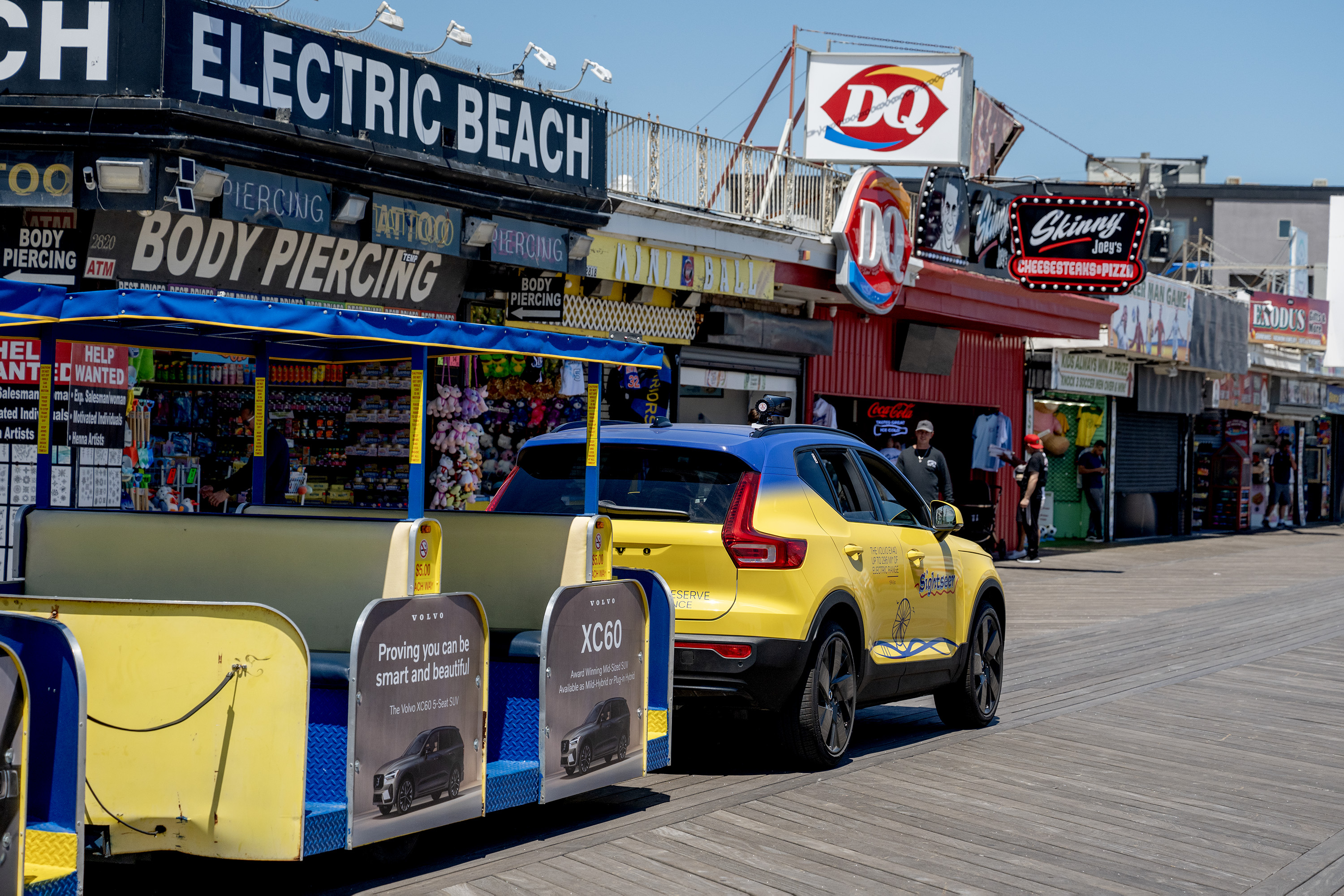
    Wildwood boardwalk hours will again be expanded overnight, but all people will talk about are the electric Volvo SUVs driving the tram cars. ✅ ❌

    Wildwood spokesperson Alicia Deluca says the hours remained curtailed, with the boardwalk closing between 1 and 5 a.m.

    The grumbling over the new Volvo tram cars continued all summer, though. People do not like change. Meanwhile, though, Wildwood is preparing a 20-year redevelopment plan for its boardwalk that will see mixed-use projects, including hotels, apartments, condominiums, businesses, and centralized parking garages.

    A Sightseer tram car is pulled by a Volvo EX40 electric vehicle on the Boardwalk in Wildwood Tuesday, June 2, 2026. The Wildwoods Boardwalk Special Improvement District struck a deal with Volvo to provide three free electric vehicles in return for ads placed on the individual tram cars. Four of the older engines remain in use for now.Tom Gralish / Staff Photographer

    There will be a lot of complaining about changing parking regulations. ❌

    I didn’t hear much over the din of loud music from Gully’s, and Facebook groups seemed preoccupied with other things: flies, shaming noise complainers, and finding the best chicken Parm.

    The return of the day-tripper. ✅

    This prediction was a good one. Costs continued to rise, making shorter trips and day trips appealing. I predicted Atlantic City would get renewed attention, and it did, with groundbreakings for new housing developments, a container retail park close to opening, and the enduring appeal of a wide, free beach and a relatively inexpensive real estate picture.

    Obvious miss on the predictions front: Atlantic Avenue is finally being paved. The odds were very long on this one.

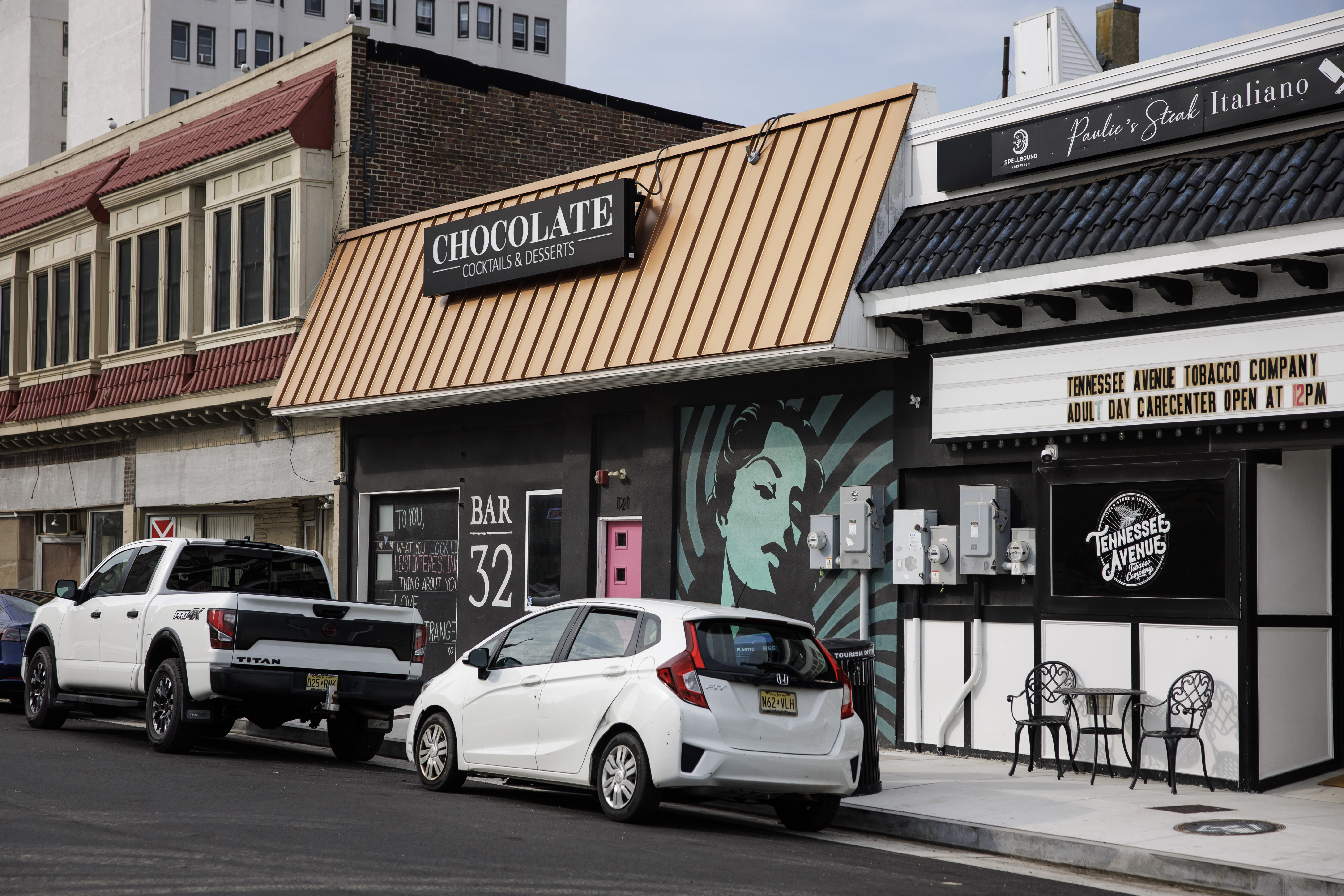
    The exterior of Bar 32 on Thursday, June 11, 2026 in Atlantic City, NJ. Bar 32 offers bean-to-bar chocolate, handmade desserts, and craft cocktails.Monica Herndon / Staff Photographer

    The summer will seem verrrrry long. ✅

    So long. How long? Basically an extra week until the Sept. 7 Labor Day. Which left beach patrols, restaurants, and other business strapped for employees, and rewarded marathon beach lovers with two days of atrocious flies on the beach Sept. 4 and 5, worse than anyone had ever experienced, like, really terrible! See ya next year!

    Total score: 6/10. We’ll get ‘em next summer, hopefully over a plate of lollipop meatballs at the Irish Pub.

  • The world economy is becoming wary of the U.S.

    The world economy is becoming wary of the U.S.

    WASHINGTON — Global investors are balking at U.S. bonds. Talk of the dollar’s dwindling power is getting louder. Foreign governments are hauling their gold out of American vaults.

    Almost two years into President Donald Trump’s second term, the world economy is increasingly looking for ways to distance itself from the United States. Concerns about a $40 trillion debt burden, the excessive use of sanctions to solve foreign policy problems, and Trump’s penchant for pushing the limits of the rule of law are raising questions about the appeal of the United States as a haven for global investment.

    Despite pledges by foreign companies and nations to invest in the United States — in many cases to curry favor with the White House — capital is starting to seek alternative destinations.

    “Geopolitical factors and U.S. weaponization of the dollar through financial sanctions are causing central banks and other official investors to attempt to diversify away from dollar assets,” said Eswar Prasad, the former head of the International Monetary Fund’s China division.

    The United States is not yet an investment pariah. Private investors are still pouring money into American financial markets and stocks, artificial intelligence infrastructure is booming, and no rival currency is poised to topple the dollar imminently.

    In testimony before Congress on Tuesday, Treasury Secretary Scott Bessent said he remained confident in the credibility of the U.S. financial system, arguing that bond auctions continue to operate successfully and that the dollar is still thriving as measured by its share of global transactions.

    “The U.S. is in fact the leader, and the leader does not fear competition,” Bessent said. “Competition makes us better.”

    But cracks in America’s economic dominance are starting to show.

    Bond market jitters

    The most glaring example has been in the bond market. Yields have been soaring as investors nervous about the mounting national debt demand a higher rate of return for buying Treasury bonds. This week, the yield on the 10-year Treasury topped 5%, reaching its highest level since 2007.

    The decision to raise interest rates Wednesday could help to alleviate concerns about the Federal Reserve’s grip on elevated inflation, fears that have injected more jitters into bond markets.

    The ominous bond threshold was crossed a week after the Treasury Department purchased $5.2 billion of its own debt maturing in the next 10 to 20 years, part of a plan to inject demand into the Treasury market to try to push prices higher and yields lower. Bessent said investors were failing to understand the underlying strength of the economy and dared them to bet against him.

    “It’s my dream,” Bessent said recently at Southern Methodist University. “I have asymmetric information. I am the house now.”

    With the United States’ long-term fiscal situation looking shaky, some countries are starting to wonder if the U.S. is a wise investment. This month, Norway’s sovereign wealth fund, the largest in the world, said it planned to reduce its holdings of U.S. Treasurys as it looks elsewhere for stronger returns.

    And then there is the future of the dollar.

    Nearly 90% of global foreign exchange transactions are in dollars. But the share of dollars being held in central bank reserves has been steadily declining over the past decade, falling to 56% at the end of 2025 from 64% in 2015.

    Last year, Christine Lagarde, the president of the European Central Bank, said erratic policymaking in the United States was setting the stage for a “global euro moment.”

    The United States has taken advantage of the greenback’s special status to use it as a foreign policy tool, imposing stiff sanctions on adversaries such as Iran and Russia. As the United States ramps up its use of sanctions to resolve global conflicts, the permanence of the dollar as the world’s reserve currency has come into question with greater frequency.

    Digital currencies

    Although the euro and China’s renminbi do not appear ready to overtake the dollar anytime soon, the emergence of central bank digital currencies, stablecoins, and cryptocurrencies give U.S. adversaries new avenues to circumvent the American financial system when making international transactions.

    China has been leading the development of a cross-border digital currency platform with Hong Kong, Thailand, the United Arab Emirates, and Saudi Arabia that would allow money to move more quickly and with lower fees than what is possible with traditional banking transactions. A similar cross-border payments project led by some Group of 7 major industrialized nations and Western financial institutions is also in development but is not as far along as China’s initiative, which is known as mBridge.

    Russia and India said recently that they are working on a plan that would let them use central bank digital currencies to settle international trade payments. Such a mechanism would allow the countries to expand their trade relationship and reduce reliance on Western financial institutions that can be targeted by U.S. sanctions.

    “The story of moving away from the dollar is one of the oldest stories that exists,” said Josh Lipsky, the chair of international economics at the Atlantic Council. “Countries have thought about working around the dollar, and technology is making it a little cheaper and easier to do it than before.”

    Going for the gold

    While some countries are focused on digital money, others are going for the gold as they fret about the stability of the United States.

    In 2025, world international reserves held in gold surpassed foreign official holdings of U.S. Treasury securities. This year, the price of gold exceeded $5,000 per troy ounce for the first time in history as central banks stocked up on the metal amid intensifying global conflicts and concerns over inflation.

    Demand for gold is so high that some countries also want to keep theirs closer to home. With geopolitical unrest rising and Trump lobbing tariff threats against European allies, some have even taken the rare step of relocating the gold they keep in vaults at the Federal Reserve Bank of New York.

    This month, the central bank of the Netherlands said it transferred a large part of its 95 tons of North American gold reserves out of the United States, citing “increasing geopolitical unrest” and the need to be prepared for crisis. In March, the Bank of France said it pulled 129 tons of gold from the Federal Reserve Bank of New York and moved it to Paris.

    The Trump administration has not threatened to seize foreign gold held in the United States, but Trump has raised questions about his views of international law by floating the idea of colonizing places like Greenland and Canada.

    ‘It’s like the countries don’t trust the U.S.’

    “It’s like the countries don’t trust the U.S.,” said Daniel Tannebaum, who served at the Treasury Department’s Office of Foreign Assets Control and as the OFAC compliance coordinator at the Federal Reserve Bank of New York. “I do think that there is a fear factor.”

    That fear factor is also creating blowback for American companies that are trying to do business abroad.

    Tannebaum, who is a partner in Oliver Wyman’s finance and risk practice, said the aggressive use of tariffs and export controls by the United States has made European countries and companies wary of adopting American technology for sensitive industries such as AI. They worry that if they are dependent on the United States for such infrastructure it could be used against them if Washington decides to ban or disable the technology, as it has done during disputes with China and Russia.

    All of this has contributed to an erosion of the United States’ status as a safe haven.

    “Governments and companies now have to ask what would happen if the United States turned its economic leverage against them,” Tannebaum said.

    This article originally appeared in the New York Times.

  • The Trump administration will force Pa. to pay more for SNAP. Shapiro’s office says it can’t.

    The Trump administration will force Pa. to pay more for SNAP. Shapiro’s office says it can’t.

    The Trump administration will be overhauling the SNAP program in two major steps, forcing Pennsylvania to pay more for the federal food program and jeopardizing those in need, according to Gov. Josh Shapiro’s office.

    The first phase begins Oct. 1, when states will have to pay for 75% of the expense of administering the Supplemental Nutrition Assistance Program, an end to the 50-50 cost-sharing relationship between the federal government and the states that existed for decades.

    The second and more dramatic change is scheduled to commence a year from now, when the Trump administration demands that states pay for a portion of SNAP benefits — an unprecedented arrangement that could put Pennsylvania on the hook for as much as $400 million of the approximately $4 billion the state receives in SNAP benefits annually.

    That’s a price the state is not ready to pay.

    “Pennsylvania’s state budget cannot make up for huge cuts to federal SNAP funding that will shift these costs onto states,” Shapiro spokesperson Rosie Lapowsky said in a statement. “And those cuts risk leaving hungry Pennsylvanians without food assistance.”

    The Trump administration plan, part of President Donald Trump’s One Big Beautiful Bill Act, is roiling Democrats and SNAP advocates who view it as an effort to weaken the food benefits program by saddling Pennsylvania and other states with the responsibility of paying for something they cannot afford.

    In anticipation of the first new rule going into effect in two weeks, Shapiro earmarked $87 million in the state budget to administer the SNAP program in the state, which includes paying for operating expenses.

    Burdening states with increased financial demands is “catastrophic,” said St. Joseph’s University sociologist Maria Kefalas.

    Kefalas said it will force states to make drastic moves to make up for lost dollars, including making eligibility rules harder and shrinking benefits.

    “The pressure on states to push people off SNAP will be tremendous,” she said. “The Trump act was written to shift blame for cuts to safety-net programs from the federal government to the states. Now, the states will be seen as the bad guys.”

    The original even split for administrative costs had the state and the federal government each paying $250 million in SNAP administrative costs, according to the Pennsylvania Independent Fiscal Office (IFO), a nonpartisan legislative agency that analyzes budgetary issues. But after Sept. 30, the state could be looking at as much as a $125 million increase in payments annually, IFO figures show.

    Shapiro’s $87 million budget infusion covers that increase for a portion of the state fiscal year, said Brandon Cwalina, press secretary for the Pennsylvania Department of Human Services, which oversees SNAP.

    The Trump administration says that by forcing states to put skin in the game, it is incentivizing them to cut waste, fraud, and abuse in the program.

    “President Trump is strengthening SNAP for the Americans who need it by ensuring these programs are sustainable for future generations,” White House spokesperson Anna Kelly said in a statement.

    She added that the One Big Beautiful Bill Act implements “reasonable” cost-sharing measures with states.

    Kelly also said that by signing the bill into law, Trump is “uplifting every American’s financial situation by passing the largest tax cut in history.”

    But concern is growing that by compensating for SNAP shortfalls, states will pull funds from other sources.

    “Does this mean money will be taken from police, courts, and other critical functions to pay for SNAP?” asked State Sen. Art Haywood, the top Democrat on the Health and Human Services Committee, who represents part of Philadelphia and Montgomery County.

    Error rates

    How much the state will have to pay in SNAP benefits in October 2027 depends on its payment error rate, a measure of overpayments and underpayments of benefits.

    Error rates are largely unintentional and are not fraud, according to the Food and Nutrition Administration of the U.S. Department of Agriculture, which runs the SNAP program.

    “It’s like doing your taxes and accidentally switching numbers,” said Ann Sanders, director of public benefits policy and programs for Just Harvest, a Pittsburgh-based anti-hunger nonprofit. “Not a crime, just a mistake.”

    In fiscal 2025, Pennsylvania’s error rate was 9.2%, mostly representing overpayments, said IFO director Matt Knittel.

    Even though it is below the national error rate of 10.6%, if the 9.2% level holds, Pennsylvania could be made to pay as much as $400 million a year when the new rule takes effect, IFO figures show.

    “These are costs Gov. Shapiro has made clear we cannot backfill,” Cwalina said. The Shapiro administration, which has had some success lowering error rates, has introduced new technology that helps flag potential errors before incorrect payments are made.

    The reorganization of SNAP’s functions and financing comes during an ongoing affordability crisis, said George Matysik, executive director of the Share Food Program, which supplies many food pantries in the Philadelphia area.

    “Instead of the federal government helping to solve it, it’s just passing the buck onto the consumer,” he said. “Prices are going up, while Washington punches down on the working class.”

    While the new changes have yet to kick in, Trump’s One Big Beautiful Bill Act has already altered SNAP to help pay for his tax cut.

    The administration has expanded work and documentation requirements for SNAP recipients, resulting in millions of people seeing their benefits lowered or eliminated.

    Nationwide, between July 2025 and May, SNAP rolls have decreased by more than 5 million people, or 12%, according to the Center on Budget and Policy Priorities, a left-leaning Washington-based think tank.

    As of July, the latest Pennsylvania DHS estimates show that 94,200 people have lost benefits since Trump’s law took effect.

    The changing contours of the SNAP program worry legislators accustomed to its normally steady rhythms.

    “There was a 60-year-long partnership between the federal government and the states on SNAP, without problems,” Haywood said.

    “SNAP worked well since it got its start in 1964. But now, unfortunately, the current administration is dramatically changing it.”

  • Ed Sheeran addresses Gaza and Macklemore controversy at Philly tour stop

    Ed Sheeran addresses Gaza and Macklemore controversy at Philly tour stop

    At his first concert since controversy roiled his North American tour, Ed Sheeran said he is “deeply worried” by venues influencing performances after opener Macklemore was fired from the concert lineup for making pro-Palestinian remarks on stage.

    “I’ve had to take and make difficult decisions, and I am making mistakes, and I am so, so sorry,” Sheeran told the crowd Saturday night at Lincoln Financial Field in South Philadelphia. Earlier in the evening, before the 8 p.m. concert, dozens of pro-Palestinian activists protested outside the Linc for what they called censorship.

    The British singer-songwriter said he’s never wanted to disappoint fans or be an “activist musician,” but he’s been thrust into the middle of “important and passionate argument about freedom of speech and the most complex political issue on the planet.”

    Earlier this month, the supporting act, “Thrift Shop” rapper Macklemore, performed his 2024 protest song, “Hind’s Hall,” which is about pro-Palestinian demonstrators at Columbia University. During the show, Macklemore chanted “Free Palestine” and a screen behind him showed footage from the war in Gaza. In both the song and his statements to the crowd, Macklemore implied he believes the conflict is a genocide.

    Afterwards, Macklemore said he had been fired after venues told the tour’s promoter they would prohibit the rapper from performing because of his comments. Sheeran said that venues threatened to “pull” upcoming shows if Macklemore stayed on the billing because of how he “conveyed part of his message.” Both artists attributed those statements to Robert Kraft, owner of Gillette Stadium where Sheeran’s “Loop Tour” is scheduled to stop later this month.

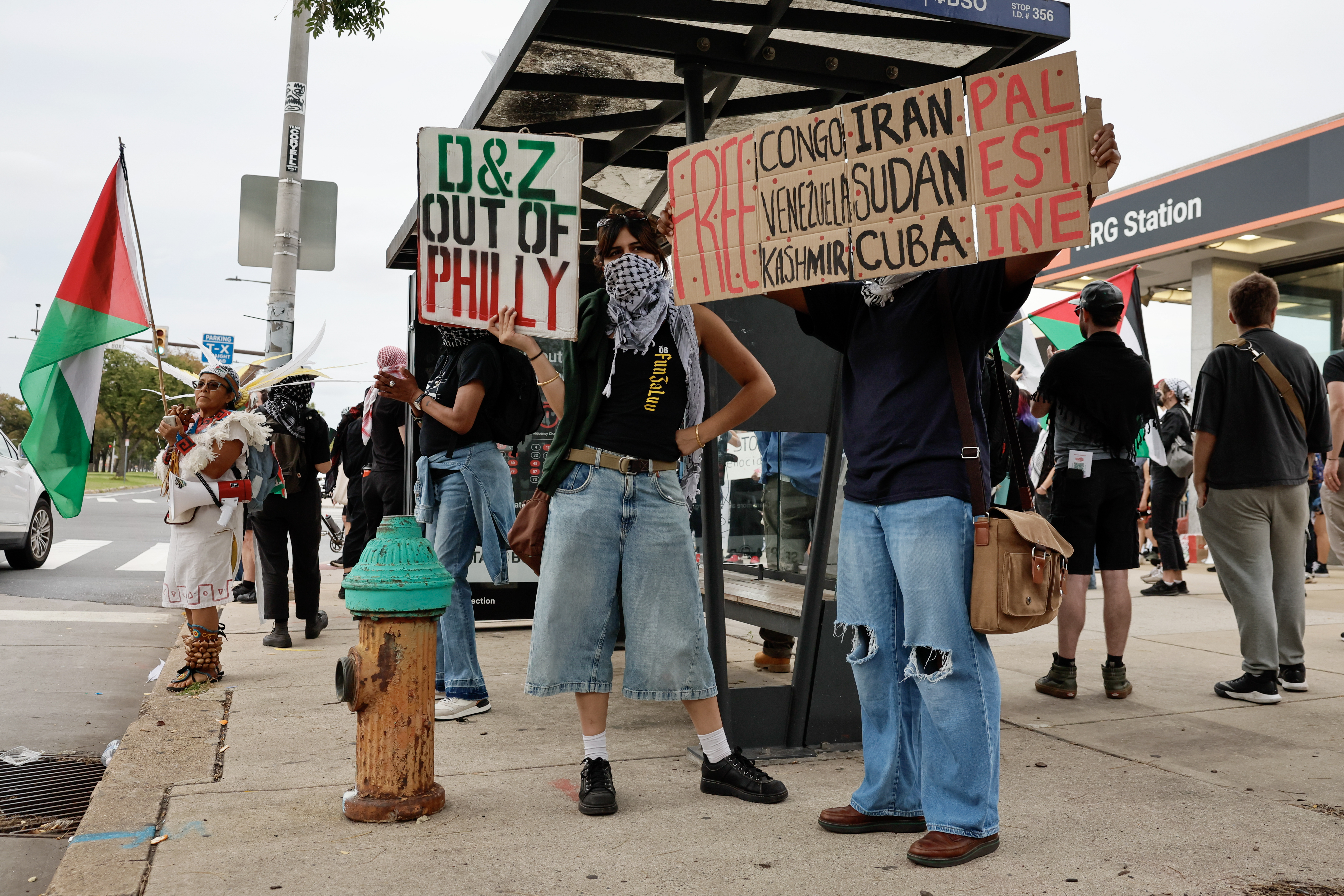
    People gather for a protest near NRG Station, outside the Ed Sheeran Concert at Lincoln Financial Field Saturday, Sept. 19, 2026, in Philadelphia.Elizabeth Robertson / Staff Photographer

    “I am deeply worried about the idea that venues could pre-approve content and performance,” Sheeran said. “This happens in so many places that I perform around the world, but it should never happen in the free world.”

    Sheeran, who has been an apolitical pop figure, acknowledged the Hamas-led attacks on Israel on Oct. 7, 2023, saying it was “horrific and compounded centuries of Jewish pain.” He also said what’s happening in Gaza is “catastrophic and unjustifiable and disproportionate” and that the “systemic injustice we’re seeing unfold in the West Bank cannot be overlooked.”

    Throughout the more than two-minute speech, a seemingly emotional Sheeran said that he wants his concerts to be a “safe space for everyone”:

    “This concert is still a place where everyone is welcome and everyone here can stand beside people that have opposing views, and everyone here can stand by people that they don’t agree with on everything,” he said, “but they can all agree on singing these songs.”

  • There was a possible measles exposure at Philadelphia International Airport

    There was a possible measles exposure at Philadelphia International Airport

    Philadelphia health officials are warning travelers of a possible measles exposure at Philadelphia International Airport early this week.

    The Philadelphia Department of Public Health is notifying travelers and others who may have been exposed. This incident is unrelated to the recent measles exposures at the Children’s Hospital of Philadelphia, the department said in a news release.

    The airport exposure occurred in Terminals B and F, and in areas connecting to Terminals C, D, and E, on Sunday, Sept. 13, from 7:25 p.m. to Monday, Sept. 14, at 12:05 a.m.

    A person with measles was traveling through Philadelphia and stayed in the airport, according to the health department. Officials are encouraging anyone who may have been exposed to check their vaccination status and monitor symptoms.

    “Anyone who is not immune, is unsure of their vaccination status, is an infant, is pregnant and not immune, or is immunocompromised should contact a healthcare provider as soon as possible,” the department said in the release on Saturday, adding that some people may still be eligible for treatment that can prevent the disease or reduce its severity.

    Officials are urging anyone experiencing symptoms to call ahead before visiting a healthcare facility and notify the provider about the exposure.

    “This week’s measles exposures are a reminder of how important it is for all of us to be up to date on our vaccinations,” city Health Commissioner Palak Raval-Nelson said in the statement. “Every Philadelphian who is fully vaccinated has little to fear from the situation at CHOP and the airport. Even more importantly, every one of those people is doing their part to help protect our most vulnerable from measles.”

    Raval-Nelson is encouraged residents to visit the city’s website, phila.gov/measles, to learn more about measles and the MMR vaccine.

    Pennsylvania’s measles outbreak, the largest in the nation this year, has sickened more than 760 people. The state has confirmed four measles-associated deaths, the most seen in the nation in more than three decades.

    The state’s outbreak is centered in Lancaster County, right outside of the Philadelphia region, and measles is actively spreading in suburban Chester County. The widening outbreak has affected more than half of Pennsylvania’s 67 counties.

    Two doses of the measles, mumps, and rubella vaccine have proven 97% effective at preventing the disease, the Centers for Disease Control and Prevention says.

    Nine in 10 unvaccinated people exposed to measles will acquire the disease.

    Typical measles symptoms include a high fever, a cough, runny nose, red, watery eyes, and a rash. Measles can cause severe complications, especially in young children, including pneumonia and brain swelling. While deaths are rare, about three in 1,000 children who contract measles will die.

    Measles, long considered eradicated in the United States, is resurging amid declining vaccination rates. Scientists say that about 95% of a community should be vaccinated to prevent spread.

    In the Philadelphia region, at least 40% of kindergartens were vulnerable to an outbreak as of last school year, up from 33% the prior year, according to an Inquirer analysis of school immunization data widely used to assess community protection levels.

  • News outlets express solidarity after Trump bars some reporters

    News outlets express solidarity after Trump bars some reporters

    Many major media outlets and some high-profile Democrats panned President Donald Trump’s abrupt decision to ban CNN, MS NOW, and Politico from the White House.

    Trump acted on his latest barrage of threats against the press Saturday morning, when reporters for the outlets were denied access to the White House and had their badges confiscated.

    On Friday evening, Trump had accused the three outlets of running “purposely negative stories” that were untrue, though he provided no details. The Trump administration has not said what led to his decision, which many First Amendment groups called unconstitutional and unlikely to survive a court challenge.

    Condemnation from leading news outlets was nearly universal, including from many that compete directly with CNN, MS NOW, and Politico.

    “No news organization — or person — should be retaliated against by the government over the words they use,” said Lauren Easton, a spokesperson for the Associated Press, which filed suit over restrictions that Trump tried to impose on its White House access last year.

    The New York Times, The Washington Post, and press associations also released statements calling the ban an attack on free speech and the free press.

    Journalists at Fox News have also taken issue with the ban. One Fox contributor, Ari Fleischer, said conservatives should challenge liberal reporters. “Argue and defeat them,” he said. “Don’t ban them. Or one day they’ll ban us.” Another contributor, Jonathan Turley, said that “barring disfavored media from the White House is a terrible precedent and practice.”

    Jacqui Heinrich, a Fox News anchor and president of the White House Correspondents’ Association, said on social media that the right to First Amendment protections “does not depend on whether the president likes a news organization’s coverage.”

    “This is about more than the rights of journalists,” Heinrich added. “It is about the right of the American people to receive a full and independent account of the activities, policies, and decisions of whoever occupies the nation’s highest office.”

    Democrats pounced on Trump’s ban as an attempt to hide his administration’s shortcomings and to distract voters from other issues. They pointed out that Republicans were heading into a challenging election cycle with high inflation and an unpopular war with Iran started by Trump, whose support in the polls has sagged.

    “Donald Trump just did what dictators throughout history have done,” Senate Minority Leader Chuck Schumer of New York said on social media. “This is a democracy. You will not be able to manipulate the news or hide the truth.”

    Rep. Jamie Raskin of Maryland, the top Democrat on the House Judiciary Committee, called on the news media to boycott the White House if Trump “keeps violating press freedom.” Sen. Elizabeth Warren (D., Mass.) said Trump was censoring the press and trying to “hide his failures.” Sen. Bernie Sanders (I., Vt.) said that Trump wanted to “control the flow of information and silence media that might hold them accountable.”

    “We will not allow Trump to undermine the First Amendment, the Constitution, and our democracy,” Sanders said on social media. “We will not accept authoritarianism.”

    High-ranking Republicans and members of the Trump administration mostly remained quiet Saturday. But Defense Secretary Pete Hegseth, who has tried to restrict reporters’ access to the Pentagon, said he “fully supports” a ban on some outlets that he and Trump have labeled “fake news” for negative coverage.

    “They endangered our troops with false stories, leaks, and trafficked in fiction and lies about the President,” Hegseth said, without providing examples or evidence.

    Benny Johnson, a right-wing podcaster, also celebrated the decision to block certain outlets from the White House and pointed out that Trump had been banned from social media platforms after the Jan. 6 attack on the Capitol by his supporters.

    “No one is infringing on their ability to do reporting,” Johnson said in a social media post.

    The campaign of former Rep. Mike Rogers, a Republican running with Trump’s backing for a competitive Senate seat in Michigan, appeared to distance itself from the president’s decision.

    Rogers “held a news conference just this morning with invites out to each of those outlets,” Alyssa Brouillet, a spokesperson for his campaign, said in a statement. “That tells you where he stands.”

    Meghan McCain, a conservative commentator, was more explicit.

    “Unpopular opinion in my parts, but it’s insane and a very slippery slope to kick media outlets you don’t like out of the White House,” McCain said.

    This article originally appeared in the New York Times.

  • Demonstrators descend on the Linc ahead of Ed Sheeran concert, decrying Macklemore’s removal from the tour for his pro-Palestinian comments

    Demonstrators descend on the Linc ahead of Ed Sheeran concert, decrying Macklemore’s removal from the tour for his pro-Palestinian comments

    Protesters began gathering Saturday evening near Lincoln Financial Field in South Philadelphia ahead of Ed Sheeran’s first concert since Macklemore was dropped as an opener following the rapper’s pro-Palestinian remarks onstage.

    Dozens of activists, some of whom carried Palestinian flags and signs that read “Gaza: Aid In Soldiers Out,” gathered near SEPTA’s NRG Station to decry Macklemore’s firing from the British singer-songwriter’s North American “Loop Tour,” calling the move an act of censorship. Since the “Thrift Shop” rapper was removed from the billing, several other supporting acts have quit in solidarity.

    Robert Boucher of Philadelphia (left) gathers with a group for a protest near the sports complex SEPTA station, outside the Ed Sheeran Concert at Lincoln Financial Field Saturday, Sept. 19, 2026, in Philadelphia.Elizabeth Robertson / Staff Photographer

    In a statement, Philadelphia’s Jewish Voice for Peace said the opposition to Macklemore’s removal — from the exodus of the other performers to plummeting resale ticket values and demonstrations outside the Linc — shows that “support for Palestinian liberation is growing daily.”

    On Ticketmaster, tickets were reselling for as low as $32.25 hours before the 8 p.m. start time. On Friday afternoon, the least expensive ticket on the resale website had been $66.30.

    Just after the concert was scheduled to begin, Sheeran addressed the controversy that has roiled his tour:

    “I’ve had to take and make difficult decisions and I am making mistakes, and I am so, so sorry,” Sheeran said, adding that he’s never wanted to disappoint fans or be an “activist musician.” But, he said, he has been thrust into the middle of “important and passionate argument about freedom of speech and the most complex political issue on the planet.”

    Sheeran acknowledged the Hamas-led attacks on Israel on Oct. 7, 2023, saying it was “horrific and compounded centuries of Jewish pain.” He also said what’s happening in Gaza is “catastrophic and unjustifiable and disproportionate” and that the “systemic injustice we’re seeing unfold in the West Bank cannot be overlooked.”

    The singer reiterated that he wants his concerts to be a “safe space for everyone”: “This concert is still a place where everyone is welcome and everyone here can stand beside people that have opposing views, and everyone here can stand by people that they don’t agree with on everything, but they can all agree on singing these songs,” he said.

    Outside, grassroots organizer Adi Chattopadhyay, a West Philly resident, said the purpose of the protest was meant to direct the attention back to the war in Gaza.

    “Palestinians are very still under occupation,” Chattopadhyay said. “I’m here today to spread that message and tell people why Macklemore was saying ‘Free Palestine.’”

    During shows earlier this month at MetLife Stadium in East Rutherford, N.J., while performing his 2024 protest song, “Hind’s Hall,” about pro-Palestinian demonstrators at Columbia University, Macklemore chanted “Free Palestine” and a screen behind him showed footage from the war in Gaza. In “Hind’s Hall” and in his statements to the crowd, Macklemore implied that he believes the conflict is a genocide.

    Macklemore and Sheeran posted dueling Instagram statements this week. Macklemore said he had been fired after venues told the tour’s promoter they would prohibit the rapper from performing because of his comments. Sheeran said that venues threatened to “pull” forthcoming shows if Macklemore stayed on the billing because of how he “conveyed part of his message.” Those venues included the Linc, Rolling Stone reported.

    Both performers attributed these statements to New England Patriots owner Robert Kraft, whose Kraft Group also owns Gillette Stadium in Foxborough, Mass., where Sheeran’s “Loop Tour” is scheduled to stop later this month. Macklemore said Kraft “rallied some of the other stadium owners and collectively they gave him an ultimatum.”

    In a widely reported statement, Kraft, who is Jewish, confirmed he had Macklemore removed as an opening act because of his “recent actions,” material from the New Jersey shows, and “a broader history of antisemitic rhetoric and imagery that we believe has been deeply offensive and hurtful to the Jewish community.”

    Gillette Stadium “[does] not provide a platform for hate speech,” the statement said, and Macklemore’s participation in the concert would “cross that line.”

    To Saturday’s crowd, Sheeran said he was “deeply worried about the idea that venues could pre-approve content and performance,” adding that “it should never happen in the free world.”

    Near the Linc, protester Jodi Rhoden criticized Kraft’s role in Macklemore’s firing.

    “Even Ed Sheeran isn’t free of it,” she said. “He had to kick his buddy off his tour because Robert Kraft told him to, because of Israel.”

    Nicholas McCarty came early to the concert. He said he is sympathetic to the protest but thinks it’s unfair to blame Sheeran for what happened.

    “Robert Kraft pushing Ed Sheeran’s promoter to nuke his contract wasn’t on Ed Sheeran,” McCarty said.

    McCarty said he is also a fan of Macklemore, and he’s disappointed he wouldn’t get a chance to see him Saturday.

    “It would’ve been a whole different experience if Macklemore is here,” he said.

    Others, including Bucks County-bred pop star Pink — who reposted social media posts critical of Macklemore’s performance — have cited a 2014 incident where Macklemore wore a costume with a false nose and beard that many saw as antisemitic. At the time, Macklemore said that was not his intention and apologized.

    “More than once, Macklemore’s actions have demonstrated hostility toward the Jewish community,” Jason Holtzman, chief of the Jewish Community Relations Council of the Jewish Federation of Greater Philadelphia, said in a statement.

    “‘Free Palestine’ means different things to different people,” his statement continued. “When the slogan comes from a stadium stage, from someone with this history, a Jewish person in the crowd has no way of knowing which meaning is intended. For Jewish concert goers, that ambiguity is deeply unsettling.”

    In a social media post, Pink, who is Jewish, took issue with Macklemore showing “violent images” of Israel’s military campaign in Gaza and “[telling] all of the Jews in the stadium that it wasn’t about them.”

    “I have never asked for another artist to be silenced and I’m not asking now. I don’t need anyone fired, and I don’t need a refund,” she wrote. “What I need is to be able to say, as a Jewish mom, ‘that scared me, and it scared people I love,’ without being told our fear is just propaganda, and without being told I’m somehow cool with genocide because I noticed?”

    Holtzman said Macklemore “remains free to express his views,” while private tour organizers and venues “are free to decide that his conduct is inconsistent with the environment they want to create for their audiences.”

    The Linc is publicly owned by the City of Philadelphia.

    On Thursday, the Philadelphia chapter of Council on American-Islamic Relations (CAIR) said it had requested records through Pennsylvania’s Right-to-Know Law to determine whether Kraft had communicated with Philadelphia or Linc officials about Macklemore’s performance.

    It’s unknown what the request may yield, if anything. But Ahmet Tekelioglu, executive director of CAIR-Philadelphia, said in a statement that Philadelphians should know who made the decision and whether Macklemore’s pro-Palestinian stance was a factor.

    “People are free to agree or disagree with Macklemore,” Tekelioglu’s statement said. “But when institutional power is used to remove an artist from a major Philadelphia stage following his political speech, transparency and accountability are reasonable expectations — especially given the public’s relationship to this stadium.”

    Macklemore, who has long been outspoken about the Israeli-Palestinian conflict, wrote on Instagram: “Taking a side can cost you. Money, brand deals, sponsorships, festivals, private shows, relationships and access. I’ve lost all of those things.”

    Israeli-American artist Rami Even-Esh, who goes by the stage name Kosha Dillz, said pro-Palestinian protestors are using the Sheeran-Macklemore-fueled moment to address an issue they know little about.

    “This should be about Palestinian and Israelis working together,” Even-Esh said. “Sheeran’s never been to Israel. I’ve never been to Nigeria. I’ve never been to Zimbabwe. Wouldn’t it be insane if I started commenting on everything on their politics, and leaving out other things?”

    Sheeran’s other supporting acts, Finneas, Aaron Rowe, and Lukas Graham, and the Irish backing band Beoga, have also dropped out of the tour. The North American leg of the “Loop Tour” is scheduled to wrap up Nov. 7 in Tampa, Fla.

    Terri Ammon, a decade-long Sheeran fan, was the first in line at one of the the concert gates. She’s not a fan of anyone else who was on the billing.

    “I’m here for him,” she said, of Sheeran.

    Ammon wasn’t paying attention to the protest or the Macklemore fallout, she said.

    “We’re here to have a good time.”

    This article contains information from the Associated Press.

  • Greenland, Denmark and Trump don’t exactly agree on agreement

    Greenland, Denmark and Trump don’t exactly agree on agreement

    WASHINGTON — President Donald Trump said Friday that his administration had reached a deal with Denmark and Greenland to expand the U.S. security presence in Greenland, a semiautonomous Danish territory, raising the possibility of a diplomatic solution to a U.S.-made threat that nearly upended the Western alliance.

    The full contours of the deal Trump was describing were not immediately clear, but shortly after his announcement, leaders of Greenland and Denmark issued statements indicating they expected an agreement to be signed next week during the United Nations General Assembly in New York.

    The two sides described the agreement in very different terms. Trump claimed the United States had secured “permanent control over security, and all other needs” in Greenland, while the Danish prime minister said the deal “recognizes the sovereignty and territorial integrity” of Denmark.

    That description would mean the agreement fell well short of Trump’s long-standing demand of total control over Greenland.

    Earlier this year, Trump said that “anything less” than U.S. ownership of Greenland would be “unacceptable.” He said possession of the territory was “psychologically important” to him.

    Instead, what Trump described Friday was a deal that would prevent U.S. adversaries from having a base on Greenland and expand the U.S. military presence in the territory. In his social media post, Trump said that under the deal, “no U.S. adversary can EVER have a base in Greenland, have a military presence in Greenland, or make sensitive investments in Greenland, without our express written approval.”

    Officials from Denmark and Greenland did not immediately confirm that the United States had received such veto power — a U.S. demand that they had strongly opposed in closed-door negotiations in recent months. And two people close to the negotiations said Trump’s declaration of permanent control over Greenland’s security exaggerated the degree of new powers the United States would get over the territory. The U.S. military will be working with its counterparts in Denmark and Greenland under the agreement rather than asserting control over them, a U.S. military official said.

    Still, the apparent deal, reached after months of high-stakes confidential talks with officials from the United States, Greenland, and Denmark, could mark an off-ramp to an issue that caused widespread concern among NATO allies this year.

    Trump said in his post that the United States “will immediately begin the process of developing a large Military presence in the appropriate part of Greenland, of which there are many.”

    He also said the United States would “FOREVER have the complete ability to do what is necessary in Greenland in order to secure and defend the security of Greenland,” even though the existing U.S. agreement with Denmark to host American military bases on Greenland does not have a time limit.

    The United States first established a military presence in Greenland during World War II, and in 1951 reached an agreement with Denmark granting it broad freedom to operate military installations on the island.

    The 1951 pact allowed for access by the forces of NATO nations. But it did not explicitly restrict the presence of “adversary” nations, as Trump claimed on Friday the new agreement would do. Under the new deal, countries that are not part of NATO would not be permitted to build a base or maintain a military presence in Greenland, according to a State Department official detailing the deal under the condition of anonymity.

    Given that Greenland is alliance territory, the prospect of a non-NATO nation building bases there was already highly unlikely.

    The agreement would also remain in effect even if Greenland were to become an independent nation, the official said.

    “This deal permanently and completely addresses our national security concerns in Greenland,” Secretary of State Marco Rubio said in a statement.

    Denmark still manages defense issues for Greenland, and one of the Trump administration’s goals has been to ensure that even if Greenland achieves independence, which many Greenlanders support, that would not change the access the U.S. military has today.

    Mette Frederiksen, the prime minister of Denmark, said in a statement Friday night that the agreement would strengthen “our common security in the Arctic and the North Atlantic area and is therefore also good for NATO and Europe.”

    Frederiksen also said the deal “recognizes the sovereignty and territorial integrity of the Kingdom and the right of the Greenlandic people to self-determination.”

    Jens-Frederik Nielsen, Greenland’s prime minister, said in a statement that the agreement “recognizes Greenland’s interests and our place in international cooperation. It is to the benefit of us all.”

    Trump has been pushing to acquire Greenland since his first term, but leaders in both Denmark and Greenland have rejected the idea. As tensions with Trump peaked in January, the Danish military developed detailed plans to blow up airfields in Greenland in the event of a U.S. invasion. Danish soldiers were even sent to Greenland equipped with explosives and blood supplies, though the worst-case scenarios never materialized.

    The action then turned to confidential talks between the United States, Greenland, and Denmark. Negotiators met in Washington about once a month. In those talks, the United States discussed cooperation with Greenland on natural resources and expanding the U.S. military presence on the territory. According to officials close to the talks, American negotiators had been insisting on veto power over any major investment deals in Greenland to box out competitors like Russia and China.

    During the Cold War, the U.S. military maintained more than a dozen installations on the island but all were eventually shut down except one, the Pituffik Space Base, on the northwest coast. In recent weeks, U.S. military officers have been visiting the island with plans to reopen several old bases. Just this week, Denmark’s public broadcaster reported that a group of American soldiers were surveying the runway in Narsarsuaq, in southern Greenland.

    Imran Bayoumi, a deputy director for the GeoStrategy Initiative at the Atlantic Council, said the agreement announced Friday offered “little in the way of new content.”

    “It’s likely that Washington could have achieved many of these outcomes through negotiations with Denmark and Greenland directly, without worsening the relationship,” Bayoumi said. “Nonetheless, it gives the U.S. a critical footprint in the Arctic at a time when the region is becoming more important.”