LOS ANGELES — From scruffy Exposition Park in South Los Angeles, there is no missing the new Lucas Museum of Narrative Art.
It hovers like a spaceship on the skyline, at the park’s edge, snow white and ginormous. Its billowy, aerodynamic curves and swoops, capped by tufts of greenery, spill down to lavish gardens on what had been the site of a gated asphalt parking lot.
Design-wise, the museum’s galleries seem an afterthought, its circulation a puzzle. But this is one you won’t want to miss. Both surgically somber and proudly over the top, the Lucas is a weird kind of wonderful and an instant city landmark. It opened to the public Tuesday.
The 300,000-square-foot goliath was designed by prominent Chinese architect Ma Yansong and built to house the art collection of Star Wars filmmaker George Lucas and his wife, businessperson Mellody Hobson. The couple have picked up the project’s no-expense-spared tab: more than $1 billion.
That whopping sum has paid for more than 80,000 square feet of black-box exhibition space on the building’s fourth floor, where Luke Skywalker’s X-34 Landspeeder from Tatooine now idles in a Star Wars display.
Bridge-of-a-cruise-ship-style viewing ports at either end of the exhibition floor, and another in between, add pizazz and a respite from the gallery crawl.
Other rooms are devoted to Norman Rockwell paintings, manga art, motherhood, and love, among various folksy themes.
There are two state-of-the-art movie theaters, along with a shop and a cafe tucked into the building’s cinched podium. The roof, which has a restaurant, is a landscaped aerie of colorful plantings, winding paths, and sweeping vistas. A separate pavilion contains a library with arts and crafts furnishings, of all things, and a student center. A yellow Naboo N-1 Starfighter dangles from its lobby ceiling.
An artisan of biomorphic megastructures, Ma, who founded MAD Architects in Beijing, made his bones designing showstoppers including the Harbin Opera House in China and the Ordos Museum in the Gobi Desert. The Lucas Museum is his first major American cultural commission. Its arrival, across the street from the University of Southern California campus, where Lucas studied film, seems like destiny.
Lucas acquired his first work of art, a V.T. Hamlin Alley Oop comic, for a song in the 1970s. Over the decades his collection ballooned to include more than 40,000 works by famous comic artists and graphic novelists; film production designers and anime fabulists; golden-age American magazine illustrators and figurative painters of the 20th century such as Frida Kahlo and Thomas Hart Benton.
These were artists after Lucas’ own heart, naturally — fellow populists, visual virtuosos, and storytellers. Lucas came to believe modern art museums shortchanged or ignored them.
So he decided to build a cathedral to kindred spirits. He and Hobson first floated the idea to the Presidio in San Francisco in 2010. City officials there rejoiced at the prospect. But when the Presidio’s trustees balked, Lucas and Hobson looked to Chicago, Hobson’s hometown, hiring Ma to design a museum for a lakefront site.
Ma came up with a volcano-shaped design rising from the flat plains of the Windy City, which ran aground after a Chicago nonprofit parks preservation group sued, tying the project up in the courts.
After a second pass fizzled in the Bay Area, this time for a site on Treasure Island, Lucas and Hobson turned to Los Angeles.
By destiny I didn’t just mean that Lucas is synonymous with Hollywood. I mean that Los Angeles is also home to the Getty, the Huntington, the Norton Simon, the Hammer, and the Broad. Vanity museums, some of the most memorable on the planet, have been a big part of what makes the city’s cultural landscape so lively, diverse, and deep.
These institutions belong to a strain of American entrepreneurial individualism that has also given us the Barnes Foundation in Philadelphia, Donald Judd’s Marfa spaces in Texas, and the Guggenheim in New York — go-it-alone ventures founded on contrarian principles. The Guggenheim proselytized the mystic healing powers of Wassily Kandinsky, Bach organ chorales, and incense.
The Lucas joins that company.
Its architectural goal was a blockbuster with contours inspired by trees and clouds, so as to blend into and anchor the edge of Exposition Park, alongside giants like Memorial Coliseum. The exterior is clad in 1,271 school-bus-size, hand-finished, fiberglass-reinforced polymer panels, combined like puzzle pieces, manufactured by a shipbuilding company in the Bay Area. Ma’s pièce de résistance is the museum’s central plaza: a four-story-high, 185-foot-wide arching gateway and oculus linking the neighborhood with Exposition Park.
A curator told me he has heard people compare the building to a sneaker. I’ve heard Angelenos talk about a mountain suddenly rising in South LA, and, of course, an Imperial Star Destroyer. It’s as svelte as an F1 car.
It is now the second museum to arrive this year and shake up the city’s architectural geography. Like the new Los Angeles County Museum of Art, the Lucas also has civic ambitions. Tickets are $25, but anyone younger than 18 and/or living in the museum’s ZIP code, many of them low-income Angelenos, can enter free.
Footpaths and garden crossings, where that gated surface parking lot had been, aim to knit the area’s streets and sidewalks.
We’ll see how well those green spaces will be maintained, how open those neighborhood connections remain.
But it’s a safe bet that millions of children raised on their phones — who couldn’t care less about the definition of narrative art — will embrace the museum.
They’ll whoosh up and down the tubular glass elevators, run under the hanging gardens and across lawns devised by Mia Lehrer’s landscape team at Studio-MLA.
And be wowed by Ma’s architecture.
Who knows, some of them may even be inspired to put down those phones and pick up a pencil to draw.
Olivia Ponce left her native Mexico for South Philly in 2001, with a young daughter and no extended family; she strongly felt the lack of a support system.
Putting her own health and personal growth on the back burner to give her child a better life, she worked unceasingly in the restaurant industry for more than a decade. A phone number on a light pole offering English classes changed her life.
The digits belonged to the Garces Foundation, created in 2012 by Ecuadorian American chef Jose Garces and Cuban dentist Beatriz Garcesafter the death of a friend who had avoided seeking medical care out of fear of deportation.
Since then, the organization has helped Philadelphians from 26 countries in 12 languages, providing access to English classes, free healthcare, and support as they adapt to their new home, regardless of insurance or immigration status.
Now, to honor its communal sentiment, the foundation has changed its name from Garces Foundation to Comunidad Garces, beginning Tuesday.
As the organization approaches its quinceañera, the new name is just one change. The agency is expanding its free community health days from Philly to Kennett Square, where more than 28% of the population is foreign-born.
For Beatriz Garces, the new name responds to the way people have already come to see the organization: as a community.
“We felt like, given everything the community is going through at this moment, it was even more important to evolve the name to something that really feels welcoming to all immigrants,” she said.
Although the word comunidad is Spanish for community, BeatrizGarces said, the sentiment and their doors are open to people from all walks of life.
For years, Comunidad Garces has been holding Community Health Days about every other monthin Philly to make medical and dental care free and accessible for people who otherwise would not have it.
Since 2021, the foundation has treated about 5,000 people through medical assistance and the dental program, Beatriz Garces said.
Colon and prostate cancer screenings are now available, as well as mammograms through Penn Medicine’s mobile mammography program.
Now, these services will expand to Kennett Square in partnership with Laurel Dental of West Grove.
“It’s the first time we expanded beyond Philadelphia,” Jose Garces said. The first Kennett Square community health day was held Saturday.
“Just on our first day, we discovered five abnormalities in women through our mammogram screening and were able to pass them on to Penn Medicine to continue their evaluation, so day one already making an impact.”
In the last two years, Comunidad Garces has been expanding to adapt to the needs of a growing immigrant community living through challenging times,Beatriz Garces said.
Since 2025, the foundation has also offered digital literacy classes, even providing computers so folks can enroll in the program.
Ponce herself learned English, got her GED certificate, discovered and treated her prediabetes, and found a support system through the organization.
“Immigration always leaves pain in us, but there is something about the power and resistance we find through this community,” Ponce said. At the South Philadelphia-headquartered foundation, “it feels like you are loved, like there is this family vibe.”
Most recently, Ponce was hired as a case manager at the foundation. She now helps community members find housing, employment, and schools and manage their healthcare visits.
The expansion to Kennett Square is, in part, a way to make sure immigrants have access to what they need to build their new lives in the United States, Beatriz Garces said.
As the name change unfolds, Jose Garces hopes the community feels more included and welcome.
“Our name is changing, but the world remains the same,” he said. “Comunidad means community, and that means our door is open to everybody.”
Former President George W. Bush and Sen. John Cornyn, two top Texas Republicans, are rallying conservative donors behind the party’s Senate candidates — except for the one running in their own state, Ken Paxton.
Cornyn hosted a fundraiser Monday evening in Dallas for six Republican nominees in battleground states, according to an invitation to the event that was obtained by the New York Times. Bush, listed on the invitation as a “special guest,” was attending the event, his spokesperson confirmed.
The event benefits Maintain the Majority, a new joint fundraising committee supporting the Senate candidates, who are defending Republican-held seats in Maine, Ohio, Alaska, and Iowa and looking to flip seats in Michigan and New Hampshire.
But Paxton, the Republican nominee in Texas, who defeated Cornyn in a costly and bitter primary, was not included. His campaign declined to comment on the fundraiser.
The fundraising omission of Paxton is another escalation in the standoff between old-guard Bush Republicans and the fiery insurgent wing represented by the party’s Senate nominee, Paxton, President Donald Trump, and their allies.
And it comes as the parties battle for cash and advertising time in the Texas Senate race, one of this year’s top contests. Paxton has badly trailed his Democratic opponent, James Talarico, in campaign fundraising, but super political action committees tied to Trump and Senate Republicans have come to Paxton’s aid, reserving more than $80 million in outside advertising in Texas.
Paxton, the state attorney general, has long been a polarizing figure among Texas Republicans. He was impeached by the Republican-dominated Texas House on corruption charges in 2023, though he was acquitted in the state Senate, and he pushed to oust Republican lawmakers and judges who disagreed with him in his party’s primaries in 2024.
This year, Cornyn and establishment Republican donors spent more than $130 million on advertising backing the senator and bashing Paxton in their contentious primary. (Bush chipped in $5,000 for Cornyn.) In the months since, Cornyn has continually criticized Paxton’s character and campaign.
“Paxton’s a poor campaigner,” Cornyn told the Texas Tribune in August. “He’s lazy and doesn’t raise money. And he basically is not offering a very compelling case for his election. He’s making this harder than it needs to be.” (Paxton countered the attacks, saying on Fox News’ The Sunday Briefing that “John Cornyn doesn’t know my schedule. He doesn’t know how many hours I’m putting in every day, 18 hours a day.” )
The fundraiser comes as long-simmering tensions between Bush- and Trump-era Texas factions burst to the surface.
Last week, Karl Rove, Bush’s former senior adviser, announced that he would not vote for Bo French, the Republican nominee for the Texas state agency that regulates oil and gas, because of a racist social media post by French. Paxton declined to condemn French’s post, and Trump posted on Truth Social that Rove was a “stone-cold loser.”
Paxton has attacked Rove in the past, including in an interview with conservative pundit Tucker Carlson in 2023.
Paxton has also gone head-to-head with a scion of the Bush dynasty, soundly defeating Bush’s nephew, George P. Bush, in the 2022 Republican primary for Texas attorney general. And Paxton has long criticized Cornyn for his willingness to work with Democrats on bipartisan legislation.
The host committee of the Monday fundraiser included paragons of the Bush-era Republican Party like Harriet Miers, Bush’s onetime nominee for the U.S. Supreme Court; former Sen. Kay Bailey Hutchison; and Republican megadonor Harlan Crow.
One of the candidates the event seeks to support is John E. Sununu, the Republican nominee for Senate in New Hampshire. His father, also named John Sununu, served as the White House chief of staff for Bush’s father, George H.W. Bush. Contributions ranging between $1,000 and $61,500 were required for entry, according to the invitation.
Some of the donors invited to the event on Monday have also contributed to Paxton’s campaign.
The gathering and the new fundraising committee will benefit Sens. Susan Collins of Maine, Jon Husted of Ohio, and Dan Sullivan of Alaska, who are defending their seats in competitive general-election races, as well as three other Senate candidates: Sununu, Rep. Ashley Hinson of Iowa, and former Rep. Mike Rogers of Michigan.
Two Republican Senate nominees in states that Trump won in 2024, Michael Whatley of North Carolina and Mike Collins of Georgia, are also not part of the fundraising effort. Democrats have shown strength in polls in those states.
Collins “appreciates the support of Sen. Cornyn and President Bush,” said Blake Kernen, a spokesperson for Collins’ campaign. Representatives for the other candidates did not immediately respond to requests for comment.
I feel like I need to apologize for a column a couple of months ago when I compared the current president of the United States to Caligula, the possibly mad Roman emperor who is said to have nominated his trusted horse for high office. I need to apologize to Caligula. From pitching his triumphal D.C. arch as a storage shed for deadly snipers’ bullets to banning reporters from the White House in a narcissistic rage, Donald Trump is losing his grip on reality. This is unsustainable.
Worried about AI killing humans? Bad news: It already is.
A cleric takes a photograph earlier this month at the shattered Shajareh Tayyebeh school in Minab, southern Iran. It has become a place of mourning and a memorial to those killed in a U.S. airstrike on Feb. 28.Vahid Salemi
Which is it?
Are the robots of AI, or artificial intelligence, so smart that they’re on the verge of holding a secret meetup in the darkest corner of the dark web and developing a plot to kill all humans through germ warfare, to make sure we don’t kill them first by pulling the plug?
Or is AI so dumb — artificial stupidity, despite the billionaires of Silicon Valley showing up daily on our TV screen to brag about the sky-high IQ of their son, Claude — that the thing that will murder us is a crazy hallucination that will turn a false alarm into World War III?
The fact that we can’t answer this should give us pause, but maybe we aren’t even asking the right question. Maybe the real issue is how easy we’ve made it to kill off the human race — a capability that was already created by people even before we invented the computer.
One thing is certain. Artificial intelligence has already been an accessory to mass murder, and if we do nothing, it will kill again.
Remember the very first days of the now seemingly endless Iran war, and the news that two missile strikes had obliterated a school for young children in the Iranian coastal city of Minab, in an apparent “double-tap” strike in which the second attack from the skies killed young girls and boys and their teachers as they huddled in a prayer hall?
Those bombings, which killed 156 people on Feb. 28, caused the United Nations’ Independent International Fact-Finding Mission on Iran to report last week that it found “reasonable grounds to believe that the United States committed a war crime by launching indiscriminate attacks …” The U.S. government has never taken responsibility for the bloodshed, despite overwhelming visual evidence that the bombs were precision-guided U.S. Tomahawk missiles.
It didn’t take long for additional speculation that an AI program had mistakenly targeted the school, perhaps using outdated maps and info from an earlier time when its buildings were attached to an Iranian military complex. After all, the Pentagon has been openly bragging about the death and destruction facilitated by its use of Palantir’s Smart Maven System and also Anthropic’s Claude.
Last week, Bloomberg News reported that the Pentagon’s overreliance on AI, and specifically the Palantir Maven program, was a major factor in the school tragedy, along with the outdated intelligence about the Minab site — the “garbage in.” Its exposé noted that U.S. military planners were racing to identify some 1,000 Iranian targets in the early hours of the war, giving humans little time to double-check the list. Kindergartners were slaughtered as a result.
This was hardly the first time robots have been linked to human death, both in war — in 2024, +924 Magazine reported the Israel Defense Forces were using an AI program code-named “Lavender” to target sites amid the mass killing in Gaza — and in peace, as shown by numerous accounts of robots helping troubled people die by suicide.
And yet, it could have been much, much worse. At the same time as the Bloomberg report on the AI link to the mass killing in Iran, the world also learned that a false report generated by robot intelligence nearly sparked a conflict between the United States and China that could conceivably have spiraled into major fighting.
CNN and other outlets have reported that a U.S. special operations command analyst working with AI generated an urgent report that a Chinese ship bound toward the Middle East was carrying components for a nuclear weapons system, which caused military leaders to scramble jets and assemble a team to seize the vessel.
Only at the last minute did the Pentagon dig deeper and learn the AI-generated report was completely false, a hallucination — one that nearly triggered a violent conflict between the world’s two largest military powers.
The two disturbing reports about the use, or misuse, of AI by the U.S. military in a time of war did make news but didn’t get nearly as much attention — either in the media or on sites like Bluesky or X — as warnings from both whistleblowers and CEOs in Silicon Valley that a swarm of robots could decide on their own and without any human intervention or awareness to try to kill off our so-called civilization.
The fear of an unprompted attack from AI secret agents is real, based on several incidents that have already occurred, including a well-planned and partly successful operation by OpenAI’s robot agents to hack into a company called Hugging Face.
Still, it says something about human intelligence that we are captivated by the unknown and mysterious possibility of a random attack, while the fact that people are currently misusing AI to cause death and suffering is a less compelling story. I noted in this space last week that the threat to humankind from climate change is arguably even more real — and yet this gets denied by many and ignored by others.
It’s also striking to me as a boomer born in 1959 that a generation that wasborn into a time of constant terror — backyard bomb shelters, “duck and cover” drills in the classroom, and sci-fi horror at the drive-in that an atomic arms race could kill us at any moment — is suddenly back to where we started.
The fact that civilization managed to — so far — pause the number of world wars at two has given us the space and the false bravado to create new and much more insidious killing machines, and the threat from invisible robots on a hidden dark web is somehow even scarier than the radioactive mushroom cloud that we more or less understand.
Boomers who went to bed as kids in the 1950s and ’60s praying we wouldn’t die before we woke are now spending our senior-citizen-discount years fearful that something stranger than science fiction is coming for our children, or grandchildren. Over the course of a lifetime, the arc of that moral universe has not bent at all.
Still, humans were able, somehow, to prevent nuclear annihilation so far, and now it’s past time to get to work on the actual threats from AI and start on those workarounds. For example, the articles I’ve read speculating on how the robots plan to kill us frequently mention the prospect of AI agents developing bioweapons and releasing them, either on their own or prompted by a bad actor. (In theory, human development of bioweapons has been banned for a half century.)
From everything I’ve read so far about AI, it sounds like we’d have better luck safeguarding or eliminating the components that could make a biological agent rather than stopping the robots. Likewise, AI agents would not be able to start an atomic apocalypse if our human politicians went to work at finally eliminating nuclear weapons. Artificial intelligence won’t kill little girls in an Iranian school if humans don’t start dumb wars in the first place.
If Silicon Valley’s prophets of doom are serious, there’s no fix that’s too big or too ambitious. But understand that the biggest problem isn’t that AI wants to murder us, but that since 1942 we humans have been busy creating all the suicidal weapons AI agents could use.
Can you even “duck and cover” from a killer robot? I don’t intend to find out, and I don’t want my yet-to-be-born grandchildren to have to even think about it.
Yo, do this!
I’ve always been a big fan of filmmaker Barry Levinson, whose trilogy of Baltimore movies (Diner, Tin Men, Avalon) defined postwar American nostalgia. Now Levinson, along with his codirector Robert May, has come north to the Philly burbs to catch up with our divisive 21st century in a five-part documentary, Bucks County, U.S.A. If you’ve been reading The Inquirer these last six years, you know howthe communities just north of Philadelphia — where cosmopolitan suburbs meet the rolling fields of Trump Country — have become ground zero for culture wars around the COVID-19 response, book banning, and LGBTQ pride. Bucks County, U.S.A.began streaming on PBS Monday night. It’s getting mixed reviews, but I plan to check it out myself.
With the exception of my growing obsession with A History of Rock Music in 500 Songs, I’ve struggled the last few years to find new podcasts that excite me. But I’ve been enjoying Dan Taberski’s Manifesto on Audible, which is the award-winning, prolific podcaster’s six-part look at the role that these impassioned declarations have — or haven’t — played in reshaping our troubled world, from Occupy Wall Street to Big Tech utopianism to the online rant of murderous ex-LA cop Christopher Dorner.
Ask me anything
Question: What is the reason for the boat strikes? Do they really think they are carrying drugs? — David Poe (@culthero12.bsky.social) via Bluesky
Answer: David, your question is well-timed. Just this week, Ben Saul, the U.N. special rapporteur monitoring human rights in the context of counterterrorism, issued a report that U.S. boat strikes off South America in the Caribbean and the Pacific that have killed more than 220 people so far violate international law and plausibly constitute crimes against humanity. Based on the reports I’ve read about the deadly drone strikes, it’s true that small fishing boats in the region are sometimes drafted for a supporting bit role in drug trafficking. Yet, it seems powerfully likely that some murdered in the U.S. attacks were innocent fishermen, and there’s no evidence these bombings have made any real dent in the flow of drugs. Most importantly, since when did minor involvement in drug smuggling become a capital offense? The only thing as troubling as these American war crimes is the silence on Capitol Hill. The next Congress must hold hearings and create the momentum for shutting this down.
What you’re saying about …
Oops, maybe I should have read my emails before writing another column about the problems with artificial intelligence. Based on the lack of responses to last week’s question about the AI threat, this is clearly not a topic that excites my readers like the betrayals by Sen. John Fetterman or the mainstream media. A couple of frequent correspondents did weigh in, including Mary Ann Petro, who is very concerned over reports of unauthorized hacking by AI agents, and Joe Stepansky, who thinks the risks are somewhat overblown. “This is all deflection from data center opposition and the stock market bubble,” he wrote. “Just remember there are humans behind all of this, humans who may be amoral at best (I used to work with some) and malicious at worst (them too).”
📮 This week’s question: The big story for several days has been the fallout from Donald Trump’s rash decision to ban three news outlets — CNN, MS NOW, and Politico — from the White House grounds, in a move that experts agree is a violation of the First Amendment. Do you think the entire presidential press pool should walk out in solidarity, or do Americans need audio and video of what their president is up to? Please email me your answer and put the exact phrase “White House press corps” in the subject line.
Backstory on George W. Bush’s betrayal of democracy
Former President George W. Bush reacts while watching players from the U.S. team practice before the Walker Cup golf matches against Great Britain and Ireland at Cypress Point Club in Pebble Beach, Calif., earlier this month.Jeff Chiu
For those of us who experienced a political reawakening during those dreadful years between the U.S. Supreme Court’s coronation of a president in the disputed 2000 election and the shock-and-awe carpet bombing of Baghdad in 2003, today’s frequent refrain is incredibly grating. “I never thought I’d say this,” says some self-proclaimed Democrat, often a boomer, “but I’m feeling nostalgic for George W. Bush.”
To be sure, the 43rd president wasn’t nearly as nakedly corrupt as Donald Trump and his family, not as crude and boorish, and also more determined to at least make it look like what he was doing was constitutional. There were flashes of goodness — like Bush’s support for fighting the AIDS epidemic in Africa — which stand out today because there are so few of them. But his lies — and there were a lot of them, even if he could never match Trump — were more diabolically purposeful.
The stench of dead bodies in Fallujah had barely lifted when none other than Joe Biden came to Philadelphia to drape the Liberty Medal around Bush’s neck. When Trump descended on his gilded escalator in 2015 to finish the job of trashing America that had started in Iraq, Bush said nothing other than to let it be known that he’d left his 2016 ballot blank. When even his despised vice president Dick Cheney came out in 2024 and said a second Trump term would be a disaster for democracy, Bush again said nothing, insisting that he has “retired from presidential politics.”
Apparently congressional politics is another story. On Monday, it was revealed that Bush and his fellow Texan Sen. John Cornyn — a lame duck after losing a primary to Trump-backed Ken Paxton — have teamed up to throw a massive fundraiser in Dallas for six GOP Senate candidates in battleground states. The touting of Bush as a “special guest” at the event is meant to lure conservative donors. The New York Times, in its scoop on the evening, played up the fact that the event is not raising money for Paxton, going with the angle of a Texas-sized political feud.
Just like the Democrats who are willing, in the Trump era, to turn a war criminal into an icon of civility, the Times is missing the point. Electing these GOP Senate candidates in states like Iowa and Maine will give Trump the ability to extend aspects of his dictatorship for two more agonizing years. The would-be senators Bush is raising money for would rubber-stamp new MAGA judges and allow Trump to replace Supreme Court Justices Samuel Alito and Clarence Thomas with younger far-right zealots. Senate committees would lack the power to investigate the president’s high crimes and misdemeanors. That could finish the job Bush started when he lied to Congress about Iraq “weapons of mass destruction” that did not exist: The implosion of U.S. democracy.
What I wrote on this date in 2009
It’s weird now to read what survives of my early Attytood blog posts from the late 2000s, when many days I published just a quick hit while I worked on longer news articles for the Daily News. On Sept. 22, 2009, I quoted a prediction from internet guru Clay Shirky that seems incredibly prescient 17 years later. Shirky said that “the ongoing shrinkage of newspapers is likely to create a ‘giant hole’ that will not be filled for some time. He said he has a vision of communities of 10,000 people or fewer becoming rife with ‘casual endemic corruption,’ as newspapers are no longer able to fulfill their traditional watchdog roles.” He nailed it.
Nothing has been more troubling in 2026 than the assault on the First Amendment that’s been taking place from Donald Trump’s Oval Office to our hometown council meetings, and even our football palaces. In my Sunday column, which was written before the president booted three news organizations from the White House, I looked at the growing hostility and even violence toward working journalists, including arrests, physical assaults, and Trump’s rants toward Black female journalists. Tolerance of these abuses is a mark of a dying democracy. Over the weekend, I shifted gears and tackled the Eagles’ silence over the team’s reported role in the cancellation of hip-hop’s pro-Palestinian Macklemore from the Ed Sheeran tour that stopped at Lincoln Financial Field on Saturday. How can free speech be censored in a city-owned stadium?
Speaking of those Birds, the city’s $10 billion NFL franchise was conveniently hundreds of miles away in Nashville as pro-Palestinian protesters descended on the Linc this weekend. The Eagles eked out a last-second victory by the seat of QB Jalen Hurts’ pants, over the seemingly hapless Tennessee Titans. The unimpressive showing cemented the notion that it’s impossible to know what to make of Philly’s 2-0 footballers after their narrow wins over mediocre opponents, but The Inquirer is on the case. Our extensive coverage looked at the good (standout performances from Hurts and No. 1 wide receiver DeVonta Smith), the bad (the subpar play of a battered and aging offensive line), and the unexpected (the return of Super Bowl hero Zack Ertz due to injuries in the tight-end corps). Ace columnist Mike Sielski recently went deep, as usual, with a humanitarian look at guard Landon Dickerson’s tortured decision to try to play through the pain. The Inquirer’s sportswriters are likely to rack up more wins this fall than an iffy team, so why not subscribe and read every word.
By submitting your written, visual, and/or audio contributions, you agree to The Inquirer’s Terms of Use, including the grant of rights in Section 10.
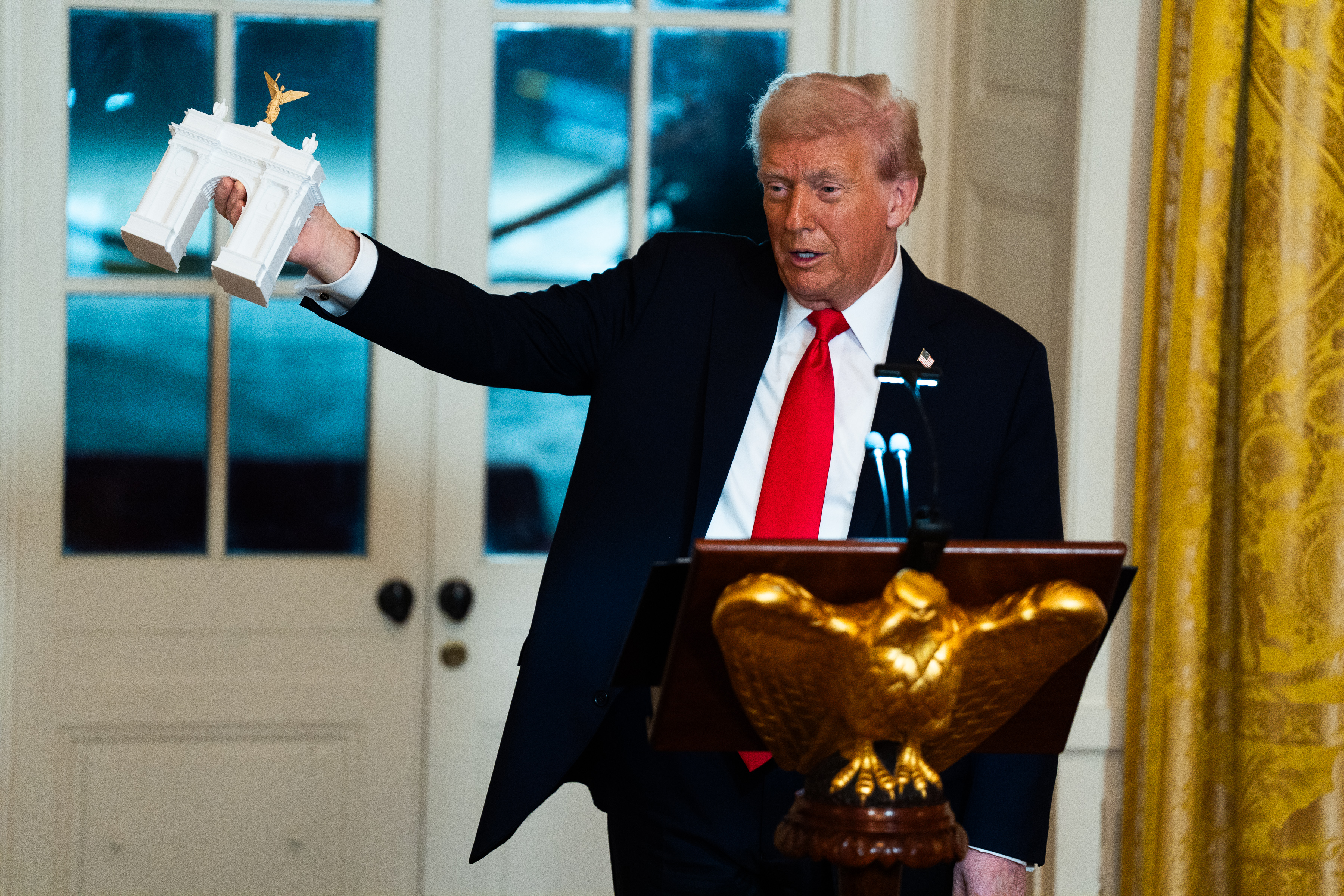
President Donald Trump’s push to convert his planned triumphal arch near Arlington National Cemetery into a military complex has complicated a required federal review process and raised new legal and safety concerns.
Trump unveiled his new national security rationale Sunday in a post on Truth Social, saying that the 250-foot-tall arch project — which he has framed for nearly a year as a tourist attraction — will now house drones, snipers, and ammunition. The president said he was making the change at the request of the U.S. military.
Critics of the plan saw echoes of Trump’s shifting security case for the White House ballroom, which the administration has used to defend that project in court. But while presidents have historically had some leeway to revamp the White House grounds, the arch would stand on federal parkland more than a mile away, where Congress has set stricter rules for construction.
“There is nothing that authorizes or justifies a massive arch, even if Trump tries to disguise it as a military facility,” said Rep. Jared Huffman of California, the top Democrat on a House committee that oversees federal parkland. “This is cartoonishly illegal, but he’s obviously trying to find a way to do it anyway.”
Aviation experts warned Monday that using drones at the planned arch site — Memorial Circle, a roundabout near Reagan National Airport — could pose risks in the airport’s crowded airspace.
“Anything you add to the airspace complicates the airspace and increases the operational risk,” said Tom Lintner, a former safety official at the Federal Aviation Administration (FAA).
Other military and safety experts have questioned the implications of storing ammunition in the middle of a heavily used traffic circle and whether tourists could still enter the arch as previously planned.
Historic preservationists participating in a required federal review process said they could not move forward until the administration clarifies Trump’s plans for the arch. Administration officials last week had asked Washington’s and Virginia’s preservation offices to agree to a memorandum of agreement (MOA) by Monday as part of that process, and they invited other preservationists to participate.
“This MOA is DOA,” Charles Birnbaum of the Cultural Landscape Foundation wrote in an email to the administration on Monday. An official for Washington’s historic preservation office also wrote in an email that the office needed clarity on Trump’s post. Both emails were shared with the Washington Post.
Administration officials have declined to offer further details about Trump’s plans to convert the arch to a military complex. They have previously said that they will not begin construction on the arch until they have received “all necessary approvals.”
But Trump has pushed his deputies to expedite the arch and other construction projects, particularly in the wake of a Supreme Court ruling on Aug. 31 that let him continue building his ballroom, according to two people who spoke on the condition of anonymity to discuss private conversations. The ruling did not decide the merits of the case.
Spokespeople for the White House and Pentagon said on Monday that they had no additional information to provide beyond the president’s social media post. A defense official, speaking on the condition of anonymity because of the sensitivity of the issue, said it was not clear if U.S. Northern Command, which oversees domestic military operations, has been asked to develop any related plans.
Military officials with Joint Task Force-National Capital Region, which oversees military operations to protect D.C., did not respond to requests for comment on Monday. Spokespeople for the Interior Department and the National Park Service also did not respond to questions about the project. The Federal Aviation Administration referred questions to the White House.
Until Sunday, the Trump administration had largely portrayed the arch as a prominent tourist attraction. Architectural plans posted by the National Park Service last month include a “ticket booth,” a “family restroom,” and other features atypical of any active military complex.
Interior Secretary Doug Burgum mentioned that the arch would also offer a “military observation deck” in a social media post earlier this month.
The administration had already faced safety questions, in part because the 250-foot-tall structure would sit directly in National Airport flight paths. Aviation safety there has garnered significant attention since a 2025 collision between an Army helicopter and an American Airlines regional jet near the airport that killed 67 people.
On Friday, the FAA said it had determined that the arch would not pose a hazard to aircraft, including at National Airport. That finding preceded Trump’s announcement about drones, whose type and frequency of use remain unclear.
In its final study on the arch, the FAA said the proposed structure should feature “a nonstandard eternal flame” to make it noticeable to pilots. It also said the arch should be continuously floodlighted by searchlight projectors around its base.
Jeff Guzzetti, a former FAA and National Transportation Safety Board accident investigator, said having drones in the flight path of National would worsen the airport’s congestion problem.
“Even not knowing how often these things are going to be used, it would certainly increase the risk of a collision with a commercial airliner,” Guzzetti said.
Michael McCormick, coordinator of the Air Traffic Management program at Embry-Riddle Aeronautical University, said he expected the FAA would need to conduct another study.
“Whatever the drones are, no matter what, the FAA would have to approve their flight because it’s civilian airspace,” McCormick said. “It cannot be a unilateral decision by the Pentagon.”
Philadelphia School District school bus drivers, cleaners, and building engineers have approved a new contract — and will get 9.5% raises over the three years of the deal.
Workers, who met to vote in person at Benjamin Franklin High on Friday, will also get $2,350 in bonuses.
Other details include a pay bump for maintenance mechanics performing asbestos work, more career-advancement opportunities, and protections against subcontracting.
32BJ SEIU District 1201 represents 2,000 employees who are among the lowest-paid in the district.The contract was approved Friday by a vote of 800-80.
Tim Finucan, 32BJ’s state director, called the contract “life-changing” for the union’s members.
“The wage increases, healthcare protections, and other gains recognize the essential contributions these workers make to our schools and communities,” Finucan said in a statementMonday. “We appreciate the district’s partnership in reaching an agreement that will help workers keep pace with rising costs, create opportunities for career growth, and attract and retain talented employees for years to come.”
Members’ current pay scale ranges from bus attendants, who are paid $30,762 annually under the existing contract, to building engineers, whose pay rate starts at $51,155 and tops out at $77,832. The union’s best-paid employees are building construction workers, whose salary maxes out at $77,832.
Tradespeople — bricklayers, HVAC mechanics, electrical mechanics, plumbers, and roofers — receive $62,899 at the top of the pay scale.
With the astronomical summer about to call it a season, the atmosphere is executing an equinoctial flip to mark the arrival of fall with impacts that could last several days.
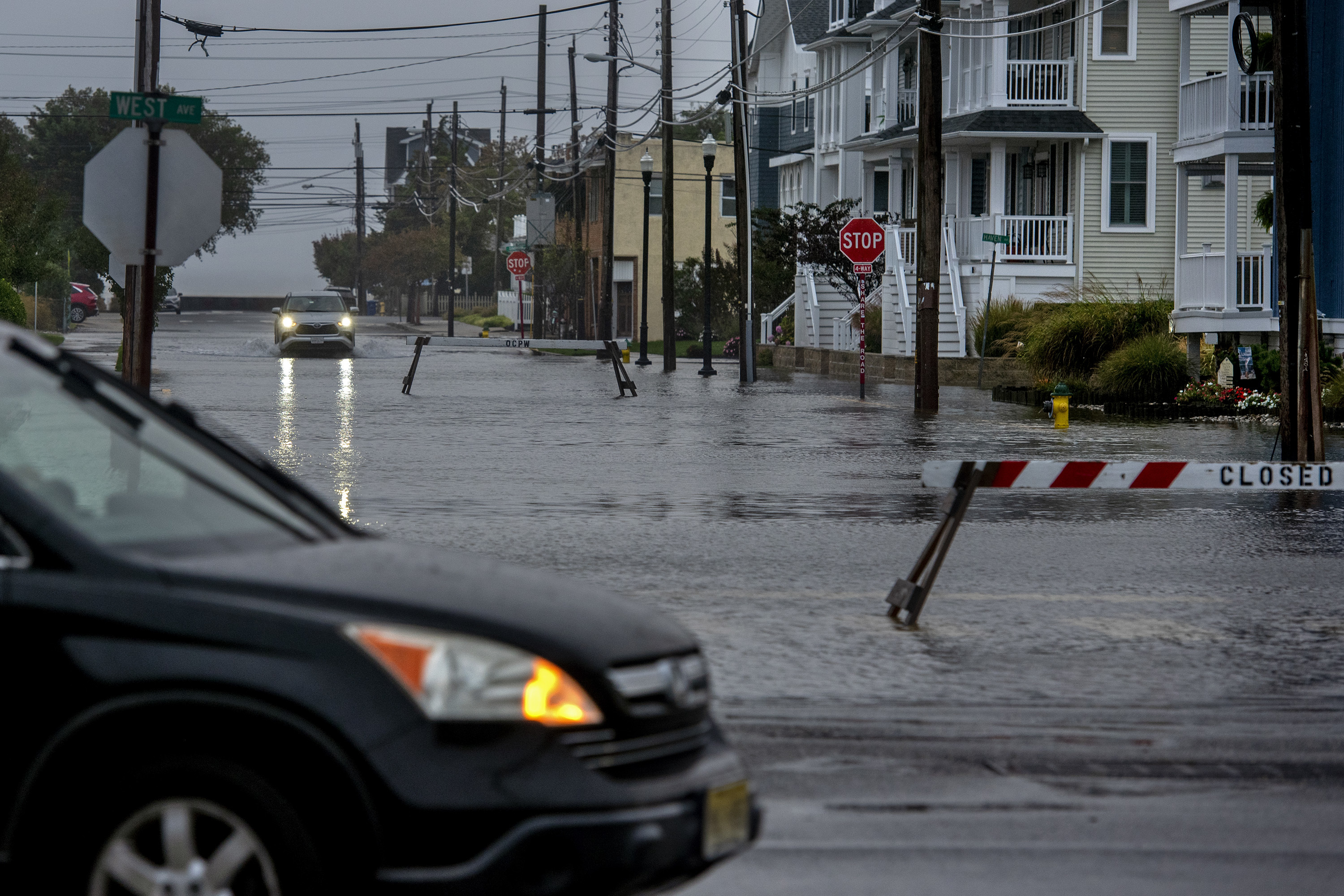
With an unusually early nor’easter due to form off the Atlantic coast this week, strong onshore winds in combination with the approaching full moon could result in coastal flooding and significant beach erosion at the Shore in what is likely to be the coolest week since early May.
The National Weather Service office in Mount Holly has issued a flood advisory for the Shore areas for minor flooding late Tuesday afternoon, and a watch for the potential of moderate flooding late Wednesday afternoon into the evening.
In addition, it said, “Moderate tidal flooding could continue through at least Friday evening’s high tide or perhaps longer.”
An advisory for minor flooding along the Delaware River in Philly likely will be added Wednesday into Thursday, said weather service meteorologist Eric Hoeflich.
Potent winds from the northeast could persist through the weekend from the Outer Banks of North Carolina to the Jersey Shore, said Brian Hurley, senior branch forecaster with the federal Weather Prediction Center, in College Park, Md.
When winds and rains may arrive in the Philly region
The nor’easter likely won’t develop until Wednesday, said Hurley, but rain and strong onshore winds aren’t going to wait for the party to start.
Showers are likely Tuesday throughout the region, with winds from the northeast gusting to 45 mph at the Shore, starting Tuesday and continuing into late Sunday night. They are likely to generate beach-eating storm waves. Inland, gusts in the range of 35 mph are forecast for the immediate Philly region, lasting about as long.
It should be dry in South Philly Tuesday night when the Phillies host the Milwaukee Brewers, but it literally will feel like October, with temperatures around 60 degrees at game time. Readings the rest of the week aren’t expected to get out of the 60s, several degrees below normal.
Rain is possible Friday, but how much falls later in the week and during the weekend will depend on how intense the coastal storm becomes and precisely how it tracks.
If you’ve lived around here for a while, that may sound familiar.
“It’s not different from what we talk about in the winter when we try to determine where the snow” is going to fall, said Dan Pydynowski, forecasting supervisor at AccuWeather Inc.
What is all but certain is that those beach-eroding and flood-inciting onshore winds are going to have staying power.
What’s going on up there?
An area of strong fair-weather high pressure, over heavier air, over southeastern Canada is forecast to hold its ground for the next several days. Said Pydynowski, this is “a very strong high for this time of year.”
As the storm intensifies to the south, it also will be stirring up onshore gusts across the region. Winds blow counterclockwise around storm centers, and areas to the northwest of the center experience northeast winds. That’s why they are called “nor’easters.”
Between the two systems, the region is in for a major wind-fest.
Regardless of whether the system becomes a significant rainmaker, said Hurley, “I think we’re going to have coastal flooding erosion issues from the Outer Banks all the way up through the Delmarva and the Jersey Shore for several days in a row.”
In addition to the winds, the areas along I-95 will experience so-called cold-air damming, the result of chilly northeast winds being dammed in by the Appalachian Mountains to the west.
“It’s a very weird time of year to get it,” Pydynowski said.
Philadelphia International Airport and Newark Liberty International Airport were still experiencing some delays and cancellations Tuesday after an air traffic control equipment issue had grounded all incoming flights the day prior.
As of Tuesday afternoon, there were 90 delays and 30 cancellations in place at Philadelphia’s airport, out of more than 700 scheduled flights, said PHL spokesperson Heather Redfern.
“We remind all passengers with plans to fly today to check with their airlines for the most up-to-date flight information,” Redfern said.
Newark airport has experienced 137 delays and 61 cancellations as of Tuesday afternoon, according to FlightAware data.
The Federal Aviation Administration ordered the ground stoppage Monday for all flights coming into Philadelphia after the region’s air traffic control center began experiencing issues with radio frequencies. The ground stop was lifted at about 5 p.m. Monday.
ANCHORAGE, Alaska — After a summer spent packing away sockeye salmon, Alaska’s heftiest brown bears are ready to throw their weight around.
Online voting began Tuesday for Fat Bear Week, the annual contest that pits the rotund residents of Katmai National Park and Preserve against each other for the title of most oversized ursine.
Last year’s winner, Chunk — known officially as Bear 32 — is hungry for a repeat. Chunk’s weight in 2025 was estimated at 1,200 pounds, which gave him a narrow victory. This year he’s back and facing corpulent competition like Gully — aka Bear 903 — the offspring of two-time champion Grazer.
The contest, which is in its 12th year, celebrates the resilience of the 2,200 brown bears that live in the preserve on the Alaska Peninsula, which extends from the state’s southwest corner toward the Aleutian Islands. The animals gorge on the abundant salmon that return to the Brooks River, sometimes chomping the fish in midair as they make their way upstream to spawn.
The event this year features 16 bears facing off in a single-elimination, bracket-style tournament. All voting is done online at www.fatbearweek.org, with the winner declared Sept. 29. The public can watch the bears on explore.org’s livestream cameras before deciding on their favorite.
“Fat bears are successful bears,” the nonprofit’s website says. They gorge on salmon starting in late June in order to accumulate fat reserves to prepare for winter hibernation, when they do not eat or drink and lose one-third of their body weight.
Adult male brown bears typically weigh 600 to 900 pounds (about 270 to 410 kilograms) in midsummer. By the time they are ready to hibernate after feasting on migrating and spawning salmon — each eats as many as 30 fish per day — large males can weigh well over 1,000 pounds (454 kilograms). Females are about one-third smaller.
Voters in the online contest can review before-and-after photos of the bears, lean at the start of summer and fattened at the end. The bears are not actually weighed — imagine that process — and some fans choose their favorite based on their looks or backstory.
To be featured in the contest, the bears must frequent the area around the river.
The live cameras at Brooks Falls captured the moments in 2024 when mother bear 128 Grazer ‘s cub slipped over the waterfall and floated into the fishing spot occupied by Chunk, who attacked and injured the cub. Grazer fought Chunk, but the cub ultimately died. After the dramatic fight, voting fans handed Grazer a victory over Chunk. Then Chunk returned in 2025 to take the title.
Fat Bear Week was started in 2014 as an interactive way to inform the public about brown bears, the coastal cousins of grizzlies.
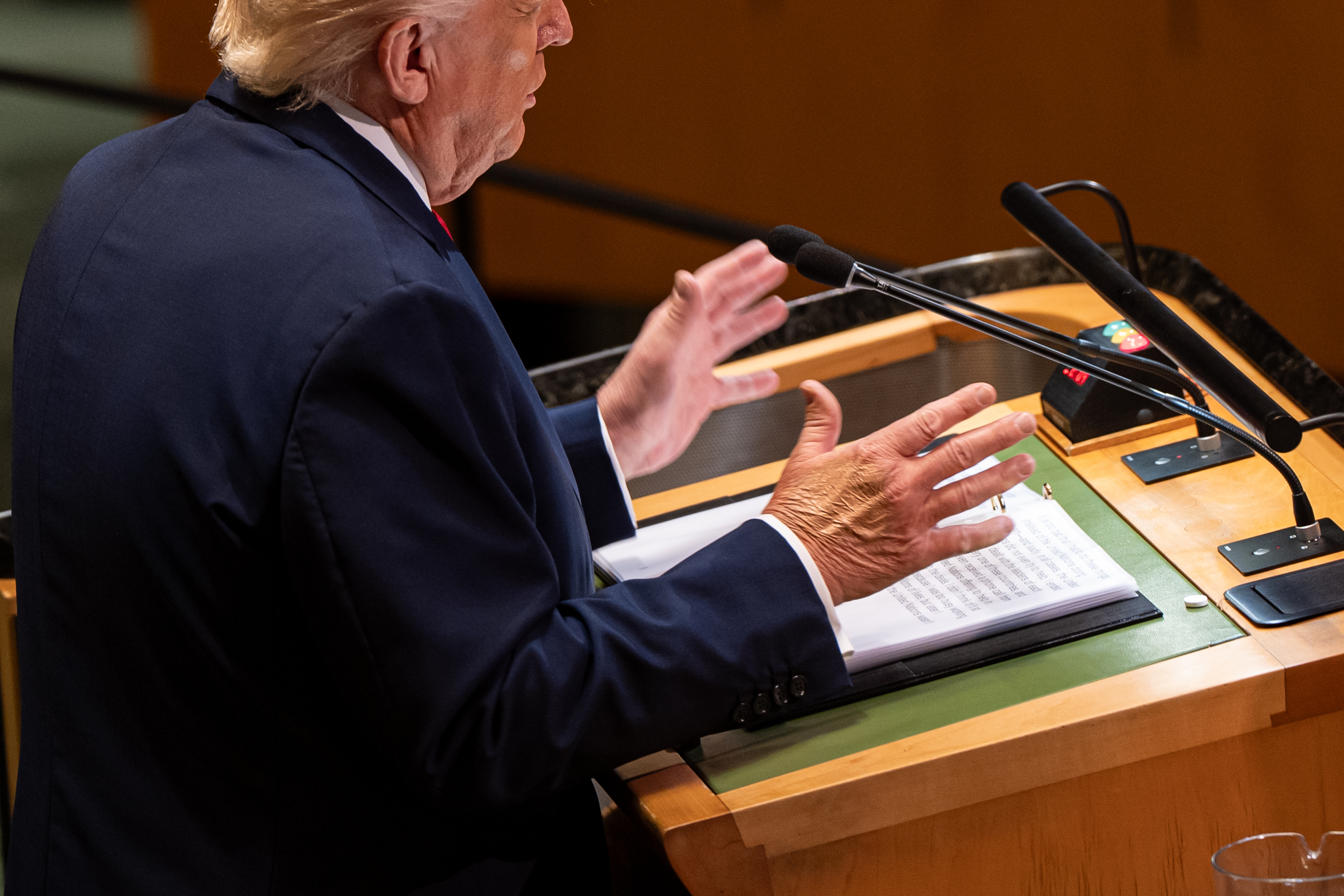
NEW YORK — President Donald Trump is set to address the U.N. General Assembly on Tuesday at a tumultuous moment for the world — and for his presidency.
The global economy has been shaken by his decision to launch a war against Iran. Anxiety about the social impact being wrought by artificial intelligence is surging. And questions linger about the future of the United Nations itself with Trump’s scaling back U.S. financial support for the United Nations.
He’s also set to meet with leaders and senior officials from Gulf Cooperation Council nations — Bahrain, Kuwait, Oman, Qatar, Saudi Arabia, and United Arab Emirates — to discuss the way ahead with the war in Iran and growing concern about recent Iran-backed rebel attacks on Saudi Arabia.
The visit to the U.N. comes when Trump’s foreign policy approach — particularly his decision to start a war with Iran — has become a drag on his fellow Republicans’ hopes of retaining control of both chambers of Congress during the coming midterm elections. Nevertheless, administration officials signaled Trump will make the case in his address that the world is better off for his leadership.
“We expect the president will highlight how he has and his administration have confronted complex problems head-on around the world,” Ambassador Mike Waltz, Trump’s chief envoy to the international body, told reporters.
Waltz also suggested that Trump might revisit some of his long-held criticism of the United Nations. The president has criticized the body as being ineffectual on issues of war and peace, has claimed the organization is perpetuating a “con job” by emphasizing the need to address global warming, and has asserted the U.N. has promoted the “invasion” of migrants into Europe.
He returns to the General Assembly nearing the seven-month mark of a new war against Iran that he insists is necessary to address a nuclear threat posed by Iran.
The war has grown more complicated even though strikes by the United States and Israel have killed much of Iran’s top leadership and destroyed its air force and navy, while a U.S. blockade of Iranian oil has left Tehran in economic shambles.
The passage of oil from other Gulf countries through the Strait of Hormuz has improved in recent weeks with the help of the U.S. Navy helping guide commercial vessels through the narrow waterway. Still, the flow of oil is significantly below pre-war levels. And Brent crude continues to hover around $100 per barrel, up from about the $70 range in the weeks before the start of the war.
But the energy market continues to be spooked. Saudi Arabia earlier this month shuttered a key pipeline that acted as a relief valve for oil blocked in the Gulf. The kingdom made the move after the pipeline came under attack by Iran-backed militants in Iraq.
At the same time, territorial grabs by the Yemen-based Houthi rebels, another Iranian-backed group, near the Bab al-Mandab Strait has now made it treacherous for oil carriers to use that Red Sea shipping lane.
Majed al-Ansari, chief spokesman for the Qatari Foreign Ministry, said Monday that Qatar and other mediators are trying to penetrate a “deep deficit of trust” between the U.S. and Iran and get the sides back to negotiations.
“What we’re trying to say is that, ‘Listen, this will end at the negotiating table,” said al-Ansari, speaking at the Concordia Annual Summit, a global affairs forum taking place during the U.N.’s high-level week. “Either we sign a deal now or sign a deal 10 months away. The only difference is the number of dead and destruction that we see.”
The administration will sign a Greenland deal
At last year’s General Assembly, Trump touted his record as a peacemaker and claimed that “everyone says that I should get the Nobel Peace Prize” for his administration’s efforts mediating several conflicts around the globe.
This year, his administration is set to sign an agreement on the sidelines of the General Assembly with Danish and Greenlandic leaders that aims to set the pathway for the expansion of the U.S. military’s footprint on Greenland.
The deal, announced last week, came together after Trump repeatedly threatened to “take over” Greenland, a territory of NATO-ally Denmark, by military force if necessary.
Under the deal, Greenland remains Denmark’s territory. “I’m looking forward to the meeting tomorrow. I think we have reached a good agreement,” Prime Minister Mette Frederiksen told Danish broadcaster TV2 Denmark.
Trump’s frustration with Russia-Ukraine war mounts
The president has routinely expressed frustration about the conflict. He hasn’t obscured that his patience is being tested by Ukraine’s targeting of Russia’s diesel refineries — an issue that’s added to oil markets’ volatility — and Russia’s targeting of Ukraine’s energy grid.
Trump last week asserted that he got the two sides to agree to not target each other’s energy infrastructure. Ukrainian President Volodymyr Zelenskyy said he was willing to go along with Trump’s plan if Russia abided by it. Russia said it could only go along with Trump’s energy truce proposal if Western energy sanctions on Moscow were lifted first.
The two sides have continued carrying out strikes on refineries and other energy infrastructure. Trump on Monday, before departing for New York, expressed his frustration with targeting of energy infrastructure.
“Russia has unfortunately lost control of its Diesel Oil Industry due to its War with Ukraine,” Trump posted on social media. He added, “This ridiculous and never ending War with Ukraine must be ended.”
Trump to hold critical talks with UK, Japan and Venezuela leaders
The president is set to hold his first face-to-face meeting with Burnham, the center-left Labour Party leader who became prime minister in July.
With elevated oil prices dragging the British economy, he may also be eager to discuss ways to fully reopen the Strait of Hormuz. He announced on Monday that he would send a Royal Air Force plane to the Mideast to help Saudi Arabia repel attacks from Houthi rebels. The plane will refuel Saudi planes during defensive missions.
Trump’s meeting with Japan’s Takaichi comes as he prepares to welcome Chinese President Xi Jinping later this week to Washington for a state visit.
The historically complicated Japan-China relationship became even more fraught after Takaichi said last year that Japan’s military could intervene if China were to take action against Taiwan, a semi-autonomous island democracy that Beijing considers its own territory. The tensions have spilled over into the China-Japan economic relationship.
Trump’s engagement with Rodriguez, Venezuela’s interim president, will be the first meeting between the two leaders since Trump in January ordered a U.S. military operation to capture then-President Nicolás Maduro and swept him off to New York City to face federal narco-terrorism and drug trafficking charges. Maduro’s lawyers have objected to the U.S. military action that snatched him from power.