Category: News

  • A Philadelphia teacher pretended to be Black and Palestinian, ‘a betrayal’ of the activists she supported

    A Philadelphia teacher pretended to be Black and Palestinian, ‘a betrayal’ of the activists she supported

    A Philadelphia teacher is being called the “Palestinian Rachel Dolezal” after being caught lying about her background — a deception that has stirred strong emotions in education and racial justice organizing circles.

    Hannah Gann, a veteran Philadelphia School District educator, has claimed at times to be Palestinian and Black, and was so outspoken a mobile billboard once parked outside her school calling her “Philadelphia’s Leading Antisemite.”

    But Gann, it turns out, is white and Jewish, and lied about her identity for years.

    “Members met with Hannah and questioned her about her background on Thursday and after an hour of discussion, Hannah finally admitted she lied,” the Racial Justice Organizing Committee and Philly Educators for Palestine said in a statement. Gann had been a visible member of both groups. “We asked her to publicly acknowledge that she is a white woman of Jewish heritage and an Israeli settler family.”

    The groups are “stunned, saddened and angered by this betrayal,” their statement said. They said they have permanently cut ties with Gann.

    Gann, in an Instagram post, admitted the yearslong fabrication. She said she was “a white woman of significant privilege and wealth.”

    “I hid the truth or outright lied about my background to everyone in my life,” Gann said in a video post. “There is not a single person on this planet, no friend, no fellow organizer, no one in my family, no professional connection, no secret op or handler who knew what I was doing. I hid my family’s background from everyone in Philly and also hid from the people in my own family what I was doing.”

    Gann said she “allowed half-truths and obfuscations to grow into outright lies,” but that she “genuinely wanted to commit to the work I was doing in spite of those lies.”

    Gaining the trust of youth and activists

    Gann, who teaches at the Workshop School, a project-based Philadelphia School District high school, was front and center in education activism work after the Oct. 7 Hamas-led attacks on Israel.

    In 2024, for instance, Gann participated in a West Philadelphia “teach-in” on “scholasticide” — the destruction of educational infrastructure — in Gaza. Her biography for that event identified her as a Palestinian American.

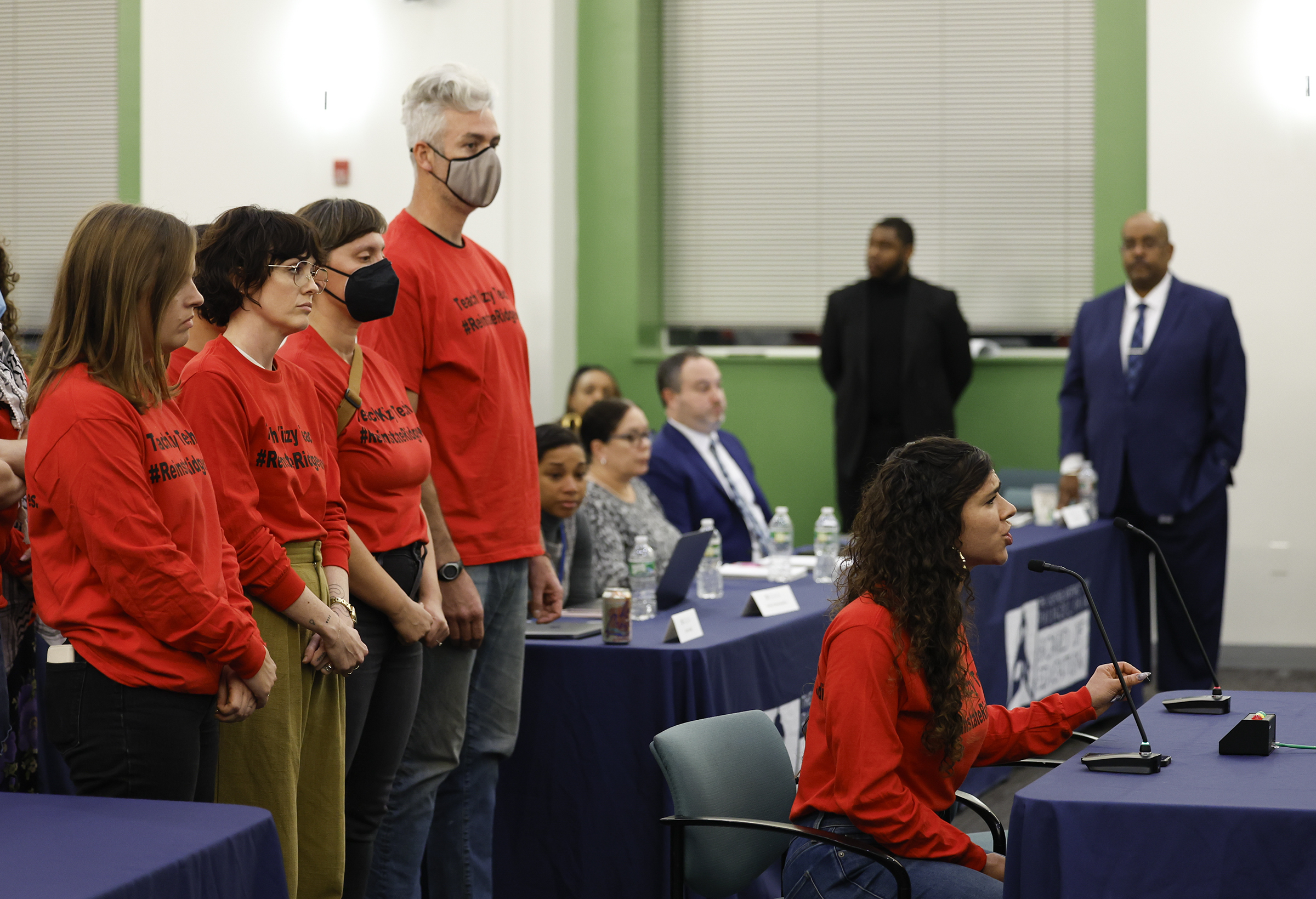
    And Gann was a leading voice in defending Keziah Ridgeway, a fellow Philadelphia teacher who was disciplined by the district over her private, pro-Palestinian social media posts. (Ridgeway has since sued the district, alleging anti-Islamic bias.)

    According to a document compiled by the Philly Palestine Coalition and obtained by The Inquirer, Gann has made frequent references to Palestinian family, including a Palestinian-born grandfather whom the PPC found was actually born in Baltimore, citing historical draft records and her great-grandfather’s U.S. naturalization papers. Her family abroad live in Israel, according to the group’s extensive, footnoted research.

    Gann told people she was low on money because she was sending cash to family in Palestine, according to the PPC document. Some people sent her money as a result. A University of Pennsylvania classmate of Gann’s said she was known in college “as a self-proclaimed white Jewish woman with family in the occupied West Bank. I watched her sudden transformation after she returned to Philly from the Peace Corps [in Rwanda]. She was clearly making herself look darker using makeup and fake tan, and speaking using [African American Vernacular English.]”

    The PPC research document noted that Gann “is a teacher of predominately Black youth. She has gained the trust of young people on the basis of a sense of shared oppression. She has served as a mentor to at least one young white person who was manipulated by Hannah on the basis of a fake identity. Her access to vulnerable young people, especially Black youth, is deeply concerning, given her pattern of lying and manipulation.”

    Monique Braxton, a district spokesperson, said the school district was “aware of social media posts concerning a district employee and her involvement with an outside advocacy organization. These posts reference the employee’s involvement in an external group.”

    The district is making support available to any affected Workshop School staff and students, Braxton said. As for possible consequences for Gann, Braxton said she could not comment on personnel matters.

    Gann’s “deception has compromised the safety and security of our movement, with disproportionate harm caused to Palestinians involved in this coalition. This pattern of deceit has rattled many organizers across PPC and allied groups, especially Palestinians, fellow teachers, and individuals who have been engaging with her closely under false pretenses.”

    ‘Aggravating, infuriating, and enraging’

    Sharif El-Mekki, a prominent Philadelphia educator and founder of the Center for Black Educator Development, said a person doesn’t have to be Black or Palestinian to support those groups.

    “But honesty is the price of entry,” El-Mekki said in a social media post. Gann’s lies are “aggravating, infuriating, and enraging,” El-Mekki said, in part because “she gets to apologize after being exposed and, eventually, return to the privilege she had all along. Actual Palestinians, Muslims, Arabs, Black people, and African people do not get to put down their identities when the consequences arrive. They cannot opt out of the suspicion, surveillance, hostility, or professional consequences attached to who they really are.”

    Gann’s misrepresentations will have real consequences for Black and Palestinian people, El-Mekki said — they’re likely to face more scrutiny because of her lies.

    “They will be asked to prove themselves again,” El-Mekki said. “Their grief will be questioned. Their politics will be treated as suspect. Their criticism of the Israeli government may be distorted into antisemitism. Their opportunities may be threatened because someone else chose to use their identities as a costume.”

    Gann acknowledged these realities in her video message.

    “The fact that I lied about who I was does not mean anyone else who speaks up for Palestine is lying and does not erase the urgency of listening to voices on the ground … This also extends to the genocide and humanitarian crisis in Sudan that far too many are ignoring, the genocide in Congo, the mortally urgent need to address ICE and police brutality here as well as the prison industrial complex, imminent Philly school closings, and more. It probably has little value to hear me say this, but please do not disengage from any of these vitally urgent causes or others you care about based off my dishonesty.”

    Local social media has been abuzz about Gann’s deception.

    “Is this the first Palestinian Rachel Dolezal?” a poster asked on Reddit, invoking the name of a white former NAACP president who lied about being Black.

    “I first and foremost express deep empathy for the Palestinian people and this violation of security and trust,” one observer said on Instagram. “I reject this level of wretched disrespect and trivialization.”


  • Vineland AI data center hit with a $1 million fine

    Vineland AI data center hit with a $1 million fine

    New Jersey has fined the developers of a data center in Vineland more than $1 million for violating clean-air laws.

    State officials say DataOne, a French company that is building the Cumberland County facility, installed and operated 62 large natural-gas power generators without the required DEP permits.

    “This enforcement action — by far the largest ever taken against a data center in New Jersey and possibly one of the largest such actions in the nation — sends a clear message that these facilities will not be constructed or operated with impunity in this state,” New Jersey DEP Commissioner Ed Potosnak said in a statement.

    During a site inspection July 29, state DEP officials saw the generators, which had not been there during a December visit, according to the enforcement document. Operating such machines — which emit carbon dioxide, nitrogen oxides, carbon monoxide, and other pollutants — without the required permits violates the New Jersey Air Pollution Control Act.

    The state’s announcement comes weeks after an investigation by Floodlight and the Guardian, in which the news outlets used thermal drone footage to show the Vineland data center was operating at least 45 of its generators without permits.

    DataOne spokesperson Naomi Race said company executives “disagree with the temporary generator determination” but will apply for the needed permits. Race did not respond when asked whether the company planned to pay the fine.

    DataOne may request a hearing on the matter within 20 calendar days, according to the state’s enforcement document.

    The Vineland data center is shown during an earlier stage of construction. It sits on a former industrial park.Courtesy of DataOne

    As for the facility’s permanent power source, the company is “transitioning to low-emission, quiet fuel cells,” for which they “have the necessary approvals in place,” according to Race. Fuel cells generate energy through an electrochemical reaction rather than combustion, pistons, or rotating machinery.

    The 2.4 million-square-foot complex is set to be South Jersey’s first hyperscale AI data center. While DataOne is the owner, operator, and builder, the Amsterdam-based Nebius Group will operate the center’s internal equipment, which will fuel Microsoft’s AI tools.

    Data centers handle the cloud-storage and computing needs of the companies behind increasingly sophisticated AI tools.

    The Vineland facility is on South Lincoln Avenue, off State Route 55, on the site of a former industrial park. The property was sold to DataOne in a private transaction, the details of which Charles-Antoine Beyney, DataOne’s founder and chief executive officer, previously declined to disclose.

    He also has not disclosed a price, saying only that the project would be privately funded. Beyney said he turned down a nearly $6.2 million loan from the city due to community pushback.

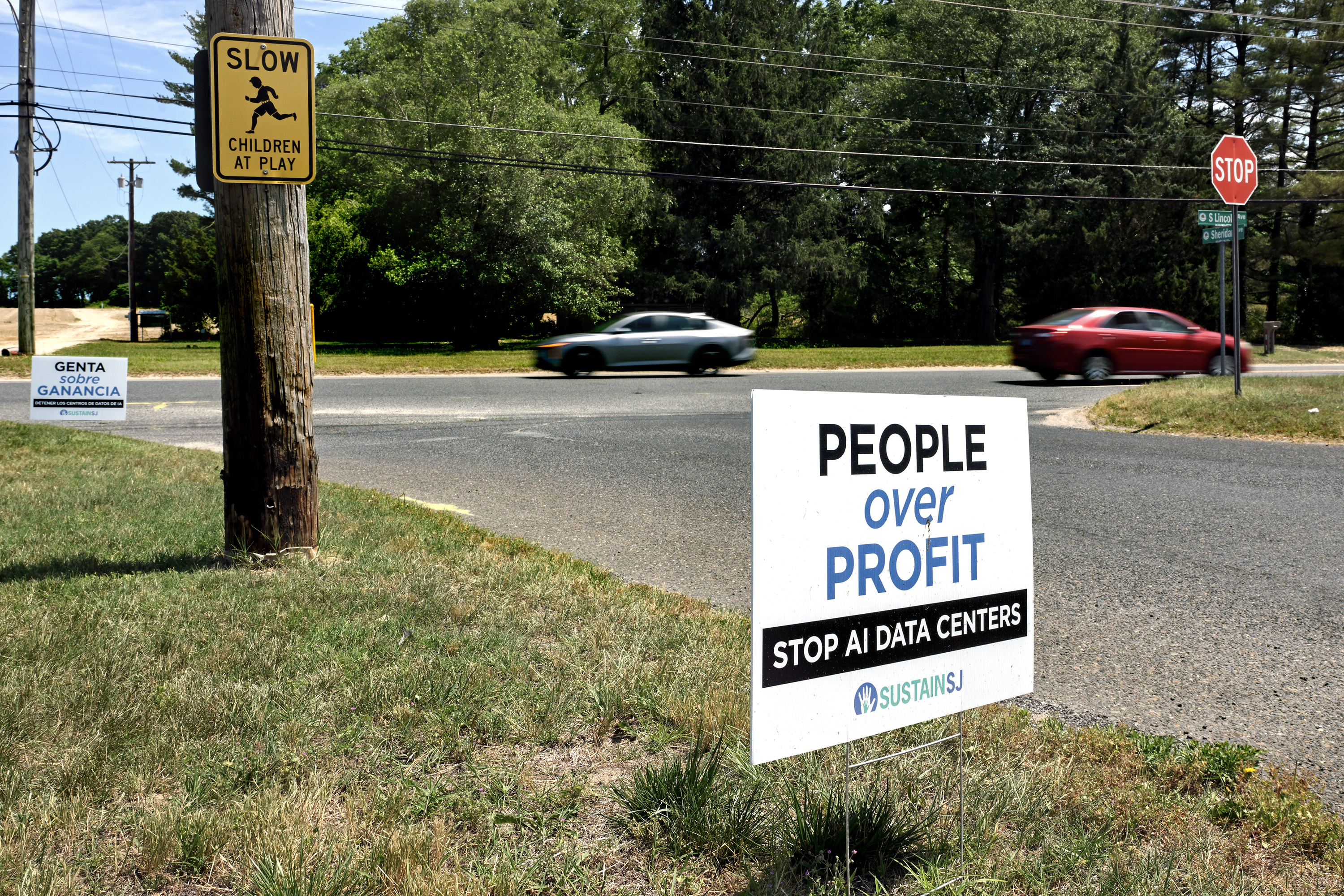
    Some Vineland residents have voiced concerns about the environmental, financial, and quality-of-life impacts of having a data center in their neighborhood. Opponents also took issue with the fact that DataOne did not seek their input until the facility was already under construction.

    Some Vineland residents have put up signs like this one opposing the AI data center under construction nearby. Tom Gralish / Staff Photographer

    At a contentious town hall in January, Beyney tried to assuage these concerns, telling residents they had nothing to worry about because his center would use “breakthrough” technology.

    “Most of the data centers that are being built today suck, big time,” Beyney said at the meeting. “No freaking way am I am going to do what the entire industry is doing … just killing our communities and killing our lungs to make money.”

    The Vineland facility has been under construction for more than a year. In January, DataOne executives said they expected the project to be complete by November.

    Amid the global boom in data center demand, several hyperscale facilities have been proposed in the Philadelphia region, from King of Prussia to Limerick. But few have been approved and begun construction.

    The Vineland site is one of them. Once fully operational, it could be the region’s first hyperscale AI data center.

    The only other local facility nearing completion is Amazon’s 2 million-square-foot data center campus in Falls Township, Bucks County. As of last month, Amazon was awaiting a decision from the Pennsylvania DEP on permit applications for hundreds of proposed backup natural gas generators.

    Pennsylvania Gov. Josh Shapiro shifted his stance on data centers last month and instituted new restrictions, which included the removal of Amazon from the state’s fast-track permitting process.

    Shapiro joined New Jersey Gov. Mikie Sherrill, who in May unveiled a four-prong plan to “hold data centers accountable.” She also has signed legislation requiring data centers to provide their own clean energy and report their energy and water use to the state twice a year.

    Neither governor has issued a statewide moratorium, a move for which some data-center opponents are advocating.

    In recent weeks, the debate over AI has reached a fever pitch, with executives at some of the country’s largest AI companies urging a slowdown amid fears that the technology may eventually destroy humanity.

  • Trump praises new British PM Andy Burnham but slams UK deal on Indian Ocean islands

    Trump praises new British PM Andy Burnham but slams UK deal on Indian Ocean islands

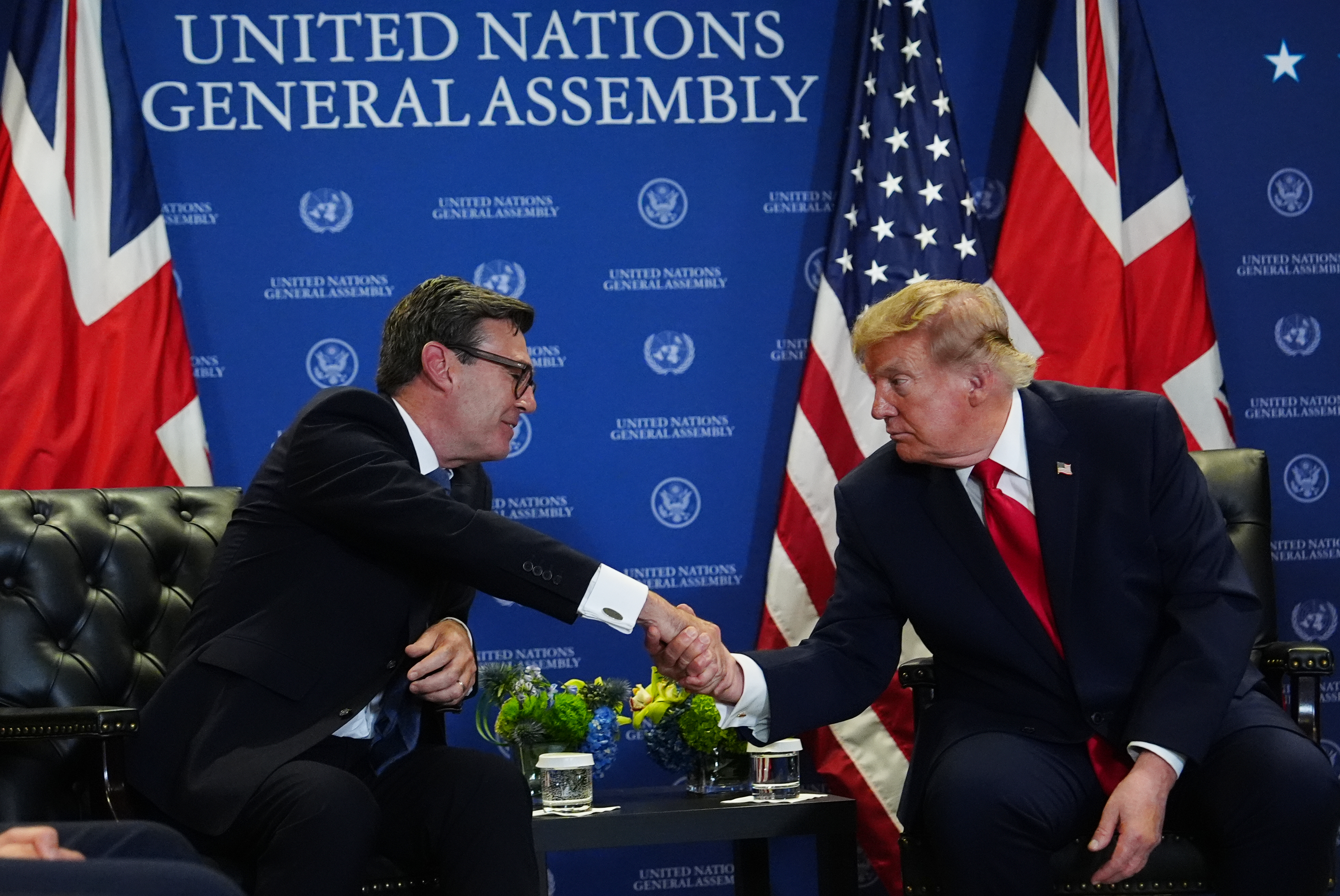
    UNITED NATIONS — Freshly in office, Prime Minister Andy Burnham got off to a strong start with U.S. President Donald Trump at their first meeting on Tuesday, with the president brushing aside differences over the Middle East and calling the British leader “a natural business person.”

    The two men met for more than the scheduled 30 minutes on the sidelines of the U.N. General Assembly, which Burnham was due to address later in the day.

    It was a baptism of fire for the neophyte leader, who has gone from mayor of the northwest England city of Manchester to leader of a G7 country in a matter of weeks.

    But despite U.K. nerves about how it would go, as they sat in front of U.K. and U.S. flags, Trump declared that trans-Atlantic relations were “more up than they were with your last prime minister.”

    “Based on our relationship with the prime minister, Andy, I think we’re doing very well,” he said.

    U.K. officials know that the president can be fickle. Trump initially warmed to Burnham’s predecessor, Keir Starmer, before falling out over the U.K.’s unwillingness to join the U.S.-Israeli war on Iran. But there was relief that Burnham emerged largely unscathed from his first meeting with a president who once dismissed him as “the mayor of a town.”

    “We don’t hold it against you,” Burnham said.

    Burnham nodded at U.S.-U.K. differences, noting that Trump had been “good enough to listen to us” on issues including trade and the Falkland Islands. Trump has recently mused about the future of the British-controlled South Atlantic archipelago, which is also claimed by Argentina, which calls it the Malvinas. The two nations fought a brief 1982 war over the islands.

    But on one potential flashpoint, the U.K.’s decision to ban trade with Israeli settlements in the West Bank, Trump professed ignorance.

    Chagos Islands remain a point of contention

    Trump’s harshest words were reserved for Britain’s plan to hand sovereignty of the Chagos Islands in the Indian Ocean to Mauritius. The U.K. says the deal will preserve the future of a strategic U.S. military base on one of the islands, Diego Garcia. But ratification of an agreement stalled after the Trump administration withdrew its support. U.K. officials acknowledge the deal is now in limbo.

    Trump called it “a terrible deal” over a “very important piece of real estate, militarily and strategically.”

    “I think the prime minister is going to be looking at it,” he said.

    Before the meeting, Burnham said he would raise with Trump ways to end the on-off war between the U.S. and Iran, which has choked off oil tankers moving through the Strait of Hormuz and sent global fuel prices soaring. Houthi attacks on Saudi energy infrastructure are making the problem worse while rendering Burnham’s pledge to ease cost of living pressure for British voters even harder.

    As he flew to New York for the annual gathering of world leaders, Burnham announced he had authorized limited military support for Saudi Arabia to repel attacks from Iran-backed Houthi rebels in Yemen. A Royal Air Force plane will refuel Saudi jets engaged in “defensive” action to shoot down Houthi missiles, he said.

    Burnham also said he would urge Trump to step up U.S. support for Ukraine by providing air-defense missiles to Ukraine ahead of another winter of Russian attacks.

    Burnham to focus on AI in his U.N. speech

    In his speech later Tuesday, Burnham was set to try to send a message that Britain can play a key role in solving the world’s biggest challenges, from conflict in the Middle East to the dizzying evolution of artificial intelligence. And he will attempt to turn the page on a decade of Brexit-driven discord with the U.K.’s European neighbors.

    Burnham said he would focus on artificial intelligence, arguing it’s possible to be “clear-eyed” about both the benefits and risks of the technology. He will argue the U.K. is well placed to be an “honest broker” in seeking global agreement to guide its development, because London has good relations with both the U.S. and Europe and “a strong dialogue” with China.

    In another potential point of tension with Trump, Burnham called for a global alliance to guide the development of AI.

    Burnham told a meeting of business leaders on the sidelines of the UN General Assembly that he wants to see “a single set of global principles and standards” that can unlock AI’s potential while mitigating its risks.

    Trump told the U.N. on Tuesday that the U.S “totally rejects any attempt to construct a globalist scheme” to regulate AI.

  • Ro Khanna is the left’s busiest midterm surrogate. Can he raise his own profile, too?

    Ro Khanna is the left’s busiest midterm surrogate. Can he raise his own profile, too?

    Rep. Ro Khanna of California leaned forward in a patterned armchair as a rooster crowed outside, listening as a group of farmers in rural Sharpsville, Pa., told him that Democrats came across as inauthentic and insincere.

    “Don’t promise the farm and not come up with it,” said Joe McCann, who grows hay and raises pigs. “And don’t lie to people. I can take anything, but if someone’s standing there physically lying to me and blowing smoke up my butt, that’s not going to cut it.”

    Khanna agreed, fretting that his party had for too long “looked down” on blue-collar voters. Then he quipped: “How do you think I’m doing? Lying?” McCann, 78, said he didn’t think so.

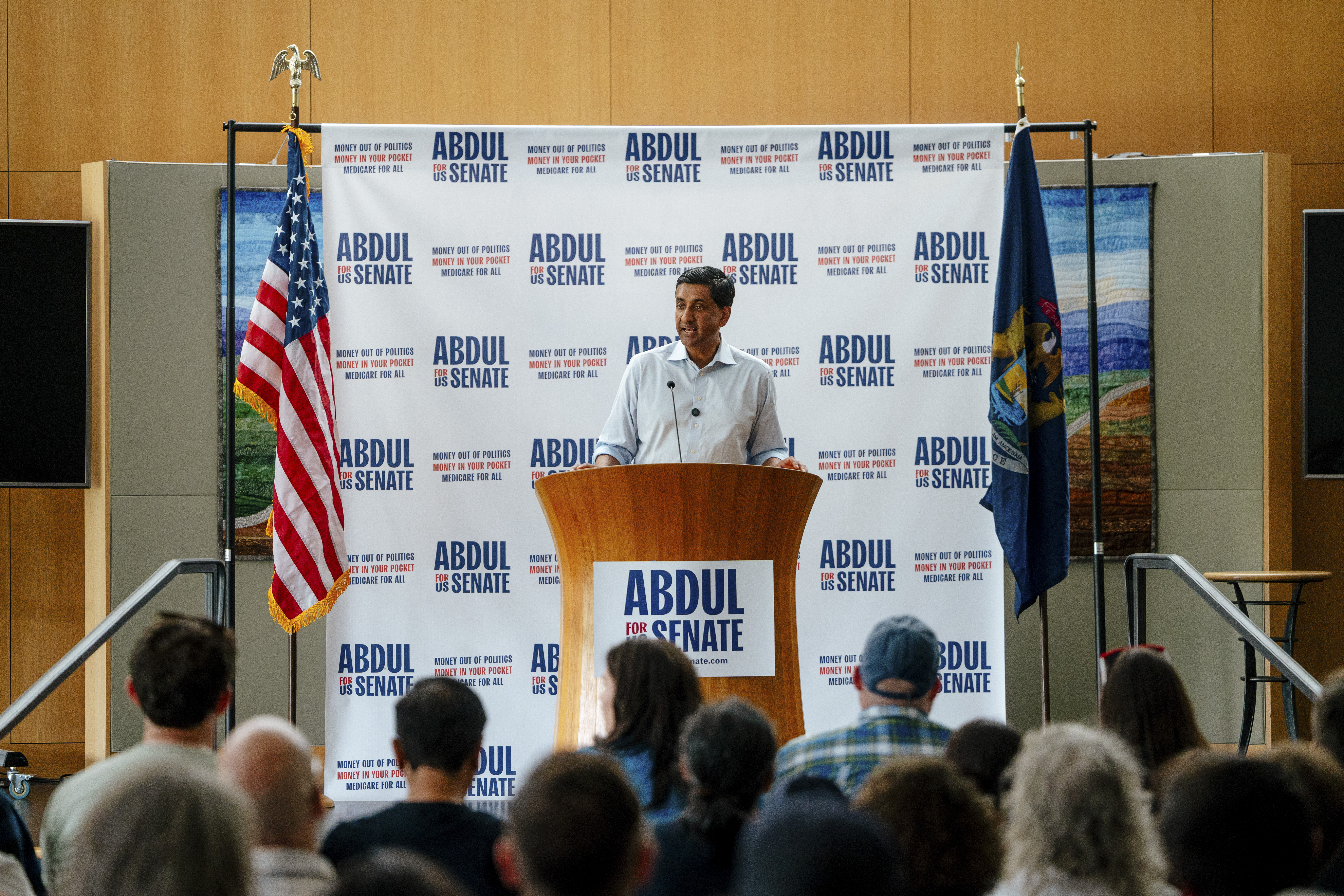
    Khanna (D., Calif.) has emerged as one of the most prolific surrogates of the 2026 cycle. He has endorsed more than 70 candidates for seats in the House, Senate, and state legislatures, positioning himself on the front lines of a burgeoning progressive movement as discontent with the status quo has propelled a series of left-wing candidates to primary victories.

    But there was another reason for his vigorous political itinerary this campaign season: a possible presidential run in 2028. He wants to see the left’s power grow within the Democratic Party. He wants its policy prescriptions, such as universal healthcare and taxing the rich, to shape the conversation about who the party’s nominee for president should be.

    And he knows that none of that is likely to happen if the left bombs in November.

    A little 2026, and a little 2028

    Despite their major wins in primaries this season, progressives’ ability to sway the general electorate in competitive races remains untested. A new poll released by the New York Times and Siena University on Sept. 15 found that a slight majority of voters disliked socialism.

    In Khanna’s view, the only way the movement can change that perception is if it figures out how to talk to the working class.

    Khanna, born outside Philadelphia to immigrants from India, has been preparing for his political future out in the open. In the past two months, he has taken many of the steps of an early presidential candidate.

    He held a town hall with Latino voters in Nevada. He told the Democratic National Committee in a searing speech that the party needed to turn its back on corporate interests and military aid to Israel. He also ventured abroad, leading a congressional trip to the Vatican to discuss safeguards against artificial intelligence with Pope Leo XIV and visiting the West Bank, where he was detained by armed Israeli settlers.

    Icons of the progressive movement, such as Sen. Bernie Sanders of Vermont and Rep. Alexandria Ocasio-Cortez of New York, have been choosier with their high-profile endorsements this year. Khanna is lesser known, and has work to do to change that. The eagerness can occasionally backfire; he has expressed regret for his endorsement of Graham Platner, the Maine Democrat who withdrew his Senate bid in July after a woman accused him of rape.

    “He’s hustling,” said Bill Hyers, a progressive strategist who worked with two House candidates — Kat Abughazaleh in Illinois and Chris Rabb in Pennsylvania — whom Khanna endorsed in primaries this spring. Rabb won. Abughazaleh lost.

    Added Hyers: “He’s just been out there really working hard and he’s the only person on the left I have seen where there’s no doubt he’s running.”

    Over five days in Pennsylvania in July, Khanna, who grew up outside Philadelphia in suburban Bucks County, rallied for two House candidates whose primary victories in May stood out as early triumphs for the progressive movement. Their very different districts illustrated both the advantages and challenges facing the progressive left this fall.

    In Philadelphia, Khanna talked about liberal priorities like “Medicare for All” with Rabb, a democratic socialist who is virtually assured of victory in November in his deep-blue district. In a battleground district in Allentown, Khanna discussed tariffs and job losses with union factory workers to help the candidacy of Bob Brooks, a firefighter and labor leader who faces a more difficult path to victory in November against Rep. Ryan Mackenzie, a Republican.

    On behalf of both candidates, Khanna offered a similar pitch: The wealth and technological innovation of his high-income Silicon Valley district should be shared more widely. His agenda of “new economic patriotism,” he said, would spread technology jobs among Midwestern states and redistribute profits through a wealth tax.

    “If we just are running on centrist mush that is put out by ChatGPT, bland and inoffensive, we’re not going to win,” Khanna told a reporter in the SUV he was riding in for the Pennsylvania swing. “It has to be a transformative vision.”

    Khanna was generally well-received by an electorate in Pennsylvania that has soured on Republicans and seems increasingly willing to give Democrats another chance. But he also encountered the enduring skepticism of voters who see their leaders as having failed them.

    “He comes across very progressive with his plans, but I don’t know that he’ll be able to carry them through,” said McCann, after Khanna’s conversation in Sharpsville. “This area that I live in right now is a depressed area — and anybody that gives anybody around here a vision of hope is the person they’re leaning toward. They just have that vision of hope that this might happen, and it never does.”

    In an interview, Khanna said he planned to decide about 2028 between Thanksgiving and Christmas, after talking to his family and determining how viable he could be in battleground states.

    His trip across Pennsylvania was intended in part to assess that. A progressive contender for president, Khanna said, would have to “do well in the Black South” and “do well in states like Pennsylvania.”

    He said he was also forging bonds in southern states, including in South Carolina, where his partnership with Rep. Jim Clyburn and his daughter Jennifer Clyburn connects students at historically Black colleges and universities with scholarships from tech companies.

    Khanna has recruited alumni of both progressive and establishment campaigns. He is being advised by Ron Klain, the chief of staff to former President Joe Biden, and has enlisted longtime advisers to Sanders such as Julian Mulvey and Jeff Weaver, according to a person familiar with the partnerships who requested anonymity to describe internal staffing issues.

    The road ahead, plus AOC

    A dismal progressive showing in November could instantly set back Khanna’s fortunes. So could something else: Ocasio-Cortez. If Ocasio-Cortez, the breakout star of the left, runs for president, she would appeal to the same liberal constituency as Khanna but with an enormous head start in popularity.

    Khanna called Ocasio-Cortez an “extraordinary talent,” and dismissed the idea that she is a rival.

    “I have a tremendous amount of respect and admiration for her,” he said, adding, “I have genuinely never discussed what she wants to do in the future.”

    Khanna said he talked with Ocasio-Cortez occasionally in the halls of the Capitol. He communicates more frequently with Sanders, speaking with him on the phone about AI and answering the senator’s queries about the chances of California voters passing a tax on billionaires this fall.

    Khanna readily acknowledged that he lacked the political “star power” of his left-wing compatriots. “I’m not delusional,” he said.

    His speeches are also a little heavy on policy and light on the kind of soaring rhetoric that voters often look for in a president.

    That was the case in Pennsylvania, but he also tested catchphrases such as “economic patriotism,” and retail politicking seemed to come easily enough for him. One particular line, when he argued that President Donald Trump had not followed through on a simple promise — to replenish sand that had washed away along Lake Erie — got a good response from voters.

    “I’ve seen a lot of clips of him online — I thought he was much more charismatic in person,” said Gideon Tsoutsouris, a college student in Pittsburgh.

    Khanna portrayed his low profile as an asset, noting that other successful candidates — including former Presidents Jimmy Carter and Bill Clinton — began their bids as long shots. It’s an advantage, he said, “to go meet people and interact without the entourage.”

    Khanna, a multimillionaire, likewise dismissed potential criticism of his wealth, which largely stems from his wife’s father, the founder of an automotive company.

    “I tell people my own story of growing up middle-class in Bucks County, taking out loans for law school in my 20s, having forbearance and massive credit card debt,” Khanna said. “I think people will see that I had a middle-class life and even economic challenges.”

    Hyers, the progressive strategist, said Khanna would likely face criticism for his long-standing relationships with the tech industry.

    “The perception in a lot of the circles that I run in is, ‘How much money has he taken from the bad guys?’” Hyers said. (Khanna has since broken ties with many wealthy tech executives and called for taxing them more heavily.)

    When Khanna’s tour rolled into Pittsburgh, he hopped around town, chatting wi,th union leaders who are faculty members at a local university, nurses fighting for a labor contract and a group of college students.

    Before addressing the students, he spoke with two groups protesting his visit on nearby street corners: the pro-Israel Beacon Coalition and the pro-business Americans for Prosperity, a creation of the conservative Koch family. One of the AFP protesters urged him to reject socialism.

    The moment illustrated another challenge that Khanna would face in a presidential primary. He may be too progressive for moderates, and not progressive enough for some on the fractious left.

    “I don’t believe the government should take over the means of production,” Khanna told the protesters. But, he added, many young people were turning to socialism “because they can’t afford rent, they don’t have a good job. They lost the American dream.”

    This article originally appeared in the New York Times.

  • Netanyahu, before U.N. appearance, targets Mamdani in video

    Netanyahu, before U.N. appearance, targets Mamdani in video

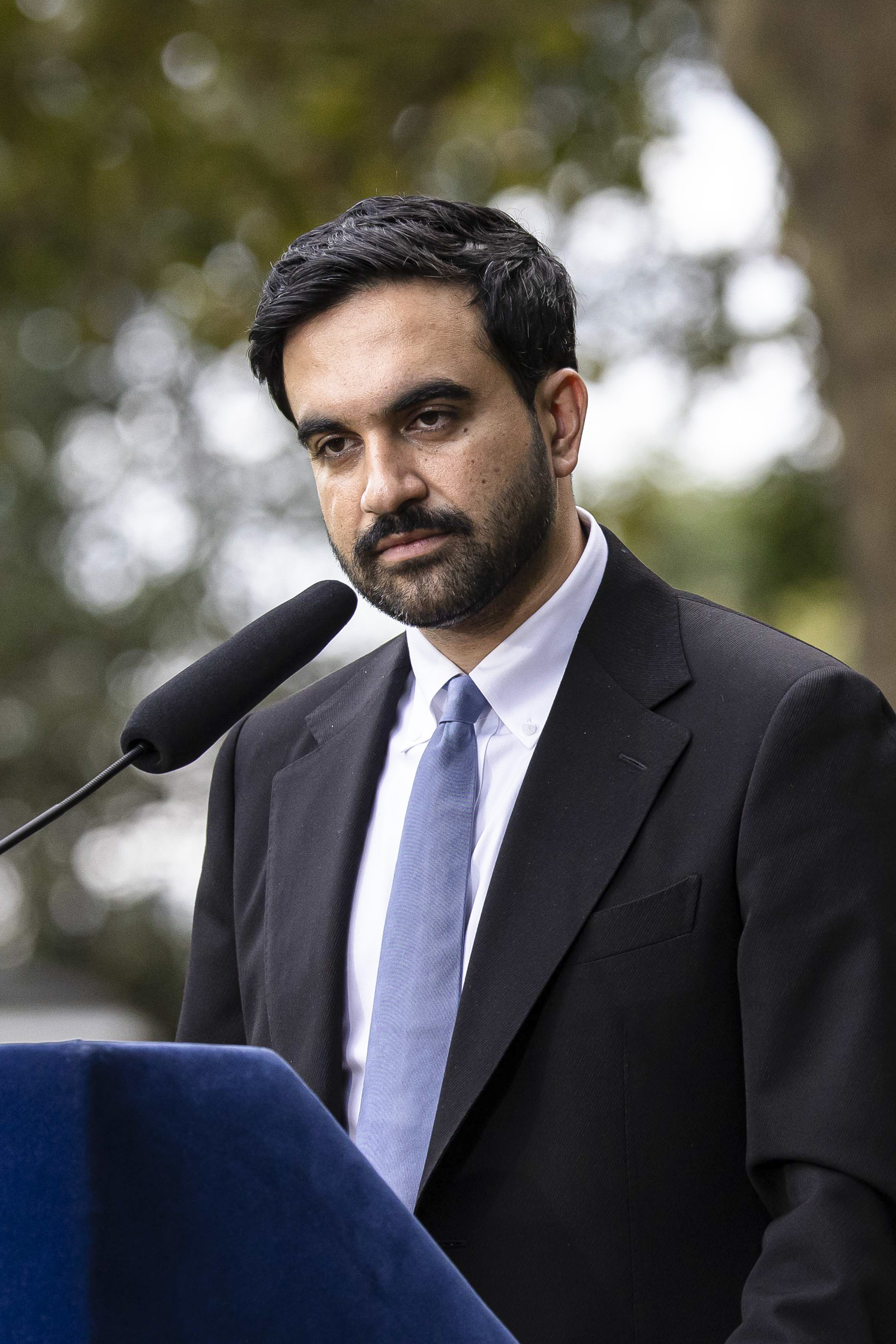
    NEW YORK — Prime Minister Benjamin Netanyahu of Israel released a video broadside against New York City Mayor Zohran Mamdani, one of his most high-profile critics in the United States, hours before CNN aired a new interview in which the mayor again called the prime minister a war criminal.

    Mamdani has called on the federal government to arrest Netanyahu, who is expected to arrive in New York this week to address the U.N. General Assembly. In the video posted Tuesday, the prime minister falsely accused the mayor of supporting Hamas and inciting riots against Jewish New Yorkers.

    Addressing the mayor directly, the prime minister said he was coming to the U.N. “to tell the truth about our heroic soldiers” and “to tell the truth about you.”

    Mamdani, New York’s first Muslim mayor and an outspoken supporter of Palestinian rights, has condemned Hamas as a terrorist organization and described the attack it led against Israel on Oct. 7, 2023, as “a horrific war crime.”

    And while New York has seen an increase in antisemitic hate crimes since the Oct. 7 attacks and Israel’s subsequent bombardment of the Gaza Strip, as well as widespread pro-Palestinian demonstrations, there have been no riots targeting Jewish New Yorkers in the city since Mamdani was elected mayor in November or during his time serving in the state Assembly.

    Netanyahu is the subject of an arrest warrant from the International Criminal Court, which has accused him of war crimes in Gaza; he vigorously denies the charges. After Mamdani’s previous comments calling Netanyahu a war criminal outraged many pro-Israel Jewish leaders, the mayor’s office convened a meeting at which prominent rabbis urged the mayor to tone down his rhetoric on Israel and its leaders.

    Asked about Netanyahu’s remarks at an unrelated news conference Tuesday morning, Mamdani said, “We all know that what the prime minister has said in that video is not true.”

    On Monday night, CNN released clips from a wide-ranging interview with Mamdani, which also touched on his working relationship with President Donald Trump and his desire to see the Democratic Party focus on policies to lift up the working class. The full interview aired Tuesday afternoon.

    In one part of the interview with CNN’s Christiane Amanpour, Mamdani was asked directly about his opinion of Netanyahu, and he said he owed it to New Yorkers to share his honest views.

    “When it comes to Benjamin Netanyahu,” the mayor said, “I have described him as I believe him to be: a war criminal and an architect of a horrific genocide of the Palestinian people.”

    Mamdani has described Israel’s conduct of the war in Gaza as genocide, a claim that has upset many pro-Israel Jewish leaders. A United Nations commission and international and Israeli human rights groups have also said that Israel’s actions amounted to genocide.

    During the campaign, Mamdani pledged to have the Police Department execute the International Criminal Court warrant against Netanyahu if he were to come to New York. He repeated his desire to do so in an interview with the New York Times in July. But days later, the mayor released a video saying the city’s Law Department had told him the city did not have the authority to arrest the prime minister, and challenged the federal government to do so.

    Netanyahu, who is in the midst of a pivotal electoral campaign in Israel, has frequently condemned the mayor, calling him a danger to Jewish New Yorkers. On the second day of Mamdani’s term, the Israeli government accused him of antisemitism, citing his decision to cancel two executive orders signed by his predecessor, which had barred city agencies from boycotting Israel and defined some criticism of Israel as antisemitic.

    While Mamdani’s stance on Israel has caused deep unease among many Jews in New York, which has the largest Jewish population outside Israel, many others have supported the mayor, especially his fellow progressives. On Monday, Mamdani attended a meal marking the end of the Yom Kippur fast at the home of Ruth Messinger, a political ally who has served as Manhattan borough president and as the president and CEO of the American Jewish World Service.

    This article originally appeared in the New York Times.

  • ‘I was extremely terrified’: Center City jogger recounts ‘Chucky’ terror as masked man appears in court

    ‘I was extremely terrified’: Center City jogger recounts ‘Chucky’ terror as masked man appears in court

    For Blake Fleischer, an early morning jog in Center City last month began like any other.

    But it ended in terror, she said as she recalled running into traffic near City Hall, seeking help as a man wearing a Chucky-style horror mask followed close behind.

    “I was extremely terrified,” Fleischer, 40, testified Wednesday in Philadelphia Municipal Court.

    There, prosecutors presented evidence that they said outlined the way Zymire Hughes scared and harassed more than a dozen pedestrians early in the morning of Aug. 12.

    Fleischer, who entered the courtroom limping and using a crutch, tearfully recounted the pain of tearing her hamstring as she fled the man in the mask, who she feared was armed when he asked if she was “ready to die.”

    “I thought he was going to attack me,” Fleischer said.

    Hughes, 22, was arrested by U.S. marshals in Las Vegas two weeks after the incident. He sat across the courtroom wearing a blue prison jumpsuit and did not speak during the hearing, in which his defense attorney disagreed with many of the prosecution’s findings.

    Municipal Court Judge Karen Simmons held Hughes for trial on charges of aggravated assault, possessing an instrument of a crime, terroristic threats, simple assault, reckless endangerment, and harassment. Simmons dismissed charges of disorderly conduct by engaging in fighting, as well as flight to avoid apprehension.

    The hearing marked the first time that details about Hughes were heard in court after videos of the masked man’s antics went viral across local and national media outlets and social media feeds.

    Authorities said the Tioga resident had connections through an employer in Nevada and California as they sought his capture and told the public he had likely fled Philadelphia. Following Hughes’ Aug. 25 arrest, District Attorney Larry Krasner vowed to charge him with a host of crimes.

    Prosecutors said Tuesday that surveillance footage recovered from cameras throughout the city had tracked Hughes’ travels, capturing him taking a SEPTA bus from his apartment building near North 23rd and West Venango Streets to Center City after 2 a.m. Aug. 12.

    They said Hughes donned the horror mask and began harassing pedestrians in the Suburban Station concourse. He ignored a SEPTA transit officer’s request to remove the mask, they said, briefly flashing his face before putting it back on and leaving the area.

    He encountered Fleischer around 5:30 a.m. as she jogged near the north side of City Hall, she testified to prosecutors.

    The masked man began to chase her, she said, eventually cutting her off as the two got within several feet of each other.

    In an image provided by the Philadelphia Police Department, a man dressed in dark clothing and wearing a mask styled after the character Chucky in “Child’s Play,” the 1988 horror film, chases a jogger in Philadelphia on Aug. 12, 2026. On Thursday, Aug. 20, the police identified a suspect, Zymire Hughes, 22, and said there was an arrest warrant for him. (Philadelphia Police Department via The New York Times) — NO SALES; FOR EDITORIAL USE ONLY. —PHILADELPHIA POLICE DEPARTMENT

    Fleischer said she found herself caught between the facade of City Hall and the man, who held a phone in his left hand while his right hand was concealed behind his back, and she fled.

    It was not until the next day — when she awoke in “extreme pain” and had trouble walking — that she went to the hospital for her hamstring injury, she said.

    Prosecutors also called on detectives from the Central Police Division to verify surveillance footage of Hughes’ activity. That included a clip in which it appears Hughes is filming himself and gesturing toward his phone before leaving his apartment to head to Center City.

    A SEPTA transit officer later testified that he was able to help detectives identify Hughes because he had interacted with him in 2023 and 2024 while on duty. Detectives added that widely circulated images of Hughes yielded a phone tip that aided their investigation.

    Lauren Zitsch, Hughes’ public defender, told Simmons she took issue with many of the prosecutors’ assertions, particularly the aggravated assault charge.

    “You have to show some form of malice” for that crime to stand, she said, noting that the confrontation between Fleischer and Hughes was not captured on video.

    But Simmons agreed with prosecutors, who argued that by frightening the woman enough for her to flee, Hughes would have understood the “legal and likely consequence” of his actions.

    Hughes is expected to appear in court for a formal arraignment in early October.

    He had not posted the required 10% of his $100,000 bail and remained in custody at the Philadelphia Detention Center.

  • Trump and Xi see tensions flare over AI, trade and Iran but still seek stability

    Trump and Xi see tensions flare over AI, trade and Iran but still seek stability

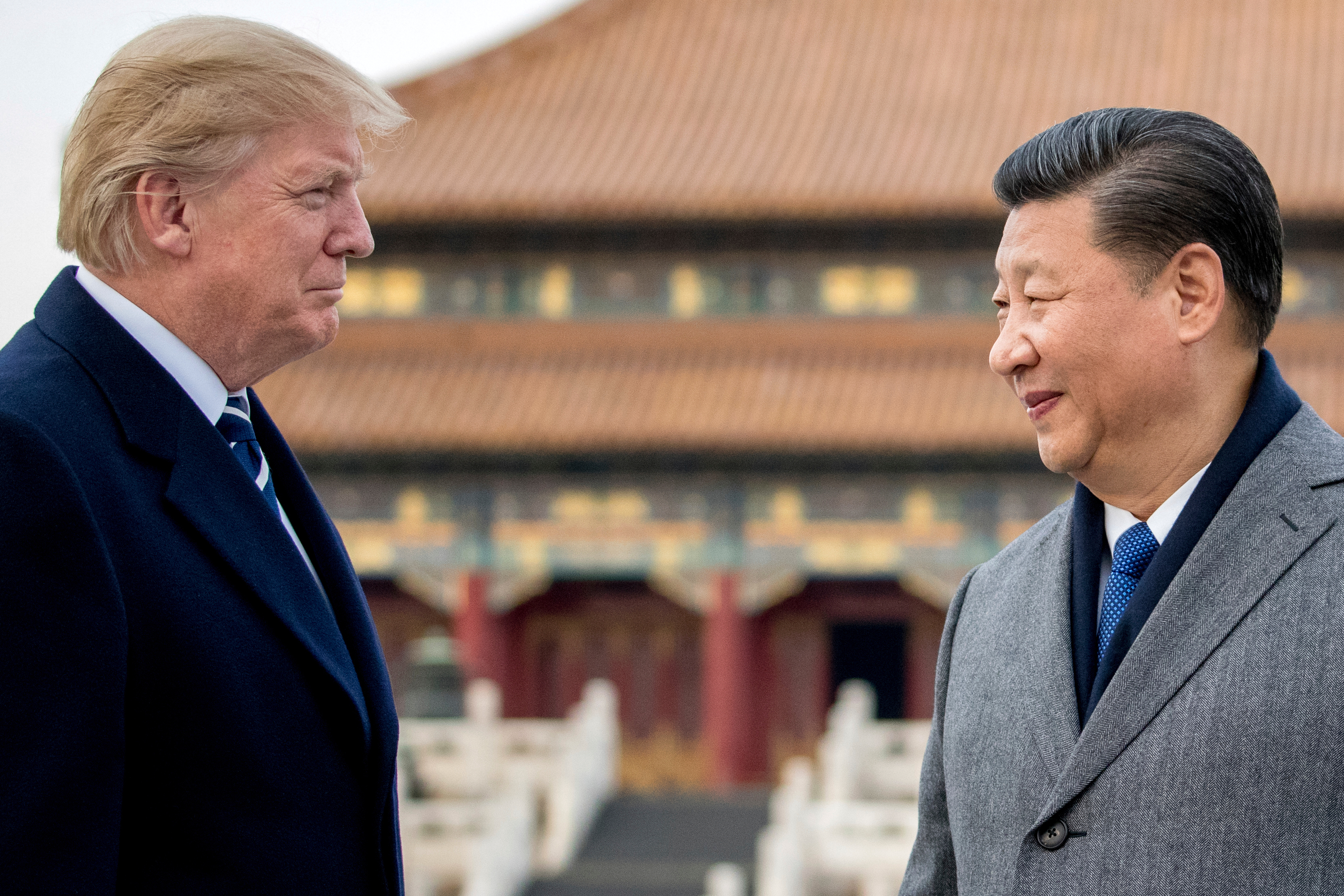
    WASHINGTON — State visits usually occur when two countries are on warm terms, but U.S. President Donald Trump is hosting Chinese leader Xi Jinping in Washington this week as their economic and tech competition is only escalating, especially through an artificial intelligence race.

    Neither expects any grand bargain, but the leaders are expected to play nice in their third meeting since Trump returned to the White House to try to steady fragile ties. That is despite the world’s two largest economies seeking the upper hand on AI developments and trade, while pushing for leverage in persistent hot spots like Iran and Taiwan.

    “The fact that they are meeting, and there’s dialogue occurring and building that relationship, is probably as important as outcomes from the meeting,” said Sen. Steve Daines, a Montana Republican who advises Trump on China and recently traveled there to lay groundwork for the summit.

    Cui Tiankai, a former Chinese ambassador to the U.S., said at a recent forum in Beijing that there are “always problems, sometimes very big problems” between the two countries, but ”we’ll make our best efforts to maintain overall stability.”

    Trump and Xi shifted away from sky-high tariffs, but competition is still intense

    Xi’s visit to Washington, which begins Wednesday, is his first in 10 years. He and Trump are meeting after their countries climbed down from last year’s intense trade war, where they traded tit-for-tat sky-high tariffs that threatened the global economy. China also choked off its world-leading supplies of critical minerals needed in products from electric cars to fighter jets.

    The U.S. is not only trying to balance trade but also maintain its tech dominance to protect national security and global leadership. China, which has amassed tremendous economic, technological, and military power over the past several years to close gaps with the U.S., is seeking to solidify its place in the global order.

    The stability both sides are seeking is “for deeply competitive reasons,” said Evan Medeiros, a senior adviser at the Asia Group consultancy. “This is basically two geopolitical strongmen circling each other on the playground, trying to determine what their next move may be.”

    The countries appeared to be entering a “new normal” of “overall stability” despite blacklisting each other’s companies and restricting the flow of high-tech products, said Da Wei, director of the Center for International Security and Strategy at Tsinghua University in Beijing.

    The leaders now should produce deals that their governments can carry out, he said, noting that “we need to move fast.”

    The AI race could strain any cooperation on technology’s advance

    Developing AI technology has emerged as a key battleground, with both sides showing little interest in slowing down despite warnings from tech CEOs about threats that rogue AI could pose to humanity. “Whoever wins AI wins,” Trump has repeatedly said.

    He claimed on social media Monday that the U.S. is leading over China and that he was “not going to stifle Growth, of something that will be bigger than the Industrial Revolution, or the Internet, itself.”

    China cannot afford to lose either. In a rare, blunt essay, Chen Yixin, head of China’s Ministry of State Security, warned that AI poses a direct threat to Communist Party rule if foreign and hostile forces achieve superior capabilities.

    The U.S. is already restricting exports of the most powerful AI chips to China and has accused Chinese developers of tapping into American AI models at an industrial scale to extract their capabilities.

    Beijing says the practice, known as distillation, is widely used, including by American companies, and has criticized the U.S. for trying to monopolize the industry.

    Beijing also is upset about U.S. efforts to build an alliance that excludes China, so it is seeking to craft new global AI guardrails by appealing to developing nations.

    However, the U.S. and China are taking a small step to cooperate on AI.

    Treasury Secretary Scott Bessent said Sunday after meeting with Chinese Vice Premier He Lifeng in New York that the U.S. has proposed a new “notification mechanism” for AI incidents that could affect national security.

    “We think that just like any cross-border activity, that moving from opaque to more transparency between the No. 1 and the No. 2 AI powers in the world is very important,” Bessent said.

    U.S. and China turn to targeted ways to compete instead of tariffs

    While the U.S. and China have refrained from taking broad, punitive actions that would break their trade truce, they still are blacklisting individual companies and banning specific products.

    “What we’ve seen is kind of testing and probing by both sides to understand what can be done competitively, while still keeping that leader-level rapprochement on track,” said Mira Rapp-Hooper, a visiting fellow at the Brookings Institution’s Center for Asia Policy Studies.

    The U.S. has recently targeted Chinese telecommunications and surveillance equipment, companies accused of using forced labor in the ethnic region of Xinjiang, as well as China’s advanced robots and drones. The Pentagon also has barred Alibaba, BYD, Baidu, and other major Chinese businesses from receiving U.S. defense contracts.

    Beijing responded with export controls on drones and related technologies as well as blacklisting six U.S. companies over their support for the punitive measures tied to Xinjiang.

    Iran, Taiwan and tariffs are persistent issues

    After the Supreme Court struck down Trump’s tariffs on trade partners this year, the administration has been trying to impose them in other ways.

    The White House in July rolled out a 12.5% tariff on imports from 60 trading partners, including China, ostensibly for failing to do enough to prevent the import of goods produced by forced labor. The U.S. is planning an additional 7.5% tariff on China, accusing it of producing far more goods than it can reasonably consume.

    Analysts say the tariff levels are now acceptable to both sides, but any significant uptick could rekindle tensions.

    The Trump administration, however, has launched a campaign to isolate Iran from its remaining economic partners, but Beijing has insisted on its right to trade with Tehran.

    So far, the Trump administration has done little to punish China, partly to avoid jeopardizing the leaders’ summit. But Washington also is losing leverage because China — Iran’s biggest oil buyer and its largest trading partner — has been building up a way to make payments outside the U.S.-led financial system, said Alicia Garcia Herrero, an Asia-Pacific economist at the French investment bank Natixis.

    Taiwan, a self-governing island that Beijing claims as its own territory, also remains one of the thorniest issues in U.S.-China relations. Trump paused a large weapons package to Taiwan following his May trip to Beijing, but the U.S. is obligated by a domestic law to provide it with sufficient hardware and technology for self-defense.

    Analysts say Xi will most likely press Trump to further delay arms sales to sow doubts in Taiwan about Washington’s commitment.

  • Clavicular, ‘looksmaxxing’ influencer, charged with raping a 17-year-old

    Clavicular, ‘looksmaxxing’ influencer, charged with raping a 17-year-old

    Clavicular, a male beauty influencer known for “looksmaxxing,” has been charged with giving a 17-year-old girl vodka on a livestream and then raping her, according to Massachusetts court records.

    Clavicular, whose legal name is Braden Peters, is scheduled for an Oct. 14 arraignment in Orleans District Court, on Cape Cod. The charges, filed Sept. 8, were first reported by the Bulwark.

    One of his lawyers, Jeff Neiman, said his client was innocent but declined to comment further. Mitchell Jackson, a spokesperson for Peters, said Peters had not been arrested. Efforts to reach Peters by call and text were unsuccessful.

    Peters, 20, who is known for his livestreams, is the face of an online subculture dedicated to improving male attractiveness. He compares himself with other men and assesses women’s looks on livestreams.

    The girl accused Peters of attacking her at a family home in Chatham, Mass., after he had streamed live on the internet, according to a police report filed in court. (The New York Times generally does not name people who report sexual assaults.)

    In May 2025, Peters served the girl “cups” of alcohol as he broadcast to the internet, the girl told investigators. He told her to lie on camera by saying that she was 18, according to the police report. After the livestream ended, Peters had sex with her several times, she told the police.

    She lacked the ability to consent, an investigator wrote. Peters was charged with rape, drugging for sex, and serving liquor to a minor.

    The police report, made in June, noted that the teenager “did not tell anyone the full extent of what occurred” for some time after the incident. In April, however, she sued Peters in Miami, making allegations similar to those in the police report.

    Peters had previously paid the girl, who herself was an influencer, to film “looksmaxxing” videos, and she had accepted his offer of a cab ride to the house in Cape Cod because she thought meeting him would boost her online presence, the lawsuit said. Peters’ mother and grandmother were at the house during the attack, the lawsuit says, claiming that his mother knew that excessive amounts of alcohol were being served.

    In addition to sexual assault, the girl’s lawsuit also accuses Peters of improperly injecting her face with a fat-dissolving drug on a livestream in Miami, which she said caused her emotional distress, and of later publicly discrediting her, costing her sponsorships.

    Peters’ lawyers have asked a judge to throw out portions of the suit. They said the girl did not demand legal redress for a sexual assault until three months after the case was originally filed.

    Andrew Moss, the girl’s lawyer, said Monday night that Peters was scheduled for a deposition in the case next week.

    Peters posted several times on the social platform X about the girl on Monday, when the Bulwark’s article on the charges was published. “Trying to get my attention in anyway possible, a lawsuit?” he said in one post. “Seriously… really petty of you.”

    Peters has found himself in legal trouble several times this year. In February, he was arrested in Scottsdale, Ariz., and charged with having fake identification, an Adderall pill, and an oral steroid. The charges were later dropped.

    The next month, Peters was arrested in Florida on accusations that he had arranged a brawl between two women. Prosecutors dropped those charges, too.

    And in May, a Florida judge sentenced him to six months of probation after he pleaded no contest in a case involving the shooting of a dead alligator in the Florida Everglades. The shooting was captured on a livestream.

    This article originally appeared in the New York Times.

  • N.J. sues Trump administration over offshore wind cancellations, $1.4B for fossil fuel projects

    N.J. sues Trump administration over offshore wind cancellations, $1.4B for fossil fuel projects

    New Jersey joined a coalition of states suing the Trump administration over its attempts to cancel two big offshore wind leases and pay the companies $1.4 billion to develop fossil fuel projects instead.

    “This administration is paying developers to abandon building new sources of energy at a time when our grid needs more power to meet demand and residents need relief from high electricity prices,” New Jersey Attorney General Jennifer Davenport said in announcing the suit.

    New Jersey joined New York, Connecticut, Delaware, Maine, Massachusetts, Rhode Island, and Vermont in two suits filed Tuesday in U.S. District Courts in Maine and New York.

    The suits were filed by the states’ attorneys general against the U.S. Department of the Interior and the U.S. Department of Justice. The states claim that the settlements attempting to cancel two leases for major wind power projects offshore of New Jersey are illegal.

    The Trump administration is using a taxpayer-funded account meant to settle legal claims to pay for fossil fuel developments outside the states that had offshore wind projects planned, the suits state.

    Davenport said that Trump cannot redirect those funds simply “because he favors the fossil fuel industry.”

    At issue are offshore wind projects that were supposed to be built in the New York Bight, a section of ocean between Long Island and New Jersey, and projects that spanned other states.

    Ending leases

    The New York Bight, despite its name, is mostly off the New Jersey coast, stretching from Long Island to the Cape May inlet.

    The companies purchased the wind power leases in federal auctions held by the Bureau of Ocean Energy Management (BOEM) during the Biden administration. The BOEM manages any energy production in the Outer Continental Shelf several miles off the coast.

    Chicago-based Invenergy won thousands of acres of offshore wind leases through BOEM auctions in 2022 and 2024 in the New York Bight and the Gulf of Maine.

    It was part of what the Biden administration called the “nation’s highest-grossing competitive offshore energy lease sale in history.”

    The Invenergy leases were designed to produce around 5 gigawatts of electricity, enough to power about 2 million homes in New York, New Jersey, Maine, and Massachusetts.

    In New Jersey, the project was known as Leading Light Wind.

    In addition, Bluepoint Winds won a lease in 2022 in a project expected to generate 2.4 gigawatts of electricity, or enough to power about 1.5 million homes in New York and New Jersey.

    However, earlier this year, the Trump administration reached a settlement with Invenergy to end its offshore wind leases in exchange for $765 million in lease fee reimbursements, with the money going toward natural gas and geothermal projects.

    And it reached a settlement with Bluepoint Winds Holdings to invest up to $765 million into a U.S.-based liquefied natural gas facility. In return, the Department of the Interior said it would cancel the company’s offshore wind lease. Bluepoint Winds Holdings is jointly owned by OW North America LLC and Seaway Energy Holdings LP.

    The Department of the Interior sent a statement to The Inquirer on Tuesday saying that it does not comment on pending litigation.

    However, the statement said in reference to the lease cancellations that the “Department of War identified serious national security risks that demanded immediate attention — which critics conveniently ignore.”

    The statement called the agreements with Invenergy and Bluepoint “voluntary” and said they had been “reviewed and approved by the Department of Justice, underscoring that they went through the appropriate channels.”

    Davenport disputes the Trump administration’s claim that the contracts were canceled over national security issues, which she said have never been specified.

    “Any legitimate national security issues were already accounted for in the government’s original decision to award the leases and are routinely addressed through the federal permitting process that every offshore wind project must complete,” she said.

    The suits filed Tuesday ask the courts to strike down the settlements and restore the leases.

    The suits contend that the administration ignored federal procedure for canceling the leases, that it never held public hearings, that its actions were arbitrary and illegal, that it failed to complete an environmental-impact statement, and that money from the judgment fund cannot be used to pay the companies for their fossil fuel ventures.

    Unwinding offshore wind

    Separately, New Jersey and other states sued the Trump administration in June over cancellation of a $795 million offshore wind lease with Attentive Energy that also would have brought power to the state.

    The unwinding of New Jersey’s nascent offshore wind industry began rapidly when Trump took office in 2025 and began issuing executive orders that made exploring or building the renewable energy source untenable.

    Those included other big offshore wind projects such as those planned by Danish-run Orsted and Atlantic Shores, a partnership between Shell and EDF Renewables.

    On his first day in office, Trump issued a temporary ban on offshore wind, and within days he personally attacked New Jersey’s quest to build wind farms, calling it “a disaster” and saying he wanted the projects “dead and gone.”

  • Pentagon adds 1 death to tally of troop fatalities amid Iran war

    Pentagon adds 1 death to tally of troop fatalities amid Iran war

    The Pentagon has added one death to its public database of U.S. military fatalities that have occurred amid the war with Iran, bringing the disclosed total to 19.

    A U.S. defense official, speaking Tuesday on the condition of anonymity because the Pentagon has not publicly announced the death, said that a female Army officer experienced a fatal medical emergency Friday while flying to the Middle East.

    The death was added to the Defense Department’s public casualty database sometime after Monday afternoon. The service member’s identity has not been disclosed.

    Spokespeople for the Pentagon did not immediately return a request for comment.

    The additional fatality was reported earlier by Task & Purpose.

    The Trump administration’s casualty accounting practices have faced intense scrutiny since earlier this year, when the names of four U.S. troops who died as a result of the Iran war were briefly excluded from the Pentagon’s official tally.

    On Friday, the Washington Post reported that more American service members have died in the Middle East during the Iran conflict than the Pentagon has disclosed publicly. Officials said that as many as five military fatalities are not reflected in the Defense Department’s public casualty database — a discrepancy that remained unresolved as of Tuesday.

    As the Post reported last week, not all of the undisclosed fatalities are directly tied to the Iran conflict but involve U.S. personnel who were in the region amid the hostilities.

    The Defense Casualty Analysis System, or DCAS, is supposed to serve as the Pentagon’s official record of all U.S. troops who have died or were wounded in wartime or other contingency operations.

    On Monday afternoon, the database showed that 18 U.S. personnel had died because of hostile and nonhostile action, while more than 820 had been wounded.

    Five U.S. officials who spoke to the Post last week said that at least 22 service members have died in the Middle East since the Trump administration initiated the Iran war on Feb. 28. A sixth official put the tally at 23.

    Historically, nonhostile deaths documented in the DCAS database have encompassed those caused by accidents, sudden health crises, or self-inflicted wounds, including suicides. In past conflicts, those types of deaths were documented to provide the American public with an unvarnished accounting of the costs incurred by military personnel and their families.

    Polls show that the Iran war is deeply unpopular with the American public and a potential political liability for President Donald Trump and the Republican Party heading into November’s midterm elections.

    After the Post’s story published Friday, Defense Secretary Pete Hegseth claimed that the reporting was not accurate, but he did not address whether the Pentagon has tallied all military fatalities consistent with its long-standing practices.

    “Even if we wanted to attempt to hide a combat death, we never would and we never could,” Hegseth told a reporter.

    The proper accounting of military fatalities has implications beyond public transparency. Whenever a U.S. service member dies, the military conducts a “line of duty” investigation to determine whether the death occurred while performing official duties. Those findings affect the survivor benefits for which service members’ families are eligible.

    As of Tuesday, 14 fatalities are listed in the database as having occurred during Operation Epic Fury, the Trump administration’s name for the Iran war. Four others, reflected in a separate category called Overseas Operations, date to a July ceasefire between Washington and Tehran that later collapsed, leading to the resumption of attacks. The most recent fatality was added to the Overseas Operations dataset.

    Separately, since the start of hostilities, the Pentagon has issued news releases stating that two U.S. service members died in the Middle East while participating in missions unrelated to the Iran war. Their deaths, which occurred at bases that have been attacked by Iranian forces, are not reflected by name in the DCAS database.