Category: News

  • Debate over district’s Black history requirement | Inquirer Cherry Hill

    Debate over district’s Black history requirement | Inquirer Cherry Hill

    Hello, Cherry Hill! 👋

    The school board faced pushback recently after one of its members suggested dropping an African American history course requirement amid a budget crunch, which was later withdrawn. Here’s what to know. Also this week, a township resident will become the next artistic director of an area theater, two local spots will be streaming World Cup games, plus, the Radin’s Deli sandwich our reporter loved.

    P.S. The Inquirer is launching a new South Jersey morning newsletter next week. Staring Monday, you might see the free daily edition in your inbox. Not already signed up? Get it here. Get to know newsletter editor Taylor Allen and her South Jersey essentials here. And don’t worry, we’ll still be coming to you with Cherry Hill-specific news every week.

    If someone forwarded you this email, sign up for free here.

    Cherry Hill will keep African American history course requirement

    Cherry Hill will maintain an African American history course graduation requirement after a board member suggested making it an elective.Tom Gralish / Staff Photographer

    Cherry Hill Public Schools will keep its African American history course as is after a school board member suggested dropping it as a graduation requirement amid budget woes.

    The suggestion last month to instead make the course an elective got pushback from students and the community alike, ultimately prompting board member Renee Cherfane to withdraw her proposal.

    In 2021, Cherry Hill was the first New Jersey district to require such a course for graduation.

    The Inquirer’s Melanie Burney delves into the controversy.

    💡 Community News

    • Cherry Hill resident Amina Robinson has been named the next artistic director of Theatre Horizon in Norristown. Robinson gained acclaim in 2018 when directing The Color Purple, for which she became the first Black woman to win the Barrymore Award for outstanding direction of a musical. The Inquirer’s Rosa Cartagena spoke with her about the new role and her passion for theater.
    • World Cup matches are kicking off tomorrow, with local games at Lincoln Financial Field starting Sunday. Don’t have tickets? Soccer Post Cherry Hill will be streaming games on its seven TVs and later this summer it’ll host a youth soccer camp with a mock-World Cup tournament. AMC Theatres on Route 38 will also have viewings of select games with Spanish-language broadcasts.
    • Applications are open for qualifying residents interested in living in Hampton Square, the newly built affordable housing community at 614 Hampton Rd. Qualifying applicants will be put on a waitlist for 45 available units and then randomly selected. Hampton Square offers studio and two- and three-bedroom units for those with very low, low, and moderate incomes. Applications are due by Aug. 7.
    • The township has made changes to its household appliances and metal pickups. Starting this week, the township will collect appliance and metal items on Thursdays. Residents must make an appointment for pickup by 3 p.m. on Wednesdays.
    • Four people and two dogs were potentially exposed to a rabid bat in a Cherry Hill home recently. On Monday, a state lab confirmed that the bat found was positive for rabies. The dogs were up to date on their vaccines but will be confined for four months.
    • Heads up for drivers: Work continues on Kresson Road, which will have a partial closure westbound between Springdale and Cropwell Roads from 8 a.m. to 4:30 p.m. through Friday. Starting today, Kenilworth Avenue will be closed between Chapel Avenue and Route 38 from 7 a.m. to 3:30 p.m. through Friday. Cooper Landing Road will also be closed between Georgia Avenue and Route 70 overnight from 8 p.m. to 5 a.m. through Friday.
    • Appliances Outlet is hosting a grand opening from 10 a.m. to 7 p.m. on Saturday and Sunday for its new Cherry Hill location at 1811 Route 70.
    • The former Cherry Hill Diner, which closed in 2023, was demolished last week to make way for a new car wash. The Courier Post captured photos of it coming down.

    🏫 Schools Briefing

    • As the school year winds down next week, there will be elementary clap-outs on Tuesday and middle school graduations on Wednesday. Next Thursday are the high school graduations, and it’s also the last day of classes for the school year. See the district’s full calendar here.
    • Cherry Hill Public Library will have a pop-up graduation photo spot set up in the lobby starting tomorrow and running through next Saturday, complete with props.
    • 6abc recently profiled the Domenica Foundation, a South Jersey organization supporting underserved communities, including by providing scholarships for students to attend Catholic schools. The foundation recently celebrated the graduation of its class of 2026 from Camden Catholic High School in Cherry Hill. See the segment here.

    🍽️ On our Plate

    • One of the best things an Inquirer reporter ate last week? A hot corned beef sandwich at Radin’s Deli. Kicking it up a notch, reporter Beatrice Forman added chopped liver to the famously massive sandwich at the Evesham Road spot, which she said gave it “multi-dimensional flavors.” She added: “Don’t knock it ‘til you try it.”
    • A new burger joint is now open in Cherry Hill. Located at 906 Route 70, Slap Burger serves smash burgers, chicken tenders, chicken sandwiches, hot dogs, loaded fries, and milkshakes.
    • La Cita Authentic Mexican Restaurant is one of the best spots for Mexican food in the state, according to a recent list from NJ.com, which ranked the Marlton Pike eatery No. 13. It’s known for its tacos, but also offers other classics like fajitas, enchiladas, burritos, and quesadillas.

    🎳 Things to Do

    🎶 Twilight Concert Series: Max Weinberg’s Jukebox, which specializes in old-school tunes, headlines this week’s event. ⏰ Thursday, June 11, 8 p.m. 💵 Free 📍 Cooper River Park Jack Curtis Stadium

    🏊‍♀️ Youth Splash and Dash: Kids ages 7 to 12 can compete in three age-specific divisions in this running and swimming competition. ⏰ Sunday, June 14, 1-3 p.m. 💵 $32.80 📍 Katz JCC

    🗓️ VinChelle’s Juneteenth Celebration: The drag show ahead of the holiday will celebrate Black culture. ⏰ Sunday, June 14, 2:30-5 p.m. 💵 $19.03 📍 Vera

    🏡 On the Market

    A four-bedroom Springdale home with a covered porch
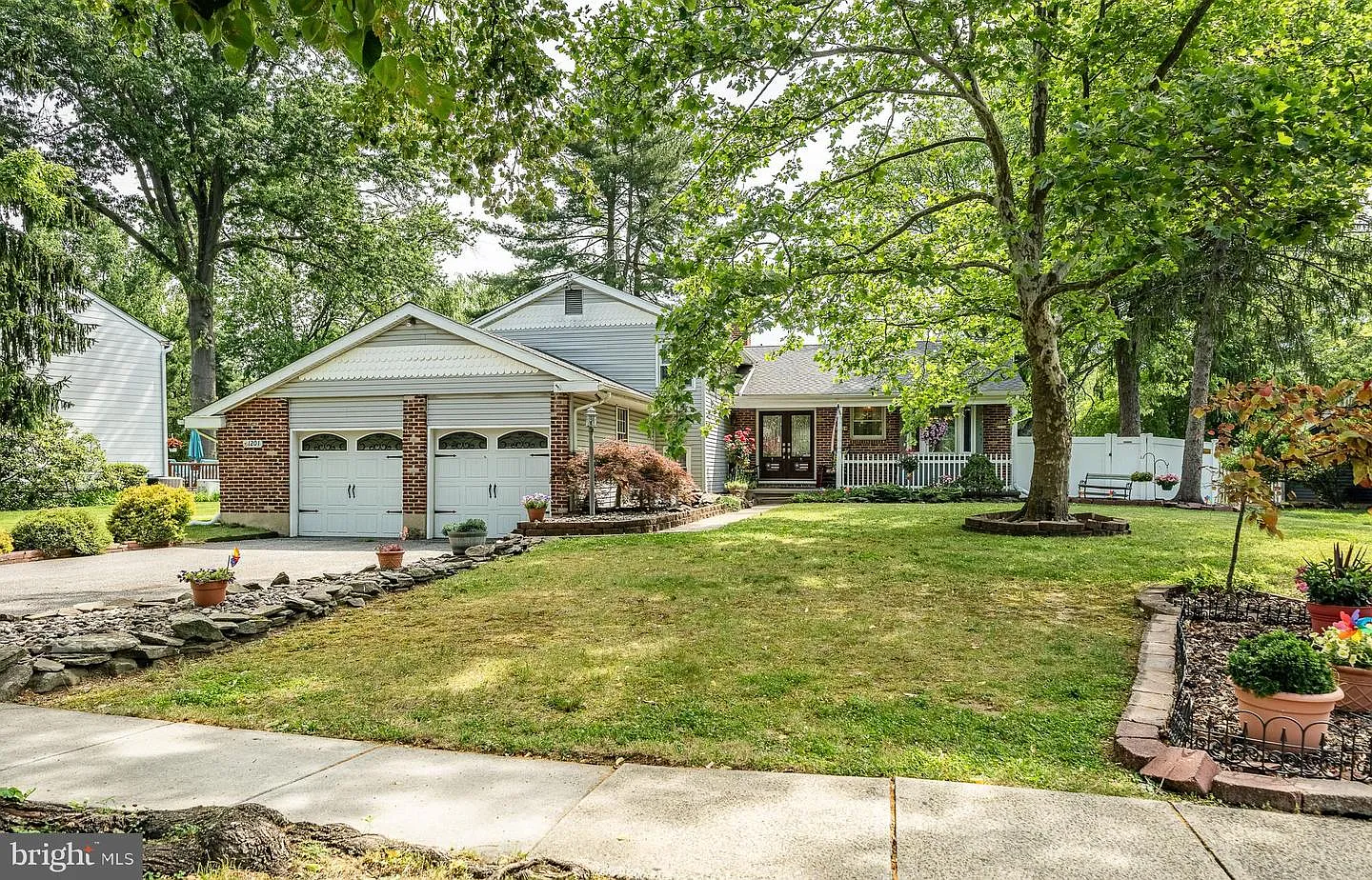
    The home has a covered front porch and a two-car garage.Virtual Vista | Courtesy of Jackie DiAntonio/Keller Williams – Main Street

    Located in the Springdale neighborhood, this four-bedroom home has multi-level living thanks to its layout. The main level features a foyer, living room, dining room, and eat-in kitchen with granite countertops and stainless steel appliances. There are four bedrooms on the upper level, including a primary suite with a walk-in closet, while the lower level has a family room with a brick fireplace, a full bathroom, and a bonus room. There’s also a finished basement and a fenced backyard.

    See more photos of the home here.

    Price: $600,000 | Size: 2,499 SF | Acreage: 0.2

    🗞️ What other Cherry Hill residents are reading this week:

    By submitting your written, visual, and/or audio contributions, you agree to The Inquirer’s Terms of Use, including the grant of rights in Section 10.

    This suburban content is produced with support from the Leslie Miller and Richard Worley Foundation and The Lenfest Institute for Journalism. Editorial content is created independently of the project donors. Gifts to support The Inquirer’s high-impact journalism can be made at inquirer.com/donate. A list of Lenfest Institute donors can be found at lenfestinstitute.org/supporters.
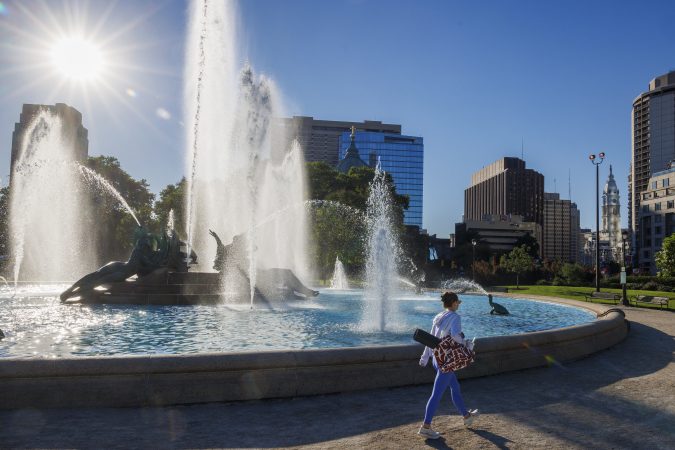

  • It may feel like 100 degrees in Philly on Thursday and Friday. The early heat could pay off.

    It may feel like 100 degrees in Philly on Thursday and Friday. The early heat could pay off.

    With the summer solstice still two weekends away, already the temperature has reached 90 degrees or higher in Philly nine times.

    And while the sequence of 90s has been extraordinarily premature, the early experience may come in handy this week as the region could experience triple-digit heat indexes.

    “It will definitely feel different,” said Ray Martin, lead meteorologist with the National Weather Service office in Mount Holly, as the humidity and dew point, the measure of absolute moisture in the air, reach their highest levels of the year to date.

    Any 100-plus heat indexes may present challenges to some older residents, and those with heart and other health issues. The weather service Wednesday morning issued an advisory for indexes of up to 103 Thursday and Friday.

    But the heat the region has experienced, starting in mid-April, could be viewed as a sort of spring training for the discomforts to come, said Samuel Eldrich, director of the Temple Health-Chestnut Hill Hospital Emergency Department.

    “It’s all about adaptability,” he said. And it’s not just physiological, he said.

    In addition, a juicier atmosphere may squeeze out some much-needed rain.

    The regional forecast for the next several days

    Showers are possible Wednesday morning and late in the day, Martin said, with highs in the mid-80s. However, it might not get cooler than 70 degrees early Thursday, a sign that mugginess is on the increase.

    A moist air mass inhibits daytime heating from escaping into space, and the heat and humidity build for real on Thursday.

    “It’s not going to feel nice out there,” said Tom Kines, senior meteorologist with AccuWeather Inc.

    Shower chances are in the forecast Wednesday through Friday, and at times the atmosphere will be highly energized, Martin said. The Storm Prediction Center in Norman, Okla., has outside chances for severe thunderstorms for the entire region Thursday and Friday. Isolated flooding downpours are not out of the question, Martin said.

    The heat and storm threats should back down some by the weekend, when Philadelphia hosts the World Cup match between Ecuador and the Ivory Coast, with a high about 90, the air less muggy, and rain looking unlikely.

    How hot has it been in Philly so far?

    Philly has logged four daily highs of 90 degrees or more so far this month, and nine since April — including four record highs — almost a third of the average for an entire year.

    Whether that is a harbinger of a punitive summer is beyond the realm of reliable forecasting, but the early heat is likely to have some positive effects, Eldrich said.

    Far more dangerous are hot spells that come abruptly after the weather has been relatively cool and comfortable for a period, he said.

    Early heat, which typically is short-lived, can make a difference in terms of how we respond to subsequent hot spells. “You’re more accustomed” to the heat, Eldrich said. “You’ve adapted to the lifestyle. You sweat more quickly, more easily.”

    People are more likely to stay inside, and stay hydrated.

    “It’s both the physiological and the cultural factors,” he said. “In the South, you don’t hear about heat exhaustion or heat emergencies. It’s something they deal with three-quarters of the year rather than a quarter of the year.”

    Drought conditions persist, but more rain may be coming

    The longer-range outlooks favor above-normal temperatures for the rest of the month, but they also see the odds tilted toward above-normal rainfall.

    That would be a switch. Philadelphia’s precipitation has been below normal for 10 consecutive months.

    “We could certainly use the rain,” Martin said. The interagency U.S. Drought Monitor has most of the region under “severe drought” conditions. State-declared drought emergencies remain in effect in New Jersey and Chester County.

    Any showers would mean temporary breaks in the heat Wednesday and Thursday, and the heat wave is not expected to survive the weekend, in keeping with a trend.

    Even though average summer temperatures have been rising, the hot spells this century have not lasted as long as some of those of the 1990s.

    “Let’s hope that streak continues,” Martin said.

    Whether it is related to heat-wave durations or the city’s responses to hot-weather emergencies, heat mortality is way down in Philadelphia.

    From 1991 through 2000, 227 heat-related deaths were recorded in the city. In the last 10 years, there were 37.

  • Some Philly teachers say they’re pressured to pass students who rarely come to class or do work

    Some Philly teachers say they’re pressured to pass students who rarely come to class or do work

    Philadelphia School District students receive report cards on Thursday, the last day of the 2025-26 school year.

    But it’s an open secret that in many schools, it is nearly impossible to fail a student, according to interviews with two dozen teachers from schools across the city who say the district is making them give passing grades.

    Many teachers said they passed students who did little or no work, did not understand concepts being taught, or did not show up to class much. Most of the teachers interviewed requested anonymity for fear of reprisal.

    “There’s a bunch of kids in my class that have F’s in reading, and I’m probably going to pass them — I’ll bump it up to a D and call it a day,” one middle-grades teacher at a K-8 school said. “I don’t know of anyone who’s been able to keep anyone back, and we’re just setting kids up for failure.”

    On paper, Philadelphia students can fail courses, or be retained in a grade, so long as they are offered appropriate interventions and supports. Officially, the district, according to its policy, “is committed to excellence in student accomplishments and recognizes the contribution of a district wide promotion policy moving all schools to models of achievement.”

    But many teachers said that they were discouraged or forbidden by their principals from flunking students, or that they have given out failing grades that were overridden. Others said failing students was permitted if justified, but the administrative burden to rationalize failure, even for students who did not show up to school, is onerous or impossible.

    All of the teachers who spoke with The Inquirer said they fear for the long-term implications for students who are passed along without the skills they need to advance — especially in a city where so many students cope with the effects of poverty and trauma and a majority of students do not meet grade-level standards on state testing.

    Monique Braxton, district spokesperson, said the district’s policies “emphasize that student grades are meant to accurately reflect their academic performance and progress toward learning standards. Schools are required to provide and document appropriate interventions and progress monitoring when students encounter academic challenges. The district remains steadfast in its commitment to maintaining high expectations for students while ensuring they receive the necessary support to achieve success.”

    When did it start?

    The K-8 teacher, a veteran of district schools for three decades, said that at the beginning of her career, it was easier to give F’s or retain students who did not meet the learning standards. But, the teacher said, there has been a “subtle shift” since the early 2000s, the era of the federal No Child Left Behind Act.

    “When the pressure was on the schools to show promotions and graduation rates, and the district was so focused on showing data, it’s shifted grading, and now it’s a joke,” the teacher said.

    Philadelphia changed its grading policy in 2017, setting a 50 out of 100 as teachers’ grading floor and making it easier to pass. The minimum score for a D, once a 64, was changed to a 60.

    The rationale for the change, leaders said at the time, was standardizing grading procedures and preventing students from giving up if they perform poorly early in the year. Detractors of the policy shift said at the time they feared it would water down standards.

    The K-8 teacher, and others interviewed, emphasized that most Philadelphia students are bright and capable. But those who do not try because of complicated home lives or other reasons can skate by, they said.

    “We have a kid who’s done no work all year, and we’ve done everything, and they’re just going to push him forward,” the K-8 teacher said.

    The teacher also works in the service industry, and said the effects of passing students who have not earned passing grades is evident in that workplace.

    “We see people who don’t come to work on time, they can’t take orders, they can’t use a computer or figure things out, and this is why,” she said. “They’re not being held to standards for all their years in schools.”

    ‘Is there anything you can do to bump these up?’

    A second teacher said he has failed students who did not earn passing grades, though he has more latitude because he does not teach a major subject. But he absolutely understands why some teachers give 60s that should be F’s: With full course loads, teachers do not have time to document a pattern of contacting guardians, giving extra time for work, breaking down assignments, allowing extra credit, or extending deadlines.

    “Who has time to do that when you have 30 other kids?” the teacher said. “And the system is inherently causing laziness from teachers also, to just shut up, pass them, and you don’t get grief.”

    There is a ripple effect, he said.

    “I feel sorry for the good kids, the kids who struggle, do their work, and get a C. So I give them a B, a low A. They try,” he said.

    The district has posted academic improvement over the last several years. But district students’ academic achievement as measured by state tests remains low, with 33% of students meeting standards in reading and 25% in math.

    “The PSSA scores don’t match the grades kids are getting,” the second teacher said.

    The district’s four-year graduation rate has also risen. In 2024-25, it was up to 84%, from 69% in 2014-15.

    Grade inflation comes at the end of every year, said a third teacher, who works at a district high school.

    “There’s a push right after grades are due,” said the third teacher, who noted that administrators will say, “‘Is there anything you can do to bump these up?’”

    Grades are not changed for every student, but in some cases, administrators will “push [students] along because they want to see them graduate or pass,” the third teacher said. “There’s all this pressure from the district to increase the graduation rate — there are so many layers to it. I know that it happens in a lot of places. It’s not just our school. But this year, it was huge margins and huge numbers.”

    Administrators sometimes change the grades themselves, the third teacher said.

    In one instance, a student’s grade shot up with no explanation, the teacher said. “This student had a 50 yesterday. How did he have an 82 today? This was a student who didn’t turn in any additional work, and missed 63 of 84 classes,” the third teacher said.

    The third teacher said another student who was moved on without doing the work admitted it.

    “Even he was like, ‘Yeah, I didn’t deserve to pass, I don’t know how that happened. But I’m excited to graduate,’” the teacher said.

    The third teacher underscored that while the practice could be making the district’s numbers look better, it is not serving students.

    After graduation and not being held to standards, the teacher said, one former student “lost the first three jobs he had because he didn’t go to them. He had to learn that lesson in a much harder, more adult way, and he could have learned that in high school. I worry that when kids graduate and get into the workforce, it will impact the way they approach the goals they set for themselves and how they try to achieve those goals.”

    ‘The gap was huge’

    A fourth teacher who has worked in multiple types of schools in Philadelphia said the practice is not limited to the district.

    She most recently taught at a city charter and said some of her middle-grades students were at kindergarten reading and math levels.

    “The gap was huge,” the fourth teacher said. “The school’s explanation is that there’s a school-to-prison pipeline, and the older students are, the less likely they are to graduate. But they’re not meeting standards. The gaps are huge. It was very shocking to me how they would just pass the kids. I’m a parent, and I want my kids to be prepared properly.”

    A fifth teacher said that at her school, it is rare for students to be pushed along without doing work.

    “I can’t in good conscience pass anybody who doesn’t show up,” she said. “I think a lot of teachers around me also can do that. But I have also seen that teachers — maybe at a particular building, maybe those who work for a particular administrator — who say, ‘You know what, I’m not going to fight it.’”

    What is definitely not rare, the fifth teacher said, is giving students “a lot of different lifelines, a lot of different ways for them to pass,” whether it’s in-school credit recovery or summer school, “even when their trends of behavior and attendance and performance and engagement in the class suggest that they needed more time with that content.”

    A sixth teacher said his principal permits failure and retention, in rare cases, with significant documentation. There is some pressure to not fail students, but when needed, the teacher has been able to produce adequate paperwork to show failure was the last resort.

    But when deciding whether to pass or push through a student, “I ask myself whether holding them an extra year will make a significant difference,” the teacher said. One of the teacher’s students is bright but unmotivated and rarely completes work.

    “I don’t think that’s going to change with an extra year in the same grade, and therefore, I decided to pass him,” he said.

    Does he worry about the implications for the district writ large?

    “Honestly, I do think about it sometimes, but I’m just not sure there’s a right answer with the current situation,” the sixth teacher said. “I’m no policy expert, but I think for it to make sense on a larger scale we’d need significant cultural shift and policy changes.”

  • New York’s busiest train station to get $8 billion remodel with columns, sunlight, and Trump’s name

    NEW YORK — When Manhattan’s original Pennsylvania Station was demolished in 1963, it marked the undignified end to one of America’s great public works, a monolithic Beaux Arts train terminal with Roman-style columns and a spacious central waiting area that was at the time the city’s largest indoor space.

    In its place rose Madison Square Garden — home of NBA’s New York Knicks and NHL’s New York Rangers — while train commuters were forced underground into gloomy, claustrophobic, low-ceilinged corridors when the redesign was completed in 1968.

    “Through Pennsylvania Station one entered the city like a god,” the architectural historian Vincent Scully famously lamented. “One scuttles in now like a rat.”

    But a dramatic new vision for the busiest transit hub in the Western Hemisphere calls for a return to the original station’s grandeur from 1910.

    Renderings released Monday feature a rectangular stone facade lined with imposing columns along a grand entryway. Inside, a sunlight-drenched concourse boasts soaring ceilings more than 50 feet high in places. There are bronze finishes and other ornamental details, like a bas-relief of the city’s famous skyline and a large station clock.

    Inside one entryway, an inside wall bears the seal and name of President Donald Trump, who had Amtrak assume control of the project last year after decades of political infighting among transit agencies and opposition to moving MSG from billionaire owner James Dolan.

    Trump has floated renaming his hometown station in his honor as he’s sought to burnish his legacy through public works projects, from a massive new White House ballroom to a triumphal arch.

    For now, though, the name etched across the proposed grand facade would still read “Pennsylvania Station,” according to the renderings. They were released by Amtrak, which owns the terminal, and Penn Transformation Partners, the design and development consortium picked for the project.

    Proposal aims to make Penn Station an icon again

    The proposed design draws from the ornate, Beaux-Arts design of Grand Central Terminal, the city’s other major rail hub, as well as Art Deco landmarks like the Empire State Building and Rockefeller Center, according to lead design architect Vishaan Chakrabarti.

    The vision, he said, is to restore Penn Station’s place among the pantheon of the city’s greatest landmarks.

    “There was this fearless embrace of ornament and decoration that in some ways we’ve lost,” Chakrabarti said. “We want to bring some of that sense of craftsmanship back.”

    The redesign is projected to cost roughly $8 billion, and construction is targeted to begin before the end of 2027, officials said Monday. Penn Station would remain in operation throughout as the project progresses in phases over about six years.

    More than 600,000 commuters traverse the rail hub on any given workday, or more than the three major international airports that serve greater New York City — John F. Kennedy, LaGuardia, and Newark Liberty — combined.

    Knicks and Rangers home arena would remain at the site

    Plans floated over the decades have called for relocating MSG, but the plan is for the “World’s Most Famous Arena” to remain in place. A theater owned by MSG and built directly above the tracks, however, would have to be razed.

    The developers and MSG’s owner have reached an agreement on this critical point, but the final terms — including payment — are still being negotiated. That’s according to Andy Byford, a former New York City subway chief who Amtrak named as a special adviser to oversee the redevelopment.

    Transit advocates complain the process has been shrouded in secrecy.

    “It’s really important that there be public input and involvement,” said Lisa Daglian, who heads a group that advises the Metropolitan Transportation Authority, which operates New York’s subway and two commuter rail systems.

    “We don’t need another megamall or monument and certainly not at the cost of billions in local revenue or by putting existing services at risk,” said Danny Pearlstein of the transit advocacy group Riders Alliance.

    Byford said more details will be revealed in the months ahead, including a more detailed breakdown of costs, as the developers refine the preliminary designs and the project goes through the extensive federal environmental review process.

    But he vowed no fare hikes to cover project costs and no plans for the government to condemn and take surrounding properties to expand the station, as some have suggested.

    At Penn Station on Tuesday, John Schoen was among the regular riders who welcomed the prospect of a more inviting commute.

    “The city needs new looks. This is old,” the 55-year-old Long Island resident said. “Let’s do it. Move forward.”

    Others, though, wondered how construction might worsen their commutes. James Culhane, another Long Island rider, noted parts of the station received a significant face-lift in recent years that brought in new eateries, more natural light, and other improvements.

    “Things are operating as well as they can be,” said the 24-year-old opera stagehand. “Just use the money elsewhere.”

  • Philly’s state lawmakers will still push to close a tax loophole requested by Mayor Parker, as Pa. budget talks move along

    Philly’s state lawmakers will still push to close a tax loophole requested by Mayor Parker, as Pa. budget talks move along

    HARRISBURG — Pennsylvania lawmakers could still deliver additional revenue to Philadelphia, even after City Council last week largely rejected Mayor Cherelle L. Parker’s proposed tax increases for the next fiscal year.

    Philadelphia’s powerful House delegation to Harrisburg will push state lawmakers to close a loophole that allows online sellers to avoid paying Philadelphia’s 2% sales and use tax, its chair, Democratic Rep. Morgan Cephas, said Tuesday, as legislative leaders seek a quick state budget deal in a consequential midterm election year.

    The tax would be exacted on online sellers based outside the city selling goods to Philadelphia customers, including retail giants such as Amazon. Currently, sellers outside the city have to collect only the 6% state sales tax.

    The proposal — estimated to generate an additional $1.5 million for the city — would require authorizing legislation to be passed by the state and signed by Gov. Josh Shapiro.

    When asked about the Philadelphia delegation’s effort to revive one of Parker’s tax proposals — albeit the one that would generate the least revenue for the city — Joe Grace, a spokesperson for Parker, said it is a “technical amendment.”

    That development comes as top lawmakers are in closed-door budget negotiations trying to find additional revenue to close the state’s deficit, where Pennsylvania is expected to spend more than it brings in this fiscal year and in the future, ahead of the constitutionally required June 30 deadline. Legislators often blow past that deadline, with last year’s budget agreement stretching nearly five months after talks stalled over mass transit funding and resurfaced Pennsylvania’s rural-urban divide.

    Here is a look at the status of state budget negotiations, what Philadelphia’s delegation wants in a final budget deal, and the potential sticking points as the deadline draws nearer.

    Talks are ‘further along’ — in a big midterm year

    Senate Majority Leader Joe Pittman (R., Indiana) said in an interview last week that legislators are “a lot further along” in their budget negotiations than they were at this point last year, but still have more to do to rein in spending.

    Other top legislative leaders echoed a similar hope that budget talks will not draw out into another monthslong impasse during the midterm election year in Pennsylvania’s split legislature, where Democrats hope to ride an anticipated blue wave to gain seats in both chambers while Republicans hope to stave it off and maintain control of the state Senate.

    “There’s nothing like a political wave to help politicians focus,” said House Majority Leader Matt Bradford (D., Montgomery) in an interview last week.

    All 203 state representatives and half the Senate are up for reelection this year. Additionally, Shapiro is seeking a second term and is hoping to flex his political muscle to bring Pennsylvania Democratic wins in Congress and at the state level.

    Shapiro proposed a $53.2 billion budget earlier this year, which would be a 6.2% spending increase over last year and would largely rely on the state’s Rainy Day Fund and new revenue streams from skill games and adult-use cannabis to help fill a $4.6 billion budget hole. The state House in April passed Shapiro’s budget as introduced, though the final product will be struck in closed-door meetings involving Pittman, Bradford, and Shapiro. The three negotiators may call on additional leaders to join the budget talks in the state’s tightly divided legislature, where Democrats hold a one-seat majority in the House and Republicans control the Senate with a three-seat majority.

    In previous midterm election years, the electoral pressure has sped up negotiations, as legislators want to bring home results to their constituents before they return to the campaign trail in a year when the governor’s mansion and control of the state House and Senate are on the line.

    ‘An opportunity to regroup with Council and regroup with our mayor’

    Philadelphia’s delegation to Harrisburg, made up of 25 lawmakers representing parts of the state’s most populous city, will take up Parker’s requested sales tax loophole closure, in addition to any other requests from City Council once the city’s budget receives final approval on Thursday, Cephas said.

    “City Council hasn’t finalized their budget just yet. So we are paying close attention as to what is the final product that gets across the finish line, and then we look at it, look at it as an opportunity to regroup with Council and regroup with our mayor to see where we are and where there’s still gaps that would potentially fill,” Cephas added.

    State Rep. Morgan Cephas, who leads the Philadelphia delegation in Harrisburg, attends a get-out-the-vote rally for State Sen. Sharif Street at the Church of Christian Compassion in West Philadelphia Monday, May 18, 2026 on the day before Tuesday’s Democratic primary election for the 3rd Congressional District. Cephas was a candidate for the same seat, but withdrew early in the race.Tom Gralish / Staff Photographer

    As part of several proposals meant to juice revenue from gig economy companies, Parker requested the city’s sales tax loophole be closed in her budget pitch in March.

    Closing the loophole, however, was an easier sell in Harrisburg than Parker’s efforts to raise taxes on city hotels and short-term rentals, which would have also required state legislative approval.

    Last week, sources close to state budget negotiations told The Inquirer there was no interest in raising taxes in Philadelphia as Parker had proposed, even on big tech companies, in an election year. Shortly after, any support appeared to evaporate in City Council for Parker’s proposed taxes on hotels and rideshare services to fund homelessness-prevention programs and help plug the Philadelphia School District’s $300 million structural deficit.

    Shapiro previously said he was uninterested in raising any taxes, and has boasted about cutting taxes in past budgets.

    Shapiro’s office did not immediately respond to a request for comment.

    “Billionaire big tech companies just won round one in this process,” says Mayor Cherelle L. Parker at City Hall Thursday, June 4, 2026 after City Council rejected most of her tax proposals for the city budget.Tom Gralish / Staff Photographer

    Cephas said Philadelphia’s statehouse delegation is also focused on continuing to increase public education funding through the state’s new adequacy formula, expanding a popular student-teacher stipend program, and increasing funding to improve school facilities.

    The delegation — which includes Democratic legislative leaders such as House Speaker Joanna McClinton and House Appropriations Chair Jordan Harris, who are involved in budget talks — will also push to expand a working families tax credit, a childcare tax credit, and an increase to the state minimum wage from its current $7.25 per hour, Cephas said.

    Potential sticking point: Skill games and gaming expansions

    The big unknown in Pennsylvania’s Capitol is whether lawmakers this year will finally address skill games and other gaming expansions in the state as an effort to raise additional revenue.

    Skill games are slot-machine look-alikes that have proliferated around Pennsylvania and, despite coaxing from Shapiro to tax them at a much lesser rate than the hefty 52% levied on slot machines, remain unregulated and untaxed by the state. Shapiro estimated that taxing machines at the same rate as slots would generate $765.9 million in its first year.

    A case is before the state Supreme Court to determine whether the machines found in restaurants, corner stores, and bars are legal — and distinct from other gambling devices.

    Skill games can be seen through the door of a mini mart on Kensington Avenue in the Kensington section of Philadelphia on Wednesday, July 30, 2025.Elizabeth Robertson / Staff Photographer

    The deep-pocketed skill games lobby had long been an ally of the Senate GOP until recent years, when Republicans considered a higher-than-desired tax on the industry that the lobbyists claim would hurt small businesses. The relationship eroded further last month when a conservative group tied to the skill games lobby helped fund three unsuccessful primary challenges to Republican state senators.

    Now, top GOP lawmakers say they are awaiting the court ruling before they decide how to tax the devices.

    Another emerging form of gaming that could require state regulation would be prediction markets like Kalshi or Polymarket, which allow users to place bets on the outcome of events, including elections. Pittman said he wants federal lawmakers to regulate the new industry, while House Minority Leader Jesse Topper (R., Bedford) said “it will need to be addressed.”

    “Prediction markets, to me, seem to be a whole new world,” Pittman said last week. “That is something that the federal government really needs to grab onto in a very consistent manner to make sure that you have consistent policy nationwide on that front.”

  • Bucks County man accused of creating child porn using X’s AI chatbot, Grok

    Bucks County man accused of creating child porn using X’s AI chatbot, Grok

    Police have arrested a Bucks County man accused of creating child sexual abuse material using Grok, the chatbot linked to the social media platform X.

    Harry Tiffany IV, 66, of New Britain Borough, was arraigned Tuesday and faces multiple felonies, including sexual abuse of children and possession of child pornography.

    The Bucks County District Attorney’s Office said the investigation began last month after the National Center for Missing and Exploited Children received automated reports from X flagging 37 images Tiffany allegedly uploaded or shared through Grok in April.

    The investigation led to email and IP addresses linked to Tiffany’s home. During a search by authorities Friday, investigators found “multiple computer-generated files depicting minors” on Tiffany’s Grok application, according to the district attorney’s office.

    “Whether a predator is utilizing AI applications to generate illicit material or hiding behind gaming platforms to lure our children, the dangers are immediate,” said Bucks County District Attorney Joe Khan.

    The Center for Countering Digital Hate, a nonprofit focused on “making the internet safer,” estimated Grok created about 3 million sexualized images during an 11-day period between Dec. 29 and Jan. 9, including 23,000 that appear to depict children.

    X limited Grok’s ability to create sexualized images of real people in January after photos flooded the social media platform. But those restrictions appear easy to bypass, according to a risk assessment conducted by Common Sense Media.

    X did not respond to a request for comment.

    X and Roblox added to Buck County’s lawsuit against social media companies

    Tiffany’s arrest came one day after Bucks County expanded a federal lawsuit against tech giants and social media companies accused of harming children to include X, Roblox, Discord, and Meta, the parent company of Facebook.

    The lawsuit, first filed in California in 2023, previously included TikTok, Facebook, Instagram, Google’s YouTube, and Snapchat. It aims to halt what the complaint described as deceptive practices by tech companies, especially when they market their platforms as safe for children.

    Last week, Alec James Magill, 32, of Upper Southampton, Bucks County, was sentenced to just under two years in prison after using Roblox and Telegram to target young girls and manipulate them into sending explicit material, despite protections put in place by the platforms.

    The lawsuit also demands unspecified financial damages for the rising costs of mental health services that Bucks County offers to young people.

    According to screenings conducted during the 2021-22 academic year, 34% of the country’s school-age youth were at risk for moderate to severe depression, and 40% percent were at risk for significant anxiety. More than 25% of students reported a history of suicidal thoughts.

    “An entire generation has now reached maturity with social media and without the protections they deserved,” Diane Ellis-Marseglia, chair of the Bucks County Board of Commissioners, said in a news conference Monday. “So now we will look forward to preventing such failures, stepping up to make sure that things change, and to attempt to make reparations to those youth.”

  • Gov. Sherrill announces 770 free World Cup tickets for some N.J. residents

    Gov. Sherrill announces 770 free World Cup tickets for some N.J. residents

    Gov. Mikie Sherrill announced Tuesday that 770 free World Cup tickets will be given to New Jersey residents, with the tickets earmarked for youth soccer players, families of National Guard members, sick children, and first responders.

    The news comes just days before the first New Jersey match at MetLife Stadium in East Rutherford, and about three weeks after New York City Mayor Zohran Mamdani announced that 1,000 New Yorkers would receive discounted World Cup tickets, which angered Garden State soccer fans and some of our state lawmakers.

    “As governor, I promised to open the doors of opportunity, and I meant that in ways both big and small. Today, we’re giving fans another opportunity to get to the game,” Sherrill said at a press conference at Hackensack University Medical Center.

    The 770 tickets will be spread across five group stage matches and two knockout rounds, and none will be available for the final match played in East Rutherford on July 19.

    Five hundred of the tickets will go to New Jersey Youth Soccer players from underserved communities, families of New Jersey National Guard members deployed overseas, Hackensack Meridian Health patients in the Make-A-Wish program, and Bergen County first responders helping with World Cup operations. Another 200 tickets will be made available to New Jersey nurses, other healthcare workers, and pediatric patients, including children facing serious illnesses and their families.

    The remaining 70 tickets will be available for state residents through a World Cup rewards program that allows people to earn entry by visiting small businesses and attending community events.

    Sherrill said the free tickets are funded entirely through private sector partnerships, including with Uber, Choose New Jersey, and Hackensack Meridian Health. The committee organizing New Jersey’s World Cup matches is separately providing $3.6 million to support transportation costs for these ticket holders.

    FIFA, soccer’s global governing body, has struggled to fill seats for what it touts as the largest World Cup in the tournament’s history, and NJ Transit’s dedicated train service has seen far fewer sales than expected. FIFA’s website shows tickets available for all matches in East Rutherford, ranging from a few hundred dollars to over $30,000 for the final.

    Transportation to the game on NJ Transit costs $98, a drop from the original $150 cost, but still several times more than the typical $12.90 fare to MetLife Stadium. According to NJ.com, just 10% of tickets were sold as of Sunday.

    This story originally appeared on New Jersey Monitor.

  • NASA unveils Artemis III astronauts to test technology for a future moon landing

    NEW YORK — NASA on Tuesday revealed the crew for its Artemis III mission, the next step in the space agency’s plan to eventually land astronauts on the moon.

    The announcement came two months after Artemis II’s record-breaking trip around the moon that surpassed the distance record of Apollo 13.

    NASA’s Randy Bresnik, Frank Rubio, and Andre Douglas and the European Space Agency’s Luca Parmitano won’t fly to the moon or land on the surface. Instead, they’ll orbit Earth while practicing docking their Orion capsule with two lunar landers.

    “To the Artemis III crew, we wish you Godspeed on the journey ahead,” said NASA administrator Jared Isaacman.

    Elon Musk’s SpaceX and Jeff Bezos’ Blue Origin are racing to deliver the lunar landers. The two-week demo is targeted for 2027. Blue Origin suffered a recent setback when its massive rocket exploded during an engine-firing test on the launch pad in Florida, shaking nearby homes and illuminating the sky with an orange fireball.

    NASA’s Jeremy Parsons said the setback is a learning opportunity and that the space agency is confident Blue Origin’s rocket will be ready in time.

    NASA’s Artemis program aims to return astronauts to the moon’s surface for the first time since the 1970s. A recent revamp of the program announced by Isaacman aims to fast-track it similarly to the Apollo era, adding the upcoming spaceflight around Earth before eyeing a lunar landing in 2028.

    “We are certainly humbled as a crew to be able to be your crew that executes this Artemis III mission in space,” said Bresnik, Artemis III commander.

    Added Douglas, mission specialist: “My brain — it is going a mile a minute right now. But my heart, it is so warm. It is so full.”

    In May, NASA awarded hundreds of millions of dollars in contracts to four companies, including Blue Origin, to build landers, rovers and drones for a future moon base. Isaacman said the goal of the moon base is to lay the foundation for a Mars expedition.

  • House passes $70B bill to fund Trump’s immigration actions for the rest of his term

    WASHINGTON — A bill to provide nearly $70 billion for immigration enforcement narrowly passed the House on Tuesday and now goes to President Donald Trump for his signature, fueling the administration’s deportation agenda for the remainder of his time in the White House.

    Republicans used their majority to get the bill over the finish line, funding a pair of Homeland Security agencies through the next three years. The bill passed by a vote of 214-212, over the objections of Democrats.

    The White House says the bill will provide $38 billion for Immigration and Customs Enforcement, $26 billion for the Border Patrol, and another $5 billion to cover unforeseen costs. It frontloads routine annual funding, ensuring a virtually uninterrupted flow of money as the Trump administration seeks to deport some 1 million people per year.

    Speaker Mike Johnson needed near-perfect attendance and unity on his side to complete weeks of action. The legislation got sidetracked over $1 billion for White House security, including for Trump’s new ballroom, and a $1.8 billion fund to compensate his allies who claim they have been unjustly investigated and prosecuted. Those proposals proved politically toxic and were scrapped.

    Now, the bill is focused entirely on immigration enforcement, a topic that Republicans have treated as a defining issue between the two major political parties and one they hope will carry them to victory in this year’s midterm elections.

    “It’s long overdue,” said Johnson (R., La.) of the bill. “We have to fund border security and immigration enforcement, and it’s sad that Republicans have to do it on our own.”

    But Democratic Rep. Lloyd Doggett of Texas called it a “slush fund for ICE.”

    Funding accelerates Trump’s deportation agenda

    The funding comes on top of the nearly $140 billion that the Republican-controlled Congress gave ICE and Customs and Border Protection last year as part of Trump’s tax and spending cuts bill.

    Democrats objected to giving the agencies more money without significant changes in the way they operate after the deaths of Alex Pretti and Renee Good in Minneapolis. For example, Democrats insisted that agents remove masks and be required to display their ID badges during enforcement operations and that they get a judicial warrant before entering private property. Instead, the funding will come with virtually no strings attached.

    Democratic leader Hakeem Jeffries of New York said Republicans weren’t focused on the top priorities of the American people and have cut access to Medicaid and nutrition assistance through Trump’s earlier tax and spending cut bill.

    “Republicans have now come back for more, to give ICE and Donald Trump’s violent mass deportation machine another $70 billion blank check, with no oversight, no accountability and no guardrails,” Jeffries said.

    House Majority Leader Steve Scalise countered that Democrats were not adequately supportive of law enforcement.

    “Make no mistake, if you’re voting yes, you’re not only voting to secure America’s border, you’re voting to fund law enforcement,” Scalise said. “And if you vote no, you are voting to defund the police.”

    Homeland Security faced longest shutdown in history

    The package is the result of a monthslong standoff in Congress after Democrats refused to fund the Department of Homeland Security in the wake of the immigration enforcement actions in Minneapolis and other American cities, leading to the longest shutdown in agency history.

    Negotiations had been underway with the White House to alter ICE operations as Democrats were demanding. When those negotiations failed, Republicans turned to a complicated procedural maneuver to get around the filibuster and pass the immigration funding with no Democratic votes.

    Rep. Jodey Arrington (R., Texas), the chairperson of the Budget Committee, said the money would provide “regular, normal funding” that ICE and the Border Patrol would get through the annual budgeting process.

    “And we’re going to do it, not for one year, but for three years, so we don’t end up here again.”

    The Senate completed its work on the legislation last week during an overnight session. The final 52-47 vote on the bill was nearly party line, with Sen. Lisa Murkowski of Alaska the only Republican to oppose it.

    Money comes at pivotal time for Trump’s immigration agenda

    The money will come at a pivotal time for the Department of Homeland Security, which is under new leadership after Trump replaced Kristi Noem with new Secretary Markwayne Mullin in March.

    While Mullin has vowed to keep the department out of the headlines, the administration is under pressure from anti-immigration advocates to deliver on Trump’s campaign promise of the largest deportation operation in American history.

    So far, the administration has not hit its goal of 1 million deportations a year, but Trump’s border czar, Tom Homan, has promised more to come, including hinting at immigration enforcement actions in New York, the nation’s biggest city, which is heavily Democratic.

    At the same time, the administration is making it more difficult for legal immigrants to remain in the U.S. by working to end Temporary Protective Status, changing the processes for obtaining green cards, and leaving some Dreamers — the young people who were brought illegally to the U.S. as children — reporting delays in renewing their status, which allows them to stay and work.

    Lawmakers clash over DHS priorities

    On the House side, Johnson had little margin for error. GOP leadership opted to avoid any hiccups and sent lawmakers home last week rather than take up the bill early Friday once the Senate had completed its all-nighter.

    Leading up to the vote, Democrats portrayed DHS as an agency that has used its new resources to buy private jets for its leadership, warehouse immigrants in deplorable conditions, and attack U.S. citizens.

    “Republican leadership likes to talk a lot about common sense, but where is the common sense in giving this federal agency essentially unlimited funds without a single reform in place?” asked California Rep. Pete Aguilar, chairperson of the House Democratic Caucus.

    Republicans countered that they were fulfilling their duty to safeguard the nation and support the men and women charged with enforcing the law.

    “Democrats can say whatever they want, but what it’s about is public safety. What’s it about is keeping Americans safe,” said Rep. Michelle Fischbach (R., Minn.).

  • A new public safety hub brings police forces together on Market Street

    A new public safety hub brings police forces together on Market Street

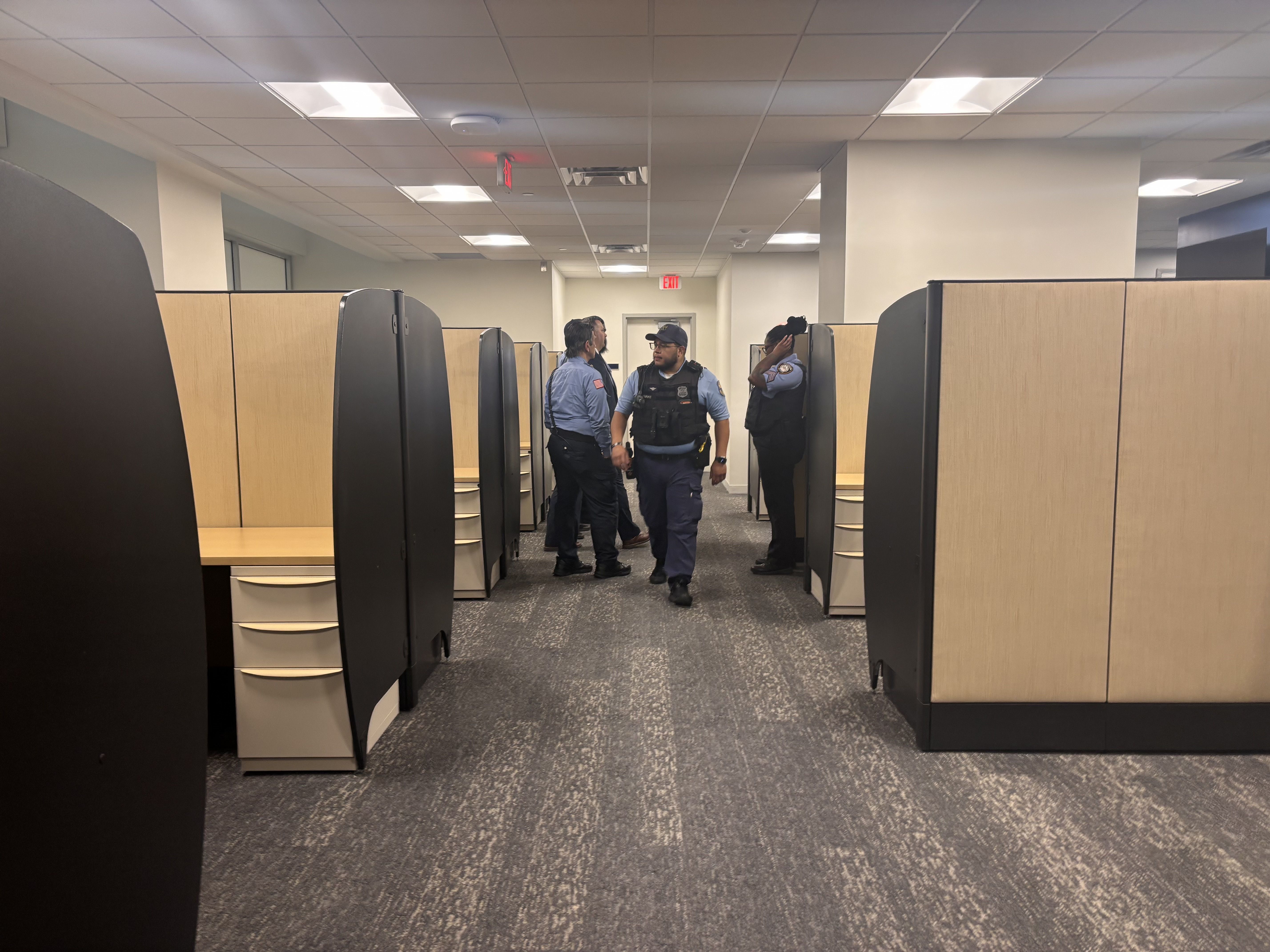
    As Philadelphia prepares for a summer of pageantry with the World Cup and celebrations to mark the country’s 250th anniversary, a public safety hub is opening on Market Street to coordinate police responses in the area.

    The center at 1011 Market St. will be a place for three police forces — Thomas Jefferson University police, Philadelphia police, and SEPTA police — to coordinate.

    Officials expect that the hub will enable police to respond faster to incidents in the area both ahead of the World Cup and as part of a long-term effort to revitalize Market Street. Without an established place for collaboration, officers’ ability to work with different departments was hampered by the lack of physical infrastructure to coordinate.

    “We’ve never had anything like this before,” said Kevin Seta, the director for public safety for Jefferson. Before this hub, he explained, “everyone’s kind of working in silos. We do work very well together with these partner agencies, and we share as much as we can. But in this case, this will allow us to be all in the same room at the same time.”

    With the new center, police presence will increase on Market, Filbert, 11th, and 12th Streets. The hub will become the main headquarters for the Jefferson police force, which was previously on the other side of the Jefferson campus. Twelve officers from the Philadelphia Police Department have been assigned to East Market Street and will use the hub as needed, along with SEPTA officers who patrol the area. Jefferson CEO Joseph G. Cacchione said that with the new officers, he has already noticed a difference in vagrancy and panhandling.

    The city has allocated $1 million for the hub. Jefferson, which has a large presence in the area with its university and health system, will provide additional funds for the project.

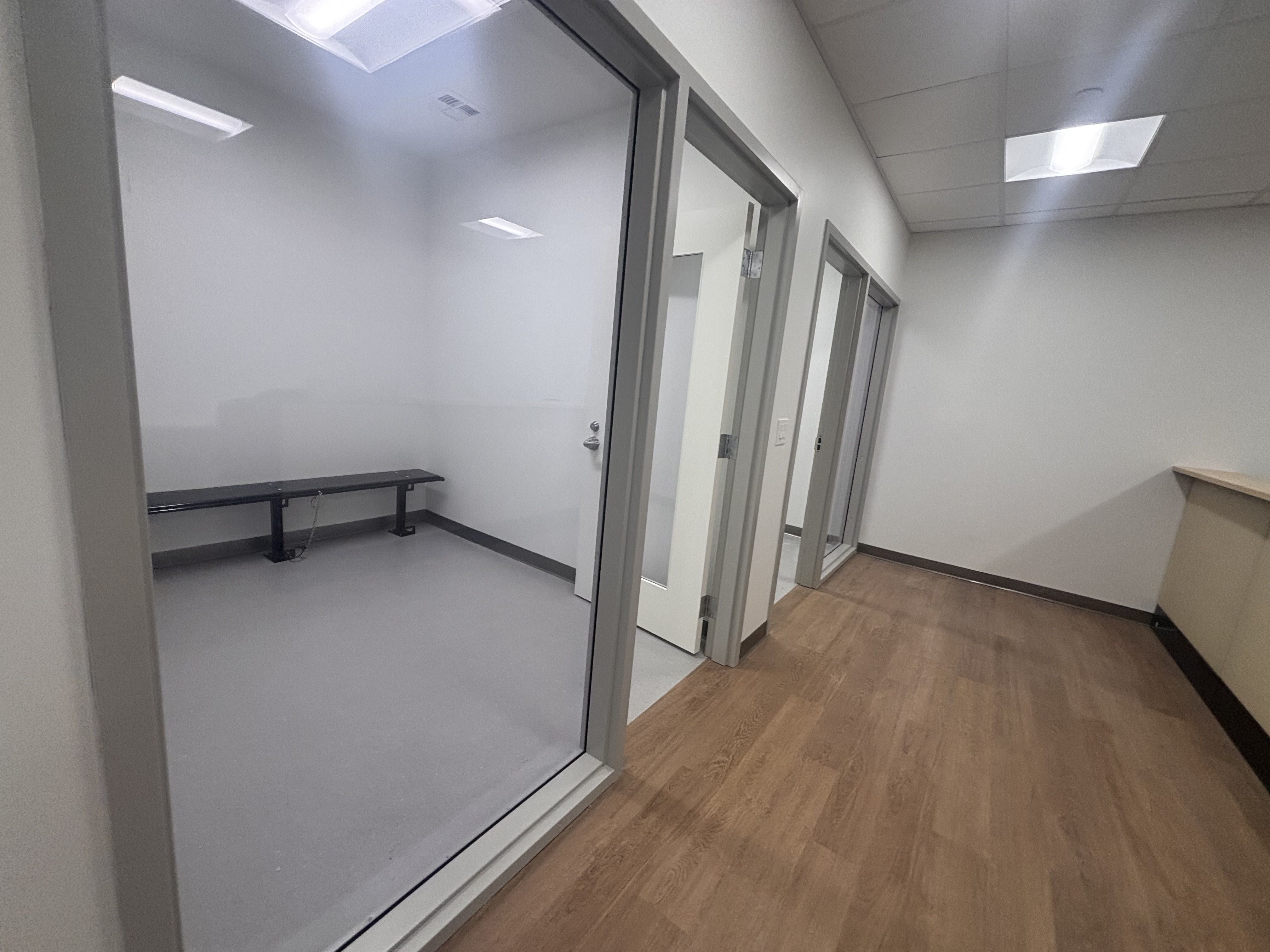
    A holding cell at the new public safety hub for Market Street on June 9, 2026.Isabel Maney / Staff

    East Market has been getting a sprucing up ahead of this summer’s festivities, with pop-up businesses, tree plantings, lighting, and other transformations. Also on Tuesday, officials unveiled an 18-month overhaul of Market Street in Old City that includes a new plaza.

    Mayor Cherelle L. Parker emphasized that the public safety hub was part of a larger project to make Market Street “safer, cleaner, and greener.”

    “We are strengthening our work here in Center City, creating a vibrant and thriving corridor where we have more than 60 partners from across the business, civic, and community sectors,” Parker said. As an expected tens of thousands of visitors begin to arrive, “this coordination right now is more important than ever.”