City officials and residents of the Callowhill neighborhood on Monday night discussed design options for a park atop the Chinatown Stitch, a planned cap over part of the Vine Street Expressway.
The Philadelphia Office of Transportation and Infrastructure Systems is thinking about the day the project is complete, with preliminary exploration of a possible improvement district in the area to finance operations and maintenance.
“We’ve come to the conclusion that there’s not really a city department or even nonprofit entity that’s ideally placed to take over that maintenance responsibility,” said Christopher Puchalsky, director of policy and strategic initiatives at OTIS.
The meeting of the Callowhill Neighborhood Association was held at the Folk-Arts Cultural Treasures Charter School.
The original grant was $159 million, but the city already had spent $8.4 million on preliminary engineering and design work. The rest was rescinded.
Using either a Neighborhood Improvement District or a Business Improvement District would give the neighborhood control over the maintenance of the park and its planned connection to the Rail Park along the Reading viaduct, Puchalsky said.
City money would be subject to a yearly appropriation, and the Stitch would be “not just competing against all the other parks that need to be maintained,” he said. “The Chinatown Stitch would be competing against firefighters and social workers and pothole crews and go down the list.”
People expressed strong support throughout several rounds of community engagement for keeping a completed project safe, clean, and in good repair, Puchalsky said.
He presented three possible annual maintenance and security budgets for a hypothetical improvement district: $1.3 million; $2.2 million; and $3.8 million. A budget would depend on the size of the district and the level of services involved.
The largest budget could likely finance 24-7 security, robust maintenance, and some social service programs, while the smallest budget would provide much less.
Improvement district assessments range from 1% to 7% in Philadelphia, which would be on top of property taxes. Based on rough back-of-the-envelope math, Puchalsky said, the owner of a $500,000 property would pay $140 a year on top of a $7,000 property tax bill at the lowest end of the range and $300 yearly at the highest end.
He stressed that there is no formal proposal for an improvement district or firm estimate for assessments.
“It is a goal to try to get some kind of a neighborhood consensus about what you would like to do,” Puchalsky said. “I’m not hearing anyone jumping up and down, either angrily or cheeringly” — just reasonable questions.
LOS ANGELES — Rob Reiner’s son Nick Reiner is seeking unpaid money from a trust his parents established for him, saying he needs it to help in his defense against charges that he killed them.
A petition filed by the 32-year-old Nick Reiner’s civil attorneys in a Los Angeles County court on Monday says that trustees overseeing the funds have denied them to him without legal justification, and he needs and should get them now.
“Nick loved his parents, and he is devastated by their deaths. But the facts about what did and did not happen to them are not at issue in this Trust litigation,” the petition says. “Like anyone accused of a crime, Nick is presumed innocent, and he is entitled to mount his defense with the resources that are lawfully his own.”
The director and Hollywood luminary Rob Reiner and his wife, photographer and producer Michele Singer Reiner, were stabbed to death in their home in the upscale Brentwood section of Los Angeles on Dec. 14. Nick Reiner was arrested hours later and has since pleaded not guilty to two counts of murder.
Reiner retained high-profile private lawyer Alan Jackson to represent him, but less than a month later Jackson left the case for reasons he said he couldn’t share. The new filing reveals that Reiner’s siblings, Jake and Romy Reiner, had initially agreed to pay for Jackson, but reversed course.
In a declaration included with the petition, Jackson said “my firm stands ready, willing, and able to resume representation of Mr. Reiner” if the funds become available.
The filing says that apart from the larger Reiner family trust, which is not at issue, Rob and Michele Reiner established smaller individual trusts for Nick Reiner and his siblings. It says they left “unambiguous instructions” in Nick Reiner’s trust, established in 1993, that he was to receive half its money when he turned 30 and the rest at 35.
But, the filing says, Reiner never received the funds he was entitled to at 30, and that the trustee overseeing them since February — attorney Paul R. Kanin — has given “a shifting series of excuses and justifications” to deny Reiner the money, including concerns about Reiner’s competence that have no bearing on a payout that is mandatory.
Reiner says he should also get the money he was to receive at 35 immediately because his defense and his need for basic necessities in jail require it.
The petition says the trust has at least $1.5 million in assets, but that Kanin will not share the exact amount of its value.
Kanin did not immediately respond to an after-hours email seeking comment.
Proceedings in Reiner’s murder case are moving slowly. He is scheduled to return to court for a pretrial hearing in September. He is eligible for the death penalty, but District Attorney Nathan Hochman has said his office has not yet decided whether to seek it.
Authorities have said nothing about possible motives, and leaks in the case have been virtually nonexistent on both sides. A court order has kept most details of the autopsies secret. Many of the most basic questions about the killings remain unanswered publicly.
On the day he left the case, Jackson, speaking outside court, declared adamantly that “pursuant to the laws of California, Nick Reiner is not guilty of murder.”
In April, Jake Reiner gave his first detailed account of the experience of losing his parents and having his brother at the center of it, calling it “a living nightmare” that is “too devastating to comprehend.”
Rob Reiner was a prolific director whose work included some of the most memorable and endlessly watchable movies of the 1980s and ’90s. His credits included This Is Spinal Tap, Stand By Me, A Few Good Men, and When Harry Met Sally… , during the production of which he met photographer Michele Singer. They wed soon after and were married for 36 years.
A study commissioned by President Joe Biden’s administration to investigate alcohol-related health harms was released independently on Tuesday, after President Donald Trump’s administration decided not to feature the researchers’ findings in new dietary guidelines as it faced pushback from the alcohol industry and a congressional committee.
The findings of the study, in the Journal of Studies on Alcohol and Drugs, were in line with years of research, saying that health risks go up with just one drink a day and no level of alcohol has a protective effect on mortality. Even levels considered “moderate” raise the risk of premature death and more than 200 diseases, including heart disease and cancer, researchers found.
The new study was one of two government reviews meant to help inform the new dietary guidelines. Released earlier this year, the guidelines advised consuming “less alcohol for better overall health.” The authors of the independently released study say that didn’t provide detailed practical advice about the risks of drinking.
Robert Vincent, a former Substance Abuse and Mental Health Services Administration alcohol policy official who led the yearslong effort, made the accusations in an editorial published alongside the study. Vincent was laid off last year as part of a government reduction in force.
“The challenges confronting alcohol policy today are not rooted in scientific uncertainty,” Vincent wrote. “What remains contested is whether evidence will meaningfully inform policy when it conflicts with commercial interests.”
The dispute over the study underscored the increasingly tense relations between the medical and scientific community and the Trump administration, which has questioned or ignored longstanding science in its policymaking, fired a slew of veteran scientists from the federal workforce, and cut scientific grants that proponents say help keep the U.S. at the forefront of medical innovation.
Industry and congressional Republicans pushed back
After the study’s researchers released a draft report last year, the alcohol industry mobilized against it, launching campaigns to discredit its work. The House oversight committee also criticized the study, releasing a report earlier this year that called it “fraught with bias” and accused the study authors of having predetermined conclusions based on their past research and affiliations.
Emily Hilliard, a spokesperson for the U.S. Department of Health and Human Services, denied any notion that the study wasn’t considered.
HHS and the U.S. Department of Agriculture “reviewed the study alongside the broader body of available scientific evidence and followed the established process for developing the 2025–2030 Dietary Guidelines for Americans,” she said. “The Guidelines are informed by the totality of the scientific record, not any single report or analysis.”
Vincent told the Associated Press in an interview that the researchers were thoroughly vetted for conflicts and the findings were scientifically sound. He said that while he was in the Trump administration, he was “asked to kill the study” but did not. HHS didn’t immediately respond to that claim. The department said the Substance Abuse and Mental Health Services Administration wasn’t involved in the review or the clearance of the study for publication.
Amanda Berger, senior vice president of science and research for the alcohol trade association the Distilled Spirits Council of the United States, said in an email to the AP that the congressional committee’s findings showed the study was “irretrievably flawed.”
Findings support more forceful alcohol intake recommendation
The Trump administration earlier this year released new dietary guidelines that advised consuming “less alcohol for better overall health.” The researchers said that they don’t dispute that advice but that their findings support a more detailed and forceful recommendation that current adult drinkers consume one drink or fewer a day.
“I’m glad that they had a message that corresponds with our science, and that is that less is best,” said Timothy Naimi, director of the University of Victoria’s Canadian Institute for Substance Use Research and one of the study’s authors. “But giving people quantity information is necessary to make a truly informative guideline.”
The study differed from the other research commissioned by the government to help inform the dietary guidelines on the issue, which said moderate alcohol use was associated with a decreased risk of mortality from all causes but also an increased risk of some diseases.
Priscilla Martinez-Matyszczyk, one of the authors of the new study and a deputy scientific director at the Public Health Institute’s Alcohol Research Group, said their study didn’t look at mortality from all causes but instead examined mortality specifically attributed to alcohol to avoid confounding factors.
Martinez-Matyszczyk also addressed an issue raised by Centers for Medicare and Medicaid Services Administrator Mehmet Oz in his explanations of the new guidelines: that drinking is “a social lubricant that brings people together” and that even though not drinking is preferred, being social has health benefits.
“I don’t know of any studies that have teased out the social effect from the health effect,” she said.
Research aligns with other recent findings
The new findings are “in line with the latest science that basically shows less is better when it comes to health,” Naimi said.
For example, a 2019 study in Lancet found that moderate drinking slightly raised the risk of stroke and high blood pressure and offered no protective effects on health.
Moderate drinking was once thought to have benefits for the heart, but better research methods have thrown cold water on that idea. Older studies compared groups of people by how much they drink instead of randomly assigning people to drink or not, so they couldn’t prove cause and effect. When researchers adjusted for things like education levels, income, and healthcare access, the benefits tended to disappear.
About half of Americans age 12 or older had a drink in the past month, researchers said, making it the most commonly used addictive substance in the U.S. One drink is the equivalent of about one 12-ounce can of beer, a 5-ounce glass of wine or a shot of liquor.
WASHINGTON — For President Donald Trump, any Democratic election victory is suspicious on its face. Even, apparently, in one of the most liberal cities in America.
“Not possible for Spencer Pratt to have lost the L.A. runoffs after the big lead he had,” Trump wrote on social media on Monday. “3rd World Nation.”
On election night last Tuesday, Pratt — the reality-television personality and Trump-endorsed Republican — led progressive City Council member Nithya Raman for second place to advance to November’s mayoral runoff, behind the incumbent, Mayor Karen Bass, who is also a Democrat.
But as election officials spent the following week counting late-arriving mail ballots, which were disproportionately from Democrats, Raman edged ahead of Pratt. On Monday evening, the Associated Press said she had indeed prevailed.
Such fleeting Republican leads are common enough to have a name — the “red mirage” — yet Trump, as he did in his own 2020 loss, cast the slow count as proof of theft. By baselessly framing Raman’s rise as a Democratic scam, Trump extended his long-running project to erode public faith in elections — and gave an unusually clear preview of how he could greet any disappointing results for his party in November, when control of Congress is at stake.
He has been anything but subtle about his desire to limit the ability of Democrats to vote by mail, implying, with no evidence, that simply choosing that widely used means of casting a ballot is inherently suspect. Addressing a gathering of Republican lawmakers in March, he said the way to hold their majority was to pass a strict voter identification law cracking down on mail ballots.
“It’ll guarantee the midterms,” he told them, warning that failure would bring “big trouble.”
Privately, according to one senior adviser, he has pressed aides to find ways to “stop them stealing it from us.”
What is striking so far is how little of this has survived contact with reality. Voting legislation he has championed, the SAVE Act, cleared the House but stalled in the Senate, where Republicans lack the votes to break a Democratic filibuster. Among other things, the bill would require proof of U.S. citizenship to register to vote and would compel states to share voter rolls with the federal government.
An executive order he signed in March directing the Department of Homeland Security to assemble a federal list of eligible voters and barring the Postal Service from delivering mail ballots to anyone left off it was condemned by election experts as illegal and drew multiple lawsuits.
Still, even if Trump fails to change election laws or processes, he can sow substantial chaos simply by trying to convince voters that the results were fraudulent.
More than five years after his supporters, fueled by lies about a stolen election, stormed the Capitol to stop the transfer of power, Trump has tried to recast Jan. 6, 2021, as a day of “peace,” claiming his supporters were led astray by FBI officers in a false-flag operation. He has produced no credible evidence, yet he has pardoned rioters who breached the Capitol and has entertained paying restitution to some of them, over the objections of even some in his own party.
His fraud claims about California could matter especially in November. The House majority rests on a thin margin, with Republicans holding 218 seats to Democrats’ 213. After California voters approved Proposition 50 in November — a constitutional amendment pushed by Gov. Gavin Newsom to permit a redrawing of the state’s congressional map — Democrats have a chance to flip as many as five Republican-held seats, potentially enough to take the chamber.
Many of those seats lie in the same Central Valley and Orange County districts whose ballots take days or weeks to tally. In other words, the races that may decide control of Congress could be counted in precisely the slow way Trump reflexively calls fraud. Elon Musk has amplified the message, arguing that the combination of no voter ID and mail-in ballots amounts to legalized fraud.
Trump has leveled the same accusation at California’s governor’s race, in which Republican Steve Hilton is fighting for the second spot that would set up a November runoff against Democrat Xavier Becerra.
After complaining about “rigged elections” in his Monday social media post, the president added: “Now they’ll be working on great guy Steve Hilton. Won’t have results for, possibly, TWO WEEKS, according to officials.”
This year, California had an unusually competitive primary election for governor, driving up turnout and raising the stakes of the statewide count. To add to the issue, many Democrats waited to return their mail ballots as the field shifted and as some were concerned that Democrats could get locked out of the top two spots.
Asked whether Trump had any evidence to support his claims that the California elections were being rigged, Abigail Jackson, a White House spokesperson, said he was “committed to ensuring that Americans have full confidence in the administration of our elections.” That pledge, she added, is “why millions of Americans sent him back to the White House,” adding that Trump would implement measures to “secure our elections for generations to come.”
During his losing 2020 campaign, Trump repeatedly made baseless claims that mail-in voting was rife with fraud. In that election, Democrats, many of whom were strictly adhering to pandemic protocols, were much more likely to vote by mail than Republicans, who tended to prefer to vote in person on Election Day — a partisan divide that persists today. Yet Trump’s crusade against mail-in votes that year alarmed Republican legislative leaders, who privately tried explaining to him that many of the party’s own voters were older and cast ballots that way.
Several states took days to finish counting mail-in ballots in 2020. In Pennsylvania, Joe Biden’s share of the vote grew each day, eventually allowing him to overtake Trump in the state and win the election.
Since 2020, many states have made significant investments to speed up their abilities to count mail-in votes quickly. In California, however, it is still common for it to take days or even weeks before enough votes have been counted for news organizations to declare a winner.
This year’s election in California was primed to create even more of a red mirage effect than normal. Facing late upheaval in the governor’s contest after the departure from the race of Eric Swalwell, a member of Congress at the time, many Democrats waited until the last minute to return their ballots. That meant that the first ballots to be counted and reported were more Republican than normal, and the ballots reported after Election Day have been even more Democratic than is typical.
Paul Mitchell, vice president of Political Data Inc. in Sacramento and an expert in California voter turnout, said his firm’s data showed that the share of Democratic voters’ ballots being processed has far outpaced the share of Republican ballots in recent days, and that the distance had widened.
California sends every regular voter a mail ballot that can be returned at their convenience. It gives a weeklong grace period for ballots to arrive as long as they are postmarked by Election Day. The state allows voters registered at old addresses or those not registered at all to fill out provisional ballots that become valid if election officials verify their information and deem them eligible. And it allows voters with mismatched signatures on file to resolve discrepancies once they are detected.
All of those provisions make voting easier for residents in California than in many other states, but they add various checkpoints in the system to ensure security, each of which costs time.
“In California and Los Angeles, we have our election laws written in a way that maximizes participation,” said Mike Sanchez, a spokesperson for the Los Angeles County registrar of voters.
Mitchell, who is a Democratic consultant, said that, paradoxically, the most effective way to speed up California’s count would be to eliminate security protocols, like cutting ballot signature verification or checks on voter registration for provisional voters.
“I don’t think Republicans would want that,” he said.
Other election experts said California suffered from logistical problems. Each of California’s 58 counties is responsible for running its own election, and many lack sufficient resources to verify mail ballots and count votes quickly. They may not have enough workers, space, or machines to process ballots in quick order.
State lawmakers passed at least three bills last year designed to speed up the count, but the changes seemed to have marginal effect, given where things stood on Monday, with only about three-quarters of the ballots counted six days after the election.
The bills shortened the deadline to finish counting most ballots, to 13 days from 30 days. They also allowed election officials to begin processing ballots earlier than before and required slightly more frequent updates of results.
But elections are largely county-funded, and most of California’s counties lack the resources to keep staff on constant rotation, said Kim Alexander, who runs the nonpartisan California Voter Foundation.
“We expect our counties to provide all these services to facilitate elections, and the state and federal governments aren’t paying their fair share of the cost,” she said.
He called himself “the Beast,” and he killed six people in six months.
Several of his victims were retail store workers who gave up cash or goods during robberies, and he decided to shoot them anyway. One of the victims was his mother — he shot her at her office because he wanted the payout from her life insurance policy.
On Tuesday, Keith Gibson, 44, was delivered a measure of accountability for his killing spree — one of the worst in recent city history — when a jury convicted him of four counts of first-degree murder and related crimes for the killings he committed in the city in 2021.
He was immediately ordered to serve four consecutive life sentences in prison. That’s on top of the seven life sentences he had already been handed for two murders and a string of robberies he committed in Delaware.
The case attracted attention when the crimes happened five years ago, in part because some of Gibson’s targets were compliant and effectively defenseless when he shot them. In one murder, at a Dunkin’ store in Fairhill, surveillance video showed an employee speaking with Gibson for several minutes and handing him cash before he shot her in the head and left her for dead.
Surveillance video showed Keith Gibson inside the Dunkin’ before he shot and killed Christine Lugo in June 2021. Courtesy of Philadelphia police
Assistant District Attorneys Jeffrey Hojnowski and Katie Wood called Gibson’s crimes despicable.
“These were regular, ordinary people, fellow Philadelphians going about their business, trying to work, and they were gunned down callously, needlessly,” Hojnowski said. “This was never about the money. This is about control. This is about dominance.”
The case also stood out because of questions about why Gibson had been free to kill in the first place. In April 2021, he was jailed in Delaware for a probation violation, and a probation officer told a judge that police considered Gibson a suspect in his mother’s killing. But the judge ordered Gibson released, and in the weeks after, he went on to kill three more people.
The weeklong trial that led to his conviction in Philadelphia relied heavily on surveillance video and ballistics evidence. Testing showed that Gibson had used the same revolver in every crime, and officers in Wilmington found the gun as they arrested him for robbing a Rite Aid store.
A former friend, Amanda Masteller, took the stand and testified that Gibson, who she said referred to himself as “the Beast,” carried that revolver everywhere — including into her house and around her children when she let him stay in a spare room from time to time.
She wanted to tell him to stop coming over, she said, but the gun and his aggressive demeanor left her afraid of what might happen if she did so.
“I was petrified of this man,” she said.
Gibson’s crimes
Gibson’s killing spree began Jan. 28, 2021, at Al-Madinah Traders store in Germantown. There, he rummaged through the shop and stole several watches. He forced employees Roy Caban and Eric Flores into a back room, where he shot Flores in the head and Caban in the back as he tried to flee.
The following week, Gibson set out after his own mother.
Christine Gibson, 54, was shot and killed by her son, Keith Gibson, in February 2021. She worked as the director of a mental health program at a community center in East Falls.Courtesy of David Thornton
Christine Gibson, 54, told family members she was afraid of her son and wanted him to move out of her North Philadelphia home. And, prosecutors said, she had made plans to remove him as the beneficiary of her life insurance policy.
On the morning of Feb. 8, Keith Gibson accompanied her to the United Peers Community Center in East Falls, where she worked as the director of a mental health counseling program. Once inside, he took her to a small office room in the rear of the building and shot her in the back of the head. Her body was found two days later.
Soon after, probation officials in Delaware sought to have Gibson held in jail, filing paperwork saying he was a suspect in his mother’s killing and that violated the terms of his probation from a 2010 manslaughter conviction.
But Superior Court Judge Vivian L. Medinilla declined to extend Gibson’s time in custody. He was released in late April.
A few weeks later, in late May, Gibson robbed an AT&T store in Elsmere, Del., of cash and phones, and shot and killed the store attendant before stealing her car.
And in early June, his crimes continued in Philadelphia.
Surveillance video played at trial showed Gibson wandering the city on foot before dawn on June 5. After leaving his house on the 2700 block of North Croskey Street at 4:25 a.m., evidence showed, Gibson walked about a mile and a half to the Dunkin’ at Fifth Street and Lehigh Avenue.
Christine Lugo was unlocking the store to start her shift when Gibson walked over to her with his gun and shoved her inside.
Christine Lugo was killed during a robbery at the Dunkin at 532 W Lehigh Ave. on June 5, 2021.
Cameras from inside the store captured the lengthy encounter. Lugo did not appear to panic, and was not aggressive toward Gibson. Instead, she could be seen shrugging at times and showing Gibson her wallet, as if to suggest she didn’t have anything for him to take.
Eventually, she sat down on a chair in a closet-size office and gave Gibson about $300 from the cash register trays.
Gibson then glanced at his watch, shot Lugo in the head, and walked out.
Later that day, he went to Wilmington, where he shot and killed Ronald Wright, 42, during a robbery.
His string of crimes began to unravel there three days later, when he robbed a Wilmington Rite Aid and stole a bag of cash — with a tracking device inside. Police quickly arrested him with a revolver behind a rowhouse. Ballistics tests later showed the same gun had been used at Al-Madinah Traders and in the killings of Gibson and Lugo.
Tips from the public identifying him in surveillance footage then bolstered the investigation. After Lugo was killed, police released some footage from the incident to try to identify a suspect. Masteller — his former friend from Delaware — said she saw it and called to tell police the man in the video was Gibson.
Gibson’s attorneys, Jonathan Strange and Brian Johnson of the Defender Association, said homicide detectives rushed to tie Gibson to other crimes as a means of closing old, unsolved cases. They failed to collect or test certain evidence, Johnson said, including surveillance video and DNA in some of the cases.
“The police had to take the easy way out,” he said.
Following his convictions, Gibson, in a lengthy ramble, said he was not happy with his legal representation and intended to appeal his convictions. He was not guilty, he said. And he only briefly addressed his victims’ families, saying: “I’m extremely sorry for your loss.”
It brought no comfort to the loved ones of his victims who had filled the courtroom throughout the trial.
Lugo’s children, Frances Rodriguez and Christian Lugo, said the disturbing video of their mother’s death will remain etched in their memories. Still, as prosecutors played it several times, they stayed to watch.
Left to right: Frances Rodriguez, Christine Lugo, Christian Lugo, and another family member celebrate Christmas.Courtesy of Frances
“I didn’t want my mom to be alone,” said Rodriguez, 27. “She already had to experience it alone already.”
Lugo, originally from Massachusetts, had a vibrant laugh and believed fiercely in giving people second chances, they said. She had two children and three grandchildren.
Also in the courtroom Tuesday were members of Gibson’s family, who had spent years praying he would be held accountable for killing his mother.
David Thornton, 68, said his nephew stole the golden years of his sister’s life.
Christine Gibson overcame years of addiction, he said, and went on to earn a master’s in sociology from Widener, bought a house in Philly, and was working a job she loved. She was strong, outgoing, and full of joy.
She had told Thornton she was afraid of her son, he said, but did not want to call the police.
“She’d say, ‘That’s my son,’” Thornton said. “That was her only child.”
They never imagined it would come to this.
“Some things,” he said, “are not meant to be understood.”
For almost a decade, consumer and civil rights advocates have urged New Jersey lawmakers to bar companies from basing car insurance rates on socioeconomic factors they deem discriminatory and that have nothing to do with driving — things like credit history, marital status, education level, occupation, and zip code.
They renewed their plea Monday, when the Senate’s commerce committee called up a long-stalled bill for consideration — its third committee hearing since it was first introduced in 2018. The bill’s supporters expressed frustration with the legislative inaction, with Danielle Combs of the NAACP’s New Jersey state conference calling insurers’ practice “thinly veiled discrimination.”
“This proposed law is about more than car insurance rates. It’s about justice. It’s about dismantling systems that quietly but powerfully keep our communities at a disadvantage,” Combs said. “When a single mother in Newark, Trenton, or Camden has to pay double what someone in a wealthier suburb pays for the same coverage and the same driving record, that is not fair, that is not equal, and that is not acceptable.”
The latest hearing comes seven months after the NAACP, Latino Action Network, and the Latino Coalition of New Jersey sued the state to compel change. A judge agreed in April to stay the case until October so the state Department of Banking and Insurance can review the issues. It also comes as car insurance premiums in New Jersey have soared since the pandemic, a trend critics say has fueled a spike in uninsured motorists amid broader affordability concerns.
But while the Senate panel’s chair, Sen. Joseph Lagana (D-Bergen), conceded that using socioeconomic factors to set insurance rates could have “a discriminatory impact,” the committee did not act on the bill.
Four insurance industry insiders testified against the bill, and several other business groups also registered their opposition. Lagana pointed to their objections as evidence the legislation needs more work before seeing a vote.
“We have to figure out how to balance the two and what should be the policy, to make sure that people are not disproportionately impacted by something that may be a legitimate rating tool,” Lagana said. “And that’s a very fine needle to thread.”
Industry lobbyists insisted socioeconomic factors predict risk, are not discriminatory, and are an “actuarially justifiable” variable upon which they can set premiums predictive of loss.
“The bill before you today does not ban discrimination. New Jersey law already does that. The bill before you today bans accuracy,” said George McNab of the National Association of Mutual Insurance Companies.
Gary La Spisa of the Insurance Council of New Jersey defended the industry’s use of socioeconomic factors in setting rates, saying they’re overseen by the Department of Banking and Insurance and every premium increase must be justified to get approval.
Barring any consideration of socioeconomic factors would force insurers to assume that drivers with different levels of risk represent the same risk, McNab added.
“The inevitable result is a one-size-fits-all pricing that is neither scientifically sound nor fair to New Jersey consumers,” he said. “Riskier drivers would become harder to identify and would pay less than they should, while many responsible drivers will be asked to subsidize those higher risks.”
But Javier Robles, president of Latino Action Network, pushed back on that argument. He reminded the panel that about a quarter of New Jersey’s labor force is Latino, and half of those workers hold blue-collar jobs.
“When New Jersey allows insurance to charge higher rates based on education or job title, it punishes the very people who make New Jersey work. A home health aide shouldn’t pay more than a health care executive with the same driving record. That’s not risk-based pricing. That’s bias, plain and simple,” Robles said.
Basing rates on socioeconomic factors has unintended consequences, Consumer Reports’ Chuck Bell noted, saying Garden State drivers with poor credit face higher surcharges than people convicted of drunk driving.
“Somebody who does one of the most dangerous things you can do on the road is charged less than somebody with poor credit,” Bell told the panel. “People who live in lower-income neighborhoods are getting multiple gut punches because of the use of these factors, education, occupation, and credit history, and it’s really time to take action.”
That’s especially true because a person’s credit score could dip because of things outside their control, such as a layoff or medical emergency, added John Harmon of the African American Chamber of Commerce of New Jersey.
The bill’s supporters noted that other states including New York have banned socioeconomic factors in premium determinations and yet “the auto insurers continue to do business,” as Beverly Brown Ruggia of New Jersey Citizen Action put it.
Lagana assured supporters and critics alike that bill sponsor Sen. Teresa Ruiz (D-Essex) would use their testimony to tweak the bill. Ruiz did not respond to a request for comment.
The bill passed the full Senate in 2019 and 2021 but didn’t advance at all in the last two legislative sessions and has never moved in the Assembly.
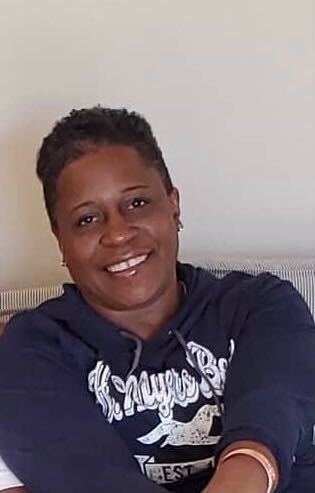
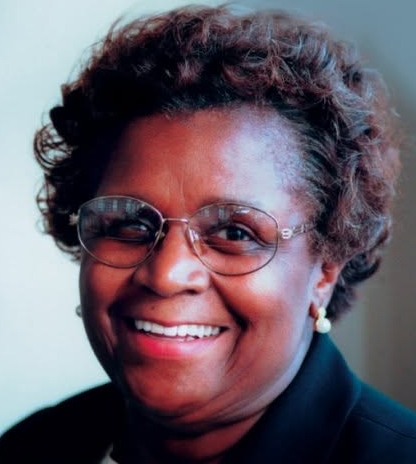
Jackie Love, 83, of Deptford Township, longtime social justice activist, Black political pioneer, former council member and the second Black female deputy mayor of Deptford Township, former director of what is now the New Jersey Division of Disability Services, New Jersey Elected Officials Hall of Famer, mentor, and volunteer, died Friday, May 29, of age-associated decline at Shady Lane Nursing Home in Clarksboro, Gloucester County.
Born in Philadelphia, Mrs. Love moved to Deptford Township when she was 13. She was reared by her grandmother, earned an associate’s degree in business administration at Camden County College in 1972, and served in government leadership roles for Deptford Township, Gloucester County, and New Jersey for four decades until her retirement in 2009.
“Her caring spirit and willingness to help her community is a true example of a servant leader,” a former colleague said on Facebook.
Mrs. Love was hired by Gloucester County officials in the 1970s to coordinate employment training programs and later to prevent and eliminate disability discrimination. She was the first director of the old Gloucester County Office for the Disabled in the 1980s and later was director of the Gloucester County Disabled Persons Advisory Commission.
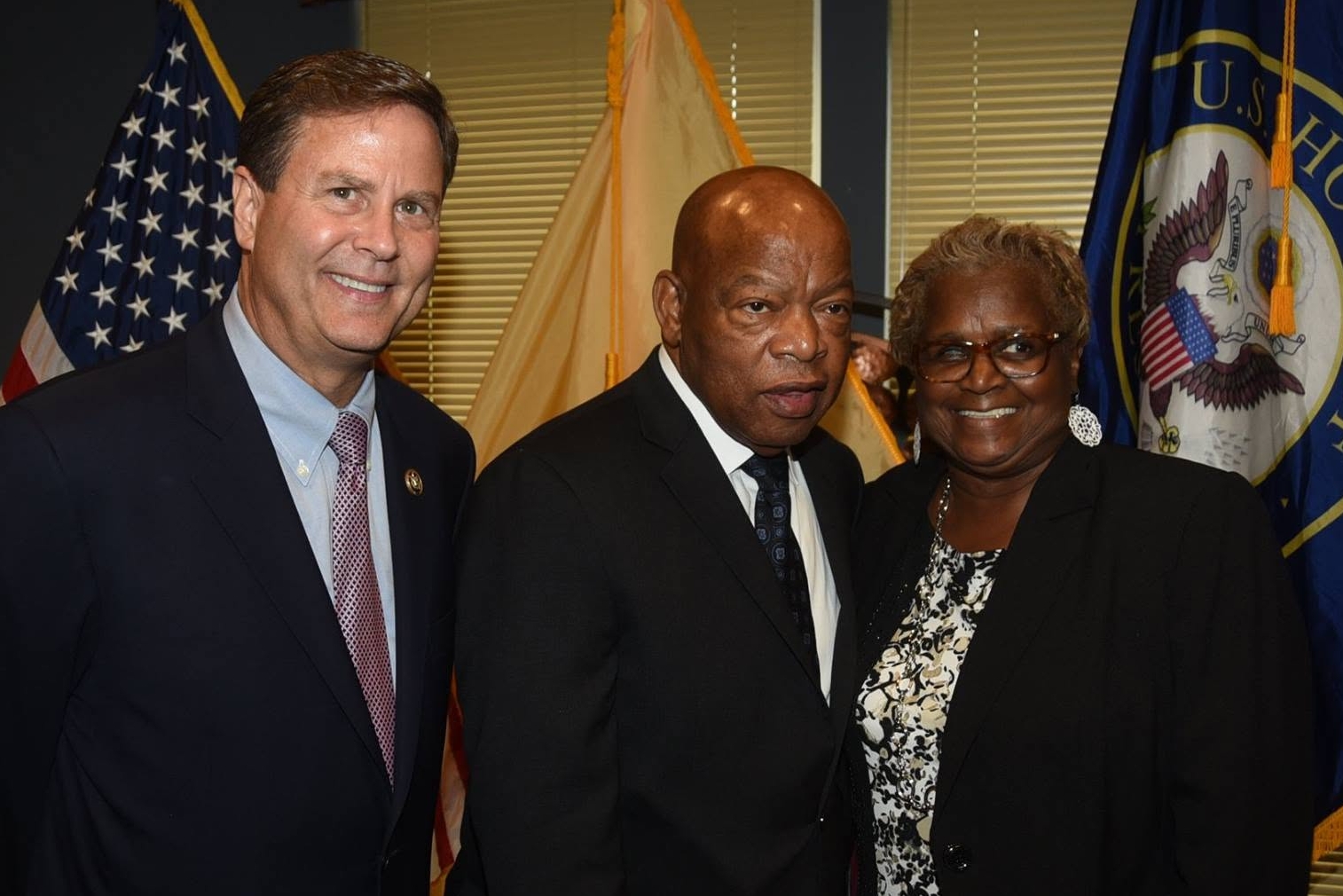
Mrs. Love stands with U.S. Reps. Donald Norcross (left) and John Lewis.Courtesy of the family
She became director at the old New Jersey State Office for Disability, now the New Jersey Division of Disability Services, in the 1990s and championed the installation of sidewalk ramps, curb cuts, and other improvements throughout the state. “We wanted to start making sure that we were accessible,” she told Front Runner New Jersey in 2025. “That’s a highlight of my life.”
Mrs. Love first ran for Deptford Township Council as a Democrat in 1989. She received more votes than any of the other nine candidates, routinely collaborated with members of both parties, colleagues said, and became deputy mayor in 1996.
“When Jackie was on council and she walked into a room, everybody knew who Jackie Love was,” Deptford Township Mayor Paul Medany told The Inquirer in 2015. “She’s known all over the state.”
As Deptford council member and deputy mayor, Mrs. Love focused on reducing juvenile crime and lobbied for sound barriers along the New Jersey Turnpike, lower speed limits on busy township roads, responsible school budgets, improvements to animal waste disposal procedures, and upgraded vendor code guidelines. In 2015, Deptford Township officials renamed Church Street Park as the Jackie Love Community Park.
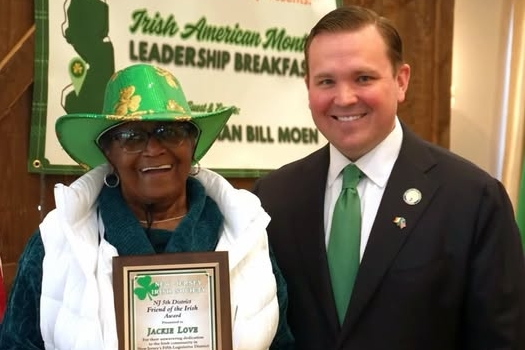
Mrs. Love stands with state Assemblyman Bill Moen in 2025.New Jersey Irish Society
“To see the future politicians and others out there playing and getting involved is another highlight of my life,” she told Front Runner New Jersey about the park.
In 2005, the editorial board for the Courier-Post called Mrs. Love “loyal, hardworking, and a team player.” In a Facebook tribute, U.S. Rep. Donald Norcross (D., N.J.) said: “Jacquelyn Love was a force for good in Deptford for generations. She paved the way for others as a Black female deputy mayor … and long remained a champion for civil rights, faith, the disabled, and many more throughout her life.”
Mrs. Love also served as a commissioner for the Delaware River Port Authority. She was active with the Gloucester County Minority Coalition, the Gloucester County College advisory committee on diversity and civility, and other groups.
She recruited volunteer poll workers and was a delegate for Bill Clinton at the 1992 Democratic National Convention in New York. In the 1970s, she traveled the country with civil rights leader Leon Sullivan and helped organize his Opportunities Industrialization Centers of America.
Mrs. Love (left) enjoyed time with her family.Courtesy of the family
She was named the 1987 Woman of the Year by the Gloucester County chapter of the NAACP, honored in 2005 by the Gloucester County Human Relations Commission, and inducted into the New Jersey Elected Officials Hall of Fame in 2010. In March, her achievements were recognized by the New Jersey Irish Society.
Mrs. Love mentored dozens of colleagues and friends, conferred frequently with Philadelphia Mayor Cherelle L. Parker, and volunteered at Mount Zion Wesley United Methodist Church and for the United Way. On Facebook, former colleagues called her “a once-in-a-lifetime type of leader” and “one of the most dedicated public officials I have ever had the honor of working with.”
Jacquelyn Williams was born Sept. 10, 1942. She dropped out of Woodbury High School at 17, earned her General Educational Development certificate later, and worked at first as a counselor at Ancora Psychiatric Hospital in Hammonton.
She married Arnold Love in 1972, and together they reared her daughter, Wanda, and their son, Wayne. Her husband died in 1985.
Mrs. Love participated in this 2020 drive-by salute to a friend’s 60th wedding anniversary. Jose F. Moreno / Staff Photographer
Friendly and classy, friends said, Mrs. Love wore memorable hats and enjoyed shopping at local Amish markets. She visited Amish friends in Lancaster when she was young, took classes at what are now Rowan and Rutgers Universities, and lived in Jericho for decades.
Friends called her a “cornerstone of this neighborhood” and a “wonderful down-to-earth lady.” One friend said: “Jackie set the standard for leadership and dedication to her family, faith, friends, and public service.”
Her son said: “She showed love to so many people.”
In addition to her children, Mrs. Love is survived by four grandchildren, four great-grandchildren, a sister, and other relatives.
Visitation with the family is to be from 8 to 10 a.m. Friday, June 12, at Gloucester County Community Church, 359 Chapel Heights Rd., Sewell, N.J. 08080. A service is to follow.
Friends called Mrs. Love a “cornerstone of this neighborhood.”Courtesy of the family
Former President Joe Biden made a surprise appearance at the annual Stonewall Awards in Philadelphia on Sunday, delivering a 20-minute speech to a packed crowd in Center City.
The award ceremony, started in 2022 by Philadelphia Gay News founder and publisher and participant in the 1969 Stonewall rebellion Mark Segal, recognizes those in the region advancing the LGBTQ rights in Pennsylvania. This year’s speakers, including Biden, took a moment to celebrate the decades of civil rights battles that led to Philadelphia becoming a cultural hub for queer people, but warned that the fight is only getting harder.
“What I don’t think straight people understand is that you have risked a hell of a lot and it’s taken enormous courage to stand here today. You risk your jobs, your families, and your very lives for the cause of equality,” Biden said. “We need that courage today more than ever before. The fellow we have as president right now is not having a very positive impact on anything.”
State Rep. Malcolm Kenyatta, who is a vice chair of the Democratic National Committee, surprised the crowd made up of LGBTQ organizations, media, and community members at the Arts Ballroom in the heart of the Gayborhood when he walked up to the stage with a trail of Secret Service agents and the 46th president. The ballroom erupted with cheers as the audience gave the duo a standing ovation. “I decided to bring a friend with me,” Kenyatta said to the crowd.
State Rep. Malcolm Kenyatta at the Capitol in Harrisburg on May 13, 2025.Tom Gralish / Staff Photographer
Biden delivered prepared remarks but wasn’t shy about speaking from the heart, said Segal, who witnessed the police assault on the Stonewall Inn in 1969, a moment credited for spurring the modern queer civil rights movement.
“I think that’s the magic of the Stonewall Awards. You’re in a room with people who want to feel unified and it’s a struggle out there these days thanks to the current administration,“ Segal said. ”This is the day that we get to celebrate ourselves and celebrate where we are and to say, ‘We’re never going back.’”
The president shared stories of his granddaughters fearing for their gay friends as the White House pushes policies that strip rights from LGBTQ people.
“Even though we made enormous progress, as we continue to make the final run here, progress is going to get tougher and the other team’s going to get rougher,” Biden said.
Segal said the Stonewall Awards have brought local leaders and celebs like Gov. Josh Shapiro, Mayor Cherelle L. Parker, and Abbott Elementary star Sheryl Lee Ralph to its stage in prior years. But Biden was a big surprise, said Jacen Bowman, the president of Philly Black Pride.
“We didn’t know Biden would be there, but once we saw Secret Service, we knew something was up. After his speech, he walked right over to our table and spoke to my mom about the award I won and it was amazing,” Bowman said, whose mother is still elated over meeting the former president.
Bowman received his second Stonewall Award on Sunday as he and his fellow organizers grow the organization’s cultural impact on the city and beyond. Bowman’s work hopes to not only bolster the community in a time of increased threats, but also highlight those who may get left out of the picture through murals like creating Finally on 13th, a celebration of Philadelphia’s underground ballroom culture, and remembering icons like the late Stacey Blahnik, a transgender woman and icon in the local ballroom scene whose murder is still left unanswered more than a decade later.
“I love Philadelphia and being honored for my work in the city that has made me, broken me, and uplifted me — I’m so grateful,” Bowman said.
Councilmember Mark Squilla and the Philadelphia Visitor Center received awards for their contributions to LGBTQ advocacy. Alex Niedbalski-Sykes and Ashley K. Lunkenheimer were also recognized for their contributions, including the work of Philadelphia Sisters, an organization that has vowed to bring more professional women’s sports teams to the city, especially after a WNBA team arrives by 2030.
Nine protesters arrested last year at a pro-Palestinian encampment at Swarthmore College said Tuesday that they had done nothing wrong and have no intention of pleading guilty to the trespassing charges they face.
“We affirm that we are guilty of nothing because it is always right to rebel against genocide,” Jace Boland, a junior at the college, said at a news conference on the steps of the Delaware County Courthouse.
Boland was joined by his eight codefendants and a small crowd of supporters in urging prosecutors to drop what they described as “absurd criminal charges.”
The so-called Swarthmore 9 were arrested and briefly detained on the college’s campus in May 2025 when officers from surrounding police departments dismantled their encampment protesting the war in Gaza and Swarthmore’s contract with a company that does business with the Israeli government.
Of the nine people arrested, only Boland is a student at the college. Another, Brendan Cook, is a former student who was suspended for participating in an earlier protest in 2024, but the rest are not affiliated with Swarthmore, according to school officials.
Members of the group — Boland, Cook, Jonathan Britt, Mara Helen Cahill, Daria C. Dressler, Thomas Falcone, Colin Buckley Malcarney, Riley J. McManus, and Andrew Thomas — have all been charged with trespassing, a third-degree misdemeanor.
Their attorney, Marni Jo Snyder, has filed a motion to dismiss the case that will be argued before Delaware County Court Judge Dominic Pileggi on June 22, a week before the group’s scheduled trial.
District Attorney Tanner Rouse said Tuesday that prosecutors had offered the group the chance to plead to a lesser, summary offense, which Rouse described as “akin to an ‘open container’ or noise violation ticket.”
“That they want to proceed to trial as charged is absolutely their right, but so is it the commonwealth’s right to protect the interests of private citizens and institutions that do not have to abide every random person who has an issue parking on their front lawn,” Rouse said. “Private property owners have a right to say ‘please leave’ when the time comes.
“If their concern is a criminal charge or exposure to judicial punishment, there is and always has been an easy off-ramp available to them,” he added. “They have chosen not to take it.”
Jace Boland said Tuesday that he and his co-defendants “are guilty of nothing because it is always right to rebel against genocide.”Alejandro A. Alvarez / Staff Photographer
At Tuesday’s news conference, Swarthmore professor Mark Wallace said he supports the protesters and believes the college betrayed the ideals on which it was founded by having them arrested.
“How can students who live and work on a campus be charged with trespassing there while applying what they’re learning in the real world?” he asked. “Colleges should be places where large, uncomfortable questions are asked and struggled over.”
A spokesperson for Swarthmore did not immediately respond to a request for comment Tuesday.
Previously, the college, in a statement, echoed what Rouse said Tuesday — that county prosecutors had offered to reduce the charges in the case to a summary offense if the defendants pleaded guilty, but they declined.
Boland said he and the others charged would not plead guilty, fearful that doing so would discourage future activism.
“If the college can deploy state violence to protect its interests without consequence, there is no telling what levels of repression future generations of student activists will face,” Boland said. “Swarthmore College cannot continue to benefit from its reputation as a liberal arts institution that encourages activism while simultaneously crushing dissent.”
Swarthmore Borough police arrested the group in May 2025 after issuing multiple warnings to members of an encampment that had formed outside Swarthmore’s Trotter Hall.
The encampment, which protesters referred to as the Hossam Shabat Liberation Zone in honor of a journalist killed in an Israeli drone strike, was formed to demanded that Swarthmore end its IT support contract with Cisco, which also holds contracts with the Israeli government.
Swarthmore College professor Mark Wallace spoke at Tuesday’s news conference in support of the nine protesters arrested at the school last year.Alejandro A. Alvarez / Staff Photographer
Swarthmore College president Valerie Smith wrote in a letter last year that members of the Liberation Zone created their enclosure using campus property and had vandalized other parts of campus with incendiary graffiti.
Smith wrote that she “unequivocally condemn[ed]” the group’s actions and said that law enforcement officials, including the FBI, told her to dismantle the encampment as soon as possible.
“I urge these protesters to pursue a less divisive approach to expressing their views — one that aligns with not just the College’s policies, but with the mutual respect, compassion, and care that all in our community deserve,” Smith wrote in the letter.
Days before the protesters were arrested, campus police forcibly took back some of the items they had taken to build the encampment, and issued disbandment orders to people they found within it.
On the day police came to clear out the encampment, they gave protesters a 10-minute warning to vacate the property.
The protesters refused to leave, sitting with their arms interlocked, according to video of the arrests posted by the Swarthmore chapter of Students for Justice in Palestine.
All nine of the protesters charged in the case were detained briefly and released on unsecured bail.
The Lower Merion school board plans to stop assigning personal laptops and iPads to kindergartners, first graders, and second graders after facing intense pushback from parents who say kids are getting too much screen time in school.
Members of the school board’s policy committee announced the plan during a meeting Monday, along with other proposed limits on technology use. Under policy changes going before the full school board for review next week, third and fourth graders would use electronic devices stored on carts in classrooms, while fifth and sixth graders would be permitted, but not required, to bring devices home.
But parents who have accused the district of overusing educational technology said the proposed changes did not go far enough — leaving too much room for interpretation around when technology should be used, and failing to adequately restrict kids’ access to inappropriate websites.
Some parents also expressed anger that the board is moving forward with repealing the current technology policy, which contains language accommodating families who opt out of district-issued devices.
“You are removing the escape hatch,” said David Smyth, a parent from Merion Station, who said the district had produced no data supporting its use of technology. “You know that ed tech is failing, it’s suboptimal, and you don’t want to be embarrassed.”
Here is what to know about the tech debate in Lower Merion, the board’s latest policy proposal, and what happens next:
More than 800 parents have signed a petition asking for the right to opt out of one-to-one devices, according to parent organizers in Pencils Over Pixels. The group, which started a GoFundMe campaign, has distributed lawn signs and enlisted a public relations firm as part of its advocacy efforts.
But district officials have repeatedly said that the technology policy’s language is dated, stemming from when Lower Merion first introduced one-to-one devices, and that it is not possible for families to opt out.
Instead, the board has been reworking the technology policy to address when and how devices should be used in classrooms.
A revised policy after meetings with parents
The latest policy proposal outlines guidelines for technology use at different grade levels, rolling back one-to-one devices for Lower Merion’s youngest students.
“Technology shall not be used for routine classroom instruction in these grades,” the policy says. “Any use shall be minimal, highly structured, and limited to specific educational purposes such as diagnostic testing or for teacher-directed, whole-class demonstration, visual display, or state testing preparation.” (Pennsylvania’s standardized tests, which start in grade 3, are required to be administered on computers.)
In grades 3-4, the policy says, students “shall have supervised, teacher-directed access to technology resources” that stay in classrooms, while in grades 5-6, students will be permitted to bring their devices home, but not allowed to use them between classes or at lunch.
The policy describes students in grades 7-8 and 9-12 as having increased responsibility for independent technology use, but says devices should be used only for school-related work.
The policy changes are “meaningful responses” to community feedback, said Anna Shurak, the chair of the board’s policy committee, who said board members had met with concerned families.
But some parents said the policy — which says teachers should use technology “only when doing so serves a clear educational purpose” — would not adequately limit an overreliance on screens in classrooms.
“The verbiage of this policy is very carefully crafted to say nothing,” said Eleanor Stanford, a parent and a writing professor at Bryn Mawr College, who also questioned why the district was still “dragging its feet” on imposing a bell-to-bell ban on cell phones in its high schools, even as legislation advances in Harrisburg to do so. (Shurak said the district would fully ban cell phones in 2027-28.)
Parent Matthew Posey quoted the policy’s language that technology belongs in the classroom when it “genuinely amplifies human curiosity.”
“Did Albert Einstein need Kahoot or iReady?” Posey said, referring to two educational technology programs. “Is this a public policy document, or a corporate marketing brochure?”
Some parents also questioned proposed administrative regulations that include suggested time ranges for technology use by grade level. In grades K-4, the guidelines are less than 30 minutes a day; by high school, they increase to less than 120 minutes a day.
Calculating the high school upper limit as about 40% of daily instructional time, “to me, that’s way, way too high,” said Sam Handlin, a parent and a professor at Swarthmore College. He said the only way teachers would approach that time limit was either by using technology “as a babysitting device” or letting students take notes on computers, “which is just a recipe for distraction.”
Shurak did not comment on the time frames specifically but told Handlin the administrative regulations still need to be revised.
When will changes take effect?
The committee endorsed sending the revised technology policy to the full board for review next week, along with a recommendation to repeal the current technology policy.
While the board may repeal the current policy at next week’s meeting, the new policy would need to be considered a second time to before it could go into effect.
The goal is to have the new policy in place in August, Shurak said. She said the board would be directing administrators to implement changes in time for the coming school year.
Board member Jason Herman, a member of the policy committee, said some of the new policy’s language should be revised to limit “ambiguity and subjectiveness.” He also questioned why the district could not move to a content filtering model where only certain websites were permitted for students to access, rather than restricting sites after problems are reported.
Officials did not address questions around content filtering Monday, or calls from the Pencils Over Pixels group for the release of district contracts with educational technology companies and a technology advisory board that would include parents.
Sautner said the board had more work to do, including around technology questions related to the district’s curriculum.
But “we cannot micromanage” administrators through policy language, she said.
Some expressed concern that the board could overreact in response to anti-tech opposition.
“Banning technology isn’t going to be the way to ensure that our kids critically think,” said Emma Benn, who urged the board to “take a step back” before passing a new policy. “This world is a technology-driven world, and we need to make sure our children can function within it.”