
Category: News

  • Transgender, reproductive healthcare bill heads to final vote in N.J.

    Transgender, reproductive healthcare bill heads to final vote in N.J.

    A bill designed to protect reproductive and transgender healthcare in New Jersey passed an Assembly panel Monday, clearing it for a final vote in the legislature that could come later this week.

    The Assembly Appropriations Committee voted along party lines to pass the Democratic proposal, which would create a new crime of interfering with reproductive and transgender healthcare services.

    “This bill is needed to strengthen New Jersey’s existing shield protections and respond to the current reality of legal attacks on patients and providers,” testified Sarah Best, legislative and advocacy director for the Planned Parenthood Action Fund of New Jersey, the healthcare system’s political arm.

    Best said the legislation is modeled on a federal statute designed to protect reproductive care access that is no longer being enforced under the Trump administration, making a state-level law more urgent. The legislation has long been a priority for LGBTQ+ organizations.

    “Reproductive health and gender-affirming care providers are under unique scrutiny from extremist governments and activists,” Best said.

    The bill was amended to align with a version that passed the Senate in late May, nearly two years after it was first introduced. A full vote in the Assembly — the last step before it could be signed into law by Gov. Mikie Sherrill — could come when members gather Thursday.

    Republican lawmakers on Monday echoed concerns raised by opponents of the bill, who say it would interfere with constitutional free speech rights, further erode parental rights, and make New Jersey a “sanctuary state” for clinicians who specialize in services sought by transgender patients.

    Gregory Quinlan, the founder and leader of the conservative advocacy organization Center for Garden State Families, said activists who oppose the use of those services and are anti-abortion could be arrested for praying outside facilities or engaging in what he called “sidewalk counseling” sessions.

    “We could be 100 feet away and just praying” and still be found in violation, Quinlan said.
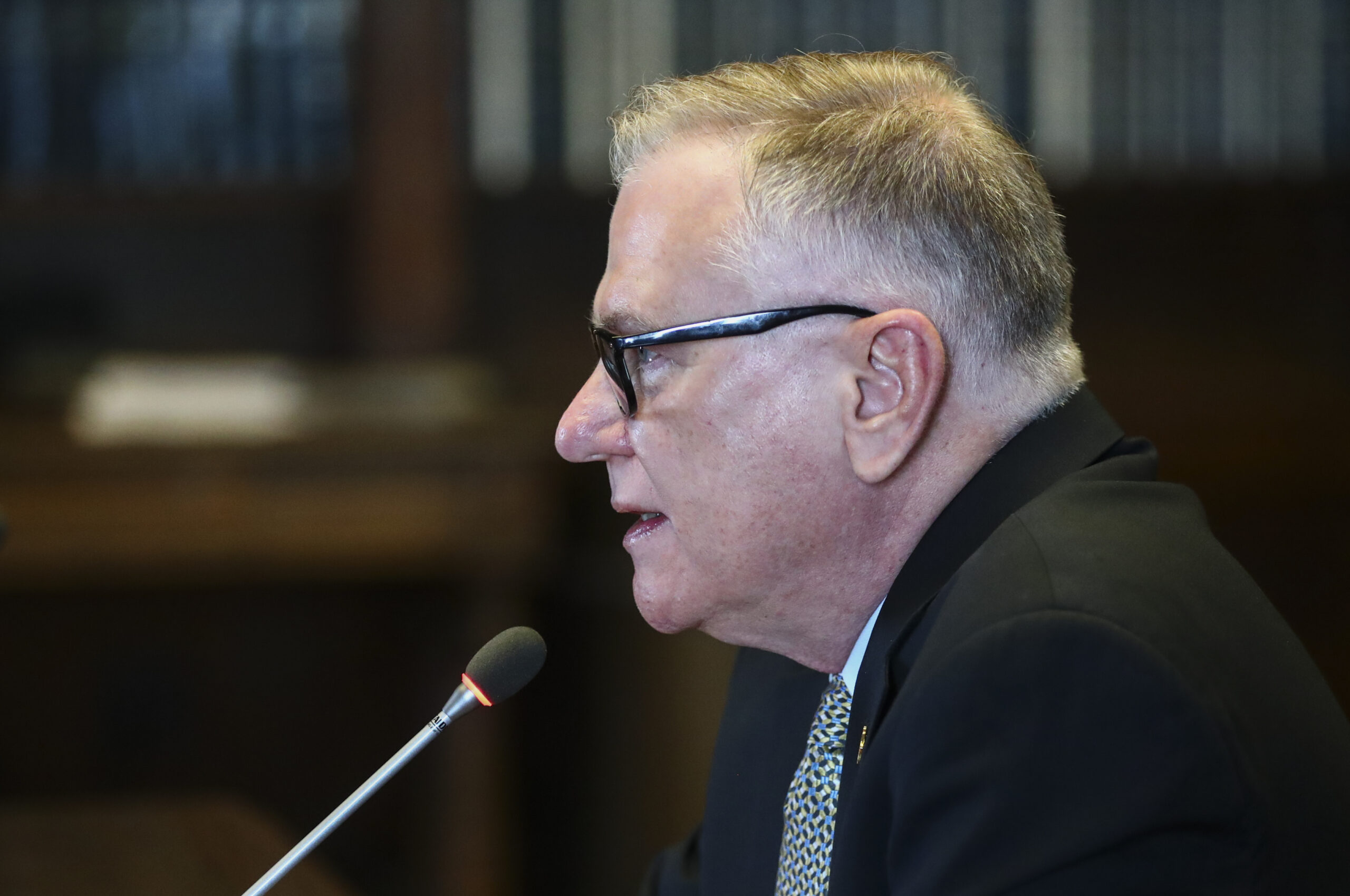
    Gregory Quinlan.Dana DiFilippo/New Jersey Monitor

    Marie Tasy, executive director of anti-abortion group New Jersey Right to Life, said language in the bill could make people afraid to speak out against abortion.

    “The threat of prosecution is enough to silence lawful speech. And that happens to be exactly what this bill is designed to accomplish,” she said.

    “This is the common thread that seems to run through everyone’s testimony,” Assemblyman Robert Auth (R-Bergen) said about the free speech concerns.

    Lauren Albrecht, senior director of advocacy and organizing at Garden State Equality, an LGBTQ+ organization, noted that many parents had testified in previous hearings about the struggles they face trying to secure healthcare for their transgender children. Multiple parents described being told by doctors that medical care they said has saved their children’s lives would be suspended.

    “The parents of trans kids have rights, too,” Albrecht said.

    Bill sponsor Assemblywoman Luanne Peterpaul (D-Monmouth) held back tears as she rebutted testimony from some opponents who had challenged the need for gender-affirming care entirely.

    “Let’s talk reality. Let’s talk truth,” said Peterpaul, who is gay, adding, “My rights should not be dictated by someone who doesn’t understand who I am.”

    The proposal builds on existing reproductive care shield laws and expands the definition of these services to include care for transgender patients through a 2017 law that requires insurance coverage for all forms of gender-affirming care, treatments that can include hormone therapy, mental health services, and surgery.

    The bill would make it a fourth-degree crime to harass, harm, or block patients, healthcare providers, staff, or volunteers from entering a healthcare facility and would protect providers from extradition to states that have criminalized reproductive or transgender treatments. Violators could face as many as 10 years in prison and a fine of $150,000 if someone is injured during the interference.

    Trenton Councilwoman Jennifer Williams is the first transgender person elected to a municipal council in New Jersey. Williams told the panel that the bill would “protect the young, the adults like me, and our senior citizens who are transgender.”

    “We deserve it and we are worth it,” Williams said.

    An analysis by nonpartisan staff with the Office of Legislative Services found that if signed into law, the bill would have an “indeterminate” impact on state finances. The only clear cost identified was the expense of prosecuting and imprisoning offenders, calculated at just over $83,000 annually, per person.

    This story originally appeared on New Jersey Monitor.

  • Brooklyn man is convicted of fatally stabbing a Philly dancer at a gas station

    Brooklyn man is convicted of fatally stabbing a Philly dancer at a gas station

    A Brooklyn man has been convicted in the killing of beloved Philadelphia dancer O’Shae Sibley, who was stabbed to death at a New York City gas station in 2023.

    Dmitriy Popov, 20, was convicted of manslaughter as a hate crime and other charges related to “taunting, stabbing, and killing” Sibley, which included “hurling homophobic and anti-Black slurs,” Brooklyn District Attorney Eric Gonzalez said in a statement.

    Sibley, 28, was a gay Black man, while Popov, who was 17 at the time of the killing, is white. Popov, who was tried as an adult, faces up to 25 years in prison. Sentencing is scheduled for June 30.

    O’Shae Sibley at the Ailey Extension dance school in Manhattan.Courtesy Whitney Brown & Alvin Aliey

    While filling up their car with gas on a Saturday night in July 2023 after a trip to the beach, Sibley and four of his friends blasted music by Beyoncé and started dancing, according to Joan Myers Brown, founder of the Philadelphia Dance Company and Sibley’s former teacher.

    Popov and two associates approached the car and threatened the group with racist and homophobic slurs, telling them they did not want to see gay men dancing in their neighborhood, Gonzalez said.

    His associates left the gas station, but Popov remained and continued to taunt the group of dancing friends. Ultimately, he stabbed Sibley on the side of his chest with a knife, puncturing his heart, Gonzalez said. Sibley was pronounced dead a short time later at a nearby Brooklyn hospital.

    “O’Shae Sibley moved to New York to pursue his dream of being a dancer and choreographer, and his life was cut short when he was killed by this defendant, who couldn’t stand the sight of O’Shae and his friends just being themselves and living their lives openly as Black gay men,” Gonzalez said, offering his hope that the verdict would “bring O’Shae’s family, his friends, and the larger community some measure of solace.”

    O’Shae Sibley’s parents Jake Kelly (left) and Onetha Sibley visit their son’s casket at The Met in Philadelphia on Tuesday, Aug. 8, 2023.Allie Ippolito / Staff Photographer

    A North Philadelphia native, Sibley moved to New York before the COVID-19 pandemic in 2020 and landed a job as a dancer and choreographer with the Alvin Ailey American Dance Theater’s Ailey Extension. He danced in several music videos and performed at the Lincoln Center for the Performing Arts in New York.

    During a celebration of O’Shea’s life at the Met in Philadelphia in 2023, Otis Pena, who was with Sibley the night he was killed, recalled his friend as authentic and unapologetically himself.

    “O’Shae was a beacon of light for a lot of us in our community that was engulfed in darkness,” Pena said then. “But O’Shae rejoiced. O’Shae was O’Shae.”

  • The Justice Department is investigating whether Philly police are improperly revoking gun permits

    The Justice Department has opened an investigation into whether the Philadelphia Police Department has been improperly revoking people’s gun permits, officials announced Tuesday — a remarkable development that puts one of the nation’s largest police forces under the scrutiny of federal law enforcement.

    In a letter addressed to Mayor Cherelle L. Parker — which the Justice Department published online — Assistant Attorney General Harmeet K. Dhillon said the investigation “will evaluate the PPD’s policies and practices regarding issuance and revocation of licenses to carry firearms.”

    If prosecutors determine those policies violate the Constitution, Dhillon said, the Justice Department could take the city to court.

    Dhillon emphasized that federal officials “have not reached any conclusions” in their inquiry. And she said prosecutors would seek to speak with city and police officials throughout the course of their probe.

    City spokespeople did not reply to requests for comment Tuesday.

    The announcement came weeks after news reports detailed that police had revoked the gun permits of five members of a Philadelphia-based Black armed citizens group.

    Members of the group, the Panthers, received letters from the city police department’s permitting unit in February, alerting them that their gun permits had been terminated and offering little explanation beyond saying the decision was based on “good cause” as well as “character and reputation.”

    The notifications came shortly after some members got into a verbal altercation with police officers in North Philadelphia. Panthers members were patrolling the neighborhood carrying high-powered firearms at the time, and police said the confrontation “created an unreasonable danger to public safety.”

    Panthers members, including the group’s leader, Paul Birdsong, have appealed the department’s decision and are awaiting hearings on the possibility of restoring their permits later this year.

    Two members have had their permits restored since challenging the decision, according to Birdsong’s attorney, Lyandra Retacco.

    Philadelphia has unique laws surrounding gun permits. In the city, unlike the rest of the state, gun owners are required to have a license to carry a firearm openly, and the police department has broad authority to revoke licenses.

    The Justice Department said it planned to investigate whether the Philadelphia Police Department had become overly reliant on “a vague ‘good cause’ standard” in deciding whether to cancel permits.

    “It is a violation of the Second Amendment for government officials to use vague, personal discretion when determining whether to issue or revoke permits to carry firearms,” the department said.

    Jonathan Goldstein, a nationally recognized Second Amendment lawyer and University of Pennsylvania lecturer, said he considered the DOJ’s aims justified, given what he viewed as the Philadelphia Police Department’s “subjective” and “arbitrary” authority to revoke gun permits and infringe on firearms owners’ rights.

    The government’s enforcement, Goldstein said, was “long since overdue.”

    “It is refreshing to see that the DOJ has finally taken a focus on the Second Amendment seriously,” he said.

    Goldstein, who also serves on the board of the National Rifle Association, said he was not aware of any specific instance in Philadelphia that may have resulted in the DOJ’s scrutiny of the police department. He said there had been numerous cases over the years in which he believed the city’s policies around permitting had violated gun owners’ rights.

    Although the Justice Department’s inquiry is new, the city has faced other challenges in seeking to tighten regulations around firearms.

    Mayors and City Council members for decades have sought to ban assault-style weapons, limit handgun purchases, or prohibit guns at recreation centers, but courts have consistently found such restrictions were unlawful.

    The Pennsylvania Supreme Court in 2024 also ruled unanimously against the city’s attempt to overturn a state provision that prevents the city from enacting its own gun laws.

    That has not stopped city officials from pursuing litigation. Earlier this spring, Parker’s administration sued the firearms manufacturer Glock Inc., accusing the company of using deceptive marketing practices to target young people.

  • How some Philly students included a protest against looming budget cuts in their graduation ceremony

    How some Philly students included a protest against looming budget cuts in their graduation ceremony

    On the first day Olney High reopened as a traditional public school four years ago, 750 unregistered students showed up. Rosters had to be built on the spot. It took months for credits to be straightened out.

    Despite forbidding obstacles, Olney soared.

    On Tuesday, the first class that spent the entirety of its high school career at the “new” Olney graduated — with fanfare, joy, and a touch of wistfulness, as the school prepares for perhaps the deepest budget cuts in the Philadelphia School District next year.

    The looming budget cuts prompted a subtle graduation clapback.

    Valedictorian Iamdra Peguero was part of a small group that met with school board president Reginald Streater at the school Monday, imploring him to find a way to stop the budget cuts coming Olney’s way.

    With the district facing a $300 million budget gap, Superintendent Tony B. Watlington Sr. has ordered cuts at schools across the city.

    Olney received extra staff four years ago to address the complicated charter-to-district transition. Although it now enrolls nearly 1,000 students, officials have said they need to cut staff to balance the district’s budget.

    Peguero and others have expressed alarm about what losing 17 staff members, including 13 teachers and most of the faculty who teach classes in the college-prep track, would mean to Olney.

    Iamdra Peguero, Olney High class valedictorian, addresses the Olney High Class of 2026.Kristen A. Graham / Staff

    Last week, Olney staffers wrote Streater a letter asking him to consider slowing the budget cuts.

    “We applaud SDP for creating staffing and budgetary support for the transition beginning in 2022,” a group of eight Olney teachers wrote Streater. “These supports have helped make Olney’s transition an unprecedented success. We ask the district to extend this support, as the transition period is ongoing. We believe that a slow, planned adjustment to regular district staffing ratios over several years will allow us to sustain and build on the gains we have made.”

    The Olney teachers proposed that instead of losing 17 teachers all at once, officials cut a few teachers per year until 2032-33. If the school’s enrollment rises, the cuts can be avoided.

    Streater, who also spoke at the Olney graduation Tuesday, did not agree to the teachers’ proposal, but he said he was listening.

    “I had a glimpse yesterday, y’all, of the passionate students and teachers that walk these hallways, and they spoke with me about proposed school changes that they don’t agree with,” Streater said in his graduation speech. “I just want to affirm them right now, and say I appreciate their appeal for different options and their strong voices. It comes from a place and people they love. That’s what it means to be in this community.”

    Peguero, in her valedictory address, said she owed her success to her teachers, including many staff who are being transferred against their will because of the budget cuts.

    As she spoke, several students behind her unfurled signs: “A school is its people” and “Don’t rip away our teachers and counselors.” The audience applauded.

    “I want to think the teachers and staff that have supported my high school experience, especially the ones that won’t be here next year because of the ongoing school district force transfer. I speak on behalf of the class and say that we will miss you all.”

    ‘Restarted a school’

    Olney’s graduation was also a celebration of its return to the public school system.

    “All of us, four years ago, basically restarted a high school,” principal Michael Roth told students.

    Olney spent more than a decade as a charter school run by the nonprofit Aspira before it lost the charter for academic and other issues. Roth said he researched but could not find any other high school in the country that had reverted to become a traditional public school.

    Olney High students approach the stage on their way to receive diplomas Tuesday.Kristen A. Graham / Staff

    A committed administrative team and cohesive staff built myriad opportunities and paths for students, including career and technical education programs, industry certifications, routes into union jobs, a college-prep program, internships, clubs, and sports. The school now has 10 separate majors.

    There were moments, Roth said, when he questioned whether Olney, a traditional neighborhood Philadelphia high school — “not a magnet school, not a charter school, not a well-resourced suburban school” — could be great.

    “Class of 2026, you threw down a Victor Wembanyama-sized dunk,” Roth said. “You answered my question with a ‘Hell, yes!’”

    Ariel Lajara, an Olney High graduate and a Philadelphia assistant superintendent who was just named superintendent of the Vineland, N.J., school district, reminded the graduates in his keynote speech that the boundaries of their neighborhood are not the boundaries of their potential.

    “They don’t understand that when you have to work harder for your seat at the table, you don’t just want the seat,” Lajara said. “You want to rewrite the whole agenda.”

    There were also solemn moments. Honorary diplomas were given to the families of Marquise Saunders and Talik Bridges, Olney students who died as a result of gun violence in separate incidents in 2024.

    But there was plenty of joy, too — two students collected their diplomas holding their children. Some danced across the stage. At one point, someone screamed out, “That’s my sister!”

  • Ukraine is ready to share drone technology with Nordic and Baltic countries, Zelensky says

    TALLINN, Estonia — Ukrainian President Volodymyr Zelensky met with Nordic and Baltic leaders who were in Estonia for a regional summit Tuesday, a visit that comes amid friction over Ukrainian drones straying into the region in recent months.

    The drones have crashed into the chimney of a power plant in Estonia, hit empty fuel tanks in Latvia, and been shot down by Romanian fighter jets stationed in Lithuania. Ukrainian officials apologized, saying the drones had been aimed at military targets in Russia but were sent off course by Russian electronic interference.

    Estonia hosted the summit in its capital of Tallinn amid Russia’s 4-year-old, full-scale invasion of Ukraine. Estonia holds the rotating presidency of the NB8, a regional grouping of the five Nordic and three Baltic countries, and brought together the bloc’s prime ministers, along with Zelensky.

    Sharing Ukraine’s drone expertise

    Zelensky and Estonian President Alar Karis agreed to work on cheaper ways to shoot down drones that have flown over Estonia, including one that a NATO fighter jet shot down over the south of the country in May.

    “We have shown that we can shoot the drones down with the planes,” Karis said at a news conference. Using fighter jets to shoot down the drones is expensive, he added, so he hopes to partner with Ukraine for its technology and expertise to do it more cheaply.

    Zelensky said Ukraine was ready to do so, drawing on its experience with helping countries in the Middle East, where it had sent experts to train local forces, shoot down drones. “We did this in the Middle East, and it worked,” he said.

    He said Ukraine could offer the low-cost interceptor drones it has deployed at home to build an inexpensive shield against Russian drone attacks, and that Kyiv could send experts to its European partners “at any moment.”

    Karis said he expects drones to cross into Baltic airspace as the war continues and urged the public to remain calm. Estonia and the other Baltic nations are among Ukraine’s staunchest supporters in its war against Russia.

    Ukraine’s bid for EU membership

    Zelensky said his talks with the leaders had focused on advancing diplomacy, strengthening air defenses, and Ukraine’s path to European Union membership. He said Kyiv had met the conditions to open its accession negotiations and urged the bloc to approve them this summer.

    European Commission President Ursula von der Leyen said in Brussels that Ukraine is “making extraordinary progress” on reforms to allow it to join the EU and that “it’s high time for us also now to deliver.”

    Prospective members must complete negotiations in 35 policy areas, or chapters, ranging from agriculture to trade in a process that can take years.

    Zelensky also said Ukraine and Latvian Prime Minister Andris Kulbergs signed a drone deal to deepen joint defense and coproduction.

    Russia’s deadly strikes on Ukraine

    Russia, meanwhile, kept up its strikes across Ukraine. In the northeastern Kharkiv region, three people were killed and 25 others, including three children, were wounded in attacks in the past 24 hours, said Oleh Syniehubov, head of the regional administration.

    In the Dnipropetrovsk region, three people were wounded when several districts came under attack overnight, said regional administration head Oleksandr Hanzha.

    Russia launched 166 long-range strike drones and two guided missiles at Ukraine overnight, Ukraine’s air force said, with air defenses shooting down 146 of the drones.

    Russia’s Defense Ministry said its defenses downed 140 drones overnight. A woman was killed when a Ukrainian drone hit an apartment building in the Belgorod region neighboring Ukraine, regional emergency officials said.

    Seeking more sanctions on Russia

    Zelensky said he had pressed for tougher sanctions on Russia, including its shadow fleet. He also held talks with Finnish President Alexander Stubb and Norwegian Prime Minister Jonas Gahr Støre on bolstering Ukraine’s air defenses.

    “All of our partners now note that Ukraine’s positions on the front are significantly stronger, and so our diplomacy, which we are working to step up, must proceed from that,” Zelensky said. “Unfortunately, Russia is trying to make up for its enormous battlefield losses with strikes on our cities and communities, and on civilian infrastructure.”

    In Brussels, Von der Leyen announced proposals for new sanctions against Russia targeting its energy, financial, and trade sectors, including fisheries for the first time with a ban on cod, among other measures.

    She also proposed banning EU entry for “anyone who has served in the Russian armed forces since the beginning of the war” to ensure that Europe stays off-limits “for anyone who has participated in the invasion of Ukraine.”

    The sanctions must be endorsed by the 27 EU member countries before they can come into force.

    On Monday, Zelensky said he had held positive talks with U.S. representatives Steve Witkoff and Jared Kushner during a stopover at an airport in Moldova’s capital, describing them as focused on ending the war. In a social media post, he said the two sides discussed diplomatic prospects ahead of this month’s Group of Seven summit, and that he had briefed the U.S. side on Ukraine’s assessment of Russia’s intentions.

  • Philly is opening ‘hospitality hub’ public restrooms on the Parkway in time for summer visitors

    Philly is opening ‘hospitality hub’ public restrooms on the Parkway in time for summer visitors

    There is good news for anyone without a steel bladder visiting the Benjamin Franklin Parkway this summer.

    On Tuesday, the city opened four new “hospitality hub” restrooms along the Parkway to welcome and accommodate the many visitors expected in Philadelphia over the next two months. The restrooms come through a partnership among Philadelphia Parks and Recreation, the nonprofit Parkway Council, and Tork, a hygiene and cleaning products company.

    “As we prepare to welcome residents and visitors to some of our city’s best public spaces this summer, our goal is simple: make it easy for people to enjoy Philadelphia,” said Katie Burns Kays, director of business and event development for Philadelphia Parks and Recreation, at a news conference.

    “Hospitality hubs are designed to provide the services people need when spending time in our parks and public spaces, whether that’s access to restrooms, handwashing, hydration stations, seating, visitor information, or simply a comfortable place to take a break,” she said.

    Each of the restroom trailers has four genderless stalls and an adjacent port-a-potty for individuals who cannot make it up the restroom steps. Each stall has a sink, soap, paper towels, and “air care” to keep it smelling fresh, according to Amy Bellcourt, a spokesperson for Essity, the parent company of Tork.

    People fill the street during the Philly Pride Festival on the Ben Franklin Parkway on Sunday, June 7, 2026 in Philadelphia. Future events will have more bathroom options. Monica Herndon / Staff Photographer

    The restrooms are open from 10 a.m. to 8 p.m. each day, and are staffed by an attendant who will clean the stalls at least once an hour, Burns Kays said. The locations of the four hospitality hubs are: LOVE Park, Logan Square, Eakins Oval, and by Lloyd Hall Recreation Center on Boathouse Row.

    The restrooms are just part of the full hospitality hub experience. Each also includes an adjacent visitor center for information, seating, and stations for water refills, Burns Kays said.

    The restrooms will be in place through the end of July, but the rest of the hospitality hubs will be removed after July 19 once the city’s major summer events are over, Burns Kays said.

    The lack of permanent public restrooms along the Parkway is one of the major pieces of feedback the city has received about events there, she said, and can dissuade people from attending public events. It is possible the city will make the restrooms a permanent fixture in the future, she said.

    Previously, the city installed a handful of public restrooms through its Philly Phlush pilot initiated by former Mayor Jim Kenney‘s administration, but the restrooms were slow to roll out and it is unclear if the city will continue to fund them once the pilot ends.

  • Gates said to have hired ex-Oversight chief to advise on Epstein testimony

    Gates said to have hired ex-Oversight chief to advise on Epstein testimony

    WASHINGTON — The former chief investigations counsel for the House Oversight Committee has been helping to prepare Bill Gates, the billionaire co-founder of Microsoft, to testify privately in the panel’s Jeffrey Epstein investigation today, according to two people affiliated with the Gates Foundation who are familiar with the arrangement.

    Rep. James Comer of Kentucky, the Republican chair of the committee, formally requested in March that Gates appear before the committee for a transcribed interview. His request came after files released by the Justice Department showed that Gates met with Epstein, the convicted sex offender, multiple times and that his closest advisers were in frequent contact with the disgraced financier until 2019, the year of his death in prison.

    In preparing for the deposition, Gates has turned to Jake Greenberg, who until December was spearheading the oversight panel’s Epstein inquiry in his role as the committee’s top investigative official. The people who disclosed his involvement insisted on anonymity to discuss Greenberg’s previously undisclosed function.

    The arrangement, while not uncommon, raised eyebrows among government ethics experts who said it could create questionable optics for the deposition in a high-profile investigation.

    A spokesperson for Gates Ventures did not respond to multiple requests for comment about Greenberg’s role advising Gates. Greenberg also did not respond to multiple requests for comment.

    Gates’ close relationship with Epstein has roiled his foundation, which has authorized an outside review of its ties to Epstein. Gates apologized to foundation staff members in an all-hands meeting this year for his associations with Epstein.

    House Democrats say they want to grill Gates behind closed doors today about the nature of his relationship with Epstein.

    “We need accountability for those in power and answers for survivors,” said Rep. Yassamin Ansari (D., Ariz.). “No one — regardless of power, political party, or wealth — is above justice.”

    Rep. Suhas Subramanyam (D., Va.), said in an interview that he wanted to know what Gates “knew of Epstein’s crimes, and the nature and extent of their relationship.” He added, “Epstein was known for befriending and even blackmailing rich and powerful men, and I want to know if Gates was one of them.”

    Gates has sought out powerful inside players to help him weather the scrutiny. He hired John Moran, a former lawyer for the Justice Department, who helped him secure an agreement with the committee for him to appear off camera, the Wall Street Journal reported.

    A spokesperson said the committee was not filming voluntary transcribed interviews for witnesses who agreed to come in quickly. The committee released filmed interviews with other witnesses whom it had subpoenaed, including Bill and Hillary Clinton and Les Wexner.

    Government watchdog experts said it was not unusual for a former top committee official to be hired by a person under scrutiny by the panel and that it would not necessarily violate ethics rules — as long as Greenberg was not dealing directly with the committee he had previously worked for.

    Former members of Congress and top aides have a one-year “cooling-off” period after leaving those jobs, during which they are barred from lobbying or communicating directly with lawmakers or committees. Greenberg would not be allowed, for instance, to negotiate with the oversight panel about the terms of Gates’ appearance. But there is no rule prohibiting him from privately sharing with a client what he knows about how the committee operates, or his knowledge of how it is approaching a particular investigation.

    Still, the ethics experts said it could give the appearance of an unseemly revolving door.

    Donald Sherman, the chief counsel for Citizens for Responsibility and Ethics in Washington, a nonpartisan government watchdog group, said Greenberg’s role could potentially raise questions, including whether he had been a part of any discussions when he was still working for the committee about potentially inviting Gates to testify.

    “Certainly someone with Bill Gates’ money can afford to hire the people who he believes are going to set him up for navigating the congressional oversight process — and it is a unique process,” Sherman said.

    But, he added, “optics matters a great deal in congressional investigation. Certainly it raises questions that the public and the minority might ask about whether the investigation is independent or arm’s length, separate and apart from whether he is technically complying with the rules.”

    Dylan Hedtler-Gaudette, the interim vice president of policy and government affairs at the Project on Government Oversight, also said the arrangement raised concerns.

    “Hearings are supposed to be serious attempts at fact-finding,” he said. “You would want a process that is free of any sort of conflicts of interest or influence peddling. There’s a lot of using the position you used to have, the leverage and the juice you bring, using that to benefit whoever you’re working for and tilt the playing field.”

    Until December, Greenberg served as general counsel and chief investigations counsel for the House Oversight Committee. In that role, he led the investigation into former President Joe Biden’s mental acuity, taking the lead in the transcribed depositions of top Biden administration officials like Annie Tomasini and Karine Jean-Pierre, the former White House press secretary.

    Greenberg was working on the committee last year when it deposed William Barr, the former attorney general, in the Epstein investigation.

    After leaving Capitol Hill, Greenberg joined the law firm DLA Piper.

    The firm now highlights his expertise in congressional oversight with glowing accolades from Comer on its website.

    “Jake Greenberg proved to be one of Washington’s most capable oversight investigators,” Comer says in a testimonial prominently displayed.

    DLA Piper did not respond to a request for comment. A spokesperson for the committee, Jessica Collins, said the committee had not worked with Greenberg in any capacity since he left and that the panel has worked only with Moran regarding Gates’ appearance.

    Greenberg is not expected to be with Gates at the deposition Wednesday, according to a person familiar with the proceedings who insisted on anonymity to discuss them in advance.

    Gates is not the only witness to turn to a former staff member for the committee before his appearance before Congress. When the Clintons were fighting the subpoenas in the Epstein investigation, they brought on Ashley Callen, a co-chair of the congressional investigations practice at Jenner & Block, to deal with GOP members of the Oversight Committee. Callen had previously worked as general counsel for Speaker Mike Johnson and other top Republicans. She also had worked as a deputy staff director on the House Oversight Committee under Comer.

    But Callen had never worked on the Epstein issue, and her departure from Capitol Hill exceeded any cooling-off period, so she was able to interact directly with the committee in her official role as a lawyer for the Clintons. She also appeared at the April deposition of Ted Waitt, the co-founder of Gateway computers who for years dated Ghislaine Maxwell and was called to testify before the committee, acting as his counsel.

    This article originally appeared in the New York Times.

  • Largest ICE detention facility wasted millions and put detainees at risk, report finds

    WASHINGTON — Mismanagement at a massive Immigration and Customs Enforcement facility in Texas created unsafe conditions that contributed to detainee deaths and suffering even as millions of wasted tax dollars enriched contractors, according to a federal report released Tuesday.

    The Government Accountability Office report documents serious problems at Camp East Montana, a sprawling tent facility at Fort Bliss in El Paso where three detainees have died in little more than six months. Evidence in one of those deaths, of a 55-year-old Cuban migrant who died in January after being held down by guards, was “missing or destroyed,” the report found.

    ICE rushed to open the camp in August before construction was complete and failed to conduct required oversight to ensure detainees were held in sanitary conditions and receiving adequate medical care, according to the report.

    The Department of Homeland Security noted that ICE has replaced the contractor running the facility. “This new contractor will allow Camp East Montana to continue abiding by the highest detention standards with the ability to provide more medical care on-site,” said DHS spokesperson Lauren Bis.

    The GAO’s findings echo past reporting by the Associated Press and other news outlets about dangerous conditions at Camp East Montana, which quickly became the nation’s largest immigration detention facility.

    But the government report also details previously undisclosed incidents, including that a detainee escaped in October due to what ICE called the contractor’s oversight failure. In January, a security guard lost a loaded firearm inside the facility that was never recovered.

    The contractor failed to administer skin tests to screen detainees for tuberculosis, relying on a questionnaire instead, the report said. The inadequate screening allowed a detainee with tuberculosis to be housed with the general population, which later suffered an outbreak.

    GAO is an independent, nonpartisan agency in Congress that investigates how federal funds are spent and evaluates whether programs and policies are operating effectively. The office opened its review into Camp East Montana at the request of Democrats in the House and Senate.

    Sen. Dick Durbin of Illinois called the report’s findings “damning.”

    “We now know even more details of how dangerous and irresponsible the Trump administration’s mass deportation campaign truly is,” said Durbin, the ranking Democrat on the Senate Judiciary Committee, adding that “those detained are experiencing conditions that shock the conscience.”

    A rush to build led to an inexperienced contractor

    Facing pressure to increase its detention capacity, the Trump administration routed the contract to build Camp East Montana through the Army to speed construction after ICE twice failed to successfully award one. That resulted in selecting a small, little-known contractor, Acquisition Logistics, for the $1.3 billion deal despite it having no prior experience operating detention facilities and facing what ICE called a “significant learning curve.”

    The Army — and later ICE after the camp was transferred to the agency — wasted millions of dollars paying for services it did not need because the contract did not account for fluctuations in the detainee population, the report said.

    The Army blew up to $11.5 million paying for guards, medical services, transportation, and meals in the weeks before the camp held detainees. The agencies wasted millions more because it was contracted to pay the cost of meals for the camp’s maximum population of 5,000, even when the number of detainees there dropped to around 1,600, the report said.

    Facility didn’t initially meet detention standards

    The facility did not meet ICE detention standards or the contract’s requirements in several ways when it opened, in part because it had not been inspected as required by ICE policy, the report said. The camp lacked security cameras on the perimeter and had other surveillance blind spots that raised the risk of sexual assaults or escapes.

    The camp could not accommodate detainees using wheelchairs and had no showers compliant with the Americans with Disabilities Act, resulting in the disabled being held in medical care rooms.

    The recreation area wasn’t available for several days, and after one yard was opened, it wasn’t enough space to provide required time for detainees. The law library, space to meet with attorneys, and a visitation area did not open for weeks, resulting in detainees being deprived of legal resources and contact with family and friends, the report found.

    The problems persisted as ICE began transporting more detainees there from across the country, the GAO found. While it was built to house up to 5,000 immigrants for short-term stays, its population has averaged about half of that from October until April, according to ICE’s most recent data.

    Missing evidence and other problems

    Detainees held at the facility didn’t receive comprehensive health assessments, which meant that those with chronic conditions received substandard care, the report said.

    The contractor cleaned the dormitories weekly rather than daily as required, resulting in unsanitary conditions. Some guards offered detainees cookies if they would clean their own rooms. Acquisition Logistics didn’t reply to messages seeking comment.

    The GAO report says investigations into the January death of Geraldo Lunas Campos were undermined after “evidence associated with the incident was missing or destroyed.” It did not elaborate. Campos died after he was restrained by guards and an outside autopsy report ruled the death a homicide due to asphyxia. The contractor at the facility did not provide use-of-force and death reports to ICE as required, according to the new report.

    An investigation by ICE’s Office of Professional Responsibility into the death is on hold pending a criminal investigation by the FBI.

    On Jan. 14, Nicaraguan detainee Victor Manuel Diaz, 36, died of suicide after staff put him in a medical holding room instead of a suicide-resistant cell and left him unattended for intervals longer than 15 minutes, the report said. Staff could not see into the room because the contractor had failed to install vision panels that had been requested months earlier, it found.

    “These are huge discrepancies in their failure to prevent suicides,” said Diaz family attorney Randall Kallinen, noting that the report strengthens a potential wrongful death claim he’s considering. “They are part of an entire laundry list of problems at Camp East Montana.”

  • Vance demands Justice Department probe of Minnesota officials as White House presses ‘war on fraud’

    WASHINGTON — Vice President JD Vance is pressing federal prosecutors to investigate Minnesota Gov. Tim Walz and state Attorney General Keith Ellison over allegations they failed to stop widespread social services fraud, amplifying concerns the White House will use a new Justice Department division to target political rivals.

    Vance, who has been tapped to lead the Trump administration’s anti-fraud efforts as he seeks to raise his political profile as a potential 2028 presidential candidate, cited in a letter to the Justice Department a report from the Republican-led House Oversight Committee that alleges Walz and Ellison were aware of pervasive abuse of government programs for years and let it flourish.

    The Justice Department didn’t immediately respond to questions Tuesday about whether it would open an investigation. It was unclear what, if any, potential violations of federal law could support a probe into the Democratic Minnesota officials, who have defended their efforts to combat fraud and have characterized a separate Justice Department investigation involving state leaders as politically motivated.

    Minnesota has long been under a microscope for staggering amounts of fraud in programs for children and other social services, with dozens of defendants charged under the administrations of President Joe Biden, a Democrat, and President Donald Trump, a Republican. Vance’s referral for an investigation into state leaders, however, marks an escalation in the Trump administration’s stated “war on fraud” that officials have said would not be political or partisan.

    Vance is seeking an investigation by a new Justice Department division that has drawn intense scrutiny over the potential for political influence given its close relationship with Trump’s White House. The White House announced the division’s formation in January and initially said its leader would answer directly to the president instead of the typical Justice Department command.

    Walz spokesperson Teddy Tschann derided the House committee as “nothing more than a joke” that continues to “rehash COVID-era fraud.”

    “Governor Walz is glad to see fraudsters are going to prison,” Tschann said in an email. “If the committee is concerned about corruption, they should investigate why President Trump continues to let fraudsters out of prison.” Trump has granted clemency to numerous defendants convicted of financial crimes, including a man sentenced to 50 years in prison for orchestrating a more than $200 million Medicare fraud scheme.

    Ellison called the allegations unfounded and dismissed Vance’s referral as “a political stunt from an administration that uses the machinery of government to target its perceived opponents while extending leniency to those aligned with its interests.”

    “It is deeply troubling to see official powers and public resources diverted away from serving the people and instead aimed at pursuing political adversaries,” Ellison said in a statement. “That is not what government is for, and it diminishes public trust in our institutions.”

    The House committee alleges that “fraud warnings were elevated to the most senior levels of the Minnesota state government” and payments continued “long after credible signs of fraud emerged.” In his referral, Vance wrote that officials in Minnesota or anywhere else in the country “must be held accountable” if they facilitated fraud, prevented officials from stopping it, or retaliated against whistleblowers who tried to report it.

    “Minnesota state officials are not above the law,” Vance wrote in a post on X.

    The Trump administration has clashed repeatedly with Minnesota officials not only about fraud but also the massive federal immigration crackdown that swept across the Minneapolis-St. Paul area and other communities and led to widespread protests.

    The Justice Department in January served grand jury subpoenas to Minnesota officials as part of an investigation into whether they obstructed or impeded federal law enforcement through public statements they made. The status of that investigation is unclear.

    The Trump administration has touted the creation of the National Fraud Enforcement Division as a crucial step in its efforts to prevent the misuse of taxpayer dollars. The division’s leader, Assistant Attorney General Colin McDonald, is a veteran prosecutor who has vowed to pursue cases “without fear or favor.”

    Critics, however, have questioned the administration’s motives behind the new division given that fraud was already prosecuted by the agency’s Criminal Division, which last year announced the largest coordinated takedown of healthcare fraud schemes in Justice Department history.

  • Social Security’s retirement trust fund faces funding shortfall one year earlier than expected

    WASHINGTON — Social Security‘s retirement trust fund is projected to face a funding shortfall in 2032, a year earlier than last year’s projections, according to an annual report released Tuesday, while Medicare‘s hospital insurance trust fund will be unable to pay full benefits in 2033, which is unchanged from last year’s estimate.

    Rising healthcare costs and government spending have contributed to a projected depletion date that is less than 10 years from now.

    The looming challenge for the programs is a partial funding gap, not a collapse. Even after trust fund depletion, the system will continue issuing benefits, albeit at reduced amounts.

    Last year, Medicare’s hospital insurance trust fund go-broke date was pushed to 2033 from 2036, according to the report from the programs’ trustees.

    Meanwhile, Social Security’s combined trust funds — which cover old age and disability recipients — will be unable to pay full benefits beginning in 2034, unchanged from the 2025 report. After that, incoming revenue would cover about 83% of scheduled benefits.

    Social Security Commissioner Frank Bisignano said the Trump administration is “committed to protecting and strengthening Social Security” and “eliminating waste, fraud, abuse and ensuring program integrity.”

    The report states that the new funding shortfall is mainly the result of lower projected birth rates, reduced immigration, and reduced trust fund revenue due to the costs of Republicans’ massive tax and spending bill that was signed into law by President Donald Trump last summer.

    Nancy Altman, president of the Social Security Works advocacy group, said the latest report takes “Donald Trump’s second term policies into account: A tax bill that largely benefited the wealthy, economy-wrecking tariffs, a needless war with Iran, and hostility to immigrants. All of these have reduced the amount of money going into Social Security, weakening the system’s finances.”

    The trustees, who include the treasury secretary, labor secretary, health and human services secretary, and the Social Security commissioner, say the latest findings show the urgency of needed changes to the programs, which have faced dire financial projections for decades. But making changes to the programs has long been politically unpopular, and lawmakers have repeatedly kicked Social Security and Medicare’s troubling math to the next generation.

    AARP’s CEO Myechia Minter-Jordan said in a statement that the latest numbers “should be a wake-up call. Congress needs to act.”

    “Americans have worked hard and paid into Social Security their entire lives, and they deserve to count on it when they retire,” she said. “No family should see any cuts to what they’ve earned in Social Security. ”

    About 70.1 million people are enrolled in Medicare, the federal government’s health insurance that covers those 65 and older, as well as people with severe disabilities or illnesses.

    Social Security benefits were last reformed roughly 40 years ago, when the federal government raised the eligibility age for the program from 65 to 67. The eligibility age of 65 has never changed for Medicare.