Category: News

  • Penn president announces he will leave his job next summer

    Penn president announces he will leave his job next summer

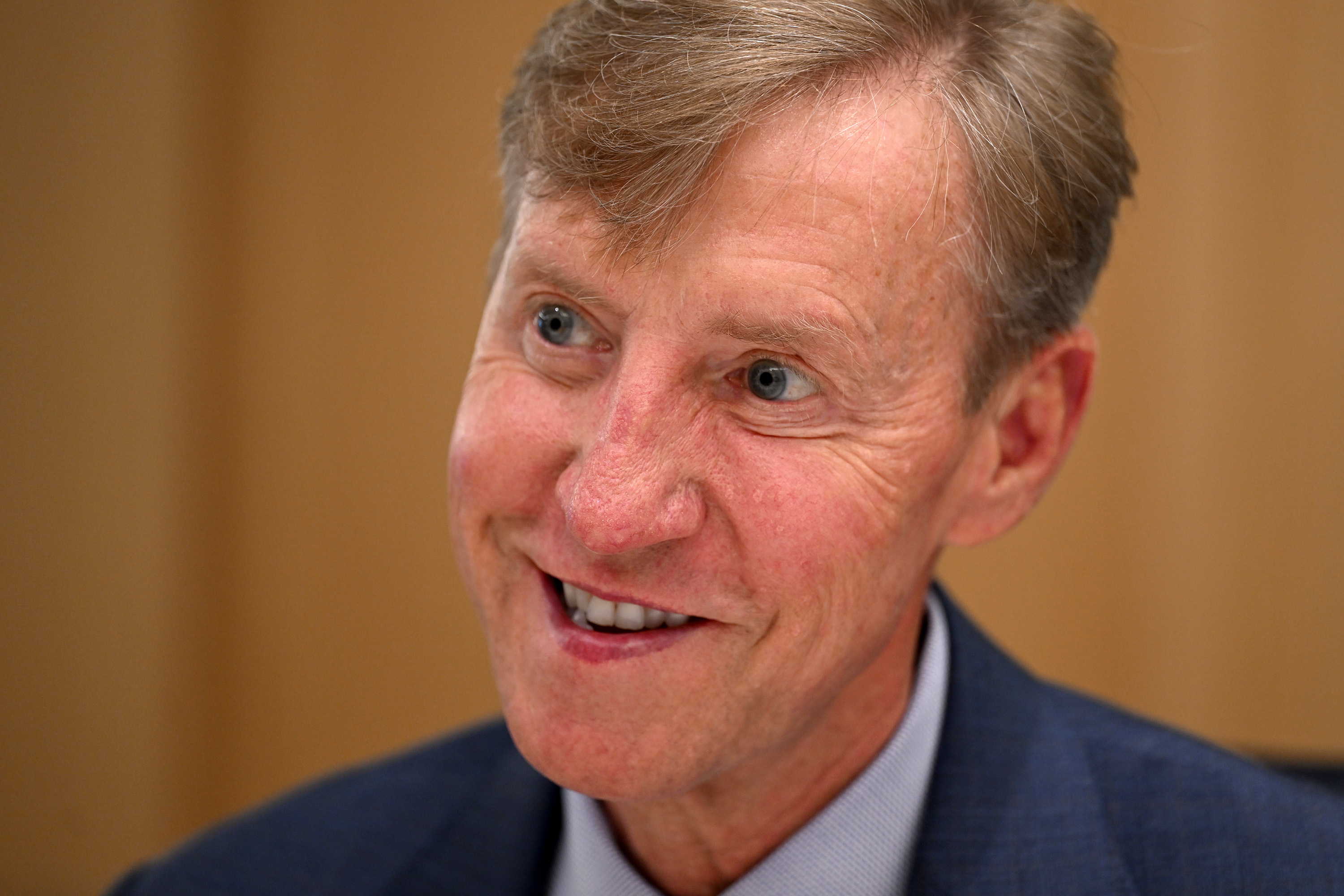
    University of Pennsylvania President J. Larry Jameson will conclude his presidency next June, he announced in an email to the Penn community Friday.

    “Although I greatly enjoyed serving as president, now is the right time for Penn to begin its next chapter under new leadership,” Jameson said in the email. “My goal was to help restore stability during unanticipated leadership transitions, refocus our community on Penn’s mission, and strengthen Penn for the future during a challenging time for higher education.”

    Those goals have been accomplished, he said.

    There was much speculation about whether Jameson — an endocrinologist who previously led Penn’s health system and medical school for more than 12 years — wanted or would be asked to remain in the seat beyond next year’s expiration of his current contract. Many have credited Jameson with steadying the school during a turbulent time, including as the school faced funding threats and increased scrutiny by President Donald Trump’s administration.

    His departure will leave the Ivy League school searching for a new leader during a time of uncertainty under Trump, who has targeted elite universities.

    Board chair Ramanan Raghavendran said he respected Jameson’s decision and the board will begin searching for the school’s next president in the fall.

    Jameson, 71, will have served in the top job at Penn just three-and-a-half years, one of its shorter presidential tenures. But he came into the job by circumstance rather than desire.

    Jameson took over in December 2023 during perhaps one of Penn’s greatest leadership upheavals. Former President Liz Magill had just resigned amid a bipartisan backlash over her testimony involving the school’s response to antisemitism complaints. He first was named interim president and then was elevated to the permanent post in March 2025.

    Jameson earned total compensation of more than $8 million in 2024, the most recent tax year available. That included $5.4 million in “reportable compensation” and more than $2.5 million in other compensation.

    “Dr. Jameson stepped in at a pivotal moment, and what he has accomplished in two-and-a-half years has been simply extraordinary,” Raghavendran said in a statement.

    Neither Raghavedran nor Jameson were available for interviews Friday, the university said.

    In his message, Jameson said “the momentum we have built will continue,” noting his intention to work over the next year on implementing the Penn Forward plan. The plan calls for everything from more transparent and predictable tuition and cost policies and improved student experience to more efficient operations, a focus on keeping Penn at the forefront of best uses of artificial intelligence, and a growing presence in the San Francisco Bay Area — where Wharton already has a campus.

    Penn also has some tough decisions ahead in his final year. During the spring semester, the school proposed new open expression guidelines that some on campus say are too restrictive and would chill free speech. The university is considering the feedback and plans to issue final guidelines next academic year.

    The university also is undergoing belt-tightening in anticipation of potential federal cuts and increased legal and insurance costs. Penn in January asked schools and centers to pare 4% from their budgets for the next fiscal year, on top of a 5% cut last year.

    Penn’s Graduate School of Education laid off several staff members last week as part of those cuts, according to The Daily Pennsylvanian, the student newspaper.

    Many at Penn speak highly of Jameson’s leadership, though some wish he had made a stronger defense against some Trump demands.

    “Even if this were a good time to search for a new president — and it decidedly is not — I cannot imagine Penn finding a more effective leader,“ Eric Feldman, faculty senate tri-chair and a law school professor, said last month. ”His deep knowledge of the medical school is a significant asset amid continuing pressures on federally funded research, and his extensive leadership experience, spanning decades, makes him uniquely well suited to guide the university through what are likely to be several more complex years.”

    During an interview with The Inquirer last month, Jameson explained his decision to resist the Trump administration on some things and negotiate on others.

    “My approach has been not just to complain,” Jameson said during his first interview as Penn’s president with a major media outlet, “but to say, ‘Well, here’s where we’re working together very effectively. Here’s where we’re not necessarily aligned, but let’s discuss how to move forward.’”

    Jameson was at the helm when Penn last summer struck an agreement with the White House over the prior participation of transgender swimmer Lia Thomas on the school’s swim team. The school agreed to adhere to the Trump administration’s definitions of sex, female, male, women, and men in regard to athletics, and send letters of apology to female athletes who felt aggrieved by Thomas’ participation on their team during the 2021-22 season.

    But he also was at the helm when Penn rejected a compact that would have given it preferential treatment for federal funding if it agreed to the Trump administration’s operational demands. The school also is actively fighting a demand by the Equal Employment Opportunity Commission to turn over lists of Jewish people on its campus for its investigation into alleged antisemitism at Penn. The agency sued Penn for not complying with its subpoena and a federal judge sided with the EEOC, but Penn is appealing the decision.

    Jameson said he gained new perspective in the presidential role, which “allowed me to learn each day from the people, ideas and achievements that define this university and its extraordinary breadth. …While my career has been in academic medicine, it has been illuminating to reacquaint myself with other fields, from poetry to political science, from finance to fine arts.”

    He said the university is on a positive trajectory.

    “Penn has tremendous momentum and is exceptionally well positioned for the future,” Jameson wrote.


  • Montco sued to get back $7.5 million paid to clean up Hurricane Ida debris after vendors razed parks

    Montco sued to get back $7.5 million paid to clean up Hurricane Ida debris after vendors razed parks

    Montgomery County sued to get back $7.5 million it paid two disaster debris companies that engaged in “overzealous clearing” that harmed the environment in the aftermath of Hurricane Ida in 2021.

    Mississippi-based DebrisTech and Texas-based DRC Emergency Services billed Montco for $14 million worth of cleanups, the suit said, but the federal government deemed more than half the removals “unnecessary” and declined to reimburse the county for it.

    “Their overzealous clearing of County lands not only resulted in over half of the County’s reimbursement request getting denied, but it also caused environmental harm that requires extensive remediation,” the complaint said.

    The lawsuit, which was initially filed in the Montgomery County Court of Common Pleas last month but moved to Philadelphia’s federal court this week, is a step to hold two vendors accountable for harm they caused, county spokesperson Megan Alt said in a statement.

    “The Montgomery County Commissioners take their responsibility as stewards of the taxpayers’ money and natural resources very seriously,” Alt said.

    DRC is committed to providing disaster recovery services that meet the instructions of its clients, Kristy Fuentes, the company’s vice president of administration and compliance, said in a statement.

    “DRC looks forward to presenting all relevant evidence during the court proceedings regarding its disaster recovery work in Montgomery County,” Fuentes said.

    DebrisTech did not respond to a request for comment.

    Hurricane Ida hit the Philadelphia area in September 2021, inciting record flood levels, spawning at least seven tornadoes. Five people died in the region, and authorities recorded hundreds of water rescues.

    DRC and DebrisTech came into Montgomery County days after Ida to assist in the recovery, the suit says. The vendors were required to engage only in clearings that are eligible for reimbursement by the Federal Emergency Management Agency, according to the complaint.

    Montco relied on the companies’ expertise to determine FEMA eligibility but “instead of protecting the County’s interests,” the suit said, the vendors “overcut trees,” “mismanaged” oversight responsibilities, and “failed” to comply with FEMA regulations.

    DRC and DebrisTech also cut down at least two Montgomery County-owned nature preserves, according to to the complaint. An 11-acre wooded preserve in Whitemarsh Township is “no longer,” the suit says, and Audubon Park turned into a “mud pit.”

    All told, the companies billed Montgomery County $14,028,597.81 for the cleanup, the suit says. FEMA reimbursed just less than half, finding that the vendors removed debris that didn’t pose an “immediate threat.”

    The federal agency denied multiple appeals by the county, leaving taxpayers on the hook for the remaining $7.5 million.

    The suit asks a judge to require the vendors to reimburse the county for the $7.5 million FEMA found ineligible, restore the Whitemarsh site and Audubon Park, and pay damages and attorneys fees.

    “Service providers hired for their claimed expertise are not free to accept public funds and then fail to perform, divert resources, or withhold services while retaining payment,” the lawsuit says. “To permit such conduct undermines fiscal accountability, erodes public confidence, and converts taxpayers’ dollars into a risk-free subsidy for contractual non-performance — an outcome the law cannot tolerate.”

  • Elon Musk becomes the world’s first trillionaire

    Elon Musk becomes the world’s first trillionaire

    Elon Musk became the world’s first trillionaire Friday when shares of his rocket company SpaceX began trading on the stock market, signaling a new era of ultra-affluence and widening wealth inequality.

    Musk reached the milestone when trading of SpaceX shares opened at $150, up 11% from their initial public offering price of $135. His net worth — which comprises his stock in SpaceX and his electric carmaker, Tesla, as well as ownership stakes in other ventures including brain implant company Neuralink and tunneling firm the Boring Co. — stood at around $1.1 trillion.

    Musk, 54, was already the world’s richest person. He claimed that title from Amazon founder Jeff Bezos in January 2021, after Tesla’s shares surged to take his net worth past $185 billion.

    Since then, the South African-born entrepreneur’s fortune has more than quintupled in a 5½-year period, during which he bought social media company Twitter, founded an AI startup, fused them together with SpaceX, and then took the conglomerate public. In that time, Musk also spent more than $250 million to help elect Donald Trump and advised the president.

    And Musk’s wealth-making has only accelerated, cementing his influence over society, culture, and global politics. Since October, his net worth has doubled.

    “The fact is that wealth for some and wealth inequality is growing in dimensions that we’ve never seen before,” said Steven Durlauf, the director of the Stone Center for Research on Wealth Inequality and Mobility at the University of Chicago.

    When oil tycoon John D. Rockefeller’s fortune was at its height in 1937, his $1.4 billion net worth amounted to about 1.5% of U.S. gross domestic product, Durlauf said. Musk’s net worth is now equivalent to more than 3% of U.S. GDP.

    Such wealth is so extraordinary that it can be hard to make meaningful comparisons. The median American household had a net worth of just under $200,000 in 2022, the year with the most recent data available from the Federal Reserve. That means Musk’s net worth is 5 million times as large as that of the typical family.

    His wealth dwarfs even that of the everyday wealthy. The top 10% of households by income had an average net worth of $6.5 million in 2022, less than 0.001% of the SpaceX leader’s total. The world’s second-richest person, Google co-founder Larry Page, is worth around $304 billion, according to the Bloomberg Billionaires Index.

    Inequality is notoriously difficult to measure, but the explosion of wealth at the top is hard to dispute. The net worth of the middle 40% of households, adjusted for inflation, has risen slightly more than 50% over the past decade, according to data from French economists Emmanuel Saez and Gabriel Zucman. The top 1% have seen similar gains. But the richest 0.001% have seen their wealth roughly double over the same period.

    Beyond Musk, the ultrawealthy have experienced significant increases in their fortunes. In 2016, a net worth of $100 billion — a mark that Musk crossed about six years ago — would have easily placed someone at the top of the Forbes Billionaires list. Today, $100 billion would rank them as the 20th richest person in the world.

    “Christ, when I was a kid, we only talked about millionaires,” said Bernie Sanders, 84, the progressive senator from Vermont. “If this isn’t an example of oligarchy, I don’t know what is.”

    Musk’s rapid accumulation of wealth largely comes down to the appreciation of his nearly 50% stake in SpaceX, which is worth more than $900 billion. During its IPO, the company sold more than 555 million shares, which valued it at $1.77 trillion, up from a $400 billion valuation on the private market last summer. Starting in January, SpaceX also granted Musk pay packages totaling 1.3 billion shares, which he cannot sell until he hits certain operational milestones.

    Musk did not respond to a request for comment. But he has previously acknowledged the trillionaire milestone.

    In February, he replied to a post on X about possible trillionaire status by noting that he had created significant wealth for shareholders and held less than 0.1% of his net worth in cash. In May, he responded on X to the financial musings of Peter Diamandis, a friend and SpaceX investor, saying he would reach “$10T or bust.”

    Musk has also recently said that “money won’t matter” in the future because Tesla and SpaceX would develop robotics, AI, and rockets so powerful that no human would ever have to work again. In his utopian world of “amazing abundance,” everyone would have “universal high income,” he has said.

    Musk’s allies said his net worth was justified by his impact, providing an example and incentive for those who want to build successful companies. Diamandis, the head of the XPrize Foundation, an organization that holds contests to encourage scientific breakthroughs, said Tesla and SpaceX were “raising the floor.”

    “The fruits of his labor are making him into a trillionaire, and they’re uplifting humanity,” Diamandis said.

    Adeo Ressi, Musk’s college roommate at the University of Pennsylvania, said the SpaceX chief never cared as much about financial gain as obtaining resources to help him achieve his entrepreneurial goals. For Musk, “money is a means to an end,” Ressi said, comparing his friend’s mindset with a gamer accumulating coins in a video game to beat a level.

    “He’s amassing resources to do things, and the thing he wants to do most is colonize Mars,” Ressi said. “That’s a really big driving force behind his wealth accumulation.”

    He added that Musk was “not a poster child of wealth inequality” and pointed to the tech leader’s lifestyle, in which he is known to work around the clock and avoid the typical trappings of the rich, like islands and megayachts.

    “It’s not like he’s planning to leave this in a massive family trust,” Ressi said. “It’s literally going to be used to make humanity into a multiplanetary species.”

    But critics say the way Musk chooses to lead his life is beside the point. His net worth has already provided him with the means to personally acquire companies and spend hundreds of millions of dollars to help elect a preferred presidential candidate, Durlauf of the University of Chicago said.

    Becoming a trillionaire will only magnify how “economic inequalities are spilling over into the political domain,” he added.

    Sanders called Musk’s trillionaire status “a moral travesty,” noting that 60% of Americans live paycheck to paycheck.

    The senator also agreed with the assessment that Musk was probably not as interested in owning islands or yachts. The trillionaire, in his view, was interested in just one thing.

    “This guy is into power,” Sanders said. “And he is now the most powerful person on Earth.”

    This article originally appeared in the New York Times.

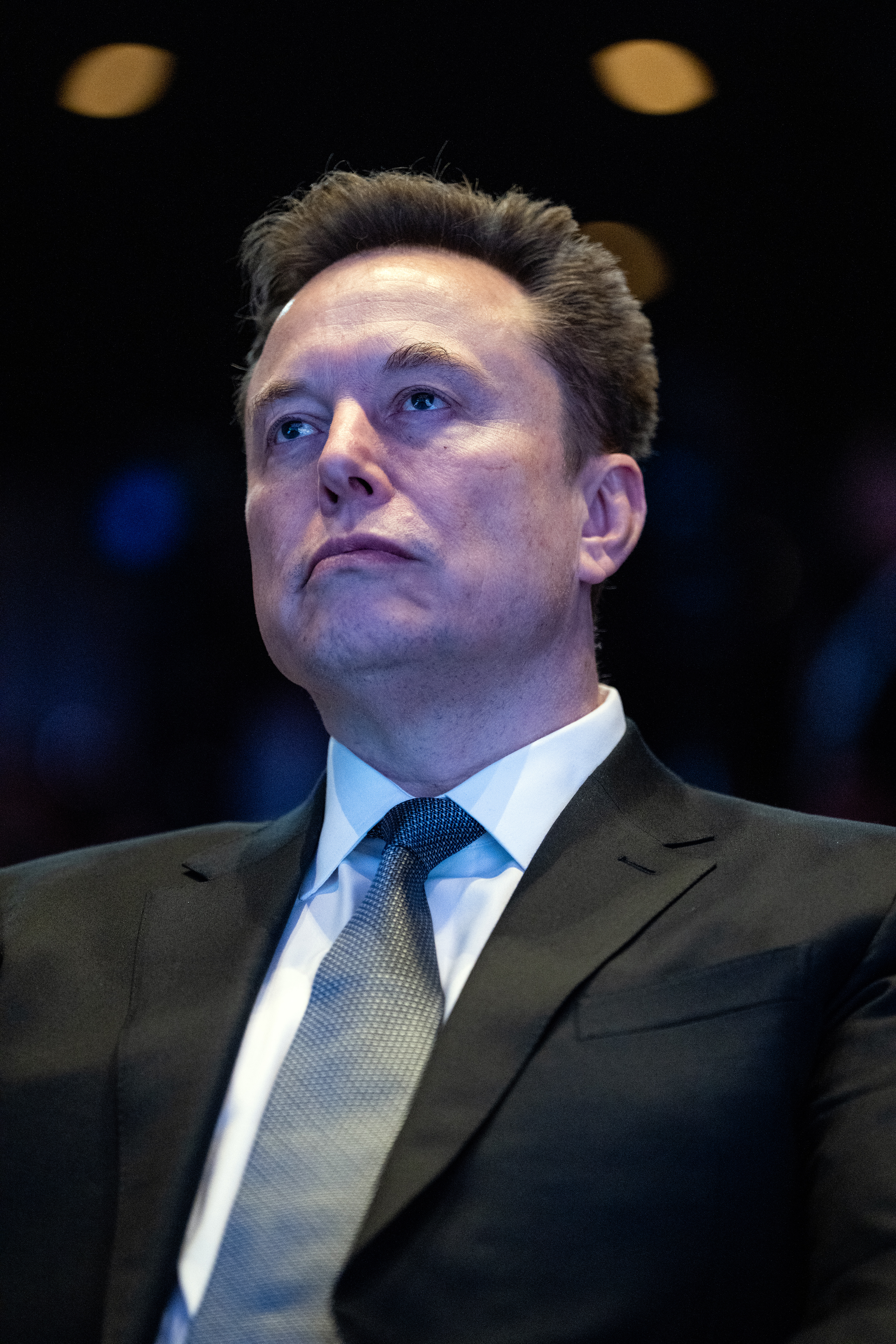
    FILE — Elon Musk in Washington on Nov. 19, 2025. Elon Musk became the world’s first trillionaire on June 11, 2026, as shares of his rocket company SpaceX began trading on the stock market at $150, up 11 percent from their initial public offering price, signaling a new era of ultra-affluence and widening wealth inequality. (Haiyun Jiang/The New York Times)HAIYUN JIANG
    FILE — The SpaceX Starbase rocket launch site near Boca Chica beach, in Cameron County, Texas, on Feb. 24, 2024. Elon Musk became the world’s first trillionaire on June 11, 2026, as shares of his rocket company SpaceX began trading on the stock market at $150, up 11 percent from their initial public offering price, signaling a new era of ultra-affluence and widening wealth inequality. (Meridith Kohut/The New York Times)MERIDITH KOHUT
  • Police are investigating the drowning death of a 1-year-old child in Kensington

    Philadelphia police said they are investigating after a 1-year-old girl drowned in Kensington Thursday night.

    Just after 7 p.m., police responded to a 911 call at a house on the 1800 block of East Somerset Street, police said. Emergency medical personnel were already on scene, police said, and were treating an unresponsive child in the back of an ambulance. Paramedics took her to St. Christopher’s Hospital for Children, where she was pronounced dead.

    At the home, police found a water-filled basin in the second-floor bathroom, police Chief Inspector Scott Small told CBS Philadelphia Thursday. The house’s dining room on the first floor was also soaked with water.

    “At this point in the investigation, there are inconsistencies in witness statements as to where the child was when the incident occurred,” police said Friday.

    The department’s Special Victims Unit, which investigates sensitive crimes often involving children, is leading the investigation, police said.

  • Burlco man kills acquaintance, then himself, authorities say

    A South Jersey man fatally shot an acquaintance Wednesday afternoon and then took his own life in his vehicle after driving a short distance, Burlington County authorities said.

    Lumberton Township police were called to a home on Curry Court about 4:15 p.m. for the report of a shooting. They arrived to discover the body of Damon Nesmith, 53, who was pronounced dead at the scene. Authorities said Tyrone McLean, 56, had gone to the residence and fired multiple shots at Nesmith with a .40-caliber handgun.

    McLean then drove about half a mile before fatally shooting himself while parked on the 600 block of Holland Place, authorities said. Police found McLean inside his Volvo SUV with the engine still running.

    Investigators said that McLean was a former tenant at the Curry Court home and was recently evicted. Two other people inside the home at the time of the shooting were not injured.

    The shootings followed an earlier incident involving McLean in Southampton Township, authorities said. Just before 4 p.m., New Jersey State Police were called to a residence on the 200 block of New Road for a report of gunshots. Police were told that McLean had stopped to talk with an acquaintance there before suddenly pulling a handgun and firing multiple shots. No one was injured.

    The investigation is being conducted by the Burlington County Prosecutor’s Office, Lumberton police, and New Jersey State Police.

  • Acquitted of double murder as a teen, he now faces new charges in a West Philly shooting that left two dead

    Acquitted of double murder as a teen, he now faces new charges in a West Philly shooting that left two dead

    Andre Bowie was just 17 when he was arrested and charged with killing two men in West Philadelphia in the fall of 2020.

    But a jury acquitted him of those crimes, and he walked free in May 2023.

    Three years later, Bowie, now 22, is back in jail — again accused of killing two people.

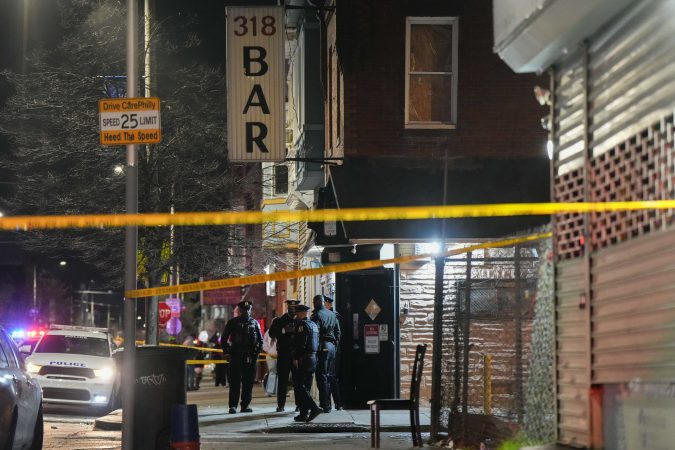
    Police said Bowie and several others drove to 60th and Delancey Streets on the night of March 30, and opened fire on a group of people standing outside a corner bar, wounding three and killing Paul “PJ” Cobb and Naasir Boyd, both 24.

    More than a dozen shots were fired from three different 9mm handguns, police said. In the hours after the shooting, police found the Mercedes on fire on the 1200 block of Cumberland Street.

    Another man, Marquis Andrews, is also expected to be charged, police said. Andrews, 22, has been in custody since April after he was charged with illegally carrying a loaded gun, court records show.

    Paul “PJ” Cobb, 24, was shot and killed near 60th and Delancey Streets on March 30. Cobb was the eldest son in his large, blended family, and was born and raised in West Philly.Courtesy of the Cobb family

    The deaths of Cobb and Boyd, childhood friends born and raised in the neighborhood, came amid what law enforcement officials described as an escalating feud between the crews “Northside” and “Southside” in West Philadelphia — groups that have warred across the Market Street corridor for more than a decade.

    Cobb’s and Boyd’s killings not only devastated their families, but police said the shooting likely led to another. The week after they were killed, police said, four Southside affiliates seeking revenge opened fire on a Northside rival standing outside a corner store at 60th and Market Streets.

    Instead, the bullets struck and killed 20-year-old Imani Ringgold, who was walking with a slice of pizza and talking to her grandmother on the phone — and who had nothing to do with the feud.

    Photos of Imani Ringgold are laid out on the table at her grandmother’s home. Jessica Griffin / Staff Photographer

    One detective, at a recent court hearing, testified that at least 30 people have been killed in connection with the groups’ conflicts since 2015 — a beef that has festered for so long that many people at the center don’t even know how it started.

    Bowie’s cases

    Prosecutors previously said the first two killings Bowie was charged with — and later acquitted of — were also tied to the Northside-Southside feud.

    In that case, lifelong friends Jarell Jackson and Shahjahan McCaskill, both 26, were driving near 57th Street and Locust Avenue when three gunmen jumped out of a black SUV and fired more than two dozen bullets into their car, killing them, in October 2020.

    Jarrell Jackson, left, and Shahjahan McCaskill were killed in a case of mistaken identity in West Philadelphia in October 2020.Family photos

    Investigators at the time said they believed the gunmen were Northside members who shot up the car in a botched retaliation for an earlier homicide.

    Chesley Lightsey, then-homicide chief at the district attorney’s office, said Jackson, a Jefferson Health technician who mentored troubled teens, and McCaskill, who was a cancer survivor and small-business owner, had nothing to do with that conflict. The men, she said, “were targeted because of the neighborhood they live in.”

    Bowie was among three teens charged. But at the May 2023 trial, jurors acquitted him and his co-defendants. (Bowie was convicted of illegal gun possession in the case, and sentenced to 11½ to 23 months in jail, allowing his immediate parole, court records show.)

    Marisa Palmer, a spokesperson for the district attorney’s office, said in an emailed statement that at Bowie’s trial, prosecutors presented witness testimony, and social media, video, and firearm-related evidence that prosecutors “believed established the defendants’ guilt beyond a reasonable doubt.”

    The office respects the jury’s decision, she said. She called the new allegations against Bowie “deeply concerning,” and declined to comment further.

    Bowie was taken into custody last week and charged with two counts of murder, as well as three counts of attempted murder, arson, and related crimes.

    Police and homicide detectives investigate a double homicide at 60th and Delancey Streets on March 30. Jessica Griffin / Staff Photographer

    Investigators tied Bowie to the crime after his cell phone location data placed him near the scene of the shooting, according to the affidavit of probable cause for his arrest. Andrews’ cell data also links him to the crime, the affidavit says, and call detail records and text messages show the two men were in communication in the hours after the killings.

    The records say that police also recovered the murder weapon linked to Bowie. During an April 30 car stop in Kensington, the records say, police encountered Bowie and another man, and officers recovered a 9mm handgun that a ballistics test showed was used in the killings of Boyd and Cobb.

    Court records did not list an attorney for Bowie.

    Families in mourning

    Boyd and Cobb have deep ties to the neighborhood, and were killed just blocks from where they lived.

    Cobb’s mother said in an interview that her son was raised in a house at 60th and Delancey, and that she had countless memories of him playing and riding bikes on the block where he was killed. He was the eldest son of a large, blended family.

    Cobb’s mother and sisters, who asked not to be identified for fear of retaliation, said he was goofy and protective, loyal and independent. He attended Sayre High School, before earning his GED, they said, and worked in construction with his father.

    Paul “PJ” Cobb, 24, loved helping take care of a collection of nieces and nephews. Courtesy of the Cobb family

    But his favorite role, they said, was being an uncle to his many nieces and nephews. He picked several of them up from school and daycare each day, and cared for them as if they were his own until his sisters finished work.

    The sisters said they now tell their kids their favorite “Uncle P” is “in the sky.”

    One older sister said that on a recent flight, her 3-year-old kept staring out the airplane window, looking for him in the clouds.

    “She asked ‘Mom, where’s Uncle P at?’” she said. “And I had to tell her, ‘He’s further in the sky than we are on the plane.’”

    His death, they said, has fractured their lives and ability to feel safe in their neighborhood.

    Cobb’s mother said the conflicts of Northside and Southside have always loomed. Her son was not affiliated with Southside, she said, but having grown up on blocks at the center of the group’s feuds, he was cautious about his whereabouts, and she often worried about him.

    When she first heard police made an arrest, she said, she was relieved. But learning that Bowie had been charged and acquitted before left her uneasy.

    “There are things that happened,” she said, “that could have prevented this.”

  • Judge extends block on Trump’s $1.8 billion ‘Anti-Weaponization Fund’

    ALEXANDRIA, Va. — A federal judge agreed on Friday to extend a court-ordered block on the Trump administration’s creation and operation of a $1.8 billion settlement fund for compensating people who claim to be victims of a weaponized government.

    Earlier this month, acting Attorney General Todd Blanche told Congress that the government is scrapping its plans for the fund in the face of a fierce bipartisan backlash. Government attorneys have argued that lawsuits challenging the fund are now moot, but plaintiffs’ attorneys aren’t satisfied by Blanche’s assurances that the fund won’t move forward.

    Neither was U.S. District Judge Leonie Brinkema, who ruled that the “Anti-Weaponization Fund” will remain blocked until further notice from the court.

    “The (government’s) mootness argument, in my view, doesn’t go anywhere,” the judge said.

    President Donald Trump, meanwhile, has not publicly and unequivocally endorsed its cancellation. He has continued to express support for the fund in remarks to reporters.

    Brinkema gave the parties a week to negotiate an agreement for Blanche to submit a sworn declaration that the administration won’t revive the fund.

    Brinkema previously agreed to temporarily block the administration from proceeding with the fund for at least two weeks. Her May 29 order was due to expire on Friday.

    Trump’s Republican administration created the fund to resolve his lawsuit against the Internal Revenue Service over the leak of his tax returns.

    Plaintiffs who sued to block fund payouts argue that the government can’t legally divert taxpayer money into what they argue is a slush fund for compensating Trump’s allies.

    In a separate case on Wednesday, a different judge in Washington, D.C., rejected a government watchdog’s parallel request for a court order temporarily blocking the Trump administration from forging ahead with the fund. U.S. District Judge Richard Leon said he accepts Blanche’s representation that the fund is now moot.

    Leon had asked Justice Department attorney Andrew Block why Blanche doesn’t formally rescind his May 18 order establishing the fund. Block said he didn’t know. He still didn’t have an answer to that question when Brinkema posed it two days later.

    “It’s a huge gap in the record that we don’t have an answer to that question,” the judge said.

    In the Virginia case, attorneys from the legal advocacy group Democracy Forward asked for an order to temporarily suspend the fund’s implementation and stop the Trump administration from disbursing any payouts from it.

    The plaintiffs include a fired prosecutor and a college professor acquitted of assaulting federal agents at a protest.

    Even before the administration said it was dropping the fund, the Justice Department did not form the five-member commission that would decide on payout criteria, so no money was paid out nor claims accepted.

    Many of the Republican president’s allies are opposed to compensating rioters who stormed the U.S. Capitol on Jan. 6, 2021. In May, however, Blanche wouldn’t rule out the possibility that Capitol rioters who engaged could be eligible to apply for payments from the fund.

    Trump issued mass pardons to Capitol rioters on his first day back in the White House last year. More than 1,500 people were charged in the Jan. 6 attack before Trump erased every case with his sweeping act of clemency.

    Brinkema was nominated to the bench by President Bill Clinton, a Democrat.

  • US and Iran are close to a deal to end their war, officials say

    ISLAMABAD — Pakistan’s prime minister said Friday the United States and Iran have agreed to wording of an agreement aimed at ending their war in the Middle East and that mediators were working with both sides to finalize a deal.

    Prime Minister Shehbaz Sharif said the U.S. and Iran have reached a “final, agreed upon text.” He said Pakistan, which has taken the lead in mediation efforts, was working with the warring countries on next steps.

    “Peace has never been this close as it is now,” Sharif said in a post on X.

    The apparent breakthrough in negotiations comes after Iran exchanged fire with the U.S. and Israel over three days this week, threatening to return the Middle East to full-scale war.

    There was no immediate comment from U.S. or Iranian leaders on Sharif’s statement.

    Iranian Foreign Minister Abbas Araghchi said Friday an agreement “has never been closer” in a post on X. U.S. President Donald Trump, who has said multiple times in recent weeks that the countries were on the cusp of a deal, shared Araghchi’s post on his own social media.

    None of the leaders gave details about the emerging agreement.

    The war launched by the U.S. and Israel on Feb. 28 has rattled the Middle East and virtually shut down oil and natural gas shipments from the Persian Gulf. A fragile ceasefire has been in place since April 7.

    Official says emerging deal would reopen strait

    The U.S. and Iran were making progress Friday toward completing a deal that could effectively end the war, reopen the Strait of Hormuz, and begin the process of destroying or removing Tehran’s highly enriched uranium, according to a senior U.S. administration official.

    The official, who briefed reporters on condition of anonymity under ground rules set by the White House, said a deal was 80% to 85% done and that the U.S. side believes “most of the people who have authority” in the Iranian government want to sign onto the deal “but not everybody.”

    The official said technical details on how to remove Iran’s enriched uranium, according to the emerging agreement, would be worked out over 60 days after both sides sign it. The official did not detail who the U.S. envisions taking charge of removing the uranium, which is believed to be entombed under three nuclear sites that were battered by U.S. strikes last year.

    Three regional officials said the emerging deal is also expected to include the phased lifting of sanctions on Iran and the release of frozen Iranian assets. The officials spoke on condition of anonymity because of the sensitivity of the negotiations.

    Underscoring the fragility of the negotiations, Trump on Friday lashed out at Iranian officials on social media and said: “They better get their act together, and FAST!” That was before he shared Araghchi’s post.

    Officials say deal could be signed in coming days

    Iran’s nuclear program has been a key point of division. The U.S. and Israel fear it could lead to an atomic weapon — a main reason their leaders cited for going to war. Tehran has insisted its nuclear efforts are for peaceful purposes.

    Also critical is Iran’s effective closure of the Strait of Hormuz, a vital shipping lane for oil and natural gas. Disruption of transit through the strait has crimped global energy supplies, driven up fuel prices, and made food and other basics more expensive well beyond the region.

    The U.S. has responded since mid-April with a naval blockade of Iranian ports to choke off Iran’s own oil exports.

    The regional officials said they expect a signing ceremony for the agreement in the coming days after officials in Washington and Tehran approve it.

    Trump on Thursday claimed significant progress in the negotiations, just hours after he threatened to escalate attacks and seize Iran’s oil industry. Esmail Baghaei, a spokesperson for Iran’s Foreign Ministry, said on state television that mediators were active and the text of a deal was “mostly finalized.”

    There was no immediate comment Friday from Pakistan’s Foreign Ministry, which has been leading efforts to mediate a deal between the U.S. and Iran. Foreign Ministry spokesperson Tahir Andrabi had said Thursday that Pakistan remained involved in negotiations.

    Israel expects Trump to advocate for its interests

    Israeli Prime Minister Benjamin Netanyahu has said Israel is not a party to the deal being negotiated. He said in a statement Friday that he and Trump were in “full agreement” that Iran must not have nuclear weapons.

    Israeli Defense Minister Israel Katz said in a separate statement that Israel also expects Trump to uphold key Israeli interests, including weakening Iran’s missile program and proxy network.

    Katz warned that Israel could still act independently toward Iran and that the country would not pull out of the zones it is occupying in Lebanon, Syria, and Gaza, nor would it withdraw from the northern refugee camps of the Israeli-occupied West Bank.

    Iran has insisted that any deal to end the war must also end fighting in Lebanon between its ally militia Hezbollah and Israel. Netanyahu appears intent on pursuing his goal of destroying the militant group, complicating negotiations between Iran and the U.S.

    The deal was largely being brokered by Pakistan, led by its army chief Field Marshal Asim Munir, the regional officials said, with backing from Saudi Arabia, Turkey, Egypt, and Qatar.

  • Kennett Square’s The Creamery will host weddings in a new event space starting next year

    Kennett Square’s The Creamery will host weddings in a new event space starting next year

    First came love.

    Over the course of a decade, the community has made The Creamery in Kennett Square part of their routine, from its community center to its beer garden. Some even met their future spouse there.

    Then came marriage. Or, at first, wedding inquiries.

    “I think the community tells us what they want us to be, and we were just getting so many inquiries about weddings and people love the space as it is,” said Michael DePaolo, managing director of hospitality at Square Roots Collective, an organization that creates businesses and invests its proceeds back into the community. “It just made sense.”

    The Creamery is no stranger to private events; it’s even hosted weddings in the past. But this new venture scales up what it’s able to offer.

    The space, which will be adjacent to The Creamery, will soon take bookings for 2027. It will have its own identity — a website, a different name, and branding. It will be “slightly elevated” from the feel of The Creamery’s beer garden, said Shelby Deskin, director of brand and design at Square Roots Collective.

    “It is a stunning backdrop for any ceremony or event, and we have the capacity to invite people in, and the ability to renovate it and keep the historic aspects of it,” she said. “Just the size of the space lends itself to an event.”

    The new venue will accommodate up to 300 people in a historic structure on the site, and will serve a “middle of the market” crowd, DePaolo said. The price point would range from $100 to $175 per guest, depending on the scope of the event.

    Square Roots Collective is working with a local design firm and National Park Services to maintain the existing stone and preserve the historic nature of the building, Deskin said.

    The event space — a name is forthcoming — will open for bookings in 2027.Courtesy of Boxwood Architects

    It will be a fairly open venue — 6,341 square feet — that they want to make feel comfortable and cozy. They’ll have an outdoor ceremony space, with the ability to add tents or move inside in inclement weather. There will be a cocktail reception spot, separate from the event and ceremony areas, and a primary and secondary suite for getting ready, Deskin said. The venue will be one level, with a ramp to the ceremony and event spots, and they’re building an elevator tower to make it accessible, she said.

    Their goal is to keep The Creamery open to the public, so they had to navigate designing a venue that has the look and feel of The Creamery, but the privacy of an event space, DePaolo said.

    All food and beverages will come from The Creamery, but they’ll outsource to vendors on items like wedding cakes and upgraded china and glassware, said DePaolo, who has spent 25 years working in weddings.

    “It’s been really beautiful seeing the space come together,” he said. “There’s a lot of really talented people that have touched it and made sure that it was being done appropriately and intentionally, and I think it’s going to be one of the better halls in the area.”

    And the new venture comes as they’ve created a network along Birch Street to support the effort: Opus, which opens in late August, will offer a space for an engagement party or rehearsal dinner. Their two hotels, Artelo and The Francis, are within walking distance.

    “We’re really fortunate to be able to offer the total package, where you could bring your guests into town, stay, have different events in different locations, and ultimately have the big game with us also,” DePaolo said.

    It’s been a goal in the last 10 years to renovate the building on the site, said Stephanie Almanza, co-CEO of Square Roots Collective.

    “It’s a natural extension of our heart for hospitality, and we can’t wait to host celebrations for people from our community and beyond,” she said.

    This suburban content is produced with support from the Leslie Miller and Richard Worley Foundation and The Lenfest Institute for Journalism. Editorial content is created independently of the project donors. Gifts to support The Inquirer’s high-impact journalism can be made at inquirer.com/donate. A list of Lenfest Institute donors can be found at lenfestinstitute.org/supporters.

  • A key U.S. government surveillance program is set to expire. A look at what that means

    WASHINGTON — A key surveillance tool seen as vital in preventing terror attacks and catching foreign spies was set to expire Friday after congressional efforts to temporarily extend it failed in bipartisan fashion.

    It’s a significant lapse for the program known as Section 702, and even as President Donald Trump nominates a new national intelligence director more palatable to both Republicans and Democrats than his initial pick, it’s unclear how soon lawmakers — set for recess — would be able to revive the spy program.

    Still, there is not expected to be an immediate drop-off in intelligence collection given that a court order from March certified that government surveillance powers under the law could remain in effect for another year.

    Section 702 allows for sweeping powers

    The provision is a part of the Foreign Intelligence Surveillance Act, known as FISA, and grants American spy agencies sweeping powers to collect and examine the communications of foreigners located outside the United States without first getting a warrant.

    U.S. officials see the law as an invaluable national security tool that has helped disrupt potential acts of terrorism, yielded valuable insight into ransomware attacks on critical infrastructure, and contributed to the killing of al-Qaida leader Ayman al-Zawahri in a 2022 drone strike.

    The law was passed in 2008 as an effort to codify key aspects of a predecessor spy program created by President George W. Bush’s Republican administration.

    Since then, officials across administrations of both major political parties have warned that without the law the government won’t be able to collect crucial intelligence overseas.

    Program’s renewal historically has been contentious

    The periodic need to reauthorize the law has prompted protracted debate in Congress well before this year, including discussion over whether additional guardrails are needed to protect the privacy of Americans and their personal data.

    That’s because when the government eavesdrops on foreigners abroad, it also sweeps up the communications of American citizens and others in the U.S. who are in contact with those surveillance targets.

    Civil liberties advocates have raised concerns over revelations that FBI analysts over the years have improperly queried the vast repository of intelligence collected through the program for information about Americans, including related to the Jan. 6, 2021, riot at the Capitol by a mob of Trump supporters and the racial justice protests of 2020, as well as about state and federal political figures.

    Some of those advocates have said the government should be required to have a warrant before examining communications collected from Americans. U.S. officials have said that a warrant would be legally unnecessary and overly cumbersome and that corrective measures have been implemented to reduce the number of improper queries.

    Complicating the debate is the unlikely political alliances it has produced, uniting a coalition of lawmakers skeptical of government surveillance that includes both privacy-minded liberal Democrats and Republicans who still regard the intelligence community with suspicion over the investigation of ties between Russia and Trump’s 2016 Republican presidential campaign.

    Pushback over acting intelligence pick Bill Pulte

    Democrats balked when Trump picked Bill Pulte to serve as acting national intelligence director and refused to support a FISA extension until the selection was withdrawn. Pulte, a Trump loyalist with no known national security experience, has set off alarms by using his perch as director of the Federal Housing Finance Agency to facilitate dubious mortgage fraud investigations of perceived Trump adversaries.

    A House vote this week that would have temporarily extended the program collapsed, with 19 Republicans and nearly all Democrats rejecting the temporary measure, 198-218. A Senate effort to approve its own versions also failed.

    After those votes, Trump announced he was tapping Jay Clayton, the U.S. attorney in Manhattan who previously served as chairperson of the Securities and Exchange Commission, as his permanent pick for director of national intelligence, or DNI. The pick was warmly received on Capitol Hill, but it was not enough to break the impasse before Friday’s scheduled expiration.

    Connecticut Rep. Jim Himes, the top Democrat on the House Intelligence Committee, said that he has “known and respected” Clayton for decades and that had he been tapped a week ago, “lots of pain might have been avoided.”

    “His intelligence, temperament, and deep commitment to public service will make him a terrific DNI,” Himes said.

    Next steps for the spy powers provision

    Before the congressional votes, Republican Arkansas Sen. Tom Cotton, chairperson of the Senate Intelligence Committee, and Iowa Sen. Chuck Grassley, chairperson of the Senate Judiciary Committee, had warned the Trump administration to prepare “for a potential significant gap in foreign intelligence collection.” Other lawmakers since then have voiced similarly dire concerns.

    The expiration is likely to be the first meaningful lapse of Section 702 since the law was created more than 15 years ago. In 2024, the Senate barely missed its midnight deadline before voting to approve a bill that was then signed by President Joe Biden, a Democrat, creating a brief lapse.

    Despite this year’s sunset of the statute, there’s no expectation of any immediate halt to intelligence collection as the U.S. hosts a series of events this summer with potential national security concerns, including the World Cup and festivities surrounding the 250th birthday of the United States.

    A March opinion from the secretive Foreign Intelligence Surveillance Court certified the program’s renewal for another 12 months, meaning that Section 702’s authority is expected to remain intact through then. Even so, it’s conceivable that without congressional reauthorization, communications companies forced to provide data to the government under the law could try to cease that compliance and argue that they cannot be compelled to cooperate.