Category: News

  • A Main Line man who brought guns to a ‘No Kings’ protest was sentenced to more than 3 years in prison for having bombs at his house

    A Main Line man who brought guns to a ‘No Kings’ protest was sentenced to more than 3 years in prison for having bombs at his house

    A Malvern man was sentenced Tuesday to more than three years in prison for having a collection of homemade bombs at his house — a discovery police made after he was arrested for bringing guns to a “No Kings” protest in West Chester last year.

    Kevin Krebs, 32, apologized for his actions, saying he had let his family down and adding: “I really screwed up, and I regret everything that I did.”

    His family said in court that Krebs — who was adopted from a Lithuanian orphanage as a toddler — had suffered from lifelong developmental disabilities, including autism. And they believed his interest in bombs and firearms was part of an obsessive nature that he also displayed in other, non-threatening technical areas, such as electrical work, which he performed professionally.

    Krebs told U.S. District Judge Mary Kay Costello that he had built the bombs only to blow up pumpkins in the Poconos, calling his pursuit “purely recreational.”

    Costello said she was not sure that was true. And in any case, she said, his possession and interest in building such devices was a threat to himself and others.

    “Just having these bombs in your home posed a grave danger to other people,” Costello said.

    In addition to imposing a 37-month prison sentence, Costello ordered Krebs to serve three years of supervised release. He had pleaded guilty in December to a charge of possessing unregistered devices.

    A firearms case remains pending in Chester County, with a trial scheduled to begin next week, according to court records.

    The events that led to Krebs’ arrest began last June, when attendees at a “No Kings” protest in West Chester told officers they thought Krebs had been carrying a gun.

    Police who stopped Krebs found him carrying a loaded handgun, extra rounds of ammunition, and other weapons including a knife and bayonet, prosecutors said. He also had an AR-15 rifle in his car.

    He did not have a concealed carry permit, and Chester County prosecutors charged him with illegal gun possession.

    Two days later, police searched his home on Conestoga Road and found 13 homemade pipe bombs, prosecutors said, some of which contained nails or screws, which can make the devices more violent when they detonate. Investigators also found components used to make detonators and tactical vests, which prosecutors said demonstrated that he was not simply experimenting with explosives — he was building an “arsenal” of dangerous weapons.

    County prosecutors charged Krebs with new crimes including possessing weapons of mass destruction and causing a catastrophe, and federal prosecutors went on to adopt the portions of the case that related to explosives.

    Krebs’ case attracted attention in part due to its connection to the No Kings demonstration, one in a series of recurring events at which protesters across the country rally against President Donald Trump. But prosecutors said Krebs’ beliefs and potential motives were not particularly clear.

    Krebs was a registered Democrat but had previously been registered as a Republican and said online that he had voted for Trump. Writing online, Krebs later said he came to regret that vote, and before the No Kings event, he had been posting violent rhetoric about Trump and police.

    Krebs said in court Tuesday that he attended the protest “in support of the rally” but did not elaborate.

    Krebs’ parents told Costello, the judge, that they harbored deep remorse and shame for failing to recognize their son’s drift toward dangerous habits.

    But Costello said they had done everything they could to provide their son a better life — welcoming him into a safe home, providing him structure and support, and seeking to connect him with therapy and medications throughout his life.

    “This is not your fault,” Costello said. “This was Mr. Krebs’ doing, and he’s going to have to face the consequences of that.”

  • Philly port operator sues to block permit for proposed Delaware container terminal

    Philly port operator sues to block permit for proposed Delaware container terminal

    After years of fits and starts, Delaware says it is ready to build a new container port on the Delaware River to attract more cargo — and create jobs.

    Not so fast, says an operator of ports upriver in Philadelphia and New Jersey.

    Affiliates of Gloucester City-based Holt Logistics Corp. filed a lawsuit last week seeking to block project approvals granted by the U.S. Army Corps of Engineers for construction of Delaware’s proposed terminal in Edgemoor.

    If that sounds familiar, it’s because Holt and the Pennsylvania agency that owns Philadelphia’s seaports in 2024 successfully persuaded a federal judge to throw out an Army Corps permit authorizing the same project.

    But since then, Delaware’s taxpayer-owned Diamond State Port Corp. requested new approvals, and the Army Corps granted them in April. The following month, Diamond State and its private-sector partner, Massachusetts-based Enstructure, announced they were moving ahead with the $669 million project at the site of a former DuPont chemical plant.

    They say the new terminal — three miles northeast of the Port of Wilmington — will bring thousands of construction, warehouse, and longshore jobs to the area. Delaware officials estimate the Edgemoor terminal will be able to handle up to 1.2 million container units annually.

    That’s one-third more than Philadelphia’s port handled in 2025, a record year. But Philly’s port — a major gateway for refrigerated cargo, especially fresh fruit from Central and South America — is also expanding.

    The Philadelphia Regional Port Authority (PhilaPort), a state agency, last fall bought a 152-acre yard from Norfolk Southern Corp. for $90 million to create more cargo space.

    A PhilaPort spokesperson declined to comment on the lawsuit. Diamond State didn’t immediately respond to a request for comment.

    “While out-of-state competitors continue their efforts to stop this project, it is time to move forward and make sure Delaware’s port can compete fairly on the Delaware River,” Charuni Patibanda-Sanchez, who as Delaware’s secretary of state serves as Diamond State’s chair, said in May.

    Holt — a family-owned company that operates marine terminals in South Philadelphia, Gloucester City, and Paulsboro — now says the Army Corps repeated several mistakes that doomed its earlier approvals.

    “Most significantly, the court found that the Army Corps had failed to sufficiently consider the project’s likely impacts on navigation and safety in the Delaware River,” says the suit filed by Holt affiliates Greenwich Terminals LLC and Gloucester Terminals LLC.

    “Yet despite the court’s detailed opinion and suggested remedial direction,” it continues, “the Army Corps reissued the project approvals again without conducting a proper evaluation of the applications before it.”

    A spokesperson for the Army Corps declined to comment.

  • U.S. restores blockade on Iran after its attacks on ships in the Strait of Hormuz

    U.S. restores blockade on Iran after its attacks on ships in the Strait of Hormuz

    DUBAI, United Arab Emirates — The U.S. military said Tuesday that it has reimposed its blockade of Iranian ports in response to Iran’s attacks on commercial ships in the Strait of Hormuz, as the interim ceasefire deal unravels and concerns grow about a return to all-out war.

    The U.S. first imposed the blockade in mid-April and then lifted it in mid-June, a day after the signing of the interim deal aimed at permanently ending the war. The deal set a 60-day timeline to also negotiate an agreement on Iran’s nuclear program, but talks have stalled as fighting over the strait has intensified.

    When U.S. President Donald Trump announced the return of the blockade Monday, he also said he would impose a 20% fee on ships passing through the strait. But he dropped the plan to collect fees hours before resuming the blockade, citing requests from allies in the Gulf.

    The interim peace agreement was supposed to reopen a waterway that is key to world energy supplies and give negotiators time to hammer out a permanent end to the war. Instead, fighting has once again engulfed the region, threatened the global economy, and brought warnings to commercial airlines.

    The U.S. carried out another wave of strikes ahead of reimposing the blockade, a U.S. official told the Associated Press on condition of anonymity to discuss a sensitive military operation. Iran’s deputy foreign minister for legal and international affairs, Kazem Gharibabadi, said in an interview aired Tuesday by IRIB, Iran’s state broadcaster, that the U.S. was seeking to prevent Tehran from exercising what he described as “effective sovereignty” over the strait.

    There are at least 19 U.S. warships in the Arabian Sea, including two aircraft carriers and an amphibious assault ship with more than 1,000 Marines aboard. U.S. Central Command also said in a social media post that there are “hundreds of military aircraft operating across the Middle East.”

    A fifth of all traded crude oil and natural gas passed through the Strait of Hormuz before the war, when it was open to all without tolls. When the U.S. and Israel attacked Iran on Feb. 28, it effectively shut the passage by attacking and threatening ships. That sent the price of oil, fertilizer, and other goods soaring.

    Iran has more recently attacked ships moving through the strait on a route overseen by the U.S. military that is outside Tehran’s control, setting off tit-for-tat strikes. The U.S. has threatened to reopen the strait by force — but experts say that would require a much bigger armada if not tens of thousands of ground troops.

    Trump says he’s replacing the fees with Gulf investments

    Trump said Tuesday that he was called by “kings and emirs” and other leaders who suggested an alternate arrangement to charging ships fees to pass through the strait.

    “They said we’d love to do it a different way. We’d love to invest in the United States with billions and billions of dollars,” Trump told reporters Tuesday in the Oval Office.

    Trump said he preferred that arrangement to charging tolls “because I don’t think anybody should be able to charge a fee for the strait.”

    It was unclear if the investment deals would be new commitments relative to what Trump announced after a visit last year to the Middle East.

    Strikes and counterstrikes resume across the Mideast

    The U.S. military’s Central Command said it struck several areas in Iran, targeting “coastal defense systems, missile and drone sites and maritime capabilities.” Iran acknowledged the strikes but provided no immediate casualty or damage assessments.

    “These strikes will continue imposing a heavy cost on Iranian forces and degrade their ability to attack innocent civilians and commercial shipping in the Strait of Hormuz,” the U.S. military said.

    Iranian state media Tuesday reported the sound of explosions on Qeshm Island in the strait, alongside additional explosions in the southwestern city of Ahvaz and the port city of Bandar Abbas.

    Iran responded with attacks targeting Bahrain, Kuwait, Jordan, and three tankers that traveled through the strait.

    The International Maritime Organization said the attack killed two mariners and wounded 14 others on two of the tankers, Mombasa and Al Bahiyah, which were associated with the United Arab Emirates. The UAE threatened to retaliate.

    Qatar called for diplomacy Tuesday and condemned what it described as repeated Iranian attacks on Jordan, Bahrain, and Kuwait, calling them an “egregious violation” of the three countries’ sovereignty and the international rules-based order.

    Hours after the U.S. said it ended its campaign of strikes, the Iranian city of Bushehr on the Persian Gulf was hit in at least four locations, the state-run IRNA news agency reported. Explosions in the southwestern city of Ahvaz and the southern port city of Bandar Abbas also were reported by Iranian state media on Tuesday evening.

    The attacks again raised the possibility that Gulf Arab states were retaliating against Iran without discussing it in public.

    The interim peace deal is in peril

    Exchanges of fire in recent days had already cast doubt on the interim peace deal — now almost halfway through the 60-day period in which negotiators were supposed to agree to a final accord, which also was meant to address Iran’s disputed nuclear program and other issues.

    “The passage of vessels is not important to the U.S. The U.S. is not dependent on the Strait of Hormuz, and Trump has announced it many times,” Gharibabadi, Iran’s deputy foreign minister, said in an interview aired Tuesday by IRIB. It was not immediately clear when the interview was recorded.

    Trump’s plan to charge fees would have been a change to longstanding U.S. policy and a departure from U.S. promises that the strait would remain open to all without tolls — recently offered by U.S. Secretary of State Marco Rubio on a trip to the region.

    Under the interim deal, Iran agreed that passage through the strait would remain free of charge for 60 days — but the agreement left open what would happen after. Iran asserts it has the right to manage traffic and potentially charge fees. The U.S. has disputed that.

    The price for a barrel of Brent crude oil, the international standard, briefly topped $87 early Tuesday, still well below the nearly $120 reached at the height of the war. The price dipped to $78 in the aftermath of Trump’s announcement that he had changed course.

    Mediators are trying to prevent a return to full-scale war

    Regional mediators are still trying to get the United States and Iran back to the negotiating table, according to two regional officials.

    The officials, speaking on condition of anonymity to discuss the delicate diplomatic process, said Pakistan-led mediation was working around the clock to reactivate the ceasefire.

    Meanwhile, Lebanese and Israeli delegations met Tuesday in Rome and will continue U.S.-mediated negotiations Wednesday. Shortly after the U.S. and Israel launched the war on Feb. 28, the Lebanese militant group Hezbollah joined the conflict in support of its ally, Iran, and began attacking Israel. Israel responded with a ground invasion of Lebanon.

    Last month, Lebanon and Israel announced a “framework agreement” outlining the withdrawal of Israeli forces from southern Lebanon in exchange for the disarmament of Hezbollah. Implementation has stalled.

  • European troops and warplanes join Paris Bastille Day parade in a show of unity for Ukraine

    European troops and warplanes join Paris Bastille Day parade in a show of unity for Ukraine

    PARIS — Ukrainian fighter pilots and troops took pride of place in France’s national Bastille Day celebrations Tuesday as a massive parade showcased support for Ukraine and symbolically flexed European military muscle.

    On President Emmanuel Macron’s last Bastille Day as president, he hosted around 30 other leaders for an event that appeared aimed at showing both Russian President Vladimir Putin and U.S. President Donald Trump that Europe is united and stepping up to defend itself.

    Ukrainian President Volodymyr Zelensky was given an ovation from the assembled European leaders and his country’s troops got the biggest cheers of the day from crowds on the tree-lined Champs-Elysees avenue. Zelensky and Macron shared repeated hugs at the end of the parade.

    France’s biggest national holiday coincided with raging forest fires and a red-alert heat wave that forced the cancellation of traditional fireworks and firefighters’ balls — and with a highly anticipated World Cup semifinal pitting the national soccer team against Spain.

    Here’s what to know about Bastille Day this year.

    It commemorates the start of the French Revolution

    It’s celebrated on July 14 because that’s the day Parisians stormed the Bastille fortress and prison in 1789, helping spark the French Revolution that overthrew the monarchy and sent King Louis XVI and his queen Marie-Antoinette to the guillotine.

    The Bastille Day holiday is central to the French calendar and national identity. Presidents use it to vaunt France’s accomplishments, mayors across the country host village festivals, and families gather for holiday picnics.

    The centerpiece is the Paris parade beneath the Napoleon-era Arc de Triomphe and along the Champs-Elysees, which inspired Trump to stage his own parade last year.

    A huge French tricolor flag hanging below the monumental arch rippled in the wind as a military band on horseback rode down the tree-lined avenue followed by Macron standing in an open military vehicle to kick off the parade.

    Spectators wore hats and brandished small fans to fend off the heat as a formation of air force planes roared overhead trailing red, white, and blue smoke.

    Ukraine is a special guest

    Zelensky joined Macron along with some 30 other heads of state or government in the special viewing area for the parade.

    Ukrainian troops marched along the cobblestoned avenue, and Ukrainian co-pilots trained in France were on board two Mirage 2000B fighter jets alongside French air force pilots.

    “I feel very proud for the fact that they’re here and for the fact that we’re marching alongside of them and I think it as well it will create better ties with them and NATO and to be a part of that history,” 21-year-old U.K. soldier Lance Cpl. Patrick Risso told the Associated Press, speaking of the Ukrainian involvement.

    Troops from around Europe are marching

    On the ground, the parade opened with around 500 troops from the ″coalition of the willing″ grouping of countries that have pledged to help with Ukraine’s postwar security. Many served in NATO operations, and NATO’s chief was also in attendance.

    Macron said Monday night that it’s a ″great honor″ to welcome to the parade ″all the partners in the coalition of the willing and our Ukrainian friends who will march with us and illustrate its strategic reawakening and our unity.″

    The foreign fighters in combat fatigues and dress uniforms marched with their national flags, in a break with tradition.

    In the skies, aircraft from Germany, the United Kingdom, Poland, Denmark, Greece, Sweden, Norway, Spain, and Italy took part.

    The parade set a record in terms of number of troops: The Paris military governor said 7,600 troops were marching this year, compared with 5,810 in 2025. Thousands of soldiers started taking up positions early Tuesday, many taking selfies as helicopters flew overhead.

    World Cup excitement coincides with the holiday

    As the parade wound down, France’s attention turned to Tuesday’s standoff against Spain in the soccer World Cup semifinal in Texas. As Macron greeted crowds on the Champs-Elysees, spectators chatted with him about France’s chances of victory.

    The French tricolor is everywhere — in sidewalk cafes and bars, and the hundreds of fan zones set up in cities and small towns around France. They started filling up hours before the match.

    Bastille Day also coincides with the annual Tour de France cycling race, which adjusted the timing of Tuesday’s stage to ensure that the finish line arrivals wouldn’t compete for viewers with the parade.

    Heat complicates celebrations

    Forest fires are raging in the Fontainebleau forest south of Paris and in areas of southern France, as the country suffers through its third heat wave this year.

    As a result, authorities in some regions — including the French capital — banned fireworks and firefighters’ balls customarily held around Bastille Day.

    The Eiffel Tower’s fireworks and drone show was maintained, however, and held Monday night, including a drone formation shaped like the Statue of Liberty — a gift from France to the United States.

  • ‘We’re fighting Satan’: The war to save bees from a hornet invasion

    ‘We’re fighting Satan’: The war to save bees from a hornet invasion

    Jackie Currie had never seen anything like it. She had raised bees in South Carolina for more than a decade, and her insects had almost always been eager to fly out and collect pollen. But one day last summer, she found her bees huddled at the entrance of their hive, like frightened beachgoers after a shark attack.

    The bees were right to be reluctant. There were murderers in their midst.

    Hovering like hummingbirds just outside the hive were two yellow-legged hornets. Despite being shorter in length than a paper clip, these predatory insects possess a venomous sting and a seemingly sadistic streak when killing honeybees. Once they snatch their prey, the hornets butcher the bee by removing its head, legs, and wings to gain access to the nutritious abdomen.

    Currie’s bees faced a dangerous dilemma: Leave the nest and risk dismemberment or allow the hive’s resources to dwindle, putting the entire colony at risk of collapse.

    “What’s heartbreaking is that my bees don’t know how to defend themselves,” Currie said in June as she watched several yellow-legged hornets hunt outside her apiary. “The bees that know how to deal with yellow-legged hornets are in Asia, not here.”

    Natives of Southeast Asia, yellow-legged hornets first appeared in South Carolina in late 2023 and have spread rapidly throughout the Lowcountry, an idyllic stretch of coastline known for its beaches and golf courses. The region’s balmy weather and bevy of bees make it a hornet heaven, said Brad Cavin, an apiary inspector with Clemson University’s department of plant industry.

    As the state honeybee inspector, Cavin, who has a billowing beard and wears a neon vest whenever live hornets are in the area, is helping to spearhead an effort to track and remove the hornets. In 2024, Cavin’s team discovered 16 yellow-legged hornet nests; this year, the team had already removed 345 nests from the Lowcountry by late June.

    Cavin lives in Greenville, S.S., and makes the nearly 250-mile drive to the Lowcountry multiple times a month. The son of a pastor, he often likens his team’s mission to save this coastal paradise from a plague of invasive insects to a biblical bout between good and evil.

    “This is the Garden of Eden,” he said, “and we’re fighting Satan.”

    A buffet of bees

    With their orange faces, large eyes, and legs that look like they were dipped in Carolina gold barbecue sauce, yellow-legged hornets are visually striking. Yet these eye-catching insects have managed to sneak aboard cargo ships and have moved far outside their native range. They arrived in Europe via France in 2004 and in recent years have popped up everywhere from North Africa to New Zealand.

    Yellow-legged hornets were first observed in the United States by a beekeeper near Savannah, Ga., during the summer of 2023. The insects had likely entered through the Port of Savannah and subsequently spread into South Carolina. (This year, a yellow-legged hornet sighting was reported at a port in Washington state, though the U.S. Department of Agriculture was unable to verify it.)

    Georgia and South Carolina’s Lowcountry provide yellow-legged hornets with a buffet of bees. Georgia is the nation’s third-largest producer of honey, and as of 2022, South Carolina was home to nearly 24,000 bee colonies.

    And the hornets have no shortage of things to eat beyond bees. They feed on everything from deer carcasses to oyster shells and discarded prawn heads. Cavin has seen them pecking at dead alligators.

    To curb this spread, the Clemson team has been focusing on finding and removing the hornets’ nests, which the insects fashion out of wood and plant fibers that they chew into a cementlike paste. The comblike structures are encased in a protective shell covered in swirling patterns that resemble oyster shells.

    When queen yellow-legged hornets emerge at the beginning of spring, they build an embryo nest the size of a Ping-Pong ball. Once the queen and the first generation of her offspring outgrow the embryo nest, they construct what’s called a primary nest, a cantaloupe-size structure that can be fabricated anywhere from a sprinkler valve box to the eaves of a building. Once the primary nest reaches the size of a basketball, the hornets build an even larger structure, known as a secondary nest, usually high up in the trees. With plenty of treetop real estate, these nests can grow larger than beach balls and contain thousands of hornets.

    To find these nests, the team set up a public reporting system last year. The resulting deluge of tips has not always been reliable. Many are cases of mistaken identity, calling out the nests of bald-faced hornets or paper wasps. One reported embryo nest proved to be something even more innocuous: the husk of a hickory nut.

    Trapping and tracking

    The team’s other technique is to find the hornets outside the nest. So far in 2026, the team has deployed more than 4,300 traps throughout South Carolina, fashioned out of plastic buckets and jugs and hung from tree branches.

    To entice the hornets, the team brews up an irresistible bait: a mixture of grape juice and brown sugar syrup that Cavin calls “Georgia juice,” a nod to his mother, who is from Savannah. This sticky concoction has proved effective at catching hornets without attracting beneficial insects like honeybees. Cavin initially bought cases of grape juice from Costco but now buys the juice by the pallet. This year, by the end of June, the team had already used some 4,100 gallons of grape juice and more than 9,000 pounds of brown sugar.

    One recent morning, Cavin’s colleague Miguel Martinez mixed up a batch of Georgia juice in a jug on the bed of a pickup truck. “At the end of the day, I end up smelling like vinegar or wine,” Martinez said. “It’s not the most appealing scent.”

    Martinez and Cavin were preparing to check and refill a string of traps running across Coosaw Island, a mosaic of marshes and pine forests near Beaufort, S.C. Most of the traps were spaced a quarter-mile apart and located right off the road, making the monitoring effort fairly easy. Some of the swampier trapping locales, Martinez noted, were home to alligators and snakes.

    The traps are meant not to eradicate yellow-legged hornets but to help researchers pinpoint where the insects are congregating. Several hornets in a trap are likely to mean a nest is nearby. This morning’s catch was relatively small: five yellow-legged hornets across nearly 10 traps.

    When the team members come across a trap containing dozens of yellow-legged hornets, they place additional traps, using triangulation to help locate the nest. Eventually, they convert some traps to open-lid bait stations and observe the flight paths of the various hornets, which usually fly straight back to their nests after gorging themselves on Georgia juice.

    Despite their targets’ small size, the team members are also experimenting with tracking techniques. The most rudimentary: a brightly colored paint pen, which they use to mark trapped hornets before release. A splotch of blue, red, or yellow paint makes it easier to follow the hornets’ flight path through the Lowcountry’s dense foliage.

    A more sophisticated approach involves electronic trackers. The team in Georgia utilizes high-frequency radio tags that are only slightly larger than a grain of rice and weigh just 0.14 grams, about the same as a quarter of a raisin. After a hornet is extracted from a trap, it is placed on ice as a form of anesthesia. The team then secures a tag to its waist using Kevlar thread, and gives it a meal of fresh honey to provide energy for the return trip to the nest.

    After the hornet takes off, the team tracks it using a simple beeping scanner that increases in volume when pointed in the right direction. This lets the team follow a tagged insect until — hopefully — the nest becomes visible in the treetops.

    Swarms, and a deafening buzz

    Once a nest is confirmed, Cavin calls in removal experts. Among the most reliable are Nathan Krelis and Wes Long from Hilton Head Exterminators, who have removed hundreds of nests since the insect first appeared in the state, including one last summer that was the size of a car engine.

    Removing nests takes skill and steely nerves. The exterminators are often met by swarming hornets and a nearly deafening buzz. To limit the amount of pesticide they spray into the environment, the pair plugs the nest’s entrance with a small piece of sponge, creating a self-contained chamber.

    After the hornets cease swarming, the exterminators scrape the nest off and place it inside a clear plastic bag, like a takeout order. Back at his team’s headquarters, Cavin freezes the nest to kill off any surviving hornets and places the structure in a kiln to dry for preservation.

    One afternoon in June, the team conducted several removals along U.S. Route 278, a road leading out to Hilton Head Island that is lined with gated communities and shopping plazas. The exterminators suited up in beekeeping garb and climbed their ladders to remove nests from maintenance sheds, storefronts. and several houses. (When removing secondary nests from trees, the exterminators use construction lifts.)

    At one house, Karen Opderbeck watched Long remove a nest that was tucked underneath the roofline. Opderbeck, who had reported the nest, recalled a recent visit to an apiary with her garden club, where she witnessed a yellow-legged hornet hunting spree. “They were nabbing bees and going up into the trees with them,” she said.

    Long removed the softball-size nest and held it out in his gloved hand for Opderbeck to inspect. Lodged inside, like a Russian nesting doll, was the original embryo nest.

    “It’s like having a stalker right at your front door,” Opderbeck said.

    This article originally appeared in the New York Times.

  • Several Federal Donuts and Goldie locations in Philadelphia are closing amid a slowdown in fast-casual lunch business

    Several Federal Donuts and Goldie locations in Philadelphia are closing amid a slowdown in fast-casual lunch business

    Restaurant group CookNSolo will close three Center City Federal Donuts & Chicken locations and shrink its Goldie falafel chain from four shops to one as owners Steve Cook and Michael Solomonov retrench, citing weakened demand for fast-casual dining, particularly at weekday lunch.

    Federal Donuts’ shop at 1909 Sansom St. — designated only months ago as the company’s flagship after the South Philadelphia location closed in February — shut down after business Sunday. Locations at 21 S. 12th St. and 18th Street and Benjamin Franklin Parkway are expected to close by July 31, although Cook said staff departures could accelerate the timetable.

    Of Federal’s 45 employees, 27 will be laid off, Cook said. Eighteen employees will be retained to staff the two remaining Philadelphia stores, on Fairmount Avenue and on South Street. Federal launched in 2011 in South Philadelphia with a menu of fried chicken, coffee, and hot doughnuts from a robotic fryer.

    Federal Donuts founders (from left) Tom Henneman, Michael Solomonov, and Steve Cook at the Federal Donuts & Chicken location at 1776 Ben Franklin Parkway in 2022.Michael Klein / Staff

    Goldie, which debuted in 2017 with a menu of falafel, fries, and tehina shakes, will close its restaurants at 1218 Sansom St., Franklin’s Table food hall at 34th and Walnut Streets, and the Whole Foods Market at 2101 Pennsylvania Ave. in late July or early August. The lone remaining Goldie, at 1911 Sansom St., will absorb the chain’s delivery, takeout, and catering business.

    Eighteen of Goldie’s 36 employees will lose their jobs. Cook said the company is working to help find former Federal Donuts and Goldie workers other roles. Hourly staffers will not be given severance, Cook said, as is standard industry practice.

    Cook said the closures reflect a restaurant landscape that has changed dramatically since the pandemic.

    Dozens of fast-casual and quick-service restaurants have opened in recent years. “We feel like we’re oversaturated in the city, given the economy right now and the demand for fast-casual restaurants,” he said. Federal Donuts has experienced “significant” year-over-year same-store sales declines, he said. He hopes the closures stem the losses.

    “We have two great brands here that are worth saving, and we feel like economically this is the best way to preserve those brands.”

    Falafel from Goldie.Craig LaBan / Staff

    The company’s full-service restaurants — including Zahav, Dizengoff, K’Far Cafe, Jaffa Bar, and Laser Wolf — are unaffected by the shutdowns.

    ‘A mixed bag’

    Cook cited both the lingering decline in Center City office workers and inflation as contributing factors to the closures.

    “Post-COVID, while we’ve seen really good rebounds in the dinner, more fine-dining side of our business, weekday lunch traffic has never really returned to full strength,” he said. “The $10-to-$15 lunch is an easy thing to kind of do without.”

    Cook’s assessment reflects broader industry trends.

    Tehina shakes are a signature product at Goldie.Tim Tai / Staff Photographer

    While some national fast-casual brands such as Chipotle and Cava continue to post strong results, many regional chains are struggling as consumers increasingly choose prepared foods from grocery stores and convenience stores instead of restaurant meals, according to R.J. Hottovy, head of analytical research at Placer.ai, a location analytics and foot-traffic company.

    While fine-dining restaurants have generally continued to gain traffic through much of 2026, “fast-casual has been more of a mixed bag,” Hottovy said.

    Placer.ai’s findings show visits to grocery stores, convenience stores, and wholesale clubs increasing from a year earlier while overall restaurant visits have declined. “Middle-income consumers are increasingly substituting restaurant visits with meals at home,” Hottovy said.

    Restaurants also continue to battle rising labor costs while customer traffic softens as menu prices rise. “Price increases are increasingly showing up as lost visits,” he said.

    A sharp reversal

    The Federal Donuts closures mark a sharp reversal from its expansion ambitions after Radnor-based NewSpring Capital acquired a controlling interest in 2022.

    Federal then operated 11 locations and arena concessions, and executives envisioned a franchise system that eventually could reach 150 stores.

    The company’s largest franchisee later closed its restaurants in Radnor, Conshohocken, and Willow Grove and returned several Philadelphia stores to the company. In April, Cook and Solomonov announced plans to regain control of those city locations, simplify operations, and improve execution.

    At the time, the Sansom Street restaurant was designated as the flagship to redevelop menu items. “I thought we would get a significant bounce in sales [there] and it just didn’t happen,” Cook said.

    Cook said NewSpring remains the majority owner of Federal Donuts, while he and Solomonov retain a significant ownership stake and seats on its board. Representatives of NewSpring did not respond to requests for comment.

    Under the restructuring, two Philadelphia stores will remain. CookNSolo will take over the location at Seventh Street and Fairmount Avenue, now owned by the company, as a franchisee around Aug. 1.

    Federal cofounder Tom Henneman confirmed that he was in talks to operate the location at Sixth and South Streets as a franchisee.

    Cook said those stores were chosen because of their historical performance and geographic separation. Consolidating delivery and takeout in two locations instead of five should improve profitability, he said.

    Besides the two city stores, Federal will continue operating independently owned franchises in Marlton, Lancaster, and the Hard Rock Hotel & Casino in Atlantic City, along with its licensed airport and stadium locations.

    Goldie, unlike Federal Donuts, is owned entirely by CookNSolo.

    CookNSolo has also been the focus of pro-Palestinian demonstrations and boycott campaigns since the start of the Israel-Hamas war on Oct. 7, 2023. Activists have criticized the restaurant group for raising money for an Israeli emergency medical nonprofit as well as Cook’s and Solomonov’s outspoken support for Israel. The chefs have said their support for Israel was “not unqualified” and have criticized the Netanyahu government’s efforts to thwart a two-state solution.

    A group with the Instagram handle @boycottcooknsolo on Monday reported word of the store closings, contending that the boycott had softened sales.

    Cook disagreed. “Any time there’s been a protest, it’s always resulted in a short-term increase in business,” Cook said. “This is really an economic decision that goes back many years at this point.”

    (function(){function e(){window.addEventListener(`message`,function(e){if(e.data[`datawrapper-height`]!==void 0){var t=document.querySelectorAll(`iframe`);for(var n in e.data[`datawrapper-height`])for(var r=0,i;i=t[r];r++)if(i.contentWindow===e.source){var a=e.data[`datawrapper-height`][n]+`px`;i.style.height=a}}})}e()})();

  • A man was killed and four others wounded in a shooting after large gathering in Crescentville

    A man was killed and four others were injured in a shooting overnight outside an apartment complex in the city’s Crescentville section.

    Nearby officers heard several gunshots coming from the 500 block of East Hill Creek Drive, where the Hill Creek Apartments, a Philadelphia Housing Authority complex, is located, at 11:52 p.m., according to police. The responding officers found two people suffering gunshot wounds, an unidentified male who was shot in the leg and an 18-year-old woman who was shot in the shoulder, Philadelphia Police Capt. Louis Higginson said. Both were transported to Einstein Medical Center, where they were in stable condition.

    Additional responding officers found another unidentified man at the scene who was shot and taken to Temple University Hospital, where he died at 12:14 a.m. Monday, Higginson said.

    While investigating, officers were called to a different part of the complex around 12:10 a.m., where they found two additional people who were shot: a 45-year-old man who was shot in the arm and a 16-year-old boy who was shot in the ankle. They had fled from the shooting into a nearby property on the 5500 block of North Hill Creek Drive, police said. They were transported to Temple University Hospital, where they were in stable condition.

    Police said they found at least 17 spent shell casings at the scene.

    PHA said an unauthorized “pop-up” party held at the Hill Creek Apartments prompted the large gathering before the shooting took place.

    “The safety and well-being of our residents remain our highest priority, and PHA is making supportive services available to residents who may be impacted by this tragedy,” a PHA spokesperson said.

    As of publication time, police could not confirm a motive and no arrests have been made.

    A large crowd, shooting, and vandalism the night before

    Police were working to determine if the shooting, which occurred following a large gathering late Sunday night, was connected to another large gathering that ended in shots fired early Sunday morning.

    Around 2:45 a.m. Sunday, police responded to the Hill Creek Apartments to assist PHA police officers who were following a reportedly stolen vehicle into the area. During the incident, an unidentified person jumped onto a marked PHA police vehicle and vandalized it, police said.

    As police officers worked to disperse a large crowd that had gathered, an unknown person fired several gunshots before fleeing the scene. Two unoccupied vehicles were struck by gunfire, and no injuries were reported.

    No arrests have been made, and police did not confirm if these two shooting incidents are connected.

    Officers cited three men, ages 22, 23, and 28, for disorderly conduct during Sunday morning’s large gathering.

  • They wanted to recreate childhood Shore memories. So they rebuilt a house in Strathmere

    They wanted to recreate childhood Shore memories. So they rebuilt a house in Strathmere

    Creating their forever home was a labor of love for Wendy Whittington and Fred Duffy.

    The couple, on the cusp of retiring from medical careers in Dallas, spent several years designing the Strathmere home they moved into this summer. It’s a showcase of their passions: family, books, travel, and wine.

    “We wanted to recreate an old beach house with the feel of the Shore we knew from growing up,” said Whittington. She grew up in nearby Dennis Township and Duffy visited Long Beach Island in his youth.

    An ornate candle holder, a gift from Wendy Whittington for her husband, Fred Duffy, sits in a nook in the living space.Vernon Ogrodnek / For The Inquirer
    The main bedroom of the Strathmere home.Vernon Ogrodnek / For The Inquirer

    “We have a big family and wanted a place that was welcoming,” Whittington said, “a gathering place.”

    So they razed and rebuilt the house they had bought a decade earlier. They had purchased the rundown two-bedroom ranch as a rental property, with a plan to replace it later.

    “We had an affinity for coming back to the beach and Strathmere worked for both of us,” said Whittington. “It felt like coming home.”

    The uppermost deck offers a view of the ocean.Vernon Ogrodnek / For The Inquirer

    But the house was too small for their large blended family. Together they have eight children, four of whom now have spouses.

    Working with Halliday Architects and Oliver Custom Home Builders, they spent about four years designing and almost two years building the new house. The roughly 4,000-square-foot home has two main floors. The second floor, where the couple spend most of their time, includes a spacious kitchen and den, primary bedroom and sitting area, Duffy’s office, and a secret wine cave.

    A custom-made bookcase has a hidden door that leads to a refrigerated wine storage area.Vernon Ogrodnek / For The Inquirer
    Whittington and Duffy enjoy collecting and tasting wine.Vernon Ogrodnek / For The Inquirer

    The first floor is where their kids hang out. It has three bedrooms, a second kitchen, and Whittington’s study.

    “The kids are welcome upstairs, but they aren’t encouraged to come up,” joked Duffy. “That’s our sanctuary.”

    Despite the boundary, “everybody always ends up in the kitchen anyway,” Whittington said. So “we wanted a kitchen big enough to allow for that.”

    Whittington and Duffy both enjoy cooking. Their main kitchen was designed with functionality in mind, and includes a large quartz island, Thermador appliances with a five-burner gas stove, double ovens, a pot filler, a copper sink, and lots of storage space.

    The second-floor main kitchen, one of two, is spacious, with ample seating and a large pantry area.Vernon Ogrodnek / For The Inquirer

    The open-concept layout allows guests to mingle in the sitting area, a cozy room with a fireplace, comfortable couches, and a stunning view of the ocean. Large walnut bookcases are filled with books, evidence of their passion for reading. Hidden behind one of the bookcases is the temperature-controlled wine grotto.

    The pair often eat at the bistro table in the corner. When the house is full of guests, they eat in the dining room at an oak table they bought from Land & Sea Furniture in Ocean View. Custom made by Amish woodworkers, it seats 14.

    The extensive use of wood throughout the home is one of its most striking features. Rich mahogany defines the exterior trim and extends to the ceiling of the couple’s primary bedroom. Inside, walnut takes center stage, featured in the flooring, trim, and distinctive banisters.

    Whittington and Duffy, passionate readers, built a library area with a custom bookcase and a custom walnut banister.Vernon Ogrodnek / For The Inquirer

    The home is filled with treasures from their travels, as well as finds from stores in Philadelphia, antique shops in Cape May, and Etsy. The door knocker, which dates back to the 18th century, was found on a trip to Barcelona and the fish-shaped outdoor shower handles came from Uruguay. They discovered several hammered steel pieces of art in Haiti.

    At Architectural Antiques Exchange in Philadelphia, they found the Belgian cabinet they converted into the powder room vanity, the stained glass for the transoms in the kitchen, and the stained glass door for Whittington’s study.

    “Everything is personal and has a story,” said Duffy.

    The light fixtures are among their favorite accents. They aimed for period-appropriate pieces with a whimsical flair. For example, the dining room lights are original milk glass and the second-floor living room chandelier is brass. The two matching stairwell lights are vintage Venetian mouth-blown Murano caged-glass bubble lanterns.

    Whimsical wallpaper brings fun and funky beach designs into the home, featuring fish, octopus, crabs, and seagulls.

    Light fixtures believed to be over 100 years old hang in the library area.Vernon Ogrodnek / For The Inquirer
    The vibrant jellyfish pattern in this bathroom is one of several eye-catching wallpaper treatments in the house.Vernon Ogrodnek / For The Inquirer
    An antique door knocker greets visitors to the home.Vernon Ogrodnek / For The Inquirer
    A stained glass window above a doorway off the second-floor kitchen.Vernon Ogrodnek / For The Inquirer

    The home boasts several outdoor spaces, including a grassy backyard. From the large roof deck, Duffy and Whittington can take in both sunrises and sunsets, and the cozy front porch is where they read and relax. The primary bedroom and a guest bedroom also have walk-out decks.

    “We enjoy sitting on the deck, looking at the stars, listening to the ocean, and having a bottle of wine,” said Whittington. “That’s blissful.”

    Is your house a Haven? Nominate your home by email (and send some digital photographs) at properties@inquirer.com.

  • What we know about the ICE shooting in Maine

    What we know about the ICE shooting in Maine

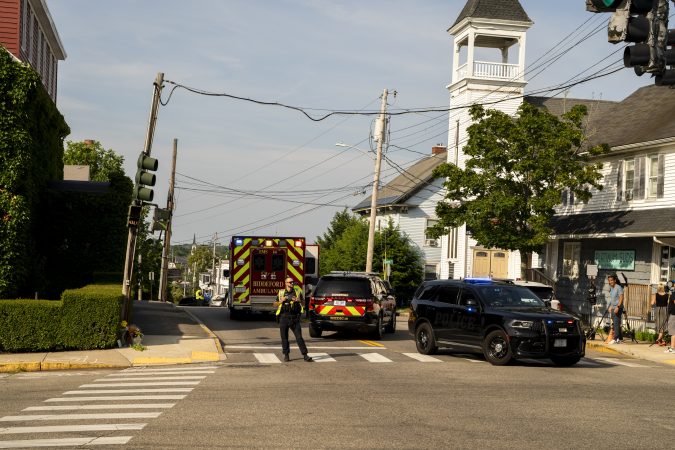
    An Immigration and Customs Enforcement agent shot and killed a man in a vehicle on Monday morning in Biddeford, Maine. It was the second fatal episode in a week, as the Trump administration continues its immigration crackdown, and the latest in a string of encounters between agents and people in cars.

    The man was identified as Joan Sebastian Guerrero, according to Matthew Felling, a spokesperson for Sen. Angus King, I-Maine.

    The Homeland Security Department said in a statement Monday that ICE agents had been monitoring what they believed to be the residence of someone who was in the country illegally and for whom they had a removal order.

    It was unclear from the department’s statement whether Guerrero was the person agents had been seeking.

    Video recorded early Monday and posted to social media showed agents surrounding a body next to a car with bullet holes in the windshield.

    “I heard agony,” said Mary Hayes, a local resident, who said she saw a screaming woman on her knees, next to a young girl. “I heard a howl that came from your soul, that your whole life had just changed and it was never going to be the same.”

    Here’s what we know:

    Witnesses heard gunfire early Monday morning

    On Monday morning, agents tried to stop a vehicle that had departed from the residence they were monitoring, DHS said in its statement, which came nearly 12 hours after the shooting.

    “The vehicle attempted to flee the scene and, fearing for public safety, an officer discharged his weapon,” the statement continued. The driver was struck and died from his injuries.

    In a separate communication received by some members of Congress, the department used more pointed language, saying the driver had “weaponized his vehicle toward law enforcement.”

    As of Monday evening, no video evidence confirming the government’s version of events had emerged.

    People who live nearby reported hearing gunfire at an intersection at around 7:15 a.m. Several reported seeing a body on the ground next to a car.

    Rep. Chellie Pingree, a Democrat who represents the area, said in a phone interview Monday that “we have gotten reports that ICE officers shot through a car window, and the individual in the car was killed.”

    Immigration officials have said little about the victim

    Though King’s office named Guerrero as the victim, the DHS statement did not.

    Three advocacy groups released information about the victim in the shooting but did not name Guerrero. In a joint statement, the Maine Immigrants’ Rights Coalition and Presente! Maine, identified him as a 26-year-old Colombian man. A third group said he had a partner and a young child. The source of the advocates’ information was unclear, and could not be immediately confirmed with authorities.

    The Colombian Embassy said in a statement Monday that it was assisting the family of a Colombian national who had died in Biddeford. The embassy said it was also requesting information from DHS “regarding the circumstances surrounding this lamentable death.”

    King said Monday that he had spoken with Markwayne Mullin, the homeland security secretary. King said that Mullin had told him that the man had been the target of an arrest warrant “based upon his immigration status.”

    But Felling said later that Mullin called the senator again and told him the driver had not been the target of any warrant. “He said they were looking for someone, essentially, and the person they shot was not the person they were looking for,” Felling said.

    Officials are demanding a full investigation

    Gov. Janet Mills, a Democrat, said in a statement that the State Police and other agencies were consulting with federal officials to “determine the facts of what occurred this morning.”

    Sen. Susan Collins, R-Maine, called for a “full and impartial investigation.”

    “We will get answers, but we do not have them yet,” said Biddeford Mayor Liam LaFountain, who also pushed for an investigation.

    This is the second death in a week involving an ICE agent firing into a vehicle

    Amid a national surge in immigration enforcement, a federal agent last week shot and killed another individual in a vehicle: Lorenzo Salgado Araujo, a Mexican man who died after a traffic stop in Houston.

    Salgado Araujo, a construction worker and father of three who had lived in the country for more than 30 years without legal status, was not the initial target of the officers who pursued his vehicle, according to immigration officials.

    The Houston and Maine killings add to a growing list of encounters between immigration agents and people in vehicles.

    About 20 people have been shot at in their cars, some of them fatally. Federal officials have in several cases claimed that the agents’ actions were justified because their lives had been endangered by “weaponized” vehicles. Witnesses of the Houston shooting said that Salgado Araujo had not used his vehicle as a weapon.

    As in the shooting of Salgado Araujo, it appeared that federal agents were not wearing body cameras Monday, King said. So “we have no video evidence of what occurred in this case,” he added.

    Immigration arrests are on the rise nationwide

    Daily arrests of immigrants in the United States doubled in the last week of June and have continued to increase, signaling a reinvigoration of the president’s crackdown after a spring slowdown.

    Immigrants make up about 5% of Maine’s population and have helped prop up the state’s economy, hampered by its aging population. Over the years, Maine has welcomed waves of refugees fleeing conflict in the Middle East and several African countries.

    In January, ICE detained hundreds of immigrants in the state during an enforcement surge the agency called “Operation Catch of the Day” — a reference to Maine’s commercial seafood industry.

    Now, locals say agents have returned, making frequent appearances in Biddeford in recent months. Biddeford, a working-class city of roughly 22,000, contains a growing community of Latin American immigrants.

    Talla Fall, who is originally from Senegal, lives near where the shooting took place Monday. ICE agents have been in the neighborhood “every day, every week,” he said.

    This article originally appeared in The New York Times.
  • Graham’s death complicates GOP agenda in Congress

    Graham’s death complicates GOP agenda in Congress

    WASHINGTON — Still shaken from the sudden death of Sen. Lindsey Graham of South Carolina, Senate Republicans returned to Washington on Monday and were immediately forced to confront the policy and political complications caused by his absence.

    Coupled with the extended leave of Sen. Mitch McConnell, R-Ky., who was hospitalized last month and has not said when he will return to the Senate, Graham’s death Saturday has created further difficulties for an election-year legislative agenda that already faced significant hurdles.

    The loss of Graham and the absence of McConnell have temporarily whittled down an already slim Republican majority and are threatening to stall spending bills, a major budget measure the party had hoped to use to push through hundreds of billions of dollars of military spending, and at least one crucial nomination.

    It also left uncertain the fate of a new package of sanctions against Russia that Graham had negotiated in the days leading up to his death, which now lacks its most influential Republican champion in the Senate.

    In the coming days, Senate Republicans had hoped to quickly confirm President Donald Trump’s pick as attorney general, Todd Blanche, whose confirmation hearings are set for Wednesday and Thursday. They are also eager to pass annual spending bills before a Sept. 30 deadline to fund the government. And with the midterms looming, many Republicans are hoping to find a way to push through sweeping policy initiatives in an arcane budget process known as reconciliation that allows them to skirt a Democratic filibuster.

    All of those are up in the air with the loss of Graham. He sat on the Appropriations and Judiciary committees, where Republicans could now find themselves short of a majority to approve legislation or nominations, and was the chair of the Budget Committee, which would drive the reconciliation process.

    Sen. John Thune, R-S.D., the majority leader, who was a longtime friend of Graham’s dating to their early years together in the House, had already been skeptical that he and his fellow Republicans could push through a politically charged, one-party budget bill so close to the November election.

    “Obviously there are a lot of considerations that we have to work through: how big it is, what the offsets are, what our limitations are,” Thune said. “To get that done and get the requisite number of votes in both the House and Senate will be a heavy lift.”

    Thune and other senators were visibly affected by the death, and Graham’s Senate desk was draped in black velvet and held a vase of white roses.

    With senior roles on the panels overseeing the Justice Department, spending and budget policy, Graham was seen as an important Republican voice in all three efforts. And as Republicans try to take advantage of their governing trifecta before the elections, Graham was viewed as a crucial link between the Senate and the White House.

    Many of Graham’s colleagues acknowledged that he would have been particularly valuable helping Senate Republicans navigate an increasingly tense relationship with Trump, who has grown frustrated by their refusal to bow wholeheartedly to his agenda.

    “His voice is going to be really, really missed in terms of the relationship that Senate Republicans have with the president and his team,” Thune said in a CNN interview Monday. “Because he was so good and so effective at talking to the president, and it was so respected by the president.”

    That connection would have been central to any attempt to push through a third reconciliation bill.

    Trump last week urged congressional Republicans to turn to the procedure — which allows bills that affect government revenues to pass the Senate on a simple-majority vote — to provide $350 billion to the Pentagon and to impose long-sought restrictions on elections.

    As chair of the Senate Budget Committee, Graham would have overseen that process, steering any measure through complex rules that govern what provisions can be included. Before his death, he signaled a willingness to try to meet Trump’s demand, even as many Republican senators, including Thune, have been skeptical that they could muster the necessary support to pass such a measure given disputes about how to pay for new spending with compensating cuts elsewhere.

    Though Thune has not yet named a successor, Sen. Ron Johnson, R-Wis., is widely viewed as the next in line to lead the budget panel. But Johnson is among the staunchest fiscal conservatives in Congress, and his approach to spending cuts may rankle vulnerable lawmakers who do not want to slash government programs.

    Asked about the path forward Monday, Johnson brushed off questions. “Look, I just walked by Lindsey’s desk,” he said. “It’s kind of one step at a time.”

    Thune’s most immediate challenge may come with Blanche’s nomination. While some Republicans have voiced concerns about Blanche’s role in establishing a Justice Department fund for people claiming to be victims of unfair prosecution, Graham, a senior member of the Senate Judiciary Committee, was seen as a reliable supporter who would have helped Blanche advance.

    But after Graham’s death, Republicans on the committee hold only an 11-10 edge on, meaning objections from any one Republican senator on the committee could stymie Blanche’s nomination. Two of them, Sens. Thom Tillis of North Carolina and John Cornyn of Texas, have raised questions about Blanche. Cornyn reiterated his concerns Monday after a federal judge in Miami assailed a settlement that Blanche brokered between Trump and the IRS that protected the president and his family from tax audits.

    “It certainly is another area that I plan to ask about, and I’m certainly not making any commitments until after the hearing,” Cornyn said.

    Advancing legislation to fund the government out of the Senate Appropriations Committee was already going to be difficult with McConnell’s absence, and the committee has already been at a partisan impasse.

    But Graham’s death could make it nearly impossible to move any spending bills without major bipartisan support. Republicans will now need all their senators on the panel to be present and voting to overcome unanimous Democratic opposition.

    Sen. John Kennedy, R-La., said the two primary actions Congress must take are to fund the government and keep it open after Sept. 30, probably through a stopgap bill, and provide money for the conflict in Iran. He predicted that progress would be difficult.

    “I’m not terribly optimistic about the next four weeks,” Kennedy said.

    This article originally appeared in The New York Times.