Category: News

  • Danish PM says her country is ‘ready to defend’ Greenland as Trump’s demands upend NATO summit

    Danish PM says her country is ‘ready to defend’ Greenland as Trump’s demands upend NATO summit

    ANKARA, Turkey — Denmark on Wednesday vowed to defend its territory after President Donald Trump insisted again that the United States should control Greenland, upending a NATO summit in Turkey meant to be a show of strength and unity.

    Denmark’s Prime Minister Mette Frederiksen said her country is “ready to defend every inch of NATO including our own territory” in the event of an attack, and would rely on NATO allies to honor their commitment to defend each other.

    “We hope that all, including all allies, will respect the Greenland people’s right for self-determination,” Frederiksen said ahead of the meeting of NATO leaders. “Greenland is of course not for sale.”

    Trump had reopened old wounds on the eve of the meeting by insisting that the United States should control Greenland, a semiautonomous Danish territory.

    Arriving at the summit on Wednesday, Trump said he was “not happy with NATO” for its member nations’ pushback against his earlier efforts to take over Greenland, adding that the territory “is very important for the United States, but it’s not important for Denmark.”

    Trump’s renewed interest in Greenland could put at risk the entire future of NATO, which was founded in 1949 to counter the threat to European security posed by the Soviet Union during the Cold War.

    The organization is normally focused on outside threats such as that posed by Russia. It is not designed to deal with threats from within.

    Iceland’s Prime Minister Kristrún Frostadóttir said Greenland “belongs to the people of Greenland,” and called for unity in the face of Russia, which she called “the biggest threat.”

    NATO chief backs latest U.S. strikes on Iran

    NATO Secretary-General Mark Rutte said from Ankara on Wednesday that he believes the United States is fully committed to the alliance. He praised Trump for the series of U.S. strikes on Iran overnight, after Tehran struck three merchant ships in the Strait of Hormuz.

    “I think what you did last night was absolutely necessary,” Rutte said to Trump. “It was a very strong response, and I’m with you on this.”

    The U.S. strikes, as well as the revoking of a license allowing Iran to sell its oil on global markets, underscored the fragility of an interim deal to end months of fighting.

    Trump said Wednesday the interim agreement with Iran is “over” after the strikes, but that he will allow talks to continue.

    “For me, I think it’s over,” Trump responded when asked about the status of the ceasefire. “It’s just a waste of time dealing with them.”

    NATO leaders sought to show Trump they were boosting defense

    The meeting in Ankara was meant to focus on progress made toward meeting the alliance’s spending targets — something Rutte highlighted by noting numerous countries that are already investing more.

    “The commitment is there, no doubt,” Rutte said before chairing the summit, but noted the Trump administration expects “the Europeans and Canadian will equalize their spending with the United States.”

    In an attempt last month to mollify the U.S. leader, Rutte went to Washington to hail the “Trump Trillion” — the $1.2 trillion that European allies and Canada have added to defense spending since Trump came to power in 2017.

    Yet Trump has demanded “loyalty” and branded NATO a “paper tiger” after some allies refused to grant open access to their bases for U.S. forces to attack Iran.

    Trump on Wednesday blasted NATO member Spain for its refusals to allow U.S. forces to use its bases to attack Iran, saying it was a “terrible partner in NATO” and renewing his threats to cut off trade with Spain.

    As leaders converged on Ankara, Rutte hosted a “big reveal” event to showcase the many deals planned for the increased spending — much of it to be spent on U.S. companies, creating thousands of jobs for Americans.

    NATO diplomats and officials had hoped that Trump would take the win, but judging by some of his remarks since arriving in Turkey, they are in for yet another dressing down.

    NATO braces for Trump’s grievances

    Trump has long argued that the U.S. carries more than its fair share of the defense burden for NATO. At last year’s summit, the allies agreed to invest 5% of their gross domestic product on defense — 3.5% on their defense budgets and 1.5% on infrastructure so troops and equipment can move faster in times of conflict.

    Yet new figures released by NATO on Tuesday showed that Slovenia, Belgium, Spain, and the Czech Republic could be in hot water with the Trump administration as they struggle to meet the alliance’s old spending target of 2% of GDP.

    The Trump administration wants to see a more lean and lethal “NATO 3.0,” with Europe taking responsibility for its own security, including Ukraine, with conventional weapons while America would continue to provide its nuclear umbrella.

    However, the Pentagon has launched a six-month review of U.S. military presence in Europe, leaving allies to seek clarity on just how deeply Trump intends to cut U.S. force numbers.


  • Temple student killed by hit-and-run driver remembered as full of promise: ‘Made you want to be a better person’

    Temple student killed by hit-and-run driver remembered as full of promise: ‘Made you want to be a better person’

    Bryce Wolfe was “so full of life and enthusiasm and intellect and promise,” and it was apparent even as a high schooler when he joined a mountain bike team based in Danville, Pa., said David Decoteau, one of his coaches for the Central Susquehanna Hammers.

    “All I can really say about Bryce is that he was one of those rare young people that you meet and walk away from the conversation thinking, ‘I’m not worried about the future. We are going to be fine with guys like this involved,’” Decoteau, 63, said in an interview.

    “He was one of those people that made you want to be a better person,” Decoteau said.

    On Saturday, Decoteau will be attending the 20-year-old’s funeral.

    Wolfe, who had just completed his sophomore year at Temple University, was riding his red 2004 Triumph motorcycle on Kelly Drive the night of June 24 when he was struck by a white SUV making an illegal turn onto Reservoir Drive, near the Strawberry Mansion Bridge, Philadelphia police said.

    His body became lodged under the SUV and he was dragged for more than a mile, police said. He died at the hospital the next day.

    The driver of the SUV fled and remains at large.

    Police on July 7, 2026, released images of the suspected SUV, believed to be a white 2001-08 Chevrolet Trailblazer, that fatally struck 20-year-old Bryce Wolfe, a Temple University student, on June 24.Philadelphia Police Department

    Police on Tuesday released surveillance images of the SUV suspected in Wolfe’s death. Investigators believe the SUV is a 2001-08 Chevrolet Trailblazer, possibly with damage on the driver’s side, with possible red paint transfer, a broken rear windshield, and a discolored passenger-side front wheel.

    A memorial service for Wolfe is scheduled for 7 p.m. Saturday at Krapf & Hughes Funeral Home, 530 West Butler Dr., Drums, Luzerne County. A visitation period will be held from 5 p.m. until the time of the service.

    A GoFundMe page has been created to help Wolfe’s family.

    In an obituary written by his parents, Lori Wolfe and Clarence Wolfe III, Bryce Wolfe was described as having lived his life “with a fearless spirit of adventure and a genuine love for the outdoors.”

    He “found joy in seeking new challenges and embraced every opportunity to experience the world to its fullest. Whether carving down snow-covered slopes while skiing, exploring miles of trails on his bicycle, or riding motorcycles through rugged dirt tracks and open roads, he felt most alive when he was in motion,” his parents wrote.

    Bryce Wolfe, who was from Conyngham, a borough in Luzerne County, had recently started a summer internship and wanted something he could ride around while he stayed in Philadelphia, his mother said in an interview.

    “It was the first motorcycle he bought and insured all by himself,” Lori Wolfe said about her son’s Triumph.

    Temple University president John Fry said last week that Bryce Wolfe, an actuarial science major in the Fox School of Business, had recently started an underwriting internship with United States Liability Insurance Group.

    In a statement, the company said Wolfe “was a quick learner who approached every opportunity with enthusiasm and curiosity, always asking for additional responsibilities and eager to take on new challenges.”

    USLI added: “In the short time we were fortunate to know him, Bryce left a lasting impression through his kindness, initiative, and the relationships he built with those around him. He will be deeply missed by his teammates and all who had the privilege of knowing him.”

    Wolfe was also a member of the student professional organization Gamma Iota Sigma, the professional fraternity for risk management, insurance, and actuarial science.

    He “had quickly established a reputation as both an excellent student and engaged member of the Temple community,” maintaining a high grade-point average while being enrolled in both the Temple and Fox Honors programs, Fry said.

    Bryce Wolfe, 20, of Luzerne County, had just completed his sophomore year at Temple University when he was killed by a hit-and-run driver on Kelly Drive.Wolfe family

    Bryce Wolfe was the middle sibling of two brothers, 18-year-old Brayden and 22-year-old Tyler. Lori Wolfe said Bryce was particularly close to his older brother, who has Down syndrome.

    Bryce and Tyler Wolfe were able to participate in track and field together because of an inclusive “Unified” sports program at Hazleton Area High School that was recognized in late 2023 by the Special Olympics.

    In a speech to the high school during the recognition ceremony in January 2024, Bryce Wolfe explained that he and his brother had difficulty finding clubs and activities they could do together.

    Thanks to the school district’s Unified sports program, “dozens of students just like my brother and I are able to compete together as equals, marking a truly revolutionary moment in Hazleton area’s history,” he said in his senior-year speech, which was posted on YouTube.

    “Some of you may not know it, but every one of you has contributed to the culture and atmosphere here in Hazleton, which the Special Olympics has honored us for today,” Wolfe said.

    “This banner, proudly displayed in our gymnasium, will serve as a powerful symbol of Hazleton’s commitment to inclusivity for all visiting fans and athletes to see,” he said.

    Decoteau, Wolfe’s mountain-bike coach, said the Hammers team plans to rename a trail where they rode together as a team in Wolfe’s memory.

    The team also is working to establish a scholarship to help Wolfe’s “dream of helping kids be involved in mountain biking become a reality,” Decoteau said.

    “It’s a terrible loss and tragedy. I will miss him,” Decoteau said.

  • William T. Hangley, celebrated cofounder and chair emeritus of Hangley Aronchick Segal Pudlin & Schiller, has died at 85

    William T. Hangley, celebrated cofounder and chair emeritus of Hangley Aronchick Segal Pudlin & Schiller, has died at 85

    William T. Hangley, 85, of Philadelphia, celebrated cofounder and chair emeritus of the Hangley Aronchick Segal Pudlin & Schiller law firm, longtime litigator, judge-appointed legal adviser, substitute Common Pleas Court judge, former student organizer, mentor, and onetime music teacher, died Tuesday, June 23, of esophageal cancer at his home in Center City.

    A lifelong advocate of music, education, and the law, Mr. Hangley earned a bachelor’s degree in music education, taught elementary school students in Long Island for a year, and got his law degree with high honors at the University of Pennsylvania in 1966.

    He was a senior student leader at the State University of New York at Fredonia in 1963, and a dean recognized his organization and leadership skills. So he suggested that Mr. Hangley forgo the music classroom for the courtroom.

    A story and this photo of Mr. Hangley (left) appeared in The Inquirer in 1994.Newspapers.com

    Mr. Hangley did, and, over the next 60 years, until recently, he tried all kinds of court cases and counseled business owners, executives, employees, students, government officials, journalists, and, in one of his career highlights, a client who was incorrectly sentenced to death.

    He was an expert in business litigation and professional liability defense, and he tackled cases about intellectual property, business contracts, antitrust, real estate, malpractice, capital punishment, and other issues.

    “He set a standard for integrity, rigor, and creative problem solving,” his family said in a tribute. “He could take virtually any kind of case to trial and win.”

    Mr. Hangley appeared on the cover of Super Lawyers magazine for Pennsylvania and Delaware in 2012. Super Lawyers magazine

    Colleague David Pudlin said: “Bill was a giant at everything he did.”

    Mr. Hangley won especially notable cases for The Inquirer, Children’s Hospital of Philadelphia, the Albert Einstein Healthcare Network, heirs to the Tylenol fortune, the Temple University student government, and women athletes at Temple. “The ones I enjoy the most,” he told Super Lawyers magazine in 2012, “are when I get to represent the little guy.”

    In 1996, Mr. Hangley won a complex libel case for The Inquirer, and a now-former editor, in a personal letter to Mr. Hangley, said his closing argument “lit up the First Amendment like bolts of lightning in a night sky.”

    Mr. Hangley was funny, daring, and dapper, friends and colleagues said. Courtesy of the family

    He was known for his people skills, wide range of expertise, concise legal writing, and crafty courtroom communication techniques. “Some lawyers are confrontational,” he told Super Lawyers. “They want to make a witness feel like dirt, and then he’s putty in their hands. That’s not my approach. I think a lot of witness examination should be freestyle, where the witness is invested in the conversation.”

    He cofounded what is now Hangley Aronchick Segal Pudlin & Schiller in 1994, served as chair until 2014, and helped the firm grow to include experts in estate planning and real estate, tax, corporate, and family law. He continued to advise and counsel as chair emeritus until a few months ago.

    Earlier, he worked at Schnader Harrison Segal & Lewis, Goodman & Ewing, and Hangley Connolly Epstein Chico Foxman & Ewing.

    Mr. Hangley and his wife, Mary, were married for nearly 61 years. Courtesy of the family

    Mr. Hangley was funny, daring, and dapper, friends and colleagues said. He wore Gucci ties in the courtroom and joked with judges and other lawyers. He told The Inquirer after a case in 1978: “We got a good settlement, and I managed to get off a good one-liner. What man could ask for more?”

    He was onetime chair of the Good Judges for Philadelphia political action committee and a special master in district court cases. He served on committees for the American Bar Association and was active with the American College of Trial Lawyers and the Institute for the Advancement of the Legal System.

    He earned appointments to advisory roles from Supreme Court Justice John G. Roberts Jr., former Pennsylvania Chief Justice Ronald Castille, and Judge Anthony Scirica of the U.S. Court of Appeals for the Third Circuit. In 1970, he ran unsuccessfully for the state Senate as a Democrat.

    Mr. Hangley (middle left) enjoyed time with his family.Courtesy of the family

    “I can’t think of anything else I could have done with my life that I would have enjoyed as much as what I’m doing now,” he told Super Lawyers. “I really hit the big one.”

    The youngest of 11 children, William Thomas Hangley was born March 11, 1941. He worked as a beach club cabana boy and an ice cream vendor in Long Beach, N.J., when he was young.

    He met fellow teacher Mary Dupree after college and asked her to go bowling on their first date, and they married in 1965. They had daughters Michele and Katie and a son, Bill Jr., and lived in Center City and West Mount Airy.

    Mr. Hangley and his family enjoyed memorable vacations at their summer home in Martha’s Vineyard, Mass. He followed the Eagles, loved dogs and classical music, and supported the Philadelphia Orchestra and other cultural groups.

    “My dad described himself as an optimist,” Mr. Hangley’s daughter Katie said.Courtesy of the family

    He and his wife hosted rollicking holiday parties, and he sang and danced. He doted on his children and grandchildren, and was onetime president of the C.W. Henry Elementary School and home association.

    “My dad described himself as an optimist, a gambler at heart, and a person who was grateful for all the joy he had experienced,” said his daughter Katie, “and eager for more.”

    His son, Bill, said: “He stood for integrity.” His daughter Michele said: “He told us, ‘I’ve had a good run,’ and he was right.”

    In addition to his wife and children, Mr. Hangley is survived by two grandchildren and other relatives. Five sisters and five brothers died earlier.

    A private service was held earlier. A celebration of his life is to be held later.

    Donations in his name may be made to the Academy of Vocal Arts, 1920 Spruce St., Philadelphia, Pa. 19103; Community Legal Services of Philadelphia, 1424 Chestnut St., Philadelphia, Pa. 19102; and the Crossing, 8855 Germantown Ave., Philadelphia, Pa. 19118.

  • N.J. funds schools to build pipeline of air traffic controllers amid ongoing shortage

    N.J. funds schools to build pipeline of air traffic controllers amid ongoing shortage

    New Jersey officials have given three public colleges $3.5 million in state funding to train aviation professionals, amid a national shortage of certified air traffic controllers that has led to mounting safety concerns and flight delays.

    The state Office of the Secretary of Higher Education announced Tuesday that Kean University and Atlantic Cape Community College got $1.5 million each, and Warren County Community College received $500,000 under a grant program intended to grow New Jersey’s pipeline of aerospace professionals.

    Those schools offer curricula aligned with the Federal Aviation Administration’s Air Traffic-Collegiate Training Initiative, which gets graduates to on-the-job training faster by allowing them to bypass some standard FAA Academy requirements.

    School administrators will use the money to expand aviation and aerospace programs.

    Kean plans to create a new FAA-aligned bachelor of science degree in aviation management, expand its drone minor into a drone operations major, house a Center for the Study of Unidentified Aerial Phenomena, create a similar center focused on drones at its Skylands campus, and partner with K-12 schools to develop a pre-college aviation and drone pipeline program, according to the Office of the Secretary of Higher Education.

    Atlantic Cape Community College plans to expand its FAA-aligned curriculum, add advanced simulation training, and expand teaching staff. Warren County Community College plans to develop an air traffic control certificate program and add an airport management and operations course.

    “By supporting institutions to build programs and enhance training opportunities that feed into FAA certification pathways, we are developing routes into well-paying, stable careers for residents who will serve New Jersey and the nation over the decades to come,” Acting Secretary of Higher Education Margo Chaly said in a statement.

    The funding came from former Gov. Phil Murphy’s final budget and was distributed last month.

    The Trump administration announced a plan last year to “supercharge” hiring to reduce a shortage of 3,000 air traffic controllers nationally. The move came after a deadly air crash in Washington, D.C., and chaos from coast to coast, including at Newark Liberty International Airport.

    The number of applicants spiked, but the shortage persists due to an increase in flights, high workforce attrition, difficult and lengthy training requirements, and the lingering impact of pandemic and government shutdowns, the U.S. Government Accountability Office found in January.

    This story originally appeared on New Jersey Monitor.

  • Two children, dozens of cats taken from Northeast Philadelphia home in ‘deplorable living conditions’

    Two children, dozens of cats taken from Northeast Philadelphia home in ‘deplorable living conditions’

    Two children were removed from a Northeast Philadelphia home and two adults were arrested after federal authorities discovered hazardous living conditions at the property Tuesday.

    The FBI was conducting “court-authorized law enforcement activities” about 11 a.m. Tuesday, and discovered the children, an 8-month-old and a 5-year-old, inside the home on the 7100 block of Whittaker Avenue in Castor Gardens, the Philadelphia Police Department said. The home was deemed unsafe due to “deplorable living conditions,” and the children were taken to a local hospital for evaluation.

    Megan Bach, 44, and Thomas Bach, 43, were taken into custody at the scene, and have been charged with offenses including endangering the welfare of a child, criminal conspiracy, and possession of an instrument of crime. It was not immediately clear what prompted the search of the home, and authorities did not immediately respond to a request for comment about the adults’ relationships to the children found at the property.

    The PSPCA said the FBI called in its Animal Law Enforcement team, which discovered the home was housing multiple animals in unsanitary conditions. PSPCA investigators found feces, urine, empty food bags and boxes, and an “overabundance of belongings” in the home, the organization said in a statement.

    Though it remains unclear how many animals were on the property, PSPCA workers have removed 48 cats and one dog since arriving on the scene Tuesday. A majority of the rescued cats were removed Tuesday, with 10 more rescued Wednesday after workers set humane traps at the home. Animal rescue efforts are continuing, and it is not uncommon for cases involving large numbers of cats to go on for several days, the group said.

    Animals from the property were taken to the PSPCA’s Philadelphia headquarters, where they were slated to undergo forensic examinations and receive medical care, the organization said. The rescued animals, it added, have not been signed over to the custody of the PSPCA, but will remain in its care until the case is resolved.

    “Our Animal Law Enforcement team sprang into action yesterday upon learning that animals were living in deplorable and unsanitary conditions inside this home,” said Nicole Wilson, director of the PSPCA’s animal law enforcement and shelter operations. “It is our hope that, in time, each of them will find the loving new homes and new beginnings they deserve.”

    Additional information about the FBI’s activity at the home was not immediately available. A spokesperson for the bureau’s Philadelphia office did not immediately respond to a request for comment.

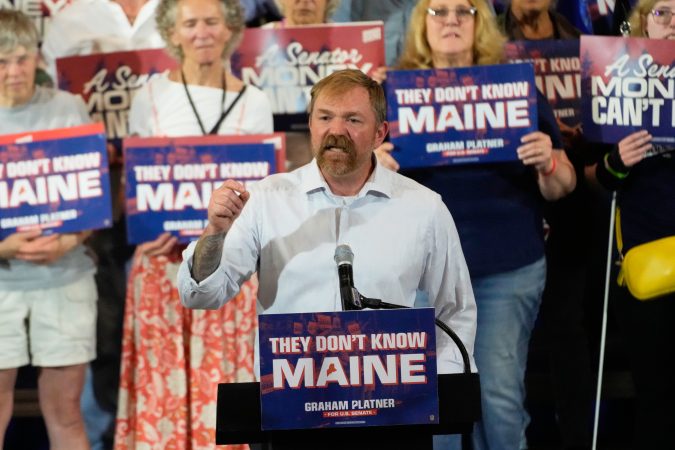
  • Graham Platner, isolated, defies Maine Democrats as they try to hatch a plan

    Graham Platner, isolated, defies Maine Democrats as they try to hatch a plan

    Increasingly isolated from the Democratic Party, Graham Platner is holed up at his home in rural Maine, navigating the likely end of his once-surging campaign for the U.S. Senate, as establishment fury over his prolonged exit grows louder.

    Platner’s campaign team held a call Wednesday afternoon in which campaign leadership sounded resigned to the idea that the Democrat’s bid could be ending soon, said a Democrat close to Platner. Campaign staff were told that Platner would speak about the future of his run Wednesday night.

    He could drop out of the race soon, probably by prerecorded video, said a second person close to Platner’s team who, like others in this article, spoke on the condition of anonymity to avoid alienating fellow Democrats in what has become an increasingly tense situation.

    One of Platner’s key advisers, Morris Katz, flew up to Maine from New York on Tuesday to discuss his withdrawal, said the person. But Platner, whose political support has evaporated since he was accused of sexual assault on Monday, has struggled with the decision, people close to him said, and has said he would like input on the replacement process, leaving the timing of any announcement unclear.

    “It is him who is wanting to hold on,” the first Democrat said. “He is having to come to terms that his dream is dead. The show is over, this is done.”

    Until Platner pulls the plug, however, the Democratic Party is at an impasse, unable to fully refocus on its uphill battle to defeat five-term Republican Sen. Susan Collins. The race is critical to Democrats’ longshot bid to retake the Senate, where the party must flip four seats held by Republicans to win back control in November.

    That frustration is now spilling into the public.

    On Tuesday night, the Maine Democratic Party released a confrontational video reiterating its call for Platner to drop out so it could select a replacement candidate. If Platner withdraws by Monday, the party has until July 27 to submit a new nominee – though it remains unclear how that decision would be made.

    “Unfortunately, Graham Platner’s team has repeatedly reached out to us in an attempt to put their thumb on the scale of what this process looks like,” Devon Murphy-Anderson, executive director of the Maine Democratic Party, said in the video. “We have repeatedly reiterated to Graham Platner’s team that they have no role in determining our next Democratic nominee for the U.S. Senate.”

    That posture incensed Platner’s more dedicated supporters, some of whom have felt aggrieved by how quickly Democrats turned on him after the sexual assault accusation and who argue that any replacement candidate must be aligned with the populist politics that fueled his rise.

    Party officials are sensitive to the fact that, despite Platner’s downfall, they need to keep the political movement that emerged around him intact in order to win.

    “It is important that someone carry forward the movement that has been built here of everyday working-class people who are fed up with a system in Washington that is so broken,” Maine House Speaker Ryan Fecteau said in an interview. “There are a number of people in Maine politics who share the same views as Graham Platner, who have the same message as Graham Platner, who can carry this work forward.”

    A spokesperson for Platner denied that “the campaign tried to ‘put its finger on the scale’” of the replacement process. But Platner is seeking to influence it as he navigates his exit – and his decision not to drop out immediately has divided many within his campaign.

    Platner’s attempt to continue a campaign detonated by his own alleged behavior has not only exasperated some Maine Democrats but also dumbfounded them.

    “People who have made their political careers decrying a rigged political system are now trying to rig the political system,” quipped a Democratic operative who works in Maine.

    National Democrats, led by the Democratic Senatorial Campaign Committee, have said that they will not spend money in Maine if Platner remains the nominee.

    But their role in selecting his successor is minimal, beyond supporting the Maine Democratic Party’s currently unknown plans for selecting a replacement should Platner drop out. There is belief within the committee that any nominee, at this point, will be stronger than a scandal-plagued Platner, said one person familiar with the committee’s thinking.

    Since he launched his campaign last summer, Platner’s political rise and his outsider message have invigorated Maine Democrats, who have long failed to find a candidate who can defeat Collins, despite the state’s Democratic lean.

    Many voters were willing to overlook earlier controversies that plagued the charismatic 41-year-old oyster farmer and military veteran, including old social media posts where Platner downplayed sexual assault and made other inflammatory comments; a tattoo resembling a Nazi symbol that he had covered up; sexually explicit text messages sent to other women after he married; and accusations of violent behavior by ex-girlfriends.

    Then on Monday, a woman who used to date Platner said he entered her home intoxicated one night in late 2021 and forced himself on her as she told him to stop.

    On Tuesday, a second ex-girlfriend told The Washington Post that Platner repeatedly removed protection without her consent when they were having sex. The campaign called the claim “categorically false and politically motivated.”

    Unlike some politicians engulfed by scandal, Platner retains a core of close advisers who have stuck by him since Monday, allowing him to hold out against calls for his withdrawal.

    In April, when then-Rep. Eric Swalwell (D-California) was accused of sexual assault by a former staffer amid a run for governor, top campaign staff immediately quit and his campaign imploded within days. Platner, by contrast, continues to operate with the inner circle of his campaign from his home in the small coastal town of Sullivan.

    The scene was quiet there Wednesday morning. Several cars were parked in Platner’s driveway near a pile of chopped wood and a boat covered in a green tarp. A few reporters were across the narrow road.

    As the public awaits word from Platner about his plans, longtime friends say this has been a difficult moment, with one even suggesting that Platner could continue to fight.

    “Everybody says they are pulling their support. Is that truly what they are going to do? Are they just going to let Susan Collins win?” the friend said. “That seems highly unlikely to me because we need Maine to flip the Senate.”

    That is not a universal view, however. Some people who have backed Platner for months, even through his many scandals, are too disgusted with him to continue their relationship.

    “At this point, he knows I know he’s lied to me directly too many times,” said a top Maine Democrat who has been close to Platner. “I don’t think he has the shame to speak directly to me.”

    Joanna Slater in Sullivan, Maine, contributed to this article.

  • Kentucky Gov. Andy Beshear asks Sen. Mitch McConnell to give a public update on his condition

    Kentucky Gov. Andy Beshear is directly asking Sen. Mitch McConnell, the state’s most powerful figure in Congress, to disclose more about his condition after three weeks of silence from the 84-year-old since he was hospitalized in Washington.

    The letter released Wednesday from Beshear, a Democrat who is considered a potential presidential candidate in 2028, to the former Senate Republican leader says, “Kentuckians have grown increasingly concerned about the current state of your health and well-being, and ability to hold office.”

    McConnell, whose physical condition has visibly declined in recent years, was hospitalized June 14. He has not released a public statement, photos, or videos since. Aides have disclosed nothing specific about his condition, other than to say last week that McConnell “continues to improve, and is working closely with his staff on Kentucky and Senate matters while the Senate is out of session.”

    That lack of detail has fueled rampant speculation about his prognosis and whether he will return to the Senate when it reconvenes next week. The firestorm was enough that Republican Senate leaders on Tuesday made public statements saying they had talked to McConnell and that he was alert and discussing current events.

    McConnell is retiring at the end of his term in January, and the campaign to elect his successor already is underway. Kentucky’s Senate succession law, which Republican legislators have twice changed during Beshear’s tenure, does not give the governor a role in picking a temporary successor should McConnell’s seat become vacant before his term ends.

    Under the latest change in 2024, if the seat becomes vacant before Aug. 3, there would be a special election to pick a replacement, perhaps held concurrently with the general election in November. The special election winner could take office nearly immediately. The general election winner would be sworn in as part of the new Congress in January.

    If the seat were vacated after Aug. 3, there would be no time under the law for a special election and the seat would remain vacant until January.

    Beshear ended the letter by wishing McConnell “a safe and speedy recovery.”

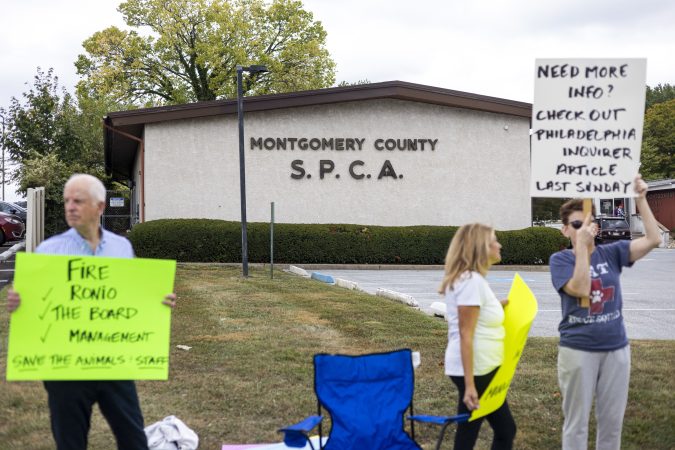
  • State probe confirms poor conditions and needless euthanasia at wealthy Montco SPCA, leading to reforms

    State probe confirms poor conditions and needless euthanasia at wealthy Montco SPCA, leading to reforms

    A nearly two-year probe led by the Pennsylvania Attorney General’s Office found the Montgomery County SPCA violated state nonprofit laws, euthanized animals unnecessarily, and failed to use its $67 million in charitable assets to maintain healthy animal shelters, officials announced Wednesday.

    The probe began in October 2024, weeks after an Inquirer investigation revealed signs of mismanagement, hazardous conditions, and animal mistreatment at the state’s wealthiest animal shelter.

    Attorney General Dave Sunday said his office reached a settlement requiring the nonprofit to replace its board of directors, hire new executive management, bring facilities up to code, and revise old bylaws. The shelter also must pay $21,040 in fines as part of the settlement.

    The Montco SPCA said many of the terms of the settlement agreement were either well underway or completed as of Wednesday. The organization touted in a statement its “extraordinary progress” over the last two years, including a $26 million commitment to facility upgrades and an improved save rate for animals.

    Following The Inquirer’s reporting on shelter operations, and outcry from animal welfare advocates, some donors pulled the Montco SPCA from their wills, amid concerns that the funds were being misused at the century-old institution.

    The Inquirer found squalid kennel conditions, inadequate foster programming, and undertrained staff. The Montco SPCA’s wealth dwarfed that of most animal shelters in the region, yet it spent comparatively little on operations. At the time, it also saved the fewest number of animals among regional shelters, euthanizing nearly one in five that entered the main branch in Conshohocken.

    The local SPCA leaders responded with a complete overhaul of operations, beginning with the ouster of its executive director, who had run the shelter for more than 50 years.

    The shelter also replaced most members of its longtime board of directors, named a new executive director, improved training for staff, and invested heavily in shelter infrastructure. Plans are underway to build a new shelter.

    It is a stark change from just two years ago, when the cash-rich shelter hoarded millions in investment accounts as complaints piled up.

    Between 2021 and 2024, the attorney general’s probe found, the board of directors “failed to exercise due diligence and reasonable care” that resulted in multiple violations of Pennsylvania laws governing nonprofits and trade practices, according to the settlement agreement.

    The agreement cited “potentially undue and precipitous euthanization of animals,” as well as mistreatment of pets, unsafe conditions, and “undue” stockpiling of charitable funds.

    Sunday said that over the four years examined by his office, the Montco SPCA failed donors by spending an insufficient amount to advance the shelter’s mission.

    “Pennsylvanians who donate to charities should be able to trust that their money is being used to support an organization’s mission,” Sunday said in a statement. “This settlement holds the Montgomery County SPCA accountable, puts important safeguards in place, and serves as a reminder to other charitable organizations that they will be expected to fulfill their mission and comply with the law.”

    Shelter officials said the reforms are ongoing. The Montco SPCA expects to invest $25 million to build a new veterinary clinic and adoption facility in Blue Bell, where the nonprofit purchased a building for $5 million in September, according to a spokesperson. Estimated grand opening: 2027.

    Meanwhile, the SPCA’s Conshohocken and Perkiomenville locations remain open for business, while its Abington branch plans to reopen in the fall after a $500,000 renovation.

    “The resolution reflects both the substantial progress we have made, and a shared commitment to continue building a stronger, more sustainable organization for the future,” the nonprofit’s statement said.

  • Montgomery County DA drops assault charge against Mike Missanelli in domestic dispute

    Montgomery County DA drops assault charge against Mike Missanelli in domestic dispute

    Montgomery County prosecutors have withdrawn criminal charges against longtime Philly sports personality Mike Missanelli, ending their investigation into an alleged domestic dispute between him and his fiancee.

    Missanelli, a former Inquirer sportswriter best known for his 15-year stint as a host at 97.5 The Fanatic, was arrested in April and charged with simple assault and harassment after his fiancee accused him of slapping her across the face during an argument inside their home in Lower Merion.

    During a preliminary hearing late last month, prosecutors declined to move forward with the case.

    In a statement Wednesday, Kate Delano, a spokesperson for District Attorney Kevin Steele, said that “after reviewing additional information, the office made the determination that it would withdraw the charges.”

    “In every case, we are always continuing to investigate after charges are filed,” she said.

    Missanelli’s attorney, Brian McMonagle, declined to comment Wednesday. Missanelli did not respond to a request for comment.

    In the affidavit of probable cause filed by Lower Merion police, officers wrote that Missanelli, 70, was in a heated argument with his fiancee over their engagement. His fiancee’s name was redacted from court records.

    Police responded to a 911 hangup shortly after midnight, and Missanelli told officers the argument led to a “scuffle.”

    The fiancee struck him in the chest and Missanelli’s “open hand slapped her on the left side of her face/head,” the affidavit said. One officer said he saw fresh blood on the woman’s forehead from a laceration allegedly caused by the slap.

    Missanelli was fired from WIP in 2006 after he punched a producer. He was then fired by 6abc in 2017 for misogynistic comments he made about Beth Mowins, an ESPN broadcaster.

    In recent years, Missanelli has been in the news for various job changes. After 15 years with 97.5 The Fanatic, he was pushed out by management in 2022, then brought back in 2024, only to be ousted once more last August.

    Currently, he is embroiled with a legal battle with JAKIB Media and its owner, Joe Krause, for their alleged failure to pay him $85,000.

    Staff writer Rob Tornoe contributed to this article.

  • The Vances added a chicken coop to the vice president’s residence. We had questions.

    The Vances added a chicken coop to the vice president’s residence. We had questions.

    Vice President JD Vance and his family are raising chickens at their residence at the U.S. Naval Observatory. The family has a dozen hens pecking inside a custom-made coop on a 72-acre federal observatory — but many other details about their experiment in raising chickens are unknown.

    The coop was designed to mirror the Queen Anne-style architecture of the vice president’s residence at Number One Observatory Circle. As such, the henhouse is not cheap: It cost between $100,000 and $120,000, according to the owner of the North Carolina company that built the structure. But U.S. taxpayers didn’t foot the bill. The coop was donated by the company.

    So who exactly will be raising the hens? And why are the Vances taking on this project? For eggs? For educational purposes? For feathered pets? A spokesperson for Vance did not respond to multiple emails seeking comment.

    The Washington Post turned to former and current backyard chicken keepers to gather insights on what may be going on at Number One Observatory Circle. We also talked to the guy who built the pricey coop. We even checked with a city official to discuss whether the Vances are following the proper protocols to raise hens in Washington.

    Who built the Vances’ coop?

    The henhouse and run were custom-built by Carolina Coops, which specializes in high-end structures for those looking to pamper their backyard birds. Owner Matt DuBoise said Fox & Friends Weekend co-host Rachel Campos-Duffy, wife of Transportation Secretary Sean P. Duffy, recommended him to the Vances. DuBoise had built a coop for the Duffys.

    The Vances’ henhouse is elevated — about 2 feet off the ground — and situated inside a shed that is protected from the elements, DuBoise said. The design is such that the owner does not have to walk through “chicken droppings and chicken bedding” to tend to the birds. The keeper can access the hens via interior shed doors. The attached run is predator-proof, DuBoise said, and includes a solid roof, which helps prevent avian flu from spreading to the flock, as it can be “transmitted with migratory birds flying overhead,” he said.

    Why are the Vances raising chickens?

    In the run-up to the 2024 presidential election, Vance raised alarms about the high cost of eggs, which was apparently affecting his family’s budget. He and his wife, Usha, have three children. At a supermarket stop in Reading, Pa., Vance turned to his kids and said, “These guys actually eat about 14 eggs every single morning. Is that right?”

    “Yeah!” one child responds, off-camera.

    The family’s daily consumption is probably a joke, but it highlighted a possible reason the Vances wanted a coop: In their prime, the second family’s 12 hens may each lay up to six eggs a week, nearly enough to cover the Vances’ daily needs. Like many hen keepers, the Vances will have to figure out what to do with their eggs: Eat some, give away some, maybe even donate some to a food bank that will accept them.

    The addition has led to speculation that there may be political motivations behind the flock’s appearance. It’s a theory that resonates with Danny Bowers, who keeps 19 chickens on a suburban property in Utah County, Utah. Bowers, who uses they/them pronouns, points out that some conservatives have embraced the values espoused by “trad wife” influencers, many of whom raise chickens.

    Who will do the actual work of raising the hens?

    It’s not clear, but Usha Vance, who is due to deliver the family’s fourth child later this month, may be off the hook for a little while — numerous state health departments say pregnant women should avoid handling chickens, especially chicks, because of the risk of salmonella infection.

    DuBoise said he expects the family to take a hands-on approach with the chickens. When he was at the Naval Observatory, installing the coop, the Vance children were “very, very active, asking great questions,” DuBoise said. “That’s always a great sign when the kids are very curious and wanting to get involved.”

    Is it legal to raise chickens in D.C.?

    Yes, but chicken keepers must meet some requirements before the city will issue them a permit. Every coop in Washington must be located at least 50 feet from a building “used for human habitation,” according to regulations. A henhouse and run must also be at least 250 feet from any property line or, failing that, the owners must get written permission from all neighbors located within 100 feet of their property line.

    There’s also a rule that you can’t keep roosters, said Tony Tomelden, the D.C. hospitality veteran who owns the Pug on H Street NE. Tomelden and his family raised chickens in their Brookland backyard for years, starting in the 2010s. Tomelden said it’s not easy to determine whether your chicks are cockerels (male) or pullets (female), unless you’re trained to know the difference. It’s only later, when a cockerel matures into a rooster, that owners learn — the hard way.

    “What they say is, ‘You’ll know it’s a rooster when it lets you know,’” Tomelden said. “And so one of them did.”

    I tried to confirm the regulations with a few people at D.C. Health. No one returned my calls or responded to my emails. But one city official said D.C. regulations don’t typically apply to federal property. He spoke on the condition of anonymity because he wasn’t authorized to talk to the media.

    But locals don’t follow the rules, either, the official said. “I know we have plenty of people in the city that are raising chickens on properties that don’t meet [the] requirements,” he said.

    Are there benefits to raising hens aside from eggs?

    Backyard keepers often develop an emotional attachment to their chickens. Take Clara Cho. Her parents, Yon and Francie, have raised hens at their suburban New Jersey home, outside New York City, since Clara, now 27, was a senior in high school. Clara had grown up with dogs and cats.

    The chickens “weren’t as affectionate as the cats or the dogs,” Clara remembered. “But they’d come for pets, and they would come out when you called them from the coop and everything. It was definitely sad when they passed away.”

    Bowers, the Utah chicken keeper, thinks of their hens, especially a bearded white Silkie bantam named Karen, almost as emotional support animals. When Bowers is having a particularly bad day — they suffer chronic pain from several autoimmune disorders — they will cuddle up with Karen.

    “You wouldn’t think a chicken could be such a comfort,” Bowers said. “But all I know is she’s 6 years old, and she better live to be, like, 20.”

    Is this the first time a president or vice president has raised livestock in office?

    Plenty of presidents have had livestock at the White House, including horses and cows, but the White House Historical Association found only one instance of a president raising chickens.

    According to White House chief usher Irwin Hood “Ike” Hoover’s 1934 memoir, Forty-Two Years in the White House, an admirer sent two dozen live chickens to the White House during Calvin Coolidge’s presidency in the 1920s. Coolidge apparently kept the chickens near a mint patch that Theodore Roosevelt started for his mint juleps.

    The White House Historical Association has not been able to verify the account from other contemporary sources.

    DuBoise, however, believes Vance will be the first to raise chickens at the vice president’s residence.

    Will the Vances save money on eggs by raising their own hens?

    It depends on how you crunch the numbers.

    The Post’s Unearthed columnist Tamar Haspel raised chickens for 15 years with her husband, Kevin, on their property in Cape Cod, Mass. If you read Haspel’s book To Boldly Grow, you quickly learn she and Kevin know how to stretch a dollar when it comes to raising birds.

    I asked Haspel to calculate how much it would cost the Vances to produce a dozen eggs, based on the best information we could gather. She figured a laying hen would produce about 24 dozen eggs a year, which, based on feed costs alone, would come to $1.46 per dozen. That’s more than 70 cents cheaper than the average price per dozen of large white Grade A eggs, which stood at $2.19 in May.

    But that price doesn’t factor in expenses such as water, supplemental feed, bedding, and the cost of the chicks. Nor does it factor in the price of the fancy coop, which the Vances did not pay for, but most Americans would. Haspel said that if you amortize the coop over the remaining months of the Trump administration, it would add $139 to every dozen eggs. If you amortize the structure over 10 years, it adds $35 to every dozen eggs.

    In other words, it wouldn’t be a bargain.

    “If you get a coop like that,” Haspel wrote via email, “don’t ever expect to make up the money in eggs. But mostly that’s not why people get chickens.”