Category: News

  • Senate Democrats block $1 trillion defense bill in protest over Iran war

    Senate Democrats block $1 trillion defense bill in protest over Iran war

    WASHINGTON — Senate Democrats blocked a $1 trillion annual defense bill Tuesday, refusing to advance the bipartisan package that would substantially increase Pentagon spending, including a pay raise for the troops, in protest of President Donald Trump’s war against Iran.

    Senate Democratic Leader Chuck Schumer announced his opposition and other key Democrats said they could not support the annual bill, known as the National Defense Authorization Act, as the war drags into a fifth month with no clear endgame in sight. The tally was 50-46, failing largely along party lines to reach the threshold needed.

    “The NDAA cannot become a permission slip for that recklessness that we see occurring in Iran,” Schumer, of New York, said ahead of voting.

    “Donald Trump does not get to drag the American people deeper into a war he cannot explain and does not know how to end — and then demand that Congress look the other way.”

    The Senate vote comes a day after the White House formally notified Congress that it had resumed bombing strikes against Iran, effectively undoing the fragile ceasefire in the U.S.-Israel led conflict that has resulted in economic disruptions, including volatile gas prices, ahead of the midterm elections.

    Congress has tried repeatedly to slap guardrails on the administration, voting more than 10 times on various war powers resolutions that would halt hostilities. But those efforts have not succeeded, and most Republicans in the House and Senate majorities back Trump.

    Senate Majority Leader John Thune called the defense package a good bill and implored his colleagues to provide the resources to ensure the U.S. is kept safe.

    “We have an obligation here in Congress to ensure that they have everything they need for whatever the mission may be,” he said.

    After the bill failed to advance, Thune switched his vote in a procedural move that will allow the leader to bring it back up for consideration again later.

    For decades, Congress had made sure to approve the annual defense bill each year, setting the policy and direction for the department and authorizing the funds that would later be allocated to carry out its investments in systems, supplies, and missions.

    This year, the 66th annual NDAA is running into a double whammy of opposition. Lawmakers are fuming over Trump’s military action against Iran and resisting the White House request to substantially increase Pentagon spending to $1.5 trillion, up from about $900 billion last year.

    The sizable boost of funds aligns with the White House’s 2027 budget request as the Trump administration seeks a generational investment to modernize the Defense Department, which it refers to as the Department of War under Secretary Pete Hegseth.

    Hegseth was scheduled to meet later Tuesday evening with House Republicans as Congress considers providing additional money through a separate budget reconciliation bill the party can pass on its own, overpowering the opposition from Democrats.

    The White House has requested $350 billion from Congress under the budget reconciliation process, but House GOP leaders have indicated it is likely to be a much smaller amount, more in line with $87 billion the White House requested last month as supplemental funding for Iran.

    But Republican deficit hawks are skeptical of the big budget numbers, despite support for the war within their ranks.

    The extra defense funding comes on top of the additional $150 billion Republicans already provided the Pentagon last year under Trump’s big tax breaks bill that some say has not been spent or fully accounted for.

    At the same time, senators want to impose restraints on Hegseth if he fails to comply with their demands for more information about department procedures and accounts.

    The Senate bill would block the secretary’s travel funds unless he provides reports they have requested, including one on a deadly Iran school strike at the start of the war.

    Democrats, however, are pushing for further limits in line with a war powers resolution that would force the cessation of military actions.

    Sen. Tammy Duckworth (D.,Ill.), a veteran who flew helicopter combat missions in Iraq, said she would oppose the bill unless it included her amendment to end the war.

    “Simply throwing more money at an out-of-control military operation is not strategy. It’s a recipe for a forever war.”
  • Philly schools will get $157 million more in this year’s state budget. Gov. Josh Shapiro came to South Philly to tout the plan.

    Philly schools will get $157 million more in this year’s state budget. Gov. Josh Shapiro came to South Philly to tout the plan.

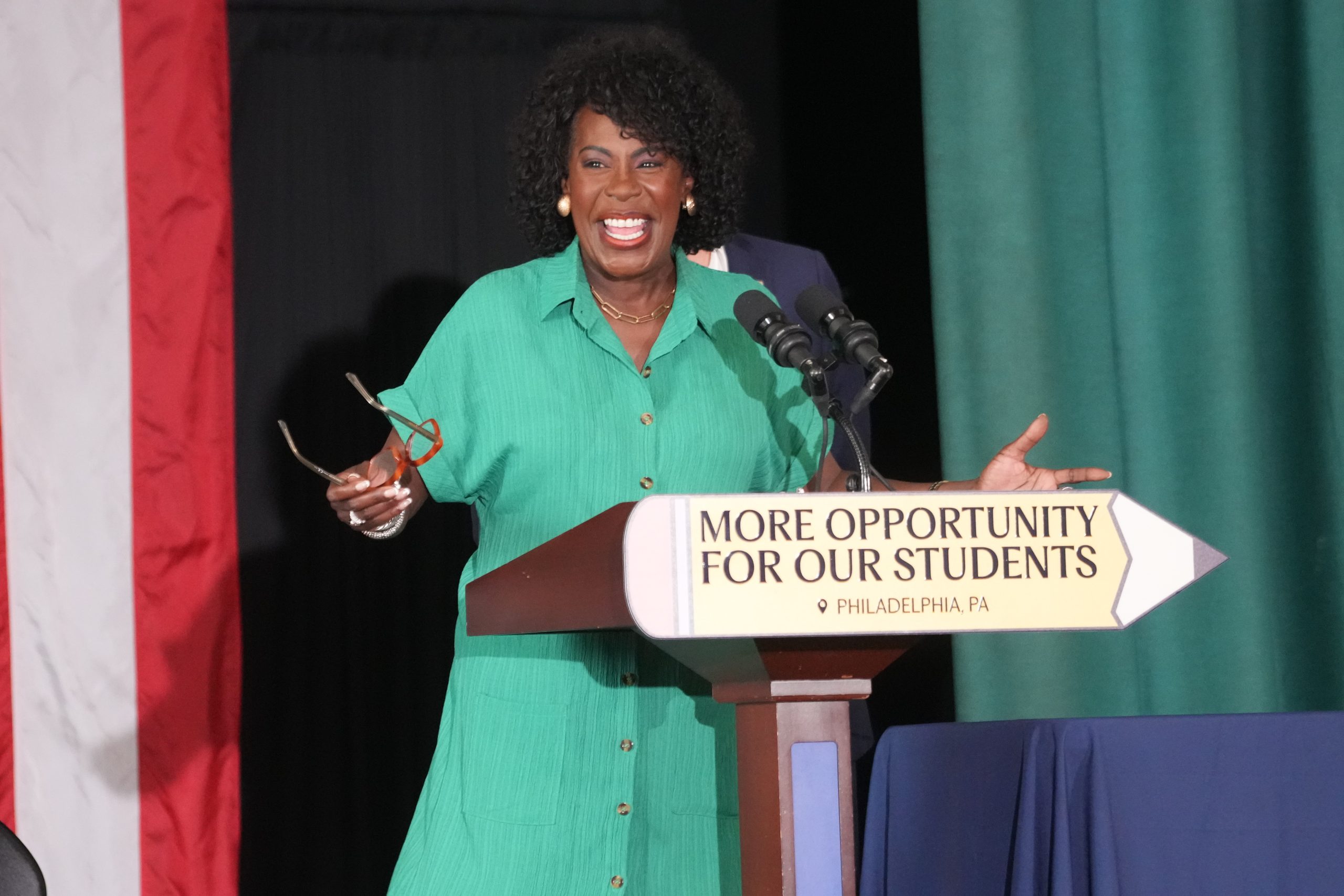
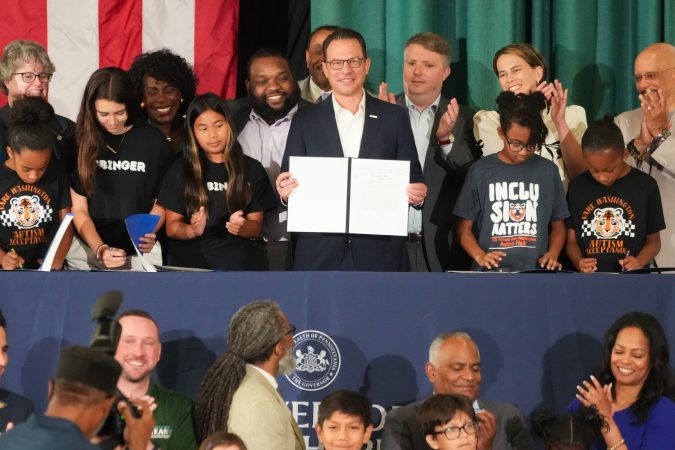
    Gov. Josh Shapiro on Tuesday visited Vare-Washington Elementary School in South Philadelphia to tout the $678 million in new education funding included in the state budget deal finalized over the weekend.

    The new education funding — including $565 million in “adequacy funding” to aid poorer districts — represented one of the most significant victories the first-term Democratic governor took home from the $50.8 billion state budget deal, which did not address lingering issues such as taxing so-called skill games and long-term funding for SEPTA and other public transit agencies.

    The Philadelphia School District will receive $137 million in adequacy funding and $20 million in other new funding. The district will also be able to compete for a share of $125 million set aside for school facilities projects.

    Philadelphia’s cash-strapped district, which entered this year with a $300 million structural budget deficit, still faces deep challenges. The school board this year approved a facilities plan to close 17 school buildings and renovate 169 more.

    “We’re driving this money out to the schools that need it most — school districts like Philadelphia, Norristown, Pottstown, and Allentown, and others in our region,” Shapiro said. “They were getting shortchanged, and now they’re getting the lion’s share of this new funding.”

    While it broke little new ground, this year’s state budget deal helped avoid another prolonged impasse involving Shapiro, the Democratic House, and the Republican Senate. Last year, lawmakers failed to reach a compromise until 135 days after the July 1 budget deadline, leaving school districts and local governments across the state in limbo for months.

    Lawmakers approved this year’s deal 12 days late.

    “I‘m one of the only governors in the country with a divided legislature, one of the only legislatures that has to negotiate with people on the other side who really have a very different view, who don’t think the way we do about investing in public education,” said Shapiro, who was joined by Mayor Cherelle L. Parker and numerous Philadelphia Democratic lawmakers. “We have all been clear that we would not get up from the table in Harrisburg until we fully funded public education, and we’ve done that.”

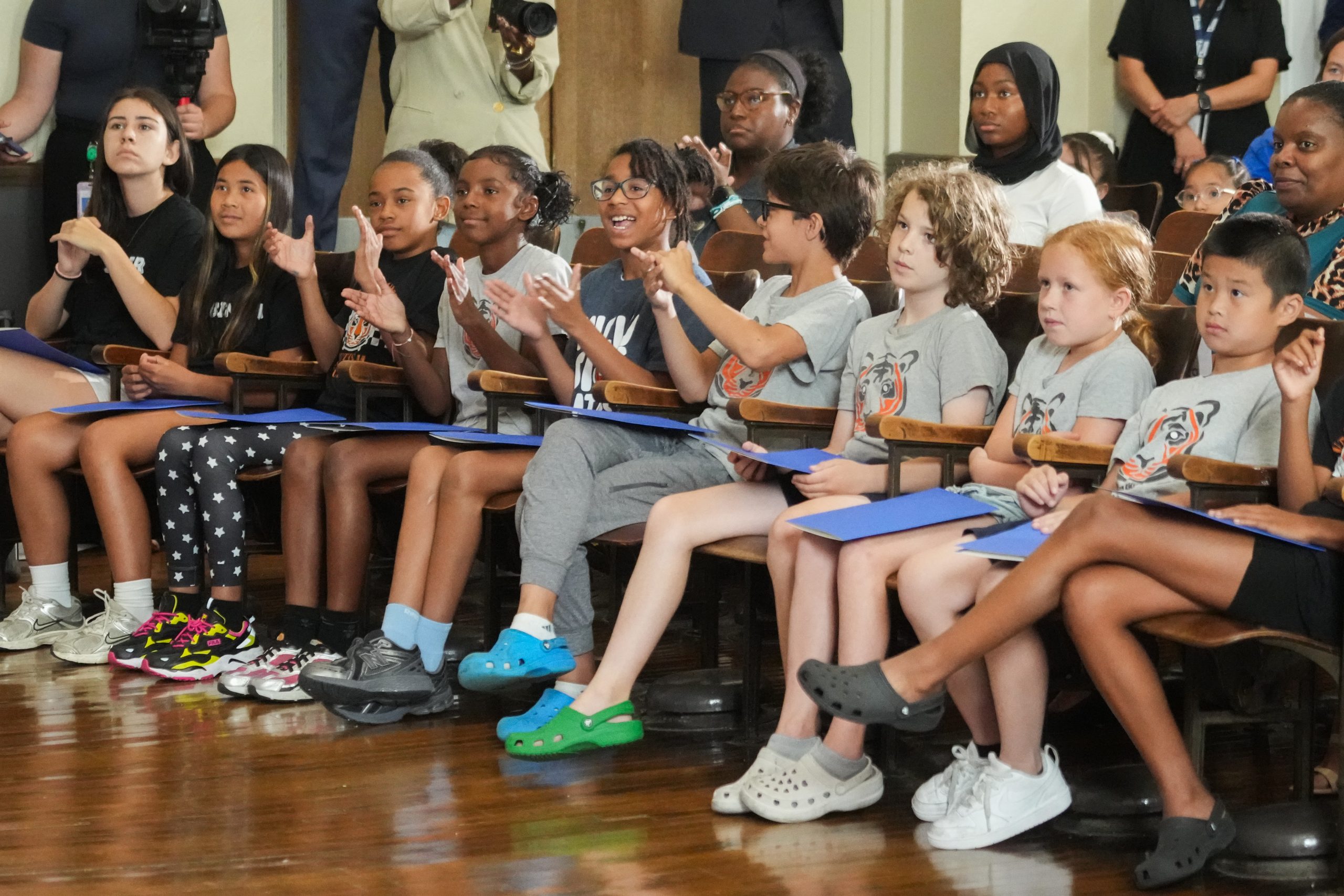
    Students applaud speakers at Vare-Washington Elementary School during an assembly highlighting the education investments included in the 2026-27 state budget in Philadelphia, Pa. on July 14, 2026.Jessica Griffin / Staff Photographer

    The new adequacy funding is the third infusion of money resulting from a formula lawmakers adopted in the wake of a 2023 Commonwealth Court ruling that said Pennsylvania’s former method of funding schools, which relied heavily on local property taxes, was unconstitutional.

    The formula calculated that a majority of Pennsylvania schools were underfunded, by a total of $4.5 billion. For the last three years, the state has given those schools an extra $565 million a year, filling about one-third of the gap. The state plans to fully address the shortfall by 2032.

    Advocates for underfunded districts, like Philadelphia’s, have credited the state for sticking with the plan, but have also said the money is flowing too slowly for struggling districts. Meanwhile, Republican lawmakers have challenged the increased funding for poorer districts, saying others are getting shortchanged by the new system.

    Mayor Cherelle L. Parker speaks at Vare-Washington Elementary School to highlight the historic education investments included in the 2026-27 state budget, in Philadelphia, Pa. on July 14, 2026.Jessica Griffin / Staff Photographer

    Philadelphia’s school district, the only one in the state prohibited from raising its own revenue, relies on city and state lawmakers for its funding.

    Parker this year clashed with City Council over how to deliver roughly $50 million to the district to help close a budget gap that threatened to eliminate 340 classroom positions. Council ultimately rejected Parker’s proposal — to levy a $1-per-ride tax on rideshare services like Uber and Lyft — and instead pulled from one-time funding elsewhere in the budget while promising to find a new recurring revenue source for the district.

    “We have limited revenue-generating capacity in the city of Philadelphia,” Parker said Tuesday. “I wish I could tell you, as mayor, that we had all of the money that we needed to address problems, but that is not the case. Our city can’t be successful without a strong partnership from Harrisburg.”

    Parker thanked Shapiro and the city’s delegation to Harrisburg for “keeping your word” and delivering more education funding to Philadelphia from the state.

    Vare-Washington is one of 40 Philly schools included in Parker’s Extended Day/Extended Year initiative, which provides additional programming for students outside normal school hours.

    During her remarks, Parker led the students assembled at the event in several call-and-response chants, including, “Excellence matters — at Vare-Washington!”

    “I want to hear you say, ‘Thank you — Gov. Shapiro!’” Parker said in another chant. “‘Thank you — Harrisburg legislators!’”

  • A new Pa. Turnpike ramp connects the Fort Washington exit to a 536-acre multiuse development

    A new Pa. Turnpike ramp connects the Fort Washington exit to a 536-acre multiuse development

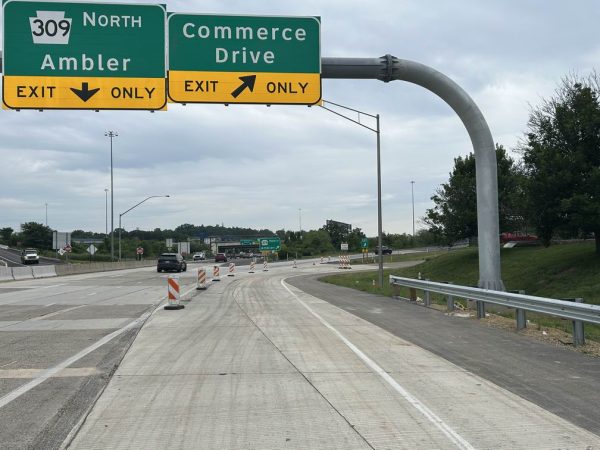
    The ribbon was snipped Tuesday, and the first car, a green Audi S5 convertible, rolled down the new “zip ramp” providing direct access from the Pennsylvania Turnpike’s Fort Washington interchange to a 536-acre office park redevelopment in Upper Dublin.

    “This is a milestone day for Upper Dublin,” said Kurt Ferguson, executive director of the township’s municipal authority, which for 10 years has managed the ongoing transformation of the underused office buildings of the former Fort Washington Industrial Park into the multiuse Greater Fort Washington District.

    The authority has invested about $45 million in infrastructure to support the revitalization project, about 70% from state and county transportation and development grants, Ferguson said. That includes the 2,100-foot ramp, designed and built for about $3 million.

    A Lifetime Fitness complex, new retail outlets, and TruMark Credit Union headquarters have been built in the district.

    Three former office properties have been converted to apartment buildings, with a fourth turned into a storage facility, Ferguson said. Upper Dublin moved the township library to Virginia Drive in the district, which includes a segment of the Cross County Trail operated by Montgomery County.

    The new ramp was made possible by the turnpike’s move to open-road tolling, in which motorists pay tolls by E-ZPass or by plate while passing under gantries. Toll booths are being torn down, leaving more room at interchanges for direct-connect projects like the zip ramp.

    “Open-road tolling enables us to be a better neighbor,” turnpike CEO Mark Compton said. “In terms of today’s transportation dollars, this project is not large money … [but] it opens up economic opportunity for this community.”

    The Pennsylvania Turnpike Commission is designing a roundabout off the Mahoning Valley Interchange (Exit 74) on the Northeast Extension and plans a park-and-ride lot there.

    It is also looking to develop truck parking at the Gateway interchange (Exit 2), near the Ohio state line in Western Pennsylvania, spokesperson Marissa Orbanek said.

  • Heat near 100 degrees and Canadian wildfire smoke are on tap as Philly’s hot summer continues

    Heat near 100 degrees and Canadian wildfire smoke are on tap as Philly’s hot summer continues

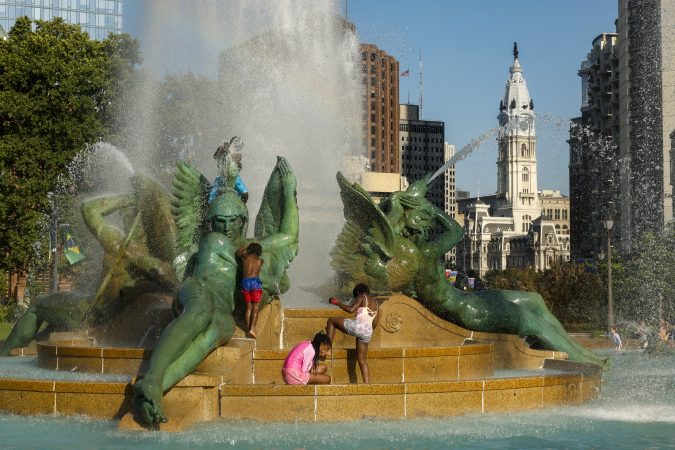
    The Philadelphia region on Wednesday will be under an extreme heat warning, with high temperatures expected to once again hover around the 100-degree mark. But, on the bright side, at least it’s not likely to be record heat for the date.

    That dubious honor for July 15 belongs to 1995, when the mercury hit a scorching 103 degrees. Still, Wednesday will be markedly hotter than normal, with typical highs for the date around 86 degrees, according to the National Weather Service.

    “Any time we put a warning out, it’s telling people this is significant, and you need to take precautions and be aware of this,” said Paul Fitzsimmons, lead meteorologist at the weather service’s Mount Holly office. “Stay in the air-conditioning, do not exert yourself during the hottest parts of the day.”

    It will likely also be noticeably hazy, thanks to smoke from wildfires in Western Ontario, weather service forecasts said.

    Wednesday’s forecast high marks yet another hot day in an already steamy summer, with 2026 posting 21 days at 90 degrees or higher so far — and three 100-degree days, just two shy of the record number of century-mark days set in 1988, weather service data indicate. If Wednesday hits 100 degrees, we would only need one more similarly hot day to tie the record.

    The record number of 90-degree days in a year, meanwhile, stands at 55, set in 2010. But in general, the region typically has only 13 90-degree days by mid-July, and 30 for the entire year, according to weather service data. The area’s temperatures have been about 3.2 degrees above average this month, Fitzsimmons said.

    “That’s certainly noticeable,” Fitzsimmons said. “It’s been quite warm to hot.”

    So, no, you’re not imagining things — it has been plenty hot for us around here lately.

    We’re not in for much relief in the latter half of the week, either. Weather service forecasts indicated a cold front was expected to pass through the area late Wednesday, dropping temperatures slightly, but highs could stretch into the low to mid-90s Thursday and Friday.

    And then, the weekend storms may come. Again.

    Weather service forecasts indicate another cold front is likely to approach the area Friday, bringing with it the chance for weekend storms. It remained too early to tell Tuesday how it would shake out, but early forecasts said that there was potential for severe weather threats Saturday, with a possible risk of heavy rain and flash flooding, similar to what the area has seen the last two weekends.

    Meteorologists have said that it is not uncommon for storms to come in seven-day cycles because of the spacing between atmospheric waves that move weather systems across the country, The Inquirer has reported.

    “The overall setup is not that different — we’re going to have hot conditions and humidity,” Fitzsimmons said. “And we are at a time of year where severe weather is favorable, so it’s possible.”

    Wednesday’s heat serves as yet another day of record-territory temperatures this month. Less than two weeks ago, during the Fourth of July, Philadelphia saw three consecutive days hit 101 degrees or higher, marking the first time that has happened in records dating to 1873, the weather service said.

    Severe storms also hit the region late on Independence Day, bringing heavy rain and wind that caused significant delays to the holiday celebrations, which wrapped up around 3 a.m. A week later, severe weather cropped up once again in the form of several microbursts of winds up to 70 mph that toppled trees, damaged buildings, and knocked out power around the area Saturday — and affected the celebration of the Ben Franklin Bridge’s 100th anniversary.

    Even the FIFA World Cup festivities have been affected, with the FIFA Fan Fest closing early on a few occasions because of heat and storms since it launched in June.

    The heat has also had deadly effects in Philadelphia, as city officials earlier this month confirmed eight heat-related deaths for the season.

    Heat deaths in Philadelphia have averaged about five a year for the last decade. That figure is down significantly from the 1990s; in 1993, the city recorded 118 heat-related deaths. But the number of heat deaths this year so far is the most since Philadelphia recorded eight in 2022, health department records indicate.

  • Man killed in Roxborough was a member of ‘Traveling Conmen’ fraud group and in country illegally, DHS says

    Man killed in Roxborough was a member of ‘Traveling Conmen’ fraud group and in country illegally, DHS says

    A United Kingdom man who was shot and killed while doing contracting work in Roxborough last week was a member of the so-called Traveling Conmen criminal organization and was not authorized to be in the country, officials with the Department of Homeland Security said Tuesday.

    The man, 20-year-old Salis Hanrahan, was killed July 8 when George Barr, 75, fatally shot him at his home, according to police. Hanrahan and a group of men were at Barr’s home on the 400 block of Ripka Street that afternoon to work on the property, officials said.

    According to the FBI, the Traveling Conmen, also known as Conmen Travelers, are a loosely affiliated group of men from the U.K. and Ireland known to overstay pleasure or tourist visas in the United States, where they travel between cities soliciting contracting work and defrauding property owners.

    Police received an emergency call around 2:20 p.m. and arrived to find Hanrahan collapsed on the sidewalk with a gunshot wound to the chest. He was pronounced dead at a nearby hospital shortly after arriving.

    On Friday, police announced that Barr had been charged with murder and related crimes. They gave no motive for the slaying.

    A spokesperson for DHS said Hanrahan was not authorized to be in the country, though officials were unaware how long he had been here.

    Hanrahan was previously denied an electronic travel authorization after officials determined he was a member of the Conmen Travelers, a group recognized by the FBI as a transnational criminal organization, according to the spokesperson.

    Members of the group have been accused of demanding large payments from customers that had not been initially agreed upon and convincing homeowners that their properties are in need of costly and unnecessary repairs.

    In 2025, a Rhode Island woman was goaded into paying members $850,000 for unnecessary repairs, leading two men to be federally charged with fraud and money laundering.

    And members of the group allegedly threatened the children of a New York woman that year when they demanded a $200,000 loan after failing to complete a bricklaying job at her home.

    Within days, the members began showing off expensive jewelry, including a 10-carat diamond, on social media, according to a BBC News investigation.

    Traveling Conmen often do not have authorized work permits and have been accused of leaving homes damaged or with incomplete work, according to the FBI.

    It was unclear how Homeland Security came to conclude that Hanrahan is affiliated with the group.

    Social media posts described him as a young father who shared an infant with his wife, Roseann.

    ”God look over [his] wife & family at this time,” a mourner wrote last week.

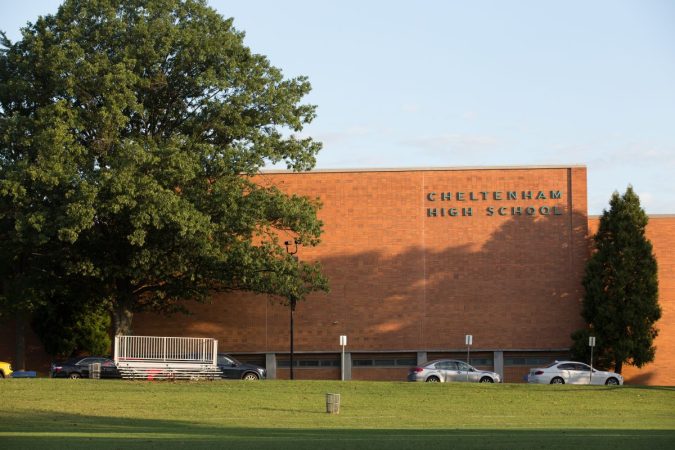
  • Cheltenham, Gloucester Township schools under investigation as federal officials target sexual abuse by teachers

    Cheltenham, Gloucester Township schools under investigation as federal officials target sexual abuse by teachers

    The Cheltenham School District is being investigated by the U.S. Department of Education as federal officials target sexual misconduct by teachers that they say schools nationally have been too lax in addressing.

    Cheltenham is one of 20 public school districts under investigation by the DOE’s Office for Civil Rights based on responses the districts provided to a federal civil rights data collection survey in 2023-24, which “suggest that districts might not be addressing staff on student sexual misconduct appropriately,” the Education Department said in a statement Friday.

    The department did not specify which districts were under investigation, but Cheltenham informed community members of the probe Sunday.

    The Gloucester Township School District in Camden County is also under investigation, according to a list obtained by ProPublica. Officials in the district, which enrolls about 6,600 students, did not immediately respond to a request for comment Tuesday.

    The investigations were announced as part of a broader initiative by the Education Department “to protect students from adult sexual predators in schools,” with guidance sent to all school districts outlining federal legal requirements for responding to sexual harassment and abuse.

    In its statement Sunday, Cheltenham said it would cooperate fully with the Office for Civil Rights.

    “To be clear, the district is not aware of any instances where allegations of sexual assault or abuse by district employees have not been properly investigated and handled — for the 2023-2024 school year or any other year,” the district said in the statement.

    It was not clear what Cheltenham, a district of 4,100 students in Montgomery County, reported as part of the federal survey that triggered the investigation. The Education Department did not respond to questions Tuesday about the investigation.

    The department’s website indicates it collects data from school districts about offenses that occurred at schools, including documented incidents or allegations of sexual assaults by staff members, as well as the outcomes of sexual assault allegations — whether staff members were determined to be responsible, and whether they resigned, retired, or had duties reassigned before a final determination.

    Kevin Kaufman, a Cheltenham spokesperson, said the district was not aware of any assaults or alleged sexual assaults of students by district staff in the 2023-24 school year.

    In a “Dear Colleague” letter to school leaders Friday, U.S. Education Secretary Linda McMahon said there was a “a troubling and recurring pattern in schools across the nation of credible reports of sexual abuse and harassment by adults in positions of authority going uninvestigated, institutional cultures that protect employees over students, and administrative indifference that allows predatory conduct to fester.”

    The letter cited research from 2003 finding that close to 10% of eighth- to 11th-grade students had experienced sexual misconduct by an educator.

    It also pointed to a ProPublica report from May, finding that California had not revoked the professional licenses of at least 67 educators after school districts determined they had committed sexual misconduct.

    The letter told school leaders that the federal Elementary and Secondary Education Act conditions federal funding on rules that prohibit schools “from helping a school employee or contractor obtain a new position when there is knowledge or probable cause to believe that the individual engaged in sexual misconduct involving a student.”

    It also said Title IX requires schools “to respond appropriately and address claims of sexual harassment,” independently investigating claims even if it also reports them to law enforcement.

    “Institutions that fail to comply with federal law may face the loss of federal funding,” McMahon said in the letter. She said the department ”will fully enforce federal law and employ every resource at its disposal to protect children from sexual predators.”

    In its statement, the Education Department said the investigations into Cheltenham and other districts — which it did not name — “will determine if the districts have appropriate policies and procedures in place to ensure accurate data collection and reporting of these incidents occurs and if their handling of allegations of sexual harassment, including sexual assault by district employees, complies with federal law.”

    Cheltenham’s statement said the district has policies that prohibit sexual harassment and abuse “and outline the investigatory steps that the district will follow in the event that any such allegations are made.”

    Cheltenham and Gloucester Township are not the only local districts facing federal Office for Civil Rights probes. Earlier this year, the office announced that it was investigating the Great Valley School District for a policy allowing transgender girls to participate on girls’ sports teams.

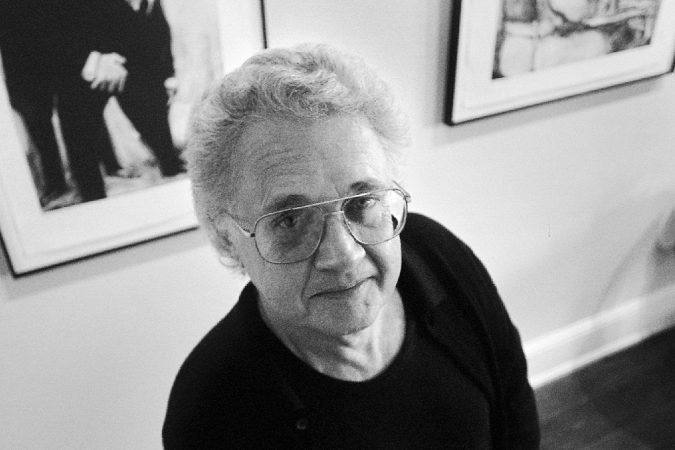
  • Pat Oliphant, prizewinning giant of political cartooning, dies at 90

    Pat Oliphant, prizewinning giant of political cartooning, dies at 90

    When Pat Oliphant assembled his entry for the 1967 Pulitzer Prize for editorial cartooning, he included a dozen cartoons he had drawn for the Denver Post: 11 he was proud of, and one he didn’t think was any good but was targeted to appeal to the jury’s politics.

    He won the prize — for the one cartoon he didn’t like, an image of North Vietnamese leader Ho Chi Minh holding a dead body, captioned, “They won’t get us to the conference table … will they?”

    Mr. Oliphant was enraged. For years afterward, he condemned the Pulitzers, never again submitting his work for a prize that was awarded, in his view, more on the basis of politics than skill. “It’s a fraudulent award,” he said.

    The Pulitzers were just one of many targets for Mr. Oliphant, a self-described “equal-opportunity cartoonist” who took on powerful people, and institutions, with glee.

    Across his six-decade career, he was just as likely to go after D.C. Mayor Marion Barry — whom Mr. Oliphant depicted as an Idi Amin-like ruler, the tea-addicted “King of Kolumbia” — as he was President George H.W. Bush, whom he skewered as a purse-carrying wimp and as a would-be Lawrence of Arabia.

    “If Pat Oliphant couldn’t draw,” a critic once said, “he’d be an assassin.”

    Mr. Oliphant, who helped revolutionize political cartooning in the United States with his slashing humor and sophisticated artistry, died Monday at his home in Santa Fe, N.M., at age 90, according to his son, Grant Oliphant.

    By the time he won the Pulitzer, Mr. Oliphant’s comics were reaching an international readership through syndication. His audience only grew after he moved to the Washington Star in 1975 and, six years later, struck out on his own, working independently without being tied to a single paper.

    At the height of his popularity, his work appeared in more than 500 newspapers, influencing fellow Pulitzer winners including Tom Toles, Tony Auth, Ann Telnaes, and Jeff MacNelly.

    “He saw himself as participating in the long tradition of political caricature, going back especially to Delacroix, to Daumier, these major figures of the 19th century,” said Molly Schwartzburg, a Harvard University curator of printing and graphic arts who helped organize a 2020 exhibition of Mr. Oliphant’s work. “His work has a sort of intellectual history that brought an aesthetic seriousness to political cartooning in the 20th century. He’s a trenchant critic of the hypocrisy of politics, and he’s always seeing exactly what the politicians are up to.”

    At a time when other political cartoonists were using a vertical or strip format for their work, Mr. Oliphant helped popularize the use of a horizontal panel. He also proved influential in the way he shaded all his cartoons by hand. Twice he was awarded the National Cartoonists Society’s Reuben Award, for cartoonist of the year.

    Mr. Oliphant’s work was not without its critics. The Catholic League denounced him as “one of the most viciously anti-Catholic editorial cartoonists ever to have disgraced the pages of American newspapers,” taking particular issue with cartoons he drew about sexual abuse within the clergy. (One memorable example was captioned, “Celebration of Spring at St. Paedophilia’s — the Annual Running of the Altar Boys.”) Other cartoons sparked criticism from the American-Arab Anti-Discrimination Committee, which accused him of racism, and the Simon Wiesenthal Center, which said he demonized Israel.

    If there was somebody who could be offended, Mr. Oliphant probably did so. As he saw it, political cartooning was a “confrontational art,” one that thrived on provocation. “We are drowning in political correctness and somebody’s got to kill it,” he told the New York Times in 1997. “It’s the ruination of my business.”

    Finding a calling, and a penguin

    Patrick Bruce Oliphant was born in Adelaide, Australia, on July 24, 1935. As a child, he sought to emulate the work of his father, Donald, a government draftsman. He also took inspiration from his uncle Mark Oliphant, a physicist who worked on the Manhattan Project, was knighted, and became governor of South Australia.

    “People knew Sir Mark — his reputation was known throughout Australia,” Grant Oliphant said in the 2025 documentary A Savage Art: The Life & Cartoons of Pat Oliphant. “And I think part of what motivated my father to become great in his own right was he got tired of always being asked if he was related to Sir Mark, and he wanted to be his own guy.”

    At 18, Mr. Oliphant landed a job as a copy boy at the News, an Adelaide newspaper owned by Rupert Murdoch’s father, Keith Murdoch. He had aspired to work as a reporter, but in 1955 he left the News for its rival, the Advertiser, and began doing minor illustration work, drawing maps and retouching photos. Soon, he said, “drawing won out,” and he left writing behind to be the Advertiser’s editorial cartoonist.

    When editors disagreed with some of his cartoons, Mr. Oliphant began adding a tiny character at the margins, Punk the penguin, to voice his forbidden political views.

    Inspired by a real-life penguin that had washed ashore in Adelaide, the character remained a staple of his cartoons for decades. It was through Punk that Mr. Oliphant called President Ronald Reagan a “soldier of importune” during the Iran-Contra scandal, suggested Ted Kennedy should run away rather than run for president, and quipped that a $10 million book deal President Bill Clinton secured for his memoir was “not bad bucks for fooling all of the people all of the time.”

    Mr. Oliphant was eager to leave Australia, which he dismissed as “a country where nothing happens.” He moved to the United States to join the Denver Post in 1964, and within a year his cartoons were syndicated internationally.

    After moving to Washington to work for the Star, an afternoon paper that folded in 1981, Mr. Oliphant continued to refine his technique. For years, he attended a twice-weekly figure-drawing class that William Christenberry taught at the Corcoran School of the Arts and Design, developing what his colleague Telnaes once described as “a great sense of composition.”

    In addition to his political cartoons, Mr. Oliphant made paintings and sculptures, which he exhibited at a Georgetown art gallery owned by Susan Corn Conway. She and Mr. Oliphant married in 1996 and moved to Santa Fe in 2004.

    His wife died in December. His previous marriages, to Hendrika de Vries and Mary Ann Kuhn, ended in divorce. In addition to his son, Grant, survivors include two daughters, Laura and Susanne Oliphant; two stepchildren, Pauline and Daniel Conway; a brother; four grandchildren; and two great-grandchildren.

    Mr. Oliphant retired from cartooning in 2015, as his eyesight began to fail. But two years later, he made a brief reappearance with two editorial cartoons that were published online by the Nib, mocking President Donald Trump — depicted in a Nazi uniform — and White House strategist Stephen K. Bannon.

    “We thought that Watergate was a unique condition. But it sort of pales in comparison to what we’ve got now,” Mr. Oliphant told the Santa Fe Reporter that year.

    He had found a dream subject in Trump, he said, but his eyes made it all but impossible to draw. “I’ve been in this business 60 years. And I’ve waited 60 years for this [guy] to come along. And I can’t do anything about it because of my eyes.”

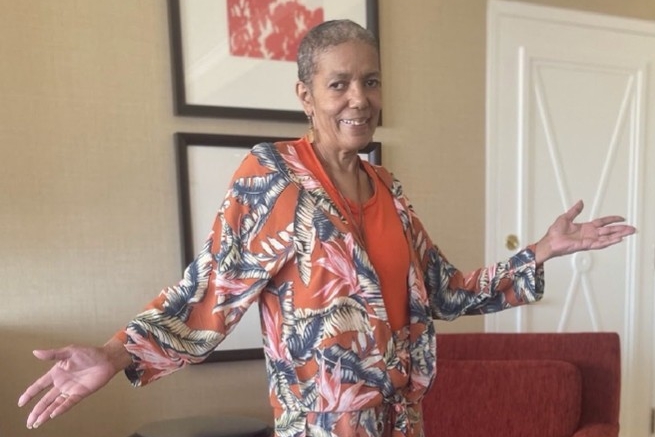
  • Michelle Widgins-Lewis, singer-songwriter and founder and CEO of Northwest Counseling Service, has died at 69

    Michelle Widgins-Lewis, singer-songwriter and founder and CEO of Northwest Counseling Service, has died at 69

    Michelle Widgins-Lewis, 69, of Philadelphia, singer-songwriter, founder, president, and executive director of Northwest Counseling Service Inc., longtime community housing and education advocate, lecturer, and mentor, died Monday, June 29, of endometrial cancer at Jefferson Abington Hospital.

    Inspired to educate and counsel underserved potential homebuyers about predatory mortgage lending, foreclosure, and other important real estate and housing issues, Ms. Widgins-Lewis founded Northwest Counseling Service on North Broad Street in 1982. For the next 44 years, until recently, she interviewed nearly 5,000 people each year seeking mortgage prequalification and, funded by the Philadelphia Division of Housing and Community Development, advised them about insurance, eviction, credit rating, grants, conflict mediation, and inspections.

    “She helped transform homeownership in Philadelphia,” her family said in a tribute.

    Ms. Widgins-Lewis was appointed to the Pennsylvania Housing Advisory Committee in the 1990s by then-Gov. Ed Rendell and served as a technical adviser on real estate matters for the Philadelphia Division of Housing and Community Development. She worked closely with the Pennsylvania Housing Finance Agency and continually lobbied local, state, and federal government officials for better borrowing and foreclosure laws.

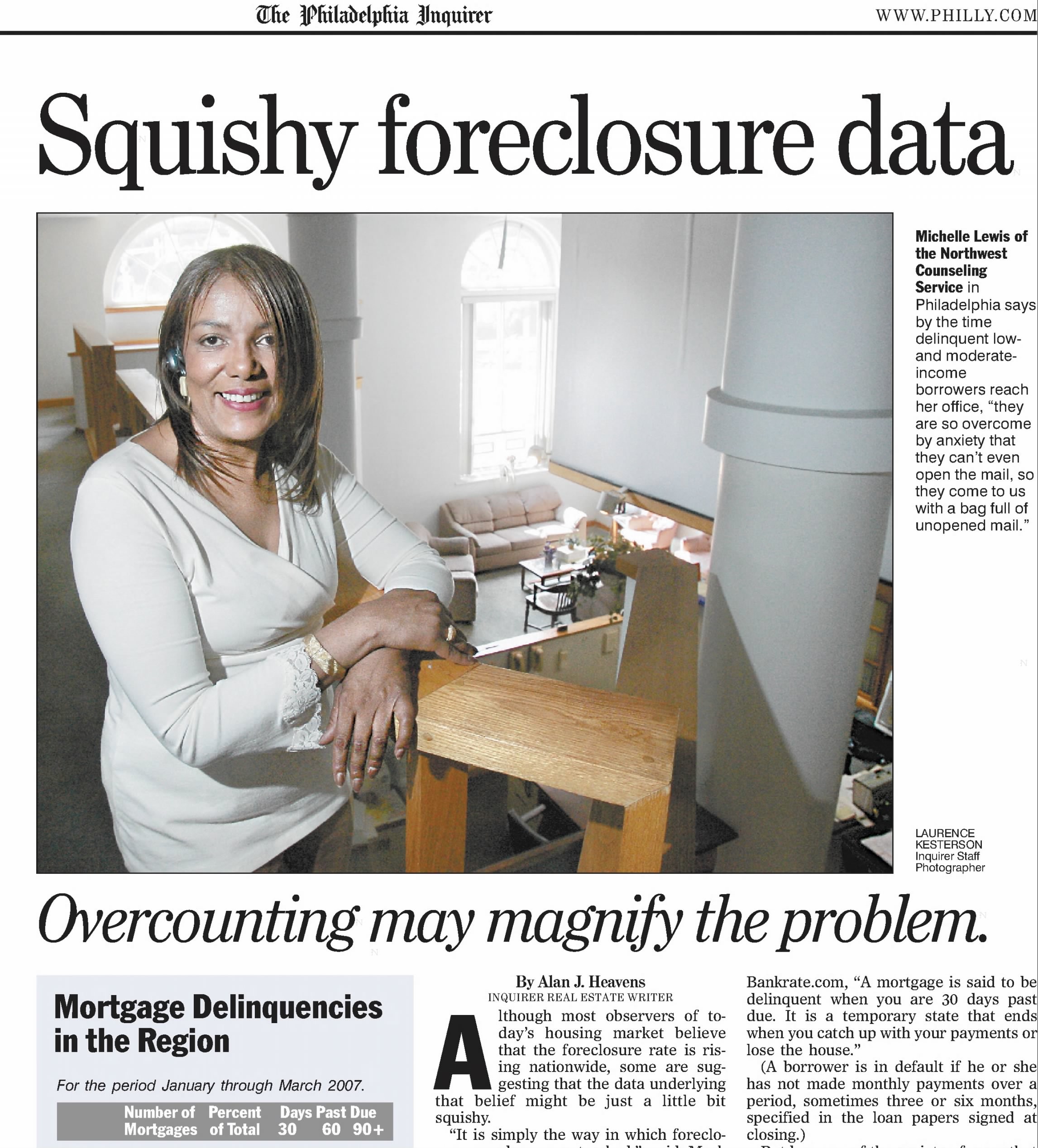
    This photo and article about Ms. Widgins-Lewis appeared in The Inquirer in 2007.Newpapers.com

    She examined property disputes as a forensic real estate specialist, scrutinized scams as a fraud examiner, testified in federal court as a qualified expert, and was licensed as a real estate broker and appraiser. She monitored local landlord-tenant mediation cases closely and told The Inquirer in 1996 that many tenants “end up with an agreement they can’t live up to.”

    People, she said often, are rarely ready to buy their first house. “Instead of considering whether they are prepared to buy a home, people are being propelled into the market by economic pressure that says they should buy because it’s cheaper than renting,” she told The Inquirer in 1995. “That’s not always true.”

    She also founded and chaired the Philadelphia Predatory Lending Task Force, which collected and publicized data about unfair lending practices. “This gives us a picture of the type of problems going on in our neighborhoods,” she told the Daily News in 2001.

    Ms. Widgins-Lewis was an instructor for the National Real Estate Institute and a leader for the American Society of Certified Housing Executives, the Real Estate Educators Association, and other groups. She wrote articles for journals and forged educational partnerships with colleges and universities.

    Ms. Widgins-Lewis performed in several bands and with her sister Dionne.Courtesy of the family

    She spoke on panels and at conferences and workshops about homeownership, and was quoted often in The Inquirer and Daily News. Friends called her “truly inspiring” and “a true champion in the mortgage industry” in online tributes. One friend said: “She was a beast in the housing world.”

    Ms. Widgins-Lewis sang often as a young girl, got rave reviews on karaoke night when she was older, and went on to perform in several bands and with her sister Dionne at local clubs and festivals. She sang rhythm and blues, pop, standards, and jazz, and wrote at least one song that was recorded and released.

    Daily News columnist Stu Bykofsky wrote about her dual career as a singer-songwriter and executive in 1995 and said: “She still has trouble calling herself an artist but feels, at the very least, she’ll always be able to get up and sing at fundraisers for her agency.”

    Her family said: “From childhood, Michelle drew people in with her light and her voice.” Her daughter Tracey Thomas said: “She would light up the room.” Her son Mike said: “Everybody loved her.”

    Her family said Ms. Widgins-Lewis had “an unwavering commitment to education, integrity, and service.”Courtesy of the family

    Michelle Widgins was born May 29, 1957, in Philadelphia. She graduated from Martin Luther King High School and earned a bachelor’s degree at La Salle University and a master’s degree in human services at Lincoln University.

    She married Michael Brown, and they had a daughter, Anji, and a son, Mike. After a divorce, she married Tyrone Lewis, and they had a daughter, Tracey, and a son, Richard. They divorced later.

    Ms. Widgins-Lewis enjoyed reading and writing. She belonged to the Pi Gamma Mu international honor society, was close with Mayor Cherelle L. Parker and former Mayor Wilson Goode, and was guided, her family said, by “an unwavering commitment to education, integrity, and service.”

    Her family is hoping to rename a Northwest Philadelphia street in her honor.

    Ms. Widgins-Lewis lived with cancer for 10 years.Courtesy of the family

    “She was humble but had drive and determination,” her son Mike said. Her daughter Tracey said: “The world was her stage. I can only imagine how her light will shine in heaven.”

    In addition to her children and former husbands, Ms. Widgins-Lewis is survived by eight grandchildren, a sister, two brothers, and other relatives. A sister and a brother died earlier.

    Services are to be at 11 a.m. Thursday, July 16, at Verity Church, 2017 W. Diamond St., Philadelphia, Pa. 19121.

    Donations in her name may be made to Northwest Counseling Service Inc., 6521 N. Broad St., Philadelphia, Pa. 19126.

    Ms. Widgins-Lewis “was humble but had drive and determination,” her son Mike said. Courtesy of the Family
  • States reach $18 million settlement with 23andMe, with Pa. and N.J. getting more than $400,000 each

    States reach $18 million settlement with 23andMe, with Pa. and N.J. getting more than $400,000 each

    Genetic testing company 23andMe and a group of attorneys general nationwide have reached a multimillion-dollar settlement following the major data breach that led to the company’s demise three years ago.

    More than 40 attorneys general, including Pennsylvania‘s Dave Sunday, announced the national $18 million settlement with the genetic testing company Tuesday.

    “This company was trusted by millions of Americans to safeguard very private data and information, but failed to do so, learning about a data breach far too late, then pointing fingers at their own customers,” Sunday said in a statement. “I find it appalling that a company dealing with customers’ personal information would be so lax about their system protections, then have the audacity to deny and attempt to wash their hands of wrongdoing.”

    As part of the settlement, Pennsylvania will receive $491,902. Nearly 200,000 Pennsylvanians were impacted by the data breach, according to the state attorney general’s office. About 150,000 customers were impacted in New Jersey, which will receive nearly $410,000, said the state’s attorney general, Jennifer Davenport.

    Here’s what else we know.

    What happened with the 23andMe data breach?

    In October 2023, 23andMe launched an investigation after a “threat actor” claimed to have obtained millions of users’ personal data.

    By December, the company confirmed through a filing with the Securities and Exchange Commission that a hacker directly accessed 0.1% of its users’ accounts, or about 14,000 profiles. Still, because of the networks users can build, connecting their information to possible relatives, the hacker was able to view the information of millions of users.

    A spokesperson for the company told news outlets at the time that 6.9 million people had been affected: about 5.5 million customers who had opted into 23andMe’s “DNA Relatives” feature and 1.4 million users whose family tree information was accessed.

    Of those customers, 192,093 were in Pennsylvania.

    What information was accessed?

    Information accessed included:

    • Display name, profile picture, and birth year.
    • How recently they had logged into their account.
    • Their relationship status.
    • Their self-reported location by city and zip code.
    • Predicted relationships with others.
    • DNA percentages users share with their “DNA Relatives.”

    An additional 1.4 million customers who used the “DNA Relatives” feature had their “Family Tree” profiles accessed, which includes a limited subset of profile data, the company said.

    The hacker activity was contained and required existing users to reset their passwords and enable multifactor authentication, 23andMe said at the time. Still, experts warned consumers that they should consider deleting their accounts.

    When did 23andMe declare bankruptcy?

    The company declared bankruptcy in March 2025 and eventually was sold.

    That’s when states, including Pennsylvania, filed claims related to the data breach investigation. As part of the bankruptcy proceedings, 23andMe’s consumer data was sold to TTAM Research Institute, a nonprofit organization formed by 23andMe founder and former CEO Anne Wojcicki. That sale is bound by new guardrails regarding data security that were put in place with the help of the coalition of attorneys general.

    Sunday joined the lawsuit to prevent 23andMe from selling consumer data as part of its bankruptcy proceedings.

    The lawsuit said the California-based genomics biotech company was proposing to sell an “unprecedented compilation of highly sensitive and immutable personal data: a human being’s permanent and everlasting genetic identity.”

    The risk of a data transfer was too great, the complaint said, as DNA data are unique to an individual and can be used to identify relatives — past and future. And genomic data live forever, even after a person dies.

    “If stolen or misused, it cannot be changed or replaced,” the complaint said.

    What happened this week?

    A group of 42 state attorneys general announced the $18 million settlement. This is in addition to a $46.75 million class-action settlement arising from the bankruptcy, for affected U.S. consumers who submitted claims by Feb. 17. Impacted customers should have received an email notifying them about their eligibility for the class-action settlement, according to the Pennsylvania Attorney General’s Office.

    All 50 states and territories except for California, Hawaii, Mississippi, Missouri, Montana, Nebraska, Nevada, Rhode Island, and Wyoming were involved in the settlement.

  • RFK Jr. faces Hatch Act complaint after intervening in congressional races

    A top Senate Democrat has requested an investigation into whether Health Secretary Robert F. Kennedy Jr. broke a federal law intended to prevent political appointees from interfering in elections, citing Washington Post reporting.

    Sen. Ron Wyden (D., Ore.), the top Democrat on the Senate Finance Committee, filed a complaint Monday with the Office of Special Counsel, a quasi-judicial independent agency that administers the Hatch Act and other civil service rules.

    The Hatch Act bars federal employees from engaging in political activity in the course of their work. Several Trump appointees in the first administration were found to have broken the law.

    President Donald Trump has previously derided the Hatch Act and declined to enforce the special counsel’s recommendations.

    In his complaint and accompanying letter to Jamieson Greer, the acting head of the special counsel’s office, Wyden cited examples of Kennedy encouraging a pair of third-party candidates in Iowa to drop out of contested House races so Republicans could keep control of Congress.

    The Post obtained audio of Kennedy’s call with one of the candidates, Rick Stewart, in which the health secretary suggested he would serve as a liaison with the White House and could help Stewart if he left the race. A second candidate has said he received a similar call from Kennedy.

    Wyden, whose committee helps oversee some of the agencies led by Kennedy, said that the cabinet secretary’s offers to the candidates were “brazenly corrupt” and violated the Hatch Act and other laws.

    “The quid pro quo offer of federal employment or other personal gain that Kennedy extended to Stewart on the June 11 phone call is conduct expressly prohibited by the Hatch Act,” Wyden wrote in his letter to Greer, which was shared with the Post.

    The White House and the Department of Health and Human Services, which Kennedy leads, did not respond Monday to questions about Kennedy’s conversations with the candidates and whether he faced any internal repercussions once the calls came to light.

    Trump mocked the Hatch Act in his first term, including after the Office of Special Counsel in 2019 recommended that Kellyanne Conway, a top Trump adviser, be removed from her post for violating the law. Conway had criticized Democratic presidential candidates while she was being interviewed by media outlets in her official capacity and tweeted about the candidates from her official account, the office concluded.

    Trump ignored the office’s recommendation and kept Conway in her post.

    The Hatch Act, which has been law since 1939, does not apply to the president — a fact that Trump has acknowledged in the past, including when he decided to accept the Republican nomination for president in 2020 by giving a speech at the White House.

    “There is no Hatch Act because it doesn’t pertain to the president,” Trump said in August 2020.