Category: News

  • Man killed in Roxborough was a member of ‘Traveling Conmen’ fraud group and in country illegally, DHS says

    Man killed in Roxborough was a member of ‘Traveling Conmen’ fraud group and in country illegally, DHS says

    A United Kingdom man who was shot and killed while doing contracting work in Roxborough last week was a member of the so-called Traveling Conmen criminal organization and was not authorized to be in the country, officials with the Department of Homeland Security said Tuesday.

    The man, 20-year-old Salis Hanrahan, was killed July 8 when George Barr, 75, fatally shot him at his home, according to police. Hanrahan and a group of men were at Barr’s home on the 400 block of Ripka Street that afternoon to work on the property, officials said.

    According to the FBI, the Traveling Conmen, also known as Conmen Travelers, are a loosely affiliated group of men from the U.K. and Ireland known to overstay pleasure or tourist visas in the United States, where they travel between cities soliciting contracting work and defrauding property owners.

    Police received an emergency call around 2:20 p.m. and arrived to find Hanrahan collapsed on the sidewalk with a gunshot wound to the chest. He was pronounced dead at a nearby hospital shortly after arriving.

    On Friday, police announced that Barr had been charged with murder and related crimes. They gave no motive for the slaying.

    A spokesperson for DHS said Hanrahan was not authorized to be in the country, though officials were unaware how long he had been here.

    Hanrahan was previously denied an electronic travel authorization after officials determined he was a member of the Conmen Travelers, a group recognized by the FBI as a transnational criminal organization, according to the spokesperson.

    Members of the group have been accused of demanding large payments from customers that had not been initially agreed upon and convincing homeowners that their properties are in need of costly and unnecessary repairs.

    In 2025, a Rhode Island woman was goaded into paying members $850,000 for unnecessary repairs, leading two men to be federally charged with fraud and money laundering.

    And members of the group allegedly threatened the children of a New York woman that year when they demanded a $200,000 loan after failing to complete a bricklaying job at her home.

    Within days, the members began showing off expensive jewelry, including a 10-carat diamond, on social media, according to a BBC News investigation.

    Traveling Conmen often do not have authorized work permits and have been accused of leaving homes damaged or with incomplete work, according to the FBI.

    It was unclear how Homeland Security came to conclude that Hanrahan is affiliated with the group.

    Social media posts described him as a young father who shared an infant with his wife, Roseann.

    ”God look over [his] wife & family at this time,” a mourner wrote last week.

  • Cheltenham, Gloucester Township schools under investigation as federal officials target sexual abuse by teachers

    Cheltenham, Gloucester Township schools under investigation as federal officials target sexual abuse by teachers

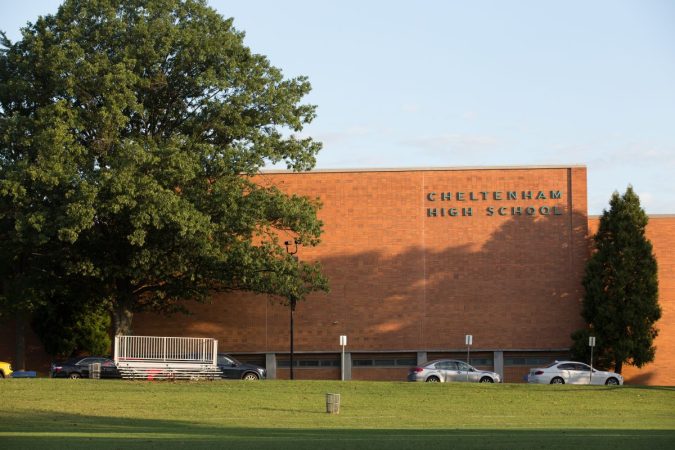
    The Cheltenham School District is being investigated by the U.S. Department of Education as federal officials target sexual misconduct by teachers that they say schools nationally have been too lax in addressing.

    Cheltenham is one of 20 public school districts under investigation by the DOE’s Office for Civil Rights based on responses the districts provided to a federal civil rights data collection survey in 2023-24, which “suggest that districts might not be addressing staff on student sexual misconduct appropriately,” the Education Department said in a statement Friday.

    The department did not specify which districts were under investigation, but Cheltenham informed community members of the probe Sunday.

    The Gloucester Township School District in Camden County is also under investigation, according to a list obtained by ProPublica. Officials in the district, which enrolls about 6,600 students, did not immediately respond to a request for comment Tuesday.

    The investigations were announced as part of a broader initiative by the Education Department “to protect students from adult sexual predators in schools,” with guidance sent to all school districts outlining federal legal requirements for responding to sexual harassment and abuse.

    In its statement Sunday, Cheltenham said it would cooperate fully with the Office for Civil Rights.

    “To be clear, the district is not aware of any instances where allegations of sexual assault or abuse by district employees have not been properly investigated and handled — for the 2023-2024 school year or any other year,” the district said in the statement.

    It was not clear what Cheltenham, a district of 4,100 students in Montgomery County, reported as part of the federal survey that triggered the investigation. The Education Department did not respond to questions Tuesday about the investigation.

    The department’s website indicates it collects data from school districts about offenses that occurred at schools, including documented incidents or allegations of sexual assaults by staff members, as well as the outcomes of sexual assault allegations — whether staff members were determined to be responsible, and whether they resigned, retired, or had duties reassigned before a final determination.

    Kevin Kaufman, a Cheltenham spokesperson, said the district was not aware of any assaults or alleged sexual assaults of students by district staff in the 2023-24 school year.

    In a “Dear Colleague” letter to school leaders Friday, U.S. Education Secretary Linda McMahon said there was a “a troubling and recurring pattern in schools across the nation of credible reports of sexual abuse and harassment by adults in positions of authority going uninvestigated, institutional cultures that protect employees over students, and administrative indifference that allows predatory conduct to fester.”

    The letter cited research from 2003 finding that close to 10% of eighth- to 11th-grade students had experienced sexual misconduct by an educator.

    It also pointed to a ProPublica report from May, finding that California had not revoked the professional licenses of at least 67 educators after school districts determined they had committed sexual misconduct.

    The letter told school leaders that the federal Elementary and Secondary Education Act conditions federal funding on rules that prohibit schools “from helping a school employee or contractor obtain a new position when there is knowledge or probable cause to believe that the individual engaged in sexual misconduct involving a student.”

    It also said Title IX requires schools “to respond appropriately and address claims of sexual harassment,” independently investigating claims even if it also reports them to law enforcement.

    “Institutions that fail to comply with federal law may face the loss of federal funding,” McMahon said in the letter. She said the department ”will fully enforce federal law and employ every resource at its disposal to protect children from sexual predators.”

    In its statement, the Education Department said the investigations into Cheltenham and other districts — which it did not name — “will determine if the districts have appropriate policies and procedures in place to ensure accurate data collection and reporting of these incidents occurs and if their handling of allegations of sexual harassment, including sexual assault by district employees, complies with federal law.”

    Cheltenham’s statement said the district has policies that prohibit sexual harassment and abuse “and outline the investigatory steps that the district will follow in the event that any such allegations are made.”

    Cheltenham and Gloucester Township are not the only local districts facing federal Office for Civil Rights probes. Earlier this year, the office announced that it was investigating the Great Valley School District for a policy allowing transgender girls to participate on girls’ sports teams.

  • Pat Oliphant, prizewinning giant of political cartooning, dies at 90

    Pat Oliphant, prizewinning giant of political cartooning, dies at 90

    When Pat Oliphant assembled his entry for the 1967 Pulitzer Prize for editorial cartooning, he included a dozen cartoons he had drawn for the Denver Post: 11 he was proud of, and one he didn’t think was any good but was targeted to appeal to the jury’s politics.

    He won the prize — for the one cartoon he didn’t like, an image of North Vietnamese leader Ho Chi Minh holding a dead body, captioned, “They won’t get us to the conference table … will they?”

    Mr. Oliphant was enraged. For years afterward, he condemned the Pulitzers, never again submitting his work for a prize that was awarded, in his view, more on the basis of politics than skill. “It’s a fraudulent award,” he said.

    The Pulitzers were just one of many targets for Mr. Oliphant, a self-described “equal-opportunity cartoonist” who took on powerful people, and institutions, with glee.

    Across his six-decade career, he was just as likely to go after D.C. Mayor Marion Barry — whom Mr. Oliphant depicted as an Idi Amin-like ruler, the tea-addicted “King of Kolumbia” — as he was President George H.W. Bush, whom he skewered as a purse-carrying wimp and as a would-be Lawrence of Arabia.

    “If Pat Oliphant couldn’t draw,” a critic once said, “he’d be an assassin.”

    Mr. Oliphant, who helped revolutionize political cartooning in the United States with his slashing humor and sophisticated artistry, died Monday at his home in Santa Fe, N.M., at age 90, according to his son, Grant Oliphant.

    By the time he won the Pulitzer, Mr. Oliphant’s comics were reaching an international readership through syndication. His audience only grew after he moved to the Washington Star in 1975 and, six years later, struck out on his own, working independently without being tied to a single paper.

    At the height of his popularity, his work appeared in more than 500 newspapers, influencing fellow Pulitzer winners including Tom Toles, Tony Auth, Ann Telnaes, and Jeff MacNelly.

    “He saw himself as participating in the long tradition of political caricature, going back especially to Delacroix, to Daumier, these major figures of the 19th century,” said Molly Schwartzburg, a Harvard University curator of printing and graphic arts who helped organize a 2020 exhibition of Mr. Oliphant’s work. “His work has a sort of intellectual history that brought an aesthetic seriousness to political cartooning in the 20th century. He’s a trenchant critic of the hypocrisy of politics, and he’s always seeing exactly what the politicians are up to.”

    At a time when other political cartoonists were using a vertical or strip format for their work, Mr. Oliphant helped popularize the use of a horizontal panel. He also proved influential in the way he shaded all his cartoons by hand. Twice he was awarded the National Cartoonists Society’s Reuben Award, for cartoonist of the year.

    Mr. Oliphant’s work was not without its critics. The Catholic League denounced him as “one of the most viciously anti-Catholic editorial cartoonists ever to have disgraced the pages of American newspapers,” taking particular issue with cartoons he drew about sexual abuse within the clergy. (One memorable example was captioned, “Celebration of Spring at St. Paedophilia’s — the Annual Running of the Altar Boys.”) Other cartoons sparked criticism from the American-Arab Anti-Discrimination Committee, which accused him of racism, and the Simon Wiesenthal Center, which said he demonized Israel.

    If there was somebody who could be offended, Mr. Oliphant probably did so. As he saw it, political cartooning was a “confrontational art,” one that thrived on provocation. “We are drowning in political correctness and somebody’s got to kill it,” he told the New York Times in 1997. “It’s the ruination of my business.”

    Finding a calling, and a penguin

    Patrick Bruce Oliphant was born in Adelaide, Australia, on July 24, 1935. As a child, he sought to emulate the work of his father, Donald, a government draftsman. He also took inspiration from his uncle Mark Oliphant, a physicist who worked on the Manhattan Project, was knighted, and became governor of South Australia.

    “People knew Sir Mark — his reputation was known throughout Australia,” Grant Oliphant said in the 2025 documentary A Savage Art: The Life & Cartoons of Pat Oliphant. “And I think part of what motivated my father to become great in his own right was he got tired of always being asked if he was related to Sir Mark, and he wanted to be his own guy.”

    At 18, Mr. Oliphant landed a job as a copy boy at the News, an Adelaide newspaper owned by Rupert Murdoch’s father, Keith Murdoch. He had aspired to work as a reporter, but in 1955 he left the News for its rival, the Advertiser, and began doing minor illustration work, drawing maps and retouching photos. Soon, he said, “drawing won out,” and he left writing behind to be the Advertiser’s editorial cartoonist.

    When editors disagreed with some of his cartoons, Mr. Oliphant began adding a tiny character at the margins, Punk the penguin, to voice his forbidden political views.

    Inspired by a real-life penguin that had washed ashore in Adelaide, the character remained a staple of his cartoons for decades. It was through Punk that Mr. Oliphant called President Ronald Reagan a “soldier of importune” during the Iran-Contra scandal, suggested Ted Kennedy should run away rather than run for president, and quipped that a $10 million book deal President Bill Clinton secured for his memoir was “not bad bucks for fooling all of the people all of the time.”

    Mr. Oliphant was eager to leave Australia, which he dismissed as “a country where nothing happens.” He moved to the United States to join the Denver Post in 1964, and within a year his cartoons were syndicated internationally.

    After moving to Washington to work for the Star, an afternoon paper that folded in 1981, Mr. Oliphant continued to refine his technique. For years, he attended a twice-weekly figure-drawing class that William Christenberry taught at the Corcoran School of the Arts and Design, developing what his colleague Telnaes once described as “a great sense of composition.”

    In addition to his political cartoons, Mr. Oliphant made paintings and sculptures, which he exhibited at a Georgetown art gallery owned by Susan Corn Conway. She and Mr. Oliphant married in 1996 and moved to Santa Fe in 2004.

    His wife died in December. His previous marriages, to Hendrika de Vries and Mary Ann Kuhn, ended in divorce. In addition to his son, Grant, survivors include two daughters, Laura and Susanne Oliphant; two stepchildren, Pauline and Daniel Conway; a brother; four grandchildren; and two great-grandchildren.

    Mr. Oliphant retired from cartooning in 2015, as his eyesight began to fail. But two years later, he made a brief reappearance with two editorial cartoons that were published online by the Nib, mocking President Donald Trump — depicted in a Nazi uniform — and White House strategist Stephen K. Bannon.

    “We thought that Watergate was a unique condition. But it sort of pales in comparison to what we’ve got now,” Mr. Oliphant told the Santa Fe Reporter that year.

    He had found a dream subject in Trump, he said, but his eyes made it all but impossible to draw. “I’ve been in this business 60 years. And I’ve waited 60 years for this [guy] to come along. And I can’t do anything about it because of my eyes.”
  • Michelle Widgins-Lewis, singer-songwriter and founder and CEO of Northwest Counseling Service, has died at 69

    Michelle Widgins-Lewis, singer-songwriter and founder and CEO of Northwest Counseling Service, has died at 69

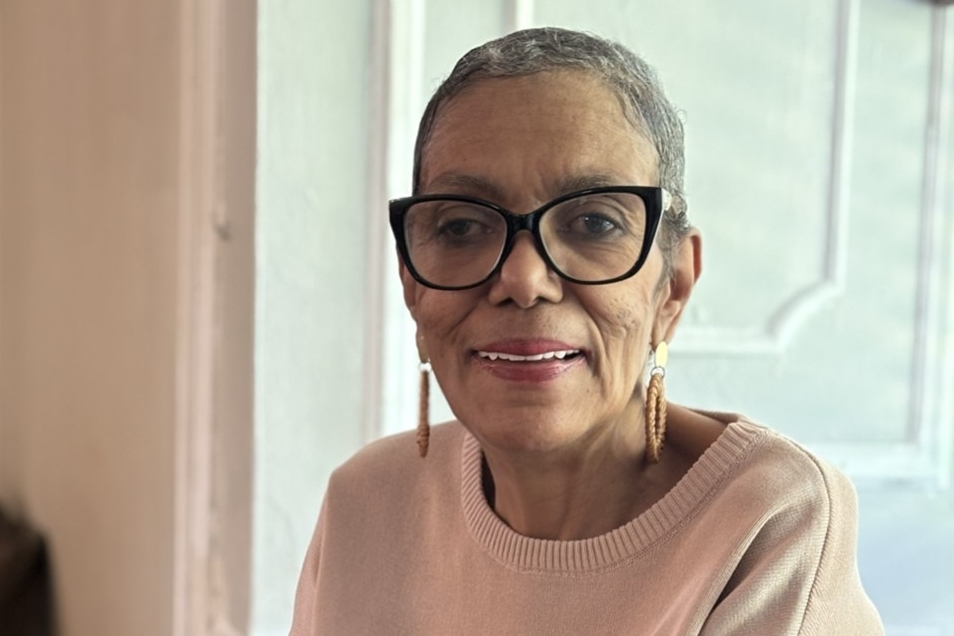
    Michelle Widgins-Lewis, 69, of Philadelphia, singer-songwriter, founder, president, and executive director of Northwest Counseling Service Inc., longtime community housing and education advocate, lecturer, and mentor, died Monday, June 29, of endometrial cancer at Jefferson Abington Hospital.

    Inspired to educate and counsel underserved potential homebuyers about predatory mortgage lending, foreclosure, and other important real estate and housing issues, Ms. Widgins-Lewis founded Northwest Counseling Service on North Broad Street in 1982. For the next 44 years, until recently, she interviewed nearly 5,000 people each year seeking mortgage prequalification and, funded by the Philadelphia Division of Housing and Community Development, advised them about insurance, eviction, credit rating, grants, conflict mediation, and inspections.

    “She helped transform homeownership in Philadelphia,” her family said in a tribute.

    Ms. Widgins-Lewis was appointed to the Pennsylvania Housing Advisory Committee in the 1990s by then-Gov. Ed Rendell and served as a technical adviser on real estate matters for the Philadelphia Division of Housing and Community Development. She worked closely with the Pennsylvania Housing Finance Agency and continually lobbied local, state, and federal government officials for better borrowing and foreclosure laws.

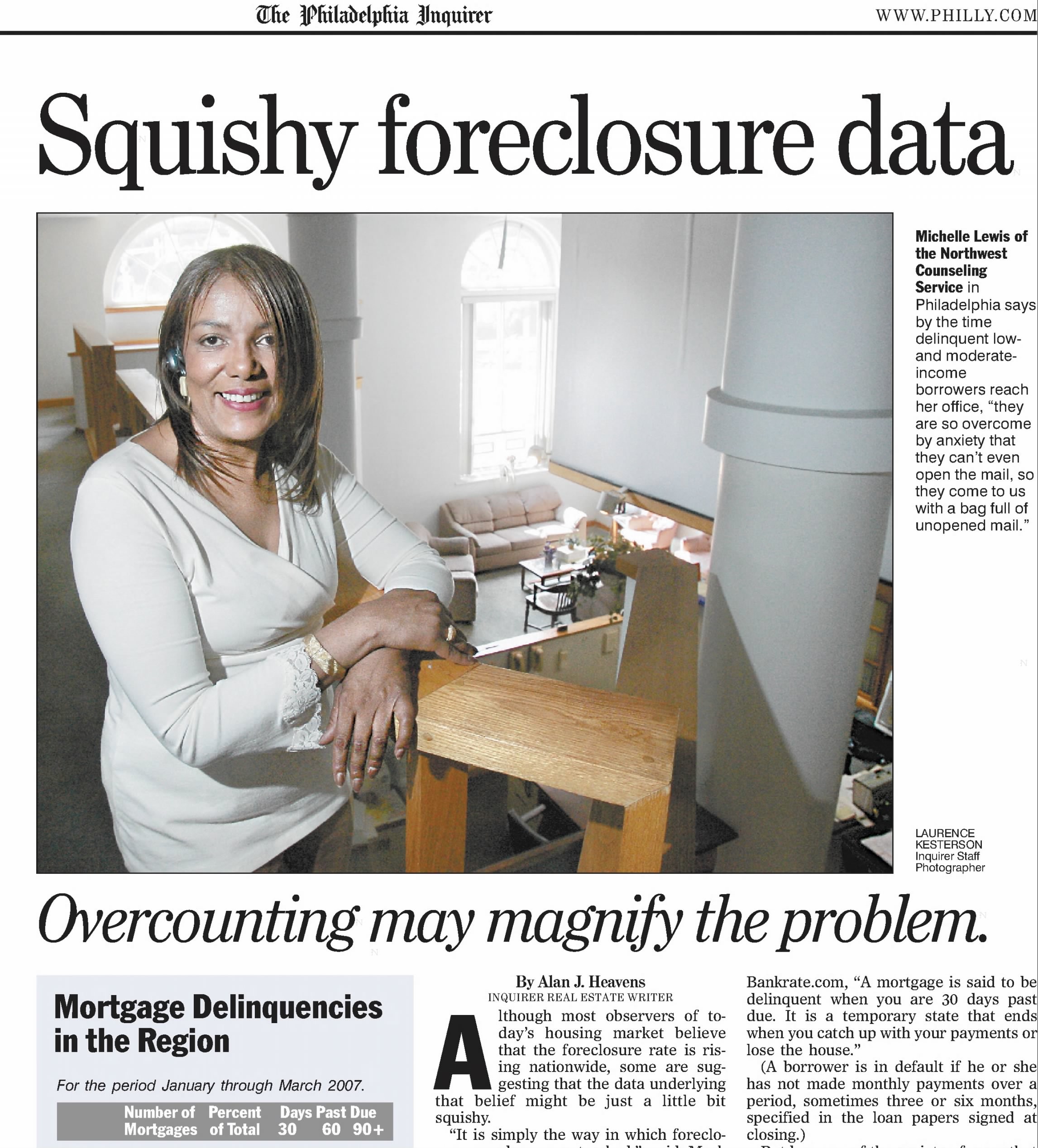
    This photo and article about Ms. Widgins-Lewis appeared in The Inquirer in 2007.Newpapers.com

    She examined property disputes as a forensic real estate specialist, scrutinized scams as a fraud examiner, testified in federal court as a qualified expert, and was licensed as a real estate broker and appraiser. She monitored local landlord-tenant mediation cases closely and told The Inquirer in 1996 that many tenants “end up with an agreement they can’t live up to.”

    People, she said often, are rarely ready to buy their first house. “Instead of considering whether they are prepared to buy a home, people are being propelled into the market by economic pressure that says they should buy because it’s cheaper than renting,” she told The Inquirer in 1995. “That’s not always true.”

    She also founded and chaired the Philadelphia Predatory Lending Task Force, which collected and publicized data about unfair lending practices. “This gives us a picture of the type of problems going on in our neighborhoods,” she told the Daily News in 2001.

    Ms. Widgins-Lewis was an instructor for the National Real Estate Institute and a leader for the American Society of Certified Housing Executives, the Real Estate Educators Association, and other groups. She wrote articles for journals and forged educational partnerships with colleges and universities.

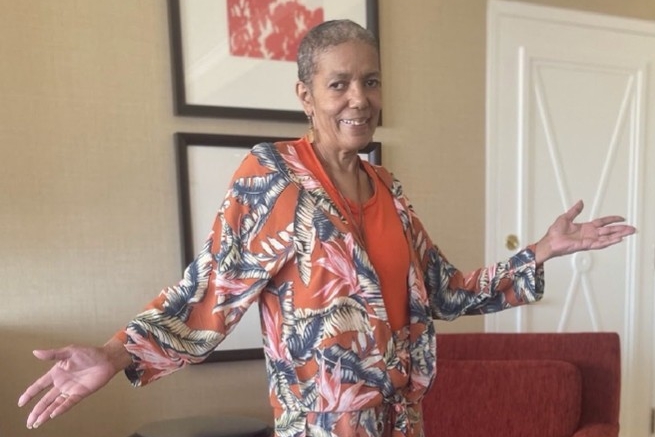
    Ms. Widgins-Lewis performed in several bands and with her sister Dionne.Courtesy of the family

    She spoke on panels and at conferences and workshops about homeownership, and was quoted often in The Inquirer and Daily News. Friends called her “truly inspiring” and “a true champion in the mortgage industry” in online tributes. One friend said: “She was a beast in the housing world.”

    Ms. Widgins-Lewis sang often as a young girl, got rave reviews on karaoke night when she was older, and went on to perform in several bands and with her sister Dionne at local clubs and festivals. She sang rhythm and blues, pop, standards, and jazz, and wrote at least one song that was recorded and released.

    Daily News columnist Stu Bykofsky wrote about her dual career as a singer-songwriter and executive in 1995 and said: “She still has trouble calling herself an artist but feels, at the very least, she’ll always be able to get up and sing at fundraisers for her agency.”

    Her family said: “From childhood, Michelle drew people in with her light and her voice.” Her daughter Tracey Thomas said: “She would light up the room.” Her son Mike said: “Everybody loved her.”

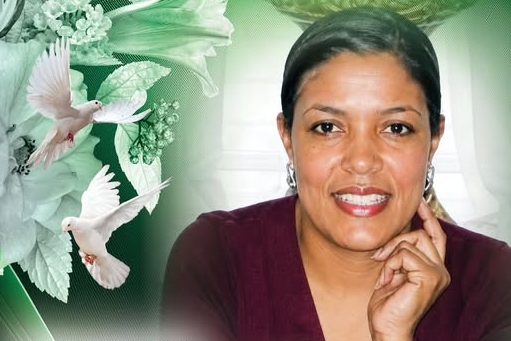
    Her family said Ms. Widgins-Lewis had “an unwavering commitment to education, integrity, and service.”Courtesy of the family

    Michelle Widgins was born May 29, 1957, in Philadelphia. She graduated from Martin Luther King High School and earned a bachelor’s degree at La Salle University and a master’s degree in human services at Lincoln University.

    She married Michael Brown, and they had a daughter, Anji, and a son, Mike. After a divorce, she married Tyrone Lewis, and they had a daughter, Tracey, and a son, Richard. They divorced later.

    Ms. Widgins-Lewis enjoyed reading and writing. She belonged to the Pi Gamma Mu international honor society, was close with Mayor Cherelle L. Parker and former Mayor Wilson Goode, and was guided, her family said, by “an unwavering commitment to education, integrity, and service.”

    Her family is hoping to rename a Northwest Philadelphia street in her honor.

    Ms. Widgins-Lewis lived with cancer for 10 years.Courtesy of the family

    “She was humble but had drive and determination,” her son Mike said. Her daughter Tracey said: “The world was her stage. I can only imagine how her light will shine in heaven.”

    In addition to her children and former husbands, Ms. Widgins-Lewis is survived by eight grandchildren, a sister, two brothers, and other relatives. A sister and a brother died earlier.

    Services are to be at 11 a.m. Thursday, July 16, at Verity Church, 2017 W. Diamond St., Philadelphia, Pa. 19121.

    Donations in her name may be made to Northwest Counseling Service Inc., 6521 N. Broad St., Philadelphia, Pa. 19126.

    Ms. Widgins-Lewis “was humble but had drive and determination,” her son Mike said. Courtesy of the Family
  • States reach $18 million settlement with 23andMe, with Pa. and N.J. getting more than $400,000 each

    States reach $18 million settlement with 23andMe, with Pa. and N.J. getting more than $400,000 each

    Genetic testing company 23andMe and a group of attorneys general nationwide have reached a multimillion-dollar settlement following the major data breach that led to the company’s demise three years ago.

    More than 40 attorneys general, including Pennsylvania‘s Dave Sunday, announced the national $18 million settlement with the genetic testing company Tuesday.

    “This company was trusted by millions of Americans to safeguard very private data and information, but failed to do so, learning about a data breach far too late, then pointing fingers at their own customers,” Sunday said in a statement. “I find it appalling that a company dealing with customers’ personal information would be so lax about their system protections, then have the audacity to deny and attempt to wash their hands of wrongdoing.”

    As part of the settlement, Pennsylvania will receive $491,902. Nearly 200,000 Pennsylvanians were impacted by the data breach, according to the state attorney general’s office. About 150,000 customers were impacted in New Jersey, which will receive nearly $410,000, said the state’s attorney general, Jennifer Davenport.

    Here’s what else we know.

    What happened with the 23andMe data breach?

    In October 2023, 23andMe launched an investigation after a “threat actor” claimed to have obtained millions of users’ personal data.

    By December, the company confirmed through a filing with the Securities and Exchange Commission that a hacker directly accessed 0.1% of its users’ accounts, or about 14,000 profiles. Still, because of the networks users can build, connecting their information to possible relatives, the hacker was able to view the information of millions of users.

    A spokesperson for the company told news outlets at the time that 6.9 million people had been affected: about 5.5 million customers who had opted into 23andMe’s “DNA Relatives” feature and 1.4 million users whose family tree information was accessed.

    Of those customers, 192,093 were in Pennsylvania.

    What information was accessed?

    Information accessed included:

    • Display name, profile picture, and birth year.
    • How recently they had logged into their account.
    • Their relationship status.
    • Their self-reported location by city and zip code.
    • Predicted relationships with others.
    • DNA percentages users share with their “DNA Relatives.”

    An additional 1.4 million customers who used the “DNA Relatives” feature had their “Family Tree” profiles accessed, which includes a limited subset of profile data, the company said.

    The hacker activity was contained and required existing users to reset their passwords and enable multifactor authentication, 23andMe said at the time. Still, experts warned consumers that they should consider deleting their accounts.

    When did 23andMe declare bankruptcy?

    The company declared bankruptcy in March 2025 and eventually was sold.

    That’s when states, including Pennsylvania, filed claims related to the data breach investigation. As part of the bankruptcy proceedings, 23andMe’s consumer data was sold to TTAM Research Institute, a nonprofit organization formed by 23andMe founder and former CEO Anne Wojcicki. That sale is bound by new guardrails regarding data security that were put in place with the help of the coalition of attorneys general.

    Sunday joined the lawsuit to prevent 23andMe from selling consumer data as part of its bankruptcy proceedings.

    The lawsuit said the California-based genomics biotech company was proposing to sell an “unprecedented compilation of highly sensitive and immutable personal data: a human being’s permanent and everlasting genetic identity.”

    The risk of a data transfer was too great, the complaint said, as DNA data are unique to an individual and can be used to identify relatives — past and future. And genomic data live forever, even after a person dies.

    “If stolen or misused, it cannot be changed or replaced,” the complaint said.

    What happened this week?

    A group of 42 state attorneys general announced the $18 million settlement. This is in addition to a $46.75 million class-action settlement arising from the bankruptcy, for affected U.S. consumers who submitted claims by Feb. 17. Impacted customers should have received an email notifying them about their eligibility for the class-action settlement, according to the Pennsylvania Attorney General’s Office.

    All 50 states and territories except for California, Hawaii, Mississippi, Missouri, Montana, Nebraska, Nevada, Rhode Island, and Wyoming were involved in the settlement.

  • RFK Jr. faces Hatch Act complaint after intervening in congressional races

    A top Senate Democrat has requested an investigation into whether Health Secretary Robert F. Kennedy Jr. broke a federal law intended to prevent political appointees from interfering in elections, citing Washington Post reporting.

    Sen. Ron Wyden (D., Ore.), the top Democrat on the Senate Finance Committee, filed a complaint Monday with the Office of Special Counsel, a quasi-judicial independent agency that administers the Hatch Act and other civil service rules.

    The Hatch Act bars federal employees from engaging in political activity in the course of their work. Several Trump appointees in the first administration were found to have broken the law.

    President Donald Trump has previously derided the Hatch Act and declined to enforce the special counsel’s recommendations.

    In his complaint and accompanying letter to Jamieson Greer, the acting head of the special counsel’s office, Wyden cited examples of Kennedy encouraging a pair of third-party candidates in Iowa to drop out of contested House races so Republicans could keep control of Congress.

    The Post obtained audio of Kennedy’s call with one of the candidates, Rick Stewart, in which the health secretary suggested he would serve as a liaison with the White House and could help Stewart if he left the race. A second candidate has said he received a similar call from Kennedy.

    Wyden, whose committee helps oversee some of the agencies led by Kennedy, said that the cabinet secretary’s offers to the candidates were “brazenly corrupt” and violated the Hatch Act and other laws.

    “The quid pro quo offer of federal employment or other personal gain that Kennedy extended to Stewart on the June 11 phone call is conduct expressly prohibited by the Hatch Act,” Wyden wrote in his letter to Greer, which was shared with the Post.

    The White House and the Department of Health and Human Services, which Kennedy leads, did not respond Monday to questions about Kennedy’s conversations with the candidates and whether he faced any internal repercussions once the calls came to light.

    Trump mocked the Hatch Act in his first term, including after the Office of Special Counsel in 2019 recommended that Kellyanne Conway, a top Trump adviser, be removed from her post for violating the law. Conway had criticized Democratic presidential candidates while she was being interviewed by media outlets in her official capacity and tweeted about the candidates from her official account, the office concluded.

    Trump ignored the office’s recommendation and kept Conway in her post.

    The Hatch Act, which has been law since 1939, does not apply to the president — a fact that Trump has acknowledged in the past, including when he decided to accept the Republican nomination for president in 2020 by giving a speech at the White House.

    “There is no Hatch Act because it doesn’t pertain to the president,” Trump said in August 2020.

  • Westtown may ax its historical commission over a dispute to preserve Crebilly Farm’s 19th-century inn

    Westtown may ax its historical commission over a dispute to preserve Crebilly Farm’s 19th-century inn

    A schism between Westtown Township’s elected officials and its historical commission reached a boiling point this week, with the municipality’s supervisors planning to remove the commission over what several members say is a disagreement regarding a historic building that residents have fought for years to preserve.

    An email sent to each of the six volunteer commission members Monday alerted them that Westtown’s three supervisors planned to take a vote at their meeting next week to remove them.

    At the center of the conflict is the historic Darlington Inn, a 19th-century building that sits on a two-acre parcel at the corner of State Routes 202 and 926. The inn was acquired in 2024 as part of a larger battle, led by the community, to preserve the 206-acre Crebilly Farm and fend off plans for residential redevelopment of the land.

    But the township has regarded the inn, which is along the farm tract, as a temporary purchase that it would eventually auction or sell off to recoup the $200,000 in taxpayer funds used to buy it. That has put the officials at odds with its own historical commission, whose members have adamantly fought to preserve the inn.

    “It’s really disheartening,” said Pamela Boulos, who has served on the commission for roughly a decade. “It’s really disheartening to know that this is the level that they’re willing to go to.”

    In an email, shared with The Inquirer, that included the subject line “Courtesy notice,” Township Manager Mila Carter said she was providing “advance notice, as a courtesy,” that the board’s agenda for Monday’s meeting “will include an item regarding your appointment to the Historical Commission.”

    “The Board will be considering a motion to remove your appointment from the Commission,” she wrote. “No action has been taken at this time, and the matter will be discussed and considered during the public meeting.”

    She also notified members that the commission’s planned Tuesday meeting had been canceled.

    Members said they were told separately they could reapply.

    The township did not immediately respond to a message seeking comment.

    The board’s decision comes as tensions have been increasing between the commission and the elected officials. Commission members say the relationship has grown more hostile recently, particularly as it pertains to the Darlington Inn.

    Last week, supervisors voted to rezone the property to commercial use, rather than agricultural or residential. The change would allow for “future adaptive reuse” of the inn, board members said previously. They said in April that the inn is currently not at “its highest and best use” by sitting vacant.

    Commission members felt that the community had largely believed that the inn was to be preserved alongside Crebilly Farm when the township purchased it in 2024. When it became clear the intention was to offload the inn as a separate parcel, the commission began to raise awareness among residents about the possible loss of the building. Members said they wanted to see if there was appetite from private donors to purchase and maintain the property.

    And the community, which has been willing to enter the fray to preserve the tract, started showing up to meetings.

    “My belief is that some of the supervisors felt that this was untenable, this was an annoyance, this was interfering with what they wanted to accomplish,” said Stephen Wahrhaftig, who has been on the commission for four years. “A few of the people on the commission were viewed as the troublemakers, and to get rid of only one or two people probably would have been bad optics … so the easy thing to do, as other townships have done, is just dissolve the whole thing, just get rid of it.”

    At its July 6 meeting, Patrick McDonough, chair of the historical commission, asked the township to consider easements on the land, to preserve the facade of the structure. The commission wanted to guard against “Wawa popping up there, or CVS,” he said separately.

    The board of supervisors declined to put any restrictions on the property. Jodi Nawrocki, chair of the board, said at the meeting nothing precluded the township from adding such easements in the future.

    “I think the way to use the building to the best use is through changing the zoning,” she told McDonough.

    McDonough said he felt that, in the process of the commission arguing its point, the board “thought that we were overstepping our bounds as a historic commission.”

    “My own township is willing to just auction this building off with no protection, no easements, and allow it to basically fall into the hands of what everybody else wants to do with it,” McDonough said. “I never thought that my own township would be the one I’d be fighting against the hardest.”

    The commission, formed in 2013, was created to help develop community appreciation of the township’s history and to preserve that history. The commission has created Westtown Day, an annual community day; has published a history book about the township; and hosts a litany of lectures. The volunteer-run body is appointed by the supervisors for three-year terms, and serves as an advisory committee to the board.

    “You would think, being a municipality in one of the oldest counties in America, that historic preservation, especially here in our year of America 250 … would be top of mind and not something swept aside,” Wahrhaftig said. “But I guess right now that’s not the case.”

    This suburban content is produced with support from the Leslie Miller and Richard Worley Foundation and The Lenfest Institute for Journalism. Editorial content is created independently of the project donors. Gifts to support The Inquirer’s high-impact journalism can be made at inquirer.com/donate. A list of Lenfest Institute donors can be found at lenfestinstitute.org/supporters.

  • Supreme Court justices tell Congress their safety is at risk and more must be spent on security

    Supreme Court justices tell Congress their safety is at risk and more must be spent on security

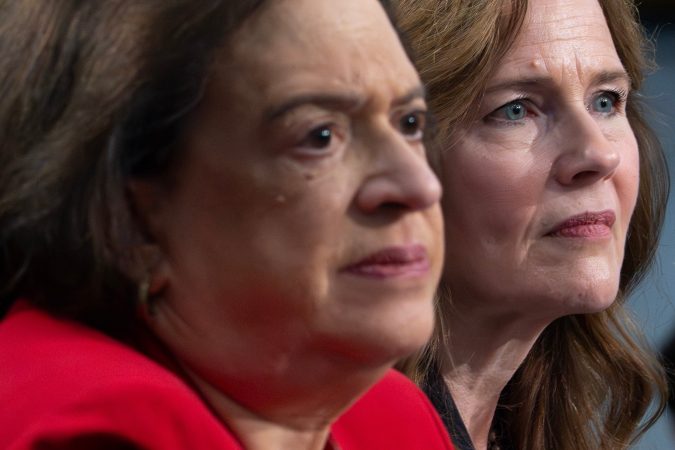
    WASHINGTON — Supreme Court Justice Amy Coney Barrett told lawmakers Tuesday that a sharp increase in threats targeting her and other justices is increasingly encroaching on their personal and family lives.

    During a rare appearance by justices before Congress, Barrett said she had to wear a bulletproof vest home a few years ago, something she struggled to explain to her 12-year-old son.

    “I didn’t expect that performing this service would put me in the position of explaining to my children what a bulletproof vest was, why I had to wear one,” she said.

    She and Justice Elena Kagan testified before a House appropriations panel in support of a request to increase security funding for members of the nation’s highest court.

    Judges around the country have seen a rise in threats of violence and intimidation. Barrett’s home was also targeted by a fake swatting call to police in May.

    The hearing comes two weeks after the conservative-majority court finished handing down a series of major opinions, including a decision that increased President Donald Trump’s power over federal regulatory agencies and another that rejected his wide-ranging tariffs, sparking harsh personal criticism.

    It’s the first time justices have testified before Congress since 2019, and the two justices faced wide-ranging questions about the court’s work.

    Security is central to budget request

    The Supreme Court requested a total of $228 million for next fiscal year, a roughly 10% increase over the year before. About $18 million of that is for maintaining the building and grounds.

    Much of the requested increase, $14.6 million, would go to expanding personal protection for justices, with six more agents for each.

    An additional $2 million would fund an off-site residential security post aimed at making emergency responses faster, as well as increasing the number of Supreme Court police officers.

    The U.S. Marshals Service, responsible for protecting judges, reported 564 threats in the government fiscal year that ended in September, an increase from the year before.

    That total includes threats to the hundreds of federal judges around the country, though the nine-member Supreme Court has not been immune.

    In May, Barrett’s security detail worked with police to quickly deal with the call determined to be swatting, or a fake 911 call designed to provoke a police response. Last year, her sister was the victim of a bomb threat in Charleston, S.C., police said. No bomb was found.

    In 2022, shortly after the leak of a draft opinion overturning the Roe v. Wade abortion decision, a would-be assassin was arrested near the home of Justice Brett Kavanaugh with weapons and zip ties. Threats to the Supreme Court increased after that leak, and have continued to grow, Kagan said.

    Chief Justice John Roberts has condemned the threats to all U.S. judges, saying during a speech in March that criticism of judicial opinions is understandable, but personally directed hostility is “dangerous, and it’s got to stop.”

  • Trump plans primetime speech on 2020 election allegations

    Trump plans primetime speech on 2020 election allegations

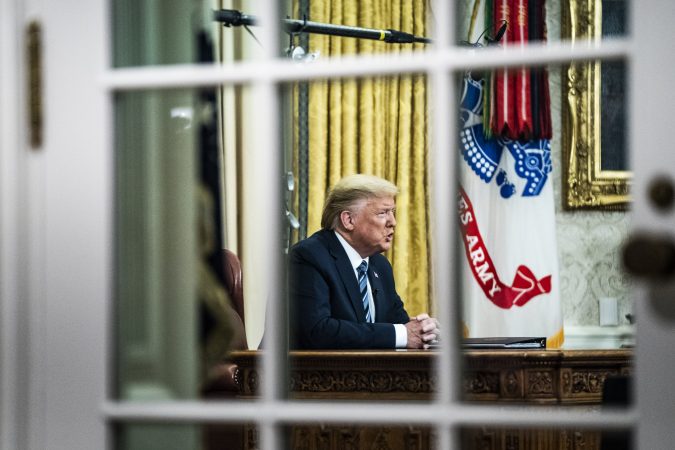
    President Donald Trump is planning a primetime address Thursday that will use findings from reexamined government files to argue that the country’s election infrastructure has vulnerabilities, according to two people briefed on the plan.

    Trump told reporters in the Oval Office on Tuesday that the speech would concern voting machines but declined to elaborate. “It will concern that subject, and we’ll have a couple of other things to say, also,” he said. “But I’d rather save it. But it’s really big news.”

    The president could use the address to press his long-standing allegations of foreign interference in the 2020 election, the results of which he has never accepted. The speech, in part, will highlight claims that China accessed U.S. voter data, said the people, who spoke on the condition of anonymity to discuss a plan that has not been made public. Trump is also expected to discuss findings related to Venezuela, they said.

    It was not clear Tuesday whether the major broadcast networks would provide airtime for the speech. As of late morning Tuesday, the White House had not made a request for air time.

    The plans are fluid and could change. “Anonymous sources are speculating about what President Trump will say during his speech on Thursday evening,” White House press secretary Karoline Leavitt said. “The truth is, nobody knows yet what President Trump will ultimately say, which is why everyone should tune in.”

    The plan came after a confidential White House briefing on Monday to review findings from the Trump administration’s broad reexamination of old FBI records, including from the 2020 election, one of the people said. Trump then announced the speech on social media, without specifying the subject.

    In recent weeks, FBI Director Kash Patel has dispatched hundreds of agents to help the bureau’s Atlanta field office review 700 files by July 17, according to an internal FBI obtained by the Washington Post. Trump has long argued that he unfairly lost the 2020 presidential election in Fulton County, Ga., which includes Atlanta, and, despite a lack of evidence, the FBI field office has been investigating those claims.

    Trump is making the primetime announcement at the urging of advisers including Bill Pulte, the acting director of national intelligence, and John Solomon, a former conservative journalist who temporarily joined the White House to help review government records for release. Solomon has long questioned investigations surrounding Trump and has pushed for the release of FBI investigatory files related to alleged election interference.

    Since Trump returned to office, multiple federal agencies have pursued allegations of tampering with the 2020 vote that had previously been investigated and rejected.

    U.S. intelligence agencies concluded in March 2021 that there was no foreign interference that altered votes or manipulated machines in the presidential election. The agencies said Russian and Iranian spies did try to influence Americans. They also said China considered but did not go through with efforts to try to affect the outcome of the election, a finding that was the subject of internal dispute at the time.

    In Trump’s second term, the Office of the Director of National Intelligence, under Tulsi Gabbard until last month, has taken steps including examining voting machines used in Puerto Rico looking for cybersecurity vulnerabilities.

    In September, the contract firm Mojave Research completed a report for the national intelligence director’s office based on forensic analysis of digital voting software obtained from Puerto Rico. The report concluded that software vulnerabilities made the machines highly vulnerable to hacking, according to two people familiar with the report, who spoke on the condition of anonymity to discuss findings that have not been made public. The Mojave analysts found no evidence that exploitation took place, they said.

    The report’s release had been delayed by the White House, the people said, but it could come this week.

    In January, the FBI and Justice Department seized 2020 ballots that were preserved by a court order in Fulton County. Investigators also obtained records including ballot images from the Republican-led Arizona Senate’s review of the 2020 results in that state’s largest county. And the FBI in recent months interviewed current and former election officials about the 2020 election in Milwaukee.

    Trump lost all three of those swing states in 2020. Recounts and court reviews have upheld those results, even as Trump has spent years falsely claiming the election was rigged.

    The Arizona and Georgia investigations came at the instigation of Kurt Olsen, a lawyer who worked on Trump’s efforts to overturn the 2020 results at the time and advised him in the White House in 2025.

    Trump has taken a series of actions in recent months aimed at influencing how elections are carried out. Most have been blocked in court or otherwise stymied.

    Last week, Trump disbanded a bipartisan commission that helps states and localities administer elections. He also recently signed executive orders designed to limit mail ballots and to require states to verify voters’ citizenship with federal data. Those orders have been halted in court. Judges noted the Constitution gives the power to run elections to the states and Congress, not the president.

    The Justice Department has sued to get copies of state voter rolls but so far has lost those cases. And the administration’s efforts to allow states to check voter eligibility in a massive federal database has been severely hampered in a separate case.

    Trump has demanded that Congress pass a law to require proof of citizenship and ID to vote in this year’s midterms, but Senate Republicans say they lack enough votes. To escalate the pressure, Trump refused to sign a bipartisan bill aimed at making housing more affordable, allowing the legislation to become law without his signature.

    Election officials and voting rights advocates have been bracing for months for the administration to release information that purports to cast doubt on how elections are conducted.

    “Few things can be more predictable than this coming,” said Lawrence Norden, vice president of elections and government at the Brennan Center for Justice at New York University, a voting rights organization that has sued the administration over some of its election policies.

    Any electronic system has vulnerabilities, but states are vigilant about making sure their outcomes are correct using “layered defenses,” Norden said. States conduct audits and recounts to ensure accuracy, and 98% of votes in the midterm elections will be on paper ballots that can be reviewed, he said.

    “Unless you have that context of the security that’s already in place, I think some of the kind of things that they’re throwing against the wall can be very confusing to the public,” he said.

    Some Trump White House officials in 2020 believed China favored Joe Biden in that year’s election and doubted the intelligence assessment that the country would not seek to interfere and had no preference, according to a former official who spoke on the condition of anonymity because of the matter’s sensitivity.

    That view was shared by then-Director of National Intelligence John Ratcliffe, who is currently serving as CIA director.

    Ratcliffe “disagreed with the established analytic line on China, insisting ‘we are missing China’s influence in the US and that Chinese actions ARE intended to affect the election.,’” according to a January 2021 report to Congress from an analytic ombudsman for the intelligence community.

  • As cyclospora illnesses surge to a record, Michigan officials eye lettuce as a possible link

    As cyclospora illnesses surge to a record, Michigan officials eye lettuce as a possible link

    NEW YORK — Infections from the diarrhea-causing parasite cyclospora are surging, with state-level data suggesting that 2026 is already the nation’s worst year for reported cases.

    More than 30 states have reported infections this year, and current data from them shows the number of infections surpassing the record U.S. mark of about 4,700 set in 2019. The illness is not usually life threatening and is typically treated with antibiotics.

    Health officials have not yet definitively identified what is causing the infections. But in Michigan — where more than 3,300 cases have been reported — officials say early information points to lettuce or salad greens as a possible culprit.

    After conducting more than 1,000 interviews with patients, “early information has shown lettuce as a common product that regularly comes up during the investigation,” said Natasha Bagdasarian, the Michigan health department’s chief medical executive.

    Because of that commonality and because produce has been behind some past cyclospora outbreaks, Michigan officials advised consumers to buy whole heads of lettuce, discard the outer layers and thoroughly wash what’s left. They also suggested people avoid bagged lettuce and pre-mixed salad kits.

    On Tuesday, the Taco Bell restaurant chain issued a statement saying it had “voluntarily and temporarily removed limited ingredients at select restaurants as a precautionary measure. We will continue to closely monitor the situation and follow the guidance of public health authorities.”

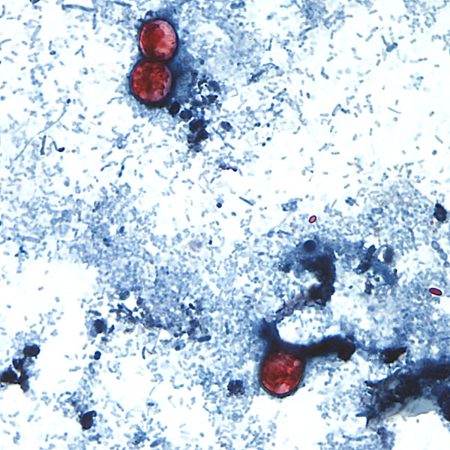
    Cyclospora is a microscopic, spherical parasite that commonly causes watery diarrhea “with frequent and sometimes explosive bowel movements,” according to the U.S. Centers for Disease Control and Prevention. Outbreaks tend to occur most often in the late spring and summer.

    The heat-loving parasite infects the bowels and spreads through feces. In the past, people have been infected by consuming fruits or vegetables that were exposed to feces-contaminated irrigation water.

    The illness, called cyclosporiasis, is less common than foodborne illnesses caused by other germs, including salmonella and E. coli. Many cases are never linked to a specific food or other source and, for years, few U.S. cyclospora outbreaks were reported. But the number started rising about a decade ago, with a particularly notable spike in 2018 and 2019.

    Experts say it’s likely that cyclospora cases historically were underreported, in part because some common tests used to check for food poisoning have not been geared to detect cyclospora. They attribute the increasing trend in cases to climate change and better detection.

    The worst year in the U.S. for infections was 2019, when about 4,700 illnesses were reported, according to federal data on confirmed and suspected cases.

    The Centers for Disease Control and Prevention keeps those numbers, but they traditionally lag what’s posted by individual city and state health departments dealing with local outbreaks in real time. On Tuesday, CDC officials issued a health alert that said that since May 1, the agency is aware of 1,645 confirmed domestic cases and more than 5,100 that require further analysis to confirm whether the infections were acquired in the U.S. The reports come from 34 states, the CDC said.

    The federal alert did not detail how many reports came from each state. But Michigan officials have reported more than 3,300 cases, officials in northwest Ohio said they have seen more than 1,100, New York City officials counted more than 400, and Illinois reported more than 200.

    Officials do not think all can be tied to a common source. In Illinois, for example, more than half the people with infections said they had travel outside the United States, and at least some may have been infected elsewhere.

    But Michigan officials believe a large share of their total is likely due to a linked domestic outbreak.