Category: News

  • Campbell’s jumps on the protein-maxxing trend with 5 new soups

    Campbell’s jumps on the protein-maxxing trend with 5 new soups

    Campbell’s has hopped on the protein trend with a new soup lineup boasting 20 grams of protein per can.

    With enhanced macronutrient profiles on five soups, the Camden-based soup and snack brand has joined the ranks of food companies that recently launched protein-forward products. Chipotle debuted a high-protein menu in December, and Starbucks now offers protein coffee, matcha, and cold foam.

    “As consumers increasingly seek foods that offer both great taste and meaningful nutrition, this innovative product line will bring excitement and drive consumers to the soup category,” Benjamin Crook, senior vice president of soup and broth, said in a news release.

    In 2025, 70% of Americans reported trying to consume more protein, according to a survey by the nonprofit International Food Information Council.

    Campbell’s new soup line includes Italian-style wedding, homestyle chicken and rotini, lemon pepper chicken, Mediterranean lentil, and southwest black bean flavors.

    The updated soups contain more protein than the company’s original iterations. The existing homestyle Italian wedding soup has 7 grams of protein, and the basic chicken noodle has 3 grams.

    The protein soup line is Campbell’s second release of the summer designed to appeal to “better-for-you” consumer preferences. In June, Campbell’s partnered with Banza to introduce its first gluten-free chicken noodle soup. Banza makes chickpea pasta, which has 50% more protein and three times as much fiber as traditional pasta.

    In addition to soups, Campbell’s has a vast food and snack portfolio. Under its umbrella is Pepperidge Farm, the baking company that produces Goldfish and Milano cookies, and Snyder’s-Lance, which owns Cape Cod Potato Chips, Kettle Brand, and Late July. In 2024, Campbell’s acquired the parent company of sauce brand Rao’s.

    The company reported in June that net sales decreased 4% in the third quarter of the 2026 fiscal year. In the meals and beverages segment, sales decreased primarily due to declines in U.S. soup, Prego pasta sauces, and V-8 beverages, but those were partially offset by gains in Rao’s.

    Campbell’s had 13,700 employees in 2025, per the company’s annual report. In 2023, the company launched a $50 million upgrade of its Camden headquarters. The expansion was anticipated to be completed over three years, bringing 330 additional positions to Campbell’s Camden offices.

  • U.S. Mint to produce $1 coin with Trump’s face on it, treasury secretary says

    U.S. Mint to produce $1 coin with Trump’s face on it, treasury secretary says

    The U.S. Mint will soon begin producing a new $1 gold-hued coin with President Donald Trump’s face on it to commemorate America’s 250th birthday, Treasury Secretary Scott Bessent announced this week.

    The coin’s face features Trump alongside the phrase “In God We Trust.” It is encircled with the phrases “Liberty” and “1776-2026.” The flip side of the coin shows an eagle holding arrows in one talon and olive branches in the other.

    Since the start of his second term, Trump and his allies have pushed to reissue federally created currency and documents to feature the president’s name and likeness. Examples include a commemorative passport with Trump’s image inside its pages and the addition of his signature on newly printed $100 bills. There are also proposals to feature the president’s image on 24-karat gold coins and commemorative $250 bills.

    Bessent said in a post on X that the coin “celebrates the strength of American values, and the promise of a nation dedicated to preserving freedom for all.”

    A Treasury Department spokesperson said the coin “is in production and minted in Philadelphia, and it will be available in the fall.” They also said that there is no gold in the coin but that it has a gold-like finish.

    Earlier drafts proposals of the $1 coin showed Trump standing with a clenched right fist in front of an American flag and the words “Fight Fight Fight” — a reference to the 2024 assassination attempt at his campaign rally in Pennsylvania.

    When plans for the $1 coin were revealed last year, concerns emerged over whether the proposal to include a living president’s image on U.S. currency could violate the law.

    Under a law passed in 2020, the Treasury Department can mint $1 coins during 2026 to mark the 250th anniversary “with designs emblematic of the U.S. semiquincentennial.” However, according to U.S. code, “[o]nly the portrait of a deceased individual may appear on United States currency and securities” — a law that sprang from a Colonial-era tradition against putting current presidents on American coins themselves from the British monarchy.

    In addition, the 2020 law states that “[n]o head and shoulders portrait or bust of any person, living or dead, and no portrait of a living person may be included in the design on the reverse of any coin” produced for the Semiquincentennial, which could be violated by having Trump’s image on both sides of the coin.

    Bessent argued that the $1 coin design was legal, telling Fox News this week that although he is otherwise barred from featuring a living person’s image on U.S. currency, “during the 150th, there was a Calvin Coolidge coin, so we can put living presidents’ images on a coin.”

    The design for the coin also was not what the Commission of Fine Arts, which is composed entirely of Trump appointees, recommended when members met in January. The obverse design recommended by the commission featured Trump’s face in profile, while the final design shows the president with his eyes forward. The treasury secretary has the final say on the design.

    Megan Sullivan, the acting chief of the U.S. Mint’s office of design management, said during the January commission meeting that “the legal research has been done both at the Mint and up into Treasury, and they have determined that [the proposed coin featuring Trump’s image] does not violate any laws.”

    Sullivan described the coins as being “a little bit larger than a quarter” and being composed of “manganese brass” and displaying as “golden in color.”

    The $1 coins are distinct from the 24-karat coins created by the Treasury Department that typically sell for thousands of dollars. Senate Democrats, in June, urged the Trump administration to halt production of that solid gold coin, citing concerns that some of the U.S. Mint’s gold could have links to foreign cartels.

  • Biden will publish ‘Promise Me, America’ memoir after the November midterm elections

    NEW YORK — Former President Joe Biden will publish a memoir, Promise Me, America, which he says will touch upon everything from the economy to his decision to drop his bid for reelection.

    The memoir is scheduled to come out Nov. 17, publisher Little, Brown and Company told the Associated Press. The timing of the book — two weeks after midterm elections in which Democrats seek to regain control of Congress — could raise concerns within Biden’s party by putting him back into the spotlight.

    Democrats remain divided on Biden’s legacy, with many blaming his ill-fated determination to seek a second term for Republican President Donald Trump’s return to the White House. Leaders hope to keep the fall campaign focused on Trump and his record, and any leaks or promotional efforts before votes are cast could draw frustration.

    “Promise Me, America is about the challenges we faced as a nation. It’s about the decisions I made and why I made them,” Biden said in a video statement accompanying Wednesday’s announcement. “It’s about why I chose to run for reelection and why I chose to step aside.”

    This book cover image released by Little, Brown and Co. shows “Promise Me, America” by Joe Biden.Uncredited

    Reports of Biden’s book have circulated for more than a year, and the former president himself has referred to it during public remarks, appearing to suggest it would be released before November’s election.

    Biden, who will turn 84 three days after the publication of Promise Me, America, has long presented himself as an upholder of standards and traditions; presidential memoirs are one of them. With a handful of exceptions, modern presidents since Harry Truman in the 1950s have published books about their White House years. Like virtually all of his predecessors, Biden did not work on the book alone but was helped by a “small editorial team,” according to the publisher. Little, Brown declined to release financial details for Promise Me, America, although presidents have usually reached deals worth at least seven figures.

    The book’s title echoes a 2017 memoir by Biden, Promise Me, Dad, which centered on the death of his son, Beau Biden.

    Vowing as a candidate to “restore the soul” of his country, Biden was sworn into office in the midst of the COVID-19 pandemic and in the aftermath of the Jan. 6, 2021, attack on the U.S. Capitol by Trump supporters seeking to stop his certification as president. Biden’s term was defined by a wide range of conflicts and achievements, from his handling of wars in Ukraine and the Middle East to the passage of ambitious infrastructure and economic aid bills. But many readers will likely want to know more about his health while president, including the disastrous debate in June 2024 against Trump that led to his giving up his reelection bid. Then-Vice President Kamala Harris, who ran instead, lost decisively to Trump.

    Former first lady Jill Biden wrote in her own book that her husband seemed so weak and disoriented during the debate that she feared he was having a stroke. In View from the East Wing, published in June, she noted that the White House had initially said he was suffering from a cold.

    “The biggest lesson for us, I think, was that if you don’t explain something well enough then the question won’t go away,” she wrote. “There was never a satisfying enough explanation offered for Joe’s debate performance, and a lot of people never got over it.”

    Biden was the oldest man to serve as president and his health was a source of speculation for much of his term; Biden and his White House advisers have faced intense criticism from Democrats and Republicans for allegedly concealing the extent of his problems. A notable book release from 2025, Jake Tapper’s and Alex Thompson’s Original Sin, was subtitled “President Biden’s Decline, Its Cover-Up, and His Disastrous Choice to Run Again.”

    That year, Biden announced he had been diagnosed with prostate cancer.

    Biden’s previous books also include Promises to Keep, a campaign work published to boost his run for president in 2008, when Barack Obama was the eventual nominee and Biden his running mate. Promise Me, America comes out during a year when nonfiction sales have declined and few political books have caught on, although recent bestsellers have included Vice President JD Vance’s Communion and an inside account of Trump’s second term, by New York Times reporters Maggie Haberman and Jonathan Swan, Regime Change.

    A Little, Brown spokesperson said that Biden plans to tour on behalf of the book and give interviews. In his video announcement, Biden said that many people had been asking him how he was doing.

    “I’ve been spending a lot of time with my family. I’m dealing with a cancer diagnosis, been getting treatment, and it’s going really well,” he said. “I want to thank all those who have offered their prayers and support and well-wishes. It’s meant the world to me and to Jill.”

  • Kathy M. Winter, lifelong artist, teacher, and former parish council president, has died at 91

    Kathy M. Winter, lifelong artist, teacher, and former parish council president, has died at 91

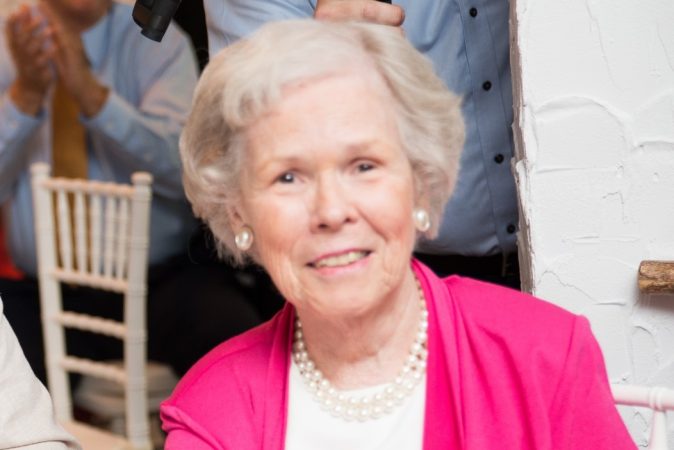
    Kathy M. Winter, 91, formerly of Philadelphia, lifelong artist, art and grade school teacher, author, and former council president at Our Mother of Consolation Parish in Chestnut Hill, died Tuesday, June 9, of complications from pneumonia at Forbes Hospital in Monroeville, Pa.

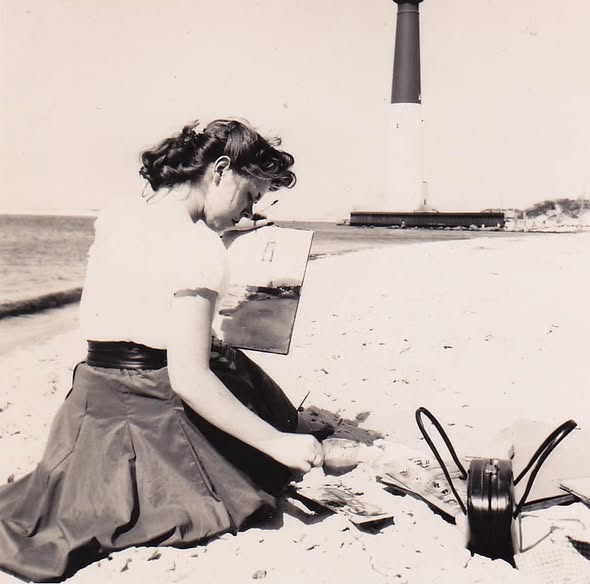
    Born in Philadelphia, Mrs. Winter studied art at the Pennsylvania Academy of the Fine Arts and earned a bachelor’s degree in fine arts at the University of Pennsylvania. She specialized in portraits, still life, and landscapes, and worked mostly in watercolors, pastels, oils, and acrylics.

    She painted portraits of celebrated naval chaplain John F. Laboon and Chinatown icon T.T. Chang, and contributed to a collection called “Lost Dreams on Canvas” that featured portraits of innocent victims of violent crime in Philadelphia. “You get into a portrait like that,” Mrs. Winter told the Chestnut Hill Local in 2012, “and you’re into the person.”

    She painted the statue of St. Gianna Beretta Molla for the Shrine of the Nativity of Our Lord in Warminster, and her painting of a restored statue of St. Gabriel for a church in New Orleans was featured in The Inquirer in 2007. She also designed stained glass windows for St. Bede the Venerable Church in Holland, Bucks County, and the chapel at Shore Memorial Hospital in Somers Point, N.J.

    “The best thing,” Mrs. Winter told the Chestnut Hill Local in 2012, “is that you don’t have to retire from making art.” Courtesy of the family

    Mrs. Winter studied Chinese brush painting with artist Phoebe Shih in Flourtown and showed her work at the Woodmere Art Gallery, the Conshohocken Art League, Daylesford Abbey, the Lutheran Theological Seminary, the Knickerbocker Exhibition in New York, and elsewhere. She also taught art classes at the Abington and Main Line Art Centers, the Conshohocken Art League, Our Mother of Consolation School, and elsewhere.

    “The best thing,” she told the Local in 2012, “is that you don’t have to retire from making art.”

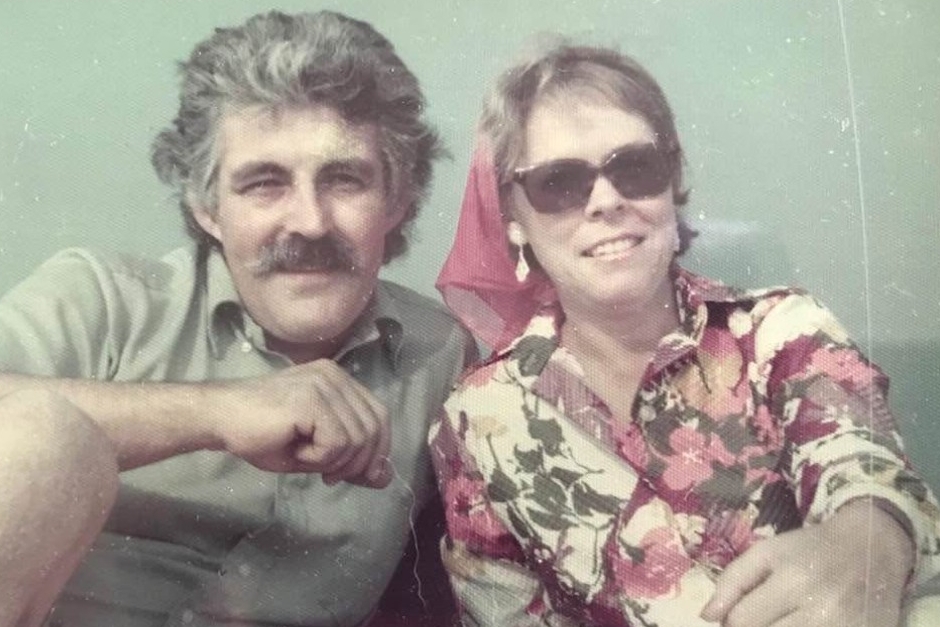
    She met her husband, sculptor Joseph Winter, at the Pennsylvania Academy of the Fine Arts in 1953, and they opened Winter Art Studio in their Chestnut Hill home in 1983. For several commissions, he created the sculpture, and she painted it.

    “Since Joe was a sculptor and I’m a painter, we complemented each other very well,” Mrs. Winter told the Chestnut Hill Local in 2021. “If we had both been painters or both been sculptors, it would not have worked out so well. There would have been too much competition.”

    Mrs. Winter painted fruit and flowers.Courtesy of the family

    In 2021, she self-published a 48-page children’s book called How the Bears Got to the Park. It features illustrations by her husband, and the plot she wrote is based on his award-winning 1966 sculpture Family of Bears that is displayed at Three Bears Park at Third and Delancey Streets in Society Hill.

    Mrs. Winter was a longtime member and onetime council president at Our Mother of Consolation Parish. She and her husband moved to Chestnut Hill from Southwest Philadelphia in 1962 so their children could attend the parish school, and she taught all subjects to third and fourth graders for a few years.

    Parish members scheduled Mass intentions to honor her on June 28, July 5, and July 10. “She was very determined,” her daughter Genienne Navarro said. “She never let anything stand in her way and would move mountains to get something done.”

    Kathleen Marie McKenna was born April 21, 1935. Her family moved to Virginia when she was young and returned to Philadelphia a few years later, and she graduated from West Philadelphia Catholic High School for Girls.

    Mrs. Winter and her husband, Joe, married in 1956. Courtesy of the family

    A perceptive nun recognized her artistic skills in high school and arranged for an admission interview with officials at the Pennsylvania Academy of the Fine Arts. She received a full scholarship, met her husband there, and they married in 1956 and had daughters Kathy and Genienne and a son, Joseph.

    Her husband died in 2020, and she moved to the Pittsburgh area a few years ago to be close to family. Mrs. Winter kept in touch with former classmates at the Pennsylvania Academy of the Fine Arts for years and took additional art classes later at Temple University and Chestnut Hill College.

    She played piano, doted on her family, and survived cancer in the 1970s. A longtime friend called her a “true, loving, nourishing, protective, guiding, steadfast Blessed Mother to me.”

    Her family said in a tribute: “She will be remembered for her friendship, spiritual support, listening ear, humor, deep caring, generosity, and undaunted optimism.”

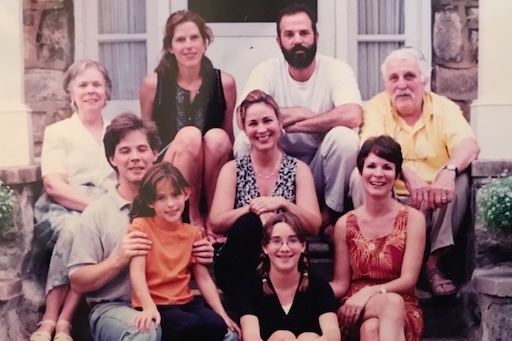
    Mrs. Winter (rear left) enjoyed time with her family.Courtesy of the family

    Her daughter Genienne said: “Her favorite saying was, ‘Nothing is impossible with God.’”

    In addition to her children, Mrs. Winter is survived by six grandchildren, three great-grandchildren, and other relatives. A sister died earlier.

    A memorial service is to be at 11 a.m. Saturday, Sept. 19, at Our Mother of Consolation Church, 9 E. Chestnut Hill Ave., Philadelphia, Pa. 19118.

    Donations in her name may be made to Our Mother of Consolation Church and School, 9 E. Chestnut Hill Ave., Philadelphia, Pa. 19118.

    Mrs. Winter and her husband, Joe, pose in their Chestnut Hill home studio. Courtesy of the family
    Mrs. Winter was an expert in designing stained glass. Courtesy of the family
  • U.S. war against Iran enters a new phase

    U.S. war against Iran enters a new phase

    WASHINGTON — The Trump administration has lurched back into a war against Iran that had never really ended.

    When the war started more than four months ago, U.S. forces targeted Iranian military bases, missile launchers, ships and naval facilities. Israel, fighting alongside the United States, hit leadership targets, hoping to bring down Iran’s hard-line government.

    Their record of success has been mixed, at best. Israel killed the supreme leader, Ayatollah Ali Khamenei, but the leaders who succeeded him were even more hard-line. U.S. forces struck thousands of targets, but did not destroy Iran’s ability to control the Strait of Hormuz, the waterway through which about 20% of the world’s oil typically flows.

    For roughly 90 days beginning in April, an on-again-off-again ceasefire prevailed. And then it was over.

    The United States now appears to be entering Round 2 of its military campaign. This round has a new focus — but not necessarily a clearer strategy.

    Iran’s ability to control the strait, despite the pummeling its navy took, is by far the most important lesson of the first phase of the war. So it is no surprise that the Trump administration is focused on trying to loosen Iran’s grip on it.

    A satellite image shows an oil terminal at Kharg Island, in the Persian Gulf off the coast of mainland Iran, on Feb. 25, 2026. President Trump publicly mused about ordering the Marines to take control of Kharg Island during the first phase of the war, but ultimately abandoned those plans for fear of high U.S. casualties. PLANET LABS

    Last week, in retaliation for attacks on tankers, President Donald Trump ordered airstrikes on dozens of targets in Iran, including coastal radars, anti-ship missile launchers and a fleet of small Iranian attack boats.

    After a short lull, the United States hit 140 military targets in the first of three consecutive days of heavy bombing this week.

    U.S. forces carried out new rounds of attacks on Iran throughout Tuesday and resumed a naval blockade of Iranian ports, a strategy that showed some success in the earlier phase.

    The strikes are intended to open the waterway to shipping. The purpose of the naval blockade is to put economic pressure on Iran by choking off its trade and to flex U.S. military might.

    Trump was quick to declare success.

    “The Strait of Hormuz is open to ALL Ship traffic except for Iran — and that is because of their lying, violent, malicious leadership, which is taking them down the path of TOTAL DESTRUCTION,” Trump wrote on Truth Social on Tuesday morning.

    But exactly what the U.S. military will do to enforce the blockade, and how far it will go to exert control of the strait, is not clear.

    A key question is whether Trump will consider an operation to take the strait’s Kharg Island, a key export hub for Iran’s oil.

    Trump publicly mused about ordering the Marines to take control of the island during the first phase of the war, but ultimately abandoned those plans for fear of high U.S. casualties.

    Such an operation would be a far bigger escalation than Trump has undertaken so far. But it would be difficult, and lives could be lost in either taking or holding the island.

    The United States continues to have a fearsome arsenal in the region, including two aircraft carriers, and dozens of carrier- and land-based attack and surveillance planes.

    “There are currently more than 20 U.S. Navy warships and hundreds of military aircraft operating across the Middle East,” Central Command said in a statement announcing the resumption of the blockade. “American forces remain vigilant, lethal, and ready.”

    In the strikes last week, U.S. forces hit more than 170 Iranian military targets. In three consecutive days of heavy bombing this week, the United States has hit 140 military targets.

    Analysts said the Trump administration was sending a pointed message to the government in Tehran that the United States was willing to broaden its mission again and hit sites that have both military and civilian uses.

    But senior U.S. officials said the real focus of the current phase is undoubtedly the strait.

    President Donald Trump during a meeting with Prime Minister Ali al-Zaidi of Iraq in the Oval Office of the White House in Washington, on Tuesday, July 14, 2026. The latest phase of the U.S. military campaign in Iran has a new focus, but not necessarily a clearer strategy. Doug Mills

    The U.S. military has hit some targets far from the strait, but they are also connected to the central mission. For example, U.S. forces last week appeared to hit a railway bridge in northeastern Iran more than 700 miles from the strait. Online video verified by The New York Times showed several people inspecting a crater at the site.

    Capt. Tim Hawkins, a spokesperson for Central Command, said in a phone interview that those targets included Iranian military logistics infrastructure targets that enabled Iran to direct weapons, munitions and other military supplies to the most contested area of the conflict.

    So far, Trump had not ordered resumption of an all-out conflict, in part because that could prompt Iran to target not only U.S. military bases in Gulf countries like Kuwait, Bahrain, Qatar and Saudi Arabia, but also energy infrastructure in those nations.

    Attacks on those facilities could send oil and natural gas prices skyrocketing even higher.

    Senior officials said the goal of the new military campaign is to force Iran to allow tankers and other commercial cargo ships to pass freely through the strait, and ultimately to return to the bargaining table to resume nascent talks on more difficult, long-term issues like the fate of Iran’s highly enriched uranium.

    Administration officials acknowledge that the military strategy is not without risks. Iran has shown it has an asymmetric advantage. Iranian forces do not have to hit every ship passing through the strait, or sink any of them. They only have to cause enough damage and issue enough threats to scare shipping companies and insurers.

    This week, Iranian missiles struck two crude oil carriers that were transiting the southern part of the strait. The attack killed an Indian crew member. Another tanker, carrying liquefied natural gas, was also hit and caught fire near the Omani coast.

    Senior U.S. officials said time remains on the American side as Iran’s economy collapses.

    During the uneasy peace, Iran was able to get many of its tankers out, and to empty storage tanks that were overflowing with oil.

    The resumed blockade will cause that oil to back up once more, and the money Iran has made from its oil exports will begin to dry up.

    But the real question is: Can Iran’s hard-line leadership outlast Trump’s anxiety over rising oil prices?

    This article originally appeared in The New York Times.

  • Dark sky defenders raise alarm along the border of West Texas

    Dark sky defenders raise alarm along the border of West Texas

    Welcome to Terlingua, a ghost town in West Texas, where the dogs roam free, parking spots are suggestions, and the night skies feel infinite.

    Full moons are bright enough to read by, and on the darkest nights, the Milky Way casts shadows of local flora on the desert floor.

    But with a border wall slated to rise, some residents wonder: How long will the natural darkness last?

    Unfettered access to the cosmos is an integral part of the landscape in Terlingua and across the Big Bend region of West Texas. It has fostered a community of dark sky defenders, who regularly ward off threats like too-bright store signs and intrusive car headlights.

    Now they’re facing something far greater: the construction of President Donald Trump’s border wall, which residents across the Big Bend fear will bring bright lighting along land that is currently untouched.

    Lighting has already been installed along stretches of the border in Arizona and farther east in Texas. “That technology is there, and it is literally a flip of a switch away,” said Billy Bartko, the director of Terlingua’s Far Flung Outdoor Center, “which is what we’re all afraid of.”

    For residents along the border, it’s about more than just seeing the stars. The natural darkness symbolizes a lack of development, a rural way of life.

    According to David Keller, an archaeologist and Big Bend historian, dark-sky maintenance protects the natural country of the place. “That’s why I’m here, and that’s why most people who live here are here,” he said. “It’s a national treasure. It’s too important to lose.”

    The preservation of the Big Bend’s dark skies results from laws enacted as far back as 1975, originally to support astronomy at the region’s McDonald Observatory. In 2012, Big Bend National Park was formally certified as the region’s first dark sky site, followed by a state park and a wildlife area.

    Today, those places live inside the largest dark sky reserve on Earth, established in 2022 and spanning more than 9 million acres across the U.S.-Mexico border.

    “What that timeline shows you is how long dark sky preservation and conservation has been in the minds of the people managing resources here,” said Amber Harrison, who lives in Terlingua and is a leader of the region’s dark sky protections. Any lighting that comes with the wall, she added, could cause the region to lose its dark sky status.

    If widespread enough, the illumination could affect science observations at McDonald, according to Stephen Hummel, who coordinates the observatory’s dark sky outreach. But others are more concerned about what it will do to the character of the land.

    “Most of us aren’t worried about if we’re going to be able to haul out our telescopes and see Jupiter tonight,” said Keller, a leader of a local coalition called No Big Bend Wall. “It’s an umbrella for other things.”

    The loss could also disrupt a budding economic avenue. Stargazing was the second-most reported activity in the region, according to a tourism survey conducted in 2022.

    Cosmic attractions in Big Bend have grown over the last few years, especially in Terlingua.

    Visitors can camp out in stargazing pods off the highway and participate in astrophotography workshops through the town’s outdoor center.

    A group of locals are digging an amphitheater, part of the new Terlingua Star Park, to begin hosting star parties this fall.

    Universe enthusiasts abroad can even ship their telescopes to the park’s remote observatory, which opened this month.

    Illumination from the wall could abruptly end those business ventures. “If they light this thing up, it’ll kill the tourism dollar,” Bartko said. Referring to the industrial appearance of the wall, he added, “Who goes to prison for vacation?”

    Apprehension about the wall in Big Bend surfaced earlier this year. Shifting information about what is being built where has caused more unease from residents, who say the region’s harsh terrain makes a physical barrier unnecessary.

    In a statement to the New York Times, a spokesperson for U.S. Customs and Border Protection said that the wall would include “a mix of lighting based on location and operational needs” and that not all parts would be illuminated. They added that lighting would be avoided in remote areas in favor of “other operationally superior methods,” like infrared illuminators.

    The latest version of a map on the CBP website shows roughly 165 miles of wall planned for construction along the Big Bend border, adjacent to several small towns and up to the edge of Big Bend Ranch State Park. According to the map, detection technology and patrol roads will be used in lieu of a wall along the border closest to Terlingua and next to the state and national parks.

    But in an area that is dark, flat, and open, light can carry for miles. On a clear night, Terlinguans can already spot the artificial glow from Presidio, about 50 miles away, on the western horizon. Preparation for wall construction near Presidio began in June, and locals have already complained about lighting that is out of compliance with dark sky practices.

    Dark sky advocates also worry about temporary worker housing, road upgrades, and nearby surveillance stations. “It’s not just the lighting associated with the wall; it’s the lighting associated with all the auxiliary things that are going to be coming with it,” Harrison said. “The impacts are potentially immediate.”

    On an evening in April, the sun dipped low in the vast sky over Terlingua. A black dog with a blue Christmas light around her neck (to be seen at night, the owner explained) sauntered toward a saloon called the Starlight Theatre.

    As the town plunged into darkness, clouds spoiled any view of the stars. But that did not stop Terlinguans from appreciating the natural darkness of night.

    “It’s very important to us,” said Adrienne Evans, one of two sisters shutting up shop at Milky Way Treats, an ice cream truck papered with flyers about the border wall. “We don’t have porch lights.”

    The pair explained that Big Bend residents — even those who voted for Trump — were energized and united against the wall because of a desire to keep the place wild.

    Valerie Stanley, the sister who owns the ice cream truck, moved from Houston to Terlingua in 2020. “Being able to look up and see the Milky Way, it just kind of shifted my life,” she said. “Now I’m living a different life with all this beauty that I never really knew was here.”

    This article originally appeared in the New York Times.

  • Scientists probe sharp drop in Chesapeake Bay’s crab population

    Scientists probe sharp drop in Chesapeake Bay’s crab population

    A new report on the Chesapeake Bay’s signature blue crab has documented a steep, long-term decline in the crustacean’s population, raising concerns among environmental groups about the future of one of the region’s most important species.

    Scientists aren’t sure exactly what’s behind the drop. The total number of blue crabs can fluctuate sharply, with population estimates varying by tens of millions — or even hundreds of millions — within just a few years. But experts said they’re concerned by what they’re seeing.

    “It’s clear the bay’s most iconic species is under immense stress,” according to the Chesapeake Bay Foundation, which was not involved in the assessment but whose scientists closely monitor its results.

    There are numerous ways to gauge crab “abundance,” the term researchers use to denote the overall population or that of different subgroups, such as juveniles. Michael Wilberg, the assessment’s lead author, cited one overarching finding: In 2011, the bay had about 1.3 billion crabs. By 2023, that dropped to about 825 million, he said.

    Habitat loss, especially the reduction of underwater grasses that shelter young crabs, may be playing a role, experts said. Changes in currents, winds and storms, pollution and runoff, and low oxygen “dead zones” caused by algae blooms, may all also contribute, experts said.

    “They’re a short-lived species and the biggest thing we’re seeing is a decline in the number of young crabs entering the population,” said Chris Moore, the Chesapeake Bay Foundation’s Virginia executive director. “That long-term trend of fewer young ones is very concerning.”

    Healthy blue crabs are vital to the bay’s ecosystem. They eat worms, clams, and smaller crabs, and are prey for fish, great blue herons and sea turtles. Blue crabs also generate $50 million to $80 million annually for Maryland’s and Virginia’s commercial crabbing industries, experts said.

    The assessment is conducted roughly every 10 to 15 years, depending on funding, with the help of environmental research and marine science centers and fishery agencies in Maryland and Virginia. It evaluates the species’ overall health and sustainability, including predator impacts, habitat, mortality rates, harvest levels, and the number of spawning females, and serves as a guide for fishery managers.

    The vast number of crabs in the bay in the early 1990s was driven down by overharvesting, experts said. Tighter limits on crabbing helped stabilize the population, but it has since dropped. While some years have seen increases — 2026 was one of them, according to a long-running annual government survey — totals remain far below historic highs.

    “We’re still not where we want to be because we’ve been so low,” Wilberg said.

    The 290-page assessment helps give a more in-depth sense of what is happening to blue crabs over a longer period than the annual surveys and other reports done by agencies. Moore called it a “guiding light of how we manage the species.”

    “We’re seeing a pretty consistent decline in mature female crabs that looks remarkably similar to what we saw in the 1990s,” said Thomas Miller, professor of fisheries science at the University of Maryland Center for Environmental Science. He’s concerned the numbers will stay low.

    The dearth of juvenile crabs, scientists and watermen said, is especially troubling because of the species’ short and unpredictable life cycle. Blue crabs live only about three to four years. Females release their offspring near the mouth of the Chesapeake, where it meets the Atlantic Ocean.

    After hatching, larvae — barely the size of a pinhead — drift in the ocean before returning on tides and currents, settling in underwater grass beds in the bay. If they don’t return to the bay, they’re essentially lost at sea.

    According to the assessment, the invasive blue catfish, which preys on blue crabs, was responsible for reducing the juvenile crab population by an estimated 8% in 2023.

    The number of female crabs has also dropped pretty consistently over the last decade, Miller said. He believes one reason is the females have had to compete with blue catfish for clams — and they really need the food. “They carry the energetic cost of bearing the next generation,” he said.

    Crab-eating consumers, Miller said, may see a slight increase this year in crab prices at markets and restaurants but they won’t be exorbitant.

    Watermen pointed to another possible factor: last year’s cold weather.

    “We had a hard winter and we had a number of crabs die because of the cold,” said Robert T. Brown, a third-generation waterman in the St. Clements Island area of Maryland who has served as president of the Maryland Watermen’s Association for 13 years. “That happens. They don’t bury down far enough.”

    Because blue crab populations swing dramatically, state fish and wildlife officials tightly regulate how many crabs can be harvested.

    Brown said many watermen are frustrated by what they see as overregulation and are worried about the high costs of entering the industry, making it difficult to attract a younger generation.

    “People who used to crab aren’t crabbing anymore because they’re in the graveyard,” Brown said. When he began in the mid-1960s, the average age of a waterman was in the early 30s. Now, he said, it’s in the upper 60s.

    “You better have $150,000 in your pocket to get started in this business and not expect to get your money back for two or three years,” Brown said. “There’s no vacation with pay, no 401(k) plans and you start at 3:30 or 4 o’clock in the morning.”

    This year’s season, which runs roughly from April through November, “hasn’t been great,” Brown said.

    But he hopes for better.

    “If you look in a crystal ball and try to predict it’s going to be a great year, it ends up being poor,” he said. But when “they’re saying it’s going to be one of the worst seasons we ever had, then it seems like we have crabs fall out of the sky.”

  • Data centers to add billions in power costs in 13 states, including Pennsylvania and New Jersey

    Data centers to add billions in power costs in 13 states, including Pennsylvania and New Jersey

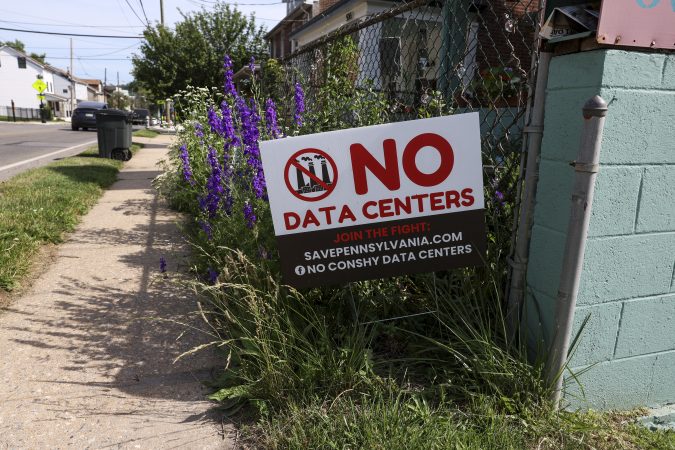
    PJM, the nation’s largest electrical grid operator, on Tuesday released results of an electricity auction that would add $6.3 billion in costs to the bills of millions of households and businesses within the next three years, an increase driven by the power demands of data centers.

    During the annual auction, power companies supplied prices that they were willing to accept to supply electricity to PJM at times of peak demand. Those prices are then factored into the electricity rates that are eventually charged to the grid’s customers in 13 Eastern states and the District of Columbia.

    In a statement, PJM said data centers were increasing electricity demand throughout the region.

    “These auction results show that demand for electricity continues to grow faster than electricity supply,” David Mills, president and chief executive at PJM, said in an announcement of the auction results. “We are working with government and industry leaders on multiple fronts to restore that balance by bringing on new generation as fast as possible and managing the growth of new load on the grid.”

    Over the last few years, individuals and politicians have grown frustrated with PJM’s operations as electricity prices have steadily increased. At the same time, anger over data centers has spread nationwide. New York on Tuesday announced the nation’s first statewide moratorium on construction of the giant facilities, a one-year pause to assess their impact on the environment and energy use.

    The PJM grid supplies electricity to 67 million people from Virginia Beach, Virginia, to Chicago. The network of power systems includes the world’s largest cluster of data centers, in northern Virginia.

    “Demand growth is not going away,” said Patrick Cicero, a former state-appointed consumer advocate for Pennsylvania who is now counsel for the Pennsylvania Utility Law Project, which assists low-income consumers. “The bottom line is high prices are going to remain in place.”

    In its role as a regional grid manager, PJM effectively sets a significant portion of retail electricity rates, but governors and their appointed regulators have little sway over it. PJM is regulated by the Federal Energy Regulatory Commission, not state lawmakers.

    PJM’s annual auctions help determine the electricity costs for the two years after the auction. Since 2024, the auctions have added in total about $29 billion in costs to all utility customers in the PJM region because of data centers, according to Monitoring Analytics, PJM’s independent market monitor. The market monitor also produced the estimate of $6.3 billion in additional costs from the latest auction, which was held on June 30.

    The high costs have so angered Pennsylvania Gov. Josh Shapiro, a Democrat, that he sued PJM in December 2024. Shapiro and PJM reached a settlement that capped the price set by the auction, saving consumers billions of dollars.

    The PJM grid has often had only a thin buffer of excess power during extreme weather such as the recent heat dome that sent temperatures soaring across the East.

    Shapiro and other governors have complained that PJM has been too slow to connect more power plants, solar and wind farms, batteries and other resources that would have helped lower prices and eased strain on the grid.

    PJM’s grid serves all or part of New Jersey, Pennsylvania, Delaware, Maryland, Virginia, West Virginia, North Carolina, Tennessee, Kentucky, Ohio, Indiana, Illinois and Michigan, as well as the District of Columbia.

    This article originally appeared in The New York Times.

  • House votes for permanent daylight saving time

    House votes for permanent daylight saving time

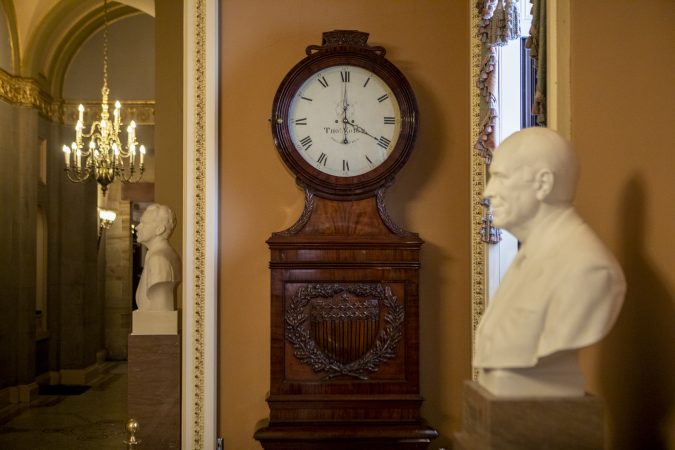
    WASHINGTON — The House on Tuesday voted overwhelmingly to make daylight saving time permanent, but the measure to spare Americans the semiannual clock-changing that shortens winter days faces an uncertain path to enactment.

    The measure, fittingly named the “Sunshine Protection Act,” passed on a 308-117 vote. Its fate is murky in the Senate, where one GOP leader said it was unclear whether it could move ahead and at least one Republican appears inclined to try to block it.

    President Donald Trump has championed the effort to save an extra hour of daylight before nightfall and make the time zone permanent, describing the ritual of moving clocks forward in the spring and back in the fall a “ridiculous, twice yearly production.”

    “We are going with the far more popular alternative, Saving Daylight, which gives you a longer, brighter Day,” Trump wrote in a social media post in May. “And who can be against that.”

    A sizable bloc of Florida Republicans in Congress is leading the charge on legislation that would do just that, mandating daylight saving time nationwide for the entire year. Rep. Vern Buchanan of the Tampa Bay area is backing the bill, and Rep. Anna Paulina Luna, another Tampa Bay-area Republican, cosponsored it.

    House leaders agreed to allow a vote on the measure this week as a sweetener for Luna in their efforts to persuade her to lift a legislative blockade she had maintained as she sought to force Senate action on a voting restriction bill Trump has championed.

    Congress first passed the Standard Time Act in 1918 and established federal oversight of time zones. Then came the Uniform Time Act of 1966, which said states can observe daylight saving time from late spring to early fall. The country’s clock-changing practices were last altered in 2005, with the enactment of bipartisan legislation that extended daylight saving time for several weeks.

    Most states comply, though there are exceptions: Hawaii and most of Arizona abide by standard time year round, as do Puerto Rico, Guam, American Samoa, the U.S. Virgin Islands and the Northern Mariana Islands. Nineteen states have moved to make daylight saving time permanent, though those laws have not taken effect because federal law does not currently allow people to live in daylight saving time year-round.

    Not everyone agrees with the proposed change. Reps. Mary Gay Scanlon, D-Pa., and Pat Harrigan, R-N.C., backed an alternative bill earlier this month that would mandate standard time — which Americans observe between November and March — be used all year.

    “Morning light is an environmental cue to set our body’s internal clocks and promote alertness.” Scanlon said. “And dim evening light tells our bodies it’s time to sleep.”

    Though many Americans find they are groggy and tired after changing their clocks, sleep experts warn that permanent daylight saving time would hurt, not help, sleep health. The Coalition for Permanent Standard Time, an advocacy group, argues that the winter time zone aligns closely with the body’s circadian rhythm, which is its internal clock.

    Should the bill pass, state lawmakers could opt out of permanent daylight saving time in favor of year-round standard time if they enacted such legislation.

    Buchanan has said the measure would give Americans all of the health and recreational benefits that an extra hour of sunshine bring, including more time outside and less seasonal depression. Florida’s legislature passed similar legislation in 2018, making it the first state to do so.

    “The twice-yearly clock change is a relic of the past that no longer reflects the way Americans live, work and conduct business in the 21st century,” said Rep. Gus Bilirakis, R-Fla.

    It isn’t the first time Congress has grappled with turning back the clocks. The United States tried in 1974 to ditch the clock-switching, but went back to flipping the clocks twice a year following widespread discontent. In 2022, the Senate unanimously passed then-Sen. Marco Rubio’s bill to make daylight saving time permanent, but that bill died in the House.

    Sen. John Barrasso of Wyoming, the No. 2 Republican, noted Tuesday that the House had “hit the snooze alarm” back then on the Senate measure.

    “We’ll see what happens when it gets here,” he told reporters at the Capitol, referring to the current House bill.

    He would not say whether he backed the measure. “Depends where you’re living in the country and the impact that it would be in your own home state,” Barrasso said. “So, it’s not as simple as what one state might like.”

    Sen. Tom Cotton, R-Ark., said in a floor speech last year that he regretted not objecting to Rubio’s bill.

    “By moving the clock back an hour in winter,” he said, “permanent daylight saving time would push winter sunrises to an absurdly late hour, depriving Americans of morning sunshine that’s essential for our safety and well-being.”

    This article originally appeared in The New York Times.

  • 1 dead and 3 missing after boat carrying mostly family members sinks near Alcatraz Island

    1 dead and 3 missing after boat carrying mostly family members sinks near Alcatraz Island

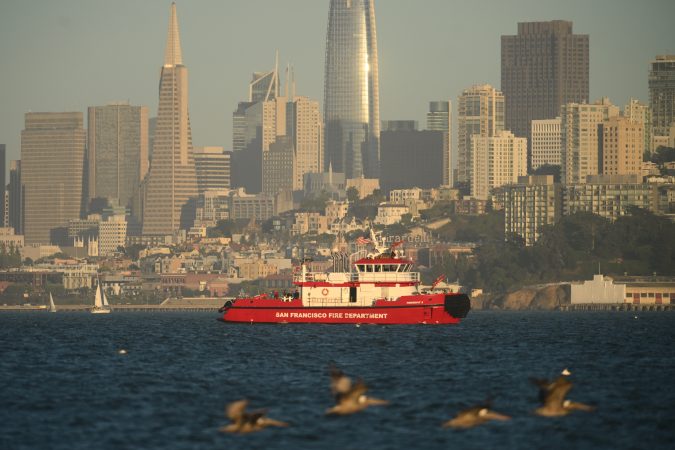
    SAN FRANCISCO — One person died, three people were missing and 16 were rescued from the waters off San Francisco after a pontoon boat sank Tuesday afternoon while carrying mostly family members as part of a memorial service, authorities said.

    Crews arriving on the scene near Alcatraz Island found a three-deck pontoon vessel almost fully under water with the motor still running and leaking fuel, San Francisco Fire Chief Dean Crispen said.

    By Tuesday evening, authorities were searching for the missing in open ocean on the western side of the Golden Gate Bridge. The search, which involved divers, helicopters and vessels, was expected to continue all night, officials said.

    Authorities updated the initial number of missing people from two to three after hearing from witnesses.

    “Right now we are in full rescue mode,” Crispen said, adding that three people who suffered injuries falling from the boat were taken to a hospital and expected to be released Tuesday night.

    Alcatraz Island, once a federal prison infamously inescapable due to the strong ocean currents and cold Pacific waters that surround it, is now a tourist destination. It is located in San Francisco Bay about a mile north of the city’s shoreline, in an often windy area that attracts sailboats and other recreational vessels.

    Videos of the scene showed boats deployed to rescue people who had been on the vessel, which was largely submerged with objects floating nearby.

    The boating mishap was initially reported as a fire, “but we now don’t have any evidence of that,” Crispen said.

    The person who died was alive when plucked from the frigid waters by rescue crews but later died. A dog onboard also died.

    All those rescued were taken to Gashouse Cove Marina, a small craft harbor in San Francisco.

    Aaron Anfinson, captain of the Bass-Tub, told the San Francisco Chronicle his boat was carrying guests toward the Golden Gate Bridge in “pretty windy, a little choppy” waters when a man on a smaller vessel flagged them down and pointed to a pontoon boat in the middle of the bay that appeared to be on fire.

    By the time the Bass-Tub reached it, the flames were out, but the pontoon was sinking. Some people were already in the water while others remained aboard, Anfinson said, adding that they tried to hand out life jackets to the passengers.

    One woman’s head was injured.

    “We figured we would get her first,” Anfinson said. A deckhand lowered a swim ladder and threw a life ring into the water to help pull her aboard.

    “It was scary,” Anfinson said. “I don’t want to see anybody in that situation.”

    Fire Lt. Mariano Elias said the vessel, described as a “pontoon pleasure boat,” was about 600 yards from Alcatraz and the emergency call came in just after 3:30 p.m.

    Crispen said the vessel was believed to have launched near the St. Francis Yacht Club in San Francisco. A person who answered the phone there said the club did not have any information on what happened.

    Live video from the scene showed a man and a woman wrapped in blankets and sitting on a curb before walking to a nearby ambulance. A yellow tarp covered a body on the dock.

    The Coast Guard and Oakland police also helped in the rescue, Elias said.