Category: News

  • Why the Liberty Bell still rings true

    Why the Liberty Bell still rings true

    In 2025, Pennsylvania updated its license plate design to feature the Liberty Bell, a prescient move for this year’s Semiquincentennial, where the Liberty Bell continues to play a central role—not as a relic of revolutionary history, but as a surface on which Americans have inscribed their ideals, disappointments, demands, and dreams.

    The Liberty Bell’s provenance is unique: by 1751, the Pennsylvania State House needed a bell to summon lawmakers to session, gather citizens for announcements and town meetings, and signal special commemorations and events by ringing through the air. Tolling bells could also serve as warnings of fire or other dangers. To be a fully functioning statehouse, a bell was ordered from the famous Whitechapel Bell Foundry in London, which finally closed shop in 2017, after 450 years of business. The bell famously sailed into Philadelphia in one piece, only to crack significantly upon its first ring.

    In response, artisans John Pass and John Stow melted down the original bell and recast a new one. This bell remained intact for almost 100 years, until sometime in the early 1840s, when it cracked again. This time, instead of melting the bell down, foundry workers tried to repair the crack by widening it to prevent further spread. Instead, a second crack appeared, and the bell was silenced forever.

    One would think a bell without a ring was a literal death knell. Instead, and rather miraculously, the bell took on another life, and another, and another after that in historical memory.

    In 1755, Benjamin Franklin mentioned the bell in correspondence with Catharine Ray, writing, “Adieu. The Bell rings, and I must go among the Grave ones and talk Politicks.” Like many others, he did not consider the bell’s association with liberty during the Revolution, perhaps because Philadelphia was under British control for nearly nine months and, for most of the war, he was across the Atlantic, working for freedom in another way.

    As far as we know, the bell was not rung when the Declaration of Independence was read. But throughout the long 19th century that followed the Revolution, political activists of all stripes rallied around the words inscribed on the bell: “Proclaim Liberty Throughout All the Land Unto All the Inhabitants Thereof” (Leviticus 25:10).

    The Biblical phrase, perhaps commemorating William Penn’s 1701 Charter of Privileges, which granted broad religious freedom and representative government to (some) of the people of Pennsylvania, was adopted, for example, as a symbol of freedom to end slavery. The bell was given the name “Liberty” in the sense of liberation—striving for self-rule in the most basic and humane sense by promoting abolition.

    In other words, it was not the Revolution that gave the bell its lasting significance, but the Americans who, thereafter, kept the pursuit of freedom ringing in our ears. Women seeking suffrage. Civil Rights campaigners invoking its biblical call for equality. Cities pursuing community, memory, and history. Its transformation continues today, 250 years beyond the revolution.

    Given this history, we understand why the Liberty Bell is visible again during the Semiquincentennial—on our license plates, in commemorative materials and public celebrations, and even as a giant inflatable balloon at the No King’s Rally on the steps of the Pennsylvania State Capitol Building in Harrisburg on March 28. Despite the blustery, cold day filled with flags and a large, grounded eagle puppet, the Liberty Bell remained firmly in place at the top of the steps, where people below gave speeches and rallied for freedom. Of course, nylon ropes secured the inflatable to the ground, but the massive yoke’s symbolic presence, attached to the bell, felt strong and unrelenting.

    Ana Thorne, of Center City, 37, is next to the bell they made during the Bells Across PA event in celebration of America’s 250th Birthday in Philadelphia earlier this year.Tyger Williams / Staff Photographer

    The Liberty Bell also appears in the Commonwealth’s Semiquincentennial public art initiatives. In Bells Across PA, fiberglass bells decorated by communities across the state appear in each of Pennsylvania’s 67 counties. This kind of collective work, common in community-made public art, remains popular because the project’s scale is manageable and the local scenes painted on the bells carry meaning for those who decorate them. In this case, it is not monumental art by trained artists, but rather youth and adults who hope to create something everyone can recognize and enjoy.

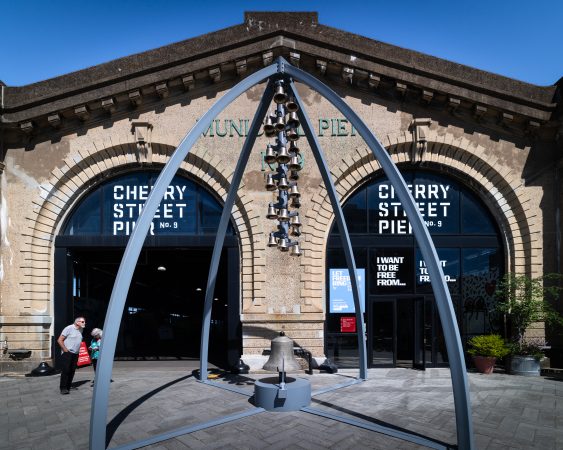
    Philadelphia’s most compelling contribution to this conversation may be the public artwork Let Freedom Ring by artist Paul Ramírez Jonas. Originally commissioned by Monument Lab in August 2023 for the National Mall in Washington, D.C., the reinstallation of Let Freedom Ring by the Association for Public Art is on view at the Cherry Street Pier through Sept. 27. The monumental bell tower plays “America (My Country, ‘Tis of Thee)” but intentionally omits the final note. Visitors must ring a Liberty Bell-inspired bell to complete the song. The work poses a deceptively simple question: for whom does freedom ring? The answer is left unfinished and requires public participation.

    Made By History sponsors. FOR USE ON MADE BY HISTORY STORIES ONLY.Inquirer Staff

    Public art succeeds where monuments sometimes fail by fostering participation rather than passive observation. Rather than presenting history as settled and complete, it invites people to join a conversation across time. The Liberty Bell has always functioned this way. Its inscription is not a statement but a challenge. Its crack is a visual reminder that we must work to close the distance between us.

    Today, that challenge and the distance feel especially urgent. The words “Proclaim Liberty Throughout All the Land Unto All the Inhabitants thereof” prompt Americans to consider who is included in that promise and who remains excluded. Each generation has answered differently and struggled to reconcile the nation’s aspirations with its realities.

    The stories of the Liberty Bell’s creation, its cracking, its inscription, and its use as a symbol across generations remind us that public art and history can commemorate, criticize, and build community. They can also transform a historical artifact into a forum where each generation redefines liberty. In this Semiquincentennial year, everyone pursuing happiness can make the Liberty Bell their own.

    Editor’s note: This story has been updated to clarify that Let Freedom Ring was reinstalled by the Association for Public Art during the semiquincentennial.

    Laura A. Macaluso, PhD., is the creator of the digital humanities project Objectify Benedict Arnold: Making Memory of America’s Traitor.

    The “Road to 250” series is an initiative of Historians for 2026, a group of early American academics, public historians, archivists, and educators devoted to shaping an accurate, inclusive, and just public memory of the American Founding for the 250th anniversary.

    Made by History takes readers beyond the headlines with articles written and edited by professional historians. Opinions expressed do not necessarily reflect the views of The Inquirer.
  • Digging up history at Croft Farm | Inquirer South Jersey

    Digging up history at Croft Farm | Inquirer South Jersey

    Good morning, South Jersey.

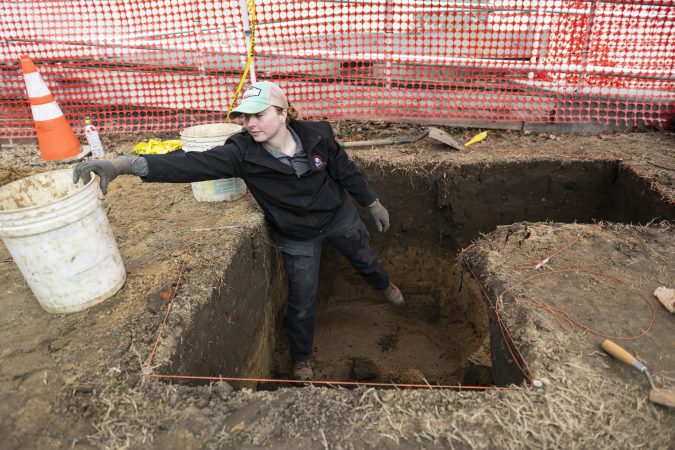
    Archaeologists are nearly done digging at Croft Farm in Cherry Hill and have found an extensive catalog of items that have accumulated over thousands of years.

    And after a legislative journey, Burlington County is expected to get a new bus route in September.

    Plus, the U.S. Department of Education is investigating the Gloucester Township School District, and more news of the day.

    — Taylor Allen (southjersey@inquirer.com)

    P.S. Thank you for your continuing support. We want your thoughts! Tell us your opinion of the newsletter by taking our survey or replying to this email.

    If someone forwarded you this email, sign up for free here.

    What archaeologists found at Croft Farm

    After extensive digging at Cherry Hill’s Croft Farm, once a stop along the Underground Railroad, archaeologists are nearly finished with their analysis.

    Their findings include hundreds of bones, thousands of ceramic fragments, and historic possessions of the Lenni-Lenape Indigenous people who once lived along the Cooper River.

    Most items come from the past three centuries, but some go back as far as 4,500 years.

    Eventually, the township could put some of items on display on the first floor of the property’s Kay-Evans House.

    The Inquirer’s Sarah Nicell has the story.

    Burlington County’s new bus route

    A new bus route is coming to Burlington County and is expected to start in September.

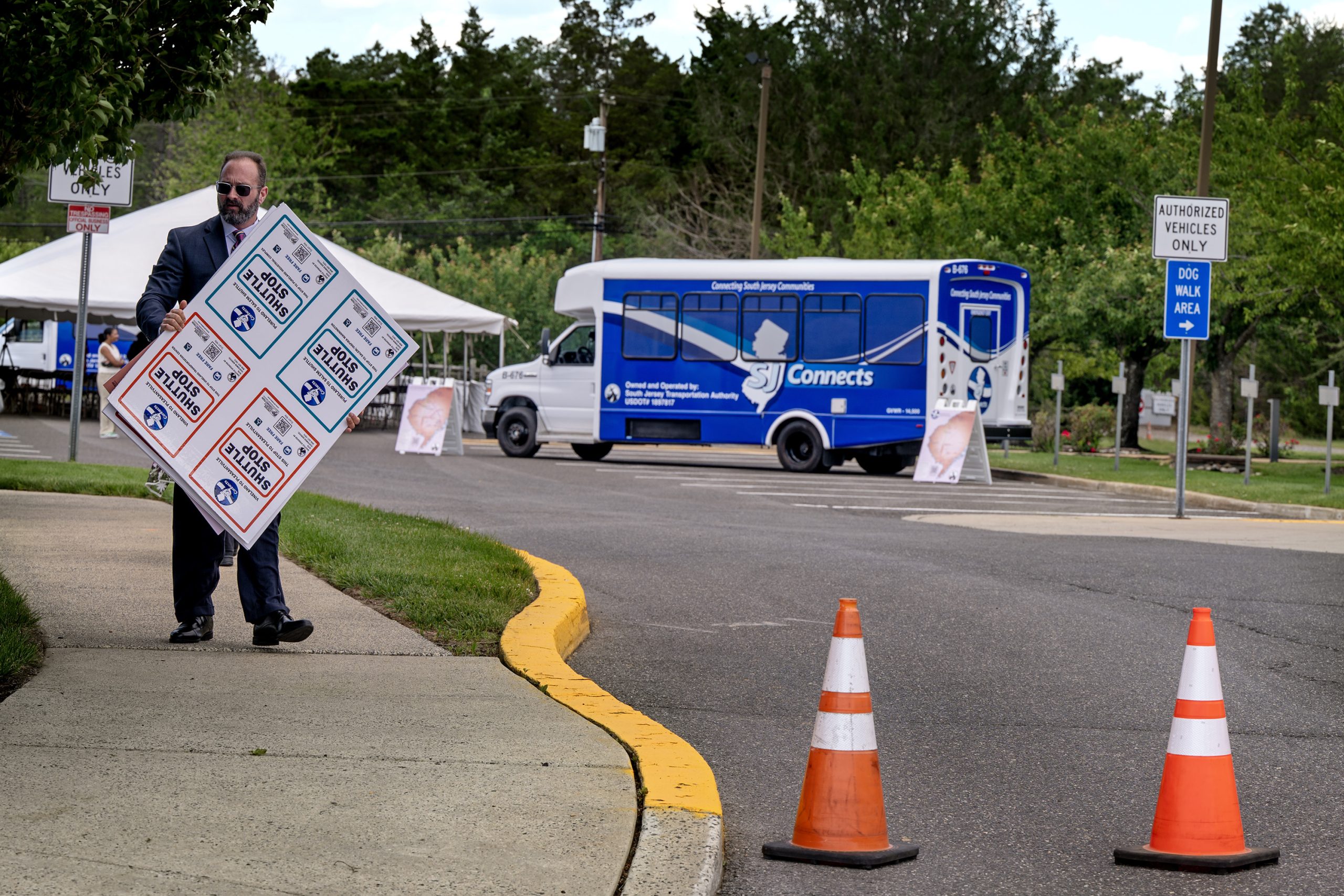
    Last month, South Jersey Transportation Authority (SJTA) announced that South Jersey Connects, a free regional bus service, would launch routes in Atlantic, Camden, Cape May, Cumberland, Gloucester, Salem, and Burlington Counties. They all started on June 1 — except the Burlington route.

    That’s because SJTA didn’t have the authority to operate in the county. Legislation was needed to fix the issue. The bill that brings Burlington County into SJTA wasn’t signed into law until a month after the program was announced.

    Why wasn’t Burlington County part of the transportation agency before?

    Reporter Aliya Schneider has the answer.

    What to know today

    • The Gloucester Township School District is under investigation by the U.S. Department of Education as federal officials focus on sexual misconduct by teachers.
    • Burlington County is working with the state Department of Environmental Protection to clean up a wastewater spill that was discovered early Tuesday morning at Florence’s Burlington County Resource Recovery Complex.
    • Camden County wants to spend $400 million to improve its various waterways. It hopes voters will approve a referendum to increase the county’s open space tax in November to help pay for the master plan over the next decade.
    • The genetic testing company 23andMe and more than 40 attorneys general reached a national $18 million settlement following a massive data breach. According to New Jersey Attorney General Jennifer Davenport, 150,000 customers were impacted in the state.
    • A new nonprofit is looking to borrow $617 million in tax-free bonds to buy the Marlton-based behavioral health company Advantage Behavioral Health. But the current owner, Clearview Capital, a private equity firm, isn’t stepping away from the South Jersey organization.
    • Several Federal Donuts in the Philly region are closing following a slowdown in demand of fast-casual lunches, its owners say. The independently owned one in Marlton will remain open.

    🧠 Trivia time

    Which of the below is a former name of Rowan University?

    A) The College of Glassboro

    B) Voorhees State College

    C) Glassboro State College

    D) University of New Jersey at Glassboro

    Think you know? Check your answer.

    What we’re …

    🏎️ Missing: AAA Hobbies and Crafts in Magnolia. After more than 40 years, it closed last month.

    🍴 Mapping: Our way through Craig LaBan’s favorite 2026 Shore restaurants.

    ⚾ Reliving: How Jordan Walker became a villain to Phillies fans at the 2026 Home Run Derby.

    🧩 Unscramble the anagram

    Hint: A popular downtown street

    AVENA HOUNDED

    Email us if you know the answer. We’ll select a reader at random to shout out here. Cheers to Brian Lowy, who solved last Wednesday’s anagram: Delaware River. The large body of water flows through four states: New York New Jersey, Delaware, and Pennsylvania.

    🏡 On the market

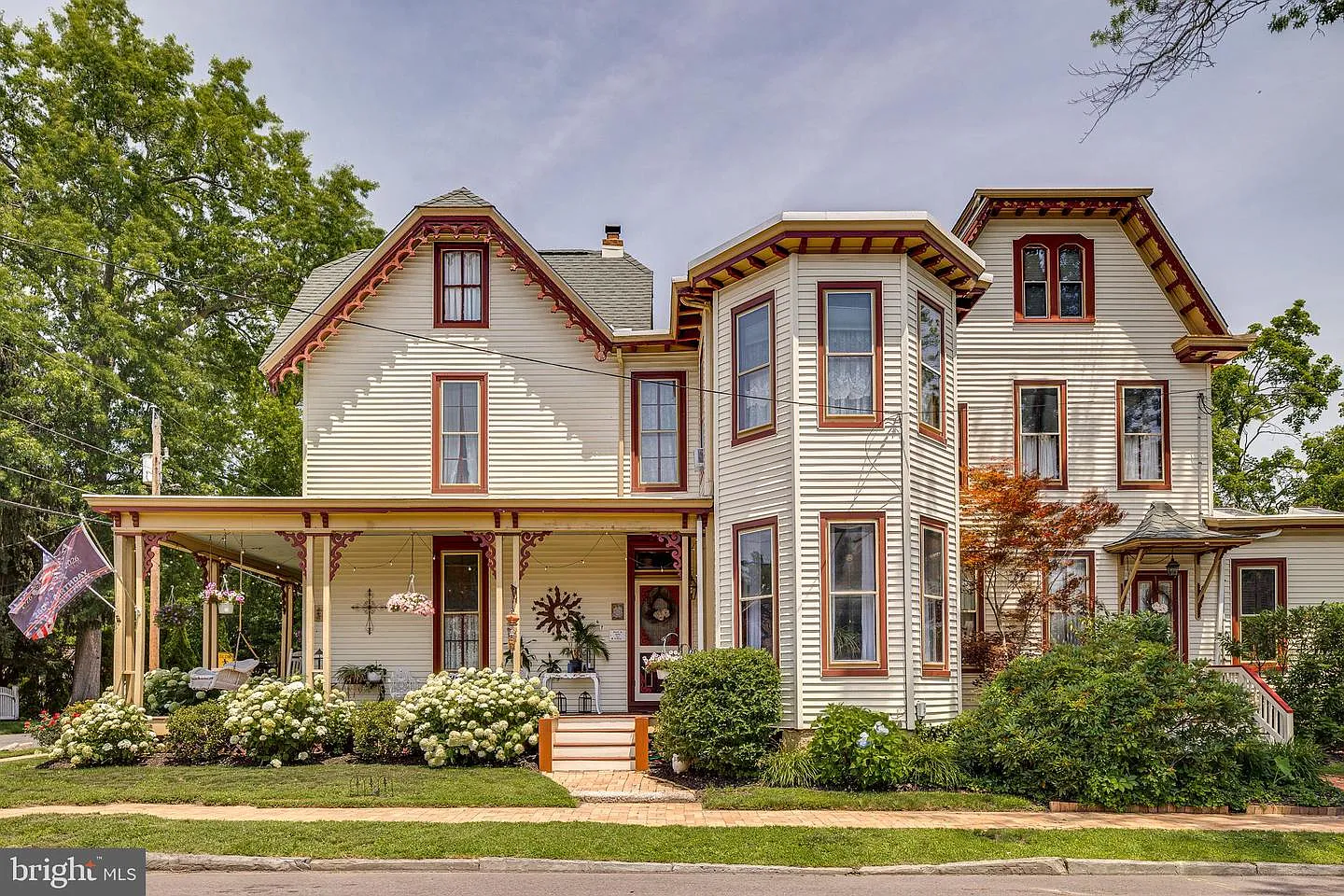
    A restored Victorian in Medford Village has a wraparound front porch

    Built in 1871, the four-bedroom and three-bath Victorian has 10-foot ceilings, original hand-blown glass windows, and period millwork. On the outside in the front, there’s a wraparound porch. At the back of the house, the double lot allows for green space, a pool, and a new screened porch. There’s also a detached carriage house and workshop.

    See more photos of the property here.

    Price: $869,000 | Size: 3,213 | Acreage: 0.41

    That’s been your news of the day. I’ll have more in your inbox at the same time tomorrow. 📧

    By submitting your written, visual, and/or audio contributions, you agree to The Inquirer’s Terms of Use, including the grant of rights in Section 10.

  • Burlington County was left out of a new free shuttle bus launch in South Jersey. Here’s when and why that’ll change.

    Burlington County was left out of a new free shuttle bus launch in South Jersey. Here’s when and why that’ll change.

    Burlington County was left behind when a new free shuttle bus for South Jersey launched in June. That is going to change in September.

    The South Jersey Transportation Authority (SJTA) announced June 1 that a free shuttle bus program called South Jersey Connects was launching that day with routes in all seven southern counties: Atlantic, Camden, Cape May, Cumberland, Gloucester, Salem — and Burlington.

    But as the other routes launched, the promised Burlington County route never began. On the authority’s website, it is still marked as “coming soon.”

    That is because until recently, the transportation authority was not actually authorized to operate in Burlington County. The county considered operating its own route for the program but ultimately agreed to have the authority run it instead.

    But that required legislation.

    South Jersey lawmakers had proposed bringing Burlington County into the authority back in the 2022-23 legislative session, but it was not until the South Jersey Connects program was about to launch this year that legislators had the wherewithal to actually hit the gas pedal in Trenton.

    “We worked in partnership with our county commissioner, then the administration of Burlington County, and just realized we just couldn’t pull that off,” Sen. Troy Singleton, a Burlington County Democrat, said in an interview. “And speaking with the administration, they were like, look, we feel more comfortable running this through the SJTA, and we already had this legislative vehicle, so that’s when it took on a greater sense of urgency.”

    The bill to bring Burlington County into the SJTA passed the Assembly in mid-May and was approved by the Senate just a few days before the June 1 announcement. But Gov. Mikie Sherrill did not sign it into law until the night of the budget deadline — a month after the program had been announced.

    “The timing just didn’t work out,” Singleton said.

    The Burlington route is expected to start in September, said Dominic D’Amico, director of transportation services at the SJTA, but a start date has not been announced.

    The new shuttle’s path has been finalized but has not been shared publicly. D’Amico said in an interview that, like the other routes that launched June 1, it will connect with NJ Transit’s existing infrastructure and the region’s “eds and meds.”

    Burlington County Commissioner Felicia Hopson said the new shuttle will enhance the NJ Transit River Line and help residents access jobs, appointments, stores, and schools.

    “Stretching 820 square-miles, Burlington County is New Jersey’s largest county, making transportation essential but also challenging for residents without motor-vehicles,” she said in a statement.

    The idea of South Jersey Connects emerged from the Chamber of Commerce Southern New Jersey’s advocacy after former Gov. Phil Murphy implemented the 2.5% Corporate Transit Fee on businesses to fund NJ Transit in 2024.

    The project was granted $5 million for an 18-24 month pilot, and the future beyond that is uncertain. The South Jersey chamber unsuccessfully requested more money for the effort in this year’s budget, and proponents of the project are hoping to show that it is worth the investment during next year’s budget negotiations.

    The summer launch so far has been a little slow, which is to be expected, according to D’Amico.

    The authority has seen about 600 one-way trips in the first month of the program, he said, a number he expects to go up as people learn about the routes and as school starts in the fall. He wants to see the service hit at least 5,000 one-way trips each month.

    “It takes some time to spread the word, for the marketing campaign to reach the social media platforms, getting brochures delivered to each facility — all those types of things factor into what is a normal slow start,” he said.

    “It could be worse, it could be better,” he said.

    Why wasn’t Burlington County part of the SJTA before?

    Sherrill said in a statement that Burlington County deserves to be part of the authority as “a vital part of the region.”

    The reason Burlington County has not been included in SJTA is not because anyone was denying the county is part of South Jersey. Rather, the agency was set up to replace an entity that oversaw the Atlantic City Expressway, which does not go into Burlington, said David Zappariello, the authority’s director of communications.

    Along with adding Burlington County to the authority’s coverage zone, the new law allows Sherrill to appoint another member to its board. Members of the board represent the region as a whole, not their home county, Zappariello said, and there is already a Burlington County resident sitting on the board.

    Assembly member Alex Sauickie, an Ocean County Republican who also represents part of Burlington County, voted against the bipartisan legislation because it did not also add Ocean County to the authority.

    “I just don’t like it when you’re picking winners and losers for political reasons,” he said.

    Assembly member Andrea Katz, a Burlington County Democrat, said none of the South Jersey Connects routes will touch her district, where she has concerns about transit deserts. But she is hopeful about public transit expanding in the region and the county getting a seat at the transit table.

    “Burlington County now being included means that we’re going to get to have that voice,” she said. “We’re going to get to not be the one stuck in the middle there. We’re going to start to get our own access to public transportation.”

  • Why the Exton Square Mall pushback is an ‘anomaly’ | Inquirer Chester County

    Hi, Chester County! 👋

    As the battle over Exton Square Mall’s future wages on, we speak with the lawyer fighting for its redevelopment. Also this week, a township and its historical commission are at odds over the future of the Darlington Inn, U.S. Rep. Chrissy Houlahan brings personal experience to her affordability legislation, plus, more measles cases have been identified in the county.

    If someone forwarded you this email, sign up for free here.

    Meet the real estate lawyer fighting to convert Exton Square Mall

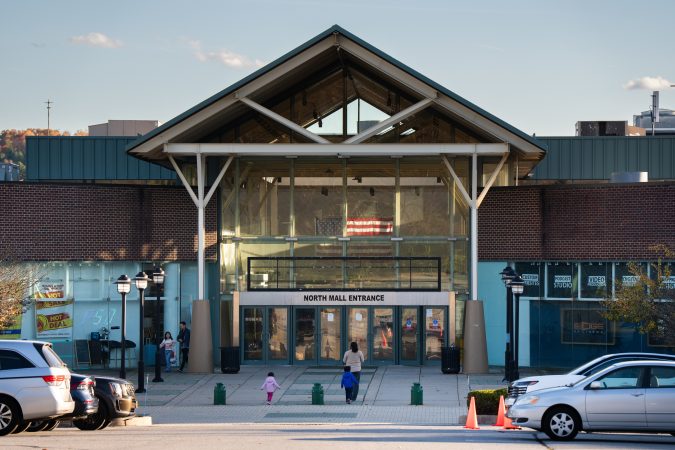
    Developers want to convert the defunct Exton Square Mall into a mixed-use town center. Jessica Griffin / Staff Photographer

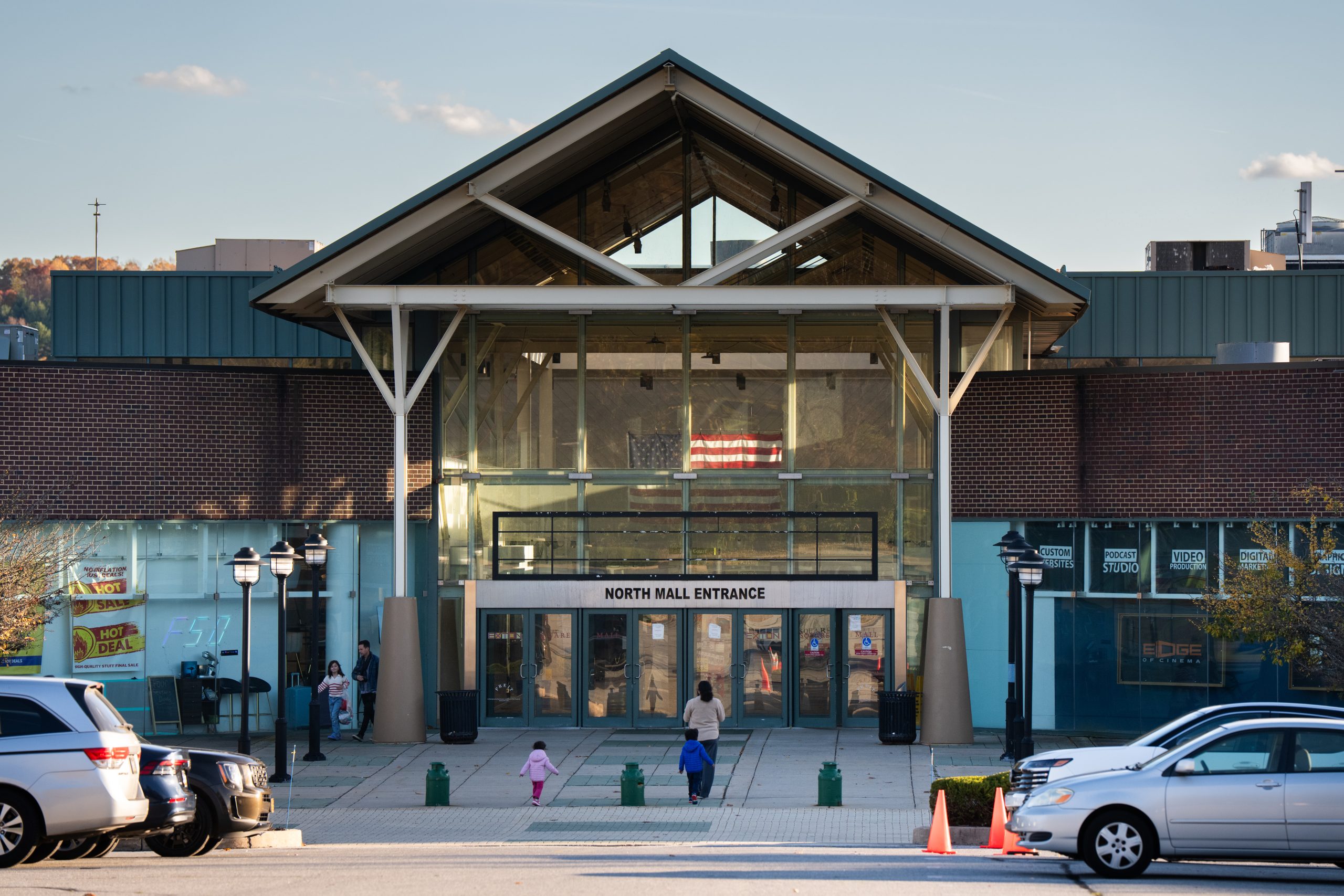
    Real estate lawyer Marc Kaplin is feeling “pretty optimistic” about the future of Exton Square Mall, which shuttered at the end of June.

    He’s currently representing the developers looking to transform the largely defunct space into a mixed-used town center, waging a legal battle to get the project going.

    Unlike other similar redevelopments in the region, this one has received pushback, including West Whiteland supervisors’ denial, something he sees as an anomaly given the tax drain vacant sites like this can have.

    The Inquirer’s Brooke Schultz spoke with Kaplin for a Q&A on how his work has shaped major developments in the region.

    📍 Countywide News

    💡 Community News

    • In case you missed it, Westtown Township’s supervisors are looking to remove members of the historical commission as the two groups butt heads over the future of the Darlington Inn. The Inquirer’s Brooke Schultz has the details.
    • Kevin Krebs, the Malvern man who brought guns to a West Chester No Kings protest last year, and was later discovered to have homemade pipe bombs at his house, has been sentenced to over three years in prison.
    • More potential amendments to a proposed 1.5 million-square-foot data center struck a nerve with some East Whiteland Township residents when the developer presented them last week. Here’s what to know.
    • Family members are mourning Sean O’Connor, the 29-year-old who died during storms that swept through the region when he was at Downingtown’s Marsh Creek State Park on July 4. He was “the sweetest man you could ever meet,” his wife, Lucy Troutman, recalled, while O’Connor’s father remembered his kindness and willingness to go out of the way to help others.
    • Students at West Chester University will see tuition go up 4.3% after a Pennsylvania State System of Higher Education board of governors vote last week.
    • Peco has purchased the former Vanguard-leased building at 100 Chesterfield Parkway in Malvern, expanding its real estate footprint in the region.
    • Fans of Berwyn native Brad Ingelsby’s hit HBO shows Task (which just got six Emmy nods) and Mare of Easttown will finally see their two worlds collide in a crossover. Here’s what we know.
    • Downingtown’s borough manager, Jeffrey A. Smith, recently stepped down, but will continue to consult on borough matters. He’s being replaced on an interim basis by Corinne Badman.
    • The Nest, a new holistic health community and retreat space, has opened in Lincoln University.

    🏫 Schools Briefing

    🍽️ On our Plate

    • A mother-and-son-owned juice joint is opening in Kennett Square. Located at 148 W. State St., Lupita’s Juice Bar will host a grand opening on Sunday. It will serve fresh-squeezed and blended juices, as well as smoothies, yogurt parfaits, overnight oats, and salads.
    • A new ice cream shop soft launched over the weekend at 503 E. Gay St. in West Chester. Urban Scoop serves up an array of flavors in cups and bubble waffle cones.

    🎳 Things to Do

    🎵 Chill on the Hill: This month’s edition of the East Whiteland concert series features bluegrass artist East Nash Grass, as well as Americana singer/songwriter Jack Blocker. ⏰ Wednesday, July 15, 6:30-8:30 p.m. 💵 Free 📍 Valley Creek Park, Malvern

    🎹 Tredyffrin Township Summer Concert Series: Rick’s Office Band, which plays cover tunes, headlines this week’s show. ⏰ Thursday, July 16, 7 p.m. 💵 Free 📍 Wilson Farm Park, Wayne

    🇺🇸 Charles Towne Market: Charlestown Township is celebrating the nation’s 250th anniversary with a history-inspired market, complete with period dress, quill writing, and a flag dedication. There will also be food trucks and vendors. ⏰ Saturday, July 18, 10 a.m.-4 p.m. 💵 Pay as you go 📍 Brightside Farm, Malvern

    🍦 Ice Cream Social: This family-friendly event includes ice cream, crafts, a photo booth, face painting and more. ⏰ Sunday, July 19, 2-5 p.m. 💵 Free 📍 Springton Manor Farm, Glenmoore

    🎡 Kimberton Community Fair: Now in its 97th year, the fair features carnival rides, livestock shows, a beer garden, and more throughout the six-day event. ⏰ Monday, July 20-Sunday, July 25, times vary 💵 Pay as you go 📍 Kimberton Fair Grounds, Phoenixville

    🏡 On the Market

    A four-bedroom Downingtown home with a sun room

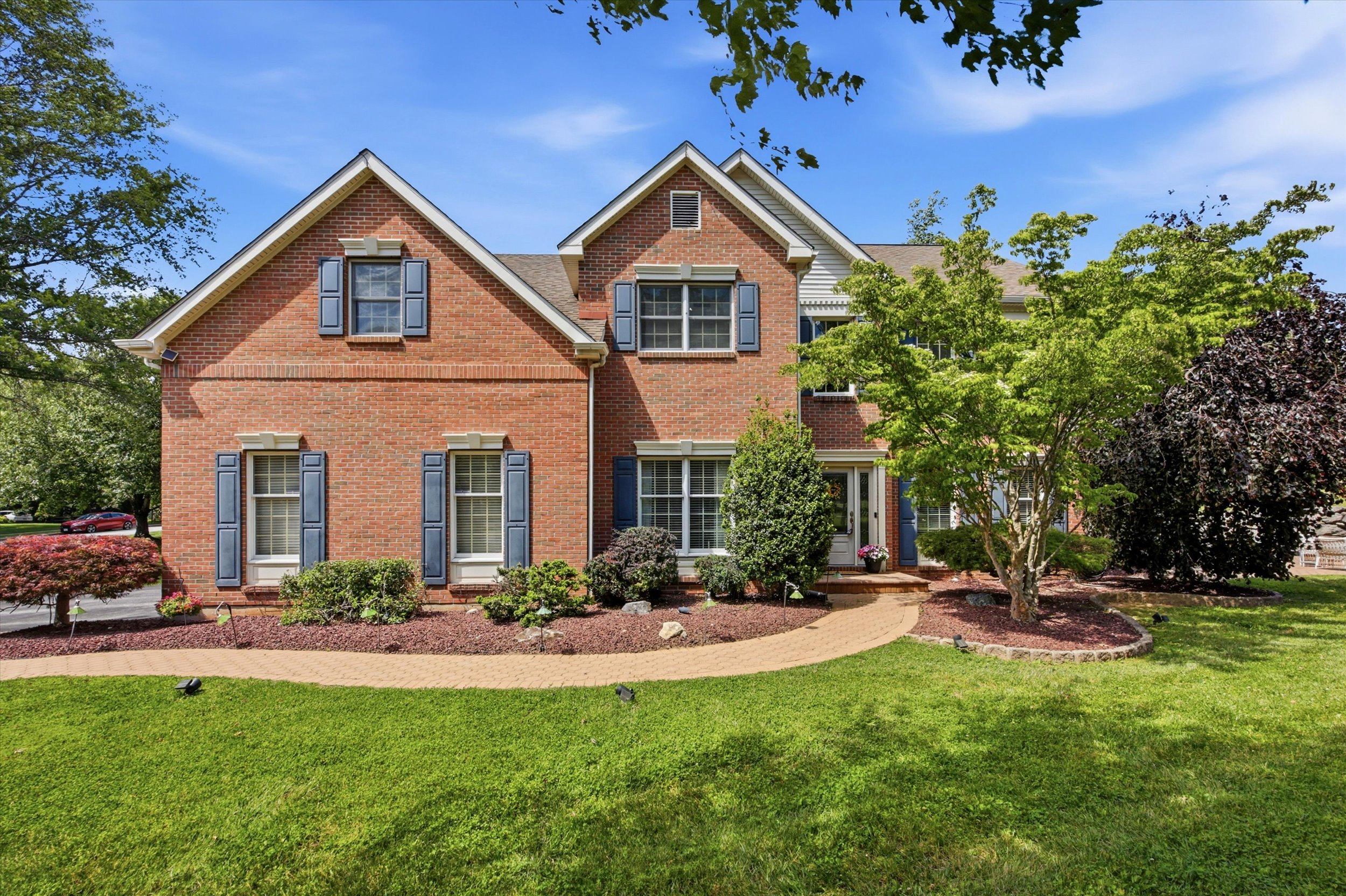
    The home has a brick front and sits on a corner lot.Alcove Media | Courtesy of Cory McDonald/Holloway Real Estate Group

    With easy access to the Uwchlan and Struble Trails, this four-bedroom Downingtown home blends the indoors and outdoors. That’s evident in a sun room addition that opens onto a patio and the backyard. Other features include a kitchen with granite countertops and an island, an office, dining and living rooms, and a family room with vaulted ceilings, a skylight, and a fireplace. The primary suite also has its own sitting area and a double vanity. There are open houses Friday from 4 to 6 p.m. and Sunday from 11 a.m. to 1 p.m.

    See more photos of the home here.

    Price: $850,000 | Size: 3,031 SF | Acreage: 0.8

    🗞️ What other Chester County residents are reading this week:

    By submitting your written, visual, and/or audio contributions, you agree to The Inquirer’s Terms of Use, including the grant of rights in Section 10.

    This suburban content is produced with support from the Leslie Miller and Richard Worley Foundation and The Lenfest Institute for Journalism. Editorial content is created independently of the project donors. Gifts to support The Inquirer’s high-impact journalism can be made at inquirer.com/donate. A list of Lenfest Institute donors can be found at lenfestinstitute.org/supporters.

  • Real estate ‘pit bull’ Marc Kaplin says Exton Square Mall pushback is an ‘anomaly’

    Real estate ‘pit bull’ Marc Kaplin says Exton Square Mall pushback is an ‘anomaly’

    Marc Kaplin takes “pit bull” as a compliment when it’s used to describe him. The longtime real estate lawyer who has championed property rights for developers in the region takes it to mean “aggressive, prepared, knowledgeable.”

    He’s using that tenacity right now in court, battling over whether his client’s plan to redevelop the recently shuttered Exton Square Mall into a mixed-use town center can go forward despite the town supervisors’ denial.

    For decades, Kaplin, 82, has been behind dozens of regional development projects, with clientele spanning the Delaware Valley, into the Lehigh Valley, the Poconos, Delaware, and New Jersey.

    Kaplin’s interest in real estate law kicked into high gear when his family moved to Blue Bell in 1978, near Wings Airways. It was still “a prairie” with little development, he recalls. The airway owners wanted to expand the runway, challenging the township’s ordinance. He was hired by a group of neighbors to oppose it.

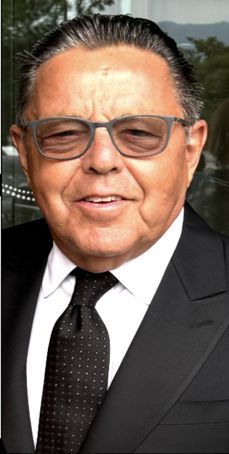
    Marc Kaplin, a real estate powerhouse, talked to The Inquirer about the Exton mall redevelopment project and more.Courtesy of Marc Kaplin

    That led to his role as township solicitor for Whitpain Township in Montgomery County in the early 1980s. Eventually, he moved into development: First working for his landlord, Bud Hansen of Hansen Properties, which became one of the biggest developers in Montgomery and Chester Counties.

    When Toll Brothers started, Kaplin was there. He’s represented the home construction company for more than 40 years. Other clients, like retail developers Wolfson Group, have also spent decades alongside Kaplin.

    With the closure of the Exton mall, and his client’s proposed redevelopment plan still in the courts, Kaplin spoke with The Inquirer about the downfall of the indoor mall, the challenges of building more affordable housing, and the rise in AI data center development.

    This conversation has been edited for clarity and brevity.

    You’ve worked in the city and the suburbs. Where is it easier to get projects done?

    They’re both extremely difficult and getting more and more difficult for different reasons.

    Philadelphia, if you don’t have a by-right project, you’ve got to go to the neighborhoods, the RCOs [registered community organizations]. You got to spend a lot of time, and it’s more political and satisfying people, than it is complying with every small [thing].

    Not only do you have to make sure that all the I’s are dotted and T’s are crossed in the suburbs, you got to know what to look for.

    There’s often community pushback in development projects. What are you hearing now when communities oppose a project?

    Just seems like everybody is against almost everything for a variety of reasons. Everybody complains about traffic. That’s the biggest thing. It’s ‘We’re here, we live here, we don’t need any more stores. We don’t need any more of this or that.’ But a lot of times you get a mixed bag.

    Now the Exton mall, we got very good reception to the Exton mall. It’s only a small group of people who are against the redevelopment of the Exton mall.

    Does the pushback to Exton Square Mall feel representative of larger trends in the region?

    It’s an anomaly for a project like that. When you look at the malls that are in really bad shape, townships are reaching out and want them redeveloped. Montgomery Mall. Plymouth Meeting Mall. Some over in New Jersey. I’m working on the Berkshire Mall up in the Reading/Wyomissing area, and we’re getting tremendous cooperation.

    These malls are 1,500-pound gorillas. They killed tax base, millions and millions of dollars that were coming in before. … I can’t give you a logical reason why two supervisors in West Whiteland are putting up this fight. I’m waiting for a judge to make a decision.

    We’re pretty optimistic that we’ll be able to go ahead, but it ain’t over until it’s over.

    You’ve been quoted as saying ‘indoor malls don’t work,’ but we are seeing some success in King of Prussia and Cherry Hill. What do you think sets them apart from places like Exton mall?

    They are the super regional malls, and they do work, and Simon controls many, many of them. They work, but the Plymouth Meeting Mall doesn’t work, the Exton mall doesn’t work, the Willow Grove mall doesn’t work, and many, many more.

    There’s a whole long history of why that’s so. There were, in the ’60s and ’70s, department stores we no longer have: Wanamakers, Strawbridge’s, Snellenburg’s, and on and on. … And then you had J.C. Penney and Sears, and it was much easier way back then to get three large anchors. Then the Kmarts came along, and the Walmarts, the big boxes that didn’t have all of the infrastructure. The common operating expenses are much less, because you have all interior halls — heating, air-conditioning, and all that.

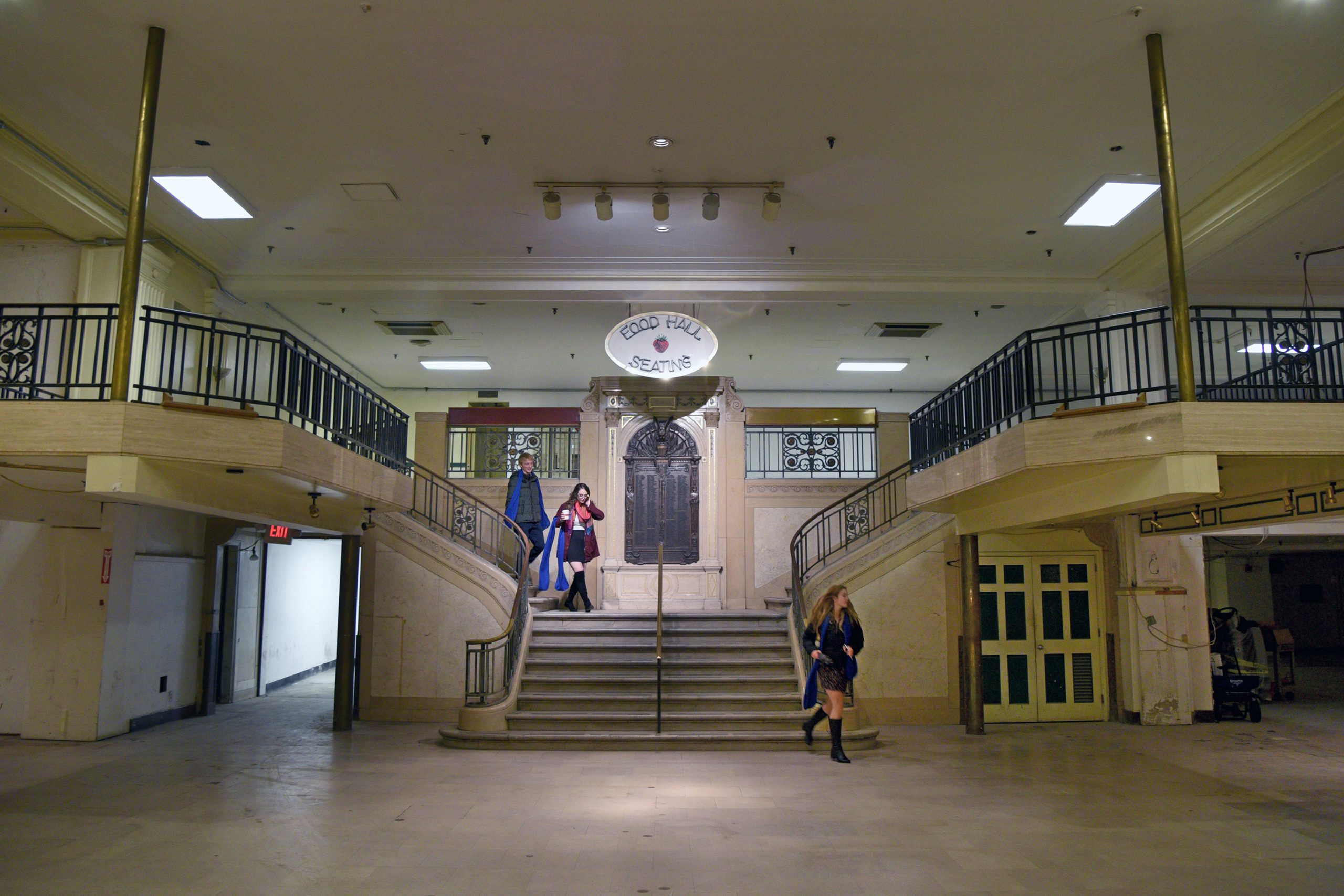
    Members of the Strawbridge family explore the old Food Hall on the first floor of the former Strawbridge & Clothier department store site on the north side of the 800 block of Market Street Dec. 17, 2019.Tom Gralish / Staff Photographer
    Why do you think Main Street at Exton, a mixed-use shopping center that opened in the 2000s, has been such a success?

    Because it’s run by the best operator around. That’s my client, Steve Wolfson. It’s had a[n] … anchor for now over 20 years.

    In Exton, there was about a 10-year period when there were two supervisors who were against everything. So you didn’t see a great deal more development, but the Main Street at Exton used the new urbanist approach 22, 23 years ago and made huge improvements to the roads. There are great roads there, and it was right in the path of development.

    Are there any cases or projects that have shaped Chester County as we know it today?

    Exton has always been called the crossroads of Chester County. You’ve also got the Hankin Group that has done all the development in Chester County. … You had very big companies come in — Vanguard — and you had good school systems and relatively decent roads. I think it’s just the continued outward development from Philadelphia.

    Many suburbs are facing affordable housing crises. How do you predict municipalities will overcome NIMBYism when it comes to those projects?

    It’s a very, very, very difficult problem. There are very few places in the entire country where it’s been solved. New Jersey has the most extensive program in the country to cause the development of affordable housing … that’s really the Mount Laurel doctrine, and where the townships are required not only to make affordable housing available, but also to make it happen.

    The market cannot create affordable housing without governmental help. Just can’t be done. It’s not enough land. Regulations are enormous, expensive.

    It’s a societal problem that can’t be solved just by municipalities and homebuilders and homebuyers.

    Do you think all of the proposed data centers will actually get built?

    I’m involved in a couple of data centers. … At first the communities were dead set against more warehouses, particularly up in the Lehigh Valley, and then when this particular community heard ‘data center,’ they were ecstatic — for a whole variety reasons: very little traffic, very few people in schools, high-paying jobs, and now there’s this national swell attacking data centers.

    The data centers we’re seeing now, in one fashion or another, are creating their own energy. So my own particular opinion is that it’s just blown up, overblown, over-exaggerated, and we’re going to need all this computing power as we move into the next technology age.

  • What archaeologists dug up at Croft Farm | Inquirer Cherry Hill

    What archaeologists dug up at Croft Farm | Inquirer Cherry Hill

    Hello, Cherry Hill! 👋

    An analysis of the archaeological dig at Croft Farm is nearly wrapped up. Here’s what the team behind it discovered. Also this week, a longtime Cherry Hill educator is leaving the district to become a superintendent, a former Rite Aid is set to become a gym, plus, the family of a slain veterinarian continues to grapple with his death.

    If someone forwarded you this email, sign up for free here.

    Here’s what archaeologists turned up at Croft Farm

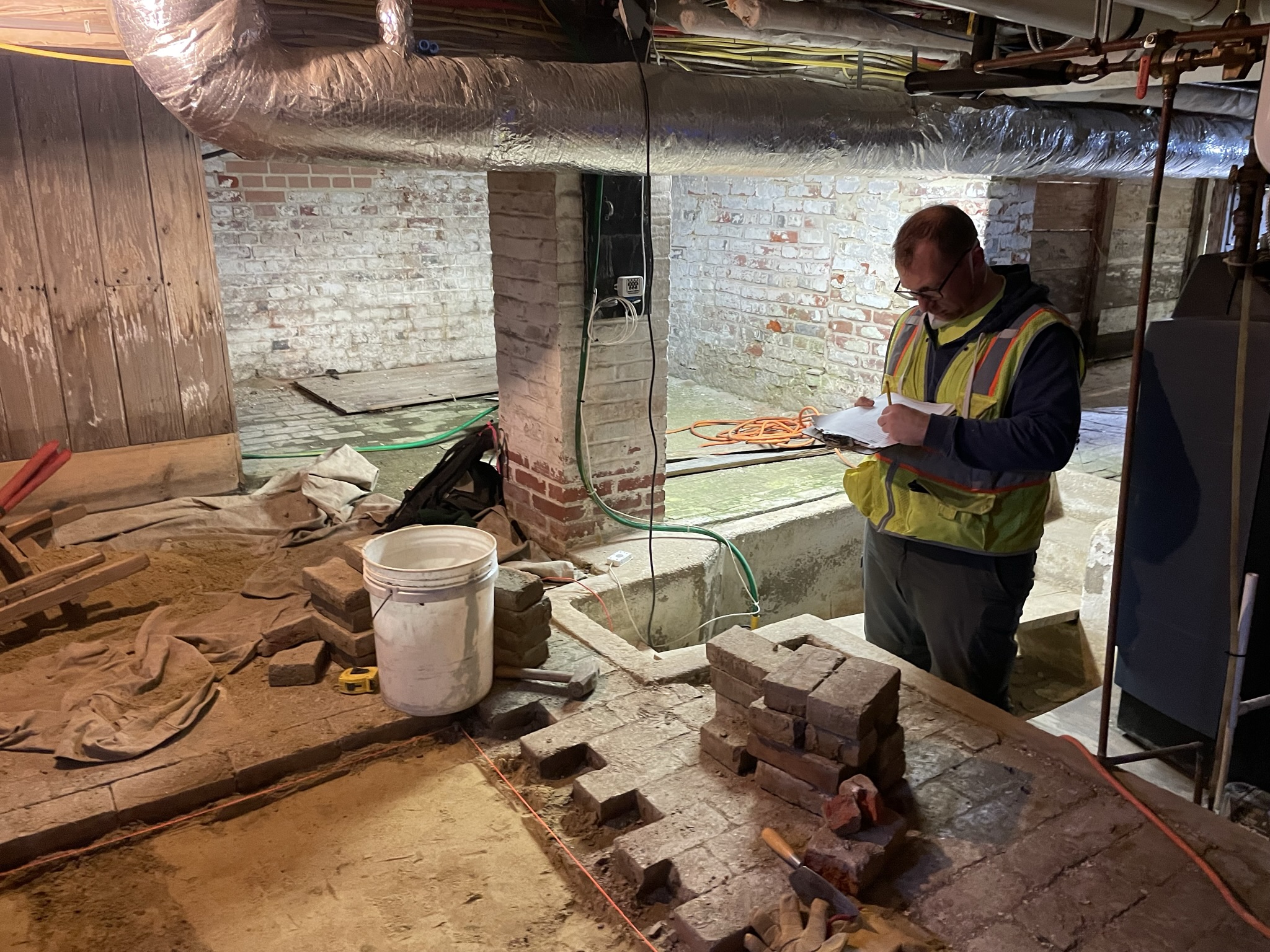
    The basement of the Kay-Evans House was excavated as part of the project. Chelsea Carriere

    Hundreds of bones, thousands of ceramic fragments, and items belonging to long-ago members of the Lenni-Lenape Indigenous people are among the artifacts archaeologists unearthed as part of their recent dig at Croft Farm.

    The dig took place around the 18th-century Kay-Evans House, part of which was open to the public in February, and archaeologists are now wrapping up their findings. Those items are helping them better understand the people who lived along the Cooper River centuries ago and how society evolved.

    Some artifacts could even be on public display at the house one day as the township looks for ways to showcase its history.

    The Inquirer’s Sarah Nicell digs into what else archaeologists turned up.

    💡 Community News

    • In case you missed it, Cristian Custodio-Aquino was sentenced to 30 years in prison last week for the murder of beloved Cherry Hill veterinarian Michael Anthony.
    • The former Rite Aid at 1360 Brace Rd. is slated to become a Bunker Fitness Center, as the gym expands from its current location in Blackwood.
    • TruGolf Links opened a flagship location last week at the Plaza at Cherry Hill. It offers six golf simulator bays, in addition to food and drinks.
    • Speeders Car Wash opened last week, taking over the former Route 41 Car Wash at 1507 Kings Highway North.
    • Philadelphia arts-and-crafts studio Deko Deko is expanding to Cherry Hill this summer. The shop offers a range of DIY projects, including hair accessories, keychains, and charm bracelets. The studio hasn’t announced exactly where or when it will open its new outpost.
    • Due to the heat, trash and recycling will be picked up today through Friday starting at 6 a.m.
    • Work on westbound Kresson Road will cause a weekday detour between Cropwell Road and Cooper Run Drive from 6 a.m. to 4 p.m. Work will also take place between Springdale Road and Middle Acre Lane, causing traffic pattern changes. Elsewhere, work is continuing on Kenilworth Avenue, which will be closed between Route 38 and Helena Avenue from 7 a.m. to 3:30 p.m. through Friday. And starting tomorrow, expect roadwork on Springdale Road at the Mount Laurel border from 7 a.m. to 3 p.m.
    • There’s a new assistant rabbi at Temple Beth Sholom. Jacob Lipkin began in the role this month.

    🏫 Schools Briefing

    🍽️ On our Plate

    • Looking for great Filipino food? Reyta’s Filipino Cuisine dishes up some of the best in the state, according to NJ.com. The outlet noted the Haddonfield-Berlin Road eatery offers authentic dishes as well as boodle fights served on banana leaves.

    🎳 Things to Do

    🎶 Twilight Music Series: Beach Boys’ cofounder Al Jardine will perform along with The Pet Sounds. ⏰ Thursday, July 16, 8-11 p.m. 💵 Free 📍 Cooper River Park Jack Curtis Stadium

    💫 Music Under the Stars: Party band 80’s Revolution will perform. There will also be food trucks and a beer garden. ⏰ Tuesday, July 21, 7 p.m. 💵 Free 📍 Barclay Farmstead

    🍑 The Peach Truck Tour: The roving peach truck will make a stop at the mall to sell boxes of the fruit. ⏰ Wednesday, July 22, 4:30-6 p.m. 💵 $15-$120 📍 Cherry Hill Mall

    🏡 On the Market

    A four-bedroom home with a cozy family room

    The home has a covered front porch and a two-car garage.John Marie/Steven Edwards Photography | Courtesy of Susan Grimm/Berkshire Hathaway HomeServices

    Located in the Old Orchard neighborhood, this four-bedroom home has undergone a number of recent updates, including fresh paint, refinished hardwood floors, a newer roof, and refreshed bathrooms. The home has living and dining rooms, an eat-in kitchen, and a family room with vaulted ceilings, skylights, and a fireplace. Outside, a deck overlooks the backyard.

    See more photos of the home here.

    Price: $515,000 | Size: 2,102 SF | Acreage: 0.25

    🗞️ What other Cherry Hill residents are reading this week:

    By submitting your written, visual, and/or audio contributions, you agree to The Inquirer’s Terms of Use, including the grant of rights in Section 10.

    This suburban content is produced with support from the Leslie Miller and Richard Worley Foundation and The Lenfest Institute for Journalism. Editorial content is created independently of the project donors. Gifts to support The Inquirer’s high-impact journalism can be made at inquirer.com/donate. A list of Lenfest Institute donors can be found at lenfestinstitute.org/supporters.

  • Senate Democrats block $1 trillion defense bill in protest over Iran war

    Senate Democrats block $1 trillion defense bill in protest over Iran war

    WASHINGTON — Senate Democrats blocked a $1 trillion annual defense bill Tuesday, refusing to advance the bipartisan package that would substantially increase Pentagon spending, including a pay raise for the troops, in protest of President Donald Trump’s war against Iran.

    Senate Democratic Leader Chuck Schumer announced his opposition and other key Democrats said they could not support the annual bill, known as the National Defense Authorization Act, as the war drags into a fifth month with no clear endgame in sight. The tally was 50-46, failing largely along party lines to reach the threshold needed.

    “The NDAA cannot become a permission slip for that recklessness that we see occurring in Iran,” Schumer, of New York, said ahead of voting.

    “Donald Trump does not get to drag the American people deeper into a war he cannot explain and does not know how to end — and then demand that Congress look the other way.”

    The Senate vote comes a day after the White House formally notified Congress that it had resumed bombing strikes against Iran, effectively undoing the fragile ceasefire in the U.S.-Israel led conflict that has resulted in economic disruptions, including volatile gas prices, ahead of the midterm elections.

    Congress has tried repeatedly to slap guardrails on the administration, voting more than 10 times on various war powers resolutions that would halt hostilities. But those efforts have not succeeded, and most Republicans in the House and Senate majorities back Trump.

    Senate Majority Leader John Thune called the defense package a good bill and implored his colleagues to provide the resources to ensure the U.S. is kept safe.

    “We have an obligation here in Congress to ensure that they have everything they need for whatever the mission may be,” he said.

    After the bill failed to advance, Thune switched his vote in a procedural move that will allow the leader to bring it back up for consideration again later.

    For decades, Congress had made sure to approve the annual defense bill each year, setting the policy and direction for the department and authorizing the funds that would later be allocated to carry out its investments in systems, supplies, and missions.

    This year, the 66th annual NDAA is running into a double whammy of opposition. Lawmakers are fuming over Trump’s military action against Iran and resisting the White House request to substantially increase Pentagon spending to $1.5 trillion, up from about $900 billion last year.

    The sizable boost of funds aligns with the White House’s 2027 budget request as the Trump administration seeks a generational investment to modernize the Defense Department, which it refers to as the Department of War under Secretary Pete Hegseth.

    Hegseth was scheduled to meet later Tuesday evening with House Republicans as Congress considers providing additional money through a separate budget reconciliation bill the party can pass on its own, overpowering the opposition from Democrats.

    The White House has requested $350 billion from Congress under the budget reconciliation process, but House GOP leaders have indicated it is likely to be a much smaller amount, more in line with $87 billion the White House requested last month as supplemental funding for Iran.

    But Republican deficit hawks are skeptical of the big budget numbers, despite support for the war within their ranks.

    The extra defense funding comes on top of the additional $150 billion Republicans already provided the Pentagon last year under Trump’s big tax breaks bill that some say has not been spent or fully accounted for.

    At the same time, senators want to impose restraints on Hegseth if he fails to comply with their demands for more information about department procedures and accounts.

    The Senate bill would block the secretary’s travel funds unless he provides reports they have requested, including one on a deadly Iran school strike at the start of the war.

    Democrats, however, are pushing for further limits in line with a war powers resolution that would force the cessation of military actions.

    Sen. Tammy Duckworth (D.,Ill.), a veteran who flew helicopter combat missions in Iraq, said she would oppose the bill unless it included her amendment to end the war.

    “Simply throwing more money at an out-of-control military operation is not strategy. It’s a recipe for a forever war.”

  • Philly schools will get $157 million more in this year’s state budget. Gov. Josh Shapiro came to South Philly to tout the plan.

    Philly schools will get $157 million more in this year’s state budget. Gov. Josh Shapiro came to South Philly to tout the plan.

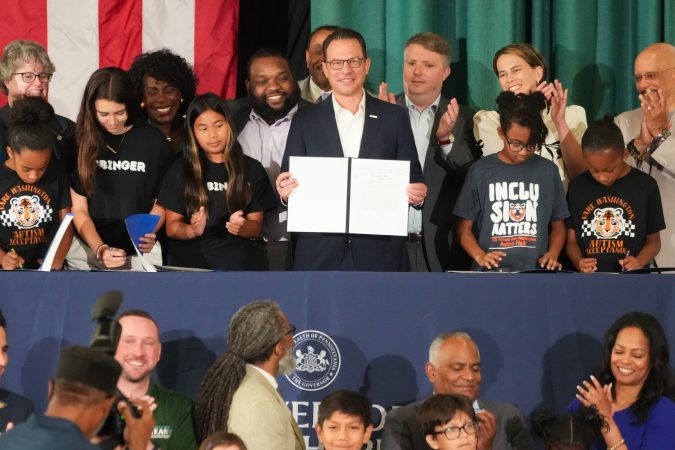
    Gov. Josh Shapiro on Tuesday visited Vare-Washington Elementary School in South Philadelphia to tout the $678 million in new education funding included in the state budget deal finalized over the weekend.

    The new education funding — including $565 million in “adequacy funding” to aid poorer districts — represented one of the most significant victories the first-term Democratic governor took home from the $50.8 billion state budget deal, which did not address lingering issues such as taxing so-called skill games and long-term funding for SEPTA and other public transit agencies.

    The Philadelphia School District will receive $137 million in adequacy funding and $20 million in other new funding. The district will also be able to compete for a share of $125 million set aside for school facilities projects.

    Philadelphia’s cash-strapped district, which entered this year with a $300 million structural budget deficit, still faces deep challenges. The school board this year approved a facilities plan to close 17 school buildings and renovate 169 more.

    “We’re driving this money out to the schools that need it most — school districts like Philadelphia, Norristown, Pottstown, and Allentown, and others in our region,” Shapiro said. “They were getting shortchanged, and now they’re getting the lion’s share of this new funding.”

    While it broke little new ground, this year’s state budget deal helped avoid another prolonged impasse involving Shapiro, the Democratic House, and the Republican Senate. Last year, lawmakers failed to reach a compromise until 135 days after the July 1 budget deadline, leaving school districts and local governments across the state in limbo for months.

    Lawmakers approved this year’s deal 12 days late.

    “I‘m one of the only governors in the country with a divided legislature, one of the only legislatures that has to negotiate with people on the other side who really have a very different view, who don’t think the way we do about investing in public education,” said Shapiro, who was joined by Mayor Cherelle L. Parker and numerous Philadelphia Democratic lawmakers. “We have all been clear that we would not get up from the table in Harrisburg until we fully funded public education, and we’ve done that.”

    Students applaud speakers at Vare-Washington Elementary School during an assembly highlighting the education investments included in the 2026-27 state budget in Philadelphia, Pa. on July 14, 2026.Jessica Griffin / Staff Photographer

    The new adequacy funding is the third infusion of money resulting from a formula lawmakers adopted in the wake of a 2023 Commonwealth Court ruling that said Pennsylvania’s former method of funding schools, which relied heavily on local property taxes, was unconstitutional.

    The formula calculated that a majority of Pennsylvania schools were underfunded, by a total of $4.5 billion. For the last three years, the state has given those schools an extra $565 million a year, filling about one-third of the gap. The state plans to fully address the shortfall by 2032.

    Advocates for underfunded districts, like Philadelphia’s, have credited the state for sticking with the plan, but have also said the money is flowing too slowly for struggling districts. Meanwhile, Republican lawmakers have challenged the increased funding for poorer districts, saying others are getting shortchanged by the new system.

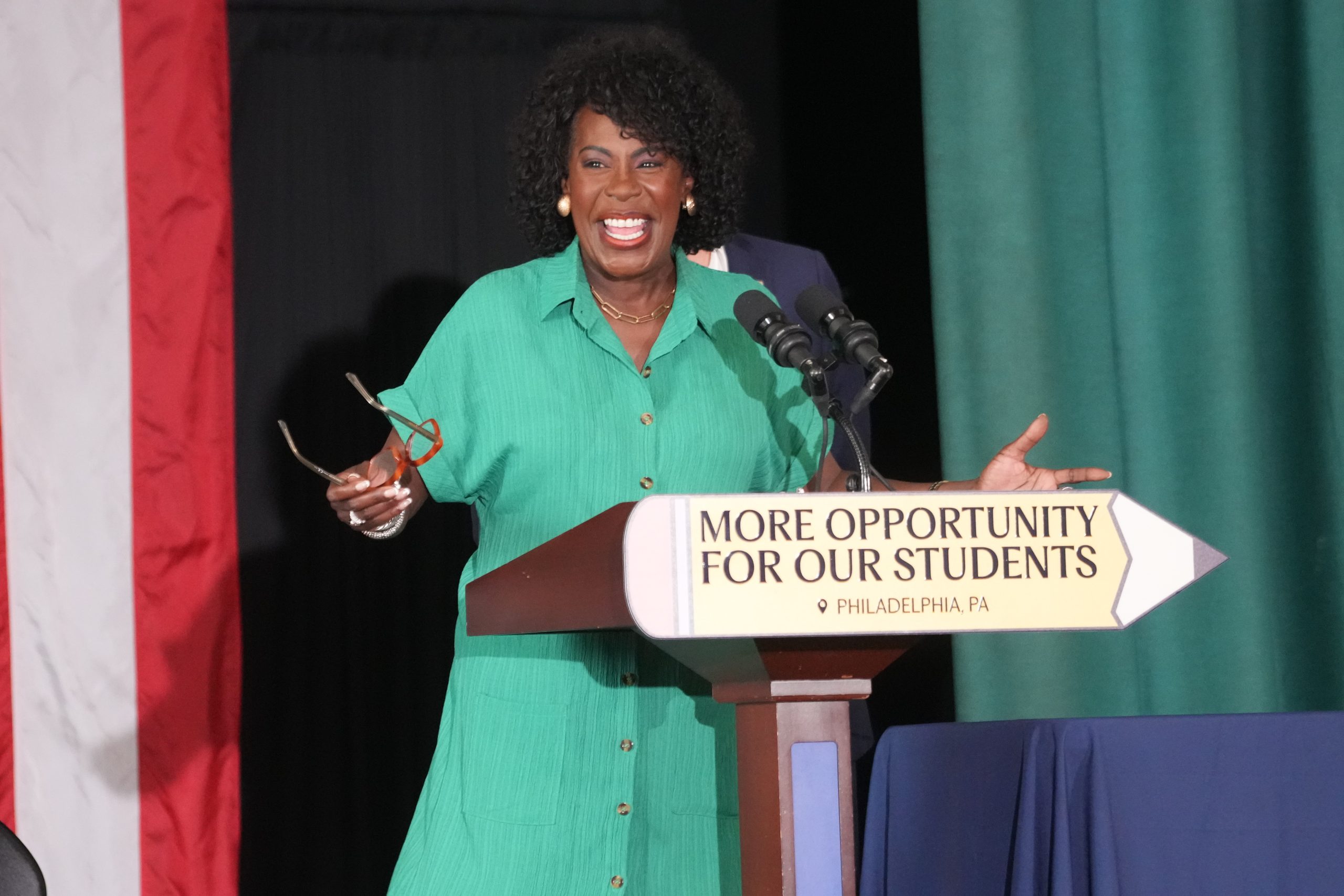
    Mayor Cherelle L. Parker speaks at Vare-Washington Elementary School to highlight the historic education investments included in the 2026-27 state budget, in Philadelphia, Pa. on July 14, 2026.Jessica Griffin / Staff Photographer

    Philadelphia’s school district, the only one in the state prohibited from raising its own revenue, relies on city and state lawmakers for its funding.

    Parker this year clashed with City Council over how to deliver roughly $50 million to the district to help close a budget gap that threatened to eliminate 340 classroom positions. Council ultimately rejected Parker’s proposal — to levy a $1-per-ride tax on rideshare services like Uber and Lyft — and instead pulled from one-time funding elsewhere in the budget while promising to find a new recurring revenue source for the district.

    “We have limited revenue-generating capacity in the city of Philadelphia,” Parker said Tuesday. “I wish I could tell you, as mayor, that we had all of the money that we needed to address problems, but that is not the case. Our city can’t be successful without a strong partnership from Harrisburg.”

    Parker thanked Shapiro and the city’s delegation to Harrisburg for “keeping your word” and delivering more education funding to Philadelphia from the state.

    Vare-Washington is one of 40 Philly schools included in Parker’s Extended Day/Extended Year initiative, which provides additional programming for students outside normal school hours.

    During her remarks, Parker led the students assembled at the event in several call-and-response chants, including, “Excellence matters — at Vare-Washington!”

    “I want to hear you say, ‘Thank you — Gov. Shapiro!’” Parker said in another chant. “‘Thank you — Harrisburg legislators!’”

  • A new Pa. Turnpike ramp connects the Fort Washington exit to a 536-acre multiuse development

    A new Pa. Turnpike ramp connects the Fort Washington exit to a 536-acre multiuse development

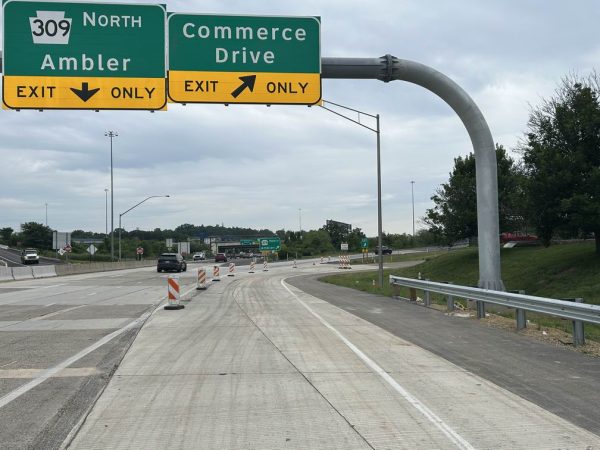
    The ribbon was snipped Tuesday, and the first car, a green Audi S5 convertible, rolled down the new “zip ramp” providing direct access from the Pennsylvania Turnpike’s Fort Washington interchange to a 536-acre office park redevelopment in Upper Dublin.

    “This is a milestone day for Upper Dublin,” said Kurt Ferguson, executive director of the township’s municipal authority, which for 10 years has managed the ongoing transformation of the underused office buildings of the former Fort Washington Industrial Park into the multiuse Greater Fort Washington District.

    The authority has invested about $45 million in infrastructure to support the revitalization project, about 70% from state and county transportation and development grants, Ferguson said. That includes the 2,100-foot ramp, designed and built for about $3 million.

    A Lifetime Fitness complex, new retail outlets, and TruMark Credit Union headquarters have been built in the district.

    Three former office properties have been converted to apartment buildings, with a fourth turned into a storage facility, Ferguson said. Upper Dublin moved the township library to Virginia Drive in the district, which includes a segment of the Cross County Trail operated by Montgomery County.

    The new ramp was made possible by the turnpike’s move to open-road tolling, in which motorists pay tolls by E-ZPass or by plate while passing under gantries. Toll booths are being torn down, leaving more room at interchanges for direct-connect projects like the zip ramp.

    “Open-road tolling enables us to be a better neighbor,” turnpike CEO Mark Compton said. “In terms of today’s transportation dollars, this project is not large money … [but] it opens up economic opportunity for this community.”

    The Pennsylvania Turnpike Commission is designing a roundabout off the Mahoning Valley Interchange (Exit 74) on the Northeast Extension and plans a park-and-ride lot there.

    It is also looking to develop truck parking at the Gateway interchange (Exit 2), near the Ohio state line in Western Pennsylvania, spokesperson Marissa Orbanek said.