Category: News

  • JD Vance has a lot in common with one of his predecessors

    JD Vance has a lot in common with one of his predecessors

    Speaking to an applauding audience at the Richard M. Nixon Library on June 27, Vice President JD Vance favorably compared himself to the 37th President, “a young Senator, Vice President, writes some best-selling books, is hated by the media, it kind of sounds like JD Vance.”

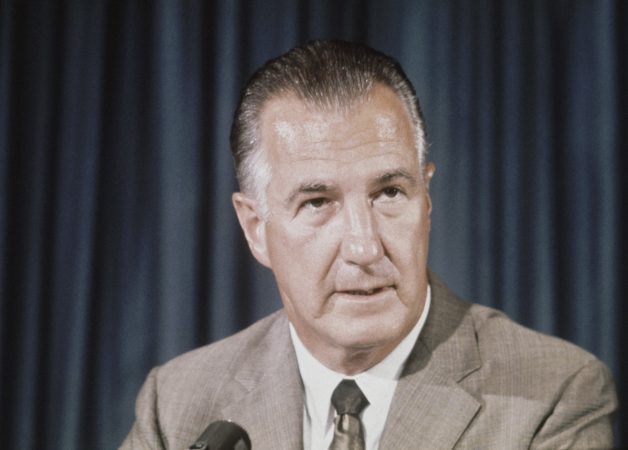
    But in actuality, it’s not Nixon who Vance resembles. It’s Nixon’s vice president, Spiro Agnew. Agnew, a dour-faced hatchet man, was known as “Nixon’s Nixon.” Our current dour political hatchet-wielder is Trump’s Agnew.

    Vance and Agnew share similar resumes. Both were elevated to the national ticket well ahead of their times to appeal to particular electoral constituencies and took on remarkably comparable foes during their vice-presidential terms.

    Like Vance, Agnew came from humble beginnings. The son of a Greek immigrant father and Virginia-born mother, his family owned a diner in Baltimore. Before joining the military and serving in World War II, he Americanized his foreign sounding first name to “Ted” and returned from combat to attend law school on the GI Bill. In 1966, Agnew won the Maryland governor’s race.

    Despite scant political experience, Agnew came to the attention of influential Nixon adviser Pat Buchanan, who recognized that there was national political appeal to the governor’s tough response to rioting in Baltimore following the assassination of Martin Luther King Jr. Agnew had pointedly criticized what he charged was the weak response of local Black leaders to civil disorder. Given that he wasn’t unacceptable to any of the feuding wings of the GOP — unlike many more prominent figures — this was enough for Nixon to make Agnew his running mate.

    Once on the ticket, the Nixon campaign deployed Agnew to counter the alarming momentum of third-party candidate, segregationist and former Alabama Gov. George Wallace. On a campaign swing through North Carolina and Florida, Agnew rallied the crowd with “speeches that sounded not unlike Wallace texts,” the New York Times reported. In 1969 Wallace quipped, “I wish I had copyrighted my speeches. I would be drawing immense royalties from Mr. Nixon and especially Mr. Agnew.”

    Agnew struggled in his first few months in the national spotlight and became known more for campaign trail gaffes than for policy positions.

    Even so, Agnew successfully connected with nervous white suburbanites, primarily in the Midwest and South, who feared civil rights, mistrusted the metropolitan elite and wanted the anti-Vietnam War protesters put in their place. This group of voters — who Nixon later referred to as “the silent majority” — became Agnew’s biggest supporters.

    Agnew’s penchant for gaffes and awkwardness continued after he and Nixon entered office. At a ceremony welcoming President Nixon home from a European trip in March 1969, Agnew slipped on an icy tarmac and smashed his nose. He then stepped up to the mic “bleeding profusely,” according to White House aide H.R. Haldeman.

    Yet, Agnew’s response to his (literal) stumbles helped him to connect even more with anxious white Americans. He refused to stand by and let well educated elites or the news media mock him. Instead, the vice president lambasted them as “an effete corps of impudent snobs” and “the nattering nabobs of negativism,” respectively. Agnew started delivering blistering speeches with the help of Buchanan and his fellow White House speechwriter William Safire, excoriating precisely those forces who anxious white Americans loathed.

    In November 1969 in Des Moines, Agnew made what a poll of leading scholars considered one of the 50 most significant American speeches of the 20th century. The vice president publicly called out the media, what he dubbed “this little group of men who not only enjoy a right of instant rebuttal to every Presidential address, but, more importantly, wield a free hand in selecting, presenting, and interpreting the great issues in our nation.” It would launch a more than half-century-long GOP crusade against mainstream journalists.

    In other speeches, Agnew hammered universities for what he described as the coddling of student radicals, calling them ”circus tents [and] psychiatric centers for overprivileged, under-disciplined, irresponsible children of the well to do blasé permissivists.” Agnew warned, “The criminal left is not a problem to be solved by the Department of Philosophy or the Department of English — it is a problem for the Department of Justice.”

    By the 1972 election, Nixon loathed the pugnacious Agnew and regularly disparaged him privately. He questioned his vice president’s intelligence, judgment and loyalty. Nixon, according to Haldeman, felt “Agnew doesn’t really have it” and had become convinced that “he can’t do the job” of president, should it come to that. The president even contemplated replacing Agnew on the ticket with Texas Gov. John Connally.

    Yet, he demurred, because Nixon recognized how popular the vice president was with his “silent majority” base. Observers initially touted Agnew as a front-runner in the 1976 Republican presidential sweepstakes. Instead, however, the vice president’s political career crashed and burned.

    Made By History sponsors. FOR USE ON MADE BY HISTORY STORIES ONLY.Inquirer Staff

    In 1973, 10 months before Watergate ended Nixon’s presidency, Agnew pled no contest to tax evasion, stemming from unreported bribes he had received while governor of Maryland. Agnew slunk away from public life, disbarred and disgraced, to an odd final chapter of his life that included writing a steamy novel, lobbying for tin pot dictators and engaging in antisemitic conspiracy-mongering.

    A half century after Agnew left office, Vance is having a very similar vice presidency.

    He, too, comes from working class roots. The vice president grew up as James David Hamel in a working-class household in an Ohio Rust Belt town. There, he experienced poverty and domestic instability. Like Agnew, he served in the military, went to law school and spent only two years as an elected official — in Vance’s case, two years in the Senate — before being chosen as the GOP’s vice presidential nominee.

    Just as Pat Buchanan sold Agnew to Nixon as a Silent Majority kindred spirit, pundit Tucker Carlson promoted Vance to Trump as a fellow America Firster. Like the former Maryland governor, Vance joined the Republican ticket in part because he could speak to “blood and soil” Americans.

    Additionally, like his predecessor, Vance has experienced verbal stumbles. In 2021, anticipating a future Kamala Harris run for the presidency, he claimed that America was run “by a bunch of childless cat ladies who are miserable at their own lives and the choices that they’ve made, and so they want to make the rest of the country miserable too.”

    In 2025, the vice president broke the national championship trophy in a ceremony with the Ohio State University football team. That year, the newly converted Catholic also earned gentle but firm pushback from Pope Francis for Vance’s jaw-dropping misinterpretation of the Church’s message on immigrants.

    Trump has also deployed Vance as an attack dog, going after the same universities and media outlets Agnew regularly tangled with. Even before he was elected to the Senate, Vance told the National Conservatism Conference that “if any of us want to do the things we want to do for our country and the people who live in it, we have to honestly and aggressively attack the universities in this country.” As vice president, he has frequently targeted the media, charging that journalists have a “political bias” and cannot be trusted.

    And like Nixon before him, Trump doesn’t seem 100% sold that his vice president is the rightful heir to his political legacy. Most recently, Trump talked about his decision to have Vance serve as the lead negotiator to end the war with Iran by throwing him under the bus, saying, “If it works out, I’m going to take the credit. If it doesn’t work out, I’m blaming JD.”

    Vance’s post vice presidential chapter has not yet been written but it is a good bet that he will run for president in 2028.

    If he decides to seek the top job, he will run, not as a Richard Nixon Republican, but as a Spiro Agnew one. Nixon’s Watergate cover-up and general paranoia overshadowed a more moderate side: the diplomatic achievements, support for environmental protections and the creation of Title IX.

    Agnew, by contrast, was an emblem of the pugilistic, populist politics that Vance has made his calling card. Those, and not substantive policy achievements, constitute Agnew’s historical legacy. Vance’s is likely to be the same.

    Chuck Holden is a professor of history at St. Mary’s College of Maryland. Zach Messitte is the former president of Ripon College where he was also a professor of Political Science. Jerald Podair is professor of history and Robert S. French professor of American studies emeritus at Lawrence University. They are the co-authors of Republican Populist: Spiro Agnew and the Origins of President Donald Trump’s America (University of Virginia Press, 2019)

    Made by History takes readers beyond the headlines with articles written and edited by professional historians. Opinions expressed do not necessarily reflect the views of The Inquirer.


  • 🎓 All expenses paid | Inquirer South Jersey

    🎓 All expenses paid | Inquirer South Jersey

    Good morning, South Jersey. Hot temperatures will continue, so don’t forget to drink water today. The state has experienced an uptick in heat-related deaths from last year, according to New Jersey Monitor.

    After winning a prestigious all-expenses-paid scholarship, a Haddonfield High School student has a blank check to attend any college he wants in the country.

    And the New Jersey Attorney General’s Office quietly closed the investigation into the 2022 death of a Gloucester County Fire Marshal’s Office K-9.

    Plus, the politics surrounding FEMA may complicate Camden getting federal aid, and more news of the day.

    — Taylor Allen (southjersey@inquirer.com)

    P.S. Thank you for your continuing support. We want your thoughts! Tell us your opinion of the newsletter by taking our survey or replying to this email.

    If someone forwarded you this email, sign up for free here.

    🎓 A blank check for college tuition

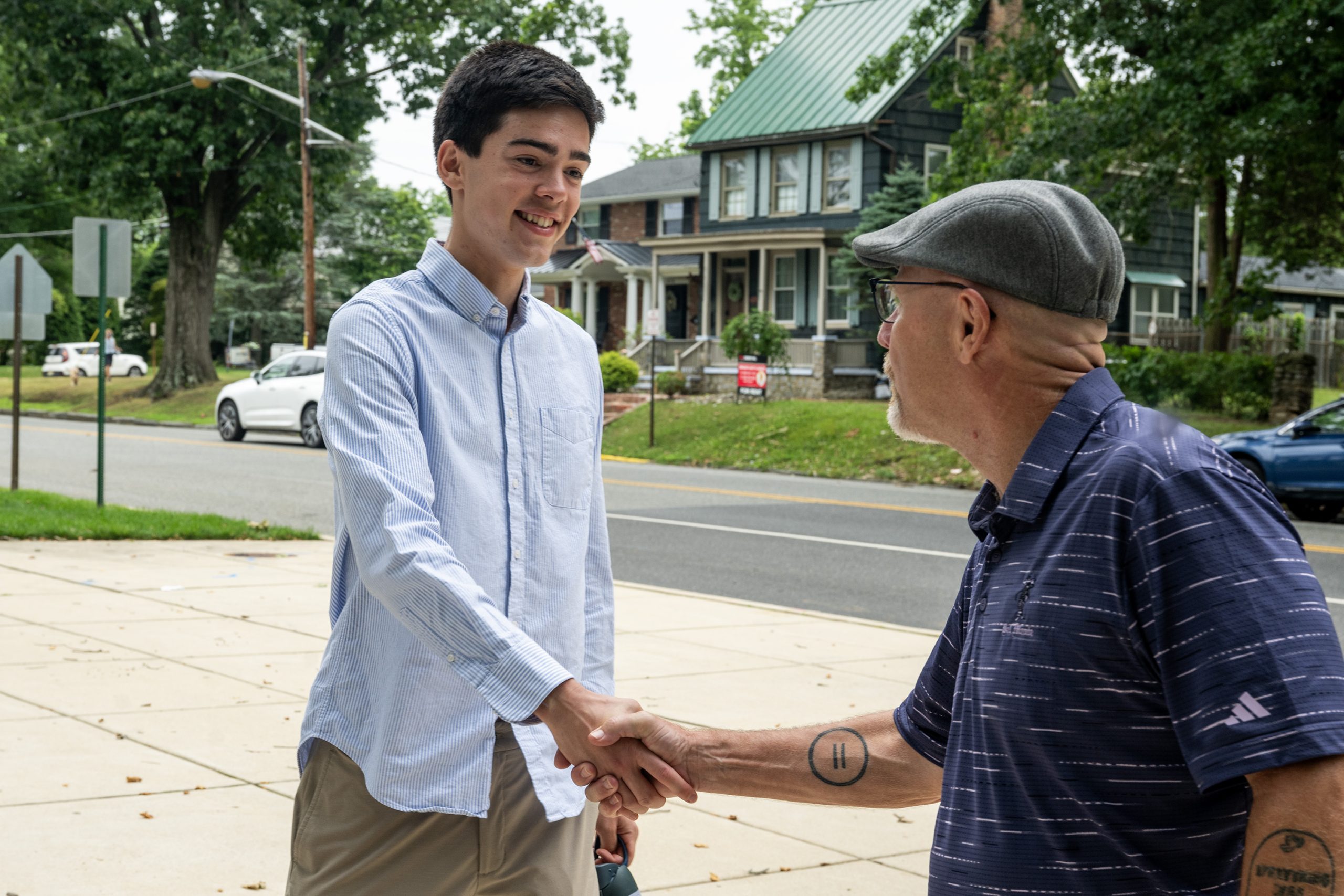
    Luke Patterson will start his final year at Haddonfield Memorial High School with one less thing to consider: how to pay for college.

    The student won an all-expenses-paid merit scholarship from the Calvin Coolidge Presidential Foundation. The award will cover Patterson’s tuition, room and board, and other related expenses for any college he wants to attend in the U.S.

    He’s among five students nationwide selected, and the first one to ever win from South Jersey.

    The Inquirer’s Melanie Burney has more on the scholarship and the impressive student.

    A state investigation into a 2022 K-9 death is closed

    Four years ago, a K-9 working for the Gloucester County Fire Marshal’s Office and another dog died after an official allegedly left them in a hot vehicle.

    On July 8, Gloucester County received notice that the Attorney General’s Office closed the state investigation into the incident with no criminal charges attached.

    That was one day after the Salem County Prosecutor’s Office charged a sergeant for a May incident in which the official allegedly left two K-9s in a work vehicle.

    Now, a Gloucester County commissioner is using the more recent case to renew interest in the 2022 case and push for justice.

    Reporter Sarah Nicell has the story.

    What to know today

    🗓️ The best things to do this week

    🤠 Stampede Rodeo and Bull Riding: The event is a two-day affair full of bull riding, barrel racing, and roping. Enjoy food vendors, live music, and a beer garden. ⏰ Friday, July 17, and Saturday, July 18, 7 p.m. 💵 $25 for adults, $12 for children under 12 if you buy tickets online ahead of time📍 Miller Farms Arena, 134 N. Grove St., Berlin.

    🎉 South Jersey Caribbean Festival: This 26th annual free family event features live music and dance performances, food and craft vendors, and community resources. ⏰ Saturday, July 18, 2-8 p.m. 💵 Pay-as-you-go📍Wiggins Waterfront Park, 2 Riverside Dr., Camden.

    ⚽ SoccerFest26 World Cup Final Watch Party & Community Soccer Tournament: Start your morning with the tournament among recreational teams from across the region. In the afternoon, cheer with fans at the viewing party for the World Cup Final. ⏰ Sunday, July 19, 10 a.m- 5 p.m. 💵 Pay-as-you-go 📍 South Delsea Drive Park, 152 Delsea Dr. South, Glassboro.

    See more event listings here.

    🧠 Trivia time

    The owner of South Jersey’s Tideline added the Liquid Asset to her drink menu with a eye-popping price tag. It consists of tequila, an ice cube, a red chili pepper — and a speedboat. How much is it?

    A) $50

    B) $500,000

    C) $760,000

    D) $1.1 million

    Think you know? Check your answer.

    What we’re …

    🍅 Appreciating: The region’s farm stands.

    ⚾ Discovering: The Phillie Phanatic’s true identity.

    🏠 Ogling: A rebuilt Shore home after a couple spent years designing it. (Is your house a Haven? Nominate your home by email — and send some digital photographs — at properties@inquirer.com.)

    Thank you for starting your morning with The Inquirer. I’ll be off for a couple of days, but my editor Julie will step in to take over Friday and Monday, so there will not be a gap in your news roundups. See you soon! ☀️

    By submitting your written, visual, and/or audio contributions, you agree to The Inquirer’s Terms of Use, including the grant of rights in Section 10.

  • Pa. budget restores funding for prison bus program that had been at risk of closing

    Pa. budget restores funding for prison bus program that had been at risk of closing

    A bus program that shuttles families to Pennsylvania’s far-flung state prisons will soon resume a full schedule of trips after lawmakers approved $600,000 for the service in the state budget, restoring a level of operation the program had not seen since before the pandemic.

    The funding followed months of behind-the-scenes lobbying by the Pennsylvania Prison Society, the nonprofit that runs the program. The organization said the money will allow buses to travel to every state prison every other month, a substantial expansion from the patchwork of limited pilot routes it has operated in recent years with short-term funding. The money will also allow the society to add departures from Pittsburgh for the first time, beginning next year.

    The organization had warned that without the funding, the program could disappear.

    For nearly two decades, the buses have carried thousands of relatives to prisons scattered across rural Pennsylvania, many of them hours away and virtually impossible to reach without a car. Advocates say restoring the service will preserve those family connections while expanding access to people in Western Pennsylvania.

    “Keeping your family whole is really challenged by incarceration,” said Claire Shubik-Richards, the prison society’s executive director. “This program keeps families connected.”

    Still, the funding covers only one year, meaning advocates will likely have to fight for it again next budget season. “This is a victory for today,” Shubik-Richards said, “but we always need to be working to ensure that it can go forward into the future.”

    The program had operated continuously with funding from the Pennsylvania Department of Corrections. But during the pandemic, the prison system suspended in-person visits and stopped paying for the bus program. When visits resumed, the money for the buses did not.

    For Yvonne Newkirk, 72, the service had become a lifeline. She began riding the buses about a dozen years ago to visit her daughter, Stacey, at the state prison in Muncy, three hours from her West Philadelphia home. Stacey Newkirk, 55, is serving a life sentence for third-degree murder, and her mother said she took the bus to visit her six times a year — every route offered to that prison.

    When the service was suspended, Newkirk said, she relied on relatives to drive her. The trips required them to take time off work, and Newkirk paid for gas, tolls, and their lost wages — far more than the bus fare she had once paid.

    Newkirk said she was overjoyed to learn the service had been funded for another year. She has not told her daughter yet. Instead, she said, she plans to share the news in person later this month on one of the program’s trips. “I know she’s just going to be really ecstatic,” she said.

    Her daughter, she said, often tells her not to visit so frequently because of the long journey.

    “But at my age, I told her, ‘I’m going to come as much as I can because there’s going to be one point in time where I will not be able to make it up there,’” Newkirk said.

    Four trips from Philadelphia to prisons are scheduled for the fall. Shubik-Richards said service will expand gradually, with the first Pittsburgh routes expected in early 2027.

    Families take a three-and-a-half-hour bus ride to visit their love ones at SCI Benner in Bellefonte, Pennsylvania. Jose F. Moreno / Staff Photographer

    Even with funding secured, the expansion poses logistical hurdles. The society must find a coach company willing to operate the Pittsburgh routes, a task its staffers say has become difficult as the number of bus operators has shrunk and costs have risen.

    The bus trips also create challenges inside the prisons. On bus-visit days, visitation resources are largely devoted to the program’s families — dozens of visitors at once.

    Kirstin Cornnell, the prison society’s family and community support director, said she is working with prison officials to schedule trips on days with lighter visitation and determine the most “responsible way to scale up.”

    While the prison system has faced staffing shortages, its spokesperson, Maria Bivens, said Thursday that “existing resources” would be used to make the program work.

    Pennsylvania prisons facilitated more than 1 million visits last year — most of them virtual, she said. “While research has shown that video visits provide the same recidivism-reducing benefits as in-person visitation,” she said, ”this program eliminates a barrier to in-person visitation for families who lack the resources, reliable transportation, or ability to travel long distances to correctional facilities.”

    Lawmakers carved the $600,000 from a larger appropriation to the Pennsylvania Commission on Crime and Delinquency. Advocates called it a hard-fought win during a budget season marked by intense scrutiny of state spending.

    Two of the program’s strongest supporters, State Reps. Jordan Harris (D., Philadelphia) and Emily Kinkead (D., Pittsburgh), said in interviews that they backed the funding because maintaining family ties improves public safety. Research has found that incarcerated people with strong family connections are less likely to commit violence in prison or return after release, they said.

    Harris, the House Appropriations Committee chairman, said the consequences of incarceration extend beyond the person convicted.

    “It also affects their family,” he said.

    He added that the program helps preserve relationships and gives people returning home the support they need to successfully reenter their communities.

    “While I make no apologies for a crime that may have been committed, that doesn’t mean that we dehumanize that person,” he said. “It doesn’t mean that person’s family doesn’t still feel the brunt of that pain. And it doesn’t mean that we still shouldn’t allow children to have relationships with their parents who may be behind bars.”

  • Haddonfield high school junior wins prestigious, all-expenses-paid Coolidge Scholarship, only a few awarded in country

    Haddonfield high school junior wins prestigious, all-expenses-paid Coolidge Scholarship, only a few awarded in country

    As he prepares for his senior year at Haddonfield Memorial High School, Luke Patterson has a big decision to make: What college to attend? He has a blank check to go anywhere.

    Patterson, 17, was awarded an all-expenses-paid merit scholarship from the Calvin Coolidge Presidential Foundation. The four-year award will cover tuition, room and board, and related expenses for him to attend any college in the United States.

    He was among five students nationwide selected from among 4,200 applicants, said Matthew Denhart, the foundation’s president. He is the first recipient from South Jersey since the foundation began awarding the scholarships in 2016, he said.

    “It doesn’t matter to us where they go,” Denhart said in an interview. “The sky is the limit.”

    Haddonfield Memorial High School rising senior Luke Patterson poses at the school Tuesday, July 7, 2026. He has been awarded a Coolidge Scholarship, a prestigious, highly competitive full-ride merit award that pays for four years of tuition, room, board, and expenses at any accredited U.S. college or university.Tom Gralish / Staff Photographer

    Patterson learned about the scholarship last year when he noticed a track teammate reading Coolidge’s autobiography. The teammate was reading the book to apply for the scholarship.

    In order to apply, Patterson was also required to read Coolidge’s autobiography and study policies during his administration, write several essays and get recommendation letters. Applicants must demonstrate humility and a commitment to public service, qualities endeared by Coolidge.

    He then traveled to Plymouth Notch, Vermont, Coolidge’s birthplace and where the foundation is located, for a final interview. He fielded questions from a panel chaired by the state’s former governor, James H. Douglas.

    “I expected to be nervous, but I actually felt pretty comfortable,” he said. The foundation requests that recipients do not disclose details about the interview process.

    Said Denhart: “Luke was just a real star.”

    At Haddonfield High, which enrolls about 870 students in grades 9 through 12, Patterson is an honors student, participates on the track and cross country teams, and writes for the school newspaper, covering school board meetings.

    Patterson also is a member of the Anti-Bias Club and serves as historian of the Student Council, and has been tapped to help spearhead a project this school year to create a timeline for the school’s 100th anniversary, Principal Tammy McHale said.

    “Where good things are happening, Luke is around it,” McHale said.

    Haddonfield Superintendent of Schools Chuck Klaus (right) happens to pass by as Haddonfield Memorial High School rising senior Luke Patterson is at the school Tuesday, July 7, 2026. Patterson has been awarded a Coolidge Scholarship, a prestigious, highly competitive full-ride merit award that pays for four years of tuition, room, board, and expenses at any accredited U.S. college or university.Tom Gralish / Staff Photographer

    Patterson also is a cadet with the Civil Air Patrol, a youth auxiliary of the U.S. Air Force, and an active member of Grace Episcopal Church in Haddonfield.

    English teacher David Scorsolini noted in a recommendation letter that Luke had demonstrated humility in his world literature class, one of the scholarship’s requirements. Patterson showed respect for his classmates and their perspectives, he said.

    “It takes a great deal of humility to read, and more importantly, to listen. Luke listens,” Scorsolini wrote in an email.

    Patterson credits his teachers for preparing him to apply for the scholarship. He was surprised when he got a call that he had been selected.

    “I was completely shocked,” he said. “Over the next days, I realized how many doors this opens.”

    It will ease the financial burden on his parents, who also have a younger daughter, Clara, he said.

    “I’m just really proud of all that he has done,” said his mother, Ellen Patterson. “Obviously, the scholarship is amazing.”

    The foundation launched the scholarship program to better educate young people about Coolidge, considered one of the least-known presidents, Denhart said.

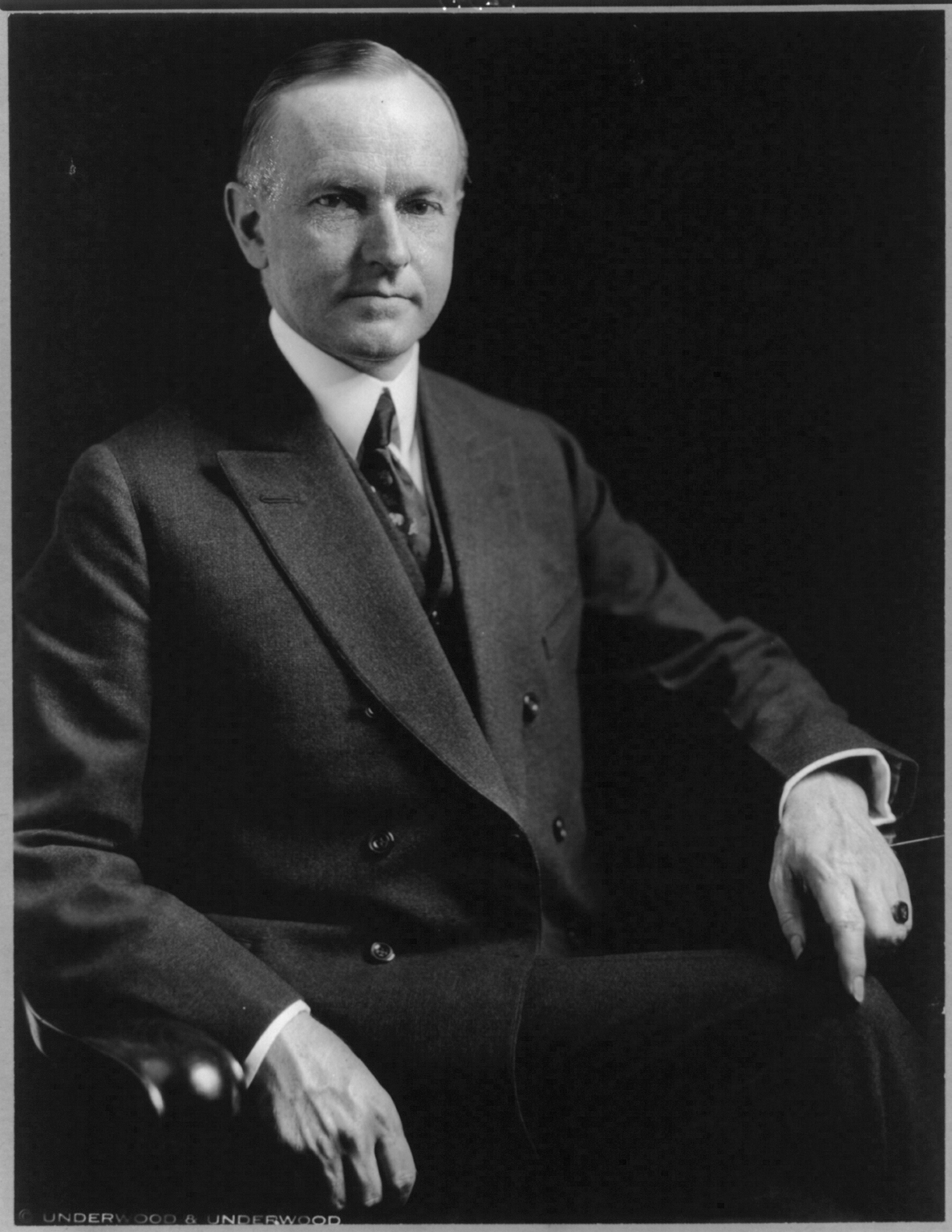
    Calvin Coolidge’s seated portrait, June 6, 1924.Library of Congress

    The program seeks students who embody the principles and ideas that defined Coolidge’s term as the 30th U.S. President. Coolidge was known for his humility as well as his support for political bipartisanship, public education, and local self-government.

    This is the 11th class of scholars sponsored by the foundation, Denhart said, and since 2016, nearly 50 students have passed through the program. The foundation also awards smaller scholarships to its top 100 finalists.

    The scholars are not expected to follow the politics of Coolidge, a Republican who had a reputation as a small-government conservative, Denhart said. They study his history and public policies and debate at an annual seminar, he said.

    Patterson said he plans to spend the summer finalizing his college choices and writing essays. He is undecided about a possible major.

    “The really cool thing about the scholarship is that it opens up all kinds of possibilities,” Patterson said.

    He is considering joining an ROTC program and possibly becoming a U.S. Air Force pilot.

    Patterson wants to encourage underclassmen to consider applying for the scholarship. His advice:

    “Don’t be afraid to put yourself out there. You never know what might happen,” he said.

  • New Jersey and Pennsylvania move forward on chip cards for SNAP benefits to prevent theft

    New Jersey and Pennsylvania move forward on chip cards for SNAP benefits to prevent theft

    New Jersey and Pennsylvania are the latest states to tackle a growing and nationwide crisis: EBT skimming.

    New Jersey is rolling out a roughly four-week pilot to distribute Supplemental Nutrition Assistance Program benefits through chip-enabled EBT cards this summer, the New Jersey Department of Human Services announced Monday.

    Cumberland, Essex, and Mercer Counties, as well as anyone in the state who has lost a card and is in need of a replacement, will be the first to get the new cards that do away with outdated magnetic stripe technology, which is vulnerable to scammers looking to steal people’s benefits.

    “The new chip cards provide enhanced security to help prevent that kind of loss in the first place, keeping benefits in the hands of the people who need them,” Human Services Commissioner Stephen Cha said.

    Next door, Pennsylvania has also moved forward with a chip card transition, setting aside $7 million in the latest budget for the change, which is due no later than Jan. 1, 2028. The federal government would cover the other $7 million needed for the transition as part of the current breakdown of how administrative costs are to be split.

    The next steps are being worked out, and that will determine a distribution timeline, according to the Pennsylvania Department of Human Services. Implementation of the chip cards is slated to take six to eight months.

    The switch to chip cards is seen as long overdue among government watchdogs and advocates of those whose benefits have been stolen. By sticking an inconspicuous contraption onto a point-of-sale terminal, scammers can copy magnetic strip card information and spend benefits in different states. The onus of protecting the benefits has largely fallen on recipients, who are required to download apps onto their phones that allow them to lock their cards until the moment they are ready to pay for their groceries.

    “This is a basic security measure that will prevent our clients from losing millions of SNAP dollars to international organized criminals, and we hope that Pennsylvania can implement this change quickly,” said Louise Hayes, a supervision attorney at Community Legal Services, which has advocated for Pennsylvania to adopt chip cards.

    Help for victims of this kind of fraud has also been limited, leaving churches and food pantries to step in. Stolen benefits were being reimbursed between October 2022 and December 2024, but that ended when Congress did not extend funding.

    “Having benefits stolen, with no means to replace them, only adds further strain to already stretched households,” said Natasha Johnson, assistant commissioner of the New Jersey Division of Family Development.

    With the federal government no longer replacing stolen benefits, states believe EBT skimming has gone underreported in recent years.

    Exact numbers of thefts in New Jersey were not immediately available.

    In Pennsylvania, there were at least 5,100 skimming cases in the first five months of 2026, accounting for $2.5 million in stolen benefits, according to the Pennsylvania Office of State Inspector General, which investigates the reports and seizes the skimming devices.

    In February 2025, California became the first state to begin replacing the magnetic stripe cards. Oklahoma embarked on a chip card pilot this year and Massachusetts announced in April its own plans for a pilot. This week, New York Gov. Kathy Hochul announced new chip cards would be distributed in the state in early 2027.

    Like other states with plans to adopt EBT chip cards, New York hopes to see instances of skimming radically decline with the overhaul.

    Staff writer Gillian McGoldrick contributed to this article.

  • The 5 most Wikipedia-famous local celebs | Inquirer Lower Merion

    The 5 most Wikipedia-famous local celebs | Inquirer Lower Merion

    Hi, Lower Merion! 👋

    A surprising number of celebrities hail from this corner of Montgomery County, but who are the most-searched-for online? We take a look. Also this week, residents are continuing to clean up after Saturday’s storms, police are investigating home burglaries, plus a local teen had a viral moment at the Home Run Derby.

    If someone forwarded you this email, sign up for free here.

    Kylie Kelce tops the list of the most-searched Wikipedia pages of locally born celebrities

    Kylie Kelce is the most searched for celebrity on Wikipedia from Narberth or Lower Merion. Yong Kim / Staff Photographer

    Ever wonder who the region’s most-searched-for locally born celebrities are?

    Kobe Bryant? Of course. Sabrina Carpenter? Obviously. But a fighter pilot born in the early 1900s? Not so much.

    The Inquirer recently dug into the 2025 top five most-searched individuals born in Lower Merion or Narberth, with the tiny borough punching above its weight class.

    Topping the list is Narberth native Kylie Kelce, who gained traction online after her podcast “Not Gonna Lie” launched in late 2024.

    She’s followed by two fellow Narberth natives, one a former Navy fighter pilot and the other a best-selling author. Rounding out the list is an MLB player and the former president of the Cleveland Browns.

    See who made the top five here.

    💡 Community News

    🍽️ On our Plate

    🎳 Things to Do

    🎶 Bryn Mawr Twilight Concerts: There are two shows this weekend. On Friday, get a preview of the upcoming Philadelphia Folk Fest, and on Sunday, hear Trout Fishing in America, an eclectic folk/rock band. ⏰ Friday, July 17, 7 p.m., and Sunday, July 19, 4 p.m. 💵 Free on Friday; $25.88 for adults and $16.56 for kids 12 and under on Sunday 📍 Bryn Mawr Gazebo

    🎞️ To Catch a Thief: See a screening of the 1955 Alfred Hitchcock film starring Cary Grant and Grace Kelly. ⏰ Sunday, July 19, 4 p.m. 💵 $11.75-$16.25 📍 Bryn Mawr Film Institute

    🎵 Music in the Park: Coca Leaves and Pearls headlines the next concert. ⏰ Wednesday, July 22, 7 p.m. 💵 Free 📍 Narberth Park gazebo

    🏡 On the Market

    A bright and airy Merion Station Tudor

    The home has a screened-in porch.Ben Floyd Photography | Courtesy of Kathleen Hartnett/Compass RE

    Built in 1926, this four-bedroom Tudor has undergone a number of updates to blend the past and present. The home features a living room with a stone fireplace, a dining room, a kitchen with quartz countertops and stainless steel appliances, and a screened-in porch. It also has bonus living space on the third floor and a deck out back.

    See more photos of the home here.

    Price: $679,000 | Size: 1,700 SF | Acreage: 0.05

    🗞️ What other Lower Merion residents are reading this week:

    By submitting your written, visual, and/or audio contributions, you agree to The Inquirer’s Terms of Use, including the grant of rights in Section 10.

    This suburban content is produced with support from the Leslie Miller and Richard Worley Foundation and The Lenfest Institute for Journalism. Editorial content is created independently of the project donors. Gifts to support The Inquirer’s high-impact journalism can be made at inquirer.com/donate. A list of Lenfest Institute donors can be found at lenfestinstitute.org/supporters.

  • Inside the new Ikea at Granite Run | Inquirer Greater Media

    Hi, Greater Media! 👋

    A small-format Ikea is now open at the Promenade at Granite Run. Here’s what you can expect. Also this week, the former president and CEO of Wawa has died, a Task-Mare of Easttown crossover is in the works, plus, Swarthmore has named a new borough manager.

    If someone forwarded you this email, sign up for free here.

    A small-format Ikea has opened in Granite Run

    Ikea has opened a small-format store at the Promenade at Granite Run.Peter Morrison

    Area residents no longer have to trek to Conshohocken or South Philadelphia to get their Ikea goods. The Swedish furniture brand opened its first Delaware County store last week at the Promenade at Granite Run.

    Unlike its neighboring behemoths, this one is a “plan and order point” concept, where customers can meet with design consultants and order goods, or pick up items they purchased online.

    Here’s what to know about the new location.

    💡 Community News

    • In case you missed it, former Wawa president and CEO Richard D. Wood Jr. died last week at the age of 88. Wood was instrumental in growing the beloved, locally rooted convenience chain into one of the largest privately held companies in the country.
    • Swarthmore council has named a new borough manager, approving former member Scarlett McCahill for the role at its most recent meeting. She will take over for interim borough manager David Unkovic, who has served in the role since the previous manager was terminated earlier this year. In addition, council named Alex Ashcom assistant borough manager.
    • It’s happening! Hit Delco-set HBO shows Task (which just got six Emmy nods) and Mare of Easttown will finally see their two worlds collide in a crossover. Here’s what we know.
    • Nether Providence police are reminding residents to lock their car doors at night and not leave valuables unattended after several reported thefts earlier this week.
    • Delaware County said last week it was continuing to investigate a recent hack into its network and had restored internal services.
    • Students at Cheyney University will see tuition go up 4.3% after a Pennsylvania State System of Higher Education board of governors vote last week.
    • Heads up for drivers: PennDot will be doing overnight conduit and utility cable installations Monday through Thursday from 9 p.m. to 5 a.m. on both sides of I-476 between the Route 1 and Baltimore Pike interchanges. Expect lane closures and potential traffic stoppages. There will also be a lane closure on Bortondale Road and Orange Street between Old Middletown Road and Baltimore Pike tonight from 7 p.m. to 5 a.m. Starting Monday, Aqua will begin water main replacements on Providence Road between West Rose Valley and Chester Roads, and on Leslie Lane.

    🍽️ On our Plate

    • Looking for an espresso martini? Main Line Today recently rounded up spots to sip the cocktail, including Ariano and Brick & Brew, both in Media.

    🎳 Things to Do

    🎸 Amped Up Concert: Hear Mikeal Anthony Greto perform at this month’s concert. ⏰ Thursday, July 16, 6-8 p.m. 💵 Free 📍 Swarthmore amphitheater

    🎶 Rose Tree Summer Festival: The upcoming lineup features performances from the Eric Mintel Quartet tonight, the Lonnie Shields Band tomorrow night, the Upper Darby Shooting Stars Summer Stage on Saturday, and swing band 22 Park Avenue on Saturday. On Wednesday, seven-piece Billy Joel cover group Angry Young Band takes the stage. ⏰ Thursday, July 16-Wednesday, July 22, 7:30 p.m. 💵 Free 📍 Rose Tree Park, Media

    🪕 Tie Dye Music Festival: Try your hand at tie dying, listen to live music, and grab a bite to eat from a food truck at this annual festival. ⏰ Saturday, July 18, 4-8 p.m. 💵 Pay as you go 📍 Community Arts Center, Wallingford

    ⚽ World Cup Final Watch Party: Catch the action on a big screen on Olive Street. ⏰ Sunday, July 19, 3 p.m. 💵 Pay as you go 📍 Olive Street, Media

    🍿 Inside Out 2: Catch one of two screenings of the popular Disney Pixar film. ⏰ Monday, July 20, and Wednesday, July 22, 5:30 p.m. 💵 $15 📍 The Media Theatre

    🗞️ What other Greater Media residents are reading this week:

    By submitting your written, visual, and/or audio contributions, you agree to The Inquirer’s Terms of Use, including the grant of rights in Section 10.

    This suburban content is produced with support from the Leslie Miller and Richard Worley Foundation and The Lenfest Institute for Journalism. Editorial content is created independently of the project donors. Gifts to support The Inquirer’s high-impact journalism can be made at inquirer.com/donate. A list of Lenfest Institute donors can be found at lenfestinstitute.org/supporters.

  • Mark Donovan Hagins, an actor, playwright, and educator who nurtured Philly’s theater community, has died at 56

    Mark Donovan Hagins, an actor, playwright, and educator who nurtured Philly’s theater community, has died at 56

    Mark Donovan Hagins, 56, an actor, teacher, and producer who knew everyone in Philadelphia’s theater community, from the upstarts to the grizzled veterans, died Wednesday, June 24, at his home. His family said his death was sudden but could not provide further details.

    As a resident producer with the Philadelphia Young Playwrights nonprofit, Mr. Hagins mentored, educated, and staunchly advocated for countless young members of the city’s theater community. Mr. Hagins was known as a laid-back person who could calmly solve problems under pressure, while remaining curious and dedicated to serving his students. Those who worked with him said he was an imaginative, collaborative artist who understood the history of Black theater in Philadelphia and was interested in cultivating its future. He had a talent for bringing entertaining stories to life, with even the barest of tools.

    His acting career included productions with Philadelphia’s Freedom Theatre, Azuka Theatre, Walnut Street Theatre, and the Rutgers-Camden Center for the Arts, appearances in the second season of the HBO show The Wire, and roles in other theater workshops, television shows, and independent films.

    One of his first roles came in 1999, when he connected with Philadelphia Young Playwrights as a student at Temple University and performed in the organization’s annual New Voices festival. After graduating in 2000, Mr. Hagins joined the nonprofit as a teaching artist and classroom actor to guide young playwrights and actors, even while his own theater career was just beginning. He produced numerous works by the city’s youth, including through the New Voices festival, where middle, high school, and even elementary school playwrights have their works performed by adult actors.

    Mark Donovan Harris teaching Philadelphia Young Playwrights students. He first connected with the organization when he was a student at Temple University in 1999.Philadelphia Young Playwrights

    “He believed that coming back to North Philadelphia … could make a difference in young people’s lives. And he said, if you could get through them through acting … you could change their momentum. You could change their environment. You could change their way of thinking. When they became adults, you know they would be better people in the world. So he invested into them,” said his aunt Millicent Platt.

    Mr. Hagins was born July 2, 1969. He grew up in the Hartranft section of North Philadelphia with his parents, the Rev. Paul Hagins and Vermell Hagins, and sister, Ramona Johnson, and spent his summers visiting family in North Carolina. Mr. Hagins, who went by his middle name, Donovan, in the theater world, always was interested in theater, but found it to be his passion once he enrolled at Temple, his family said.

    “A fixture of our Temple Theaters community, Donovan was a proud Temple alum invariably seen repping his school with a hat or shirt,” Temple Theaters posted in an online tribute. “He lived in Cherry and White. Donovan embodied the values of generosity and collaboration, showing an unwavering belief in the power of young voices.”

    Professional actors who worked with him spoke highly of how he curated and directed student productions, said LaNeshe Miller-White, executive director of Philadelphia Young Playwrights. While he had a calming, comforting presence around people, Mr. Hagins was always willing to have fun, too, whether it be playing a silly character written by a student or taking hold of the microphone for his weekly karaoke outing, she said. He took his relationships with students seriously, and stayed in touch with some of his mentees long after their time with the program ended.

    “Donovan’s dedication to young artists and to PYP was unwavering, and his generosity, wisdom, and kindness touched countless students and colleagues across Philadelphia and beyond,” her organization wrote after his passing.

    Mark Donovan Hagins stands with Philadelphia Young Playwrights operations manager Ali Nebistinsky.Philadelphia Young Playwrights

    And while playwriting and theater drove him, Platt said, Mr. Hagins’ niece, Ragan Johnson, 25, and his nephew, Gregory Johnson III, 22, were his heart.

    His niece remembered visiting her uncle in Philadelphia, where they would eat cheesesteaks or visit Reading Terminal Market, and bond over Michael Jackson’s music. She said he was a great listener, and recalled how fun it was to watch him perform onstage in Washington during a period when he lived with her family. She will miss their phone calls, she said, when they used to go over her schoolwork together.

    Mr. Hagins’ parents and sister died earlier. He is survived by his niece and nephew; Platt and another aunt, Ella Mae Frederick; an uncle, Phillip Platt; a brother-in-law, Gregory Johnson II; and other family members.

    His family will hold a memorial service, open to the public, on Saturday, July 18, at 11 a.m. at Nix & Nix Event Venue, 1525 W. Dauphin St., Philadelphia.

  • House Judiciary Committee issues subpoena to Philly DA Larry Krasner, demands immigration records

    House Judiciary Committee issues subpoena to Philly DA Larry Krasner, demands immigration records

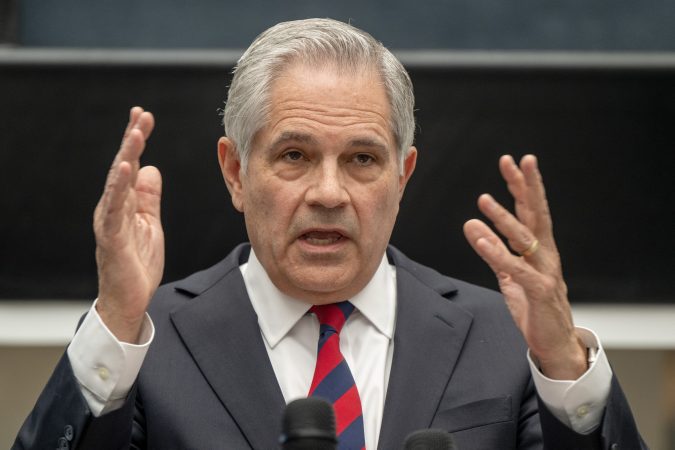
    The House Judiciary Committee subpoenaed Philadelphia District Attorney Larry Krasner on Wednesday, ordering him to turn over documents related to his office’s handling of immigration matters and criticizing what it called the prosecutor’s “pro-illegal-alien policies.”

    The Republican-led Congressional committee said in a letter that it sent the subpoena after Krasner, a Democrat, promised but failed to provide materials that were requested in May.

    The committee, in a letter signed by Rep. Jim Jordan (R., Ohio), its chair, accused Krasner of declining to prosecute or under-prosecuting foreign nationals so that they could avoid consequences connected to their immigration status. The committee said it was asserting its authority to try to end sanctuary-city policies in cities including Philadelphia.

    In response, Krasner called the subpoena “yet another step in authoritarian efforts to do dirt in the dark” and to put pressure on state prosecutors.

    “We have always complied with the law and will continue to do that,” Krasner said Wednesday. “That makes us different from [President Donald] Trump, who spends all day, every day, violating the law of the U.S. Constitution ― and morality.“

    Krasner and the House committee have sparred since May, when the panel accused top city law enforcement officials of shielding criminal immigrants through sanctuary policies and demanded that they quickly turn over a trove of related records and correspondence.

    That represented an escalation by Trump-allied Republicans in their criticism of Philadelphia government on rules concerning undocumented residents, particularly around limiting city cooperation with U.S. Immigration and Customs Enforcement.

    In April, City Council approved high-profile “ICE Out” legislation aimed at restricting immigration enforcement in Philadelphia, putting the city at the forefront of local resistance to Trump’s deportation campaign. The Trump administration challenged part of that package of bills, and this month a federal judge ruled that the city could not prevent ICE agents from concealing their identities.

    In May, in letters to Krasner, Police Commissioner Kevin Bethel, and Sheriff Rochelle Bilal, the Judiciary Committee accused each of hindering federal immigration enforcement. Each letter sought up to six years of immigration communications between their agencies and immigration officials and, in the sheriff’s case, with activist groups including No ICE Philly, Juntos, Asian Americans United, and others.

    The Trump administration has clashed with cities and states that embrace sanctuary policies, contending they are hurting Americans and threatening to cut their federal funding. Philadelphia has long been among the targets.

    Krasner had responded by telling the committee, which said it was conducting oversight of state and local jurisdictions that it believes endanger Americans by not assisting immigration agents, that such policing powers belong to the city.

    “The legal errors are unsurprising,” Krasner wrote to Jordan and to Rep. Tom McClintock (R., Calif.), chair of the subcommittee on immigration, noting that neither had passed the bar. “The factual errors are also unsurprising, given your histories of adhering to wholly repudiated, counterfactual and unscientific election denialism, climate change denialism, and the like.”

    Krasner wrote that he needed time to address each of the committee’s allegations and requests, and was working to hire a lawyer who would be in touch soon.

    In July, Krasner wrote the committee and encouraged it to “question me in public so all Americans are able to see who is telling the truth.”

    The committee’s “fear of such a public airing only makes clearer your lack of real purpose and your complicity in peddling lies,” such as, he said, that local and state prosecutors “rather than President Trump’s ill-conceived deportation actions are responsible for criminals going free.”

    Immigrants are far less likely to commit and be arrested for crimes than U.S. citizens, Krasner noted. But the small number of immigrants who commit serious crimes are being deported by ICE before they can stand trial and be sentenced, given “a ‘get out of jail free’ card and a plane ride to another country, a country where they will never face American justice.”

    The committee told Krasner on Wednesday that time to provide the requested records had run out. Its subpoena directs him to turn over the materials by July 29.

    “Although you may disagree about the need to reform federal law to end sanctuary policies … you cannot seriously contend that the committee lacks the authority to do so,” the committee wrote, adding that Congress may amend statutes “to ensure that prosecutors cannot circumvent immigration law and allow aliens to escape accountability for their crimes.”

  • House vote exposes Democrats’ widening divide over Israel

    House vote exposes Democrats’ widening divide over Israel

    A striking number of House Democrats — 103 — voted Wednesday to cut off military aid to Israel for the next fiscal year, in a sign of the growing disconnect between the Democratic leadership’s long-standing support for the Jewish state and the party’s left wing.

    The vote was on a largely symbolic amendment introduced by Rep. Thomas Massie (R., Ky.) to an appropriations package for the State Department and other national security agencies.

    Despite the considerable Democratic support, the amendment failed in the House. House Minority Leader Hakeem Jeffries (D., N.Y.) voted against it. Massie was the only Republican to vote for the amendment. Ten Democrats voted present.

    Still, the large support for the amendment comes amid a sharp shift among Democratic voters on Israel. A number of Democrats who have voiced support for Israel voted for the amendment, including former House Speaker Nancy Pelosi (D., Calif.) and Katherine Clark (D., Mass.), the minority whip.

    In a statement, Clark — the No. 2 House Democrat — said, “the status quo is not tenable.”

    She added: “We should not provide a blank check for military aid to any country that does not comply with U.S. law, interests, and values. The Netanyahu government has failed to meet that standard.”

    Public support for Israel has plummeted over the country’s military campaigns in Gaza and Lebanon, particularly among Democrats. Nearly three-quarters of Democrats want to reduce or end military support for Israel, according to a Washington Post-Ipsos poll conducted July 8-13. Forty percent of Democrats want to eliminate military support to Israel entirely, including 58% of “very liberal” Democrats.

    Views have shifted dramatically in recent years. Shortly after the Oct. 7, 2023, Hamas attacks on Israel, 28% of Democratic registered voters felt the U.S. was too supportive of Israel, according to polling by Quinnipiac University. That rose to 41% by early 2024 and to 66% last month, including clear majorities of older and younger Democrats.

    Rahm Emanuel, a potential Democratic presidential candidate and former top adviser to Presidents Bill Clinton and Barack Obama, recently traveled to Tel Aviv to warn Israelis that Prime Minister Benjamin Netanyahu had led the country toward dangerous diplomatic isolation.

    Emanuel said U.S. support for Israel was “plummeting around the world” and argued that the United States should end “the American taxpayer’s subsidy of Israel’s defense budget.”

    Jeffries has resisted calls from the base to end all aid to Israel’s government, balancing the priorities of his Democratic members who have stood by the U.S.-Israel relationship. He wrote in a Monday letter to his fellow Democrats that he would be voting against the measure, saying it is too broad.

    But Jeffries said “given the strongly held views throughout the Caucus,” he would let members vote their conscience on the measure.

    A progressive campaign push

    Progressive candidates have cast the divide as evidence that the Democratic establishment is misaligned with its own voters — not only on the war in Gaza, but also on money in politics and the use of U.S. tax dollars abroad.

    “The Democratic Party has been out of step with its own base on Gaza and Palestinian human rights for years. People in this country can’t afford rent, groceries, or a doctor’s visit — and instead of fighting for them, our politicians are sending billions to fund a genocide,” said Darializa Avila Chevalier, a democratic socialist candidate who won a competitive New York primary last month.

    The strategy has had several notable successes.

    In New York, three vocal leftist critics of Israel including Avila Chevalier handily won their primaries, including one in which support for Israel became a central distinction with the moderate incumbent. Candidates making similar arguments also won primaries in Pennsylvania, New Jersey, and Colorado.

    The trend continues in competitive primary races this summer, including in Michigan’s highly watched Senate race where criticism of Israel forms a pillar to progressive candidate Abdul El-Sayed’s message.

    In a statement for this story, Jeffries said the party “must recommit to a two-state solution that prioritizes a safe and secure Israel as a Jewish and Democratic state living side by side in peace and prosperity with a Palestinian state that provides dignity, respect, and self-determination for the Palestinian people.”

    He continued, “It is also imperative that we support the complete reconstruction of Gaza, aggressively surge humanitarian aid to Palestinian civilians and strongly oppose the reprehensible conduct of the far-right Netanyahu government in the West Bank.”

    He added in his letter to fellow Democrats that Israel has reached a point where it should be able to pay for its own defense and that the U.S. should reassess future aid agreements with the country.

    The call for a reset was a significant move for the leader given his past firm support for the U.S.-Israel alliance, said Jeremy Ben-Ami, president and CEO of the liberal pro-Israel group J Street.

    But several progressives have still demanded a stronger stance on the issue than Jeffries’s attempts to balance the positions of the caucus.

    “The Democratic voting base and the American voting base have shifted here,” said Brad Lander, who won a competitive New York primary against Rep. Dan Goldman, a longtime supporter of Israel. “I do believe that the Democratic Party leadership is going to have to catch up.” Lander, like Goldman, is Jewish and supports a two-state solution but differed from Goldman in labeling Israel’s actions in Gaza a genocide.

    The American Israel Public Affairs Committee, the preeminent pro-Israel lobbying group, has become a particular target on the left, held up as an example of what progressives call the corrupting influence of money in politics. Progressive candidates regularly criticize moderate candidates who benefit from spending by AIPAC-affiliated groups, asserting the group’s campaign funding pushes candidates away from the party base’s stance on Israel. AIPAC’s political network supports pro-Israel Democrats and Republicans, including all of the top members of House Democratic leadership.

    El-Sayed has accused his opponent, Rep. Haley Stevens, of failing to adequately condemn the actions of the Israeli government because of what he says is the influence of the pro-Israel lobby. A super PAC affiliated with AIPAC has poured more than $20 million into boosting Stevens.

    “Her entire campaign is bankrolled by outside organizations who know that they’re going to buy a reliable vote to send our tax dollars elsewhere instead of solving actual problems here in Michigan,” El-Sayed said.

    On Wednesday, Stevens voted against the House amendment.

    Stevens is a longtime supporter of Israel, though she has also criticized the government’s handling of the war in Gaza and said Israel’s actions have made Jews around the world less safe. During a debate this month, she said she was the only candidate who truly advocated for the creation of a Palestinian state alongside Israel.

    Stevens’ campaign responded that El-Sayed was “peddling in conspiracy theories” by asserting she was working at the behest of AIPAC.

    “Haley has always believed this race is about the future of Michigan, and that’s why her focus is and has been on promoting policies that will reduce costs, grow the economy and create a strong 21st century manufacturing industry that will carry Michigan forward,” her campaign said in a statement.

    Patrick Dorton, a spokesperson for AIPAC’s super PAC, said the group has the right to partake in the primary process like any other interest group and noted that super PACs have also been spending heavily to back candidates opposed to the U.S.-Israel relationship.

    “The anti-Israel fringe left uses the dark money argument when it suits them and funds super PACs when it’s to their advantage,” Dorton said. “These are red herring arguments to drive pro-Israel Democrats out of the party and out of the primary process.”

    Deryn Sousa, a spokesperson for AIPAC, said that the organization’s membership crosses party lines and the group supports candidates based on their alignment with its support for the U.S.-Israel relationship. Hundreds of AIPAC-backed candidates have won their primaries this year, Sousa noted.

    Democrats for Israel

    Israel still has its ardent defenders among congressional Democrats, several of whom argue that the growing number of vocal Israel critics fails to grasp the reality on the ground.

    “War is terrible, and it’s very hard to be successful in an urban war and successful in the public relations war,” said Rep. Brad Sherman (D., Calif.), a longtime supporter of Israel and co-chair of the Israel Allies Caucus.

    Sherman said he and most other Democrats have been able to criticize the government of Israel without going after the U.S.-Israel relationship, one of the strongest partnerships in the Middle East. He warned that some of the criticism has amounted to demonization and antisemitism.

    And even among the progressive candidates criticizing the party’s stance toward Israel, there is disagreement on the future of the relationship with Jerusalem. While Lander identifies himself as a Zionist, El-Sayed said liberal democracy was incompatible with the idea of a Jewish state.

    The next House Democratic Caucus is likely to include an unusually large number of members openly critical of Israel. Still, foundational disagreements over Israel are nothing new to the caucus.

    Sherman recalled a pushback on similar criticisms against Israel in the 1980s, when the country invaded Lebanon, though he noted the resistance to Israel is greater now among Democrats than then. He was a founding leader at the time of Democrats for Israel, a grassroots group dedicated to rooting out anti-Israel sentiment in the party.

    Avila Chevalier said she would work with anyone “serious about lowering the cost of living working-class people” regardless of their stances on Israel.

    Rep. Bradley Schneider (D., Ill.), a moderate who is largely supportive of the U.S.-Israel relationship, noted Israel critics already serve in the Democratic Caucus and that he is still able to work with them on other issues, including healthcare, housing and education.

    “Democrats are a big tent,” Schneider said. “We welcome diverse opinions.”