Category: News

  • ‘Iran War Participation Trophy’ mocking Trump arrives in New York

    ‘Iran War Participation Trophy’ mocking Trump arrives in New York

    NEW YORK — First D.C., then Manhattan.

    The satirical art group responsible for about a dozen public pieces mocking President Donald Trump in the nation’s capital over the past 20 months has now landed in New York.

    The anonymous artists who call themselves the Secret Handshake left their mark in Lower Manhattan on Wednesday morning, placing a 10-foot-tall trophy, spray-painted gold and emblazoned with a #1 on its side, in Foley Square.

    A large plaque below the “Iran War Participation Trophy” reads: “We hereby award President Donald J. Trump this participation trophy for his enthusiastic involvement in the Iran War. While some concern themselves with military strategy, diplomacy, or measurable outcomes, President Trump demonstrated the courage to participate regardless of the final score.”

    The war in Iran, which began Feb. 28, has resulted in the deaths of 18 U.S. service members and wounded more than 600.

    Walking to catch the subway, Maren Stange, 79, stopped and chuckled as she bent to read the rest of the trophy inscription: “President Trump joins the ranks of children everywhere who received recognition for simply showing up.”

    Stange, who said she had never heard of the Secret Handshake, wasn’t sure the statue would change anything. “It’s funny and it’s smart,” she said. “But what’s it going to do?”

    The installation, which was first displayed in Washington this month, invites anyone to contribute their own participation trophies to the project.

    Arranged around the plinth were more than three dozen mock trophies and awards. One seemed to mock Trump’s electoral history: “Lost Arizona,” read a baby blue Honorable Mention ribbon, dangling from the neck of a tennis trophy.

    A trophy of a martial arts figure, leg raised in a kick, bore the printed message “Most Swollen Cankles” attached to its white base. One small gold chess award was labeled “Smallest Hands Award.”

    “It’s just kind of trolling Donald Trump,” said DJ Hairston, 37, an attorney headed to the nearby criminal court. “It’s definitely funny. Because that’s what this is — this is a participation war. It’s all stupid. It’s all a farce. And this is what Donald Trump wants. He wants a big gold trophy in the middle of Manhattan.”

    Michael Chrzynowski, 46, and his mother, Candace Goudey, 69, stopped to examine the trophy and the trophy spawn.

    “It’s cathartic. They’re mocking him,” Goudey said. “And then you turn around and read, ‘The true administration of justice is the firmest pillar of good government,’” a message engraved in stone across the street, above the entranceway of the New York County Supreme Court building.

    It felt, she said, like that sense of justice was lacking from the Trump administration.

    “These untalented ‘artists’ should stick to their ugly ‘art’ and refrain from weighing in on foreign policy — which they clearly know nothing about, given the fact that the United States Military achieved all of its objectives during Operation Epic Fury,” White House spokesperson Anna Kelly said in an email when the trophy first appeared in Washington on July 13.

    The Secret Handshake, whose members have declined in phone interviews with the Washington Post to provide any identifying information, has previously placed installations at locations across D.C.

    Earlier works by the group include a statue of Trump and Jeffrey Epstein holding hands, a mock tribute to Trump from the world’s authoritarian leaders, and a reproduction of the desk of former House Speaker Nancy Pelosi (D., Calif.) with a pile of fake excrement on it that ridiculed the Jan. 6, 2021, rioters who sought to overturn the 2020 election.

    Many of the previous installations were at prominent spots on the National Mall, including directly in view of the Capitol’s west side. Those received a National Park Service permit for temporary display.

    In Foley Square, some lawyers with briefcases, heading to one of the courthouses nearby, did a double take when they spotted the trophy, then kept walking.

    “That’s a first,” said a New York court officer, who declined to give his name. “Who put that there? The Secret Handshake? I’ve never heard of them.” He shook his head and began walking to work. “Listen, he’s no worse than any other president, I tell you that much.”

    A man in a red T-shirt bearing the message “Peace of Mind” squinted at the trophy, read the plaque, raised his hands and flipped the bird — two of them — which he said was directed at the president.

    Welcome to New York.
  • Dominican Republic’s zoo offers home for confiscated animals as seizures of exotic species soar

    Dominican Republic’s zoo offers home for confiscated animals as seizures of exotic species soar

    SANTO DOMINGO, Dominican Republic — The only zoo in the Dominican Republic is providing a safe haven for confiscated illegal and smuggled animals as a government crackdown aimed at protecting exotic species gathers pace.

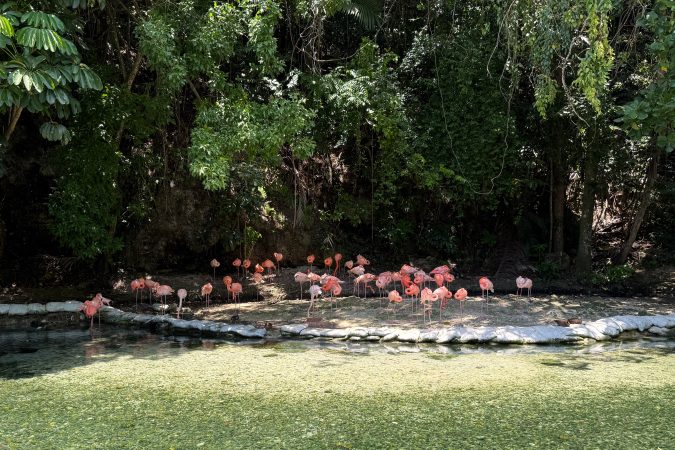
    Tucked inside a green oasis in the middle of the capital, Santo Domingo, are crocodiles, flamingos, and even tigers that officials have confiscated from people accused of illegally keeping them. The numbers are growing and threaten to overload the country’s lone zoo.

    “It’s a burden,” said Alfonso Ferreira, deputy director of the city’s National Zoological Park. “People have a predisposition to owning wild animals.”

    Dominican authorities seized 188 animals last year, compared with 30 in 2023, as the government tries to tackle the illegal ownership of certain species. It has also launched educational campaigns to raise awareness about their plight.

    So far this year, officials have confiscated more than 8,900 species, although a majority of those were crickets and young fish to feed animals including seahorses.

    Commonly, flamingos are the most rescued animals, said Nelson García Marcano, head of the Caribbean nation’s Department of Wildlife Regulation and Control.

    Flamingos, which are protected, are often illegally taken from their natural habitat and sold to hotels, which use them as garden ornaments, he said. It’s a trend that individual homeowners have started to follow.

    “People like to copy what they find attractive and beautiful,” said Garcia Marcano, who decried the practice, noting people sometimes amputate a bird’s wings. “It’s a migratory animal,” he said. “It’s an animal that should be free.”

    Nursing animals back to health

    On a recent hot morning, the Associated Press visited a flock of rescued flamingos that sought shade in a private section inside the zoo.

    They had recently been confiscated by authorities, and it showed. Their typically bright coral feathers were white, as if they had been bleached. Ferreira explained that their captors usually feed them white bread instead of the algae and tiny crustaceans their bodies require.

    To reduce the number of flamingos featured at hotels across the Dominican Republic, García Marcano said they have suggested that staff embrace species including the purple gallinule, a cranelike bird with iridescent feathers.

    At the zoo, the rescued flamingos receive carrots and bird feed and are rehabilitated for several months before some are released back into their natural habitat.

    Nearby, several crocodiles sat without blinking in individual cages filled with greenish water. They, too, had been snatched from their natural habitat and kept as pets.

    Encompassing 309 acres, the zoo is big enough that a small train ferries visitors to exhibits, but resources are stretched. Territorial animals such as crocodiles must be isolated, which requires more cages and, in turn, more funding.

    Veterinarians run multiple tests on the rescued animals to determine their health. Many will require a strict diet because their owners would often have fed them the wrong food, weakening an animal’s immune system and causing physical deterioration.

    “Before, we only received parakeets and parrots,” said veterinarian Tatiana Carreño Pinto. “Now we have a much wider range of species arriving at the park.”

    ‘It’s like cat and mouse’

    The zoo also is preparing to take in exotic animals confiscated in neighboring Puerto Rico as part of a deal reached last year, including caimans that have been seized from suspected drug traffickers.

    Puerto Rico, a U.S. territory, is struggling with an overload of exotic species, with nearly 100 animals seized over the July 4 weekend alone. They included 80 boa constrictors, eight native boas, four reticulated pythons, three caimans, and four troupials — Venezuela’s state bird.

    An official with the Rangers Corps of Puerto Rico’s Department of Natural and Environmental Resources did not respond to multiple requests for comment.

    In the Dominican Republic, officials continue to try to save species that once roamed free.

    A project was launched last year to save an endemic parrot, which is under threat and commonly kept as a pet. The government has erected large billboards warning against trade in the parrots. García Marcano said officials are receiving a growing number of calls about this practice as people spot them along roads while traveling.

    The zoo, once again, steps in to help feed and rehabilitate the seized parrots.

    “Operations have been carried out, arrests have been made,” García Marcano said. “It’s like cat and mouse. You have to maintain constant vigilance.”

  • N.J. Democratic delegation asks President Trump to reverse FEMA aid rejection for deadly February snowstorm

    N.J. Democratic delegation asks President Trump to reverse FEMA aid rejection for deadly February snowstorm

    Every Democrat in the New Jersey congressional delegation signed a letter to President Donald Trump asking him to reverse his rejection of disaster aid for a deadly blizzard earlier this year.

    The lawmakers sent the letter, which was first obtained by The Inquirer, to the White House on Friday in support of Gov. Mikie Sherrill’s appeal of the president’s rejection. Their plea comes after Trump denied an $84 million request to the Federal Emergency Management Agency (FEMA) for relief for a late February blizzard earlier this month.

    “Severe blizzard conditions led to widespread damage—overwhelming State and local capacity,” the lawmakers wrote. “Tragically, this fatal event resulted in 12 confirmed weather-related fatalities across nine counties, the most out of any impacted state.”

    The letter was led by U.S. Sens. Cory Booker and Andy Kim, both Democrats. All members of the New Jersey delegation were invited to join, Booker’s office said, but all three of the state’s Republican members opted out. Even U.S. Rep. Jeff Van Drew, a South Jersey Republican, sat out of the effort despite initially backing the request in April.

    Van Drew joined Booker, Kim, and six Democratic House members in an April letter of support for the request in which they said the public assistance and hazard mitigation funds “are crucial to the recovery of the communities” impacted by the storm.

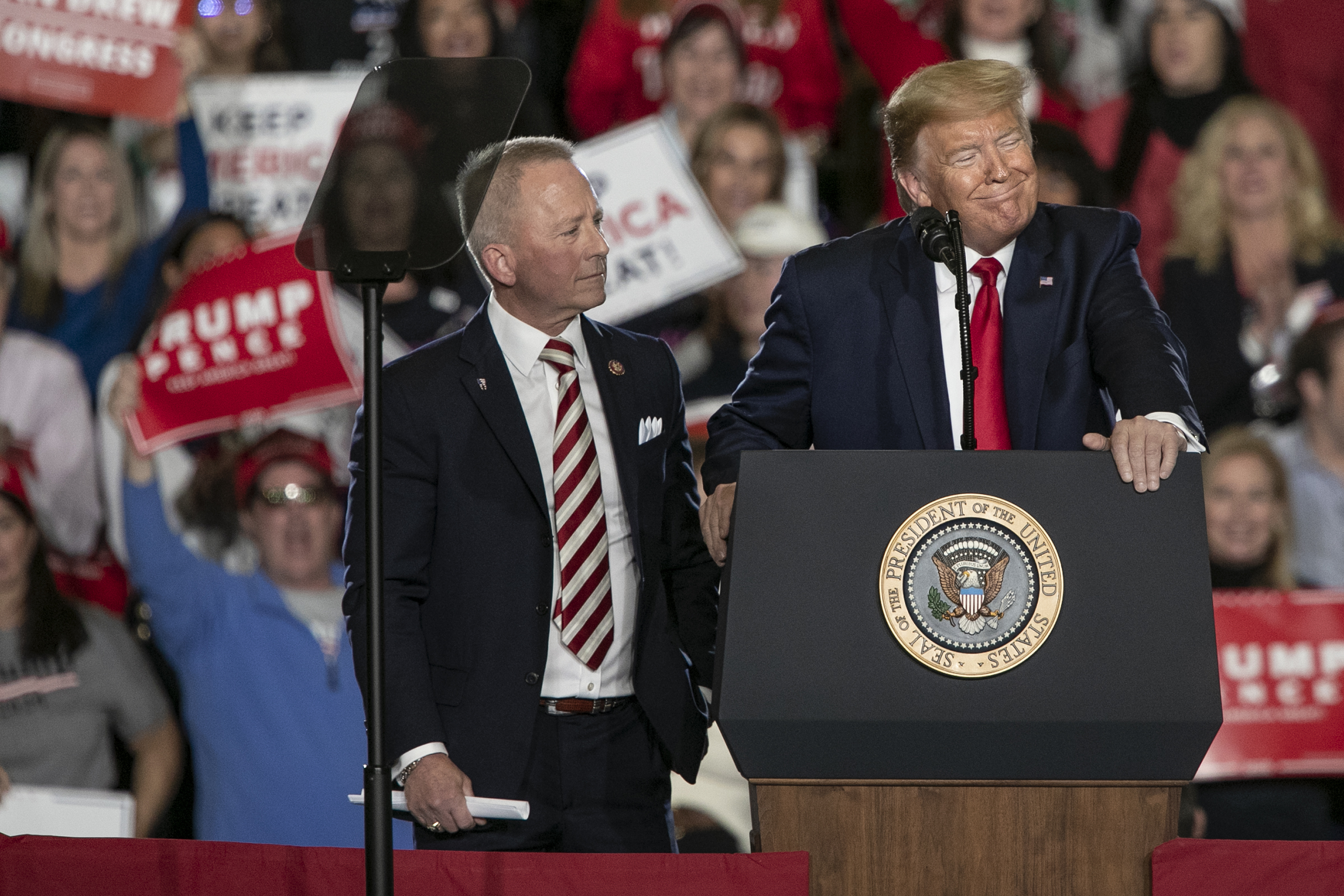
    President Donald Trump smiles while Rep. Jeff Van Drew (R-NJ) stands next to him at a Keep America Great campaign rally in Wildwood, NJ on Tuesday, Jan. 28, 2020.HEATHER KHALIFA / Staff Photographer

    The request sought money for every county in Van Drew’s district for costs related to the snowstorm, including damage from moderate coastal flooding in Atlantic County and his home county of Cape May. Van Drew, a Trump ally and former Democrat, faces a challenge from Cape May Mayor Zack Mullock for his reelection in November.

    Van Drew did not respond to a request for comment.

    In the Friday letter, the Democratic lawmakers’ tone was direct but they did not reference accusations that Trump’s decision was politically motivated. Those concerns come amid a revelation that the Trump administration has been rejecting Democratic states at a particularly high rate. A Wednesday Politico report found Trump recently overrode regional FEMA assessments when he rejected aid for four Democratic states.

    The request included assistance for the vast majority of the state’s counties – including all of South Jersey – as well as hazard mitigation funding statewide, according to the Friday letter. Preliminary damage assessments across those 19 counties documented “extensive emergency work” such as snow and debris removal and “damage to critical infrastructure and public facilities.”

    The New Jersey Office of Emergency Management estimates that disaster costs will exceed $100 million, which is more than five times more than the state’s threshold of about $18 million to qualify for federal disaster assistance.

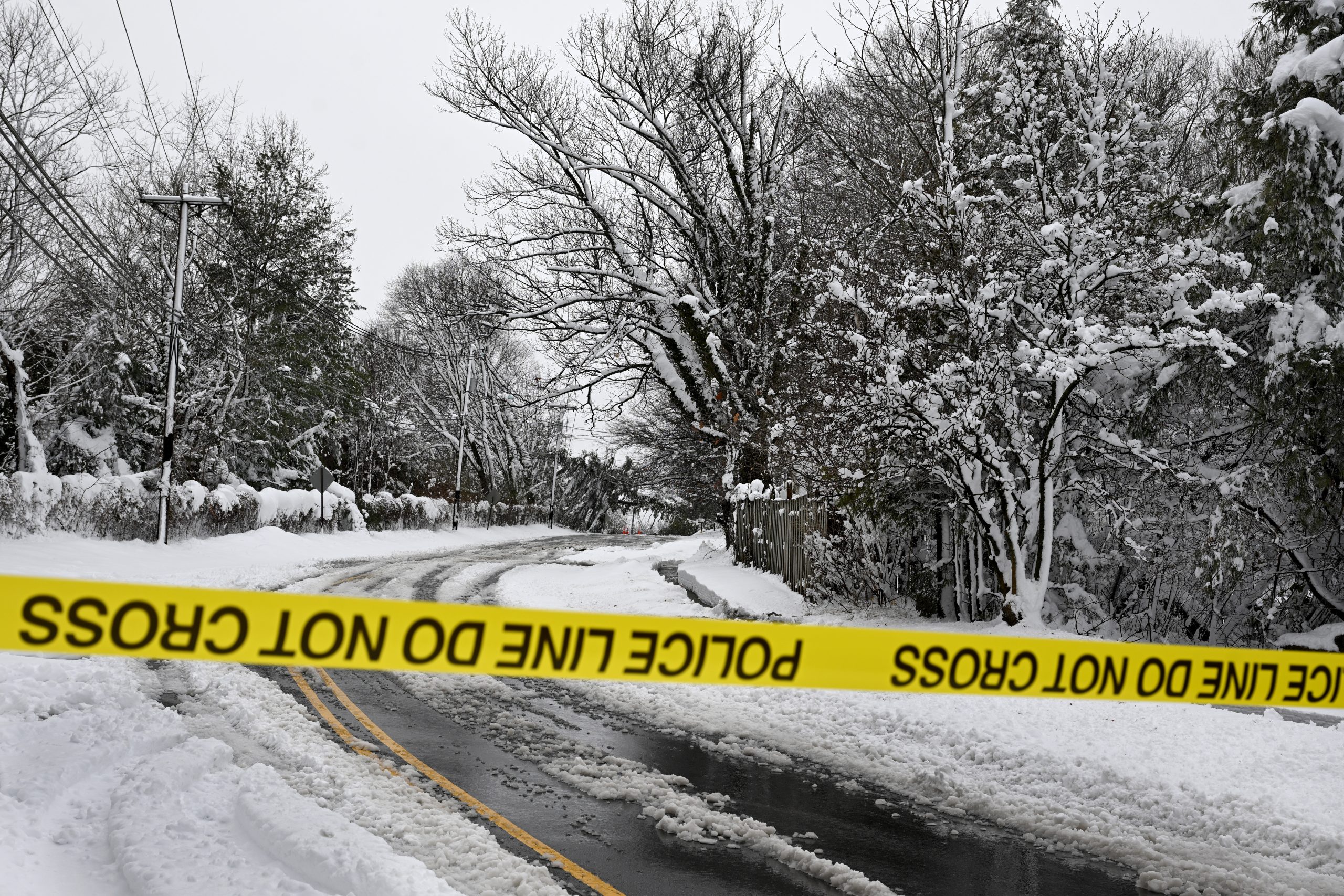
    Covered Bridge Road in Cherry Hill is Monday Feb. 23, 2026 after a power line was knocked down by the Sunday night snorwstorm.Tom Gralish / Staff Photographer

    “The extent of the damage, the operational burden throughout the State, and the cumulative impacts of recent and related extreme weather all provide overwhelming evidence that New Jersey’s request must be granted,” they wrote. “While we commend the actions of the State and local governments to respond thus far, full recovery will require your approval of federal resources.”

    The lawmakers cite National Oceanic Atmospheric Administration data that found approximately 24 inches of snow fell in less than 24 hours across central and eastern parts of the state, and eight of the state’s 21 counties recorded record or near-record snowfalls.

    Power outages during the storm impacted more than 127,000 customers in the state and there were 544 motor vehicle accidents and 1,518 motor vehicle-related assists, according to the letter.

    They also argued that Trump should consider that the state already had a “strained capacity to respond” because of another severe snow and ice storm weeks earlier, as well as six open federal disaster declarations — in reference to prior disasters for which the state is still working on recovery projects.

    “We look forward to working with you to ensure all Americans receive protection and support from the federal government in the aftermath of a serious disaster,” they wrote.

    On Thursday, Sherrill spokesperson Sean Higgins noted in a statement that the costs of the February snowstorm “didn’t care about political boundaries” and that the governor will fight for funding “regardless of political party,” in a nod to the accusations Trump is putting his thumb on the scale based on partisan favoritism.

    White House spokesperson Abigail Jackson said in a statement Thursday, before receiving the letter, that the president “provides a more thorough review of disaster declaration requests than any Administration has before him” and that he responds to FEMA requests “with great care and consideration, ensuring American tax dollars are used appropriately and efficiently by the states to supplement—not substitute, their obligation to respond to and recover from disasters.”

    She also said the Trump administration is committed “to empowering and working with State and local governments to invest in their own resilience before disaster strikes, making response less urgent and recovery less prolonged.” The Trump administration previously tried to cut disaster prevention funding because it was too “focused on ‘climate change” before a group of states including New Jersey sued.

    Kim, the ranking Democrat on the committee that oversees FEMA, said in an interview Thursday that he is concerned that politics were involved in the latest rejection but couldn’t say for sure.

  • HBO series ‘Task’ to film in Wissahickon Valley Park in August

    HBO series ‘Task’ to film in Wissahickon Valley Park in August

    If you’re taking a run through Wissahickon Valley Park next week and spot those signature Mark Ruffalo curls and determined glint in his eye through the tree leaves, worry not! The HBO series Task is filming its second season in the Northwest Philly park Monday through Friday.

    On Monday, the Bells Mill West Lot will be closed to the public for filming and will reopen the next day. Visitors can park instead in the Bells Mill East Lot.

    On Tuesday and Wednesday, the trail entrance at Manatawna Avenue will not be accessible. Houston Meadow can be accessed through the Houston Playground entrance on the Yellow Trail.

    The film crew is slated to park vehicles and equipment on some parts of Forbidden Drive. The trail will remain open, but hikers and runners may see stop signs warning them of “equipment ahead” or to go “slow ahead.”

    In July, the crew was spotted filming in Manayunk.

    The Delaware County-set series Task by Mare of Easttown creator and Berwyn resident Brad Ingelsby centers on FBI agent Tom Brandis, portrayed by Ruffalo. In the second season, Brandis is leading a new task force and confronting his rival Philadelphia DEA agent Eddie Barnes, played by Mahershala Ali, the Oscar winner who starred in Moonlight, Green Book, and the third season of the HBO crime show True Detective.

    The show’s first season also made its way around the city and suburbs. It featured scenes at the Rita’s Italian Ice & Frozen Custard in Collingdale, the Willowbrook Shopping Center in Boothwyn, and Marsh Creek State Park in Downingtown.

  • A man was found engulfed in flames on Kensington Avenue

    Police found a man engulfed in flames along Kensington Avenue Friday morning in what fire department officials called a “non-suspicious” fire.

    Police responded to the 3400 block of Kensington Avenue Friday morning for a report of a screaming person. Upon arrival, a person passing by said a 34-year-old man was found on the ground engulfed in flames.

    Philadelphia Fire Department medics responded to the scene and transported the man to Temple University Hospital, where he was placed in critical but stable condition.

    The circumstances surrounding the incident remain under investigation by the East Detective Division, but the Fire Marshal’s Office ruled the fire to be “non-suspicious.”

    Anyone with information regarding this incident is encouraged to contact the East Detective Division or submit an anonymous tip through the Philadelphia Police Department’s tip line at 215-686-TIPS (8477).

  • Montco parts supplier for SEPTA conspired to rig bids, federal prosecutors say

    Montco parts supplier for SEPTA conspired to rig bids, federal prosecutors say

    Federal prosecutors have charged a Montgomery County rail parts supplier and its owner with participating for eight years in a bid-rigging conspiracy involving SEPTA contracts.

    Hatfield-based Qual-Tran Products Co. LLC and owner Cathleen Shive colluded with competitors and others, including a former SEPTA employee, to manipulate the transit agency’s competitive bidding process, according to a charging document filed July 23 in the U.S. District Court for Eastern Pennsylvania.

    Invoices show SEPTA did $20.3 million worth of business with Qual-Tran from 2007 to 2025, authority spokesperson Andrew Busch said. The transit agency says it bought a variety of train and railway parts from the company, many of them for Regional Rail.

    A person answering the phone at Qual-Tran’s listed telephone number declined to comment. Lawyer Fortunato Perri is representing the company according to court records and declined to comment Friday.

    “SEPTA’s Office of Inspector General has been working closely with the Department of Justice on this matter and will continue to do so as the investigation moves forward,” Busch said.

    Qual-Tran distributes after-market parts to transit systems and freight railroads across the country.

    The company specializes in overhead catenary wires, which transfer power to passenger trains, as well as other equipment such as current sensors and third-rail contacts, according to its website and coverage in trade publications.

    SEPTA won’t have a complete picture of how much money was involved in the alleged scheme until the government reveals more details as the case progresses, Busch said.

    Qual-Tran was able to reverse-engineer replacement parts no longer made for older rail cars in SEPTA fleets, he said.

    The U.S. Attorney’s Office for Eastern Pennsylvania declined to comment on the case beyond court records.

    Qual-Tran and Shive, prosecutors allege, conspired with five people and two corporations, none identified by name in court records. They created the appearance of competition for SEPTA work while deciding among them which company would win some contracts, the charging document says.

    The alleged scheme ran from 2016 to 2024, according to the charges. Shive, the documents say, joined Qual-Tran in 2011 and became the president and owner of the company in 2024.

    They face antitrust charges of unlawful restraint of trade in interstate commerce.

    Prosecutors described five transactions.

    In one September 2023 instance, the government said, Shive asked a senior resource controller with SEPTA to arrange for a second corporation to deliberately submit a higher bid of $3,310 each for “30 manhole frames and lids.” Qual-Tran won the contract by quoting a lower price.

    SEPTA confirmed that the senior resource controller mentioned in the charging documents is no longer employed by the agency.

  • Biggest project yet planned for Manayunk’s Venice Island with more than 800 homes

    Biggest project yet planned for Manayunk’s Venice Island with more than 800 homes

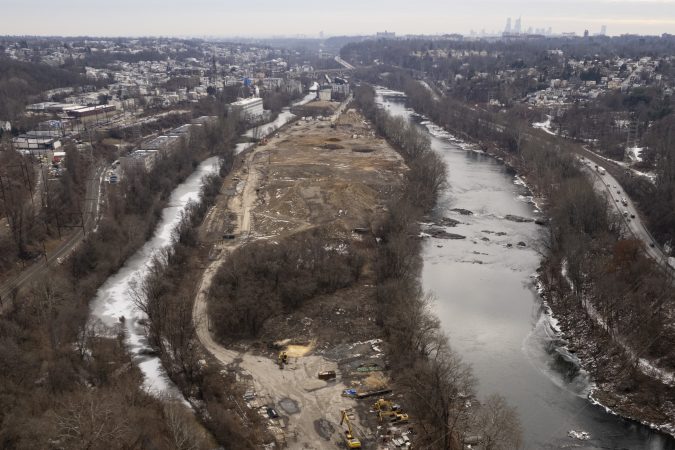
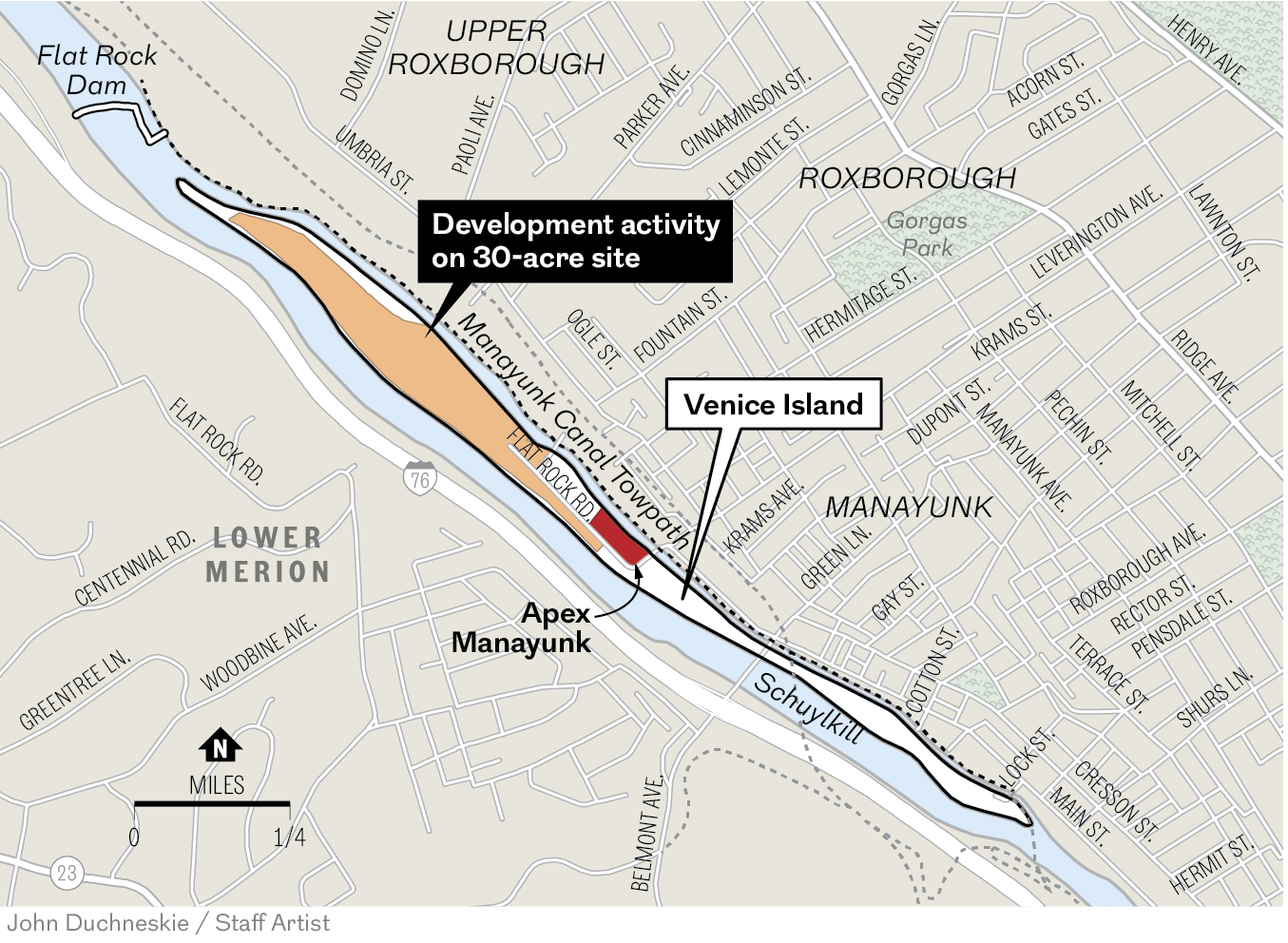
    A developer is planning to build 807 housing units on 30 acres of Manayunk’s Venice Island, bringing an end to years of questions by residents about what would become of the land.

    Manayunk Renaissance LLC told members of local neighborhood groups about the plan during an informal meeting Wednesday. Councilmember Curtis Jones Jr., who represents Manayunk, also attended.

    The company confirmed the plans to The Inquirer on Thursday.

    “Venice Island is one of the most unique areas in Philadelphia, with water views on both sides, proximity to trails and outdoor space, and easy access to both SEPTA and I-76, all within walking distance of one of Philadelphia’s great neighborhoods — Manayunk,” Hercules W. Grigos, an attorney for the company, said in a statement.

    The meeting with community leaders was meant to solicit feedback on the project, which is on the former PaperWorks mill site. Neighborhood input would then be used to “refine the proposal,” Grigos said.

    Manayunk Renaissance LLC said in a statement that it plans to build multiple types of housing at what it calls The Flat Rock at Venice Island. The proposal includes 159 townhouses, 126 duplexes (with 252 units), and 396 apartments.

    John Hunter, an architect and zoning chair of the Manayunk Neighborhood Council, who attended the briefing, has long argued at community meetings against more waterfront housing because he’s concerned about flooding and overdevelopment.

    “It’s unfortunate. It follows a trend,” Hunter said of the plan. “It’s more suburbanization of Manayunk, more residential. There’s no commercial there; it’s not balanced.”

    The company noted that it would be the fifth residential project on Venice Island, although it would still require a zoning change.

    Flat Rock would also be its largest development, by far.

    Apex Manayunk has about 128 units, the Locks has 60 townhouses, and the Isle has roughly 160 apartments. A 181-unit project is also planned by Rock Urban Development, a scaled down version of an earlier proposal.

    Where would the new housing be built?

    The 30-acre site at 5000 Flat Rock Rd. lies on the northwestern side of the island. Manayunk Renaissance LLC purchased the property in 2021 for $23 million, according to city records. The property takes up about 45% of the island’s land mass.

    Some area residents had been hoping for either open space or less dense development with commercial uses mixed in.

    The developer plans 500 parking spaces for the 800 proposed residential units, according to Hunter. That would fall short of the typical one-to-one standard in Manayunk, he noted.

    Manayunk Renaissance LLC did not respond to a question about the parking.

    Who is behind the project?

    It was not immediately clear who is backing Manayunk Renaissance LLC. The company shares an address with A.P. Construction, a South Jersey-based construction company, with an office at the Navy Yard.

    A.P. Construction boasts a portfolio of big projects in the region, including work on bridges, stadiums, and the Manayunk Bridge Connector Trail and Park.

    Hunter said the developer told residents at Wednesday’s meeting that Philadelphia-based Varenhorst would be the architect. The company also designed the Locks, an earlier residential project on the island.

    Map of planned development on a 30-acre site on Venice Island in Manayunk.John Duchneskie

    Flooding concerns

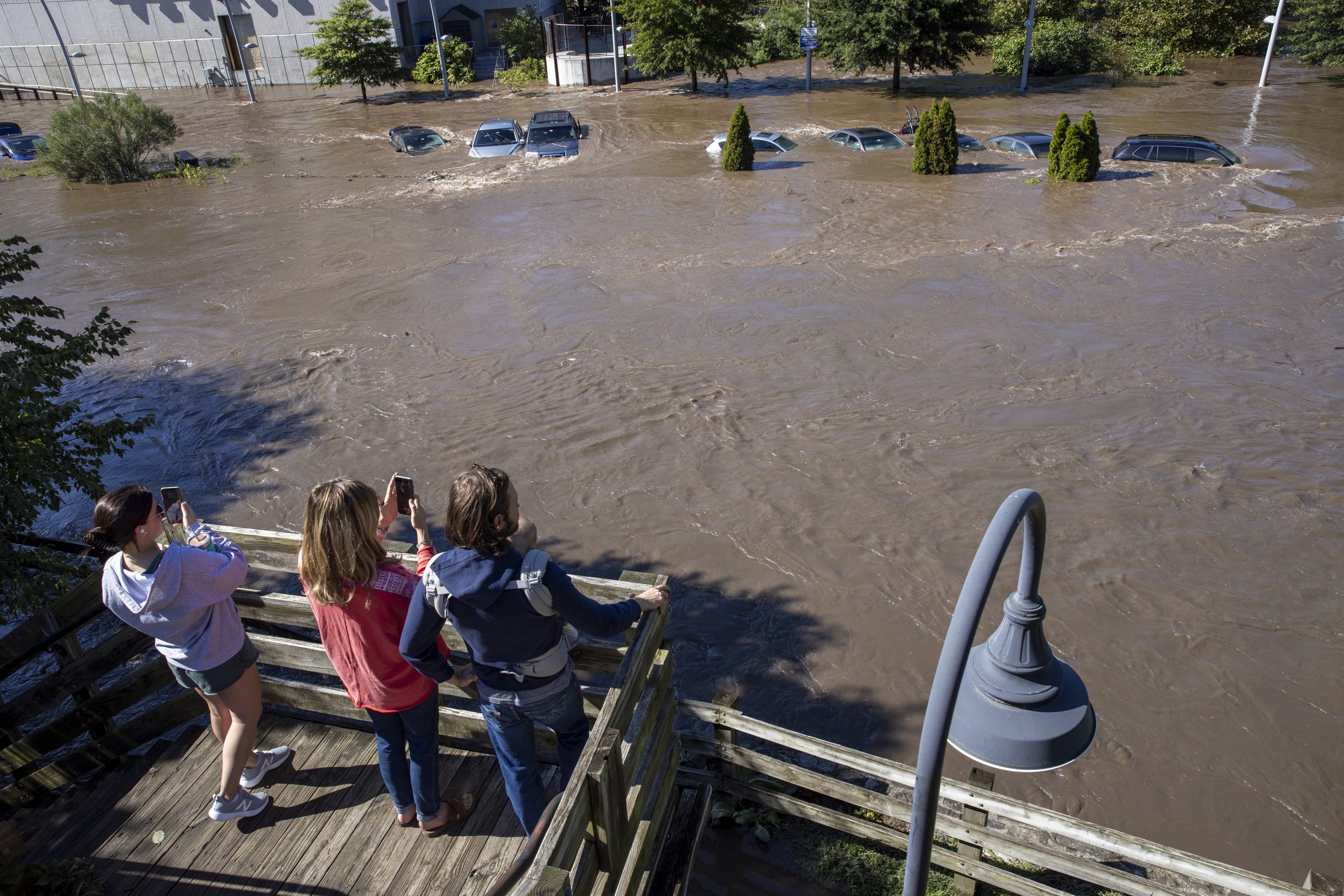
    Hunter said residents are particularly concerned about flooding. Hurricane Ida in 2021 hit Manayunk hard and inundated some of the buildings on the island.

    Hunter and others fear more building will leave Venice Island residents trapped in another big storm, while contributing to even more flooding as runoff flows into the river and canal.

    The 5000 Flat Rock Rd. property lies just below the Flat Rock Dam.

    Venice Island, one of the lowest-lying areas of the city, is a narrow wedge of land, just shy of 70 acres and roughly 1.7 miles long between the Schuylkill River and Manayunk Canal.

    The island falls within a high-risk, 100-year-floodplain designated by the Federal Emergency Management Agency (FEMA), meaning it has a 1% chance of flooding in any given year.

    In September 2021, as Manayunk experienced flooding from Hurricane Ida, people take in the view from Rector Street of the fast running water at the canal that runs along Main Street and feeds into Schuylkill River.ALEJANDRO A. ALVAREZ / Staff Photographer

    In a statement — also shared with neighbors — Manayunk Renaissance LLC said it had hauled in 400,000 cubic yards of soil to raise the site between 9 and 11 feet, bringing it at least 18 inches above flood elevation.

    The company said it had approvals from FEMA, the Pennsylvania Department of Environmental Protection, and the Philadelphia Water Department for the new grading and height.

    Manayunk Renaissance also said it razed a dilapidated 512,000-square-foot mill building and is working to clean up lead and asbestos.

    Manayunk Renaissance said in its statement that it is finalizing an agreement with SEPTA to create an emergency exit from the island via Umbria Street, where the Ivy Ridge railway station is. The company said it would pay all construction costs.

    Hunter said he and others were told during the meeting that the route includes building a bridge over the canal that leads to an on-grade crossing at the railway equipped with three gates. That new road would be reserved for emergencies.

    Zoning is an issue

    The property is zoned for industrial uses, so the developer would either need City Council to change the land use rules legislatively or seek relief from the Zoning Board of Adjustment.

    “After five-plus years of work and planning, Manayunk Renaissance is ready to present its vision to the community and seek city approval to change the zoning,” the company statement said.

    Community support would be a boon for the developer in either case. Having the backing of neighborhood groups is often a positive factor at the zoning board and could sway Councilmember Jones if they go the legislative route.

    The company argues that the existing zoning allows warehouses, data centers, and other projects that “would be inconsistent with the community’s direction.”

  • A new media ecosystem is taking root on the left, reshaping Democratic politics

    A new media ecosystem is taking root on the left, reshaping Democratic politics

    NEW YORK — Farah Berent, a physician assistant in Holland, Michigan, used to learn about politics from channels like ABC, CBS and CNN. But that changed as she decided that coverage of the war in Gaza was irreparably biased.

    “I couldn’t stand all the lies on the stations,″ said Berent, arguing that there wasn’t enough attention being paid to Palestinian suffering. “I started going to Instagram to get my news.”

    Berent is among many progressive-minded Americans who have sworn off legacy media institutions. They’re turning to a widening mix of independent podcasts, social media accounts and digital news sites, part of an increasingly influential ecosystem that has boosted this year’s wave of anti-establishment, left-leaning candidates who may not have gotten as much attention otherwise.

    Liberals remain more likely than conservatives to trust mainstream outlets, but the splintering echoes how conservatives skeptical of their party created a collection of insurgent news sites years ago. The shift has elevated individual commentators with opinions on the news, some of whom have proven influential in driving people’s votes.

    Ryan Grim, a co-founder of Drop Site News and a veteran of online political debates, said progressive politicians have sought out his platform to reach voters. In a change from previous election cycles, “they have ways to get covered even if the mainstream just basically ignores them,” he said.

    One of those candidates is Abdul El-Sayed, who is running for U.S. Senate in Michigan and faces the more moderate U.S. Rep. Haley Stevens in the Aug 4. primary.

    “I think in a lot of ways, where traditional media has been gatekeepers, we’re watching that gatekeeping function fall away,” El-Sayed said.

    Anti-establishment media has exploded lately

    These changes have been on display this year in places like New York City, where a slate of progressive congressional candidates endorsed by Mayor Zohran Mamdani defeated establishment-backed candidates.

    Sara Hyler, a policy analyst in East Harlem, originally planned to support incumbent Rep. Adriano Espaillat in last month’s Democratic primary. But then Hyler started learning about progressive outsider Darializa Avila Chevalier through YouTube videos and podcasts, including from the liberal media company MeidasTouch.

    “My actual beliefs are to the left of Democrats. I don’t want a moderate,” said Hyler, who ultimately voted for Avila Chevalier in hopes she could help nudge Congress toward progressive policies.

    The rise of independent media has been part of a digital transformation that transcends politics, as chronically online Americans are turning toward news from social media and content creators. But it’s not just the popularity of smartphones driving that change.

    “There’s a complete lack of trust in any and all institutions now,” said Mike Nellis, a Democratic consultant who hosts a podcast, writes a Substack and posts political analysis on social media. “That has led people to turn to individuals, and so now you’re picking your flavor of person to listen to.”

    Among conservatives, faith in mainstream media and in the more moderate wing of the Republican Party faltered years ago, with the rise of the Tea Party movement paving the way for an alternative right-wing media ecosystem, including sites like the Daily Caller, Breitbart and The Blaze. Trump also tapped into a loose constellation of podcasts, including “The Joe Rogan Experience,” for his successful comeback campaign.

    Reece Peck, a media culture professor at the College of Staten Island, said the left-wing version of that has happened slowly, beginning with the momentum of Sen. Bernie Sanders’ first presidential run in 2016. At the time, left-wing, anti-establishment YouTube accounts and podcasts like “The Young Turks” and “Chapo Trap House” were gaining attention but didn’t reach the majority of Democratic voters.

    Now Democrats have realized their faith in institutions didn’t prevent Trump’s return.

    “The ground has been made fertile for an anti-establishment media politics, where it just wasn’t quite there with the voter base in those previous cycles,” Peck said. Even older, moderate liberals, he said, have started to ″throw their hands in the air and look for alternatives.”

    YouTube accounts like ”Secular Talk” and “Breaking Points,” streamers like Hasan Piker and new digital journalism organizations like More Perfect Union and The Lever are among those that have seen their audiences multiply.

    Grim said Drop Site has amassed 800,000 free and 60,000 paid subscribers since launching two years ago — more than he’d anticipated.

    Saul Levin, a Michigan progressive organizer who recently started his own podcast about artificial intelligence data centers, said Trump’s attacks on the existing media landscape are part of the reason for that growth.

    “The investigations and raids on numerous different journalists, the appointment of specifically aligned billionaires to lead various major news agencies, is very troubling,” he said. “Creators and new media outlets are stepping in and trying to fill gaps.”

    Alternative media is prominent in the Michigan primary

    The Michigan primary will be the latest test of the evolving media ecosystem, which El-Sayed, a longtime podcaster himself, has tried to harness. Various progressive outlets, creators and organizers have aggressively promoted his campaign.

    El-Sayed said the rise of independent media has let voters compare news across different channels and notice biases, but he doesn’t turn down opportunities on legacy media, either.

    “I go on Fox News, I go on podcasts, I Twitch stream, we have a YouTube channel,” he said.

    Stevens, who received endorsements from outgoing incumbent Sen. Gary Peters, Michigan Gov. Gretchen Whitmer and Senate Democratic Leader Chuck Schumer, has a more traditional approach. She’s also backed by the American Israel Public Affairs Committee, or AIPAC, and its affiliated groups, which have spent close to $30 million on the race.

    Stevens’ campaign declined to comment for this story.

    Reporting from progressive outlets has influenced how the race has unfolded. For example, Stevens parted ways with a campaign consultant when Drop Site revealed that she had also worked for tech company Palantir, which is controversial in liberal circles because of its government contracts involving immigration enforcement.

    Democratic officials said Trump’s return to the White House has also revived interest in the party’s official channels. The Democratic National Committee’s relatively new digital media offering, a rapid-response clipping and messaging account with the handle @FactPostNews, has amassed more than 2 billion impressions on Threads, X, Facebook, Instagram and Bluesky in 2026 alone.

    “I remember thinking to myself, there’s a chance that this flops and doesn’t get any traction,” said DNC Deputy Chief Mobilization Officer Paulina Mangubat. “It’s been really, really successful.”

    At times, the mix of new voices on the left has erupted in public tensions.

    Grim recently faced criticism for boosting failed Democratic candidate Graham Platner in Maine, and he was accused of trying to undermine the credibility of the sexual assault allegation that torpedoed Platner’s campaign. Grim said while he recognized people were angry, his reporting on the allegation was meant to share additional context.

    “If we’re going to litigate allegations in the court of public opinion, we can’t pick and choose what details we want to share with the public out of a fear of how they’ll be received,” he said.

    More recently, when Drop Site interviewed progressive U.S. Rep. Ro Khanna of California, one of its journalists pressed Khanna on whether Hamas was justified to attack Israeli soldiers on Oct. 7, 2023. Khanna refused to agree.

    But Grim said those are the kinds of tough questions independent media are there to ask — and that American voters increasingly want to see their representatives in Congress answer.

    “People want to see you being accountable to questions, and if they don’t agree with you, sometimes that’s fine,” he said. “I think the smarter politicians are starting to recognize that.”

  • 60,000 migrants crossed into Spanish territory of Ceuta, but most soon left voluntarily

    60,000 migrants crossed into Spanish territory of Ceuta, but most soon left voluntarily

    CEUTA, Spain — About 60,000 migrants crossed from Morocco into Spain’s tiny Ceuta territory in 24 hours, Ceuta’s president said Friday, a figure that is equivalent to 70% of the population of the city in North Africa. At least 57 migrants died on the journey.

    But most of the people who made the crossing soon returned voluntarily, the Spanish government said, after the sudden arrival of so many migrants triggered chaos and a humanitarian crisis.

    Some migrants swam several miles through the sea and faced down authorities who tried to turn them back with water cannons, tear gas, and warning shots. Those who died included some who drowned or were killed in a stampede to cross a breakwater barrier near a border checkpoint.

    Spain deployed its armed forces and additional police to restore order in Ceuta, which sits on the Strait of Gibraltar at the entrance to the Mediterranean Sea and has been a Spanish possession since 1580. On the Moroccan side of the border, security forces clashed with migrants. The chaos also had ripple effects abroad, with Italy and France pledging to tighten their controls on people arriving from Spain.

    “The situation that Ceuta is going through is absolutely unsustainable,” Ceuta President Juan Jesús Vivas told journalists.

    Meanwhile, migrants from Morocco also attempted to cross into Melilla, Spain’s other territory at the tip of North Africa, where they clashed with police.

    Spanish prime minister condemns border breach

    Spanish Prime Minister Pedro Sánchez visited Ceuta on Friday and condemned the border breach, which he described as “a violation of Spain’s territorial integrity.”

    Sánchez blamed human smugglers for the crisis, saying they “deceive so many young people and ultimately lead many of them to their deaths,” whether in the ocean or in the city.

    The Spanish Interior Ministry released its own figures shortly after Vivas spoke, estimating that some 50,000 people had crossed from Morocco since Thursday. It added that 48,300 had already returned to Morocco by Friday evening, with hundreds more going back by the hour.

    Rachid Sbihi, who leads a local workers association representing Civil Guard officers, described the situation as a “serious humanitarian crisis,” saying thousands of migrants, including unaccompanied children, were left sleeping in parks and on sidewalks, while others roamed the streets aimlessly.

    “It’s chaotic,” Sbihi said.

    The Moroccan Interior Ministry did not immediately respond to a request for comment on the migrant figures released by the Spanish authorities.

    European Commission President Ursula von der Leyen said the images from Ceuta “are unacceptable.”

    “We cannot allow anyone to come to our Union without abiding by our rules,” she said Friday in an online statement. “Dangerous crossings must stop immediately. Smuggling networks must be dismantled. And returns must be swift, as our rules allow.”

    Dozens died in the chaos

    Some of the 57 people who died had drowned, Sbihi said, but some were killed in a stampede to cross the breakwater fence at Tarajal Beach, an urban beach near a border checkpoint with Morocco. The waters near the border fence were littered with buoys, shoes, and other abandoned belongings.

    Many young Moroccans who crossed into Ceuta told the Associated Press that they had hoped to find better work opportunities in Spain but were returning given the mayhem in Ceuta.

    “There’s nothing at home. I’d have to work 12-hour shifts for a meager wage. That’s why I came here,” said 21-year-old Abdulah Buji, who hails from the city of Tetouan. “But I haven’t found any opportunities here either, so I have to go back.”

    Moroccan police used water cannons and fired warning shots into the air to prevent migrants from crossing into Ceuta, according to rights groups in Morocco.

    Morocco’s ambassador to Spain said the situation in Ceuta had unfolded against Morocco’s wishes.

    “We have always prioritized legal, orderly, and safe migration for all,” Karima Benyaich said. She did not comment on what prompted the migrants to cross into Ceuta.

    To reach Ceuta, on the northern African coast, migrants often swim from the Moroccan town of Fnideq, covering about 3 miles to reach Spanish territory. Others attempt the crossing from the nearby town of Belyounech, where the distance is shorter.

    Border surge linked to Supreme Court ruling

    The authorities in Ceuta and Madrid have linked the border surge to a recent decision by the Spanish Supreme Court, which ruled that migrants arriving by sea could not be summarily deported, unlike those who cross by land or climb the border fence.

    Sánchez said migrant smugglers misinterpreted the ruling.

    The interpretation of the Supreme Court’s ruling “spread like wildfire over the past few hours through the networks of human trafficking organizations,” triggering the surge, Sánchez said.

    Spain has bucked anti-immigration trend

    Sánchez has bucked the anti-migration trend that has gained ground across Europe and in the U.S.

    Earlier this year, his government moved to give residency and work permits to hundreds of thousands of migrants already living in the country without permission.

    Sánchez, a Socialist, argued that it would be good for the economy and the demographics of an aging Spain. Migrants who entered irregularly after Jan. 1 this year were not included.

    His critics have jumped at the opportunity to attack his policy, saying it encouraged more migrants to come.

    “Sánchez allows Spain to be invaded through Ceuta,” Spanish conservative politician Isabel Díaz Ayuso wrote on X.

    The U.S. expressed its support for “the people of Spain, and all Europeans, against this egregious violation of their sovereignty and human rights.”

    In a post on X, the U.S. State Department added that “this unacceptable incident is the direct result of the Spanish Government’s deliberate efforts to enable and facilitate mass illegal migration into Europe.”

    Sánchez on Friday defended his migration policy and distanced it from the events in Ceuta.

    In the tumult, Italy temporarily suspended its open-border Schengen agreement with Spain, reimposing border controls for air and sea. The Interior Ministry said the decision amounted to a “closure” of the borders, but experts said it was merely a resumption of border controls. The agreement allows travelers to fly between the two countries without presenting passports.

    French Interior Minister Laurent Nunez said France would also strengthen border checks with Spain.

    The crisis in Ceuta “has nothing to do with the regularization of migrants adopted by the Government of Spain, as is being falsely claimed by some,” the Spanish government said in a statement late Thursday after Italy’s announcement.

    Pressure grows on second Spanish territory in Africa

    Migrants from Morocco also attempted to cross into Melilla, the other Spanish territory at the tip of North Africa.

    There was widespread chaos in Bni Nsar, the Moroccan town bordering the Spanish territory, where migrants clashed with police, throwing rocks and setting police vehicles ablaze, according to local media and rights groups. They reported injuries among security forces and the arrest of dozens of people attempting to cross.

    Like Ceuta, Melilla is a self-governing Spanish city. Many Moroccans consider both cities to be occupied territory.

  • Big oil companies reap billions off the Iran war

    Big oil companies reap billions off the Iran war

    Oil companies have delighted Wall Street this week by reporting multibillion-dollar windfalls in their earnings statements, with ExxonMobil and Chevron on Friday reporting a combined $26.5 billion in profits during the second quarter of the year.

    But the immense profit stemming in large part from the war in Iran, and coming at the expense of motorists struggling to pay for a tank of gas, is fast making the companies a ripe political target.

    The oil majors are largely sitting on those unanticipated billions, according to an industry analysis by the research firm Wood MacKenzie.

    They are reluctant to reinvest the profits in expanded drilling that could eventually increase the world’s fuel supply, the firm found, as an abrupt end to the war could push prices for crude down considerably before the firms are able to recoup the cost of new rigs.

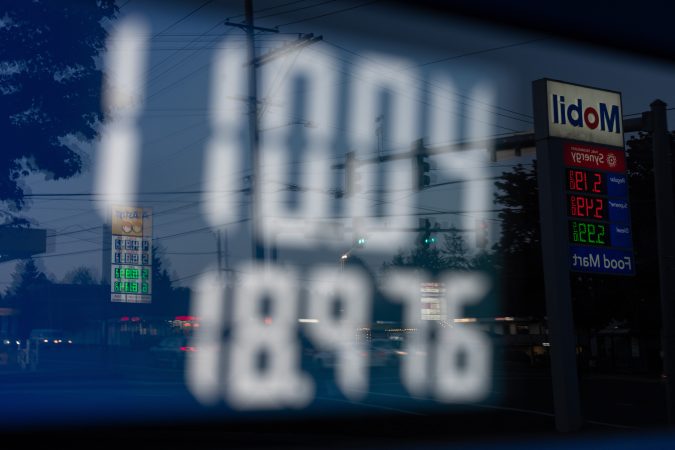
    With gas prices averaging more than $4 per gallon nationwide, and midterms in the not-too-distant future, lawmakers eager to assign blame for voter frustrations are taking aim.

    Exxon and Chevron early Friday posted their blockbuster earnings for the quarter that ended last month.

    Chevron disclosed $12 billion in earnings, reflecting a $9.6-billion jump over the same quarter last year and the firm’s biggest profit since 2020. Chevron CEO Mike Wirth attributed it in a statement to “disciplined investment and strong execution that drove record U.S. upstream production, record crude throughput in our U.S. refineries, and exceptional reliability across key assets.”

    ExxonMobil said Friday its earnings were $14.5 billion, more than double what the company reported for the same quarter last year. CEO Darren Woods said the quarter “was shaped by disruption, but defined by execution,” for the company.

    The disclosures followed Shell’s earnings report Thursday showing the company doubled its quarterly profits between this year and last.

    The staggering earnings are part of a bigger $425 billion annual windfall that Wood MacKenzie estimates is coming to the broader industry if prices for a barrel of crude average $90 for the year, which many analysts project they will.

    That was roughly the cost of oil on Friday morning. It has soared as high as $120 since the U.S. and Israel attacked Iran in late February, leading to the closure of the Strait of Hormuz, through which one-fifth of the world’s oil and natural gas is shipped.

    “Oil companies know they are going to be in for political criticism,” said Bob McNally, founder of the research firm Rapidan Energy Group. “This is like one of those classic movies from the 1960s that keeps coming back around. We all know there is going to be a lot of theater when oil prices are going up.”

    The companies declined to answer questions about their profits at a time of high gas prices.

    Asked about the windfalls oil companies are reporting this week, White House spokesperson Taylor Rogers shifted attention from the firms to Iran. She said, “Oil and gas prices will plummet back to preconflict levels” as the U.S. military neutralizes Iran’s ability to disrupt the flow of crude.

    President Donald Trump had previously put the companies on notice that the Justice Department would be investigating potential price gouging. The threat has populist appeal but could prove challenging to carry out. Industry officials said privately they have seen no evidence an actual investigation is happening.

    Dustin Meyer, senior vice president of policy, economics, and regulatory affairs at the American Petroleum Institute, said government scrutiny would not be a matter of concern.

    “These markets are transparent,” Meyer said. “It is not the first time government has looked at them. Every single time they do, they find the same thing. Not only is there no gouging, but gouging is impossible for an oil market this size with this many participants.”

    Democrats in Congress, though, have seized on high prices at the pump in the run-up to a hotly contested midterm election that will determine which party controls both the House and Senate.

    As the likelihood of windfall profits came into focus last month, Sen. Sheldon Whitehouse (D., R.I.) and Sen. Elizabeth Warren (D., Mass.) wrote a letter to oil executives demanding details of how they may have profited from the war or lobbied the White House to execute it in ways that benefit them.

    Woods told CNBC Friday that Exxon tries “to make sure not just the U.S. administration but frankly administrations all around the world … understand our perspective of what we see and how things are playing out, so they have the best information to make policy decisions.”

    “We very much stick in our lane with respect to here is what we see, here is how we think it could potentially play out, and make sure policymakers have our best thinking when they are putting together their decisions and the approach they want to take,” Woods said.

    Rep. Brad Sherman, a California Democrat, is among those pushing for more government intervention.

    He said motorists “need to fill their gas tank today, and they either need to be paying a lower price, or second best, they need to be getting a rebate check from the government.” He has proposed legislation that would impose a windfall tax on U.S. oil companies until the war with Iran is over, the strait is reopened, and U.S. benchmark crude oil prices drop below $75 per barrel.

    In the past, the industry has tended to argue that such levies would take away cash it needs to invest in expanded drilling that could effectively help lower prices. But the companies are not making those investments right now, amid concerns the war will have ended and oil prices will have dropped too low to make the rigs profitable by the time they are finally operating months — or even years — from now.

    And even if the firms were investing, Sherman said, drivers would still be suffering.

    “When we’re paying these outrageous prices at the pump, nobody’s saying, ‘Oh, that’s great! The oil companies are going to invest this in additional oil production,’” he said.

    For the moment, at least, his proposal is more a political tool than a viable policy plan in this Congress, which is controlled by Republicans staunchly opposed to a windfall profit tax.

    But if prices remain high, analysts say, sentiments could shift, and the government may be more inclined to step in to try to bring relief to consumers, including by limiting exports of U.S. oil.

    Regulators and lawmakers have already mostly exhausted their options for bringing down prices without dramatic market interventions. Government petroleum reserves have been depleted and sanctions on countries like Venezuela and Russia have been lifted to bring more fuel into the market.

    “There are not many tools left in the tool kit to bring down prices,” said Denton Cinquegrana, chief oil analyst at Dow Jones Energy. “But the general public who has to buy gasoline certainly does not want to hear that, especially amid an affordability crisis that has taken over this country.”

    Windfall profit taxes have a fraught track record in the U.S., according to Tyler Priest, an associate professor of history at the University of Iowa.

    The last one enacted in 1980 after the oil shocks of the 1970s generated far less revenue than lawmakers projected and was ultimately repealed after economists concluded it discouraged some domestic production while adding significant complexity to the tax code.

    Democrats have structured their latest proposals differently, focusing the tax only on profits above a historical benchmark and steering the revenue generated toward consumers. But experts are conflicted on its potential effectiveness. Priest noted that the plans are narrowly targeted at large oil companies, but more than 70% of U.S. oil comes from smaller producers.

    Shon Hiatt, an energy scholar at the University of Southern California Marshall School of Business, said a windfall profit tax imposed in Britain in 2022 was followed by a sharp decline in production there.

    “The incentives to take risk and invest in production are drastically reduced,” he said, which can ultimately lead to “lower production, and in some cases, scarcity.”

    Others argue the decline predated the tax and was caused by a number of factors, including aging oil fields and a shift toward renewables.

    Even if such policy proposals stall in the U.S., lawmaker attacks are only likely to intensify in the coming months. Analysts are already projecting the companies will post a fresh round of windfall profits in the next reporting period.

    It falls days before the election.