The government protection that allows more than a million immigrants to live and work in the U.S. because it is unsafe for them to go home expired last month for people from Syria and Haiti.
It is set to conclude for more than 170,000 people from El Salvador in September, and in October 100,000 from Ukraine could face the same termination of temporary protected status (TPS).
The Trump administration promises to deport those who lose legal status ― a fate advocates say is guaranteed to hurt immigrant families that include spouses and children who are American citizens.
But immigration researchers and organizations say that immigrants will not be the only ones hurt, that the rest of the U.S. will pay a big financial price ― in lost taxes, wages, spending, and services, as large numbers of workers and dollars exit the U.S. economy.
The nation’s 1.3 million TPS-holders work at higher proportions than the country as a whole, pay billions of dollars each year in federal and local taxes, and contribute to the solvency of a Social Security system from which they are unlikely to ever draw benefits.
“Even if you don’t care anything about immigration in this country, removing this many highly productive workers from the economy is going to hurt Americans in their pocketbooks,” said Rebecca Shi, executive director of the American Business Immigration Coalition, a Chicago-based, bipartisan network of companies and CEOs. “Americans are going to get hit, in terms of inflation, in healthcare, in housing.”
Many TPS-holders work in critical jobs and industries. They are the people who build homes, keep restaurants running, fix plumbing and wiring, and, particularly in the case of Haitians, care for the ill and elderly.
“If you access our healthcare system in any way, shape, or form, particularly elderly care or senior care, you’re going to feel it,” said Anuj Gupta, president and CEO of the Welcoming Center in Philadelphia, “Whether it’s shortage of staff at facilities, whether it’s longer wait times to get in for the appointment that you need. … And if we start going down the road of Salvadorians, Ukrainians, Venezuelans, all having their TPS removed, then those kinds of day-to-day impacts will be more profound.”
(function(){function e(){window.addEventListener(`message`,function(e){if(e.data[`datawrapper-height`]!==void 0){var t=document.querySelectorAll(`iframe`);for(var n in e.data[`datawrapper-height`])for(var r=0,i;i=t[r];r++)if(i.contentWindow===e.source){var a=e.data[`datawrapper-height`][n]+`px`;i.style.height=a}}})}e()})();
TPS-holders live in every state. Florida is home to the largest number, about 404,000, followed by Texas and New York. New Jersey ranks seventh, with 43,360, and Pennsylvania 14th, with 23,770, according to the National Immigration Forum.
“Certain states are just going to get obliterated by this,” said Jeff Hornstein, executive director of the Economy League of Greater Philadelphia, a regional policy and research organization.
The Philadelphia region will get hit, too. The league examined four countries where designations are ending or at risk ― El Salvador, Ukraine, Syria, and Haiti.
In the local area, between 4,100 and 6,100 workers from those countries depend on TPS, and as many as 4,600 could lose legal employment authorization, the league said.
In the city, those TPS workers bring home $36 million to $76 million in annual salaries and pay $1.5 million to $3 million in wage tax.
The most affected local sectors are predicted to be construction, building cleaning and landscaping, trucking and warehousing, manufacturing, restaurants, and retail.
The league’s Saloni Tandon, who directs research and analytics, said area residents may notice changes in everyday life, such as the cleanliness of offices and buildings, and the speed of delivery for goods.
“Because our minimum wage is so low, there are fewer workers coming into the region,” she said. “So it’s going to get very tricky and very stressful to compensate for that.”
Stephen Miller, a key White House advisor, speaks to reporters outside the White House after the Supreme Court ruling on June 25. He called Supreme Court’s ruling on TPS “a victory 10 years in the making.”DOUG MILLS
The American Business Immigration Coalition notes that while the U.S. has only 4% of the world population, it produces 25% of all gross national product and captures 65% of global stock market value. That is tied to the strength of the economy, which depends on the growth and productivity of the workforce.
With birth rates falling below replacement levels and a shrinking pool of domestic labor, the coalition said, the United States must embrace a robust legal immigration system to ensure sustained economic growth.
That has become harder for people here under TPS.
In June, the Supreme Court ruled that the Trump administration could terminate temporary protected status for countries like Haiti and Syria, putting more than 350,000 people from those lands at immediate risk of deportation.
More broadly, the ruling appears to make Department of Homeland Security decisions about TPS unreviewable by lower courts, creating deep uncertainty for the future.
Homeland Security says TPS has officially ended for Haiti and Syria, even though cases involving stays and constitutional issues are technically alive in lower courts. The Supreme Court decision started the process for an implementation order that typically takes 32 days. Once TPS ends for individual countries, holders revert to their previous immigration status, meaning those who have no other protection will be subject to arrest and deportation.
The Trump administration has made a goal of ending TPS, insisting that “temporary” means temporary. It’s unclear if the administration may let TPS designations end on their staggered schedules or attempt to conclude the status for all holders at once.
Work authorizations for Haitians expired on Monday.
They face a forced return to a country crippled by natural disasters, governmental collapse, and ongoing gang violence.
The U.S. government warns Americans not to go to Haiti, issuing its highest “Do Not Travel” advisory. The United Nations estimates that 90% of Port-au-Prince, the capital and largest city, is controlled by criminal gangs, the violence having left thousands dead and displaced more than 1.4 million people.
White House adviser Stephen Miller told reporters after the court ruling that it was safe for Haitians to return, saying it would be “crazy to say that Haitians couldn’t live in Haiti.”
Asked if people who lose TPS would be deported, he answered: “Of course. If you no longer have status in this country, then you’re supposed to be deported.”
CBS News reported last Sunday that U.S. Immigration and Customs Enforcement is preparing a operation to quickly arrest and deport Haitians — including those in Ohio, where Trump falsely accused migrants in Springfield of eating cats and dogs.
The Haitian Bridge Alliance, a California-based advocacy organization, warns against “one of the largest family separation events in modern-day history,” as TPS-holders live with an estimated 390,000 American-citizen children and 410,000 citizen adults.
Demonstrators protest outside the U.S. Supreme Court after the court issued a 6-3 ruling that significantly impacts the future of Temporary Protected Status, a U.S. immigration program established by Congress in 1990.KENNY HOLSTON
Immigrant allies are planning a rally for Haitians in Philadelphia on Thursday.
TPS is a humanitarian status that the U.S. can grant to foreign nationals whose countries are embroiled in war, environmental disasters, epidemics, or other extraordinary circumstances. It provides work authorization and protection from removal, but no path to permanent residency or citizenship.
People with TPS participate in the labor force at a rate of 85%, well above the overall U.S. rate of 63%, according to a new policy briefing from FWD.us, a bipartisan advocate for immigration and criminal justice reform.
About one-third of TPS households own homes and pay mortgages.
Each year, people with TPS pay about $7.8 billion in federal, payroll, state, and local taxes, and contribute $690 million to Social Security, FWD.us said.
Haitian TPS-holders pay close to a billion dollars in taxes annually, according to the American Immigration Council.
They compose a disproportionate share of nursing aides and long-term-care assistants, and any removal is expected to hurt nursing homes and assisted-living facilities that already face a shortage of workers.
“In Ohio, Florida, and Pennsylvania, businesses will lose workers, the elderly will lose caretakers, and families will be separated,” said Vanessa Cárdenas, executive director of America’s Voice, a Washington-based advocacy organization.
The pro-business U.S. Chamber of Commerce has urged the Senate to pass legislation that would extend protections for Haiti, in order “to prevent significant disruption to America’s workforce and avoid an unnecessary humanitarian crisis.”
The chamber knows TPS was never intended to be permanent, it wrote in a letter to Senate leadership, but the reality is hundreds of thousands of Haitian nationals have lived and worked lawfully in the U.S., “contributing to communities and filling critical positions throughout the American economy.”
At the same time, widespread violence and governmental dysfunction in Haiti “make safe and orderly large-scale repatriation unrealistic.”
Ukrainians in the U.S. face a similar situation.
Many have nothing to return to ― their homes were destroyed in the war. Or they lived in cities that face constant bombardment, making any return potentially deadly.
The Philadelphia region has been a main resettlement area for people escaping the war, spurred by the vitality of a local Ukrainian community that is tens of thousands strong. Now Ukrainians who fled to the U.S. see their TPS scheduled to end on Oct. 19, and wonder how they will afford food and housing if that happens.
“People are really panicked,” said Iryna Mazur, the honorary consul of Ukraine in Philadelphia.
Ukrainians need both an extension and a redesignation of TPS ― the latter allowing newer arrivals to qualify, she said. Employers are upset, too, worried they are about to lose good, qualified workers, including many employed as mechanics or plumbers’ and electricians’ assistants.
“They are losing their employees, and their businesses will be hurt,” Mazur said. “We need the [Trump] administration to act.”
The juxtaposition of a flamingo and a honey bee may not have doubled you over in laughter, but it had me pause while walking into a South Jersey farm market. And it made me smile.
Then I started to overthink it. Am I missing a joke here? “Q: What’s the difference between a flamingo and a honey bee?” Or, “a bee and a flamingo walk into a bar.”
Nope. That doesn’t work either. Nor does a meme about having “the” birds and the bees “talk.”
All this to justify picking that picture to feature with this column. Some weeks it’s an easier choice, and this week’s got me thinking about what in the newspaper business is called a standalone photo.
A standalone photo made while my colleague was taking the escalator to his assignment at the International Congress of Mathematicians at the Convention Center on Monday.Jose F. Moreno / Staff Photographer
Aka, a photo feature or wild art, a standalone is a picture published without an accompanying article. I talked about it in a previous column (click bonus: the photos there are from a cold, snowy January day. Maybe refreshing to look at now, as we’re here in the dog days of summer).
In the heyday of dead-tree, printed ink-on-paper analog versions of newspapers not every story had a picture, so standalones were used when editors wanted to add some visual variety to a page that was all gray. That is precisely the 1998 origin of this column: it broke up a text-heavy page containing community news, calendars, traffic reports, school information, and volunteer listings.
Online publishing changed everything, and digital design evolved toward image-heavy layouts. Since our brains process pictures much faster than words, photos make a story more likely to grab a reader’s attention while scrolling.
Suddenly every story on news websites had an image attached. Pictures became plentiful.
A standalone of two prominent Freemasons – Benjamin Franklin and George Washington – standing in bronze outside the Grand Lodge Masonic Library and Museum across the street from City Hall. (“The Bond” was created by sculptor Jim West in 2018.)Tom Gralish / Staff Photographer
And that’s the paradox. Even though the internet is highly visual, it favors rapid consumption rather than contemplation. Lost in the mishmash array of thumbnails on a website, it is harder to appreciate a storytelling standalone photo, or enjoy the much slower experience of pacing through a dozen images and captions in lengthy photo essays.
And that brings me around to a photo I saw this week. A reader submitted a picture they’d snapped of a young man outside Reading Terminal Market dressed in a solid-color button-down shirt with trousers held up by suspenders instead of a belt and wearing a broad-brimmed straw hat closely examining a parked Uber Eats’ delivery bot.
I reacted to it just as I did with the flamingo/honey bee, with a smile.
For decades the old weekly LIFE magazine had a standing feature on the last page called Miscellany. It was mostly pictures of people and animals in unexpected or humorous situations. A standalone.
Even with an abundant canvas there really isn’t a place on our website for a standalone photo — like the bot — without an attached story.
Or maybe there is. I have this column where my unattached images are displayed every Saturday and I’m happy to share some of the space (means less writing for me). So readers, if you see and take a picture like those on LIFE’s back-of-the-book page, email it to me.
(By the way, even though it was taken in a public place we wouldn’t have used the Amish/bot photo anyway. The subject may belong to a community that doesn’t enjoy being photographed, and he was minor. The photographer needed to talk to him — and a parent — to provide more context. But then it would no longer be a standalone.)
And remember, if a bee lands on you, freeze. Let it investigate and it will leave without stinging as long as it doesn’t detect a threat. If a flamingo lands on you, well, you’ve got a different problem.
Since 1998 a black-and-white photo has appeared every Monday in staff photographer Tom Gralish’s “Scene Through the Lens” photo column in the print editions of The Inquirer’s local news section. Here are the most recent, in color:
After nearly 50 quizzes, it’s time to bid adieu to Citywide Quest! We’ll show you a photo taken in the Philly area, you drop a pin where you think it was taken, and we’ll tell you a fun story behind the photo. Good luck.
Round #44
Question 1
Our very first Citywide Quest question was this photo. Where was it taken?
Loading…
ClickTap on map to guess the location in the photo
ClickTap again to change your guess and hit submit when you're happy
You will be scored at the end. The closer to the location the better the score
Tom Gralish / Staff Photographer
Pretty good/Not bad/Way off! Your guess was from the location.Spot on! Your guess was exactly at the location. Here's also where a random selection of Inquirer readers guessed.
The theme of our first ever Citywide Quest was arts and culture institutions in Philadelphia. The “Paint Torch” sculpture by Claes Oldenburg was installed at the Pennsylvania Academy of the Fine Arts in 2011.
Question 2
Where is this mall outside of city limits?
Loading…
Tyger Williams / Staff Photographer
Pretty good/Not bad/Way off! Your guess was from the location.Spot on! Your guess was exactly at the location. Here's also where a random selection of Inquirer readers guessed.
Back in November 2025, we asked you to pinpoint this photo taken at King of Prussia Mall. We received a lot of reader emails about this. One reader pushed back, saying, “It says Philly quiz and the second answer was King of Prussia Mall. Not in Philly is it?”
We do say the photos are in the Philly area, but they are right: The mall is not within city limits. Of the 132 questions, this was easily the one with most feedback.
Quiz continues after ad
Question 3
Where is this Easter egg?
Loading…
Jasen Lo
Pretty good/Not bad/Way off! Your guess was from the location.Spot on! Your guess was exactly at the location. Here's also where a random selection of Inquirer readers guessed.
Our Easter-themed quiz had to be an Easter egg hunt. Interactives journalist-engineer Jasen Lo hopped on his bike with a bag full of eggs and took photos across the city – including this one taken of the German Society Of Pennsylvania, from the median of Spring Garden.
One reader presumed the eggs were Photoshopped into existing photos. We could have done it that way, but where’s the fun in that?
Question 4
Where is this sundial, which is definitely where it’s supposed to be?
Loading…
Jasen Lo
Pretty good/Not bad/Way off! Your guess was from the location.Spot on! Your guess was exactly at the location. Here's also where a random selection of Inquirer readers guessed.
For a time-themed edition of Citywide Quest, we asked you to identify the location of this Calder-created sundial sculpture — but not before we unintentionally caused a small panic at the Fairmount Park Conservancy.
When we sent a photographer to Fairmount Park to capture the sculpture, it could not be found! We called park officials, worried that it had been stolen. Another visit and more accurate coordinates quickly resolved the mystery and put everyone’s concerns to rest.
Question 5
For our final question, where is the room where Citywide Quest happens?
Loading…
Jasen Lo
Pretty good/Not bad/Way off! Your guess was from the location.Spot on! Your guess was exactly at the location. Here's also where a random selection of Inquirer readers guessed.
The Inquirer office building is located on 100 S. Independence Mall West, where – every week since October – the Interactives team has created a new round of Citywide Quest. We’ve asked you to guess the locations of photos taken all over the Philly area, from down the Shore to islands on the Delaware and Schuylkill.
Our summer intern last year, Levi Jiang, designed and developed the game that you’ve come to know and love. Thanks, Levi!
Your Score
ARank
Amazing work. We hate to say adieu.
BRank
Good stuff. Take a bow, and we’ll take our leave.
CRank
C you later, alligator.
DRank
D isn’t great. We’d hoped to depart on a better note.
FRank
We don’t want to say you failed, but maybe it’s for the best we all moved on.
You beat % of other Inquirer readers.
We would like to thank everyone who played Citywide Quest over the past year. Unfortunately, we have some sad news: this is the last ever weekly edition of Citywide Quest. Thanks for playing, and stay tuned to the Inquirer, as Citywide Quest isn’t the only quiz in town.
Staff Contributors
Reporting: Jasen Lo, Garland Fordice, Charmaine Runes, and Sam Morris
Federal prosecutors on Friday moved to drop a criminal charge filed against a former Olympian who had been accused of vandalizing the Lincoln Memorial’s Reflecting Pool, suggesting that the damage was instead due to a “botched” and rushed installation.
Prosecutors said they would dismiss an indictment against David Hearn, an Olympic canoeist, whose arrest last month drew national attention amid questions about why the pool’s new blue liner was peeling. President Donald Trump — who had ordered that officials install the new liner and make other changes to the pool — repeatedly blamed vandals after pieces of the refurbished liner started drifting to the surface.
A Washington Post analysis earlier this month found that the basin’s peeling was likely due to application errors by workers, a conclusion challenged by Trump administration officials at the time but supported by experts in waterproofing materials.
According to Friday’s filing in D.C. Superior Court, internal Interior Department documents also chalked up the peeling of the pool liner to contractor errors made during the hurried effort to overhaul the pool ahead of celebrations to mark the nation’s 250th anniversary in July. Justice Department lawyers said the information they received showed that “the damage was the result of a botched installation and not vandalism as initially represented” by the Interior Department.
“Given all of this newly discovered information, it is difficult to attribute the widespread damage to the Reflecting Pool to vandalism, let alone to establish that fact beyond a reasonable doubt,” according to the Justice Department’s filing.
The Justice Department also said that officials at the Interior Department initially did not provide sufficient information about contractor errors and turned it over only after “dozens and dozens” of requests from the office of the U.S. attorney for the nation’s capital.
“Had [the Interior Department] been forthcoming with the information clearly in its possession, the government would not have sought a grand jury indictment,” the filing reads.
The Associated Press reported Saturday that Trump sharply criticized U.S. Attorney Jeanine Pirro’s assessment that damage to the pool was the result of shoddy construction and not the work of vandals.
Trump, in a posting on social media, acknowledged that there “may have been some contractor difficulty” in the installation of a new pool liner. But he continues to insist “the major damage was caused by VANDALS!”
“I disagree 100% with Jeanine Pirro, the U.S. Attorney for the District of Columbia, on the Reflecting Pool,” Trump added in his post.
Trump on Saturday also posted a nearly four-minute video that appears to have been taken from a security camera, in which three individuals can be seen with their hands in the pool, including one for an extended period.
The president claimed the video shows “material is being cut with a knife or a box cutter, for all to see!”
It’s not clear from the video, which appears to be shot from some distance, that any vandalism occurred. Workers can also be seen standing nearby and don’t appear to notice the people sticking their hands in the water.
The Interior Department did not immediately respond Friday night to questions about the administration’s past accusations against Hearn and others arrested for allegedly damaging the pool, or questions about the Justice Department’s decision to drop the case.
The contractor, Atlantic Industrial Coatings, also did not immediately respond to a request for comment.
In a statement on its website dated June 21, the company defended its work, saying that while the U.S. Park Service had identified areas of the pool that required repairs, the areas “are a very small part of the massive 7 acre project, and do not indicate a failure of the liner.”
Hearn and three others charged with misdemeanors related to Reflecting Pool damage had a status hearing set for next Thursday. Court records show that at least one of those misdemeanor cases, against Justin Carreno, was dismissed Friday.
“While we are pleased with this result,” Carreno’s attorneys, David Benowitz and Rammy Barbari, said in a statement, “Mr. Carreno is innocent of the charge and should never have been prosecuted in the first place.”
Hearn’s lawyers and outside watchdog groups said Friday’s move to drop charges was insufficient, and accused the administration of seeking to punish innocent Americans rather than admit its own errors.
“The Trump administration’s case against Davey Hearn should have never been brought,” Hearn’s lawyers, Norm Eisen, Mary Dohrmann and Steve Levin, said in a statement. “Its dismissal today does not erase the abuse of government power in arresting and charging a patriotic American who did nothing wrong. The government’s approach was ready, fire, aim. The administration owes Mr. Hearn an apology.”
Hearn told the Post last month that he was cycling past the pool and put his hand in the water only to touch a piece of liner that was already dislodged. Reached by phone on Friday night, he declined to comment.
The fight over the century-old Reflecting Pool — which sits at the foot of the Lincoln Memorial and has played host to famous speeches and events — has unexpectedly emerged as a major flash point in Trump’s second term.
Trump announced plans in April to abruptly overhaul the pool, saying that he had personally picked out a new color for the basin, “American Flag Blue,” and had recommended contractors based on his experience managing pools at his various resorts.
At the time, Trump said the pool renovations would cost less than $2 million and be completed within two weeks. The cost later swelled to more than $14 million, and historic preservationists and other experts repeatedly warned that the rapid renovations could backfire.
The job was completed within six weeks, with the president and his allies saying it was a symbol of his efforts to remake Washington.
“I’m very proud of it,” Trump said in the Oval Office as the pool prepared to reopen. “I’m very good at building things and constructing things.”
The celebrations were short-lived. Within days, the pool was beset by major algae outbreaks and the liner’s peeling. The president responded by alleging that vandals were to blame, accusing them of cutting parts of the pool but providing no evidence.
“Many additional people have been arrested having to do with the disgraceful Vandalism of our beautiful Reflecting Pool,” the president wrote on Truth Social in June.
“It was slashed with a knife, or box cutter, high grade colored waterproofing liner — it was VANDALISM!,” Trump wrote in another post this month, criticizing an ABC News report that suggested the liner was peeling.
A recent visual inspection found damage in the middle of the pool — “where a vandal would not likely attempt to peel the lining” — further indicating that the damage stemmed from mistakes during installation, DOJ lawyers wrote in their filing.
The administration drained the pool after the July Fourth celebrations on the Mall, with officials saying further renovations would be necessary. In a Justice Department filing Thursday, the administration said the pool would be closed through Aug. 10.
The Cultural Landscape Foundation, an education and advocacy organization, is suing to block the administration’s continued work on the pool, saying Trump has disregarded long-established processes and federal requirements intended to protect historic sites.
“Today, the iconic pool sits empty, covered in peeling epoxy after a botched job,” the organization’s lawyers wrote in a court filing Friday, asking a federal judge to halt further changes to the pool until they can go through a formal review process.
Though he’s currently behind bars at the Federal Correctional Institution at Fort Dix, Willingboro Township council member Nathaniel Anderson has not resigned from his position on council.
Now, prosecutors have filed a civil complaint in New Jersey Superior Court seeking to remove Anderson from office, the Burlington County Prosecutor’s Office announced Friday.
The action asks the court to declare that Anderson, who previously served as Willingboro’s mayor, has forfeited his ability to serve on the council.
Anderson was reelected to a four-year council term last November before being convicted by a federal jury in January of conspiracy to commit wire fraud affecting a financial institution, bank fraud, and two counts of making a false statement on a mortgage application.
He was sentenced in June to one year and one day in prison and ordered along with his co-defendant to pay about $221,000 in restitution to the victims.
While state-level convictions trigger immediate, automatic removal from office upon a guilty verdict, prosecutors must petition the state Superior Court to remove an elected official who refuses to resign following a qualifying federal conviction.
A hearing on the order to show cause is scheduled for Sept. 11.
DUXBURY, Mass. — Jurors walked through the Massachusetts home where Lindsay Clancy strangled her three children, a rare visit Friday that let them see firsthand the place where an outwardly ordinary family life unraveled into tragedy.
After being driven past two businesses relevant to the narrative of the January 2023 killings, jurors were escorted in groups of six to view the inside of the house, including the basement where the children died. During the roughly 40-minute visit, the jury also saw the yard where Clancy was found after jumping from a second-story window.
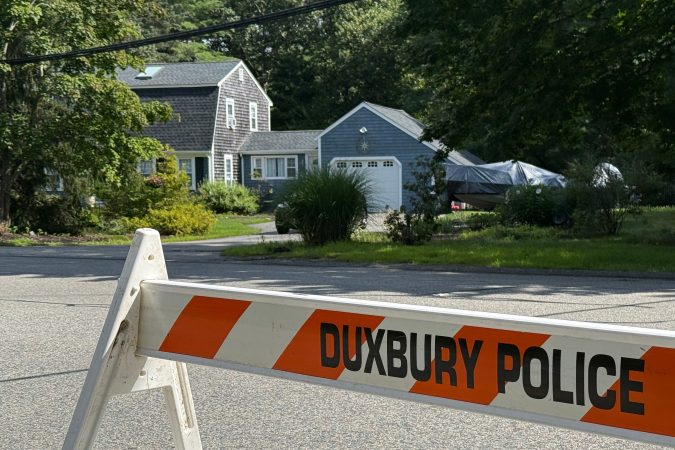
Journalists were kept away by a police barricade, but court officers could be seen through the trees escorting jurors to and from the bus along the site of the Clancy family’s former driveway. The home now has a new owner.
Clancy herself did not attend the visit to the home, which she hasn’t seen since the day of the killings. Her lawyers argue she was in the grip of postpartum psychosis, a rare mental illness linked to the stress, sleep deprivation, and hormonal changes that follow childbirth.
Jurors in U.S. criminal cases often are expressly told not to visit the scene of the events in question. There are a number of rationales for not doing so — among other things, the site may have changed in the interim between an alleged crime and a trial.
But courts sometimes allow juries to make a supervised excursion as a group, for reasons that can include assessing distances or features that aren’t thought to come across fully in photos.
Such excursions have happened in a number of high-profile cases, including the 2023 murder trial of South Carolina attorney Alex Murdaugh, the 2022 sentencing trial of Parkland, Fla., school shooter Nikolas Cruz, the 2015 Massachusetts murder trial of former New England Patriots player Aaron Hernandez, and the 1995 murder trial of O.J. Simpson.
Jurors in Clancy’s trial retraced the route her then-husband, Patrick Clancy, took when she asked him to pick up takeout food and medicine for daughter Cora on the night of the killings. He returned to find the children dead and his then-wife badly injured and bleeding in the yard.
The panel was driven past the restaurant — about 5.5 miles from the family’s former home in Duxbury, a town south of Boston — and the pharmacy, about a mile from the house.
Prosecutors say the errands were a ruse to get her husband out of the house. They say Lindsay Clancy, a former labor and delivery nurse, acted intentionally and is criminally responsible for the deaths of children Cora, 5; Dawson, 3; and Callan, 8 months.
Her lawyers don’t dispute that she killed the children, but they say she had bipolar disorder and her condition worsened while she was on antidepressants prescribed after the birth of her third child. She believed a voice was telling her to “kill the children so you can kill yourself,” according to her lawyers.
Lindsay Clancy remains paralyzed from the waist down after using multiple methods to try to end her life that night.
If convicted of murder, she faces life in prison without parole. If found not guilty due to a lack of criminal responsibility, she would be committed to a state mental health facility.
CAMP DAVID, Md. — President Donald Trump took Friday’s cabinet meeting on the road to Camp David, using the historic rustic backdrop of the presidential retreat to boast of his administration’s achievements while seizing on a migrant crisis in Spain to make his case for why voters should keep the Republican Party in power.
The cabinet meeting, the 13th such gathering of Trump’s second term, came just three months before the November midterm elections that could serve as a check on his power if Democrats take control of one or both chambers of Congress. His warnings about Spain echoed language he used ahead of the 2018 midterms, when he warned of caravans of migrants headed to the southern U.S. border.
“You know, I saw Spain yesterday, and I watched the catastrophe that took place. It looks like an invasion of a country by hundreds of thousands of people,” Trump said. “And that same thing is going to happen to us if the Republicans don’t get elected. Except worse, much bigger.”
Some 60,000 migrants crossed from Morocco into Spain’s tiny Ceuta territory over the past 24 hours. Roughly half of them have already made their way back voluntarily, according to the Spanish government, but at least 57 have died on the journey.
Separately, he deflected blame for a series of cyberattacks that targeted 30 water systems in Minnesota on the state’s “grossly incompetent” Democratic leadership. Officials have not publicly identified who was behind the attacks, though the FBI, the Cybersecurity and Infrastructure Security Agency, and other agencies warned in an advisory last week that Iranian hackers have been targeting water and wastewater systems and the operational controls of other critical infrastructure sectors.
“They blame it on Iran,” Trump said, without offering evidence. “I don’t think so. I think I blame it on Minnesota because they’re grossly incompetent.”
The president regularly convenes his cabinet throughout his terms as a setting to promote his administration’s policies while fielding questions on the news of the day, but what made Friday’s meeting unusual was that it was at Camp David, the government-owned retreat nestled in Maryland’s Catoctin Mountains, where Trump held one cabinet meeting during his first term.
Trump began the meeting by noting it was “something very unique.” The White House called it the first-ever televised cabinet meeting from the presidential retreat.
“It’s Camp David, and this room is a very, very special room,” Trump said.
Secretary of State Marco Rubio and Defense Secretary Pete Hegseth were among the cabinet officials who spoke before Trump took questions from journalists. The public portion of the meeting ended after about an hour.
Trump fields questions on Iran, Hamas deal, and Blanche confirmation
In the lengthy question-and-answer session, Trump commented on the latest developments regarding the war in Iran and a deal he announced Thursday that he said would lead to the disarmament of the Palestinian group Hamas.
He also lamented that a $1.8 billion anti-weaponization fund to compensate his allies was “dead” and appeared to back off a pledge he made earlier this month to grant Ukraine a license to manufacture Patriot air defense systems.
“I don’t think this would ever happen, but, you know, there’s people that, you give that technology, they can someday turn on you,” Trump added. “You look at war, that’s happened a couple of times over the years, right? So we have to be very careful.”
On the Hamas agreement, Trump acknowledged that the agreement that would also lead to Israel’s withdrawal from Gaza will have “ups and downs.” Still, he called it a “great breakthrough” that has been helped along by the U.S. and Israel’s war with Iran, which has served as Hamas’ prime backer.
Trump also remarked on the anti-weaponization fund that is holding up the confirmation of Todd Blanche as his attorney general, saying the pot of money is “dead” and that “I wish it weren’t, to be honest with you.”
The president continued to defend the people who could potentially benefit from the fund, mainly those who stormed the Capitol on Jan. 6, 2021, to stop the certification of Democrat Joe Biden’s victory over him.
“Their families have been ruined,” Trump said. Those people “wanted to go to a rally or an event and ended up spending the rest of their lives in horror.”
Trump said Blanche has been a “pawn in this whole thing.” Blanche, who was present, did not speak in the public portion of the cabinet meeting.
Camp David has been a retreat for presidents since FDR
The camp’s primary purpose is to provide presidents a place to rest, relax, and recharge. It was established in 1942 during Franklin Roosevelt’s presidency and has been used by every president since.
Roosevelt had enjoyed relaxing aboard a presidential yacht, but the military and the U.S. Secret Service began to worry about his safety on open water during World War II. As a result, Roosevelt asked the National Park Service to find sites within 100 miles of the White House that he could use for rest.
He chose what is now known as Camp David. He gave it the original name of Shangri-La, from James Hilton’s novel Lost Horizon. President Dwight Eisenhower renamed it Camp David, after his grandson and father.
Trump spent more weekends at the retreat in his first term but has visited sparingly in his second, most recently in June for Father’s Day.
In 2019, during his first term, Trump announced on social media that he had canceled a secret weekend meeting at Camp David with Taliban and Afghanistan leaders — scheduled for just days before the anniversary of the Sept. 11, 2001, attacks — after a bombing in the capital of Kabul killed a dozen people, including a U.S. soldier.
Presidents throughout history have turned to Camp David when they needed security and privacy for sensitive diplomatic talks with foreign leaders. Jimmy Carter took the leaders of Egypt and Israel there in 1978 for talks that produced the Camp David Accords, a peace agreement between the two countries.
The 180-acre retreat, which is run by the Navy and guarded by Marines, has a cabin named Aspen that’s reserved for the president, plus about a dozen other cabins for guests. A main lodge has conference rooms, a dining room, and an office for the president.
TUCSON, Ariz. — Authorities released an early ransom note in the investigation into the disappearance of Nancy Guthrie in hopes that someone will recognize the writing style. A second note released Friday indicated Guthrie died shortly after she was kidnapped.
Both notes initially went to a Tucson television station days after the 84-year-old mother of Today show host Savannah Guthrie went missing from her home outside Tucson on Feb. 1. Authorities have not said whether Nancy Guthrie is still alive.
The Pima County Sheriff’s Department said, “We believe these distinctive linguistic characteristics may be recognizable to someone who knows or has interacted with the notes’ writer.”
The first note, sent Feb. 2, said Guthrie was safe but scared and would be released unharmed once her captors received $4 million in cryptocurrency, with the ransom amount increasing if the first demand was not met.
It said Guthrie would be released within 12 hours if the payment was received. It also included a threat to kill her if the ransom wasn’t paid.
“Your mother is aware of this and her life is in your hands,” the first note read. “It is in the best interest of everyone to have this completed as soon as possible.”
The second note to the family said Guthrie died shortly after she was taken. “She is buried in nature now,” the second note said. “Nothing you could have done could have changed the outcome.” The note ends with an apology, “We are truly sorry.”
The sheriff’s department said the notes reveal a distinctive pattern of word choices and provide insight into the writer’s mindset. The agency said someone who knows the notes’ writer may recognize the patterns.
In a statement, the sheriff’s department also went further to appeal to people who may know something about the case, saying it may be difficult to come forward due to a personal relationship with someone involved or just for their own safety.
“We recognize relationships and loyalties change over time as do people and their perspectives,” the sheriff’s department wrote. “It is not too late to come forward.”
The sheriff’s office also said Friday that two videos recovered from Guthrie’s doorbell camera might be from two separate days and indicate an unidentified male prepared ahead of when Guthrie was taken. Authorities are seeking information on anyone who was behaving differently, changed their physical appearance, suddenly left the Tucson area, or had a noticeable or unexplained interest or disinterest in the case.
“Investigators continue to pursue every available technological and investigative lead,” the sheriff’s office said. “However, community members remain a vital resource as we seek to provide answers for Nancy’s family.”
Also, two men detained and released early in the investigation into Nancy Guthrie’s disappearance are seeking a combined $3 million against a southern Arizona sheriff’s department. In a legal claim, they say they were wrongfully held by law enforcement.
The claim made Thursday against Pima County Sheriff Chris Nanos’ department centers on the separate detentions of Carlos Alfredo Palazuelos and Daniel Maddow on Feb. 10. It said they were released hours later but have suffered from having been mentioned in the investigation.
Nanos’ office declined to comment on the notice of claim, a necessary precursor to filing a lawsuit against government entities.
Despite an intense search involving thousands of law enforcement officers and volunteers, there has been no sign of the mother of three since she was reported missing. Her children, including the NBC host, have made heartbreaking video pleas for help, but to no avail.
On June 1, Kent Groff wrote two $2,400 checks toward his grandchildren’s tuition this fall at United Friends School, a small Quaker early childhood and elementary school in Quakertown.
The checks were cashed on June 4, Groff said. He was shocked when a little more than a month later, United Friends announced it would be closing — in five days.
In a July 10 letter to families, the school’s board of trustees said it could not open for the fall school year because not enough students were enrolled.
“Unfortunately, with slow enrollment activity in early summer and unexpected late attrition, it became clear that there was no sustainable path forward,” the board said in the letter, noting that the school had built a “conservative” budget on 80 students, but only 50 had committed to attend.
The news stunned families, who said they were given no warning that the school, which had been open for 42 years, was on the brink of closure.
“I was like, there’s no way this can be true. There has to be something that can be done,” said Kelly Kringe, Groff’s daughter, who had just picked her children up from a camp at United Friends when she got the email announcing the closure.
Kringe, whose two children had attended United Friends last year and who also paid tuition for the coming fall, said there was “never any plea for help” from the school: “Nobody really knew anything.”
The board — which did not list individual trustee names in the July 10 letter — said it was preparing answers to questions including “how prepaid tuition will be addressed during the wind-down process.”
On Friday, the board said it had followed steps prescribed by the National Association of Independent Schools for closing. It directed families to contact a lawyer, Alex Moretsky, with “questions about tuition reimbursement, compensation or billing.”
Kringe said she called Moretsky but got a message that he was out of the office. Moretsky did not immediately respond to a request for comment Friday.
Before Friday, some families said they had not gotten any answers from the board to their questions.
Groff, for instance, said he got no response to an email he sent the board that read in part: “I’m inquiring on how to get refunded for next year’s tuition that I already paid. … Thanks again for providing 42 years of excellence.”
The board did not respond to a list of questions sent by The Inquirer. United Friends’ head of school, Daena Berdougo Remondelli, did not respond to a request for comment.
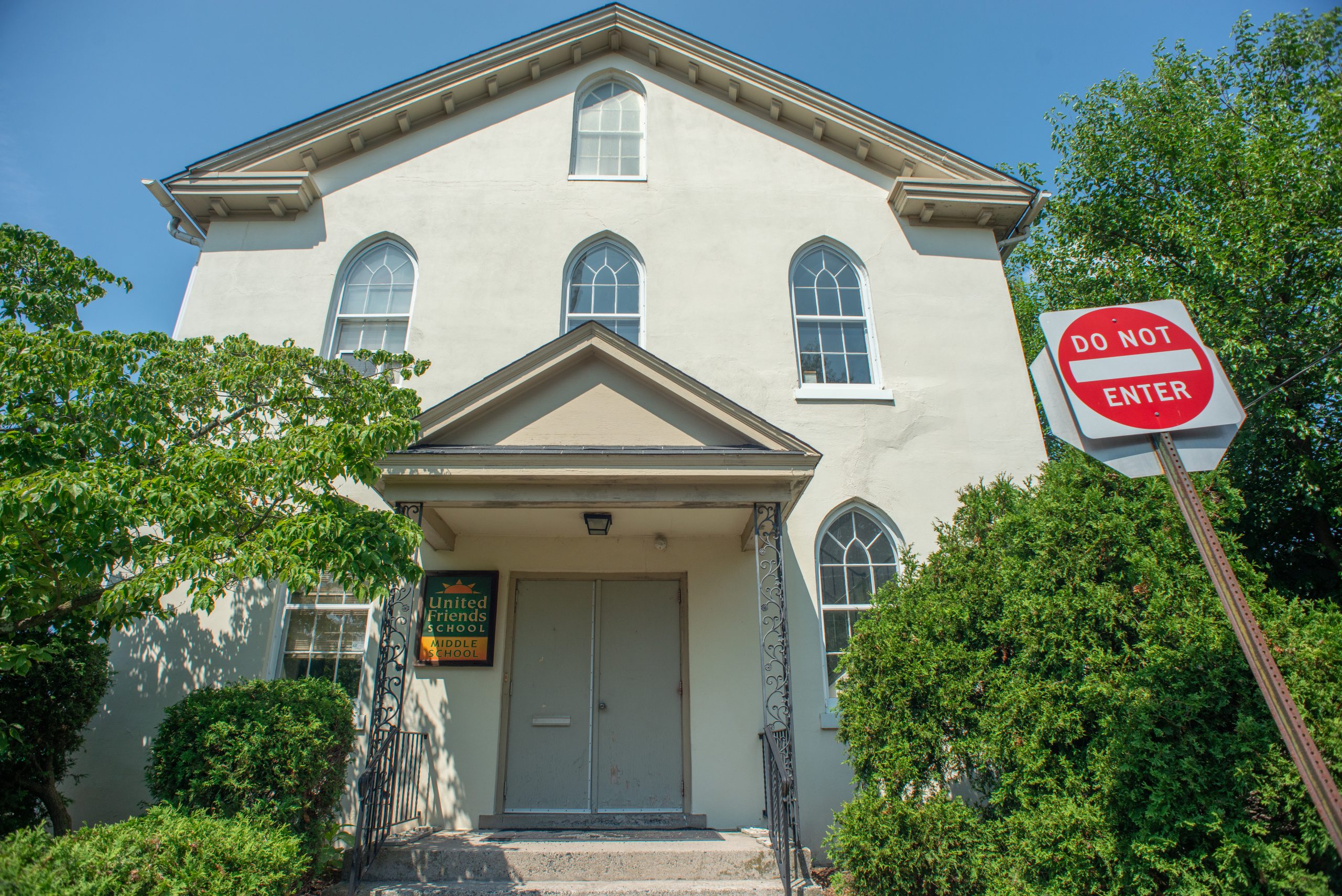
A sign at United Friends School in Quakertown.William Thomas Cain / For The Inquirer
The names of the school’s board members are not listed online. One board member, Bob Wirtschafter, said in a brief phone interview last Monday that he could not comment on what would happen with prepaid tuition.
“We know we owe them,” Wirtschafter said, adding that “I can’t say anything.”
Wirtschafter, who said he had been on the board for 32 years, said he had “seen all kinds of rumors” about the school’s closure, including that there was financial wrongdoing.
“I can tell you, it was all about tuition,” Wirtschafter said. There were 60 students enrolled for the coming year in April, but by May, “we lost five families because of the economy,” he said. The school charged $20,000 a year in tuition.
Wirtschafter said the school had been “struggling for years.” It closed its middle school and sold its building last year, he said, which “kept us alive for another year.”
County records show United Friends sold several properties for $800,000 in May 2025 to AA Property Holdings LLC.
One of the original school buildings at United Friends School in Quakertown.William Thomas Cain / For The Inquirer
The LLC is registered to a Sellersville address owned by Mateen Afzal, whose family founded a manufacturing company in Bucks County and who is listed as director of the Afzal Family Foundation. A message sent through the foundation’s website was not returned this week.
With the drop in enrollment headed into the fall, “we just couldn’t make it work,” Wirtschafter said. “We decided we had to close.”
He said United Friends was not alone among small Quaker schools facing similar troubles, citing Cambridge Friends School in Massachusetts.
Cambridge Friends announced in May that it would be closing after the end of the 2026-27 school year.
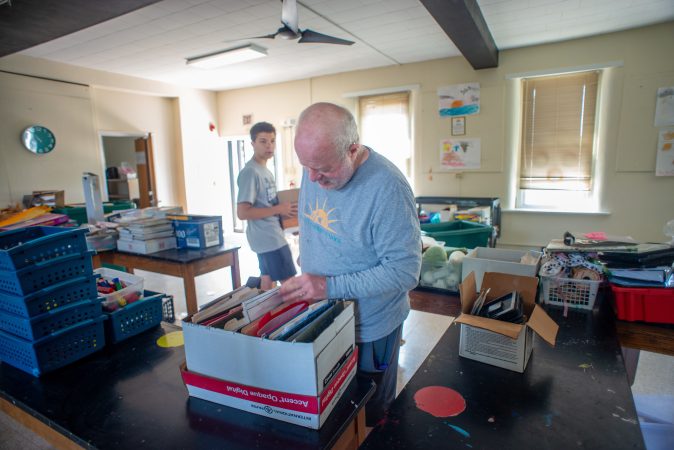
A week after announcing its closure, United Friends sent another message to families, inviting them to a “voluntary two-day work effort” to clean out the school on July 24 and 25.
“Community members who are unable to participate in person are welcome to support these efforts by making a voluntary contribution to help offset the costs associated with the cleanup,” the board said in the message.
A sign announcing a “liquidation sale” at United Friends on July 25.William Thomas Cain / For The Inquirer
“Can you imagine the sheer anger that hit the teachers and the parents? We just closed your school, we took all your money, can you help us clean up and donate more money?” Groff said.
In his efforts to reclaim his tuition payments, Groff went to his bank and the bank where United Friends had deposited the checks, with no success. He said he also contacted the Quakertown police and the Bucks County District Attorney’s Office.
Manuel Gamiz, a spokesperson for the district attorney’s office, said the county’s consumer protection division was taking complaints from families and “attempting to mediate these matters.” Anyone affected can call 215-348-6060 or, toll-free, 1-800-942-2669, Gamiz said.
Groff went to small claims court, but a clerk told him it would be difficult to file a claim because “you won’t be able to serve their papers,” he said. “There’s nothing that exists,” given that the school already closed. Groff said he does not know if the board of trustees has an address.
Groff, who has another daughter who attended United Friends, said the schools and teachers were “absolutely wonderful.”
“That’s why this is just so devastating and shocking,” he said.
BUDAPEST, Hungary — Hungary’s only nuclear power plant will shut down for the first time in its history due to record-low water levels on the Danube River, Prime Minister Péter Magyar said Friday, adding that the plant may not come back online for several weeks as the river is expected to continue receding.
The Paks nuclear plant, located around 50 miles south of the capital Budapest, is operating at less than half its normal capacity, producing 965 megawatts of power rather than the usual 2,000.
The plant uses water from the Danube to cool its reactors, but the exceptionally low water level has tested the ability of pumps to bring sufficient quantities into the plant.
Speaking at a news conference at the plant on Friday, Magyar said further reductions in output were imminent later Friday and that the entire plant will likely be powered down by Tuesday or Wednesday. He stressed that the shutdown can be performed safely and poses no risk to the public or environment.
The Soviet-built, four-reactor plant at Paks accounts for nearly half of Hungary’s electricity production. If it is powered down, it will be the first time in its 44 years of service.
Hungary and much of Central Europe has been in a prolonged period of drought in recent months, disrupting tourism, agriculture, and industry and confronting residents with the realities of climate change. Water levels are not expected to rise on the Danube in the coming days or even weeks as no significant rainfall is forecast.
Magyar said Friday that the Danube’s water level has only risen on three occasions in the month of August in the last 20 years, and added that the level at Paks could recede to as low as negative 57 inches — far below the previous record of negative 39 inches set in 2018.
A level of negative 52.7 inches requires the full powering down of the plant, he said. A negative reading means the river has fallen below the gauge’s zero reference level, not that the river is empty.
Hungary’s government has requested that companies that consume large quantities of energy voluntarily reduce their consumption to help stabilize the energy supply, particularly in peak demand hours between 5 p.m. and 10 p.m.
Magyar said Hungarian energy conglomerate MOL had committed to reducing its electricity needs by 65 megawatt-hours, a decrease of 40% from its normal consumption.
Magyar announced Friday that his party had recommended suspending parliamentary sessions planned for Monday and Tuesday in the interest of conserving energy. He also ordered that all state institutions turn off decorative lighting by Monday.