Category: News

  • Senate GOP rushes to pass budget bill, avoid shutdown ahead of midterms

    Senate GOP rushes to pass budget bill, avoid shutdown ahead of midterms

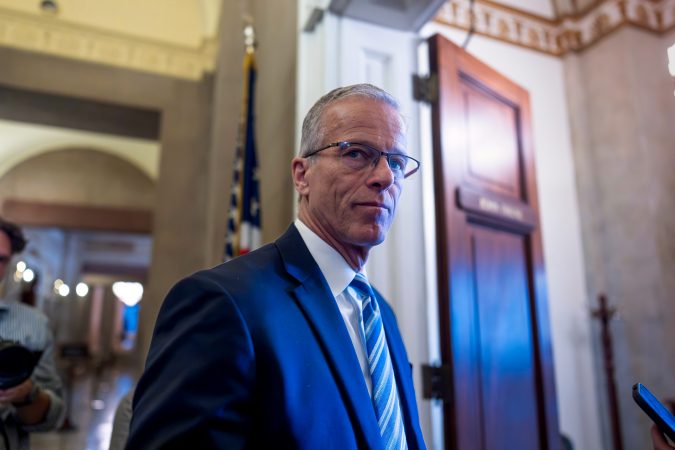
    Senate Republicans are racing to complete a lengthy to-do list before leaving town Friday, including approving a stopgap spending bill aimed at averting a government shutdown before the Nov. 3 elections.

    In addition to the stopgap budget bill, Senate Majority Leader John Thune (S.D.) is working to confirm 74 of President Donald Trump’s nominees and faces pressure to advance a $95 billion package that would provide fresh cash for the Iran war and inflation-battered farmers.

    Whatever senators don’t accomplish this week is likely to be pushed to September, when Congress is scheduled to be in Washington only briefly before hitting the campaign trail.

    The stopgap budget bill is up first, with a procedural vote that was expected late Monday. Appropriations Committee Chair Susan Collins (R., Maine) and Sen. Patty Murray (Wash.), the lead Democratic appropriator, worked jointly on the bill, which would extend government funding through Dec. 11.

    The measure differs in important ways from a version of the bill passed by the House: It incorporates White House requests to maintain funding for housing and nutrition programs through the fall, and it would extend an expiring authorization for veterans’ healthcare.

    Additionally, it would temporarily block the White House Office of Management and Budget from adopting a rule that would give political appointees sweeping powers to cancel hundreds of billions of dollars in federal grants.

    Rep. Rosa DeLauro (Conn.), the lead Democrat on the House Appropriations Committee, said in a statement Sunday that the Senate bill marks “a clear improvement” over the House bill, which she and most House Democrats opposed.

    If the Senate approves it, the House could take the measure up when lawmakers return at the end of August. Unless Congress acts, the government is set to run out of funds on Oct. 1.

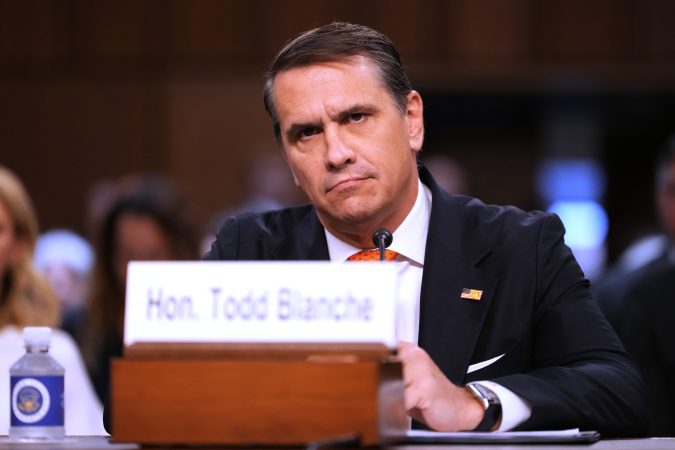
    Senate Republicans are also facing a long list of presidential nominees at an array of agencies, including the Departments of State, Energy, Treasury, and Justice. The Senate could also confirm Todd Blanche as attorney general if the two Republican senators who have blocked his confirmation vote to advance it Tuesday.

    Late Sunday, Blanche issued a written order formally rescinding the Trump administration’s proposal for a $1.8 billion fund for people who claim they were victims of political prosecutions — a step toward breaking the impasse.

    Blanche said the revision came as part of an agreement with Senate Judiciary members including Sens. John Cornyn (Texas) and Thom Tillis (N.C.), who had threatened to vote against his nomination over concerns about the fund. The order came one day after Trump threatened in a Truth Social post to revive his push for the payout fund if Blanche is not confirmed.

    The Judiciary Committee has scheduled a critical vote Tuesday on Blanche’s nomination.

    Elsewhere, the Senate is expected to easily approve legislation to impose new sanctions on Russia, which would allow the Trump administration to levy up to 100% tariffs on the top five purchasers of Russian oil and natural gas. The measure, which was championed by Sen. Lindsey Graham (R., S.C.) before his sudden death last month, advanced last week on a strong bipartisan vote.

    And Thune has said the chamber would vote on an industry-backed cryptocurrency bill that would establish federal authority over digital assets. But the measure faces opposition on a variety of fronts, including from Democrats, who are demanding tougher ethics provisions to limit Trump’s ability to profit from his family’s crypto businesses.

    Possibly the tallest order for Republicans this week is finalizing a framework for a budget package to speed cash to farmers and the Pentagon. Using a complex process known as reconciliation, GOP lawmakers could sidestep a Democratic filibuster and pass the package with Republican votes.

    For the strategy to work, Senate Republicans would need near-unanimous support in their caucus. But several GOP senators have expressed opposition.

    “We’re taking a hard look at it,” Thune told reporters last week. “And at the moment, as I’ve said before, we’re probably not there.”

    Last month, the House passed a $95 billion budget framework that includes $73 billion for defense, $12 billion in aid for farmers and $10 billion for election-related measures, which House Republicans hope to use to impose elements of the Save America Act — a top Trump priority. That bill would require voters to prove their citizenship when registering to vote and to show a photo ID at the polls.

    Trump has demanded that the Senate stay in session until the election provisions pass, but Thune has said repeatedly that the bill cannot pass the Senate, even under reconciliation. Tillis, for one, has said he would not support it.

    Meanwhile, multiple GOP senators have expressed other concerns with the House framework for reconciliation, including Sens. Lisa Murkowski (Alaska), Bill Cassidy (La.), and Collins.

    Senate Armed Services Committee Chairperson Roger Wicker (R., Miss.), who has argued for closer to $300 billion for defense, told the Washington Post on Thursday that he is pushing for the higher amount. But a bigger package risks the support of fiscally conservative Republicans, who are already balking at adding $95 billion to the nation’s $39.8 trillion debt.

    Senate Budget Committee Chair Ron Johnson (R., Wis.) said the White House would need to directly request the additional funds for defense. Still, Johnson said he was “pretty optimistic” that the Senate would advance a budget framework before leaving town.


  • Trump overhaul could gut Head Start preschool standards, leaving states to set the rules

    Trump overhaul could gut Head Start preschool standards, leaving states to set the rules

    WASHINGTON — President Donald Trump’s administration is planning a dramatic overhaul of Head Start that would gut its quality standards, upending the hallmarks of the early education program for impoverished children, two people familiar with the deliberations said.

    Head Start, established in the 1960s to help fight poverty, has long been considered by experts to be a gold standard early learning program. Its regulations, which stretch more than 100 pages, outline requirements on everything from child-to-teacher ratios and child health screenings to family engagement.

    Trump’s Republican administration would replace those regulations with around a dozen pages of rules, leaving most of the specifics up to state and local law, said the people familiar with the deliberations, who spoke on the condition of anonymity to discuss information that was not yet public and because they feared reprisal.

    In a post on X on Saturday night, the Department of Health and Human Services, which oversees Head Start, said to expect a rule to be published this week. The administration “remains committed to strengthening Head Start by preserving federal investment in the program while advancing reforms that expand access, increase local flexibility, reduce unnecessary administrative burden, and ensure services are delivered effectively to children and families in need,” department spokesperson Emily Hilliard said Monday in an email.

    The draft rules would require more documentation from parents who are homeless or unemployed, the people familiar with the deliberations told the Associated Press. An early version of the proposal also would have barred parents who are in the United States illegally from enrolling their children, even if the children are U.S. citizens. It’s unclear whether those provisions will make the final draft.

    Head Start, which operates in all 50 states, has long enjoyed robust bipartisan support. But some prominent conservatives in recent years have called for its elimination, saying the federal government should get out of the education business at every level. Deregulating the program would deliver a win for them and aligns with the Trump administration’s goals of scrapping rules it views as onerous or unnecessary.

    Head Start is designed to target poverty, experts say

    Head Start serves more than half a million low-income babies, toddlers, and preschoolers nationwide. For families that qualify, it offers free preschool and screenings to identify developmental delays. It also offers supports for families.

    If the changes take effect, they could make Head Start unrecognizable, said Khari Garvin, who ran the Office of Head Start under Democratic President Joe Biden.

    “We’d have the carcass of Head Start,” Garvin said. “You might have a program that’s called Head Start, but in substance it will not be.”

    The proposed rules were originally reported in the Bulwark.

    Tommy Sheridan, deputy director of the National Head Start Association, said the organization has yet to see the proposed rules. But he said the potential for a massive overhaul has left the organization on edge.

    “We’re very anxious,” Sheridan said. “When it does come out … we’ll be ready to fight back where we need to fight back.”

    Still, he emphasized that Head Start centers might not be impacted for months, if the rules get on the books at all. Once the proposal is made public, federal law requires the administration to give at least a month for the public to weigh in on it. Then, once finalized, it may take more time for the rules to take effect. There’s also the potential for a lawsuit to halt implementation.

    Current rules cover dental screenings, staff-to-student ratios

    Head Start was created as part of President Lyndon B. Johnson’s War on Poverty and targets the myriad challenges that low-income households face. It serves children and adults alike, coaching parents on reaching their goals, connecting them with services, and even employing them.

    Head Start operators, which include school districts and nonprofit organizations, are required to provide medical, dental, and vision screenings for children and to monitor them for developmental delays. There’s also a curriculum framework and prohibitions on physical and emotional abuse of children.

    Many of the features that make Head Start distinct from mainstream preschools are spelled out in 122 pages of performance standards. The Trump administration’s proposal would toss most of that rule book and replace it with a much shorter version that eliminates or loosens many requirements, the people familiar with the proposal said. But the proposal also calls for some new regulations, such as requiring all instruction in English.

    Requirements around staff-to-student ratios and safety standards would be erased. Operators instead would be instructed to follow local and state laws, which are often far more permissive. And the new proposal also says nothing about suspensions and expulsions, the people said, making it easier for programs to kick out kids with disabilities who are difficult to educate.

    Jody Smith, a lead teacher for a Head Start program south of Seattle, said she’s seen firsthand how critical many of the requirements are, especially the ones for engaging with families and screening kids for disabilities. Smith was a high school dropout and a young mother when she enrolled her first child in Head Start, where she was encouraged to go back to school and inspired to become a teacher. Later, Head Start helped diagnose her youngest child with autism.

    Without Head Start, “I would have probably stayed as a poverty line,” Smith said. “And I don’t know that we would have gotten as far in life as we have.”

    Head Start has faced several threats

    The numerous standards are key to preparing Head Start kids for kindergarten, said Ruth Friedman, who helped President Barack Obama’s administration draft the regulations now in jeopardy.

    “If the administration strikes down those standards, it would set back our nation’s educational goals and our efforts to reduce poverty, and it is explicitly prohibited by the Head Start law itself,” Friedman said.

    Head Start, which has enjoyed robust bipartisan support for decades, has faced several threats since Trump took office last year. Project 2025, a conservative policy blueprint authored by the official who is now Trump’s budget chief, called for the federal government to get rid of the program altogether. Last year, in a draft budget, the administration proposed exactly that, saying: “The federal government should not be in the business of mandating curriculum, locations, and performance standards for any form of education.” After public outcry, Health Secretary Robert F. Kennedy Jr., whose department oversees Head Start, told Congress the program’s funding was safe.

    Funding for the program was disrupted not long after Trump took office, leading some programs to have to shutter temporarily. It was once again halted after a government shutdown in October that led some centers briefly to close their doors.

    Earlier this year, Trump officials also erased a Biden-era rule that mandated raises and greater benefits for Head Start employees. When the rule went in to effect in 2024, Head Start teachers, the majority of whom have bachelor’s degrees, earned less than $40,000 a year on average.

  • The Frank Rizzo statue is repaired, and the search for a new location is underway

    The Frank Rizzo statue is repaired, and the search for a new location is underway

    In the case of Frank Rizzo, out of sight does not always mean out of mind.

    The former mayor and police commissioner died 35 years ago. A 10-foot bronze statue reminded Philadelphians of his presence for decades, until civil rights protests in 2020 culminated in the monument’s removal from public display.

    It might have lost its prime spot outside the Municipal Services Building, across from City Hall. But, six years later, the statue remains a subject of interest, leaving reader JJ Cutuli to ask Curious Philly, The Inquirer’s forum for questions about the city: “Where is the Frank Rizzo statue, right now?”

    The short answer? Now that repairs have been made, the search for a new home is on. Here’s how we got here.

    » ASK US: Have something you’re wondering about the Philly region? Submit your Curious Philly question here.

    The last thing Cutuli heard on the Rizzo statue saga was that it was set to be returned to the Frank L. Rizzo Monument Committee, after a settlement was reached with the Philadelphia Art Commission last summer.

    “I am very much against the statue, against the man, against what it all represents,” Cutuli said. “But sweeping it under the rug or sending it to a scrap yard might take away the opportunity to deal with the issues that it represents.”

    Rizzo has long been a controversial figure. During the 1960s and 1970s, he was accused from different fronts in the city of having allowed police to function with little oversight, putting people of color in a vulnerable spot.

    Between 1970 and 1978, police shot civilians at a rate of one per week, according to an Inquirer investigation. That led critics to condemn Rizzo as a racist, and protesters even put a Ku Klux Klan hood on the statue’s head in 2016.

    “The statue is a deplorable monument to racism, bigotry, and police brutality for members of the Black community, the LGBTQ community, and many others. The treatment of these communities under Mr. Rizzo’s leadership was among the worst periods in Philadelphia’s history,” then-Mayor Jim Kenney said in a statement in 2020, when the city removed the statue overnight.

    For supporters, however, the South Philly native was a beacon of Italian American pride whose tough approach on crime could have been misunderstood.

    “He was a brute in some respects. But it wasn’t racist,” George Bochetto, an attorney for the Frank L. Rizzo Monument Committee, told The Inquirer in 2016. “It was law and order, it was crime, and I think he got a bad rap, frankly.”

    The agreement left the committee with an $80,000 payment from the city for damages caused to the statue during its removal.

    “They put it on the back of a flatbed truck and a piece of the base broke off so they had to replace that base,” Bochetto said. “There were also a lot of scratches and gouges on the body of the statue, which had to be repaired too.”

    The bronze Rizzo has been at a foundry undergoing “expensive five-figure repairs,” Bochetto said.

    Restorations are now done, according to the lawyer. The next frontier is finding a new home for the Rizzo statue.

    As part of the 2025 agreement, the statue should be displayed on private property, and in a way that makes it “not visible from the public right of way,” the agreement states.

    An exception can happen if the committee gets approval from Mayor Cherelle L. Parker or the managing director. Bochetto said that’s something the committee is working on. Bochetto did not describe locations being considered for the statue.

    The city did not reply to a request for information. So, the status of the monument’s home remains uncertain.

    Controversy aside, Bochetto said, it’s important to recognize that the statue is part of Philadelphia’s history.

    “People say that symbols like this from the past are a part of our history and that is true,” Cutuli said. “But as part of history perhaps these things do have a place in museums or perhaps they don’t, perhaps the story and the facts can exist without the statue.”

  • In letter to cousin RFK Jr., health advocate warns of threats to disability care

    In letter to cousin RFK Jr., health advocate warns of threats to disability care

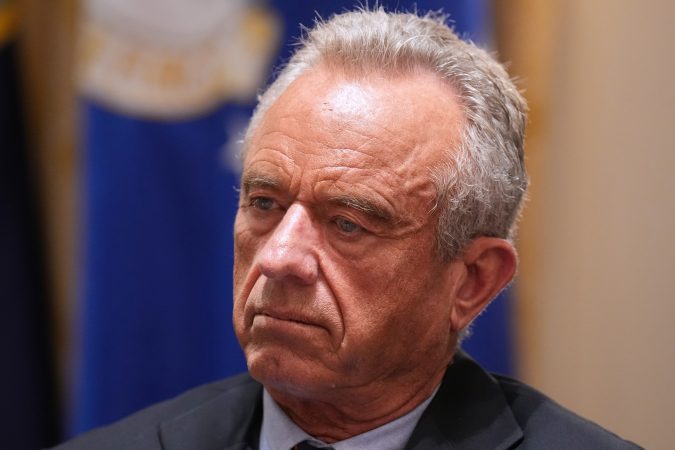
    In a letter to Health Secretary Robert F. Kennedy Jr. and acting attorney general Todd Blanche, the chairperson of the Special Olympics — who is also Kennedy’s cousin — called on the administration to reverse course on a Justice Department memorandum that could narrow federal protections for disability care.

    The letter by Tim Shriver joins a recent outcry from lawmakers and disability advocates who have warned that the June memo, which called for reinterpreting a key Supreme Court ruling on disability rights, could shrink access to home- and community-based care services that hundreds of thousands of Americans with disabilities rely on to receive care without being placed in institutions — a cause that members of the Kennedy family have supported throughout their political careers.

    “This is something that is in some ways the central passion of our family,” Shriver told the Washington Post. “And I hope and believe that Secretary Kennedy understands that.”

    The Health and Human Services Department and Justice Department did not provide a comment by the time of this article’s publication.

    The memo comes as patients and caregivers brace for Medicaid cuts from President Donald Trump’s tax bill, which are also expected to hamper disability services.

    “Many people with intellectual and developmental disabilities are already worried about whether the Medicaid-funded supports and services they rely on will be there in the future,” Shriver wrote in the letter sent to Kennedy and Blanche last week and shared with the Post.

    Shriver, a longtime disability rights activist, said he sent the letter in his personal capacity. He has led the Special Olympics, which organizes sporting competitions for children and adults with intellectual disabilities, since 1996.

    The Justice Department memo, issued in mid-June by its Office of Legal Counsel, argued for a looser reading of the Supreme Court’s 1999 decision in Olmstead v. L.C., viewed as a landmark case for disability rights. The Supreme Court ruled that it was discriminatory to institutionalize people with disabilities when they can and want to receive community-based services instead.

    “Olmstead is what created the tools to require states to provide community-based services,” said Alison Barkoff, a professor of health law and policy at George Washington University and a former HHS administrator during the Biden Administration.

    Advocates argue that those services can be more cost-effective than institutional care and better enable people with disabilities to work and remain connected with their families and communities. Around 4.5 million Medicaid enrollees receive home- and community-based care, and hundreds of thousands more are on waitlists for the services each year, health policy research organization KFF estimated in 2024.

    “These programs are the difference between a full life and … tragic mental illness, loneliness, depression, isolation, humiliation,” Shriver told the Post.

    The Kennedy family has been closely involved in efforts to promote disability rights. President John F. Kennedy signed a major mental health bill in 1963 while in office and alongside Sen. Robert F. Kennedy — the health secretary’s father — pushed to shift disability care away from institutionalization and toward community-based services. Eunice Kennedy Shriver, a sister of President Kennedy and Tim Shriver’s mother, founded the Special Olympics.

    The Trump administration has scrutinized home- and community-based services for fraud and argued that some states poorly oversee their home-based care programs. Advocates are also concerned that states newly strained by cuts to Medicaid could slash support for home- and community-based services.

    The Justice Department memo would make it easier for states to do that, opponents have said. It argued that Olmstead does not require states to provide home- and community-based care for people with disabilities and that the federal government is not authorized to enforce such a mandate. It conceded that such an opinion is “out of step with the common understanding of that decision within the federal courts.”

    Groups including the American Civil Liberties Union, American Association of People with Disabilities, and Center for Public Representation denounced the Justice Department’s position. Democrats in Congress urged the department to rescind the memo.

    While the Justice Department’s opinion doesn’t change the law, it could indicate that the department will step back from enforcing Olmstead, advocates said.

    “It provides a signal that the Department of Justice and the U.S. Department of Health and Human Services are stepping back from that commitment to community integration,” said Lydia Dawson, the vice president of government relations for ANCOR, a national association of private community providers.

    Shriver said the Trump administration’s stance threatened decades of hard-fought progress for disability care.

    “I am hopeful that you will help ensure that our country continues moving forward rather than backward on the promise of inclusion,” he wrote to Kennedy and Blanche.

  • Flood warnings are up for parts of the Philly area, with the potential for 5 inches of rain

    Flood warnings are up for parts of the Philly area, with the potential for 5 inches of rain

    For the first time since, well, Tuesday, flood warnings have been posted in the Philly region and a flash flood watch remains until 11 p.m. Monday, with a potential for up to 5 inches of rain in and around the city.

    The National Weather Service flood warnings were in effect until midafternoon for a broad area along the I-95 corridor where “slow-moving thunderstorms” had generated up to 4 inches of rain

    The Pennypack Creek in Northeast Philly jumped 1.5 feet in just 15 minutes to go above flood stage, the weather service said. At least one water rescue occurred in Montgomery County, and flooding resulted in lane closures along Route 130 in Gloucester County, the weather service reported.

    Strong storms remain possible during the day Monday, but Sarah Johnson, warning coordination meteorologist for the National Weather Service office in Mount Holly, said “the bigger threat we are concerned about is heavy rain and flash flooding.“

    While the weather service’s flood watch was in effect from 8 p.m. Sunday until 11 p.m. Monday, she cautioned that with computer models having their differences, the forecast had elements of “uncertainty.” (And when was the last time that happened?)

    Once again the atmosphere likely will be playing a version of rain roulette across the region, as it did on Tuesday, said Marc Chenard, senior branch forecaster at the federal Weather Prediction Center, in College Park, Md. Waterfall-like downpours turned the Delaware River into a shade of flowing mocha north of Philadelphia, while less than an inch fell upon the city.

    Areas of heavy rain moved through the region Sunday nigh an Monday morning. And regardless of how it all plays out this time around, “it’s definitely going to affect the morning commute” said Bill Deger, senior meteorologist with AccuWeather Inc., with rainfall rates of 1 to 2 inches an hour possible. Even if it’s not raining, he said, significant road flooding is possible.

    He said it’s likely that Philly and the surrounding area might be in the 2-to-4-inch bull’s-eye zone.

    When is likely timing for rain in the Philly region?

    “This is another setup where we have very moist air from the South,” said Deger.

    More rains were likely Monday morning, and again later in the afternoon with the approach of a cold front.

    That front could fire up strong thunderstorms, said Chenard, and it might take its good old time moving through the area.

    He added that as so often happens, the downpours “won’t be all that widespread, but where they do happen you usually get a flash flood.”

    The rains likely will shut off Monday night; however, the workweek is looking quite unsettled with shower chances every day.

    Will this end the drought in the Philadelphia area?

    While the drought warnings continue in New Jersey and Chester County, conditions have improved measurably in areas around the city, which was no longer in “severe” or “moderate” drought, in the latest interagency U.S. Drought Monitor update.

    Still, even in Philly conditions were listed as “abnormally dry” in the advisory issued Thursday, despite a July that was officially the wettest month in Philadelphia since March 2024.

    Philadelphia’s total, 7.03 inches, was 2.65 inches above normal. Over 8 inches was measured in Wilmington. However, as a testament to the randomness of summer rains, precipitation totals were significantly below normal in Atlantic City and Allentown, the weather service reported.

    And while downpours can trigger rapid rises on the local streams such as the Neshaminy Creek, in Bucks County, and the Frankford and Pennypack Creeks in Philly, they are less of a threat to the Delaware and Schuylkill Rivers, where water levels have remained relatively low.

    Those levels are the result of the longer-term dryness: July broke a 16-month streak of below-normal rainfall in Philadelphia.

    But Johnson said the region’s wetness trend has been showing some signs of staying power.

    Said Deger, “It’s been a long time coming.”

  • Covering 20 locales over 20 weekends, ‘Neighborhood Jawnts’ tour series highlights Philly’s diverse communities

    Covering 20 locales over 20 weekends, ‘Neighborhood Jawnts’ tour series highlights Philly’s diverse communities

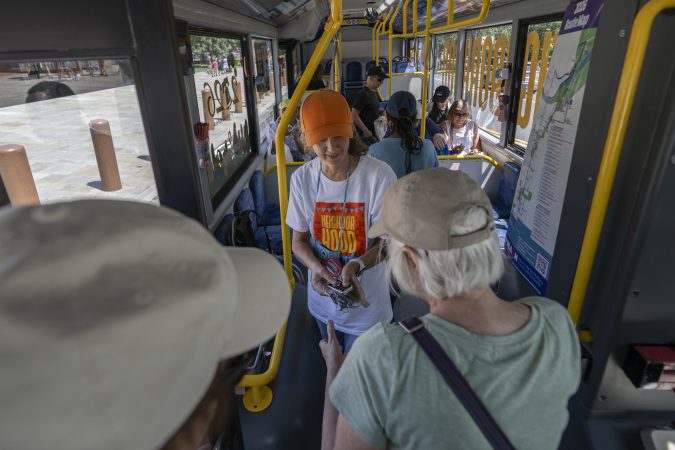
    The tour bus heaved and weaved through the residential streets of Mount Airy, rolling over speed bumps, slowing for passing cars, and pulling over for the occasional gawking.

    “I invite you to look around,” tour guide Marianne Ruane said, gesturing out the window as her voice echoed from a transmitter microphone into the audiences’ earpieces. The attendees murmured as they admired the homes of the streetcar suburb.

    This was “Neighborhood Jawnts,” a free, hyper-localized tour running throughout a diverse swath of Philadelphia’s neighborhoods this summer and into the fall. The “jawnts” — get it? like “jaunts” but Philly-style — are an effort by the city’s tourism arm to engage every locale, from Africatown to the Far Northeast, during the Semiquincentennial.

    “Philadelphia’s a city of neighborhoods,” said Kathryn Ott Lovell, president and CEO of Philadelphia Visitor Center Corp. and Philadelphia250, the nonprofit in charge of planning the 250th celebrations. The series is a collaboration between Ott Lovell’s organizations, with sponsorships from the city and Fulton Bank, which allow the tours to be offered at no cost.

    “We wanted to make sure that people have the opportunity to get to know the whole city and to get to know the city through the neighborhoods and the diversity of our city — the cultures, the communities, the histories,” Ott Lovell said.

    The tours, which began in late May and will run until October, feature a different area weekly, totaling 20 neighborhoods in the series. The tours are offered once on Fridays and twice daily on Saturdays and Sundays, and launch from the Independence Visitor Center.

    Passengers board the PHLASH bus at the start of the “Neighborhood Jawnts” tour in Philadelphia on July 24.Jose F. Moreno / Staff Photographer

    On a recent Friday in July, a commandeered PHLASH bus carted about 30 people around Chestnut Hill and Mount Airy. Each tour is led by a professional tour guide — someone who gives the “play by play” — and a community host — a resident who can add “color commentary” — Ott Lovell said.

    Attendees visited the French and English Villages; the country’s oldest country club, Philadelphia Cricket Club; and the Wissahickon Inn, and they tasted “midnight chocolate” ice cream from Mount Airy institution Zsa’s Ice Cream, all while learning about the area’s history and how architecture has shaped the community and its landscape.

    “I really love how Philadelphia 2026 has been about celebrating the city as a whole, not just Old City and downtown, but all of the neighborhoods that give Philadelphia its identity,” said Philip Dawson, community host and executive director of Mount Airy Community Development Corp.

    Dawson added: “This tour really helped to highlight Mount Airy’s history, its housing and architecture, its businesses, its people, its diversity. It was really meaningful.”

    Surprisingly, Ott Lovell said, Philadelphians — not out-of-towners — have capitalized on the tours. The majority of July 24 attendees were from the Philly area and most had already gone on a “jawnt.”

    It was Janice Rudd’s fourth such tour. The 60-year-old recently moved from Houston to South Philadelphia and has been using the series as a way to familiarize herself with her new home city.

    “I’m learning so much,” Rudd said. “It’s such a big city, there’s much to do downtown, in South Philly, out to the [Philadelphia Museum of Art] … but people just never go beyond there. … It’s nice to see real neighborhoods.”

    While ambitious, “Neighborhood Jawnts” is paying off: Forthcoming tours are nearly full or completely sold out with a waiting list to join, according to organizers. Ott Lovell said they are brainstorming ways to keep low-cost and affordable tours going past the summer of the Semiquincentennial.

    “We are a city of neighborhoods and it’s something we should celebrate as much as we celebrate our history,” she said.

    The “Neighborhood Jawnts” series runs until Oct. 25. Tours start at 2 p.m. on Fridays and at 10 a.m. and 2 p.m. on Saturdays and Sundays. Tours are free, but online registration is required.

  • Senate leaders reach funding deal to avoid shutdown during campaign season

    Senate leaders reach funding deal to avoid shutdown during campaign season

    WASHINGTON — Key senators unveiled a short-term spending bill on Sunday that would keep federal agencies funded past the midterm elections and into early December as they look to avoid a government shutdown during the middle of campaign season.

    The Senate is likely to vote on the measure before leaving Washington at week’s end for its traditional August recess, a period that many lawmakers want to spend shoring up their reelection prospects rather than working in the nation’s capital.

    The bill generally funds the federal government at current levels though Dec. 11. The House has passed a similar measure, but it did not include various exceptions sought by the White House. Senators have been spending recent days negotiating which of those exceptions to include.

    One exception that did not make it into the bill, Democrats noted, was the administration’s request to include $1 billion to build “Trump-class” battleships.

    In another major difference with the House bill, Democrats say they also were able to include language that will ensure the administration cannot transfer funds from other programs to the Border Patrol.

    The late-summer action on a funding fix is unusual. Normally, Congress waits until the final days or hours of a funding deadline to pass short-term funding extensions, but this time senators are acting two months before the end of the fiscal year on Sept. 30.

    Senate Majority Leader John Thune said passing the measure was his top priority going into the August recess. He noted that the American people have already experienced two record-breaking government shutdowns in the past 10 months.

    “We need to ensure that they do not face a third,” Thune said.

    Both parties want to avoid another shutdown

    A short-term funding extension is needed because Congress has struggled to get the dozen annual appropriations bills negotiated and approved before the Sept. 30 deadline. By extending government funding now, lawmakers can use the ensuing months to work out their differences on full-year funding.

    It won’t be an easy lift as Republicans seek a dramatic increase in defense spending while cutting non-defense spending. Trump proposed a 10% cut in non-defense programs overall. Meanwhile, he called for boosting defense spending by some 44%.

    A potential shutdown before voters go to the polls is a scenario that both parties are looking to avoid, as polling indicated that neither party evaded blame for last fall’s record 43-day shutdown. Democrats sought to extend an expiring health insurance tax credit and refused to go along with a short-term spending bill that did not include that priority. But Republicans said that was a separate policy fight to be held at another time.

    A second spending battle over funding for the Department of Homeland Security took 76 days to resolve when Democrats refused to fund U.S. Immigration and Customs Enforcement and the Border Patrol without changes to those operations.

    The bill delays a controversial policy on grants

    Sen. Susan Collins, the Republican chair of the Senate Appropriations Committee, along with Democratic senators, are seeking to block a proposed rule from President Donald Trump’s administration related to grants. The rule would require a senior political appointee at each agency to review grant proposals through criteria that include “ensuring that discretionary awards advance the President’s policy priorities.”

    Collins and Sen Patty Murray, the top Democrat on the Appropriations Committee, said the rule would not take effect during the course of the stopgap spending bill. Collins said she advocated for significant changes to the rule, “citing its potential to politicize grants and harm small, rural communities, families, and biomedical research.”

    Democrats want to kill the administration’s effort altogether. Senate Democratic leader Chuck Schumer said it was a “disgraceful” effort that would “further politicize all federal grants.”

    “While Republicans rejected killing the proposed rule outright, I’m going to keep fighting to put a stop to it once and for all, and I will keep pressing my Republican colleagues to do exactly that,” Murray said.

    Democrats fear Trump would turn federal grants into a cudgel to punish perceived political foes and reward allies, while also undermining Congress’s constitutional power of the purse. The White House Office of Management and Budget says its effort is about improving accountability to ensure taxpayer dollars aren’t wasted or misused.

  • GOP holdouts agree to support Blanche’s nomination after he rescinds settlement fund

    GOP holdouts agree to support Blanche’s nomination after he rescinds settlement fund

    WASHINGTON — Two Republican senators who threatened to block acting Attorney General Todd Blanche’s confirmation to lead the Justice Department said Monday that they will support his nomination, ending an impasse over plans to create a fund to compensate allies of President Donald Trump.

    The endorsement from GOP Sens. John Cornyn and Thom Tillis paves the way for the Senate Judiciary Committee to advance Blanche’s nomination on Tuesday after the Justice Department and lawmakers reached a deal to formally rescind the $1.8 billion “Anti-Weaponization Fund” proposed to settle Trump’s lawsuit against the Internal Revenue Service.

    Cornyn and Tillis had refused to back Blanche’s bid for the permanent post without official confirmation killing the fund meant to compensate people who believe they were unfairly prosecuted by the Justice Department. Blanche’s written order, issued late Sunday, came after days of negotiations between the Justice Department and the Republican senators, who are leaving Capitol Hill when their terms end in January.

    “We want to express our gratitude to Mr. Blanche and his staff for working with us on this, and we look forward to voting to advance his nomination out of the Senate Judiciary Committee soon,” Cornyn, of Texas, and Tillis, of North Carolina, said in a statement.

    DOJ order says ‘beyond any doubt’ that fund is dead

    Blanche has repeatedly said that the Justice Department was scrapping plans for the fund, which sparked bipartisan outcry over the possibility that violent rioters who attacked police at the U.S. Capitol on Jan. 6, 2021, could be considered for payments. But skeptical lawmakers said they were concerned that could be revived without a commitment in writing, especially because Trump has continued to defend the idea.

    In his order posted on social media late Sunday, Blanche wrote that the department was confirming “beyond any doubt, that there is no Fund.”

    Since the settlement of the president’s lawsuit against the IRS was announced, “No Members were appointed; no funds were transferred; no process for receiving claims was established; no claims were paid,” the order said. “This order establishes, beyond any doubt, that there is no Fund.”

    Cornyn and Tillis had also pressed the Justice Department to limit the scope of a separate piece of the settlement that provided broad immunity for Trump and members of his family from tax audits.

    Under the deal, the Justice Department clarified in writing that the tax audit immunity agreement “applies by its terms only retroactively” to claims open at the time of the settlement and does not protect the president from examination of future tax filings. It also makes clear that only the parties that brought the lawsuit — Trump, two of his sons, and the Trump Organization — are covered by the tax agreement.

    Cornyn and Tillis said in their statement that they were “pleased” with the concessions made by Blanche.

    “From the outset, we were clear that we needed a written document addressing our concerns on the IRS audit agreement and the anti-weaponization fund that included constraining the scope of audit protection by limiting it to the parties of the Settlement Agreement and legally ending the anti-weaponization fund,” they wrote.

    Democrats, however, noted that the order rescinding the fund doesn’t stop the Trump administration from compensating Jan. 6 rioters through a previously established process that allows people to file claims for damages if they believed they were wronged by the government.

    “This supposed ‘deal’ doesn’t prevent payouts to violent insurrectionists in the future,” Democratic Sen. Adam Schiff said in a social media post. Schiff added that it also “leaves in place a tax-immunity deal that could help Trump skip taxes on the $2.3 billion he made last year, and still leaves it vague who and what is covered.”

    Cornyn, Tillis echo GOP colleagues’ concerns

    Blanche’s nomination was thrown into doubt last week after the Judiciary Committee postponed a vote that had been scheduled for Thursday morning as Tillis and Cornyn said they needed more from the administration before they could provide the necessary votes.

    After the Thursday vote was delayed, Trump said in a social media post that he might pull Blanche’s nomination and resubmit it after Cornyn and Tillis leave office next year. And on Saturday the president threatened to push forward with the fund if the two Republicans blocked Blanche’s nomination.

    On Sunday evening, Trump said that people who had faced charges from the Jan. 6, attack on the Capitol and could have benefited from the fund had “their lives destroyed.”

    “This would be a reimbursement for the pain that they suffered,” Trump said. “A lot of people like it.”

    Blanche, who served as Trump’s defense lawyer in his criminal cases, entered the Justice Department last year as deputy attorney general. He was elevated to the top post after Pam Bondi was fired in April by Trump, who was frustrated by her failure to successfully prosecute his political enemies.

    Though Blanche insisted he wasn’t auditioning for the permanent job, he has moved quickly since taking the reins of the department to promote the Trump administration’s agenda and accelerate investigations into the president’s perceived foes.

  • 🎃 An early welcome to spooky season | Inquirer South Jersey

    🎃 An early welcome to spooky season | Inquirer South Jersey

    Good morning, South Jersey. Our stormy summer seems to continue. We’re under another flood watch until tonight. Be prepared for more downpours.

    Approximately 3,000 people attended the grand opening of Spirit Halloween’s flagship location at Harbor Square Mall in Egg Harbor Township.

    And every Democrat in the New Jersey congressional delegation collectively asked President Donald Trump to reverse his FEMA aid rejection for the deadly snowstorm earlier this year.

    Plus, prosecutors filed a civil complaint to remove Willingboro council member Nathaniel Anderson, who has not resigned from his position despite being behind bars for mortgage fraud, and more news of the day.

    — Taylor Allen (southjersey@inquirer.com)

    If someone forwarded you this email, sign up for free here.

    🎃 Get in the spirit

    There’s no such thing as too early for Halloween (in my opinion).

    And I’m clearly not alone since about 3,000 people showed up to celebrate the annual grand opening of the flagship Spirit Halloween in Egg Harbor Township on Saturday.

    Children and adults — some wearing shorts and T-shirts, others decked out in full costumes — were able to play outdoor games, enjoy food trucks, get their face painted, and of course, shop. Some life-size animatronics sold out within minutes.

    The chain operates more than 1,500 stores in the U.S. and Canada from August through early November.

    Other locations that are now open include Mount Laurel, Cherry Hill, Deptford, and Sicklerville, with more to come.

    Did you know? The seasonally ubiquitous Spirit Halloween is a South Jersey company and Spencer’s is the parent corporation.

    The Inquirer’s Sarah Nicell has more on the festive celebration.

    A request to reverse FEMA aid rejection

    All of the Democrats in the New Jersey congressional delegation signed a letter to President Donald Trump asking him to reverse his rejection of disaster aid for February’s deadly snowstorm.

    Their plea in the letter — first obtained by The Inquirer — is in support of Gov. Mikie Sherrill’s appeal of the denial of the $84 million request to the Federal Emergency Management Agency (FEMA) for the blizzard from earlier this year.

    U.S. Sens. Cory Booker and Andy Kim led the effort. All of the members of New Jersey were invited to join but only three Republicans did, according to Booker’s office.

    Notably, South Jersey Republican U.S. Rep. Jeff Van Drew opted out despite initially supporting the FEMA request in April that sought money in every county in his district for costs related to the storm.

    Reporter Aliya Schneider has the story.

    What to know today

    • A man was charged with first-degree murder in the July 17 death of another inmate at Garden State Youth Correctional Facility in Chesterfield, Burlington County Prosecutor LaChia L. Bradshaw said Friday.
    • Prosecutors have a filed a civil complaint to remove the jailed Willingboro council member, Nathaniel Anderson, who has not resigned from his position.
    • The new CEO of the Pennsauken-based Bayada Home Care spoke with The Inquirer to discuss the importance of providing additional care at home as the country’s healthcare providers navigate financial strain.
    • Washington Township High School teacher Matthew Groark and fellow food influencer Maxwell McGibbon is competing on Food Network’s grilling competition show Pitmasters, Philly Voice reports.
    • Starting today, Camden County will begin the $2.5 million project to make infrastructure improvements to Collings Avenue Bridge over Newton Creek on the border of Gloucester City and Camden. The bridge will be closed for three months.
    • Back Alley Barbeque in Pennsauken is back after a deal for a seafood restaurant to take over the space fell through, according to South Jersey Food Scene.

    🧠 Trivia time

    South Jersey singer Mara Justine came in what place when she competed on season 24 of The Voice?

    A) Second

    B) Third

    C) Fifth

    D) Seventh

    Think you know? Check your answer.

    What we’re…

    🗳️ Considering: Columnist Daniel Pearson’s opinion piece, which reflects on his previous role when he investigated allegations of election fraud in light of New Jersey’s noncitizen voter disclosure.

    ⛳ Remembering: That time when Steph and Ayesha Curry’s Underrated Golf Tour stopped in South Jersey.

    ❌ Preventing: Lanternfly damage on your property.

    📬 Your South Jersey view

    An early spring morning at the Franklin Parker Preserve.Richard Lewis

    This submission was sent to us from Jess Fasano of the New Jersey Conservation Foundation who wrote:

    New Jersey Conservation Foundation’s Franklin Parker Preserve encompasses 16 square miles in the heart of the Pine Barrens. It’s open to the public year-round and contains some of the region’s most beautiful wetlands and provides critical habitat to more than 50 rare, threatened, or endangered species.

    What does your community look like? What South Jersey memory would you like to share? Submit a photo and/or a brief description for a chance to be featured in the Monday edition of this newsletter.

    🗞️ What other South Jersey residents are reading

    I hope you have a great start to your week. Catch you tomorrow! 📧

    By submitting your written, visual, and/or audio contributions, you agree to The Inquirer’s Terms of Use, including the grant of rights in Section 10.

  • South Philly will soon have a new path to the Delaware with the Washington Avenue Connector

    South Philly will soon have a new path to the Delaware with the Washington Avenue Connector

    A new pedestrian and bicycle route connecting Jefferson Square Park to the Delaware River is expected to be completed this month, with the asphalt median largely in place and other construction continuing.

    Along portions of the unfinished route, new plantings soften the expanse of pavement, offering an early glimpse of the connection planners hope to create: a path that makes the river feel less like the far side of a highway and more like part of the neighborhood.

    For now, the stretch of Washington Avenue between the South Philadelphia neighborhood park and Columbus Boulevard remains an overwhelming landscape of asphalt and concrete, with a multilane roadway separating pedestrians from the riverfront trail to the east.

    The Washington Avenue Connector is intended to change that. Plans from the Delaware River Waterfront Corp. and the City of Philadelphia call for a tree-lined route planted with seasonal flowers, a curb-separated shared-use path, and safer crossings to guide pedestrians and cyclists from Fourth Street to the Delaware River Trail. The $9.5 million project — funded by the city, the state, and grants provided to the waterfront corporation — is one piece of an ambitious plan to revitalize Philadelphia’s riverfront by making it more accessible to pedestrians and cyclists and encouraging investment by nearby businesses.

    Bicyclists ride along the Washington Avenue Connector heading westbound near Jefferson Square Park in South Philadelphia on Thursday, July 30, 2026.Yong Kim / Staff Photographer

    The connector is “meant to bridge this gap of the physical and psychological connection that I-95 created when it was built and sort of cut off certain neighborhoods from the waterfront,” said Joe Forkin, president and CEO of the Delaware River Waterfront Corp.

    Although waterfront connector projects often extend only about a block, the Washington Avenue Connector will reach four blocks inland, extending to Jefferson Square Park and connecting the waterfront with nearby South Philadelphia homes and businesses.

    The project is designed to transform the area not only aesthetically, but also by making it safer and easier to navigate on foot or by bicycle, said Lizzie Woods, senior vice president for strategic planning and real estate development at the Delaware River Waterfront Corp.

    Designers had to contend with what Forkin described as “a crazy tangle of transportation infrastructure.”

    From Race Street to Walnut Street, the highway creates a physical divide between the waterfront and Old City. Farther south, the barrier is less absolute but still discourages people from approaching the river.

    “That’s where there’s more of a psychological barrier,” Forkin said. “You can get through it, you can approach the neighborhood and you can approach the waterfront, but it’s not always very welcoming to do so.”

    Forkin pointed to the Race Street Connector, completed in 2016, as an example of how a redesigned route can change the way people move between a neighborhood and the river. He said he once rarely saw people turn to walk to the river. Today, he said, there is a steady flow of pedestrians between Old City and the waterfront.

    A walker strolls westbound using the Washington Avenue Connector in South Philadelphia on Thursday, July 30, 2026.Yong Kim / Staff Photographer

    The Washington Avenue project will create a curb-separated path along the south side of the road, running from Fourth Street to Columbus Boulevard and connecting directly with the Delaware River Trail. On the north side, a parking-protected bicycle lane will carry cyclists westbound and connect with improvements the city previously installed west of Fourth Street.

    At Jefferson Square Park, the slip lane between Third and Fourth Streets will be closed and converted into a plaza intended to function as a “front porch” for the park. The project also includes curb extensions and pedestrian islands designed to shorten street crossings and give people a protected place to pause. By forcing turning vehicles to travel more slowly and make wider turns, planners say, the changes should improve pedestrian safety.

    New traffic signals have been installed but are not yet operational between Fourth Street and Columbus Boulevard on Washington Avenue. The improvements are intended to make crossings clearer and safer while keeping vehicle traffic moving at a more consistent speed. A dedicated left-turn lane at Front Street and Washington Avenue will also address a longstanding request from the Pennsport community.

    At Washington Avenue and Columbus Boulevard, another under-construction plaza will mark the entrance to the waterfront. Trees, flowers, and other plantings are meant to signal the transition from the city street to the river’s network of parks and trails.