Category: News

  • Trump says Pirro ‘folded like an umbrella’ in bid to drop Reflecting Pool vandalism charges

    Trump says Pirro ‘folded like an umbrella’ in bid to drop Reflecting Pool vandalism charges

    WASHINGTON — President Donald Trump said Monday that U.S. Attorney Jeanine Pirro “choked” and “folded like an umbrella” in moving to drop charges against a former Olympian accused of vandalizing the Lincoln Memorial Reflecting Pool.

    Speaking at an unrelated Oval Office event, Trump ducked questions about whether he’d fire Pirro, a former Fox News host and longtime ally he handpicked as top federal prosecutor in the nation’s capital. But the president kept up his drumbeat of sharp criticism, saying he remained disappointed by her assessment that damage to the Reflecting Pool was the result of shoddy construction, not vandalism.

    “Frankly, I think she choked because the judge was really vicious. Instead of going after the people that did it, the judge went after her and went after her department, and I guess she choked,” Trump said in response to a reporter’s question after he signed an executive order for military spouses. “I don’t know what the hell happened.”

    The move to dismiss charges against David Hearn was an embarrassing setback for the Justice Department and marked a rare moment during Trump’s second term of an aide or political appointee openly defying him. After initially posting on social media over the weekend, “I disagree 100% with Jeanine Pirro,” Trump was still fuming two days later, insisting for several minutes that vandalism had marred the troubled project.

    “I was disappointed with Jeanine Pirro, really disappointed,” the president said Monday. “She folded like an umbrella.”

    Pirro has not commented publicly since Trump’s initial social media post criticizing her.

    Hearn has said he was on a bike ride June 19 when he reached in to examine the pool’s newly peeled coating and briefly touched a chunk attached to the side of the pool. But he said he obeyed a park worker who told him to let go of it.

    The president also used the opportunity Monday to distance himself from the troubled project, which he had touted as part of his overarching efforts to spruce up the nation’s capital.

    Trump said in April that he had consulted with a trio of firms that had worked on swimming pools at his properties and that the one he picked for the Reflecting Pool project had done work at his golf course in Northern Virginia. That firm was Virginia-based Atlantic Industrial Coatings, which was awarded a $14.7 million no-bid contract to repaint and waterproof its concrete floor.

    “I have a guy who’s unbelievable at doing swimming pools,” Trump said then. “He looked at it. He called me up. He said, ‘Sir, we can do something on it.’”

    But Trump insisted Monday that “I didn’t know the contractor” and for the first time hinted that he wasn’t pleased by the work that was done to get the Reflecting Pool ready in time for Independence Day celebrations.

    “I’m not saying I was 100% thrilled with the contractor, but the contractor was rushing. We wanted to get it open for July Fourth,” he said.

    Crews drained the Reflecting Pool weeks ago to launch a new round of repairs. The White House hasn’t said when those might be finished or how much more they will cost, but the Trump administration did not seek new bids from other companies on the new round of repair work.

    Trump also said Monday that the Reflecting Pool would be “fixed” and reopened in the next week and a half to two weeks — without providing further details.

  • The final defendant was sentenced in the murder of a West Philly Parks and Recreation employee

    The final defendant was sentenced in the murder of a West Philly Parks and Recreation employee

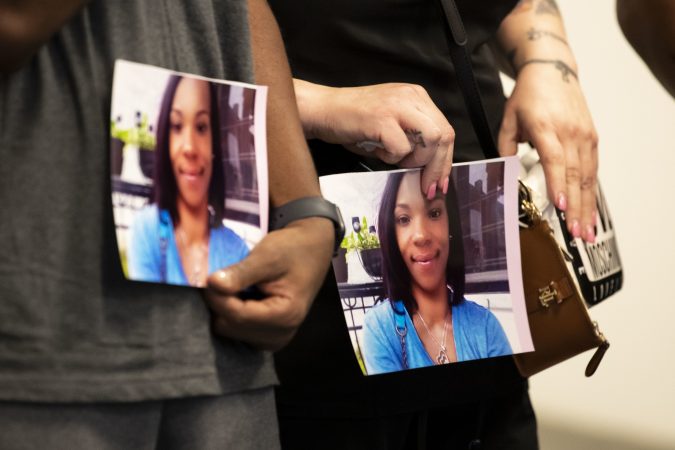
    A third defendant has been sentenced in the death of Tiffany Fletcher, a Philadelphia Parks and Recreation employee who was struck by a stray bullet during a 2022 shooting in West Philly.

    Tevin Kee, 20, pleaded guilty to third-degree murder, conspiracy, and gun charges in April. On Monday, he was sentenced to 12½ to 25 years in prison, according to Assistant District Attorney Jeff Hojnowski.

    Fletcher was sweeping outside the Mill Creek Recreation Center where she worked on a September afternoon, when two groups of youths began shooting at each other. Fletcher, caught in the crossfire at 47th and Brown Streets, was struck by a stray bullet in her torso and died. She was 41 years old, and a mother of three.

    The case sparked outrage, as Fletcher’s death came to represent how dangerous Philadelphia had become in the years immediately following the pandemic.

    Tiffany Fletcher (center, yellow tank top) was photographed with lifeguard Robin Borlandoe, 70, (immediate left), assistant recreation leader Charles McKnight (just above Tiffany) and other staff and volunteers at the Mill Creek Recreation Center pool in August 2022.ELIZABETH ROBERTSON / Staff Photographer

    Kee was the final defendant to be sentenced. Two others pleaded guilty to similar charges in the case. In 2024, Makie Jones was sentenced 10 to 20 years, and Malik Flegler was sentenced to 12½ to 25 years. Jones was arrested on the day of the shooting, and Flegler was arrested weeks later.

    But Kee, who was 17 at the time of the shooting, was not arrested until last year, at a traffic stop in Lower Pottsgrove Township. All three suspects were teenagers at the time of Fletcher’s death and charged as adults.

    Following Kee’s sentencing, Philadelphia District Attorney Larry Krasner made a point to say the legal process in each case was not over. He said each defendant would have parole board hearings once they had served their minimum sentences, and referenced statistics indicating most defendants typically serve greater time than their minimums.

    “Justice wasn’t done,” said Geraldine Fletcher, Tiffany’s mother. She said she wasn’t satisfied with any of the sentences, and said she hoped the three individuals suffered for eternity. Geraldine Fletcher said the family would participate in those parole hearings to share the pain of their loss.

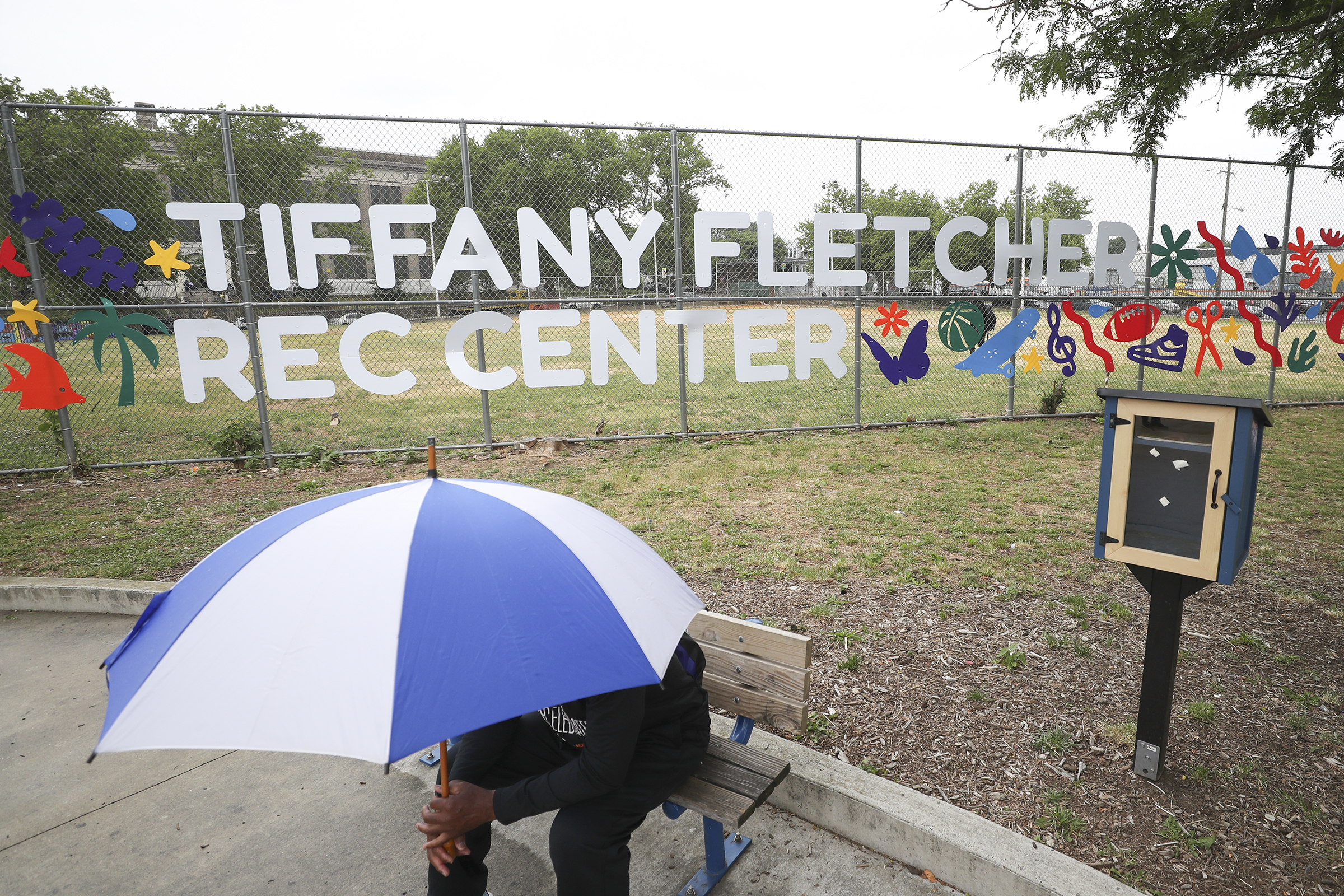
    Until then, Fletcher’s family and community will continue to honor her memory. The Mill Creak Recreation Center and its pool was renamed for Fletcher in 2023, and in April, City Council adopted a resolution to rename the 4700 block of Brown Street, “Tiffany Fletcher Way — Gone But Never Forgotten.”

    A sign at the renamed Tiffany Fletcher Recreation Center (formerly Mill Creek) in West Philadelphia in June 2023.Heather Khalifa / Staff Photographer
  • Pa. health officials release new data on measles vaccinations, showing slight drops in the Philly area

    Pa. health officials release new data on measles vaccinations, showing slight drops in the Philly area

    Pennsylvania officials on Monday released a new interactive tool where parents can look up vaccination rates at their children’s schools for the 2025-26 academic year.

    The tool’s release comes after months of reporting from The Inquirer and the Pittsburgh Post-Gazette showed falling vaccination rates over the last several years in counties and individual schools around Pennsylvania.

    “At a time when misinformation and conspiracy theories are sowing distrust in longstanding medical guidance, and reversing decades of science-backed progress, it’s more important than ever that [the state health department] provide Pennsylvanians with as much accurate information as possible,” state officials said in a statement.

    The tool was launched amid an ongoing measles outbreak in Pennsylvania. So far this year, the state has seen 176 measles cases in 14 counties, with 35 new cases reported in the last week. Nearly three dozen people have been hospitalized. None were fully vaccinated against the highly contagious virus, which can infect 9 in 10 unvaccinated people exposed to it.

    In all of 2025, the state reported 16 measles cases.

    Philadelphia-area vaccination rates

    The latest data on measles, mumps, and rubella vaccination coverage in the Philadelphia area show that vaccination rates for kindergartners dropped slightly, by less than 1%, in Philadelphia and three of four suburban counties between the 2024 and 2025 school years.

    (function(){function e(){window.addEventListener(`message`,function(e){if(e.data[`datawrapper-height`]!==void 0){var t=document.querySelectorAll(`iframe`);for(var n in e.data[`datawrapper-height`])for(var r=0,i;i=t[r];r++)if(i.contentWindow===e.source){var a=e.data[`datawrapper-height`][n]+`px`;i.style.height=a}}})}e()})();

    On the county level, no Philadelphia-area counties reported vaccination rates at or above 95% for kindergartners.

    That is the “herd immunity” threshold, the rate scientists say is necessary to prevent the spread of the virus.

    Bucks County had the lowest MMR vaccination rate for kindergartners, at 93.7%, down from 94.3% the year before.

    In Chester County, vaccination rates for kindergartners held steady at 94.5% for both 2024 and 2025. Chester has confirmed 20 measles cases this year and is the only Philadelphia-area county to report cases in the current outbreak, which began in April.

    Some counties saw slight rises in vaccination rates for seventh or 12th graders, but Delaware County saw slight drops in vaccination rates across grade levels.

    The newly released data also show more parents are using exemptions to opt out of vaccination. Pennsylvania has among the most permissive vaccination exemption provisions in the country; parents can opt not to vaccinate for religious, philosophical, or medical reasons.

    Medical exemptions decreased by 7% in the Philadelphia region between 2024 and 2025, but religious exemptions jumped by 14% and philosophical exemptions increased by 19%.

    Statewide vaccination rates

    Schools are required by state law to report their vaccination rates for kindergarten, seventh, and 12th grades; more than 90% of schools complied, state officials said.

    According to the new dashboard, schools reported vaccination data from 5,943 grades. The dashboard obscures data from grades with enrollment below 20 students to protect privacy.

    Statewide, more than half of reporting kindergartens had MMR vaccination rates above the herd immunity threshold, state officials said.

    Seventh- and 12th-grade classes were more likely to report vaccination rates at or above 95%, with 74% of seventh-grade classes and 83% of 12th-grade classes reaching herd immunity, officials said.

    Staff writer Sarah Gantz contributed to this article.

  • Kay Granger, first Republican woman from Texas to serve in the House, has died at age 83

    Kay Granger, first Republican woman from Texas to serve in the House, has died at age 83

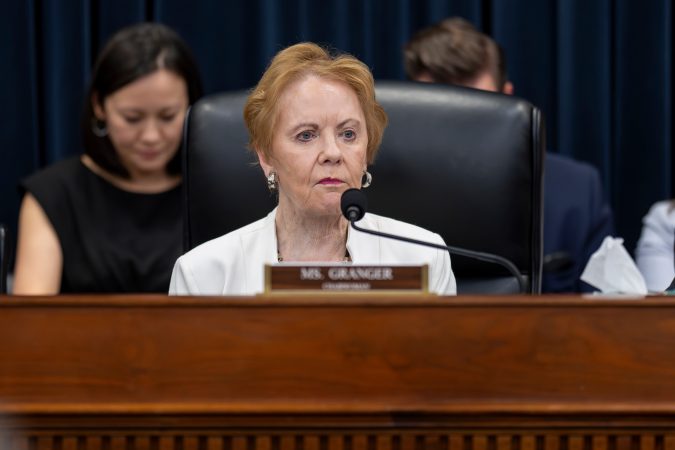
    DALLAS — Kay Granger, the first Republican woman from Texas to be elected to the U.S. House of Representatives and who served for nearly three decades, died Sunday at the age of 83, her son J.D. Granger said.

    House Speaker Mike Johnson said in a post on X that throughout her career, Rep. Granger “broke barriers for women in public service.” He added that she “was a dear friend who will be greatly missed.”

    Rep. Granger, who began her career as a high school teacher and a business owner, accomplished many firsts as a politician. She was the first woman elected mayor of Fort Worth, Texas, and the first Republican woman to chair one of the most powerful committees in Congress, the House Appropriations Committee.

    First elected to the House in 1996, she did not seek reelection in 2024 and experienced worsening “health challenges” in her final months in Congress, according to a statement her office released in December 2024. Rep. Granger, who didn’t cast a vote in Washington after July 2024, didn’t specify or elaborate on those health challenges but said in the statement that frequent travel to Washington had become “both difficult and unpredictable” since early September of that year.

    Rep. Granger graduated from Texas Wesleyan University in 1965 and considered a career in fashion design but followed her mother into teaching. She worked in the Birdville school district for nine years, teaching English literature and journalism, according to a profile compiled for the publication Women in Congress, 1917-2006.

    A divorce would lead to a career change. To earn more money, Rep. Granger worked from home selling insurance. Her mother, Alliene Mullendore, who moved in with Rep. Granger after a stroke, helped keep an eye on the kids. Rep. Granger eventually built a successful insurance business that she managed for more than two decades.

    “I was a high school teacher with three children, a 2-year and 6-month-old twins, and my husband left,” Granger told the Hill in a 2008 profile. “It’s the reason I talk so much to working mothers … you just fight your way through the day.”

    Rep. Granger got her political start serving on Fort Worth’s zoning commission and then won office to the city council. She went on to win election as the city’s first female mayor, serving from 1991 to 1995.

    Rep. Granger’s “Code: Blue” programs included citizen patrol initiatives that halved the rampant crime rate and partnerships with the private sector that drew major businesses to the city. Her resuscitation of Fort Worth’s flagging economic fortunes drew national attention.

    In 1996, she was recruited by both parties to run for the House under their banner, and she won as a Republican.

    Upon entering Congress, she was named to an advisory board that consulted with then-House Speaker Newt Gingrich. She also received seats on three committees: Budget, House Oversight, and Transportation and Infrastructure. She resigned those assignments as part of accepting a seat on the Appropriations Committee.

    On the committee, she focused on defense spending, including championing the production of the F-35 Joint Strike Fighter in Fort Worth.

    When Republicans took charge of the House in 2023, Rep. Granger became the committee’s chairperson, where she sought to enact steeper nondefense spending cuts than the top-line numbers House Speaker Kevin McCarthy and President Joe Biden agreed to as part of avoiding an economically disastrous government default.

  • In a ‘remarkable act of violence,’ a Delco man opened fire at a Walmart checkout, DA says

    In a ‘remarkable act of violence,’ a Delco man opened fire at a Walmart checkout, DA says

    A Clifton Heights man who fired a gun three times in a crowded Walmart, injuring a bystander, has been charged with attempted murder, Delaware County prosecutors said Monday.

    Armani Waite, 21, surrendered to police Monday afternoon, but District Attorney Tanner Rouse said investigators had identified him almost immediately after the Friday night shooting and issued a warrant for his arrest.

    Waite remained in custody Monday, in lieu of $1 million bail. His attorney, Arik Benari, did not immediately return a request for comment.

    “It is a remarkable act of violence, and it is really extraordinary that more people were not hurt by this,” Rouse said, noting that more than 30 people were standing in the store’s self-checkout area when Waite drew his gun.

    “This could have been an absolute calamity, and the truth of the matter is it’s his own ineptitude that kept this from being a whole lot worse.”

    District Attorney Tanner Rouse said Armani Waite was clearly the aggressor in Friday’s shooting, and targeted a man he had a “relatively innocuous” conversation with moments earlier.Vinny Vella / Staff

    Rouse said the shooting took place after a “relatively innocuous, relatively short” verbal dispute between Armani and another customer in the store, located on MacDade Boulevard in Glenolden.

    During the dispute, the other man lifted his shirt to show Waite he had a gun tucked into the waistband of his pants, according to the affidavit of probable cause for Waite’s arrest. When the other man turned around to leave, Waite drew his own gun and began firing, Rouse said.

    One of the bullets flew through a glass door and struck a female employee as she was standing outside the store, he said. She was treated for her injuries and is in stable condition, according to the prosecutor.

    Waite does not have a license to carry a concealed weapon, according to investigators. The man he targeted does have a concealed-carry permit, authorities said, and does not face criminal charges.

    Rouse said it was unclear what the two men were arguing about, but stressed that Waite was solely responsible for the shooting.

    “There is no basis for him to say ‘I was in fear for my life,’” Rouse said. “He was the aggressor here, plain and simple.”

    Waite dropped the gun as he fled the store, and it was later recovered by investigators. He also dropped the keys to his car, which investigators used to identify Waite and track him down, according to Rouse.

    He is scheduled to appear for a preliminary hearing on Aug. 11.

  • More pregnant women are dying in Congo as they avoid hospitals over Ebola

    More pregnant women are dying in Congo as they avoid hospitals over Ebola

    BUNIA, Congo — Esther Lutula stopped going for prenatal checkups shortly after the current Ebola outbreak was declared in eastern Congo. Midway into her pregnancy, the 26-year-old feared being put into isolation simply for having a fever, a common misconception.

    “That’s why I’m waiting until the disease is no longer widespread,” she told the Associated Press from her home in Bunia, the capital of Ituri province and epicenter of the outbreak declared on May 15.

    But that could be a deadly mistake.

    Maternal mortality across Ituri soon doubled as news of the outbreak spread, with an average of about six women dying per week due to childbirth complication, according to Noemi Dalmonte, deputy country representative of the United Nations Population Fund in Congo.

    While there was an average of 3.1 maternal deaths weekly this year before the outbreak, that jumped to 5.8 deaths from May 25 to July 19. Among those, the deaths outside health centers have also jumped from 9.1% to 17.4% within the same period, UNFPA data shows.

    As Congo battles the fastest-growing Ebola outbreak on record, with more than 1,600 confirmed deaths, health and aid workers are warning of a shadow crisis as pregnant women avoid hospitals and the country’s already high maternal mortality rate climbs even more.

    While it’s common for Africans to avoid health centers during public health emergencies because of safety concerns, “with Ebola, it is stronger because Ebola has a lot of rumors,” Dalmonte said in an interview.

    With some wary residents questioning whether Ebola even exists, and health workers in one of Congo’s most remote and volatile regions struggling to respond to the outbreak with few supplies, pregnant women have less care than ever.

    Congo is one of the world’s most dangerous places to give birth

    Congo has among the world’s highest rates of both childbirths per woman and deaths around childbirth.

    Women in the vast central African nation have almost six children on average. At least 19,000 women died from pregnancy complications in Congo in 2023, according to the latest U.N. data, tied with India and second only to Nigeria globally.

    Now health workers in Ituri say they are seeing a decline in hospital visits as people worry about the risk of infection. This type of Ebola has no approved treatment or vaccine.

    Women in need of care also fear being caught up in violence. Ebola treatment centers have been attacked by residents fueled by misinformation or anger over strict outbreak measures.

    At the Bénédicte Clinic in Bunia, the number of women registered for prenatal care has dropped from 60 each month to around 10, said Sonny Mwembo, the medical director.

    Even now, weeks into efforts to battle misinformation, some residents hold mistaken views of the outbreak.

    “Right now, if you feel sick and go to the hospital, they say it’s Ebola and they put you in quarantine right away. That’s what scares people,” said Elodie Yabiri, a Bunia resident who is heavily pregnant.

    Yabiri said she’s avoiding hospitals as much as she can.

    As long as she still feels her unborn child moving, she believes everything is still OK.

    Limited healthcare pivots to Ebola instead

    The outbreak has strained Congo’s already overstretched healthcare system, complicating access for the pregnant women who still come for prenatal care or birth.

    Health facilities in the five affected provinces are redirecting staff and supplies to the response, reducing access to essential maternal care services, according to aid groups.

    At least 44 health infected workers have died. Many other health workers have walked off their jobs, protesting a lack of payment. At least 12 attacks have been recorded against health facilities and teams since the outbreak was declared in mid-May.

    “We are doing everything we can to make the public understand how dangerous this disease is. We are working day and night without being paid,” said Ghislain Maneba, an epidemiologist and community investigator in Ituri’s Rwampara health zone.

    All women are at higher risk in this outbreak

    Ebola is rare but highly contagious and severe, often fatal. It spreads in the human population through contact with bodily fluids such as vomit, blood, or semen, and with contaminated surfaces and materials such as bedding and clothing.

    Women are usually the primary caregivers when a loved one becomes ill. Many are among frontline health workers in this outbreak as well.

    Associated Press journalists covering the outbreak have seen pregnant health workers among the responders.

    “It is very important that they know how to protect themselves, that they have the right information,” Dalmonte said.

    Pregnant women with Ebola are at an increased risk of problems including miscarriage, the U.S. Centers for Disease Control and Prevention has said in its clinical guidance.

    Meanwhile, pregnant women who delay care and avoid health facilities “could die not from Ebola itself but because the care that would have saved them was no longer accessible, trusted, or safe,” Dalmonte said.

  • A federal judge lets DHS proceed with a border wall through a small Texas town’s levee system

    A federal judge lets DHS proceed with a border wall through a small Texas town’s levee system

    WASHINGTON — A federal judge is allowing the Department of Homeland Security to go ahead for now with plans to build a border wall through a levee system protecting a small Texas town on the border with Mexico, rejecting arguments by the town that the wall could lead to flooding.

    The decision late Sunday marks a victory for the Trump administration as it races ahead with efforts to build a $46 billion wall along the U.S.-Mexico border from the Pacific Ocean to the Gulf of Mexico.

    The town of Presidio, with a population of about 3,200 people, argued the wall could cause flooding and that the administration isn’t following the law as it rushes forward with its plans. The town’s development district sued earlier this year to stop the department from going forward with construction.

    But the judge said in his ruling Sunday that they were unlikely to succeed on the merits of the case.

    “For the foregoing reasons, despite the understandable concerns expressed by the plaintiff regarding the harms it and the plaintiff’s residents might sustain by the potential construction of the Smart Wall, the Court is compelled to deny the plaintiff’s motion for a stay,” wrote Judge Reggie B. Walton.

    DHS has been charging forward with its wall-building plan, with senior administration officials saying a first layer of the structure will be done by next year. In its push, the Secretary of Homeland Security has waived numerous regulations designed to protect the environment, wildlife, and archaeological and Native American sites.

    But the department has been running into opposition by landowners, environmental groups, Native American tribes, and others who argue that the government’s rapid construction endangers environmental and religious sites and a way of life along the border. Opponents also question the urgency to finish the wall when migrant crossings from Mexico are already at extreme lows.

    Lawyers for Presidio’s development district argued in a court hearing that the government’s plans could compromise the levee system protecting the town from flash flooding and that the government flouted a key act that requires it to seek permission from the Army Corps of Engineers before building on or near the levees.

    “We are very disappointed that the court will allow this potentially disastrous construction to continue, but we remain committed to protecting the Big Bend area and those who rely on the threatened levees,” said the town’s development district in a statement Monday.

    Presidio is protected by a series of berms and levees built in the 1970s and 1980s along the Rio Grande and tributaries to combat flooding.

    In court documents, Presidio’s development district said Customs and Border Protection plans to “replace the earthen slope of the existing levee with a concrete wall, with 30-foot steel bollard panels installed on top.” The district said it asked the agency for more details but was told they can’t be shared due to “national security.”

    The government has argued that there is no final plan for where the border wall will go or how it will be built. And the administration has maintained that it has the authority given to it by Congress to waive a vast swath of regulations to build the wall as it seeks to get the number of people crossing the border every day to zero.

    In his ruling, the judge bolstered that argument, saying that it was clear “that Congress did not intend to limit the Secretary of DHS’ waiver authority.”

    The government is also facing another lawsuit in Texas where an environmental group and a church preservation group have teamed up to oppose DHS’s plans.

  • Russian Embassy in Rome blames Ukraine for deadly Italian restaurant bombing in Moscow

    Russian Embassy in Rome blames Ukraine for deadly Italian restaurant bombing in Moscow

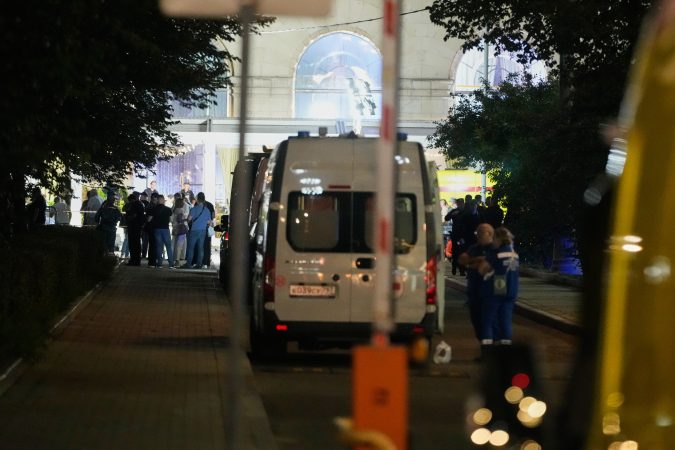
    MOSCOW — The Russian Embassy in Rome on Monday blamed Ukraine for a deadly weekend bombing at a Moscow restaurant, describing it as an attempt to intimidate the Italian community in Russia.

    The embassy said “Kyiv terrorists” wanted to “scare the Italians working in Russia and to show them that they too are in the crosshairs and could become the scoundrels’ next victims.”

    It said the Saturday night attack on the Balzi Rossi restaurant killed five and injured 19, adding that its Italian chef and his staff were unhurt only thanks to a Russian security guard’s “vigilance and selfless dedication to his professional duty.”

    There was no immediate comment from Ukrainian authorities.

    The National Anti-Terrorism Committee, which coordinates various security agencies, initially reported a lower death toll in a statement issued shortly after the attack. It said the bomb killed three people, including a woman who carried the explosive device into the restaurant, a guard who stopped her, and a guest inside. It said 21 others were injured when the bomb detonated near the restaurant’s entrance.

    The committee didn’t say who was the target or name the mastermind.

    Moscow Mayor Sergei Sobyanin on Sunday described the bombing as a “brutal terrorist act,” but did not say who was responsible for the blast at the upscale restaurant, which is located on the ground floor of a high-rise apartment building that is one of seven skyscrapers in the city that date to the era of Soviet dictator Josef Stalin.

    The Russian Foreign Ministry reposted the embassy statement without comment. It did not respond to a request for comment or explain the higher death toll.

    Several Russian media outlets claimed the bombing targeted a Russian general who was celebrating his birthday at the restaurant. Some claimed that the general was Col.-Gen. Alexander Chaiko, who led the troops that made a botched attempt to storm the Ukrainian capital in 2022 and recently was appointed the chief of Russia’s aerospace forces. The claims could not be independently verified.

    The business daily Kommersant reported that the bomb, hidden in a gift box, was probably detonated remotely and the woman carrying it could have been unaware of the content. Kommersant said the bomb contained about 2.2 pounds of explosives and contained metal balls for lethality.

    Russia blamed Ukraine for past attacks on military officials

    Russian authorities have blamed Kyiv for a series of bombings and other attacks against senior military officials after Moscow sent troops into Ukraine in February 2022. Earlier this year, Russia’s Federal Security Service said authorities would tighten security around senior military and government officials following the attacks.

    In February, Lt. Gen. Vladimir Alexeyev, ​the deputy head of the GRU ‌military ⁠intelligence service, was shot three times at a Moscow apartment building, but survived. Ukraine denied its involvement.

    In December, a car bomb killed Lt. Gen. Fanil Sarvarov, head of the Operational Training Directorate of the Russian Armed Forces’ General Staff, in southern Moscow. Ukraine refrained from comment.

    In April 2025, another car bomb that Moscow blamed on Kyiv killed Lt. Gen. Yaroslav Moskalik, a deputy head of the main operational department in Russia’s General Staff. Ukraine didn’t claim the attack but hinted at its involvement.

    And in December 2024, a bomb hidden in a scooter killed Lt. Gen. Igor Kirillov, who headed the Russian military’s nuclear, biological,Z and chemical protection forces, one of the few attacks Ukraine openly acknowledged.

    Among other prominent victims of bombing attacks in Russia were Daria Dugina, the daughter of influential nationalist thinker Aleksandr Dugin, and Vladlen Tatarsky, a well-known pro-Kremlin military blogger. Kyiv denied involvement in the attack on Dugina, and remained coy about the attack on Tatarsky.

  • Trump bank accounts were closed due to concerns over possible money laundering, Capital One says

    Trump bank accounts were closed due to concerns over possible money laundering, Capital One says

    NEW YORK — Bank accounts held by President Donald Trump were closed by Capital One in 2021 after it flagged financial activity that had characteristics of money laundering, the bank disclosed in a court filing over the weekend.

    The court filing is tied to a lawsuit filed against Capital One by one of Trump’s financial holding companies shortly after he was sworn into office a second time. Trump alleges that Capital One illegally closed his accounts for political reasons, following the Jan. 6 attacks on the U.S. Capitol.

    Capital One wants the lawsuit dismissed.

    “The closures were the result of months of analysis and a careful review by Capital One’s AML team in accordance with bank policies and regulatory guidance,” the bank said in the court filing. The term “AML” is an abbreviation for anti-money laundering.

    Trump has sued Capital One, as well as JPMorgan Chase, for allegedly debanking him after he left office in 2021. Debanking occurs when banks shut down customer accounts because they believe they pose financial, legal, or reputational risks to the banks.

    Both banks have denied they severed their relationships with the president, his sons, and other related businesses for political reasons. The lawsuit against JPMorgan Chase is seeking damages of $5 billion. JPMorgan has said it does not close accounts for political reasons, but closes accounts “with or without cause” and also accounts that create “legal or regulatory risk.”

    In July, after the original lawsuit had lain dormant for months, lawyers for the president filed an amended lawsuit that alleged the bank debanked him for political reasons. The bank says the new allegations are without merit, saying the complaint’s “new theories are based on cherry-picked quotations.”

    President Trump’s legal team dismissed that claim Monday, but did not address the internal findings by the bank.

    “Capital One, along with other major banks, de-banked President Trump, his family, and his businesses for blatantly political reasons,” a spokesperson for Trump’s legal team said. ”President Trump’s powerful lawsuit holds Capital One accountable for its disgraceful conduct, and we look forward to seeing this matter through to a just and proper conclusion.”

    Conservatives have long alleged that banks debank them and their political allies. The allegations became louder after Operation Choke Point, an initiative during the Obama administration when regulators pressed banks to cut off financial services to the firearm industry, tobacco, and payday lenders, among others. The cryptocurrency industry alleged it was also a victim of debanking during the Biden administration.

    Trump signed an executive order in August 2025 titled “Guaranteeing Fair Banking for All Americans” directing federal bank regulators to terminate examinations of banks over who they were doing business with. The Trump administration has also subpoenaed records of the biggest banks as part of an investigation into alleged debanking.

    Trump had more than 300 bank accounts with Capital One before they were closed. The bank accounts were for a variety of Trump-branded businesses, ranging from a golf course to a winery. Trump had banked with Capital One for more than a decade before the accounts were closed.

    In the court filing, Capital One said it had no reason to make a political statement with the closure of Trump’s accounts in 2021 and the move had everything to do with activity in the accounts being flagged by anti-money laundering experts with the bank.

    “Capital One never publicized the termination decision nor its confidential internal process giving rise to the closure, and it permitted Plaintiffs several months (and granted several extensions) to find new banking services, which they did,” the bank said.

  • Philly school district promotes some administrators, changes principals elsewhere. Here’s a rundown.

    Philly school district promotes some administrators, changes principals elsewhere. Here’s a rundown.

    Superintendent Tony B. Watlington Sr. has announced a flurry of Philadelphia School District shifts in recent weeks, from promotions and principal changes to additional responsibilities for some of his senior officials.

    Changes are common at this point in the school calendar, but this year is particularly busy. The district’s 113,000 students return to school August 24.

    The changes include:

    A new human resources chief

    Kristy Baldwin was named chief talent officer. Baldwin had previously held the position on an interim basis. The district has cycled through a number of talent executives during the Watlington administration.

    Baldwin is the former longtime human resources executive in Prince George’s County, Maryland, where she was credited with lowering teacher vacancies and recruiting a more diverse educator workforce.

    Watlington, in a release, said Baldwin was “battle-tested” and collaborative.

    “Dr. Baldwin brings a wealth of experience and knowledge to the district, as well as a demonstrated track record of effectively staffing schools with high-qualified teachers, increasing the number of Black and Latine educators, and working with union leaders,” Watlington said.

    Baldwin officially in her new role on July 27, and will be paid $235,000.

    Changes in assistant superintendents, salaries announced

    Also announced last week was a new role for Kahlia Johnson, who had worked as deputy chief of talent management and recruitment selection. Johnson, the former principal of Overbrook High, is moving to become interim assistant superintendent for a network of district high schools. Johnson will be paid $197,302.

    Johnson replaces Noah Tennant, who was previously announced as associate superintendent for secondary schools. Tomás Hanna, who was associate superintendent for secondary schools, moved over to become associate superintendent for student life and school operations. Hanna will be paid $221,658 per year, and Tennant’s salary will be $215,202.

    In other recent changes that the district identified in recent weeks, Brenda Elliott was named deputy superintendent of academic services. Her salary is $285,488.

    Michael Farrell, chief academic officer, is paid $221,658. Nathalie Nérée, chief of special education, diverse learners and wellness, has a salary of $221,658. Nyshawana Francis-Thompson, senior adviser for strategic initiatives and innovation, is paid $208,627.

    Jamina Clay, assistant superintendent of school management and organization, makes $197,302. Kelly Espinosa, assistant superintendent for Learning Network 4, makes $197,302.

    Interim assistant superintendents Wilfredo Ortiz and Lucy Feria, who will run Learning Networks 8 and 9, respectively, will also be paid $197,302 annually.

    Additional responsibilities for Watlington deputies

    Two of Watlington’s top deputies are also taking on additional responsibilities.

    Alexandra Coppadge Wright is now supervising the operations, external and community affairs departments. Coppadge Wright, the chief of communications and customer service, was already supervising the Office of Communications, Office of Customer Service, and the Family and Community Engagement Office.

    Sarah Galbally, Watlington’s chief of staff, will add the School Transitions Office to her portfolio. Galbally also handles Board Relations, Government Relations, Grants Development, Strategic Partnerships, and Strategic Planning.

    Both Coppadge Wright and Galbally are paid $225,096 annually.

    Naima DeBrest, a spokesperson for the district, said in a statement that the changes were necessary as the district remains “focused on balancing the budget while recruiting and appointing talented individuals who have a demonstrated track record of improving student outcomes, as we continue to drive towards becoming the fastest-improving, large urban school district in the nation.”

    Principal changes

    A number of district schools have new principals. They are:

    Adaire Elementary, Amanda Strain. Strain had been principal of Waring Elementary.

    Bridesburg Elementary, Louis Depa. Depa had been assistant principal at Pennell Elementary.

    Clemente Middle School, Regina Barr. Barr had been assistant principal at Bluford Elementary.

    Edison High, Albert Sniezevage. Sniezevage had been assistant principal at the school.

    Benjamin Franklin Elementary School, Ryan Sullivan. Sullivan had been assistant principal at Penrose Elementary.

    Heston Elementary, Kamia Smith. Smith had been assistant principal at Heston.

    Lawton Elementary, Michelle Todd-Coleman. Todd-Coleman had been assistant principal at Forrest Elementary.

    Memphis Street Academy, Wayne Diggs. Diggs had been assistant principal at Mastbaum; Memphis Street Academy is reverting back to district control after being a charter school for years.

    Northeast High, Andrew Lukov. Lukov had been principal of Southwark Elementary, he also has experience as a Northeast assistant principal.

    Southwark Elementary, Mason Luksch Wilson. Luksch Wilson had been assistant principal at Elkin Elementary.

    Bayard Taylor Elementary, Claire Charles. Charles had been assistant principal at the school.

    Tilden Middle School, Jessica Culp. Culp had been assistant principal at Comegys Elementary.

    Waring Elementary School, Cathryn Anderson. Anderson had been assistant principal at Bache-Martin Elementary.

    Philadelphia principals are typically paid between $153,296 and $172,636 annually, with salaries set by union contract. Principals are represented by the Commonwealth Association of School Administrators, Teamsters Local 502.